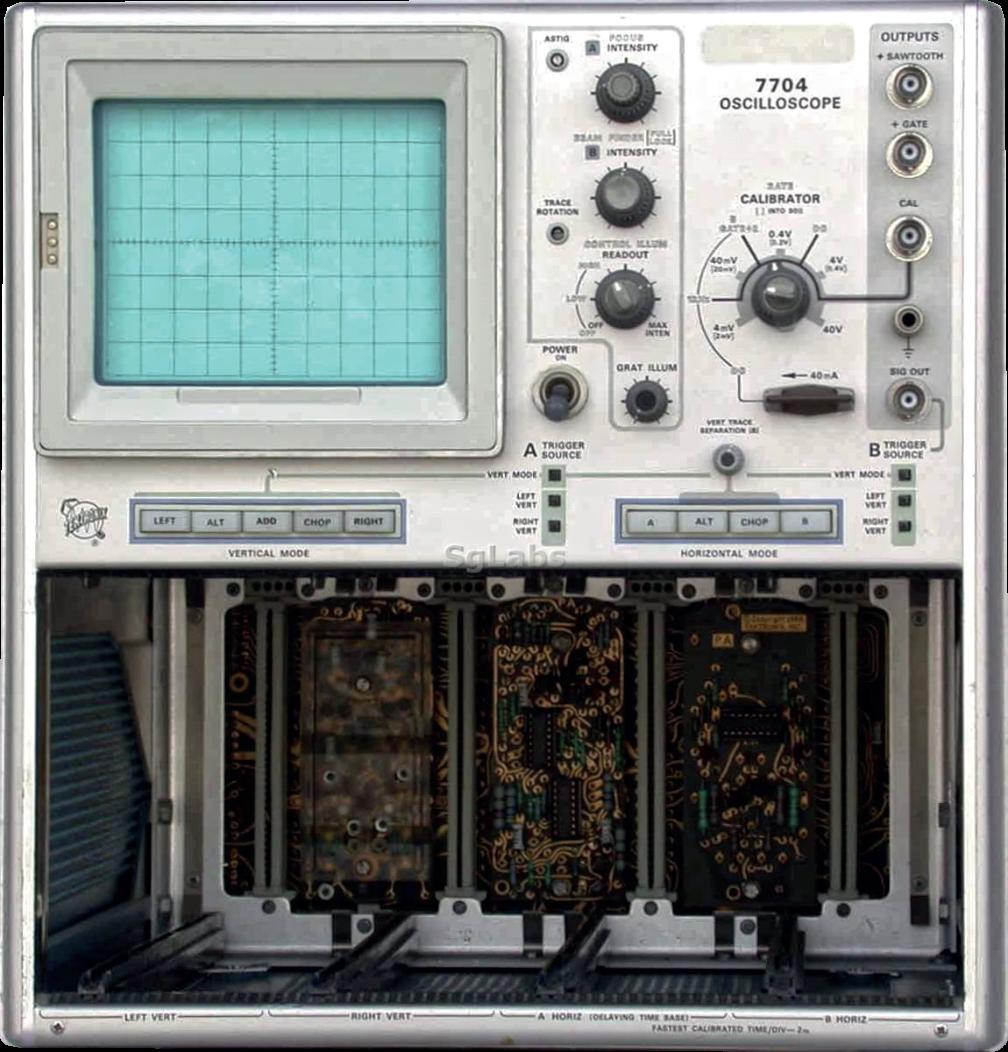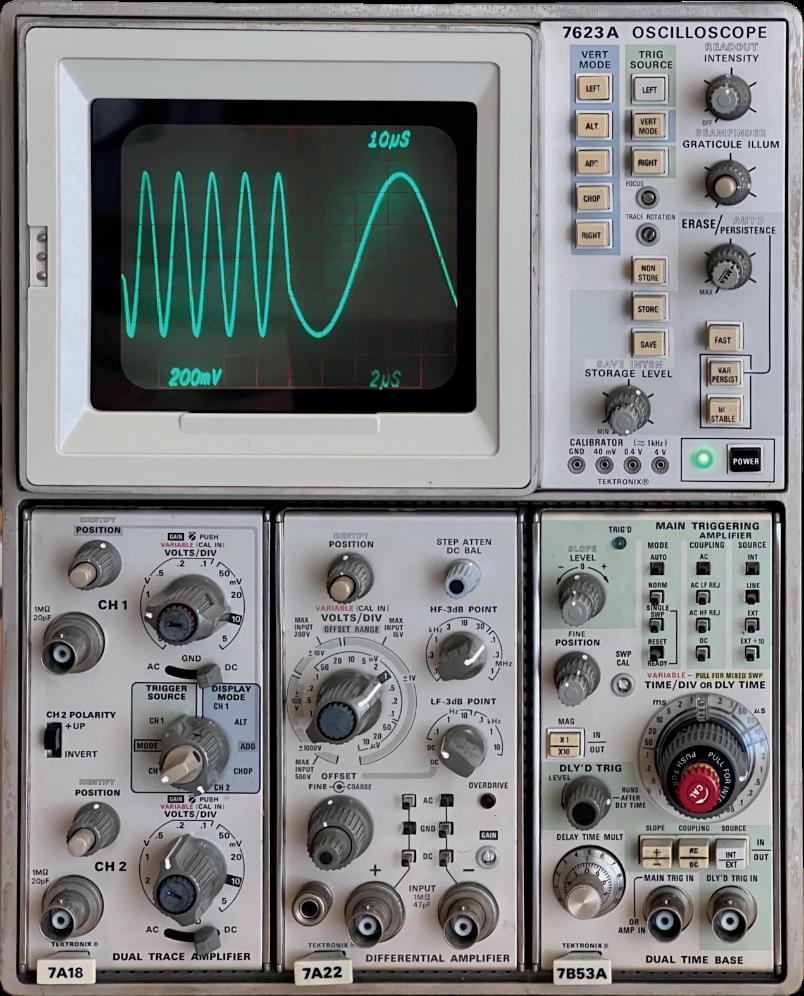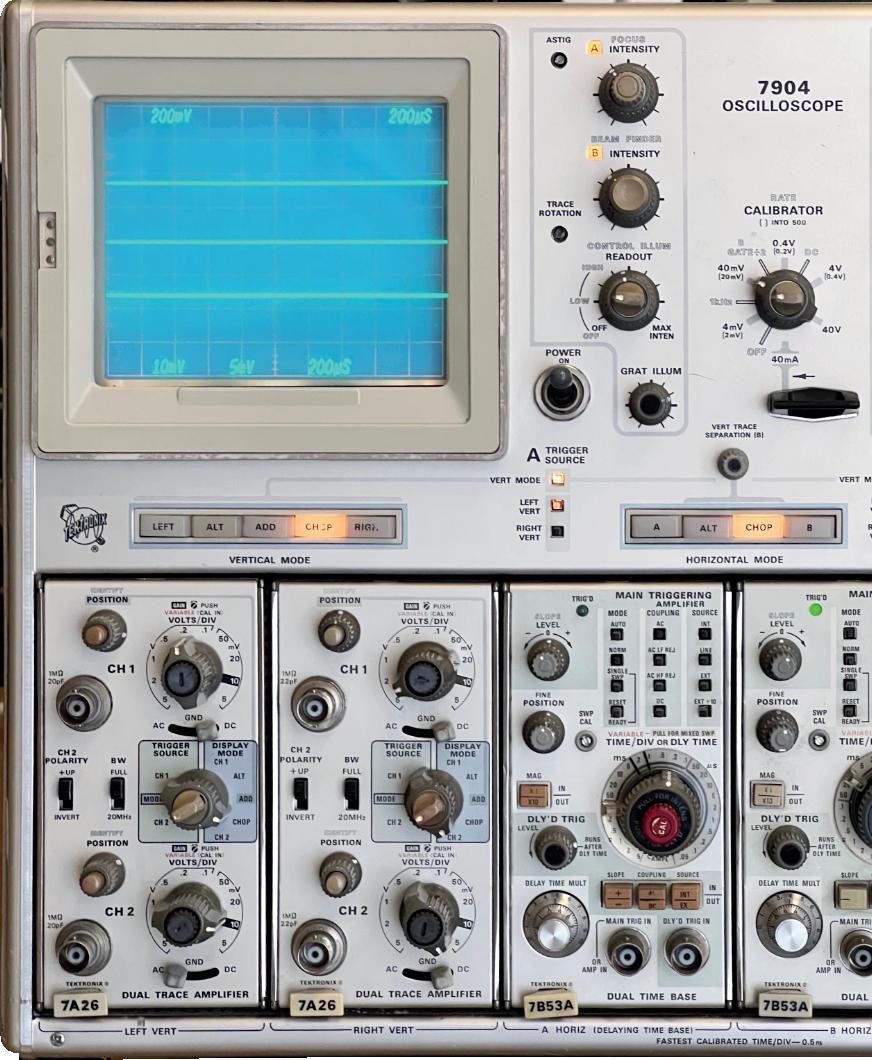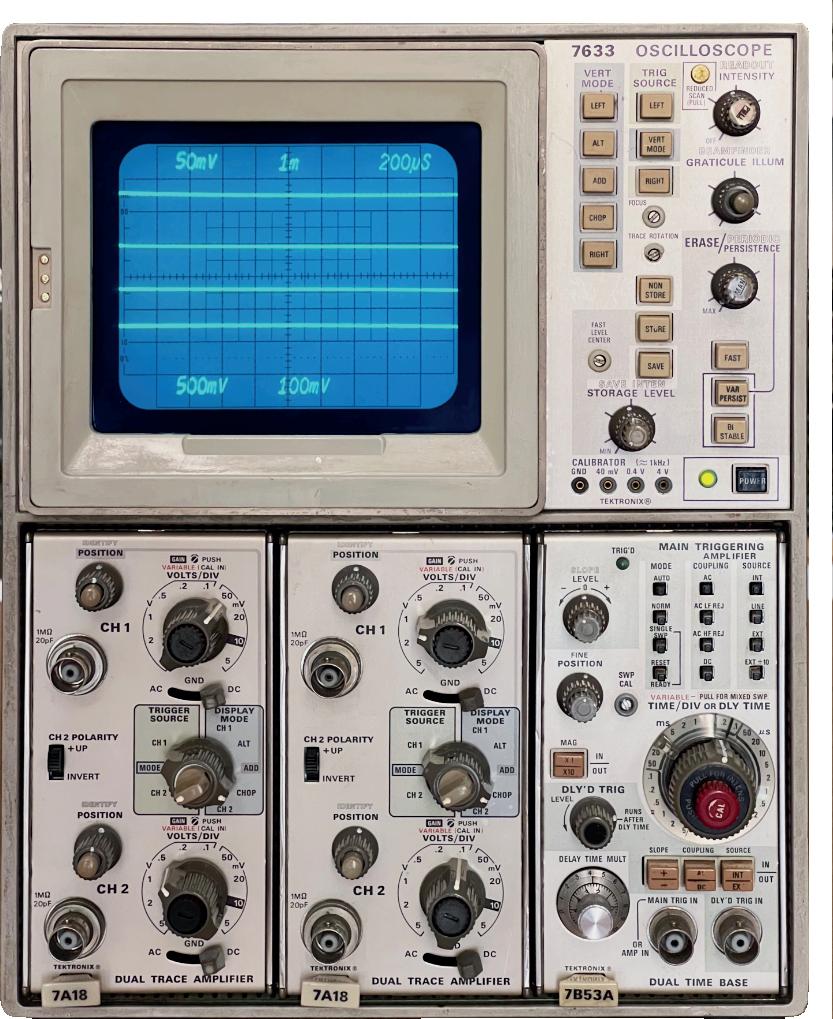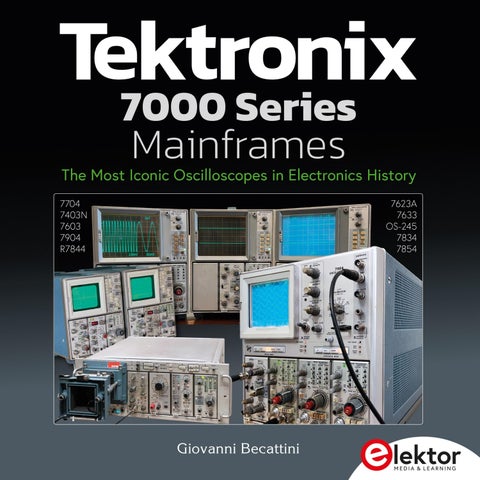
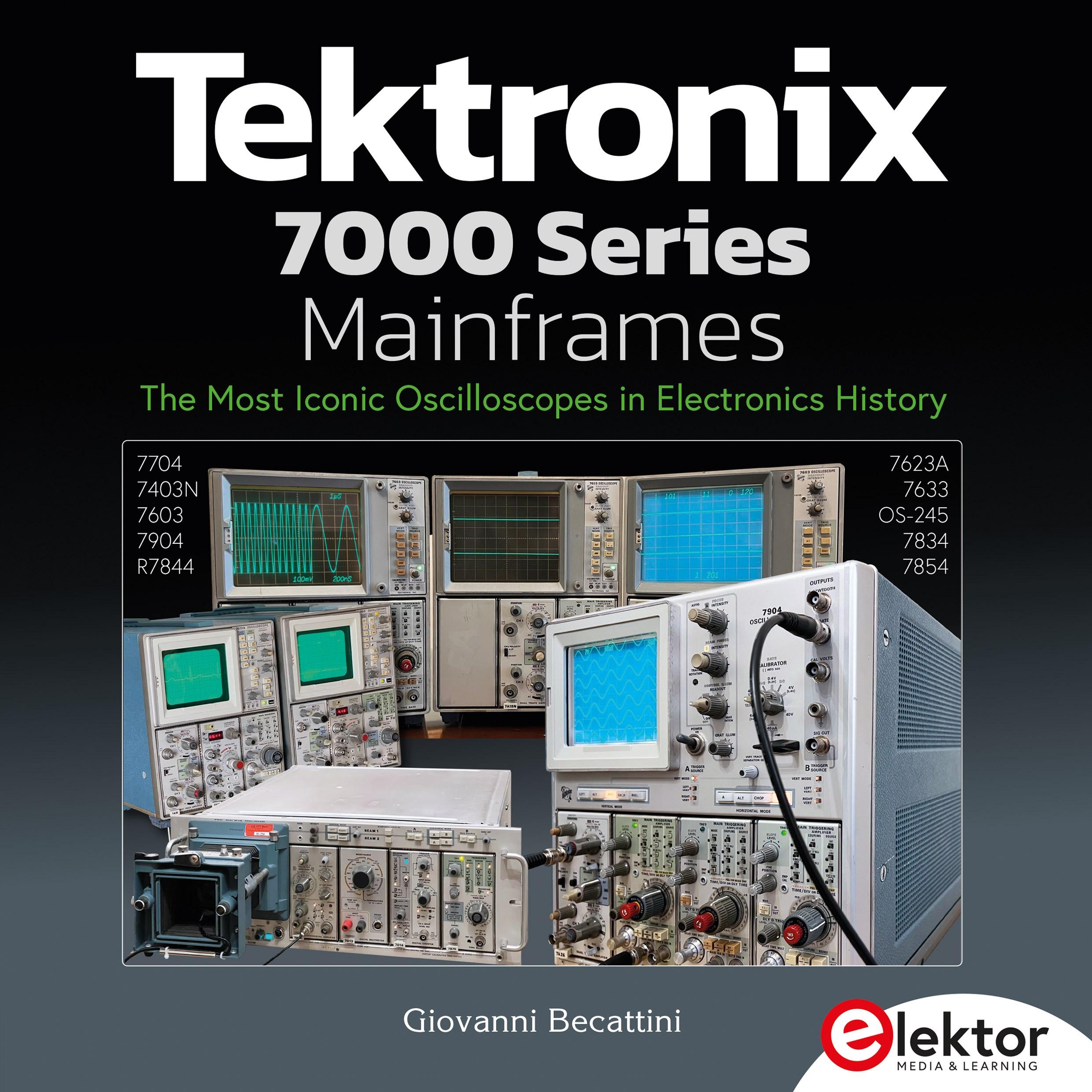
Tektronix the 7000 Series
The most famous and charming oscilloscopes in electronics’ history
Volume I
Overview and Mainframes
Giovanni Becattini
● This is an Elektor Publication. Elektor is the media brand of Elektor International Media B.V.
● All rights reserved. No part of this book may be reproduced in any material form, including photocopying, or stored in any medium by electronic means, whether or not transiently or incidentally to some other use of this publication, without the written permission of the copyright holder except in accordance with the provisions of the Copyright Designs and Patents Act 1988 or under the terms of a licence issued by the Copyright Licensing Agency Ltd., 90 Tottenham Court Road, London, England W1P 9HE. Applications for the copyright holder's permission to reproduce any part of the publication should be addressed to the publishers.
● The author, editor, and publisher have used their best efforts in ensuring the correctness of the information contained in this book. They do not assume, and hereby disclaim, any liability to any party for any loss or damage caused by errors or omissions in this book, whether such errors or omissions result from negligence, accident or any other cause.
● Apple and Macintosh trademarks and logos are acknowledged and remain their property.
● ISBN 978-3-89576-704-3, hard cover.
● © Copyright 2025 Elektor International Media B.V.
● Editors: Elektor Team
Table of Contents (cont’d)
Table of Contents (cont’d)
Use Case #2: AC Details on a Large Signal ......511
The Solution .....................................................512
Factors Affecting CMRR in Measurements ........513
Differential Comparators ..................................515
Use Case #3: Floating Ground Measurement ...516
Use Case #4: Ripple Measurement ...................518
Use Case #5: Dynamic Current Measurement ..518
Differential Amplifiers Conclusions ...................519
Learn
Full Size Schematics and Pictures
This book includes a number of schematics and diagrams that go well beyond a simple reproduction of those found in the original Tektronix manuals. Some have been entirely redrawn, while others are the result of a careful and often painstaking restoration process, involving extensive editing, correction, and reconstruction work.
Some of these materials are also made available in full-size PDF format and can be downloaded from www.quacktech.it.
If you don’t find a specific diagram you wish, feel free to contact us—we will be glad to help.


The Most Iconic
This book is dedicated to the Tektronix 7000-Series oscilloscopes—their technologies, their restoration, and the people who conceived and built them with ingenuity and exceptional technical skill. These instruments represent the most iconic expression of Tektronix’s golden age and are widely regarded as the best-known oscilloscope family ever produced. Throughout the 1970s, few serious companies or scientific institutions operated without at least one 7000-Series instrument.
Introduced in October 1969, the 7000 Series marked a turning point in the history of electronic instrumentation. While the plug-in concept itself was not new—it had appeared in earlier families such as the 500 Series—it reached its most mature and refined form with the 7000 Series. The elegance of its architecture and the intelligence of its implementation were central to the platform’s remarkable success and longevity.
This book presents an in-depth examination of the Tektronix 7000-Series oscilloscopes. Conceived as a natural continuation of Tektronix Epic Oscilloscopes, where the 7000 Series was only briefly addressed, the present work expands that discussion into a structured study, organized into two volumes:
• Volume 1 provides historical context, outlines key technical solutions, and analyzes several mainframe models.
• Volume 2 is devoted to plug-ins, examining more than twenty different models in detail.
Together, these volumes document not only a family of instruments, but a pivotal moment in the evolution of electronic measurement.
Giovanni “Gianni” Becattini giovanni.becattini.books@gmail.com
To my wife and my family





WARNING!
Very dangerous voltages exist inside every oscilloscope, even after it is switched off.
All the technical information contained in this book is intended for EXPERT TECHNICIANS only, fully aware of the connected risks and their management.
If you are not an expert, don’t try even to open them under any circumstance, and always refer to the applicable documentation for their use.
Non-Storage Mainframes
CRT Storage Mainframes
Digital Storage Mainframes


Section:
Bits of History
A minimal historical framework is necessary to place the 7000 Series in context. Further reading is suggested for a more comprehensive understanding.
Tektronix, Inc.
is an American company best known for its test and measurement instruments, particularly oscilloscopes, logic analyzers, and video and communication test equipment.
In the late summer of 1945, C. Howard Vollum, Melvin Jack Murdock, and Miles Tippery decided to found a company to manufacture their first oscilloscope. The company was incorporated on January 2, 1946, under the name Tektronix, and was initially headquartered in Portland, Oregon.
Tektronix emerged from the practical needs of postwar electronics, at a time when conventional test instruments were no longer adequate to observe fast and increasingly complex signals. Under Vollum’s technical leadership and Murdock’s business vision, the company quickly established a new standard in oscilloscope design by introducing key innovations and by investing heavily in cathoderay tube technology—an essential component of such instruments, and one that Tektronix deliberately chose to master in-house.
late 1940s and 1950s, Tektronix introduced a series of groundbreaking products, 500 Series, which combined wide bandwidth, calibrated time bases, modular construction, and unprecedented reliability. Tektronix oscilloscopes soon became indispensable tools in laboratories, industry, and military research, contributing directly to advances in radar, communications, computing, and space technology.
, the company moved to Beaverton, Oregon. By the early 1960s, Tektronix had grown into a global reference in electronic instrumentation, defining what a modern oscilloscope should be— technically, ergonomically, and conceptually. The company went public in 1963, and by 1976 employed nearly 10,000 people, becoming Oregon’s largest employer.
Today, Tektronix operates as a subsidiary of Fortive, following its spin-off from Danaher Corporation.
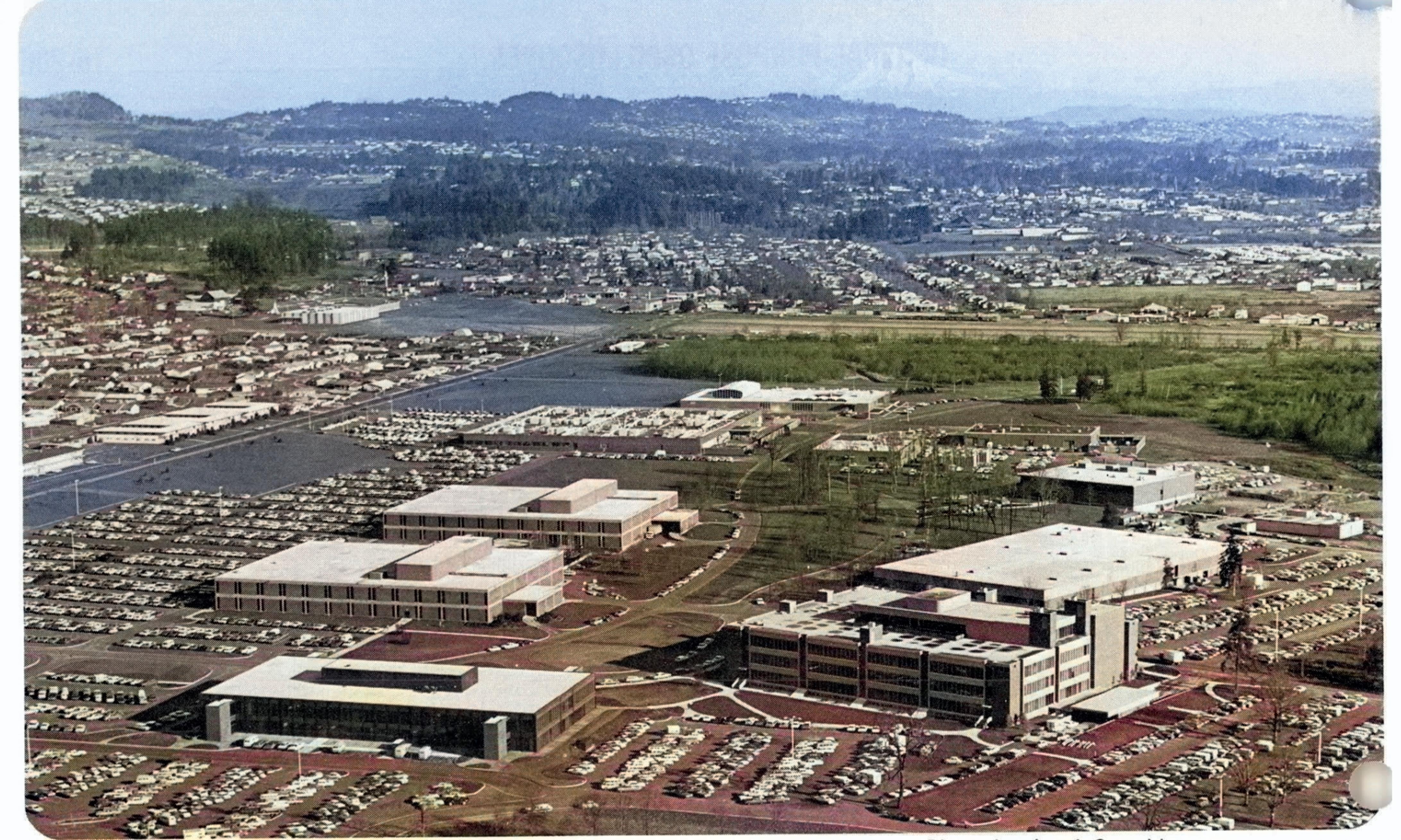
Photo: Tektronix plants in Beaverton, Oregon (USA)
Beaverton,1964
A Pivotal Year
By 1964 the company was expanding internationally and, for the first time, made a strategic acquisition with Pentrix Inc., a leading manufacturer of spectrum analyzers. In the same year, Tektronix also entered a joint venture with Sony Corporation to manufacture oscilloscopes in Japan (see the story of the 324 in [QT324]). At the time, Tektronix’s flagship product line was the highly successful 540 Series. Yet Howard Vollum was keenly aware that, despite its commercial and technical success, the company needed a true next-generation product to remain ahead of intensifying competition.
Need for Innovation
As early as 1962, Vollum had appointed a new Executive Vice President to revitalize the development of future instruments, acknowledging that progress had begun to stall. By 1964, however, it was clear that deeper changes were required. Vollum turned his attention directly to the engineering department, which he felt had gradually lost focus on Tektronix’s core mission, the oscilloscopes. During the winter of 1963–1964, he personally engaged with his engineers, exploring the possibilities for an entirely new generation of instruments. He found many promising ideas—but no cohesive vision. By the spring of 1964, probably also driven by increasingly strong competitors—most notably HewlettPackard—Vollum reached a decisive conclusion: Tektronix had to start over, with a bold, modern design conceived from a clean sheet.
Hewlett-Packard
Founded in 1939 by Bill Hewlett and David Packard in a one-car garage in Palo Alto, HewlettPackard had already become, by the early 1960s, a global reference in electronic test and measurement equipment.
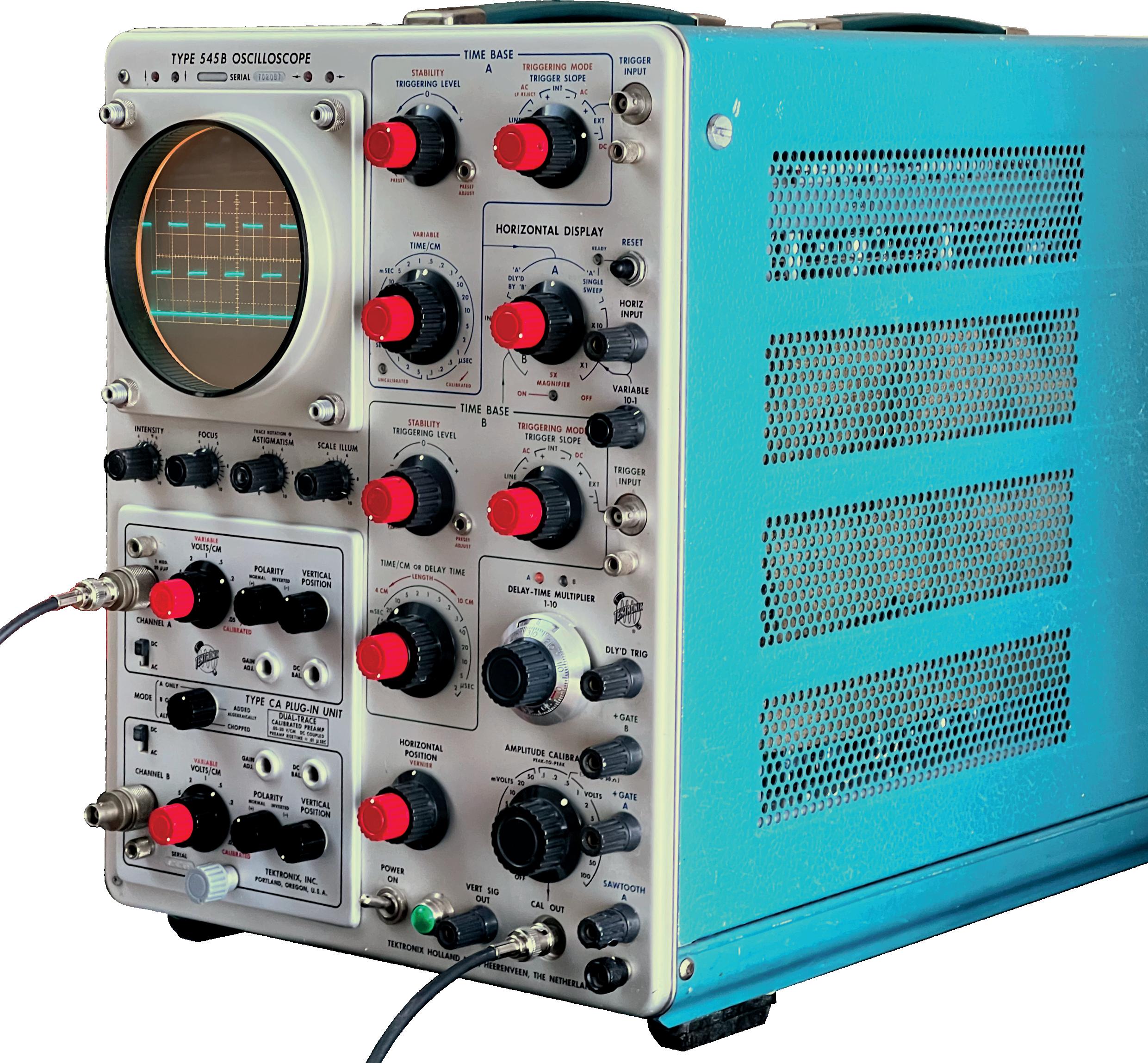
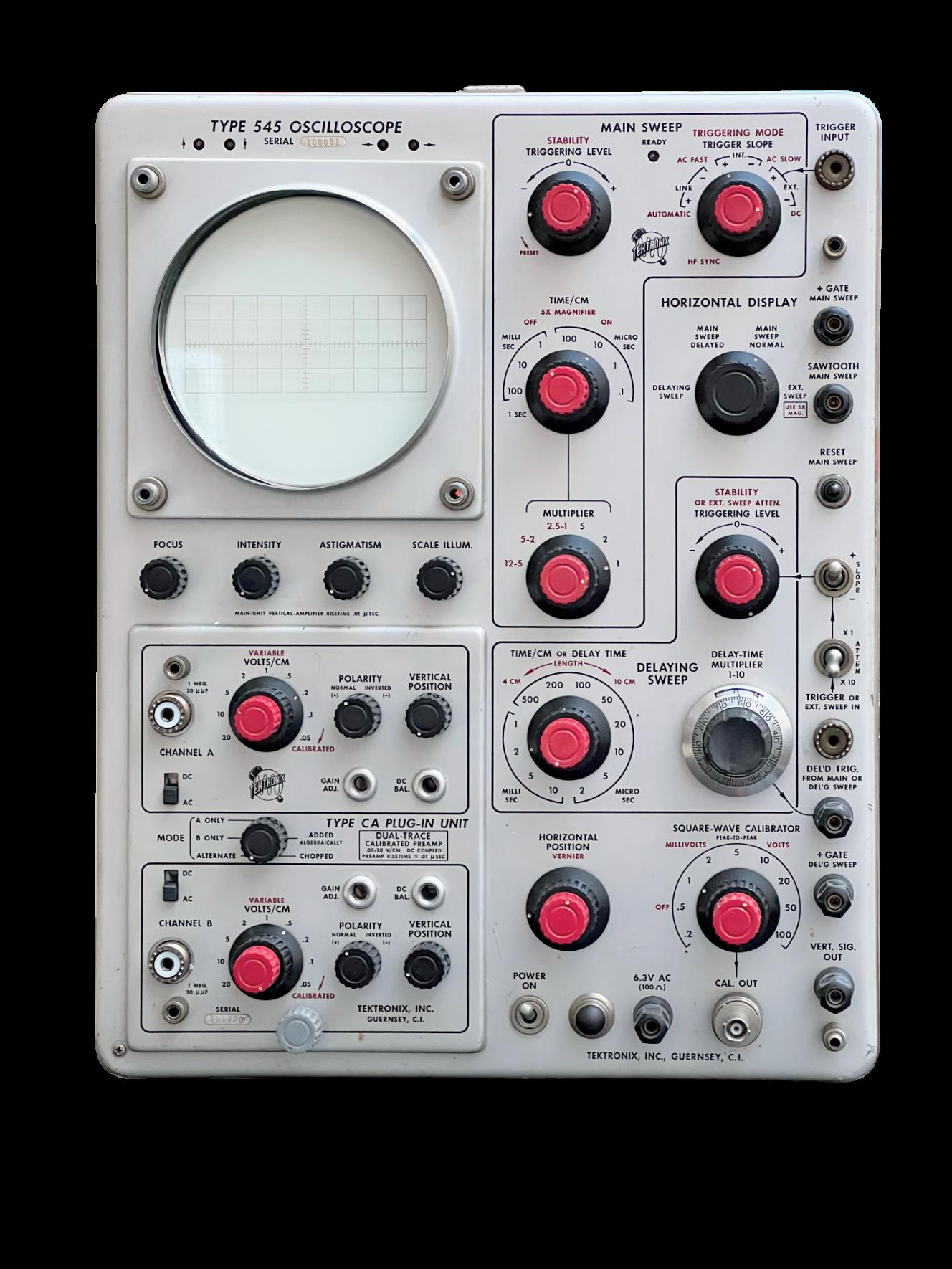
Photo: One of the most representative models of the 540 Series—the 545, with a 30 MHz bandwidth [TEO]. Up to the mid-1960s this performance was considered impressive, but by then it was clearly falling behind newer competing designs. Beyond raw performance, the physical bulk and high power consumption of the 540 Series were becoming increasingly difficult to justify, especially when compared with more compact and efficient alternatives.
HP-180 Oscilloscopes
It is plausible to assume that Howard Vollum was not entirely unaware of what was taking shape at Hewlett-Packard. Within less than two years, in January 1966, HP would introduce the 180 Series, a family of compact, high-performance oscilloscopes that, in several respects, appeared strikingly ahead of contemporary Tektronix designs.
It is equally possible, however, that Tektronix had no concrete knowledge of the HP 180 Series while the early concepts of the 7000 Series were being defined, and that its full impact became evident only after the instruments reached the market. Regardless of the precise chronology, the influence of the HP design on the Tektronix 7000 Series is difficult to overlook. One might even argue that the 7000 Series can be seen as a response—and, ultimately, an improvement—over the concepts introduced with the HP 180.
Vollum himself later acknowledged this competitive pressure, admitting that “for a while it had advantages over anything we had.” HP’s success thus served as a clear signal that incremental evolution was no longer sufficient, reinforcing the urgency for Tektronix to pursue a truly revolutionary new product line.
HP 180 plug-ins were not individually removable; the entire pack had to be extracted first, an impractical solution.
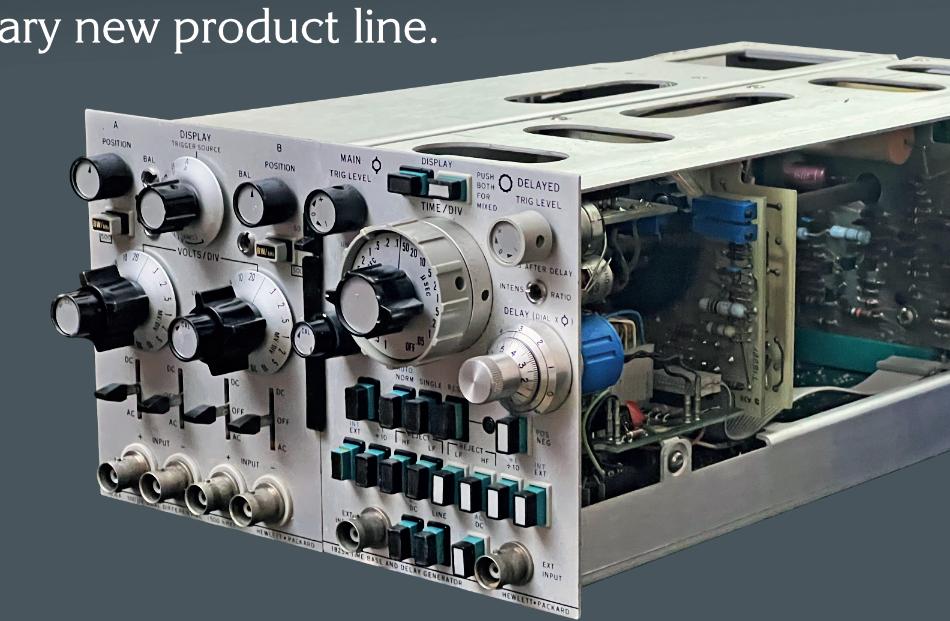
Left: The HP 181A alongside the Tektronix 7633; the resemblance is evident.
Right:
7000: a Challenging Project
Once again, it was Howard Vollum’s personal leadership that made the difference. He drove the new project forward with energy and conviction, personally leading regular engineering meetings—weekly at first, then twice a week—as technical challenges, time pressure, and costs steadily increased. Vollum wanted an instrument significantly smaller than any existing oscilloscope. That requirement immediately extended to the plug-ins, which had to be smaller as well. He insisted that they be no taller than five and a quarter inches. His engineering team resisted, but Vollum held firm—and, as it turned out, he was right. Ironically, one of the most constraining factors proved to be the size of the knobs. Operators needed to manipulate them comfortably, and this seemingly mundane requirement ended up driving the mechanical design of the entire plug-in module. It also forced the development of a new generation of compact components. The result was a decisive advantage: the compact architecture allowed the 7000 Series mainframes to accommodate three or even four plug-in bays, whereas competing designs—most notably those from HP—were limited to two.
Among the many other technical challenges, the new readout system stood out as perhaps the most visibly innovative feature of the 7000 Series. Vollum left no stone unturned. The team explored fiber optics, pneumatic systems (including an actual compressor inside the oscilloscope!), and a variety of other unconventional ideas before ultimately converging on a custom integrated-circuit solution. The concept worked beautifully—but required two and a half years to bring to fruition. Integrated circuits became a foundational element of the 7000 Series, and Tektronix engineers found themselves designing the ICs, the manufacturing processes, and the instruments themselves in parallel.
Further Readings
This brief overview touches only the surface of the 7000 Series story. If you'd like to dig deeper, here are the sources I used—and recommend:
• Bosler, Robert (1978). On the History and Environment of Tektronix – Background on company history, product development, industry context, major customers, and competitors. Tektronix Inc., USA.
• Lee, Marshall M. (1986). Winning with the People. Tektronix Inc., USA.
• Tekscope, October 1969. Tektronix Inc.
“...innovativeness must not only be continuous but also pervade the company...”
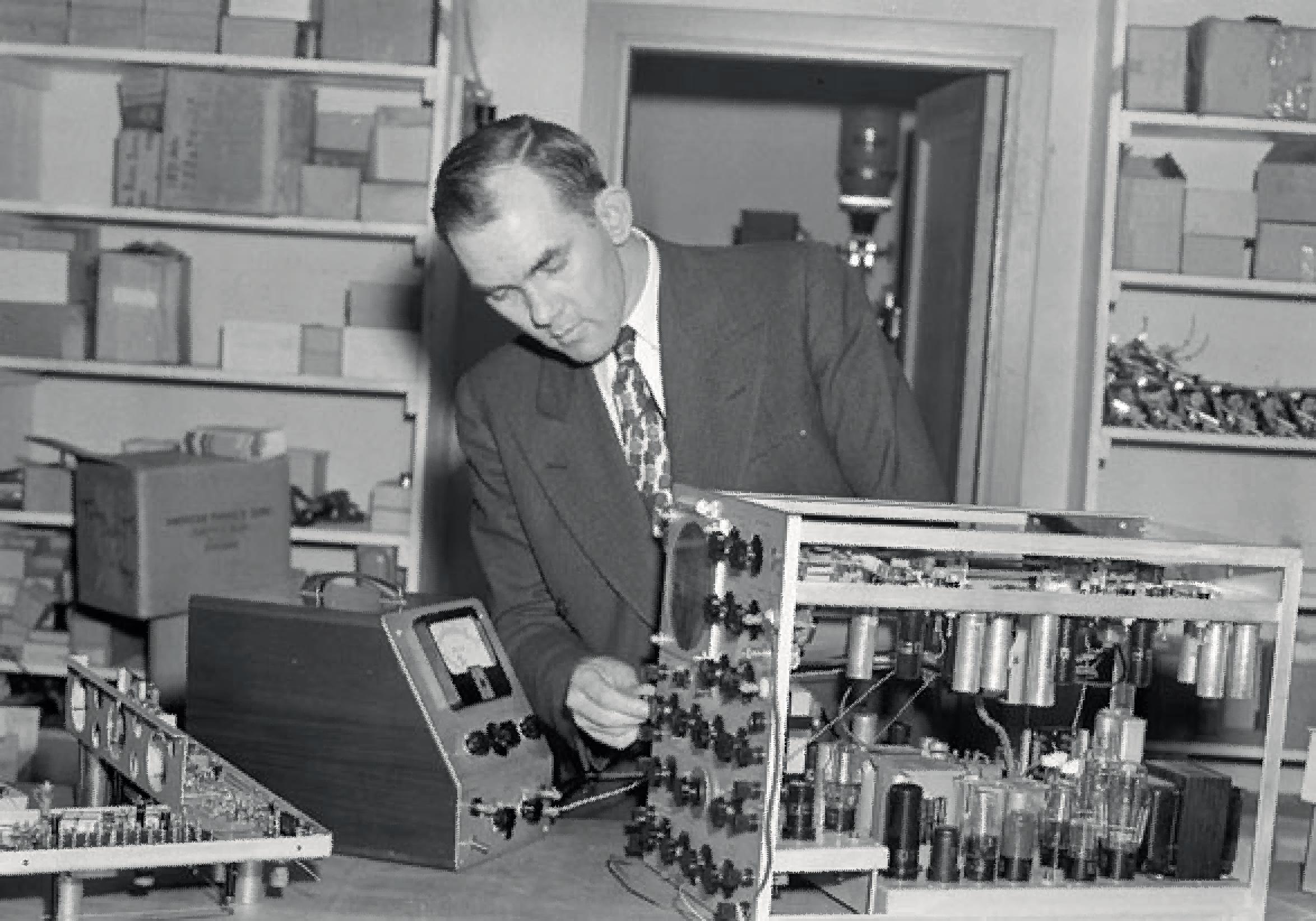
Photo: Charles Howard Vollum (1913–1996), co-founder of Tektronix. Engineer, industrialist, and visionary, he shaped not only some of the most influential oscilloscopes ever built, but also a corporate culture grounded in technical integrity, long-term innovation, and respect for knowledge. In [TEO], we described him as a “Caesar of electronic armies,” and the 7000 Series project offers a clear illustration of that assessment: his ability to define a strong technical vision while fostering effective collaboration within the engineering team proved decisive in guiding the project to its outcome.
(Courtesy of Reed College, Portland, Oregon, and the vintageTEK Museum.)
New 4-Bays Form Factor
New 3-Bays Form Factor

Old 540-Series Form Factor
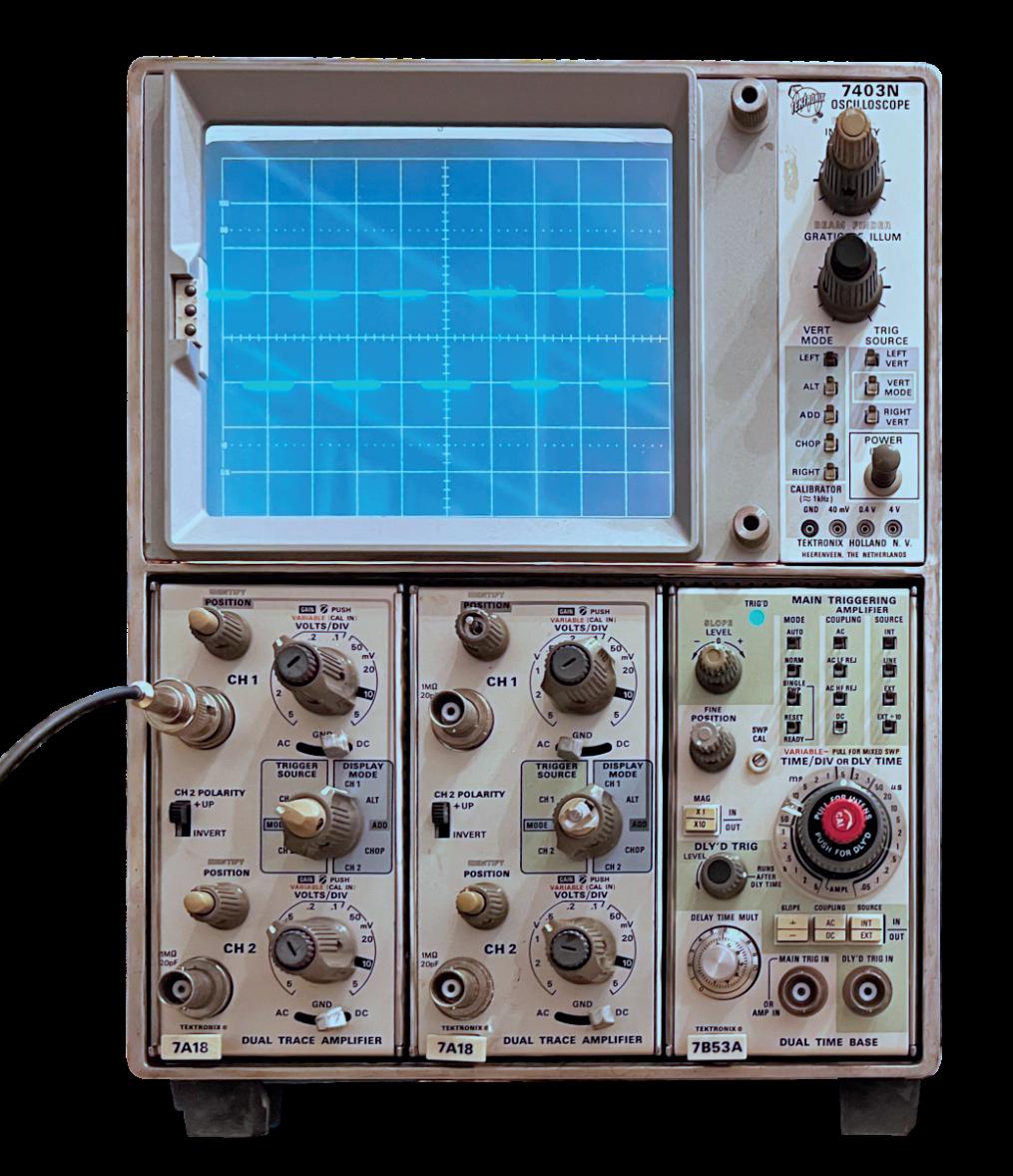
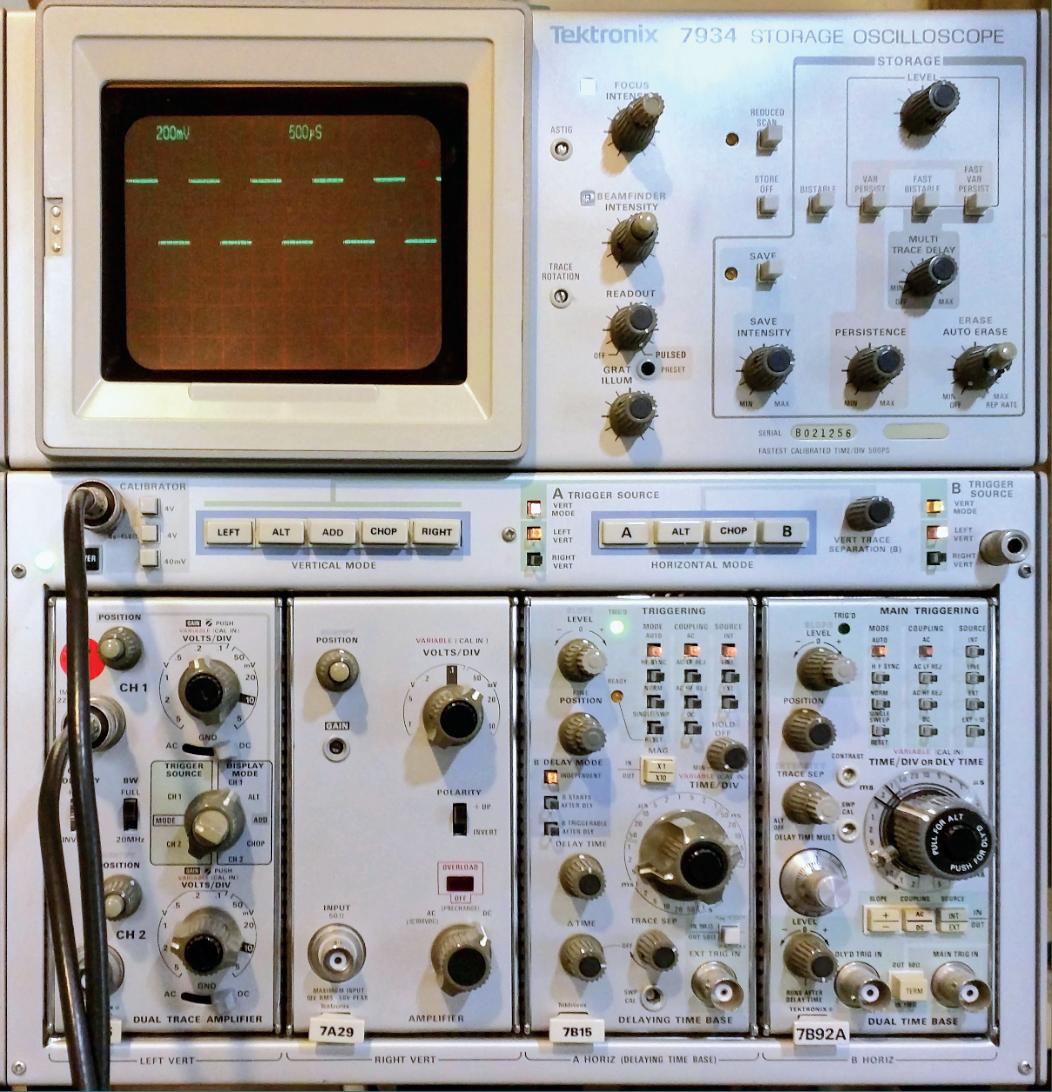
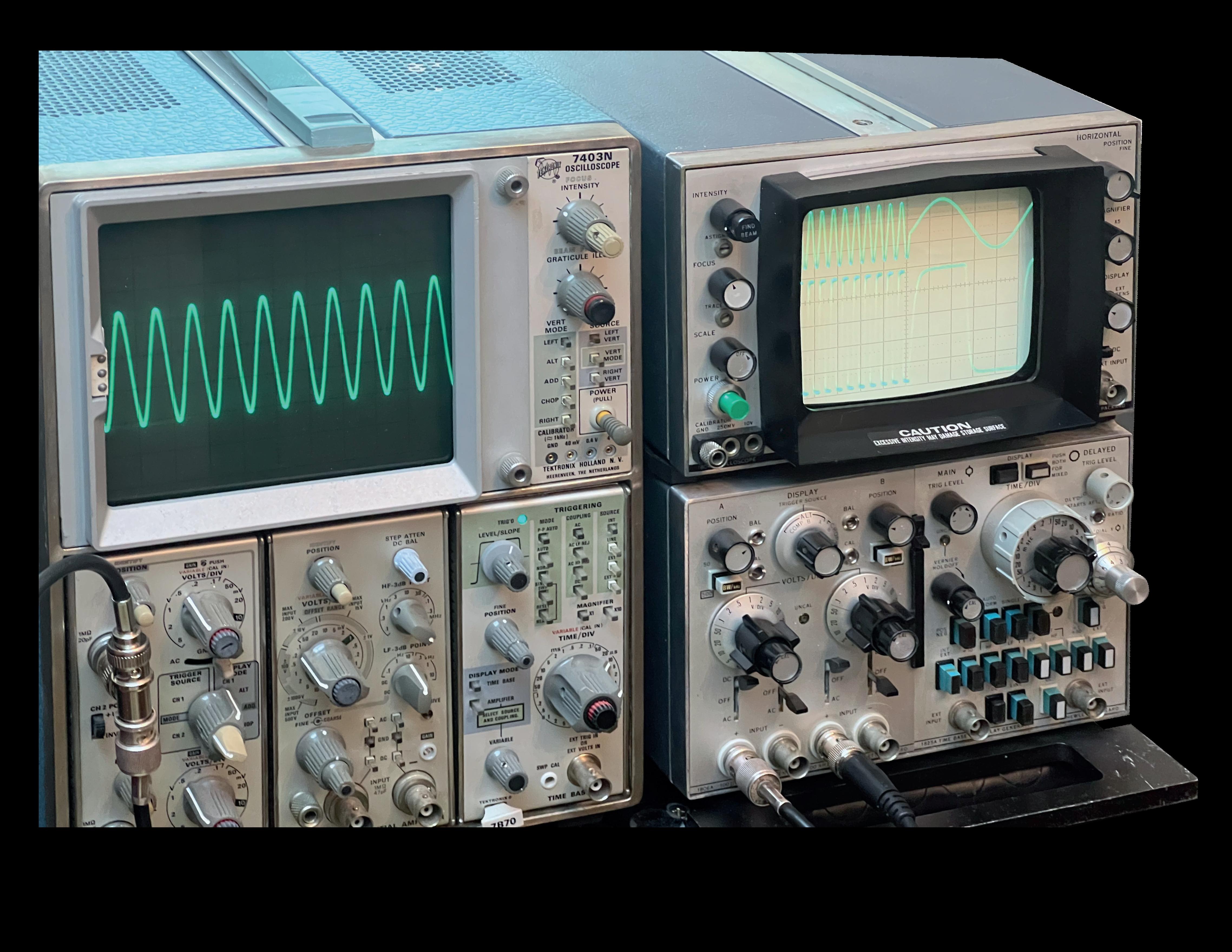
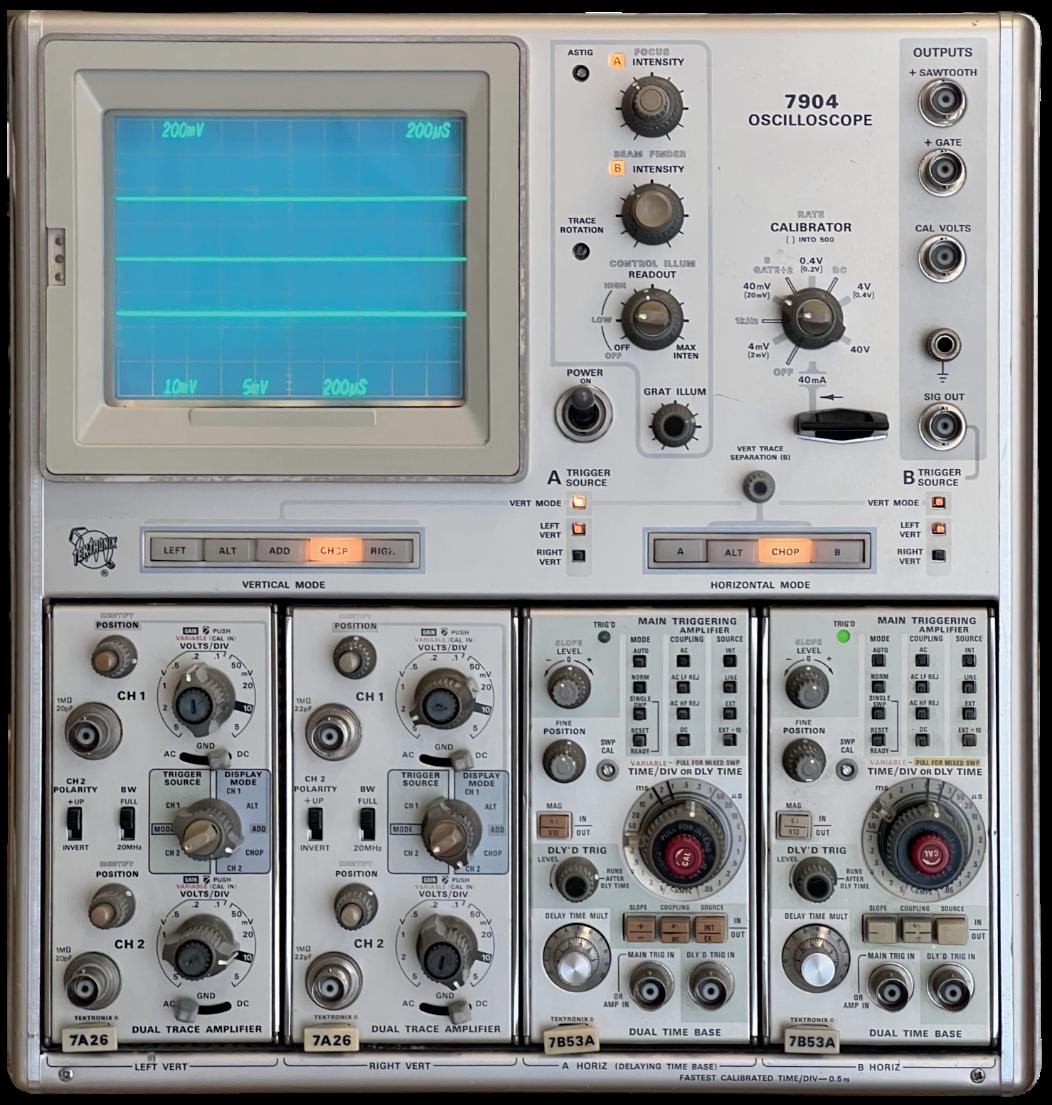
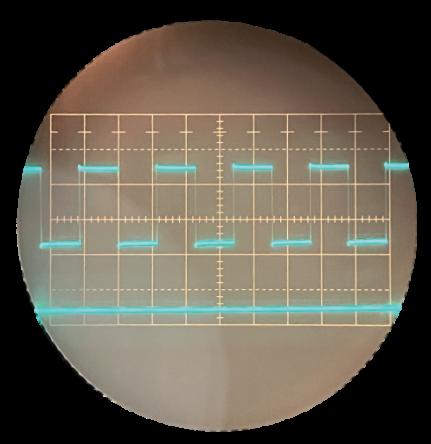
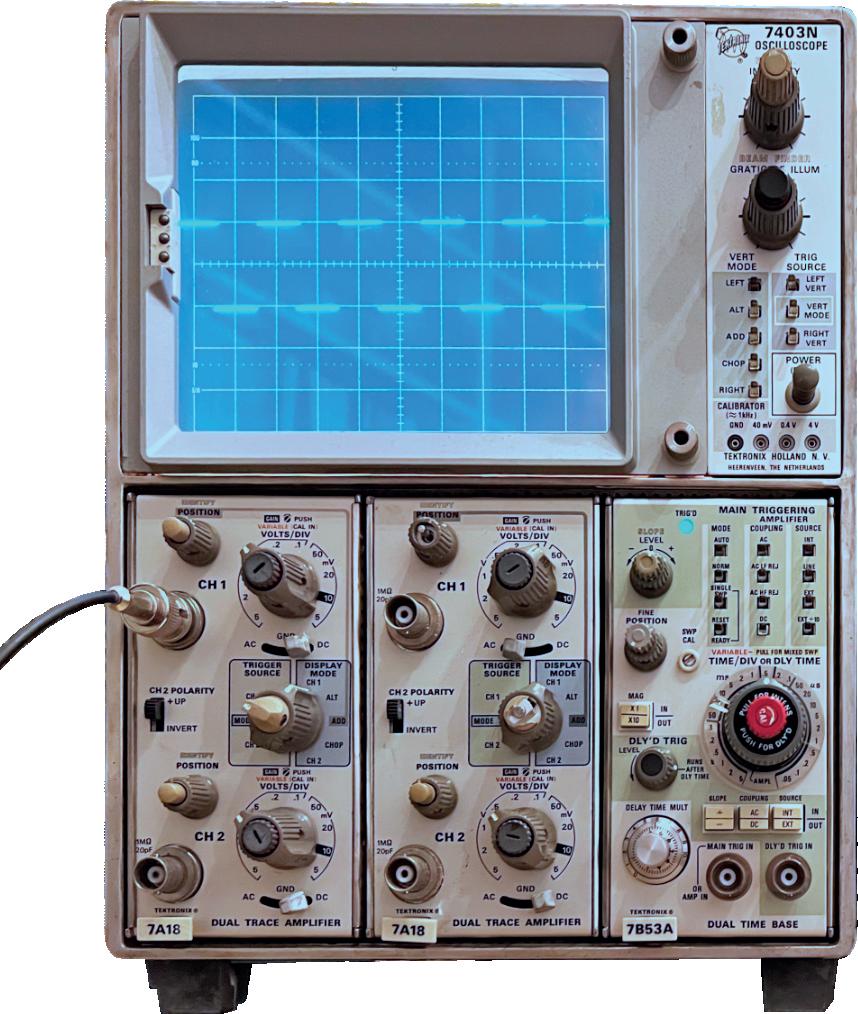
A comparison between the new 7000 Series oscilloscopes and the older 545. The first models introduced were the 150 MHz 7704, the 90 MHz 7504, and the 90 MHz 7503. Unfortunately, I was unable to photograph my 7704 (for reasons explained in its dedicated chapter), and I have never encountered a 7504 or a 7503. As substitutes, I present here the widely used 500 MHz 7904 and the entry-level 60 MHz 7403N, both sharing a very similar form factor with the 7704 and 7503. The 7904 was introduced in 1972, while the 7403N appeared as early as 1970 and soon evolved—under Howard Vollum’s relentless drive for innovation—into the highly successful 150 MHz 7603.
Setting New Standards
The 7000 Series marked a major engineering milestone and quickly earned a reputation as a breakthrough innovation. Its modularity, performance, and versatility not only redefined what oscilloscopes could be, but also influenced future designs across the entire electronic test and measurement industry.
Widely regarded as one of Tektronix’s most significant contributions, the 7000 Series set new standards that would remain relevant for decades. A detailed and systematic discussion of its technical innovations is one of the primary goals of this book and will be developed in the following chapters. It is nevertheless useful to anticipate here some of the key features that defined this remarkably successful family of oscilloscopes.
• Modular Design – At the heart of the 7000 Series was a mainframe chassis into which a wide variety of plug-in modules could be installed. This modular approach allowed users to tailor the instrument precisely to their needs by selecting from an extensive range of vertical, horizontal, and auxiliary plug-ins.
• Wide Range of Models – The series encompassed instruments covering a broad performance spectrum, from affordable 40 MHz mainframes to the legendary 7104, offering more than 1 GHz of bandwidth—one of the highest ever achieved by an analog oscilloscope.
• Rich Plug-in Ecosystem – Tektronix developed an exceptionally large selection of plug-in modules, including high-gain amplifiers, differential inputs, precision time bases, spectrum analyzers, logic analyzers, waveform digitizers, and many specialized units. This made the system adaptable to an extraordinary range of applications, from telecommunications and R&D laboratories to military and aerospace environments.
• Advanced CRT Technology – Tektronix’s long-standing leadership in cathode-ray tube innovation gave the 7000 Series a decisive competitive advantage. Its CRTs incorporated advanced technologies such as storage phosphors, distributed deflection plates, dual-beam structures, and even microchannel plates—enabling unique capabilities that competitors could not easily match.
• Durability and Build Quality – True to Tektronix tradition, the 7000 Series instruments were designed for longevity. Rugged, precise, and highly serviceable, many units remain fully operational decades after their manufacture, a lasting testament to the quality of their engineering and construction.
The Launch
The Debut
The 7000 Series oscilloscopes burst onto the scene in 1969—five years after Howard Vollum had issued his challenge to develop a new generation of instruments. They made their official debut at WESCON, held in San Francisco from August 19 to 22, and instantly became the stars of the event.
At launch, the 7000 Series comprised two models: the 7704 and the 7504. Visitors to the Tektronix booth were immediately struck by their advanced features, most notably the innovative four–plug-in architecture, which allowed two vertical and two horizontal units to be used simultaneously. Unlike earlier designs, channel switching was performed directly within the mainframe rather than inside the plug-ins, a major architectural step forward.
The illuminated pushbuttons, the integrated alphanumeric readout system, and the color-coded front panels were enthusiastically received, while the true advanced triggering capability sealed the impression that Tektronix had created something genuinely new. Equally impressive was the completeness of the initial offering. Despite being a brand-new platform, the 7000 Series debuted with no fewer than thirteen new plug-ins: six vertical amplifiers, four time-base units, and three sampling modules. By comparison, Hewlett-Packard’s 1969 catalog listed just five vertical amplifiers and seven time bases for the 180 Series.
The launch was celebrated in the October 1969 issue of Tekscope, Tektronix’s in-house magazine, and proved to be an overwhelming success. The 7000 Series quickly became one of the most popular families of oscilloscopes ever produced, firmly cementing Tektronix’s reputation as the oscilloscope company. Not only did it close the gap with competitors—it moved decisively beyond them.
For engineers, scientists, and technicians, the 7000 Series offered an unprecedented combination of flexibility, performance, and expandability. It remained a reference throughout the 1970s and 1980s and is still remembered today with admiration by many professionals who experienced it firsthand.

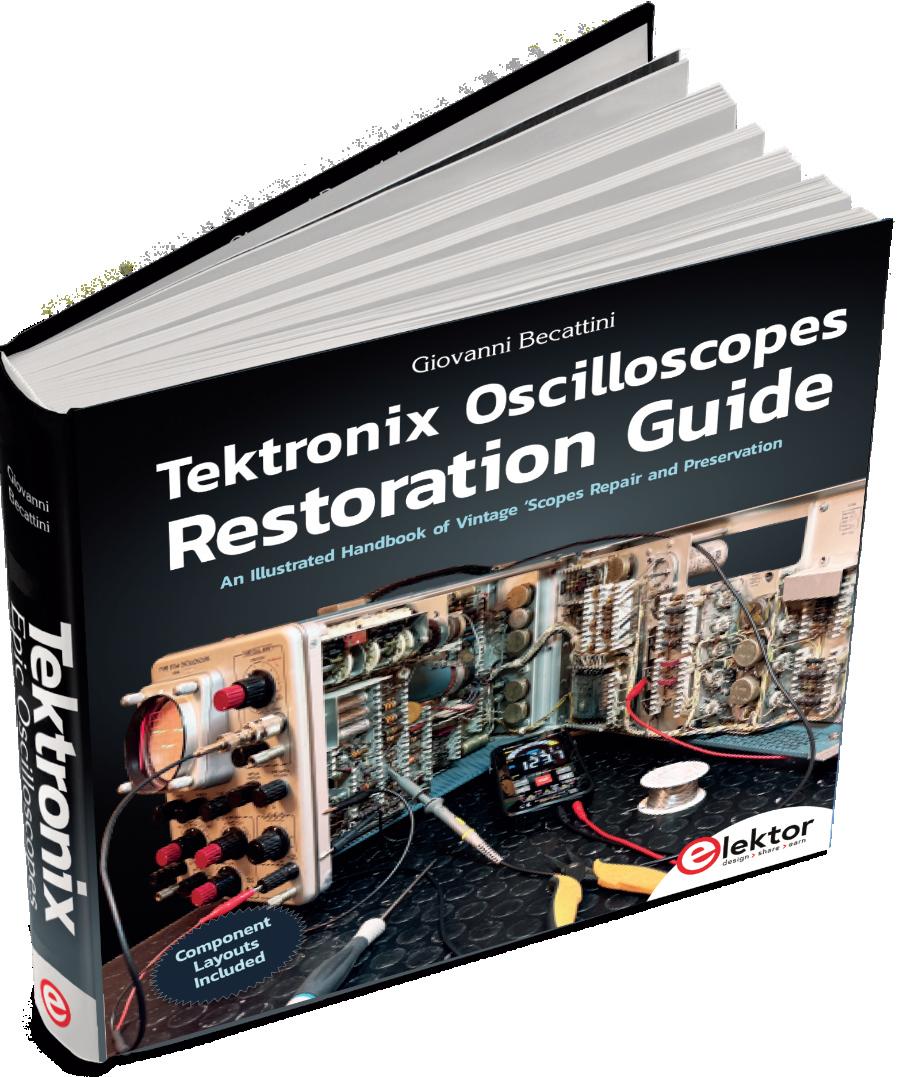
Tektronix Oscilloscopes Restoration Guide
This book contains a lot of information, descriptions, suggestions, technical notes, photos and schematics that can be of great help to those who want to restore or simply repair these wonderful witnesses of one of the most beautiful eras in the history of technology.
Component layouts included! The book includes a nearly complete component layout plan of the original 545 oscilloscope, with relative reference designators. Not found in the original Tektronix manuals, this layout should prove

Tektronix
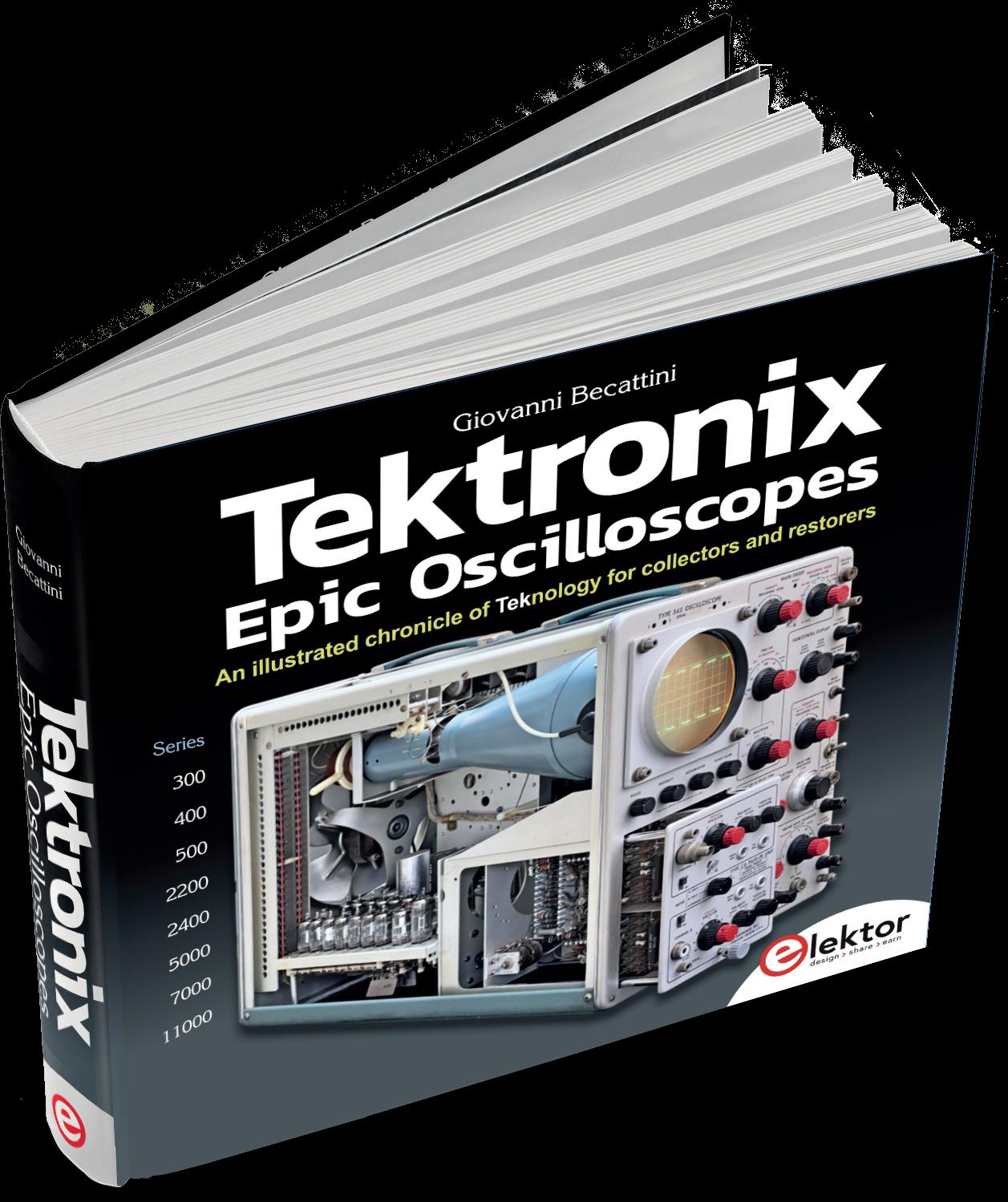
Epic Oscilloscopes
In nearly 600 pages, with hundreds of gorgeous photos, diagrams, anecdotes, and technical data, you'll travel through the history of Tektronix in a superb collector's edition with a technical point of view. The journey starts in the early 1950s and ends in the '90s, after exploring the ins and outs of the most interesting models in the 300, 400, 500, 5000, 7000, and 11000 series, from tubes to advanced hybrid technologies.

Collecting Teks Why so Popular?
The 7000 Series Today
Even today, the Tektronix 7000 Series remains popular among electronics enthusiasts and collectors, as shown by the abundance of eBay listings and the many forums devoted to these legendary instruments.
One reason is surely nostalgia: many of today’s enthusiasts are the boys—and girls—of yesterday, who once used, loved, or simply dreamed of owning these scopes but couldn’t afford them back then (myself included). Now, with time and means on their side, they are finally making those dreams come true.
But there are practical reasons, too. The 7000 Series is still relatively repairable. Thanks to the efforts of dedicated supporters—like TekWiki and the VintageTek Museum—most of the original documentation is now available online. I don’t mean to say they’re easy to fix, but in most cases, restoration is absolutely possible. Many spare parts are still around, and only a rare integrated circuit or CRT might halt your progress. Often, all you need is a VOM, an oscilloscope, and a bit of determination.
Another blessing: most 7000 units don’t include that notorious component called software. This means you can usually understand what’s going on and not be locked out by some digital mystery. It’s just you, the circuit, and your tools—an honest relationship.
Finally, there’s the community. Nearly everyone I’ve met in this little world is kind, helpful, and a little bit like me. There’s a kind of unspoken brotherhood among us—those who understand what it means to fall in love with an old oscilloscope, while the rest of the world shake their heads and ask how we could be so foolish.
Section
Technical Overview
Never before had so many innovative solutions been brought together within a single oscilloscope as in the groundbreaking 7000 Series.
It represented a true synthesis of decades of experience, transforming the oscilloscope from a collection of individual functions into a highly integrated instrument—one that would set both the technical and conceptual standard for generations to come.

The First Wave
The Most Successful
The Tektronix 7000 Series was likely the most successful oscilloscope line ever produced. Introduced in 1969, several models remained in the catalog until as late as 1991—an impressive lifespan for any electronics product. We can broadly divide the 7000 Series oscilloscopes into two groups:
• the “first wave” models;
• the “more modern” models.
From the user’s point of view, these instruments were very similar. But technically, they were quite different. It seems clear that Tektronix rushed to release the first models as quickly as possible—perhaps at any cost. Later, they revisited the designs to improve manufacturability and reduce production costs. Yet they never abandoned the original concept, which confirms how solid and forward-thinking the initial vision had been.
The First Wave
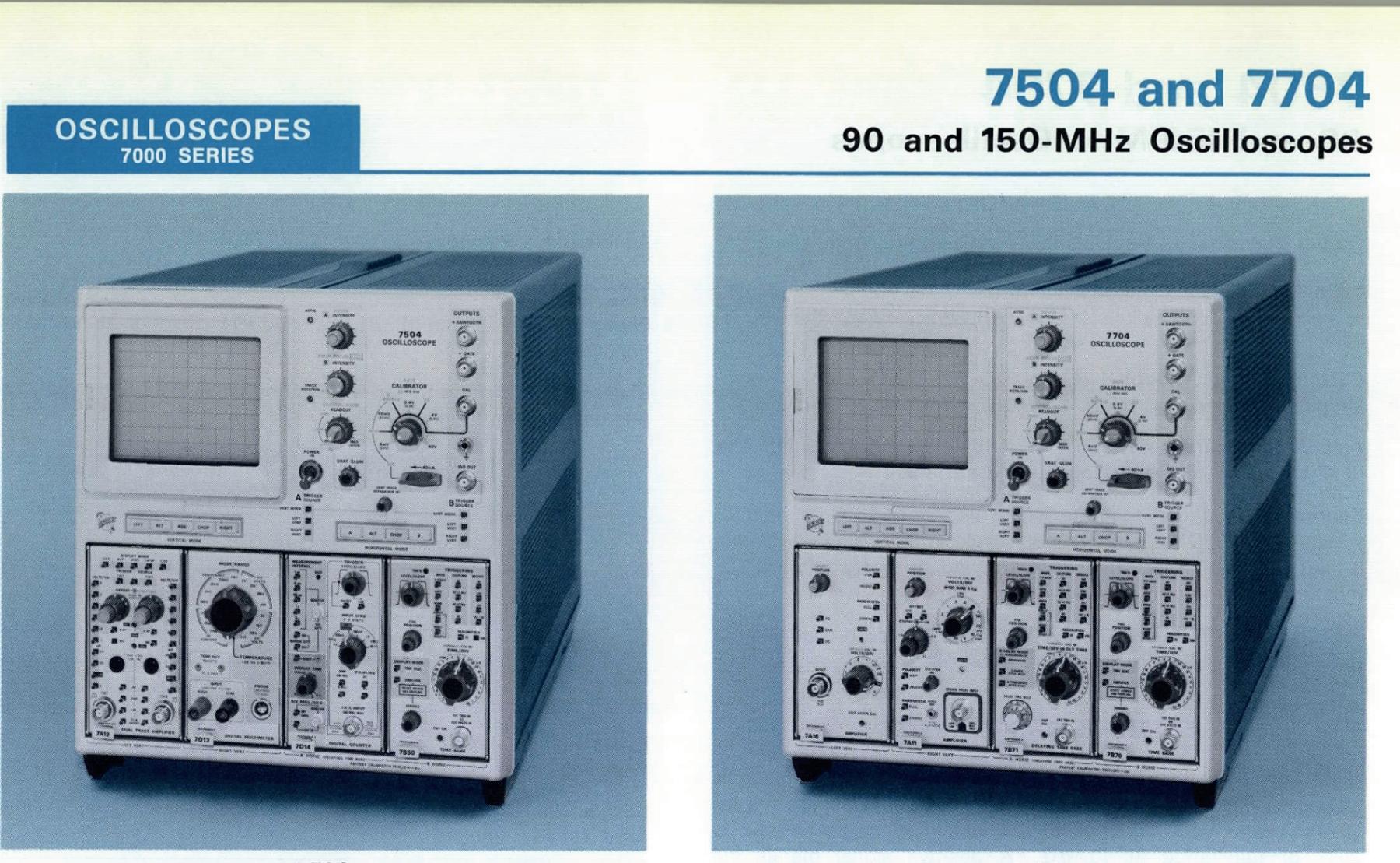
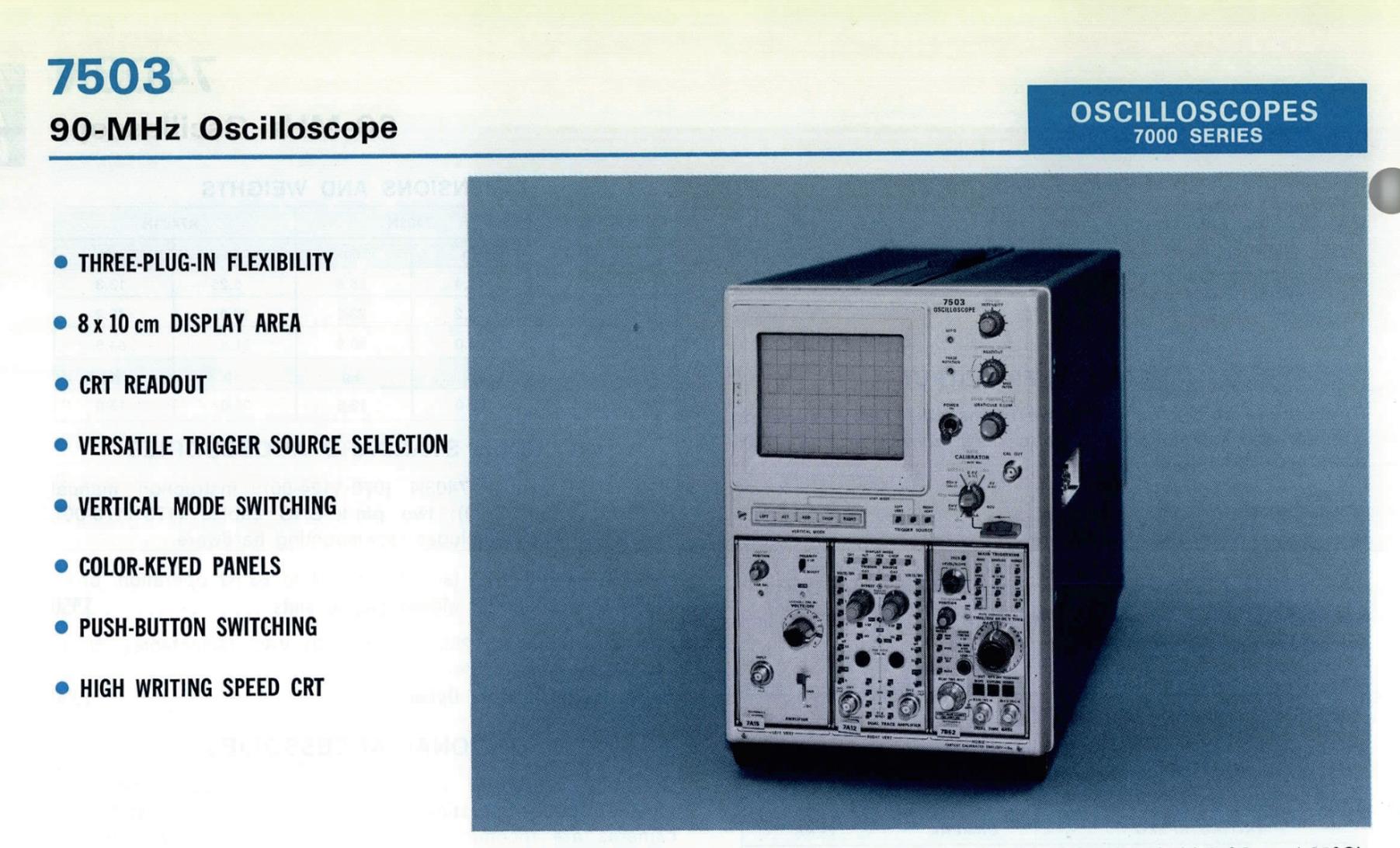
The initial models debuted in October 1969: the 7504 (90 MHz) and the 7704 (150 MHz), both featuring four plug-in bays. A few months later, two more joined the lineup: the 7514, a 90 MHz model with CRT storage, and the more compact 7513, offering just three bays.
These early units were expensive to build, as you’ll see in the chapters that follow. The 7704, in particular, is a prime example—lavishly constructed with gold-plated contacts, dense point-to-point wiring, and meticulous craftsmanship. (Only the 7503 stood out as a somewhat transitional model, being Tek’s first to incorporate a harmonica connector (flat cable) for interboard wiring—though not yet extensively.)
One can almost hear Howard Vollum at that point, smiling and saying: “Well done, team. These instruments are fantastic. Now… let’s figure out how to build them faster and at a lower cost.”
Prices and Competition
Other Factors
To fully understand the evolution of the 7000 Series, we must consider two additional elements beyond technical specifications: pricing and competition. A purely technical analysis is not sufficient to grasp the market dynamics—it’s more like solving a system of equations, where every variable matters.
Hewlett-Packard
When we speak of "competition," we are referring above all to Hewlett-Packard, whose successful 180 Series—introduced in 1966—played a major role in shaping the landscape. We already mentioned that the 180 Series had heavily inspired the 7000 Series, if we wish to avoid the more controversial term copy in reference to Tektronix.
The 180 Series was technically inferior to the 7000s in many respects, yet it was well-designed, practical, and significantly more affordable. Consider these 1971 price comparisons:
• Tektronix 7513 (90 MHz, 3 bays): $1,775 – HP 180A (100 MHz, 2 bays): $895;
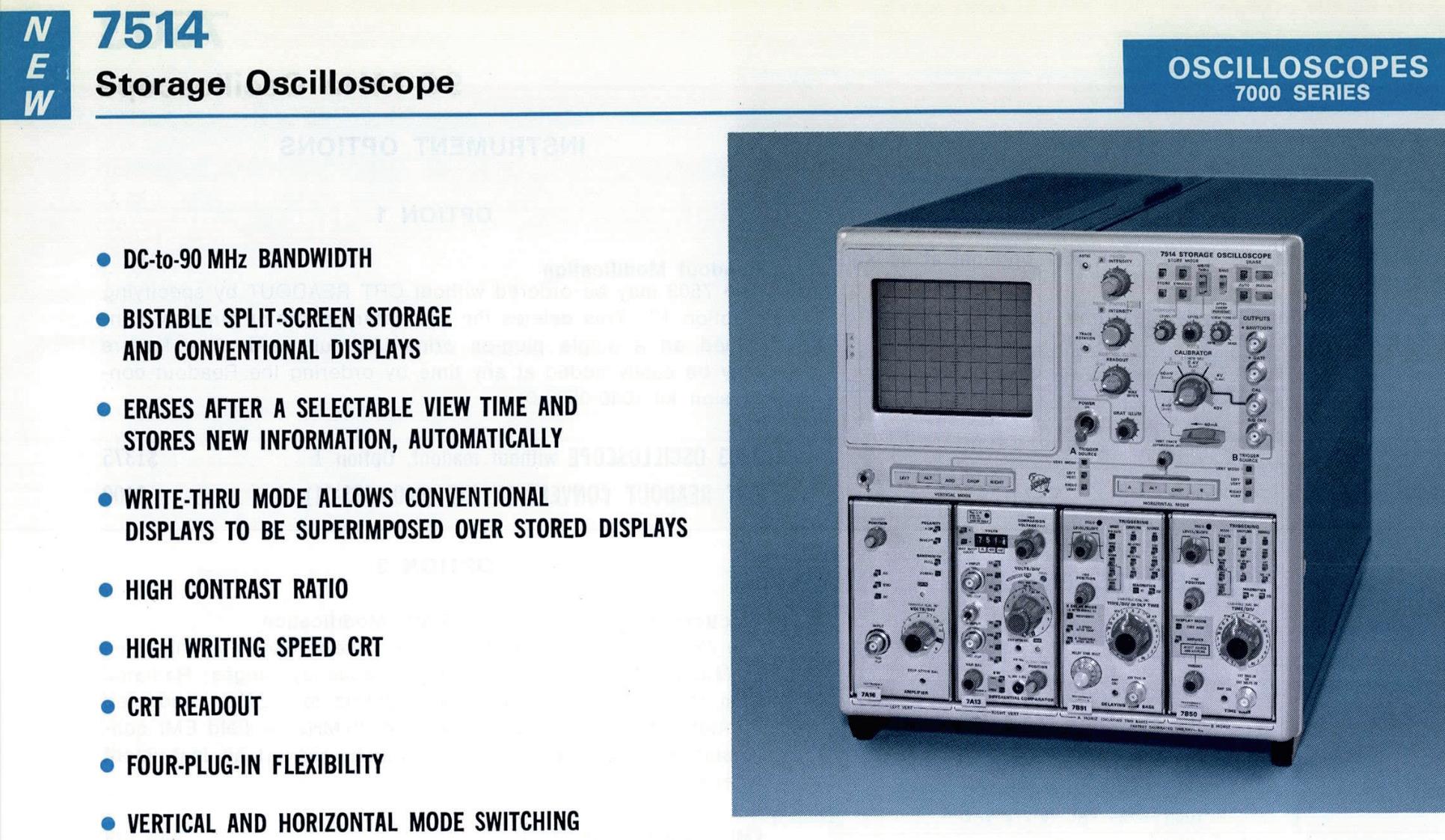
• Tektronix 7514 (90 MHz, 4 bays, storage): $3,200 – HP 181A (100 MHz, 2 bays): $1,850;
• Tektronix 7A18 (dual 75 MHz vertical amplifier): $535 – HP 1802A (dual 50 MHz): $635;
• Tektronix 7B52 (dual time base): $900 – HP 1821A: $800.
In short, while Tektronix clearly offered superior products—especially at the high end—their lineup was comparatively weak in the lower-cost segment. HP’s scopes were simpler and more affordable, appealing to a broader customer base.

“More Modern” Models
This reality highlights why Tektronix had to introduce what we now call the "more modern" models, which—over just a few years—completely replaced the original “first wave” instruments. Importantly, these newer models retained the same external appearance and functionality, preserving continuity for users, while being far more cost-effective to produce. In practice:
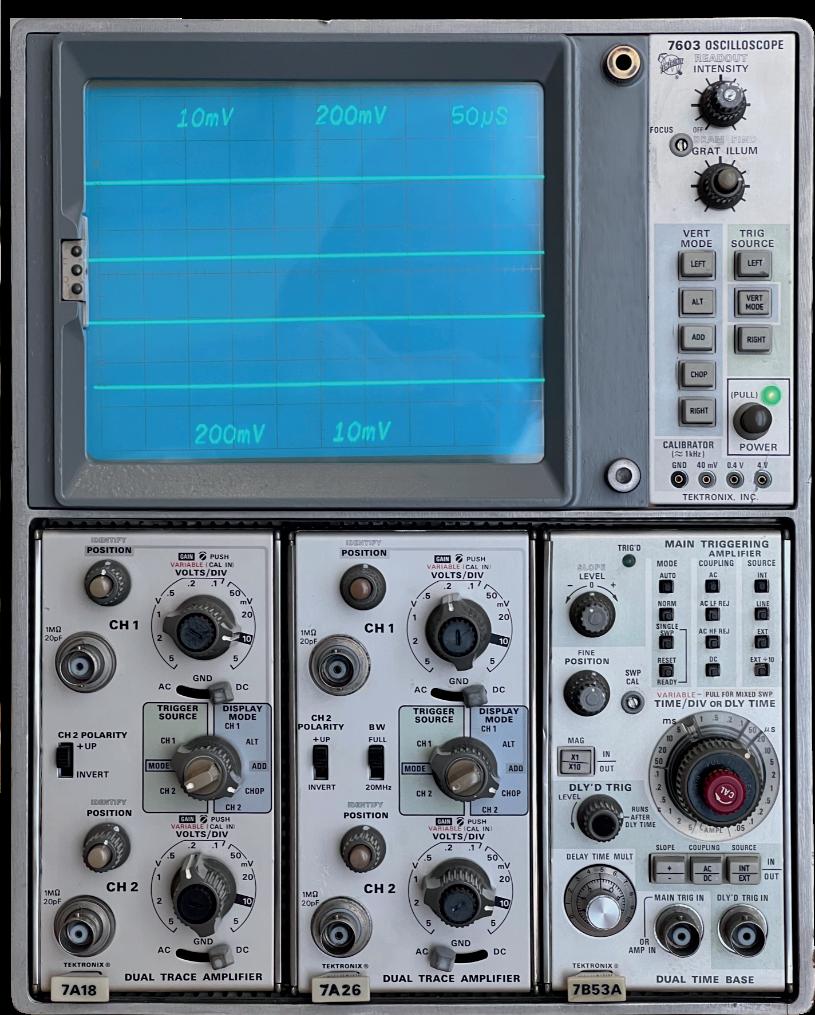
• the 7904 succeeded the 7704
• the 7403/7603 replaced the transitional 7503
• in 1972, the new 7704A refreshed the non-storage high-performance range
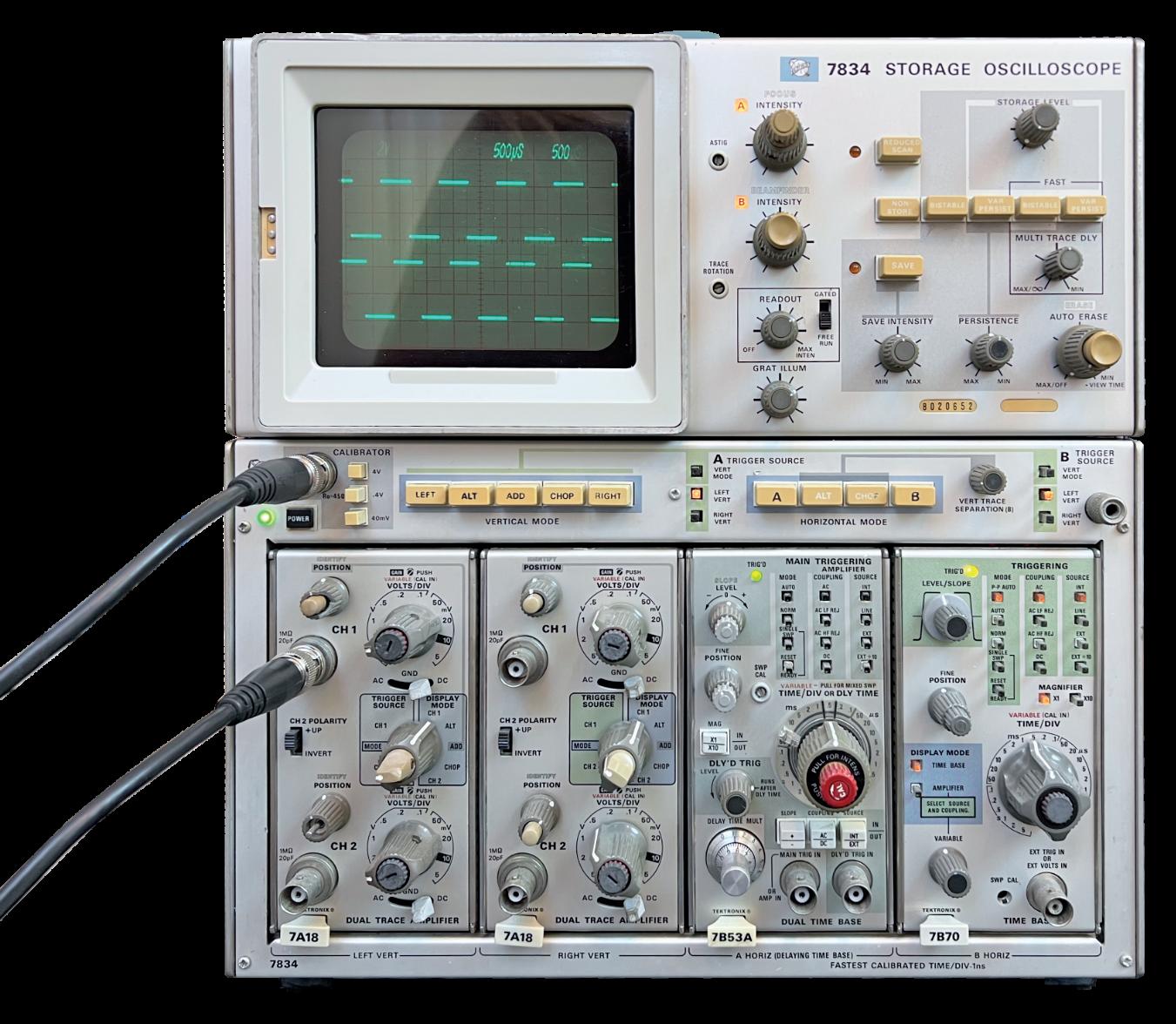
On the storage side, Tektronix released the 7413, 7613, and 7623, which effectively rendered the 7514 (and HP’s 181A) obsolete by 1972. These were soon followed by many more ultra-high-performance models that solidified Tek’s leadership—this time, with stronger cost control and manufacturing efficiency behind the scenes.
The Roaring Years
We can now attempt to sketch a diagram outlining the evolution of the 7000 Series over the years. This chart does not aim to be exhaustive—it primarily includes the instruments I have personally encountered, own, or have documented in my books. The information is based largely on data from TekWiki.
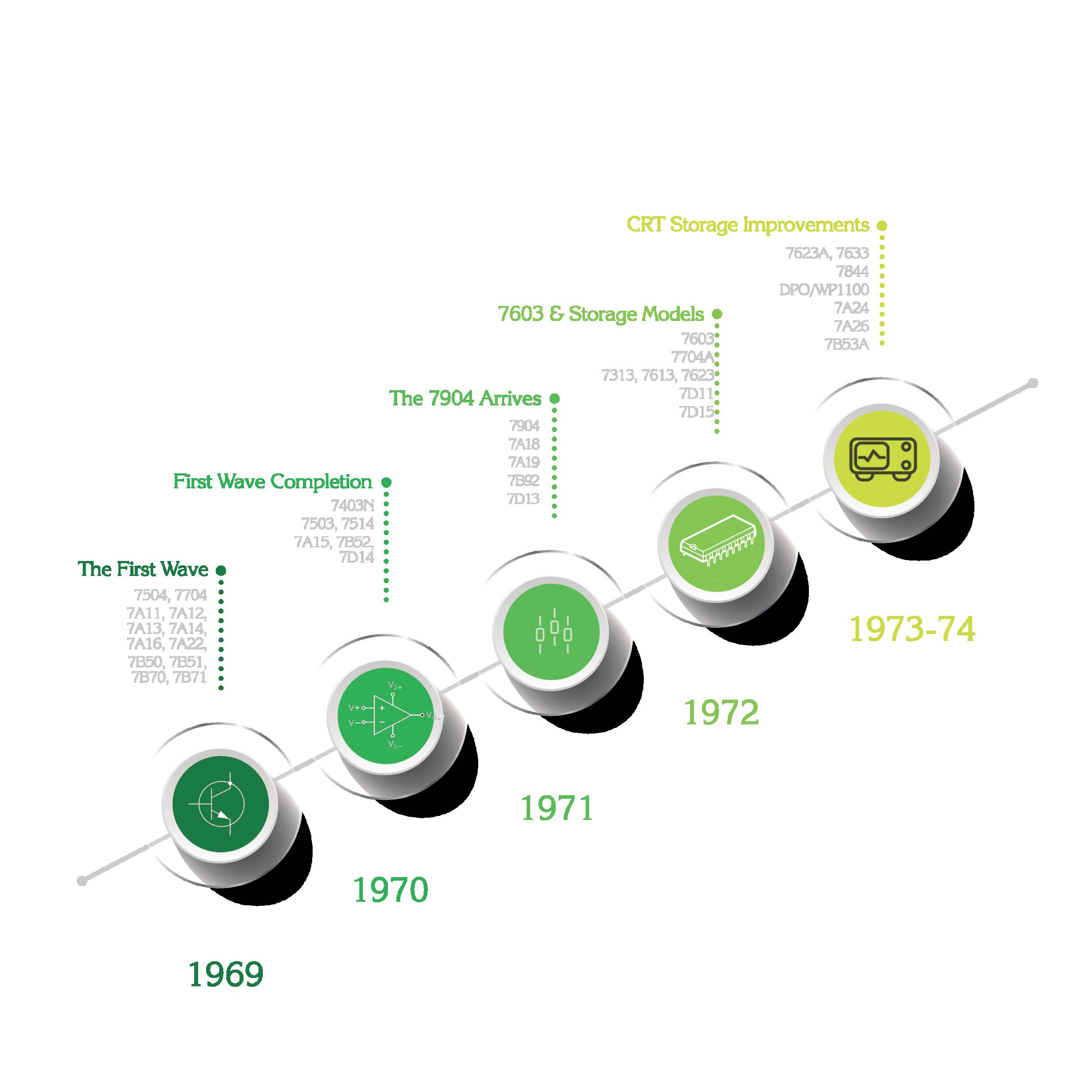
of the 7000 Series

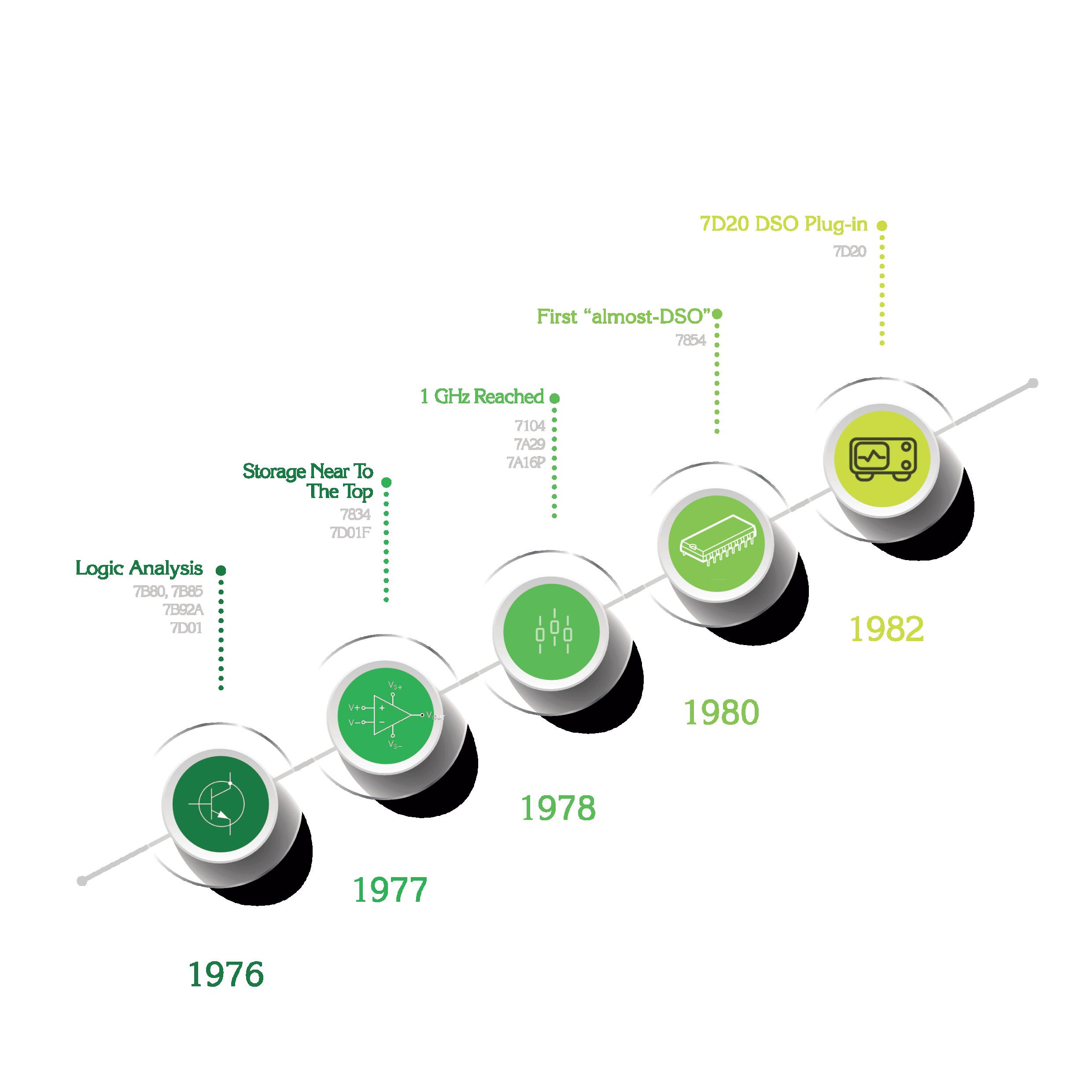
The Darwinian Theory of Tektronix Evolution
At times, the acronyms used for Tektronix's winning 7000-Series products have struck me as a bit mysterious. But I like to think there was a logic behind them—a sort of Darwinian taxonomy of oscilloscopes. Here's how I interpret it:
• the first digit, "7", clearly identifies the 7000 Series and remains constant;
• the second digit is a performance level: the higher the number, the greater the bandwidth;
• the third digit indicates a variant of the base model. For example, “1,” “2,” and “3” were used for CRT storage models, while “4,” as far as I know, was reserved for the dual-beam 7844;
• the last digit is either “3” or “4,” denoting the number of plug-in slots.
Naturally, the second digit couldn’t go beyond nine. So when Tektronix needed to name a model more powerful than anything in the 7900
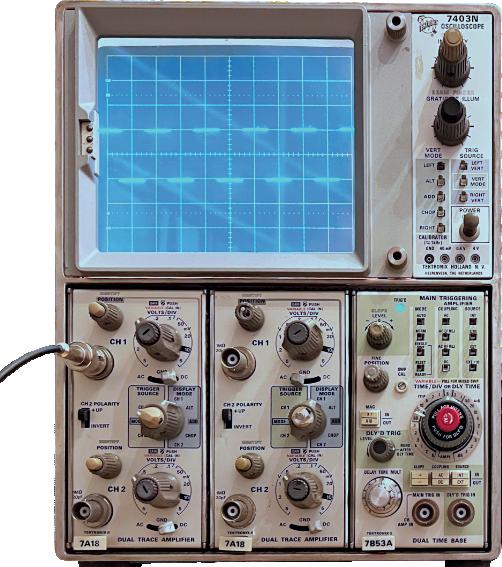
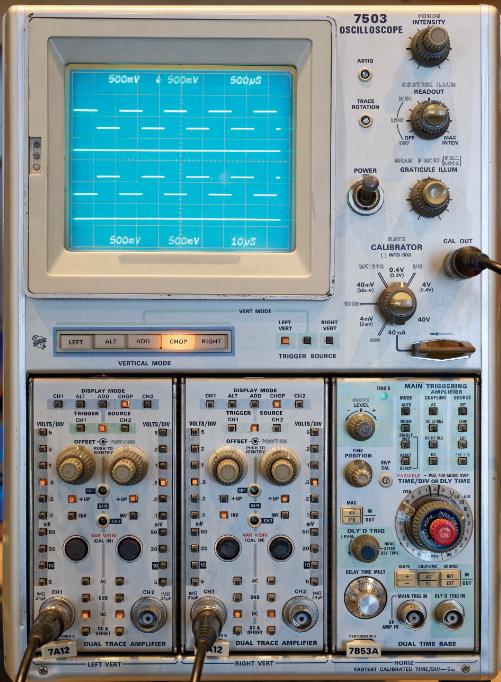
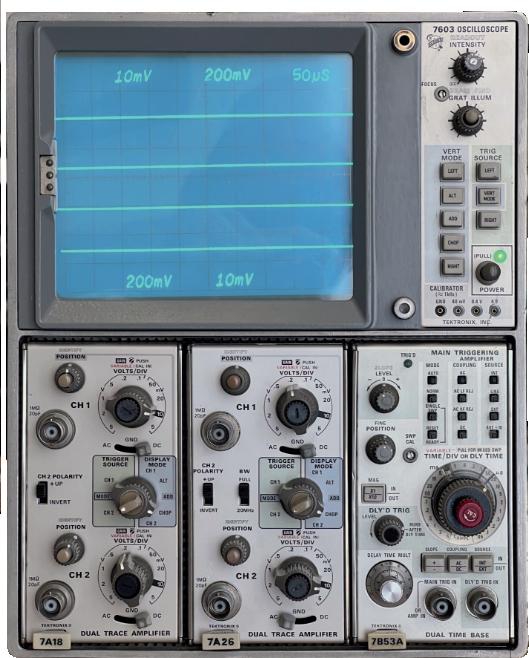
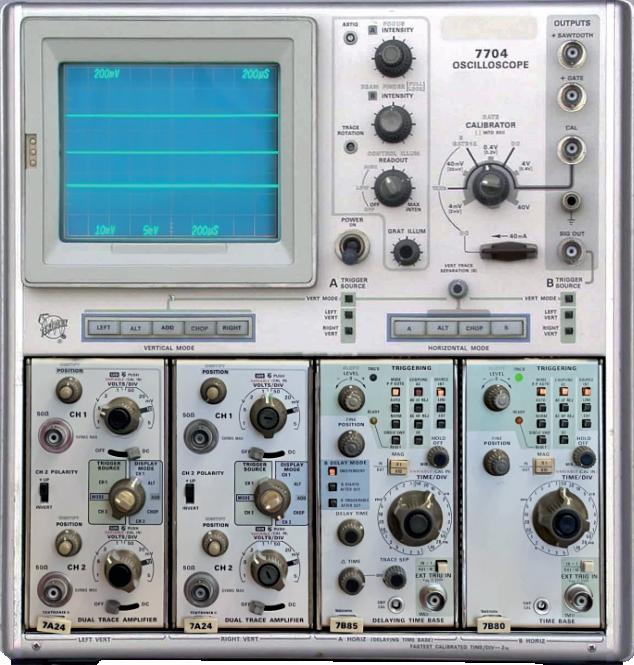
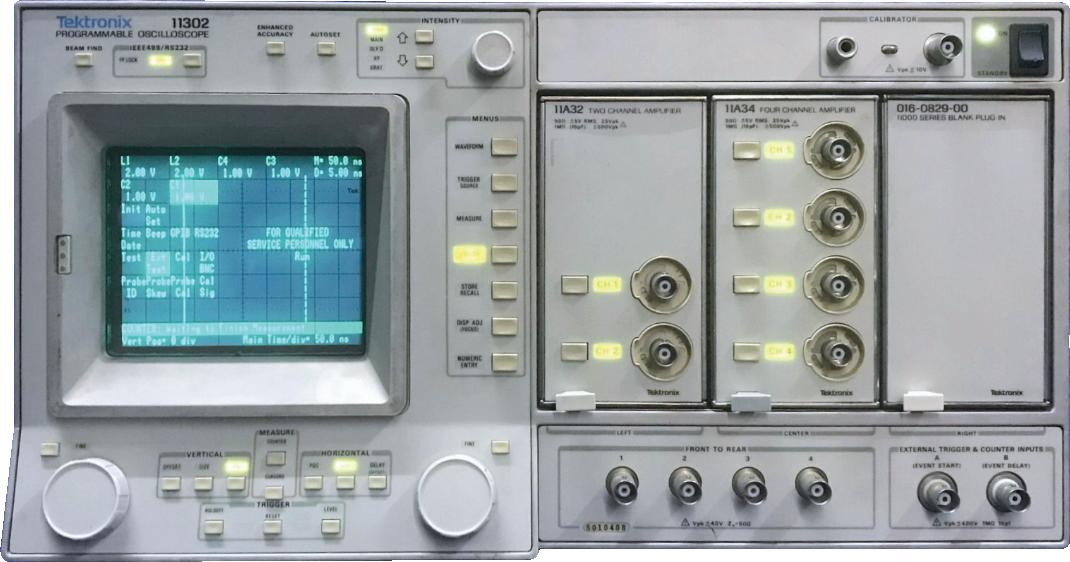

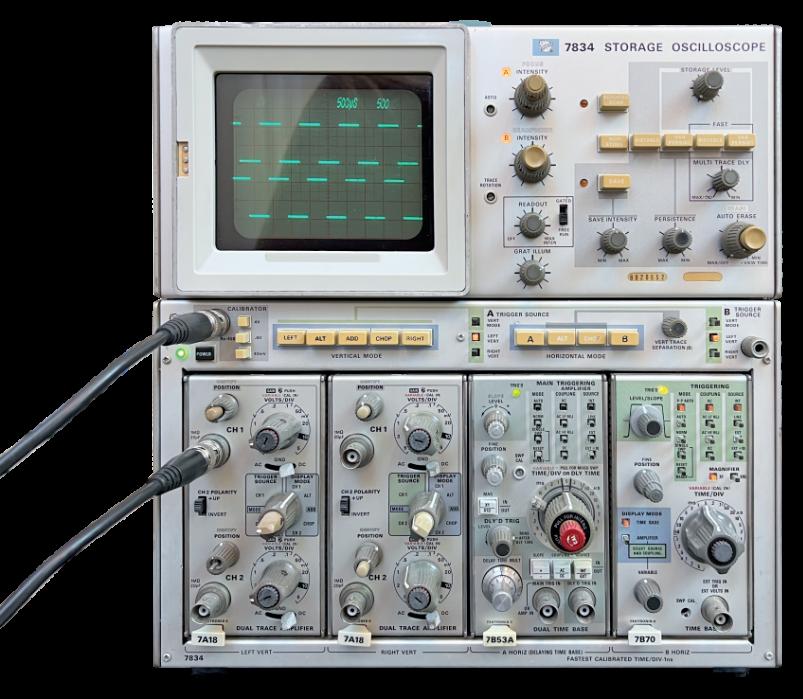
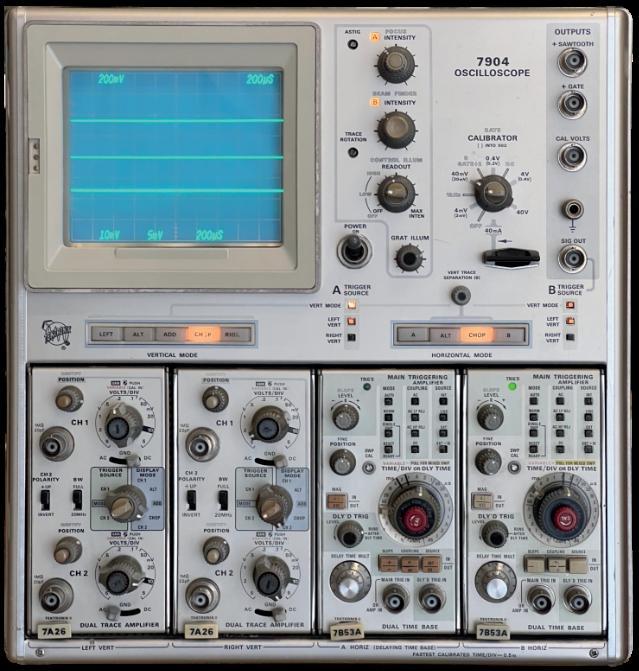
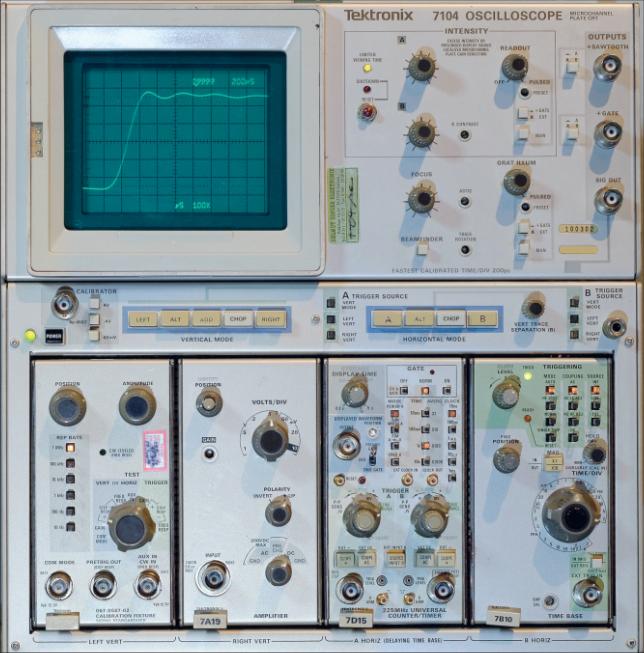
range, they got creative—combining the second and third digits to form "10" for the 7104*, their first 1-GHz oscilloscope. Then came 1986, and with it the next generation of laboratory oscilloscopes. By this point, the logical next step was to enter the “eleven” series—and thus the 11000 Series was born. However, perhaps for marketing reasons, Tektronix merged two very different concepts under a single umbrella: the 11300 Series, the natural successor to the 7000 Series—still fundamentally analog, just more refined, and the 11400 Series, something entirely new, firmly rooted in the emerging world of full-digital oscilloscopes.In short, we can think of the 1130x models as supercharged 7104s—the final heirs of the glorious 7000 Series and, arguably, the last great analog oscilloscopes ever designed by Tektronix.
*Someone once told me that it wasn’t really like that—the number “1” was simply chosen as a performance index because the other digits had already been used. But I prefer Darwin’s view: maybe it wasn’t like that… but it could have been.