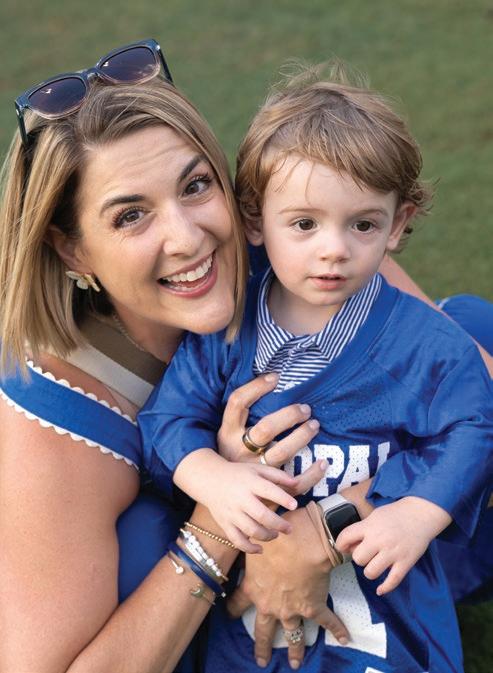
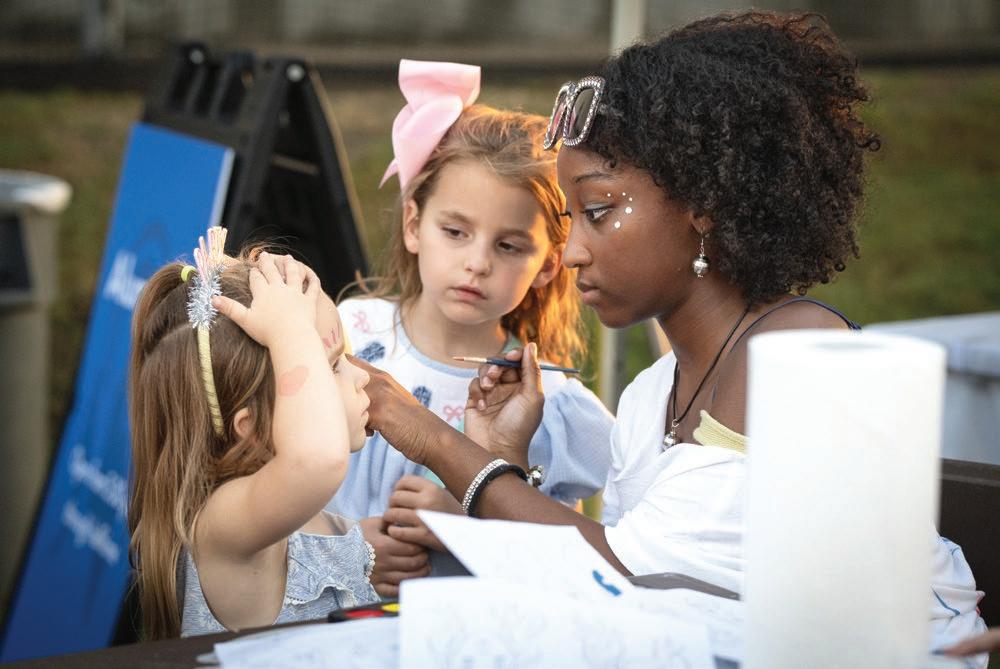
EHS Day of Service • Alumni Council Relaunched Creativity Comes Alive
Episcopal High School was founded in 1983 as a four‑year, coeducational day school within the Episcopal Diocese of Texas.
ACCREDITATION
Independent Schools Association of the Southwest
MEMBERSHIPS
National Association of Independent Schools
National Association of Episcopal Schools Council for the Advancement and Support of Education Educational Records Bureau College Board
National Association for College Admission Counseling Texas Association for College Admission Counseling Southwest Preparatory Conference
MISSION
Episcopal High School, founded and guided by the Diocese of Texas, is an inclusive and joyful Christian community where students discover and develop their individual talents through the Four Pillars – academics, arts, athletics, religion – preparing for meaningful lives in service to others.
ADMISSION
Episcopal High School admits students of all races, colors, and national/ethnic origins to all the rights, privileges, programs, and activities accorded or made available to students at the School. The School does not discriminate on the basis of race, color, or national/ethnic origin in the administration of its educational and admission policies, scholarship and loan programs, or athletic and other school‑administered programs.
ALUMNI
Please share your news with EHS. Send information to:
Steve Leisz sleisz@ehshouston.org 713 512 3673 facebook.com/groups/EHSHoustonAlumni instagram.com/ehs_alumni
The Episcopal High School Magazine, Fall 2025
IN THIS ISSUE
From the Head of School 04
All-School Day of Service 06
Founders Day 07
20 Years Since Hurricane Katrina: The EHS Connection 0 8
Bright Knights 12
Our Founding: Opening of School 16
Pop Quizzing the Teachers 24
Alumni Council and Football Tailgating 30-31
Alumni Spotlight: Healing Art Therapy 32
Creativity Comes Alive: The New Crain-Galloway Center for the Arts 34
EHS Endowment: An Overview 36
Remembering Former Employee, Alumni Parent Barbara Barnes 40
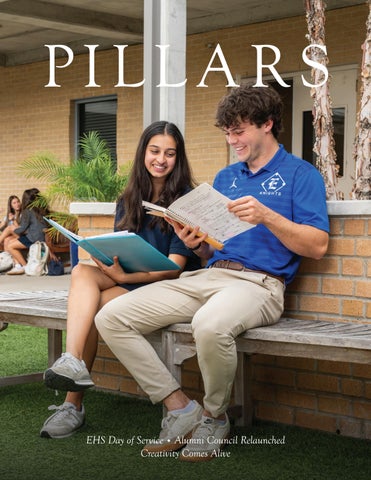
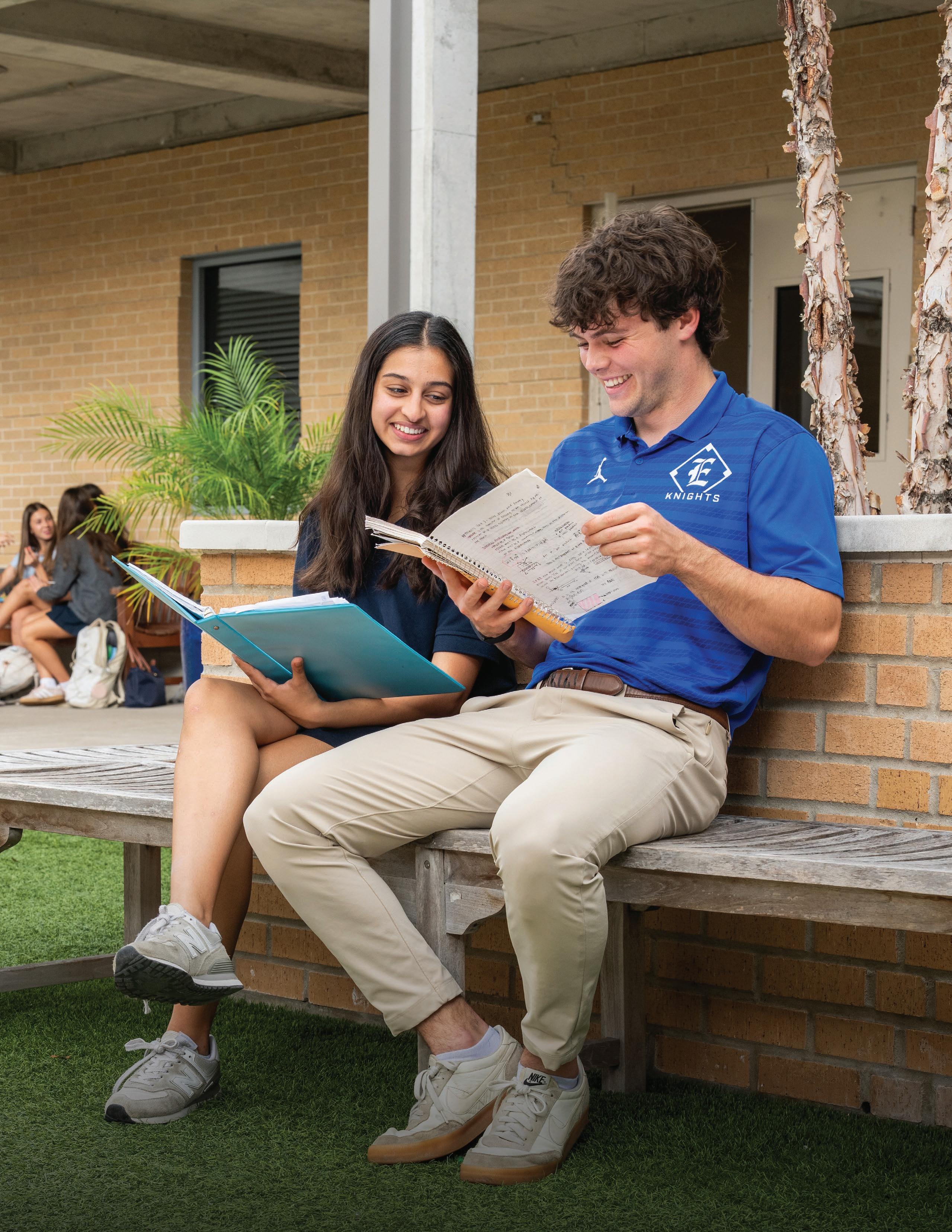
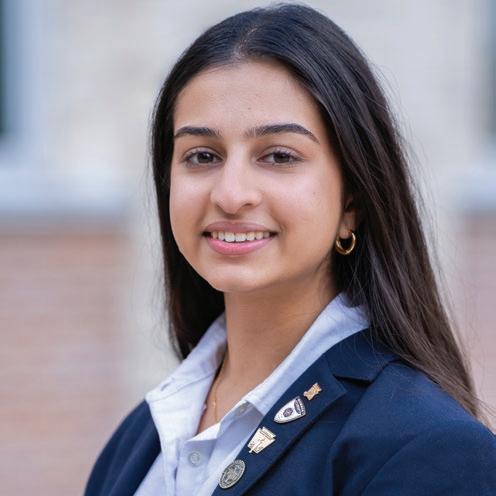
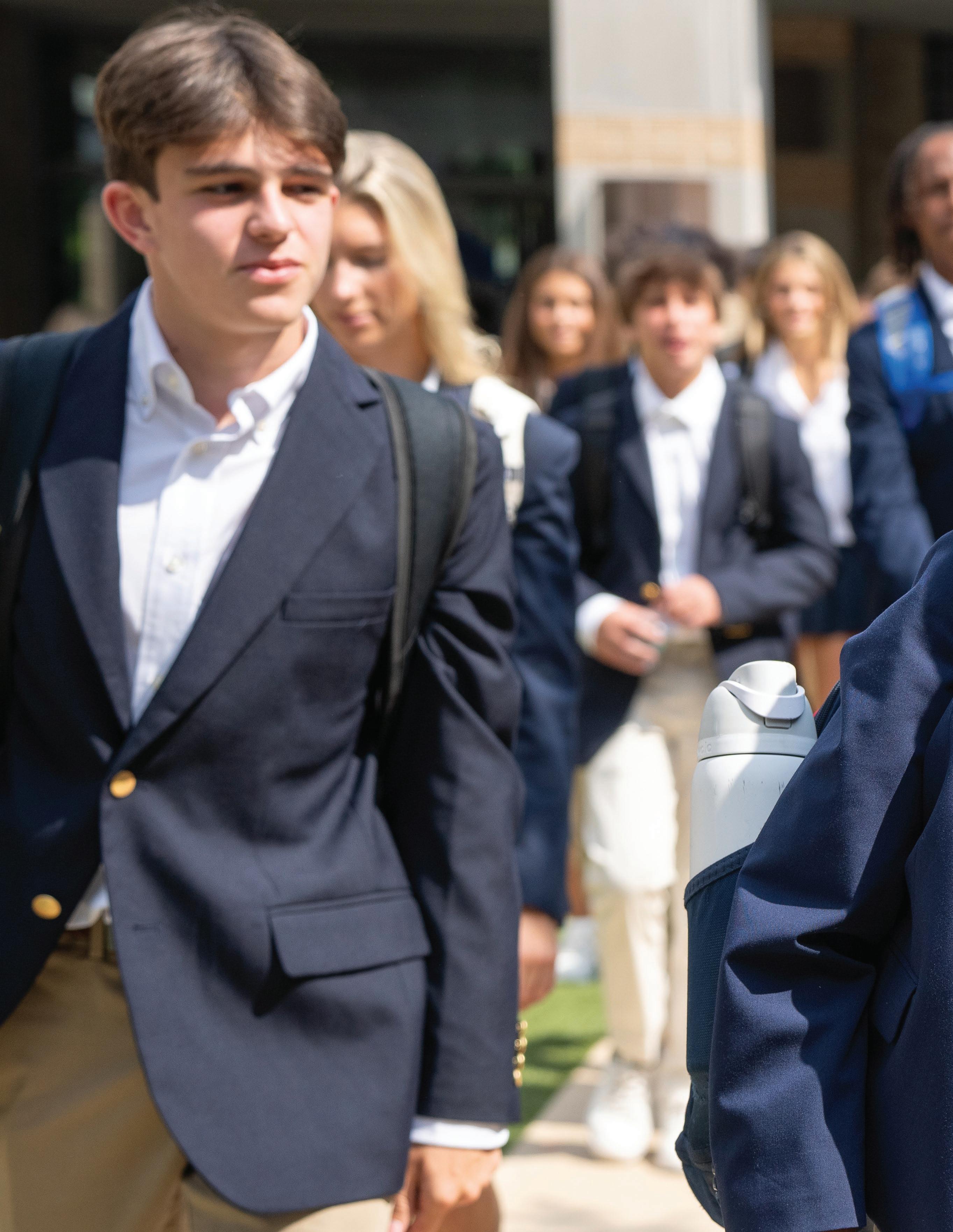
Bright Knights Anya Pant ’26 and Reid Sasser ’26 enjoy green space, community, and time to decompress after school.
FROM THE HEAD OF SCHOOL
Dear EHS Family,
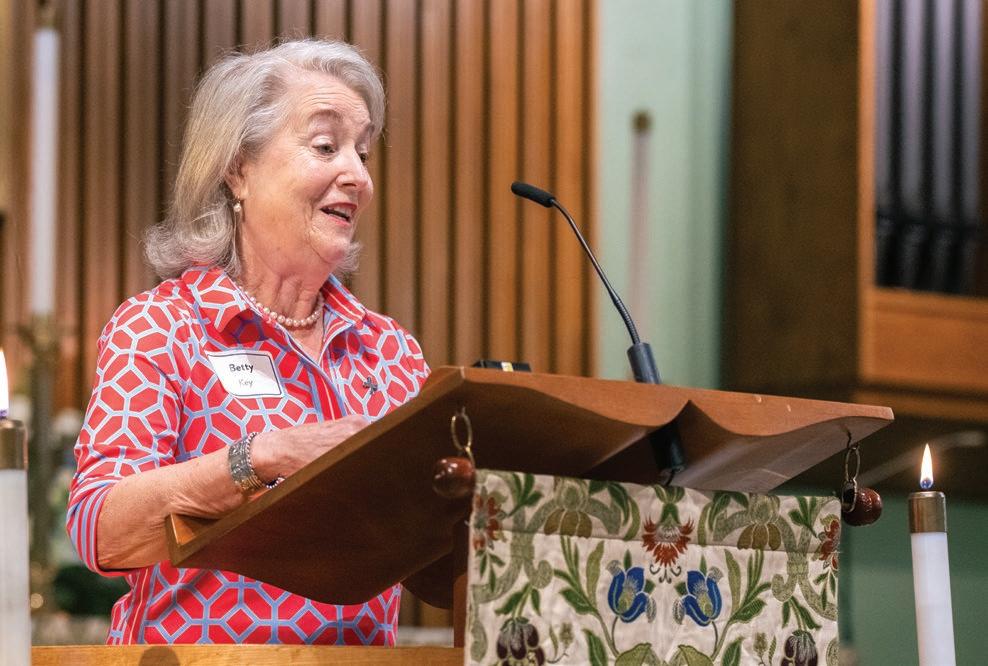
Betty Key responded, “I’m in,” to Bishop Benitez in 1981 when Episcopal High School was a bold idea. That moment inspired a lifetime of service, leadership, and unflagging dedication to making EHS a reality. When Betty spoke to the School at Founders Day Chapel this year, she seamlessly wove this past into our present. Betty reminds us that the foundation of the School is not things: pillars and concrete. Rather it is the people involved, each of us.
Indeed, an important reminder that people make the place, and what a place we have made with our people! This is true in moments large and small. Read within the inspiring role EHS played in one of those large moments twenty years ago when New Orleans evacuated after Hurricane Katrina. Ned Becker, current grandparent and the School’s second headmaster, singlehandedly rallied the Houston independent school community to help the students who had evacuated from New Orleans and were unable to return to their own independent schools for months.
Read further about some of the more intimate moments in which current seniors Reid Sasser and Anya Pant, who, inspired by teachers like Erin Russe and Richard May, work so hard and achieve so much good on and off campus. Learn about the positive difference that alums like Addy Purdy, Class of 2014, continue to make on the world, and hear how it was EHS that helped ignite their passion.
It is an amazing thing to think that when Founding Head of School Jess Borg reported to the Board of Trustees on the opening of the School, there were 151 freshmen and sophomores and some 30 faculty and staff – and tuition was $4,750! From that foundation rises all that is EHS today.
What a wonderful foundation!
Go Knights,
Ned Smith
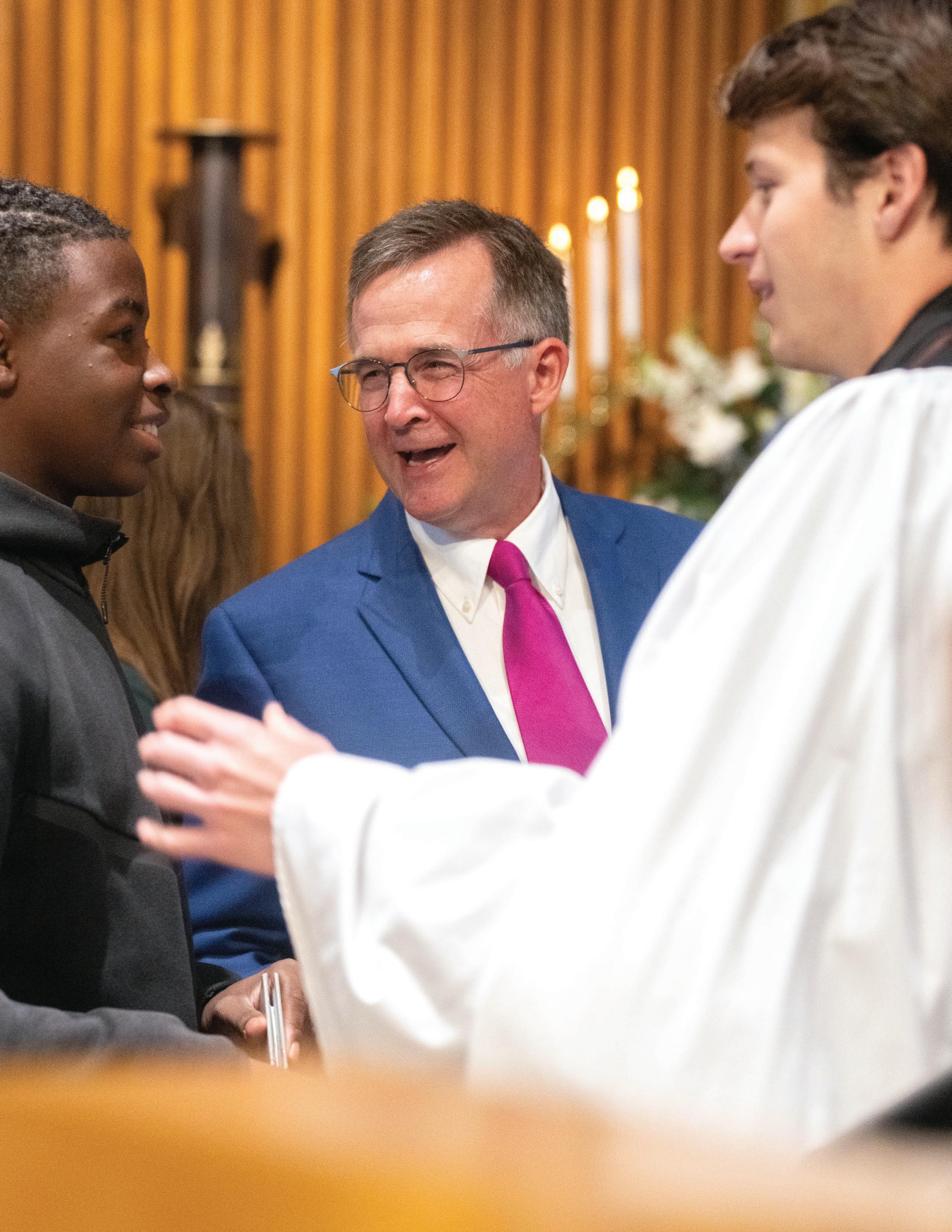
Head of School Ned Smith talks with Student Lector Aiden Copeland ’28 and Student Worship Leader Will Giesler ’26 ahead of Daily Chapel.
EHS ALL-SCHOOL DAY OF SERVICE
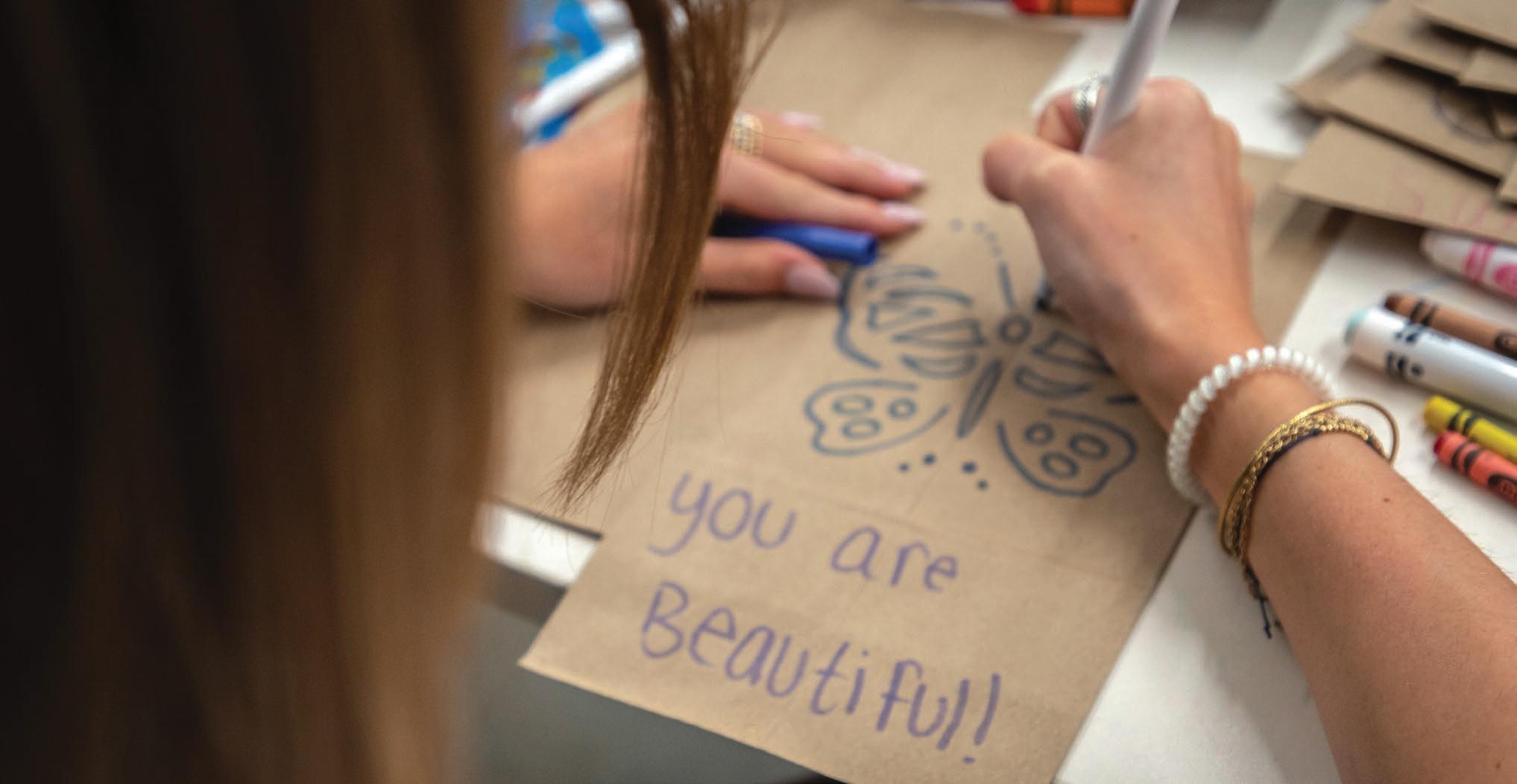
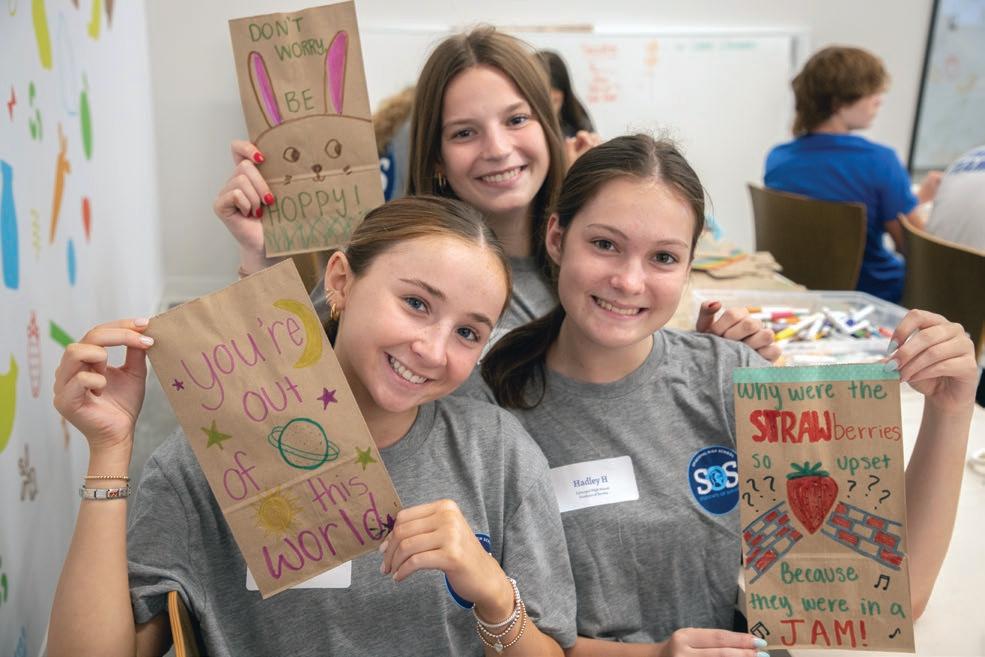
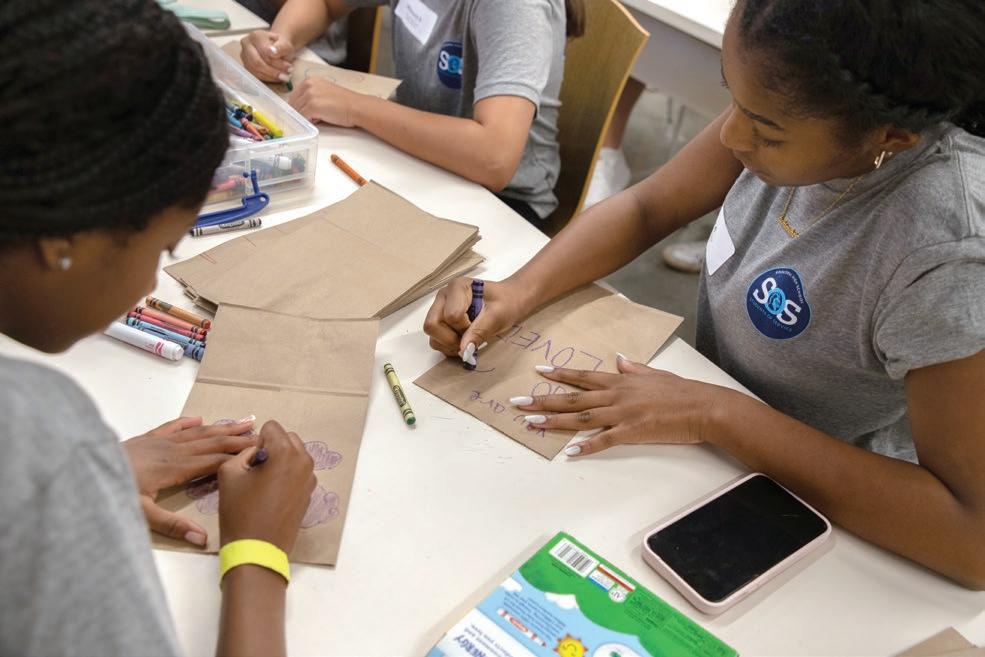
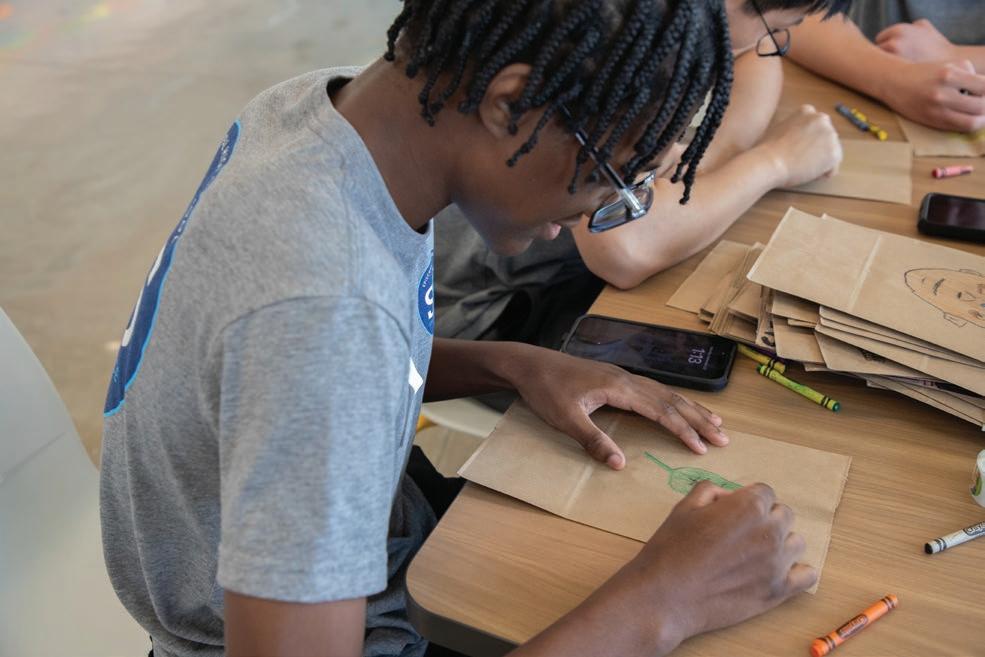
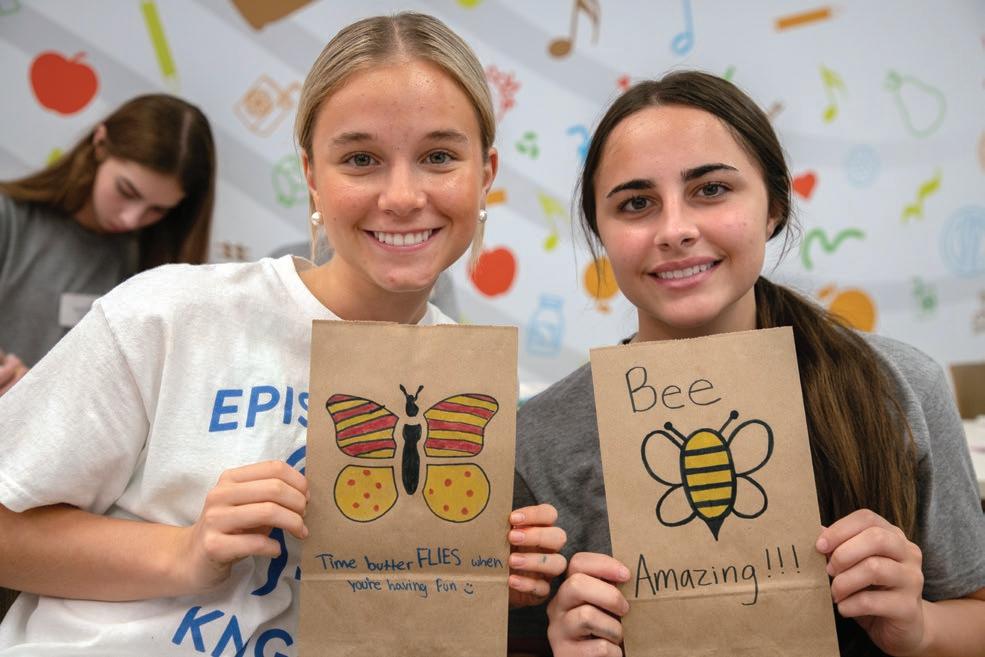
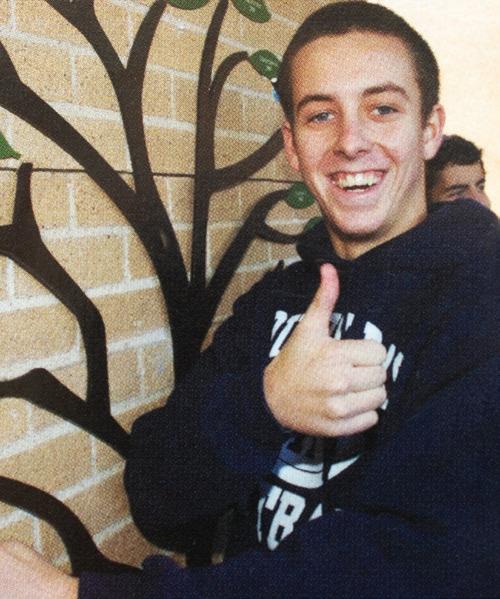
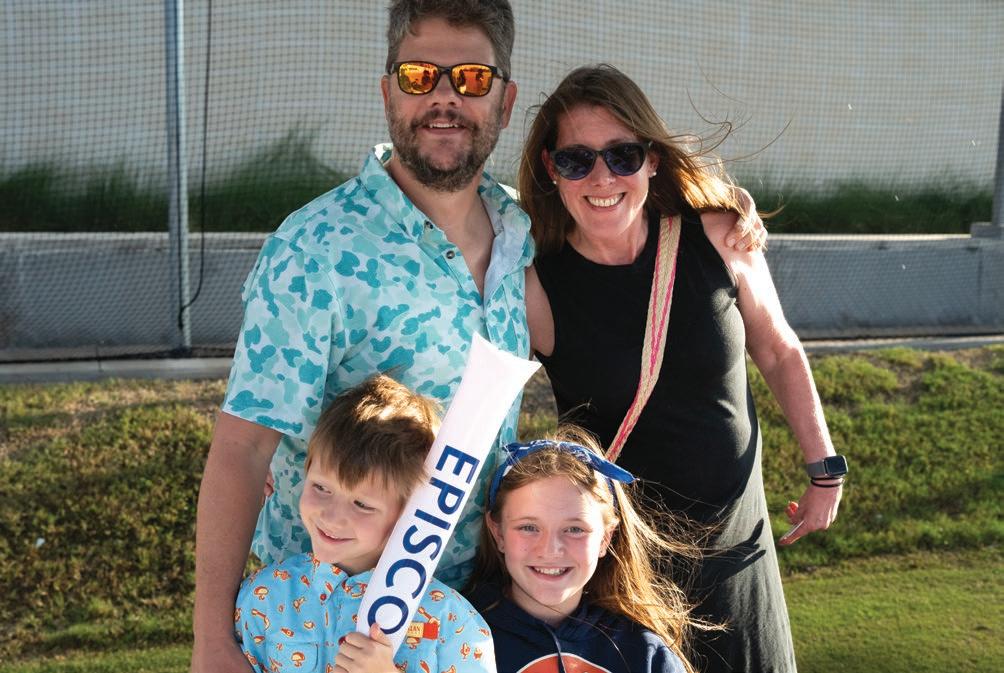
Students, families, faculty, and staff spent a Saturday morning in September at Kids’ Meals, creatively decorating bags with messages of encouragement to prepare for the next group of volunteers, who would pack the bags with healthy meals to be delivered to nearly 10,000 households in the Greater Houston area.
Photos by: Jack Zoeller ’27
“One definition of ‘found’ is ‘to set or ground on something solid.’ I think that is what happened with the founding of Episcopal High School: It was grounded on something solid. The foundation of this School is not pillars and concrete. It’s the people involved; it’s each of you. You are founders also because EHS continues to be founded. Each of you takes from this School, but you put back in also. You’re continuing to lay the foundation.”
– Betty W. Key EHS Founder, Former Trustee, Former Parents Association President, and Alumni Parent
FOUNDERS DAY
Each year, we gather to honor the visionaries whose faith, generosity, and determination gave life to this remarkable School. Their courage to dream—and to act—laid the foundation for the inclusive and joyful community we celebrate today.
In 1981, when the idea of Episcopal High School was a bold vision, Betty Key, along with her husband Jim, was among the first to raise her hand and say, “I’m in.” That moment sparked the start of a legacy defined by leadership, service, and unwavering dedication. On October 17, EHS Founders Day, Betty Key spoke to students, faculty and staff, and trustees with a message that this School will continue to be founded.
20
YEARS SINCE HURRICANE KATRINA
During the last weekend of August 2005, current grandparent and second Head of School Ned Becker was in New Orleans leading a Board/Vestry Retreat for St. Andrew’s Episcopal School. As Hurricane Katrina hurtled across the Gulf heading for the Louisiana coast, Becker cut short the retreat and headed back to Houston on Sunday morning, encouraging the participants to gather their families and follow him to ride out the storm. At the same time, he sent a message to the Houston independent and parochial school heads to gather in his office at 6:00 p.m. to discuss what they could do to support New Orleans families.
On Monday, August 29, an hour before Katrina made its primary landfall near Buras, Louisiana in Plaquemines Parish just southwest of New Orleans at 6:10 a.m., the levee system in New Orleans failed, causing massive flooding throughout the city. Having lived in the city for 13 years as Head of Metairie Park Country Day School, Becker was well aware of the potential peril facing those living in the bowl shaped city, most of it below sea level. That morning, he gathered again with Houston’s independent and parochial school heads, proposing that they take in all the New Orleans refugee students who would be fleeing to Houston. Those schools, including EHS, took in close to 1,000 students, some of whom stayed for the entire year. The school heads collectively agreed to waive tuition, thinking that the New Orleans schools would need those funds to rebuild. By the middle of the week, Becker was on Houston Mayor Bill White’s Katrina Task Force, responsible for coordination of public and private schools and churches.
Over the following days and weeks, Hurricane Katrina, a Cat 3 storm at landfall, killed more than 1,300 New Orleans residents, displaced at least a million, and caused $125 billion in damages. By the Houston Chronicle’s best estimate, “240,000 fled New Orleans
to Houston in the week following landfall with roughly 25,000 staying at the Astrodome and other Reliant Park shelters. The city and county established a task force with over 60,000 volunteers, pitching in with clothing, supplies, and on site aid. Mayor Bill White arranged apartment housing for thousands with vouchers to be reimbursed by FEMA. More than 5,000 students enrolled in HISD schools.” The Chronicle estimates that as many as 60,000 refugees may have remained in Houston to this day.
Working with the New Orleans heads, Becker created what was lovingly known as the Office of NOLA West, housed on the EHS campus in what is today the chaplains’ offices in the Convent. Staffed by EHS faculty and administrators as well as New Orleans upper school heads, the office served as a clearinghouse for New Orleans families trying to secure school spots for their students and housing and basic essentials for their families. Throughout the fall, the office served as central command for all the New Orleans independent school operations. With the help of the EHS Parents Association, EHS parents arranged housing for families, faculty, and staff fleeing New Orleans. Many opened up their garage apartments, spare bedrooms, or available rental properties to the refugees and collected and distributed uniforms and books.
In all, under Ned Becker’s leadership, EHS flawlessly integrated over 80 students from New Orleans, the largest number of high school students of all the Houston area independent schools. EHS also added 20 New Orleans teachers into the program, creating additional classes to accommodate the additional students so that class sizes remained the same. The New Orleans teachers were paid by their schools. At the Board Retreat of September 9 10, Lynda Underwood endorsed Becker’s plan and noted that “since EHS was formed on faith, compassion, and love of students, it is the right
thing for the School to take these students,” congratulating Becker on his leadership and compassion.
With then Head of St. Andrew’s Episcopal School in New Orleans, The Reverend Dub Brooks, and EHS trustee Joel Shannon, Becker also spearheaded the opening of a lower school for the overflow New Orleans independent school students at Palmer Memorial Episcopal Church. New Orleans elementary school teachers, paid by their schools, assumed the teaching positions, and Reverend Brooks provided the leadership.
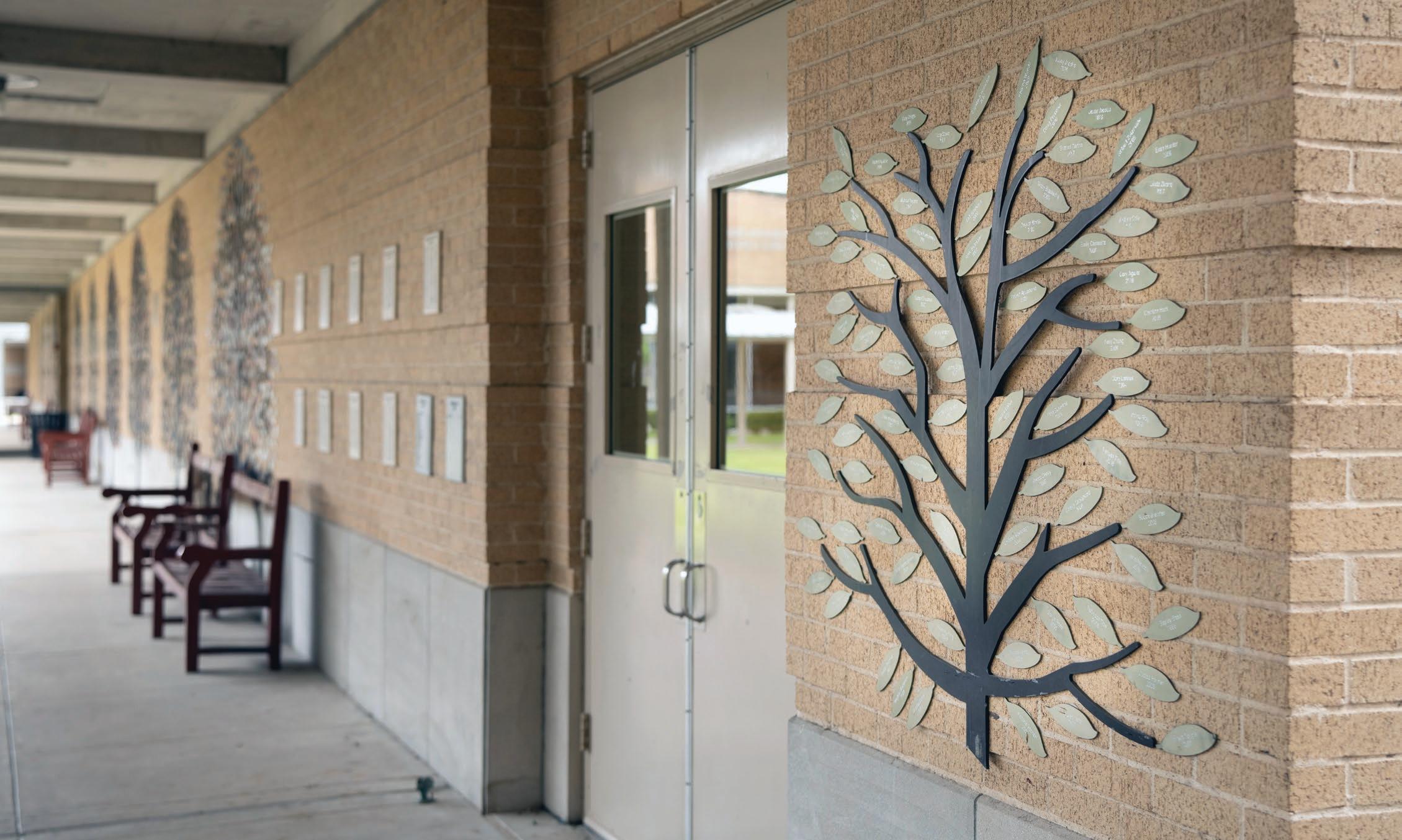
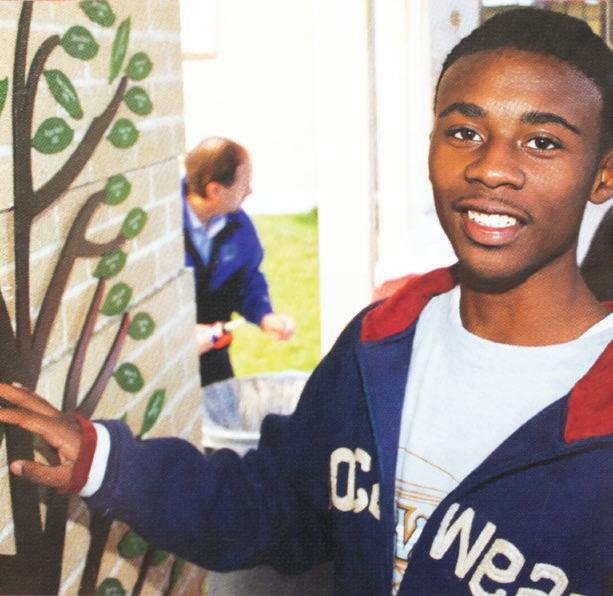
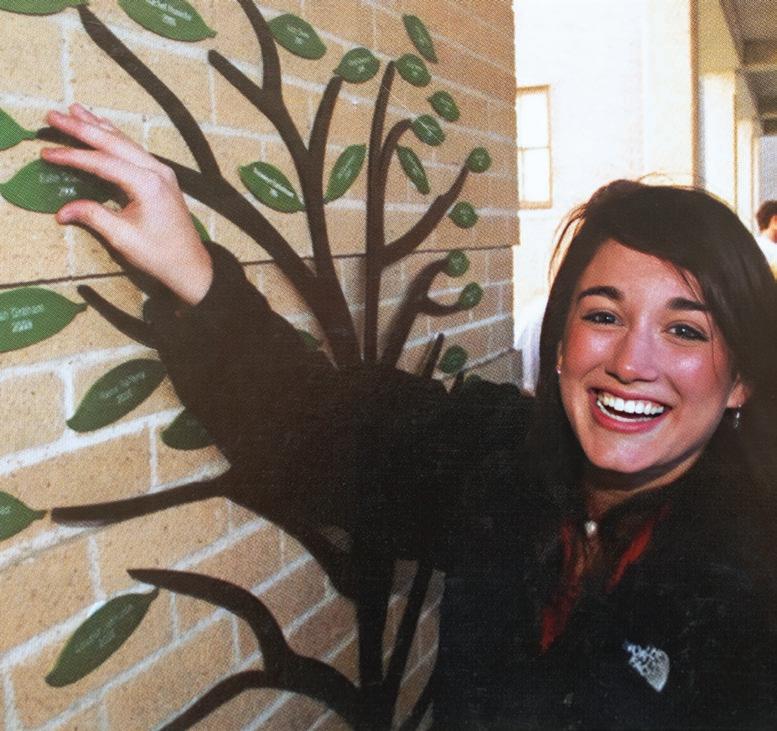
Most of the New Orleans independent schools were able to reopen in January 2006 in some capacity, and most of the refugee students left after fall exams. A small number of students remained through the spring, and four students graduated from EHS over the next three years. Following EHS tradition, all of the NOLA students at EHS placed leaves with their names on a special leaving tree that resides on the wall of the Crum Fieldhouse closest to the Convent. For his leadership in coordinating independent and parochial schooling for hundreds of displaced New Orleans students and serving on Mayor White’s Katrina Task Force throughout the fall, Ned Becker was recognized in February 2006 with a Proclamation by the Mayor for Edward C. Becker Day. In addition, the EHS trustees proudly presented Becker with its first Edward C. Becker Humanitarian Award for his significant contribution of service and leadership.
Besides the “soul wrenching pictures and devastating stories,” and, of course, what we learned about disaster response plans, Becker remembers “the human element.” In his many meetings with the Mayor’s Task Force, he explains, “I never heard anyone say that we were facing an impossible task.” Yes, there were challenges and angst, but “the sense of urgency was balanced by a tremendous amount of maturity and delegation of responsibility for taking appropriate action...[I]n this moment of crisis...we all understood the interrelatedness of all our communities, states, and constituencies...I am even more gratified that we learned more about one another as people.”
He continues: “And to see our EHS students bond with and lovingly understand the plight of their NOLA classmates was beyond gratifying for me. What a lifelong lesson in the flesh in empathy and compassion! Everything we stood for as a School!”
– Nancy Laufe Eisenberg, Former Associate Head of School
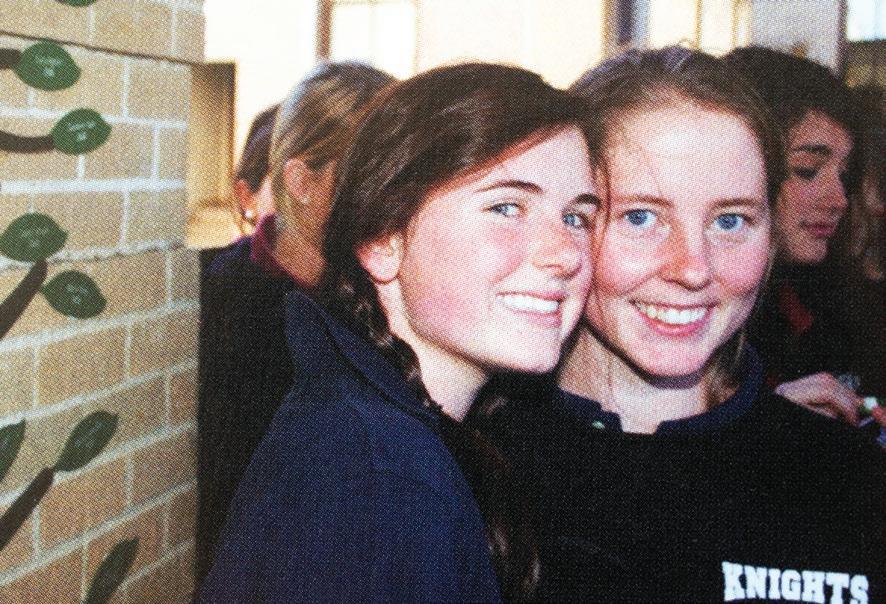
Senior girls are all smiles during the first EHS Senior Sunrise!
LEADING AND CONNECTING AUTHENTICALLY
Reid Sasser ’26
Some might assume that what make Reid Sasser Stand Out at EHS are his academic accolades, athletic victories, and leadership roles, but his teachers and friends all agree—Reid is set apart by his exceptional character. Reid brings a relational approach to all that he does, first looking for ways to connect with others, and then strategizing how to parlay those relationships into successful collaborations, on the court or field, in the classroom, or just among friends.
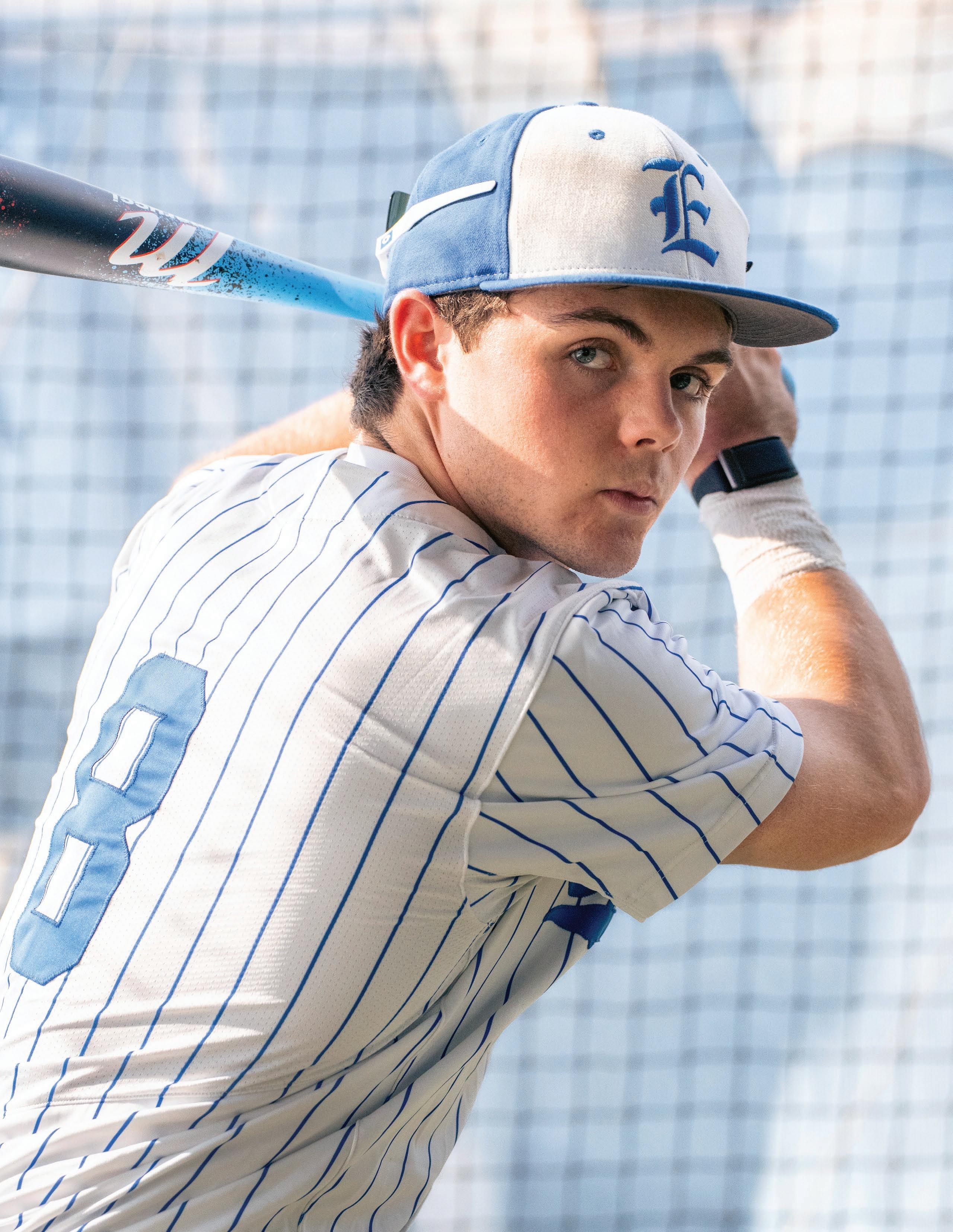
Having decided to attend EHS to participate in our elite baseball and basketball programs, Reid quickly made himself indispensable to both teams, having played on both the JV and Varsity teams in his freshman year. Reid asserted himself as a leader in both sports. Basketball Coach Wayne Jones says, “Reid leads with empathy and kindness. His impact goes far beyond the court.” As a Senior Captain on the Varsity Basketball team this year, Reid coordinates pre season training and fosters team community. Having originally assumed his basketball commitments might come second fiddle to baseball, Reid reflects that “over the last four years, I’ve grown to care about basketball as much as anything else. The team is small, close, and feels like my teammates and I agree that we owe each other the respect of trying our hardest.” About this commitment to hard work, Coach Jones agrees, saying, “Reid embodies the qualities we all admire and hope to cultivate in ourselves.” On the baseball diamond, Reid uplifts his teammates by coordinating pre season competitions to foster community and morale before the season begins. Coach Matt Fox has observed Reid “empower those around him to be better with a heart of understanding, grace, and accountability to be the best they can be as well. I trust Reid to give his all with passion as he strives to carry out all tasks with excellence and precision. The baseball team counts on his relentless drive to find a way to win.” Reid is going to take his brilliant ability for building community through athletics and care to the baseball team at The University of the South in Sewanee, Tennessee, where he will attend college next year.
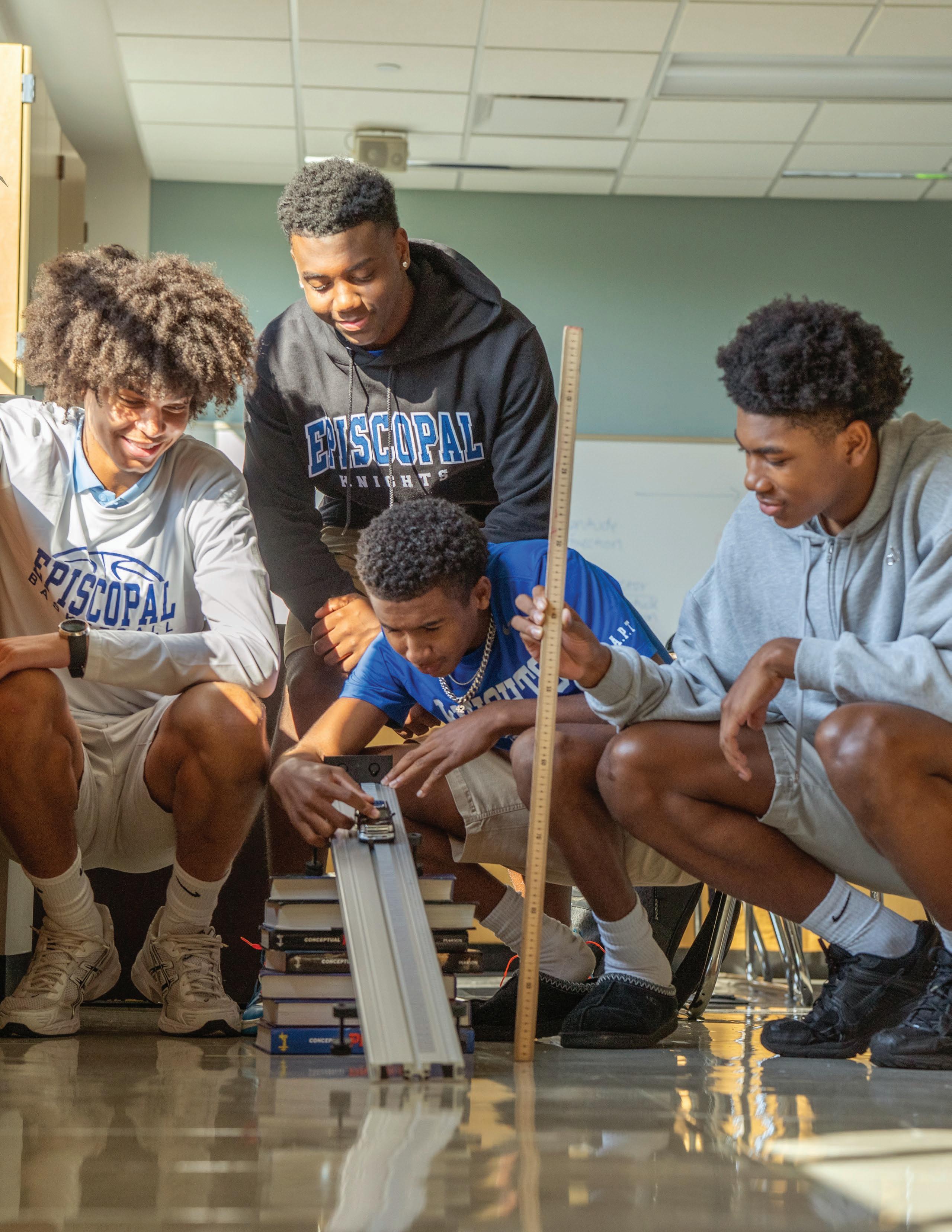
Reid brings a collaborative spirit into the classroom as well, finding as much fulfillment in leaning on his classmates as he does in succeeding academically. About what he regards as his toughest class at EHS, Mr. Flanagan’s Honors Physics, Reid says, “I struggled but felt a togetherness with my classmates, so it felt like we were fighting through the difficulty of the class together.” Working beside upperclassmen in the course, Reid credits this togetherness as helping to “get me out of my shell.” To instructor John Flanagan, Reid’s “willingness to contribute his solid insights to the class” is what sets him apart as a scholar. Mr. Flanagan says, “Reid was one of the first to volunteer for a lab demonstration without worrying about how he looked.” This desire to succeed without self consciousness is rooted in Reid’s striving toward betterment. He says, “The strenuous academics at EHS have helped my discipline and time management; learning to succeed in difficult classes and not letting them overwhelm my life was hard to learn but ultimately really helpful.”
It isn’t just teachers who see the best in Reid, but fellow students, too. Hand picked by outgoing senior leadership, Reid became the President of FCA–Fellowship of Christian Athletes–one of the largest clubs at EHS. Reid, involved in FCA since his freshman year, says “FCA brings a sense of community at EHS outside of sporting events and Daily Chapel. It’s not just based on school spirit, but a common goal of improving our faith.” FCA faculty sponsor John Drexel sees Reid “approach every task with diligence and a quiet sense of purpose,” adding that “Reid’s kindness and thoughtfulness are evident in the way he treats others, always putting their needs ahead of his own.”
“His compassion and unwavering dedication to serving others are what truly set him apart.”
Wayne Jones
Boys Basketball Head Coach
Reid not only prioritizes the evident needs of others, but works to anticipate these needs as well, even in far away communities. Reid transformed a summer vacation to Cuba with his family into an opportunity for outreach in the form of a sporting equipment drive. Reid worked to gather as much used, good quality baseball equipment as he could and brought it to a church in Cuba, gifting the equipment to the church’s baseball team and even coaching them through an impromptu practice. The impact of this trip sparked a lasting passion in Reid, one he hopes to center his collegiate studies around: “I felt great about sharing the equipment and bonding with the church members. This trip changed what I imagined I’d do with my life and pushed me toward wanting to pursue Civic and Global Leadership as a major at Sewanee.”
To Reid, being a Knight means “being part of an inclusive community that is fun, exciting, and supporting. Being a Knight means lifting up my peers in whatever they do. Being a Knight means looking forward to walking the halls the next day.” He says that his time at EHS has had a lasting impact on him and will surely shape him as a future scholar and professional: “The biggest takeaway I have from being an EHS Knight is that actions speak louder than words. You can say you love and support a person, but it is how you go about loving and supporting that person that will truly affect them. EHS has taught me how to deal with failure, the importance of learning and speaking with a person before judging them, to include anyone and everyone, and to love the person that's difficult to love.”
– Tennessee Sipe, Communications Assistant
THE PURSUIT OF KNOWLEDGE
Anya Pant ’26
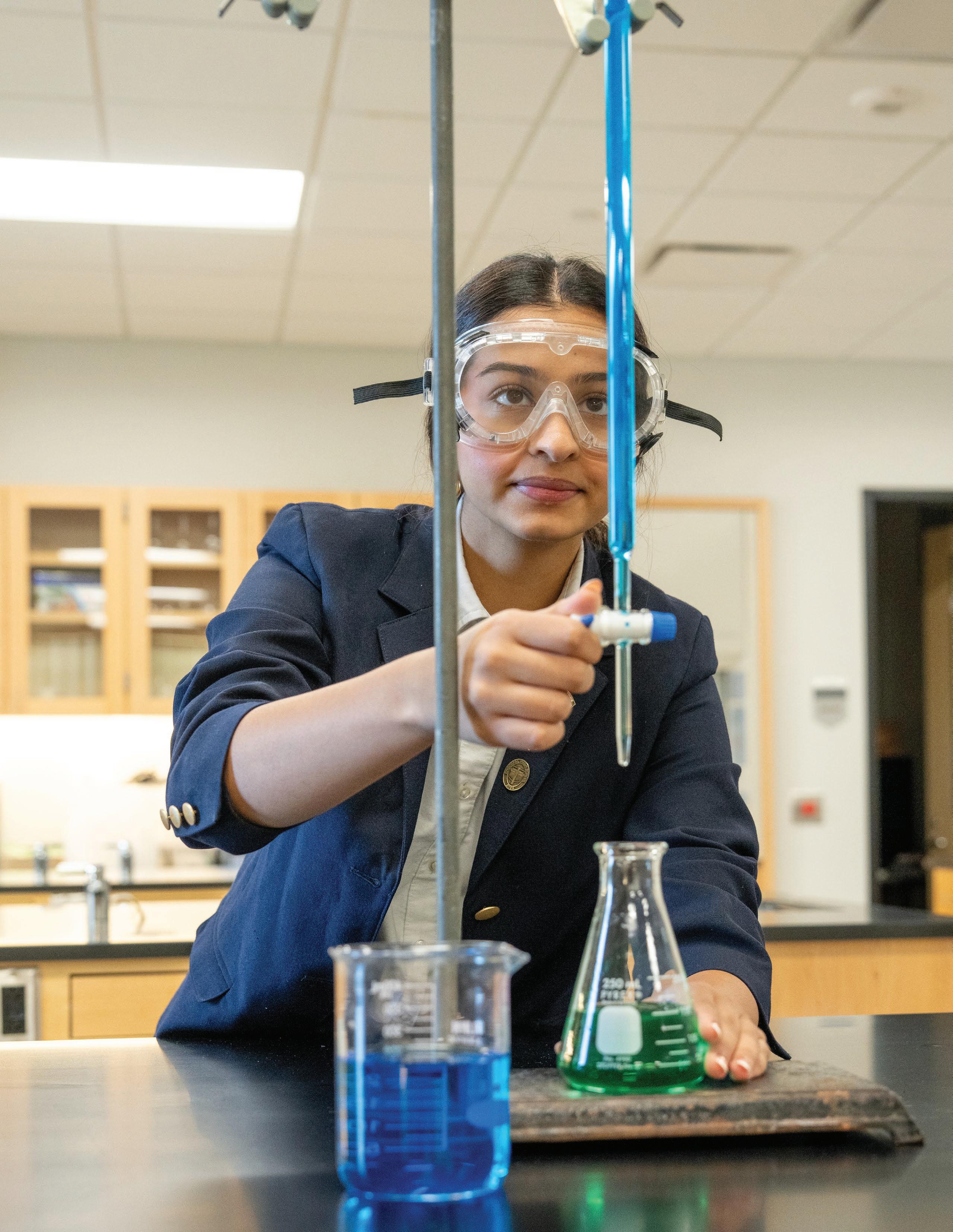
Anya Pant is using the skills she’s learning in EHS classrooms to make the world a better place. Whether it’s using AP Chemistry tools to participate in internships and produce original medical research or capitalizing on the leadership acumen she’s cultivated by leading groups like D.I.A. and the Knight Times, Anya is the epitome of our EHS Mission: leading a meaningful life in service to others.
While it was not EHS science courses that sparked Anya’s interest in medicine, they surely challenged her toward growth. In fact, she resisted the rigor of a class like AP Chemistry, saying, “I heard that AP Chem was really scary, so I almost dropped.” Ms. Elizabeth Pitts recognized Anya’s timidity, too, noting, “At first, Anya was hesitant to ask questions in class. Once she recognized her own strengths, she jumped in, and from then on there was no stopping her. Watching that shift was one of the best parts of teaching her. Instead of giving up, she made real changes in the way she worked.” For Anya, it was Ms. Pitts’ teaching tactics that made this shift toward success possible: “I started to grasp the content because of Ms. Pitts’ teaching style, which was very hands on with no fluff work.” Anya learned far more than the basics in AP Chemistry. She parlayed these skills into a summer internship at Baylor College of Medicine where “everything I learned in AP Chem applied! Within the internship, we did drug testing for heart medication, and I ran experiments to test the medication’s effectiveness on different heart conditions. By the end of the internship, I presented my data to peers and supervisors.” Anya’s pursuit of science and answers doesn’t stop here. Following in the footsteps of her oncologist father, Anya’s name has appeared on multiple research papers, and she has been most recently featured as a co author on a paper “about globalization in clinical trials in oncology with FDA approved drugs, linking how drug trials that have been approved to occur in the U.S. have smaller and smaller percentages of U.S. patients in the trial, with a larger number of participating patients living internationally.” To conduct this research alongside a trusted mentor, Anya “built a database cataloguing the geographic patient statistics of over 150 U.S. drug trials conducted in the past three years.” Incredibly, this paper has been accepted to a prestigious oncological conference in Berlin where Anya and her co author presented in October. Though Anya is excited about this accomplishment, she notes with genuine conflict that she was “really bummed to miss the Kinkaid home football game.”
The abundant school spirit which Anya clearly holds dear is what she says makes EHS special: “The people at EHS make the
experience amazing! School spirit here is totally unique!” Anya notes the school pride and Mission of EHS as what pushed her to attend, and she found herself quickly involved in organizations she saw making an impact on campus like the Knight Times and D.I.A. Newspaper advisor Mr. David Framel describes Anya as having “the sort of presence that makes others feel both heard and valued. Anya has confidence without ego, leadership without needing the spotlight. She has a gift for bringing out the best in others.” Leading the overall newspaper team as a co editor, Anya focuses her energy on columns about pop culture and editorials that are very “in the moment,” noting that she “likes being opinionated.” Anya says this style of writing, which is very different from her scientific writing, “helps me share and give my unique POV to current conversations.” Similarly, Anya attributes her involvement in D.I.A. to a desire to connect with others, saying, “I saw D.I.A. doing a lot of good around the School and I wanted to be part of that.” As D.I.A. President this year, Anya has been blown away by the level of involvement by the student body, noting that the first few meetings have been widely attended; she is thrilled to “plan lots of good that we can do for the School.”
D.I.A. faculty sponsor Ms. Clark says, “Anya is a natural leader who thrives in her role as D.I.A. president. She leads with vision, organization, and empathy, inspiring others to give their best while ensuring that everyone’s voice is heard. Her ability to balance responsibility with encouragement allows her to create a supportive, motivated community where others feel empowered to step into leadership as well.” Similarly, Anya’s advisor Ms. Harris praises Anya as “creating a welcoming atmosphere everywhere she goes. Anya forms connections easily, each one deeply meaningful in its own way.”
"She
leads with vision, organization, and empathy, inspiring others to give their best while ensuring that everyone’s voice is heard."
Kanika Clark, D.I.A. Faculty Sponsor
Anya echoes the School’s Mission when asked what lessons from EHS she will take with her going forward: “I believe a lesson I will take from EHS is to live our lives in service to others. Part of the reason I want to be a doctor in the future is because the people at EHS have inspired me to continue to give back even after I leave the School.”
– Tennessee Sipe, Communications Assistant
OPENING OF SCHOOL
Sixth in the series about the founding of Episcopal High School – Nancy Laufe Eisenberg, Former Associate
August 21, 1984.
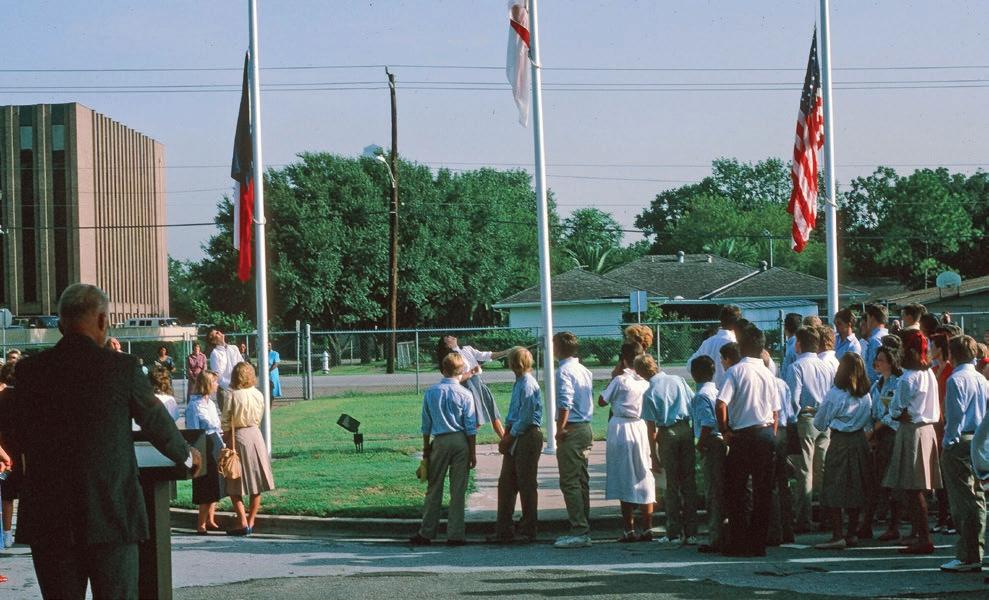
The first morning at the flagpole–
“ I remember standing with friends who had joined me in my journey to EHS. I remember seeing Ty and wondering what had made him begin this new frontier. I remember having to wear the formal uniform with its high-collared, button-up-the-back blouse. I remember the lady who stopped her car on Fournace to see what this was all about.”
Bridget Butler Wade ’87
Head of School
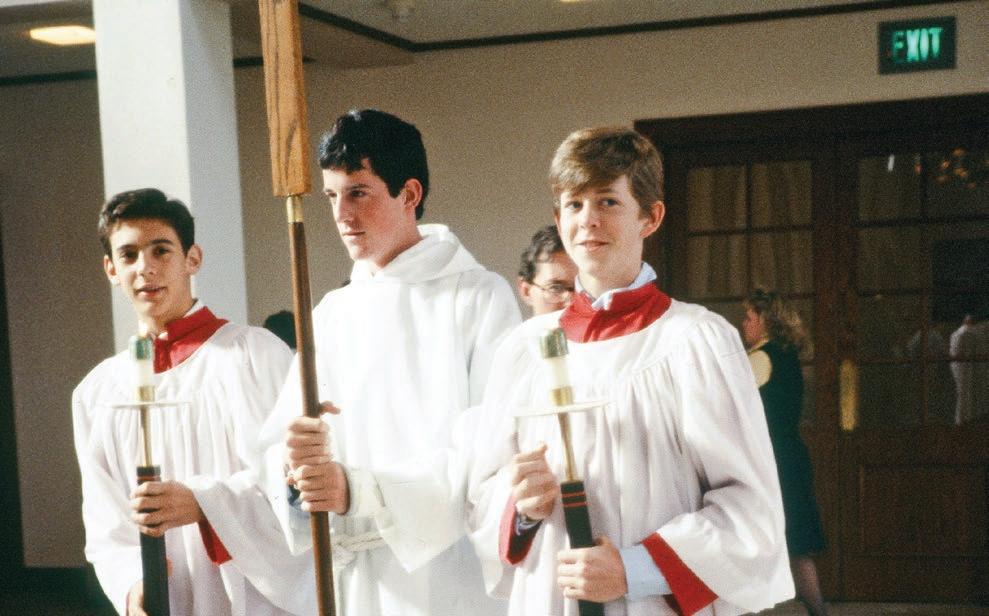
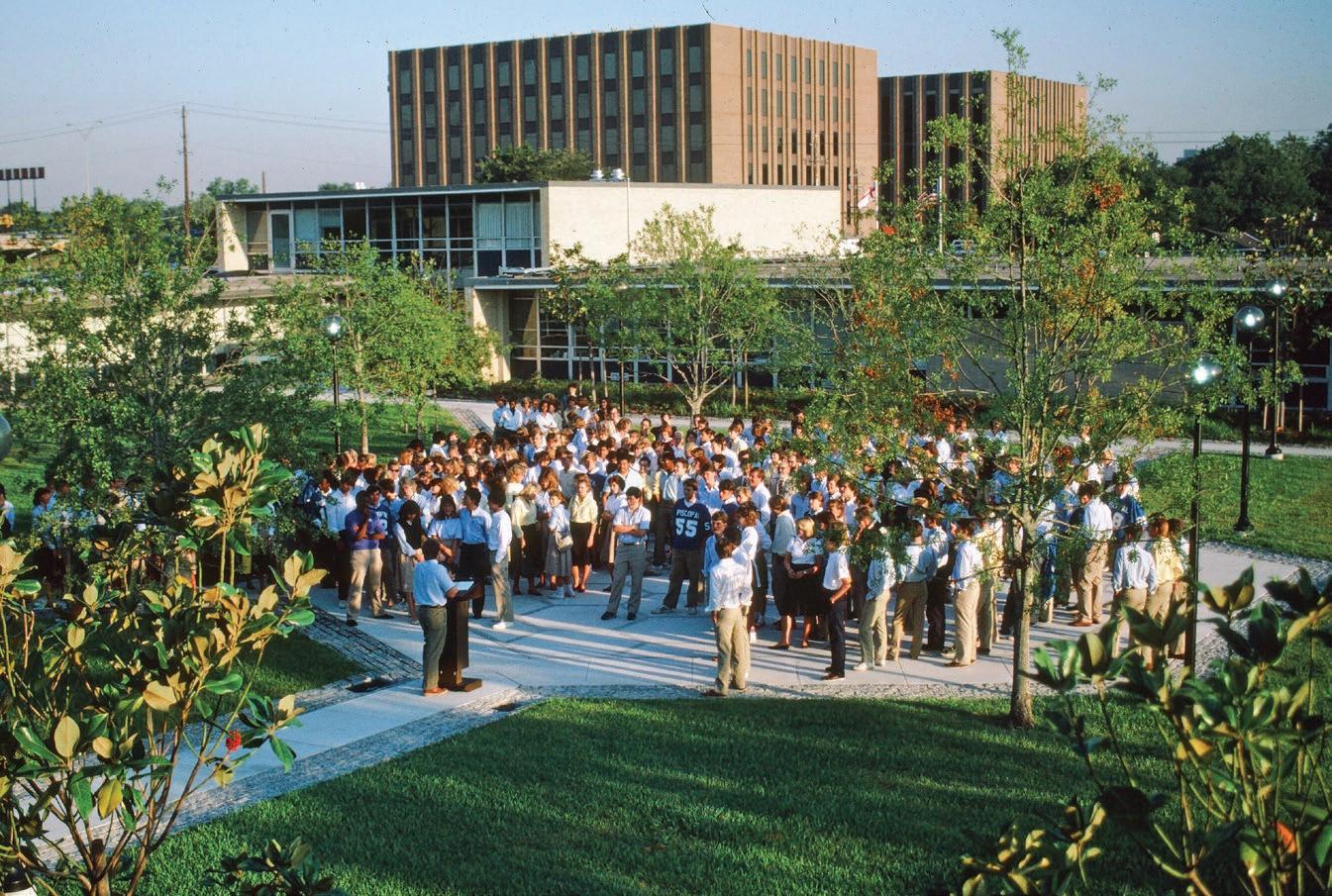
With 149 students—freshmen and sophomores only—and 30 faculty and staff, Episcopal High School opened its doors on Tuesday, August 21, 1984. (The flagpole had been erected only days before although the cross outside the theater was placed early on!) The plan was to add a grade each year for the next two years and graduate the first class, the August 1984 sophomores, in May 1987. The claim to fame of the Class of 1988, as they often boasted, was to be the first four year graduating class. The 149 students gathered with faculty, staff, parents, trustees, and friends on the North Portico for the opening and flag raising ceremonies. The service that followed included readings from the Old and New Testaments by Chaplain Steve Kinney, with the Old Testament story of Nehemiah’s rebuilding of the crumbled walls of Jerusalem after finding the foundations strong, particularly significant to those involved in founding EHS: Not only was the School’s physical foundation strong but its spiritual foundation was as well. The New Testament reading from 1 Corinthians emphasized learning as a part of Christian love, which is patient and kind and never gives up. Following the singing of “America” and the School hymn, “O Thou Whose Feet Have Climbed Life’s Hill,” students headed to first day orientations and classes.
By May 1984, the School leadership, in addition to Headmaster
The Rev. Warren R. “Jess” Borg, included William Michael “Mike” Richards, Business Manager; Cynthia “Cyd” Thomas, Director of Admissions; Dee Taylor, Director of Development; Charlene Ragsdale, Dean of Academics; Clinton Carbon, Head of Arts; Macon Hughes, Athletic Director; and Paul Johnson, Dean of
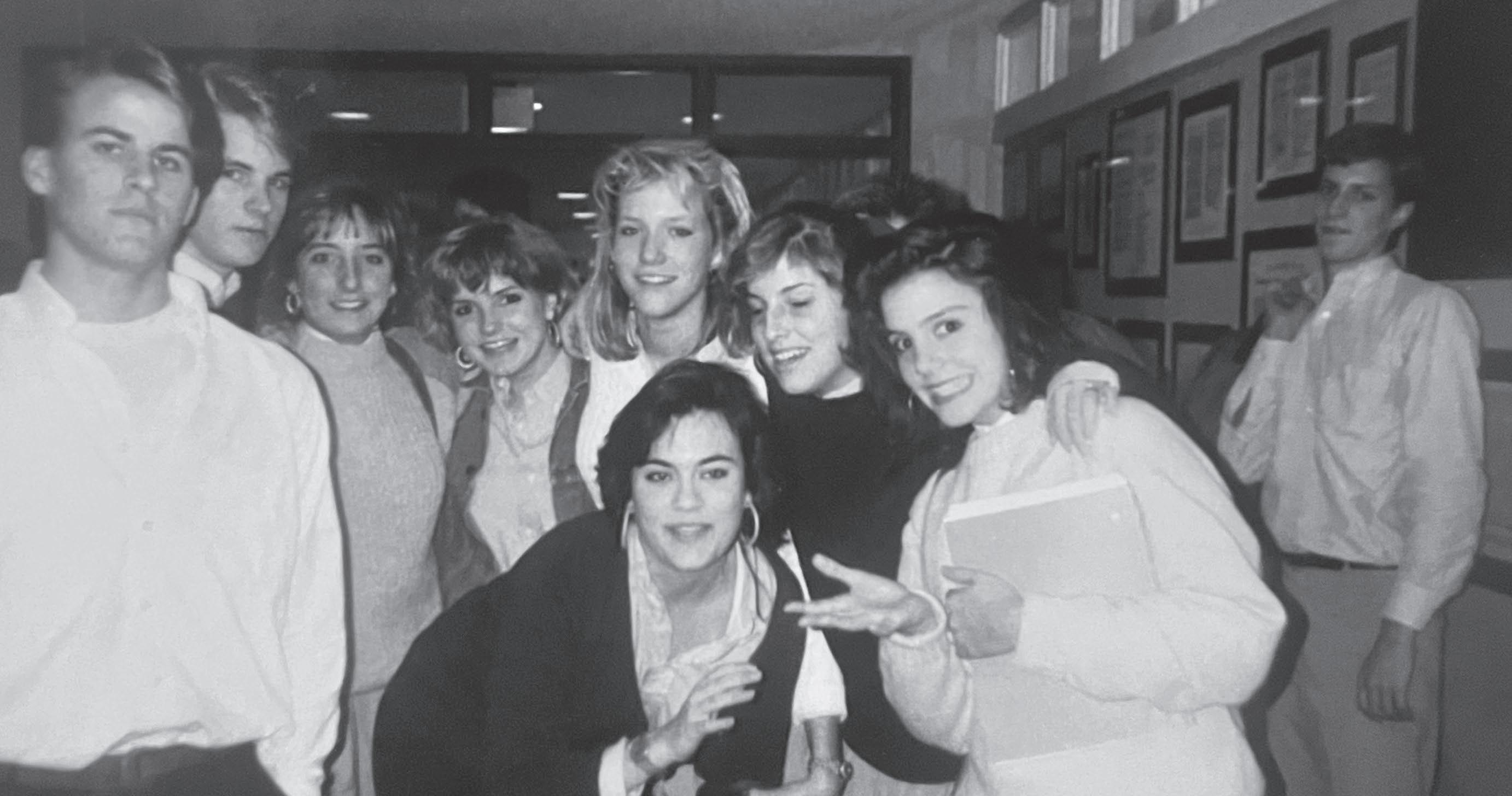
From the Class of ’87: Scott Paget, Eric Johnson, Michelle Lewis, Bridget Butler, Laura Wallace, Heather Skidmore, Meredith Walker, Amanda Whitehead, and Brumby Boylston
Photo courtesy of Amanda Whitehead Johnson
Students. In July 1984, with renovation almost complete, the administrative offices moved from 6565 West Loop South to the School at 4621 Fournace Place. On August 16, 1984, more than 200 supporters, each of whom had given at least $10,000, gathered in the Mayfield Grand Hall, named for Jack H. Mayfield, Jr., for a reception honoring the Founders and celebrating the $12.4 million raised thus far.
At the Board of Trustees meeting of October 11, 1984, Headmaster Jess Borg reported the following enrollment statistics:
• 151 students were enrolled from 60 public and private schools.
• The 9th grade enrolled 43 boys and 53 girls.
• The 10th grade enrolled 27 boys and 28 girls.
• 93% of applicants were accepted, 83% enrolled.
• 28 students were on financial aid.
• 41% were Episcopalian.
• 7% were Black, 3% were Hispanic.
• Tuition was $4,750.
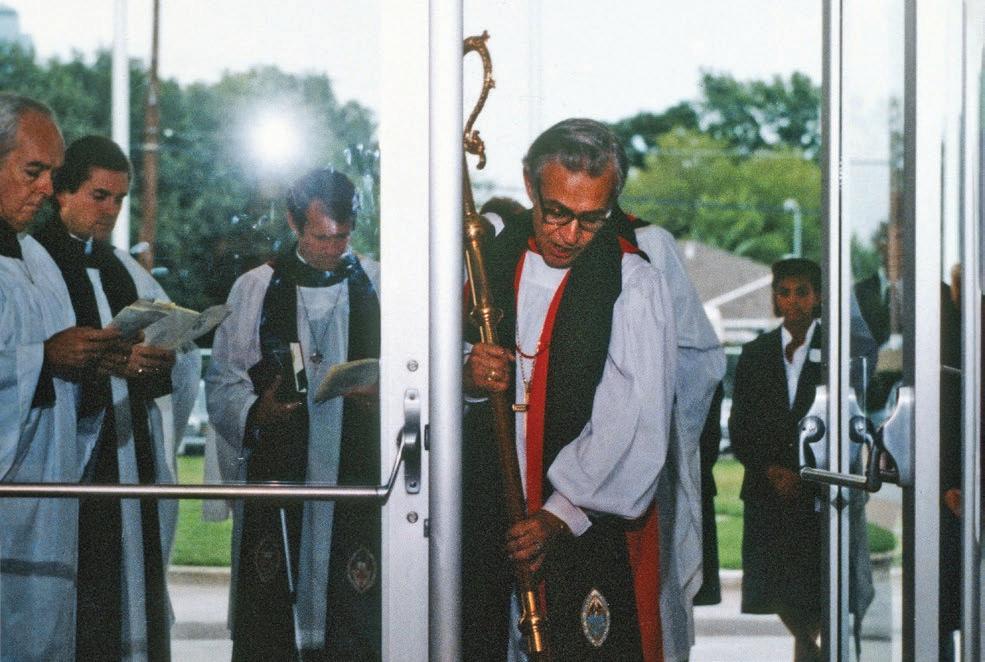
The dedication and consecration ceremony was held on the same day at 2:30 p.m., beginning at the John B. and Mildred Baird Portico and processing through the Mayfield Grand Hall into the Underwood Auditorium for a service of hymns, prayers, and readings. “This School is a miracle!" proclaimed The Rt. Rev. Maurice M. Benitez, Bishop of Texas, in his homily to an audience of 400 students, faculty, and friends. The School’s newly formed performance group Majesty, comprised of singers, dancers, instrumentalists, and actors, entertained the audience.
In preparation for the opening of a new school and following the volunteer work of several Episcopal Youth Community (EYC) groups earlier in the process organized with the help of Founder Betty Key, newly appointed Athletic Director and Head Football Coach Macon Hughes spearheaded a campaign to clean up the campus outside the construction area. As the start of school grew closer, Macon’s crew volunteered to help remove several small structures, to prune or remove overgrown shrubbery, to clean fences, and to remove trash.
“I remember feeling very nervous and very hot. There were about 150 of us, and Dr. Borg talked about us as a community. Finally in the AC in the theatre, Reverend Kinney welcomed us to the brand new school. He was so warm and friendly. You could feel the excitement of something new. This was different from any school I’d attended before. We had no cafeteria, and I remember that fast food was delivered for lunch each day— usually pizza or burgers. It was fine with me.”
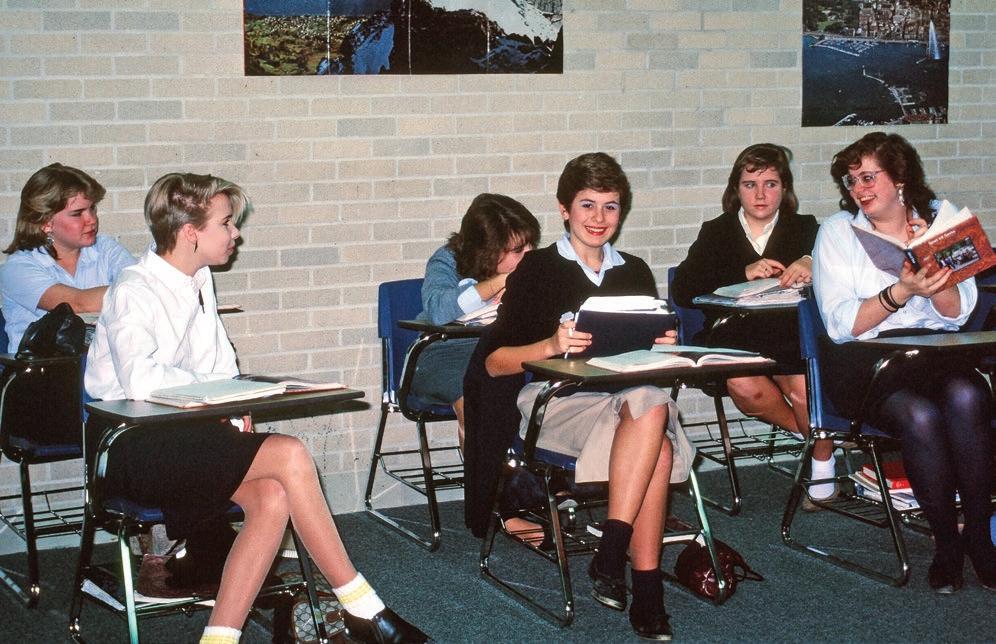
Early in 1984, the Board of Trustees Academic Affairs Committee determined that the School would adopt a trimester system, consisting of three twelve week grading periods per year, and developed the graduation requirements, including two years of Religion and two years of Arts credits. All required classes would meet for five 45 minute periods per week except for history, which would meet for four. Chapel would be held daily. In addition, the after school New Horizons Program consisting of Co curricular Activities (clubs), Continuing Education (life skills including computer skills, band, drivers’ ed), and Special Programs (cultural events, field trips, outreach) would be included in the School’s programming.
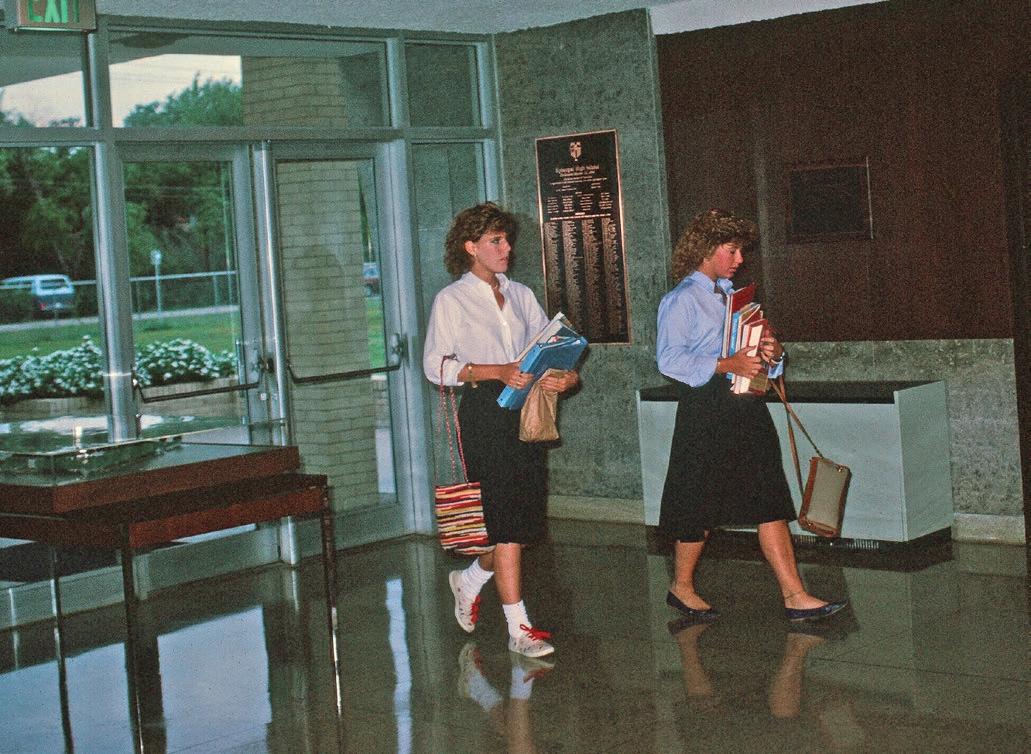
In the spring of 1984, the Board of Trustees Academic Affairs Committee selected a student uniform that was both classic and distinctive, chosen to make a decisive statement about the strong character and high academic standards of EHS students. For everyday wear, the committee selected long or short sleeved Oxford cloth shirts or short sleeved knit shirts. Boys would wear khaki or navy twill slacks and girls khaki or navy twill skirts. For formal occasions, the official uniform was gray slacks, navy blazers with the School emblem, and white long sleeved Oxford cloth shirts with School ties for boys. Girls would wear gray plaid skirts and navy bow ties with the School emblem along with a navy blazer. The girls’ formal uniform also included a white polyester, pleated, long sleeved, button up the back blouse, which the girls did not like since they needed help with the buttons. They soon figured out that they could button all but the top few buttons
Amanda Whitehead Johnson ’ 87
before dressing and put the blouse on over their heads, leaving the top buttons unbuttoned. By the early 2000’s, after many years of advocating by the girls, the back button blouse was replaced with the classic Oxford cloth long sleeved shirt. By Headmaster fiat, female faculty were required to wear skirts or dresses not only to school but, along with the girls, also to evening theater or dance performances. It was not until the mid 90’s and the arrival of second Head of School Ned Becker that slacks were allowed.
The girls also objected to the length of the skirts, which many families soon arranged with tailors to hem. A proponent of the modest skirt length, Founder Betty Key remembers advising her 1985 freshman daughter Courtney that if she wanted her skirts shorter, she would have to hem them herself. To her mother’s chagrin, determined teenager Courtney taught herself how to hem! Both boys and girls took exception to the poly/cotton shirts, pants, and skirts, complaining that they were too hot in Houston’s steamy climate.
Architect and Founder Graham Luhn remembers that Jess Borg asked him to provide the school colors and logos of area independent schools. With the list in hand and as no other school had claimed it, Borg selected indigo blue. Alumna of the first graduating class and former trustee Bridget Butler Wade ’87 recalls the selection process for mascot. “Just what you’d expect from teenagers,” she says. When the results of an early student vote revealed that the new student body had favored the write in candidate, the Squids, as the School mascot, intervention from the adults involved led to the selection of the Knights!
Lynda Underwood remembers the first junior garage sale when her son Duncan Underwood ’89 and his classmates were juniors in the fall of ’87. Augie and Bonnie Bering were the chairs, the sale would take place in the original Alkek Gym on campus, and the accumulating treasures were stored throughout the summer and early fall first on the fourth floor of the Convent and later at a donated warehouse off site. Duncan remembers that he and his classmates had one weekend to move everything from the fourth floor to the warehouse. Since a pickup truck or Suburban would not be large enough, Duncan brought the family’s cattle trailer in from the ranch for the haul, and later in the fall used it to pick up a motorcycle, a moped, and a golf cart! Lynda chuckles as she
recalls watching Duncan and his friends, working on behalf of the project, balancing large metal clothes racks full of dresses, jackets, blouses, and the like in the back of the Underwoods’ cattle trailer as they navigated Houston’s bumpy city streets! Duncan chuckles as he recalls his parents’ relief when he moved the trailer to the warehouse from its prior home in their driveway!
“We were making something out of nothing.” – Larry Neuhaus, Founder, Life Trustee
In her Fall 2005 Founders Day talk to students, faculty, Founders, and guests, Shannon Buggs Harrison ’88 recalled the first day at the flagpole in August 1984 as Bishop Benitez blessed the new students and the new campus. “After the flags were raised,” she said, “we walked through those doors and started a school!” Asked often why she and her parents chose the brand new Episcopal High School with all of its inherent risks, she explained her response: “To my family, EHS seemed more opportunity than risk. It was a chance for us to be more than consumers of an education program...it allowed and encouraged us to be co creators of one.” Harrison continued: “From day one, everyone associated with this School was asked to contribute to its success. All ideas were welcome...[E]ven the campaign to make a cephalopod sea mollusk the school mascot fit the vibe of the School. Outlandish ideas, [unusual] requests, outside the box thinking were the order of the day.” In fact, the theme of the 1986 87 yearbook was Anything but Ordinary! But students were not just asked to come up with creative ideas for school spirit and traditions. They were encouraged to get involved and to try new things—many new things. Harrison remembers her lead role in Noises Off ; working on the Hexagon, Knight Times, and Light and Shadow; competing in Latin tournaments; serving as Model UN ambassador; and even helping the track team win a first place medal when a runner was injured! She said the best part of it all was conquering her fears—EHS helped her to build confidence in her abilities.
the
the afternoons.
Founding faculty member Julie Arbuthnot Harrison (Coach Arby) remembers the feel. “You knew everyone. All
students stopped by the gym on the way to their cars in
Everyone was so friendly, so eager. Dr. Borg had the vision for the kind of school this would be,” she says, “and the faculty and staff helped make it happen.” She remembers that everything seemed sparkling new, from the athletic uniforms to the renovated buildings, and that there was always a lot going on after the last class period of the day.
“If you’re going home at 3:15,” she remembers saying to students, “you’re missing what this school is all about.”
Larry Neuhaus recalls those early years as fun years: "We were making something out of nothing.”
Information
Interviews–Julie
Thanks
Bridget Butler Wade ’87 continues, “EHS was so open to us, and we were trusted and heard. Lunch was ordered out from some pizza place or burger joint, and the Break after Chapel was a special time to break bread and catch your breath. Prayer was part of the day. We knew everyone—students, faculty, staff, and all.”
Amanda Whitehead Johnson ’87 concludes, “Hands down the best thing about school was Chapel followed by Break—kolaches or donuts—delivered each morning. I had never been to a school that offered anything like that. Nor had I ever seen a dance studio, but the studio was ready for us, and I loved dance. (The dance studios had been converted from the old Marian lunchroom.) I don’t remember exactly why, but many of the football players took dance.”
“I had my wisdom teeth out right before school started, so chubby cheeked, there I was to join volleyball with Coach Arby. I remember meeting Heather Skidmore in volleyball. Sports were a great place to make friends.”
“I trusted the vision. Whenever we walked through the Mayfield Grand Hall by the attendance desk, we could feel the warmth. Dr. Borg, Dean Johnson–they were all smiles. Of course, there were rules—and consequences for breaking them—but there was a balance. We felt as if the School leaders were there to help us grow.”
“I loved dance and all the arts. I tried new things. Pretty quickly in those first few weeks, we felt settled. EHS felt like family, like home.”
from: EHS Newsletters 1984 90
Arbuthnot Harrison, Amanda Whitehead Johnson ’87, Betty Key, Graham Luhn, Larry Neuhaus, Duncan Underwood ’89, Lynda Underwood, Bridget Butler Wade ’87 Pillars Fall Winter 2005 2006
to Founders Betty Key, Graham Luhn, Claudia Moursund, Larry Neuhaus, Joel Shannon, and Lynda Underwood; Duncan Underwood ’89, Shannon Buggs Harrison ’88, Amanda Whitehead Johnson ’87, Courtney Key ’89, Bridget Butler Wade ’87; former faculty member Julie Arbuthnot Harrison; and Associate Head of School for Finance and Operations Evelyn Cambria for their ongoing help with the research.
KNIGHTS STAND OUT | ATHLETICS
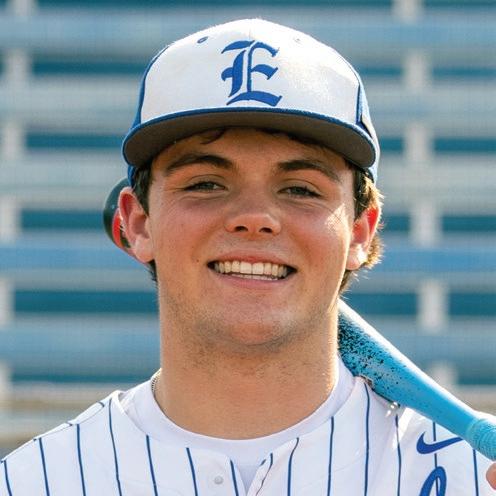
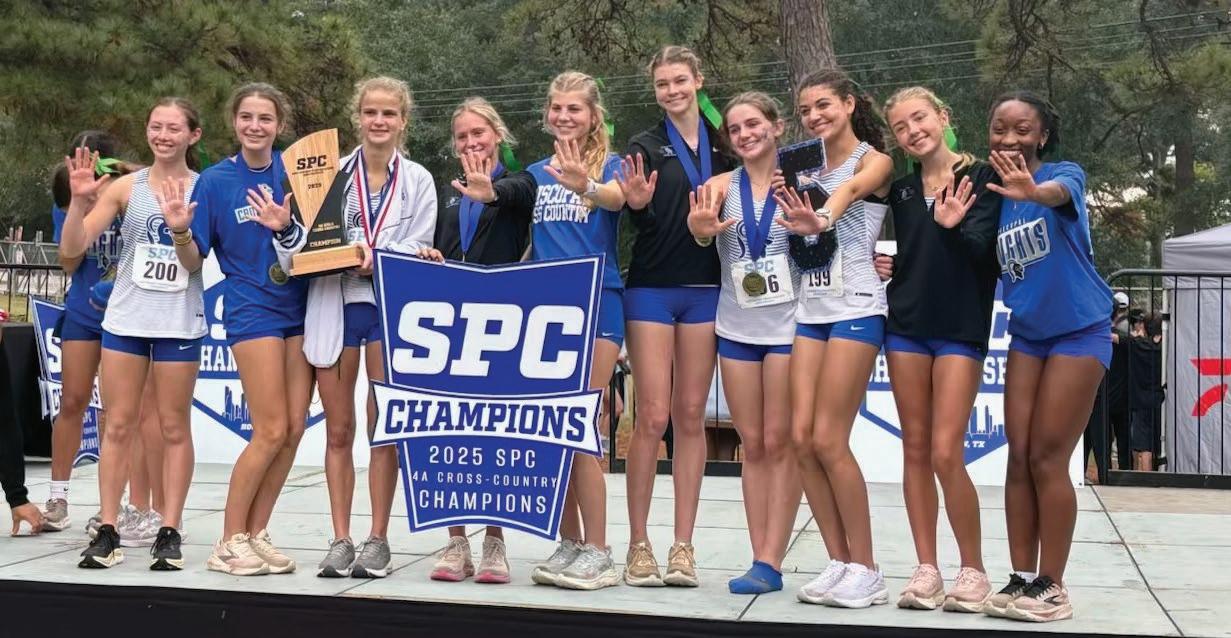
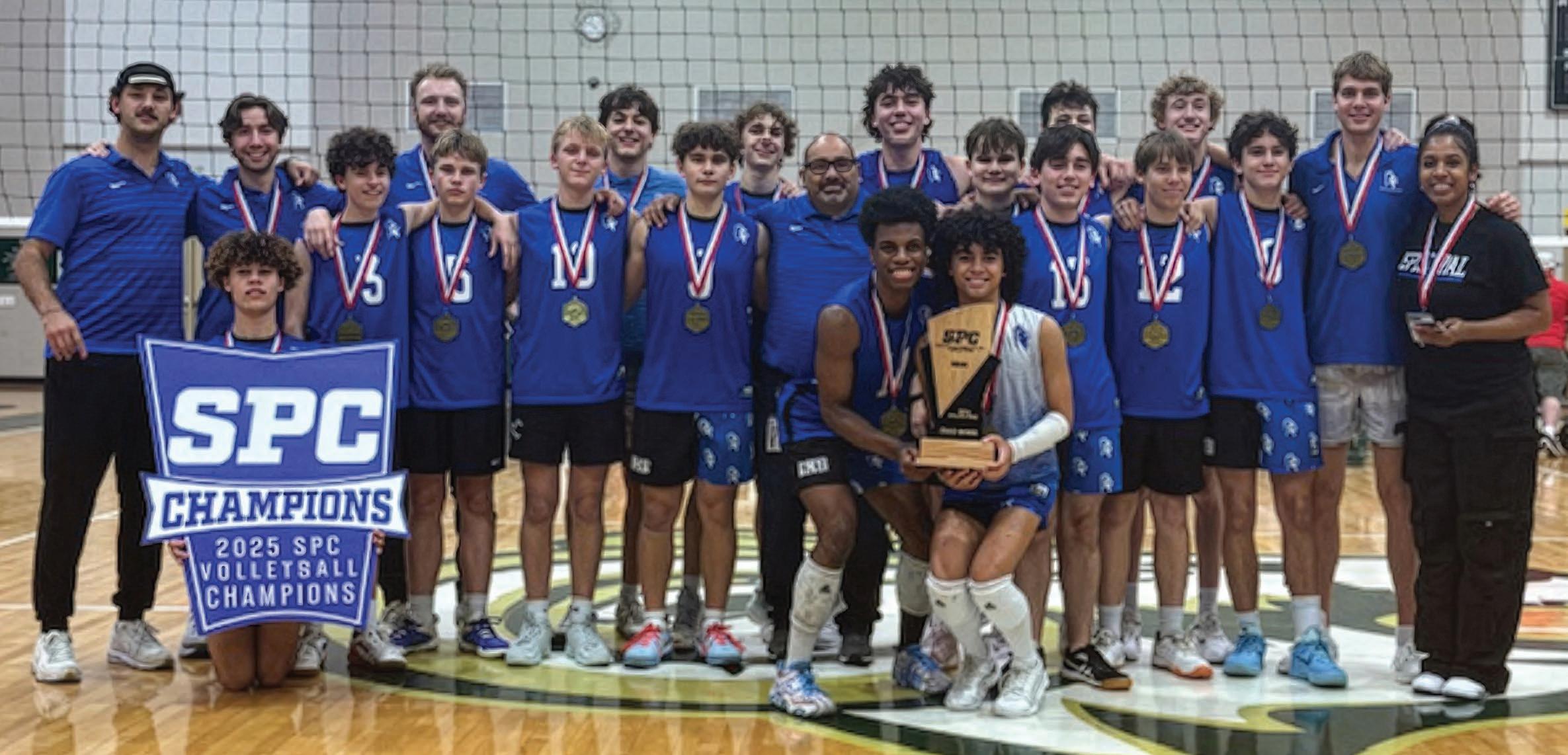
The EHS Athletic Pillar enjoyed another outstanding season as the Knights secured two SPC Championships and two SPC runners up finishes.
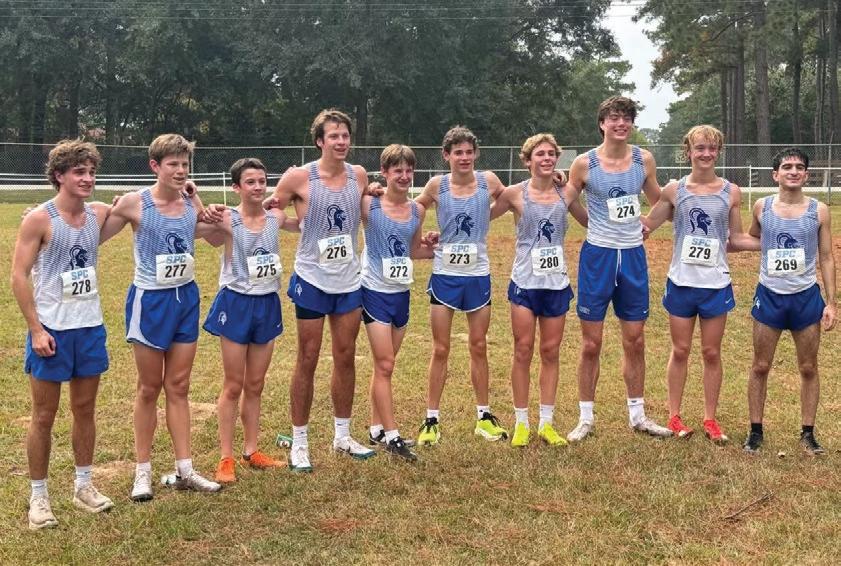
The Girls Cross Country team further cemented its legacy by capturing its fifth consecutive SPC Championship. The Knights placed five runners in the top ten as Georgia Bass ’26 finished second followed by her sister Ceci ’28 in fourth, Meg Billipp ’28 in seventh, Palmer Popov ’26 in ninth, and Ashley Conoscenti ’27 in tenth. Amelia Davis ’28 finished twelfth while Isabelle DeGrange ’26 finished twenty fifth. Will Pacey ’26 finished second overall in the boys’ race while leading the Knights to a fourth place finish. The future of the program remains very bright as the JV Girls team tied for first in the City Private School Championship race while the JV Boys team finished fourth.
The Boys Volleyball team earned thrilling 3 1 wins over Greenhill and Trinity Valley in the opening rounds to set up a championship match against Fort Worth Country Day. The Knights did not disappoint an outstanding crowd of supporters as they cruised to a 3 0 win. The championship marks the Knights’ second in the past three seasons. Both the JV and Freshman teams enjoyed great seasons with JV going undefeated.
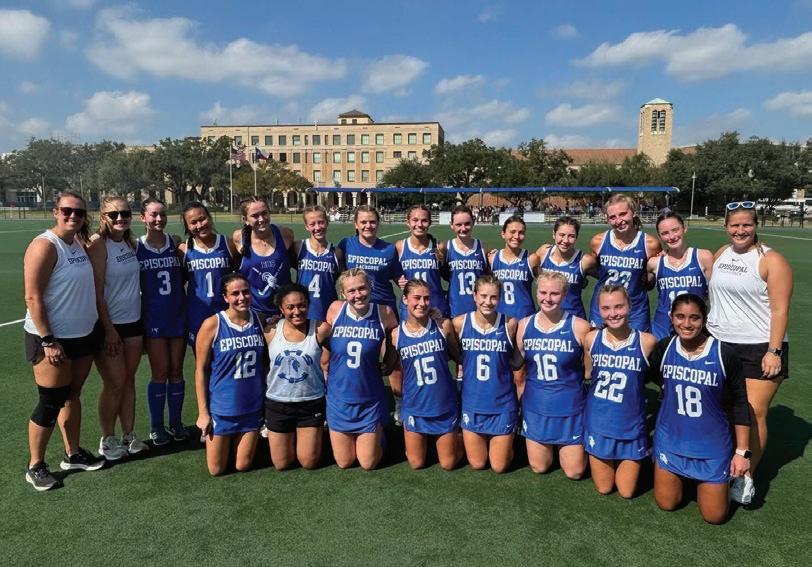
The Field Hockey team enjoyed its best SPC tournament in several years as the Knights defeated St. Stephen’s 3 1 to finish in third place in the 4A division. The Knights opened SPC play with a dominating 5 0 win over Hockaday before losing 2 1 to eventual champion Kinkaid in the semifinals. The JV team had an outstanding season, capped by two wins over Kinkaid and a City Championship game appearance.
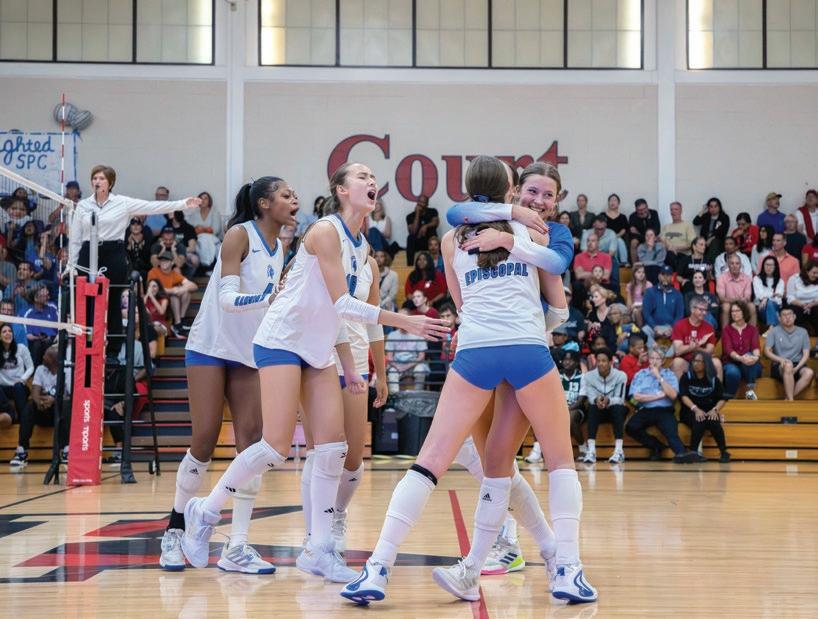
The Girls Volleyball team opened tournament play with a 3 0 win over Houston Christian and followed that up with a thrilling 3 2 win over top seeded Hockaday in the semifinal. The Knights dropped a 3 1 decision to St. John’s in the 4A Championship game to complete the season as SPC runner up. The program featured three sub varsity teams again this season, and all three enjoyed winning records.
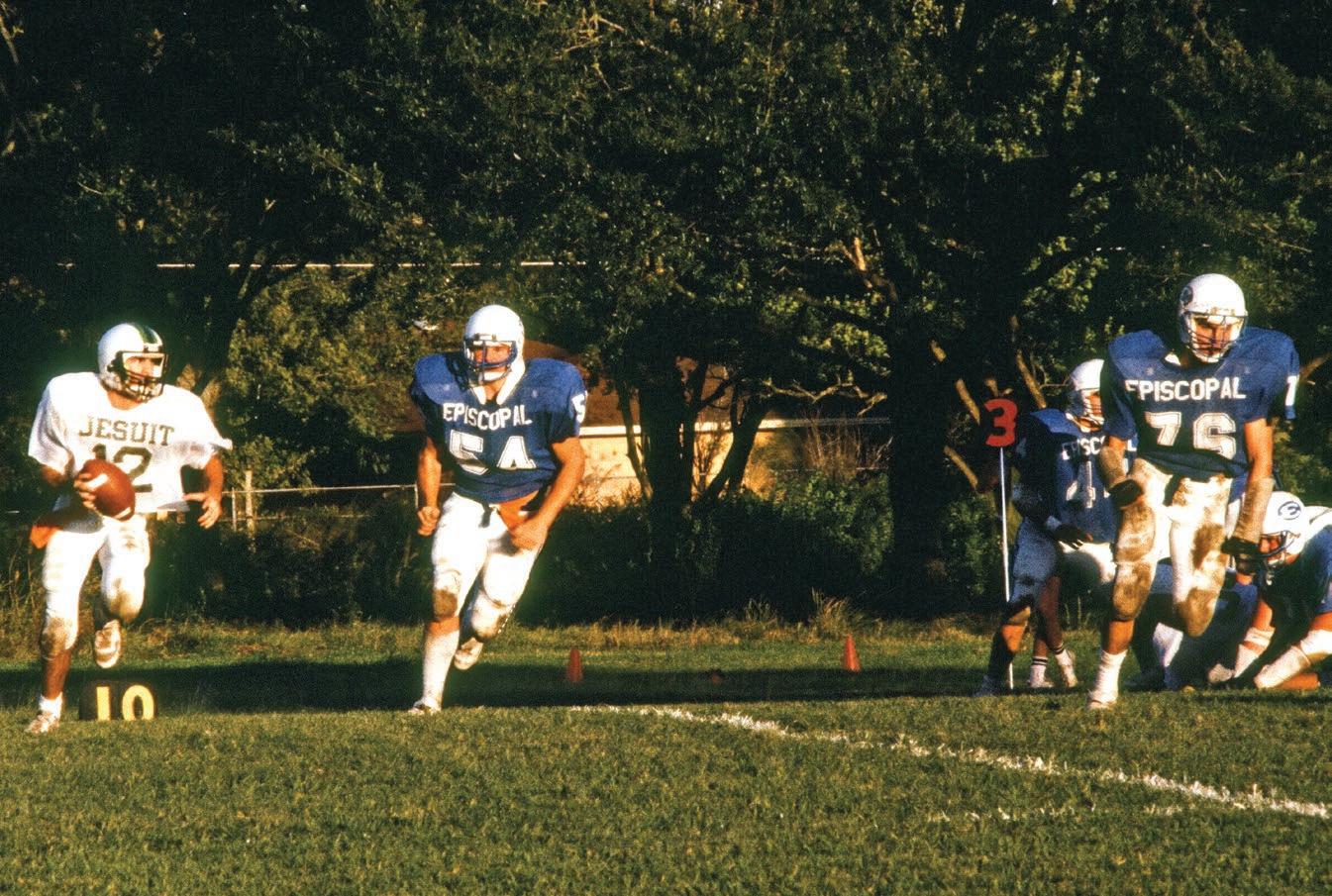
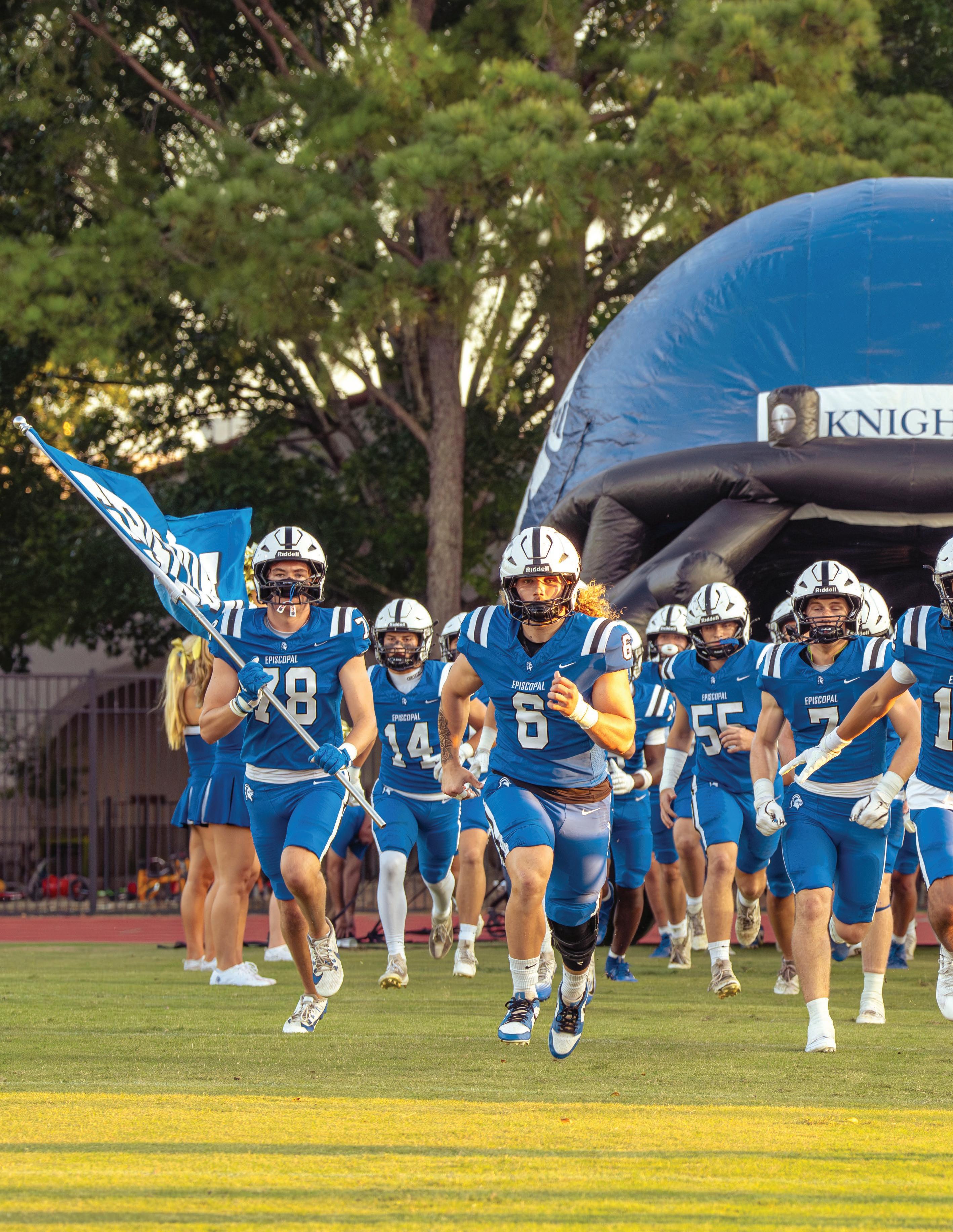
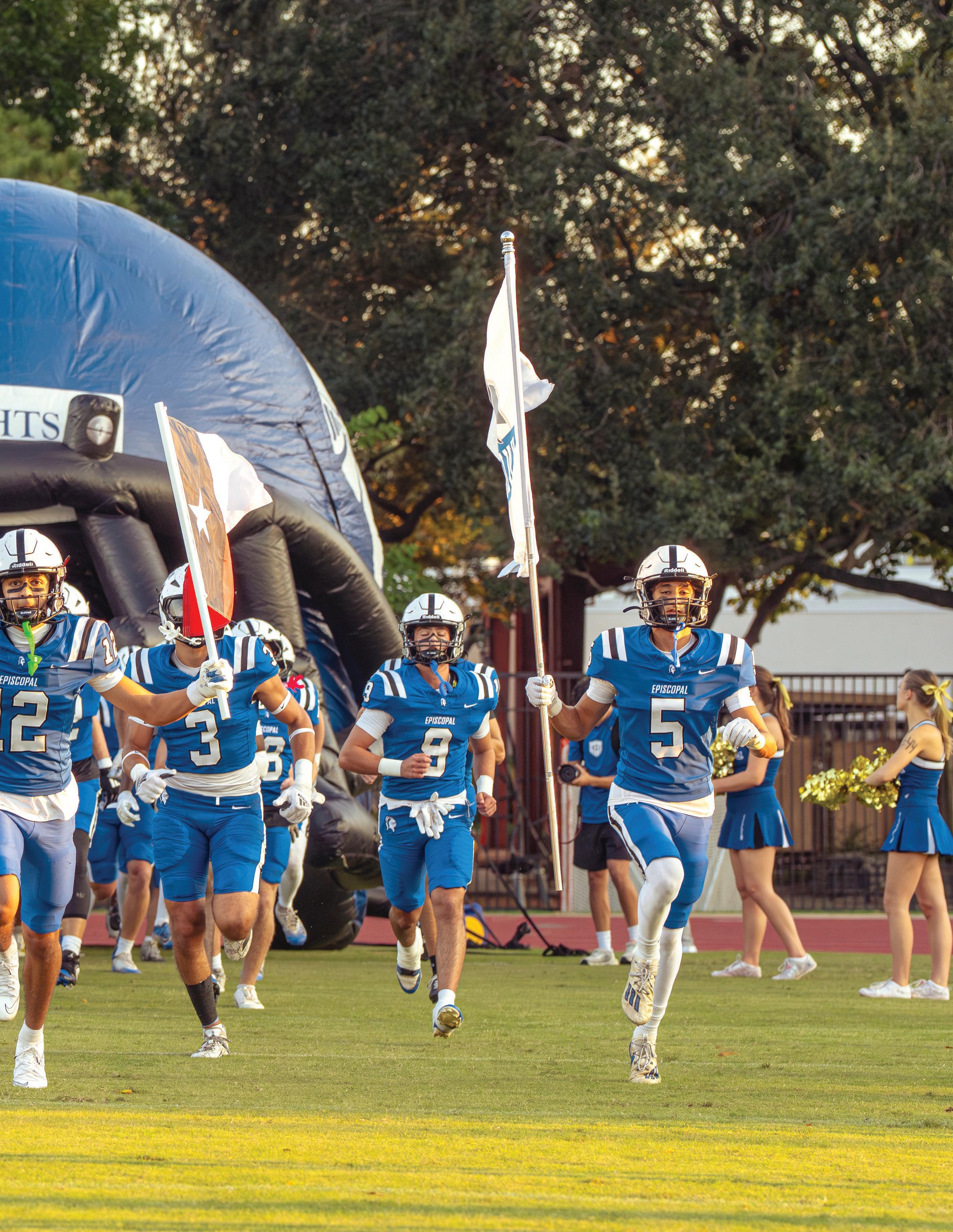
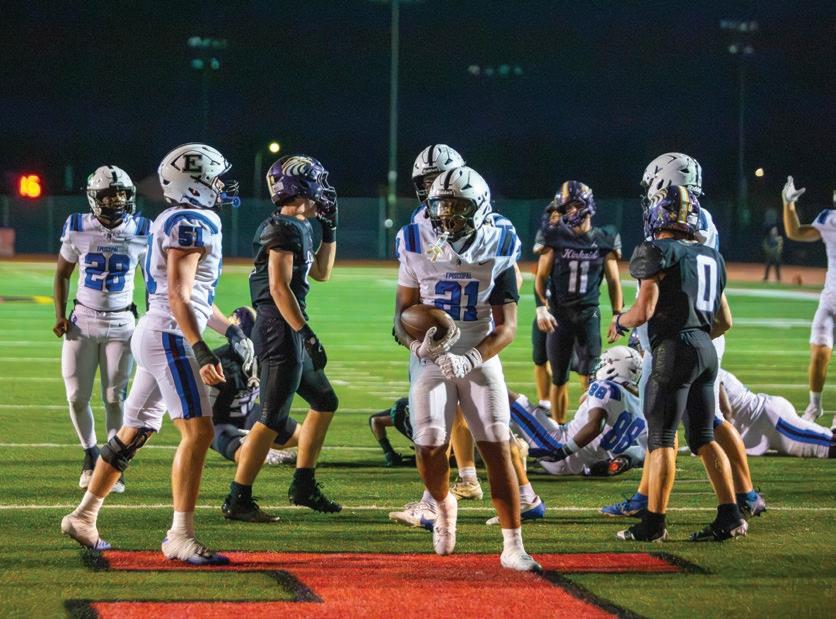
The Varsity Football team enjoyed a thrilling season as the Knights finished the SPC season with a 4 1 record and met perennial foe Kinkaid in the championship game at Stafford High School. Picked by media to finish fifth in the preseason polls, the Knights rallied in the second half before falling to the Falcons 31 21. The JV and Freshman teams improved throughout the season with the highlight being the JV team’s thrilling win at Kinkaid to finish its season.
All three Cheer teams enjoyed outstanding seasons and thrilled crowds at athletic events and pep rallies. The Knights will compete in the Lonestar Classic in Manvel (after print deadline).
Congratulations to our students and coaches for their efforts throughout the fall season, and a huge thanks to the best fans in the SPC!
– Jason Grove, Athletic Director
Photo by: Piper Beck ’27
Photo by: Peyton Stewart ’27
POP QUIZ
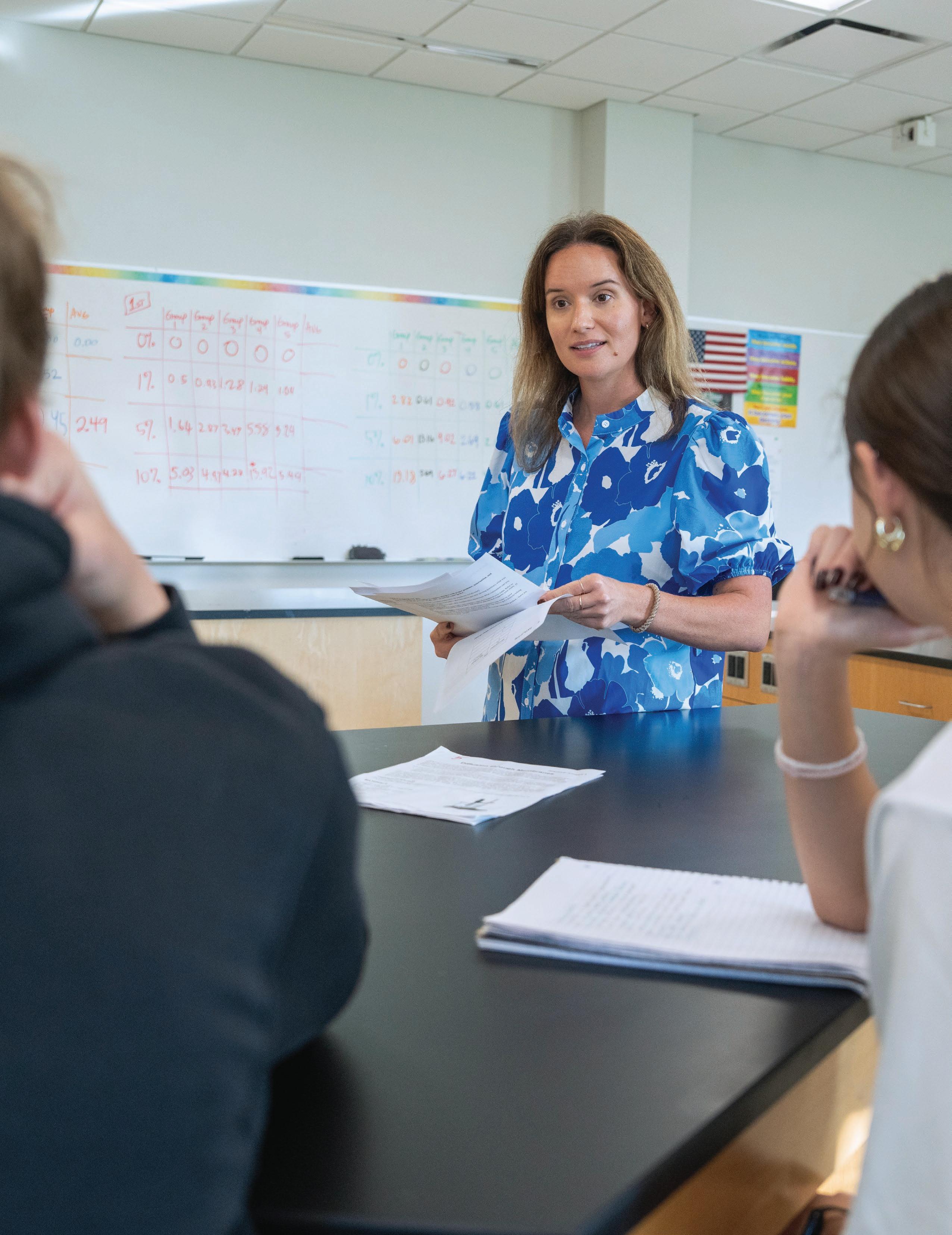
ERIN RUSSE
Registrar and Science Instructor
EHS Registrar and Biology Honors teacher Erin Russe was born in Fort Myers, Florida but grew up mostly in San Antonio. She earned her B.S. in biology from the University of Texas at Austin and her master's in education from UT Arlington (but that was online so she really claims only UT Austin!). Although she began college pre med, she had always wanted to be a teacher; and her work as a science teaching assistant for non science majors helped her to see that she could combine her interests in science and teaching by becoming a high school science teacher. Having taught at HISD’s Chavez High School for three years, she arrived at EHS in 2015. She has been Registrar since 2021.
In her spare time, Erin loves traveling, cooking, reading, learning to play mahjong, and discovering new restaurants. Most recently, she has been impressed with Camaraderie, Le Jardinier, and Maximo and often visits Raja Sweets, Rosie Cannonball, and Handies Duozo. She also likes to spend as much time as possible with her niece and three nephews.
What is on your playlist?
Taylor Swift, Texas Country, and 90’s 2000’s pop
If you could eat only one meal this week, what would it be?
Sushi
What is your favorite EHS food item?
I can’t pick just one! Squash bake, chicken salad, Indian butter chicken...
What is your favorite family tradition?
My family loves to cook (We’re Italian!), so every Christmas we have lasagna. We enjoy putting a new twist on the recipe each year, except for the time we accidentally added the entire packet of spicy Calabrian chilis from our cousin in Italy instead of just a sprinkle!
Did you have a mentor growing up who inspired you?
Dr. English, my Experimental Physiology professor at UT was one of several great mentors. Through his guidance and my work as his teaching assistant, I saw how inquiry, curiosity, and passion could shape learning; and it inspired me to teach high school science.
If you were not a teacher, what would you choose for a profession?
I would likely work in travel planning or as a food critic. I love creating an itinerary, discovering new places, and offering honest critiques and tips to anyone who’s interested!
What is your proudest accomplishment?
I’m certainly very proud of all the students I’ve taught and the successes they’ve achieved. On a more personal note, a few years ago, I set a goal to visit 30 countries by the time I turned 30. Even though COVID slowed me down a bit, I’ve since surpassed that goal; my current count is 40 countries! I feel both proud and grateful to have had the opportunity to travel and experience so many different places.
In your time at EHS, what is a favorite moment?
Taking students on trips during Interim Term and seeing them experience history, culture, and science firsthand in places like the Florida Keys, San Francisco, Portugal, Spain, Greece, Italy, and this year, France and Monaco.
What do you most respect about your students?
I really appreciate the energy and laughter they bring. That attitude helps them persevere and surprise themselves with what they can accomplish.
What do you hope your students take from you as a teacher?
That learning isn’t just about memorizing facts. It’s about curiosity, problem solving, and growth.
What do you hope to accomplish as Registrar?
My goal is to support the academic journey by keeping the details organized. I hope to make processes clear and accurate so that students and teachers can focus on teaching and learning.
What are the biggest challenges and rewards of being Registrar?
The biggest challenge is coordinating many moving parts at once, since accuracy and timing are critical for things like transcripts, graduation requirements, and course requests. The most rewarding part is knowing that the work behind the scenes directly supports both student success and the Mission of the School.
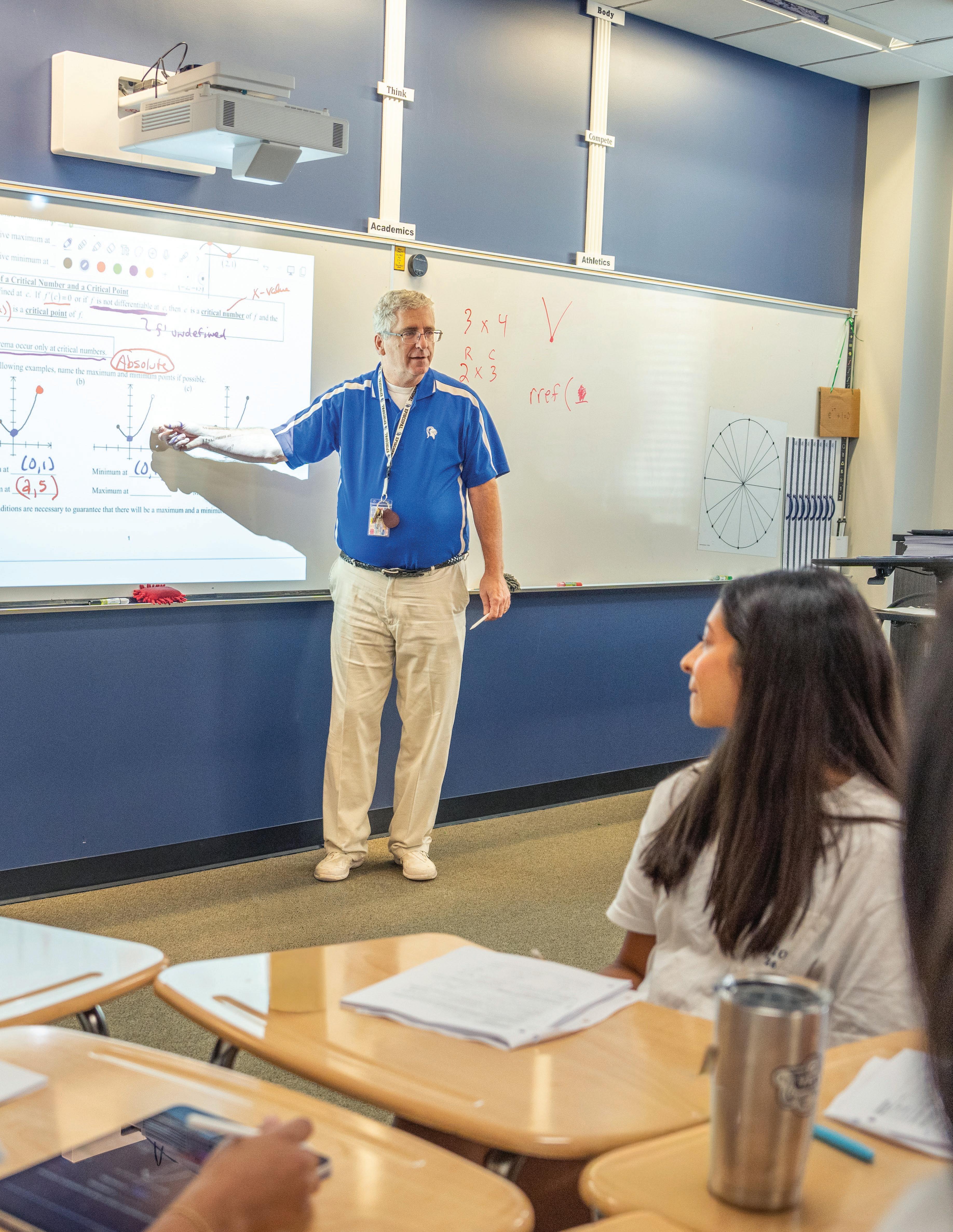
RICHARD MAY
POP QUIZ
Mathematics and Computational Sciences Department Chair and Mathematics Instructor
Math and Computational Sciences Department Chair Richard May is a man of varied talents, interests, and experiences. Born in Westchester County just north of New York City, he grew up farther upstate in a rural New York State farming community, later earning his B.B.A. in accounting from Texas A&M University and his J.D. from the University of Houston.
After a longish career in the business world—from public accounting to working in house in the financial group of a large medical device company—he and his wife returned to Houston for family in 2008. Searching for a job in the financial/legal world, he decided to pursue his teaching certification at the same time and soon had the opportunity to substitute in Katy, eventually landing a full time position at Cinco Ranch High School. The very same day, he got an offer to head the financial department of a local company, but he chose teaching and has been at it ever since. At EHS since 2022, he currently teaches Calculus BC and Algebra 2. He chairs the department and helps with tennis when needed.
Richard calls teaching a calling. He loves helping people figure things out and mentoring younger folks, so much so that he volunteered at Big Brothers/Big Sisters and Junior Achievement throughout his financial career. “There is no better profession,” he maintains.
What is on your playlist?
I don’t really have a playlist as I still listen to the radio. Some of my favorite artists are Phillip Phillips, Noah Kahan, Bruce Springsteen, Genesis, and Toad the Wet Sprocket.
If you could eat only one meal this week, what would it be?
Mexican food seems to be my go to— Pappasito's or Chuy's
What is your favorite EHS food item?
I really like the meatloaf—one of my favorite foods in general plus I won a meatloaf cooking competition.
What is your favorite family tradition?
Thanksgiving! We have theme nights for each dinner—it’s fun planning them and then shopping and cooking the meal with the extended family.
Did you have a mentor growing up who inspired you?
I had three main influences. (1) My high school chemistry teacher Mrs. Harris inspired me to dream big when thinking about college. (2) My best friend’s dad was a strong mentor who watched out for me and helped me think about studying engineering in college. (3) I looked up to heroes in the tennis world (as I wanted to
be a professional tennis player)—Arthur Ashe and Billie Jean King—I read anything I could find about these two and learned a great deal about real world things, not just tennis, from two amazing people—never got to meet them unfortunately.
If you were not a teacher, what would you choose for a profession?
Other than the dream of being a professional athlete (tennis and baseball), I always wanted to be a lawyer—so I went to law school. I had dreams of being a Supreme Court justice. Not sure one can choose that profession—but it would be a dream job.
What is your proudest accomplishment?
Two things come to mind. First, attending and finishing law school. I went at night for over 6 ½ years—it was a promise I made my mother. Second, becoming a teacher— finally listening to my heart and coming back to something I knew I would love. I thought about teaching law school, but it hasn’t happened yet.
In your time at EHS, what is a favorite moment?
There are many great moments—but the one that stands out to me is Culture Fest. Watching students put in so much time and effort to wanting to share their
cultures (and food!!) was amazing. If you step back as a fly on the wall observer, you see students so relaxed and happy, groups congregating and having fun, teachers and administrators participating. It was such an amazing event, educational and inspirational at the same time.
What do you hope your students take from you as a teacher?
Kindness matters—I try to live by this motto every day, and I hope the students see this.
What are the biggest challenges and rewards of being a Department Chair? I think with any job, time is the biggest challenge. There are always things we can do better, do more of, etc., but time does not allow us. The rewards come in small victories each day— helping a student with a math problem, helping a student find their next class, celebrating a success with a student or colleague. Celebrating students and faculty each day makes me eager to come back and do this job again the next day.
ALUMNI COUNCIL RELAUNCHED
AND READY TO ENGAGE
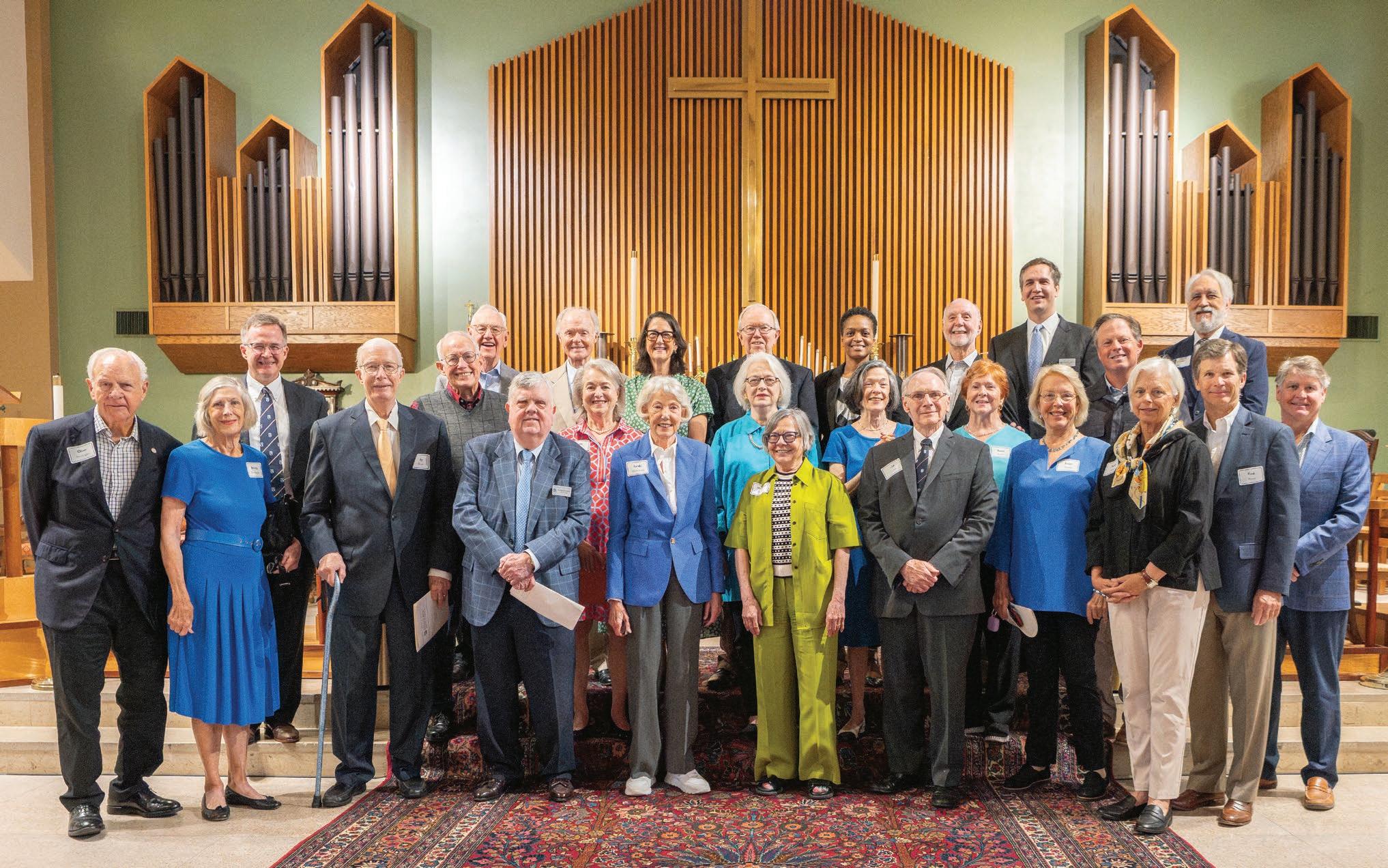
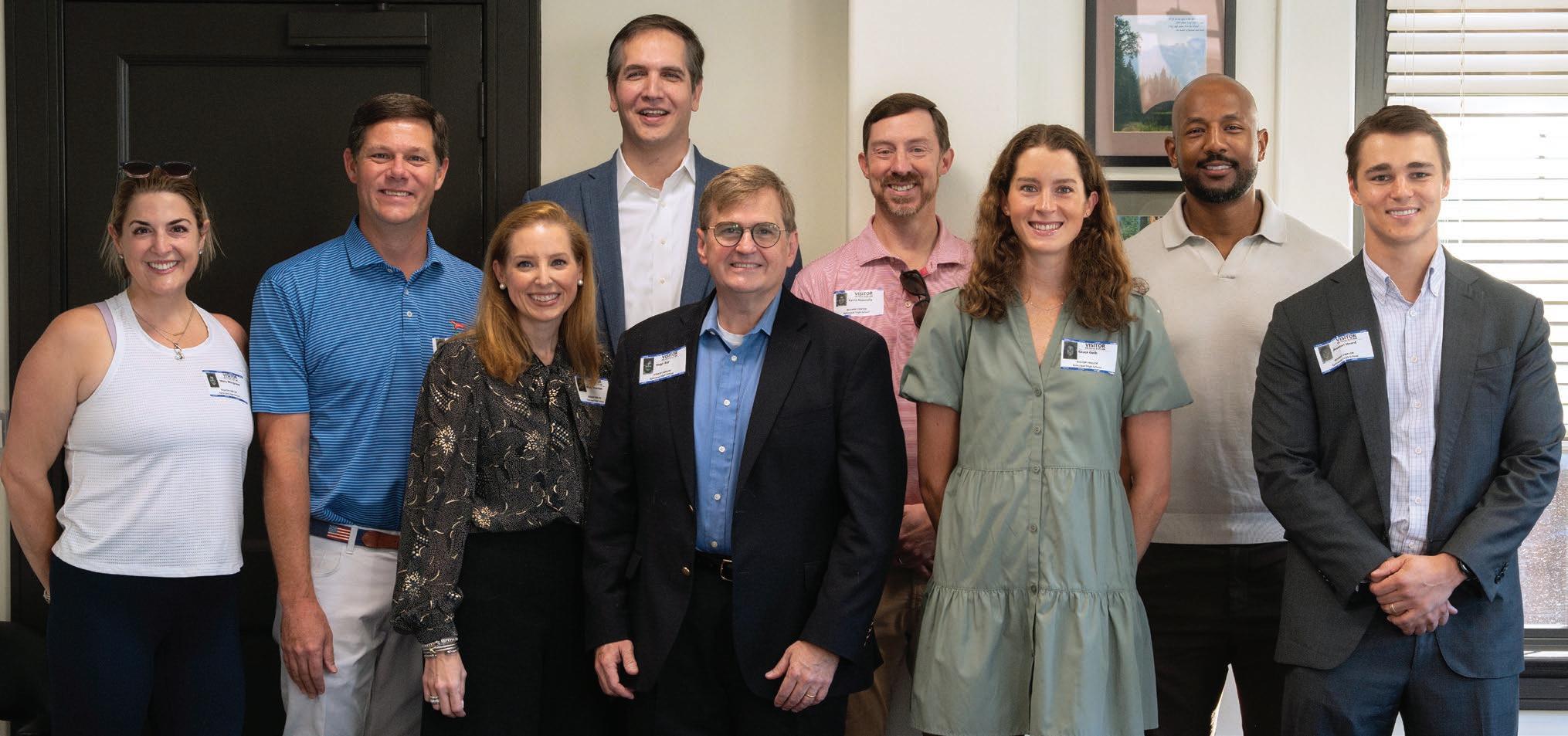
The newly reestablished Alumni Council is officially back on campus! The Council gathered in September for its first of five meetings this year, mapping out a packed fall calendar that included the Homecoming and Kinkaid football games. Focused on increasing Alumni engagement both on and off campus, the Council is eager to hear from Alums. There are many ways to get involved—from volunteering for a reunion host committee to sharing your EHS story. We thank our Council members for their time and energy and look forward to a vibrant year!
Interested in getting involved? Please reach out to Director of Alumni Affairs Colleen Kearns at ckearns@ehshouston.org
EHS TAILGATING
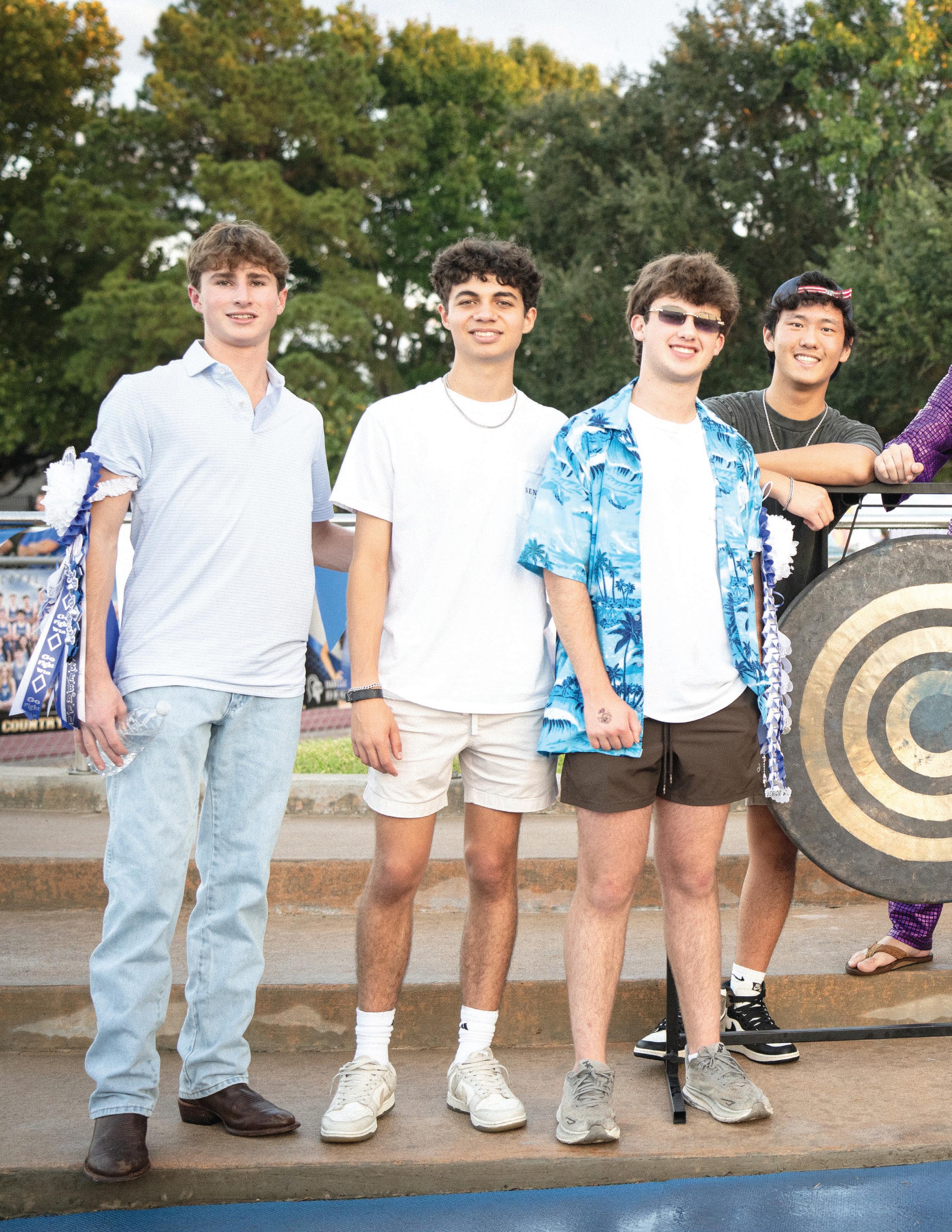
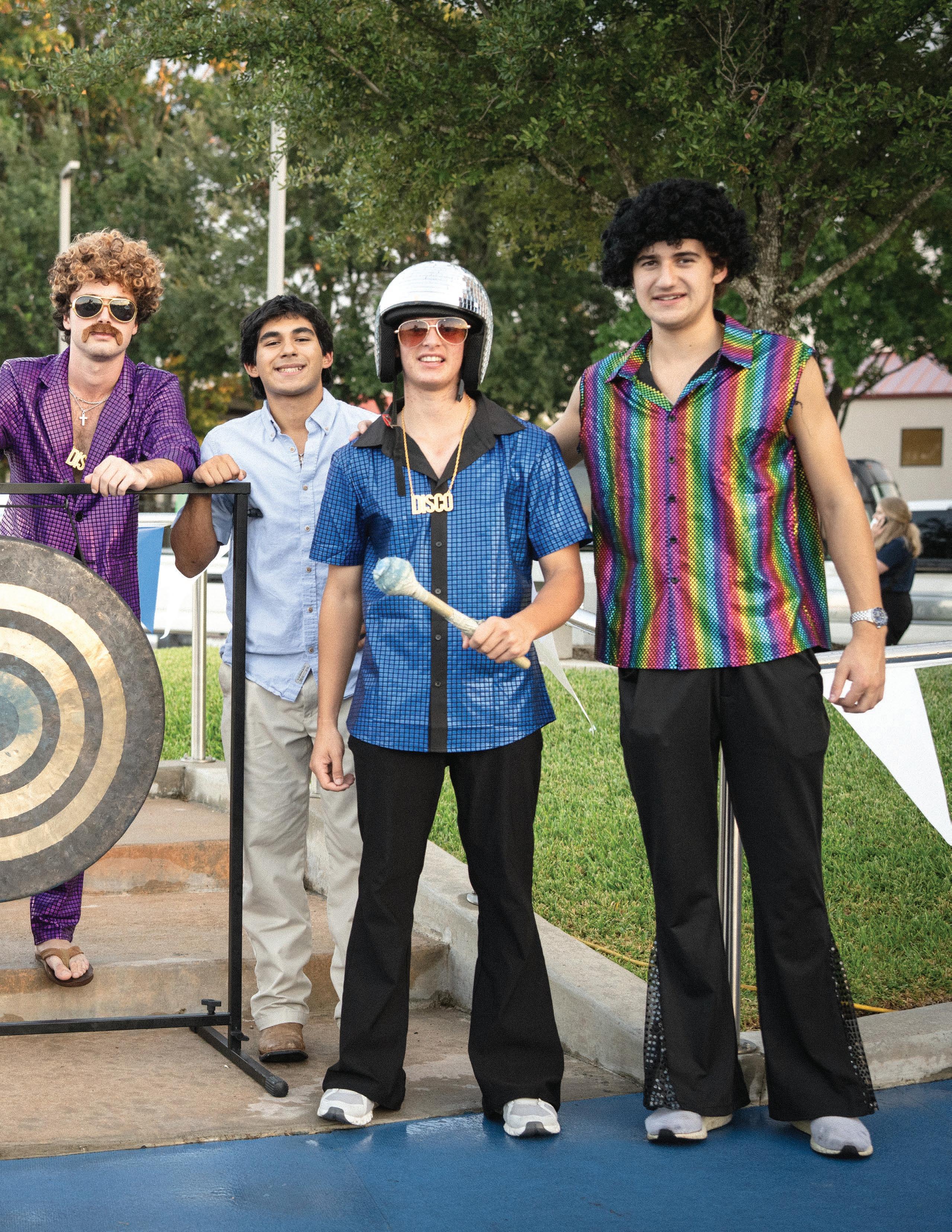
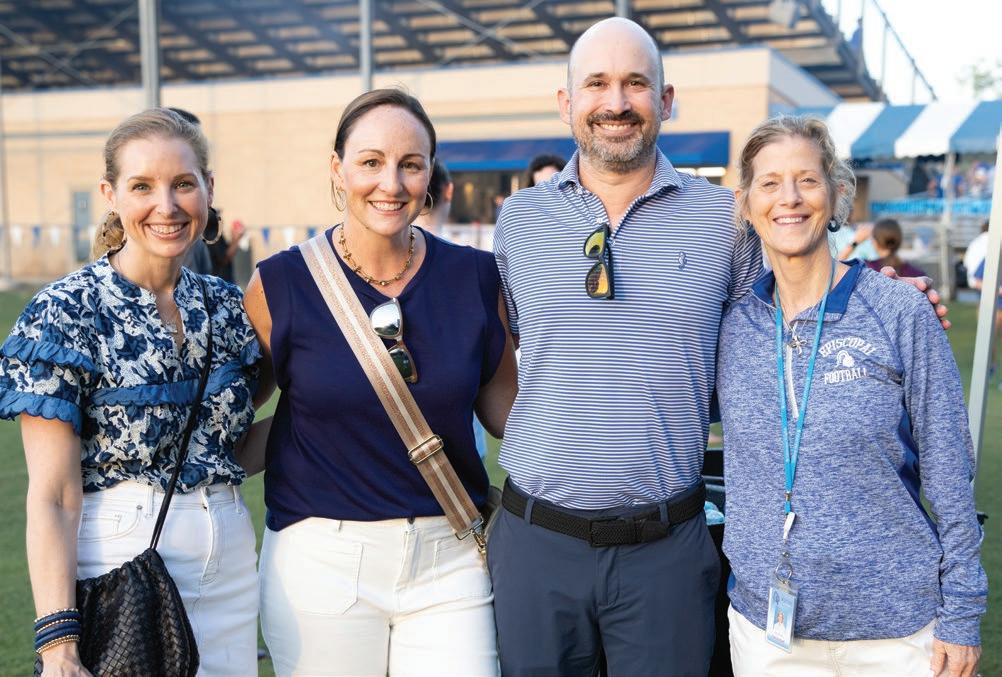
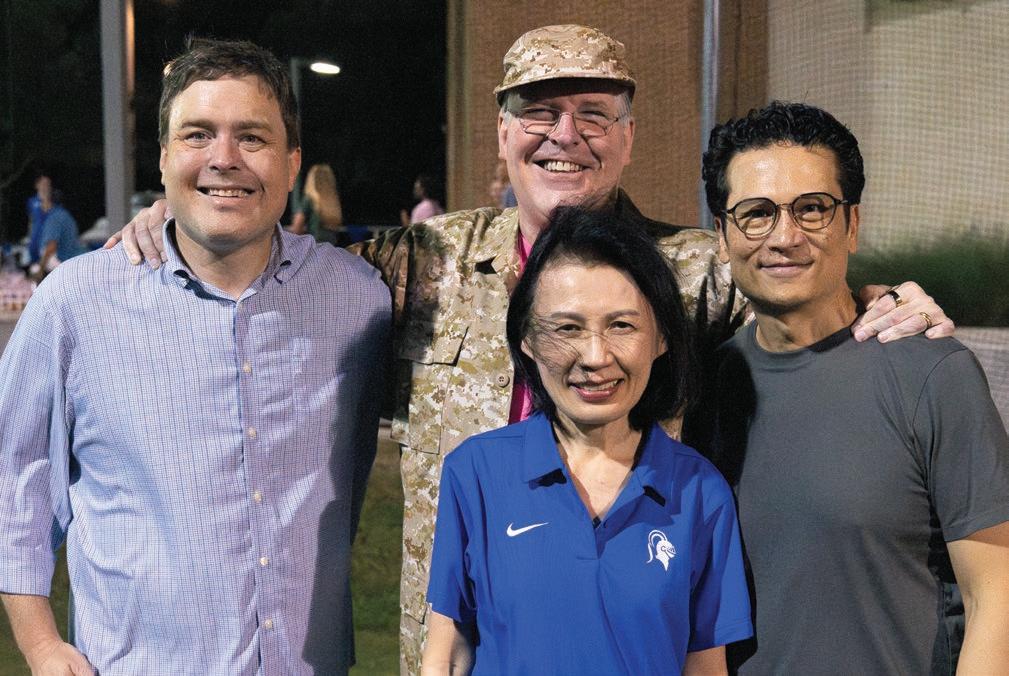
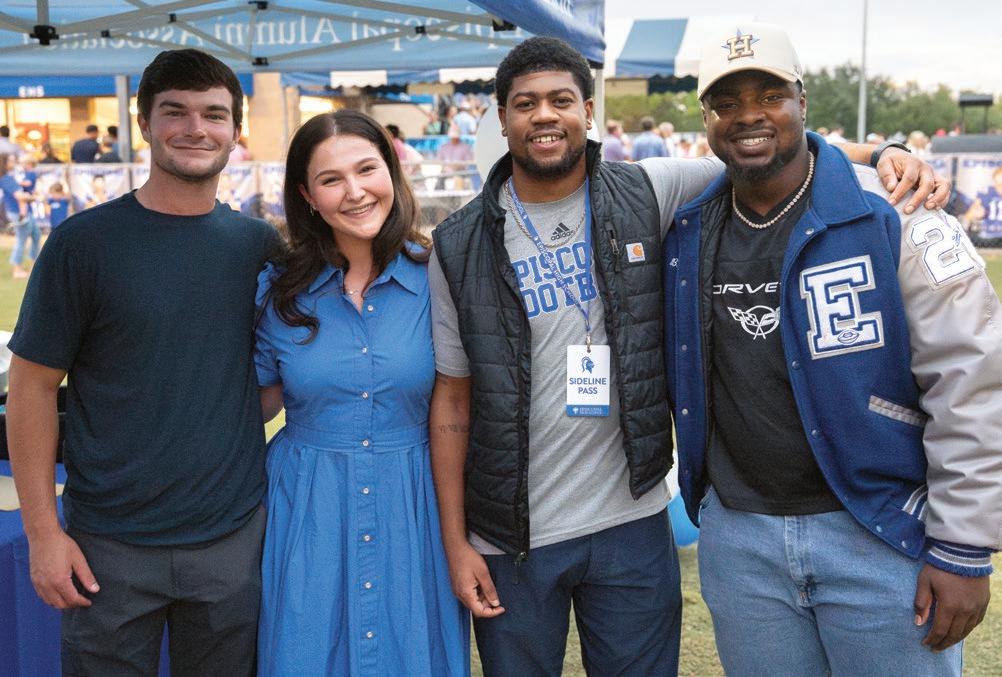
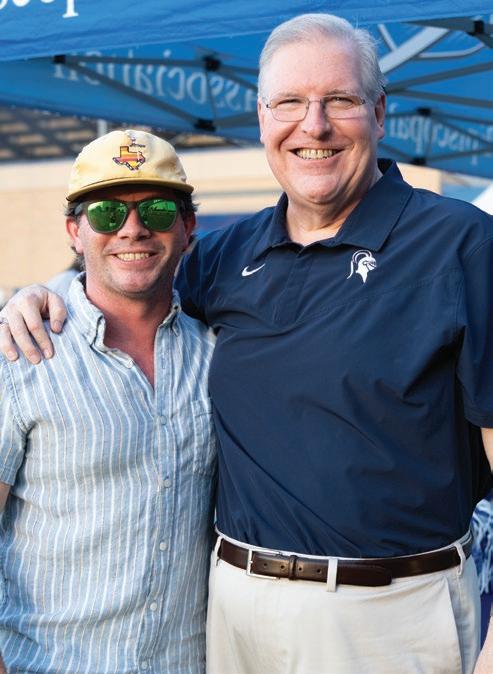
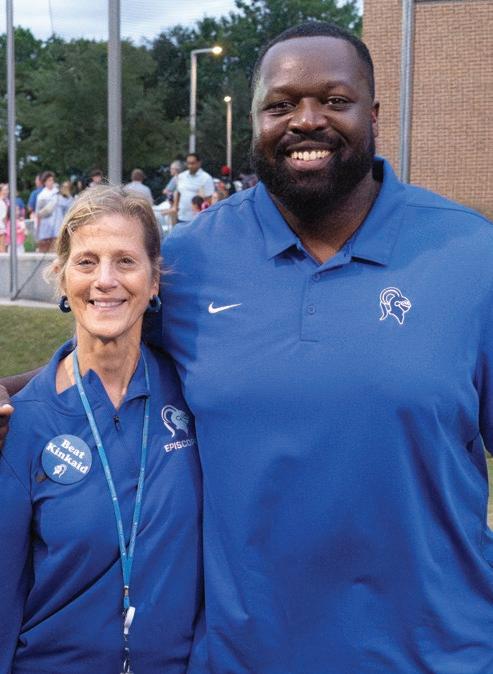
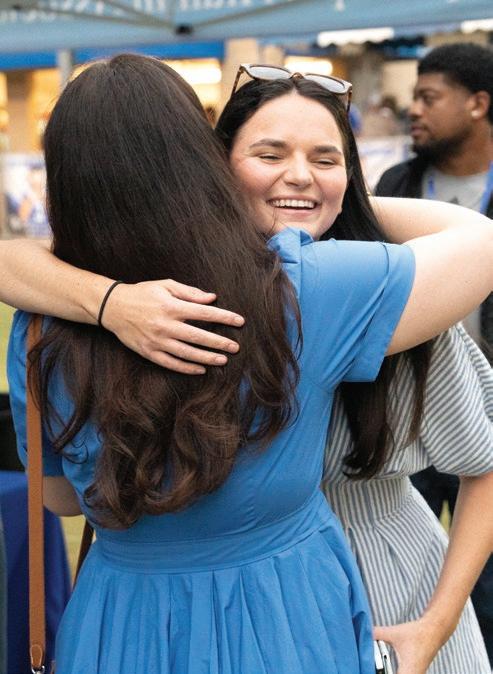
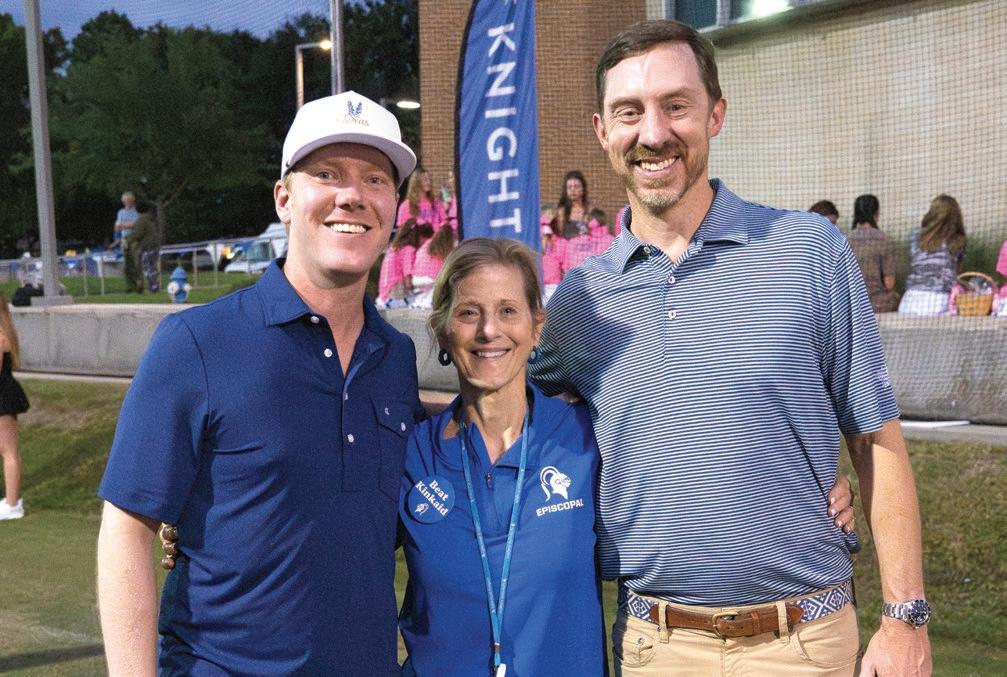
Alumni tailgated ahead of Homecoming and the big Kinkaid rivalry home football games. Who doesn’t love a group hug with Ms. Foster and Ms. Pham?! We loved seeing you back on campus with your families and former classmates. Until next time, Go Knights!
L to R: Mer Macgowan ’97, Logan Moncrief ’00, Mary Catherine Sharman ’98, Richard Howell ’01, Hugh Ray ’88, Knox Nunally ’97, Grace Geib ’17, Spergon Wynn ’95, Preston Heard ’16.
Missing from photo: Abigail Janelle Henningsen ’14, Ally Ondarza ’16, Grace Graubert ’18, Jill Branch ’18, and Ben Clemenceau ’07
ALUMNI SPOTLIGHT
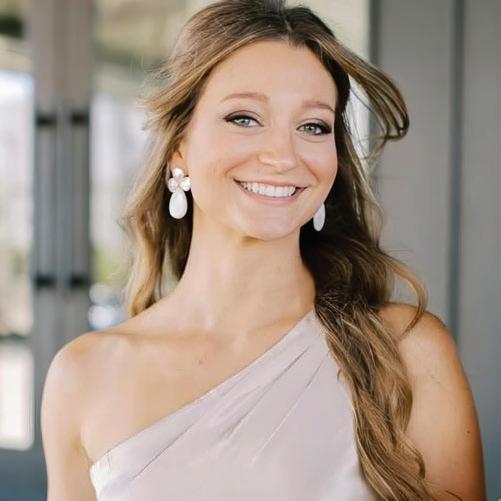
Addy Purdy ’14
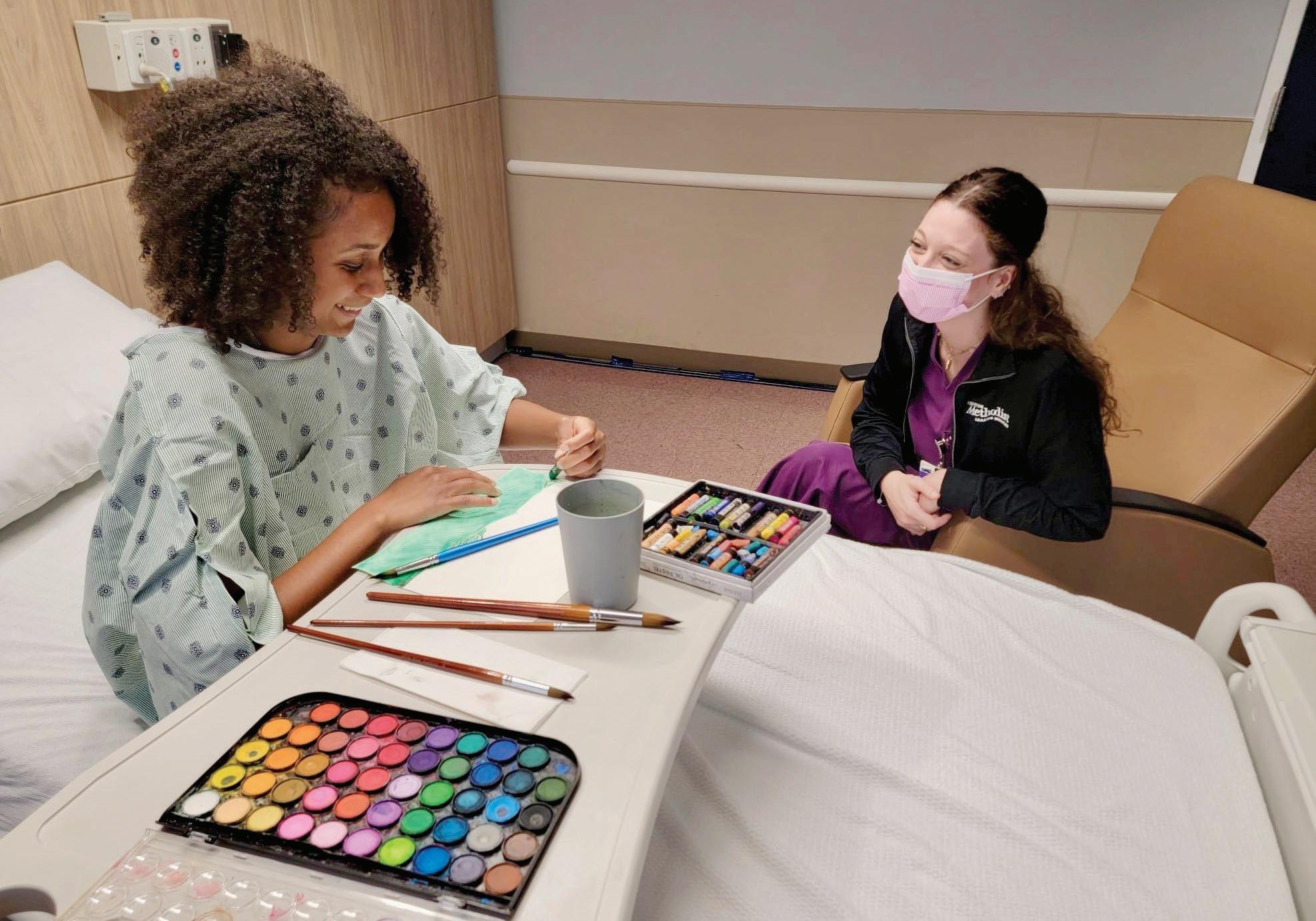
The deepest conversations don't always use words. They use color, clay, and canvas. Art Therapist Addy Purdy ’14 is a specialist in this kind of healing. On any given day, she's at a patient's bedside, expertly guiding the creative process to open doors to profound reflection, helping her patients explore their most complex thoughts, feelings, and relationships with compassion and insight.
Addy Purdy has forged a unique and inspiring career path that blends fine arts and therapeutic practice as a Board Certified Art Therapist and Licensed Professional Counselor at Houston Methodist's Center for Performing Arts Medicine (CPAM). Her journey showcases the profound impact of combining passion with purpose, even overcoming early academic challenges by embracing her strengths.
After graduating from EHS, Addy attended Texas Christian University (TCU) and earned a B.A. in Fine Arts. She initially planned to major in Studio Art with an emphasis in painting but
switched to Art Education by her junior year. The pivotal moment that changed her course came during an internship at Cook Children's Hospital in Fort Worth. She was one of the TCU studio art students chosen to intern, working with children in the hospital using her artistic modality. This experience, which included time in adolescent psychiatry, cardiac, and oncology units, was her first exposure to art therapy.
Addy felt a "calling" to art therapy and, after graduating from TCU, spent a year working as a nanny in Houston while taking the necessary psychology prerequisites online for a master's program. She then enrolled at George Washington University for her master's in art therapy, choosing GW because it was the first and oldest art therapy program in the United States.
Her graduate experience, beginning in the fall of 2019, was significantly impacted by the COVID 19 pandemic in March 2020, which led to her first internship closing. She drove back to Houston and completed her education online. The pandemic indirectly led her to an invaluable opportunity: she found her own second year internship at Houston Methodist Hospital. This experience, where she was the first art therapy intern the hospital had ever had, cemented her desire to stay and work in Houston. Interestingly,
EHS alumnus and former trustee Todd Frazier ’88, founder of the American Festival for the Arts and current Director of CPAM, has played a key role in fostering the hospital’s Creative Arts Therapy program and continues to shape the arts community.
After earning her degree in August 2021 and passing the National Counselor Exam, Addy was hired as the first full time art therapist just three months later. Today, she continues to advocate for the field, helping expand what is now one of the largest and most comprehensive creative arts therapy programs in the world.
As an art therapist at the leading center for harnessing the healing power of the arts, which includes a large team of music and art therapists who work in various hospital settings, Addy works with adult patients (18 and up), splitting her time between the inpatient psychiatry unit and the acute medical setting, where she mostly sees patients awaiting heart and multi organ transplants. The work is challenging with the changing medical status of her patients who can change significantly from day to day.
Art therapy at the hospital is a referral based program. Orders come from physicians, nurses, and social workers for reasons ranging from psycho emotional support (e.g., emotional expression, trauma processing, coping, delirium, mood, family difficulties) to rehabilitative/medically oriented support (e.g., functional and fine motor skills, cognition, communication). Addy emphasizes that patients do not have to be "good at art" to benefit from art therapy. Art making utilizes a different part of the brain than speaking, making it a helpful tool for communicating things that are otherwise hard to talk about or make sense of. The artwork or process becomes a symbol or metaphor that promotes communication, leading to further verbal processing of the image for deeper understanding, insight, meaning, and integration. Ideally, especially with transplant patients, she meets them before they are even in the ICU to build rapport and walks with them through their entire journey—from evaluation to surgery, post transplant care, rehab, and going home.
The work has significant challenges, particularly in a large hospital setting and on units like transplant and ICU, where patients face fears of dying. It involves supporting patients and families through end of life sessions. Another challenge is the frequent misconception about art therapy; people sometimes view it simply as "fun" art making. Addy spends a lot of time on continued advocacy and education to correct the perception that the art produced in therapy is always "pretty," as it often reflects difficult situations like depression or facing death. The rewards, however, are plentiful and directly related to the challenges. For Addy, the work is meaningful because she gets to see progress and help people navigate what may be the most difficult part of their lives. Her goal is to look at the person behind the patient—not just a room number—and be a part of their deep and personal journey. The most rewarding moments are when a patient reaches out a year or two after discharge, expressing a desire to reconnect and update Addy on his or her life.
Addy’s experience at EHS, where she was active in the Arts Pillar, profoundly influenced her path. She was part of the National Art Honor Society and won the most promising studio artist award while also playing volleyball and basketball.
Two teachers left a lasting mark: Dr. Brad Telford, English teacher and advisor, and Ms. Sharon Willcutts, art teacher. Dr. Telford recognized Addy’s struggle with weekly vocabulary quizzes and her love for the arts. He created a modified assignment: she would draw the meanings of the words in a sketchbook and then teach the class using her drawings. This experience "shifted everything," says Addy, teaching her to retain information using imagery—a concept that directly relates to the power of an image in her work today.
Ms. Willcutts challenged Addy, who loved realistic, higher Renaissance art, to "put more feeling" and herself into her art. Looking back, Addy sees how this push toward incorporating her internal self into her art now "makes a lot of sense" for her work as an art therapist.
Addy also sees the influence of the Four Pillars, particularly the Religion Pillar, in her current work. Houston Methodist is affiliated with the Methodist Church, so spirituality is ingrained in the system, and Addy regularly collaborates with chaplains. Her high school course in World Religions has also been invaluable, helping her work with the diverse patient population—people from all over the country and the world—by giving her foundational knowledge of different cultures and backgrounds.
Addy shares words of wisdom, which she credits to her mom: "Do what you love and then figure out how to make a living doing it." She believes this advice is why she never dreads going to work and leaves every day feeling satisfied, despite the difficulties. She encourages others interested in her field to visit the Center for Performing Arts Medicine website to learn about the Arts Integration Volunteer Program, which offers a way to work with the arts and impact patient experience through activities like running a door to door "Art Cart."
Art therapy is a quiet but powerful form of medicine. While doctors focus on visible symptoms and physical recovery, Addy focuses on the invisible wounds, helping patients express the pain, fear, and love that words cannot capture. Her daily practice is a living, breathing reflection of the EHS Mission—preparing oneself for a meaningful life in service to others.
– Colleen Kearns, Director of Alumni Affairs
Photos: Jessica Hernandez at The Center for Performing Arts Medicine, and Addy Purdy ’14
CREATIVITY COMES ALIVE: THE NEW CRAIN-GALLOWAY CENTER FOR THE ARTS
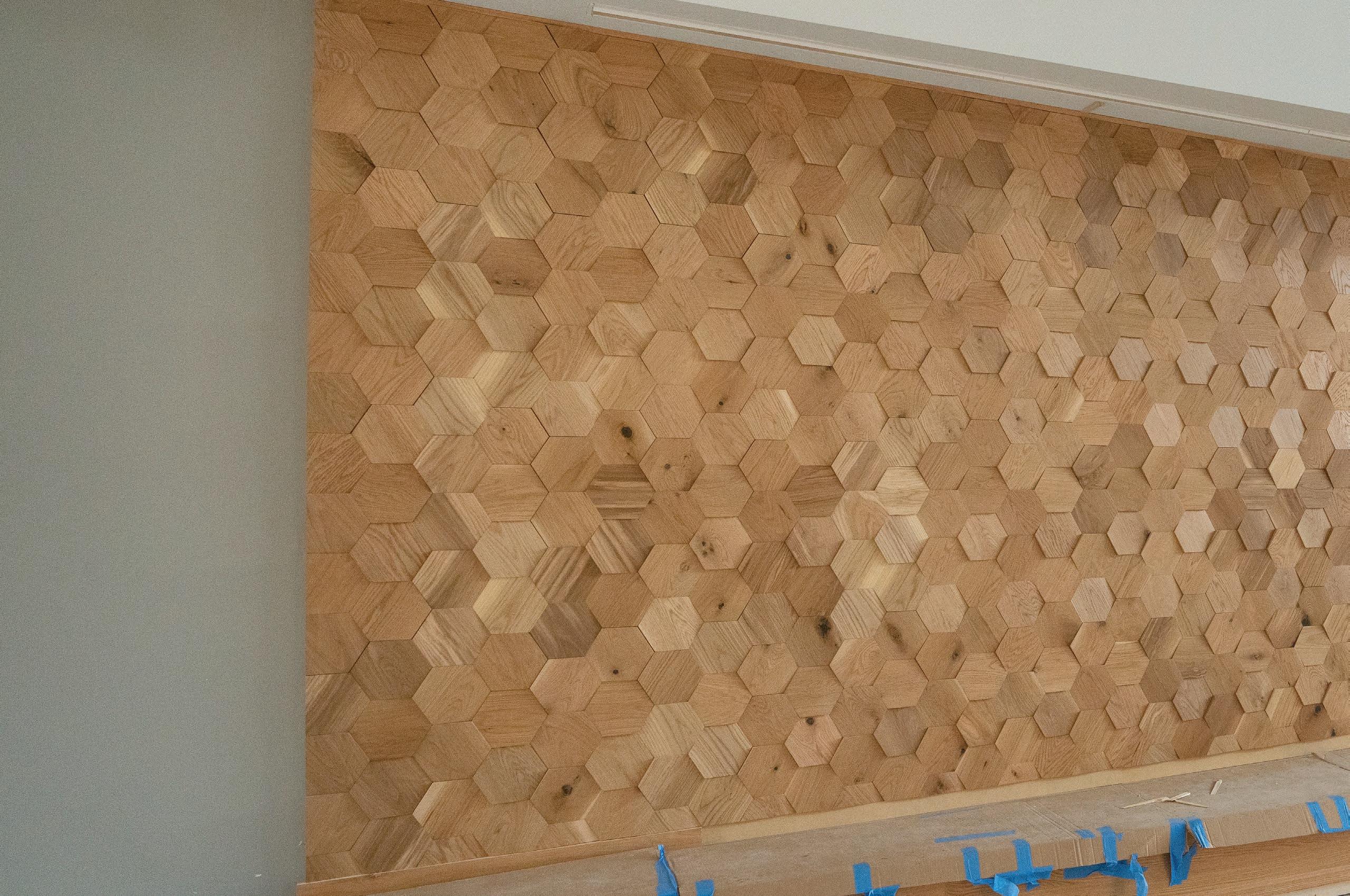
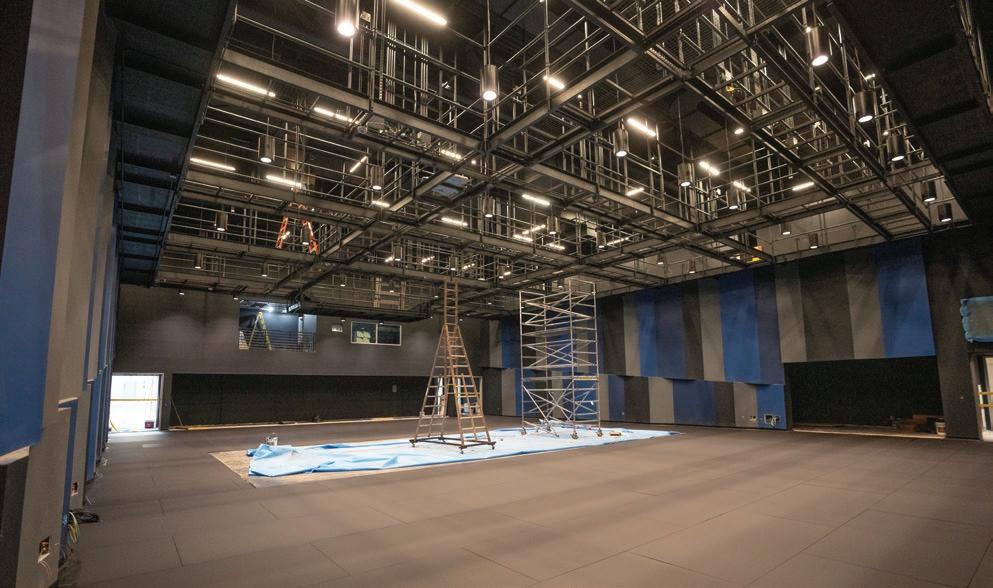
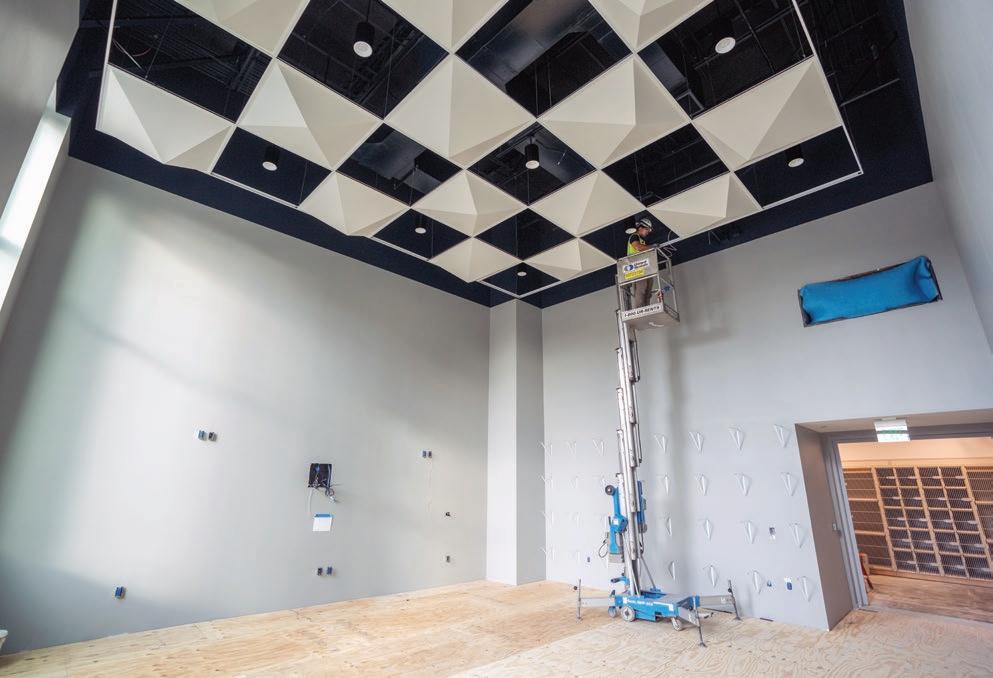
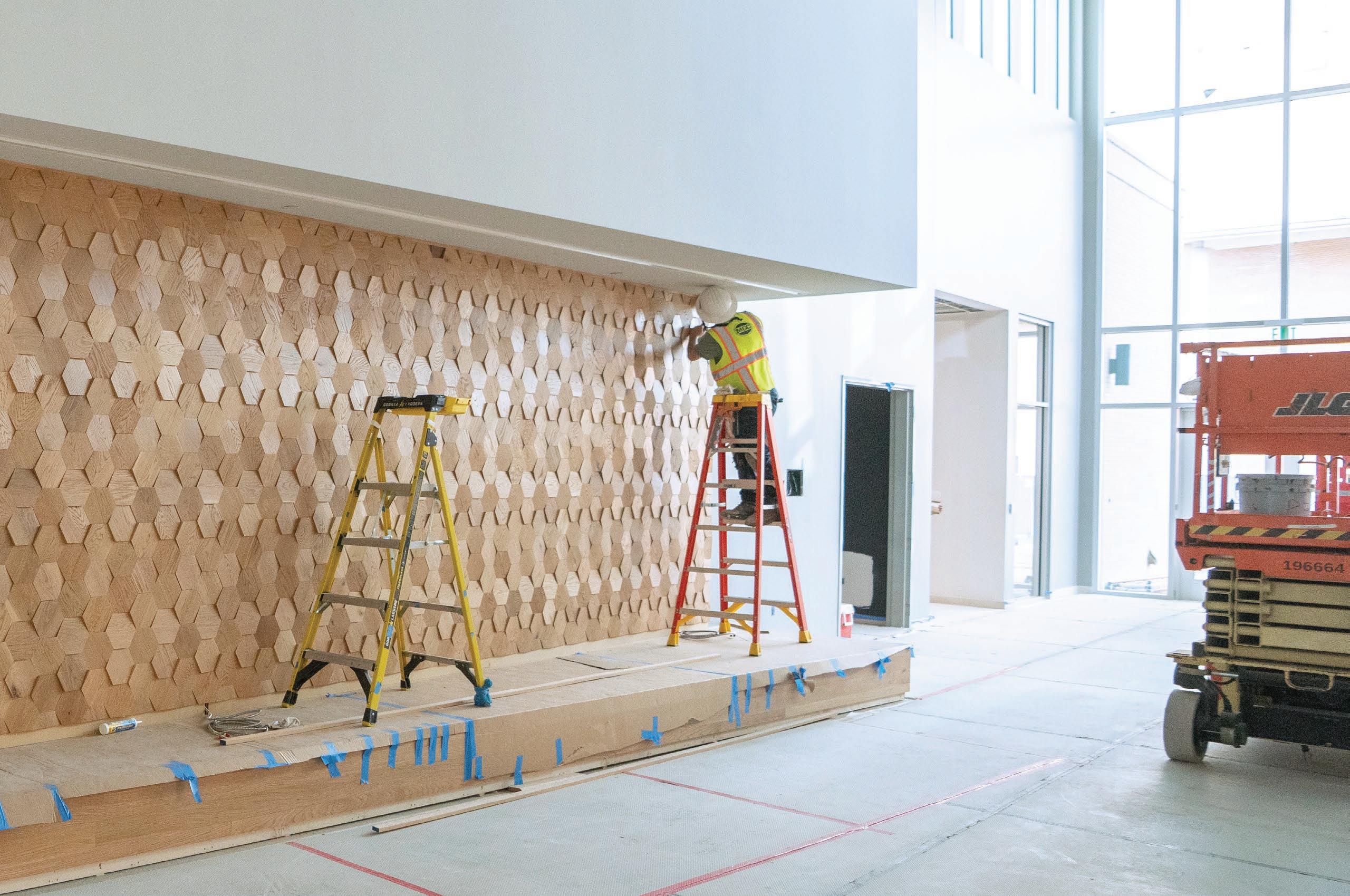
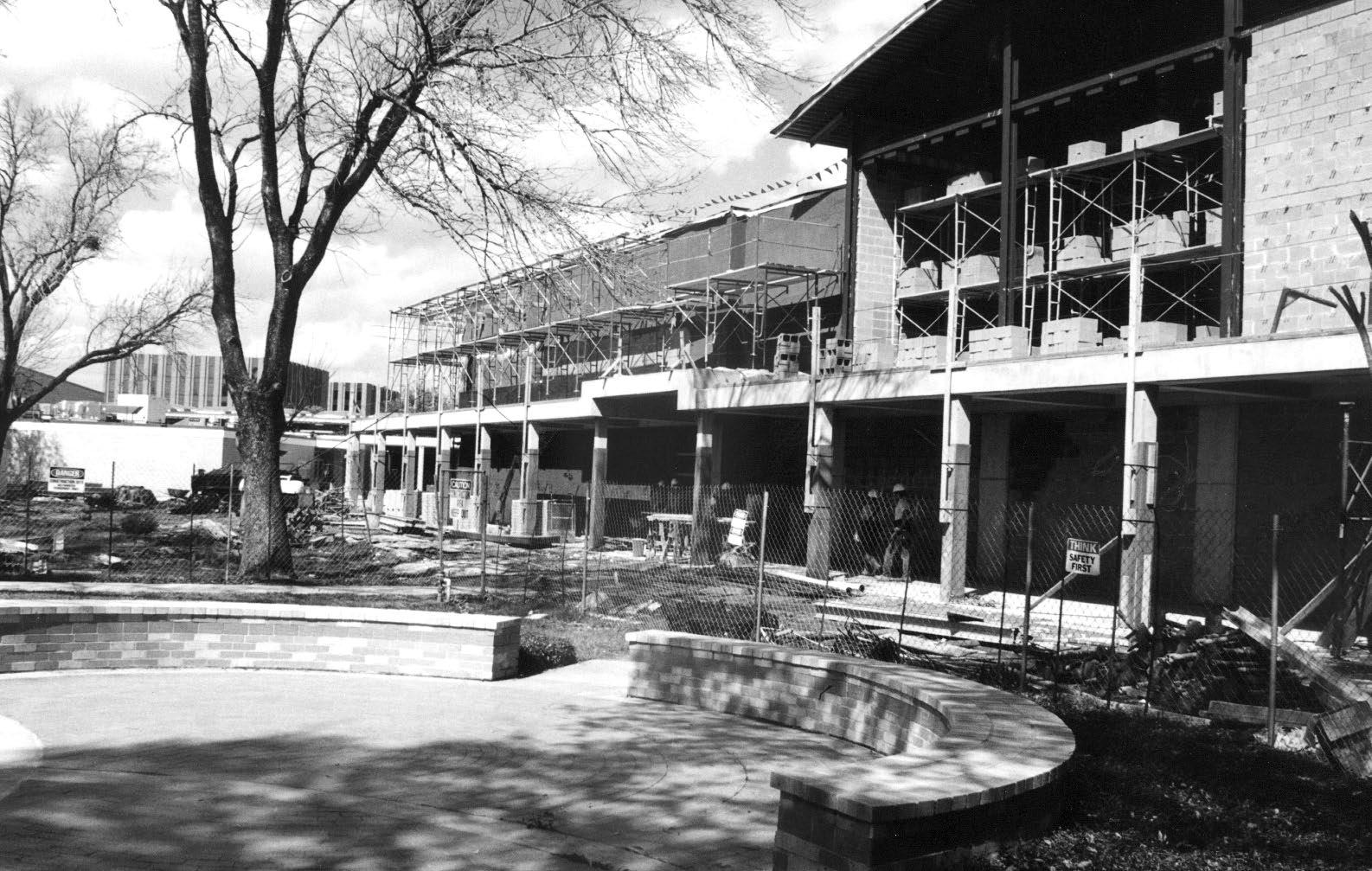
The Crain Galloway Center for the Arts (CGCA) is nearing completion. Scheduled to open on time and on budget, the CGCA will transform the Arts Pillar student experience. The CGCA’s unique and inspiring spaces are a combination of a new state of the art facility and thoughtfully renovated upgrades that impact every art offering at EHS, coupled with the one of a kind Sarofim Hall – a versatile performing arts theatre. The wait is almost over!
In August, students began using the reimagined Photography classrooms and darkrooms. Students can now spend significantly more time accessing the film rolling rooms, the chemistry sink, and the enlargers. The expanded processing space has inspired an innovative Alternative Processes course now offering students the opportunity to explore options in the development and manipulation of their negatives and prints.
As the CGCA comes online in January, our Knights will delight in the bright and airy Wallace Lobby. Visible from the lobby is the newly designed Ceramics studio that will allow more students to participate in EHS’s popular ceramics offering. Ceramics now boasts indoor and outdoor workshops with a glaze room and kilns, indoor and outdoor, that provide for more project engagement, including larger and shared projects as well.
The Mixed Media/Sculpture suite is stunning, consisting of a well outfitted tool room with a large, centralized compressor and piped compressed air outlets that provide remote access to air tools. This enhanced device allows for clean and flexible methods of
sculpture construction. The bright, airy studio with ample natural light also includes a large outdoor studio, where outsized projects can come to life.
A unique student generated concept is captured in the Costume Design workroom that will show off student led design projects. This program supports theatre productions and increases student participation. Costume Design is a hands on offering allowing students to engage in the entire design process, including initial discussion, research, creation, execution, and display.
CGCA’s Music suite is extraordinary! Knights of all music disciplines will finally have contiguous spaces to practice and perform, allowing for greater community and collaboration. The inclusion of the Wenger Practice Studios will have a transformational effect. These computer equipped practice rooms are engineered to provide musicians acoustically managed environments for practicing and private lessons and breakout spaces for curricular work. The new ensemble suites accommodate practice and rehearsal opportunities for groups of 6 8 singers or 3 4 musicians in a controlled environment.
The Orchestra ensemble room boasts an acoustic design with adaptable sound and light absorbing curtains, beautiful wood floors, high ceilings, and 12 foot windows for ample natural light. The smaller percussion room is perfect for the growing guitar offerings as well as providing space for our student led music opportunities, including drum line and cover band.
What’s upstairs in the new CGCA? The Moviemaking/ETV and Broadcast Journalism studios are a dramatic upgrade to the publications and media arts programs. The full scale production booth, seamless green screen walls, and fully rigged lighting grid allow students to explore projects in a professionally equipped environment. The scale of the space also creates more production and film opportunities. The included Animation alcove more than doubles the space available for stop motion animation projects.
The Construction Committee would like to express our appreciation to Dean of Arts Paul Revaz and the dedicated EHS faculty and staff. In addition, a special shoutout to the EHS students, especially the sophomores. Our community remained flexible and positive during the many logistical challenges, including temporary class locations, parking shuttles, and a maze of construction fencing. Our gratitude to the Knights!
The EHS Endowment Fund serves as a long term vehicle providing funds to support the Mission of Episcopal High School. The basic purpose and primary goal is to achieve long term appreciation of principal and to provide a distribution to help fund financial aid, operation and maintenance of the School’s properties, and such other programs as directed by the Episcopal High School Endowment Fund Board. The Endowment Board was established as a separate entity in 1997. As prudent and vigilant stewards of the available resources, the Board works strategically to enhance the long term sustainability of the School and to help keep tuition increases at a minimal level.
As of June 30, 2025, the balance of the Endowment Fund was $64 million. The current distribution policy of the Endowment is 4% of the trailing 12 quarter average market value. For fiscal year 2025, this resulted in a distribution to the School of $2.05 million.
The first gift to the Endowment was $200,000 from Jack Trotter and Mrs. Joe Jamail in 1984. The funds were soon lent to help fund the School’s operations and keep the doors open. When the mortgage on the School property was paid off in 1998, the gift was returned to the Endowment. Between 2000 and 2007, two significant fundraising campaigns propelled the growth of the Endowment Fund. “Mission 2000” raised $32 million for School facilities and Endowment, adding $9 million to the Fund. The “Windows to the Future” campaign raised $14 million for the Endowment.
In 2016, the Endowment was awarded a grant from a private foundation for $8 million, distributed in 32 equal quarterly payments of $250,000. The grant required that the Endowment Board engage an investment advisor with experience in managing funds for charitable institutions. It also called for the implementation of an investment policy with the objective of generating returns equal to or exceeding EHS Endowment Fund policy benchmarks with the appropriate amounts of risk and liquidity given the size and operating objectives of the EHS Endowment Fund.
By 2021, the Endowment had increased to $50 million. Between 2005 and 2025, the Endowment distributed over $16 million to the School to assist with operations, financial aid, and Four Pillar programming.
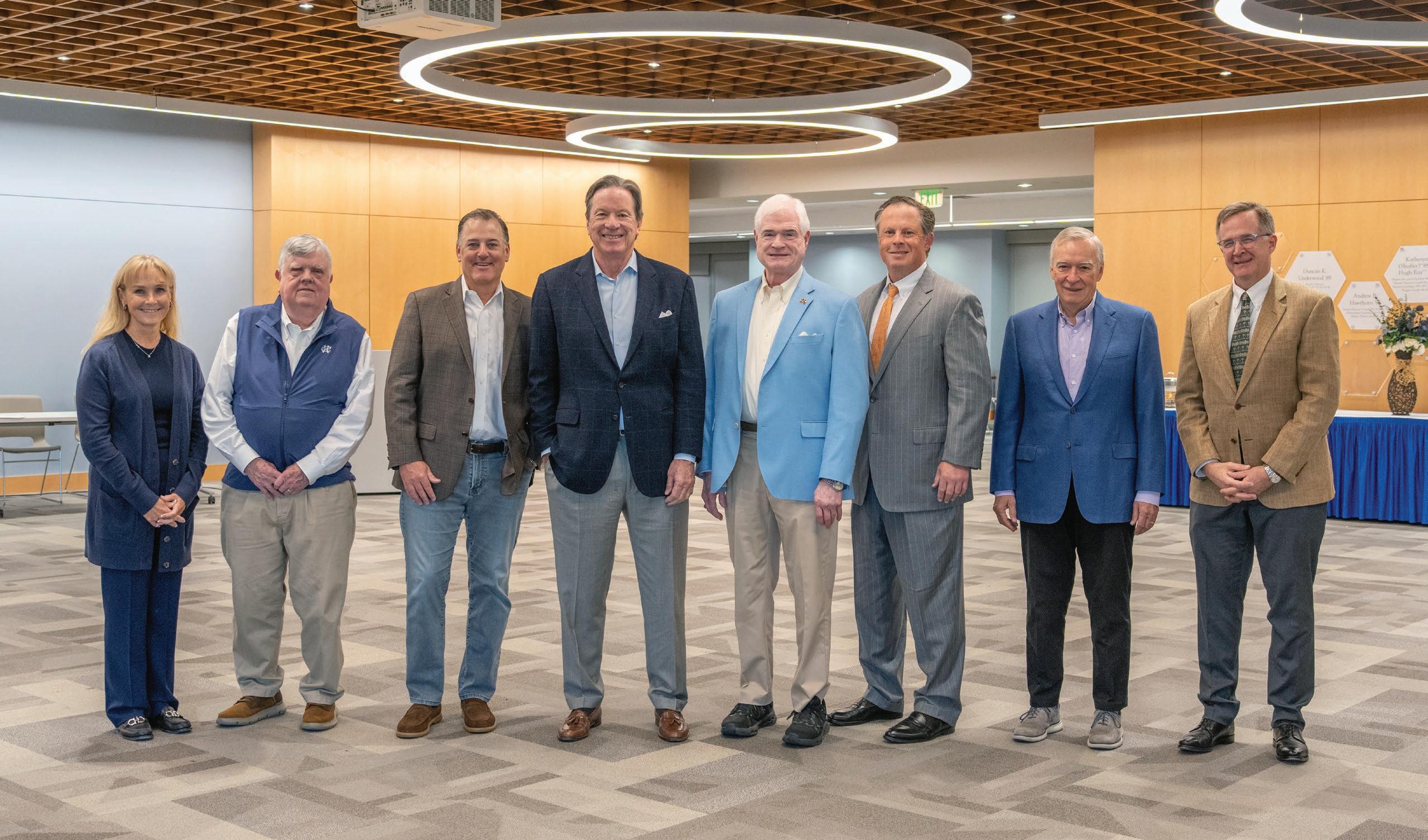
Pictured left to right: Randa Duncan Williams, W. Craig Childers, Clay Manley, William F. Galtney, Jr., William H. Caudill, Carl F. Giesler, Jr., Jeffrey J. McParland, Ned Smith
Today, the Endowment Board has 16 members, the majority of whom are former members of the Episcopal High School Board, including the Executive Chair, the Finance Chair, and the Head of School. The funds are managed by the Endowment Board and an investment subcommittee, with CapTrust as the investment advisor, and are currently invested in a conservative, diversified portfolio.
“The signatories on the original Articles of Incorporation, drafted in 1997 with the assistance of my firm Fulbright and Jaworski, were Larry Neuhaus, Vic Kormeier, and myself. The Endowment is important to allow the School to compete with other similar schools in Houston. It is important to show a backstop to the School's finances. It is important to provide support to the School so that tuition may be lowered to a more affordable level for our students and their families.”
– William H. Caudill
From the very beginning, the importance of the Endowment has stood at the heart of Episcopal High School’s vision. Our Founders and the many families who invested in those early years recognized the enduring impact of the foundation they were building. Today, we remain deeply grateful to the generous donors whose continued support of the EHS Endowment Fund sustains our Mission. Their commitment and leadership ensure that Episcopal High School can continue to prepare students for meaningful lives in service to others.
Board of Trustees of the Endowment Fund
President Randa Duncan Williams
Vice President
William H. Caudill
Secretary Clay Manley
W. Craig Childers
Michael Ellington
William F. Galtney, Jr.
Carl F. Giesler, Jr
Richard A. Howell ’01
Victor A. Kormeier, Jr.
Jeffrey J. McParland
Michael Mithoff – Advisory Member
Laurence B. Neuhaus
Ned Smith
Lynda Knapp Underwood
Thomas M. Wright
IN MEMORIAM
BARBARA ANN BARNES
1950 - 2025
It is with deep sadness that we share the passing of a beloved member of our community, Barbara Ann Butler Barnes, who died peacefully on August 18—her 75th birthday—in New York. Longtime member of the business office, alumni parent, and EHS champion, Barbara was born in Oklahoma during her father’s Air Force flight training but grew up and lived most of her life in Houston. In fact, Barbara's family was one of the first to move into the new real estate development called Sharpstown, where she enjoyed riding her bike and playing on the mountains of dirt that eventually became the Southwest Freeway.
With her keen intellect, quick wit, and stellar work ethic, Barbara graduated as valedictorian from Robert E. Lee High School in 1968 and continued her education at the University of Houston, graduating with a degree in English magna cum laude. It was at UH in 1969 where Barbara met Dean Barnes. Marrying in January 1972 at Holy Spirit Episcopal Church in Houston, they raised two daughters, EHS Trustee Katie Barnes ’92, and Susan (Barnes) Girling ’96. Barbara was an active volunteer at her daughters’ schools over the years, including Episcopal High School.
In addition to her devotion to family and family activities, Barbara possessed a remarkable gift for numbers and organization, joining
the EHS business office in 1996. She treasured her work here and the deep friendships with her colleagues, remaining dedicated to the EHS community for the more than 20 years of her employment and in the years beyond. In retirement beginning in 2017, Dean and Barbara were able to travel to see family and friends, often incorporating Astros baseball games, museums, and buildings of architectural significance along the way.
Barbara’s life deepened with the arrival of her beloved granddaughters, Lucy Katharine Girling and Emily Caroline Girling. To them, she was affectionately known as “Gramma.” Being their Gramma was one of her life’s greatest blessings. Dean and Barbara moved from Houston to Larchmont, NY in 2023 to be nearer to Susan and husband Adam and their granddaughters.
Learning early in life to be responsible for oneself and at the same time to step out into community, Barbara cared deeply for people and was committed to her family, her work at EHS, her church, and her friends, serving as the cheerleader for all.
The EHS community is grateful for Barbara’s generous heart, her many years of devotion and service, and the countless lives she touched. She will be missed.
2025 - 2026 BOARD OF TRUSTEES
Chairman
The Rt. Rev. C. Andrew Doyle
Executive Chair
Richard A. Howell ’01
Shelley Torian Barineau, Katie Barnes ’92, Stewart Black, Fowler Carter ’98, Kim Clark, Edward B. Crain, Jr., Stacey Crenshaw, Morrow B. Evans ’94, Carl F. Giesler, Jr., Curtis Hartman, Andrew B. Hawthorn ’91, Steve W. Herod, Amy Melton, The Rev. Patrick J. Miller, Taft Mohair II, Charlie Neuhaus ’95, Eloise (Fay) Novotny ’94, Courtney (Lanier) Sarofim ’88, Elise de Compiegne Shatto, Ned Smith, The Rev. Dr. R. Leigh Spruill, Dr. Ramsi (Bethany) Taylor ’98, Patrick G. Trask, Mollie Phelan Wallace, James Whitehead ’94
Life Trustees
John F. Austin III, Edward C. Becker, The Rt. Rev. Maurice M. Benitez†, W. Craig Childers, Lacy Crain, The Rev. Laurens A. Hall, Victor A. Kormeier, Jr., Frederick R. McCord†, Laurence B. Neuhaus, The Rt. Rev. Claude E. Payne, Joel I. Shannon, Duncan Underwood ’89, Lynda Knapp Underwood, The Rt. Rev. Don A. Wimberly
Executive Committee
Shelley Torian Barineau, Edward B. Crain, Jr., The Rt. Rev C. Andrew Doyle, Carl F. Giesler, Jr., Richard A. Howell ’01, Eloise (Fay) Novotny ’94, A. Haag Sherman, Ned Smith, Dr. Ramsi (Bethany) Taylor ’98, Lynda Knapp Underwood, Mollie Phelan Wallace, Randa Duncan Williams † deceased
LEADERSHIP
Head of School
Ned Smith
Associate Head of School for Finance & Operations
Evelyn Cambria
Associate Head of School for Academics & Student Life
The Rev. Tyler Montgomery
Principal Dr. Antonio Avalos
Dean of Religion
The Rev. Art Callaham
Director of Athletics
Jason Grove
Director of Diversity, Community, and Inclusion
Wayne Jones
Director of Communications
Jessica Morales
Dean of Faculty Nguyet Xuan Pham
Dean of Arts
Paul Revaz
Chief Development Officer
Margaret Young
PILLARS MAGAZINE TEAM
Senior
Photography Contributors
Charles Holt, Jessica Morales, Diana Mumford, Photo Journalism Students Piper Beck ’27, Peyton Stewart ’27, and Jack Zoeller ’27, EHS Archives