Regional. Sortenvielfalt am Eisathhof. Chilometro zero. Le varietà del maso Eisathhof. Homegrown. Vegetables aplenty at Eisathhof farm.
16
Unterwegs in den Bergen. Die Klassiker. In montagna. I classici della Val d’Ega. Exploring the mountains. Unmissable adventures.
40 Schnee-Expertise. Mut zur Innovation. Tecnologia sulle piste. Il coraggio di innovare. Snow specialists. Visionary innovation.
46
Liebe Leserinnen und Leser,
Im Eggental leben Menschen, die anpacken. Einst nur durch die berüchtigte Schlucht zu erreichen, zeigt sich die Region heute offen und ideenreich, geprägt von Persönlichkeiten, die Neues wagen. Ihr Blick geht nach vorn – mit festen Wurzeln und dem Willen, Verantwortung zu übernehmen.
Sie halten die erste Ausgabe des neuen Eggental Magazine in den Händen, die genau diese Geschichten erzählt: von Menschen, die hier ihren Platz gefunden haben (S. 30), die Traditionelles neu denken (S. 26), Fortschritt gestalten (S. 46) und Haltung leben (S. 16).
Eine gute Lektüre wünscht
Die Redaktion
Care lettrici e cari lettori, in Val d’Ega vivono persone intraprendenti, abituate a rimboccarsi le maniche. Un tempo raggiungibile solo attraverso la celebre, strettissima gola, oggi è una terra aperta e ricca di idee, animata da personalità che non temono di intraprendere nuove strade.
Hanno lo sguardo rivolto al futuro, forti delle loro radici e pronte ad assumersi le responsabilità.
State sfogliando il primo numero del nuovo Eggental Magazine, dedicato proprio alle loro storie: storie di persone che qui hanno trovato la loro dimensione (p. 30), di persone che reinterpretano la tradizione (p. 26), costruiscono il progresso (p. 46) e vivono secondo i loro valori (p. 16).
Buona lettura!
La Redazione
Dear Reader,
The Eggental valley is a place where people seize the day. Once only accessible via a notorious gorge, the region is now a welcoming place full of spirited, visionary locals brimming with bold, trailblazing ideas. People who look to the future, yet never lose sight of their roots or sense of responsibility for the world around them. This first issue of the new Eggental Magazine tells their stories. Read all about an amateur astronomer who has found her place here in the valley (p. 30), an artist who puts his own spin on tradition (p. 26), a snowmaking pioneer (p. 46) and an upstanding young farmer (p. 16).
Happy reading!
The Editorial Team
CREDITS
PUBLISHER
Eggental Tourismus Dolomitenstraße 4 | Via Dolomiti 4 39056 Welschnofen | Nova Levante eggental.com
CONTACT info@eggental.com
EDITORIAL TEAM
Exlibris exlibris.bz.it
PUBLISHING MANAGEMENT
Debora Longariva (Exlibris)
ART DIRECTION
Philipp Aukenthaler hypemylimbus.com
AUTHORS
Lisa Maria Gasser, Daniela Kahler, Debora Longariva, Edith Runer, Stefanie Unterthiner, Anna Zögernitz
Christoph Weissensteiner (4) KatePilko/Shutterstock (56–58)
TRANSLATIONS AND PROOFREADING Exlibris (Alison Healey, Milena Macaluso, Charlotte Marston, Silvia Oberrauch, Federica Romanini, The Word Artists)
PHOTO EDITING
Typoplus, Frangart
PRINTED BY Lanarepro, Lana
ROSENGARTEN CATINACCIO
NIGERPASS PASSO NIGRA
46
KARER SEE LAGO DI CAREZZA
KARERSEE CAREZZA
KARERPASS PASSO DI COSTALUNGA
40
12
WELSCHNOFEN NOVA LEVANTE
26
EGGEN EGA
BIRCHABRUCK PONTE NOVA
GUMMER SAN VALENTINO
OBEREGGEN LAVAZÈ
STEINEGG COLLEPIETRA
30
16
MARIA WEISSENSTEIN MADONNA DI PIETRALBA
JOCHGRIMM PASSO OCLINI
KARDAUN CARDANO
KARNEID CORNEDO
DEUTSCHNOFEN NOVA PONENTE
56
» BOZEN » BOLZANO
PETERSBERG MONTE SAN PIETRO
6
Ankommen im Glück
Orte und Impressionen
Scorci di felicità
Luoghi e suggestioni
Where Happiness Awaits
Places and impressions
12
Kurz und gut
In breve
Spotlight
16
„Zuerst das tun, was richtig ist“
Ein Besuch am Eisathhof von Vielfaltsbauer Michael Pfeifer
“Faccio innanzitutto quello che ritengo giusto”
Un giro all’Eisathhof di Michael Pfeifer
“Start by doing what’s right”
We visit Eisathhof farm and Michael Pfeifer
26
Drei Fragen an
Künstler Patrick Obkircher
Tre domande
All’artista Patrick Obkircher
Three Questions for Artist Patrick Obkircher
30
Oh, Himmel
Mit Amateurastronomin Stephanie Wolters im Sternendorf
Oh, cielo!
Nel paese delle stelle con l’astronoma amatoriale Stephanie Wolters
Reaching for the Stars
With amateur astronomer Stephanie Wolters in the star village 40
Die Klassiker Im Sommer und Winter
I grandi classici In estate e inverno
Unmissable Adventures In summer and winter
46
Schneekompetenz
Georg Eisath und Michael Mair über technischen Schnee und perfekte Pisten
Gli specialisti della neve
Georg Eisath e Michael Mair parlano di neve tecnica e piste perfette
Snow Specialists
An interview with Georg Eisath and Michael Mair on technical snow and perfect slopes
56
Ein Tag Stadtleben
Una giornata in città A Day in the City
Ankommen im Glück
Scorci di felicità
Where Happiness Awaits
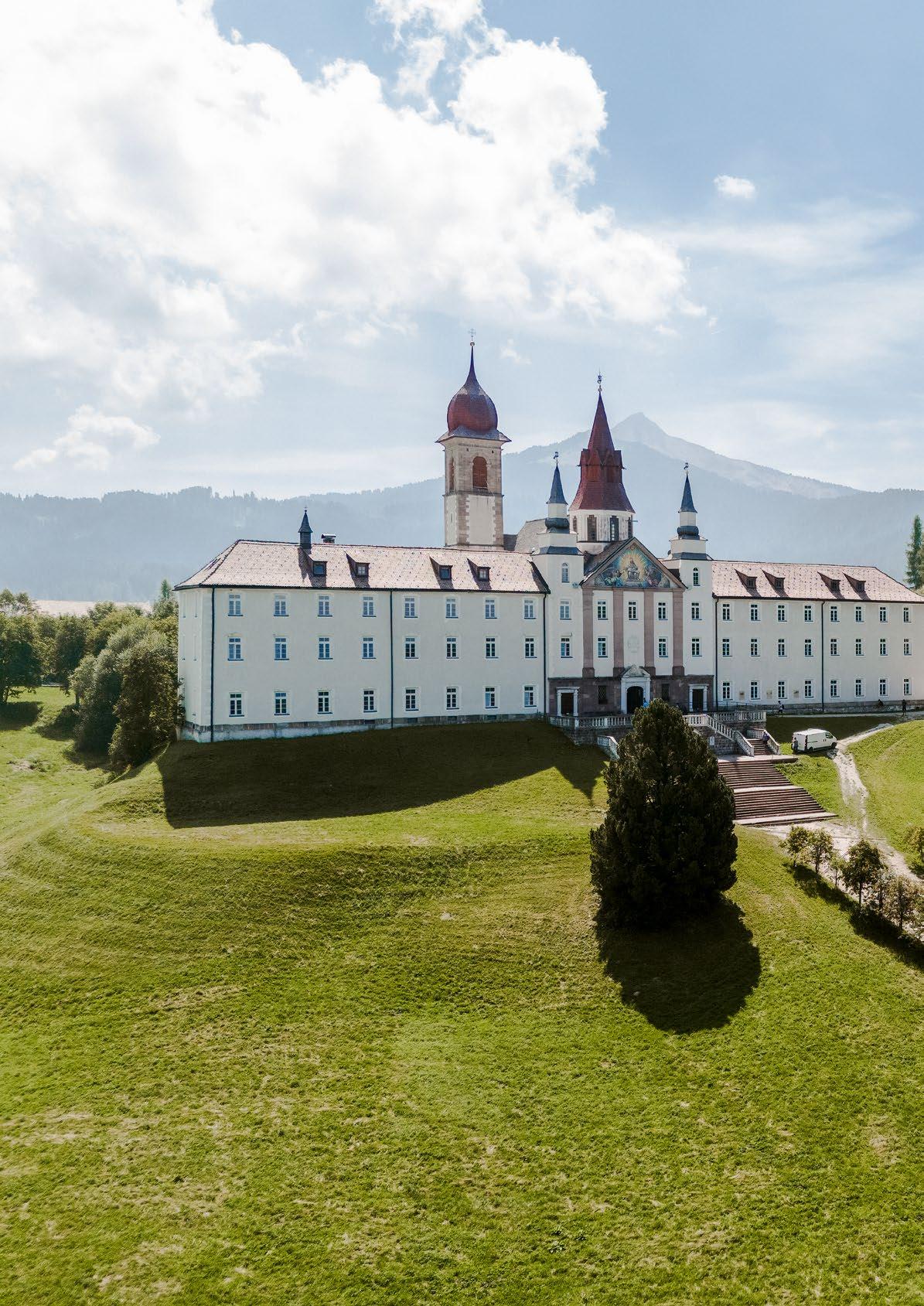
Andachtsvoll: Der Wallfahrtsort Maria Weißenstein auf dem Regglberg ist seit dem 16. Jahrhundert Ziel von Pilgerreisen.
Raccoglimento: il Santuario della Madonna di Pietralba sul Monte Regolo è meta di pellegrinaggi dal XVI secolo.
A sacred place – pilgrims have been making their way to the Maria Weissenstein pilgrimage site on the Regglberg high plateau since the 16th century.
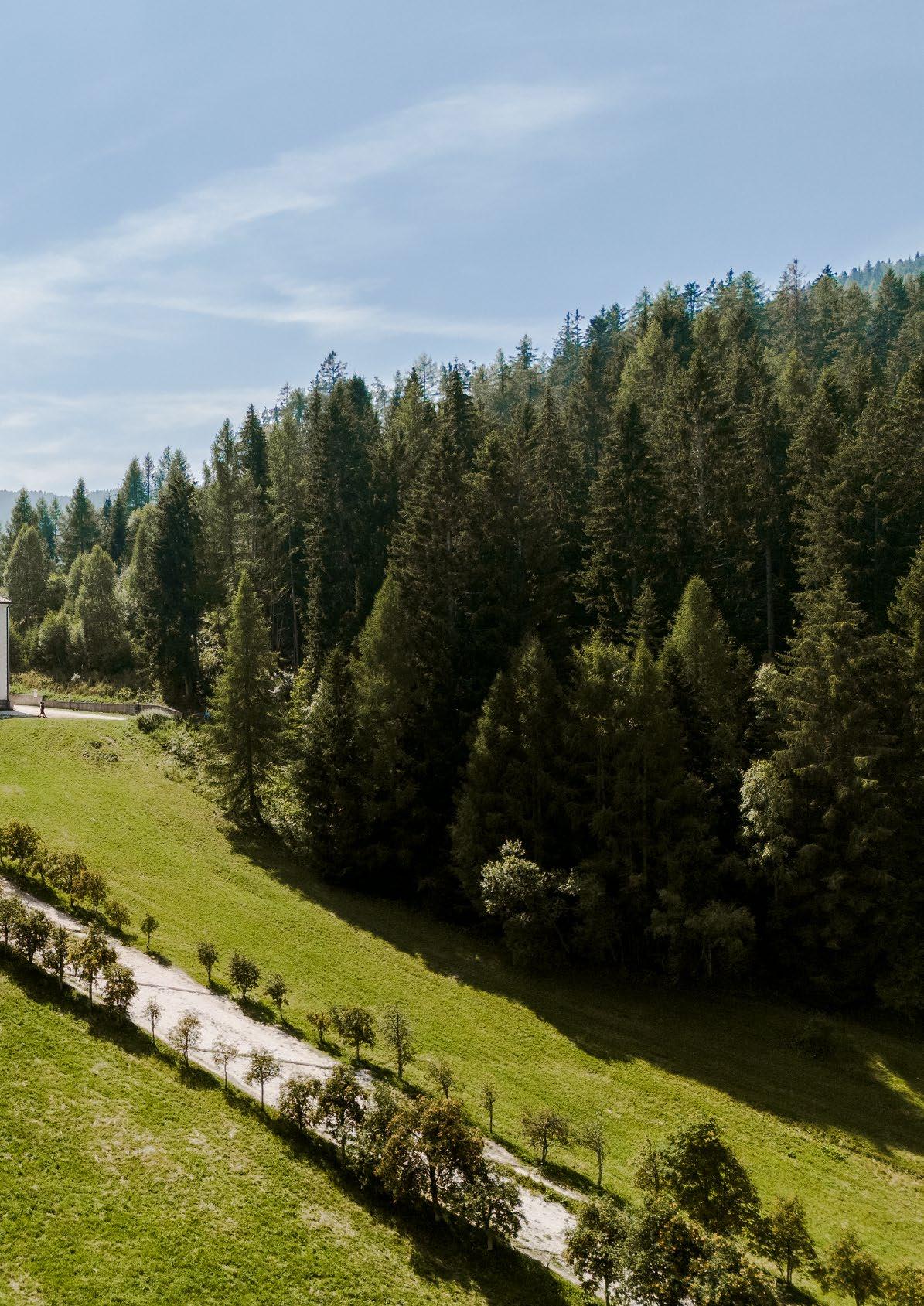
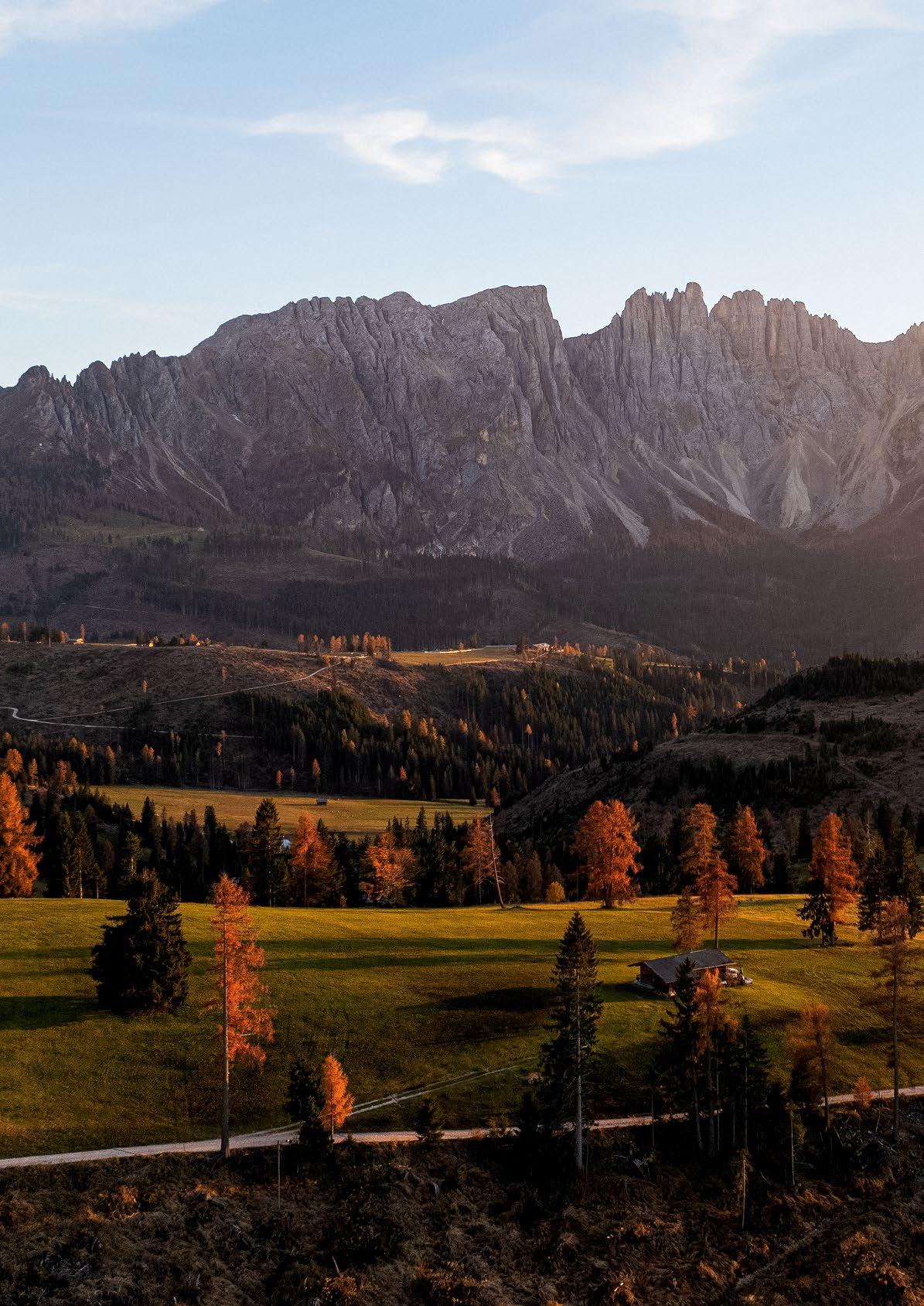
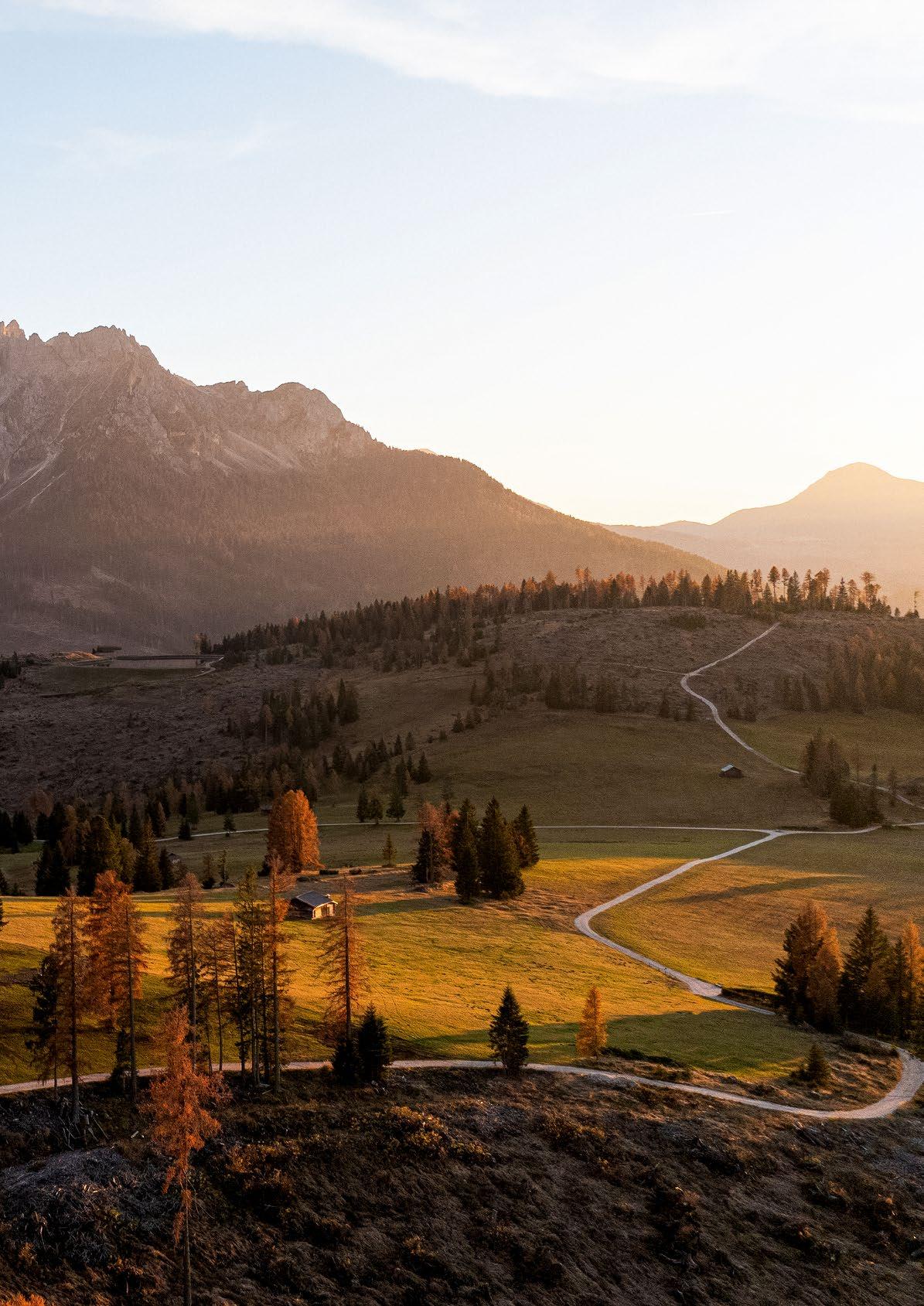
Herbststimmung: Im Oktober färben sich die Nadeln der Lärchen im Tal gelb.
Atmosfera autunnale: in ottobre gli aghi dei larici si tingono di giallo.
Autumn colours – every October, the valley’s larch trees turn a beautiful golden yellow.
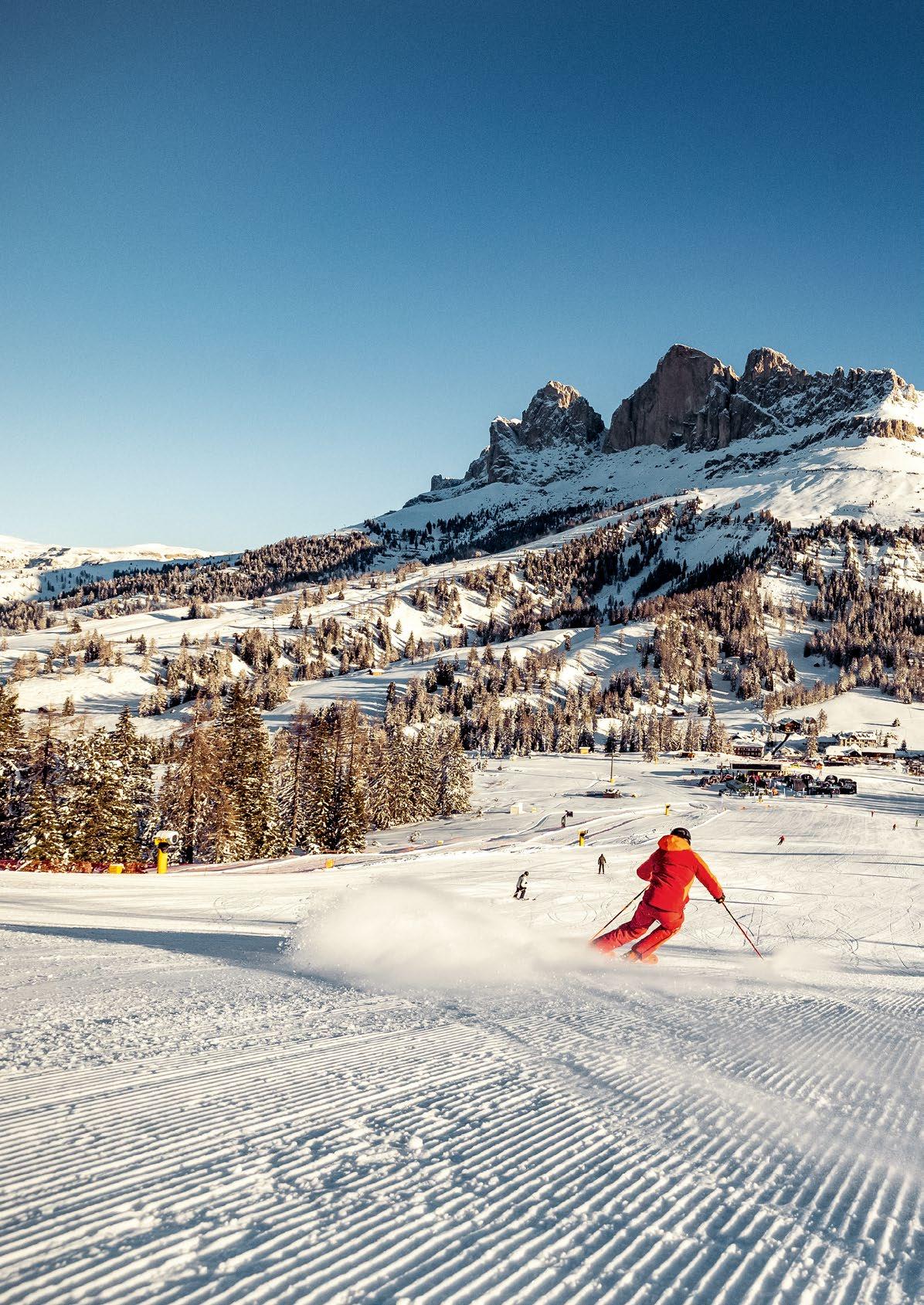
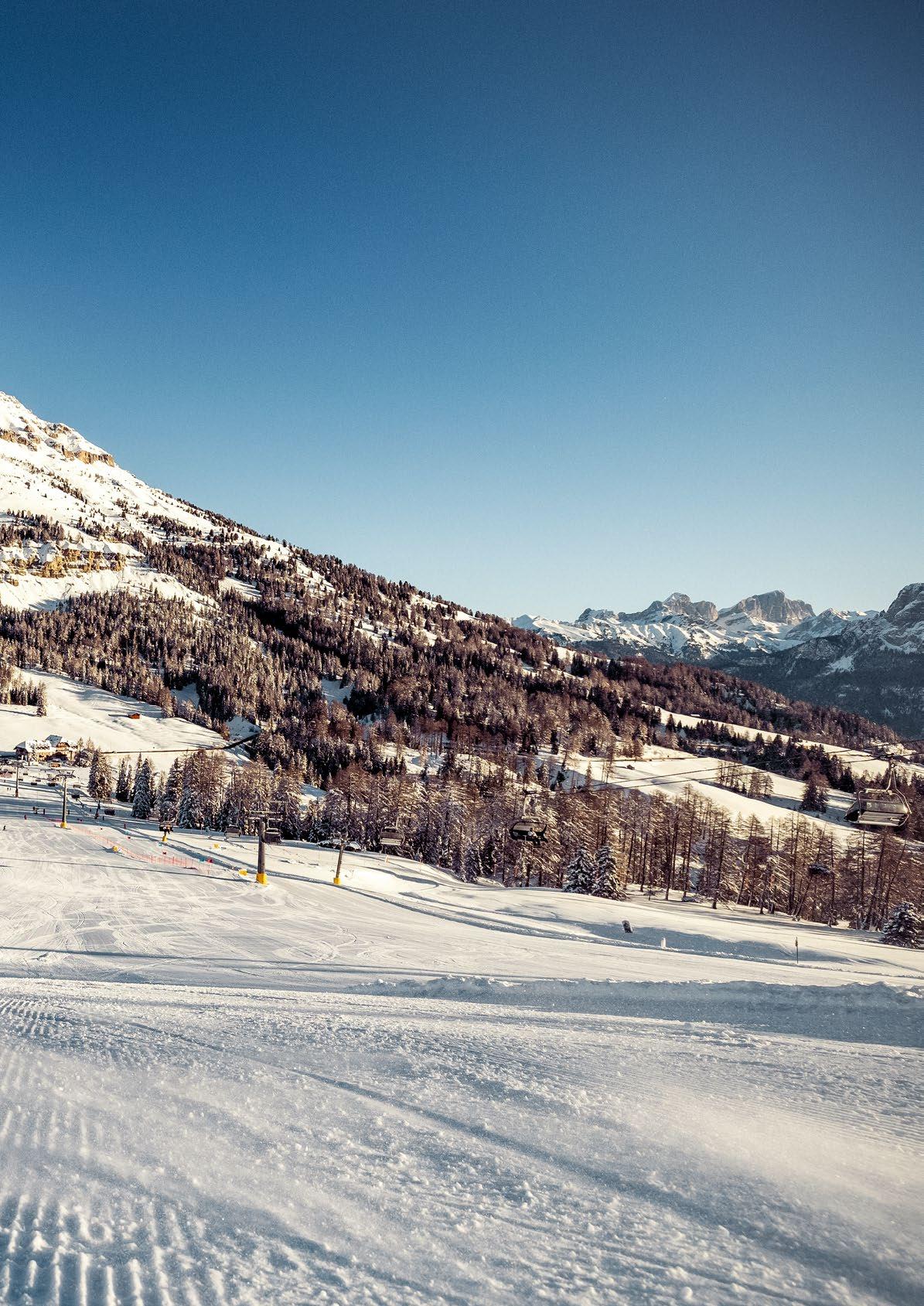
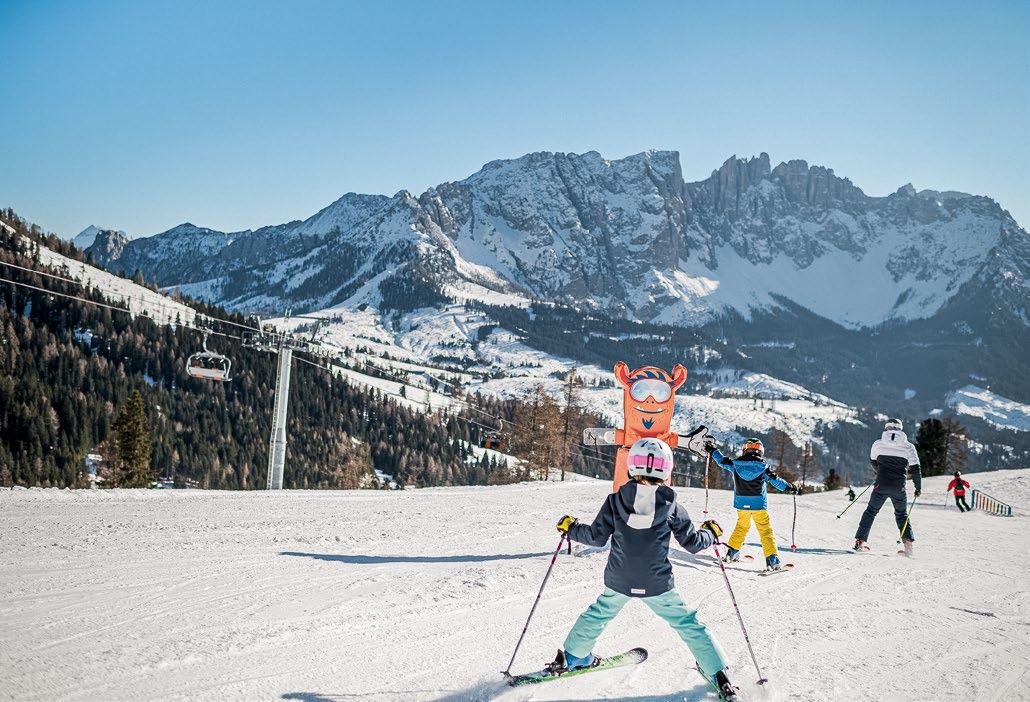
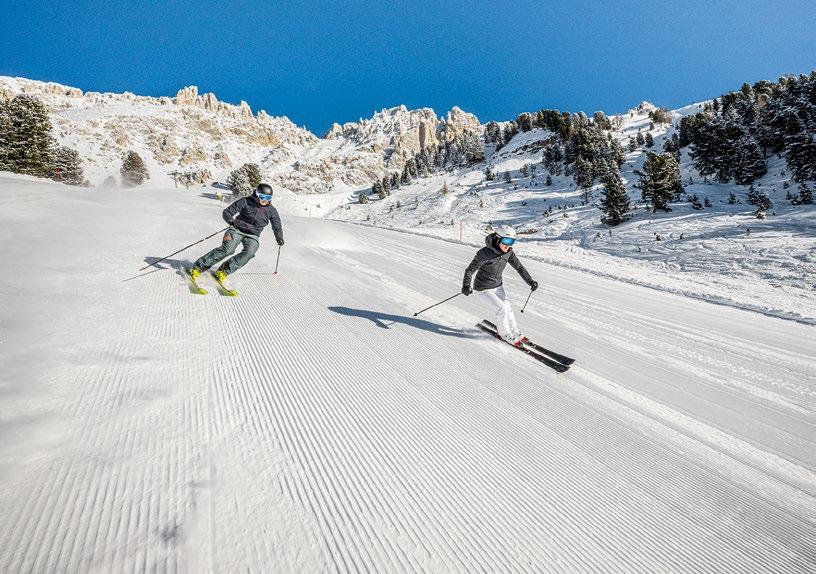
Schneemomente: Wer einmal vor der Kulisse des Rosengartens Ski fährt, will es immer wieder erleben.
Momenti sulla neve: sciare sullo sfondo del Catinaccio è un’esperienza unica.
Fun on the slopes – nothing compares to skiing against the backdrop of the Rosengarten massif.
Kurz und gut In breve Spotlight
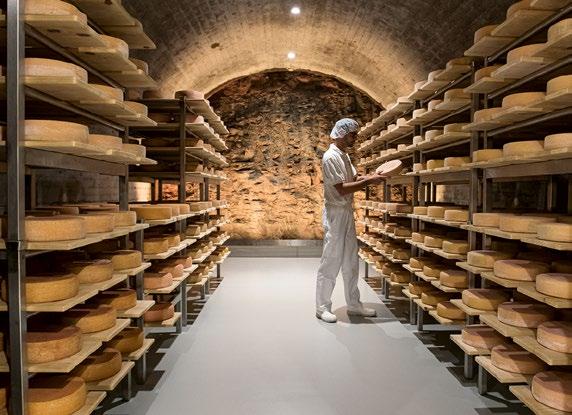
Zahl der Ausgabe 4-mal Käse
Il numero di questa edizione Formaggio per 4
This issue’s lucky number 4 cheeses
DE Käsermeister Stefan Köhl stellt in der Hofkäserei Learner zehn Sorten her, die im Felsenkeller reifen, etwa den vollmundigen Deutschnofner Bergkäse.
Am Ebenhof verarbeitet Bauer Markus Lantschner mit Liebe zum Handwerk seit 2007 die hofeigene Milch zu Käse – von mild-würzigem Sternkasl bis Topfen.
In der Almkäserei Hagneralm entstehen mit Erfahrung und Geschick preisgekrönte Sorten: Weich- und Schnittkäse sowie über zwei Jahre gereifter Hartkäse.
Walliser Schwarzhals- und Edelziegen sind die Stars am Biohof Oberwerkstatt. Das Ergebnis: feine Ziegenkäsesorten mit sanfter Würze.
IT Il mastro casaro Stefan Köhl del caseificio Learner produce dieci diversi formaggi che maturano in una cantina ricavata nella roccia. Tra questi il corposo formaggio di montagna di Nova Ponente. Dal 2007 Markus Lantschner del maso Ebenhof lavora con dedizione il latte di produzione propria per ricavarne formaggi come il quark e lo “Sternkasl” dal gusto delicato e aromatico.
La malga Hagneralm produce con cura e competenza formaggi pluripremiati, dai formaggi freschi e a pasta semidura ai formaggi duri con più di due anni di stagionatura. Al maso biologico Oberwerkstatt le grandi protagoniste sono le capre di razza tedesca e le vallesane dal collo nero. Dal loro latte nascono raffinati caprini dal sapore piacevolmente aromatico.
EN Expert cheesemaker Stefan Köhl makes ten varieties at Learner cheese dairy, including a full-bodied Deutschnofen/Nova Ponente mountain cheese, and matures them in a stone cellar. At Ebenhof farm, Markus Lantschner has been transforming the farm‘s milk into a variety of cheeses since 2007. Made with love and skill, they range from a mildly tangy Sternkasl to a curd cheese. Hagneralm cheese dairy is known for its expertly crafted, award-winning cheeses, which include soft and semi-hard varieties as well as hard cheese matured for over two years. Valais Blackneck and fawn goats are the stars of the show at Oberwerkstatt organic farm, where their milk is used to make delicious goat’s cheese with a subtle flavour.
Die Rosadira Bike Days finden jährlich statt. Nächster Termin: 10.–14.06.2026
I Rosadira Bike Days si svolgono ogni anno. Il prossimo appuntamento è dal 10 al 14 giugno 2026.
The Rosadira Bike Days festival is held annually. Next event: 10 to 14 June 2026
eggental.com/rosadira
Place to be
Ride, relax, repeat
Place to be Ride, relax, repeat
Place to be
Ride, relax, repeat
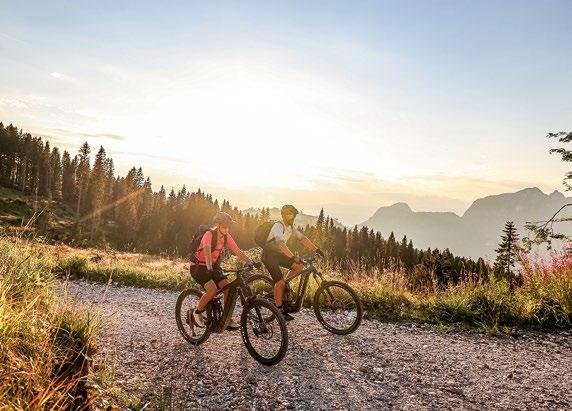
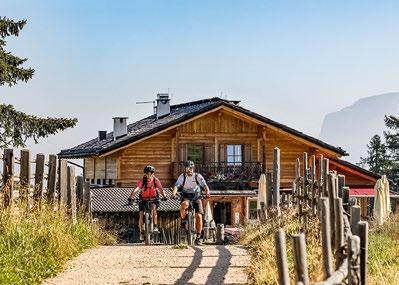
DE Erste Trailversuche und gemütliche Genusstouren: Die Rosadira Bike Days stehen für gemeinsames Biken vor Dolomitenkulisse. Die Eggentaler Guides führen Mountainbikerinnen und Mountainbiker aller Levels durch die vielfältige Landschaft. Skills gezielt verbessern für mehr Sicherheit und Fahrspaß? Dafür stehen Fahrtechnik-Workshops auf dem Programm. Zeitgleich sind die kleinen Bikefans beim Kinderprogramm auch mal ohne die Eltern unterwegs. Nach den Touren warten Chill-out-Sessions mit Live-Musik und Aperitivo. Am Samstag führen alle Wege zum gemeinsamen Abschlussevent, wo die Rosadira Bike Days bei kulinarischen Spezialitäten und Live-Musik ausklingen.
IT Tra primi tentativi sui trail e piacevoli escursioni in sella, i Rosadira Bike Days sono un’ottima occasione per pedalare insieme nel variegato paesaggio della vallata al cospetto del maestoso spettacolo delle Dolomiti. In programma ci sono tour con le guide locali per mountain biker di tutti i livelli e workshop di tecnica di guida per affinare le abilità, aumentare la sicurezza e il piacere di pedalare. Intanto, i piccoli appassionati di mountain bike possono divertirsi anche senza genitori nel programma a loro dedicato. E, dopo i tour, è il momento del relax con aperitivo e musica dal vivo. Sabato tutte le strade portano all’evento conclusivo dei Rosadira Bike Days, che si chiudono in bellezza con specialità gastronomiche e musica dal vivo.
EN Set against the backdrop of the Dolomites, the Rosadira Bike Days festival invites mountain bikers of all levels to try out thrilling trails and leisurely routes through spectacular scenery in the expert hands of guides from the Eggental valley. The programme also includes riding technique workshops to help you master trails more skilfully and safely, and make riding even more fun. Plus, little bike lovers can enjoy the kids’ programme while their parents are out on the trails. Ride complete, you can round off your day with live music and an aperitivo at the festival’s chill-out sessions. On the Saturday, you can also relax at the festival’s unmissable finale featuring great local food and musical performances.
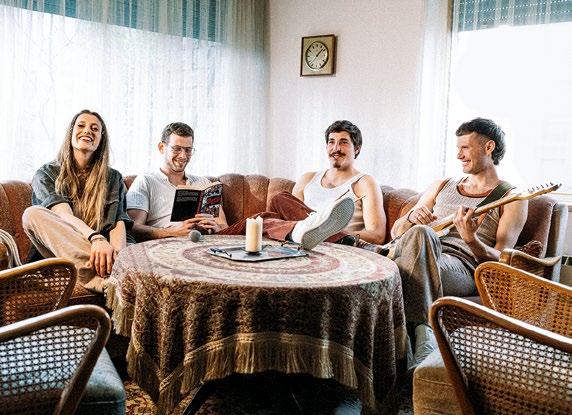
DE „Wir trafen uns zufällig bei irgendeiner Jamsession und fingen einfach an zu spielen. Es hat sofort Klick gemacht“, erzählt Elisabeth Pichler vom Geburtsmoment der Band But Beautiful. Zur Band gehören neben ihr als Sängerin und am Piano, Gitarrist und Sänger Andreas Mair, Schlagzeuger Andreas Pichler und Bassist Simon Enz. Seit 2020 machen sie zusammen Musik, bunt inspiriert von Wet Leg und Viagra Boys bis The Rolling Stones und Oasis. Ihr Stil? Ein Mix aus Indie und Rock oder „Mal verspielt, mal dreckig“, wie sie ihn selbst beschreiben. Ihre Songs handeln von Liebe, Sehnsucht oder manchmal leicht schrägen Geschichten, die sie nicht immer selbst erlebt haben, aber mit viel Gefühl erzählen. Meist auf Englisch, aber auch auf Italienisch und Französisch. „Wir haben auch schon deutsche Texte und im Dialekt geschrieben, aber noch nichts veröffentlicht“, sagt Pichler. Die Musik entsteht großteils in Obereggen, dem Heimatdorf der Geschwister Pichler: „Mittlerweile leben drei von uns in Obereggen. Es ist ruhig und wir haben viel Raum zum Rumspinnen!“ Von Instrumenten über Songwriting und Videodreh bis hin zu Produktion, Aufnahme und Mixing: Die vier haben sich alles selbst beigebracht. Typisch Eggental, sagt die Frontfrau: „Hier gibt’s viele Leute, die einfach anpacken und was aufbauen. Wir auch, nur mit Gitarren statt Werkzeug.“ Das erste Album von But Beautiful erscheint 2026.
IT “Ci siamo conosciuti per caso durante una jam session e abbiamo iniziato a suonare insieme. La scintilla è scoccata subito”, racconta Elisabeth Pichler parlando della nascita della band But Beautiful, di cui è cantante e tastierista. Del gruppo fanno parte anche il chitarrista e cantante Andreas Mair, il batterista Andreas Pichler e il bassista Simon Enz. Suonano insieme dal 2020, con influenze che spaziano dai Wet Leg e Viagra Boys, ai Rolling Stones e Oasis. Il loro stile è un mix tra indie e rock o, per dirla con le loro parole, “tra il ruvido e il giocoso”. I brani parlano di sogni e di amore, ma anche di storie
Local Talents
„Mal verspielt, mal dreckig“
Local Talents
“Tra il ruvido e il giocoso”
Local Talents
“Playful and grungy”
bizzarre che, seppur non sempre vissute personalmente, rivelano una grande sensibilità. I testi sono generalmente in inglese, ma non mancano pezzi in italiano o francese. “Abbiamo scritto anche alcune canzoni, ancora inedite, in tedesco e in dialetto”, aggiunge Elisabeth. La musica dei But Beautiful nasce perlopiù a Obereggen, il paese dei fratelli Pichler: “Ormai tre di noi vivono qui a Obereggen. È un posto tranquillo, che dà molto spazio per dare libero sfogo alla fantasia!”. I quattro musicisti sono autodidatti a tutto tondo: dagli strumenti al songwriting, dalla registrazione al missaggio e alla produzione, hanno imparato tutto da soli. Del resto, siamo in Val d’Ega: “Qui ci sono tante persone che si rimboccano le maniche e costruiscono qualcosa. Come noi, solo che al posto degli attrezzi usiamo le chitarre”, scherza la leader del gruppo. Il primo album dei But Beautiful uscirà nel 2026.
EN “We met each other by chance at a random jam session and just started playing together. We clicked straightaway,” says Elisabeth Pichler, reflecting on the birth of her band But Beautiful. As well as Elisabeth on vocals and piano, the band is made up of guitarist and singer Andreas Mair, bassist Simon Enz and drummer Andreas Pichler, who is also Elisabeth’s brother. Influenced by an eclectic mix of artists ranging from Wet Leg and Viagra Boys to The Rolling Stones and Oasis, they’ve been making music together since 2020 and describe their fusion of indie and rock as “a blend of playful and grungy”. Their rousing songs are about love, longing and some slightly bizarre stories from their own lives or lives of others. The majority of their lyrics are in English, but some are in Italian or French. “We’ve also written songs in German and our local dialect, but we haven’t released any yet,” says Elisabeth. The band writes most of its music in Obereggen, the village where siblings Elisabeth and Andreas grew up. “Three of us now live in Obereggen. It’s so peaceful and gives us plenty of space to be creative.” The four band members do everything themselves, from songwriting and instrumentals to video shooting, production, recording and mixing. According to Elisabeth, that’s typical of people from the Eggental valley: “Here, people often get stuck in and build things themselves. We do the same, just with guitars instead of tools.” But Beautiful’s first album will be released in 2026.
@butbeautiful_band
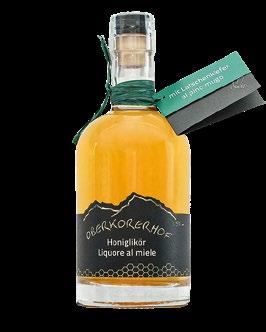
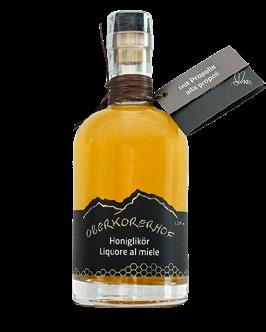
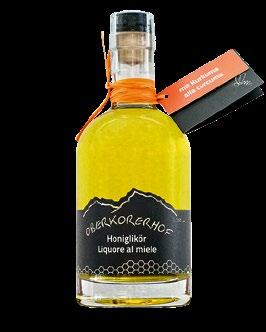
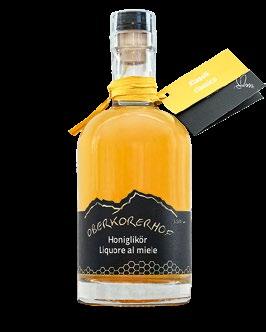
Die Honigliköre sind im Onlineshop und in ausgewählten Restaurants und Vinotheken in Südtirol erhältlich.
I liquori sono disponibili nello shop online del maso e in enoteche e ristoranti selezionati dell’Alto Adige.
The honey liqueurs are available from the farm’s online shop as well as at select restaurants and wine bars in South Tyrol.
oberkorerhof.it
Mitbringsel Wohltuendes Gold
Souvenir
L’oro benefico
Souvenir
Liquid gold
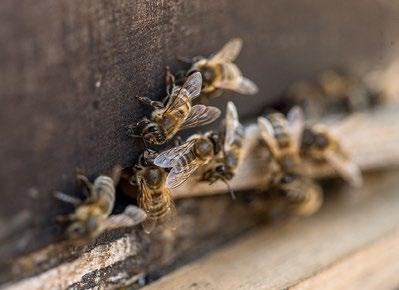
DE Am Oberkorerhof sind 70 Bienenvölker zuhause, die ihren Nektar in verschiedenen Höhenlagen rund ums Eggental sammeln. Imker Lukas Schmittner züchtet sie und stellt feinen Honig her. Seit etwa acht Jahren entsteht daraus ebenso feiner Likör, für den seine Frau Jitka zuständig ist. Die verschiedenen Likörsorten unterscheiden sich dabei in Geschmack und Charakter dank ausgewählter Zutaten: der sanfte Klassiker auf Waldhonigbasis, etwas herber mit Latschenkiefer, aber auch mit entzündungshemmender Kurkuma oder mit Propolis für den Hals und für das Immunsystem. Alle reich an Aromen und mehrfach prämiert – und frei von künstlichen Zusätzen.
IT Al maso Oberkorerhof vivono settanta colonie di api che raccolgono il nettare a diverse altitudini in Val d’Ega e dintorni. L’apicoltore Lukas Schmittner le alleva per ricavarne un miele pregiato, al quale da circa otto anni si è aggiunto l’ottimo liquore a base di miele prodotto dalla moglie Jitka. Le diverse varietà presentano gusto e caratteristiche differenti a seconda degli ingredienti utilizzati: al classico e delicato liquore a base di miele di bosco si affianca una varietà dal sapore più deciso al pino mugo, una alla curcuma, con proprietà antinfiammatorie, e una al propoli, benefica per la gola e il sistema immunitario. I liquori, intensamente aromatici e privi di additivi chimici, hanno già ottenuto numerosi riconoscimenti.
EN Oberkorerhof farm is home to 70 colonies of bees that collect nectar from the hillsides and floor of the Eggental valley. Beekeeper Lukas Schmittner maintains the hives and harvests the exquisite honey, which his wife, Jitka, transforms into the finest-quality liqueur. Over the past eight years, Jitka has created many varieties, each liqueur with its own unique flavour and character thanks to the addition of carefully chosen ingredients: forest honey in the mild classic liqueur, pine needles for a slightly bitter flavour, turmeric for its anti-inflammatory properties, and propolis for the throat and immune system. All are wonderfully rich in flavour, free from artificial ingredients and have won multiple awards.
„Zuerst das tun, was richtig ist“
“Faccio innanzitutto quello che ritengo giusto”
“Start by doing what’s right”
Vielfaltsbauer Michael Pfeifer baut am Eisathhof rund 500 Sorten an. Ein Rundgang.
In visita da Michael Pfeifer che al maso Eisathhof coltiva circa 500 diverse varietà di ortaggi.
We take a tour of Eisathhof farm, where Michael Pfeifer grows 500 vegetable varieties.
TEXT: LISA MARIA GASSER
PHOTOS: GABRIEL EISATH
DE
Hunderte Sorten Gemüse wachsen am Eisathhof in Deutschnofen.
Dahinter steht ein junger Landwirt mit Haltung und Nähe zur Natur. Davon profitiert auch die lokale Gastronomie.
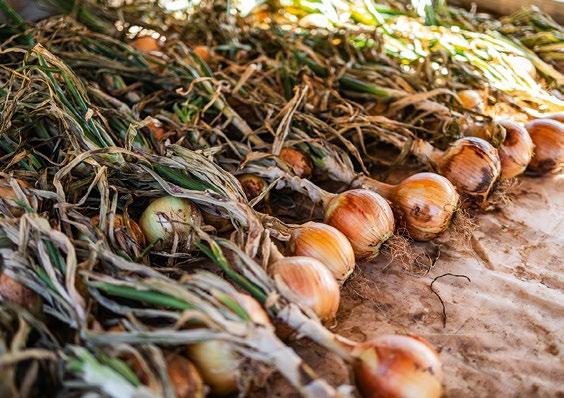
In kurzen Abständen hebt und senkt sich der kleine Heuhügel im Beet – fast so, als ob er atmen würde. „Ein Maulwurf“, vermutet Michael Pfeifer. „Oder ein Frosch.“ Er steht am Hang an der Hofzufahrt, in einem seiner Gärten. Daneben ruhen Dutzende Zwiebeln in hölzernen Kisten. Viel der Ernte ist getan: Der Sommer neigt sich dem Ende zu. Es war der vierte, den Pfeifer Vollzeit am elterlichen Eisathhof verbracht hat. Gemüse baut er hier, unweit der Dorfeinfahrt von Deutschnofen, schon länger an. Leben kann er erst seit einigen Jahren davon – auch dank eines Projekts, das Landwirtschaft und Gastronomie aus dem Eggental zusammen und die Produkte der einen in die Küchen der anderen bringt.
Rund 500 Sorten kultiviert Pfeifer auf 1.350 Metern Meereshöhe und 4.000 Quadratmetern. Allesamt samenfest, die er selbst vermehrt und zu Jungpflanzen heranzüchtet. „Im Gemüseanbau spielen samenfeste Sorten eine untergeordnete Rolle“, sagt Pfeifer. Hybride „Eintagsfliegen“ garantieren nur eine Ernte, „sind aber besser geeignet für eine Monokultur und uniformer – so wie es der Handel verlangt“. Für den Handel produziert Pfeifer aber nicht. Deshalb hat er seinen Hof auch nicht biologisch zertifizieren lassen. Obwohl er naturnah arbeitet, ohne Einsatz chemischer Mittel. Als Dünger kommen nur der Mist der Tiere am Eisathhof – Schafe, Hühner, Schweine – und Gras auf die Beete und Äcker. Schädlinge wie die Spanische Wegschnecke werden mit konsequen-
tem Mähen und Helferlein wie den Fröschen, die in einem eigens angelegten Graben unter den Gärten laichen, ferngehalten. Andere mit engmaschigen Netzen.
In der Schulzeit hat der 28-Jährige begonnen, mit Gemüse zu experimentieren. „Von einem Saatgutfestival bin ich mit 50 Sorten heimgekommen“, erinnert sich Pfeifer. Tomaten, Salat, Weißkohl („Kobis“ im Dialekt), Linsen, Leinsamen, Getreide, Kartoffeln (die im Eggental alle „Erdäpfel“ nennen). Ein befreundeter Bauer brachte ihn mit Sternekoch Theodor Falser in Welschnofen zusammen. Er wurde der erste Abnehmer von Pfeifers Gemüse. Die Zusammenarbeit besteht seit fast zehn Jahren. Und so wie in den Beeten die Sorten kamen weitere Köche dazu. Zehn beliefert Pfeifer heute direkt. Zu manchen findet sein Gemüse über das Projekt Eggental Taste Local. 2022 startete die Plattform, auf der Landwirtinnen und Landwirte aus dem Eggental ihre Erzeugnisse der lokalen Gastronomie anbieten. Ganz unkompliziert. „Als Koordinator in Deutschnofen sammle ich die Angebote der teilnehmenden Bauern für die kommende Woche, stelle sie in unsere WhatsApp-Gruppe, wo die Köche wiederum bestellen können“, erklärt Pfeifer. Mit Vorteilen für beide Seiten: Die Gastronomie erhält frisches saisonales Gemüse von vor Ort, die Landwirtschaft einen Absatzkanal. „Was das Projekt ausmacht, ist die Zusammenarbeit auf Augenhöhe“, sagt Pfeifer.
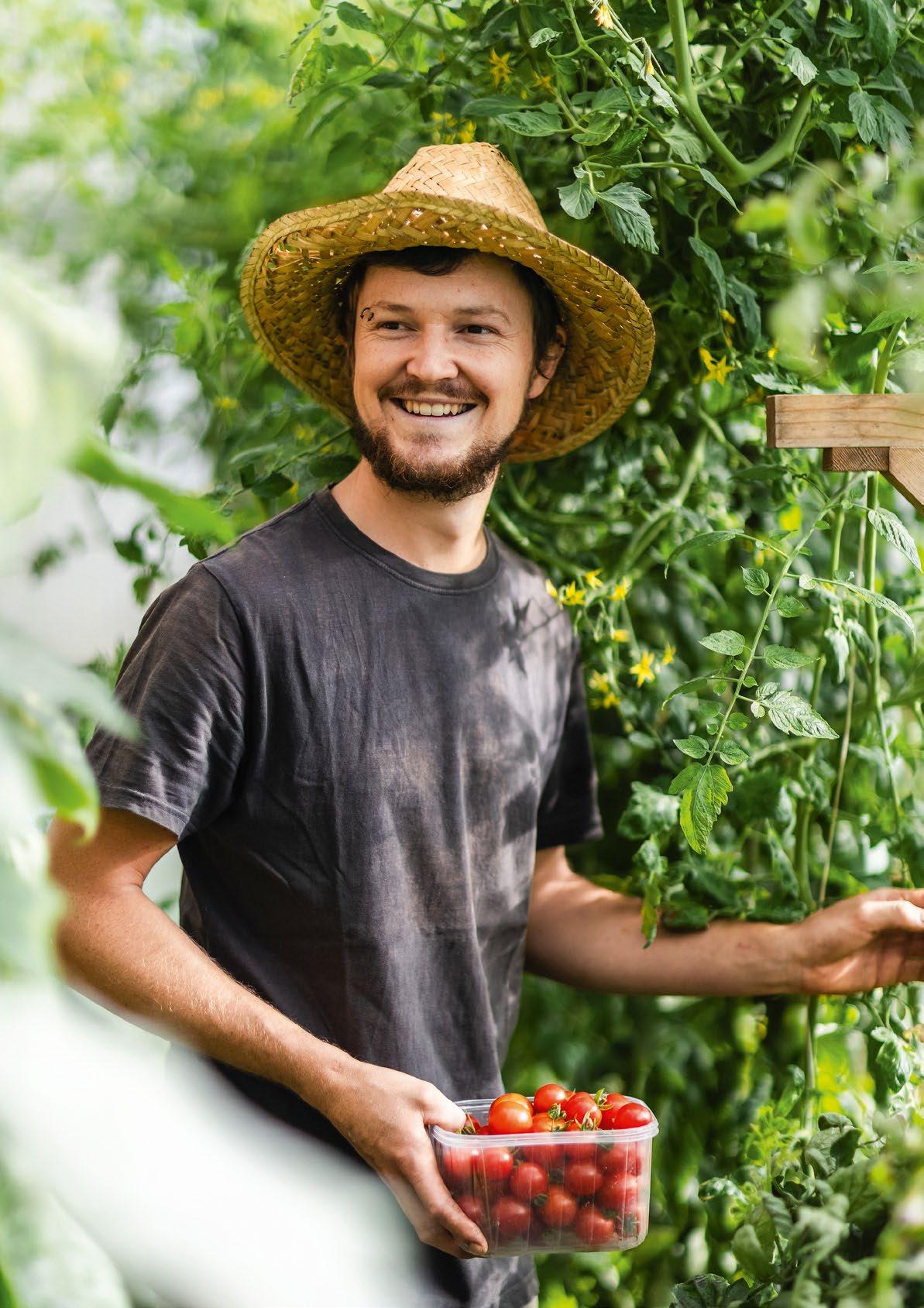
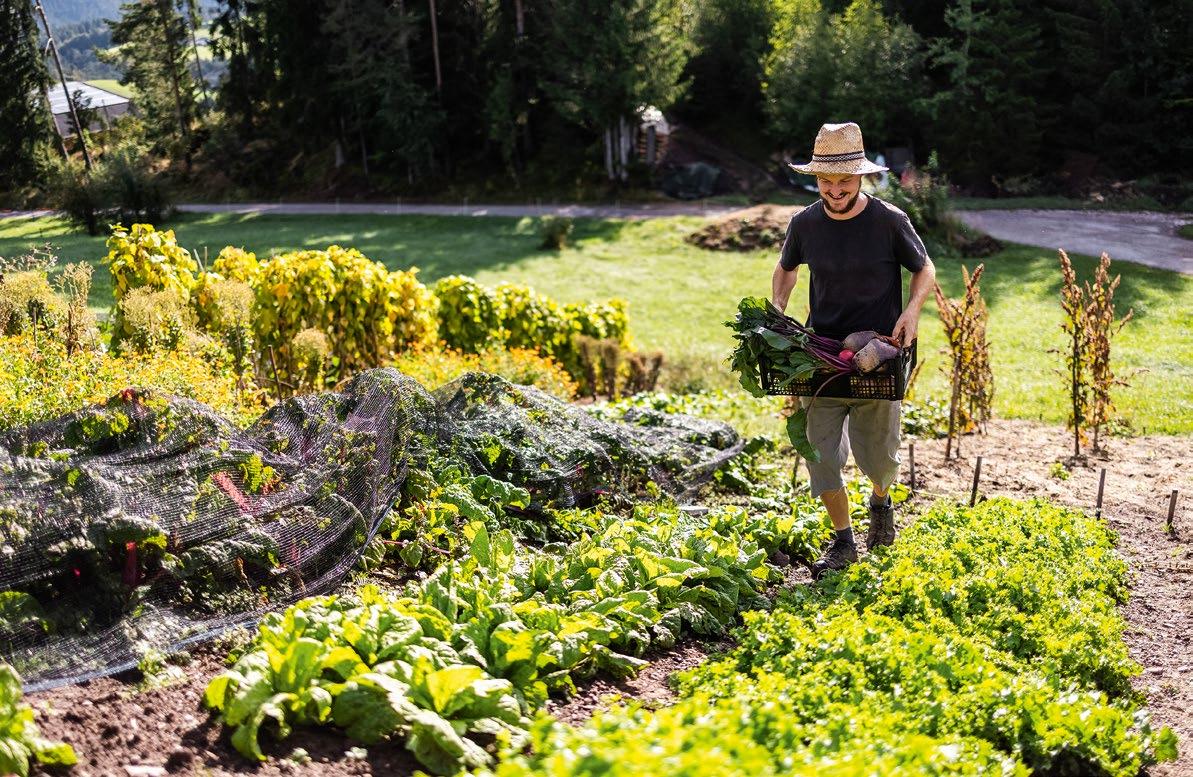
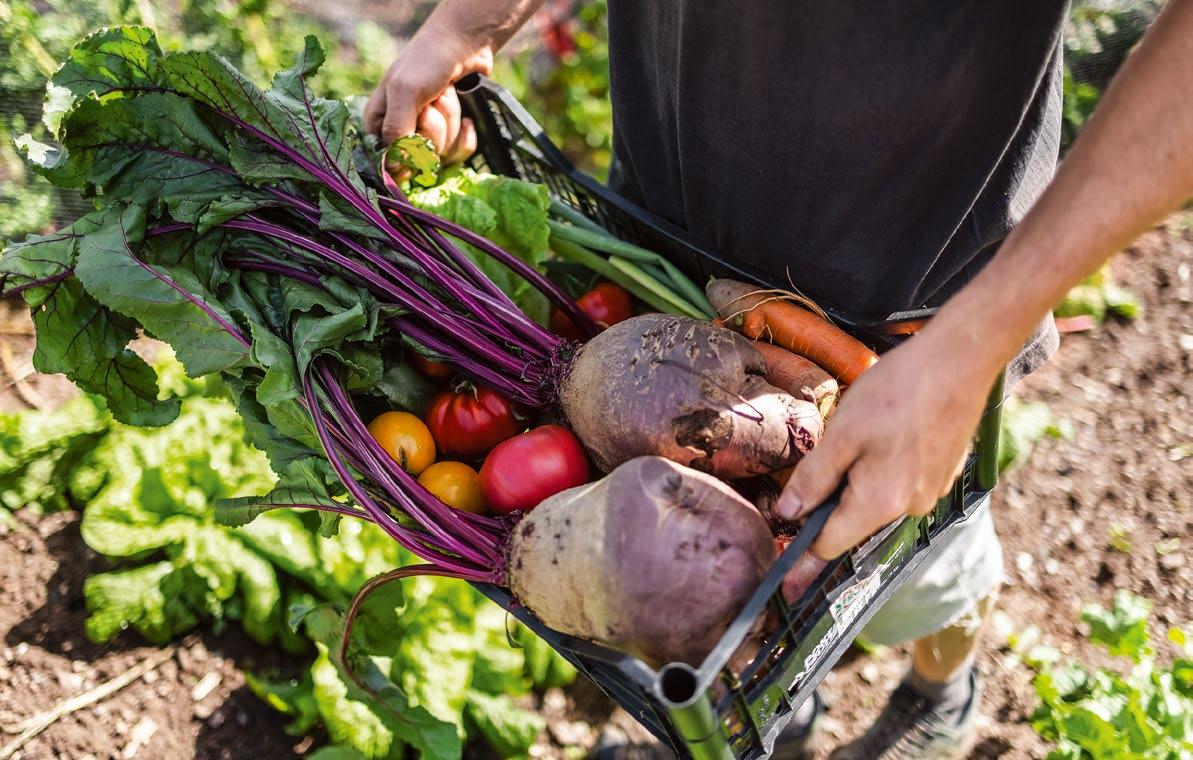
Null-Kilometer-Job: Michael Pfeifers Abnehmer sind Köche und Privatkunden aus der Umgebung.
A chilometro zero: i clienti di Michael Pfeifer sono cuochi e famiglie della zona. Michael Pfeifer keeps things local by selling his vegetables to nearby chefs and private clients.
„Bei all den Sorten ist immer wieder etwas Besonderes darunter, woraus sich wirklich tolle Sachen zaubern lassen.“
Rundgang durchs Gewächshaus. Hier leuchten Tomaten: gelb, schwarz, rot, gestreift, gesprenkelt, spitz und bauchig. Ganze 140 Sorten gibt es am Eisathhof. Dazu etwa 30 Bohnen-, je 20 Kartoffel- und Karottensorten. Verschiedene Salate, Zucchini, Kürbisse, Kohlarten, Hülsenfrüchte. Die immense Vielfalt sichert konstante Erntemengen: „Kollegen hatten wegen des Regens voriges Jahr bei den Erdäpfeln bis zu 80 Prozent Ausfall. Bei mir waren es höchstens zehn Prozent, denn einige Sorten waren in der Nässe enorm ertragreich.“ Köche schätzen die Farben und Formen des Gemüses als kreative Herausforderung. Selbst gelernter Koch, weiß Pfeifer: „Bei all den Sorten ist immer wieder etwas Besonderes darunter, woraus sich wirklich tolle Sachen zaubern lassen.“ Nur Auberginen
und Paprika fehlen – dafür ist es am Eisathhof aufgrund der Lage zu kühl.
Auch 20 Sorten Getreide gedeihen hier, aber nur für den Eigenbedarf. Sie werden von Hand gemäht, gedroschen, gemahlen. „Ich liebe es, mit Teigen zu arbeiten“, sagt der Gemüsebauer. Am Hof lebt Michael Pfeifer mit Partnerin Alice, zwei gemeinsamen Kindern und den Eltern Herta und Roman. Dass er den Gemüseanbau seit einigen Jahren im Vollerwerb und als Null-Kilometer-Job vor der eigenen Haustür betreiben kann, hat Pfeifer neben den Köchen auch seinen Privatkunden zu verdanken: Zwei Handvoll Gemüse-Abos liefert er jede Woche aus, die Kisten gefüllt mit dem, was
gerade Saison hat. Daneben verkauft er Jungpflanzen und Saatgut ab Hof und auf Märkten. Eine große Stütze ist Vater Roman, der als erfahrener und inzwischen pensionierter Gärtner überall zur Hand geht. Zusätzliche Unterstützung kriegt Pfeifer von „WWOOFern“, freiwilligen Helfern, die über die Plattform Worldwide Opportunities on Organic Farms zu ihm kommen und für Kost und Logis am Hof mitarbeiten. Bis zu drei sind vom Frühjahr bis in den Spätherbst am Eisathhof zugegen. Gerade pult ein Paar aus Deutschland Erbsen aus den Schoten. Für Pfeifer sind diese Begegnungen mehr als Hilfe bei der Arbeit. Die Zeit zum Reisen ist weniger geworden. „Aber ich kann Reisende zu mir holen und mit ihnen ein Stück Kultur aus anderen Ländern.“
Bei Hofführungen erzählt Michael Pfeifer von dem, was er tut, gibt Wissen und ein Stück seiner Passion weiter. Für ihn zählt nicht, wie groß eine Tomate, wie gerade eine Karotte ist: „Das Wichtigste am Gemüse ist der Geschmack.“ Mit seinen Gärten und Äckern hat sich der junge Landwirt ein Stück Freiheit und Unabhängigkeit geschaffen. Doch seine Arbeit versteht er auch als Beitrag zu einem notwendigen Wandel mit neuen, gesunden Maßstäben: naturbelassene Produkte, faire Preise. „Ich tue zuerst das, was richtig ist, dann, was wirtschaftlich ist“, sagt Pfeifer. Sein großes Glück ist, dass er beides verbinden kann.
REGIONALE KREISLÄUFE
Was im Eggental wächst, bleibt im Eggental: Das Pilotprojekt Eggental Taste Local startete 2022, um die Zusammenarbeit zwischen Landwirtschaft und Gastronomie zu stärken. Dabei verkaufen die Bauernhöfe Gemüse und Eier direkt an die Hotels und Restaurants im Tal – mit dem Ziel Erfahrungen zu sammeln, voneinander zu lernen und gemeinsam zu wachsen. Insgesamt sind 30 Gastrobetriebe und 15 Landwirtschaftspartner in den drei Gemeinden Deutschnofen, Welschnofen und Karneid mit dabei.
Mehr zum Projekt und zu den teilnehmenden Betrieben eggental.com/taste-local
Al maso Eisathhof di Nova Ponente un giovane agricoltore coltiva tantissime varietà di ortaggi, con impegno e in armonia con la natura. Della sua attività beneficiano anche i ristoratori locali.
Il mucchio di fieno nell’orto si solleva e si riabbassa ritmicamente, come se respirasse. “Sarà una talpa o forse una rana”, dice Michael Pfeifer. Il giovane agricoltore, ventotto anni, sta lavorando in uno dei suoi orti, su un terreno in pendenza all’ingresso del maso Eisathhof. Accanto sono sistemate delle cassette di legno piene di cipolle. Il raccolto si è quasi concluso e l’estate volge al termine, la quarta che Michael trascorre lavorando a tempo pieno nel maso di famiglia, non lontano dall’abitato di Nova Ponente. Qui Michael ha avviato da diverso tempo la sua coltivazione di ortaggi, ma solo da alcuni anni riesce a vivere di questa attività. A contribuire alla svolta è stato, tra gli altri, un progetto che riunisce aziende agricole e ristoratori della Val d’Ega, promuovendo le forniture di prodotti locali.
Su una superficie di 4.000 metri quadrati, a 1.350 metri di altezza, crescono circa cinquecento varietà diverse di ortaggi, a partire da semi non ibridi che l’agricoltore riproduce e fa germogliare personalmente. “Nella coltivazione di ortaggi queste varietà, geneticamente stabili, rivestono un ruolo marginale”, spiega, proseguendo: “Le varietà ibride sono effimere e garantiscono un unico
sono tornato a casa da una fiera con cinquanta diverse varietà di semi: pomodori, lattuga, cavolo cappuccio, lenticchie, semi di lino, cereali, patate…”, racconta. Un agricoltore suo amico gli ha poi fatto conoscere Theodor Falser, chef stellato a Nova Levante, che è diventato il suo primo acquirente, dando inizio a una collaborazione ormai decennale. Negli anni, così come le coltivazioni si moltiplicavano negli orti, aumentavano anche i ristoranti riforniti, che sono ormai dieci. Ad altri acquirenti i suoi ortaggi arrivano attraverso il progetto Eggental Taste
Local. La piattaforma, lanciata nel 2022, permette alle aziende agricole della vallata di offrire i propri prodotti ai ristoratori locali, in modo semplice e pratico: “Nel mio ruolo di coordinatore di Nova Ponente, raccolgo le offerte degli agricoltori per la settimana successiva e le pubblico nel gruppo WhatsApp dedicato, dove i cuochi possono effettuare i loro ordini”, spiega Michael. I vantaggi sono evidenti per entrambe le parti: i ristoratori acquistano ortaggi freschi della zona, gli agricoltori approfittano di un importante canale di vendita. “Il punto di forza del progetto è la collaborazione alla pari”, riassume Michael.
“Tra tutta questa varietà si trova sempre qualcosa di particolare capace di ispirare piatti speciali.”
raccolto, ma danno risultati più uniformi. Per queste caratteristiche, sono più adatte alle monocolture e rispondono dunque meglio alle esigenze del mercato”. Michael, però, non produce per il mercato. Ed è per questo che, pur non facendo uso di sostanze chimiche e rispettando l’ambiente, non ha richiesto la certificazione biologica per i suoi prodotti. Gli unici fertilizzanti che utilizza negli orti e nei terreni coltivati sono l’erba tagliata e il letame del bestiame del maso (pecore, galline e maiali). Alcuni parassiti, come la lumaca spagnola, vengono tenuti a distanza con falciature regolari e con l’ausilio di preziosi alleati come le rane, che depongono le uova in canali appositamente scavati sotto gli orti. Per altri parassiti lo strumento più efficace è l’utilizzo di reti a maglia fine.
Michael ha avviato i suoi primi esperimenti con gli ortaggi quando andava ancora a scuola: “Una volta
Facciamo un giro della serra, in un tripudio di pomodori: gialli, neri, rossi, striati, maculati, appuntiti, panciuti. In tutto ne crescono ben centoquaranta varietà diverse, alle quali si aggiungono trenta varietà di fagioli, venti di patate e altrettante di carote. Il maso produce inoltre diversi tipi di lattuga, zucchine, zucche, cavoli e legumi. L’enorme varietà è garanzia di raccolti costanti: “A causa delle piogge abbondanti, l’anno scorso alcuni colleghi hanno perso l’80 per cento del raccolto di patate. Io, invece, ho avuto un calo di appena il 10 per cento perché alcune delle mie varietà rendono molto bene nei terreni umidi”, spiega ancora. Le sfumature e le forme degli ortaggi sono per i cuochi una fonte di ispirazione creativa. Da cuoco di formazione, Pfeifer lo sa bene: “Tra tutta questa varietà si trova sempre qualcosa di particolare capace di ispirare piatti speciali”, dice. All’Eisathhof mancano all’appello solo melanzane e peperoni – per loro il clima quassù è troppo freddo.
Il maso produce anche venti varietà di cereali diversi, riservati tuttavia al consumo domestico. Tutti i cereali vengono raccolti, trebbiati e macinati a mano. “Adoro lavorare gli impasti”, dice Michael che vive qui insieme alla compagna Alice, ai due figli e ai genitori Herta e Roman. Se da alcuni anni Pfeifer può dedicarsi a tempo pieno alla coltivazione di ortaggi, trasformandola in un lavoro a chilometro zero, lo deve non solo ai ristoratori, ma anche ai clienti privati. Accanto agli ordini commerciali, il maso consegna infatti ogni settimana, a una dozzina di abbonati, cassette colme di ortaggi di stagione. L’agricoltore vende inoltre semenze e giovani piantine sia direttamente al maso sia nei mercati della zona. Michael può contare sull’appoggio del padre Roman, giardiniere esperto ormai in pensione ma sempre attivo al maso, e sui volontari, reclutati attraverso la piattaforma “WWOOF” (World Wide Opportunities on Organic Farms), che danno una mano in cambio di vitto e alloggio. L’Eisathhof ne ospita fino a tre a stagione, dalla primavera al tardo autunno.
Oggi incrociamo una coppia tedesca intenta a sgranare i piselli. Per Michael questi incontri sono più di semplici collaborazioni professionali: “Non ho più molto tempo per viaggiare. In compenso, sono i viaggiatori a venire qui e a condividere con noi un po’ della loro cultura”.
Durante le visite guidate al maso, Michael parla della sua attività, condividendo le sue conoscenze e la sua passione. Quanto grande sia un pomodoro o quanto diritta sia una carota, per lui non conta affatto: “L’aspetto più importante di un ortaggio è il sapore”, dice. Per Michael il lavoro tra campi e orti non è solo fonte di libertà e autonomia, ma anche il suo personale contributo alla transizione verso una dimensione nuova e più sana dell’agricoltura, incentrata su prodotti naturali e prezzi equi: “Faccio innanzitutto quello che ritengo giusto. Il ritorno economico viene dopo”. La sua grande fortuna? Potere conciliare entrambe le cose.
CIRCUITI
LOCALI
Quello che cresce in Val d’Ega, rimane in Val d’Ega. Il progetto pilota Eggental Taste Local, nato nel 2022 per rafforzare la collaborazione tra agricoltura e ristorazione, permette ai masi di vendere ortaggi e uova direttamente ad alberghi e ristoranti della vallata, con l’obiettivo di condividere esperienze, imparare gli uni dagli altri e crescere insieme. Al progetto hanno aderito trenta strutture ricettive e quindici aziende agricole dei comuni di Nova Ponente, Nova Levante e Cornedo.
Approfondimenti sul progetto e sulle aziende aderenti eggental.com/taste-local
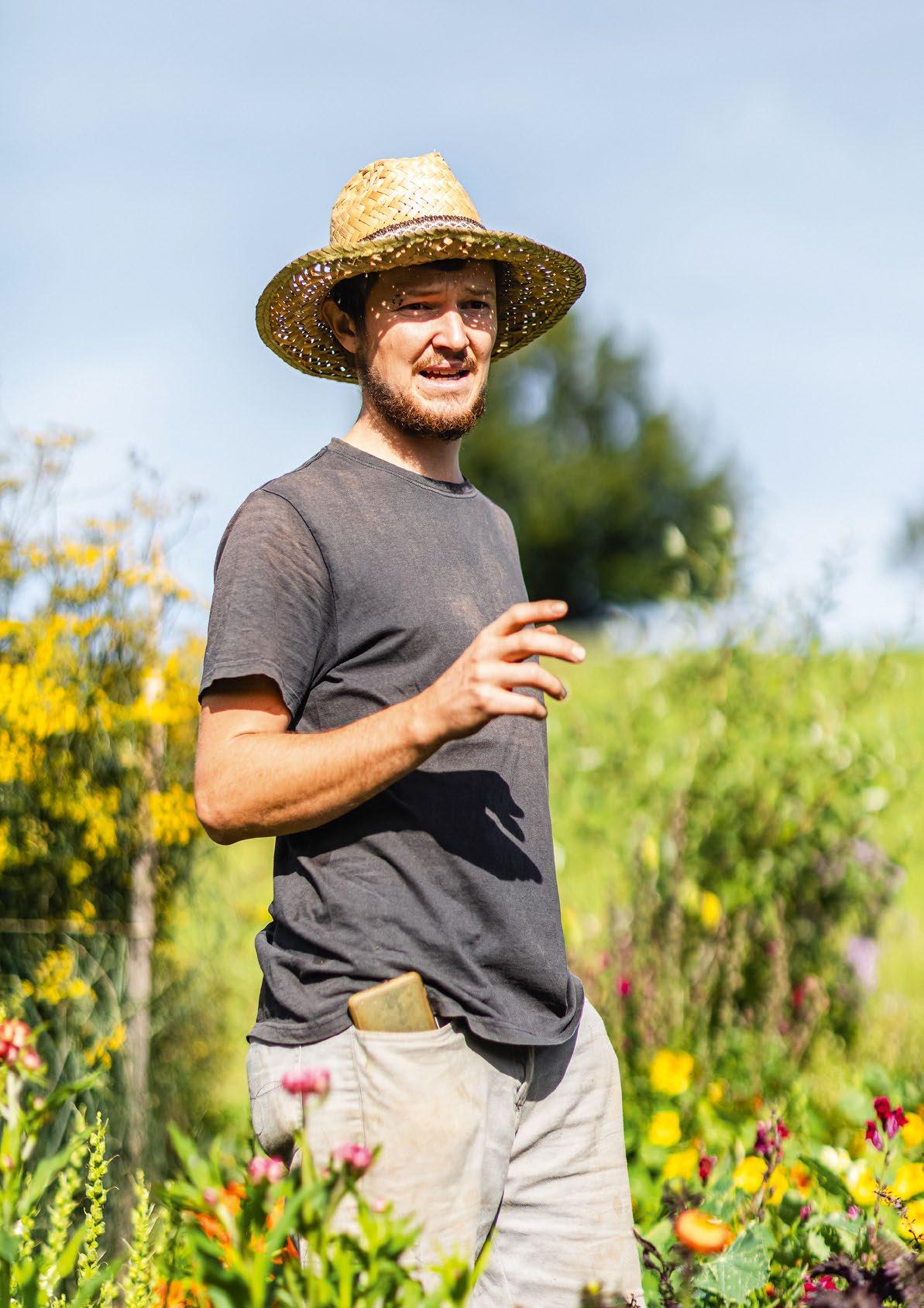
Bei Führungen erzählt Michael Pfeifer vom Hof und gibt seine Begeisterung weiter. Durante le visite guidate, Michael Pfeifer racconta della vita al maso e trasmette tutto il suo entusiasmo.
Michael Pfeifer shares his passion with others by giving tours of his farm.
EN
We visit Eisathhof farm in Deutschnofen/Nova Ponente to speak to a committed young farmer working closely with nature to grow hundreds of vegetable varieties and discover how local restaurants are also benefiting from his approach.
We meet Michael Pfeifer in one of his gardens on the hillside by the road up to Eisathhof farm. Dozens of onions sit stacked in wooden crates and a small mound of hay in the vegetable patch is rising and falling as if it were breathing. “There could be a mole in there,” he guesses. “Or a frog.” Summer is drawing to a close and much of the harvest is done. This was the fourth that 28-year-old Michael has spent working full-time on his parents’ farm, although he’s been growing vegetables here, on the edge of the village of Deutschnofen, for much longer. In recent years, he’s started earning a living from his crops – thanks, in part, to a project set up to bring produce from farmers in the Eggental valley into local restaurant kitchens.
Michelin-starred chef Theodor Falser in Welschnofen/ Nova Levante. He became Michael’s first customer and the pair have now been working together for almost a decade. As the number of vegetable varieties increased, so too did the number of chefs on Michael’s books. Today, he supplies ten chefs directly. Some of them found him through the Eggental Taste Local project, which was launched in 2022 to make it easier for farmers in the Eggental valley to sell their produce to local restaurants. “As the project’s coordinator in Deutschnofen, I collate all the farmers’ offers for the coming week and post them in our WhatsApp group, so the chefs can place their orders,” explains Michael. Both sides benefit, as the restaurants receive fresh, seasonal, locally grown vegetables and
“Each and every variety has something magical about it and can be used to conjure up some fantastic dishes.”
Michael grows around 500 varieties across 4,000 square metres at 1,350 metres above sea level. All his crops come from open-pollinated seeds that he propagates himself and grows into seedlings. “Open-pollinated varieties aren’t all that common in vegetable farming,” he explains. Despite “being short-lived like mayflies” and only guaranteeing one harvest, “hybrids are more suitable for monocultures and produce more uniform plants to meet commercial requirements”. But Michael doesn’t grow vegetables for retailers, so he hasn’t chosen to seek organic certification, despite working in harmony with nature and not using any chemicals. The only fertilisers he uses on his vegetable patches and fields are grass and dung from Eisathhof’s own sheep, chickens and pigs. Pests like Spanish slugs are kept at bay through regular mowing and little helpers like the frogs that spawn in a specially dug trench beneath the gardens. The vegetables are also protected by close-meshed nets.
Michael began experimenting with vegetables when he was still at school. “I once came home from a seed festival with 50 varieties,” he recalls – tomatoes, lettuce, white cabbage, lentils, linseeds, grain and potatoes (known in the Eggental valley as “Erdäpfel” or “apples of the earth”). A farmer friend later put him in touch with
the farmers gain a sales channel. “The way we all work together as equal partners is what makes the project special.”
As Michael takes us on a tour of his greenhouse, he shows us his tomatoes, which are a resplendent mix of yellow, black, red, stripy, speckled, pointed and round. He grows a staggering 140 different varieties of tomatoes as well as around 30 of beans, 20 of potatoes, 20 of carrots and various lettuces, courgettes, pumpkins, cabbages and pulses. In fact, the only vegetables he doesn’t grow are aubergines and peppers due to the farm’s cooler climate. This huge range keeps his harvest yields constant. “Last year’s heavy rain saw my fellow farmers lose up to 80 percent of their potatoes. I lost no more than ten percent of mine; some varieties actually flourished in the wet conditions.” A keen cook himself, Michael understands why chefs relish the creative challenge of cooking with vegetables of all shapes and colours. “Each and every variety has something magical about it and can be used to conjure up some fantastic dishes.”
Michael also grows 20 varieties of grain at Eisathhof, which he reaps, threshes and mills by hand for his family’s own consumption. “I love working with dough,” he
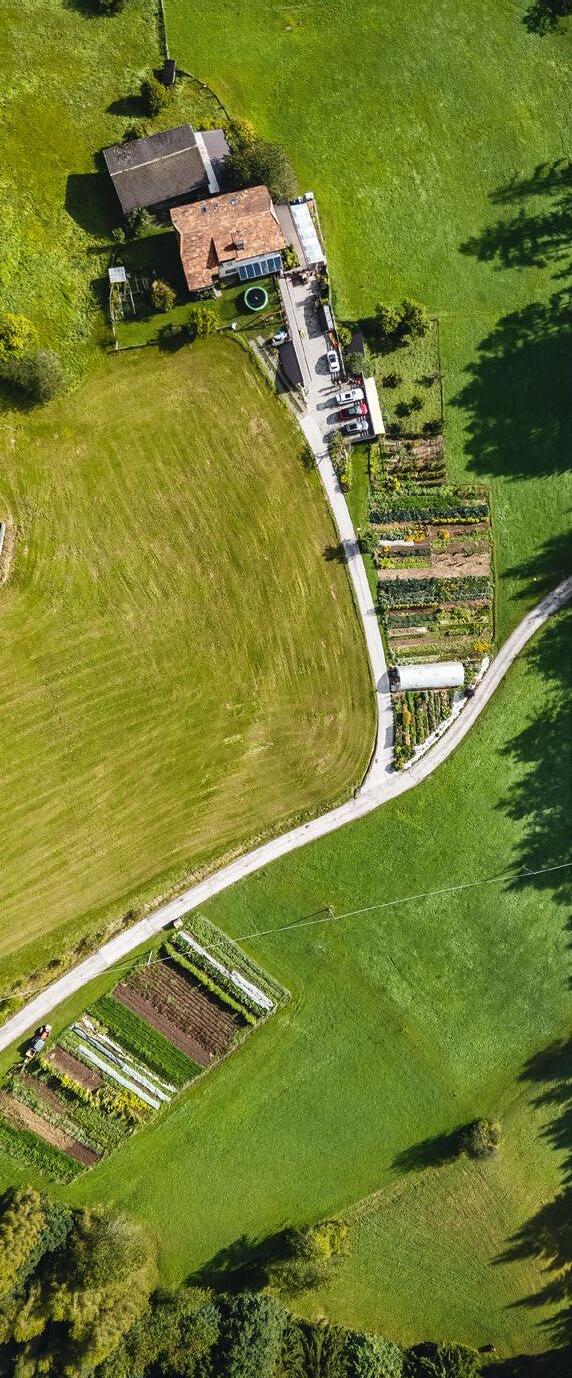
Der Eisathhof liegt auf 1.350 Metern Meereshöhe und umfasst 4.000 Quadratmeter. Il maso Eisathhof si trova a 1.350 metri di altitudine e ha una superficie di 4.000 metri quadrati.
Eisathhof farm is located at 1,350 metres above sea level and covers 4,000 square metres.
says. He lives on the farm with his partner, Alice, their two children and his parents, Herta and Roman. In addition to his chef customers, Michael has attracted a number of private clients, enabling him to turn his vegetables into a full-time job he can do from outside his own front door. He delivers crates of seasonal vegetables to a small number of subscribers to his weekly vegetable delivery service and also sells seedlings and seeds directly from the farm and at markets. As an experienced, retired gardener, his father, Roman, is a great source of support and assistance. Michael also uses the platform Worldwide Opportunities on Organic Farms to connect with volunteers known as “WWOOFers” who come to work on the farm in return for room and board. Every year, he welcomes up to three volunteers from spring until late autumn – like the couple from Germany we spot shelling peas. For Michael, hosting volunteers is about more than the extra pairs of hands. He doesn’t have as much time to travel these days, “but I can still explore different cultures by bringing travellers to me”.
Michael also gives farm tours to explain what he does and share some of his knowledge and passion with others. He doesn’t care whether tomatoes are big or carrots are straight. “The most important thing about vegetables is how they taste.” While the young farmer’s gardens and fields have given him a degree of freedom and independence, he also sees his work as a way of bringing about necessary change by promoting new, healthy benchmarks for natural products and fair prices. “I always start by doing what’s right and then what makes economic sense,” says Michael. Luckily, he’s found a way to combine both.
LOCAL SUPPLY CHAINS
What grows in the Eggental valley, stays in the Eggental valley. The Eggental Taste Local pilot project was launched in 2022 to strengthen cooperation between farms and restaurants. Farms sell their vegetables and eggs directly to local hotels and restaurants, with the aim of gaining experience, learning from each other and growing together. A total of 30 hotels and restaurants and 15 farms take part in the project across Deutschnofen/Nova Ponente, Welschnofen/Nova Levante and Karneid/Cornedo all’Isarco.
More about the project and participating businesses: eggental.com/taste-local
Fragen an Patrick Obkircher domande a Patrick Obkircher Questions for Patrick Obkircher
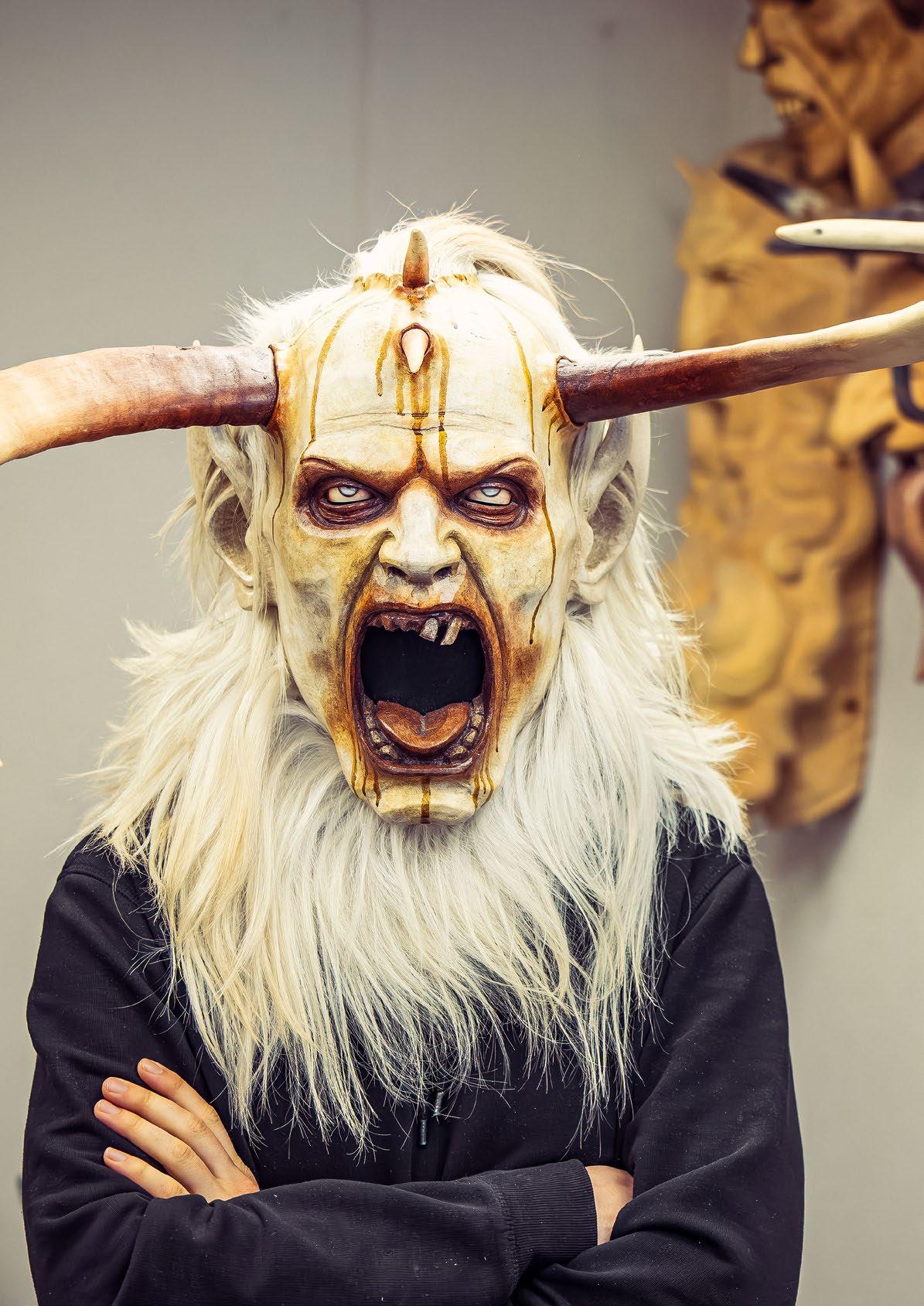
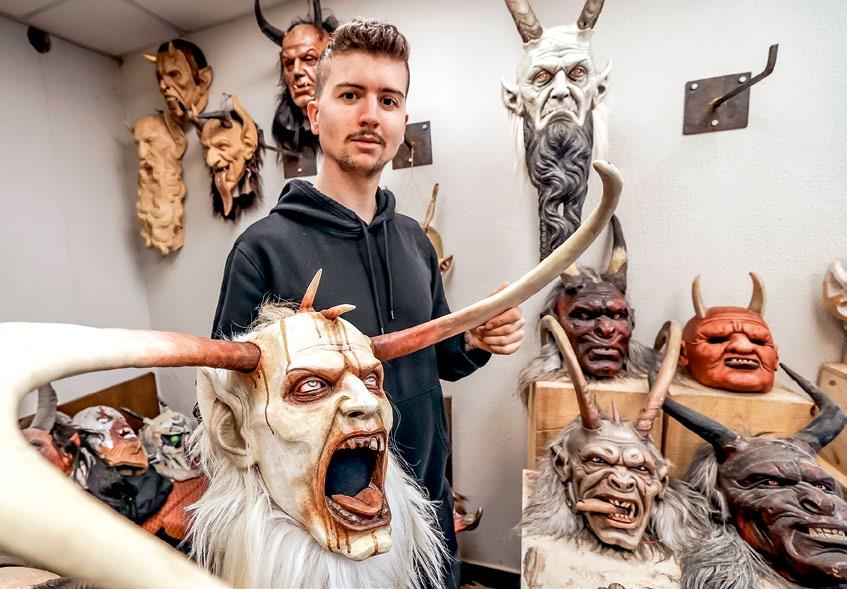
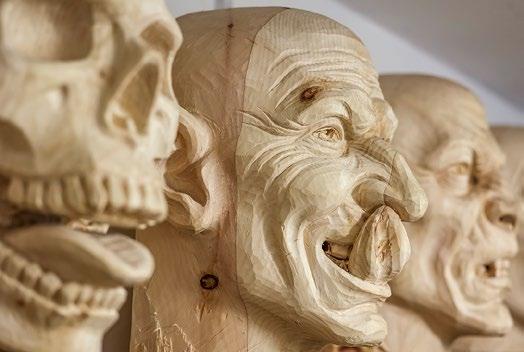
DE Der Künstler aus Welschnofen fertigt Skulpturen aus Gips, Bronze und Beton – und Krampusmasken aus Holz. Was ihn inspiriert.
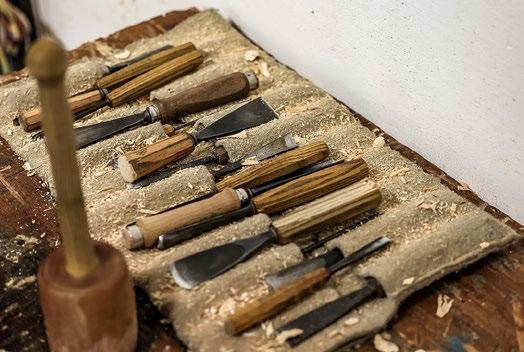
Wie kamen Sie zur Kunst und zu den Krampusmasken? Angefangen hat es tatsächlich mit den Krampusmasken. Mit acht Jahren habe ich einem Krampusmaskenschnitzer bei der Arbeit zugesehen. Zum Geburtstag wünschte ich mir direkt ein Schnitzeisen und ein Stück Holz und fing noch im Kinderzimmer an zu schnitzen. Meine erste Maske sah noch ganz anders aus als die Arbeiten, die ich heute mache, aber man konnte sie aufsetzen. Dann besuchte ich die Bildhauerschule in Gröden und kam so zu den Skulpturen und zur Kunst.
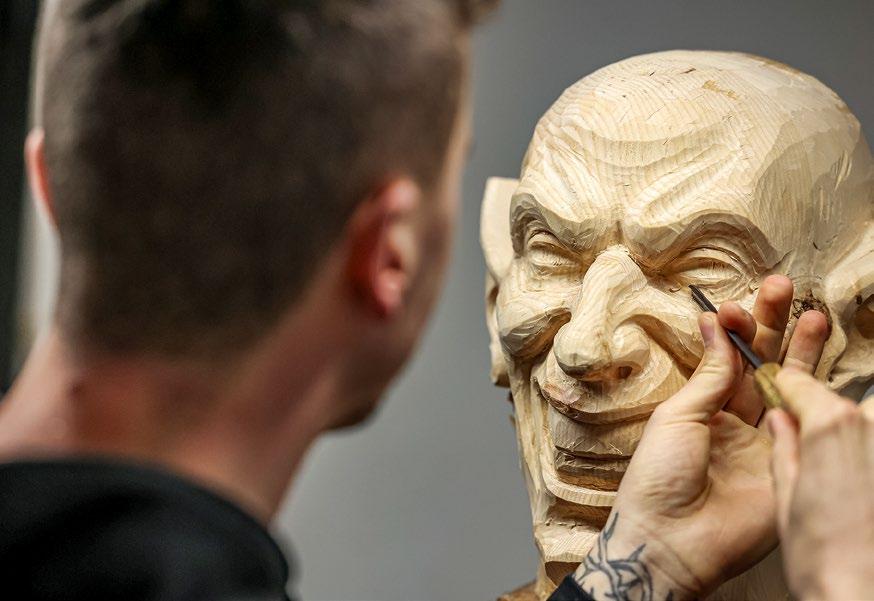
Skulpturen und Masken – bei beiden geht es Ihnen um die Gesichter und die Mimik. Was inspiriert Sie? Mir gefällt, dass schon der Ausdruck und die Ausstrahlung eines Menschen eine Geschichte in sich tragen. Das versuche ich in meine Werke zu übertragen. Es entsteht ein Gegenüber, das man anschaut und das einem seine Geschichte erzählt. Die Inspiration für die Masken kommt oft von den Skulpturen, die ich fertige: Mal gefällt mir zum Beispiel die Nase, dann lasse ich sie bei der nächsten Maske einfließen. Es finden sich auch Charaktere aus Filmen und Büchern in den Masken, zum Beispiel aus Herr der Ringe. Manchmal arbeite ich ganz ohne Vorlage. Die besten Masken und Skulpturen entstehen, wenn ich einfach das tue, was mir im Moment richtig erscheint.
Welche Rolle spielt die Tradition in Ihrer Kunst? Was mich schon als Kind beeindruckt hat, ist, dass man mit der Maske in eine Rolle schlüpft, sich in eine andere Figur verwandelt. Das Verkleiden hat eine lange Tradition und ist in verschiedenen Kulturen zu finden. Allerdings gibt es im Brauchtum feste Regeln, das ist bei den Krampusmasken anders. Ich kann mich ständig neu erfinden, habe viel kreative Freiheit. Umgekehrt fertige ich auch sehr traditionelle, realistischere Skulpturen und empfinde es als wichtige Aufgabe, diese jahrhundertealte Kunst der Bildhauerei fortzuführen.
L’artista di Nova Levante crea sculture in gesso, bronzo e cemento, ma anche maschere da Krampus intagliate nel legno. Dove trova l’ispirazione?
Come è nata la passione per l’arte e per le maschere da Krampus?
Ciò che mi colpiva già da bambino era il fatto che con una maschera si entra in un ruolo, diventando qualcun altro. Il travestimento ha una tradizione millenaria ed è presente in numerose culture. Tuttavia, le usanze seguono spesso regole ben definite, mentre le maschere da Krampus non ne hanno. Godo, insomma, di grande libertà creativa e posso continuamente reinventarmi. Realizzo però anche sculture molto tradizionali e realistiche e considero un compito importante portare avanti l’arte secolare della scultura. IT
Che ruolo ha la tradizione nella sua arte?
Tutto è iniziato proprio con le maschere da Krampus. Quando avevo otto anni ho visto un artigiano intento a intagliare una maschera da Krampus e ho subito chiesto per il mio compleanno uno scalpello e un pezzo di legno. Ho iniziato a intagliare nella mia cameretta. La mia prima maschera era molto diversa dai lavori che realizzo oggi, ma si poteva pur sempre indossare! In seguito ho frequentato la Scuola professionale per l’artigianato artistico in Val Gardena e, da lì, sono passato all’arte e alla scultura.
Sculture e maschere – in entrambe il fulcro è il volto e l’espressività. Da dove trae ispirazione?
Mi affascina il fatto che l’espressività e l’aura di una persona racchiudano in sé una storia, che cerco poi di trasferire nelle mie opere. Do così vita a una sorta di interlocutore che ti guarda e ti narra la sua storia. L’ispirazione per le maschere viene spesso dalle sculture che creo. Se, per esempio, mi piace un determinato naso, lo modellerò nella prossima maschera. Nelle mie maschere si ritrovano anche personaggi di film e libri come Il Signore degli Anelli, mentre altre volte lavoro senza un modello preciso. Le maschere e le sculture migliori nascono quando seguo l’ispirazione del momento.
EN
We discover what inspires the artist from Welschnofen/Nova Levante, who makes plaster, bronze and concrete sculptures as well as wooden Krampus masks.
What led you to become an artist and to carve Krampus masks?
It actually all began with Krampus masks. I was eight when I first saw a Krampus mask carver at work. For my ninth birthday, I asked for a carving knife and a block of wood and began carving away in my bedroom. My first mask looked nothing like the work I produce today, but it was still completely wearable. I later attended the sculpture school in Urtijëi/Ortisei, where I expanded into sculpture and art.
Both your sculptures and masks focus on faces and facial expressions. What inspires you?
I love how somebody’s expression and general aura tell a story and I try to convey this in my work. When you look at my work, I want you to see the story behind it. My masks are often inspired by my sculptures. For example, if I like a nose I’ve created, I’ll incorporate it into my next mask. My masks also depict characters from films and books like The Lord of the Rings. That said, I sometimes like to work more freely. In fact, my best masks and sculptures are the ones I make instinctively by just doing what feels right at the time.
What role does tradition play in your art?
Even as a child, I loved how wearing a mask allows you to put on a guise and become a different character. Dressing up is a deeply rooted tradition in many cultures. While most customs come with clear rules, that isn’t the case with Krampus masks. I can constantly reinvent myself and have a lot of creative freedom. However, I also produce very traditional, more realistic sculptures and believe it is important to preserve the age-old art of sculpture making.
Oh, Himmelszelt Oh, cielo! Reach for the Stars
Wie Amateurastronomin Stephanie Wolters ihren Platz im Sternendorf fand
Stephanie Wolters, l’astronoma amatoriale che ha trovato il suo posto nel “paese delle stelle”
How amateur astronomer Stephanie Wolters made a star village her home
TEXT: EDITH RUNER
Stephanie Wolters glaubt nicht an Zufälle. Sie glaubt auch nicht an Astrologie – schon allein deshalb, weil die Sterne längst nicht mehr da stehen, wo sie angeblich stehen sollten. Und doch: Irgendeine Konstellation am Himmel muss es gewesen sein, die die gebürtige Deutsche ins Eggental führte. Als Amateurastronomin hat sie hier ihren Platz gefunden. Für sie öffnet sich nirgendwo anders das Himmelszelt so weit und leuchten die Sterne so klar.
Vor über 40 Jahren machte Stephanie Wolters Urlaub in Südtirol – und verliebte sich gleich doppelt: in Günther, den Mann, den sie später heiratete, und in den Rosengarten, dessen Abendrot weit über das Eggental hinaus berühmt ist. Dass sie eines Tages in diesem Tal wohnen würde, hätte sie damals nicht gedacht. Doch 2004 fand die Familie mit ihren zwei Kindern ausgerechnet in Steinegg eine neue Bleibe, einem Ort, der für die leidenschaftliche Himmelsbeobachterin wie geschaffen ist.
„Es ist der beste Wohnort, den ich mir vorstellen kann“, sagt die Rheinländerin, die seit vielen Jahren als Lehrerin arbeitet. Kein Wunder, die Lage des Dorfes auf einem Hochplateau gibt nicht nur den Blick auf den Rosengarten frei, sondern auch die Sterne scheinen hier oben zum Greifen nah. Steinegg und der Nachbarort Gummer zählen zu den besten Plätzen Italiens für die Beobachtung des Sternenhimmels. Die Vereinigung Astronomitaly verlieh den Dörfern 2018 sogar Gold für einen der schönsten Nachthimmel in Italien. Auch dank gezielter Maßnahmen der Gemeinde, erklärt Stephanie Wolters: „Hier ist die Lichtverschmutzung so gering, dass man den Himmel noch in seiner ganzen Pracht sieht –das ist ein echtes Privileg.“
Schon als Vierjährige blickte Stephanie Wolters jeden Abend staunend in den Himmel und löcherte ihren Vater mit Fragen. Was denn da oben nachts so leuchtet, warum der Mond um die Erde kreist und wie heiß die Sonne ist, wollte sie wissen. Als sie lesen konnte, verschlang sie Sachbücher über die Natur und das Weltall, entschied sich später aber – aus praktischen Gründen, wie sie sagt – für das Studium der Sprachwissenschaften.
Doch die Sterne haben sie seit ihrer Kindheit nie losgelassen. Bücher, Vorträge, Kurse – alles, was sie in Sachen Astronomie weiterbrachte, nahm sie in Anspruch. Über einen Bekannten kam Stephanie Wolters in den 2010er-Jahren im Eggental zum Verein der Südtiroler Amateurastronomen „Max Valier“ und gehört heute gemeinsam mit ihrem Mann zu den engagierten Mitgliedern. Der Verein betreibt im Auftrag der Gemeinde Karneid die Volkssternwarte in Gummer, die für Stephanie Wolters ein zweites Zuhause geworden ist.
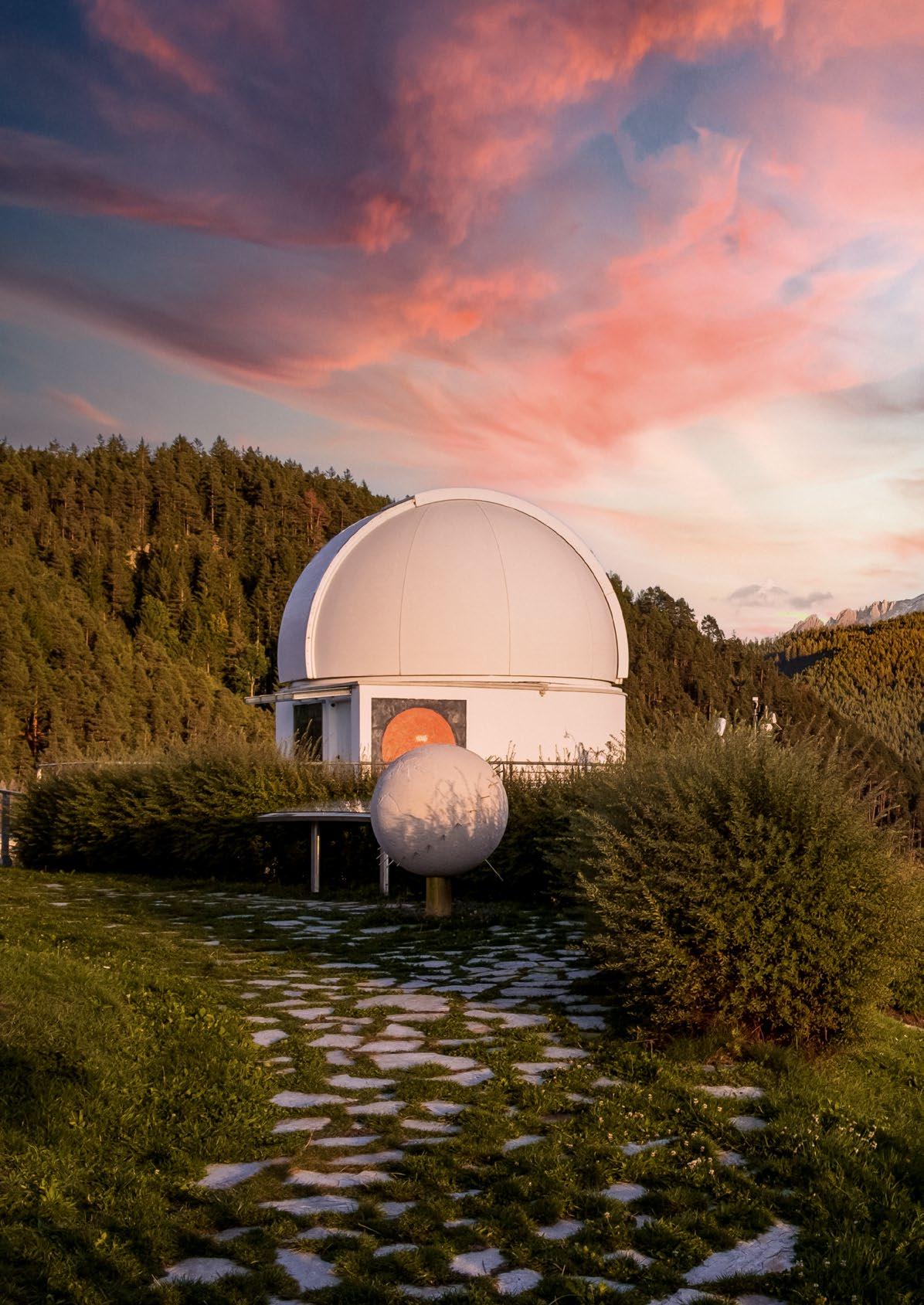
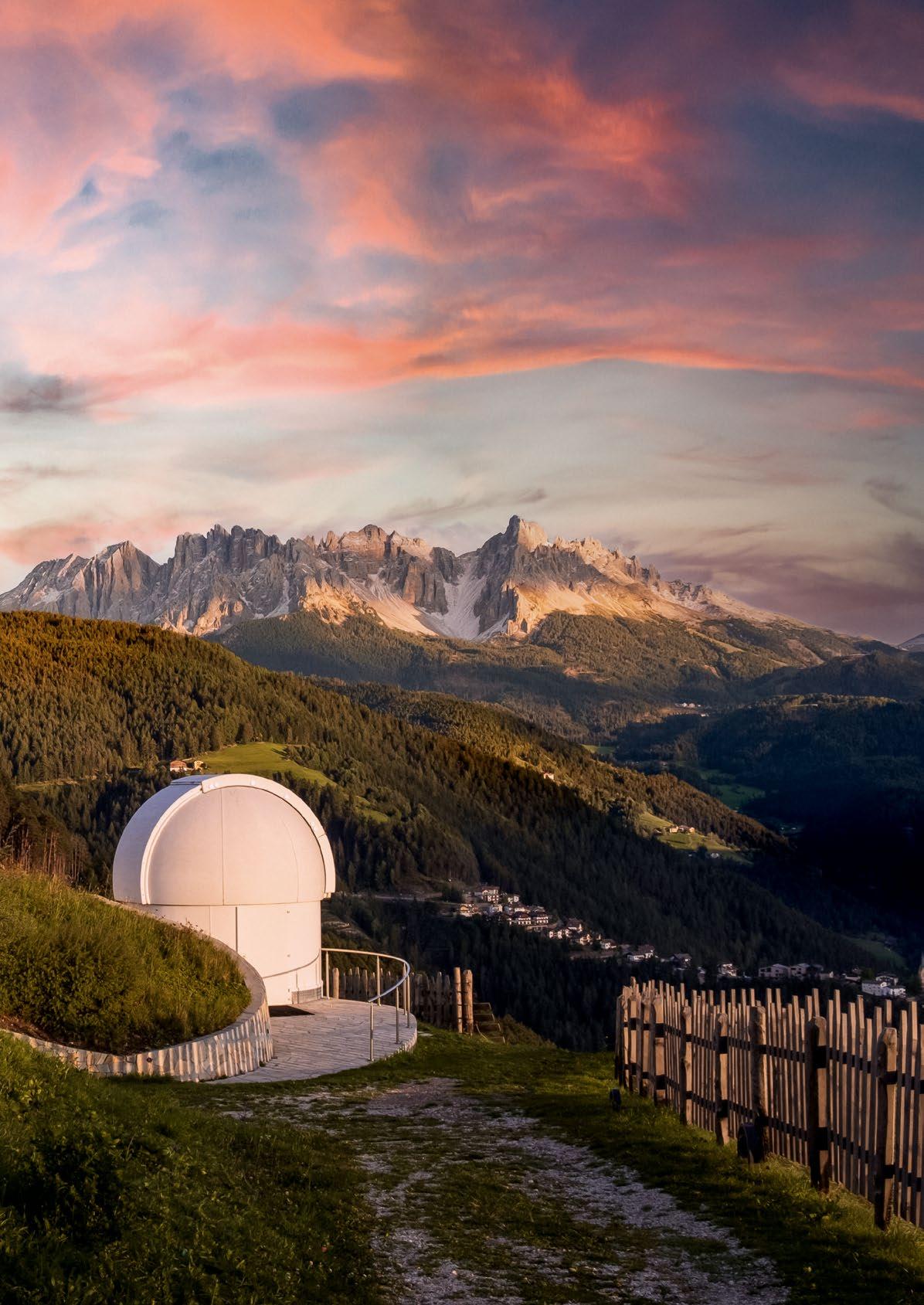
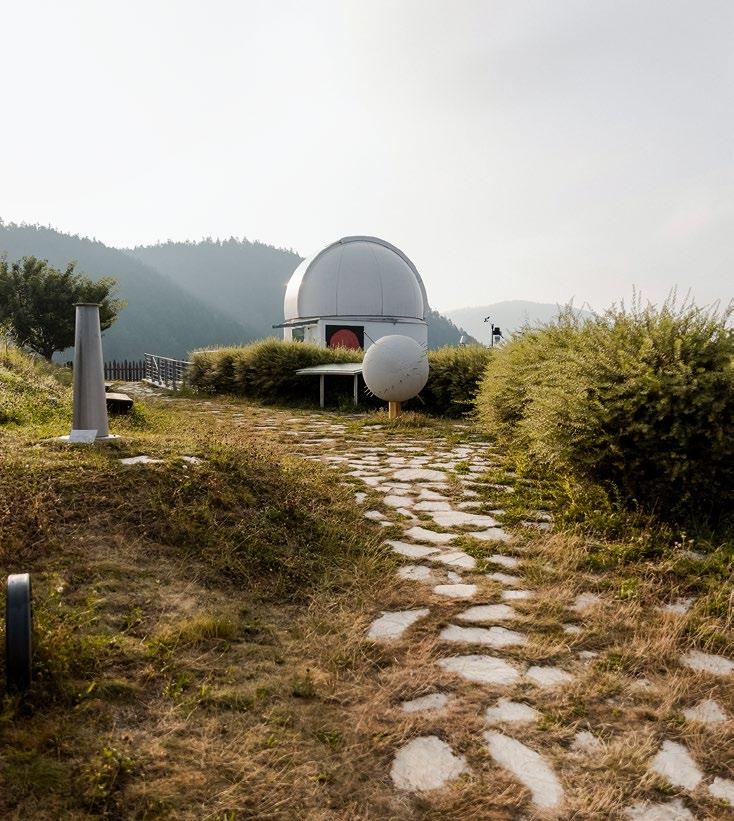
Die Sternwarte, ebenfalls nach dem Südtiroler Raumfahrtpionier Max Valier benannt, wurde 2002 auf einer
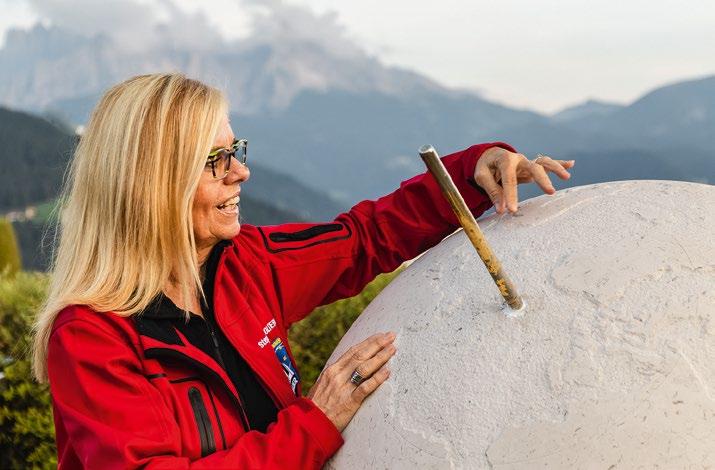
Wiese auf rund 1.350 Metern über dem Meeresspiegel errichtet und bietet den idealen Blick in alle Himmelsrichtungen. „Bevor die Sternwarte hier stand, saß ich mit meinen Kindern öfter auf genau dieser Wiese, um den Nachthimmel zu genießen“, erinnert sich Wolters. Die dazugehörige Sonnenwarte folgte 2006. 2012 startete eine Projektgruppe für die touristische Entwicklung in Steinegg und Gummer im Rahmen des Europäischen Förderfonds für regionale Entwicklung den Weg zur Positionierung als „Sternendorf – Astrovillaggio“. „Das eröffnet uns neue Möglichkeiten, mehr Menschen für die Astronomie zu begeistern“, so die Amateurastronomin. Zum Sternendorf gehören Volkssternwarte, Sonnenwarte, eine Sonnenuhr in Form einer riesigen Marmorkugel, ein Planetenweg, der Weg der Sterne, das Planetarium Südtirol und vor allem die vielen spannenden Führungen und Veranstaltungen. In und rund um Gummer machen die Vereinsmitglieder Max Valier den Einheimischen und Gästen das Himmelszelt begreifbar. Ehrenamtlich – und Wolters ist immer mittendrin.
Eine Zuagroaste ist die inzwischen vierfache Oma längst nicht mehr. Mit ihrem Südtiroler Dialekt und perfektem Italienisch würde man sie nie als zugezogene Deutsche erkennen. „Hätte ich nicht umgehend den Dialekt gelernt, wär’s mit meinen Schwiegereltern gar nicht so einfach gewesen“, sagt sie augenzwinkernd. „Und das Watten“, fügt sie hinzu – das klassische Südtiroler Kartenspiel musste sie natürlich auch beherrschen.
Ihre Beziehung zum Eggental ist eine besondere – nicht nur wegen der Sterne. Sie schwärmt von den Stoaneggnern, die sie und ihre Familie von Anfang an herzlich aufgenommen hätten. Als sie ihren pflegebedürftigen Vater aus Deutschland nach Steinegg holte, sei er schneller Teil der Dorfgemeinschaft gewesen, als er Griaß Gott sagen konnte.
Bei den Führungen blickt sie gespannt in das Teleskop, bei den Nachtwanderungen mit Gästen ist sie selbst ergriffen von der Weite des Alls. „Der Sternenhimmel ändert sich täglich. Und immer wieder entdecke ich mir Unbekanntes, das mich neugierig macht“, erzählt Wolters. Aus dieser Faszination hat sich mit den Jahren eine zweite Leidenschaft entwickelt: die Astrofotografie. Es begann mit Nordlichtern in Norwegen: „Dieses Phänomen hat ein Feuer entfacht.“ Mittlerweile ist ein riesiges
Steinegg und Gummer zählen zu den besten Plätzen Italiens für Sternbeobachtung.
Collepietra e San Valentino in Campo sono tra le migliori località italiane per osservare le stelle.
Steinegg and Gummer are among the best places in Italy for watching the stars.
„Hier ist die Lichtverschmutzung so gering, dass man den Himmel noch in seiner ganzen Pracht sieht – das ist ein echtes Privileg.“
Archiv an Fotos entstanden. Abertausende Aufnahmen von Himmelskörpern und Sternenkonstellationen –zunächst analog, heute digital.
In klaren Winternächten harrt Stephanie Wolters, eine Kanne Kaffee unterm Arm, oft stundenlang an abgeschiedenen Orten in Südtirol aus. Temperaturen von minus 20 Grad? Kein Problem. „Ich bin beim Beobachten und Fotografieren so voller Adrenalin, dass ich die Kälte kaum spüre.“ Viele Fotos entstehen aber bei ihr daheim. „Den wunderbarsten Nachthimmel vor der eigenen Haustür – was will ich mehr?“
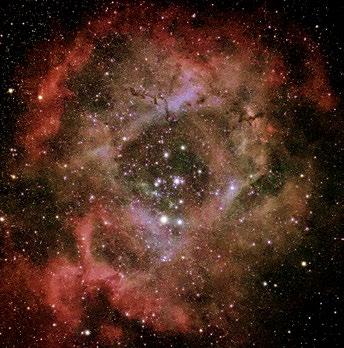
Astrofotografin: Rosettennebel (r. o.) und Orionnebel (r. u.) aus Stephanie Wolters‘ Archiv. Immagini delle nebulose di Rosetta (in alto a destra) e Orione (in basso a destra) dall’archivio di Stephanie Wolters.
Rosette Nebula (top right) and Orion Nebula (bottom right), taken from Stephanie Wolters’ astrophotography archive.
WANDERTIPP: DER WEG DER STERNE
Der Weg der Sterne verbindet die beiden Dörfer Gummer und Steinegg. Auf der 12,2 Kilometer langen Wanderung mit 3,5 Stunden Gehzeit führt das Maskottchen Luxi auf eine Reise durch die Geheimnisse des Universums. Ausgangspunkt ist ein überdimensionaler Fotoapparat in Gummer, der symbolisch den Einstieg ins Weltall markiert. An sieben interaktiven Stationen warten Sternbilder, eine Datumssonnenuhr und eine Sternenkarte. Der Weg führt an der Stern- und Sonnenwarte vorbei, zum Raketenbaumhaus für junge Astronominnen und Astronomen und schließlich zum Mini-Sternenweg in Steinegg, der abends in den Farben der jeweiligen Sterne beleuchtet wird.
Stephanie Wolters non crede alle coincidenze e neppure all’astrologia, non fosse altro perché le stelle non si trovano più nei punti in cui, secondo gli astrologi, dovrebbero trovarsi. Eppure, deve essere stata una particolare congiunzione astrale a condurre la tedesca d’origine proprio in Val d’Ega. Come appassionata di astronomia, qui ha trovato il suo posto ideale. Per lei, infatti, in nessun altro luogo la volta celeste si mostra così vasta e le stelle brillano così nitide.
Più di quarant’anni fa, durante una vacanza in Alto Adige, Stephanie Wolters si è innamorata per ben due volte: di Günther, che sarebbe diventato suo marito, e del Catinaccio, il cui spettacolo al tramonto è noto ben oltre i confini della Val d’Ega. A quel tempo non avrebbe mai immaginato che un giorno avrebbe vissuto proprio in questa valle. E invece, nel 2004, ormai sposata e madre di due figli, si è trasferita con la famiglia a Collepietra, un paesino che sembra fatto apposta per lei, appassionata osservatrice del firmamento.
“È il posto migliore in cui potrei immaginare di vivere”, dice Stephanie che lavora da molti anni come insegnante. Come darle torto? Dall’abitato, collocato su un altopiano, la vista si apre non solo sul Catinaccio, ma anche sul cielo stellato, che qui sembra di poter toccare
Valier” in Val d’Ega, di cui oggi Stephanie e il marito sono tra i membri più attivi. L’associazione gestisce, su incarico del Comune di Cornedo, l’Osservatorio amatoriale di San Valentino in Campo, che per Stephanie è diventato una seconda casa.
L’osservatorio astronomico, intitolato anch’esso a Max Valier, pioniere dello spazio altoatesino, è stato inaugurato nel 2002. L’impianto, costruito su un prato a 1.350 metri di altezza, offre un’ottima visuale della volta celeste in tutte le direzioni. “Quando l’osservatorio non c’era ancora, sedevo spesso su questo prato per godermi il cielo stellato insieme ai miei figli”, ricorda Stephanie. Nel 2006 all’impianto si aggiunge un osservatorio solare. Nel 2012, con il sostegno del Fondo europeo per lo sviluppo regionale, viene avviato un progetto per lo sviluppo turistico
“Qui l’inquinamento luminoso è talmente ridotto che possiamo ancora godere del cielo stellato in tutto il suo splendore. È un vero privilegio.”
con un dito. Collepietra e la vicina San Valentino in Campo sono annoverate fra le migliori località italiane dalle quali osservare le stelle. Nel 2018 l’associazione Astronomitaly ha conferito ai due comuni il suo massimo riconoscimento, la certificazione “I cieli più belli d’Italia – Gold”. Merito anche di interventi mirati dell’amministrazione locale, spiega Stephanie: “Qui l’inquinamento luminoso è talmente ridotto che possiamo ancora godere del cielo stellato in tutto il suo splendore. È un vero privilegio”.
Alla tenera età di quattro anni, Stephanie guarda già rapita il cielo notturno tempestando il padre di domande. Cosa brilla lassù? Perché la Luna gira intorno alla Terra? Quanto è caldo il sole? Dopo aver imparato a leggere, Stephanie inizia a divorare libri sulla natura e sull’universo anche se, al momento di scegliere il percorso di studi, decide di iscriversi a Lingue e letterature straniere. Per ragioni puramente pratiche, spiega.
Ma la passione per le stelle non l’abbandona: tra libri, corsi e conferenze, Stephanie non perde occasione per approfondire le sue conoscenze. Intorno al 2010 un amico le fa conoscere l’Associazione astrofili altoatesini “Max
di Collepietra e San Valentino in Campo che riesce a ottenere per le due località la certificazione di “Sternendorf – Astrovillaggio”. “Questo riconoscimento ha aperto nuove possibilità per avvicinare le persone all’astronomia”, spiega ancora Stephanie. L’Astrovillaggio comprende l’osservatorio astronomico amatoriale, l’osservatorio solare, una meridiana modellata come un’enorme sfera di marmo, il Sentiero dei Pianeti, il Sentiero delle Stelle e il Planetarium Alto Adige. Il vero punto di forza sono però i numerosi eventi e le coinvolgenti visite guidate. A San Valentino in Campo e dintorni, i membri dell’Associazione Max Valier illustrano il cielo e le sue stelle a popolazione locale e ospiti – a titolo volontario, e Stephanie è sempre in prima linea.
Stephanie, che è ormai nonna di quattro nipoti, non è più una “forestiera” in Val d’Ega. Sentendola parlare in dialetto sudtirolese e in perfetto italiano, nessuno direbbe che proviene dalla Germania. “Se non avessi imparato subito il dialetto, sarebbe stata dura con i miei suoceri”, dice ammiccando. “E ho imparato anche il Watten, naturalmente!”, aggiunge riferendosi al gioco di carte altoatesino per eccellenza.
Stephanie ha un rapporto speciale con la Val d’Ega, e non solo per via delle stelle. Parla con entusiasmo dei suoi compaesani, gli Stoaneggner, che l’hanno accolta insieme alla sua famiglia con grande calore fin dall’inizio. A Collepietra si è sentito subito a casa anche il padre di Stephanie quando, anziano e bisognoso di assistenza, si è trasferito dalla figlia, inserendosi nella comunità locale più in fretta di quanto non si faccia in tempo a dire Griaß Gott.
Durante le visite guidate guarda con attenzione attraverso il telescopio e nelle escursioni notturne con i visitatori si emoziona ancora di fronte all’immensità dell’universo. “Il cielo stellato cambia ogni giorno. Ogni volta scopro qualcosa di nuovo che stimola la mia curiosità”, racconta. Da questo interesse profondo è emersa
negli anni una nuova passione: l’astrofotografia. Tutto ha avuto inizio con l’aurora boreale, ammirata in Norvegia: “È stato quello spettacolo a fare scoccare la scintilla”, dice. Da allora ha raccolto un enorme archivio fotografico con migliaia di immagini, dapprima analogiche e in seguito digitali, di corpi celesti e costellazioni.
Nelle notti invernali più terse Stephanie, con la macchina fotografica e un thermos pieno di caffè, trascorre spesso lunghe ore nei luoghi più isolati dell’Alto Adige. E se la temperatura scende a meno venti gradi? Non è un problema. “Quando osservo e fotografo il cielo ho una tale adrenalina in corpo che non sento quasi il freddo.” Molte immagini del suo archivio sono state scattate a Collepietra: “Ho il cielo notturno più bello davanti alla porta di casa. Che altro desiderare?”, conclude.
ESCURSIONE
IL SENTIERO DELLE STELLE
Il Sentiero delle Stelle è un percorso tematico di 12,2 chilometri (circa 3,5 ore di cammino) che collega i paesi di San Valentino in Campo e Collepietra. Accompagnati dalla mascotte Luxi, i visitatori scoprono i segreti dell’universo. Il punto di partenza, a San Valentino in Campo, è rappresentato da una macchina fotografica gigante che i visitatori attraversano varcando così simbolicamente la soglia dell’universo. L’itinerario si snoda attraverso sette stazioni interattive che presentano le costellazioni, una meridiana che indica la data e una mappa stellare rotante. Superato l’osservatorio astronomico e l’osservatorio solare, si procede verso la “casa-razzo sull’albero”, un’attrazione per i piccoli astronomi e astronome, per giungere infine al Mini Sentiero delle Stelle di Collepietra, che di sera si illumina con i colori delle diverse stelle.
EN
Stephanie Wolters doesn’t believe in fate. She also doesn’t believe in astrology – not least because the stars have long shifted position since the zodiac was drawn up. And yet, the stars must have aligned for her when she moved from her native Germany to the Eggental valley. The amateur astronomer is completely at home here, where the night sky is vaster and the stars brighter than anywhere else she’s ever been.
When Stephanie Wolters holidayed in South Tyrol over 40 years ago, she fell in love twice: with Günther, the man she later married, and with the Rosengarten peaks, which are famous far and wide for their red glow at sunset. Back then, she had no idea that she would one day call the Eggental valley home. But that’s exactly what happened in 2004, when she, her husband and their two children started a new life in Steinegg/Collepietra.
“I can’t imagine living anywhere better,” says Stephanie, who is originally from Germany’s Rhineland and has worked as a teacher for many years. Steinegg’s location on a high plateau affords sweeping views of the Rosengarten by day and makes the stars seem close enough to touch by night. It’s the perfect place for a passionate stargazer like Stephanie. In fact, Steinegg and the neighbouring village of Gummer/San Valentino in Campo are among the best places in Italy for watching the stars and, in 2018, were even awarded gold by Astronomitaly for their beautiful night skies. As Stephanie explains, this is partly down to measures by the local authority: “Light pollution is so low here that you can see the sky in all its glory. It’s a real privilege.”
Even as a four-year-old, Stephanie would stare up in wonder at the sky every night, bombarding her father with questions. She was desperate to know what was lighting up the sky, why the Moon orbits Earth and how hot the Sun is. Once she could read, she devoured factual books on nature and outer space, although she later decided (for practical reasons, she tells us) to study linguistics.
She never lost her childhood fascination for the stars and kept seeking out books, talks and courses –anything related to astronomy that she could find. In the 2010s, a friend introduced her to the Max Valier amateur
astronomy society and today she and her husband are committed members. The society operates the public observatory in Gummer on behalf of the local authority of Karneid/Cornedo all’Isarco. For Stephanie, it’s become a second home.
Constructed in 2002 on a meadow around 1,350 metres above sea level, the astronomical observatory is also named after South Tyrolean space pioneer Max Valier and offers outstanding panoramic views. “Before it was built, I often sat with my children on this exact meadow to marvel at the starlit sky,” she recalls. A solar observatory was added to the site in 2006. And in 2012, a task force dedicated to boosting tourism in Steinegg and Gummer with the support of the European Regional Development Fund set about turning the area into a “star village” (“Sternendorf – Astrovillaggio”). “This has opened up new ways for us to get more people interested in astronomy,” says Stephanie. Besides the astronomical and solar observatory, visitors to the star village will find a sundial in the shape of a huge marble, the Planet Path and Path of the Stars hiking trails, the South Tyrolean planetarium and a host of exciting guided tours and events. The volunteer members of the Max Valier society work hard to bring the night sky to life for locals and visitors in and around Gummer, and Stephanie plays a key role here.
It’s a long time since Stephanie, who now has four grandchildren, was seen as a Zuagroaste (newcomer). With her South Tyrolean dialect and perfect Italian, it’s impossible to tell that she’s from Germany. “I wouldn’t have got on with my parents-in-law nearly as well if I hadn’t learnt the dialect so quickly,” she smiles. “Or with Watten,” she adds, referring to the card game that is part and parcel of life here.
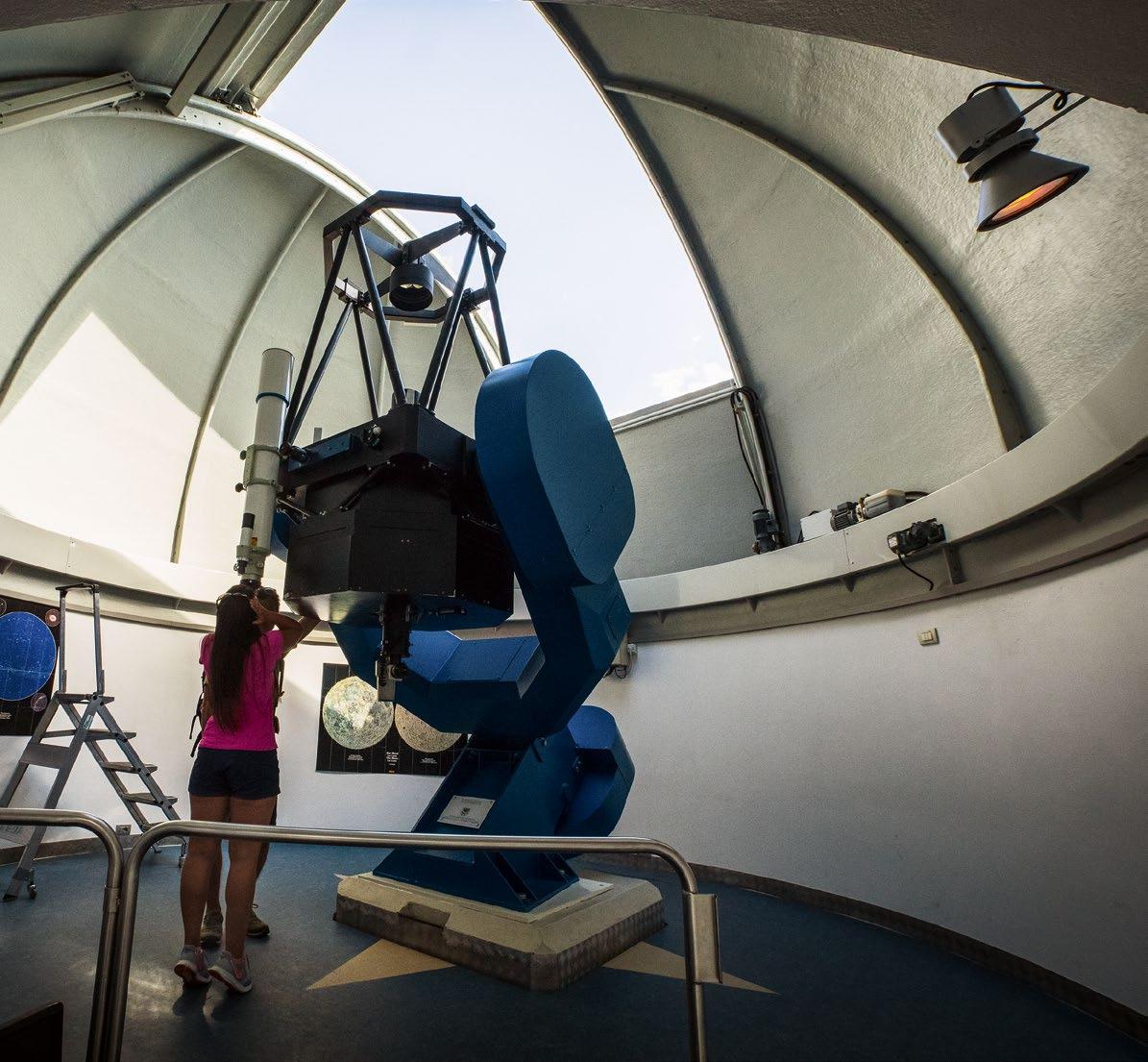
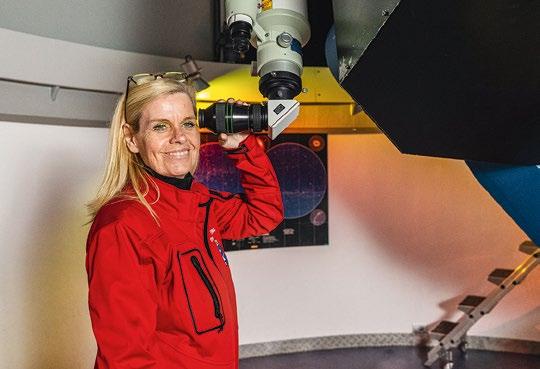
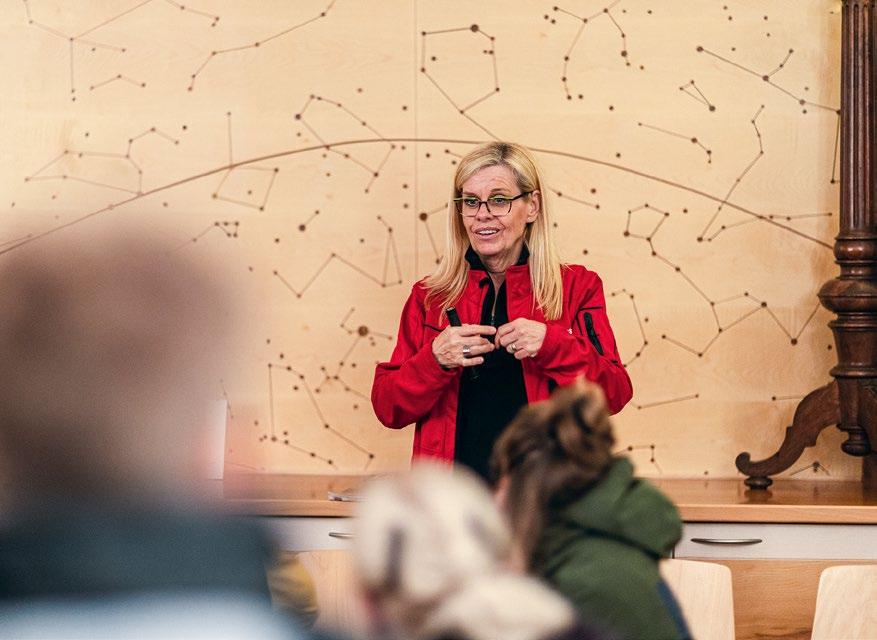
Bei Führungen in der Sternwarte bringt Stephanie Wolters den Gästen den Himmel näher.
Nelle visite guidate all’osservatorio, Stephanie Wolters fa conoscere ai visitatori i segreti della volta celeste. Stephanie Wolters brings the night sky to life for visitors during tours of the observatory.
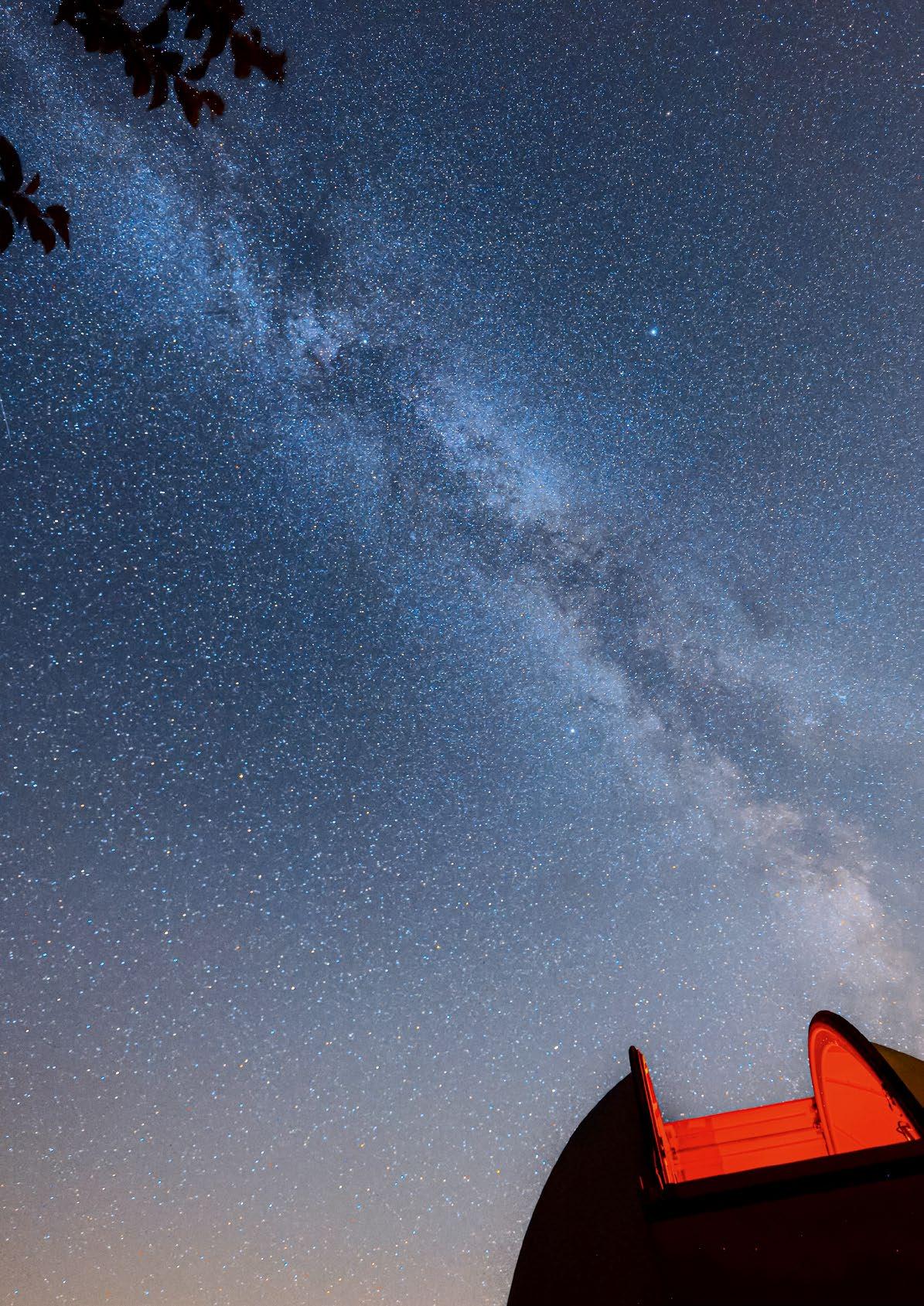
Die Milchstraße über der Sternwarte in Gummer – aus Stephanie Wolters‘ Archiv.
La Via Lattea sopra l’osservatorio di San Valentino in Campo (archivio di Stephanie Wolters).
The Milky Way above the observatory in Gummer, taken from Stephanie Wolters’archive.
“Light pollution is so low here that you can see the sky in all its glory. It’s a real privilege.”
The Eggental valley holds a special place in her heart – and not only because of the stars. She also speaks highly of the locals or Stoaneggner as they are known, who have always been so welcoming. Even when she moved her father from Germany to Steinegg so she could care for him, he soon became part of the village community once he learnt to use the customary greeting Griaß Gott.
Whenever Stephanie leads guided tours or nighttime hikes, she looks excitedly through the telescope herself and is constantly blown away by the vastness of space. “The night sky changes daily. I’m forever discovering something new that sparks my curiosity,” she says. Over the years, this has led her to develop a second passion for astrophotography. It all began with the Northern
Lights in Norway, “a phenomenon that lit a flame inside of me”. She has since built up a huge archive of printed and, more recently, digital photos encompassing many thousands of shots of celestial bodies and constellations.
On clear winter nights, Stephanie often spends hours watching the stars in remote corners of South Tyrol, a flask of coffee under her arm to ward off the bitter cold. Temperatures as low as minus 20 degrees Celsius don’t deter her. “When I’m gazing up at the sky and photographing the stars, I’m so full of adrenaline that I hardly feel the cold.” That said, she also often takes photos from the comfort of her home. “I have the most spectacular views of the night sky from right outside my front door. What more could I want?”
RECOMMENDED HIKE PATH OF THE STARS
The Path of the Stars connects the two villages of Gummer/San Valentino in Campo and Steinegg/Collepietra. Join mascot Luxi on this 12.2-kilometre hike (3.5 hours walking time) to discover the secrets of the universe. Your journey into space begins at an enormous camera in Gummer and continues past seven interactive stations featuring constellations, a date sundial and a star chart. You’ll also pass the astronomical and solar observatory and a rocket tree house for young astronomers. The route finishes at the Mini Star Trail in Steinegg, which is illuminated in the colours of the stars every evening.
Die Klassiker I grandi classici
Unmissable Adventures
Mal zu Fuß, mal mit dem Bike, mal auf Brettern. Spektakulär oder leise: die großen Drei des Eggentals – im Sommer und Winter
A piedi, in bicicletta o sugli sci, spettacolari o idilliaci, in estate o in inverno: i tre grandi itinerari della Val d’Ega
From the spectacular to the serene, we unveil the top summer and winter hiking, cycling and skiing routes in the Eggental valley
Im Sommer In estate In summer
1
Am Grat entlang
Klettersteig Rotwand
Lungo il crinale
Via ferrata Roda di Vaèl
Along the ridge
The Rotwand via ferrata
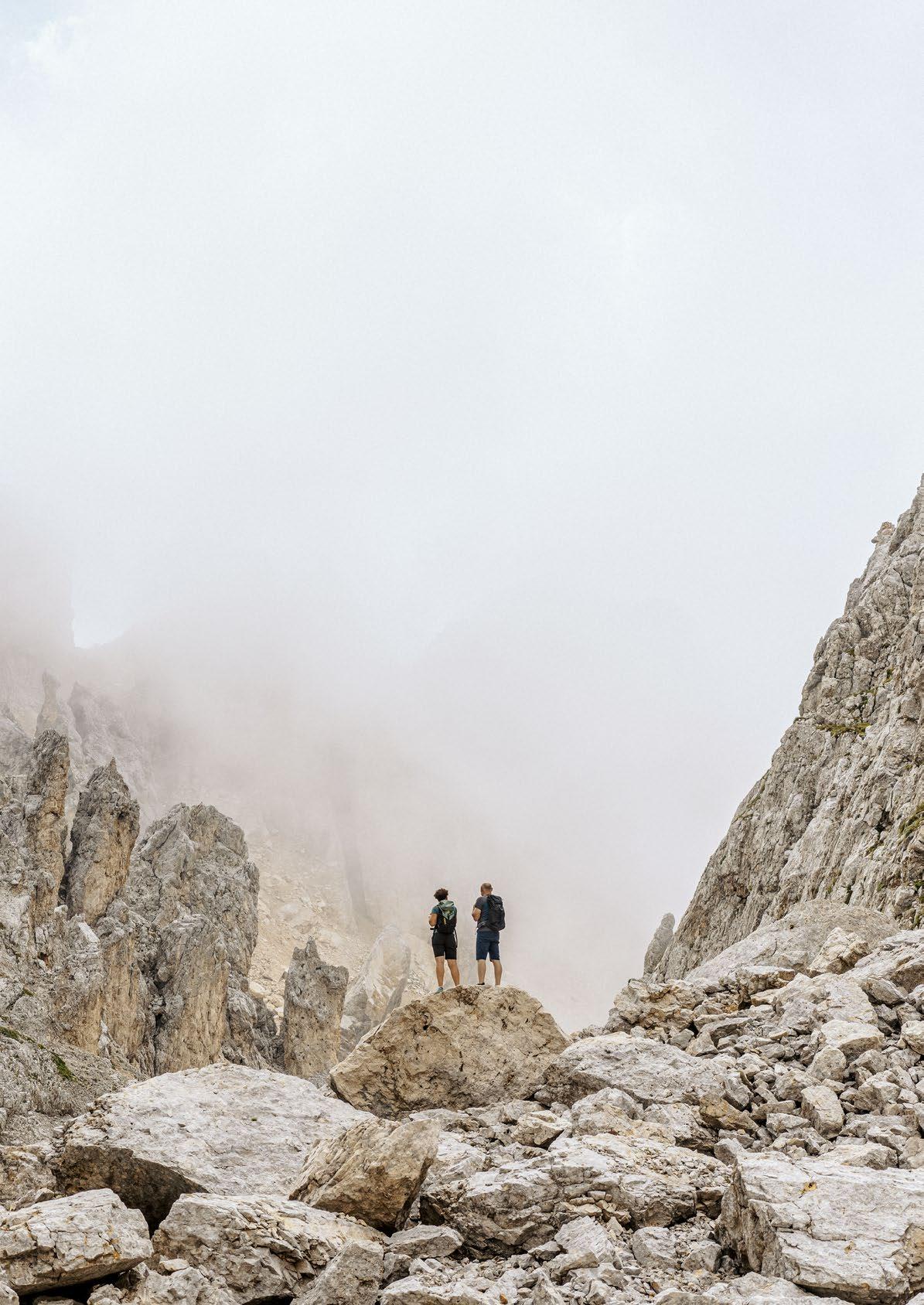
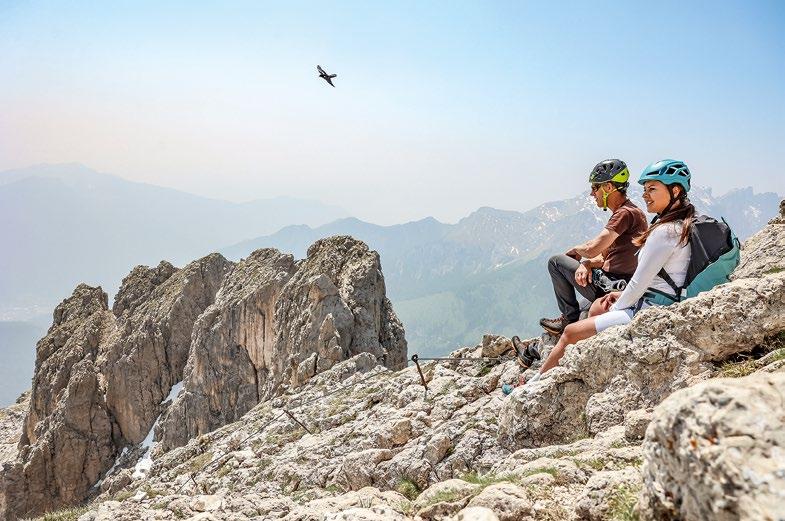
DE Durch schroffes Felsgelände führt der Klettersteig vom Vajolonpass über den Nordgrat der Rotwand. Für Geübte technisch wenig anspruchsvoll, dafür aussichtsreich von Beginn an mit Latemar, Rosengarten und Karerpass. Am Gipfelkreuz angekommen, entfaltet sich auf 2.806 m ein überwältigendes 360°-Panorama vom Ortler über den Sellastock bis zur Marmolata.
IT La via ferrata conduce attraverso terreni rocciosi dal Passo Vajolon al crinale settentrionale della Roda di Vaèl. L’intero percorso, tecnicamente poco impegnativo per gli alpinisti esperti, offre viste spettacolari sul Latemar, il massiccio del Catinaccio e il Passo di Costalunga. Giunti in vetta (2.806 m), si apre un panorama mozzafiato a 360 gradi che spazia dall’Ortles al Gruppo di Sella, fino alla Marmolada.
EN This via ferrata runs from the Vajolonpass and up steep, rocky terrain over the Rotwand’s northern ridge. Technically easy for proficient climbers, it offers striking views of the Latemar, Rosengarten and Karerpass. At the summit cross (2,806 m), you’ll be rewarded by a stunning panorama of the Ortler and Sella group and across to the Marmolada.
5 h
865 m↗ 6,4 km
2
Mitten im Gebirge
Die Welt des Latemars
Nel cuore della montagna
Il mondo del Latemar
Through the mountains
The majestic Latemar
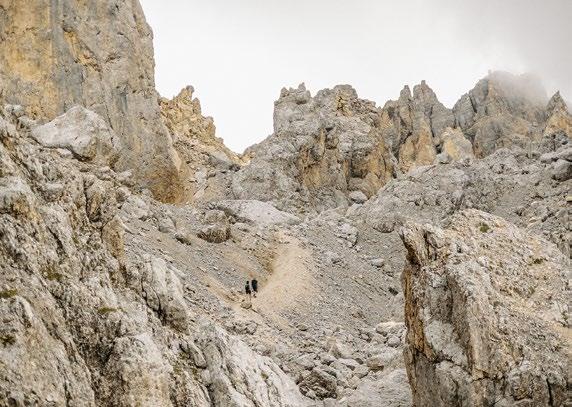
DE Start: Bergstation Oberholz-Sessellift auf 2.096 m. Vorbei an der Plattform Latemar.360° schlängelt sich der anfangs steile Pfad Richtung Latemar. Zwischen schroffen Felsen und beeindruckenden Formationen führt der Steig vorbei am Eggentaler „schiefen Turm“, der Felsspitze Torre di Pisa, benannt nach dem berühmten Bauwerk, bis zur gleichnamigen Hütte mit Einkehrmöglichkeit.
IT Si parte dalla stazione a monte della seggiovia Oberholz (2.096 m). Il sentiero, inizialmente piuttosto ripido, costeggia la piattaforma panoramica Latemar.360° e si snoda quindi in direzione del Latemar tra terreni scoscesi e imponenti formazioni rocciose. Oltrepassata la “torre pendente” della Val d’Ega, la guglia dolomitica Torre di Pisa, si procede fino all’omonimo rifugio, ideale per una pausa rifocillante.
EN Starting at the top station of the Oberholz chairlift (2,096 m), the initially steep path winds its way past the Latemar.360° platform towards the Latemar. Passing rugged terrain and dramatic rock formations, it leads to the sloping Torre di Pisa rock face – the Eggental valley’s own Leaning Tower of Pisa – and on to a mountain lodge of the same name (refreshments served).
4 h
719 m↗
8,1 km
Rund ums Massiv
Latemar-Ronda
Intorno al massiccio
La Latemar Ronda
Around the massif
The Latemar Ronda
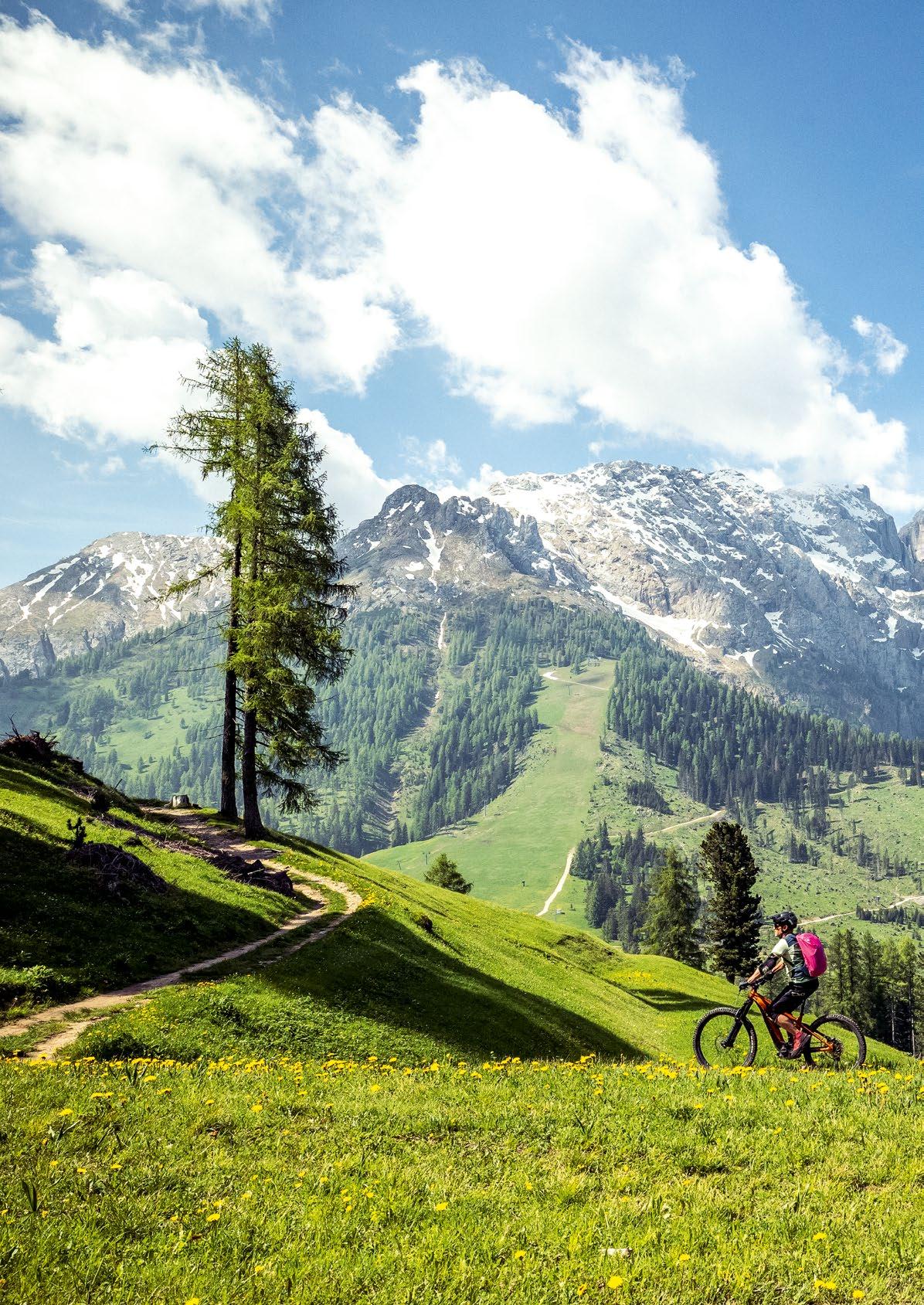
DE Ein Mountainbike, eine Ganztagestour und endlose Panoramablicke. Der Klassiker umrundet das Latemarmassiv auf rund 36 Kilometern und überwindet etwa 400 Höhenmeter ohne große Anstiege, wartet aber mit zwei anspruchsvolleren steilen Abfahrten auf. Die Ganztagestour kann in etwa 5 Stunden bewältigt werden. Startpunkte gibt es gleich mehrere: Welschnofen, Karersee und Obereggen.
IT Una mountain bike, un’escursione di una giornata e panorami sconfinati. Il classico itinerario si snoda intorno al massiccio del Latemar per 36 chilometri e supera un dislivello di circa 400 metri senza salite impegnative ma con due discese ripide e impegnative. Il tour si completa in circa 5 ore. Si può partire da Nova Levante, da Carezza o da Obereggen.
EN Endless panoramic views await you on this classic full-day mountain bike ride around the Latemar massif. The route covers around 36 km (approx. 5 hours) with roughly 400 m of elevation gain without any major climbs, although there are two relatively challenging steep descents. You can choose to start from Welschnofen/Nova Levante, Karersee/Carezza or Obereggen.
5 h
400 m↗ 36 km
Im Winter
In
inverno In winter
1
Sechs auf einen Streich
Latemar Sixpack
Sei è il numero perfetto Latemar Sixpack
Six in one The Latemar Sixpack
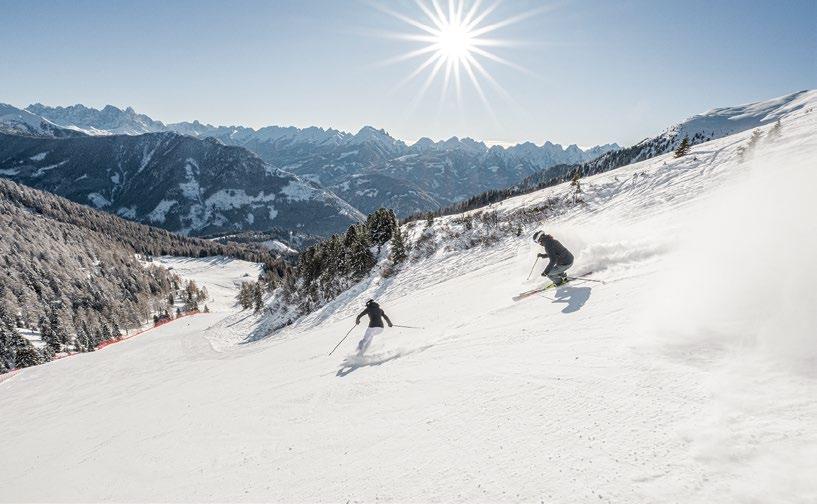
DE Diese Challenge vereint die sechs spannendsten von insgesamt 40 Abfahrten im Skigebiet Latemar Dolomites. Und keine gleicht der anderen: Steilhänge mit bis zu 60 Prozent Neigung, Rennstrecken mit Wettkampfgeschichte, Kunstwerke in glitzernder Winterkulisse und Weitblicke von der Marmolata bis zur Palagruppe. Das Latemar Sixpack ist ein Mix aus Adrenalin, Panorama und brennenden Bauchmuskeln.
IT Chi riuscirà ad affrontarle tutte? Sei discese nella ski arena Latemar Dolomites, tutte diverse tra loro: pendenze fino al 60 per cento, piste da competizione che hanno fatto la storia dello sci alpino, paesaggi mozzafiato in una cornice innevata e viste che spaziano dalla Marmolada alle Pale di San Martino. Il Latemar Sixpack è un mix di adrenalina, panorami spettacolari… e addominali in fiamme!
EN Expect panoramic views, adrenaline and burning abdominals on this challenge, which combines the six most thrilling of the 40 slopes in the Latemar Dolomites ski resort. Every piste is unique, featuring inclines of up to 60 percent, historic racing routes, works of art set against a sparkling winter backdrop and sweeping views from the Marmolada to the Pala group.
2
Startpunkt Rosengarten
König Laurin Challenge
Ai piedi del Catinaccio
König Laurin Challenge
Descending from the Rosengarten
The König Laurin Challenge
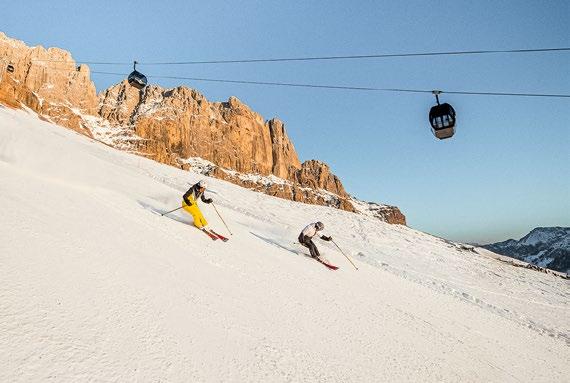
DE Die längste Piste im Skigebiet Carezza startet auf 2.337 m vom Felsen des Rosengartenmassivs. In vielen Schwüngen führt sie 1.132 Höhenmeter hinunter nach Welschnofen. Beim Speed-Check kurz vor der Talstation lässt sich zuletzt noch die eigene Geschwindigkeit messen. Lohnend: ein stolzer Blick zurück zum Startpunkt, hoch oben in König Laurins Reich.
IT La pista più lunga del comprensorio sciistico di Carezza inizia a 2.337 metri a ridosso del massiccio del Catinaccio e di qui scende sinuosa coprendo un dislivello di 1.132 metri fino a Nova Levante. La postazione “speedcheck”, poco prima della stazione a valle, permette agli sciatori di rilevare la propria velocità in discesa. Conquistato il traguardo, vale la pena di volgere lo sguardo al punto di partenza, nel cuore del regno di Re Laurino.
EN The longest slope in the Carezza ski resort starts under the rock face of the Rosengarten massif at 2,337 m and descends 1,132 m to Welschnofen/Nova Levante. Don’t forget to measure your speed at the speed check point just before the valley station and then look back proudly at your start point high up in legendary King Laurin’s mountain kingdom.
km
3
Auf leisen Sohlen
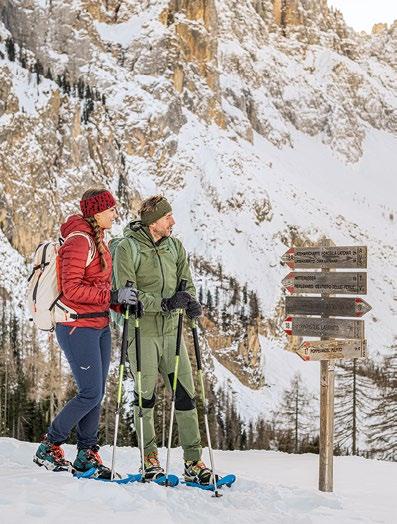
Schneeschuhwanderung
A passi leggeri
Escursione con le ciaspole
Muffled footsteps
Snowshoe hike
DE Schneeschuhe angeschnallt Schritt für Schritt durch das knirschende Weiß: Vom mystischen Karer See, der im Winter meist mit Schnee und Eis bedeckt ist, führt der Wanderweg durch den Karerwald bis zum Aussichtspunkt Mitterleger, der den Blick auf den verschneiten Latemar freigibt. Rundherum: nur glitzernde Natur und Stille.
IT Allacciate le ciaspole, si parte per una suggestiva escursione nella neve fresca. Il percorso conduce dall’incantevole Lago di Carezza, che in inverno è generalmente coperto di ghiaccio e neve, attraverso il bosco di Carezza fino al punto panoramico Radura di Mezzo con vista sul Latemar innevato. Tutto intorno: neve, natura e silenzio ovattato.
EN Starting from the mystical Karersee lake, which is usually blanketed in snow and ice all winter, this magical snowshoe hike leads through the crisp white snow of the glistening Karerwald forest to the Mitterleger/ Radura di Mezzo viewpoint, where you can marvel at the snowy Latemar and relax in nature’s tranquil stillness.
Schneekompetenz Gli specialisti della neve Snow Specialists
Mit Ehrgeiz und Know-how: ein Gespräch mit Pionier Georg Eisath und Pistenchef Michael Mair
Ambizione e know-how: intervista a Georg Eisath, pioniere della neve tecnica, e a Michael Mair, responsabile delle piste
Expertise meets ambition – an interview with snowmaking pioneer Georg Eisath and slope manager Michael Mair
TEXT: STEFANIE UNTERTHINER
PHOTOS: GABRIEL EISATH
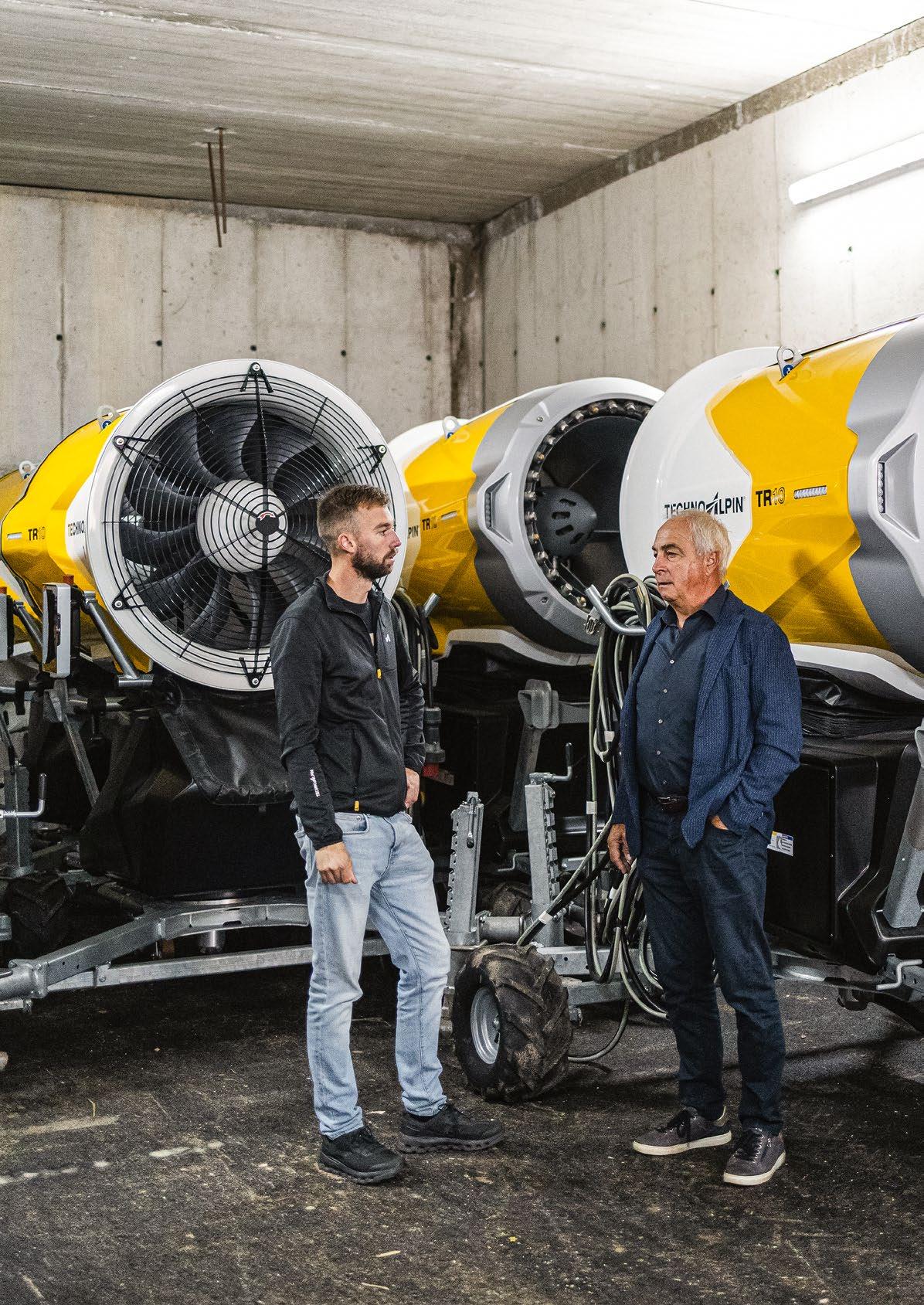
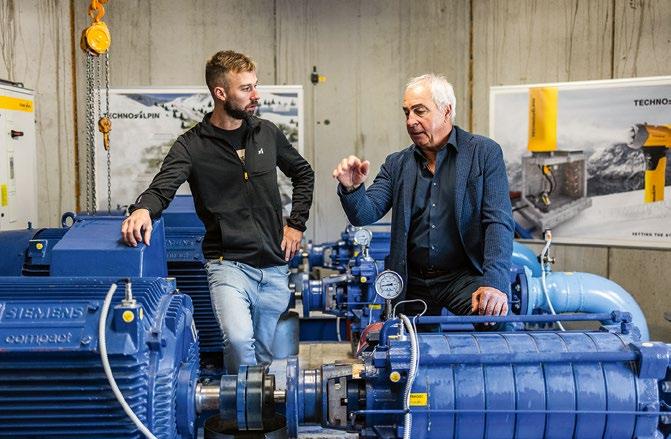
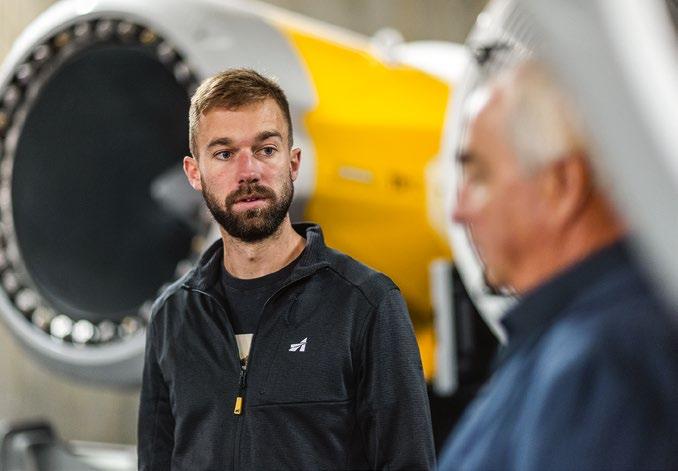
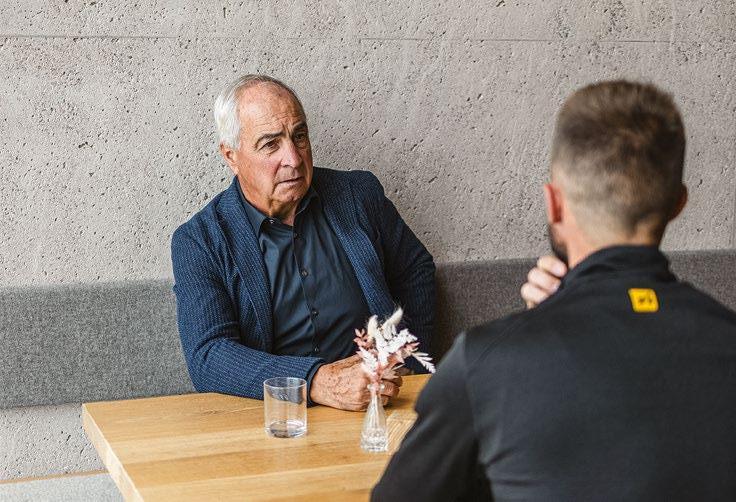
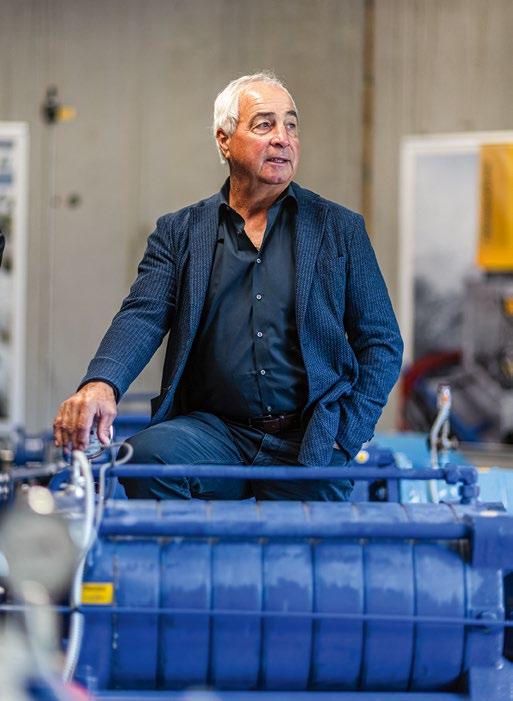
Durch seinen Weitblick hat Georg Eisath, Pionier des technischen Schnees und Mitgründer von TechnoAlpin, das Skigebiet Carezza geprägt und die Grundlage für ein Know-how geschaffen, das weltweit Maßstäbe setzt. Im Doppelinterview trifft er auf „Neuling“ Michael Mair, seit einem Jahr Pistenchef im Skigebiet Latemar in Obereggen. Ein Gespräch über Innovation, Wandel und Skisport.
Herr Mair, Sie haben vermutlich schon auf technischem Schnee Skifahren gelernt?
Michael Mair: Natürlich auch auf Naturschnee, aber ja: In meiner Kindheit waren die Pisten bereits beschneit.
Sie haben die Entwicklung der technischen Beschneiung in den Alpen maßgeblich mitgestaltet, Herr Eisath. Wie kam es dazu?
Georg Eisath: An der Alpensüdseite ist der Naturschnee seit jeher eine Herausforderung. Oft konnte man zu Weihnachten noch gar nicht fahren, und während der Saison musste man manchmal fast wie ein Reh von Schneefleck zu Schneefleck springen – mit entsprechend zerkratzten Skiern. Wenn es dann ordentlich geschneit hatte, entstanden nach ein paar Tagen überall Hügel auf der Piste, da auch die Pistengeräte bei weitem nicht die Qualität von heute hatten. Aber ohne technischen Schnee gäbe es heute sicherlich kein Skifahren mehr.
Wann begann man hier im Eggental mit Schneekanonen zu arbeiten?
In den 1980er-Jahren. Ich war damals Mitarbeiter in Obereggen und sollte den Markt sondieren. Erste Patente für Schneekanonen gab es bereits Ende der 1950er-Jahre. In den USA arbeitete man schon früh mit Druckluftkanonen; ab den 1970er-Jahren kamen auch in Europa die ersten Propellerkanonen zum Einsatz. Allerdings war der Schnee damals verpönt – man nannte die Geräte „Eisschleudern“.
Deshalb haben Sie dann bessere entwickelt?
Als wir erkannten, dass die Technologie der bestehenden Geräte recht einfach war – ein Ventilator, ein Kompressor und zehn Düsen –, war uns klar: Das können wir auch. Unser Ehrgeiz war es, die Technologie zu verfeinern. Dafür habe ich gemeinsam mit Partnern das Unternehmen TechnoAlpin gegründet.
Der Rest ist Geschichte: TechnoAlpin ist bis heute Marktführer in der technischen Beschneiung. Was hat sich seither getan, wie beschneit man heute in einem, auch für seine Schneequalität ausgezeichneten, Skigebiet wie Latemar in Obereggen, Herr Mair?
Mair: Jede Saison ist ein wenig anders, je nach Wetter und Temperaturen. Doch die Technologie ermöglicht es heute, dass wir in fünf Tagen oder maximal 80 Stunden den Großteil der Beschneiung vornehmen.
Für den gesamten Winter?
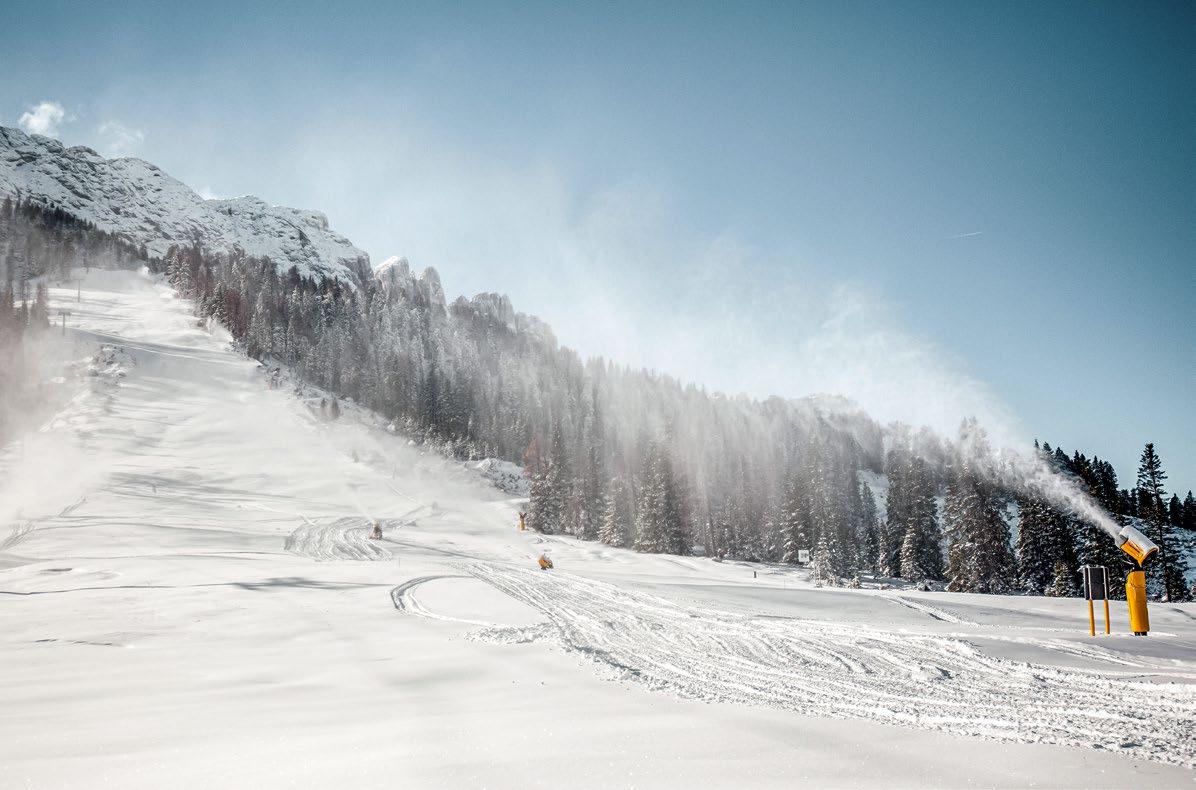
Ja, bis auf einige Stellen, an denen während der Saison noch einmal nachgebessert werden muss, wird die Beschneiung im Dezember abgeschlossen. Dafür haben wir im gesamten Gebiet von Latemar Dolomites 305 Schneeerzeuger und fünf große Speicherbecken, in denen über den Sommer Regenwasser gesammelt wird.
Georg Eisath: Dank immer besserer Technologien schafft man die Beschneiung mittlerweile auch schon in 60 Stunden. Wichtig ist nur, das richtige Kältefenster zu erwischen – also mindestens minus 5, besser noch minus 7 Grad.
Macht das einen großen Unterschied?
Ich kann auch bei Plusgraden guten Kompaktschnee produzieren, wenn die Luftfeuchtigkeit entsprechend niedrig ist. Doch mit jedem Grad steigen die Kosten so enorm, dass es nicht nachhaltig wäre.
Ein ressourcenschonender Umgang wird in beiden Skigebieten Latemar und Carezza großgeschrieben. War das auch für die Schneeproduktion ein Thema, als Sie 2008 TechnoAlpin verließen und 40 Millionen Euro in das Skigebiet zwischen Welschnofen und Karerpass investierten, aus dem Carezza Dolomites wurde?
Eisath: Absolut! Bis heute haben wir rund 100 Millionen Euro in das Skigebiet investiert. Ein großer Teil floss in die insgesamt neun kuppelbaren Liftanlagen. Doch mir war es von Beginn an ein Anliegen, die Dimensionierung der Beschneiungsanlagen so zu planen, dass wir möglichst energieeffizient arbeiten können. Dabei half mir die internationale Erfahrung, die ich bei TechnoAlpin mit Schneeproduktion in unterschiedlichsten Klimazonen gesammelt hatte.
Was braucht es, um energieeffizient zu arbeiten?
Einerseits die Infrastruktur, um die Beschneiung so schnell durchführen zu können wie heute. Im Vergleich zu früher ist alles größer und leistungsstärker geworden: Speicherbecken, Pumpen, Rohre. Und: Es läuft vollautomatisiert ab. In Carezza haben wir zusammen mit TechnoAlpin ein Beschneiungsmanagement entwickelt, das mittlerweile als Software-System von vielen großen Skigebieten übernommen wurde. Dafür habe ich 2013 begonnen, bei jeder Schneekanone alle für die Schneeproduktion relevanten Daten zu erheben. Aufgrund dieser Statistiken können wir heute genau sagen, wie viel Wasser wir bei jeder Anschlussstelle einsetzen müssen.
WAS IST TECHNISCHER SCHNEE?
Technischer Schnee entsteht, wenn Wasser fein zerstäubt in kalter Luft gefriert – wie in der Natur und ganz ohne künstliche Stoffe.
Michael Mair und Georg Eisath im Maschinenraum.
Oben: im Skigebiet Carezza.
Michael Mair e Georg Eisath nella sala macchine.
In alto: il comprensorio sciistico di Carezza.
Michael Mair and Georg Eisath in the engine room.
Above:
at the Carezza ski resort.
Kurzum: Sie haben ein System entwickelt, das die Schneeproduktion optimiert?
Genau. An manchen Stellen braucht es einen Meter Schnee, an anderen nur 30 Zentimeter. Unser System, das wir gemeinsam mit TechnoAlpin entwickelt haben, ermöglicht uns, genau so viel Schnee zu produzieren, wie wir benötigen. Früher dagegen hat man zur Sicherheit oft zu viel produziert.
Klären wir noch mit ein paar falschen Vorstellungen über Kompaktschnee auf: Oft wird angenommen, dass technischer Schnee von den Kanonen gleichmäßig über die Piste verteilt wird.
Mair: Nein, den müssen wir schon selbst verteilen. Die Kanonen oder Lanzen erzeugen Schneehaufen, die wir dann mit Pistengeräten gleichmäßig verteilen.
Und wie sehr freuen Sie sich, wenn der richtige Schnee kommt?
Das ist so eine Sache. Für die Landschaft und fürs Auge ist er schön, für die Piste weniger.
Georg Eisath (lacht): Wir sind technische Beschneier, da hat man eine eigene Perspektive. Für uns bedeutet Naturschnee mehr Arbeit. Auch die Reklamationen der Gäste sind nach frischem Schnee am größten: „Warum wird nicht gefräst, warum sind Hügel da?“ heißt es dann.
Die Ansprüche sind also gewachsen?
Enorm! Der Gast verlangt heute, dass jede Piste offen und perfekt ist – von Ende November bis Mitte April.
Und mit technischem Schnee können Sie das leisten?
Mair: Ja, der hält. Technischer Schnee hat eine viel höhere Dichte und Kompaktheit als Naturschnee.
Sie sind beide Eggentaler und selbst begeisterte Skifahrer. Wie oft können Sie den Schnee in Ihrem Heimattal selbst genießen?
Mair: Leider nicht mehr so oft. Die Arbeit hört nie auf – ob im Skigebiet oder zu Hause, wo ich einen Hof mit Milchwirtschaft habe. Natürlich teste ich aber die Schneequalität unserer Pisten auch selbst. Und ich bin regelmäßig in anderen Skigebieten unterwegs, um zu sehen, was es dort Neues gibt.
Bleibt Ihnen mehr Zeit, Herr Eisath – nachdem Sie die Geschäftsführung von Carezza mittlerweile an Ihren
Sohn Florian übergeben haben?
Eisath: Ich bin die gesamte Saison jeden Tag auf den Skiern, ein bis zwei Stunden am Vormittag. Die Piste liegt fünf Meter vor meiner Haustür. Ich fahre einfach für mein Leben gern Ski – und nebenbei kann ich noch prüfen, ob auf den Pisten alles passt.
„Mir war es von Beginn an ein Anliegen, die Dimensionierung der Beschneiungsanlagen so zu planen, dass wir möglichst energieeffizient arbeiten können.“ – Georg Eisath
Michael Mair ist Pistenchef in Obereggen. Die Qualität der Pisten testet er selbst.
Michael Mair è il responsabile delle piste di Obereggen e testa personalmente la neve.
Michael Mair is the slope manager in Obereggen and tests the quality of the slopes himself.
Georg Eisath, pioniere dell’innevamento tecnico e cofondatore di TechnoAlpin, ha avviato con lungimiranza lo sviluppo del comprensorio sciistico di Carezza, gettando le basi di un know-how che oggi è un punto di riferimento a livello mondiale. In questa intervista doppia si confronta su sci, innovazione e trasformazioni in atto con il “nuovo arrivato” Michael Mair, da un anno responsabile delle piste del comprensorio sciistico Latemar a Obereggen.
Michael Mair, lei probabilmente ha imparato a sciare sulla neve tecnica…
Michael Mair: È vero, in parte anche sulla neve tecnica. Quando ero piccolo le piste venivano già innevate.
Georg Eisath, lei ha contribuito in modo determinante allo sviluppo dell’innevamento tecnico nell’area alpina. Come è andata?
Georg Eisath: Nell’arco alpino meridionale la neve naturale è da sempre una sfida. Spesso a Natale non si poteva ancora sciare e, durante la stagione, talvolta bisognava saltare da una chiazza di neve all’altra, graffiando naturalmente gli sci. Quando poi nevicava in modo abbondante, dopo pochi giorni sulle piste si formavano tanti dossi, anche perché i mezzi battipista erano ben lontani dalle prestazioni odierne. Senza neve tecnica, oggi di certo non si potrebbe più sciare.
Quando avete iniziato a usare i cannoni sparaneve qui in Val d’Ega?
Negli anni ottanta. All’epoca lavoravo a Obereggen e mi era stato affidato il compito di sondare il mercato. I primi brevetti per i cannoni sparaneve risalgono alla fine degli anni cinquanta. Negli Stati Uniti si è passati presto ai cannoni ad aria compressa; a partire dagli anni settanta anche in Europa sono stati introdotti i primi cannoni a ventola. In quegli anni la neve tecnica era piuttosto malvista e i cannoni venivano chiamati “sparaghiaccio”.
Per questo ne avete sviluppati di migliori?
Quando ci siamo resi conto che la tecnologia dei macchinari esistenti era piuttosto elementare (una ventola, un compressore e dieci ugelli), ci siamo detti: possiamo realizzarli anche noi. E volevamo anche migliorarne la tecnologia. Per questo ho fondato, insieme ad alcuni partner, la TechnoAlpin.
Il resto è storia: la TechnoAlpin è oggi leader di mercato nel settore dell’innevamento tecnico. Michael Mair, che cosa è cambiato da allora? Come viene innevato un comprensorio come quello di Latemar a Obereggen, rinomato anche per l’ottima qualità della neve?
Mair: Ogni stagione è diversa dalle altre, varia in base al meteo e alle temperature. Ma la tecnologia odierna ci permette di completare buona parte dell’innevamento in cinque giorni o nell’arco di 80 ore.
Durante tutto l’inverno?
Sì, a parte alcune zone in cui nel corso della stagione occorre intervenire nuovamente, l’innevamento si conclude a dicembre. In tutto il comprensorio Latemar Dolomites disponiamo di 305 generatori e di cinque ampi bacini di accumulo, nei quali durante l’estate viene raccolta l’acqua piovana.
Georg Eisath: Grazie alle tecnologie sempre più sofisticate è ormai possibile completare l’innevamento anche in appena 60 ore. L’importante è individuare la finestra climatica ideale: almeno 5 gradi sottozero, meglio ancora se 7 gradi sottozero.
Fa davvero una grande differenza?
Si può produrre neve compatta di buona qualità anche a temperature sopra lo zero, a patto che ci sia un basso tasso di umidità dell’aria. Ma ogni grado in più comporta un notevole aumento dei costi, rendendo l’operazione non sostenibile.
In entrambi i comprensori, Latemar e Carezza, un utilizzo responsabile delle risorse è una priorità. È stato così anche per l’innevamento tecnico, quando nel 2008 lasciò TechnoAlpin e investì 40 milioni di euro nell’area tra Nova Levante e il passo di Carezza, dando vita al comprensorio sciistico Carezza Dolomites?
Eisath: Assolutamente sì. Fino a oggi nel comprensorio abbiamo investito 100 milioni di euro, destinandone buona parte ai nove impianti di risalita ad agganciamento automatico. Fin dall’inizio per me era fondamentale progettare gli impianti di innevamento affinché fossero il più possibile efficienti dal punto di vista energetico. In questo mi è tornata utile l’esperienza internazionale maturata alla TechnoAlpin con la progettazione di impianti nelle zone climatiche più varie.
Di cosa c’è bisogno per garantire un funzionamento a basso consumo energetico?
Innanzitutto, è necessaria un’infrastruttura avanzata che permetta di eseguire l’innevamento in tempi rapidi. Rispetto al passato, tutto è diventato più grande e potente: bacini di raccolta, pompe, tubature. Ed è tutto completamente automatizzato. A Carezza, in collaborazione con TechnoAlpin, abbiamo sviluppato un software di gestione degli impianti di innevamento ormai adottato da numerosi grandi comprensori. Per realizzarlo, nel 2013 ho iniziato a raccogliere per ogni singolo cannone da neve tutti i dati rilevanti per la produzione di neve tecnica. IT
Georg Eisath hat die technische Beschneiung in den Alpen maßgeblich mitgestaltet.
Georg Eisath ha contribuito in modo determinante allo sviluppo dell’innevamento tecnico nell’area alpina.
Georg Eisath played a huge role in the development of snowmaking in the Alps.
CHE COS’È LA NEVE TECNICA?
La neve tecnica si produce quando l’acqua nebulizzata si congela nell’aria fredda – proprio come avviene in natura, senza aggiunta di sostanze chimiche.
“Fin dall’inizio per me era fondamentale progettare gli impianti di innevamento affinché fossero il più possibile efficienti dal punto di vista energetico.” – Georg Eisath
Grazie a queste statistiche, oggi possiamo stabilire con precisione la quantità d’acqua necessaria per ogni punto di allacciamento.
Avete insomma sviluppato un sistema per ottimizzare la produzione di neve tecnica?
Esatto. In alcune zone serve un metro di neve, in altre sono sufficienti 30 centimetri. Il nostro sistema, elaborato in collaborazione con TechnoAlpin, ci consente di produrre solo la quantità di neve necessaria. In passato, per andare sul sicuro, si tendeva a produrre troppa neve.
Sfatiamo alcuni miti sulla neve tecnica. In molti pensano che la neve tecnica venga distribuita dai cannoni in modo uniforme sulle piste.
Mair: No, siamo noi a distribuire la neve. I cannoni o le lance producono cumuli di neve che noi poi distribuiamo con i mezzi battipista.
È contento quando cade la neve, quella vera?
Dipende. Per l’occhio e per il paesaggio è bellissima, per le piste un po’ meno.
Georg Eisath (ride): Siamo specialisti della neve tecnica, guardiamo le cose da un altro punto di vista. Per noi la neve naturale comporta più lavoro e, quando è ancora fresca, anche un aumento delle lamentele da parte degli ospiti: “Perché non avete battuto la neve, perché ci sono cumuli ovunque?”.
Le aspettative sono dunque aumentate?
Enormemente. Oggi gli ospiti esigono piste sempre aperte e in perfette condizioni, da fine novembre a metà aprile.
La neve tecnica soddisfa queste esigenze?
Mair: Sì, è molto resistente. La neve tecnica è di gran lunga più densa e compatta di quella naturale.
Siete entrambi originari della Val d’Ega e grandi appassionati di sci. Trovate ancora il tempo di godervi le piste di casa?
Mair: Sempre meno, purtroppo. Il lavoro è tanto – tra il comprensorio sciistico e la mia azienda agricola in cui allevo mucche da latte. Naturalmente trovo ancora il tempo per testare di persona la qualità della neve sulle nostre piste e vado spesso in altri comprensori per scoprirne le novità.
Georg Eisath, ha più tempo per sciare ora che ha affidato la gestione del comprensorio di Carezza a suo figlio Florian?
Eisath: Durante la stagione scio ogni mattina, per una o due ore. La pista è a cinque metri da casa mia. Sciare è la mia grande passione. Naturalmente ne approfitto anche per verificare le condizioni delle nostre piste.
EN
Georg Eisath is a pioneer of snowmaking and co-founder of TechnoAlpin. It was his vision that made the Carezza ski resort what it is today and his expertise that helped set new snowmaking standards worldwide. In this double interview, he joins relative newcomer Michael Mair, slope manager at the Latemar ski resort in Obereggen since 2024, and the pair share their thoughts on innovation, change and skiing.
Michael Mair, are we correct in assuming that you yourself learnt to ski on machine-made snow?
Michael Mair: Yes, machine-made snow was already in use when I was a child, although I also learnt on natural snow.
Georg Eisath, you played a huge role in the development of snowmaking in the Alps. Why was machine-made snow needed in the first place?
Georg Eisath: We’d always had issues with snow on the southern side of the Alps. Often, there still wasn’t enough snow to ski even at Christmas and during the ski season, we sometimes had to leap from snow patch to snow patch like a deer, scuffing our skis in the process. When it did snow properly, mounds of snow formed all over the slopes after just a few days because the quality of the snow groomers was nowhere near as good as today. These days, skiing would be impossible without machine-made snow.
When were snow guns first used here in the Eggental valley?
In the 1980s. At that time, I was working in Obereggen and had been tasked with sounding out the market. The first snow gun patents were issued in the late 1950s. The USA was an early adopter of compressed air snow guns and Europe began using the first propeller guns in the 1970s. However, the snow they produced was frowned upon and the machines were nicknamed “ice catapults”.
Is that why you decided to develop a better option?
Once we realised that the technology behind existing snow guns was very simple (a ventilator, a compressor and ten nozzles), we were confident that we could improve them. I co-founded TechnoAlpin with my partners to do just that.
And the rest, as they say, is history. TechnoAlpin remains the market leader in snowmaking to this day. What’s the situation like now and how do you use machine-made snow in a ski resort like Latemar in Obereggen, which is renowned for its excellent snow quality?
Michael: Every season is slightly different depending on the weather and temperatures. But with today’s technology, we can make the majority of our snow across five days or a maximum of 80 hours.
Does the snow last all winter?
Yes, with the exception of a few places that need to be refreshed during the season, the snowmaking process is done and dusted in December. To make enough snow for the entire Latemar Dolomites ski resort, we have 305 snow guns and five large reservoirs that collect rainwater over the summer.
Georg: Advances in the technology mean that it’s now possible to complete the process in as little as 60 hours. Timing is key. Ideally, you want a suitable cold spell when the temperature is at least minus 5 or, for the best results, minus 7 degrees Celsius.
Does that make a big difference?
As long as the humidity is low, I’m still able to make good compact snow when the conditions are above freezing. However, costs shoot up so dramatically with every degree of temperature rise that this isn’t sustainable.
Both the Latemar and Carezza ski resorts place a huge emphasis on conserving resources. Was this also a factor for you when you left TechnoAlpin in 2008 and invested 40 million euros in the ski resort between Welschnofen/Nova Levante and the Karerpass that went on to become known as the Carezza Dolomites?
Georg: Absolutely! So far, we’ve invested around 100 million euros in the ski resort. A large share of this was spent on the nine detachable lifts. From the outset, I wanted to ensure that the snowmaking systems could work as energy efficiently as possible. The snowmaking experience I gained in a wide range of climates worldwide during my time at TechnoAlpin certainly helped me here.
What does it take to make snow energy-efficiently?
The right infrastructure is vital for producing snow as quickly as we do today. These days, everything is larger and more powerful, from the reservoirs and pumps to the pipes. The process is now also fully automated. At Carezza, we joined forces with TechnoAlpin to develop a snow management system and the software has since been adopted by many large ski resorts. I began working on it in 2013 by collating all the snowmaking data from each snow gun. Using these statistics, we can now deter-
mine precisely how much water each connection point requires.
So, in a nutshell, you’ve developed a system that optimises snow production?
Exactly. Some areas need a metre of snow, while others only need 30 centimetres. The system we developed with TechnoAlpin enables us to make the exact amount of snow we require. In the past, it was common practice to make too much snow, just to be on the safe side.
Can we clear up a few misconceptions about snowmaking? People often assume that snow guns spread snow evenly over the slopes. Is that true?
Michael: No, we have to spread it ourselves. The snow guns or lances produce mounds of snow that are then distributed by snow groomers.
And how do you feel when natural snow falls?
It has a huge impact on us. It may be good for the countryside and pretty on the eye, but it’s not as brilliant for the slopes.
Georg (laughing): As snowmakers, we have a unique take on this. Natural snow creates more work for us. What’s more, we receive more complaints when there’s fresh snow on the ground. Visitors want to know, “Why hasn’t the snow been groomed?” or “Why are there piles of snow?”
So you’d say that people’s expectations have grown? Enormously so! Today’s visitors expect every slope to be perfect and to be open from the end of November all the way through to mid-April.
Is that achievable with machine-made snow?
Michael: Yes, machine-made snow is much denser and more compact than natural snow so it lasts longer.
You both live in the Eggental valley and are passionate skiers. How often do you get to enjoy the snow here?
Michael: Unfortunately, not all that much these days. With both the ski resort and my dairy farm, my work is never done. That said, I do test the quality of the snow on our slopes and I regularly travel to other ski resorts to see how they’re doing things.
Do you have more free time now that you’ve handed over management of Carezza to your son Florian?
Georg: The slopes are five metres from my front door and I spend a couple of hours skiing every morning the whole season long. I just love skiing! Plus, it gives me a chance to check whether the slopes are up to scratch.
“From the outset, I wanted to ensure that the snowmaking systems could work as energy efficiently as possible.”
– Georg Eisath
WHAT IS MACHINE-MADE SNOW?
Machine-made snow is produced when fine droplets of water freeze in cold air – just like in nature and without the need for anything artificial.
Technischer Schnee hat eine höhere Dichte und Kompaktheit als Naturschnee. La neve tecnica è più densa e compatta di quella naturale. Machine-made snow is denser and more compact than natural snow.
Ein Tag Stadtleben
Una giornata in città A Day in the City
Alte Gassen und Aperitivo, Ötzi und Obstmarkt, Kultur und Kulinarik. Die Ruhe des Tals gegen das bunte Treiben der Stadt tauschen, nur kurz. Ein Ausflug nach Bozen
Tra antichi vicoli e un aperitivo, Ötzi e il mercato ortofrutticolo, cultura e gastronomia. Abbandonare per un giorno la serena pace della vallata per la frizzante vivacità cittadina. Una gita a Bolzano
A day trip to Bolzano/Bozen is the perfect tonic to the tranquillity of the valley. With its old streets, museums, markets, cultural highlights and delicious cuisine, South Tyrol’s bustling capital has it all
10:00
Dolce Vita
Caffè con stile
Dolce Vita
DE Der Tag beginnt stilecht bei einem Espresso al banco, am Tresen, oder mit Cappuccino und Cornetto in einem der Cafés am Waltherplatz und in den Gassen der Stadt: die Silbergasse und die Dr.-StreiterGasse gehören zu den schönsten. Danach Shopping in feinen Boutiquen unter den Lauben, am Obstplatz oder in der Rauschertorgasse.
IT La giornata inizia con un caffè veloce al banco o con cappuccino e cornetto in uno dei caffè di piazza Walther e delle viuzze del centro storico (via Argentieri e via Dr. Streiter sono tra le più suggestive). A seguire un po’ di shopping tra le eleganti boutique sotto i portici, in piazza delle Erbe e in via della Roggia.
EN Start your day in style with a quick espresso al banco at a local coffee bar or a cappuccino and cornetto pastry in a café on Waltherplatz square or in one of the city’s narrow side streets. Silbergasse and Dr.-Streiter-Gasse are two of the prettiest. Then indulge in a spot of shopping in the elegant boutiques under the arcades, on Obstplatz square or on Rauschertorgasse.
DE Es geht nichts über ein Knödel-Tris im Gasthaus oder frische hausgemachte Tagliatelle in der Trattoria. Doch die Südtiroler Landeshauptstadt kann auch internationale Küche und moderne Konzepte –wer sucht, der findet sie in traditionsreichen Gewölben und manchmal hoch oben in den Dächern der Stadt.
IT Cosa c’è di meglio di un tris di canederli o di un piatto di tagliatelle caserecce in una trattoria? Accanto ai classici della cucina italiana e altoatesina, a Bolzano si trovano anche proposte innovative e internazionali. Dove? Sotto le volte degli antichi palazzi e su alcuni tetti del centro storico.
EN After all that shopping, there’s nothing like refuelling with a trio of dumplings in a local inn or fresh, homemade tagliatelle in a cosy trattoria. If international cuisine and modern dining are more your vibe, you’ll also find plenty to tempt your taste buds in the city’s traditional vaults and high up on its rooftops.
13:00
Zu Tisch
A tavola A delicious lunch
BUS STATT AUTO IN AUTOBUS È PIÙ COMODO TAKE THE BUS
DE Hinter Glas liegt Ötzi, die 5.000 Jahre alte und weltbekannte Gletschermumie, im Südtiroler Archäologiemuseum. Zeitgenössische Kunst gibt es im Museion, im Naturmuseum Einblicke in die alpine Flora und Fauna. Oder lieber Stadtführung mit Dombesuch? Auch Kultur: der Genussmarkt mit rauchigem Speck und Kräuterkäse. Frische Kräuter und Blumen finden sich dort, wo die Boznerinnen und Bozner ihr Gemüse kaufen, auf dem Obstmarkt.
IT Dietro una lastra di vetro, Ötzi, la celebre mummia del ghiacciaio risalente a 5.000 anni fa, attende i visitatori al Museo Archeologico dell’Alto Adige. L’arte contemporanea è di casa al Museion, mentre alla flora e alla fauna alpine è dedicato il Museo di Scienze Naturali. Oppure un tour guidato della città con visita al Duomo? Anche la gastronomia è cultura: al Mercato dei Sapori si possono acquistare speck e formaggi erborinati. Fiori, erbe aromatiche e ortaggi si trovano invece al mercato ortofrutticolo, in piazza delle Erbe.
EN After lunch, you could visit Ötzi – the world-famous 5,000-year-old glacier mummy on show at the South Tyrol Museum of Archaeology –or head to the Museion to marvel at contemporary art or to the Museum of Nature to learn more about Alpine flora and fauna. Or perhaps you’d prefer a guided city tour and trip to the cathedral. Or something more cultural like sampling smoky speck ham and herb cheese from a deli counter or visiting the colourful fruit market, which is popular for its vegetables, fresh herbs and flowers.
DE Die Sonne steht tiefer, die Locals beenden den Arbeitstag, die Bars füllen sich. Zeit für einen Aperitivo: Wer es mondäner mag, lässt sich im Wohnzimmer der Stadt, am Waltherplatz, mit einem Glas Aperol Spritz nieder, wer Lust auf ein gutes Glas hat, sucht sich eine der kleinen Vinotheken in den Nebengassen und probiert die autochthonen Sorten St. Magdalener und Lagrein. Und nach der Weinverkostung bitte sicher zurück ins Eggental: mit den Öffis.
IT Quando il sole scende e la giornata lavorativa volge al termine, i bar si animano. È l’ora dell’aperitivo: chi ama l’atmosfera mondana si accomoda nel salotto cittadino, in piazza Walther, con un bicchiere di Aperol Spritz, chi desidera un buon calice sceglie una delle piccole enoteche nei vicoli laterali per assaggiare i vini autoctoni Santa Maddalena e Lagrein. Dopo la degustazione, il rientro in Val d’Ega avviene in tutta sicurezza, utilizzando i mezzi pubblici.
EN As the sun sinks in the sky and the locals finish work, the city’s bars fill up. Why not go for an aperitivo and watch Bolzano come to life? You could sip on an Aperol spritz in a chic spot on Waltherplatz square, nicknamed Bolzano’s living room. Or for a good glass of wine, you could try a regional variety like St. Magdalener or Lagrein in one of the city’s small wine bars. Afterwards, take advantage of the local public transport network to whisk you safely back to the Eggental valley.