How to Choose a Cooker for Your New Home
What if you're unsure which sort of oven would be best for you and your kitchen? Which is better: electricity or natural gas? Is it better to have it built-in or freestanding? What happens if you have no idea what you're looking for? Here are some of the cooker-buying ideas I've picked up along the process, as well as what we selected to buy and why.
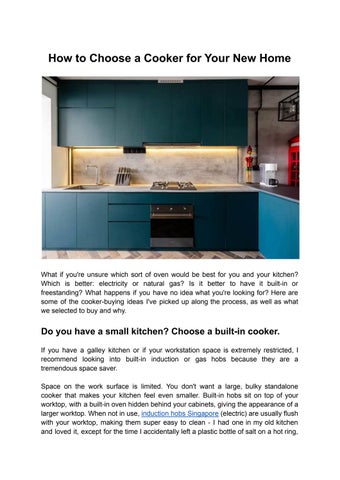
Do you have a small kitchen? Choose a built-in cooker. If you have a galley kitchen or if your workstation space is extremely restricted, I recommend looking into built-in induction or gas hobs because they are a tremendous space saver. Space on the work surface is limited. You don't want a large, bulky standalone cooker that makes your kitchen feel even smaller. Built-in hobs sit on top of your worktop, with a built-in oven hidden behind your cabinets, giving the appearance of a larger worktop. When not in use, induction hobs Singapore (electric) are usually flush with your worktop, making them super easy to clean - I had one in my old kitchen and loved it, except for the time I accidentally left a plastic bottle of salt on a hot ring,
oopsy! - and when not in use, they can act as an extended space for mixing bowls and weighing scales when baking. Built-in oven Singapore is fantastic for creating a modern, fashionable appearance in your kitchen, but if you're looking for something a little homier and farmhouse chic, I'd recommend a built-in gas hob, where you can style up a stove kettle and give it a rural flavor. EF Singapore sells a wide range of built-in cookers in various sizes, including this little two-burner induction cooker, which is ideal for a studio apartment or a b&b / bedsit.
Do you have a chimney breast in your kitchen that is eating up valuable counter space? Select a self-contained cooker. This was exactly the situation we found ourselves in when it came to designing our new kitchen. You want a kitchen with no alcoves and no chimney breast boxes so your cabinets and appliances will slip in like a dream, but with historic homes, you'll more than likely have throwbacks you'll have to work around. Chimney breasts are ideal locations for cookers, with builders blasting through sorry, don't know the proper phrase ;) and installing a large double range cooker with a disguised extractor hood and lighting hidden within the chimney. To give the area character and disguise ugly cooker hoods, some kitchen renovators construct stud chimney breasts in their box kitchens. Range cookers are available in a variety of widths, including 90cm, 100cm, 110cm, and up to 150cm, depending on the width of your chimney breast. We're also going to construct a corbel shelf on the wall above our chimney breast, which I'll decorate with crockery, a clock, and some flowers.
Is it better to use gas, electricity, or a combination of both? What will it be? There is no simple answer to this, in my opinion, because it depends on how you want to cook and the energy you have access to at home. For example, if you live in a house without a gas connection, electricity is your only option. I can only speak about my own culinary experiences and preferences. I now use an electric standalone hob and oven [before refurbishment]. We had been trapped with a little cooker to use until we moved in and plumbed it in since the
house didn't have gas until we moved in and plumbed it in. I've discovered that having an electric oven is fantastic for quickly heating up, but the hob takes a long time to reach the desired temperature and is quite difficult to manage. For me, dual fuel is the ideal option since it allows us to enjoy the best of both worlds. We have a gas stove that we can manage well and an electric oven that heats up rapidly. If you're not sure what's best for you, consider the foods you enjoy cooking and what would make your meals and experience more enjoyable. I'm all for anything that makes life easier, but everyone's requirements are different.