Welcome to St Teresa’s GCSE Information and Course Guide.
You may have already thought about which GCSE subjects you would like to study, or perhaps you are finding it difficult to make decisions. This booklet provides information about how our Year 10 and 11 curriculum is organised, including a short overview of what each subject at GCSE level offers, and what will be expected of pupils.
All of the staff at St Teresa’s including your Head of Year and Form Tutor, are committed to supporting you through your GCSE years, ensuring that every pupil in our care reaches her potential. Our aim at St Teresa’s is for all pupils to continue to follow a broad and balanced curriculum, with a study of each of the following areas of learning:
• aesthetic, creative, literary
• human, social
• linguistic
• mathematical
• moral, spiritual
• physical
• scientific
• technological
The two-year GCSE programme culminates in a series of external examinations. It is necessary to restrict the number of subjects a pupil may take to give the optimum amount of time to each one.
The most important aspects about GCSEs are:
• That the quality of the results is what matters, not the number of passes,
• That pupils should follow an enjoyable and diverse course that reflects their strengths and interests,
• Certain GCSE/IGCSE examinations (but not all) are offered at various levels of difficulty, which determines the range of the final grade achieved.
SUBJECT CHOICES
All pupils follow a compulsory curriculum of core GCSE examination subjects and non-examination subjects, together with four options. The total number of GCSEs that pupils will usually take, therefore, is nine.
St Teresa’s aims to address each individual pupil’s needs. The school is flexible in terms of the number of GCSEs taken due to language requirements, learning support needs or other commitments, for example elite sportsmanship.
CORE GCSE EXAMINATION SUBJECTS
• English Language
• English Literature
• Mathematics
• Dual Award Science
NON-EXAMINATION
SUBJECTS
• Physical Education
• PSHE
• EAL (English as an Additional Language), if applicable.
In choosing your subjects you should give careful consideration to:
• The subjects you most enjoy,
• The skills needed in each subject,
• The advice of your subject teachers,
• Any plans you may have for A-Level studies in the Sixth Form,
• Keeping a balance in your timetable.
Each pupil is asked to select 4 choices from the list below.
Subjects
• Art & Design – Fine Art
• Art & Design – Photography
• Art & Design – Textile Design
• Child Development
Classical Civilisation
Computer Science
• Creative iMedia
• Dance
• Drama
• Food Preparation and Nutrition
• French
• Geography
• German
• History
• Latin
• Music
• Physical Education
• Religious Studies
• Spanish
• Triple Science (Biology, Chemistry, Physics as discrete subjects)
9–1 GRADING SYSTEM
Since 2017, GCSEs in England are awarded with a new scale from 9 to 1, with 9 being the highest grade. This new scale has been aligned to key grades on the previous A* to G scale. Therefore, broadly the same proportion of pupils will achieve a grade 7 and above as would have achieved a grade A and above. Similarly, broadly the same proportion of pupils will achieve a grade 4 and above as would have achieved a grade C and above. How the 9 to 1 grades compare with the A* to G scale can be seen here:
The reformed GCSEs have been designed for a two-year period of study and are predominantly linear, so pupils will take all of their exams at the end of the course. The new grades are being brought in to signal that GCSEs have been reformed and to better differentiate between pupils of different abilities.
It is worth noting that the equivalent to a C grade is a 4. The 9 could be considered an A** and will be awarded to between the top 2-4% of the national cohort.
OUTSTANDING VALUE-ADDED SCORES
St Teresa’s prides itself on our outstanding Value-Added scores and our GCSE groups continue to produce phenomenal results.
Value-Added scores are calculated on baseline tests which are taken in Year 7, producing a set of GCSE predictions that are then measured against actual results achieved. In a typical year, every single department across the school adds value, and we continue to be deeply proud of the personal academic successes of each of our girls.
New Grading Structure Current Grading Structure
GRADING NEW GCSE s FROM 2017
IMPORTANT DATES FOR SUBJECT SELECTION
Pupils are asked to select their preferred options in February. At this stage, pupils have a free choice, which is not binding, but which forms the basis of the timetable blocks. We will do our best to accommodate as many choices as we can, but this may not always be possible. Some subjects are also limited in the number of pupils that they can accommodate and selection criteria may apply.
The Year 9 GCSE Options Evening on Wednesday 28 January gives further discussion time with all subject teachers. The final choices need to be submitted by Friday 13 February. Notification of the subjects that can be provided for each pupil will be confirmed during the week ending Friday 27 March
At each stage in the process, pupils are encouraged to discuss their choices with their form tutor, subject teachers, Heads of Departments and parents. Further advice is readily available from the Assistant Head (Academic) Mrs. Durham and the Head of Year 9, Dr. Benzing-Shears. It is important that choices are discussed as widely as possible.
CURRICULUM AIMS AND ETHOS
At St Teresa’s the GCSE curriculum aims to:
• prepare pupils for the opportunities, responsibilities and experiences of adult life and promote a lifelong love of learning,
• be inclusive by providing opportunities for all pupils to develop their skills and knowledge and to realise their potential,
• provide a framework that serves the needs of teaching and learning,
• promote the spiritual, moral, social and cultural development of all pupils,
• encourage the personal, mental and physical development of pupils,
• identify and develop transferrable skills for the 21st Century,
• cater for the individual needs, interests and aspirations of each pupil.
To achieve these aims the curriculum will:
• be broad to ensure that each pupil is able to develop a wide range of skills and understanding,
• be balanced to ensure that each element of the curriculum is given appropriate emphasis to achieve the above aims and promote a lifelong love of learning,
• ensure that pupils are able to access the full range of higher education courses, institutions and career pathways,
• be personalised to ensure that the individual needs of each pupil are met through the provision of appropriate choice, pace, challenge and support at all levels,
• be stimulating to promote independent study,
• be progressive to build upon prior knowledge and experience through the introduction of appropriate challenge at all levels,
• allow the development of transferrable skills and cross-curricular understanding,
• be designed to meet the specific learning needs of girls, but to be free of gender stereotypes,
• be designed to promote individual pathways and flexibility within a structure informed, but not constrained, by the requirements of external examination syllabuses.
PROMOTING CHALLENGE AND ENRICHMENT
It is our policy to stretch and challenge pupils in three ways:
WITHIN THE CLASSROOM
• To encourage departments to run workshops, master classes or bring visiting speakers or outside agencies into the school.
• To introduce target-setting at all levels to establish appropriate and challenging expectations that evolve during a programme of study.
• To promote a departmental focus on assessment for learning.
• To include the provision of stretch and challenge as a focus for departmental planning.
• To stretch and challenge through the provision of open-ended tasks and extension activities or through the independent learning opportunity afforded by individual coursework assignments.
• To focus upon the development of independent pupils.
A PERSONALISED CURRICULUM
• Where possible, to make provision within the curriculum for a range of extension courses and qualifications.
• To make reasonable adjustments to a pupil’s programme, if appropriate, to promote the development of gifts and talents.
• The ability for pupils to undertake additional qualifications.
• To provide a lesson allocation that allows the opportunity for exploration beyond the confines of examination syllabuses and the opportunity to gain additional qualifications.
• To support the development of individual pupils who exhibit particular flair, gifts or talents in any area of the curriculum or extra-curricular activity through formal and informal mentoring schemes.
ENRICHMENT ACTIVITIES
• To support pupils’ attendance at lectures or visits, or to enrich their classroom experience through membership of external organisations.
• To support the formation and maintenance of subjectbased clubs and societies.
• To promote pupil involvement in the promotion and running of subject based activities through initiatives such as the Subject Mentors Scheme.
• To support the development of a broad range of extra-curricular activity.
• To support the opportunity to gain formal recognition or external accreditation of performance through extra-curricular activity in Music, Drama, Physical Education, Technology, Art, Duke of Edinburgh and Debating.
• To promote fieldwork, trips and visits as an integral part of the experience of all pupils.
TUTORIAL TIME & OUR PSHE PROGRAMME
At St Teresa’s, pupils have the same form tutor for Years 10 and 11, thereby providing continuity at this crucial stage in their educational development. Pupils meet weekly as a year group with their Head of Year.
Over this two-year period, the emphasis of the PSHE programme is predominantly on study skills, self-awareness and teenage health and social issues. The aim of these interactive sessions is to empower pupils to make informed, well-considered choices and judgements with regard to their life direction and the experiences they may have. The programme is flexible and can be tailored to meet the needs of each year group, as well as reflecting what is going on in the world at the time. In addition, parents and pupils are invited to put forward their views as to which topics should be included in the programme.
The topics covered include:
Year 10:
• Study skills
• First aid and drugs
• RSHE - Relationships, Sex and Health Education (including visiting speakers & parent talk)
• Sharing images and safety on the internet
• Council and government
• Pressure groups
• Consent
• Coping in a crisis
• Self defence
• Prejudice and discrimination
• Gambling
• Elevate Study Skills workshops
• Financial wellbeing & Money Skills workshops
Year 11:
• Setting goals
• Sleep
• Finances
• RSHE - Relationships, Sex and Health Education (including visiting speakers & parent talk)
• Sharing images and safety on the internet / Social Media and Image
• Ace your exams (including a parent seminar)
• Women’s health
• Human rights, racism and immigration
• Consent, LGBTQ+, FGM
• Elevate Study Skills workshops
• Financial wellbeing & Money Skills workshops
Wherever possible, specialist external speakers are invited to St Teresa’s to ensure the pupils receive the most up-todate information. In all sessions the pupils are able to debate these important and pertinent issues in a safe, positive and supportive environment.
CORE PHYSICAL EDUCATION
Physical Education is a non-examination, compulsory component to Years 10 and 11.
At Key Stage 4, there is a shift in emphasis from team sports to more individual activities, although team games are still offered. The aim of the physical education curriculum during these two years is to prepare the students for participating in sporting activities on leaving school.
To this end, an ‘option’ system is run which enables students to choose from a variety of activities, thereby giving them the opportunity to experience new sports. This sometimes entails using off-site facilities, which also gives students experience in participating alongside members of the public.
The list of options offered is by no means exhaustive; if enough students wish to do an activity and it can be fitted in, then the option will run. Some of the options include: tennis, life-saving, swimming, badminton, hockey, netball, basketball, aerobics and running. As it is not always possible to offer all these activities at the same time, the students are asked to select one activity per term. The options involving off-site facilities incur extra cost, as does the aerobics option. However, as the School has the use of these facilities, or a specialist aerobics teacher at preferential rates, costs are kept to a minimum.
RELIGIOUS EDUCATION
A one -hour-per-week Philosophy, Ethics and Religion course for Years 10 and 11 gives students the chance to explore major questions about belief, morality and what it means to live well. Pupils will think critically about issues such as free will, the existence of God and how different worldviews shape ideas about human purpose. They will also examine contemporary ethical debates including medical ethics, animal rights, environmental responsibility, justice and punishment, war and peace, and the ethics of wealth and poverty. The aim is to help students develop well-reasoned viewpoints, confidence in discussion and an understanding of how ethical decisions affect society today.
ENGLISH LANGUAGE
Examination Board: AQA 8700
Topics studied: This course addresses the Attainment Targets as laid down by the National Curriculum: Speaking and Listening; Reading; Writing; Spelling; Presentation. Fiction and non-fiction texts from 19th – 21st Century will be explored.
Assessment: At the end of the course there will be two written examinations that assess reading and writing. All texts in the examination will be unseen.
Paper 1: Explorations in Creative Reading and Writing
1 hour and 45 minutes
50% of GCSE (25% Reading and 25% Writing)
Paper 2: Writers’ Viewpoints and Perspectives
1 hour and 45 minutes
50% of GCSE (25% Reading and 25% Writing)
Spoken Language: Teacher set through the course, marked by class teacher. Separate endorsement (0% weighting of GCSE)
ENGLISH LITERATURE
Examination board: AQA 8702
Topics studied: Pupils have to show their ability to: respond critically, sensitively and in an informed way to what they have read, heard and seen, referring to the text as appropriate; explore how language, structure and form contribute to the meaning of a text, considering alternative approaches and forms; choose appropriate ways of responding to different texts and tasks. Pupils will study a range of texts including: prose, poetry and drama.
Assessment:
Paper 1: Shakespeare and the 19th-Century novel
1 Hour and 45 minutes
40% of GCSE
Paper 2: Modern Texts and Poetry
2 Hours and 15 minutes
60% of GCSE
The examinations are closed book; however, some questions will include extracts from the relevant section of the novel or play.
Course requirements: There will be theatre trips organised by school to see some of the texts studied, subject to what is on at the theatre. Year 11 attend Poetry Live in the latter part of Year 11.
MATHEMATICS
Examination board: Edexcel International GCSE Mathematics (Specification A) (4MA1)
Topics studied: The course covers topics in the following areas:
Number – use numerical skills in a purely mathematical way and in real life situations.
Algebra – use letters as equivalent to numbers and as variables, understand the distinction between expressions, equations and formulae, use algebra to set up and solve problems, demonstrate manipulative skills, construct and use graphs.
Geometry – use properties of angles, understand a range of transformations, work within the metric system, and understand ideas of space and shape, use ruler, compasses and protractor accurately.
Statistics – understand basic ideas of statistical averages, use a range of statistical techniques, use basic ideas of probability.
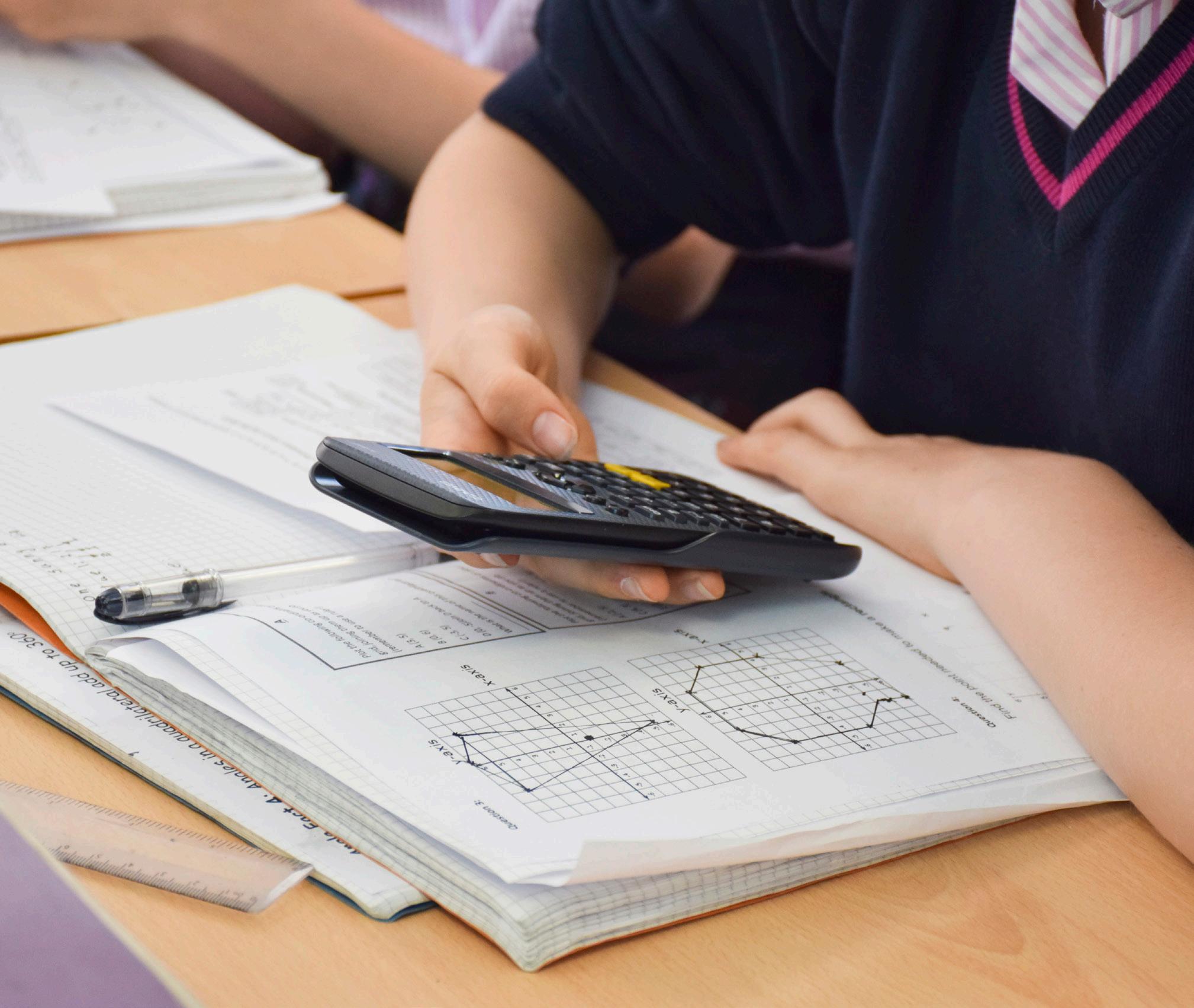
Assessment: Pupils take two 2 hour examination papers which can assess any topic on the syllabus. A calculator may be used in both examination papers. A formula sheet will be provided.
COMBINED SCIENCE TRILOGY
Examination board: AQA 8464
Topics studied: The topics studied are:
Biology: cell biology; organisation; infection and response; bioenergetics; homeostasis and response; inheritance, variation and evolution; ecology.
Chemistry: atomic structure and the periodic table; bonding structure and the properties of matter; quantitative chemistry; chemical changes; energy changes; the rate and extent of chemical change; organic chemistry; chemical analysis; chemistry of the atmosphere; using resources.
Physics: energy; electricity; particle model of matter; atomic structure; forces; waves; magnetism and electromagnetism.
Practical skills: There are 21 required practicals that will be taught throughout the course.
Assessment: Pupils take six examination papers, two for each of biology, chemistry and physics, at the end of Year 11. Each paper is 1 hour 15 minutes in duration. Two GCSEs are awarded and are graded on a scale of 9–9 to 1–1, of which 9–9 is the highest. Papers can be taken at foundation or higher level; foundation tier papers allow the achievement of grades from 1–1 to 5–5, while the higher tier papers allow grades from 4–4 to 9–9.
BIOLOGY
Examination board: AQA 8461
Topics studied: The topics studied are: cell biology; organisation; infection and disease; bioenergetics; homeostasis and response; inheritance, variation and evolution, ecology.
Practical skills: There are ten required practicals that will be taught throughout the course.
Assessment:
Pupils take two examination papers, each 1 hour 45 minutes in duration, at the end of year 11. The qualification is graded on a scale of 9 to 1, of which 9 is the highest. Papers can be taken at foundation or higher level; foundation tier papers allow the achievement of grades from 1 to 5, while the higher tier papers allow grades from 4 to 9.
CHEMISTRY
Examination board: AQA 8462
Topics studied: The topics studied are: Atomic structure & the periodic table; Bonding, structure and the properties of matter; Quantitative chemistry; Chemical changes; Energy changes; The rate and extent of chemical change; Organic chemistry; Chemical analysis; Chemistry of the atmosphere; Using resources.
Practical skills: There are 8 required practicals that will be taught throughout the course.
Assessment: Pupils take two examination papers, each 1 hour 45 minutes in duration, at the end of year 11. The qualification is graded on a scale of 9 to 1, of which 9 is the highest. Papers can be taken at foundation or higher level; foundation tier papers allow the achievement of grades from 1 to 5, while the higher tier papers allow grades from 4 to 9.
PHYSICS
Examination board: AQA 8463
Topics studied: The topics studied are energy, electricity, particle model of matter, atomic structure, forces, waves, magnetism and electromagnetism, space physics.
Practical skills: There are ten required practicals that will be taught throughout the course.
Assessment: Pupils take two examination papers, each 1 hour 45 minutes in duration, at the end of year 11. The qualification is graded on a scale of 9 to 1, of which 9 is the highest. Papers can be taken at foundation or higher level; foundation tier papers allow the achievement of grades from 1 to 5, while the higher tier papers allow grades from 4 to 9.
FRENCH
Examination board: AQA French 8658
Topics studied: Pupils study the following themes on which the assessments are based:
Theme 1: Identity and culture
Theme 2: Local, national, international and global areas of interest
Theme 3: Current and future study and employment
Pupils will also learn how to understand and respond to different types of spoken language, to communicate and interact effectively in speech for a variety of purposes, to understand and respond to a variety of written language and to communicate effectively in writing.
Assessment:
GCSE French has a Foundation Tier (grades 1–5) and a Higher Tier (grades 4–9). Pupils must take all four question papers at the same tier. This qualification is linear, which means that pupils take all examinations at the end of Year 11.
Paper 1 – Listening (including dictation) 25%.
Written exam: 35 mins (F); 45 mins (H)
40 marks (Foundation Tier); 50 marks (Higher Tier)
Paper 2 – Speaking 25%
The format is the same at Foundation Tier and Higher Tier, but with different stimulus questions for the role-play and reading aloud task. For the photo card discussion task, the same photos are used at both tiers.
Role-play – 15 marks – 2 mins (both at F and H)
Photo card – 15 marks – 2 mins (F); 3 mins (H)
General Conversation – 30 marks – 3-5 mins (F); 5-7 mins (H)
Paper 3 – Reading 25%
Written exam: 45 mins (F); 1 hour (H)
60 marks (for each of Foundation Tier and Higher Tier)
Paper 4 – Writing 25%
Written exam: 1 hour (F); 1 hour 15 min (H)
50 marks (Foundation tier), 60 marks (Higher Tier)
Deadlines: The speaking must be completed by mid-May of Year 11.
Internal deadlines for homework assignments.
Course requirements: French – English dictionary would be useful. French word reference GCSE Grammar and Translation Workbook. Optional purchase of AQA GCSE Studio Textbook and CGP Complete Revision Guide.
GERMAN
Examination board: AQA German 8668
Topics studied: Pupils study the following themes on which the assessments are based:
Theme 1: Identity and culture
Theme 2: Local, national, international and global areas of interest
Theme 3: Current and future study and employment
Pupils will also learn how to understand and respond to different types of spoken language, to communicate and interact effectively in speech for a variety of purposes, to understand and respond to a variety of written language and to communicate effectively in writing
Assessment:
GCSE German has a Foundation Tier (grades 1–5) and a Higher Tier (grades 4–9). Pupils must take all four question papers at the same tier. This qualification is linear, which means that pupils take all examinations at the end of Year 11.
Paper 1 – Listening (including dictation) 25%
Written exam: 35 mins (F); 45 mins (H)
40 marks (Foundation Tier); 50 marks (Higher Tier)
Paper 2 – Speaking 25%
The format is the same at Foundation Tier and Higher Tier, but with different stimulus questions for the Photo card and different stimulus materials for the Roleplay.
Role-play – 15 marks – 2 mins (both at F and H)
Photo card – 15 marks – 2 mins (F); 3 mins (H)
General Conversation – 30 marks – 3-5 mins (F); 5-7 mins (H)
Paper 3 – Reading 25%
Written exam: 45 mins (F); 1 hour (H)
60 marks (for each of Foundation Tier and Higher Tier)
Paper 4 – Writing 25%
Written exam: 1 hour (F); 1 hour 15 min (H)
50 marks (Foundation tier), 60 marks (Higher Tier)
Deadlines: The speaking must be completed by mid-May of Year 11. Internal deadlines for homework assignments.
Course requirements: online dictionary (dict.leo.org) GCSE Grammar and Translation Workbook. Optional purchase of AQA GCSE STIMMT Textbook and CGP Complete Revision Guide.
SPANISH
Examination board: AQA Spanish 8692
Topics studied: Pupils study the following themes on which the assessments are based:
Theme 1: People and lifestyle
Theme 2: Popular culture
Theme 3: Communication and the world around us
Pupils will also learn how to understand and respond to different types of spoken language, to communicate and interact effectively in speech for a variety of purposes, to understand and respond to a variety of written language and to communicate effectively in writing.
Assessment:
GCSE Spanish has a Foundation Tier (grades 1–5) and a Higher Tier (grades 4–9). Pupils must take all four question papers at the same tier. This qualification is linear, which means that pupils take all examinations at the end of Year 11.
Paper 1 – Listening (including dictation) 25%
Written exam: 35 mins (F); 45 mins (H)
40 marks (Foundation Tier); 50 marks (Higher Tier)
Paper 2 – Speaking 25%
The format is the same at Foundation Tier and Higher Tier, but with different stimulus questions for the role-play and reading aloud task. For the photo card discussion task, the same photos are used at both tiers.
Role-play – 10 marks – 1-1.5 mins (both at F and H)
Reading aloud – 15 marks – 2-2.5 mins (F); 3-3.5 mins (H)
Photo card discussion – 25 marks – 4-5 mins (F); 6-7 mins (H)
Paper 3 – Reading & translation from Spanish into English 25%
Written exam: 45 mins (F); 1 hour (H)
50 marks (for each of Foundation Tier and Higher Tier)
Paper 4 – Writing & translation from English into Spanish 25%
Written exam: 1 hour 10 min (F); 1 hour 15 min (H)
50 marks (for each of Foundation Tier and Higher Tier)
Deadlines: The speaking must be completed by mid-May of Year 11. Internal deadlines for homework assignments.
Course requirements: Spanish – English dictionary would be useful. A Grammar & Translation workbook will be required for this course, purchased through the school. Optional purchase of AQA GCSE Viva Textbook and CGP Complete Revision Guide.
ENGLISH AS AN ADDITIONAL LANGUAGE
Examination board: Edexcel, IGCSE ESL (4ES1)
Topics studied: The English as an Additional Language course encourages candidates to express themselves fluently, spontaneously and appropriately in English. Pupils will develop clear, well-structured written English using an appropriate style, and expand and support their points of view. They will also develop their reading skills to understand a wide variety of complex reading texts, with particular focus on developing reading speed and strategies to read for detail.
Assessment: The course is assessed through two examination papers sat at the end of Year 11. Paper 1 (4ES1/01) is a two-hour examination testing writing and reading. Paper 2 (4ES1/02) is a 45-minute listening examination. The examination is single-tier entry so all candidates will sit the same examination.
Deadlines: The IGCSE ESL is run as a one year course following on from the Cambridge First Certificate programme in Year 10. Pupils would be able to join the course at the start of Year 11.
Course requirements: Pupils will be charged for their text book. Optional excursions may be offered to supplement EAL study.
Topics studied: Assignment briefs vary from year to year, e.g. – ‘Contrasts’ and ideas may be explored initially with mixed media experiments and then via observational and critical research. Subsequent concepts are developed into representational or abstracted outcome(s) to research/develop/extend and refine ideas leading to individual fine art-biased outcomes of a high standard involving the disciplines of painting, printmaking and sculpture, with strong links to contextual studies.
Assessment:
Deadlines:
Sketchbooks are marked regularly and pupils work towards outcomes undertaken during timed examinations (3 in total).
It is essential that pupils adhere to deadlines finishing each within the specified time. Component 1 should be completed by Year 11 Spring Term to enable clear preparation time for Component 2.
Sketchbooks are the main components of the coursework and weekly deadlines, as well as holiday deadlines, will be set throughout the course. The final coursework deadline will be set prior to study leave.
COMPONENT 2 Externally Set Assignment – ESA (40%)
Preparation work to be carried out prior to the 10-hour timed examination. Resulting work must be submitted at the end of this timed examination.
Course requirements: A pupil needs to show ability, interest and, most importantly, commitment. If a well-motivated pupil works hard and is prepared to take on board all teaching, they can expect to achieve high grades in this subject. Good organisation is also vital. A compulsory gallery visit takes place each year to a major exhibition where pupils carry out the critical and contextual element of their coursework e.g. The Victoria and Albert Museum, The Brighton Pavilion.
All pupils would benefit from visiting any of the London Galleries: The Tate Modern, The Royal Academy etc. as well as local galleries, exhibiting contemporary art. Art kits/sketchbooks are provided at the start of the course and an art shop is available for pupils to stay well-resourced throughout the course. They have the opportunity to use art materials, in particular the opportunity to use a wide variety of art/textile and ceramic materials, which can incur extra costs.
Topics studied: Assignment briefs vary from year to year, e.g. – ‘Contrasts’ and ideas may be explored initially with mixed media experiments and then via observational and critical research. Subsequent concepts are developed into representational or abstracted outcome(s) to research/develop/extend and refine ideas leading to an individual portfolio of high-quality photographs, taken from direct observation, including digital manipulation of images with Photoshop. Work will incorporate a variety of disciplines and media with strong links to contextual studies.
Assessment:
Sketchbooks are marked regularly and pupils work towards Outcomes undertaken during timed examinations (3 in total).
It is essential that pupils adhere to deadlines finishing each within the specified time. Component 1 should be completed by Year 11 Spring Term to enable clear preparation time for Component 2.
Sketchbooks are the main components of the coursework and weekly deadlines, as well as holiday deadlines, will be set throughout the course. The final coursework deadline will be set prior to study leave.
COMPONENT 2 Externally Set Assignment – ESA (40%)
Preparation work to be carried out prior to the 10-hour timed examination. Resulting work must be submitted at the end of this timed examination.
Course requirements: A pupil needs to show ability, interest and, most importantly, commitment. If a wellmotivated pupil works hard and is prepared to take on board all teaching, they can expect to achieve high grades in this subject. Good organisation is also vital. A compulsory gallery visit takes place each year to a major exhibition where pupils carry out the critical and contextual element of their coursework e.g. The Victoria and Albert Museum, The Brighton Pavilion.
All pupils would benefit from visiting any of the London Galleries: The Tate Modern, The Royal Academy etc. as well as local galleries, exhibiting contemporary art. Art kits/sketchbooks/photographic portfolios and paper are provided at the start of the course and an art shop is available for pupils to stay well-resourced throughout the course. It is also advisable to have a good entry level SLR camera and a Photoshop licence (from September). They have the opportunity to use art materials, in particular photo paper, which can incur extra costs.
ART & DESIGN: TEXTILE DESIGN
Examination board: Edexcel Textiles 1TE01/02
Topics studied:
Assessment:
Assignment briefs vary from year to year, e.g. – ‘Contrasts’ and ideas may be explored initially with mixed media experiments and then via observational and critical research. Subsequent concepts are developed into representational or abstracted outcome(s) to research/develop/extend and refine ideas leading to individual constructed/printed textiles (including garments) of a high standard. Work will involve a variety of related processes, such as machine sewing, weaving, printing etc. and will have strong links to contextual studies.
Sketchbooks are marked regularly and pupils work towards outcomes undertaken during timed examinations (3 in total).
It is essential that pupils adhere to deadlines finishing each within the specified time. Component 1 should be completed by Year 11 Spring Term to enable clear preparation time for Component 2.
Sketchbooks are the main components of the coursework and weekly deadlines, as well as holiday deadlines, will be set throughout the course. The final coursework deadline will be set prior to study leave.
COMPONENT 2 Externally Set Assignment – ESA (40%)
Preparation work to be carried out prior to the 10-hour timed examination. Resulting work must be submitted at the end of this timed examination.
Course requirements: A pupil needs to show ability, interest and, most importantly, commitment. If a well-motivated pupil works hard and is prepared to take on board all teaching, they can expect to achieve high grades in this subject. Good organisation is also vital. A compulsory gallery visit takes place each year to a major exhibition where pupils carry out the critical and contextual element of their coursework e.g. The Victoria and Albert Museum, The Brighton Pavilion.
All pupils would benefit from visiting any of the London Galleries: The Tate Modern, The Royal Academy etc. as well as local galleries, exhibiting contemporary art. Art kits and sketchbooks are provided at the start of the course and an art shop is available for pupils to stay well-resourced throughout the course. It is also advisable to have a sewing machine and a Photoshop licence (from September). They will have the opportunity to use a wide variety of art/textile and ceramic materials, which can incur extra moderate costs
CHILD DEVELOPMENT
Examination board: OCR Cambridge National Level 1/2
Aims:
Unit 1 (Exam Unit):
• To increase your knowledge of human needs, find out how individuals and groups of people interact and the influence of social, cultural and economic factors on life.
• To help you develop independent learning skills, demonstrating independent thought and diligence.
• To develop your skills of critical and analytical thinking in making decisions and solving problems.
• To develop your knowledge and skills for the effective and safe organisation and management of your work.
• To develop your understanding of the rights and responsibilities of parents and children in society.
• To enable you to look at the needs of children and find out how these are met in a rapidly changing multi-cultural and technological world.
• Preparing for pregnancy
• Reproduction
• Ante-natal and post-natal care
• Labour and childbirth
• Contraception
• Childhood illnesses
• Child safety
• Post-natal checks and aftercare
Unit 2 (Coursework): Made up of 4 units, including a practical cooking task
• Safety & equipment for babies and young children
• Nutrition and healthy eating for children 0-5yrs
• Feeding solutions for children 1-5yrs
• Planning & making healthy meals (practical task)
Unit 3 (Coursework): Made up of 4 units
• Developmental norms of children 0-5yrs
• Physical, intellectual and social development
• Research and observing children
• Planning learning activities for children under 5
• Carrying out the planned activities (practical task)
Assessment:
The course is assessed as 40% written exam and 60% coursework tasks. The exam unit is sat in the Summer of Year 11 (duration 1 hr 15 mins). The two coursework units combined form 60% of the award and are completed by February of Year 11.
CLASSICAL CIVILISATION
Examination board: OCR
Summary:
Topics:
This GCSE (9-1) qualification focuses on the civilisations of Greece and Rome. It is a wide-ranging subject involving the study of literature, art, artifacts, archaeological sites, and the ancient historical context. All the literature is read in translation so knowledge of Latin or Classical Greek is not required; all you need is an interest in the Ancient World and its cultures.
This GCSE is open to all girls, including those who did not study Classical Civilisation in Years 7, 8 & 9.
This is a content heavy course but an exciting one. Girls will be expected to write regular essays in response to the topics covered in lessons and these will be mostly answering examination-style questions from the outset.
The GCSE course comprises two units: ‘Thematic Study’ and ‘Literature & Culture’. Each unit is tested in a written examination in the Summer of Year 11; both examinations are 1½ hours and are equally weighted.
Thematic Study: ‘Myth and Religion‘
This component involves a comparative study of Ancient Greece and Rome, and combines literary and visual/material sources. The option we study is entitled ‘Myth and Religion’ in which the girls will study myths regarding the role of the gods and heroes in the founding of Athens and Rome and the importance of Heracles/ Hercules to both the Greek and Roman worlds. They will also look at the role of religion in the everyday lives of ancient Greeks and Romans: the study of temples, sacrifice, festivals, death and beliefs in the afterlife will give a broad overview of religion.
Literature and Culture: ‘Roman City Life’
This component contains two elements: one in-depth cultural study and one study of related literature. The option we shall study is ‘Roman City Life’’ in which the girls will explore everyday life in Roman cities, with a particular focus on Pompeii, Ostia and Rome itself. The Culture section includes examination of Roman housing, the home and family, structure of society, leisure and entertainment. The prescribed literary sources in translation include key writers such as Pliny, Horace, Juvenal and Petronius.
Reason to Study: Classical Civilisation is just as useful as other humanities subjects like History, Geography and Religious Studies. Subjects like this give you really good skills such as essay writing and source analysis, and teach you how to structure a good argument. They show you are good at thinking and evaluating, and also that you have an interest in people and cultures.
From women in the Ancient World, to the study of religious beliefs and ancient ideas about war, Classical Civilisation involves interesting discussions about things that are still important today:
‘… men grappled with exactly the same issues that we do: life, death, gods, love, family, children, education, the nature of the world, our origins and development, the past, money, health, status, other cultures, friendship, power, patriotism, politics, law, crime, justice, empire, war.’
- Peter Jones, advisor to Classics For All, ‘Taking the Long View’.
COMPUTER SCIENCE
Examination board: IGCSE 0478
Topics studied: Students following the IGCSE Computer Science syllabus develop their understanding of the main principles of problem-solving using computers. They can apply their understanding to develop computer-based solutions to problems using algorithms and a high-level programming language. Theory topics include logic gates and circuits, operating systems and computer architecture, input and output devices and memory and storage. Studying IGCSE Computer Science will help students appreciate current and emerging computing technologies, the benefits of their use and recognise their potential risks.
Assessment:
Paper 1 (Computer Systems) 1 hour 30 minutes
This written paper contains short-answer and structured questions. 80 marks. Externally assessed 50%.
Paper 2 (Computational thinking, Algorithms and Programming) 1 hour 30 minutes
This written paper contains short-answer and structured questions and a scenariobased question. 75 marks. Externally assessed 50%.
Skills Developed and Possible Future Careers:
Computer science aims to develop your understanding of the fundamental principles and concepts of programming. It develops your computational thinking skills and helps you to analyse problems and design solutions. It is particularly useful for anyone wanting a career in the computer industry, particularly when studied with mathematics, physics and technology. However, as you also develop an awareness of current and emerging trends in technology and basic programming skills, it will be of great benefit to you in any future careers.
Entry requirements: The Computer Science GCSE is a demanding and challenging subject and would be most suited to students in either of the top sets for Mathematics and Science. For more information, please speak with Mr. Chandler directly about entry requirements for this GCSE course.
CREATIVE IMEDIA
Examination board: OCR Cambridge National Level 1/2
Topics studied:
Creative iMedia in the media industry
A mandatory unit where pupils learn about the media industry, digital media products, how they are planned, and media codes which are used to impact and engage audiences. This unit will be assessed through a written examination of 1hr 30 minutes and will be marked externally (40% of the overall mark).
Visual identity and digital graphics
The aim of this unit is for pupils to learn about the visual identities of clients and how to use the concepts of graphic design to create digital graphics to engage target audiences. This is assessed through a project and will be completed during lesson time (25% of the overall mark).
The remaining topics are also assessed through a project and may include one of the following:
Visual imaging
Where skills are developed to plan, create, and review visual images. You will learn to edit and process static and moving images to create meaningful products link to a specific client brief. This unit is assessed by completing a set assignment during lesson time.
Interactive digital media
The pupils will learn how to plan, create and review interactive digital media products, apps, games or websites. This is assessed by completing a set assignment during lesson time (35% of overall mark).
Reasons to Study:
Grading:
The media industry covers different sectors and there is an increasing demand from employers for a skilled and technically literate workforce as more and more products are produced digitally. This Creative iMedia course provides pupils with specific and transferable skills which can be utilised further in a variety of further education courses.
The Cambridge Nationals in Creative iMedia is a Level 2 qualification and is the equivalent of one full GCSE. Local colleges view this certificate as fully equivalent to a GCSE qualification although please note some may require a minimum grade of a Merit.
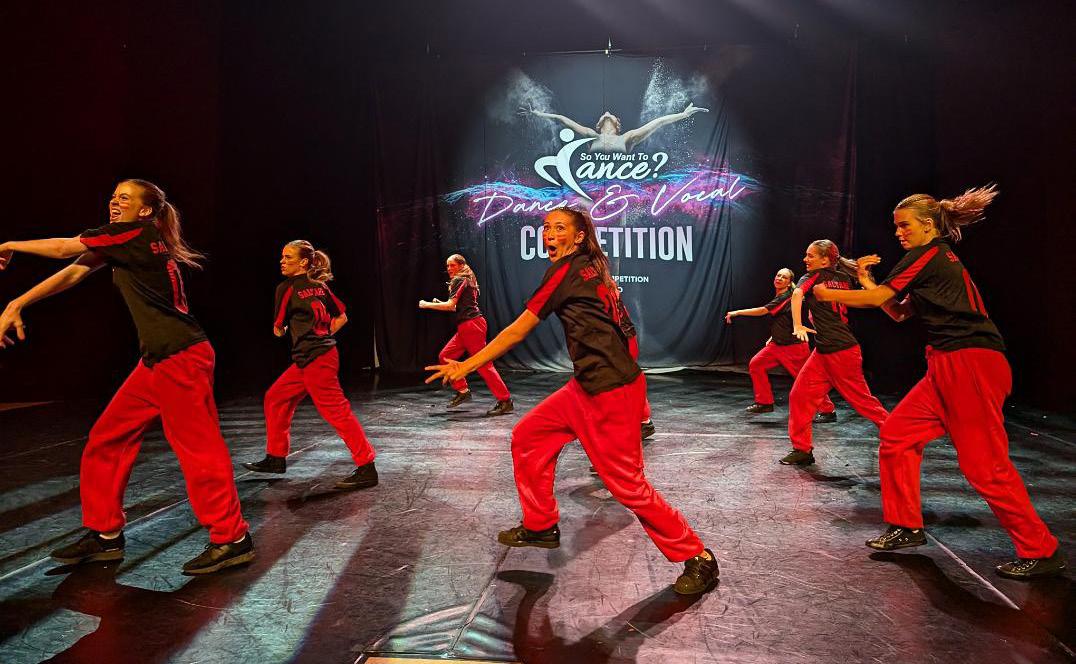
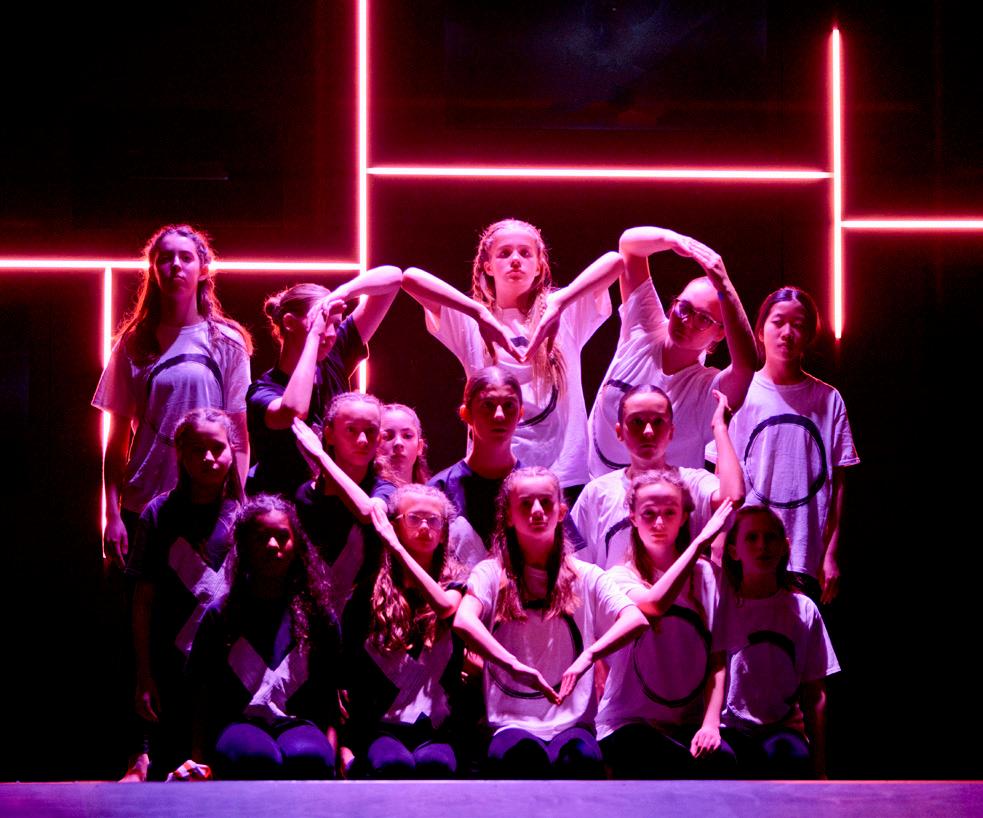
Topics studied: Dance styles to include Ballet, Jazz and Contemporary Dance
Studying dance from a practical view point
Performance skills to include two performance pieces
Choreographic skills
Developing solo or group choreography
Evaluating and analysing the effectiveness of professional dance productions
Critical appreciation of dance
Exam papers:
Written: 40% of total mark
Practical: 60% of total mark
Deadlines: Completed at the end of Year 11
Compulsory visits:
Course requirements:
Regular trips are taken to the theatre. These are organised and supervised by staff and costs are added to the end of term bill. Pupils will also be advised to attend local theatre to broaden their experience of live performance.
Enthusiasm and love of Dance
Ability to work well in groups
Concentration
Good time management
Self-motivated and confident
Independent learning
Good ability in English
Course size: Maximum 12 pupils per class.
Extra costs: Theatre trips
Appropriate footwear and rehearsal clothing
DRAMA
Examination board: AQA 8261
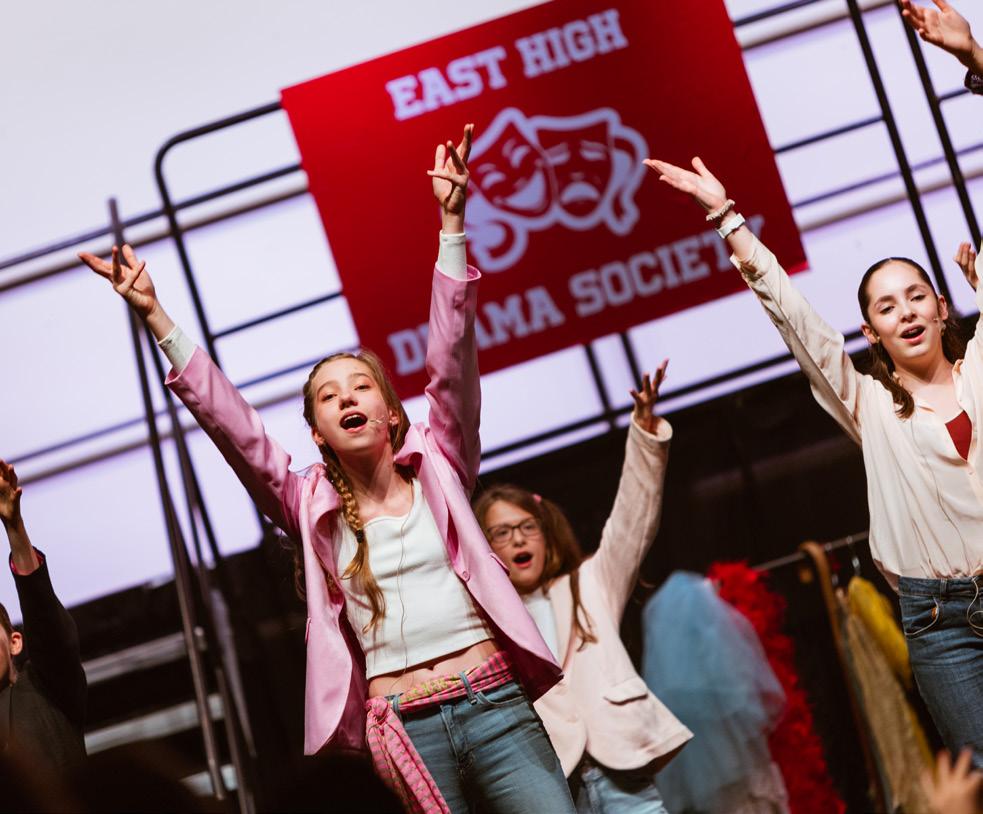
Topics studied: Acting and performance styles
Studying plays from a literary and practical view point
Performing scripted pieces
Developing devised productions
Evaluating and analysing the effectiveness of professional theatre productions
Developing technical and design skills
Assessment: Written: 40% of total mark – written exam paper
Practical: 60% of total mark – performance of a Devised piece (accompanied by a Devising Log) and a Scripted piece.
Deadlines:
Course requirements:
Course size:
Completed at the end of Year 11
Enthusiasm and love of Drama
Ability to work well in groups
Concentration
Good time management
Self-motivated and confident
Independent learning
Good ability in English
Regular trips are taken to the theatre. These are organised and supervised by staff and costs are added to the end of term bill. Pupils will also be advised to attend local theatre to broaden their experience of live performance.
Maximum 12 pupils per class.
FOOD PREPARATION AND NUTRITION
Examination board: AQA 8585
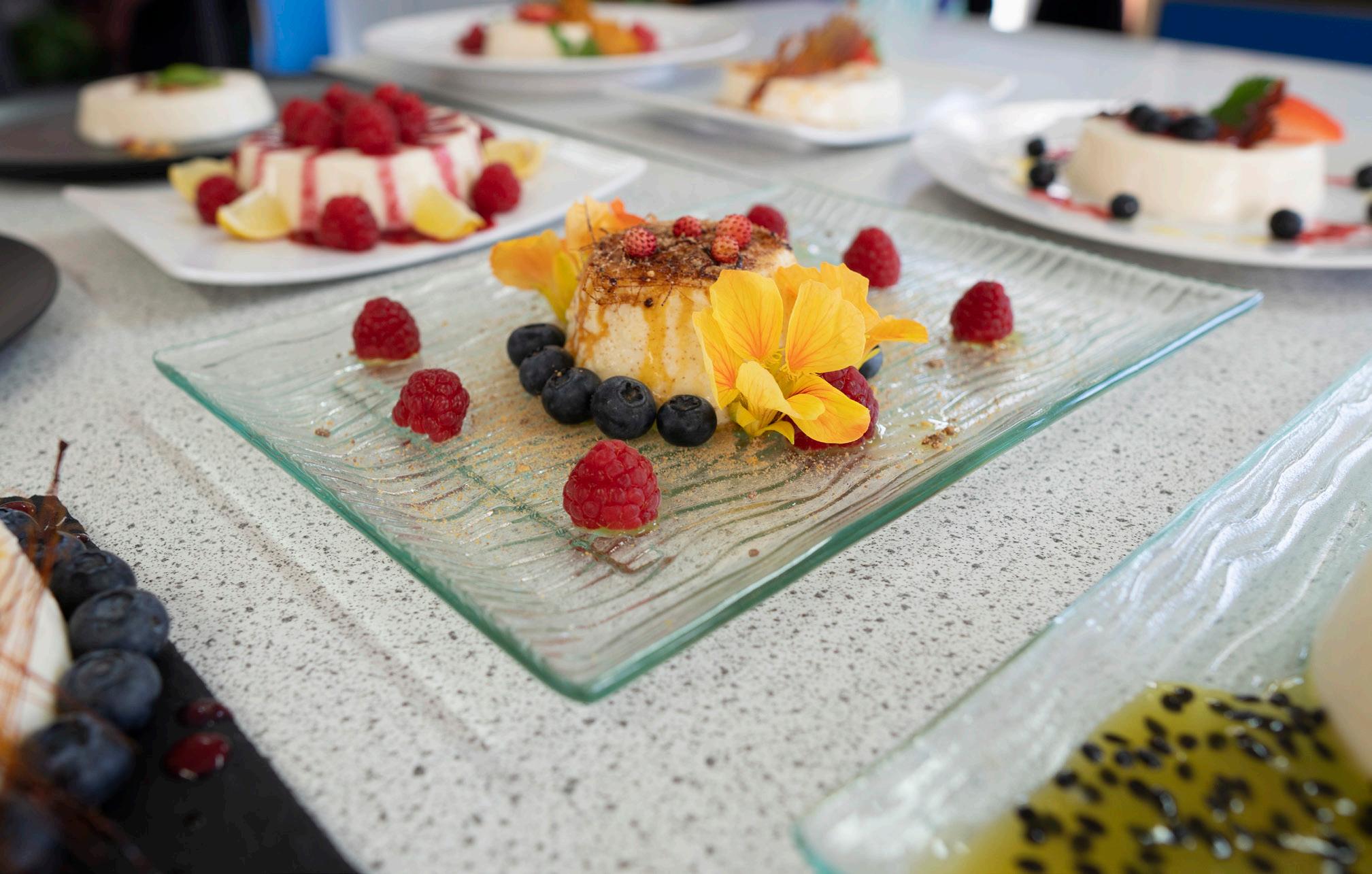
Topics studied: Food nutrition and health, food science, food safety, food choice, food provenance and food preparation skills
Assessment:
Written examination: 1 hour 45 minutes, 50% of GCSE (100 marks). Multiple choice questions (20 marks). Five questions with sub questions (80 marks)
Non-exam assessment (NEA):
NEA 1 Food Investigation: experimental work set by the examination board, including a written report of 1500-2000 words to show understanding of the working characteristics, functional and chemical properties of ingredients. 10 supervised hours.
NEA 2 Food Preparation Assessment: tasks set by the examination board to include written research, planning, costing, nutritional analysis, 4x1 hour skills practical examinations and a 3 hour final practical examination. 20 supervised hours.
Deadlines: Both NEA tasks will be completed in Year 11. NEA 1 in the Autumn and NEA 2 in the Autumn and Spring
Course requirements: To undertake this course, pupils must have a good level of practical skill with the ability to work independently in a one hour session. Pupils will provide their own ingredients for practical work.
GEOGRAPHY
Examination board: AQA 8035
Topics studied: Physical
The challenge of Natural Hazards (weather, tectonics, earthquakes, climate change)
The Living World (ecosystems, hot deserts, tropical rainforest)
Physical landscapes in the UK (coasts and rivers)
Human
Urban Issues and Challenges
The Changing Economic World
The Challenge of Resource Management (food, water, energy)
Geographical Skills (OS maps, data collection, photo interpretation etc.)
Assessment:
Pupils sit 3 exam papers: physical (35%) and human (35%) are both assessed by a mix of questions – multiple choice, short, structured responses and extended writing based on the course content above.
Paper 3 assesses geographical skills, issue evaluation and fieldwork skills. Pupils must answer generic questions about their own fieldwork experience through both short, structured responses and extended writing.
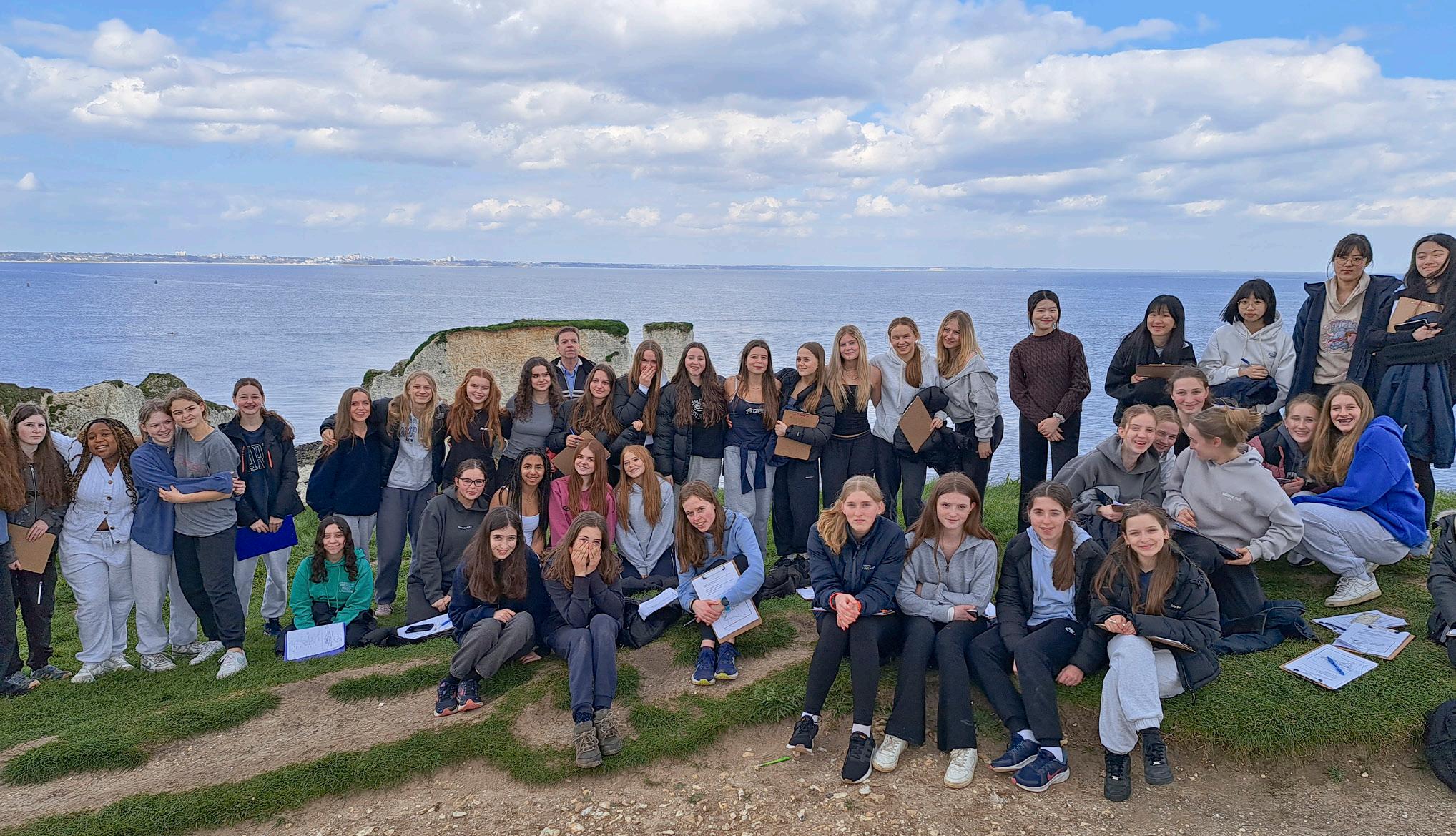
Course requirements: There is a residential field course to Osmington Bay in Dorset in the late spring/ early summer of Year 10 costing approximately £200 for three days. This provides the opportunity for the fieldwork data collection which is mandatory and to practise methods and skills for use in Paper 3.
HISTORY
Examination board: AQA 8145
Topics studied: In Year 10 the pupils will study two topics for paper 1 and in Year 11 the two paper 2 topics are covered.
Paper 1:
Depth Study: USA 1920 - 1973
Wider world study: International relations USA and Asia – Korea and Vietnam
Paper 2:
British History Thematic study: Migration, Empires and the People: c. 790 to the Present Day
British History Depth Study: Elizabeth I
Assessment:
There are two papers for the History GCSE, each worth 50%.
There are a variety of essay, source and interpretation questions which pupils have to answer across the two papers. Each paper is worth 84 marks
The skills pupils are tested on are as follows: analysis of interpretations, explanation of cause and consequence, knowledge retention and extended writing.
LATIN
Examination board: OCR J282
Topics studied: Pupils build upon and refine their knowledge of Latin language, encountering more advanced grammatical constructions, unseen translations and comprehension questions. In addition, a set vocabulary list must be memorised. Most excitingly, it is the first time that pupils are exposed to original Latin texts, studying poetry and prose from a variety of authors including Catullus, Ovid, Virgil, Caesar and Tacitus. Alternatively, a ‘history’ sources paper may be studied, covering topics such as Roman Britain, Myths and Beliefs, and Entertainment. It is a stimulating and exciting course which provides huge academic benefits.
Assessment: The examination consists of three papers: Language, Poetry and Prose (or Sources, if taken). Language accounts for 50% of the final grade; Poetry and Prose both equate to 25%. Language includes unseen translation, comprehension and grammar questions; the Poetry and Prose require a demonstration of translation, comprehension and literary criticism skills, including through extended writing.
MUSIC
Examination board: Edexcel 1MU0
Topics studied: Performing:
Grade 4 is the minimum standard for the recording of performances. Higher grade work is awarded extra marks. Grade exams need not have been taken. Recordings are made during Year 11. Solo and ensemble pieces are submitted.
Composing:
A range of compositional styles, techniques, genres and structures are studied. Students will compose using LogicPro and / or MuseScore. Two compositions will be submitted.
Appraising:
There are four areas of study with eight set works: Instrumental Music, Vocal Music, Music for Stage and Screen, Fusions. Set works include Defying Gravity, Star Wars, and Killer Queen as well as some classical works. Wider listening skills will be developed based on the four areas of study.
Assessment:
Performing (30%) Marked internally with exam board moderation
Piece may be in any style. Pieces may be performed on more than one instrument. Solo and ensemble performances must both be at least one minute long with the total performance at least four minutes long. Multiple pieces may be played.
Composing (30%) Marked internally with exam board moderation
Free composition in any style, and one composition to a set brief, released at the start of Year 11. End of the Spring term in Year 11 is the coursework deadline.
Appraising (40%): Written paper listening to a CD (1 hour 45 minutes)
Section A: Short answer questions based on Set Works, Melodic and Rhythmic Dictation and an unfamiliar piece.
Section B: Set works essay question comparing a Set Work with an unfamiliar piece.
Course requirements: Instrumental / singing lessons must be taken.
Theory of Music of approximately Grade 3 at the start of the course is desirable. Good ability in English.
Pupil’s GCSE Music Student book, Set Works Anthology, Study Guide, Step Up To GCSE Music, Revision Guide. All supplied by the school and invoiced to parents.
RELIGIOUS STUDIES
Examination board: AQA
Reasons to Study: The GCSE (9-1) Religious Studies course provides the pupils with the exciting opportunity to gain a deeper understanding of two religions and explore ethical studies in the modern world.
We strive to inspire the pupils to engage in relevant topical issues, acquire knowledge and gain a critical understanding of major issues that are relevant to them in the twenty-first century.
We are passionate about this subject, want to share our enthusiasm and are keen to enable pupils to acquire skills that are transferable across the curriculum. Religious Studies regularly involves in-depth debate, which leads to critical evaluation and analysis. These skills are often sought-after when studying A Levels.
Pupils will be encouraged to develop and understand personal values and beliefs and will learn to have the ability to construct balanced and informed arguments within the context of religious, philosophical, and ethical awareness.
Religious Studies is a rigorous and demanding discipline and hones skills in critical thinking, philosophical thought and decision making. Religious Studies makes a unique contribution to understanding British heritage, plurality, values, and futures. It provides an excellent opportunity to engage with contentious issues whilst developing social, cultural, philosophical, and historical awareness.
Topics Studied: The course is divided into two major components:
1. Beliefs, Teachings and Practices:
The pupils will study the core teachings, beliefs, and practices of two of the world’s great religions, Christianity and Judaism.
2. Religion and Ethics in the modern world from a religious perspective: Within this module the students will study four themes: Religion and Life, Relationships and Families, Religion, Peace and Conflict and, Human Rights and Social Justice.
Exams: The course is examined at the end of Year 11. There is no controlled assessment.
Component 2: Socio-cultural Issues and Sports Psychology
2.1 Socio-cultural influences
2.2 Sports psychology
2.3 Health, Fitness and well-being
Component 3: Practical Performances
Pupils are internally and externally assessed through the non-examination assessment in three practical activities. Core and advanced skills and competitive situations will be assessed from an approved list, pupils must choose one from the ‘individual’ list, one from the ‘team’ list and a third from either list.
‘Off site’ activities must provide video evidence across the course and must be completed by the end of February half term in year 11. Logbooks are to be completed for all three activities to show appropriate level of regular competition.
Component 4: Analysis and Evaluation of Performance (AEP)
This component is a written task that draws upon the knowledge, understanding and skills the pupil has gained to analyse and evaluate their own performance in one activity and complete a training programme for improvements. This is a controlled assessment.
Assessment:
Component 1: Written paper 1 hour (30%)
Component 2: Written paper 1 hour (30%)
Component 3: Non-examination assessment (30%)
Component 4: Non-examination assessment (10%)
Deadlines:
Course requirements:
All three practical activities and logbooks will be ongoing from September in Year 10 to February in Year 11. An external moderation will take place in approx. May of Year 11. The AEP coursework is completed before Christmas of Year 11.
It is recommended that you participate in all three practical activities to a highexcellent standard. Ideally performing and competing at a club or representative level outside of school in two of the three activities. No contact time is given to the practical element apart from assessments therefore pupils must be proactive with extra-curricular opportunities at St Teresa’s and outside of school.