2026–27
WELCOME TO THE EFFINGHAM SIXTH FORM
The Effingham Sixth Form is an exciting and vibrant co-educational Sixth Form in which students study, thrive and grow into kind, substantial adults. Our aim is not only to enable young people to secure excellent academic outcomes, but also to ensure that they make a positive contribution to society, always guided by the firm principles of our values-based school. There is a perfect balance between academia, creativity, co-curricular pursuits and sport, and together with a purpose-built unique campus environment, our young people enjoy an exceptional experience.
The distinctive ethos of the Effingham Schools Trust encourages a strong sense of community, where all students are valued and encouraged to fulfil their potential in an atmosphere of mutual respect and compassion.
We boast an exceptional breadth of twenty seven A Level subjects, all taught by experienced, specialist teachers with a record of outstanding results and exceptional Valued Added scores. Academic rigour is a key aspect of Sixth Form life, and our students are expertly guided towards their aspirations, whatever those might be; whether Oxbridge, art college, or prestigious engineering degreeapprenticeships, with many securing places at Russell Group universities. In addition, happy memories will be forged through overseas trips and sporting success; by performing in front of rapturous audiences, meeting lifelong friends and feeling loved by their community, before receiving hard-earned examination results in the August of Year 13.

It is our aim that students will experience the best years of their life during their time at The Effingham Sixth Form. It is our responsibility to ensure that every young person looks back on their two years with us with fondness and joy, whilst striding out into their futures with confidence, good humour, humility, and a readiness to live out the values that are so treasured here.
Mr Toby Clouston Director of The Effingham
Sixth Form

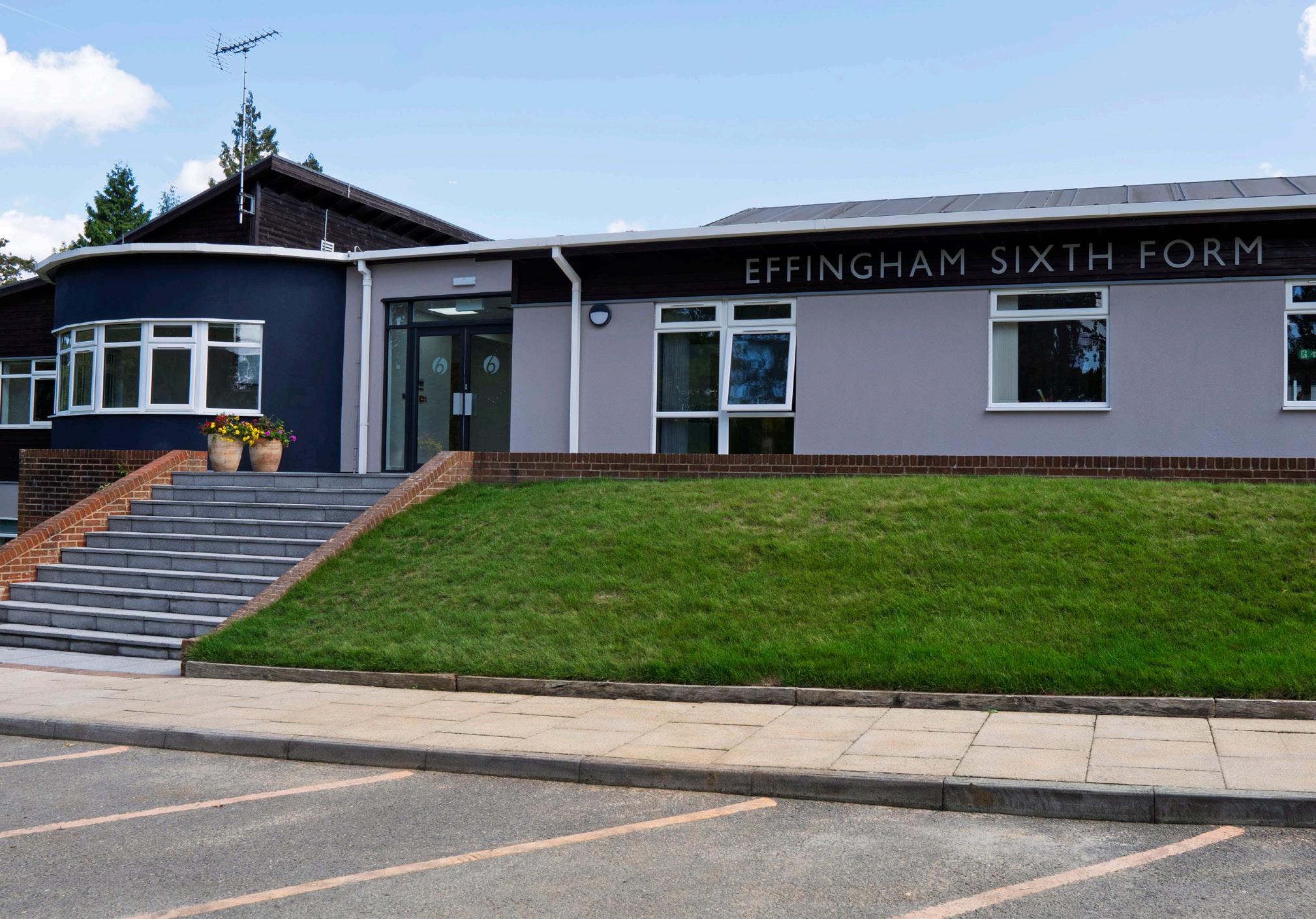
SIXTH FORM ACADEMIC STUDY
You may have already thought about the A Level courses that you intend to study, alternatively, you may be finding it difficult to make the right A Level choices for you. We hope that our Sixth Form Course Guide will help you to understand the demands of each A Level subject course, as well as allow you the opportunity to consider how some A Level courses may shape your future. There is also information about the additional qualifications that you can complete within our Enrichment Programme and therefore, you can start to explore how your A Levels could sit alongside the wider enrichment and co-curricular life of your final two years at school.
The annual Sixth Form Information Evening is an early opportunity to find out more information from each Heads of Department about the A Level course content and examination requirements of the subjects that you may be considering for your Sixth Form timetable. At Effingham Sixth Form we are committed to the A Level system as we believe it allows you to make your own choice about the degree of breadth, or specialisation, you would like to achieve. It also offers you an unparalleled chance to go into subjects in greater depth. A Level subjects are each allocated six one-hour sessions per week. Your lessons are likely to feel very different from your GCSE experience; small class sizes lead to lively discussion and highly tailored learning where students are challenged and nurtured to develop their intellectual curiosity.
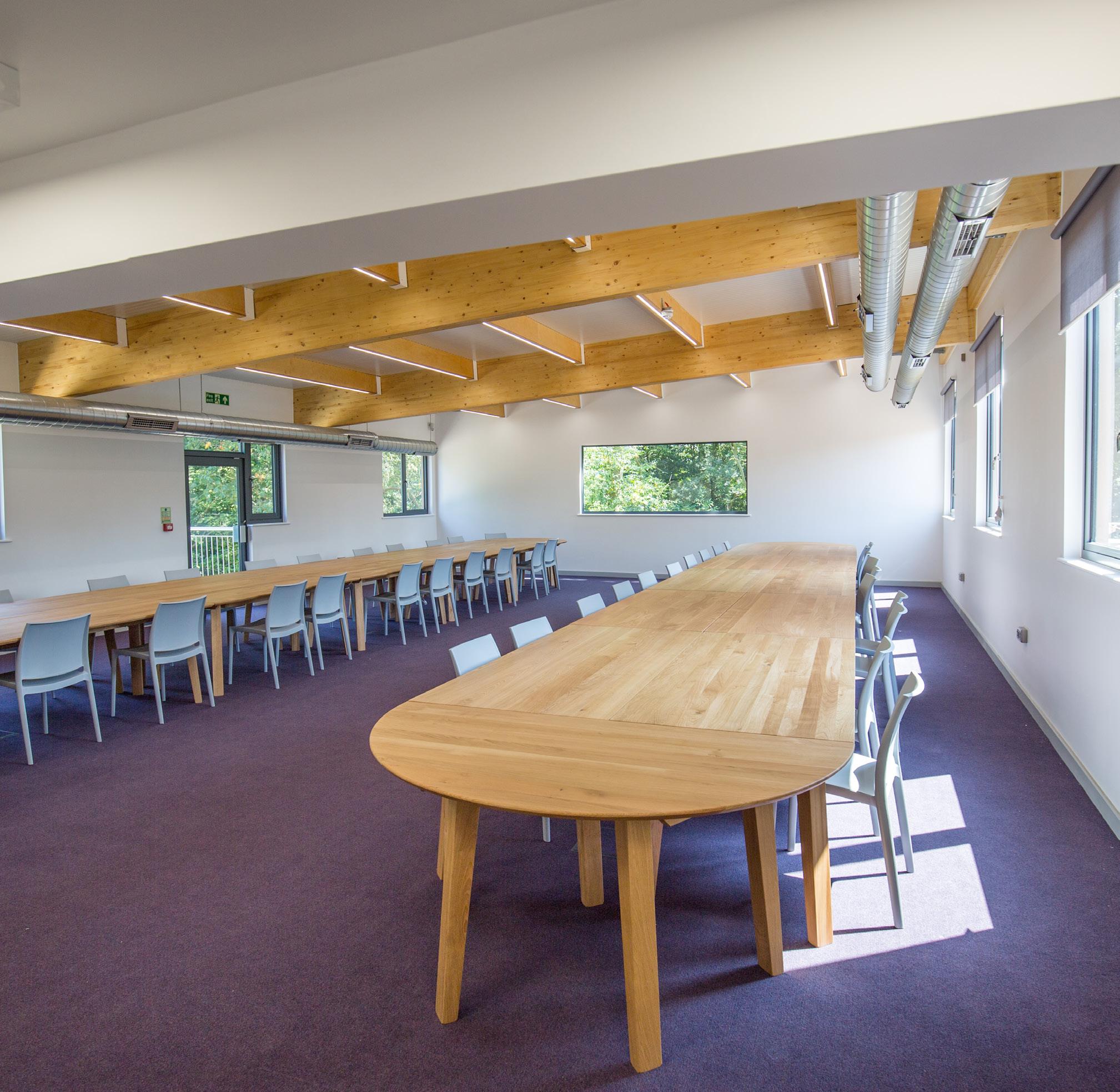
PERSONALISED LEARNING
Effingham Sixth Form aims to support each individual’s learning requirements, fostering a classroom ethos that recognises the concept of personalised learning.
Education in the Sixth Form will build on what the most successful teachers do best; create an education experience with personalised learning at its heart. This means a system in which every student matters. Therefore, careful attention is paid to individual learning styles, motivations and needs; there is rigorous use of student target setting linked to high quality formative assessment and marking; lessons are well paced and enjoyable and students are supported by partnerships with others beyond the classroom.
A personalised curriculum:
• A ‘pathways’ design in the Sixth Form allows each student to design an appropriate programme to support their individual needs and aspirations.
• Where possible, to make provision within the curriculum for a range of extension courses and qualifications.
• To make reasonable adjustments to a student’s programme, if appropriate, to promote the development of gifts and talents.
• The ability for students in the Sixth Form to undertake additional qualifications.
• To provide a lesson allocation that allows the opportunity for exploration beyond the confines of examination syllabi and the opportunity to gain additional qualifications.
• To support the development of individual students who exhibit particular flair, gifts or talents in any area of the curriculum or extra-curricular activity through formal and informal mentoring schemes.
Tracking and Monitoring of Student Performance
The GCSE grades, alongside ALPS computer adaptive test results, and the professional judgement of staff , provide attainment grades for each student throughout the duration of their A Level programme.
Regular attainment grades are given to students throughout their time in the Sixth Form. These grades are tracked in order to provide feedback to students, parents and the Sixth Form Team on the progress each student is making towards their potential examination grades. This ensures that accurate targets and academic support plans can be designed to support every student to achieve their full potential.
Our Sixth Form Team and academic staff collaborate with both the student and their parents to ensure that academic success is achieved by all of our students. Every student has their Form Tutor as well as the Director of Sixth Form, Assistant Head of Sixth Form and Head of Careers, working with them and supporting their individual development. Our belief in a collaborative support structure ensures that all of our students feel supported throughout their time with us in our Sixth Form and carve a successful Beyond A Level Pathway.
To track and monitor individual student performance in the Effingham Sixth Form, regular feedback on performance will be shared with students and parents through the school’s tracking and monitoring process, using baseline data generated through points gained at GCSE and Computer Adaptive test scores (ALPS) at the start of Year 12.
REPORTING & FEEDBACK
YEAR 12
October Half-Term
Attainment and Attitude to Learning grades are recorded
End of Autumn Term Full reporting including Attitude to Learning grades, Attainment grades and a report from every A Level subject teacher
Spring Term Attainment grades recorded
Summer Examination Grades
July
Full report including Attitude to Learning grades, Attainment grades and a report from every A Level subject teacher
Oxbridge and Medicine Pathway Applicants receive their UCAS Predicted Grades
YEAR 13
End of September UCAS Predicted Grades published on Unifrog
October Half-Term
End of Autumn Term
Attainment Grades recorded
Full report, including Attitude to Learning grades, Attainment grades and a report from every A Level subject teacher
Spring Half Term Year 13 Mock Examination Results
End of Spring Term
July
Full report, including Attitude to Learning grades, Attainment grades and a report from every A Level subject teacher
Record of Achievement received at Prize Giving
THE WORLD OF WORK
The world of work is changing rapidly thanks to a global economy, progress in technology and the rise of digitalisation. In this dynamic landscape, adaptability, resilience, and digital literacy are essential for thriving in the new world of work. With that in mind, our Careers programme goes way beyond students applying to their chosen route for Higher Education.
Throughout regular Careers touchpoints, we focus on ‘future ready’ employability skills through a programme that exposes them to the working world. From an inspiring speaker programme and the chance to take part in Young Enterprise through to a new annual Careers fair with local businesses and our parent and alumnae community, students will have the chance to understand about different professions and some must-have tips for success.
Real life interview practice will also be available for Year 12 students and we are thrilled to be offering our Alumnae Mentoring scheme and Work Experience programme for Sixth form Students as well.
All combined, our strong Careers programme provides real world insights, chances to network and overall increase students’ independence and confidence.
BEYOND A LEVEL: UCAS & CAREERS SUPPORT
Preparing for your life after your A Levels can be daunting and therefore, in the Sixth Form we have a comprehensive two-year programme to support you through the process at every stage, ranging from whole Sixth Form lectures with external speakers to individual support sessions with your Personal Tutor and our Head of Careers. Our Sixth Form Careers programme includes a number of specialist application pathways that you can select to join. The Pathways begin at the start of Year 12 and, as such, they ensure that all students are confident to make informed decisions about their chosen route after you leave the Sixth Form, no matter what discipline that you wish to undertake. We believe that you should feel fully supported by the Sixth Form Careers Department to be able to make your ambitions a reality.
Year 12: One Careers Lesson Every Week
Careers workshops exploring different professions
External speakers from universities and the professional world of work
Autumn Term
Launch of specialist application programmes:
Oxbridge
Medicine/ Veterinary and Dentistry
Conservatoires
Apprenticeships
Art Study Abroad
Trip to the annual UCAS Higher Education Convention at Surrey University Sports Park
Spring Term
Summer Term
Unifrog Launch: specialist international support platform for university research and application
Series of University Course Guidance lessons
Alumnae Speakers Programme
Higher Education Two Day Event: a series of specialist talks, workshops, tutorials and trips to support the University application process.
Individual mentoring sessions with your Personal Tutor and Head of Careers to offer personalised advise about Beyond A Level course choices and University options.
UCAS Application started
Year 13 UCAS Support: One Careers Lesson Every Week
Publication of the UCAS predicted grades for all undergraduate applicants
Personal Tutor and Head of Careers guidance meetings, to support your course and institution choices.
September to October
November to February
First Checking Meeting: an individual meeting with your Form Tutor to support you to complete your UCAS application form
15th October – First Specialist Pathway Deadlines: Oxbridge Architecture
Medicine/Dentistry and Veterinary Science
Accuracy Check: Individual meeting with the Head of Careers to check the qualifications on your UCAS form
Final Check: An individual meeting with the Director of Sixth Form to read your UCAS form, with you, and to ensure that everything is ready to send to the universities of your choosing.
Receive decisions from universities: every offer that is received is celebrated in the weekly Sixth Form Newsletter
External Mock interviews for all applicants, with university specialist. Individual feedback is given to all students.
Student Finance Twilight Talk for both parents and students, if you want to apply for student financial support for university.
March to June
August
Students have one to one meetings with the Head of Careers to support them to select their ‘firm’ and ‘insurance’ UCAS conditional offers
A Level Exams commence
Results Day Celebration at school
The Head of Careers and the Director of Sixth Form are on site for UCAS guidance and support for the duration of A Level results day.
SPECIALIST APPLICATION PATHWAYS
In addition to your weekly UCAS/Careers lessons, we offer a number of specialist application pathways that students can select to join at the start of Year 12. Our pathways are designed to offer support and guidance for students undertaking a specialist application route, due to their discipline demanding additional components and/or deadlines, outside of the alternative Undergraduate UCAS application cycle.
OXBRIDGE
Monthly Oxbridge Seminar Series
ART
Weekly life drawing classes
Cambridge and Oxford College Exploration Trip
Advice and support sourcing and applying for masterclasses
Weekly specialist portfolio preparation class (Year 13)
Fortnightly individual mentoring guidance meetings
Specialist ‘Routes into Art’ seminar
Oxbridge Personal Statement Seminar
Art Personal Statement Seminar
Individual subject specialist preparation meetings for admissions assessment
Fortnightly Individual subject specialist portfolio review meetings
MEDICINE, VETERINARY SCIENCE AND DENTISTRY
Fortnightly Medicine Society
Individual mentoring meetings
APPRENTICESHIPS
Specialist ‘Understanding Apprenticeships’
workshops
Specialist ‘Routes into Medicine’ seminar
External Degree Apprenticeships Speaker Visit
CONSERVATOIRES
Specialist audition preparation workshops
Individual mentoring meetings to support application preparation to conservatoire institutions
STUDYING ABROAD
Specialist application talks
Individual mentoring meetings, to support early application preparation
Advice and support sourcing & applying for a medical work experience placement
Alumnae Mentoring Programme
Specialist application support for UCAS Conservatoires (formally, CUCAS)
Advice about external support available
Medical Personal Statement Seminar
Specialist Interview Practice process, with follow up feedback session
Specialist Interview Practice, with follow up feedback session
Individual subject specialist preparation meetings for BMAT/ UKCAT
Annual Parent Seminar
Annual Parent Seminar
Specialist Interview Practice, with follow up feedback session
Annual Parent Seminar
Annual Parent Seminar
Regular Mentoring Meetings
Annual Trip to the Apprenticeship Fair
Specialist Personal Statement student workshop
Mock Interview practice and audition workshop, with individualised feedback
Annual Parent Seminar
Specialist support for entry examinations
Study Abroad Student Resources Pack
Personal Statement student seminar
Annual Student Seminar: Study In The USA
Annual Student Seminar: Studying Within Europe
ENRICHMENT
As a Sixth Form we ensure that our students leave us as ambitious, self-sufficient and mature young people, equipped to face the challenges of higher education and the workplace. Our Sixth Form Enrichment programme is both embedded within the Sixth Form timetable and offered as a co-curricular option for Sixth Form students, providing them with the opportunity to design their own Sixth Form timetable including additional qualifications, extension beyond the A Level curriculum or co-curricular interests.
The Enrichment Programme includes both optional and compulsory elements under the following categories:
• Music
• Sport
• PSHE
• EAL
• Supervised Study
• Current Affairs
• Volunteering
• Ethics
• The Sixth Form Wellbeing Programme
Mindfulness
Wellbeing
Yoga Meditation
• Sixth Form Careers Programme
• Monthly Careers Newsletter
• Summer Work Experience
• The Aspirations Programme
Extended Project Qualification (EPQ)
Core Maths
Maths Masterclasses with The Royal Institute
Further enrichment activities are also available within our whole school co-curricular timetable, please be aware that some of these activities can involve additional cost: Music Lessons, Duke of Edinburgh Awards, LAMDA, St Teresa’s Equestrian Centre and Effingham Schools’ Tennis Academy.
MUSIC
Musical activities are immensely beneficial to everyone. It is recommended that all students should be involved in music during their time in the Sixth Form. Musical activities are not only enjoyable but will assist with memorisation, development of language and reason, spatial intelligence, auditory skills and creative thinking. Taking part in the school concerts also gives a sense of achievement, a feeling of engagement in the whole school, emotional development and a sense of society.
Above all, the Music Department is determined to enjoy music-making with students of all standards and styles. Many performing opportunities are offered each year, over a wide range of performing styles, for example classical recitals and a jazz evening. All students are most welcome to join Senior Choir without an audition and/or join the Staff and Sixth Form Choir.
DUKE OF EDINBURGH’S AWARD SCHEME
Once you hit 16 you can do your Gold Duke of Edinburgh’s Award. You do not need to have done the Bronze and Silver to do the award. The Gold Award is highly regarded by the universities but it must be recognised that it is a large commitment and can be time-consuming, so it must be balanced against the demands of other work.
There are five sections to the award: Physical Recreation; Skills; Volunteering; Expeditions and a Residential Project. You’ll spend 12 months on your Volunteering section. For Physical Recreation and Skills, you must spend 12 months on one and six months on the other – you can decide which way round you would like to do it.
The big difference at Gold level is you’ll also do a Residential section - staying away from home for five days and four nights doing a shared activity with people you don’t know. It is great fun and a real chance to do something different!
If you’ve jumped straight into your Gold D of E programme you’ll need to do a further six months either volunteering or whichever one of your physical or skills activities you spent the most time on.
This table gives you a summary of what you have to do:
Volunteering Physical Skills Expedition Residential 12 Months
One section for 12 months and the other section for 6 months
Plan, train for and complete a 4-day, 3-night expedition
Undertake a shared activity in a residential setting away from home for 5 days and 4 nights
Direct entrants must undertake a further 6 months in either the Volunteering or the longer of the Physical or Skills sections.

LAMDA
LAMDA is beneficial to a wide range of students. It appeals to Drama A Level students looking to broaden and refine their skills to support their academic studies, particularly the performance examination. It is also popular with students who enjoyed Drama GCSE and have not chosen it for A Level but want to continue to build their performance and speaking skills. LAMDA is also extremely beneficial to EAL students looking to improve their spoken English. One of the most beneficial and attractive aspects of LAMDA examinations is that students will gain valuable UCAS points from the examinations they take.
Examinations
Bronze Medal (Grade 6)
Verse and Prose, Reading for Performance, Devising, Public Speaking, Musical Theatre and Acting.
Verse and Prose: One piece of verse, one piece of prose, a theoretical discussion and sight reading.
Reading for Performance: A selection of three texts supported by a theme and linked by a supporting argument. Sight reading.
Devising: Two devised scenes and a short improvisation followed by a theoretical discussion.
Public Speaking: Two speeches and an impromptu speech followed by a theoretical discussion.
Musical Theatre: Three songs and a theoretical discussion. Acting: Two speeches and a theoretical discussion.
Verse and Prose: One piece of verse, one piece of prose, a sonnet, a theoretical discussion and sight reading.
Silver Medal (Grade 7) & Gold Medal (Grade 8)
Reading for Performance: A selection of three texts supported by a theme and linked by a supporting argument. Sight reading.
Devising: Two devised scenes and a short improvisation followed by a theoretical discussion.
Public Speaking: Two speeches and an impromptu speech followed by a theoretical discussion.
Musical Theatre: Three songs and a theoretical discussion. Acting: Three speeches and a theoretical discussion.
SPORT
In the Sixth Form, students are given the opportunity to participate in a wide range of physical activities and we are passionate about finding a sport or exercise activity for everyone.
Within the students’ weekly PE lessons, they are given the options of the activity in which they would like to participate. The choice will always include a variety of competitive team sports and more recreational pursuits, alongside a mixture of high and low impact classes.
All Sixth Form students have a games afternoon on Wednesdays. Expert coaches will deliver sessions to prepare teams for fixtures and give everyone the opportunity to participate and enjoy physical activity.
We also run a vast co-curricular sports schedule which includes competitive training in Cricket, Football, Hockey, Netball, Rugby and Swimming alongside lunchtime league clubs which all students can enter. Students will also have access to the gym when it is available. There are also recreational clubs on offer, such as a lunchtime badminton club, an early morning fitness session, development hockey/ swimming/netball clubs and leagues, alongside regular staff v Sixth Form matches.
The Senior fixtures programme for teams in Football, Hockey, Netball, Rugby and Swimming is challenging yet suitable. These are taken by passionate and specialist PE staff who are motivated to ensure the excellence of the Sixth Form Sport.
Sixth Form students benefit from exceptional coaching from ex professionals and everyone has the opportunity to excel due to expertise within the Sports Department, the incredible facilities, and specialist coaching from our associated partners.
We look forward to another year of exciting sporting provision and opportunities.
Cross
If there is a sport or exercise activity that you are passionate about which is not included in our lessons or co-curricular activities, please get in touch with the PE department and we will try our utmost to accommodate you. Athletics Badminton Basketball Biathlon Cricket
Rowing
Rugby
Strength & Conditioning
(private use of Sixth Form gym, in addition to staff-lead fitness sessions)
Swimming
Tennis
Yoga
SUBJECT SYLLABUSES
A more detailed account of each subject is presented on the following pages:
ART & DESIGN – FINE ART
ART & DESIGN – PHOTOGRAPHY
ART & DESIGN – TEXTILE DESIGN
BIOLOGY
BUSINESS
CHEMISTRY
CLASSICAL CIVILISATION
COMPUTER SCIENCE
DANCE
DRAMA
ECONOMICS
ENGLISH LITERATURE
ENGLISH AS AN ADDITIONAL LANGUAGE
EXTENDED PROJECT QUALIFICATION
FRENCH
GEOGRAPHY
GERMAN
GOVERNMENT & POLITICS
HISTORY
LATIN
MATHEMATICS, FURTHER MATHEMATICS & CORE MATHS
MEDIA STUDIES
MUSIC
PHILOSOPHY OF RELIGION & ETHICS
PHYSICAL EDUCATION
PHYSICS
PSYCHOLOGY
SOCIOLOGY
SPANISH
ART AND DESIGN: FINE ART
The best foundation for success in A Level Fine Art is experience gained through the completion of GCSE Art & Design but, above all, an interest in creating an understanding of visual art, coupled with the determination to develop your interest.
The main purpose of this course is to extend your ability to appreciate the visual world and respond in a personal and creative way. The disciplines most frequently associated with Fine Art are painting, 3D, ceramics, sculpture and printmaking. The skills you will develop will be varied and will include a working knowledge of materials and practices within Fine Art, as well as key skills of communication to interpret and convey your ideas and feelings. You will expand your imaginative and creative ideas and your experimental, analytical and documenting skills. You will use specialist vocabulary, and also gain knowledge and understanding of the place that Fine Art holds in history and in contemporary society
Component 1: Personal Investigation (60% of qualification)
Part 1: Practical Work (72 marks): from personal starting points. Students submit supporting studies/personal outcomes
Part 2: Personal Study (18 marks): students produce a piece of continuous prose – 3000 words
A Level
Component 2: Externally Set Assignment (40% of qualification, 72 marks)
• Externally set, broad-based theme released to teachers and students on 1 February.
• Sustained focus period of 15 hours of controlled assessment, in which students create final response(s) to the theme.
• Students submit supporting studies, personal outcome(s).

Examination Board: Edexcel
ART AND DESIGN: PHOTOGRAPHY
The best foundation for success in A Level Photography is experience gained through the completion of GCSE Art & Design but, above all, an interest in creating an understanding of Photography, coupled with the determination to develop your interest.
The main purpose of this course is to extend your ability to appreciate the visual world and respond in a personal and creative way. The disciplines most frequently associated with photography are digital photography, film-based photography and film and video. The skills you will develop will be varied and will include a working knowledge of materials and practices within Photography as well as key skills of communication to interpret and convey your ideas and feelings. You will expand your imaginative and creative ideas and your experimental, analytical and documenting skills. You will use specialist vocabulary and gain knowledge and understanding of the place that photography holds in history and in contemporary society.
Component 1: Personal Investigation (60% of qualification)
Part 1: Practical Work (72 marks): from personal starting points.
Students submit supporting studies/personal outcomes
Part 2: Personal Study (18 marks): students produce a piece of continuous prose – 3000 words
A Level
Component 2: Externally Set Assignment (40% of qualification, 72 marks)
• Externally set, broad-based theme released to teachers and students on 1st February
• Sustained focus period of 15 hours of controlled assessment, in which students create final response(s) to the theme
• Students submit supporting studies, personal outcome(s)
September Year 12 Personal Investigation
Examination Board: Edexcel
ART AND DESIGN: TEXTILES
The best foundation for success in A Level Textiles is experience gained through the completion of GCSE Art & Design but, above all, an interest in creating an understanding of Textiles.
Textile design involves the creation, selection and manipulation of textiles across a variety of practices and often combines with other art processes. Work in textiles falls broadly into three categories: constructed textiles, dyed textiles and printed textiles. A wide range of natural and manufactured materials including fabrics, paper and yarns, are used to address aspects of design in textiles and fashion. You will also be able to manipulate images digitally to enhance your textile design. The skills you will develop will be varied and will include a working knowledge of materials and practices within Textiles, as well as key skills of communication to interpret and convey your ideas and feelings. You will expand your imaginative and creative ideas and your experimental, analytical and documenting skills. You will use specialist vocabulary and also gain knowledge and understanding of the place that Textiles holds in history and in contemporary society.
Component 1: Personal Investigation (60% of qualification)
Part 1: Practical Work (72 marks): from personal starting points. Students submit supporting studies/personal outcomes
Part 2: Personal Study (18 marks): students produce a piece of continuous prose – 3000 words
A Level
Component 2: Externally Set Assignment (40% of qualification, 72 marks)
• Externally set, broad-based theme released to teachers and students on 1st February
• Sustained focus period of 15 hours of controlled assessment, in which students create final response(s) to the theme
• Students submit supporting studies, personal outcome(s)
Examination Board: Edexcel
BIOLOGY
Biology is an exciting and rapidly developing subject with a central place in the future of our society. Every week, Biology is in the news with developments in our understanding of genetics, evolution and disease.
A qualification in Biology aims to not only equip students with sound scientific knowledge and understanding of biological concepts and scientific processes, but to also offer opportunities to explore the ethical and moral issues related to the effects of human activities on biological systems.
Biology will appeal to students who:
• Have an interest in the study of living organisms and biological processes.
• Enjoy carrying out investigations in the laboratory and fieldwork.
• Are interested in the developments of new applications of Biology, such as genetic engineering and gene sequencing, and their impact on society.
• Are looking towards careers in the health-related professions, biotechnology, or ecology and the environment.
• Want to develop a wide range of transferable skills in the context of a science subject.
During the course you will have an opportunity to:
• Develop greater understanding of biological facts together with an appreciation of their significance in the wider world.
• Develop greater expertise in the area of practical work and appreciation of the link between theory and experimental work.
• Develop your problem-solving abilities as well as your numeracy, data analysis, decision-making and communication skills.
• Recognise the responsible use of Biology in society.
• Develop a greater awareness of Biology in the changing world and its importance to modern life.
• Take part in the Intermediate Olympiad run by the Royal Society of Biology.
• Attend a 4-day residential field trip to immerse yourself in the study of ecology and develop your field work skills.
Content Overview (OCR)
Module 1: Development of Practical Skills in Biology
Module 2: Foundations in Biology
Cell structure, biological molecules, nucleotides and nucleic acids, enzymes, biological membranes, cell division, cell diversity and cellular organisation
Module 3: Exchange and Transport
Exchange surfaces, transport in animals, transport in plants
Module 4: Biodiversity, Evolution and Disease
Communicable diseases, disease prevention and the immune system, biodiversity and classification and evolution
Module 5: Communication, Homeostasis and Energy
Communication and homeostasis, excretion as an example of homeostatic control, neuronal communication, hormonal communication, plant and animal responses, photosynthesis and respiration
Module 6: Genetics, Evolution and Ecosystems
Cellular control, patterns of inheritance, manipulating genomes, cloning and biotechnology, ecosystems, populations and sustainability
Assessment Overview
Biological Processes (01)
Biological Diversity (02)
Unified Biology (03)
Practical Endorsement in Biology (04)
100 marks 2 hours 15 minutes written paper (Assesses Modules 1, 2, 3 + 5)
100 marks 2 hours 15 minutes written paper (Assesses Modules 1, 2, 4 + 6)
70 marks 1 hour 30 minutes written paper
(Assesses content from all modules 1–6) (non-exam assessment)
BUSINESS
Business is a popular subject both at A Level and university and gives students an insight into the way new business start-ups, small to medium sized enterprises (SME’s) right up to multi-national companies are set up and managed. You will learn what makes some businesses succeed or fail, understand what influences their decisions, how they decide their corporate strategy and how they can improve all aspects of their operations. The focus of this course is on understanding the role of the four functional areas (finance, marketing, human resources and operations management) and the possible strategies businesses can use in order to compete effectively through having a unique selling point and stand out in a competitive market. You will learn how to motivate your team and manage a business effectively; how to interpret business accounts in order to identify areas of improvement. You will learn the key principles of marketing and how the key to good customer service is effective communication.
You are encouraged to apply what you learn in class to various business problems. Topical case studies and scenarios are used as a means of achieving this, from the success of online shopping to the failure of many high street stores. Topical areas of discussion help broaden your knowledge of the world of work and the wider business environment in which you live. An A Level in Business helps to develop transferable working life skills such as literacy, numeracy and communication which are highly valued by employers in today’s job market. Business combines well with other subjects such as History, Politics, Psychology, Mathematics, Foreign Languages and Art.
Business will appeal to students who:
• Have a desire to do well and a willingness to ask questions.
• Have an interest in how the real-world impacts on how a business works.
• Enjoy applying their own analytical skills in carrying out business case-study research.
• Are interested in how online retailing has impacted the global economy.
• Are looking towards careers in the business, management, finance, banking, insurance, corporate governance and strategy sectors, as well as being essential for those wishing to start their own business.
• Want to develop a wide range of transferable business and working life skills.
During the course you will have an opportunity to:
• Develop greater expertise in the area of practical work and appreciation of the link between theory and experimental work.
• Develop your problem-solving abilities as well as your numeracy, data analysis, decision-making and communication and presentation skills.
• Recognise the ethical and responsible use of Business within our community and the environment.
• Develop a greater awareness of Business in the changing global world and its importance to modern life.
Content Overview (Edexcel)
Theme 1: Marketing and People
Meeting customer needs, the market, marketing mix and strategy, managing people, entrepreneur and leaders
Theme 2 : Managing business activities
Raising finance, financial planning, managing finance, resource management, external influences
Theme 3: Business decisions and strategy
Business objectives and strategy, business growth, decision making techniques, influences on business decisions, assessing competitiveness, managing change
Theme 4: A Global business
Globalisation, global markets and business expansion, global marketing, global industries and companies (multinational corporations)
100 marks 2 hours written paper
(Assesses Themes 1 and 4)
100 marks 2 hours written paper
(Assesses Themes 2 and 3)
100 marks 2 hours written paper
(Assesses Themes 1 and 4 including pre-release industry case-study)
CHEMISTRY
Studying Chemistry at A Level is fun, fascinating and challenging. Chemistry touches every aspect of your life (everything is ultimately made from atoms and molecules and depends on interactions between them). A basic understanding of chemical principles is a very useful skill to have whether you intend to pursue a scientifically-based career or not.
Admissions tutors consider Chemistry favourably as it is considered to be academically challenging and implies that the student will have reasonable numerical and problem-solving skills. Chemistry is essential if you are considering a career in medicine, veterinary medicine, dentistry or pharmacology, and highly recommended for any biological science course. Is Chemistry a suitable choice for you? Do you like a challenge and enjoy applying your knowledge to solve problems? Would you like to be able to make reasoned and informed decisions about the chemical issues that affect all our lives, from climate change to developing pathways to synthesise potential vaccines?
The A Level course modules are:
1. Development of practical skills in Chemistry
2. Foundations in Chemistry; atoms, ions and compounds; amount of substance; acids and redox; electrons and bonding; shapes of molecules and intermolecular forces.
3. Periodic table and energy; periodicity; reactivity trends; enthalpy; reaction rates and equilibrium.
4. Core organic Chemistry: basic concepts of organic chemistry; alkanes; alkenes; alcohols; haloalkanes; organic synthesis; spectroscopy.
5. Physical Chemistry; rates of reactions; equilibrium; acids, bases and pH; buffers and neutralisation; enthalpy and entropy; redox and electrode potentials; transition elements.
6. Organic Chemistry and analysis: aromatic Chemistry; carbonyls and carboxylic acids; amines, amino acids and polymers; organic synthesis; chromatography and spectroscopy.
During the course you will have the opportunity to take part in the Cambridge Challenge and Chemistry Olympiad competitions.
In addition, you will undertake practical work in order to obtain accreditation towards the practical endorsement.
Paper
Paper 1
Modules: 1, 2, 3 and 5
Paper 2
Modules: 1, 2, 4 and 6
Paper 3
Modules: 1–6
Structured questions covering theory and practical skills
Structured questions covering theory and practical skills
Structured questions covering theory and practical skills
Candidates complete a minimum of 12 practical activities to demonstrate practical competence. Performance reported separately from the A Level grade
CLASSICAL CIVILISATION
The world of the Greeks and Romans was in many ways very different from our own, in other ways very similar indeed. In A Level Classical Civilisation students will study a range of historical and cultural texts drawn from the canon of Greek and Roman literature, and in so doing analyse how the Greeks and Romans thought and felt about their world. Topics covered include the great poetic epics of Homer and Virgil that form the wellspring of the Western literary canon, Athenian theatre, both tragic and comic, where drama as we know it was born, and the political structures, cultural and development of democracy in Athens from the Sixth to the late Fifth Centuries BC. Assessment will be entirely by final examinations, with a substantial written essay component alongside shorter analytical questions. No knowledge of Greek or Latin is required as all texts will be studied in English translation.
Essential Textbooks (Provided by the Department)
• Aristophanes’ Frogs (Cambridge Translations from Greek Drama)
• Euripides’ Bacchae (Cambridge Translations from Greek Drama)
• Sophocles’ Three Theban Plays (Penguin Classics Edition)
• OCR Classical Civilisation textbooks (texts and commentary) for all papers
• Homer’s Odyssey (Penguin Classics Edition)
• Virgil’s Aeneid (Penguin Classics Edition)
Examination Board: OCR
Paper 1: The World of the Hero (40%)
Paper 2: Culture and The Arts (30%)
Paper 3: Beliefs and Ideas (30%)
Homer’s Odyssey and Virgil’s Aeneid
Greek Theatre
Democracy and the Athenians
COMPUTER SCIENCE
OCR A Level Computer Science encourages learners to meet the needs of higher education courses in Computer Science as well as twenty-first century digital employers. It encourages learners to think creatively, through applying practical programming solutions, demonstrating that they are effective uses of technology. Students develop computational thinking & programming skills to solve computer science problems. They will also be able to appreciate the ethical issues that arise with current and emerging computing technologies. We embed out iGCSE understanding and further develop our Python Programming. Computer Science is a discipline which requires thinking both in abstract and in concrete terms. On a higher level, Computer Science is concerned with problem solving: modelling and analysing problems, designing solutions, and implementing them. Problem solving requires precision, creativity, and careful reasoning.
Many problems in the sciences, engineering, health care, business and other areas can be solved effectively with computers, but finding a solution requires both computer science expertise and knowledge of the particular application domain. Thus, computer scientists often become proficient in other subjects.
This course builds on the IGCSE Computer Science syllabus, but it is perfectly possible to take the A Level Computer Science examination without having taken the IGCSE Computer Science examination. It includes, broadly speaking, the subject areas in the IGCSE Computer Science course, as well as more advanced topics such as computer networking, details of how operating systems work, more advanced knowledge of programming algorithms, data structures and databases.
It is recommended that you have at least a 6 in GCSE Mathematics.
The internal workings of the (CPU), data exchange, software development, data types and legal and ethical issues.
not allowed.
computational thinking to solve problems.
assessment.
Students will be expected to analyse a problem (10 marks), and design (15 marks), develop and test (25 marks), and evaluate and document (20 marks) a program. The program must be to ‘solve it’.
Examination Board: OCR
DANCE
A Level Dance is a dynamic and creative course, which provides students with the opportunity to develop and deepen their understanding of the subject, whilst also gaining invaluable transferable skills. The qualification offers an equal balance between the practical application of dance technique, alongside a deep theoretical understanding of the history and development of different dance styles.
Students build upon their technical and performance skills during lessons and are able to personalise their solo performances to cater towards their chosen dance style. A quartet performance further enhances their ability to dance sensitively alongside peers. Complementary to this, the group choreography component allows students to challenge themselves creatively and express their artistic vision in response to a stimulus.
The written element of the course gives students an understanding of how different dance styles were created and developed throughout time. The dancers are encouraged to be curious, analytical and critical when studying choreographers, dancers and professional works.
Alongside lessons, students are also given the opportunity to broaden their experience through theatre trips, workshops and performance platforms. The course aims to foster individual talents, build confidence and promote creative intellectuals.
Component 1 Performance and
Component 2
Practical Exam (50%) Students are assessed in a practical performance with an AQA assessor present.
• Solo performance linked to a specified practitioner within an area of study
• Performance in a quartet
• Group choreography – based on an externally set choice of stimulus
Written Paper (50%) 2 hour 30 minutes
• ‘Rooster’ by Christopher Bruce
• Rambert Dance Company 1966 – 2002
• ‘Singin’ in the Rain’ by Stanley Donen and Gene Kelly
• American Jazz Dance 1940 - 1975
Examination Board: AQA
DRAMA
A Level Drama and Theatre Studies is a creative, stimulating, inspiring and enriching course. During the two year course students study a variety of challenging and thought-provoking play scripts, new and traditional theatre practitioners, and a range of rich and diverse theatre makers.
Students attend a number of professional live productions which further develops their range and use of performance skills. The Live Production visits also develop their understanding and appreciation of different performance styles and performance spaces. Students create two pieces of practical work for performance and, in order to enhance their understanding and appreciation of performing and creating theatre, A Level Drama students are given the opportunity to attend workshops with professional theatre companies and actors, as well as train with experienced staff from prestigious Drama Schools.
The skills refined in A Level Drama and Theatre Studies also develop students’ confidence, group work, presentation skills, interpersonal skills and vocal expression.
Drama and Theatre Studies is an excellent course for students wishing to pursue a career in drama, theatre, film, media, law, business, teaching, the Creative Arts and Performing Arts.
Examination Board: AQA
Component 1
Drama and Theatre
Component 2
Creating Original Drama
Written paper (40%)
• Section A - Hedda Gabler by Henrik Ibsen
• Section B - Our Country’s Good by Timberlake Wertenbaker
• Section C - Analysis and evaluation of Live Theatre productions
Practical – Devised Drama (30%)
• Create and perform, for assessment, a Devised piece of Drama influenced by the work and methodologies of a particular practitioner
• Produce a working notebook
Practical – Scripted (30%)
Component 3
Making Theatre
• Create and perform, for assessment, a Scripted piece of Drama, applying the methodology of a prescribed practitioner
• Produce a reflective report

ECONOMICS
Economics begins with the assumption that we as consumers have infinite wants yet live in a world of scarce resources. Economics is the study of how societies make best use of those limited resources in order to create wealth. Economics is rarely out of the news and studying it will give you a fascinating insight into the two key areas of Micro and Macro-Economics.
Micro-Economics looks at the problems facing consumers and businesses. How is a consumer best able to satisfy as many of their limitless wants with the limited and scarce resources that they might have available to them? What is the opportunity cost of making one purchase decision over another? What determines how businesses price their goods and services? How does a CEO determine what they are going to pay their workers? What external factors is a business needing to be aware of in order to be able to compete competitively globally? Macro-Economics looks at the wider issues facing government. How can a country’s economy overheat? What effects will that have on a country’s inflation, unemployment or interest rates? How does government support a country’s economy? What methods do they use to support it? Are those methods effective? Do they work or is their effect too slow? It questions the role of government and its effectiveness in its choice of policies and schemes in order to support a country’s economy.
Economics requires several key skills: you will require to be literate, numerate and capable of applying generalised theories to specific case-studies. It will develop your analytical and critical approach to the interpretation of data presented in various forms. It is vital that you can express yourself convincingly and fluently in English. Ideally, therefore, you will have obtained at least a grade 5 in English and Mathematics at GCSE. Economics combines well with many other subjects. It is often combined with Politics, Philosophy, Mathematics, Geography or History, although it can equally well be studied alongside English Literature, Physics or Foreign Languages.
Economics will appeal to students who:
• Have a desire to do well and a willingness to ask questions.
• Enjoy applying your own analytical skills in carrying out economic case-study research.
• Are interested in how the Economy has been impacted by political pressures.
• Are looking towards careers in Market analysis, business, management, finance, banking, insurance, corporate governance, politics, accounting, finance journalism and strategy sectors.
• Want to develop a wide range of transferable working life skills.
During the course you will have an opportunity to:
• Develop greater expertise in the area of practical work and appreciation of the link between theory and experimental work.
• Develop your problem-solving abilities as well as your numeracy, data analysis, decision-making and communication skills.
• Recognise the responsible use of Economics in society.
• Develop a greater awareness of Economics in the changing world and its importance to modern life.
Content Overview (Edexcel)
Theme 1: Introduction to Markets and Market Failure
Nature of economics, how markets work, market failure, government intervention
Theme 2: The UK Economy: Performance and Policies
Measure of economic performance, aggregate demand, aggregate supply, national income, economic growth, macroeconomic objectives and policy
Theme 3: Business Behaviour and the Labour Market
Business growth, business objectives, revenues, costs and profits, market structures, labour market, government intervention
Theme 4: A Global Perspective
International economics, poverty and equality, emerging and developing economies, the final sector, role of the state in the macro-economy
Assessment Overview
Paper 1: Markets and Business Behaviour
Paper 2: The National and Global Economy
Paper 3: Microeconomics and Macroeconomics
100 marks 2 hours written paper (Assesses Themes 1 and 3)
100 marks 2 hours written paper (Assesses Themes 2 and 4)
100 marks 2 hours written paper (Assesses Themes 1, 2, 3 and 4)
ENGLISH LITERATURE
A Level English Literature is one of the most highly regarded subjects by universities. It opens your mind and enables you to explore a range of possibilities through your study of poetry, prose and drama; classes are lively with lots of discussion and debate.
Through your study of this subject you will continue to develop the skills covered at GCSE. You will develop your ability to write coherently, succinctly and confidently, which will be of enormous benefit to your study of other subjects.
Throughout the course you will have the opportunity to attend live performances of set texts, attend lectures and you may visit places relevant to your studies.
Content Overview (AQA – Specification A)
Love Through the Ages
Study of three texts: one poetry and one prose text, of which one must be written pre-1900 and one Shakespeare play. At present we study: The Great Gatsby, Othello and Pre-1900 Poetry.
Modern Times: Literature from 1945 to the present day
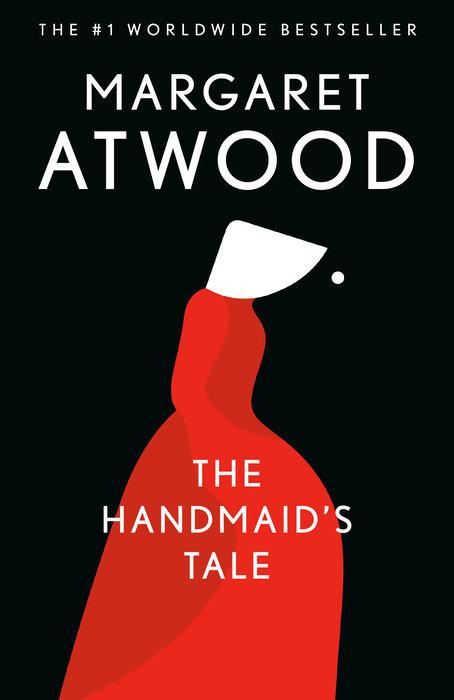
Study of three texts: one poetry, one prose and one drama, of which one must be written post- 2000. At present we study: The Handmaid’s Tale, A Streetcar Named Desire and Feminine Gospels.
Assessment Overview
Paper 1: Love Through the Ages 3 hour written paper
Paper 2: Modern Times Literature from 1945 to the present day
2 hour 30 minute written paper (open book)
Independent Critical Study: Texts Across Time
Comparative critical study of two texts, at least one of which must have been written pre-1900. The choice of texts is the student’s own choice; however, choices must be approved by the English Department.

Independent Critical Study
2,500 words
ENGLISH AS AN ADDITIONAL LANGUAGE
All overseas students study EAL who require proof of English proficiency to enter higher education in the UK. All British universities and colleges accept IELTS results. All students applying for a Tier 4 Student Visa must meet the English level set by the institution. Overseas students, typically European, who require proof of English proficiency but will be entering higher education in a different European country also study EAL.
IELTS examination preparation is offered in the four strands: academic writing, academic reading, listening and speaking. The IELTS examination assesses whether you are ready to begin studying or training in an environment where English language is used, and reflects some of the features of language used in academic study. It uses a nineband scale to clearly identify levels of proficiency, from non-user (band score 1) through to expert (band score 9). Those seeking to enter higher education in other European countries may be advised to sit the Cambridge Advanced Examination (CAE), for which guidance and support is given.
It is expected that all Year 12 students take the examination at the end of the summer term, thus allowing them to focus predominantly on their second year of A Level and UCAS application in Year 13. Students may need to continue EAL lessons into Year 13 until the required IELTS level is reached. There are four equally weighted modules to the IELTS test: Reading, Writing, Listening and Speaking.
Listening 30 minutes
Reading 1 hour
Writing 1 hour
Speaking 11 – 14 minutes
Consists of four sections in order of increasing difficulty. Each section might be a dialogue or a monologue. The test is played once only, and the questions for each section must be answered while listening, although time is given for students to check their answers.
Consists of three sections, and once again, the sections are in order of increasing difficulty.
Students must perform two writing tasks, which require different styles of writing. There is no choice of question topics.
Consists of a one-to-one interview with a specially trained examiner. The examiner will lead the candidate through the three parts of the test: an introduction and interview, an individual long turn where the candidate speaks for one or two minutes on a particular topic, and a two-way discussion thematically linked to the individual long turn.
EXTENDED PROJECT QUALIFICATION
The Extended Project is an additional option that is offered to all students in the Sixth Form so that you can discover the joys of independent academic research. You will develop new life and study skills which will be an asset to both your time at university and your career. Your final project can achieve up to an A*, can be used as UCAS Tariff points. The qualification is recognised by universities as equivalent to an AS Level qualification.
The EPQ offers students a focused structure in which to deepen your knowledge in a field of your choice.
The specification is designed to provide a clear structure within which all learners can:
• Develop transferable and core skills to apply in a future workplace, apprenticeship or further study.
• Become inquisitive and independent learners.
• Experience new areas and methods of study, including how to plan and review their progress.
• If needed, use ICT and appropriate technologies with confidence.
AO1: Manage
AO2: Use of Resources
AO3: Develop & Realise
AO4: Review
With appropriate guidance, select, plan and carry out an individual project or task – or individual project or task within a group project – applying organisational skills and using a range of methods and resources, to achieve agreed objectives.
Research, collate and select information from a range of sources and apply in a relevant manner to achieve agreed objectives.
Select and use a range of skills, including appropriate technologies, working with others and problem-solving, to complete tasks and achieve agreed objectives.
Analyse project outcomes and draw own conclusions. Communicate project outcomes, presenting evidence in an appropriate format.
Examination Board: AQA
FRENCH
French is a major language of international communication. It is the second most widely learned language after English and according to the British Council’s 2023 Language Trends report, businesses rated French as the language of greatest use to them. As well as being the language of European industry, French is the international language of fashion, gastronomy, diplomacy, the arts and philosophy. It’s a language of diplomacy and sophistication, and an official language of multiple institutions, from the United Nations to the European Union and the International Red Cross, as well as the Olympic Committee and UNESCO. So whether you are looking for an exciting career, a rich cultural experience or simply to learn a language for enjoyment, French is an excellent choice.
The AQA A Level French specification builds on the knowledge, understanding and skills gained at GCSE. It constitutes an integrated study with a focus on language, culture and society. It fosters a range of transferable skills including communication, critical thinking, research skills and creativity, which are valuable to the individual and society.
Year 1
The changing nature of the family
‘cyber-society’
The place of voluntary work
Year 1
A culture proud of its heritage
Contemporary francophone music
Cinema: the seventh art form
Year 2
Positive features of a diverse society Life for the marginalised How criminals are treated
Year 2
Teenagers, the vote and political commitment
Demonstrations and strikes – who holds the power?
Politics and immigration
Students will also study one book and one film: No et Moi, written by Delphine de Vignan, and La Haine, a film directed by Mathieu Kassovitz, and carry out an individual research topic on a subject of individual interest relating to one or more French-speaking countries.
Examination Board: AQA
Aspects of French-Speaking Society: Current Trends
Artistic culture in the French-Speaking World
GEOGRAPHY
Geography is a subject which will appeal to those who are interested in the “real world” outside the classroom. It is concerned with a rapidly changing world, and you will look at controversial issues like inner city problems and global warming. It looks at how physical and human factors can be responsible for events such as earthquakes and volcanoes. The subject considers how people can be involved with changing and managing the environments in which we live.
Geography develops work-related skills which are valued by employers. These include basic skills such as good communication (both written and spoken), numeracy and the ability to draw and interpret diagrams. Other skills are of a more specific nature including problem-solving, decision-making and the ability to analyse data.
Students have to complete 4 days of fieldwork and produce an individual investigation using this fieldwork data. This is a compulsory element of the course and all students must attend.
Geography is a flexible subject that can be combined with both science and arts subjects. It is also flexible in the career opportunities it presents. Apart from specific careers which use your Geography qualifications, you would also have the right skills for many other careers.
Examination Board: AQA
Unit 1: Physical Examination
2 hours 30 mins (40%)
Unit 2: Human Examination 2 hours 30 mins (40%)
Unit 3: Geographical Investigation (20%)
(3000–4000 word individual investigation on any aspect of the specification students choose)
GERMAN
German has the largest number of native speakers in the European Union. It is considered by many to be the language of technology, science and invention. As one of the UK’s most significant trading partners and a major source of imports, those who can speak German stand to benefit in the wake of Brexit.
German is regarded as a ‘facilitating subject’ by top universities and links well to many other subjects. Studying a language also develops valuable soft skills, such as communication and intercultural competence, which are highly regarded by employers and universities alike.
Examination
Board: AQA
We discuss current issues in German society:
2
Listening and responding to spoken passages.
Reading and responding to a variety of texts.
Translation into English
Translation into German
Listening and responding – questions in the language of study. 30 marks
Reading and responding – questions in the language of study. 50 marks
Speaking test
21-23 minutes including 5 minutes’ preparation time before the test.
book and one film.
Discussion of one of the sub-themes
Presentation and discussion of individual research project.
All set text/set film questions will require a critical appreciation in German of the concepts and issues covered and critical and analytical responses are expected.
Discussion of a sub-theme (5-6 minutes, 25 marks).
Presentation (2 minutes, 5 marks) followed by discussion of individual research project (9-10 minutes, 30 marks)
We study a film and a literary text: Das Leben der Anderen, a film directed by Florian Henckel von Donnersmarck and Der Vorleser, by Bernhard Schlink.
GOVERNMENT AND POLITICS
The Government and Politics course encourages students to develop a broad knowledge and understanding of the political system of the UK, and increases their capacity for critical thinking. It enables them to see relationships between different aspects of government and politics and to make comparisons with other political systems. Independent thought and analysis is encouraged, and students should be prepared to read widely and keep abreast of current affairs through newspapers, television news and social media. There is an emphasis on contemporary politics and current areas of constitutional concern; debating and the sharing of ideas and viewpoints is an integral part of the course.
The Government and Politics course covers American politics in the second year. This enables the students to examine an alternative political system. There is an emphasis on comparative government, and the similarities and differences between the British and American systems will be explored.
Paper 1: UK Politics 2 hour examination
Democracy and participation, political parties, electoral systems, voting behaviour and the media.
Core political ideas: Conservatism, Liberalism and Socialism
Paper 2: UK Government 2 hour examination
The constitution, parliament, Prime Minister and the Executive, relations between branches.
Non-core political ideas: Feminism
Paper 3: Comparative Politics 2 hour examination
The US Constitution and federalism, US Congress, US presidency, US Supreme Court and WS civil rights, US democracy and participation, comparative theories.

Examination Board: Edexcel
HISTORY
History beyond GCSE will appeal to those students who wish to deepen their understanding of the development of the modern world and of human motivation. It enables them to develop their skills of research, analysis and interpretation and provides the opportunity to explore modern and contemporary events and issues, whilst refining and enhancing verbal and written communication skills.
A Level History is a highly valued qualification for a wide variety of courses at university – scientific, legal and medical, as well as the more obvious arts and humanities. Both university admissions tutors and employers are increasingly requiring potential recruits to have sound communication skills, and the ability to assimilate and interpret information - qualities which are fostered by the study of History at A Level.
1: Germany and West Germany, 1918–1989 (30%) 2 hours 15 minutes
Political and governmental change 1918-1989: Creation and collapse of the Weimar Republic, Nazi dictatorship, return to democratic government.
Opposition, control and consent, 1918-1989: Impact of the Versailles Treaty, political extremism and opposition, control, censorship and repression and the legal response, popular support and political persuasion, denazification and support for democracy.
Economic development and policies 1918-1989: reacting to economic challenges, the Great Depression, living standards, controlling the economy 1933-45, creating a post war economy and the economic miracle.
Aspects of life in Germany and West Germany: attitudes towards women, education and cultural developments, attitudes towards ethnic minorities.
Historical interpretations: how far was Hitler’s foreign policy responsible for the Second World War?
Paper 2: The rise and fall of fascism in Italy, 1911–1946 (20%) 1 hour 30 minutes
The liberal state: Italy in the early twentieth century, Giolotti’s government 1911, growing instability 1912-1914, impact of the First World War.
The rise of Mussolini and the creation of a fascist dictatorship, 1919-1926: challenges to the liberal state, the mutilated victory, economic crisis and social discontent, Mussolini and the development of fascism 1919-1922, Mussolini gains power 1920-1922, the March on Rome, creation of a fascist dictatorship 1922-1926, Matteotti crisis, repression and constitutional amendments 1925-1926.
The fascist state 1925-1940: Consent and control, indoctrination, education, censorship, relationship with political and economic interests, economic policies and the shift towards fascist economics, the Depression, autarky and agricultural policies, relationship with the Catholic Church.
Challenges to, and the fall of, the fascist state c1935-1946: Italy’s international standing, Mussolini’s foreign policy aims, foreign policy, Abyssinia, the Spanish Civil War, Pact of Steel, impact of the Second World War 1940-1943, German surrender and Mussolini’s death, outcomes of referendum and elections 1946.
Paper 3: Rebellion and disorder under the Tudors 1485–1603 (30%) 2 hours 15 minutes
Aspects in breadth: changes in governance at the centre; reform of parliament, changing administration of the government and role of the crown. The impact of the Reformation on the role of government.
Aspects in depth: challenging the succession 1485-1499 (Yorkists and Lancastrians), challenging religious changes after the reformation, Agrarian discontent (social and economic reasons for rebellion), challenges by Mary Queen of Scots to Elizabeth and the impact of these and challenging rebellion in Ireland.
Paper 4: Coursework (20%) 3,000 – 4,000 word essay
Students complete an independently researched inquiry on historical interpretations which is likely to be based on American Civil Rights.
Examination Board: Edexcel
Paper
LATIN
Students who have enjoyed both the language and the literature components at GCSE will enjoy Latin at A Level. A facility to learn vocabulary easily is also necessary. If you vaguely enjoyed GCSE Latin, seriously consider A Level. The course covers a range of language work, translation from Latin to English and reading of poetry and prose authors such as Ovid, Virgil, Catullus Tacitus and Cicero. This subject is looked upon most favourably by university admissions tutors because it implies excellent communication skills and problem-solving abilities, together with an ability to write fluently and accurately. It is, moreover, highly worthwhile to study Latin to appreciate the extent of the literary contribution made by Roman writing to the western canon. It goes without saying, of course, that it is worth studying for its own sake.
Examination Board: OCR
Unseen Translation of Prose and Poetry
Prose Literature
Unseen Translation:
1 hour 45 minute written paper, comprising 33% of the total qualification.
The unseen prose author will be the historian Livy, and the unseen poetry author will be the brilliant Ovid.
Prose comprehension:
1 hour 15 minute written paper, comprising 17% of the total qualification.
You will need to demonstrate understanding of a passage of unseen prose text through comprehension, translation and questions on syntax and accidence on an unseen author not covered elsewhere in the course.
A two hour written paper, comprising 25% of the total qualification.
You will study Tacitus or Cicero as your prose author, both of whom are legends. You will also study additional literature in translation to understand the context in which the set texts have been taken.
You will need to show understanding, appreciation, historical or cultural knowledge, analyse literary techniques or devices, and display cognisance of their literary context.
Verse Literature
A two hour written paper, comprising 25% of the total qualification.
You will study two verse set texts, certainly legendary Virgil, and either teasing Ovid, lovely Horace or lovelorn Catullus (all totally brilliant). This is the best bit of the whole A Level. You will also study additional literature in translation to understand the context in which the set texts have been taken.
You will need to show understanding, appreciation, historical or cultural knowledge, analyse literary techniques or devices, and display cognisance of their literary context.
MATHEMATICS, FURTHER MATHEMATICS & CORE MATHEMATICS
Under the umbrella of mathematics, there are 3 courses available at Effingham Sixth Form:
• A Level Mathematics
• A Level Further Mathematics
• Level 3 Certificate in Mathematical Studies (Enrichment Option)
A Level Mathematics and Further Mathematics are designed for students who wish to study the subject post 16 because they are interested in the subject, intend to read a University degree with a high mathematical content or wish to take a non essay-based qualification. The Level 3 Certificate in Mathematical Studies, equivalent to an AS Level or EPQ, is usually undertaken by students who wish to study mathematics after GCSE, but not to the same depth as the retrospective qualifications. The course links more creatively to real life and is especially useful for students taking A Level courses or University degrees where the mathematics covered is less explicit.
MATHEMATICS
A Level Mathematics provides a framework within which a large number of students continue the subject beyond GCSE level. It supports their mathematical needs across a broad range of other subjects at this level including A Level sciences, Business, Economics, Geography, Psychology and Further Mathematics. It also provides a basis for subsequent quantitative work in a very wide range of higher education courses and in employment.
A Level Mathematics builds from GCSE, extending many of the concepts already met. It emphasises how mathematical ideas are interconnected, and how mathematics can be applied to model situations using algebra and other representations. It helps to make sense of data, and to understand the physical world and to solve problems in a variety of contexts, including social sciences and business. The wide application of the subject and its ability to solve real life problems means that when it comes to choosing a career, many opportunities will be open if Mathematics is included in your A Level combination.
The Edexcel course is assessed by three examination papers each of 2 hours duration.
Pure Mathematics 1 and Pure Mathematics 2 assess the following topics:
• Proof
• Algebra and functions
• Coordinate Geometry in the (x,y) plane
• Sequences and series
• Trigonometry
• Exponentials and logarithms
• Differentiation
• Integration
• Numerical methods
• Vectors
The Statistics and Mechanics paper assesses the following topics:
• Statistical sampling
• Data presentation and interpretation
• Probability
• Statistical distributions
• Statistical hypothesis testing
• Quantities and units in mechanics
• Kinematics
• Forces and Newton’s laws
• Moments
FURTHER MATHEMATICS
Further Mathematics is designed for students with a true enthusiasm for Mathematics, many of whom will go on to degrees in mathematics, engineering, the sciences and economics. The qualification is both deeper and broader than A Level Mathematics.
As well as building on algebra and calculus introduced in A Level Mathematics, the A Level Further Mathematics core content introduces complex numbers and matrices. The non-core content includes different options from which we have opted for Further Statistics to develop the topics met within the A Level. We also undertake the Decision option to provide students with an exciting and different flavour of Mathematics. A Level Further Mathematics prepares students for further study and employment in highly mathematical disciplines that require knowledge and understanding of sophisticated mathematical ideas and techniques.
The course is assessed by four examination papers each of 1 hour 30 minutes duration.
Papers Core Pure Mathematics 1 and 2 assess the following topics:
• Proof
• Complex numbers
• Matrices
• Further algebra and functions
• Further calculus
• Further vectors
• Polar coordinates
• Hyperbolic functions
• Differential equations
The Decision 1 paper assesses the following topics:
• Algorithms and Graph Theory
• Critical Path Analysis
• Linear Programming
The Further Statistics 1 paper assesses the following topics:
• Random discrete variables
• Poisson, geometric and negative distributions
• Hypothesis testing
• Central limit theorem
• Chi-squared tests
• Probability generating functions
• Quality of tests
CORE MATHEMATICS
The Level 3 qualification in Mathematical Studies, also known as Core Mathematics, builds on work met at GCSE and extends to a greater depth on topics such as Mathematics for personal finance, data analysis using statistics, probability, as well as introducing new ideas and powerful techniques for solving problems in real life. Consequently, Core Mathematics complements the study of the sciences, social sciences, Business Studies, Geography and Psychology. Many of the topics covered on the course are met in the subjects listed above; therefore, the study of Core Mathematics is designed as a bolt-on course to underpin your learning and success across your A Levels.
Core Maths is also very valuable preparation for the quantitative skills required for many degree courses, where AS or A Level Mathematics is not compulsory. Although this is a relatively new qualification, many Universities are already recognising its importance:
• University of Bath: ‘These alternative offers reduce one of the entry grades required; for example, where the typical A level offer is AAA, the alternative offer would be AAB.’
• University of Southampton: ‘Applicants not taking Mathematics to A or AS Level are advised to include their Core Mathematics qualification on their UCAS application form, especially if they are applying for degrees in subjects such as social sciences, business and geography, for which A/AS Mathematics is not a requirement.’
The course is assessed by two examination papers each of 1 hour 30 minutes duration.
Paper 1 assesses the following topics:
• Analysis of data
• Maths for personal finance
• Estimation
Paper 2 assesses the following topics:
• Critical analysis
• The normal distribution
• Probability and estimation
• Correlation and regression
MEDIA STUDIES
Media Studies is a vast, eclectic, exciting and pertinent subject. As a student of it, you will study a wide range of media including advertising, marketing, newspapers, the film industry, radio, video games, TV, and many forms of online media. You will be introduced to theories of (to name but a few) language, audience, gender and representation and apply the latter to case studies through lively debate and rigorous written analysis. You will also develop a range of technical skills required to construct and deconstruct media products. Crucially, you will be expected to think independently and develop your own voice. Encouraged to expand your knowledge outside of the classroom, you will read and engage with a wide range of Media texts.
Helpfully, this subject will underpin your wider A Level skills and prepare you for university study, since at its core is the art of critical thinking. Indeed, in a world of disinformation, Media Studies will equip you with the ability to question the validity of the information you receive on a daily basis and encourage you to be aware of bias within the media; thus by the end of the two-year course you will have an even better understanding of the world we live in.
Media One
Section A will focus on Media Language and Media Representations. Questions in this section will test the following forms:
• advertising and marketing
• music video.
Section B will focus on Media Industries and Media Audiences. Questions in this section can test any two of the following forms:
• radio
• newspapers
• film (industries only).
Questions
• A range of questions relating to an unseen source and Close Study Products.
• Two essay questions (20 marks), one of which is an extended response question.
Media Two
Questions will focus on the in-depth media forms of television, magazines and online, social and participatory media/video games.
Questions
• One medium length unseen analysis question.
• Three essay questions (25 marks), one of which is an extended response question and one of which is a synoptic question.
Non exam assessment Creating a cross-media production
• Application of knowledge and understanding of the theoretical framework.
• Ability to create media products.
Students produce:
• a statement of intent
• a cross-media production made for an intended audience.
Paper 1:
2 hour written paper
84 marks
35% of total A Level
Paper 2:
2 hour written paper
84 marks
35% of total A Level
NEA
A choice of one of six annually changing briefs, set by AQA.
60 marks
30% of total A Level
Content Overview (AQA – Specification A)
Assessment Overview
MUSIC
The Music Department aims to extend students’ musical experience beyond A Level whenever possible. This would include meeting and playing with visiting professional musicians, hearing concerts and operas in London and other top venues, and perform in the school and beyond as frequently as possible. Above all, we aim to make music totally enjoyable at all times.
A Level Examining Board: Eduqas
Component
1: Performing
An examiner visits the school to assess performance in the Summer Term of Year 13.
Choose 35% or 25%
35% – 10 to 12 minute recital with at least three pieces. Most will be solo, some may be ensemble.
25% – 6 to 8 minute recital with at least two pieces. May play in an ensemble for one piece.
At least one piece of music must be chosen from Area of Study A (Western Classical Tradition). At least one piece of music must be chosen from any of the other Areas of Study (Rock and Pop, Jazz, Musical Theatre, Into the Twentieth Century, Into the Twenty-first Century).
Minimum standard for performance is Grade 6 although the examination does not have to have been taken. Performances are recorded by the visiting examiner. Each piece is given a difficulty level with the raw mark adjusted appropriately.
Component 2: Composition
One composition must be in response to a brief set by the examination board.
Compositions are sent to the examination board for marking. The briefs are released at the beginning of Year 13.
Choose 35% or 25%
35% – three compositions totalling 8 to 10 minutes in length
25% – two compositions totalling 4 to 6 minutes in length
There is sometimes the opportunity for compositions to be played by professional musicians.
Component 3: Appraising
40% – Examination – 2 hours 15 minutes
Three Areas of Study
Areas of Study and Set Works:
Western Classical Tradition
Haydn - Symphony no 104
Mendelssohn – Symphony No 4 “The Italian”
Musical Theatre
Works by Richard Rodgers, Leonard Bernstein, Stephen Sondheim, Claude-Michel Schonberg, Andrew Lloyd Webber and Stephen Schwartz
Into The Twentieth Century
Debussy – Nuages from Three Nocturnes
Poulenc – 2nd movement from Trio for Oboe, Bassoon and Piano
1. Western Classical Tradition – students will study the Development of the Symphony through the Classical and Romantic eras from 1750–1900, both generally and through close analysis of set works. Detailed study of one specified symphony plus a general knowledge of a second specified symphony. Exam paper will include unfamiliar listening, dictation and an essay based on the development of the symphony in addition to detailed analysis questions on a set work.
2. Musical Theatre – students will study the development of musical theatre through the music of six musical theatre composers. Students will gain a broad knowledge of the history and styles of musical theatre.
3. Into The 20th Century – students will study how composers at the turn of the 20th century (1895-1935) reshaped musical language for new circumstances and audiences. The focus will be on three specific styles of music, impressionism, expressional and serialism, neo-classicism.
PHILOSOPHY OF RELIGION AND ETHICS
Religious Studies is a fascinating subject at A Level. It will give you plenty to think about and help you sharpen up your skills in critical thinking, discussion and persuasive writing – all skills which will be of great benefit to you in later life, whether you choose to go on to further study or move into the world of work. The course should be enjoyed for its own sake. However, you will be taking exams at the end of it, and while these should not be the main motivation for your study, you will no doubt want to achieve the best grades that you can.
A high grade in Religious Studies shows that you have skills which make you very employable, especially in careers which demand attention to detail, empathy with other people’s views and the ability to argue fluently. People with qualifications in Religious Studies go on to a wide range of careers, such as law, the police and social services, health care professions, teaching, politics and journalism.
One textbook will not be enough to give you sufficient knowledge and understanding for a very high grade. During the course aim to read as widely as you can. Of course, you will have time constraints when you are also studying other subjects (and want to have a life), but when you do get time, extend your knowledge of the topic you are studying independently. If you are hoping to go on and study the subject further at university, you will find the suggestive reading points useful to enhance your application.
Reading widely not only increases your knowledge and helps you to get higher marks, it also gives you the opportunity to understand how people approach issues from different perspectives, when you read different writers who have their own differing opinions. Reading high-quality writing helps to improve your own writing style as you become more familiar with academic ways of expressing ideas. It also establishes good habits for further study, if supplementary reading becomes a normal part of your day.
As a student of Religious Studies you will be investigating three areas of study: the philosophy of religion; religion and ethics; developments in Christian thought.
Content Overview
Topics studied in Year 1:
• Philosophy of Religion: Ancient philosophical influences; Soul, mind and body; Arguments based on observation; Arguments based on reason; Religious experience; The problem of evil.
• Religion and Ethics: Natural Law; Situation ethics; Kantian ethics; Utilitarianism; Euthanasia; Business ethics.
• Developments in Christian thought: Augustine’s teaching on human nature; Death and the afterlife; Knowledge of God’s existence; The person of Jesus Christ; Christian moral principles; Christian moral action.
Topics studied in Year 2:
• Philosophy of Religion: The name or attributes of God; Religious Language.
• Religion and Ethics: Meta-ethical theories; Conscience; Sexual ethics.
• Developments in Christian thought: Religious pluralism and theology / and society; Gender and society / and theology; The challenge of secularism; Liberation theology and Marx.
Examination Board: OCR
PHYSICAL EDUCATION
Academic Physical Education allows students to develop their knowledge in far greater detail than GCSE PE. The course explores the following areas: Anatomy and Physiology, Biomechanics, Sports Psychology, Sociocultural and Contemporary Studies. Whilst engaging with this diverse and detailed course, students are required to analyse and evaluate physical performance and give a filmed verbal response on a performer in a sport of their choice for 30 minutes. Throughout the course students will participate in one sport with the expectation this is to the highest possible standard consistently over the two years. The practical element is logged and evidenced with recordings as well as a live moderation in the second year.
The course prepares students for the further study of Physical Education in Exercise and Sport Science courses, as well as other related subject areas such as: Psychology, Sociology and Biology, Physiotherapy, Coaching and Education.
Examination Board: OCR
• Applied Anatomy and Physiology
• Exercise Physiology
• Biomechanics
• Skill Acquisition
• Sports Psychology
• Sport and Society
• Contemporary issues in physical activity and sport
• Physiological factors affecting performance
• 2 hour written paper, 90 marks, 30%
• Physiological factors affecting performance
• 1 hour written paper, 60 marks, 20%
• Socio-cultural issues in physical activity and sport
• 1 hour written paper, 60 marks, 20%
• Practical Performance or Coaching
• Performance in physical education
• Non-exam assessment, 30 marks, 15%
• Evaluation and Analysis of Performance for Improvement
• Evaluation and Analysis of Performance for Improvement
• Non-exam assessment, 30 marks, 15%
PHYSICS
Physics is a well-respected subject which is highly valued by the universities. It is known as a facilitating subject, which opens a wide range of career options including finance, architecture, astronomy, medical-related areas, the music industry, sports science and engineering.
The course modules are:
1. Practical skills in physics: Skills of planning, implementing, analysis and evaluation
2. Foundations of physics: Physical quantities and units, Scalars and vectors, measurements
3. Forces and Motion: Motion, Forces in action, Work, energy and power, Materials, Newton’s laws of motion and momentum.
4. Electrons, Waves and Photons: Charge and current, Energy, power and resistance, Electrical circuits, Waves, Quantum physics.
5. Newtonian World and Astrophysics: Thermal physics, Circular motion, Oscillations, Gravitational fields, Astrophysics.
6. Particles and Medical Physics: Capacitors, Electric fields, Electromagnetism, Nuclear and particle physics, Medical imaging.
The course is rigorous, but interesting and satisfying. It will help you to develop a wide range of transferable skills including problem solving, investigative and analytical skills and the ability to communicate a logical argument. To succeed, you will need to be able to use mathematics competently; at least 40% of the marks will be for the use of mathematics.
1, 2, 3, and 5
In addition to the examined content, a Practical endorsement will be assessed separately in school. Modelling physics
1, 2, 4, and 6
PSYCHOLOGY
The human mind is extraordinarily intricate, driving every decision and behaviour we show. If you are curious about what shapes our thoughts and the reasons behind people’s actions, Psychology is a subject that will engage and challenge you.
The AQA A-Level course explores a wide range of psychological ideas and research methods. Assessment is through three two-hour exams, each contributing equally to the final grade.
Examining Board: AQA
Paper 1: Introductory Topics in Psychology (33.3%)
Students examine four major areas:
· Social Influence: how individuals respond to social pressure and group expectations. This topic raises powerful questions, such as why people obey authority figures or conform to group norms.
· Psychopathology: an introduction to mental health, including how abnormality is defined, and explanations and treatments for phobias, depression and OCD.
· Developmental Psychology (Attachment): an exploration of early relationships and how childhood attachment patterns can shape later behaviour.
· Memory: an investigation into how memory works, what makes it unreliable at times, and the psychological models that explain how we store and retrieve information.
Paper 2: Psychology in Context (33.3%)
This paper emphasises scientific enquiry and research skills. Students learn how psychologists design studies, collect data and evaluate the reliability of findings. Research methods make up a substantial portion of the assessment.
Other areas covered include:
· Approaches in Psychology: a comparison of the major schools of thought within the discipline and how each perspective interprets behaviour.
· Biopsychology: an introduction to the biological foundations of behaviour, including brain structure and function, neurochemistry and biological processes.
Paper 3: Issues and Options in Psychology (33.3%)
The final paper considers some of the core debates in the field, including:
· gender and cultural influences in research
· the balance between nature and nurture
· the extent to which behaviour is determined or chosen
· ethical considerations in psychological investigation
Students also study three applied topics:
· Forensic Psychology: theories of criminal behaviour and societal responses to crime
· Relationships: psychological explanations for how romantic relationships begin, develop and sometimes end.
· Stress
Debate and discussion form a key part of this unit, encouraging students to evaluate contrasting viewpoints.
What Psychology Students Are Like
Successful students are usually inquisitive, reflective and open to new ideas. You should enjoy reading, analysing theories, discussing ideas and taking part in practical research tasks. Psychology complements both science- and arts-based subjects because it draws on scientific reasoning, research skills and essay writing.
To manage the demands of the course, strong GCSE performance in Biology, English and Maths is recommended. Roughly a third of the marks come from essay-style questions, a quarter from research methods, and around 10% from mathematical skills.
Enrichment and Opportunities
The department offers a Cognitive Neuroscience workshop with Dr Guy Sutton including the opportunity to observe a sheep brain dissection.
Future Pathways
Pychology is currently the second most popular A-level course in the country, providing a broad academic foundation and development of highly transferable skills. Students may go on to careers in fields such as clinical, educational, sports or forensic psychology, while others apply psychological understanding in areas like human resources, advertising, social care, actuarial work and public services.
SOCIOLOGY
It is an academic discipline which examines the structure, development and organisation of human society. Sociology is a relatively new field of study; it was founded in the 19th century. In recent years, it has become a popular subject of study for many college and university students.
Examining Board: OCR
Debates in contemporary society including Globalisation and the digital world. Options include focusing on one of the following: Crime and Deviance, Education or Religion, belief and faith
How is Sociology assessed?
With the OCR board, there is a mix of short and medium tariff compulsory questions, some of which are based on source material. Within options, there will be three questions that will test the quality of extended responses (essay writing).
How is it taught?
It is taught through a combination of presentations, projects, debates, discussions and practical activities. You will need to develop sophisticated skills and use a combination of research methods to gather both quantitative and qualitative data.
Careers
Possible careers include Criminology, Sociology research assistant, administrative assistant and social work. You will acquire a strong understanding of the social world and develop valuable skills such as analysis, critical thinking and essay writing.
SPANISH
Spanish is a very popular language and its usefulness extends far beyond Europe. Spanish is the official language in 21 countries around the world.
There are more than 493 million native speakers of Spanish; it is the second most spoken language in the world by native speakers, after Chinese. Throughout the world there are over 591 million people who speak Spanish as a first or second language. Spain is one of the most visited countries in the world. In the United States today there are approximately 42 million Spanish speakers; Spanish is the most commonly spoken non-English language in America and it is also one of the fastest-growing.
A Level Spanish offers an enjoyable and exciting adventure. Teachers in the Spanish Department are all native speakers, with a passion for the subject and extensive experience teaching A Level courses. You will be expected to have studied the grammatical system and structures of the language; knowledge of the grammar and structures specified for GCSE is assumed.
You must study both the text by Federico García Lorca, La casa de Bernarda Alba, and the film Volver, directed by Pedro Almodóvar (2006).
Examination Board: AQA
Topics:
• Modern and Traditional Values
• Cyberspace
• Equal Rights
• Modern day idols
• Spanish regional identity
• Cultural heritage or cultural landscape
Listening and responding to spoken passages.
Reading and responding to a variety of texts.
Translation into English
Translation into Spanish
• Today’s youth, tomorrow’s citizens
• Monarchies, republics and dictatorships
• Popular movements
• Immigration
• Racism
• Integration
Listening and responding – questions in the language of study. 30 marks
Reading and responding – questions in the language of study. 50 marks
Presentation and discussion of individual
All set text/set film questions will require a critical appreciation in Spanish of the concepts and issues covered and critical and analytical responses are expected.
Discussion of a sub-theme (5-6 minutes, 25 marks).
Presentation (2 minutes, 5 marks) followed by discussion of individual research project (9-10 minutes, 30 marks)
EFFI NG HA M SI XT H FO RM
Effingham Schools Trus t, Effingham, Surrey RH5 6ST Telephone 01372 750204 • a. charles @effinghamschools .org ww w. effinghamschools org