


















New Triton
New Ranger
New Navara
New Sorento
New Toyota HiLux
New Colorado New Escape
New Pajero Sport New Toyota CH-R
New Rio
New Trailblazer



It was with great interest that wholesalers across the country welcomed the 2017 Horticulture Code of Conduct, which took effect from 1 April.
While the final wording was hurriedly put together after what was more than a one year wait for the Federal Government to respond to a 2015 Code Review, it appears the final hours of discussions and negotiation with our law makers has brought the industry a fairer, more flexible arrangement.
Yes, the wholesaling community has some reservations and I would imagine there will be teething issues but most certainly, any improvement on what the industry worked with before is a bonus.
Turn to pages 10 to 15 for more details.
Brisbane Markets Limited’s (BML) has delivered another robust half yearly financial performance on the back of more than a decade of impressive performance, reflecting the importance of industry ownership.
BML Chairman, Tony Joseph, announces the half-yearly results on page 7.
Queensland’s horticulture industry is once again counting the costs after Cyclone Debbie wreaked havoc on North Queensland and into the South East corner and northern NSW in March.
Our support and well wishes go out to all those affected as they mop up, with Brisbane Markets® in close contact with our growing regions to provide support and monitor the progress of the approaching winter harvest, which may be affected.
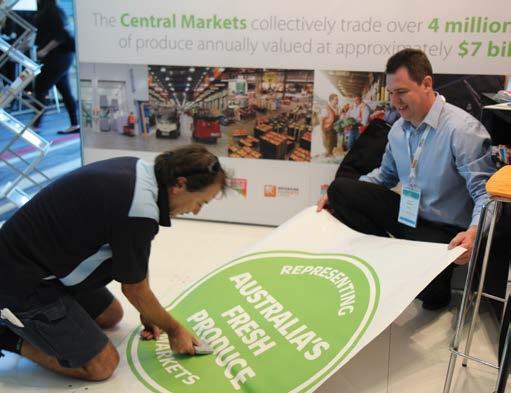
Brisbane Markets Limited, through its membership with the Central Markets Association of Australia, and Brismark, through its membership with Fresh Markets Australia, will represent Australia’s Fresh Produce Markets at Hort Connections 2017 from 15-17 May.
Hort Connections is the largest horticulture event on the industry calendar with the merging of two major industry events into one.
Brisbane Markets® is proud to be part of such an event, with both CMAA and FMA the trade show sponsors and event cohosts.
Read more about it on page 6.
It’s not often that I get to farewell two retiring staff members who have notched 100 years between them in service to the Brisbane Markets® community.
A warm and thankful farewell goes to Brismark’s Stephen Hunt, who has notched up 40 years in the Brismark Credit Service, and Brisbane Markets Limited’s Richard (Dick) Baptist who retires after 60 years, having started his career as a government Market Reporter in the Brisbane city markets.
Turn to page 21 for more details.
Expect to see more construction work on the Brisbane Markets® site in the months ahead with new warehousing and a multi-level car park set to be progressed. Take a look at our development plans on page 8.

Andrew Young, Chief Executive Officer, BML and Brismark
BRISBANE MARKETS LIMITED ABN 39 064 983 017
PO Box 80, Brisbane Markets®, Rocklea, Queensland 4106
e: admin@brisbanemarkets.com.au
w: www.brisbanemarkets.com.au
ADVERTISING AND EDITORIAL ENQUIRIES
The Editor, Brisbane Markets Limited p: 07 3915 4200 or 1800 631 002
e: admin@brisbanemarkets.com.au
DESIGN Effigy p: 07 3040 4343 | PRINT Buckner Printing p: 07 3865 9677

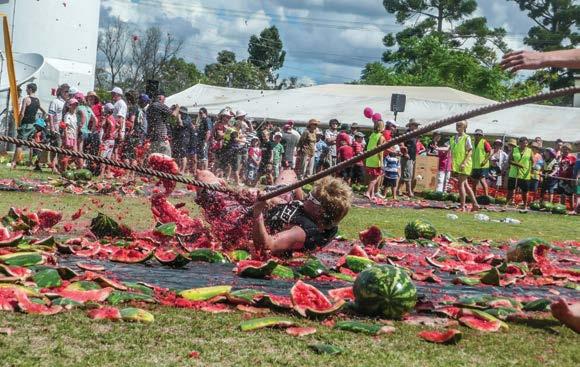

Brisbane Markets® Wholesalers joined more than 14,000 people to smash their way through a weekend of games, parades and entertainment at the Chinchilla Melon Festival in February.
About 22 tonnes of watermelon were used throughout the festival, with six tonnes of the best quality melons used for eating.
Plans are already underway for the next event, to be staged 14-17 February 2019.
Federal Minister for Small Business Michael McCormack toured Brisbane Markets® in early March, taking time out to speak with wholesalers about the importance of the industry and changes to the Horticulture Code of Conduct.
The Minister has one of Australia’s most diverse electorates, called Riverina, and knows a thing or two about fresh produce, with part of his NSW area an important Australian food bowl.
Take a look at pages 10-15 for an update on Mr McCormack’s discussions and the 1 April 2017 changes to the Code.
Olympian Alana Boyd dropped into the Brisbane Produce Market with a surprise for Brisbane Markets® CEO Andrew Young.
The former Australian champion pole vaulter and 2016 Rio Olympics athlete had signed and framed her Olympic uniform to thank the Brisbane Produce Market for sponsoring her to get to the games last year.
Ms Boyd, who placed fourth at the 2016 Rio Olympics, has played a pivotal role as an ambassador for the Your Local Fruit Shop campaign, aligning her health and fitness with the importance of eating fresh produce.



flashback to the 2016 Brisbane Produce Market Gala Dinner. Start planning your outfits for the 28 July 2017 event.
Start thinking about what you’ll be wearing on Friday, 28 July with the staging of the annual Brisbane Produce Market Gala dinner, a night that puts the fun and glamour into entertainment.
Plans are underway for dinner, band, and two headline acts with the event once again to be staged at the Brisbane Convention and Exhibition Centre.
Tickets will be released closer to the event. For more information, email admin@brisbanemarkets.com.au
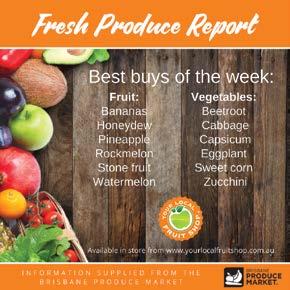
Ever wondered what the best buys are at Your Local Fruit Shop from week to week?
Check out the fresh produce report on Your Local Fruit Shop facebook page, along with a range of recipes, video and comments from other fresh produce lovers.
Stores are found throughout South East Queensland including Brisbane, Ipswich, Sunshine Coast, Gold Coast, Tweeds Heads and are now joined by Toowoomba, Gympie and Townsville stores.
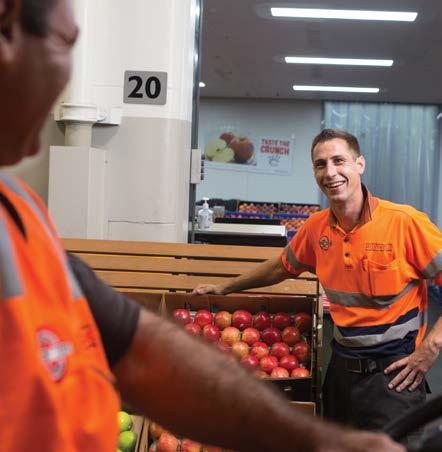
Researchers learn more about Central Markets
Helping hand for Aussie importers
Improving our reputation in Asia

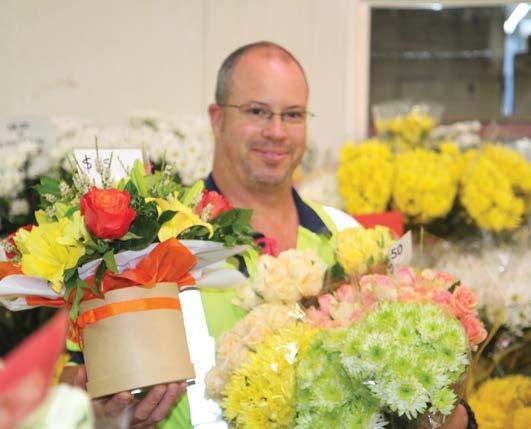
Brisbane Flower Market is preparing for its biggest day of the year with wholesalers already planning their flower stocks and arrangements for Mother’s Day on Sunday, 14 May.
The event is on the back of a successful Valentine’s Day, the second biggest day of the year, with more than one million flowers making their way to loved ones across South East Queensland via the flower wholesalers.
While men are the main buyers on 14 February, Mother’s Day includes everyone with both men and women lining up to buy colourful bunches for their Mum, making full use of the extended opening hours of the Rocklea based flower market.
Expect to see truckloads of chrysanthemums, pink roses, carnations and lilies this year with colour again the top priority when choosing a bouquet.
Brisbane Markets® has joined with the five other Australian Central Markets to partner with AUSVEG and Produce Markets Association Australia-New Zealand (PMA A-NZ) to stage the largest horticulture conference in this country’s history.
Brisbane Markets Limited and Brismark have joined the Central Markets Association of Australia (CMAA) and Fresh Markets Australia (FMA) to help stage Hort Connections 2017 in Adelaide, from 15-17 May.
The conference combines AUSVEG’s annual National Horticulture Convention and PMA A-NZ’s Fresh Connections to create an event that will attract the largest number of growers, supply chain members, government stakeholders and industry service providers seen at an industry event to date.
CMAA spokesperson, Angelo Demasi, said both organisations were looking forward to working with Hort Connections 2017 to stage an event that featured world-class speakers, an expansive trade show and unparalleled networking opportunities.
The Brisbane Markets Limited (BML) Board has announced a half-year result with a net profit after tax of $10.276 million.
The half-yearly report, reviewed by company auditors, BDO, and released in February, showed shareholders were paid 8.0 cents per share, fully franked.
BML Chairman Tony Joseph said the company had returned strong dividends to shareholders every year while maintaining its focus on site operations, maintenance, upgrading and development.
The half-yearly figures revealed a strong underlying growth in the operating profit of the Brisbane Markets® of 9.67%.
“The figures are satisfying and are showing that our strategic investment has again proven fruitful,” said Mr Joseph.
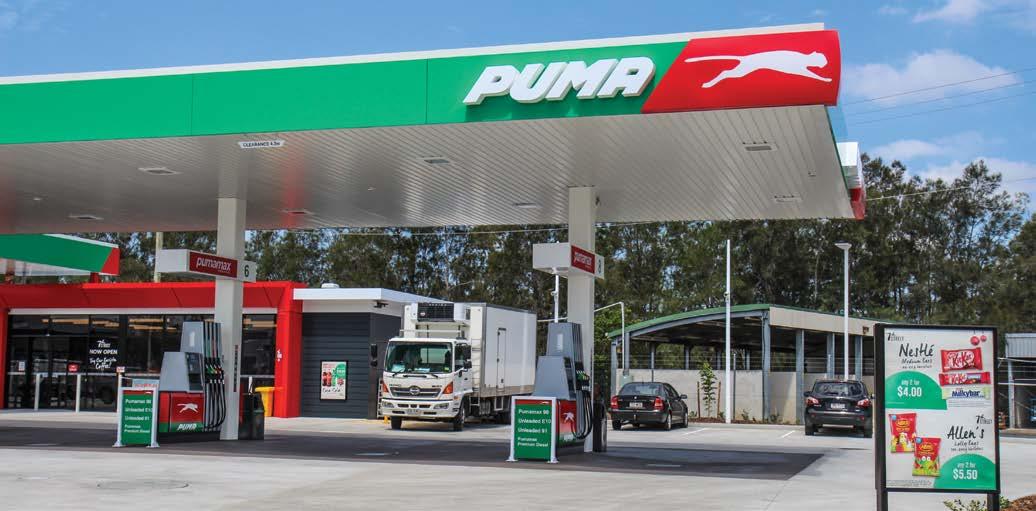
“Our continued capital expenditure was $5.1 million for the period and has included the completion of a new Puma service station fronting the Sherwood Road site.
“This has contributed to an increase in total assets of 2.65% since June 2016 to $302 million, with the group’s net assets increasing by 8.65% to $131.3 million for the same period,” he said.
Brisbane Markets Limited (BML) pulled together a “mud army” to help mop up Brisbane’s south after flooding wreaked havoc in the wake of Ex-Tropical Cyclone Debbie in early April.
BML CEO Andrew Young said it was fitting his staff members could provide support after volunteer workers were the first on the scene to assist after the Brisbane Markets®’ Rocklea site was inundated in 2011.
Much of the work was concentrated on the Logan area which experienced unprecedented river rises and flooding.

More than 600,000 tonnes of fresh fruit and vegetables pass through the Brisbane Markets® each year, valued at more than $1.3 billion.
It is the third largest of six Central Market in Australia with more than 50 primary wholesalers, one nut seller, two egg wholesalers and four flower wholesalers operating at the site, as well as an additional 100 support businesses.
Up to 4,000 people work or do business at the Brisbane Markets® on a daily basis. More than 7,000 growers supply produce for sale.

Suters Architects have been appointed to design two new warehouses at the Brisbane Markets® site, one that will change the look and purpose of a corner of the Brisbane Produce Market.
Works will soon get underway on the eastern end of Building D, where a café and offices once stood, to construct a new public toilet block and a 400m² warehouse.
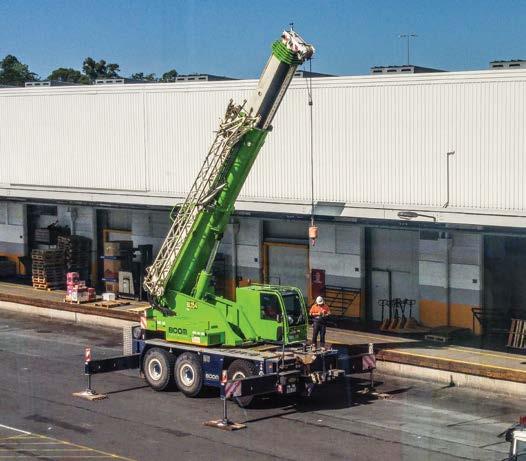
The cranes have rolled into the Brisbane Markets® since the start of the year, progressing a significant roof replacement project that began in 2016 to upgrade some of the buildings on the 53-year-old site.
The work includes roof sheeting replacement and repairs addressing wear and tear issues caused by severe storms and age.
The Brisbane Markets® was established in 1964 and progressively developed from an initial five buildings to nearly 40 buildings on its 77ha site, each maintained by a rigorous maintenance program headed by site owners, Brisbane Markets Limited.
The second is a warehouse design to rectify damage to Building N, which suffered significant structural damage during the devastating 2011 floods, with the majority of the building demolished since that time.
It’s not the only changes for the Brisbane Markets® in the year ahead.
Site owner and operator, Brisbane Markets Limited, is also set to progress construction of:
• a new LPG refuelling station next to Building R, at the back of the Markets, and
• a multi-level car park on land behind Building G2, which is the recently refurbished building situated on Sherwood Road, to the right of the Brisbane Market’s main entry.

We design and implement all facets of electronic security and MATV systems for your premises.
Dedicated to providing ongoing maintenance for existing fire protection systems and the installation and implementation of fire safety systems in new buildings.
Providing complete design assistance including traffic analysis, electrical requirements, complete lift specifications and field surveys for existing buildings.
Advance Global Elevators
Specialists in the furnishing and installation of new elevators (passenger and freight), dumbwaiters, escalators and residential equipment in new and existing buildings.






Our References
Advance Group of Companies is a multi-disciplined service and installation company with industry knowledge in fire, lifts and pumps.Actively trading for over 15 years, we service, install and maintain systems in over 3,000 establishments across Australia.
Advance Group of Companies has been entrusted to service and maintain a number of Local Councils, Hospitals and prestigious hotel locations for extensive contract periods.
Our experienced and qualified service technicians have fully equipped service vehicles ensuring that most issues can be immediately rectified and that our clients needs are met within a short response time.
Our staff undergo constant training and evaluations to be sure your investment stays operating at the same worldclass standard as it was installed.
We support teamwork. All our teams work together on each phase of the project to provide a seamless, integrated system that is simple to manage and easy to maintain. We base our company values in complete customer dedication; from the initial proposal and


Just weeks before the introduction of the 1 April 2017 Horticulture Code of Conduct, the Federal Government released its response to a 2015 review, with the wholesaling community welcoming the opportunity for a more balanced, commercial outcome.
It was a much anticipated release since the industry had waited more than a year for a response. A deadline was also looming with the 2007 Code due to end (also called “to sunset”) on 1 April 2017.
Fresh Markets Australia (FMA) Chairman Shane Schnitzler said wholesalers were relieved that the unnecessary and unworkable requirements of the original Code were being addressed.
“In the main, FMA supported the Federal Government’s initial
response to the 13 recommendations made by the 2015 Code Review Panel, but now the devil is in the detail of the new Code,” Mr Schnitlzer said.
“What we saw a decade ago was strong lobbying by various industry sectors to “punish” the wholesaling sector which resulted in overly prescriptive and anti-competitive regulation that hurt both grower and wholesaler trade relationships.
“We have again seen this occur with the intent to apply money penalties in the new Code, which is a massive maximum amount for Growers and Wholesalers of $54,000 per offence. This is harsh and onerous, when we are talking about what are generally small businesses with total turnovers of less than $15 million per annum.”
“This was the Government’s opportunity to produce a more even playing field to promote improved trade, to bolster transparency and to see a more cohesive relationship
between growers and wholesalers in what is a vastly more competitive landscape than ever before.”
Mr Schnitzler said the Australian Competition and Consumer Commission must commit to only applying the penalty measures in circumstances when there have been blatant and ongoing breaches of the Code.

The Australian horticulture industry is about to embrace a new regulation that has been hurriedly knocked together by Federal Government legislators over the past weeks to meet a 1 April deadline for its introduction.
The new mandatory Horticulture Code of Conduct, which regulates the way that growers and wholesalers are to trade together, was still the topic of urgent consultation and lobbying leading up to the Fresh Source publication date, with its introduction just days away.
It replaces an unworkable and inflexible piece of legislation that was introduced only on the wholesale industry a decade ago and was the subject of multiple reviews.
This feature takes a look at the Code’s journey and expected content, with the finer details yet to be released until its introduction.
WHAT IS A HORTICULTURE CODE OF CONDUCT?
It’s a mandatory industry code prescribed under the Competition and Consumer Act 2010 that sets out regulation for the way growers and traders (merchants and agents) trade in horticulture produce.
In other words, it’s the rules that growers and wholesalers must follow when they do business with each other.
WHO DOES IT APPLY TO?
It applies to Growers sending to Wholesalers (Traders), who may also be known under the code as: Merchants – wholesalers who buy fresh produce for the purpose of resale, and Agents – wholesalers who sell fresh produce on behalf of growers for a commission or fee.
WHO DOESN’T IT APPLY TO?
In the past, the Code didn’t apply to growers and traders who had signed agreements before the original Code’s introduction in 2007 but from 1 April 2017, all growers and traders will be covered. A 12 month transition period will apply.
Fresh produce wholesalers are the only on-sellers of fresh farm produce covered by the Code, meaning the big supermarket chains and other retailers, exporters, processes and those who deal in nursery products (trees, plants, seeds and flowers) don’t have the same onerous legislation on them.
The retail chains have their own Code but it’s voluntary and looks nothing like the Horticulture Code of Conduct.
In the early and mid-2000s, there was concern over the growing emergence of the retail chains on the way they dealt with suppliers. With an approaching Federal election and some lobbying from grower groups, an inflexible mandatory code was imposed on the wholesaling sector but not the retail chains.
The original Code disappointed all sectors of the horticulture industry because of its prescriptive regulation, which lead to numerous reviews and numerous debates.
It is only now that the original Code has completed its 10-year cycle that the new Code was introduced.
Consultation included a review in 2015, conducted with a grower on the two-man panel but no wholesaler representative, with extensive public consultation revealing the extent of the original Code’s failures. The Federal Government progressed with further consultation from October 2016. The Code was not released under 23 March 2017.
Fresh Markets Australia (FMA), the national organisation representing each of the six Market Chambers, has spent over a year providing feedback to and working closely with the Federal Government to assist it to understand the impact of many of the rulings it had planned to enforce, in the hope of producing a fairer, more workable piece of legislation for all.
FMA and the Central Markets landlords through their national body, Central Markets Association of Australia, have been actively involved in discussions with grower associations, politicians, retailers and gathering key data throughout the Code debate for more than a decade.
The Federal Government has introduced nine areas that appear in the 2017 Horticulture Code of Conduct:
• Better guidance to make it easier for traders and growers to comply with the Code.
• Ensuring that growers and traders have a fair, binding horticulture produce agreement in place to support a more productive and fair trading relationship.
• Allowing the Australian Competition and Consumer Commission to better identify and rapidly respond to breaches to further support compliance with the Code.
• Removing unnecessary regulation where appropriate and allowing growers and traders greater flexibility in the trading relationship.
There are four main areas that Australia’s wholesaling sector had concerns about when working with the Federal Government in its drafting of the 2017 Horticulture Code of Conduct.
These were:
The introduction of the “good faith” clause, that includes penalties for non-compliance, is a new addition which breaks new ground in terms of the great legal uncertainty.
This is because of conflicting judicial decisions and the level of political over-reach when considering the introduction of increased levels of government red tape.
There is little legal guidance available when applying the common law principle of “good faith” to commercial contracts.
MAXIMUM
The industry is comprised of predominantly small business, so
to apply maximum penalties of up to $54,000, as in other Codes that address multinational/corporate operations, doesn’t seem suitable in the horticulture environment.
Lower penalties, which are applied to all sectors (and not just to traders) for misdemeanors are appropriate in extreme cases where there has been systematic, repeated and blatant breach of the Code.
The umbrella approach to record keeping will impose additional administrative and red tape requirements on one sector of the industry. This factor is already facing significant competition from other supply chains in the same industry who have no similar mandatory requirements.
It is agreed that records must be kept but they should be defined to just those that are necessary.
With the new Code introducing such big changes to the sector, an amnesty period of six to 12 months was argued for, to allow the updating
The horticulture industry has until 1 April 2018 to be fully compliant with the new Horticulture Code of Conduct.
The Australian Competition and Consumer Commission (ACCC) said the 12-month transition period would allow those with written agreements to put new documentation in place.
This includes those who had agreements in place before 15 December 2006 which were not covered by the previous 2007 Horticulture Code of Conduct.
Some parts of the new Code apply immediately to all agreements and include the obligation to deal in good faith and the dispute resolution procedure.
Detailed obligations and fact sheets are available on the ACCC website.
For more information, contact your industry association or visit the ACCC website at www.accc.gov.au/business/ industry-codes/horticulture-code-of-conduct
of existing Terms of Trade and Horticulture Produce Agreements. This was particularly important for growers who are seasonal in their dealings with wholesalers and who may not prioritise the signing of new documentation resulting in possible monetary penalties for the parties involved.
The Horticulture Code Review Panel recommended that the Code should include a “deeming clause”.
This would mean that a grower who had been provided with a Trader’s Horticulture Produce Agreement (HPA), who had not executed and returned it but continued to supply produce to the Trader, would be “deemed” to have executed the HPA, thereby ensuring Code compliance for both parties.
The position was supported by the wholesaling sector and many Growers. However, the Federal Government rejected the recommendation.
We provide smart and reliable solutions to collect recover and recycle paper and cardboard into valuable resources For information on best practise waste management solutions, contact SUEZ today

To put the new Horticulture Code of Conduct in perspective with other codes in Australia’s trading landscape, the following shows how meaningless it was for Federal Government legislators to gain rulings of precedent from their use.
A COMPARISON OF THREE CODES AND THEIR SECTORS
Code of Conduct (mandatory)*
Code of
and Grocery Code (voluntary)@ Supermarkets – food and grocery retailing
* IBISWorld F3605 – Fruit and Vegetable Wholesaling in Australia, January 2017
^ IBISWorld X002 – Franchising in Australia, January 2017
@ IBISWorld G411 – Supermarkets and Grocery Stores in Australia, January 2017
The wholesaling sector of the fresh produce industry is only 7-10% the size of the other industries where regulations have been introduced. While there is little in common with the Franchising Code, it could be used as a guide, at best, but not a precedent.
The market power of the retail chains has been repeatedly raised as an issue within the food and grocery industry, and it remains one of the major unresolved issues for suppliers and competitors within the industry.
The Minister for Small Business, Michael McCormack, is one of numerous politicians who met with Fresh Markets Australia representatives over the past 12 months in the lead up to the drafting of the 2017 Horticulture Code of Conduct.
His visit to the Brisbane Produce Market in March gave the Minister and his team a greater understanding of the sheer size and volume of transactions occurring within Australia’s Central Markets and the importance of getting the new Code right.
The Minister commented on the fresh produce industry’s “commonsense submissions” made in the drafting of the Code and noted its concerns with four areas of the Code draft that required more work.
Traders within the fresh produce industry are predominantly small businesses, with gross sales turnover of less than $15 million annually and low margins. There are a small number of large wholesaling entities with sales turnover over $100 million annually. Accordingly, the examples which exist highlight that while there may be justification for a Code to give guidance to the fresh produce industry in relation to preferred commercial practices, a prescriptive Horticulture Code of Conduct approach with substantial penalties for breaches would be too heavy handed when considering the turnover of individual traders.
The 2017 Horticulture Code of Conduct comes at a time where there is growing competition from other sectors who are not lumbered with prescriptive legislation or many of the challenges the Central Markets face on a daily basis.
IBISWorld (January 2017) reports that the growth domination of the major supermarkets has challenged the industry with growers bypassing the wholesale sector.
Supermarkets subscribe to a voluntary industry Code which contains no penalty provisions and which imposes no legal requirements around product rejections, dispute resolution or payment times. Other retailers or food service operators (e.g. cafes etc) who purchase product directly off growers for resale to consumers are subject to no similar regulation at all.
The fear for domestic growers is that the more prescribed the legislation is on commercial arrangements with the wholesaling sector, the more attractive importing will become to other companies not willing to go through onerous trade negotiations.
Some wholesalers, who are also growers, provedores and processes, have a legal mine field to negotiate so that they are still within the Code despite selling and moving fresh produce among their own departments.
In response to some of the issues, particularly supermarket bypass, many wholesalers are looking towards other markets, such as food service businesses.
IBISWorld predicts the industry’s greatest opportunity will come from the demand of food-service outlets and the ongoing health consciousness that has encouraged cafes, restaurants and takeaway food outlets to alter menus to include healthier options, thereby increasing demand for fruit and vegetables.




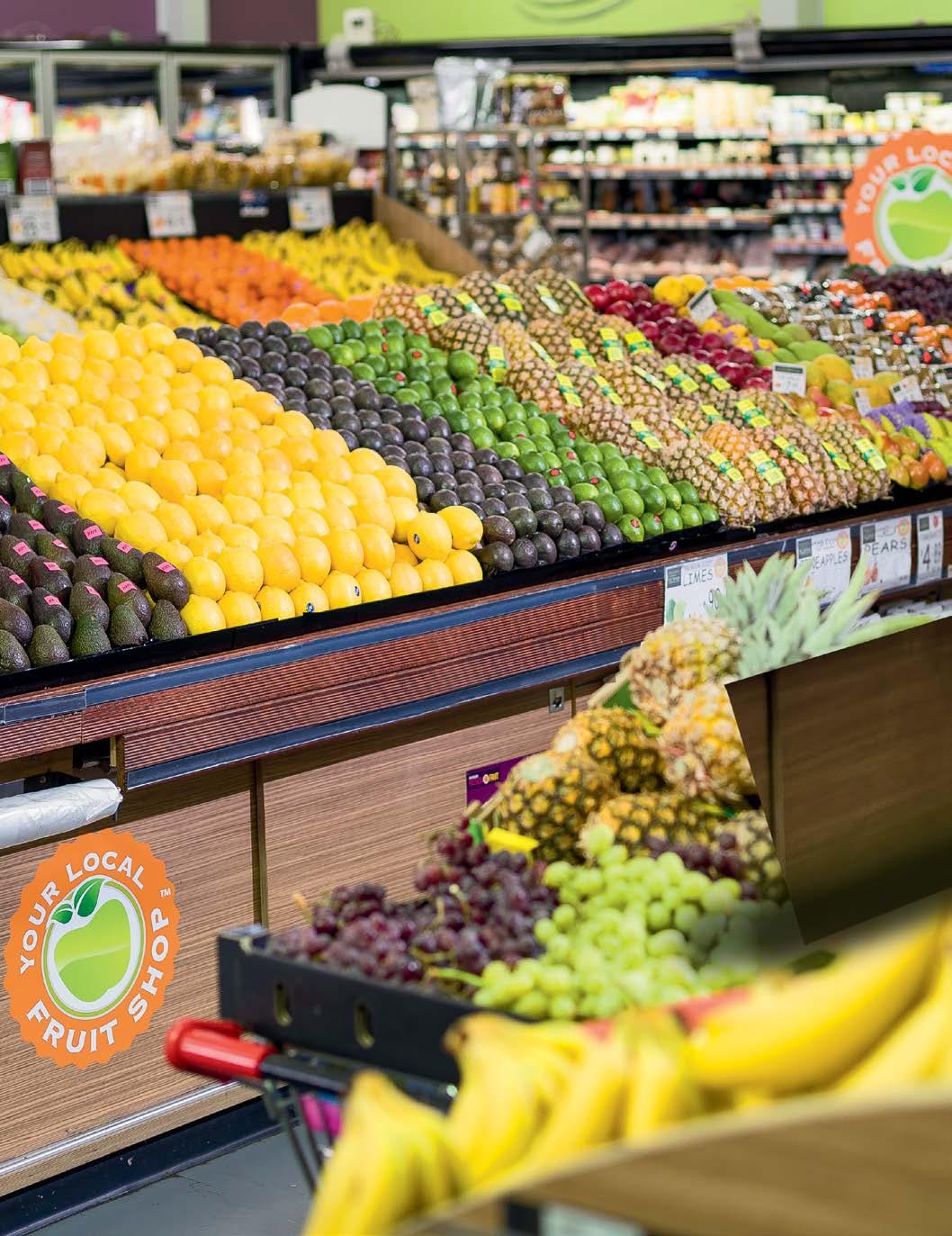
The first Your Local Fruit Shop television campaign aired across the Channel 7 network in the lead up to Christmas and it is still seeing Your Local Fruit Shop (YLFS) owners reap the rewards.
Based on a campaign produced for Western Australia’s “Fight For Flavour”, the 30-second commercial reinforced the YLFS message of the benefits of buying local.
The campaign was extended with a prominent billboard advertisement in Brisbane’s inner city along with instore promotions including badges and signage within YLFS stores.
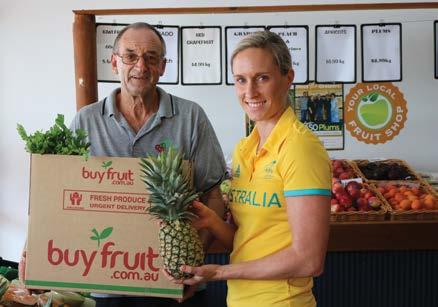
Brisbane Produce Market’s BuyFruit business recently welcomed Keperra-based Supa Fruta as its newest member to the network, with nine stores now delivering fresh produce across South East Queensland.
BuyFruit is an online fresh produce delivery service, helping Your Local Fruit Shop store owners tap into the lucrative online ordering business.
BuyFruit’s free delivery offer is still running, for deliveries over $30 – so there’s never been a better time to order your fresh fruit and vegetables online.
Deliveries are available throughout Brisbane, Gold Coast, Toowoomba, Ipswich and Sunshine Coast and can be ordered from www.buyfruit.com.au
Olympic pole vaulter and Your Local Fruit Shop (YLFS) Athlete Ambassador, Alana Boyd, visited YLFS retailer Maleny Harvest to meet and greet customers.
Hinterland locals enjoyed hearing about the Olympian’s experience in Rio while participating in in-store giveaways and sampling fresh produce.
Ms Boyd has visited a range of YLFS stores in the ambassador’s role, encouraging Queenslanders to eat their fresh fruit and vegetables for a healthy lifestyle.


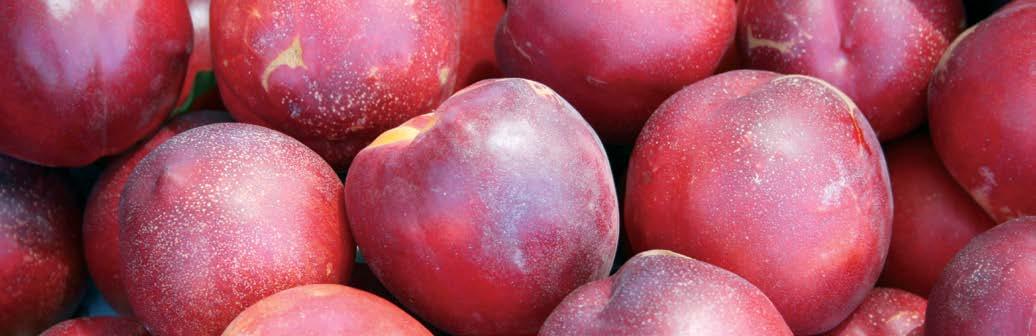
New Bowen Gumlu Growers Association (BGGA) Industry Development Officer has experienced a challenging welcome to her new role with Cyclone Debbie devastating up to 20% of the region’s $450 billion horticulture industry.
Cherry Emerick was appointed to the role in February bringing with her years of hands-on farm experience form one of Queensland’s most recognised bean and corn growers.
Her North Queensland Vegetable IDO role is funded by Horticulture Innovation Australia as part of the National Vegetable Extension Network.
It was a big role to step into even before the arrival of Cyclone Debbie, with Mrs Emerick’s area taking in North and Far North Queensland, including Bowen, Gumlu, Burdekin and Mareeba regions.
The role is part of a national network of IDOs based in Australia’s key vegetable growing regions, helping growers gain access to and implement research and development projects through workshops, tailoring information to a grower’s needs and being a key contact within the industry.
Mrs Emerick works from the BGGA office but will be running up plenty of kilometres, supporting vegetable growers over the coming months.
Growers in Australia’s largest winter cropping region have taken a blow of more than $100 million after Cyclone Debbie ripped through the Bowen Gumlu region in March.
Bowen Gumlu Growers Association (BGGA) Industry Development Officer Cherry Emerick said up to 20% of the regions seedlings were planted in readiness for the season in what is a $450 million industry that feeds the nation with vegetables from May to November.
Mrs Emerick said the community had already begun to rebuild after sheds and equipment were damaged, plantings destroyed and top soil was washed away.
“Consumers won’t feel the immediate supply and price effects until at least May when the first of the crops would have been due to hit the local fruit shop shelves,” Mrs Emerick said.“What we can hope now is that our growers, and the 3,200 skilled and unskilled workers who are employed on our farms during the planting and harvesting season, can get back to some normality as soon as possible.”




By Bree Grima, Managing Director, Bundaberg Fruit and Vegetable Growers
The Bundaberg Region has experienced both drought declarations to ex-tropical Cyclone Debbie in the same month.
Growers have been struggling with reduced water allocations and this has affected the supply of some producers.
Ex-tropical Cyclone Debbie brought over 250mm of rain to the region and while this was a welcome relief a number of producers have found it difficult to access their blocks for harvest.
Many sweet potato producers have resorted to full manual harvesting to get through the wet times and recently planted strawberries are struggling. Luckily the next staggered planting will do well.
Our thoughts are with our North cousins as they assess the damage to crops and infrastructure and we call on Government assistance to help them get back on the land.
Bundaberg Fruit and Vegetable Growers (BFVG) has also banded with the local Canegrowers organisations in Bundaberg and the Isis area to buy a temporary bulk water transfer to assist growers that have reduced or nil water access.
Through this consortium, a deal was
negotiated that has resulted in a fair price of water per megalitre with no Part A charge and it is hoped that this will also provide some relief.
In addition to the hot and dry conditions the area also experienced an influx of pest pressure over the Christmas period and BFVG is in the process of investigating if emergency use permits would be a viable option during such times.
The region is continually working towards integrated pest management as its response to and for the prevention of pest pressures however, combined weather conditions occasionally increase these levels unexpectedly.
While struggling with a number of issues, the region is continuing to supply large quantities of quality fruit and vegetables with capsicums hitting the market a little earlier this year.
Bumper lychee crops were reported and these growers, if not harvesting mangoes and other commodities, are now enjoying a well-deserved rest.
The region is increasing its overall production of a number of boutique commodities including berries, figs and dragon fruit with the number of crops grown in protected cropping situations also on the rise.
Things to know about the Wide Bay area:
• The region is known as the salad bowl of Queensland.
• The area grows more than 30 different types of fruit and vegetables, herbs and spices.
• The region is estimated to have an annual farm gate value of more than $500 million.
• Horticulture injects over $1 billion into the local economy and plays an integral role in the nation’s food security.
Source: Bundaberg Fruit and Vegetable Growers.
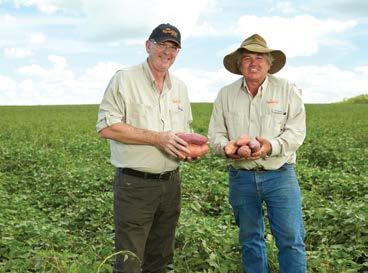


By Brismark General Manager Gail Woods
Growers/packers, importers, primary and secondary wholesalers and retailers’ alike selling pre-packaged fruit and vegetables have to comply with trade measurement law.
Give your customers short measure and you could face some hefty fines and harm your reputation. This applies at every point across the supply chain.
You must make sure that your business has systems in place to achieve compliance.
What’s more, you need to be able to prove that the produce you sell is correctly labelled and the quantities are accurate.
That means you need to make certain that your staff, systems and equipment all comply and that you can demonstrate that internal quality control systems are in place.
As part of a supply chain, there is going to be a degree of interdependence between you and the other links in the chain, including your suppliers.
Regular communication with, and feedback to your suppliers is important to make sure they are aware of their legal obligations and will help ensure the produce you sell complies.
Trade measurement law is administered nationally by the National Measurement Institute (NMI), which is a division within the Federal Department of Industry, Innovation and Science, is Australia’s peak measurement body responsible for biological, chemical, legal, physical and trade measurement.
NMI is currently running the ‘Harvest to Home’ program ending in June this year with the aim to
help support compliance within the industry and ensure all stakeholders are aware of their responsibilities. They want to reduce areas of noncompliance.
The NMI tell me that the program will include inspections at all levels of the supply chain, from initial place of packing through to retail. There is a likelihood that your businesses may be visited by auditors.
Nationally, the program aims to undertake 1,400 visits to traders, test 1,700 measuring instruments in use for trade, test 11,000 pre-packaged article lines and undertake 200 secret shopper trial purchases to determine compliance. NMI trade measurement inspectors visit businesses in response to complaints or queries from consumers, or as part of a compliance inspection program. Educating traders and making businesses aware of their rights and obligations under trade measurement legislation is the first step in the compliance process.
For continued breaches, further compliance and enforcement action may be taken where appropriate. They say that trade measurement laws are not here to weigh you down; on the contrary. They are there to protect all parties in the transaction chain, from suppliers to consumers and everyone else in between.
These laws ensure operational efficiency and provide confidence that transactions are based on fair measure.
For more information contact 1300 686 664, or email infotm@measurement.gov.au. Visit NMI website, www.measurement.gov.au for more information about trade measurement.

Be aware of your responsibilities under the National Measurement Act 1960 and the National Trade Measurement Regulations 2009.
• Most fruit and vegetables are sold by weight. Some pre-packaged goods may be sold by count or bunch.
• Packages of fruit and vegetables must be marked with the correct measurement.
• Packages must be marked with the name and street address of the packer.
• Packages must not contain less than the stated amount at all times prior to sale. If the item is likely to lose weight/volume over time, the packer must make allowances for such losses.
• Packages must be measured by ‘net’ weight. In other words, the weight of the packaging should not be included in the marked weight.
Brismark has said farewell to one of its longest serving employees, Stephen Hunt, after 40 years’ service.
Mr Hunt began his career in the Brismark Credit Service in the 1970s, where he would broadcast the daily market prices on radio, before progressing to a range of roles, including Senior Credit Control Officer and Debt Collection Officer.
His booming voice and big personality has seen him emcee a range of Brisbane Market’s events including filling in for a late auctioneer at the 2014 Mango Auction.
Richard (Dick) Baptist, one of the few Brisbane Markets® employees who began their career in the Brisbane city markets, based in Roma and Turbot Streets, will retire in April after 60 years.
Mr Baptist began his career as a Queensland Department of Agriculture and Stock Market Reporter in 1957, rising to the role of Chief Markets Reporter before the service was abolished in 1994.
The same year, he took up a role with the Brisbane Market Trust as a Car Parking Officer and later became a Brisbane Market Officer with the Brisbane Markets® Corporation, and from 2002 Brisbane Markets Limited.
Mr Baptist is known for his passion for golf and is a regular on the green, representing the Brisbane Markets® at numerous tournaments or simply teeing off for pleasure.


Biosecurity Queensland has confirmed a second case of cucumber green mottle mosaic virus (CGMMV) in Bundaberg.
The virus was found at a commercial cucumber greenhouse that has no links to the previous detection in four greenhouses owned by one firm, or the previous case in Charters Towers.
The detection was made during testing of samples collected as part of increased surveillance in the region, in a crop that did not show any symptoms consistent with CGMMV.
Meanwhile, in a significant blow to the vegetable industry in Western Australia the Tomato Potato Psyllid has been found in three regional locations outside of the Perth quarantine zone.


Country of origin labelling became better defined in February with the Senate passing reforms to make it easier to determine when to use “made in” and “packed in” Australia claims.
“Grown in Australia” is for food where 100% of the ingredients are Australian grown and “Product of Australia” is for food where 100% of the ingredients are Australian and all major processing has been done in Australia.
The system, featuring the kangaroo logo, includes a sliding bar scale to show where products have originated and what percentage is Australian.
Imported products will no longer be able to claim “made in Australia” status just because they were
A second university study has found that young adults who increased their fruit and vegetable intake have reported a boost in their psychological wellbeing.
The University of Otago findings found that their sample group, aged between18 and 25, showing significant psychological well-being, with boosts in vitality and motivation from eating uncooked fresh produce.
Last July, University of Warwick and University of Queensland scientists also linked fruit and vegetable intake — up to eight total serves a day — with a boost in mood over a two-year period.

processed or packed here. Imported foods that are only sliced, canned, reconstituted or repackaged here cannot make the claim.
Businesses have a year and a half left to adopt the new system.
Add in your text here
in your text here
Overseas holiday makers working in horticulture are still making the news with The Fair Work Ombudsman encouraging horticulture businesses to provide a written piecework agreement for backpackers they would employ.
The agreement would ensure the backpackers to pick enough to earn 15% above the hourly minimum.
The agency said that it fully recognised the importance of piece rate arrangements to the horticulture sector but warns that some labour-hire companies have not been doing the right thing by their work force which could leave the grower also breaking the law.
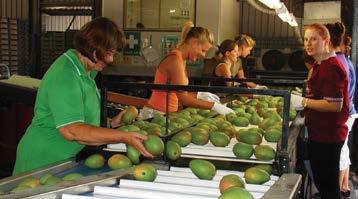
Produce Marketing Association AustraliaNew Zealand has moved its Yarra office to Docklands, in Melbourne’s Bourke Street. The new address is 203B, 757 Bourke Street, Docklands, Melbourne 3008.
Key contacts are: CEO Darren Keating on d.keating@pma-anz.com, and Marketing Communications Officer Renee Harrison at r.harrison@pma-anz.com
The Australian Bureau of Agricultural and Resource Economics and Sciences (ABARES) has begun the 10th Australian vegetable-growing industry survey, to gather information to help Australia’s $3.4 billion vegetable growing industry manage challenges and plan for the future.
The survey will collect data about production, financial performance and socio-economic characteristics of approximately 300 vegetable-growing farms, as part of ABARES’ ongoing research into how the industry adapts to changing environmental and market factors.
The 2017 survey is expected to be completed by May, with the results released in September 2017.
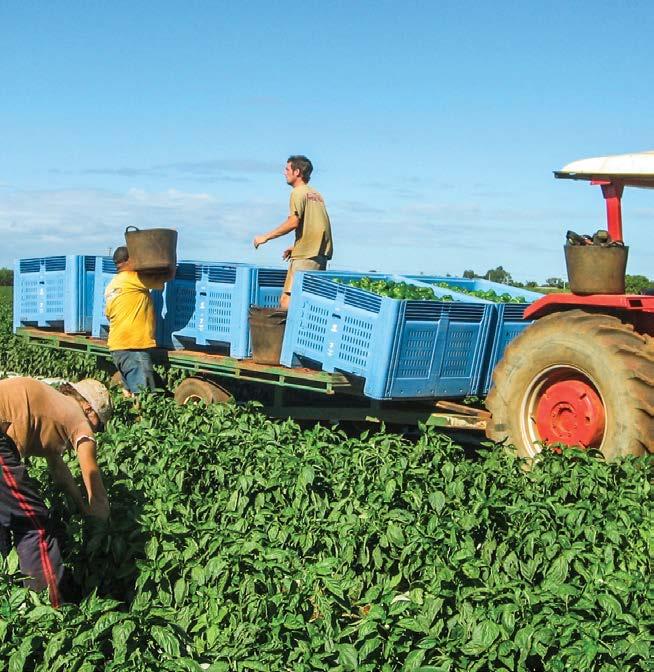
It’s not just the big names of netball who will have the spotlight fall on them at elite international matches in the future with Aussie apples securing a lucrative three-year $600,000 contract with Netball Australia.
The deal, signed by Horticulture Innovation Australia, includes the supply of apples to players at all levels plus television advertising, high-profile netball player ambassador activities, website promotion and match signage.
Australia’s wholesale markets will be under the international spotlight from 23-27 October 2017 with the staging of the World Union of Wholesale Markets Congress in Melbourne.
The international conference, held once every two years, will attract up to 300 delegates and focus on topics such as the changing retail landscape to new technologies and strategies for the future.
The last conference held in Australia was hosted in Queensland in 1989.




By Australian Horticultural Exporters Association Chairman, Joe Saina
The Australian Horticultural Exporters Association (AHEA), which has been based at the Brisbane Markets® for two years, represents fresh produce exporters from all around the country.
In the past year, the association’s mandate has been widened further and now formally includes the representation of fresh produce importers as well.
Some of the main areas that it concentrates on include:
• Market access negotiations (both technical and non-technical).
• Policy changes within the Commonwealth Department of Agriculture and Water Resources (DoAWR), including export fees and charges, Authorised Officers inspection model and the upcoming withdrawal of Off Shore Pre-clearances from USA, New Zealand and China.
• Collaborative work with the Department of Foreign Affairs and Trade (DFAT) on increasing Australia’s profile in the Asia Pacific region, specifically in relation to fresh produce supply.
• Working with various industry bodies including Horticulture Innovation Australia and commodity peak groups to assist with trade related issues and to explore trade opportunities.
• Representing exporters with the Federal Department of Transport on the up-coming change to airline cargo security that will impact the industry significantly.
Last year Australia exported approximately $1.16 billion in fresh fruits and vegetables which is the best year on record.
The positive effect to the economy and industry is measured not only on balance of trade numbers, but also in the viability of rural and regional Australia.
Five international agriculture academics learned more about the Central Markets system with a visit to the Brisbane Produce Market in March as part of the Queensland leg of their Australian study tour.
The John Dillon Memorial Fellowship researchers from South Africa, Malawi, Myanmar, Vanuatu and the Philippines were hosted by Queensland Department of Agriculture and Fisheries.
No doubt the fall in the Australian dollar has a significant impact on the competitiveness of our fresh produce but there are several other factors that lead to this type of success including;
• Consistency of quality
• Consistency of supply
• Food safety – clean and green
• Geography – we are close to Asia
• Market access – lowering of quarantine barriers
We must remember that if we want access to off shore markets, then we need to be prepared to give access to our market as well.
With the fundamental science relating to quarantine catered for, we need to negotiate mutually beneficial bilateral arrangements to continue industry growth.
To learn more about AHEA, contact the office on 07 3379 4983 or visit www.ahea.com.au
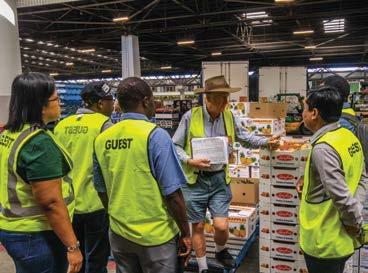

Australian fresh produce importers dealing with the lucrative Chinese and Vietnamese markets are being offered a helping hand to address supply chain issues that have long tied up resources.
The Australian Horticultural Exporters Association (AHEA) has been awarded a grant from the Department of Agriculture and Water Resources under the Agriculture Trade and Market Access (ATMAC) program to address supply chain issues.
The project – ‘Bilateral Trade Facilitation through import Value Chain Development and Capacity Building’ aims to support bilateral trade participation with Vietnam and China.
AHEA CEO Dominic Jenkin is calling on Aussie importers wanting to improve the way they do business to sign up for the project that offers a tailored intervention.
Fresh produce importers interested in participating in the project can contact Mr Jenkin on 0423 394 476 or email dominic@ahea.com.au
An Australian public-private partnership has announced a $16.5 million strategy to help improve the country’s reputation for delivering premium produce to Asia
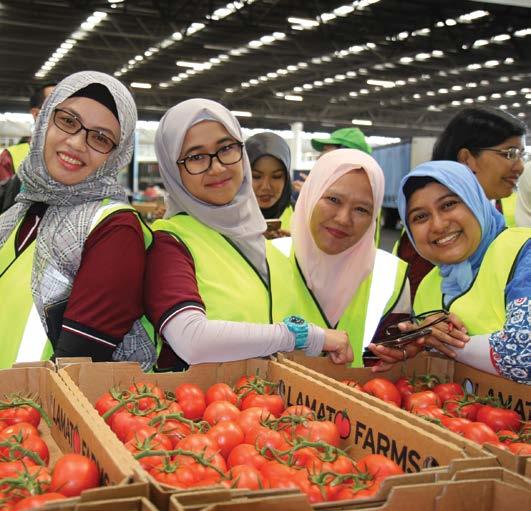
More than 800 Indonesian agriculturalists applied to be part of a 27-strong group to tour Queensland farms and the Brisbane Markets® in March as part of a University of Queensland (UQ) and Department of Foreign Affairs and Trade scholarship program.
UQ academic Dr Malcolm Wegener hosted the four day farm visit, which included the Brisbane Markets® tour, as part of the Agriculture: Productivity, Networks and Globalisation for Dryland Farming Scholarship program.
Horticulture Innovation Australia Limited (HIAL) has partnered with the Queensland Department of Agriculture and Fisheries (QLD DAF) to announce a four-year project to explore a ”tightening of export operations along all stages of the supply chain”.
The initiative will monitor a range of elements including the way produce is packed, how it is stored, and assess how to shorten the time from picking to arriving on supermarket shelves.
HIAL Chief Executive John Lloyd said the initiative would ensure end-buyers were getting the best fruit, vegetables and nut products possible.
“This is an exciting time for Australia’s horticulture exporters. It’s no secret Australian produce is popular in Asian markets because it is recognised as high-quality and safe with a strong aesthetic,” he said.


By Sal Trujillo, Brisbane Markets Limited Human Resources Manager
As social media (i.e. Facebook, WhatsApp, Instagram, Twitter, and LinkedIn) continues to evolve, organisations are embracing the opportunities by incorporating social media into key functions of the business including communication, recruitment and selection, branding and marketing.
However, social media does also pose a level of risk to organisations as employees continue to use such technology.
Consider the following potential issues that social media can bring to your organisation:
• Bullying and Harassment –Some employees may use social media to voice their views and frustrations with work, colleagues or managers which could constitute bullying and harassment.
• Using social media during work hours – Given that social media does give people silent access to users, some employees may become accustomed to accessing their social media while at work resulting in less productive time.
• Live Stream Videos - Employees may upload/broadcast live videos of commercially sensitive activities, or material which
could bring the organisation into disrepute.
• Damage to the organisation’s reputation – Employees may post comments, photos or videos on social media which identifies them as an employee of your organisation which could in turn affect your company’s reputation.
• Employee’s misperception – Some employees may lack an understanding of the link between their posts on social media and how it can impact on their relationship with their employer. Some employees may believe that their social media account is completely separate and/or might have the perception that because they upload a post outside of work hours it will not impact on their employer.
To mitigate these risks associated with social media, employers can introduce the following initiatives:
1. Implement a Social Media Policy – Organisations need to develop and introduce a robust social media policy covering employers’ expectations, examples of acceptable and unacceptable behaviour, link between employee’s comments on social media and their employment as well as consequences for any breach of the policy.
2. Provide Training – Organisations need to invest in training their employees on the expected
behaviour surrounding social media. Employers need to be able to demonstrate that all employees have been made aware of the social media policy and given guidance on how to apply it at work and outside work hours.
3. Review and update other Human Resources Policies – Employers should review all other relevant policies and ascertain that a link exists between the social media policy and the Code of Conduct and Workplace Bullying policy.
4. Restrict Material posted on Social Media – Organisations need to have a restriction either in the contract of employment or through a workplace policy to prevent employees from posting comments which may have a detrimental effect on the employer.
5. Communication – Organisations need to keep communication open with their employees to continue to support and educate them.
As social media continues to evolve, organisations have an increased need to keep abreast of such technological advancements to remain competitive and to be able to adopt a proactive approach in mitigating any associated risks.

By Andrew Malins – Affinity Accounting Plus
There’s a lot of hype about innovation, new technologies and the so-called “information age”.
Google and Facebook can supposedly predict things about us that we don’t even know about ourselves.
The internet functions in a way to keep feeding us information which either confirms our views or predicts our needs in order to advertise to us.
Social media platforms give us unprecedented access to “broadcast” our views on every matter of interest whether that comment be positive, negative or “trolling”.
It occurs to me that far from technology giving people more information and freedom, in many ways it actually limits us.
Does all this “information” we have access to actually improve the decisions we make in our lives or is it really just infotainment?
It’s become virtually impossible to tell the difference between reliable information and fiction.
You and I may not be remotely influenced by anything Kardashian related but if we aren’t careful we can be distracted by other things which are equally as meaningless.
We are spending more time looking at screens, replying to emails, texts etc than we ever have before, but are we actually improving productivity?
In your financial life, it’s important to understand and harness technology that is useful to your business or your finances, however, being distracted by all the “noise” that invades our lives through today’s technology is ultimately counterproductive.
Most of the noise is there to attract our attention and ultimately sell an idea or product to us, so while there may be an element of truth in the noise, it’s still just a distraction if we have already planned our strategy appropriately.
Having a well-designed strategy which you stick to, and even enjoy the journey of, is a far better way to experience a lifetime of achievements than chasing the latest trend or idea.
My advice is to think carefully about your (financial) life, set yourself a plan with regular review and reflection and then stick to your plan.
Onions Australia has received some good news from researchers in the USA with onions in a person’s diet being linked to helping people with stress have a better night’s sleep.
Current guidelines recommend that adults should aim to get between seven and nine hours sleep each night for optimal health and well-being. However, around one in three of us fail to meet these recommendations, particularly when we are stressed.
The University of Colorado Boulder found that eating chicory, artichokes, onions, leeks, and some other vegetables create good bacteria in the gut, and help with brain function and rest.
Onions are part of the allium family of vegetables and herbs, which also includes chives, garlic, scallions and leeks.
Other possible health benefits of consuming onions include lowering the risk of several types of cancer, improving mood and maintaining the health of skin and hair.

By Roderick Glass, Casual Academic, University of Queensland and Principal, Systems Agriculture.
Family is a fundamental piece in our horticultural puzzle.
In a recent nationwide study, family rated:
• below the importance of our supply chains and marketing.
• above most indicators including profitability and business growth.
If we break this effect down even further to small, medium and large businesses across all of food, family ranked only third behind information and planning.
Family both inside and outside the business are crucial to our success.
We hear about business succession all the time yet many of us do not take the time to sit down and work out what this means for us.
We never take the time from the day to day pressure to think about, plan and act on our intergenerational growth.
The planned injection of youth into our businesses improves productivity, profitability and in many cases introduces energy and passion into our business.
Nobody likes to think about it, but it’s inevitable that one day you’ll leave your business.
Whether you decide to sell up, retire, leave due to health reasons or you just want to explore, it’s important that you plan for that day.
A succession plan outlines who will take over your business when or if you leave.
Significant difficulties arise when the business is not strategically, tactically, operationally, financially and personally ready for this change.
These difficulties range from partial or total loss of assets or more importantly the fragmentation of families.
A good succession plan will help your business transition smoothly to the new owner while retaining the lessons of the past.
By planning your future early, you can maximise the value of your business and help it to meet future needs.
By building new skills into your business you can enable this process.
Talking about succession well ahead of retirement is probably the best thing you can do to avoid family conflicts and to make sure your family wealth ultimately ends up where you want it to.
According to recent research, less than 50% of fresh food enterprises have started to discuss succession, let alone prepared an effective plan.
We all know succession is a complex and emotive issue.
Succession is often considered easier to ignore than to address.
It is becoming a critical issue for fresh food enterprises with the record numbers of baby boomers retiring, the growth in business asset values and the rise in the number of relationships breakdowns.
The easiest option is to prepare. Not preparing has significant consequences and can be devastating for business and heart breaking for families.
Taste, health and ease of preparation are the strongest triggers for consumers to buy sweet potatoes, according to the latest Project Harvest Monthly Tracker.
The annual Australian Bureau of Agriculture and Resource Economics and Sciences (ABARES) Outlook conference in March reports the gross value of Australian farm production will ease in 2017/18 before declining to $59.6 billion in 2020/21.
However, ABARES forecasters noted that overall farm production values will remain comfortably above the current five-year average, despite the decline.

Great Ocean Road Walk | 7-13 September 2017


and join me for an inspiring adventure, raising funds for a cause that’s important to all of us - diabetes. I hope to see you on the trail!"
Michelle Trute - CEO
Contact the fundraising team to find out more or register.
Call 07 3506 0999
Email fundraising@diabetesqld.org.au
Visit website www.diabetesqld.org.au
100
The number of kilometers to trek on the Great Ocean Road Walk this September
231,514
The number of Queenslanders registered as living with diabetes



14-17 APRIL
Easter Holidays
25 APRIL
Anzac Day Holiday
1 MAY
Labour Day holiday, Queensland
2-5 MAY
11th Australian Mango Conference, Bowen, Qld
Contact: Trevor Dunmall or Jessica Mitchell at 07 3278 3755 or email com@mangoes.net.au
A biannual conference to focus on growing profitability through innovation and new technology with the event including sessions and field activities.
7-12 MAY
PMA A-NZ Produce Executive Program
Melbourne Business School, Mt Eliza Centre for Executive Education, Vic
Contact: Anita Pike at apike@streamwise.com.au or phone (03) 8640 0947.
Intensive training program for middle to senior managers looking to develop and advance their career in the Australian and New Zealand produce industry with leading speakers and moderators.
Brisbane Produce Market will be closed on all public holidays including Good Friday on 14 April and Easter Monday on 17 April, ANZAC Day on Monday, 25 April and Queensland’s Labour Day, on Monday, 1 May 2017.
For further information on fresh produce deliveries and purchases, please contact your wholesaler or check trading hours online at www.brisbanemarkets.com.au
14 MAY
Mother’s Day
14-17 MAY
Hort Connections
Adelaide Convention Centre, SA
Contact: (03) 9882 0277, info@hortconnections.com.au or visit www.hortconnections.com.au
National horticulture convention combining Produce Marketing Association Australia-New Zealand’s Fresh Connections conference and AUSVEG’s National Horticulture Convention.
23-25 MAY
Fresh Produce Forum China
Hangzhou, China
Contact: Claudia Bach on +49 30 3038-2373, email bach@messe-berlin.de or visit http://www.fpf-china.com
China’s leading international trade conference that attracts delegates from 14 different countries to explore the opportunities in the fast-growing Chinese market.
22-24 JUNE
Australian Banana Industry Congress 2017
Sheraton On The Park, Sydney, NSW
Contact: 07 3858 5400, email bananacongress@mci-group.com or visit bananacongress.org.au
A biannual event for the Banana Industry that includes both industry and non-industry speakers to create a think tank to grow the industry and its people.
Save the dates in your calendar for some big industry events hosted by Brisbane Markets Limited later in the year including:
28 July: Brisbane Produce Market Annual Gala dinner, Brisbane.
30 August: Brisbane Markets Limited’s annual forklift challenge. Brisbane Produce Market trading floor.
5 October: Brisbane Markets Limited’s annual Mango Auction, Brisbane Produce Market trading floor.








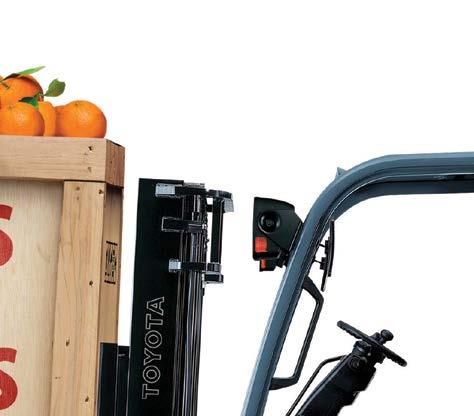

Toyota Material Handling is the forklift leader in Australia’s fresh fruit and vegetable markets.
1. Proven performers in the fruit and vegetable markets environment
2. New and used forklift purchase, rental or lease options
3. Superior service and parts back-up and support
4. Massive range with Toyota Material Handling’s world leading products
5. Flexible nance deals through Toyota Finance
6. Stability of dealing with the world’s largest forklift company
To make the smart choice and discover how Toyota Material Handling can make a di erence to your operations, contact your local branch.