

Includes Financial Report


Includes Financial Report
To provide infrastructure and services to facilitate the marketing of fresh food, flowers and other ancillary products.







158,592m2





806

13,300m2
1,275t

4,696

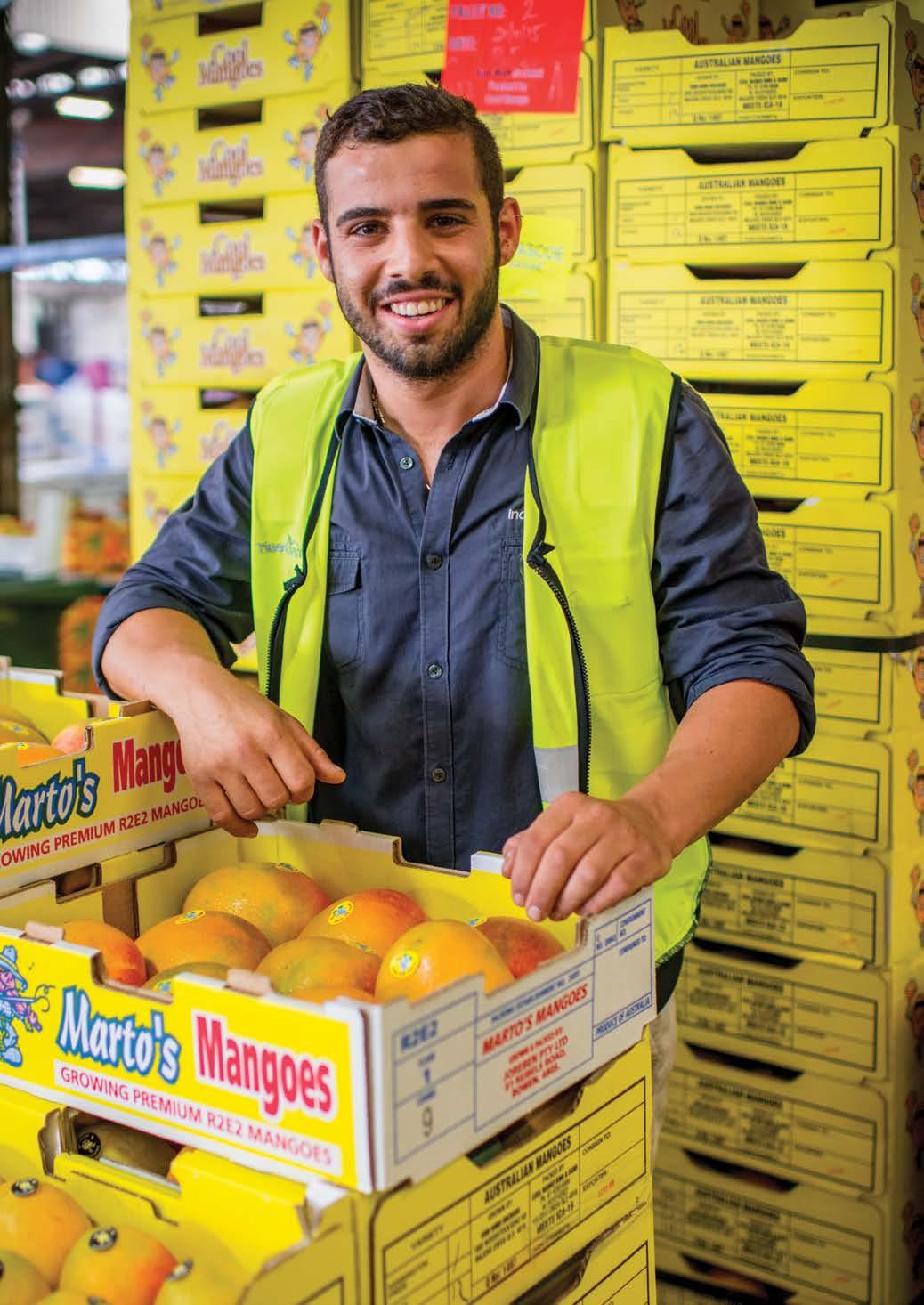
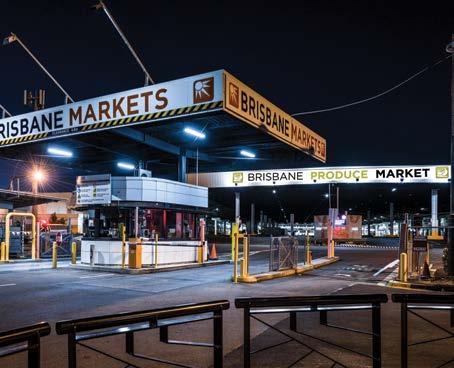
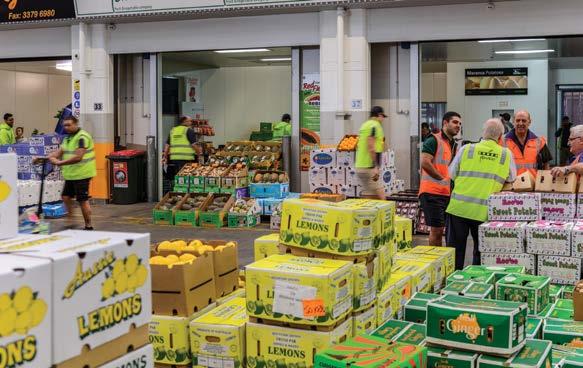
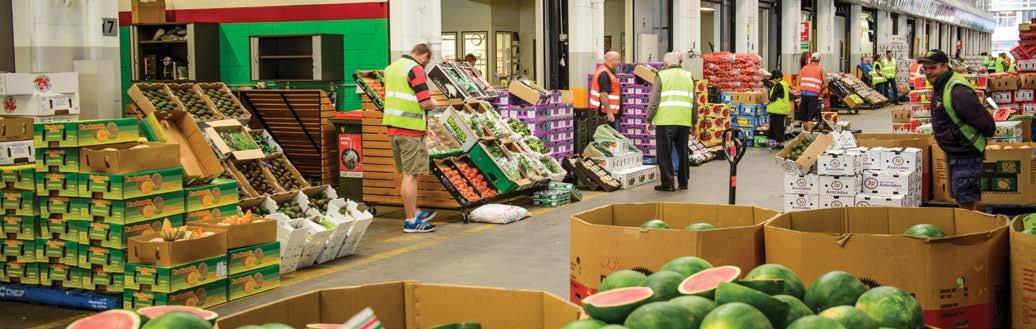
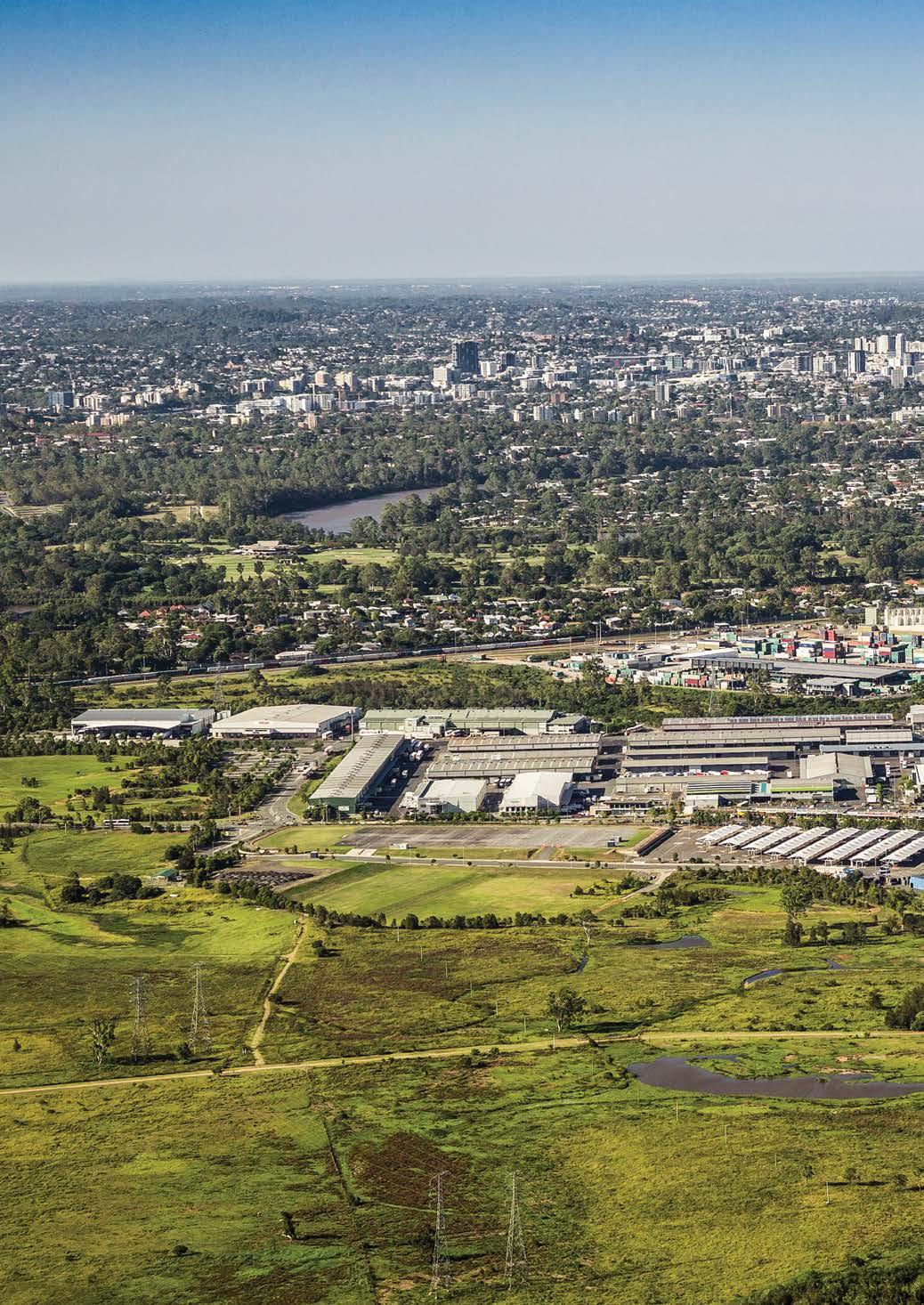
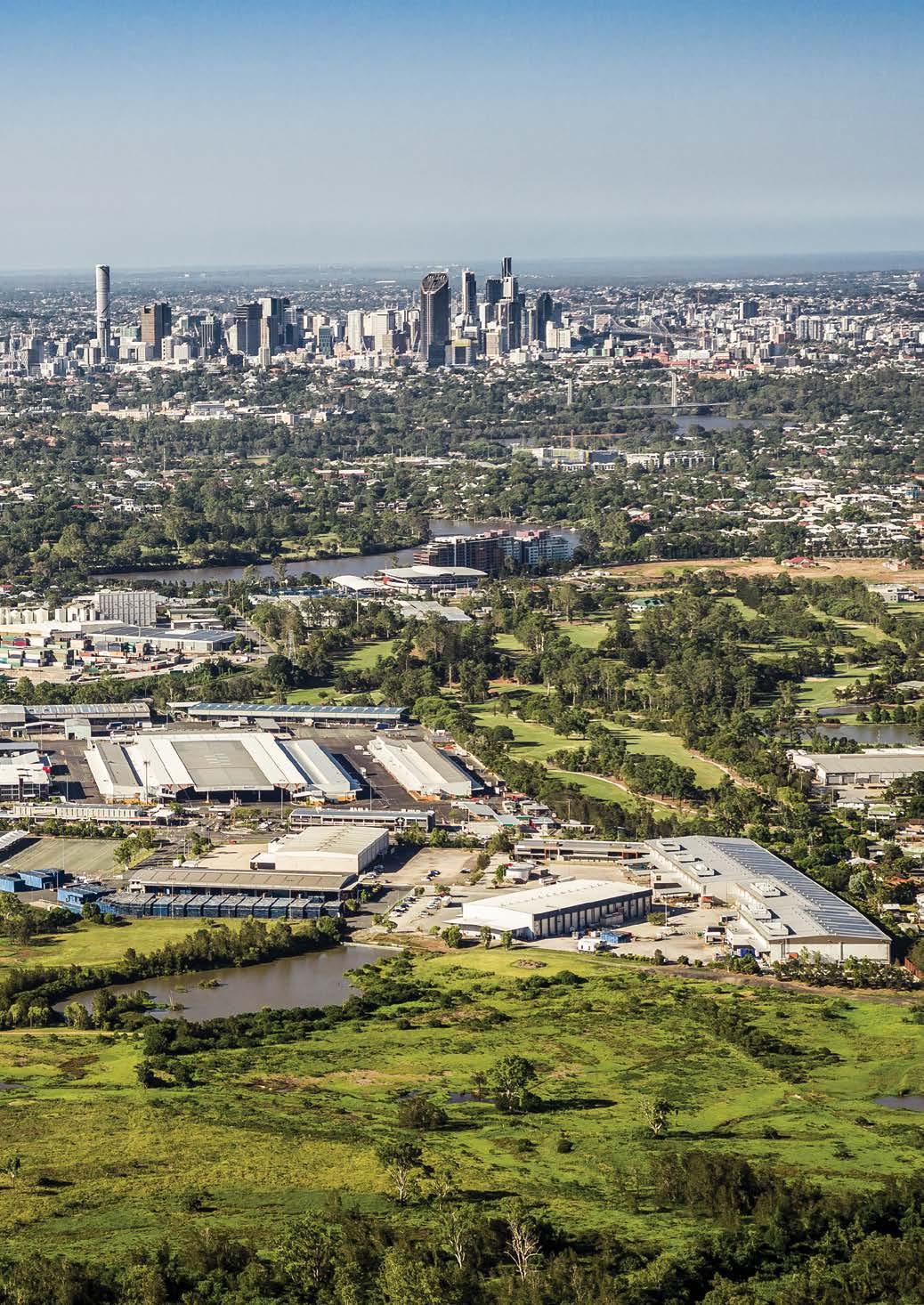
Operating 24 hours a day, seven days a week, Brisbane Markets® is the third largest Central Market in Australia, with more than 600,000 tonnes of fresh produce through its gates annually worth more than $1.3 billion.
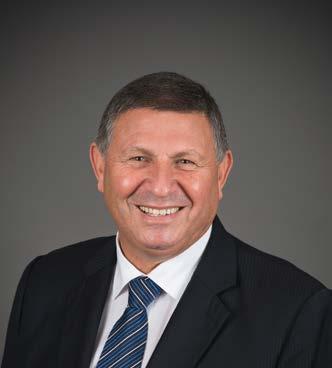

Brisbane Markets Limited (BML) has delivered another robust financial performance, providing continued certainty for the Brisbane Markets® community and shareholders.
It’s a result only made possible by the determined strategy of an industryowned organisation with the hands-on experience and drive to see the wholesale fresh fruit and vegetable industry prosper.
Our stewardship has resulted in the group producing a net operating profit after tax of $10.13m, a satisfying 8.3% increase on the previous year’s figure of $9.35m.
BML’s reported profit before tax was $44.22m, an increase of 85.6% over the 2016 result, assisted substantially by strong upward revaluations of both the Brisbane and Perth Markets.
This solid performance is the result of prudent decision-making and sound investment strategies in an environment where BML is committed to delivering outstanding services and developing new facilities for our tenants.
Embracing change remains a hallmark of BML as we continue to adapt and innovate. Never has this been more evident than in 2017 as we reached the 10 year milestone since BML launched an ambitious $150m Brisbane Markets® Master Plan for the site. The plan was reviewed once again during the year to
meet the evolving needs of our tenants. The result of this planning over the past decade is a considerable upgrade to our site’s facilities, while creating a template to which other Central Markets can aspire.
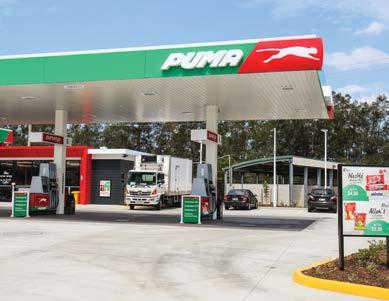
Throughout the financial year we have committed $24m to site upgrading and infrastructure. This work has included the redevelopment of a new service station, backed by a long-term lease with Puma Energy. The work has revitalised the eastern most reaches of the Brisbane Markets®’ busy Commercial Centre, with this retail and commercial business precinct a local community drawcard.
Work has also commenced on a Multilevel Car Park that will accommodate 540 vehicles over four levels. The project will ensure greater pedestrian safety by containing passenger vehicles in a controlled parking area, while providing additional parking for the Brisbane Markets® Northern Industrial Precinct, the Commercial Precinct and the weekend Retail Markets.
In addition, this financial year has seen the near completion of Stage 2 of a project to install close to 5,000 solar panels to supplement energy used within the site.
Our strategy is to invest in opportunities that align with our core business. To this end, BML has built on its commitment to support the industry through its investment in Perth Markets Limited.
Our Board also believes it is important to encourage consumption of fresh fruit and vegetables and to support independent fruit and vegetable retailers. Accordingly, BML has increased its support of the Your Local Fruit Shop and BuyFruit programs, making inroads to have a positive impact on the community’s health and our industry’s bottom line.
April 2017 marked the start of a new regulatory environment, with the revised Horticulture Code of Conduct coming into effect. The former Code was unworkable and anti-competitive. BML worked with Brismark and our Central Market counterparts to achieve a much fairer, more flexible trading arrangement. We are assisting in rolling out educational information to help both wholesaler traders and growers comply with the new legislation.
These are exciting times for our business, with our industry-based ownership structure and solid track record offering us great opportunity to continue delivering on services and progress with the ongoing plans to upgrade and develop the Brisbane Markets® site for the betterment of our tenants and the horticulture supply chain.
I take this opportunity to thank my Board colleagues, CEO Andrew Young, our senior executive team and staff members for the role they have played in helping keep BML at the forefront of Australia’s horticulture wholesale sector. I also thank our stakeholders, and in particular, our shareholders, for their ongoing strong support for BML.
Anthony (Tony) Joseph Chairman
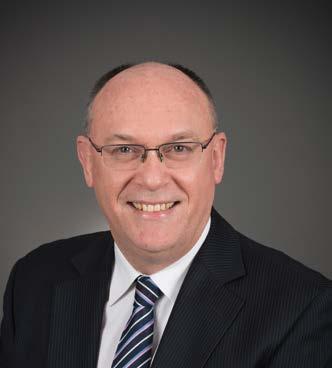


It has been a year of solid performance for BML in the 2016/17 financial year, with the strength of our industry-based ownership executed through our strategic focus on effective stakeholder engagement, maintenance and development of the site.
We have made extensive site improvements, allowing us to update technology and systems and to improve safety and operating efficiencies.
The company achieved a reported net profit after tax of $30.948m, with an underlying operating net profit after tax of $10.13m.
As at 30 June 2017, BML’s net asset value has increased by 22.8% to $148.4m, with total assets of the company increasing by 12.4% to $330.7m. Our strong financial performance was achieved in a mature market, with BML continuing to develop and improve the 77ha Brisbane Markets® site. In addition, BML continues to hold a 41.72% stake in Perth Markets Limited.
BML paid a full financial year dividend of 15.5 cents per share, fully franked, compared to last year’s figure of 14 cents per share. This represents an increase of 10.7%.
As at 30 June 2017, there were 254 leases and 164 tenants on the Brisbane Markets® site.
A review of the Site Master Plan was completed and marks 10 years since its implementation, with more than $130m spent in line with our tenants’ and industry’s needs. Regular reviews and a commitment to our development program have helped us manage issues surrounding Market access, traffic flow and parking, improved safety and better utilisation of office and warehousing space.
A survey in late 2016 resulted in 79% of our tenants rating BML’s performance as a landlord as good to excellent, while expressing strong support for its management.

Capital investment committed to site upgrading and infrastructure projects was in excess of $24m during the financial year.
Projects have included:
• Redevelopment of the Service Station site with Puma Energy taking occupancy in December 2016. This project also included road resurfacing, curbs and landscaping, which complemented recent redevelopment works at the entrance to the Brisbane Markets®.
• Planning and initial works on a Multilevel Car Park to accommodate 540 vehicles over four levels.
• Near completion of Stage 2 of BML’s ambitious solar installation, bringing the site’s total number of roof top solar panels to 8,900.
• Selling Floor upgrade, including completion of internal refurbishment of the mezzanine floor walkways and public amenities, installation of an automatic fire detection and alarm
system, asbestos removal and the upgrade of roadways, pedestrian paths, improved signage and light installation to promote additional safety.
• Appointment of architects to complete the designs for new warehouses at Buildings D (East) and N. Building N will see the construction of a new 1,500m2 warehouse, while Building D (East) includes a new public toilet block and a 320m2 warehouse.
As at 30 June 2017, industrial property was 100% occupied, retail property was 93% and commercial office space remained a steady 73%. The total area available for lease was 158,592m2
The total occupancy rate for the Brisbane Markets® site at 30 June was 98.63%.
There is an ongoing focus on Work Health and Safety (WHS) at the Brisbane Markets® site, with BML working closely with Workplace Health and Safety Queensland to target areas of safety concern, including conducting tenancy audits to identify and take steps to mitigate risk.
BML received an honour from the Queensland Government for our unrelenting commitment to safety on site with the awarding of a High Commendation in the Most Significant Improvement to Work Health and Safety Performance category of the Queensland Safe Work and Return to Work Awards 2016.
After review, the revised Brisbane Markets® Regulations were released with amendments, which include a detailed Traffic Management Plan. A user site guide and workshops were provided to assist Market users understand their obligations.
Numerous information and safety workshops for tenants were conducted,
with topics including asbestos safety, LPG refuelling, traffic management and forklift safety.
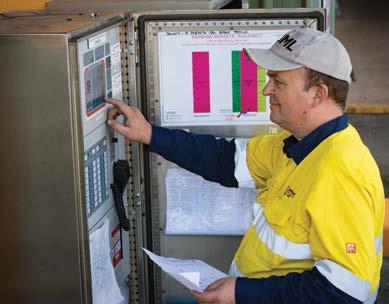
BML introduced Licence Plate Recognition technology, which works by cameras reading the licence plates of vehicles approaching the boom gates at the site's main entrance points. More than 1,390 people have been approved to use the system to date, improving traffic flow.
The customer service team issued 4,696 access cards and registered 384 forklifts and 1,170 forklift operators throughout the course of the financial year.
There is an ongoing emphasis on access control, parking, pedestrian safety and tenant engagement, along with an ongoing focus on site presentation.
A number of major site upgrading projects were completed during the financial year, including:
• Major asphalt and road widening works.
• Asbestos removal.
• The installation of power factor correction equipment to all electrical substation switchboards on site. This has improved power quality, as well as increased the capacity of the switchboards.
• Installation of electricity monitoring equipment which will allow remote meter reading.
• Installation of emergency lighting systems.
• Public toilet refurbishments in 11 different locations.
• The replacement of roofs of Buildings C, 0 and P.
• Major external painting works.
• Electrical inspections and removal of redundant cabling across the site.
• Site improvements at the Brisbane Flower Market, including additional shade sail covering and refurbished amenities.
Brisbane MarketPlace continues to make a significant contribution with the Saturday Fresh and Sunday Discovery Markets at Rocklea and the Eagle Farm Markets site recording strong trade, attracting more than 14,000 visitors each weekend.
There has been a focus on improving presentation, promoting WHS, effective marketing and broadening the stallholder mix across each market. The redevelopment works at the Eagle Farm Racecourse resulted in temporarily relocating to the Doomben Racecourse in May 2017.
Both the Saturday Fresh and Sunday Discovery Markets featured in the Urban List Brisbane’s 'Top Weekend Markets to visit'.
BML has extended its support of independent retailers and encouraging consumers to buy more fresh produce with increased levels of sponsorship of the Your Local Fruit Shop (YLFS) and BuyFruit programs.
The YLFS program ran a television advertising campaign in December 2016. It has successfully utilised the support of Olympic athlete, Alana Boyd, who placed fourth in pole vaulting at the Rio Olympics, and rugby league legend, Sam Thaiday, who has appeared in a series of campaigns. The BuyFruit online fruit box service has placed a focus on corporate customers, with additional sales supporting the YLFS suppliers who have signed to the program.
BML has partnered with AUS-IT to provide telephone, network and
cloud-based business solutions on site, which are superior to any major telecommunications offerings.
Markets Broadband Network, or MBN, operates on BML’s embedded fibre network that runs throughout the 77ha site and offers 1GB per second internet speeds, data centre connectivity, better remote connectivity and improved reliability.
BML proudly sponsors two of the main grower representative organisations in Queensland, Bowen Gumlu Growers Association and Bundaberg Fruit and Vegetable Growers. We also engage with other Market landlords nationally through the Central Markets Association of Australia.
We maintain regular dialogue with industry stakeholders through the Fresh Source publication and digital newsletter, Fresh News
The October 2016 release of the Brisbane edition of Monopoly featured the Brisbane Markets® as one of the 22 iconic sites appearing on the game board.
I would like to take this opportunity to acknowledge and thank our Chairman, Anthony (Tony) Joseph, and the Board for their guidance over the past year, and also to thank BML’s management team and staff members for their dedication and hard work.
Andrew Young Chief Executive Officer


The BML Board is satisfied with the company's robust financial performance this year, with the group reporting a net profit before tax of $44.2m, and an underlying net operating profit before tax of $14.47m. This result is a significant increase on the previous year, assisted by the strong property valuation of both the Brisbane Markets® and Perth Markets, with the resultant impacts contributing $29.75m to the underlying result.

The result reflects an operating profit after tax of $10.13m, or 23.83 cents per share. This is the profit amount that will be considered when determining dividends paid in accordance with the current dividend policy of the group. The increase in the property valuation does not generate cash to enable an increase in dividends. However, it does improve the borrowing profile of the group with our financier Westpac on an ongoing basis.
This continues the impressive dividend growth trend as highlighted in the chart on the next page.




The balance sheet position continues to show strength, with a further increase in total assets of 12.4% to $330.7m on the back of an increase of 20.7% last year. Net tangible assets at balance date are $147.76m, or $3.48 per share.
The strong growth and profitability profile has enabled the group to pay a fully franked dividend during the year of 15.5 cents per share, with the declaration of a further dividend of 8.25 cents per share to be paid in October 2017.










The group revenue for the year increased by 39.4% to $73.53m, and underlying revenue (after removing one-off impacts) grew by 1.73% for the year as summarised below:
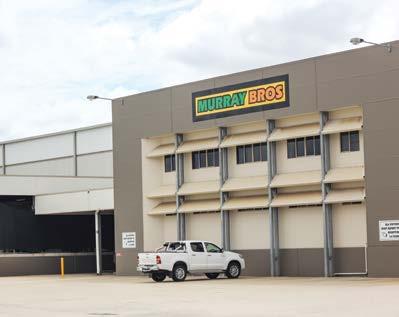
• Rental and associated property related revenue has increased by 1.3% as a result of a full year of income from Building G2 and the completion of the Service Station. However, rental income has been impacted by the extended period of vacancy of Building A1 due to the prior tenant entering into voluntary administration. Building A1 is now leased and occupied by Murray Bros.
• Service revenue has grown by 1.33% across a range of areas.
• Electricity revenue has remained stable in an environment where purchase costs have increased substantially. BML has endeavoured to ensure that the electricity charges to tenants remain competitive.





The reported group expenditure increased by 1.3% or $0.39m for the year, and underlying expenditure (after removing one-off impacts) increased by 2.9% as summarised below:
• There has been an increase in direct costs of 11.84%, with the major impact being electricity purchase costs, which increased significantly when the existing contract expired in December 2016.
• Site operations expenditure has fallen by 6.65%.
• Repairs and maintenance costs have been maintained at a level consistent with the previous year, which is sufficient to cover the ongoing requirements for maintaining site presentation, all scheduled maintenance and risk mitigation works.
• Finance costs including interest and bank charges have increased by approximately $0.44m as a result of the investment in Perth Markets. Net debt increased by $1.45m this year.
As the group continues to build a platform for continuing strong performance, we expect to see an increase in borrowing costs in the next 12 months as a number of significant projects are commenced, and the revenues will follow in subsequent years. In addition, the Power of Choice initiative being introduced by the Australian Energy Market Operator, and the increase in electricity pricing, may place additional pressure on service margins and there is some risk of a decline in this area.
The group has continued the improvement in the balance sheet position, with the continued growth in the value of the Rocklea property and the additional value being realised from the investment in Perth Markets Limited. This has contributed to a total asset growth of 12.4% and net asset growth of 22.8%.
At 30 June 2017, total assets are $330.7m and net assets are $148.4m.





An independent property valuation of all BML-owned properties was undertaken as at 30 June 2017, and all investment properties have been restated to fair value at this date.
A summary of property valuations is as follows:
• The excess land at Logistics Place, Larapinta was sold during the year at its carrying value.
• The property at 250 Sherwood Road maintained its value at $11m.
• The main asset at 385 Sherwood Road returned an increase in asset value to $280m in line with the capital improvements and revenue increases.
The impact of this valuation increment of $21.4m is reflected in the financial summary on page 9.
BML has secured additional funding to enable the continued growth and development of the site, with the debt funding facility with Westpac recently increased to $160m. This increase reflects the ongoing support provided by Westpac as the primary banker to the group and provides sufficient funds to ensure that the Group can continue the ongoing Master Planning works.
The tenure of the facility has also been extended until 30 April 2021.
Interest rate risk continues to be managed ongoing with a combination of interest rate hedges and some loans attracting the current low interest rates available.

Net

Completion of a new service station with a lease signed with Puma Energy for the facility. The work included the demolition of the existing service station and construction of an all new building and canopy, installation of new tanks and extensive hardstand.
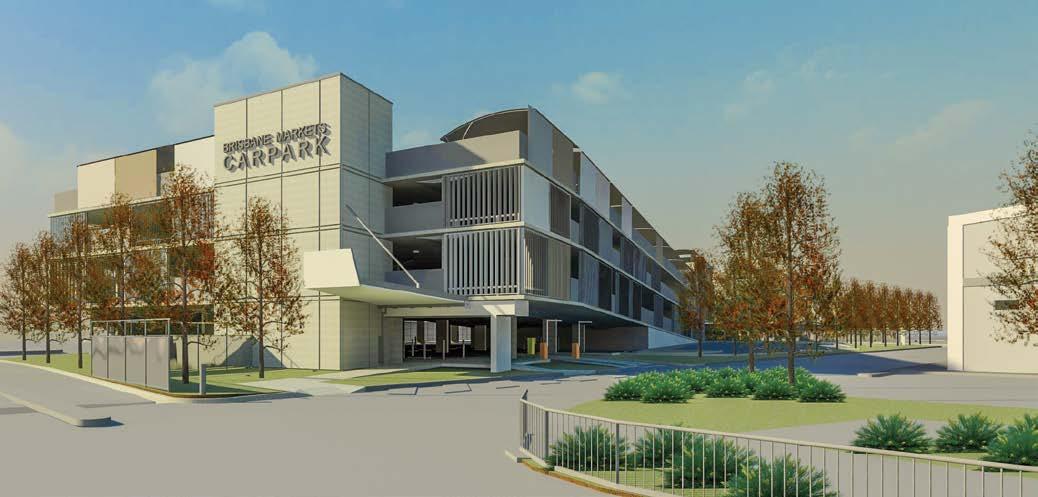
Watpac Construction was contracted to begin construction of a Multi-level Car Park near the Brisbane Markets® main entry. The new structure will accommodate 540 vehicles to facilitate growth and remove passenger vehicles from within the site.
The additional parking will service the Brisbane Markets® Northern Industrial Precinct, the Commercial Precinct and the weekend Retail Markets.
The finished structure will incorporate an overhead walkway for safe pedestrian access to the southern entrance of the Central Trading Area.
BML's roof upgrading project involves replacing existing roofs on ageing warehouses. The roof sheeting on Buildings O and P was completely replaced during the year, as was the sheeting of the roof of Building C, which also included the replacement of skylight alsynite to improve natural light on the Selling Floors.
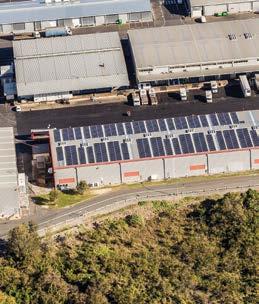
Stage 2 of BML’s solar panel project was near completion at 30 June 2017 following on from the success of the $2.4m Stage 1 project that continues to generate over 3% of the total power of the site.
This second stage included the installation of close to 5,000 additional panels, allowing more power to be generated for longer. BML generated 1,700mWh of electricity through its solar assets over the financial year. This is set to double in the 12 months following the commissioning of Stage 2.
BML’s ongoing building improvement and compliance program has continued to deliver better, safer facilities across the site, including:
• Replacement of the fire detection in Buildings E, B1, L and L1 as part of our ongoing fire services upgrade to replace 20% of all fire detection across the site annually.
• Installation of new fire detection and speakers in all Central Trading Area buildings.
A new lease was signed by Murray Bros for Building A1, opposite the Brisbane Markets®’ main entry. The 5,110m2 building has undergone extensive refurbishment and modifications to coldrooms, ripening and fast coolrooms, together with the installation of a new sprinkler system and fire ring main.
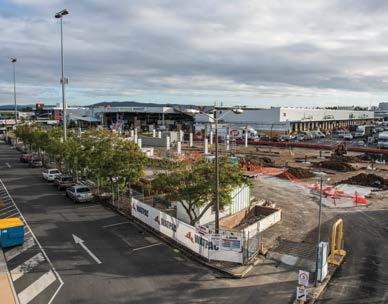
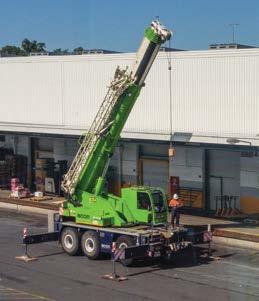

Completion of the Multi-level Car Park, behind Building G2, is scheduled for January 2018, and includes improved site and pedestrian access to and from the Central Trading Area. The project also frees up an existing parking area for future site development.
Refurbishment and extensions are planned for the building which was severely affected by the 2011 flood. Construction will establish the former footprint of this building as a 1,500m2 warehouse.

Part demolition of the Tropicana Building is planned ahead of the construction of a 4,800m2 refrigerated warehouse between Buildings A and O, in an area currently used for car parking. Works on the new warehouse will progress following the construction of the Multi-level Car Park, and the development of the new LPG facility.
Planning has begun on the Stage 3 solar panel project to expand the existing system through installation of an additional 7,500 new panels at a cost of approximately $3m. Due for completion in late 2018, this third stage will result in solar assets generating more than 15% of the power requirements of the site.
The construction of a new LPG refuelling facility on a site west of Building R will feature an underground 30,000 litre tank, with three double-sided dispensers and an emergency dispenser. The existing facility will be demolished.
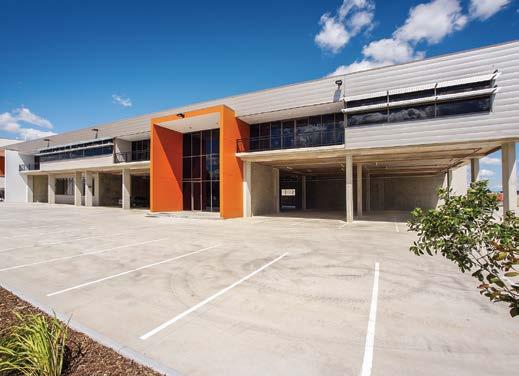
Refurbishment of Building D’s eastern commercial wing will result in a new amenity block for Central Trading Area tenants and their customers. Backing on to these facilities will be an insulated panel warehouse with a 320m2 footprint, loading dock and two dock levellers.

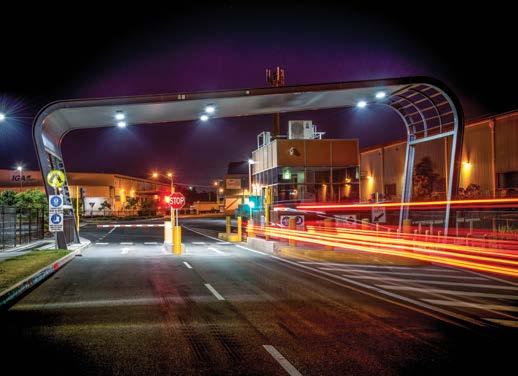

Over the past 15 years, BML has transformed the Brisbane Markets® from the long-held rigidity of being Queensland Government-owned to being owned, managed and developed by an active industrybased company with a focus on meeting the needs of tenants and the industry, site safety and responsible management of the site.
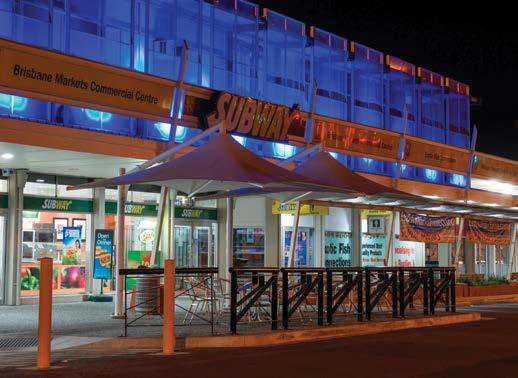
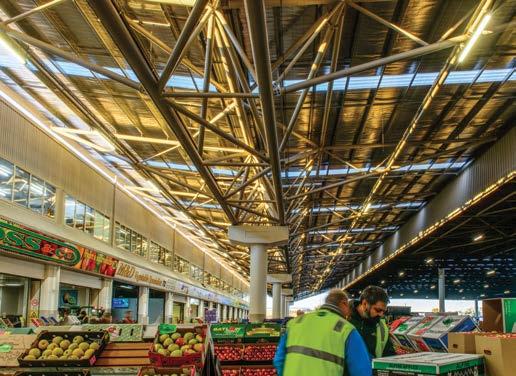
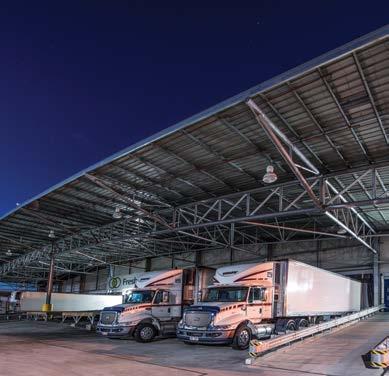
On taking ownership in 2002, BML immediately put its growth plans in place, and began preliminary investigation into developing facilities and expanding the site to meet its tenants' evolving requirements. Since the release of its 2007 Master Plan, BML has invested more than $130m into site construction and upgrading projects to match the growth and evolving needs of the industry. This work contributed to BML receiving a bronze award for Excellence in New Market Infrastructure from the World Union of Wholesale Markets.
Over the past decade, projects included:
• The $33m South Gate East Warehouse and Commercial Centre was opened in 2008. This development added 13,844m2 of temperature controlled coldrooms to the site.
• 9.7ha of land was bought in 2008 from the State Government. The Queensland Department of Primary Industries and Fisheries once occupied the $7m site.
• Construction of the $8.5m Western Access Road, gatehouse and car parks in 2011, which included a new intersection at Sherwood Road, fencing realignment and land reclamation.
• The 3,770m2 Fresh Centre (formerly Building F) was redeveloped, later winning the Excellence in Sustainable Building accolade at the Queensland
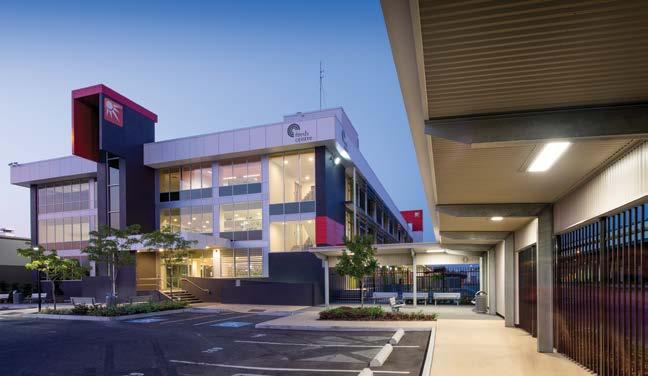
Master Builders Association Brisbane Awards in 2012. The building became BML and Brismark’s headquarters, and features training rooms, the Site Service Centre, a commercial kitchen, administration hub and a café.
• The construction of Building M1, a $9.4m wholesaling, prepack and export facility, was completed in 2011 after developing the building platform to make the construction possible. It is a 4,703m2 building in the north-west of the site purpose-built for its lessee, Fresh Produce Group.
• The South Gate West development took shape in 2012, with earthworks raising the land 400mm above the 2011 flood level in readiness for future development. It formed part of major flood mitigation works in the wake of the devastating 2011 flood, along with restoration and upgrading of site facilities.
• The completion of the Commercial Centre retail/external upgrade project in 2013 included concrete footpaths, outdoor dining areas, toilet refurbishment, new lighting and improved traffic flow.
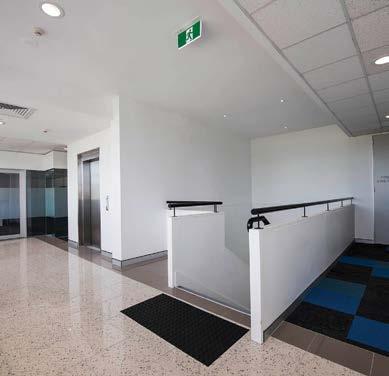
• The Brisbane Markets® Commercial Centre building internal refurbishment and a fire ring project was completed in 2014, including re-roofing, refurbishment of the office space and installation of a lift.
• The Brisbane Markets® entry was widened with the demolition of the
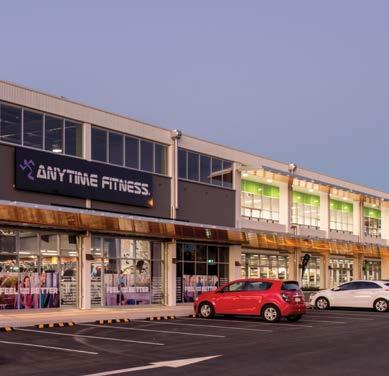
old Commonwealth Bank building to make way for new parking bays, safer pedestrian access, covered outdoor dining areas and an extended café tenancy.
• The $10m Central Trading Area Roof Project was completed in two stages, and involved construction of an all-weather roof structure joining Buildings B, C and D, along with pedestrian marshalling areas.
• The 2016 completion of the $6m Building G2 refurbishment included extensive landscaping and road modifications to revitalise this section of the Commercial Centre Precinct.
• The new $3m Puma Energy Service Station was completed in December 2016 following demolition of an old service station and site preparations.
• A staged solar panel project was commenced, with Stage 1 completed in 2016, Stage 2 near completion in 2017 and planning underway for Stage 3, worth over $8m across the three stages.
• Flood mitigation works were undertaken to elevate the main switchboards above the flood peak.
• A variety of ongoing works continued, from roofing upgrades, building improvements, improved lighting and communication networks, fire ring main installation, road resurfacing and traffic management works.




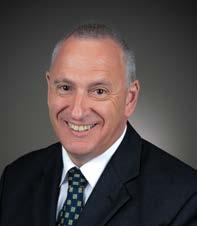
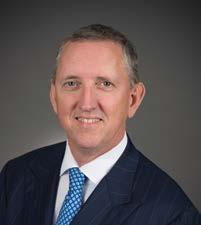
Directors
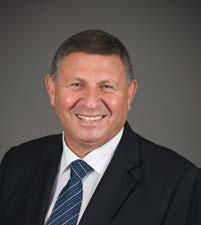
1 Anthony (Tony) John Joseph – Chairman
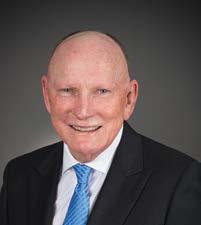
2 Anthony (Tony) Robert Kelly – Deputy Chairman
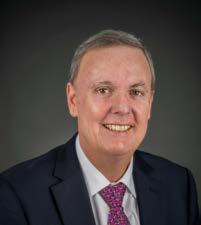
3 Peter Gerrard Tighe
4 Noel Anthony Greenhalgh
5 Bruce Miles Hatcher
6 Stuart Anthony Lummis
7 Evonne Maree Collier
8 Andrew Alexander George Young

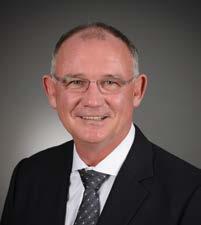
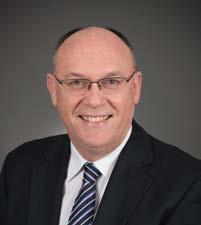
Company Secretary Murray John Stewart
Senior Management
Andrew Young – CEO
Murray Stewart – Chief Financial Officer
Tricia Williams – Chief Property Officer
Jessie Field – Operations Manager
Steve Cooke – Site Infrastructure Manager
Joady Raph – Administration Manager/Executive Assistant


Your Directors present their report on the consolidated entity consisting of Brisbane Markets Limited and the entities it controlled at the end of, or during, the year ended 30 June 2017.
The following persons were Directors of Brisbane Markets Limited during the year or at the date of this report:
Anthony John Joseph
Bruce Miles Hatcher
Peter Gerard Tighe
Anthony Robert Kelly
Stuart Anthony Lummis
Noel Anthony Greenhalgh
Andrew Alexander George Young
Evonne Maree Collier (appointed 1 August 2016)
During the year, the principal continuing activities of the consolidated entity consisted of:
• Facilitating the efficient and effective operation and growth of the Brisbane Markets® site
• Providing world-class infrastructure and services to facilitate the marketing and distribution of predominantly fresh produce, together with flowers and other ancillary products, to domestic and international customers
• Preserving and promoting the role of the Central Market for the benefit of industry stakeholders and consumers.
There were no significant changes in the nature of the activities of the consolidated entity during the financial year.
The net profit of the consolidated entity after income tax for the year ended 30 June 2017 was $30,948,165 (12 months to 30 June 2016: $16,662,539). This net profit includes the following:
• The impact of the Brisbane Markets® property valuation increases in the current year was $21,420,602 (increase of $11,637,908 for the 2016 year) and the increase after tax was $14,994,421 (increase of $8,146,536 in the 2016 year).
• The share of net profits from Perth Markets Limited for the current year was $9,677,639 ($Nil for the 2016 year), and the increase after tax was $6,774,347. The contribution before tax includes $8,325,273, which relates to the increase in the Perth Markets property value ($Nil for the 2016 year).
The underlying net operating profit after income tax, excluding the impact of property revaluations in Brisbane and Perth, was $10,126,052 for the 2017 year compared to $9,345,833 for the 2016 year.
At balance date, Brisbane Markets Limited’s drawn down funding facility was hedged under seven long-term interest rate swaps to the extent of 72.97%. Hedging is a requirement of the funding facility provided by the company’s banker
The consolidated entity’s continued operational focus throughout the year was in the areas of property management, site maintenance and management of the site in accordance with the Brisbane Markets Regulations, with the following being the key highlights:
• The continued focus on site developments and improvement this year have resulted in the following major achievements:
– The construction of a brand new Service Station on Sherwood Road leased to Puma Energy to complete the transformation of the Sherwood Road retail precinct.
– The expansion of Stage 1 solar by a further 574 panels and commencement of Stage 2, which will increase the total capacity of the solar installations to over 2800kWp by August 2017.
– The finalisation of internal renovation of Selling Floor mezzanine floors in Building A and D to complete this upgrade project.
– Replacement of a further two warehouse roofs as part of our ongoing replacement program.
– Significant fire compliance upgrade works for Building A1, including an external ring main and internal fire sprinklers, ahead of Murray Bros taking occupancy.
– Stages 4 and 5 of the site fire ring main commenced, with works to be ongoing through the 2018 year. The completion will finalise the required fire ring main services upgrades to the site which have been ongoing for the past four years.
• The company remains committed to its off-site investment in Perth Markets Limited with ownership at 41.72%.
• The Brisbane Markets® site continues to maintain an exceptional occupancy rate of 98.63% at 30 June 2017, with the weighted average lease expiry at 5.25 years.
• The Retail Markets continue to operate under the brand of Brisbane MarketPlace and Eagle Farm Markets from the Rocklea site and the Eagle Farm Racecourse. This division has had an exceptional year and continues it significant contribution to the group.
• The group has continued its support of the independent retailing sector through the ongoing sponsorship towards the Your Local Fruit Shop campaign and the online trading platform, BuyFruit.
30 June 2017
The land and buildings at the Brisbane Markets® site were valued by LandMark White (Brisbane) Pty Ltd as at 30 June 2017, and the financial accounts of the consolidated entity reflect the movement in the value of this asset. Under the relevant Accounting Standards, any increase or reduction in the value of Brisbane Markets Limited’s property assets must be brought to account through the Statement of profit or loss and other comprehensive income. The increase in value which has occurred this year reflects the accounting treatment of the adjustment of Brisbane Markets Limited’s property values as assessed by LandMark White. The movement is an unrealised adjustment to the consolidated entity’s financial results, which is not included for cash flow or dividend calculation purposes.
Dividends paid to shareholders during the year were as follows:
There were no significant changes in the state of affairs of the parent entity during the financial year.
There are no significant events that have occurred subsequent to the end of the financial year that have not been disclosed in this report.
Information in relation to the likely developments of the consolidated entity include:
• The Brisbane Markets Limited Board continues to review its Strategic Priorities on a regular basis, which includes an ongoing focus being given to the operation and development of the existing Brisbane Markets® site.
• Brisbane Markets Limited has progressed the revision of its development Master Plan during the 2017 financial year, and a number of development opportunities have been identified across the site. These include the construction of a new Multi-level Car Park, consideration of new temperature-controlled warehouses, as well as other identified opportunities progressed concurrently.
The consolidated entity is not subject to any significant environmental regulation.
Director Experience
Chairman
A J Joseph MAICD, CDec
Deputy Chairman
A R Kelly LLB, MAICD, JP(Qual)
Executive Director
A A G Young
DipCorpMgmt, BCom, BAgrSc (Hons), MAICD, FAIM, FCPA
Director since incorporation – 4 July 1994, Director of a number of private companies with interests in fruit and vegetable wholesaling and previous longstanding member of the Brisbane Market Trust. Chairman of the Board since 11 November 1997. Current Director of Brisbane Broncos Limited and Director of Brisbane Broncos Leagues Club.
Director since November 2001. Currently Chairman and co-owner of an emerging technology company Veracity IT, specialising in cloud-based platforms and services. A former lawyer with previous directorships of Gladstone Ports Corporation, Brisbane Lions AFL Football Club (Chairman), Brismark (President) and Carter and Spencer Group. Also has business interests with First Class Capital and Cruise Holidays Australia.
Managing Director from 1 January 2000 and appointed to Chief Executive Officer of Brisbane Markets Limited on 1 October 2002, while retaining the position of Chief Executive Officer of Brismark. Extensive managerial experience, with tertiary qualifications in Agricultural Science, Accounting and Corporate Management. He also has detailed knowledge of the operations of the fresh produce industry, Central Markets and property development and management. Current Director of Perth Markets Limited, BuyFruit Pty Ltd, Fresh Markets Australia (FMA) and the Central Markets Association of Australia (CMAA).
Special Responsibilities
Chairman
Member of :
• Remuneration Committee
(and also attends other committee meetings)
Director Member of:
• Finance and Audit Committee
• Legal and Compliance Committee (Chair)
• Remuneration Committee
CEO
Member of:
• Finance and Audit Committee
• Legal and Compliance Committee
• Remuneration Committee
• Strategy and Investment Committee
N A Greenhalgh MAICD
Director from 9 September 1997 until 22 September 1998, re-elected as a Director by shareholders on 16 November 1999 until resignation on 17 January 2002. Reappointed as a Director on 18 March 2003. Director of a number of private companies with interests in fruit and vegetable wholesaling, production & exporting.
Director
Member of:
• Tenant Advisory Committee (Chair)
• Strategy and Investment Committee
30 June 2017
Director
P G Tighe
MAICD
B M Hatcher
BCom, FCA, FAICD, FSIA, FAIM
S A Lummis
BEc, FAICD, DipConstMan, GradDipAcc, FFin
E M Collier
BA, MBus, GAICD, SA Fin
M J Stewart BBus, CA, AGIA, CDec
Experience
Director from 18 November 1994 until 22 September 1998. Reappointed as a Director on 16 November 1999. Current CEO of Global Fresh Australia T/A J H Leavy & Co, and a Director with interests in the fruit and vegetable wholesaling, importing and exporting industry.
Director since 21 November 2012. Extensive experience in Chartered Accounting covering many industry sectors, and consults to and serves on the Boards of several private and/or family-owned businesses. Currently Chairman of Queensland Rugby League and a Director of the MTAA Superannuation Fund. Formerly the Deputy Chairman and Director of 20 years of the Queensland Academy of Sport.
Director since November 2013. Extensive experience in large publicly listed groups in addition to not-for-profit organisations. Currently the Director for building, planning, facilities and property with a not-for-profit organisation. A non-executive Director of RSL Care and RDNS, member of the Property Council of Queensland.
Director since 1 August 2016. Independent Director of a number of companies, and has over 20 years senior executive experience in business management, marketing, sales, branding and communication in local blue-chip and multinational companies, including 10 years within market-leading food manufacturing companies.
Company Secretary for BML since February 2015 and Chartered Accountant with over 25 years of experience.
Special Responsibilities
Director Member of:
• Legal and Compliance Committee
• Strategy and Investment Committee
• Safety Advisory Committee (Chair)
Director Member of:
• Finance and Audit Committee (Chair)
Director Member of:
• Finance and Audit Committee
• Legal and Compliance Committee
• Strategy and Investment Committee (Chair)
Director Member of:
• Finance and Audit Committee
• Legal and Compliance Committee
Company Secretary
Messrs Joseph, Greenhalgh and Tighe are Principals of companies that are also shareholder members of The Queensland Chamber of Fruit and Vegetable Industries Co-operative Limited, which is a substantial shareholder of Brisbane Markets Limited. Shareholders of The Queensland Chamber of Fruit and Vegetable Industries Co-operative Limited hold one share in the Chamber, with a nominal value of $20.
The number of meetings of the company’s Board of Directors and of each Board Committee held during the year ended 30 June 2017, and the number of meetings attended by each Director were:
1 A Joseph attended Finance & Audit, Legal & Compliance and Strategy & Investment in his capacity as Chairman of the Board. A Joseph is not a Committee Member of these Committees.
2 E Collier was appointed to the Board on 1 August 2016, and subsequently became a member of the Finance and Audit Committee and Legal and Compliance Committee on 16 November 2016.
The company’s Board of Directors is also involved in Brisbane Markets®’ Advisory Committees as follows:
• Brisbane Markets Safety Advisory Committee – Anthony Kelly was Chair until 16 November 2016, and during this time two meetings held and attended. Peter Tighe appointed Chair and since his appointment one meeting held and nil attended. A Joseph and A Young attended these meetings in their capacity as Brisbane Markets Limited Chairman and CEO respectively.
• Brisbane Markets Tenant Advisory Committee – Noel Greenhalgh (Chair) two meetings held and attended. A Joseph and A Young attended these meetings in their capacity of Brisbane Markets Limited Chairman and CEO respectively.
30 June 2017
The Board committees and the membership of those Committees as at 30 June 2017 is:
Finance and Audit Committee:
Legal and Compliance Committee:
Remuneration Committee:
Strategy and Investment Committee:
Andrew Young, Bruce Hatcher (Chair), Anthony Kelly, Stuart Lummis and Evonne Collier
Andrew Young, Anthony Kelly (Chair), Peter Tighe, Stuart Lummis and Evonne Collier
Andrew Young, Anthony Joseph (Chair), and Anthony Kelly.
Andrew Young, Stuart Lummis (Chair), Noel Greenhalgh and Peter Tighe.
The Board also appoints two advisory committees which include tenant representatives. The Directors who are appointed as Chairman of those Committees as at 30 June 2017 are:
Brisbane Markets Safety Advisory Committee: Peter Tighe (Chair)
Brisbane Markets Tenant Advisory Committee: Noel Greenhalgh (Chair)
No options over unissued shares or interests in the company or a controlled entity were granted during or since the end of the financial year and there were no options outstanding at the date of this report.
No person has applied to the Court under Section 237 of the Corporations Act 2001 for leave to bring proceedings on behalf of the company, or to intervene in any proceedings to which the company is a party for the purpose of taking responsibility on behalf of the company for all or any part of those proceedings.
During the financial year, Brisbane Markets Limited paid a premium in respect of a contract insuring Directors, Secretaries and Executive Officers of the company and its controlled entities against a liability incurred as Director, Secretary or Executive Officer to the extent permitted by the Corporations Act 2001. The contract of insurance prohibits disclosure of the nature of the liability and the amount of the premium.
The company has not otherwise, during or since the end of the financial year, except to the extent permitted by law, indemnified or agreed to indemnify an officer or auditor of the company or any of its controlled entities against a liability incurred as such an officer or auditor.
Section 307C of the Corporations Act 2001 requires the company’s auditors, BDO Audit Pty Ltd, to provide the Directors with a written Independence Declaration in relation to their audit of the financial report ended 30 June 2017. The Auditor’s Independence Declaration is attached and forms part of this Directors’ Report.
Details of the amounts paid or payable to the auditor for non-audit services provided during the financial year by the auditor are outlined in note 26 to the financial statements.
The Directors are satisfied that the provision of non-audit services during the financial year, by the auditor (or by another person or firm on the auditor’s behalf), is compatible with the general standard of independence for auditors imposed by the Corporations Act 2001
The Directors are of the opinion that the services as disclosed in note 26 to the financial statements do not compromise the external auditor’s independence requirements of the Corporations Act 2001 for the following reasons:
• all non-audit services have been reviewed and approved to ensure that they do not impact the integrity and objectivity of the auditor; and
• none of the services undermine the general principles relating to auditor independence as set out in APES 110 Code of Ethics for Professional Accountants issued by the Accounting Professional and Ethical Standards Board, including reviewing or auditing the auditor’s own work, acting in a management or decision-making capacity for the company, acting as advocate for the company or jointly sharing economic risks and rewards.
This report is made in accordance with a resolution of the Directors.
A J Joseph A Young Chairman Director
Brisbane Markets Limited and Controlled Entities
Auditor’s independence declaration

DECLARATION
As lead auditor of Brisbane Markets Limited for the year ended 30 June 2017, I declare that, to the best of my knowledge and belief, there have been:
1.No contraventions of the auditor independence requirements of the Corporations Act 2001 in relation to the audit; and
2.No contraventions of any applicable code of professional conduct in relation to the audit. This declaration is in respect of Brisbane Markets Limited and the entities it controlled during the year.
D P Wright Director
Brisbane, 1 September 2017
Note 1. Significant accounting
Note 2.
Note 3. Other current assets
Note 4. Trade and other receivables
Note 5. Investment properties
Note 6. Investment in associates
Note 7. Property, plant and equipment
Note 8. Intangibles
Note 9. Trade and other
Note 10. Tax
11.
Note 12. Borrowings
Note 13. Derivatives
Note 14. Financial risk management
Note 15. Fair value measurement
Note 16. Contributed equity
Note 17. Dividends
Note 18. Reserves
structure
Note 19. Interests in subsidiaries
Note 20. Parent entity
Note 21. Commitments
Note 22. Contingent assets/liabilities
Note 23. Events after the reporting
Note 24. Statement of cash flows
Note 25. Related party transactions
Note 26. Remuneration of auditors
For the year ended 30 June 2017
As at 30 June 2017
For the year ended 30 June 2017
For the year ended 30 June 2017
The above Statement of cash flows should be read in conjunction with the accompanying notes.
1. Significant accounting policies
Brisbane Markets Limited is an unlisted public company limited by shares, incorporated and domiciled in Australia.
(a) Basis of preparation
These general purpose financial statements have been prepared in accordance with Australian Accounting Standards and Interpretations issued by the Australian Accounting Standards Board (‘AASB’) and the Corporations Act 2001, as appropriate for for-profit oriented entities. These financial statements also comply with International Financial Reporting Standards as issued by the International Accounting Standards Board (‘IASB’).
Working capital
The consolidated entity has an excess of current liabilities over current assets at balance date of $3,129,909. The net current liabilities include a large number of capital work in progress claims and accruals at year end. The consolidated entity has approved borrowings of $160 million as disclosed in Note 12, of which $30.5 million is undrawn at 30 June 2017. The consolidated entity will utilise the undrawn funds to satisfy the payables when the payment is due.
Historical cost convention
The financial statements have been prepared under the historical cost convention, except for, where applicable, investment properties, and derivative financial instruments.
Unless otherwise stated the financial statements are presented in Australian dollars which is the functional and presentational currency of the consolidated entity.
(b) Revenue recognition
Rental revenue
Rental revenue from investment properties is recognised on a straight-line basis over the lease term. Revenue not received at the reporting date is reflected in the Statement of financial position as a receivable or if paid in advance, as rent in advance (unearned income). Lease incentives granted are considered an integral part of the total rental revenue and are recognised as a reduction in rental income over the term of the lease, on a straight-line basis. Contingent rentals are recognised as income in the periods in which they are earned.
Service revenue
Service income relates to utility services provided to tenants and is recognised as income in the periods in which services are provided. Service revenue not received at the reporting date is reflected in the Statement of financial position as a receivable or if paid in advance, as rent in advance (unearned income).
All other revenue
All other revenue is recognised when it is received or when the right to receive payment is established.
(c) New, revised or amending Accounting Standards and Interpretations adopted
The consolidated entity has adopted all of the new, revised or amending Accounting Standards and Interpretations issued by the AASB that are mandatory for the current reporting period. The adoption of these Accounting Standards and Interpretations did not have any significant impact on the financial performance or position of the consolidated entity.
Any new, revised or amending Accounting Standards or Interpretations that are not yet mandatory have not been early adopted.
Any significant impact on the accounting policies of the consolidated entity from the adoption of these Accounting Standards and Interpretations are disclosed below.
The following Accounting Standards and Interpretations are most relevant to the consolidated entity:
AASB 9 - Financial Instruments
This standard is applicable to annual reporting periods beginning on or after 1 January 2018. The standard replaces all previous versions of AASB 9 and IAS 39 “Financial Instruments: Recognition and Measurement”. Under the new hedge accounting requirements: (a) the 80-125% highly effective threshold has been removed; (b) risk components of non-financial items can qualify for hedge accounting provided that the risk component is separately identifiable and reliably measurable; (c) an aggregated position (i.e. combination of a derivative and a non-derivative) can qualify for hedge accounting provided that it is managed as one risk exposure; and (d) when entities designate the intrinsic value of options, the initial time value is deferred in OCI and subsequent changes in time value are recognised in OCI. The consolidated entity currently applies hedge accounting. The consolidated entity has not fully assessed the potential impact of adoption of AASB9 on the financial statements.
AASB 15
This standard is applicable to annual reporting periods beginning on or after 1 January 2018. The standard provides a single standard for revenue recognition. An entity will recognise revenue to depict the transfer of promised goods or services to customers in an amount that reflects the consideration to which the entity expects to be entitled in exchange for those goods or services. This means that revenue will be recognised when control of goods or services is transferred, rather than on transfer of risks and rewards as is currently the case under IAS 18 Revenue. The consolidated entity has not fully assessed the potential impact of adoption of AASB15 on the financial statements.
2. Critical accounting judgements, estimates and assumptions
The preparation of financial statements requires management to make judgements, estimates and assumptions that affect the application of accounting policies and the reported amounts of assets, liabilities, income and expense. Actual results may differ from these estimates. Estimates and underlying assumptions are reviewed on an ongoing basis. Revisions to accounting estimates are recognised in the period in which the estimate is revised and in future periods affected. Information about significant areas of estimation, uncertainty and critical judgements in applying accounting policies that have the most significant effect on the amounts recognised in the financial statements are discussed in the relevant notes below:
• Note 4 - Provision for impairment of receivables;
• Note 5 - Estimates of fair value of investment properties;
• Note 7 - Estimation of useful lives of assets;
• Note 11 - Income tax expense; and
• Note 13 - Estimates of fair value of interest rate derivatives.
3. Other current assets
Accounting policy
Current and non-current classification
Assets and liabilities are presented in the Statement of financial position based on current and non-current classification.
An asset is classified as current when: it is either expected to be realised or intended to be sold or consumed in normal operating cycle; it is held primarily for the purpose of trading; it is expected to be realised within 12 months after the reporting period; or the asset is cash or cash equivalent unless restricted from being exchanged or used to settle a liability for at least 12 months after the reporting period. All other assets are classified as non-current.
A liability is classified as current when: it is either expected to be settled in normal operating cycle; it is held primarily for the purpose of trading; it is due to be settled within 12 months after the reporting period; or there is no unconditional right to defer the settlement of the liability for at least 12 months after the reporting period. All other liabilities are classified as non-current.
Deferred tax assets and liabilities are always classified as non-current.
4. Trade and other receivables
Accounting policy
Trade and other receivables
Trade receivables are recognised at original invoice amounts less any provision for impairment and are generally due for settlement within 30 days.
Collectability of trade receivables is assessed on an ongoing basis. Debts which are known to be uncollectable are written off by reducing the carrying amount directly. Cash flows relating to short-term receivables are not discounted if the effect of discounting is immaterial. Other receivables are recognised at amortised cost, less any provision for impairment.
Provision for impairment of receivables
A provision for impairment of trade receivables is raised when there is objective evidence that the consolidated entity will not be able to collect all amounts due according to the original terms of the receivables.
Critical accounting estimates and judgements
Provision for impairment of receivables
The provision for impairment of receivables assessment requires a degree of estimation and judgement. The level of provision is assessed by taking into account the recent revenue billings, the ageing of receivables, historical collection rates and specific knowledge of the individual debtor financial position.
5. Investment properties
(a) Reconciliation
Reconciliations of the carrying amount of investment properties at the beginning and end of the current and previous periods:
land, buildings and improvements
- 320 Sherwood Road, Rocklea
# Note: The consolidated entity sold a parcel of land at Logistics Place, Larapinta for $2,940,000 net of cost on 12 December 2016.
(b) Amounts recognised in profit or loss for investment property:
(c) Assets pledged as security
Refer note 12 for details investment properties pledged as security.
(d) Leases as a lessor
Investment properties are generally leased to tenants on long-term operating leases with rentals payable monthly. Minimum lease payments receivable under the non-cancellable operating leases of investment property not recognised in the financial statements are as follows:
not later than five years
(e) An independent valuation of investment properties as at 30 June 2017 was carried out by a qualified valuer with relevant experience in the type of property being valued (Peter Roberts - Registered No. 2417, LandMark White Brisbane Pty Ltd).
In assessing the value of the investment property, the independent valuer has considered discounted cash flows, capitalisation of net market income methods and direct comparison. Refer to Note 15 for further discussion of fair value measurement of investment properties.
Accounting policy
Investment properties
Investment properties are properties held either to earn rental income, for capital appreciation or for both. Investment properties are initially measured at cost and are subsequently measured at fair value. As part of the process of determining the fair value of all property, an external independent valuer, having appropriate recognised professional qualifications and recent experience in the location and category of property being valued, values the Brisbane Markets® property annually.
Property under construction held for future use as investment property is also carried at fair value unless fair value cannot yet be reliably determined. If fair value cannot yet be reliably determined, the property will be accounted for at cost until either the fair value can be reliably determined or when construction is complete.
Changes to fair values of investment properties are recognised in the profit and loss in the period in which they occur.
Critical accounting estimates and judgements
Estimates of fair value of investment properties
The consolidated entity has investment property with a carrying amount of approximately $291,000,000 (30 June 2016: $257,000,000) representing estimated fair value at balance date. The investment property represents a significant portion of the total assets of the consolidated entity. The fair value adopted for the investment property is based on an independent external valuation of investment property as at 30 June 2017 which was carried out by a qualified valuer with relevant experience in the type of property being valued (Peter Roberts - Registered No. 2417, LandMark White Brisbane Pty Ltd). In assessing the value of the investment property, the independent valuer has considered discounted cash flows, capitalisation of net market income methods and direct comparison.
Brisbane Markets Limited (the parent) holds a 41.72% interest in Perth Markets Limited (2016: 45.04%). This investment will be measured in accordance with the equity method of accounting.
The principal place of business of Perth Markets Limited is Canning Vale, Perth, Western Australia. Brisbane Markets Limited has been issued with 24,551,501 stapled securities comprising:
• 24,551,501 ordinary shares each credited as fully paid in the capital of Perth Markets Limited, subject to the constitution of Perth Markets Limited; and
• 24,551,501 units each credited as fully paid in Perth Markets Land Trust, subject to the constitution of Perth Markets Land Trust.
The investment in Perth Markets Limited is a strategic investment for the company to diversify the income streams and grow shareholder value. The carrying amount recorded in the consolidated entity accounts at 30 June 2017 is $31,149,743 (2016: $25,375,521).
share of other comprehensive income/(loss) after tax(a) (393,057)
Share of distributions received/receivable from associate(a) (1,452,056)
Share of associate's capital raising costs (708,921)
Disposals during the period(b) (4,854,815)
Acquisitions during the period(c) 3,505,432
a) The results include a share of profit, other comprehensive income and distributions for the period from 1 April 2016 until 30 June 2017. This investment was recorded at cost at 30 June 2016, due to the absence of reliable information to substantiate any movement in the value of this investment.
b) On 29 September 2016, the consolidated entity sold 5 million securities that were held in Perth Markets Limited for $5,431,531, which reduced the consolidated entity’s ownership from 45.04% to 36.54%. The gain on the sale of the securities was $576,716.
c) On 17 March 2017, the consolidated entity purchased 3.05 million securities in Perth Markets Limited for $3,505,432, which increased the consolidated entity’s ownership from 36.54% to 41.72%.
The table below includes summarised financial information of Perth Markets Limited.
statement of financial position:
of profit or loss and other
Commitments and contingent liabilities in respect of associates
The consolidated entity is liable for the following contingent liabilities arising from its interests in associates if and when they arise:
There are no material contingent liabilities disclosed by the associate.
Significant restrictions
There are no restrictions on the ability of Perth Markets Limited to transfer funds to the consolidated entity in the form of cash dividends or loans.
Accounting policy
Investment in associates
An associate is an entity over which the consolidated entity has significant influence. Significant influence is the power to participate in the financial and operating policy decisions of the entity but is not control or joint control of these policies. Investments in associates are accounted for in the consolidated financial statements by applying the equity method of accounting, whereby the investment is initially recognised at cost (including transaction costs) and adjusted thereafter for the post-acquisition change in the consolidated entity’s share of net assets in the associate. In addition, the consolidated entity’s share of the profit or loss is included in the consolidated entity’s profit or loss.
The carrying amount of the investment includes, when applicable, goodwill relating to the associate. Any discount on acquisition, whereby the consolidated entity’s share of the net fair value of the associate exceeds the cost of the investment, is recognised in the profit or loss in the period in which the investment is acquired.
Profits and losses resulting from transactions between the consolidated entity and the associate are eliminated to the extent of the consolidated entity’s interest in the associate.
The investment in Perth Markets Limited is recorded through the application of the equity method of accounting.
Reconciliations
Reconciliations of the carrying amount of property, plant and equipment at the beginning and end of the current and previous periods:
Refer note 12 for property, plant and equipment pledged as security.
Accounting policy
Property, plant and equipment
Property, plant and equipment not classified as investment properties are measured on the cost basis and therefore carried at cost less accumulated depreciation and any accumulated impairment. Cost includes expenditure that is directly attributable to the acquisition of the items.
Depreciation
Depreciation of property, plant and equipment is calculated on a straight-line basis over their estimated useful lives commencing from the time the asset is held ready for use. The useful lives for plant and equipment is 3 to 25 years.
Carrying amount
The carrying amount of property, plant and equipment (cost less accumulated depreciation) is reviewed annually by Directors to ensure it is not in excess of the recoverable amount from those assets.
Critical accounting estimates and judgements
Estimation of useful lives of assets
The consolidated entity determines the estimated useful lives and related depreciation and amortisation charges for its property, plant and equipment and finite life intangible assets. The useful lives could change significantly as a result of technical innovations or some other event. The depreciation and amortisation charge will increase where the useful lives are less than previously estimated lives, or technically obsolete or non-strategic assets that have been abandoned or sold will be written off or written down.
8. Intangibles
Accounting policy
Goodwill
Goodwill on consolidation represents the excess of the cost of an acquisition over the fair value of the consolidated entity’s share of the net identifiable assets of the acquired entities at the date of acquisition. Goodwill is not amortised but is tested annually for impairment or more frequently if events or changes in circumstances indicate that it might be impaired. Goodwill is carried at cost less accumulated impairment losses.
Brand names
Expenditure on internally generated brand names is expensed as incurred. Acquired brand names are stated at cost, are considered to have indefinite useful lives and are not amortised. The useful life is assessed annually to determine whether events or circumstances continue to support an indefinite useful life. The carrying value of brand names is reviewed annually for impairment at the same time every year.
9. Trade and other payables
Trade and other payables represent liabilities for goods and services provided to the consolidated entity prior to the year end and which are unpaid at the end of the reporting period. These amounts are unsecured and typically have 14 to 60 day payment terms.
Accounting policy
Income tax
The income tax expense (income) for the year comprises current income tax expense (income) and deferred tax expense (income).
Current income tax expense charged to profit or loss is the tax payable on taxable income for the current period. Current tax liabilities (assets) are therefore measured at the amounts expected to be paid to (recovered from) the relevant taxation authority using tax rates (and tax laws) that have been enacted or substantively enacted by the end of the reporting period.
Deferred income tax expense reflects movements in deferred tax asset and deferred tax liability balances during the year as well as unused tax losses.
Current and deferred income tax expense (income) is charged or credited outside profit or loss when the tax relates to items that are recognised outside profit or loss or arising from a business combination. Except for business combinations, no deferred income tax is recognised from the initial recognition of an asset or liability where there is no effect on accounting or taxable profit or loss.
Deferred tax assets and liabilities are calculated at the tax rates that are expected to apply to the period when the asset is realised or the liability is settled and their measurement also reflects the manner in which management expects to recover or settle the carrying amount of the related asset or liability. With respect to non-depreciable items of property, plant and equipment measured at fair value and items of investment property measured at fair value, the related deferred tax liability or deferred tax asset is measured on the basis that the carrying amount of the asset will be recovered entirely through sale.
When an investment property that is depreciable is held by the entity in a business model whose objective is to consume substantially all of the economic benefits embodied in the property through use over time (rather than through sale), the related deferred tax liability or deferred tax asset is measured on the basis that the carrying amount of such property will be recovered entirely through use.
Deferred tax assets relating to temporary differences and unused tax losses are recognised only to the extent that it is probable that future taxable profit will be available against which the benefits of the deferred tax asset can be.
Where temporary differences exist in relation to investments in subsidiaries, branches, associates and joint ventures, deferred tax assets and liabilities are not recognised where the timing of the reversal of the temporary difference can be controlled and it is not probable that the reversal will occur in the foreseeable future.
Current tax assets and liabilities are offset where a legally enforceable right of set-off exists and it is intended that net settlement or simultaneous realisation and settlement of the respective asset and liability will occur. Deferred tax assets and liabilities are offset where: (i) a legally enforceable right of set-off exists; and (ii) the deferred tax assets and liabilities relate to income taxes levied by the same taxation authority on either the same taxable entity or different taxable entities, where it is intended that net settlement or simultaneous realisation and settlement of the respective asset and liability will occur in future periods in which significant amounts of deferred tax assets or liabilities are expected to be recovered or settled.
11. Income tax expense
(a) The prima facie tax on profit differs from the income tax expense as follows:
(b) The components of tax expense comprise:
Deferred income tax (revenue) expense included in income tax expense comprises: Decrease (increase) in deferred tax assets (Note 10)
(274,300) (Decrease) increase in deferred tax liabilities (Note 10)
credits
The above amounts represent the balance of the franking account as at the end of the financial year adjusted for:
(i) franking credits that will arise from payment of the amount of the provision for income tax;
(ii) franking debits that will arise from the payment of dividends recognised as a liability at the reporting date; and
(iii) franking credits that will arise from the receipt of dividends recognised as receivables at the reporting date.
Accounting policy
Income tax expense
The income tax expense or benefit for the period is the tax payable on that period’s taxable income based on the applicable income tax rate adjusted by changes in deferred tax assets and liabilities.
Critical accounting estimates and judgements
The consolidated entity is subject to income taxes in the jurisdictions in which it operates. Significant judgement is required in determining the provision for income tax. There are many transactions and calculations undertaken during the ordinary course of business for which the ultimate tax determination is uncertain. The consolidated entity recognises liabilities for anticipated tax audit issues based on the consolidated entity’s current understanding of the tax law. Where the final tax outcome of these matters is different from the carrying amounts, such differences will impact the current and deferred tax provisions in the period in which such determination is made.
12. Borrowings
Non-current
Loan - Westpac Banking Corporation
Terms and conditions relating to the above loan:
(i) The debt facility with Westpac Banking Corporation was increased to $160m on 29 June 2017 and the term was also extended during the year, and will expire on 30 April 2021. Bank loans are under a facility with a fixed term which expires on 30 April 2021. Interest rate risks associated with the liabilities are managed with interest rate swap arrangements. As at 30 June 2017, the company had drawn only $129.5 million of this $160 million facility.
(ii) Loans are secured by a first registered mortgage over all current and future real property at the Brisbane Markets® site and a fixed and floating charge over the assets and undertakings of the company. The carrying amount of current real property as per the valuation at 30 June 2017 is $291,000,000.
Accounting policy
Financial liabilities
Non-derivative financial liabilities (excluding financial guarantees) are subsequently measured at amortised cost using the effective interest rate method.
Borrowing costs
Borrowing costs incurred for the construction of a qualifying asset are capitalised during the period of time that it is required to complete and prepare the asset for its intended use or sale. Other borrowing costs are expensed when incurred.
13. Derivatives
Interest rate swap contracts - refer to Note 14 for the company’s credit risk and hedging policy. In respect of the interest rate swap contracts, the fixed interest rates range between 0.74% above and 5.55% above (2016: 5.30% above and 0.40% above) and the variable rates range between nil and 0.08% above the 30 day and 90 day bank bill rates, which at balance date were 1.67% and 1.76% respectively (2016: 2.00%).
The quarterly contracts require settlement of net interest receivable or payable every 90 days. The monthly contracts require settlement of net interest receivable or payable every 30 days. The contracts are settled on a net basis.
Swaps currently in place cover approximately 72.97% (2016: 70.37%) of the variable loan principal outstanding and are timed to expire as each loan repayment falls due.
During the year ended 30 June 2017, no ineffective portion (2016: $nil) has been recognised and transferred to the profit or loss. Refer to Note 15 for further details on fair value measurement.
Accounting policy
Derivatives
The consolidated entity uses derivative financial instruments such as interest rate swaps to hedge its risk associated with interest rate fluctuations. Such derivatives are stated at fair value. The fair value of interest rate swap contracts is determined by reference to market values for similar instruments.
For derivatives that do not qualify for hedge accounting, any gains or losses arising from changes in fair value are taken directly to net profit or loss for the year.
For derivatives that qualify for hedge accounting, the method for recognising gains and losses on changes in fair value depends on whether the derivative is classified as a fair value hedge or a cash flow hedge. Derivatives are classified as fair value hedges when they hedge the exposure to changes in the fair value of a recognised asset or liability and as cash flow hedges when they hedge exposure to variability in cash flows that are attributable to either a particular risk associated with a recognised asset or liability or to a forecast transaction.
The consolidated entity has no fair value hedges as at reporting date.
The consolidated entity documents at inception of the hedge the relationship between the hedging instruments (derivatives) and the hedged items, as well as the risk management objective and strategy for undertaking the hedge transaction. The consolidated entity also documents, both at inception of the hedge and on an ongoing basis, whether the derivatives that are used in the hedging transactions have been, and will continue to be, highly effective in offsetting changes in fair values or cash flows of hedged items.
The effective portion of changes in the fair value of derivatives that are designated and qualify as cash flow hedges is recognised in other comprehensive income in the hedging reserve and reclassified to profit or loss when the hedged item affects profit or loss. The gain or loss relating to the ineffective portion is recognised immediately in profit or loss.
Amounts accumulated in other comprehensive income are recognised in profit or loss as a reclassification adjustment in periods when the hedged item affects profit or loss. The gain or loss relating to the effective portion of interest rate swaps hedging variable rate borrowings is recognised in profit or loss as finance costs.
Hedge accounting is discontinued when the hedging instrument expires, or is sold, terminated or exercised, or no longer qualifies for hedge accounting. At that point in time, any cumulative gains or losses on the hedging instrument recognised in other comprehensive income is kept in other comprehensive income until the forecast transaction occurs. If the forecast transaction is no longer expected to occur, the cumulative gain or loss recognised in other comprehensive income is recognised in profit or loss for the year as a reclassification adjustment.
Critical accounting estimates and judgements
Estimates of fair value of interest rate derivatives
The fair value of interest rate derivatives have been determined using a pricing model based on discounted cash flow analysis and incorporating assumptions supported by market data at balance date, including market expectation of future interest rates and discount rates and taking into account estimates prepared by external counterparties.
(a) General objectives, policies and processes
In common with all other businesses, the consolidated entity is exposed to risks that arise from its use of financial instruments. This note describes the consolidated entity’s objectives, policies and processes for managing those risks and the methods used to measure them. Further quantitative information in respect of these risks is presented throughout these financial statements.
There have been no substantive changes in the consolidated entity’s exposure to financial instrument risks, its objectives, policies and processes for managing those risks or the methods used to measure them from previous periods unless otherwise stated in this note.
The Board has overall responsibility for the determination of the consolidated entity’s risk management objectives and policies and, whilst retaining ultimate responsibility for them, it has delegated the authority for designing and operating processes that ensure the effective implementation of the objectives and policies to management. The consolidated entity’s risk management policies and objectives are therefore designed to minimise the potential impacts of these risks on the results of the consolidated entity where such impacts may be material. The consolidated entity generally uses derivative financial instruments such as interest rate swap contracts to hedge these risks. The Board receives monthly reports from management through which it reviews the effectiveness of the processes put in place and the appropriateness of the objectives and policies it sets.
The overall objective of the Board is to set polices that seek to reduce risk as far as possible without unduly affecting the consolidated entity’s competitiveness and flexibility. Further details regarding these policies are set out below.
The objective of the entity is to minimise risk of loss from credit risk exposure.
Credit risk arises principally from cash at bank and trade and other receivables. Credit risk from receivables is measured using days and ageing.
The maximum credit risk exposure of financial assets at the reporting date is the carrying amount of these assets as indicated in the Statement of financial position. Provision has been raised in the accounts where doubts as to the full realisation of the assets exists.
Credit risk in respect of trade debtors is managed by requiring payment within 14 days of the date of invoice.
Credit risk represents the risk of counter party default. The credit risk on financial assets of the consolidated entity which have been recognised in the Statement of financial position is generally the carrying amount, net of any provisions for impairment. Credit risk is managed through the establishment of credit limits with guarantees and other forms of security obtained where required. Limits are determined after taking into account the debtor’s financial position, past experience and other factors. Compliance with credit limits is regularly monitored by management.
Hedging policy
The company uses derivative financial instruments (interest rate swaps) to reduce the exposure to market risks arising from changes in interest rates. The consolidated entity does not enter into derivative contracts for the purposes of trading. Hedging decisions are made based on the consolidated entity’s interest rate risk position. Hedging for the purpose of this policy means a transaction which reduces the calculated interest rate risk on the overall portfolio of interest bearing assets and liabilities using one or more of the interest rate risk measures of value at risk, sensitivity or accrued simulation.
Liquidity risk is the risk that the consolidated entity will not be able to meet its financial obligations as they fall due. The objective of managing liquidity risk is to ensure, as far as possible, that it will always have sufficient liquidity to meet its liabilities when they fall due, under both normal and stressed circumstances.
Liquidity risk is measured using liquidity ratios such as working capital. The consolidated entity manages this risk through the following mechanisms:
(i) preparing forward looking cash flow analysis in relation to operational, investing and financing activities;
(ii) monitoring undrawn credit facilities;
(iii) maintaining a reputable credit profile; and
(iv) managing credit risk related to financial assets.
The tables below reflect an undiscounted contractual maturity analysis for financial liabilities. Bank funding amounts have been deducted in the analysis as management does not consider there is any reasonable risk that the bank will terminate such facilities. The bank does however maintain the right to terminate such facilities in the event of a breach of financial undertakings.
Financial liability and financial asset maturity analysis Consolidated entity - 2017
1 Note: Bank funding facility was renewed on 29 June 2017 with a next renewal date of 30 April 2021. Payment of these amounts will not physically occur with the loan balance flowing forward to the new negotiated facility.
2 Note: As 72.97% (2016: 70.37%) of loans are hedged therefore the actual outflow will be less.
Interest risk management
Interest rate risks are caused by fluctuations in interest rates which, in turn, are due to market factors.
Interest rate sensitivity
The consolidated entity’s main interest rate risk arises from cash and cash equivalents, borrowings and interest rate swaps. The following table demonstrates the sensitivity to a possible change in interest rates by 1%, with all other variables held constant, on the consolidated entity’s profit or loss before taxes and other comprehensive income. This sensitivity analysis on the interest rate swap has been prepared on the basis that the swaps are fully effective at year end and reflect an undiscounted analysis.
Market risk
Market risk is the risk that changes in market prices, such as foreign exchange rates, interest rates and equity prices will affect the entity’s income or the value of its holdings of financial instruments.
As borrowings are effectively at a fixed interest rate there is no material exposure to any market risks, including interest rate risk.
15. Fair value measurement
The following assets and liabilities are recognised and measured at fair value on a recurring basis: - investment properties; and - derivatives.
There are no assets or liabilities which are measured at fair value on a non-recurring basis. The carrying values of financial assets and financial liabilities approximate their fair values due to their short-term nature.
Fair value hierarchy
All assets and liabilities for which fair value is measured or disclosed are categorised according to the fair value hierarchy as follows.
Level 1: Quoted prices (unadjusted) in active markets for identical assets or liabilities that the entity can access at the measurement date.
Level 2: Inputs other than quoted prices included within Level 1 that are observable for the asset or liability, either directly or indirectly.
Level 3: Inputs for the assets or liability that are not based on observable market data (unobservable inputs).
Recognised fair value measurements
The following table sets out the consolidated entity’s assets and liabilities that are measured and recognised at fair value in the financial statements.
There were no transfers during the year between Level 1 and Level 2 for recurring fair value measurements.
The consolidated entity’s policy is to recognise transfers into and out of the different fair value hierarchy levels at the date the event or change in circumstances that caused the transfer occurred.
Valuation techniques used to derive Level 2 and Level 3 fair values recognised in the financial statements
The following table sets out the valuation techniques used to measure fair value within Level 2, including a description of the significant inputs used.
Description Valuation approach and inputs used
Derivatives - interest rate swaps Present value of the estimated future cash flows based on observable yield curves.
The following table sets out the valuation techniques used to measure fair value within Level 3, including details of the significant unobservable inputs used and the relationship between unobservable inputs and fair value.
Description Valuation approaches Unobservable inputs Range of inputs Relationship between unobservable inputs and fair value
Capitalisation approach based on current market net income generated by the property capitalised at an appropriate market yield to establish the property’s current market value fully leased.
Investment properties
Income approach based on estimated rental value of the property. Discount rates and terminal yields are estimated by an external valuer or management based on comparable transactions and industry data.
Market approach based on prices and other relevant information generated by market transactions involving identical or comparable (i.e. similar) assets or a group of assets.
Capitalisation rate 7.56% to 8.06% (average used 7.81%)
Discount rate
Terminal yield
The dollar rate per square metre per annum of lettable area achieved by comparable assets sold in the current market.
8.50% to 9.00% (average used 8.75%)
7.93% to 8.43% (average used 8.18%)
$1,650 to $1,750 per square metre per annum of lettable area.
There were no significant inter-relationships between unobservable inputs that materially affect fair values.
The higher the capitalisation rate, the lower the fair value.
The higher the discount rate and terminal yield, the lower the fair value.
The higher the dollar rate per square metre per annum of lettable area, the higher the fair value.
Reconciliation of Level 3 fair value movements
The following table sets out the movements in Level 3 fair values for recurring measurements.
Valuation processes for Level 3 fair values
Management regularly reviews the Level 3 valuations of investment properties and reports the results of these reviews to the audit committee and to the Board. Valuations are fully reviewed every six months to ensure that they are current for the half-year and annual financial statements with the consolidated entity engaging an external, independent and qualified valuer to determine the fair value of the consolidated entity’s investment properties at the end of every annual reporting period. All valuations, including external valuations, are reviewed and approved by the audit committee before submission to the Board.
Highest and best use
The current use of the investment properties equates to their highest and best use.
Accounting policy
Fair value
Fair values may be used for financial asset and liability measurement and well as for sundry disclosures.
Fair value is the price that would be received to sell an asset or paid to transfer a liability in an orderly transaction between independent, knowledgeable and willing market participants at the measurement date. It is based on the presumption that the transaction takes place either in the principal market for the asset or liability or, in the absence of a principal market, in the most advantageous market. The principal or most advantageous market must be accessible to, or by, the consolidated entity.
Fair value is measured using the assumptions that market participants would use when pricing the asset or liability, assuming that market participants act in their best economic interest.
The fair value measurement of a non-financial asset takes into account the market participant’s ability to generate economic benefits by using the asset at its highest and best use or by selling it to another market participant that would use the asset at its highest and best use.
In measuring fair value, the consolidated entity uses valuation techniques that maximise the use of observable inputs and minimise the use of unobservable inputs.
The consolidated entity’s policy is to recognise transfers into and out of the different fair value hierarchy levels at the date the event or change in circumstances that caused the transfer occurred.
16. Contributed equity
Ordinary
Terms and conditions of contributed equity: Ordinary shares
Ordinary shares have the right to receive dividends as declared and, in the event of winding up the company, to participate in the proceeds from the sale of all surplus assets in proportion to the number of, and amounts paid up on, shares held. Ordinary shares entitle their holder to one vote, either in person or by proxy, at a meeting of the company.
Industry shares
The holder of the industry shares shall be entitled to appoint industry Directors to the Board according to the number of industry shares held, shall be entitled to receive notice of, and attend, meetings of the company and to speak on any matter relating to industry shares, but not vote in respect of those shares. The holder of industry shares has no right to participate in the capital or profits of the company, whether on winding up, by way of distribution of capital or otherwise.
Accounting policy
Contributed equity
Ordinary shares are classified as equity. Costs directly attributable to the issue of new shares or options are shown as a deduction from the equity proceeds, net of any income tax benefit. Costs directly attributable to the issue of new shares or options associated with the acquisition of a business are included as part of the purchase consideration.
Capital management
The consolidated entity manages its capital to ensure that entities in the consolidated entity will be able to continue as a going concern while maximising the return to stakeholders through optimisation of the debt and equity balance.
The capital structure of the consolidated entity consists of debt which includes the borrowings disclosed in Note 12, cash and cash equivalents and equity attributable to equity holders of the parent, comprising issued capital, reserves and retained earnings as disclosed in Notes 17 and 18, and the Statement of changes in equity.
There are no externally imposed capital requirements.
Management effectively manages the consolidated entity’s capital by assessing the consolidated entity’s financial risks and adjusting its capital structure in response to changes in these risks and in the market. These responses include the management of debt levels, distributions to shareholders and share issues.
17. Dividends
Dividends paid are fully franked at the tax rate of 30 cents in the dollar.
Accounting policy
Dividends
Dividends are recognised when declared during the financial year and no longer at the discretion of the company.
20. Parent entity information
The Corporations Act requirement to prepare parent entity financial statements where consolidated financial statements are
removed and replaced by regulation 2M.3.01 which requires the following limited disclosure in regards to the parent entity.
Profit for the year
The operating profit of the parent entity after income tax for the year ended 30 June 2017 was $29,958,878 which included a net revaluation increment after tax of $14,994,421. The net revaluation increment is a non-operating unrealised variance to the result and as such is not included for purposes of calculating cash flow or dividends.
Guarantees
No guarantees have been entered into by the parent entity in relation to debts of its subsidiaries.
Commitments
At 30 June 2017, the entity had no material capital or other expenditure commitments other than as disclosed.
Contractual operating commitments
Estimated major expenditure contracted for at balance date, but not provided for is as follows:
Contingent
As at 30 June 2017, the entity had no significant contingent assets or liabilities.
Accounting policy
Principles of consolidation
The consolidated financial statements incorporate the assets, liabilities and results of Brisbane Markets Limited (‘company’ or ‘parent entity’) and the subsidiaries as at 30 June 2017. Brisbane Markets Limited and its subsidiaries together are referred to in these financial statements as the ‘consolidated entity’.
Subsidiaries are those entities over which the consolidated entity has control. The consolidated entity controls an entity when the consolidated entity is exposed to, or has the rights to, variable returns from its involvement with the entity and has the ability to affect those returns through its power to direct the activities of the entity. Subsidiaries are fully consolidated from the date on which control is transferred to the consolidated entity. They are de-consolidated from the date that control ceases. A list of the subsidiaries is provided in Note 19.
Intercompany transactions, balances and unrealised gains on transactions between entities in the consolidated entity are eliminated. Unrealised losses are also eliminated unless the transaction provides evidence of the impairment of the asset transferred. Accounting policies of subsidiaries have been changed where necessary to ensure consistency with the policies adopted by the consolidated entity.
21. Commitments
At 30 June 2017, the consolidated entity had no material capital or other expenditure commitments other than as disclosed.
Contractual operating commitments
Estimated major expenditure contracted for at balance date, but not provided for is as follows:
22. Contingent assets/liabilities
As at 30 June 2017, the consolidated entity had no significant contingent assets or liabilities.
23. Events after the reporting period
No matter or circumstance has arisen since 30 June 2017 that has significantly affected, or may significantly affect, the consolidated entity’s operations, the results of those operations or the consolidated entity’s state of affairs in future financial years.
24. Statement of cash flows
(a) Reconciliation of cash
For the purposes of the Statement of cash flows, cash includes cash on hand and in banks and investments where the term of these investments is less than three months. Cash at the end of the reporting period as shown in the Statement of cash flows is reconciled to the related items in the Statement of financial position as follows:
(b) Reconciliation of cash flows from operating activities with profit for the year
(after income tax) for the
items included in profit or loss:
Accounting policy
Cash and cash equivalents
Cash and cash equivalents include cash on hand and at banks, deposits held at call with financial institutions and, where applicable, bank overdrafts. Bank overdrafts are reported within borrowings in current liabilities on the Statement of financial position.
25. Related party transactions
Key management personnel compensation
Note: Key management personnel includes non-executive Board members.
The aggregate compensation made to Directors and other members of key management personnel of the consolidated entity during the year is as set out below:
Transactions with related parties
A Director, Mr Andrew Young, holds the position of Chief Executive Officer of The Queensland Chamber of Fruit and Vegetable Industries Cooperative Limited. Mr Anthony Joseph, Mr Peter Tighe and Mr Noel Greenhalgh are members of the Board of The Queensland Chamber of Fruit and Vegetable Industries Co-operative Limited. In accordance with Clause 37.1 of the Constitution of Brisbane Markets Limited, The Queensland Chamber of Fruit and Vegetable Industries Co-operative Limited as the holder of the four industry shares appoints up to four Directors to the Board of Brisbane Markets Limited. The Directors appointed are Mr Anthony Joseph, Mr Bruce Hatcher, Mr Stuart Lummis and Ms Evonne Collier.
The Queensland Chamber of Fruit and Vegetable Industries Co-operative Limited leases premises and acquires other services of Brisbane Markets Limited.
Brisbane Markets Limited utilises a number of the services provided by The Queensland Chamber of Fruit and Vegetable Industries Co-operative Limited.
A Director, Mr Anthony Joseph, is also a Director of Alfred E Chave Pty Ltd and BMCSAD Pty Ltd, which lease premises from Brisbane Markets Limited.
A Director, Mr Peter Tighe, is also a Director of Osric Investments Pty Ltd and Hambleton Investments Pty Ltd, which lease premises from Brisbane Markets Limited during the year. Mr Tighe is also employed in the management team of Global Fresh Australia Pty Ltd, which leases premises from Brisbane Markets Limited during the year.
A Director, Mr Noel Greenhalgh, is also a Director of R W Pascoe Pty Ltd, Prottetore Pty Ltd and Tavern Land Pty Ltd, which lease premises from Brisbane Markets Limited.
Brisbane Markets Limited receives payments from its associate Perth Markets Limited for Board member remuneration and business travel expenditure.
All transactions and leases with related parties are based on normal commercial terms and conditions which are no more favourable than those which it is reasonable to expect would be applied if the transaction was at arm’s length.
Aggregate amount of the above transactions with related parties:
Loans to/from related parties
There were no loans to or from related parties at the current or previous reporting date.
Terms and conditions
All transactions were made on normal commercial terms and conditions and at market rates.
26. Remuneration of auditors
During the year the following amounts were paid/payable to the auditor of the parent entity and its related practices:
In the Directors’ opinion:
• the attached financial statements and notes thereto comply with the Corporations Act 2001, the Accounting Standards, the Corporations Regulations 2001 and other mandatory professional reporting requirements;
• the attached financial statements and notes thereto comply with International Financial Reporting Standards as issued by the International Accounting Standards Board as described in note 1 to the financial statements;
• the attached financial statements and notes thereto give a true and fair view of the consolidated entity’s financial position as at 30 June 2017 and of its performance for the financial year ended on that date; and
• there are reasonable grounds to believe that Brisbane Markets Limited will be able to pay its debts as and when they become due and payable.
Signed in accordance with a resolution of Directors made pursuant to section 295(5)(a) of the Corporations Act 2001
On behalf of the Directors
A J Joseph A Young Chairman Director
13 September 2017 at Brisbane

To the members of Brisbane Markets Limited
Report on the Audit of the Financial Report
To the members of Brisbane Markets Limited
Opinion
Opinion
We have audited the financial report of Brisbane Markets Limited (the Company) and its subsidiaries (the Group), which comprises the statement of financial position as at 30 June 2017, the statement of profit and loss and other comprehensive income, the statement of changes in equity and the statement of cash flows for the year then ended, and notes to the financial report, including a summary of significant accounting policies and the directors’ declaration.
In our opinion the accompanying financial report of Brisbane Markets Limited, is in accordance with the Corporations Act 2001 , including:
We have audited the financial report of Brisbane Markets Limited (the Company) and its subsidiaries (the Group), which comprises the statement of financial position as at 30 June 2017, the statement of profit and loss and other comprehensive income, the statement of changes in equity and the statement of cash flows for the year then ended, and notes to the financial report, including a summary of significant accounting policies and the directors’ declaration.
(i) Giving a true and fair view of the Group’s financial position as at 30 June 2017 and of its financial performance for the year ended on that date; and
In our opinion the accompanying financial report of Brisbane Markets Limited, is in accordance with the Corporations Act 2001 , including:
(ii) Complying with Australian Accounting Standards and the Corporations Regulations 2001 Basis for opinion
(i) Giving a true and fair view of the Group’s financial position as at 30 June 2017 and of its financial performance for the year ended on that date; and
(ii) Complying with Australian Accounting Standards and the Corporations Regulations 2001
Basis for opinion
We conducted our audit in accordance with Australian Auditing Standards. Our responsibilities under those standards are further described in the Auditor’s Responsibilities for the Audit of the Financial Report section of our report. We are independent of the Group in accordance with the Corporations Act 2001 and the ethical requirements of the Accounting Professional and Ethical Standards Board’s APES 110 Code of Ethics for Professional Accountants (the Code) that are relevant to our audit of the financial report in Australia. We have also fulfilled our other ethical responsibilities in accordance with the Code.
We confirm that the independence declaration required by the Corporations Act 2001 , which has been given to the directors of the Company, would be in the same terms if given to the directors as at the time of this auditor’s report.
We conducted our audit in accordance with Australian Auditing Standards. Our responsibilities under those standards are further described in the Auditor’s Responsibilities for the Audit of the Financial Report section of our report. We are independent of the Group in accordance with the Corporations Act 2001 and the ethical requirements of the Accounting Professional and Ethical Standards Board’s APES 110 Code of Ethics for Professional Accountants (the Code) that are relevant to our audit of the financial report in Australia. We have also fulfilled our other ethical responsibilities in accordance with the Code.
We believe that the audit evidence we have obtained is sufficient and appropriate to provide a basis for our opinion.
We confirm that the independence declaration required by the Corporations Act 2001 , which has been given to the directors of the Company, would be in the same terms if given to the directors as at the time of this auditor’s report.
We believe that the audit evidence we have obtained is sufficient and appropriate to provide a basis for our opinion.
Other information
The directors are responsible for the other information. The other information obtained at the date of this auditor’s report is information included in the annual report, but does not include the financial report and our auditor’s report th ereon.
Our opinion on the financial report does not cover the other information and we do not express any form of assurance conclusion thereon.
The directors are responsible for the other information. The other information obtained at the date of this auditor’s report is information included in the annual report, but does not include the financial report and our auditor’s report th ereon.
Our opinion on the financial report does not cover the other information and we do not express any form of assurance conclusion thereon.
In connection with our audit of the financial report, our responsibility is to read the other information and, in doing so, consider whether the other information is materially inconsistent with the financial report or our knowledge obtained in the audit or otherwise appears to be materially misstated.
If, based on the work we have performed, we conclude that there is a material misstatement of this other information, we are required to report that fact. We have nothing to report in this regard.
In connection with our audit of the financial report, our responsibility is to read the other information and, in doing so, consider whether the other information is materially inconsistent with the financial report or our knowledge obtained in the audit or otherwise appears to be materially misstated.
If, based on the work we have performed, we conclude that there is a material misstatement of this other information, we are required to report that fact. We have nothing to report in this regard.
The directors of the Company are responsible for the preparation of the financial report that gives a true and fair view in accordance with Australian Accounting Standards and the Corporations Act 2001 and for such internal control as the directors determine is necessary to enable the preparation of the financial report that gives a true and fair view and is free from material misstatement, whether due to fraud or error.
The directors of the Company are responsible for the preparation of the financial report that gives a true and fair view in accordance with Australian Accounting Standards and the Corporations Act 2001 and for such internal control as the directors determine is necessary to enable the preparation of the financial report that gives a true and fair view and is free from material misstatement, whether due to fraud or error.
In preparing the financial report, the directors are responsible for assessing the ability of the group to continue as a going concern, disclosing, as applicable, matters related to going concern and using the going concern basis of accounting unless the directors either intend to liquidate the Group or to cease operations, or has no realistic alternative but to do so.
Auditor’s responsibilities for the audit of the Financial Report
In preparing the financial report, the directors are responsible for assessing the ability of the group to continue as a going concern, disclosing, as applicable, matters related to going concern and using the going concern basis of accounting unless the directors either intend to liquidate the Group or to cease operations, or has no realistic alternative but to do so.
Auditor’s responsibilities for the audit of the Financial
Our objectives are to obtain reasonable assurance about whether the financial report as a whole is free from material misstatement, whether due to fraud or error, and to issue an auditor’s report that includes our opinion. Reasonable assurance is a high level of assurance, but is not a guarantee that an audit conducted in accordance with the Australian Auditing Standards will always detect a material misstatement when it exists. Misstatements can arise from fraud or error and are considered material if, individually or in the aggregate, they could reasonably be expected to influence the economic decisions of users taken on the basis of this financial report.
A further description of our responsibilities for the audit of the financial report is located at the Auditing and Assurance Standards Board website (http://www.auasb.gov.au/Home.aspx) at: http://www.auasb.gov.au/auditors_files/ar2.pdf
Our objectives are to obtain reasonable assurance about whether the financial report as a whole is free from material misstatement, whether due to fraud or error, and to issue an auditor’s report that includes our opinion. Reasonable assurance is a high level of assurance, but is not a guarantee that an audit conducted in accordance with the Australian Auditing Standards will always detect a material misstatement when it exists. Misstatements can arise from fraud or error and are considered material if, individually or in the aggregate, they could reasonably be expected to influence the economic decisions of users taken on the basis of this financial report.
This description forms part of our auditor’s report.
A further description of our responsibilities for the audit of the financial report is located at the Auditing and Assurance Standards Board website (http://www.auasb.gov.au/Home.aspx) at: http://www.auasb.gov.au/auditors_files/ar2.pdf
This description forms part of our auditor’s report.
D P Wright Director
Brisbane, 1 September 2017
D P Wright Director
Brisbane, 1 September 2017
The Board of Directors is responsible on behalf of the shareholders for the overall corporate governance of the company, including direction and oversight of the company’s business and affairs.
The Board comprises eight Directors including seven non-executive Directors, being Anthony (Tony) Joseph, Bruce Hatcher, Anthony (Tony) Kelly, Peter Tighe, Noel Greenhalgh, Stuart Lummis, and Evonne Collier. The other Director is the Chief Executive Officer, Andrew Young.
The constitution states that the number of Directors should be determined by the company, but be not less than three and no more than eight at any time.
The Board of Directors is responsible for corporate governance matters. It has established principles under which the Board and management operate to ensure that business is carried out in the best interests of shareholders and other stakeholders, with proper sharing of responsibilities between Directors and management.
The Board is responsible for adopting business plans, investment strategies, corporate policies, budgets and the approval of longer term strategic plans for the company, delegating management of the business and the implementation of Board strategies and plans to the Chief Executive Officer.
The Board also reviews, and if appropriate, approves major capital expenditure, acquisitions and funding issues. It has the responsibilities of overseeing the audit and compliance functions.
The Board must meet at least six times per year and will hold as many additional meetings as the operations of the company may require. Board meetings are scheduled at the commencement of each calendar year to ensure as many Directors as possible are able to be present at meetings.
Performance of Directors and Chief Executive Officer
The performance of all Directors, the Board as a whole and the Chief Executive Officer is to be reviewed at least annually in accordance with the company’s corporate governance guidelines.
Independent professional advice
Each Director has the right to seek independent professional advice at the company’s cost, subject to the approval of the Chairman.
Committees of the Board
To assist in the execution of the Board’s corporate governance responsibilities, the Board has established four committees with a non-executive Director as Chairman of each.
The key matters which will be dealt with by the Finance and Audit Committee include the review of:
• the appointment and continuation of external auditors;
• the adequacy of existing external audit arrangements, with particular emphasis on the scope and quality of the audit;
• all areas of significant capital risk and the arrangements in place to contain those risks to acceptable levels;
• the effectiveness of management information or other systems of internal control; and
• the financial statements of the company with both management and external auditors.
The Finance and Audit Committee comprises five Directors, being Bruce Hatcher (Chair), Anthony (Tony) Kelly, Evonne Collier, Stuart Lummis and the CEO, Andrew Young. The Chairman has a standing invitation to attend any or all meetings of Board Committees.
The key areas of responsibilities for the Legal and Compliance Committee include:
• monitoring legal and procedural issues to ensure the company is complying with all regulatory requirements; and
• advising the Board regarding potential conflicts of interest and related policy matters.
The Legal and Compliance Committee comprises five Directors, being Anthony (Tony) Kelly (Chair), Evonne Collier, Stuart Lummis, Peter Tighe and the CEO, Andrew Young. The Chairman has a standing invitation to attend any or all meetings of Board Committees.
The key areas dealt with by the Remuneration Committee include:
• reviewing the remuneration policies and practices for the company by taking into account market conditions and comparable market rates to attract, retain and motivate Directors, Executives and employees of the highest calibre and quality.
The Remuneration Committee comprises three Directors, being Anthony (Tony) Joseph, Anthony (Tony) Kelly and Andrew Young.
The key areas dealt with by the Strategy and Investment Committee include:
• reviewing the organisation’s investment and expansion strategy in accordance with the Brisbane Markets Limited Strategic Plan and agreed risk appetite; and
• considering potential acquisitions, expansion opportunities and other strategic investments against Brisbane Markets Limited’s growth and risk appetite.
The Strategy and Investment Committee comprises four Directors, being Stuart Lummis (Chair), Peter Tighe, Noel Greenhalgh and the CEO, Andrew Young. The Chairman has a standing invitation to attend any or all meetings of Board Committees.
The company recognises the need for Directors and employees to observe the highest standards of behaviour and business ethics when engaging in corporate activity.
All Directors and employees are expected to act in accordance with the law and with the highest standards of propriety.
This page is intentionally left blank
Share registry
Level 15
324 Queen Street
Brisbane Qld 4000
Email: registrars@linkmarketservices.com.au
Website: www.linkmarketservices.com.au
Shareholder inquiries: 1300 554 474
Auditors and independent accountant
BDO Audit Pty Ltd
Level 10
12 Creek Street
Brisbane Qld 4000
Solicitors
HopgoodGanim Lawyers
Level 8 Waterfront Place
1 Eagle Street
Brisbane Qld 4000
As an unlisted public company, shares in BML are not traded on the Australian Stock Exchange or any other share trading exchange system. BML does, however, maintain a register of parties interested in buying shares in the company and offers guidance in the process.

If a shareholder wants to sell shares in the company they can do so by private treaty where they have identified a buyer, or alternatively advise BML and provide information which will be circulated to all parties who have registered an interest in buying shares. The individuals concerned can then negotiate a price and progress the sale.
If a sale is finalised, BML’s share registry, Link Market Services, must be sent a copy of the original stamped transfer form so that the change of ownership can be recorded on the company’s share register.
People interested in buying or selling shares in BML, or who need any information in this regard, may register their interest by emailing shares@brisbanemarkets.com.au or visit the shareholder/investor section of our website www.brisbanemarkets.com.au




BRISBANE MARKETS LIMITED
ACN 064 983 017 | ABN 39 064 983 017
Administration and Registered Office:
Level 2, Fresh Centre
385 Sherwood Road, Rocklea PO Box 80, Brisbane Markets 4106
Telephone: (07) 3915 4200
Facsimile: (07) 3915 4291
Email: admin@brisbanemarkets.com.au www.brisbanemarkets.com.au