INCLUDES FINANCIAL REPORT

$62.39 m
$122.31 m Total assets $502.83 m 2022: $506.97 m
$19.13 m
m
m
Investment in other central markets
26,084,475 shares held in Perth Markets Group Limited
98,500 shares held in South Australian Produce Market Limited $
Registered transporter businesses Operating revenue $49.06 m 2022: $46.28 m | 6% Net profit/(loss) after tax $(9.38) m
283 transporters (up 7.6%)
17 couriers (up 21.43%)
70 grower/carriers (up
Saturday Fresh Market
128,255 website views
84,869 social media followers
55 small grower/ suppliers
Reported net profit/(loss) before tax $(14.22) m 2022: $88.39 m Net assets per share $4.58
2,636,210 social media reach

178,868 m2
154,756 m2 excluding
6,652
3,739
Electrical infrastructure
3,985 emergency light fittings (up 4.87%)
41 building main boards (up 2.50%)
29 substations (up 3.57%)
450 electricity meters (up 0.45%)
1.19%)
Fire equipment serviced
363 hose reels (up 2.25%)
794 fire extinguishers (up 2.98%)
Hydraulic infrastructure
62,856 kL water consumed
15
stations
377 fire hydrants (up 3.86%)
257 water meters
132 backflow prevention devices (up 5.60%)
positioning
Tenant and markets user communications
25 newsletters
12 Fresh News issued
210 markets bulletins
7,523 Site Service Centre Online web page views
16,245 News Portal unique website views 513 BML Portal app downloads (FY 2023)
General public communications
301,506 Brisbane Markets website views
8,140 Fresh Source subscribers
101,683 Brisbane Flower Market web page views

No business has remained untouched by the unprecedented challenges the current economic environment has presented, with inflation and cost-of-living impacting every aspect of our lives, let alone the increases in the costs associated with doing business in Australia.
Over the course of the 2023 financial year, Brisbane Markets Limited (BML) has focused on prudent economic management, creating operational efficiencies, developing a robust flood mitigation strategy and continuing to provide the infrastructure and services necessary to grow Queensland’s horticultural supply chain.
BML has achieved a solid performance in what has been a challenging period, with an operating profit before tax of $16.95 million for the 2023 financial year, representing a decline of 11.39% when compared to the previous year.
At 30 June 2023, our total assets were $502.83 million, our net asset position was $249.43 million, and our net assets per share was $4.58.
Like all businesses, BML is fiscally managing significant increases in insurance costs, including flood insurance, which is a cost wholly absorbed by the company and not passed on to our tenants. During the 2023 financial year, BML established a Protected Cell Captive (PCC) to assist with maintaining coverage in a difficult insurance market. The PCC is controlled by BML and insures a small part of BML’s insurance requirements.
BML’s collective ambition is to achieve growth through ownership and investment in central markets and associated
infrastructure in Australia. To further this ambition, BML has consolidated its shareholding in Perth Markets Group Limited (PMGL), increasing its portion of PMGL’s issued share capital from 41.73% of shares to 44.33%. Our investment in the South Australian Produce Market Limited remains unchanged.
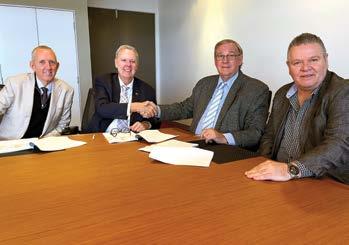
In May 2023, BML entered into a Transition Deed with Brismark, subject to relevant approval by each of Brismark’s members and BML’s shareholders, and other conditions. This Transition Deed documents the process whereby BML’s Industry Shares, which are retained by Brismark, would be cancelled if BML was to move to list on ASX.
BML’s constitution provides for four such Industry Shares, with the holder of each Industry Share able to appoint a director to the Board of BML. These Industry Shares were established as a separate class of shares to BML’s Ordinary Shares.
Over the coming months, BML and Brismark will each engage with their respective shareholders and members, providing full details of the terms of the arrangement and seeking consideration of the proposed arrangement.
If the buy back and cancellation of the Industry Shares is not completed within three years (or such other period as agreed) after receiving the required approval from Brismark’s members and BML’s shareholders, the Transition Deed will terminate and the Industry Shares will remain on issue.
While there is no current intention to pursue an ASX listing in the near future, having the ability to do so provides flexibility to the BML Board in its future deliberations.
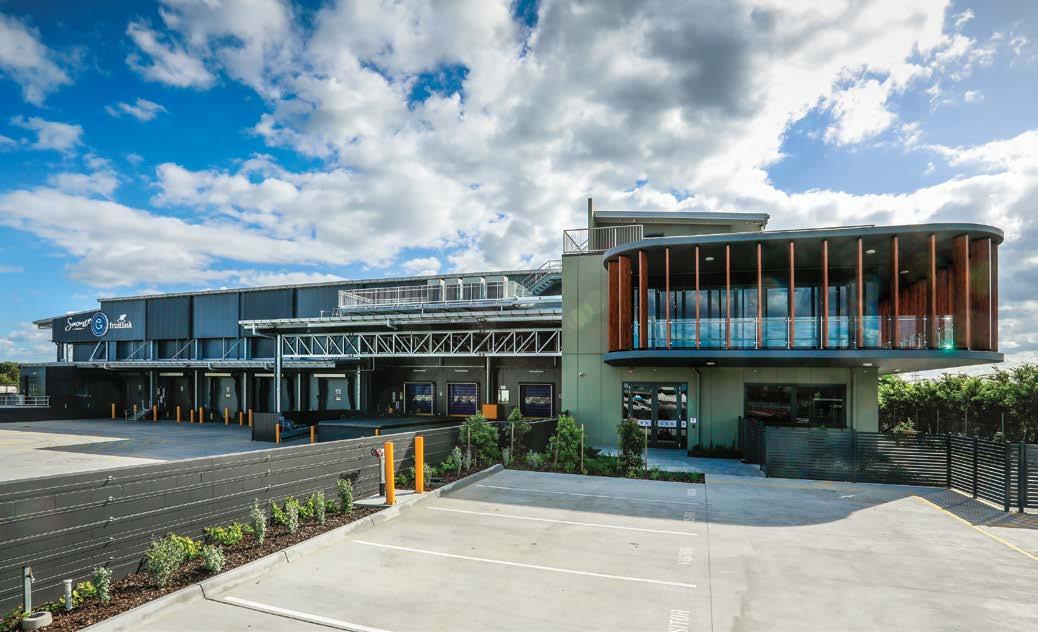
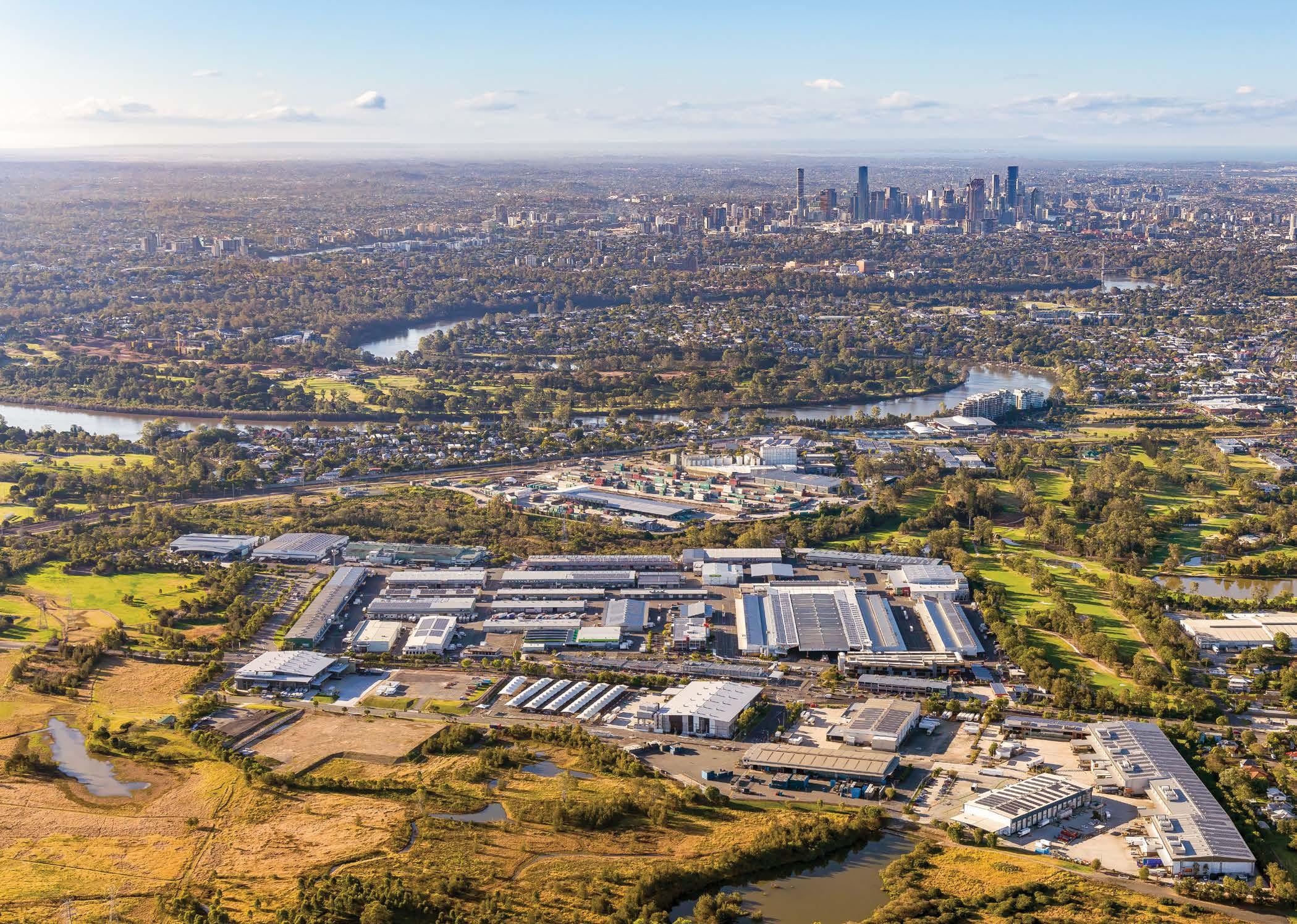
Following a design development process, which commenced in early 2021, and a 14-month construction period, the new Building H1 now occupies the raised development pad in the South Gate West (SGW) warehouse precinct.
Despite facing obstacles, including natural disasters and subcontractor and materials shortages, this $25 million development achieved practical completion and was handed to the tenant, Green Endeavour, in March 2023.
The completed warehouse and administration building has a total lettable area of 6,144 m² including the main warehouse and an administration hub over two levels, and is adorned by a rooftop terrace and garden.
The building was officially opened on Wednesday, 17 May 2023 by the Hon. Mark Furner, Minister for Agricultural Industry Development and Fisheries.
In support of Building H1 and future SGW developments, BML is constructing a new parking facility in the precinct, which will feature over 300 open air parking spaces.
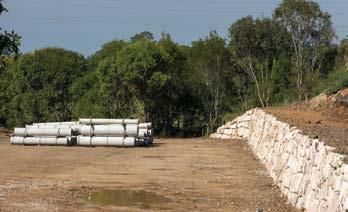
The initial conceptual design, development application and Stage 1 bulk earthworks were completed in 2022 and a retaining wall was completed in late February 2023, located to the west of the parking facility construction site, to maintain the integrity of the adjacent future development building pad.
Stage 2 bulk earthworks were completed in March 2023, using excess fill from the Building H1 development. This second stage
of works provides BML the opportunity to obtain better parking proximity for tenants. Construction is expected to begin by September 2023 and be completed early in 2024.
Work on the high voltage (HV) master plan to oversee a HV network to support development expansion in SGW continues, with the detailed design of the HV network in the process of being finalised.
The new Building N cold room extension is already improving cold chain management and increasing efficiencies for its tenant, with the 610 m² PIR insulated panel extension providing additional storage and packing areas, together with an awning to the entrance of the existing dry storage area.
Construction of the extension began in September 2022 and reached practical completion in February 2023. The works also included the creation of 19 replacement parking spaces at the southern elevation of the warehouse. The extension has increased the gross lettable area of the building from 1,516 m² to 2,126 m².
BML is currently seeking expressions of interest and is in ongoing negotiations with tenant businesses interested in leasing purpose-built modern warehouse and office space. With multiple locations available in the South Gate Precinct, there are options to build warehouses of different configurations, ranging from approximately 2,000 m² to 6,000 m².
While the process is ongoing, future steps include confirming prospective tenant interest, finalising the building design and layout, securing approvals, entering into executed lease documents, before progressing through to construction.
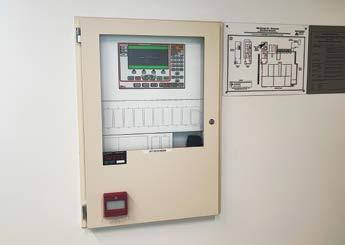
Along with other flood mitigations works (see page 10), BML completed the technical design specifications and began the tender process for the construction of a new, site-wide fire detection system.
This extensive and complex project will involve the replacement of all building fire detection, warning and evacuation systems damaged by the 2022 flood.
As part of the project, all newly designed and upgraded fire indicator panels will be installed above peak flood levels, with mimic panels installed for monitoring by BML and Queensland Fire and Emergency Services.
The mimic panels are removable in the event of a flood and are readily replaceable if damaged. However, the main dry fire system will be protected from any future flood event, with a flood immunity up to 9.5 m Australian Height Datum (AHD), thereby preventing any outage of detection and alarm services.
The upgrade of the fibre optic cabling supporting the fire system is in its final stages with approximately 10 km of cabling already installed.
BML also took the opportunity to upgrade access control infrastructure following the 2022 flood event, which caused significant damage to the in-ground loops and sensors at entry points.
Replacing and upgrading this aging infrastructure ensures a more reliable system to maintain efficient access control and reduce wait times at entry points.
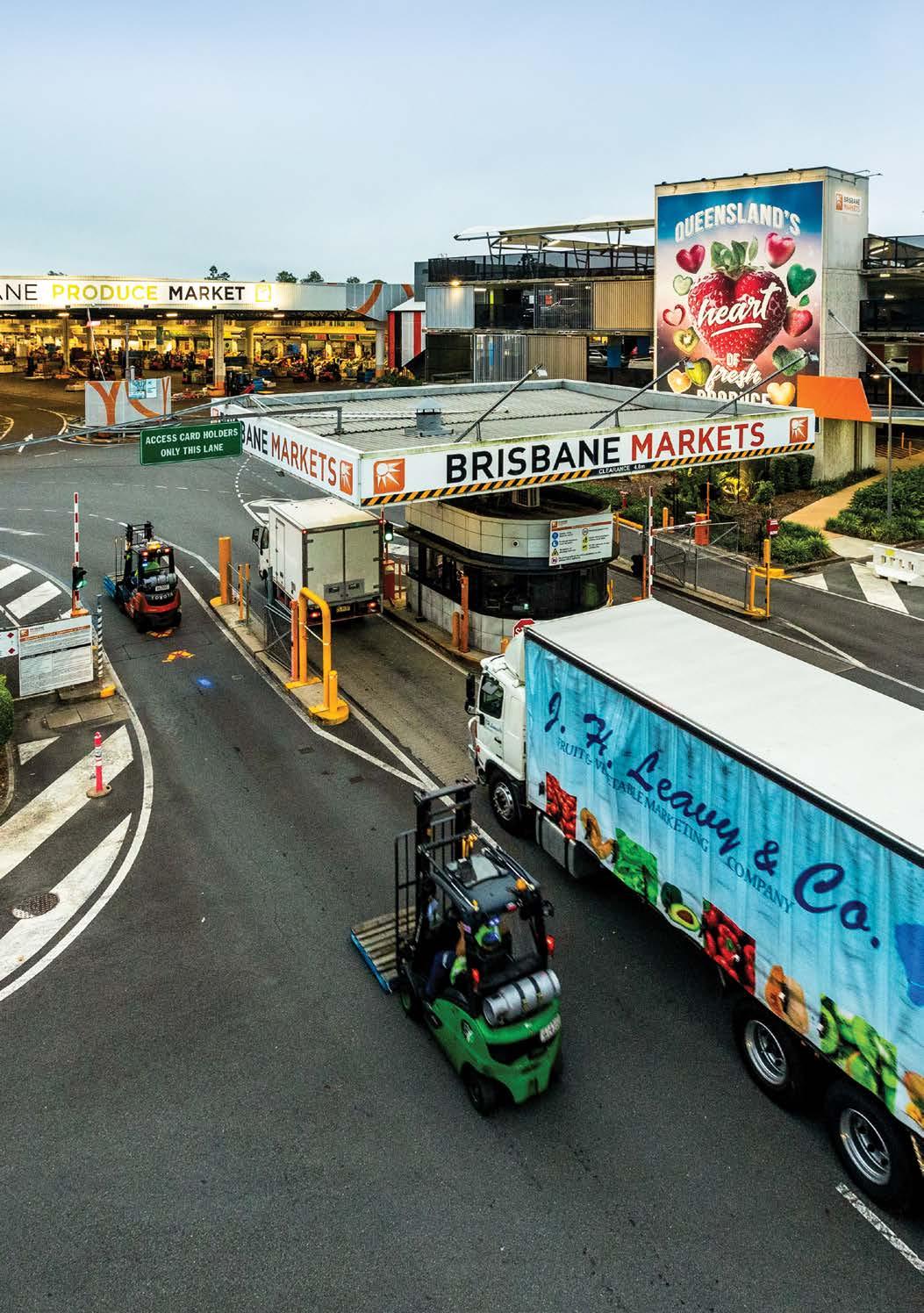
New boom gates, loops, sensors and licence plate recognition (LPR) cameras have been installed at the Main and Western Entries of Brisbane Markets. New boom gates and LPR cameras were installed at the Curzon Street Entry and the in-ground loops replaced.
New LPR cameras were also installed at CP1 entry and exit points. The new cameras take advantage of CCTV technology improvements, which allow for better vision in low light situations.
The final stage of works, the installation of six repurposed boom gates at CP7 and CP4, was completed in July 2023.
BML also reviewed the access control categories being used for pedestrian and vehicle access at the Brisbane Markets, expanding the classifications to increase flexibility to deliver to this site outside of peak trading hours and better meet the needs of tenant businesses and other markets users.
BML maintains a pest and rodent management system across boundaries and common areas of the Brisbane Markets, including monthly servicing of the 1,476 bait stations on site.
To complement our cleaning and waste management programs to reduce rodent activity, over the 2023 financial year, BML developed a Rodent Control Policy to provide a minimum standard for rodent controls inside tenancy areas for Selling Floor and industrial tenants. The policy will also apply to pest management service providers and takes into account food safety legislation requirements along with reinforcing existing lease conditions.
A survey of tenants' and service providers' pest control practices was conducted in July 2023, and over the course of the 2024 financial year, BML will work with tenants and their pest management service providers to implement these minimum standards as part of their own rodent control strategies within their tenancies.
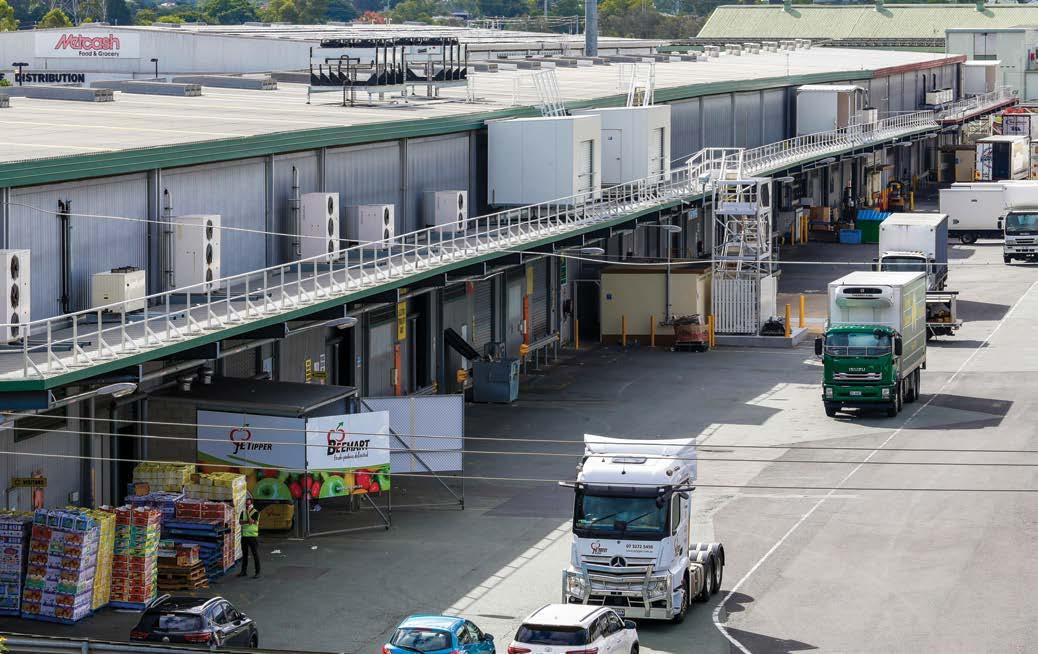
When the Brisbane Markets flooded in 2011, it took 60 hours for trade to resume once the site became accessible. In 2022, this rebound time was reduced to 17 hours – a decrease of over 70%. This quick turnaround was assisted by the raft of flood mitigation projects BML has completed over the past 15 years.
This work is being expanded, with the BML Board committing to approximately $9 million of further flood mitigation projects. One of the most ambitious of these projects is the raising of the Curzon Street road and bridge, which leads to the northern entry to the Brisbane Markets.
The proposed project would see Curzon Street, which is currently 5.456 m AHD at its lowest point, raised to 7 m AHD, allowing for a later exit from the markets and earlier return following a flood event. By the end of the 2023 financial year, a feasibility assessment and draft design were completed, and a detailed design is in progress. The project is currently awaiting the approval of various authorities, including Brisbane City Council (BCC) and Energex.
BML has also identified a parcel of Brisbane Golf Club land in the immediate vicinity to the Markets that could provide access to warehouses during a flood event and serve as an additional heavy vehicle parking area due to its close proximity to the Central Trading Area, but with significantly higher flood immunity.
BML has presented Brisbane Golf Club with a conditional proposal to acquire this parcel of land. The Brisbane Golf Club is undertaking a due diligence process to fully assess BML’s proposal and whether it has merit from the Club’s perspective. It is expected that the process will take a lengthy period of time and in no way infers that the Club has interest in the proposal, but it is an essential initial step to allow discussions to continue.
One of the key learnings from the 2022 flood event was that infrastructure and services recovery is contingent on lead times for components, and that supply chain impacts can delay the arrival and increase the cost of the critical parts needed to re-establish services.
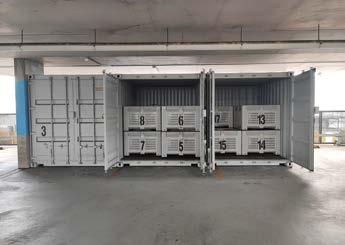
Considerable work has been undertaken by BML to purchase, sort and store a repository of the critical spares required to facilitate immediate repairs to electrical, sewer and dock leveller infrastructure. These critical spares are stored above peak flood levels and are reserved for natural disaster recovery works only.
This stockpiling of critical spares will expedite remediation works after a flood event by progressing restoration works without extended lead times and at a reasonable price point.
To facilitate the long-term storage of these critical spare parts, BML is proposing to demolish the aging Building H, which currently houses BML’s maintenance equipment, along
with work areas and amenities for the cleaning, grounds and maintenance teams.
The building will be replaced with a proposed new purposebuilt storage facility which would feature secure, racked storerooms on an upper level, above flood height and connected to CP1, while the ground level would continue to provide storage and work areas.
Detailed designs for the project were developed over the 2023 financial year and finalised in July 2023, with BCC approving the development application in May 2023. The next stage is for the project to be put to tender, with final Board approval subject to project feasibility and construction costs.
A staged program of works is underway to elevate critical electrical infrastructure, including main building boards and key sewer pump station control panels, above 9.5 m AHD.
In the 2023 financial year, seven elevated structures for electrical control panels and distribution boards were installed at Buildings I, M, Q, P, R, T, X and Z, elevating each buildings’ main distribution boards above flood level. Tenancy distribution boards were also raised at Building R.
Detailed designs for the raising of pump station control panels at Buildings R and Z and the Covered Unloading Area were completed in March, with works starting in June 2023 and concluding in August 2023.
The project to raise essential services will continue over future years and complements BML’s earlier flood mitigation projects to raise all main switchboards following the 2011 flood event.
Another crucial component of BML’s flood mitigation strategy is the implementation of an early warning system to provide increased information during a flooding event.
Works are underway for new flood monitoring systems at the lowest areas in the Northern Industrial and South Gate Precincts of the Brisbane Markets, which are intended to record accurate AHD flood water levels.
The flood monitoring system, which is expected to be complete by the end of 2023, will take into account tidal information, plus predictive data on peak flood levels based on current rainfall, and information on when the markets will become accessible to vehicles.
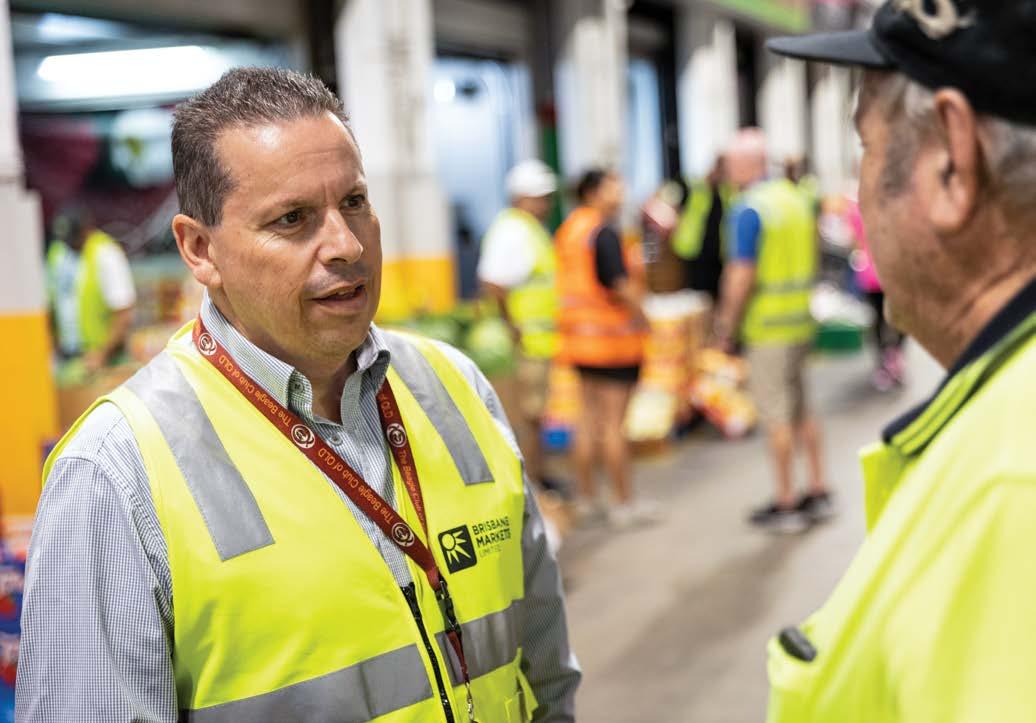
Escalating costs and a tight labour market led BML to rethink its approach to service delivery and staffing in the 2023 financial year. To offset the challenging economy, BML implemented internal cost efficiencies to limit discretionary expenditure while continuing to provide exemplary customer service to tenants and other markets users.
Across the 2023 financial year, BML introduced several software platforms to streamline customer and internal processes, and improve communications to all stakeholders.
The focus of these improvements was the rollout of Microsoft Dynamics and Business Central, a unified software platform designed to integrate organisational processes and encourage automation of repetitive tasks. The new platform went live in March 2023 after two years of scoping, design and testing works.
In addition, an updated Training Hub was rolled out to tenants and other markets users in April 2023; a new staff intranet, BML HQ, was implemented in July 2022; and a new human resources platform, Employment Hero, was introduced in early 2023.
With market challenges contributing to difficulties in sourcing suitable applicants to fill vacant positions, BML increasingly looked internally for staffing solutions, focusing on retention of existing employees and fostering their talents through promotion and upskilling.
BML works collaboratively with central market chambers and wholesalers through our participation in the Hort Connections
trade show as a major sponsor, under the combined banner of Australia’s Fresh Produce Markets, and continued investment in the A better choice! (ABC) national retail program.
In the 2023 financial year, BML increased its investment in the ABC program to support Brismark in expanding the offering to all of Queensland’s independent fruit and vegetable retailers. This valuable collaboration combines marketing resources to increase exposure for independent retailers on a national level by taking advantage of economies of scale for creative assets and shared benefits such as extended media purchasing power.
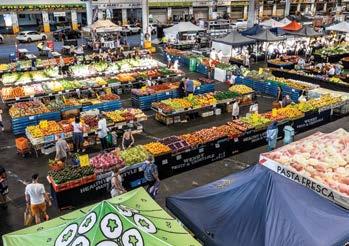
In October 2022, branding works were undertaken to consolidate the Brisbane MarketPlace offering to the public, moving to the sole use of the Saturday Fresh Market brand for the marketing of this weekly retail market, which saw an average attendance of 5,577 people each week, an increase of over 25% on 2022 attendance figures, and almost 300,000 attendees over the course of the year.
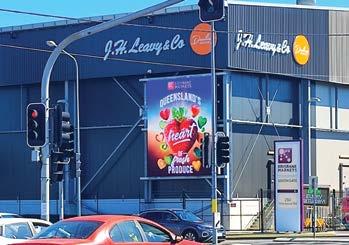
BML installed a new 4.8 m by 5.8 m light-emitting diode (LED) screen on the eastern boundary of Building E1 in August 2022. Around 30,000 vehicles travel along this busy western corridor every day, and the sign is being used to promote the role and importance of the Brisbane Markets as well as the ABC program.
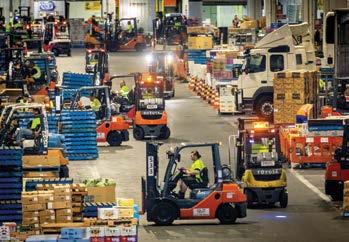
The joint BML and Brismark Site Safety Program continued throughout the 2023 financial year with ongoing random drug and alcohol testing of forklift operators. Of the 504 drug and alcohol tests undertaken, there were 13 confirmed positive test results detected, proving the success of the initiative and allowing for offending forklift operators to be prevented from operating a forklift at the Brisbane Markets, with the responsibility back with their employer to address.
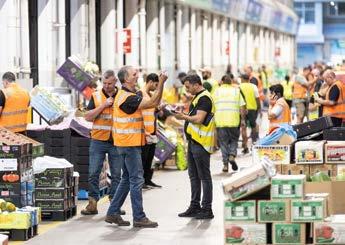
In February 2023, BML launched the ‘Respect and tolerance at work’ campaign to improve culture on site and reinforce legal and social boundaries among markets users. The initiative saw the production of column banners, LED signage, Fresh News articles and markets bulletins on the topics of respect and tolerance at work.
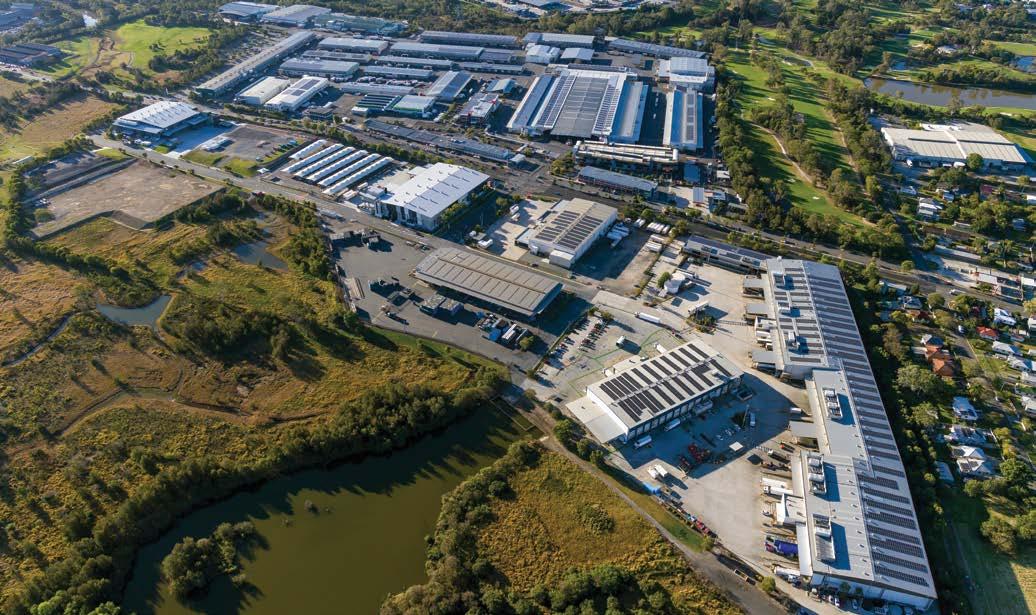
Reducing waste, investing in solar energy and protecting local waterways are three pillars of BML’s quest to improve environmental sustainability at Brisbane Markets.
During the 2023 financial year, BML reviewed and adjusted service provision with respect to waste management, moving from time-based to weight-based billing. This change has seen significant reductions in monthly costs, thereby reducing the waste component of tenant outgoings charges.
Over 304,610 kg of recyclable materials was diverted from landfill, including pine pallets, cardboard, scrap metal, batteries and computer waste. Furthermore, our partnership with Foodbank Queensland saw over 516,639 kg of fresh produce diverted from landfill to feed Queenslanders in need.
Since the first pilot project in 2015, BML has invested over $8 million in solar energy infrastructure, and our annual return on this investment exceeds $1 million, reflecting savings in electricity purchase costs and large-scale generated certificate credits generated. In the 2024 financial year, BML will conduct a feasibility study into expanding the solar network at the Brisbane Markets.
The 15,603 solar panels currently located on 19 buildings across this site generated 6.07 GWh of power during the 2023 financial year, which is over 13% of this site’s electricity usage. This is equivalent to powering more than 1,100 households.
BML continues to support the Oxley Creek Catchment Association, which protects and enhances the natural environment and resources of the catchment.
Furthermore, BML ensures all development projects undergo environmental and stormwater quality management planning, and prevents waste contamination from flowing into Oxley Creek through the use of five gross pollutant traps, located at the discharge points that connect to the stormwater network within Brisbane Markets.
Through annual events, fundraising for charities, sponsoring local organisations and creating productive partnerships with industry organisations, BML seeks to contribute to and strengthen the social fabric of our local community.
The Brisbane Produce Market Gala Dinner was held in July 2022 and eight members of the markets community were awarded for their 40 years of service to the fresh produce industry. Moving forward, the Gala Dinner will be held on a biennial basis, with the next event planned for August 2024.
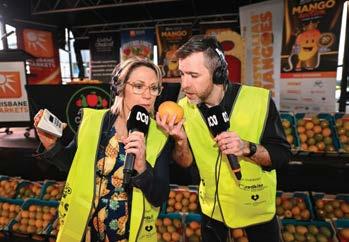
The Brisbane Markets Mango Auction was held in September 2022 and raised $28,640 for Red Kite and The Lady Musgrave Trust, with A better choice! retailer, Sam Etri, placing the winning bid for the coveted title of Mango King.
BML runs the popular Brisbane Produce Market Forklift Operator of the Year event in October each year in conjunction with Safety Month activities, providing the opportunity to promote a safe work culture, celebrate the positive work done by forklift operators at Brisbane Markets and encourage safe work practices.
During May and June 2023, 38 BML and Brismark employees joined forces to participate in The Push-Up Challenge, reaching a combined total of 90,456 push ups and raising $11,074.69 for Lifeline in the process.
BML supports organisations throughout the horticulture supply chain through strategic sponsorships and partnerships, including our sponsorship of Hort Connections and the ABC retail program (see page 11).
BML supports growing regions throughout Queensland through our Memoranda of Understanding with the Bowen Gumlu Growers Association (BGGA) and Bundaberg Fruit and Vegetable Growers (BFVG), grassroots membership organisations that provide advocacy, research and workforce development services for growers in their regions.
BML contributed over $515,000 in charitable donations and corporate sponsorships during the 2023 financial year, including sponsorship of the ABC program, BFVG, BGGA, Morgans’ Big Dry Friday, Wallopers Police Rugby Union Golden Oldies, Mt Gravatt Bowls Club and, in conjunction with Brismark, the Brisbane Produce Market Charity Golf Day in support of Diabetes Australia.
Charitable donations included The Lady Musgrave Trust, providing practical solutions for women and children facing homelessness and domestic violence, Vinnies CEO Sleepout raising funds for St Vincent De Paul’s homelessness services, and Dementia Australia.
BML reported a sound result despite a challenging year, and there has been a reduction in operating profit due to cost increases and a reduced contribution from the investment in PMGL. The property market is experiencing increasing yields, which has had a negative impact on the property value, reversing part of the substantial gains reported in the past two years. The underlying operating profit before tax of $16.95 million represents a decline of 11.39% on the prior year.
The company recognised a reduction in carrying value associated with the property valuation for Brisbane Markets of $30.67 million as outlined in the financial report, and the PMGL contribution was impacted by higher costs and interest rate increases. A summary of the financial performance for the 2023 financial is below.
BML maintained a solid balance sheet position in the 2023 financial year, and the property value write down has the effect of reducing net assets per share to $4.58. At 30 June 2023, total assets are $502.83 million and net assets are $249.43 million.
BML increased its ownership of PMGL to 44.33% during the year. The performance of the Perth Markets continued to be strong, but the return on the investment was impacted by increasing interest rates. The summary of the result after removing the one-off impacts is summarised on right.
The major asset of the group is the Brisbane Markets properties located at Rocklea, which were independently valued at $422.0 million at 30 June 2023, and the statement of financial position reflects this fair value. The full detail relating to the properties is included at Note 7 to the financial report.
Your Directors present their report on the consolidated entity consisting of Brisbane Markets Limited and the entities it controlled at the end of, or during, the year ended 30 June 2023.
The following persons were Directors of Brisbane Markets Limited during the year or at the date of this report:
• Anthony Kelly
• Peter Tighe
• Bruce Hatcher
• Stuart Lummis
• Nicole Radice
Noel Greenhalgh
• Stephen Edwards
• Andrew Young
During the year, the principal continuing activities of the consolidated entity consisted of:
• facilitating the efficient and effective operation and growth of the Brisbane Markets site; providing infrastructure and services to facilitate the marketing and distribution of fresh produce, together with flowers and other ancillary products, to domestic and international customers; and
• preserving and promoting the role of the central market for the benefit of industry stakeholders and consumers.
There were no significant changes in the nature of the activities of the consolidated entity during the financial year.
The net loss after income tax of the consolidated entity for the year ended 30 June 2023 was $9.382 million (12 months to 30 June 2022: $62.393 million profit).
Underlying net operating profit (Non-IFRS measure, unaudited)
The underlying net operating profit before income tax was $16.946 million for the 2023 financial year, compared to a profit of $19.134 million for the 2022 year.
The underlying company performance has been sound in a challenging environment of escalating costs that existed during the year. The information below provides additional detailed explanation of the consolidated entity operating performance by making adjustments for items relating to fair value movements and other non-operating adjustments. The Directors’ view is that presentation of the information in this format provides an accurate representation of the underlying performance that would not otherwise be available.
The net profit/(loss) after income tax includes the following:
1. The impact of the Brisbane Markets property valuation fair value movement in the current year was a decline of $30.669 million before tax (increase of $42.849 million for the 2022 year).
2. The contribution from Perth Markets Group Limited (PMGL) and investments for the current year was a profit of $2.046 million as disclosed in the Financial Report (profit of $19.241 million for the 2022 year). The table below provides a reconciliation to information contained in the Financial Report.
At reporting date, Brisbane Markets Limited’s drawn down funding facility was hedged under three long-term interest rate swaps to the extent of 24.11%. Hedging is a requirement of the funding facility provided by the company’s banker.
A priority during the course of the financial year was its continued effective operations of the markets site, and the finalisation of all flood remediation works.
In an environment of escalating costs and interest rates, active measures were taken to limit discretionary expenditure. Similarly, in what has been a tight labour market, attention was given to staff retention and upskilling.
Expansion of the site continued in the South Gate Precinct, with the completion of the $25 million Building H1 development in March 2023. Work on the supporting 320-space parking facility and high voltage electrical network continues. Expressions of interest are currently open and negotiations in progress for future warehouse developments in this precinct.
A 610 m² PIR insulated panel extension to Building N commenced construction in September 2022 and was completed in February 2023. The new extension provides additional storage and packing areas along with 19 replacement parking spaces at the southern elevation of the warehouse. The extension has increased the gross lettable area of the building from 1,516 m² to 2,126 m².
In October 2022, the BML Board committed approximately $9 million to flood mitigation projects at Brisbane Markets, including new dry fire detection, raising critical infrastructure, a critical spares stockpile, flood monitoring and future mitigation options.
A staged program of works is underway to elevate critical electrical infrastructure above 9.5 m Australian Height Datum (AHD). In the 2023 financial year, seven elevated structures for electrical control panels and main distribution boards were installed at Buildings I, M, Q, P, R, T, X and Z. Pump station control panels were also raised at Buildings R and Z and the Covered Unloading Area. The new structures elevate critical components, providing flood immunity to infrastructure that supports the sewerage and electricity networks, reducing the time it takes to prepare for and recover from a flood event.
Works are underway for new early-warning flood monitoring systems to Brisbane Markets, which is expected to be completed by December 2023. The system will record accurate AHD flood water levels and will be used to provide flood water level information.
Additional flood mitigation works are being progressed, including the potential to raise the road and bridge at the northern entry to the site to improve vehicle access in the event of a flood, and a tender has been released for the construction of a new site-wide fire detection system, including removable mimic panels and fire indicator panels to be installed above flood peak levels.
To allow for quick response and recovery during and after a flood event, BML has created a stockpile of critical spare parts, stored above peak flood levels and reserved for natural disaster recovery works only. BML is also considering a proposal to demolish the aging Building H and replace it with a new purpose-built storage facility, which would feature secure, racked storerooms on an upper level, above flood height and connected to CP1.
In May 2023, BML entered into a Transition Deed with Brismark, subject to relevant approval by each of Brismark’s members and BML’s shareholders, and other conditions. This Transition Deed documents a process whereby, subject to the relevant approvals being obtained, BML’s Industry Shares, which are retained by Brismark, would be subject to a share buy back by BML as part of the process of BML applying to list on the ASX.
The Brisbane Markets site has maintained exceptional occupancy rates for tenancies, with industrial occupancy sitting at 100% and overall site occupancy of 98.60% at 30 June 2023.
The land and buildings at the Brisbane Markets site were valued by M3 Property Pty Ltd at $422 million as at 30 June 2023, and the financial accounts of the consolidated entity reflect the fair value of this asset.
The consolidated entity remains in a very sound financial position, with total assets of $502.83 million, and net assets of $249.43 million at 30 June 2023, representing $4.58 per share.
Dividends paid to shareholders during the year were as follows:
Final dividend of 8.00 cents per fully paid share on 19 October 2022, fully franked at 30%
$4,360,000
Interim dividend of 8.25 cents per fully paid share on 18 April 2023, fully franked at 30% $4,496,250
Total dividends paid during 2023 financial year $8,856,250
Total dividends paid during 2022 financial year $9,265,000
There were no significant changes in the state of affairs of the consolidated entity during the financial year.
There are no significant events that have occurred subsequent to the end of the financial year that have not been disclosed in this report.
IInformation in relation to the likely developments of the consolidated entity include:
• The Brisbane Markets Limited Board continues to review its strategic priorities on a regular basis, which includes an ongoing focus being given to the operation and development of the existing Brisbane Markets site.
• The consolidated entity will continue to progress opportunities across the Brisbane Markets site as they arise.
The consolidated entity is not subject to any significant environmental regulation.
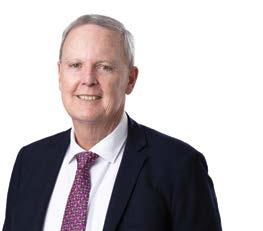
Anthony (Tony) Kelly LLB, MAICD, JP (Qual) Chair
Anthony’s career portfolio of directorships includes Brismark (President), Brisbane Markets Limited, Gladstone Ports Corporation, Carter and Spencer Group, Brisbane Lions AFL Football Club (Chairman), Lindsay Australia and Horticulture Innovation Australia Limited, chairing the International Trade Advisory Panel and International Market Access Assessment Panel.
Anthony graduated with a Bachelor of Laws Degree (UQ), and worked in the legal profession as Judge’s Associate and Solicitor. More recently, Anthony’s business experience has extended into his co-ownership of the emerging Veracity Technology in the IT industry.
Anthony has been a Non-Executive Director of Brisbane Markets Limited since 2002.
Special responsibilities
• Director
• Member of:
People, Remuneration and Culture Committee (Chair)
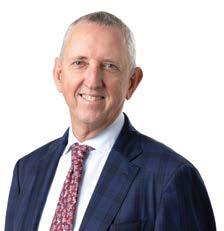
Peter Tighe MAICD Deputy Chair
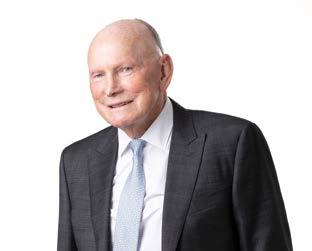
Peter has been a Non-Executive Director of Brisbane Markets Limited since 1999. His family has a long history in the Brisbane Markets and Peter is a second-generation member with 45 years experience in fruit and vegetable wholesaling. He is currently a consultant for Global Fresh Australia and New Zealand.
Peter was a Director of Brismark from 1988–2021, and is also a Director of a number of private companies. Peter is also the Managing Director of Magic Bloodstock Racing, a thoroughbred horse racing and breeding business.
Peter is a member of the Australian Institute of Company Directors.
Special responsibilities Director
• Member of:
Legal and Compliance Committee
Strategy and Investment Committee
People, Remuneration and Culture Committee
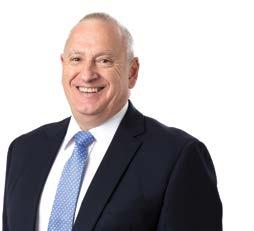
Bruce has been a Non-Executive Director of Brisbane Markets Limited since November 2012. Bruce has extensive experience in chartered accounting covering many industry sectors, and consults to and serves on the Boards of several private and/or family-owned businesses.
Bruce is currently the Chairman of Queensland Rugby League. Formerly, Bruce was the Chair of BDO Queensland, Managing Partner of Horwath Brisbane, Chairman of Horwath Australia, and the Deputy Chairman and Director of 20 years of the Queensland Academy of Sport. Bruce is a regular speaker at industry conferences and professional development seminars nationally and has written many articles on a wide range of family business issues.
Bruce has a Bachelor of Commerce, is a Fellow Chartered Accountant and a Fellow of the Australian Institute of Company Directors. Bruce is also an Adjunct Professor at the Australian Centre for Family Business, Bond University.
Special responsibilities
• Director
• Member of: – Finance and Audit Committee (Chair)
Stuart Lummis
BEc,
DipConstMan, GradDipAcc, FAICD, FFin
Stuart brings many years of experience as a senior executive in the property sector, specifically within ASX-listed groups, government agencies and not-for-profit organisations. Stuart has extensive expertise in the management and development of complex property portfolios through his role as the Chief of Development and Capital Planning for Southern Cross Care Qld, and previously as the Director of Building, Planning Facilities and Property with the Roman Catholic Archdiocese of Brisbane.
Stuart is Non-Executive Director on the board of several organisations, including Bolton Clarke (formerly RSL Care RDNS), Deaf Connect, Nazareth Care Australasia, National Trust of Queensland, Sisters of St Joseph Stewardship Council and Property Advisory Panel and the Heritage Council of Queensland. Additionally, he is a member of the Property Council of Queensland, sitting on the Social Infrastructure Committee and the Queensland Catholic Education Commission grant assessment committee. Stuart has a Bachelor of Economics, Post Graduate Diploma in Applied Finance and Investment, Diploma in Project and Construction Management, and is also a Fellow of the Australian Institute of Company Directors.
Special responsibilities Director
• Member of:
Finance and Audit Committee
Legal and Compliance Committee
Strategy and Investment Committee (Chair)
– People, Remuneration and Culture Committee

Radice LLB, BCom, FIML, MAICD
Nicole is a Partner in the Corporate Advisory and Governance practice of HopgoodGanim Lawyers and has worked at the firm for more than 25 years. Throughout her career she has built a highly successful corporate law practice advising public and private companies on corporate structuring, due diligence and corporate governance, capital raisings, and mergers and acquisitions. Nicole’s experience includes advising ASX-listed organisations, midcap companies, international firms and overseas entities seeking to expand into the Australian market.
In 2019, she was recognised as a Leading Commercial Lawyer – Queensland in Doyle’s Guide and was most recently named in The Best Lawyers™ in Australia 2022–2024 for Corporate Law and corporate/governance practice. Nicole is the Deputy Chair of The Gregory Terrace Foundation and is on the board of the Royal Brisbane and Women’s Hospital Foundation.
Nicole holds both a Bachelor of Commerce and a Bachelor of Law (Honours) and was admitted to the Supreme Court of Queensland and the High Court of Australia in 1999. She is a member of the Australian Institute of Company Directors and is a Fellow of the Australian Institute of Management.
Special responsibilities
• Director
• Member of:
– Finance and Audit Committee
– Legal and Compliance Committee (Chair)
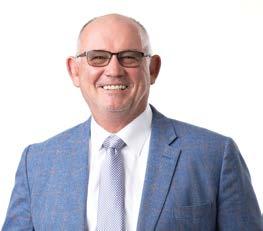
Noel has a comprehensive knowledge of the fruit and vegetable industry, having been Managing Director of RW Pascoe, a leading Brisbane Markets fruit and vegetable wholesaling business since 1989. During this time he has been involved with all aspects of running this successful business.
Noel is a Director of Smart Berries Pty Ltd, one of the larger berry producing companies in Australia and New Zealand. He has also been a Director of Brismark since 2000.
Noel is a member of the Australian Institute of Company Directors.
Special responsibilities
• Director
• Member of:
– Strategy and Investment Committee
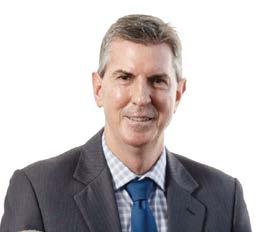
Stephen Edwards LLB, MAICD
Stephen brings over 25 years experience to the Board and a deep understanding of the wholesaling sector of the fresh produce industry. He has broad commercial experience and business acumen with a detailed understanding of board and corporate governance, succession planning and expertise in a range of compliance matters including quality assurance, food safety and work health and safety. As Managing Director of Murray Bros, Stephen has overseen the growth of the company, which is now one of the largest wholesalers in the Brisbane Markets involved in both the domestic and export markets and in servicing all sectors of the industry.
Stephen’s industry knowledge is supported by a broad understanding of the law and legal issues, with a special focus on the history and issues surrounding the Horticulture Code of Conduct both practically and through government lobbying. He has been a Director of Brismark since 2004 and has held the role of Deputy Chair since 2018. Stephen is also a past Director of Fresh Markets Australia, a national organisation representing the interests of fruit and vegetable wholesalers.
Stephen holds a Bachelor of Laws from the University of Queensland and has been admitted to both the Supreme Court of Queensland and the High Court of Australia.
Special responsibilities
• Director Member of:
– Legal and Compliance Committee
Finance and Audit Committee
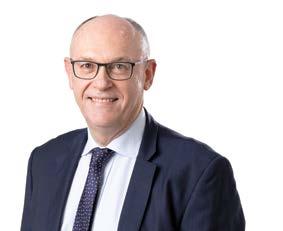
Andrew Young GDipCorpMgmt, BCom, BAgrSc (Hons), FCPA, MAICD
Executive Director
Andrew has a history of employment at a senior management level with extensive experience in policy and strategy formulation, service development, industry representation and market operation and development. His experience in the fresh produce industry includes engaging with relevant stakeholders at a state and federal level and addressing national issues through his roles with BML, Brismark and Fresh Markets Australia. He has had an active involvement in addressing issues impacting on the wholesaling sector of the fresh produce industry and has conducted research on central markets in Australia and parts of Asia, Europe and the USA.
Andrew played a leading role as part of the project team responsible for what became the successful bid to purchase the Brisbane Markets site in 2002 and as CEO, coordinated the seamless transition of ownership of the Brisbane Markets site to BML.
He has maintained a focus on the upgrading and development of the Brisbane Markets site and the strategies contributing to the ongoing growth and success of the company.
Andrew is a Non-Executive Director of Perth Markets Group Limited, having been appointed in 2015 ahead of the acquisition of the markets in 2016, and an Executive Director of Fresh Markets Australia.
Andrew holds a Bachelor of Commerce, a Bachelor of Agricultural Science with Honours, a Diploma of Corporate Management, is a Certified Chief Executive Officer, is a member of the Australian Institute of Company Directors and is a Fellow Certified Practicing Accountant.
Special responsibilities
• Managing Director and CEO
• Member of:
– Finance and Audit Committee
– Legal and Compliance Committee
– People, Remuneration and Culture Committee
– Strategy and Investment Committee
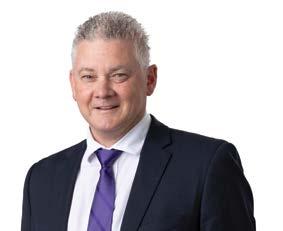
Murray Stewart B.Bus, CA, FGIA, C.Dec
Murray is a Chartered Accountant and Chartered Secretary with significant experience in senior finance roles across a number of industries including retail, manufacturing, franchising, property and freight service industries. Murray’s strengths are in the areas of financial management, accounting, commercial management, dispute resolution, legal interpretation, strategic and operational business, governance, risk, compliance, and company secretarial duties.
Murray has strong financial acumen and an ability to understand key risks and opportunities, and to see how a business can position itself strategically for changes in the external business environment. Murray has worked for Brisbane Markets Limited since 2014 and manages finance, contract management, and human resources functions of the organisation in addition to overseeing the Saturday Fresh Market.
Murray holds a Bachelor of Business (Accounting), is a Chartered Accountant, and is a Fellow of the Governance Institute of Australia.
Special responsibilities
CFO and Company Secretary
Note: Noel Greenhalgh and Stephen Edwards are principals of companies that are also shareholder members of The Queensland Chamber of Fruit and Vegetable Industries Co-operative Limited, which is a substantial shareholder of Brisbane Markets Limited. Shareholders of The Queensland Chamber of Fruit and Vegetable Industries Co-operative Limited hold one share in the Chamber, with a nominal value of $20.
The number of meetings of the company's Board of Directors and of each Board Committee held during the year ended 30 June 2023, and the number of meetings attended by each Director were:
1 A Kelly attended various Committee meetings during the year, in his capacity as Chair of the Board.
The Board Committees and the membership of those committees as at 30 June 2023 is:
Finance and Audit Committee:
Bruce Hatcher (Chair)
Stuart Lummis
Nicole Radice
Stephen Edwards
Andrew Young
Legal and Compliance Committee:
Nicole Radice (Chair)
Peter Tighe
Stuart Lummis
Stephen Edwards
Andrew Young
People, Remuneration and Culture Committee:
Anthony Kelly (Chair)
Peter Tighe
Stuart Lummis
Andrew Young
Strategy and Investment Committee:
Stuart Lummis (Chair)
Peter Tighe
Noel Greenhalgh
Andrew Young
No options over unissued shares or interests in the company or a controlled entity were granted during or since the end of the financial year and there were no options outstanding at the date of this report.
No person has applied to the Court under Section 237 of the Corporations Act 2001 for leave to bring proceedings on behalf of the company, or to intervene in any proceedings to which the company is a party for the purpose of taking responsibility on behalf of the company for all or any part of those proceedings.
During the financial year, Brisbane Markets Limited paid a premium in respect of a contract insuring directors, secretaries and executive officers of the company and its controlled entities against a liability incurred as director, secretary or executive officer to the extent permitted by the Corporations Act 2001. The contract of insurance prohibits disclosure of the nature of the liability and the amount of the premium.
The company has not otherwise, during or since the end of the financial year, except to the extent permitted by law, indemnified or agreed to indemnify an officer or auditor of the company or any of its controlled entities against a liability incurred as such an officer or auditor.
Section 307C of the Corporations Act 2001 requires the company's auditors, BDO Audit Pty Ltd, to provide the Directors with a written Independence Declaration in relation to their audit of the financial report ended 30 June 2023. The Auditor's Independence Declaration is attached and forms part of this Directors’ Report.
Details of the amounts paid or payable to the auditor for nonaudit services provided during the financial year:
The consolidated entity satisfies the requirements of ASIC Corporations (Rounding in Financial/Directors’ Reports) Instrument 2016/191 issued by the Australian Securities and Investments Commission relating to “rounding off” of amounts in the Directors’ Report and the financial statements to the nearest thousand dollars. Amounts have been rounded off in the Directors’ Report and financial statements in accordance with that ASIC Instrument.
This report is made in accordance with a resolution of the Directors.
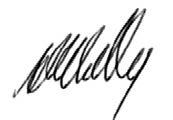
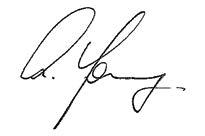
A Kelly Chair
The Directors are satisfied that the provision of non-audit services during the financial year by the auditor (or by another person or firm on the auditor's behalf), is compatible with the general standard of independence for auditors imposed by the Corporations Act 2001.
The Directors are of the opinion that the services as disclosed above do not compromise the external auditor's independence requirements of the Corporations Act 2001 for the following reasons:
• all non-audit services have been reviewed and approved to ensure that they do not impact the integrity and objectivity of the auditor; and
• none of the services undermine the general principles relating to auditor independence as set out in APES 110 Code of Ethics for Professional Accountants issued by the Accounting Professional and Ethical Standards Board, including reviewing or auditing the auditor's own work, acting in a management or decision-making capacity for the company, acting as advocate for the company or jointly sharing economic risks and rewards.
13 September 2023 at Brisbane

Tel: +61 7 3237 5999
Fax: +61 7 3221 9227
www.bdo.com.au
Level 10, 12 Creek Street
As lead auditor of Brisbane Markets Limited for the year ended 30 June 2023, I declare that, to the best of my knowledge and belief, there have been:
1. No contraventions of the auditor independence requirements of the Corporations Act 2001 in relation to the audit; and
2. No contraventions of any applicable code of professional conduct in relation to the audit.
This declaration is in respect of Brisbane Markets Limited and the entities it controlled during the year.
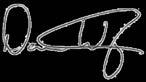
D P Wright Director
BDO Audit Pty Ltd
Brisbane, 13 September 2023
BDO
For the year ended 30 June 2023
As at 30 June 2023
For the year ended 30 June 2023
For the year ended 30 June 2023
The above statement of cash flows should be read in conjunction with the accompanying
Brisbane Markets Limited is an unlisted public company limited by shares, incorporated and domiciled in Australia.
(a) Basis of preparation
These general purpose financial statements have been prepared in accordance with Australian Accounting Standards and Interpretations issued by the Australian Accounting Standards Board (‘AASB’) and the Corporations Act 2001, as appropriate for for-profit oriented entities. These financial statements also comply with International Financial Reporting Standards as issued by the International Accounting Standards Board (‘IASB’). The general purpose financial report of the consolidated entity for the year ended 30 June 2023 was authorised for issue in accordance with a resolution of the directors on 13 September 2023.
Historical cost convention
The financial statements have been prepared under the historical cost convention, except for share investments, investment properties, and derivative financial instruments.
Unless otherwise stated the financial statements are presented in Australian dollars rounded to the nearest thousand dollars ($’000), in accordance with ASIC Corporations (Rounding in Financial/Directors’ Reports) Instrument 2016/191, which is the functional and presentational currency of the consolidated entity.
Rental revenue
Rental revenue from investment properties is recognised on a straight-line basis over the lease term. Revenue not received at the reporting date is reflected in the statement of financial position as a receivable or if paid in advance, as rent in advance (unearned income).
Lease incentives granted are considered an integral part of the total rental revenue and are recognised as a reduction in rental income over the term of the lease, on a straight-line basis. Contingent rentals are recognised as income in the periods in which they are earned. Where a lease modification occurs for leases held as a lessor, the revised rental payable is recognised on a straight-line basis over the lease term.
Revenue from contracts with customers
Revenue from contracts with customers is derived from utility services provided to tenants, entry and parking fees, marketing fees and miscellaneous recharges, and is recognised as income in the periods in which services are provided. Revenue not received at the reporting date is reflected in the statement of financial position as a receivable.
Classification and measurement of revenue from contracts with customers
Revenue from contracts with customers is recognised over time if:
• the customer simultaneously receives and consumes the benefits as the entity performs;
• the customer controls the asset as the entity creates or enhances it; or
• the seller’s performance does not create an asset for which the seller has an alternative use and there is a right to payment for performance to date.
Where the above criteria is not met, revenue is recognised at a point in time.
The table below summarises the revenue earned by the consolidated entity and the appropriate recognition method applied.
The consolidated entity recovers the outgoings associated with general property expenses, site maintenance, and operation, from lessees in accordance with specific clauses within lease agreements. These are invoiced monthly based on an annual estimate. The consideration is due 14 days from invoice date. At year end a true up of recoveries cost is completed and any shortfall or excess is billed or refunded to the customer.
The consolidated entity earns revenue from specific services provided to the lessee. These services are on charged to lessees in accordance with specific clauses within the lease agreements. Revenue from provision of LPG sales, electricity sales, and water charges is recognised as the services are provided. The lessee is invoiced on a monthly basis, where applicable. Consideration is due 14 days from invoice date, and 25 days from invoice date for electricity invoices.
The consolidated entity earns revenue from car parking charges and market entry fees. These fees are either charged to a lessee or buyer account monthly, or collected as an entry fees paid. Where invoiced, the consideration is due 14 days from invoice date. Other fees are payable on the day of entry.
Point in time
Assets and liabilities are presented in the statement of financial position based on current and non-current classification.
An asset is classified as current when: it is either expected to be realised or intended to be sold or consumed in normal operating cycle; it is held primarily for the purpose of trading; it is expected to be realised within 12 months after the reporting period; or the asset is cash or cash equivalent unless restricted from being exchanged or used to settle a liability for at least 12 months after the reporting period. All other assets are classified as non-current.
A liability is classified as current when: it is either expected to be settled in normal operating cycle; it is held primarily for the purpose of trading; it is due to be settled within 12 months after the reporting period; or there is no unconditional right to defer the settlement of the liability for at least 12 months after the reporting period. All other liabilities are classified as non-current.
Deferred tax assets and liabilities are always classified as non-current.
The consolidated entity has adopted all of the new, revised or amending Accounting Standards and Interpretations issued by the AASB that are mandatory for the current reporting period. The adoption of these Accounting Standards and Interpretations did not have any significant impact on the financial performance or position of the consolidated entity.
The preparation of financial statements requires management to make judgements, estimates and assumptions that affect the application of accounting policies and the reported amounts of assets, liabilities, income and expenses. Actual results may differ from these estimates. Estimates and underlying assumptions are reviewed on an ongoing basis. Revisions to accounting estimates are recognised in the period in which the estimate is revised and in future periods affected. Information about significant areas of estimation, uncertainty and critical judgements in applying accounting policies that have the most significant effect on the amounts recognised in the financial statements are discussed in the relevant notes below:
• Note 6 - Provision for impairment of receivables;
• Note 7 - Estimates of fair value of investment properties;
• Note 9 - Estimation of useful lives of assets;
• Note 14 and 15 - Tax liability and Income tax expense; and
• Note 17 - Estimates of fair value of interest rate derivatives. Revenue
3. Other revenue
Assets and liabilities
4. Cash and cash equivalents
Mangrove Insurance Guernsey PCC Limited (BML Cell) is included in the consolidated financial report, and any cash held by this entity is restricted to purposes permitted by the Business Plan for that entity, being provision of insurance services. The restricted cash held at balance date is $3.43 million.
Trade receivables
Trade and other receivables are held for collection of contractual cash flows where those cash flows represent solely payments of principal and interest, and are measured at amortised cost. Interest income from these financial assets is included in finance income using the effective interest rate method. Any gain or loss arising on derecognition is recognised directly in profit or loss. Impairment losses are presented as separate line item.
Impairment
The consolidated entity assesses on a forward-looking basis, the expected credit loss associated with its debt instruments carried at amortised cost.
For trade receivables the consolidated entity applies the simplified approach permitted by AASB 9, which requires expected lifetime losses to be recognised from initial recognition of the trade receivables. Management has determined that assessment of expected credit loss associated with trade receivables is immaterial.
Provision for impairment of trade receivables
The estimated credit loss calculation requires a degree of estimation and judgement. The level of estimated credit loss is assessed by taking into account the recent revenue billings, the ageing of trade receivables, historical collection rates and specific knowledge of the individual debtor financial position.
(a) Reconciliation
Reconciliations of the carrying amount of investment properties at the beginning and end of the current and previous periods:
Freehold land, buildings and improvements – 250 Sherwood Road, 320 Sherwood Road and 385 Sherwood Road, Rocklea
(b) Amounts recognised in profit or loss for investment property:
(c) Assets pledged as security
Refer to Note 16 for details of investment properties pledged as security.
(d) Leases as a lessor
Investment properties are generally leased to tenants on long-term operating leases with rentals payable monthly. Minimum lease payments receivable under the non-cancellable operating leases of investment property not recognised in the financial statements are as follows:
(e) An independent valuation of investment properties as at 30 June 2023 was carried out by a qualified valuer with relevant experience in the type of property being valued (Ross Farwell – API No 66781 and QVRB No. 3250, and Michael Coverdale – AAPI, from M3 Property Australia Pty Ltd). In assessing the value of the investment property, the independent valuer has considered discounted cash flows, capitalisation of net market income methods and direct comparison. Refer to Note 19 for further discussion of fair value measurement of investment properties.
Investment properties
Investment properties are properties held either to earn rental income, for capital appreciation or for both. Investment properties are initially measured at cost and are subsequently measured at fair value. As part of the process of determining the fair value of all property, an external independent valuer, having appropriate recognised professional qualifications and recent experience in the location and category of property being valued, values the Brisbane Markets property annually.
Property under construction held for future use as investment property is also carried at fair value unless fair value cannot yet be reliably determined. If fair value cannot yet be reliably determined, the property will be accounted for at cost until either the fair value can be reliably determined or when construction is complete.
Changes to fair values of investment properties are recognised in the profit or loss in the period in which they occur.
Estimates of fair value of investment properties
The consolidated entity has investment property with a carrying amount of $422 million (30 June 2022: $425 million) representing estimated fair value at reporting date. The investment property represents a significant portion of the total assets of the consolidated entity. The fair value adopted for the investment property is based on an independent external valuation of investment property at 30 June 2023. In assessing the value of the investment property, the independent valuers have considered discounted cash flows, capitalisation of net market income methods and direct comparison. Refer to Note 19 for further details on significant inputs used in determining fair value of the investment properties.
Brisbane Markets Limited (the parent) holds a 44.33% interest in Perth Markets Group Limited (2022: 41.73%). This investment is measured in accordance with the equity method of accounting.
The principal place of business of Perth Markets Group Limited is Canning Vale, Perth, Western Australia. Brisbane Markets Limited holds 26,084,475 ordinary shares in the company.
The investment in Perth Markets Group Limited is a strategic investment for the company to diversify the income streams and grow shareholder value.
The carrying amount recorded in the consolidated entity accounts at 30 June 2023, is $62.018 million (2022: $56.492 million).
in Perth Markets Group Limited:
The table below includes summarised financial information of Perth Markets Group Limited.
Commitments and contingent liabilities in respect of the associate
The consolidated entity is not liable for any contractual commitments arising from its interests in the associate if and when they arise. There are no material contingent liabilities disclosed by the associate.
Significant restrictions
There are no restrictions on the ability of Perth Markets Group Limited to transfer funds to the consolidated entity in the form of cash dividends or loans.
Investment in an associate
An associate is an entity over which the consolidated entity has significant influence. Significant influence is the power to participate in the financial and operating policy decisions of the entity but is not control or joint control of these policies. Investments in associates are accounted for in the consolidated financial statements by applying the equity method of accounting, whereby the investment is initially recognised at cost (including transaction costs) and adjusted thereafter for the post-acquisition change in the consolidated entity’s share of net assets in the associate. In addition, the consolidated entity’s share of the profit or loss is included in the consolidated entity’s profit or loss.
The carrying amount of the investment includes, when applicable, goodwill relating to the associate. Any discount on acquisition, whereby the consolidated entity’s share of the net fair value of the associate exceeds the cost of the investment, is recognised in the profit or loss in the period in which the investment is acquired.
Profits and losses resulting from transactions between the consolidated entity and the associate are eliminated to the extent of the consolidated entity’s interest in the associate.
Reconciliations of the carrying amount of property, plant and equipment at the beginning and end of the current and previous periods: Plant and equipment
Refer Note 15 for property, plant and equipment pledged as security.
Property, plant and equipment
Property, plant and equipment not classified as investment properties are measured on the cost basis and therefore carried at cost less accumulated depreciation and any accumulated impairment. Cost includes expenditure that is directly attributable to the acquisition of the items.
Depreciation
Depreciation of property, plant and equipment is calculated on a straight-line basis over their estimated useful lives commencing from the time the asset is held ready for use. The useful lives for plant and equipment is 3 to 25 years.
Carrying amount
The carrying amount of property, plant and equipment (cost less accumulated depreciation and impairment losses) is reviewed annually by Directors to ensure it is not in excess of the recoverable amount from those assets. A formal assessment of recoverable amount is made when impairment indicators are present. The recoverable amount is assessed on the basis of the expected net cash flows that will be received from the asset’s employment and subsequent disposal. The expected net cash flows have been discounted to their present values in determining recoverable amounts.
An asset’s carrying amount is written down immediately to its recoverable amount if the asset’s carrying amount is greater than its estimated recoverable amount.
Gains and losses on disposals are determined by comparing proceeds with the carrying amount. These gains and losses are recognised in profit or loss in the period in which they arise.
Estimation of useful lives of assets
The consolidated entity determines the estimated useful lives and related depreciation and amortisation charges for its property, plant and equipment. The useful lives could change significantly as a result of technical innovations or some other event. The depreciation and amortisation charge will increase where the useful lives are less than previously estimated lives, or technically obsolete or non-strategic assets that have been abandoned or sold will be written off or written down.
The consolidated entity holds 98,500 shares in South Australian Produce Market Limited, which are assessed as having a value of $19.80 per share at reporting date.
Investments at fair value through profit or loss are carried in the statement of financial position at fair value with net changes in fair value recognised in the profit or loss.
There were no additions to the right-of-use assets during the year.
The consolidated entity leases office equipment under agreements of less than five years.
Trade and other payables represent liabilities for goods and services provided to the consolidated entity prior to the year end and which are unpaid at the end of the reporting period. These amounts are unsecured and typically have 14 to 60 day payment terms.
Refer to Note 18 for further information on financial instruments.
The balance comprises temporary differences
The
The income tax expense for the year comprises current income tax expense and deferred tax expense.
Current income tax expense charged to profit or loss is the tax payable on taxable income for the current period. Current tax liabilities are therefore measured at the amounts expected to be paid to the relevant taxation authority using tax rates (and tax laws) that have been enacted or substantively enacted by the end of the reporting period.
Deferred income tax expense reflects movements in deferred tax asset and deferred tax liability balances during the year as well as unused tax losses.
Current and deferred income tax expense is charged or credited outside profit or loss when the tax relates to items that are recognised outside profit or loss or arising from a business combination. Except for business combinations, no deferred income tax is recognised from the initial recognition of an asset or liability where there is no effect on accounting or taxable profit or loss.
Deferred tax assets and liabilities are calculated at the tax rates that are expected to apply to the period when the asset is realised or the liability is settled and their measurement also reflects the manner in which management expects to recover or settle the carrying amount of the related asset or liability. With respect to non-depreciable items of property, plant and equipment measured at fair value and items of investment property measured at fair value, the related deferred tax liability or deferred tax asset is measured on the basis that the carrying amount of the asset will be recovered entirely through sale.
When an investment property that is depreciable is held by the entity in a business model whose objective is to consume substantially all of the economic benefits embodied in the property through use over time (rather than through sale), the related deferred tax liability or deferred tax asset is measured on the basis that the carrying amount of such property will be recovered entirely through use.
Deferred tax assets relating to temporary differences and unused tax losses are recognised only to the extent that it is probable that future taxable profit will be available against which the benefits of the deferred tax asset can be utilised.
Where temporary differences exist in relation to investments in subsidiaries, branches, associates and joint ventures, deferred tax assets and liabilities are not recognised where the timing of the reversal of the temporary difference can be controlled and it is not probable that the reversal will occur in the foreseeable future.
Current tax assets and liabilities are offset where a legally enforceable right of set-off exists and it is intended that net settlement or simultaneous realisation and settlement of the respective asset and liability will occur. Deferred tax assets and liabilities are offset where: (i) a legally enforceable right of set-off exists; and (ii) the deferred tax assets and liabilities relate to income taxes levied by the same taxation authority on either the same taxable entity or different taxable entities, where it is intended that net settlement or simultaneous realisation and settlement of the respective asset and liability will occur in future periods in which significant amounts of deferred tax assets or liabilities are expected to be recovered or settled.
(a) The prima facie tax on profit/(loss) differs from the income tax expense as follows:
(b) The components of tax expense comprise:
Deferred income tax/(revenue) expense included in income tax expense comprises:
The above amounts represent the balance of the franking account as at the end of the financial year adjusted for:
(i) franking credits that will arise from payment of the amount of the provision for income tax;
(ii) franking debits that will arise from the payment of dividends recognised as a liability at the reporting date; and (iii) franking credits that will arise from the receipt of dividends recognised as receivables at the reporting date.
Income tax expense
The income tax expense or benefit for the period is the tax payable on that period's taxable income based on the applicable income tax rate adjusted by changes in deferred tax assets and liabilities.
The consolidated entity is subject to income taxes in the jurisdictions in which it operates. Significant judgement is required in determining the provision for income tax. There are many transactions and calculations undertaken during the ordinary course of business for which the ultimate tax determination is uncertain. The consolidated entity recognises liabilities for anticipated tax audit issues based on the consolidated entity's current understanding of the tax law. Where the final tax outcome of these matters is different from the carrying amounts, such differences will impact the current and deferred tax provisions in the period in which such determination is made. There were no uncertainties that required significant judgement during the year.
Terms and conditions relating to the above loan:
(i) The debt facility with Westpac Banking Corporation has a limit of $200 million, and an expiry date of 31 July 2025. Bank loans are under a facility with a fixed term which expires on 31 July 2025. Interest rate risks associated with the liabilities are managed with interest rate swap arrangements. As at 30 June 2023, the company had drawn $174.193 million of this $200 million facility.
(ii) Loans are secured by a first registered mortgage over all current and future real property at the Brisbane Markets site and a general security interest over the assets and undertakings of the company. The carrying amount of current real property as detailed in the valuation at 30 June 2023, is $422 million.
(iii) Under the terms of the loan facility, there is a requirement to report financial undertakings to Westpac on a six monthly basis. These financial undertakings include:
a) The outstanding amount under the facility cannot exceed 60% of the aggregate market value of the Brisbane Markets property,
b) The ratio of Operating EBIT to interest expense for the preceding 12 months cannot exceed 2.25:1.00,
c) The tangible net worth (being the total tangible assets less total liabilities) must not be less than 85% of the tangible net worth for the previous financial year.
(iv) In addition, there are obligations on BML to ensure that the following requirements are met throughout the term:
a) at all times during the term, BML must maintain hedge agreements to hedge the floating interest rate exposure of at least 20% of the outstanding amount under the facility,
b) The distributions made in any financial year must not exceed the lesser of; a return of 10% on shareholders equity, or 100% of the operating net profit after tax (excluding the impact of property valuation movements and unrealised share of profits from associates or movement in investments).
The consolidated entity has complied with all terms and conditions of the loan facility during the reporting period.
Financial liabilities
Non-derivative financial liabilities (excluding financial guarantees) are subsequently measured at amortised cost using the effective interest rate method.
Borrowing costs
Borrowing costs incurred for the construction of a qualifying asset are capitalised during the period of time that it is required to complete and prepare the asset for its intended use or sale. Other borrowing costs are expensed when incurred.
Interest rate swap contracts - refer to Note 18 for the company's credit risk and hedging policy. In respect of the interest rate swap contracts, the fixed interest rates range between 2.18% below and 2.64% above (2022: 0.36% above and 5.18% above) and the variable rates are 0.67% below (2022: 0.29% below and 1.54% below) the 90 day bank bill rate, which at balance date was 4.36% (2022: 1.15% for 30 day rate and 1.82% for 90 day rate). The quarterly contracts require settlement of net interest receivable or payable every 90 days. There are no remaining monthly contracts. The contracts are settled on a net basis.
Swaps currently in place cover approximately 24.11% (2022: 46.54%) of the variable loan principal outstanding and are timed to expire as each loan repayment falls due.
During the year ended 30 June 2023, no ineffective portion (2022: nil) has been recognised and transferred to the profit or loss. Refer to Note 19 for further details on fair value measurement.
Derivatives
The consolidated entity uses derivative financial instruments such as interest rate swaps to hedge its risk associated with interest rate fluctuations. Such derivatives are stated at fair value. The fair value of interest rate swap contracts is determined by reference to market values for similar instruments.
For derivatives that do not qualify for hedge accounting, any gains or losses arising from changes in fair value are taken directly to net profit or loss for the year.
For derivatives that qualify for hedge accounting, the method for recognising gains and losses on changes in fair value depends on whether the derivative is classified as a fair value hedge or a cash flow hedge. Derivatives are classified as fair value hedges when they hedge the exposure to changes in the fair value of a recognised asset or liability and as cash flow hedges when they hedge exposure to variability in cash flows that are attributable to either a particular risk associated with a recognised asset or liability or to a forecast transaction.
The consolidated entity has no fair value hedges as at reporting date.
The consolidated entity documents at inception of the hedge the relationship between the hedging instruments (derivatives) and the hedged items, as well as the risk management objective and strategy for undertaking the hedge transaction. The consolidated entity also documents, both at inception of the hedge and on an ongoing basis whether the derivatives that are used in the hedging transactions have been, and will continue to be, highly effective in offsetting changes in fair values or cash flows of hedged items.
The effective portion of changes in the fair value of derivatives that are designated and qualify as cash flow hedges is recognised in other comprehensive income in the hedging reserve. The gain or loss relating to the ineffective portion is recognised immediately in profit or loss.
Amounts accumulated in other comprehensive income are recognised in profit or loss as a reclassification adjustment in periods when the hedged item affects profit or loss. The gain or loss relating to the effective portion of interest rate swaps hedging variable rate borrowings is recognised in profit or loss as finance costs.
Hedge accounting is discontinued when the hedging instrument expires, or is sold, terminated or exercised, or no longer qualifies for hedge accounting. At that point in time, any cumulative gains or losses on the hedging instrument recognised in other comprehensive income is kept in other comprehensive income until the forecast transaction occurs. If the forecast transaction is no longer expected to occur, the cumulative gain or loss recognised in other comprehensive income is recognised in profit or loss for the year as a reclassification adjustment.
Estimates of fair value of interest rate derivatives
The fair value of interest rate derivatives has been determined using a pricing model based on discounted cash flow analysis and incorporating assumptions supported by market data at reporting date, including market expectation of future interest rates and discount rates and taking into account estimates prepared by external counterparties.
(a) General objectives, policies and processes
In common with all other businesses, the consolidated entity is exposed to risks that arise from its use of financial instruments. This note describes the consolidated entity’s objectives, policies and processes for managing those risks and the methods used to measure them. Further quantitative information in respect of these risks is presented throughout these financial statements.
There have been no substantive changes in the consolidated entity’s exposure to financial instrument risks, its objectives, policies and processes for managing those risks or the methods used to measure them from previous periods unless otherwise stated in this note.
The Board has overall responsibility for the determination of the consolidated entity’s risk management objectives and policies and, whilst retaining ultimate responsibility for them, it has delegated the authority for designing and operating processes that ensure the effective implementation of the objectives and policies to management. The consolidated entity’s risk management policies and objectives are therefore designed to minimise the potential impacts of these risks on the results of the consolidated entity where such impacts may be material. The consolidated entity generally uses derivative financial instruments such as interest rate swap contracts to hedge these risks. The Board receives monthly reports from management through which it reviews the effectiveness of the processes put in place and the appropriateness of the objectives and policies it sets.
The overall objective of the Board is to set policies that seek to reduce risk as far as possible without unduly affecting the consolidated entity’s competitiveness and flexibility. Further details regarding these policies are set out below.
(b) Credit risk exposure
The objective of the consolidated entity is to minimise risk of loss from credit risk exposure.
Credit risk arises principally from cash at bank and trade and other receivables. Credit risk from receivables is measured using historical information to analyse if there are expected credit losses in the future.
The maximum credit risk exposure of financial assets at the reporting date is the carrying amount of these assets as indicated in the statement of financial position. Provision has been raised in the accounts using the expected credit loss model.
Credit risk in respect of trade debtors is managed by requiring payment within 14 days of the date of invoice, with the trade debtor providing a bank guarantee or cash security in most cases when entering into a lease. Any credit loss incurred is settled from the security held.
Credit risk represents the risk of counter party default. The credit risk on financial assets of the consolidated entity which have been recognised in the statement of financial position is generally the carrying amount, net of any provisions for impairment. Credit risk is managed through the establishment of credit limits with guarantees and other forms of security obtained where required. Limits are determined after taking into account the debtor's financial position, past experience and other factors. Compliance with credit limits is regularly monitored by management.
Hedging policy
The company uses derivative financial instruments (interest rate swaps) to reduce the exposure to market risks arising from changes in interest rates. The consolidated entity does not enter into derivative contracts for the purposes of trading. Hedging decisions are made based on the consolidated entity’s interest rate risk position. Hedging for the purpose of this policy means a transaction which reduces the calculated interest rate risk on the overall portfolio of interest bearing assets and liabilities using one or more of the interest rate risk measures of value at risk, sensitivity or accrued simulation.
(c) Liquidity risk
Liquidity risk is the risk that the consolidated entity will not be able to meet its financial obligations as they fall due. The objective of managing liquidity risk is to ensure, as far as possible, that it will always have sufficient liquidity to meet its liabilities when they fall due, under both normal and stressed circumstances.
Liquidity risk is measured using liquidity ratios such as working capital. The consolidated entity manages this risk through the following mechanisms:
(i) preparing forward looking cash flow analysis in relation to operational, investing and financing activities;
(ii) monitoring undrawn credit facilities;
(iii) maintaining a reputable credit profile; and
(iv) managing credit risk related to financial assets.
The tables below reflect an undiscounted contractual maturity analysis for financial liabilities. Bank funding amounts have been deducted in the analysis as management does not consider there is any reasonable risk that the bank will terminate such facilities. The bank does however maintain the right to terminate such facilities in the event of a breach of financial undertakings.
Financial liabilities due for payment Trade and other payables (excl. annual leave)
1 Note: Bank funding facility has a renewal date of 31 July 2025. Payment of these amounts will not physically occur with the loan balance flowing forward to the new negotiated facility. The Directors are not aware of any reason as to why the funding facility will not be renewed or refinanced in the future.
² Note: 24.11% (2022: 46.54%) of loans are hedged therefore the actual outflow will be more.
Interest risk management
Interest rate risks are caused by fluctuations in interest rates which, in turn, are due to market factors.
Interest rate sensitivity
The consolidated entity’s main interest rate risk arises from cash and cash equivalents, and borrowings. The following table demonstrates the sensitivity to a possible change in interest rates on cash and cash equivalents, and borrowings by 1%.
The sensitivity is completed on the basis that all other variables held constant, reflecting the impact on the consolidated entity’s profit or loss before taxes and other comprehensive income. This sensitivity analysis on the interest rate swap has been prepared on the basis that the swaps are fully effective at year end and reflect an undiscounted analysis.
Market risk
Market risk is the risk that changes in market prices, such as foreign exchange rates, interest rates and equity prices will affect the consolidated entity's income or the value of its holdings of financial instruments.
As borrowings subject to an interest rate swap are effectively at a fixed interest rate, there is no material exposure to any market risks including interest rate risk.
The following assets and liabilities are recognised and measured at fair value on a recurring basis: share investment;
• investment properties; and
• derivatives.
There are no assets or liabilities which are measured at fair value on a non-recurring basis. The carrying values of financial assets and financial liabilities approximate their fair values due to their short term nature, and variable interest rate on borrowings approximates market value.
Fair value hierarchy
All assets and liabilities for which fair value is measured or disclosed are categorised according to the fair value hierarchy as follows.
Level 1: Quoted prices (unadjusted) in active markets for identical assets or liabilities that the consolidated entity can access at the measurement date.
Level 2: Inputs other than quoted prices included within Level 1 that are observable for the asset or liability, either directly or indirectly.
Level 3: Inputs for the asset or liability that are not based on observable market data (unobservable inputs).
Recognised fair value measurements
The following table sets out the consolidated entity’s assets and liabilities that are measured and recognised at fair value in the financial statements.
There were no transfers during the year between Level 1 and Level 2 for recurring fair value measurements.
The consolidated entity’s policy is to recognise transfers into and out of the different fair value hierarchy levels at the date the event or change in circumstances that caused the transfer occurred.
Valuation techniques used to derive Level 2 and Level 3 fair values recognised in the financial statements
The following table sets out the valuation techniques used to measure fair value within Level 2, including a description of the significant inputs used.
Description
Share investment
Derivatives - interest rate swaps
Valuation approach and inputs used
Market value of share trades in the period leading up to the reporting date.
Present value of the estimated future cash flows based on observable yield curves.
The following table sets out the valuation techniques used to measure fair value within Level 3, including details of the significant unobservable inputs used and the relationship between unobservable inputs and fair value.
Description Valuation approaches
Investment properties Capitalisation approach based on current market net income generated by the property capitalised at an appropriate market yield to establish the property’s current market value fully leased.
Investment properties Income approach based on estimated rental value of the property. Discount rates and terminal yields are estimated by an external valuer or management based on comparable transactions and industry data.
Investment properties Market approach based on prices and other relevant information generated by market transactions involving identical or comparable (i.e. similar) assets or a group of assets.
Unobservable inputs
Range of inputs Relationship between unobservable inputs and fair value
Capitalisation rate 6.25% to 20.00% for the differing income streams, with an adopted blended yield of 6.44%.
Discount rate 7.75%
Terminal yield 6.94%
The dollar rate per square metre per annum of lettable area achieved by comparable assets sold in the current market.
$2,600 to $2,700 per square metre per annum of lettable area.
There were no significant inter-relationships between unobservable inputs that materially affect fair values.
Reconciliation of Level 3 fair value movements
The following table sets out the movements in Level 3 fair values for recurring measurements.
The higher the capitalisation rate, the lower the fair value.
The higher the discount rate and terminal yield, the lower the fair value.
The higher the dollar rate per square metre per annum of lettable area, the higher the fair value
Valuation processes for Level 3 fair values
Management regularly reviews the Level 3 valuations of investment properties and reports the results of these reviews to the Finance and Audit Committee and to the Board. Valuations are fully reviewed every six months to ensure that they are current for the half-year and annual financial statements with the consolidated entity engaging an external, independent and qualified valuer to determine the fair value of the consolidated entity’s investment properties at the end of every annual reporting period. All valuations, including external valuations, are reviewed and approved by the Finance and Audit Committee before submission to the Board.
Highest and best use
The current use of the investment properties equates to their highest and best use.
Fair value
Fair value is the price that would be received to sell an asset or paid to transfer a liability in an orderly transaction between independent, knowledgeable and willing market participants at the measurement date. It is based on the presumption that the transaction takes place either in the principal market for the asset or liability or, in the absence of a principal market, in the most advantageous market. The principal or most advantageous market must be accessible to, or by, the consolidated entity.
Fair value is measured using the assumptions that market participants would use when pricing the asset or liability, assuming that market participants act in their best economic interest.
The fair value measurement of a non-financial asset takes into account the market participant's ability to generate economic benefits by using the asset at its highest and best use or by selling it to another market participant that would use the asset at its highest and best use.
In measuring fair value, the consolidated entity uses valuation techniques that maximise the use of observable inputs and minimise the use of unobservable inputs.
The consolidated entity’s policy is to recognise transfers into and out of the different fair value hierarchy levels at the date the event or change in circumstances that caused the transfer occurred.
Issued and paid up capital
Movements in share capital
Ordinary shares
Terms and conditions of contributed equity
Ordinary
Ordinary shares have the right to receive dividends as declared and, in the event of winding up the company, to participate in the proceeds from the sale of all surplus assets in proportion to the number of, and amounts paid up on, shares held. Ordinary shares entitle their holder to one vote, either in person or by proxy, at a meeting of the company.
Industry shares
The holder of the industry shares shall be entitled to appoint Industry Directors to the Board according to the number of industry shares held, shall be entitled to receive notice of, and attend meetings of the company and to speak on any matter relating to industry shares, but not vote in respect of those shares. The holder of industry shares has no right to participate in the capital or profits of the company, whether on winding up, by way of distribution of capital or otherwise.
The company may not pass any resolution without the affirmative vote of the majority of holders of industry shares.
Contributed equity
Ordinary shares are classified as equity. Costs directly attributable to the issue of new shares or options are shown as a deduction from the equity proceeds, net of any income tax benefit. Costs directly attributable to the issue of new shares or options associated with the acquisition of a business are included as part of the purchase consideration.
The consolidated entity manages its capital to ensure that entities in the consolidated entity will be able to continue as a going concern while maximising the return to stakeholders through optimisation of the debt and equity balance.
The capital structure of the consolidated entity consists of debt which includes the borrowings disclosed in Note 16, cash and cash equivalents and equity attributable to equity holders of the parent, comprising issued capital, reserves and retained profits as disclosed in Notes 20 and 22, and the statement of changes in equity.
There are no externally imposed capital requirements, other than the requirement to comply with bank covenants.
Management effectively manages the consolidated entity's capital by assessing the consolidated entity's financial risks and adjusting its capital structure in response to changes in these risks and in the market. These responses include the management of debt levels, distributions to shareholders and share issues.
Dividends provided for or paid during the year:
Dividend per share paid for fully paid shares during the financial year
Dividends paid during the year are fully franked at the tax rate of 30 cents in the dollar. The franking account balance at 30 June 2023 is disclosed at Note 15(b).
Dividends
Dividends are recognised when declared during the financial year and no longer at the discretion of the company.
23. Interests in subsidiaries
The
paid during the year are charged against retained profits
Profit/(loss) for the year
The operating loss of the parent entity after income tax for the year ended 30 June 2023 was $9.62 million which included a net revaluation decrease after tax of $21.47 million. The net revaluation decrease is a non-operating unrealised contribution to the result, and as such is not included for purposes of calculating cash flow or dividends.
Guarantees
No guarantees have been entered into by the parent entity in relation to debts of its subsidiaries.
Commitments
At 30 June 2023, the parent entity had no material capital or other expenditure commitments other than as disclosed.
Contractual operating commitments – service contract
Estimated major expenditure of the parent entity contracted for at reporting date, but not provided for is as follows:
later than one year but not later than five years
Capital project commitments
Contingent assets/liabilities
As at 30 June 2023, the consolidated entity had no significant contingent assets or liabilities.
Principles of consolidation
The consolidated financial statements incorporate the assets, liabilities and results of Brisbane Markets Limited (‘company’ or ‘parent entity’) and the subsidiaries as at 30 June 2023. Brisbane Markets Limited and its subsidiaries together are referred to in these financial statements as the ‘consolidated entity’.
Subsidiaries are those entities over which the consolidated entity has control. The consolidated entity controls an entity when the consolidated entity is exposed to, or has the rights to, variable returns from its involvement with the entity and has the ability to affect those returns through its power to direct the activities of the entity. Subsidiaries are fully consolidated from the date on which control is transferred to the consolidated entity. They are de-consolidated from the date that control ceases. A list of the subsidiaries is provided in Note 23.
Intercompany transactions, balances and unrealised gains on transactions between entities in the consolidated entity are eliminated. Unrealised losses are also eliminated unless the transaction provides evidence of the impairment of the asset transferred. Accounting policies of subsidiaries have been changed where necessary to ensure consistency with the policies adopted by the consolidated entity.
25. Commitments
At 30 June 2023, the consolidated entity had no material capital or other expenditure commitments other than as disclosed.
Contractual operating commitments – service contract
Estimated major expenditure contracted for at reporting date, but not provided for is as follows:
As at 30 June 2023, the consolidated entity had no significant contingent assets or liabilities.
27. Events after the reporting period
There are no significant events that have occurred subsequent to the end of the financial year that have not been disclosed in this report.
28. Statement of cash flows
(a) Reconciliation of cash
For the purposes of the statement of cash flows, cash includes cash on hand and in banks and investments where the term of these investments is less than three months. Cash at the end of the reporting period as shown in the statement of cash flows is reconciled to the related items in the statement of financial position as follows:
(b) Reconciliation of cash flows from operating activities with profit/(loss) for the year
(c) Reconciliation of cash flows from financing activities for the year
Consolidated entity - 2023
Consolidated entity - 2022
*Fair value movement in interest rate swap
Cash and cash equivalents
Cash and cash equivalents include cash on hand and at banks, deposits held at call with financial institutions and, where applicable, bank overdrafts. Bank overdrafts are reported within borrowings in current liabilities on the statement of financial position.
Key management personnel compensation
Note: Key management personnel includes non-executive Board members.
The aggregate compensation made to Directors and other members of key management personnel of the consolidated entity during the year is as set out below:
with related parties
A Director, Andrew Young, holds the position of Chief Executive Officer of The Queensland Chamber of Fruit and Vegetable Industries Co-operative Limited. Stephen Edwards was a member of the Board of The Queensland Chamber of Fruit and Vegetable Industries Cooperative Limited for the full year, and Noel Greenhalgh was a member of the Board until 19 October 2022. In accordance with Clause 37.1 of the Constitution of Brisbane Markets Limited, The Queensland Chamber of Fruit and Vegetable Industries Co-operative Limited as the holder of the four industry shares appoints up to four Directors to the Board of Brisbane Markets Limited. The Directors appointed are Bruce Hatcher, Stuart Lummis, Nicole Radice and Stephen Edwards.
The Queensland Chamber of Fruit and Vegetable Industries Co-operative Limited lease premises and acquire other services from Brisbane Markets Limited.
Brisbane Markets Limited utilises a number of the services provided by The Queensland Chamber of Fruit and Vegetable Industries Cooperative Limited, and provide a contribution to their retailer marketing programs.
A Director, Andrew Young, is also a Director of The Australian Chamber of Fruit and Vegetable Industries Limited, which lease premises from Brisbane Markets Limited.
A Director, Noel Greenhalgh, is also a Director of R W Pascoe Pty Ltd and Protettore Pty Ltd, which lease premises from Brisbane Markets Limited.
A Director, Peter Tighe, is employed as a consultant to Global Fresh Australia Pty Ltd, which lease premises from Brisbane Markets Limited. Global Fresh Australia Pty Ltd have also entered into a Hire Purchase arrangement with Brisbane Markets Limited for cold room racking which is ongoing.
Ms Nicole Radice is an equity partner in Hopgood Ganim Lawyers, who provide legal services to Brisbane Markets Limited.
Mr Stephen Edwards is also a Director of Atkinson Produce Pty Ltd, which lease premises from Brisbane Markets Limited.
Brisbane Markets Limited receives payments from its associate Perth Markets Group Limited for Board member remuneration, and business travel expenditure.
All transactions and leases with related parties are based on normal commercial terms and conditions which are no more favourable than those which it is reasonable to expect would be applied if the transaction was at arm's length.
Aggregate amount of the above transactions with related parties:
Loans to/from related parties
There were no loans to or from related parties at the current or previous reporting date.
During the year the following amounts were paid/payable to the auditor of the parent entity and its related practices:
In the Directors’ opinion:
• the attached financial statements and notes thereto comply with the Corporations Act 2001, the Accounting Standards, the Corporations Regulations 2001 and other mandatory professional reporting requirements; the attached financial statements and notes thereto comply with International Financial Reporting Standards as issued by the International Accounting Standards Board as described in note 1 to the financial statements;
• the attached financial statements and notes thereto give a true and fair view of the consolidated entity’s financial position as at 30 June 2023 and of its performance for the financial year ended on that date; and
• there are reasonable grounds to believe that Brisbane Markets Limited will be able to pay its debts as and when they become due and payable.
Signed in accordance with a resolution of Directors made pursuant to section 295(5)(a) of the Corporations Act 2001.
On behalf of the Directors
13 September 2023 at Brisbane

To the members of Brisbane Markets Limited
To the members of Brisbane Markets Limited
We have audited the financial report of Brisbane Markets Limited (the Company) and its subsidiaries (the Group), which comprises the consolidated statement of financial position as at 30 June 2023, the consolidated statement of profit or loss and other comprehensive income , the consolidated statement of changes in equity and the consolidated statement of cash flows for the year then ended, and notes to the financial report, including a summary of signifi cant accounting policies and the directors’ declaration.
We have audited the financial report of Brisbane Markets Limited (the Company) and its subsidiaries (the Group), which comprises the consolidated statement of financial position as at 30 June 2023, the consolidated statement of profit or loss and other comprehensive income , the consolidated statement of changes in equity and the consolidated statement of cash flows for the year then ended, and notes to the financial report, including a summary of signifi cant accounting policies and the directors’ declaration.
In our opinion the accompanying financial report of Brisbane Markets Limited, is in accordance with the Corporations Act 2001, including:
In our opinion the accompanying financial report of Brisbane Markets Limited, is in accordance with the Corporations Act 2001, including:
(i) Giving a true and fair view of the Group’s financial position as at 30 June 2023 and of its financial performance for the year ended on that date; and
(i) Giving a true and fair view of the Group’s financial position as at 30 June 2023 and of its financial performance for the year ended on that date; and
(ii) Complying with Australian Accounting Standards and the Corporations Regulations 2001 Basis for opinion
(ii) Complying with Australian Accounting Standards and the Corporations Regulations 2001 Basis for opinion
We conducted our audit in accordance with Australian Auditing Standards. Our responsibilities under those standards are further described in the Auditor’s responsibilities for the audit of the Financial Report section of our report. We are independent o f the Group in accordance with the Corporations Act 2001 and the ethical requirements of the Accounting Professional and Ethical Standards Board’s APES 110 Code of Ethics for Professional Accountants (including Independence Standards) (the Code) that are relevant to our audit of the financial report in Australia. We have also fulfilled our other ethical responsibilities in accordance with the Code.
We conducted our audit in accordance with Australian Auditing Standards. Our responsibilities under those standards are further described in the Auditor’s responsibilities for the audit of the Financial Report section of our report. We are independent o f the Group in accordance with the Corporations Act 2001 and the ethical requirements of the Accounting Professional and Ethical Standards Board’s APES 110 Code of Ethics for Professional Accountants (including Independence Standards) (the Code) that are relevant to our audit of the financial report in Australia. We have also fulfilled our other ethical responsibilities in accordance with the Code.
We confirm that the independence declaration required by the Corporations Act 2001 , which has been given to the directors of the Company, would be in the same terms if given to the directors as at the time of this auditor’s report.
We confirm that the independence declaration required by the Corporations Act 2001 , which has been given to the directors of the Company, would be in the same terms if given to the directors as at the time of this auditor’s report.
We believe that the audit evidence we have obtained is sufficient and appropriate to provide a basis for our opinion.
We believe that the audit evidence we have obtained is sufficient and appropriate to provide a basis for our opinion.
The directors are responsible for the other information. The other information obtained at the date of this auditor’s report is information included in the Director’s report, but does not include the financial report and our auditor’s report thereon.
The directors are responsible for the other information. The other information obtained at the date of this auditor’s report is information included in the Director’s report, but does not include the financial report and our auditor’s report thereon.
Our opinion on the financial report does not cover the other information and accordingly we do not express any form of assurance conclusion thereon.
Our opinion on the financial report does not cover the other information and accordingly we do not express any form of assurance conclusion thereon.
of BDO International Ltd, a UK company limited by guarantee, and form part of the international B DO network of independent member firms. Liability limited by a scheme approved under Professional Standards Legislation.
In connection with our audit of the financial report, our responsibility is to read the other information and, in doing so, consider whether the other information is materially inconsistent with the financial report or our knowledge obtained in the audit, or otherwise appears to be materially misstated.
In connection with our audit of the financial report, our responsibility is to read the other information and, in doing so, consider whether the other information is materially inconsistent with the financial report or our knowledge obtained in the audit, or otherwise appears to be materially misstated.
If, based on the work we have performed on the other information obtained prior to the date of this auditor’s report, we conclude that there is a material misstatement of this other information, we are required to report that fact. We have nothing to report in this regard.
If, based on the work we have performed on the other information obtained prior to the date of this auditor’s report, we conclude that there is a material misstatement of this other information, we are required to report that fact. We have nothing to report in this regard.
The directors of the Company are responsible for the preparation of the financial report that gives a true and fair view in accordance with Australian Accounting Standards and the Corporations Act 2001 and for such internal control as the directors determine is necessary to enable the preparation of the financial report that gives a true and fair view and is free from material misstatement, whether due to fraud or error.
The directors of the Company are responsible for the preparation of the financial report that gives a true and fair view in accordance with Australian Accounting Standards and the Corporations Act 2001 and for such internal control as the directors determine is necessary to enable the preparation of the financial report that gives a true and fair view and is free from material misstatement, whether due to fraud or error.
In preparing the financial report, the directors are responsible for assessing the ability of the group to continue as a going concern, disclosing, as applicable, matters related to going concern and using the going concern basis of accounting unless the directors either intend to liquidate the Groupor to cease operations, or has no realistic alternative but to do so.
Auditor’s responsibilities for the audit of the Financial Report
In preparing the financial report, the directors are responsible for assessing the ability of the group to continue as a going concern, disclosing, as applicable, matters related to going concern and using the going concern basis of accounting unless the directors either intend to liquidate the Groupor to cease operations, or has no realistic alternative but to do so.
Our objectives are to obtain reasonable assurance about whether the financial report as a whole is free from material misstatement, whether due to fraud or error, and to issue an auditor’s report that includes our opinion. Reasonable assurance is a high level of assurance, but is not a guarantee that an audit conducted in accordance with the Australian Auditing Standards will always detect a material misstatement when it exists. Misstatements can arise from fraud or error and are considered material if, individually or in the aggregate, they could reasonably be expected to influence the economic decisions of users taken on the b asis of this financial report.
Our objectives are to obtain reasonable assurance about whether the financial report as a whole is free from material misstatement, whether due to fraud or error, and to issue an auditor’s report that includes our opinion. Reasonable assurance is a high level of assurance, but is not a guarantee that an audit conducted in accordance with the Australian Auditing Standards will always detect a material misstatement when it exists. Misstatements can arise from fraud or error and are considered material if, individually or in the aggregate, they could reasonably be expected to influence the economic decisions of users taken on the b asis of this financial report.
A further description of our responsibilities for the audit of the financial report is located at the Auditing and Assurance Standards Board website ( http://www.auasb.gov.au/Home.aspx) at: http://www.auasb.gov.au/auditors_responsibilities/ar3.pdf
A further description of our responsibilities for the audit of the financial report is located at the Auditing and Assurance Standards Board website ( http://www.auasb.gov.au/Home.aspx) at: http://www.auasb.gov.au/auditors_responsibilities/ar3.pdf
This description forms part of our audit or’s report.
This description forms part of our audit or’s report.
BDO Audit Pty Ltd
BDO Audit Pty Ltd
D P Wright Director
D P Wright Director
Brisbane, 13 September 2023
Brisbane, 13 September 2023
BDO Audit Pty Ltd ABN 33 134 022 870 is a member of a national association of independent entities which are all members of BDO Australia Ltd ABN 77 050 110 275, an Australian company limited by guarantee. BDO Audit Pty Ltd and BDO Australia Ltd are mem bers of BDO International Ltd, a UK company limited by guarantee, and form part of the international B DO network of independent member firms. Liability limited by a scheme approved under Professional Standards Legislation.
The Board of Directors is responsible on behalf of the shareholders for the overall corporate governance of the company, including direction and oversight of the company's business and affairs.
The Board comprises eight Directors including seven nonExecutive Directors, being Anthony Kelly, Peter Tighe, Bruce Hatcher, Stuart Lummis, Nicole Radice, Noel Greenhalgh and Stephen Edwards. The other Director is the Managing Director and CEO, Andrew Young.
The constitution states that the number of Directors should be determined by the company, but be not less than three and no more than eight at any time.
The Board of Directors is responsible for corporate governance matters. It has established principles under which the Board and management operate to ensure that business is carried out in the best interests of shareholders and other stakeholders, with proper sharing of responsibilities between Directors and management.
The Board is responsible for adopting business plans, investment strategies, corporate policies, budgets and the approval of longer term strategic plans for the company, delegating management of the business and the implementation of Board strategies and plans to the Managing Director and CEO.
The Board also reviews and, if appropriate, approves major capital expenditure, acquisitions and funding issues. It has the responsibilities of overseeing the audit and compliance functions.
The Board must meet at least six times per year and will hold as many additional meetings as the operations of the company may require. Board meetings are scheduled at the commencement of each calendar year to ensure as many Directors as possible are able to be present at meetings.
The performance of all Directors, the Board as a whole and the Managing Director is to be reviewed at least annually in accordance with the Company's corporate governance guidelines.
Each Director has the right to seek independent professional advice at the company's cost, subject to the approval of the Chair.
To assist in the execution of the Board's corporate governance responsibilities, the Board has established four Committees with a non-Executive Director as Chair of each.
The key matters which will be dealt with by the Finance and Audit Committee include the review of:
• the appointment and continuation of external auditors;
• the adequacy of existing external audit arrangements, with particular emphasis on the scope and quality of the audit;
• all areas of significant capital risk and the arrangements in place to contain those risks to acceptable levels;
• the effectiveness of management information or other systems of internal control;
• the application of accounting standards and policies to the company; and
the financial statements of the company with both management and external auditors.
The Finance and Audit Committee comprises five Directors, being Bruce Hatcher (Chair), Stuart Lummis, Nicole Radice, Stephen Edwards and the Managing Director and CEO, Andrew Young. The Chair has a standing invitation to attend any or all meetings of Board Committees.
The key areas of responsibility for the Legal and Compliance Committee include:
• monitoring legal and procedural issues to ensure the company is complying with all regulatory requirements;
• broadly understanding the risk that may impact on company performance; and
• advising the Board regarding potential conflicts of interest and related policy matters.
The Legal and Compliance Committee comprises five Directors, being Nicole Radice (Chair), Stuart Lummis, Peter Tighe and Stephen Edwards and the Managing Director and CEO, Andrew Young. The Chair has a standing invitation to attend any or all meetings of Board Committees.
The key areas dealt with by the People, Remuneration and Culture Committee include:
• reviewing the remuneration policies and practices for the company by taking into account market conditions and comparable market rates to attract, retain and motivate Directors, executives and employees of the highest calibre and quality; and
• instilling a culture of acting lawfully, ethically and responsibly, in accordance with BML’s Company Values.
The People, Remuneration and Culture Committee comprises four Directors, being Tony Kelly (Chair), Peter Tighe, Stuart Lummis and the Managing Director and CEO, Andrew Young.
The key areas dealt with by the Strategy and Investment Committee include:
• reviewing the organisation’s investment and growth strategies in accordance with the BML Strategic Plan and agreed risk appetite; and
• considering potential acquisitions, expansion opportunities and other strategic investments against BML’s growth and risk appetite.
The Strategy and Investment Committee comprises four Directors, being Stuart Lummis (Chair), Peter Tighe and Noel Greenhalgh and the Managing Director and CEO, Andrew Young. The Chair has a standing invitation to attend any or all meetings of Board Committees.
The company recognises the need for Directors and employees to observe the highest standards of behaviour and business ethics when engaging in corporate activity.
All Directors and employees are expected to act in accordance with the law and with the highest standards of propriety.
Link Market Services
Level 21
10 Eagle Street
Brisbane QLD 4000
Email: registrars@linkmarketservices.com.au
Website: www.linkmarketservices.com.au
Shareholder inquiries: 1300 554 474
accountant
BDO Audit Pty Ltd
Level 10
12 Creek Street
Brisbane QLD 4000
HopgoodGanim Lawyers
Level 8 Waterfront Place
1 Eagle Street
Brisbane QLD 4000
Managing Director and CEO
Andrew Young
Chief Financial Officer and Company Secretary
Murray Stewart
Chief Operating Officer
Tricia Williams
Chief Administration Officer
Joady Raph
Chief Information Officer
Luke Williams
Special Projects Manager
Jessie Field
Retail Market Manager
Adam Nikodem
As an unlisted public company, shares in BML are not traded on the Australian Stock Exchange or any other share trading exchange system. BML does, however, maintain a register of parties interested in buying shares in the company and offers guidance in the process.
If a shareholder wants to sell shares in the company they can do so by private treaty where they have identified a buyer, or alternatively advise BML and provide information which will be circulated to all parties who have registered an interest in buying shares. The individuals concerned can then negotiate a price and progress the sale.
If a sale is finalised, BML’s share registry, Link Market Services, must be sent a copy of the original transfer form and share certificate so that the change of ownership can be recorded on the company’s share register.
Parties interested in buying or selling shares in BML, or who need any information in this regard, may register their interest by emailing shares@brisbanemarkets.com.au or visit the shareholder/investor section of our website www.brisbanemarkets.com.au

ACN 064 983 017 | ABN 39 064 983 017
Administration and Registered Office: Level 2, Fresh Centre 385 Sherwood Road, Rocklea PO Box 80, Brisbane Markets 4106
Telephone: (07) 3915 4200
Facsimile: (07) 3915 4291
Email: admin@brisbanemarkets.com.au www.brisbanemarkets.com.au