EESHA KACHARIA
Selected Works I 2026
EESHA KACHARIA
5thYear B.Arch. Student
eeshakacharia@gmail.com
+1 (213) 547 - 0499
University of Southern California
Los Angeles, CA
Bachelor of Architecture
SKILLS
Technical
- Rhino 3D
- Grasshopper 3D
- Autodesk Revit
- Autodesk Maya
- SideFX Houdini
- Autodesk AutoCAD
Graphical
- Adobe Illustrator
- Adobe Photoshop
- Adobe InDesign
- Adobe Premiere Pro
- Chaos Enscape
- Twinmotion
Fabrication
- Model Making
- 3D Printing
- Laser Cutting
- CNC Milling
Interpersonal
- Teaching
- Organization
- Communication
- Collaboration
- Leadership
- Detail-Oriented
EXPERIENCE
Uriu Architecture Intern
- Collaborated
- Developed schematic
- Produced construction Autodesk Revit.
- Administered
USC, School
Lead Teaching Courses - 411 202A
- Instructed students Photoshop, Adobe
- Guided students
- Counseled students
- Facilitated seamless coordination
- Supervised a environments.
USC, School
Lab Technician
- Experienced
- Assisted students
T-Square Intern
- Contributed sites and plans
- Interacted in
EXPERIENCE
Architecture | Los Angeles, CA
May 2025 - Present
borated on the design and planning of new residential structures in Altadena affected by fire damage. schematic designs, preliminary structural layouts, and site strategies in Rhino3D. construction documents and technical drawings for permit and construction use in Rhino3D and Revit.
Administered client meetings to present design progress.
School of Architecture | Los Angeles, CA
Teaching Assistant
411 Architectural Technology | 102A Architectural Design Studio | A-LAB
Jun 2024 - Present
202A Architectural Design Studio | 105 Fundamentals of Design | USC Summer Programs students in essential architectural software such as Rhino3D, Adobe Illustrator, Adobe Adobe InDesign, as well as foundational skills in hand drawing and model making. students through the college application process, including portfolio and application support. students with project guidance and creative workshops on Grasshopper 3D and animation. seamless communication between teaching assistants and professors to ensure efficient and execution of program activities. a team of TAs, ensuring they fulfilled their responsibilities and maintained collaborative learning environments.
School of Architecture | Los Angeles, CA
Technician
xperienced in handling lab equipment, laser-cutting machines, filters, and printers. students while troubleshooting technical issues.
T-Square Architects | Mumbai, India
Jan 2023 - Present
Jun - Aug 2023
to the design process of new construction projects by providing research and investigating plans in Autodesk AutoCAD. client meetings and team discussions.

CUT ROCK
Rhino3D | Grasshopper3D | Adobe Illustrator
Adobe Photoshop | Chaos Enscape
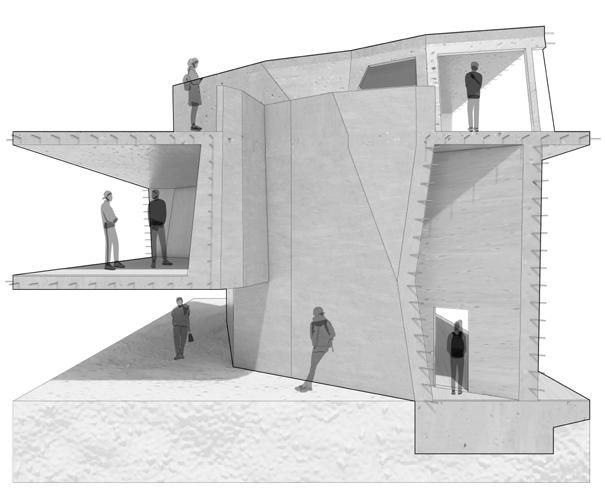
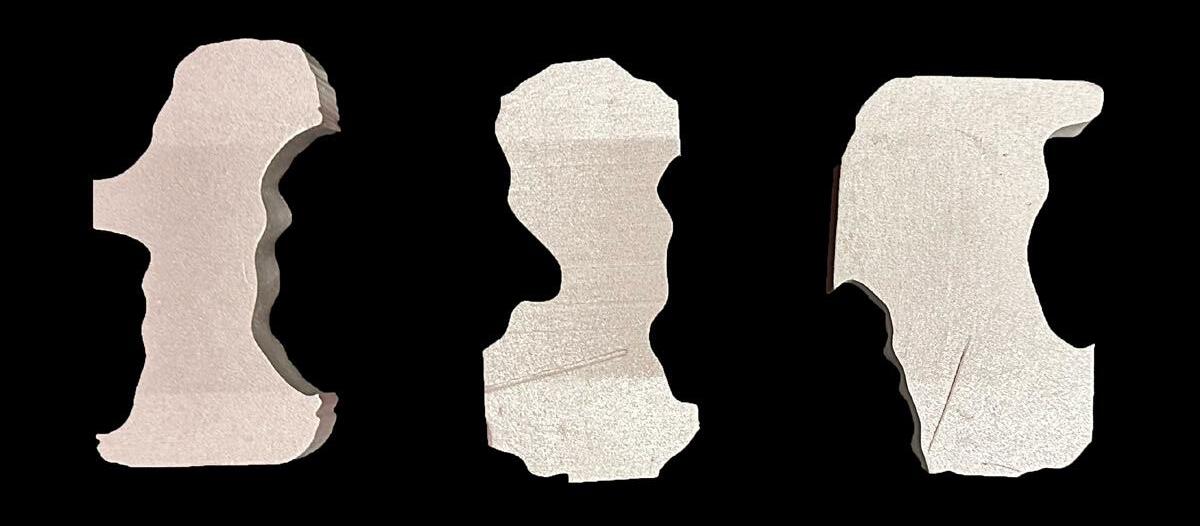
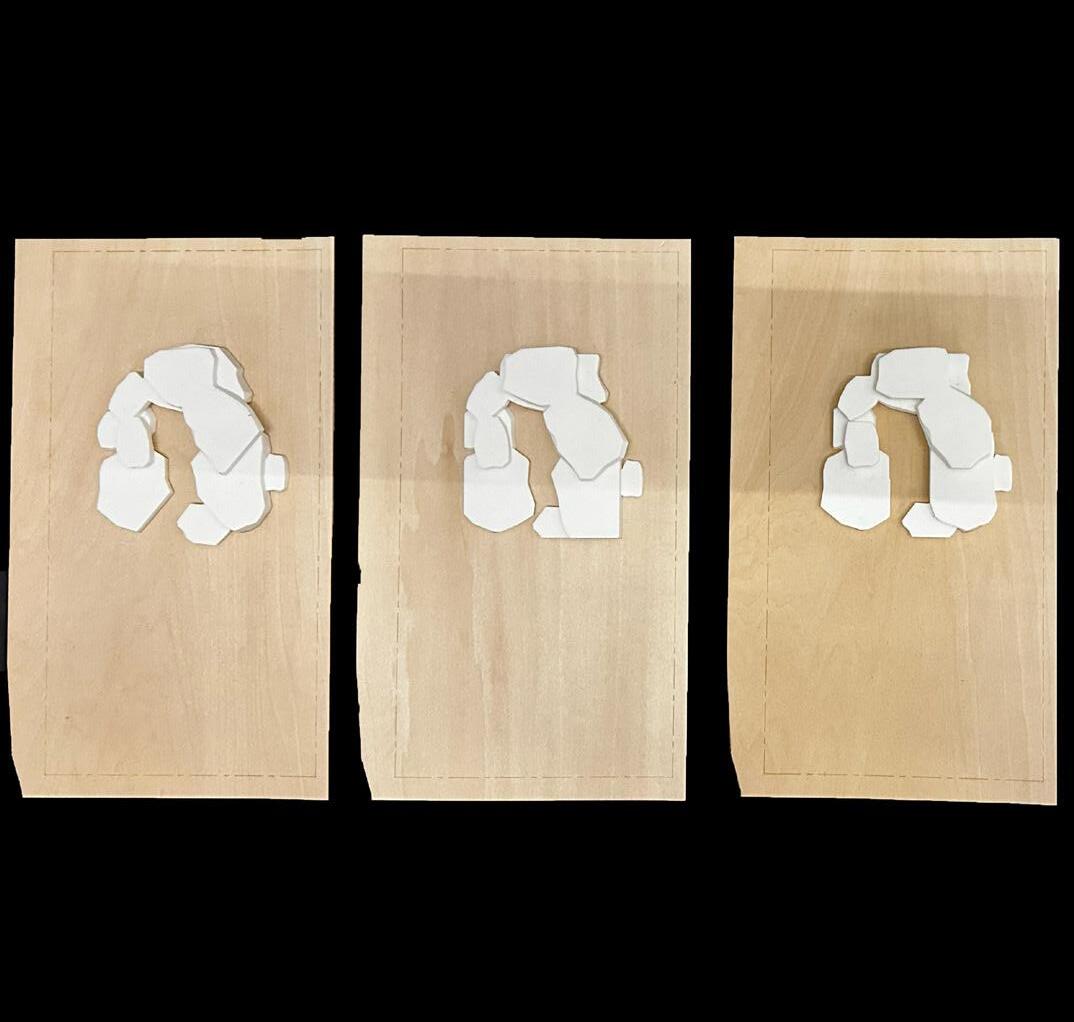
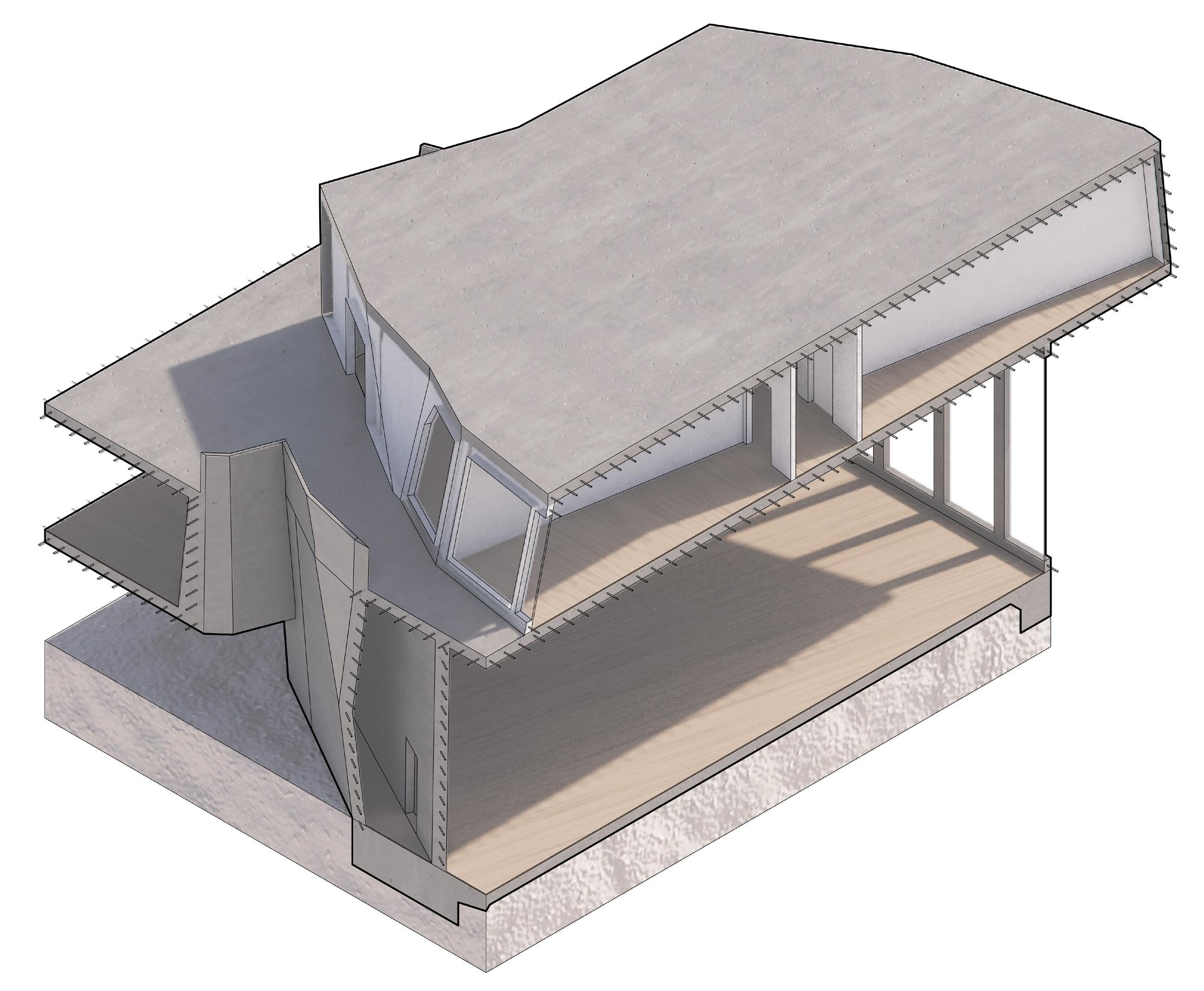
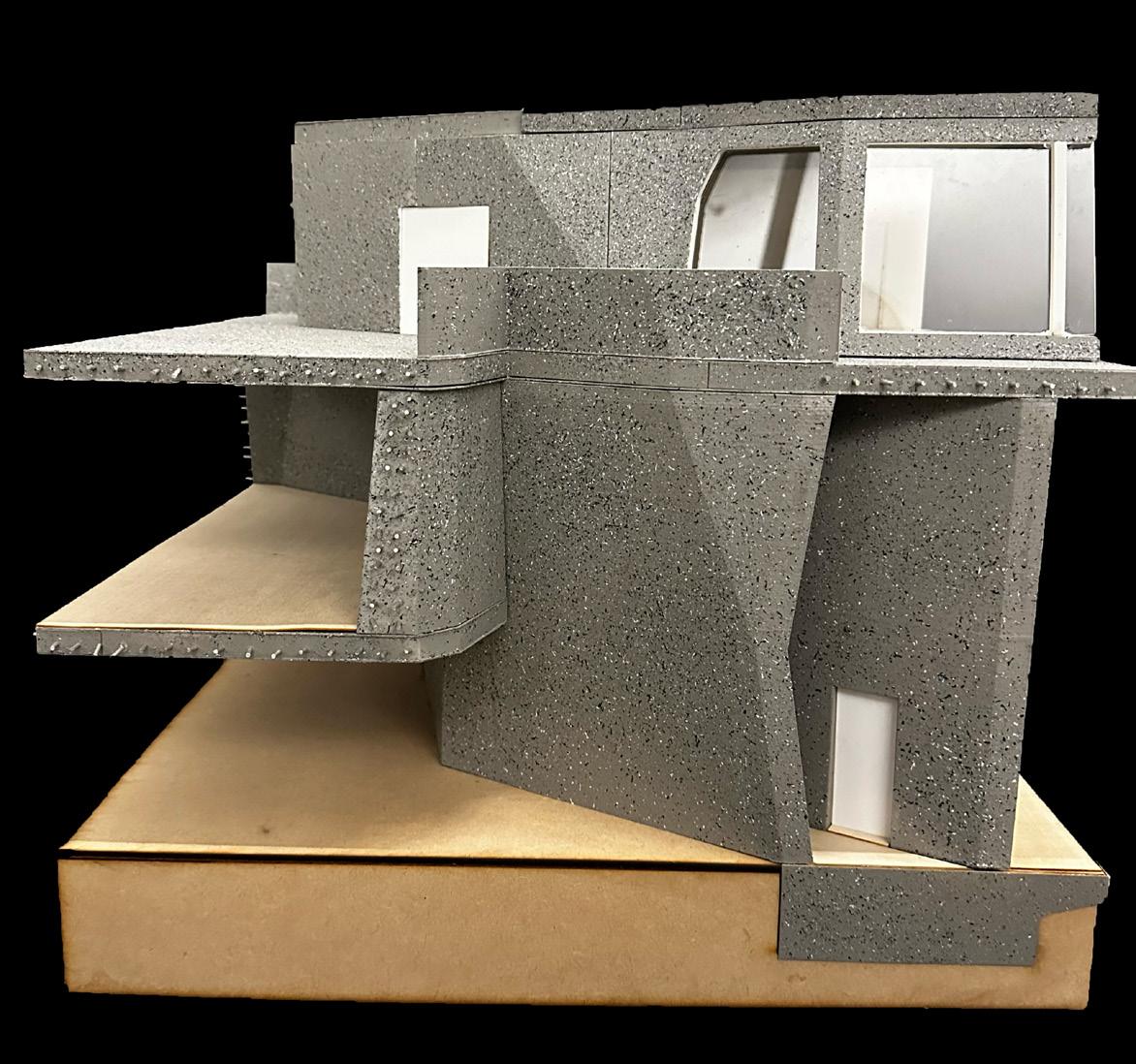
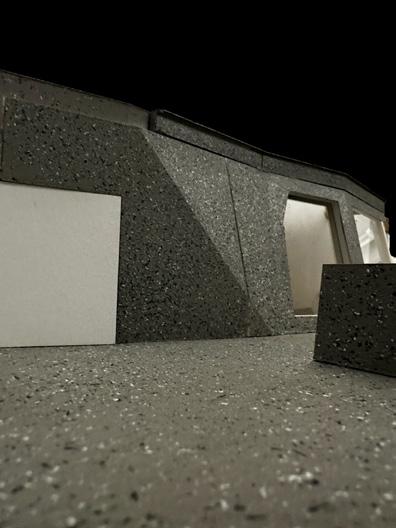
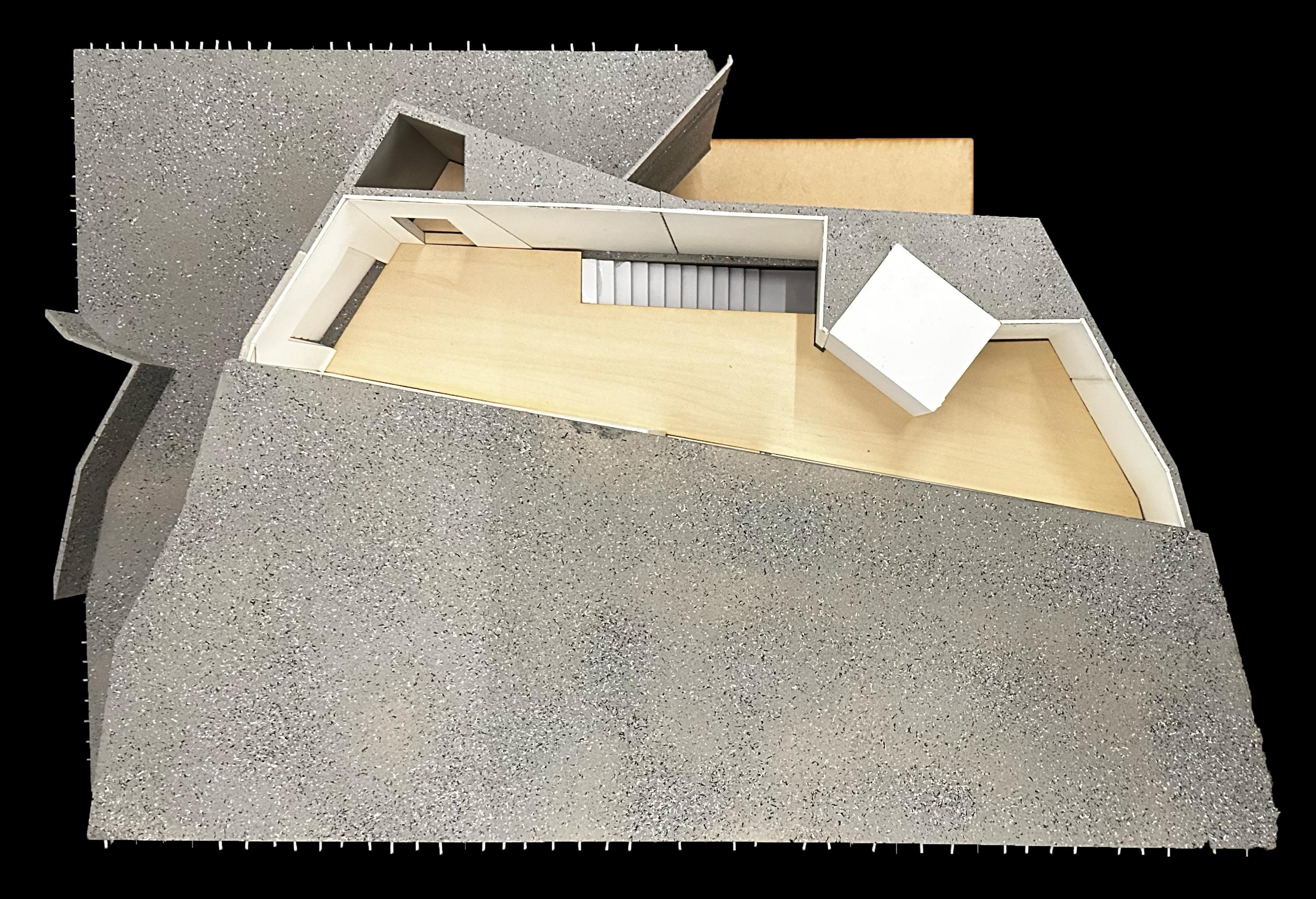
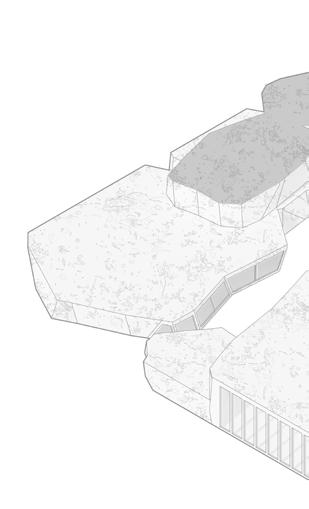
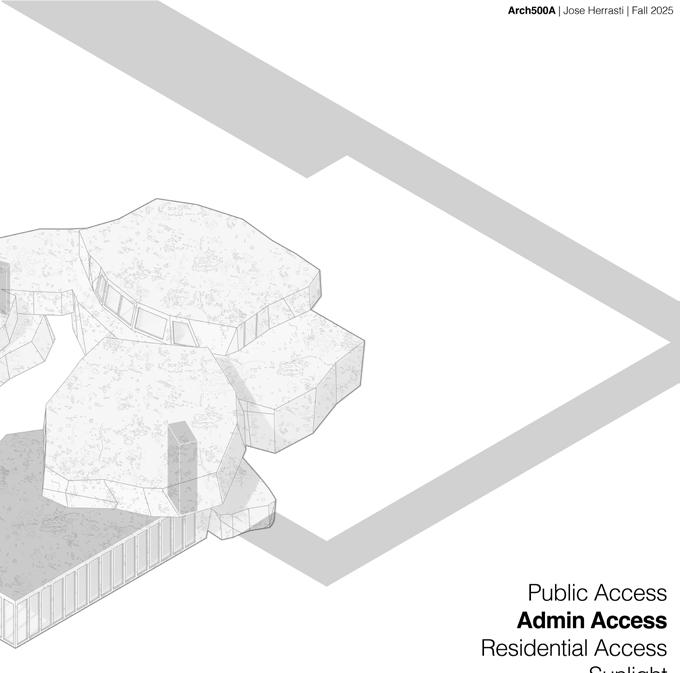
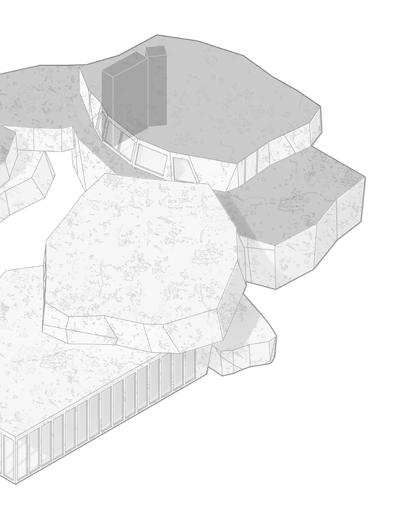
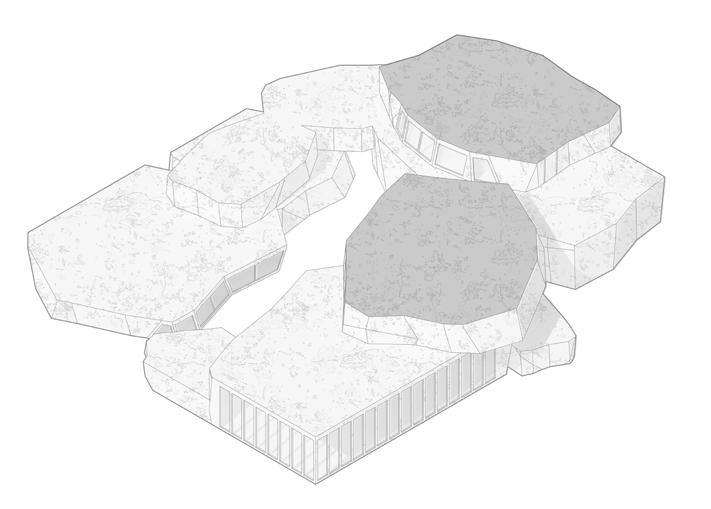
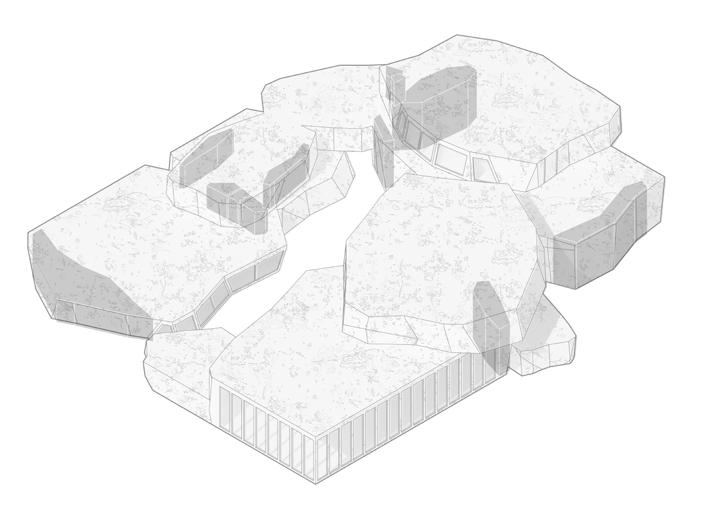
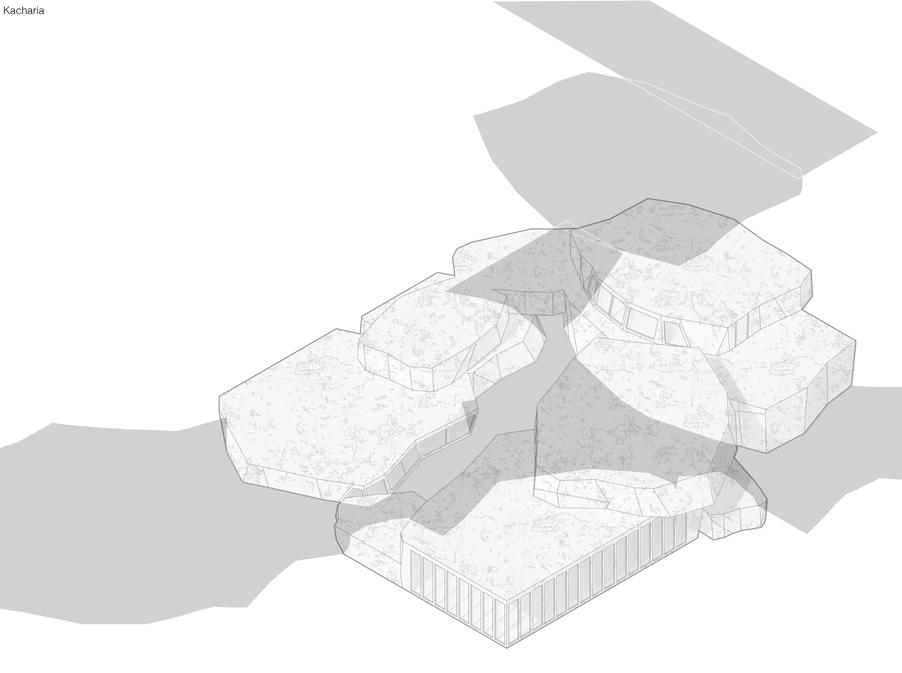
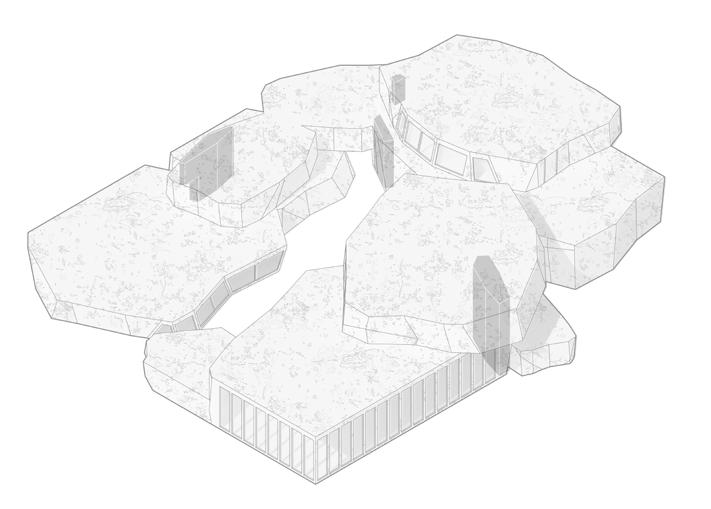
For this project, I designed a museum in Joshua Tree by translating the logic of the desert into architectural form. The concept began with a single monolithic rock, sliced into layered fragments that were shifted and pulled apart to form a series of slanted volumes across the site. Although the buildings are separated, they retain a shared geological origin, allowing light, circulation, and exterior voids to emerge between them.
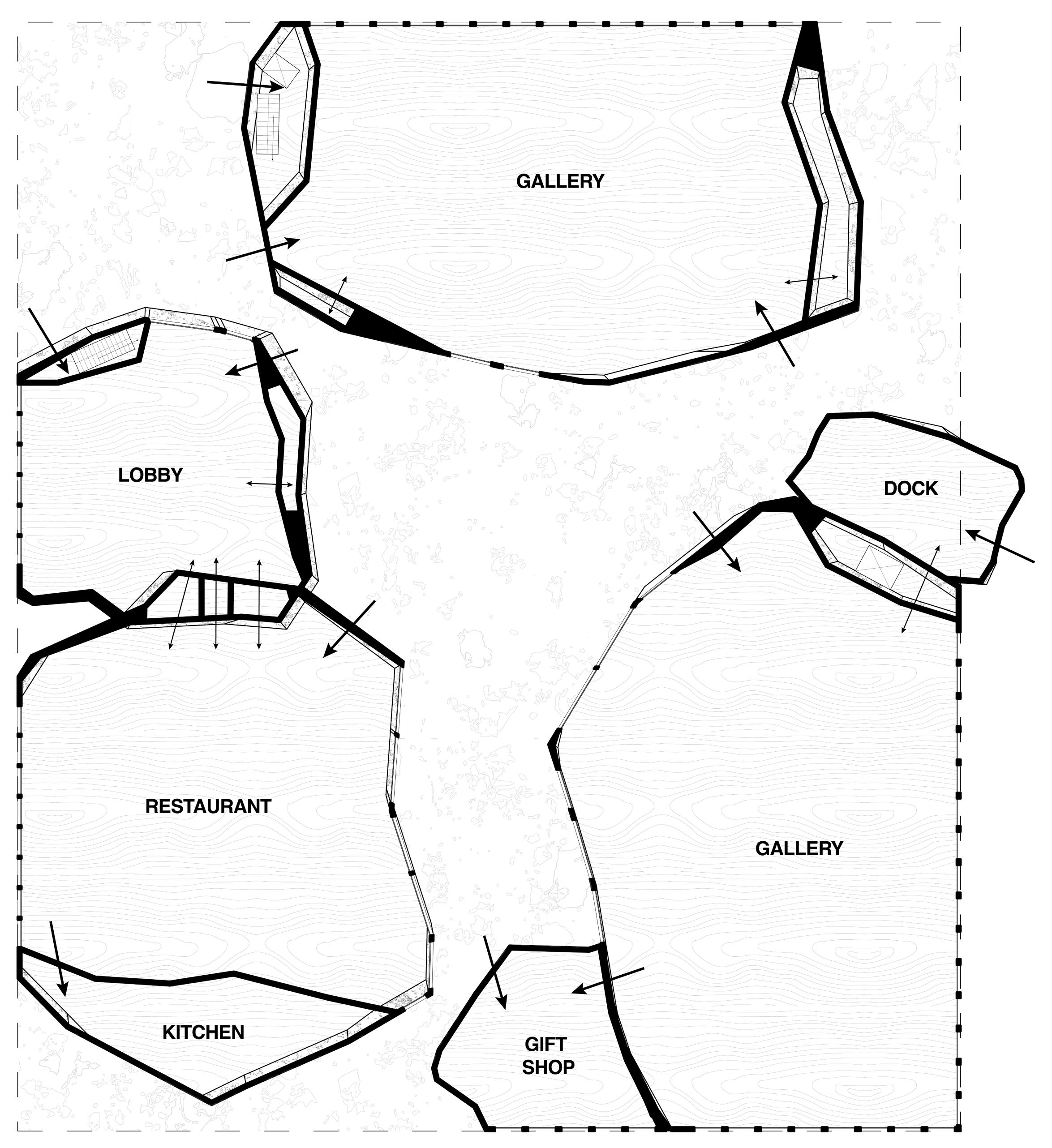
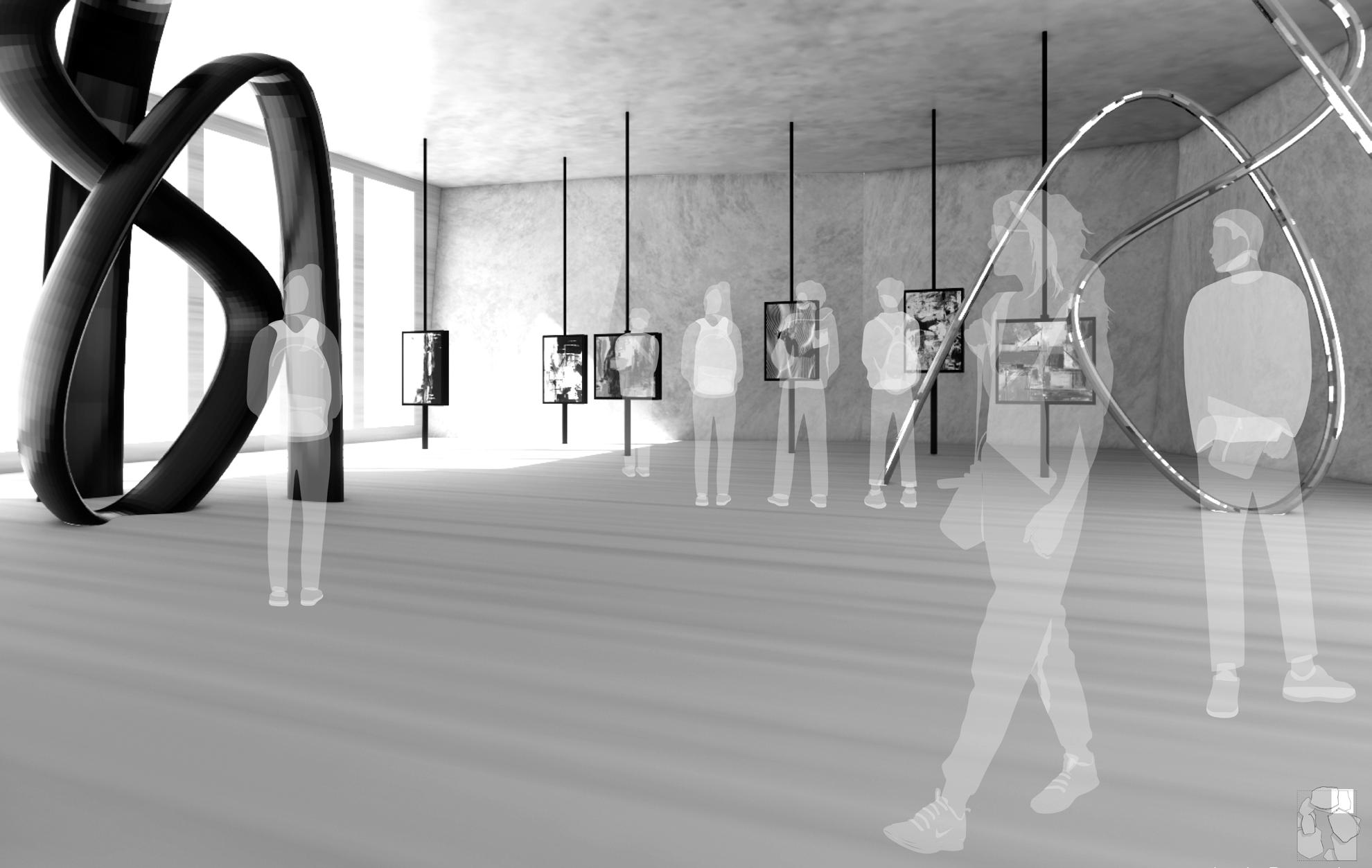
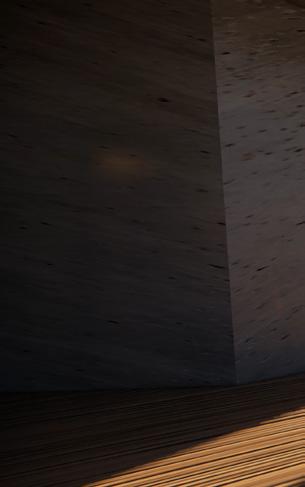
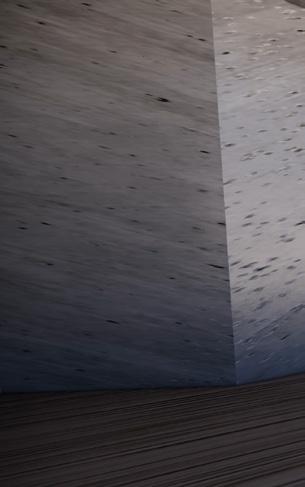
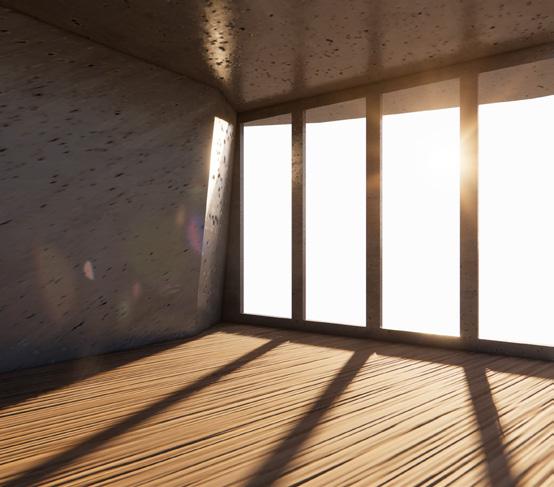
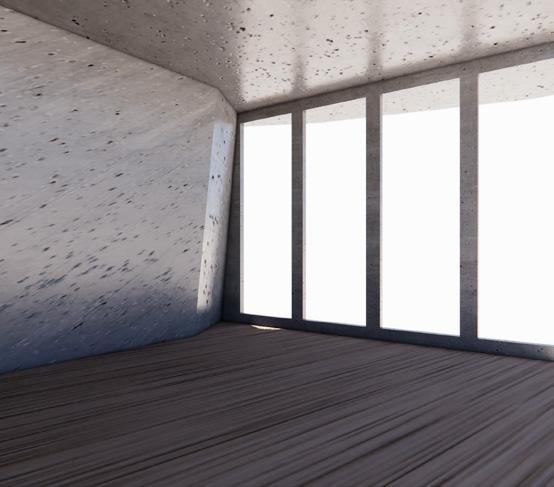
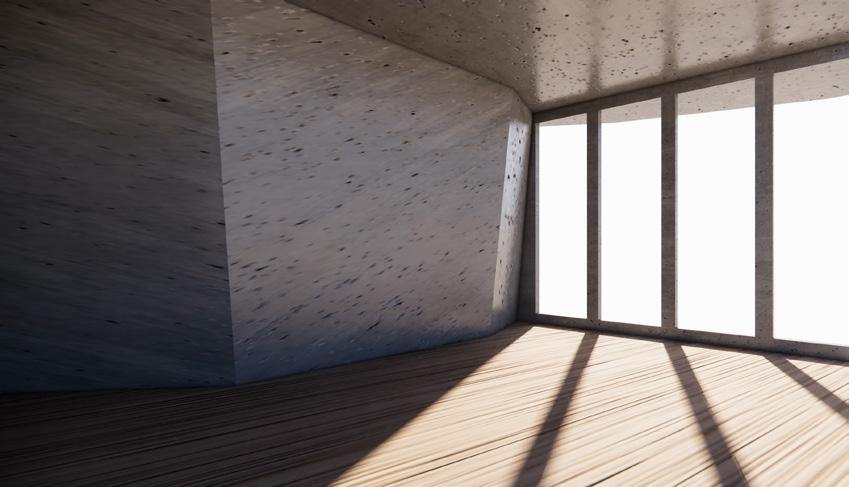
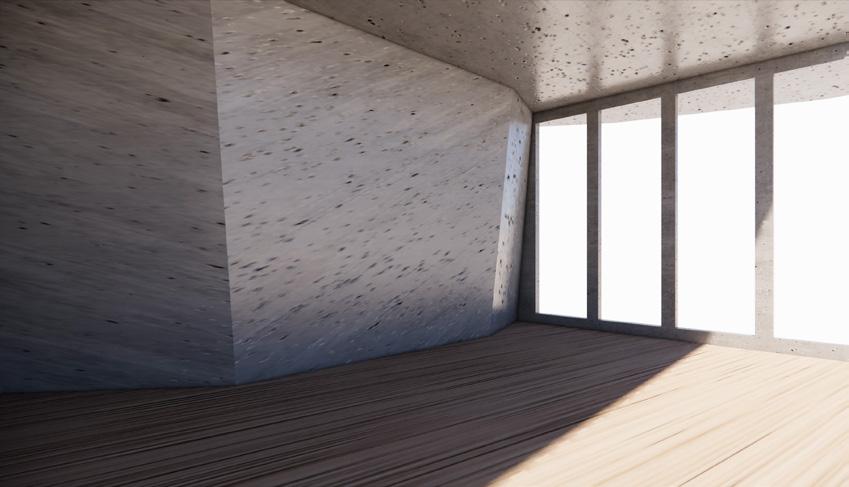
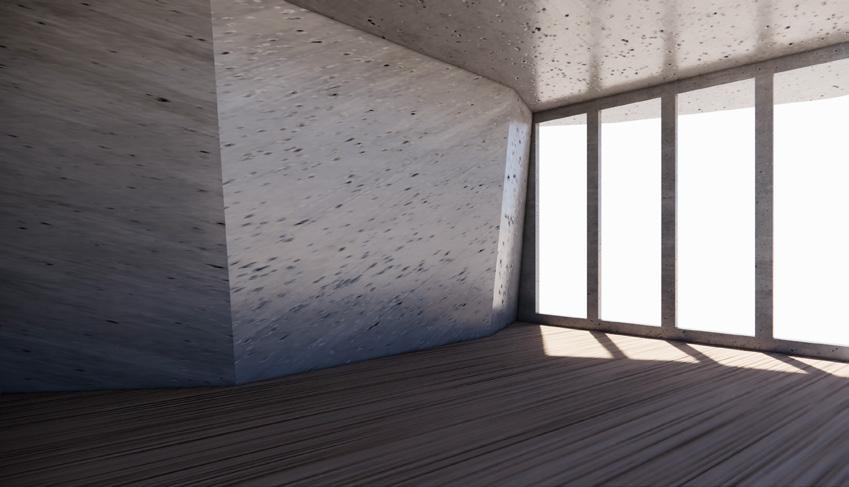
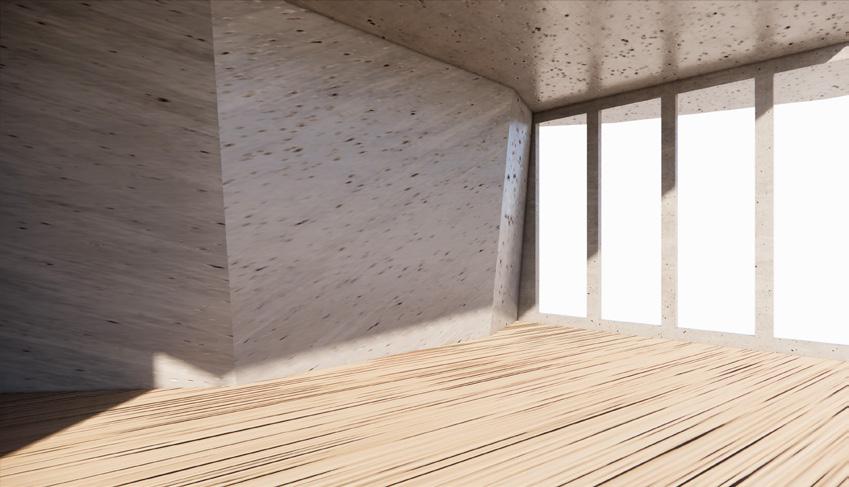
A key strategy was introducing linearity through repetition and direction. The slicing process creates consistent slanted geometries that guide movement across the site, reinforcing a clear spatial sequence through the museum. This logic continues in the interior, where walls are mirrored and folded to create thickness rather than surface. These thickened walls become dynamic inhabitable elements that shape the experience of the galleries while organizing circulation and program.
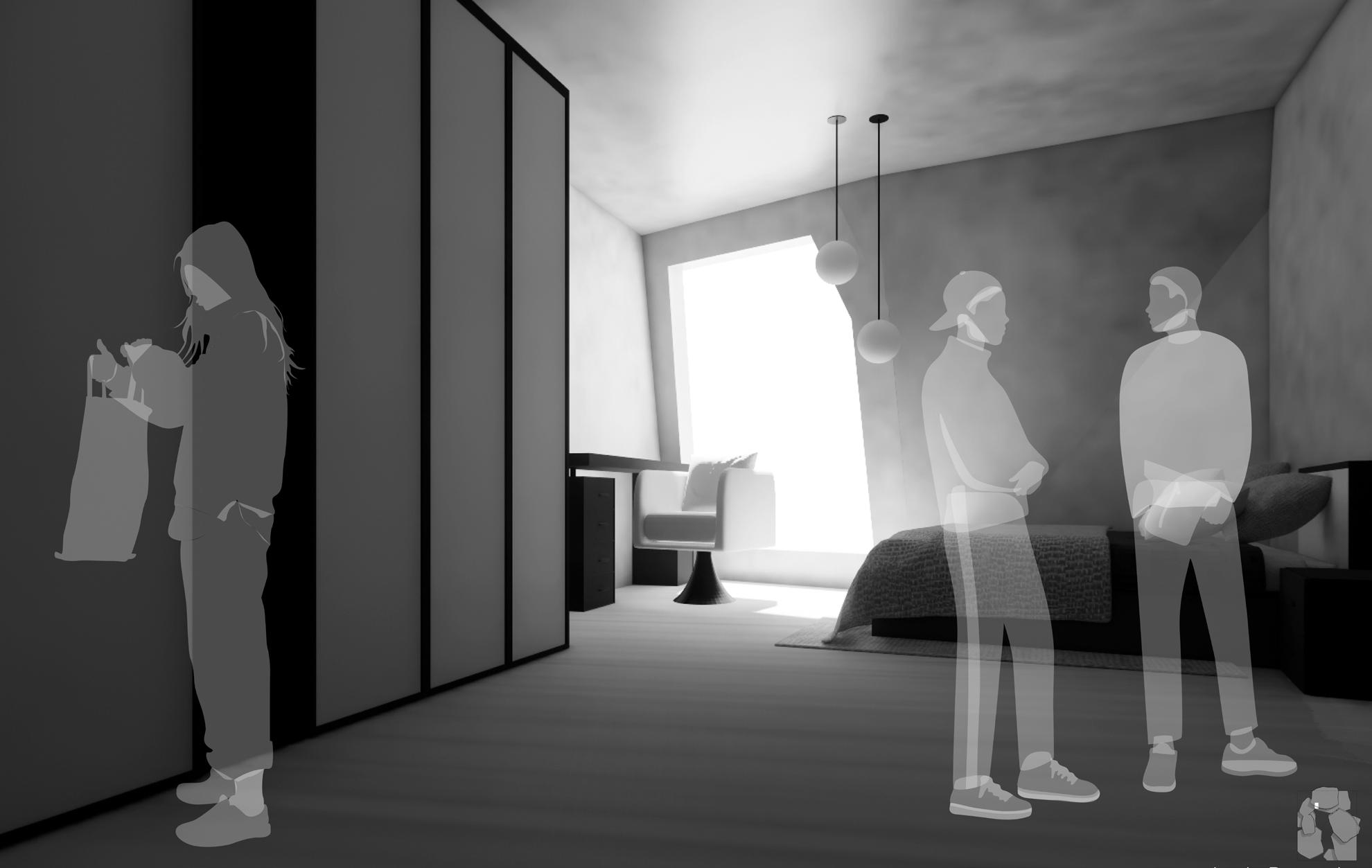
To preserve monumentality and openness in the exhibition spaces, service functions - restrooms, HVAC systems, storage, and administrative rooms - are absorbed into the walls themselves. By embedding these necessities into occupiable partitions, the project conceals function while maintaining uninterrupted gallery volumes. Ultimately, the museum is not an object placed in the desert, but an extension of its logic: heavy, fragmented, and shaped by geological time.
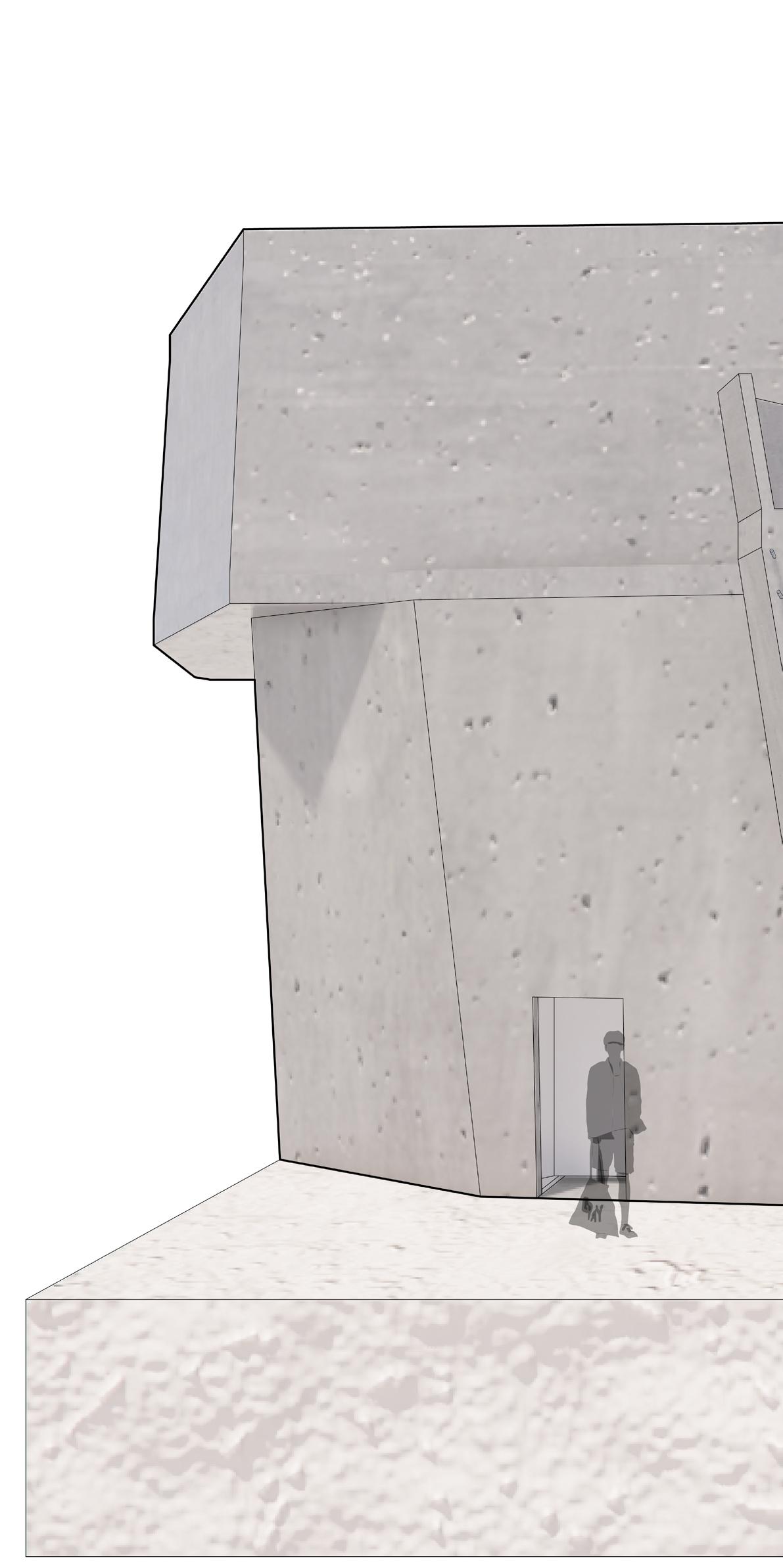
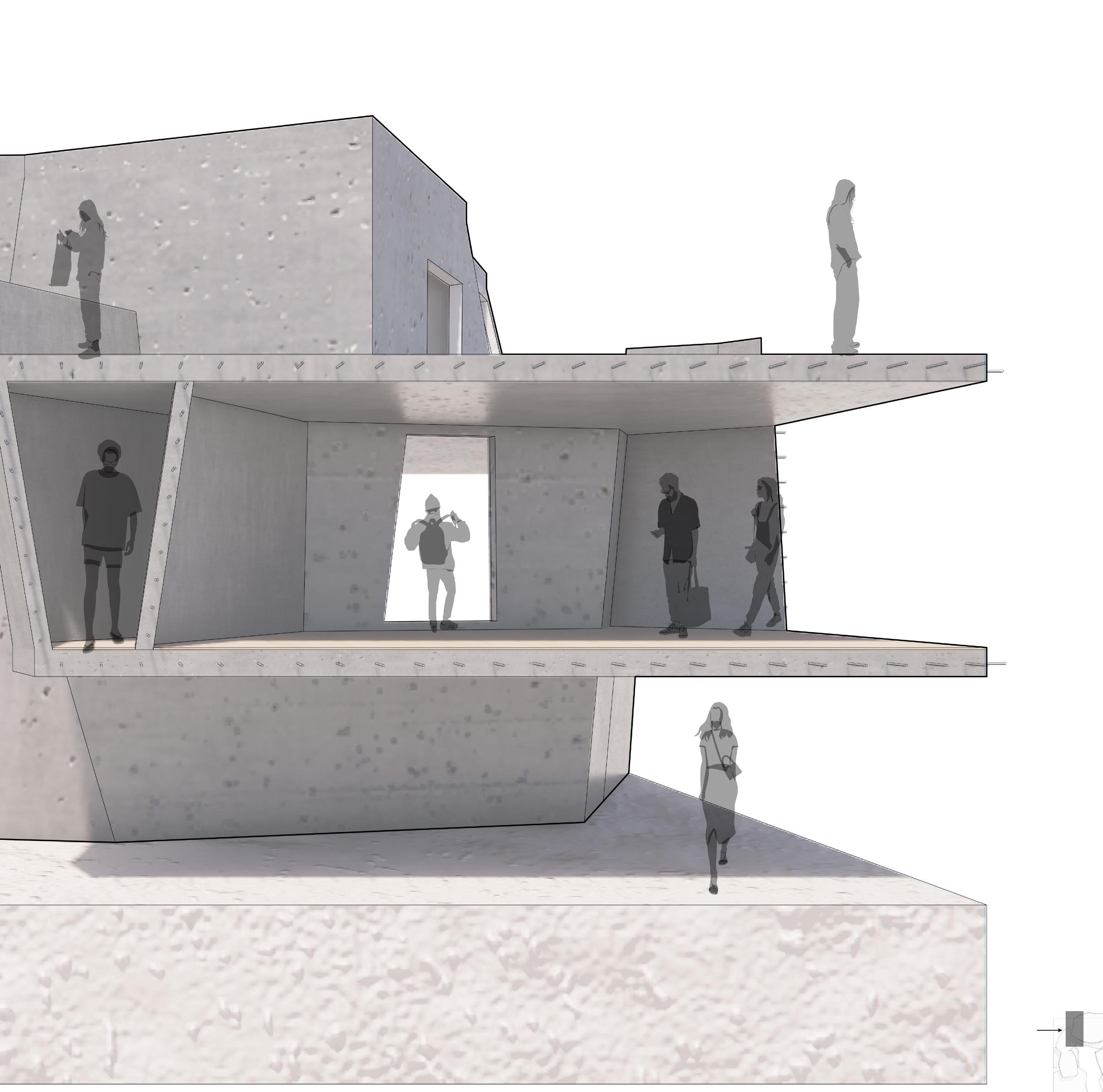
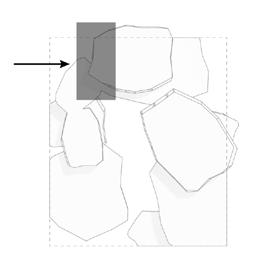

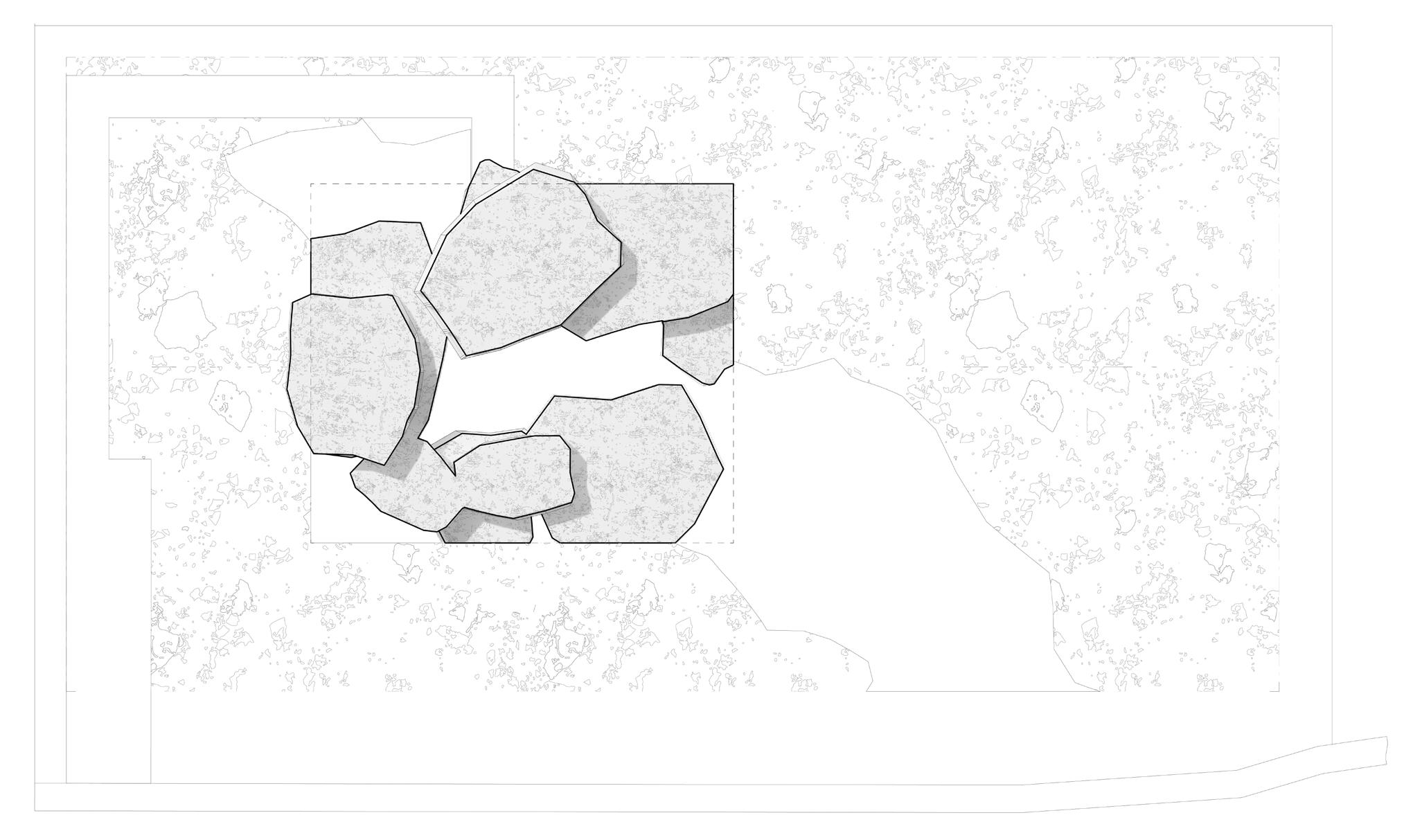
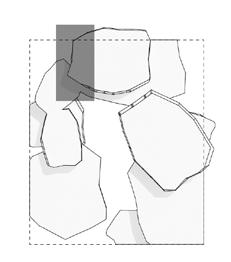
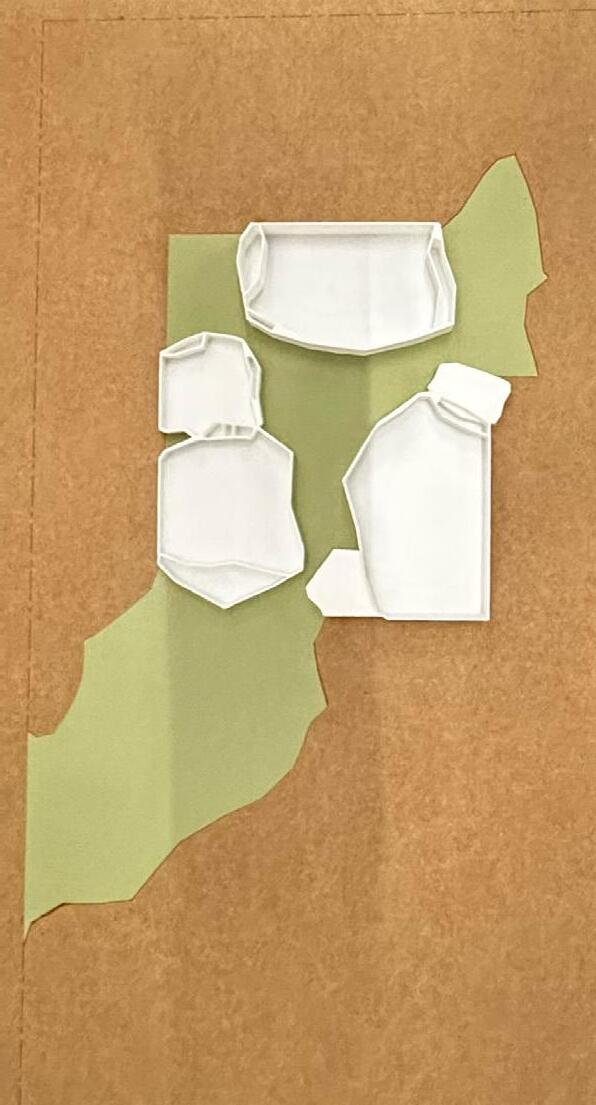
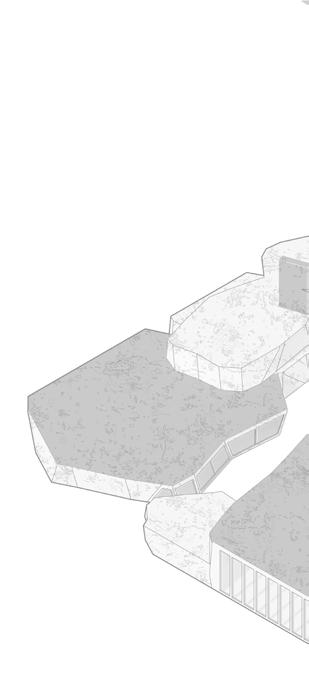
On the right, the original rock mass is sliced into layers, separating the program into distinct volumes that become individual buildings. Below are the massing strategies used to generate the project. The plan illustrates how walls fold onto themselves, creating thickened spaces for service and circulation.

Site Plan
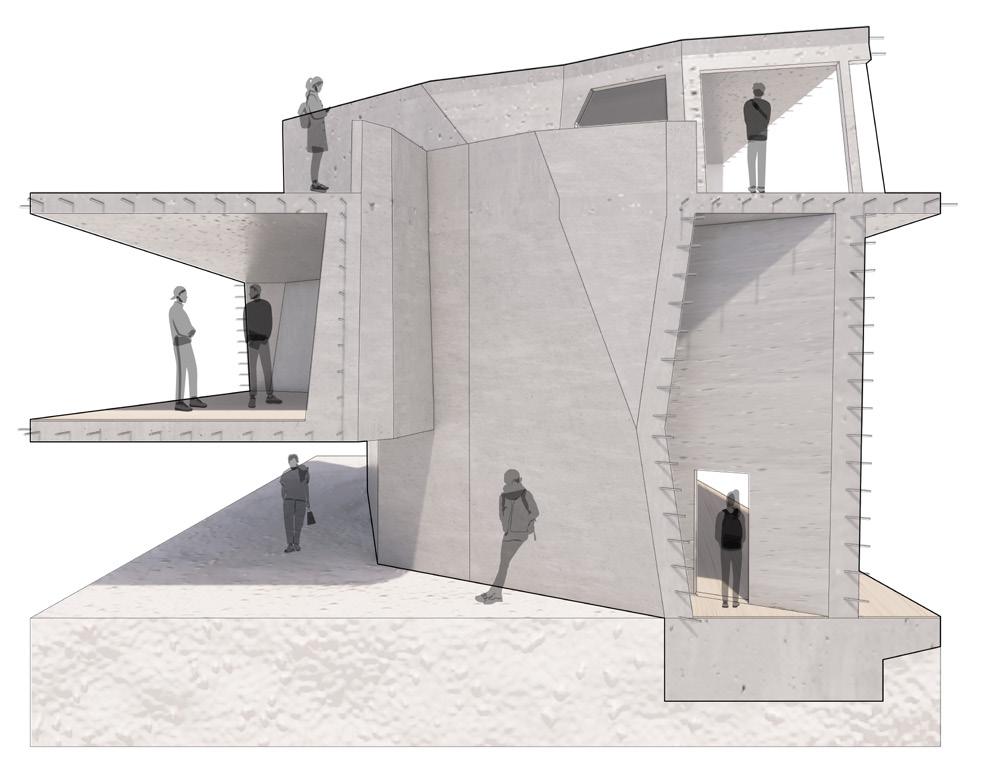
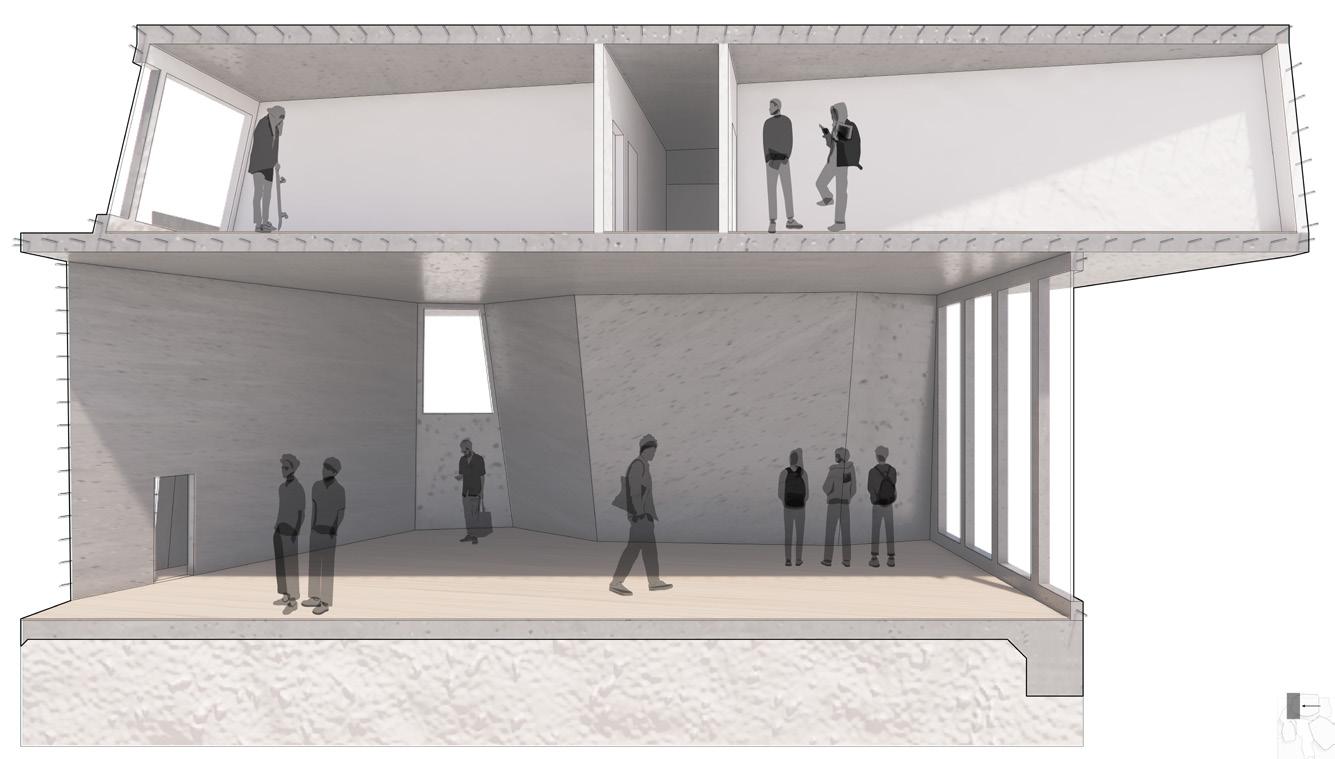
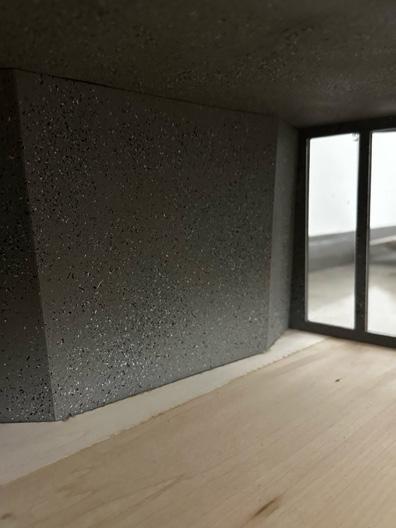
Interior Perspective - Gallery
BIG BOX - ADAPTIVE REUSE
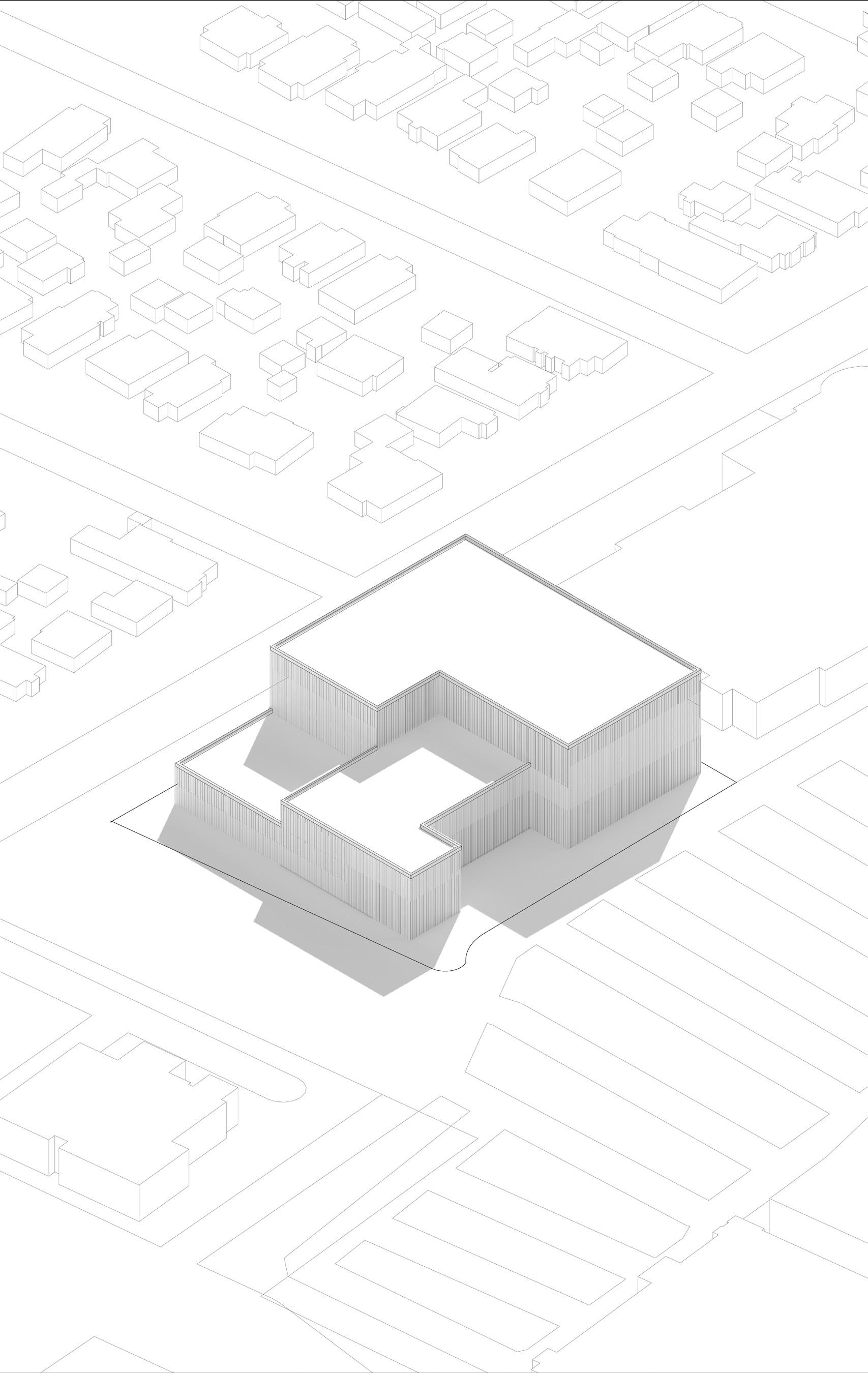
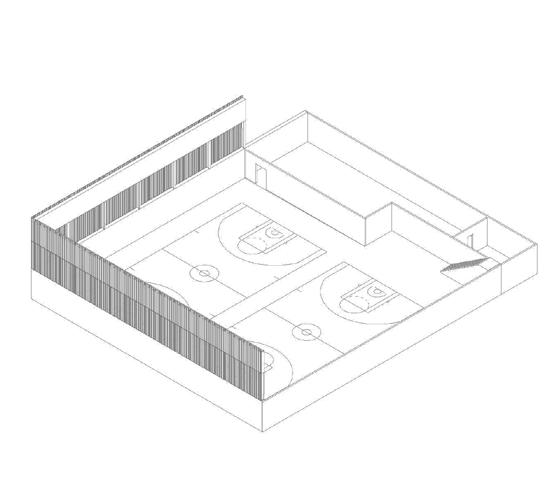
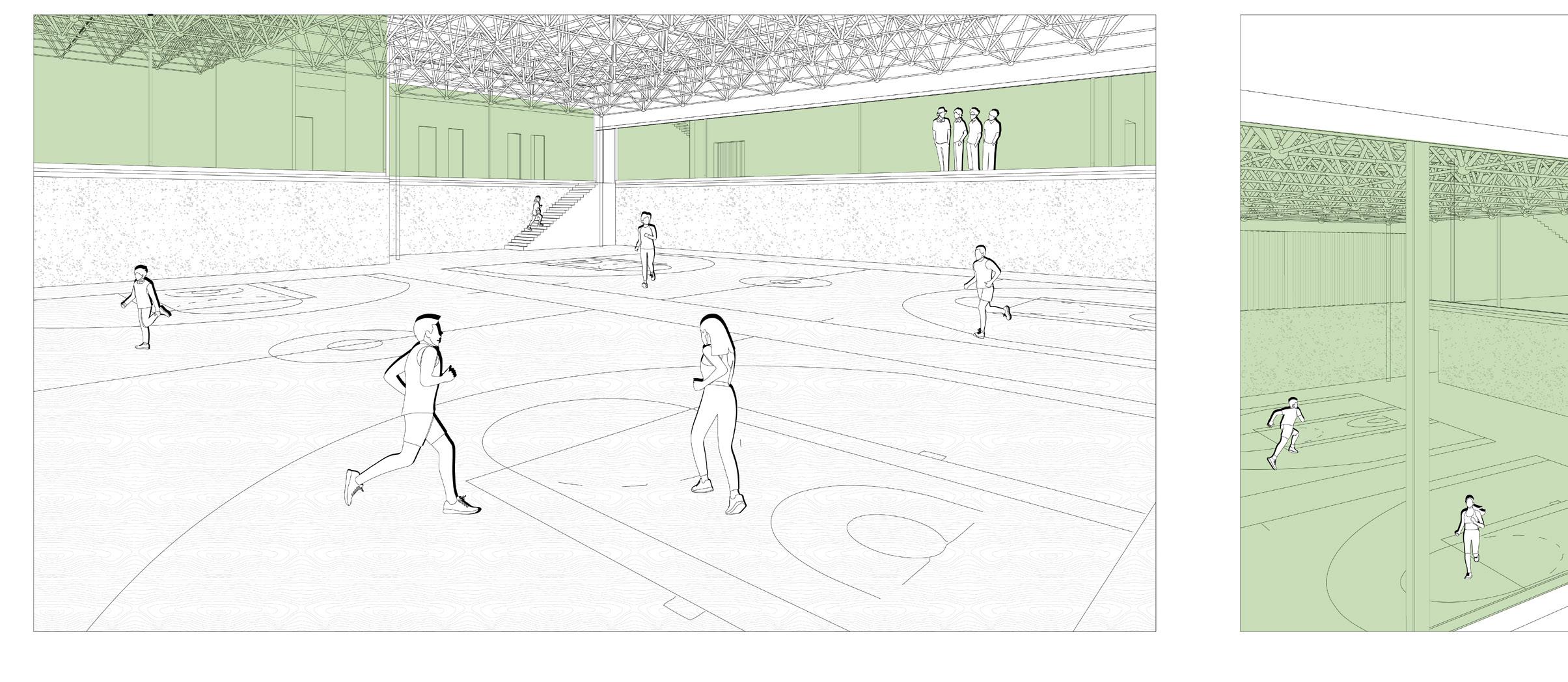
For this project, I transformed an abandoned Bed Bath & Beyond in Pasadena into a vibrant community basketball center. A key challenge was the building’s height, which made it difficult to fit two basketball courts on separate floors. To overcome this, I lowered the basketball court floors and added a mezzanine level. This solution not only addressed the height limitation but also created opportunities for dynamic and interconnected spaces.
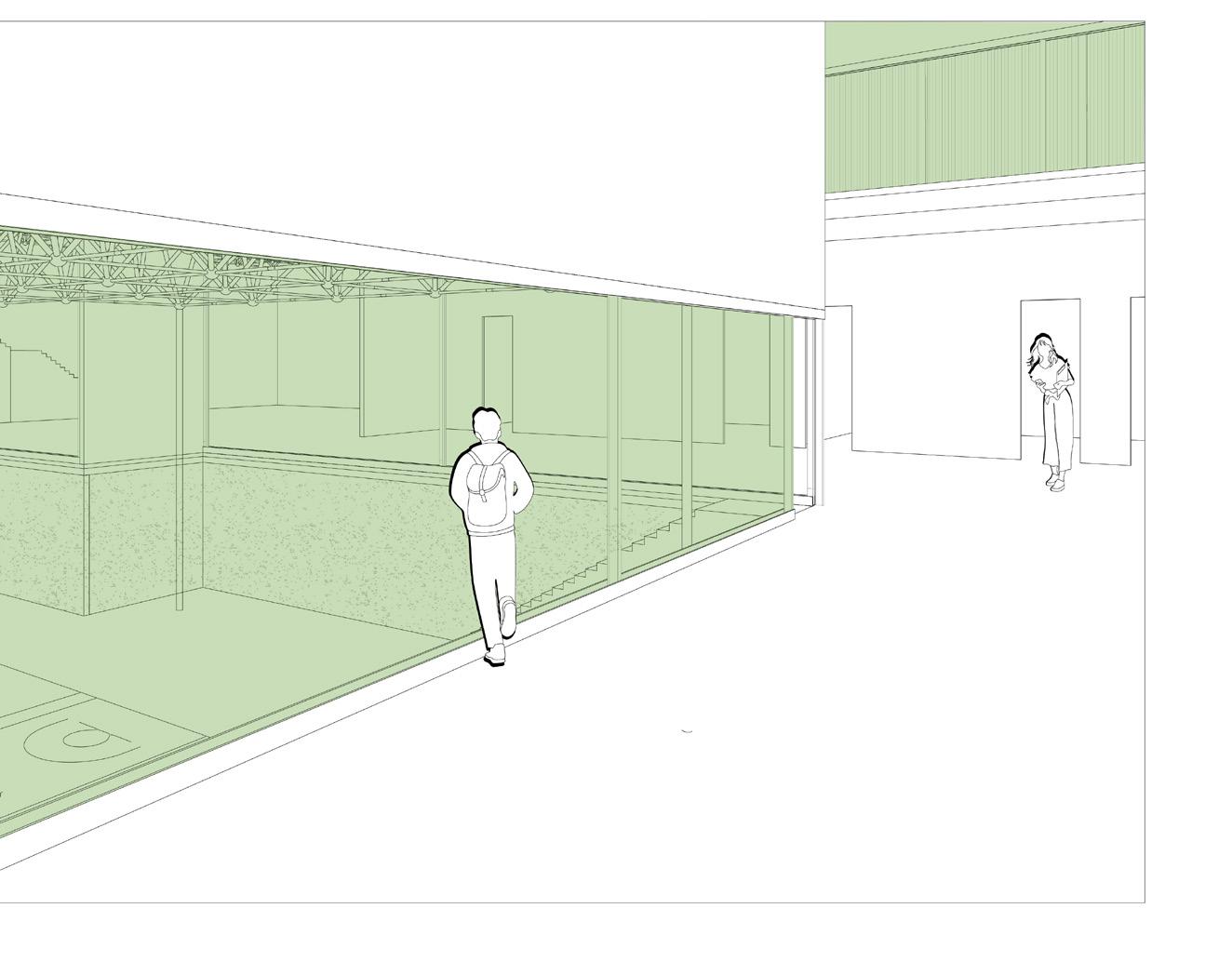
The design connects multiple levels with small viewpoints, shown in green on the drawings, offering glimpses into the spaces above and below. These visual connections enhance interaction and create a sense of openness throughout the center.
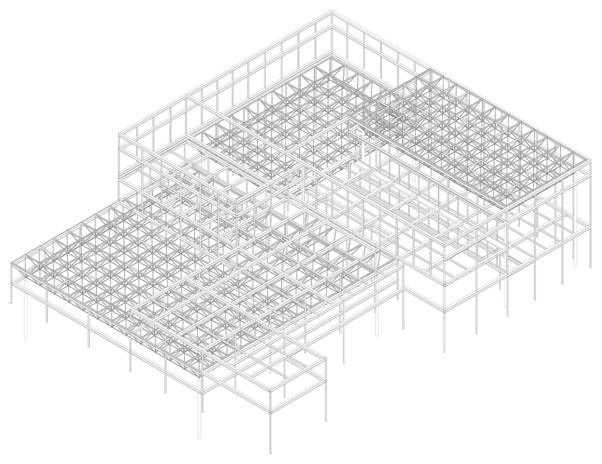
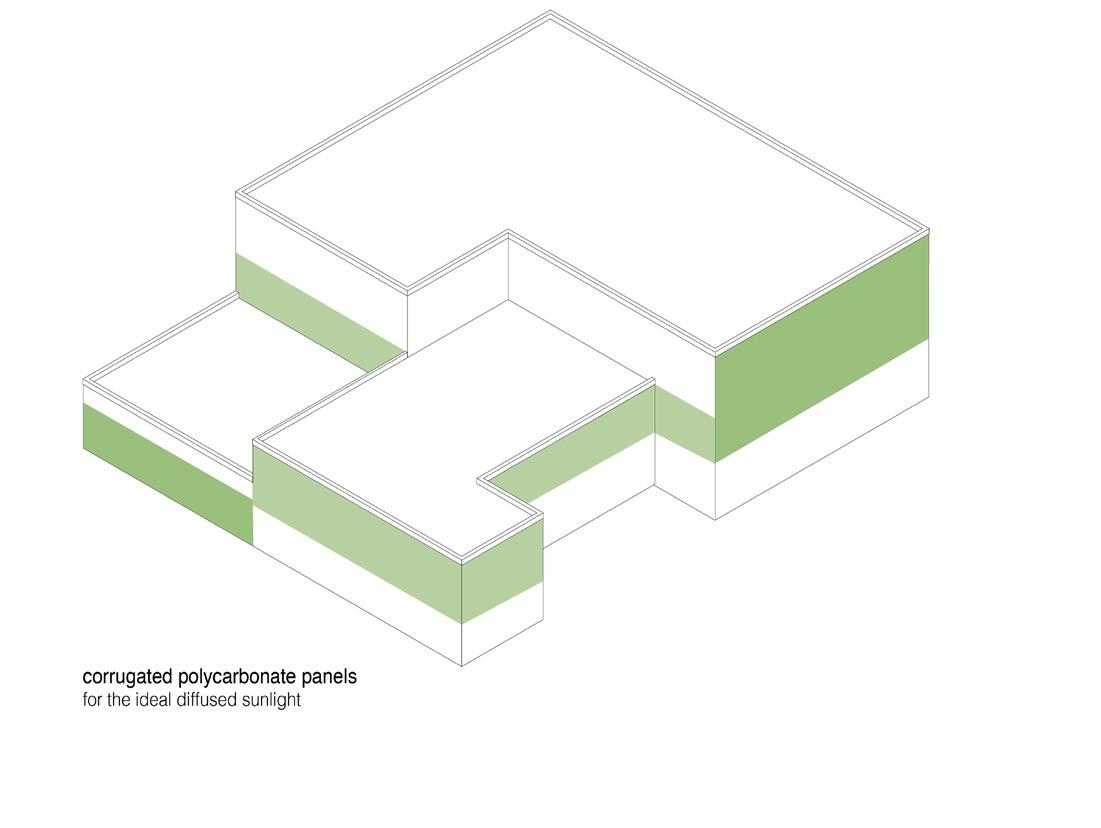
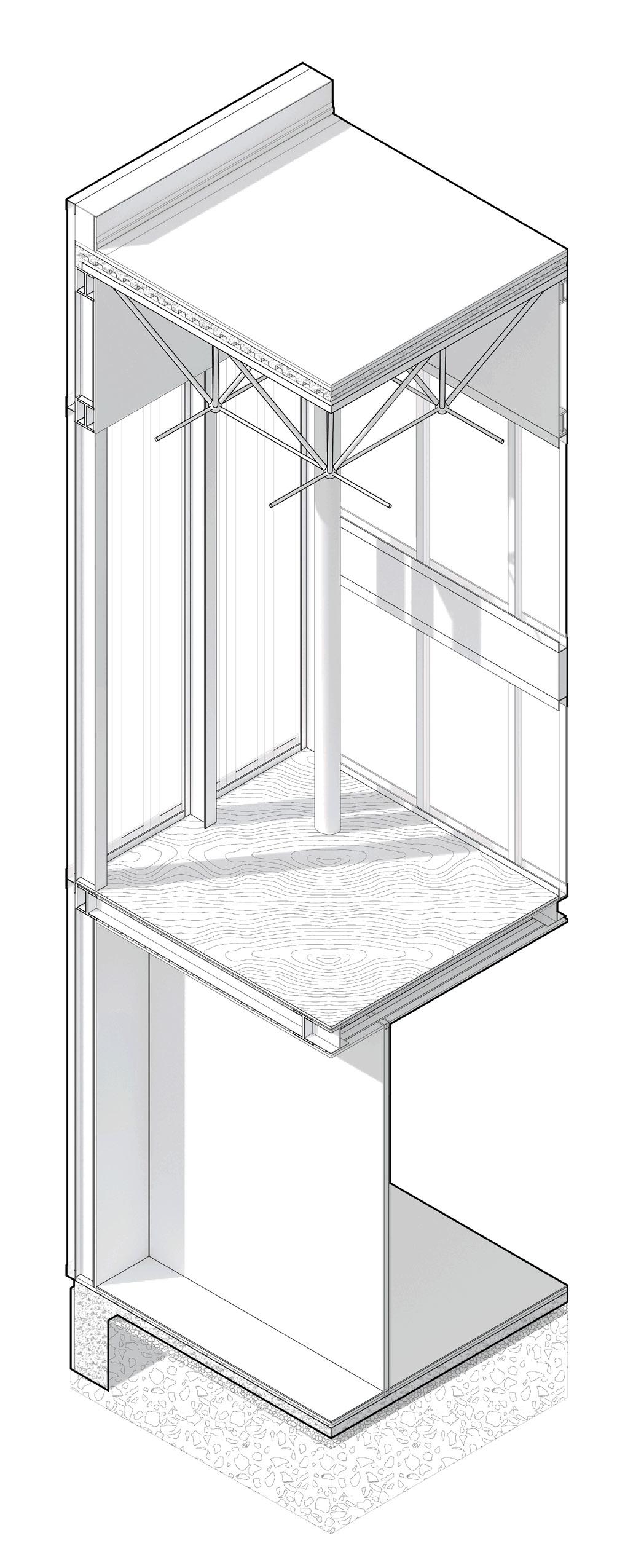
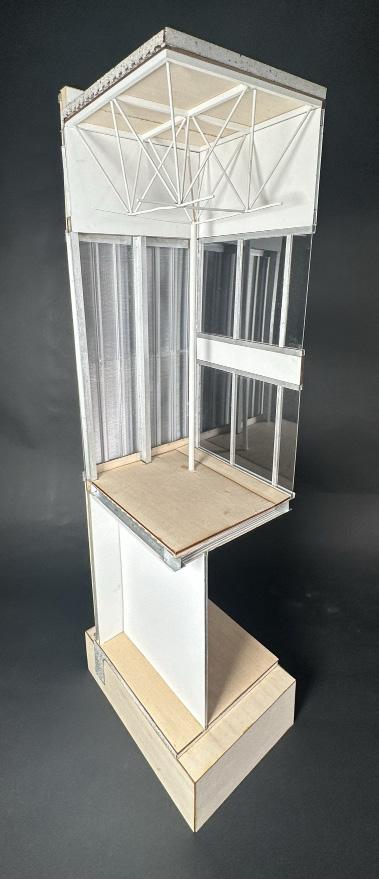
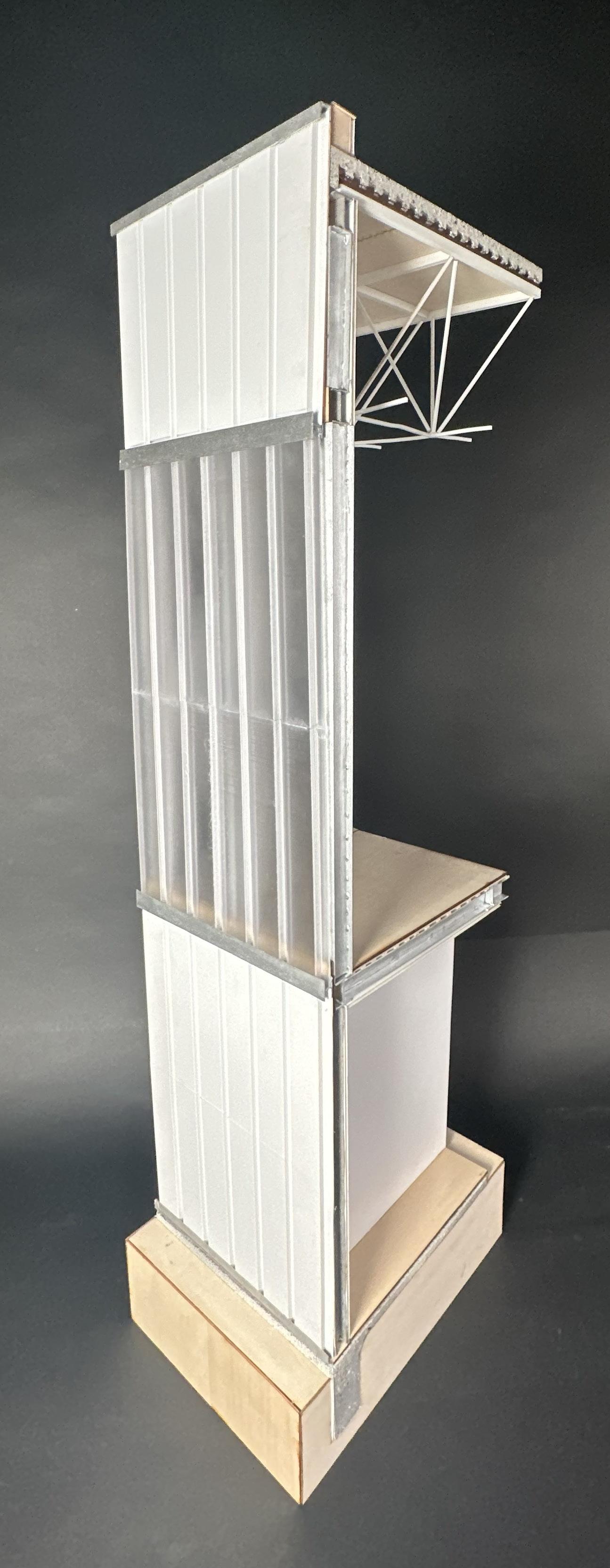
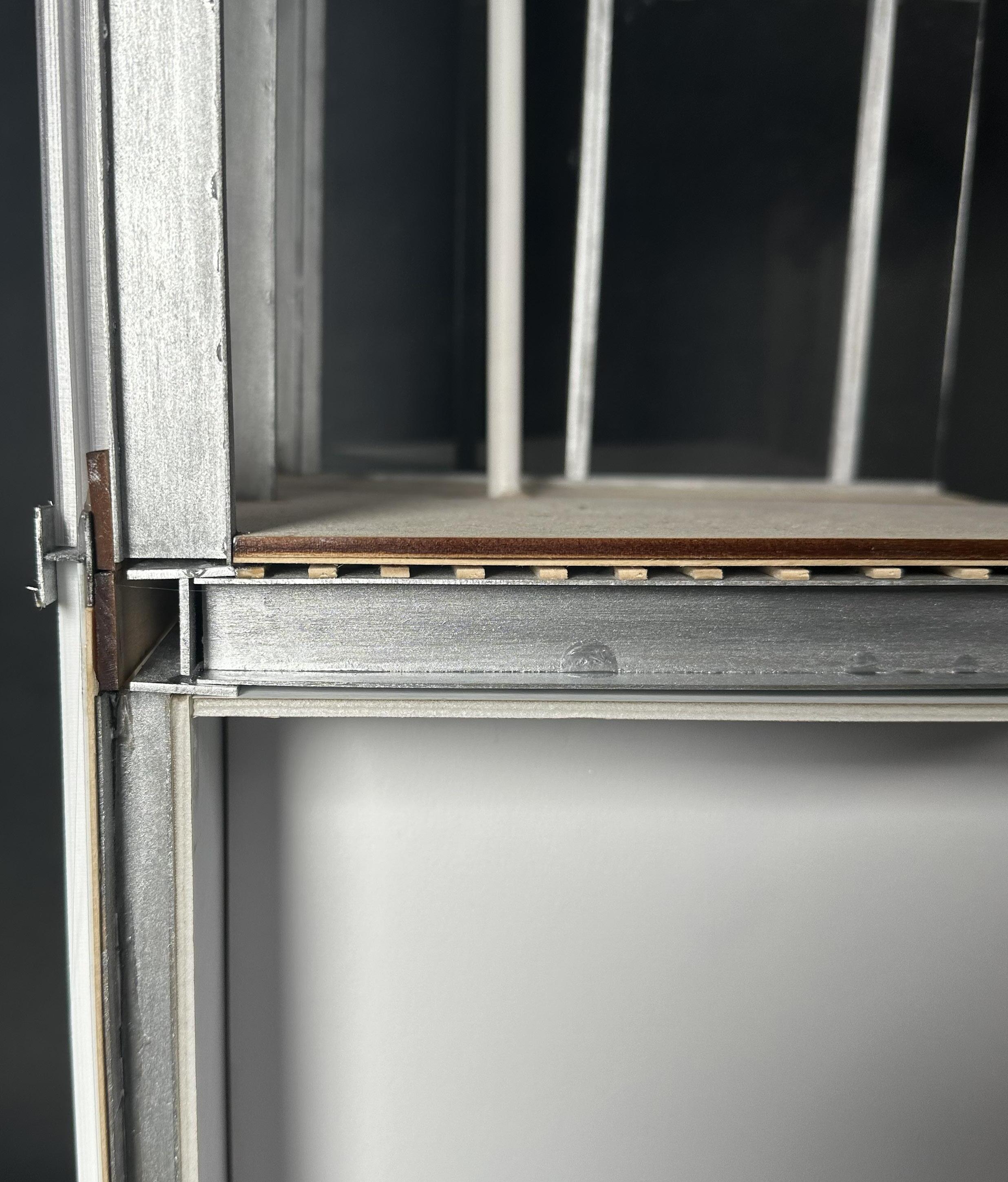
The project is best understood through sectional views, which highlight the vertical relationships between spaces. Structurally, I used space frames for their strength and flexibility. For materials, I chose corrugated metal and polycarbonate, which give the center an industrial yet modern aesthetic. These materials also provide durability and allow natural light to fill the interior, creating a bright and welcoming atmosphere for the community.
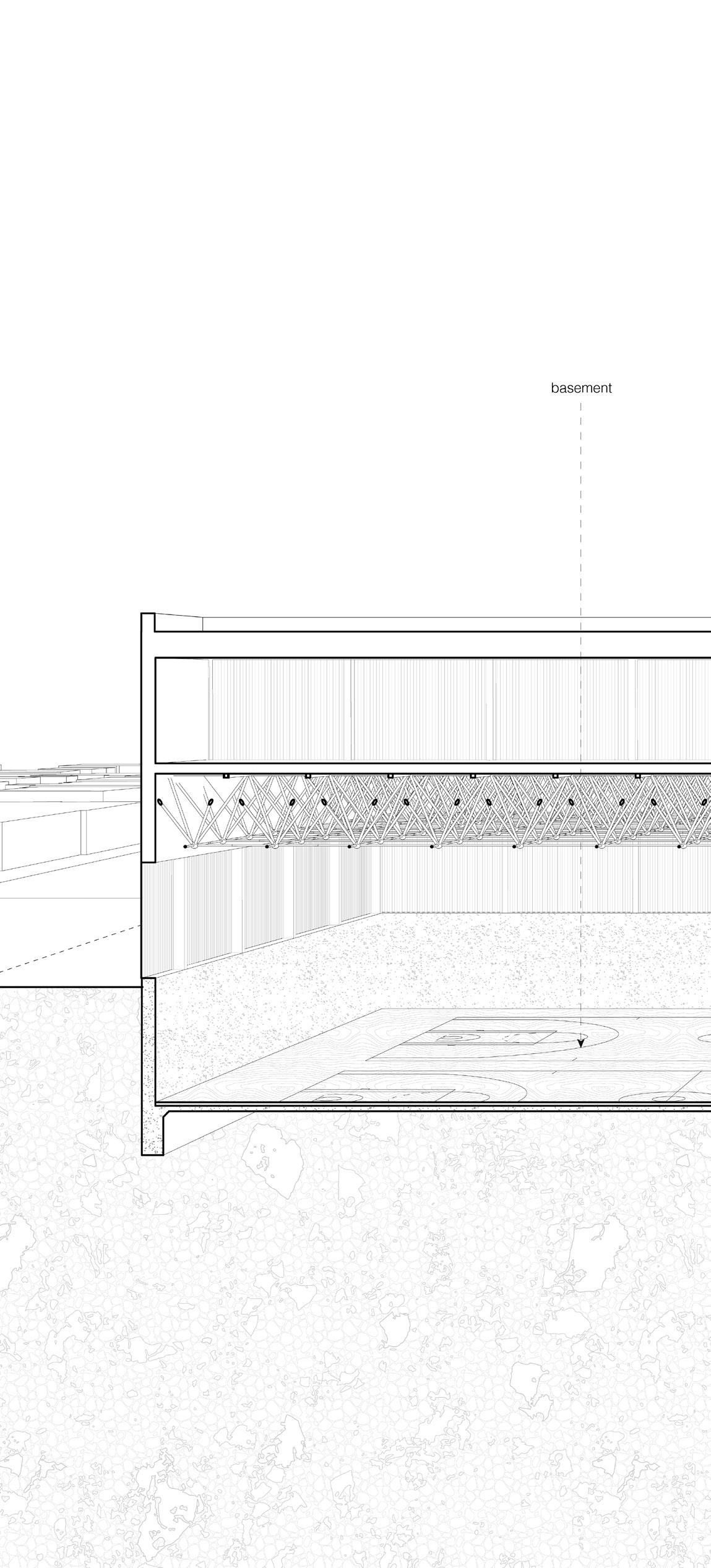
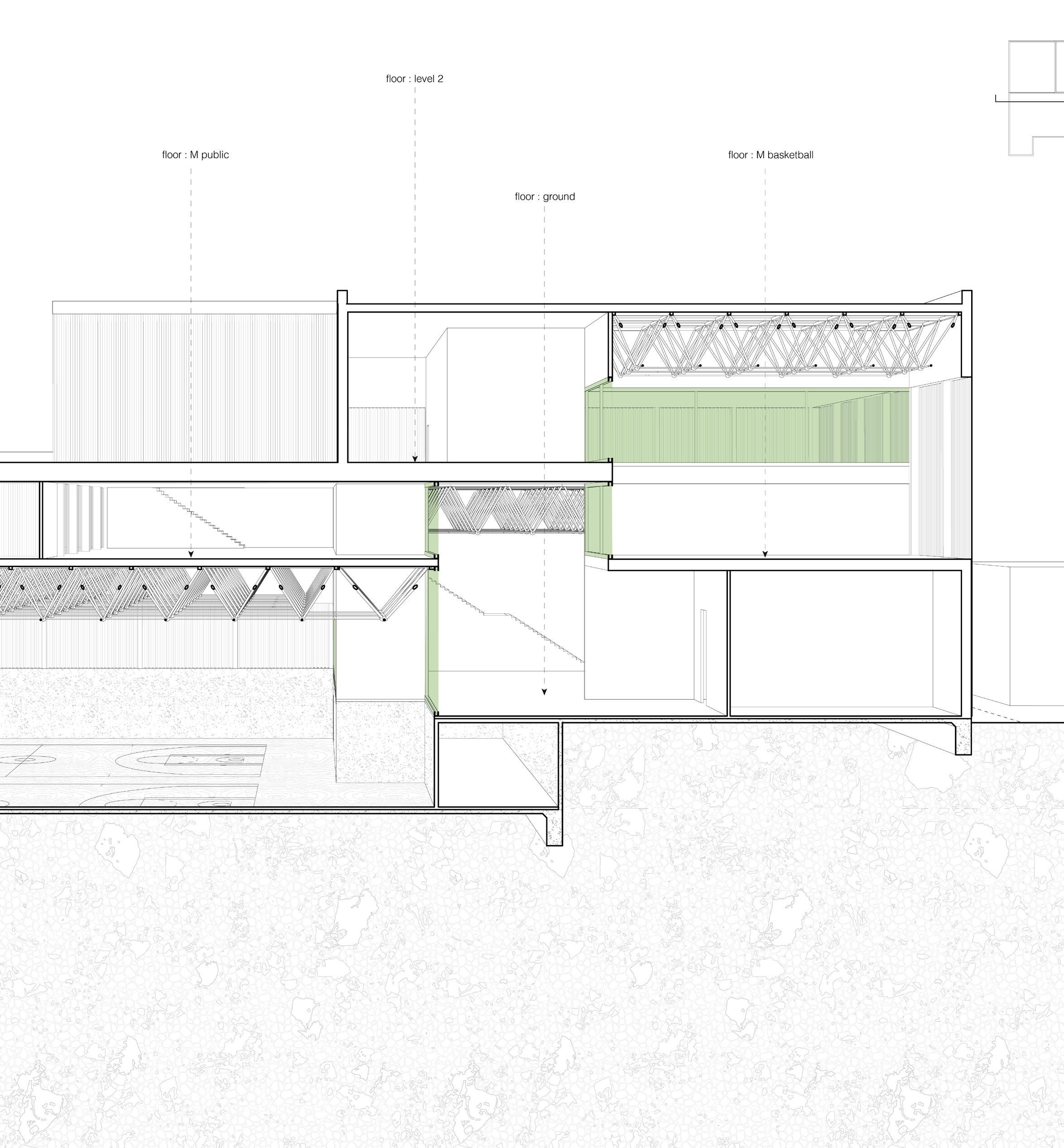
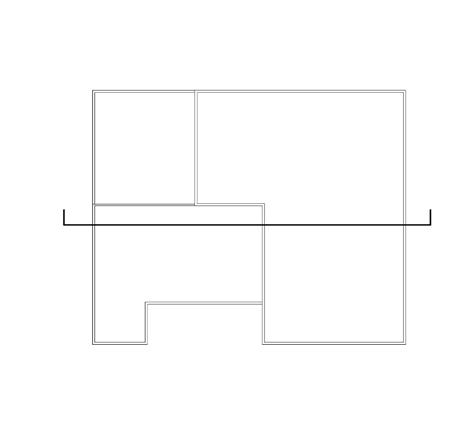
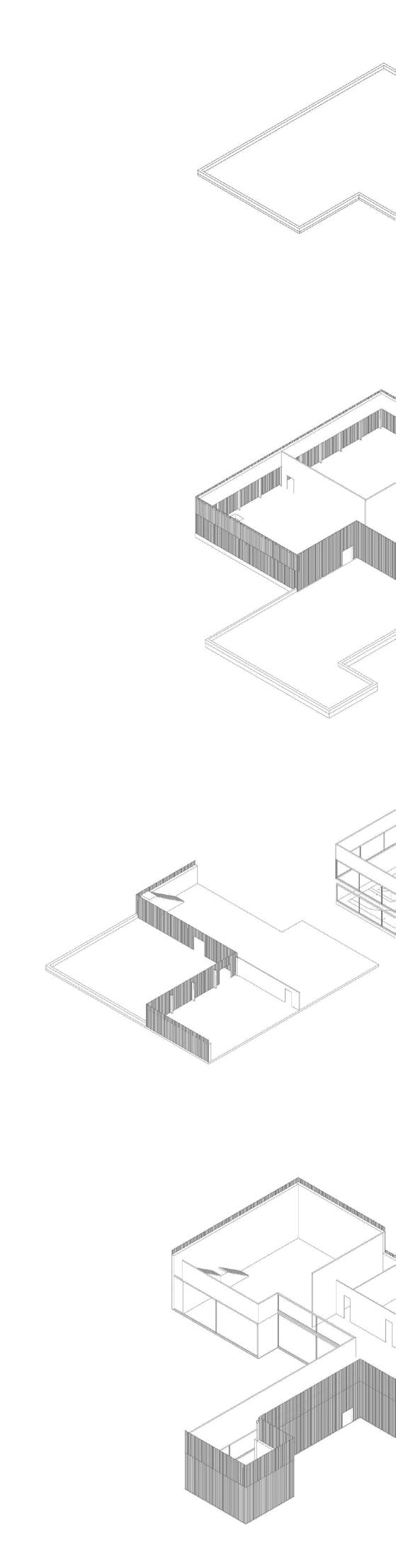


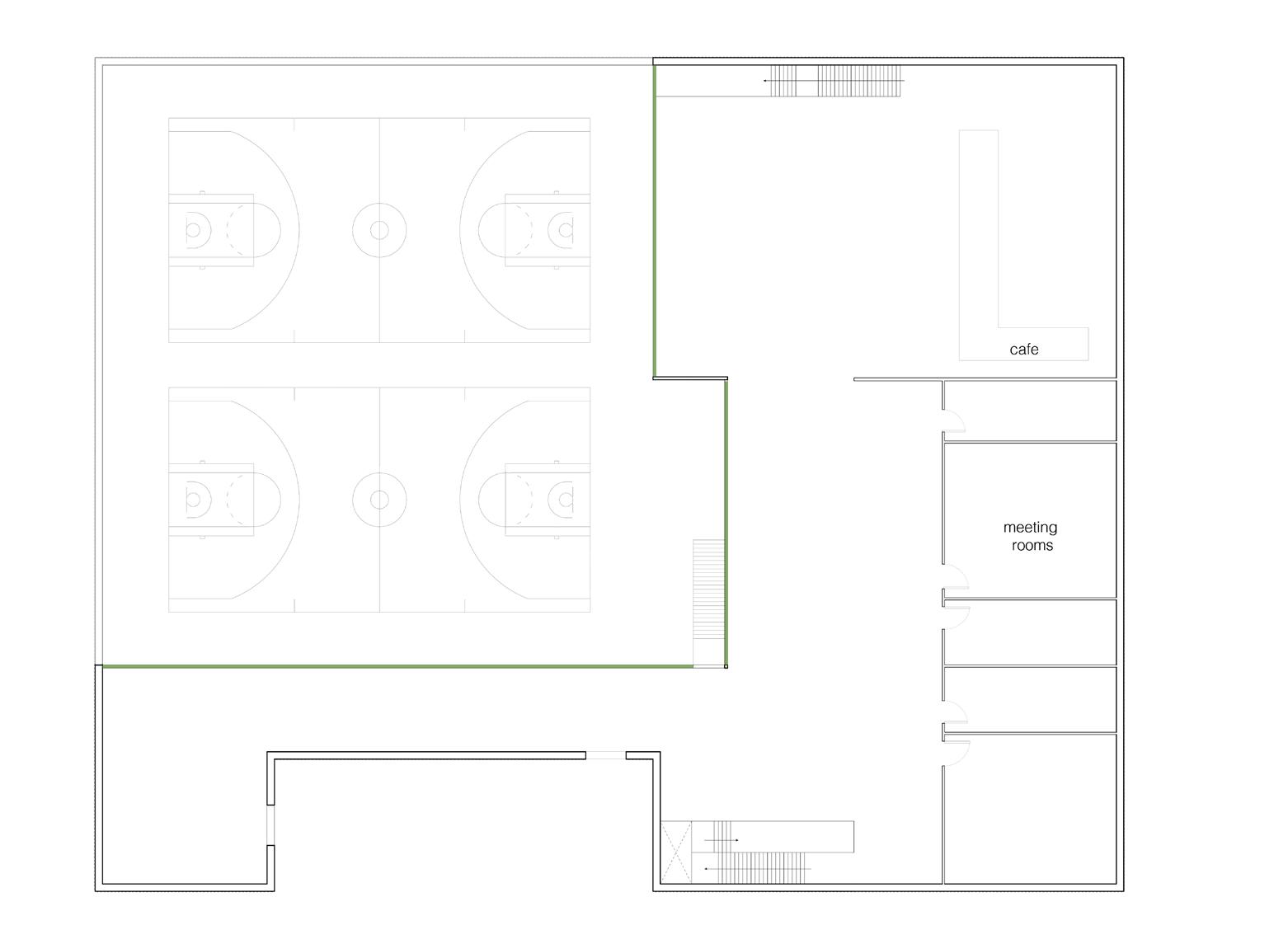
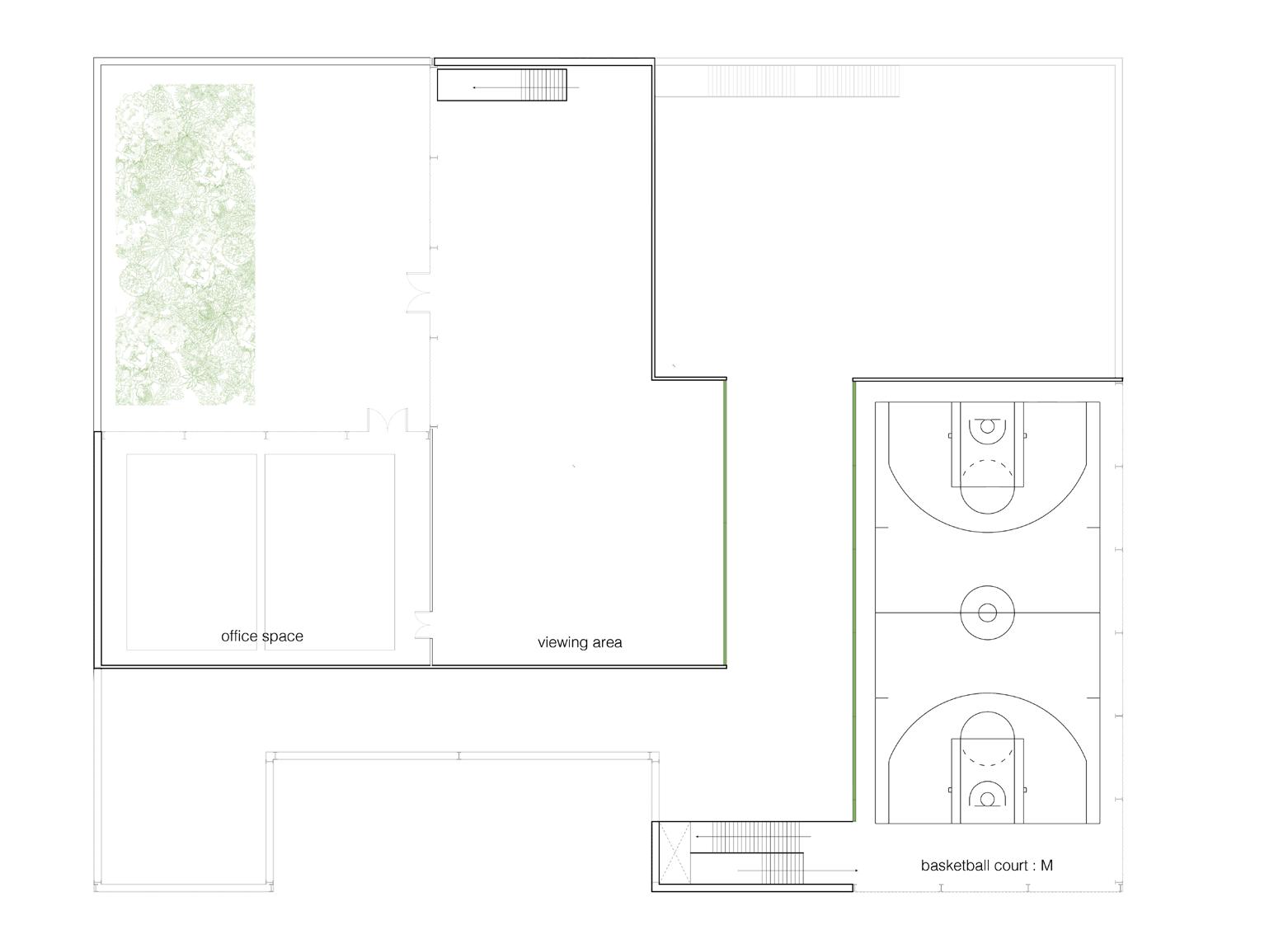
While the building consists of multiple parts, I have chosen to include two plans that merge the floors to showcase different levels of the structure. The green-colored areas highlight the windows, which provide views of the basketball court from various levels, enhancing the sense of connection throughout the building.
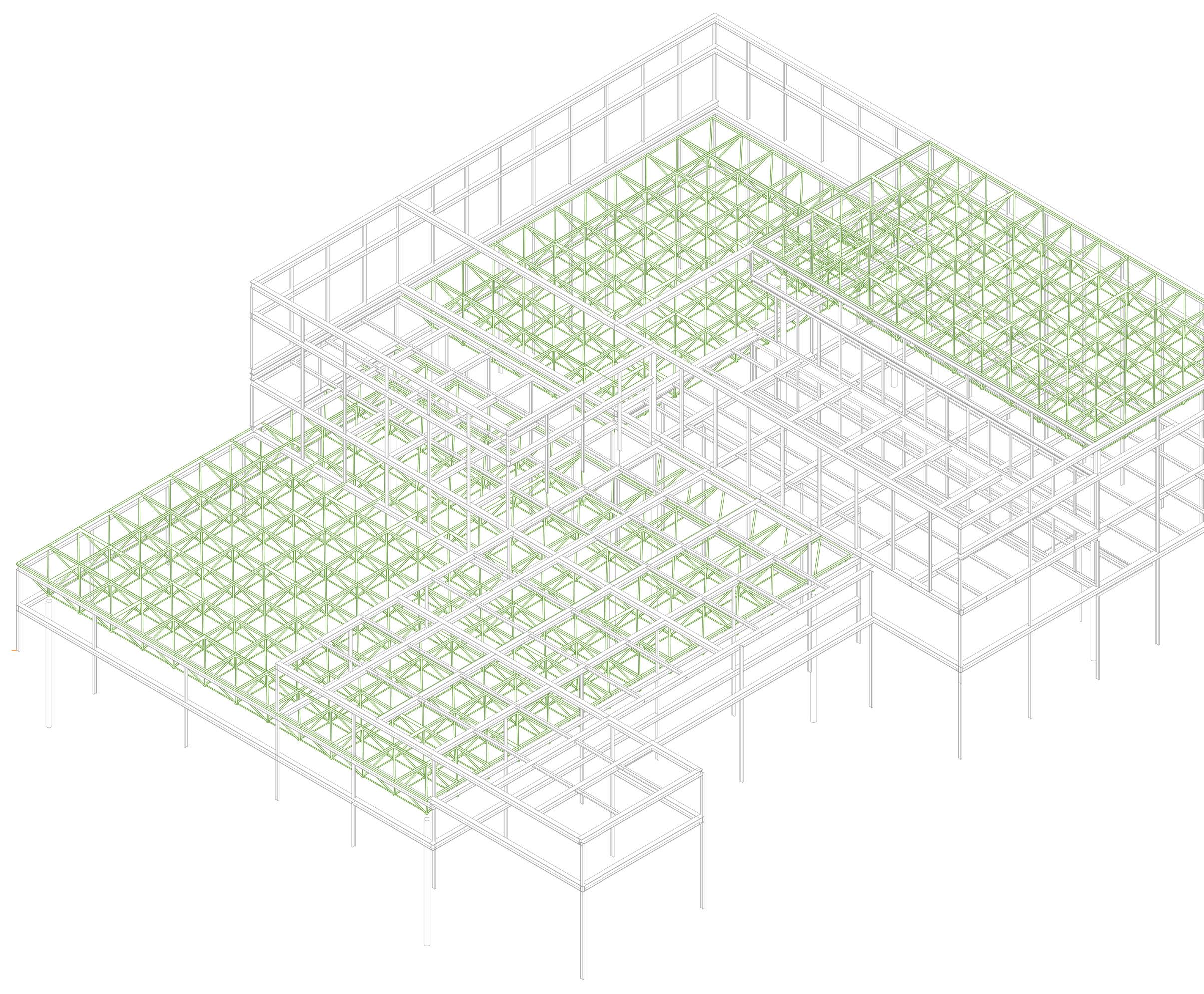
Two-Core System
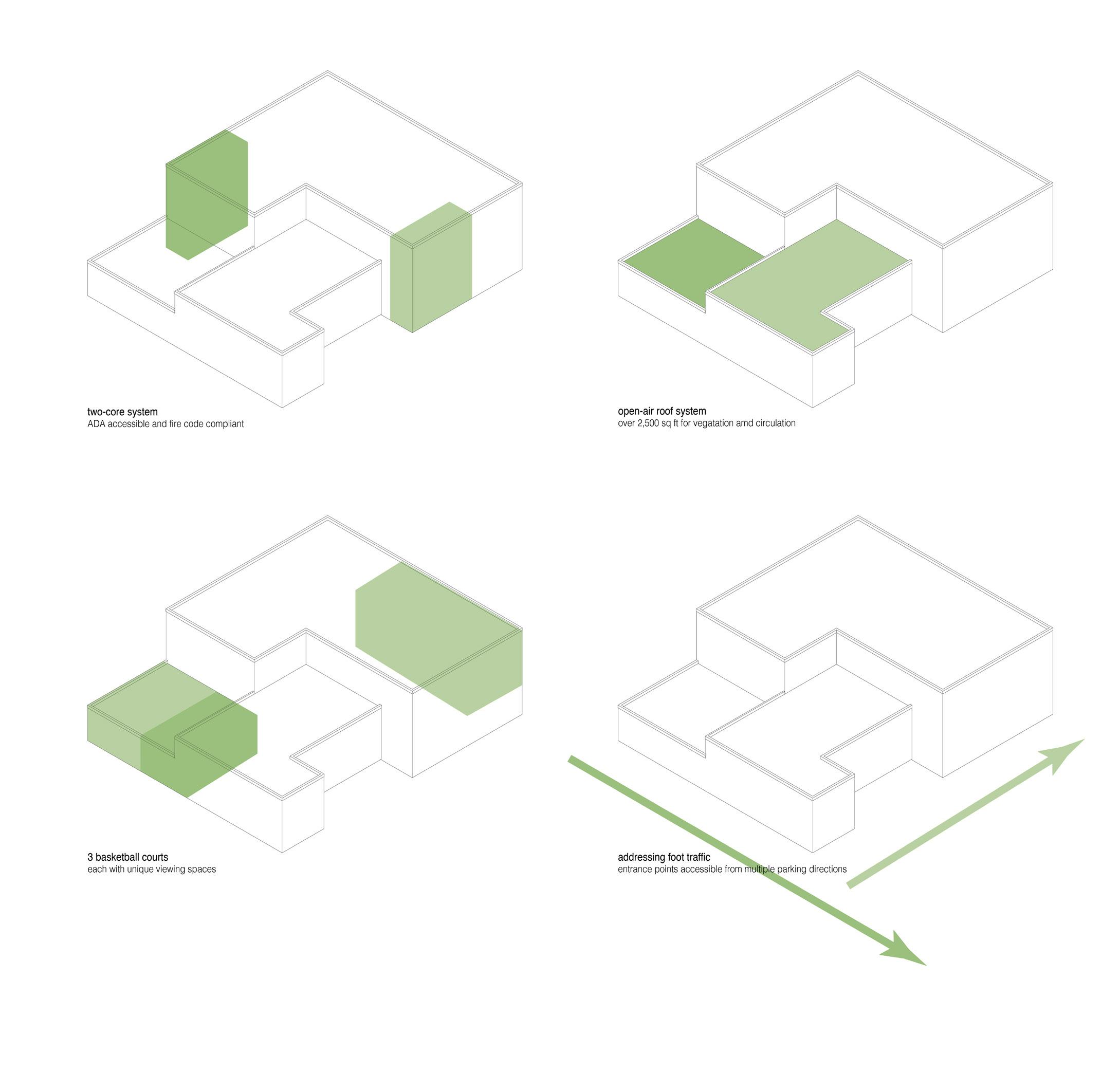
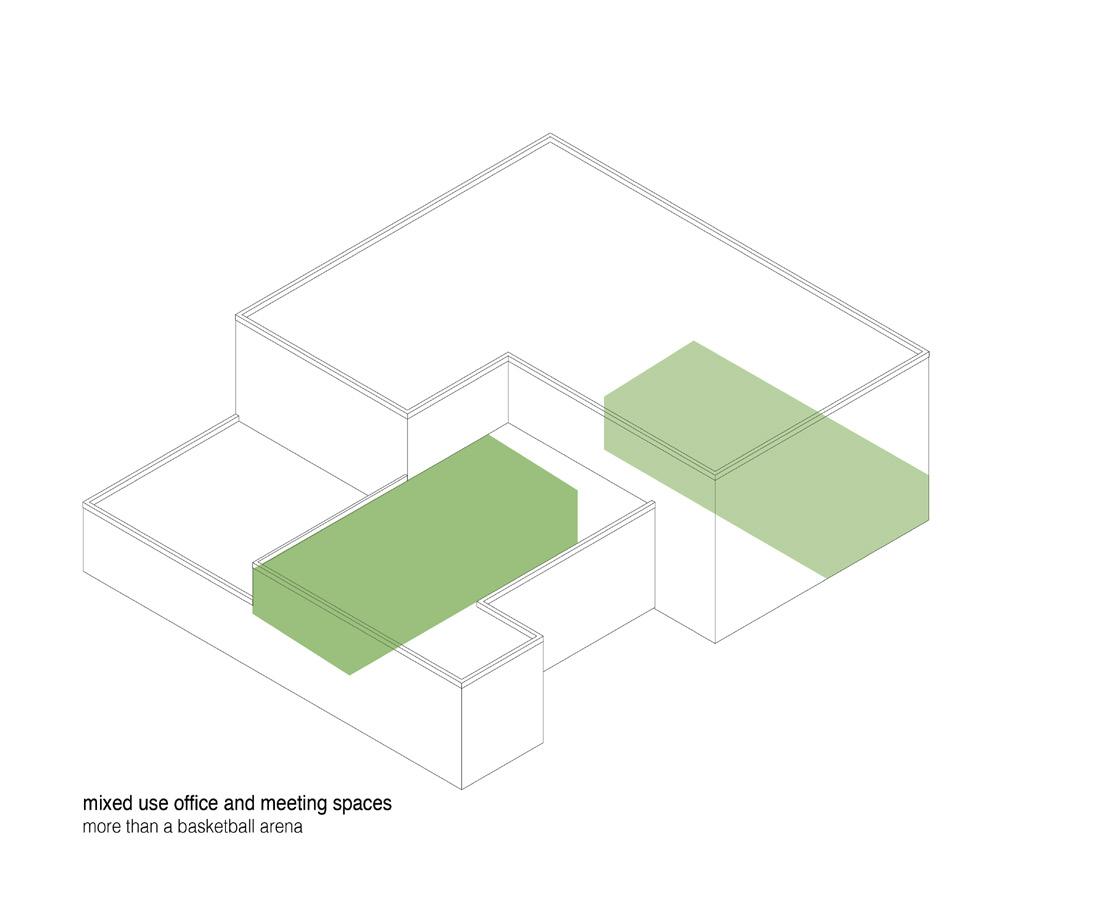
Open Air Roof System over 2,500 sq ft for vegetation and circulation
3 Basketball Courts each with unique viewing spaces
Corrugated Polycarbonate Panels
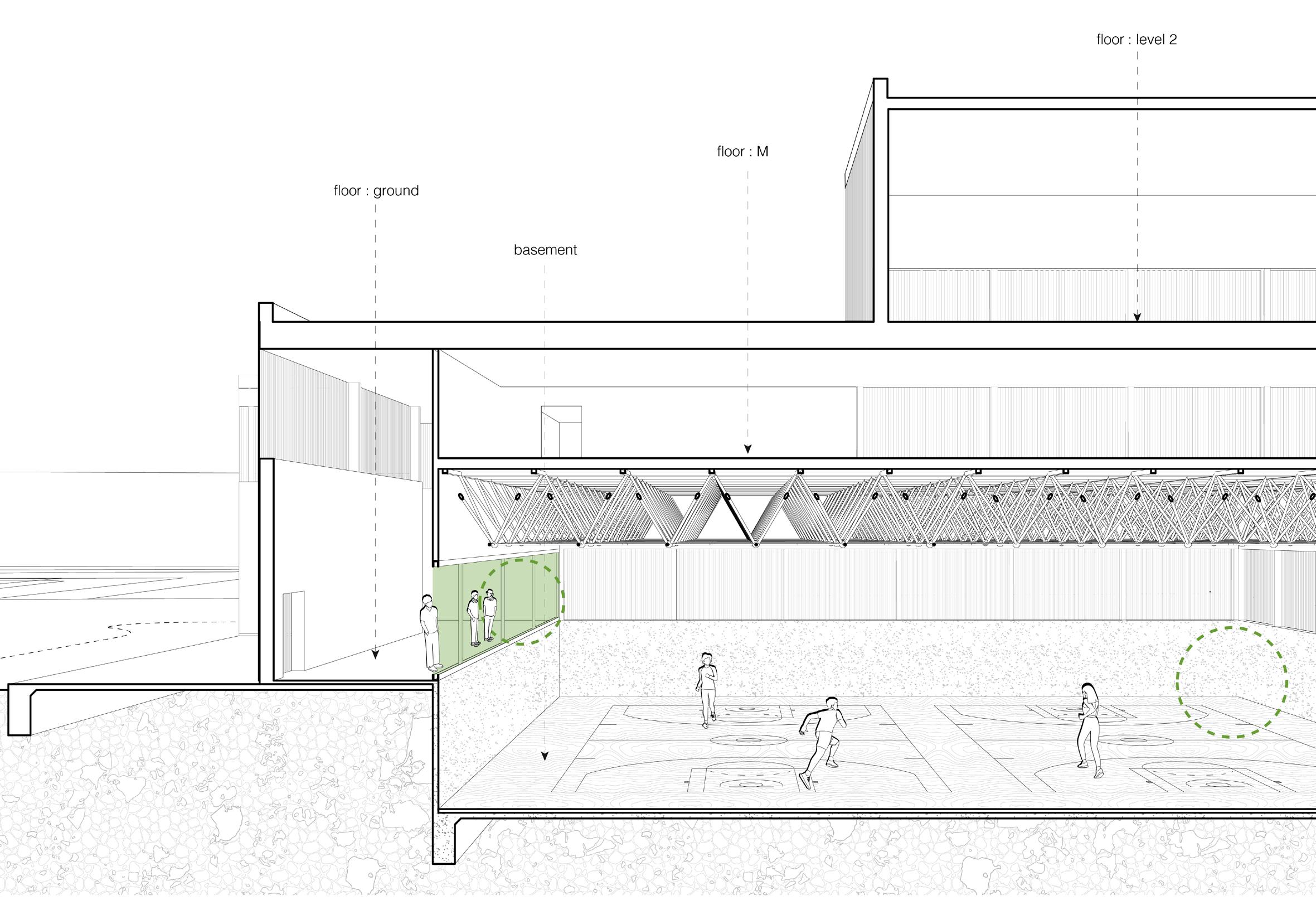
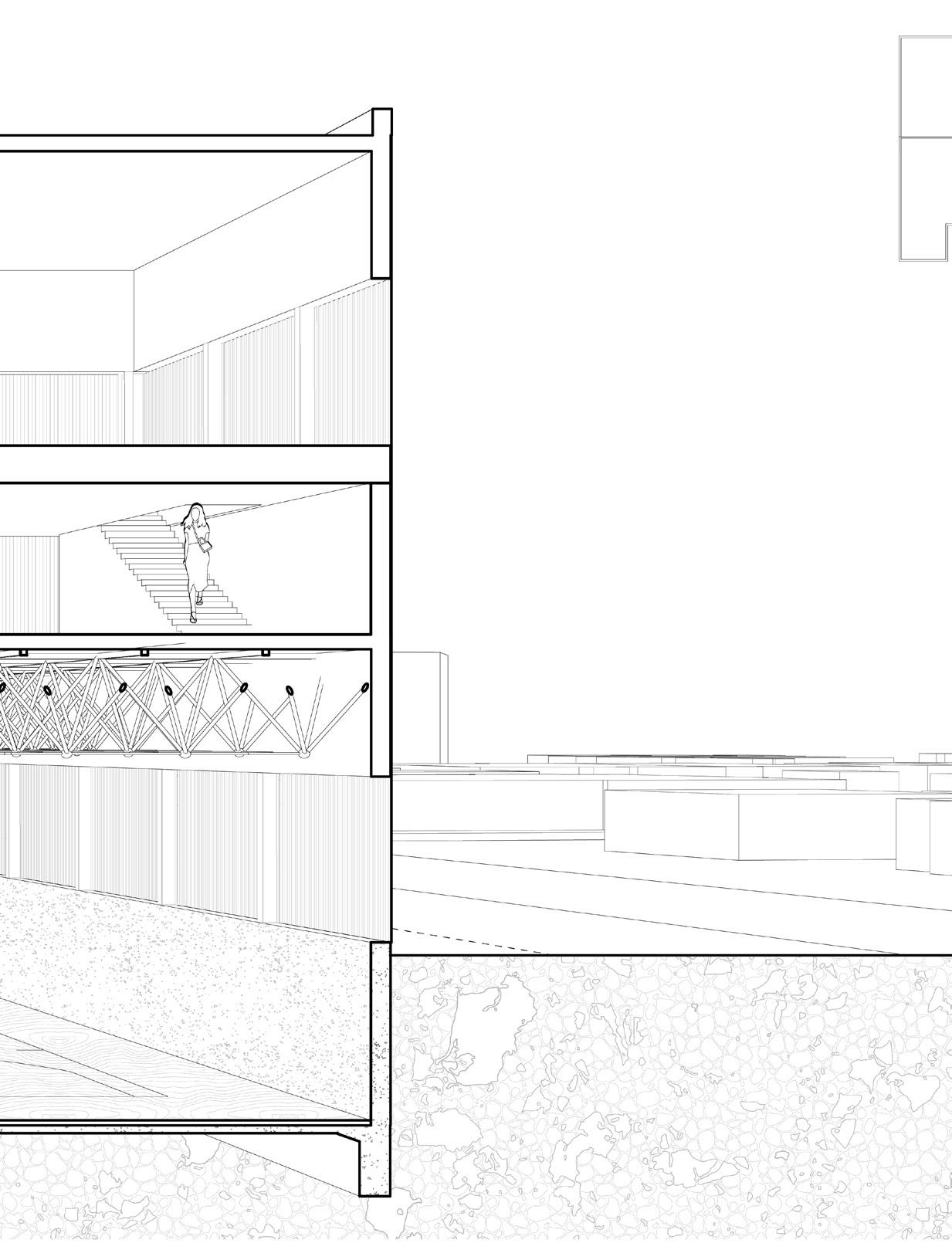
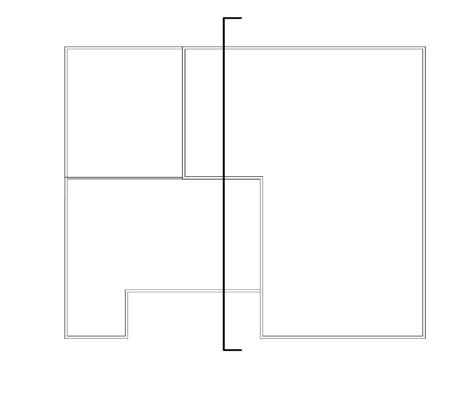
Perspective Section
LOOKING THROUGH
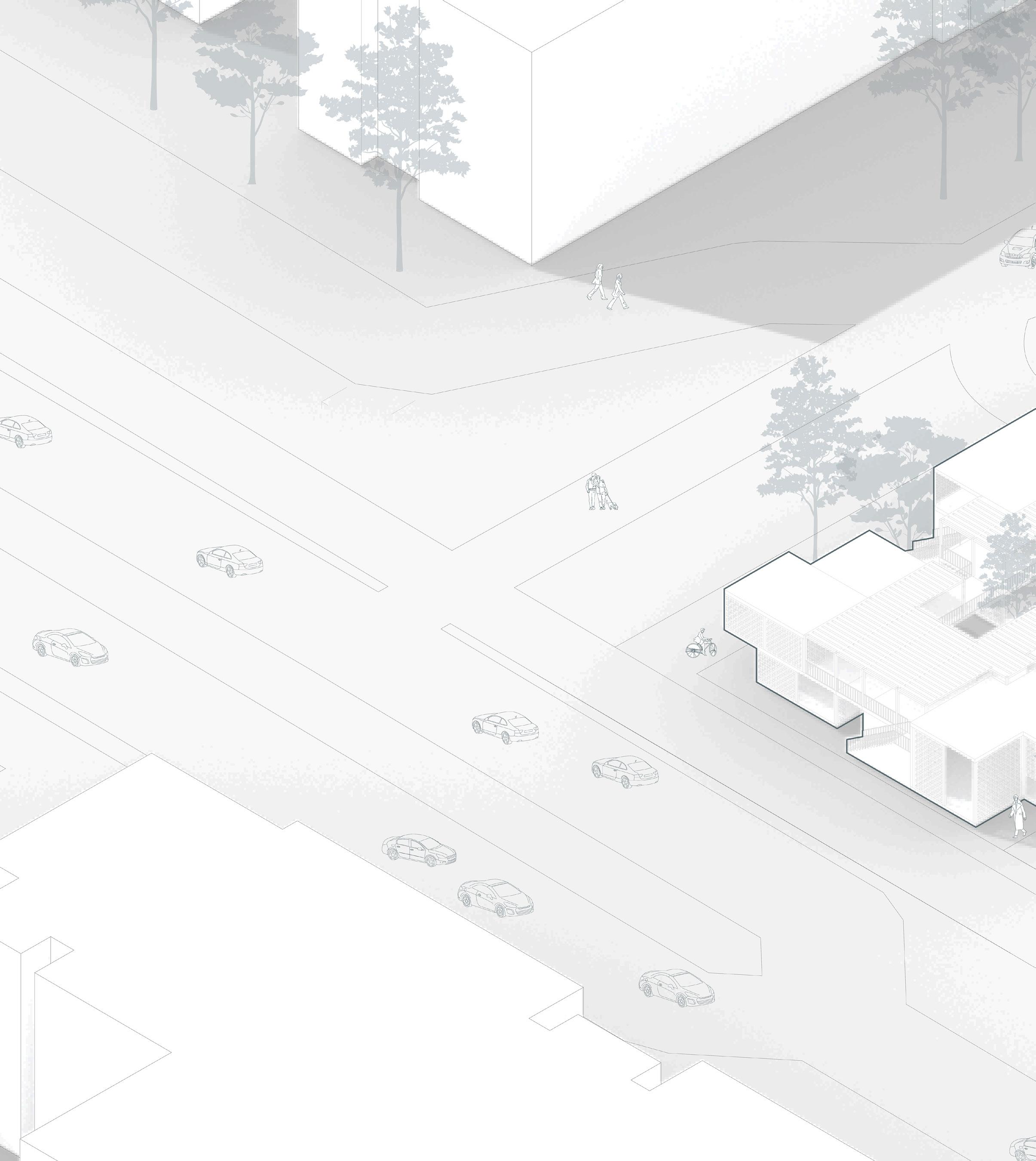
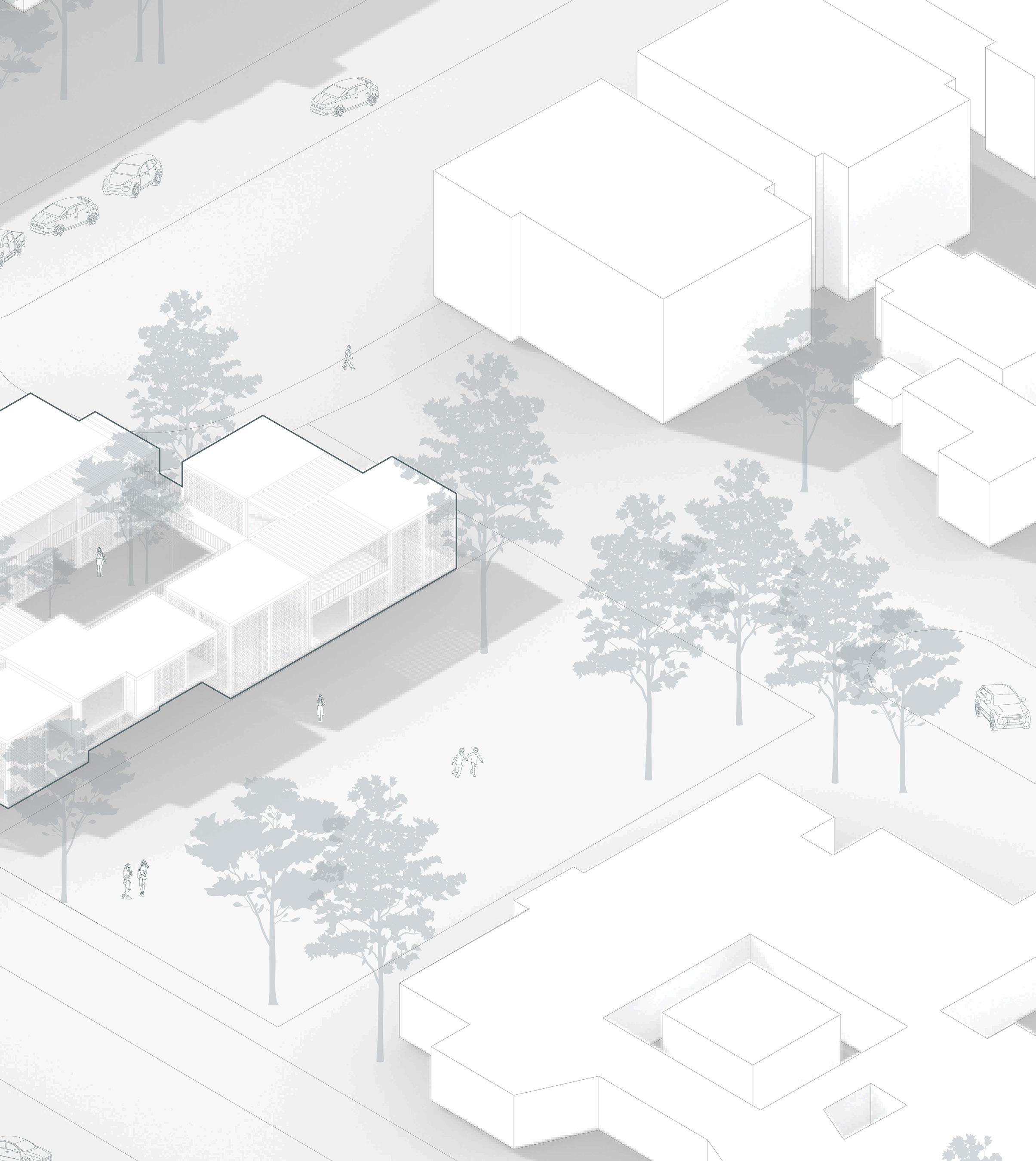
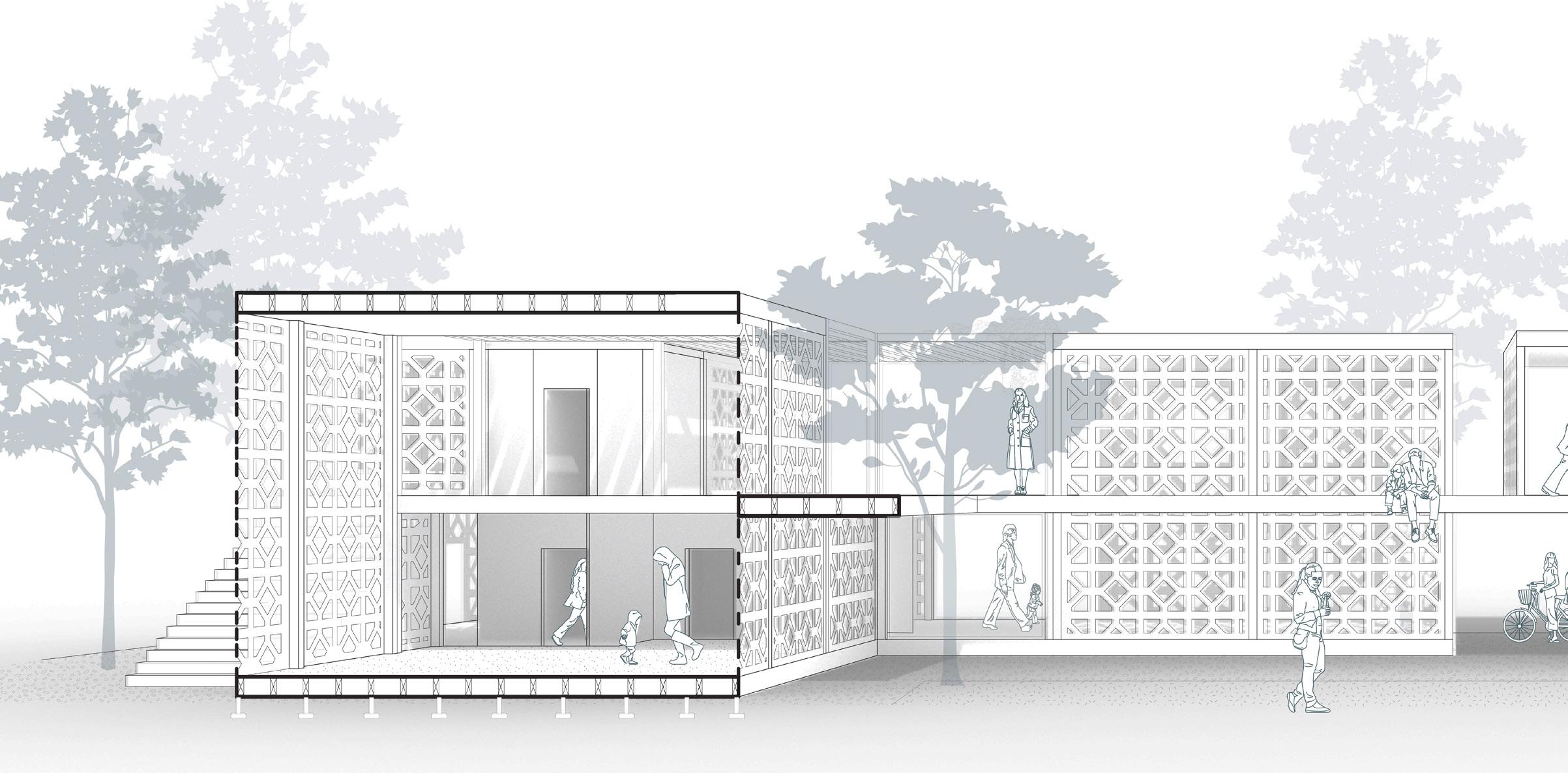
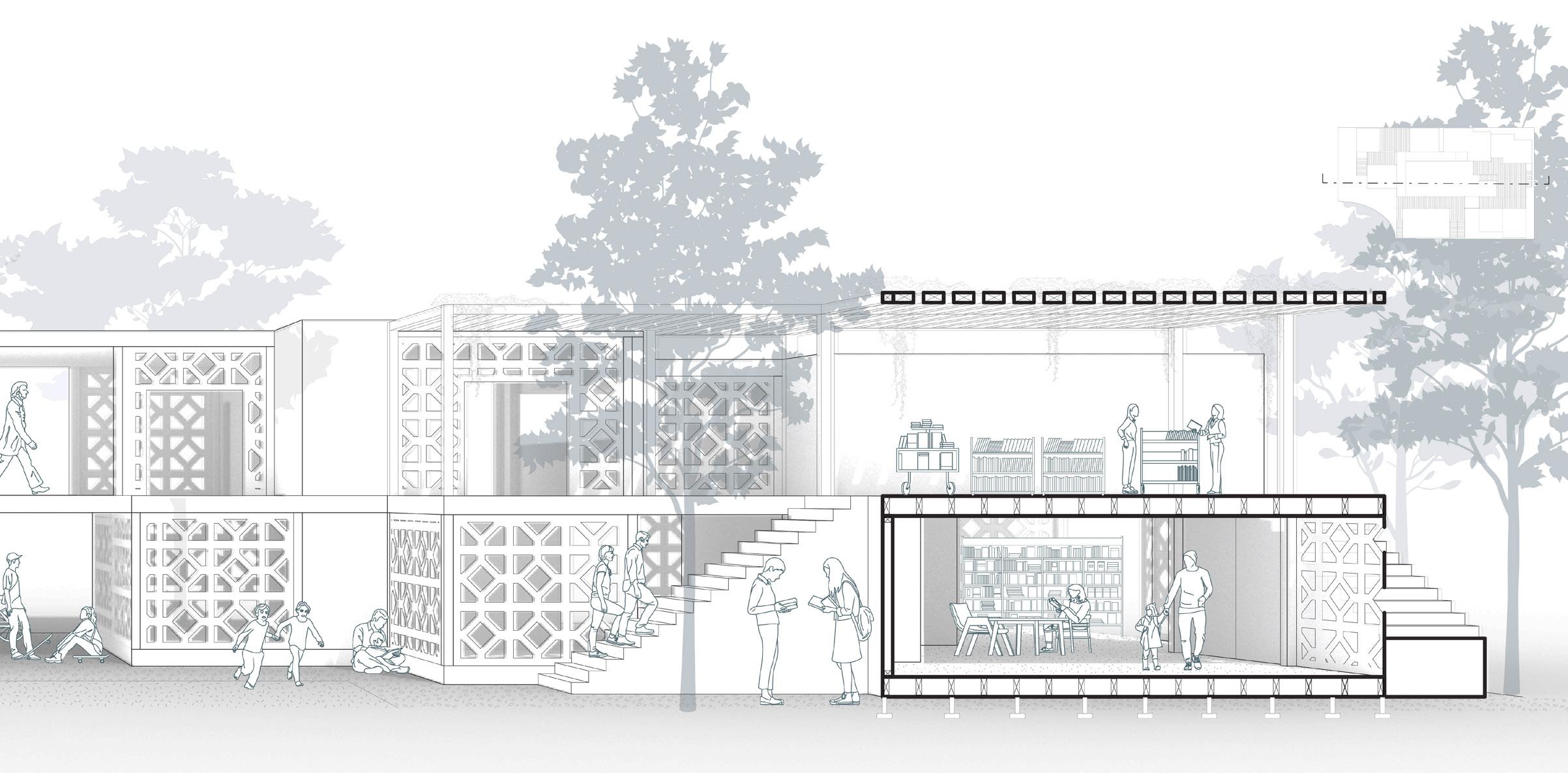
Located near the USC campus, this project involved designing a library inspired by concepts explored throughout the semester. Drawing from a previous “box on top of a box” strategy, I developed a concept based on a Venn diagram. The design divides programs into separate yet interconnected buildings, with the second floor acting as a shared space that allows seamless interaction through multiple access points.
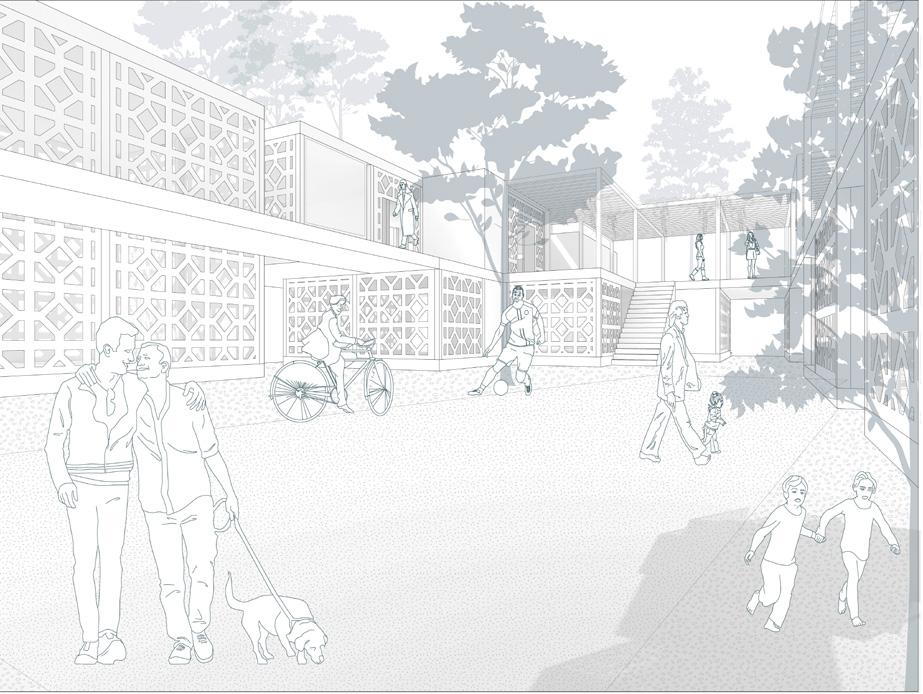
A key feature of the design is the shared area between two distinct programs, reflecting the Venn diagram concept. This idea is evident in both the floor plan and sections, where carefully arranged levels create panoramic views and private balconies. Additionally, accessible rooftops were designed as communal spaces, adding flexibility to the library’s functions.
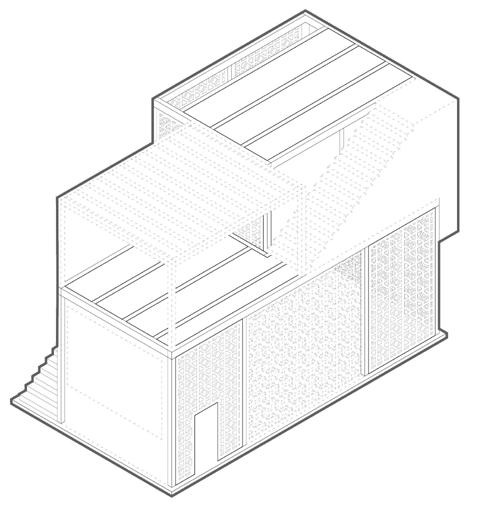
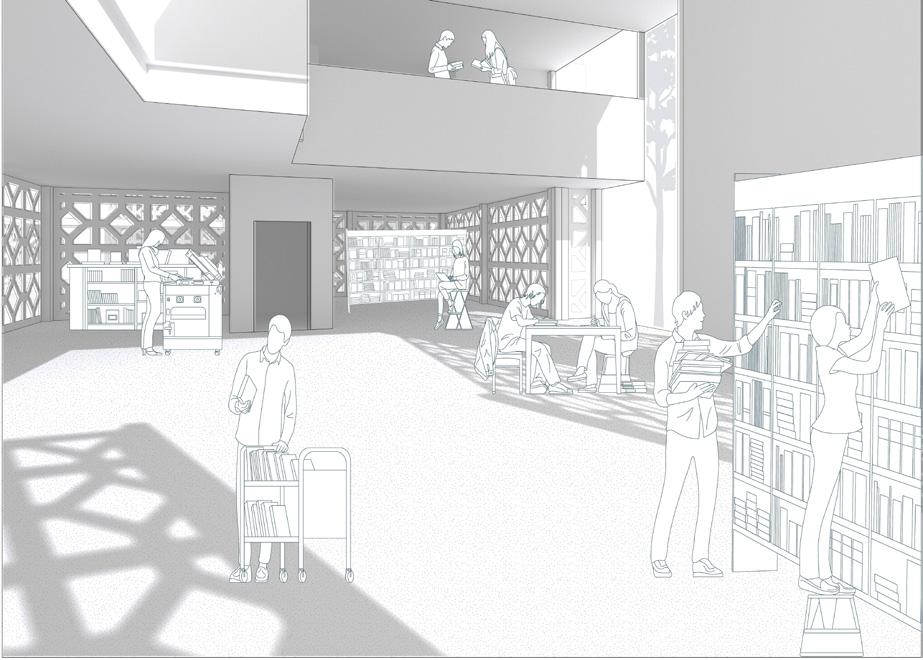
To balance privacy and openness, I incorporated perforated walls with a custom pattern. These walls filter natural light while maintaining a sense of enclosure, enhancing both the library’s aesthetic and its sustainability.
The design blends innovation with functionality, creating a dynamic architectural experience that complements the vibrant USC campus and its academic community.
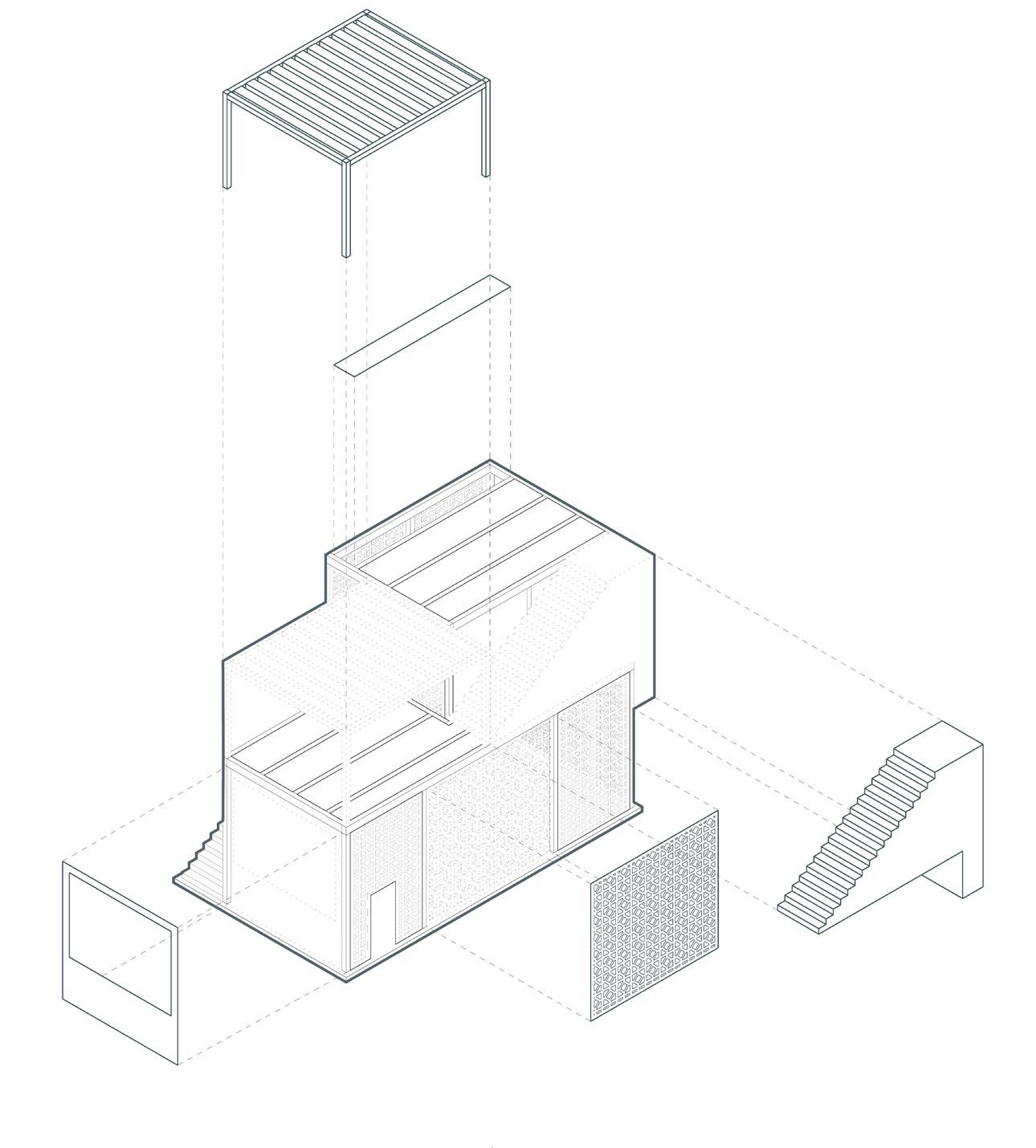
A single module is used to explore form, massing, materiality, and spatial organization.
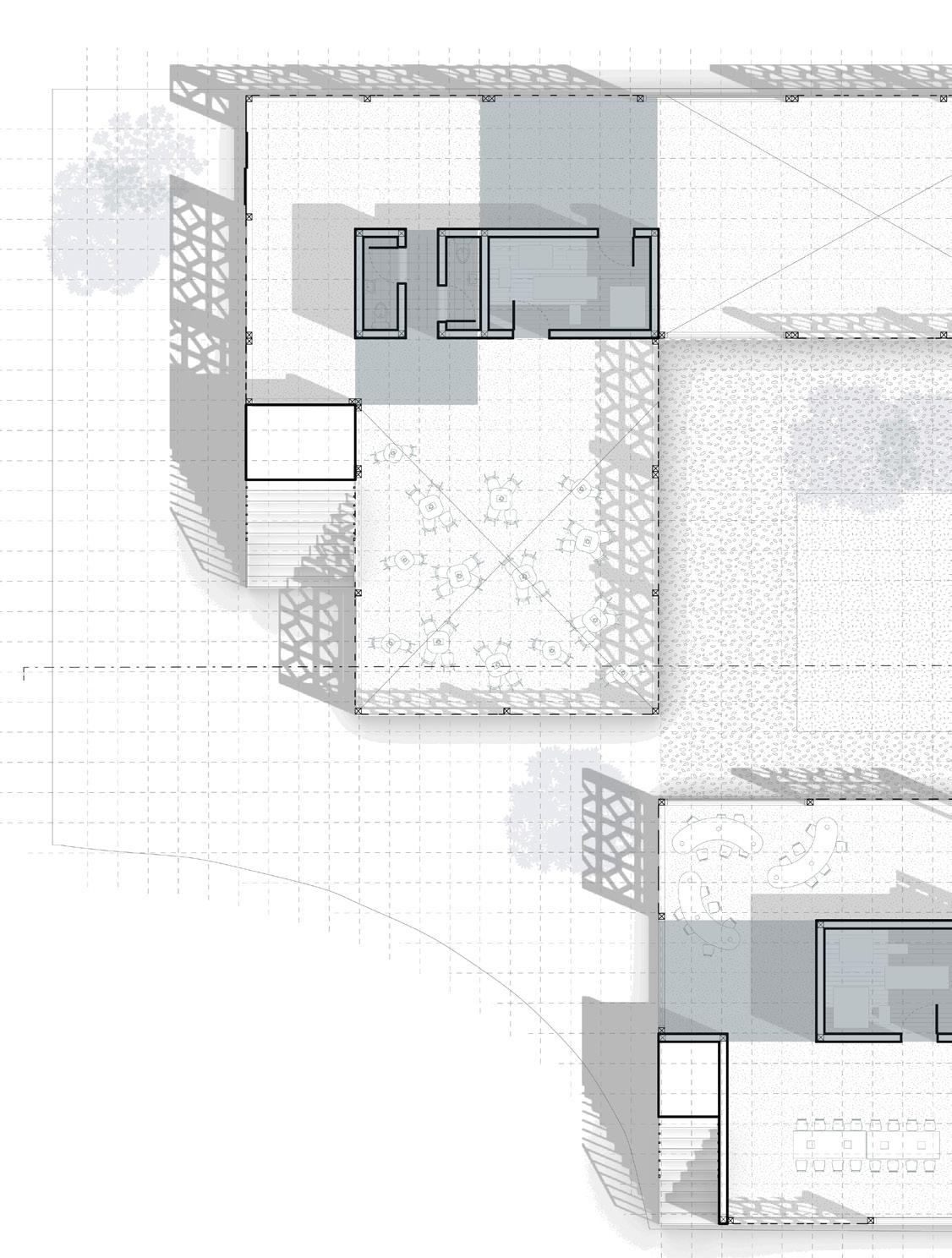
The module is then replicated across the site, and through strategic overlap between modules, a Venn-diagram logic emerges - where programs are pushed into one another and shared conditions are generated, as seen in plan through shaded blocks.
Module
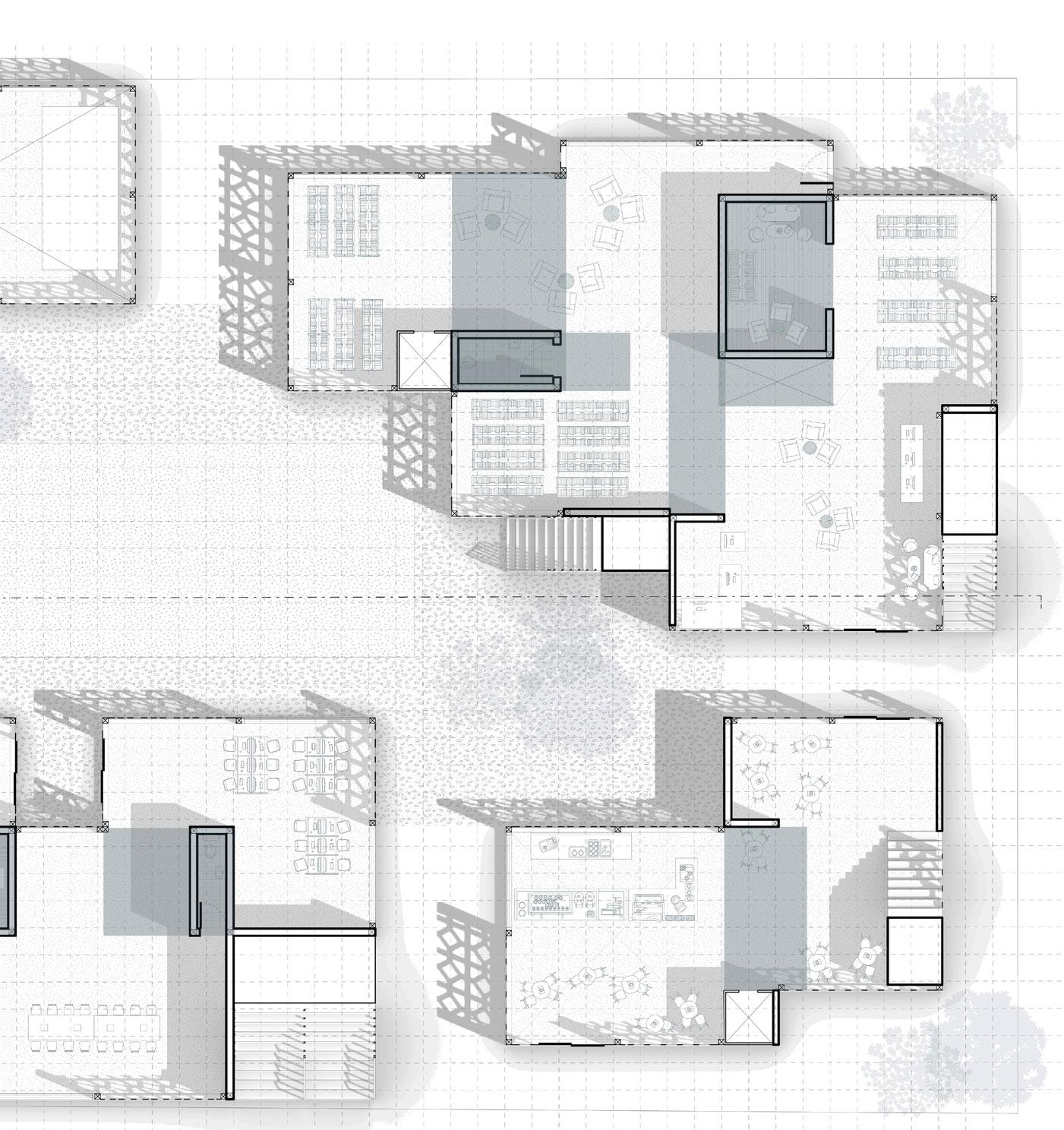
Floor 1 Plan
Interior + Exterior
RECHARACTERIZING COMMERCE
Mediterranean Study Abroad Project
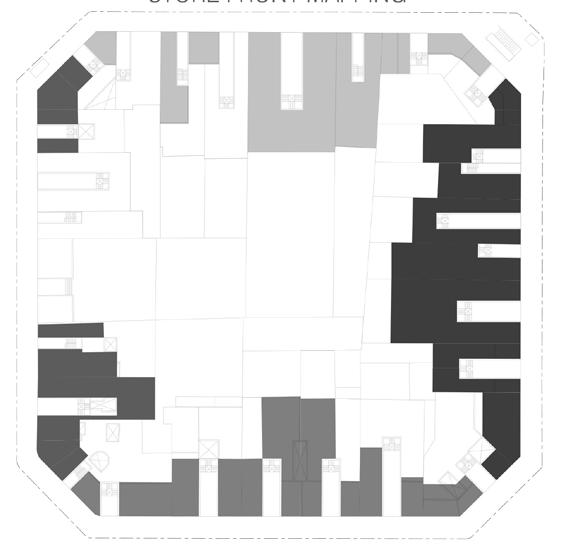
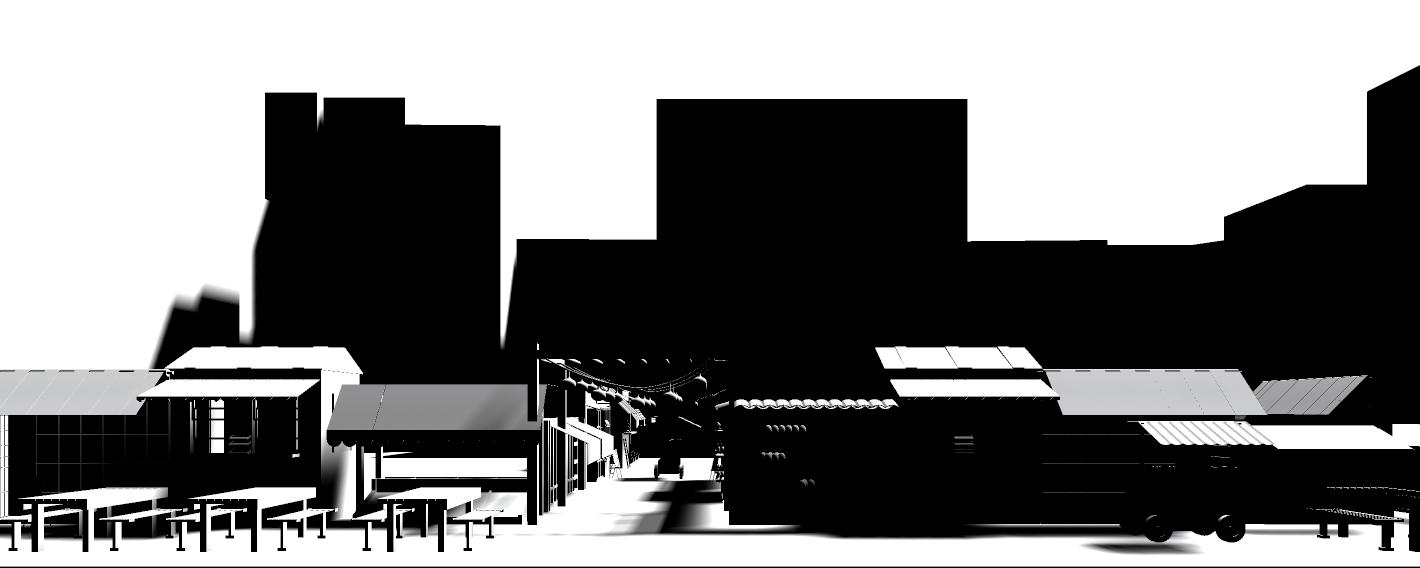
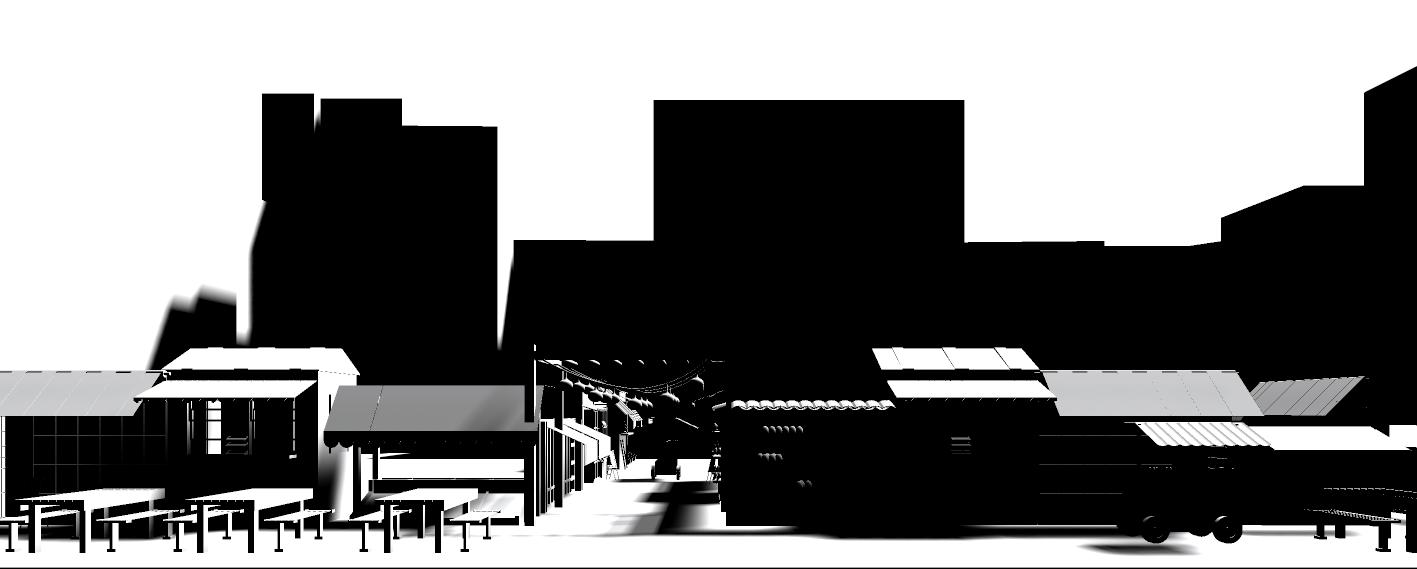
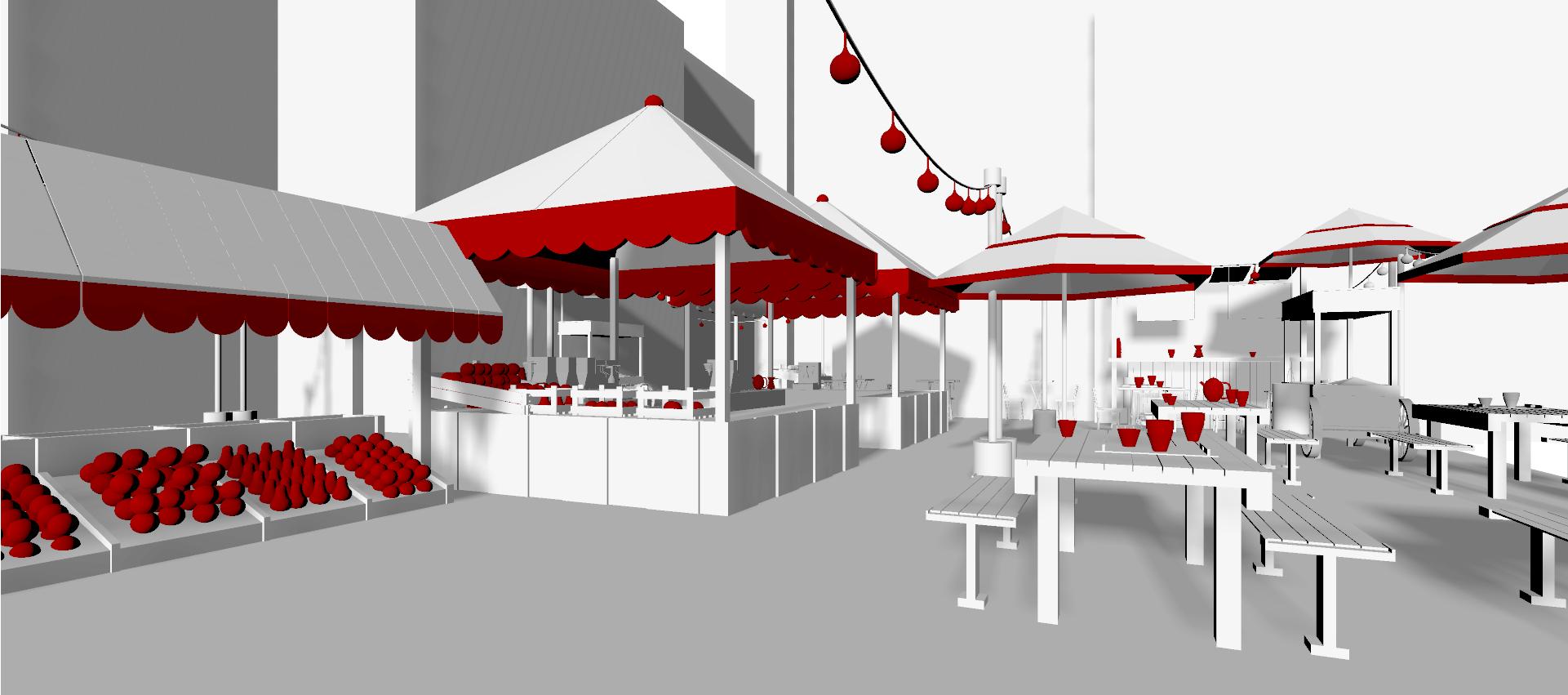
Located within the historic fabric of Barcelona’s Eixample district, this project was not about inventing a new space, but about identifying a pressing urban problem and developing a practical, architectural strategy to solve it. My goal was to recharacterize commerce in the Eixample block by reclaiming local spaces for small business owners and creating a self-sustaining, utopian block where the ground floor transforms into a comprehensive commercial hub that meets all community needs.
I envisioned an expanded and interconnected marketplace that maximizes storefront exposure, improves circulation, and creates an inviting, walkable environment prioritizing local residents. To achieve this, I established a set of guiding rules that allowed our proposal to be adaptable and replicable across all Eixample blocks, rather than being limited to a single site.
Multiple iterations of the block were explored to show how applying a consistent set of rules could generate diverse outcomes and enable sustainable, practical methods of construction. My focus was on offsetting existing walls to preserve the structural framework while opening circulation pathways, creating a seamless pedestrian experience without compromising the block’s urban integrity.
RULE
FRONT MAPPING
RULE 3
RULE 3
TRY RETAINING EXISTING STOREFRONTS
RULE
SMALLEST
RULE 2
RULE 2
STRUCTURE CANNOT BE REMOVEDWORK AROUND IT
STRUCTURE CANNOT BE REMOVEDWORK AROUND IT
RULE 4
ACCESSIBLE ENTRANCES ON BOTH SIDES OF STORES
STORE
HAVE ACCESSIBLE ENTRANCES ON BOTH SIDES OF STORES
RULE 6
STORES CAN BE SPLIT INTO SMALLER ONES
OPTIMAL SUNLIGHT IN THE SOUTHMORE OPEN SPACES
OPTIMAL SUNLIGHT IN THE SOUTHMORE OPEN SPACES
ITERATION 1
RULE 8
OFFSET WALLS USING EXISTING STRUCTURECREATES CIRCULATION
OFFSET WALLS USING EXISTING STRUCTURECREATES CIRCULATION
ITERATION 2
RULE 7
RULE 10
CREATE CIRCULATION USING FOCAL POINTS
CREATE CIRCULATION USING FOCAL POINTS
STORES WITH LONGER SPANS CAN BE REPURPOSED AS ENTRANCES
MORE OPEN SPACES TOWARDS THE PEDESTRIAN PATHWAYS
OPEN SPACES TOWARDS THE PEDESTRIAN PATHWAYS
MORE OPEN SPACES AT THE HIGHEST POINT OF PEDESTRIAN ACTIVITY
OPEN SPACE AT HIGHEST POINT OF PEDESTRIAN ACTIVITY
RULE 9
ITERATION 3
TAKE ADVANTAGE OF UNIQUE SITE ELEMENTS + CONTEXT
TAKE ADVANTAGE OF UNIQUE SITE ELEMENTS + CONTEXT
RULE 11
ITERATION 4
TAKE DOWN SOME CEILINGS TO CREATE OPEN VOIDS + USE ROOFS AS COMMUNAL GREEN SPACES
TAKE DOWN ROOFS TO CREATE OPEN VOIDS + USE ROOFS AS COMMUNAL GREEN SPACES
PROFESSIONAL WORK
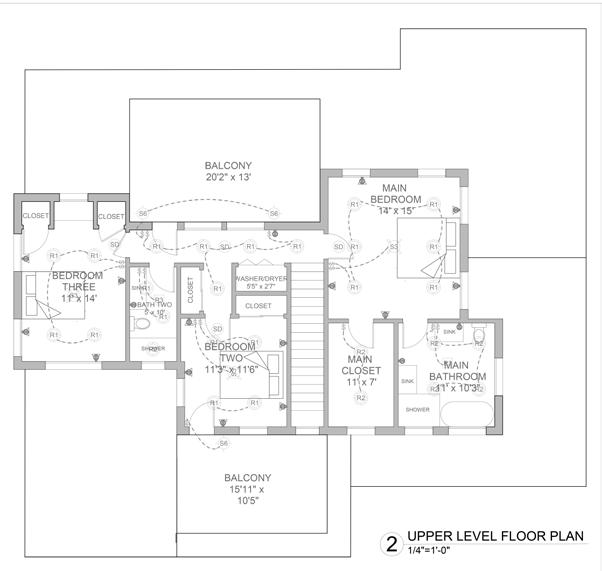
These are some of the construction documents I produced during my internship at Uriu Architecture. While I contributed to multiple projects during my time at the firm, the drawings shown here are from one residential project in Altadena, a neighborhood impacted by the Eaton Fire. I worked on site parcelling and early design development, including revisions to the roofing, façade, and interior layout. This final set was submitted to the county for permitting and construction.
NOTE - Certain drawing information has been intentionally redacted for client confidentiality.
MAIN BEDROOM - NORTH ELEVATION
MAIN BEDROOM - EAST ELEVATION
MAIN BEDROOM - EAST ELEVATION
MAIN BEDROOM - SOUTH ELEVATION
MAIN BEDROOM - SOUTH ELEVATION
MAIN
MAIN BATHROOM - NORTH ELEVATION
MAIN BEDROOM - WEST ELEVATION MAIN BATHROOM -
MAIN BEDROOM - WEST ELEVATION
MAIN BATHROOM - SOUTH ELEVATION
MAIN BATHROOM - EA
ADDITIONAL WORK
Personal Projects
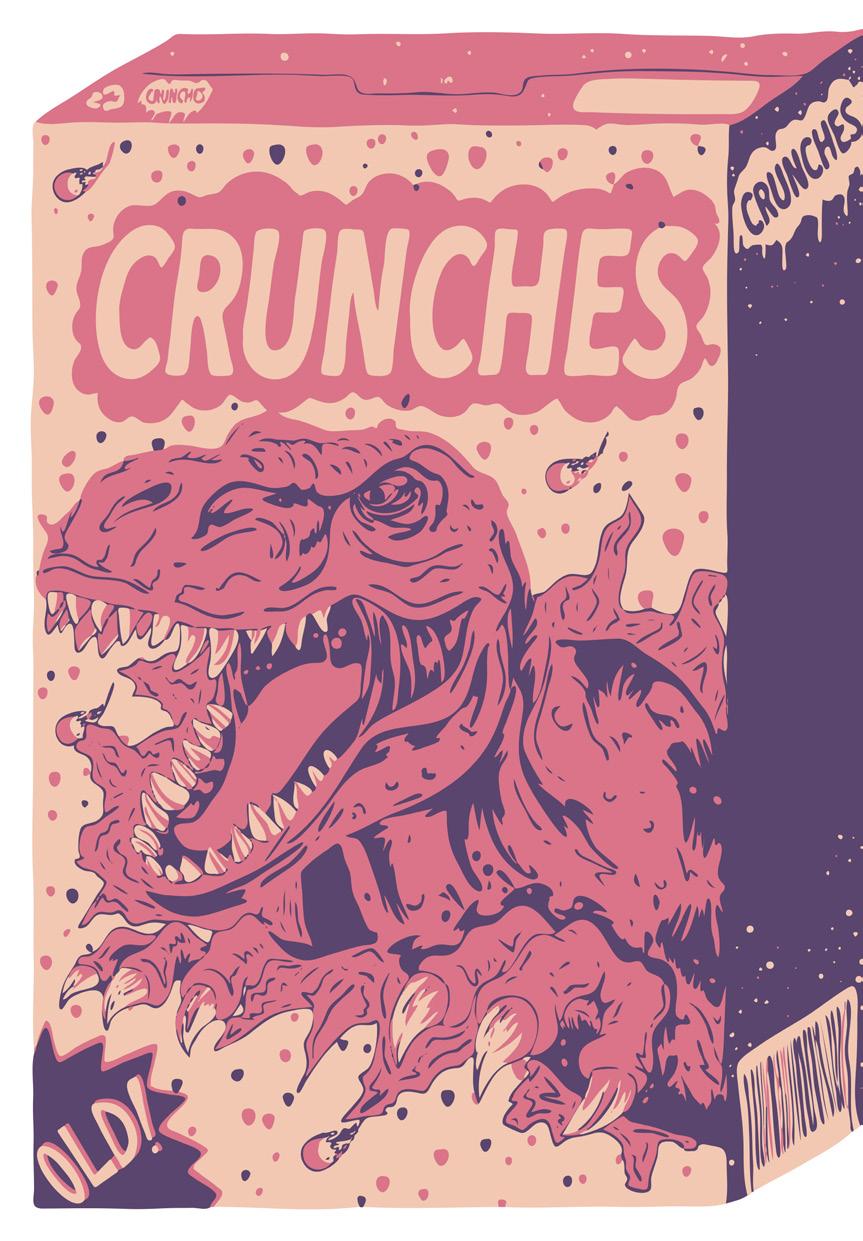
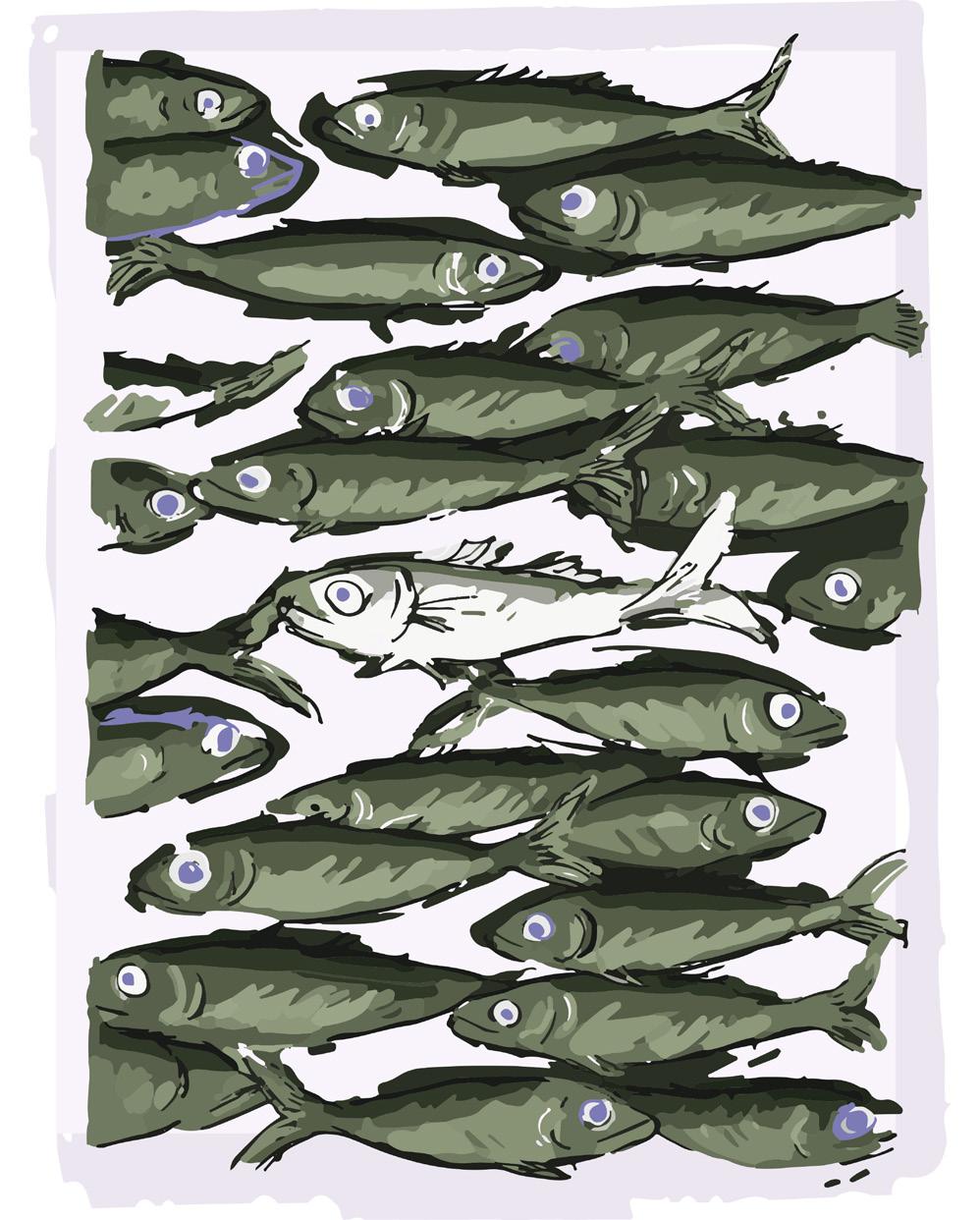
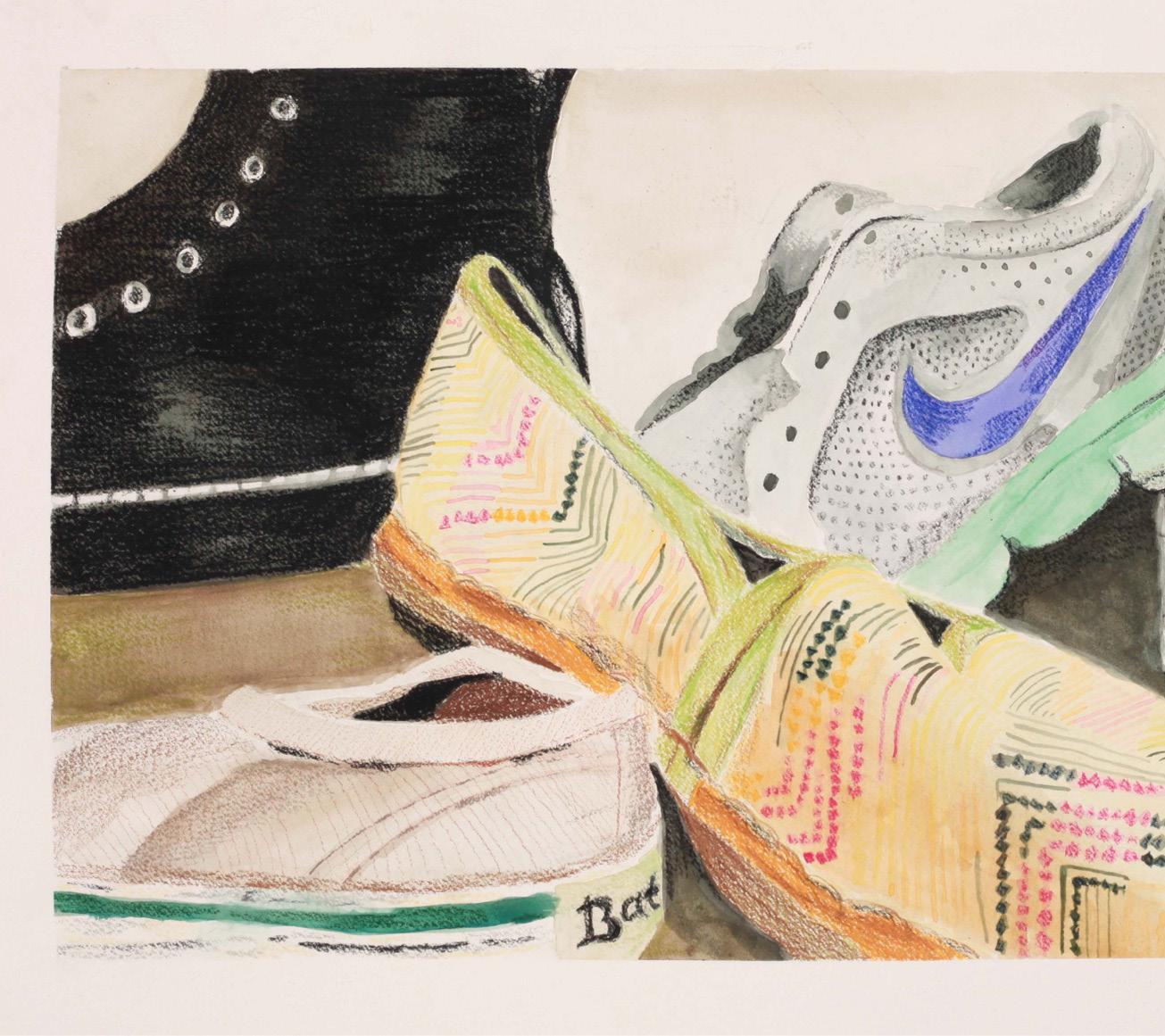
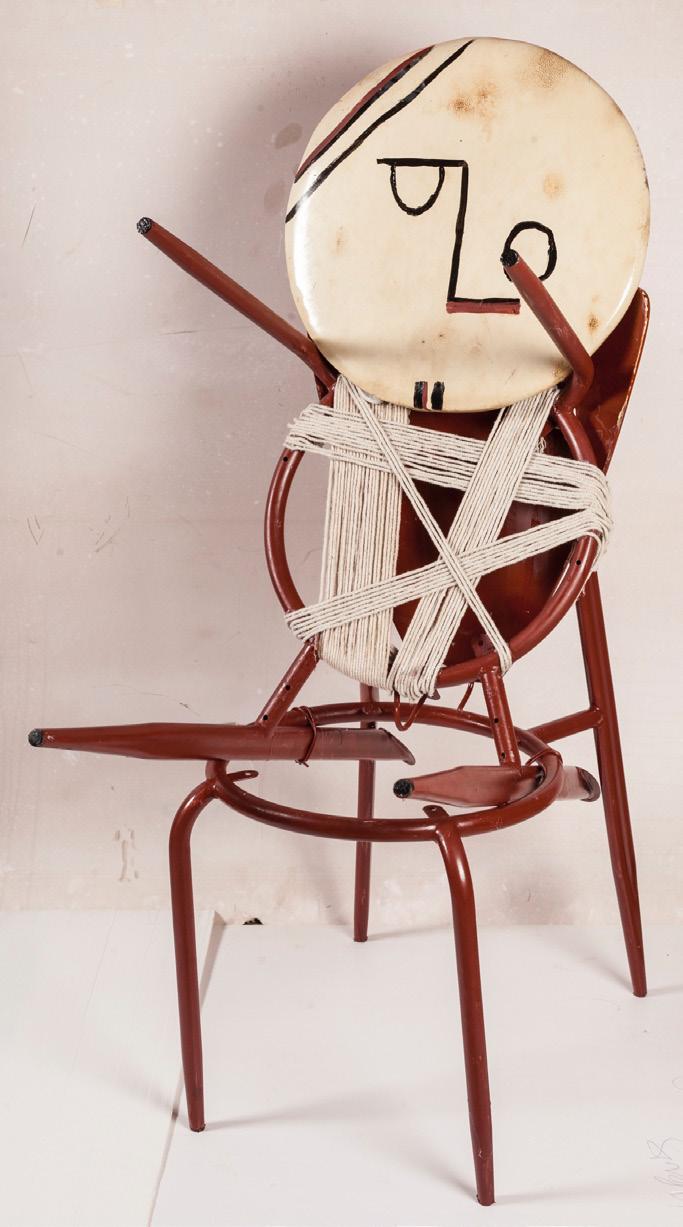
These are a selection of personal projects I have developed alongside my academic work. I am particularly drawn to making posters and to creating animals that are personified in subtle or unconventional ways. I typically begin these projects in Procreate and then further develop and refine them using Adobe Illustrator and Adobe Photoshop.
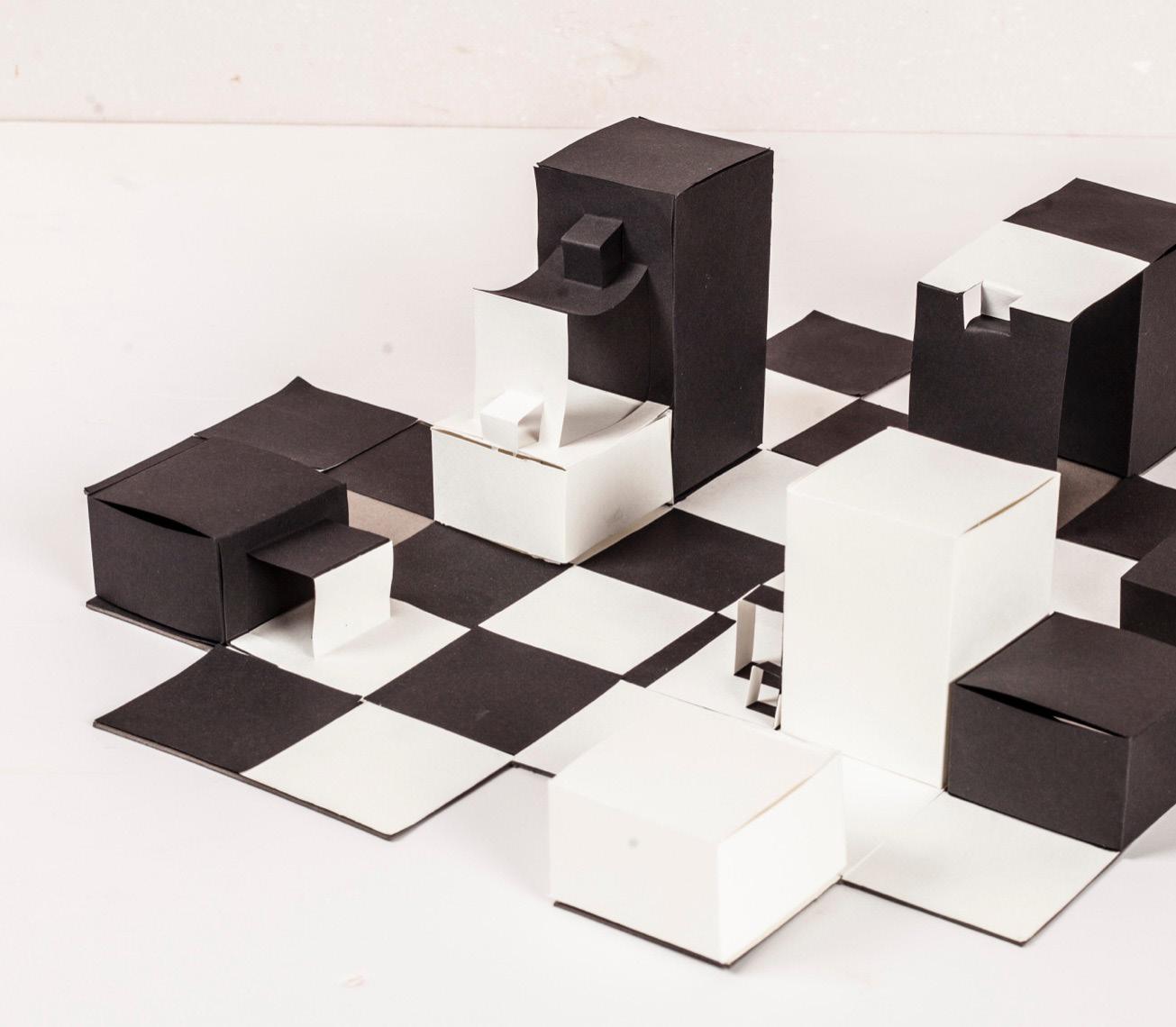
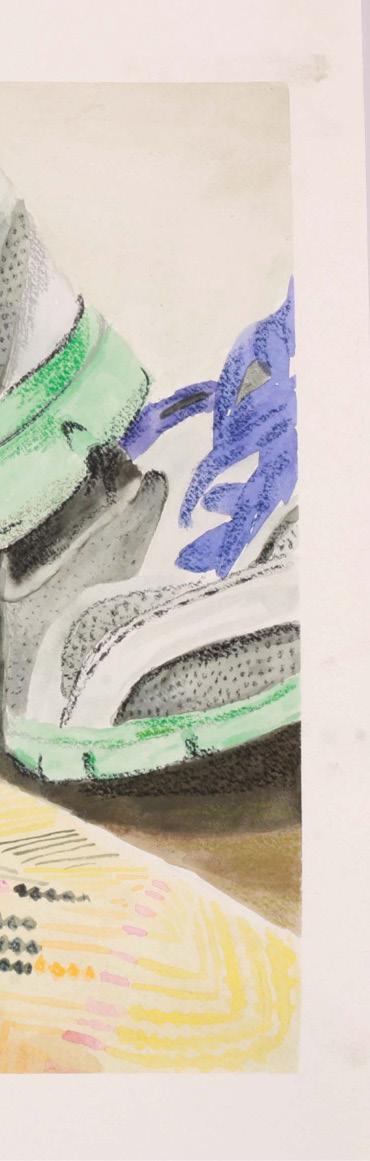
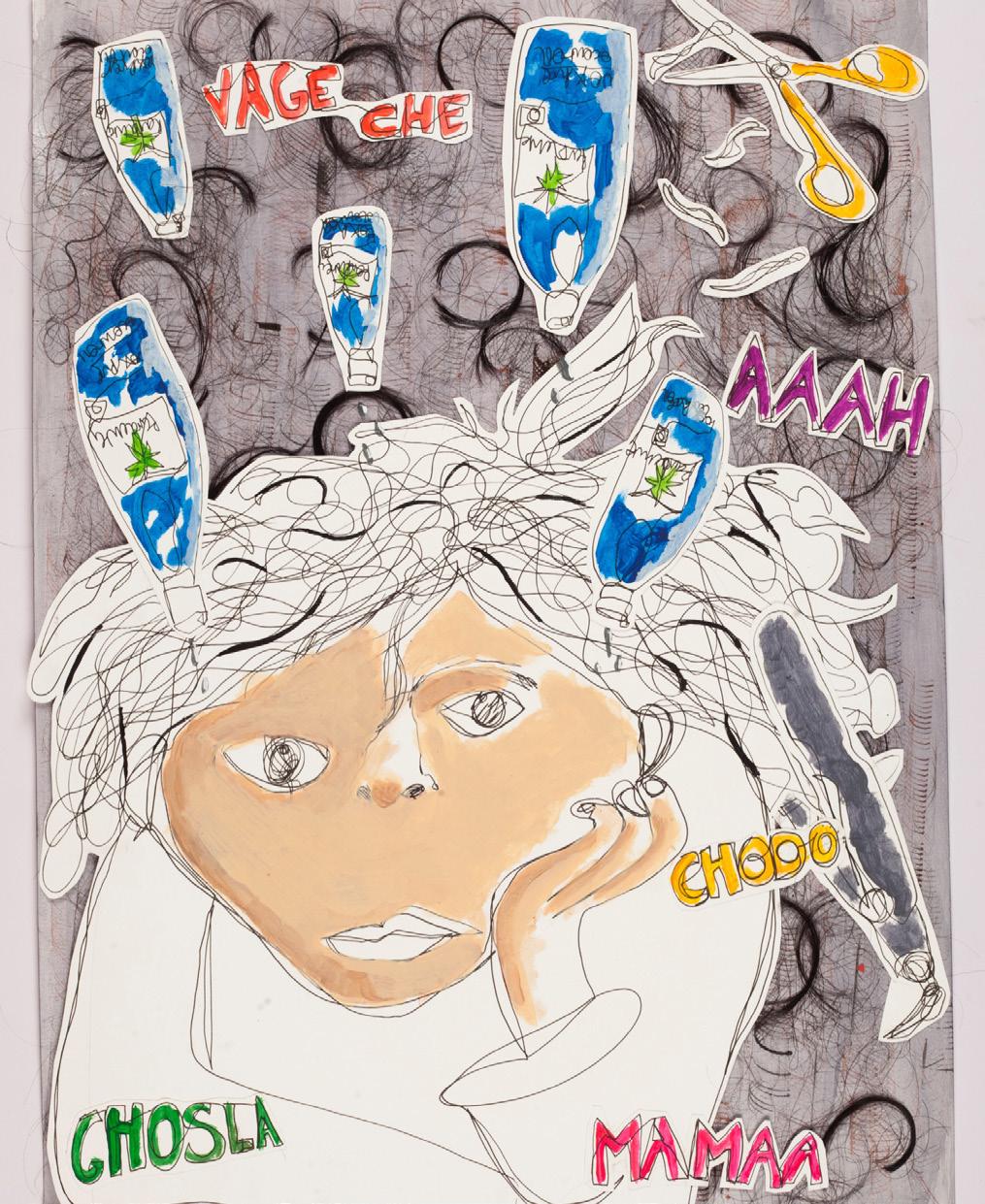
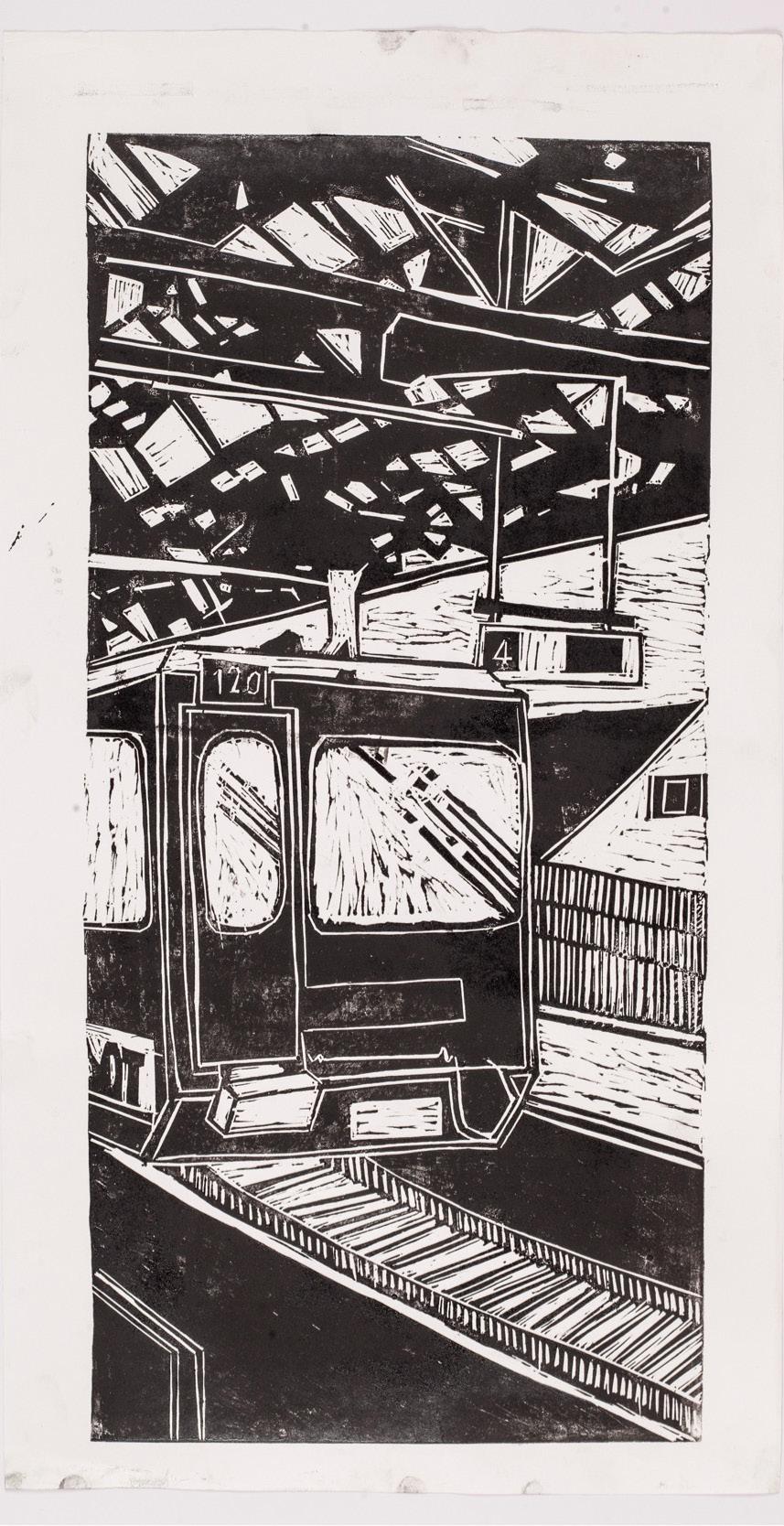
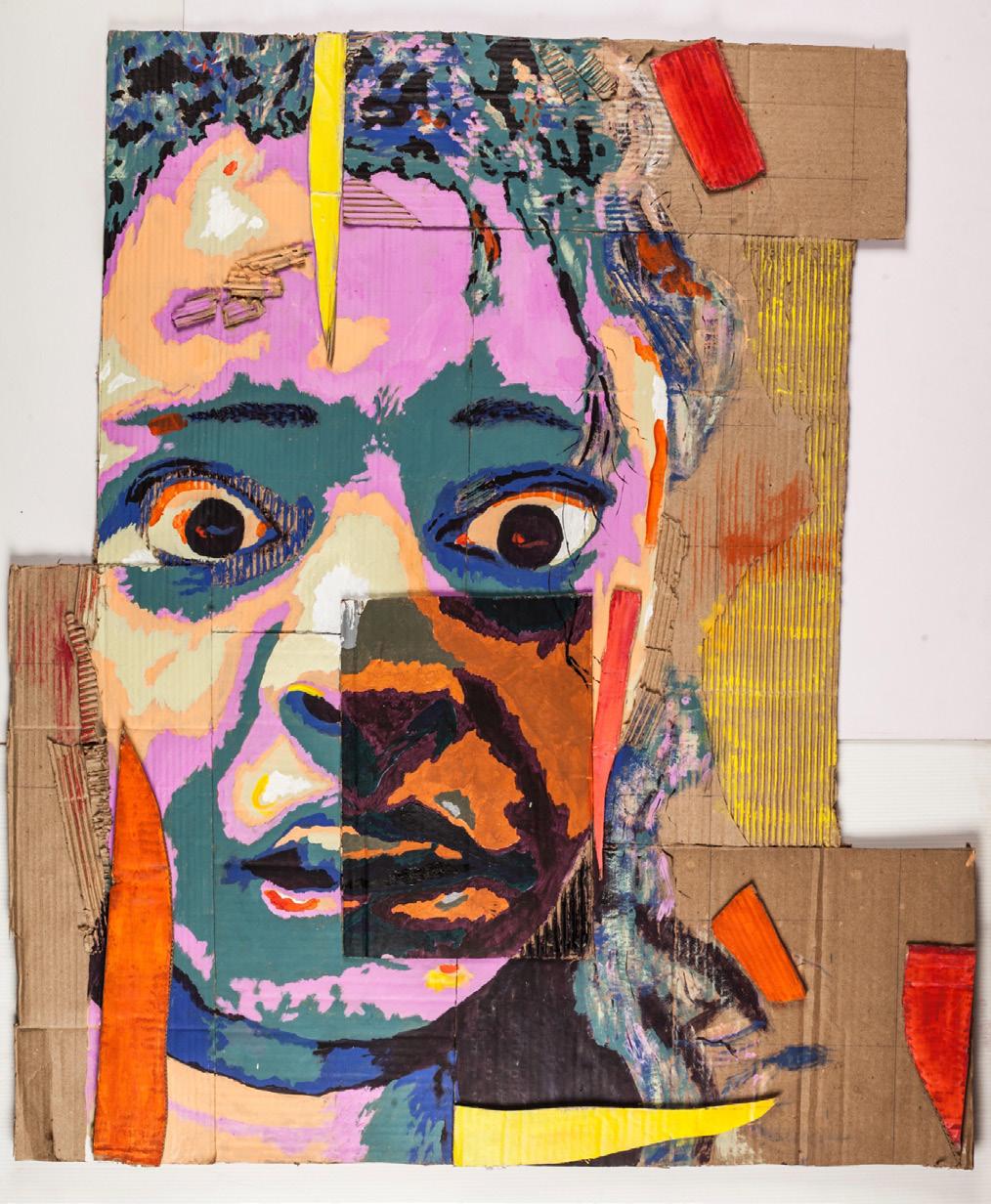
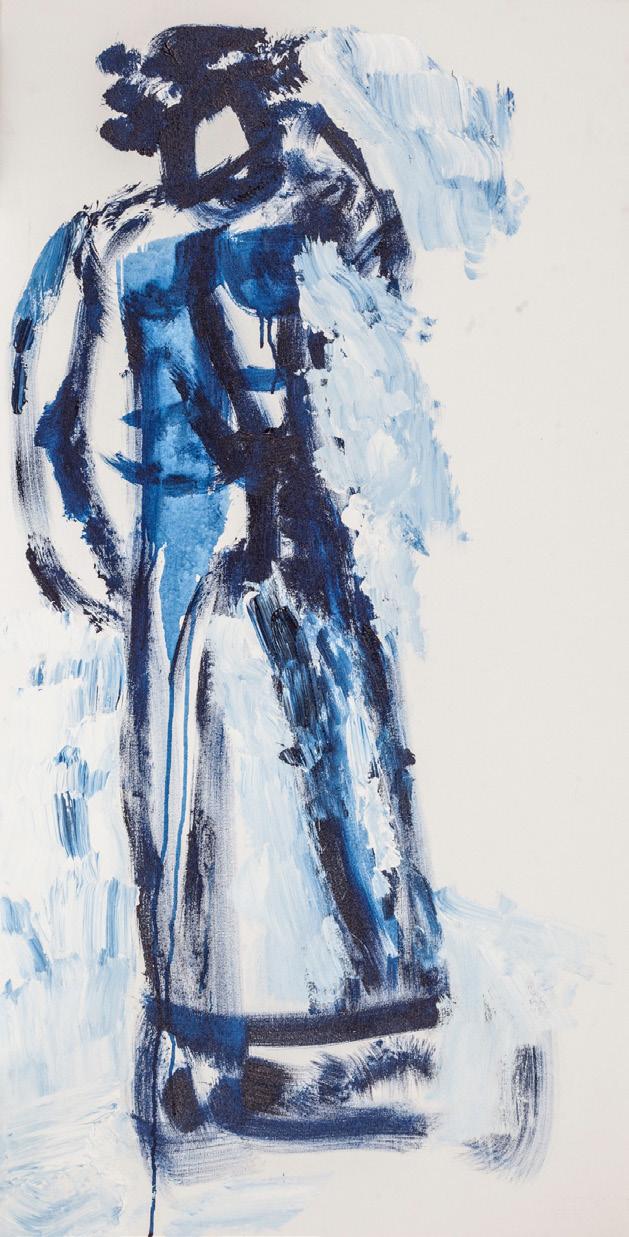
I am interested in work that is concept-driven and often gravitate toward strange or imperfect aesthetics rather than polished imagery. Several of the projects shown are mixedmedia experiments, where I explore making art through different forms and processesranging from colored pencil drawings to more physical interventions such as breaking a laptop or cutting my hair. I am not afraid to test unfamiliar mediums, and I value experimentation regardless of outcome.