Table of contents.
About Educatius
Our mission: safe, successful students
The Educatius USA team
How to get started
United States education system
Our programs
Juno
Application and enrollment process
Payment
I-20 and visa information
Flights & arrival
3 p. 4
5-6
7
8
9-10
11
12-14
Insurance
Pre-departure orientation
On-program orientations
On-program accomodation
Boarding school program – dormitory
Program rules
Travel while on the program
After the program
Frequently asked questions Glossary
18
Our impact through Aiducatius.
We believe education can change more than one life. Through Aiducatius, Educatius supports access to quality education for vulnerable youth in The Gambia and Tanzania. We also fund responsible tree planting and forest conservation in Tanzania to balance the environmental cost of student travel. Each placement contributes to something bigger—a world where opportunity and sustainability grow together.

About Educatius.
Studying high school abroad isn’t just about changing classrooms. It’s about opening minds, discovering independence, and shaping futures.
Educatius creates safe, life-changing high school experiences in 13 countries: the USA, England, Scotland, Ireland, Germany, Austria, France, Spain, Italy, Denmark, Norway, Finland, and Sweden.
Each year, more than 8,000 students embark upon their global journey with us. With 1,000+ passionate staff and offices in 24 countries, we work closely with agents worldwide to give every student the best possible experience.
From our decades of experience, and thousands of students we’ve managed; we understand what families expect, what students need, and what agents require to deliver quality programs.
What makes us unique?
• The widest portfolio: flexible, multi-destination high school options.
• Trusted partnership: proven results and long-term reliability.
• Local support: dedicated teams in every destination.
• Operational excellence: smooth placements and transparent communication.
• Purpose-driven approach: we put students first and make a positive global impact.
We are the #1 choice for high school abroad.
Educatius in the USA.
Educatius is the leading provider of F-1 high school programs in the United States, hosting students from more than 50 countries. Our portfolio spans public, private, and boarding schools, giving students real choice and clear pathways toward their goals. We’ve held CSIET recognition for 11 consecutive years, and since 2018 we have hosted the largest number of F-1 students on CSIET-listed programs each year. Students can tailor their perfect school through our Select High School Program, or choose a lower-cost F-1 option through our Boarding Exchange Program, where we select the school.
Every student receives strong support and a carefully prepared American host family. And if a placement ever stops working, our Host Family Happiness Commitment ensures the student moves to a new home that fits their needs.
Our mission: safe, successful students.
Some may know us as the largest organization in the world dedicated to high school programs abroad. And that’s true.
But we are more than just a portfolio of great high schools and programs.
The most important thing we do is take care of students. A successful high school program is more than just a school. It is how each student is supported - academically, socially and practically. From the first arrival to the last goodbye, our deeply committed and experienced teams guide students through school life, culture, and adjustment.
Our Service Promises guarantee consistent quality and a predictable process across all Educatius programs, so agents and families can trust that every student is in good hands. Download the Service Promises in the agent portal.
The Global Youth Resilience Initiative.
We’re on a mission to support the well-being of all students on our exchange programs.
It’s no secret that youth worldwide are experiencing an increase in mental health challenges. Students on exchange programs often experience culture shock, homesickness and adapting to a new academic environment.
We've partnered with teen mental health specialists to provide proactive support to our students and the adults who support them - their host families, Local Coordinators and natural parents - to build their resilience through training and interactive exercises.
The Educatius USA team.
Educatius USA Head office.
Educatius Group USA
One Boston Place, Suite 2600
Boston, MA 02108
Phone: +1-617-292-0035
24/7 Emergency phone inside USA 800-301-6014
24/7 Emergency phone outside USA +1-479-222-6714 www.educatius.org
Paul McLaughlin President of Educatius USA paul.mclaughlin@educatius.org
Christian Rodriguez Director of School Operations & Admissions christian.rodriguez@educatius.org
Jodi Del Razo
Student Placement Director jodi.delrazo@educatius.org
Our Student Placement Team is focused on recruiting Local Coordinators and host families as well as supporting students on the program.
Annsleigh Carter Director of Student Experience annsleigh.carter@educatius.org
The Student Experience team provides pre-arrival support to agents and serves as an additional layer of support to students on program.
The Student Experience team will be your main point of contact for students coming or on program in the USA, and they can be contacted at studentexperience@educatius.org.
We offer our agent partners the Educatius Price Match on any USA Select High School.
We'll match any competitor's lower price you bring to us for any student – and you'll be confident that your student will be backed by the most experienced and compassionate support team in the industry.
The Global Sales team.
The Global Sales Team will assist you with school or program recommendations as well as provide you with necessary resources to promote Educatius programs.
Catrin Diamantino President of Global Sales catrin.diamantino@educatius.org
Kyu Kim Asia kyu.kim@educatius.org
Wangze Yang China wangze.yang@educatius.org
Anna Vo South East Asia anna.vo@educatius.org
Harry Kang North Asia harry.kang@educatius.org
Natalina Agricola Europe natalina.agricola@educatius.org
Zlatemir Milanov Turkey, CIS and Eastern EU, Africa zlatemir.milanov@educatius.org
Juliana Varela Latin America juliana.varela@educatius.org
The Regional Sales Manager for your region will be your first point of contact in your partnership with Educatius. Their main responsibility is to manage relationships with our agent partners and help you identify which program(s) would be most interesting to or suitable for clients and markets. At the start of your partnership with Educatius, these individuals will provide you with an agent agreement and the necessary resources to begin promoting Educatius’ US programs.
These resources may include:
• Price Lists
• Program Offerings and Availability Lists
• Marketing Materials
• Sales Strategies and Training
If you are an agent who wishes to promote Educatius’ programs in the USA or any other country, please contact the appropriate Regional Sales Manager listed.
How to get started.
We are here to help you feel like an expert in our programs! Please contact the appropriate Regional Sales Manager to receive an onboarding orientation.
Our tools to support you:
• Access to the online application system, Juno
• Access to our Agent Portal with school search, prices and availability
• Current Agent Agreement
• Program Arrival/Departure Dates
• Our Service Promise
Do you need anything else to assist you? Please feel free to request additional training and ask questions by contacting your Regional Sales Manager or the Student Experience team: studentexperience@educatius.org
The Agent Portal
Find the tools you need in our agent portal! Search for Select schools, see price and availability, find photos, access recorded webinars, and review program details.
Need access? Ask the global sales team.


United States education system.
Compulsory education in the US begins at around age six when the student enters kindergarten and extends through grade 12 when the student is about 18 years old.
There are variations on the grouping of grades within schools, but typically elementary school will be comprised of kindergarten through grade 5, middle school grades 6-8, and high school grades 9-12. A common variation places kindergarten through grade 6 in elementary school, grades 7-8 in junior high school and grades 9-12 in high school. Higher education beyond the 13 years of compulsory education is optional but often necessary to pursue certain careers.
School is in session from August/September through May/ June with closures during federal holidays and breaks in the winter and spring. The school day typically runs anytime between 7am to 4pm with a lunch break around noon. Past elementary school, courses are taught by teachers in different classrooms and students will often have to change rooms between classes. Teachers are available for additional support outside of class hours, should a student need help with a particular subject. Schools sometimes offer study hall and tutoring for academic reinforcement. Homework will be assigned and completed on a daily basis and comprises part of the final grade.
There are three main types of schools in the US: Public Day School, Private Day School, and Boarding School. Public schools are funded by the state through the local tax base. Students are assigned to schools based on the location of their residence. Private schools are funded by patron capital and will often have a focus on college preparation. Since these schools do not rely on the state for tuition, they have more flexibility when it comes to the curriculum and offerings. Private schools can be more Selective about their student body and will generally have smaller class sizes. A subset of private schools, boarding schools house students on campus in dormitories with dining halls for the students’ meals. While
public schools are co-educational and secular, private day and boarding schools will sometimes be gender exclusive or have a religious affiliation.
Grades are based on a letter scale from A-F with a corresponding 4.0 grade point average scale.
Our programs.
Educatius offers a variety of programs in the US at public day schools, private day schools, and boarding schools. For each category of high school program, we offer both the Select Program and Academic Exchange Program. Details about these programs can be found below.
Duration of program.
We offer academic year programs, semester programs, and trimester programs. Please reference the availability list for program durations offered for a given school or program.
Select
Whether a student likes the beach, the mountains or the big city, we will help you find suitable options for his or her study abroad experience in the US. Our Select High School Program allows international students the freedom of choice with regard to geographical location, academic goals, and extracurricular activities. Unlike the J-1 high school exchange program, the Educatius Select High School Program offers students the ability to choose their location by applying directly to a specific school or school district.
Select program options.
Educatius’ Select schools are situated in attractive locations like Los Angeles, Boston, San Francisco, Chicago, Washington, DC, and many more. Our students enjoy full access to sports (according to state regulations), clubs, and academics in the schools, including the possibility of obtaining a high school diploma in grade 12! The program is constantly growing, with new schools and school districts continually added.
Day Schools are schools where students attend a public or private high school and live in a host family. At boarding
"I am immensely proud to have been part of an A+ high school that provided me with a top-level education and a supportive community. It was an honor to be able to pursue my passion as part of the school's dance team."
Cali, France
schools, students attend the school and live in a dorm on or near campus. Eligibility varies from school to school, but the minimum eligibility is as follows:
Public day school
Eligibility:
• Ages 14-19
• Grades 9-12
• Minimum English Test Results: please refer to the Educatius Select School Availability List for individual school requirements
• “C” Average or 2.0 GPA
Boarding school
Eligibility:
Private day school
Eligibility:
• Ages 14-19
• Grades 9-12
• Minimum English Test Results: please refer to the Educatius Select School Availability List for individual school requirements
• “C” Average or 2.0 GPA
• Ages 12-19; some schools accept post-graduate (PG) year students
• Grades 6-12, PG
• Minimum English Test Results: please refer to the Educatius Select Boarding School Availability List for individual school requirements
• “C” Average or 2.0 GPA
Educatius will help you find best fit options for your student’s study abroad experience.
Please note that, for all programs, admissions requirements vary from school to school and it is important to reference the availability lists, as applicable, to confirm details for a particular school. Search for the perfect school in the agent portal: https://enroller.agents.educatius.org/
Boarding Exchange program
(Not available in all markets)
The Educatius Boarding Exchange Program is a great option for students who want to study in a boarding school environment though have a limited budget. This program does not allow for school choice; rather, our experienced Program Advisor reviews the student’s application and places the student in one of our partner boarding schools.
Students have the option to select 'Earn Diploma' for an additional fee if entering grade 12, but no other preferences are offered for this program.
Eligibility:
• Grades 9-12
• Minimum English Test Results:
» TOEFL 55
» ELTiS 215 / ELTiS 2.0 675
• “C” Average or 2.0 GPA
"It
was awesome being able to live with friends and faculty. Makes it easier to create a stronger bond with them, and be part of a community."
Leonardo, Brazil
Getting to know Juno.
Juno is our new online platform for managing all student applications for Educatius programs worldwide.
It replaces Zapp and gives agents one login to manage every Educatius program and destination in one place.
Juno was built for our agents. It simplifies the application process, improves communication, and keeps every step transparent.
How agents use Juno
There are two ways to complete a student’s application:
Option 1: The student completes it online.
• The agent creates the student account.
• The student fills out the online application.
• Once submitted, the student cannot edit the file; the agent can still update it.
Option 2: The agent completes it for the student.
• The agent collects information using a paper form.
• Photos must not show alcohol, cigarettes, drugs, or revealing clothing. Need help? Email support@junoapp.org
• The agent enters all details directly into Juno before submission.
Each Juno application includes:
• Student information
• Academic records and transcripts
• Language results (uploaded or linked through to our online test)
• Personal statement and questionnaire
• Teacher recommendations
• Photo album (family, hobbies, community)
• Passport copy (and Birth Certificate for Ireland)
• Medical form and history
• Signature pages (program rules, student agreement, etc.)
Application tips:
• Submit a complete file; missing documents delay review.
• If a passport or similar item is pending, note when it will be ready.
• Verify all contact information and provide an emergency phone number.
• Review the student’s personal statement for appropriateness.
Application and enrollment process
Phase 1 – For all students:
Initial application.
For all students
Step 1: Check eligibility and availability.
Confirm the student meets program requirements and check the current availability in the agent portal before starting.
Step 2: Submit the application in Juno.
Complete all required sections. Email the Receiving Organization with any additional comments.
Step 3: Educatius review.
Step 4: Invoice and payment.
Our staff reviews every application:
• Accepted: Meets program requirements and is complete.
• Returned: Needs additional documents or corrections.
Agents receive a Juno notification in both cases with clear next steps.
Educatius issues the invoice to the agent.
Refer to the Payments Page and Agent Agreement for details.
Phase 2 – Select (Day School) program pathway.
Select/Day Programs
Step 1: Application submitted to the school.
Step 2: School admission decision.
Step 3: Visa documentation (if required).
Step 4: Program and placement details.
After Educatius accepts the student, the file is sent to the chosen school.
• Interviews: Some schools require a short interview with an Educatius or school representative.
• Tests: Certain schools or countries require exams; destination teams will confirm details.
• Fees: Check the Agent Portal for any school application fees.
• Accepted: The agent receives the acceptance letter via Juno.
• Denied: Educatius informs the agent and recommends next steps or alternatives.
Educatius issues visa documents according to destination regulations.
Once the program deposit is paid, Educatius requests the school to issue the visa document (I-20) directly to the student via email. Per SEVIS regulations, we do not receive the I-20 on the student's behalf.
• Program dates: Shared by the Student Experience Team.
• Host family: Details shared once placement is complete.
• Placement deadline: Host family information is guaranteed at least four weeks before program start.

Phase 3 – For all students: Before arrival.
For all students
Step 1: Conduct pre-departure orientation.
Agents organize an orientation to prepare students and parents. Use the Educatius Student Handbook as a reference.
Step 2: Conduct pre-departure orientation.
Step 3: Student departure.
Data security:
All student communication and documentation should happen through Juno’s Student Profile, which is GDPR compliant.
• Provide flight details to Educatius 10 days before arrival.
• Day students receive airport pick-up details five days before arrival.
• Boarding schools communicate pickup directly.
Students travel to begin their Educatius program. The Student Experience Team confirms final dates and arrival details in advance.
Top tip:
Explore the Resources section in Juno’s menu for updated guides, templates, and destination-specific instructions.
Need training or a refresher? Contact your sales person

Educatius Agent manual
Payment.

Select Public Day School
Invoice issued upon school acceptance. Application fee and 50% of program fee are due within 14 days from invoice date to begin the I-20 process.
Select Private Day School
Invoice issued upon school acceptance. Application fee and a deposit of $7,500 USD are due within 14 days from invoice date to begin the I-20 process.
Select Boarding School
At the time of application, students are invoiced application fees through Square or by way of a school issued invoice. This process can vary from school to school, but the program invoice will always be sent directly from the school.
Please note that private boarding schools will have their own payment schedules.
Boarding Exchange Program
Invoice issued upon Educatius program acceptance. Application fee and a deposit of $7,500 USD are due within 14 days from invoice date to begin the I-20 process.
Boarding Exchange Program not available in all markets.
I-20 and visa information
Once a student has been accepted and the invoice deposit has been paid, Educatius will proceed with requesting the I-20 from the school. The school will send a scanned copy of I-20 directly to the student's email as listed in their Juno application.
Visa process.
• Obtain I-20, per note above
• Student pay the I-901 SEVIS fee using the SEVIS ID listed on the I-20
• Complete the DS-160 application and print the final confirmation page to bring to the visa interview
• Schedule the interview at the most convenient Embassy or Consulate
• Receive passport in return with visa
What documents does the student need to have with him/her while completing the DS-160?
• Passport
• Dates of your last five visits or trips to the United States, if the student has previously travelled to the United States. He or she may also be asked for international travel history for the past five years.
• Resume or Curriculum Vitae – The student may be required to provide information about his or her current and previous education and work history.
• Other Information - Some applicants, depending on the intended purpose of travel, will be asked to provide additional information when completing the DS-160.
• Students (F-1 visa): The student will be asked to provide his or her SEVIS ID, which is printed on the I-20, so he or she should have this form available when completing the DS-160. The student will be asked to provide the address of the school/program at which he or she intends to study. This information should also be on the I-20 form.
What documents does a student need to have with him/her for the visa appointment?
• Passport valid for travel to the United States. The passport must be valid for at least six months beyond the student’s period of stay in the United States (unless exempt by country-specific agreements).
• Nonimmigrant Visa Application, Form DS-160 confirmation page
• Application fee payment receipt, if the student is required to pay before the interview
• Original Transcripts
• Photo – the student will upload his or her photo while completing the online Form DS-160.
• Certificate of Eligibility for Nonimmigrant (F-1) Student Status-For Academic and Language Students, Form 1-20the school will send a SEVIS-generated I-20 Form once they have entered the student’s information in the SEVIS database. The school official must sign the I-20 Form.
• Proof of Sufficient Financial Funds - in most countries, the U.S. embassy/consulate will ask the student for a bank statement showing sufficient funds in USD when applying for the visa. The embassy/consulate will notify each applicant about the required amount for acceptance, if applicable.
• Proof of Payment to Educatius
• Acceptance Letter from Educatius school
• Host Family Information and Placement Confirmation, if available.
Preparing for the visa interview.
• Make sure the I-20 form is filled out correctly and with no mistakes in the spelling of names
• Make sure the school acceptance letter is correct and with no mistakes in the spelling of names
• Make sure the bank statement, as needed, states the USD amount required for acceptance by the embassy/consulate
Checklist for the student interview:
• Think through the answers carefully before the interview. Likely questions are:
» Why do you wish to study in the U.S.?
» What do you expect from your school year or semester in the U.S.?
» Are you planning on staying more than one year in the U.S.?
» Are you planning on attending college or university in the U.S.?
» Why did you choose your high school in the U.S.?
» What do your parents do for a living? What are your parents’ jobs?
• During the interview, it is important that the student proves to be a serious student with ambition to do well academically during the school year. It is also important that the student has the ambition to return to his/her home country once his/her studies have completed.
• The last part of the interview will likely be held in English. It is important that the student can show he/she has enough English skills to participate in the program.
Thinking through questions and answers in English is good preparation!
Agent Tips
• Help the student to make sure all paperwork is correct and in order before passing it on to the local embassy
• Submit visa applications in good time to avoid delays
• Offer the student coaching/preparation before the interview in order to prepare the student
• If possible, make an appointment at the local embassy to introduce yourself, your company and your partner organization

Flights & arrival.
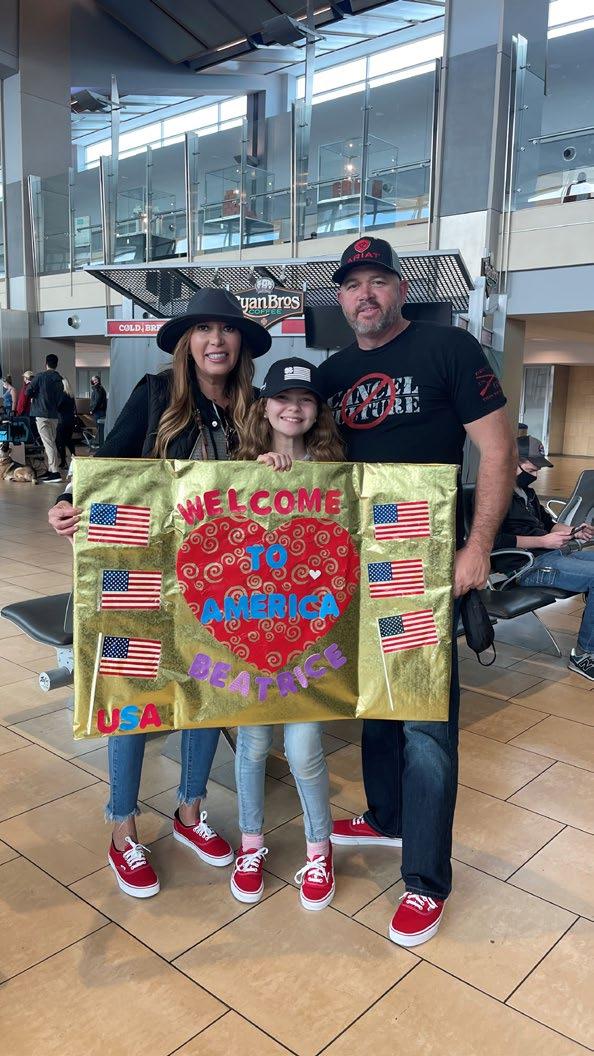
Once a student has obtained the F-1 visa and received their Host Family placement, it is time to start thinking about the student’s arrival on the program. As soon as flights have been booked, please let the Student Experience team know. Day school students will be greeted at the airport by an Educatius staff member or the host family. Boarding school students will be met at the airport by a boarding school representative.
• After the student receives their Host Family placement, please book flights using the Educatius arrival dates and information spreadsheet
• Share flight details with Educatius at least 10 days before the student’s arrival
• Airport pickup information will be sent to agents at least 5 days before the student’s expected arrival. Be sure the student is provided with the name and phone number of the Host Family and Local Coordinator, as well as the Educatius’ emergency phone number.
• Confirm the student’s travel plans and update Educatius immediately if there are any changes to the student’s itinerary
Insurance.
All students on the Day School Program are required to have full insurance coverage for the duration of their program. Insurance coverage will be effective upon the student’s arrival (within the designated arrival dates window) and will terminate 5 days after the student’s last day of school. Educatius requires all students to take the insurance provided through Educatius. The insurance fees will be added to the Educatius invoice and can be referenced in the Day School price lists.
When the student is enrolled in the insurance plan by Educatius, he/she will receive an email notification from the insurance
provider to the email address provided in their Juno application. If students or agents have any questions about insurance, please contact studentexperience@educatius.org.
The insurance package is not included for our Private Boarding School Program. Some schools have their own insurance, which is mandatory. If that is not the case, we can provide the insurance package. Insurance policy information in English and other languages will be sent to agents in advance of the program start.

Pre-departure orientation.
Educatius asks that all agent partners organize a PreDeparture Orientation for their students. This helps ensure that students arrive to the US with a good understanding of program rules, resources, and expectations. While this orientation can be done in one session, it is often helpful to break this up into two parts: one about two months before departure and the second about a week or two before departure. This gives students ample time to review what is expected of them after the first session and allows you to ensure that they are fully prepared for their program just prior to departure.
Educatius offers resources that may be helpful as you organize your Pre-Departure Orientation, including a US Programs Student Handbook and a Pre-Departure Orientation Guide for Agents. You can find these materials in the agent portal under the USA resources section. Should you require any resources or further support as you plan for your Pre-Departure Orientation, please contact the Educatius Student Experience team.

Resilience training for Educatius students
We have created resilience training for all students, designed by teen mental health professionals and our support staff. This series of trainings proactively addresses stress, anxiety, and other common scenarios that international students may face during their program.
Student training will be available at key stages of their experience:
• Pre-departure before they leave home
• After arrival
• Before the holidays – December (for year-long students)
• Getting ready to return home
Training for students’ parents:
• Pre-departure before they leave home
• After arrival arrival
We are committed to providing the best support to our students before and during their program. To help us do this, please communicate all current and past student physical and psychological medical conditions prior to program start.
On-program orientations.
Day School Programs
Educatius staff will give a one-day orientation to all students within the first 30 days after arrival. There will be one part for students only and one part that includes the host family. These orientations are mandatory and a good way for students to meet other international students in the area. The orientation will review program rules and address any student questions or concerns.
Boarding School Programs
All private boarding schools will have an orientation lasting at least one day during which students are tested in English and Math, Select their courses, get a tour of the school, and receive all pertinent information. Orientations may vary depending on each school.
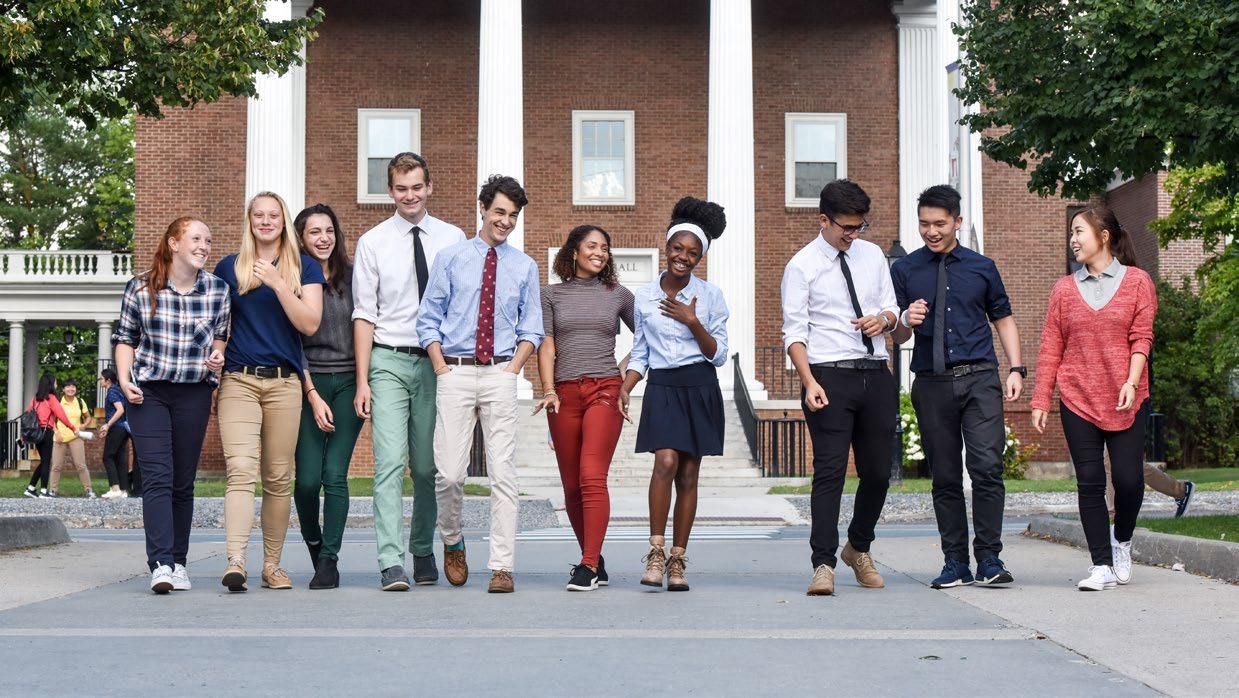
Students will also be provided with a brief online resilience training upon arrival designed to support them through common stressors.
On-program accommodation.
Day school program – host family.
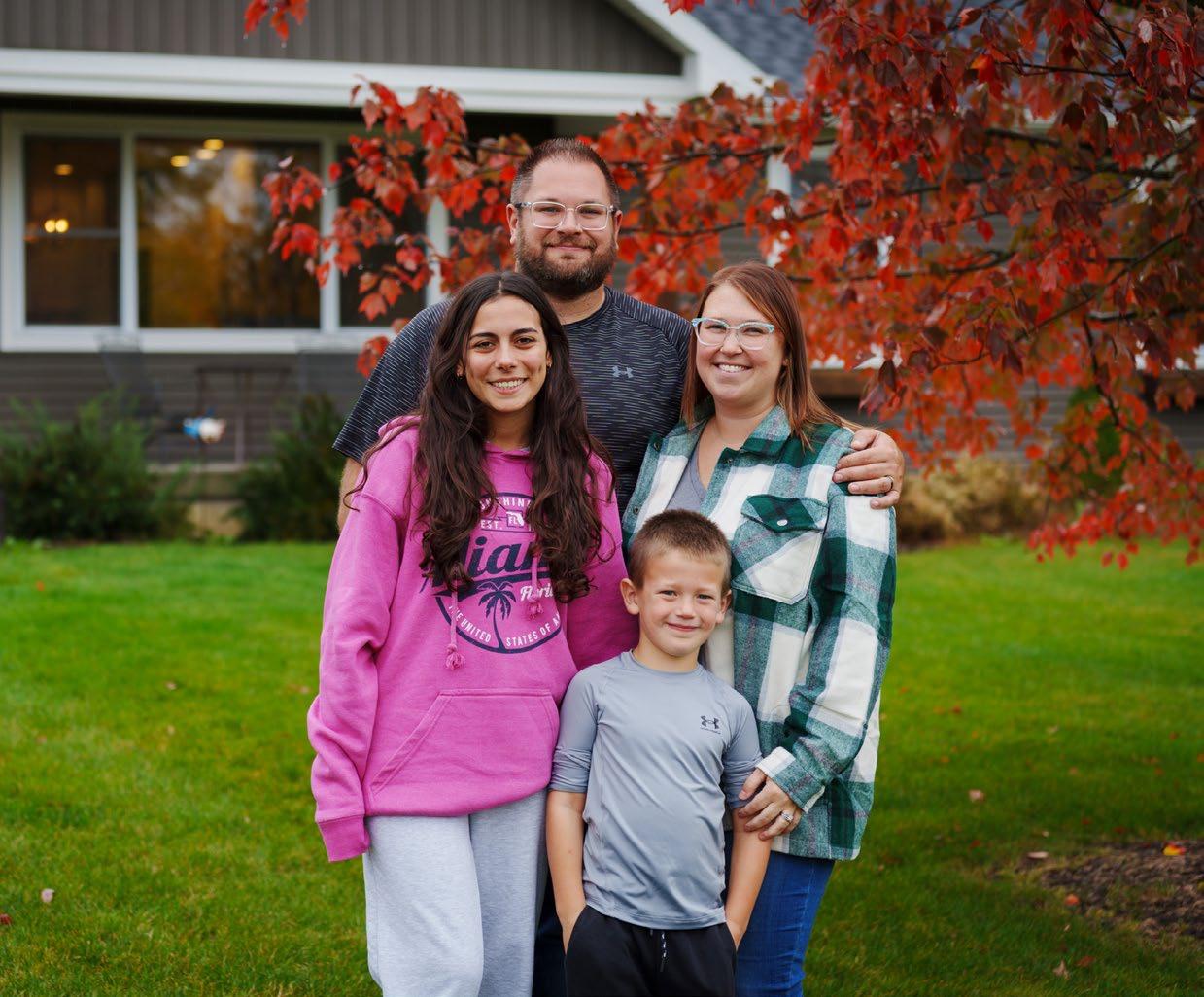
Our Educatius-vetted host families are conveniently located near our partner schools and have adequate space to host a student. Our families want to host an international student because they want to share their way of life and culture with the student while also learning about his/her home country. Our families come from all walks of life and have a variety of family structures (i.e. 2 parent families with children, families with no children, single parents, etc.).
We will place students with a fully-screened host family. The screening process includes a detailed application, an in-home visit, reference checks, criminal background checks for all members of the household 18 years of age or older, and a review of publicly accessible social media accounts. Our team does its best to place students with a host family that is compatible with the student profile as exhibited in their Juno application.
Many families will accept two students in their home. This is called a double placement. Students in a double placement will not speak the same native language. Sometimes they will share a room. If so, each student will have their own bed, dresser, and desk for homework. Host families may host three students, if separate bedrooms are provided.
The host family information, including pictures of the family home, and placement confirmation form will be sent to you at
Students can expect:
• A bedroom with adequate space for a bed, dresser, and desk
• Three balanced meals a day including the option to pack a lunch on school days
• A placement with another international student, though not a student who speaks the same native language
• Location no further than 45 minutes away from school
least 4 weeks prior to the school start date for Select students, Once placement details are sent to you, please encourage the student to introduce himself/herself to the host family. We kindly ask that natural parents do not contact the host family.
Note: if a student would like to guarantee a private room placement, he/she/they can pay an additional $2,500 per year or $1,500 per semester. Please be sure to indicate this in the student’s application in Juno by selecting a Private Room as an ‘add on’ in the Partner Assessment section.
We ask you to remind students and parents that the U.S. is a diverse country and our host family base reflects that. Students cannot request to live with a family of a certain religion, race, economic status, or structure.
Once on the program, students are asked to try to adapt to the family for at least 30 days. The student and host family will always have the support of the Local Coordinator. We understand that it can take some time to adjust to a new culture, family, friends and school, and that culture shock and homesickness might affect some students. Please encourage your students to become independent and successful by motivating them to work directly with the Local Coordinator to get to the root of the problem, should one arise. Students also have the opportunity to discuss any issues or challenges with their Student Experience Advisor.
• Arrangement of round-trip transportation to get to and from school and extra-curricular activities. Transportation mode may be a private car, bike or walk, school bus, public bus/subway
• Excellent support from Educatius staff (help in addressing culture shock, the challenges that can arise while living with a new family, and assistance in setting up any necessary medical appointments)
Host family moves
With the best intentions in the world, it can happen that a host family and a student match that looks perfect on paper, does not work out in real life. Whatever the reason, Educatius is always committed to fixing it. Our experienced Local Coordinators, supported by Regional Managers and our Student Experience Team, will seek to address and resolve any concerns. It is the expectation that all parties will make a good faith effort to resolve any issues or dissatisfaction. If necessary, however, we will find a new qualified family to host the students.
If a new host family is required, the student will move within 4 weeks. Educatius will share the new host family profile and confirmed move date with the agent before moving the student.
If there is a reasonable concern that the students’ safety is at risk, the student will be moved immediately to a fully screened temporary host family and the and the agent will be informed as soon as practical.
Educatius shares the students’ and the host family’s contact details with one another once there is a confirmed placement and encourages the student and host family to communicate prior to the student’s arrival.
Boarding school program – dormitory.
Living on campus at a boarding school dormitory is an exciting experience for international students. Schools take great care to provide some of the best accommodations available to students. In most cases, international high school students will be sharing a room with other students. Room setup can be anything from two students in one room using a common bathroom, to four students in a room with a shared bathroom. Some boarding schools also offer single rooms, but they are usually reserved for high-performing seniors.
Boarding schools provide students with all the services they need. There is typically 24-hour adult supervision, providing students the chance to ask questions about homework assignments or for help during challenging times. Here are some of the reasons that students love boarding school life:
• Students get to live with friends and classmates
• Boarding schools make campus life fun by offering activities after classes
• International students can practice their English in the dorms with friends or through school sponsored ESL classes on campus
• Students have access to healthy food options during meal times
• Classes are usually only walking distance away
• Help is always right around the corner, whether it is a classmate or an adult supervisor
• Some schools coordinate trips for dorm students. These off-campus trips can take place on weekends or during vacations and can include: visiting a nearby city/town for shopping or sightseeing, going to the beach, visiting the local amusement park, hiking, skiing, and more

Boarding schools are typically closed during three main holidays or breaks:
• Thanksgiving
• Christmas
• Spring Break
Most schools will help find a host family for breaks, but students are often invited by new friends or classmates to stay with their families. Please note that when the student stays in a host family for a school break, the school will charge an extra fee. Students whose dorms close during break times should arrange their own alternative travel options.
Edventours’ Host Family Immersion program is a good choice for boarding students in need of accommodation for holiday breaks when the dorms are closed. For more information, contact: info@edventours.com
Expectations and service.
Educatius Group USA strives to provide our partners with clear guidelines as to what agents and students can expect prior to and during a student’s program. These expectations and our service commitment are applicable to all parties – natural parents and students, agents, host families, and Educatius USA.
Agent expectations.
• Training and onboarding when establishing partnership with Educatius or as needed, including an overview of all resources to best promote Educatius’ programs
• Support from the Student Experience team for application and pre-arrival questions or concerns
• Support from the Student Experience team and Student Placement Team for on-program questions or concerns
• Timely communication from Educatius staff; Educatius staff aims to reply to any agent communication within one business day
• Access to Educatius’ 24/7 emergency number
Natural parent and student expectations.
• Placement in an Educatius partner school (public day school, private day school, or private boarding school)
• Placement in a screened Educatius host family or boarding school accommodation
• Three meals a day; for day school programs this includes the option to pack a lunch from home on school days
• A bedroom with clothing storage, and a suitable place to study in the home
• Airport pick up and drop off
• A school-issued I-20 and acceptance letter for program arrival and departure
• Student Placement Team, Educatius USA staff, and local agent support for the duration of the program
• Access to Educatius’ 24/7 emergency number
Host family expectations.
• Student to follow Educatius program rules as well as host family rules
• Student to participate in family activities
• Student to help with household chores
• Student to keep his/her bedroom in order
• Student to communicate any problems or questions to their Local Coordinator
• Student to adapt to local, social, and culinary environment
• Student to perform his/her best at school
Additional details regarding expectations and service commitment can be found in our Service Promise.
Educatius expectations.
• Program is sold realistically; any doubts will be clarified before acceptance on the program
• Problems will be solved together with the agent
• Students come to the program well-prepared (including having attended a Pre-Departure Orientation that covers cultural differences, what is expected on Educatius’ academic program, ways in which students should communicate, and more)
• Agent partners immediately share information about changes that can influence the student’s safety or success on the program (such as health issues, bad grades before the program start, flight changes, etc.)
All agents are provided with our agent agreement. It is important that this document is read in full, signed, and returned to us. Any bookings accepted by Educatius Group USA constitute an agreement of the terms and conditions in the agent agreement, irrespective of whether the agreement is signed by the agent or not.

Program rules.
General rules.
• Students who are 18 upon arrival or who turn 18 during the program are subject to the Program Rules in their entirety. Educatius has a contractual agreement with the natural parents, and obligations towards natural parents are the same as for students who are under 18.
• Any and all past and current physical or psychological medical conditions need to becommunicated to the sending organization in full, prior to program start.
• If a student is experiencing any health issues that are endangering the student’s well-being (e.g. eating disorders), the Program Review Committee will determine if it is in the student’s best interest to return home and be with the natural family.
• Students must have a working cell phone with a local number.
• Students must follow the host family (HF) rules, participate in HF everyday life, and aim to integrate in the HF community. Students must act respectfully and always keep the HF aware of their whereabouts.
• Students must accept placement with a HF of any race, creed, or color. Students must act as a member of the HF, respect the rules and customs of the HF, and accept the responsibilities given.
• School attendance is compulsory. Students must follow all rules set by the school, as well as:
» attend school every day and follow school policies with regard to absence.
» maintain a C-average or higher in all courses at the host school.
• Use of phone and/or other forms of communication to contact home should be restricted in order to avoid homesickness.
• Natural parents are advised not to contact the receiving organization unless approved by the sending organization.
• Students must abide by all laws of the host country.
• Students may not buy, sell, possess, or use any form of narcotic, alcoholic beverage, or controlled substance
(unless prescribed by a medical doctor and disclosed previously to Educatius). Students may not use any legal substance in a way that is meant to achieve intoxication, including but not limited to inhalable intoxicants. This restriction also includes the possession of any drug paraphernalia.
• Students may not smoke or use tobacco cigarettes, e-cigarettes, or any form of tobacco while participating in the program.
• Students may not accept any form of employment that is in violation of the rules of their visa or study permit.
• Independent overnight travel is allowed, as long as it is in accordance with Educatius Travel Policy. Students must complete the Independent Travel. Request Form at least 14 days in advance, and the trip must be supervised by an adult 25 years of age or older. The form must be approved by the host parents, school (if applicable), natural parents, and Regional Manager.
• Convalidation of grades or approval of school year is the student’s responsibility.
• Students must leave the host family’s home within five days of the last day of school.
• Be aware that the local laws may be different from laws in the student’s home country. Violations of the above rules may have serious consequences and/or result in a cancellation of the program.
Specific rules.
The following actions/behavior are not permitted:
• Hitch-hiking
• Sexting, that is, the sending or sharing of sexually explicit digital images, videos, text messages, or emails
• Life changing decisions:
» Marriage
» Changing religion
» Changing nationality
» Tattoos
» Piercings
» Becoming pregnant or impregnating another person
• Driving or purchasing a motorized vehicle (car, motorcycle, boat, all-terrain vehicle, scooter, or similar means of motorized transport). Driving is only permitted with an instructor of an official driver’s education course. It is only permitted during class hours.
Any students breaking the above rules may be returned to their home countries immediately at the natural parents’ expense.
Our rules are made with our students’ safety in mind. To ensure student success, we have a set process for handling situations in which students break the rules and require additional support.
This process involves the following:
Positive Improvement Plan (PIP)
The goal of a PIP is to help students and/or host families resolve minor issues together by opening up communication. The Local Coordinator will meet with students and host families to facilitate conversation and identify areas of improvement.
Success Plan (SP)
The goal of an SP is to provide students with the tools they need to overcome more escalated issues. If an SP is issued, a Student Experience Advisor will work with the Local Coordinator and Regional Manager to provide additional support.
Probation Letter (PL)
A PL will be issued for major violations of the Program Rules. This will involve the Student Experience Team, Local Coordinator, and Regional Manager.
Program Review Committee
A student may be dismissed for major violations of the Program Rules. The Program Review Committee will examine the violation(s) on a case-by-case basis to make sure the committee’s decision is fair and consistent with Educatius’ policies. Only the Program Review Committee has the authority to make the decision to dismiss a student.

Travel while on the program.
Day school program.
If students want to travel independently while on the day school program, he/she will need to:
1. Ask his/her Local Coordinator (LC) for the Travel Request Form.
2. Fill out and sign the form.
3. Ask his/her host parents to sign the form.
4. If he/she is going to miss school, ask his/her school to sign the form.
5. Send it to his/her natural parents. Once the natural parents sign it, they can send it to you, the agent.
6. You, the agent, should send the completed Travel Request Form to the Student Experience Team.
7. Finally, the Student Experience Team will approve the form.
Boarding school program.
Each school has their own policy for travel while on the program. The student should check with his or her residential advisor or student coordinator to confirm the school’s travel policy.
Reminder for Day School students
• The student needs to turn in the travelform at least 14 days in advance of thetravel
• Travel must be supervised by an adult 25 years of age or older
After the program.
Extensions in Educatius’ high school program.
If a short term or semester student wishes to continue his/her studies, this is called an extension. Short term students can opt to extend for the remainder of the current semester or academic year. Semester students can choose to extend for the remainder of the current academic year. For Select programs, extensions from academic semester to academic year will be given a $5,000 discount from the semester price for the second semester. For Academic Exchange programs, extensions from academic semester to academic year will be charged a full semester price for the second semester.
Please notify Educatius as soon as a student has decided to extend so that we may inform the host family and school as well as issue the invoice. Once the extension invoice has been paid, we can request that the student’s I-20 be extended by the school, if needed, and extend the student’s insurance to cover the extended term.
Re-enrollments to Educatius’ high school program.
If a student wishes to continue his or her studies for the following academic year, this is called a reenrollment. Please notify Educatius as soon as a student has decided to re-enroll so that we may proceed with this process.
Note that students may re-enroll to the same school or may transfer schools between academic years. As F-1 visa students can attend public school for only one academic year, if a public school student wishes to re-enroll, he/she will need to transfer to a private school. If you would like assistance with navigating the re-enrollment process or with school suggestions, please contact your Regional Sales Manager.

Frequently asked questions.
Can students graduate after one academic year?
Yes, we have a number of schools that offer “diploma year” options within the Academic Exchange and SELECT programs. Be sure to reference the availability list and school profiles to identify these program options. Note: the student must have completed the necessary compulsory courses or exams, at the school’s discretion, in order to graduate.
Can a student apply to a semester program and earn a diploma?
Students wishing to earn a diploma should apply for a full academic year program.
Can Educatius hold a space for a student who is still completing an application?
Unfortunately, we are not able to hold a space at a school for a student who has not submitted a complete Educatius application in Juno. Our admissions process operates on a first come, first served basis.
Can students use an alternate insurance instead of the Educatius or school provided insurance?
No, students must either be covered through Educatius’ insurance plan or the school’s insurance plan. All day school program students will be enrolled in Educatius’ insurance prior to arriving on the program. Many boarding schools offer insurance, though in the instance they do not, Educatius’ insurance must be purchased.
Can students with allergies or other health concerns apply to the program?
Yes, though please be aware that documentation from the student’s physician will be needed to evaluate whether the student can be accepted onto the Educatius program. Student health and safety is of utmost concern to Educatius and we evaluate student applications with this in mind.
Can a student who repeated an academic year apply?
Yes, if the student provides an explanation for the repeated
year and shows that progress has been made in the time since, we would be happy to review the application and give the student a chance. As a reminder, admissions decisions are ultimately made at the discretion of the school.
Can a student apply to Educatius’ program after completing a J1 program?
Yes, certainly!
Can students transfer schools during the program?
Yes, with a valid reason, students can transfer to a new school during the program. A transfer fee of $1,500 will apply. The student will also be responsible for any difference in program fee in addition to the transfer fee. If a student wishes to transfer, please contact the Student Experience team to begin this process. The Student Experience team will work with you and your Regional Sales Manager to identify schools that are accepting applications and may be a suitable option for the student. The student will need to apply to the new school and be accepted to complete the transfer.
Can students on the day school program request a private room placement (i.e. not share a room with another student)?
Yes, students may be guaranteed a private room placement by paying $2,500/year or $1,500/semester. Please note that this guarantees a private room placement, though there may still be another student staying in another room of the home. Please be sure to indicate this in the student’s application in Juno by selecting a Private Room as an ‘add on’ in the Partner Assessment section.
Can students on the day school program request to live with a family of a particular religion, structure, race, etc.?
No, students may not request particular characteristics of a host family. The US is a diverse country and our host family base reflects that. Students cannot request to live with a family of a certain religion, race, economic status, or structure. If a student does actively practice a religion, they are welcome to
continue doing so on the program even if his/her host family does not share the same religious beliefs!
Can students on the day school program live with a family friend or relative as a host family?
Yes, if the family friend or relative lives within the appropriate boundaries or distance for one of our partner schools, the student may request to live with them. Please see additional notes below regarding these two scenarios:
Direct placement
• Student requests to live with a family friend or extended family member
• This form can be provided by Student Experience by request
• At the time of the student’s program application submission, upload the direct placement form to the Juno application
• The appropriate Regional Manager will contact the family friend to start the host family screening process
• The direct placement host family will not receive a stipend, and therefore, the student will be invoiced a reduced program fee.
Self-placement
• Student requests to live with an immediate family member
• The self placement waiver is signed by the student’s natural parents (this form can be provided by Student Experience by request)
• At the time of the student’s program application submission, upload the self placement form to the Juno application
• The relative does not go through our screening procedures
• The relative does not receive the Educatius host family stipend
• The student is invoiced a reduced program fee
For either a Direct Placement or a Self-Placement, please be sure to upload the appropriate form on the Juno application and note this living arrangement in the comment box when submitting the application.
Please note that in a Direct Placement or a Self-Placement, the student will still have a Local Coordinator and the Local Coordinator will submit Monthly Contact Forms
Can natural parents visit the student during the program?
We try to be as student/parent friendly as possible. If a student has adapted well to his/her new environment and it is clear that the natural parents do not expect to be hosted by the student’s host family, they are welcome to visit. However, we do request that any natural parent travel plans be shared with us in advance to ensure a smooth visit for all. We do not allow natural parents to accompany students to the host family’s home at the beginning of the program. We kindly ask that you assist in sharing this information and expectation with students and natural parents.
Can students drive while on the program?
Students can only drive in authorized Drivers Education courses.
Can students travel while on the program?
Yes, students may travel while on the program. Please reference the above section for more details about travel requests and requirements.
Who do I contact for more marketing material?
Please contact your Regional Sales Manager.
Who do I contact for training on promoting and assisting students in applying to Educatius programs?
Please contact the Student Experience team at: studentexperience@educatius.org
Who do I contact about the status of a student’s application, host family placement, or I-20?
Please contact the Student Experience team at: studentexperience@educatius.org
Who do I contact about program and arrival dates?
Please contact the Student Experience team at: studentexperience@educatius.org
Note: Program dates can be found in an online document, which will be shared by the Student Experience Team. The Student Experience team will send a communication once dates are confirmed with the complete listing of program dates and requested arrival dates and airports. Please feel free to reference these documents once they are sent.
Who do I contact if there is a concern or question about a student on the program?
Please contact the Student Experience team at: studentexperience@educatius.org
Who do I contact regarding the convalidation of student’s transcripts or other documentation from his/her program? Educatius cannot assist with mailing official transcripts or
grade convalidation. If your student needs to request an officialtranscript or help with grade convalidation, please refer them to this trusted third party company: Convalidation Services www.convalidation.com
Students can work directly with Convalidation Services to get exactly with they need. Before returning to their home country, students should meet with their guidance counselor to make arrangements for getting the documents they need.

Glossary.
I-20: the school-issued document that includes the SEVIS number required to apply for an F-1 visa
SEVIS: the U.S. Department of Homeland Security’s webbased system for maintaining information on international nonimmigrant students and exchange visitors in the United States
Natural Parents (NPs): the student’s parents
Host Family (HF): the family with whom the student is staying while on the program
Local Coordinator (LC): the Educatius staff member who is responsible for working alongside students and host families in the local community. The LC conducts the student orientation upon arrival to the program as well as meets with the student to complete the Monthly Contact Forms (MCFs)
Regional Manager (RM): the Educatius Student Placement Team member responsible for overseeing host families, local coordinators, and students within a given region
Monthly Contact Forms (MCFs): the student progress reports that are shared through Juno once a month and are inclusive of an update from the school, the student, and the host family. MCFs will also include the student’s most recent grades, when available
Placement Confirmation Form (PCF): the form that shares the students host family placement. This form is shared through Juno
Acceptance Letter (AL): the formal letter issued by the school stating that the student has been admitted to the school. This letter will be uploaded and shared through Juno

We believe education can change lives—and that our work should make a difference far beyond the program itself. Here’s how we do it: Access
Through Aiducatius, our non-profit initiative, we support schools in Africa by funding teachers, meals, and school supplies. Every student who joins an Educatius program helps open classroom doors for others.
Climate-conscious exchange.
We’ve planted trees in Tanzania since 2009 to balance the environmental impact of international travel. These forests help restore ecosystems and create sustainable livelihoods for local youth.
Resilient youth, global future.
Our Global Youth Resilience Initiative gives students tools to thrive abroad and beyond. Being a teen isn’t always easy—but with support, every challenge becomes a lesson in confidence and growth.