Supported by
UK University Overseas Campus Network
FOREWORD

UK Transnational Education (TNE) is becoming increasingly significant – as a strand of international higher education activity for institutions and for the UK Government’s ambition to drive exports and promote the world-leading position of UK universities. But TNE also helps tackle global challenges, address local labour market needs, and enhance the quality of higher education through capacity building. Overseas campuses play an important part in this – almost 30 UK universities have a physical presence overseas with a growing number of students and staff from diverse backgrounds.
As Universities UK International (UUKi) works to support the development of sustainable and scalable TNE, the UK University Overseas Campus Network is a welcome initiative to act as a helpful access point to most of the UK’s overseas campuses.
The Network supports the UK higher education sector’s capability and capacity in TNE and complements UUKi’s work by enhancing the government’s understanding of the role and contribution of TNE in general, and overseas campuses in particular. The Network helps explore issues and identify the challenges affecting overseas campuses. This increases UUKi’s potential to affect positive change and maximise the UK’s education export income to ultimately strengthen the UK’s reputation and its soft power overseas. In addition, the Network provides an invaluable platform for peers to share information and best practice, thereby enhancing the higher education sector’s understanding of challenges, opportunities, and areas for future collaboration.
UUKi welcomes the initiative of the UK University Overseas Campuses Network, and we look forward to continuing to work together to ensure the benefits of this form of TNE are widely understood, disseminated and supported.
Jamie Arrowsmith Director, Universities UK International
INTRODUCTION

The growth in the numbers of overseas campuses established by UK universities over the last 20 years is one of the great success stories for UK higher education. Representing a well-established and credible physical presence all around the world, overseas campuses make an extraordinary contribution to accelerating the development of higher education systems in key areas as well as generating significant economic and reputational value for the UK.
The UK University Overseas Campus Network seeks to help increase understanding and awareness of the contribution made by overseas campuses and the opportunities they provide. The statistics bear repeating: between its members this network of 18 universities has 38 campuses in 18 countries across three continents, providing an excellent and highly soughtafter UK education to some 67,750 students and employing 6,700 people.
Overseas campuses align with historical and current UK diplomatic aims, and as such they are a highly tangible example of what Global Britain could be. By exemplifying the independence, ingenuity and pioneering spirit of UK universities, overseas campuses provide both our HE sector and the UK more broadly with significant international competitive advantage.
After several turbulent years for the UK, from Brexit to the pandemic, I believe we have a timely opportunity to demonstrate to government the potential that exists within the Network to help this country build its reputation as a science, innovation and education superpower.
But, of course, these often-complex international operations also face significant challenges. We urgently need the government to use its influence and diplomatic resources to help remove and prevent barriers-to-trade being placed in front of UK university overseas campus operations. This will be crucial to securing their financial sustainability, reputation and ability to drive UK export growth through Transnational Education. We also need to see how and where we can involve campuses more fully in our research and innovation efforts.
Working collectively through the network significantly increases our chances of being heard at the highest levels of government and strengthens our opportunity to influence future international policy that will enable us to unlock the full potential of our overseas campuses.
NETWORK MEMBERS
As of July 2023, our members are:
University
Location
University of Birmingham Dubai
Coventry University Poland
De Montfort University Dubai and Kazakhstan
University of Glasgow (strategic alliances) China and Singapore
Heriot-Watt University Dubai and Malaysia
University of Kent (study centres) Belgium and France
Lancaster University China, Germany, Ghana and Malaysia
University of Liverpool China
University of London France
Middlesex University Dubai and Mauritius
Newcastle University Malaysia and Singapore
University of Nottingham China and Malaysia
Queen Mary University of London China, France, Malta and Singapore
Queen’s University Belfast China
University of Reading Malaysia, and through the Henley Business School locations in Denmark, Finland, Germany, Malta, South Africa and Sweden
University of Salford Bahrain
University of Southampton Malaysia
University of Westminster Uzbekistan
Professor Chris Day CBE, Vice-Chancellor and President of Newcastle University
Inaugural Network Champion
THE UK UNIVERSITY OVERSEAS CAMPUS NETWORK
Founded in November 2021, the UK University Overseas Campus Network (UKUOCN) is a collective of 18 UK universities with strategically significant campuses around the world. Co-chaired by Newcastle University and the University of Nottingham, UKUOCN advocates for the unique opportunities presented by these international endeavours and seeks to find solutions to the challenges they face.
From the University of London Institute in Paris, established as the Anglo-French Guild in 1894, to De Montfort’s Dubai and Kazakh campuses founded in late 2021, the network represents 38 international campuses in 18 countries across Europe, Asia and Africa. With an average of one campus opening each year since 1998, this flagship of transnational education shows no signs of slowing down.
Collectively, the campuses in the UKUOCN are larger than any other UK university1 2, with around 67,750 students studying across nearly 600 programmes at all levels. While 87% of students are local, these campuses also draw students from beyond their host country borders, with 10% of students coming from third countries, and a further 3% from the UK.
These enterprising campuses are well established: between them, the overseas campuses in the network can boast an alumni community almost 60,000 strong, taking their combined current student and graduate population to above than 125,000 people.
These students are taught by some 3,500 academics, and further supported by over 3,200 professional service staff. Around half (52%) of the academics are from the host countries.
The majority of UKUOCN campuses are partnership ventures, but a growing number (currently 11) are wholly-owned enterprises of their parent UK institution, giving them full control to drive their own growth. The majority focus on undergraduate taught provision for students from the host country, but others have significant postgraduate cohorts and major research hubs.
WHY THE UK UNIVERSITY OVERSEAS CAMPUS NETWORK?
Overseas campuses benefit the UK and host country in a number of ways, including:
● By opening up new possibilities for research not possible in the UK – directly increasing UK R&D capabilities in the core technology families, notably energy and environment technologies, and bioinformatics and genomics.
● Acting as regional hubs for research and knowledge exchange collaboration and presenting unique opportunities for investment in UK innovation capacity inmarket.
● Offering unique teaching and work experience opportunities only available in host countries, and of greater relevance to local students, such as bespoke curricula to suit local contexts and markets.
● Providing more affordable opportunities for international students to study for a UK degree, as well as sustainable pipelines for progressing students on to the UK home campuses.
● Driving cultural and economic exchange between the UK and host country, but also regionally through acting as regional hubs for research and education.
● Boosting the reputation of UK Higher Education and innovation around the world.
WHAT WILL THE NETWORK DO?
The UKUOCN was established to increase understanding and awareness across the UK government, both at home and overseas, of the contribution made by overseas campuses, the challenges they face and the opportunities they provide.
The Network aims to provide a platform for our institutions, policymakers and partners to discuss and consider the future role of UK university overseas campuses as the world emerges from the pandemic.
It is also a forum for mutual learning and exchange between our institutions on shared challenges, and opportunities and areas for future collaboration.
The Network is doing this through a number of focused working groups that bring together colleagues from across the member institutions, to discuss the challenges and opportunities unique to overseas campuses in:
● international student mobility
● environmental sustainability
● international recognition of degrees and qualifications
● the impact of digital technology
● research and knowledge exchange
● lobbying and positioning
The UKUOCN can act as a single access point to most of the UK’s overseas campuses.
UKOCN Student Population by Study Level
THE UK UNIVERSITY OVERSEAS CAMPUS NETWORK


OVERSEAS
CAMPUSES:
BUILDING ON OUR WORLDLEADING POSITION
Since the early 2000s, UK universities have led the world in the development and establishment of the most ambitious model of international higher education; the overseas campus. Two decades later, and of the 300+ overseas campuses created by universities across the world, the UK higher education sector accounts for over 50 of them. The diversity of location – UK institutions have campuses in over 35 countries – is matched only by the breadth of innovation in the different models adopted by each campus to best adapt to the culture and opportunity of their global international setting.
The UK’s Innovation, International Education, and International Research and Innovation Strategies all outline clear ambitions for the UK’s universities to be a driving force for Global Britain, driving exports and inward investment as hubs of world-leading research and innovation.
Overseas campuses represent a worldwide network of established bases from which to build international partnerships. When properly accounted for, they reveal significant progress towards achieving many of the core ambitions outlined in these strategies. They exemplify the independence, ingenuity and pioneering spirit of UK universities and the international competitive advantage it provides our sector and the UK more broadly. The educational, diplomatic, economic, cultural and soft-power dividends from this movement to the UK continue to be vast.
Just as the global flow of ideas, trade and knowledge was impacted to an unprecedented degree by the Covid-19 pandemic, so too do overseas campuses continue to represent an enormous opportunity for their institutions to maintain an active, tangible presence in countries across the world. They make an extraordinary contribution to the education, research and cultural environment of their host nations, as well as generating significant economic and reputational value for the UK.
‘Overseas campuses exemplify the independence, ingenuity and pioneering spirit of UK universities’
However, in order to continue to thrive in the challenging conditions facing universities all over the world, overseas campuses need more support and better understanding of the contribution they make, not just from Governments in the UK and in their host countries, but also by the HE sector.
In many ways, overseas campuses have provided their institutions with a different perspective on the impact of the pandemic, the vital importance for all global institutions to play their part in tackling the climate crisis and the many global geopolitical, economic and cultural trends affecting higher education.

If the UK is to deliver on its ambitions to be a Science and Education Superpower, then this perspective needs to deepen and extend to policymakers. It is with this mission in mind that the UK University Overseas Campus Network (UKUOCN) has been formed.
The aims of the Network are three-fold. Firstly it aims to increase the understanding and awareness across the UK Government (both in the UK and in-country) of the contribution made by overseas campuses, the challenges we face and the opportunities they provide. Secondly it will provide a platform for our institutions, policymakers and partners to discuss and consider the future role of UK universities’ overseas campuses, and thirdly, it is a forum for mutual learning.
Successful overseas campuses require a team effort. We need to recognise, celebrate and
advocate for the contribution made by the UK’s overseas campuses, not just to the education and economic prosperity of their host nations, but in helping shape a Global Britain that is open, connected and welcomed by the world.
The UK University Overseas Campus Network will proactively and responsively engage with officials across UK Government to help raise awareness and increase understanding of the value, role and contribution made by the UK overseas campuses to their host nations and to the diplomatic, economic and soft-power ambitions of Global Britain.
Alex Favier, Director of Global Reputation and Relations, University of Nottingham
Richard Davies, Pro-Vice-Chancellor Global and Sustainability, Newcastle University
CASE STUDY | RECIRCULATE
The Lancaster University-led RECIRCULATE project aimed to drive eco-innovation in Africa by building capacity for a safe circular water economy with partners in Ghana, Nigeria, Kenya, Botswana, Zambia and Malawi.
The project supported new partnership-based approaches to enable African researchers to grow transformational impact through working with, in and for their communities and developing robust, durable and equitable partnerships with UK researchers.
RECIRCULATE engaged a series of stakeholders including NGO partners, community-based organisations, agencies, and enterprises to work to turn waste from informal toilets into usable resources such as energy and land conditioners through anaerobic digestion.
A series of behaviour change initiatives complemented the faecal waste removal activities. This included engaging young people in the community as ‘change agents’ to mobilise actions on the ground.
Young people engaged in the project, especially adolescent girls, who were trained in behaviour change communication have expressed enthusiasm to go on to higher education in science due to their exposure to our research team and laboratories.
Lancaster is actively continuing to work with our RECIRCULATE partners and co-develop new and exciting follow-on projects including an Africa Research and Innovation Partnership (ARIP). A core feature of the network would take best practice from RECIRCULATE and build capacity in research, innovation and engagement across the breadth of the consortium. The proposed multidisciplinary and multisectoral consortium could represent one of the largest research, innovation and engagement networks in Africa.

CASE STUDY | UNIVERSITY OF KENT EUROPEAN CENTRES
The University of Kent’s European Centres offer students a unique opportunity to study for a UK postgraduate degree, taught in English, delivered in a capital city which relates directly to their studies.
Based in the ‘Capital of Europe’, the Brussels School of International Studies provides students, from around the world, with a gateway to the ‘real world’ of international relations, policymaking and international law as well as an opportunity to work or undertake an internship. Its programmes, in subjects such as human rights law, development, health, migration and conflict, are interdisciplinary and draw upon the plethora of governmental and non-governmental organisations clustered in the city, to enhance the student experience.
Similarly, the Paris School of Arts and Culture offers programmes in literature, architecture, history of art, film, and creative writing; all of which capitalise on the city’s vast cultural heritage. Based in Montparnasse, home to Hemingway and where Picasso and Modigliani both had studios, the school delivers courses which are designed to take advantage of its location with study trips to museums, art exhibitions, and archives. Led by internationally respected academics, these trips give students the chance to illuminate theory with experience. As residents of Paris, the students enhance their studies by immersing themselves in the culture of the city, as well as working for art galleries, publishing houses or museums.


CASE STUDY | HERIOT-WATT UNIVERSITY’S CENTRE OF EXCELLENCE IN SMART AND SUSTAINABLE CONSTRUCTION (CES2C)
Based on Heriot-Watt’s Dubai campus, the Centre of Excellence in Smart and Sustainable Construction (CES2C) is committed to advancing industry-led innovations in construction that will revolutionise the way we develop, manage and operate smarter cities.
CES2C partners with like-minded organisations and government entities in the United Arab Emirates and beyond to lead the transformation of the Built Environment and development of next generation professionals for the benefit of the economy.
CES2C is a global hub for disruptive thinking, a platform for collaborative research and a model for solutions development and stakeholder engagement. The industryled research and development will focus on enabling technologies around three main research themes: Net Zero, Digital Transformation and Community Building.
The Centre’s industrial partners include local and international companies such as Jacobs, Aldar Properties PJSC, Mott MacDonald and Polypipe. As partners, they benefit from various engagements such as co-development of innovation programmes, research focusing on company priorities and discounted PhD programmes for staff.
CES2C’s non-executive board, chaired by His Excellency Dr Abdullah Belhaif Al Nuaimi, previous UAE Minister of Climate Change and Environment, brings together a group of expert opinions and leading voices across academia, industry and government.
CASE STUDY | NEWCASTLE UNIVERSITY’S WATER SECURITY AND SUSTAINABLE DEVELOPMENT HUB
Newcastle University Medicine Malaysia (NUMed) has a cohort of approximately 800 undergraduate students studying medicine and related disciplines in Johor, southern Malaysia.
The University’s presence there provides a different context for medical and environment research. NUMed is involved in two large international studies, one on dementia care in Malaysia and the other on Water Security, with funding from UKRI’s Global Challenges Research Fund (GCRF) which supports cuttingedge research to address challenges faced by developing countries. This has given rise to several smaller climate change and health related projects in Malaysia, Cambodia and low-income countries, funded both internally from University grants and externally from UK grant awarding agencies currently being undertaken by postgraduates at NUMed.
NUMed also conducts research around medical education, drawing on local teaching and learning experiences and opportunities of the overseas campus reflecting both the relevance and challenges of using UK curricula to train doctors in Malaysia.
The campus also provides opportunities for Newcastle researchers to undertake fieldwork or data analysis in Malaysia by offering unique partnerships, datasets, perspectives and research opportunities that are not as accessible in Newcastle itself.
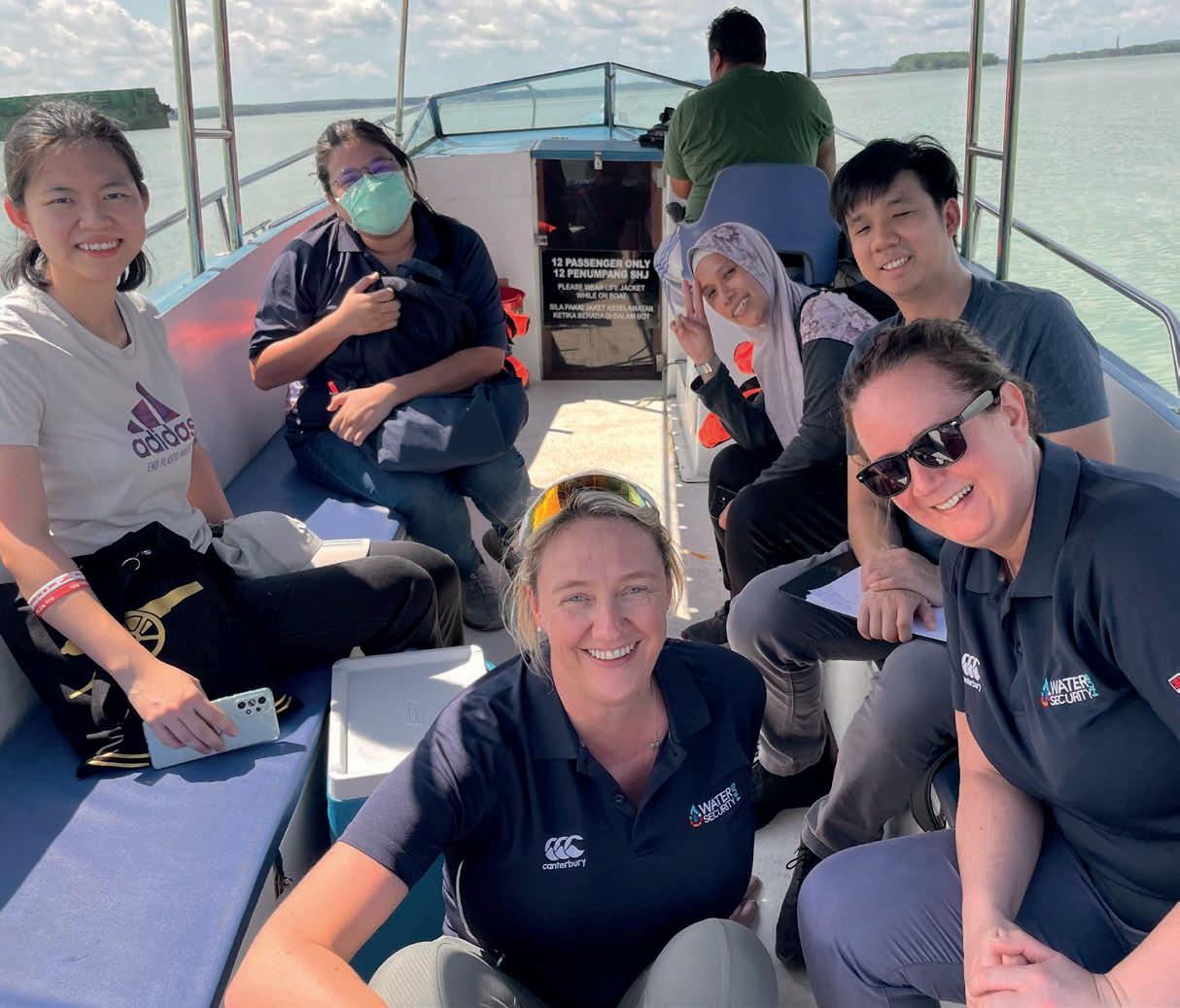
The NUMed research team visiting marginalised indigenous communities with lack of water access, sanitation and hygiene facilities
NETWORK MEMBER PROFILES
The University of Birmingham was the first global top 100 university to establish a campus in Dubai in September 2018. A new smart campus was opened in January 2023, creating an outstanding student experience and learning environment across a wide range of degree subjects, as well as a hub for engagement activities in the local community.

Coventry opened its Wroclaw, Poland campus in the autumn of 2020. Its 2022/23 offer included undergraduate courses in applied psychology, aviation management, business management and leadership, cloud computing and cyber security, alongside an MBA and Postgraduate Diploma in International Entrepreneurship.
De Montfort is the first UK university to deliver UK qualifications in Kazakhstan. DMU Kazakhstan is a partnership between the University and EDPeritus UK. Degrees are awarded by De Montfort University. Courses at its Dubai campus are delivered by a wide range of international faculty, with UK-based experts supporting the delivery of DMU Dubai programmes. Employability is a key focus on both campuses with extensive networks of employers being established by the academic teams.
Glasgow has strategic partnerships with the University of Electronic Science and Technology of China (UESTC) and Nankai University in China and Singapore Institute of Technology (SIT), offering a wide range of subject areas: Computing Science; Aerospace, Civil and Mechanical Engineering; Nursing; Environmental Science; International Relations; Translation Studies; Urban Studies and Regional Planning; Electronics and Electrical Engineering.
Heriot-Watt University offers its research-led degrees at its full campuses in Dubai and Malaysia. The unique ‘One Heriot-Watt’ model ensures that no matter where a student is located, they follow the same programme, under the same unitary quality framework, to the same graduate attributes and learning outcomes. There is only one Heriot-Watt degree irrespective location, and external and professional accreditation holds across campuses.
Kent’s Paris School of Arts and Culture is a specialist postgraduate centre offering advanced, flexible Masters programmes across the arts, including in architecture, history of art, film, and creative writing. Its Brussels School of International Studies (BSIS) was established in 1998 and is a multidisciplinary School offering master and PhD courses in politics and law.
Lancaster University’s campuses in Ghana, Germany, China and Malaysia ensure international academic impact in learning and research. In China (Beijing Jiaotong University) and Malaysia (Sunway University), dual degree programmes are delivered in partnership with the home institutions. Lancaster University Ghana and Lancaster University Leipzig Campuses offer Lancaster University accredited degrees.
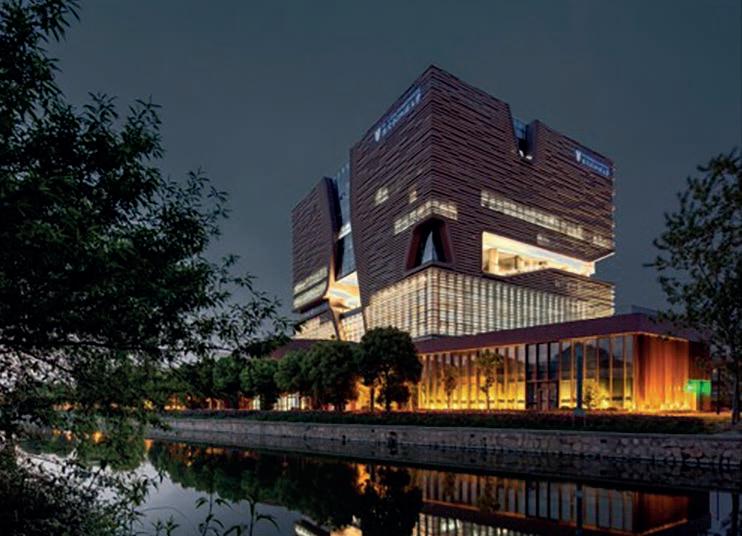
Established in 2006, Xi’an Jiaotong-Liverpool University (XJLTU) is an international University formed in a partnership between the University of Liverpool and Xi’an Jiaotong University, China. There are over 22,000 students on campus in Suzhou and a second site in Taicang where a new Entrepreneurial College has been established. XJTLU delivers degrees at undergraduate and postgraduate levels (including options to transfer to Liverpool). As a research-led international University, all academic departments offer PhD opportunities.

The University of London Institute in Paris (ULIP) has operated since the 19th century and specialises in social sciences and humanities. It has a resident staff and research active faculty as well as teaching a variety of programmes and running a busy public seminar programmes. ULIP also offers programmes in partnership with Queen Mary University of London.
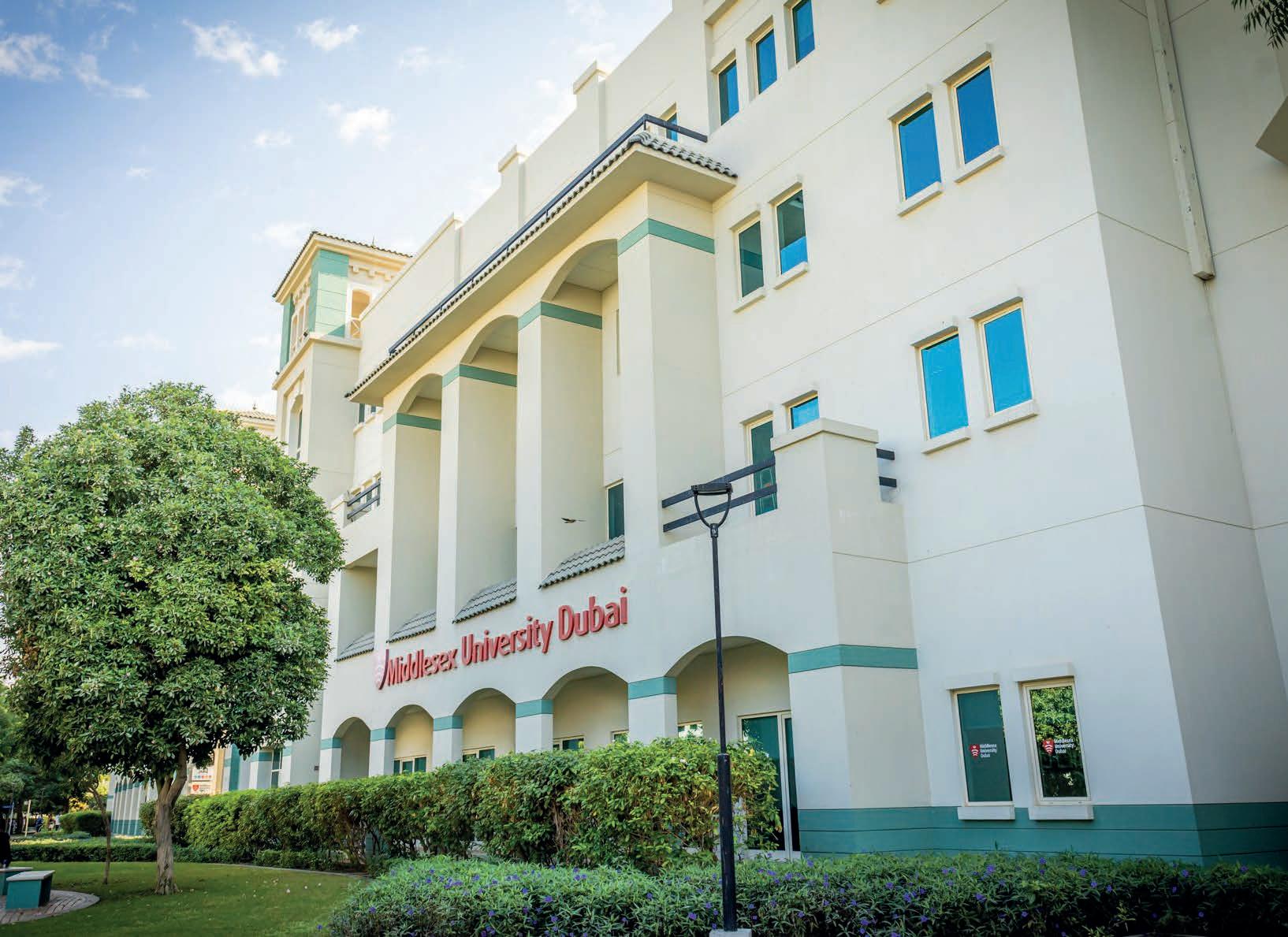
Middlesex University opened its first branch campus in Dubai in 2005 and its second Dubai location in 2021. There are over 4,800 students from over 120 nationalities studying in Dubai with Middlesex, which is now the largest UK university in Dubai licensed by the Emirate’s Knowledge and Human Development Authority. It offers over 70 foundation, undergraduate and postgraduate programmes, and was the first university to offer a face-to-face British Qualifying Law Degree. The Middlesex campus network extended to Mauritius in 2009. Today, the Mauritius Campus has established its reputation as a leading academic institution that attracts both local and international students, providing a rich educational experience with diverse programmes to choose from.
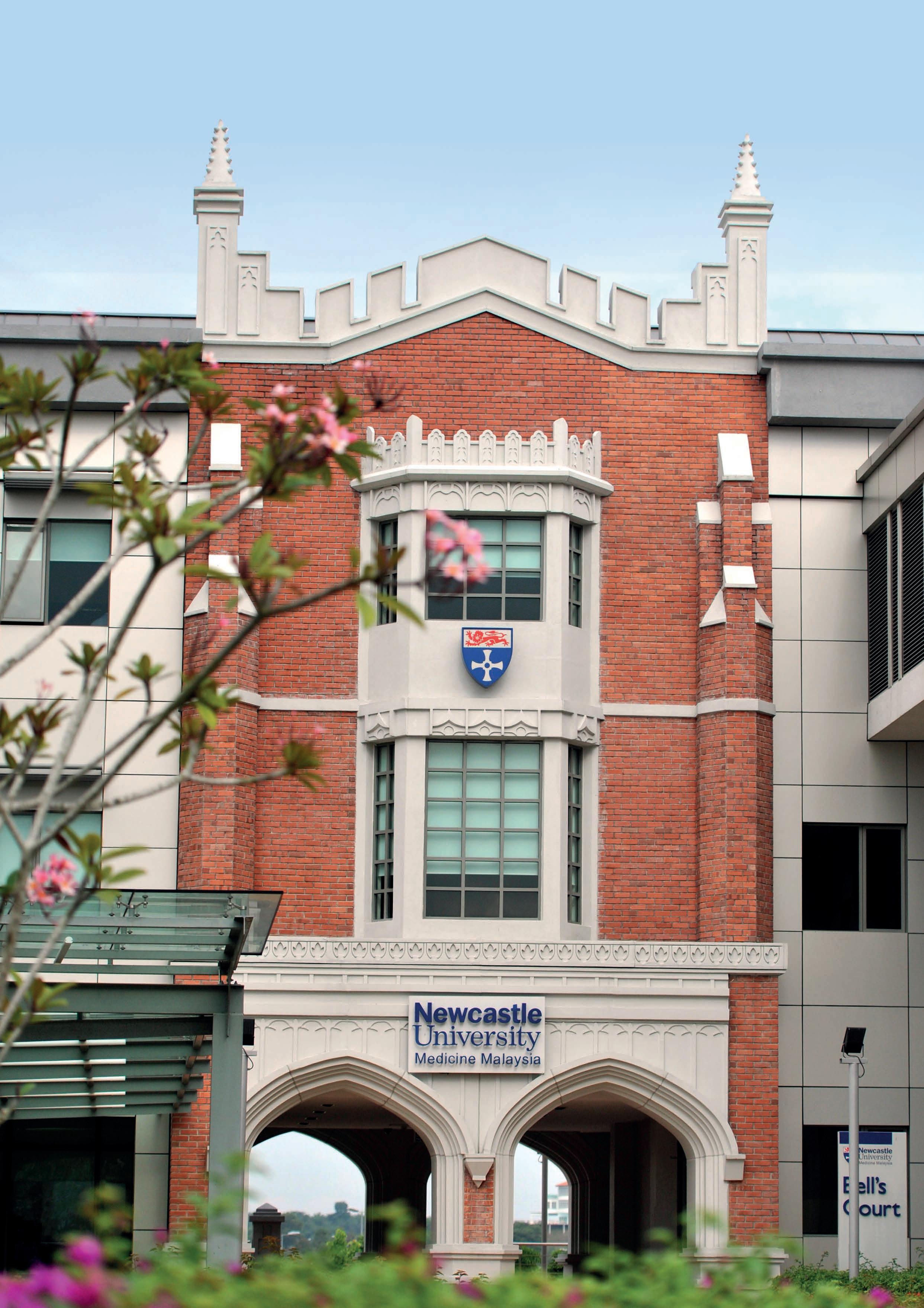
Newcastle University’s campuses in Malaysia and Singapore represent a front door to the education and research the University offers. In Singapore, degree programmes are delivered in partnership with Singapore Institute of Technology, while the purpose-built NUMed Malaysia campus provides medical and biomedical sciences programmes equivalent to those in the UK.
UNIVERSITY | PROFILES
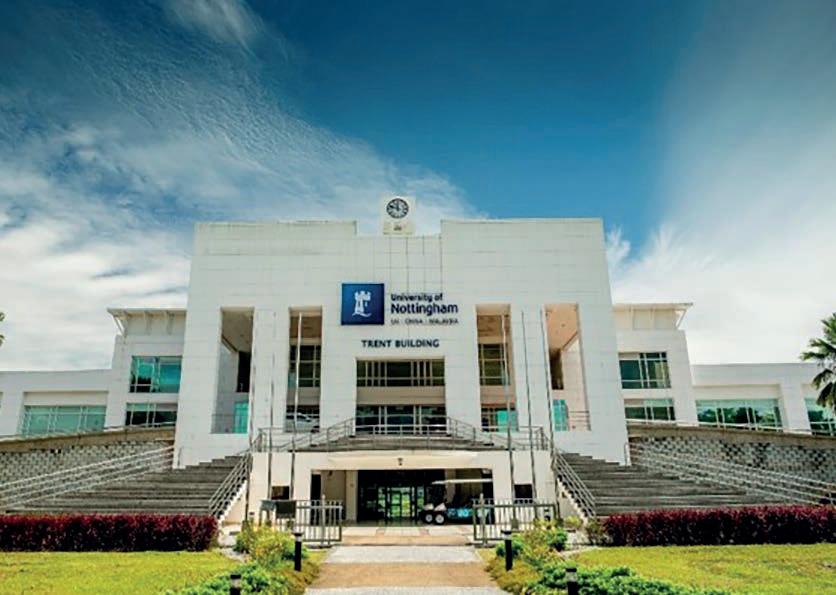
The University of Nottingham has two pioneering overseas campuses in Malaysia and China, with over 13,000 students, 25,000 alumni and 1,500 staff. The University of Nottingham Malaysia (UNM) opened in 2000 and was the first branch campus of a British university established outside the UK. The campus won the Queen’s Award for Enterprise 2001 and the Queen’s Award for Industry (International Trade) 2006. It has over 5,000 students and is recognised by the Malaysian Government for the quality and regional impact of its research into sustainability, conservation and agriculture. University of Nottingham Ningbo China (UNNC) was the first Sino-foreign university to open in China, with the Campus established in 2004. It now has over 8,000 students studying at undergraduate and post-graduate level. All of the University’s campuses share the iconic Trent Building and lake and the University’s tri-campus approach underpins its ‘University Without Borders’ principles.
Queen Mary operates Joint Educational Institutes in China with Beijing University of Posts and Telecommunications and Northwestern Polytechnical University, along with a Joint Programme with Nanchang University. Collaboratively designed programmes blend the strengths of different educational cultures, and provides a more profound awareness of the business practices of both countries. Queen Mary also has campuses in France (Paris) with ULIP where it delivers postgraduate programmes in Law and International Relations, as well as a Medical School on the Island of Gozo in Malta. In total, it has over 5,000 students studying on TNE programmes across these five campuses.

Queen’s established a Joint College in partnership with China Medical University (CMU) in 2014. CMU has full approval from the China Ministry of Education. CMU delivers Queen’s degrees complying with UK Quality Assurance standards within high-quality purpose-built teaching and research facilities on its new Shenbei campus, in Liaoning Province. Queen’s also has an education partnership with Shenzhen University offering Joint Foundation Programmes.

Reading’s brand new campus on EduCity@ Iskandar, Malaysia, was shortlisted for a World Architecture Festival award in 2013. Students are taught by leading international academic staff and have the same top-quality learning experience as in the UK. Programmes include business, finance, psychology, real estate, quantity surveying and pharmacy. Through its Henley Business School, the University of Reading has campuses in Denmark, Finland, Germany, Malta, South Africa and Sweden.
Salford works in partnership with the British University of Bahrain, one of the newest Universities to be established in the Kingdom of Bahrain. Bahrain students can now commence and study an undergraduate UK Bachelors’ degree in a wide range of subjects, including Graphic Design, Architecture, Interior Design, Construction, Engineering, Computing, Psychology, Business Management and Law with the option to transfer their course studies to the University of Salford, in Greater Manchester at the start of any of their subsequent academic years, subject to professional body requirements.

Southampton’s Malaysia campus opened in October 2012 to deliver engineering programmes. It has since grown to offer undergraduate programmes in Business, Computer Science and Economics as well as expanding the Foundation Year courses. In October 2021, the University of Southampton Malaysia relocated to a brand new campus in Eco Galleria, Iskandar Puteri, Johor.
The Westminster International University in Tashkent (WIUT) was established in 2002 in collaboration with the Foundation of the President of the Republic of Uzbekistan. WIUT was the first international university located in the heart of Central Asia to offer a Westernstyle education with UK qualifications, with a focus on business, computing, finance and law.
Contact for further information: alex.favier@nottingham.ac.uk
All information correct at the time of publication: © UK University Overseas Campus Network, 2023.
Acknowledgements: Designed by GDA, Northumberland.
Image credits: Heriot-Watt University Lancaster University, Liverpool University, Middlesex University, Newcastle University, University of Kent, University of Nottingham.