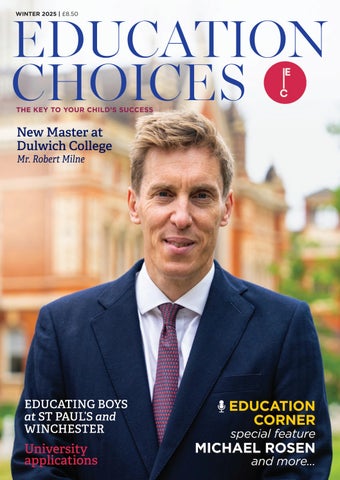
This is our 22nd edition of Education Choices Magazine and we are thrilled to have nearly a million impressions on our website and to have produced 114 podcast interviews on our very active and popular Education Corner Podcast, which has made over 70,000 impressions in the first 5 months on YouTube alone.
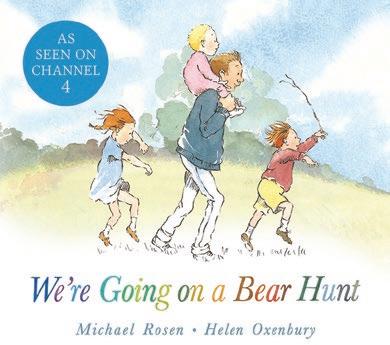
It was an absolute honour to be able to interview Michael Rosen and to hear about his love of writing and poetry and his new book ‘Bah! Humbug!’ retelling Charles Dickens’ classic ‘A Christmas Carol’. Christmas is a time for family and friends; we hope that some of the books and features from Mind and Samaritan’s Purse remind us that this is also a time for thinking about others.
Thank you to my incredible team and to all the schools, universities and education experts for their wise words and contributions.
We wish everyone a very Merry Christmas and Happy New Year 2026!
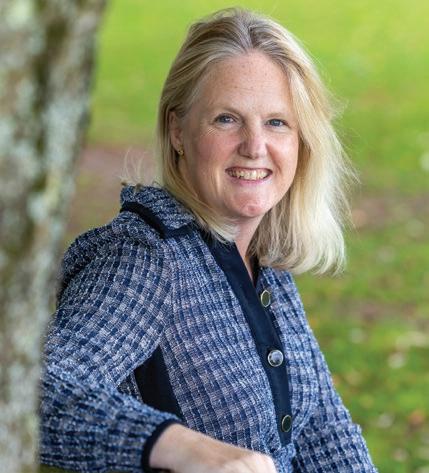
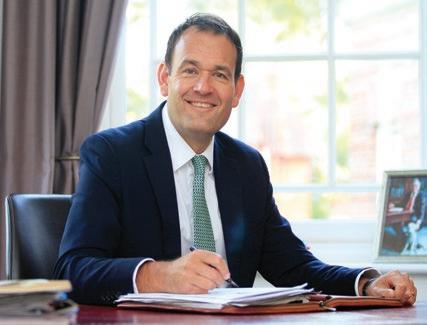
Chloe Abbott (Founder)
www.educationchoicesmagazine.com
“You are never too old to set another goal or to dream a new dream.”
C.S. Lewis
EDUCATION BOOK CORNER
Mental Health Matters
Books supporting children and families
AGES 3-6
Blue - Sarah Christou
A girl has a big blue monster following her around who makes her feel very worried. After sharing this secret, she learns that talking helps her feel a bit less blue.
AGES 5-7
Sad BookMichael Rosen
A beautiful and complex picture book for all ages, depicts Rosen’s grief following the loss of his son and shares difficult moments of trying to look happy when he felt sad.
The Pond - Nicola Davies Exploring grief alongside the importance of the natural world, this beautifully illustrated picture book follows a young boy and his family after the loss of his father.
AGES 6-10
Charlie Changes into a Chicken - Sam Copeland
This humorous book follows Charlie, who has a lot to worry about. In moments of stress, Charlie finds himself turning into a chicken!
AGES 9-12
Aubrey and the Terrible Yoot - Horatio Clare
A boy’s father falls under the spell of the Terrible Yoot - a spirit of despair. This book is part fairytale and part family drama, exploring themes of depression with compassion.
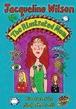
The Illustrated MumJacqueline Wilson
In this enduring story, 10-year-old Dolphin loves her mum, Marigold, who sometimes has unpredictable moods. Two half-sisters deal with school, life and their mum’s mental health.
The Tiger Who Sleeps Under My ChairHannah Foley
This adventurous book follows two timelines, one in 1884 and one in the present day. Two protagonists uncover secrets, while they help care for a loved one struggling with their mental health.
Me and My BrianHelen Rutter
Josh calls his brain ‘Brian’ and Brian can be annoying. After moving away to live with Grandma, Brian gets louder and more distressing. But Josh realises that Grandma really understands him and his Brian.
AGES 11-17
Paper AvalancheLisa Williamson
Ro lives with her mum, Bonnie, and the house is filled with hoarded rubbish. At school, Ro’s friend, Tanvi, has recently beaten cancer and the book explores these complex relationships with sensitivity and compassion.
Night ShiftDebi Gliori
Gliori’s outstanding book shows how depression affects all parts of life. Beautiful illustrated dragons represent depression, this simple but effective tale is both moving and inspiring.
CARYS RICHARDS Assistant Editor
18
06 Random Acts of Kindness
Supporting Children in Need
07 Early Years Education
A new reception class in Marylebone
08 A Bespoke Curriculum
An unique approach to early years
09 Supporting International Students and Aiming High
Tailored resources for English as an Additional Language and Supporting boys to achieve their dreams
10 Cultivating a Love of Reading
Placing the library at the heart of education
11 Caring, Confident and Capable
Supporting future success
22-23 Developing a Love of Reading
Dr. Suess, Ofsted and the magic of seeing yourself in a story
24-25 Celebrating Hanukkah
Learning about Jewish traditions
26 Celebrating Diversity
Families come in all shapes and sizes
27-28 Nothing is Impossible
Learning to overcome obstacles
28-29 Celebrating Chinese Culture
Re-telling traditional folk tales
EDUCATION CORNER PODCAST
EDUCATION CORNER PODCAST INTERVIEWS:
12-14 Mr. Joe Lewis
Saint Ronan’s School, Kent
15-17 Mrs. Sarah Segrave
Sandroyd School, Wiltshire
SPECIAL FEATURE
18-21 Michael Rosen
Author and former Children’s Laureate
52-54 Mr. Robert Milne
Dulwich College, London
55-57 Mr. Leo Winkley
Shrewsbury School, Shropshire
58-60 Mr. Shaun Fenton
Reigate Grammar School, Surrey
61-63 Mr. David Boyd
Tormead School, Surrey
29 Preparing for Christmas
Supporting neurodiverse children through the holidays
30 Getting Ready for Christmas
Family, traditions and holiday magic
31 Remembering Childhood Teddies
Bringing Christmas stories to life
32-33 From Rehearsal Room to Classroom
Unlocking potential through the power of Shakespeare
34-35 Overcoming Stereotypes
Widening access to dance for boys
35-36 So Win
Supporting girls to stay in sport
37-38 Neurodiversity, Transition and Boarding
How to help your child succeed from the start at boarding school
38-40 The Neurodivergent Mind
Unlocking potential
40-41 Inclusive Learning Environments
Supporting neurodivergent
learners in secondary schools
42 Enriching Pupil Voice
Creating meaningful opportunities for pupils to express their views
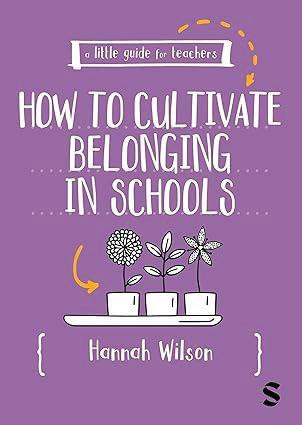
43 Cultivating Belonging in Schools
How to make everyone feel welcome
44 Small Gifts, Big Lessons
In
55
How Operation Christmas Child shapes children on both sides of the box
61
45 Help Stop The Snowball
Mental health support at Christmas
46-47 Things to do this Christmas Festive fun in London for the whole family
48 Christmas Dinner Made Easy and Christmas Crackle Cookies
A delicious Christmas lunch to feed six with just four ingredients and a classic snowy cookie
49 Pioneering Boys’ Education
Breaking cycles of underachievement
50 A Spacious School
Why learning feels different by the sea and amongst the South Downs
64-66 ECM Recommended Hampshire Schools
Finding the best school for your child
67-68 A Spacious Setting
All-through education in the heart of Hampshire
68-69 Promoting Original Thinking
Nurturing boys’ development
70 Things to do in Hampshire
Family days out this Christmas and beyond
71-72 University Interview Preparation
How to prepare for competitive university places
73-74 The Power of Independent Inquiry
Why the EPQ matters in Sixth Form
75 Accessing Higher Education
Should you do a foundation degree or foundation year?
76 A Stepping Stone to Undergraduate Computer Science
The growth of foundation courses
Becoming an Entrepreneur Student enterprise at university
78-79 Family Living in the Country
Hampshire gets full marks from home buyers
80-81 The Winter Edit
Simple seasonal shifts for comfort and quiet luxury
82 Why Should We Study Art History?
How studying the past can help us navigate the future
12
Founder: Chloe Abbott
Social Media: Megan Payne and Ella Maria
Co-Editors: Megan Payne and Rohini Bhonsle-Allemand
Assistant Editors: Carys Richards, Hannah Williamson and Imaya Turner
Art Design: Grant Lucas
Podcast Editor: Emma Charleston
Photography: Mr. Robert Milne, Master of Dulwich College, taken by Archie Onobu
EDUCATION CHOICES MAGAZINE is now available to purchase both online and on paper copy.
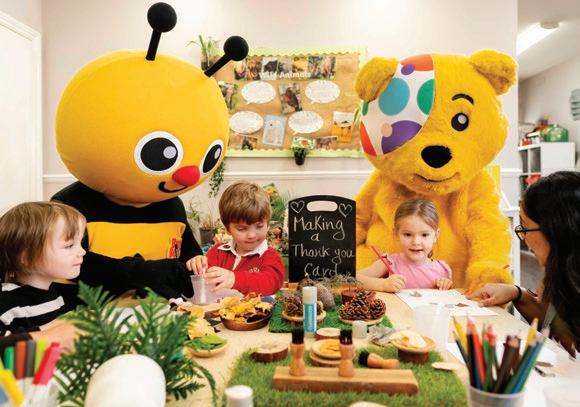
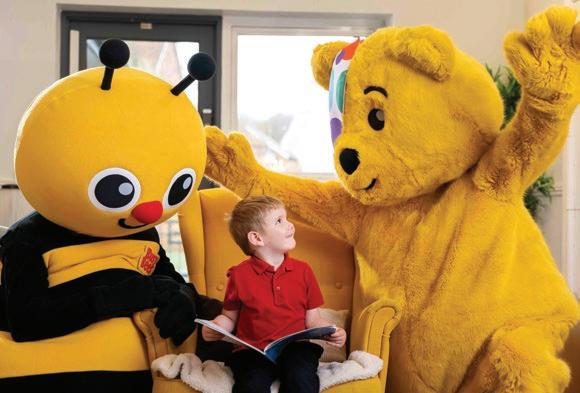
From handmade hug stations and kindness cards to seed-planting and smile challenges, children at Busy Bees nurseries across the UK and Ireland are buzzing with excitement this week as they take part in their very own Great Kindness Swarm - a joyful nationwide campaign created by Busy Bees to inspire 250,000 acts of kindness and raise vital funds for BBC Children in Need.
Across more than 350 nurseries, the UK’s largest early years provider is encouraging its 47,000 children, educators and colleagues to complete six thoughtful acts each - from sharing toys and helping friends to giving back to their local communities. The campaign is part of Busy Bees’ ongoing partnership with BBC Children in Need, supporting the charity’s ‘Challenge Yourself to 25’ initiatives. The partnership encourages children, families and staff to make a positive difference, one act at a time.
To date, Busy Bees has raised over £110,000 for BBC Children in Need, bringing comfort, opportunity and laughter to children and young people across
the UK. This year, the Great Kindness Swarm aims to raise even more to support those who need it most.
Chris McCandless, European CEO at Busy Bees, said: “We’re proud to see our Great Kindness Swarm buzzing across the country. Our children are discovering that even the smallest act of kindness can spark something bigger - in their nurseries, their communities and beyond. Every Busy Bee taking part
is helping to create a brighter future and making a real difference for BBC Children in Need.”
Claire Hoyle, Director of Income and Engagement at BBC Children in Need, commented: “We first partnered with Busy Bees last year to support children to thrive and be the best they can be. What a year it has been! From Giggle-a-Thons to the Great Kindness Swarm, Busy Bees has been raising the bar on fun and creative fundraisers. We are so thrilled to be working with Busy Bees again for this year’s appeal and look forward to seeing children and families across the UK get involved with this wonderful initiative.”
BBC Children in Need funding helps ensure every child has someone they can turn to for help or support to overcome challenges they face. Everyday, BBC Children in Need’s 1,400 projects all across the UK are helping to make life lighter for the children and young people carrying a load that’s too heavy to manage alone.
Wetherby Prep has announced the launch of its new Reception class in Marylebone, opening in January 2026. This is an exciting development for the school that strengthens Wetherby’s longestablished heritage in Early Years Education, showcased through our existing schools, Wetherby School Notting Hill and Wetherby School Kensington. For over seven and a half decades, Wetherby schools have been synonymous with nurturing the youngest learners through a values-driven, curiosity-led approach, and the new Reception provision promises to extend this tradition within a dedicated, modern environment designed specifically for four and five-year-olds.
The Marylebone site will feature a
purpose-built Reception classroom, child-centred learning zones and access to specialist teaching in music, sport and languages. The expansion reflects both growing demand from families and Wetherby Prep’s commitment to offering a seamless educational pathway from the earliest years through to senior school transition. The curriculum will draw on the best of the Early Years Foundation Stage, enriched by Wetherby’s own tradition of inspiring confidence,
independence and early intellectual curiosity.
Paul David, Head Designate of Wetherby Prep, stated: “At Wetherby, our bespoke Reception curriculum is designed to nurture curiosity and inspire a love of learning from the very beginning of a child’s academic journey.”
Admissions for 2026 and beyond are now open and interest from local families has been immediate. Wetherby Prep’s new Reception class is set to become a sought-after entry point for parents looking to begin their child’s education within one of London’s most respected school groups.
CLARE
BECKWITH
Head of Admissions
www.wetherbyprep.co.uk
INSPIRING EVERY BOY FROM THE START
Wetherby Prep School, an independent day school for boys in Marylebone, central London, is opening a new Reception class from September 2026.
Renowned for exceptional education and pastoral care, we prepare boys for the country’s leading senior schools, including Eton, Harrow, and St Paul’s. From day one, every boy is nurtured through personalised teaching and enrichment, building strong foundations in literacy, numeracy, and 21st-century skills.
At Wetherby, our Reception curriculum is designed to nurture curiosity and inspire a love of learning from the very beginning of a child’s academic journey. Our curriculum combines core subjects, such as mathematics, literacy and phonics, with a wide range of foundation subjects taught by specialist teachers, ensuring that every boy is engaged, challenged and supported in developing essential skills for lifelong learning.
We believe that education should be an exciting exploration of children’s interests, building on the knowledge they acquire through enriching experiences, such as interactive workshops and stimulating school trips, which include trips to London’s famous West End theatre district and Hertfordshire Zoo’s Dinosaur World. These opportunities allow boys to deepen their understanding of the world around them, while we continue to expand and support their ever-growing knowledge base.
Our curriculum is structured around engaging themes that spark imagination and creativity throughout the year, including:
To Infinity and Beyond - A journey into space and
discovery, encouraging children to think big and explore the universe.
You’re Going to Hear Me Roar - A celebration of strength, confidence and the wonders of the prehistoric world.
I’m the King of the Castle - An exploration of history, castles and the stories that shape our world.
Literacy is built around high-quality stories using a three-week cycle that immerses children in language and inspires early writing. Activities progress from recounts to predictions and descriptive writing, all enhanced by an enriching text that the boys grow to love and confidently recite, supporting early oracy. The inclusion of technology adds further excitement, with Paddington Bear ‘visiting’ the classroom virtually, sparking creativity and deepening engagement with writing. We also incorporate Dough Disco sessions each week as a standalone subject. This fun, hands-on approach uses dough-based activities to strengthen fine motor skills, laying the foundation for confident writing.
From the start, boys begin recognising two and three-digit numbers in maths, developing a strong understanding of place value. This foundation supports their learning of addition and subtraction, including solving word problems. Later, the focus expands to 2D and 3D shapes, money and measurement, ensuring a broad mathematical understanding.
Boys also enjoy weekly sessions in music, art, sport, computing and science, led by specialist teachers. Phonics, taught for 30-minutes daily, follows the AnimaPhonics programme where the boys learn to read through visual characters, songs and physical actions supporting all learning styles: visual, auditory and kinaesthetic.
Wetherby prides itself on offering an exciting and engaging curriculum that supports boys at the start of their academic journey and fosters a community of lifelong learners.
PAUL DAVID Head www.wetherbyschool.co.uk
Supporting International Students
Tailored resources for English as an Additional Language
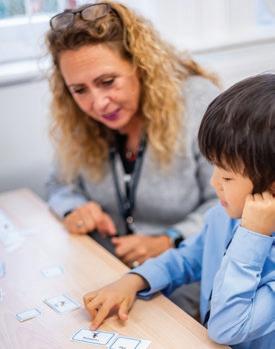
Devonshire House School has launched a dedicated English as an Additional Language (EAL) programme designed to ensure that pupils arriving with little or no English can thrive both academically and socially.
The initiative is led by a fulltime, experienced EAL teacher who provides daily lessons tailored to each child’s needs. They are delivered either one-to-one or in small groups and are supported by Flash Academy - an engaging, childfriendly app offering resources in 48 different home languages.
Mrs Bird, Head of Learning Support at Devonshire House stated: “Our mission is to make every child feel confident, happy, and successful across the school day. This programme ensures that pupils not only make accelerated progress
Aiming High
in reading, writing, grammar and spelling, but also develop the conversational and social skills needed to fully integrate into our community.”
The course is available to both absolute beginners and
Supporting boys to achieve their dreams
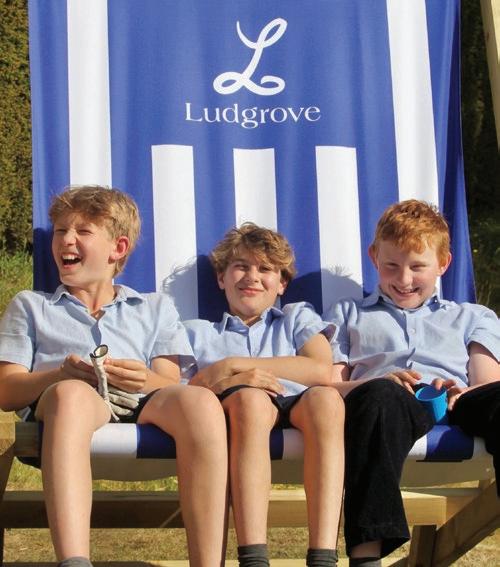
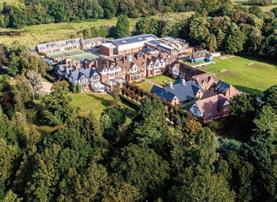
As the country’s only all-boys’ full, fortnightly boarding prep school, Ludgrove is a rare find. Boys get a huge amount out of their day, surrounded by friends, and at weekends everyone is either ‘all in or all out’. None of the 186 boys feels left out or left behind.
Nestled in 130 acres of beautiful Berkshire countryside, while still being only 40 miles from central London, Ludgrove has the best of both worlds on its doorstep;
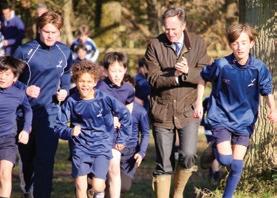
sanctuary and convenience. The boys are encouraged to make the most of their country surroundings at all times, come rain or shine. Whether it is for the morning walk after breakfast, extensive playing fields for daily games and weekly matches, walking the (many) school dogs, camping or playing golf on the nine-hole course, the grounds equate to over half an acre per boy!
Although small in size, Ludgrove has big ambitions for boys and pastoral care is at the heart of everything. Whether it is reaching their academic potential,mastering new sports, trying extra-curricular opportunities or pushing themselves to take a ‘leap of faith’ - nothing is beyond reach, so students should aim high!
But, in the end, what really makes Ludgrove stand out to
improvers. Importantly, lessons are scheduled during the school day, allowing children to enjoy Devonshire House’s wide range of free after-school clubs alongside their peers.
As part of the admissions process, pupils joining Year 1 and above must sit an in-person or online assessment to determine proficiency. In some cases, offers may be conditional on enrolment in the EAL programme.
With this initiative, Devonshire House reaffirms its commitment to inclusivity and academic excellence, ensuring that every child has the tools to succeed.
LAURA MARTINEZ Head of Marketing, Admissions and Communications
www.devonshirehouseschool.co.uk
families? Could it be the simplicity of the boarding model, the outstanding results or the team’s dedication? It is probably best summed up by Mr. Barber’s receipt of the Best Head of a Prep School accolade in the Tatler School Awards 2026 - an outstanding Head of an outstanding school.
SARAH HUMPHREYS Communications Executive www.ludgrove.net
Cultivating a Love of Reading
Placing the library at the heart of education
At Windlesham House, our vision is simple yet profound: to inspire every child to develop a genuine love of reading. In today’s fastpaced, complex world, books offer more than stories; they provide sanctuary, calm and a gateway to understanding diverse cultures and perspectives.
We are guided by Frank Serafini’s belief: “There is no such thing as a child who hates to read; there are only children who do not have the right book.” While many schools are closing libraries, ours remains the vibrant heart of our school, a space where students discover, explore and connect with literature. In
TURN TO PAGES 18-21 for our interview with author Michael Rosen
an era dominated by screens, we champion the irreplaceable value of physical books.
Our library boasts over 17,000 titles, meticulously organised by genre for easy access. Through ongoing investment, PTA support and partnerships with local booksellers, we maintain a diverse and contemporary collection. Individualised reading is at the core of what we do. Strong
readers are challenged with contemporary and political texts alongside timeless classics, while multilingual books and accessible formats ensure inclusivity.
Year 8 pupils tackle GCSE-level analysis, while daily interventions and programmes like RWI phonics and Accelerated Reader support developing readers. Our annual literary festival brings authors, poets and illustrators into school, making literature come alive.
At Windlesham House, we believe every child deserves to find the right book and we are committed to ensuring they do.
CAROLE KINNEAR Head of Marketing www.windlesham.com
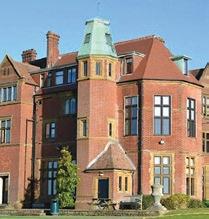
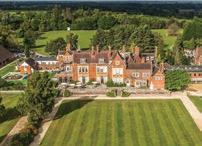
outstanding country prep school nestled in the South Downs offering academic excellence and a happy home from home setting for children to learn and play.
Curious about us? Book a visit today!
Caring, Confident and Capable
Supporting future success
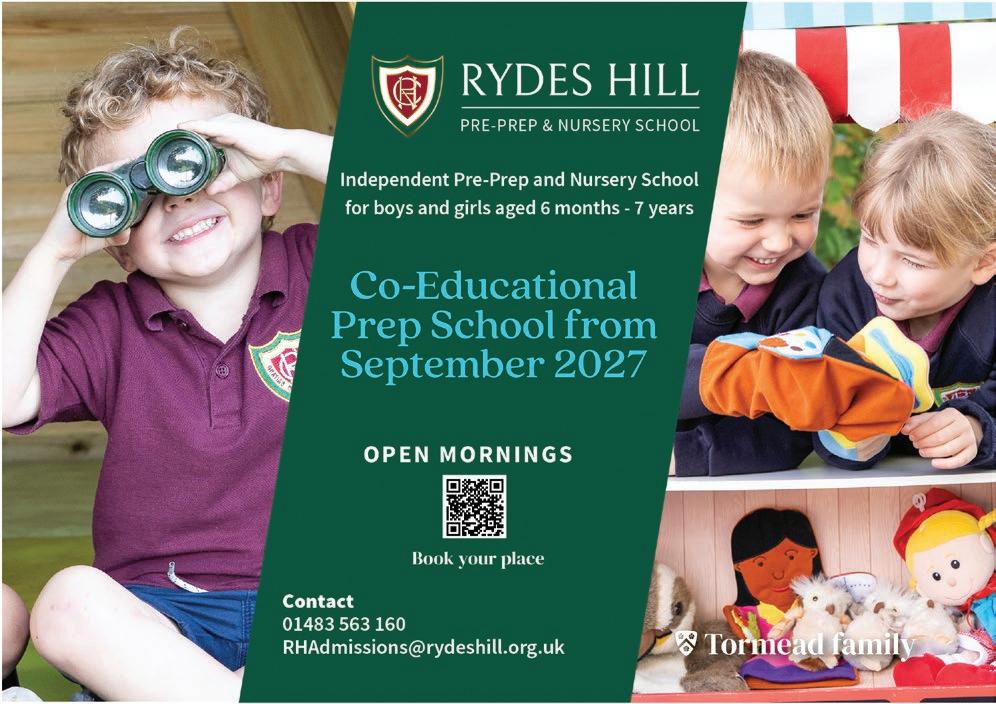
Rydes Hill is a leading Pre-Prep and Nursery School in Guildford, Surrey. We offer outstanding education and pastoral care for children from 6 months to 7 years old, combining academic
ambition with a nurturing, familyfocused environment. We believe that happy children thrive and our warm, inclusive atmosphere ensures every child feels valued and part of the Rydes Hill family.
Our highly qualified teachers are dedicated to helping each child grow into a caring, confident and capable learner. With a strong emphasis on personal development and academic excellence, we lay the foundations for future success and inspire a lifelong love of learning in every child.
In September 2025, Rydes Hill became part of the Tormead family of schools, with plans to become fully co-educational through to Year 6 by 2030, starting with Year 3 in September 2027, followed by Year 4 in September 2028.
GEMMA GILBERT Marketing and Events Officer www.rydeshill.com
EDUCATION CORNER PODCAST WITH THE HEAD
Mr. Joe Lewis
FROM SAINT RONAN’S SCHOOL, KENT
In this episode of Education Corner Podcast, we spoke to Mr. Joe Lewis, Head at Saint Ronan’s School in Kent. Joe spoke about the school’s ethos, the importance of protecting childhood and preparing pupils for the next steps in their academic and personal development through a traditional yet holistic and forwardthinking strategy.
Saint Ronan’s is a coeducational nursery, pre-prep and prep school set within 250 acres of countryside on the High Weald. Joe explained that both he and his wife Milly grew up in similar prep school environments, with parents who taught in or led these schools. This upbringing shaped his understanding of how powerful formative years can be when approached with care, balance and a commitment to the whole child and he explained: “We have that foundation in education, in a holistic environment and in beautiful settings.” After completing his PGCE, Joe’s early teaching career took him into senior schools, including Pangbourne College where he was Housemaster and Head of English. It was there that he began to develop a philosophy built around values, character and pastoral care, he shared: “I began to think about my philosophy of education, which was underpinned by values-based learning.”
care and co-curricular opportunities all play an integrated role. It was this experience that led Joe to consider returning to the prep school world, he shared: “[...] because the ages up to Key Stage 3 are so transformative.”
The school motto, “Floreat Saint Ronan’s”, meaning ‘let Saint Ronan’s flourish’, guides everything they do. Joe described how this is not just about the school thriving, but about pupils going on to have a positive impact on society. Senior schools regularly comment on Saint Ronan’s pupils being hardworking, kind and good citizens, and Joe sees this as central to the school’s purpose. Each term, the school focuses on a different core characteristic which is explored in chapel and assemblies to help pupils carry these values with them through adolescence and beyond. This term, the school is focusing on curiosity and why it matters not just in school but in life and Joe stated: “We want children to stay curious well into their teenage years. It’s a habit that carries them forward.” This strategy contributes towards Joe’s belief that: “If Saint Ronan’s is flourishing on a more macrocosmic scale, then society is benefiting from the type of pupils we’re sending out.”
His move to Millfield, one of the country’s most prominent senior schools, deepened this philosophy as he saw the transformative impact of a truly holistic education where academics, sport, pastoral
One of the defining ideas at Saint Ronan’s is the phrase: “Minding the magic.” This refers to the school’s commitment to preserving the joy, freedom and innocence of childhood in a fast-paced and increasingly digital world. Joe described how the estate itself, with 150 acres of woodland, 100 acres of farmland and extensive play spaces, is central to this.
He stated: “We are very fortunate with our setting. It gives children space to breathe, play and feel liberated.”
Saint Ronan’s is also a phone-free environment, particularly for older pupils, which allows Years 7 and 8 to continue playing, exploring the outdoors and forming real human connections without the pressures of social media. Joe described: “It’s wonderful to see boys and girls in Years 7 and 8 who are still playing. They’re not inhibited by screens, they’re just outside in their free time and they’re playing and they’re able to begin to understand how to have really positive and healthy relationships with each other.” Joe spoke with admiration for a former Headmaster whose portrait hangs in the school. In the 1920s, this Headmaster wrote a book emphasising the importance of wellbeing and the need for teachers to work closely alongside pupils. Joe sees this philosophy as both visionary and still entirely relevant today. Many members of staff remain at the school for years, building strong, trusting relationships with pupils and contributing to the atmosphere of warmth and security, Joe stated: “I think minding the magic of childhood, protecting its joy and wonder, is very important and the staff are very mindful of that.”
While the school has an excellent academic record and a strong record of scholarship success, Saint Ronan’s is not an academically pressurised environment. Many families relocate from London seeking a different pace of childhood for their children and Joe is clear that prep-aged pupils should not be burdened by early exam pressure, stating: “We’re rigorous, but we’re not a hothouse. Children shouldn’t feel stressed by school at this age.”
Instead, Saint Ronan’s places pastoral care and wellbeing at the centre. Joe emphasised that if children are happy and secure, academic success will follow naturally. The school aims for the right senior fit rather than meeting an external definition of prestige. Conversations about next schools usually begin in Year 5, with academic data, interests, pastoral
“I think minding the magic of childhood, protecting its joy and wonder, is very important and the staff are very mindful of that.”
insights and family preferences all brought together to create a balanced plan: “We stretch, but we don’t stress.”
A recurring topic, interlinked with the success of the school, is Saint Ronan’s breadth of opportunity, with more than 30 clubs and activities available. Joe described their approach and stated: “We pack a lot in and we make sure that the children are busy. But also within that, there is a lot of free time and the opportunities to play.” Pupils can experience an extraordinary range of learning beyond the classroom, including forest school, beach school and a farm school, which includes pigs, sheep, Shetland ponies, goats, rabbits and guinea pigs. Younger children begin with farm activities as part of the curriculum, while older pupils can choose farm club as a co-curricular option. Joe described how pupils learn animal husbandry, responsibility and confidence through hands-on experiences. Forest school also offers opportunities for den building, cooking outdoors, learning survival skills and working together in nature. Joe explained: “By giving them this breadth, they absorb confidence almost by osmosis.”
Joe also described Saint Ronan’s approach to boarding. The school offers weekly and flexi-boarding from Year 3, with one to four nights available each week. Joe is passionate about the power of boarding
and he explained: “I’m a passionate advocate for how boarding can benefit character development and build in life skills from an early age and I think we’ve got the balance right here.”
The school has recently redeveloped its dormitories, including one themed as a London bus complete with bunk beds, creating a playful and inviting environment. Boarding evenings include activities, games in the mansion, outdoor adventures in the summer and a strong sense of community. Joe emphasised that boarding at Saint Ronan’s is informal, happy and built around relationships and stated: “We’re very flexible with our approach. We want to work with parents because we’re also very mindful that if both parents are working, they lead busy lives. Then we can offer wraparound care plus boarding and we can be very flexible with it.”
Admissions at Saint Ronan’s reflect the dynamic lives of modern families, with entry points at any age. Rather than hosting large open days, the school invites prospective families for a personal tour with Joe and his wife, Milly. Pupils are encouraged to experience a taster day where they are paired with a buddy, giving them a sense of the community before joining. Joe shared his belief that the personal touch helps families understand what makes Saint Ronan’s special and Joe commented: “You get to meet the staff, meet the pupils and understand what’s so special about the environment.”
Saint Ronan’s has a strong record of senior school placements, with pupils progressing to highly regarded schools across Kent, Sussex and further afield. Scholarships are awarded across many disciplines and last year around 40 scholarships were achieved by the large Year 8 cohort. Joe explained that this success is not accidental, stating: “The subject specialists will identify the talent, work with the parents and put together a portfolio. They understand the senior schools really well and they’re very experienced. So generally speaking, the
awards are secured and the first choice school will be secured.” What stands out is the school’s commitment to each individual. Tutors and teachers know pupils well and the relatively small size of the school allows for a high level of personalised support. Last year, every Year 8 pupil secured their first-choice senior school, a testament to both the pupils’ achievements and the school’s guidance. Joe also reflected on the future of Saint Ronan’s. Joe’s vision is to preserve the school’s historic strengths while looking ahead thoughtfully. Weekly traditions such as chapel and the Friday Gathering in the Edwardian ballroom remain important touchpoints for the community and create rhythm, identity and connection. At the same time, Joe is exploring ways to integrate new technologies, including AI, to enhance learning and support staff. He shared: “We’re at an important time in education whereby we need to be innovative and we need to be forward-thinking.” However, he also emphasised the need to be: “Grounded in tradition, the good manners and the values-based education that is so important.” He sees prep schools like Saint Ronan’s as vital places for instilling these qualities at a time when wider society is losing some of them. Preparing pupils for the next stage is not just about academics, but equipping them to navigate an increasingly complex world with confidence and integrity. Joe concluded by emphasising his excitement for the years ahead. With outstanding facilities, a strong community and a clear vision, Saint Ronan’s is well placed to continue flourishing.
We would like to thank Mr. Joe Lewis, Head at Saint Ronan’s School, for giving up his time to speak to us.
EDUCATION CORDNER PODCAST WITH THE HEADMISTRESS
Mrs. Sarah Segrave
FROM SANDROYD SCHOOL, WILTSHIRE
In this episode of Education Corner Podcast, we spoke to Mrs. Sarah Segrave, Headmistress at Sandroyd School in Wiltshire. Sarah spoke about the school’s idyllic rural setting, nurturing boarding environment and passion for animals and the outdoors.
Sarah joined Sandroyd this year, bringing her leadership experience from leading the Eaton House School Group in London, where she began as Head of History and Latin before becoming Headmistress and Principal. Alongside this, her role as a Governor of a rural boarding school confirmed that her next step lay outside London, in a countryside boarding environment. When the Sandroyd headship arose, she felt it was precisely the opportunity she had been hoping for.
than what they can do and Sarah stated: “When any child is really known, noticed and valued for who they are rather than just what they can do, anything can happen. The mindset of the teachers here is to be engaging and be present with the children; really understanding what makes them tick and really trying to pull them out of their comfort zone.”
This culture is reflected in three simple school rules: aim high, be kind and be respectful. The school aims high in academics, co-curricular life and boarding, yet emphasises a calm, balanced environment
Sandroyd educates around 200 pupils, with approximately 88% of prep children boarding either flexi or full. The result is a close-knit community where staff see themselves as partners with parents, with high expectations and strong growth mindsets, but also with a focus on personal skills, character and 21st-century competencies such as collaboration and communication. Their ethos is that children should be truly known and valued for who they are rather
where pupils are both championed and challenged and what Sarah described as: “More greenhouse than hothouse.” With pupils staying until 6:30pm and a strong boarding culture, longer days give the school the time and space to realise its ambitions without rushing children through their day.
Sarah defines success in more than exam terms, she shared: “If our children do really well they’ll be wellrounded, successful and happy 25-year-olds.” However, in the short term, she described: “Success is when they leave us at 13 that they have strong self-esteem, they know who they are, they understand their strengths, their weaknesses and their foibles and they are proactive enough and confident enough to make the most of their senior school years and beyond.”
This encompassing approach to education extends to the school’s setting. Sandroyd owns 57 acres in »
the heart of Rushmore Park, part of a 1,300-acre estate of rolling countryside and woodland, Sarah described: “We are afforded the most beautiful views across the countryside.” The area is an International Dark Sky Reserve, with exceptionally clear night skies. Sarah is currently launching an astronomy society in partnership with the University of Southampton to make the most of this, with telescopes on the way and night-sky exploration built into school life.
Sarah explained how this setting is incorporated into school life, stating: “During the day we use our setting as a huge part of our outdoor learning curriculum.” Outdoor learning is timetabled through to the end of Year 5 and offered as an activity in Years 6-8. Pupils press apples from the nursery garden, whittle and carve butter knives, bake their own bread, toast it over a fire in the teepee and even learn how to pluck pheasants, making use of their incredible environment. Older children are also encouraged to explore the spacious setting independently, Sarah explained: “We freely allow them to to play. The children in Year 7 and 8 can have their own bicycles at school and they can cycle off around Rushmore Park as well as within our own grounds.” The campus includes 15 ponies, extensive stables and facilities, a Pets Corner, adventure play areas and a range of sports pitches and Astroturf. Breaktimes allow time for grooming ponies, holding chickens, climbing
“If our children do really well they’ll be well-rounded, successful and happy 25-year-olds.”
trees, kicking a football or riding around the estate.
This breadth contributes to the “balanced diet” of Sandroyd’s educational programme, one that is expansive and distinct. Alongside mainstream sports, there are opportunities in activities such as croquet, petanque, cross stitch, embroidery, stone carving, archery, philosophy and more. Sarah described this freedom and variety as central to wellbeing because it allows students to discover what they individually enjoy and where they thrive. Sarah stated: “To know that there are plenty of things that are just as important as what’s happening in one particular academic lesson.” She distinguished between a purely reactive approach to mental health, relying solely on counsellors and interventions, and a proactive model in which wellbeing is built day by day through balance, interest and meaningful activity. Sarah explained: “To me, wellbeing starts with feeling noticed and cared for, it starts with having hobbies and interests that play to your strengths and your interests, it starts with having a balanced diet.”
Part of this enriching balance is riding. The school is a registered Pony Club Centre with excellent facilities and around a third of the pupils ride, from individual sessions to small groups and polo, with links to Dorset Polo Club and regular competitions. Riding sits alongside other daily games such as golf and squash as “lifetime sports” that pupils carry into adulthood. Ponies also complement the wider variety of animals present at Sandroyd, such as tortoises, chickens, hamsters, rabbits and 24 staff dogs, allowing pupils to learn alongside animals each day.
The diverse environment established makes the boarding experience highly desirable, 88% choose to board, Sarah described it as: “The beating heart of the school.” Families choose Sandroyd boarding for reasons such as it is a traditional prep-school pathway into boarding senior schools, military or
“During the day we use our setting as a huge part of our outdoor learning curriculum.”
diplomatic careers, split lives between the countryside and London or a desire to equip children with independence and soft skills for a rapidly changing future. Sarah believes a Sandroyd boarding education is the best setting to develop skills of collaboration, communication, critical thinking and creativity. She shared: “You don’t develop grit and resilience and communication skills by talking about them in a PSHE lesson. You develop them by living alongside other children and by getting involved in all aspects of school life.”
Wellbeing at Sandroyd is a ‘thread’ woven throughout school life. With a wellbeing hub, school counsellor, nurses and specialist staff, the long days and boarding culture allow adults to notice small changes in pupils quickly and respond before issues escalate. The pace of the day is intentionally measured to ensure the children are not asked to grow up too soon, creating a “magic bubble” of childhood, where pupils can enjoy being children for as long as possible.
While keeping children in the present, Sarah ensures Sandroyd keeps a firm eye on their future. She described: “We see ourselves at school as very much part of the pit stop crew as they journey around their track of life.” A strong focus on personal responsibility, accountability, risk-taking and choice helps pupils develop independence and self-motivation, giving them opportunities to make their own decisions and put their developing soft skills into practice.
Senior school guidance is a key part of Sarah’s role. Drawing on 25 years as a head, she works closely and personally with families from Year 5
onwards, balancing ambition with pragmatism and helping them consider a school that aligns most closely with their family values, sibling plans and geography. Supporting this process is a new senior school guidance pack and an academic programme that prepares pupils for pre-tests, scholarships and interviews. From family-style lunches with staff to teamwork-based activities, everyday life provides practice for group tasks and interviews at assessment days. Sarah described: “That is how learning really occurs deeply and truly and will take them forward into life beyond school.” Leavers go on to a wide range of top senior schools, including Marlborough, Eton, Radley, Winchester, Sherborne and others. As an independent school not tied to a larger group, Sandroyd takes pride in giving genuinely unbiased advice about the right senior school for each child and family.
In the present day, Sarah has a clear sense of where she wants the school to develop, building on what she describes as: “A school in great heart.” She wants to set up the new astronomy society to leverage Sandroyd’s Dark Sky status, renew focus on the Junior Wing, establish an imaginative outdoor classroom and upgrade shared spaces. Long term, she aims to maintain and enhance Sandroyd’s extensive sports facilities to continue its flourishing co-curricular opportunities to continue growing confident, grounded and genuinely happy young people, fully equipped for life beyond.
We would like to thank Mrs. Sarah Segrave, Headmistress at Sandroyd School, for giving up her time to speak to us.
Special Feature
EDUCATION CORNER PODCAST WITH
Michael Rosen
AUTHOR AND FORMER CHILDREN’S LAUREATE
In this episode of Education Corner Podcast, we spoke to Michael Rosen, author and former Children’s Laureate. Michael spoke about the joy to be found in stories, retelling classical tales and his hopes for the future of children’s reading and literacy.
Michael was raised in North West London by parents who were both teachers, he shared: “So I had a very educational background.” This led him to begin writing and taking part in local theatre at an early age, and eventually to studying English at Oxford, he recalled: “I’d been writing plays and stories and sketches.”
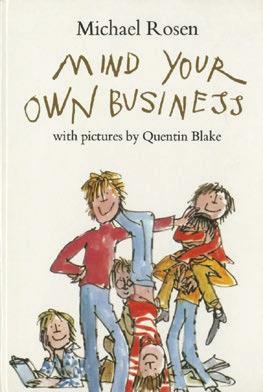
While at university, one of his plays was produced at The Royal Court Theatre and some of his poems appeared on BBC’s Schools Radio. The success of these eventually led to the publication of his first novel, Mind Your Own Business, illustrated by Quentin Blake. Michael described: “Once you write a children’s book, you enter the world of children’s books, which is very welcoming and kind if you want it to be. I found it extraordinary. I was just on this wonderful roundabout and haven’t stopped since.”
people’s work, such as Geoffrey Summerfield, who was a friend of Michael’s parents.
Michael told us: “He laid out the anthology on our living room floor. My parents, him and I were reading these poems. Amongst those were some poems by an American poet called Carl Sandburg. I remember thinking that this was a voice that I wanted to imitate, particularly how Carl Sandburg could write about conversations between parents and kids, between kids and kids, in a very accessible and colloquial way.”
Michael also described the influence of A Portrait of the Artist as a Young Man by James Joyce, stating: “In that book, he writes about his childhood in the voice of a child. I mean, it begins: ‘Once upon a time…’ as if somehow or other, he’s telling a fairy story about himself. I like that idea of writing about your childhood in the voice of a child.” At the age of 16, Michael took this inspiration and began writing about his own childhood in the voice of a child, until the collection grew into an anthology which would become his first published work.
Michael also recalled how his venture into children’s books and his familiar style were influenced by other
Throughout Michael’s childhood, he was influenced by a wide range of cultures and languages. Both of his parents were Jewish and spoke “Yinglish” - a hybrid
of Yiddish and English - at home. Alongside this, family holidays immersed him in French, as well as his father’s own multi-lingual background. He shared: “My father in particular, he loved playing with languages. He had learnt German in the army because he was in the occupying army in Berlin. So he often used to say things in German. He sang songs in German. He loved German songs. Then he had also studied Latin. So by the time I was 12, I was inducted into this. So I was studying French, German and Latin at school myself.” The impact of this flexibility of language and words has undoubtedly impacted Michael’s works, he described: “When you’ve got that feeling about languages, you don’t think of language as transparent. If you say ‘table’ to a child, there’s a way in which they think that the word and the thing are the same. But if you know there are other words for table, like ‘tisch’ in German, then suddenly you realise that words and things are separate. The moment you have that objectivity about words, it makes you play with language in certain ways, maybe just in your head, or if you start writing, then you suddenly feel that you’re making choices about language.” This ability to “play with” language is evident throughout Michael’s works and career to this day.
Amongst the over 200 books Michael has published, are Bah! Humbug!, Macbeth United and Unexpected Twists, modern retellings of familiar classics (A Christmas Carol, Macbeth and Oliver Twist). On his inspiration for re-imagining these classics, Michael explained: “The thing about all these books that we have, this great, vast millions of books of the past, whether you go back thousands of years to The Odyssey or the Epic of Gilgamesh or to a book that came out last week, these are all things we constantly read and immerse ourselves in and have fun with, but we can also play with them.” A Christmas Carol particularly appealed to Michael for its depiction of change, one of the most impactful things stories can depict, he explained: “Change, this is something that fiction shows beautifully. It can show people changing and that’s partly what makes fiction so inspiring sometimes. You think a person can change or a group of people can change.” He also described the power of re-working texts which young readers are already familiar with, as it allows them to connect with the story, he told us: “Then they play a game of spotting the differences, the parallels, the allegories and so on. They can see I’m playing with the plot, so it’s an invitation for them to as well.”
In a time where digital devices are increasingly prevalent and one in ten children aged 5 to 18 do not
TURN TO PAGES 32-33 to learn about the Royal Shakespeare Company’s new curriculum
“I think one of the great things about poetry is its flexibility. So, if you just think of the whole history of poetry, there are hundreds and hundreds of different ways to write poems.”
have a book of their own at home, promoting a love of reading in young people is more important than ever. However, Michael shared that the slower pace of reading may be where the enjoyment lies and commented: “The advantage of slowness is that you have a time to reflect, predict, wonder, memorise and gather up what it is that you’ve already read and thought about. So that reading experience has got a slightly different quality and I think that’s to be treasured.” Encouraging children to slow down and absorb stories at a slower pace is also crucial, as many reports suggest that children’s attention spans are shortening.
MICHAEL ROSEN DAY
Another advantage of exposing young children to books comes through the ability to infer and decipher, and is possible even in picture books before children can read independently. Michael described: “The words seem to be telling one story and the pictures are telling something that’s related but not the same. It’s wonderful, I’d say it’s intellectual, that a child has to think to make it work, to make meaning out of it. I think that’s a very important process.” This ability to decipher different stories or details from text and/or images not only adds to the excitement and enjoyment of reading, but is also key for children’s development, Michael believes: “Books are full of curiosities and things that are half revealed and half concealed. That kind of effort that goes on is probably quite important for our development, I say it’s valuable.”
Michael’s particular passion for poetry is something which he also enjoys “playing with.” He shared: “I think one of the great things about poetry is its flexibility. So, if you just think of the whole history of poetry, there are hundreds and hundreds of different ways to write poems.” He contrasts this with the way English is often taught and explained: “When we’re teaching children standard English and standard prose,
“Though poetry can seem daunting, in actual fact people very often turn to it in these moments of difficulty or high elation. You could argue that people like Stormzy or Cat Burns, they’re writing a kind of poetry.”
the form is quite contained and controlled. Whereas poetry doesn’t have to do that. It could be at the level of sound, it can have rhythm, rhyme and repetition if it wanted to, or it could be fragmentary. It doesn’t have to obey the ordinary rules of syntax.” This variability of poetry is both what draws Michael to the form as well as why he thinks it can be so accessible to all readers and writers, given the opportunity. He also explained how wide-spread it is in daily life, despite many people not feeling that they understand poetry: “Though poetry can seem daunting, in actual fact people very often turn to it in these moments of difficulty or high elation. You could argue that people like Stormzy or Cat Burns, they’re writing a kind of poetry.”
To promote this, Michael Rosen Day is celebrated each year on November 13th. Michael explained:
“The idea really is that each year I’m a catalyst. So I’ll share my poems and have fun with them but at the same time inviting children to write or to read other poems other than mine.” His aim is to show that everyone can write poetry and to celebrate the work of young people who take part, which this year totalled over 200,000 students across the UK.
Michael encourages all young people and teachers to continue reading and promoting a love of reading wherever they can. He described: “That moment of contact when you share a story with someone else, it feels a bit magical. When somebody reads to you and these images of the story come into your head, and you’re sitting there and the person reading to you, they’re there, their voice is doing it and making it, but there’s a way in which they disappear, and you’re in the story.” He recalled several teachers who read to him as a schoolboy and how these stories evoked deep feelings within him and stay with him to this day, recounting: “I remember just thinking: ‘That’s me.’ The fact that the author is able to play with a child’s sense of guilt, danger, peril and jeopardy, I loved that.”
To teachers, Michael advised: “The key thing is to find it and find ways of engaging your students. It might be reading short bits, not trying to read for too long, or it
“You young folks, you can write poems and you should listen to the wonderful poems that you’ve written.”
might be that you invite the students out in some way or another to participate in it. Playing with lots of variance on it. The key thing about delivery of stories is not to rush it too much and also to trust the writer.” To children, he also shared his advice from Michael Rosen Day: “You young folks, you can write poems and you should listen to the wonderful poems that you’ve written.” With the huge range of books available for young people today, he feels hopeful that children will continue to engage with a variety of texts and experience the many ways that he himself finds joy in stories and poems.
We would like to thank Michael Rosen for giving up his time to speak to us.
www.michaelrosen.co.uk
Developing a Love of Reading
Dr. Seuss, Ofsted and the magic of seeing yourself in a story
It’s not often that we think of Ofsted and Dr. Seuss together. Unless, perhaps, we’re reflecting on Green Eggs and Ham and jokingly attributing the line: “I do not like them, Sam I am” to our feelings about inspections. But Dr. Seuss and Ofsted do share something important: a commitment to promoting a love of reading.
Step into any school library and you’ll likely see quotes about reading adorning the walls. Some are printed on glossy posters; others are handpainted for free by a talented parent who couldn’t quite say no to the Headteacher’s pleading eyes.
Among the quotes, Dr. Seuss is almost guaranteed to appear. Perhaps:
“You can find magic wherever you look. Sit back and relax, all you need is a book.”
Or the ever-popular: “The more that you read, the more things you will know. The more that you learn, the more places you’ll go.”
What you won’t find painted on the walls, surrounded by whimsical illustrations of flying books, is paragraph 293 of the Ofsted Inspection Handbook (updated September 2024): “Inspectors will usually gather and evaluate evidence about: the extent to which staff… develop children’s love of stories, poems, songs and rhymes.”
Not quite as catchy, but just as meaningful. The latest inspection framework reinforces this, stating: “Inspectors will consider the extent to which the teaching of reading… develops pupils’ fluency, confidence and enjoyment.”
So, whether it’s Dr. Seuss or Ofsted, the message is clear: helping children fall in love with reading matters. But how do we do that?
For children to truly enjoy reading, something has to catch them. As they move from decoding words to becoming independent readers, access to books that engage and resonate with them is essential. Dragons
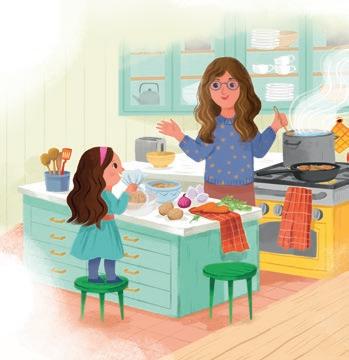
and magical lands are thrilling, but there’s also excitement in the everyday. That’s why a Reception classroom’s home corner, filled with familiar and everyday items, can often spark more meaningful play than a shiny space station role-play area. It’s rooted in what children know, and that familiarity invites exploration.
Stories can work the same way. Books grounded in real life - families, routines, everyday experiences - can be powerful gateways into reading. They offer comfort and connection, helping children build confidence and curiosity.
Dr. Seuss wrote in I Can Read With My Eyes Shut: “You can read about anchors, and all about ants, you can read about ankles and crocodile pants!”
But children should also be able to read about themselves.
The Centre for Literacy in Primary Education’s (CLPE) Reflecting Realities research highlights the ongoing challenge of representation in UK children’s literature. In 2023, only 17% of children’s books
Chloe Abbott Educational Consultant
• Introductory meeting to get to know your family and your child/children
• Assessment when required to establish your child’s levels
• School advice for both primary and secondary in the London area and beyond
• Support and advice on suitable school choices
• Booster sessions in key exam skills
featured racially minoritised characters, and just 7% had them as main characters. That’s a drop from previous years.
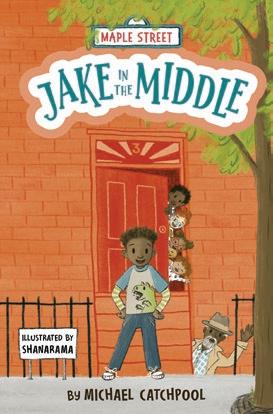
As a Black child who loved reading, I never saw myself in the books I encountered. That absence stayed with me. When I wrote the Jake stories, I had two aims: to use the familiar as a hook into the story and to reflect the reality of many children’s lives. Creating stories where children can see themselves is deeply gratifying.
If children are to develop a love of reading and a real enjoyment of it, then it will be important that they have opportunities to see someone who looks like them in stories they read. In that way, they can truly be a part of the powerful and magical world of reading.
Author Lucy Mangan once wrote: “You simply never know what a child is going to find in a book.”
Learning about Jewish traditions Celebrating Hanukkah
If you asked a Jewish child what their favourite festival was, I’d wager most of them would say Hanukkah, the festival of lights. Other festivals might give it a run for its money - Purim and Passover, perhaps - but Hanukkah is presents, food, presents, songs, presents, family, presents, miracles, presents, candles. Oh, and presents. What’s not to like?
In my memory bank, the space reserved for Hanukkah is warm and fuzzy. Happy, exciting times infused with the flickering light of a candle.
That’s what I tried to capture in my picture book, The Happiest Hanukkah, along with the slight chaos and noise of Jewish family life when relatives converge.
It’s the story of a young girl, Leora - a Hebrew name I chose because it means ‘light’ or ‘my light’ - who is particularly excited about Hanukkah this time around because she’s hoping she’ll get to light a candle for the very first time.
It’s part of a series of books published by Scholastic that aims to educate children about different festivals using a story, rather than just giving them the information about the festivals.
That information is in there though - the story of Hanukkah, the prayers, the songs, the food, the accoutrements - but, hopefully, it’s Leora’s excitement that grabs the reader’s attention and holds it until the end (spoiler alert –she does get to light a candle!).
I’m very pleased with the book and when I’ve been into schools and nurseries to read it, the children seem to enjoy it. It’s remarkable to me that in this day and age, when seemingly endless information is available at the press of a button, a simple,
beautifully illustrated story can still mesmerise children and transport them into another world. It’s also important to be able to share customs, beliefs and traditions from cultures other than
Leora loved the preparations for Hanukkah. Cooking the food . . .
. . . putting up the decorations and getting out the hanukkiah, the special Hanukkah candleholder.
It was all so calm and peaceful . . .
one’s own, partly just to spread the joy, but also to counter all the misinformation out there. It’s been a tricky time for Jewish people of late, to put it mildly, so
TURN BACK TO PAGE 10 to read about promoting literacy at Windlesham House School
anything that reinforces that we’re just people like anyone else, we get together, we eat, we drink (though not that much) we sing, we shout, we celebrate, is a good thing in my book.
It all feels like a lofty aim for a sweet picture book, but as well as imparting information, educating and informing is also about getting children to explore further and ask questions. So perhaps The Happiest Hanukkah and other books in the series will be the first step in someone going on to discover more about a culture, helping to create greater understanding and tolerance. Happy Hanukkah!
Leora looked at the hanukkiah longingly.
9780702329241_THH_INS_PB_PROOF
Celebrating Diversity
Families come in all shapes and sizes
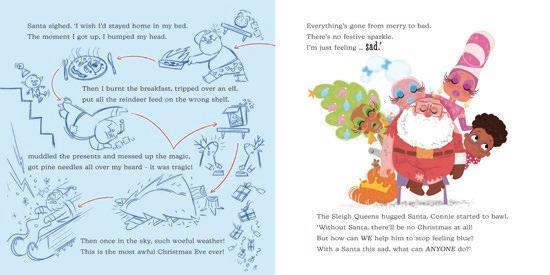
The research phase is often one of my favourite parts of starting a new illustration project and that was certainly true for my debut picture book The Sleigh Queens Save Christmas. My challenge was to present the three queens as a cohesive performing ‘haus’ while still giving each of them an individual look and personality. It became a really fun back-andforth process with the amazing design and editorial team at Sweet Cherry Publishing.
Inspiration often comes from my first love: animation. The queens’ aesthetics were influenced by the geometric brooches worn by the three fairies from Disney’s Sleeping Beauty: triangle, square, circle. The Powerpuff Girls also helped further the green, pink and blue colour palette that defines each of my characters. Finally, after sprinkling in some Christmas puns and serving everything with a dollop of RuPaul’s Drag Race, The Sleigh Queens were ready!
Connie Fir - A comedy queen and glam in green! Look for subtle triangular shapes in her headpiece, bell earrings, dress, glasses and even the tips of her shoes.
Candy Kane - Mother of the haus and the sweetest of sweet singers
in pink. Square shapes can be found throughout her face, dress and boots.
Snow Ball - A dazzling dancing queen draped in blue. Soft circular shapes form her headpiece, face, dress and boot tips.
I feel so lucky to have worked with such a talented design team in Jo Samways and Amy Orris. It’s
a special feeling to be trusted to create an LGBTQ+ themed picture book. I know how rare that is in publishing, even today in 2025. I hope the book helps show that families come in all shapes and sizes. Candy Kane is not only part of her chosen family - The Sleigh Queens - but she’s also an uncle to Ollie, the child character in the story. That’s especially meaningful to me because I don’t have children of my own, but I am a proud g’uncle (gay uncle). I’m so happy this part of my life found its way into the story, thanks to my amazing editor Fiona Scoble. I really hope all kinds of families see themselves reflected in these characters.
SEÁN CASEY Author www.pencilcasey.com
Nothing is Impossible
Learning to overcome obstacles
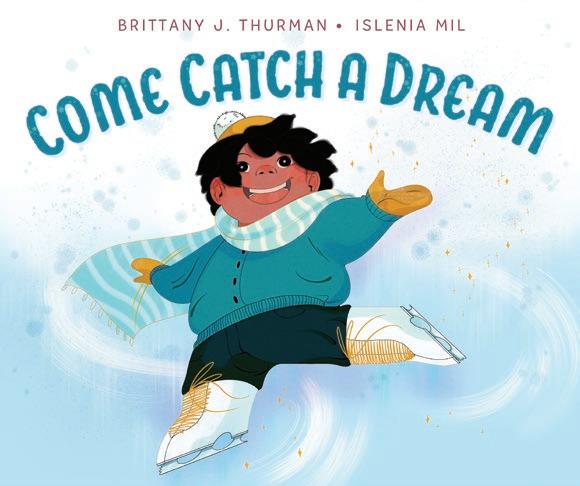
I grab inspiration from a plethora of places. They come to me in dreams, life experiences and overheard conversations. For Come Catch a Dream, that inspiration manifested itself through one of my favorite poems. I recite Calling Dreams by the Harlem Renaissance poet Georgia Douglas Johnson almost daily. As one of its stanzas states: “The right to make my dreams come true, I ask, nay, I demand of life.” I believe life is meant to be lived pursuing our wildest desires and we should let no fear or past failure stop us.
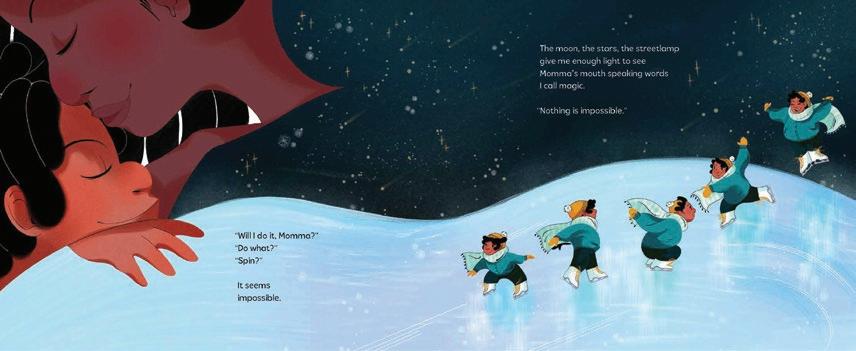
As a child, my dreams ranged from wanting to become an astronaut to drafting floor plans as an architect, but it was through writing that I realized I could take on roles as far as my imagination would reach, like ice skating. My family took me to the rink on birthdays and randomly throughout the year. Somehow, I was much better on one blade than four wheels, but no matter how much I tried, I could not spin. Remi’s desire in Come Catch a Dream is the one I failed at as a kid. While spinning on ice looks easy, it’s not so simple, but Remi is inspired by figure skaters,
Olympic medalists and Momma’s words: “Nothing is impossible.” They are also inspired to be better than who they were in the past.
A common theme in my books for young readers is perseverance. I was also the kid who gave up often, but who would I have become if I didn’t give in when learning something
new became difficult? Would I be a professional ice skater, have made it to the Olympics, or just gained a better understanding of how to pursue my goals when they seemed unreachable? I want children to know that through trying triumph comes. So many doors will open regardless of how long it takes to achieve an accomplishment.
While Remi thinks about their past failure, they don’t let that obstacle stop them from giving ice skating another attempt. I hope kids recognize it’s ok to be a little fearful, a tiny bit of apprehension is good, but the goal is to never let fear stop the pursuit of a desire. I want kids to be encouraged by Remi, Momma and the words: “Nothing
is impossible.” because it’s hope rooted in truth. Within us exist worlds waiting to be explored and it only takes a step, leap and maybe a twirl to glide toward what we deserve.
As an author, my job extends far beyond the page. I never pass up an opportunity to speak at schools and to hear from the audience I write for. Children
inspire me daily and it is through them that I find the themes that show up in my books: perseverance, family dynamics, self-esteem, teamwork, courage and more. One message I have on repeat is that you don’t have to wait until you grow up to do what you love, you can do that thing now. For the child I saw in a school gym who wants to draft their own story, you can call yourself an author today. To the student who is pursuing dance, call yourself a ballerina, because you are. To the budding ice skater who feels as free on the ice as I do when I write, skate on. We can catch all our dreams!
BRITTANY J. THURMAN Author
www.brittanythurman.com
Celebrating Chinese Culture
Re-telling traditional folk tales
Who doesn’t love a good celebration, especially one filled with fireworks and food? What child doesn’t love a story that transports them from the real world to a fantastical one?
As a children’s author, there’s no bigger storytelling inspiration for me than retelling my
favourite childhood folktales related to important East and Southeast Asian festivalsChinese New Year and the MidAutumn Festival are examples.
In I Love Chinese New Year, I retell the folktale of The Great Race which explains how the Lunar New Year was created and why there is an animal zodiac. The story instills curiosity in young readers - how did Rat, a little rodent, win the great race and what are the five fiery facts about dragons?
Children love this traditional folktale because it helps them understand how the ancient Chinese invented time. The tale weaves magic and myth with anthropomorphised animals personified with human qualities. Apart from learning about a festival, I Love Chinese New Year can be used to
introduce young minds to ordinal numbers and adjectives: be brave like Tiger, who came in 3rd, and as clever as Monkey, who was 9th, or loyal like Dog, who crossed the river in 11th place.
The illustrations tell stories of their own. By turning the page,
Xin Li’s illustrations will transport children from a contemporary world into a mythical one.
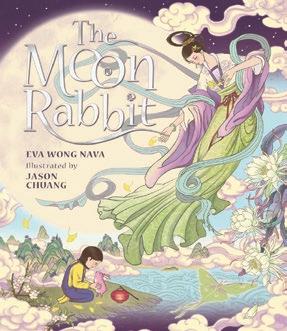
I Love Chinese New Year is a story within a story and reading this story out loud shows young listeners how another story can be nested within a bigger one. I used the same structure - nested narratives - in The Moon Rabbit to retell the story of how an ordinary woman became the Chinese moon goddess. This is the reimagining of the folktale behind the Mid-Autumn Festival, celebrated by more than one billion people of Chinese heritage around September or October annually. Legend and fantasy are combined in Jason Chuang’s beautiful illustrations, taking children from a contemporary setting into a classical Chinese one.
Food, as one famous children’s
author said, grounds children in reality. These two books of myths and legends reimagined are filled with delicious celebratory food: oodles of noodles, dozens of dumplings and mouthwatering mooncakes. Food is happiness. Festivals are joyous occasions. Reading about
Preparing for Christmas
Supporting neurodiverse children through the holidays
After my son received his ASD diagnosis, I put pen to paper and created a collection of stories which can be used to help support children going into new situations which they may find challenging.
Christmas time can be a difficult time for many autistic children. These difficulties can be due to sensory overload from bright lights, loud music and crowds, or even down to their usual daily routines being disrupted.
Suzie’s Christmas Time is one of the titles in my series of stories which can be read to children as a way of explaining what might happen in the run-up to Christmas.
In this story, we follow Suzie as she prepares for Christmas with her Mummy and Daddy. Counting down the days by opening a door on her Advent calendar, writing a letter to Santa and posting it in the letter box. She goes to the garden centre with her parents and they choose a Christmas tree to decorate, but be careful as the tree may be prickly! When Christmas Day arrives, they all have fun opening their presents together by
celebrations matters because festivals are part of our lives. Both books celebrate two important festivals.
EVA WONG NAVA Author
www.evawongnava.com
the fireplace, surrounded by their Christmas decorations.
This story is a simple, positive way to help children prepare for Christmas and can be enjoyed by many during the festive period.
CHARLOTTE OLSON
Author www.suziebooks.co.uk
Getting Ready for Christmas
Family, traditions and holiday magic
My fondest childhood memories involve spending time with my family around the holidays, especially the days and hours leading up to Christmas. For me, the holiday magic begins long before the actual day arrives. I can vividly recall making my Christmas list, which usually meant circling every toy I absolutely needed in the Toys “R” Us catalogue. I remember my brother and I searching the house top to bottom for presents. I smile when I think about staying up all night watching the A Christmas Story marathon until we could recite every line in the movie word for word. The magic was always in the build-up and that shaped the way I see the holidays and the way I write about them.
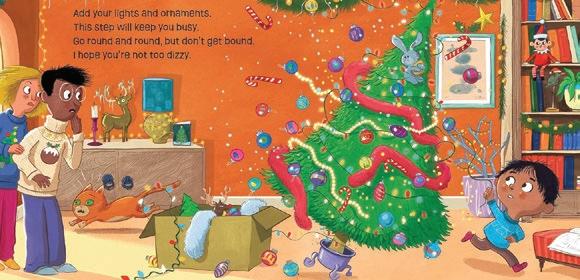
When I was presented with the opportunity to write the It’s Almost Time For… series, one of the biggest draws was that each book celebrated the fun and tradition leading up to a big day instead of focusing only on the day itself. It’s Almost Time For… Christmas is no different. Children live for the small moments like picking the perfect tree and decorating it.
They treasure writing their Christmas lists filled with their heart’s desires. Many children savour the moment they get to bake cookies for Santa and set them out on Christmas Eve. My kids love visiting a nearby neighbourhood that puts up the most amazing Christmas lights, so we do it every year as a family. These traditions and small moments with loved ones are where memories are made. That is where the magic really lives.
Illustrator Tom Knight brings another layer to the story. His art is so colorful, energetic and joyful that it makes you want to live inside the world he created. If you
look close enough, you will notice he’s telling a second story right in front of your eyes. Those hidden clues are what make the surprise
at the end of each book a laugh-out-loud moment. When I read the book to children and watch them spot clues, shout them out and giggle their way through every page, I am reminded why I write. Picture books are meant to be experienced together, and a story centered on family and tradition is the perfect backdrop for a warm, lively read-aloud. It’s Almost Time For… Christmas reminds us that the magic of the holiday isn’t found in the gifts beneath the tree, but in the small meaningful moments we share along the way.
MAISHA OSO Author
Remembering Childhood Teddies
Bringing Christmas stories to life
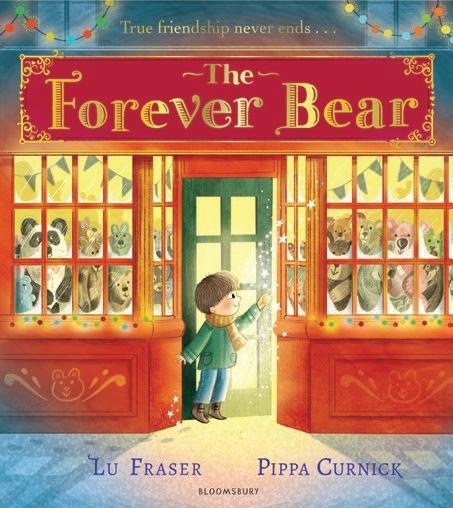
I had the great pleasure of illustrating Lu Fraser’s new picture book, The Forever Bear, which was published in October this year. The moment I read the manuscript, I fell in love with the story and the magical world Lu had created. Sometimes, when I receive a new manuscript, it takes me a few days to work out my illustrative approach. However, Lu’s story was so beautifully vivid that it immediately conjured up that red and gold, twinklydust-moted, magical bear shop of dreams and I knew I just had to illustrate it.
I have worked as an illustrator for over ten years and, although my style is recognisably mine, my process and approach to drawing changes slightly for each book. I usually work first with paper and
pencil to sketch out character ideas, poses and expressions before scanning line drawings into my computer. I then add colour using a variety of handpainted and drawn textures I have accumulated over the years.
Drawing from real life is an important part of my creative process. At the very beginning of this project, I visited shops for inspiration and drew lots of reallife teddy bears. It took quite a while to arrive at the final character for Harry’s special bear, but after working closely with Lu and the design team at Bloomsbury, we were able to get Harry and his bear just right. I have always had a soft spot for cuddly toys. I still have many of my childhood teddies and my own children also have favourite soft toys, so I know how special the bond is between a child and their first best friend. I wanted that feeling of connection to flow through the book, so that when Harry finally finds his forever bear, we as readers feel it with him. It was also important that there should be a bear for everyone in the book; I asked family and friends for photos of their own favourite bears, so there is a huge range of teddies in the book and each reader can find the one they like best!
Working alongside Lu has been a gift. I hope our book brings a little bit of magic to every child who reads it and inspires them to give their own bears a big squeeze… and maybe it might inspire grownups to get their own childhood teddies out of the loft and give them a hug too!
PIPPA CURNICK Illustrator
www.instagram.com/pippa_curnick
From Rehearsal Room to Classroom
Unlocking potential through the power of Shakespeare
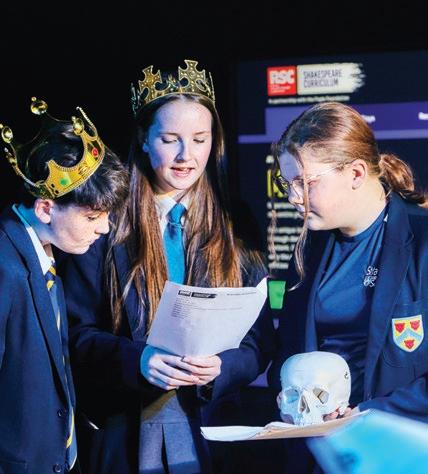
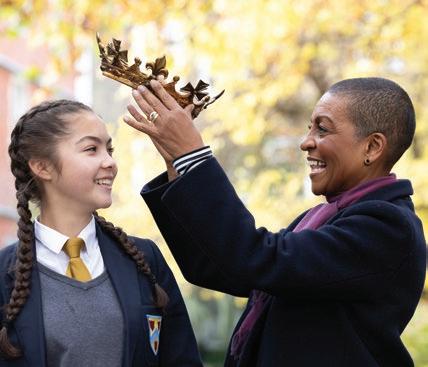
As a producing theatre company, some of our deepest connections to Shakespeare happen in the rehearsal room. On the first day of rehearsals, the company of actors and creatives all bring different perspectives and starting points. It’s a room full of people who all carry with them different abilities, opinions, experiences and backgrounds – a lot like a classroom. What happens in that rehearsal space is transformative. Together, the actors, in collaboration with the director and creative team, start to move, speak, play around with the words and try out different ways to interpret and explore the text.
Rehearsing a play is a collaborative, dynamic process: the company is not sitting at a desk dissecting it like a novel. Instead they’re inhabiting the play, getting right under the skin of it, interrogating the language and delving into what motivates the characters and makes them tick. When Shakespeare’s words are matched with gesture, movement and clear intention, their full meaning comes to life and falls into place.
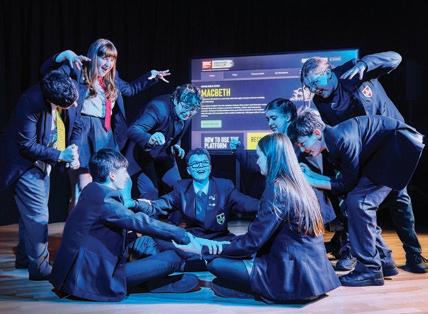
That rehearsal process, so fundamental to how actors, directors and creative teams work, is the basis of the Royal Shakespeare Company’s (RSC) work in classrooms across the country and around the world. It’s also the ethos behind the new Shakespeare Curriculum: a digital framework for teaching and learning about Shakespeare which has the potential to transform the way millions of young people experience Shakespeare in schools.
An estimated 2 million young people in England and Wales and around half of all students worldwide study Shakespeare in any given year. He remains the only named writer on our national curriculum that all students have to study and yet, for too many young people, his plays come to represent something to be endured rather than enjoyed.
At its core, our work is all about giving every young person the opportunity to unlock and discover their own creative agency and potential. Our award-winning rehearsal room approaches are based on the way our actors, directors and creative teams work in rehearsals, with young people speaking the words out loud and embodying the action. It’s fun, engaging, active and rigorous and it connects with all types of learners.
Our Time to Act research provides evidence that this approach does much more than just improve experiences of Shakespeare: it significantly impacts young people’s academic, social and emotional development. As well as measurable improvements in students’ writing and oracy skills, with the study showing a 19% improvement in pupils’ language development, Time to Act also revealed that working this way boosts enjoyment and engagement, builds self-confidence and changes students’ perceptions of themselves and what they are capable of. The benefits can be profound, not just in terms of academic performance but in nurturing selfbelief and well-being, fostering critical-thinking,
communication and collaborative skills and improving attitudes to school and learning in general. Teachers report unexpected breakthroughs: previously reluctant speakers and writers start contributing and wanting to express themselves. In the wake of the Government’s response to the Curriculum and Assessment Review, with its emphasis on oracy-based learning and revitalising the arts, this feels particularly timely. As well as preparing students for exam success at KS4, our approaches to Shakespeare and the framework for teaching that we offer through the Shakespeare Curriculum, provide teachers with a powerful set of tools for embedding both creative and oracy-based learning into their classroom practice.
From on-demand, world-class productions and clips of actors in rehearsal, to a full term’s worth of twenty four carefully planned, tried-and-tested lessons for each play, the Shakespeare Curriculum gives teachers free access to everything the RSC knows about teaching and learning about Shakespeare. It’s a first-of-its-kind treasure trove of resources, organised into a clear, structured teaching framework that saves hours of planning and ends last-minute scrambles for materials. Teachers can set homework through the platform as well as track student progress. They can also join one of our bi-monthly professional development webinars to get other ideas and support. Likewise, students have instant access to digital playtexts that annotate and translate the text, interactive quizzes, digital notebooks, flashcards, quote banks and a dashboard where they can store notes and resources in one place.
Offering far more than a set of teaching resources, our approaches to Shakespeare and our Shakespeare Curriculum are an invitation to teachers and students alike. We’re inviting them to step into the rehearsal room with us, discover that Shakespeare is not something to be revered or feared, but a living, breathing part of our shared language and culture. The journey is active, creative and, above all, transformative. With the new Shakespeare Curriculum and the evidence base behind it, it feels more possible than ever before to open up Shakespeare’s world to every young person as part of a contemporary curriculum and 400 years on, to use his work to give young people the language, tools and confidence they need to thrive today, tomorrow and long into the future.
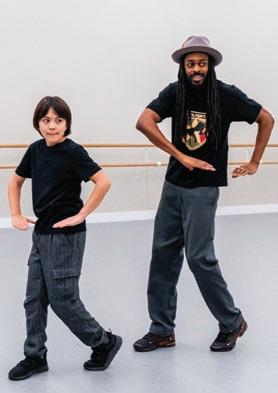
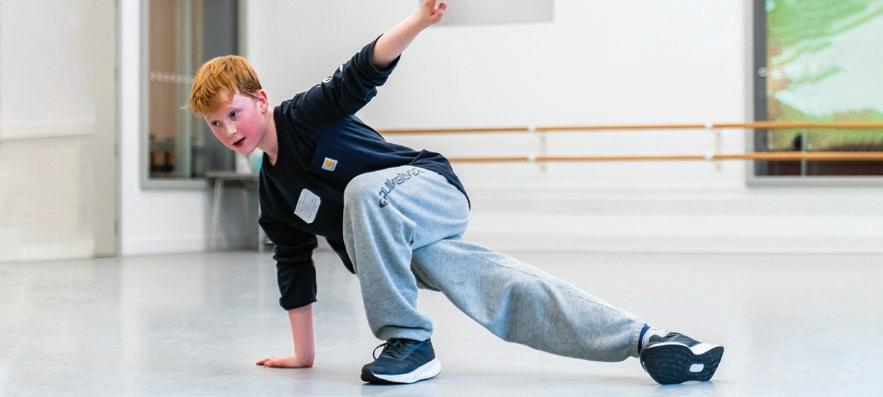
The benefits of dance are numerous, such as improved fitness, coordination, strength and improved mental health. For boys in particular, dance offers not only a creative outlet, but they can also discover new skills such as teamwork, self-confidence, discipline and self-expression.
Despite the clear benefits of dance, the 2023 report by Ofsted, Levelling the Playfield: the Physical Education Subject Report highlights that, while it is a specified part of the National Curriculum at Key Stage 1 and 2, dance is often not taught in schools or is taught poorly.
There is clear evidence that young people who don’t learn dance miss out on the social, mental and physical benefits that it provides. This lack of access is deeply problematic for all young people.
Boys, in particular, face additional barriers. These include harmful stigmas around boys who dance, intense social pressures and rigid expectations. With so much evidence on the benefits of dance for boys, whether cis or trans, it is so important that we dismantle stereotypes.
Addressing the challenges Programmes such as Step into Dance directly address these challenges by delivering inclusive sessions for everyone and hiring male teachers who encourage and inspire. It is the UK’s largest inclusive dance programme for secondary school students, and it delivers free dance classes in London and Essex in partnership with the Jack Petchey Foundation. Emre, a male dancer on the programme, recently reflected that: “Dancing is a space where I can be truly myself. My advice to a younger person is not to be afraid to be yourself, dance is all about having
boys
a fun, positive mindset, and so I would tell them not to be scared. Give it a go! I also think it’s important to have male teachers with lived experiences who can inspire and show you what you can achieve.”
Commenting on why it’s important to widen access to dance, one of the male dance teachers said: “The more engaged boys and men become in dance, the more it will help break the outdated stigma that still unfortunately exists. I also notice that there is more social
cohesion between boys when sharing a similar passion.”
Overcoming the barriers
In terms of the barriers to access, he continued: “I would first consider what they are apprehensive about and approach it individually. Usually, they are worried about social judgement. A good way to encourage them to engage is to let them watch or join for one session with no added pressure. Simply giving something a try before you judge, so they can form their own opinion. I think being a male myself usually helps as I can offer my own anecdotal experience where I had the same worries when I was their age. In a humble way, I’m a good example of what can happen when you give something new a chance.”
Another male teacher commented: “As a basketball and martial arts enthusiast and a dance artist, I believe more boys should try dance because it will let them discover new skills. Dance is about strength, control, speed and can be competitive, creative, masculine and enhance their understanding in movement, in motion and potentially improve their sport.
I always speak about athletes who danced at a young age. Students are always surprised about the sportsmen who dance.”
The benefits of dance for boys are clear and proven in so many
So Win
areas, from physical fitness to mental wellbeing, improved discipline, and offering routes to creativity. Widening access to dance is critical in ensuring they can reap these benefits.
Supporting girls to stay in sport
Nike’s new So Win campaign, featuring leading Nike athletes, celebrates the power of women in sport and encourages all female athletes to be unapologetically ambitious, powerful and to break barriers in their sports. The campaign directly asks women to challenge the stereotypes and restrictions placed on them, stating: “You can’t be demanding, you can’t be relentless, you can’t put yourself first, so put yourself first. You can’t be confident, so be confident. You can’t challenge, so challenge. Whatever you do, you can’t win, so win.”
The campaign follows recordbreaking successes in women’s sports in recent years, for both
athletes and audiences, with the Women’s Sport Trust reporting total viewing hours for women’s sport on free-to-air and pay TV from January to September 2025 reached a record-breaking 357 million hours. Nike athlete and WNBA champion, Sabrina
KATIE HAGAN Press and Communications Manager www.royalacademyofdance.org
Ionescu, stated: “Women’s sport isn’t the future, it’s right now. We’re seeing it in packed arenas, in TV ratings, in the way people are showing up for the game like never before. Commanding attention isn’t about being the loudest in the room. It’s about making sure that when you step up, everyone takes notice”.
As part of this ongoing campaign, Nike have partnered with Nike Kids ambassador Isabelle Kyson to create Out of the Race: Why Girls Quit Sport, a documentary and campaign which explores the challenges which teenage girls face in sports. This cause is all too important, as Women in Sport found that 64% of girls will quit sport by the time they finish puberty. Issey described her own experience: “Everything changed when I hit puberty. Suddenly, the progress I’d taken for granted began to slip away.
My body changed, my performances dipped and I felt disconnected from a body I no longer understood. No one had prepared me for how these changes might affect me.” In the film, Issey works with leaders in sport, education and government officials including Inclusive Sportswear, Youth Sport Trust and the Association for Physical Education, to address how we can better support female athletes throughout their teenage years and beyond. As a result, a new curriculum will roll out this crucial education and the inspiring message: “So Win” to around 20,000 schools, with the potential to reach over a million children and transform the way girls approach sport throughout their lives. Olympic gymnast Jordan Chiles, who features in the campaign, encouraged female athletes: “You don’t wait for attention, you take it. You put in the work, you stay ready and, when the moment comes, you own it. Winning isn’t just about medals. It’s about overcoming, about proving to yourself that you’re capable of more than you ever imagined. And doing it all authentically.”
Click here to listen to our podcast with GB Olympic Gold Medallist Lola Anderson MBE and learn more about supporting girls and women in sports.
MEGAN PAYNE Co-Editor
www.nike.com
www.isabellekyson.co.uk
Neurodiversity, Transition and Boarding
How to help your child succeed from the start at boarding school
Does your child have thinking and/or learning differences and will they soon be starting to board at senior school? If so, you may be wondering how to help them successfully settle into their new school environment.
Prepare for transition
Bespoke planning with your child’s current teachers alongside the advice of any external specialists will be an important part of this process. Any transition programme will naturally require tailoring to your child’s unique profile of strengths and needs, but could include: additional school visits, seeing where they will be sleeping, information about key people and what they do, a schedule of the day which is provided as early on as possible and home/school visits by a member of staff.
Build connection with a keyworker
Having a trusted keyworker at their new school who gets to know you and your child, who finds out what has worked well and perhaps not so well previously and who can advocate for them is often key to successful transition. Consider asking whether these sessions can be provided within the timetable rather than provided on an ad hoc basis. Hoping that the young person will reach out if they need help is often not the best strategy.
Doing rather than talking
Often doing an activity together rather than talking (especially about feelings) can be helpful during early keyworker sessions. I often advocate doing something which brings the young person
joy and which they can share. For example: crocheting, walking, playing a board game, building Lego models, or visiting the school dog.
Create decompression points
If your child can become socially overloaded and needs quiet time to recharge, discuss how this can be incorporated into their schedule. The social demands when boarding can be significant, especially in the younger years where they may also share rooms. Find out where alone/quiet time can be built in. For example, is there a peaceful space where your child could eat their lunch or a place they could read and recalibrate? If sharing a room could be a challenge, do talk about how this can be best supported in school. For example, sharing with a
smaller number of people, being near to a supportive adult, or even having their own room in particular circumstances.
Consider prep/homework expectations
Time may be allocated in the evenings for completing prep/ homework. If you know that your child will likely struggle with this or needs more personalised support, consider dropping a subject to create space for work to be completed during the daytime with support. Evening prep/homework sessions could then perhaps be allocated for tasks which lead into a good routine for bedtime, such as reading.
Learner profile
Check whether your child’s school will create a pupil profile to communicate their strengths,
IMAGE CREDIT: RIA MISHAAL, ARCANALIVING.COM
needs and the strategies to support them to their teachers. This document will usually also include their access arrangements
The Neurodivergent Mind
Unlocking potential
For far too long, neurodivergence has been viewed through a negative lens by our education system and society. Historically, academic success has been valued above all else, with school children sorted ‘according to their date of manufacture,’ progressing through a very linear, standardised model of education. Students whose brain wiring enables them to be good at reading, writing, spelling and maths succeed in this system, as these are the conventional academic markers of success. However, around 20% of students are likely to disengage in this system as it is not geared to their strengths and does not necessarily value them. Indeed, the focus has been on what neurodiverse learners can’t do and has seen them labelled as ‘non-academic’ and therefore, unsuccessful.
This deeply entrenched negative perception of neurodiversity needs to be addressed and eliminated and, over the last 20 years, this has been my focus.
such as rest breaks and/or typing. Ask if it would be possible to see this document and if needed, ask for key pointers to be communicated directly to your child’s teachers in advance of them starting.
Successful transition can begin at home too
Being able to organise themselves, self-starting with prep/homework tasks, staying away from home with confidence and living thoughtfully with peers are all important aspects of being a successful boarder. Talk with your child about which skills you can work on together to help them be best prepared to start at boarding school.
DR. SUSANNA PINKUS Neurodiversity Specialist
www.drsusannapinkus.com
I am a passionate educator and MoE accredited Neurodiversity Education Specialist, having worked in the UK and New Zealand since 1985.
I established a highly successful Neurodiversity Education Programme at Kāpiti College, North Island, New Zealand and am a fierce advocate for neurodivergent learners. With my students, we created an advocacy documentary and made oral submissions on Neurodiversity in Education to the New Zealand Government’s Education and Science Select Committee, subsequently hosting them at our college.
Doing it Right for Neurodiversity
This involves a partnership between the individual, teachers, parents, wider family and
community. Intervention needs to happen at a young age or as early as possible and include:
• Awareness/Understanding the Self
• How? Utilise screening and indicator tools; consider getting a diagnosis; consider family history (genetics); ask for school-based observations/ evidence.
• Outcome: “I’m not lazy, stupid or dumb, I am neurodivergent and that’s okay.”
• Look below the tip of the iceberg
• How? Ask questions: What is driving the behaviour? What is the underlying cause of the difficulties? As a parent, trust your judgement - you know your child best.
• Outcome: “My behaviour comes from frustration and exhaustion. Understanding this and how we can change things for me is going to make a real difference.”
• Understand and teach metacognition
Metacognition can be defined as: “An awareness and understanding of one’s own thought processes.” It can be thought of as ‘knowing how I learn’ and is one of the
most impactful and cost-effective strategies for all learners. It is immensely enabling and empowering as it allows learners to take control of their learning and drive their own brain. It encourages active learning and keeps learners engaged. Understanding how they learn best, what their strengths and challenges are and what strategies will best support them, are vital prerequisites to success for all learners. Teaching metacognition creates an understanding that we are all neurodiverse to some degree and brings an acceptance, and indeed a celebration of, diversity.
• How? Complete a Personal Learning Profile or something similar. This becomes an extremely useful reference
when teaching metacognition. Learners gain an insight into how the human brain works, the variety of ways that we learn, our strengths and challenges and how we can use our strengths to support our learning.
• Outcome: Students recognise, understand and use their strengths for learning. Teachers understand these strengths and encourage them to be used for learning. Families understand these strengths and encourage their children to use them.
• Multisensory teaching and assessment
Metacognition must be supported by multisensory teaching and assessment. This allows individuals to learn effectively and choose the method of learning and assessment that is going to best play to their strengths. In this way, learners are enabled to truly show what they know.
• How? Use multisensory teaching and offer assessment choices, e.g. creating a podcast or a mind map, a 3D annotated model, a storyboard, a Google slides presentation or a radio interview, rather than just a written piece of work.
• Outcome: Individuals can work to their strengths and achieve success.
• Normalise and celebrate neurodiversity
Every individual has different strengths and challenges and that is what makes us unique as human beings and enriches society. Indeed, many movers and shakers in society have been, and
still are, neurodiverse.
• How? It is vital that every individual’s strengths and abilities, are at the forefront of an educational pathway. In other words, we must ‘flip our thinking’ when addressing the learning needs
of neurodiverse individuals and focus our approach on strengths, not weaknesses.
• Outcome: Being neurodiverse is okay and it is part of a continuum of human genetic variation that should be celebrated and nurtured. Individuals can be confident that others perceive them positively and recognise their strengths, so their self-esteem is kept intact.
Neurodiversity enriches humanity. Let’s celebrate those who are neurodiverse and ensure they are given every opportunity to succeed, reach their full potential and thrive.
SARAH SHARPE
Neurodiversity Specialist and Founder www.sharpe-minds.com
Inclusive Learning Environments
Supporting neurodivergent learners in secondary schools
Brain development is deeply influenced by the environments where children grow and learn, with secondary schools playing a critical role during adolescence: a developmental stage marked by significant neurological and physical changes.
We now know that every brain is unique and contributes to a rich diversity of human minds. Neurodiversity encompasses a range of neurotypes besides the normative (neurotypical) brain and these neurodivergent (ND) brains process information differently from neurotypical (NT) brains, affecting how they sense, learn and communicate.
Although educational systems were not designed to disadvantage ND learners, the reality is that they do. Strengths such as creativity, divergent thinking, hyperfocus,
pattern recognition and innovation are not celebrated or nourished enough. ND learners also receive disproportionately more negative feedback because adults misinterpret their inability to meet certain demands as deliberate rather than assuming a skills gap. Instead of adjusting expectations and supporting skill development, schools often rely on punitive measures like detentions, this is an approach that claims equality but lacks equity in the context of diversity.
Punishing children for their neurobiology is unjust and counterproductive. It fails to build essential skills and leads to long-term damaging consequences, including academic underachievement, low selfesteem, poor mental and physical health and behavioural issues.
Most damaging is the erosion of trust in adults, leaving children vulnerable to harmful external influences. In today’s digital landscape, it is paramount that parents and educators prioritise becoming trusted adults for the young people in their care.
To address these challenges, schools need a neurodiversityinformed approach grounded in educational neuroscience. This requires training all educators to understand ND neurotypes without relying on medical or pathologising models.
Meaningful change depends on transformation led by senior leadership committed to curiosity, support and inclusion. A key starting point is neurodiversity training for teachers and parents, fostering collaborative partnerships that combine
Supporting ND Learners in Secondary School Education
parental insight with professional expertise to strengthen support. Schools should embed neurodiversity awareness across the student body, normalising it as part of human variation to reduce stigma, build empathy and enhance peer relationships. Representation in curriculum and school discourse helps ND students feel a sense of belonging. Developing executive function skills early is essential. Direct instruction in planning, organisation and time management during lower secondary years equips learners for increasing independence later. Similarly, schools must understand and respond to
sensory differences, offering options such as sensory circuits, quiet spaces and movement breaks to create inclusive environments. Teaching students how to learn in school is vital in a digital age that favours non-linear thinking. Explicit instruction in notetaking, revision techniques, notes organisation, how to integrate technology into the academic process and the school’s IT systems ensures ND learners can navigate daily learning demands confidently. Emotional regulation should also be taught through frameworks like Polyvagal Theory and techniques such as mindfulness, breathwork and movement. Alongside this, mindset acknowledgment despite their significant perseverance. Shifting the focus from absolute performance to personal growth ensures that every student feels valued for their hard work and determination. By embracing these strategies, schools can create inclusive environments where all learners have the chance to thrive academically, socially and emotionally.
SUSANA GONZALEZ Neurodivergent Learning and Behaviour Expert
www.ndbrightbrains.com
Enriching Pupil Voice
Creating
Gathering pupil views and ensuring their voice is genuinely heard is an important part of creating effective support plans in schools. Children and young people need to be provided with meaningful and safe opportunities to share their experiences, views and hopes and to understand that their thoughts and opinions will be heard and considered.
From an ethical and legal standpoint, Pupil Voice aligns with principles set out in frameworks such as the UN Convention on the Rights of the Child, which emphasises children’s right to be heard in matters that affect them. This is a value reflected in the SEN Code of Practice, as well as one that’s integral to the EHCP and annual review process.
Working in the Educational Psychology field for over 20 years, we noticed a problem: gathering pupil views meaningfully and equitably is not as easy as one might hope. We need to ask the right questions, ensure that children feel at ease and provide a variety of opportunities and tools to support them to communicate with us in rich and personalised ways. Resources to gather pupil views were limited - paper-based and often uninspiring - and our colleagues and school staff agreed. In addition, during the Covid-19 pandemic, remote working made it harder to capture pupil views when giving advice for EHCP applications. We wanted something more visually engaging so that children and young people were more likely to tell us what they think and feel about school and themselves. So, we decided to create ‘Central Voice’.
Central Voice activities enable educational professionals to gather insights about how children feel, how they learn best and their views as to what helps or hinders their progress and wellbeing at school.
School staff and Educational Psychologists have expressed how well Central Voice activities engage children who might
otherwise withdraw or find it difficult to express themselves verbally. They facilitate deeper reflections and conversations because children are more relaxed and at ease. Children love the moving tiles and the flexibility to add their own text/ ideas, which enables a truly person-centred approach. When pupils are actively involved in shaping the support they receive, it empowers them, fosters a stronger sense of belonging and leads to more accurate, relevant and successful outcomes. It reinforces the idea that education is something done with them, not to them.
Cultivating Belonging in Schools
How to make everyone feel welcome
Hannah Wilson is a Leadership Development consultant, coach and trainer. She is the Co-Founder of #WomenEd and #DiverseEd and the CoEditor of Diverse Educators: A Manifesto. Hannah founded the Belonging Effect in 2020 to support the education system with EDIB.
Hannah’s new book How to Cultivate Belonging in Schools explores:
• Why do we need to understand and pay attention to EDIB in education?
• Why does EDIB need to be a ‘golden thread’ running through every part of school life?
• Why does EDIB need to be everybody’s business, in a similar way that safeguarding is?
In the book, Hannah asks you to consider:
• Why does your organisation need you to understand EDIB?
• Why do your colleagues need you to better understand EDIB?
• Why do your learners need you to commit to making a difference in the EDIB space?
The world and UK society are becoming more diverse, with our schools and classrooms also diversifying rapidly. Yet, our workforce is not. We need a rapid
change in how we do things in education when it comes to EDIB. If we keep doing the same - we will keep getting the same.
For some, it is likely they may never have seen a teacher, a leader or a governor who looked like them when they were at school. It is also more than possible they did not see themselves in large parts of the curriculum.
Take that in for a second. Imagine how it feels to have your identity consistently affirmed and how it feels to be seen, heard and valued.
Now imagine how it feels to have your identity forgotten and how that act of exclusion could make you feel - lesson by lesson.
Are you thinking about and talking about belonging in your school? Are you paying attention to belonging in your school’s culture and curriculum? Are
you considering how your pupils and your staff are experiencing belonging in your setting?
Hannah’s provocation about belonging:
• A word that everyone uses, but a term that we need to discuss and define in order to understand it. Are we beginning to forget its relationship to diversity, equity and inclusion?
• A buzz word that is being used across the education system, added to school mantras and job adverts, but has it become a plaster being used to cover up a bigger problem?
• A bandwagon that people are quickly jumping on, to frame conferences, panels and to write books, but are we forgetting about the need to include diverse voices in the dialogue?
This short, practical and pragmatic book will help teachers to reflect on, start conversations about and begin the work on creating authentic, meaningful belonging for all.
HANNAH WILSON Author, Co-Founder and Director www.thebelongingeffect.co.uk
Small Gifts, Big Lessons
How Operation Christmas Child shapes children on both sides of the box
Every year, thousands of UK children take part in Operation Christmas Child (OCC), a project of the international relief organisation Samaritan’s Purse. While the colourful shoeboxes they pack travel across the world to bless children in need, the impact of the project is felt deeply here at home. For many families and schools, OCC has become a powerful way to teach kindness, gratitude and global awareness.
Shoeboxes contain simple items such as school supplies, hygiene items and toys, yet they often meet very real needs. In Malawi, 12-year-old Angella’s shoebox included pens, pencils, a notebook, a ruler and a flashlight. Her parents could not afford the school materials she needed and the family lived without electricity, so every item brought both joy and practical help. Her mother Dorothy shared: “I don’t know how I can express my happiness, my gratitude. I just want to thank you people for what you have done for Angella.”
TURN TO PAGES 55-57 to learn about partnerships at Shrewsbury School
OCC partners with thousands of local churches to distribute shoebox gifts - connections that often open doors for urgent crisis response. Just recently, after Hurricane Melissa devastated Jamaica, long-standing partnerships with over 250 churches enabled Samaritan’s Purse to respond rapidly, flying in their Emergency Field Hospital and Mobile Medical Units, setting up clean water points in the most hard-hit areas and distributing large-scale relief across remote regions. It’s a striking example of how simple generosity can support global service.
Back in the UK, schools are increasingly recognising OCC as a unique enrichment opportunity. After visiting the National Ministry Centre in Coventry during shoebox processing season, Helen Street, Head of Haslucks Green Junior School, described the day as: “Absolutely wonderful… really heartwarming to see the children’s joy to be able to share and give to others.”
The school packed fifty seven shoeboxes, but pupils also toured an Emergency Field Hospital, took
part in humanitarian activities, helped prepare shoeboxes for shipment and watched films showing how their efforts will impact children globally. Helen explained: “It teaches them kindness and empathy. To give a bit of joy to children in need is special.”
For this year, the collection of traditionally packed shoeboxes has finished. But many families are still taking part digitally.
Build-a-Shoebox Online offers an interactive way to customise a gift, write a personal note and even upload a photo, that will then be packed by volunteers and sent to a child in need.
JONAH DYKES Marketing Team Lead www.samaritanspurse.org.uk
Help Stop The Snowball
Mental health support at Christmas
Christmas can be a difficult time. Thousands struggle with their mental health when there’s so much pressure to be merry and bright. It might just be a worry at first: a thought; a feeling. It starts small. It builds quietly. Then it snowballs.
Mind are here to support people before a small thing gets bigger. Before that initial worry, thought or feeling becomes something we can’t handle anymore and before someone reaches their crisis point.
That support is in the heart of the community through local Minds and it’s at the Mind charity shop around the corner. Thanks to corporate funders, such as the People’s Postcode Lottery, Mind’s support is online, bringing people together through peer support. It’s also in GP surgeries and schools, where you can access mental health information written and published by Mind.
Yasmine knows what it’s like when your mental health starts to snowball. Her mental health problems began during childhood. She found it hard to control her emotions and felt disconnected from those around her. By her teenage years, her mental health had deteriorated further. She experienced audio and visual hallucinations, started to selfharm and experience suicidal thoughts.
Seeking help wasn’t easy but, with encouragement from those around her, she began to reach out and find hope and support through Mind.
These interventions can save lives. They’re the difference between having nowhere to turn, and finding the support you need, when you need it.
Yasmine says: “I regularly use Mind’s online community Side by Side and have called their support line a few times too. Reaching out for, and accepting, support from the people around me and charities like Mind has helped me live better alongside my mental health problems. That can happen for others too if people continue to
support Mind’s work.”
If you find Christmas a difficult time of year, Mind have some tips:
• Be gentle and patient with yourself. It might help to think about what’s best for your wellbeing and prioritise what you need.
• Let people know if you’re struggling. It can help to talk to someone you trust about how you’re feeling.
• You could join an online community. Mind’s online community Side by Side is a safe place to connect with others who may have similar experiences and understand what you’re going through.
Help us be there for someone like Yasmine. Donate now to stop the snowball.
STEPH CADE Media Relations Manager www.mind.org.uk
Things to do this
Christmas
Festive fun in London for the whole family
Markets and Magical Walks
Leadenhall Market and Borough Market: For a magical, HarryPotter-esque stroll, head to Leadenhall Market - its festive lights and Victorian-arcade architecture are often said to evoke Diagon Alley. Borough Market’s winter decoration remains a foodie favourite: think mulled wine, artisan cheeses, festive treats and cosy market stalls.
Covent Garden: Wandering through Covent Garden under its giant Christmas tree and festive installations captures real London seasonal charm: shop windows, street performers and joyful bustle.
London Bridge City - Winter by the River: If you prefer a stroll by the Thames, this market offers river views, fairy lights, warming drinks and a scenic backdrop of Tower Bridge.
Festive Shopping and Lights:
Returning to Central London delights, places like Covent Garden, Regent Street and nearby shops fill with festive windows, lights and holiday shopping magic - ideal for gifts, treats or strolling with a warming hot chocolate.
Ice Skating and Winter Wonderland
Somerset House Ice Rink: Running from 12th November 2025 to 11th January 2026, this grand courtyard rink - beneath a towering Christmas tree - offers a dreamy skating experience for couples, families or solo skaters alike.
Winter Wonderland in Hyde Park: London’s largest Christmas event returns in 2025 with ice skating, a festive market, a magical Ice Kingdom, a giant Ferris wheel, rides and a newly extended ‘Luminarie Lane’ of illuminated shopping and lights. Great for families, couples
or groups of friends wanting a full festive extravaganza.
Alternative Rinks: If you want a less central but equally charming vibe, ice rinks at places like Battersea Power Station, Hampton Court Palace or Alexandra Palace are also running through the season - London has no shortage of skating spots.
Immersive Victorian Christmas Feasts, Stories and Nostalgia: One of the most distinct experiences this season - The Great Christmas Feast - invites you to step into the world of 1843 London and the first reading of A Christmas Carol. It combines immersive theatre, music and a lavish threecourse Victorian feast. Running from 14th November 2025 to 4th January 2026 at The Lost Estate in West Kensington, bookings are open now.
Expect candle-lit parlours, snowdusted virtual streets and lanternlit alleys with the warm glow of community and celebration.
Unexpected Charm: Reindeer and Woodland Magic Kew Gardens - Christmas Light Trail: A peaceful yet enchanting walk through illuminated tunnels, glowing sculptures and projections on the glasshouses. Perfect for a romantic evening or a contemplative stroll away from the bustle.
Richmond Park - Look for Deer: While flying reindeer aren’t guaranteed, Richmond Park’s wild deer - especially at dawn or dusk - bring a quiet, wintry magic. With luck and patience, you might glimpse a stag in the frost, lending a touch of woodland wonder to your Christmas wanderings.
TURN TO PAGE 50 to read about embracing the spacious setting at Lancing College
Theatre, Shakespeare and Seasonal Stage Magic Royal Shakespeare Company (RSC) brings a fresh adaptation of Twelfth Night: a magical, genderbending romantic comedy full of disguises, mistaken identities, chaos and festive humourshowing at the Barbican Theatre from 8th December 2025 to 17th January 2026.
For those drawn to classic Christmas stories: the enduring A Christmas Carol is still showing at The Old Vic - a warm, emotionally rich performance that captures the spirit of redemption, charity and festive reflection, perfect for the season.
If you’d prefer something lively, comedic and a little irreverent, check out Christmas Carol Goes Wrong, a farcical, slapstick reinterpretation of Dickens’s classic that runs at the Apollo Theatre from early December.
Beyond Christmas-themed shows, London’s theatres offer a rich mix of musicals, dramas, family-friendly plays and experimental theatre - from big musicals to more intimate, thought-provoking productions.
Why This Magical Mix Works London at Christmas is a tapestry of overlapping experiences - from Victorian nostalgia to ice-rink laughter, from glowing gardens to riverside walks. As Dickens reminds us in A Christmas Carol: “It is good to be children sometimes, and never better than at Christmas.”
Whether you want the grandeur of lights at Kew, the warmth of Victorian storytelling over dinner, or the simple joy of skating under fairy lights - London this December has something for every kind of festive spirit.
ELLA MARIA Co-Editor
Christmas Dinner Made Easy
A delicious Christmas lunch to feed six with just four ingredients
Serves: 6
Time to Cook: 2 hours 20 minutes
Ingredients:
1.3kg No.1 Free Range Turkey Bauble
800g pack frozen No.1 Wagyu Roast Potatoes
500g pack frozen Brussels sprouts with chestnuts & honey butter
1. Roast the turkey according to pack instructions. Put the potatoes on the shelf above 20 minutes before the turkey is ready.
2. Remove the turkey and leave to rest, then increase the oven temperature to 220ºC, gas mark 7 and roast the potatoes until piping hot and crisp.
3. Meanwhile, heat 2 tbsp oil in a large frying pan, add the frozen sprouts and chestnuts, cover with a lid and cook for 15-20 minutes on a medium heat, turning often, until piping hot and sticky. Heat the red cabbage according to pack instructions.
4. Carve the turkey into wedges, then serve with the cabbage, sprouts and potatoes, with the roasting and resting juices spooned over.
A classic snowy cookie
Serves: 12
Total time: 50 mins
Ingredients:
150g unsalted butter, at room temperature, plus extra for greasing
250g dark chocolate (70%), broken into small chunks
3 Waitrose British Blacktail medium Free Range Eggs
150g granulated sugar
1 tsp flaky sea salt
4 tbsp cocoa powder
2 tbsp plain flour
300g leftover cooked Christmas pudding, crumbled
Method:
1. Heat oven to 180˚C, gas mark 4. Grease and line a 30cm x 20cm baking tin with baking parchment
2. Melt the chocolate and butter in a large heatproof bowl set over a pan of barely simmering water. Remove from the heat and set aside. Whisk the eggs, sugar and salt in another bowl, before beating into the chocolate mixture. Sift over the cocoa and flour, folding through with all but a handful of the Christmas pudding, until just combined.
3. Pour the brownie mix into the prepared tin, spread out and scatter the rest of the Christmas pudding on top, pressing it in gently. Bake for 35-40 minutes, or until a crust has formed on top. Cool completely in the tin before slicing and serving.
Pioneering Boys’ Education
Breaking cycles of underachievement
St Paul’s School is recognised as a leader and expert in boys’ education. With the launch of the St Paul’s School Group (with Durston House and the Shrewsbury House School Trust as founding members) and the St Paul’s School Research Centre for the Education of Boys, we are now committing to advancing the best educational practice through research and collaboration beyond our own school. Ultimately, we are seeking to be in a position to share this practice with anyone working towards the improved education of boys and young men, be that in single sex or coeducational settings. We believe this research is vitally important and timely: Over the last two decades, boys have tended to be branded as a ‘problem’, with schools struggling to respond to their needs. A cyclical pattern of underachievement has emerged, from early schooling through to further education and the world of work, reinforcing this negative narrative.
The St Paul’s School Research Centre for the Education of Boys aims to counteract this cycle.
TURN BACK TO PAGE 9 to read about
By collaborating with schools, academics, universities and organisations whose aims match this work, we will investigate how boys learn, interact and develop within and beyond the classroom, and how educators can refine their pedagogical approaches. In particular, the Research Centre will explore how boys develop character and values, informing their academic and social development and ensuring that they thrive at school and into their adult lives.
St Paul’s has implemented multiple initiatives to support boys’ development across academic, co-curricular and pastoral domains. Our awardwinning Diversity, Equality & Inclusion provision works to ensure that school is a space where all feel welcome, and our significant work on ‘Character Education’ inspires authenticity and altruism in our pupils. Beyond academic life, our pupils partake in a diverse range of cocurricular activities, facilitated by their 100-minute lunch break. Our vertical pastoral structures are designed with the needs of boys in mind and encourage older students to be positive role models and allies for younger pupils. Whilst believing firmly in the place of singlesex education in the twentyfirst century, we have a close
partnership with St Paul’s Girls’ School, enabling us to provide our students with the best of both worlds: single-sex education whilst preparing students for the mixed environments of later life. This collaboration includes joint leadership training, shared academic and co-curricular opportunities, joint trips and collaboration around our partnerships with state schools, preparing students for the mixed environments of later life.
The establishment of the Group and Research Centre will continue to build upon our unique offer for boys with the aim of impacting positively on their development in all settings and reinforcing the role of the independent sector as a source of innovation and expertise. We would love to hear from others who would like to get involved.
INDIA GAMMON Head of Marketing and Communications
boys’ education at Ludgrove School
A Spacious School
Why learning feels different by the sea and amongst the South Downs
With so many families drawn to the energy of London, it’s easy to forget that some of the most inspiring places to learn sit just beyond the capital’s reach. The South East of England, especially the stretch of coast and countryside around the South Downs, offers a completely different rhythm of life. Lancing College, set between rolling hills and the open sea, shows exactly why an education outside of the city can feel so refreshing.
Spread across hundreds of acres, Lancing gives pupils something London can struggle to offerspace. Real space. To think, to breathe, to roam and to learn. The shoreline is visible from campus and the Downs give you sweeping views for miles. This environment isn’t just scenic, it actively shapes how pupils learn and live. The River Adur, the coast and the surrounding National Park become extensions of the classroom. Pupils monitor species on the Downs, study coastal erosion and walk through Shoreham’s bustling waterfront businesses to see how geography and economics meet in real life.
Outdoor life is woven into the school’s culture. Pupils kayak, canoe and sail, on sunny evenings and enjoy outings to the beach for some rest and relaxation. Younger pupils volunteer during beach clean-ups between Lancing and Shoreham, a small but meaningful way of giving back to the landscape that supports their learning. Even the region’s literary and musical heritage adds colour. This very coastline inspired Oscar Wilde, Evelyn Waugh, Benjamin Britten and more.
The Lancing College campus itself offers opportunities rarely found so close to London. The College Farm provides hands-on experience with animals for aspiring vets. The Observatory (far from the city’s glare) lets pupils see the night sky in astonishing
There is an Amphitheatre within the College woodland, an outdoor theatre built by alumni, which comes alive each summer with performances. What makes the South East particularly appealing is the balance it strikes. Lancing feels wonderfully open and grounded, yet Brighton, Gatwick, Heathrow and London are all within easy reach. Pupils enjoy the calm freedom of the coast without missing out on urban culture or global connections. Lancing sits within easy reach of the wider school family, including Lancing Prep Hove, Lancing Prep Worthing and the newest school to join the group, Dorset House in Bury, near Pulborough.
For many families, choosing the South East means choosing a different pace - one that nurtures curiosity, wellbeing and a genuine love of learning.
KAT FIELD Marketing Campaign Manager, Marketing & Development
www.lancingcollege.co.uk
clarity.
FROM DULWICH COLLEGE, LONDON EDUCATION
EDUCATION CORNER PODCAST WITH THE MASTER
Mr. Robert Milne
In this episode of Education Corner Podcast, we spoke to Mr. Robert Milne, the newly appointed Master of Dulwich College in London. Robert discussed the College’s global network of partner schools, its thriving boarding community and the exceptional breadth of academic and cocurricular offerings available on its 70-acre London campus.
Dulwich College is a leading independent school educating boys from ages 7-18, with a co-educational early years setting (DUCKS) for children ages 6 months-7 years. Robert joined the College this year following headship at Emanuel School and senior roles at King’s College School, Wimbledon, Magdalen College School, Oxford and King Edward’s School, Birmingham. His career has always combined academic leadership with pastoral care, sport and co-curricular life. Sharing his commitment to the wider life of schools, Robert described what attracted him to Dulwich College: “It has such a vibrant, broad co-curricular and curriculum. Underpinning that, it’s got this really fantastic and very positive, warm pastoral ethos and culture.” He also highlighted the College’s distinctive social mission and stated: “It has got a very significant social mission and we have a range of pupils from all manner of different backgrounds, locations and demographics in the College and that’s something which we are incredibly proud of and we want to sustain as much as we can.”
Dulwich College’s website describes Dulwich as a community that nurtures diversity, inclusion and
social responsibility. Robert emphasised that these values are most powerfully modelled through lived experience: “Pupils and their families look to the experiences they have every day. How am I treated? How are other people treated? What is the type of language that’s used in the College? What are the things that the College supports? How do the people in and around the College act?” While PSHE, assemblies and visiting speakers all contribute, he believes pupils learn most from observing consistent kindness, respect and integrity in day-to-day school life.
This ethos extends to the school’s charitable and partnership work, which is a significant part of their identity. Dulwich College belongs to a wider family of Dulwich schools around the world, with campuses in Shanghai, Singapore, Beijing, Seoul and beyond. Together, they offer Olympiads, exchanges, essay competitions, shared curriculum development and alumni visits. Pupils in Year 9 will soon participate in an outward-bound summer programme in Switzerland with Dulwich College’s international partner schools. Robert described: “A number of our pupils are going to be able to experience a different type of school but also experience all these amazing opportunities.” He also explained how this global network benefits teachers through the sharing of best practice and stated: “There are some incredible developments going on and we’re looking to tap into that, share ideas and move forward as quickly as we can too.”
The same strength in opportunity is evident domestically. Dulwich College plays a leading role
A DIVERSE COMMUNITY
“It has such a vibrant, broad co-curricular and curriculum. Underpinning that, it’s got this really fantastic and very positive, warm pastoral ethos and culture.”
in the Southwark Schools Learning Partnership, which involves 19 local schools, and the Southwark Community Education Charity, which brings ninety Key Stage 2 pupils to Dulwich every Saturday for enrichment in science, creative arts and music. It is crucial to Robert that this is something they incorporate into Dulwich College life and he explained: “It’s not just that we say it or we talk about it or we put on our website, it’s very much part of what we do, it’s a commitment that’s enduring all the time.” Dulwich College provides thousands of hours of support annually and also runs an annual Service Day involving more than eight hundred students and one hundred staff in local community projects. Robert sees this work as embedded in the school’s distinction and is central to its longstanding social mission, explaining: “It links very much to the College’s DNA, its sense of social mission and purpose. We are very interested in having and maintaining a very diverse pupil body and we want to support people across the whole social spectrum.”
Next, Robert highlighted Dulwich College’s offering of one of the most extensive co-curricular programmes in the country, with more than 150 visiting speakers each year, 200 performance opportunities, 1,100 sports fixtures and over 100 trips and expeditions. Robert credits this to the College’s extensive facilities and location and emphasised: “Because of the breadth of the place, we can just offer
all of these different opportunities that make such a big change to young people’s lives.” With 70 acres of land supporting everything from rowing to rugby to pottery, design societies, chess, drama, stampcollecting groups and niche music clubs, the College offers a program made possible by a campus which Robert described as: “Astonishing for a school so close to central London.”
Crucially, he believes co-curricular life plays a central role in wellbeing and stated: “Education mixed with adolescence is a deeply emotional experience.” Pupils need spaces beyond the curriculum where they can explore their interests, build confidence, develop friendships and discover passions that last a lifetime. For many Old Alleynians, it is a club, society or talk, rather than an exam grade, that shaped their longterm direction. Robert described this as: “A sense of confidence and purpose; that alignment between wellbeing and interest that stays with you for life.”
Despite its scale and breadth, Dulwich College also achieves exceptional academic results. Last year’s average GCSE grade was 8.25 and a large Sixth Form cohort consistently secures outstanding outcomes: receiving offers from Oxford and Cambridge. Robert also described the growing popularity of alternative pathways: “We also have a steadily growing number of pupils now who are applying to really prestigious and highly competitive apprenticeship schemes.” Robert believes this success is due to a combination of factors: expert and passionate teaching; a culture of aspiration, hard work and enthusiasm; pupils feeling known, valued and encouraged; and the positive influence of diverse interests and co-curricular confidence. He believes that if pupils feel recognised and have personal momentum, they will also thrive academically and he described: “I am consistently struck by how expert my colleagues are, but also how much they care, they’re aspirational for the pupils, they know the pupils and they’re really enthusiastic about their subjects. That is infectious and they carry you along. We’re
fortunate that the culture in the school and amongst the pupil body is aspirational and positive.”
With co-education up to the age of 7 and an allboys environment thereafter, Dulwich College offers a model that combines early co-ed experience with focused single-sex teaching from Year 3 onwards. Having led both types of schools, Robert highlighted the benefits of tailoring pedagogy to boys’ developmental stages, interests and learning styles. He observed: “It allows the boys to be a little bit younger and a little bit more honest about the things they enjoy for longer, too.” At the same time, Dulwich College maintains extensive partnerships with the local girls’ schools, especially JAGS and Sydenham High School, ensuring that pupils experience collaboration, cocurricular drama, CCF and joint activities.
When looking at the boys’ futures, Robert stated that resilience is one of the most essential skills they need today. Rather than teaching it abstractly, he believes resilience grows from diverse weekly experiences: successes, setbacks and encouragement to “regroup and go again.” The ways they hone this vary from mentoring younger pupils, helping boys feel stronger and more grounded, to incorporating reading, the arts and powerful tools for emotional growth. Robert cited that global research shows that fiction reading between ages 8 and 16 increases empathy, particularly in boys, which he explained: “It’s the same for plays or anything which allows you, for a period of time, to inhabit somebody else’s thoughts and ideas, that is really positive for you as well.”
Dulwich College offers expert support for university applications in the UK and internationally, with specialist guidance for medicine, engineering, US admissions and competitive apprenticeships. The school’s alumni network also plays a significant role, with Old Alleynians regularly returning to mentor pupils, speak in assemblies or support subject enrichment, Robert described: “We have a really big network now of alumni in various different institutions
“I am consistently struck by how expert my colleagues are, but also how much they care, they’re aspirational for the pupils, they know the pupils and they’re really enthusiastic about their subjects. That is infectious and they carry you along. We’re fortunate that the culture in the school and amongst the pupil body is aspirational and positive.”
and in different areas of work. We’ve got some really positive methods now of bringing those groups together, talking with each other, giving each other advice and guidance.” The entrepreneurial Gilkes Circle brings together alumni involved in start-ups and innovation, giving pupils insight into modern career paths.
Although early in his role, Robert shared ambitions to strengthen the College’s all-through educational experience, from DUCKS through the Upper Sixth, ensuring continuity, trust and a sense of belonging for families who join from the earliest years. He explained: “Knowing that your child is going to be understood, looked after and taken care of as they get older is something that is incredibly important to our families and it’s something that I believe we can offer. So we’re very interested in how we can feel and act as an all-through environment in the coming years.” He is also committed to deepening links with Dulwich’s international schools, enhancing curriculum development and continuing to build a culture where every pupil feels recognised, motivated and supported.
We would like to thank Mr. Robert Milne, Master of Dulwich College, for giving up his time to speak with us.
www.dulwich.org.uk
EDUCATION CORNER PODCAST WITH THE HEAD
Mr. Leo Winkley
FROM SHREWSBURY SCHOOL, SHROPSHIRE
In this episode of Education Corner Podcast, we spoke to Mr. Leo Winkley, Head at Shrewsbury School in Shropshire. Leo spoke about the school’s approach to partnerships, preparing students for the future and the strength of their boarding community.
Leo grew up in Surrey attending Cranleigh School, where his dad was Housemaster. He credits this background with his current career, sharing: “I suppose I was exposed to the joys of boarding education at a very early age.” After studying Theology at Oxford, Leo lived in France for several years, but described how he remained attracted to the teaching profession: “I was trying to resist the magnet that was inevitably pulling me towards being a teacher.” Eventually, he returned to England, where he worked as Head of Religious Studies at schools including Ardingly and Cheltenham Ladies’ College, before moving on to leadership roles at Bedales and St Peter’s, York, before Shrewsbury.
The school motto is ‘Intus Si Recte Ne Labora’, meaning ‘if all is right within, trouble not’, which Leo described as: “Curiously visionary, because what it really tells you is the story of character and whole-person education.” Coined in 1552, the motto remains central to the school’s ethos today. Leo explained its meaning: “If the interior values that you have are right and you know who you are and what you believe in, you’ll make the right decisions, seize the right opportunities, interact nicely with other people and lead a happy and purposeful life.” This encapsulates Leo’s vision for Shrewsbury and boarding schools more broadly: maintaining a whole-person approach
to education and the belief that a happy and wellrounded learner will thrive. Shrewsbury School takes pride in their Partnership and Community Engagement programme, which was recognised as a “significant strength” by the Independent Schools Inspectorate. Leo explained how his beliefs about education feed this programme: “I don’t believe in walls, I believe in bridges and we really believe that independent schools are part of the fabric of things. It’s a very pluralistic environment and we want to be contributing.” This programme results in partnerships with several schools and groups across the UK, and Leo described: “Our pupils grow through interacting with children from different backgrounds. They learn all kinds of ways of appreciating differences and helping to add value to the experience of children in primary schools and maintained schools across the country.” This includes a 120-year-old partnership with Shrewsbury House Youth Club in Liverpool, Alpha Academies Trust in Stoke, Imperial College London and Shropshire Virtual School for local children in care, as well as many more organisations and schools. Leo emphasised: “These are mutually beneficial. They impact the children from all kinds of different places and help our children to grow into people with a deep sense of social responsibility. At Shrewsbury, we want our children to thrive, discover who they want to be in life and to contribute positively to the world.”
Shrewsbury’s co-curricular programme includes over 100 sports teams, many musical and theatrical »
ensembles and performances and 20 additional activities and societies. Leo explained: “Participation is really important, being active, expressing yourself, being creative and there’s different ways of exploring that.” Competitive sports is an area of significant strength at the school: “Our boys’ football team were national champions in the England Schools FA Cup. We’ve won the national cricket championships for both boys and girls, two golds at the National Schools’ Regatta in 2024 and cross-country running was born at Shrewsbury School, according to World Athletics.” Similarly, many students prefer individual sports or alternative undertakings, with activities from yoga and pilates to beekeeping, eco committee and Model UN available throughout the seven-day boarding week. The impact of this is crucial beyond school life, Leo stated: “You’re learning important lessons about how to interact with others and how to deal with failure or disappointment. Experiencing disappointment is important for building resilience.”
In the current climate where technology like AI is becoming increasingly prevalent, it’s crucial for schools to establish ways of managing technology. As a seven-day boarding school, Leo emphasised that this was even more important for Shrewsbury: “We have our children with us all of the time and we need to weave in digital learning and managing the online world with being an eyes-up community, where we’re engaging with each other as humans.” Despite this challenge, Leo is excited by the potential of this technology and what it may offer when it comes to accelerating learning and removing some of its mundanity. However, he also emphasised the importance of maintaining key skills and the ability to work and learn without AI, stating: “There’s no substitute for deep and real learning. We need to be developing metacognition, deep learning skills and
“I don’t believe in walls, I believe in bridges and we really believe that independent schools are part of the fabric of things. It’s a very pluralistic environment and we want to be contributing.”
learning should, in a good way, be a struggle.”
About 80% of students at Shrewsbury board and there is strong integration between day and boarding pupils. Leo is passionate about the boarding environment and its opportunities, sharing: “We have everything on one 110-acre site, so every moment can be a learning opportunity whilst enjoying the serious fun of whole-person education.” He also explained his philosophy of ‘contemporary boarding’ which encourages lots of interaction with parents, the local area and an emphasis on being an inclusive community: “Contemporary boarding schools are happy, gentle, kind, lively places and that’s a great thing.”
The Shrewsbury School family consists of nine schools: three UK prep schools and five international schools, which results in four and a half thousand children being educated under the Shrewsbury School banner. There are many points of collaboration between the schools, from football matches to gap year travel opportunities and summer schools. Leo described the impact of this: “The most
important thing is our pupils experience additional opportunities and feel connected, so we feel part of something bigger.” There are also many opportunities for staff to collaborate across the schools and share their skills and knowledge globally: “Whenever you interact with somebody from a different part of the world, you learn.”
Shrewsbury’s ethos of providing an education for life spans across school life and is supported by the Futures Faculty: three staff members dedicated to designing and delivering ‘Futures’ education. Leo explained: “We deliberately use the word ‘Futures’, because there’s a real diversity of different ways you can go in life.” Many students still choose to progress to university, with 82% going to World Top 200 universities and two-thirds going to Russell Group universities. However, an increasing number choose different routes, including degree apprenticeships, the military and professional sports. The school’s holistic approach to preparing the ‘whole-person’ for whatever route they may take includes talks from a range of inspiring people and an openness to exploring a wide range of options. Leo described his hopes: “They want to be happy, purposeful, good people. Resilient, with an understanding of the reality that they may need to adapt, pivot and change direction over their careers. Having that flexibility of mindset is really important.”
Looking towards the future of Shrewsbury School, Leo hopes that the school will continue to thrive as
“They want to be happy, purposeful, good people. Resilient, with an understanding of the reality that they may need to adapt, pivot and change direction over their careers. Having that flexibility of mindset is really important.”
they approach their 475th anniversary in 2027 and that independent education will continue to thrive and stated: “I’d love for our national education system to be more inclusive. There’s so much good work going on across independent and state schools. My hope is that we are even more woven into the national fabric, that we continue to do a great job as whole-person educators and that our predecessors would be proud of the way Shrewsbury has retained its sense of heritage values and traditional identity but always been springy and contemporary.” Leo concluded: “Good humans should be coming from Shrewsbury to do good things in the world and lead the future.”
We would like to thank Mr. Leo Winkley, Head at Shrewsbury School, for giving up his time to speak to us.
EDUCATION CORNER PODCAST WITH THE HEAD
Mr. Shaun Fenton
FROM REIGATE GRAMMAR SCHOOL, SURREY
In this episode of Education Corner Podcast, we spoke to Mr. Shaun Fenton, Head at Reigate Grammar School, Surrey. Shaun spoke about the importance of children being happy in school, the power of sports for all and how they build resilience for the future. Shaun has been Head at Reigate Grammar School since 2012 and says that being a parent is what allows him to thrive in this role. He described: “I understand what parents are thinking each day, that hope, that silent prayer we have as our children head off to school. We just hope that the teachers will understand them, will look after them, will be kind, that their friends will be nice and be there for them. We want them to love learning about themselves and about the world, of course we do, but we also want lunchtime to go well and for them to have somebody to sit with at break and for them to come home looking forward to going back the next day.” This passion for supporting children to be happy and enjoy school is what motivates Shaun and everything he does at Reigate Grammar School and he shared: “The highlight of my week is Saturday morning watching the sport or being there in the audience for the first night of a play or encouraging the student leaders as they’re about to make a speech at their first assembly or do their first debate in debating or Model United Nations. I guess it boils down to feeling like I’m a solar panel and the children are the sun, they provide
me with the energy, the enthusiasm and the can-do environment. That means that I just love being a headmaster; it’s the best job in the world.”
This extends to the school’s ethos: “Happy kids, great results,” which is inspired by Shaun’s personal experience as a father and teacher. He shared: “We want our children to do well but also to be well, to be happy. Children who know that they’re loved, valued and looked after will do more, they will achieve more and they will be more.” These goals are underpinned by the rich community and co-curricular offering at the school, which encourages students to feel part of a wider community and enriches all areas of their lives. Shaun described some ways in which they promote this, such as by hosting a funfair on the last day before students go on study leave. He described: “Every child from the first year through to the sixth form gathers together for a day of community celebration so that when they head off to achieve great things, they do it with lifetime memories and lifelong friendships, they remember their school days as the best days of their life.” This is not only about prioritising wellbeing and happiness for Shaun, but about an understanding that happy children will succeed in all areas. He explained: “When they’re happy amongst friends, looked after by adults, aware that older children are on their side, when their day is full of opportunities to try new things, to love learning about themselves and their
“We want the children to be international citizens, building bridges of understanding and smashing down walls of ignorance because today’s children are more likely to work in Riyadh than they are in Reading.”
world but also to be involved in that super co-curricular program, then you can light the touch paper of success.”
To enrich this experience, the school offers over 200 weekly clubs, with an emphasis on student-led and inclusive opportunities. Collaboration between students across the school is one of the things Shaun is most proud of and which has the most long-lasting impact on students. He told us: “In about two hours’ time in the wings at the side of the stage in the school theatre, standing in the dark, there’ll be a little boy or girl, who’s wondering whether they can step out into the spotlight for the first time. Just behind them there’ll be a sixth former who’ll just silently let them know: ‘Yes you can, you can do it,’ and they’ll step into the light and remember for the rest of their lives: ‘Yes I can.’ That’s what the co-curricular programme is about.”
Continuing to build on their co-curricular offering, Reigate Grammar School has recently launched a flagship partnership with Chelsea FC to deliver world-class coaching, leadership development and unique access to Chelsea’s facilities, as part of a £20 million investment in the school’s sports provision. At Reigate Grammar School, they believe in the power of Sport for All and “Developing great people through sport,” including for students who may not
consider themselves to be sporty. Shaun explained: “You can be formed as a good person through sport and take the lessons learned on the pitch into the boardroom, the community, the family and the workplace. We want to be known as ‘good sports’, not just good at sport.” To encourage this, the school offers a wide range of sporting opportunities including “Kayaking, archery and sailing [...] Esports and Formula One simulation,” that allow all students to find a sport to suit them.
For students who may not be interested in sports, Shaun believes in offering world-class opportunities in a wide range of areas: playing rugby at the Saracens StoneX Stadium; singing in the choir at St Paul’s Cathedral; performing jazz at Ronnie Scott’s; and being coached by English cricketer Jason Roy. Shaun shared: “It’s really important that we keep elevating the students’ experience, that they get to understand what excellence looks and feels like and what their route to excellence can be.”
Reigate Grammar School is passionate about promoting wellbeing, resilience and confidence, Shaun stated: “I’d say it’s the most important thing that a school can offer.” This is nurtured through the close relationships between staff and students and Shaun described: “They arrive here looking smart and ready to go with their big confident smile, but I’ll never forget that behind that confident smile there’s still your little boy or little girl and they need our our love, our care, our attention and our support every day, every step of the way. That is the Reigate way. Then they delight and surprise us, they try new things and they become the best version of themselves.” Staff at the school work closely with parents to get to know each child and family, with Heads of Year staying with the same class all the way through their journey at the school, Shaun told us: “By the time they’re 18, their Head of Year will have known them for eight years and can tell from 100 yards away whether they’re having a good day or not.”
Reigate Grammar School is also part of a growing family of schools, including international schools in Riyadh, Hanoi, Kuala Lumpur, Phnom Penh, China, Turkey, Dubai and South Africa. This is crucial in their mission to prepare children for the fast-changing and increasingly global future, Shaun explained: “We want the children to be international citizens, building bridges of understanding and smashing down walls of ignorance because today’s children are more likely to work in Riyadh than they are in Reading.” By collaborating within this global network, the school can allow students safe and impactful experiences to prepare them for life beyond school. Shaun told us: “The children are safe in a bubble in Reigate in Surrey, but also totally connected with the world; international citizens ready to take their place in a global village.”
Students achieve very highly beyond Reigate, with 98% of students securing offers from world-class universities. To achieve this, the school works closely with their alumni network, who support students with advice about specific courses, universities and careers throughout their school journey, as well as plentiful work experience opportunities. The school is also promoting the key skills for the future by embracing industries such as Esports. Shaun described: “We are preparing boys and girls for one of the fastest growing industries in the tech-focused international market, with really strong media and creative opportunities.” Above all, the aspirations of the school community are key for encouraging one another, Shaun told us: “We have children here who want to do well and they support each other to do better than they would have done if they weren’t here. When your friends want to do well, want to go to world-class universities and want to achieve well in their life, then you do better.”
“I know that children get one main chance for an education and we must get that right so that they love learning about themselves and the world, they get lifetime friendships, they make lifelong memories and they move on from school having had a happy and successful school career, ready to make the world a better place but also to be happy and successful.”
Looking towards the future, Shaun plans to continue to promote pastoral care and wellbeing, maintaining the ethos: “Happy kids, great results,” whilst continuing to progress with the times by incorporating educational technology and de-stigmatising neurodiversity. His motivations remain underpinned by his experience as a parent and he emphasized: “I know that children get one main chance for an education and we must get that right so that they love learning about themselves and the world, they get lifetime friendships, they make lifelong memories and they move on from school having had a happy and successful school career, ready to make the world a better place but also to be happy and successful.”
We would like to thank Mr. Shaun Fenton, Head at Reigate Grammar School, for giving up his time to speak to us.
EDUCATION CORNER PODCAST WITH THE HEAD
Mr. David Boyd
FROM TORMEAD SCHOOL, SURREY
In this episode of Education Corner Podcast, we spoke to Mr. David Boyd, Head at Tormead School in Surrey. David spoke to us about the school’s pastoral care and community, their prime location in Guildford and their state-of-the-art technology and facilities.
David has been Head at Tormead since 2020 and is the school’s first male Head. He has previously worked at Latymer Upper School and Abingdon School, as well as being part of the team opening the flagship international school for Nord Anglia in Hong Kong.
Key to the communal and democratic culture of the school is the Head Girl team, David described: “The girls put themselves forward. They get a slot in a full school assembly, two minutes to sell their manifesto, what they would like to achieve if they are nominated and then elected to the Head Girl team.” In his view: “It is the most uplifting and positive antidote to modern politics that you could possibly get.” Tormead girls want to be the next generation of student leaders and they share progressive ideas for their school.
David’s focus is on pastoral care, he stated: “It’s always been the area of school life that’s interested me most.” His core values of respect and dignity have informed his approach to equality, diversity, inclusion and belonging. For David, belonging is at the centre of this ethos and he stated: “If you come to school every day and you feel that you have a voice, that the people who lead that community are willing to listen to what you’ve got to say and how you feel about things, then inevitably, you will feel as if the school values you.”
This welcoming, inclusive approach, which values student voice, also informs the way school structures operate. David explained: “Our first school value is not to do really well in your GCSEs and get great A-level grades. Our first value is to be kind, to respect each other and to treat others with that sense of respect that you would want to be treated with yourself. That is really at the heart of the ethos here at Tormead.”
Since David has become Head, he has also encouraged the Head Girl team to produce a collective manifesto, he described: “At the end of their time, they stand up in that final assembly and they say: ‘This is what we have achieved...’ and they hand the baton onto the next group.” Last year’s Head Girl Team introduced ‘Head Girl Headlines’ into their weekly enrichment programme, leading sessions where they talk about current affairs and people can ask questions. For David, it is crucial that students feel informed about current events. He spoke to us about a recent governors’ meeting, which he and the Head Girl team attended and commented: “Where else do independent school students get to have a voice?” Here, the team argued successfully for investment in their outdoor space and the governing board were very willing to listen to the students and affect real change.
For Tormead, their location in Guildford town centre is a great asset. It is a simple commute to and from London, with excellent road and rail links. A short walk away from Guildford High Street, many of the older girls will walk with their friends into the town »
centre. David explained: “It means that they engage with not just the school community but they have that sense of being able to walk to a very busy and vibrant town and I think just by a process of osmosis that impacts the general atmosphere of the school. We are a modern, progressive and forward-thinking school in our curriculum, in the priorities that we set for our teaching and learning.” He went on to share with us the investments made in the school’s art and STEM facilities, including a 3D printing design lab, recently renovated chemistry laboratories and a new textiles lab. David told us that Tormead girls are very ambitious with high aspirations and the school’s facilities allow them to achieve their maximum potential: “Where we are and what we do are very closely aligned.”
The school has also chosen to invest in the development of Urnfield Sports Ground. David told us: “Urnfield is just a mile away from the school and within the boundaries of Guildford. It is something that no other school in Guildford can boast and we’ve spent millions developing that site in collaboration with our state school partner Guildford County School.” The sports hub will cater to 2,000 young people within Guildford and will be used by many local partners. David stated that investment in these facilities will allow girls to reach their potential in sport and stay in sport longer than they do at co-educational schools.
There are also over 155 different clubs, activities, ensembles and opportunities available in the senior school. Last year, Tormead also started their own eSports team. David told us: “Only five percent of professional eSports players in the world are female,” in an
“We are a modern, progressive and forward-thinking school in our curriculum, in the priorities that we set for our teaching and learning.”
industry which is rapidly growing worldwide. He explained: “The GSA, of which we are a proud member, began a tournament last year for girls’ schools to get involved with the British eSports Federation and we were really proud to be one of the schools in that trial.” For David, this is another way in which Tormead’s modern, extracurricular opportunities are guided by the girls.
Tormead is committed to developing meaningful relationships with other local, national and international organisations. One of the school’s most long-standing partnerships, shared with Royal Grammar School Guildford, is an exchange with the Bhu Pu Sainik school in Nepal. David shared: “This cultural enrichment allows our pupils to see education in a very different part of the world.”
Even while fostering strong relationships with coeducational schools, one of Tormead’s key values is their same-sex ethos which uplifts girls and makes sure they can “hold their own” within co-educational settings. Nicki Fry, Head of Tormead Prep, runs a young female leaders initiative, David shared: “She is constantly highlighting the value of female leadership within the prep environment and that continues through into the senior school.”
For David, building resilience in the girls is vitally
important and stated: “The declining mental health of young people today and the challenges that young people face means building a generation of resilient young people who can weather the bumps in the road is really important.” David spoke to us about the impact of the unpredictable challenges for young people today. He shared: “We run something called ‘Girls on Board’ which encourages girls to, for example, talk to each other about friendship issues and build up a sense of resilience.” Tormead encourages girls to speak and debate, both in lessons and in extracurriculars, such as Model UN and debating and public speaking club, as part of the school’s efforts to future-proof their students.
David believes that technology will not replace the key skills that human beings are adept at, but he sees the benefit of using AI when it might be appropriate and added: “We have a very developed AI policy at the school here that identifies those opportunities when AI might be appropriate for you to use, but it’s not the solution. It’s not a crutch to rely on because there are inaccuracies sometimes in what AI can produce. There are some dangers in AI that we’re still just figuring out.” David aims to approach AI with caution and prioritises responsibility and protection of their young people.
Tormead’s students have excellent prospects upon leaving school, including a 100% success rate for Cambridge applications last year. However, David shared: “We’re really keen to think about what is the right course for each student and where might the right university be to deliver that course. It might not be Oxford or Cambridge.” Tormead’s Next Steps programme and Careers and Future
“We’re really keen to think about what is the right course for each student and where might the right university be to deliver that course. It might not be Oxford or Cambridge.”
Pathways Programme encourage students to think about the big picture and focus on their passions and interests. David described: “Over the last few years, we’ve seen a real increase in interest in degree apprenticeships. We’ve got students studying at PwC, EY, Grant Thornton, the accountancy firm.” Tormead alumni often return to the school, to speak to the lower sixth about the choices and options that they made, David emphasised: “Really critical here at Tormead is how our alumni community support our current school community.”
Finally, David summed up his plans for Tormead going forward: “We don’t rest on our laurels. We’re constantly seeking to improve. We’re constantly getting feedback. The future is very bright for Tormead.”
We would like to thank Mr. David Boyd, Head at Tormead School, for giving up his time to speak to us.
www.tormeadschool.org.uk
Prep Schools
Bedales Prep School
Age: 8-13
Co-educational
Location: Steep, Petersfield
Senior school destinations include: Most students progress to Bedales Senior School
Parent comment: “It’s very nurturing, a real community. They treat the children with real respect, not as adults, but as equal human beings.” www.bedales.org.uk
Cheam School
Age: 3-13
Co-educational
Location: Headley, Newbury
Senior school destinations include: Marlborough College, Bradfield College, Eton College and Radley College
Parent comment: “The school teaches traditional values, beautiful manners and gets amazing results.” www.cheamschool.co.uk
Churcher’s College Prep School
Age: 3-18
Co-educational
Location: Petersfield
Senior school destinations include: Most students progress to Churcher’s College Senior School
Parent comment: “The school is big enough to give a broad offering but small enough to know and care.”
www.churcherscollege.com
Farleigh School
Age: 3-13
Co-educational
Location: Andover
Senior school destinations include: Marlborough College and Sherborne Girls
Parent comment: “The school is superb, they really know their stuff.”
www.farleighschool.com
Highfield and Brookham School
Age: 2-13
Co-educational
Location: Liphook
Senior school destinations include: Marlborough College, Canford School and Wellington College
Parent comment: “The class sizes are small and the teachers genuinely know each individual.”
www.highfieldandbrookham.co.uk
College and Downe House
Parent comment: “Prince’s Mead is a happy place where the children are valued and supported to become the best they can be.”
www.princesmeadschool.org.uk
Sherborne House School Age: 0-11
Co-educational
Location: Eastleigh
Senior school destinations include: King Edward VI School, Embley School and The Gregg School
Parent comment: “A family feel and a warm, caring atmosphere. The school is dedicated to finding each child’s spark and to establish how they can best learn.”
www.sherbornehouse.co.uk
St Neot’s Prep School Age: 2-13
Co-educational
Location: Eversley, Hook Senior school destinations include: Wellington College, St Edward’s Oxford, Pangbourne College, Bradfield College, Lord Wandsworth College and Canford.
Prince’s Mead School
Age: 3-11
Co-educational
Location: Kings Worthy, Winchester
Senior school destinations include: Churcher’s College, Christ’s Hospital School, Lord Wandsworth
The Gregg Prep School Age: 4-11
Co-educational
Location: Southampton
Senior school destinations include: Most students progress to The Gregg Senior School
Parent comment: “It is a really lovely school with dedicated staff who go the extra mile to get the best out of all the students. I would highly recommend this school.”
www.thegreggprep.org
The Pilgrims’ School Age: 4-13
Single-sex (Boys)
Location: Winchester
Senior school destinations include: Winchester College, Charterhouse School and Marlborough College
Parent comment: “A happy school which offers endless opportunities for boys, preparing them for senior schools and life.”
www.thepilgrims-school.co.uk
Parent comment: “If you are looking for a nurturing school where the staff really get to know the children and offer a ton of support, I would highly recommend the school.”
www.stneotsprep.co.uk
Twyford School Age: 2-13
Co-educational
Location: Winchester
Senior school destinations include: Winchester College, Bradfield College, Canford School, Marlborough College and Wellington College
Parent comment: “A lovely, vibrant and authentic community.”
www.twyfordschool.com
Cheam School
Farleigh School
St Neot’s Prep School
The Pilgrims’ School
Twyford School
The Gregg Prep School
Prince’s Mead School
Churcher’s College Prep School
Walhampton School
Age: 2-13
Co-educational
Location: Lymington
Senior school destinations include: Bryanston School, Canford School, Marlborough College, Eton College and Winchester College
Parent comment: “This school has transformed my child’s learning experience with its rich curriculum and dedicated staff, who genuinely care about each student’s progress.”
www.walhampton.com
Wellesley Prep School
Age: 2-13
Co-educational
Location: Hook
Senior school destinations include: Bradfield, Lord Wandsworth College and Wellington College
Parent comment: “The best facilities of any prep school in the area.”
www.wellesleyprepschool.co.uk
Age: 2-13
Co-educational
Location: Titchfield
Senior school destinations include: Radley College, Cranleigh School, Dauntsey’s and King Edward VI School
Parent comment: “The dedication of the staff at this school is truly inspiring;
each day, I watch my child flourish academically and grow in confidence thanks to their engaging approach to learning.”
www.westhillpark.org.uk
and teachers have for each other makes for an atmosphere that’s more friendly and open than I’ve ever seen in any school.” www.bedales.org.uk
Yateley Manor School
Age: 2-13
Co-educational
Location: Yateley
Senior school destinations include: Salesian College, Lord Wandsworth College, Luckley House, Farnborough Hill and Wellington College
Parent comment: “We’ve found strong academics, a huge range of sport and extracurricular activities but most importantly, excellent pastoral care and an emphasis on individual personal development.”
www.yateleymanor.com
Senior Schools
Bedales School
Age: 11-18
Co-educational
Location: Steep, Petersfield University destinations include: Oxbridge, King’s College London, Edinburgh University
Parent comment: “The mutual respect that pupils
Churcher’s College Age: 11-18
Co-educational
Location: Petersfield University destinations include: Oxbridge, University of Nottingham, Durham University, Cardiff University and University of Bath
Embley School
Age: 11-18
Co-educational
Location: Romsey
University destinations include: Oxbridge, University of Bath and University of Exeter
Parent comment: “The teachers at Embley are excellent and really care about students. There is a fantastic range of sports and opportunities for all, not just the most able.”
Parent comment: “The communication is excellent, the Head gets to know every pupil. I could talk for hours about how good this school is!”
www.churcherscollege.com
Ditcham Park School Age: 2-16
Co-educational
Location: Petersfield University destinations include: Oxbridge, University of Southampton and Newcastle University
Parent comment: “Teachers are the lifeblood of the school who get the best out of a wide range of personalities.” www.ditchampark.com
Manor School Age: 2-16
Co-educational
Location: Fordingbridge
A Level destinations include: Stowe, Marlborough College, King’s College Taunton and Dauntsey’s Parent comment: “My daughter is thriving both academically and really gaining in confidence and the teachers seem to understand her and care about her as an individual.” www.fsmschool.com
King Edward VI School Age: 11-18
Co-educational
Location: Southampton University destinations include: Oxbridge, Imperial College London and University College London
Parent comment: “It is a fabulous school - great teaching, outstanding pastoral care and lots of opportunities to get involved.” www.kes.school
Forres Sandle
Walhampton School
Churcher’s College
West Hill Park School
Yateley Manor School
Embley School
Bedales School
Ditcham Park School
HAMPSHIRE
Lord Wandsworth College
Age: 11-18
Co-educational
Location: Hook
University destinations
include: Oxbridge, Imperial College London, University of Exeter and Durham University
Parent comment: “My kids are flying! Day students and boarders are fully included into the houses and the pastoral care is really great.” www.lordwandsworth.org
Mayville High School
Age: 2-16
Co-educational
Location: Southsea
A Level destinations include: Barton Peveril College, Chichester College, Havant and South Downs (HSDC) college
Parent comment: “You wouldn’t recognise our daughter now. So selfassured and confident, outgoing and determined. Thank you Mayville, for providing the environment she needed to be her best self.” www.mayvillehighschool.com
Portsmouth High School GDST
Age: 11-18
Single-sex (Girls)
Location: Southsea University destinations include: Oxbridge, Cardiff
University, University of Bristol and University of Bath
Parent comment: “There is strong leadership and teaching standards are excellent as is the cocurricular offering. My daughters particularly enjoy the clubs and variety of sport on offer.”
www.portsmouthhigh.co.uk
Rookwood School
Age: 4-19
Co-educational
Location: Andover University destinations include: Bangor University, University of York and Cardiff University
Parent comment: “A transformative experience for my child, where dedicated staff and an enriching British curriculum inspire impressive growth and confidence.”
www.rookwoodschool.org
Sherfield School
Age: 0-19
Co-educational
Location: Hook
of respect and kindness and always smiling students and teachers!”
www.sherfieldschool.co.uk
St Swithun’s School
Age: 11-18
Single-sex (Girls)
Location: Winchester University destinations include: Oxbridge, University College London and King’s College London
Parent comment: “St Swithun’s School has truly transformed my child’s learning experience; the dedicated staff and exceptional curriculum have fostered remarkable growth and confidence.”
www.stswithuns.com
Portsmouth Grammar School Age: 2-18
Co-educational
Location: Portsmouth
University destinations include: Oxbridge, Imperial College London and University College
London
Parent comment: A traditional grammar school that’s forward thinking and offers a huge range of options.”
www.pgs.org.uk
The Gregg School Age: 11-16
Co-educational
University destinations include: Oxbridge, Queen Mary’s London, Imperial College London and Kings College London
Parent comment: “We have found the discipline, reward and recognition to be fair; opportunities to take part in sports and the arts are very good. There is an air
Location: Southampton University destinations include: Students go to schools including Barton Peveril College and Peter Symonds College for A Levels and many gain places at Russell Group and Oxbridge Universities beyond. Parent comment: “My son absolutely loves it. It is a really lovely school with dedicated staff who go the extra mile to get the best out of all the students.”
www.thegreggschool.org
Winchester College 13-18
Single-sex (Boys)
Location: Winchester University destinations include: Oxbridge, Imperial College London, University College London, LSE and King’s College London
Parent comment: “The boys are bright and work hard and the pastoral care is very good.”
www.winchestercollege.org
TURN BACK TO PAGES 12-14 to read about outdoor learning at Saint Ronan’s School
Lord Wandsworth College
Rookwood School
Sherfield School
St Swithun’s School
Portsmouth Grammar School
Winchester College
The Gregg School
Portsmouth High School GDST
A Spacious Setting
All-through education in the heart of Hampshire
For families exploring school options in Hampshire, Churcher’s College continues to shine as a leading choice. Set within the South Downs National Park and close to the borders of Surrey and West Sussex, the school has two expansive campus sites. As an independent day school for boys and girls aged 3-18, Churcher’s offers stability, community and
a strong sense of belonging - the very best that an all-through education can provide.
A Happy and Relaxed Beginning
At Churcher’s College Junior School and Nursery in Liphook, children begin their educational journey in a bright, warm and nurturing environment. The setting itself plays a key role: with ample open green space to explore, pupils enjoy a childhood immersed in nature. Outdoor learning is an integral part of daily life, with exploration, play and fresh air supporting children’s curiosity, wellbeing and enthusiasm for learning.
The Junior School’s much-loved ‘have a go’ philosophy encourages
pupils to approach new challenges with confidence and enjoyment. The curriculum is broad, creative and designed to spark curious minds - from languages, music and art to science, sport and adventurous outdoor learning. Parents frequently comment on the school’s exceptional pastoral care, with staff knowing each child individually and working closely
A leading independent day school for girls and boys 3 - 18
Open events
with families to ensure every pupil feels valued, safe and understood. By the time children move up to the Senior School at 11, they do so smoothly and with a sense of readiness and excitement.
Growing in Confidence and Character
The Senior School and Sixth Form in Petersfield build on this foundation, combining academic ambition with personal development. Pupils benefit from outstanding teaching across a
broad range of subjects, alongside exciting opportunities beyond the classroom. Sport, music, drama, art and the school’s muchadmired adventure and outdoor education programme allow pupils to develop new skills, discovering strengths they may not have realised they had.
The school seeks to nurture thoughtful, grounded and confident young adults. A strong focus on social awareness encourages pupils to engage with the wider world, helping them build resilience, empathy and independence - qualities that will serve them well beyond their school years.
Why Families Choose Churcher’s
With its blend of academic rigour, pastoral warmth and a close connection to the outdoors,
Churcher’s College offers something truly distinctive in Hampshire’s education landscape. Just an hour from London yet surrounded by countryside, it provides a green and inspiring environment where pupils can flourish.
Families are warmly invited to attend an open event to experience the school’s friendly, purposeful atmosphere first-hand.
AMANDA INKLEY Head of Marketing
www.churcherscollege.com
Promoting Original Thinking
Nurturing boys’ development
At Winchester College, we inspire boys to become original thinkers by providing an education of exceptional quality and breadth, rooted in
intellectual enquiry, academic excellence and a uniquely broad range of co-curriculars.
In an educational landscape increasingly defined by subject silos and exam-focused learning, we deliberately give boys the time, space and freedom to develop their thoughts for themselves; nothing speaks more powerfully to this than our unique commitment to Div: a non-examined subject taught to all year groups. Div offers boys dedicated time each week to think independently, explore big ideas and engage in crossdisciplinary inquiry without the pressure of exams. Through Div, they go on to face a complex world with the intellectual rigour, and the ability to navigate nuance,
required of future leaders. Immersive learning is another defining feature of a Winchester education. Boys engage with extraordinary resources, from
historic collections and archives to laboratories equipped to university level, an observatory, specialist art studios and acres of natural landscape for scientific and environmental study. Learning frequently extends beyond the classroom, with boys participating in more than 50 societies, academic competitions, lectures and fieldwork, helping them develop both a breadth and depth of interests.
Our full boarding community offers boys something increasingly rare in a digital age: uninterrupted time to focus, form friendships and engage meaningfully with the world around them. Daily house life fosters independence and mutual respect, while shared experiences, such as meals, music and inter-house competitions, create a strong sense of belonging. Clear boundaries around technology helps boys to be present with one another and
reduces social pressure.
Underlying this is Winchester’s commitment to evidencebased practice and impact. Our academic and pastoral approach is informed by research in adolescent development, educational psychology and mental health. Partnerships with Oxford University and leading experts
ensure our programmes evolve in line with the best available evidence, supporting pupil wellbeing, motivation and learning.
Things to do in Hampshire
Family days out this Christmas and beyond
Mottisfont
Estate and Gardens
An 18th-century house remodelled in the 1930s, known for its riverside setting, historic house and celebrated gardens. Mottisfont offers a permanent collection of 20th-century art, rotating exhibitions, a walled rose garden, meadows, woodland walks and peaceful spots along the River Test. There is also a wild play area, a second-hand bookshop, a plant centre and cafés serving seasonal ‘winter warmers’ and festive treats.
Events:
A Cinderella Christmas (22nd November - 4th January) follows Cinderella’s story through decorated, interactive rooms, ending in a twinkling outdoor trail. The Very Hungry Caterpillar Trail (19th January - 15th March) an activity-packed adventure inspired by Eric Carle’s much-loved book.
Other National Trust Estate
Christmas Events:
Winchester City Mill’s Gingerbread Christmas (20th November - 4th January)
Hinton Ampner’s Pantomime Christmas (15th November - 4th January)
The Vyne’s Fairytale Christmas Trail (22nd November - 5th January) www.nationaltrust.org.uk
Winchester Science Centre
Winchester Science Centre offers interactive exhibits, live shows and two floors of hands-on science activities as well as a large
Planetarium that hosts immersive experiences from stargazing to themed journeys through space. Families can enjoy soft play zones, outdoor trails in the South Downs National Park and seasonal events that bring science to life.
Events:
Van Gogh Alive (22nd January - 22nd March) multisensory experience bringing Van Gogh’s masterpieces to life through light, sound and large-scale projections. After Dark: Starlight Screenings and Night Sky Live planetarium sessions.
www.winchestersciencecentre.org
New Forest National Park
An outdoor escape to an unenclosed pasture land, heathland and forest filled with native ponies. Visitors can explore miles of walking and cycling routes, stop at tea rooms or visit village shops and small museums. You can now discover the New Forest’s ‘secret garden’ with spring displays, fairy doors, thatched tea rooms and a woodland play area.
Events and activities:
Christmas canoe paddle, horse riding, New Forest Reptile Centre,
New Forest tours, New Forest Walking Festival. www.newforestnpa.gov.uk
Jane Austen’s House
Explore the cottage where Jane Austen wrote the novels that shaped English literature. Visitors can explore her writing table, family belongings and exhibitions that reveal how the local landscape shaped her work.
Events:
Birthday Present Trail (26th November - 20th December) Pop-up talks, drop in reading/ writing sessions, guided tours and book clubs. www.janeaustens.house
The Watercress Line (Mid-Hants Railway)
A historic steam railway running between Alresford and Alton, offering a scenic experience through the Hampshire countryside, showcasing heritage stations, vintage locomotives, local history and educational exhibits.
Events:
Father Christmas Express (13th, 14th, 20th - 23rd December)
Stream Illuminations (28th November - 4th January) Magic of Locomotion (14th - 22nd February) Dining trains and driver experiences www.watercressline.co.uk
IMAYA TURNER Assistant Editor
University Interview Preparation
How to prepare for competitive university places
Whilst for some the winter months will bring thoughts of cosy nights, warm fires and perhaps a mince pie or two, for many Sixth Form students, this signals the commencement of interview season. Many Year 13s applying for Oxford, Cambridge, Medicine, Dentistry, Design, US colleges and a host of other courses can expect to be called to interview over the next few weeks and thus, preparation for these interviews is a core element of our Futures programme at Wimbledon High School.
Our mission at Wimbledon High is that all girls feel known and the individualised support they receive while preparing to apply to university is a central part of this goal.
Our interview preparation process is underpinned by two principles. The first is that
university preparation should be bespoke; tailored to the strengths and aspirations of our girls, along with the specific requirements of different institutions. For example, our aspiring medics have workshops probing them on empathy and ethics, whereas students applying for Design courses are guided on presenting a portfolio and articulating the creative vision behind their designs. Working with representatives from different organisations to deliver these sessions - whether that be a Cambridge Admissions Tutor or a director at the London Fashion Academy - helps them to understand the idiosyncrasies of different institutions and builds specific expertise.
This approach also means that our university preparation is fluid and evolving; rather than expecting our girls to fit a
particular mould for each course, we tailor our provision to their needs. The guidance our US Universities Adviser gives to girls applying for sports scholarships will look very different compared to those looking at the Ivy Leagues, so 1:1 mentorship is at the heart of our provision, instead of generic, catch-all sessions. This flexible approach also helps to broaden students’ understanding of potential pathways.
Whilst there is likely to always be an appetite for preparation for Oxbridge and Medicine, we are seeing an increasing interest in a much wider range of options, such as European or Australian universities, conservatoires and degree apprenticeships. Therefore, interview preparation needs to be dynamic, reflecting the evolving educational landscape and not falling back on assumptions
surrounding more traditional careers. The other fundamental pillar of our university preparation is our belief that often the most valuable preparation for higher education is the academic curiosity and passion being cultivated in the classroom. It is tempting to view university preparation as an ‘add-on’, with extra activities and courses. Whilst those opportunities are important, for many interviews - particularly those at Oxbridge - the admissions tutors are looking for a deep understanding of the subject and our teachers are therefore best placed to support the girls as they explore their chosen academic discipline.
In our Oxbridge programme, every student is assigned a teacher with deep subject expertise as their mentor. The programme begins with group sessions, where the girls discuss the nuances of their subject, their motivations for pursuing it and are introduced to key themes and concepts. As interview season approaches, this is supplemented with 1:1 interview practice, where mentors work with the students to explore fledgling theories, interrogate their assumptions and confront unfamiliar information. The academic rigour of the programme, along with the high expectations of independence and self-efficacy it sets for our girls,
means that even if students are not successful at interview, the skills they develop undoubtedly lead to better outcomes at A Level and helps the girls foster a profound appreciation for their chosen degree.
These skills are not just developed during interview time, rather they form the backbone of our whole-school philosophy of Playful Scholarship, which alongside an extensive (often student-led) extra-curricular provision. This allows ample opportunity for students to explore their passions and intellectual curiosity independently, to take initiatives well after the interview deadline has passed. For some, this might mean independent research projects, essay prizes
and academic leadership. For others, it may be founding a society, publishing creative work, mentoring younger pupils or launching a project that shapes the school community. A student applying for Medicine, for example, might co-lead MedSoc, designing a programme of talks for her peers; invite external speakers to our scholars’ Rosewell lecture series; volunteer with one of our partner organisations at a local care home or arrange independent volunteering at a hospital.
So as interview season unfolds, we are reminded that these moments are not just about securing a place at a university, but about equipping our students with the confidence, resilience and intellectual curiosity that will serve them far beyond the Sixth Form. Regardless of the interview outcome, the skills they develop - critical thinking, articulate communication and the ability to engage deeply with ideas - are invaluable. At Wimbledon High, our commitment is to ensure every girl feels supported and challenged, ready to embrace the next stage of her academic journey with ambition and self-belief.
HOLLY WEBB Assistant Head of Sixth Form www.wimbledonhigh.gdst.net
The Power of Independent Inquiry
Why the EPQ matters in Sixth Form
With universities and future employers increasingly looking for students who are independent thinkers, curious and intellectually resilient, it’s no surprise that the Extended Project Qualification (EPQ) has become a highly valued aspect of Sixth Form education. At Godolphin and Latymer, the EPQ - a 5000-word essay or practical project like an artefact or performance with a written report - is a core strand of Sixth Form academic life for A Level students. Students studying the International Baccalaureate Diploma (IB) undertake the similarly demanding 4000-word Extended Essay (EE). The result is that almost every student embarks on an extended piece of independent research, an experience that shapes not just their academic outcomes but also their personal growth.
“We see the EPQ as a cornerstone of our academic provision,” explains Dr. Jamie Carter, Senior Deputy Head (Academic): “Almost all of our A Level students complete it alongside their main subjects, and
with every IB student also completing an Extended Essay, it means that every Sixth Former at Godolphin has the opportunity to explore a topic of their choice in real depth.”
Unlike academic courses, which are largely directed by syllabus content, the EPQ invites students to take full ownership of their intellectual journey. Dr. Carter explains how this element of choice gives them: “A sense of agency they won’t necessarily have experienced before, and it is brilliant preparation for the demands and opportunities students will encounter as undergraduates.”
The EPQ caters to the wonderfully diverse interests, experiences and ambitions of the Sixth Formers at Godolphin and Latymer. Some students use the EPQ to explore a particular academic passion; perhaps an area of literature, linguistics or history that sits beyond their A Level syllabus. Others treat it as
an opportunity to develop relevant expertise for vocational pathways, for example aspiring medics who frequently investigate topics in medical ethics. Some students, however, begin with no firm idea at all. Dr. Carter states: “We often find that students who haven’t quite worked out what they want to study at university really benefit from the process of selecting a title and going through the research journey. It can open up a whole new world of interest to them and ultimately help them determine what they want to do next.” This year’s projects have covered a tremendous range of topics from type-2 diabetes, music therapy, quantum physics, AI and space travel to criminal justice, the American civil rights movement, Pre-Raphaelite art and Japanese and English poetry.
One of the distinctive strengths of the EPQ is that the final product does not have to be a traditional essay. Students may instead choose to create a practical project with a written report and this option has sparked some of the school’s most imaginative and
interdisciplinary work. Recent examples include: a portfolio of photography exploring female identity, punk fashion design, a short film adaptation of Mary Shelley’s Frankenstein, documentaries, a play, a performance of two monologues and an animated short film exploring AI.
There is also a very practical advantage to completing an EPQ: universities like it. Many institutions acknowledge the qualification’s value by lowering grade requirements in conditional offers, recognising the project as evidence of academic independence, commitment and originality.
At Godolphin and Latymer, the EPQ and EE form part of a much broader Sixth Form experience designed to support students’ personal growth. Alongside their projects, students take part in an academic enrichment lecture series, a wide-ranging life-skills programme shaped around their interests and future aspirations, and a rigorous Higher Education Preparation Programme. All of this is embedded within the school’s wider Personal Development Curriculum, which supports students from Year 7 through to the Upper Sixth.
Crucially, the ethos
underpinning the EPQ aligns with the school’s broader approach to teaching and learning. “The journey is more important than the end product,” explains Dr Carter: “We emphasise the research process as much as the final essay or artefact. This mirrors our whole-school belief that if you focus on getting the process of learning right, the outcomes will take care of themselves.”
The growth that students undergo during the EPQ process is particularly evident at the school’s annual celebration event each November, when Upper Sixth students present and discuss their work with their peers, teachers and parents. Dr. Carter describes: “The benefits of the EPQ and EE are clear when you hear the students speaking passionately and with confidence and obvious expertise about their subject areas”.
As Dr. Carter sums up: “Our students achieve superb academic results, but those results are secondary to the personal journey that each completed project represents. The EPQ is far more than a qualification. It is a journey of intellectual discovery and for many pupils, it is one of the most fulfilling aspects of their Sixth Form experience.”
SUSAN BARTHOLOMEW Head of Marketing and Communications
www.godolphinandlatymer.com
Accessing Higher Education
Should you do a foundation degree or foundation year?
University College Birmingham offers both foundation degrees and foundation year courses, but what’s the difference?
Foundation degrees: Many students use their foundation degree as a standalone qualification to improve their job prospects or progress in their career.
It takes about two years to complete and often carries lower entry requirements than a threeyear degree. You can walk away with that qualification, or ‘top-up’ your course to achieve the full undergraduate degree award.
Foundation years:
A foundation year is a one-year course designed for students who
have just missed the entry criteria for undergraduate study, helping them gain the skills necessary to begin a degree. It offers you a structured pathway into higher education, preparing you for undergraduate level study. You’ll also get the opportunity to learn more about your chosen subject area, developing the knowledge and
skills required to succeed on your full degree course.
The foundation year is not a qualification but rather a route into a three-year undergraduate degree, which means that your degree would effectively take four years.
Whichever route you choose, at University College Birmingham you will benefit from the academic and practical skills needed to advance your career or learning journey, supported by industrystandard facilities, expert teaching and our £5,000 Cost of Living Allowance for eligible students joining us in 2026.
A Stepping Stone to Undergraduate Computer Science
The growth of foundation courses
Applying to university is a big undertaking and foundation programmes are a great option to help make that transition smoother - but what are they?
A foundation programme serves as a transitional course between secondary school education and a university degree, assisting students who might not yet meet the eligibility requirements for direct admission to an undergraduate programme. They are also helpful for students who desire a more supported transition into degree-level study, are changing academic paths, or returning to an educational environment after some time away from studying. After finishing a foundation programme, students are better prepared and can move straight into an undergraduate course at a university.
The University of London’s online International Foundation Programme for Computer Science is an accessible pathway that enables students to develop key skills and, if they choose, progress seamlessly into an undergraduate degree.
The programme consists of four compulsory modules: Mathematics for Computer Science, Statistics for Computer Science, Introduction to Computer Science and Programming, and Academic Skills for Computer Science. These four modules aim to equip students with the fundamental skill set required to advance in their computer science studies and, subsequently, prepare them for a successful career in the industry.
Programme Director, Dr. Etain Casey, stated: “This course will enable students to pursue their ambitions and fully participate in the opportunities that are opening in diverse fields of employment. It will introduce basic mathematical and statistical concepts and provide a first step in programming, equipping them with the skills to
apply this knowledge to practical, real-world problems.”
Students who successfully complete the programme will be offered a place on the University of London’s BSc Computer Science, with academic direction provided by Goldsmiths, University of London. Students benefit from the opportunity to build foundational skills in programming (Python), mathematics, statistics, data visualisation and academicstudy skills.
The University of London’s online learning options allow you to study from anywhere in the world, arranging your studies around your work or family life as you learn using study materials and resources that are designed for active learning. There is also the opportunity to connect with other students around the world via the Virtual Learning Environment (VLE).
SHANNON ROBINSON Marketing Officer
Becoming an Entrepreneur
Student enterprise at university
Entrepreneurs. Are they the product of nature or nurture? Perhaps it is a little bit of both. While some people may have a natural tendency towards creativity and innovation and a more laissez-faire attitude towards risk, other essential entrepreneurial skills can be developed through education.
At SOAS University of London, the Student Enterprise team runs a number of initiatives designed
to hone students’ entrepreneurial skills in order to launch global enterprises with social impact. These include mentoring programmes, micro-internships, workshops and funding and networking opportunities.
Students who have taken part in the Youth Beyond Borders (YBB) programme at SOAS have gone on to develop a tech startup dedicated to revolutionising support for homeless individuals, providing secure housing, food and holistic support; others have received support from the Student Enterprise programme to launch two radio stations aimed at the SWANA (South West Asia and North Africa) diaspora. Innovation can provide solutions to some of the greatest
global challenges that we face in the world today, including climate change, poverty, artificial intelligence, the need for clean energy and improved public health. As a result, SOAS has recently launched an innovative postgraduate degree, MSc Innovation, Entrepreneurship and Strategy, designed for students seeking a career in the management of creativity and knowledge, working within the spheres of business, public policy, local and national government, universities, and international agencies, such as the United Nations.
ANDREW OSMOND Marketing Manager
www.soas.ac.uk
Discover the Answers at SOAS
The World’s University
Take a look at the range of exciting undergraduate degree programmes available to study on our vibrant central London campus
Family Living in the Country
Hampshire gets full marks from home buyers
Hampshire’s rural landscape, safe communities and strong connectivity to major towns and cities contribute to its appeal for family life and raising children, but its reputation for excellent schooling remains one of the county’s biggest draws.
“Hampshire offers an impressive mix of outstanding primary and secondary state schools, high-performing grammar schools and a wide range of respected independent schools - many of which consistently appear in national league tables for academic achievement.” explains Lindsay Johnn, Head of Strutt & Parker Winchester.
Winchester stands out as a particularly attractive place to live for families seeking strong educational options, with the renowned institutions of Winchester College and St. Swithun’s sought after, thanks to their impressive academic credentials. Beyond public schools, the state sector is also a pull for families moving towards Winchester, with the city home to several highly regarded schools including The Westgate School, Kings’ School and Peter Symonds College - all rated either good or outstanding. Lindsay also highlights the likes of Princes Mead, Twyford and Farleigh, stating: “When you add prep schools into the mix, the villages around Winchester through to the Test Valley see high demand from families keen to secure spots at the most competitive schools.”
Significantly, families also benefit from diverse educational options, including faith schools and high-quality special educational needs (SEN) support
across numerous districts. Notable examples include Osborne School in Winchester and The Mark Way School in Andover.
Beyond Hampshire’s schooling, to the coastal lifestyle on offer
“Hampshire’s blend of core villages and towns is highly attractive, but it’s also the county’s diverse natural landscape that sets it apart.” says Oliver Custance Baker, Head of Strutt & Parker’s National Country House Department: “The coastline provides excellent sailing opportunities, while the expanse of the New Forest National Park all the way to the Surrey border ticks the box for outdoor pursuits.”
Areas such as Lymington and Beaulieu continue to hold a premium thanks to the appeal of coastal living. In the latest Strutt & Parker Housing Futures survey, results showed that for every one person planning to leave the coast, five said they wanted to move there. The survey revealed the coast as the second most desired location to live - not just as holiday spots, but as places to reside full time - thanks to their scenic settings and lifestyle offering.
From village life to London Waterloo in less than an hour
Towards the Surrey border, Patrick Glynn-Jones in
Sharpes Farm, Braishfield
Canon Street, Winchester
Strutt & Parker’s North Hampshire office highlights how proximity to schools remains a major driver in his local markets: “Robert Mays in Odiham, Lord Wandsworth College in Long Sutton and then further north, Wellesley Prep School in Stratfield Sturgis, Sherfield School in Sherfield-on-Loddon and St Neots in Eversley, to name a few, are compelling options for families. Most buyers aspire to a less than half an hour school commute and therefore buying a home that has excellent accessibility to these and other notable schools is important”.
Dissected by the M3 and with trainlines into London Waterloo - some under an hour - Eastern and North Hampshire villages with sought-after charm and just a short drive or bike-ride from a station, are popular for those who commute.
Off the property portals
In competitive markets, vendors - especially those with properties with large price tags - often choose to list discreetly rather than expose openly to the market. Patrick explains: “Buyers driven by schools should register their interest early, as we may have suitable houses which are not visible to the wider market or on the property portals.”
At Strutt & Parker we provide professional advice gleaned from many years of experience across a nationwide network of offices, including those in Central London. We invite buyers or sellers to get in touch to hear how we can assist you in your endeavours and guide you through the changing marketplace.
Spotlight properties from Strutt & Parker:
Sharpes Farm, Braishfield - £1,995,000
Sharpes Farm blends architectural heritage with contemporary design, bringing together an original
period cottage, a skilfully converted 18th-century barn and a striking modern extension.
Canon Street, Winchester - £950,000
Just a stone’s throw from the historic city centre, within the streets surrounding Winchester Cathedral and College, this mid-Victorian cottage has had a complete refurbishment to create a stunning home.
Eyeworth Lodge, Fritham, New Forest£4,750,000
A substantial country house set in wonderful gardens and grounds, with two separate cottages, leisure and equestrian facilities, significant outbuildings and direct access onto the New Forest National Park.
Bransbury Mill, Barton Stacey - £4,000,000
A magnificent Grade II listed former mill house with beautiful gardens and grounds, a separate fourbedroom cottage and one-and-a-quarter mile of fishing on the picturesque River Dever.
& PARKER
www.struttandparker.com
STRUTT
Eyeworth Lodge, Fritham
Bransbury Mill, Barton Stacey
Edit The Winter
Simple seasonal shifts for comfort and quiet luxury
As autumn settles in and daylight shortens, the shift indoors becomes almost instinctive. Days close earlier and the garden we enjoyed through the warmer months retreats into the background. This seasonal pause offers an opportunity for us to rethink how our homes support us through winter. It doesn’t require dramatic reinvention. Small, thoughtful adjustments can make the darkest weeks of the year feel steady, warm and quietly enjoyable. Winter interiors are often associated with deep, dramatic colours, but warmth does not rely on darkness alone. What matters most is creating an atmosphere that suits your rhythm. As natural light softens, certain tones take on a new depth. Shades with a little saturation - ochre, olive, petrol blue, soft rust - become grounded rather than bold. They absorb and reflect light in ways that feel calm at this time of
year. Neutrals such as oatmeal, mushroom and taupe respond especially well to low winter sun, settling into a room without competing for attention. These tones create a base from which you can add personal touches, whether that’s a patterned throw, a favourite print or a modest vase of winter foliage.
Texture becomes an essential companion to colour during winter months. It brings interest to spaces that might otherwise feel flat in muted daylight. A wool throw on the sofa, a boucle cushion on a reading chair, a knitted bed blanket or a natural fibre rug underfoot can change the way a room feels without altering its palette. Homes that favour white or neutral schemes benefit enormously from this approach. When colour isn’t the focus, tactility can carry the visual weight. It also supports the practical side of winter living: you can wrap up, layer and adapt your environment with ease.
As routines shift, so do the ways we use our spaces. Evenings tend to stretch out for longer and we use corners of our homes in different ways. A reading lamp that seemed almost unnecessary in summer becomes a comfort. A side table might gain new importance as a place to rest a book, a cup of tea or a candle. This is a good moment to consider the flow of each room. If there are places where you consistently settle - an armchair by the window, the right-hand side of the sofa, a corner of the dining table - give those areas a bit more attention. A basket for blankets, a small table or a floor lamp can make them feel intentional rather than accidental.
Candles deserve a particular mention during winter, not only for atmosphere but also for routine. Lighting one in the morning as you wake or again once the working day is done can mark the shift between tasks and rest. They also work seamlessly with the rest of your décor, whether you
favour classic candlesticks or more contemporary holders. As we dive into December, these everyday pieces can become part of a gentle festive rhythm. A branch of pine or a sprig of eucalyptus beside them can signal the season without requiring a full change of style.
Christmas decorating itself doesn’t need to be elaborate. A natural wreath, a simple garland on a shelf or a collection of ornaments grouped in one place is often enough. Keeping it restrained allows your existing scheme to stay present and avoids the feeling of clutter that can creep in during the busiest month of the year. Many winter accessories already in use, like candles or books, sit comfortably alongside seasonal pieces, so you can build Christmas layers without rethinking the whole room.
Beds in particular benefit from this seasonal shift. Adding a textured throw or quilt over your usual bedspread changes both how the bed looks and how it feels in early cold mornings. Keeping colours tied to your existing linen colour palette brings a sense of coherence, while the extra texture brings warmth without fuss.
When January arrives and the festive mood has faded, mornings
can feel darker and days heavier, making small design habits all the more valuable. Refresh a vase on the dining table with simple branches or early bulbs, swap a cushion cover for one with more structure or colour. These subtle touches don’t require extensive planning but can lift the mood and support wellbeing through the coldest months. Winter design isn’t about perfection, it’s about creating spaces that feel good to be in when the world outside encourages us to turn inward. When light is scarce, soft fabrics can blur the edges of a room; when outdoor colour fades, deeper indoor shades can carry warmth and intimacy.
Ultimately, winter is the season to cocoon in your own home. True luxury comes not from extravagance, but from layering textures, colours and carefully chosen details that make a space feel complete. Above all, your home should reflect you, your personality, your tastes and your rhythm, becoming a sanctuary that feels authentically yours.
KATIA PEREZ Interior Designer and Founder www.katiaperez.com
Why Should We Study Art History?
How studying the past can help us navigate the future
I recently had the pleasure of visiting the Courtauld Institute, one of the world’s most influential centres for the study, research and appreciation of the visual arts, for a talk on their ambitious new development which will create a world-class campus at Somerset House. This major milestone in the Courtauld’s history will create a state-of-the-art home for the Courtauld Institute’s ground-breaking research and radically transform access to its teaching.
In his introductory speech, Professor Mark Hallett emphasised the enduring significance of Art History, highlighting how essential it is to understand the ways our world’s histories have been documented, represented and interpreted.
The Association for Art History compiled a picture of the A Level History of Art provision. Their key findings included:
• 80 institutions currently offer A Level History of Art: 61 fee charging and 19 state or non-fee charging.
• Significant geographic disparity: the subject is offered only in England, with courses concentrated in London and the Southeast; in the North and Southwest opportunities to take the course are scarce.
• Over the past decade, the number of schools offering the A Level has fallen by 34% from 122 institutions to 80.
• Despite fewer providers, student numbers for the A Level have risen, with a 42% increase in A Level candidates between 2019 and 2025.
Art History is the study of visual culture across time and place. It examines artworks, such as paintings, sculptures, architecture, photography, film, performance and digital media, not only for their aesthetic qualities but for what they reveal about the societies that produced them.
It helps us understand how cultures narrate themselves through visual forms and how those narratives shape our collective understanding of the past.
To study Art History is therefore to study human civilisation from a different angle - one that captures emotion, imagination, conflict and aspiration in ways that textual sources cannot.
Moreover, Art History encourages empathy and global understanding. It introduces us to diverse artistic traditions and invites us to consider perspectives different from our own.
Today, we live in an increasingly fractured and volatile world, where images circulate faster than truth and visual media saturates every corner of our lives. Social media has made the photograph and the video more constant and more persuasive than ever, demanding a vigilance that past generations never had to cultivate. It is therefore crucial that we learn to analyse the images we encounter - to distinguish the fabricated from the real, question the intentions behind their creation and recognise the ideologies they carry.
With this in mind, it is vital that we continue to champion the study of Art History and safeguard this mode of visual analysis from being overlooked or forgotten. As Professor Mark Hallett emphasised, we must work closely with our local institutions and schools, ensuring that students are taught not only to see images but to interpret and question them. Through this, we can equip young people with the critical tools they need to better understand, and thoughtfully navigate the world they inhabit today.
ELLA MARIA Co-editor
www.courtauld.ac.uk
Location and type of HoA A level course providers in England
Discover University for Parents and Supporters
We understand how important it is for parents and supporters to be well equipped to support their young person’s journey to higher education. Our dedicated Discover University webpages, newsletters and social media feeds will provide the key information needed at each stage of the journey.
We host online webinars throughout the year specifically for supporters coving topics such as financing higher education, applying to university, making the most of an open day and becoming a student.
To attend any of our virtual events or receive our supporter's newsletter visit www.exeter.ac.uk/supporters