All rights reserved. No part of this magazine may be reproduced or transmitted in any form or by any means, electronic or mechanical –without permission from the creator. The material in this publication is of the nature of general comment only, and does not represent professional advice. It is not intended to provide specific guidance for particular circumstances and it should not be relied on as the basis of any decision to take action or not take action on any matter which it covers. Readers should obtain professional advice wherever appropriate, before making any such decision. To the maximum extent permitted by law the authors and publisher disclaim all responsibility and liability to any person, arising directly or indirectly from any person taking or not taking action based on the information in this publication.
EDUCATE+
2 2026 Building Futures International Conference
4 Make Tomorrow: Creating the Future Together (CEO)
6 Educate+ Board & Staff
7 The Power of Professional Communities (CHAIR)
14 A Brand New Era for educate+: Shaping the Future of Advancement
67 2026 Advancement Practitioner Training
FEATURE ARTICLES
8 Doing More with Less: How the OHA Has Evolved Alumni Engagement
12 Admissions with Intention: Where Culture Meets Community 18 Silos: Linking Systems and Structures by Paying Attention
20 Creating Step-Change: How Psychological Safety Fuels Innovation and Impact
24 Future-Ready Schools: Marketing Smarter with AI
26 Challenge MS: One Community. One Goal. A Better Tomorrow
30 International Students: What Did 2024 Bring to the Sector and Where Are We Going?
34 BeyondClassrooms: Expanding Traditional Learning into Engaging Alumni for Life
36 Bridging the Gap Between Pedagogy and Promotion
40 Leadership, Momentum and the Power of Being Someone's Fan
42 Mission (is) Critical: Creating a Vision, Mission and Values for Advancement
46 Alumni Relations: The Stories We Share for Community Engagement
48 Beyond Authority: Building Stronger Institutions Through Shared Identity Leadership
11 Turn Engaged Alumni Into Your Best Reconnection Tool
17 Those who'll win in 2026 won't do it alone
22 McCrindle Research: Engaging the Next Generation of School Parents
29 Back-to-School Communications Ideas for Marketers
32 Template or Custom Website? A Guide to Making the Right Choice
CHAPTER REPORTS
52 A Milestone Moment for Asia's educate+ Advancement Community
54 NSW/ACT Chapter: Celebrating Our Biggest Year Yet!
56 The Strength of Many: The NZ Chapter's Year of Growth
58 Advancing Together: The QLD Chapter's Year of Connection, Growth and Momentum
60 Shaping Tomorrow Today: SA/NT's Year of Growth and Community
62 VIC/TAS Chapter's Most Impactful Year: Connection, Growth and Shared Achievement
64 Strength in Connection: A Transformative Year for the WA Chapter
Make Tomorrow: Creating the Future Together
2025 has been a year defined by momentum for educate+. Across our community, the spirit of our Summit theme Make Tomorrow has moved from a slogan to shared practice. You have experimented, co-created and chosen possibility over precedent. Importantly, in a time that often rewards caution, our members have leaned into curiosity and achieved real progress together.
What stands out most for me is not a single moment but a groundswell of change. Wherever I looked this year, I saw teams creatively solving practical problems and using innovation to serve people first. Schools have reimagined the student journey from first enquiry to lifelong connection, and Universities and Residential Colleges have aligned Advancement with institutional strategy to drive access, equity and impact for young people. Our organisational partners across Australasia and in neighbouring Asia have opened their doors to us and treated knowledge as something to be exchanged and shared, not hoarded. That is what a living Advancement profession looks like.
Three distinctive themes have shaped our year:
Creativity at the Centre
Our members have designed new ways to welcome families, steward donors and activate Alumni. You have prototyped pilot projects, improved them quickly and scaled what works. You have refreshed events to
prioritise connection over volume. You have brought Marketing & Communications, Admissions and Fundraising closer so that messages are consistent and stories are shared with integrity. Creativity has not been an accessory; it has been at the heart of your work.
Innovation with Purpose
The tools are changing fast, and what we’ve learnt is the wisdom to use them well. We have seen thoughtful adoption of data insights to guide decisions and watched teams use AI to free time for the human work that counts most. We have showcased digital journeys that respect privacy, improve access and lift conversion without losing the warmth that defines our sector. Innovation here has not been about novelty but about service and intentional growth.
Collaboration Across Borders
From New Zealand to every Australian state and territory, and through growing connections in Asia, members have shared ideas, compared metrics and co-authored solutions to common challenges. This cross-pollination has raised standards and confidence and reminded us that our context is regional, and our opportunity is global.
Educate+ has played its part by convening, equipping and cheering you on. We have deepened professional learning, strengthened governance and broadened partnerships. We have listened carefully to member needs and tuned our programs to be useful in the work week, not just inspiring from a stage. We have championed evidence and ethics as the architecture
for trust. None of this happens without hundreds of volunteers who give generously of their time and without partners and sponsors who invest in our mission. Thank you! You are the quiet infrastructure behind every success told in these pages.
So, Where to Next?
Make Tomorrow demands us to be both impatient and patient; impatient with barriers that no longer serve us or our workplaces, but patient with the craft of building capability that lasts. In practice, that means a few commitments for the year ahead:
• Keep creativity close to the coalface. The best ideas often sit with the people who meet families, students and Alumni every day. Create the conditions for them to test, learn and share.
• Use technology to deepen humanity. Let data inform action, not replace judgement. Measure what matters and protect what is private. Above all, tell stories that honour the communities we serve.
• Strengthen the bridge between Advancement and institutional strategy. When we are in the room early, we unlock value for students, our community and the broader society. When we are invited late, we are left to decorate decisions already made.
• Invest in people. Skills uplift is not a nice-to-have in a changing landscape; it is the difference between coping and thriving.
• Reach out across borders. Our region is rich in diversity and insight. Collaboration with colleagues in Asia and across the Tasman will accelerate our learning and broaden our impact.
• Remember, optimism is not wishful thinking but a daily discipline. It grows when we do the small things well and keep our eyes on the horizon.
I am deeply optimistic because of what I have seen this year — creative teams solving problems for the human at the centre, innovative practice anchored in values and colleagues who choose generosity over competition. Thank you for the work each of you has done and the care you have shown. Thank you for holding high standards and a wide welcome. Thank you for believing that the future is not something that happens to us - it is something we make.
Mandy McFarland F.EdPlus CEO, Educate+
Educate+ Board & Staff
BOARD
Myfanwy Stanfield F.EdPlus Chair of the Board Director of Community Engagement, Ascham School NSW
Yvette Graniero F.EdPlus NSW/ACT Chapter President Director of Community Relations, Santa Sabina College NSW
Hylton Mathews Skills Director Business Consultant, Mentor & Coach Hylton Mathews Consulting
Content Lead Educate+
Digital Communications & Design Specialist Educate+
Tracey Grobbelaar F.EdPlus Deputy Chair; VIC/TAS Elected Director of Business Services and Advancement, Siena College VIC
Helen Karapandzic F.EdPlus SA/NT Chapter President Director of Philanthropy, Prince Alfred College SA
Randal Tame Skills Director Managing Director, Influence Consulting
Fleming Member Relations Manager Educate+
Abhra Bhattacharjee F.EdPlus Treasurer & Skills Director Development Director & Head of Foundation, Tanglin Trust School, Singapore
Laura Kendall F.EdPlus WA Chapter President Director of Community and Sustainability, Guildford Grammar School WA
Mandy McFarland F.EdPlus CEO & Company Secretary Educate+ (Board & Staff Member)
Hargrove Marketing & Communications Lead Educate+
Claire Grlj F.EdPlus Secretary QLD Chapter President Leading Engagement Solutions QLD
Emma Zigan MFINZ NZ Chapter President Director of Advancement, Dilworth School, NZ
Thank You!
Thank you to our exceptional Board of volunteers who so generously share their expertise to ensure educate+ is well governed, manages risk wisely and continues to flourish through its strategic focus.
Membership & Data Coordinator Educate+
Tina
Josie De Beer Programs &
Danielle
Michelle Strawbridge Business Manager Educate+
Sona Swindley Events & Partnership Lead Educate+
Ben Yeoh Events & Partnership Coordinator Educate+
Elizabeth Masu
Laura Quinn
STAFF
The Power of Professional Communities
One of my dearest friends has this wise little note to herself on the bottom corner of her vision board: The enemy to excellence is isolation—maintain regular contact with those smarter than you so you can grow.
I have been fortunate to hold an educate+ membership for almost 19 years. At the start of my membership, I felt isolated working in a regional school and trying to fulfil a job description I didn’t fully understand, nor did I know where to begin. I was a complete novice.
Then, educate+ entered the picture. I remember my very first tentative message on the members’ forum, hoping someone out there (whom I had never met) might respond and offer some guidance. Fast forward 18 years to the 2025 Chapter Summits, and I am now surrounded by professional friends. Every step of the way, I have been amazed by this generous community of collaborators, whose collective wisdom has propelled my career forward.
Professional communities such as educate+ offer more than contacts; they offer connection. They’re spaces where questions find answers, where doubts meet reassurance, and where shared experience becomes a lifeline. According to workplace wellbeing studies, professionals with strong peer connections are better equipped to manage stress and maintain balance. These communities foster resilience by reminding us that challenges are shared, not solitary. It’s not just about networking—it’s about knowing you’re not alone.
There is a tangible power in belonging. You proved it this year when more than 1,500 educate+ members and supporters attended our Summits (and the inaugural Advancement Academy), turning up in seven locations across Australia, New Zealand and Asia!
Belonging is not a luxury; it’s a psychological need that drives engagement and performance. Organisations that cultivate belonging report higher morale, creativity and retention. Examples are plentiful—global firms, schools and universities embed diversity and inclusion into daily practice, while also building trust, shared purpose and meaningful stakeholder engagement through mentorship and collaborative projects. These efforts transform our communities into ecosystems where individuals feel valued and empowered to contribute.
In a world where remote work and digital overload can make isolation feel almost inevitable, it’s easy to lose that sense of connection. By belonging to and actively contributing to the vibrant ecosystem that is educate+, we find spaces built on trust and collaboration—spaces that remind us success isn’t something we achieve alone.
Thank you to educate+ and all our members for offering connection in times of challenge, inspiration in moments of doubt, and opportunities that drive us forward.
I can’t wait to see you all in Brisbane in 2026.
Myfanwy Stanfield GAICD, F.EdPlus Chair of the Board, Educate+ Director of Community Engagement Ascham School
Follow me on Linkedin ( )
ARTICLE
Doing More with Less: How the OHA Has Evolved Alumni Engagement
When you think of Alumni & Community Engagement, Crocs probably aren’t the first things that spring to mind. But when speaking with Advancement professionals at the recent Summits, that’s exactly where I started.
On their own, Crocs are practical but plain –much like a traditional Alumni program offering only reunions and a newsletter. Add Jibbitz — those colourful charms that snap into the shoes — and suddenly the same Crocs become personal, vibrant, and hard to ignore.
That’s exactly how the Old Haileyburians Association (OHA) has evolved its Alumni Engagement programs in recent years.
Over the past decade, we’ve transformed a simple structure into a vibrant ecosystem of opportunities.
Our “Jibbitz” include a rich calendar of events – sporting and cultural reunions, professional networking functions, signature events, and social gatherings – and a flourishing network of clubs that reflect Alumni passions from cricket to performing arts.
We’ve introduced programs with real impact:
• a Relocation Bursary to help young Alumni moving interstate or overseas
• a Jobs Board that connects graduates with opportunities
• a Rewards Program linking Alumni with Alumniowned businesses.
We’ve embraced digital platforms to extend our reach through social media and a suite of online services that make staying connected easy and appealing. A Community Grants Program has been launched to support Alumni-led initiatives and assist members through hardship, an Alumni Rewards Program established to recognise outstanding contributions, and a culture created where Alumni of all ages and interests can find a place to belong.
Importantly, all of this has been achieved without appreciably increasing our resources. By following some simple rules – keeping it straightforward, focusing on low-cost, high-impact initiatives, telling the story regularly, securing quick wins, and defining what success looks like – the OHA has grown participation, strengthened its brand, and deepened its impact.
Just as a pair of Crocs becomes infinitely more interesting with each new Jibbitz, an Alumni program becomes exponentially more engaging with every new touchpoint.
At its heart, Alumni & Community Engagement isn’t about size or scale – it’s about creativity, connection, and consistency. Like those colourful charms, every thoughtful addition, no matter how small, contributes to a stronger, more personal bond between Alumni and their educational institution.
Russell Davidson F.EdPlus Director of Development and Alumni Relations Haileybury VIC
Follow me on Linkedin ( )
Key Tips
• Keep your Alumni programs simple, yet relevant and engaging.
• Identify the key persona types within your Alumni and list the activities/ services/programs and events that are relevant to them.
• Be the storyteller for your Alumni. Get the word out there that you and your organisation exist and that you are making a difference.
• www.oha.org.au
Turn Engaged Alumni Into Your Best
Reconnection Tool
Most Advancement teams face the same issue: bounced emails, outdated numbers and Alumni who slowly drift away. With young professionals changing jobs frequently, contact details date quickly...
Admissions with Intention: Where Culture Meets Community
Culture is the heartbeat of any organisation. It defines expectations, shapes relationships and communicates what truly matters. In educational institutions, it’s not just a backdrop ... it is the product.
When culture slips, it doesn’t just ‘move with the times’; it reshapes the very identity of the institution.
Decades ago, I attended a newly established independent school. Its founders, with little more than vision and determination, invested their own money and rallied a community around them. Parents, grandparents and neighbours all pitched in to support a school they hoped would survive. What I remember most wasn’t shiny facilities; it was the spirit of community, a culture of rolling up sleeves and working together.
Recently, I returned to that same campus. The place had grown. New buildings stood in place of a carpark, and the Junior School bustled with life. Yet one familiar presence
remained: the grand old Pin Oak, standing tall as it always had, and greeting me as I approached Reception. More importantly, something else endured. Just as we once did, today’s students greeted me warmly as I walked through the grounds. Thirty-five years later, that same culture of connection and courtesy was alive and thriving.
That moment was a poignant reminder: culture doesn’t happen by accident. It is nurtured, protected, and passed on. And nowhere is culture more vulnerable, or more fiercely defended, than at the front door of an educational institution, in Admissions.
Admissions Officers aren’t just processing paperwork. They are the guardians of the institution’s culture. Every new family who enters has the potential to strengthen or
challenge the values that define the community. A school’s culture might be rooted in faith traditions, in Saturday sport, in Community Engagement events, or in a spirit of service and generosity. It might be reflected in expectations around uniforms, respect for staff, or the way students care for those less fortunate. These are not small details - they are the threads that weave an institution’s identity.
The challenge? Not every family is ready, or willing, to embrace those threads. A family who refuses to participate in school traditions or resists the values embedded in daily life risks not only clashing with the community but eroding its culture. Enrolment policies provide a framework, but cultural alignment provides the safeguard.
Protecting culture means asking hard questions at the Admissions stage. It means ensuring that the families who join are not only choosing a school but also choosing its values. When families and schools pull in the same direction, culture is preserved, and the future remains recognisable to the pioneers who built it.
Culture, after all, is a legacy. It is the Pin Oak standing tall after decades of change. It is the simple act of a student greeting a visitor in the hallway. It is what binds generations together and ensures that a school is not just relevant but also rooted in values.
So, to my colleagues all around Australia, New Zealand, Asia and beyond who work tirelessly to serve, do so with the knowledge that you have a special task: protecting the values of the organisation you promote every day, and clearly informing the families you welcome through the gate.
Trish Cartwright Admissions Consultancy
Follow me on Linkedin ( )
Key Tips
• Admissions protects culture: Admissions Officers are guardians of school values, not just processors of Enrolments.
• Cultural alignment matters: Families must choose not only the institution, but also its values to ensure long-term harmony.
• Culture is legacy: It endures in traditions, greetings, and Community Engagement— binding generations together.
A Brand New Era for educate+: Shaping the Future of Advancement
In 2025, educate+ entered an exciting new chapter with the launch of a bold and contemporary brand identity that reflects who we are today and the future we are shaping across the Advancement profession.
The refreshed educate+ brand is confident, modern and deeply connected to the warm, inclusive spirit that has defined our community for nearly four decades.
Created in partnership with Blueboat, the new identity reflects informative consultation with our members, who shared their perceptions of educate+ and the qualities they felt should guide our future direction. Their insights shaped a brand that is both contemporary and grounded in the real experiences and aspirations of Advancement professionals across our region.
With its refined visual language, the signature Hero Green palette and a tone that is both professional and approachable, the new identity strengthens recognition and reinforces our commitment to empowering those who support and uplift educational communities .
Since our beginnings in 1987 as a network of Advancement professionals, educate+ has grown into a professional body exclusively dedicated to Educational Advancement across Australia, New Zealand and Asia. Today, educate+ proudly represents and advocates for more than 2700 members working across Admissions, Alumni and Community Engagement, Fundraising, Marketing and Communications, Leadership and People and Culture.
Educate+ is built on genuine connection and a shared belief in the transformative power of educational institutions and the impact they have on future generations. This sentiment sits at the heart of our brand personality and values including authenticity, growth, professionalism and innovation.
The new brand was officially unveiled throughout this year’s Chapter Summits, where educate+ CEO Mandy McFarland, together with the team from Blueboat,
brought the brand to life. They shared how the brand is not defined solely by its visual elements. Instead, it is part of a suite of new initiatives that will deliver a renewed organisational focus on member experience, career development and the evolving needs of Advancement professionals.
With six Chapters and a growing presence across Asia, educate+ continues to provide meaningful opportunities for professional development through Conferences, Summits, Webinars, Mentoring Programs and specialised training. These offerings build capability, strengthen networks and elevate best practice across the sector.
Our new identity signals momentum. It reflects an organisation that is evolving, expanding and intentionally positioning Advancement as a vital strategic function within every educational institution. As we continue to connect, learn and grow together, the new educate+ brand stands as a confident statement of who we are and who we are becoming.
Danielle Hargrove Marketing & Communications Lead Educate+
Follow me on Linkedin ( )
Most education brands are built in pieces.
We connect the whole system.
We make sure your brand speaks with purpose and leads where education is going next.
Arms-length agency? No.
We’re a genuine partner to the people building the future of Advancement.
ARTICLE
Those who’ll win in 2026 won’t do it alone.
While immersing in the educate+ summits this year, we’ve noticed a recurring theme: the sector is becoming more sophisticated than ever. With new image legislation coming, AI reshaping almost every process, and competition for the donor dollar at an all-time high, schools and universities are facing a very different landscape than even a year ago. And while that can feel complex, it’s also an opportunity - a chance to rethink, refine, and set your institution up for what comes next.
Here’s the truth: no team, no matter how capable, can do it all. The smart institutions know the value of a true partner - not to outsource, but to extend their capacity and make the very best use of their slim resources. It’s this collaboration- built on trust and unrivalled sector knowledge - that drives real impact.
So, the questions are: Is your brand identity in need of a refresh? Will your story resonate for another year? Do your campaigns make people double take? Are you ready to engage alumni in new ways, steward bequests with care, and rally your community around a cause? Do you have the fundraising strategy that will set you apart? A website that blends storytelling and best-practice UX?
And most importantly...
Do you have a partner who can help you navigate it all?
Right now – not next term, not next year - is your moment to pause, think, and plan; because 2026 can be your best year of brand yet. In fact, ask a Blueboater and we’ll say that every year should propel you to new heights, but that can only happen when you make space for brilliant thinking before the end of year noise takes over. 2026 starts right now. Let’s make it the year you don’t just keep up, but lead. So, drop us a line – we’d love to help.
Jeremy Baird Managing Director, Blueboat
Blueboat – We Know Schools (blueboat.com.au/expertise/weknow-schools) ( ) Follow me on Linkedin ( )
Silos: Linking Systems and Structures by Paying Attention
Working in educational institutions is a privilege. To work alongside others who share a common purpose, and who guide young people to learn, grow, and flourish, is both a joy and a challenge.
Since 1990, I have worked in schools across three countries, each with its own distinct yet overlapping characteristics.
One of the most fascinating dynamics to observe is that of a high-functioning team working in isolation. Harnessing the skills and productivity of such teams across an entire organisation rests upon the Leader, and this is often a complex and demanding task.
In both schools and organisations, silos often emerge when teams or departments operate in isolation. While silos can preserve expertise, they also create barriers— limiting communication, duplicating effort, and weakening a shared sense of purpose.
Why Silos Form
School departments and faculties naturally become spaces of belonging and familiarity, shaped by specialisation. For instance, Maths teachers often enjoy the collegiality, humour, and support of fellow Maths colleagues. In schools organised around house or faction systems, staffrooms are often filled with teachers from diverse faculties. While Heads of Department in these contexts sometimes lament less contact with their own staff, a stronger sense of belonging is usually achieved more quickly, and silos are less pronounced.
Organisational silos are a natural by-product of specialisation. Each department holds valuable
knowledge, but without intentional structures to connect them, information gaps and misunderstandings widen. In schools, this can result in misaligned programs, fragmented student support, or staff feeling undervalued.
The Cost of Silos
If left unchecked, silos erode trust and slow innovation. They create inefficiencies that frustrate staff and, ultimately, impact student outcomes. When communication falters, opportunities for creativity, shared problem-solving, and collaboration are missed.
In a Christian school, this is often seen within the Faculty of Christian Living, where teachers from a variety of disciplines are required to teach Biblical Studies across year levels. At times, the focus of this subject can become blurred, as teachers may default to their own areas of specialisation, forming silos and in doing so, risk overlooking the central mission of the school. While never intentional, this can become the reality.
Linking Systems Through Attention
Breaking down silos requires more than goodwill. It demands systemic solutions. Leaders must create structures that encourage dialogue, psychological safety, and shared purpose. Systems thinking helps us see the bigger picture, while relational capital reminds us that genuine collaboration grows out of trust and respect.
Transformational Leadership is key. Leaders who model openness, connect people across boundaries, and reinforce shared goals can turn silos into synergy.
Practical Strategies
Addressing silos requires intentionality. This can be built into the rhythm of weekly staff meetings or Leadership planning. Carefully designed messaging, enabling a common language and shared vision, helps establish a “community of practice.”
For Leaders serious about shaping a culture of purpose and understanding, three strategies are essential:
• Create regular opportunities for cross-functional dialogue.
• Develop a common language and shared vision across teams.
• Identify information gaps and design structures to close them.
By paying attention, not only to systems and processes, but also to people, schools can shift from fragmentation to collaboration, building cultures where expertise is both valued and connected.
Just as redundant grain silos in industry are sometimes transformed into hotels or striking landmarks, we too must reimagine silos in education. Schools are not places to preserve silos. Rather, as educators, we must work with open and humble hands to unite our efforts for the flourishing of every student, safeguarding the future of our young people.
Dr Darnelle Pretorius Principal Swan Christian College WA
Follow me on Linkedin ( )
Key Tips
• Foster structured communication
• Promote cross-boundary trust
• Align around shared purpose
Creating Step-Change: How Psychological Safety Fuels Innovation and Impact
Innovation isn’t a solo endeavour. Rather, it emerges from the messy, dynamic process of human collaboration.
When teams come together to tackle challenges, share ideas, and debate solutions, they create what Psychological Safety researcher Timothy Clarke calls “intellectual friction”, which can be defined as the constructive collisions that spark breakthrough thinking.
Yet many professionals, particularly those leading small teams or working across multiple functions, struggle to harness this powerful force. Why? Because intellectual friction inevitably creates social friction, and most of us instinctively avoid it.
Here’s the challenge: innovation requires intellectual friction. It happens when we put forward ideas that don’t align, provide candid feedback, engage in hard-hitting dialogue, and challenge each other’s assumptions. These behaviours create inevitable collisions between people—moments where different perspectives, experiences, and solutions clash.
This collision is the raw material of innovation. Without it, teams fall into groupthink, ideas go unchallenged, and opportunities for step-change impact are missed.
The problem arises when intellectual friction triggers social friction—the fear, defensiveness, and relationship damage that occur when people interpret challenging conversations as personal threats. When team members worry about being embarrassed, excluded, or retaliated against, they self-censor. Innovation suffers.
The role of Leadership is to simultaneously increase intellectual friction while decreasing social friction. This delicate balance creates psychological safety—an environment where people feel secure enough to engage in the robust debate essential for breakthrough solutions.
Practical Strategies for Leaders
Increase Intellectual Friction:
• Assign dissent by designating a “devil’s advocate” role in meetings.
• Ask, “If something could go wrong with this plan, what would it be?” to surface concerns.
• Explicitly request opposing viewpoints — "Who sees this differently?”— and respond with curiosity.
• Reward attempts at challenging the status quo, not just successful ideas.
Decrease Social Friction:
• Model vulnerability by sharing your own mistakes, uncertainties, and learning curve.
• Critique concepts, not contributors: “Let’s stress-test this approach” vs “This won’t work.”
• State expectations upfront, and that you’re looking for good ideas, silly ideas, "if there were no barriers" ideas.
• Frame dissent as partnership: “Help me understand how we might address…” rather than defensive responses.
• Master non-verbal communication and maintain curiosity in facial expressions and body language.
• Thank people for dissenting views: “I appreciate you pushing back on this.”
Innovation isn’t about having the smartest people in the room—it’s about creating conditions where smart people feel safe enough to collide intellectually while remaining connected socially.
Where could your team achieve breakthrough impact if healthy conflict became your advantage?
Key Tips
• Innovation happens where thoughts and ideas collide — not in comfortable consensus
• Talent without the courage to contribute is expensive silence
• Intellectual friction balanced with strong social connection is key to unlocking potential in individuals and teams
Follow me on Linkedin ( )
Melissa Ciplys CPHR, GAICD, CIECL Director of People& Culture Scotch College Adelaide SA
McCrindle Research: Engaging the Next Generation of School Parents
Understanding the Emerging Generation of Parents
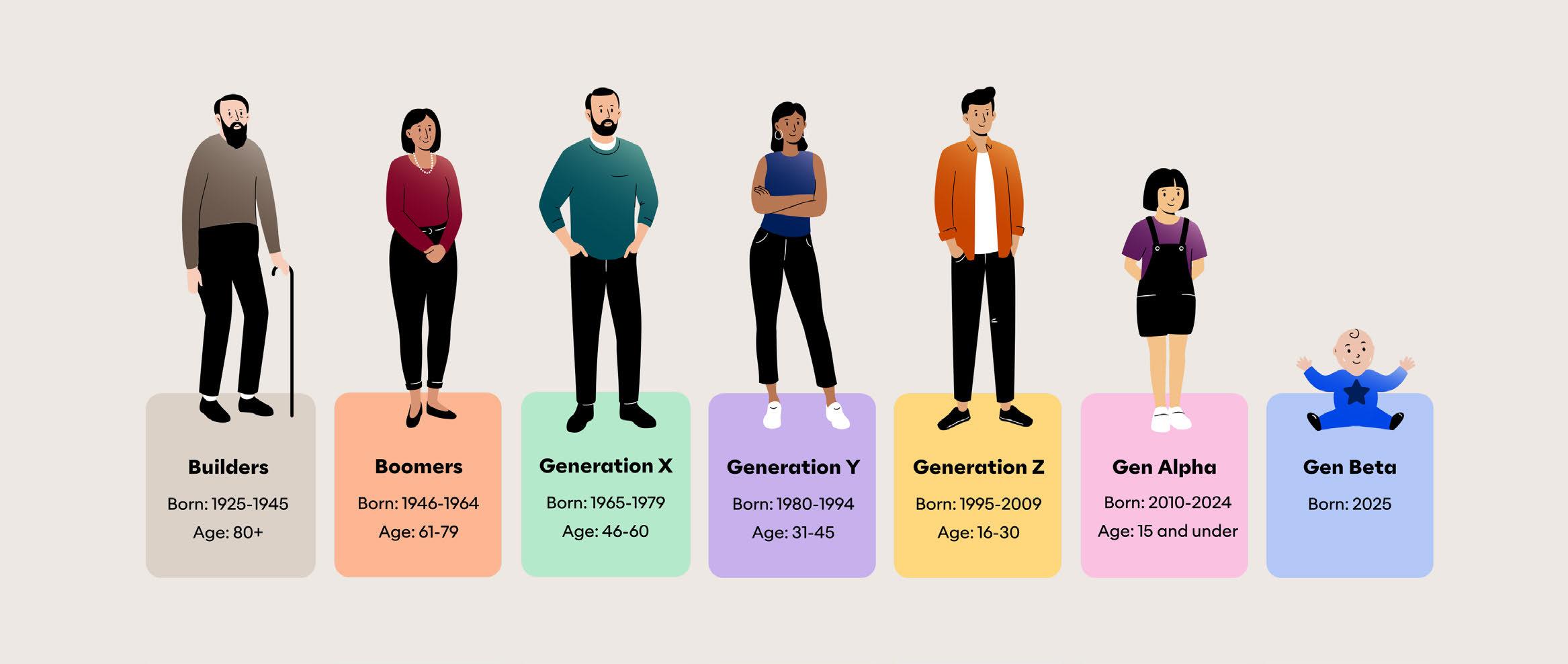
You don’t need me to tell you that the education landscape is transforming. But while everyone is talking tech and AI, our stakeholders are people at the end of the day (at least, for now)! Engaging your parent community means understanding Generation Y (born 1980-1994) and Generation Z (born 1995-2009), who over the next decade will become the dominant cohort of parents. As digital natives expecting greater flexibility, accessibility, and approachable leadership, this emerging generation of parents brings distinct expectations for communication and engagement to schooling.
Realities for Today's Parents and Barriers to Engagement
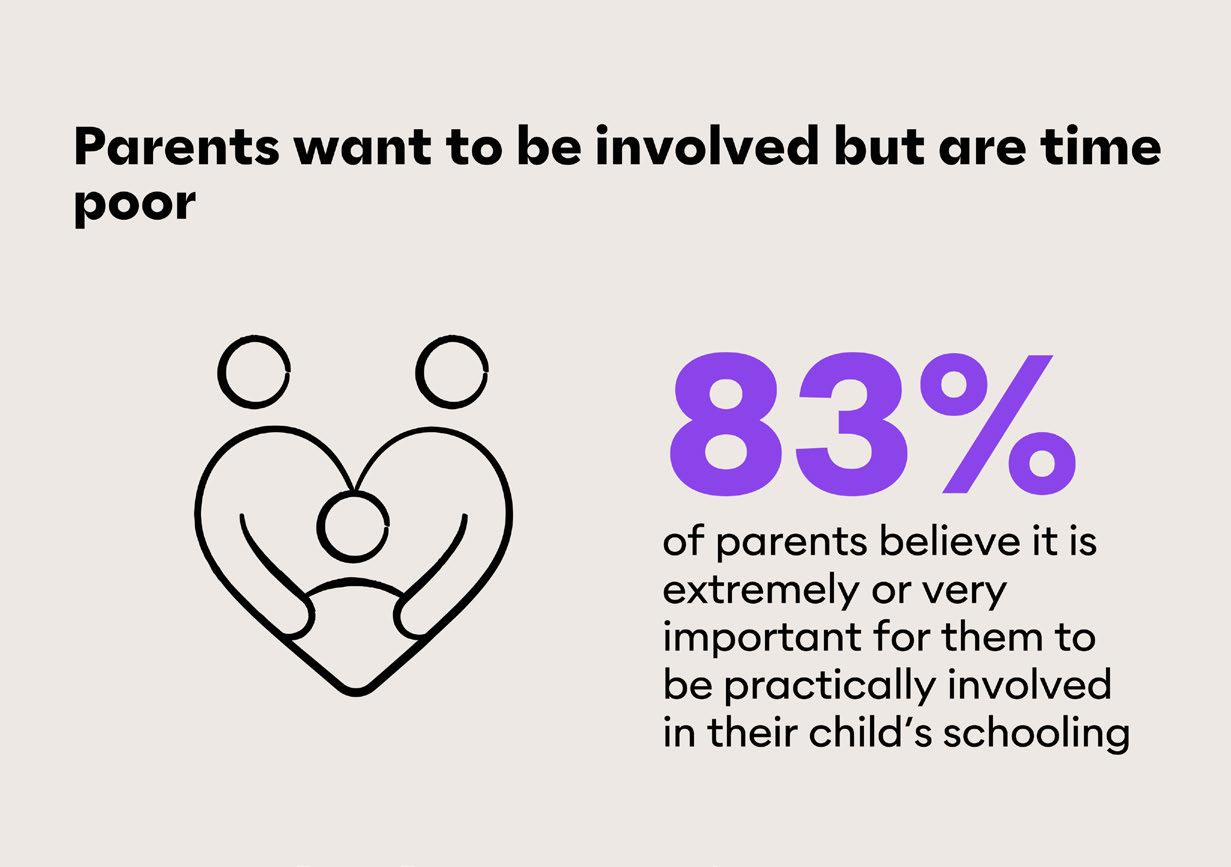
Our latest research reveals parents, despite a strong desire for involvement, are often time-poor. The increasing number of women and mothers in the workforce, and families feeling rushed, highlights the need for flexible school involvement. Common barriers like lack of time and work schedule conflicts exist. Schools must develop robust engagement strategies with clear communication, minimising administrative burdens, and aligning with the digital expectations of Gen Y and Z.
Changing Relationships and Expectations
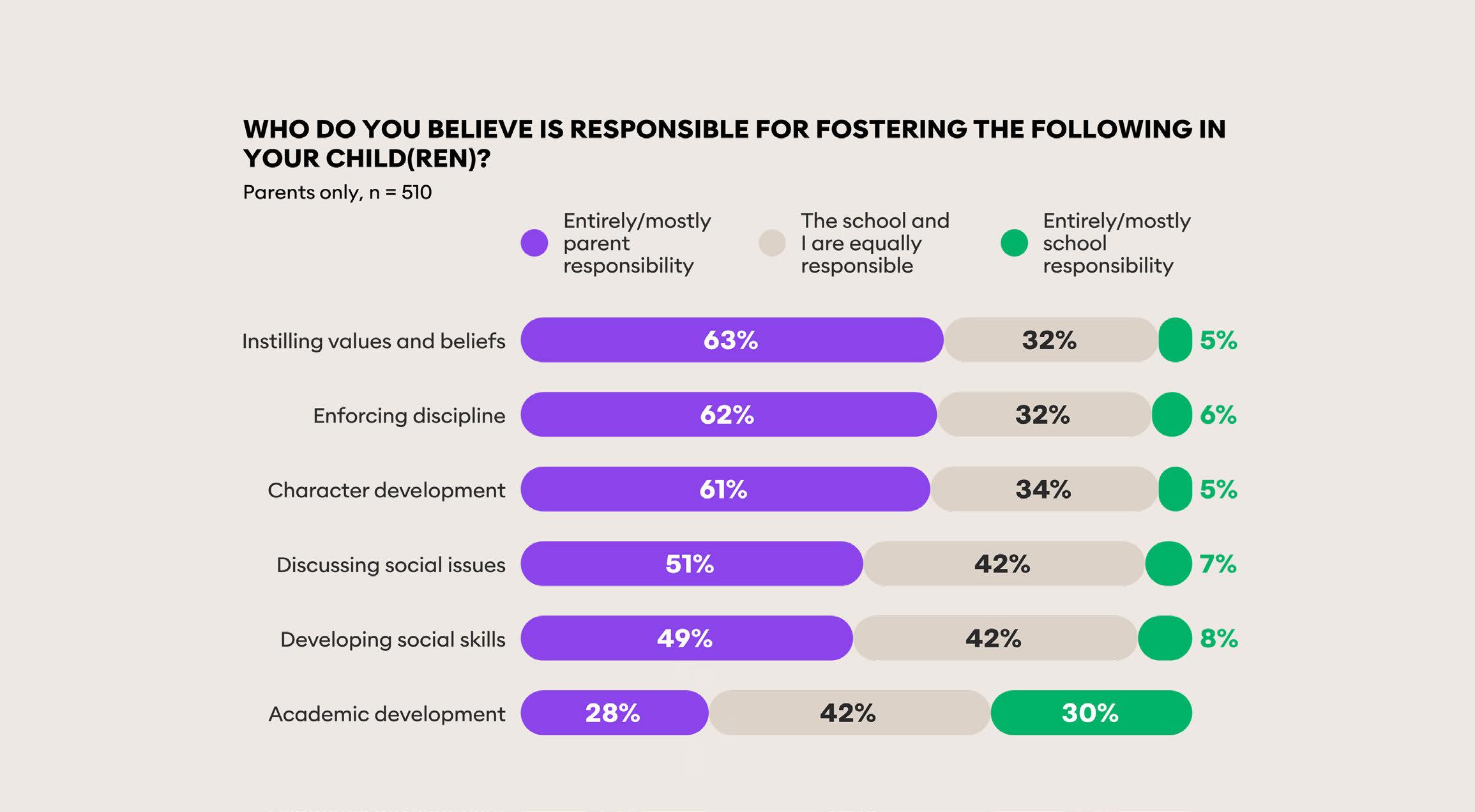
In addition to that, the relationship between parents and schools is shifting. More parents now see elements of their child’s upbringing as a shared responsibility with schools, including instilling values and developing social skills. This evolving sentiment suggests a trend towards collaborative partnerships aimed at holistic child development.
Leadership Response: Develop a Robust Parent Engagement Strategy
Looking to the decade ahead, creating strong partnerships with parents is crucial for fostering thriving learning environments. Effective leadership demands a robust engagement strategy to enhance trust and collaboration. This strategy must acknowledge the evolving expectations of Gen Y and Z, supporting their involvement, mitigating barriers, and adapting to the shifting parent-school dynamic. McCrindle's Thriving Schools Index offers a valuable framework for enabling schools to understand community needs, pinpoint barriers, and craft targeted approaches for stronger connections.
Learn more about the Thriving Schools Index here.
Grant Dusting Director of Strategy
+61 2 8824 3422
Key Tips
• Meet Gen Y/Z expectations with flexible, digital-first communication.
• Reduce admin and streamline processes to support time-poor parents.
• Build trust through a clear, intentional parent engagement strategy.
Future-Ready Schools: Marketing Smarter with AI
Budgets are tight. Teams are lean. Expectations keep climbing. For marketers in education, the pressure to “do more with less” has never been greater.
Artificial Intelligence (AI) is beginning to offer us a way forward — not just for speed, but for smarter, higher-quality work. Its promise lies in freeing people to focus on the most human parts of the job: building relationships, telling stories, and shaping the future of our schools.
“AI is not about speed for speed’s sake. It is about working better and smarter.”
Moving Beyond Dabbling
At the 2025 WA Chapter Summit, I introduced the CRIT method for prompting — Context, Role, Interview, Task (a framework created by Leadership coach Geoff Woods). It turns even a basic chatbot into a purposeful partner. Since then, AI has accelerated fast. The question is no longer whether institutions should use it, but how confidently and consistently they will.
Following, are the five levels of AI where educational institutions need to be building skills. The key is not to stop at Level 1. Each level builds on the last. The schools that thrive will be those that keep progressing.
• Level 1. LLMs (Chatbots). Most institutions start with ChatGPT or Gemini for quick drafts and summaries. They are useful but limited, struggling with memory and consistency. Better prompting, such as CRIT, matters for purposeful results.
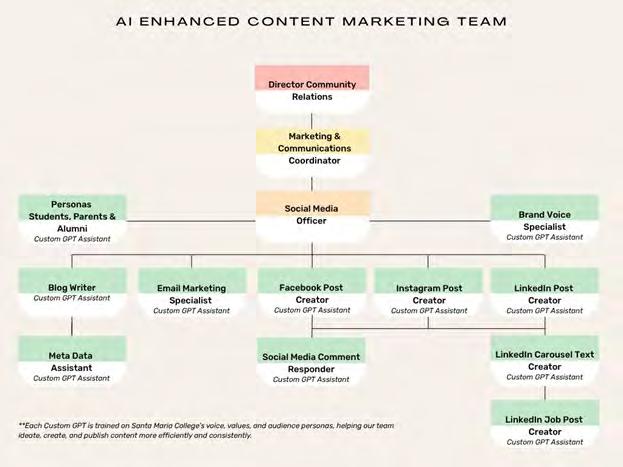
• Level 2. Custom GPTs + Projects. Together, these move beyond one-off chats into reusable systems. Custom GPTs become digital teammates, shaped to your institution’s voice and values. Projects act like a personal filing cabinet, holding context, resources and your GPTs in one place so you do not start from scratch every time. Both features are available on the free plan, although paid plans offer higher limits and more capability. This level brings consistency and time savings, helping staff spend less time repeating work and more time building relationships that matter.
• Level 3. Workflows. Tools like Zapier, Make, or n8n connect AI to your existing systems, automating tasks such as routing enquiries, updating databases, or triggering Communications. They free staff for higher-value work while ensuring routine processes happen reliably.
• Level 4. AI Agents. Unlike workflows that follow recipes, agents work autonomously toward a goal. You set the outcome, such as “run an Open Day campaign,” and the agent decides the steps: drafting emails, segmenting audiences, posting reminders, and adjusting based on engagement.
• Level 5. Vibe Coding. On the horizon, this will allow you to describe an App in plain English, and AI builds it for you. Early platforms like Lovable, Replit, and Reverence AI are already showing what’s possible. Imagine creating a parent engagement tool without writing a single line of code.
“At its best, AI is not replacing our people but amplifying their capacity to do the work only humans can do.”
The Leadership Imperative
The age of casual experimentation is fading. The marketers who thrive will be those who move beyond dabbling, investing in stronger systems, clearer strategies, and more confident teams.
“AI will not wait for us. The question is… will we step up and shape it, or be shaped by it?”
• Build systems: Use Custom GPTs + Projects (paid plans) to reduce repetition and scale consistency.
• Keep progressing: Move beyond LLMs toward Workflows, Agents, and Vibe Coding to stay ahead.
Margo Bastow CPM GAICD F.EdPlus Director of Community Relations Santa Maria College WA
Challenge MS: One Community. One Goal. A Better Tomorrow
In 2023, inspired by her mother’s near 50-year journey with wharanga uwhi iaia— multiple sclerosis (MS)—Amanda Hargreaves collaborated with Christina Sit Yee, Senior Development Manager at Te Herenga Waka, Victoria University of Wellington, to launch a successful community Fundraising campaign supporting MS research.
The Power of Whānau and Community
Multiple sclerosis (MS) is a life-changing neurological condition that affects over 4,000 New Zealanders and over 30,000 Australians. The condition also impacts their families, friends, and caregivers, reminding us that the journey with MS is one that’s not travelled alone. Research is the only way to develop better treatments and improve the quality of life for people with MS. Amanda recognised that gathering a community of supporters inspired by her mother Jenny’s story could make a real difference. Alongside her colleague Christina, she brought together family members, staff, and the University’s MS research team to launch Challenge MS, a peer-to-peer (P2P) Fundraising campaign to raise $20,000 to establish a Master’s scholarship in MS research.
P2P Community Fundraising is a powerful strategy used by charities to harness collective action around a shared cause, where individuals organise personal campaigns to collect donations from their peers on behalf of the charity. Benefits include increased brand awareness, expanded supporter networks, and strengthened relationships with existing supporters who often become Fundraising team leaders. P2P campaigns often culminate with a walk, gala, or other event to generate interest, excitement, and a finish line for the campaign.
Other P2P best practices include:
1. A clear structure where a campaign manager supports Fundraising team leaders, who in turn support fundraisers requesting donations from their networks.
2. Set up fundraisers for success with resources, rewards and recognition, and encouragement.
3. Develop a P2P donation platform with a central webpage, communication features, and reporting. He Tangata, He Tangata, He Tangata
While Amanda led the P2P strategy, Christina focused on grant writing—targeting 20 companies, trusts, and foundations for research support.
Fundraising + Engagement = Impact
“Charitable giving allows us to advance in new ways, to follow a new idea, and to have the rare freedom to do so,” says leading MS immunologist and Challenge MS fundraiser Professor Anne La Flamme. “These extraordinary gifts will allow us to employ a Master’s student who can advance our treatments and understanding of MS in ways that enable us to improve lives.”
Challenge MS exceeded all expectations. Thanks to many generous community donors, the P2P campaign raised over $12,000. Combined with a grant from the New Zealand Multiple Sclerosis Research Trust of $20,000, the scholarship—valued at $32,000—has been awarded to a promising emerging scientist, Cara Schlebusch, who will work in Professor La Flamme’s lab.
Christina Sit Yee
Follow me on Linkedin ( )
Mata Whakawhanake Matua—Senior Development Manager
Te
Kura Tangata—Development and Alumni Relations Office
Te Wāhanga a Manaia—Faculty of Science and
Engineering
Te Herenga Waka—Victoria University of Wellington
Key Tips
• The power of whānau and community –Collective action creates transformative results.
• He tangata, he tangata, he tangata –Have the right people in the room, each working to their strengths.
• Fundraising + Engagement = Impact –Combine Fundraising and Engagement techniques to achieve financial and community aims.
Back-to-school season brings both excitement and information overload. It’s also the moment families instantly feel a school’s communication strengths — or gaps. A coordinated approach reduces inbox noise, builds confidence and shapes the year ahead.
How to cut through the clutter and set the tone for a confident school year.
A strong first step is a full communications audit. Map every channel (apps, email, text, social, websites, portals) and who controls each one. This reveals duplication, clarifies ownership and can support cases for extra staffing or tools. Platforms like Digistorm Funnel, Apps and Websites help centralise forms, notifications and content for a smoother parent experience.
With clarity in place, a master communications calendar becomes essential. Even a simple spreadsheet helps teams plan strategically, avoid overlap and stay consistent.
As you plan content, divide it into two groups: Operational essentials — transport updates, schedules, forms and reminders. Keep these short and skimmable. Community-building content — stories, celebrations and classroom insights that reinforce values and belonging.
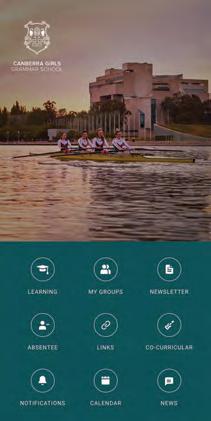
To prevent families feeling overwhelmed, many schools are consolidating email and text into one central hub. Using your school app as the primary channel for announcements, reminders and forms gives parents a single, reliable place to check. Your website remains the home for evergreen information, while social media supports culture-building and storytelling. Ultimately, back-to-school communication is about helping families feel welcomed, supported and confident before the year even begins.
More practical tips are available in a recent podcast with Aubrey Bursch (Easy School Marketing) and Ashley Santana (Veracross).
Suzanne Pelizzari Head of Marketing - Asia Pacific Veracross
• Audit before you act. Identify every channel, owner, and audience to eliminate clutter and strengthen alignment.
• Balance logistics with storytelling. Pair essential updates with missiondriven stories that build culture and connection.
• Match the channel to the message. Use apps, websites, portals, and social media intentionally to reduce fatigue and boost clarity.
International Students: What Did 2024 Bring to the Sector and Where Are We Going?
The international education landscape in Australian educational institutions experienced significant shifts in 2024, marking a complex recovery from COVID-19 disruptions.
With international education contributing $47.8 billion to Australia’s economy in FY 23–24, understanding these changes is crucial for strategic planning.
Queensland emerged as a national leader in 2024, capturing 33% of Australia’s international school student commencements, up from 31% in 2019. This growth occurred despite a paradoxical trend: while Education Queensland International (EQI) expanded aggressively, many CRICOS-registered non-state schools decreased their international Enrolments or deregistered entirely.
Independent Schools Queensland data reveals 1,498 international students across 79 schools in 2024, representing 25% growth, with 85% attending independent schools.
The market share dynamics shifted dramatically between government and non-government sectors. Government educational institutions increased their market share from 64.27% in 2019 to 72.32% in 2024, while nongovernment educational institutions declined from 35.73% to 27.68%. This shift reflects divergent recovery strategies post-pandemic.
Source market performance revealed unexpected patterns. China, traditionally the dominant market, has not returned to pre-pandemic commencement levels, validating the “China-plus” diversification model. Vietnam remains price-sensitive, with Sydney and Melbourne as major competitors. Queensland non-state schools increased Hong Kong Enrolments despite school closures there due to declining student populations. Japan emerged as Queensland’s strongest growth market, particularly in government schools.
Looking forward, several strategic considerations emerge.
• First, the reduction in CRICOS-registered educational institutions creates both less competition and potential market gaps.
• Second, education agent relationships are crucial— educational institutions that dramatically reduced international Enrolments risk permanent relationship damage.
• Third, for Queensland to remain as a strong destination for international students, high-quality schools in the State need to maintain international operations.
The critical question facing educational institutions is whether strong domestic demand justifies avoiding “riskier” international Enrolments. International education requires long-term strategic commitment, not opportunistic participation. Educational institutions must decide whether they are genuinely committed to this sector or merely responding to short-term market conditions.
As we move beyond 2024, successful international education programs will require strategic patience, diversified source markets, strong agent relationships, and a commitment to quality. Queensland’s Leadership position offers opportunities, but only for educational institutions willing to play the long game in an increasingly competitive global education market.
David Ferguson Director, International & Accommodation Operations
John
Paul College QLD
Follow me on Linkedin ( )
Key Tips
• Queensland leads overseas student recruitment in schools nationally, with 33% market share, driven by government school growth while non-state participation declined
• Education agent relationships are critical - schools that stopped Enrolments risk permanent partnership damage that's difficult to rebuild
• Success requires long-term strategic commitment, not opportunistic participation based on domestic demand fluctuations
Template or Custom Website? A Guide to Making the Right Choice
Choosing between a bespoke (custom) website design and a template is a key decision for any organisation wanting to make a strong impression in the digital world. While templates can offer a quick, budget-friendly way to get online, a bespoke design delivers a tailored experience that can set your brand apart and grow long-term with your organisation.
Why Bespoke Design Stands Out
A custom website is built from the ground up to reflect your brand’s unique identity, values, and goals. Every element, from layout and colour to typography and interactivity, can be crafted to match your brand's personality. This level of personalisation helps you stand out in a crowded digital landscape, where many of your competitors may use the same templates. You need to build your brand, not theirs.
Tailored For Your Audience
A bespoke website allows you to create a user experience that’s specifically tailored to your audience’s needs. Whether your customers prefer simple navigation, larger text, or mobile-first experiences, a custom site can
be optimised for their preferences. This attention to detail leads to higher engagement, better conversion rates, and increased customer satisfaction as you're delivering information to your customers in ways that suit their preferences.
Build for Growth and Performance
Custom websites are designed with scalability in mind, making it easier to add new features, integrate with 3rd party tools, and adapt as your business evolves. Templates often hit a “ceiling” when you need advanced functionality or want to expand capabilities. Bespoke sites tend to be faster, more secure, and better optimised for search engines, giving you a competitive edge in both performance and visibility.
Can Templates Be A Good Fit?
Templates can be a practical choice for organisations with limited budgets or those needing a fast launch. They can be a good starting point for short term campaigns or simple sites, but most businesses eventually outgrow their limitations and would require a full rebuild after a few years.
Chris Frost Project Lead, Concise Digital Formerly Managing Director, Firefly Digital
�� hello@concise.digital
�� https://www.concise.digital/ ☏ 1300 226 624
Firefly has joined Concise. Two agencies. One vision.
Key Tips
• Investing in quality custom design is typically paid back within the first 2 - 3 years, with the remaining years delivering disproportionate value and reduced disruption.
• Template sites reach a much lower ceiling and often require multiple complete rebuilds, reducing their effective long-term return.
• Bespoke websites typically deliver 25x greater ROI over 5 years compared to templates, driven by performance, scalability, and conversion rates.
BeyondClassrooms: Expanding Traditional Learning into Engaging Alumni for Life
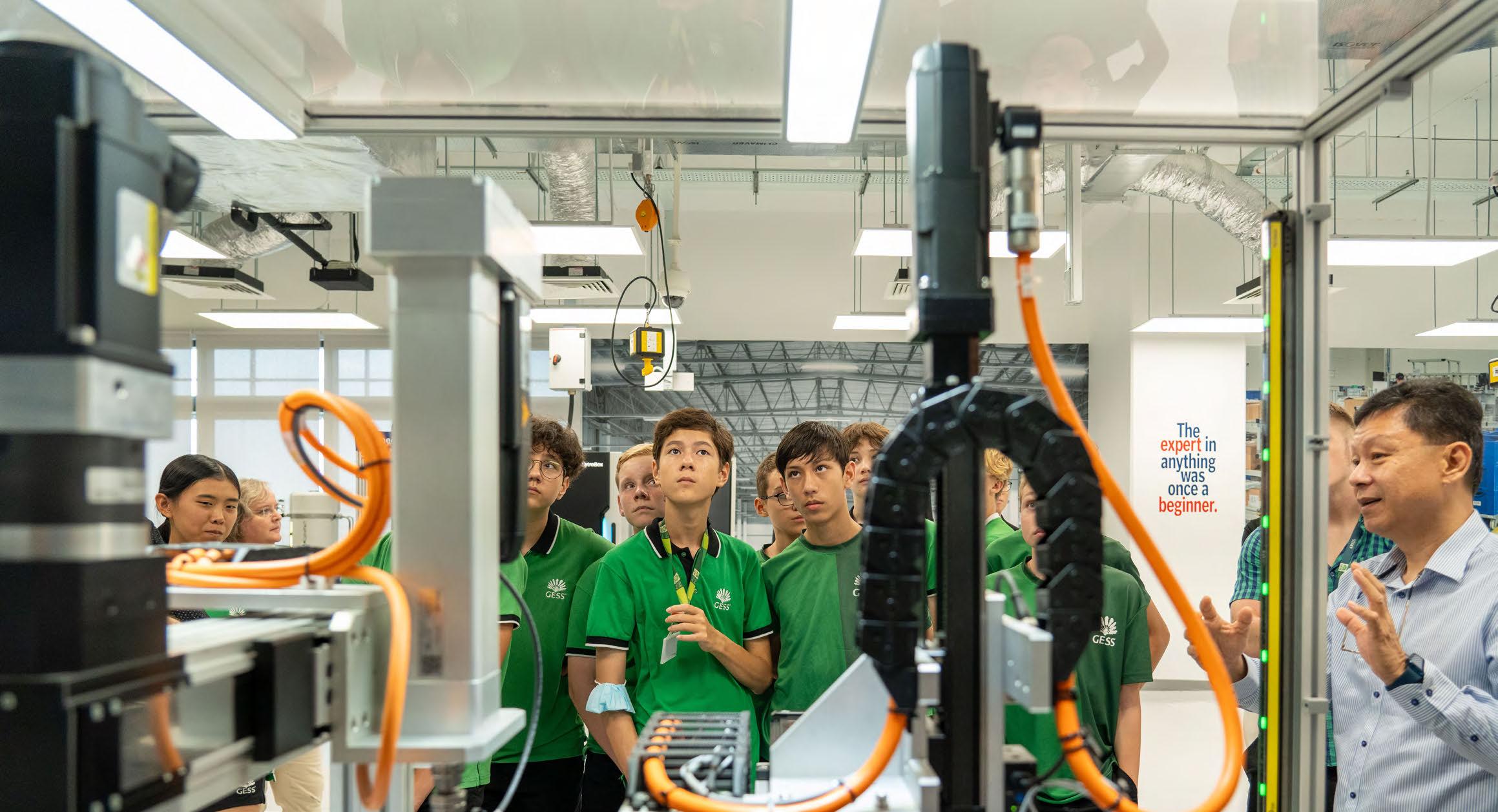
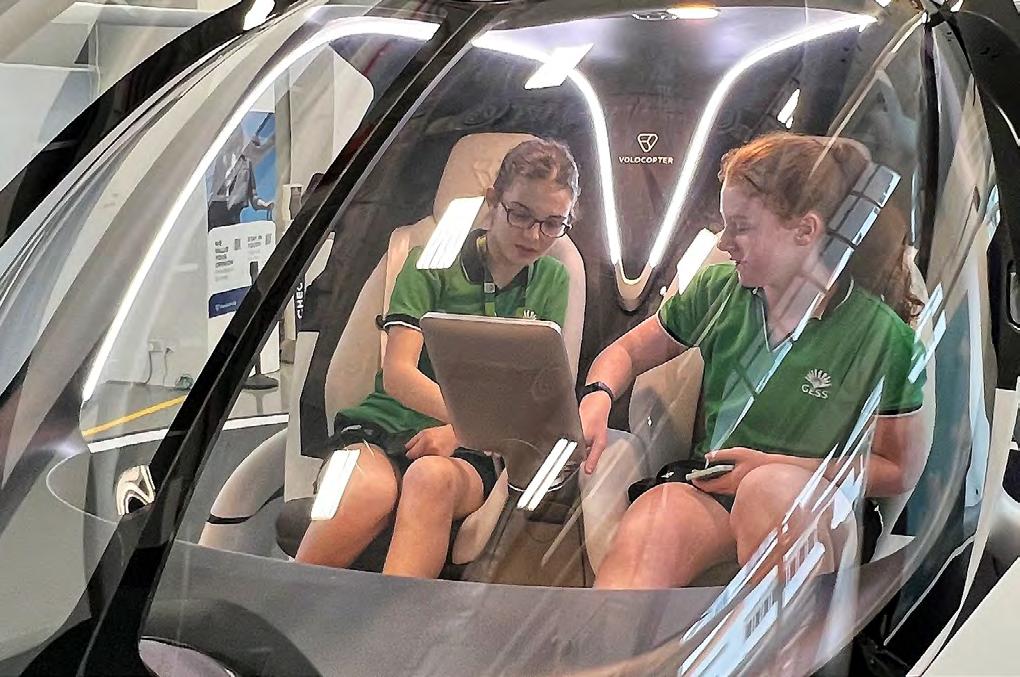
At the German European School Singapore (GESS), learning and connection intentionally goes far beyond textbooks and timetables.
The BeyondClassrooms programme opens doors to holistic experiences that enrich education, cultivate passions, and prepare students for a rapidly changing world. In doing so, it also lays the groundwork for future Alumni & Community Engagement, helping students develop the confidence, curiosity, and sense of belonging that continue well beyond graduation.
From social learning, innovation challenges, site visits, internships, and partner workshops to career counselling, guest speakers, sports, and music, every experience provides students with real-world insight and shared purpose. These formative opportunities don’t just prepare students for their next steps, they plant the seeds for a strong Alumni culture grounded in connection, contribution, and community.
At its core, BeyondClassrooms connects students with authentic, real-world experiences. Partnerships with corporates, chambers of commerce, embassies, NGOs, charities, and local communities provide exposure to diverse industries and global perspectives. These same partnerships establish a foundation for future engagement, offering students professional networks and experiences they will later carry into their Alumni lives. As the saying goes: it takes a village to raise a child. At GESS, this village extends far beyond the classroom, creating a network that continues to support and inspire.
The programme also focuses on cultivating life skills that endure long after graduation. Students develop discipline through training, empathy through social learning, and confidence through public performances or speaking opportunities. With tailored career counselling and exposure to professional environments through site visits, internships, and workshops, they begin to form a professional identity—an essential bridge between school life and the lifelong connection of Alumni life.
Ultimately, BeyondClassrooms reflects the philosophy of a GESS education: empowering young people to become curious, courageous, and compassionate global citizens. By fostering connection, confidence, and curiosity from the start, GESS ensures that students don’t just graduate, but that they also carry the spirit of learning and community with them, remaining part of something larger than themselves.
Kirsten
Moench
Head of External Communications and Relations
German European School
Singapore (GESS)
Follow me on Linkedin ( )
Key Tips
• Build Strong Partnerships Now, For Continued Engagement
Collaborate with corporates, chambers, embassies, NGOs, and local groups for genuine real-world exposure. Base partnerships on shared organisational commitment, creating networks that strengthen learning and future Alumni & Community Engagement.
• Design for Variety
Provide diverse opportunities— innovation challenges, internships, workshops, visits, arts, and sports to spark curiosity and nurture talent. These experiences build interests and connections that naturally support ongoing Alumni involvement.
• Bring the Academic Team Along
Work with teachers so experiential learning blends seamlessly with curriculum. Strong alignment deepens purpose and belonging, reinforcing emotional ties that sustain lifelong Alumni pride and connection. Click to view VIDEO
Bridging the Gap Between Pedagogy and Promotion
The result? Polished promotion that doesn’t ring true for educators, and brilliant pedagogy that never reaches the families who would value it most. Forget branding fluff. It’s boots-on-theground practice.
When these two worlds connect, the stories told are richer, more credible, and far more powerful in shaping understanding and trust.
Start with pedagogy, the ‘how’ behind learning. Great teachers adapt for different learners, spark curiosity, and connect knowledge to real-world contexts. When school marketers adopt the same mindset, everything sharpens: audience clarity, message discipline, and content that students and staff are proud to share.
It’s this shared curiosity and purpose that transforms communication from information into inspiration.
Move from extractive storytelling (‘quick photo, big claim’) to embedded partnership:
• Eat lunch in the staffroom.
• Attend Staff Briefings.
• Sit in on Professional Development.
• Cover a duty.
• Volunteer to go on an excursion.
• Observe a lesson, then follow the thread into a story: what was the learning intention, how did the method change the outcome, and what evidence shows impact?
In schools, Marketing and teaching often sit in parallel lanes—both vital, yet rarely aligned...
This is where authenticity lives, and where families (current and potential) feel the difference.
Genuine connection is felt in the tone, not just seen in the visuals.
In practice, shape your pipeline around pedagogy.
Segment like a teacher differentiates.
Not all audiences value the same proof. Match message and channel to their motivation.
Co-create narratives.
Invite educators and students to shape drafts and visuals. You’ll gain accuracy, nuance, and advocacy. Collaboration builds ownership, and ownership builds pride.
Prove it.
Elevate outcomes (progress, confidence, belonging) alongside inputs (programs, facilities). Show learning in action.
When pedagogy drives the story, everyone wins. Teachers see their expertise honoured. Students recognise themselves in the narrative. Families trust the school’s claims. And your brand shifts from promotional noise to a credible promise—learning that matters.
In the end, authenticity is not a strategy but a shared habit of seeing, listening, and celebrating what’s real.
This is the real growth engine, built on relationships, evidence, and shared purpose. Less ‘sell’, more ‘show'. Less ‘campaign’, more ‘craft’. Roll up your sleeves, step into the learning, and let what’s powerful about your school speak for itself.
Key Tips
Amanda Peake Director, Strategic Initiatives and Sustainability
Queen Margaret College, NZ
Follow me on Linkedin ( )
• Embed before you amplify. Observe, listen, co-create and then publish.
• Design like differentiation. Right message, right channel, right moment.
LET US DEVELOP AN EFFECTIVE ADVANCEMENT STRATEGY THAT DRIVES YOUR FUTURE SUCCESS
We are passionate about developing end-to-end advancement solutions and fundraising done well. In fact, we have supported education providers with their fundraising for over 20 years, from leading ambitious capital campaigns to establishing brand-new fundraising programmes to building an entire advancement strategy. It’s a challenging space and needs to be deeply understood to be leveraged well. And that’s where we come in. We provide advice, support, and our extensive experience in education advancement to further your institution and its community.
Leadership, Momentum and the Power of Being Someone's Fan
The context and environment have significantly shifted and increased in complexity for all organisations, but particularly for educational institutions.
“Anybody who tells you they know what’s going to happen next with the media or with professional services firms or in the tech industry or the insurance industry or whatever, those people are delusional. We don’t know what’s going to happen next. The thing that we know is it’s going to be different from now. So, we need a different kind of leadership to lead us into the unknown. That leadership needs to help other people be bigger, because we need more collective force of leadership than any one human being can hold.”
Jennifer Garvey Berger, The Mental Habits of Effective Leaders (The Knowledge Project Ep. #43)
Leaders can help others grow into Leadership, be bigger, and engage their talents by ensuring they feel connected and know they matter. This extends the idea of connection, kindness, and empathy—something both inspirational and motivational for most people, and something we can all practise with one another and those within our communities.
It starts with a story about a moment in Tiger Woods’ career. Whether or not you like golf, there’s something undeniably special about this moment - Tiger Woods’ Chip on 16 | Iconic Masters Moments.
How long did that ball sit on the cup? A perfect moment for Nike—logo loud and proud—it must have made them millions right there. Technically, the ball had stopped; it wasn’t moving. Then, it dropped. For those in the know, it’s considered one of the greatest golf shots in history. Commentators said the noise was deafening, and as the ball crept closer to the hole, the ground literally shook, such that they could feel it in their knees. They wrote that the only reason that ball made the final revolution was because every fan there wanted it to go in. They gave the moment momentum.
And so, what? Here’s the truth: we all lead, and we all have opportunities to influence others, to be the person who has confidence in them and who inspires them to keep going. That moment in 2005 represents a universal Leadership truth. While the Science Department may disagree, the fans gave that ball momentum—their energy, enthusiasm, and belief created a tangible force. Every person wants ongoing acknowledgement, respect, recognition, and someone who believes in them. Successful leaders understand this and are fans all the time, not just when it’s easy.
If you get the opportunity, be someone’s fan. Tell them. And keep reinforcing why.
(Based on ideas shared by Randall Stutman.)
Dr Richard Goater Director of Staff Development and Human Resources
Hale School
WA
Follow me on Linkedin ( )
Key Tips
• Leadership is collective. True Leadership isn’t about individual control—it’s about helping others grow, connect, and realise their potential.
• Momentum is shared energy. Just like Tiger Woods’ unforgettable putt, great results often come from collective belief, encouragement, and support.
• Be someone’s fan. Acknowledge, respect, and cheer for others consistently because recognition and encouragement create lasting impact.
Mission (is) Critical: Creating a Vision, Mission and Values for Advancement
Creating alignment between Advancement and Institutional Purpose is a critical step to engaging Board, Leadership, and Faculty - and developing a Vision and Mission for your Advancement program can help.
Fundraising programs in educational institutions often begin organically. A parent donates supplies, or a crisis sparks emergency giving. Over time, these ad hoc efforts evolve into annual events and piecemeal initiatives. The result can be an Advancement program that feels fragmented and misunderstood, even by the internal stakeholders it serves such as Boards, leadership and faculty.
To move beyond this, Advancement initiatives, and in this case, Fundraising, must align with the institution’s mission and vision. Doing so helps internal stakeholders see that the functions of the Advancement Office are not separate from the academic side of institutions, but integral to it. Developing vision and mission statements for your Advancement program provides language, clarity and frameworks that demonstrate relevance.
Creating these statements works best in a retreat setting, away from daily distractions.
Vision
Great vision statements describe a “future-perfect” state: what would your institution look like if Advancement’s work were fully realized? The trick is to draw on words and ideas from your institution’s vision. At Hong Kong International School (HKIS), our Vision for Advancement is:
“In the future, HKIS will possess the philanthropic resources to fully execute its mission and will be globally recognized as one of the best international schools in the world.”
Mission
Good mission statements define what you do daily to achieve that vision. For HKIS Advancement, ours is:
“Create a culture of philanthropy in which the entire community can participate, motivated by effective, efficient development and marketing programs.
We advance the mission of HKIS through fundraising, relationship management, marketing, communications, and public relations, utilizing best practices while honoring the school’s traditions.”
It may seem simple, but these statements provide internal stakeholders with clear connection points for Advancement to your institution’s purpose.
Map Advancement activities to your new mission. Logic models, like those from the Kellogg Foundation, are useful: begin with the desired impact, define outcomes and outputs, then identify the activities and resources required.
If something you do doesn’t align well (or at all), it’s likely institutional leadership, Board, and faculty may wonder the same thing.
Share your Advancement vision and mission broadly. Present them to leadership and your Board, invite feedback, and use them consistently in presentations and publications. Over time, these statements become a mantra for explaining your work and demonstrating its relevance to the institution’s mission.
Clear vision and mission statements transform Advancement endeavours from a collection of Fundraising activities into a strategic pillar your institution. They ensure Advancement is seen not as peripheral, but essential.
Heath Hignight CFRE Chief Advancement Officer
Hong Kong International School
Follow me on Linkedin ( )
Key Tips
• Align with Institutional Mission: Connect every Fundraising activity to your institution’s core purpose.
• Craft Clear Statements: A strong vision and mission give Advancement a shared language and focus.
• Socialize the Message: Repeatedly promote your vision and mission with the Board, faculty, and leadership until it becomes part of the culture.
Alumni Relations: The Stories We Share for Community Engagement
At Kristin School in Auckland, New Zealand, our 50th Jubilee was a catalyst to bring our rich history to life for our community.
Our archives are not simply records of the past—they are a living treasure: collections that tell the stories of our school and the people who have shaped it.
As a school founded by families for families, Kristin’s heritage is unique. In the early 1970s, following the closure of St Anne’s School in Takapuna, a group of parents came together with a vision to build an independent school where every child’s talents would be recognised and nurtured. Our founding parents worked tirelessly, locating a site, raising funds, establishing a board, and holding working bees to build the school.
From those humble beginnings, Kristin has grown into a school of more than 1,800 students, from our youngest learners aged six months through to Year 13.
The 50th Jubilee: Bringing the Archives to Life
The 50th Jubilee in 2023 was an opportunity to celebrate this legacy. Making our archival material accessible was a key focus for our milestone year.
In the years leading up to the Jubilee, we engaged with NZMS to build a website through the Recollect platform, called Kristin Archives Online. Our Archivist began digitising photographs, publications, videos and memorabilia for the site. The steady work and dedication of the Archivist, along with help from volunteers, enabled us to launch Kristin Archives Online and begin sharing precious memories ahead of the 50th.
The site was complemented by a commemorative history book, video interviews with founders, displays of uniforms from years gone by, yearbook collections and photography display boards.
Sharing our heritage has proven to be a powerful way to foster connection and belonging, with Alumni, students, staff and families able to reminisce and reflect on their time at Kristin. Having an online platform meant that those who couldn’t attend in person could also reconnect, wherever they were in the world.
Growing the Collection
Since then, we have continued to make archival material more accessible, adding content to Kristin Archives Online while also developing curated collections for special occasions such as Foundation Day and Alumni reunions.
The Value of Preserving Heritage
The wonderful thing about archival material is that it tells a story unique to your organisation. Every photograph, yearbook and uniform added to our collection preserves our heritage for future generations, reminding people that even after they leave, they remain part of the Kristin community and story.
Aroha Webster Head of Brand, Communications, Community Relations Kristin School, Auckland NZ
Follow me on Linkedin ( )
Key Tips
• Building a strong foundation of content before launching an online archival site is valuable, but it doesn’t need to include everything at once. Adding new material over time gives people reasons to return and stay engaged.
• Consider what will resonate with different audiences—curated collections are an effective way to draw people in, and there are opportunities for personalisation at the individual level, such as creating tailor-made greeting cards for returning Alumni families.
• Developing archives takes time, but it is time well invested, fostering meaningful engagement and lasting connections within your community.
ARTICLE
Beyond Authority: Building Stronger Institutions Through Shared Identity Leadership
Walk into some schools and you can feel it almost immediately. There’s a hum in the corridors. Students are engaged, teachers seem energised, and everyone, from the principal to the front office, seems part of something larger than themselves...
These schools aren’t always the best funded, nor are their facilities particularly new. Yet they achieve strong results, attract committed staff and maintain high levels of engagement.
What sets them apart is not simply good management or inspirational posters. It’s leadership, but not in the traditional, top-down sense. It is leadership that builds a shared sense of “us”. The evidence is unequivocal: enduring success in schools and universities depends not on heroic individuals but on collective identity. When leaders foster shared belonging and purpose, trust, performance and engagement follow. This is the promise of the Social Identity Approach to Leadership (SIA-L), a research-backed framework that moves us from leading over people to leading through them.
From “I Lead” to “We Lead”
Traditional leadership models focus on the individual leader — their style, their charisma, their decisions. In schools, this often places the Principal as the central driver of every initiative. But experienced educators know institutions don’t thrive because of one person. They thrive when people feel connected: to each other, to their purpose and to the community they serve.
SIA-L, originating in the work of Henri Tajfel and John Turner and advanced by Haslam, Reicher & Platow (2020), is built on a powerful insight: people are motivated by group membership and shared identity. Leaders are most effective when they represent, advance and embed the identity of the group. As Professor Stephen Reicher
notes, “Effective leaders are identity entrepreneurs. They don’t just lead people, they shape the sense of who ‘we’ are.”
Applied to schools, leadership becomes less about a single person’s vision and more about forging a shared sense of “us” across teachers, students, and the wider community.
Why Belonging Matters in Education
Belonging is not a soft variable. It is a structural driver of motivation and achievement. Students who feel they belong attend more, participate more, and achieve more. What’s become clearer is how leadership shapes that sense of belonging.
A 2024 longitudinal study of more than 6,000 school staff (Cárdenas, Reid, Zhou & Reynolds) found that when leaders created and represented a shared sense of “us,” school climate improved the following year, which, in turn, predicted higher staff wellbeing and engagement.
Similarly, Maxwell et al. (2017) showed that students’ identification with their school strengthened the link between school climate and academic performance. Climate and belonging are not abstract ideas; they are predictors of learning.
The Climate–Performance Connection
Where school climate is strong, students identify more with their school. And where identification is high, outcomes such as NAPLAN writing and numeracy results improve. Leadership that strengthens identity strengthens performance.
Measuring What Matters
Tools like the School Climate and School Identification Measure – Student (SCASIM-St), developed by Lee, Reynolds and colleagues, now allow schools to measure both climate and identification, turning SIA-L into a measurable, trackable practice.
The CARE Model: What Effective Identity Leadership Looks Like
Haslam, Reicher & Platow (2020) summarise identity leadership using the CARE model:
C
– Create a sense of us
A – Advance us
R – Represent us
E – Embed us
Schools, with their rituals, traditions, structures, and stories, are uniquely suited to this work.
Advancing Identity Leadership in Practice
Four practical strategies for Advancement professionals:
1. Co-create, don’t just communicate
2. Lead through symbolic action
3. Build identity into structures
4. Distribute identity leadership using the 5Rs:
• Reading the group’s current identity landscape
• Representing group values in behaviour
• Realising shared identity through collective action
• Reinforcing it via rituals and symbols
• Re-visioning to ensure relevance over time
Why This Matters Now
Schools face teacher shortages, wellbeing concerns, increasing complexity and pressure for strong results. Authority alone cannot meet these challenges. Connection can.
Identity leadership offers a research-grounded, practical way to build that connection.
Getting Started: Five 5 Steps for
School Leaders
• Listen deeply - Discover existing community beliefs
• Name the narrative - Define the shared story
• Model the identity - Lead visibly through behaviour
• Embed it everywhere - Infuse identity into culture
• Measure and adapt - Track belonging and improve
Looking Ahead: A Cultural Shift in Educational Leadership
Identity leadership reminds us that schools are communities first. When leaders build a shared sense of “we,” strategy becomes more meaningful, achievement grows, and people thrive. As Haslam writes, “Effective leadership is not about getting people to follow you. It’s about creating a sense that you and they are part of the same journey.”
That journey begins by asking: Who are we?
References
Randal Tame Managing Director Influence Consulting
Follow me on Linkedin ( )
• Cárdenas, D., Reid, B., Zhou, H., & Reynolds, K. J. (2024). Boosting school staff well-being and engagement through identity leadership. Journal of Occupational and Organizational Psychology.
• Haslam, S. A., Reicher, S. D., & Platow, M. J. (2020). The New Psychology of Leadership: Identity, Influence and Power (2nd ed.). Routledge.
• Lee, E., Reynolds, K. J., Subašić, E., Bromhead, D., Lin, H., Marinov, V., & Smithson, M. (2017). Development of a dual school climate and school identification measure—student (SCASIM-St). Contemporary Educational Psychology, 49, 91–106.
• Maxwell, S., Reynolds, K. J., Lee, E., Subašić, E., & Bromhead, D. (2017). The impact of school climate and school identification on academic achievement: Multilevel modeling with student and teacher data. Frontiers in Psychology, 8, 2069.
• Mavor, K. I., Platow, M. J., & Bizumic, B. (Eds.). (2017). Self and Social Identity in Educational Contexts. Routledge.
Book your demo today!
Welcome to Kindergarten
Where MEmories of Schooling Begin!
Starting school is one of the biggest milestones in a child’s life – and what better way to celebrate than with a personalised Welcome to Kindy Booklet designed exclusively for your school.
At Fotoworks, we create beautifully designed booklets that
Showcase your school’s values, uniforms, and facilities
Introduce teachers, classrooms, and the school day
Share key information with parents
Include fun, interactive activity pages for students
Become a treasured memento for families
From professional photography to custom design and print, we take care of it all, ensuring your school’s story is told in a way that’s warm, welcoming, and uniquely yours.
Let’s create something special together!
Ask us how to get started on your school’s personalised Welcome to Kindergarten booklet.
P 08 9244 8211
E icare@fotoworks.com.au
W fotoworks.com.au
Why Choose Fotoworks?
• School Photography Specialists – trusted by over 250 schools
• Promotional Photography & Videos tailored to your needs
• Complete Design & Print Services located in Osborne Park
• 100% Local to WA – proudly servicing schools from Esperance to Kununurra and everywhere in between
• Supporting WA schools and communities for over 40 years
A Milestone Moment for Asia's educate+ Advancement Community
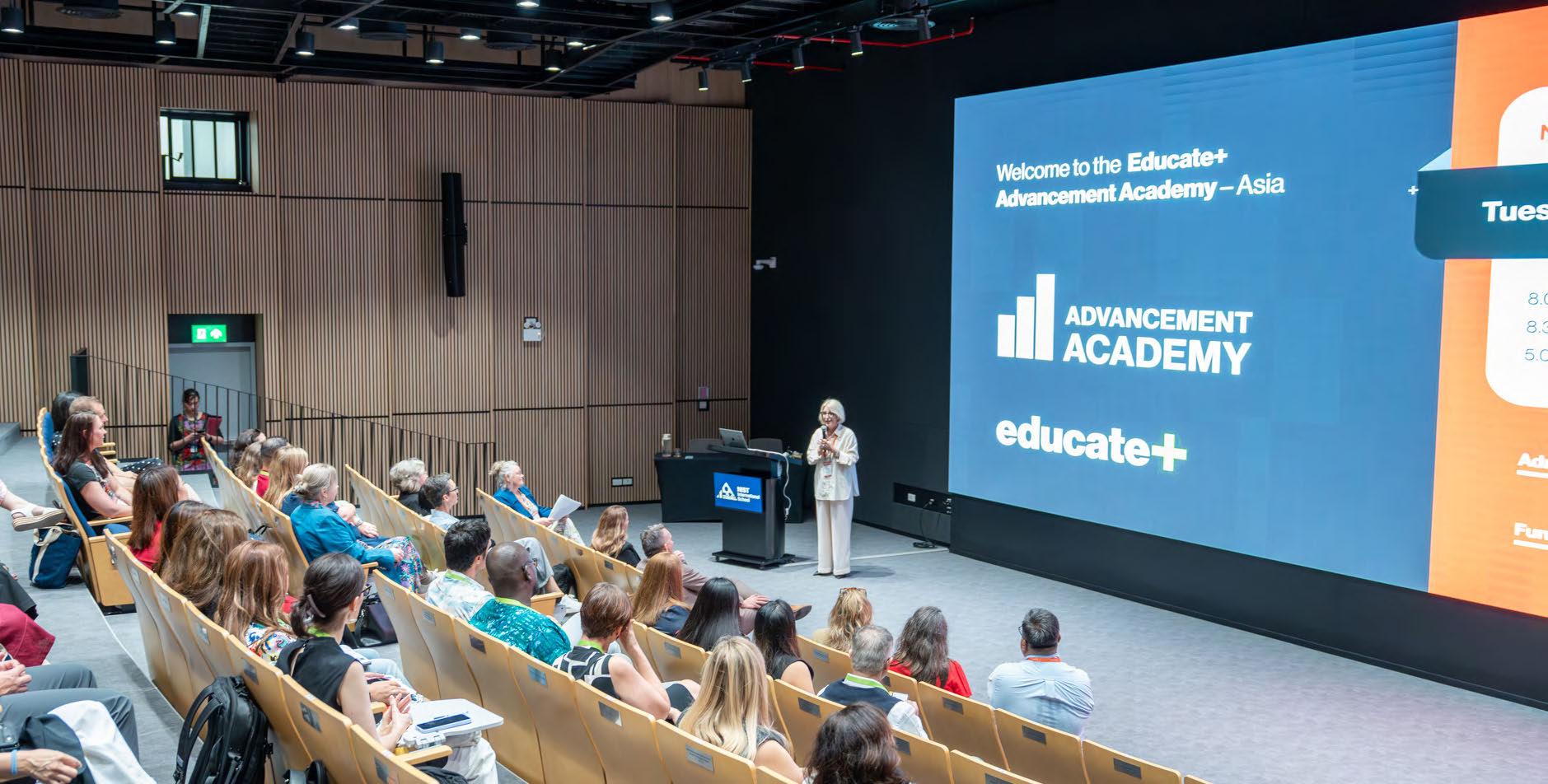
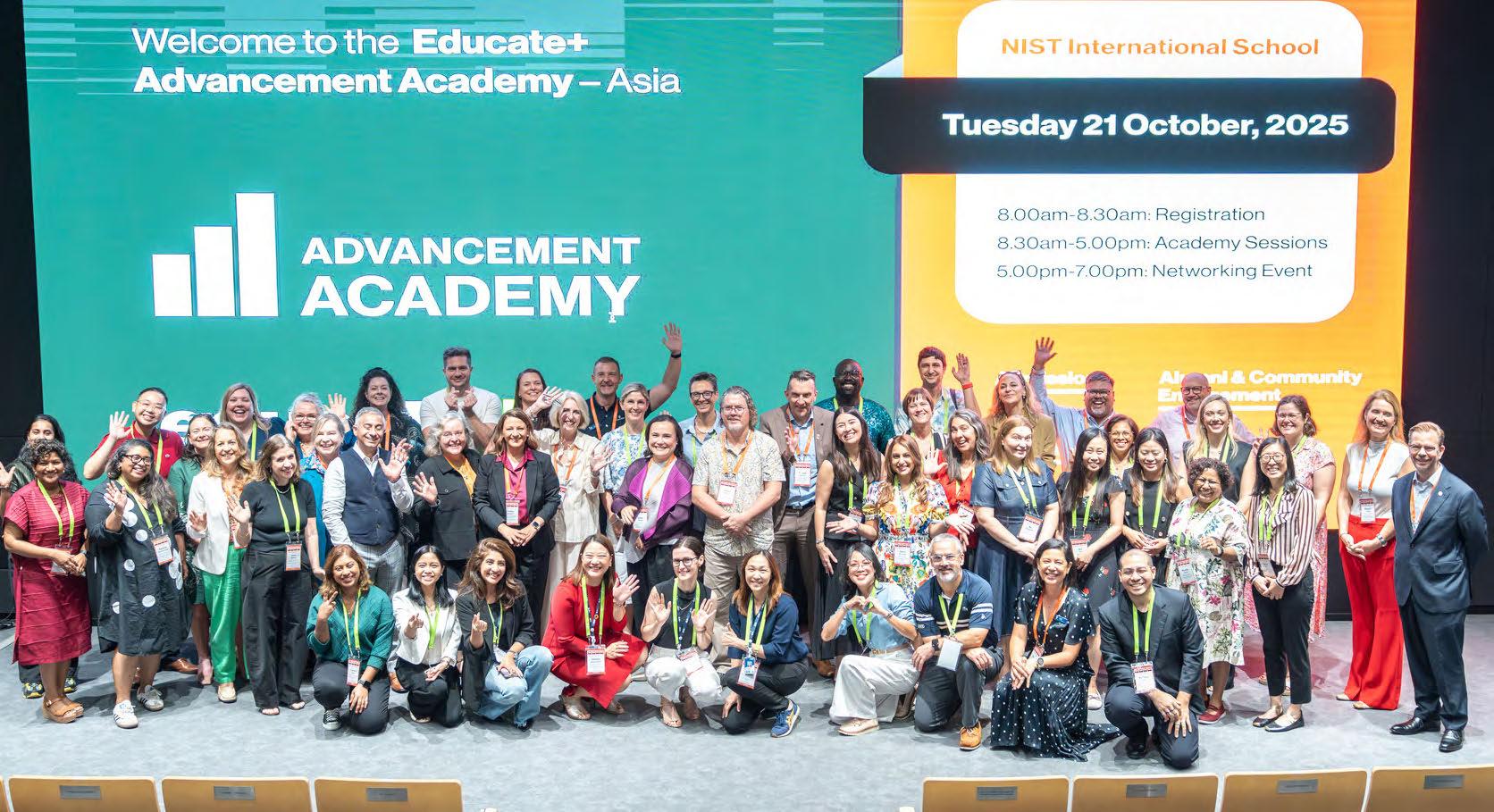
There was a special energy in the air on 21 October, as 36 Advancement professionals from across Asia walked onto the NIST Campus in Bangkok for the first-ever educate+ Advancement Academy in Asia
While the program was modelled on a shortened version of the educate+ Advancement Practitioner Training (APT) format, what unfolded was something uniquely regional— an experience grounded in warmth, shared purpose and a growing sense that Asia’s diverse schools are ready to step forward together.
From the moment participants arrived, the tone was clear: this was a space for learning, and just as importantly, it was a space for connection. Conversations sparked quickly over coffee; new colleagues became collaborators by lunchtime. As one Delegate shared, “I didn’t expect to feel this sense of belonging on the very first day. It felt like stepping into a community I didn’t realise I was missing.”
Four parallel learning tracks kept the day lively, and the discussions were so engaging that one presenter laughed afterwards, saying, “I brought nineteen slides… we got through three. And honestly, that’s exactly how it should be.” The depth of questions, the generosity of shared experiences, and the diversity of perspectives, from South Korea to Singapore, Bangkok to Guangzhou, created a learning environment that was as challenging as it was uplifting.
NIST’s superb hospitality at their new conference facility provided the perfect backdrop and the atmosphere of camaraderie only grew stronger as some of the Delegates also attended EARCOS Conference days later. Several Advancement Academy attendees found themselves reconnecting across sessions, often introducing educate+ to new contacts with genuine pride.
ASIA Region 2025 Highlights
• Membership growth to over 100 members, across 20 institutions
• The launch of the first-ever Asia Advancement Academy marked an exciting new milestone for the region
• The participation of 10 Ambassadors in establishing a network of Advancement professionals in the Asia Region
One Head of School commented, “If this is what educate+ looks like in Asia, you’re onto something powerful.”
The Academy also created bridges beyond the event itself. Visits by the educate+ teams to Bangkok Patana School and St. Andrew’s School also sparked new conversations about membership, collaboration, and future hosting opportunities. These interactions underscored a truth that had become increasingly clear: Asia’s Advancement professionals are hungry for connection and are ready for a shared professional home.
The inaugural Advancement Academy-Asia, was conceived as a pilot. It emerged as something more, becoming a catalyst for community. As one participant reflected while saying goodbye, “We arrived as strangers, but we’re leaving as a network.”
And that, perhaps, is the most powerful outcome of all.
Abhra Bhattacharjee F.EdPlus Director of Development & Head of Foundation, Tanglin Trust School, Singapore
Follow me on Linkedin ( )
Thank You - 2025 Ambassadors
Abhra Bhattacharjee F.EdPlus, Director of Development & Head of Foundation, Tanglin Trust School Singapore
Sarah Goh, Director of Advancement, International Community School, Singapore
Ylva Kovacs, American Embassy School, New Delhi, India
Lindy Leonhardt, Head of Admissions, Communications and Marketing Manager, International School of Phnom Penh
Alex Manton, Founder / Creative Director, SchoolHouse Agency, Singapore
Kirsten Moench, Head of External Communications and Relations, German European School, Singapore (GESS)
Joanne Stanley, Director of Admissions, French International School (FIS), Hong Kong
Yvonne Trisynthia, Director of Engagement, NIST International School, Bangkok
Laura Tyson, Director of Development and Community Relations, Kellett School, Hong Kong
Thank You - 2025 Sponsors:
Digistorm, Global Philanthropic, The SchoolHouse Agency, Richmond Associates
NSW/ACT Chapter: Celebrating Our Biggest Year Yet!
In a world that is changing rapidly and in a sector where long-held traditions and processes are being re-examined, the role of Advancement professionals has never been more important.
We shape culture, tell our institutions’ stories with integrity, build trust with families and Alumni, and connect philanthropy to purpose. Most importantly, we help create the conditions in which students can flourish. That makes our work pivotal to the success and resilience of our institutions.
That is why, as a Chapter, we have focused this year on purposeful professional development and strong peer networks that are practical, relevant, and immediately useful in our particular contexts.
Summit 2025: Our Biggest Yet
Our Chapter Summit was our largest and most energising yet, with record engagement across every session. Delegate feedback reflected exceptionally high satisfaction with the organisation, program design, and overall experience, and the vast majority achieved their intended outcomes, with many noting they would confidently recommend the Summit to a colleague.
Our keynote speakers set a remarkable tone for the two days. Kerri Pottharst challenged us to think differently about courage and mindset, culminating in the unforgettable glass-walking experience that pushed some delegates beyond their comfort zones. Dr Adam Fraser introduced the transformative concept of Third Space, urging us to pay attention to the moments between stimulus and response where real impact is made. Mark McCrindle brought rich insight into demographic change and what it means to build thriving communities in a rapidly shifting world.
The energy in every room across Admissions, Marketing & Communications, Alumni & Community Engagement, Fundraising, Leadership, and People & Culture spoke to a profession that is collaborative, curious and future-focused.
SIGs Designed for Deeper Insight
We also delivered six highly successful SIGs across two sessions, giving members the chance to interrogate practice, share practical tools, and grow their networks in smaller, discipline-specific settings. The feedback was clear: targeted conversations with peers facing similar challenges are invaluable, and we will continue to invest in them.
Regional Conversations That Build Community
Our regional conversations have grown in reach and participation, connecting regional colleagues and ensuring that professional learning is accessible and locally relevant. In the year ahead, we will strengthen these further, drawing on the breadth of expertise within our Committee to support new hosts and explore fresh formats.
Thank You to Our Partners
None of this happens without our Sponsors. Thank you to IDAT, AdvancedLife, Blueboat, and Ardent Communications for their ongoing support and belief in the value of professional development and connection within our Chapter. We also thank all of the Sponsors who supported us at our Summit. Your support enables us to deliver quality programs at scale and to keep member costs manageable. Thank you for backing the profession and investing in its growth.
Thank You to Our Committee
Sincere thanks to our Committee, a group of outstanding professionals who volunteer their time, insight and energy to strengthen Advancement across our region. It’s a privilege to work alongside them. It has been such an honour to work with these amazing professionals. Looking Ahead
In the next 12 months we will keep amplifying what works: practical PD, stronger regional and cross-discipline links and spaces where colleagues can share openly and learn quickly. As the landscape shifts, our commitment remains the same—to equip Advancement professionals to lead with clarity, evidence and heart.
Yvette Graniero GAICD, F.EdPlus NSW/ACT Chapter President Director of Community Relations Santa Sabina College
Follow me on Linkedin ( )
Thank You - 2025 Committee:
Yvette Graniero F.EdPlus, Chapter President
Hannah Atwell, Chapter Vice President
Lyn O'Neill F.EdPlus, Chapter Secretary
Dana Casimaty F.EdPlus, Chapter Treasurer
Geoff Anderson, Trish Cartwright, Nicole Crabb, John Da Cruz F.EdPlus, Jackie Dalton F.EdPlus, Sandy Goddard F.EdPlus, Robyn Hope, Sara Jones, Mandy Loomes, Karen Smith, Sebastian Wattam
AdvancedLife, Blueboat, iDAT, Spectrum Analysis, DGB Global, Sonic Sight, Anzuk Education, PLC Pathways, Digistorm, ToucanTech, Ardent Communications, CCS Fundraising, EnrolHQ, Novaflow Digital, Hogan Print, Good Things, Roberts Digital, Novotel Sydney Olympic Park, Firefly
The Strength of Many: The NZ Chapter’s Year of Growth
2025 has been a milestone year for the NZ Chapter. We hosted our largest-ever Summit, delivered a record number of regional events, and embraced the vibrant new educate+ branding.
At the heart of it all are our members. As volunteers, we give our time and energy alongside our full-time roles, supported by Head Office and Mandy McFarland’s Leadership. Together, we’ve continued to build a strong community in Aotearoa NZ where members know they’re not alone in the work they do, feel part of something bigger, and belong to an organisation that genuinely cares.
Regional Events
From Auckland to Dunedin, and now including Hawke’s Bay, seven regional networking events brought together more members than ever before. These “can’t miss” gatherings are where EP magic happens — all about sharing stories, learning best practice, and connecting face-to-face.
NZ Chapter Summit
What a moment! With 139 attendees, this was our biggest Summit yet. Feedback said it all: “Amazing Summit”, “Fantastic speakers”, “Met so many cool people.” Highlights included Glen Denham’s unforgettable keynote, engaging Masterclasses, excellent venues and Welcome Event, great kai, and even a behind-thescenes tour of Parliament. Most exciting of all, over 60% of delegates were first-timers bringing fresh energy and new networks into our Advancement community. Huge thanks to our sponsors, partners, and exhibitors, especially Principal Summit Sponsor, Giving Architects.
Our Volunteers
None of this happens without our outstanding NZ Committee, a group of professionals who bring skill, fun, and friendship to every task. A special acknowledgement goes to Angela Coe, who is stepping down from the Committee after many wonderful years of service and exceptional leadership. Similarly, due to my relocation to Zurich, I will also be stepping down, but am excited to welcome four new volunteer Committee members in 2026, who will undoubtedly bring fresh energy and ideas to continue building on this strong foundation.
Looking Ahead
In 2026, we’re planning Special Interest Groups (SIGs), more regional events, and casual coffee catch-ups in major centres. We’ll also continue to strengthen ties with ISNZ, AISNZ, and other like-minded organisations. And, of course, the big one: the educate+ International Conference – Building Futures in Brisbane (1–5 September). Mark your calendars and budgets now!
Kia ora e te whānau – Greetings to our educate+ Family!
As I conclude my term, I’m proud of how far our Chapter has come and confident it will flourish under incoming President Kirstyn Sandall, General Manager of John McGlashan College and long-time educate+ champion.
Ētahi atu toa, ehara taku toa, engari he toa takitini: Our strength is not that of a single person, but the strength of many.
Emma Zigan NZ Chapter President Director of Advancement, Kaihautū Whakapiki Dilworth Trust
Follow me on Linkedin ( )
NZ Chapter 2025 Highlights
• Largest Summit ever, with inspiring Keynote Speakers and Masterclasses
• Member connection and growth: 7 regional networking events across Aotearoa including our newest region, Hawke’s Bay
• New President: Welcome to Kirstyn Sandall, our new NZ Chapter President
Giving Architects, Blueboat, FR&C, CCS Fundraising, EnrolHQ, Chapel&York, NZMS, Fundraising Talent Recruitment, Roberts Digital
Advancing Together: The QLD Chapter's Year of Connection, Growth and Momentum
2025 has been a year of milestones for the Queensland Chapter of educate+ — one full of connection, growth and momentum.
Engagement Across the State
We’ve kept our community close through Special Interest Group sessions across all six pillars, welcoming new PD Partners along the way. Regional coffee catch-ups in Toowoomba, the Gold Coast, the Sunshine Coast, and Brisbane suburbs brought members together face-toface. For those further afield, online sessions ensured every member could stay in the conversation.
Summit 2025: Our Biggest Yet
This year’s Summit, co-chaired with Helen Turner of St Laurence’s College and delivered with the support of 18 Committee Members, was our largest event yet, welcoming more than 330 participants.
With 74 presenters, 46 sessions, and two powerful keynote speakers, the program was described as “the best Chapter Summit program I have experienced — maybe International Conference quality.”
Members also praised the expanded format, with many noting that “some sessions could definitely have been longer” thanks to the level of expertise on offer.
Highlights included the Dragons’ Den: Make Your Pitch! Session led by Cameron Pegg, the unforgettable Leading on the Edge keynote address by Rachael Robertson and the closing keynote by Julian Mather. As one attendee summed up: “The guest speakers were absolutely outstanding.”
We also unveiled refreshed branding for educate+, celebrated excellence through the Chapter Awards, and built excitement for the 2026 International Conference in Brisbane.
Membership Milestone
A major highlight this year has been exceeding 500 members as a Chapter — a record for Queensland and a reflection of the vibrancy and inclusivity of our community.
Looking Ahead
As 2026 approaches, we look forward to hosting colleagues from Australia, New Zealand and Asia in Brisbane. It will be an opportunity to showcase not just our city, but the energy and professionalism of our Chapter.
To our Summit Committee, our Chapter Committee, our Sponsors and every member — thank you. Together, we’ve made 2025 one of Queensland Chapter’s strongest years yet.
Claire Grlj F.EdPlus
QLD Chapter President Director, Leading Engagement Solutions
• New President: Farewell to Claire Grlj and welcome to Susan McGinley
Thank You - 2025 Committee:
Claire Grlj F.EdPlus, Chapter President
Lara Pickering F.EdPlus, Chapter Vice President
David Miles F.EdPlus, Chapter Treasurer
Meg Graham, Chapter Secretary
Helen Turner F.EdPlus, Summit Co-Chair
Annie Colley, Brady Downes, Steve Forster, Claire Henkey, Scott Huntington, Beth Kitson, Joanne Lovett, Susan McGinley F.EdPlus, Julia McKenna, Georgia Mitchell, Vanessa Saxby, Hayley Wilson
Thank You - 2025 Chapter Sponsors:
AdvancedLife, Giving Architects, Digistorm, McCrindle, SchoolHouse, DGB Global
Thank You - 2025 Summit Sponsors & Exhibitors
AdvancedLife, Digistorm, DGB Global, Look Education, iDAT, School Marketing Manifesto, EnrolHQ, CCS Fundraising, OBH Print, Tolhurst Creative, Roberts Digital
Exhibitors (Not listed above): Alumnly, Adina Watches, ToucanTech, CNC Promotional Products, The SchoolHouse Agency, Charidy, New Word Order, SchoolHouse, Compass Education, Novaflow Digital, Queensland School Photography, Pixevety, Firefly
Shaping Tomorrow Today: SA/NT’s Year of Growth and Community
In 2025, the SA/NT Chapter embraced the theme Make Tomorrow as a guiding principle – shaping our activities to meet the evolving needs of our members and the Advancement profession.
Membership grew steadily from 200 at the start of the year to over 250 at the time of writing. We were thrilled to welcome several new member schools and saw increased involvement from People & Culture professionals and school leaders - a great sign of our growing community.
Sponsorships continued to thrive. We are deeply grateful to our Chapter Sponsors - Advanced Life, EnrolHQ and OBH Print - and our Professional Development Sponsor communicate et al for their ongoing support. These Sponsorships help us run events, share resources and stay connected.
In response to member feedback, we streamlined our regular Coffee Catch-Ups into a single event, with an online option for regional members, and introduced Breakfast Special Interest Groups (SIGs) to connect members around shared interests.
Professional development remained central to our mission. We hosted three targeted events at member schools and partner locations, offering practical insights and campus tours:
• The Power of Brand in the Independent School Sector (March) – Westminster School
• Admissions and the Integration of Technology (May) – OBH Print
• Persuasive Communications (July) –St Peter’s Girls’ School
The highlight of our year was the 2025 SA/NT Chapter Summit, held in September at the Victor Harbor Convention Centre. With a rich program and strong delegate numbers, the Summit was a celebration of our collective achievements and a springboard for future innovation.
SA/NT Chapter: 2025 Highlights
• Membership growth and stronger engagement
• Expanded professional learning through targeted events and new SIG offerings
• A successful Summit celebrating community, innovation and Leadership
• New Chapter President: Farewell to Helen Karapandzic and welcome to Rebecca Healy.
To Make Tomorrow is to act with intention today. In 2025, our Chapter did just that – through Leadership, engagement and a shared belief in the power of professional community.
As I conclude my time as Chapter President, I’m reminded that we’re all just custodians, here to serve, support and strengthen our community for the next generation. I’m proud to stay on the Committee and warmly encourage others to consider getting involved. It’s a deeply rewarding way to give back, grow professionally and help shape the future of our sector.
My heartfelt thanks to our dedicated SA/NT Chapter Committee for their invaluable contributions throughout the year.
And to Mandy and the incredible Head Office team – thank you for your vision, unwavering support and encouragement. Here’s to a bright future ahead!
Helen Karapandzic F.EdPlus SA/NT Chapter President
Director of Philanthropy
Prince Alfred College
Follow me on Linkedin ( )
Thank You - 2025 Committee:
Helen Karapandzic F.EdPlus, Chapter President
Rebecca Healy, Chapter Vice President
Joanna Arvanitis, Chapter Treasurer
Julie Dow, Chapter Secretary
Paul Bailey, David Botha, Sue Cvijanovic, Vanessa Grave F.EdPlus, Jo Gray, Belinda Mears, Victoria Richardson, Lisa Taplin
Thank You - 2025 Chapter Sponsors:
AdvancedLife, EnrolHQ, communikate et al, McCrindle
Thank You - 2025 Summit Sponsors & Exhibitors
AdvancedLife, EnrolHQ, iDAT, Compass Education, CCS Fundraising, OBH Print, Roberts Digital, The Banner Crew
VIC/TAS Chapter’s Most Impactful Year: Connection, Growth and Shared Achievement
The 2025 VIC/TAS Chapter Summit, hosted
July, was a landmark event for our Chapter.
Over 330 Advancement professionals from more than 90 schools and universities across Victoria and Tasmania came together for two days of learning, networking and inspiration.
The Summit program was designed to reflect the diversity of our profession, with sessions spanning Admissions, Fundraising, Alumni & Community Engagement, Marketing & Communications, and People & Culture. The energy in each room was palpable, with Delegates connecting deeply with presenters who not only shared expertise but also the kind of real-world stories that only those working in Advancement truly understand.
We were incredibly proud to achieve a record-breaking outcome in sponsorship, thanks to Vice President Maria Mercuri, raising nearly $100,000. This support came from Exhibitor booths, stream sponsors, our “WOW” Coffee
Cart Sponsor, and generous in-kind contributions. This reflects the strong brand recognition educate+ fosters in Victoria and the relationships we’ve built with business partners who see the tangible value of engaging with our members.
The success of this Summit was driven by the Chapter and Summit Committees. In addition to the Chapter Committee (listed on page 61), I’d also like to thank the Summit Committee members who generously gave of their time: Emma Amory, Julianne Brandon, Sandra Dick, Mike Howell, Grace Phillips, Bettina Richen and Lisa Shimano.
More than half of our Committee took on active planning roles, with others stepping in whenever capacity allowed. Throughout the Summit, every member contributed — as volunteers, session chairs, presenters or attendees. Their collaborative spirit was exceptional and created a genuine sense of shared achievement.
VIC/TAS Chapter: 2025 Highlights
• Record Summit turnout: 330+ delegates from 90+ institutions
• Sponsorship success: Nearly $100,000 raised
• Committee collaboration: Every member contributed as volunteer, Speaker or Chair
at Carey Baptist Grammar School in
Beyond the Summit, our Chapter remained committed to creating regular spaces for connection. This year we hosted three networking events in Term 1, Term 3 and Term 4, which ensured that our members had opportunities to connect each quarter (including at the Summit). Each event was delivered on a volunteer basis, highlighting the generosity and commitment of our community. Our professional learning offering also expanded through Special Interest Group (SIG) webinars. In May, media expert Ralph Barba presented on how podcasting can be a powerful tool for schools to connect with their communities.
Looking Ahead
We are already turning our focus to 2026. Plans are underway to host a face-to-face professional development workshop in Melbourne, spanning all streams, alongside additional networking events to keep our community connected throughout the year. Together, these initiatives will help us build momentum, deepen networks, and ensure our Chapter continues to thrive.
Kaushini Fernando VIC/TAS Chapter President Alumni & Community Manager
Carey Baptist Grammar School
Follow me on Linkedin ( )
Thank You - 2025 Committee:
Kaushini Fernando, Chapter President Maria Mercuri F.EdPlus, Chapter Vice President
Catherine McVean, Chapter Secretary Anna Beattie, Laura Bird F.EdPlus, Rob Blandford, Mirella Busso-Lee, Hayley Galloway, Melissa Martin, Murray Osborne, Phillip Tascone
Thank You - 2025 Chapter Sponsors:
AdvancedLife, DGB Global, Blueboat, Giving Architects, McCrindle, Uniform Group, Live FM, Venue Portfolio - Australian Venue Company
Thank You - 2025 Summit Sponsors & Exhibitors
AdvancedLife, DGB Global, Blueboat, Digistorm, Alumnly, ToucanTech, Best Schools, Spectrum Analysis, Shake.edu, Marts&Lundy, iDAT, DMC Group, CCS Fundraising, EnrolHQ, FR&C, Gembridge Australia, Trybooking, Eastern Press, Arthur Reed Photos, Roberts Digital, Carey Baptist Grammar School Exhibitors (Not listed above): Firefly, Novaflow, Uniform Group, Dobsons Pty Ltd, Anzuk Education, Charidy, The School House Agency, Solid
ARTICLE
Strength in Connection: A Transformative Year for the WA Chapter
2025 being a Summit year, we gathered as a Chapter at The University Club of Western Australia for our two-day Summit, and it was an energising reminder of the value of our profession and the strength of our community here in WA.
Grant Dusting’s opening keynote on the social trends shaping education, Rachael Robertson’s stories of leading on the edge, and Craig Hollywood’s powerful close on connection and collaboration together framed a Summit that offered both inspiration and practical insight — and let’s not forget the invaluable networking.
Sessions across our six pillars reflected the complexity of our work and its potential to transform the communities we serve.
Several themes stood out to me:
• Shaping strategy through research: Data presented at the Summit highlighted the changing expectations of families and donors. Our ability to make evidence-informed decisions is no longer optional. It is now the foundation for building trust and relevance within our communities, but also within our organisations, sharing the important story of the value Advancement adds to an educational institution.
• The intersection of people and technology: Presenters shared how automation, AI, and digital campaigns can make our work smarter, but the human element, including empathy, connection, and authenticity, remains at the heart of effective Advancement.
• Leadership as culture-building: Sessions on wellbeing, equity, and teamwork reinforced that Leadership in Advancement is as much about fostering inclusive cultures as it is about delivering outcomes.
WA Chapter: 2025 Highlights
• Inspiring two-day Summit featuring leading voices and practical insights
• Expanded professional learning through PDs and new Leadership-focused SIG
A Summit of this scale does not happen without dedicated people behind the scenes. I want to sincerely thank our WA Chapter Committee for their hard work and commitment, and the many hours of volunteer time they put into sourcing speakers, organising logistics, and promoting the Summit.
And of course, thank you to the educate+ team, and our partners, and exhibitors for their support in making the event possible.
Beyond the Summit, we’ve continued to offer opportunities to connect and learn through breakfast PDs, individual Special Interest Group (SIG) catch-ups, and our new combined SIG with a focus on Leadership — all designed to provide valuable professional learning and networking, strengthen the capacity of our members, and support our industry as a whole.
For me, the true strength of our Chapter, and particularly this year, lies in the way we connect as members, share knowledge generously, celebrate our successes, and strengthen the communities we are part of.
Bring on 2026 and more opportunities!
Laura Kendall F.EdPlus WA Chapter President Director of Community and Sustainability Guildford Grammar School
Follow me on Linkedin ( )
Thank You - 2025 Committee:
Laura Kendall F.EdPlus, Chapter President
Steven Wellbeloved, Chapter Vice President & Treasurer
Educate+ would like to acknowledge and thank our Strategic Partners for their generous support in 2025.
Advancement Practitioner Training
• 2 Full Days of Learning - 5 Concurrent Courses: Admissions, Alumni & Community Engagement, Fundraising, Marketing & Communications, People & Culture (1 Day)
• Led by experienced senior practitioners and leading consultants
• Perfect foundation to build confidence and expertise (beginner to intermediate)
• Ideal also for experienced practitioners seeking career expansion
• Provides invaluable Networking opportunities
• Offers impactful insights and strategies to navigate the constantly changing Advancement industry