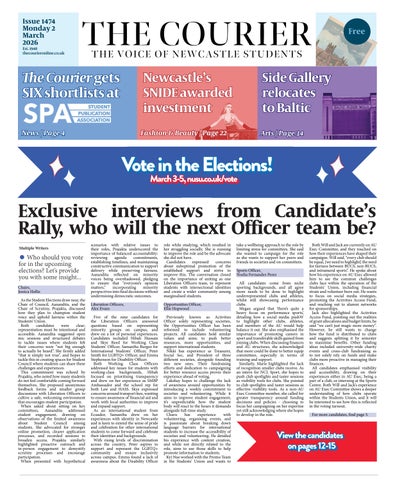
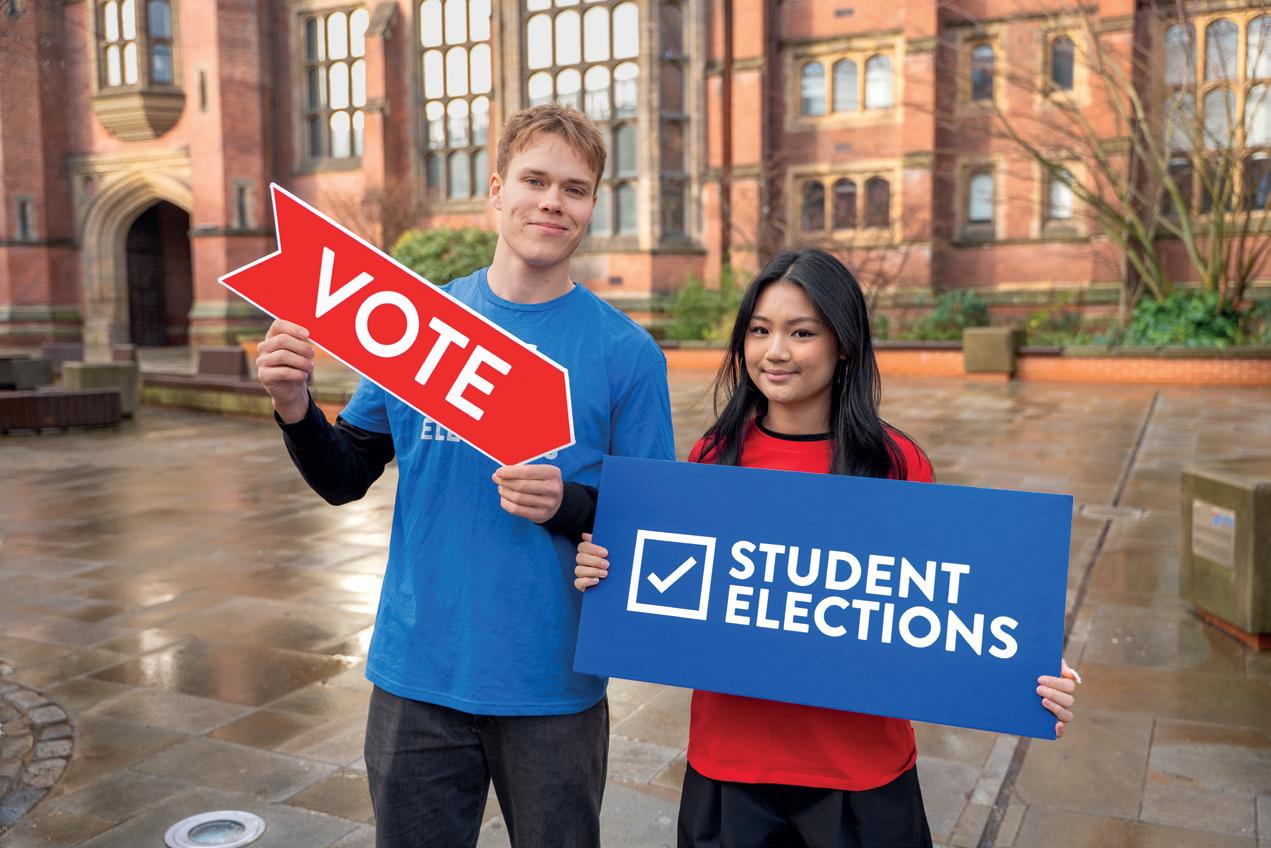
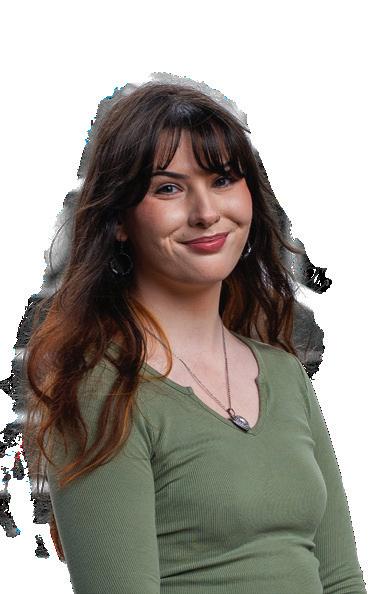
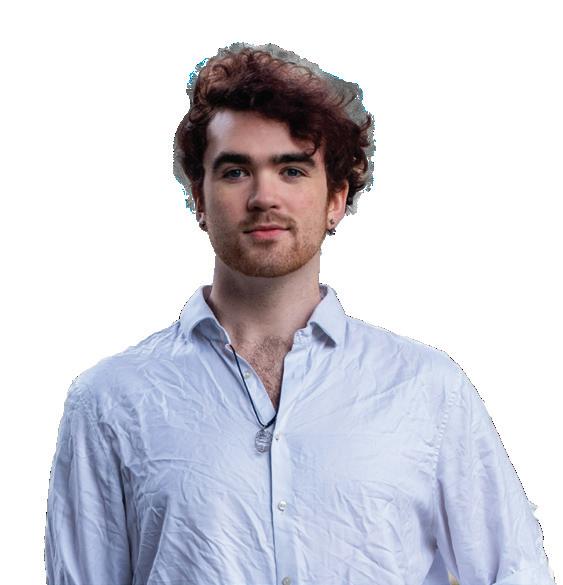
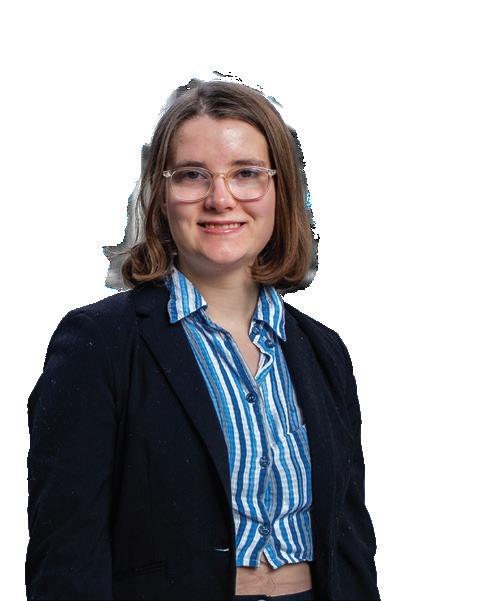
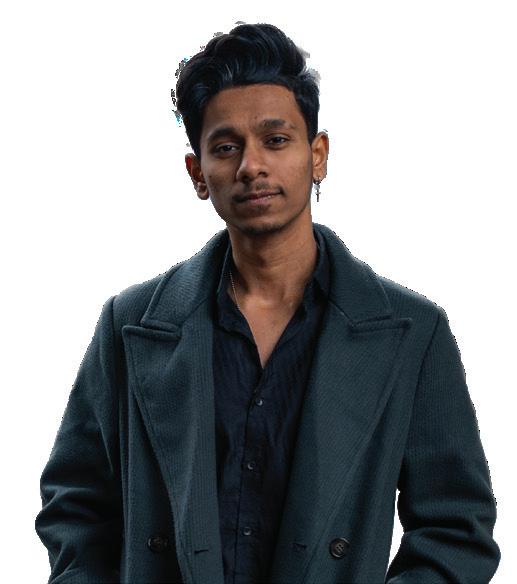
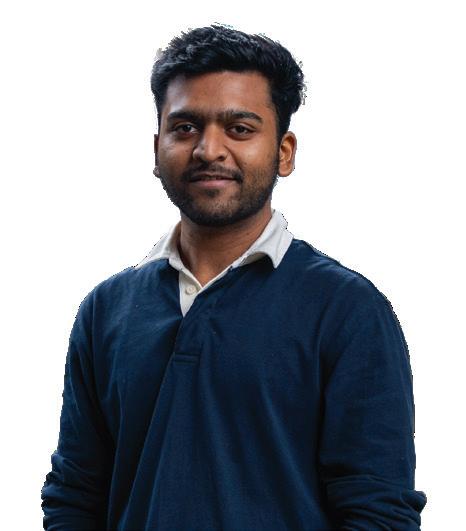
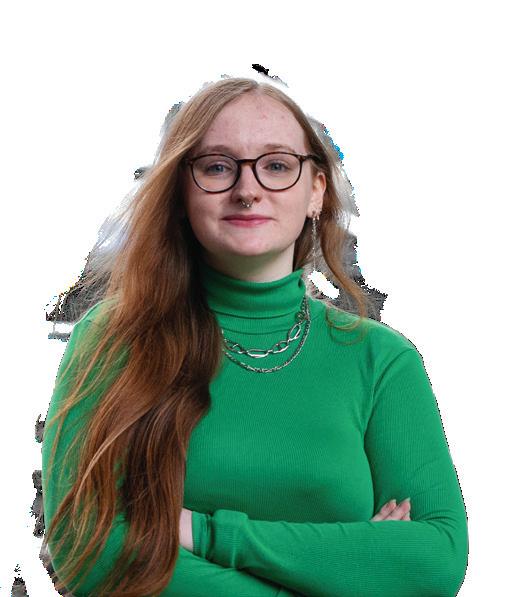
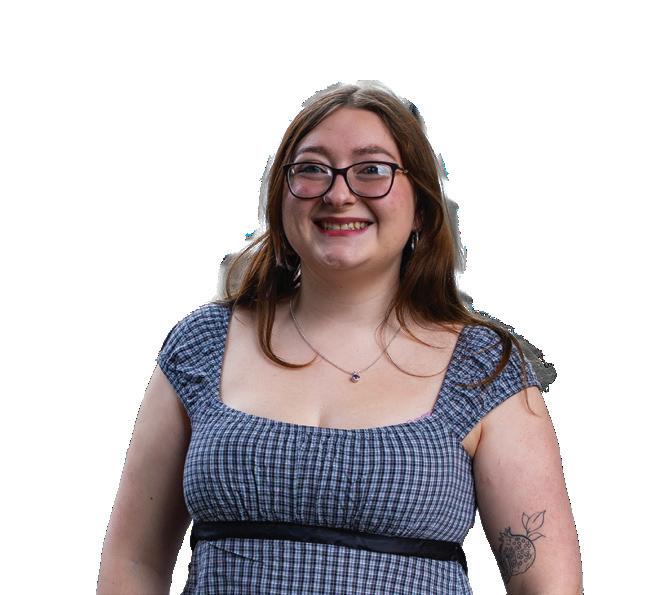
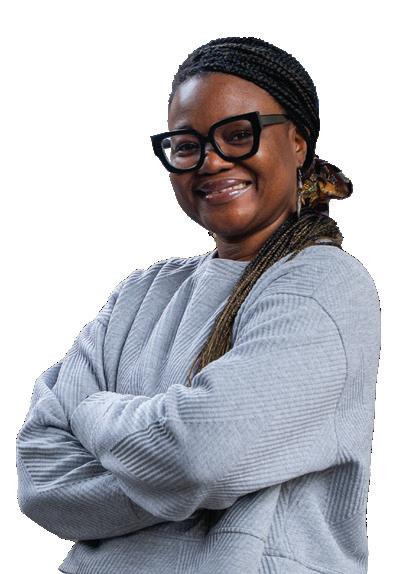
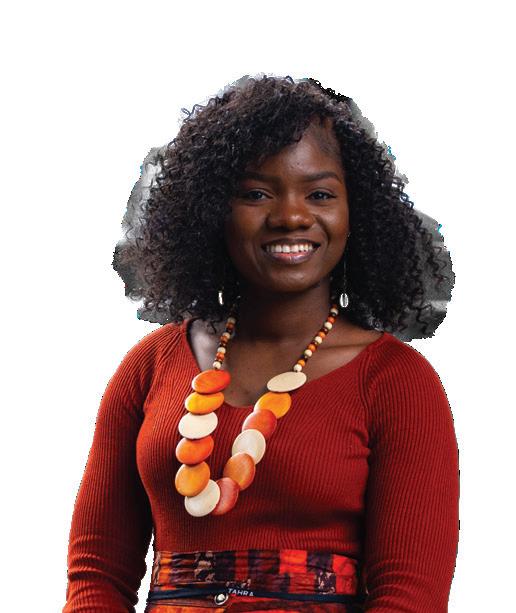
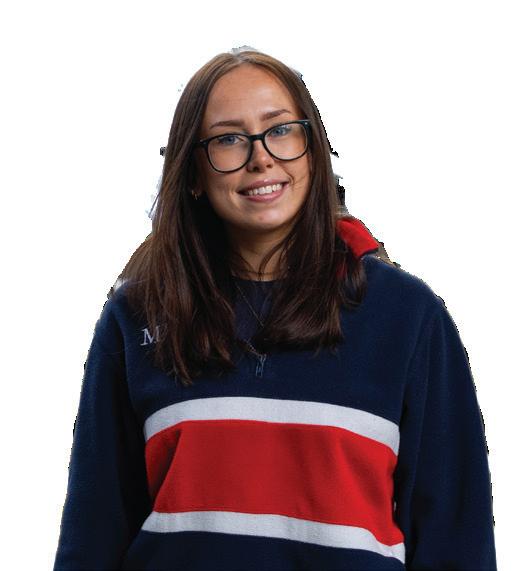
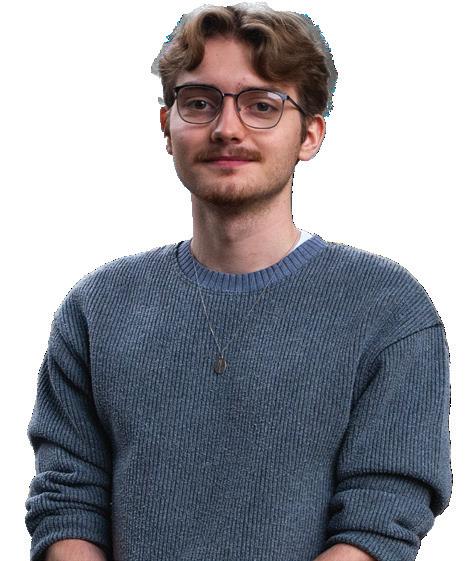
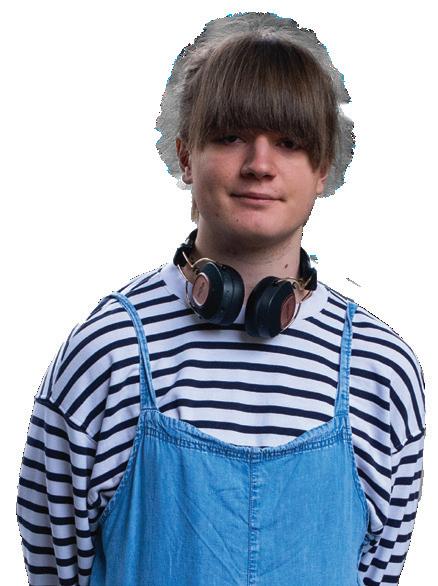
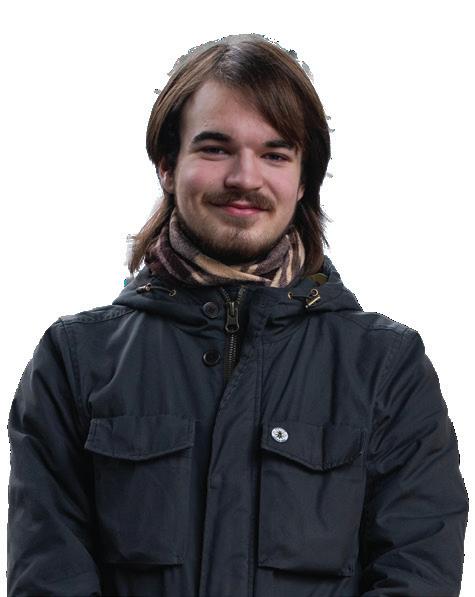
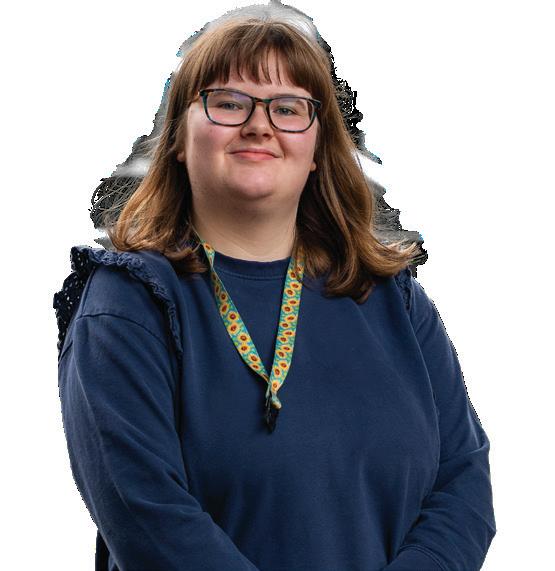
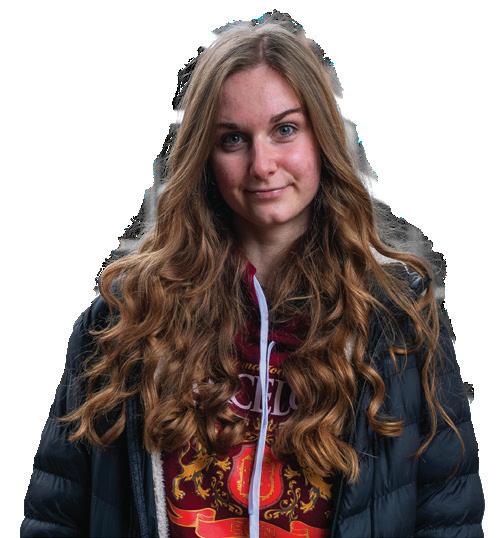
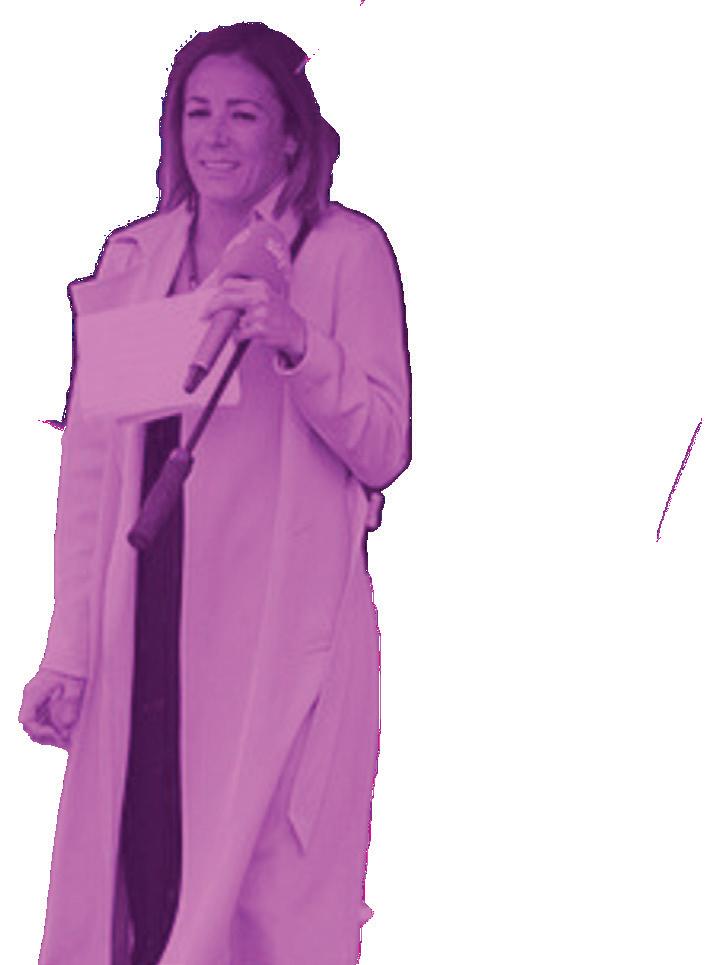
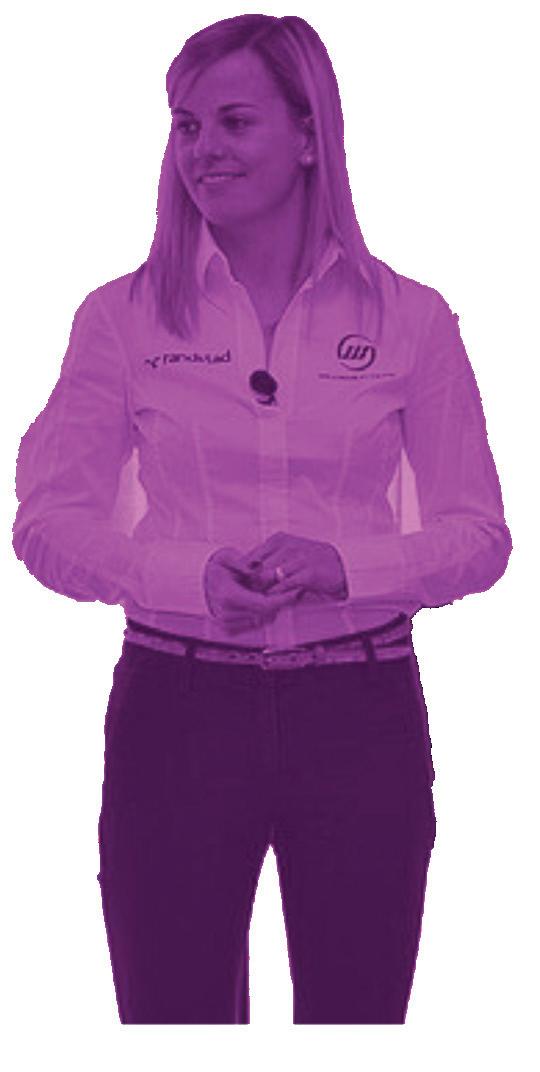
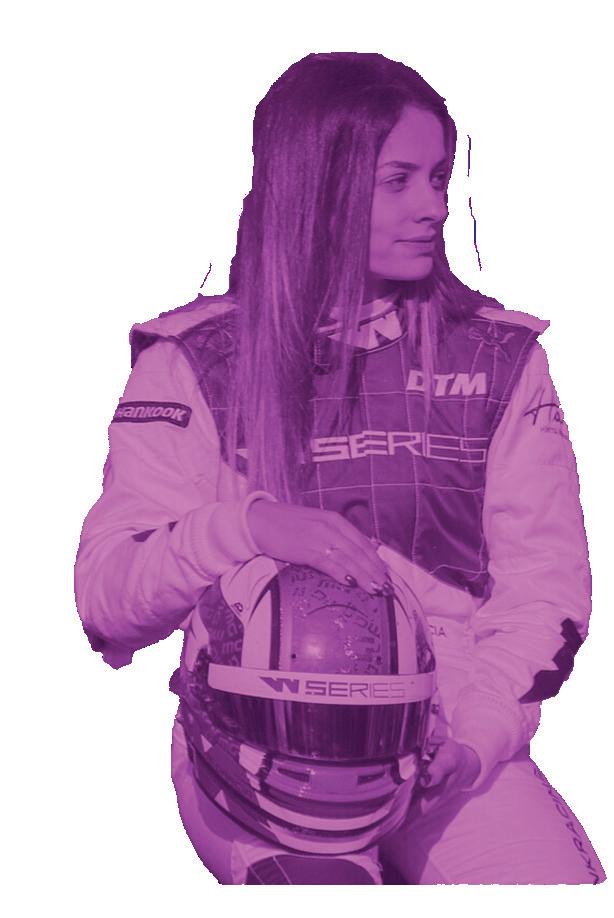
As the Student Elections draw near, the Chair of Council, Aanandita, and the Chair of Scrutiny, Prajakta, discussed how they plan to champion student voice and uphold fairness within the Students’ Union.
Both candidates were clear; representation must be intentional and accessible. Aanandita suggested open mic sessions and structured debates to tackle issues where students felt their concerns were “not big enough to actually be heard”. She firmly added “that is simply not true”, and hopes to tackle this in creating spaces for Student Council where students can share these challenges and experiences.
This commitment was echoed by Prajakta, who noted how many students do not feel comfortable coming forward themselves. She proposed anonymous feedback forms and smaller group discussions with Liberation Officers to cultive a safe, welcoming environment that encourages student participation.
When asked about sitting on key committees, Aanandita addressed student engagement, drawing on observations of the limited awareness about Student Council among students. She advocated for stronger online promotion, clearer application processes, and recorded sessions to broaden access. Prajakta similarly highlighted proactive outreach and in-person engagement to demystify scrutiny processes and encourage participation.
When presented with hypothetical
scenarios with relative issues to their roles, Prajakta underscored the importance of balanced accountability: reviewing agenda commitments, establishing timelines, and maintaining constructive communication to support delivery while preserving fairness. Aanandita reflected on minority voices being overshadowed, pledging to ensure that “everyone’s opinion matters,” incorporating minority perspectives into final decisions without undermining democratic outcomes.
Liberation Officers, Alex Evans
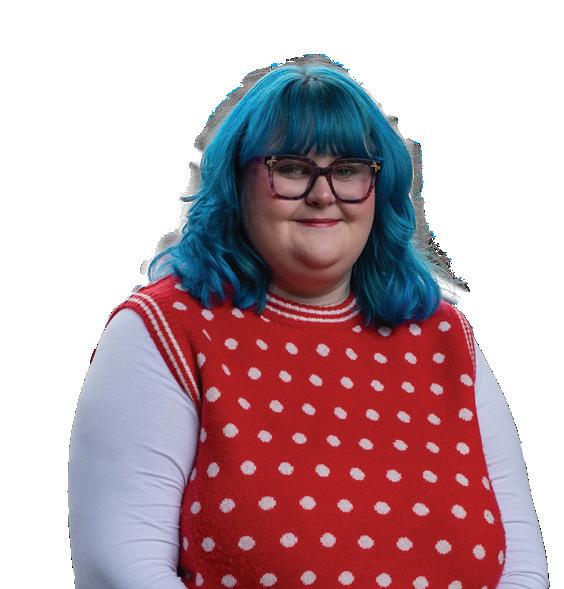
Five of the nine candidates for the Liberation Officers answered questions based on representing minority groups on campus, and drew on a lot of personal experiences.
Candidates included Hibah Hussain and Skye Reed for Working Class Students’ Officer, Samantha Burgos for International Students’ Officer, Peter Smith for LGBTQ+ Officer, and Emma Stephenson for Disability Officer.
Both Working Class Officers addressed key issues for students with working-class backgrounds, Hibah focused on prioritising transparency and drew on her experience as SMBP Ambassador and the school rep for both Law and HASS. Skye expressed concerns around transport fees, wanting to ensure awareness of financial aid and work with local authorities to improve and expand support.
As an international student from Ecuador, Samantha drew on her experiences with identity in Newcastle and is keen to extend the sense of pride and celebration for other international students to come forward and celebrate their identities and backgrounds.
With rising levels of discrimination across the country, Peter aspires to support and represent the LGBTQ+ community and ensure inclusivity across campus. Emma found a lack of awareness about the Disability Officer
role while studying, which resulted in her struggling socially. She is running to improve the role and be the advocate she did not have.
Candidates expressed concerns about suboptimal promotion of the established support and strive to improve this. The conversation closed on the importance of uniting as one Liberation Officers team, to represent students with intersectional identities and create a wider community among marginalised students.
Opportunities Officer, Ellie Hopwood
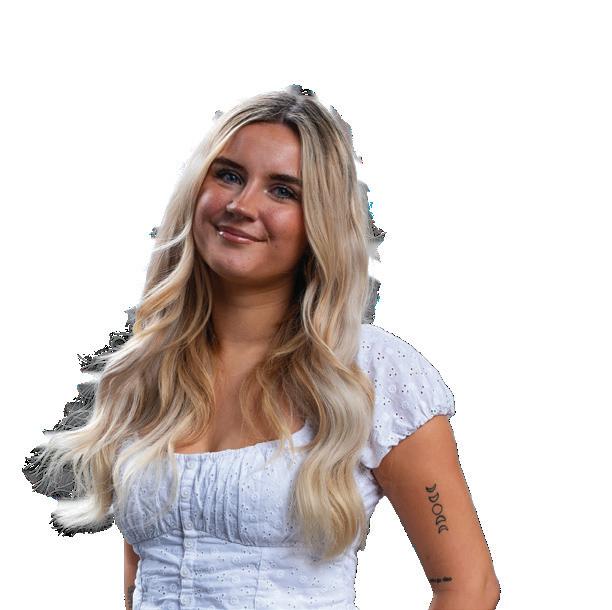
Previously known as Activities Officer solely representing societies, the Opportunities Officer has been reformed to include volunteering projects. All candidates hold similar values and aims; to push better resources, more opportunities, and support international students.
Nikki has experience as Treasurer, Social Sec, and President of three different societies, alongside founding two new ones. Their fundraising efforts and dedication to campaigning for better resource access proves their experience ahead of voting.
Lakshay hopes to challenge the lack of awareness around opportunities by introducing a weekly commitment to societies and volunteering. While it aims to improve student engagement, it’s unpredictable how the student body will react to the hours it demands alongside full-time study.
Charu has experience with volunteering, organising events, and is passionate about breaking down language barriers for international students to increase the accessibility of societies and volunteering. He detailed his experience with content creation, and while not directly related to the role, aims to use those skills to help promote information to students.
Kyi Nue worked with the Promo Team in the Students’ Union and wants to
take a wellbeing approach to the role by limiting stress for committees. She said she wanted to campaign for the role as she wants to support her peers and friends in societies and on committees.
Sports Officer, Noelia Fernandez Perez
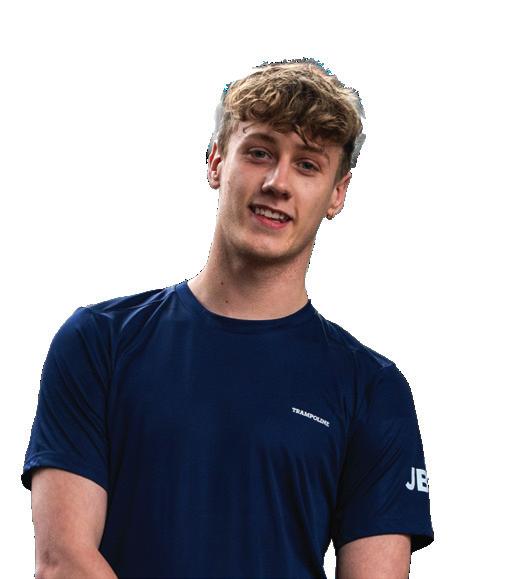
All candidates come from niche sporting backgrounds, and all agree more needs to be done to highlight underrepresented clubs and athletes, whilst still showcasing performance clubs.
Megan argued that ‘there’s quite a heavy focus on performance sports’, detailing how a social media pushW to highlight other clubs, athletes, and members of the AU would help balance it out. She also emphasised the importance of promoting careers in sport and transferable skills gained from joining clubs. When discussing finances and AU structures, she acknowledged that more could be done to better equip committees, especially in terms of training and support.
Similarly, Marie highlighted the lack of recognition smaller clubs receive. As an intern for NCL Sport, she hopes to push club spotlights and taster sessions as visibility tools for clubs. She pointed to club spotlights and taster sessions as effective visibility tools. As a non-AU Exec Committee member, she called for greater transparency around funding decisions and policies - choosing to focus her campaigning on her expertise yet still acknowledging where she hopes to develop in the role.
Both Will and Jack are currently on AU Exec Committee, and they touched on how their experiences have shaped their campaigns. Will said, “every club should be equal, [we need to highlight] the need for fairness between BUCS, non-BUCS, and intramural sports”. He spoke about how his experience on AU Exec allowed him to see the common challenges clubs face within the operation of the Students’ Union, including financial strain and volunteer burn out. He wants to focus on social media strategies, promoting the Activities Access Fund, and reaching out to alumni networks for sponsorships.
Jack also highlighted the Activities Access Fund, pointing out the realities of grant allocations and budget limits, he said “we can’t just magic more money”. However, he still wants to change how the fund is distributed to clubs and suggests splitting it by semester to maximise benefits. Other funding ideas included university-wide charity events and cross-club fundraising as to not solely rely on funds and make clubs more proactive in managing their finances.
All candidates emphasised visibility and accessibility, drawing on their experiences either in AU Exec, being a part of a club, or interning at the Sports Centre. Both Will and Jack’s experience on AU Exec Committee shows a deeper understanding of how clubs operate within the Students Union, and it will be interested to see how this is reflected in the voting turnout.
For more candidates, find page 3.
Multiple Writers
A note from the Editor...
Hello again, Whoever said the earliest months of the year were the quietest lied; it’s been absolute chaos, but I’ve loved every second of it. It’s weird to think there’s only a few months left of the chaos before I hand over to the next Student Media Officer - and only another week until we found out who it’s going to be! This is our Elections Edition; we hosted Candidate’s Rally and the event was a huge success, between our two media rooms and on-stage interviews. I hope you managed to stop by and hear from our candidates or grab a snack from food trucks, but if not,
you can read all about our candidates on our front page and pages 12-15. Amongst the chaos and commotion of Elections, we also found out that The Courier has been shortlisted for SIX awards at the Student Publication Association National Conference. We’ve been recognised for Best Design, Best Science Section, Best Sports Reporter, Best Interview, Best Lifestyle Piece, and Best Arts/Culture Piece. I’m so incredibly proud of the team, they’ve all worked so hardregardless of shortlists and awards. I’m one very proud Editor-in-Chief! If that wasn’t enough, nominations for the Celebrating Success Awards are open, we have our very own Media Awards! The Media Awards are always a highlight for me, and
Article Highlights:
Northern Olympics: is it a distraction from inequality?
By
Robert Reed
| Page 9
Life & Style |
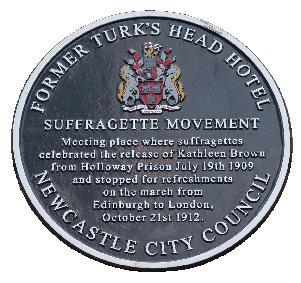
International Women's Day: the leading ladies of the North East
By Sophie Campbell | Page 20
Culture |
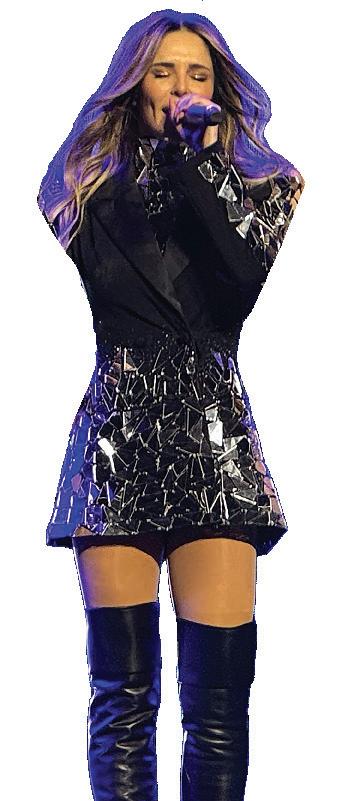
The Courier takes on Florence + The Machine: a gig through two lenses
By Charlotte Atkinson & Trey Halliday | Page 30
Sports |
My experience in male dominated sport
By Erin Parkes | Page 39
On Air On Campus
"It was a great way to get started": In conversation with alumni Max Fosh
By Megan Grimston | Page 16
Hi everyone! My name is Gabbi, and I have the absolute pleasure of being your Student media Officer and Editor-In-Chief this year. Over the summer, I’ve been working hard behind the scenes alongside the Editorial team and NUSU to bring you this Freshers’ issue. Not only will you find loads of incredible articles written by our fantastic sub-editors, you’ll also find a one-stop guide to Freshers’ week, including an introduction to the Freshers’ week assistants who have put together an amazing programme of daytime activities for you all.
Freshers’ week is a time to get to know more about Newcastle University, but also the city as your
I’m so excited to not only attend, but host! I’m really excited to see all the nominations come rolling in, so if you’ve contributed to Student Media in any capacity, please nominate yourself for an award! Whether you’ve written, edited, presented with NSR, or contributed to NUTV, there’s an award you’re eligible for! I’m so excited to highlight the incredible creative talent we have on campus. If you want to submit an award for NSR, we’ve introduced a requirement to submit a demo alongside a written nomination. This is industrystandard practice, and something our Station Manager, Katy, is has worked really hard on. She’ll be hosting a Demo Workshop on March 11thkeep an eye out on social media for
more information. There’ll be guest speakers in attendance, so it will be a really insightful experience whether you plan on submitting a nomination for the Media Awards or not. Additionally, we’ve got plenty more opportunities coming up with NUTV. Two more Fight Nights, Student Council and the AGM, Varsity, and BYOB. Keep your eyes out for our social media, where we’ll be advertising positions to signup and join the crew. Fight Night is now available to sign-up for, and we’re looking for Presenters, Commentators, Camera Operators, and Runners. It’s a great experience, and it’s a lot of fun!
And finally, The Courier hosted the first EVER student-gig night in the
Venue, NUSU SESSIONS. We sold over 300 tickets, covered the event on our three social media outlets, interviewed bands, artists, and audience members - and above all, we had the best night. I’m still beaming about it, and I really hope it’s something that happens again next year... For now, that’s all. I’m sure I’ll have even more to say in the next one. I’m dreading the day I write my final Editors Note, but there’s a still a few more newspapers and events to go...
THE COURIER SECTIONS
Editor
Libby Griffiths l.griffiths9@newcastle.ac.uk
Social Media
Trinity Eadie t.eadie2@newcastle.ac.uk
Current Affairs
Heads of Current Affairs
Oscar Jenkins o.jenkins1@newcastle.ac.uk
Jess Mooney j.mooney2@newcastle.ac.uk
News
Phillipp Andreewitch
Jemima Ashton-Roberts
Ben Moore
Oliver Tierney
Katy Woods
Campus Comment
Callum Borkowski
Emily Hawtin
Scarlett Palmer
Opinion
Martha Nugent
Sophie Psaila
Emma Stephenson
Science
Charlotte Chantler
Sapphire Ling
Deputy Editors
Charlotte Burley-Hnat
c.burley-hnat2@newcastle.ac.uk
Dylan Seymour d.seymour1@newcastle.ac.uk
Life & Style
Heads of Life & Style
Sophie Jarvis s.jarvis2@newcastle.ac.uk
Ruby Tiplady r.tiplady2@newcastle.ac.uk
Relationships
Elin Auld
Ursula Monro
Blind date and Agony Aunt: Charley Dobson
Lifestyle
Erin Neal
Izzy Whitley
Fashion & Beauty
Ella Saint
Mia Wijayatilleke
Travel
Tilly Aveyard
Paula Carrillo
Food & Drink
Rowanne Holmes
Ruby Tinkler
Culture
Heads of Culture
Keira Gratton
k.e.gratton2@newcastle.ac.uk
Amy Mescus
a.mescus1@newcastle.ac.uk
Music
Emma Monaghan
Milly Thompson
TV
Maddy Kendall
Kate Kennedy
Natalya Mathers
Film
Charlotte Atkinson
Zoe Lett
Alex Paine
Gaming
Emily-Maisy Milburn
Keyon Snoek
Arts
Imogen Hayes
Kate Sturrock
Puzzles
Raven Orteza
Sport
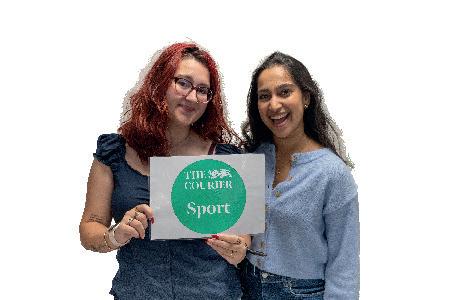
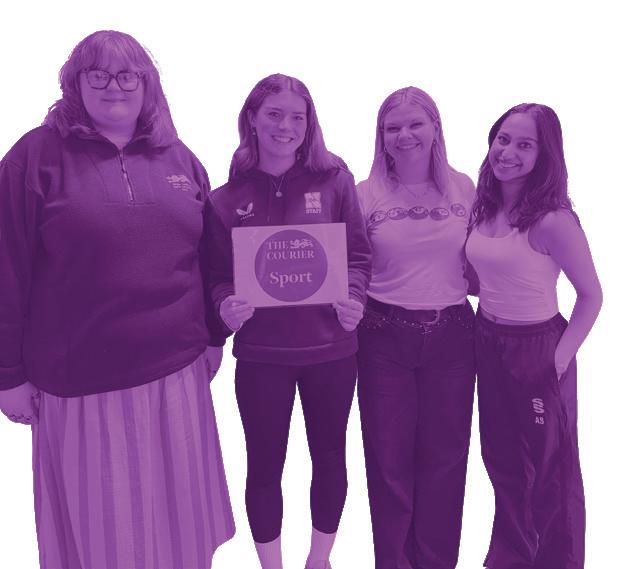
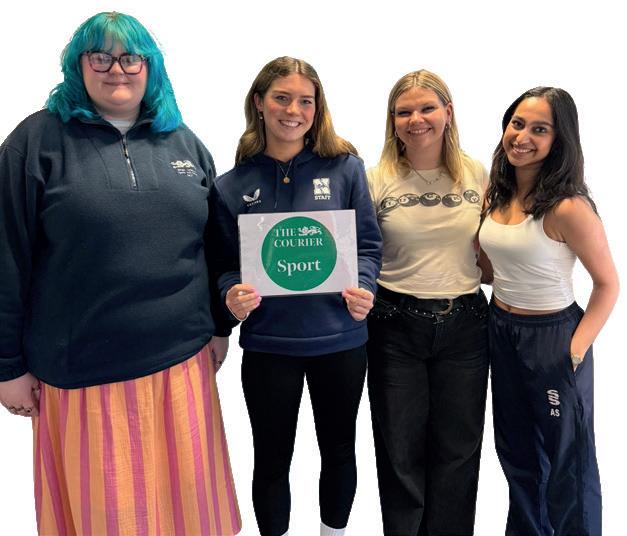
Senior editor: Noelia Fernandez Perez
n.fernandez-perez2@newcastle.ac.uk
Sasha Cowie
Megan Grimston
Aarya Shenoy
Multiple Writers
Who should you vote for in the upcoming elections? Let’s provide you with some insight...
Student Media Officer, Charlotte Atkinson
The race for Student Media Officer is set to be a tight one, as this category has the most candidates, all with similar yet differing ideas that remain grounded in their passion for providing more creative opportunities.
All candidates advocated for an internal restructure as the foundation for boosting opportunities. Trinity highlighted the strengths of each separate branch, while advocating for an exploration into non-live video journalism and magazine journalism through a seasonal lifestyle magazine focusing on the North of England.
Jess emphasised the need for a wider range of creatives within the ranks, pointing to her agenda point to create an image bank and include illustrators to broaden creative horizons and cut back on licensing hassles.
Delving into the world of NUTV, Megan focused on the missed opportunities of live Varsity and BUCS coverage, wanting to provide more hosting experiences for the livestream and additionally sports photography for The Courier.
Charlotte highlighted the importance of accessibility and communication within Student Media, making the most of the text-to-speech tools we have on the NUSU website and extending style guides to other branches of student media. In comparison, Kate reached further afield, promoting connections with larger organisations such as our local BBC headquarters to increase student opportunities.
Each candidate has volunteered with student media in a number of ways and recognises the crucial need to protect both inclusivity and creativity within this space.
When questioned on their approach to AI usage in student media, each candidate was quick to acknowledge the use of AI as a translation tool, recognising that better translation support was needed. Emphasising the necessary incorporation of this into a mentorship programme, the candidates also highlighted that a zero-tolerance policy was an absolute necessity to protect the integrity of student media’s creatives and work.
Academic Officer, James Elgie
When explaining their motivations behind running for the role, each candidate discussed their own personal student experiences with being a student at Newcastle University. Eleanor discussed experiencing modules of differing quality, with variation in feedback time and frequent clashes. Anushka and Sahil both mentioned their experience as course reps and the insight this has provided them.
Vote in the Elections! March 3-5,
nusu.co.uk/vote
They also discussed how international students have disproportionately struggled with confusing feedback and hope to see this clarified.
If elected in the role, candidates would be expected to balance the needs of students against university expectations – often a challenging task. Eleanor emphasised how vital feedback from course reps are for increasing student awareness, while Anushka highlighted that recognising and celebrating small wins and changes could be an effective bridge in maintaining a positive relationship between students and the university.
Each candidate spoke of the importance of working alongside other officers. Eleanor emphasised how different student issues often intersect and can be worked on collaboratively.
Anushka agreed, highlighting how student supports can assist in coordinating this intersection to amplify awareness.
A very topical conversation amongst students and staff is the opinions surrounding use of AI in academia.
Both Anushka and Sahil spoke in favour of using AI in academics, highlighting its usefulness for their own studies.
Sahil advocated for a mandatory module teaching students how to use AI effectively.
Eleanor was slightly more hesitant, strongly advocating for students developing their own critical analysis skills as a priority over using AI to teach themselves.
Wellbeing & Communities Officer, Mia Wijayatilleke
After Lily Allen swept with over 1000 votes against 11 other candidates for Wellbeing Officer in the 2025 elections, it will be an exciting one to watch this year.
Candidates spoke about finding their own communities and how its shaped their student experience and campaign for the role. Lorrencia is an active community member within her school, building personal connections through her role as a course rep, where she is a skilled speaker and listener.
Emma spoke about finding strong female communities on her English Literature course, and in Student Media, inspiring her to continue Lily Allan’s work tackling misogyny. She wants to work with local councillors and venues to ensure student safety in the city and residential areas, inspired by Lily’s ‘Reclaim the Night’ work.
Both Lorrencia and Jun focused on making student wellbeing more accessible, especially for international students. As an international student herself, Jun believes wellbeing support should be accessible and wants to bring a sense of belonging through peer support, as well. She wants to help students adapt to university culture and make friends, inspired by her own experience of finding community with other international students.
Lorrencia is passionate about introducing a guarantor support scheme for international students, working with the university to minimise stress of securing accommodation.
Similarly, Olatorera hopes to initiate a residential fellowship scheme to offer subsidised rent, as secure housing is
integral to mental wellbeing. As a course rep and regular Student Union council member, she has connections with peers and is experienced in feeding back to leaders. She believes there should be connections between all wellbeing resources rather than a top-to-bottom structure so that students can access support for different needs.
President, Dylan Seymour
It’s a smaller contingent of candidates for NUSU’s president this year - just three, to last year’s six - but a new year has brought fresh ideas, and 2026’s race looks to be as intriguing as any.
With disaffiliation from the NUS a real possibility in this year’s elections, candidates are considering alternative arenas for student representation. Particularly relevant amid ongoing affordability crises, all of 2026’s presidential roster stressed the need for close collaboration with fellow Student Unions.
Anish takes a ‘soapbox’ stance, arguing the value of in-person engagement with students – at Newcastle and otherwise. He said “the bonding between the union and the student” is essential to bolster student voice, affordability, and internship opportunities.
Roo Lee displayed similar concern for student incomes, arguing that the University has a responsibility to support upcoming graduates from all degree programmes with equal careers advice. He stressed that our union and president have parts to play in this, hoping to fix the “disconnect” he sees between NUSU and its constituent body.
Calling on her experience as Academic Officer, Gina notes that her knowledge of the role, and nationwide connections are strong, with or without the NUS. She explains her goal to better involve Liberation Officers in projects to improve student life - for example by including NUSU’s Working Class Officer in the broader university working group on the cost of living.
NUS
Campaigners for Leave/Remain Jess Mooney
Following November Council’s vote to trigger an early referendum on National Union of Student’s (NUS) UK affiliation, campaigners arguing to remain have begun setting out their case ahead of March’s ballot.
One student involved in the Remain campaign told The Courier that for them, the debate is personal.
“I come from a low income, single parent household, and have been a carer,” they said. “Because of this, the campaign work NUS does for better government support feels very close to home. I think it’s vital that we protect organisations that advocate for students like me in this way.”
While the NUS does not directly provide any large-scale, individual cash funding to low-income students, it does consistently campaign for better government support, lobbies for increased university hardship funds, and advocates for cost of living measures like rent controls and cheaper transport. They are also actively engaged in several lobbying campaigns in 20242026, focusing on student housing,
financial support, and rights for marginalised groups. Key efforts include a “No More Guarantors” campaign aimed at ending exploitative landlord practices, and lobbying for rent controls.
The student argued that while much of this work is not always easily visible to the average student, it is still happening, and often is work that would be difficult to enact as a stand alone union.
“I think a lot of students are unaware of what they’re up to, however even the things they’re working on behind the scenes always have students at the forefront.”
Building on this, the student pointed to ongoing national lobbying efforts as evidence of the organisation’s value.
“They have a lot of lobbying movements in progress right now regarding trans rights and prioritising the creation of more safe spaces for minorities - issues which directly impact many students on the daily.”
“In the past, they have also provided vital hardship funding for WiFi and internet access during Covid. I think right now, some of their most vital work is in challenging gender based violence and lobbying for increased recognition, which is so important” they said. “It’s really important that we remain affiliated with the organisation advocating for us in this way.”
They added that the impact of this work extends beyond headline campaigns.
“The work they do benefits students’ everyday lives as well as contributing to a long-term improvement to their university experience,” they said. “It can sometimes look like slow progress, however it is often very complex and difficult and thus has to be tackled bit by bit.”
While acknowledging the frustrations voiced by those advocating for disaffiliation, the campaigner expressed concern about the practical implications of leaving a national body.
“While I certainly understand my opposition’s points, I think there could be a disillusion between us if we just completely disaffiliate from NUS and the other universities they represent,” they said.
“NUS provides funding, expert advice, and I think there would have to be a lot of substitutions introduced really quickly to manage that shift. I do not feel we are prepared for that.”
They also raised concerns about timing, with the referendum taking place alongside Students’ Union elections.
“It’s a very short turnaround between now and December. It’s also a big ask for new Sabbs to deal with facilitating this change” they said. “It is unfortunate timing with the NUS elections taking place at the same time as our own and this is yet another reason to give the new elects a chance to make NUS their own before disaffiliating.”
Emphasising that NUS is a democratic body, the student argued that engagement, rather than withdrawal, is the answer.
“NUS is completely student-led so I think it is our responsibility to put forward those we want to see representing and advocating for us. That way, as students, we can shape it into something we can trust to benefit us most effectively.”
With voting set to take place next week, they urged students to consider the broader impact of their decision.
“When voting, students should consider what benefits and protects their peers. We must consider how they are protected, funded, and how accessible university is.”
Whether this message will resonate with the wider student body remains to be seen, as campaigning on both sides of the referendum intensifies in the coming days.
View the candidates on pages 12-15
‘Democracy dies in darkness?’ Jeff Bezos cuts over a third of Washington Post Journalists and CEO resigns
Olivia Simpson
Jeff Bezos fires 300 of his 800 journalists in a 'broad strategic reset'.
The Washington Post under ownership of Amazon founder Jeff Bezos, has moved forward with a sweeping round of layoffs part of a ‘broad strategic reset’ of the local Newspaper. Bezos justified the cuts as necessary for a ‘roadmap to success’, as consumers now frequently turn to social media for their main source of news. Indeed, the recent cuts mirror the pattern seen across newspapers and media institutions globally, as organisations struggle to find a commercially viable model in an ever changing media landscape.
One Washington Post journalist, Lizzie Johnson, received an email terminating her employment contract
as she was stationed in the warzone in Ukraine, emphasising just how sudden and cut-throat terminations have been.
Following heavy criticisms, about both the scale of the layoffs and the drastic cuts to roles in the newsroom’s sports, local and foreign sections in particular, the CEO of the publication, Will Lewis, resigned on 7 February.
“...the CEO of the publication, Will Lewis, resigned on 7th February.”
Bezos’ move contrasts so starkly to the slogan he endorsed for the newspaper in 2017 – ‘democracy dies in darkness’. In an age on
unprecedented attacks on the media, letting go of journalists so trivially could have serious implications to both the health of American democracy and scrutiny of the President - renewing fears about the resilience of America’s democracy to withstand attacks to the media.
In recent years Bezos has been criticised for having vested interests, and wanting to stay in Donald Trump’s good graces due to his business endeavours with Amazon.
In February 2025, Bezos mandated that the opinion section concentrated on personal liberties and free markets, moving away from left leaning or
The Courier shortlisted for six national awards
Libby Griffiths - Editor-in-Chief
The Student Publication Association recognise The Courier as a publication and its journalists.
Over the past few years, The Courier has attended the Student Publication Association (SPA)’s National Conference. Previously held in Bristol and Exeter, the team are looking forward to heading to Norwich for SPANC26, hosted by Concrete.
Our shortlists are for Best Design, Best Science Section, Best Sports Reporter, Best Interview, Best Arts/ Culture Piece, and Best Lifestyle Piece. This beats our previous nominations of five awards in 2024, and four awards in 2025. Both our Heads of Life & Style, Ruby and
nomination for Best Design, detailing our intricate style guides that uplift and uphold the values and integrity of our storytelling. As said in our nomination, ‘The Courier’s design and identity is defined by professionalism, visual appeal, and the set of technical specifications that every page needs’.
“Back in 2024, we won Best Science Section, so it’s a highlight to see this recognition again.”
Back in 2024, we won Best Science Section, so it’s a highlight to see this recognition again. Our Science SubEditors, Sapphire and Charlotte, along with the support from our Heads of Current Affairs, Jess and Oscar, are the pillars of this recognition and development. In a publication often focused on culture, news reporting, and lifestyle journalism - to see our science and tech pieces highlighted is a real achievement.
“Our intricate style guides uplift and uphold the values and integrity of our storytelling.” “Furthermore, we have lots of indvidual journalists recognised!”
Furthermore, we have lots of indvidual journalists recognised! In 2025 we were Highly Commended for Best Sports Section - a team our Best Sports Reporter nominee, Noe, was a part of. This recognition is a testimony to her commitment in leading her all-female
team to spotlight campus sports, and underrepresented groups on campus.
Zoe and Alex interviewed Newcastle alumni, Joe Molander, on the making of his short-film and the creative scene in the North East and as a result have been shortlisted for Best Interview.
Continuing on the film theme, Erin has been shortlisted for Best Arts/Culture Piece for her review of ‘The Surfer’, an insightful piece that offers an analysis of modern masculinity in film. Finally, an incredibly vulnerable and personal piece by Sasha, previously under an anonymous alias, details the realities of living with herpes, the stigmas behind it, and why it’s not as bad as it seems.
“As a publication that prides ourself on our community, this recognition is a testimony to the hard work of all our volunteers”
As a publication that prides ourself on our community, this recognition is a testimony to the hard work of all our volunteers, and the team in attendance are excited for a weekend of networking, conferencing, and celebrating award-winning journalism.
progressive viewpoints, exemplifying the Washington Post’s right leaning shift since being under the ownership of Bezos.
“In recent years Bezos has been criticised for having vested interests...”
Amazon has several major contracts with the US government including a $50 billion deal in November 2025 to expand AI and computing infrastructure for AWS US government agencies. Could the cuts be an attempt to cozy up to the influential US President, under the guise of a
Self-pour Guinness comes to Spy Bar
Spy Bar installs selfserve Guinness, can you better the barman?
There is much pretentiousness that surrounds the preparation and consumption of alcoholic beverages. From the finest Parisian hotel to the local village pub, drinkers around the world care passionately about the state of their booze. The humble pint of Guinness is not immune from such zeal.
“Jesmond's Guinness super fans need wait no more.”
Guinness commands an army of connoisseurs who hunt creamers1 like truffle hounds. This has created immense pressure on the nation’s young bar staff who fear the snide remarks of the connoisseurs. Jesmond’s Spy Bar has resolved this issue via the creation of a self-pour Guinness service.
“Good things come to those who wait” has been Guinness’ masterful marketing slogan since 1996. Jesmond’s Guinness super fans need wait no more as they can now pour their very own pint. With each, no doubt, following the strict rules of the two-part-pour and ninety-second settling time.
The Stouts' origins date back to 1759,
when Kildare-man Arthur Guinness signed a 9000 year lease on St James Gate in Dublin. Since then the beverage has moved slowly, but surely, towards world domination and has become synonymous with Irish culture. The stout, often referred to as 'a pint of plain', was immortalised in Flann O'Brien's poem "The Workman's Friend": "A pint of plain is your only man."
"The experience is proving to be a success for Spy Bar."
Guinness has been a pioneer of pints for decades. In 1959, mathematician Michael Ash made the ingenious decision to add nitrogen to Guinness, giving the pint its signature creamy consistency. Three decades later Guinness introduced the iconic plastic widget (inserted into every can of the brand’s nitrogenated stout). The widget earned Guinness the Queen’s Award for Technological Achievement, beating out the Internet (and rightfully so). The recent invention of Guinness 0.0 has been a monster hit for the brewery, and the self pour experience is proving to be a success for Spy Bar. Fortunately, this invention comes shortly before St Patrick’s day, in which Guinness’ constituency is expanded to all those who drink. Draped in emerald green, Newcastle’s student community can now spend March 17th queuing outside Spy Bar with the happy thought that they will have to pour their own pints.
Benjamin Moore - News Sub-Editor
Sophie, wrote our
Image source: Roman Kraft, Unsplash
Consequences of US tariffs on health revealed by Newcastle University
Katy Woods - News Sub-Editor
Newcastle and Cambridge academics highlight the public health consequences of US Tariff policy.
Researchers at Newcastle University and the University of Cambridge have found that trade tariffs imposed by the United States could be harmful to public health through higher medicine costs, and volatile food prices; as well as creating indirect risks such as unemployment and economic uncertainty.
While the US could reap some benefits if domestic jobs are protected and demand for imports harmful to public health are reduced, the evidence currently suggests that short term harms are a risk both inside and outside of the US.
The UK is currently affected by the international tariffs imposed by President Trump in 2025, however
deals between the UK and US saw the UK exempt from many of these such as steel and aluminium, and aerospace and cars.
The UK is however still affected by an additional 10% tariff imposed onto most UK goods imported into the US, on top of the existing duties, fees and taxes in place.
The research comes from Dr Courtney McNamara of Newcastle University and Dr Benjamin Hawkins at the University of Cambridge.
Dr McNamara said that “trade policy can sound distant and technical, but it shapes everyday life – the price and availability of medicines, what food costs in the supermarket, and whether people feel secure in their jobs.”
“Decisions about tariffs and trade are judged not just by economic outcomes”
She said that research such as this one would help highlight the hidden links between the
tariffs and health, “so decisions about tariffs and trade are judged not just
policymaking in order to protect public health and balance
Hundreds gather in Newcastle against the Iranian regime
freedom of expression have been common themes of the Iranian regime since the overthrow of the Shah in 1979.
Protestors call for an end to the Ayatollah's regime.
The 14th of February saw many of us celebrating Valentine’s Day with
Valentine’s Day was shared this year with a “Global Day of Action” against the Iranian regime. Huge numbers took to the streets across the world in an outpour of support for the protestors inside Iran, where over 6000 have been murdered.
“The mood among the protestors was a palpable sense that this time is different and that things might be changing. ”
Evans UK will return to Erasmus+ in 2027
On Wednesday 17th
December the UK agreed terms to join Erasmus+ scheme commencing in the 2027/28 academic year. There are currently over 30 countries participating in the programme that allows students and staff to undertake opportunities abroad without additional fees. Instead these costs are covered by the EU with taxpayers’ money. The UK contribution to cover the 27/28 academic year will be approximately £570 million. This represents a 30% discount in comparison to the original terms of the post-Brexit Trade and Cooperation Agreement (TCA), signed in December 2020.
“Erasmus+ will allow students to broaden their horizons.”
inside the country: know that you are not alone, and today the world stands with you in Pahlavi was just 18 years old when his father was ousted from the throne, he now stands at the centre of the opposition to the Ayatollah. Pahlavi's face adorns the placards of many protestors in
By joining Erasmus+ British people in further or higher education, apprentices, sports coaches, and adult learners will be able to study abroad, do a placement year, or take a training course. 100,000+ people could benefit from the scheme in just UUKI in 2025 found those who studied abroad were more likely to receive a first-class degree, higher graduate earnings, and professionallevel jobs than those who were not globally mobile.
The UK’s involvement in Erasmus+ terminated after Brexit, in 2020 when the government announced the EU-UK TCA. The UK was given the opportunity to remain a participating country in spite of Brexit; yet, Boris Johnson stated that the programme did not offer value for money. The government stated prior to Brexit, more than twice as many EU students came to the UK than British to Europe. However post-Brexit the discrepancy reduced: in 2018/19,133 UK-based students and trainees travelled to other countries, whilst 30,497 came to the UK. The reduced opportunity for UK students during the interim period (2020-2026) presents how Brexit affected those who were not old enough to have a say in the 2016 referendum.
The rejoining of Erasmus+ will allow students to broaden their horizons, without the weight of the extortionate fees that were required over the past six years.
Alex
Benjamin Moore - News Sub-Editor
Image credit: Benjamin Moore
Image source: Gage Skidmore, Wikimedia Commons. https://creativecommons.org/licenses/by-sa/3.0/. Images may have been manipulated.
Campus Comment
A student's guide to surviving St. Patrick's day
Lucile Milton
The annual student flock to Osborne Road is set to return this April.
Once a year, Newcastle becomes consumed by students dressed in green, shamrocks and bars packed shoulder to shoulder. But why is Paddy’s Day so renowned?
is said to have used to explain the Holy Trinity and has since become a symbol of Irish heritage and identity.
For Newcastle University students,
anything green from the back of your wardrobe and find a housemate to paint shamrocks on your cheeks. Then it's straight to Osborne Road to join the queue for your chosen pub.
"...yet waking up at 7am to queue for Blanc is no problem for us at all.”
St Patrick’s Day is celebrated every year on the 17th of March and honours Ireland’s patron saint. While the popular legend claims he drove snakes out of the country, he is more widely remembered for promoting the spread of Christianity. The holiday is closely associated with the shamrock which St Patrick
however, the day is just another excuse to skip lectures and socialise with friends. This year is expected to be no different with Osborne Road, once again, at the centre of the festivities. Following this student guide for Paddy’s Day will help you make the most of the celebrations!
“...you will find that they do not start serving alcohol until 11 so it's important you have a hipflask handy.”
Secondly, once inside, often after hours of waiting, you will find that they do not start serving alcohol until 11 so it is important you have a hipflask handy. I would also suggest lining the stomach for the long day ahead so don’t forget your discount cards and treat yourself to something off the menu.
paint and get ready to head out to Holy Hobos. A prime spot for Paddy’s Day, thanks to its short walk from Jesmond and becomes the evening hotspot, with karaoke carrying the celebrations late into the night. For those who can hack a full day of festivities, GDT is the next prime location to spend the early hours of the morning, and rumour has it that Space Mondays is hosting a Paddy’s Day special this year, which will certainly be another popular destination.
"For those who can hack a full day of festivities, GDT is the next prime location to spend the early hours of the morning..."
Firstly, the morning of St Paddy’s Day, which falls on a Tuesday this year, will see pupils rising earlier than they have all year. Making a 9am lecture may seem impossible, yet waking up at 7am to queue for Blanc is no problem for us at all. Once you are up, dig out
leaving the queue all over again. The situation is so extreme my housemates even discussed booking a room above Blanc just to charge phones and avoid the long toilet queues.
Thirdly, after at least 8 hours in the pub, and many red pints consumed, it is time to return to our houses, touch up the green face
Whether remembered for the queues, the costumes or the questionable decisions, Paddy’s Day remains a highlight in the student calendar, often followed by a very slow Wednesday
Socialist Worker society: the importance of student activism on campus
Callum Borkowski - Campus Comment Sub-Editor Uncover how this society campaigns for social justice on and off campus...
Will Forde and Abi Hodgson are members of the Socialist Worker Student Society (SWSS), which is responsible for raising awareness and advocating for a variety of social justice issues.
The society welcomes students from both Newcastle University and Northumbria University, creating a collaborative space where students from across the city fight for causes close to their hearts.
They hold weekly meetings upstairs at 6 pm in the Percy Arms (NE1 7RW) with weekly guest speakers who add insight into the political topic being discussed. Previous meetings that have been held have covered politically salient topics such as ‘disability a very capitalist condition’ and ‘ICE, racism and resistance: can Trump be stopped?’.
Both students outlined a key motivation for the society’s work, being that they and other students are united in “one struggle one fight… against all forms
of inequality and discrimination… brought about by capitalism”.
One prominent event held on 4th February was entitled ‘Abortion rights and trans rights: why the state wants to control our bodies’.
Abi and Will emphasised the important contemporary nature of discussing subjects that are relevant in contemporary society. With this meeting being relevant in light of the UK Supreme Court’s ruling, which legally defined “sex" in the Equality Act 2010 as being based on biological sex, and thus allowing for the exclusion of transgender people from same sex spaces.
For their meeting on abortion rights and trans rights, the guest speaker was Katie Coles, from the national student office of the Socialist Workers Party. The speaker are their meetings operate as a method to highlight the main aspects of the topics at hand. This leads to a group-wide discussion, which will allow students to question and enhance their understanding of issues from one another. To foster a greater sense of community in tackling contemporary social justice discourses.
"All of our meetings are a safe space. We are an inclusive society.”
On the topic, Will added, “We live in an exploitative system which perpetuates the threats to reproductive healthcare and trans rights”. The nature of the
arguments raised aims to offer students a different perspective and approach to dissecting issues. Will added, that are “All of our meetings are a safe space. We are an inclusive society.”
"To help create
proactive
change on the university campuses especially from with the student's unions
Another key purpose of events like this is to help create proactive change on the university campuses, especially from within the students’ unions. At Newcastle University, they hope to see a strong commitment to trans students, citing the importance of gender-neutral toilets and the need for the LGBTQ+ Officer at the Newcastle University Students’ Union (NUSU).
Notably, there is a plethora of well-being services available at NUSU for trans student such as grants for up to £50 to help purchase items that will help students with gender dysphoria. On the topic of trans rights, NUSU has said, “We stand in staunch solidarity with our trans students, and you can always count on a safe space in your Students’ Union”.
For the SWSS, part of hosting events is to help raise the profile of the groups affected by political decisions. Abi remarked, “Visibility is the first step to acceptance”. They hope their work can help students feel more comfortable in
their identity and political beliefs as part of a united effort to challenge dominant political beliefs during an era where politics is becoming more polarised.
The society largely spread awareness of their causes by postering on campus. With the intention to invite students to events where no prejudice or discrimination in an environment prioritises free speech that respects all groups within society.
With each event that they hold, they not only want to educate students but also want to empower them to become more politically engaged. Abi stated that “students hold a lot more power than they realise” and emphasised their ability to create change. They highlighted that students are the grassroots in aiding their students’ union and the National Union of Students to vocalise their
“We are fundamental parts of an emerging society… students can change the outcomes of things”, said Will. The SWSS want to make students feel that they can go to a protest both on and off campus. With the desire to create a network of
more students and other societies to advocate for issues. As for students, it feels easier to participate in solidarity as part of larger protests. The duty of helping to cultivate a more inclusive and safer space for all students is integral to society. Abi emphasised that students “are going to be the people who are in charge next. We are going to be the nurses, the politicians, the teachers”. Reinforcing the importance of being politically active at a young age to create the change you want to see in the world. Will surmised that the society’s ambitions are "to be active, to grow our numbers and to build a community around activism on campus”.
"To
be active, to grow our number and to build a community around activism on campus”
Although not a ratified NUSU society, the SSWS operates as an example of a society that emphasises the importance of having a space for student voices on campus. Demonstrating that students truly do have the power to change the change they want to see.
If you would like to find out more about the Socialist Worker Student Society, you can follow them on Instagram @swssncl.
One of our writers discusses the absence of Northern students at Newcastle University...
As a higher education student who was born and bred in Yorkshire, the number of southern accents that I hear daily at my northern university when walking to lectures surprised me when I first arrived. Why has this occurred? The answer is somewhat obvious, but the topic is something which, I believe, should be brought to attention.
During Freshers, many students noticed that they were either the only northerner or were part of a small majority of northerners within their flat.
"...most people that I went to school with have stayed in the North for Higher Education."
However, despite the lack of northerners at Newcastle University, most people that I went to school with have stayed in the North for higher education.
In fact, the desire that northerners have to avoid the South has been highlighted by Cambridge University, which has noticed that northerners are hesitant to apply due to concerns that they will feel out of place.
The clearest explanation for the multitude of southern university students is the difference between the educational opportunity in the North and South. In 2025, the region with most successful UCAS applications was London, with 51% of its students being accepted into higher education: for the rest of the UK, this figure sat at 3040%. There is also a significantly larger proportion of private schools in Greater London, who undoubtedly parcel off their graduates into higher education at a greater rate than state schools. Coincidentally, this also aligns with the socio-economic differences present between the North and South. London
Campus Comment
Where are all the northerners at a northern university?
meaning that families have the privilege of sending their children to university with less concern about student loans and debts after graduation. Many southern families with access to lower funds may also send their children to university in the North, given that the cost of living is significantly lower than that of the South. In addition to this, more students in the north are choosing to do apprenticeships instead of university degrees - the fastest growing regions of the UK for young people choosing construction apprenticeships are the North West and the East Midlands.
"As a Classics student I am surrounded by people from the South..."
Diss Diaries: ranking all of my dissertations
Ilsa Hartley
A review of writing, not one, but four dissertations!
Now, I might not be the most qualified person to talk about dissertations, but I’m certainly up there: as part of my undergraduate in Philosophy we did a dissertation in each year (insane) and then for my MA I wrote another. So, in total, I’ve written 4 dissertations, which feels wild to write down. I’m going to rank my dissertations based on how good they were, how hard they were to write and how much I enjoyed them overall.
Starting with the worst, we have my first year dissertation. Let’s be real, it was always going to lose because who expects an 18/19 year old to write something of 3rd year quality? It was about superstition and how we try to retain control over our in a time of capitalist realism (Mark Fisher, I miss you).
galleries), it was so stressful to write, partly because I was working 9-5 as SU President, and writing my dissertation 5-9 after work. Quite simply, it was hell and I don’t recommend it!
"We've all been there, but I promise it'll be over faster than you can say 'methodology'."
In second place is my third year dissertation. It was about Hozier, love and the limits of speech and language. It was incredibly high concept and I did not execute it well enough, and that haunts me to this day.
"Quite simply, it was hell and I don't recommend it!."
In third place is my MA dissertation, because even though I scored well and it’s a topic I’m extremely passionate about (children in museums and
The winner, without a doubt, is my second year dissertation - it was about Surrealist women and the concept of the muse and I loved it so much I’m literally getting a tattoo based on one of the artists I talked about. I also did the best in it, which helps.
For those of you going through the depths of dissertation season, remember that there is an end, and in a year’s time you can be reflecting fondly on what it was like, instead of crying into your lunch at the Phillip Robinson. We’ve all been there, but I promise it’ll be over faster than you can say ‘methodology’.
Furthermore, there is significant variability surrounding the number of northerners you encounter depending on the course you are studying. As a Classics student I am surrounded by people from the South, given that the majority of public schools do not offer classical history as a subject at A level. Classics is a more niche career path which is predominantly embarked upon by those who have come from private education. For those studying courses for which every secondary school offers the precursors, such as STEM subjects like Biomedical Science, there is a much higher probability of having a more
inclusive mix of northern and southern students.
However, it is the mindset which university students have that is important. In 2024, the BBC produced an article which focused on the discrimination towards working class students at Edinburgh University, who asked those from more privileged backgrounds, which are often associated with the South, to avoid being “snobs”. Within this investigation, students commented on the “accent bias” they had encountered, believing that their level of intelligence was assumed by others based on their dialect.
"If
anything, it makes me proud... that I have been able to attend university despite coming from an underprivileged area." backgrounds.
Ultimately, I would conclude that the issue does not necessarily arise from where university students are from, but rather how they treat others in their educational environment. Students from northern heritage are just as capable of displaying these views to those who come from less privileged
It’s 8:30 am, and it’s raining for what feels like the thirtieth consecutive day this year (the “it’s grim up north” allegations are definitely proving correct at the minute).
My first lecture isn’t until 10 am, so I obviously allow myself some designated doomscrolling time before forcing myself out of bed and getting ready for the day. I run downstairs for a quick breakfast, then ruin my outfit with a waterproof puffer jacket and head out to face the weather. At 9:30 am, I walk towards West Jesmond Metro, making the essential stop at Local for an oat milk cappuccino. I travel to Haymarket and then make my way to the Armstrong Building for my first lecture of the day: Popular Music and Media. After the lecture, I usually spend some time at King’s Gate, one of my favourite study spots on campus, meeting friends from my course to work through seminar tasks and reply to important emails. At around 1:30 pm, it’s time for
“...plenty of collaboration, discussion, and organisation..."
Despite the content of this article, I personally do not feel out of place in a northern university as someone who was born in the north; I believe that university has become a place for anyone who is simply passionate about their subject and hardworking. If anything, it makes me proud to know that I have been able to attend university despite coming from an underprivileged area and attending a state school. I still have the ability to study what I love, which is an attitude that I think all Newcastle students should feel during their education here.
A day in the life: media, communications and cultural studies student
lunch, which, I hate to admit, is usually a meal deal, before heading to my 2 pm Media Fusions seminar. We’re currently working towards a group presentation, which means plenty of collaboration, discussion, and organisation, which I’m really enjoying.
“I stop by M&S on my way home to pick up a sweet treat...”
Once my classes are finished for the day, I stop by M&S on my way home to pick up a sweet treat (there really is nothing better than M&S cookies) and dinner ingredients, then walk back to Jesmond with a friend from my seminar. My housemates and I have been loving swimming recently, so just before dinner we head to Jesmond Pool for a general swim session, followed by some time in the sauna and steam room, which is ideal after a long day. Evenings are my favourite part of the day. I cook dinner with my housemates while we play our favourite music, giving us a chance to catch up properly for the first time all day. I’ve recently found a lentil curry recipe on TikTok Sub-Editors:Callum
that we now make very regularly. We usually eat together in the lounge before playing Mario Kart on the Wii or watching a TV show or film. By 10 pm, I’m getting ready for bed, showered, organised, and hoping an early night will help me make my 9 am start the next morning…
Eva Beldon Navigating a typical student day...
Image source: Booksogie, Unsplash
Image source: Chaudaryumair-art, Pixabay
The good, bad and the beautiful of the 2026 Grammy speeches
Logan Harris
Was enough said? And was it delivered effectively...
In America, protests and sentiment against the Immigration and Customs Enforcement (ICE) agency grows. Their ‘mission’ to arrest undocumented immigrants has so far made over 3,000 arrests, although a lot of these arrests have been branded immoral as they have included asylum seekers, Native Americans and children.
Artists at the Grammys protested against ICE in their speeches, in addition to many more wearing ‘ICE OUT’ pins and badges. ICE OUT is a protest movement to get ICE to cease its operations and treat immigrants more humanely.
British artist Olivia Dean, in her speech for best new artist, said she’s the granddaughter of an immigrant and that she wouldn’t be there without her. Deans’ grandmother was a part of the Windrush generation, and her first time flying on a plane was when she came over to the UK to start an entirely new life at age 18. Dean stated in her speech that she was a ‘product of bravery’ and immigrants ‘deserved
to be celebrated’. Dean's grandmother was a large influence on her 2023 album MESSY.
American artist, Billie Eilish, also mentioned ICE in her speech, for Song of the Year, saying, ‘no one is illegal on stolen land'. This references the colonisation of the Americas by Europeans, which started in the early 15th century and continued into the early 19th century. Essentially, she argues that the Europeans stole lands from the natives, so no one can be illegal in America. This sparked controversy as through invoking colonialism people questioned Eilish herself. Her threemillion-dollar home is situated on land belonging to the Tongva tribe of the greater Los Angeles Basin. People on social media have pointed out the irony of living on indigenous land whilst calling out colonialism.
I think ‘Ice Out’ is a very clear, simple piece of rhetoric, and it's easy to understand: “ICE is doing bad things in American cities, and we want them out.” Eilish then added the ‘stolen land’ aspect, which complicates matters and adds new historical and ethical debates about colonialism and land ownership.
I think she shouldn’t have brought up stolen land and stayed with the main message of ICE OUT, which she kind of did at the end of her speech, by ending it with “fuck ice”, but should’ve been the main message.
In my opinion, the best speech on ICE
came from Bad Bunny for his win for Best Música Urbana album. Whilst Bad Bunny himself is a U.S. citizen because Puerto Rico, where he was born and raised, is a territory of the United States. A large part of Bad Bunny’s fan base is from the Latino community, who are disproportionately affected by ICE raids, which caused him to cancel his US tour dates out of fear that his concerts would be targeted by ICE. Bad Bunny said “ice out” to a massive round of applause, then proceeded to say, ‘We're not savage. We're not animals. We're not aliens. We are humans, and we are Americans.’ He said it’s tough not to hate in these times, that we are contaminated by hate and that ‘hate gets more powerful with more hate’. He stated, ‘If we fight, we have to do it with love […] We don't hate them. We love
Why it's important to have representation in children's media
Sophie Campbell
The world of Peppa Pig is tackling an important issue.
In a recent announcement about the children’s television show ‘Peppa Pig’ it was revealed that George, Peppas adorable younger brother is deaf. Working alongside the National Deaf Children’s Society (NDCS), Milkshake announced this storyline would air from the 9th of March to spread awareness and a realistic portrayal of children diagnosed with hearing loss and how this can impact them and their families.
This shift in the media of showing more deaf representation comes after other mainstream media platforms have become more open in depicting disabilities and how people live with them, such as on Strictly Come Dancing when Rose Ayling-Ellis did a silent dance with partner Giovanni Pernice, showing how deaf people experience dancing without the music. Strictly also had Chris McCausland on showing blind representation, who then ended up winning the show despite his age and disability in 2024. Now this move from the much-
loved children’s show: Peppa Pig, shows how media representation of deaf people is spreading and moving into children’s mainstream media.
Children seeing a representation of deafness matters, as approximately four babies are born deaf every day, and more suffer from hearing loss as they grow older, despite this it has taken until 2026 to see a representation arrive in children’s media surrounding this condition. It is the third most common disability in the world, yet the representation in the media has only started to grow in the last decade, with the reveal of George suffering from hearing difficulties seeming like a huge step forward in children’s media representing people with this disability. For a long time, deafness was seen as a thing that came with age, and Milkshake working alongside NDCS is bringing awareness to the fact that deafness for individuals can occur at any time.
This storyline will help educate children and parents about deafness in young people and allow children who suffer from hearing impairments see a portrayal they can relate to. However this needs to be a norm, the fact it is talked about so much is because there has been a lack of characters delineating this common trait. This is just one step in a marathon of raising awareness and representation for children.
Who pays when students don't? The £21.3m council tax gap examined
Carly Horne
Who pays when students don't? The £21.3m council tax gap examined.
Most students never think about council tax. Full-time students are exempt, and that has been the national policy for a long time. But the places students live still rely on the funding council tax provides. In Newcastle, the gap between what the city could collect and what it actually receives now is in the tens of millions. This has raised
questions about how university cities are actually funded.
Full-time, fully registered students are currently exempt from paying council tax, and Councillor James Coles reassures me that both locally and nationally, “the intention is never to ask students to pay council tax”. What does require attention, however, is the impact of this exemption on local finances; something Councillor Coles and his colleague Councillor Peter Allen have been campaigning to address.
When investigating the local impact of this policy, the Liberal Democrat councillors found it was contributing to a funding gap of around £21.3 million which is more than the council’s budget cuts in the same year.
The scale of the gap raises a larger question: how did it grow in the first place?
In theory, the Government compensates local councils for lost council tax revenue through grant funding.
But the formula used to calculate that compensation had not been updated since the 2013/14 financial year, and
continued to determine how much Newcastle received until recently.
The problem is that the circumstances of 2013 look very different from those of 2025/26. Councillor Coles said, “The number of students has increased across the city, but so has council tax, so the funding gap has only increased.” Indeed, student households have more than doubled, rising from 6,006 in 2013/14 to 12,492 in 2024/25, according to Newcastle City Council. Yet the formula used to reimburse councils remained frozen for more than a decade.
As things currently stand, following lobbying efforts both locally and nationally, the funding formula has been recalculated, meaning that Newcastle will receive additional government support. After operating at a significant deficit for over a decade, the city will begin seeing compensation that more accurately reflects its student population - a definite win for the lobbying campaign. While this represents a positive step forwards for Newcastle, the financial pressure on the city remains significant.
I wanted to gain a better understanding of the impact that the funding gap is having on Newcastle City Council and the wider city. Are any services being cut or put under significant strain as a result of the gap, for example? Councillor Coles tells me that “It's not so much what services are cut or strained as much as the fact that the class N exemption means that if those student properties were occupied by non-students the city would have around £30 million a year more to spend.”
Few cities could afford to turn down an extra £30 million a year. Yet Newcastle faces rising financial pressure, with Labour proposing a 4.99% council tax increase in April 2026 alongside workforce reductions, according to the Local Democracy Reporting Service.
If the Government does not fully close the funding gap (which Councillor Cole says that they most likely won't) the short-term response will be higher taxes and potentially increased HMO licensing fees. “It was never realistically going to be the whole amount,” he said, “but when we've had years of spending cuts anything that goes in the opposite direction is a win.”
If the central government does not fully compensate councils for student exemptions, the financial burden remains in the hands of local councils, landlords, and most importantly - its residents. As we know, residents are facing proposed council taxes and cuts in the 2026-27 budget. It seems that the consequences of a national policy are being felt hardest at the local level.
Importantly, this is not a debate about making students pay council tax, nor is the council seeking direct financial contributions from universities.
Newcastle University has been consulted on the matter, while council relationships with both universities seem very positive. “The issue of financial contributions hasn't come up, and nor do I think it should,” Councillor Coles said.
“On the whole the benefits to the city [from the universities] are clear either from employment or increased economic activity.” The issue is whether
the central government properly funds the policy decisions it makes. Local residents have also been a part of the discussion, and are largely “very supportive”. But what about the student population?
If students are central to the cause of the funding gap their perspective matters here, too. Students may not pay council tax - and few seem to argue that they should. But they are not separate from the communities that they live in, and their quality of life is shaped by the financial capacity of the city itself. Students and residents in Newcastle have had a complex relationship, particularly for those living in Jesmond, but the desire to live, work, and study in a thriving city is largely shared. None of this diminishes the enormous economic and cultural contribution students make to Newcastle, of course. Ultimately, though, the long-term sustainability of university cities depends on maintaining services that are not under constant financial strain. The question here is fairly simple: should the cities that educate students bear the financial cost of doing so? If university education is a national priority, then funding the places that make it possible must be one too. Otherwise, the cost of hosting tens of thousands of students each year will continue to be measured in the strain placed on the cities they call home and not the otherwise significant contribution of students to the city.
Image source: Mleckert, Pixabay
Northerners are the minority at Northern universities
Our writer discusses the presence of the North-South divide in our education systems.
Students from Northern towns and cities attending Northern universities are in the minority; this is especially prominent at top-performing Northern Russell Group universities such as Newcastle, Durham and York. Illustrating perfectly the NorthSouth divide we have within our education system
Newcastle University, for example, has around a 1:8 ratio of Northern students to Southern students.
Ratios like this at many northern universities have sparked students to establish Northern societies that celebrate and protect Northern culture. For example, a student named Lucy at York university originally from Burnley, discovered she was the only Northerner in her 15-person flat, and decided to create a Northern society for a ‘sense of familiarity’.
The BBC article discusses Lucy's revival of a Northern society; it
portrays it as jovial and focuses on the positive aspects of what Lucy and others achieved, but fails to consider how this reflects on our society. Northerners being in the minority in Northern academic institutions is not a mystery or something that cannot be explained; it is due to a clear divide within our education system.
Durham University is one of the bestperforming universities in the North and hosts only 10% local students from the Northeast of England. This is because the North struggles disproportionately with poverty and low school funding when compared to the South. 19% of children in the Northeast receive free school meals, compared with just under 10% in the Southeast. 27% of children
of our Northern universities see few northerners attending.
By no fault of their own, Southerners attending Northern universities are in turn contributing to the growing inequality between the North and the South. These Northern powerhouses that receive an overwhelming number of Southern students, for example, York, Durham and Newcastle, will all receive brain drain when these Southern students attend Northern universities. They do contribute to the local economy often through the nightlife; however, once they have finished university and can contribute more to the economy through local jobs and taxation, most graduates instead return to the south for the higher-paying jobs,
Why was the Super Bowl actually so controversial?
stage of a country they have helped so much to build.
Bad Bunny's halftime show closed with one simple appeal - 'The only thing more powerful than hate, is love'. So why was his performance so dividing?
“The music made people move; isn't that the point of a halftime show?"
It’s something the average English speaker takes for granted, the fact
FNorthern cities
Ultimately, establishing Northern societies at these universities helps protect Northern culture and allows Northern students to feel at home, but we must ask why this is the case and remember all those Northerners who could not attend university because of
Northern Olympics: is it a distraction from inequality?
The North makes a bid to host the next Olympics held in the UK. But is this just a nice gesture, or would it further contribute to regional inequality?
The North of England recently has launched a collective bid to host the Olympic and Paralympic Games. In a joint letter to the Newcastle alumna and Secretary of State for Culture, Media and Sport Lisa Nandy, 11 Mayors and Leaders across the North have bid for a multicity hosting of the games, in a step for fairer redistribution of major events across the country.
Key points of the bid outline that 1) the International Olympic Committee have moved toward multi-city hosting of the games.
2) The North has a proven track record of global event hosting e.g. the Commonwealth Games, Euros 2028, the Great North Run.
3) A games anchored in the north would be a generational opportunity to assist regeneration and help rebalance the economy.
can create would be huge, showing the world that Britain outside the M25 has a lot to offer, to aim for, to champion. The North can boast abundant talent, world-class universities, and sporting excellence. Why not host it?
“...we cannot ignore the ever-present challenge of local and regional inequality."
It will however take a lot, lot more to reconcile the structural imbalance in Britain’s economy. For all talk of ‘levelling up’, and with some important achievements in devolution there remains a lot to change. Britain’s government and institutions have continued to move Britain’s science and innovation from the rest of the country to London, Oxford, and Cambridge. Investment in transport infrastructure remains effectively forbidden
Without change, the unequal imbalance of our economy will continue to perpetuate.
That being said, it’s important to be cautious about the complexities of regeneration, particularly with the legacy of the 2012 London games. While undeniable in its impact in attracting investment, promised affordable housing faltered on delivery, and social exclusion and gentrification were ‘turbocharged’.
Of the three times Britain has hosted the Olympics, it has always been in London. In an objective sense of fairness, someone else should have it!
Any argument that the North doesn’t have the economy or infrastructure to pull off something like this should be a call to arms, not a capitulation to politics as usual. The opportunities this
outside of central government, except in London, and the UK government has invested in and around London and almost nowhere else in England. Stoke-on-Trent has a larger tech sector than Oxford, Cambridge, Brighton, and Milton Keynes, but you won’t hear a white paper for their centrally planned
Looking closer to home also, what might the effect of cataclysmic money have on existing inequalities? In the 2011 census Gosforth had a life expectancy of 83. Westgate ward in the West End was 71. Of 15,000 recently built Manchester city-centre homes, none were classed as ‘affordable’. While hosting the Games would be an unmistakable opportunity, we cannot ignore the ever-present challenge of local and regional inequality.
irst of all, the Super Bowl was perhaps the most boring game of American football I’ve ever seen. I’d honestly rather see a tree grow from a mere seed. Additionally, I was unaware of the vomit of commercial breaks that would plague the event. One second RFK Jr me to eat ‘real next was a Burger and then the Boys started about T-mobile reason. There one redeeming - Bad Bunny’s
“...the half-time show represented more about the good side of America than any flag or national anthem could ever."
America and the world in general is amidst a politically polarizing era, everyone has an opinion and any opinion opposing theirs is wrong.
Based on this, the fact that a Spanishspeaking artist whose songs are in the language he naturally speaks, was somehow a humongous controversy. President Trump even called Bad Bunny’s show “absolutely terrible” and “one of the worst ever”.
In my estimation, the half-time show represented more about the good side of America than any flag or national anthem could ever.
You see, aside from the native Americans, the U.S is a nation built and lived purely from immigration. That’s not a liberal ‘woke’ line of argument, it’s a fact. 1 in 5 of all Americans speak a language other than English as their first and while many Americans may not have understood Bad Bunny’s least 40 did. Think performance the Hispanic community. A group so huge, finally celebrated on the biggest
to endure 15 minutes of not understanding what exactly was being sung. Now while it sounds like something some guy with dreadlocks from Bristol would tell you on your gap year, the whole point of music is that it emphasises the ability to feel, and shouldn’t necessarily require a deep understanding. The music made the people move; isn’t that the point of a halftime show? The online consensus is that Bad Bunny’s performance unified much of a broken nation. Meanwhile in Washington, Trump said the performance was a ‘slap in the face’ to America and exclaimed ‘nobody’ understood what ‘this guy’ was saying. These words openly disregard the many Americans who enjoyed this show, many of whom are already scapegoated under selfishly populist narratives. Therefore it is my opinion that words like these from the leader of the U.S are the true ‘slap in the face’ to the ideals of freedom and liberty the nation at hand was founded upon.
Image source: Jeffrey Beall, Wikimedia Commons. https:// creativecommons. org/licenses/bysa/2.0/ Image may have beebn altered.
Image source: Alex Barth, Wikimedia Commons. https:// creativecommons.org/licenses/
may have beebn altered.
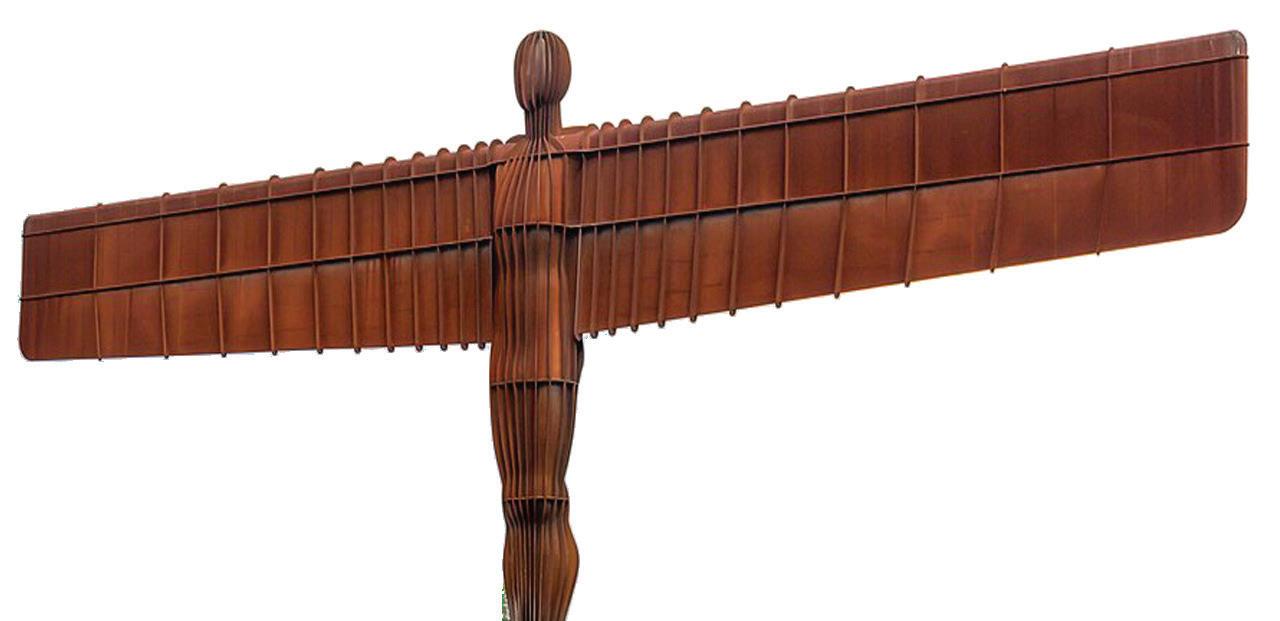
Image source: patrickatsgull. Pixabay Angel of the North), Clker-Free-Vector-Images, Pixabay (cap)
Robert Reed
Image
source: Arek Socha,Pixabay
Joseph Daniell
Daniel Penn
Rare 'Colbalt Crust' fungi found for first time in half a century Two wild beavers released under new licensing
Oli Pyzel
Cobalt Crust (scientific name: Terana caerula) has been found on the Isle of Man for the first time since 1976 in Onchan, a village located on the east coast of the island. It’s been sighted three times this year alone in an intriguing discovery, as it most frequently grows in Wales and the south of England.
Although this fungus’ primary role in its environment is to decompose organic matter, it’s also been used for its antimicrobial properties to create an antibiotic for the treatment of infections caused by Streptococcus pyogenes, such as strep throat and scarlet fever.
protein, and thus produce the cobalt blue colour. Without light, the fungus remains white.
“Only in the presence of light can the corA gene be activated...”
It’s good to see more sightings of different types of fungi as they are vital for the decomposition of dead matter and allow nutrients to be ‘recycled’ by returning them to the soil. More different species of non-invasive fungi in an ecosystem have been shown to increase its biodiversity and productivity, meaning they’re important in ensuring our environment thrives. This news is promising in the British Isles, which have been suffering from a decline in biodiversity and a loss in the abundance of native plants.
Despite being its namesake, a study has shown that Cobalt Crust’s reputable blue colour is only present after light exposure. Only in the presence of light can the corA gene be activated–this gene is responsible for the transcription of the mRNA encoding the striking pigment’s protein. An additional lightactivated process is then activated to correctly process the mRNA to form the
Maybe the next time you’re out for a walk, try and spot some native plants and see what you can see! You could end up spotting something as rare and fascinating as Cobalt Blue if you look carefully enough.
Laura Anderson
Habitat restoration and local biodiversity has been boosted by the release of 2 wild beavers...
Some of the first ever wild releases of beavers in England have been made in Cornwall and on Exmoor in Somerset! Beaver reintroduction has been a topic of conversation since the early 2000s; with the first significant population being established in the River Tay of Scotland in 2001. It is believed these beavers were escapees
release was made in 2009!
“...until recently, beavers in England were only allowed to be released into enclosed spaces”
Since then, there have been many projects across the UK focused on beaver reintroduction. However, until recently, beavers in England were only allowed to be released into enclosed spaces. A new licensing system launched by Natural England changes this by permitting the release of wild beavers! They are working with a total of 30 wild-release projects, all at different stages of development.
On Friday 13th February 2026, a beaver pair – named Parsnip and Turnip – were released into the Par and Fowey River Catchment in Cornwall. This pair are a part of the Cornwall Wildlife Trust’s wild release project, and the charity will continue to monitor their progress, alongside the 4 other beavers that were released on Monday. These beavers marked the county’s
The forgotten history of Sigmund Freud and eels
Alex Paine - Film Sub-Editor
Before Freud explored psychology, he explored the reproductive system of eels...
Mtime when we all had to remember his controversial psychological theories.
thought boys grow up with a sexual desire for their mother and hostile jealousy towards their father, and that girls develop anxiety about not having a penis, his revolutionary contributions to the development of psychoanalytical theory are sometimes overshadowed by the highly debated of his
at all - the time he dissected 400 eels to find the male sex organs. Yes, really.
“Aristotle speculated that they were born from the mud (or 'the entrails of
the Earth' as he dramatically put it)...”
mentor Claus had read a report
“After a month he had dissected over 400 eels, aquiring them from fishermen's daily catches...”
find one eel who had organs hidden in the abdominal cavity, but Freud seemingly wasn’t happy with this - that was one eel out of 400, and he was no closer to finding out how eels truly reproduce.
In hindsight, Freud’s experiment was let down on one major flaw - he wasn’t selective with the eels that he was using. Newer studies have shown that eels only develop male sexual organs in later life, when they migrate to the Sargassa Sea to spawn before dying. If this had been known, then Freud could have acquired the eels at the right time in their lifespan and made an anatomical breakthrough years in advance.
“...Ernest
Jones, believed that Freud's frustration at his inability
... influenced his psychosexual theories...”
Nevertheless, Freud’s failure to make any major breakthroughs with this experiment (at least a failure in his eyes) might have been very influential to his work in the long run. His friend, psychoanalyst Ernest Jones, believed that Freud’s frustration at his inability to come to conclusive proof about eels’ reproductive cycles influenced his psychosexual theories about humans later on in life. So, if you’re ever irritated by having to learn the Oedipus complex: blame eels.
first fully licensed release, and a huge milestone in beaver reintroduction. This was shortly followed by the release of a family group and a pair at two sites across the Holnicote Estate on Exmoor.
But why beavers? National Trust
Project Manager, Ben Eardley, says: “Beavers are extraordinary partners in our work to restore nature at scale. Over the last few years, we’ve seen how their dams and wetlands transform the landscape, create habitat, and help buffer both floods and drought.”
“These animals are considered a keystone species...”
These animals are considered a keystone species, one which has a disproportionately large effect on its environment. These “ecosystem engineers” play a huge role in creating suitable habitat for an abundance of species – birds, insects, and more! After being absent from the UK for 400 years, conservationists are looking forward to seeing how these animals can improve our damaged wetlands.
Fun fact of the week!
Did you know... bananas are technically radioactive! They contain potassium and a tiny fraction of that potassium is a naturally radioactive isotope called potassium-40. Your body, and almost all living things contains potassium too, which means you are slightly radioactive as well!
“Don't start panicking, the radiation from a banana is exremely small..."
Don't start panicking, the radiation from a banana is extremely small and completely harmless. Some scientists sometimes jokingly measure low levels of radiation in "banana equivalent doses". It's a fun reminder that radioactivity isn't just about nuclear reactors, it is in fact a natural part of the world around us, even hiding in your everyday snacks.
Freud’s
claiming that Polish scientist Simone De Syrski had found structures in eels that could possibly be the testes.
Image sources: OpenClipart-Vectors, Pixabay (scalpel), The New York Public Library, Unsplash (eel) & JJuni, Pixabay (tweezers)
In two vandal attacks, over 200 trees were damaged at nature reserves in Northumberland andGosforth.The Northumberland Wildlife Trust has had two of its sites vandalised – St Nicholas Park in Gosforth and West Chevington near Druridge Bay in Northumberland. Both sites have seen trees being damaged, with most of the destruction taking place at West Chevington.
Multiple sessions had taken place, with the help of volunteers, to plant more than 4,500 trees for new hedgerows as part of the Biodiversity Boost project.
This project was part of the National Lottery Heritage’s Species Survival Fund, in which the trust had received funding to increase biodiversity in the Druridge area.
These hedgerows would have provided resources for a multitude of species: mammals, birds, and insects. From food to shelter, to even helping bats navigate their environment, these hedgerows would have
the North East
Nature under attack: Over 200 trees damaged in
been a boon to Northumberland’s wildlife.
When volunteers showed up to continue these tree-planting sessions, they were met with a scene of destruction. Trees, tree guards, and canes had all been smashed to pieces and strewn across the site. An estimated 200 trees had been damaged by the vandals.
This attack took place only four weeks after a similar incident at St Nicholas Park, another one of the trust’s reserves, where trees had been set on fire and information boards had been destroyed.
Helen Walsh, the Biodiversity Boost Officer at the trust, stated that:
“Our volunteers have given up days and days of free time […] in wind, rain, and even snow, therefore, to see it destroyed in a mindless act of vandalism is absolutely heartbreaking for us all.”
“Trees,
tree guards, and canes had all been smashed to pieces...”
The hedgerow was planted using the funding from the Species Survival Fund. This project finishes at the end of February, and the repairs that are needed will be costly. It will be a race against time for the trust to fix it, and it will take away focus from other aspects of the biodiversity project.
The charity was flooded with support on social media when they made a post regarding the attacks. The incident has been logged with Northumbria police, and the team who manages West Chevington is reviewing camera footage to see if the culprits can be identified.
MSG under the microscope: what food science reveals about the misunderstood
Maya Egerton
What is exactly is MSG, and why do some people fear it despite it being deemed safe by major health authorities?
Monosodium glutamate (MSG) is the sodium salt of glutamic acid, a naturally occurring amino acid. “Mono” refers to one sodium ion, which is bound to glutamate to form a stable crystalline compound used as a flavour enhancer. Glutamate is found naturally in foods such as tomatoes, cheese and mushrooms, and it contributes to the savoury taste known as umami.
“Controlled studies have found no consistent evidence that MSG is harmful...”
In the late twentieth century, reports of mild symptoms after restaurant meals in the USA led to concern about MSG, often unfairly linked to Chinese cuisine through the term “Chinese Restaurant Syndrome”. However, controlled studies have
found no consistent evidence that MSG is harmful at typical dietary levels, and major health authorities consider it safe for the general population.
Kikunae Ikeda, a Japanese chemist, invented MSG in 1908 as he believed there were more than four basic flavour profiles (sweet, sour, bitter and salty).
“Glutamate is a common amino acid present in many different foods...”
He isolated glutamate from dried kombu seaweed (kelp) but found that alone it was unstable and hard to use and so combined it with sodium, making MSG. Glutamate is a common amino acid which is present in many different foods including parmesan, tomatoes, dried mushrooms, soy sauce and human breast milk. Ikeda went on to make Ajinomoto, a MSG-based condiment, which exploded in popularity in Japan and then China.
In 1968, Dr Robert Ho Man Kwok wrote a letter to the New England Journal of Medicine detailing a syndrome he experienced after eating at Chinese restaurants in America.
He described feeling a numbness in his neck which spread to his arms and back.
He suggested that it could be from MSG, which sparked media attention,
Jess Mooney - Head of Current Affairs
International Women’s Day is Sun, 8 Mar 2026 and provides an important opportunity to reflect on the vital impact women have on the worlds of science and medicine as pioneers who reshaped these fields long before equality was even imagined. One such figure from the North East is Dr Ruth Nicholson, a medical professional whose career challenged convention and expanded opportunity for the women who followed.
Born in 1884 in Newcastle upon Tyne, Ruth Nicholson was educated at Newcastle High School before progressing to study medicine at Durham University. At a time when higher education, and particularly medical training, was overwhelmingly male dominated, Nicholson was the only woman in her class. She graduated with a medical degree in 1909, entering a profession that was still adjusting to the presence of women within its ranks.
Her early career coincided with the outbreak of the First World War, during which she served as principal surgeon at a military hospital in France. In a period defined by mass casualties and rapid medical developments, Nicholson’s leadership placed her at the forefront of wartime surgical practice. For a woman to hold such a senior surgical role during this era was remarkable, reflecting both her clinical skill and professional
authority.
leading to fear and anxiety around the use of the ingredient. Despite the use of MSG in canned soups, processed and frozen meals, often chose to focus on Chinese contributing to harmful racial stereotypes.
Studies were performed but struggled to provide consistent results that MSG causes side effects. Some studies used participants who knew they were consuming MSG, leading to bias, whilst others used unrealistic doses of MSG without food which does not accurately reflect the use of MSG in a meal. The US Food and Drug Administration (FDA) and the World Health Organisation (WHO) both confirmed that MSG is safe to consume, although some people may experience mild symptoms which are short-lived. These effects are most commonly reported when large quantities of MSG are consumed on an empty stomach, rather than when it is eaten in typical amounts as part of a mixed meal.
These persistent myths about MSG not only contradict scientific evidence, but also perpetuate enduring racial and cultural stereotypes in society.
Last month, talks at the North Sea Summit in Hamburg yielded the Hamburg Declaration; a historic clean energy security pact which aims to promote energy security during times of economic instability.
The UK, alongside nine other European Nations signed the pact on 26 January, marking the start of a collaboration intended to drive energy security in Europe while promoting clean energy.
“European
leaders aim to transform the North Sea into the world's largest clean energy reservoir...”
This declaration is yet another step in the right direction as European leaders aim to transform the North Sea into the world’s largest ‘clean energy reservoir’. Leaders at the summit agreed to collaborate with regards to financials and planning of the wind farms; opening a gateway to increased employment opportunities and accelerating research and development across Europe.
After the war, Nicholson chose to specialise in obstetrics and gynaecology, a field central to women’s health, but one that was itself undergoing scientific transformation in the early twentieth century. Advances in antiseptic practice, anaesthesia, and surgical technique were reshaping maternal care, and specialists like Nicholson contributed to improving both safety and professional standards within the discipline. Her influence also extended beyond clinical work. In the late 1930s, she became the first female President of the North of England Obstetrical and Gynaecological Society, breaking yet another barrier in a professional community historically dominated by men. Leadership roles such as this were not just symbolic, they helped normalise women’s authority within scientific and medical institutions, gradually reshaping expectations of who could lead.
Dr Nicholson’s legacy is now recognised as part of the region’s scientific and social history. Her story features in the self-led Discover Her Story trail at the Discovery Museum, which highlights women whose contributions have shaped the North East. Her career also reflects broader themes central to International Women’s Day from access to education, representation in leadership, and the importance of visibility for future generations.
An ode to Dr Ruth Nicholson European Nations unite to form a Clean Energy Pact
As the world looks to combat rising energy costs and the fastpaced effects of climate change, past actions such as the European Commission’s Affordable Energy Action Plan, remain crucial in reducing our reliance on nonrenewable fossil fuels. In response to the signing of the declaration, Energy Secretary Ed Milburn stated that “We are standing up for our national interest by driving for clean energy, which can get the UK off the fossil fuel rollercoaster and give us energy sovereignty and abundance.”
“Critics worry that this could lead to suppliers deciding which countries to sell to, leading to an increase in energy bills”
A key takeaway from the pact is the establishment of cross-border wind farms and grid links which connect wind farms through undersea cables and across countries. Critics worry that this could lead to suppliers deciding which countries to sell to, leading to an increase in energy bills during times of high demand. However, the projected social and economic benefits from the proposed ‘interconnectors’ which will link the wind farms seem to outweigh the potential harms.
Laura Anderson
Adeena Aflah
Image source: OpenClipart-Vectors, Pixabay
ACADEMIC OFFICER
OFFICERS
STUDENT MEDIA OFFICER
WELLBEING & COMMUNITIES OFFICER
SPORTS OFFICER
CHAIR OF:
COUNCIL SCRUTINY
My motivation: Let's build a community that's not isolated but integrated! Holding open mics to raise to solve problems. Prioritising that decisions are made fairly for all. I am running for chair so you have a seat at the table!
My motivation: I am motivated to become the chair of scrutiny to represent student interests effectively by supporting Liberation Officers' work and ensuring their agendas are meaningfully implemented. I am to foster accountability, amplify student voices, and ensure representation across campus.
WORKING CLASS STUDENTS OFFICER
DISABILITY OFICER
& CHAIRS
"It
was a great way to get started": In conversation with alumni Max Fosh
Megan Grimston - Head of Communications
Student Media alumni and content creator, Max Fosh, sat down with The Courier to talk about his journey.
What first drew you to Newcastle Student Radio? I joined Newcastle in 2014. I remember at the Freshers Fair there was the Newcastle Theatre Society (NUTS), which I very much enjoyed quite quickly, because I love being involved in that kind of thing. I also knew very early doors that a few of the people in NUTS also did shows on NSR. I remember being asked by somebody “I’ve got a show on the student radio, do you want to come on and be my guest?”. I remember it sort of being the most exciting thing imaginable, and so I went on as a guest presenter. The server was down, we weren't broadcasting to anybody; but it was such a great way to get started. I was very grateful that I did get involved.
“...it was such a great way to get started. I was very grateful that I did get involved."
Was there a moment you realised, Oh! I’m actually quite good at this type of thing? No, because I recognise I wasn’t very good at that type of thing. That was the great thing about student radio, and especially when I started out, was that I wasn’t very good. No one was very good. But it gave you a bit of a playground to go and work out what you were good and bad at. It was just that I was relatively committed. I didn’t do NSR for a huge amount of time, because I wasn’t broadcasting to anybody. It was Radio Tyneside that really got me to get going in this world. I was very happy to go and do two or three shows a week. I think that was the most important thing. What kind of presenter were you back then compared to the personality you are now?
I think I was pretty similar in the sense that I was just trying to recreate what I enjoyed listening to. That's always kind of been my modus operandi when it comes to creating content or making a radio show; you first and foremost are the first audience member. If you’re creating things that you yourself want to listen to or enjoy then other people will as well. I was a big fan of formats and trying to think of aims and trying to come up with various different ways I could grab the nonexistent audience to continue listening, and I would also go and put together weekly updates of my best link. I would download all of my shows and just put together five or six best links. I was a big fan of trying to make formats and games.
“If you’re creating things that you yourself want to listen to or enjoy then other people will as well."
Were you already confident when you joined Newcastle Student Radio, or did radio help build your confidence?
I was a very confident person when I started, I was part of NUTS, I was very outgoing. I like chatting to people. Although the confidence side of things was very much the same, I did gain some confidence in knowing what I was doing when it came to the show and radio and understanding how the medium works. It wasn’t the confidence,
but more getting understanding of the format and understanding the vehicle for the content.
What was it about radio hosting and vox pop presenting that made you think content creation was the career for you?
It was pretty quick after I was doing StreetSmart. I was posting the content on Facebook, and I was realizing that it was kind of starting to have a bit of a name for itself within the uni. People would be waiting for the next video to come out and tagging each other in it. I remember thinking, oh this is interesting. I never thought that it would become a YouTube channel, but it was an interesting time to notice, oh, maybe this is something. People often ask me ‘how did I get into YouTube?’; I never planned to get into YouTube.I just love making content. I always think if you start from that position of loving making content, then that's the best way forward. It took me three years before I made my first pound from YouTube. I think if you were going to try and break into YouTube as a job, you probably wouldn’t have the patience to stick around that long.
Do you feel like vox-pops were a phenomena of their time or with the influence of youtube shorts, could they be the future of content creation?
I’m not sure whether they're the future, but definitely back in 2017 when I first started doing them, they were nowhere near as prevalent as they are now. This was before short form content existed. It was pre TikTok, pre shorts, pre reels. The idea of standing outside interviewing people has been around since cameras have been around, but it was not the same prevalence that it has today. I remember the reason why I started doing StreetSmart was because I didn’t get a role as the presenter in the television society (NUTV). They were making the equivalent of StreetSmart (called Big Market Banter). They were about 20 minutes long and they'd get posted maybe once a term. I remember thinking, surely, this can be done better, more frequently. That's why StreetSmart was born.
I thought, well, if you do this more regularly with shorter and more snappy edits, then you’ve got something relatively interesting. I just went out and did my own thing, grabbed a camera, stood on Big Market and away you go. I wasn’t really looking for permission to go and make stuff, I just got involved.
Reflecting on your time in radio years on, how do you think that those skills have transferred and helped you in content creation?
I think it was the ability to have the time to just try things, to fail, to make 100 things that didn't work out. It didn’t matter at all. I think the pressure that you get when you leave university is that you need to work pretty quickly, especially if you want to start something yourself. Whereas when you’re at uni, it doesn’t matter if no one is listening to a radio show. You’re building that experience and those skills of understanding what you’re good at. How would you say the delivery of humour is different from radio to youtube?
I think when it comes to videos and edits, the humour comes from the edits. It didn’t hugely come from the actual
delivery itself. Yes, if you could come up with a quip or a punch like then that would help, but it was the edit that made the humour and fun. You could really save yourself and really improve your comedic timing, just in an editing software, which you can’t do with radio. Radio is less about being funny and more about being someone that you want to hang out with. I think there are certain presenters who do this brilliantly, just being able to feel like you were talking to one person, and that is the hardest to master. Was this something you felt prepared to deal with?
I don't think I was ever consciously looking to prepare for it. It’s just over the course of five years doing shows and listening back to them and, most importantly, taking pointers from people who were SMs or people I trusted, and getting feedback and understanding that this needs to get better. I think at the beginning, you always think that what you’re doing is very good, but looking back, it wasn’t. You need to have somebody who can point you in the right direction to be like that bit was/wasn’t good.
Do you think, had you not discovered NSR/ Radio Tynesside, you’d still have ended up on your path now?
I really don’t know. I suppose the romantic answer is no, so NSR can take the credit. I think I probably would have always gone into some kind of content creation, because I love to watch it. I watch YouTube every day. I'm sure I would have made it, but in this world, I’m not quite sure what the roadmap would have been. It probably would have been less clear.
“I'm not
sure what the roadmap would have been. It probably would have been less clear."
Do you think that hosting radio has made you a better content creator?
Absoloutelty. I do think it’s a case of not only radio hosting. It’s radio hosting and understanding the audience and really reflecting on each episode or each show, what was good and what was bad. I think you need to have a very thick skin, but also a propensity to really learn and
On Campus
Music Society Spring Concert 6th March, St Andrews Church
The Importance of Being Ernest 9th-10th March, The Tapyard
Spring Ochestra & Choir Concert 14th March, St Andrews Church
Newcastle University Chamber Choir concert 14th March, St Georges Church
remaining space in the ‘On Campus’ column provides a chance for you to advertise your own events to the wider student population.
What can be advertised:
One off events that are open to the entire student community. Concerts/performances/shows Fundraising events Guest lectures
What cannot be advertised:
Taster events, (these should be advertised through Give it a Go) Club/Society Balls
Externally organised events (e.g. Fight Night, Student Races) To advertise your event here, M.Grimston2@ncl.ac.ukcontact As spring edges closer to Newcasrle's horizon, music has begun to bloom across campus. From plays to performances, there is a lifetime of events and opportunities for you sprouting across campus.
Edited by: Charley Dobson
Pisces
Aquarius Aries Taurus
January 20th - February 18th
Aquarius, you’re nearing victory over a stressful situation. This triumph will lead you on a journey, perhaps internal, perhaps of residence. Strap in!
Febuary 19th - March 20th
Maybe a sour time for you Pisces, this month the stars hinted at some money losses for you but, they said if you tread nicely, you may find something to salvage.
20th - May 20th May 21st - June 21st
22nd - July 22nd
As adventurous and passionate as you are Gemini, today the stars are urging you to take a risk. What will you do with their advice? Act quick!
It’s a good day to be a Cancer. The stars promise that confidence and a zest for life is looming over you right about now.
24th - November 21st September 23rd - October 23rd
Libra, something about your zodiac tells me that you should be celebrating this month - big things and bright happenings are on their way. Yippee!
S
corpio, whether it’s for better or for worse, new beginnings are fast approaching. Let’s use this time for creation and big ideas instead of mindless dwelling.
Aries, today the stars urge you to take a short journey. They also say you should be near the water. Sounds like you’re in need of an early spring beach trip.
So, Taurus, your zodiac is looking like you’re feeling rather reckless. Be outspoken today. Stay ambitious.
Leo Virgo
23rd - September 22st
Leo, your zodiac is telling you to expect, and I quote, ‘the ending of a situation or relationship’. I fear that fling may be coming to a close.
22nd - December 21st
Sagittarius, I spoke to the moon on your behalf and all that she could promise me was ‘love affairs’... good luck, I guess.
Feeling conflicted lately, Virgo? Take a step out of your situation to see through your fog more clearly. Don’t panic, you can wear your rose tints again soon.
22nd - January 19th
Capricorn, great time to be alive! Expect to feel newly inspired and finally excited about your work.
International Women's Day: the leading ladies of the North East
Women of the North-East to celebrate this International Women's Day...
The Northeast is rich in history and is the birthplace of our favourite bakery: Greggs. However, the Northeast does not get enough credit for those who come from here and have become national treasures, as International Women’s Day is arriving on the 8 March let us shine the spotlight on these northern leading ladies.
"...as the only woman in her class in 1909, she became a principal surgeon at a military hospital in France during
One Northern woman who fought against gender norms before feminism was even a coined term was Mary Astell. The author and philosopher, whose powerful arguments concerning women being just as rational as men made her become known as the ‘first English feminist’. This legendary lady was born in 1666 in Newcastle Upon Tyne, so it is quite
right that we should celebrate her as a legacy of the Northeast.
Another female powerhouse from the past was Dr Ruth Nicholson. Born in Newcastle in 1884 and graduating from Durham University as the only woman in her class in 1909, she became a principal surgeon at a military hospital in France during WW1. To learn more about her, head to the Discovery Museum, where her story is told in more depth.
Why not make a feminist inspired scavenger hunt...?
Both Kathleen Brown and Emily Wilding Davidson were tenacious suffragettes who acted as key figures in women’s fight for the vote. A heritage plaque is on display along Grey Street, where suffragettes
How Newcastle taught me the joys of small talk
Martha Nugent - Opinion Sub-Editor
Is Newcastle as friendly as they say?
In a world that feels constantly on 2x speed, Newcastle truly has been a haven of Smalltalk and pleasantries. I don’t think I’ve gone a day without smiling at a stranger here at Newcastle. No, I don’t think, I know this for a fact. Moving to Newcastle has taught me to find comfort in the Geordie way of speaking, from a celebratory “Way-aye”, or being called a “bain” by someone older, fills me with a comforting warmth that you can’t quite pinpoint, changing average conversations into something of an artwork itself. The benefits of small talk go beyond what we might’ve originally thought; labelled as weak ties” by sociologists, small talk is shown to overall make life more enjoyable. Whether it be improving your metro journey by chatting to a stranger, telling the Greggs worker to “have a lovely day” or simply chatting about the weather with a stranger in your lecture can really help
mood- these mini-moments help install snippets of happiness through your day.
Growing up very much still in the north, in the uniqueness that is Middlesbrough itself, small talk with strangers was still common, but not nearly as much as here in Newcastle. The atmosphere in the heart of Boro may feel just slightly different- ask any Geordie, and they would gladly tell you so. And while a conversation with a Geordie may begin with a “Y’reet pet-lamb”, and end with an invitation to a family barbecue, a ‘smoggie’ interaction might reflect something more of a cautious nod, perhaps a “y’alright like”. Either way, perhaps it’s the Geordie tone that just makes everything seem friendlier, a certain sparkle carried through their rising intonation that makes me feel as though I could share all my secrets with this random cashier.
Now, don’t get me wrong, this article is far from an invitation to start a conversation with a random person walking down Northumberland Street, that might be the opposite of what we’ve all grown up being taught; please don’t speak to strangers on account of reading this. Yet, if you did find yourself unsociably chatty, odds are, you might just get a friendly reply, as it's evident that Newcastle’s love of small talk is anything but small- it's essential.
congregated to celebrate Kathleen’s release from prison in 1909, and a statue of Davidson can be found in Morpeth’s Carlisle Park, which was unveiled in 2018, over a century after she was tragically killed in 1913. Why not make a feminist inspired scavenger hunt using these sights as locations?
The People’s Kitchen is a Newcastlebased charity that offers assistance for vulnerable people and was set up on Dean Street in 1985 by Alison Kay, who has since been honoured with a bronze plaque in the pavement of the Quayside, alongside around 30 celebrated men and women from the Northeast.
As the rise of fame through media came into play in the 20th and 21st centuries lassies from up North became recognisable through their Geordie charm. One Geordie icon is the British girl group phenomenon: Cheryl Tweedy, known as Cheryl Cole. The TV personality is known for never turning her back on her Northern roots, with her Geordie twang still present in interviews.
Another loved lassie is the stand-up comedian
Sarah Millican, who was born and raised in South Shields, and has dominated the male-dominated sphere of comedy through her unfiltered approach. Now to finish off, here are a few businesses owned by women to visit in the Northeast, as we remember support the females of ‘Toon’. For all things vintage, check out Friday Vintage in Old Eldon Square, which was established in 2023 by Laura Jackson. If in Ouseburn, why not check out Flaura Rose, a pink, popular lifestyle shop selling a collection of items by female small business owners. Lastly, fancy a beverage? Pure Knead, with locations on Grey Street and Whitley Bay, has drinks and pastries and was started by Paula Watson at Tynemouth Market.
Image sources: Bolckow, Flickr, https://creativecommons. org/licenses/by-sa/2.0/ (plaque), georgeybuckley, Flickr, https://creativecommons.org/licenses/by/2.0/ (Cheryl Cole), Adrian Long, Flickr, https://creativecommons.org/ licenses/by/2.0/ (Sarah Millican). Some images may have been manipulated.
Me & Mam: spending Mother's Day in Newcastle
A thoughtful itinerary for the perfect Toon day with your Mum...
For many of us, our mothers are the most important woman in our lives, and she definitely deserves all your attention on this day. Newcastle is the perfect place to give your mum care and new experiences. I have collected a selection of the best activities for Mother’s Day in Newcastle and I hope you will definitely choose your ideal option.
Time for the sweetest afternoon tea: well, can there be anything better than lunchtime in the company of your mum with sincere conversations? My recommendation is to visit one of the oldest hotels in Newcastle, Jesmond Dene House, which offers a wide choice of cakes, sandwiches and homemade jams. And also a bonus is a view of an incredibly beautiful park, so at the end you can walk and talk.
Spa for relaxation and rest: A visit to the spa helps to escape the daily hustle and routine. This type of rest will help you and your mum relax together and feel pleasure in every cell of your body. Try a massage, sauna and a cool pool after, you will definitely feel an energy boost for many days ahead.
"Even
a simple walk and conversation are sometimes more important than a gift."
"Even a simple walk and conversation are sometimes more important than a gift."
Time in nature: Newcastle is famous for its parks and landscapes: Jesmond, Leazes Park, Exhibition Park and also the coast near the North Sea. Mother’s Day is not only about gifts but also about spending time together. I recommend breathing in the sea air and looking for seals on the coast. Together, you can go to the park and listen to birds sing in the beauty of nature.
Form memories: You can create a jewellery piece at The Glamorous Owl on Old George Yard. Then you can go to Grainger Market and taste food from different world cuisines, before something fun in the evening. And at the end of the day, go to the Theatre Royal to see a musical for live music and a exciting atmosphereperfect for both you and your Mum.
The main idea of Mother’s Day is not expenses, but attention. Even a simple walk and conversation are sometimes more important
Return to the past at Beamish Museum: History is interesting to learn in practice. In this museum you can visit all the streets of that time, go into a barber shop, buy sweets in a medieval shop, ride a bus and see how coal was mined and how British people lived in those times.
Sophie Campbell
Sofiia Korol
Why going analogue might be the reset you need
Indya Malhan
Old tech may be the future...
Are you tired of endlessly scrolling on your phone? Moving from app to app, locked in a monotonous trance whenever you pick up your phone? Here are some things you can do to limit your screen time and decide what truly deserves your attention:
I would highly recommend investing in a digital camera. Not only do they photograph better, but they also don’t have the limited storage that an iPhone does. Using a digital camera really forces you to slow down, you take fewer photos but they mean more. Photos with friends become so much more nostalgic and memorable, rather than a collection hidden between hundreds of snaps on your phone. This is also a very easy way to adopt photography as a hobby, mindfully gravitating you to creativity and inspiration.
Trading your Spotify account for an iPod to listen to music can also be a really good way to not rely heavily on your phone. Some of the features on Spotify, such as direct messaging and followers have turned the music streaming platform into something mimicking mainstream
social media, making it hard to simply just listen to music. With an iPod there are no algorithms or recommendations, it’s just your choice of music. And of course, with wired headphones, you don’t have to remember to charge your AirPods!
Invest in a gaming console rather than scrolling on TikTok! You can buy an old Nintendo DS for a reasonable price, giving you a larger variety of games with no adverts. A physical gaming consol immerses you more into the game, so that you’re not just mindlessly passing time, but making an active decision to actually enjoy your downtime. On enjoying your downtime, reading from a Kindle or a physical book rather than your phone or iPad is much more productive. There are no notifications to pull you away from the story or distractions to cut your reading time short. These products allow you to be more mindful and intentional in dayto-day life, allowing you to set physical and mental boundaries with your phone. It’s so easy to get caught up in the endless content disposal on our phones, but stepping away from them in small areas of life can really help you have control over what deserves your attention.
Hobby Hub: rock climbing
Pippa Harries
This hobby will certainly rock your world...
Over the last 2 years, I have been on a personal mission to try as many hobbies as possible, from sports to DIY... I’ve tried it all! However, there have been a few standouts that I’m happy to have stuck by me. Primarily, rock climbing: a sport which has skyrocketed in popularity in recent years, I have no shame in admitting I’m a victim of its addictive and captive nature. I first tried out bouldering (indoor climbing without ropes) around a year ago at a local climbing gym at home in Nottingham and was shocked to find that it is a lot harder than you might think. From strange, tight shoes, to coloured holds that apparently range in difficulty, it was very intimidating to start (especially when everyone around you seems to suddenly be Spiderman)
"It’s a hobby that has benefitted me socially, physically and mentally..."
But looking back, it’s important not to let it put you off! It’s a hobby that has benefitted me socially, physically and mentally, combining physical movement that encourages you to increase your strength and an amazing, supportive community
willing to help and push you along. The community is truly one of a kind, bringing together people with a joint interest in climbing up walls and rubbing their hands with chalk; you’re always guaranteed a fun, positive and uplifting environment.
I personally love how it doesn’t feel like exercise. You climb a bit, you chat a lot and walk away feeling like you’ve conquered Everest. If you’re interested in trying indoor climbing, I would recommend finding your local indoor climbing gym, finding a friend to go with and simply giving it a go.
In Newcastle, ‘The valley climbing centre’, located on Byker Bank in Ouseburn, is the perfect place to get started. Or if you’re interested in trying out roped climbing, ‘Newcastle Climbing Centre’ is super cool, situated in a former church in Byker. Most gyms allow you to rent a pair of shoes, so no prior experience or equipment is needed. Try it out, and I bet a year from now, you’ll be obsessed.
The best photography spots in Newcastle
Your ultimate guide to Newcastle's best photo spots...
Newcastle is a beautiful city filled with hidden gems, history, and stunning architecture. Whether you are a professional photographer, an amateur, or simply looking to capture a few pictures on your phone, this city offers a variety of views and landscapes that look stunning through a lens. From its iconic bridges and historic buildings to the peaceful seaside views, here are some of my favourite photography spots in Newcastle.
"...this city offers a variety of views and landscapes that look stunning through a lens."
Leazes Park: A short walk above the city centre, Leazes Park feels like a calm getaway from the busy streets. Its calm and leafy views offer a mix of nature shots, while keeping a classic Newcastle style. The lake in the middle of the park offers an amazing opportunity of photographing animals like swans and ducks swimming in the water. Leazes Park transforms with each season, making it impossible to choose a favourite. Every time you visit, it offers something unique. You will never
capture the same shot twice.
Grey Street: I firmly believe Grey Street is the most beautiful street in Newcastle. The street’s striking 19th-century architecture makes it almost impossible not to take a picture. This street is beautiful at any time of day, but golden hour is particularly magical, as the warm sunlight creates a cosy atmosphere. However, Grey Street keeps its character even in the rain. It’s the perfect spot for a classic UK-style photo.
"Whether it's a misty morning, a stormy day... Tynemouth always feels cinematic."
Tynemouth: Just a 30-minute Metro ride from the city centre, Tynemouth offers beautiful coastal views with a really peaceful feel. Photographing here is completely different from the city, as its wide-open skies and ocean views allow dramatic photographs to come to life. Whether it is a misty morning, a stormy day, or a wild night, Tynemouth always looks and feels cinematic. However, Tynemouth isn’t just about the sea, the town itself is photogenic too. The coastal town offers charming streets, colourful shopfronts, and cosy cafés that capture the relaxed seaside charm.
The Quayside: A bit cliché? Maybe, but the Quayside is impossible to leave out. You can’t really talk about Newcastle photography without it. When I picture Newcastle in a photo, the bridges are always part of it. The city’s identity is closely tied to its bridges, and the Tyne Bridge and Millennium Bridge are particularly photogenic. That said, the streets approaching the Quayside could easily be my favourite spot, particularly with the train passing above. They really showcase Newcastle’s character and iconic views. Walking around, especially on a Sunday Market day, is highly recommended.
"The city's identity is closely tied to its bridges..."
Newcastle University Campus: Even though we stroll through Newcastle University every day like it’s just part of the routine, the campus is actually a hidden gem for photography. The mix of historic red-brick buildings and modern architecture creates a lot of visual variety characterized by a traditional university feel. It is a reminder that even the places we take for
granted can surprise us with their beauty if we choose to see them differently. Photography doesn’t have to be complicated. Often, the simpler the photo, the more beautiful it is. Newcastle offers a wide variety of landscapes
"From peaceful parks and historical streets...there's something photogenic around every corner..."
and views that are worthy of photographing. From peaceful parks and historic streets to dramatic coastal views and iconic bridges, there’s something photogenic around every corner. These five spots are some of my top picks for photography, as no matter the season or the weather, they always look amazing through a lens. Still, a wander around Newcastle will uncover many more photogenic corners. This city is full of hidden surprises waiting to be captured.
Lea Lebret
Image sources: Avantrend, Pixabay (bottom left and bottom right frames), Andrew Itaga, Unsplash (other frames) Image credit: Lea Lebret (photography)
Image source: Yoann Siloine, Unsplash
Image source: Sean Benesh, Unsplash
Fashion & Beauty
Newcastle fashion brand SNIDE awarded substantial investment from Creative UK
Mia Wijayatilleke
- Fashion & Beauty Sub-Editor
In conversation with Louie Glen, SNIDE's founder and creative director...
SNIDE, Newcastle-based luxury fashion house, was awarded significant investment from Creative UK, a business development scheme supporting creative industries. I had the chance to speak to Louie about SNIDE and what the investment means for the brand’s future.
SNIDE started as a university project, and has since grown into a successful fashion label with the Northern experience at its heart. “I didn’t come from a traditional fashion background,” Louie explained. “I became acutely aware very quickly how Southern-focused UK fashion is… whenever the North was represented, it is often in a very cherry-picked, sanitised sort of way”.
“...the most important thing about the brand is the Northern perspective. ”
SNIDE aims to change that. Their garments find beauty in the roughness of the Northern experience, with both the visual motifs and the functionality of the pieces being influenced
by Louie’s experiences growing up in Newcastle. “At its heart, the most important thing about the brand is the Northern perspective,” he stated. Goth, punk, and alternative influences are also a central part of SNIDE’s aesthetic and philosophy. For editorial shoots, models are seen in trad goth makeup, which has become integral to SNIDE's visual branding. Speaking on the decisions behind this, Louie admitted that it was “a lucky accident” - he had been inspired by a photograph of a girl in trad goth makeup surrounded by people in normal makeup at a birthday party, and loved how it stood out but no one was acknowledging it. He said the brand likes to joke that the goth makeup is never planned - models just keep showing up like this. Louie was introduced to Creative UK at a networking event in June 2025. The application process for the investment was lengthy, involving substantial writing on the philosophy and ideals of the brand, as well as the financial figures and predictions. Before the investment, Louie and his SNIDE business partner, Henri, funded the brand out of their own pockets. “Any mistake would be
costly”, he said, but the Creative UK investment has provided a sense of security, and “we’re able to be a bit more experimental”. SNIDE found out at the end of last year that they had been selected for the investment. “It’s a life-changing amount of money - tens of thousands of pounds,” Louie said, so “it became very real very quickly”. Their first priority with the new funds was to buy a physical studio and office space. This has allowed a place to develop social media content, as well as move forward with internships. Whilst Louie knew he wanted to bring interns on board, having the studio has allowed them to hire four interns this year. SNIDE is now working on their privé releases, which are individual couture garments rather than a shoppable collection. Louie also stated that he wants to look at production processes and details like neck tags and packaging, going back to foundations “now that we have the comfort of time and money”. Going forward, SNIDE plans to have a big impact on Newcastle fashion. They want to make a statement postinvestment that shows SNIDE is “not just an Instagram brand… it’s artistic, it’s progressive, it’s going somewhere”.
Selected launch new collection in Fenwick with exclusive panel discussion
Mia Wijayatilleke - Fashion & Beauty Sub-Editor
The recent event at Fenwick showcased the sustainability, simplicity and style at the heart of Selected...
On the 11th February, Fenwick hosted an exclusive fashion panel to celebrate the recent partnership
consumers.
The event, hosted in The French Salon on the 1st floor of Fenwick Newcastle, welcomed guests with Nordic-inspired canapes, Hugo spritzes, and a live DJ set, creating a stylish ambience to capture Selected’s sleek Scandinavian vibe. Rails showcasing Selected pieces were on display, encouraging guests to browse and shop the collection on the night.
The panel discussion was hosted by Peter Bevan, London-based fashion journalist and stylist, in conversation with Victoria Claridge, Head of Buying at Fenwick, and Søren Riisberg, Selected’s Head of Sales. They demonstrated the compatibility of the partnership, with the brands’ values closely aligning, and gave their input on both the importance of, and growing demand for, a good-quality capsule wardrobe.
Søren explained that a capsule wardrobe should consist of pieces that can be used as widely as possible - staple pieces of clothing that can be dressed up or down and used across multiple seasons. He showcased Selected’s merino knits in basic colours, and the unwavering reliability of a quality white t-shirt. Victoria also championed the white t-shirt, specifically the affordability of Selected’s option. She claimed that it is an “easy layering piece” that can be dressed up or down, just
“...consumers are becoming increasingly fatigued with fast fashion and are looking to invest in pieces that prioritise longevity and versatility... ”
“take off the trainer and jeans and pop on a trouser and loafer".
Victoria explained that consumers are becoming increasingly fatigued with fast fashion and are looking to invest in pieces that prioritise longevity and versatility in their wardrobe. Brands like Selected, offering quality staples at an accessible price point, are therefore ideal for today’s consumer. For example, Selected’s white t-shirt, praised by both speakers for its craftsmanship,
fit, and composition, is priced at £22, making it
“It was clear that the brand's values were at the heart of their clothing... ”
a reasonable investment for the contemporary capsule wardrobe.
As a brand, Selected is refreshingly honest about their sustainability values. Currently, 76% of their clothes are made from sustainable fibres. Søren was transparent about the brand’s sustainability, stating that they are “flawless - not at all, getting better - 100%”. It was clear that the brand’s values were at the heart of their clothing: Søren claimed that Selected releases 6 collections per year but is working on narrowing this down further, focusing on minimising waste in the industry.
At a time where fast fashion brands prioritise churning out clothes in a wasteful attempt to keep up with micro-trends, it was hopeful to hear from a brand that is genuinely committed to becoming better for the environment.
The panel concluded with styling tips for a capsule wardrobe. Victoria highlighted the importance of layering specifically within the Selected collection, and demonstrated the compatibility of their knitwear range with their selection of suede and leather jackets. She stated that Selected’s barrel jeans and leather culottes are popular this season, creating timeless styles and shapes that work well with layering.
Selected is already very successful in Denmark, being represented at Copenhagen Fashion Week, so looks to continue gaining success in the UK.
Søren said that the brand wants to continue hosting in-house events to get the word out and create a community which provides a nurturing consumer experience.
It was an honour to be invited to this event with The Courier, and exciting to be involved in the brand’s early days of partnership with Fenwick. The importance of sustainability and quality is a topic that will be consistently relevant to fashion, as more and more of us are falling numb to fast fashion’s temptations and opting for longevity in our wardrobes.
What's in my clubbing bag?
The essentials for a perfect night out...
The glow of the nightclub lights. The boom of the music. Your friends' ambitious dance moves. Clubbing is so magical, but sometimes, without proper preparation, you can be focusing more on smelly breath or dry lips than on having a good time.
That's why I have a night out bag with me at all times, that has everything I could ever need in it. The bag itself is a Nike crossbody bag which was £28 from JD Sports.
In the front compartment is where I keep my essentials. Firstly, a packet of chewing gum. Have you ever talked to someone with bad breath and you have to back up a bit? Or has someone ever had to back up from you? Invest in chewing gum! Also in the front is lip balm, in my opinion, it’s a night out essential because me and chapped lips isn’t a good combo. Lastly, there is my hand sanitiser; it's common for clubs to not have hot water, soap, or hand dryers, so knowing I can always have clean hands is great for my quality of life. Now, in the main compartment, I keep everything else. Firstly, a pack of tissues, whether it's wiping away my tears when the DJ rejects my song request, clearing my nose of bogies or wrapping up that aforementioned chewing gum, my tissues have me sorted. I also have a fancy pair of (prescription) whether it's needing to look cool, the lights being overstimulating, or I'm feeling a little awkward and need to avoid eye contact with people, sunglasses are a spectacular tool for a night out. I also use regular glasses, so I carry a carrying pouch for whatever pair I'm not wearing. I also have a cleaning cloth so I can clean my glasses whenever I need to.
“...a good night out is basically a
”
I carry hand cream because having rough hands and then shaking or clasping hands with someone for a dance move just doesn’t feel right. I have a bottle of aftershave in my bag, a good night out is basically a full cardio workout, which can mean getting sweaty and smelly. Except if you carry aftershave (or perfume), you won’t be smelly! I'm also a sufferer of dry eye, which ironically makes your eyes water, so I carry a bottle of Hycosan Extra Eyedrops. Once upon a time in Luthers, a middle-aged gentleman said to me, “Yeah, who spends time in a toilet writing messages on the wall?”, to which I added, “Yeah, what weirdo even carries a sharpie on them?” Well, me apparently! I used a blue Sharpie once on a ‘white lie’ social, and it's just stayed in my night out bag ever since. Normally, I have cargo trousers with zips for my IDs, keys and phone. A perk of being a boy with large pockets, otherwise those would be in my night out bag too. I hope I have inspired you to add something to your night out bag!
Logan Harris
Image sources: Tim Hasse, Dupe (man), Jean Pedraza, Dupe (perfume)
full cardio workout...
Image credit: Caitlin Burke
Reflections on Newcastle: the final semester blues
Alex Paine - Film Sub-Editor
From city to home, why Newcastle is important to us...
The final semester of university always brings with it a lot of different thoughts and feelings: the stress and anxiety of completing your dissertation and applying for a whole host of jobs or postgrad degrees, the satisfaction of completing a three-year degree with all your coursemates, and the melancholy when you realise that three years of study sessions, drunken nights, and amazing memories are soon going to be over.
These are all things that I’ve heard about while going through my university journey. I think I’ve encountered the typical student experience throughout my time here. The first year of friends and constant get-togethers. Then comes the difficult second year where your degree becomes so much harder, , the friendship groups begin to splinter for a variety of reasons, and you end the second semester in a very different place than where you started
It's okay to break up
Break ups suck. That’s just a fact. But what sucks even more is staying in a long-term relationship with someone who you’d prefer never to see again. It can feel easy to feel stuck in a relationship, particularly at university where you share everything: the same friends, the same classes and potentially even the same house. With such close proximity, it can be extremely upsetting when your relationship starts going south. If you’ve built your whole social life around your partner, it’s understandable to put off breaking up with someone until you’ve graduated, or you don’t have to see them regularly. But the truth is that sometimes refusing to break up with your partner can do more damage than staying with them for safety.
"There’s a lot of pressure to find 'the one'..."
University is an intrinsically important part of your life for socialisation, and even romance. While it can be comforting to be in a relationship at university, it’s important to look for the right one. There’s no point wasting time with someone who you know you don’t want to stay with if there’s a chance of finding someone else who you might spend the rest of your life with.
Yes, being in the same place with an ex can be awkward, but it could be a great step to help both of you move forward. More time spent actually going out, more time with friends, more time exploring the city before you leave. There’s no point in letting bad feelings fester when you have all the time in the world to settle down. There’s a lot of pressure to find 'the one', but this might not always need to be the case; in fact, the average age to find your spouse is at twenty seven. That’s about another five years of looking before you settle down. All the more reason to let that slightly too clingy partner go in the hopes of finding something new.
the first.
"I’m now so much more appreciative of the little moments..."
And then, with any luck, you reach your third year: you barely recognise yourself from when you first set foot in a lecture hall nearly three years ago, but you kind of like it that way. You’ve changed, you’ve grown, you’ve adjusted to adult life - but you still can’t bear getting up for a 9am.
I can still fixate on the tiniest little memories. I can remember the feeling of going to bed in first year, and being amazed I couldn’t hear any noise from the kitchen despite being in the room next to it. I can remember those first lectures, wondering why on Earth it was possible to make a lecture about note-taking last a whole hour.
I’m now so much more appreciative But all these memories, whether big
or small, bad or good, are all tied to the city of Newcastle. I may not have thought much about the city that was surrounding me, as someone who is not a party animal and certainly not interested in football, but I’ll be damned if I won’t miss living in this city. A city that was always a place my family would go to on day trips has become a home, a city that was once just Eldon Square and the Quayside has now become a whole host of pubs, libraries, evening walking routes and, most importantly, people. And that’s the main thing I’ve taken from my time at university. My relationship with the world and people around me has altered massively, and I’m now so much more appreciative of the little moments in life.
I don’t want to say “You can take the man out of the city, not the city out of the man,” but if there’s a more fitting phrase, I don’t know it.
North East sex eduation: what we were really taught
Sasha Cowie - Sport Sub-Editor
What
should our schools be doing
better...
If you grew up in the North East, you probably remember the awkward assembly. The biology-heavy PowerPoint. The teacher who looked just as uncomfortable as the class did. Sexual health education often felt like something squeezed in at the end of term rather than something designed to genuinely equip young people for real life.
Recently, I spoke to someone who worked in sexual health across the North East. Her perspective was clear and rooted in experience: we are still not getting this right.
She stressed that relationships, how young people understand themselves and others, are equally, if not more, important than the biological facts. Yet too often, education is reduced to diagrams and reproduction. There is far less space for conversations about consent, selfesteem, emotional literacy and recognising unhealthy dynamics.
“The 'norm' will look different for every young person..."
Good sexual education should challenge societal, cultural and religious norms when necessary. It should address gender stereotypes. It must reflect the realities young navigating, including social media, online pressure and exposure to pornography.
The North East region also has its own dynamics. Communities can be small and tightly connected. In smaller towns, relatives and neighbours know each other. Young people often worry about confidentiality; I myself have experienced this, getting my coil fitted while making small talk with someone
Evil exes: quotes for the books
only get pregnant while on your period...
who had known my mum for years. ideal. Infrastructure can be limited too. Not everyone has easy access to larger towns or specialist services. That makes in-school education and local access points even more critical. She was also involved in the C-Card scheme, which provides young people with confidential access to contraception. In the North East, she described it as crucial. Many young people did not want lengthy conversations every time; once registered, they preferred discreet collection even anonymous systems within schools or What struck me most was her insistence that relationships and sex education is not primarily about sex. It is about understanding consent beyond a checkbox. Challenging rigid gender norms. Recognising coercion. Learning to ask questions.
If we could redesign SRE tomorrow, she would start with dedicated, qualified teachers, professionals up to date with legal frameworks, online trends and the pressures. It should be embedded properly in the curriculum. There should also be follow-up systems for students who miss sessions, ensuring no one falls through the gaps.
“Good sexual education should challenge societal, cultural and religious norms when necessary."
And above all, normalisation. Remove the sniggers, the embarrassment, the myths. Sex has existed since the beginning of humanity. The 'norm' will look different for every young person, and that is valid.
If we genuinely want to empower young people, not just warn them, then sexual health education cannot remain an afterthought.
*While looking for holiday destinations* "I only want to go to places that are Instagrammable and aesthetic. If people can't recognise it then what's the point?"
My entire friend group and I were cyber stalked by my ex girlfriend.
Told me he loved me and cheated on me two days later
Ex-boyfriend got a tattoo of the worst hand in poker when we broke up because he "was dealt the worst hand"
Tried to explain what my period was and that you can
*While kissing* "Chat, is this real?"
*In front of my brother* "I'm a sexpert"
Scarlet Davies
"If I was six foot I would be unreal!"
My ex offered the girl he cheated on me with £500 so she wouldn't tell me!
Did you have anything in common? No we had nothing in common, but still had a good conversation.
How did you find the activity? Portifinos was a good location.
Do you think you will see each other again? No, very much friendship vibes.
What were your first impressions of your date? I thought initially she was very nice and very friendly. Always smiling and interested in the conversation.
How did you find the activity?
It is a nice restaurant and the food is nice. I'd say it's maybe a little bit too small and intimate for a first date.
Do you think you will see each other again? Probably not, but I wish her the best as she was very nice.
Your dilemma of the week
Whether you're stressed about assignments or not getting along with your flatmates, Agony Aunt is here to help!
This week, one of our readers is experiencing the Valentines blues - a feeling that is known all too well for anyone single this past Valentines Day.
Dear Agony Ant, It feels so silly to complain but with Valentines Day just passing I’m feeling a little blue. It feels like everyone else my age has a strong relationship whilst I’m all alone. What can I do?
From: A Reader
Dear Reader, Fret not, the post Valentines blues will be looming in so many other students too, it’s not silly at all to feel a little but down!
I would argue that relationships should not be your top priority right now since your time as a student is potentially some of your most formative years- it's good to get to know yourself first during this time whilst you’re still growing into yourself. Also, don’t compare your romantic success to others right now (or ever), some of the couples around you will last another 60 years and some will be over by the end of the week. Everyone moves at different paces, no need to force it. Instead, prioritise your relationship with yourself and with your friends, who said you need a partner to go out on a date? Take yourself out to that candlelit dinner instead. All of this said though, I get that the desire for a student romance might feel quite pressing. Lucky for you, so many other student singles feel the same way. Don’t be afraid to put yourself out there, attend socials and
events without the expectation of romance but by meeting so many new people, you might just find it anyways. Or, sign up to a blind date with The Courier, I promise to do my very best finding you a perfect match and if it doesn’t work out, you’ll come out of it with a fun story to tell and at the very least, you’ll know what you’re not looking for. Just consider this time a learning curve. All in all, Valen tines will pass every year no matter what- it's better to put the time into yourself rather than worry ing how things might be differ ent alongside somebody else.
Charley Dobson - Blind Date and Agony Aunt Co-ordinator
Amy, 19, Stage 1 Fine Art
Freddie, 20, Stage 2 History
London, a city that has it all: why you should visit my hometown
There's more to London than you may think...
Being born and raised in London, I truly believe it is a city that has it all; from the amazing night-life to serene walks on a slow Sunday, there are many reasons why I believe everyone should visit London.
Despite many misconceptions, the London night-life scene is very student friendly. There are a multitude of clubs in town, my favourites being Fabric, located in Farringdon, and Ministry of Sound, a short walk away from Elephant and Castle tube station. These nightclubs are open as late as 6AM, so you have the whole night to drink, party and have fun with your friends!
However, if you’re opting for a more relaxed scene for the evening, there are a plethora of pubs on Old Compton Street in Soho. This is the best place to be on a warm Summer’s evening, where classic London pub charm meets the effortless sophistication of Soho. Old Compton Street is just a short walk away from the iconic Oxford Street, offering a different kind of buzz, with endless shops and big brands to keep the night alive!
Speaking of Soho, no visit to London is complete without a trip to the theatre. London’s West End boasts worldrenowned theatre shows, attracting
audiences from around the globe. I recently saw a production of The Phantom of the Opera during the Christmas holidays and it was one of the best shows I have ever seen!
Alternatively, if you would prefer a quieter weekend, the Columbia Road flower market is the place to be! This street in Bethnal Green is lined with multicoloured bouquets and affordable houseplants, lovely to admire on a bright summer’s day.
“...walks in Richmond Park are both therapeutic and refreshing, perfect for picnics..."
London is also home to the largest shopping centre in Europe! Westfield in Shepherd’s Bush has more than 200 shops, ranging from designer brands to beauty stores, with cinemas and food courts all under one roof.
Spread across 2,500 acres of land, walks in Richmond Park are both therapeutic and refreshing, perfect for picnics and scenic walks. You can even walk past the free-roaming deer! However, if the weather permits, there are many outdoor markets you can also explore around London. Camden, Notting Hill and Portobello markets are scattered around the Capital and are home to viral street-food spots, vintage clothing, and alternative music shops! These markets encapsulate London’s chaos mixed with this city’s creative edge.
London’s museum scene is unmatched. Whether
How to spend a day on the North East's coast
Which
As students at Newcastle, we are privileged to have the coast just one Metro ride away, and we are even more fortunate to have the option of the multiple stunning bays and seaside towns on offer.. but which comes out on top?
One of the most well-known beaches is Whitley Bay, reachable in 30-40 minutes via Metro from Haymarket or by the 308 bus. This seaside town has multiple attractions on offer, with its beautiful sandy beach, nature reserve, tidal pool and lighthouse – there’s undoubtedly a lot to do there. My favourite feature has got to be St Mary’s Lighthouse, a classic white lighthouse sitting on a rocky tidal island with a road leading up to it. You must factor tidal times into planning a visit, as when it’s high tide, the road gets swallowed by the sea, so you could get trapped on the island! It’s a bit of a walk from the Metro station along the sea front (around 2 miles), but I’d certainly argue that it’s worthwhile, especially if you’re an avid bird watcher or looking for seals.
magnificent shape of St George’s Church, rising up from the famous Longsands beach. If you fancy a visit to this beach, I’d recommend you have a torch handy, as the caves can get quite dark!
If you go on a Saturday or Sunday, as you make your way back towards the Metro station, you can immerse yourself in Tynemouth Market, situated in the station.
If you’re looking for a classic beach day out with fish and chips by the sea, I’d recommend you go to Tynemouth. The last time I visited, I went to Longsands Fish Kitchen, conveniently located between the beach and the Metro station, where the food was great.
From King Edward’s Bay, you can walk up to Tynemouth Priory and Castle, which sits on a headland, looking out to the lighthouses and the sea. The ruins are really a stunning sight, but to enter them, you can buy tickets, which, for an adult, are just under £10. However, you can still see a great deal through the castle-style gate, and the exterior is public to have an amble around. Eventually, you might find yourself looking at the coastal batteries: Britain’s coastal defences built in the late 19th century to protect the Tyne’s valuable shipyards from naval attacks.
you’re interested in art, science, history or fashion, this city caters to all. The British Museum, Natural History Museum and The Science Museum are world-renowned institutions, and are all free to enter. They regularly showcase immaculate exhibitions, ranging from the Terracotta Army to Tutankhamun artefacts, giving you the opportunity to immerse yourself into the ancient history of the world!
If after all of your chaotic exploring you’d prefer a calmer day out, then Richmond Park in South West London is the place to be. This National Nature Reserve is bursting with life! Spread across 2,500 acres of land, walks in Richmond Park are both therapeutic and refreshing, perfect for picnics and scenic walks. You can even walk past the free-roaming deer! Alternatively, Kew Gardens, also in west London, offers
From Toon to National Trust
Logan Crawley
If like me, you grew up being dragged around National Trust houses and gardens by your grandparents, I'm sure there was a period of time when you wanted nothing less, and the only joy from the day was the play area or gift shop! Now that I'm older, I can appreciate a good day out to a country house, and with a young person's membership (18-25) costing only £48 for the year, you can access plenty of historical sites across the North East. First up is Cragside. The pinnacle of the estate is the huge stately home with turrets and towers reaching over the forest. The estate was designed by Lord William Armstrong, a famous engineer from the North East, who can also be credited with the creation of Jesmond Dene as we know it today. Armstrong’s home is also the first in the world to be powered by hydroelectricity. Cragside is located in Rothbury, which is about an hour’s drive from Newcastle, and takes you through some stunning scenery on the way. Some National Trust properties are quite inaccessible if you don’t have a car, but there are a few that you can reach using public transport. The Souter Lighthouse in South Shields sits atop cliff tops and is easily accessible by getting the metro to Seaburn before a quick bus change on to the E2. Also accessible from the city centre is Seaton Deleval Hall, directly on the X7 bus route from Haymarket. The Georgian house hosted masquerade balls and parties and despite a devastating fire in the 1800s, it has since been restored to its former grandeur!
My backpacking experience
One of our writers discusses her experience whilst travelling Southeast Asia and Latin America...
WCullercoats Bay is the next beach that springs to mind when I fancy a quiet walk
If you go on a Saturday or Sunday, as you make your way back towards the Metro station,
hether you want to take a trip during the holidays or are planning to take a year out after university, backpacking can be a great way to travel the world without breaking the bank. Having backpacked around Southeast Asia and Latin America for almost 8 months, I can tell you that it’s an incredible experience. When it comes down to it, what really makes an experience unforgettable is how it makes us feel and the greater impact it has on our lives. As a whole, my backpacking experience was exciting, a little bit scary, and challenging, all at once. To illustrate the significance of these feelings within my own travels, here are a few of my favourite travel memories that I feel really sum up the backpacking experience and these feelings.
As a whole, visiting new places, trying new foods and experiencing more of the culture and society within a place is what I would consider exciting. I especially love the hustle and bustle of busy cities. A particularly exciting feature of them is the night markets that are prevalent in many places in Southeast Asia. With food, clothes, and souvenirs, in this tangle of vendors and buyers, you can find everything you want and much more!
As fun, exciting, and adventurous as it is, there are also many risks and dangers involved. Simply from the planning of visas, getting through immigration, etc., but also staying safe, going out alone and/or with valuables, there’s a lot to navigate. In certain places, especially Vietnam, even crossing the road can be a bit scary with masses of motorbikes that never seem to stop!
“Going backpacking is all about getting out of your comfort zone..."
I would recommend backpacking a thousand times over, however, there are pros and cons of all things.
Going backpacking is all about getting out of your comfort zone, but at times, that can be the problem. Backpacking comes with many different challenges, especially as you are so far away from home and have so many new things to navigate. Making friends while travelling can be difficult, as can keeping in contact, making you feel homesick or isolated at times. Additionally, with all the exciting and scary experiences, it can be a lot to process, even when you’re enjoying yourself. Having travelled for so long, I felt like this quite a few times, but I made sure to call family and friends regularly and this eventually became the highlight of my week. Even with all the challenges, it is something that I hope I am luck enough to be able to do again. My own backpacking tales began on 6th January 2024 at the airport, snuggled in my 5 layers of clothes and between hugs as my family saw me off. I carried only one rucksack filled to the brim with everything that I couldn’t wear and another much larger backpack that I would soon fill with new clothes, souvenirs and a world of memories.
Imdya Malhan
Becky Crowther
Image credit: Tilly Aveyard
Image credit: Indya Malhan
Image source: Mary R Smith, Pixabay (Big Ben)
Danielle Watson
Image source: Dposte46, Wikimedia Commons
Image source: Mohammed_ Hassan, Pixabay
Birthday cake alternatives for that fussy housemate
Scarlett Davies
Cakes, although largely considered the best part of a birthday, aren’t for everyone. It can be difficult deciding what to get someone who never eats cake for the rest of the year - but not to fear! Here are a few birthday cake alternatives that are just as festive.
Cupcakes
Okay, so it’s technically still a cake. But they taste very different to normal cake, and can be a great way to decorate for someone’s big day too. Icing is your best friend for this one; design each cupcake with a balloon or a candle, and it immediately looks like you’ve made more effort than just buying a cake. With their light, airy texture, cupcakes can be a lot more manageable than a whole cake, especially when no one eats the rest and the cake ends up going stale in a container.
Cheesecake
Cheesecake is a great option for someone who wants the illusion of a cake, but can’t stand the taste of Victoria Sponge for the twentieth year in a row. Like cake, Cheesecake has a lot of different flavours: strawberry, raspberry and blackcurrant just to name a few. If you have a friend that has a slightly concerning obsession with fruit, this one might be for you. It’s a cheap, student-friendly option that everyone will love.
Ice Cream Cake
Who doesn’t love ice cream? This is a great alternative to a birthday cake, particularly if they have a summer birthday. There’s nothing better
than getting to cool down after a long day at the beach, or shopping in town. Originally popular in America and Australia, this phenomenon is slowly spreading over to England. The options for ice cream flavours are limitless, and leave you feeling refreshed rather than uncomfortably full.
Cookie Cakes
Cookie cakes can be a subtle difference from the usual selection of birthday cakes. Not only does it still look like a cake, but it can be all different types of cookie flavour. Feel
Food & Drink 27
2016 food trends: then vs now
Eleanor Urry
Twenty-sixteen. Just the word itself brings back memories of Musical. ly, the Snapchat dog filter, bottle flipping, and more. King Kylie…need I say more?
The nostalgia for 2016’s culture is at an alltime high, with influencers and celebrities alike reflecting on what that year held for them. But what was 2016 like in terms of food trends? I’m about to find out.
Drinks in every colour imaginable
Two words: pink drink. Starbucks carried the trend of colourful drinks, be it regular menu items or the elusive ‘secret’ menu, only available if you if you combined specific ingredients and syrups, or asked your barista really nicely. The drink that most people will remember is the Pink Drink, with the ingredient combination made famous by the likes of James Charles calling it ‘Pinkity Drinkity’, this now permanant menu item appeared in every LA YouTubers video. Essentially a Strawberry Acai Refresher with coconut milk instead of water, everyone and their grandma was trying to get their hands on this drink. Starbucks further hit the jackpot with their limited-edition Unicorn Frappuccino, literally looking like a unicorn had thrown up into the blender. Taking Instagram by storm in 2016, this viral drink was only available for 5 days, and quickly sold out at multiple locations. It's popularity was fuelled by its Instagram friendly appearance - 2016 was all about colours being as bright as they possibly could. None of this beige and grey stuff…
Rainbow Bagels
These brightly coloured bagels were often served
with ‘funfetti’ (vanilla with sprinkles) cream cheese, layered to create a ‘unicorn food’ appearance, clearly a huge 2016 trend! The bagel went viral within 24 hours in February 2016, garnering 70 million views. Leading to long lines in Brooklyn, New York (its origin city), this bagel is still popular in the Big Apple, with iconic eateries such as ‘Liberty Bagels’, being synonymous with the rainbow cream cheese bagel.
Plant Based Alternatives
Vegetarianism and veganism really took the world by storm in 2016, with more people than ever making the switch. Plant-based options moved from niche to mainstream, with vegan food sales in the UK growing by over 1,500%. Nut milks such as oat, soya, and almond became staples in almost every café, as less and less people drank cow’s milk. Veggie burgers were introduced in Nordic McDonalds in 2017, following the popularity during 2016. Kale dominated as a superfood, and fuelled almost every smoothie made across the year! Something that has certainly changed since then is protein intake. Now we are continuously told that we must have grams upon grams of protein in each bite, but in 2016 this was not on our minds at all!
So, there is just a few food trends from 2016. A lot can change in 10 years!
Status and food: does political identity affect the food we eat?
Zoe Lett - Film Sub-Editor
Exploring the relationship between the rise in conservatism and 'high protein' diets...
There are noticeable links between political identity and food consumption trends. Is it a coincidence that shifts in foods classed as ‘high status’ are mirroring a time when conservative and masculine attitudes in the UK are growing rapidly?
It doesn’t feel long ago that having a plantbased diet was seen as the height of wellness and wealth. Veganism was repeatedly represented online as clean and cool; social media was saturated with videos of colourful and organic produce, presenting plant-based eating as not just nutritionally superior but also visually desirable. Supermarkets and restaurants quickly responded to this shift, expanding vegan product ranges and promoting meat alternatives as innovative. For many people, adopting a plant-based diet was not just a health decision but also a lifestyle statement and a signal to others that they were aware of environmental and ethical challenges.
"...adopting a plant-based diet was not just a health decision but also a lifestyle statement..."
Political discourse influences how plant-based eating is understood as it is not just viewed as a dietary choice, but as entangled with wider debates surrounding climate and environmental activism. For those who do not align with these
debates, food choices function as an expression of identity and as symbolic of political attitudes.
"There is a symbolic status to these items; they are a luxury and are even often security tagged..."
Imagesource:KimberlyClark.Dupe
In recent years, this ‘ideal’ diet seems to have been replaced by a high protein, meat-heavy diet. Supermarkets have decreased the size and scope of their plant- based options, and subsequently expanded high protein options to have sections and lines fully dedicated to them. This shift reflects changing priorities in individuals, where protein is increasingly marketed as essential for the body. Online wellness culture is now centred around muscular and hyper-disciplined bodies, showcasing foods steak, eggs and chicken. a symbolic status to these items; they are a luxury and are even often security tagged in supermarkets, reinforcing the idea that consuming these foods displays your access to better resources and a commitment to selfimprovement in an ‘elite’ lifestyle. When thinking about associations and representations of different foods in contemporary media, veganism and plant-based foods are often related to ideas of femininity and liberalism; a ‘woke mindset’, while meat and whole-foods have masculine and hunter connotations. Plant-based eating is often portrayed as ethically, and perhaps
even emotionally, driven, reinforcing gendered stereotypes around choices in food. Furthermore, there are claims online that soy products increase oestrogen levels and therefore reduce masculinity. Soy contains phytoestrogens, which are plant compounds that have a similar structure to oestrogen but are a lot weaker. Despite research disproving the idea, this false narrative has circulated the media, particularly within online fitness and more conservative communities. Perhaps it is these anxieties surrounding gender and sustainability within politics that has caused plant-based diets to be viewed as a broader cultural agenda rather than a personal choice by some.
"Perhaps it is these anxieties... that has caused plant-based diets to be viewed as a broader cultural agenda..."
Although there is some evidence that politics has influenced the decline in plant-based diets, it could be more linked to social media trends or the wider cost of living crisis. This not only impacts the money needed to buy food, but also the time, energy and access to resources. The reality of these diets is that they require planning and time to maintain. At the same time, protein-heavy foods are frequently marketed towards productivity and fitness, positioned as quick and efficient options. While it is simplistic of me to attribute dietary trends to just political identity, the shifting status of plant-based and protein-heavy diets may reflect how everyday consumption mirrors changes in ideologies. Food has always functioned as a social signal, and examining these patterns demonstrates the performance in what we eat.
Have you moved to the North-East for university and want to find out more about its regional cuisine? Well, you may have noticed there are spots around the city selling some of the region’s favourite meals. There are huge differences in cultures across the country. At university, we see the blending of these cultures as students who have travelled up north are given a chance to explore everything Newcastle has to offer, especially its unique dishes.
Manjaro’s, for example, is a staple of the NorthEast. Originating in Middlesbrough, the restaurant serves the Teesside 'Chicken Parmo.' Middlesbrough, which is situated south of Newcastle and Sunderland, invented the delicacy consisting of breadcrumbed chicken, béchamel sauce, and cheese. Whilst this may sound like an odd combination, many have tried it after moving up north, and found it shocking that it isn’t more popular elsewhere. Whilst what may seem to simply be a giant cheesy chicken nugget originating from just south of Newcastle, many places such as Manjaro’s and some local pizza shops sell this in the city. Some have found that the Geordies' attempt at a parmo is slightly different to the Smoggies', but still worth a try. Additionally, you will have found that there are several Greggs dotted around the city centre. You may have wondered if so many small bakeries are necessary, but it is true that you can find large queues at each one on a morning, proving the amount to be reasonable. With cheap prices, and a northern menu filled with extra pastries that other regions fail to serve, Greggs is central to Newcastle’s food culture. Stotties, for example, are often limited to the NorthEast, being sold in Greggs across the region in places Sunderland, and Teesside. delicious bread is traditional to the North-East, and famously, the savoury cheese filling is the most popular, with locals and travelling students alike enjoying the regional specialty.
Ava Savvery-Robinson
Image source: Perry Bonner, Dupe
Image source: Caitlyn Wilson, Unsplash
3 - 5 MAR
Select the right candidates for you.
The Newcastle Night Life
Newcastle-Upon-Tyne is a city that prides itself on its eccentric night life. It does not matter which day of the week you decide to go out, there will always be something, somewhere, for everyone - with a massive crowd following it. With 14 bars/clubs per 10,000 people, and hundreds of different bar/club options to choose from in total, it comes as no surprise that Newcastle-Upon-Tyne is consistently renowned as one of the best city's in the UK in regards to night life and has welcome plenty of high-status celebrities over the years.
Tup Tup Palace is a club that is no stranger to A-List figures, seeing people like Ed Sheeran, Drake, Snoop Dogg, Cheryl Cole, Will.I.Am, Tinie Tempah, Dizzee Rascal, Olly Murs, JLS and Kanye West.
These visits are not always smooth-sailing, and sometimes endure a little bit of chaos, in true Geordie fashion. For example, when Kanye West visited Tup Tup Palace following his performance at the Metro Arena (now the Utilita Arena) for his Glow in the Dark UK arena tour back in November of 2008. During his visit, Kanye West had the entire VIP area booked out, and left at around 02:00am. However, shortly after this, the rapper briefly found himself in the hands of Northumbria Police - arrested on suspiscion of assault outside of Tup Tup Palace, but released without charge and no further action taken.
Newcastle is also praised for being one of the cheaper nights out in the UK. Whilst some cities can charge you over £10 for a double, Newcastle will always have your back (and wallet), offering the likes of trebs for reasonable (though slowly increasing...) prices!
There is a variety of different night life hotspots within Newcastle which include Bigg Market, known for its party atmosphere and readily equipped with pubs and bars, as well as all of your essential post-night-out takeaways; 'The Diamond Strip' near Collingwood Street, a stretch of 'upscale' bars such as Florita's, Jalou and Perdu; or, if you prefer a more relaxed vibed, The Quayside offers a beautiful view of the bridges across the River Tyne lit up at night, with a nice collection of pubs and bars along the way.
With two major universities, Newcastle and Northumbria, calling the city home, it is unsurprising that the student population are essential in keeping the night life dynamic and affordable, and the streets absolutely heaving mid-week. I personally would avoid a Wednesday night out, but whatever floats your boat. Be prepared to drunkedly feature in a voxpop-style interview outside Soho and heavily regret it in the morning if you do, though.
The Courier takes on Florence + The Machine: a gig through two lenses
Multiple Writers
Two of our writers share a euphoric, spellbinding night at The Utilia Arena..
M“You can’t dance if you’re trying not to ruin your shot!” screamed London-born Florence Welch as she sailed down the protruding stage, out into a sea of adoring fans. As she stood above them, you would’ve believed she was floating in a saintly manner, touched by the divine as the opening notes of ‘Dog Days are Over’ rang out over the Utilita Arena.
Nearly two decades have elapsed since the release of Lungs, commemorated in 2024 with a BBC Proms Symphony of Lungs at the Royal Albert Hall, but Florence + the Machine have only grown more grandiose with each release. Four albums later and we are gifted with Everybody Scream, fittingly released on the 31st of October last year. Co-produced by The National’s Aaron Dessner and IDLES Mark Bowen, the album is fresh with a new perspective while still retaining the beloved gothic magnificence that made Welch a household name. The release was met with glowing reviews, with the “sharp, spiky humour” of the lyrics and the lead singer’s “undoubted melodic facility” being praised by The Guardian
The weather? Abysmal. The crowd? Immense. There also appears to be a large curtain hanging from the ceiling, embossed with beautifully illustrated flowers and herbs. A stellar performance from opening act Paris Paloma kicked off the evening – while not to my personal taste, her influence on a generation of social media natives is not to be underestimated, nor her ability to command an audience. Her viral hit ‘labour’ sufficiently riles up the audience, enough to carry them through until quarter to nine, when the lights dim and the screaming begins.
Despite having seen her – from a considerable distance - on the Dance Fever tour back in 2023, I hadn’t yet had the opportunity to understand how the singer entrances the crowd and the way she fills the room with merely her presence. No pair of eyes could be ripped away from the willowy red-haired woman, regardless of whether she was sprinting about the stage or standstill in the centre.
The performance was a dazzlingly visual one –on the curtain, lights project shadows of ghostly choir girls screaming, before vanishing into the ceiling to reveal the woman herself, as she bursts into the title track. The movement is mesmerising – the witch choir scream and writhe around their mistress, positioning her as the focal point of the entire spectacle.
Despite the high energy performance, you can understand that – Welch’s softness is introspective, highlighted in ‘Music by Men’ and ‘Buckle’, both significantly stripped back in comparison to the rest of the track list. The questions of legacy linger
Party at the Benito Bowl!
Bad
Bunny's halftime show
Bad Bunny’s performance felt like a hit of love, euphoria and the need to dance.
It's fun, it's joyous, it’s amazing… It's Bad Bunny's Super Bowl Halftime Show! After three Grammy wins, ‘controversy’ over a Spanish-speaking performer doing the Super Bowl, and political turmoil over ICE in the USA, Bad Bunny gave us a stunning performance.
“Lady Gaga performed a hispanicised version of 'Die With a Smile'...”
Bad Bunny delivering a monologue on the power of selfbelief over the song 'MONACO', was inspiring and badass. Lady Gaga performed a hispanicised version of 'Die With a Smile' which was beautiful and I hope we get a full version of it. Her joy is so infectious that you can (almost) forgive her weird salsa hand gestures. I’ve had the song 'BAILE INoLVIDABLE' on repeat lately. It was so phenomenal seeing it performed by Bad Bunny, with a smile on his face, on the set of a Latino wedding; it's so easy to smile at. Ricky Martin is also wonderful.
Bad Bunny and his performers walking off triumphantly to 'DtMF' gave me goosebumps
This show can’t be divorced from its political themes and messages, which you can find multiple articles and videos about online. For example, the most obvious ‘love over hate' message, from featuring a real-life wedding halfway through the show to the billboard as Bad Bunny walked off the field displaying: “THE ONLY THING MORE POWERFUL THAN HATE IS LOVE” in black and white font, his message was loud and clear.
“THE ONLY THING MORE POWERFUL THAN HATE IS LOVE...”
Whilst Charlie Puth's beautiful rendition of the American national anthem was outright military propaganda at times, Bad Bunny’s performance felt like I was getting programmed with love, euphoria and the need to
“A mesmerising performance...”
In an ideal world, I would know Spanish and be more familiar with Bad Bunny’s catalogue, but I enjoyed the show, nonetheless. It was a really mesmerising performance that showcased Puerto Rican and Latino culture and delivered a really incredible vibe and political message. I'm going to go and listen to his 2025 album, DeBÍ TiRAR MáS FOToS, and I think you should too.
with the smoke as she closes the show with the fitting final track of the new album ‘And Love’. More like a spell than a song, she raised her hands to the crowd and bowed low, floating into the dark of the backstage followed by her witchy disciples. As a long time fan of the band, the performance was indescribably cathartic. Growing with the music, as albums released alongside personal milestones, it would be an understatement to say that Florence + the Machine have been particularly influential in my life – the concert felt just like coming home.
Weaving a tapestry of old and new, Florence has cemented her legacy and her position among her peers – “up there with the men and the ten other women and the hundred greatest records of all time”. This one really was all hers, something no one can take away.
Charlotte Atkinson, Sub-Editor
My experience with Florence + The Machine was truly kinetic, incantatory and phantasmagorical. The night began with the opening act of Paris Paloma. She delivered a strong performance due to her divine vocals, immense storytelling and allowing the audience into her mind. She showed us her inspiration, her identity as an artist, but most importantly, her heart. She was the
perfect precursor to Florence, matching her airiness, aesthetic and enthusiasm, allowing herself to be both soulful, and powerful.
The main event of the night, Florence + The Machine created an awe inducing scene before their performance even began. Upon entering, you see a breathtaking illuminated orange cloak that makes the stage from floor to ceiling, evoking a warmth much like a lantern on a cold winter’s day. When Florence’s set began it cascaded down to reveal the woman herself, spotlighted, shining and emotionally raw.
While Paloma’s stage presence was good, Florence cannot be beaten, it was marvelous and expansive. It made the audience genuinely feel like she was next to them as her energy spread out amongst the crowd, which is rare for an arena of its size.
A personal highlight of the night was definitely some of her more acclaimed songs such as ‘Spectrum’. These iconic tracks allowed the crowd to become one with unified lyrics, strong emotions and an orchestral grandeur that filled the
This night was a true blessing. To be in a room with such a brilliant artist, not only due to her angelic voice, but the warming community she has cultivated. She created a night to remember for Newcastle Utilita - A night of whimsical teenage fun.
Trey Halliday
Shoegaze spotlight
David Mercer
Bravery, repetition and noise: in our weekly genre focus, we look at shoegaze...
In an age where popular music has become defined by its commitment to clean and meticulously eq’d production, it can become hard to imagine a world in which these practices are cast aside. However, through the genre of shoegaze, we can see these conventions deconstructed and rejected, with bands across the US and UK displaying a militant commitment to the creation of music that is both as rich as it is unrestrained.
Although the roots of the genre can be traced as far back as the use of distorted viola on The Velvet Underground’s eponymous 1967 album, The Velvet Underground and Nico, we can see the first formations of the genre begin to appear in the mid-80s. This would see Scottish bands like Cocteau Twins and The Jesus and Mary Chain pair their affinity for melodic vocal and song structure with the use of heavily distorted and reverb-soaked guitar work. The resulting songs would take shape as both addictively immersive and hauntingly ethereal. Songs such as ‘Just Like Honey’ from TJAMC’s 1985 debut Pyschocandy, demonstrate the cinematic quality of these early shoegaze pioneers, with the song’s pining romanticism later serving as the perfect backdrop for the star-crossed lovers within Sofia Coppola’s excellent 2003 feature, Lost in Translation.
Moving into the 90s, the evolution of the genre took an exciting turn, in which US bands began to take the recognisable ‘wall of sound’ and place it within the differing contexts of 60s rock and psychedelia. Emerging from the Portland and San Francisco scenes respectively, bands like The Dandy Warhols and The Brian Jonestown Massacre stood as a shimmering testaments to this
notion, with both bands making use of vintage amps and instrumentation to compliment their stripped back styles of self production. I can recommend the BJM’s 1995 album Methodrone (a personal favourite of mine) as a raw, powerful and unforgivingly iconoclastic contribution to the genre. In the UK, the mid-90s would see the peak of shoegaze’s popularity, with bands like Lush and Slowdive taking the genre’s dreamy sensibilities to its most accessible form. These bands also represented an important element of the scene –its inclusivity. Vocalists Rachel Goswell and Miki Berenyi took melodic lead of their respective bands and stood in stark contrast to the masculine centred Britpop bands of the era. I had the privilege of seeing Slowdive live at Outbreak festival in 2025 and can wholeheartedly attest to their enduring talent.
Today, while remaining in the underground, there are a number of shoegaze bands that continue to create their own unique and engaging interpretations of the ‘wrap around’ sound. Bands like DIIV, Julie and Ringo Deathstarr come to mind, all merging fierce and expansive tonality with razor-sharp post-punk styled rhythm sections. So, if you're looking for something new, and willing to turn up your headphones a little louder than usual, you might want to give shoegaze a closer look.
Logan Harris
Image credit: Sylvie Hastings
Image sources: Verve records, Wikimedia Commons, public domain | Unkown author, Wikiemdia Commons, public domain
Image source: Ana Toledo, Unsplash (flag).
Comecoquito, Wikimedia Commons, public domain (Bad Bunny)
Everything announced at the Nintendo Direct
The Nintendo Direct Partner Showcase on February revealed some pretty interesting and exciting looking games, updates, collections and more!
Super Bomberman Collection - Available Now£19.99
A childhood favourite returns in a new collection of seven games, 12 modes, and even unreleased localised versions of SUPER BOMBERMAN 4 and 5. There’s even a Boss Rush mode involving defeating consecutive bosses from the series in the fastest time possible. It really brings back memories of playing this on my DS with my sister, and I will be able to do it all over again using GameShare. There’s even a library of collectables and artwork!
Resident Evil Requiem - 27 February 2026
Available Now - FREE Upgrade (£10.99 base game)
The first game in the Hollow Knight series is now available with higher frame rates, better graphics and just an overall nicer feel. Fight enemies, use spells and discover what’s in store in the huge map. And the sequel is also available on Nintendo Switch, if you were wondering…
The Adventures of Elliot: The Millenium Tales18 June 2026
This one peaked my interest since the hero shares my name: Elliot! This HD-2D RPG follows Elliot travelling a 2D/3D land, travelling through “four ages” (the Age of Safekeeping, Reconstruction, Magic and Budding… Not quite sure what they involve) in order to lift a curse on a princess, but only by getting through some pretty cool looking boss fights.
The latest game in the Resident Evil franchise follows FBI analyst Grace Ashcroft (and the one and only LEON S KENNEDY?!)
investigating a string of murders, when Grace gets captured by the prime suspect she needs to survive and explore using limited ammo, health and supplies. Leon also gets called in to help, but heads back to the place where it all began… Honestly I love a horror game, and I am MORE than happy to see Leon again. Literally any excuse.
Hollow Knight Nintendo Switch 2 Edition -
Paranormasight: The Mermaid’s Curse19th February 2026
Unravel the mysteries surrounding the Mermaids of Ise in this new drama story game, where a diver meets a twisted version of himself on the seafloor… With several characters all investigating different cases on the island, solving the puzzles appearing before them, it provides quite an interesting style of game and spooky art and design, definitely worth a try upon releasing!
This is only a small selection of what was shown, there were so many more games like Final Fantasy VII Rebirth, Goat Simulator 3, Fallout 4: Anniversary Edition, and Tokyo Scramble. All that and more available soon…
source: Team Cherry press pack
Valve is facing a £656 million lawsuit
People are claiming that Steam's pricing is "unfair"...
Gaming mega-giant Valve have been in continual trouble since Vicky Shotbolt first brought out allegations attacking the company in 2024, but with the recent news that a £656 million lawsuit has been allowed by a tribunal to progress against them, things are seem as if they're going to go from bad to worse for the Portal and HalfLife developers. However, it's not their games that are getting them in trouble, but instead their incredibly successful PC videogaming platform Steam.
While the accusations themselves are myriad, the most concise way of summing them up is this: market manipulation. Shotbolt's allegations are based on the fact that Steam is limiting DLC purchases to their platform, forcing developers to standardise prices to keep them lower than competitors, and preventing them from releasing them earlier on rival platforms.
“...there is no way for any rival companies to gain an upper hand on the PC king that Steam has become.”
The descriptor used by those involved is 'locking in,' as they claim that this forces players to remain with the site, as they cannot purchase DLC or get
a better price elsewhere. This in turn leads to the central force behind the lawsuit, that these practices are driving down competitiveness in the market, as there is no way for any rival companies to gain an upper hand on the PC king that Steam has become.
This case is what is known as a class action lawsuit, where one person represents the masses. In this instance, Vicky Shotbolt is representing the gaming community at large, including any people who have been potentially forced by Steam's tactics and ideas to remain on their platform.
“...UK Steam users could get their hands on some extra cash, roughly £20-£40.”
Furthermore, as NME's article by Ali Shutler alleges, if Shotbolt succeeds in winning the case, upwards of 14 million UK Steam users could get their hands on some extra cash, roughly £20£40. So if you've got a Steam account and are a regular PC gamer, this lawsuit is certainly one to watch. It may also see a rise in a wider variety of platforms on which you can buy computer games, a shift in market pricing, and even the complete dissolution of Steam or the halt of some of the upcoming concepts for Steam consoles
Keep your eyes peeled, the game Valve has been playing for the last few years is finally coming to an end, and the results promise to be wide-reaching and hugely impactful for the computer gaming community at large.
Poker night at the Inventory receives a remake after 16 years
Jigme Sherpa
Telltale Games are probably best known to people as the masters of Episodic and narrative story games, with hits such as The Walking Dead’s game adaptation, The Wolf Among Us, and the Sam & Max series of puzzle games.
But a lesser known creation of theirs, Poker Night at the Inventory, is making a return to digital storefronts at long lastat the hands of Skunkape Games, a studio of ex-Telltale employees who’d previously worked on a remaster of the Sam & Max telltale series, who promise "a high-stakes battle of cards, bets, and trash talk."
Poker Night at the Inventory (for the most part) what it says on the cover. It’s a poker game, following the rules of Texas Holdem, one of the most commonly played formats of Poker. You play against four AI with different playstyles, and aim to ensure you have the best possible hand against the other participants. All fictional
money, of course; and one of the key selling pointsfictional opponents!
Your opponents at the table are a varied range of video game & pop culture characters from the late 2000’s: The Heavy, from ValvE’s Team Fortress 2, Max, of the Sam & Max series, Strong Bad, from flash-web series Homestar Runner, and Tycho, from web comic Penny Arcade. The four each have their own unique playstyles- from conservative and careful plays to wait you out, to erratic and unpredictable plays to leave you second-guessing every play you make, the game offers both a fun challenge and an easy way to settle into the rules and niche of poker.
The four characters don’t just offer different AI and brand imagery to the table though, all come with voice acting and humorous conversation between participants, all written to be true to their characters; but offering fun insight to what they’re like away from their usual settings. All dialogue written in collaboration with their usual writers, it’s easily a strong point of the game. Not to mention, a smooth and silky jazzy reinterpretation of themes from the character’s origin games let you bet big to some funky tunes. Continue reading on www.thecourieronline.co.uk
Image source: capturedmoments193, Unsplash
Tomodachi Life: Living the Dream direct recap
Elliot Clark
On 30 January, Nintendo released a Direct specifically for the fan favourite game - Tomodachi Life, originally released in Europe on 6 June 2014. In the direct it showcased various new features as well as activities returning from the original game. You still get the same experience of putting whoever your heart desires into an island with quite literally whoever you want them to get along with, and this is especially more relevant due to the game using an advanced character creator system to help make weird or detailed characters. And as shown in the video, you can give your miis “quirks” and characteristics, a lovely addition to help make your islanders feel a bit more like themselves.
“Now, if your dream match of miis aren't getting along, you can... force them to talk to each other.”
A new major inclusion in the sequel is the ability to draw permanently on your characters, walls, buildings, TV channels, clothing, and even pets. You can draw little pets of any kind to help accompany your characters in the island! The only limit is your creativity… and the types of pen tools and colours that you get given. These are all done in a new building called the Palette House Workshop. Another fun thing shown in the Direct was the change in how your miis build relationships. In the original game, your
miis would randomly choose which people they wanted to get to know or even who they wanted to couple up with. Now, if your dream match of miis aren’t getting along, you can drag and drop them across the island to force them to talk to each other. But does this feel a little too much like cheating, and does it detract from the feel of the original game?
Something that is very nice to see from Nintendo is the inclusion to have both heterosexual and homosexual relationships, even the ability to have male, female, and non-binary gender options. It was a highly requested feature from the original and there was speculation from players if this would even be included with the possibility of getting backlash for making the game too “woke.” But I am so glad to see it here! And furthermore, this game will also allow you to pick roommates to share flats with other miis.
While they haven’t announced every feature of the final game, some parts of the original game like the Music Hall and mii and item sharing were missing entirely in the Direct. But hey, at least you can draw things on a hot chocolate.
The game releases on 16 April 2025. And I hope it brings the whimsical, charming feel from the
Elliot Clark
Anna Lewis
Image source: Erik Mclean, Unsplash
The evolution of female superheroes in film
The of female superheroes in film
Whilst female superheroes have always existed, they were more so relegated to the sidelines, with the early releases from the Marvel Cinematic Universe and DC Extended Universe representing this. However, as audiences and appetites have diversified, the need for more female-written and femaleled stories has grown and made keeping female superheroes at the periphery unacceptable.
As Marvel's first on-screen female superhero, Scarlett Johansson’s Black Widow plays a significant part in across the earlier phases of the MCU. She is presented as undeniably powerful and skilled but her portrayal was also inherently sexualised to appeal to male audiences, with her low cut leather jumpsuits and perfect make-up. There was always some form of romantic tension bubbling between Black Widow and another one of the Avengers, whether that be Chris Evans’ Captain America or Mark Ruffalo’s Hulk, and no real screen time was dedicated to fleshing out female friendships or successfully exploring the vulnerabilities even female superheroes face. That’s not to say her character wasn’t beloved by many - she was, myself included - but at the point where all of Black Widow’s male counterparts were having their own origin story films released, her push to the sidelines felt especially disappointing and lacking.
Gal Gadot’s Wonder Woman was presented as beautiful, though not in a sexualising manner, and whilst it doesn’t necessarily present itself as an overtly feminist narrative, having Wonder Woman in the hero position - and Chris Pine’s Steve Trevor as the more classical damsel role - felt like a significant step forward in normalising women in the leading role position. Wonder Woman was also proof that in order to make good female superhero movies, the involvement of female filmmakers was deeply necessary (especially when you look at Wonder Woman’s subsequent weaker characterisation in Zach Snyder’s Justice League).
Evidently spurred on by the positive reception of Wonder Woman, the MCU released Captain Marvel in 2019, starring Brie Larson as the titular superhero. Although at times a bit heavy handed in its girl power messaging, the broadly negative audience reception of this film appeared to be a reflection of sexist attitudes at the time as opposed to a critique of the film itself which was a promising start for the character of Captain Marvel, as well as being a good foot forward in terms of female representation in the MCU. She was portrayed - notably by the involvement of the MCU’s first female director - as immensely powerful in her own right, both before she gained her powers as a pilot and afterwards, with her character going onto be essential to defeating Thanos in Avengers: Endgame. The film also rooted itself in platonic and female friendships as opposed to pursuing any kind of love interest for the character, which was a refreshing take from the MCU at the time.
Though Black Panther was a male-led superhero film, featured some of the MCU’s most powerful intersectional female representation to date. In central roles were the significantly skilled all-female Dora Milage tribe, led by Danai Gurira’s Okoye, and the sister of Chadwick Boseman’s Black Panther, Letita Wright’s Shuri, who is presented as supremely intelligent when it comes to all things technology, even having the ability to build Black Panther’s super-powered suit. The women in Black Panther are very much presented as the brains and the brawn behind Wakanda’s success, but in a manner that is natural as opposed to overstated or performative - and a huge improvement when compared to Black Widow’s weaker characterisation. Following the tragic passing of Boseman, Black Panther 2 became a female-led superhero film of sorts as it saw Shuri take up the mantle of the titular hero and she will reprise this role in the upcoming Avengers: Doomsday.
Wuthering Heights: a poor adaptation?
The first major disappointment of the year hits the dark rooms, when brilliant filmmaker Emerald Fennel couldn't achieve a third masterpiece in a row: Wuthering Heights.
The classic novel written by Emily Brontë, Wuthering Heights, already has many film movie adaptations. Nevertheless, Fennell's take on the source material stood as the most anticipated movie of early 2026, and the casting excited many. Barbie & Frankenstein, also known as Margot Robbie & Jacob Elordi, were chosen to bring the love story to life.
In the 18th century, a young girl named
transitions. In the middle of this, however, Emerald Fennell's direction is still recognisable and we can easily discern the style she established in her first two films.
“...the cinematography ... makes each shot look like a painting.”
On the bright side, many qualities can also be found regardless of the story. The colour is perfectly managed throughout the film to invoke emotion, and the cinematography from Linus Sandgren makes each shot like a painting. The costumes and production design are also fantastic.
Concerning the actors, Margot Robbie draws
Read more online: www.thecourieronline.co.uk.
Depicting women's mental health on screen
What are the best films that give women's mental health the spotlight?
The topic of women’s mental health has never failed to captivate the silver screen, but a realistic depiction and Hollywood’s voyeuristic spectacle are far from the same thing.
Too often, the female psyche is fetishized in film rather than clinically understood. For example, an IMDB article titled a list of films surrounding female mental health "250 films with neurotic, disturbed, psychotic and schizophrenic women".
Harley Quinn, perhaps being the most wellrenowned example, is a character whose personality disorder is stripped of its complexity and repackaged as a sexual allure. The following films reject this declaration and instead capture women’s mental health as a genuine human experience.
Three Colours: Blue by Polish filmmaker Krzysztof Kieślowski and starring Juliette Binoche, follows Julie, a woman who cheats death after a fatal collision which kills her celebrated composer husband. The film presents Julie's grief and depression by embodying an existential mantra, using Sławomir Idziak's distinctive cerulean-soaked cinematography and the intrusive fragments of her late husband's unfinished symphony to materialise her dissociation and emotional detachment. I especially love how it frames her mourning as a confrontation with an extreme Sartre-esque liberation of love rather than a medical condition requiring resolution.
Precious, directed by Lee Daniels and featuring Gabourey Sidibe in the title role, portrays PTSD and anxiety as direct consequences of sustained abuse and systemic neglect. Daniels utilises
Precious's fantasy sequences as a deeply moving way to represent her psychological withdrawal, serving as a window into the mind of a character desperately trying to survive her own heart-wrenching circumstances. Notably, her recovery is anchored in her education from the help of her teacher, Miss Rain, rather than just her own individual willpower. The unglamorous labour of reaching for help is one reason why I believe makes it a more authentic portrayal of understanding trauma in contemporary cinema.
With Eternal Sunshine of the Spotless Mind, French director Michel Gondry produced a complex exploration of mental health and how it is manifested within our personal relationships. Gondry dismantles a romanticised depiction of the 'manic pixie dream girl' in the character Clementine by producing a multifaceted female main character who is unapologetic in her flaws. Although her character has not been confirmed any sort of diagnosis for a mental health disorder, many viewers see traits of BPD in her character; her unrelenting impulsivity, recklessness, and detachment supplies a raw representation of mental health in women that rejects a romanticised and over-feminised image of sexuality in suffering that we see too often on the screen.
The Virgin Suicides is a heart breaking story of how mental health in teenage girls is romanticized to the point that it becomes an invisible object of their femininity. The film follows five teenage girls through the perspective of teenage boys in the neighbourhood; the objectification of the young girls is emphasised through the male narration that renders their individual experiences with mental health. Although it is a nineties film, Coppola has fabricated a timeless commentary upon the lack of understanding and earnestness surrounding suffering in female mental health, which is why many women resonate with the film still later in life.
Image source: Monomo, Wikimedia Commons, public domain
Honest and compelling : the best films about motherhood
Macy Reveley
Our top picks that realistically present motherhood...
From classic horrors like Carrie and Black Swan to the more recent Oscar-bound Hamnet, the theme of motherhood lends itself well to creating some of cinema's most complex and compelling films. Here is a list of my favourites:
Starting with the most well known on this list, Ladybird marked Greta Gerwig's solo directorial debut. It follows Christine 'Lady Bird' McPherson as she finishes high school amid a tumultuous relationship with her mother. Fellow stubborn young women with stubborn mothers unite, I know this one has probably appeared in your Letterboxd top four. Though the two often argue, it is the unpredictable moments between this that help give the film its sentimentality. If its one that's been sitting in your watchlist for a while, Mothers Day marks an apt occasion to finally cross it off.
Before 2025's Die My Love there was Cassavetes' most praised masterpiece, A Woman
Under The Influence. The film follows the lost and eccentric Mabel (Gena Rowlands, and Cassavetes long-time wife) as she descends deeper and deeper into her own world. Mabel's identity as a mother is central to the film, it is her who spends the days caring for their three young children while her husband is continuously called into work.
“Throughout the film's three hour runtime, you will not stop thinking of her...”
Ironically, though he is a construction worker, he is unable to 'fix' Mabel into behaving how she is expected to. Despite her bizarreness she is a caring and loveable mother. Throughout the film's three hour runtime, you will not stop thinking of her once. Mabel and her husband's mothers are also present throughout the film, always reinforcing the theme of motherhood. The dinner scene towards the end is one
of the most memorable of all time, no spoilers but... it's phenomenal.
In the same vein as Ladybird but much less recognised, Real Women Have Curves follows as the recently graduated Ana (America Ferrera) is pressured by financial circumstances to work at her sister's textile factory. Though her father and sister are encouraging of her ambition to go to college, her mother Carmen is insistent she stays with the family. Admittedly more focused on the motherdaughter relationship than solely motherhood, the film also includes body image as a main theme. Amongst other nagging Ana faces from her mother, she is near-constantly reminded of her weight and its difference from how Carmen believes it should look in order for her to one day marry. As the shortest and most underrated of this list, I highly suggest it for anyone looking to fill in an evening, and perhaps shed some tears.
Letterboxd:
Logan Crowley
In a world where our lives are plastered all over social media, more and more people are constantly trying to uphold a version of themselves which they want to be perceived as, and Letterboxd is no exception. Many users try to create a pretentious, ‘film buff’ identity, filling their profile with niche French silent films from the 1920s while perhaps giving well-loved sillier films lower ratings in an attempt to appear sophisticated. Obviously this doesn’t represent all Letterboxd users and there are still thousands who use it for its intended purpose as a personal record and don’t expect anyone else to analyse their watch history. You could argue people may fear being judged for enjoying less well regarded films, which is perhaps an issue across all social media platforms, but I feel Letterboxd comes under a different category than apps such as Instagram where you feel the need to follow everyone you know in real life, and instead you could easily keep your account more private and actually be truthful about how you feel about film. There are much more pressing issues in society, but perhaps the rise of performativity and lack of personal identity is something that needs to be addressed. If people only watched highly rated, or niche films, they shut themselves off from thousands of pieces of media and probably don’t even enjoy it. I think Letterboxd should be used honestly, not to curate an image.
characters in film
a sexualised object who acts as nothing more than a love interest.
Beyond the stereotypes: intersectionality and the power of nuanced storytelling The importance of complex female
Trey Halliday
The importance of diverse female characters stems from the idea of needing to belong within an identity that is removed of barriers and stereotypes. The more diverse stories become, the more nuanced a story is thus the more complex, more interesting and more satisfying for audiences.
them to eventually accept themselves and their flaws outside of the normal expectations of society; allowing stereotypes to not only be eroded by evolved into something nuanced.
“The intersectionality of the black experience and the female experience...”
The black woman has been a character throughout history as a vessel of comic relief, brutality or seduction. The characters of the Mammy, the Sapphire and the Jezebel. The intersectionality of the black experience and the female experience redefines the way the human experience is lived. Therefore, the importance is much greater as it involves a sociological perspective as well. This intersectionality alongside class can be seen in a gripping film on the complexities of survival, grief, expectation and how love shapes your life. Just one story allows black women across the world to feel validated and not need to be pigeonholed into an expectation that society views them as.
This same intersectionality can also be seen in the movie in which an Asian immigrant low class mother desperately seeks her queer daughter in the multiverse of the possibilities of themselves. This story went on to sweep the 2023 Oscars, in which its cultural impact has reshaped the view of Asian mother and daughter relationships. This added a complexity that wasn’t seen in film before; the idea of longing alongside brutal honesty within Asian parental figures. These movies recognise barriers and allow
In recent decades, the diverse roles for queer characters has not only made people feel seen in their authentic selves but allowing them to belong to a community founded on their identity with groups resonating with these movies and thus each other.
One of the most iconic queer films led by Natasha Lyonne is But I Am A Cheerleader which encapsulates how stereotypes withhold identity. This movie follows a multitude of stories on queer acceptance, internalised misogyny and how religion moulds the expectations of sexuality. The importance of diverse female characters allows every little girl to see themselves as something more than what society built for them. A glimmer of one film can change the trajectory of their life. They may watch Hidden Figures and want to be a scientist or Erin Brokovich and want to be a lawyer or Lady Bird and want to be something more than they are meant to be. Diverse roles allow nuance not only for storytelling but for life, therefore its importance can never be understated.
Cinema is a powerful way of understanding the world around us. It can act as a mirror of the self, showing audiences their reflection in a world that seems so much bigger and bolder than our own. Having complex female characters is so important in film because they become a method of empowerment and validation for those in the audience who see themselves in such characters.
Characters that challenge the stereotypes of women are vital to cinema; they push and surpass the boundaries that being a woman has meant for so long. This helps to challenge the way in which society thinks as many people today consume some form of media daily. We absorb scenarios from many different films when doomscrolling and with the internet at our fingertips, we can dive into new television and film at the click of a button.
So, when Jo March's Little Women monologue crosses our screen, the complexity of being a woman, wanting a career and a love life, is again a moment to challenge social rules that dictate how a woman should lead their life. Media consumption is influential in the way we think and process the world around us, so by placing characters that challenge stereotypes in media, it helps to change mindsets around the world in a progressive and important fashion.
This is also important when looking at how complex female characters offer an authentic representation of women. It is important and validating that the media we consume does not show female characters as bland and one dimensional but as having a range of complicated traits that can seem contradictory or as though they do not fit a 'perfect' image of being a woman.
The film Invasion of the Body Snatchers shows the main female character, Becky, as being nothing more than an obstacle for the main character to overcome due to his love for her. Becky becomes
However, in contemporary times, Disney's Brave shows Merida reject marriage and fight for her 'own hand', an important message to show young girls. So it is important to validate the complexities that come with being human and being a woman.
Complex female characters are human, they are real and they provide a comfort to women who may feel as though the world does not see their complexities, their interests, their feelings, their intelligence but only their looks. Finding comfort in characters on a screen is something that many people can relate to, we often see ourselves reflected back at us in this method of escapism. It is the Hermione Grangers, Katniss Everdeens, and the myriad women in film who inspired me when I was a young girl who are so important in helping shape the young's sense of self.
So, as future generations of young girls look up at that big screen, they, now more than ever, will see that it is okay to have all these complex thoughts and feelings. It is okay to be human. This is the most important thing about complex female characters in film, for younger generations to be comfortable with their own femininity from such a young age could be transformative for them. Especially as the future looks to stabilise the inequalities that have carved a divide in society since the beginning of humanity.
Image sources: Mikuláš Galanda, Wikimedia Commons, public domain
Poembox: it's closing time.
A poem about growing up and facing the inevitable: leaving university.
It’s closing time, I’ll have to take it as a sign: ‘It’s time to leave’, ‘there’s no time for a reprieve’.
There’s no more time for me to grow, I’m busy with my final year woes. I hate how fast time goes, when you have that good life flow.
I kind of want to know, Did I put on a good show? And I really need to know, do I actually have to go?
It’s closing time, and the end is nigh! Find a reason for me to stay!! There’s no time to play!!
Can I stay here forever? It’ll be hard not being together. My tie is hard to sever, I still need to prove I’m clever!
In our digital world: audio vs physical books
In the interest of objective, impartial journalism, I feel as though I should keep this article as unbiased as I can. But as a girl with a physical book collection so immense it rivals the Library of Alexandria, I fear this argument has already been won.
Don't get me wrong, I totally understand the appeal of audio books. They make for perfect background noise when you can't find a suitable TV show or the right music to fit your mood. They also are far more practical. Many times I have fallen victim to carrying an actual book in my bag, the crushing weight of it giving me irreversible back pain I'm sure, only to never read it when out and about.
However, nothing - and I cannot stress this enough - nothing will ever beat reading a physical book. The feeling of a whole movie playing out in your head while you skim over the words of your favourite authors. Travelling between imaginary universes without ever having to leave the comfort of your own bedroom. Finding yourself in different characters and living vicariously through their stories. You're telling me you get all that from listening to someone else read out a book to
As everything sacred in this world begins to
get more and more digitalised, I think physical media could reach a level of lethal power. We know literacy rates are falling. We know that our attention spans are becoming nonexistent. We know that the advent of artificial intelligence is slowly turning us into vegetables. And this is why reading is so utterly important. I used to get made fun of for how much I loved reading, which when I look back at now, is baffling to me. There's a stereotype that those who are bookish are boring. That they never go out and live their lives. But reading gives you the ability to live the lives of so many different people. Inevitably, you grow more empathetic. You're more sensitive to the secret burdens people might be carrying, because who knows what goes on behind closed doors? You grow to be smarter. Not because of how much you read, but because of what you read. You'll quickly realise that humans have felt the same emotions, shared the same thoughts, and repeated the same histories for centuries. Not to mention how superior you feel when you can actually say "I read somewhere that...", instead of having to admit you get all your information output from TikTok. So while audio books will never appeal to me, I still admire those who consume them. They make reading more accessible and there really is no evil in that. Just make sure to keep reading. If you're feeling particularly crazy, you could even support your local library.
I hope these memories never fade, although they already have a weathered haze. I fear this freedom was just a phase, and the adult world looks like a maze.
It’s closing time, and I’ve got to act fine. Let’s cry over a bottle of wine, leaving this city feels like a crime.
Maybe it’s my time?
Shall I take it with grace? And leave with a dignified haste? To give the freshers some space?
How can I abandon this place?
The seminar debates and discussion space?! Lecture halls and society balls?! Going on a bar crawl through the city sprawl?!
It’s closing time, and I’ve taken it as a sign: ‘It’s time to leave.’ This poem was my reprieve.
Union Jack: from canvas to culture
What does the Union Jack really stand for?
Orecognisable. Today, it finds itself at the heart of battles between identity, belonging and power. Playful to some, politically charged to others, the Union Jack continues to shape our artistic landscape and our politics.
The Union Jack began as a practical act of stitching together England, Scotland in 1606, and later Ireland in 1801. In the eighteenth and nineteenth centuries, popular art used the flag to represent patriotism that celebrated this engineered unity. It was the visual embodiment of monarchy, power and national swag. In the great J. M. W. Turner’s, The Battle of Trafalgar, the flag steals the scene. Not a backdrop, more a flamboyant declaration of Britain’s imperial reach
Side Gallery relocates to BALTIC in new cultural partnership
Carly Horne
A breakthrough for creative arts in the North East
The Side Gallery, the home of humanist documentary photography and film, will this month establish a new curatorial base at BALTIC Centre for Contemporary Art in Gateshead. The move follows the gallery’s closure in 2023, after critical funding cuts and rising living costs made it financially unsustainable to continue operating independently.
Founded in 1977 by the Amber Film and Photography Collective, Side gained an international reputation for documenting the lives of working people in the North East through lens-based documentary and archival film. Its AmberSide Collection (recognised by UNESCO) continues to grow, capturing themes such as migration, precarity, resilience and everyday solidarity.
“The gallery was forced to close in April 2023, marking the loss of an accessible cultural space.”
Despite nearly five decades of activity, Side faced a major setback in 2022 when the Amber collective lost its Arts Council National Portfolio Organisation funding. A fundraising campaign raised over £10,000 in its first 24 hours in an effort to keep the gallery open, but this fell far short of the £120,000 it previously received annually. The gallery was forced to close in April 2023, marking the loss of an accessible cultural space dedicated to working-class stories. Earlier in 2026, the BBC reported
that the former gallery space had been turned into a pilates studio.
“It is also a potential opportunity for both parties...”
However, it was good news for supporters of Side, then, as Laura Laffler, Managing Director of Side, announced that a curatorial office was to be established at BALTIC in February. While a decision ultimately rooted in the increasing economic pressures facing arts organisations across the country, it is also a potential opportunity for both parties. Particularly for Side, who may now have increased capacity to expand their community and education projects.
Managing Director Laura Laffler emphasised that working-class culture “doesn’t belong in the past,” while BALTIC Director Sarah Munro highlighted the importance of collaboration to ensure Side’s legacy survives and thrives.
The partnership is a positive step towards ensuring that working class voices are preserved, exhibited, and celebrated in the region. The move to the Gateshead-based facility means that not only could the AmberSide collection reach new audiences, but an opportunity to commission and co-create new works to continue and deepen the original community purposes.
By the twentieth century, the Union Jack had escaped these traditional depictions attached to British colonialism and entered the studio. The Union Jack was ready for pop culture to transform it into an experimental canvas. “Cool Britannia” was taking over UK streets. Blair’s new Labour government, the Britpop battle between Oasis and Blur, Geri Halliwell and her Union Jack dress at the Brits, Peter Blake’s Beatles Sgt. Pepper album cover, David Bowie in Alexander McQueen. The Union Jack was more pop than patriotism, aestheticised and commercialised. It was a symbol of cultural identity rather than imperial authority. transform it into an experimental canvas. “Cool Britannia” was taking over UK streets.
“It was a symbol of cultural identity rather than imperial authority.”
Blair’s new Labour government, the Britpop battle between Oasis and Blur, Geri Halliwell and her Union Jack dress at the Brits, Peter Blake’s Beatles Sgt. Pepper album cover, David Bowie in Alexander McQueen. The Union Jack was more pop than patriotism, aestheticised and commercialised. It was a symbol of cultural identity rather than imperial authority. This commercial and cultural reinvention laid the groundworks for the Union Jack’s later politicisation.
In recent years, it has returned to the streets less as a punk pop throwback and more as a political flare. Used as the backdrop of Nigel Farage, Reform Uk and the English Defence League, the flag has come to represent rightwing exclusionary movements. What had earlier symbolised Britpop bravado, now stands as a reminder that even art can be weaponised.
As the Union Jack’s narrative continues to unfold, artists are challenging its meaning.
In response to “no black in the union jack” chants, Stormy headlined Glasto wearing a monochromatic Union Jack vest designed by Banksy. The symbol was transformed into an unapologetic act of defiance. Heroic canvas. Fashion icon. Contested symbol.
The Union Jack’s turbulent journey shows us how a single image can carry many, sometimes conflicting, meanings, and how art can reclaim even the most politicised symbol.
Ella Saint - Fashion & Beauty Sub-Editor
Hannah Green
Logan Harris
The Muppets and it's completely different but also still The Muppets
Alex Paine
Film Sub-Editor
-
The most sensational, inspirational, celebrational, Muppetational show of all time is back! (maybe) 2026 has been a fairly tumultuous year so far, but for those of us that love Jim Henson’s iconic creations, there’s been something to look forward to.
At the start of February, we were treated to a revival of The Muppet Show (1976), guest starring one of the biggest current names in music, Sabrina Carpenter!
Even if you’ve never seen any Muppets films or TV shows, you should hopefully know who they are. First appearing in a sketch show called Sam and Friends (1955) back in the 1950s, then being used in Sesame Street (1969) and various advertisements, the Muppets finally got their own series in 1976 with The Muppet Show. They blew up in popularity, attracting acclaim and attention and even appearances from the biggest stars of the time, such as Elton John, Debbie Harry, Julie Andrews, Alice Cooper, Sylvester Stallone and many others.
And with this new episode of The Muppet Show, hopefully the start of a fullblown revival, we have half-an-hour of heartwarming Muppet chaos to prove that if something isn’t broken, there’s no need to fix it.
This revival of The Muppet Show does come with a degree of self-awareness - as many of the characters acknowledge, they haven’t done an episode of the show in many years and, as a result, are a little rusty. It’s unclear whether this is also an attempt to cover up that dear old Kermit doesn’t sound right. Matt Vogel voices him here and let’s just say that he’s no Jim Henson or even a Steve Whitmire.
Apart from that bit of unintentional rustiness though, this new special is an absolute bundle of joy. The formula of the show is largely unchanged, and Sabrina Carpenter looks like she’s genuinely
song 'Manchild', as well as 'Islands in The Stream' with both Kermit and Miss Piggy, the latter of whom she has a fun diva rivalry with throughout the episode.
The old gags are met with nostalgic adoration, and the new elements that the special includes (such as the off-kilter eyeball gags with Maya Rudolph) are all wonderfully weird and funny. Within seconds, you’re laughing at Kermit’s excited yells, Gonzo’s stunt going horribly wrong, or Bunsen Honeydew making Beaker’s eyes pop out. It is a little weird to see Rizzo the Rat singing The Weeknd’s 'Blinding Lights', but I love that the Muppets are able to bring modern songs and jokes into the show without changing the formula or, more importantly, losing the essence of what makes the Muppets so special.
What we can expect from TV in 2026...
Will Zendaya be finally back on the small screen? Will Marvel finally find the right formula? Will dozens of reboots actually cure the fall-down of TV? All these questions will be answered in: The most anticipated shows of 2026.
Marvel TV is back with Wonder Man (2026), that seems to be their most original and heterogeneous series yet. Towards the end of the month, Netflix will drop the first part of the fourth season of Bridgerton (2020-). In February, the iconic medical sitcom Scrubs (2001-) is back after 12 years for a 10th season, the first reboot of the year. Other more recent TV shows are also back for a new season like Paradise (2025) and The Night Agent (2023). Meanwhile the two Seth Mcfarlan sitcoms, Family Guy (1999) and American Dad (2005), will premier the first of their four season renewal with a 24th and 22th season.
Super hero fans will be pleased with the fourth season of Invincible and the second season of Daredevil’s reboot (2015-). After almost three extremely long years, Netflix will finally drop the second season of One Piece (2023-) while HBO will air not one but two new comedy series, DTF St. Louis (2026) starring Jason Bateman and Rooster created by Bill Lawrence (the creator of Scrubs and Ted Lasso (2020)). April will also have some historical releases, the most popular one would be the third season of Euphoria (2019) after more than four years in the making. Another very anticipated one is the ultimate fifth season of The Boys (2019-2026), who has the opportunity to make one last political allegory, and we could really use it.
It's important to acknowledge that what we see on our screens shapes our perceptions of society more than we realise. In particular, looking at the representation of the Northerner.
I feel like television often misrepresents or underrepresents people from the North. I often find that the stupid person or the criminal is always someone from the North when watching films or television. While some may argue that at least there is somewhat of a representation, I think we should demand more. A better, and more accurate representation of being a Northerner.
“...it would be nice if a lead character had a northern accent...”
Being from the North myself, it would be nice if a lead character had a northern accent, instead of the standard London/southern accent that is often portrayed, not that there is anything wrong with that accent, but it would be nice if a lead character were a strong Northern female from time to time. Take, for example, Valley (2014), in which Sarah Lancashire portrays Catherine Cawood, a hard, fearless police officer who hails in from
And as the Muppets drew the special to a close with a rambunctious singalong to Queen’s 'Don’t Stop Me Now', we can only hope that, now that The Muppet Show has started again, it doesn’t stop. Despite being in HD and featuring big stars and songs of the time, the Muppets have lost none of their humour or appeal, and the smile they put on your face is infectious.
Life outside the season: on fandoms
Natalya Mathers - TV Sub-Editor
The media revolution will be televised, and we now know who to thank. Due to the increasing platform of fandom activity, and thanks to a booming rise in the use of social media, fandoms have become an operative force in the world of media business. But what really are these so-called ‘fandoms’? And why have they become such an essential factor in keeping shows alive long past their initial air date..?
Tracing the presence of fandom all the way back to the 19th century with the Janeites of Austen’s novels and the Sherlockians of 1893, protesting and mourning the death of the beloved Sherlock Holmes, fandom participation has always been a vocal part of culture. Today you can still see the lasting presence of fan culture through social media platforms such as TikTok, Instagram and more, with fans even flocking to the likes of AO3, Wattpad and more back in the day, Tumblr to read thousands of words comprising the latest Fanfiction. Though more ‘mainstream’ in today’s understanding, fandoms were often the subject of ostracisation and ridicule for their excessive, extravagant and emotional behaviour.
Halifax, Yorkshire, proving that not all strong lead characters have to come from the capital. I also want to look at reality television, take Geordie Shore (2011), for example, this might be a hot take, but I find it somewhat problematic using a group of young Geordies and editing the production to make them look stupid. But I think this issue moves deeper than reality TV and more to what we actually think of certain accents. Because the accent is often quite strong, I find that it is often used against Geordies to make them seem less intelligent, but I find having such a strong accent to be a display of one's regional pride.
I think as a whole, if more serious representations of the North were implemented on television, then we would actually see a rise in respect for Northerners, and we wouldn’t be so surprised when we saw a serious lead character with a strong, Northern, regional accent, I
“I really found myself through fandoms, it became a place of discovery and creative expression that made me the person I am today.”
This however, seeks to dismantle our perception of fandom culture and instead, highlight such as an integral part of media consumption, production and community building. Growing up myself in multiple different fandoms from each end of the ‘spectrum’ and still to this day micro-dosing participation through use of social media, I’ve always held fandoms up on a pedestal. communities ostracised to societies ‘mainstream’ life, but it was a community nonetheless. I really found myself through fandoms, it became a place of discovery and creative expression that made
By participating in these communities, you are able to see beyond the crazed fanatics screaming over their favourite celebrity or character and instead admire the immense level of dedication poured by the hearts of fans into
Amine Yacoubi
Carly Horne
Image source: julielion, Wikimedia Commoms (The Muppets) |
Image source: sigmund, Unsplash
Wordsearch Sudoku
“Why can’t a sport be sexy?”: Ilsa Hartley on feminist expression in artistic sports
Megan Grimston - Sport Sub-Editor
The Courier spoke to NUSU President Ilsa Hartley as she reflected on her experiences as a pole dancer and her opinions on the ever-evolving world of artistic sports.
Author Ariel Levy called pole ‘antifeminist’, describing it as “greasy”, and a "parody of female expression”, such opinions seem to speak for the majority of the negative opinions regarding artistic sports. The perception of artistic sports being traditionally feminine has become the victim of the sport's dismissal, Ilsa’s passion for discussing her thoughts on feminist expression in artistic sports has posed multiple open ended thoughts to linger on. In response to the orchestral criticism, Ilsa had one question to ask: “Why can’t a sport be sexy?” Starting pole in her second year, Ilsa went from experiencing the “fear of having to do everything” in her first year to describing her first taster session
with NUPAC as “the best thing I ever did.” It’s this journey that Ilsa described to The Courier that influenced her relationship with self-confidence. Doing gymnastics as a kid, she already had transferable skills, but the idea of “having to wear a tight leotard and little shorts” was something she hated. Since NUPAC is an internally coached sport, they traditionally practice in a small room in the Sport Centre, but “being in a room with a group of people I feel safe around” Ilsa stated, “made me want to perform more”.
While she already had a foundation of selfconfidence, she explained that dedicating the past four years to enhancing her skills in pole “has given me so much more confidence in my body, knowing I’ve
trained to have the ability to hold myself upside down.”
“It has given me so much more confidence in my body.”
In a time where women's participation in sport stands as a political attribute instead of an opportunity to express a fantastic display of strength and beauty; Ilsa emphasised the importance of acknowledging the roots of sex work that pole dancing developed from. She explained, “If you don’t want to recognize the roots of pole dancing, you probably shouldn’t be doing it.”
Ilsa described her preference for the sexier style of performance. “I don’t think it's hindered the sport, but rather people's perception of it has been hindered. There are some moves where you're bending all your limbs all the wrong ways and it looks beautifully sexy.” Most of the public discussion around artistic sports centres on this political aspect. With claims of slutshaming and female empowerment both being tagged with the sport, Ilsa
expressed her feelings on such debate; “I don’t necessarily think that it has to be empowering or fit into the category of ‘feminist’ and ‘anti-feminist’. It just is.” but with pathways that cover everything from HIIT Training, to exotic dancing, and a contemporary style that can only reflect ballet, it seems that the lack of creative boundaries makes the sport incredibly diverse.
Across the past four years of being involved with NUPAC, Ilsa has been both a flexibility coach and the club's treasurer; becoming witness to and building some amazing relationships. “I was drawn to the sport because of its supportiveness. I think that when that atmosphere exists, you’re desperate to pass it on and encourage more people to do it.” she explained, when asked about what her experiences in the club have highlighted about the community pole dancing can provide. “I have my pole wife, my pole children, and getting to watch them learn and develop, getting to be so excited for them when they get it. Being a shoulder to cry on, and just being there. There's a big sense of community that's just so amazing.” The way Ilsa speaks about pole can only be described as freeing, so choosing one moment
Formula One and female fans: inclusion or illusion?
Erin Parkes
Are women fully accepted in the field of male dominated sports?
Formula One, a space once dominated by men, is shifting gear to grow women’s participation in the sport.
From fans to drivers, F1 is opening more doors for female involvement than ever before. Finally, the sport is entering a new era, and the future is looking bright. Can F1 become a truly inclusive sport?
“...female drivers in motorsport also continue to make history..."
Like myself, many girls’ loves for F1 was sparked when watching Grand Prix’s with their dad on the weekends. Today, along with the growing impact of social media, role models and Netflix shows ‘Drive to Survive’ and ‘F1: The Academy’, women have become as
much a part of F1 as men. Award winning docuseries ‘Drive to Survive, first released in 2019, has truly transfigured F1 culture. The show explains the workings of F1 in new ways, making the sport easier to understand yet all the while more exciting. Female fans were able to look beyond F1 as simply a motorsport and see it for so much more.
A sport with driver dramas, team rivalries and technical race strategies, something new fans were previously unaware of. The impact of the show is undeniable, with 43% of UK viewers of ‘Drive to Survive’ being females. Ultimately, without the coverage that the show has provided, the growth we have seen today would’ve been impossible Resulting from Formula One’s growing online culture; social media
communities have given female fans leverage to feel a part of the sport. While traditionalists disdain the use of social media in F1 as unserious, they fail to recognise the acceptance women now feel as integral to the growth of the sport. This new audience has seen the sport become revolutionised to new heights, and for such growth to continue, it is inherent social media’s presence remains strong.
Not only are fandoms thriving, but female drivers in motorsport also continue to make history, breaking the rigid walls that once sought to prevent their contribution. Leading pioneer Susie Wolff launched F1 Academy in 2023 as an all-female racing series. The Academy is designed to increase opportunities for women in motorsport, allowing women to progress to the
highest standards. With the support of F1 teams such as Mercedes and Mclaren, women are given increasing latitude to drive better cars, collaborate with experienced engineers and simply be seen for their abilities.
“As the number of women in the sport continue to flourish, Formula One is becoming a sport for all."
that best sums up her experience wasn’t easy. “The last showcase I was part of, everyone just screams at you throughout the whole performance.” She reflected on her pole family, saying “I think it just really summed up that everyone in this room loves me, if I fall they still love me, if I do amazingly they still love me."
“If I fall they still love me, If i do amazingly they still love me.”
While being incredible displays of talent, artistic sports are often overlooked. “I think you’re never really rooting for a team in an artistic sport. Sometimes there are 10 different performers, ranked one to fourty… It’s not easy to dip your toes in.” It’s because of this dismissal and lack of respect as a sport that makes Ilsa, and the rest of the NUPAC committee, are insistent on being referred to as a club. “I think it affirms it as a competitive sport… I think people forget that while it’s fun, we’re still bringing home medals and running competitions like any other club.”
From the editors
As an all-female team in a male dominated field, International Women’s Day means celebrating the progress women in sports have made and recognising how much more is left to achieve.
From packed stadiums to grassroots clubs, women are breaking records, challenging stereotypes, and showing that sports are for everyone.
Now, everyone watches women's sport. This field has evolved massively this couple of years. From women's football to track and field, women are getting more attention they did before.
With role models such as Bernie Collins, Naomi Schiff, Rachel Brookes, Natelie Pinkham paving the way for women in F1, women are finally taken seriously. As the number of women in the sport continues to flourish, Formula One is becoming a sport for all.
As Formula One remains to evolve, it is essential we recognise the importance of its female fan base. As we embrace this thrilling change, its fundamental to encourage all female participation, regardless of how they came to love the sport. The future is beaming with hope, with continued effort, F1 can become a truly comprehensive sport.
However, we still deal with inequalities in funding, media coverage, and opportunities (or even sexists comments when you've just won a gold medal). Days like this remind us why visibility is important.
While continuing to representing those without a voice, we stand proud in being able to communicate in what we believe and with our effort, we are one step closer to equality.
We hope to inspire the next generation to take up space, play boldly, and never feel like they don’t
Football is a sport long dominated by men, with the ban on women’s football only being lifted in 1971. Women have fought relentlessly to feel a part of the sport and finally it feels we are becoming accepted. However, it is undeniable that many men still feel superior to that of their female counterparts. Feeling inferior in my sport is something I have experienced since just 7 years old, and this feeling continues to linger today over a decade later.
My interest in football was sparked in primary school, watching the boys play on the field
my friends and I plucked up the courage to join in with the boys, we didn’t care what they thought, we just did it! The boys didn’t pass to us and completely ignored our presence, but this didn’t stop us. At that age we were so determined to prove ourselves, nothing could get in our way.
“At that age, we were so determined to prove ourselves...”
Playing at school, a competitiveness grew among me to prove myself. I joined the boy’s village
being knocked down, I never gave up. All the hardships I faced from childhood instilled a boldness in me to prove myself to others. My love for the sport had grown immensely. It had now become a part of me.
Despite years passing, every primary school I attended failed to set up a girl’s team. I now fully understood that boys would always be favoured, and my only choice was to be a better footballer than them. Social conventions
became more popular. Here, our coaches saw us for our abilities and wanted nothing more but to turn us into good players. However, no matter what we did to better ourselves, we were never good enough for the boy’s standards. It was in secondary school I saw that no matter how hard I tried, the boys would never accept us as a part of football.
As a female footballer I grew thick skin and decided men’s opinions of us doesn’t make me any less of a player. The exceptional standards set by professional female footballers have pioneered pathways for young girls to not only succeed but to feel they belong.
While women know they belong in football, there remains a lingering feeling that men
Does performance or appearance define perceptions of
Aradhya Neogy Singh
In 2026, female athletes still face disregard based on appearence rather than athletic skill.
Scrolling through Twitter the other day, I came across a vile tweet with a video where men were comparing the so-called “beauty levels” of Australian and Indian women cricketers. It made me pause, not just at the misogyny of it, but at how normalised this kind of sexist commentary has become. Digging a little deeper, a familiar truth emerged: the deeply patriarchal field of sports never fails to objectify women, even when they succeed at levels few can reach.
“The deeply patriachal field of sport never fails to objectify women...”
Female athletes are almost always asked about their appearance, personal lives and/ or relationships, questions that distract from their athletic prowess, repeated
outstanding performance, and reduce them to superficial traits, while male athletes are questioned about tactics and future goals (because clearly only men have careers worth discussing).
Interviews get even more troubling by turning into outright objectification, ranking athletes through their physical attractiveness rather than their skill. This trivialises achievement and reinforces stereotype that women in sport are valued more for how they look rather than what they do.
“...repeatedly asked about motherhood instead of her legacy...”
Serena Williams has been repeatedly asked
in a racist, sexist caricature. At the 2016 Rio Olympics, Eugenie Bouchard was asked to twirl on court to show off her outfit. Indian Cricketer, Smriti Mandhana has faced sexist remarks for being 'too muscular' recently, in a sport that demands strength and agility.
skills. Over time, this creates a hostile and discouraging environment that pushes women out of sport altogether.
“Is society willing to see women athletes beyond their appearance?”
Language matters too. Women’s sports are almost always marked as the “other” (women’s football, ladies’ singles) while men’s sport remains the default. Research shows female athletes are more likely to be called “girls” or “ladies,” - terms that infantilise and diminish their professionalism, as well as their capabilities in their relevant sports. Questions remain: Is society willing to see women athletes beyond their appearance?
As long as interviews continue to highlight looks over pure athletic skills, until performance becomes the only default, equality in sport will remain a far-fetched dream for women. Challenging this bias requires accountability from media, fans, athletes and sporting institutions alike. Let us celebrate women for their strength, strategy, skill and resilience, rather than their conformity to “beauty standards”.
Some of sports most powerful athletes are women, so why appearance is even a factor will continue to confuse people for generations.
(Landscape). This image may have been altered. My Proft Tutor, Unplash (Football Player).
Game changers: women who redefine sport
With International Women’s Day approaching, it feels only right to pause and recognise the women who continue to reshape the sporting landscape.
Across every discipline, they are redefining strength, leadership and longevity - not just through medals and records, but through visibility and voice. Sport has long reflected society’s inequalities, yet it is also where barriers are broken most publicly. The women celebrated here are not only competitors; they are catalysts for change, inspiring future generations to step forward and take up space.
Grace Laidler, NUTVManager
Whilst we celebrate the achievements of our incredible female athletes, it’s also important to commemorate the women who bring sports into our living rooms, our pubs and, subsequently, our hearts. There is no one who embodies this better than Clare Balding.
presented at five Commonwealth games and five Paralympic Games. Talk about a stacked CV!
Balding is an outspoken advocate for women’s rights, LGBTQ+ rights and equality within the male-dominated sports industry. In an interview with The Guardian in 2013, she said, “Women’s sport helps break down a lot of barriers for women in other areas, whether in religion or politics.”
The iconic presenter began her broadcasting career in 1994, appearing on various BBC radio stations, including Radio 1 and Radio 5 Live. She then became the lead horseracing presenter in 1997, fronting the coverage of the legendary Grand National ever since Balding has led the coverage for several major sporting events, such as rugby league matches, Wimbledon and The Boat Race. She has even presented Crufts since 2013!
If you’ve ever watched a live sports broadcast in the last century, there’s a high chance you will have recognised the presenter from her signature blonde pixie cut. She is a warm presence within the high-octane world of sports, who can strike the perfect balance between informative and entertaining reporting.
Balding inspires me a great deal, as her presenting on the London 2012 Olympic Games made me believe that I could become a sports reporter too. She builds up the excitement to forthcoming matches through her opening monologues, makes the games accessible to all viewers through her interviews with former athletes – and certainly isn’t afraid to show her emotions on-camera.
Ruby Tiplady, Head of Life & Style
Alongside her career, Williamson has been an outspoken activist for LGBTQ+ rights, refugees, women’s health (having endometriosis herself), sustainability, and FIFAs responsibilities as a governing body.
Most of all, Williamson advocates for girls’ participation in sport, between writing for children, campaigning to government, and working with Coaching for Life (a collaboration between Save the Children and the Arsenal Foundation) to improve the wellbeing of children in and from conflict-afflicted areas.
Charlotte Atkinson, FilmSub-Editor
In the heavily male-dominated world of rugby union, Ellie Kildunne is paving the way for young Northern women to enter into the sport. Born and raised in West Yorkshire, Kildunne started playing rugby aged 7 and was the only girl on the pitch for Keighley RUFC.
Cup win in 2025 broke all records as the most-watched women’s rugby union match ever on UK television AND the most watched England Rugby match of the year, cementing the team and Kildunne as lasting legends.
Elin Auld, RelationshipsSub-Editor
I didn’t grow up watching a lot of sport – much to my dad’s dismay – I spent much more time playing it. As most young girls do, I was coerced into my primary school’s netball team and shoved into GK because I was unusually tall.
“...was an inspiration to me as a young girl in a male dominated sport.”
“...commemorate the women who bring sports into our living rooms...”
However, what Balding is best known for is her coverage of the Olympic Games. She has reported from eight different summer games, starting at BBC Radio in Atlanta 1996, and seven different winter games, starting with a lead presenter role in Salt Lake City 2002. Alongside these, Balding has
In the UK, where football is the most popular sport, dominating in participation and viewership, women still are not seen as equal whether the play or follow the sport, but Leah Williamson has revolutionised women’s football and changed the face of the sport. Amanda Williamson, Leah’s mother, cut her her short in her youth so she’d be mistaken for a boy and allowed to play; it was only 1972 that the FA rescinded it’s ban on women playing on EFL grounds. Starting at her first club at 6 years old, Williamson rose from Arsenal’s youth programme to the bench of the England squad, eventually becoming captain and arguably the face of women’s football in England.
After studying Sport and Exercise Science via scholarship at St Mary’s University Twickenham, the young player went on to join Wasps Women in 2020, before moving to Harlequins Women in 2021 where she remains currently. Setting her sights on the bright lights of international rugby, Kildunne made her debut for England in 2017, scoring a try for the England 15s against Canada. Her career has only gone from strength to strength – from winning the 2020 Women’s Six Nations Championship to being the top try scorer of the 2024 Six Nations grand slam
View from the AU
Alex Duggan - Sports Officer
We’re now at Week 17 of BUCS, and I had the rare pleasure of spending an entire Wednesday afternoon watching live sport. I went from the squash courts, watching Angus and Joe represent the Men’s 1s against Bristol, straight over to Volleyball Men’s 1s taking on Brunel. Later on, I caught both Basketball 1s in action. The Men’s side delivered a brilliant 99–79 win over Westminster, and I stayed for the first half of the Women’s game against UEL. Both games were nail-biters and a real pleasure to watch!
Earlier that day, I attended the Candidates’ Rally and caught up with the next Sports Officer. It’s exciting to see who could take on the role and continue the work I’ve been developing over the past two years.
On Inclusivity Awards, ten clubs had achieved Bronze. Since then, we’ve reviewed more applications, with Ice Hockey, Canoe and Korfball achieving Bronze, and Pole & Aerial, Karate and Women’s Rugby Union progressing to Silver. My focus now shifts to upcoming events. Varsity Day is fast approaching (20th March save the date!!), including the return of the rugby finale at Kingston Park. Tickets are £5 and selling quickly. Alongside that, planning is well underway for AU Ball and the AU Awards, celebrating the sporting success of the 25/26 academic year!
But it wasn’t until went to secondary school that I found a sport that I loved with all my being – rugby. Rugby, unfortunately, was a second thought at my school and when in Year 7 I joined the team on a whim, there were 10 of us running drills on a pitch for 40 minutes at lunch. By the time I left, we had won two London Youth Games and had a future international rugby player in our midst. This success can only be attributed to our coach who, despite the lack of interest, funding and care being put into our team, never ceased to push, motivate and encourage us all. She transformed the team in 7 years from dawdling preteens to powerful women. I have so many fond memories of late-night sessions, minivan drives, practice matches and a united team of women deeply invested in sport.
(as well as winning), Kildunne has shaped modern women’s rugby in Britain.
The Red Roses inspirational World
She herself played in the Rugby World Cup and was an inspiration to me as a young girl in a male dominated sport never to doubt my ability, skill and potential. This made an impression on me beyond the rugby pitch. I have taken this confidence from 11 to 21, from school to university, and soon, a future beyond education. It is strikingly important to have that drive and unfailing self-belief as women navigating life and dealing with the inevitable challenges which ensue. I can only express how lucky I was to have such a passionate woman teaching (at times frankly unruly) young girls to become women in their own rights.