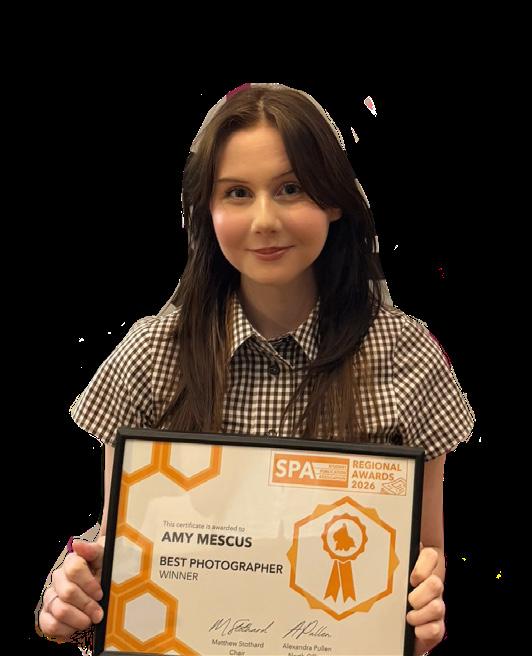
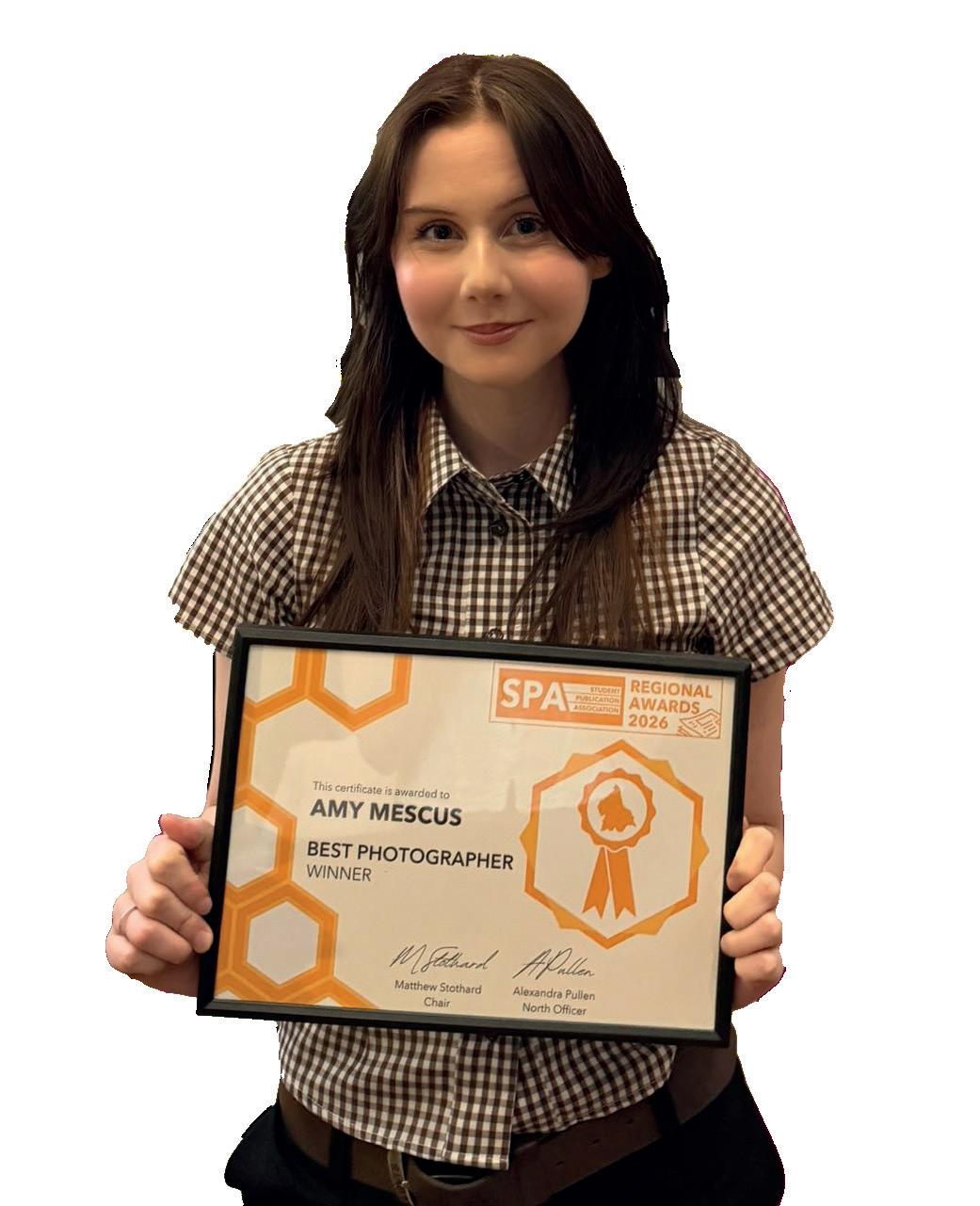
Amy wins Best Photographer
| Page 3
StuBrew in Spoons: from NCL to the UK

In conversation with Marc Jobst


| Page 3
What does the Education for Life 2030+ strategy mean for Newcastle students?
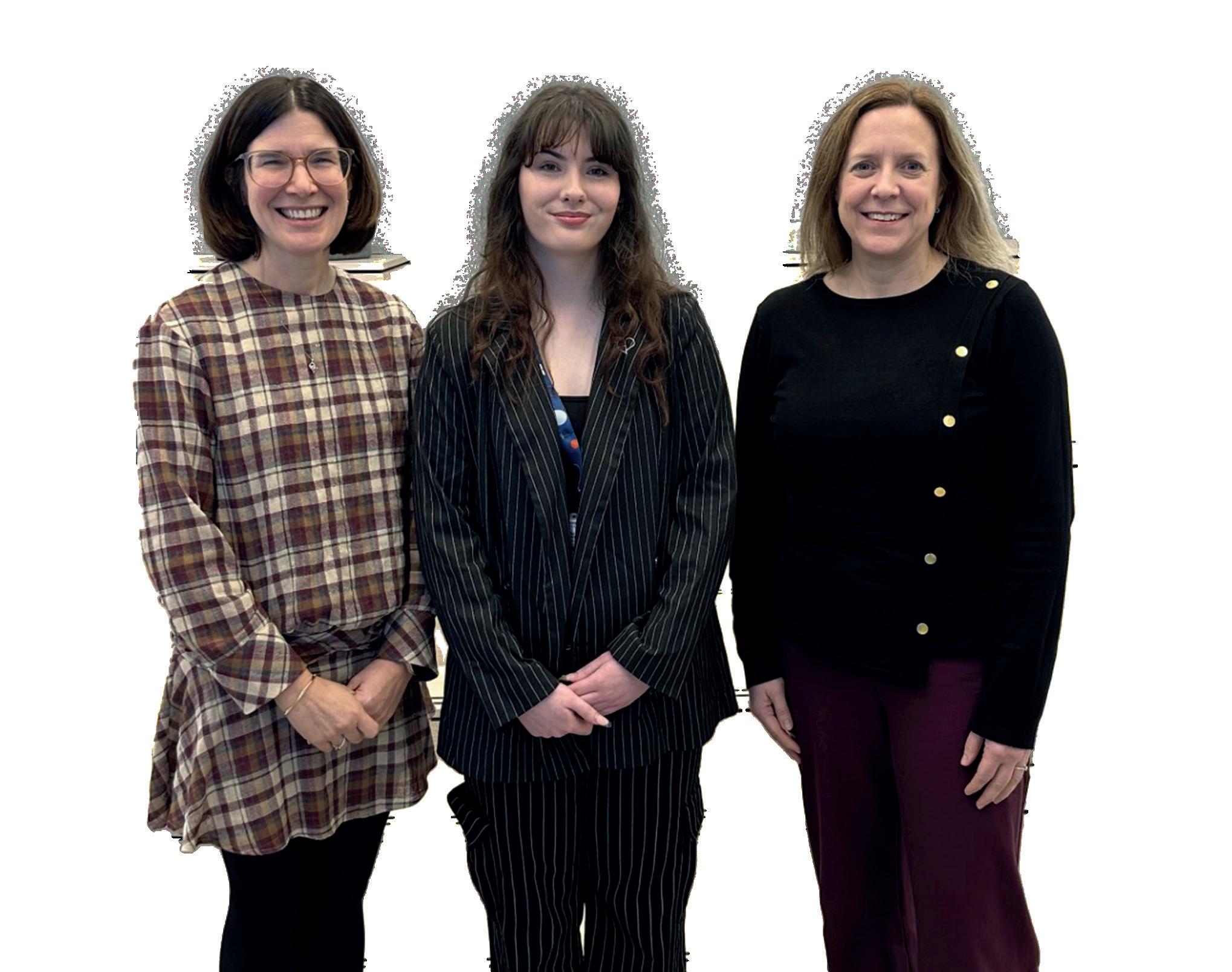
The bold new plan to help bring Newcastle University forward by 2030, the Education for Life Strategy, has been devised by Pro-Vice Chancellor of Education, Ruth Valentine, and the Dean of Students, Helen St Clair Thompson.
The strategy is expected to take five-years to implement, with changes noticeable from September 2026. It aims to prioritise academic excellence, providing increased access to leading research and industry skills, preparing students for the wider world postgraduation. Through insights from both Ruth and Helen, the strategy places it’s three key aims of equity, leading edge, and a future fit for all – whilst prioritising students at the heart of it.
“It aims to prioritise academic excellence, providing increased access to leading research and industry skills, preparing students for the wider world post-graduation.”
Ruth Valentine, Pro-Vice Chancellor of Education, emphasised her hope that the strategy will ensure “every student can engage with everything we do,” and that the inclusive education the university provides will make students “fit for their future lives.”
Helen St Clair Thompson, newly appointed Dean of Students, also highlighted her desire for students to be at the forefront of the strategy. Through the new student launchpad project, which will revamp the personal tutor scheme in favour of academic advising, students will receive more focused support when they need it.
Both Ruth and Helen assured that
students will be regularly consulted during the delivery of the strategy for feedback on how well it’s working and what can still be done to further enhance the student experience. The feedback from students will help to provide a core, universal offer, ensuring everyone has the ability to succeed “regardless of background, identity, nationality, location or mode of study.”
“what we didn’t have at Newcastle was a framework, an educational framework, that we all follow.”
Ruth stressed that equity should be the number one priority in the strategy, stating that “what we didn’t
of Education in late 2023, I knew it would be necessary to overhaul the university’s education strategy.” This has meant changes to course structures and programmes, as well as forms of assessment and feedback - all of which she hopes will provide a framework
“This aim is not just to provide access to the leading edge of industry, but the leading edge of research too.”
that is fair for all students and all staff. The second aim of the strategy is to ‘Encounter with the leading edge’ research, industry and curriculum practice with high-quality resources to ensure the teaching they offer remains relevant and connected to the future
student has access to hands-on experience in their chosen field. This aim is not just to provide access to the leading edge of industry, but the leading edge of research too.
“the student launchpad, which will be introduced for new students from September 2026, while also having an impact on current students.”
Ruth expanded on how ‘Fit for the future’ means “allow[ing] us to teach in different ways, use new technologies, and adapt and change much more quickly.” For students, the strategy aims to provide them with an educational experience that gives them the skills,
that they have the time, skills and knowledge to power education development and innovation. While Ruth stepped into the preexisting role of Pro-Vice Chancellor of Education, the role of Dean of Students was recently created to help develop and implement the strategy. Helen spoke about her role, discussing how it was introduced “as a commitment to student support and the student experience.” She oversees the Student Launchpad project, working to highlight student voices. “It’s about working with lots of people who have similar passions for the student experience,” she said. “Hopefully with this work I can contribute towards a better experience for all students.” Despite concerns over the five-year plan to implement the strategy, Ruth and Helen assured that students and staff will immediately begin to feel positive changes towards their experience. Helen said, “we want to be able to do it slowly and evaluate it properly as we go through, so we can make changes and tweaks so it works correctly.” She also highlighted the student launchpad, which will be introduced for new students from September 2026, while also having an impact on current students. “This will mean that there is a benefit for all students, and it will have a clearer purpose.”
“both past and future sabbatical officers have informed and will continue to inform the future of the Education for Life Strategy.”
As the strategy moves forward, both Ruth and Helen will continue to work with students and the NUSU Academic Officer to ensure the strategy meets expectations, and the students are always kept informed. Gina Tindale, NUSU Academic Officer, said “I think what most people aren’t aware of how many students are directly and indirectly involved in the crafting of what it looks like going forward.” She went on to specify that both past and future sabbatical officers have informed and will continue to inform the future of the Education for Life Strategy.
Hello again, It feels like forever ago since I last wrote an Editor’s Note... A lot has been happening to catch you up on with student media, all very exciting things!
Our new sub-editors have been welcomed into our Editorial Team, so you may see some new names at the top of the pages. We’re so impressed with how well they fit into their teams, and how quickly they’ve developed their skills in editing the newspaper.
Podcasts are BACK for the first time since 2023, and the studio is looking gorgeous. We’ve got a little podcast table set up outside
the radio booth with microphones and everything you could need. Applications are still open to signup for a podcast, so check out our Linktree for more information. The upcoming months are very busy in our calendars, especially for NUTV. There’s a super exciting meeting coming up to discuss AU Events and how we can help out with those... Following our successful production of Newcastle Dance Club’s competition - we’re really looking forward to highlighting sport on campus on all our platforms!
Student Elections are right around the corner, and soon there’ll be a new Student Media Officer! It’s a very bittersweet feeling to think about my wonderful term coming to an end,
In Conversation with Alex O'Connor: God, consciousness and being a 'mediator'
By Katy Woods | Page 5
Life & Style |
That's the thing with anger, it begs to stick around: learning to forgive Newcastle
By Ruby Tiplady | Page 16
Culture |
Beyond the London lens: why Northern working class media platforms matter
By Hannah Green | Page 30
Visibility isn't equality; and why we need to stop pretending that it is
By Erin Parkes | Page 38
NSR's musical guessing game: On Chords and Clues
By Megan Grimston | Page 8



but looking at the candidates, I know they’re more than capable and I’m so incredibly proud of each and every one of them. Don’t forget to vote 4-6th March!
To end on a high - we attended SPARC hosted by Nouse, in York back in January. I’m delighted to say our wonderful Amy won Best Photographer and we all had a blast. It’s really set us up for submitting our nominations for the national conference in March, and I cannot wait to do it all over again with the team in Norwich.
Hi everyone! My name is Gabbi, and I have the absolute pleasure of being your Student media Officer and Editor-In-Chief this year. Over the summer, I’ve been working hard behind the scenes alongside the Editorial team and NUSU to bring you this Freshers’ issue. Not only will you find loads of incredible articles written by our fantastic sub-editors, you’ll also find a one-stop guide to Freshers’ week, including an introduction to the Freshers’ week assistants who have put together an amazing programme of daytime activities for you all.
That’s all for now. Have a read, get a podcast, come volunteer for NUTV. See you in the next one!
Freshers’ week is a time to get to know more about Newcastle University, but also the city
Want to get involved? Come see us at our Student Media Afternoons @thecourieronline
Editor
Libby Griffiths l.griffiths9@newcastle.ac.uk
Trinity Eadie t.eadie2@newcastle.ac.uk
Heads of Current Affairs
Oscar Jenkins o.jenkins1@newcastle.ac.uk
Jess Mooney j.mooney2@newcastle.ac.uk
News
Phillipp Andreewitch
Jemima Ashton-Roberts
Ben Moore
Oliver Tierney
Katy Woods
Callum Borkowski
Emily Hawtin
Scarlett Palmer
Martha Nugent
Sophie Psaila
Emma Stephenson
Science
Charlotte Burley-Hnat c.burley-hnat2@newcastle.ac.uk
Dylan Seymour d.seymour1@newcastle.ac.uk
Heads of Life & Style
Sophie Jarvis s.jarvis2@newcastle.ac.uk
Ruby Tiplady r.tiplady2@newcastle.ac.uk
Elin Auld
Ursula Monro
Blind date and Agony Aunt: Charley Dobson
Lifestyle
Erin Neal
Izzy Whitley
Fashion & Beauty
Ella Saint
Mia Wijayatilleke
Travel
Tilly Aveyard
Paula Carrillo
Culture
Heads of Culture
Keira Gratton
k.e.gratton2@newcastle.ac.uk
Amy Mescus
a.mescus1@newcastle.ac.uk
Music
Emma Monaghan
Milly Thompson
TV
Maddy Kendall
Kate Kennedy
Natalya Mathers
Film
Charlotte Atkinson
Zoe Lett
Alex Paine
Gaming
Emily-Maisy Milburn
Keyon Snoek
Arts
Imogen Hayes
Kate Sturrock
Puzzles
Raven Orteza
Senior editor: Noelia Fernandez Perez
n.fernandez-perez2@newcastle.ac.uk

New rankings conclude that Newcastle University may be better than Durham University.
TIME Magazine recently published its inaugural university rankings for 2026, concluding that Newcastle University is the 89th best university in the world. If you considered Durham when applying to university, it would appear you’ve made the right choice coming instead to Newcastle. This list has Durham University 22 places behind Newcastle, coming just outside the top 100 at 101st in the world. The TIME Magazine rankings (not related to either the similarly named Times Higher Education rankings or The Times newspaper rankings) focus on three separately weighted components to arrive at a total score.
"Newcastle University outperformed Durham University on the first two metrics."

Academic Capacity and Performance (60% of score), considers the resources allocated to teaching and research as well as a university’s scholarly output. This is derived from metrics such as staff-to-student ratio, resource expenditure per student, and citation counts.
The second component, Innovation and Economic Impact (30% of score), considers a university’s contributions to scientific advancement and the “diffusion of knowledge” as well as the economic impact of graduates. It includes analysis of corporate executives’ alma mater alongside a university’s web traffic volume and intellectual property.
"Many publishers produce their own versions of these lists and often prioritise different aspects with differing results."
Finally, the third component, Global Engagement (10% of score), considers how attractive a university is to international students and how well their degrees are recognised abroad. This component derives from metrics relating to the proportion of international staff and students alongside the international traffic on university web domains.
Newcastle University outperformed
Durham University on the first two metrics (ACP: 64.06 v 61.05, IEI: 55.98 v 54.27), but was 5 points behind on Global Engagement (GE: 81.71 v 89.63). This points to the significance of the weighting in calculating the total scores (T: 63.4 v 61.88).
"however, Newcastle was 5 points behind on global engagement."
Many publishers produce their own versions of these lists and often prioritise different aspects and statistics with significantly differing results. When you consider Durham and Newcastle in prominent UK-produced tables, neither consistently outperforms the other. Consider the following: Times Higher Education (N: 144, D: 175), The Times newspaper (UK only. N: 34, D: 3), and the Guardian (UK only. N: 81, D: 5). Thus, it remains unclear which is truly the better university, although I’m sure the reader has their own ideas. However, given the international repute of TIME Magazine, this is a solid result for both universities.
Mia Wijayatilleke - Fashion & Beauty Sub-Editor
Liz Todd OBE shortlisted for the Agent of Change Award.
Professor Liz Todd OBE is the Professor of Educational Inclusion at Newcastle University and the Director of Newcastle University’s Institute for Social Science. In January, she was shortlisted for the Agent of Change award at the Northern PoWEr Women Awards.
“The Northern PoWEr Women Awards is the largest celebration of gender equality in Europe"
The Northern PoWEr Women Awards is the largest celebration of gender equality in Europe, holding its 10th annual ceremony this March in Manchester. The awards spotlight and celebrate the achievements of change-
makers, advocates and role models who create change in the North.
“Liz has spent her career helping children and young people through her work”
It endeavours to celebrate these individuals and organisations, as well as amplify their work to continue driving action. Liz is one of seven women nominated for the Agent of Change award.
Liz shared on a LinkedIn post that it is an honour to be shortlisted, and that it is important to both work hard towards change, but also make time to celebrate positives since pessimism is harmful for progress. “We can never cease promoting a kinder, fairer, more diverse and equal world”, she wrote, “[b]ut... Let’s stop for just a minute and celebrate”.
"she was also given the Academic Distinction Award by the Vice Chancellor."
Liz has spent her career helping children and young people through her work,
research and volunteering in education and initiatives.
She started working as a maths teacher and then as an educational psychologist before completing a PhD in education, in which her research focused primarily on helping children from disadvantaged backgrounds to succeed in education.
as her outstanding contribution to the Institute for Social Science at Newcastle University.
Last year, Liz was awarded an OBE by Princess Anne for her services to children and young people, alongside university Chancellor Imtiaz Dharke, who was

Nstudent Amy Mescus was named Best Photographer at the Student Publication Association’s North regional awards for her work capturing live music across the North East.
When the winners were announced on January 31, the biggest surprise for Mescus was hearing her own name. After months of applying to music magazines and hearing little back, she had begun to doubt her direction.
A week on from the night she received her award, Mescus’ life has resumed its usual rhythm. She arrives at our interview in the midst of a busy weekday afternoon, a pink can of Monster in hand. “I’d lost a lot of confidence in my photography, so having my work recognised at a regional level has restored a lot of faith in myself and my craft.” The award recognises her portfolio of work shaped by the live music and creative communities of the North East, where Mescus both studies and finds most of her subject matter. Much of her photography unfolds in cosy, darkened venues, pressed up against the edge of a stage where coloured light spills across performers and their crowds. Motion blur, glow and saturated colour recur throughout her
Now in the final year of her degree in Journalism, Media and Culture, Mescus has been contributing to student journalism since she first arrived at university. Alongside her degree, she hosts a radio show on women in the music industry and serves as Head of Culture at The Courier. But it’s been about a year now since she opened up her Instagram account, @Amyinthecrowd. amyinthecrowd, and started immersing herself fully into one of her long-time passions - photography.
Borkowski - Campus Comment Sub-Editor
Are some North East MPs right and would a ban be correctly enforced?
Several Labour MPs, including Newcastle North’s Catherine McKinnell, have called for a ban on social media for those under the age of 16.
This comes after Australia recently enacted a ban in the name of child safety, and the UK’s Labour government have since floated the policy to mixed response. So, should Britain follow Australia’s lead and implement a ban?
For better or worse, young people’s social lives largely revolve around social media and the internet. While this may make it easier to socialise and talk to people, there is a major risk in the design and the algorithms of social media. A number of social media sites have consistently failed to prevent minors from seeing shocking and harmful content online, as well as lacking the proper moderation against grooming. The lack of adequate protections for minors online is the primary motive behind the ban, as
well as concerns about young people’s screen time. It might seem, therefore, that a ban is obvious. However, there is some vocal opposition to a ban, as well as issues in places it has already been implemented.
“...the fact that social media is so central to the lives of young people would make a ban particularly disruptive."
Firstly, bans like these are not especially difficult to bypass. In Australia, use of VPNs to avoid the social media ban are widespread. Australia has responded by requesting social media providers to ban VPN access, but this is easier said than done. This cat-and-mouse game between regulators and users is hardly new, almost as old as the internet itself, but a highly tech-literate generation has a considerable advantage. Furthermore, the fact that social media is so central to the lives of young people would make a ban particularly disruptive. Taking away the primary means of socialising for a generation that will soon get the vote also seems like poor optics for a party currently haemorrhaging young
voters to the Greens. So, what’s the solution? A social media ban would have some benefits, but not without considerable disturbance to the lives of young people. Additionally, the root of the problem lies not with social media itself, but with social media companies not sufficiently protecting young people on their platforms. These conglomerates face little accountability from the state with most based across the Atlantic. With Europe increasingly questioning their reliance on US tech infrastructure, now might be the time to move towards a domestic social media network, with proper accountability to regulations and child safety.
Why should we care about Current Affairs?
Martha Nugent - Opinion Sub-Editor
I'ts overwhelming, panicprovoking and often simply just sad to hear about the colossal amount of suffering going on in the world, yet if denial and ignorance are the alternatives, I'm afraid we may start working on some calming exercises and read on.
Whilst it may be true that turning on the news today leads to floods of outcry, moral panic, and a heightened sense of impending doom, its argued that it still remains imperative that we keep up to date with current events. "Ignorance is bliss", avoiding the news to have a calmer state of mind, scrolling off any indication of negativity to stay in a delusional denial. What's harder to grasp is the amount of privilege it takes to be ignorant; to have the geographical luck to be able to not have to be aware of what's going on, because its "too negative". However, for some, these same news articles are essential to their own lives: determining whether or not laws are made against them, if its safe to leave the house, if flooding and climate chaos is headed their way, or even if their whole country is at risk of war. The reality is that if you find yourself upset by the news, you care.
mons, https://creativecommons.org/licenses/ by/4.0, Some images may have been altered
It's easy to understand the panic created by news, being so that its often the same regurgitated depressing stories on repeat, like the worlds worst
"Groundhog Day". But it could be argued that if you are constantly finding your news from the same panic-spiralled sources, then you're looking in the wrong places. Today, there are so many ways to get our news and avoid being desensitised to suffering. Therefore, it leads us to ask the question: is news too negative, or are we simply too ignorant? So what are the solutions? We have to stay informed and not go insane, keep up to date whilst keeping our mental stability- its a demanding ask, but not unachievable. You consume news daily, whether you want to or not, that podcast you love, the doom scroll on TikTok, the new music and artists you keep up to date with: its all news, and its all accessible at your fingertips. There are ways to dilute the depressing information, removing yourself from constant negativity doesn't make you a horrible person, it makes you human. Pop culture, fashion, arts, music: its all often positive news and its all crucial too keep up to date with. In fact, an over consumption of negative news is almost just as ineffective as no news consumption at all, leading to a higher rate of desensitisation to the suffering. News, especially that of a negative context is meant to instil emotion from its reader, so we care, so more people become informed, so action can happen.
Callum Borkowski - Campus Comment Sub-Editor
Discussing changes in the party allegiance of Conservative MP's...
On the 26th of January, Suella Braverman became the fourth sitting MP in this Parliament to jump ship and become a member of Reform UK. Announcing her change in political affiliation at a party conference, she remarked, “I feel like I’ve come home.” Yet, in actuality, did Suella even leave her political home in the first place? As with all shifting membership demographics, it appears as if Reform UK has become the ‘new’ Conservative Party.
This now means that over half of the current 8 Reform UK MPs were sitting Conservatives at some moment throughout their political careers. The culprits are the aforementioned Suella Braverman, who previously served as the Home Secretary, Robert Jenrick, who previously served as the Justice Minister, Danny Kruger, Andrew Rosindell and Lee Anderson.
Reform UK is typically seen as politically right to the Tories on both economic and social policy. Farage has been consistent in wanting to ensure a stark divide between himself and the party he largely blames for the state of modern Britain. However, this trend raises a question: how different will his party be from the Conservatives by the next general election if he continues to collect ex-tories in his game of political chess? Specifically, how different will his party be when it is comprised of former minsters who he deems responsible for

the “Boris wave” of immigration and the creation of a “broken system”. Arguably, Farage’s greatest challenge is the lack of political experience that he or his party have had in office. Perhaps he thinks the solution is to welcome more Tory defections with open arms, despite their 14 years in government that saw them ousted in 2024.
“It has become abundantly clear... that Reform UK has become a political lifeline for ex-Tories."
The proven experience of the Tories seems to be taking over the unpredictable inexperience of Reform UK members. The party had lost two of the five MPs they gained in the previous general election. With controversy aroused from Rupert Lowe’s political infighting and James’ McMurdock’s financial mishandling, it could suggest that Farage may want to limit the possibility of further scandals from new Reform startups. In comparison, his eagerness to welcome those who fell out of touch with the Tories doesn’t guarantee that his political party will
remember the Conservatives’ infamous ‘Partygate’ and the party turmoil that ensued with the rise of political loose cannons such as Liz Truss.
“Over 20 former Tory MPs have joined Reform UK in some capacity."
Over 20 former Tory MPs have joined Reform UK in some capacity. With the likes of Dame
Andrea Jenkyns, who is now the Mayor of Greater Lincolnshire, and former Chancellor of the Exchequer Nadhim Zahawi. It has become abundantly clear with the declining polling position of the Tories that Reform UK has become a political lifeline for ex-Tories, especially with Reform UK leading in recent voting intention polling and therefore Farage inhabiting 10 Downing Street.
The changing landscape of Reform UK’s membership raises questions about the direction the party is headed in, considering that a large section of their voting bloc is

2.0’?
disenfranchised ex-Tory voters. The party’s head of policy, Zia Yusuf, said in December 2025, “I want to be clear to our Reform grassroots: you will be prioritised in candidate selection for our next class of MPs, NOT failed former Tory MPs”.
Despite this proclamation, the reality looks to be the opposite, with ex-Tories currently taking over the political ranks of Reform UK. If Farage leads his party into government by the time of the next election, will he be able to be a viable right-wing alternative to the Tories?
A party like Reform UK that wishes to leave the European Convention on Human Rights and scrap netzero. Only time will tell as speculation grows over which Tories will defect to Reform UK next.

Carly Horne
After decades, is it time for the US and UK to cut ties?
For decades, politicians have spoken about a so-called “special relationship” as though an unconditional and unbreakable alliance existed with our Transatlantic friends. But in 2026, it is increasingly unclear what, if anything, makes that relationship special and what it actually means in reality.
One feature the UK and USA now appear to share is a growing tendency towards isolationism. Both nations are turning inwards, prioritising domestic concerns over global partnerships.
Post-Brexit Britain has become increasingly focused on immigration, Channel crossings, and internal political division, as Nigel Farage’s Reform UK gains electoral traction while Keir Starmer’s Labour struggles to define a clear political purpose (save for fighting the rise of Reform, of course).
Across the Atlantic, aggressive immigration policies and associated rhetoric send a similar message: national interests come first. In both countries, international leadership has been gradually replaced by domestic preoccupation.
But what does all of this mean for the Special Relationship? Keir Starmer and Donald Trump are fundamentally incompatible. For example, while Starmer has sought to expand engagement with China, Trump has publicly warned the Prime Minister against doing business with Beijing — despite simultaneously describing Chinese

President Xi Jinping as a “friend”.

Where Trump previously appeared to support the UK’s decision to return the Chagos Islands to Mauritius, he later dismissed the move as one of “stupidity”. Although he has referred to Britain as a “brilliant NATO ally”, such praise often seems
laced with a lack of sincerity. The differences extend beyond personality clashes into foreign policy. Indeed, recently the UK made the decision to distance itself from the proposed Gaza Board of Peace. Foreign Secretary Yvette Cooper suggested Britain’s hesitation stemmed partly from the involvement of Russian President Vladimir Putin, citing the absence of meaningful commitment to peace in Ukraine. Then, of course, there is the $1bn joining fee.
“...the special
relationship
is
increasingly strained by their differences in approaching global leadership."
These disagreements suggest that the special relationship is increasingly strained by their differences in approaching global leadership. Nowhere is this strain more noticeable than in their approach to Palestine.
While the UK’s identity post-Brexit is still in negotiation ten years on, one thing is clear: it is not one which unconditionally supports its friends in Washington.
Prior to the 2016 Brexit Referendum, the UK acted as a ‘bridge’ between the US and Europe. A major factor in the special relationship was that the US had a voice within decision-making within the EU, now diminished with the US directly seeking out other nations which still have a role within Europe, such as France and Germany. While Keir Starmer looks to maintain the role of the UK as a ‘bridge’, a lot of damage to these relations has been done in the last 10 years.

In September 2025, the UK formally recognised the state of Palestine, joining countries such as Canada and Australia in supporting a two-state solution. The United States, however, continues to oppose Palestinian statehood, regularly using its veto power at the UN Security Council to block full membership.
Is January the worst month of the year at University?
Harsh Agrawal
The longest and darkest month of the year...
As a student starting a new year at University, you are supposed to feel excited about fresh beginnings. However, in the back of our minds, there is already a mountain of assignments and other pending tasks piling up. Most deadlines hit right in January, so even before the clock strikes midnight on New Year's Eve, you are quietly stressing about the projects and exams looming just weeks away.
For an international student like me, it can be even tougher. January is when we return to the UK having had refreshing holiday back home. Saying goodbye to our family and friends all over again can weigh you down, especially when your plane will be landing straight into deadlines and the often cold reality of university life. Then there's the UK weather, which you simply can not ignore. Even when the sun does peek out, it still sets by around four o'clock, though it can often feel like two. The grey skies make everything feel more challenging. I asked a few of my friends
from different parts of the world how they feel about January here in Newcastle, and their responses are telling.
“it's always tough for me to say goodbye for my family when coming
time when life goes back to routine after a break in December which can make it hard, the vibe just feels off. I also have very little money left to even try and enjoy it!"
Chloe, a Newcastle Univeristy student from York, said that December is hands-down the best month. "It's all about celebrating holidays with family, watching movies, and hanging out with friends, with very little to get you stressed and tense." January however, she calls the worst. From exams to weather, she doesn't like January at all. Finally, my friend Tanish, a Newcastle student from India. He made the decision not to go home for the holidays due to his job commitments throughout December. That being said, by January, jobs are hard to find as the year kicks of slowly, and he's been struggling to find anymore. This has only made the month even tougher and so for him too, January has ended up being the worst
All the reactions were pretty clear; nobody's a fan of January. Between the emotional struggles, the goodbye blues for international students, the pressure of deadlines, and the flat-out miserable weather, it's hard to argue otherwise. For me personally, it's the same situation. Coming from India, where I love sunlight and bright days, I really miss it here. The constant grey makes everything look and feel more depressing. The streets are quieter, fewer people are round in this normally student-friendly city (at least for half the month). It all adds up to that heavy January feeling. So yeah, for a lot of us at Newcastle University, January really does feel like the worst month of the
And ultimately, the UK cannot offer what it used to, to the USA. As part of the UK’s Nato commitments, the UK should be able to assemble a large number of troops at short notice to defend any Nato country. Yet, Britain is facing an urgent issue - there are a dwindling number of troops. Indeed, according to the Ministry of Defence, The British Army has fallen to its smallest size since the Napoleonic Wars. Not exactly attractive to a President with his sights set on Greenland. Does the USA then need the UK? Sort of.

While the current administrations aren't unconditionally aligned, the US and UK are usually in agreement on all things foreign policy. The relationship is strengthened by shared military and intelligence resources, even if the mission isn't always one that's agreed upon. The larger question surrounding the Special Relationship, perhaps, is not "Do the US and UK need one another?" but instead: "Is it helpful to have a stable, somewhat reliable relationship in an increasingly volatile world?" Absolutely.

In conversation with Alex O'Connor
Katy Woods - News Sub-Editor
Baptised as a Roman Catholic, Alex O’Connor spent his formative years attending church and acting as an alter server. It was only when he became a teenager and began to develop an interest in the debates around new atheism that he got swept up in the dialectic and arguments surrounding atheism.
Today, he sees himself more as a mediator. Where he once aimed to “convince people of various positions”, today he is more “agnostic about so many different things” and sees himself as a mediator for the ideas around the debate.
He says that, while he is most often asked to argue for the atheistic side of the argument, he “could just as easily debate atheists about the existence of God or the resurrection of Jesus.”
Alex highlighted the importance of context here.
He said that if he were asked by a group of orthodox Christians, for example, he would identify himself as an atheist because he “doesn’t believe what [they’re] selling”, in terms of their belief in Jesus as God.
Alex says that he has been thinking a lot about
consciousness. He questions how alongside the “dead stuff” and “atoms just bumping into each other” we can have a first-person consciousness, the human experience of the “taste of Coca Cola and the sound of a violin.”
He questions the nature of consciousness, whether it “makes sense to say that consciousness just comes out of brains when you put them in the right order”, or whether it is something more, lending into the idea of a “mind at the foundation of reality, or the universe itself being made out of mental stuff.”
Alex plans to explore concepts such as this one on his upcoming tour, where he hopes to be able to “work together with people.” He plans on taking audience questions, working with the audience in a backand-forth manner in an attempt to “cumulatively get to some interesting position that approximates truth”, which differs from most events such as this one, where questions are often asked to be kept short so that as many questions as possible can be answered.

Alex says that he believes that these discussions around philosophy are especially important for young people at university due to their formative life stage. Read more on our website: www. thecourieronline.
Cerys Millard
How to avoid the second semester burnout...

Now I don't know about anyone else, but first semester for me was chaotic to say the least. Being plagued by some endless freshers flu, even though it's my second year! The constant never ending list of reading and assignments due around every corner, locking in felt virtually impossible, despite spending life in the Phillip Robinson. So here are some the things I plan to do differently, to actually lock in this semester. Now, this is probably very obvious, but actually the reading does really help. It can often feel overwhelming when you are suddenly presented with 600 pages of academic reading, when the only serious reading you've done in last month is looking at the spoons menu. I have found that breaking it down and reading maybe 50 pages a day makes you feel slightly less like you're going insane. Chipping away at it slowly still allows you to feel like you've actually been productive, whilst giving you time to scroll on TikTok.
Ava Bell

Esemester?
verybody talks about new year's resolutions, but what about new semester resolutions?
After the warmth, bustle and joy of the festive season, coming back to university in January can feel especially hard. And in an attempt to boost the ever-dwindling serotonin levels during winter, society constructed the ‘new years resolution’: a set of goals designed to transform us into a superhuman bundle of gym sessions, green smoothies and ‘75 hard’ challenges. Thus, in the world of the student, new year’s resolutions become new semester resolutions, targeted at an academic comeback that Hermione Grainger herself could scarcely fathom. But how realistic is the notion that we can transform ourselves

It comes as no surprise that student life is not one that is consistently centered around productivity, especially leading up to Christmas. One of my favourite December activities was the 12 pubs bar crawl, which essentially consisted of walking from pub to pub in a vodkafuelled twist on a Christmas classic - ‘a partridge in a pear tree’ turned into ‘give me another G and T’. Around about the 9th pub, a few red pints deep and feeling sentimental, I decided that next semester would be different. No more would there be weekday pub meets and dodging pre-lecture reading, but instead I would be spending my evenings in the library with my Google calendar neatly organised into a pastel coloured cacophony of deadlines and to-dos.
"Balancing
uni work and a social
life can often lead to burn out in one way or another."

bubbling motivation which can only be found at the beginning of the year, I set out to change my ways. But something wasn’t sitting right with me. And I realised that aiming to change my whole approach to uni life this semester might not be the most beneficial thing. If anything, there needs to be balance. Not socialising in the name of ‘productivity’ is counterintuitive, as the memories and relationships built over a night out in Newcastle can never be replaced by reading a scholarly journal article.
“But
trying to change yourself entirely ... is not the way to go about change"
small, achievable goals that will help you to get the most out of your degree and uni experience is what I would recommend. Start by waking up 20 minutes earlier on a Wednesday to prepare yourself for your 9 am, but don’t skip your friend’s birthday that Friday to meet your ‘new semester’ goals. Maybe swapping one night of going out for a yoga class with friends could be fun, but if you’re dying to try the new karaoke bar,
“...making small, actionable changes to your routine..."
then just go!


“Knowing what is coming up that week will keep the away those Sunday evening blues.”
Another simple yet highly effective thing is having a good planner. Knowing what is coming up that week will keep the away those Sunday evening blues. I know I always feel out of control when I have no clue what is coming up the next week. Making a habit of checking ahead always eliminates that awkward moment when the seminar leader picks on you, and you have in fact not done the work or done the reading!
“Utilise that silent floor in the library, press do not disturb on your phone and let the second semester lock in commence!”

Lastly, actually planning my essays! Rather than leaving it until 72 hours before it's due and ignoring the questions from the moment they are set. Looking at them in advance and then actually breaking the planning/ writing process down will save a lot of time, and tears. The panicked messages in the group chat will not being coming from me this semester. Utilise that silent floor in the library, press do not disturb on your phone and let the second semester lock in commence!


A month later, fuelled by the
Just to be clear, I’m not condoning lecture skipping, or putting off work. But trying to change yourself entirely to fit the unrealistic standards perpetuated by ‘new semester resolutions’ is not the way to go about

Trust me, this is easier said than done. Balancing uni work and a social life can often lead to burn out in one way or another. But, making small, actionable changes

people, educating themselves, and experiencing living away from home. With tuition fees steadily increasing under successive governments and standing at the current rate of £9,535 a year before living costs, for many, attendance at university is based solely on financial standing and the ability to meet ever-rising costs of attendance and living, rather than as a credible career choice.
Uncover how and why the PARTNERS scheme at Newcastle University cultivates a more inclusive and diverse education... begins.
Despite the benefits of higher education participation being remarkably clear within increased salary and employment expectations, university and further education also serve as an epochal moment in the lives of young people in their maturation to adulthood. By meeting new
"Within an inclusive elegibility criteria, the PARTNERS scheme provides access to higher education..."
Thankfully, an increasing number of universities are offering widening participation programmes to help combat this, with Newcastle University’s
been successful in bringing more marginalised populations into higher education for more than 25 years, provides contextual lower offers to prospective meet their eligibility criteria and put Newcastle as their firm choice. Allowing for a Newcastle University that is diverse and in touch with society’s makeup.
"...the total number of students in further education in England going from 3.6 million to 2.7 million..."

Within a wide-ranging and inclusive eligibility criteria, the PARTNERS scheme provides access to higher education at Newcastle University by making it easier to meet the entry requirements of degree courses, as well as preparing prospective students for course study through the required PARTNERS summer school. Running for 2 days in person and 2 days online, and ending with a constructive formative assignment that gauges academic performance before term time
attendance, with the total number of students in further education in England going from 3.6 million to 2.7 million within the same 10 year period - a decrease of 24.1% (Gov. uk).
These trends therefore suggest that while strides are being made to increase access to further education for these underrepresented demographic groups, issues potentially relating to costs can be seen to price out students from further education. Despite this, the work of PARTNERS and other widening participation programmes across the country is vital for any serious further education institution.By promoting the broadening of further education to all corners of society, as well as fostering differing viewpoints and ideology within an environment of debate and academic challenge.
Why you are the only one in your flat with a terrible cold
Katherine Thomson
Why you're coughing, sniffing and miserable, but everyone else escaped the cold tearing through your flat...
Do you feel like you’re the only one who gets hit by every bug going around? While you’re no stranger to freshers' flu, your flatmates seemingly never get ill? A new study from Yale researchers sheds light on this age-old mystery, suggesting that the answer lies in the body’s first line of defence: your nasal passage.
When the most widespread cause of common colds, rhinovirus, enters your body through the nasal passage, the cells in your nose activate an extensive range of antiviral defences to stop the virus from spreading.
In a new study published by the journal Cell Press Blue, researchers found that one of these early cellular responses is key in determining whether a person becomes ill, as well as the severity of their symptoms. Crucially, they found that the body’s
reaction is more important than the rhinovirus itself.
"Our study advances the paradigm that the body’s responses to a virus, rather than the properties inherent to the virus itself, are hugely important in determining whether or not a virus will cause illness and how severe the illness will be," says author Ellen Foxman of Yale School of Medicine.
Central to the coordinated cellular response to rhinovirus are interferons, antiviral proteins that interfere with the virus’s ability to enter cells and replicate. When nasal cells detect rhinovirus, they release interferons not only in infected cells, but also in neighbouring uninfected cells, quickly containing the virus. Interestingly, this occurs absent of any immune system cells.
To study this process, the research team built a lab-grown model of human nasal tissue, growing nasal stem cells and exposing the tissue surface to air to best resemble human nasal passages and lung airways. When the researchers blocked the interferon response, the virus spread rapidly, which, in a living person, would lead to an individual becoming sick.
When the interferon response is delayed, weak, or disrupted, the virus
has more opportunities to replicate, triggering inflammation and excess mucus, the classic symptoms of the common cold. This study explains why even when exposed to the same virus, some people get hit hard by colds and flus, while others seem completely fine. The speed and strength of the interferon response makes all the difference in how quickly your body can fight off the virus.
So, next time someone accuses you of being melodramatic when faced with
Laura Anderson
The River Breamish has been restored to its natural state as part of one of the largest river restoration projects in the UK.
Located in Breamish Valley, Northumberland, the river was thought to have been shortened by one mile through historical modification, in which it was straightened for agricultural purposes. These changes resulted in a disconnection from its floodplain, causing reduction in freshwater species and an increase in downstream flooding.


Sally the sloth arrives at
Grace
Laidler
- NUTV Station Manager
Part of an endangered species breeding programme, Sally the Sloth arrives at Northumberland Zoo...
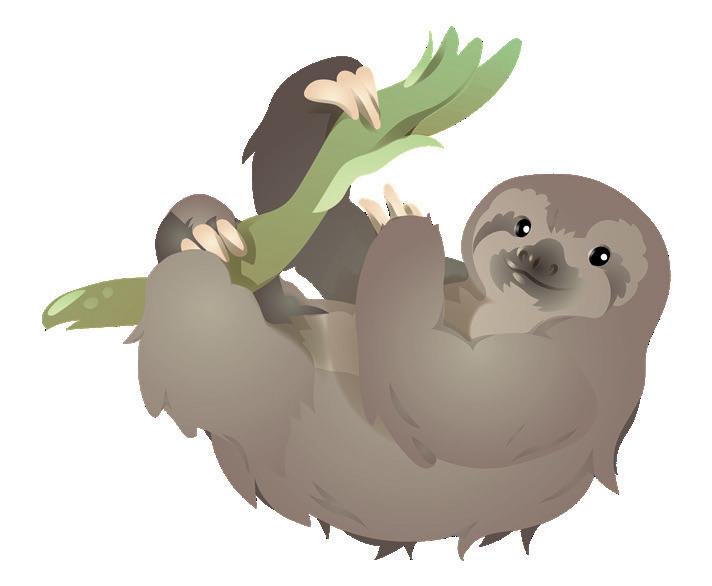
The newest resident at Northumberland Zoo is none other than an adorable sloth named Sally. The seven-year-old animal arrived in mid-December, after a near 250-mile trip up the A1 from her previous home in Hamerton, Cambridgeshire.
Sally is a Linne’s two-toed sloth, the largest of the six sloth species. They spend most of their lives hanging upside down and come down from their trees solely to use the toilet, which is only once a week due to their slow metabolisms.
“Sally ... has become an online sensation."
Lucy Edwards, the curator at Northumberland Zoo said, “Sloths like Sally are endlessly fascinating. Despite being slow, they only sleep around 8-10 hours a day, digest food very, very slowly, and can even turn their heads almost all the way around thanks to their unusual anatomy.”
Since Northumberland Zoo
announced Sally on their website and social media platforms, she has become an online sensation. The initial video posted of her on the zoo’s Facebook page garnered over 80,000 views, and she has received widespread coverage from the local press, including an appearance on the front page of The Journal. Many new visitors have flocked to the zoo to catch a glimpse of Sally in her specially designed indoor habitat, the Rainforest Lookout. She shares this large enclosure with other animals, including the primate white-faced saki monkey and the rodent Azara’s agouti.
The Rainforest Lookout is artificially heated to 25 degrees, alongside a stream to keep the air moist. Aside from attracting many admirers, Sally is part of an EAZA Ex-Situ Programme, which means that individual animals are moved across different zoos to create genetic diversity. “The sloth is part of an endangered species breeding programme" said Northumberland Zoo manager, Maxine Bradley, when speaking to BBC News. “Sally being here is a great way of putting the message out about the rainforests.” If you would like to visit Sally, Northumberland Zoo is located in Morpeth, and is open

Things started to look up when an ambitious project decided to combine the use of historic maps and modern technology to revert the river back to its original state. The project was a key element in the River Till Restoration Strategy, which was delivered through the LIFE WADER nature-recovery project. The River Till and its tributaries, which includes the River Breamish, flow through the Northumberland National Park; one of England’s most important landscapes, playing a key role in the conservation of our wildlife.
all three native species of lamprey. Restoration of the River Breamish included excavation and diversion of the river, installation of silt traps, and construction of woody dams; all which helped direct the water into new channels and connect it back to its floodplains.

In fact, the Till catchment is considered a Special Area of Conservation (SAC), as well as a Site of Special Specific Interest (SSSI), due to the presence of protected species like the otter, Atlantic salmon, and
Wildlife has already returned to the river! Salmon and sea trout are taking advantage of the new channels whilst on their journey upstream to breeding grounds. Birds, such as kingfishers and herons, have been spotted making use of the river and damselflies have also made their return! Animals aren’t the only ones making use of these new habitats created by the river restoration. Vegetation has begun to establish itself too, including a rare species of watercrowfoot!
“It's fantastic to see the Breamish flowing freely once again with space to move and evolve."
Philip Kearney, Project Manager at Tweed Forum, who helped deliver the project stated that: “It’s fantastic to see the Breamish flowing freely once again with space to move and evolve.” The river will continue to be monitored by the project’s partners, and its findings will be shared to support similar restoration projects around the UK.
Dona Tharushi Siriwardana
All the necessary conditions to perpetrate a murder are met by locking two men in a cabin of 5 × 6 m [18 × 20 ft] for two months.
These are the words written by cosmonaut Valery Ryumin in his personal diary during a stint in space in 1980. While his words may seem dramatic, in an era of rapid development in space travel and tourism, they become a real concern and possibility—one that is no longer confined to science fiction or as private anxieties scribbled in a diary.
“In the weightless conditions of space, blood behaves very differently..."
The International Space Station (ISS) is a sealed space, orbiting hundreds of kilometres above Earth and occupied by a small and carefully selected crew, perfectly mirroring the environments of classic closed-room murder mysteries. However, unlike detective fiction, investigators in space would face an unprecedented challenge: the laws of physics that govern forensics on Earth do not apply in space. Traditional forensics
rely heavily on gravity. For example, by observing how blood falls and spreads, investigators can reconstruct violent events. In the weightless conditions of space, blood behaves very differently— often forming floating globules that drift until they collide with a surface. Therefore, in space, it is not gravity that influences the appearance of a crime scene, but rather the surface tension of the materials surrounding the individuals present.
“...estimating the time of death in space proves difficult when indicators rely on decay caused by living microorganisms.”
Similarly, DNA and fingerprint collection face significant hurdles. On Earth, powder reagents settle with the aid of gravity, but in microgravity environments, the particles could float around an enclosed area, posing a major health risk to those within it. Moreover, DNA degrades due to solar radiation, and estimating the time of death in space proves difficult when indicators rely on decay caused by living microorganisms.
In contrast, the use of ballistic weapons, such as guns, in space may be easier for investigators to interpret, as gunshot residue and unique markings on bullets could still help link a weapon to a suspect. However, bullets fired aboard a spacecraft would float indefinitely unless stopped by an external force and could ricochet unpredictably within the station’s tight quarters. Hence, it is unlikely they would be used in such situations. Subsequently, experts suggest that the future of
Megan Grimston - Head of Communications
With over 50 shows going live on air on NSR, it takes a certain flair for those that focus on the more traditional format of music to stand out amongst the rest. One of NSR’s most creative shows in this category is Chords and Clues. Taking their passion for music, Elliot and Charlie have built a fun game-show to truly test their knowledge “We play a set of 5 songs each, with something linking each set; and it’s up to the other person to guess the link” explained Charlie.
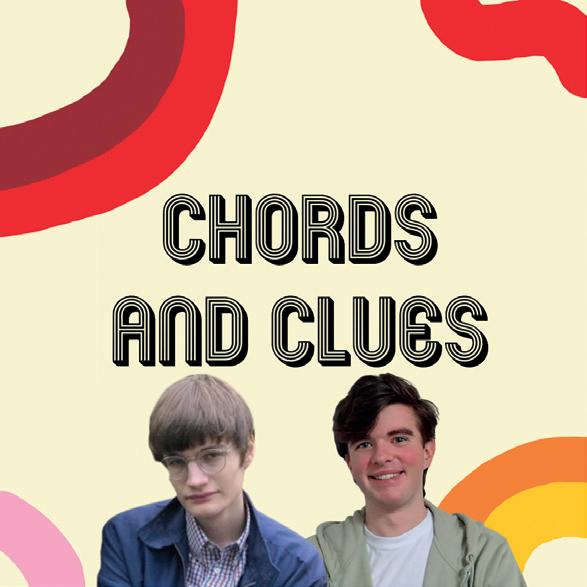
engagement, their passion for radio is displayed as brightly as their knowledge on music. When I asked Elliot what he felt had inspired the creation of the show he explained “We both really wanted to get involved with being on the radio…”, Charlie supported this by adding “The first time I met Elliot, we decided it would be nice to host a show together.”

change seems to have brought a new liveliness to the show. Charlie kept his response short with “I’d quite like to beat Elliot (again).”
Inspired by “a segment from BBC Radio 6’s Riley & Coe” as Charlie described, the show has continually kept its audience at its core, as they reflected on how “we tried to adapt it to something that actually engaged listeners…”. Tuning into the show, Chords and Clues ability to stand out on NSR is clear, but I wanted to know what its hosts thought made the show so unique. They both agreed that “Our show is incredibly interactive!”, with Elliot adding “the guessing game making it super unique…”. Charlie expressed “since we have such different tastes in music, you’re guaranteed to hear at least one enjoy.” Alongside their dedication to audience
Last year, the pair were nominated for ‘NSR Presenters of The Year’ and ‘Show of The Year’ not only celebrated the hard work behind the show, seemed to also represent the friendship between the two. “We met each other in the queue for last year’s Freebie Fair. and spent three hours waiting while also discussing the idea of a radio show!”, they both explained. Since that point last year, their friendship has continued to grow both off and on air, taking their skills as hosts to the next level.

“...it also represented the friendship between the two."
After having such a successful year, it seems that the only way is up for Chords and Clues. I asked the pair to explain what they hope to achieve this year, of which they both gave answers that could only excite listeners of the show. Elliot discussed “being more prominent online will be a nice change…” with biweekly Instagram posts, this
As their second year of hosting the show is in full swing, both Elliot and Charlie reflected on what the experience has taught them so far. While they explained that most of what they learnt was technical; “It has helped us get to know the studio and what all the sliders do”, they also explained it taught them that “...going with the flow is incredibly important, we now know how to stall and we’ve also learnt to accept that not a lot of people listen to every show and not everything
“...going with the flow is incredibly important..."
goes to plan all the time.”
Despite all the new things the pair had to learn, they have continued to display dedication to their show that represents the very best of NSR. Their unique take on the traditional format of music radio has brought a refreshing feel to the schedule of shows. To see what the remainder of the year holds for NSR's musical guessing game or even have a go at beating Charlie then you can tune in Monday's 2-3pm or head over to their Instagram @chordsandclues.nsr
Image source: Cole SWE, Wikimedia Commons, https://creativecommons.org/licenses/by-sa/3.0/. Some images may have been altered (Quaver). Christopher Holm-Hansen, Wikimedia Commons, https://creativecommons.org/publicdomain/zero/1.0/ Some images may have been altered (Semi-Quaver).
Grace Laidler - NUTV Station Manager
NUTV's Station Manager discusses whats to come for NUTV in Semester Two.
Hello! I hope you’re enjoying semester two so far and are settling back into life on Tyneside. I wanted to let you know what NUTV have been getting up to and, more importantly, what you can get involved in!What a whirlwind time we had in semester one! In October, I was voted in as station manager, then elected my executive team in December. These include Ameya Edvankar as Head of Production and Estrella Olascuaga as Head of Communications. They are both extremely talented individuals and I’m looking forward to working with them throughout this semester!
“They are both extremely talented and I'm looking forward to working with them both!"
In November, we broadcasted our first live production of the year at Fight Night! Across two separate nights, we live streamed the annual student boxing event to thousands of viewers. We had several different camera operators, presenters
and commentators bringing the event to life. It was a memorable occasion for everyone involved and certainly a highlight of my year so far!
“It was a memorable occasion for everyone involved and was a highlight of my year so far!"
Like many of you, I spent January pouring over my assignments. However, I was also preparing the many live productions we have coming up at NUTV. February kicked off with a live stream of the month’s student council meeting. Whilst this filming isn’t open for volunteers, it is still important for you to view the meetings on our YouTube channel to stay informed on the decisions being made by your students’ union.
On Saturday 14th February, we are excited to be live streaming the Newcastle University Dance Competition at Northern Stage! I would like to say a huge thank you to everyone who has signed up to be a camera operator. It will be a hugely rewarding day that allows us to showcase the talent on show at our university and beyond. A big thank you has to go to Mia Harrison and Catriona Cook from Newcastle University
Dance Club for reaching out to us and getting us involved with their event!
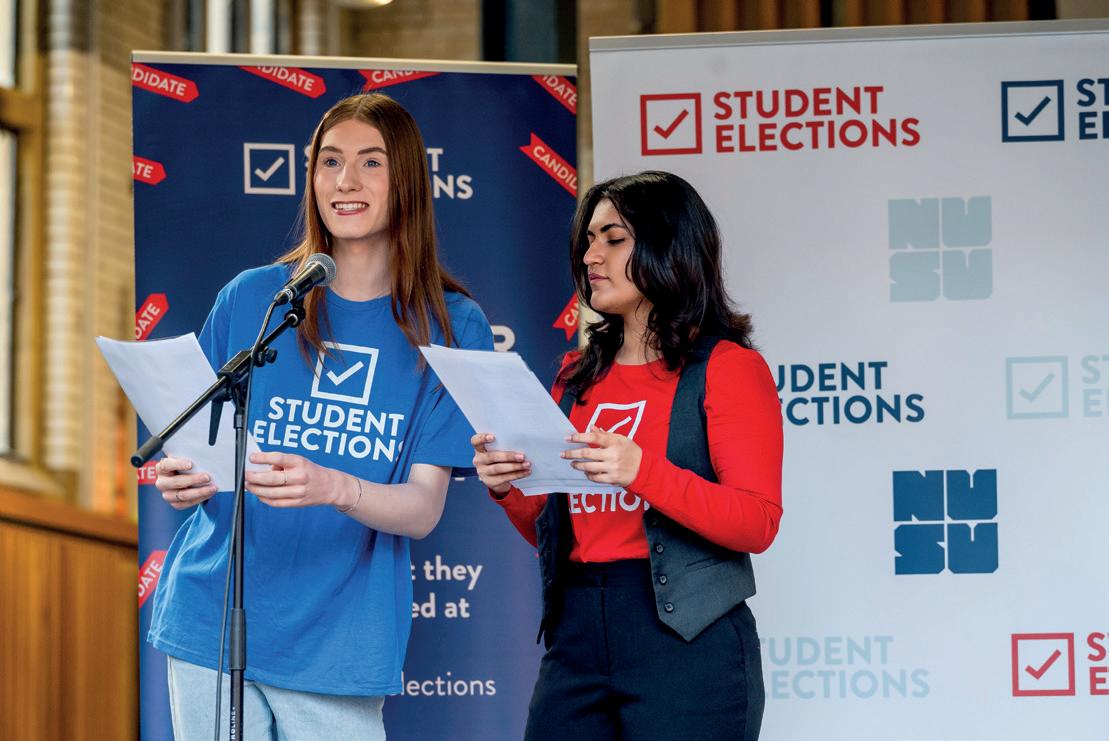
On Wednesday 25th February, NUTV will be involved in the student media coverage of the students’ union candidate rally! This is where students get the chance to ask questions to the prospective candidates for the sabbatical and liberation officer positions. It is a crucial day within the election season that you don’t want to miss!
We have even more exciting live productions coming up in March, which you will be able to read about in the next edition of The Courier. However, if you cannot wait until then, please come along and speak to me at the student media afternoons on Wednesdays at 1:30PM or message our Instagram page @newcastleunitv Make sure you keep up to date with our Youtube channel, where all of this gets broadcasted live (@NewcastleUniTV).
With this paper marking the beginning of Semester 2 for The Courier, it means its time to share all the ongoing events, opportunities, and activities that are upcoming in February.
NUSU SESSIONS 19th February, 6pm, Venue -2
Candidates Rally 25th February, 12pm, Boiler House
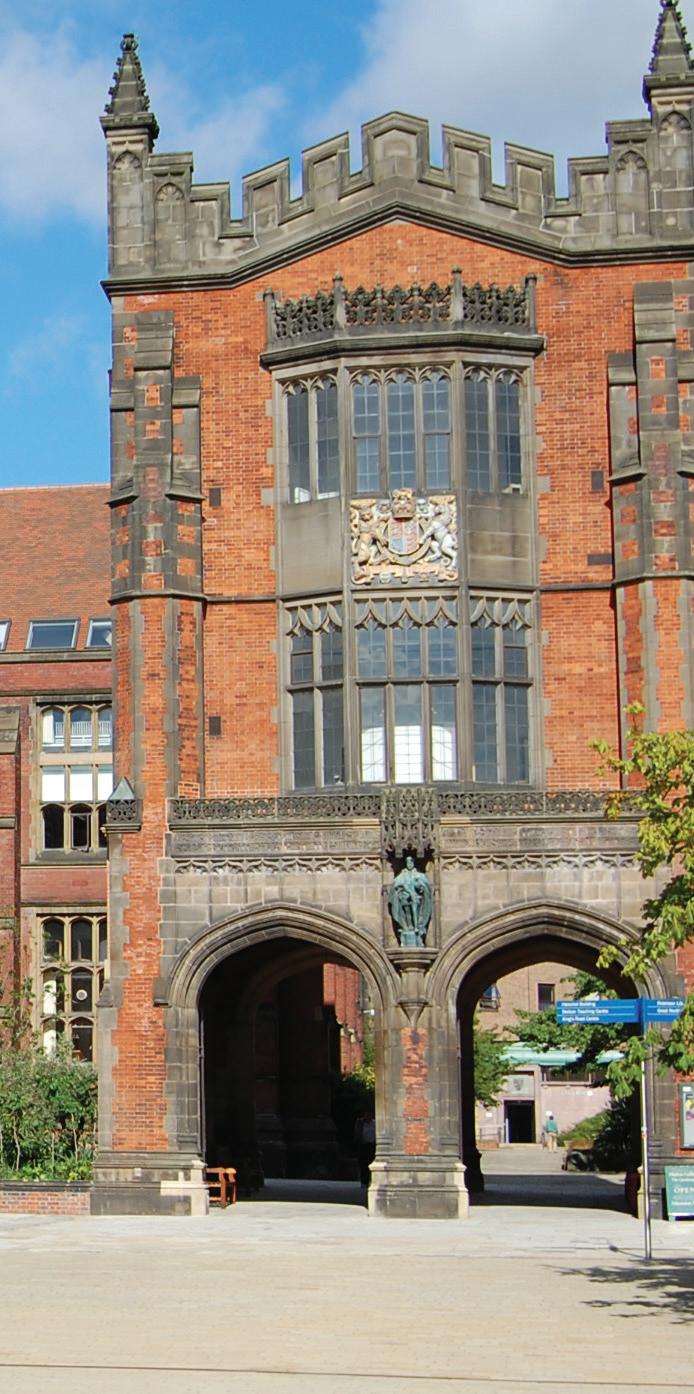
Image source: Sarah Cossom, Wikimedi Commons, https://creativecommons.org/licenses/by-sa/3.0/
The remaining space in the ‘On Campus’ column provides a chance for you to advertise your own events to the wider student population.
What can be advertised:
• One off events that are open to the entire student community.
• Concerts/performances/shows
• Fundraising events
• Guest lectures
What cannot be advertised:
• Taster events, (these should be advertised through Give it a Go)
• Club/Society Balls
• Externally organised events (e.g. Fight Night, Student Races) To advertise your event here, M.Grimston2@ncl.ac.ukcontact


Edited by: Charley Dobson, Megan Grimston &
Megan Grimston - Sport Sub-Editor
9 years working in public relations, Sarah Jeffery reflects on her work in a creative career.
For many people, a career change can feel like a leap into the unknown, but for Sarah Jeffrey’s the move into public relations felt like a natural next step. After working at Gardiner Richardson for 9 years, Sarah sat down with me to reflect on her career in PR.
After working as a journalist she felt she reached a point where she was ready for a new challenge; “I think I got to a stage where I needed something different…” she explained. When an opportunity to join Gardiner Richardson appeared, she weighed up the risks of taking a maternity cover position, she added “I just decided to take the risk and see what happens…”.
"I just decided to take the risk and see what happens...”
The transition from journalism into PR

wasn’t seamless, as Sarah explained one of the biggest adjustments she faced was learning to write press releases differently: “As a journalist, you’re used to getting quotes word for word… but having to draft them in PR felt really unnatural at first.”
Using her experience working at the Chronicle, she quickly adapted to the environment; learning how deadlines, pressure, and the relationship between public relations and journalists works from her newfound perspective. “If you send a press release and ring half an hour later, chances are it hasn’t even been seen yet” she added.
"‘Smoking
Survivors’ for Fresh, the North East’s tobacco control programme was her most proud work.
”
Among the many award-winning campaigns she’s worked on at Gardiner Richardson, one stands out as particularly meaningful to her. The question wasn’t an easy one for her to answer, but she concluded that the ‘Smoking Survivors’ campaign she worked on for Fresh, the North East’s tobacco control programme was her most proud work. Launched in 2023, the campaign featured people with lived experience of smoking-related cancer. One of these people was Sue Mountain, one of Sarah’s former colleagues.
“I knew Sue before everything she went through..”, Sarah opened with. Encouraging Sue to share her story proved powerful, taking her to Parliament, national TV, and inspiring countless others across
the nation. “She once got recognised in Harrods by someone who said the advert helped their dad quit smoking…” Sarah recalled. Accuracy and authenticity were crucial to the campaign’s success. Working as part of an integrated team, the campaign balanced strong evidence with emotional storytelling, “Listening to people’s stories made me cry.”
"...taking a risk can lead you to exactly where you're meant to be.”
Reflecting on the changing media landscape, she noted the decline of print and the rise of a digital-first front. Securing national coverage has become increasingly competitive, having to rely on strong relationships, targeted pitching, and understanding the wider news agenda.
Looking ahead, Sarah explained that the unpredictability of PR is what excites her the most. “Every day is different…” she said. Her passion for her industry couldn’t have been clearer, she discussed how she believes PR remains a rewarding career for those who love writing, storytelling and have a flair for being creative. Sarah’s career undoubtedly proves that taking a risk can lead you to exactly where
you’re meant to be.
"going for a career change can be a daunting task, but sometimes can be very worth it."
Speaking to Sarah was a reminder that going for a career change can be a daunting task, but sometimes can be worth it. Her passion for working on such impactful campaigns couldn't have been clearer, especially explaining how the campaign has continued with different life stories and experiences ever since Sue

Jess Mooney - Head of Current Affairs
Lisa-Marie reflects on her Creative Career in the film industry as a fesival founder.
If you imagine a career in film beginning with film school, industry connections, or a perfectly mappedout plan, Lisa-Marie Tonelli MBE FRSA is quick to challenge that idea.
“I fell into my creative career very much by accident,” she says. “It was all by luck.”
Today, Lisa-Marie is the Founder, Festival Director and Head of Programming of the North East International Film Festival (NEIFF), the youngest film festival ever to achieve BIFA qualifying status. She is also a BAFTA member and voter, a Fellow of the Royal Society of Arts, and the recipient of an MBE for services to film and charity. Her work has been recognised for championing regional talent, inclusion, and ethical leadership in the arts, but her route into the industry was anything but traditional.
Before working in film, she built a career across legal services commissions and social services. Although rewarding, the work was emotionally demanding; “I loved it,” she explains, “but something was definitely missing. I didn’t know what that was until I found this creative world.”
That world opened up through a friend who worked as a film producer. He asked Lisa-Marie to help with casting in exchange for a pizza, an opportunity that unexpectedly sparked something bigger. A few weeks later, she was asked to do some location scouting around Newcastle, and from there she gradually worked her way up through production roles
to become a production manager and producer.
Hands-on experience became central to her development. Lisa-Marie credits practical, on-set learning as the most valuable part of her training, alongside online courses that helped her broaden her skillset. She also volunteered extensively, building experience and industry credibility wherever possible.
In 2017, she was employed as a freelance producer and produced her first short film. While short films are often used as stepping stones rather than commercial projects, she successfully sold hers to ShortsTV on a three-year contract. “I absolutely loved the experience,” she says, “and it led to further work across short films, feature films, and even a television pilot.”
Then came Covid. With a newborn at home and production work at a standstill, Lisa-Marie found herself unable to work on set. Instead of stepping away from the industry, she looked for ways to support it from home. Drawing on her experience, she realised that the North East of England lacked an established qualifying film festival - and that gap became the starting point for NEIFF.
Launching a live film festival during a pandemic, with no funding, sponsorship, or institutional backing, was a huge risk.
“I’m not sure why I decided to do it,” she admits, “but we took the
gamble and the idea quickly gained momentum.” Organisations and educational institutions responded with enthusiasm, and volunteers began reaching out without any formal recruitment. Today, NEIFF remains entirely volunteer-led.
Lisa-Marie’s aim was simple but ambitious: “My main aim was to establish a cultural and qualifying platform right here in the North East, one that was equal to the talent that already resides here. That’s exactly what local creatives deserve.” That vision paid off when NEIFF became the youngest festival ever to achieve BIFA qualifying status in its first year - a process that typically takes at least four years.
Having a qualifying festival in the region has had a major impact. It allows North East filmmakers to submit their work and attend industry-recognised screenings without the cost of travelling to London or abroad. It also attracts higher-profile films, larger audiences, and A-list talent, raising the profile of the region as a serious creative hub. Education and inclusion sit at the heart of her work. NEIFF offers free workshops, masterclasses, and educational programmes, including week-long documentary courses run in partnership with Newcastle University.



These allow participants with no prior experience to learn the technical skills and complete a film within a single week. Alongside this, she sits on the board of AutismAble, helping to create creative projects with and for autistic people, bringing together her personal values and professional work.
As a BAFTA member and voter, Lisa-Marie spends much of her time watching and rating films, often gaining access to releases before they reach cinemas. While she describes this as a definite perk of the job, she also notes that her role involves “a little bit of everything,” from programming and mentoring to advocacy and community building.
"I'm
a big believer that shy bairns get nowt."
When it comes to advice for students considering a career in the creative industries, she is clear. Volunteering is essential for building networks and reputation, and platforms such as Mandy and StarNow offer opportunities to gain on-set experience in entry-level roles. She encourages students to set up LinkedIn profiles early, make industry connections, and say yes to opportunities - even those that feel unfamiliar or uncomfortable.
“There is no doubt in my mind that there is more than one route into the film industry,” she says. “I’m a big believer that shy bairns get nowt.”
From a favour paid in pizza to founding one of the UK’s most exciting film festivals, LisaMarie Tonelli’s career shows that creative paths don’t need to be linear, just driven by curiosity, commitment, and courage.
Edited by: Charley Dobson, Megan Grimston & Jess Mooney
Music has always been an important part of Rachel Snape’s life. Having played the violin since she was three years old and participated in orchestras and choirs throughout her time at school, it is a part of who she is. The decision to study music at university was the natural choice for Rachel, but realising that daily practising was not her thing, she decided to channel her passion for music into the behind the scenes, organisational dimension of the arts and culture space. Though she hasn’t made a career in performing, Rachel makes sure to remain artistically challenged by always making space for musicality in her life. She describes music as something that keeps her ‘sane’: ‘like sports people need to go to the gym, I…feel the need to be involved in music somehow’.
follow up with a contact or reach out to someone for advice, as uncomfortable as it can feel, can lead to unexpected opportunities.

Particularly in a freelance position, without the underlying support and stability of employment, Rachel encourages students to be confident, even though it may feel ‘pushy’: ‘knock on doors and say “hello, I'm here”.’ As scary as freelancing can be, Rachel praised the freedom it provides. Her varied, portfolio career has allowed her the flexibility to be spontaneous and take up opportunities that interest and ‘challenge’ her.
Creating opportunities for yourself is more important than ever, particularly in creative industries. Rachel noted that, though it has become harder to ‘get your foot in the door’, there are now more opportunities for individuals to set up their own small organisations, whether that be a theatre group, art gallery, or something else entirely.
Noelia Fernández Pérez - Head of Sport
For many aspiring journalists, university is where they start learning theory. But for Grace Allsún and Kieran, Newcastle University made journalism practical, demanding, and real. Speaking to The Courier, they both reflected on how their time at Newcastle shapes their work in broadcasting, freelancing, and multimedia journalism, long after graduation.
show humanity and that there’s a lot of good happening in the community,” she said. She believes journalism doesn't always need to focus on “really depressing, hard-hitting” news to be impactful. Positive, reflective stories can be just as meaningful to audiences.
Rachel has built an impressive portfolio career, ranging from project management and creative producing to education and events planning. I spoke to Rachel about what she has learned from her career journey so far, and the advice she has for students wanting to follow in her footsteps. An underlying theme of our conversation was Rachel’s emphasis on the importance of passion and confidence: ‘if people are passionate about what they're doing, they will do it’.
Speaking as an employer, Rachel reassured me that passion and proactivity is what makes a CV stand out. She also stressed the importance of networking; when it comes to her job history, ‘probably about 50%...have been about being in the right place at the right time’. Not being afraid to

In light of the industrial action taken by Newcastle University staff in the last academic year, I wanted to know how Rachel (having worked in arts education) felt that we should respond to these budget cuts which primarily impact arts and culture studies. She noted that the current focus on restoring the arts in primary and secondary education needs to filter up to further and higher education, and to achieve this ‘we need to get the decision makers on side’.
Rachel sees the arts industry as one that will be ‘forever changing’ and encourages students to be ‘flexible’ and willing to ‘fight for’ the career they want. Ultimately, she is optimistic, as the value of arts in the world cannot be understated: ‘people coming together increases confidence, well-being (and) social connection’. After all, ‘a world without (the arts) would be a far less beautiful place.’
think about it as part of a wider picture-a stepping stone towards a creative career. “
Rachel Pattinson is an independent children’s author. Based in the Northeast of England, her novel Seven: Distracted Detective won the Hachette Children’s Novel Award and is published by Aralyn Press. Previously supported by Arts Council England, Rachel writes stories and non-fiction for children and young people responding to the world we live in.
Her creative career began as a librarian then by working at Seven Stories, the National Centre for Children’s Books. Along the way, she began writing creatively as an “on-off hobby”. Rachel got her start as a published writer by submitting her work into the Northern Writers Awards; after being shortlisted, she won the Hachette Children’s Novel Award in 2023, suing her success to get an Arts Council England grant. “I think the only way to kind of get anywhere in writing is by putting yourself out there and making opportunities happen for yourself.
Rachel notes in her advice to students that resilience and project management skills are the most valuable to her creative career: “It’s a case of how do you have an idea and then make it happen in the world?”.
Her typical day in writing and publishing takes place in the margins of her other means of employment. “I think the writing and the publishing for me at the moment has happened around the edges. “
A note on breaking into the creative industry of writing and publishing from Rachel: “you have to start somewhere, right? Think about different entry points. It might be that the first job you get might not be your ideal thing but
Her creative career began as a librarian then by working at Seven Stories, the National Centre for Children’s Books. Along the way, she began writing creatively as an “on-off hobby”. Rachel got her start as a published writer by submitting her work into the Northern Writers Awards; after being shortlisted, she won the Hachette Children’s Novel Award in 2023, suing her success to get an Arts Council England grant. “I think the only way to kind of get anywhere in writing is by putting yourself out there and making opportunities happen for yourself.
Rachel notes in her advice to students that resilience and project management skills are the most valuable to her creative career: “It’s a case of how do you have an idea and then make it happen in the world?”.
Her typical day in writing and publishing takes place in the margins of her other means of employment. “I think the writing and the publishing for me at the moment has happened around the edges. “
A note on breaking into the creative industry of writing and publishing from Rachel: “you have to start somewhere, right? It might be that the first job you get might not be your ideal thing but think about it as part of a wider picture-a stepping stone towards a creative career. “
" It gave me a very good type of entryway into the skills I needed to build my career...”
Grace graduated in the summer of 2025. She credits the course with providing a strong professional foundation at a key moment in her career. “It gave me a very good type of entryway into the skills I needed to build my career,” she explained. She pointed out that courses such as media law, compliance, and multimedia production directly support her in her current role. “Creating packages, audio, writing articles, sourcing pictures and interviewees, that’s pretty much what I do full time,” she said, stressing how valuable it was to leave university already familiar with industry-standard tools and workflows.
Kieran, who is now an on-screen reporter for ITV, graduated from Newcastle in 2018 after completing three years of undergraduate study followed by a master’s degree in international multimedia journalism. Looking back, he described the course as “basically a crash course in everything you would need to know,” from television and radio to online journalism. He believes the variety of the course helped prepare him for the fast-paced and unpredictable world of regional newsrooms, where journalists are expected to switch between formats quickly.
One lesson has stuck with Kieran throughout his career: “Audio is king. It’s way easier to save bad shooting than it is to save bad audio.” He explained that while visual elements can be adjusted or re-edited, poor sound quality is immediately noticeable and much harder to fix, a principle that still guides his filming approach.
" Journalism is not just about recording events. It’s about showing audiences perspectives they wouldn’t normally see...”

Both journalists emphasised the importance of storytelling fundamentals taught at the university. Kieran recalled advice from a lecturer that influences his visual style: “If you’re filming a small thing, make it big. If you’re filming a big thing, make it small.” For him, journalism is not just about recording events. It’s about showing audiences perspectives they wouldn’t normally see. “The reason you’re there with a camera is to show people something different,” he said, whether that means experimenting with angles, When talking about their favourite stories, both Grace and Kieran prefer softer, human-centred journalism. Grace explained that these stories are often the most rewarding to work on. “They
Kieran shared a memorable moment in his career when he was flown to the Isle of Man to sail back to Whitehaven on a 17th-century Spanish galleon. “There wasn’t really any reason to make the story as big as we did, but it was just a bit of fun,” he said. The assignment allowed him to produce several pieces, including a program package and a video diary, that combined creative storytelling with local relevance. “It was about the experience, the people on board, and what it meant for the town,” he explained, noting that these types of stories often resonate most with viewers.
"regional journalism relies on trust and familiarity, and reporters are expected to be approachable and recognisable in their communications."
The conversation also shifted to how journalism has changed in the digital age, particularly in terms of self-promotion and versatility. Grace pointed out that since graduating, she’s become more aware of the need to present herself as a multi-skilled journalist. “The demand for multi-skilled journalists is on the rise,” she said, adding that editors now seek reporters who can write, film, edit, and present across different platforms. She believes having a strong portfolio is essential for pitching freelance contracts and standing out in a competitive field.
Kieran’s experience differs slightly because of his role at ITV, where personal branding is closely linked to the organisation itself. Instead of promoting himself as an individual freelancer, his work reflects ITV’s values and regional identity. He noted that regional journalism relies on trust and familiarity, and reporters are expected to be approachable and recognisable in their communities. “People should feel they can come up and talk to you,” he said, emphasising the importance of local connection.
"Both Grace and Kieran believe their time at Newcastle helped bridge the gap between academic study and professional journalism."
Both journalists agreed that confidence, communication, and adaptability are just as vital as technical skills, especially for on-screen reporting and breaking news. For Kieran, many stories depend on being able to talk to people during difficult or emotional times. “You don’t get anywhere if you can’t talk to people,” he said, highlighting the need for empathy, reassurance, and clear communication when approaching contributors.
Looking back, both Grace and Kieran believe their time at Newcastle helped bridge the gap between academic study and professional journalism. While the industry keeps changing rapidly, their experiences suggest that strong fundamentals, creative thinking, and a willingness to adapt remain essential for a successful journalism career, skills first developed in the lecture halls and newsrooms of Newcastle University.
1 2 : 0 0 - 1 3 : 0 0 1 3 : 0 0 - 1 4 : 0 0 1 3 : 0 0 - 1 4 : 0 0
C R E A T I V E C A R E E R S





By now you will have discovered that your time at university provides an amazing array of opportunities …
As well as making friends and acquiring knowledge, university is a unique place for exploring the meaning and purpose of your lives. As a group of Christian Staff and Postgraduate Researchers, we encourage you to take the opportunity to investigate the Christian faith for yourselves.
We have each examined the life and claims of Jesus Christ and have become convinced that he is who he says he is, and that he has enormous significance for our lives.
Signed:
Helen Adamson Senior Lecturer Natural & Environmental Sciences
Sarah Barnett Lecturer Education, Communication & Language Sciences
Olivia Elwood Sustainability Officer Estates and Facilities
Caitlin Halfacre Research Associate Education, Communication & Language Sciences
Ben Le Dune Education Team Leader Business School
Nick Megoran Professor Geography, Politics & Sociology
Daniel Simandjuntak Research Associate Business School
Stephen White Reader Biosciences Institute
Adenike Adesanya Postgraduate Researcher Translational & Clinical Research Institute
Tim Bell Postdoctoral Research Assistant Natural & Environmental Sciences
Paul Ezhilchelvan Reader Computing
Mark Jackson Professor History, Classics and Archaeology
John Mangan Professor Engineering
Andrew Pike Senior Lecturer Natural & Environmental Sciences
Rob Taylor Professor Translational and Clinical Research Institute

To find out more:
• Speak to one of us in person
• Contact the Christian Union, or visit one of their events
Explore 23rd-27th February
IG: @newcastlechristianunion
Susan Addison Lecturer Business School
Bill Clegg Emeritus Professor Natural & Environmental Sciences
Mercy Ette Senior Lecturer Arts & Cultures
Simon Kometa Statistical Computing Consultant NUIT
Lenny Marshall General Assistant Events Catering
Sheena Ramsay Professor Population Health Sciences Institute
Frances Turner Senior Research Software Engineer NUIT
Anne Archer Assistant Liaison Librarian Academic Services
Heather Cordell Professor Population Health Sciences Institute
Jamie Gardner Postgraduate Researcher Computing
Susan Lennie Senior Lecturer Biomedical, Nutritional & Sport Sciences
Satomi Miwa Lecturer Biosciences Institute
Colin Rees Professor Population Health Sciences Institute
Catherine Walker NUAcT Fellow Geography, Politics, & Sociology
Charley Dobson
January 20th - February 18th
Aquarius, whilst your friends will be a highlight for you this month, you might feel like there’s something missing. The stars want you to take a big, no, giant leap forwards. Hold tight!

PFebuary 19th - March 20th
isces, expect that sometime soon you may come across a truth that affects the balance of your judgement. Maybe ignorance is bliss after all.
Dear Aries, I’ve spoken to the stars, and they’ve promised me that hopes, dreams and the success of your 2026 plans are underway.
Taurus, this time around, the stars have told me to urge you balance out the coldness in your communication, try writing down your feelings before letting them influence your actions.



G21st - June 21st
emini, you lovebird, the stars are saying to expect a romance and adventure. I’m picturing a movie style Hollywood romance in your future.

This new month suits you Cancer, your zodiac suggests that you’re holding down control over both your health and finances. Not too shabby at all.


It’s not all good news you for the time Leo (my bad). I’m thinking some fluctuations with your wallet and a couple of outcomes which aren’t quite what you’ve been hoping for. Better luck next time?
Libra, this time is for your creativity and inspiration. If you haven’t taken up a new skill recently, then get to it - don't waste this chance!

Scorpio, everything in abundance for you this month - hope, brightness, all that jazz. A word of caution though, be careful with the excesses of these triumphs, don’t get too greedy.

Sagittarius, I hate to be the one to break this news to you but, you’re in for some losses lately. Whatever troubles you’re dipping your toes into now, get out quick before it’s too late!



V23rd - September 22nd
irgo, I've heard you're at your strongest this month. Expect confrontation - maybe with yourself? Maybe with others? Only the stars can be sure but good luck either way!

The stars are warning you this month Capricorn, they urge you to take some down - time. Looks like this is your week for rest and relaxation.

Ruby Tiplady - Head of Life & Style
CW: Assault
In May 2024, I woke up to my alarm at 4:30am, got dressed, rang my dad, and set off on my walk to my early shift. It was raining, so I put my umbrella up as I tapped my fob and stepped out of the courtyard gate. I was less than 20 metres from my accommodation when I heard shouting; I tried to work out what was happening - did someone need help?
I’d set my sights on Newcastle aged 13, when pocket money and a little extra freedom meant I could catch the train to shop and I started getting tickets to go to gigs here. In August 2023, when I opened my A-Level results and confirmed my place here, I was overjoyed. I was staying in the North East (but I was far enough to have complete autonomy) to study a subject I loved; I quickly made incredible friends, people I never would have met without coming here. I loved my life as a student, and I loved Newcastle.
But here I was, my second assignment season looming ahead, about to walk to work. A man, who’d been frantically shouting at me and following behind me, ran towards me and grabbed hold of me.
He had one arm around my body and the other hand in my hair, trying to wrestle my phone out of my hand. On the other end of the line, my dad was waking my mum up, asking her to call the police, and trying to work out what was happening. My
umbrella was still in my left hand, my arm pinned to my side.
I was petrified, but felt a strange sense of calm as I looked around. I was wondering why my dad had gotten up at five in the morning to phone me, why I walked the route along a main road, why I’d chosen student accommodation in town with security, why I bothered to take any safety precautions at all, when this man still had the ability to overpower me.
I had no idea how long I’d been there, shouting at him in a hoarse voice, unable to hit or push him, stamping on his feet, when an unknown hero in a white car stopped and pulled him off me. I stood where I’d been, in absolute disbelief, watching through the now-pouring rain as the man hit the bonnet of the white car. My dad’s voice broke through the daze: “Run! You have to run!”
I didn’t want to run back past him to my flat, through the electric gate that took an age to close, so I ran to work instead; he followed me for a while, but I soon lost him. I made the fifteen-minute walk in five minutes, burst through the door, ran past customers, and into the office. A supervisor came and held me by the shoulders, trying to ask what was wrong, and through tears I tried to explain what had just happened. I can’t imagine I was very clear. I wasn’t really sure.
I went to sit at one of the customer tables outside; my dad explained that he hadn’t been able to get through to Northumbria Police on 999, so he’d had to ring the non-emergency line, and I’d get a call from them soon. Was I okay? Will I come home? What did work say? Have I spoken to my boyfriend? I had not, so I rang him; he came to
Sophie Campbell
Why you should leave that hazardous habit in 2025...
Sometimes a harmless act on a night out of borrowing a mate’s watermelon flavoured vape can turn into a habit, and then suddenly you're buying e-liquids from the local corner shop, and offering your own reusable vape to friends. A drunk habit can then quickly transform into an addiction, something to lean on, like a childhood teddy or a blanket that smells like home. However, this is not harmless, vaping kills, and despite rumours of it being better than smoking cigarettes, many vapes being sold now contain the same amount of nicotine in one pod as in an average pack of 20 cigarettes. So, struggling to find a New Year’s resolution, here’s an idea- quit vaping!
“The reality is, you are not the target audience for vaping...”
Not only will quitting vaping reduce the risks of a shorter lifespan, but it will also mean that you save money, although cheaper than cigarettes, vaping is still a habit that is pricy in the long run- especially if you’re a student! The reality is you are not the target audience for vaping, and it is not too late to reverse this unhealthy habit. Vapes were made with the aim to help adult smokers reduce their smoking habit, but their affordability and the wide variety of flavours mean that they have become increasingly popular, with in the UK a recorded 4.5 million regular vapers and

approximately 3,000 specialist vape stores. The candy stores found in the 20th century are now being replaced by colourful vape shops, and I for one am sad about it. Nicotine is a highly addictive and toxic drug that can harm brain development, which means that your frontal lobe may be underdeveloped when it stops evolving at 25.
Additionally, starting vaping as an adolescent increases the chances of future addictions to other drugs, which will cause further mental and bodily harm. Vaping, like smoking, can lead to popcorn lungs, medically known as Bronchiolitis Obliterans, which damages the small airways in the lungs, as well as cancers.
“Habits become habits through repitition.”
Quitting is easier said than done, as with a lot of addictions, the process can take a long time and be mentally draining. Try to replace vaping with other activities that will benefit you, such as trying a new sport or starting a craft. When your hand reaches for the vape, think to grab your trainers and go for a run, or grab a pen and paper and start journaling. Habits become habits through repetition. Just as you become accustomed to the constant, comforting presence of the vape, you will soon develop a routine of activities that will enhance your life rather than potentially shorten it.
2026 will be the year of breaking bad habits and getting into a routine that will, in the long run, benefit your mind and body. Vacating the vapes in 2026sounds like a good resolution to me.
Image source: ACatXIo, Pixabay
work, picked me up, and drove me to my parents’ house.
I got home, took phone calls, and made appointments with police officers. I gave statements, took an officer to where it had happened, and went over special measures I’d get if it went to court. After the police left me, I had to confront the reality of what had happened; I navigated the area immediately surrounding where I lived with a newfound fear that I was unsafe, and my parents had to leave me where I’d been attacked while they’d listened, helpless.
While I wasn’t exactly self-confident before the attack, I certainly felt that I was taking appropriate measures to ensure my personal safety: I carried a rape alarm, shared my location, lived in a busy, student-dense area of town, and yes, spoke to my dad on the phone when I walked at unsociable hours.
“They say time is a great healer, and the ailing never believe them...”
Violence against women and girls makes up almost 20% of all recorded crime in England and Wales, it’s been declared a national emergency, and I’ve spent the better part of a decade identifying as a feminist. Still, I never fully anticipated that this could ever happen to me. It felt like a problem I was too aware of, a risk I carefully mitigated against, and so rather than distant, it felt too close to come true. This experience changed me; I learned so
much about myself and about the world around me, the things I can control and the things I can’t. After a month, the police contacted me, letting me know that the case would be closed without an arrest: “I have reviewed the footage from the council camera as discussed. Although it does cover the incident, the camera quality isn’t great due to the weather…”. Essentially, no one could be identified and nothing more could be done. I’m in my third year, and it'll soon be two years since it happened. I’ve grown up so much since then, and it breaks my heart to think of the brave face I put on that summer; I went home and tried to convince myself I wasn’t scared. They say time is a great healer, and the ailing never believe them; I’m unfortunately here to say that time has healed me. Well, time, talking therapy, and an incredible city.
Don’t get the wrong impression, I’ve only been back to where it happened once since I moved; it was for an appointment, and it was very unnerving. I felt unsafe and out of place, but recognised that was because of what happened, not because I actually was unsafe at that moment.
I moved across the city to the edge of Ouseburn, my favourite neighbourhood, to a house with three amazing girls. This fresh start was vital. Over time, I regained my independence, got more comfortable in my own company, and fell back in love with Newcastle. A year later, I had my summer swimming at Tynemouth, I applied for and completed an internship, I started writing, I went to work, and I got through uni. I’m not preoccupied on every walk, and I go into town without fearing someone dangerous is around every corner.
Isla
Cordes
Wash away the workload with this peaceful pastime...
Starting a new hobby can be daunting at any age, particularly as a teen entering their twenties, when it feels like everyone has been doing the same hobby since they were five and is obviously very good at it. I got this feeling a lot when I came to university, and even at the start of my second year, I had that feeling of almost being left behind, while everyone continued their hobbies, and I was stressing about where to begin.
I decided to ignore that feeling and just dive into something that felt right – swimming (no pun intended there). It first sprang to mind when a course mate of mine asked if I wanted
the benefits to your mental health. When I'm having a rough day or need to clear my head, I find that swimming just makes me shut off from everything else, and I come out feeling mentally a lot better and find that it has vastly improved my day. Personally, I recommend Jesmond Pool and Gym for anyone who is around Newcastle and feels this would be a good hobby for them to start. They have different allocated timings for certain swims, for example, the pool offers adult-only swims for those who don’t fancy getting splashed in the face by children!
“I promise you the hardest part is doing it for the first time...”
So for anyone worrying about starting something new, or who feels too old to start a

Imagesource:RosZie,Pixabay
Shenoy - Sport Sub-Editor
Do you ever consider where fashion trends originate from?
The term ‘alien’ may refer to a green extra-terrestrial being sent down from space in a UFO. It can also refer to a foreigner, especially one who is not a naturalised citizen of the country where he or she is living. Whilst I am a British citizen, I can intrinsically understand the feeling of being, and growing up, an 'alien'.
Being raised in England with brown skin, a name that makes you pause and a culture that most know nothing about is an experience felt by many second-generation immigrants. We got teased for our ‘smelly’ food, for our ‘greasy’ hair and for the accents our family had. And yet you look around now, and there’s Indian influences everywhere in the fashion and beauty trends around us.
The ‘clean girl’ epidemic was brought to us largely in the past year, consisting of minimal makeup, a focus on healthy diet and an ‘effortless’ polished look. A primary aspect of the trend was the ‘slick back’ hair style, a low effort way to keep yourself looking refined by combing in a hair mask to enrich your hair
with nutrients before you wash it.
I vividly remember my mother running oil through my hair on mornings, to strengthen the strands and reduce breakage and frizz, and lovingly tying it in a plait before walking me to school. When I arrived, I was informed by my peers that my hair smelled weird, and it looked greasy and unwashed, the implication that I wasn’t clean hanging in the air – and eventually I convinced my amma to stop, just so I wouldn’t have to deal with the comments that other kids flung at me.
A decade later, and it’s trendy to slick back your hair, with various oils and masks to reduce any damage that has been caused.
The rebrand of Indian culture into a more palatable westernised version isn’t unique to slick back hair styles alone. If you’re scrolling on the fashion side of TikTok, you’re probably familiar with the ‘Scandinavian scarf’ debate that recently circulated online. The south Asian ‘dupatta’ is a long scarf staple in Indian fashion, traditionally draped over the head and shoulders to symbolise modesty and grace. Not only that, but it also became a symbol of resistance against the suppression faced by colonial Britain, worn during the Swadeshi and Non-Cooperation movements in India.

highlighted the female stars showing a blend of westernised clothes, paired with the traditional dupatta, signalling the modernisation of tastes, and a new era for Indian cinema. The West, however, dismissed it as being “too ethnic” and “overly traditional”, only now to bring it back repackaged as Scandinavian, European and classy.

The erasure of our heritage and its deep meaning to our ancestors struggle for freedom from Britain is what incensed the South Asian community worldwide erasure happening in real time - incredibly similar to how it happened under colonial rule.
The appreciation for our cultural clothing is a relatively recent phenomenon. I’m now comfortable enough to post photos of my cultural clothing on social media, a wide and gaping chasm to the young girl that was afraid to be seen wearing a dupatta and a lehenga – now repackaged by brands such as Oh Polly as a two-piece gown.
stress she may feel. Nowadays, the paste is used for temporary tattoos, or drawing semipermanent freckles on your face, treating it as a throwaway fashion accessory, rather than appreciating the history and significance of the art form.
I’m sure that next I’ll open my phone to a new ‘beauty mark’ trend placed on the middle of your forehead, suspiciously similar to the bindi which signifies wisdom, spiritual concentration and the retention of energy. Once, I was sarcastically asked if I was ‘recording from my forehead’ as the auspicious red dot apparently looked enough like a camera lens, a comment that like many others, I was forced to brush off lightly.
My favourite 2000s Bollywood movies
Indya Malhan
How the iconic looks of 2016 are appearing on campus this year...
Before 2026 had even begun, social media had declared it a 2016 Part 2 in all senses of fashion and beauty. As the clock struck midnight on January 1st, the hashtag ‘you just had to be there’ infiltrated Instagram, with celebrities ranging from the Kardashians to Love Island contestants posting throwback pictures from 2016. It is due to this, that 2026 fashion, beauty and trend predictions have thrown us all back into 2016, the famously iconic year.
The ‘clean girl’ aesthetic shifted, with slick-back buns and minimal makeup being traded for the full glam looks of 2016. Hailey Bieber’s ‘glazed doughnut’ skincare was abandoned for Kylie Jenner’s resurrection of ‘King Kylie’ makeup, which focused on heavy contour, bold eyes and the world-renowned Lip Kit. The resurgence of 2016 makeup also inspired the same loudness in fashion, with simplicity being forgotten.
being seen around campus and online as a form of accessory, with the seamless invisibility of AirPods being rejected for the nostalgic cord, which effortlessly transforms an outfit from basic to unique!
“Wired headphones are now being seen around campus and online as a form of accessory...”
The growing theme of maximalism on campus rivals the old ‘algorithmfriendly’ microtrends that lasted about a week.

This shift has slowly been infiltrating onto campus, with baby pinks and soft neutrals giving way to hotter, louder shades - hot pinks, cherry reds, and even chrome being a popular choice. Despite Charli XCX’s BRAT album birthing this change back in summer 2024, the expressive ‘party girl’ persona is still ever-present, both on nights out and in daytime lectures.
Speaking of music, wired headphones are now
Accessories have been spotted to be bigger and louder than before, with chunky, studded bags replacing the sleek Longchamp tote, and tiny sunglasses being replaced with oversized frames, an early 2000s totem. However, whilst accessories are getting larger, outerwear is shrinking. The once unavoidable puffer jacket has been ditched for tighter jackets and longer coats, with form taking precedence over function. On campus it is clear to see that leather has been swapped with suede, channelling not only 2016, but the early 2000s as a whole. So, as it stands, 2026 is the year where microtrends are being abandoned for unique vintage finds, and where personality and individualism is returning in both fashion and beauty. So dust off the old iPod Nano, we’re going back to 2016!
Mehndi, which you probably know as ‘henna’ is another example of our culture being repackaged and repurposed without any sense of cultural preservation. Traditionally worn by brides on their wedding day, it symbolises love, fertility and good luck, with the medicinal purpose of cooling the bride down to relieve her of any
There has been a resurgence in the belief that we, as immigrants, don’t belong here in the UK, despite the fact we contribute to the economy and that this is all I have ever known. I’m too British to be Indian, and too Indian to be British, leaving me slightly alien wherever I go. And yet, you take the very things that you use to alienate us, repackage them to suit you, and sell them without care for our culture and heritage.
And so, I plead; the next time you hop on a fashion or beauty trend, evaluate where it came from, and whose culture it is that you are finally appreciating instead of disparaging at what feels, to us, like every turn.
It's what's underneath that counts: lingerie shopping in Newcastle
Ava Bell
Shopping for underwear is an overwhelming errand: when looking for sizes, letters from ‘A’ to ‘B’ coupled with an inconspicuous number are thrown at you like a bra-shaped bundle of confusion. It’s less than sexy to buy a boring bra that doesn’t ignite a sense of excitement to wear.
However, when underwear shopping becomes lingerie shopping, a different image is evoked. Think the lacy lushness of the Victoria’s Secret runway: a sensual, hyper-feminine power that can only be unlocked by the caress of a matching set. A bra is not just underwear, but a piece of clothing that supports the inherently feminine, and allows us to reach a sense of confidence coming from withinor rather, underneath. If we start to perceive buying lingerie as a form of self care, then the act is transformed entirely. Lingerie is not an external performance for the world to see like your favourite t-shirt or pair of jeans, but fashion entirely for yourself - a secret you keep, but can choose to share with another in a display of trust. Tapping into this sexuality in the form of lingerie allows us to get a deeper understanding of our needs and wants, with no one else in mind, as first we buy it for ourselves, and then choose who we share it with. When buying a top, you may be thinking about judgement from others. But with lingerie, it’s completely personal - whether you like
colour, adornments, a garter belt and a pair of stockings, the choice is yours. It is an intimate experience that is completely self-centred, and without shame in being so.

Walking into the lingerie shop can be an intimidating experience, as shopping for underwear can feel somewhat taboo. I have often felt embarrassed to go into a lingerie shop to be measured for a new bra size because it feels incredibly vulnerable to lay bare my body in front of a stranger. However, 2026 is the time to be breaking down this shame, starting with altering the lingerie shopping experience. Pour over the different styles, take time and remember that this is you caring for yourself and yourself only.
Newcastle has some great places to do this - Boux Avenue is a beautiful brand that has everything from sexy lingerie to pyjamas, with a shop perfectly situated in the Metro Centre. But, not only this, once a year they offer a pop-up sample sale in Newcastle University Students' Union, where you can find pants from £3! A perfect way to shop for their pieces on a budget. Bravissimo in Eldon Square also offers an array of choices tailored towards D cup and up sizes, alongside a free bra fitting service so you can find that perfect fit. And of course, in both the Metro Centre and Eldon Square are Ann Summers and Victoria’s Secret shops, with Victoria’s Secret offering their classic bombshell bra and iconic monogrammed thongs.
Tever?
he question seems simple, but the answer isn’t. First, we need to separate two concepts we often mix up: going on dates and being in a relationship. Dating today isn’t harder than before, if anything, it’s easier. What has become harder is forming a serious relationship. It sounds contradictory: how can it be easier to meet people yet harder to stay with someone?
We live in a digital era where meeting someone is as easy as swiping right. Before, you had to run into people in a class, a bar, or even the supermarket line. Now apps like Hinge, Tinder, Bumble, Grindr, Raya, and Fruitz offer an endless stream of possibilities. Getting a first date has never been simpler.
But easy dating doesn’t mean easy compatibility. Experiences range from sitcomworthy encounters to dates that feel like job interviews. You might have a perfect night and still get ghosted the next day. Or you realize the other person isn’t looking for anything serious, they want to “see what happens,” “go with the flow,” or avoid “labels”: the holy trinity of vague commitment, also known as a situationship. There’s also the desire to meet someone offline, which feels more romantic but also more intimidating. Approaching a stranger, risking public rejection, or trying to read whether there’s genuine interest can be nerveracking. Sometimes swiping is easier than holding someone’s gaze.
Erin Neal - Lifestyle Sub-Editor
A rundown of the best spots to hit it off in the Toon...
For the old souls who yearn for nostalgia, time-travel back to the late Georgian, Victorian and mid-20th century at Beamish Museum. The open-air setting will find you taking a slow meander, exploring Northern life through the eras. Ride on the restored trams, wander past vintage shopfronts and visit the retro cinema hand in hand.

The real issue isn’t the lack of options; it’s the kind of relationships people want today. Traditional romance hasn’t vanished, but it definitely feels weakened. Many people simply don’t want a serious relationship anymore, and there’s nothing wrong with that. What’s changed is the dominant model: connections that are lighter, casual, and low-commitment. If stable relationships were once the norm, now they often feel like exceptions.
“...the reputation of dating apps as hookup spaces doesn’t help when you’re searching for something deeper.”
Both online and offline, the same pattern repeats: lots of dates and momentary connections, but often one or both people are looking for sex, temporary companionship, or emotional distraction rather than commitment. And the reputation of dating apps as hookup spaces doesn’t help when you’re searching for something deeper.
So the conclusion is clear: dating in 2025 is incredibly easy (Although that doesn’t mean every date is good), but turning dates into a relationship is much harder. Classic romance, the spontaneous flowers, handwritten notes, long phone calls, feels almost nostalgic. People used to communicate their intentions more directly. Today, ambiguity is everywhere: halfrelationships, half-love, bonds that work only as long as no one asks for commitment. It’s not necessarily negative; it’s simply the dominant style now. Liquid, flexible relationships. Some want companionship without depth, others sex without attachment, others connection without labels, and some don’t know what they want at all.
But if you’re looking for something real, stable, and serious, the truth is simple: yes, it’s harder than before. More options don’t mean more commitment. More dates don’t mean more real connection.


Further North, the town of Alnwick is a timeless town adorned with charming cafes, serene, sun-dappled gardens, and a medieval castle, making its rich history a picturesque fairytale. Explore its myriad of charity shops scattered across the cobble-stoned streets, or take a trip into Barter Books, one of the largest second-hand book stores in the country. Settle down together with a pre-loved read by the castle walls, the perfect backdrop for a romantasy novel to come to life.


Surprise each other with a small find, perhaps a quirky souvenir or a sweet treat. Afterwards, headover to the Tynemouth Boating Lake for a classic pedal boat session just like in the movies before strolling along the seafront towards Whitley Bay. Take in the sweeping views from the 1901 Spanish City restaurant and enjoy an afternoon tea or some succulent seafood.

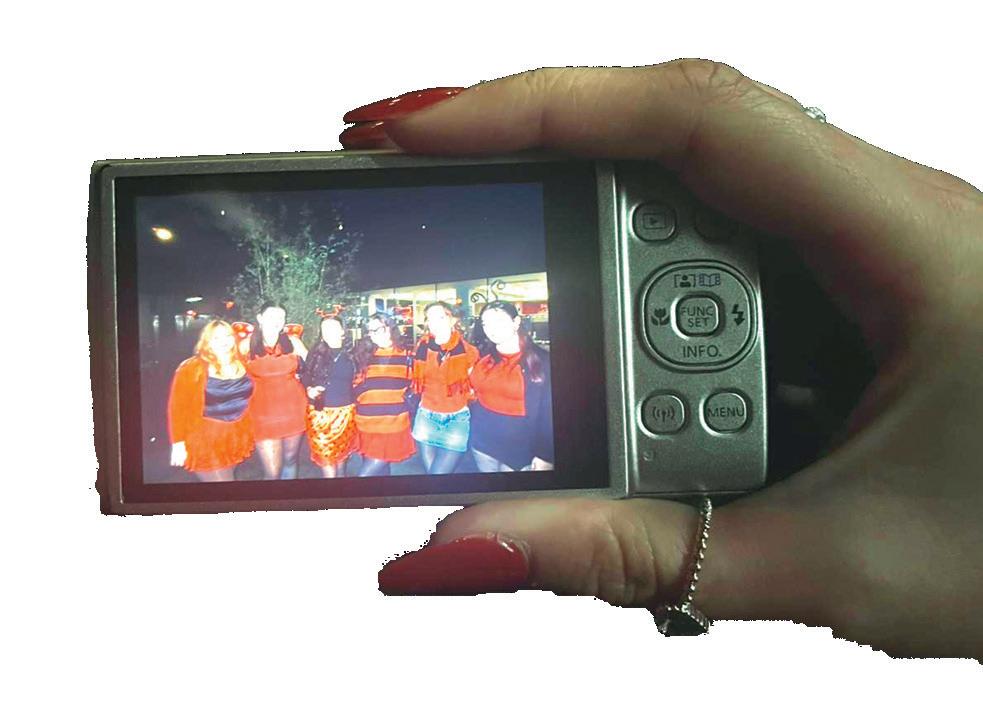
“...a hub of artistic charm and cosy romance.”
Head over to North Shields to make a simple evening pint feel memorable. Start with The
Over by the coast, Tynemouth allures with its coastal charm. Begin your date at Tynemouth Market, housed the Victorian station, brimming with independent stalls selling everything from vintage trinkets to handmade jewellery.
perfect pace for an easygoing, unrushed date.
“...the best view of the Quayside that Newcastle has to offer.”

Only a stone's throw away from the city centre, Ouseburn boasts a hub of artistic charm
For the creative couples, visit one of the quaint neighbourhoods’ many art galleries or catch local talent before they hit their big break at the Cluny. Then, reroute to the Free Trade Inn for a send-off with the best view of the Quayside that Newcastle has to

My relationship with the Toon...
From palm trees to St James’ Park, every time I tell someone that I am from Cancun, Mexico, they ask me why I would move to such a far and cold place like Newcastle. I always answer with the short answer: I do not know. However, here is the long answer. When I was accepted to five universities in the UK, my dad and I decided to tour them all to decide which one I would attend. So, my dad and I hopped on a ten-hour flight and visited five universities in one week. Newcastle University was the first university I visited, and from the moment I set foot in the city, I got a feeling that this was where I was supposed to be. I then visited four more universities; however, no matter how impressive they were, none of them gave me the same feeling. Newcastle stayed with me, and by the end of the trip, my decision already felt made. Now that I have lived in Newcastle for a year and a half, I can confidently say I could not have made a better choice. The city has taught me lessons that go far beyond the classroom and into who I am today. One of the first things that stood out to me was the people. After all, it is the people who define the place. Geordies are some of the warmest and most genuine people I have met. Coming from Cancun, I expected cultural distance, but instead I found openness, humour, and kindness. Whether in a pub, at St James’ Park, or simply walking through the city, people
are always willing to talk, help, and welcome you in.
“The Toon taught me resilience, community, and pride, values that now feel part of who I am....”
Newcastle is widely known for its nightlife. From busy pubs on matchdays to spontaneous nights out, Newcastle’s nightlife just about going out, it’s about connection. No matter the day of the week, the city feels alive, and that energy makes you feel like you belong. Coming from a tourist destination like Cancun, Newcastle’s nightlife taught me that going out is not about spectacle, but about community and shared moments. Football, however, is at the heart of everything. Supporting Newcastle United is not a hobby here: it is a way of life. Living in the city has shown me what true loyalty means. The fans stand by their team through
disappointment, relegation, and long periods without success. That unwavering commitment taught me the value of patience and pride, even when results do not go your way.
Separated by nearly 4,876 miles, Cancun and Newcastle could not feel further apart. Yet this city has become home in ways I never expected. What began as a university choice turned into a journey of belonging, shaped by loyal football fans, unforgettable nights, and people who make you feel welcome from the moment you arrive. The Toon taught me resilience, community, and pride, values that now feel part of who I am. I may have grown up under palm trees and blue skies, but it was in black and white, under grey skies, that I learned how to grow, adapt, and become more confident in who I am.







Charlotte, 19, Business and Finance


Rate the Date

Did you have anything in common? I wouldn’t say we had much in common, but we had some good conversations and a good laugh
How did you find the activity?
We didn’t play crazy golf, but we did play pool and darts! The venue was a nice vibe, and we had a good time

Do you think you will see each other again? No, probably not - but we did have a good time


Rate the Date

What were your first impressions of your date? Everyone was nice, no expectations and we just had fun
How did you find the activity?
We only had time for pool and Electric Darts, but it was very fun even still. I don't really remember who won what, but we had a good laugh in the process
Do you think you will see each other again? I'd like to see everyone again as friends, it would be interesting to see where it goes


Korben, 22, Lingustics and MFL
Charley Dobson - Blind Date and Agony Aunt Coordinator
For your troubles big or small, Agony Aunt is here to solve them all...
Dear Agony Aunt, It's my first time living away from home. It's not really the workload that's bothering me or anything specific to campus life - just that I don't feel like the same person I was before. It's like an identity crisis as a fresher. How can I balance old, home town me with the new, bigcity me?
From, A Reader
Dear Reader, It’s only natural to feel a little conflicted during such a big shift in your life. First year in particular marks a prominent change in your progression but I'm sure many other students, even in higher stages, will have experienced similar feelings. I’d say it’s important to note that you don’t necessarily have to consider yourself one or the other: small town dweller or big city newbie- the beauty of being a student is that you get to be both. Whilst identify struggles can feel daunting to navigate, highlighting the positives of each persona and creating a kind of franken-identity might be the best course of action. The niche aspects of your history; the town you grew up in, your teenage mischief and habits set you apart from others on campus and leave room for some individuality. At the same time, the shared experience of coming to grasps with a new city and your university endeavours like degree and societies subscribe you to the communal elements of student hood. During these formative years, how you view yourself is constantly evolving, one on hand you’re the same you that you’ve always been and on the
other, there’s so much growth to account for. Stability in your identity will come with time but for now, just embrace getting to know yourself in this new city - and your hometown will always be there for you.
From, Agony Aunt

Want your dilemma solved in the next issue? Scan the QR code to send your worries away!

Sub-Editors: Rowanne Holmes & Ruby Tinkler
Rowanne Holmes & Ruby Tinkler - Food & Drink Sub-Editors
Our Food & Drink subeditors spoke to members of StuBrew's committee about their exciting news at their January Bash...
On the 30th of January, Stu Brew hosted their monthly bash, and we couldn’t keep ourselves away! With classic tunes from ‘Hard Rock’ and the launch of ‘Ctrl Oat Delete’ (a new oatmeal stout designed and brewed by Will Tyson, Stu Brew’s president) it was the perfect way to kick off a new semester.
Founded in 2013 as Europe’s first student-run brewery, Stu Brew is one of the most unique aspects of Newcastle’s student life. The brewery itself is based on campus, and any student can get involved through GoVolunteer. We, The Courier’s Food and Drink sub-editors, spoke to the President Will Tyson and Head of Social Media Grace Nelson about underrated brews, getting involved, and StuBrew’s exciting year ahead.
The most exciting news is of Stu Brew’s

upcoming expansion into Wetherspoon’s locations across the UK. Collaborating with St Austell brewery in Cornwall, Stu Brew will be producing 400 casks of their most popular brew ‘Exam Room Tears’ to be sold in 400 Wetherspoon’s locations up and down the country. Described as a ‘thick and sumptuous stout with a delicious blend of maple syrup and pecan’, ‘Exam Room Tears’ has been a favourite at Luther’s Bar on campus. Commenting on its popularity, president Will Tyson said: ‘as soon as we make it, half of it has sold already!’.
"Stu Brew will be producing 400 casks of their most popular brew, ‘Exam Room Tears’, to be sold in 400 Wetherspoon’s locations up and down the country."
What is Bovril? It may be a word you have only ever heard your dad or other middle-aged men mention, since it is most often drunk at football matches. At face value, it’s kind of rank. It’s basically just gravy that you can drink in a little plastic cup.
So why did I, a nineteen-year-old girl, who hasn’t seen a football in the last decade, feel the need to write about it? Because as grim as it sounds, it’s also kind of delicious. If you’re into salty flavours this may be one to try. Like I said, it’s basically just gravy so it simultaneously quenches a thirst and a food craving.
It’s also great on a hangover. I always think that you need something warm and greasy to recover after a night out and this certainly ticks both of those boxes. There’s just something about the warm, salty flavour of Bovril that cures a hangover, I can’t quite put my finger on it.
To be honest, however, if I were to try this beverage now I probably wouldn't enjoy it that much. Or I would at least be sceptical of it. I mean, it’s literally just gravy. For me it does, admittedly, have a nostalgic attachment to it. It reminds me of being at the football with my dad as a kid, eating sweets, watching Bradford City get destroyed by whatever team they were playing that week.
We wondered whether these changes had inspired new ideas for StuBrew’s future. Will is keen to be ‘sensible’, but with collaborations with Greene King and more beer festivals in the calendar, StuBrew is sure to be in demand. With it being Dry January, we also wanted to know if a non-alcoholic brew was on the to-do
list. Will explained some of the difficulties with producing non-alcoholic beers but said that it was ‘definitely something StuBrew is wanting to look into’ if they can find a market for it.
Sound exciting? Of course it does! We spoke to Grace Nelson, Stu Brew’s social media officer about how to get involved.
There is often the assumption that StuBrew's team consists of your stereotypical pub-goer, however Grace highlighted a common misconception that people often have about the brewery, with her first assumption being that the committee might be 'male based'. Grace proudly described the team
"Grace proudly described the team as a 'diverse and inclusive' group and what they all have in common is that they simply 'love to drink beer!'"

Grace also highlighted that people often assume that joining the team means you have to be a STEM student. This couldn't be further from the truth! She assured us that this is not a requirement at all: 'although it started as a sustainability project for engineering, it's just expanded to include all students, any students, you know, we don't ask what degree you're doing...a few of us are humanities. We do still have a lot of engineering, electoral engineering and mechanical engineering. But even agriculture and maths'.
So, if that hasn't got you inspired to explore the world of brewing already, get yourself down to Luthers to try a crisp pint fresh on draught!
as a 'diverse and inclusive' group and what they all have in common is that they simply 'love to drink beer!'.
Alex Paine - Film Sub-Editor
Ireally don't think I could make that title any more straightforward: I did Dry January without even realising I was doing it. It certainly wasn't my plan to drink every single night of the month (then again, it's January, no-one would've blamed me), but it also wasn't my plan to not touch alcohol the whole time.
And yet, that's exactly what ended up happening. During those typical first couple of weeks of January where your mind and body work at top-speed to get the first-semester assignments done, I didn't even think about having a drink. I can tell you for a fact this wasn't the case two years ago - the assessment week in January during my first year consisted of a full day in the library, followed by going straight to Luther's for a couple of drinks to wind down. Not this year. Whenever my mind wasn't desperately trying to make coherent points in my essays or doing the chore that is footnoting, I was either eating or sleeping.
I also noticed towards the end of the month that I was eating healthier than I had been
before. To be fair, it's not hard to eat healthier in January than you were over Christmas, but I was using ready meals less often and having far fewer takeaways, instead doing more cooking. It's a running joke with my parents that I barely do any cooking while up at university, but it struck me that making meals from scratch was not something I was doing consciously. I hadn't necessarily stopped to think that maybe, just maybe, I should make more food for myself rather than going to Spoons - I was just doing it.
"During those typical first couple of weeks of January...I didn't even think about having a drink."
Not only was this an eye-opening realisation to a decision I must have made before, but I have definitely felt the benefit of making this little switch. I've found that I can get through more work without burning out, my attention span feels sharper, and I generally seem to have more energy. How much of this was down to me unknowingly cutting alcohol out I don't know, but something
seemed to work.
Getting a sickness bug towards the end of January certainly helped to keep up the lack of alcohol in my diet, as I dread to think how bad I would’ve felt had I tried. But before I knew it, I’d got through an entire month of a calendar year without drinking - I’d completed Dry January.
"Before I knew it, I'd got through an entire month of a calendar year without drinking - I'd completed Dry January."
Before anyone gets the wrong end of the stick here, this does not mean I’ve decided to completely cut out alcohol - I will go back to drinking on social occasions and I will still treat myself when I fancy it. But throughout the month of January, I unknowingly ended up proving to myself that, actually, I can live a little more healthily, and it can actually do me a lot of good.

Sub-Editors:
Ruby Tiplady
- Head of Life & Style
Try out your favourite food spots in Newcastle without breaking the bank...
Newcastle has many independent businesses who offer surprise bags on Too Good To Go, a food-waste saving app. If you haven’t used it before, food that can’t be sold the next day is put on the app for a heavy discount, but what you actually get a surprise. Pick a restaurant, cafe, or shop, pay, and pick up your bag at the specified time. When bags range from bubble tea to pizza, it can be hard to know where to start; so, here’s The Courier’s picks for the best bags you can get in Newcastle. Our favourite breakfast bag is from Social Bird in the city centre; with over 4.5 stars, this bag promises value of £12 for £4. Though it usually has a narrow pickup window, if you’re going to be in town, their picky-bits breakfast is ideal. If you eat before your lectures, you can still pick up a discounted drink on Too Good To Go. Newcastle have many great
bubble tea options, but our favourites are Utepia Tea in China Town and Manua Cha in Grainger Market. Utepia Tea’s bag costs just £2.99, while Manua Cha guarantee two large teas for around £4. In the afternoon, more full meal bags become available. After lectures, pop to The Bake in Eldon Square for a £5 Lebanese meal, usually a box of chips, meat,
On your way home, stop in Layla’s Kitchen Cafe, Jesmond; plant-based bags contain two portions of homemade, wholefood focused soup and freshlybaked bread (if they have any left).
"...In the afternoon, more full meal bags become available."
Gills Fish & Chips, who have locations across the city, serve surplus
Ella Saint - Fashion & Beauty Sub-Editor
Take a well deserved break from the Philly Rob and find the perfect pick-me-up...
We've all been there: on the verge of a breakdown in the library because that one essay just won't write itself. When you're in desperate need of a break and a quiet, cozy cafe starts calling your name, here are all my personal favourite spots to get that ever so famous green drink and, of course, a sweet treat. When you're bored to tears of the Philly Rob, only a stone's throw away hiding on St Mary's Terrace lies Neighbourhood Coffee. Only opening recently, this sweet gem has iced matcha and oat lattes on tap - I repeat, ON TAP! - with the perfect chill atmosphere to wind down and forget about all your impending deadlines. They're also stocked with plenty of pastries, cakes and toasties so if a matcha alone won't cut it, they've already got you covered. However, the real standout of this place has to be the seating area in the cafe. Slightly odd at first glance, the wooden, multi-level seating area at the back of the cafe creates a totally relaxed vibe reinforced by the warm lighting and plants decorating the space.
"Only opening recently, this sweet gem has iced matcha and oat lattes on tap - I repeat, ON TAP!"
Although, if you truly want to get as far away from the library as possible, I understand. Absence does make the heart grow fonder after all! An independent business I love going to in town is Priory Press. While their space isn't enormous, they certainly make up for it in their array of flavors on offer. Vanilla, cherry, strawberry, maple, cinnamon, banana - you name it, they will most likely have it. And, they also offer a student discount which is just the icing on the cake. Speaking of student offers, Flower Cafe also hosts a student offer where matcha is only £2 every Tuesday and Wednesday! This sounds like the perfect midweek ritual after locking in at the library.
"Flower Cafe also hosts a student offer where matcha is only £2 every Tuesday and Wednesday! "
But, the ultimate classic of matcha spots has to be Black Sheep Coffee. It's just a fail safe, isn't it? You might not be beating the 'basic girl' allegations any time soon, but who cares? You didn't choose the matcha, the matcha chose you. This lush spot is also perfect for those that love to people watch (and we all know how entertaining Grainger Street can be).
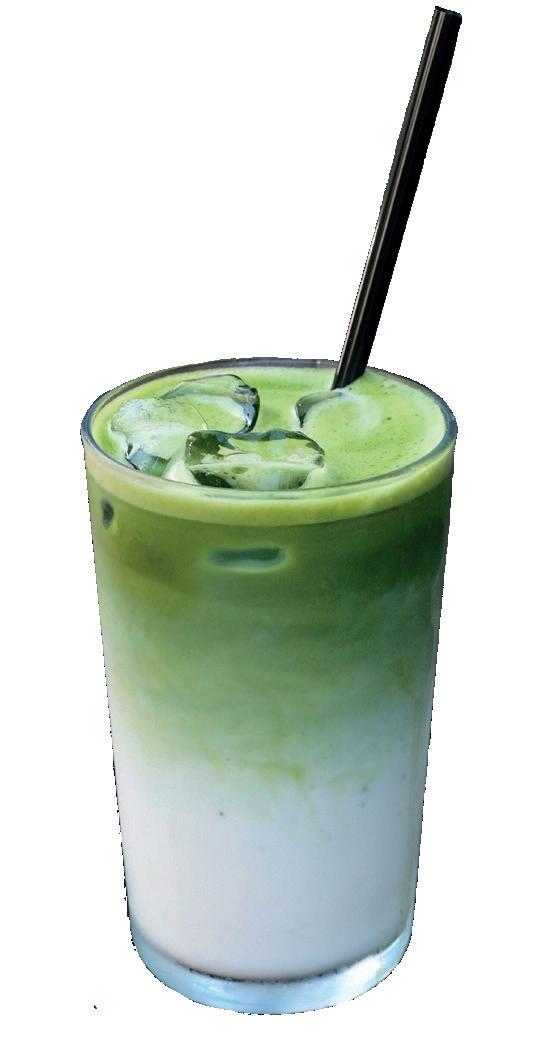
product, so you could get anything! They guarantee a hot meal that you can enjoy as-is for just £5. Ouseburn-based Gingerino’s is even better when on Too Good To Go - for £4.49, we got a quarter of a margarita pizza, a quarter of a misto carne pizza, and a vegano mini calzone. Delicious, fresh, and quick and easy to reheat when you get home.
"...some bags are worth the daily check."
Some bags are much more competitive than others; whether it’s the popularity of the spot that makes it so sought after or just a low number of bags available, some bags are worth the daily check. When we finally got a bag from Ernie, Ernest’s deli in Ouseburn, we were not disappointed: we got two filled croissants, two cakes, a sweet pastry, and a cheese pasty.
Dot’s Bagels in Heaton are also a firm favourite; whether you get filled bagels or a selection of their fresh, New York-style bagels, this bag is a treat. Finally, every student’s favourite: Olive & Bean. The sight of a bag is rare, and usually comes with a “sold out” label.
Still, for £4, it’s certainly worth checking each day in case one is available, and you can enjoy their bread, bakes, and cakes at an amazing price.

Pippa Harries
Our first foody focus of 2026 might be just what you're looking for to start the year on a health kick...
Irecently popped over to try Jesmond’s new collaboration cafe, Acaiety, a space which brings the iconic Pinterest acai bowl and vintage streetwear aesthetic together in one. Located on Acorn Road, a 5-minute walk from West Jesmond metro station, it is most definitely worth a visit.
Admittedly, I’m a bit of a snob when it comes to coffee, so I was happy to find out Acaiety have it down right. You can go as basic or as personal as you’d like, with syrups, cold foam and milk substitutes available at an extra charge. They also offer a range of matcha, including berry, mango, white chocolate and an interesting matcha/ coffee mix which all serve for picture perfect moment.
For the main event, the acai bowls. Easy to say, we were not disappointed. The menu
" You can go as basic or as personal as you’d like, with syrups, cold foam and milk substitutes available at an extra charge."
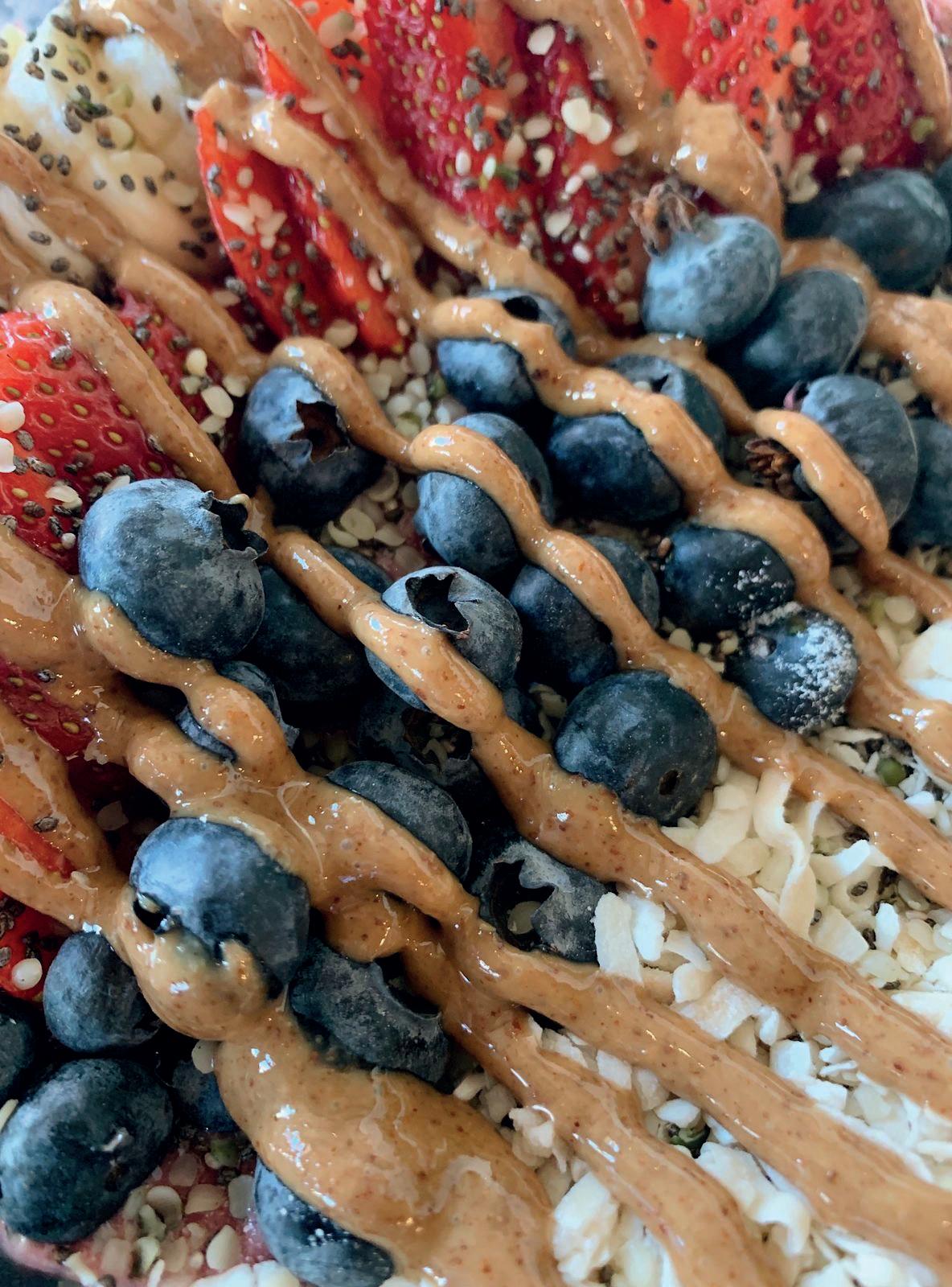
"From banana to peanut butter, goji berries to chia seeds, you are truly spoilt for choice."
(I added peanut butter), was DELICIOUS, healthy and balanced whilst still feeling like a sweet treat. But if you’re more of a chocolate fanatic, the ‘sweet one’ which bring in Nutella, peanut butter and cocoa nibs, is the one for you. Acaiety also offer a Greek yogurt bowl, porridge and a range of smoothie options. Regardless of if you’re popping in for a quick and easy breakfast, or a late afternoon snack, there is an option for everyone. My one and only criticism is that if you’re looking for a cheaper, regular, cool coffee and foodie spot, this one might not be for you. For the acai bowls, you’re looking at paying at least £10 before add-ons then an extra £4 for a coffee with a syrup. Yet for a treat every now and then, I would argue the price is worth it! Portions are big, the bowls are filling and the coffee is good… what more do
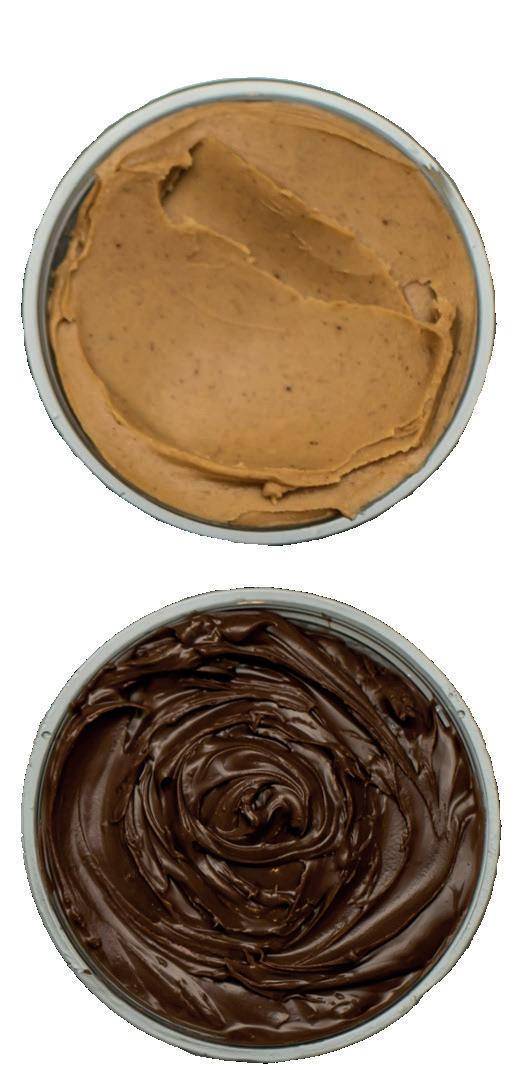
offers up 3 base bowls: the classic, the sweet one and the health. However, you’re also able to build a bowl to your own liking, with 20 different toppings to choose from. From banana to peanut butter, goji berries to chia seeds, you are truly spoilt for choice. The classic, consisting of the acai base, bananas, blueberries, strawberries and granola
"Portions are big, the bowls are filling and the coffee is good…
you need?
The overall vibe of the place is just cool, making it a great spot to chat with friends or take yourself on a solo date. I can definitely see Acaiety becoming a student hotspot for summer 2026.
One of our writers discusses the activities to do in Westbury...
Situated in the South West of England, surrounded by seemingly endless hills, lies my hometown, Westbury.
This town, despite its size, has an accessible and integrated railway network providing residents with a myriad of destinations. Since opening on September 5th, 1848, Westbury Station expanded its connectivity and today provides direct trains to London Paddington in approximately ninety minutes, Bath Spa in half an hour, and Bristol Temple Meads in around forty-five minutes. The town and immediate villages are served by seven primary
schools and one secondary school. Here, a fortified community spirit is established alongside social

“...there is live music, previously involving a Mariachi band, a chilli eating contest, and various children's amusements...”
One of the many community functions you can experience in Westbury is the Wiltshire Chilli Festival. For the past five years, our town has hosted this vibrant celebration for all to enjoy. Engaging all demographics, there is live music, previously involving a Mariachi band, a chilli eating contest (don’t touch the milk or you’re eliminated!), and various children’s amusements.
Travelling from near and far, venders set up their stalls flooding the high street by sharing their passions, illuminating the town, and possibly burning some tongues in the process!
Held at the very top of the White Horse, escarping Salisbury Plains, you are sure
to have a delightful day at the White Horse Soapbox Derby. All members of the community are involved and can participate in this free event. There is a shuttle-bus service available throughout the day for those who wish to avoid the 180-foot (approximately) trek!
“...the event has thrived and grown exponentially...”
Hosting live bands, food courts, and local businesses, and of course the radiant 400m racetrack with the top speed being 50km/h,
Eleanor Urry
Reading on holiday is a classic tanning activity, but it can be so much more...
When I think of summer, I think of many things. Lazing around as the sunshine beats down, salty sea air whipping your hair around, and the dusky sounds of cicadas singing. But the one image that comes to the forefront of my mind is reading. To me, my summer passes by like the pages of a book, with no holiday complete without reading on a sun lounger.
Image sourcea: (chilli) SpicyAnonymous, Wikimedia Commons, https://creativecommons.org/publicdomain/ zero/1.0/, (sillhouette) DanzelOfficial, Pixabay, (hills) Des Blenkinsopp, Wikimedia Commons, https://creativecommons.org/licenses/by-sa/2.0/
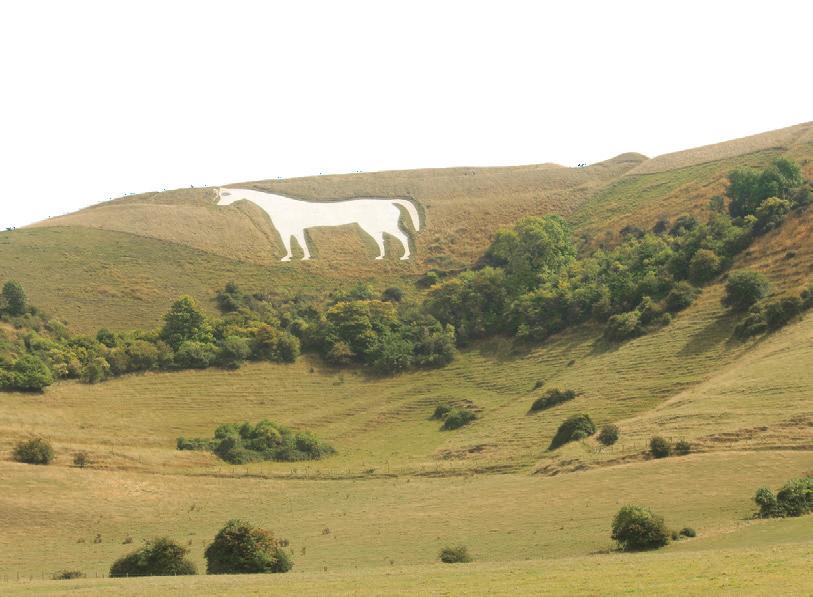
When travelling abroad, I’m sure many of you will have seen a tourist that does something that just feels disrespectful. Whether it be simply learning a few phrases, or not leaving any rubbish behind, the smallest gestures can be helpful to the locals and solidify your identity as a respectful tourist. But what specific acts should you be carrying out? Learn local phrases
Sometimes, saying ‘por favor’ in a strong English accent is just not going to cut it. In no way am I saying that you should become nearly fluent,
is a bit off, or you end up eventually switching to English. It is the thought that counts, and phrases such as ‘thank you’, ‘hello’, ‘how much’, and ‘please’ can get you further than you think. Lonely Planet sells mini language guides for no more than £5, containing everything that you need to get by. They are small enough to fit in your bag, so can be carried around as you begin your exploring!
Immerse yourself in local culture
What is the saying… When in Rome, do as the Romans do?
Joining in with local customs is one of the best ways to experience foreign culture, accompanied by the people who understand it best – locals! For example, if you are visiting Japan, consider booking a cultural experience like a Japanese tea ceremony. This involves the ceremonial preparation and presentation of matcha green tea, promoting well-being and harmony.
Led by an experienced and knowledgeable host, this is a perfect way to learn more about where you are visiting.
Often when I reflect on a holiday, I reflect via the book I chose to read on that holiday, taking a physical and mental journey with the story. One of the best souvenirs, in my opinion, is a book from where you have visited. It doesn’t have to be a local book or author, but simply something to remind you of that time in your life.
“I like to pick a book correlating to the season I am travelling in. I feel I can relate to the characters more..."
order, avoid raw seafood and peeled fruit, and drink only bottled or filtered water. Stick to these tips and your body will
Do you think you are ready to be a respectful tourist? Where will your first

“...broaden your food palette and try foods you would never otherwise have access to!"
Eat locally
Sometimes you do just crave a McDonald's burger on holiday, and that’s totally fine. But travelling is an opportunity to broaden your food palette and try foods you would never otherwise have access to! Venture out to local markets and family-owned restaurants for better quality food and, most of all, cheaper prices! It is important to be wary of food poisoning in small markets, so as some (loose) rules, only eat from busy vendors who cook hot food to

When I am picking a book for a holiday or journey, I like to pick a book correlating to the season I am travelling in. I feel I can relate to the characters more and understand what they are feeling, if I am experiencing a similar climate to them. For example, when I visited Brussels last winter, I took Murder on the Orient Express, by the great Agatha Christie. The infamous detective Hercule Poirot investigates the death of a stabbed-to-death American tycoon in his locked department, before the train is stranded in a snowdrift. The cozy, wintery aesthetic of the Yugoslavian countryside is the perfect mystery for a chilling winter’s night, which I read in Grand-Place de Bruxelles – the main town square.
For a sunshine-filled holiday, I like to do the same thing; read a book set in the sun! I truly believe the closest I’ve ever felt to capturing the aesthetics of a book was when reading Call Me By Your Name by Andre Aciman, in Italy. Set in Northern Italy, the languid and sprawling days are spent under the sun, on bicycle rides, and swimming in the river. The slow burn of an Italian summer creates a bittersweet sense of nostalgia when reading this book; you almost know that in the future you will look back on this time with longing and desire. I still remember the summer breeze twirling through
by-sa/4.0/ (Colloseum). Image may have been altered.



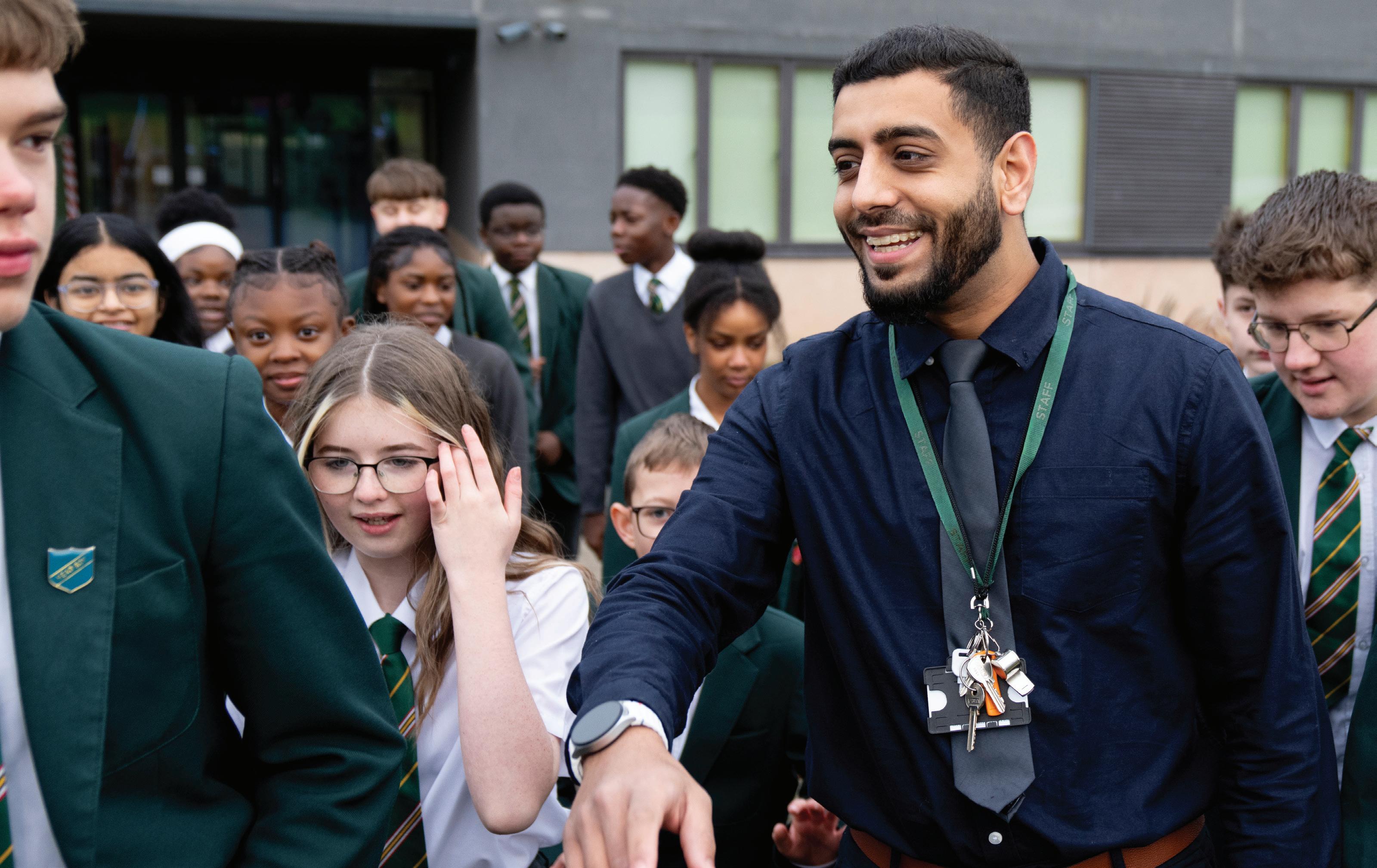



The Geordie dialect and accent is one of, if not, the most iconic ways of speaking in the entirety of the United Kingdom. We hear it on our favourite musicians, such as Sam Fender and JADE, as well as the nation's favourite television presenters, Ant and Dec.
dialect still contains over 80% Germanic and Scandinavian roots and is simultaneously heavily influenced by its Viking and industrial coal-mining heritage.
Compared to the Standard English dialect, the Geordie accent is incredibly different, especially in terms of pronunciations, but also in some of the constructions and words that are used.
The Geordie dialect can be found spoken around the Tyneside area in the NorthEast of England. It shares aspects of the Northumberland and Durham dialects, as well as a similar dialect being spoken in Sunderland. But, for your own good, do not tell the Mackems they sound like Geordies and vice versa.
Interestingly, the Geordie dialect is also the oldest and longest-lasting English regional dialect. The North-East of England is the only region in the country where the original AngloSaxon language has survived from thousands of years ago. Long live the Geordies!
On the contrary, other regional dialects have lost this kind of heritage across centuries, due to the gradual introduction of influences from Latin and French.
The dialect traces all the way back to the Old English spoken by the Anglo-Saxons settlers, who were originally commanded by the ancient Brythons who battled Pictish invaderes after the end of the Roman rule in Britain in the 5th Century.
This may come as a surprise to the Geordies who communicate with one another fluently, but the Geordie dialect is actually renowned as the most difficult dialect to understand in the whole of Britain.
This is possibly due to a range of different factors, with the most notable one being that it's technically full on grammatical errors. For example, frequently replacing the word "me" with "us".
But where does the term "Geordie" actually come from?
Throughout the 20th and 21st Centuries, the North East dialect has been watered down, possibly through the influence of mass-media. But, the Georide dialect is still identifiable through musicial tones, unique pronunciations and distinctive words that orginated in the old leagues of Germanic and Scandinavian Europe.
As well as this, to this day, the Geordie

Unfortunately, I can not quite answer this myself.
However, it is rumoured that the term "Geordie" stems from the region's support of King George I in the 18th Century, though this was never confirmed.



THU 19 FEB, NUSU VENUE, 18:00

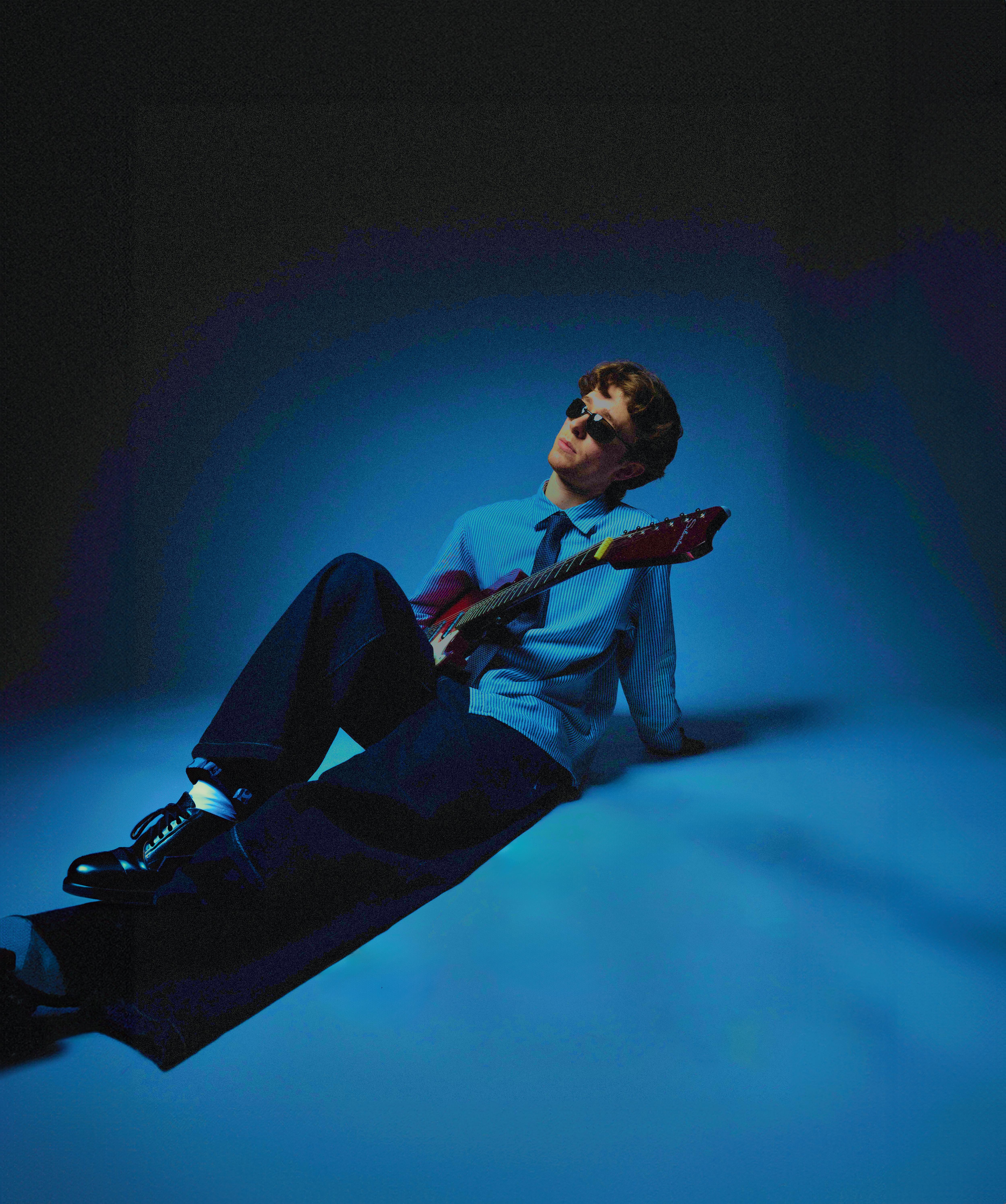




Maddie Brook
One of our writers explores what's to come from the upcoming HELP(2) album, in aid of a global conflict crisis...
Set to be released on the 6 March, HELP(2) is inspired by the incredibly successful landmark 1995 HELP album, which raised over 1.25 million for War Child.
conflict crisis. Composed by a diverse, talented, and inspirational group of musicians, HELP (2) seeks to spread hope and raise funds to support the protection of children in war-stricken areas of the world. With such a phenomenal line-up, this record is predicted to be a powerful masterpiece.
“This record symbolises a coming together of artists in the hope of making an impactful difference...”
something “by children, for children”. Down to the documentation of the recording process, children were heavily involved, equipped with cameras to have their own creative input on the project. In fact, ‘Begging For Change’ by Pulp utilises the screams of the child camera crew in the recording of the song.
Noelia Fernández-Pérez - Head of Sport
When One Direction cast aside their farewell and they turned toward solo careers, everyone turned their gaze from the stage to the screen as to what would happen next. Five members, one of the biggest boy bands in history, and five very different solo paths.
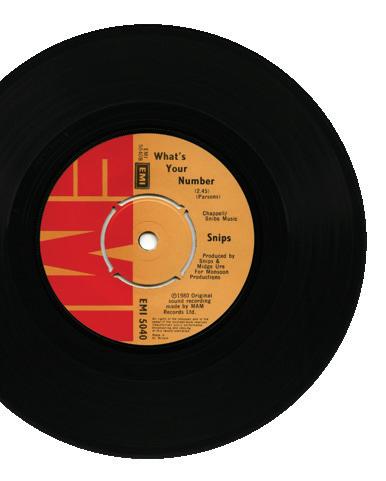
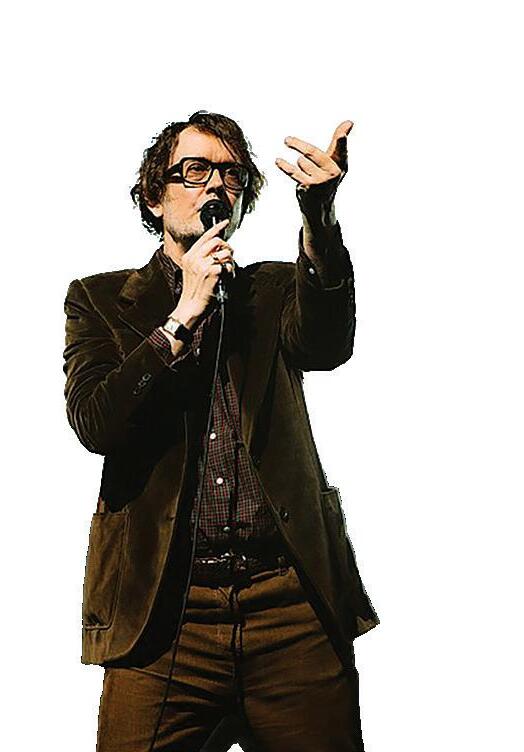
The previous album encompassed the music of a variety of pre-eminent musicians, such as rival bands Oasis and Blur, who laid their chart battle aside to fight for the rights of children living through conflict. In 2026, the impact of conflict on children worldwide is both colossal and devastating. Wars and violence across Ukraine, Sudan, and Gaza are testimony to the reality that we are in a global
Curated in November 2025, HELP(2) is a collaborative album created by a variety of legendary musicians. From Fontaines D.C. to beabadoobee, this album is founded on the collective endeavour of artists to raise money for War Child through creative collaboration: an organisation committed to protecting, educating, and standing up for the rights of children living through conflict. Through the power and beauty of creativity, harmony, lyrics, and melody, this record symbolises a coming together of artists in the hope of making an impactful difference. It is starkly clear that with escalating hostilities worldwide, this kind of action is more vital than ever.
The already released single ‘Opening Night’ by Arctic Monkeys underlines pressing political topics through lyrics referring to supercomputers and brainwashing. Moreover, Bafta-winning director Jonathan Glazer’s vision was to create
Rich Clarke, Head of Music at War Child UK, hopes that this record helps turn “compassion into action”, spreading awareness of the urgent need for aid in these areas impacted by conflict. The double vinyl is set to cost around £26 and is a way for people to make a small positive change, as well as to inspire hope in people who feel helpless. Music is so much more than just beats and lyrics; it’s an incredibly powerful tool that enables artists and people to take a stance and to use creativity to imagine a different world. This album is a testament to the power of music and its ability to embody both community and collective action, bringing people together. Through music, hope lives on.
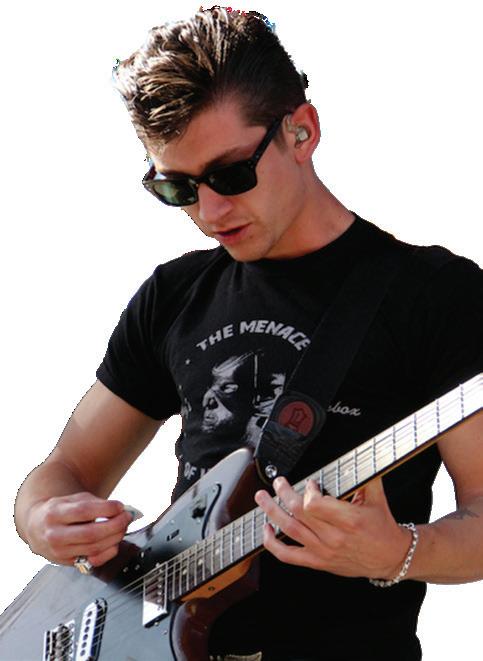
How Harry Styles' new track signals dance music's revival...
On the 22nd January, Harry Styles released his newest track 'Aperture', anticipating his upcoming album Kiss All The Time. Disco, Occasionally However as synths, electronic beats and a subtle autotune weave into Harry's voice, the popsensation has veered from the standard, poprock sound he's recognized for. As Kettama suddenly rises to fame, Fred Again headlines Reading and Leeds, and Charli XCX's BRAT remains in the contemporary, popular culture conscience, Harry's shift from pop-rock to gentle synths, appropriately arises alongside this intense revival of dance-music's, signaling the prominence of the latter.
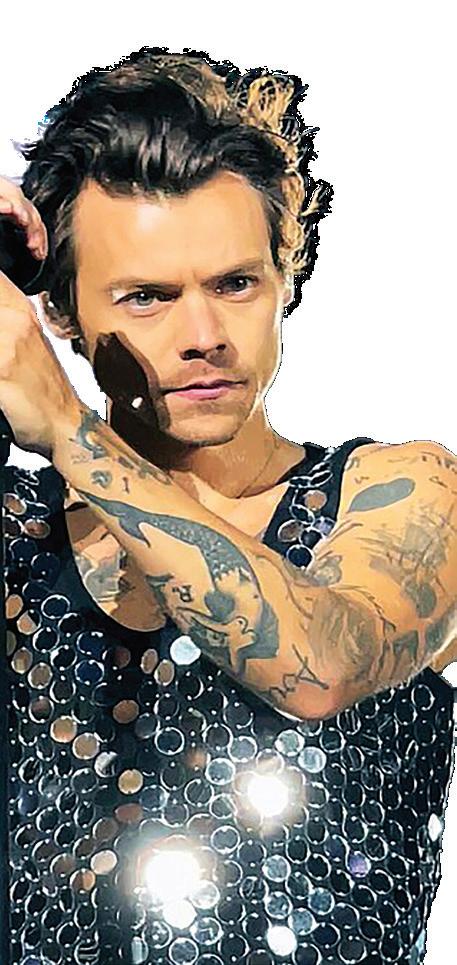
Harry Styles has generally maintained a recognisable sound throughout his career. Once humble baker in Cheshire, he made a break into the music industry by participating in the 2010 series of X-factor. He was put into One Direction, who truly need no introduction, achieving global success, beating records originally held by the likes of The Beatles. They captured the hearts of millions across the globe with their romantic lyrics and classic boyband sound, blending rock and pop into recognizable tracks like 'What Makes You Beautiful', and
'Live While We Are Young'. Like the majority of pop music, they were easy on the ear, catchy and bound to get stuck in your head. After their official split in 2016, Harry remained within the poprock genre, with classic drums and guitar strings permeating his self-titled debut album Harry Styles (2017), and subsequent albums Fine Line (2019) and Harry's House (2022).
Thus when 'Aperture' and its synthetic makeup were heard by fans and general listeners alike, they were surprised by Harry's deviation from his usual sound. One established fan recalled how "on the first listen [she] needed to dance to enjoy it", commenting on an initial struggle to engage with this new, electronic sound. These feelings of unsurity present the extent to which Harry has deviated from the sound which attracts his established fandom.
This divergence appropriately aligns with the recent rise of underground, electronic dance music within the popular cultural conscience of our time. Prior to release, listening parties in select cities initiated whispers on the internet that the track sounded like Charli XCX, immediately attaching this new sound to the incredible success of BRAT The latter album truly brought electronic dance music to the fore of popular culture in 2024: the hotter months were claimed 'BRAT Summer', the 'Apple' dance took over tik-tok, and fans were smoking cigarettes in an effort to replicate the hedonistic, party-girl lifestyle Charli glamorously portrayed. The momentum of her album has undoubtedly stirred an electronic fever which since its release, has spread far and wide through every branch of the music industry. Irish DJ Kettama has recently experienced a ferocious rise to fame, frequently selling out shows across the country, whilst Fred Again has headlined Reading and Leeds, the prominent UK festivals that mark the most popular music of the moment.
'Aperture' undoubtedly compliments this musical movement with oscillating, electronic textures that build and pulse throughout the track. However, by appealing to current musical trends, Harry risks echoing the money-driven values infecting the mainstream music-industry, as the track ensure sales and thus jumps on a moneygrabbing bandwagon. The timing of his electronic turn creates a subtle, yet poignant reminder of the
music-industry's greedy underbelly, and loss of authenticity.
Harry Styles however is by far, one of the most prominent, firmly-established names in the legacy of 21st century music. Already holding an excessive level of celebrity, he is in no desperate position for a money-grab. Thus, this bold, electronic he has taken is most likely an authentic desire for a fresh turn in his career. Because although he has stayed relatively within a pop-rock realm, there is also an undeniable maturity marks the music emerging from Harry's solo-career. His albums are deeper, more thought-provoking than what One Direction released. They're also more dynamic, his melodies from track-to-track differentiating from the typical, safe monotony that permeates most pop albums. His personal sincerity and dynamism has shown listeners that Harry is unafraid of musical change and experimentation.
On another level, Harry's use of electronic instruments is not completely new. Although 'Aperture' was unexpected, autotune and electronic keys make frequent appearances throughout his solo-music, particularly in The unmistakeable melody of the 'As It Was' chorus is purely synthetic, making the track plainly electronic at it's core. Thus the deviation he has taken from his norm cannot be wholly attributed to an exploitation of dancemusic's new-found popularity. He's proven himself to be an authentic artist, taking time between albums, producing high-quality music with every release. Instead of a lazy exploitation of the current musical trend, 'Aperture' signals and celebrates the recognition dance music is getting, whilst paying homage to Styles' consistent musical fluidity that marks him the incredible artist he is.
Now, a comparison of Harry Styles versus the rest of One Direction remains at the center of pop culture debates. Even as all four members have managed to forge individual careers, Harry’s ascent has been so meteoric that it has altered the way the band’s legacy is remembered. Harry Styles arrived from One Direction ready to establish himself as the breakout star. Even at the height of the band’s fame, he was the most exposed member, one of the most fashionable members, framed by the media as the “rockstar” prototype. In 2017, he signed on as an indie solo singer. His work was purposely free of pop and took on soft rock and conventional British styles.
From there he grew into something larger than his former boy band life. And albums like Fine Line and Harry’s House proved he’s not just a good musician, but a global pop-cultural persona. Grammy wins, stadium tours, film roles and fashion identity would make Harry less a former–boyband member and more a solitary icon.
In contrast, the other four musicians took fewer, more fragmented paths. Zayn Malik, who left the band in 2015, started out as Harry’s leading rival. His 2016 debut album Mind of Mine was a commercial success, widely acclaimed for its R&B influences and a contrast to One Direction's sound. But Zayn’s career has been defined by lengthy breaks, not much touring and a messy relationship with fame. Niall Horan followed the more traditional singer-songwriter path. His music, mostly made up of acoustic and folk songs, guaranteed him chart success and a dedicated fan base. Niall’s strength has less to do with spectacle than solidifying things. Without being the focus of headlines, he has built a career rooted in musicianship and relatability.

Louis Tomlinson and Liam Payne have experienced arguably both the most difficult transitions. Louis leaned into indie and alternative pop and instead leaned into authenticity, leaning into real stories which held up against current music trends. Liam, meanwhile, had written for a commercial pop and club-ready record but his work has failed to establish a clear artistic identity, often obscured by struggles of a personal basis and inconsistent critical reception. What truly separates Harry from the rest isn’t success, is the cultural domination. Harry Styles has done more than to fill the music landscape: He rose to the status of a living emblem of contemporary celebrity: fluid fashion, subtly ambiguous sexuality, a brand that makes him stand out. The rest of One Direction did not fail, but they are nowhere near where their ex-bandmate is. Each member achieved success in their own way, but Harry Styles became a phenomenon. In the unofficial contest that followed One Direction’s breakup, Harry not only was ahead but he changed the finish line altogether.
Sasha Cowie - Sport Sub-Editor
Tom A. Smith’s Sunderland show marked a confident new chapter...
There’s something special about a hometown gig, and for Tom A Smith, his return to Sunderland at The Independent felt genuinely meaningful. This isn't just another stop on an upcoming tour, it was a night that showed how far he’s come, both musically and as a performer, and how comfortable he now looks stepping into a new era of his sound.
enjoying every inch of the space he’s worked so hard to earn.
The audience played a huge role in shaping the night. Sunderland showed up for one of their own, singing along loudly to Tom’s older, well-loved tracks while also giving his new and unreleased songs the same level of enthusiasm. There was no dip in energy when the unfamiliar material appeared instead, the crowd leaned in, listened, and responded with genuine excitement. It was clear that there is a large fanbase for Tom back in his hometown.
new material because the audience is on his side, and because they deserve to hear it first. That comfort doesn’t mean there’s no pressure, though. Home shows often come with bigger crowds and higher expectations, but once the music starts, that pressure quickly turns into excitement. At The Independent, the buzz in the room was instant, and Tom clearly fed off it.
From the moment Tom walked on stage, the room was his. He looked completely at ease, moving effortlessly across the stage with a confidence that has clearly grown over time.
His dance moves were a highlight of the night, adding energy and personality to the performance and proving just how much he’s stepped out of his comfort zone. It felt natural rather than forced, like an artist finally

Talking about his newer music, Tom explained that while he still loves his earlier work, it never quite felt cohesive. His upcoming EP, however, feels more authentic and more representative of what he does best. That came across clearly live. The new songs brought a different kind of intensity to the set, more expansive, more energetic, and more confident, and they transformed the overall feel of the show
Playing new music in front of a home crowd is especially important to Tom. Sunderland, he said, feels like the safest place to trial
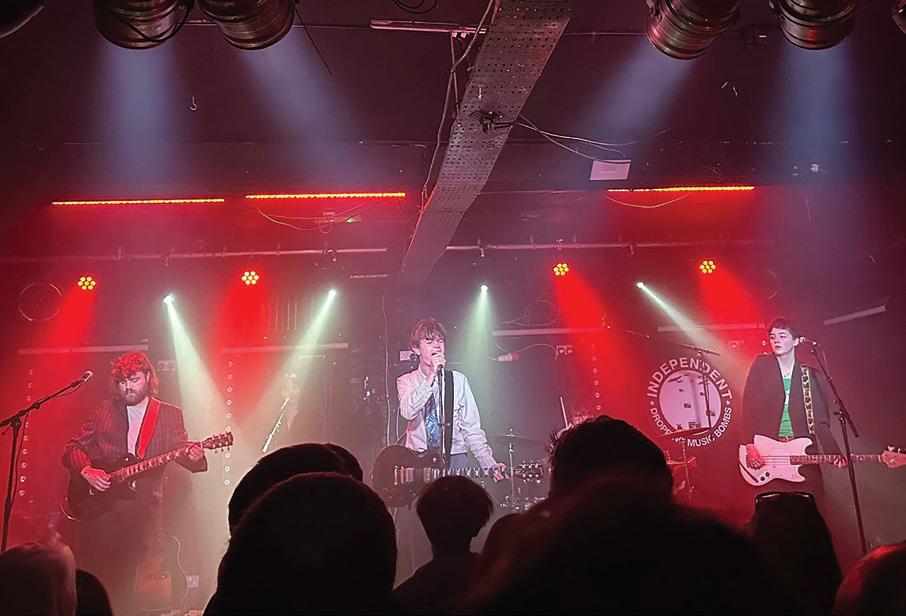
Erin Palmer
A new era for British music?
The nominations for the 2026 BRIT Awards have been unveiled, bringing fresh energy, groundbreaking talent, and a historic shift in representation to the UK’s biggest night in music. This year’s ceremony, set for 28 February 2026 at Co-op Live in Manchester, will mark the first time the BRITs are held outside London, a symbolic move that mirrors the evolving landscape of British music culture.

Sammy Virji.
Some of the most talked-about moments usually come from Song of the Year, with nominees including Lola Young’s “Messy”, Olivia Dean’s “Man I Need”, and collaborations from artists like Sam Fender. Creative contributions behind the scenes are also recognised, with Producer of the Year and Songwriter of the Year honouring the people shaping the sound of modern pop.
International categories bring global heavyweights into the mix.
The biggest race of the night, Artist of the Year, sees Olivia Dean, Lola Young, Sam Fender, Dave, and Lily Allen go head-to-head. In Album of the Year, projects like Dean’s The Art of Loving and Fender’s People Watching sit alongside releases from Wolf Alice and Dave, highlighting both mainstream and alternative success.
“The 2026 nominations feel less about one dominant sound and more about celebrating everything happening at once...”
Bands aren’t being sidelined either. Group of the Year includes Wolf Alice, Wet Leg, Wolf Alice, The Last Dinner Party, and Pulp, while genre awards break things down further. Best Pop Act features Olivia Dean, Lola Young, Lily Allen, JADE and RAYE, while Alternative/Rock Act highlights Blood Orange, Lola Young, Sam Fender, Wet Leg and Wolf Alice.
The UK’s rap and R&B scenes remain central to the BRITs. Hip Hop/Grime/Rap Act nominees include Dave, Central Cee, Jim Legxacy, Little Simz, and Loyle Carner. While R&B Act spotlights artists such as Mabel, Sasha Keable, and Sault. Over in Dance Act, electronic music is refreshingly represented by nominees such as Fred Again and
The North East’s influence on his career is impossible to ignore. Tom has been performing locally since he was eight years old, playing pubs and small venues that helped shape his stagecraft. He spoke fondly about the region’s grassroots music scene and the relationships he’s built along the way, particularly with artists like Frankie & The Heartstrings, The Lake Poets, and Barry Hyde of The Futureheads, who has been a major influence on both his musical taste and live performance style.
Despite still being just 21 and turning 22 soon, Tom is already touring, releasing new material and evolving his sound. He’s aware of how young he is, but also how long this journey has been. Signing his first record deal last
year marked a turning point, giving him a new sense of confidence and helping him shape a clearer identity both on stage and in the studio. Still, he’s quick to stress that this feels like the beginning, not the destination That growing confidence is also reflected in the band. Their chemistry on stage is obvious, built over more than five years of playing together and navigating every “first” side by side. While Tom remains the primary songwriter, the band’s live energy has helped him see his own songs in new ways, giving each performance a sense of freshness. Tom described the Sunderland gig as the start of something new, his first headline show dedicated to the new material and a strong way to open the year ahead. If this performance is anything to go by, Tom A Smith isn’t just evolving, he’s fully stepping into who he’s meant to be, and his hometown is right there with him.
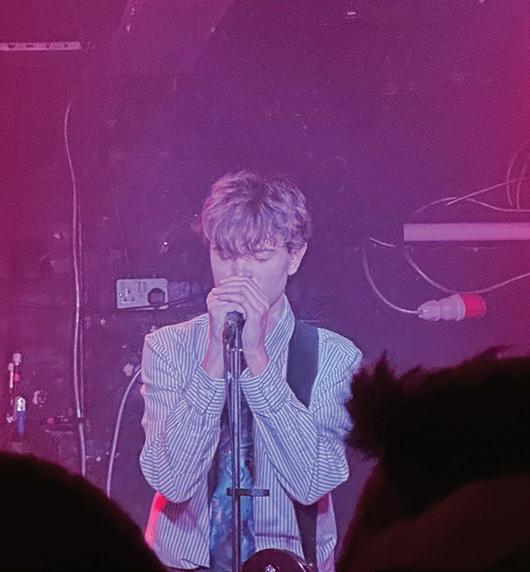
International Artist of the Year includes Taylor Swift, Sabrina Carpenter, Lady Gaga, and Bad Bunny, while International Group of the Year and International Song of the Year reflect the UK’s increasingly global listening habits.

Rounding things off, the Rising Star Award (previously the Critic’s Choice Award) has already gone to Jacob Alon, continuing the BRITs’ tradition of predicting the next breakout name.
All in all, the 2026 nominations feel less about one dominant sound and more about celebrating everything happening at once, which might be exactly what British music needs right now.
Ruby Tinkler - Food & Drink Sub-Editor
The Grammys blended pop spectacle with political statements...
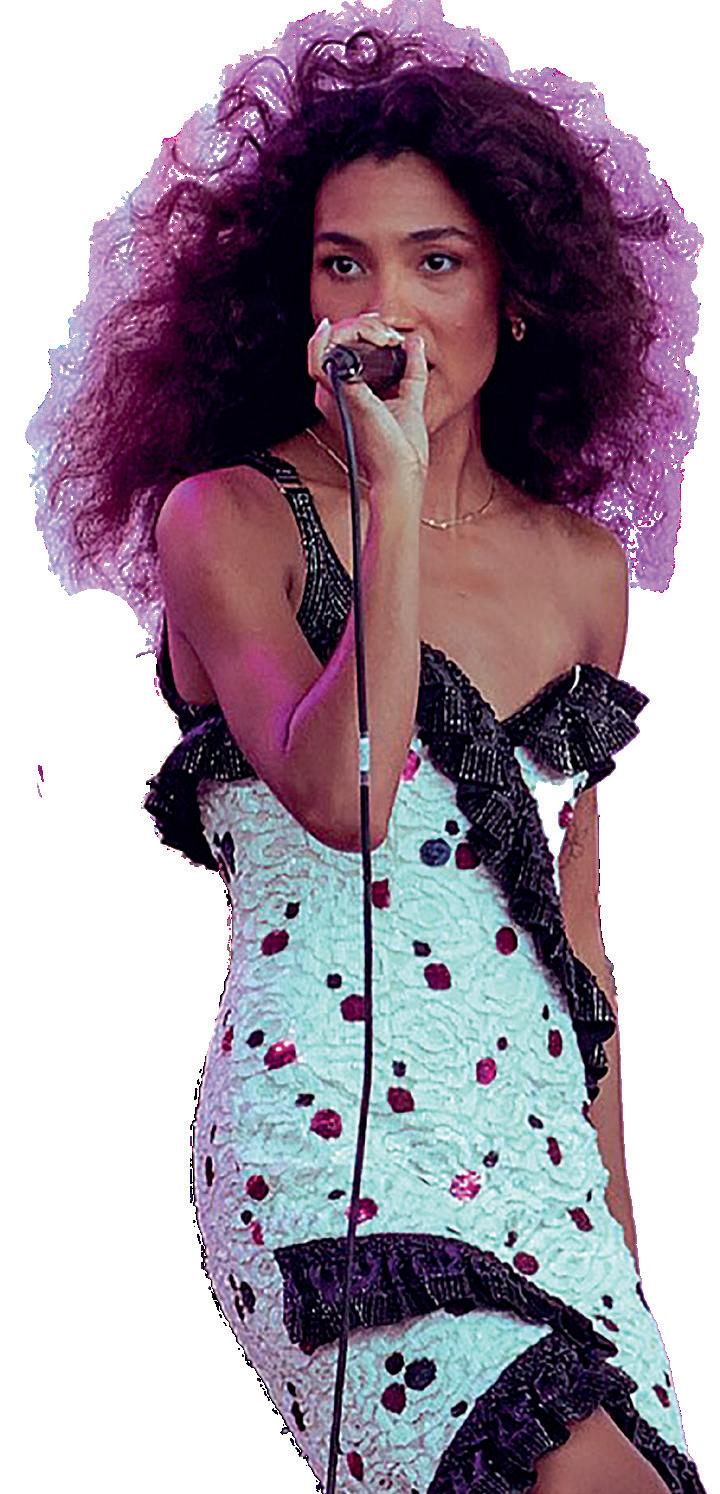
By the time I woke up on Monday morning, my Instagram was bursting with news from Sunday’s 68th Grammy Awards. Characteristically controversial fashion from Chappell Roan, a surprise Harry Styles appearance, and Justin Bieber performing in his underwear made my daily bus journey scroll far more interesting than usual.
Though the trivial online chatter of frustrated superfans and fashion sleuths was dwarfed by what became a collective statement by the music industry.
With ‘ICE out’ badges on collars and declarations of ‘f**k ICE’ in acceptance speeches, the message was clear.
“Often musicians are told to ‘stay in their lane'...”

historic Album of the Year win for Debí Tirar Más Fotos (the first Spanish-language album to do so) embodied this sense of unity. This well-deserved recognition is timely and represents a celebration of Latino identity at a time of extreme hate and oppression. He took the opportunity to voice his love for the Puerto Rican community and encourage strength in the face of adversity: ‘the only thing that is more powerful than hate is love’.
Olivia Dean, too, expressed gratitude and pride for her background: ‘I’m up here as a granddaughter of an immigrant…I’m a product of bravery and I think those people deserve to be celebrated’. Her Hollywood glamour inspired performance of ‘Man I Need’ stood out from other Best New Artist nominees including Katseye and Addison Rae, and was the perfect culmination of a momentous year, making her a worthy winner of the prestigious award.

Political statements at awards shows are anything but rare, and often musicians are told to ‘stay in their lane,’ but in such turbulent times, we should raise our expectations of those we choose to platform. Such a collective display of solidarity was impressive; Billie Eilish put it best in her acceptance speech for Song of the Year: ‘our voices really do matter’. Bad Bunny’s
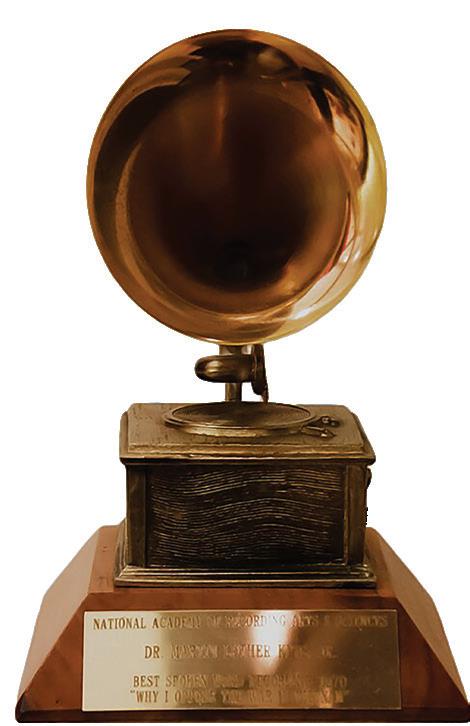
Sunday’s ceremony differed from last year’s in more ways than one. Wins for Lola Young, YUNGBLUD and FKA Twigs contributed to an exciting improvement in British success across the awards. Yet Sabrina Carpenter, whose high-budget, airline-themed performance of ‘Manchild’ that left fans speculating a potential tour (brace yourselves for an inevitable dent in the budget) was the night’s highlight. She missed out on all six of her nominations - safe to say it was a night of change and surprise! Though the Grammys are over for another year, there is hope that the momentum they gathered can continue, not least in Bad Bunny’s upcoming Super Bowl half-time performance.
Phoebe Hart
We will never be able to outrun grief; it will find us at every corner of life. But there is comfort in knowing that the one lost was loved, that you had the ability to love because you feel this grief so deeply. This justification of grief in the media is so important to the human psyche.
The art of cinema is important in providing moments that we can lose ourselves to our emotions. There are pieces of art that we can immerse ourselves in and emotions to take over, feeling every ounce of grief that our daily lives just do not allow. This is how we begin to heal, by letting ourselves feel every emotion and understanding it. Film is such an important way of trying to visualise such feelings that are incapable of being able to be fully described. They are ways of healing and growing parts of ourselves that we are unable to fully touch.
Reading and consuming literature is vital to human development and emotional growth, but the power of consuming media visually is
equally as important. Films are not a substitute for books but are a method of allowing audiences to connect on a deeper level because you are confronted by the human qualities of the actors. This is why the portrayal of grief in film is so incredibly important, because without it, there would be no cathartic release like it.
In Ancient Greece when audiences sat down in the amphitheatre and mourned alongside the characters on the stage; in Elizabethan England when audiences cried out for the tragic hero; in modern day where audiences are still finding connections to the characters on screen. It is this humanity that we ingest as we consume the
After a recent trip to see the Golden Globe Hamnet, based on the book by Maggie O’Farrell, the relevance of portraying grief in film was again brought to my attention. After I left the cinema, surrounded by crying members of the public, I remembered my own grief and how the film had a way of touching the parts of the soul that I had barely begun to acknowledge. This is mirrored on social media, with many people providing videos of their film, sharing the ways as well. Humanity has
Isobel Whitley - Lifestyle Sub-Editor
Following on from 28 Years Later, Nia DaCosta has shown a new angle to the franchise, an emotionally rich story of survival and death.
While the previous film delineated the importance of family, growing up, and connections with others in times of suffering, the sequel attacks the individual nature of evil, and where it really blooms from in person to person.
The film fluctuates between Dr Kelson and Samson's storyline of wonder, friendship, and discovery through trust, and young Spike's journey of terror, torture, and trepidation as he must become a part of ‘The Jimmy's’ in his desperate attempts to survive.
Ralph Fiennes and Chi Lewis-Parry provide breathtaking performances, creating a tender story of mutual understanding, despite the drastic differences of their living circumstances. Their storyline is accompanied by the records that Dr Kelson has kept all these years since the apocalypse. These songs act as a background to the blossoming friendship between Dr Kelson and Samson as the audience begins to understand that Samson's humanity was never truly lost.
They also provide some of the best needledrops that film has seen in a long time. Their story is a gentle reminder that amongst the fear of their post-apocalyptic society, humanity prevails, and is a perfect illustration of why we leave our houses and pay to sit in the cinema for two hours.
Contrasting their storyline is ‘The Jimmys’, an
been using entertainment as methods of catharsis since the Ancient Greeks and beyond; cinema is no different and Hamnet acts as the perfect way of allowing audiences to reach into parts of themselves and process all the emotions that come with being human.
"...it gathers the raw emotion that comes with losing a child, a sibling..."
Chloé Zhao directed a vivid, engaging masterpiece that uses natural imagery to ground these feelings in the incessant understanding that to have these emotions is natural and human. The cyclical feeling that comes with the natural world is built upon to create the understanding that life on Earth is cyclical, we return to where we came from, the earth itself. This is further indicated by the birth scene in the woods and Agnes’ desire to give birth to the twins in the woods. There is a profound understanding here that human life is forged in the nature around us.
Modern adaptations of texts not written in this century are so incredibly important now that generations are beginning to lose the ability to willfully engage with such texts. Hamnet is such an adaptation, looking at potential inspiration for Hamlet and engaging with it in such a powerful way that brings grief to the forefront of our minds. Hamlet was allegedly created by Shakespeare out of grief for his son, Hamnet, who died at just eleven

years old. It could have been created in order to immortalise his son in the memory of others even if they did not know it. By transforming the story and backstory, O’Farrell and Zhao both further immortalise Shakespeare’s son, allowing a whole new generation to remember not just Hamnet but the power of grief in creating art.
Such adaptations are also vital in allowing the modern audiences to engage themselves with the source material. I left the cinema with the deep-rooted need to reread Hamlet and fall in love with it over again. I like to hope that many people previously unfamiliar with the original text felt a strong urge to go and pick up Shakespeare, or find a recorded performance online, and get lost in the world that Shakespeare creates.
Hamnet is such an important film in it's portrayal of grief because it gathers the raw emotion that comes with losing a child, a sibling, someone you care about, and examines it in such a heartbreaking way. It tells you that you are not alone in this grief, and as everyone reaches towards Hamlet at the end of the film, it shows unity amongst humanity even in the face of death. Zhao just does a wonderful job at showing the power of grief and how it is simply just “love persevering”. Throughout history, then, this portrayal of grief in the storytelling humanity has consumed is vital in reflecting our own emotions and our own pain. It is a way of legitimising our feelings and providing a therapeutic expertise in which we are able to let our guard down and feel everything.
illustration of the naivety of mankind in times of peril, and how this can be manipulated to fabricate evil using the right words. Jack O’Connell gives a terrifying performance of Jimmy Crystal, who has convinced the young people born into the apocalypse who follow him, that there is a higher power that guides Jimmy Crystal to enforce terror on civilians. Although having a smaller role in the sequel, Alfie Williams remains spectacular in expanding the trilogy, with Spike’s innocence portraying his everlasting good heart, despite the evil he has been exposed to time and time again. The sheer horror of Jimmy Crystal and his gang make it an increasingly uncomfortable watch, and there were many times where my face was hidden into the shoulder of my friend who came to the cinema with me. However, it feels poignant that I did not have this reaction to the tense early scenes between Samson and Dr Kelson, or to scenes with infected chasing the non-infected. I was not scared of the mindless rage-driven infected killing without cause; I was scared of The Jimmys and what they would do next. The film attacks how, in times of corruption and terror of the unknown, the thing that is truly dangerous is humanity, and how it can derail in the name of survival. However, hope also permeates the film. The small moments between Jimmy Ink and Spike, portray how despite the manipulation, Jimmy Ink has never truly lost who she is to Jimmy Crystal; as she carves a ‘K’ onto the tree, it is clear that she still believes herself to be Kelly, and not Jimmy Ink. In conversation with the storyline of Dr Kelson, these characters pervade the film with an assurance that evil cannot win, no matter how far it can go. Brutal, bloodthirsty, and bewitching, The Bone Temple is a tour de force interrogating the complexities of humanity.
Kate Kennedy - TV Sub-Editor
North East filmmakers don’t shy away from the gritty and grim perception of the North and rather than fighting it, embrace the gritty reality of the area while highlighting the beauty of its people. This subversion of Newcastle’s film persona is why so many of these northern films have a lasting impact, they are unique, local and heartfelt. Newcastle film cannot be discussed without talking about Ken Loach, from (2016), to Sorry We Missed You most recent The Old Oak has a monopoly on North East Film. Loach’s final addition to his film trilogy, is particularly poignant in our current political climate as it follows the friendship between pub owner TJ and Syrian refugee Yara amongst political unrest in a former mining town after Syrian refugees are placed there. Emotional and heartfelt, Loach’s swansong is a powerful testament against the rise of conservative and Reform in the North East. He shines a light on the similarities of each group’s situation and shows that friendship succeeds over differences.
"...Loach's swansong is a powerful testament against the rise of Conservative and Reform in the North East."
The film also features the Durham Miner’s Gala in which the group flies a banner which was made by Aidan Doyle of Great North Banner Makers and was designed in collaboration with Syrian refugees. This scene is significant as it highlights the importance of banners to workingclass culture as they represent specific groups and messages.
Of course, Billy Elliot (2000) must also be mentioned as it is definitively the film that put
of-age drama set in the midst of the Miner’s strike in County Durham. The typical North East grit is present in the setting and the dichotomy of Billy’s ballet lessons and his father and brother’s picketing. The Miner’s strike defines the North East and is likely the origin of ‘Northern grit’ as the strike has had lasting impacts on the people
"...highlights the importance of banners to working-class culture..."
"'...Billy Elliot' (2000) must also be mentioned as it is ... put the North East on the map."
through despite its struggles.

When looking at popular movies of recent years, we are introduced to many friend group dynamics, often diverse.
Yet, it is still fairly uncommon to have female friendships at the centre of these groups in mainstream films.
Women on screen are often victims to harmful gender stereotypes, including tropes that revolve solely around romance and petty feuds with other female characters. It often seems as though women are either set against each other, or brought together by the topic of men.
When discussing the representation of female friendships on screen, it is almost impossible to not mention the Bechdel test. The Bechdel test considers on screen movies based on the fact they have to include at least two (named) women, and they must talk to each other about something besides a man.
According to bechdeltest. com, as of August 2025, 5594 movies and TV shows passed, which is 57% of all movies in the database.
Yet, female friendships are so much more than stereotypes, and when represented correctly, we are
able to see the true beauty and complexity in these relationships. A personal favourite of mine, is the relationship between Elphaba and Glinda in Wicked, and Wicked, For Good. Both films portray an androcentric, complex female friendship between the protagonists, Elphaba (Cynthia Erivo) and Glinda (Ariana Grande). Their relationship does not revolve around men, but instead many things: such as admiration, girlhood and their experiences in general.
Similarly, shows I grew up with, such as Alexa and Katie, portray the raw and honest experiences of girlhood; the protagonists, Alexa (Paris Berlec), and Katie (Isabel May), talk of their experiences and struggles, and stay loyal to one another through every obstacle they face.

Accurate representations of female friendship onscreen are undeniably important. Portraying these relationships in the correct way not only empowers women in general, creating a sense of solidarity and girlhood, but also has a real cultural impact. Female friendships are often overlooked and disregarded in mainstream media, but when they are acknowledged we take one step closer to dismantling harmful gender stereotypes. Hence why films such as Wicked are so important for all generations of women.

New year, old me?
January 2026 has been hit with a surprising tidal wave of nostalgia towards 2016. We have seen Instagram pages filled with throwback photo dumps whilst iconic moments and memes from ten years ago have been back in circulation in a callback to a bygone era of time. So, with this throwback trend in mind, it only feels right to give 2016 cinema the same nostalgic treatment and cast our eyes back to film releases from 10 years ago: the prevalent messages, the renowned moments and the lasting legacies. But how can a year in movies be defined? Some may say through looking at award show winners, in which case 2016 created some stellar entries, namely Damien Chazelle’s jazz-oriented musical La La Land, a love story centred around a shared appreciation for artistic passions and the pursuit of dreams against all odds. There was also Barry Jenkins’ romantic drama Moonlight which was rightfully commended as Best Picture at the Oscars the following year (after an infamous mixup moment with the aforementioned musical) for its tender and heartfelt exploration of queer black love in a coming-of-age setting.
"...marking the release of the now-beloved Disney classics, Zootropolis and Moana..."
Before you go rewatching Dazed and Confused try giving Linklater's new film a try...
Richard Linklater’s Blue Moon is his film of the year which seems to have captured widespread attention as well as a couple of Oscar nominations. However, it is his delightful story based upon Godard’s making of Breathless which stands as his love letter not just to the French New Wave but cinema in general.
Waking my partner up from a nap, he was in no particularly excitable mood to go and see a film inspired by the making of another film which he had never seen, full of French cinema giants whom he was not familiar with. Less than two hours later, he turned to me, eyes bright and smile wide, exclaiming “movie of the year!”. While I'm not ready to go quite as far, I can't deny the grin I had throughout the entire thing.
"...a fun look into a philosophical and ideallistic life lived by cinephiles..."
Despite not speaking a lick of French, Linklater’s film is jovial and humorous and bears the mark of minimal directing (or at least as if it would like to come across this way), reflecting Godard's approach to making Breathless. Though not entirely accurate, for audiences who aren’t familiar with the directors featured, the whole thing comes across as a fun look into a philosophical life lived by cinephiles in 1950s France. The film was primarily
shot on digital and though the infrequent cigarette burns on the 'film' that pop up feel a little awkward, overall the film does a good job at capturing the free and youthful aesthetic the New Wave is famous for. Undoubtedly, this is aided by the majority of the cast not having acted before, a core characteristic of the movement. Everyone plays their part brilliantly. Godard (Guillaume Marbeck) comes across as a frustrating but ultimately likeable director. Zoey Deutch and Aubry Dullin look strikingly similar to their parts of Jean Seburg and Jean-Paul Belmondo respectively.
"...could Nouvelle Vague perhaps prompt a wave of biopic-type films focused on influential film movements of the past..."
Additionally, the film's documentary-style ending comes across as a little gimmicky though does provide some nice context for less clued-up viewers.
Biopics seem to be in at the moment, especially when it comes to vying for critical acclaim. Though it's going largely unrecognised, could Nouvelle Vague perhaps prompt a wave of biopictype films focused on influential film movements of the past and their creators? It's like Godard himself said, 'never see a good movie for the first time on television'.
classics, Zootropolis and Moana, both of which received sequels last year in a display of their lasting cinematic legacies, alongside the release of Pixar's Finding Dory. All of the above animated features are Disney staples in terms of their celebration of different cultures and their emphasis on togetherness and community.
Back in 2016, the roll out of Disney’s live action remakes was only just beginning, with The Jungle Book being Disney’s first foray into what has now become an annual tradition for the studio and its spectacular technical effects certainly make it a beautiful watch.
Casting our eyes back on 2016 is also an excellent opportunity to spotlight some of the more underrated films released in that year, notably Robert Eggers’ directorial debut, chilling horror The Witch and Taika Waititi’s hilarious and heart-warming Hunt for the Wilderpeople, an indie hit prior to his Marvel directing days. Likewise, Star Wars had a major year, particularly in terms of the UK box office, with the release of Rogue One: A Star Wars Story, a tale of hope and rebellion in a beloved galaxy far, far away which also went on to inspire the fan-favourite TV show, Andor
Denis Villeneuve’s Arrival was a notable release as an epic sci-fi film about an alien invasion which remained deeply humanist and cerebral, amongst other 2016 releases like Hidden Figures, Lion, Hacksaw Ridge, Manchester By the Sea and Hell or High Water, many of which shine a compelling spotlight on a myriad of complex social, political and emotional themes. These films can be considered iconic for several reasons but mainly due to the fact that many of them remain timeless classics with life-affirming messages that warrant repeat viewings. In a current time that oftentimes feels much more divided and cynical in terms of narratives which openly celebrate creativity and diversity, films like these feel more precious and important than ever, and are part of the reason why 2016 is being reflected on culturally with such fondness and nostalgia.
Across the board, 2016 was a brilliant year for cinema as a whole, with the worldwide box office reaching nearly $40 billion, in comparison to 2025 which came in around $33.5 billion. Operating in a pre-COVID climate with much less streaming service popularity - Netflix was yet to have 100 million global subscribers - 2016 cinema was able to thrive on an international scale. Not to say a love of the cinema has diminished in 2026 but with all the current competition in the entertainment industry, there’s no wonder this year has been hit with a significant dose of nostalgia. Looking ahead, it is not controversial to regard the future of cinema, and the film industry as a whole, as uncertain or even under threat, whether that be from the rise of streaming giants, widespread use of AI endangering creative spaces or scrolling habits meaning some are less inclined to watch feature length films. As a result, casting our minds back to 2016 - a year which felt to both 12 year old me and present day me like a year of unbridled cinematic joy, entertainment and possibility - is more vital than ever. The nostalgia shouldn't just provide us with a reminder of how good a year for film and cinema 2016 was, but it is a reinforcement of the film

A need for change. The importance of giving working class journalists an outlet...
British mainstream media still largely operates from a London postcode. With a worldview shaped somewhere between Westminster and a Pret A Manger with Wi-Fi, it’s little surprise northern working-class voices rarely make the cut. Backing these perspectives means supporting platforms that challenge narrow news agendas and expand who gets to shape national conversations. This is not a matter of regional cheerleading, it is about seeing a Britain that looks like, well, Britain.
“...80% of jouranlists came from ... upper-class backgrounds...”
In Newcastle, working-class culture is lived, not curated, yet these voices rarely make it onto the national stage. This matters because representation decides which lives are seen as culturally significant and which are a niche interest.
When media is dominated by London’s middle and upper-class, Britain begins to look polished enough to swipe right on. Inequality becomes abstract when working-class life appears only in crisis or nostalgia. It is so easy to criticise this landscape while still consuming it, but what we read, share and support quietly sustains it.
"Talent is classless. Opportunity, however, is class bound.”
This is not a pipeline problem. In 2022, the NCTJ reported that around 80% of journalists came from professional and upper-class backgrounds, creating, as Equity warns, a lost generation of voices. Even the BBC has acknowledged the gap, publishing an article this year titled “BBC vows to better reflect working-class audiences around the UK”. These patterns show how Londoncentric media not only misrepresents the country but systematically excludes the very voices that northern platforms like RADGE and NE Volume are now fighting to amplify. Newcastle is stepping up to fill the gap, becoming a centre for alternative media. RADGE magazine and NE Volume are putting northern workingclass voices back on the map. RADGE publishes first-person essays, poetry, and local political
Feel good romance by Jilly Cooper will get you through this semester!
I've never lived in a stately home, I’ve never ridden a horse, and I’ve never had an extramarital affair, but what I have done is enjoy the writing of Jilly Cooper, in which her characters do all these things and more.
Since watching the Disney+ adaptation of Rivals last year, I've been surprised by the lack of Cooper content on social media. For the 40th Birthday of Riders, Pandora Sykes wrote, "I genuinely believe that if you haven’t read Jilly Cooper, your life is 5% less golden." I couldn’t agree more.
Cooper passed away on the 5th of October 2025, at the age of 88. In her life, she wrote 44 novels, 11 of which are part of her famous Rutshire Chronicles. This collection of work was often labelled as ‘bonkbusters’, something that BookTok would now label as ‘spicy’ literature. However, reducing these novels to one category is unfair: not just the romance, but also the plotting and social commentary are carefully placed and paced.
“...the plotting and social commentary are carefully placed and paced."
Jilly Cooper was the 80s/90s equivalent of Coleen Hoover or Emily Henry, and while her work is certainly outdated at times, I don’t know if anyone is turning to these books for political correctness, even in 2026. In fact, the novels, now 30-40 years old, read almost like historical fiction. Inside her novels is some incredibly saucy material, backdropped
by horse stables, rolling hills, and boozy lunches. Cooper is witty in her writing, exposing the upper classes for their scandalous and elitist behaviour. I doubt her 900-page novels would be published now without being split into three parts to be more consumable, but their length establishes a world you can truly escape into.
"...if you’re looking for some plans on Saturday, the 14th of February, I suggest going on a date with Cooper’s most famous character..."
So, if you’re looking for some plans on Saturday, the 14th of February, I suggest

commentary that retain dialect and humour, insisting the northern experience does not need translating for London readers. NE Volume covers grassroot art scenes, profiling local musicians and creative projects that are overlooked by mainstream national media. These outlets provide spaces where northern working-class voices speak on their own political, funny and unapologetic terms without being moulded to fit a national template. Led by Newcastle-based charity New Writing North, The Bee launched last year to sustain a similar spirit. It commissions working-class writers for essays, short fiction and poetry, refusing the polished national voice. As contributor Claire Malcolm puts it, “Talent is classless. Opportunity, however, is class-bound.” Engaging with these platforms is not a passive act. Reading, subscribing, sharing and citing northern media platforms actively sustains working-class northern voices. Through making these stories visible, we push back against the homogenised, London-centric view of Britain. Without platforms like these, British media risks becoming increasingly bland and detached from reality, presenting society through a meritocratic Instagram filter: all polish, no potholes. Supporting Newcastle-based media is not charity, it is a way to crack that filter and ensure northern working-class voices shape the national conversation.
Grace Dawson
“Opening Up” – West End Hit Waitress graces the Sunderland Empire with its sweet presence in upcoming months…

Based off the 2007 indie film of the same name, Waitress is a four-time Tony nominated hit musical that explores the complex themes of selfdiscovery and empowerment through the story of a waitress named Jenna. With an incredibly moving soundtrack and high-profile casting, the Sunderland Empire is really in for a

"Sunderland Empire is one of the largest venues in the NorthEast and welcomes a variety of performances..."
Sunderland Empire is one of the largest venues in the North-East and welcomes a variety of performances ranging from local productions to West End touring companies such as Waitress. This makes it an incredibly affordable and convenient way for people to experience the splendour and excellence of the theatre. Moreover, living in Newcastle with the beauty of the Metro, visiting Sunderland for a performance is accessible and quicker than you think, making the trip to watch a musical all the more tempting. Without giving too much away, Waitress is the story of Jenna, a waitress working at a smalltown Southern diner, who is stuck in a loveless and abusive marriage. Faced with an unexpected
pregnancy, the musical follows Jenna’s journey to self-discovery alongside her two colleagues Becky and Dawn. With well-known tracks such as, ‘She Used to be Mine,’ “Opening Up,’ and ‘Never Ever Getting Rid of Me,’ the story of independence is beautifully told with beloved characters, incredible sets and some amazing pies. Previous stars that have played some of these iconic roles are Joe Sugg, Lucie Jones, Todrick Hall, Matt Willis and Ashley Roberts. All in all, it is the epitome of a ‘feel-good’ story.
The 2026 touring company features Carrie Hope Fletcher as Jenna, Sandra Marvin as Becky, Evelyn Hoskins as Dawn and Les Denis as Old Joe, with further casting to be later confirmed. Unfortunately, I must make it aware that awardwinning leading lady Carrie Hope Fletcher will not be performing in Sunderland, however, her equally amazing alternate will be covering the role at these performances.
Starting in March 2026, the tour will visit at least 25 different UK and Ireland cities and towns. For Sunderland, performances start on Monday 4th May and finish on Saturday 9th May. There will be a total of 8 shows, with the opportunity to see either a matinee performance at 2:30pm (on selected dates) or an evening performance at 7:30pm. Tickets start from as cheap as £16 and pricing is dependent on your individual choice of seat and respective view.
"...this is your sign to book those tickets!"
So, if this sounds right up your street or if you are a theatre lover like me and Waitress has been on your list to watch for a while… this is your sign to book those tickets! Visit the Sunderland Empire’s official website for more information and the opportunity to book tickets.
Jemima
Ashton-Roberts - News Sub-Editor
Stuck on what to read?
Here is a snippet about those books worth the page turn...
Across the Christmas period, whilst being swamped in uni work, I made the effort to set aside some time for reading. I read two books over the 6 weeks I was at home, these being Strange Houses
for me)! In a nutshell, it is a crime, mystery fiction book based on the floorplans of 2 houses which leads to an unravelling of events. This is all the description I am going to provide as I urge you to read this book. It was gripping from start to finish and so enticing that I finished it under 24 hours. I bought it in London and after my hour train journey home, I was already over half-way. It does only consist of about 200 pages but in my opinion, it doesn’t need to be any longer. I hate it when an author stretches out a book to the point where you become disinterested in it.
“...her way
of writing
often confuses me, and I dislike the lack of speech marks within her texts.”
Uketsu illustrates the story and does not make it any longer than it needs to be. Following a scriptstyle of writing, I found that as a reader I was consistently engaged and eager to turn the page. The literature was not challenging and the story flowed elegantly. My only criticism of this piece is how the end is not conclusive and I like to finish a book feeling satisfied yet, this feature ensured that the book was persistent in my mind for days after, as I continued to debunk the story and used my own imagination to wonder what could have followed.
Intermezzo has a mixture of opinions I find when I have spoken to people about it. I am not usually a Sally Rooney fan, her way of writing often confuses
me, and I dislike the lack of speech marks within her texts. Perhaps there is something about her writing style that is captivating and I am yet to understand it but, for me, I found it a very slow read.
“The focus on the love interests brought me away from getting to know the characters in a deeper sense..."
The storyline follows two brothers experiencing grief from the death of their dad and navigating relationships. I think the storyline was interesting, but I did not finish it feeling fulfilled. The focus on the love interests brought me away from getting to know the characters in a deeper sense because most of the storyline was navigated around the brother’s relationships and problems were revolved around them. One point of view may see the women in the brother’s life as some sort of emotional post which they rely on.
“My only criticsm of this piece is how the end is not conclusive..."
It is a complex book and there are lots of layers to it so perhaps I would benefit from a second read. Nonetheless, I did finish it and would rate it a 3 out of 5.
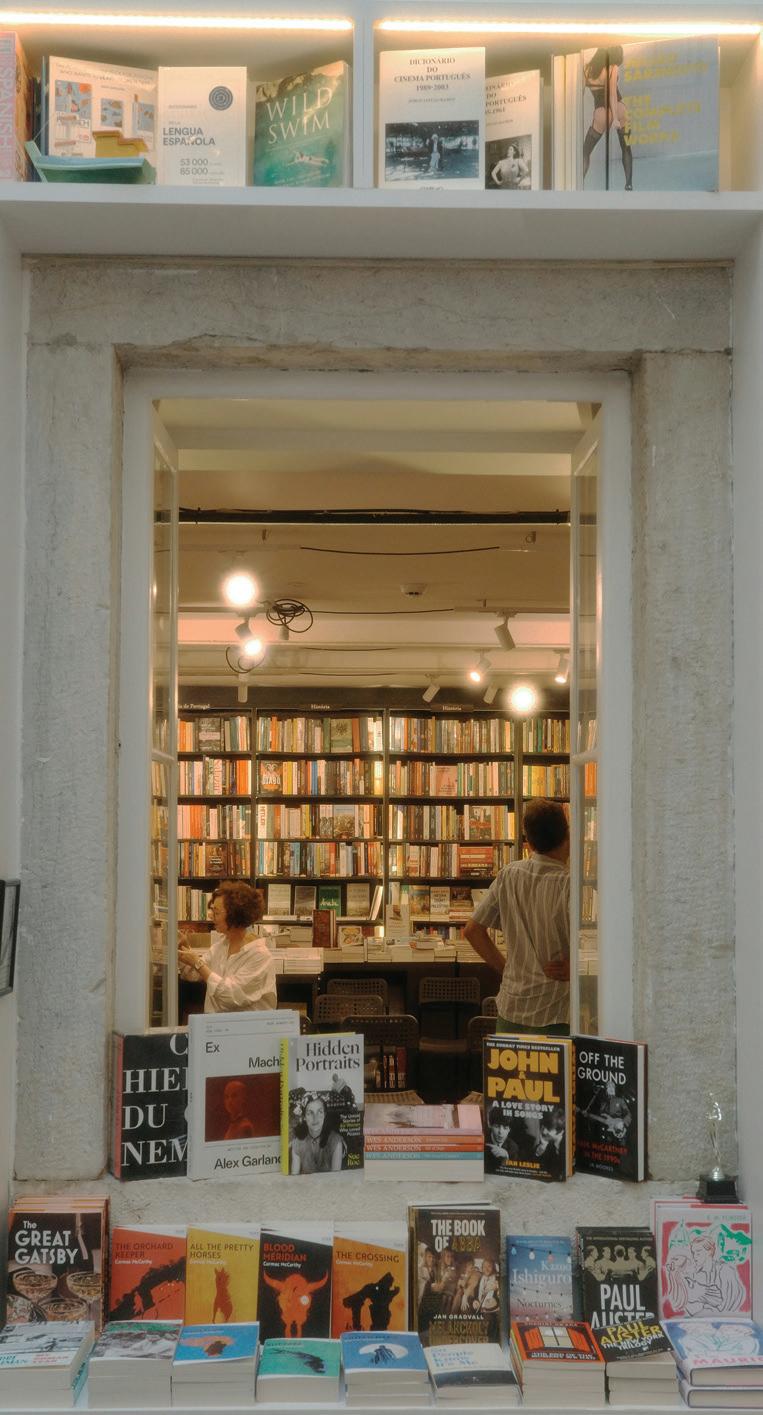
Take a trip to the Baltic to see Saodat Ismailova’s As We Fade exhibit until 7th June 2026...
Art has often been used as a way to raise awareness about current social issues - look at Lee Miller’s photography, Aleksandr Solzhenitsyn’s writing or Picasso’s Guernica. It allows for a breaking of the norms surrounding political discourse, forging a new path for discussion.
"This wholly immersive exhibition explores the history and political turmoil of Central Asia..."
At the Baltic I saw As We Fade, the work of a prominent figure in Central Asian art: Saodat Ismailova. This wholly immersive exhibition explores the history and political turmoil of Central Asia, presenting a void, largely in regards to the politics surrounding the collapse of the Soviet Union. Ismailova’s use of archival footage taken between 1980 and 2000 depicts the transitory state of the region, which is made clear through the motif of obscurity through images of glass, water, mirrors as well as the constant disconcerting noises that fill the room. She presents the dream state through psychic images and the prophet Al-Muqanna’s teaching for divine ascension, reflecting the almost hypnotic indoctrination present within Soviet politics.
With the current constancy of tragedy, the
widespread political turmoil, and the prevalent fear of what the future may hold, the importance of political commentary through forms of art seems more explicit than ever. Every day our world becomes more and more “dystopian”, with freedoms being revoked all across the globe. The
suppression of protests around the world, such as in the UK, and Georgia echo, the millions of people whose freedoms were quelled throughout the reign of the USSR, e.g. the introduction of martial law in Soviet Poland in 1981. Ismailova’s reasoning may have also been similar, her choice to create
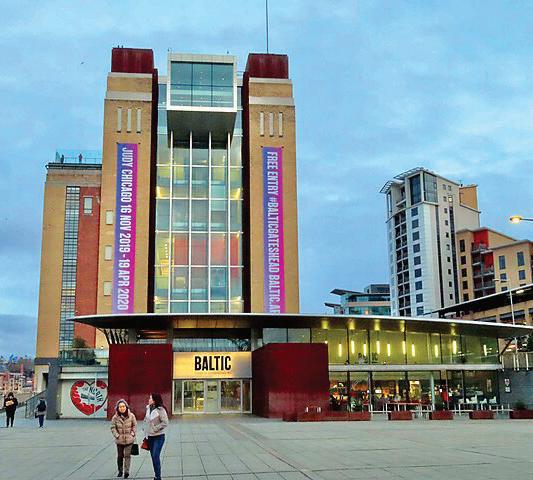
an exhibition now, with footage from the late 20th century, could be due to the public being more receptive to reflections of the current state of society. But, does this actually mean that political art is now more important than ever?
"Throughout history, opressive regimes have been met with resistance through the form of art..."
The debate about artistic cognitivism, where art is deemed a source of knowledge, suggests it is more important in today’s age where the rising prominence of anti-intellectualism has grown to a concerning level, and use of technology, such as AI, has subconsciously suppressed freedom of thought. However, the suggestion that art is more important now than before, for political discourse, is a flawed statement.
Throughout history, oppressive regimes have been met with resistance through the form of art, as referenced above, Solzhenitsyn’s depictions of Soviet Gulags or Miller’s photos of WWII present the raw truth, thereby resisting the systems that inspired their art.
This may well be what Ismailova is doing with As We Fade, following the well-ploughed furrow of her artistic ancestors. Ismailova asserts "Creation has the capacity to go beyond the regulations," which evidently allows for further political discussion and resistance. Her statement suggests all creation—and all art by extension—is important for political discussion, reaffirming the concept that art today is not more important than ever, but rather just as important as ever as a gateway for political discussion. Saodat Ismailova’s As We Fade will be exhibited at the Baltic until 7th June 2026.
Ruby Tiplady - Head of Life & Style
Newcastle University alum Marc Jobst graduated from his agriculture degree in 1983, but soon went on to work as a director in television. His father was a cattle rancher in Zimbabwe, where Jobst was born, and while studying to follow in his father’s footsteps, Jobst became active in local theatre.
Upon his graduation, he founded Three Monkeys Theatre Company, and in between travelling the country, putting on shows, and performing, he took a job as a researcher for Tyne Tees TV, where his journey on television began. After years on British TV and radio, having shifted from documentaries to drama, Jobst travelled to LA to meet an agent. This was the beginning of his time working on global, cultural phenomena; his most renowned work includes Marvel’s Daredevil and The Punisher, Netflix’s The Witcher and their live action One Piece, and NBC’s Hannibal On your website, you write about Newcastle (and Geordies) and how they “formed” you. Have you taken anything of the city to your later projects? ] How have the city or its people shaped your ethos as a director?
It has shaped me in immeasurable numbers of ways, really, but mostly in terms of [being] a Southerner coming to the North East and experiencing a whole different kind of life. I was here during the miners’ strike, during the Thatcherite years, and seeing it in front of my own eyes - what that was doing to the communities here, how it was breaking families apart, good people who were trying to live honest lives - it affected me
Mia Hennebry
Former Newcastle University student narrowly misses out on the prize pot he intended to use for religious pilgrimage...
Faraaz Noor, former Newcastle student from Middlesbrough, made it to the final four on series four of the Traitors UK, narrowly missing out on the £95,750 prize.
The 22-year-old internal auditor (and amateur food critic) was the youngest contestant on the fourth season, and dreamt of taking his family on a pilgrimage to Mecca had he won the prize money.
Faraaz, who studied Accounting and Finance at Newcastle University, formed a brief alliance with the last remaining Faithful, Jack, presenting a plan to tactically vote out Traitors Stephen and Rachel, leaving the two Faithfuls to split the prize money.
However, Faraaz’s plan failed and he was banished from the game, placing fourth.
But his dream of taking his family on a religious pilgrimage may still be in the pipeline. UK-based billionaire Umar Kamani, cofounder of online fashion giant Pretty Little Thing, took to X to write: "I would love to send Faraaz from Traitors and his family to Hajj."
The 2024 Newcastle University graduate published videos on his social media profiles, with the caption ‘Alhamdulilah for everything’, thanking the Traitors’ production team, and congratulating Rachel and Stephen on their well-deserved win.
in a way that I had no expectation of, and it showed me a slice of life that I had no idea about.
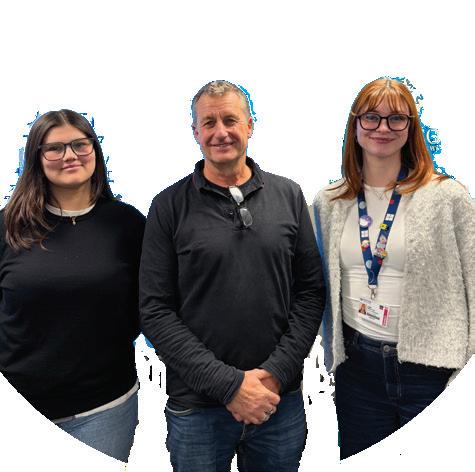
Even when I'm doing these big world building shows that I've done, my my interest is always to come through character. So I come from the “inside out,” rather than from the world building-in. It matters to me enormously that we start from the truth of a character and the truth of what they're wrestling with, rather than tell a story about a fantastical kind of environment in which there are characters. That's driven everything I've done to this point, absolutely.
When adapting comics, manga, and games, how do you work to ensure you remain faithful to the source material and its fanbase while giving the script the space to blossom in an entirely different TV format?
It is the crux of the challenge of adapting a two dimensional comic world into the three dimensional, live-action world, because you it goes back to the very basics of what I was just talking about. Why do we tell a story? Why do we care about stories? Why is what we are doing worth an audience coming and spending their time with.
“We tell stories in order to learn how to be human.”
Well, to me, that's because we we tell stories in order to learn how to be human. We walk in the shoes of the characters, and we go through the
traumas and the difficulties within that story with them, and then at the end of it, we can take the shoes off, and we can become ourselves again.
The character is going to set out in life. We're going to leave Newcastle University, we're going to become something this is what I want to be.
Oops, there's a whole load of obstacles that come into the way of me getting what I want. The second act in the story is then all about, how do I overcome these obstacles in order to get what I want?
Then the third act is all about resolution. Did I get what I want? Did I get something different to what I wanted, but actually more akin to who I am as a human being? That's what story is.That's what Chris Nolan did with Batman in the DC world. You know, he he took that and he grounded it very, very viscerally into something, you know, palpable. And that's what we need to be doing. That's what I tried to do in [the live action] One Piece, even though it's a crazy, mad, fictitious world. These characters still had to feel identifiable.
While we're on One Piece - I understand that part of it was filmed in South Africa, but also that you were born in Zimbabwe, where your dad was a cowboy. Did the homecoming - your return to Africa, to the pastoral - take you back to the earlier parts of your career?
The physicality of the landscape means a huge amount to me; I've obviously worked in that landscape very viscerally through being a shepherd and being a cowboy myself, and I love the relationship that farm workers, land workers have to the land.
Read more at www.thecourieronline.co.uk
Ruby Tiplady - Head of Life & Style
Representation matters, so why is queerbaiting still prevalent within television today?

The LGBTQ+ audience is a powerful one, and their opinion often makes or breaks a show’s reputation. As drivers of online discourse and fandom culture, producers seek to appeal to their tastes, though these efforts often lack substance and are highly performative.
Queerbaiting involves the misleading promotion of storylines to entice an LGBTQ+ audience and can take many forms. In some shows, like Wednesday (2022) and Sherlock (2010), same-sex relationships take on qualities and develop chemistries that liken them to romantic ones.
“...the failure to explore these dynamics is dismissive and manipulative...”
Many feel that the failure to explore these dynamics is dismissive and manipulative of their desire for representation. Whereas, in cases such as Killing Eve (2018), even openly LGBTQ+ characters do not engage in meaningful queer relationships. Villanelle (assassin protagonist of Killing Eve), for example, is an openly lesbian character, yet despite this centrality to her characterisation, her pining after Eve is hardly tangible.
Though queerbaiting arises across the media landscape, it has become particularly problematic in the world of TV. Unlike film and music, for example, TV allows viewers to become uniquely
connected to a character they see themselves in. Online communities surrounding ‘comfort characters’ and ‘ships’ thrive on dissecting the subtleties of characters that display queer characteristics; having these characteristics ignored is unnecessarily damaging.
“...the appetite for LGBTQ+ representation has been clear, and its impact overwhelming.”
Since the first televised lesbian kiss in Brookside (1994) and the outpouring of support it received from queer viewers, the appetite for LGBTQ+ representation has been clear, and its impact overwhelming. This demand has only grown; HBO’s global sensation Heated Rivalry (2025), which reached an audience of over 9 million per episode and became the topic of conversation, is

It seems that, in a crudely capitalistic sense, appealing to a queer audience is a oneway ticket to making a show an instant hit; beyond the immeasurable positive impact queer stories have on their viewers, the evident demand is almost a financial incentive to platform them. Frustratingly, queerbaiting infiltrates what could be opportunities for diverse voices to appear amongst a landscape still dominated by cishet-centred stories.
Kate Kennedy - TV Sub-Editor
K-dramas have seen a rise in popularity in recent years, especially during lockdown. Not to be confused with other Korean media such as Squid Game (2021), K-dramas are typically rom-com series with classic tropes and easy to follow plots. Personally, I am a fan of K-dramas with my favourite being Extraordinary You (2019). However, like all TV shows there’s the good (My First First Love (2019)), the bad (Love Alarm (2019)) and the ugly (Love Alarm series 2).
K-dramas tend to have consistent character types and recurring tropes such as the poor female lead (who exclusively owns designer clothes) whose parents run a fried chicken shop and the future CEO heir to the company male lead. Recurring K-drama characters will be the rich and popular female bully, the side-lined second male love interest (who is always the better choice) and the single parent of the female lead who is absent due to debt, an affair, etc. These easy to identify characters and storylines were intended for Korean housewives to be able to follow while going about housework, and the drama of the repeated shot from a different angle and the dramatic romantic build up created popularity.
“The link between K-dramas, K-pop, and Western popularity is propped up by the piqued interest in Korean culture and language...”
Recently, with the rise of K-pop, K-dramas have reached an overseas audience. I would say the first K-drama to do this was Hwarang: The Poet Warrior Youth! (2016) in which V from BTS had a minor role before being dramatically killed off. Since then, adaptations of Webtoons have been increasingly popular such as True Beauty (2020) (ugh) which was somehow a hit. Popularity only grew when K-pop idols decided to try their hands at acting such as IU, Chuu (Loona) and Cha Eunwoo (ASTRO) as well as K-pop groups and soloists appearing on OSTs. The link between K-dramas, K-pop and Western popularity is propped up by the piqued interest in Korean culture and language, with K-dramas being a microcosm of Korean culture that is accessible by Western audiences.
K-dramas have an interesting production history as before the 2000s, they were made in-house by the TV channels themselves. There is also usually only one director and one screenwriter for a K-drama however, this quirk has been lost in recent years. This is due to the rise in Netflix original K-dramas meaning that those shown on Korean TV channels domestically are less internationally popular.

Intimacy coordinators are a role of the future. A fairly new role used to effectively coordinate sexual, erotic and scenes which include any sort of nudity whilst keeping the audience engaged and the actors safe.

It is an understanding that intimacy coordinators are now used in sex scenes across the industry, but they’re not only used here. Intimacy coordinators are used whenever a character appears in a state of undress or implied undress, such as when a character is giving birth or, like in Bridgerton (2020), when they appear in corsets. But what do they really do? A big misconception here is that they direct the scene, but this isn’t true at all, the director still has their job. The role of the intimacy coordinator is to facilitate cohesive movement, liaise with actors to ensure everyone is as comfortable as possible and to focus purely on the passion and intimacy of the scene.
So how does having an intamacy coordinator increase the onscreen passion? Well, firstly, it’s a relief to know our actors are finally getting the respect and consent they deserve; you only have to look at early seasons of shows like Grey’s Anatomy (2005) to understand that no one was

Anna Lewis
advocating for the actors in these situations. But the intimacy coordinator allows room for more revealing and dynamic scenes, which otherwise wouldn’t be possible.
Bridgerton’s intimacy coordinator is Lizzy Talbot, founder and Director of Intimacy for Stage and Screen, one of the first companies advocating for safe and consenting intimacy on the stage and screen. Talbot has brought different props to the set of Bridgerton to facilitate this, such as modesty garments, a Pilates ball, and a folded memory foam pillow. These props might seem worlds away from the steaminess Bridgerton is known for, and in some cases are continuously made fun of by the media (looking at the Pete Davidson and Mikey Day’s SNL (1975) sketch poking fun at Bridgerton’s intimacy coordinator and the props) but, they’re the gateway to creating the erotic chemistry that fans love. Talbot works closely with actors ensuring that everyone feels safe and comfortable when portraying these delicate scenes. Talbot’s work on Bridgerton extends further than simply coordinating eye-catching sex scenes, her work involves exploring the small touches and lingering looks, which build up to the passionate romances Bridgerton is popular for.
During that now distant, almost dream-like lockdown, I watched all eight seasons of The Vampire Diaries (2009), all five seasons of Originals (2013), and all the episodes of A Discovery of Witches (2018) that were available at the time.
All of these feature the common contemporary spin on the fanged creatures, that these human-stalking, gothic architecture-loving fiends are, in truth, incredibly hot, misunderstood young men just looking for love. And, well, each one found an audience, so I suppose they must have been doing something right.
“...the
great big swoon that usually accompanies the attack is as ridiculous as
Sasha Cowie - Sport Sub-Editor
Breaking the ice on the latest, viral television show, Heated Rivalry...
Icame across a TikTok that started unpacking why so many women feel the way they do when they watch Heated Rivalry (2025). As I listened, something clicked. One idea led to another, and suddenly all these half-formed thoughts I hadn’t quite articulated before started falling into place. I ended up writing them down as an attempt to understand why this story lingered with me after I stopped watching.
I am a straight woman. I am in a relationship. I am not watching Heated Rivalry because I want to be Ilya Rozanov or Shane Hollander, and I am not watching it because I want to be a man. I am watching it because I want what they are Like much of the internet, I found myself unexpectedly pulled into and its central relationship. At first, I struggled to


it is medieval.”
Still, vampire lovers don't exactly sit right. Due to their immortality, most are significantly older than their human paramours; their attraction to humans
is often intertwined inextricably by a desire to drain their blood. Vampire fangs are both literally and symbolically penetrative, a means of violating the bodies of victims to satiate themselves, and the great big swoon that usually accompanies the attack is as ridiculous as it is medieval. There's a power imbalance woven into the conceptual fabric of vampirism, and in some instances, writers have extended this to comment on the politics between oppressors and the oppressed. To be attacked, harmed, or even in the presence of a vampire is typically to experience an intense and often detrimental vulnerability. I don't, however, think that there's no room for relationshipfocused, supernatural TV series'. There's a reason I watched those shows, a reason why First Kill (2022), and Interview With A Vampire (2022) were concepts that made it to air. Cast some people with good chemistry, write some genuinely compelling romantic build-up, and there's no reason why vampire romances can't be a welcome part of mainstream media. But I'd just maybe like the vampires to stop proudly declaring they're 145 years old before confessing their love to a high schooler...
it is not about
it is about
explain why. It would be easy to dismiss the fascination as another case of women romanticising a “forbidden” or “heated rivalry” trope, but that explanation feels far too shallow for what the story actually does.
“What makes this resonate is not that the relationship is queer, but that it exists on an equal playing field.”
One of the most striking elements of Ilya and Shane’s relationship is its awkwardness. Their vulnerability does not emerge through grand declarations or hyper-sexualised dialogue, but through small, clumsy moments, pauses, plain questions, unpolished answers. Their bodies seem to say to one another, 'here I am.' No performance, no role-playing, no attempt to impress. Awkwardness, in this context, becomes freedom. To be awkward is to be unmasked.
As a young woman at university, this kind of intimacy feels both comforting and quietly devastating. We are so used to desire being mediated through performance, through curated language, irony, flirting-as-strategy, that watching intimacy grounded in sincerity feels almost radical. Their dialogue is raw and unembellished, untouched by the pornified language that so often frames modern romance. Desire in this show builds not through spectacle, but through honesty. What makes this resonate is not that the relationship is queer, but that it exists on an equal playing field. Shane and Ilya’s love is not genderless because gender disappears, but because gender does not dictate the terms of their intimacy. There is no assumption of dominance, no expectation that one person must give more, soften more, or disappear more in order for love to function. Giving and taking are contextual, not gendered.
Watching this as a straight woman forces an uncomfortable realisation: many heterosexual relationships are shaped by negotiation rather than inhabitation. Love becomes something we manage. Desire becomes something we carefully assert, always aware of how easily it can be misread or consumed. This is not about dissatisfaction with men, or with relationships themselves. I am in a relationship I care deeply about. But Heated Rivalry highlights how deeply ingrained expectations still shape the way women experience intimacy, even in healthy, loving dynamics.
At the end of each episode, what lingers is not excitement, but a familiar heaviness. A mix of envy and quiet grief settling somewhere uncomfortable. Not because I want their relationship specifically, but because I recognise the absence it exposes. This fascination is often mislabelled as fetishisation. But this is not about tropes, it is about lack. It is about the lack of safety women feel in asserting desire without being reduced to something consumable. It is about how fluidity, when embodied by women, is so often eroticised and flattened into kink or spectacle. It is about the fear that giving yourself fully to love will cost you something , that to be seen is to be diminished.
“...intimacy that is sincere rather than strategic, desire that is mutual rather than managed. ”
Heated Rivalry represents intimacy without voyeurism. A space where symmetry can exist. Where being visible does not come at the expense of power. Even as someone who loves women as friends, it is tempting to believe that lesbian relationships somehow exist outside this tension. But patriarchy does not leave the room when men do. It lingers in language, in expectation, in the ways we are taught to value certain traits over
others.
Margaret Atwood famously wrote: “You are a woman with a man inside watching a woman. You are your own voyeur.” That line feels uncomfortably relevant here. Even when watching intimacy that appears freer than our own, many women are still negotiating their place as both participant and observer. I do not want to be Ilya or Shane. I do not want to be a man. I want to inhabit love without fear, to give and be changed without that change feeling like loss. I want intimacy that is sincere rather than strategic, desire that is mutual rather than managed. And perhaps that is why this story resonates so deeply with women. Not because it shows us something unattainable, but because it reminds us of what love could feel like if we were allowed to experience it fully. I want to say that writing this feels slightly strange. At 21, it’s odd to find myself having such a strong emotional reaction to a story that, on the surface, could be read as something that makes you question your sexuality. But that isn’t what this is for me. I’m not confused about who I’m attracted to; I know that clearly. What I’m responding to isn’t the gender of the relationship, but the way intimacy, vulnerability, and desire are allowed to exist within it. I’m resonating with the feeling, not the form it takes.

Emily-Maisy Milburn - Gaming Sub-Editor
Highguard, the mysterious PvP raid shooter that was announced at the end of the Game Awards and praised by Geoff Keighley as “reinventing the Hero Shooter genre as we know it”, launched this week to overwhelmingly negative reviews on Steam. Were these reviews accurate? Was the gaming community pre-empting its failure by comparing it to the short-lived live service shooter Concord? Well, I played the game at launch, and it really did not live up to the hype that Keighley so desperately clung to, a hype that was so profound it led to X users questioning if he had financial involvement in creating and or promoting the game.
Dipping from 95k active players to 19k and then to 10k, and then to 6, the game has received an overwhelmingly negative response from players on Steam in its first 24 hours.
One of my main concerns with the game is its 3v3 format; despite the sprawling map and bases, the lack of engagement with the enemy team makes rounds boring and repetitive. The core gameplay, described by the development team at Wildlight as a PvP Raid Shooter, is, in theory, a really great concept that I think would work better in a 6v6 format with the size of the maps. Not only this, but the actual gunplay feels stiff and and so does the movement speed of your character, which makes traversing the map unsatisfactory unless you are on your mount (who can easily be shot down by the enemy team, which does not reflect the cool, horseback fights demonstrated in the

“...hell, I could’ve probably walked past this guy in the street, he’s that generic.”
Another large portion of the game that didn’t land with me was the design. In a Frankenstein mashup of medieval themes and futuristic fantasy, the character designs end up unappealing and bland, with no “Oddball” champs that make you want to invest time in the game. The main Warden, Atticus, who features on the promotional material, could literally be from any other shooter in the past 10 years; hell, I could’ve probably walked past this guy in the street, he’s that generic. The most interesting Warden, in my opinion, is Scarlet, as her abilities allow her to shift through the reinforced walls of the enemy base.
“...this game would have given other shooters a run for their money.”
Overall, it is unfortunate that this game launched in such a state, as with further development and a deeper creative and technical readjustment, this game would have given other shooters a run for their money. Only time will tell for the future but as for not looking

Elliot Clark
Now that everyone’s getting back into the rhythm of university work: catching up with friends and meeting new people is a hurdle everyone has to get through over the next month. So, what better way to do this than getting out some board games! Here is a selection of fun card games and board games that should help you get talking, thinking, and having a great time
You Can’t Say Umm - Big Potato Games - £24.99
A team game by one of my all-time favourite game developers, where it makes you watch how you speak in a fast-paced describing game. The main rule being you can’t say umm, uhh, and so on… With an “after dark” expansion also available, this is the perfect game to have a laugh and see how long it takes to get annoyed at your friends for repeatedly breaking the rules.
Bang Out Of Order - Gamely - £12.99
A smaller card game consisting of random facts with numerical answers, like how many smarties are in a standard tube or number of stars in the sky. All you need to do is order these statistics from smallest to largest, but if you think someone’s gone wrong you simply shout that’s Bang Out Of Order! Very easy on paper but gets trickier and trickier to think about where different amounts slot in between each other, still incredibly entertaining however!
Ransom Notes - Very Special Games - £28.01 Ever wanted to play a boardgame with hundreds
of magnetic word tiles to answer funny prompts?
In this Cards Against Humanity meets Quiplash style game you can! With one player being the judge and all other players coming up with small phrases using a selection of tiny words, it is the perfect game to get creative and learn how funny or unfunny you really are… Hues and Cues - The OP Games - £24.45
One of my favourite games, presents you with a stunning colour grid and cards with different colours for you to give a one or two worded clue to. Other players try to guess which colour you are hinting at by placing cones around the board, and whoever has the most points wins! It is incredibly easy to learn and even more fun to play with both small and large groups of friends.
Cards VS Gravity - Big Potato Games - £12.99
Why not put an empty bottle to use with this gravity-defying card game? This game needs a steady hand or friends who won’t actively shove you into the game to sabotage you. The aim of game is to balance cards using little slots on a wheel and other cards to make a super tall tower and be the last one standing, while it might seem difficult it
is actually easier than it sounds… Probably not one to try drunk though.
All prices found on Amazon.co.uk as of February

Amy Mescus - Head of Culture
Nintendo release a new update half a decade after original release...
Since its release in March 2020, Animal Crossing: New Horizons (ACNH) has received minimal content updates, with the last free new content being update 2.0 on 4 November, 2021, and the Happy Home Paradise paid DLC releasing on 5 November, 2021.
Five years later, the ACNH community had began to lose hope of ever seeing any additional content and instead turned their focus towards a potential new Animal Crossing game for the Switch 2, convinced that this could be the only explanation for a lack of updates on ACNH
“...teased a plethora of new material including the return of familiar faces...”
However, after a gruelling wait, the ACNH 3.0 update was released on 15 January, 2026. It was first revealed in a Nintendo Direct that was uploaded on 30 October, 2025 and teased a plethora of new material including the return of familiar faces such as, Kapp'n and his family hotel and Resetti's reset service.
The Nintendo Direct resulted in an eruption of mixed reactions from the Animal Crossing community, with several players joking that this must be how it feels when the player revisits their villagers after years of inactivity, but the overall consensus being positive.
Now, one month later, what's the verdict? Is the ACNH 3.0 update worth it?
In my personal opinion, any new content to New Horizons which is free has to be worth it, at least to some extent.
Some general features that I feel have improved the day-to-day quality of life within the game are the ability to pull items from your home storage, regardless of where you are crafting on your island, the ability to craft several things at once (fishing has instantly become 10x more bearable), and the ability to slide exactly one space in a selected direction whilst terraforming.
The star of the update, however, is undeniably is Kapp'n's Family Hotel, who have relocated to the end of your island's newly extended pier, after running Tortimer Island in Animal Crossing: New Leaf.
Regarding gameplay, you now help decorate guest rooms in the hotel that have specific themes. You receive furniture items that correspond to the room's theme, but you have the freedom to include previously obtained furniture as well. Unlike the Home Paradise DLC, there are no items that you are absolutely required to include when decorating the hotel rooms, so the island's your oyster.
After decorating a room, you earn Hotel Tickets, a special currency you can use to purchase items that are exclusive at Grams' souvenir shop.
Although I love the room decorating gameplay style, one thing that has always frustrated me, as someone who avoids Treasure Islands at all costs, is only being able to use items that I have previously acquired. You would think with almost 5,000 hours on the game I would have a complete
inventory, but I have restarted my island too many times to count.
On a similar note, Resetti's Reset Service is also not what you would assume it would be based on previous Animal Crossing games. Instead of traumatising your younger self for not saving and closing your game properly, Resetti now offers island in one go (with being moved to your storage), or, more specifically, particular plots of land. This is huge for chronic island-restarters like myself.

Another huge addition to the 3.0 update is the new Dream World function called 'Slumber Islands'. Slumber Islands act as extra save files that you can access when you go to sleep in game, fully customisable and collaborative with your Nintendo Switch
I understand that amongst some players, frustration lies within the hotel NPCs having minimal speaking lines and feel like a waste of space on your island, in addition to Kapp'n's Family Hotel feeling like missed potential as, essentially, a duplicate of Happy Home Paradise
Despite this, I feel really happy with the update, and I do think that
However, I feel somewhat disappointed upon realisation that there is, most likely, no new Animal Crossing game in the works...
Elliot Clark
Who, or what, is to blame for the rising cost of GPUs?
AI. A market only just tapped into in the last few years for companies around the world, with people using tonnes of memory and energy to train their individual AI algorithms. But with GPU prices on the rise, is AI to blame, and what else is in danger?
“A
shocking price increase in no time at all.”
RAM is an integral part of computers and servers across the globe. More RAM means a more responsive computer and higher performance for games, tasks, and so on. However, due to the rapidly expanding AI infrastructure, more companies are focusing on the production of highquality RAM and conventional consumer-friendly components towards AI-centred projects. From a consumer point of view, this shift in production is incredibly noticeable price-wise. For example, a friend of mine bought a 32GB stick of (Crucial Pro) DDR5 RAM on Amazon for £79.99 in February 2025. Comparing this to the price just about a year later, now the exact same product costs £314.98. A
shocking price increase in no time at all. This is terrible for everybody wanting to buy any form of PC, buy computer components to build their own computer setup, or simply swap out burnt-out parts like RAM, SSDs, and GPUs. Speaking of, most of the integral parts of a computer are at risk and already being impacted by the price hikes. GPUs and data used for AI training are slightly different to the ones customers use in pre-built PCs, for example. However, more memory and energy being diverted into AI data centres means less GPU memory supply and higher GPU prices.
"High-capacity SSDs are being hoarded by these AI-first companies...”
Following Microsoft’s transition to Windows 11, standard gaming PCs are going to require more intensive tech to compensate for the AI-powered specifications. And according to companies like ASUS, Dell, and HP, to name a few, computers may see “a 15-20% price rise” in the second half of 2026. High-capacity SSDs are being hoarded by these AI-first companies, preventing access to affordable, memory-efficient cards for the average consumer. Researcher Cameron Crandall saw that “SSD companies have seen a 246% rise in NAND
The best games to play as a couple this Valentine's day
can you go on to It Takes Two. Portal 2
Who will be your Player Two?
With Valentine's Day right around the corner, there's no better time to have a day off, curl up on the sofa, and play through one of the many phenomenal co-op experiences available across all platforms with your partner. They're a cute, fun way to put your relationship with the person you're sharing your sofa with to the ultimate test, and, if you're in the just-started-dating stage, to separate the weak from the strong. A Way Out
For those familiar with these types of games, Hazelight Studios' It Takes Two was probably the first thing that popped into your head. And yes, of course I recommend it, but I wanted to instead draw attention to the studio's debut game - A Way Out
“...the co-op is still terrific fun to complete with a partner as two funny little robots.”
Both Portal and its sequel Portal 2 are regarded as some of the greatest games ever released - and for good reason. Smooth but challenging gameplay, an intriguing post-apocalyptic concept and some of the funniest and most memorable characters and voice performances of all time made the pair of games instant classics from the moment of release. Portal 2, unlike its predecessor, made the decision to have both a single player and a two player campaign, and while all of the story and lore is predominantly contained within the solo journey, the co-op is still terrific fun to complete with a
My personal favourite of the list - if mostly because it was the first game my partner and I ever played togetherUnravel 2 doesn't require you to engage Unravel before you dive into the world of two little yarn creatures tasked with protecting a group of mysterious figures. The story engages with some heavy themes, but the gameplay, art direction and environments all make for an adorable time from end to end.
wafer prices,” NAND being high density, nonvolatile pieces of memory technology used in SSDs, USBs and more.
“...once the more dependable companies for low prices start runnning out ... they too might fall victim to the 'memory crisis'...”
Even more concerningly, even hard drives are being affected, external and internal alike. You might even see that once the more dependable companies for low pricing start running out of their cheaper supplies bought before the price increase this year, they too might fall victim to the ‘memory crisis’ that is the RAM shortage. RAM prices increasing causes a butterfly effect of rising non-consumer-friendly prices. I am currently writing this on an ASUS VivoBook that has been somewhat reliable for most games, with only 8GB of RAM. While I would love to upgrade to a higherquality computer, I am running out

Keyon Snoek - Gaming Sub-Editor
The name's card. Memory, Card...
Growing up with two older brothers comes with its perks. For example, being introduced to video games from a very young age. Most of my fond childhood memories were playing games with them on the GameCube and PlayStation 2. And the game which resembles those memories the most is James Bond: From Russia with Love for the PlayStation 2.
and allow reconnaissance for the player. The split-screen multiplayer resulted in endless hours of enjoyment. You could select a character from many of the different NPCs throughout the main story and play through multiple game modes. One of my favourite set ups being the launch missile site map and trying to get as many kills against your opponent as possible. This map also allowed you to drive tanks and other vehicles to run over your opponents (my older brothers in this case).
“This gameplay allowed each player to pilot a jetpack and battle it out...”
The game had both an engaging campaign and entertaining co-op. The main story focused on the plot of the film. The first mission sees you play as Bond as you work your way through a gala that is being destroyed by Russian antagonists as you try to stop them from kidnapping someone. The level ends in a fierce battle between you as Bond with a jetpack against a huge chopper right next to Big Ben.
“The driving levels really help the gameplay not get too repetitive.”

In it, you and your partner are thrust into the roles of Leo and Vince, a pair of criminals determined to escape prison and make your way back to your families - with a few twists along the way. The game is utterly bonkers, featuring high speed boat chases, locking arms back to back to scale shafts, and being able to completely annihilate your adolescent son at basketball. If you complete it then, and only then,
“The two protagonists even hold hands in cutscenes while they walk...”
Attached by a single thread, you can swing around while the other player anchors you, tie knots to make bridges for you both to bounce on, and they even added a feature where you can essentially piggy-back around your partner by intertwining your wool. The two protagonists even hold hands in cutscenes while they walk, what could be more perfect for Valentine's Day?
Another engaging yet stressful level was the Istanbul level, in which you drive Bond's classic Aston Martin. The controls are a bit slippery, but it is great fun chasing the villains through the streets and shooting them with specialised vehicle weapons while trying not to crash. The driving levels really help the gameplay not get too repetitive.
On top of Bond's classic car, the player also has their choice from his extensive collection of weapons and gadgets. One of my go-to weapons is the Kalashnikov AKMS, which Bond could obtain by stealing from enemy soldiers. Gadgetswise, I loved piloting the Q-Copter, which was a mini helicopter you could use to traverse vents
Another multiplayer game mode was the dogfight mode. This gameplay allowed each player to pilot a jetpack and battle it out in the skies, which provided a new way to challenge their rivals. This game provided me with so many fond memories, and in my opinion, it still holds up to this day. From the engaging campaign, different play styles, a huge library of maps, weapons and character selection, and most importantly, the ruthless yet fun coop.

2) The strong feeling of missing a loved one very intensely. Also a sick album by the late and great producer Nujabes.
4) A couple getting to know each other whether for marriage or otherwise.
Very old-school term.
5) The Roman god of love.
6) Valentines day but for the girls.
8) A dismissive attitude towards pretty important manners.

1) A gum-resin found in trees from Southern Arabia to North-Eastern Africa, often used in fragrances.
3) A formal expression that something is without a doubt.
7) Geordie slang for "Nosy"

Select the right candidates for you.
Charlotte Atkinson - Film Sub-Editor
society shaking the foundations of the Athletics Union. Fresh from their first session, Roots & Rhythms is a new dance society celebrating the soul of black culture and filling an important niche within our university.
“It started as a conversation between the two of us” secretary of the society Lwazi Tshetshe reminisced on a Teams call with society president Priscilla Agom Jarigbe. “We were actually just thinking, you know what, like there's a gap, let's fill kind of thing”.
Reaching out to their friends, a committee was formed and Roots & Rhythms began to take shape.Roots and Rhythms have their feet firmly planted in culture and community.
recognised was a main goal for the society, as Lwazi and Priscilla were keen to highlight.
“The genres that we dance to aren't really seen much on campus,” stated Lwazi, pointing out the university’s diversity both on campus and in dance, but that the committee felt “like there was no sort of representation of anything African related or Caribbean. And so that's the gap that we were filling.”

Filling a niche that hadn’t been
On a campus as sport obsessed as Newcastle, it can be difficult to find your niche amongst the crowd, but Roots & Rhythms have their feet firmly planted in culture and community.
“I think that a lot of the dance societies that already exist on campus are quite filled with people who know how to dance, who've been dancing for the past however many years, whereas we wanted to create a space where people who felt like they couldn't dance could just come and join,” says Lwazi, highlighting the desire for joy and movement that motivates the
society.
But how do these sessions run?
Stretching takes precedence for the first section, before getting the ball rolling with a “word of the week” segment.
"I think that's really the point of family and community, just to have someone there to help you.”
Lwazi recalls that “in our first session, the genre of dance we did was Amapiano, and that's a genre specifically from South Africa, so we did a South African word of the week where people can take that home with them. Or yesterday we did Afrobeats, which is primarily built up from Nigeria, so we did a Yoruba word, which is one of the Nigerian languages.”
Following this, the committee teach the choreography of the week. “We want to make sure that everyone feels like they can add a bit of their swag”, Priscilla adds, “culture wise, race wise, everything wise.”
Community is undoubtedly the
Erin Parkes
The disparity in attitudes between men and women in sport explored...
For many, the sudden increase, in both participation and coverage, of women’s sport means that women are now equal to that of their male counter parts. However, this is not the case. Visibility isn’t equality – and pretending it is risks stalling real change.
In Britain today, it can be argued men’s sport is viewed as superior to women, with 25% of people having never watched women’s sport. Despite the undeniable triumphs of women, most notably in football, there are many barriers that prevent women’s sport being accepted as equal.
At the root of inequality is people’s stereotypical and gender biased views of women’s sporting abilities, with 25% of British people believing male
sportspeople deserve to be paid more than women.
Comparative to the men’s game, when women’s sport is covered, commentators make an effort to focus on factors irrelevant to the ability of the athletes such as appearance and personal life. Therefore, while women are receiving more coverage, visibility that comes with distortion is not progress, it’s a polished form of inequality.
Within the recent decade, female footballers have redefined the sport, hitting highs never before seen. From England’s Lionesses winning the UEFA Women’s Euros twice consecutively to the Barclays WSL setting exceptional
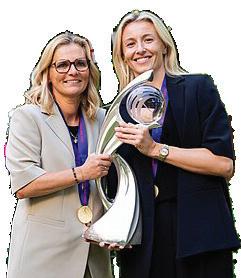
heart of Roots & Rhythms, as Priscilla points out the way the society “try to emphasise that we are a family, like we're here for you”, stating that the committee “here to help, here to teach”.
Lwazi adds that “we specifically have a good like 20 to 30 minutes in each session where we just allow people to socialise and to get to know each other,” ensuring that no one feels ill at ease.
Priscilla highlights the committee’s aim is “to make everyone feel included in warmups and just every single thing we do, we try to carry people along. And I think that's really the point of family and community, just to have someone there to help you.”
the sessions alone and people who live in similar directions can walk home together.

This family culture doesn’t stop at the door – Roots & Rhythms make sure that all participants are safe following the sessions, making sure no one leaves
Lwazi points out that in such a vast university “you often find yourself drowning just in this big ocean,” making it even more important to look out for each other.
Where does the future of Roots & Rhythms lie?
Priscilla shared her hopes that “we come back in 10 years and there's people still like interested in like leading the club on.
"Obviously, we're not going to be here forever, but we do want to build a really strong foundation that could turn into something way, way, way greater and bigger than just a Newcastle thing. We want it to feel like it's for everyone. It literally is for everyone. And I think once we have that foundation, the sky's our limit.”
You can find Roots & Rhythms every other Thursday from 6:30pm – 8:00pm. If you’d like more information on the society, you can find them on Instagram @roots_riddimz.ncl and on TikTok @ roots.riddimz_ncl.
professional standards, one thing certain is football has been transfigured. However, with increased visibility comes room for scrutiny of female players. For example, Joey Barton, former professional footballer and manager, was condemned for his multitude of highly publicised sexist comments. Barton commented on X “women shouldn’t be talking with any kind of authority in the men’s game”, further stating “it’s a completely different game”.
"Any mistake or difference to men is emphasised to create a distinction between genders"
The more women involved, from commentators to players, the more they become increasingly scrutinised. Any mistake or difference to men is emphasised to create a distinction between genders. Many perceive men’s football as the norm, treating women’s football as a by-product.
If we continue to label women’s sport as ‘equal’, new problems are created while old one’s still exist. Institutions such as National Governing Bodies, must continue working hard to create opportunities for women, from grassroots to professional. Alongside this society must further educate themselves, opening their minds to women’s incredible abilities, providing women with the equality they have been so consistently denied.
Carly Horne
Carlos Alcaraz made history once again with his victory over Novak Djokovic in the 2026 Australian Open final. The win made Alcaraz the youngest man ever to complete the career Grand Slam, securing all four major titles at just 22 years old. It was not the smoothest day on court for the Spaniard, yet it became one of the most significant of his career. Djokovic made a strong start, winning the opening set 6–2. While Alcaraz was favourite to win, many hoped that Novak Djokovic might be able to maintain his dominance and secure his 25th Grand Slam title. Former Serena Williams coach Patrick Mouratoglou later said that “anyone else would have panicked” in Alcaraz’s position. And yet, Alcaraz seemed unphased, winning the next three sets 6–2, 6–3, 7–5 to secure the title. The victory

marked several major milestones: his first Australian Open title, his seventh Grand Slam title, and the completion of the career Grand Slam — achieved younger than any player in history. Alcaraz's resilience has been remarked upon often in his relatively short career. He successfully recovered from being two sets to one down to beat Jannik Sinner and take his second Rolland Garros title. Though Sinner was referred to as "unbeatable" ahead of the French Open, Alcaraz "believed in [himself] the whole match". Now dominating the ATP rankings as world number one, Alcaraz represents a clear shift away from the long-standing dominance of tennis’s “Big Three”. At just 22, Alcaraz already holds as many Grand Slam titles as former world number one John McEnroe and has achieved more than many players manage in a lifetime. With the Indian Wells Masters approaching next month, attention now turns to what this young champion will accomplish next.
On January 24th, the annual varsity trampoline competition between Newcastle University and Durham University lit up the Newcastle University Sports Centre. Athletes from both universities showcased impressive aerial skills. The muchanticipated event featured routines in various disciplines, including individual trampoline, synchronized trampoline, and, for the first time at this level, double minitrampoline (DMT). The crowd cheered enthusiastically as competitors executed highflying flips, twists, and technical moves. The varsity scoring system tallies the top six routines from each university, based on form, execution, and difficulty, to establish a team total. Durham held a slight advantage with a combined score of 315.65, surpassing Newcastle’s score of 303.2. This result means Durham retains the shield for the second year in a row,
reinforcing their position as the region’s top university in trampolining.
Even though Newcastle University Trampoline Club did not win the overall title, they celebrated individual successes, with medallists in every discipline and age category. The athletes displayed remarkable talent and resilience against tough competition.
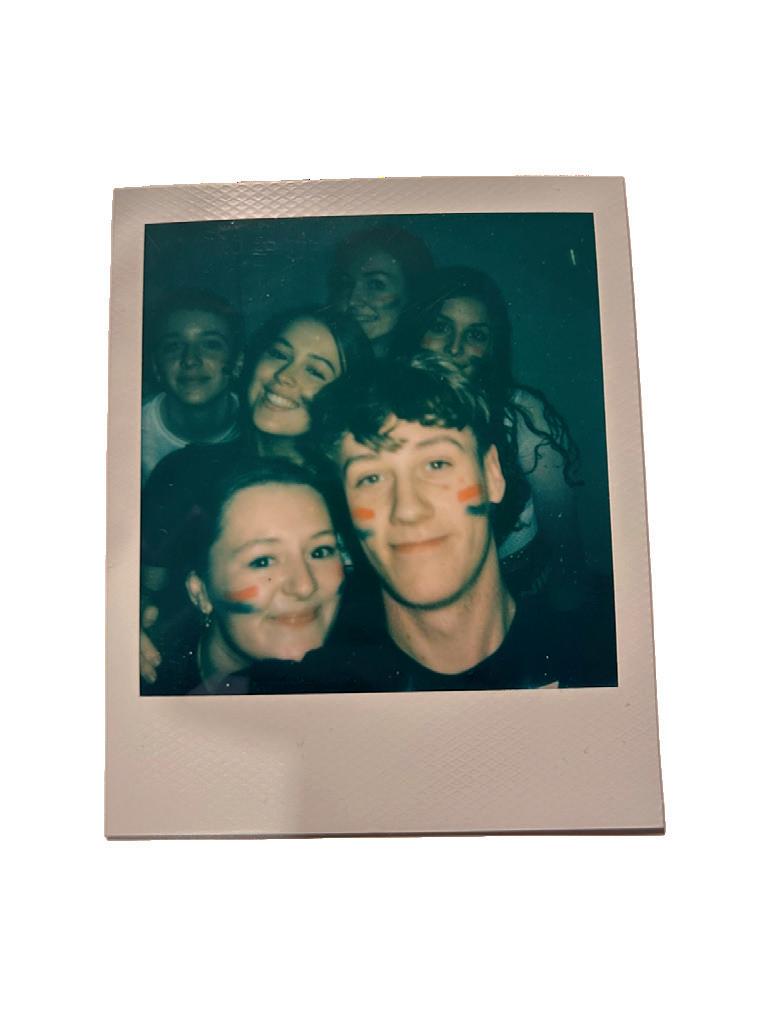
Among the standout performances: Newcastle’s athletes delivered impressive individual performances across multiple disciplines. Liv Greenwood secured two podium finishes, placing third in Level 1 Individual Trampoline and third in Higher Synchronized Trampoline. Meanwhile, Lois Carpenter achieved a notable secondplace finish in Level 1 Individual Trampoline and also placed third in Higher Synchro. Stephen Dornan had a strong competition, earning second place in Level 2 Individual Trampoline and repeating this result in Higher Synchronized Trampoline.
In the newly introduced double mini-trampoline category, Jess Hill garnered a third-place finish in Lower DMT and took second
in Lower Synchronized Trampoline.
The highlight for Newcastle came from Megan Sewell, who claimed gold in Level 3 Individual Trampoline and added another medal with a second-place finish in Lower DMT.
The variety of medals in multiple categories highlighted the squad's depth of talent, reflecting many months of preparation and commitment.
Club president Phoebe Metcalf expressed her pride in the team’s achievements, both on and off the mats:
“The variety of medals in multiple categories highlighted the squad's depth of talent...”
“I’m so proud of what an amazing group of people we have in the trampoline club. Though we may not have taken home the overall title, I could not be prouder of such a lovely group of individuals. Not only were they impressive on the trampoline, their
dedication and support for one another is beyond anything I could have hoped for, and for that, I am incredibly
Her remarks captured the spirit of the event: a mix of elite sport, community, and shared enthusiasm that defines university
While varsity is a highlight, it is just one milestone in a busy competitive schedule. Newcastle will next compete in the Northern English University (NEUT) League, with events in cities like Leeds and Manchester. They will also participate in the British Universities & Colleges Sport (BUCS) Trampoline and DMT Championships, a national competition set for late February in Kettering.The season will culminate with the Durham Open, where Newcastle’s trampolinists will return to Durham seeking redemption and further success. With strong individual talent and growing team unity, the Newcastle squad is ready to make an impact at every competition.
The gymnastics team had a strong start to the competitive year at their first competition of the season in Leicester. The weekend featured impressive performances, personal achievements, and great team spirit. With 17 competitors across three levels, this event was a key moment for the club, especially since 10 athletes were competing at their first university competition.
For many, the weekend was about gaining experience and confidence in a challenging environment. Despite the nerves that can come with debut performances, the team met the challenge, earning encouraging results and showing clear progress in all disciplines.
The team brought home three medals, highlighted by excellent performances from Megan Turner and Milly Rabaiotti. Megan secured gold in Grade 4 Floor, an achievement made even more impressive by the circumstances of her routine.
Reflecting on her performance, Megan expressed her happiness about doing well, especially since she created her routine that day. This showed her adaptability and composure under pressure. Performing a newly formed routine in a competition is challenging, making her gold medal a significant win.
Milly also had a great weekend, earning gold in Grade 3 Vault with a strong and confident showing. She added a
bronze in the Grade 3 Overall, showing her steady performance across different events and solidifying her status as one of the top members of the team.
"It illustrated how small details can make a big difference."
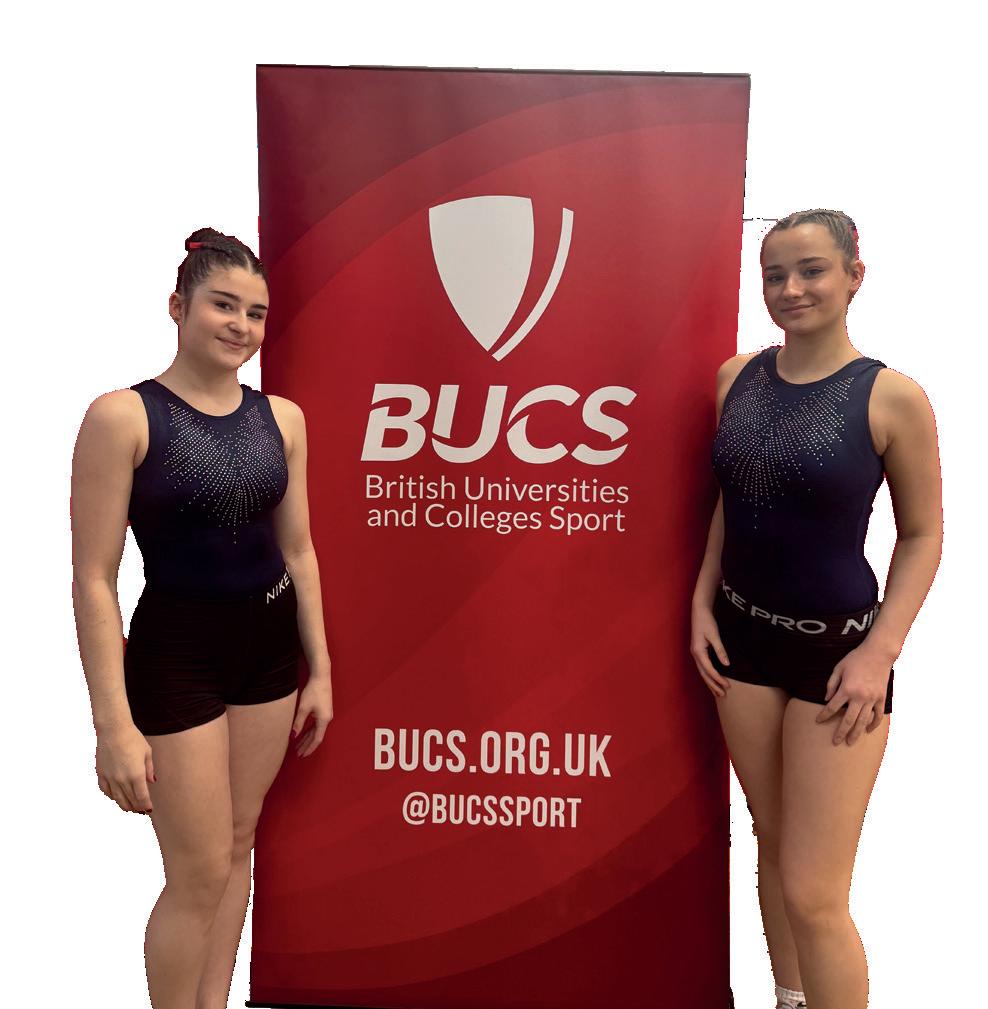
Beyond the medal winners, the team displayed depth by achieving five more top-ten finishes in the competition. Several athletes came close to sharing the podium with their teammates. Megan Turner missed an additional medal by just 0.1 points in the Overall, while Ed Knight was only 0.3 points away from a Vault bronze. These narrow margins showed the competitive nature of the event and illustrated how small details can make a big difference. Not every routine went smoothly. There were several falls throughout the weekend, including the memorable moment when Thea accidentally fell off the floor, which drew a mix of shock, laughter, and encouragement from her teammates. However, the team’s response to these setbacks highlighted the supportive culture within the club, with athletes helping each other and keeping spirits high during the competition. The weekend also highlighted the

team’s dedication off the competition floor. Sophie Etches exemplified this commitment by taking a 4am train to Leicester, ensuring she made it to her 9am registration. Her effort was widely admired and showed how far athletes will go to represent the club. The competition was especially important for the men’s artistic gymnastics (MAG) team, featuring six first-time MAG competitors. Their performances were motivated by a strong sense of competition within the team, encouraging each other to do their best while gaining valuable experience in their first competitive environment.
Outside of the competitions, the team strengthened their bonds off the floor. On Saturday evening, they participated in a team-building scavenger hunt, allowing them to relax, celebrate their successes, and connect across disciplines and levels.
Starting the year with this competition has set a positive tone for the season ahead. The squad is now preparing for upcoming events, including Varsity on March 18th and a trip to Edinburgh in April. With medals already secured, their debut performances completed, and a strong sense of unity, the club is heading into the rest of the season with momentum, motivation, and a lot to build on.

S. Cowie, M. Grimston, A. Shenoy, N. Fernandez Perez - The Courier Sports Team
Heated Rivalry (2025) is a hugely popular sports romance novel by Rachel Reid that tells the story of two professional ice hockey players who are supposed to hate each other.
What makes the book stand out isn’t just the romance, but the way it challenges traditional ideas of masculinity in hockey. It shows vulnerability, fear, and love in a space usually defined by toughness and silence, which is exactly why so many readers and watchers have connected with it.
Noelia Fernández Pérez
As a hockey fan, Heated Rivalry has genuinely changed how I view the sport and how I see others engaging with it. The show goes beyond goals and final scores; it offers a deeper look into the emotions, tensions, and personal stories that define hockey rivalries. This helps audiences understand that rivalry is not just about conflict. It’s about passion, pride, and identity.
What Heated Rivalry does particularly well is humanize the sport. By focusing on players, coaches, and fan bases, the show reveals the dedication and sacrifice behind high-pressure games. For long-time fans, this adds context and appreciation to moments we already care about. For newer or casual viewers, it makes hockey more accessible by showing that the sport is
motivation and excellence, where competition pushes everyone involved to perform at their best. This balanced portrayal encourages respect for the sport rather than reinforcing negative stereotypes.
From a fan’s perspective, the show has strengthened the sense of community around hockey. It sparks conversation, debate, and shared excitement both online and offline. Watching Heated Rivalry feels like being part of something bigger than a single game; it connects history, emotion, and modern sport storytelling.
Aarya Shenoy
As many are saying, Heated Rivalry was made with ten cents and a dream. The show has skyrocketed itself and its actors to fame, landing them in places never thought possible such as carrying the Olympic torch in the three months since the show released. It has profoundly changed how brands market, showing that powerful and niche fanbases are strong enough, and present enough to drive global success.
For years, sport has worried about how to attract new audiences. Falling attendance figures, declining TV numbers among young people, and growing disengagement from traditional fandom have all fuelled the same concern: sport is losing its relevance. But the rise of sports romance, like Heated Rivalry and celebrity



altogether.


Fresh faces like Hudson Williams and Connor Storrie are refreshing and revitalising our screens, providing emotional association that would be impossible to manufacture with any sort of mainstream artist. Fans were encouraged to create and be involved throughout the entire process.

The entire community of Heated Rivalry fans took the show and made space for it in their hearts, the likes of which we haven’t seen since we were young. The message is so important, and has given so many people the opportunity to see themsleves represented, with Williams and Storrie being rightfully praised for their performances and skyrocketed to global recognition for their

has space for them too. If sport is willing to centre community over gatekeeping, and inclusion over tradition for tradition’s sake, it may discover something important: these new audiences were never anti-sport at all. They were simply waiting to see themselves reflected in it.
Megan Grimston
With increased
Sport isn’t being rejected, it’s being renegotiated.
Sports romance, and wider popculture entry points into sport, function as a gateway rather than a conversion tool. Rather than suddenly producing die-hard fans invested in tactics or league tables, they invite new audiences to engage with sport through story, intimacy, and identity. For those who have felt excluded by laddish, misogyny, or rigid gender norms, sports romance reframes sport as something human rather than hostile. This creates an uncomfortable but necessary question for sporting institutions: can sport adapt without diluting its identity? Inclusion cannot simply be a marketing exercise designed to capitalise on new audiences while leaving entrenched cultural problems untouched.
The growing engagement of so-called “sports haters”, particularly young women, should not be viewed as a threat to sport’s integrity. Instead, it offers an opportunity to rethink what fandom and participation can look like. Not everyone wants to shout abuse from the stands or argue over VAR decisions on social media. Some want connection, representation, and a sense that sport
attendance at NHL games in America, and an interest in the sport spiking internationally, the power of inclusivity and diverse storytelling is a refreshing reminder to some of how sport could and should be played fairly. Reid wrote the book off the back of a continued wave of being uncomfortable with the often hypermasculine attitude that the sport exudes. In the non-fiction reality, for sports like ice hockey, part of this hypermasculinity often results in rife homophobia. With Luke Prokop being recognised as the first gay hockey player coming out only in July 2021, it seemed fair to say that there is still some time to go before there is genuine acceptance of queer players being accepted in sport. That was until the release of Heated Rivalry. Its depiction of a genuine environment that lets the relationship between queerness and sport thrive, beyond its romantic setting, seems to have inspired a new wave of change in the community.
Immediately after the show’s release, hockey player Jesse Kortuem, found the inspiration he spent the last two decades looking for and came out as gay. After feeling like he had to ‘edit’ himself to play hockey, he speaks proudly of his experience since the show’s release: “I’m just so grateful for where my life has ended up…”. Heated Rivalry is a Canadian show, depicting the North American sport, so it seems hard to imagine a culture so far removed from Newcastle having any impact here, however, the multitude of clubs in the local area tell a different story, reflecting the same hope that the show has introduced.
Sport romance has grown increasingly popular as of recent, the show has grown beyond the traditional style guide. Of course, it still remains escapism but a popular show with a positive attitude towards gay athletes can only do good.

026 is here and we’re straight back into BUCS chaos, with plenty of wins already on the board!
Before we dive fully into Semester 2, I want to take a moment to celebrate what our incredible clubs achieved in Semester 1. Across our 64 clubs, students raised £57,062.92 for Movember – placing us seventh across UK Universities. Surf Club got more than 200 people into the sea while raising over £3,000. Women’s Lacrosse led a £2,400 Breast Cancer Awareness campaign. The scale of social impact has been outstanding!! Competitively, our clubs excelled at every level. Dodgeball secured national titles, Sailing and Yachting finished third overall in fleet racing during one of their strongest seasons to date, and the Women’s Squash 1st team reached the national top four at BUCS Premier Weekend. Athletics, Swimming and Karate achieved record-breaking and medal-winning results, alongside numerous unbeaten campaigns, promotions and playoff appearances across the programme. Growth has been just as impressive. Dance became our largest club with around 500 membersand 10 clubs achieved the Bronze Inclusivity Award! Semester 1 showcased exactly what Newcastle sport is all about and I’m genuinely excited to see what we go on to achieve in 2026, as well as in my final months in this role.
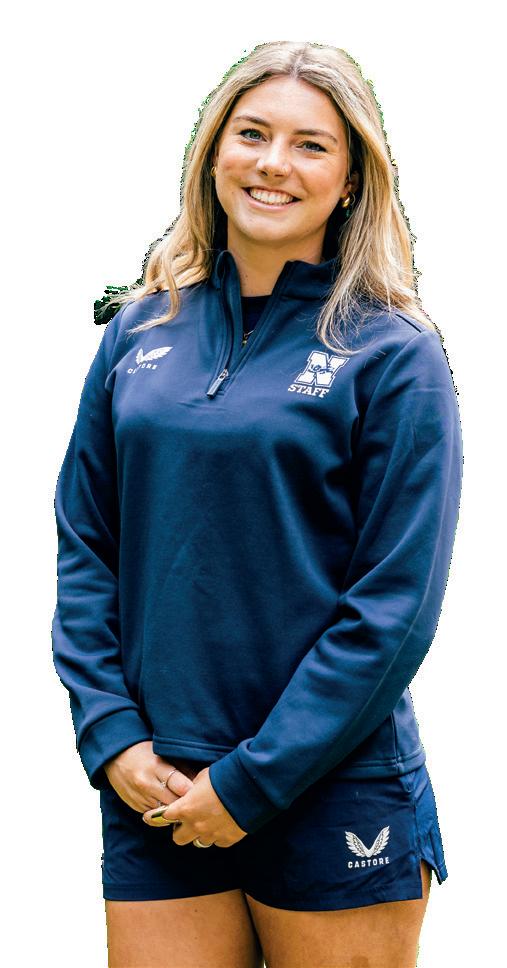
Three medals and ten debuts marks impressive start for