Over
talking about it;
Daisy Harrison -Food & Drink sub-editor

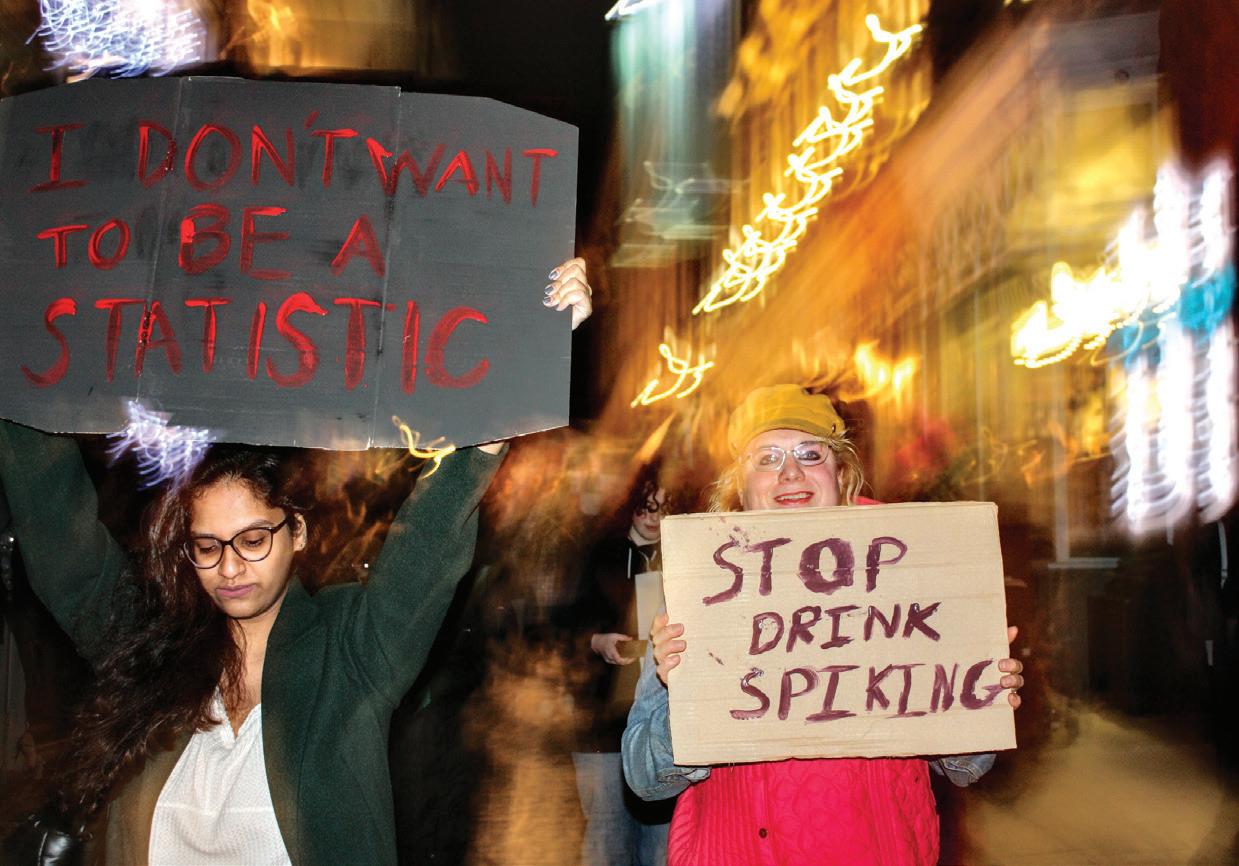
Saturday, 26 November saw the streets of Newcastle consumed by the chants of women, marching to Reclaim the Night. Starting on Bigg Market, and leading to Baltic Square by the Quayside, crowds of women rallied together, raising their voices, and demanding for an end to genderbased violence.
Reclaim the Night marches started as part of the Women’s Liberation Movement in 1977, urging for a change to the safety of women and girls, where ‘woman’ is defined as anyone who self-identifies as such. Saturday’s event was delivered by the TUC Northern Women’s Group, in collaboration with West End Women and Girls Centre; It Happens Here; Rape Crisis Tyneside and Northumberland; and Newcastle University Students’ Union. The main aims of the march included:
- Raising awareness of the level of violence against women and girls across the world, and making sure people keep
- To demand that local leaders, politicians, and decision-makers take action to ensure our homes, streets, and institutions are safe for all women and girls;
- To remember all those lost to genderbased violence and show solidarity with those fighting to end it.
Upon arriving at Bigg Market, a large group of women had gathered, with many blowing whistles and carrying posters, which displayed messages such as ‘vulva la revolution’ and ‘cats against catcalling’. At 18:00, the march proceeded down Highbridge, towards Grey Street.
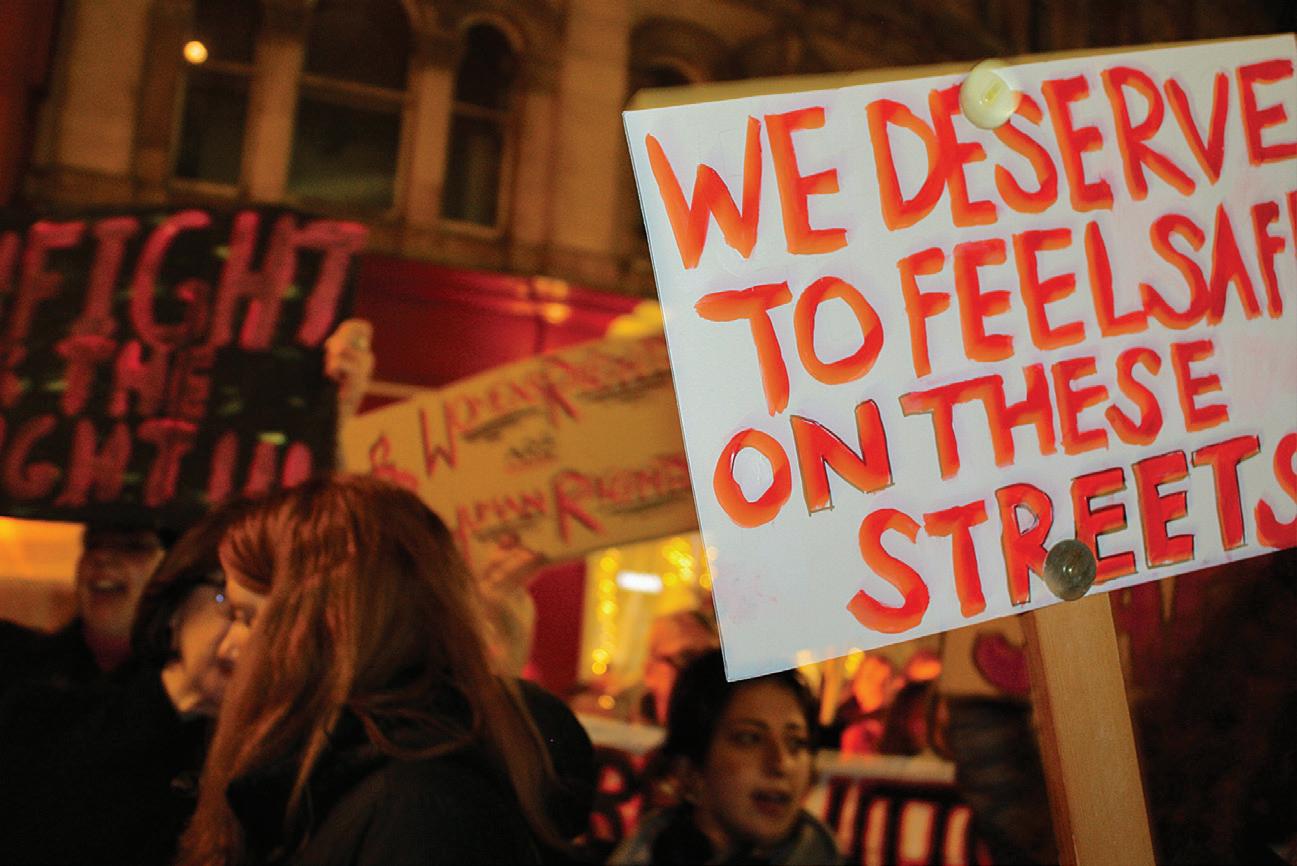
The general reception to the march was positive, with most people looking
interested in learning about the march, filming, or clapping. Additionally, chants of: ‘What do we want?’ ‘Safe Streets’, ‘When do we want them?’ ‘Now!’ and ‘Whose Streets?’ ‘Our Streets!’, paired with the noise of whistles and megaphones, caught the attention of passers-by. President of ‘It Happens Here’, Abigail Hardcastle, described the march as “an extremely emotional experience...one of the most moving parts of the march was when we were shouting ‘Whose Streets?’ ‘Our Streets!’...that collective voice demanding change was very powerful”. Although the march was met with the confirmation that gender-based violence is still very present in the streets of Newcastle, when a crowd of men began to boo the march, NUSU President, Madeline Baugh, commented that their behavior was “embarrassing” and “disgusting”, with it only “exemplifying exactly why we have to keep marching to reclaim the night... our voices matter, they have power, and they make a difference”. The men’s adverse reaction towards the march thus only stirred the women to raise their voices even louder and proceed in
solidarity with their reclamation of the night.
violence.
Once the march arrived in Baltic Square, candles were lit and a minute’s silence took place to remember all the women and girls who have lost their lives due to gender-based violence.
Drivers blew their horns in support of the cause, which contributed to the lively atmosphere of the march, and rallied the marchers down the hill. Once at the Quayside, we were met by ‘The Bangshees’, who are an all-female samba drumming band. They brought a lot of great noise and attention to the march, with passers-by stopping to film it. Before stopping in Baltic Square, the Millennium Bridge was the last point in our route. At the request of TUC, Gateshead Council had lit the Bridge up in orange. According to UNESCO, orange symbolises a brighter future, free of violence, and therefore demonstrates solidarity in eliminating gender-based
This was followed by several speakers, including TUC’s Pat Heron; NUSU President Madeline Baugh; It Happens Here President and Welfare Officer, Abigail Hardcastle and Olivia Wilson; West End Women and Girl’s Centre; and many other inspiring women. Madeline encouraged everyone present at the march to take part in a song, with the lyrics ‘she is weary from standing alone’ and ‘there is power in solidarity’, while Abigail and Olivia recounted their experiences of gender-based violence. Whilst each woman had a different story to tell, they were united through their commitment to demanding an end to violence against women and girls.
Abigail Hardcastle told The Courier that “Reclaim the Night enabled our society to amplify survivor’s voices by calling for action, showing institutions that their inaction to deal with these issues is unacceptable and will not be tolerated”.

Members of It Happens Here were holding their ’85 hands for 85 women’ banner, which was created to mark ‘International Day for the Elimination of Violence against Women’ and represents the 85 women who have lost their lives due to gender-based violence so far this year. The banner acted as a pertinent reminder for all those present at the march as to why it’s imperative that we demand for action in relation to gender-based violence.
Reclaim the Night gave a voice to some of the women and girls who are otherwise marginalised, allowing them to stand in solidarity, and demand for change against gendered violence. Pat Heron invited everyone to attend the march again next year, showing that we still have a long, arduous journey
will no longer be necessary to



Issue 1436 Monday 5th Dec 2022 thecourieronline.co.uk
before
take to the streets, raise our voices, and demand for an end to gender-based violence against women and girls. Est. 1948
it
collective voice demanding change was very powerful”
Abigail Hardcastle, IHH
Free every week Music | pages 20-21 The independent student paper conundrum Campus Comment | page 6 Forget the football, which is the best World Cup single?
“The
-
President
200 people take to the streets to ‘Reclaim the Night’ The dark side to birth control Has the pill really liberated women? Realtionships | page 12 Each woman had a different story to tell but they were united through their commitments World Cup bangers! Should Students’ Unions control the content published by student-led journalism?
Original photography: Laura Kasongo
A note from the Editor
Ireally believe that Student Media is about stepping out of your comfort zone and trying something new.
There is a card on the wall in my office, written by James Sproston (a previous Editor of The Courier), that says “always remember, none of this matters”; and while I don’t wholeheartedly agree with the statement, the magic of student journalism is the learning experiences that it provides! Your time as a student is a time to make mistakes, a time to have fun, and the exact same can be said for Student Media.
In this job, I’ve pushed myself more than ever before and done a whole host of things that I would never have imagined in my wildest dreams. Recently, I had the pleasure of speaking at the Alumni Convocation alongside those high-up in the University. It was an honour to be able to spend the whole day talking about how much I love the Students’ Union. To have an audience full of people who wanted to hear, and cared about, the student voice, is something that doesn’t happen all too often.
There are "WTF?" moments in this job. Moments when I ask
Inside 5th December 2022
Current Affairs | Campus Comment
Things I wish I knew as a fresher Final year students reflect on their time at Newcastle, from the importance of loving your subject to FOMO | Page 6
Current Affairs | Science
COP 27: All bark and no bite? A deep dive into the 2022 United Nations climate change conference, that granted some change but left other stones unturned | Page 11
Life & Style | Lifestyle
Facing my inner critic Many of us can sink into the unorthodox comfort that self-criticism affords us, so how do we challenge that hypercritical voice? | Page 14
Life & Style | Food & Drink
From grey to ole: Cafe
Andaluz review
With gorgeous decor and food edible to the eyes first, we take a look at what the tapas restaurant has to offer | Page 19
Culture | Film
Bones and all: a gorgeous love story See how Luca Guadagnino's production derives beauty from brutality, in a cannibalistic story of romance | Page 25
Culture | Arts
A review of NUTS' 'Betrayal' NUTS' first performance of the year was a hit, but how did it manage to captivate it's audience so well? | Page 27
myself, "How did I get here?”, and sitting on the panel with people far more experienced than me at Convocation was one of those moments!
I also had the honour of sitting opposite the incredibly talented columnist and broadcaster Steve Richards over dinner the same evening. Hearing about his journey into journalism was so inspiring. A huge thank you to him for the encouragement with my career path; having those small moments of mentoring is something that I will never forget!
The last week has definitely been one of the “OMG!”
moments! The Sabbs were all lucky enough to be gifted a trip to the ice-skating rink at the Centre For Life to help them film their promo video (yes, that’s right, I’m having my first social media ad appearanceteehee). Anyone who knows me well knows that ice-skating isn’t something that comes naturally to me, and that doing it - even if I was only on the ice for all of only twenty minuteswas a massive deal.
I’m so thankful for the
opportunities that student media at Newcastle has given me, and undoubtedly will continue to give me!
There are so many moments in these last six months that have pushed me out of my comfort zone in ways that definitely would not have been possible outside of this job. It is something I’ll forever be grateful for!
See you all next week, for the last issue of 2022.
Much love,
--
THE COURIER SECTIONS
Editor-in-Chief
Meg Howe (she/her) -- mediaofficer.union@newcastle.ac.uk
Current Affairs
Senior editor: Elsa Tarring (she/her) -- e.tarring1@ncl.ac.uk


News
Hannah Gul-Khan Alice Holmes Rhys James Amana Khan Ella Winskell
Campus Comment
Alexander James Ashna Mathur Sam Norman
Opinion
Ross Bennett Jonathan Lee
Science
Isabel Lamb Anthony Welsh
Sport
Senior editor: Katie Siddall (she/her/they/them) --k.e.siddall1@ncl.ac.uk
Campus Sport Liason: Castor Chan (she/her) --k.n.c.chan1@ncl.ac.uk
Tom Barlow
Arthur Ferridge Paige Rutter
Life & Style
Senior editors: Gabbi de Boer (she/her) --g.de-boer2@ncl.ac.uk Scarlett Welch (she/her) --s.welch11@ncl.ac.uk
Relationships &
Date
Deputy Editor
Sophie McNally (she/her) -- s.c.mcnally2@ncl.ac.uk
Culture
Senior editors: Carly Horne (she/her) --c.a.horne2@ncl.ac.uk Rachael McCreanor (she/her) -- r.mccreanor2@ncl.ac.uk
Music
Lucy Bower Rowan Christina Driver
TV
Jenica Davis Zahra Hanif Molly Jackson
Olivia Crowley Imogen Smillie Film
Fashion
& Beauty
Samantha Seidu Lizzie Yockney Travel
Jude Parkinson
Elžbieta Voverytė
Food & Drink
Daisy Harrison Abigail Roch
Rachel Carron Mitchell Hall Jessica McKeown Arts
Louise Cusine Sarah Tunstall
Puzzles
Social Media
Head of Social Media: Autumn Keil (she/her) -- a.keil2@ncl.ac.uk
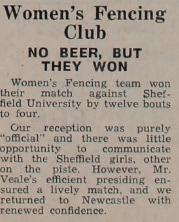
From the Archives!
66 years ago today!
We covered the university women's fencing team, as they boasted at 12-bouts-to-four win against Sheffield University.
Mr Veale's management of the team paved the way for a golden win for the team.
Our newspaper's editorial team was that thrilled that the tagline was: "No beer, but they won".
Blind
Ruby Butler Georgia Purcell Lifestyle
Vol. 9, No. 7, 6 December 1956
Meg Howe xoxo
Tyne and Wear Metro could expect to see future expansion
Jade Wilkinson
Denton and Scotswood remain without a Metro stop whilst others such as Jesmond have access to two stations. Many are arguing that the yellow line should be extended to link up with the West End.
From Haymarket Bus Station to the Metro, Newcastle has some brilliant public transport infrastructure.
Many Metro stations such as Regent Centre and Four Lane Ends offer links to local bus services as well as the option to Park and Ride. However, despite being built over 40 years ago there are still places in the West End of Newcastle and North Tyneside that the Metro does not reach.
In 1991, the Metro was extended to the airport and in 2002 it was extended to Sunderland. However, key areas of Tyne and Wear are still missing out on the Metro.
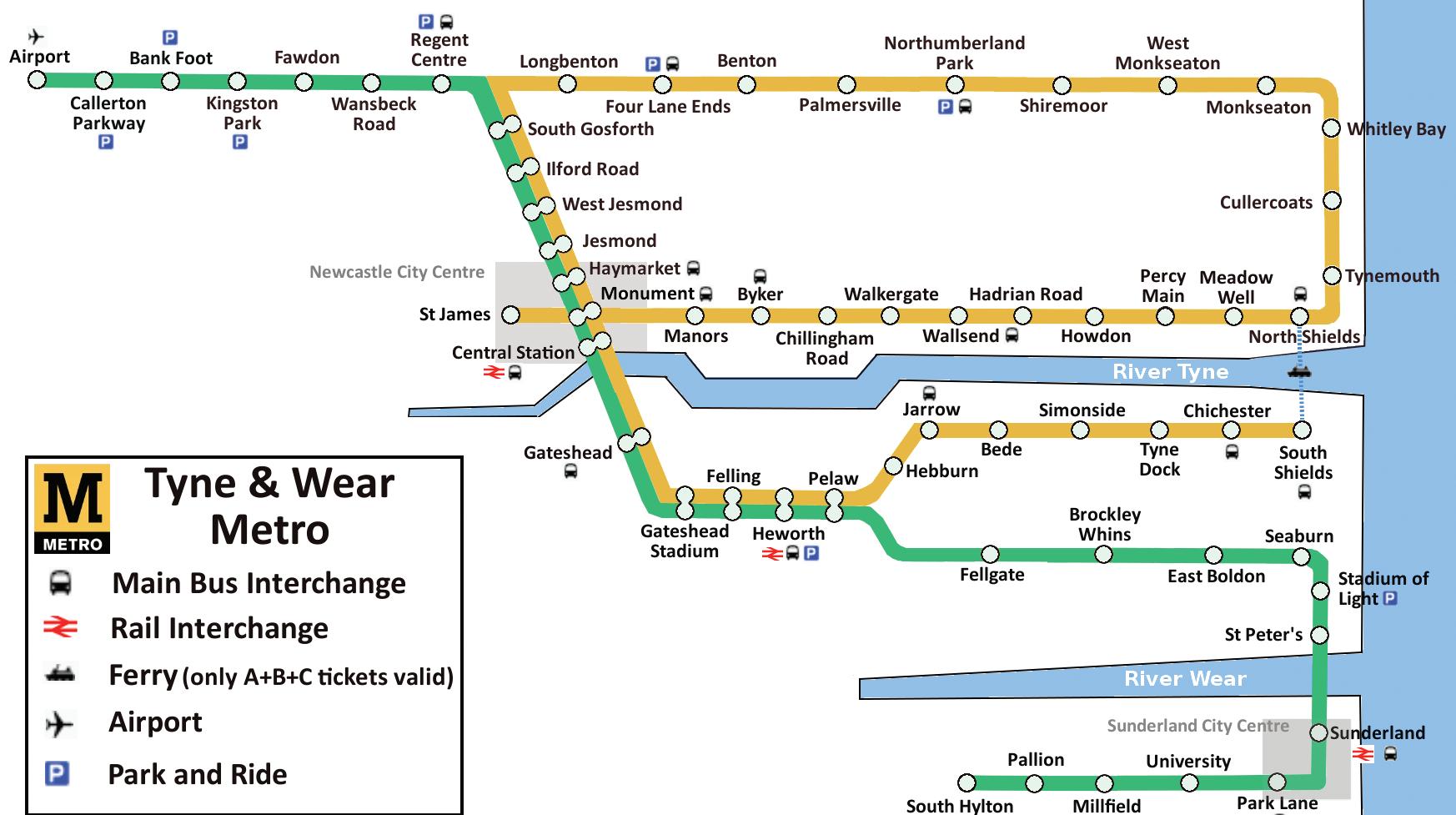
As the Metro Strategy 2030 report identifies, the West End of Newcastle is one of the most densely populated areas of the city, yet the Metro currently only goes as far west as St James’. Elswick,
Initial steps have been taken to make the case for extending the Metro to Washington but what if we could go even further? If we wanted to be ambitious, we could connect the Metro to South East Northumberland and wider parts of North Tyneside. A new line could be developed to link up postindustrial areas such as Ashington, Blyth, Cramlington and Dudley which could then join the existing yellow line at Four Lane Ends.
The new plans for the Northumberland railway line are welcome, with the final result set to intersect with Northumberland Park Metro station, but new Metro stations could thrive alongside the new route making transport easier for everyone.
A Metro system that works for your work should also work for your leisure and recreation. The X18 Arriva service takes people around three hours to get from Haymarket to Seahouses.
Developing a new coastal line, starting
at Tynemouth and heading north, could link up areas such as Seaton Sluice, Newbiggin and Seahouses to the city centre. This would give people the opportunity to access coastal destinations within minutes and could possibly reduce traffic congestion in the car parks of local beaches on busy days.
Silverlink, new Metro stations would do exceptionally well.
Looking forward, commitments to accessibility and sustainability need to be at the heart of any future Metro proposals. A previous documentary details how passengers were already swapping their cars for the Metro in the
1980s.
Expanding the network to more areas in the North East will not only help the planet, but it will also make transport easier for us all.
Building new train stations and renovating disused ones could employ hundreds of people but it could also ease pressure on the existing bus network, helping companies such as Arriva improve services.
For example, Killingworth already has an excellent bus station outside the shopping centre which could be joined up with a new Metro station to create an interchange. At other major shopping centres such as the Metrocentre and

Domestic abuse warning in face of World Cup kick off
 Ella Winskell - News sub-editor
those that feel they could be at risk of displaying abusive behaviour in their own character to access before their actions escalate, directing them towards ‘Respect’, the national helpline. This comes after discussions with victims reported wanting more conversation with perpetrators.
However despite this outreach, the force took a strong stance against abusive behaviour, Detective Chief Inspector Les Goodliff saying:
abusive to friends or colleagues makes it clear you’re focused on abusing your partner.
Pointing at someone else, playing the blame game, creating a narrative
to explain your actions – these are all excuses and these excuses are allowing you to be stuck perpetrating these behaviours. It’s your responsibility to choose not to
abuse someone, so if you recognise you are or are heading that way, take control of yourself and get help.”
Northumbria police have released a strong statement ahead of both the World Cup and the Christmas season against domestic abuse.
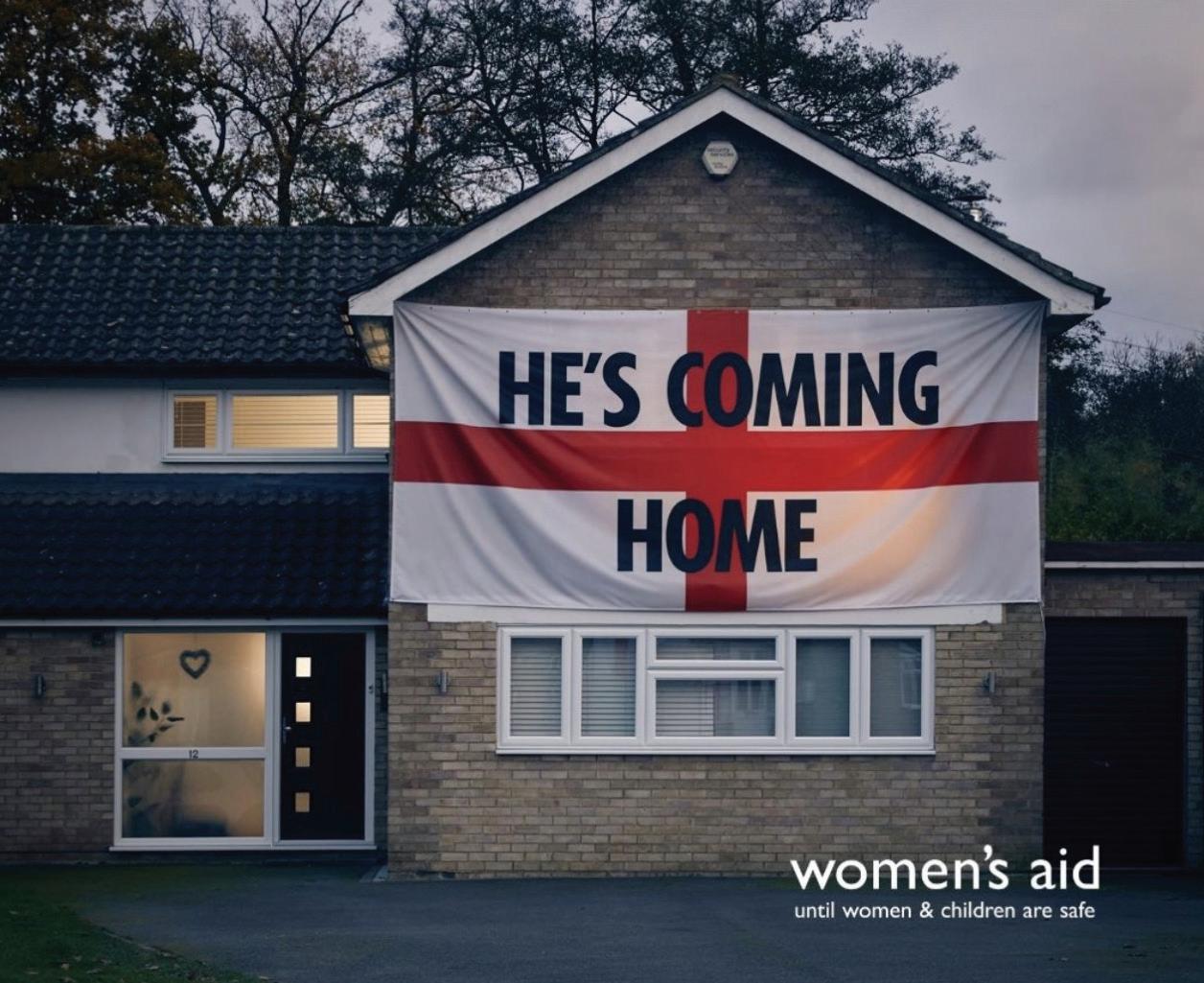
This was done in support of victims across the north east after reports have shown that the number of domestic abuse cases rise during football matches, with Women's Aid recording an increase of abuse by 38% if England lose.
The announcement makes perpetrators and victims both aware of the many forms that abuse can take, including emotional, physical, sexual and financial. It also shows understanding that it can be both inflicted by words and/or actions, and encourages the recognition of abuse in addition to encouraging victims to come forward.
The police also reached out to
“We are here to make it clear that there can never be any excuse to abuse someone. It’s not football, alcohol, or stresses in home life which are responsible for this behaviour – the only person responsible for their actions is the one carrying out the abuse.”
Adding to this was Northumbria Police and Crime Commissioner, Kim McGuinness, who released this statement:
“It’s important that we communicate loud and clear that there’s no excuse for domestic abuse and no-one should have to experience it.
A partner who is violent, abusive, or controlling has nothing and no one to blame but themselves. These behaviours are never OK, these behaviours need to change.
If you know your behaviour becomes violent when you have a drink, then your choice to continue drinking means you are choosing to use violence – it’s that simple.
You can’t say you ‘just lost control’, the very fact you’re choosing not to be
THE COURIER
Khan & Ella Winskell News 3
Sub-editors:
Hannah Gul-Khan, Alice Holmes, Rhys James, Amana
A metro system that works for your work should also work for your leisure and recreation Police issue warning after reports of domestic violence spiking during football matches
Image credit: Wikimedia Commons
Is there a case to expand the Tyne and Wear metro?
Image credit: Instagram (@womens_aid)
Content warning: mention of domestic abuse Monday 5th December 2022
Stack pop-up shelved because of objections
Sophie Mcmillan
Since Stack closed in May 2022 to make way for new HMRC offices, plans were submitted to have a pop-up version of the venue in time for Christmas, occupying the site behind the Central Station - the Stephenson Quarter.
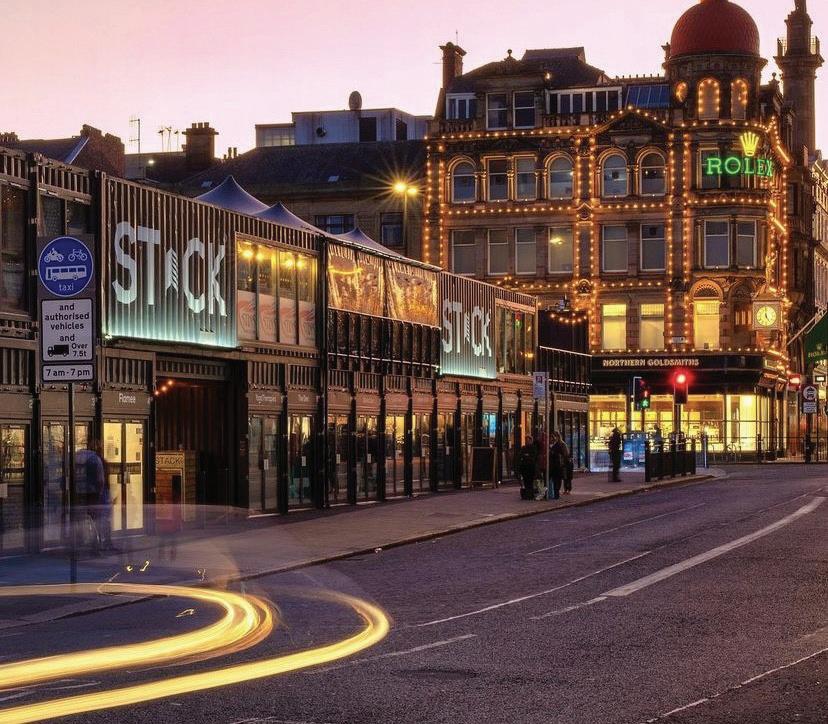
Originally, the temporary pop-up plan was for 23 shipping containers, a tipi, a tent and bars with an outdoor music space to occupy the plot. This would last a year before moving to the soon to be redeveloped Worswick Chambers in late 2023.
However, objections were submitted by The Crown Plaza Hotel, Royal Mail and North East Futures University Training College.
The hotel owners claimed that Stack would be out of place in the area and argued noise would harm its guests and cause disruption to sleep. Royal Mail’s claims mentioned noise as well as staff accessibility for the site, whereas the college was concerned primarily about the safety of students during lunchtimes and the travel home.
This was especially a concern with an increased traffic presence and inevitable drunk patrons nearby for nearly all of the school day. These issues appear to not be addressed in the planning applications, much to the frustration of the college.
Due to these objections, the Danieli Group, founders of Stack, confirmed that planning applications have been withdrawn and the full focus is on the
permanent return. The new, flagship Stack will be split over three floors and feature an outdoor courtyard, eight bars, seven street food units, two cocktail bars as well as a roof terrace. Final hours for the new Stack may change, but as of now, the approved license application will allow music and alcohol from 10 am to 2 am, seven days a week
Durham grad joins astronaut scheme
Rhys James - News sub-editor
Dr Rosemary Coogan, 31, from Northern Ireland, is now one of 17 successful candidates selected out of more than 22 500 applicants by the European Space Agency (ESA).
She will soon begin to be trained to the highest level of standards specified by partners of the International Space Station at the European Astronaut Centre in Cologne, Germany.
Following the 12 months of training, Rosemary, alongside the four other career astronauts selected by ESA, will enter the next Space Station training phase. Once assigned to a mission, their training will be tailored to specialised mission tasks.
Rosemary holds two master’s degrees from Durham University. In 2013 she completed her undergraduate master’s degree in Physics, and in 2015 she received her master’s degree in Astronomy, where she conducted research on gamma-ray emission from black holes.
As if this were not enough, in 2019 Rosemary graduated with a doctorate in Astronomy from the University of
Sussex. During her doctorate, she spent a year as a visiting scientist in Paris, two weeks as a visiting astronomer at a Hawaiian observatory and travelled to other countries to present her findings at several international conferences.
In an interview with ESA, Rosemary talks about how her interest in becoming an Astronaut came about: “Space has always fascinated me. My current job is to actually look at how galaxies grow and evolve with time, but I particularly applied to the space programme because I really wanted to get hands on with contributing and learning the most that we can from space.”
Professor Paula Chadwick, Head of the Department of Physics, Durham University said:
“Rosemary was a super student and we’re so thrilled that she has been selected as one of ESA’s new generation of astronauts.
"It will be fantastic to see the knowledge and learning she acquired at Durham be put into practice and we will be watching her progress with great interest and pride. Congratulations Rose!”
Out of the 17 new candidates chosen by the ESA, three of the applicants are from the UK. These include Meganne Christian, John McFall and Rosemary Coogan.
Jeremy Hunt releases new Autumn Budget
Amana Khan - News sub-editor
government's rising debt, Hunt announced that the 45p tax threshold would decrease to £125 140. Hunt will also be continuing Rishi Sunak's freezing of personal tax allowances for another two years, which will ultimately lead to more people paying more tax as their wages increase. Also, the windfall tax on oil and gas businesses to 35% from 25%.
Health and education also placed an important role in the budget, with the
Chancellor increasing the NHS budget by £3.3 billion per year for the next two years.
Social care will also receive £1 billion in grant funding next year according to the budget.
Moreover, Hunt emphasised the importance of future generations, guaranteeing that the Treasury would increase school's budget by an extra £2.3 billion a year.
Overall, a clear emphasis was placed on growing and rebuilding the economy, whilst tackling the cost of living crisis. The new Chancellor's budget, which
includes tax rises, is in stark contrast to the former Chancellor, Kwasi Kwarteng's statement.
In fact, Sky News claimed that it had all the "hallmarks of a Labour budget", rather than the perceived small state, low tax budgets that are normally associated with the Conservative Party.
Chancellor Jeremy Hunt recently announced the government's new Autumn Budget. The statement opened with Hunt stating that the government's priorities were "stability, growth and public services."

There was a big emphasis on growing the economy. However, with the economy in recession, the Office for Budget Responsibility (OBR) predicted an overall growth of 4.2% in 2022.
As expected, the cost of living crisis and the energy crisis played a big role in this statement. Hunt promised that the energy price cap will increase to £3 000 from £2 500 for the average household from April.
As well as this, to support those most vulnerable, the government will introduce extra cost of living payments. This will include £900 for those receiving benefits and £300 for pensioners.
With regards to inflation, he placed global factors as the main reason for inflation but claimed that the Autumn Budget would cause it to fall next year.
As well as this, with the
5 THE COURIER News 4
Sub-editors: Hannah Gul-Khan, Alice Holmes, Rhys James, Amana Khan & Ella Winskell
Hunt's Autumn budget places an emphasis on trying to tackle the cost of living crisis, whilst trying to rebuild the economy
Image credit: Instagram (@Newcastlestack)
The Chancellor's budget is in stark contrast to Kwarteng's
Image credit: Flickr Monday 5th December 2022
UK student's mental health still impacted by the pandemic
mental health got much worse since March 2020.
Alice Holmes - News sub-editor
Despite this, 1 in 5 did not seek support during the pandemic despite facing mental health concerns. Some people admitted to not feeling comfortable enough to reach out for support. This highlights a key issue about the stigma around mental health support. The pandemic disproportionately impacted certain groups – with students being one of these. 9 in 10 young people have said loneliness has made their mental health worse during the pandemic.
their graduation and many more key moments in their academic lives.
Recent reports have shown that the pandemic has had a lasting impact on students' mental health. The charity Nightline has recorded a 51.4% increase in calls in 2020/21 and early data suggests this is set to increase. Numbers for 2021/2022 were 30% higher with a further 23% increase since the new academic year has begun. Nightline is a helpline staffed by anonymous student volunteers and has been running for more than 50 years.
It reported an increase in callers discussing stress and anxiety. There has also been a rise in calls worried about finances due to the cost of living crisis. The number of callers expressing suicidal thoughts has risen to 7.4% of calls.
Association of Heads of University Administration said universities are aware of the impact the pandemic has had on students, and are developing and improving mental health support,. This includes staff training on how to spot early warning signs, and partnering with the NHS on professional treatment for their students.
Dominique Thompson, an NHS doctor and author of student wellbeing books, said, “anxiety continues to be driven by uncertainty about the world they live in, whether that is future opportunities, eco anxiety or political concerns, alongside day-to-day worries about cost of living, academic pressure and making friends.
"We cannot underestimate how important all these issues are for young adults, and how powerless they feel when faced with such huge challenges,” she said.
The Newcastle University Student Union offers free counselling appointments and support for student’s mental health and is available to all current students. They are open 9am9pm Monday to Thursday and 9am5pm on Fridays during term time.
You can also visit Nighline.ac.uk and Ming.org.uk for more support and information.
According to recent reports, the Covid-19 pandemic has had a lasting and significant impact on the deteriorating mental health of students. This, coupled with cost of living crisis, places students in a problematic and worrying situation.
Throughout the pandemic, due to health concerns, coping with loss, handling changing restrictions, confusion and loneliness (to name a few), reports of those struggling with mental health concerns soared.
In April 2021, Mind, a registered charity, undertook research with almost 12 000 people from England and Wales. From this, they discovered a third of adults and young people said their
Whilst 59% of young people said they would enjoy school, college or uni more once restrictions eased. 21% disagreed and did not think they would enjoy returning to education. This could be due to concerns around in-person teaching, uncertainty about restrictions, combating the contrast between isolation and socialising and many more.
During the pandemic, many young people missed out on their first years of university, taking GCSEs and A-levels,
The policy manager at the charity Student Minds said the majority of students have experienced, “significant disruption in their lives”, leaving them with feelings of “grief, loss, uncertainty and a lack of confidence."
He added, "Current students experienced the transition into higher education very differently from their predecessors, and so they may feel underprepared for university life.”
Additionally, recent data from the Student Loans Company reports that 3 706 students are quitting their courses, which could be down to difficult experiences with mental health translating into higher university dropout rates.

Rachel Sandby-Thomas of the
Northumbria Uni named THE University of the Year 2022
 Hannah Gul-Khan -News sub-editor
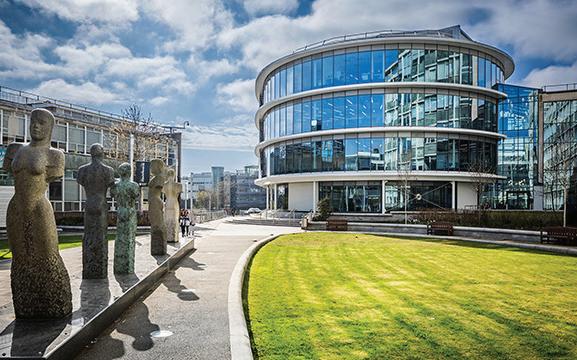
The award by Times Higher Education (THE) commended the institution for their exceptional performance and bold initiatives.
The Newcastle-based university has seen a significant rise in their REF results (Research Excellence Framework) jumping 23 places up the leader board to 27th place, earning them the title in what has been referred to as the “Oscars of Higher Education.”
Professor Andy Long, Vice Chancellor and Chief Executive of Northumbria University, believed the “phenomenal success” was due to the research-focused approach the university provides.
He said: “Our ambition is to give all students with the potential and ability the opportunity to benefit from a Northumbria education. Winning this award shows that the education we give our students is enriched by research.”
The Vice Chancellor wanted to emphasise in his statement that what differentiates the institution from many, is the number of students from widening participation backgrounds whose university experience guarantees them great employment opportunities.
“I genuinely believe what sets us apart from others is that 40% of these students are from traditionally lowparticipation backgrounds. Along with all our students, they learn from researchers and academics, participate in research and co-create knowledge", he continued.
excellence.
The Councillor went on to add: "It is also a clear signal of the strength in depth we now have in Newcastle for world-leading research and education. We are extremely proud that both universities made the shortlist for this
important award.”
Baroness Tanni Grey-Thompson, Chancellor of Northumbria University added: “When I was invited to become Chancellor at Northumbria there were two things that stood out. The first was the people, who are extraordinary, and
the second was the level of ambition. It wasn’t about being a bit better, it was about being the absolute best they could be. Winning the THE University of the Year award recognises these qualities for all to see.”
Newcastle University was also shortlisted for the award and Councillor Nick Kemp saw the achievement as “outstanding”.
The accomplishments of both universities is seen by many as a testament to the city’s academic
THE COURIER
Khan & Ella Winskell News 5
Sub-editors: Hannah Gul-Khan, Alice Holmes, Rhys James, Amana
9 in 10 young people said loneliness worsened their mental health during the pandemic
Following the Covid-19 pandemic, reports concerning mental health have soared, with students being a significant proportion of those affected
Image credit: Unsplash
40% of their students are from low-participation backgrounds
Image credit: Wikimedia Commons
Content warning: mention of abortion and rape
Monday 5th December 2022
Things I wish I knew as a fresher
First-hand advice from final year students
Lizzie Yockney - Fashion & Beauty sub-editor
It feels as though my university experience has flown by, and as cheesy as it sounds, I’ve learned so much, especially when it comes to the academic side of uni.
Firstly, I’ve learned that university is not like school, in that it is really nice to get your results back from an exam or an essay and not feel as though you have to share them straight away with your classmates. For me, as I live with people who do all kinds of different degrees, I don’t feel forced to compare myself academically to my peers.
Also, I’ve found that your degree is your own and it is definitely what you make it. This is quite intimidating at first, but especially in second and third year, it feels freeing to be able to specialise in aspects of your degree that interest you the most – this, of course, depends on what degree your are studying.
Another piece of advice I would
give myself in first year is to just enjoy it. University can be really hard and stressful, but ultimately it is such a great time to learn new things that you might never have encountered before, and to find out what you love to learn about.
Elsa Tarring - Head of Current Affairs
I’m not going to sugar-coat it, first year was tough. I started university in 2019 as a timid, risk-averse 18-year-old who was too scared to contribute in seminars and socialise with the people I’d met, all of whom seemed so much smarter and more confident than me.
It made complete sense to me to distance myself from that: if I didn’t hang out with anyone, I wouldn’t have to be confronted with my own inferiority. It’s a nice idea in theory, but unfortunately your mind doesn’t let you get away from things that easily. As you’d probably expect, spending time alone only exacerbated these feelings, and I felt myself sigh with relief when we were sent home because of Covid.

The biggest part of university that makes all the difference is your friends. My closest friends aren’t the people I
lived with in first year, nor are they people I met in Freshers’ Week, so if you’re thinking there’s something wrong with you because you haven’t found your group of people yet, don’t worry, there’s plenty of time – you’ve not even finished your first semester yet!
My course was also something that really made me remember what university is all about. My passion for my degree meant that I had something else to focus my attention onto when I wasn’t feeling particularly happy, and it’s something that, thankfully, has remained with me over the years. It might sound obvious, but is often overlooked: studying a subject you love is so important.
Finally, the societies I joined solved myriad problems I had. The Modern Languages Society
allowed me to meet people with shared interests, while The Courier (shameless plug) gave me a newfound passion and a really relaxing and enjoyable way to spend my time.
Molly Jackson - Lifestyle sub-editor

Pulling up on that first day, bags in hand, with way too much stuff, saying goodbye to my parents with an apprehensive smile, I could never have imagined what the next three years would bring me. So, if I could go back and tell myself all about my life now, my regrets, my mistakes, would I?
There are many things that I wish I knew when I started university. I had glamorised it so much in my head that any experience would struggle to live up to my expectations, especially during the Covid years.
Although I was blessed with an amazing group of people, there were many times that I felt lonely and that I wasn’t making the most out of university life. It’s a fear that we’ve all had. FOMO ruled over my life with an iron fist but if I could shake the insecurity out of that girl, I would,
Toast or Roast: Armstrong Building
When I first came to Newcastle, my Mum and I wandered around campus, imagining what life would be like in the next couple of months. I stood under the Armstrong Building’s entrance, and she pulled out her camera, “Let’s take a picture, then you can remember this moment.”
I think about that photo every time I walk to campus and how it was the beginning of everything. Although I look very different now, I still remember the feeling vividly, overwhelmed with pride and joy. Everything I’d worked so hard for manifested itself into that moment, that image.
Back then, I had decided the structure was quickly my favourite, and it still is. I
ever been more offended at that moment. However, we do share a mutual hatred for the massive, spiralling marble staircase. That ‘roast’ I can get behind. Not only the sentimental value but the beauty and history of the architecture is why it’s probably my favourite building on campus. Everything from the traditional red brick to the large organ in Kings Hall. Even the history of the building. I wonder how many students have passed through those halls since 1887, what they studied, and if they felt the same way I do about the building.
Although the exceptional architecture and natural beauty of the building gives reason to why it’s so widely loved, for me, it’s equally as much the image my Mum took months ago. A beautiful little memento of my existence still lingers in the cool air under the Armstrong Building, like a ghost to haunt students
because she didn’t need to feel that way.
The work was hard at first, but the leap from A-level to university always is. Maybe I would tell myself to worry less and read more, tell myself to be more organised, keep that folder, print out my notes but in the long run, I don’t think that would change anything, and I don’t think I’d want it to.
University is about balance and I managed that, in my own disorganised, messy way.
I had fun, I got drunk, I laughed, but in the morning, I got up, I got dressed and I opened my computer and I worked as hard as I could. I didn’t always get firsts and I would be so frustrated. That 69% at the end of the year felt like a kick in the gut, despite my lecturers praising me for a job well done, but if I didn’t struggle, I might have given up.
So, in short, yes, I would go back but not to warn, prevent, or change, but to reassure. I have grown so much over the past three years and will only continue to do so because that girl who packed her bags, and who endured all the fresher’s small talk pushed herself and created an amazing life full of great experiences and people who care about her.
The relationship between SUs and student-led journalism...
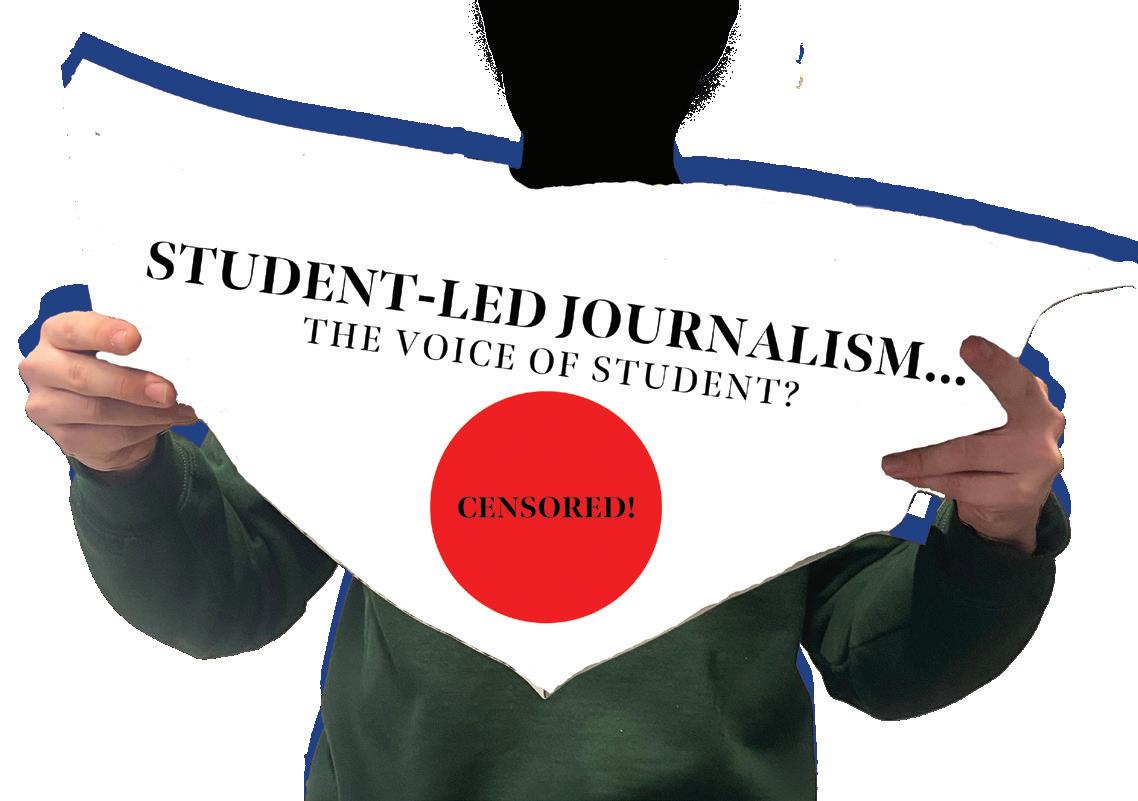
On 10 November, Durham University’s student-led paper Palatinate voted with an overwhelming majority to separate from Durham's Students’ Union. The move came as a result of a two-year dispute with the Union. The final straw came in the form of a trademark application (an intellectual property claim) made without the knowledge of the paper’s editorial board. This recent development undoubtedly calls into question the role of any Students’ Union in student journalism. On every level, the purpose of journalism is to present objective facts to the reader so that they can better understand a situation. Use and restriction of funding to manipulate the nature of an article or publication go directly against its core principles. This, of course, is all too common on a national and international stage. In the UK, a handful of billionare buisness magnates own most of the print and online media in the UK: Richard Desmond with the Daily Star, Sunday Star, Daily and Sunday Express; Lord Rothermere owns the Daily Mail, Mail on Sunday, Metro, The i and JPIMedia; the so-called ‘Murdoch Empire’ now consists of The Sun, Sky, Fox among many others.
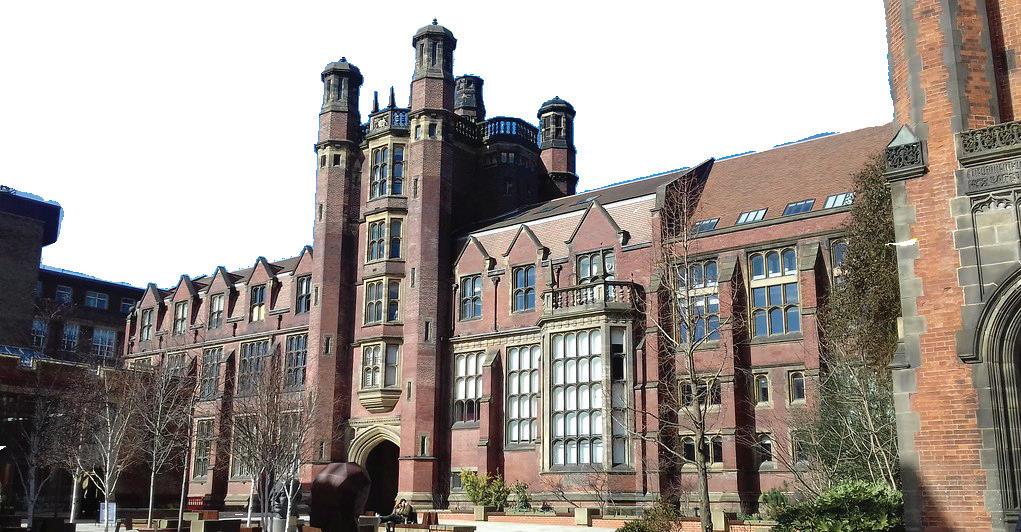
In the case of student media, publications are not owned by billionaires with vested international interests, yet they still suffer from the oversight and influences of their funding bodies, the Students’ Unions. The situation with Palatinate represents a serious failure in regard to oversight. A system student-led journalism could take is similar to that of The BBC The British Government ultimately
owns and funds the corporation through taxpayer’s money, but the organisation is allowed to report its own stories. This includes those critical of the government, which allows for the principle of journalism to objectively report facts and criticise. However, arguments do remain that The BBC is not entirely free to report on every story and selects a pro-UK bias.
This would allow for unfiltered criticism of the Students’ Union and university. Without this system, union activities could go unchecked and unnoticed by the student body. This would lead to a non-representative establishment. Even on a small-scale, media must fulfil this criticising role.
An entirely separate media would not work or be inclusive. Students’ Unions should still provide funding towards student media. Student papers are written by those with a vested interest in journalism. Funding this allows students to develop skills and learn about journalism in an accessible environment. This is an essential and valuable resource and enhances the role of the Students’ Union.
for student media should absolutely involve a separation on the part of the editorial body from the Union.
In my opinion, student media would not succeed without an established and committed obligation with the union. This would allow for editorial freedom but secure
5 Monday 5th December 2022 THE COURIER Campus
6 Sub-editors: Alexander James,
& Sam Norman
Liibby Griffiths
Comment
Ashna Mathur
Image Credit: Flickr
Joseph Thomas
Student media allows students to learn about journalism in an accessible way
Image Credit: Meg Howe
Image Credit: Openclipart
Campus Comment
The importance of The 93% Club's employability workshop
 Anthony Welsh - Science Sub-Editor
Are you state school proud? Then why not join the UK's least exclusive member's club!
The 93% Club recently hosted a guest CV and application workshop with social mobility charity upReach on Wednesday 16 November.
As an upReach associate, I was invited to attend and share with the room my experience as an associate on their Tech500 programme.
The workshop, presented by upReach’s Ben Wilkinson and Jozy Scott, was open to all students on campus, a one-stop shop for helping students to create an effective and impactful CV and cover letter.
Starting with a game of “human bingo” and some surprising facts (did you know employers on average spend less than 9 seconds looking at a CV?!), the session helped students to articulate their skills and knowledge to match employer vacancies.
What is The 93% Club? Let’s ask 93% Club Newcastle President Megan Lambert: "The 93% Club is part of a national foundation that is committed to tackling elitism and aiding social
mobility. We exist because 93% of the UK are state school educated and yet state schooled professionals only make up 35% of senior judges, 43% of the House of Lords and 34% of FTSE 350 CEOs."
Aligned with this statement, upReach asks in their pledge, “Do YOU think it is FAIR that a student from a disadvantaged background who gains a first-class degree from a top university is less likely to secure an elite job than a more privileged student with a 2.2?”
I’m from Hebburn, a town on the Tyne along with Jarrow which has historically struggled in the wake of post-industrialisation. Neither of my parents went to university.
While applying to be an associate with upReach, I entered my family home postcode into the ONS tool for identifying places where young people are less likely to enter higher education. I discovered that the area where I grew up and went to school was designated POLAR4 Quintile 2, the second lowest quintile.
Without Newcastle University and support from organisations like The 93% Club and upReach, I wouldn't have had access to half of the opportunities I've had this year alone.
While individual stories of social mobility may allow for
inspirational reading, they don't always paint a true picture.
Data published by @TheIFS and @ SuttonTrust in their 2021 Universities and Social Mobility: Summary Report gives us a clearer picture of social mobility and how it is influenced by higher education pathways.
The data shows that young people from less well-off backgrounds are less likely to attend HE, or attend post-1992 universities, with mixed outcomes in terms of income. More affluent young people are much more likely to attend Russell Group institutions, with the best earnings outcomes.
If you're worried about your graduate prospects, be assured there are networks out there for students "without a network".
To join the 93% Club, visit their Instagram
UCU strikes: are their actions methodical or just madness?
Katy Saunders
Unless you’ve been living under a rock recently, you will have heard or been affected by the University and College Union (UCU) strikes, which have been happening across 150 different universities nationwide. With over 70 000 members of staff participating, it is the biggest yet, potentially impacting 2.5 million students. So with this is mind, why are the strikes happening? And are their strategies based on method, or madness?
The main motivations behind the
strikes include pay, which has been cut by 17% since 2009; a lack of job security with many UK universities employing staff under zero-hour contracts; and pension cuts, which have led to the average member losing 35% from their future retirement income.
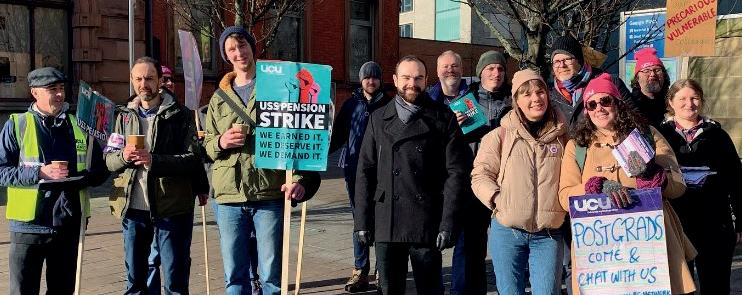
The reasons behind the strikes are undoubtedly compelling: university staff have been subject to consistent poor treatment, with government responses being underpinned by inaction, arrogance, and disinterest.
With their demands having been dismissed time and time again, drastic action is both inevitable and understandable. But despite the validity of their concerns, one must question whether the strikes are effective.
The immediate impact falls upon students, who aren’t actually the people at fault. Most of us are spending a minimum of £9k a year to be here, so is it fair that our education suffers as a result?
The people at the top, who have real power and real influence in turning the wheels of change are not being put in the immediate firing line, we are. One could counter this by saying that the reaction against the strikes does apply pressure to the government. But is that really enough? I fear that the demands of UCU will be continually ignored if the impact of strike action remains unfocused. Are students really the right group to be targeted here? Furthermore, I must question whether
it is constructive to alienate students in the way these strikes sometimes do. For those of us who commute into university, for those of us paying an arm and a leg for our education, how do these strikes make us feel?
Whilst I raise these points about the recent action, equally, I do not want to take away from the fact that university staff are seriously suffering. Although their campaign methods aren’t perfect, arguably what other choice do they have? Something has to happen, and as students, perhaps it is important for us to accept some disruption on our end, for the greater good of our lecturers.
Let's chat access: we're well overdue
Leo David Prajogo
accessability needs
There’s a conversation I want to start. I don’t think it’s a conversation many people want (or think is needed) to have. It starts something like this:
“Sorry I can’t attend the training session - the lift is broken again.” Or “I’m not coming to this social - the only way to get to that room is a flight of stairs.” Or “I’d love to do this thing, but ableism called, and it says I’m not allowed to do something that all my able-bodied friends have access to.”
I love the Students' Union, I really do. I love everything it offers me, and I love being part of the community. However, I don’t matter to it nearly as much as it matters to me.
It’s the one ancient lift that breaks over and over again, when the only service lift in the building is one I can’t go up in (because for some reason, health and safety allows me to use it to go two levels down from Luther’s to the activities store but not two levels up from Luther’s to the activities corridor).
It’s the room booking system that doesn’t give me disabled access even when secretaries tick the box that says “disabled access needed”. It’s the lack of awareness, the lack of knowledge, the welfare officer training that says welfare officers are responsible for making things accessible without telling them what accessibility is.
It’s that the only guidance I can find from the Students' Union as a welfare officer on accessibility is about a page hidden in the two-dozen-page-long Inclusive Societies Policy I dug through the website to find. It’s that nothing works when I need it to work, and no one says “here’s what we’ll do for you instead” - it’s just “sorry, you’ll have to put up with it”. It’s the number of people who’ve told me “I know this system is broken” and done nothing about it. It’s the fact that if I’m on level one after hours, I can’t go to the toilet without somebody running down a set of stairs, going back up in the lift, and opening a locked door for me.
It’s that because this is only a problem for disabled students, it’s an afterthought for the rest of the community. If the lift were the only way to get up and down the Students' Union, and there were no stairs, it would never break.
If non-disabled folks needed it, it would be there. But for me, as a disabled person, for my friends, as disabled people, our access is secondary. We are secondary.
This is a conversation that needs to be had. It’s a conversation societies need to listen to. It’s a conversation staff need to listen to. It’s a conversation the whole world needs to listen to, but I’ll settle for just NUSU for now. Disabled voices are speaking, but disabled voices are ignored.
This isn’t a conversation I can hold alone.
But it’s a conversation I will start.
THE COURIER
& Sam Norman Monday 5th December 2022
7
Sub-editors: Alexander James, Ashna Mathur
@93clubnewcastle. For upReach, visit @upreach_ team on Instagram.
The Student' Union continues to fall short on
Image credit: instagram @bravebrainbess

Your right-wing politics don’t make you a patriot
If you want to see a snapshot of where we’re at as a nation, I suggest you visit the reduced section in your local supermarket at 3:50pm on a Sunday. Last weekend it ripped my heart into a million pieces watching desperate people fight over discounted food. Our state has failed if people are driven to elbow each other for 10p sandwiches. Watching it all unfold felt like a smack in the face from an austerity-struck Britain.
British society is chillingly unequal. According to Gary Stevenson (Citibank’s most profitable trader turned inequality activist), if the government taxed the richest in society so that they had as much money as before the pandemic, we could give every adult in the UK £12 000. Just let that sink in. People are sitting in freezing cold homes this winter whilst the richest 1% accumulate more and more wealth.
12 long years of Tory rule have shown us their contempt for the most vulnerable in Britain.
From Osborne and Cameron’s catastrophic “Bedroom Tax” to Truss and Kwarteng’s disaster
budget, the Conservatives have proved themselves devoid of empathy for those who are on their knees and struggling. The cruel and present reality of neoliberalism is one thing, but something that baffles me about these politicians is their alleged love for Britain. David Cameron spoke of a ‘patriotic duty’ to win the general election in 2010. When he assumed office, he didn’t spare much time before he reigned hell down on the unemployed and disabled.
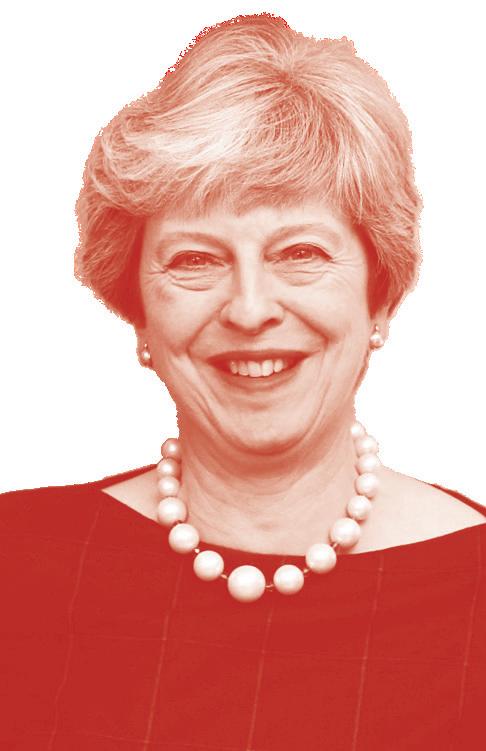
Remember Theresa May’s tear-filled resignation speech? On the steps of
Downing Street she told us that she loved the UK. Pretty rich coming from the person that wanted to make the elderly pay more for their social care in 2017. Where is the devotion to the UK and its inhabitants that the Tories claim to have?
Conservative politicians and the right-wing newspapers that support them should not have a monopoly on what patriotism is. For years they have undermined the “love” for Britain that they have proclaimed. Labour should now position themselves as the party that waves the Union Jack. Love for one’s country is a powerful thing, and it could have enormous electoral potential.


Labour are within touching distance of forming this narrative. Their policy programme boasts a vision of nationalised railways, a state-owned green energy company, a wave of new social housing and a 70% home ownership target. That’s what love for your nation looks like: a plan to care for British people and their communities. It’s time for Labour to lead the patriotic charge.
Donald Trump: has he got one last trick up his sleeve?
Parkinson - Travel sub-editor
in office pass him by without a fight.
Trump announced his 2024 presidential election bid at Mar-a-Lago with a testament to nostalgia surrounded by allies and conservative influences.
But does Trump have the same support from his Republican voters as he did in his first election? It seems that since Biden has occupied the desk of the oval office, the fiery businessman has gone down in estimations, largely due to how he performed while in office.
doubt that Trump has the monetary aid to set his electoral rally’s back into motion with the help from his deep pocketed donors. Paired with increasing fears that falsified promises will have republicans crawling back into the deceitful arms of Donald Trump, it’s a worrying possibility.
How to articulate political opinions
Zahra Hanif - Lifestyle sub-editor
While protests have been occurring for centuries as an expression of disdain, particularly in response to systemic negligence, in recent months we have seen the evolution of some more unconventional, even radical, forms of revolt. From eggs being thrown at King Charles to soup being thrown at a Van Gogh, these acts of rebellion have certainly evoked stronger opinions than your classic protest march or rally.
The question arises: as students, or young people in general, do we articulate our political opinions ‘correctly’?
In answering this, we should consider the ‘Kill the Bill’ protests that occurred over the last year or so, deemed to be a significant setback for protester rights. These came about in response to the PCSC Bill, in which the government gave police powers to impose conditions on any protest which they deemed to be ‘disruptive’ to the local community.
Essentially, this bill sought out to scare protesters into staying at home, as this ambiguous wording was intended to make them feel uneasy as ‘conditions’ could range from anything from fines to arrest.
The bill was in response to strings of peaceful protests, more just gatherings of individuals expressing their anger through banners and chants. When such measures have been taken to try and censor peaceful, seemingly ‘correct’ forms of protest, we can only expect the evolution of more intense forms of objection, surely?
While these methods are inherently more harmful and obstructive, they do their job as they become a talking point, we see more attention drawn to the subject, and ultimately, awareness is spread. A lot of people have an indifferent attitude toward the monarchy, so seeing such a violent approach to King Charles would prompt them to research the protestor's motives and learn about his cause.
I can’t say that this is necessarily the ‘correct’ way to protest or raise awareness, but you’re talking about it, right?.
The cold truth of rising energy bills
Anirban Debnath
benefits. These families will receive a one time top-up of £900.
Donald Trump often seems to be at the centre of political controversy in the United States, with his outrageous statements, misogynistic ideals, and unpredictable behaviour; he craves the limelight of the media.
Trump's addiction to wealth and authority resonates within his business empire of real estate and casinos, there’s no doubt that Trump in the early 2000s invested in the right companies to help him make his millions. Yet over the years Trumps business’ have not been preforming quite like they used to. In the last two years alone Trump has witnessed a loss of $900 million to his empire, with the demand for new, unique, bigger and better on the market, Trump’s business days seem to be drawing to a close.
Trump's greed has always been the driving force for his determination to outshine his competitors, and nothing quite screams success and power like being the President of the United States of America. It seems he’s not going to let a second term

Reflecting on how he dealt with the Covid-19 pandemic and his rocky relations with other world leaders, many have finally come to their senses that he at times put the country’s political and economic state in danger. In a recent poll it was discovered that over 60% of Americans think that Donald Trump running for president is a bad thing,
Trump has made previous bold comments in favour of the American public such as statements claiming if he were still President, he would be able to convince Putin to stop the war on Ukraine, which is having significant effects around the world. Once again attempting to win supporters over with his ambitious claims and businessmen sales tactics.
Trump is the wealthiest president in history and with wealthy connections and substantial power there is always a possibility that Trump could once again snatch a win from the democrats.
With recent political shocks such as Roe vs Wade being overturned it would be naïve to strictly rule out Trump’s electoral as a failure before it has taken off. Only time will tell whether Trump will darken the door of the White House once again.
As winter creeps closer, so does the rising concern over energy bills. The cost of living crisis coupled with the energy crisis paints a bleak picture. It is hard to shake off the feeling that those in power have an ever-increasing disinterest in finding proper solutions to these serious issues.
The energy price guarantee (EPG) is the government’s policy to tackle the steadily growing energy cost. Introduced in October, the EPG limits the amount the typical household pays for its wholesale energy, capping the average annual bill at £2500.
Chancellor Jeremy Hunt has announced that the cap will stay in place until April next year, when the threshold will be raised to £3000 and will be continued until March 2024.
The energy regulator Ofgem has said that households will not have to pay this increase. However, it must be kept in mind that the energy price guarantee is a government subsidy, so taxpayers will still be paying the extra cost, albeit indirectly. This means energy companies will still collect bloated profits and middle to lower-income Britons will still have to pay a soaring cost.
SNP MP Alan Brown said, “While the UK Government’s feeble price guarantee may initially shield consumers from the rising energy price cap, the reality is that it will be households that will be forced to pay a heavy price through borrowing to subsidise the guarantee and tax rises.”
Moreover, winter 2023 can get even harsher as the government plans to withdraw the universal £400 worth of support and provide targeted support to those in receipt of means-tested

While the smaller amount of support targets poorer families, it is a very imprecise way of providing aid to the households that are in need of it the most.
Four in 10 of the poorest fifth of households are not in receipt of the means-tested benefits and so do not even qualify for the monetary top-up. Analysis by the Resolution Foundation shows that half of the households in the poorest fifth of the income distribution will face energy bills of more than £1000 in 2023.
On the other hand, the government plans to launch awareness campaigns before Christmas to urge the public to cut back on energy usage and save cash. While this is a welcome decision, the government should also bear in mind the struggles of disabled people who are dependent on equipment, such as ventilators, wheelchairs, and feeding tube pumps. For someone using a ventilator 24/7, “cutting back on energy” is not an option.
So, what can the government do to battle the energy bill crisis? One simple solution is rapid introduction of renewable energy and more investment into the sector. Not only is this environment-friendly because of lowcarbon emissions but also, it is key to securing low-cost homegrown energy. Secondly, the government should refrain from withdrawing the £400 support next year. The government should also raise more funds from nondomiciled taxpayers and banks to fund more support for those in need.
Now is high time for the government to rethink its strategies and act. Otherwise, as the winter chills hit, Britain’s least affluent families will have to look forward to energy poverty and freezing homes.
THE COURIER Sub-editors: Ross Bennett & Jonathan Lee Opinion 9
David Luis Martinez
Jude
Trump is the wealthiest president in history and there is always a possibility he could come back for more
Image credit: Wikimedia Commons & Stockvault
Monday 5th December 2022
Image credit: Politico
Data scientists could be our best weapon against climate change
Anthony Welsh - Science sub-editor
The outcome of COP27 yielded a historic breakthrough for developing countries in the form of a loss and damage fund, but action for reducing global temperatures to 1.5°C is no further forward.
Keeping up with the COP process is fatiguing. The conference in Sharm el Sheikh is a world away from Newcastle, and COP27 followed the format we've seen before. World leaders gather to make grand but ambigous pledges, lobbyists (600 this year alone) pressure them to maintain the status quo, the buck is passed and after this period of indecision and obstruction, some lastminute actions are agreed which always fall short of what is really needed.

A recent YouGov poll found that compared to other generations, Gen Z prioritise environmental issues, gender equality and enterprise the most. Despite strong indications of a generational consensus, Sharm al Sheikh seems a world away from Newcastle. It's easy to become frustrated with complex
geopolitics you have no control over to the point of apathy. What you do have control over is your own voice to hold those in your own community accountable.
Back in February 2021, I attended the DataJam Northeast Data vs Climate Change Hackathon held at the National Innovation Centre for Data based at Newcastle's Helix Campus. The hackathon was in partnership with NICD and NEECCo (North East England Climate Coalition). The goal of this hackathon was to create a climate dashboard to tell a story of how well the northeast is performing on climate.
This dashboard could then be used to influence decision makers on a local level to take action.
At the time of attending, I was in the second semester of my Computer Science degree, with comparatively little coding experience and little grasp of the fundamentals of data science.
But I felt compelled to attend to learn how my skills could be applied to help solve problems rather than venting my frustration online, as many of us do.
As well as a ton of new skills and resources, one thing I came away with was the knowledge of a network of
Unis use bacteria to tackle climate change
Rebecca Wright
Northumbria University research promises
fuels from CO2
Novel technology has been developed by scientists at Newcastle and Northumbria, using bacterial photocatalyst sheets to generate sustainable fuels and chemicals from CO2.
This research can help to tackle climate change, and the global energy crisis.
The research involves growing bacteria on a synthetic semiconductor device, named a photocatalyst sheet. Critically, this means that the conversion does not rely on the use of electricity, assistance of organic additives, or creation of harmful toxins.
These semi-biological approaches thus offer a promising strategy for sustainably and cleanly fixing CO2 and closing the carbon cycle.
Whilst the production of plastics might not seem like a solution to the climate crisis, this semi-biological approach of the capture and removal of CO2 from the atmosphere closes carbon cycle. In turn, this means less CO2 is entering the atmosphere overall.
The new technology comes at a time of great rise in atmospheric CO2 levels. Hopefully, it will aid the securing of much-needed green
energy supplies, thus alleviating the global dependence on fossil fuels.
Northumbria’s Dr Shafeer Kalathil is one amongst the revered scientists, who said that directly addresses the global energy crisis and climate change facing today’s society. We need to develop new technologies to address these grand challenges without further polluting the planet we live on.”
These semi-biological approaches thus offer a promising strategy for sustainably and cleanly fixing CO2 and closing the carbon cycle.


friendly people in the northeast out there who are using engineering to solve climate problems.
Since then I have attended various free hackathons and bootcamps and the theme of sustainability has permeated them all. This only sought to highlight that solutions for solving climate change are the front and centre of every organisation.
You don't have to be a STEM student to learn vitally needed data skills. Thanks to engineering advances, those
to shape our world in a one that is sustainable.
As well as organisations like NICD, the BBC offers training via their Shared Data Unit using no and low-code tools to write their own stories using data journalism.
From universities, to media organisations, there are large international companies that are investing heavily in finding the next generation of engineers to create a more sustainable world. In November I was
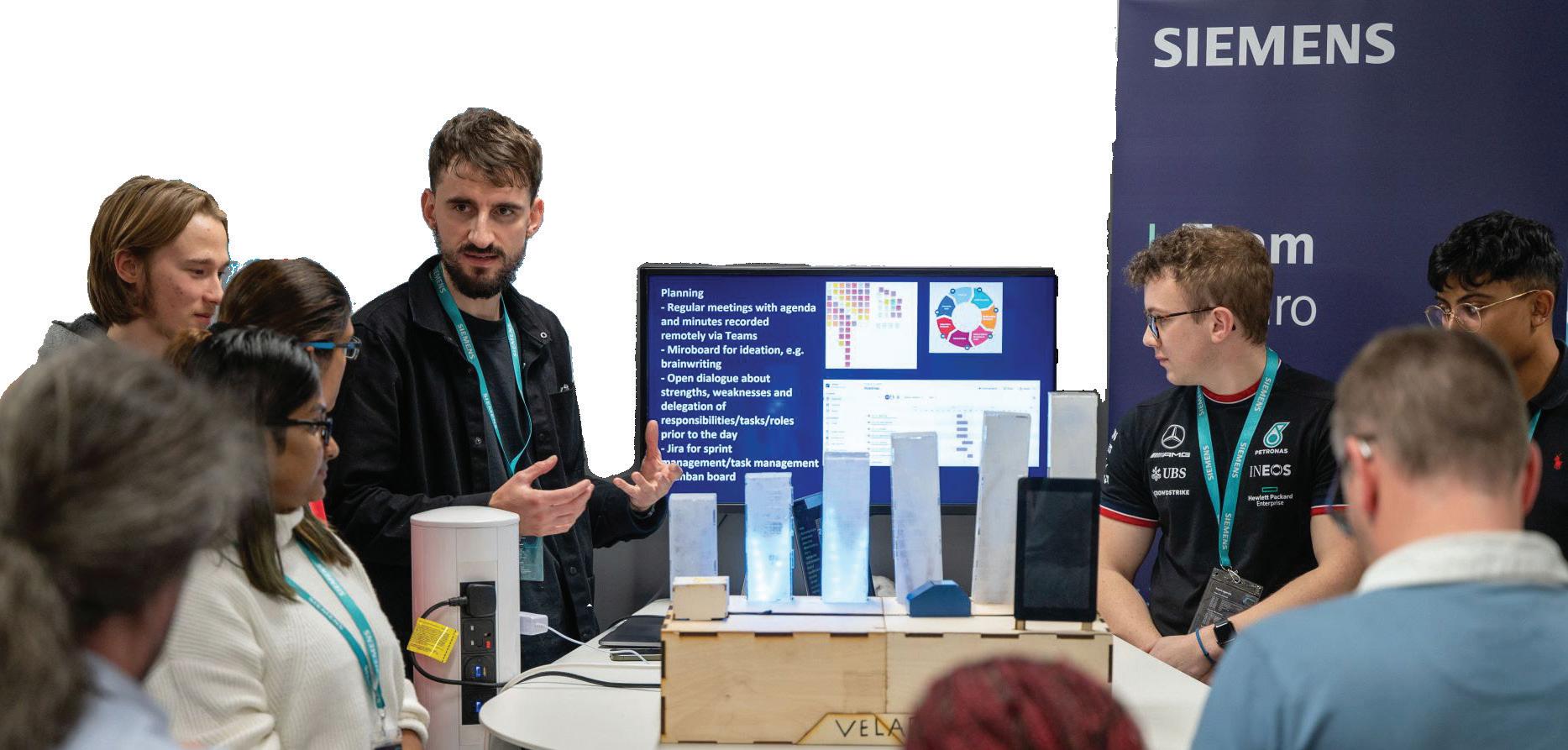
smart city model which parsed IoT data (Internet of Things) from Siemens cloud platform Mindsphere to meaningfully tell a story using data.
While I can only speak from experience, that experience has told me that we don't have to wait for politicans and big business to take action on climate change. By taking those first initial steps and working together, there's hope for solving the problems that lie ahead.
COP27: Was it all bark and no bite?
Predko
Aloss and damage fund for developing countries hit the most by climate change, world hunger and the 1.5°C limit are just some of the topics discussed at this year’s COP27 conference in Sharm ElSheikh, Egypt. But are current plans to combat climate change enough? Why are there fears that next year’s COP28 in Dubai could be bad news?
Loss and damage fund
displaced 33 million people, with more than 1730 losing their lives. The fund sounds promising - but how it will work in reality is still being organised. Sadly, very few countries have made significant pledges to this fund, and it could take until the next COP28 conference for further details to hopefully be printed.
1.5°C
At COP26, Glasgow, commitments were made to limit global temperature increases at 1.5°C above pre-industrial levels. This 1.5°C limit is not impossible to meet, as long as efforts are made to reduce global emissions 50% by 2030.
funds for systems to tackle food insecurity and hunger were established during COP27.
Fossil fuels
Whilst the production of plastics might not seem like a solution to the climate crisis, this semi-biological approach of the capture and removal of CO2 from the atmosphere closes off the carbon cycle. In turn, this means less CO2 is entering the atmosphere overall.
The new technology comes at a time of great rise in atmospheric CO2 levels.
Hopefully, it will aid the securing of much-needed green energy supplies, thus alleviating the global dependence on fossil fuels.
Northumbria’s Dr Shafeer Kalathil is one amongst the revered scientists, who said that directly addresses the global energy crisis and climate change facing today’s society. We need to develop new technologies to address these grand challenges without further polluting the planet we live on.”
There are multiple benefits to the research, inspiring budding scientists to develop their own new technologies for sustainable energy production.
During the early hours of Sunday 20 November, in a historic first for COP, commitments were made for a loss and damages fund for those countries most affected by climate catastrophes, such as Pakistan, where floods have recently
At COP27 some countries tried to overthrow this pledge – but thankfully they failed. Whether countries will metaphorically stick to their word is debatable. Tonnes of pollution is still being thrusted into our atmosphere with little sign of improvement.
Food security
Food systems are responsible for 21% - 37% of global emissions, with 57% of all food emissions coming from animal agriculture-related activities. In 2020, the USA emitted around 669.5 million metric tonnes of carbon dioxide equivalents. Safeguarding food security, ending world hunger and conserving water systems was a priority of COP27. However, there is doubt on progress in this area, as Claudia Sadoff, executive director of CGIAR, states “the text on the food crisis is not supported by actions that need to be taken”. Although a COP27 priority, very few dedicated
Fossil fuels account for around 75% of greenhouse gas emissions, and so more effort should be put on phasing-out them out. Germany signing a deal with Egypt to advance green hydrogen is promising. However, the commitment to phasing-out of fossil fuels was sadly thrownout and replaced with wording to accelerate the development of “low energy” systems. Many people fear this new wording will be used an excuse to keep high amounts of fossil fuels going. Countries such as Dubai, where COP28 is scheduled to be held in 2023, are heavily linked to fossil fuels and there is doubt whether any real progress will be made in this area before then.

THE COURIER Monday 5th December 2022 Science 11
Isabel Lamb & Anthony Welsh
Sub-editors:
(Leaf) Image Credit: Unsplash
Jessica
new technology to generate sustainable
"We need to develop new technology to address these grand challenges"
Image credit: Anthony Welsh
Image credit: Flickr
Relationships Female body count
Christmas: Not always a time of family festivities
 Gabbi De Boer - Head of Life & Style
Amana Khan - News Sub-Editor
Gabbi De Boer - Head of Life & Style
Amana Khan - News Sub-Editor
Forever, women have been told what they should and should not do with their bodies. Whether that be the clothes they wear, the makeup they wear or the people that they sleep with, women have never been given the right to own their own bodies, unlike men.
You would think that attitudes have changed but it is 2022 and we still hear and see the same sexist and misogynistic views regarding women that were present in the 1950s. Despite the sexual liberation that supposedly occurred in the 1960s, discussions around women having sex is still a taboo subject, and several debates surround a woman and her body count.
For some women sex is a natural part of their life. This could mean having sex with one continuous partner or having had multiple sexual partners. Either one of these options are completely fine, however society seems to disagree.
Women who have had multiple sexual partners and have a body count that is deemed ‘high’, are incredibly judged and subjected to terms such as ‘slag’ or ‘slut’ or ‘whore’. However, men who have the same number are cheered on and celebrated for getting ‘laid’.
Now, this is blatant sexism and reinforces the idea that women must remain ‘virginial’ and ‘pure’, whereas men can do whatever they want and not have their character diminished.
It is interesting that some men have no issue with sleeping with women with a ‘high’ body count (that conversation probably never comes up during a one-night stand because it does not matter in that moment for men). However, the same men do not find it plausible to be in a relationship with a woman with a ‘high’ body count as it is not seen as a desirable quality in a girlfriend. This attitude that is amongst some men reflects on a society that is not ready to acknowledge that women have just as much sexual power as men.
The consequence of this sexism is incredibly upsetting. It is upsetting that women believe they must keep their body count a secret in fear of being judged by men, as well as by fellow women. It is also incredibly sad that we are part of a society that places so much emphasis on a woman’s sexuality and what women do with their bodies that it leads to women being judged so
As the festive season draws in, glittery adverts and carols fill our senses with the expectations of Christmas as a time of joy - and a time to be with family.
For many, Christmas is a time where family feels closer than ever. Aunts, uncles, parents, siblings, cousins - every family member that can attendhuddled around a table at someone’s house perched on mismatched chairs. It’s a time to catch up on the year’s offerings, be that good or bad. Post-Covid, family spending time together becomes all the more precious. It could be a time to remember cherished loved ones no longer with us. Overall, the general seasonal message is one of togetherness, with everyone driving home for Christmas. Many Christmas traditions are also rooted in time spent with family. Whether that be siblings who always decorate the tree, a mother’s impeccable roast potatoes, or an uncle who wears the same jumper every year, it’s undeniable that family make these so special. It provides ample time for bonding and producing feelings of connection, and can be an incredibly happy time for those who value their family highly.
However, family festivities aren’t available to everyone. It’s important to remember that, for those who do celebrate, Christmas is not experienced the same by everyone. It’s a time where images of ‘perfect’ families are constantly present throughout the media, when this isn’t attainable. It could be a difficult time for those who are grieving the loss of a family member close to them, or someone with no close family at all. Some families might just not be into Christmas, or live so far away from them that it’s impossible to make a big visit. And just because it’s Christmas doesn’t mean the world stops turning - nurses, police, and some retail staff still have to work during this period, missing out on such sentimental Christmas events. This can lead to a time that’s isolating or alienating, and the pressure to create a warming and happy environment can be tough. It’s a season masked in joy, where any expressing any form of negativity gets you labelled a ‘scrooge’.
But, this article is here to reassure you that if visions of perfect family Christmases and cute traditions seem unattainable, they’re all a bit of a façade anyway. Being around family is, really and truthfully, exhausting. So much so that many families only have such a big do at Christmas (or the occasional milestone birthday). It’s okay if your Christmas looks a bit different to others, or if your house has less decorations. In a time where we’re so immersed in consumerist culture, a ‘big family Christmas’ is a largely fabricated ideal to sell more anyway. The real meaning of Christmas for many isn’t about the gifts or the gatherings, it’s a time of
reflection and thankfulness for what - or who -we do have.
This could be the great friends we are lucky to spend or time with, or new ones that we’ve made since last Christmas. This is blatantly unjust, after years of heterosexual dominated media representation, as just one example. You wouldn’t hear the prominence of straight couples in advertisements or TV shows
Family festivities may be important to many and a big part of a lot of Christmases, but that doesn't make it the be-all and end-all if to you, family is chosen as opposed to being blood, or it’s not possible for everyone to be with you.
The dark side of birth control
Since being introduced to the UK in 1950, contraception has been considered to revolutionize women’s health, providing a new wave of sexual liberation and newfound sense of control over fertility. However, with that said, when it comes to the world of contraception, there is often a dark undertone that leaves a shadow, one that often, is left unspoken.

Countless women around the world are prescribed birth control to help with a range of issues that vary from bad acne, to cramp relief, to contraception. However, women are often unaware of the extent of the affects birth control has over their bodies, and with there being such limited research and attention placed on women’s health, it’s no surprise that many may feel either clueless to the detrimental long-term consequences, or even backed into a corner due to a lack of options.
Nausea, migraines, severe weight gain, cardiovascular problems, depression, high blood pressure, and risks of cancer are only a FEW of the many side effects of the pill. If you were prescribed medication and was told that cancer, or even liver tumours, is a possible side effects, it would be interesting to see whether you would still be eager to take it, or whether you’d question it. So why are so many women receiving the pill as their main form of contraception, especially if there are so many negative effects on our bodies?
Well, several reasons. There’s a lack of general knowledge and awareness around the long-term effects for one thing, as well as overall women’s health. Most women don’t realize the true damage in the long run, though a lengthy list of side effects is provided, often doctors do not go into the details of why these effects may take place and how.
On top of that, there is a lack of options. In terms of contraception, birth control may appear the most ideal, whilst a certain stigma embedded within society, often places women in a position of sexual responsibility. Additionally, there is still a long way to go for research in women’s health; being so underrepresented in healthcare means
that there is still much to learn. Coming from a personal stance, when I was 13, I had my first period which I found to be a living hell. Six years down the line, it’s only gotten much worse. Every month I find myself throwing up, having migraines, fainting and being unable to walk or eat for a week straight.
published in 2020, found the pill to significantly change regions in the brain implicated in memory and emotional processing, as well as stress reactivity: concluding an increased vulnerability to mental illnesses such as depression and anxiety. To top it off, the pill does not only alter how you feel about yourself, but also can change the way you see things, and importantly, the way you see people. Many longitudinal studies have been conducted and have come to the realisation that the pill has the power to influence who you are attracted to. This must make us therefore question: are women in control of the pill? Or is the pill in control of women?
Many of my symptoms point to conditions such as the likes of endometriosis (where tissue grows outside of the linen of the womb) however so many like me have found it impossible to get a true diagnosis due to the lack of research and funding into women's health. Thus, my only options, according to the NHS, is contraception in the hopes (and not certainty) that it provides pain relief. It is in these circumstances where I, like so many other women, may feel pressured to take the pill, even if they don’t necessarily want to, because of how limited our options are.
Birth control does not only have detrimental effects on the physical body but also, alarmingly, on the mind. Recent investigations have taken place, predominantly in the US, on how the pill can alter our brain structure. One study’s findings,
There is also looking at birth control from a feminist stance. When it was released, many people viewed oral contraception as a form of sexual liberation, however, it can also be seen, and still is, as an example of patriarchal control: why should birth control be females' responsibility in the first place? This was something questioned in the 50s, but it’s still just as relevant to this day.

Even in 2022, where males now have access to their own birth control pill, the embedded ideas of fertility as a woman’s issue and responsibility still dominate. Therefore, change, though occurring, is slow and rigid; we need more change within the way society perceives contraception, as well as change within the health system itself.
Birth control is not necessarily something to be feared. At the end of the day, it is every woman’s body and their own right to decide what is best for them. However, there does need to be more conversations and awareness around it so that we
5 Monday 5th December 2022 THE COURIER 12 Sub-editors: Ruby Butler & Georgia Purcell
Does society change the way women feel about their sexual partners?
The spirit of Christmas often includes family - but does it have to?
Image credit: Pixabay
Marina Snyder
Embedded ideas of fertility as a woman’s issue and responsibility still dominate
Let's stop saying that the pill has liberated women
Image credit: Pixabay
Relationships
between sexuality and identity. Just because it is more noticeable in LGBTQ+ communities, doesn’t mean that it doesn’t exist elsewhere.
Even in a seemingly more progressive society, we are nowhere close to true equality between members and nonmembers of the LGBTQ+ community. With legal acts and bills being under constant threat and social discrimination undermining true progress, it’s easy, and sometimes necessary, to want to hide your sexuality from the world, to dwindle down your identity for social appraisal.
Being queer feels as if your sexuality makes up some of your identity, at least more so than a straight person. This is because being straight is still seen as being the ‘default’, in the way that queer people have to ‘come out’ unlike their straight counterparts.
For example, if we take the classic gendered ideal of male breadwinner and female housewife that exists for straight couples. This is still a common dynamic today, wherein the male figure brings in the income and the woman undertakes jobs around the house and childcare.
Sexuality and identity Male body count
This is an obvious tie in between sexuality and identity, but due to decades, even centuries, of this being a norm, it's less likely to stick out. What we could call ‘straight stereotypes’ are so ingrained within society, whereas when queer people choose to express themselves, it is more likely
‘flamboyant’ or even ‘obnoxious’. This is blatantly unjust, after years of heterosexual dominated media representation, as just one example. You wouldn’t hear the prominence of straight couples in advertisements or TV shows described as a means of ‘forcing sexuality’ upon viewers, all this is is an offensive double standard. So for queer people, following years of oppression and injustice on all kinds of levels, the intertwining of sexuality and identity can be about an empowering means of reclamation. Being queer isn’t even just about who you’re attracted to, it’s about embracing non-normativity and diversity outside of social and cultural norms.
Allowing yourself to express all of your authentic values and attributes, sexuality included, can be so liberating and freeing and act as a rejection, even rebellion, against traditional and outdated values and expectations.
Sexuality and identity are always going to be interweaved, even if not consciously, or noticeably in the case of straight people, so you should never feel ashamed for simply wanting to affirm your self-identity against a widely heteronormative backdrop of a society.
Obviously, there’s always an extent to which individuals are comfortable with, and unfortunately there are still safety and other external factors to bare in mind. But as a queer individual, you should never feel like you’re ‘too gay' when we’ve been living the straight agenda since forever.
 - Opinion Sub-Editor
Aplayer. A womaniser. A ladies man. All these are something a man is supposed to aspire to, for sex to be something to collect and count up. But why is our society built like this?
Every young man has gone through the experience, the ‘lad’ conversation of discussing how many times you’ve had sex, how many women you’ve bedded, how fit they were. For me, it was as soon as I started high school. Me and my friends went from discussing Pokemon cards to discussing sexual conquests in the blink of an eye.
But straightness is equally, if not more, tied to identity just as much as queerness is, but queerness is always going to stand out more in a society that is this remarkably heteronormative. There is always going to be an inherent link
In a world that still largely treats us as an ‘other’, true self-expression can allow us to assert our prominence, and force society to make room for us to be ourselves, where we’re not trying to dwindle ourselves down to fit in boxes of ancient expectations.
Are open relationships the dream that fails in reality?
Connor James Lamb
personally skeptical of that statistic on its own, it does bring to mind some key reasons why people cheat on their partners in monogamous relationships: disconnection, and loneliness.
Firstly, I'm not suggesting that open relationships can never work for anyone. Everybody will have different relationship preferences and people should be allowed to consensually do what makes them feel comfortable. However, I believe that a lot of people have been lied to in regards to the viability of open relationships as a result of the positive moves towards sexual liberation that we've made over the last few decades.
The depiction of open relationships in both the media and in wider society has increased steadily over the years, partly thanks to the internet. A combination of content creators, an ongoing move towards open-mindedness, and the increased use of dating apps means that information surrounding open relationships is more accessible than ever.
We might also view open relationships as a more expanded version of friends with benefits, but even that comparison is not flattering, with 31% friends with benefits ending, with one reason being due to unrealistic expectations and/or unreciprocated feelings on the part of one of the people involved.

So, based on looking at similar forms of relationships and seeing how they end, I don't think that it's unreasonable to suggest that a lot of us are naturally monogamous people. The article about the rise of British couples entering open marriages also mentions something important: it is often the male partner that suggests the arrangement, with the female partner needing time to think about if they consent.
The female in this situation is probably right to be cautious; in the United States of America (arguably the most sexually liberated country in the world), 92% of open marriages end in failure according to a study that was conducted in 2010. While you could argue that this was the result of a combination of social stigma and a lack of education surrounding healthy open relationships, the social stigma of it has not lessened all that much, with research indicating that public acceptance of open relationships in the US (a much more liberated culture than ours) is still negative.
Overall, while open relationships might work for some couples, there are too many factors working against open relationships being either socially acceptable or a sustainable model of relationship. I would only suggest entering an open relationship if you know (and are not just lying to yourself) that you are not the kind of person who doesn't get jealous or insecure at the thought of your partner seeing other people. Otherwise, it will most likely end in heartbreak.
As a young boy I would lie, big myself up, say that I had slept with ‘this girl, but she’s from another school so you wouldn’t know her’. I did it as all my friends had informed me of their supposed sexual prowess, I wanted to fit in, to seem cool. It wasn’t until I was older when they informed me that they had lied as well, that they had the same anxieties and worries.
I remember people saying: “if you hadn’t slept with X many girls by your age then you’re such a loser!”, thinking it was the truth. Some rule that would doom me to loserdom for the rest of my life, obviously as a teenager something I didn’t want to be.
I would again find out that even those people were lying, so insecure in their experiences that they boosted their own ego by mocking others.
It’s an interesting conundrum in our society, if a woman sleeps around – she’s a slut, a sket, a whore. A man? Oh he’s a player, he’s a chad, he’s the man.
Where does this come from? Is it biological? Women are Intersexual, Men are Intrasexual. Women choose, men do the depositing. It makes sense in a way, a man who has attracted multiple mates must obviously possess characteristics making them sexually attractive and viable, therefore he must have some sort of higher social status.
But is that really how we value each other? For breeding purposes.
Women must be pretty and pure, men handsome and sexually active.
All I can say is that someone who boasts about their sexual conquests only reeks of insecurity, they want you to think they’re a player, they want you to think they’re cool. This ego boosting only makes them seem desperate for social approval, to not only have sex, but to be seen as someone who has sex all the time.
The pressure on young men to fulfil this social obligation is demoralising and has led to so many guys feeling less than because they failed to hit some sort of target by a certain age.

Consequently, while open relationships might be seen as a relatively niche kind of relationship, COVID-19 actually increased their prevalence. Experts have projected that nearly 50% of couples in Britain turned to open marriages in the midst of the pandemic to alleviate loneliness. Apart from me being
Society needs to re-evaluate they way it looks at sex in men and women if it wants to make any progress in gender relations and mental health.
THE COURIER Monday 5th December 2022
13 Sub-editors: Ruby Butler & Georgia Purcell
Zahra Hanif
It's difficult to stay open-minded about open relationships
Sexuality and identity have always been intertwined - but to what extent?
Queerness is always going to stand out in a society that is this remarkably heteronormative
Information surrounding open relationships is more accessible than ever
Image credit: Pixabay
Ross Bennett
Image credit: IMDB
Image credit: Pixabay
COVID-19 increased the prevalence of open relationships
Review: The long-awaited Newcastle Christmas Markets are back in town
Kai Goulder
It’s irrefutably one of the nicest aspects that the festive season brings to the city: the Christmas markets. The stalls arrived in Newcastle on the 19th of November, and are due to stay until the 23rd of December, so plenty of time to pop down in your winter coats (seriously, you’ll regret going in anything else right now). But does the market live up to the excitement, and how does it compare to Christmas markets in other cities?
If you turn up to the market on an empty stomach, you’re in luck, because this year’s market at Grey’s Monument had a decent amount of food stalls, including Redhead’s Mac ‘n’ Cheese, Acropolis Greek food, bratwursts, and Gourmet Sausage rolls. Quite a wide variety of cuisines: it’s not JUST Turkey, mince pies, and pigs in blankets that are acceptable!
The market also serves a generous sweet tooth too, with at least three hot chocolate stalls (one of them selling Bailey’s hot chocolate for those in need or in want of booze). There’s also stalls for fudge, crepes, and churros! Among others of course. The prices range from £6.00 for a bratwurst, and from £6.00 to £11.00 for churros, depending on portion.
I tried a ‘Flanders Hot Chocolate’, for £3.20, which consisted of lots of little marshmallows, whipped cream, and finished off with a scorched marshmallow on top. 10/10 for effort with this one.
One stall keeper advised that it was their last day on the Christmas market, but that they would be back at their permanent stall in the Grainger market. So, if you really enjoy any of the stalls you see when visiting, it may not be the last time!
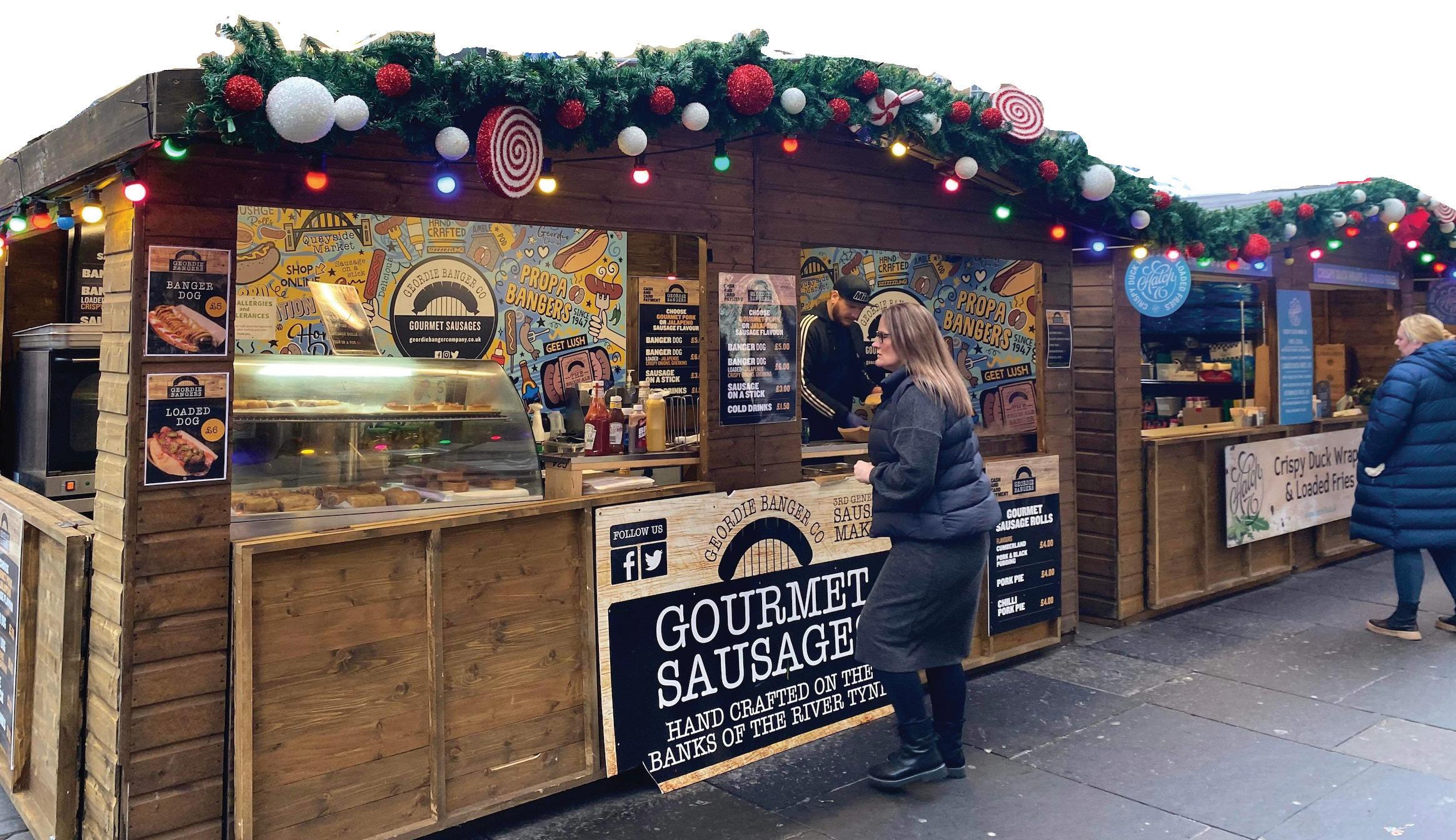
Besides from food and drinks, there were also more practical Christmas stalls, such as a 3D cards stall, which adds a nice flare to the usual, plain, predictable cards. Prices for these were £3.99 for a small card and £5.99 for a large. This is a bit more than your average card but justified if you can pay a bit more and support a small business (but of course no pressure, cost of living crisis and all).
This year, the market also brought a second flurry of stalls to Hippie Green. A great and much welcomed expansion, helping Newcastle to compete with other cities: Edinburgh’s market has fair rides and over 60 stalls - Newcastle’s counted to around 40.
This second lot of stalls is less oriented towards our hunger and instead consists of more gift stalls.
From vintage stores, selling some cool, old-school clothing, to woodwork stalls, displaying handmade, swan-shaped, wine bottle holders! Prices for some of the smaller crafted gifts from this stall ranged from £10.00 to £25.00, but there were also larger items such as handcrafted chairs and coffee tables, which seep into the triple digit price range.
Other stalls in this section include a Native
Facing my inner critic
Gabbi De Boer - Head of Life & Style
Not being good enough. Everything I do is awful. Why can’t this part of my life look as perfect as theirs? I wish I was talented. Do these words sound familiar?
Self-criticism is something many of us find comfort in. The feeling that, somehow, we aren’t destined to achieve or amount to anything at all. It’s lonely and often inescapable. But really, it’s a way to manage expectations of ourselves. If we truly believe that nothing we do is of value, then so what if we produce something that’s imperfect? It was never going to be good anyway.
That’s how I viewed it. That if I took the pressure off, it didn’t matter. I kind of coasted through life not expecting much so that when something good came, it was a nice surprise. It was like a gift I’d given myself - I hadn’t necessarily wanted it but it was nice to have. It was better than wanting something badly and having to deal with disappointment instead. I hated feeling anything negative in any way so I would do anything I could to avoid that. In this case, I would be so heavily critical of myself that I’d already gone through those feelings of rejection at my own hand and if anybody said it to me, I saw it coming.
As I grew older, I realised that this wasn’t leading
even attempting. But looking back, why would I sacrifice a few moments of disappointment for a lifetime of feeling like I’m not good enough, when I could just invest in my mistakes to grow?
When that realisation hit me, it’s safe to say I wanted to change. I was sick of not having a hobby or interest that was truly mine. But I knew that meant getting comfortable with my insecurities and facing my inner critic. Thinking in black and white terms, that I was either good or bad at something, was no longer an option. Although from time to time I fall back into old habits, it’s much easier to recognise now. In all honesty, I don’t think I’d have been able to overcome these thoughts if it wasn't for therapy and the support network I’ve built over the last few years. Their words of wisdom have helped me more than they know.
American style clothing store, which sells beautiful kimonos for £45.00, and of course a hippie store selling psychedelic prints and Bob Marley themed
merchandise. It is Hippie Green after all, there’d have to be at least one.
This is not exhaustive! There are many other fantastic stalls, so pop down at some point and see for yourself. Newcastle’s Christmas Market has certainly upped its game this year
Is there a North-South divide at university?
Leah Knights
of a shock when I was the only one out of six flatmates who had attended a public school, it has to be said. Of course, private schools aren’t isolated to the South only; they do exist in the North. However, I’ve found that much of the culture attached to private education can also be found in the stereotypical image of Southern parts of the country.
One way I’ve challenged my inner critic was also to throw myself wholly into things I’m interested in. Writing, reading, archery, and even starting pole have been big achievements for me over the last few years. I stopped worrying if my writing was awful, or whether the books I was reading were academic enough. It no longer matters if I’m not always hitting red or higher in archery, or how elegantly I could climb a pole at my first session. All that mattered was how proud I’d be in the future, and how I could look back at my imperfect beginnings and see how much I’d changed. Reward for working hard became much more fulfilling than recognition by chance, and I’m so proud of myself for how far I’ve
Among all the challenges of moving away to university, one of the most prominent is the movement away from an area and culture you have spent your whole life within. Suddenly, you are confronted with people who come from very different social backgrounds, and everything you think you understand isn’t quite right.
A 2018 report by the Children’s Commissioner highlighted the educational disparities between Southern and Northern parts of England. It found that young people in the South are more likely to attend university than their Northern counterparts. The fact that there is a higher level of attainment from those who attended schools in the South immediately establishes a boundary between Southern and Northern students. Naturally, then, when these two groups meet within the university contexts, there is a divide between them.
Often, there is a significant cultural barrier which comes alongside the geographical boundaries. For example, the South is often associated with a degree of unfriendliness and hostility, most likely as a result of the stereotypical ‘Londoner’. Meanwhile, the North – especially the North-East – is understood as a welcoming and friendly space. From my own experience, I think this is, in some ways, translated within the university experience.
For me personally, the North-South divide very quickly made itself apparent when I started university two years ago. In the Yorkshire town I grew up in, I had never encountered privately educated students. So, when I turned up to my flat in the first year of university, it was a bit
Before moving to university, I wasn’t even aware I had an accent. But two years of speaking in English Literature seminars has made me all too aware of my ‘mispronounced’ words. When most of the class speak with ‘proper’ English, it feels as though my own words hold less value than theirs. There is an assumption, whether that be legitimate or entirely internalised, that speaking with the ‘correct’ and standardised language provides a degree of validation to the points you are making. After all, what kind of English student refuses to pronounce their ‘t’s and ‘g’s?
for these reasons, then, which create the impression of a divide between different areas and the reinforcement of social boundaries.

Do you ever find yourself asking "why am I so hard on myself?" Your inner critic may be at play.
5 Monday 5th December 2022 THE COURIER
14 Sub-editors: Jenica Davis, Zahra Hanif & Molly Jackson
Self-criticism is something many of us find comfort in
Lifestyle
Are the Christmas markets worth the hype? One of our writers investigates.
Image credit: Pixabay
It is
The North-South divide has always been a prevalent issue, but to what extent does it exist on campus?
When most of the class speak with ‘proper’ English, it feels as though my own words hold less value
It was a bit of a shock - I was the only one out of six flatmates who had attended a public school
Image credit: Meg Howe
Is embarrassment a social construct?
Afriend said to me recently, "Your fear of looking stupid is holding you back." "Embarrassment is a social construct, do what the hell you like.” To prove their point, they proceeded to lie on the floor for a good minute in the middle of a busy bar – and they were right, nobody batted an eyelid. These words are certainly good to live by, and help me ignore my pounding heart when I want to say something risky in a seminar, but they got me thinking: is embarrassment really a social construct? That feeling that we all know of heat blazing in your cheeks, unable to look people in the eye, wishing only for the ground to swallow you up, certainly doesn’t feel made up to me. Is this really the right way to think of embarrassment?
Constructs are things that don’t exist in objective reality, and are social when they only exist because humans agree that they exist. This can’t be the case for embarrassment, because it’s a true biological reaction that causes genuine physical symptoms. In order to feel embarrassed, your body releases adrenaline, which causes you to sweat, blush–sometimes even tremble–and feel that horrible acidic cringe in your stomach. This is very similar to the body’s fear response, which is stimulated by an objectively real danger to the body. So no, it’s not ‘all in your head’: something really is happening to you.
evolutionary purpose of preventing you from doing the thing again. Basically, your body is stuck in a cave in 10000BC.
But your body needs to get with the times –it’s nearly 2023, baby! It is still hardwired to be accepted by others, and acceptance now is purely social. Different cultures and people definitely find different things embarrassing. What will trigger your internal shame response, and what you consider embarrassing is now influenced by your external social environment.
That said, the outside events that trigger this reaction can be seen to be socially constructed. Let’s face it, you’re in no true danger when you wave back at someone who wasn’t waving to you, or when you realise your flies have been open all day. But if you think about it, all cases of embarrassment require the presence of others, real or imagined. Our bodies react so violently to these because we are social beings who naturally want to be accepted, to maintain social bonds, to meet or exceed other people’s expectations. Our bodies have kindly evolved so that as cavemen we would desire to be accepted by the tribe, to stop us being left to fend for ourselves and get eaten by a mammoth. We physically depended on other people, so that awful pang of shame and humiliation has the
Learning how to cope with Christmas blues
If you're experiencing SAD, then consider: Getting as much sunlight as possible and exercising.
Buying and using a lightbox to stimulate sunlight exposure.
Contacting your GP if it becomes disruptive to your life, and you are considering therapy or antidepressants.
The bottom line is that embarrassment itself is not a social construct, it’s a true chemical change in your body that can be measured and seen. But the things that cause this embarrassment are indeed social constructs – there’s no biological reason why spilling a drink over yourself or stumbling on the pavement should make you cringe inside. Instead, it is inherent in us to make the best impression on people. Maybe we can use this knowledge to, ironically, be less embarrassed. Rationally, you know that you’re not going to be disowned by society and left to hunt antelopes alone for singing to yourself in the street. Since we no longer live in caves (shoutout to my great student house!), the next time I trip over my words in a conversation I’ll tell my caveman brain to shut up. You are reacting to a social construct. I can do what the hell I like.
Why my tattoos don't have any 'meaning'
Ashna Mathur - Campus Comment Sub-editor
We often assume that everyone feels positive around this time of year. Good food, festive lights and time off education/work creates the perfect environment to feel joyous, regardless of whether or not you celebrate Christmas. However, as with everything in life, we could be experiencing issues that add stress or sadness to this time. Through openly discussing these, we can start to break the stigma surrounding needing help this holiday season.
Seasonal Affective Disorder:
One of the least discussed mental illness is Seasonal Affective Disorder (SAD). The NHS describes SAD as depression that operates in a seasonal wave. This is often called “winter depression” because it happens most frequently in the winter, and the symptoms of it include: Constant low mood.
A lack of interest in 'normal' activities. Changes to normal sleep patterns. Feeling irritable. A lot of people experiencing SAD often feel guilty, due to the belief that being sad during Christmas means that they are ungrateful. However, if you think that you're experiencing SAD then you are not alone, with potentially as many as 1/3 of people in the UK experiencing it.
Financial Stress:
If you celebrate Christmas, then your bank account can suffer for it. During Christmas last year, the projected average amount that people spent was £512. This number is likely to increase this year due to inflation and the current socio-economic crisis. If this is causing extra stress during this time, then here are some tips on how to save money this Christmas:
Don't feel compelled to buy gifts for everyone you know - consider just buying gifts for close friends and family.
Ihave five tattoos at the minute- not a lotbut I am planning on getting more soon. I have an entire Pinterest board dedicated to my ideas for the future, and I honestly can’t wait. The problem? None of them ‘mean’ anything.
I think the idea that all tattoos need to hold some significance is deeply concerned with commitment. Why get something permanent on your body when your interests and likes are constantly changing? Also, tattoo removal hurts a lot! If you’re committing to it, make sure it’s something really important that you’ll never grow out of.
This idea may resonate with some- and it’s totally valid- but I approach tattoos differently. That’s the beauty of getting inked, this process is so personal and embodies individuality. Am I going to regret my tattoos in 30 years? I think not.
That being said, I’m going to contradict myself and say that all tattoos end up meaning something, even if you didn’t intend so initially. Once they’re on your skin, they’re a part of you and become something special!
Be aware of potential issues with buying gift cards (retailers going bust, expiry dates etc.)
Plan your budget and Christmas gift list in advance in order to avoid impulse buying.
Grief:
Experiencing the death of a loved one is difficult throughout the year, but holidays like birthdays, Thanksgiving and Christmas can heighten these feelings of grief. Here are some tips on how to deal with it:
Take a break from social media and Christmas films if they are worsening your feelings.
Watch out for drinking or using drugs to cope with negative emotions, and seek help if it is becoming an issue.
Be kind to yourself and others, while being sensitive to the needs of those who may express grief in different ways.

One bit of criticism that I’ve seen is “imagine how bad they’d look in your wedding dress.” Does this mean that tattoos are the opposite of elegance? Absolutely not. I firmly believe that mine will look amazing on my wedding day, and I’ll make a gorgeous bride with them.
My tattoos are purely decorative. They make me happy, and that’s the real reason I get inked. I’ve had trouble explaining their ‘meanings’ in the past, and my inability to do that has been met with some judgment. In high school, I would get pulled by teachers and asked what my 'The Creation of Adam' tattoo meant, and eventually, I got so tired of it that I’d just smile and say, “It means life.” Now that’s stupid.
If you ask me what my latest tiny flower means, I won’t be able to tell you. It was just an impromptu decision when my mom was getting one, and I absolutely love it.

THE COURIER Sub-editors: Jenica Davis, Zahra Hanif & Molly Jackson Monday 5th December 2022
15
Lifestyle
Do you need a reason everytime you go to the tattoo artist?
Not everyone loves the holidays - one of our writers shares their tips for any of your seasonal struggles
If you think you are experiencing SAD, you are not alone
Image credit: Ashna Mathur
Image credit: Molly Jackson
Connor James Lamb
Emma Hunter
A new perspective that will change your experience with the crippling feeling of embarrassment forever
We are social beings who naturally want to be accepted
It is inherent in us to make the best impression on people. Maybe we can use this knowledge to be less embarrassed
Image credit: Unsplash
Holidays like Christmas can heighten feelings of grief
Strip that down: we’re getting all kitted out for the World Cup
With the World Cup well under way, it's time to see which kits have caught your eye...
Tom Barlow - Sports Sub-Editor


Wales’ first World Cup in 64 years has seen them don one of the nicest kits this tournament, with the aid of Adidas.
The subtle green and white trimmings of the shirt help to capture the colours of the Welsh badge and flag. The overwhelming and notorious red fills the kit, with a blurry, faint darker pattern running all the way down the home jersey. The kit was sported in the few international matches leading up to the World Cup, where Adidas and Wales chose to drop the gold lines that accompanied the previous shirt. Many people compared that kit to that of Montenegro and so to now have the players embody a fully recognisable Welsh shirt will see Cymru at least claim the trophy for ‘best dressed.’
Lizzie Yockney - Fashion & Beauty Sub-Editor
I’m not going to lie, England’s main kit this world cup is a miss for me - it’s just a bit ‘meh’.

Designed by Nike, the main feature of the shirt is the arch-like blue gradient that sits just by the neckline and fades into a lighter blue on the sleeves. Whilst this adds a focal point to the mostly plain white shirt, for me, it just looks quite awkward. I can see Nike’s direction when designing this, which was to modernise England’s kit, making it perfect for a new generation of England players to wear. However, I think that it would have been better for them to lean into the increasingly popular vintage jersey trend, which was especially on show during the men’s Euros in 2020 (or was it 2021?), when pretty much everyone was sporting the ‘95 shirt. Whilst the kits are definitely not the most important part of the World Cup, it would have been nice to have seen a more fashionable get-up from the England squad. Hopefully their football performance will be more interesting.
Eve South-Klein
As a proud Dutch person, I always look forward to the release of the national team’s new kit. However, this year’s World Cup kit left me scratching my head somewhatit’s…yellow?

When you think of the Netherlands national team and the Dutch fans, you immediately think of their bold and bright orange kit, no? Clearly Nike wanted to do something a bit different this year, but for me, they just haven’t pulled it off. The shirt features a sort of tie-dyed pattern, which is my favourite part, as according to Nike, it’s supposed to mimic a lion’s mane, presumably as an ode to the lion on the team’s crest. Cool, I love the sentiment of this Nike, but this shirt leans way too yellow for a team known as the ‘Oranje’. The moral of the story is, don’t fix it if it ain’t broke!
Imogen Smillie - TV Sub-Editor
Not that the kits are the most important thing about playing football, but when they are as distracting as the Belgian Men’s home strip, they certainly need to be discussed. Sat watching the group stages of the FIFA World Cup 2022 the other day, a red blaze on the TV catches my eye – and no, it wasn’t Kevin De Bruyne darting across the screen.
With a red block colour body and black sleeves, the designers at Adidas could have just stopped there. But no. Perhaps as a nod towards their nickname, ‘The Red Devils’, a flame design encroaches up the short sleeves towards the classic Adidas stripes on the shoulders. Black shorts complement the red top, with black socks. But again, the need for flames on the socks, creeping up the legs, highlights the plain effect of the rest of the kit – possibly representing the fiery nature of the international team, possibly just tacky. I personally prefer the understated Belgian Men’s away kit, as despite being white, it still has the little accent of colour that stands out from the rest. However, I guess for the most part, we will all be watching the legends that are Hazard and Lukaku (alongside their teammates) kicking the ball about in Guy Fieri cosplay!
Winter skincare: survivng the winter with dry skin
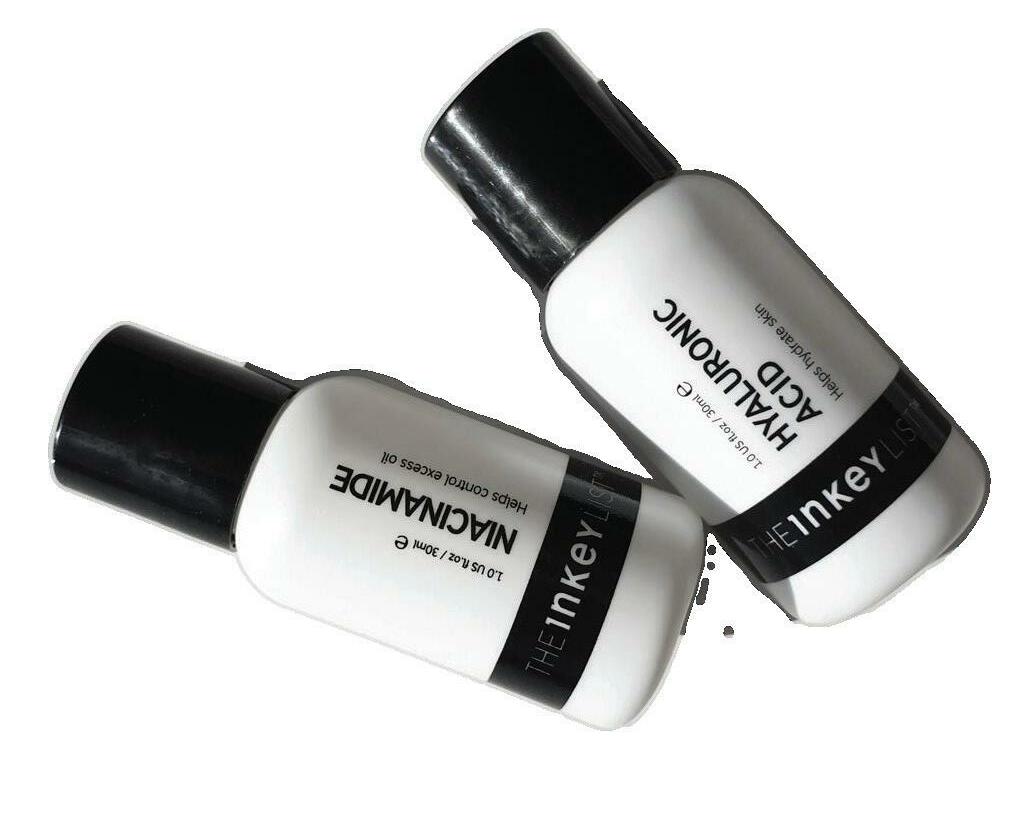
Winter skincare essentials to battle the North-East cold!
As winter has well and truly arrived, it’s important to take the time to give your skin some extra love. With dropping temperatures, dry and irritated skin can be a problem for many. But not to worry! Here’s my list of winter skincare recommendations to help keep all skin types feeling fresh and radiant. Whether you’re looking to add something new into your routine, or you’re planning a self-care evening, these products have been my skin saviours.
For brightness and deep hydration, incorporating a hyaluronic acid into your routine can give your skin an extra boost. Using a hyaluronic acid serum or cleanser before moisturising will lock in as much hydration as possible, helping to restore your skin’s natural barrier. The INKEY List’s serum has been my go-to so far this winter. It’s a great value for money option, and with minimal ingredients and no perfumes, INKEY List products are perfect for those with sensitive skin.
option for a morning cleanser, especially for those with oily or combination skin, as it leaves skin feeling clean, fresh and hydrated without the need to layer on multiple products. With both of these products priced at under £8 each, they’re a budgetfriendly way to give your skin some extra TLC.
Keeping your skin moisturised is key during the winter months when your skin is exposed to cold temperatures.
Weleda Skin Food cream is at the top of my recommendations to ease dry and irritated skin. It’s deeply nourishing, high in omega-6 fatty acid and vitamin E, and made with organic ingredients.
For a luxurious feeling moisturiser without a super expensive price tag, Weleda Skin Food is a must.
Another option is the La RochePosay Effaclar Duo Moisturiser. This gel moisturiser is an excellent choice for oily or blemish-prone skin in particular, as the thin consistency gives your skin a boost of hydration without feeling heavy. Although the price point for this product is a little higher, at around £20, it’s packed full of effective ingredients, making it a great choice if you want to treat yourself!
As for a hyaluronic acid cleanser, try the Q+A Hyaluronic Acid Gel Cleanser. This is a good
If your dry skin just won’t seem to budge, try using a petroleum jelly like Vaseline. As you’ve
5 Monday 5th December 2022 THE COURIER
16 Sub-editors: Samantha Seidu & Lizzie Yockney
Macy Russell
Fashion & Beauty
Keeping your skin moisturised is key during the winter months
Image credit: Instagram @maisonmount
Image credit: Instagram @mbatshuayi
probably seen on TikTok, the so-called ‘slugging’
Image credit: Instagram @bryanahuang
Image credit: Instagram @hello.night123
Does gendered clothing put a cap on our stylistic freedom?
Libby Husband
It may come as surprise, but gendered clothing is a relatively new concept, a concept primarily found within the western world. If we think back to times such as the Greek and Roman empires, gender neutral clothing was the norm. Garments such as the toga were worn on the basis of practicality and comfort rather than a way to establish gender. In fact, the idea of gendered clothing didn’t come into play until much later, in the 19th century. A westernised tradition was created; give your son his first pair of trousers and thus confirm his passage into maturity, unfortunately but unsurprisingly generating the idea of what makes a man ‘a real man’. This snowballed the social construct of which clothes are masculine and which are feminine creating what we have today: gendered clothing. Nowadays, the subversion of gender stereotypes within fashion is often exhibited by celebrities. We see famous names such as Harry Styles and Billie Porter don dresses and sequin jumpsuits and it’s seen as a in an act of stepping outside the box, one to create a stir within our pop culture and elicit critique from right wing media. Although good,
it’s an act that perpetuates breaking the norm of gendered fashion as a big deal, making it harder for ‘everyday’ people to do the same. If we see the outrage a man in a dress on the cover of Vogue causes, one who’s sheltered through celebrity ‘invincibility’, why would we feel safe subverting gender norms in our village, town, or city, unprotected by status?

We can all see how gendered fashion has manipulated us into believing certain colours belong to certain genders. Boys have been frequently belittled for wearing ‘feminine’ colours such as pink or purple and girls perhaps labelled as a ‘tomboy’ if wearing darker more ‘masculine’ colours. This prevents stylistic freedom for the individual as they’re subconsciously leaning towards ‘acceptable’ colours. Patriarchal gender norms also saw the creation of the female ‘power suit’, circulating the
idea that women’s fashion can only be seen as powerful if it’s adopted from the stereotypical man’s wardrobe. Consequently, women are left with a limited array of outfits to acquire respect or assert power. Power suits are often paired with heels, a suggestion that women still need to add a ‘feminine’ item to their outfit to not be perceived as too masculine, limiting women’s freedom to experiment with fashion items such as footwear. Judgment is also apparent when men wear ‘women’s’ clothes such as skirts or cardigans, being labelled as effeminate, not ‘manly’ enough. I believe gendered clothing only causes limitations within self-expression, a way to preserve unhealthy gender stereotypes. A way to move forward would be explaining clothing in solely descriptive terms such as ‘a fitted shirt’ or ‘baggy jeans’ without categorising them into genders. People would not be swayed by stereotypes and eventually a world would be created where stylistic expression is not quelled by what a certain gender ‘should’ or ‘shouldn’t’ wear but rather what outfits best expresses the individual in that moment.
2022 TikTok Style Icons
Libby Griffiths
We can all agree that TikTok has been the revolution of the fashion industry. However, that isn’t to dismiss the work of other influential areas; fashion week, high-street brands, and Love Island promotion brand deals. But everybody can see TikTok is the driving force behind it all. A question remains, though. Who is the pioneer of this TikTok movement?

A controversial millenial Lydia Millen, or @lydiamillen on TikTok, shows off various elegant ways of styling her English Countryside aesthetic. With brands like Susanna London and Schoffel, it is clear that her style is more on the luxury side of the market. While some viewers admire her unique approach to styling on TikTok, considering it’s younger demographic, others are quick to jump at her political ideologies.
Adriana Newbury
The endless, so called ‘debate’, around the presence of nepotism babies in the celebrity world is always underpinned by the refusal of privileged people to acknowledge their privilege. For anyone who doesn’t know, a nepotism baby is the child of a famous star who has become famous themselves. That’s to say, their parents have pulled some strings, or their children have been chosen for roles not based on their talent, but based on their parent’s talent. Now, this may be a rather harsh, pessimistic view; there are many celebrities with famous parents who are extremely talented (after all, talent breeds talent). The likes of Miley Cyrus and Timothée Chalamet prove this.
would be absurd to start with anyone other than Lily Rose Depp, who in a recent article with Elle claimed “If somebody’s mom or dad is a doctor, and then the kid becomes a doctor, you’re not going to be like, ‘Well, you’re only a doctor because your parent is a doctor.’ It’s like, ‘No, I went to medical school and trained.” You’ve massively missed the mark there Lily … the exams that people need to pass to get into medical schools are anonymous … and if you aren’t clever enough to get through medical training your doctor parents can’t just hand you the qualification off a silver platter. A pretty ignorant remark from Miss Depp. It’s not to say that Depp isn’t a talented model, but her height comes in at 5’5”, while the minimum height requirement for an application for a modelling agency is 5’9”. If we’re going to use the medical school analogy, doesn’t that equate to getting AAB at A-level when you need A*A*A?
disrespecting anyone who has had to make sacrifices for the job. It’s a kick in the teeth. No one is trying to say you aren’t talented Lily, but we just want you to admit the advantaged place you came from.
To end on a more positive note, Pierce Brosnan’s kids have taken the right approach. Paris said to E! News that “I think we need to just be grateful for our blessings. It's always gonna be there and we got to recognize it. At the end of the day, we're just grateful to be here. [My brother]'s an amazing musician and I'm painting right now, so we're figuring it out.” This is the self-aware attitude that we are looking for in the nepotism baby debate. Thanks Paris.
While I believe her modern-chic styling approach freshens up the algorithms, others label her as inconsiderate, ignorant, and they “can’t believe this isn’t a joke.” Although her bank account figures may be a lot higher than mine, her passion for “life and style” is just why I enjoy her videos. But, if her videos are labelled as too ‘controversial’ and not everybody is jumping on the bandwagon, who is our nominated TikTok pioneer?
The debate is perhaps not whether these people are talented, have had to face rejection or hardships but instead whether they deserve their opportunities and understand their privilege. This is what is so infuriating about this debate in the media: these mega-advantaged people try to deny their advantages in life because they think people are trying to question their talent. It is a defence mechanism that is fuelled by complete ignorance to the hardships that others go through to achieve the same things in life.
Talking of stars disconnected from any reality, it
Another famous model, Vittoria Ceretti spoke out about her issues with these ignorant remarks: “at the end of the day you can still always go cry on your dad's couch in your villa in Malibu, but how about not being able to pay for your flight back home to your family? Waiting hours to do a fitting/casting just to see a nepo baby walk past you from the warm seat of her/his Mercedes with her/ his driver […] You have no fucking idea how much it takes to make people respect you. TAKES YEARS. You just get it [for] free day one.” Ceretti’s view really emphasises that this debate is not about undermining these people’s talents, but acknowledging that their journey to get there was so much easier. By denying your privilege, you are completely
Well, nobody does it quite like Arabella, or @lilrotini on TikTok. Amassing 11.7 million views for her ability to style a garbage bag and somewhat pull it off. Her unique approach to styling ‘impossible items’ or giving out her own tips has led her account to amass 1.5 million followers. Quite frankly, I adore her, as does the rest of Gen-Z struggling to maintain their student loan with passion for fashion. Maybe it’s that she looks like she belongs in a Tim Burton production instead of on my for you page. But, her use of colour palettes and merging patterns is what equally excites and terrifies me. I wish I had the courage to explore fashion as she does. Who knows, maybe I’ll turn up to my next lecture in a garbage bag too.

THE COURIER Sub-editors: Samantah Seidu & Lizzie Yockney Monday 5th December 2022
17
Fashion & Beauty
Addressing the issue of nepotism babies
It's a defence mechanism that's fuelled by complete ignorance to the hardships that others go through
A look at dominated the TikTok fashion scene this year
It is clear that her style is more on the luxury side of the market
Her use of colour palettes and merging patterns is what equally excites and terrifies me
Is the concept of gendered clothing as essential as we make it out to be?
Image credit: Instagram @kendalljenner
It’s not what you know, but it is who you know
Image credit: Instagram @harrystyles
Fly high and away from the fear of flight
the possibility of disaster when you’re sitting in business class.
2. Fighting fear with logic
Queues, crowds, and chaos: Why UK airports ruin travel experiences
Despite being the safest mode of transport, it is not entirely
alleviate these pre-flight jitters?
Having been a nervous flyer for as long as I can remember, I have taken and attempted advice from every source imaginable, from friends, air hostesses and TikTok. Here is a list of the coping mechanisms I have found most effective.

1. Transperancy with the crew
The purpose of the on-flight crew is to ensure you have as comfortable a flight as possible, this includes reassuring nervous flyers.
Not to mention that it’s not entirely unheard of to be given a free upgrade as a way of comforting a nervous passenger. You’ll be less likely to be contemplating
While it is hard to rationalise with yourself when in a state of panic, one of the greatest comforts I have found on my various journeys has been to consider the facts. Travelling by
the worse and could enjoy a peaceful browse around Duty Free? Wrong. As if the shambles of security weren’t enough, you’re then met with chaotic, overcrowded departure lounges. With not a seat in sight, I've spent endless hours crouched by the toilet queue waiting for my inevitably delayed flight to finally show.
I’m by no means the only frustrated flyer, in

fact, a survey by Which? in 2022 officially named Manchester as the UK’s worst airport. Of course, our airports have faced extensive challenges because of Covid, however it’s all too easy to blame abysmal travel experiences on staffing crises, when in reality the problem existed long before the pandemic ever did.
So many countries have succeeded in creating efficient airports perfectly suited to the busy modern-day traveller, with the likes of Porto and Zurich Airport impressing passengers with slick security procedures, abundant seating, and designated charging points in every departure lounge. As other places strive to transform travel with stress-free airports that Brits could only dream of it really does beg the question of when UK airports will finally follow suit.
Destinations where your pound stretches further
Skip the overpriced touristy destinations and head to the alternatives that won't break the bank!
It’s no secret that going abroad can be expensive, and often put people off the idea altogether. However, by opting for less popular travel destinations, and going off the beaten track, you can make your money stretch further.
If you’re tempted by a balmy break on the Adriatic coast this summer but want to stretch your money further and avoid the steep summer prices, skip Croatia, and head down to Montenegro or Albania instead. Despite Croatia’s obvious appeal of glistening beaches and islands littering the Dalmatian coastline, this beguiling Balkan paradise is notorious for the sharp increase in prices during the summer months, when tourism excels. Whereas neighbouring countries Montenegro & Albania are the lesser-known siblings to Croatia, meaning tourism (especially in Albania) is relatively low in comparison. This will play out in your favour, as accommodation, food and activities will be at a drastically reduced cost in contrast to Croatia. The coastlines are just as idyllic but less crowded and more covert to tourists. Swap out the
place to spend a long weekend whilst being cautious of your spending. After you’ve spent an afternoon meandering through the central zone & admiring the architecture and monuments, head over to the Metelkova district, a creative social and cultural centre built on the ruins of old army barracks which used to be home to squatters, attempting to stop it from being torn down. Now, these hipster hangouts are covered in bright graffiti and murals to marvel over during the day, and by night, Metelkova’s array of alternative bars & music venues come alive.
Yearning to venture further out of Europe and experience Latin American culture but avoid tourist prices advertised across popular Central American destinations like Costa Rica and Mexico? Skip over these and head over to lessvisited Honduras or El Salvador. Despite having
Annie-Rose Edwards
Charlie Reid
5 THE COURIER Travel 18 Sub-editors: Jude Parkinson & Elžbieta Voverytė
Anna Davies
Image credits: Pixabay
Manchester as the UK's worst Airport
Ever felt nervous boarding a flight? Fear not, here are some tips to set you at ease!
A look at everything wrong with UK airports and why we shouldn't stand for it.
Monday 5th December 2022
These gorgeous Latin paradises are popular backpacker hotspots
Image credit: Pixabay
Review - Does Geisha live up to the hype?
Zahra Hanif - Lifestyle sub-editor
Instagrammable interiors
Being a student means that the handful of times you can actually afford to go to a restaurant, you do your research. Or, in my case, you see enough cute Instagram stories of the pretty lanterns that they have up and you check the location tag. That’s how I chose to go to Geisha, anyway. Fortunately for those not as easily charmed as me, it also offers a 4.5 star rating on Google, with dozens of contented consumers voicing their positive feedback.
Positioned in the region between Jesmond and the city centre, it’s in a nice accessible location that’s never too busy, within walking/ metro distance from the major student-y areas. The vibes when it comes to attire are a refreshing blend of chill and formal, so you
can get away with wearing anything from a nice jumper, to a satin dress. The interior is absolutely adorable, the dim lighting, and the colourful décor make for a sweet and intimate cosy atmosphere inside.
When I went, I ordered the chicken katsu strips with katsu mayo, rice, and vegetables, and salt and chilli chips to share between us. It was all gorgeous. Being a picky eater, I’d had this meal searched up and picked out for weeks in advance, thank you online menu - and it certainly lived up to my expectations. The katsu mayo was my favourite, while it was intended for the chicken, it also paired well with the rice and the chips, making them that lovely little bit more rich and sticky. The vegetables were a wholesome addition, and the portion size generous enough to feed me the day after, too.
The only thing that’s stopped me from going back is the price, while the food was phenomenal, I could only justify the cost for a special occasion. But overall, it was very lovely and I would really recommend if you have the funds to spare, or if you’re seeking an aesthetic and oh so Instagrammable spot for your next big do.
It tastes better than it sounds: Sweet Potato, Feta, and Egg... Mush!
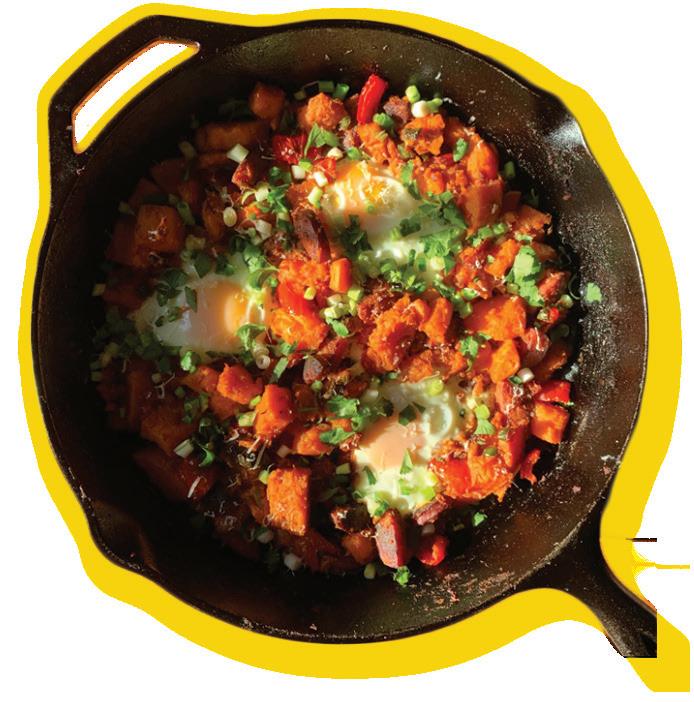 Ruby Taylor
your cherry tomatoes in half. Fry them with another generous helping of olive oil.
Roughly chop your spinach and fresh basil whilst the tomatoes fry for about 10 minutes. Squish the tomatoes up with the end of a spoon, or any other squishing utensil you might find, then add the spinach and basil. You might have to add it a bit at a time so the leaves can reduce.
Katie Siddall - Head of Sport
Here are my top three places with incredible atmosphere and *chef's kiss* drinks:
Passing Clouds
The staff are friendly and the screens are fabulous. We sat in the room that overlooks the rest of the bar and did not feel like we were missing a single part of the action - except the part where people stand on your toes. I'm not fussed about missing that part out though!
Their drinks menu consists of anything, from beer, to cider, to cocktails. I stayed on the cocktails for the match - I would highly recommend trying to go here for a drink - even for a quieter game.
The Lonsdale
Where would I be without The Lonsdale? As a regular, I could be slightly bias with this recommendation; however, the atmosphere, staff, drinks, and 20% student discount all add
up to one good drinking session.
Due to there being no tickets and just being the usual walk-in service, if you want a table for the matches - you have to get there early. There definitely felt like there was no other place to be and time had stopped. It was so good to spend to watch the match with close friends!

Wonderbar
For me, this is an obvious winner. A table for 4 people was on the expensive side of £10 for the England vs. Wales match, but the England vs. Iran match was £5pp. There are many different tickets to upstairs seating upstairs standing, and downstairs. The atmosphere was the best out of the three places mentioned - by far! Football anthems being belted by the speakers, and the football fans, meant the excitement was constant. Also, being able to go for the KO, rather than hours before meant my bank account was a lot healthier going here, as I knew I was able to get in, get to my table, and sit down. The best part about getting a table means you can see plenty of screens because there is no one standing around you - those who stand have their own designated area.
From grey to ole!Cafe Andaluz review
Rachael McCreanor - Head of Culture
sliced chorizo sauteed in red wine, and it was delicious – just the right balance of salty and sweet and quite possibly the best chorizo I’ve ever tasted.
Ingredients:
A bag of sweet potatoes
Olive oil
A punnet of cherry tomatoes
A bag of spinach
A handful of fresh basil
A generous dollop of pesto
Two big tablespoons of creme fraiche Crushed chilis
Salt and pepper
A block of Greek-style cheese (or feta if you're feeling posh)
However many eggs you want
Method:
Preheat the oven to around 200 degrees celsius. Whilst it's heating up, chop the sweet potatoes into small 1cm cubes. I think they taste best with the skin left on!
Put the sweet potatoes on a baking tray. Coat with (probably way too much) olive oil and lots of salt and pepper. Make sure the sweet potatoes are fully covered in oil by tossing them with your hands.
Wash your oily mitts, then put the sweet potatoes in the oven until they are gooey and soft. This will take about 20-30 minutes but keep checking them and tossing them so they don't burn. Whilst your sweet potatoes cook, chop
Hopefully your sweet potatoes will be done at exactly the same time as your tomatoes and spinach, but we all know that won't happen. Have a taste of a sweet potato - because they'll be gooey and delicious! Get a large oven dish and chuck in your sweet potato, tomato and spinach mix along with the pesto and creme fraiche. Stir it all up.
Make wells for the eggs on top of the mixture, then crack them into them. Put in the oven until you can see the egg is nearly fully cooked. If you can't be bothered waiting ages for the egg, you can
Crumble the feta onto the top, along with a sprinkling of crushed chilies, to taste. Put it back in the oven for about 10
Finally, think of a better name than "mush" to call this recipe, and enjoy!
Picture the scene – my mum has come up to visit her favourite (and only) daughter for the weekend, we’ve spent the entire day trekking around Newcastle in the cold and we are starving. Enter Café Andaluz – a Spanish tapas restaurant in the centre of Newcastle claiming to take you ‘from grey to ole.’ What better place to take my mum as recompense for dragging her around every single shop in town?
As someone probably very famous and clever once said - ‘you eat with your eyes first’, and my eyes were ravenous. The restaurant itself is beautiful, colourful tiles line the walls and glass lanterns shine soft yellow light onto the little tables. As we took our seats, I was feeling very much ‘ole.’ You might (quite reasonably) think that it was just the exceptional company that made this dining experience so great, but, whilst it definitely helped, you could literally be sitting opposite an anthropomorphic blob of slime and still manage to have an amazing meal.
The next dish was the Patatas Gratinadas –sliced potato with garlic cream and mozzarella cheese. It was incredible, like a warm, cheesy hug. It felt as if all my comfort foods joined together to form the ultimate creamy, starchy, garlicy conglomeration of happiness – it was genuinely amazing.
My final dish was the Boquerones en Vinagre (freshly marinated anchovies), acting as a reminder of the generous portion sizes, as what must have been over twenty-five anchovies appeared. I will admit, if you’re not a fan of fishy fish, this may not be the dish for you. But luckily for me, I love fishy fish, so the salty, lemon-infused morsels were perfect.
My mum, being very clever, ordered the Patatas Bravas amongst her other dishes, a staple of tapas restaurants and usually the easiest way to tell if a restaurant is as good as it looks. To no one’s surprise, they were lovely. Being sophisticated ladies, we paired all this with a couple of Amaretto cocktails and safe to say, we were thriving.
The menu itself is split into three sections – Vegetarian, Fish, and Meat, suggesting three dishes each. I thought it’d be rude not to try a dish from each section – it was a very good decision.
The first dish to arrive was the Chorizo al Vino As the name suggests, this was a plate of
With prices averaging at around £7 each, and a recommended three dishes per person, Café Andaluz is not the cheapest of places but if you’re looking for somewhere to take someone special or just for some brilliant food, I would recommend this restaurant in a heartbeat. Image
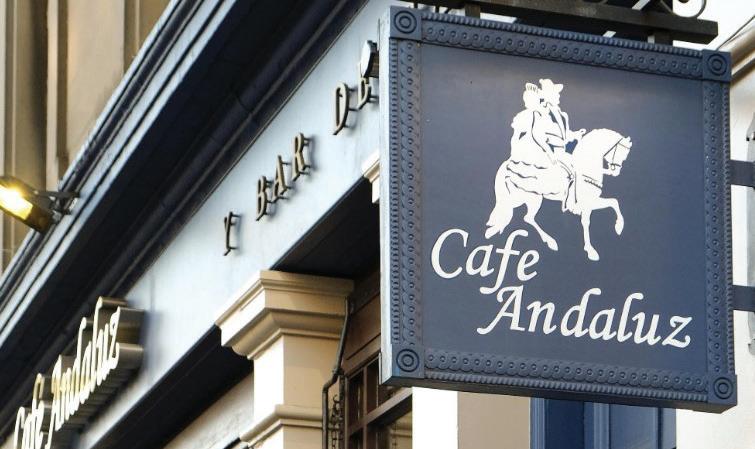

THE COURIER Sub-editors: Daisy Harrison & Abigail Roch
&
19
Food
Drink
Image credit: Instagram @dirtydandoesdishes
Image credit: Instagram @England
‘You eat with your eyes first’, and my eyes were ravenous.
An insight into tapasheaven in the centre of Newcastle!
and delicious meals? Yes please!
This perfect buget-friendly recipe is sure to keep you warm during winter!
credit: Instagram @cafe.andaluz
Monday 5th December 2022
Image credit: Instagram @ Andrew_nsubuga_
It's getting Messi ... top bars and pubs to watch the World Cup!
Artist Profile: Fontaines DC
Lilli Probert
If Stormzy’s previous album, Heavy Is The Head, established him as one of the foremost voices in the contemporary British music scene, then his new work, This Is What I Mean, is his assertion of how exactly how he wants to use that voice.
On first listen, it is evident that this is Stormzy at his most open; many tracks address the breakdown of his relationship with presenter Maya Jama, who he dated from 2015-2019. In a recent television interview with Louis Theroux, Stormzy spoke about the reasons for the break-up, “I didn’t do what a man should do to fully appreciate love, and care for his woman.”
On ‘Bad Blood’, he laments, “We didn't even grow apart / We just fell apart, that's the saddest part / And I had your heart, that's the maddest part”. The sense of regret he feels over the relationship’s failure is palpable across the album, arguably being its central theme.
With less than 1 million monthly listeners on Spotify, Fontaines D.C. are a band that I highly recommend to anyone who is open to music of a remarkable essence. The Irish post-punk band have a distinct sound that is unique to anything I’ve ever heard before. Influenced and brought together by a common love of poetry, Fontaines combine their passion with music to create a gritty, urban sound and narrative.
The band’s debut album Dogrel, released in 2019 consists of the catchy, head-bopping tunes; ‘Boys in the Better Land’ and ‘Sha Sha Sha’, (which you should definitely listen to if you haven’t already). The lead singer Grian Chatten embraces his Dublin accent when singing, captivating any listeners and expressing the feel of the band’s lifestyle whilst representing where they’re from. The title of the album is an homage to Doggerel which is working class Irish poetry and essentially means ‘poetry of the people’ making the band very political when it comes to their views on capitalism in Dublin, and the problems with the Irish government which they express as a muse for their music.

which was released in 2020 and immediately starts with a grungy, alternative toned song which features Grian’s weirdly addictive melodramatic voice singing ‘I Don’t Belong’. The consistent nihilistic energy that is woven into every album by Fontaines D.C. along with the anachronistic feel is what differentiates the band from commercialised music that dominates the industry as of today.
‘Skinty Fia’ is by far my favourite album by Fontaines D.C. simply because of the lugubrious vibe that the songs radiate. This album was made to listen to in the winter, when the days are cold, dark and gloomy and you are walking through a low-lit area with ‘Roman Holiday’ blasting on full volume in your headphones. Witnessing songs from ‘Skinty Fia’ live at
Reading festival was an experience that influenced me to listen to the whole of the Fontaines D.C. discography after being in an atmosphere that I will never forget.
Although Fontaines D.C. have been recognised and rewarded for their successes by winning an NME award and being nominated for a Grammy and Brit award, it is undeniable that the band deserve more appreciation for making high quality music that can be listened to on repeat and still wouldn’t get bored of.
The emotional maturity of Stormzy’s lyricism on This Is What I Mean extends beyond his mourning of his split with Jama. On ‘I Got My Smile Back’, he dissects his journey with his mental health. Its second verse opens, “The last time I linked, depression was a while back / Me and loneliness kick it from time to time / She knows the deal, that I ain't hers and she ain't mine”.
‘My Presidents Are Black’ features another side of Stormzy, one which we are perhaps more familiar with. Over an infectious beat which displays his ability to develop the sounds of his origins in grime, he asserts “we're bustin' all your favourite myths, nowadays, I pull up on my Zadie Smith / A master with a pen, skin-tone darker than your skeng”. His pride in his position as an advocate for the Black community in
Battle of the World
Forget the actual football, our writers focus on the more important competition: which is the best World Cup single?
'Colors' by Jason Derulo
The opening lines to Jason Derulo’s ‘Colors’ certainly capture the uplifting essence of the single. "Oh, what a feeling. Look what we’ve overcome.” The opening lines to Jason Derulo’s ‘Colors’ certainly capture the uplifting essence of the single. Whilst we proceed to hear the expected, refined sound of a Derulo pop track, the lyrics are what stand out to me. Each line is practically riddled with
celebration.
As far as I’m concerned, a World Cup single should contain two essential ingredients. First, a simple rhythm fit for a stadium. Equally, a message of community is required. Derulo is successful in ticking both boxes. Therefore, I can overlook the financial fizz of the lyric, “Can’t you taste the feeling?”, thanks to the joyous layering of his vocals which resemble those of a choir. The anthemic chorus seems to possess even stronger feeling after recent years, as the popstar reminds listeners, “Look how far we’ve come now.”


'Waka Waka (This Time for Africa)' by Shakira

Britain is apparent both on this track and across the album, through his collaborations with artists including Scribz Riley, Ms Banks, and Nao.
Blending trap, gospel, Afrobeats, and more, This Is What I Mean is Stormzy’s strongest work to date. That being said, despite his claim that we are "tuned into his magnum opus", one feels that there is even more, even better, to come.
think one of the reasons I appreciate the song so much is the memories I associate with it. Perhaps, it is the melodic production that sounds so much like the sun. With that being said, the single induces some grievance for the same reason. I can’t be the only one who wouldn’t mind returning
Confession time: I do not like football at all. But I love memorable pop music that innovatives and bucks against current trends. Shakira achieved exactly this when she released Waka Waka (This Time For Africa) for the 2010 World Cup. With Shakira's last album before the World Cup (She Wolf), she jumped into the electropop craze started by Lady Gaga. While a good album in its own right, and it did well commercially, Shakira had given up her musical identity in order to to chase a hit single. However, instead of retreating back to her music of previous years, she decided to shift gears for her big World Cup single, and it's still one of the best songs to come out of both the World Cup and Shakira's broader discography.
Afro-fusion and other African influenced music genres have never been mainstays in pop music, so Waka Waka is still a breath of fresh air. After an invigorating intro of chants, Shakira leads the opening verse with a pulsating beat that feels like it could be from any of her albums. But then the chorus hits with a gust of African guitars and drums and the song becomes a fitting and dancable tribute to the 2010 host country. The inclusion of South African band Freshlyground also helps pay respect to Africa. Perhaps Freshlyground should have gotten more vocal lines rather than just the bridge. The other potential issue with the track is the lyrics being filled with generic and cliche platitudes, but overall, this will always be the quintessential World Cup song.
A Hero’s Death is Fontaines second album
5 Monday 5th December 2022 THE COURIER Music 20 Sub-editors: Lucy Bower & Rowan Christina Driver
Chantelle Badhan
The title of the album is homage to Doggerel which is working class Irish poetry
Dan Finch
Martha
His pride in his position as an advocate for the Black community in Britain is apparent
Blending trap, gospel, Afrobeats, and more, This Is What I Mean is Stormzy's strongest work to date
Image Credit: Spotify This Is What I Mean
The rapper's most vulnerable, considered, and assured album yet
Stormzy
It is undeniable that the band deserve more appreciation for making high quality music
I
I think one of the reasons I appreciate the song so much is the memories I associate with it
Image credit: Pixabay, YouTube
Connor James Lamb
Image credit: Facebook
Live Review: Black Midi at NX
 Anthony Welsh - Science Sub-editor
Arule I’ve had for years of gig-going in Newcastle is to never go to the venue formerly known as the O2 Academy for a gig. The sound was usually shit, the pints were expensive and watery, and you were lucky if you made it through the show without a £6 lager being launched at your head. Electric Group (that lot who run Electric Brixton in London) have christened this onetime Gala Bingo hall into NX Newcastle, and in doing so proved an incontrovertible fact: you can put lipstick on a pig, but it’s still a fucking pig.
Kicking off the music were Japanese group Dos Monos who came on doing a fun Beastie Boys pass-the-mic type thing complete with mad vaporwavey net.art graphics in the background. Next came Black Midi who were in fine fettle, opening the show with the bombastic, boxing announcer fanfare of the new album track Sugar Tzu. Between the injustice dealt to the band by the aforementioned venue sound, the night seemed to lack the raw intimacy you need with a band like this. Ticket and merch sales are a lifeline for all touring bands now, and the commercial choice to sacrifice playing a smaller independent venue like The Cluny meant the band's live experience seemed a bit lost.
There were moments of flare and silliness with track 'John L' intermixed with a crowd pleasing jam of not one, but TWO Sting/The Police songs. The crowd at a Black Midi show are your typical softboi/ art bro ephemera; skinny, awkward, malnourished men half observing with cool detachment, the
other half desperate to start the world's safest mosh pit. Between bands and songs, several in attendance, my +1 and I included, chose to airdrop memes back and forth to strangers, which made the venue problems all the more tolerable.
As a one-time Black Midi evangelist-turned casual enjoyer, I was really hyped for this gig. Over many lockdown nights 202021, my house mate Phil and I passed our hours not being allowed to play out or meet girls legally by drinking pint cans of Kronenbourg 1664 (were there really blokes cutting around drinking Kronenbourg in 1664?) in our uni house while casting YouTube videos to the TV or playing records really loud.
One fateful night we came across Black Midi playing a Boiler Room set and they quickly became my new favourite band. They were tight as fuck.
drummer Morgan Simpson was like a metronome. You couldn’t place their collective musical references in one place. They were equal parts Sonic Youth, The Fall, Shellac, Captain Beefheart, blah blah blah… you get where I’m going with it. All the greats. And they tied it all up
in this weird, avant-garde free jazz jam session type package complete with unusual time signatures, of-consciousness gibberish courtesy of frontman
World Cup Singles
Jack Evans

Released in 1990, World in Motion became the soundtrack to England’s World Cup campaign in Italy that year, a song truly fitting for England’s successes that year.
While England didn’t win that World Cup, being eliminated in the semifinals, it was their best World Cup performance since winning it in 1966. The song too was one of the most successful football songs of its time and has continued to soundtrack many of England’s football campaigns since.
Bower - Music Sub-editor
'Wavin' Flag' by K'NAAN

It would be rude to talk about World Cup Singles without mentioning one of the most classic tunes 'Wavin' Flag' by K'NAAN. After being chosen as Coca Cola's promotional Anthem for the 2010 cup, this song is quintessentially vibrant. 2010 marks the year that Spain won in South Africa, and was one of my own earliest memories of experiencing the sheer excitement of a World Cup.


For me, this song fuses national pride with a universality that allows players and spectators alike to dance together. There is a bouncy reggae rhythm that acts as a solid foundation as chants underpin the main melody. Coca Cola themselves described this song as 'inspired by the joyous dance celebrations familiar to Africa' as the cultures across the globe are united together through football and music (what more could you need?).
It has in recent years played second fiddle to ‘Three Lions’ or ‘Football’s Coming Home’ as it’s better known, but I personally still think that it’s England’s best football song to hear at tournament. The song was written by New Order, a band known for their popularity in the 80s, and it captures the sound of their most well-known songs such as ‘Blue Monday’. The song features not only catchy instrumentation but a good set of vocals from the band and members of the England squad.


The most significant guest vocalist, however, is probably John Barnes who produces an iconic rap in the second half of the song. Put that with backing vocal from other England players and commentary from the 1966 World Cup win and you’ve got a perfect World Cup song.
The lyrics are also a valuable part of this song. By the time I'm writing this, I have listened to this song for about twenty minutes straight (sorry if you have me on Spotify) but somehow I'm still not sick of it. The symbolic idea of "they'll call me freedom, just like a wavin' flag" is a bold and powerful one as the flags allude to the pride fans have for their own teams.
has brought together an infectious single with comradery to create the best World Cup single.
For the past six years Brockhampton has showcased a bright spectrum of energetic talents - from its wide selection of members across various rap projects. But, as all good things must come to an end, the legendary group recently dropped the two last albums of their career: TM and The Family. With TM serving as the actual finale, there’s quite a bit of surprise to take in with this 37-minute ride, most notably how shockingly flat it is compared to the rest of the group’s discography.
With Roadrunner having raised the bar even higher last year with lightning production, killer features and strikingly vulnerable moments, TM ultimately feels like a collection of discarded B sides from that album jumbled together as a lastminute send-off. But while crushingly-tight concepts and pushing the greatest of skills from all thirteen members may not be essential to have a satisfying experience, TM nonetheless remains a disappointment, with tracks ranging from serviceable bangers to some of the driest material they have ever put out.
The album’s strong moments are undoubtedly when our artists reveal their fiery passion hasn’t run out yet, with Kevin Abstract and Matt Champion spitting ruthlessly on the simple hi-hat banger ‘FMG’ and flowing like angry butter melting through hell on the trap-acoustic fusion ‘New Shoes.’ The boys also show classic moments of internalisation and vulnerability on songs like ‘Crucify Me,’ (‘My lowest points were formed standing at the sink, I gotta hide these tears just like a G’) supported by a moving low-fi chorus from Joba. However, on other songs, Brockhampton find themselves attempting to retrace the past with a blunt pencil.
Tracks like Animal and Listering have passable lyrics but all too familiar and uninteresting beats and vocals. When production isn’t needlessly dry, it's most likely way overblown. Most notably, the embarrassing synth-pop and vocal work on ‘Man on the Moon’, which feels like someone stuck an adrenaline needle into a Daft Punk song after sucking out any originality. While there are certainly moments of reinvigorated swagger and iconic hilarity on TM (‘Green Lamborghin' look like Bulbasaur and his dad’), it remains a head-scratching ‘conclusion’ to a group with an otherwise stunning legacy.
Lyric of
THE COURIER
Lucy Bower & Rowan Christina Driver Monday 5th December 2022 Music 21
Sub-editors:
George Neal
Brockhampton find themselves attempting to retrace the past with a blunt pencil
Have Brockhampton fallen short on their latest album?
Image Credit: Spotify
TM Brockhampton
t h e Week: quinnie, Touch Tank
'World in Motion' by New
Lucy
K'NAAN
This song fuses national pride and allows players and spectators to dance
Flag Image credits: Pixabay
You took my breath away now I can't suck in my stomach around you anymore
The song features not only catchy instrumentation but a good set of vocals from the band
The Walking Dead: a not so final farewell


 Leah Knights
Last week saw the release of the final episode of The Walking Dead. There was excitement. There was anticipation. And there may have been tears.
After twelve years, the series has come to its conclusion (for now at least). The show has experienced many highs and lows, with its ratings taking a dramatic decline over the last few years. Miraculously, though, the eleventh and final series has ultimately provided a great final.
Embedded throughout Season 11 has been trademarks of the classic Walking Dead, and there seems to have been a clear attempt to satisfy its long-lasting fans. There is a subtle return of focus back to the actual dead, an aspect of the show which has bizarrely become a secondary plot-point. We’ve also been given the classic psychotic community leader, which almost never fails to hit the mark.


Despite my enjoyment, I think I left the episode with more questions than I went in with
But, how well did the final episode achieve a satisfying end to the story? Well, it’s complicated. Overall, I really liked the episode. There is an intensity throughout which kept me glued to the screen, a feeling which I don’t think I’ve had when watching The Walking Dead in a long time. Personally, my favourite scene was Rosita’s climbing scene (if you’ve watched it, you know the one). First of all, chivalry apparently doesn’t exist in the post-apocalyptic zombie world: Gabriel, why wouldn’t you make your girlfriend, not to mention your infant child, escape from the hoard of zombies before you save yourself? But, aside from that, I really enjoyed the scene. The intensity gave me flashbacks to the good-old-days of season 6 and Glenn’s dumpster scene.
The issue I have is this: as far as concluding episodes go, there were not a lot of conclusions in this one. Despite my enjoyment,
I think I left the episode with more questions than I went in with. To some extent, I understand this, as there is a clear attempt to signpost the upcoming spin-off series. There was a strong emphasis on “the future” at the end of the episode, perhaps insinuating a spinoff involving the supposed next generation. I expect all of the unanswered questions to be cleared up within these various series, but I’m just not sure if we can see this episode entirely as the finale.
Doctor! Doctor! I think you have a new companion...
I
 Lilli Probert
t has been announced that the new Doctor Who companion, Ruby Sunday, will be played by Millie Gibson.
Gibson’s most recognisable role to date is as Kelly Neelan on the soap opera Coronation Street, who she portrayed from June 2019 to September 2022. For this role, she received the Best Young Actor award at this year’s British Soap Awards. She also appeared in the first three seasons of the CBBC show Jamie Johnson, as Indira, and as Lily Duffy in the ITV series Butterfly.
In a statement, eighteen-year-old Gibson said, “It is a gift of a role, and a dream come true, and I will do everything to try and fill the boots of the fellow companions who have travelled in before me.”
the Ninth Doctor, Christopher Eccleston – only a year older than Gibson herself, suggesting that Ruby Sunday will be written as a similar age. As is the case with many of Doctor Who’s iconic companions, Piper’s shoes are not small ones to fill - with the heart-wrenching moment she shared with the Tenth Doctor (David Tennant) at the end of ‘Doomsday’ topping a 2014 SFX poll for the greatest sci-fi scene of all time.
The montage at the end of the episode was really effective, I think. Was it cliché and a little cringey? Yes. Did I still enjoy it? I did. Ultimately, it was time for the main series to come to an end. But looking back at all of the key moments of the show and stewing in my own nostalgia, almost made the last few series worth the pain. Almost...
Many of the actors who have played the Doctor’s companion in recent years have achieved great success since. Karen Gillan, who played Amy Pond alongside Matt Smith as the Eleventh Doctor, went on to star as Nebula in a number of Marvel Studios' films. Jenna Coleman, whose character Clara Oswald accompanied the Eleventh and Twelfth Doctors, has also starred as the eponymous queen in ITV’s Victoria, and more recently featured as Johanna Constantine in the Netflix adaptation of the Neil Gaiman comic book series The Sandman
The companion that Gibson’s casting brings to mind for many, perhaps, is Rose Tyler, played by Billie Piper. Rose was nineteen when she met
Gibson will star alongside Ncuti Gatwa, who was announced earlier this year as the Fifteenth Doctor. Gatwa is familiar to many as Eric Effiong from the widely popular Netflix series Sex Education a role for which he received three BAFTA nominations for Best Male Comedy Performance. The two will embark on their adventures in time and space at the end of next year, after a series of specials starring returning fan-favourites Tennant as the now-Fourteenth Doctor, and Catherine Tate as his third companion, Donna Noble.
NYC official requests formal apology over latest SVU episode
Between 1986 and 2005, Howard Beach (Queens, New York) was home to a number of hate crimes. A number of racially-motivated attacks have led to the area's reputation becoming largely negative, the area which in a recent episode of Law and Order: SVU was described as ‘racist, sexist, and phobic about just about everything’.
Joann Ariola (NYC Councilwoman for District 32) addressed a letter to a number of Wolf Entertainment employees, including showrunner David Graziano and Executive Producer/Show frontrunner Mariska Hargitay, describing the reference as "uncalled for and defamatory".

The councilwoman goes on to say that the decision to do so "reflects a lack of forethought and compassion for the people who live here".
Joann Ariola's Facebook was updated to provide constituents with the letter sent to the show's officials. The letter closes with a request for an apology from those the correspondence was addressed to - as of yet, NBC and the Law and Order franchise have yet to respond.
"resilient, hardworking" and "industrious" and her neighbourhood as "diverse", it is worth bringing attention to the disclaimer which precedes every episode: “The following story is fictional and does not depict any actual person or event.”
There is no doubt that many of her constituents are tolerant, accepting and that the area is filled with many different kinds of people. However, it is concerning to have created such a response over a fictional depiction - though rooted in real events of the area's history.
A more helpful response might have been to consult with those in the neighbourhood to ascertain whether or not residents felt there was truth rooted in the NBC show's depiction of the area.
Importantly, however, it should again be emphasised that Law and Order: SVU is a fictional show and Joann Ariola's letter has likely drawn more attention to Howard Beach's reputation than the episode ever would have.
Ariola's post was met with mixed responses, with some constituents thanking Ariola for writing the letter and others criticising the official for overreacting to what is ultimately a fictional show.
While Ariola defended her residents as being
THE COURIER Sub-editors: Olivia Crowley & Imogen Smillie Monday 5th December 2022 TV 23
Martha
It is concerning to have created such a response over a fictional depiction - though rooted in real events
Carly Horne - Head of Culture
A review of the final season of The Walking Dead: wait it's not the end?
She will embark on adventures in time and space at the end of next year
Was it cliché and a little cringey? Yes.
Image credits: IMDB, Twitter @NetflixFunny, Pixabay Image credit: IMDB
Image credit: Instagram @bbcdoctorwho
Matilda the Musical: the magic of the West End comes to the big screen
 Sophie Psaila
The West End Musical, Matilda, has just made its way from the stage to the big screen in a thrilling adaptation. In 2010, we saw the tale of an extraordinary young girl take to the stage in a magical musical and now director Matthew Warchus brings us his colourful and thrilling take on the show.
For anyone who didn’t grow up reading Roald Dahl before bed, Matilda tells the story of a freespirited genius titular Matilda Wormwood (Alisha Weir), whose parents are cruel and can’t understand their bookish daughter’s disdain for their TVoriented lifestyle. When they reluctantly send her to school, Matilda finds herself confronted with a new set of problems, namely Miss Trunchbull (Emma Thompson); the terrifying headmistress of Crunchem Hall Primary School. It is here Matilda also meets Miss Honey (Lashana Lynch), her sweet-natured teacher. It is the influence of both their love and hatred that lead Matilda to develop her telekinetic powers and free the school from the tyranny of Trunchbull.
This movie is led by the young Alisha Weir’s performance as Matilda. The young actress brings
the notorious character to life with talent and the playful tone that defines Dahls’ novel. Her mischievous and daring attitude is portrayed excellently, and Weir is a perfect casting for such a role. She is joined by Emma Thompson, playing Miss Trunchbull. Thompsons portrayal of the appalling headmistress was key to this movie. With a stature the size of a city office block and the temper of a lion, Thompson puts on a showstopping performance as she brings the fearful character to life.
Overall, I truly enjoyed the movie. I have wonderful memories of experiencing Matilda in the West End as a child, and now people all around the world can experience the whimsical,
I had concerns for this movie as it can often be difficult to translate a stage musical to the big screen; you risk losing the grandness of such a production. However, Warchus’ extravagant and colourful sets and characters enabled you to lose yourself in the film. I especially enjoyed the plot of the escapologist. The way in which it is narrated by Weir and shown to the audience had me absorbed in each moment and held the same tension as it does in the West End.
The ultimate festive debate: what is a Christmas film?
Katie Siddall - Head of Sport
If you're sick of the likes of Elf or The Grinch, your film selection this holiday season has the potential to expand.

The greatest debate of all time... what constitutes as a Christmas film? Is it Die Hard or Gremlins? Or is it rather Home Alone or A Christmas Carol? Or do they all constitute as Christmas films?
I argue that some kind of films are not necessarily Christmas films; however, they are set around Christmas so they become films you watch around that time period.
I give you... Trading Places. A film from 1983 starring Dan Ackroyd, Eddie Murphy and Jamie
guessed it... trading places. Dan's character and Eddie's character swap places and this is the plot.
Yet, this is a film I only watched around the festive period. Usually, my first watch is on November 1st because my festive period starts then (don't judge me). There is no real Christmas theme to the film except when Dan Ackroyd disguises himself as Santa Claus. If it was set at another time of year then he would be disguised as something else.
This is just a film I enjoy watching and due to not wanting to kill it at all given times of the year, I decide to kill it during my favourite time of year... Christmas!
All I'm trying to say is that... sometimes just having a little bit of the festive period in a film doesn't constitute it as a Christmas film; however, a person might have a preference to when they watch a particular film. So, it is down to the individual to decide whether a film is constituted as a Christmas film or not.
I can't stand Elf
 Hanif - Lifestyle Sub-Editor
without being funny.
There's also the question of: who was this movie supposed to be aimed at? This is wholly unclear. It lacks the lightheartedness of a children's movie, with dark undertones (e.g. trauma), and the depth of an adult movie. I had to do a rewatch for this review, because despite having seen it already, it has no noteworthy morals or telling storylines that my mind could have retained. All I remember is not liking it, and I feel like that says enough. It feels both painstaking and rushed at the same time, just hectic and unrealistic.
an over the top performance
5 THE COURIER Film 24 Sub-editors: Rachel
McKeown
Carron, Mitchell Hall & Jessica
Elf is one of the most iconic Christmas films but it's not a hit
Zahra
You will probably have the "Revolting Children" song stuck in your head after this
It's difficult to translate a stage musical to the big screen; you risk losing the grandness of such a production
Image credit: Twitter- @PinewoodStudios
Image credit: Instagram: Twitter - @Roshan_Rinaldo Image credit: Twitter- @scorpionelf
Monday 5th December 2022
Bones and All : A Goregeous love story
for something to dig your teeth into? Well, Luca Guadagnino’s Bones and All provides a three-course meal
It seems that director Luca Guadagnino can’t escape the unsettling theme of cannibalism. Both through his story lines and in reality, a thirst for human meat crops up, as previous star Armie Hammer, who featured in Guadagnino’s film, Call Me by Your Name, was brought into the public eye for a supposed cannibalistic fetish. An uncomfortable coincidence.
I wasn’t surprised to see such a large turnout for this long-awaited twisted coming-of-age story. The opening scene portrays peaceful paintings hung up at a classic American school in the 80s, which unknowingly houses our first man-eater of the 2hr running time. Maren Yearly (impeccably played by Taylor Russell), innocently plays the piano with her friend as she is invited to a sleepover. Sounds like a pretty normal high school flick, right? Wrong! Little did the other teens know, their evening of manicures and gossiping would soon end in screaming as Maren has her fill of finger food!
Maren and her dad Frank (portrayed by Andre Holland) continually have a life on the road, with Maren’s hungry habits meaning they can never stay anywhere long, poverty looms ever closer.
With
pressure
Bob Iger returns as CEO of Disney as Bob Chapek steps down
 Sophie McMillan - NUTV Station Manager
Under Bob Iger, Disney acquired Pixar, Marvel, Lucasfilm and even 21st-Century Fox - but in 2020 he announced his intention to retire, and decided Bob Chapek was to take his place at the helm of the media giant. Since then, it appears Disney executives have led an organised rebellion against Chapek, ousting him after a seemingly company-wide loss of confidence in his tumultuous leadership. Various issues had begun to form around his administration, including the companies stock falling by nearly 40%, Disney+ running at a loss, and the damning earnings release on November 8th, in which Chapek had to report that the streaming business had lost around $1.5 billion in the last quarter - which then led to job cuts.
He referred to these job cuts as “tough and uncomfortable decisions” in communications with staff. Chapek has also had to battle with public controversy throughout his leadership, including (but not limited to,) pressure over a response to Florida’s “Don't Say Gay” bill (he eventually apologised for his long silence on the matter) and a high-profile bout with Scarlett Johansson due to Disney's decision to release the film on Disney+ while it was still showing in cinemas. He also faced backlash over closing Blue Sky Animation and his now-infamous statement that adults don’t like animated movies.
Iger has agreed to return and stay at the forefront of Disney for two more years to steady the boat and choose a more suitable successor. Less than 24 hours after his return, he promised a shake-up and restructuring of the company in a way that “honours and respects creativity as the heart and soul of who we are." This is much to the delight of fans, who have been calling for change and a replacement for Chapek essentially since he took over. Since the announcement of his return, shares have risen by 6% already, with many fans and investors hoping that Iger can turn around the company and stop the embarrassing financial loss
this movie seemed drew me in. I agree that the blood and guts was so convincing it was hard to watch in some scenes, but I feel like that reality was needed.
In addition to the set pieces and make-up, the emotionally driven acting brought the film together, with Chalamet and Russell presenting their boundless talents throughout the whole movie.
Based on Camille DeAngelis’ novel, Guadagnino has brought to cinema a story of identity and societal isolation that beautifully portrays the trials and tribulations of many today, obviously minus the chomping on human flesh. The somehow innocent portrayal of Maren and Lee struggling to find their place in society pulls on your heart strings, excuse the irony, and leaves you feeling sorrowful due to the distressing end. I cannot emphasise enough how much I would recommend this poignant thriller, filled with wonderful cinematography of life on the road. Just a tip - don’t watch on a full stomach…

A bloody good film - 9 out of 10.
In conversation with North East Screen
The Bootcamps play into in one of North East Screen’s key aims; to break through the barriers of nepotism and its who-you-know attitudes that are often associated with the industry, especially as a company outside of London. The team expressed a feeling of “responsibility to nurture talent” as a way to promote authentic regional voices.
Right before the start of term, whilst gathering ideas for an article on the film industry in the North East post lockdown, I reached out to North East Screen. Their name popped up on a Google search and seemed to be exactly what I was looking for.
Their email reply read, “we do not want to discuss lockdown or covid related matters” Oh. “But” It continued, “we would love to have you visit the office and discuss what it is we do at North East Screen.” Three weeks later I found myself journeying across the river to Sunderland for the chance to sit down and chat with three people from the company.
Here’s what I found out about the hidden gem of the film industry - North East Screen:
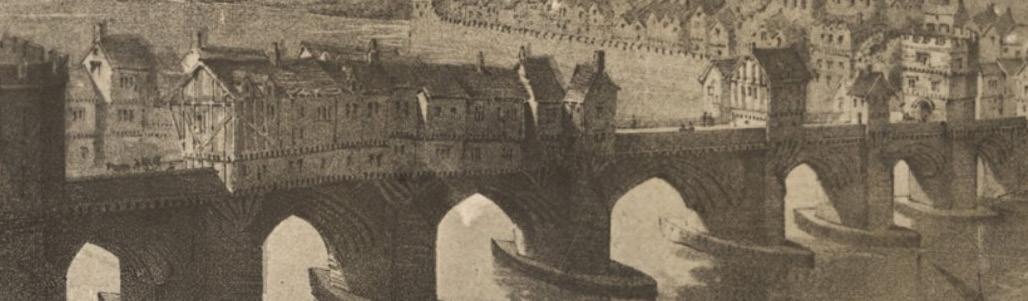
Formerly known as Northern Film + Media, North East Screen are spreading pride for the North East alongside a love for film and media with new schemes such as their Boot Camp. The Boot Camp sets out to provide a “good [and] candid heads up” on what it is like working in film and TV.
It is an especially unique time to be involved with the film industry in the North East as all twelve local councils have come together in an agreement to fund local film and media production. North East Screen appear to be taking this in their stride with events such as Adult Film Club. Described as an opportunity for new and seasoned creators alike to showcase their best work as well as a time for networking which was described as, “a bespoke portal to commissioners” - as far as I could tell this event was only scratching the surface of what North East Screen has in plan for both the short term and long-term future.
I left the interview with a feeling of security that this kind of work was happening so close to Newcastle. It made me believe that there does not have to be a mass exodus to our capital city in the hopes of finding worthwhile options. As put by the team, “[the] North East has a hold on you.”
THE COURIER
Mitchell Hall & Jessica McKeown Film 25
Sub-editors: Rachel Carron,
Esther Arnold
Looking
Image credit: Twitter- @DisneyAPromos
Rachel Carron - Film Sub-Editor
A look at a company intent on reinvigorating the film industry of the North East and supporting local creators
An oppurtunity for new and seasoned creators alike to showcase their best work
the
becoming too much environment to ensure
Image credit: Twitter- @NE5Westend
Image credit: Twitter - @FilmUpdates
Monday 5th December 2022
A review of NUTS' opening play of the year, 'Betrayal'
Daisy Harrison - Food and Drink Sub-Editor
Monday 21st November marked the return of Newcastle University Theatre Society (NUTS) in all their glory, performing their first play of the year, Harold Pinter’s 'Betrayal'.
Just as the name suggests, the play traces back seven years of betrayal and deception, in an intriguing series of events. Somewhat unusually, the play’s events are unfolded in reverse chronological order, starting in 1977, with protagonists Emma (Kitty Sharp) and Jerry (Matt Miers-Jones) meeting for a drink, two years after the ending of their seven-year affair. Each scene then unravels the story of their betrayal, until eventually arriving at the evening where it all began.
Having watched NUTS’ Dramafest at the end of last year, I was already aware of the talent of the actors and actresses involved with the society, however their performance on the night was truly captivating. Director, Imogen Snook, did a magnificent job of capturing the innovative work of Pinter, bringing it to life, and leaving the audience engrossed throughout.
Many of the play’s scenes involved convoluted desire and implied dialogue, with the characters leaving a lot unsaid between them. However, this was no problem for Kitty Sharp, who was able to

communicate the turbulent, intricate entanglement of emotion her character experiences throughout the play, via expression and body language, which I found to be especially gripping. Miers-Jones’ performance showed great skill, as he was onstage for all scenes, bar one. Despite this perpetual stage presence, Miers-Jones kept me, and the rest of the audience, absorbed with the motivations of his character (Jerry), and the ways in which Jerry deals with both his own betrayal, and the ones going on around him. I also found that Myers-Jones’ scenes with Alwin Jose, who played Robert, were potent, as their dynamic was undeniable. Both effectively conveyed the awkwardness of their situation, and the unspoken deceit of betrayal amid them. Part of this dynamic was also down to Jose, who often acted as comedic relief within otherwise intense scenes of heightened emotion between the two characters, making the audience audibly laugh throughout the performance.
Their performance on the night was truly captivating
The play’s production, managed by Will Hall and Carly Horne, was also commendable, as although the set design was rather uncomplicated, with mainly a table, chairs, and some form of alcohol, it worked to keep the audience's attention captivated upon the dialogue in the play. Furthermore, I found the recurrent symbolism of alcohol to expertly
capture the play’s themes – by framing alcohol as an agent of the truth, and to be central in the acts of betrayal committed by the characters. The sound used throughout was also effective, with the start of each scene being portrayed through the noise of a film reel, which added to the nature of the play’s nostalgia and reverse chronology. Each cast and crew member produced a performance to be proud of, and I can only implore you to watch a NUTS show before you leave University!
And the Goodreads Choice Awards are finally here...


The Goodreads Choice Awards have started their first round. With 17 categories, there are many books that have been nominated. The question is: which 17 will win?
As an avid reader, I have (surprisingly) only read one of the nominees. This is largely because I focus more on reading academic nonfiction, past Hugo Award nominees and underappreciated gems that are lesser-known or have a loyal following out of the spotlight. Nevertheless, I do have strong opinions on the nominations.
One interesting aspect I’d like to highlight is the nomination pattern in one of my favourite genres, science fiction.
The nomination list this year contains a nice mix of new names and established authors.

Turning Wars into Folded Napkins at the Dining Table
If you must search a house for a place that reflects the times we live in, look for dining tables Take a seat, this class in verbal origami is about to begin! We arrive at the dining table with our hands empty, and our mouths full of our days, grinding the parts we can’t talk about between our teeth, waiting for our turn to spit them out or gulp them down before we start eating A war might be raging outside the door, peeking in through windows, but it stays outside or at least, that’s what we tell each other while passing salt and pepper around to build what best suits our taste until the war creeps in through a forgotten pin-hole somewhere,
and who can deny that silent mouths are often as big as gaping pin-holes?
The war spills all over the dining table for a moment staining every other conversation laid out on it before someone mops it up hastily with a napkin woven from “Sorry, I shouldn’t have said that” repeated a thousand times over But where would you hide stained laundry in the middle of a dinner?
This napkin bearing truths we are too fearful of are folded over until they fit our clenched fists; until all stains the war dared spill across an otherwise ordinary dining table are buried in the convenient folds of small talk Then, don’t we all leave the table


to gather around an age-old television, or a hand-me-down radio, or newspapers lying forgotten around the house, or anything else that keeps the war imprisoned within its edges so that we can talk about it like something that will never invade the house?
Only the stained, crumpled napkin with the war and our fears of it stays back on a dining table polished with pleasantries, sturdy enough to hold years of small talk but not meant for carrying uncomfortable, unpleasant, uninvited, hushed terrors
by Hemangi Chakravarty
This is good for two reasons: firstly, it shows that the Goodreads community is willing to take a chance on unfamiliar authors, not just people who are already accomplished and famous. Second, the presence of well-known authors demonstrates both that these authors are still writing hit novels and that Goodreads users are in the know on whose work is popular in greater science fiction fandom.
For instance, you’ve probably never heard of Sequoia Nagamatsu, S. A. Barnes or A. G. Riddle. They are relatively new to science fiction. However, you may very well have heard of Emily St. John Mandel, Tamsyn Muir, John Scalzi, James S. A. Corey, Blake Crouch, Silvia Moreno-Garcia or Mur Lafferty; all famous science fiction authors. It’s great to essentially hear someone say ‘hey, this person’s newest book is good too, just like the one you already enjoyed’ while also having a list of new authors, who might have only published their second or third book, to look into.

I’d say the same about the Fantasy and Horror lists, but can’t speak for genres I don’t really read, such as Romance. Ironically, though, the one book on the list I’ve read was Jenette McCurdy's memoir I’m Glad My Mom Died. I highly recommend it, though it is a very heavy book given that it is about McCurdy’s abusive mother, and readers should be aware that it contains some intense themes. I’m now considering reading some of the Fiction selections to round out my reading this year, since I haven’t read literary or contemporary fiction in far too long.
The final round of voting begins on 29 November, and anyone with a Goodreads account can participate in voting on the site.
THE COURIER Sub-editors: Louise Cusine & Sarah Tunstall Monday 5th December 2022 Arts 27
Image credit: @nutsncl on Instagram
Goodreads
Elizabeth Meade
Image credit:
Image credit: Sarah Tunstall
Crossword
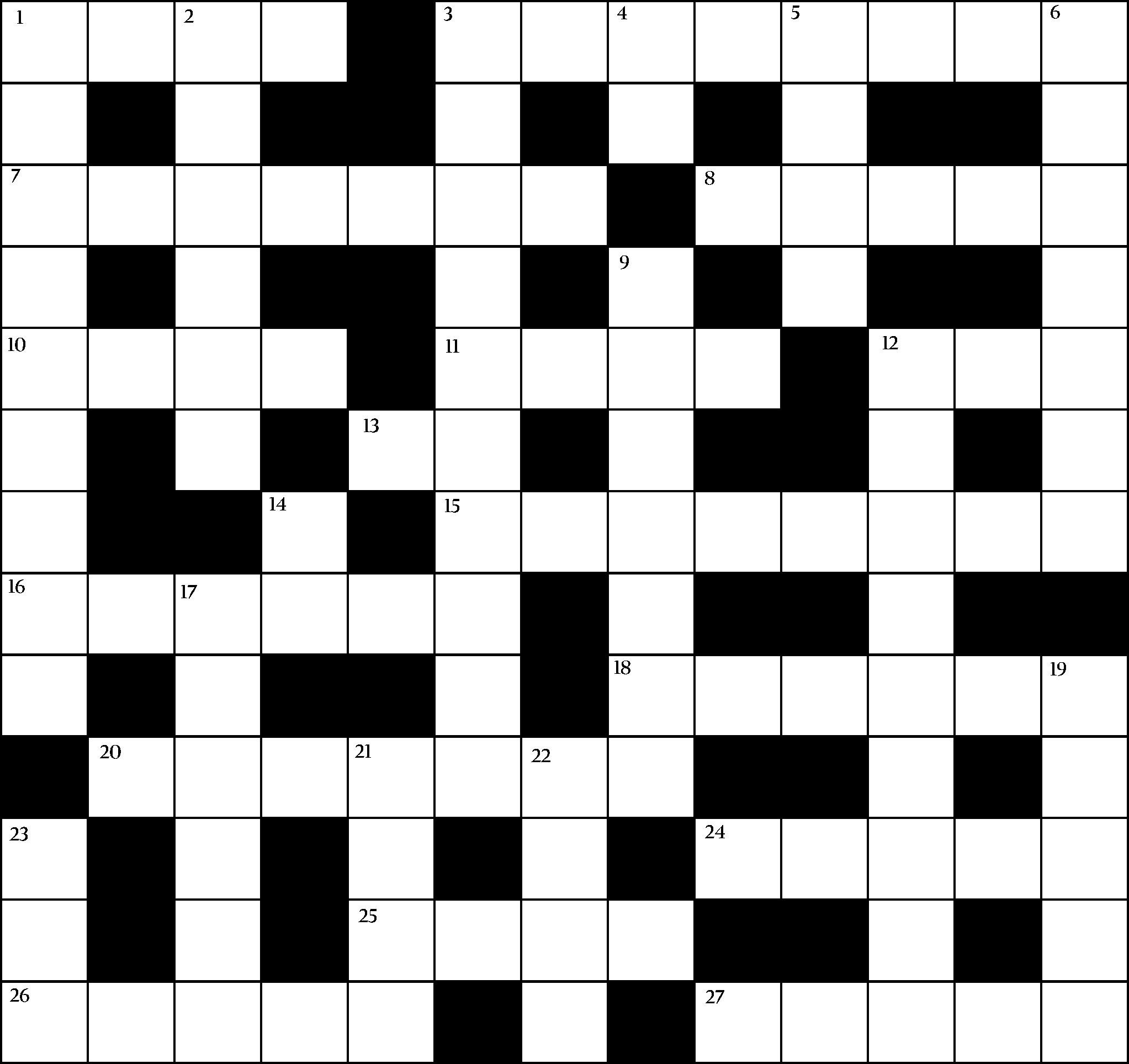
Across
1. Online auction site. (4)
3. 1982 Hall & Oates song. (8)
7. Admire greatly. (7)
8. Antoni ___, Spanish architect and pioneer of art nouveau in Europe. (5)
10. ___ Fett, Bounty hunter in Star Wars. (4)
11. Second-hand. (4)
12. Tool for chopping wood. (3)
13. Exist. (2)
15. Adult male chickens. (8)
16. Old currency, one pound and one shilling. (7)
18. Harry ___, Former One Direction member. (6)
20. Small guitarlike instrument. (7)
24. Oscar ___, Wrote The Importance of Being Ernest. (5)
25. Someone new to something (especially gaming). (4)
Joke
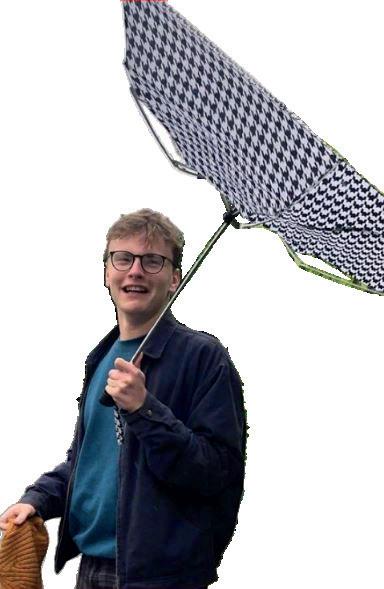
26. Plant material used to make rubber. (5)
27. 2001 DreamWorks film. (5)
Down
1. Scottish capital city. (9)
2. Single-celled organism. (6)
3. Party/ball where guests wear masks. (10)
4. Postcode area representing Newcastle. (1,1)
5. Jelly-like substance obtained from red algae. (4)
6. ___ of the Lost Ark, first Indiana Jones film. (7)
9. Rich and delicate Italian sponge cake. (7)
12. Contains no cells. (9)
14. International organisation aiming to maintain peace. (1,1)
17. Type of printer. (6)
19. Move stealthily. (5)
21. Brand of male grooming products. (4)
22. Large feline, males have manes. (4)
23. Nocturnal bird. (3)
World Wheel
Create as many words as you can of 3 letters or more from the wheel. Each letter can only be used once and you must use the one in the middle of the wheel. Try to find the 9 letter word that uses all the letters.
Monday 5th December 2022 THE COURIER Puzzles
Master: Katie Siddall Apprentice Puzzles Masters: Leo McManus-Andrea & Rhys Mason 28
Puzzles
of the Week:
George Bell
about a
it
a wrap
- NSR Production Manager and Courier Jester
I once wrote a song
tortilla, but
ended up being more of
Flickr
Goal: 20 words Image credit:
Nonogram
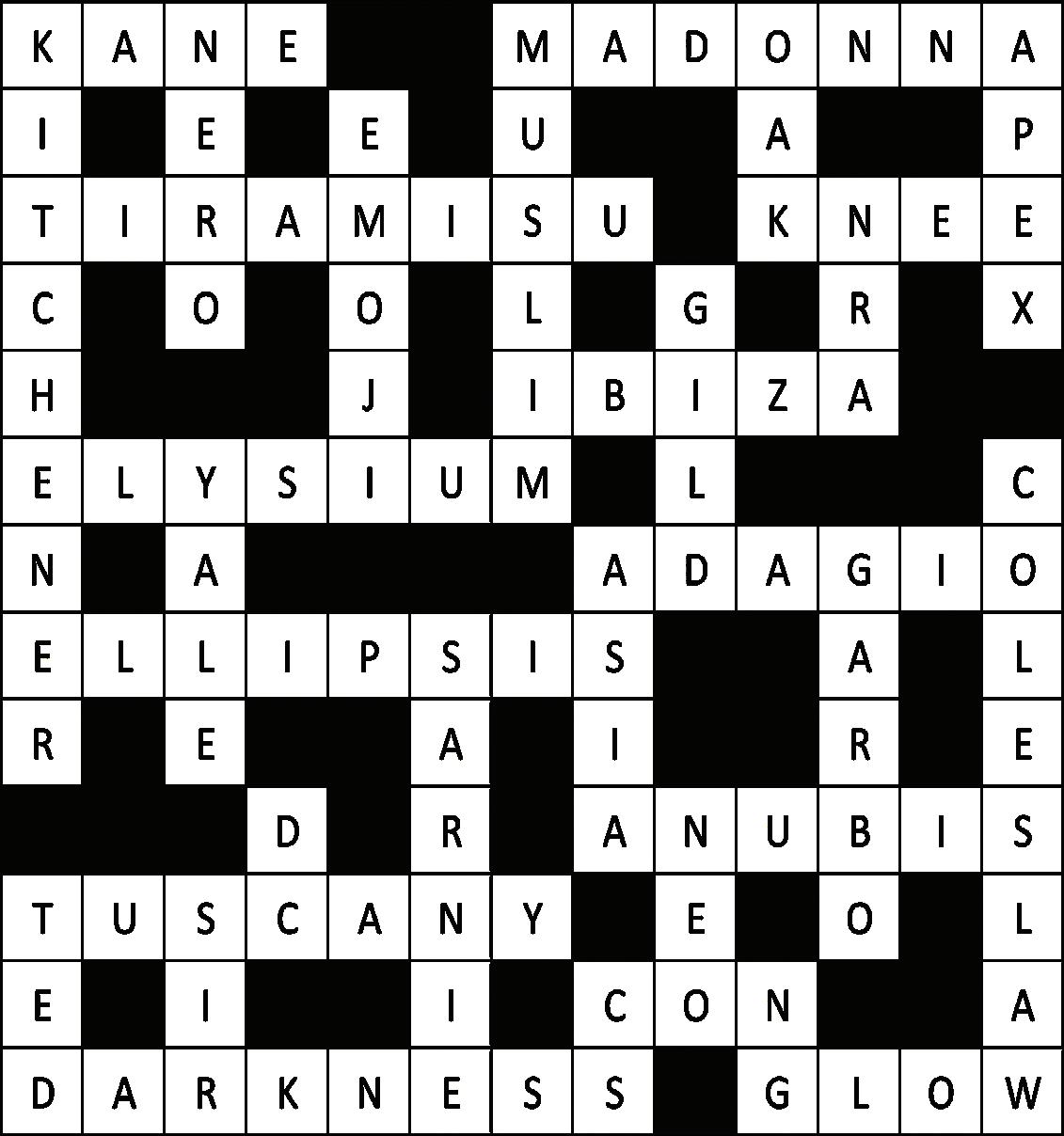
Created by Rhys Mason
Colour in the cells in the grid according to the numbers on the sides of the grid to reveal a picture. The individual numbers in each row/column are separated by spaces of 1 or more squares.
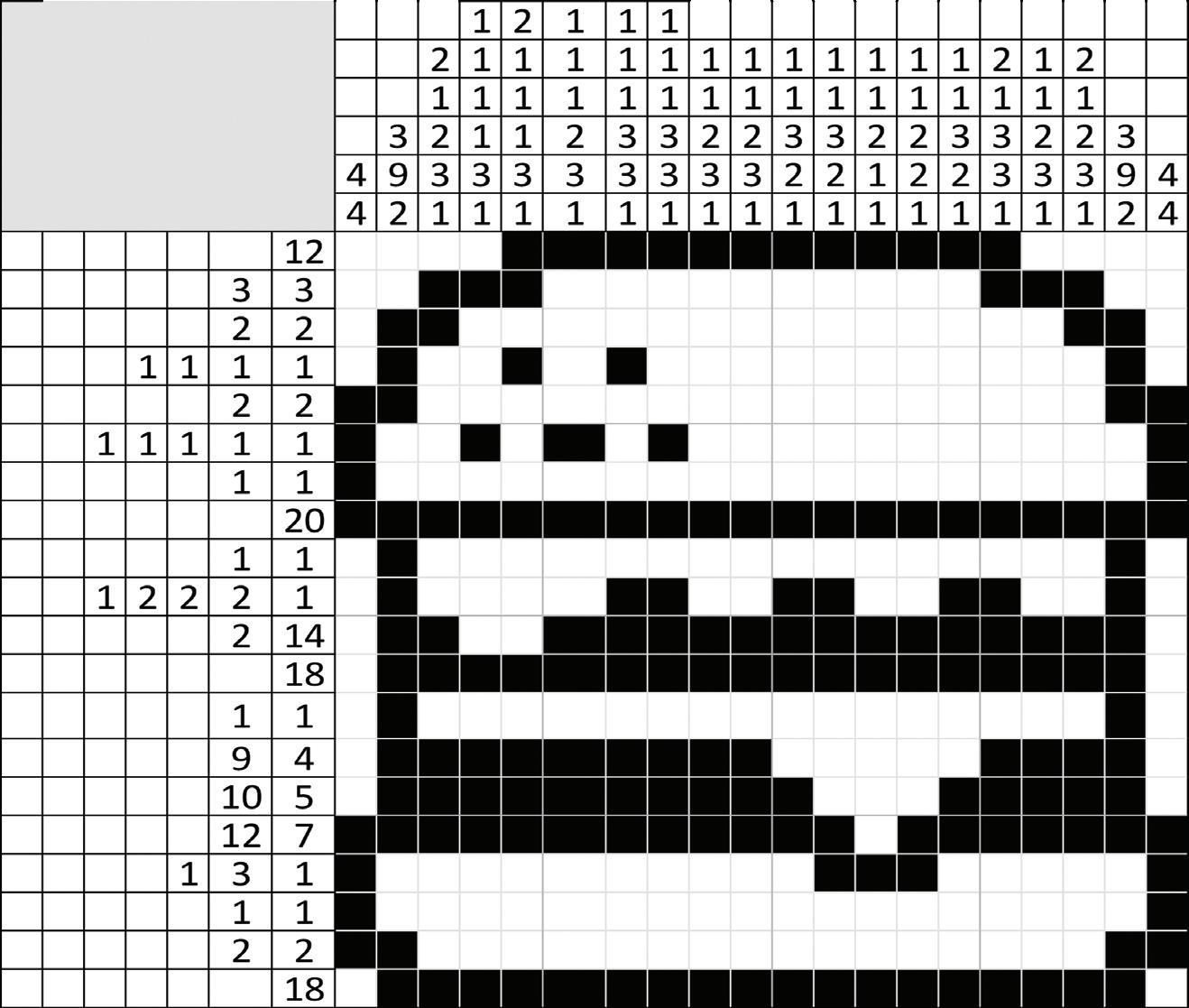
Notes

THE COURIER Monday 5th December 2022
Instructions Puzzles 29 WIN A PRIZE! Upload your puzzle solutions to Instagram and tag @thecourieronline to enter the prize draw! Issue 1435 Answers Puzzles Master: Katie Siddall Apprentice Puzzles Masters: Leo McManus-Andrea & Rhys Mason
How will the World Cup have an impact on the Premier League season?

Will this years World Cup make or break clubs?
hile it goes without saying that the World Cup being held during the Premier League season was never desired by football fans, it absolutely will not stop any of us from getting involved in creating a fantasy team or joining a World Cup draw to win a cheeky bit of cash, but how could it damage the high standards of the
premier league?
The controversial Qatar competition, which began on Sunday 20th November, only adds to the volume of games needing to be played by top level footballers across the world’s top leagues. With fixtures coming thick and fast for many, this will highly increase the likelihood of player injuries and fatigue.
and a rapid turnaround for players on January 2nd/3rd - it seems as though only the teams with quality squad depth will survive. Not to mention the 11 Premier League teams expected to participate in the Carabao Cup round of 16 just days after the World Cup final. So expect some potentially weaker line ups, and hope your team’s national players don’t make it to the final…
When injuries, paired with a reduction in recovery time between games, with games on Boxing Day, New Year’s Eve
The global tournament could also have knock-on effects in terms of team form, which could arguably have a differing outcome for each club. On one hand, Newcastle United, who are in great form, could face a dramatic twist in their dream-like season. Yet, Graham Potter’s Chelsea may thrive with this extra time, giving the manager some time to figure out what is going wrong, despite the fact that they have 12 players actually attending the World Cup. Having said that, the winter World

Cup could prove to be very beneficial for some, especially those that have just got themselves a new manager (Aston Villa, Southampton and Wolves) as they will be able to treat the World Cup period as a premier league preseason, and prep for the upcoming, unprecedented, fixture list through team bonding and newer managerial tactics. Though if this is going to be anything similar to Nottingham Forest’s attempt to ‘gel’ after their £163.4 million summer expenditure, a few more weeks may be needed.
Therefore, as the World Cup could destroy team form and harm premier league players unnecessarily, if you’re lucky enough to support a team that isn’t performing so well, it might actually be an advantage. And on the bright side, it won’t be long after the World Cup until the January transfer window opens.
Ricciardo returns to Red Bull F1 in reserve role following his shocking dismal McLaren
Paige Rutter - Sport Sub-editor
The Australian parted ways with McLaren after a troublesome season, but becomes Red Bull’s reserve for the 2023 season.
2022 has been a tough season for Daniel Ricciardo in which he has often struggled to keep up with team mate Lando Norris. This then contributed to the termination of his contract, leaving the 33-yearold without a seat on the grid for the 2023 season. Determined to stay in F1, there were rumoured possibilities of joining a team lower down the grid or even a reserve for
Mercedes. Now the decision has been made to take a year out as a Red Bull reserve which also involves testing and simulator work, and hopefully return to competitive racing in 2024.
Ricciardo expressed his delight about reuniting with his former team stating, “The smile says it all, I’m delighted to be coming back home”.
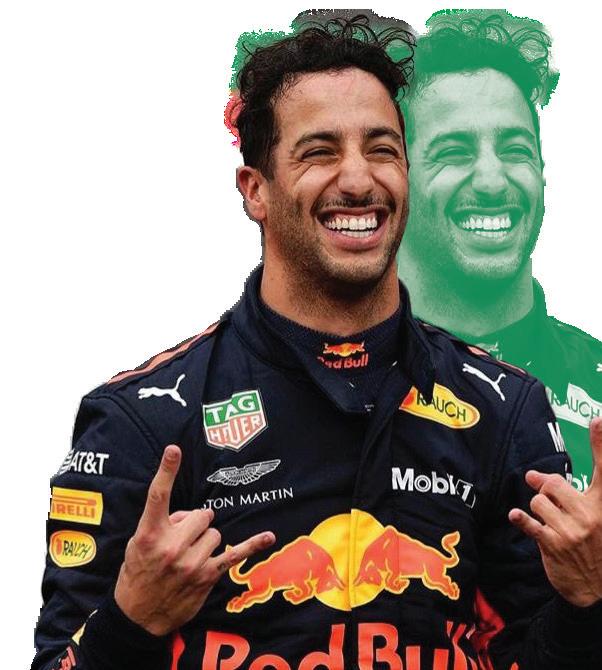
Red Bull's team principal, Christian Horner, was also enthusiastic about this reunion adding “It is great to bring Daniel back into the Red Bull family”.
The 33-year-old is returning with a wealth of history at Red Bull as he has already had a 5-year stint with team, departing in 2018. First relation being with the junior team in which he progressed to their second team Toro Russo in 2012, before promoting to
Red Bull in 2014. During his time with the team he managed to secure seven victories, the first being the Canadian grand prix – in which he finished 3rd in the Championship. His time at Red Bull also provided him with many podiums and his maiden pole position.
- before deciding to choose a move to McLaren.
The time at McLaren saw the Australian gain victory at the Italian Grand Prix and securing a one-two with team mate Lando Norris. However, during this, Ricciardo struggled to keep up with his team mate which ultimately led to his seat being taken by Oscar Piastri for the 2023 season.
After departing from Red Bull in 2018, Ricciardo made a move to Renault on a two-year deal. Despite struggles faced during his time with the team, he managed to achieve two podiums and finished 5th in the 2020 Championship
“For me personally, the ability to contribute to and be surrounded by the best team in F1 is hugely appealing”, Ricciardo demonstrates his joy over being back with his former team – time will tell if he will make it back to competitive F1 racing.
The last dance: A look at who is playing their final World Cup
Arthur Ferridge - Sport sub-ed
It is common knowledge that the World Cup is the pinnacle of football, the one tournament which players dream of more than any other. World Cup champions define eras of the game, providing the game’s biggest stars the opportunity to show what they can do on the biggest stage.
Unfortunately, however, the World Cup often heralds an era’s end and Qatar 2022 will be no different, with several aging stars likely making their final appearance at the world’s most
watched sporting event.
The last 20 years of football have been something of a golden era for the sport. Fans have been blessed with the opportunity to watch the likes of Lionel Messi and Cristiano Ronaldo, two of the greatest players of all time, play in some of the strongest teams of all time.
old, respectively, and likely will not be up to the level of play demanded by such a tournament. While both players have had continental success, neither has quite managed to finish the at the World Cup, but with Argentina entering this competition as favourites that may be set to change.
All good things must come to an end, though, as Qatar 2022 will likely be these two legend’s final attempt at football’s ultimate prize. When the 2026 World Cup rolls around, Messi and Ronaldo will be 39 and 41 years
A swath of other legends are also set to make their final World Cup appearances this winter. Brazil’s Thiago Silva recently turned 38, and, despite remaining one of the top performing centre backs in the Premier League, his career looks to be winding down. The same can be said for full-back Dani Alves, who celebrated his 39th birthday back in May. Brazil haven’t won the World Cup since the 2002 World Cup in Japan, and the two will be looking to end their international careers on a
high.
The same can be said for Alfredo Talavera, the tournaments oldest player at 40 years old. The Mexico and FC Juárez keeper has hero status in Mexico, making just shy of 500 appearances in his career across four Liga MX teams. While he is unlikely to make many appearances at this World Cup, his experience and status will be invaluable to the team.
Qatar 2022 will also likely be a curtain call for Portugal’s Pepe and Brazil’s Dani Alves, two legendary La Liga defenders who recently hit 39 years of age.
This will also be Luka Modric’s final attempt at the World Cup. After finishing second in Russia in 2018, he Ballon d’Or winner will be looking to add one last golden trophy to his cabinet before hanging up his boots.
Monday 5th December 2022 THE COURIER Sport Sub-editors: Tom Barlow, Arthur Ferridge & Paige Rutter 30
WWith unending fixtures, this will increase the amount of player injuries
The last tournament for some of footballs greatest stars
The last 20 years of football has been a golden era
Image credit: Twitter (@NUFC)
Image credit: Twitter (@Cristiano)
After departing from Red Bull he made a move to Renault
Image credit: Twitter (@ktvfleur)
How Extreme E became one of the motorsport's leaders in sustainability
Castor Chan - Campus Sports Liason
The all-electric global rally series has taken off, but beyond it's popularity, how is it helping the planet?
Extreme E is currently thriving on just its second season, and the series has already made its mark on the racing world. It is the brainchild of Formula E founder Alejandro Agag, and has attracted names like Sebastian Loeb, Lewis Hamilton, and Nico Rosberg. Now more than ever, manufacturers are seeking to find alternatives to combustion engines that are just as fast but cleaner for the planet. Extreme E may have landed on an almost perfect medium.
Talking to Catie Munnings and Timmy Hansen, drivers for Genesys Andretti United Extreme E, Catie said, “I was expecting it to not handle very well, not in the sense that it was built well, but it just didn’t seem like a race
car I would normally drive in rally. I was really surprised when I jumped in - we were in France on a little rallycross track - it handled really well and was so smooth to drive. You have so much power instantly when you accelerate and that’s something I wasn’t used to with combustion. The instant torque there is really exciting.”
Timmy continued, “I think the electric just makes it more precise. [The car is] a four-wheel drive electric SUV, so we can set the balance between how much power we want on the front and rear tyres. It’s an extra element of being able to adjust the car to the track and driving styles that is not possible with combustion. Working with these cars, it definitely [feels like] the next step into the future.”
goes into the Odyssey 21 SUVs, Extreme E also champions sustainability by establishing ‘Legacy Programmes’. These projects will link to each of the race locations that the series travels to, hoping to leave a lasting positive impact - in the form of ‘both social and environmental support’ - on their surroundings.

Asking Catie on her favourite legacy programme, she commented, “The mangroves in Senegal were cool. We got to go out in little boats and plant the mangroves, it was a really hands-on legacy programme. We didn’t race there this year but I went back to see the progress of how many trees had been planted and mixed with the local people again. It was really special to see the progress in a year, that was probably my favourite legacy.”
“It’s surprisingly similar to what others usually are, we’re just a bit more mindful about making the right choices. Like having to bring your own bowl to eat lunch, for example, they don’t give any single-use things to us here. It’s little things but you know, at the end of the day we’re still racing, just with a smaller footprint.
Extreme E isn’t stopping there, Alejandro Agag has plans to engineer a hydrogen-powered version of the Odyssey 21 with a full race series set to launch in 2024. As Timmy described, “this championship has the least boundaries of out anything else. That’s just on the technology side, but the race tracks, the messages we can send, there’s really no limit to where we could go.”
Beyond the advanced technology that
And in regards to how the championship itself keeps a small footprint, Timmy said,
Leander Club making all kinds of waves at the 2022 Fours Head
Jude Parkinson - Travel sub-editor
One of our subeditors recaps an intriguing day of racing on the Thames...
Saturday the 19th of November proved a historic day for Leander as they took home the championship title of all six events at the 2022 Fours head on the River Thames.
Leander Club demonstrated
their command to perform with an impressive display of power and dominance on the water with a helping hand from strong tail winds and a quick tide they were untouchable. The club were keen to display how their summer training and preparation for the Head season has been productive and clearly successful.
squad and a European silver medallist with assistance from a gold medal winning cox from the 2022 PR3 4+ to navigate them down the Thames. They produced an impressive time of 19:53.7, which knocked the standing record set 24 years ago by Queens Tower BC and Marlow RC off its top spot.
in 2006 it remains untouched until the 2023 Fours Head where a new crew will have the opportunity to take the title.
A-Z SPORTING SPOTLIGHT:
The club cultivated a winning women’s Championship 4+ made up of three Tokyo Olympians from the eight
Some could argue that setting off first at a head is a hinderance but Leander’s stroke George Bourne, of the fastest crew of the day the Open Championship 4x- couldn’t disagree more. He used the clear line and conditions to his advantage taking his squad to victory, with Leander’s second quad following closely behind. But the record for fastest crew of the day was just out of reach for the club, set by Tideway Scullers back
The thrilling day of racing lead to 10 out of 12 course records being broken with 5 of the new titles being taken home by Leander, it was a successful day across the board for the club.
Overall, the Fours head and its 468 competing crews set the pace for the standard of rowing expected in the forthcoming races of the Head season. While also allowing a glimpse of what we could expect in the 2023 Regatta season from some of the country’s top crews.
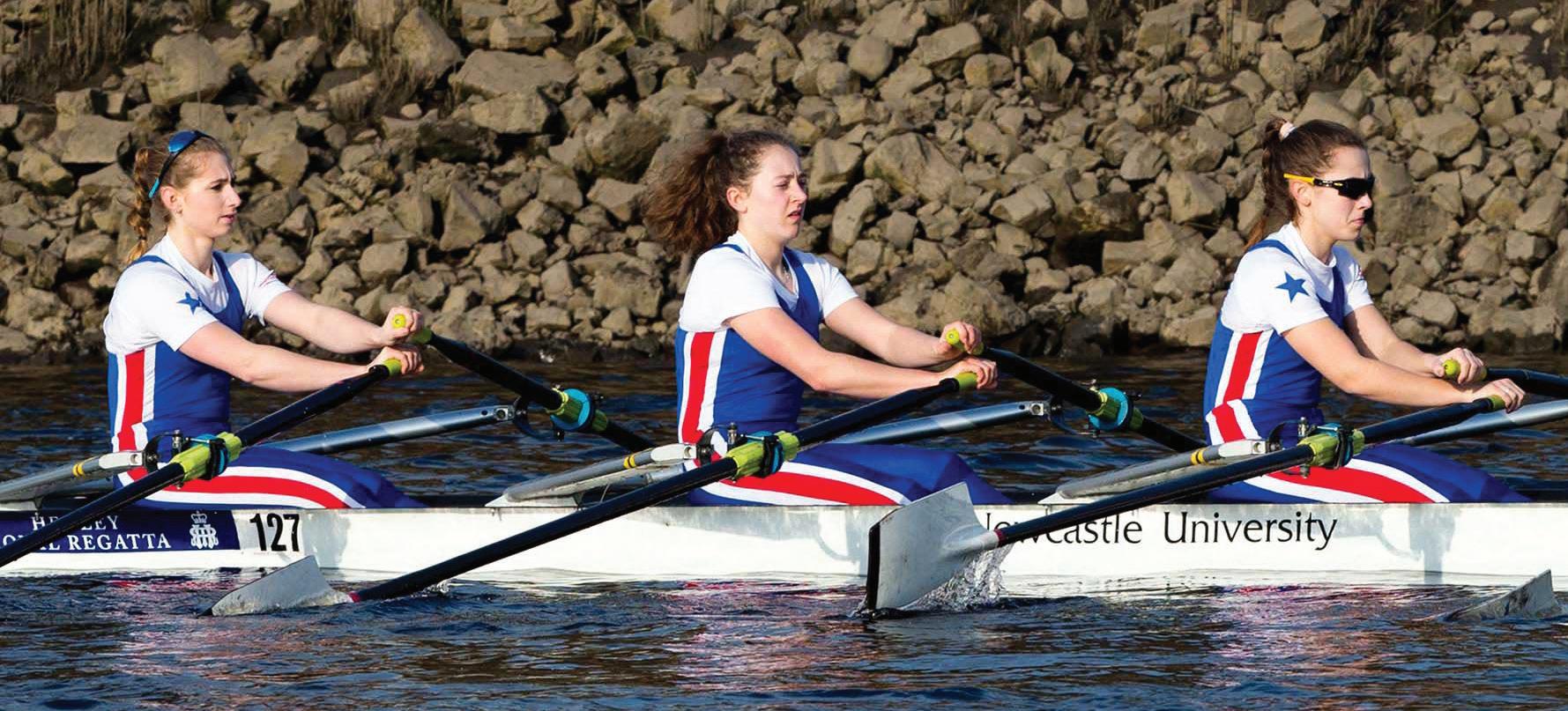
D... is for Dodgeball
Dodgeball is a fun inclusive club that play social and competitive games. We have three sessions a week where we play dodgeball, fun variations, and work on skills. We have fun socials every Wednesday and sober socials. Dodgeball is a great sport to play at university if you’re unsure as almost everyone is a beginner, and we are all getting better together!
Last year our competitive teams had a fantastic season with the men’s first team competing in the super league and the women’s team coming 6th nationally! This year our competitive teams are keeping the positive streak and having a great time dodging balls around the country.
If you fancy giving this a go, please message our Instagram page @nclunidodgeball for more information. We really hope to hear from you and see you at our sessions!
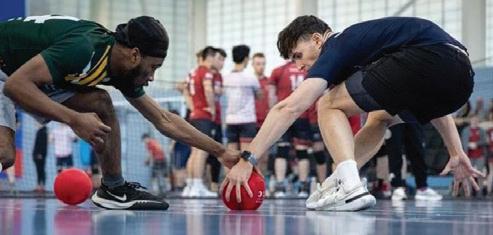
THE COURIER
Ferridge & Paige Rutter Monday 5th December 2022 Sport 31
Sub-editors: Tom Barlow, Arthur
"Working with these cars, it definitely [feels like] the next step into the future."
Timmy Hansen
Image credit: Twitter @andrettiunited
Alice Lewis
Instagram (@nclunidodgeball)
Image credit:
Some would argue setting off first is a hinderance
Image
credit: Newcastle University Website
Gabbi de Boer - Head of Life and Style
Leo McManus-Andrea

Over the last two weeks, Archery have been holding beginner’s courses. With another two weeks to go on this course, I’m enjoying the Archery club more than I ever thought I would.
During the first session we got a guide of the equipment and in the second learned how to assemble the bow. You need to attach the upper and lower limbs to construct the bow before attaching the string using the bow stringer. Finally you have to attach the sight. (Fun fact: The main body of the bow is called the riser.)
Bowmen of Walker to come and teach a new cohort of archers the basics. Taking them through barebow basics and recurve essentials, the course offers lots of things to try whilst mastering form and aim.
In the first week, our newbies learned the basics - what each part of their kit is called, what it does, and range commands such as clear to shoot, clear to collect, and fast. When it came to shooting, the form basics of barebow were taught first, and the beginners took to this well. The second and third weeks saw the introduction of a sight, and the basics of recurve form, as well as learning how to aim with a sight. As they became more confident, the final week allowed them to choose whatever form they liked (as well as trying a longbow too!).
Both groups have just completed their 4 weeks and we are looking forward to seeing them at the range. They have been filled with wonderful and eager individuals, willing to listen to coaching and progressing really well through each stage. It’s been an absolute pleasure to teach and we hope they’ve enjoyed their coaching too!

victories from our recent graduates, with Aliza Lim winning women’s recurve and Ryan Holt finishing joint third in men’s recurve.
Once we assembled the bows, we broke off into groups and were able to shoot three arrows per go. Whilst shooting you get pointers from the friendly committee and instructors, to make sure you are positioned correctly and don’t hurt yourself (e.g., your shoulder from positioning your body wrong).
From my first lesson to my second lesson, we went about shooting in different ways. So, this week was a lot different to last week!
But after the second week’s beginners course, we (beginners and committee) went for a little social to get to know everyone after. I went to the beginners course with two of my friends but that made it easier to socialise and made me settle into the shooting and social more. The highlight of the course, besides the shooting itself, is a joke I made which confused one of the committee members a lot... I mentioned how one of my friends should have caught the arrow between his teeth like a bullet in a film. The instructor looked quite concerned, obviously.
As our Archery beginner’s courses draw to a close, let’s reflect on what a success they have been! Each year, NUAC is proud to invite members of
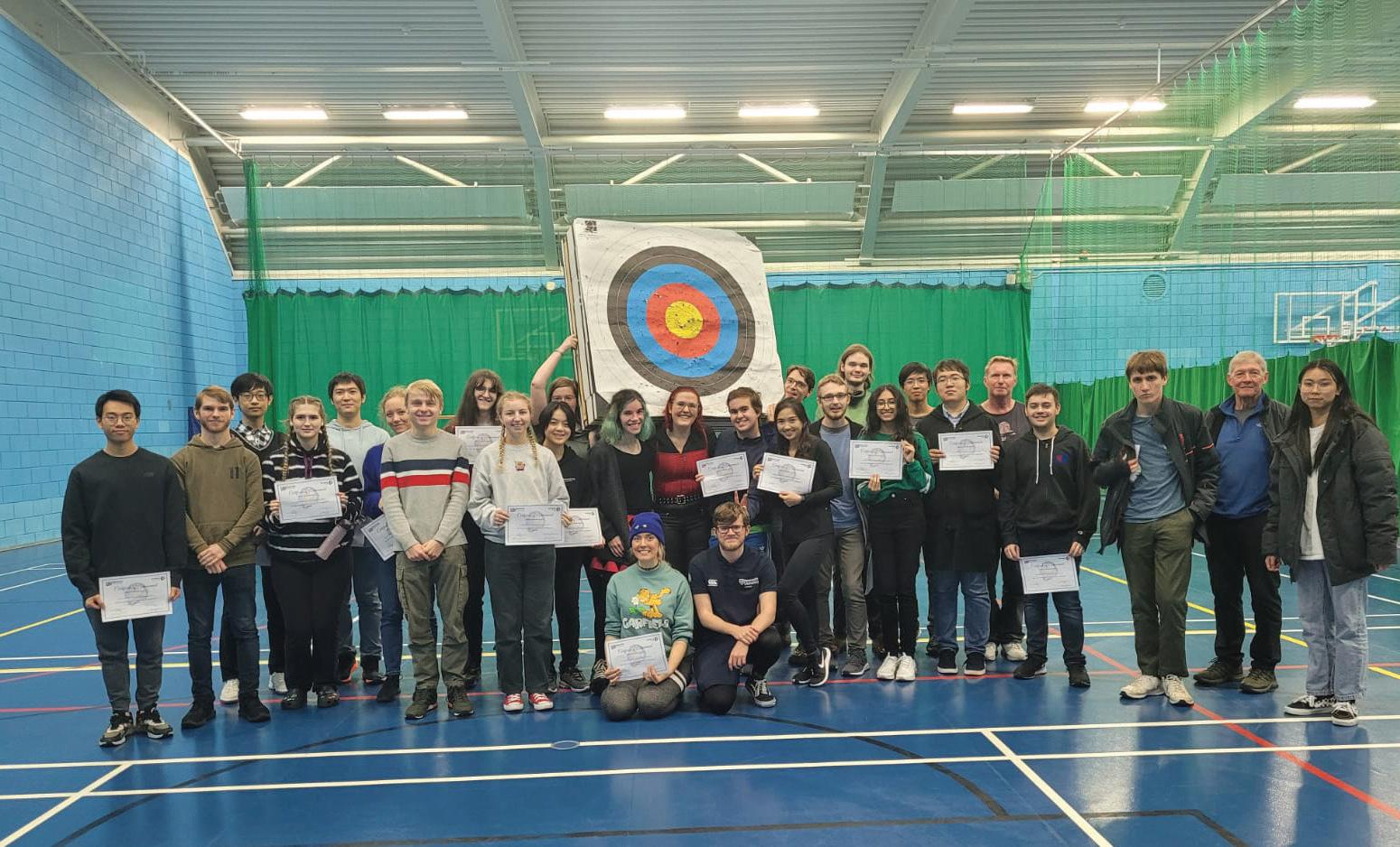
One of NUAC’s aims for this year is to work on building new members to sustain the club as memberships lowered due to COVID, and this cohort of beginners shows plenty of promise that the future of the club is in good hands. The recent North East University


On behalf of the committee, we are super excited to see the archery futures ahead of you, and have loved seeing your journeys so far!
If you’re interested in joining Newcastle Archery Club and want to complete a beginners course, sign-ups re-open in the new year, at the start of semester two.
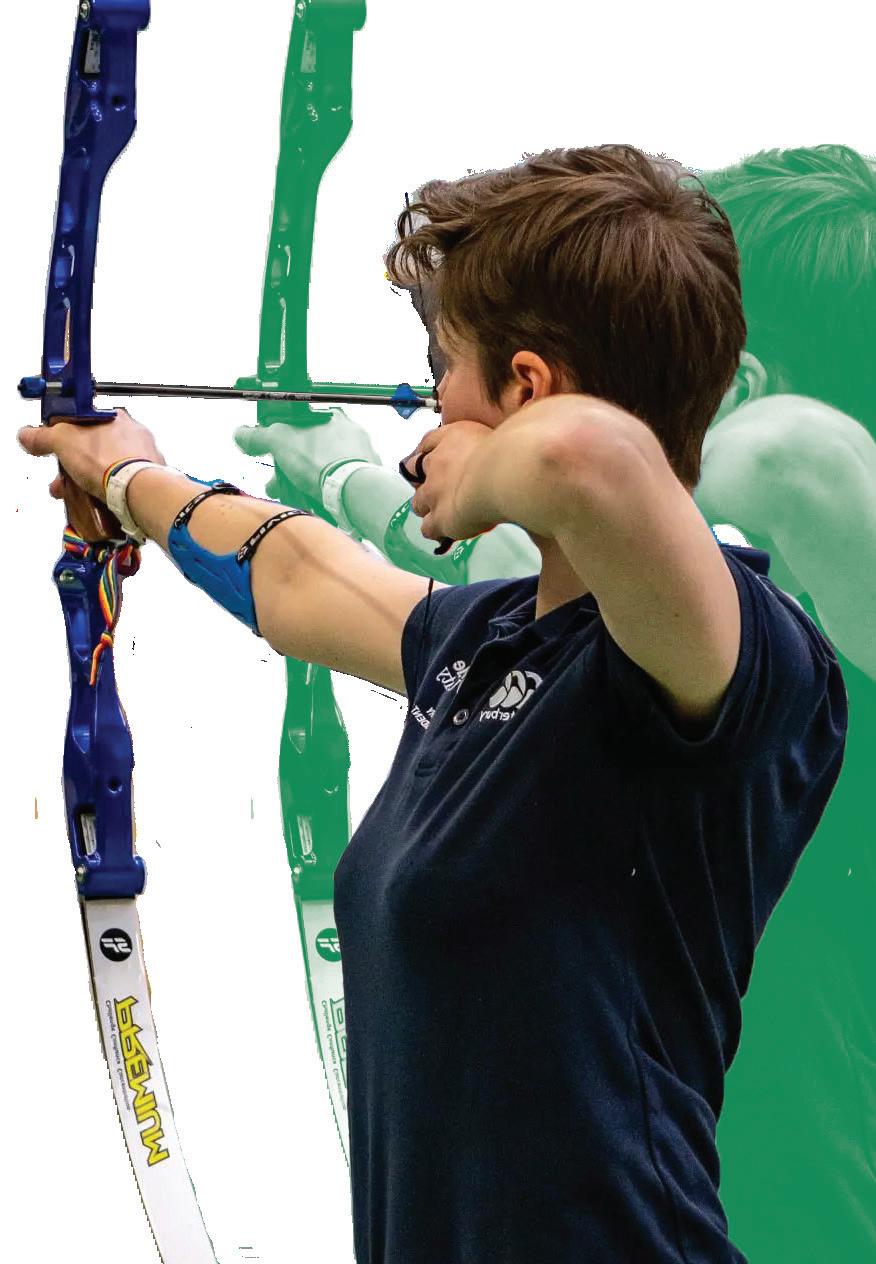
THE COURIER
Arthur Ferridge & Paige Rutter Monday 5th December 2022 Sport 32
Sub-editors: Tom Barlow,
Once we assembled the bows, we broke off into groups and were able to shoot three arrows per go Fledgling Fletchers: Newcastle Archery Society welcome new members on novice course Retiring stars Leander Club win Fours Head Recap a day of rowing on the Thames Which legends will bow out after the World Cup? Image credit:Twitter (@LondonportAuthority & @ AndrettiUnited) Image credit:Instagram (@Cristiano) BUCS RESULTS INSIDE SPORT THIS WEEK
Interview with Andretti Extreme E drivers Image credit: Twitter (@BBCSport) Image credits: Georgina Boston AMERICAN FOOTBALL 1 V Durham 1 (H) 28-13 BADMINTON W1 V Warwick 1 (H) 0-8 W2 V Durham (H) 6-2 BASKETBALL M1 V Durham 1 (H) 89-84 W1 V Durham 1 (H) 83-88 W2 V York 1 (H) 50-45 FOOTBALL M1 V Loughboro 1 (H) 4-2 M2 V Leeds Beck. 1 (H) 0-5 M3 V Northumbria 4 (H) 0-2 W1 V Sheffiled 1 (H) 3-2 W2 V Northumbria 3 (H) 8-0 FUTSAL W V Durham 3 (H) 9-0 M1 V Loughboro. 1 (H) 0-7 M2 V Sunderland 1 (H) 7-8 GOLF 1 V Leeds Beck. 1 (H) 4-2 HOCKEY M1 V Lancaster 1 (H) 7-2 M2 V Sheff. Hallam 2 (H) 2-1 M3 V Sheffield 4 (H) 5-0 W2 V Manchester Met. (H) 2-0 W5 V Northumbria 3 (H) 4-1 LACROSSE M1 V Lancaster 1 (H) 12-1 W1 V Manchester 1 (H) 9-9 NETBALL 3 V York 2 (H) 38-53 4 V Durham 5 (A) 38-39 5 V Hull 5 (A) 85-26 RUGBY LEAGUE 1 V Northumbria 1 (H) 10-42 RUGBY UNION M2 V Durham 3 (H) 40-10 M3 V York 1 (H) 50-10 W1 V Nottingham 1 (H) 12-33 W2 V Northumbria 2 (H) 15-17 WHEELCHAIR BASKETBALL 1 V Hull 1 (A) 22-43 1 V Durham 1 (A) 13-12
