Senior
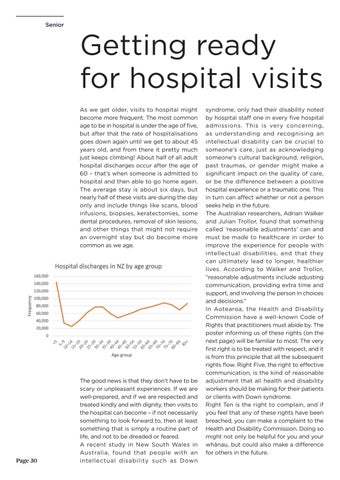
Getting ready for hospital visits As we get older, visits to hospital might become more frequent. The most common age to be in hospital is under the age of five, but after that the rate of hospitalisations goes down again until we get to about 45 years old, and from there it pretty much just keeps climbing! About half of all adult hospital discharges occur after the age of 60 – that’s when someone is admitted to hospital and then able to go home again. The average stay is about six days, but nearly half of these visits are during the day only and include things like scans, blood infusions, biopsies, keratectomies, some dental procedures, removal of skin lesions, and other things that might not require an overnight stay but do become more common as we age.
Page 30
The good news is that they don’t have to be scary or unpleasant experiences. If we are well-prepared, and if we are respected and treated kindly and with dignity, then visits to the hospital can become – if not necessarily something to look forward to, then at least something that is simply a routine part of life, and not to be dreaded or feared. A recent study in New South Wales in Australia, found that people with an intellectual disability such as Down
syndrome, only had their disability noted by hospital staff one in every five hospital admissions. This is very concerning, as understanding and recognising an intellectual disability can be crucial to someone’s care, just as acknowledging someone’s cultural background, religion, past traumas, or gender might make a significant impact on the quality of care, or be the difference between a positive hospital experience or a traumatic one. This in turn can affect whether or not a person seeks help in the future. The Australian researchers, Adrian Walker and Julian Trollor, found that something called ‘reasonable adjustments’ can and must be made to healthcare in order to improve the experience for people with intellectual disabilities, and that they can ultimately lead to longer, healthier lives. According to Walker and Trollor, “reasonable adjustments include adjusting communication, providing extra time and support, and involving the person in choices and decisions.” In Aotearoa, the Health and Disability Commission have a well-known Code of Rights that practitioners must abide by. The poster informing us of these rights (on the next page) will be familiar to most. The very first right is to be treated with respect, and it is from this principle that all the subsequent rights flow. Right Five, the right to effective communication, is the kind of reasonable adjustment that all health and disability workers should be making for their patients or clients with Down syndrome. Right Ten is the right to complain, and if you feel that any of these rights have been breached, you can make a complaint to the Health and Disability Commission. Doing so might not only be helpful for you and your whānau, but could also make a difference for others in the future.