As spring arrives in Edinburgh, our city’s dynamic business community continues to flourish, driven by innovation, collaboration, and a shared commitment to sustainable growth. This edition celebrates the achievements of our members and the initiatives shaping Edinburgh’s future.
From the launch of Edinburgh 2030, the Chamber’s recently launched local growth plan, to transformative projects such as the Dunard Centre and the National Centre for Music, we showcase the people, partnerships, and ideas propelling our city forward. You’ll also find insights on green data strategies, cyber security, and AI-powered marketing—tools and trends helping businesses stay ahead in a rapidly evolving landscape.
The Edinburgh Chamber Business Awards 2026 were a testament to the resilience, creativity, and leadership of our members. With 17 exceptional winners across diverse categories, the evening celebrated the businesses driving positive change and economic growth in our city.
As the year unfolds, we encourage you to embrace new opportunities, connect with peers, and share your successes. Whether you are a long-standing member or new to the Chamber, this magazine is your platform to inspire, innovate, and help shape the future of Edinburgh’s business landscape.
Here’s to a season of progress, purpose, and collaboration.
Lumo’s new rail recruits power-up for new Stirling to London route
Sixteen new apprentices at open access rail operator Lumo are enjoying making the switch from the classroom to the cab of the Class 222 fleet of trains.
Lumo currently operates popular low-cost services on the East Coast Main Line connecting destinations including Glasgow, Edinburgh and Newcastle with London and is planning to launch services on the West Coast Main Line in the coming months. Lumo’s East Coast service consistently achieves high-scores for customer satisfaction and reliability.
The new service will offer Lumo’s same great customer service, low-cost fares and connections to some previously underserved stations.
Lumo has revealed exciting details of the newly refurbished Class 222 trains, with refreshed existing seats and some coaches of the fleet being fitted with new sleek grey and silver seating. Lumo operates a single-class of Standard seating, offering all customers the best seats to take in the picturesque views on the new route.
Lumo’s Apprentice Customer Drivers began their training programme in June 2025, which is designed to develop them into skilled and proficient Customer Drivers. The course
includes both practical and theoretical elements, with the recruits learning from the experienced Lumo team.
Lindsay Gauntlett, Head of People and Culture at Lumo, said: “We’re proud of the progress of our new apprentices preparing to help us launch our new route connecting London Euston and Stirling.
“Nearly all Lumo colleagues have had the opportunity to train through our apprenticeship programme with Train’dUp. As a company, we believe in supporting local people to have the opportunity to work in the rail industry, regardless of their previous career and background.”
Lumo’s new route will link London Euston directly to Stirling, also calling at Milton Keynes, Nuneaton, Crewe, Preston, Carlisle, Lockerbie, Motherwell, Whifflet (serving Coatbridge), Greenfaulds (serving Cumbernauld) and Larbert.
Significantly, this new route gives Whifflet, Greenfaulds, and Larbert their first-ever direct rail services to London, providing substantial economic benefits and new travel opportunities.
Find out more about Lumo’s new Stirling - London Euston service here.
The Universal Language of Food Fuels Growth
Food has a way of crossing borders long before businesses do, and few stories capture that better than Maki & Ramen’s. What began as a single Edinburgh restaurant inspired by the flavours of Tokyo has grown into one of Scotland’s most dynamic hospitality success stories. At its centre is founder Teddy Lee, whose passion for Japanese cuisine - and belief that happiness drives success, continues to shape a brand now recognised across the UK.
Teddy, who established the fastgrowing restaurant chain, Maki & Ramen loves what he does. And the happiness that bringing Japanese cuisine to people in the UK brings him underpins the ethos that has driven his success.
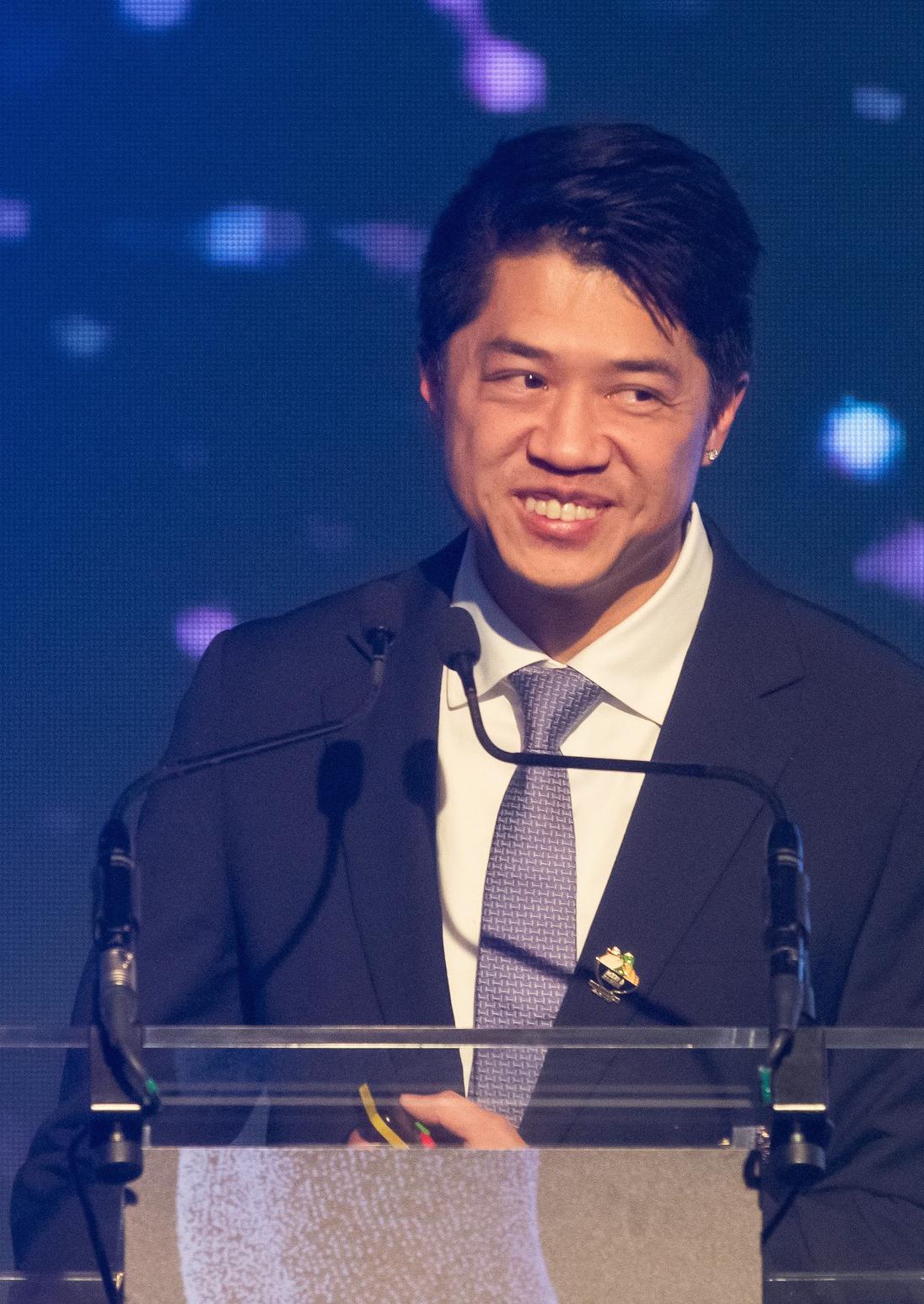
Maki is a type of rolled sushi, and Ramen are noodle dishes served in a hot broth. The Maki & Ramen story is rooted here in Edinburgh, and in Tokyo, and it was one Teddy shared at the recent Edinburgh Chamber Business Awards where he was a keynote speaker.
And the story is far from over. As Teddy explains, the year ahead promises a bold new wave of growth. The next chapter will see Maki & Ramen extend its reach from Aberdeen in the north to Southampton in the south, while stepping confidently onto the global stage with its first international restaurant now open in Dubai.
And there’s more. The brand has also launched Maki & Ramen Frozen Ramen, bringing its signature flavours to home kitchens. While 18 of the current restaurants remain company- owned, the business is also preparing to expand its successful franchise network, building on the three existing franchise venues now run by former team members.
Teddy’s joy for food was perhaps inevitable, given that he worked from a young age in the family restaurant, tackling every role from kitchen porter to chef and learning continuously. His culinary education then took him to the prestigious Tokyo Sushi Academy which kindled his lifelong love for Japanese cuisine.
He said: “My mentors in Tokyo and the hardworking chefs I met early in my career taught me discipline, precision, and respect for every ingredient. Knife skills and safety were everything – and those values still guide Maki & Ramen today.”
Most restaurant chains begin in major cities south of the border, or even in the US, before opening Scottish branches. Maki & Ramen has flipped that pattern. Since launching its first venue in Edinburgh’s Southside in 2015 (there are now four in the city), the business has grown to 21 individual locations, serving around 50,000–60,000 customers every month. The business has grown from one modest sized restaurant to a business that employs more than 400 people, with many more set to join as the expansion drive continues.
While he delights in every new venue opened, one is particularly exciting Teddy and the team – their planned opening in the nightlife centre of London at Soho.
Needless to say, there was happiness – and a splash of romance – in the opening of that first restaurant more than a decade ago. Teddy said: “In Tokyo I fell in love with Tonkotsu Ramen, which is a traditional delicacy made with pork bone broth. It was
amazing, but when I came back to Edinburgh I couldn’t find it anywhere. And my now wife wanted to try real Japanese food and it was very hard to find, and when you could find it was very expensive. So, I decided I would open my own restaurant, to offer it to diners, and Maki and Ramen was born.”
The happiness he gains from loving what he does is also rooted in the company’s values. Sustainability is at the core of what they do. Some 70% of suppliers are UK based, as local as possible to reduce carbon footprint, waste is carefully managed and even packaging is biodegradable. “Moving into Edinburgh St James was a key part of that, given the centre’s environmental values.
We support responsible farming and fishing practices, and we work hard to minimise food waste. As well as delighting our customers’ taste buds, we work to align with their values.”
That also manifests in a strong sense of supporting the communities in which the business operates – through partnerships with charities supporting homelessness and young LGBT+ people navigating life.
Innovation is another fundamental part of the DNA of Maki & Ramen, through digital engagement, table-ordering tech, and loyalty schemes that make dining easier and more interactive.
But at the end of the day, restaurants are all about the food. Teddy said: “We continue to expand and make a splash and we attribute this to the buzz we create in the new areas where we open. Our food does the talking for us, with a speciality in ramen and sushi, for sure
but we are also a one stop shop for all things Japanese, and we have unique signature elements, like traditional Japanese taiko drums and flower walls.”
As Maki & Ramen steps into its second decade, one thing is certain: the brand’s momentum shows no sign of slowing. What began as a heartfelt mission to bring authentic Japanese flavours to Edinburgh has evolved into a national - and now international - culinary force driven by passion, purpose, and an unwavering commitment to quality. With new restaurants opening, a thriving franchise model, and innovation simmering at every level of the business, Teddy Lee’s belief that happiness fuels success has never felt more true. For Maki & Ramen, the universal language of food isn’t just crossing borders, it’s building a global community, one bowl at a time.
Leadership, Innovation, Impact: Highlights from the Edinburgh Chamber Business Awards
The Edinburgh Chamber of Commerce has announced Gordon Dewar, Chief Executive of Edinburgh Airport, as the recipient of its prestigious Lifetime Achievement Award at this year’s Edinburgh Chamber Business Awards.
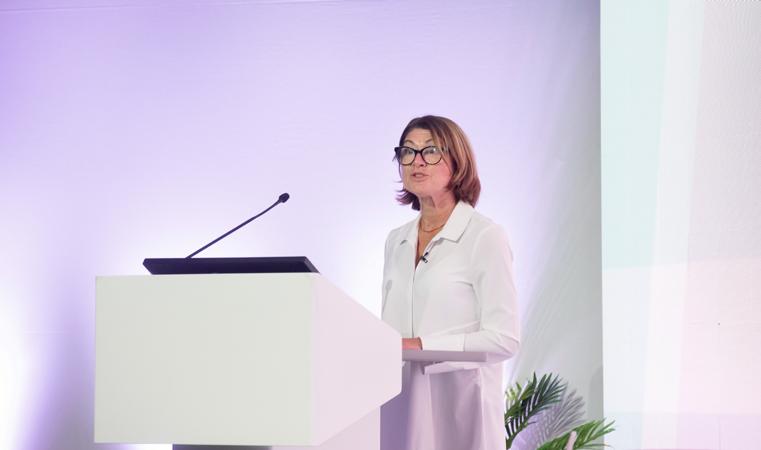
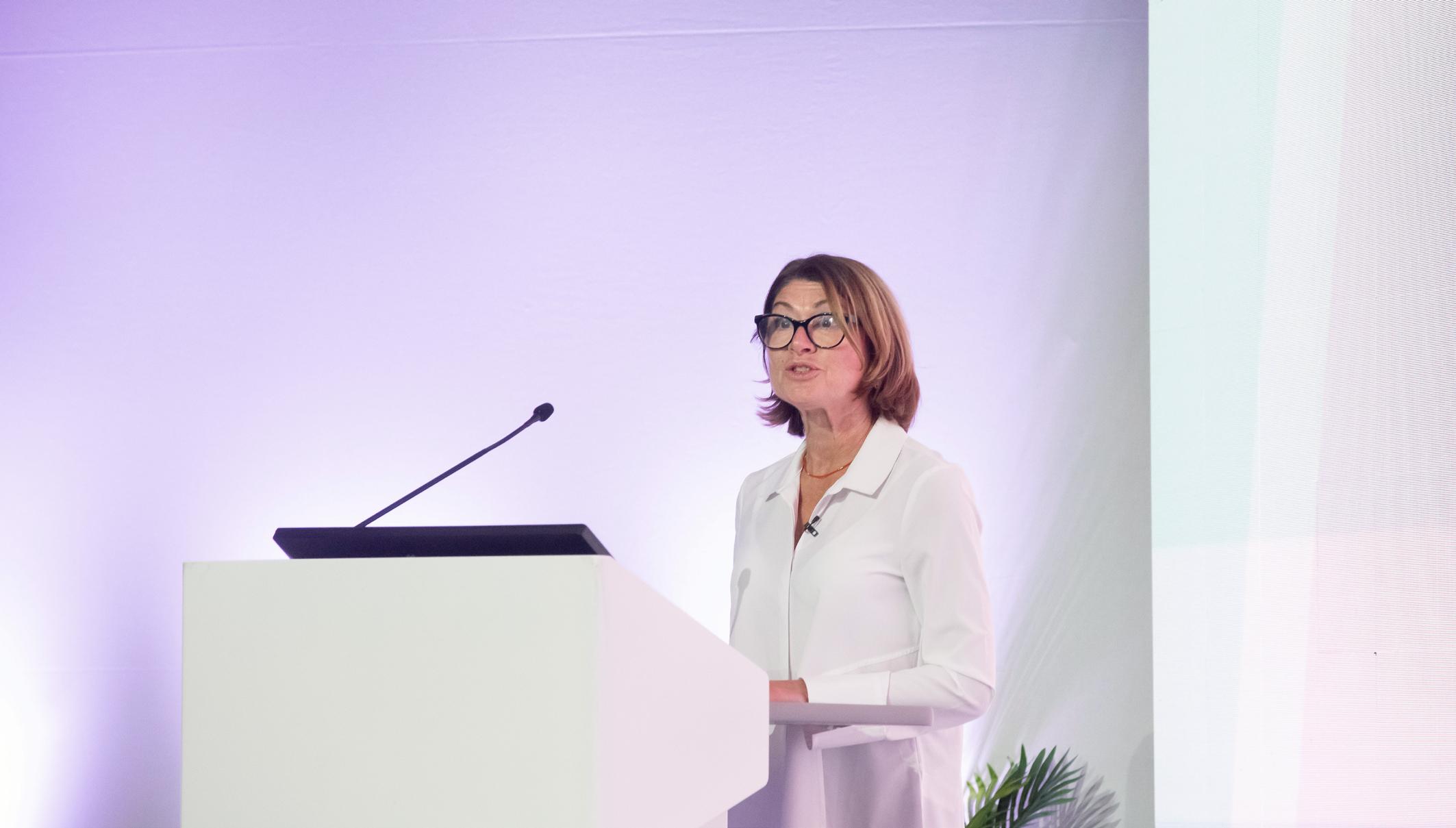
The award was presented by Chamber Chief Executive Liz McAreavey at the celebration, hosted at the Edinburgh International Conference Centre. With an audience of over 600 business leaders, innovators, and policy makers, the evening was a vibrant showcase of Edinburgh’s exceptional talent, ambition, and entrepreneurial spirit.
Liz McAreavey said: “When Gordon became Chief Executive in 2012, he brought a clarity of vision and determination that reshaped not just the airport, but Edinburgh’s economic outlook. He has been a tireless advocate for this city - in boardrooms, in government, and on the global stagechampioning the idea that connectivity fuels opportunity. His leadership has helped secure the growth, investment, and
international reach that make Edinburgh one of the world’s most ambitious and outward-looking cities.”
Beyond the Lifetime Achievement Award, the evening shone a spotlight on 16 outstanding winners across a broad range of categories, celebrating everything from bold leadership and innovation to emerging talent and impactful third sector partnerships. Categories included Large Business of the Year, Rising Star of the Year, Responsible Business of the Year, Net Zero Champion, and Inspiring Partnership.
Together, these awards captured the very best of Edinburgh’s business community - its resilience, creativity, leadership, and commitment to driving good growth. It was an evening brimming with energy, pride, and inspiration, honouring the people and organisations who help make Edinburgh one of the best places to do business.
Headline sponsor Henderson Loggie paid their congratulations to all the winners. Jaslin Bhagrath, Partner,
Liz McAreavey, Chief Executive, Edinburgh Chamber of Commerce
Jaslin Bhagrath, Partner, Henderson Loggie
of the chartered accountancy firm said: “Edinburgh’s business community is built on innovation, collaboration, and a shared passion for driving the city forward. At Henderson Loggie, we are committed to championing that spirit and supporting the organisations and individuals who make Edinburgh such a vibrant place to do business. We are incredibly proud to be the headline sponsors of the Edinburgh Chamber of Commerce Business Awards and to celebrate the achievements of so many outstanding businesses across the city.”
Liz added: “The judging process is entirely independent of the Chamber, and is deliberately rigorous, so everyone who was shortlisted should feel genuinely proud of their achievement. The calibre this year was outstanding.
“It’s also important to recognise that success isn’t all about performance. We want to celebrate the businesses who are driving positive change across our city - those tackling social challenges, championing sustainability, creating opportunities for young people, and building a more inclusive and resilient Edinburgh. They remind us that strong commercial performance and wider societal impact can, and absolutely should, go hand in hand.
“The Chamber remains deeply committed to working with our members and with government at every level to deliver good, sustainable economic growth. That ambition sits at the heart of our business-led local growth plan, Edinburgh 2030: Unleashing Our Economic Ambition.
“This plan was developed in response to the Call to Action we issued last year, bringing the city’s business community together behind a bold, measurable set of missions. Edinburgh 2030 sets out a clear and determined path to making this one of the world’s most successful and forward-thinking city economies - built on a united ‘Team Edinburgh’ approach.”
The audience also heard from Teddy Lee, founder of Maki & Ramen, who shared the inspiring journey of opening his first Japanese restaurant in Edinburgh’s Southside in 2015 and how he has since grown it into a global success, achieving more than £28 million in sales worldwide. Sarah Howard MBE, Chair of the British Chambers of Commerce, also addressed the room as well as Edinburgh Chamber President Pamela Smyth, reflecting on the vital role of the Chamber network in enabling businesses to thrive in a rapidly evolving, increasingly competitive, and digitally driven economy.
Gordon Dewar, Chief Executive, Edinburgh Airport, being awarded Lifetime Achievement Award
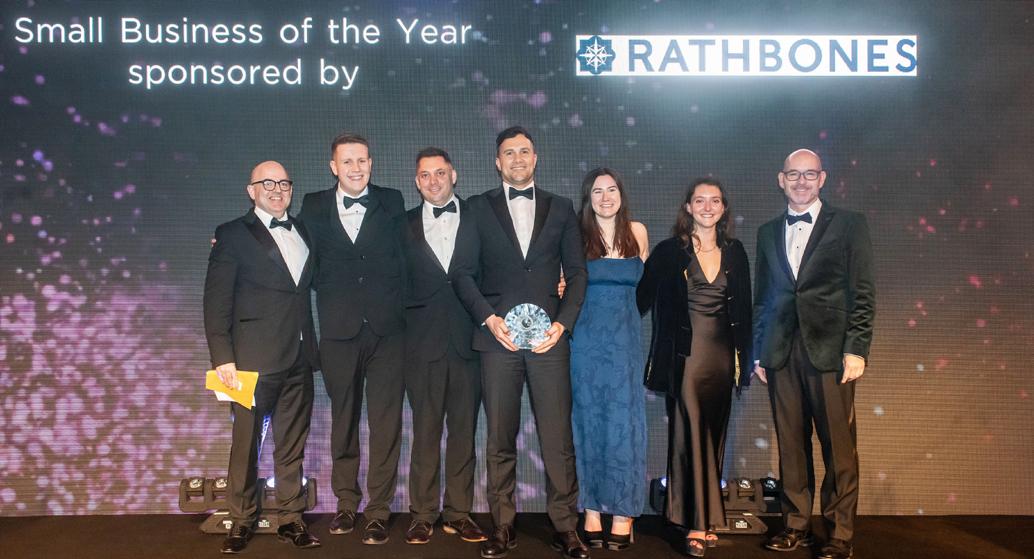
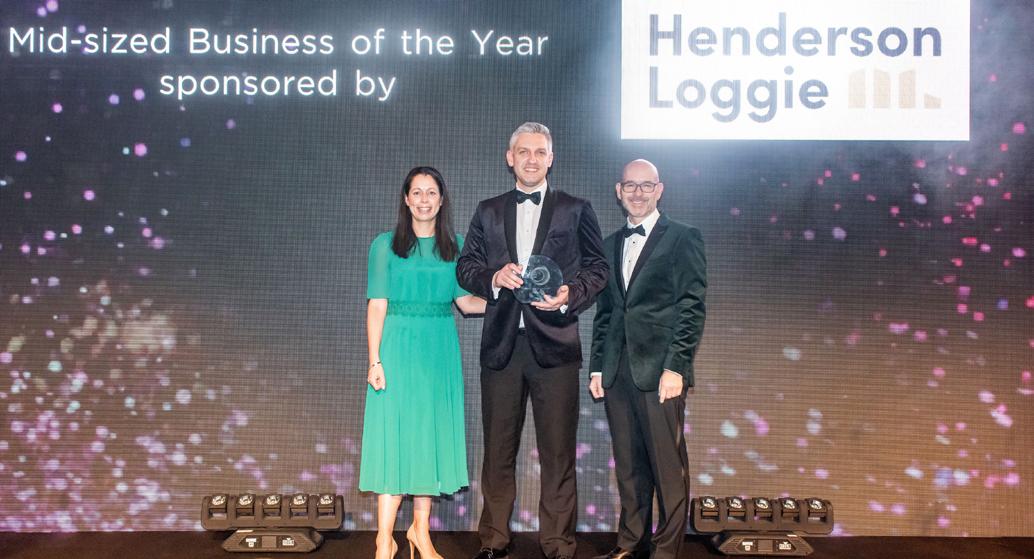
Your Edinburgh Chamber of Commerce Business Award 2026 Winners
Small Business of the Year (sponsored by Rathbones) - Gerties Trading Company
Mid-sized Business of the Year (sponsored by Henderson Loggie)Cadpeople
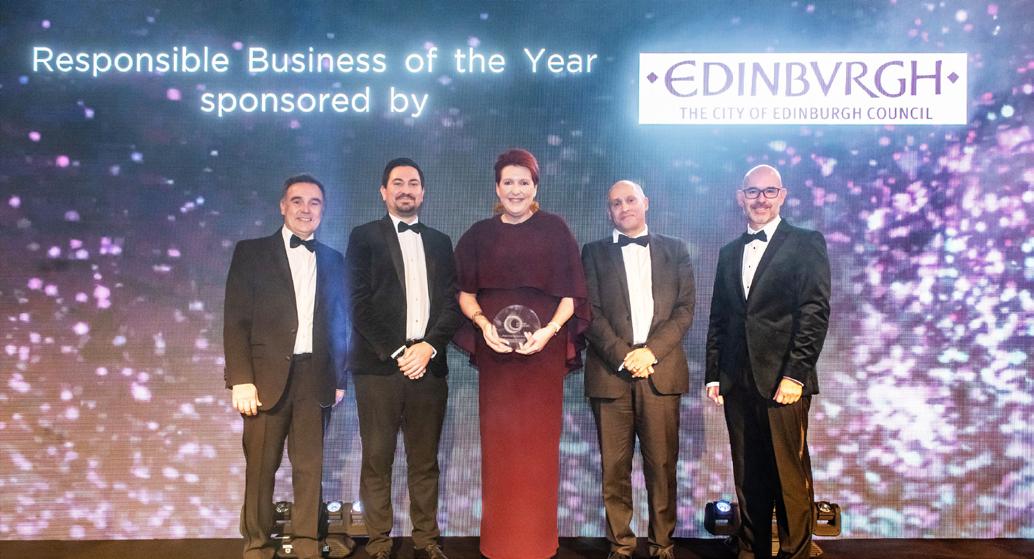
Large Business of the Year (sponsored by LNER) - Thorntons Responsible Business of the Year (sponsored by The City of Edinburgh Council) - Edinburgh International Conference Centre
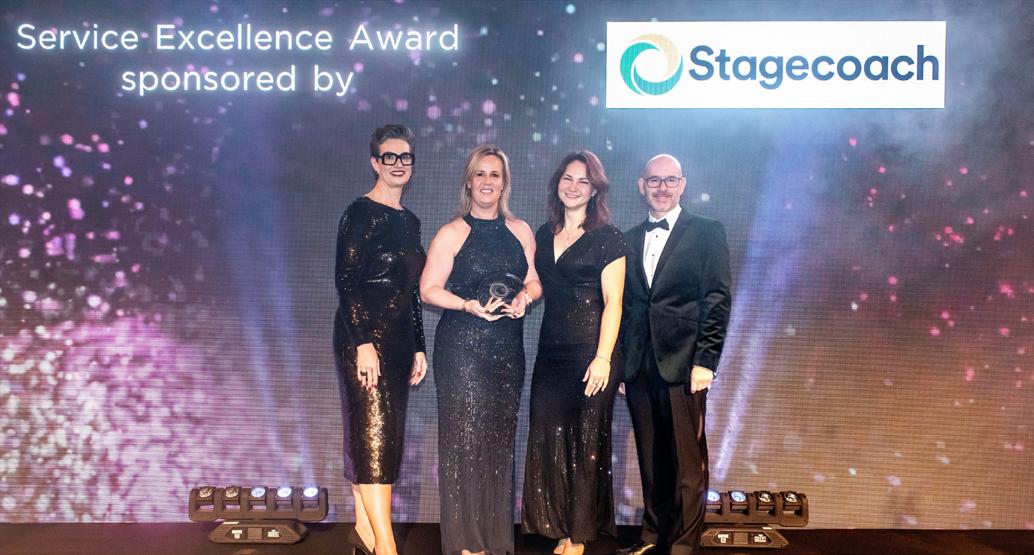
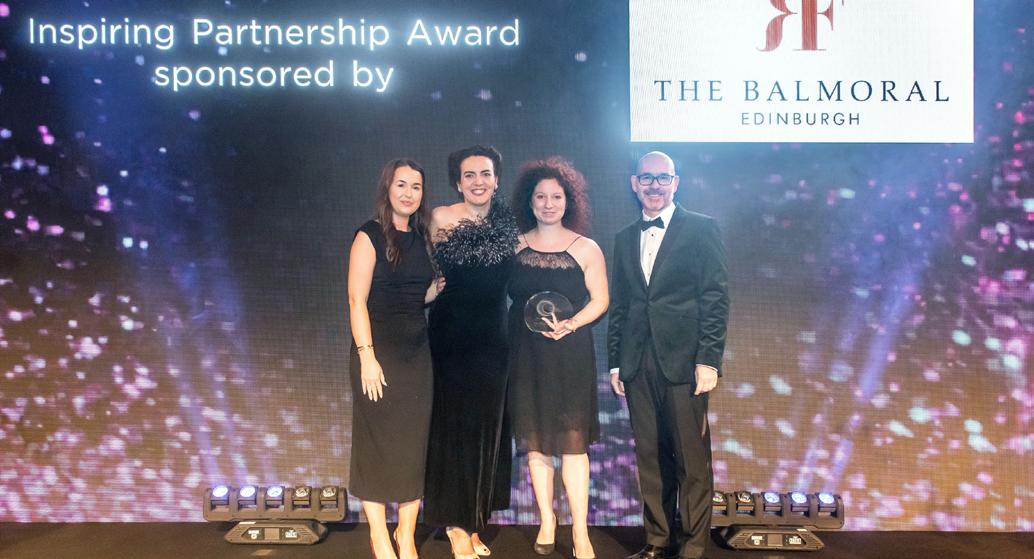
Service Excellence (sponsored by Stagecoach) - Market Street Hotel Inspiring Partnership (sponsored by The Balmoral Hotel) - voco Edinburgh Royal Terrace and Invisible Cities
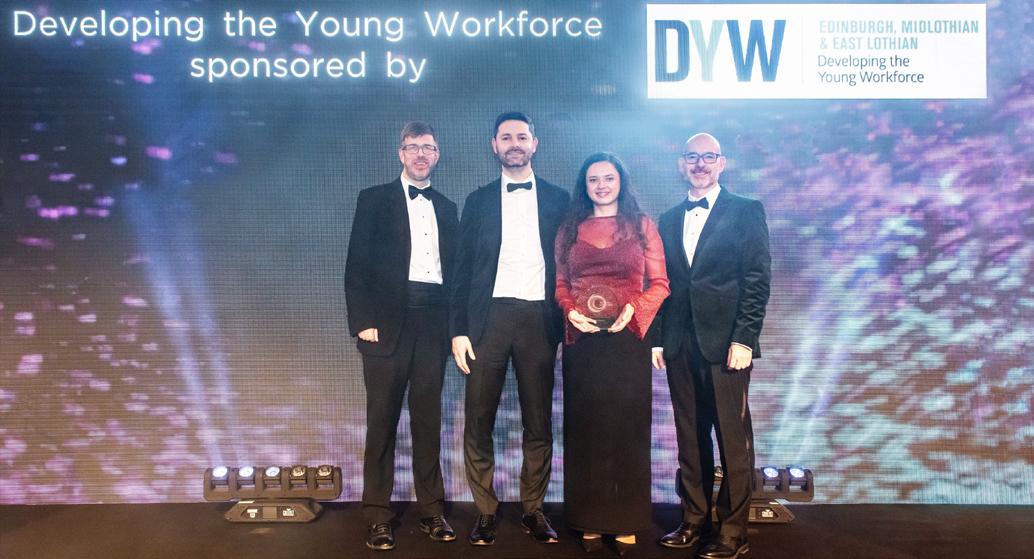
Developing the Young Workforce Award (sponsored by DYW Edinburgh, Midlothian & East Lothian) - AtkinsRéalis
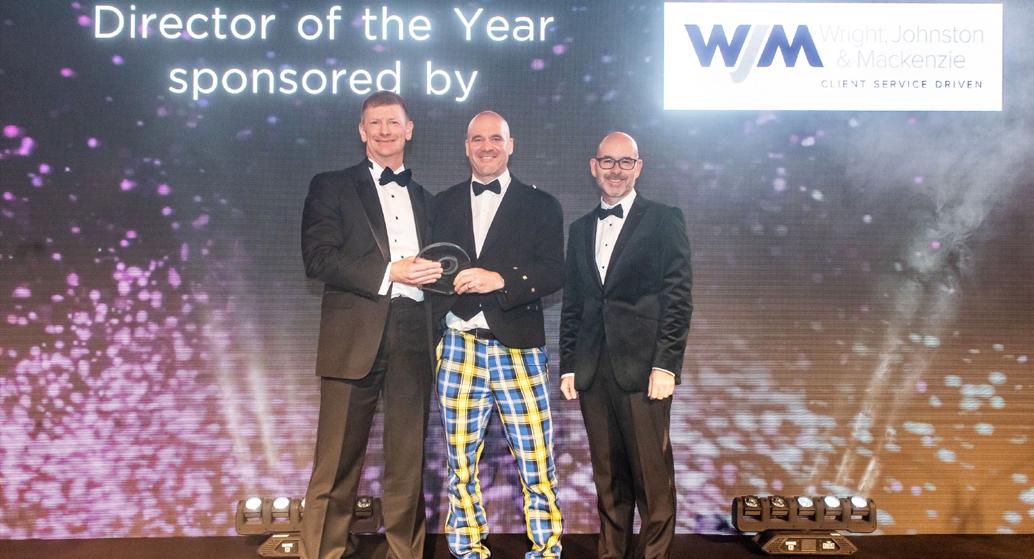
Director of the Year (sponsored by Wright, Johnston & Mackenzie LLP) - Andy Hadden, Lost Shore Surf Resort
Rising Star of the Year (sponsored by Logan Property) - Stephanie Burgoyne – IBM
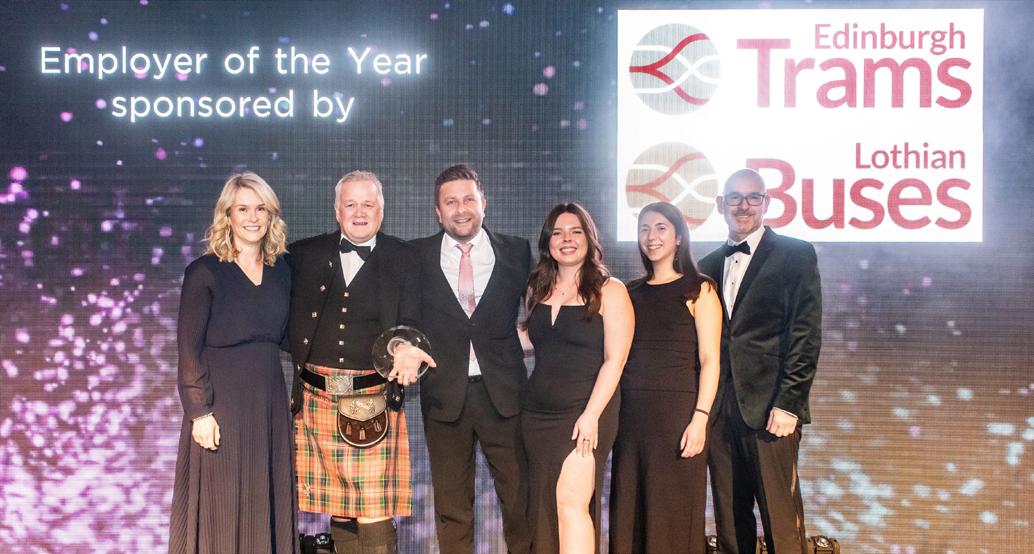
Employer of the Year (sponsored by Edinburgh Trams and Lothian Buses) - Saltire Hospitality
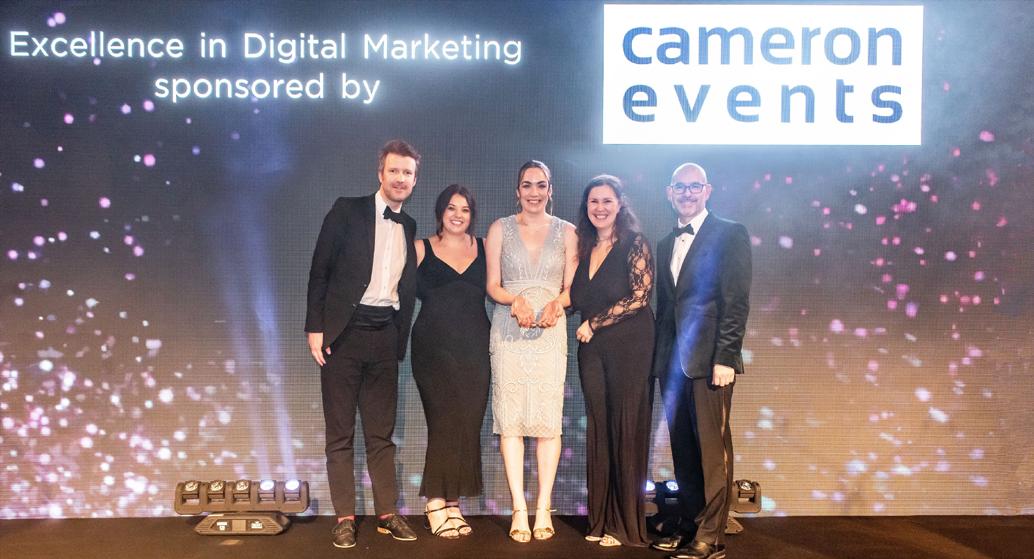
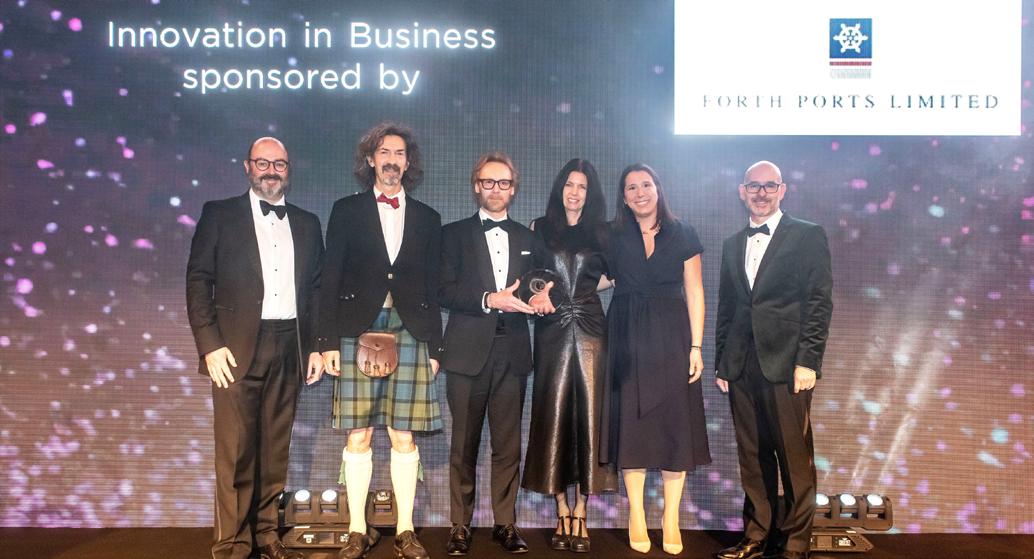
Excellence in Digital Marketing (sponsored by Cameron Events)ESPC Innovation in Business (sponsored by Forth Ports) - Edinburgh College
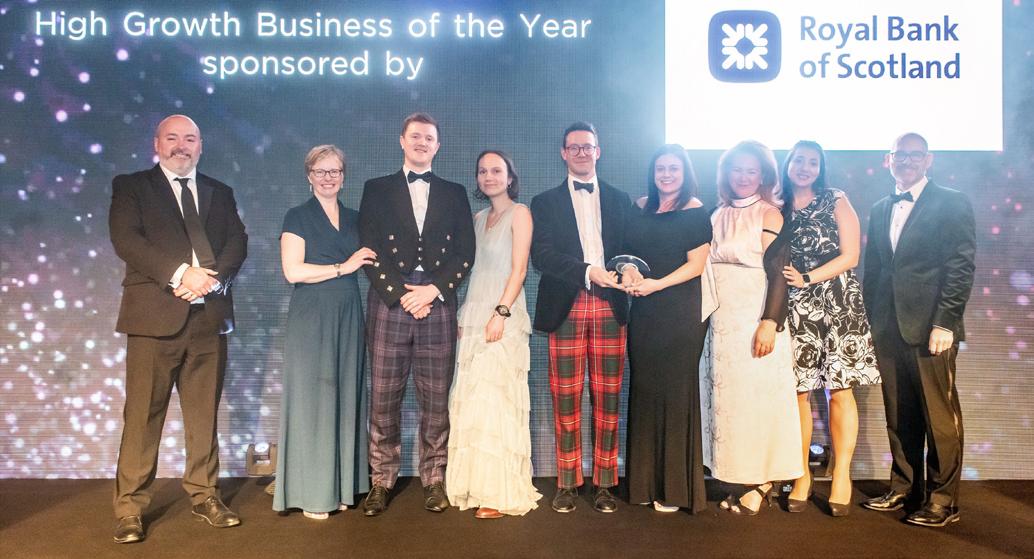
High Growth Business of the Year (sponsored by Royal Bank of Scotland) - Change Waste Recycling
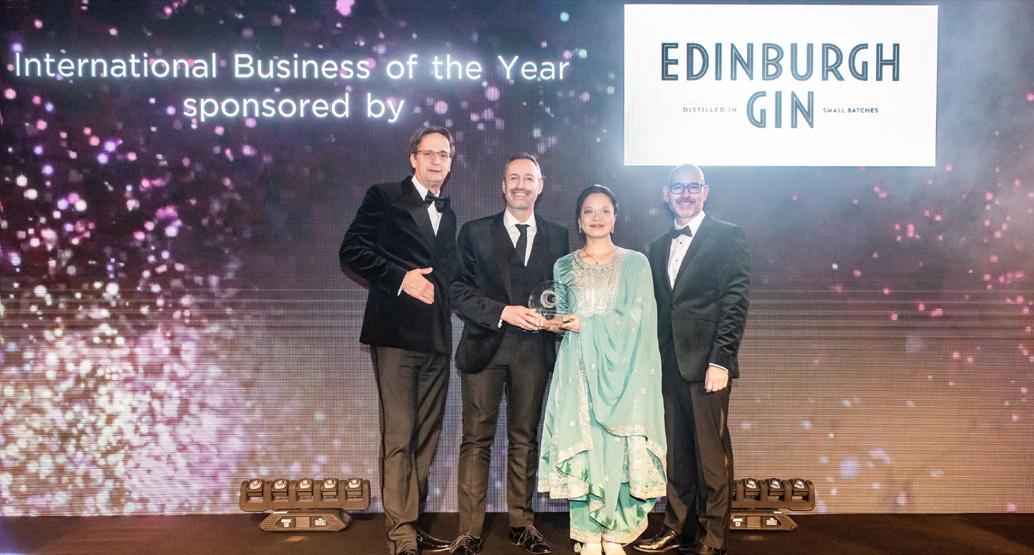
International Business of the Year (sponsored by Edinburgh Gin) - Rutland Square Spirits
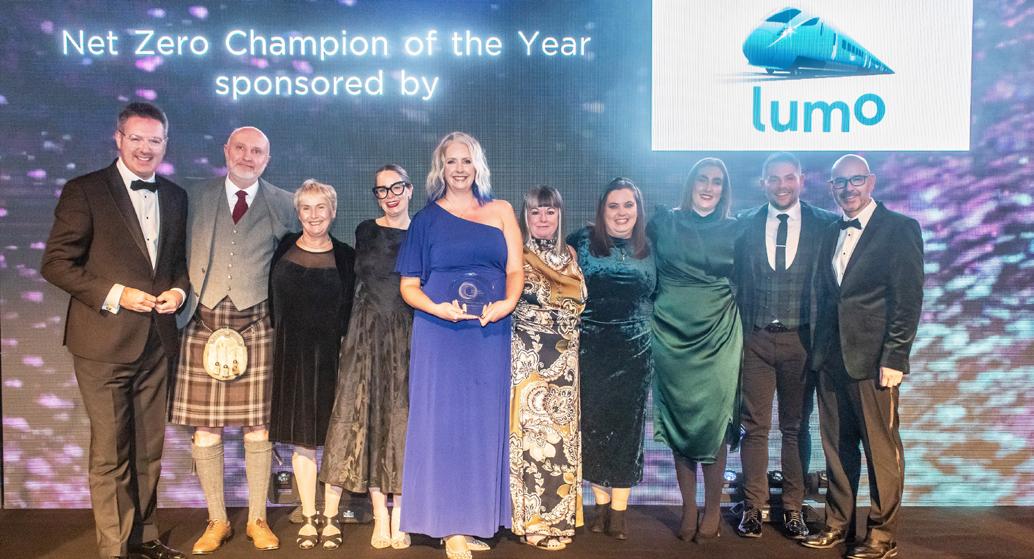
Net Zero Champion of the Year (sponsored by Lumo) - Capella Charity
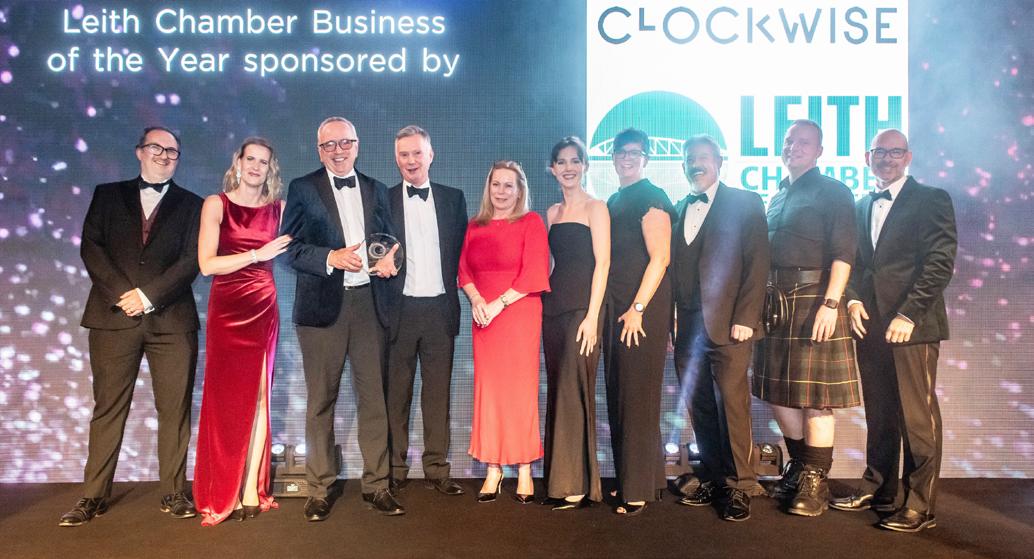
Leith Chamber Business of the Year (sponsored by Clockwise Offices and Leith Chamber of Commerce) - Norton Park
Pulsant Takes on Data Sovereignty with New Podcast Series
Data centre and digital infrastructure provider Pulsant has launched a podcast to help businesses make sense of complex data-related challenges through conversation with experts.
In the first episode of Perspectives from the Edge, host Wendy Shearer, Pulsant’s Edinburgh-based Director of Partnerships and Ecosystems, talks to Assad Noori, the Head of KPMG’s Digital Infrastructure Advisory business in the UK, about data sovereignty.
Recent research indicated that concerns about data sovereignty were higher in Scotland than the rest of the UK. Some 65% of businesses ranked it in the top three changes to have the biggest impact on their data strategy, compared to 55% across the UK.
Wendy said: “Starting with data sovereignty felt important. It’s a term that’s been given a lot of airtime recently, often used interchangeably with digital sovereignty, yet for many
organisations it still feels abstract.
“Talking to Assad really opened my eyes to why data sovereignty has become such a critical issue at this moment, particularly in the UK, and why it can no longer be treated as a compliance checkbox or an IT-only concern.
“As organisations shift to hybrid models, balance public cloud with on-prem and colocation, and begin to experiment more seriously with AI, the questions of where data lives, how it moves and who ultimately controls it become much harder to separate.”
The podcast also looks into the impact of AI and how it brings a new layer of complexity around data movement, governance, risk and accountability, with inference happening across multiple platforms and data that once felt contained suddenly in motion across platforms, jurisdictions and governance boundaries.
Wendy added: “The podcast explores how decisions about data and
infrastructure are now inseparable from questions about risk, accountability and long-term value, which is why they increasingly land at leadership and board level, rather than within IT alone.
“How organisations think about data sovereignty will shape their ability to innovate, protect intellectual property and compete in an increasingly global digital economy.
“Done well, it becomes an enabler of growth and confidence. Done badly, the implications extend far beyond technology.”
In coming episodes Wendy speaks to industry experts, analysts, clients and partners to look at what’s really happening, the lessons being learned, and how organisations can navigate this increasingly complex landscape with more confidence.
The Pulsant podcast: Perspectives from the Edge is available on YouTube, Spotify and Apple.
Public transport use in the capital continues to grow
Lothian Buses and Edinburgh Trams have announced increased patronage across the city’s bus and tram networks in 2025, with more than 130 million customer journeys recorded.
Across the year, Lothian Buses recorded 119 million customer journeys, an increase of 2.6% compared with 2024. Edinburgh Trams have had another record-breaking year, seeing growth of 3.3 % with 12.5 million customer journeys recorded.
This follows a year which saw the city’s public transport network deliver bus and tram services across a particularly busy summer period which included several high-profile concerts and events at Murrayfield Stadium and the Royal Highland Centre alongside a vibrant Edinburgh Festival season.
The introduction of contactless payments on trams earlier this year
now also enables customers to use their contactless card or device to pay for daily and weekly inter-modal caps across both buses and trams in the city.
Sarah Boyd, Chief Executive of Lothian Buses and Edinburgh Trams, said: “Our bus and tram network sits at the heart of the city, providing reliable, inclusive and accessible public transport for the hundreds of thousands of customers who travel with us every day.
“This strong commercial performance reflects the dedication of our people, both on the frontline and behind the scenes, who work tirelessly to deliver consistently high-quality services.
“As we look ahead to 2026, we remain committed to managing cost pressures to ensure that we can continue to invest in the delivery of an integrated, dynamic and fit for purpose public
transport network that meets the demands of our growing capital city.”
Transport and Environment Convener, Councillor Stephen Jenkinson said: “Edinburgh’s outstanding public transport network is the backbone of our great city, keeping the Capital moving every day.
“These new figures clearly show how popular our buses and trams are with our residents and visitors, and my thanks go to our valued colleagues at Lothian Buses and Edinburgh Trams for their great work over the last year. I’ve no doubt that this will continue in the year ahead as these excellent companies work ever closer together.
“As we continue to deliver on our ambitious City Mobility Plan, and face into the many challenges of managing a growing, successful city, our tram and bus services will remain at the heart of our response.”
Turner & Townsend appointed to lead development of Scotland’s National Centre for Music
Turner & Townsend, the global professional services company, has been appointed by the Royal High School Preservation Trust as project manager and contract administrator. This is for the transformation of Edinburgh’s historic Royal High School into the new National Centre for Music.
The landmark project on Calton Hill will breathe new life into the derelict Grade
A listed building, designed by Thomas Hamilton and overlooking Edinburgh city centre. Empty since 1968, the building has seen several failed attempts at repurposing, including proposals to house the Scottish Parliament in the 1970s.
The redevelopment will restore and conserve the iconic structure while
creating a world-class cultural venue. The National Centre for Music will feature a 300-seat performance hall and two additional performance spaces with 100-seat capacity, providing a vibrant hub for music education and performance in the heart of Scotland.
Turner & Townsend’s appointment spans 2025 to 2028, covering project management and contract administration services to ensure delivery of this complex heritage project.
Mark Bruce, Heritage and Conservation Lead, Scotland at Turner & Townsend, said:
“This is an extraordinary opportunity to help re-purpose and safeguard one of Edinburgh’s most significant
heritage assets while creating a space that will inspire future generations of musicians. Our team brings deep expertise in conservation and heritage projects, and we’re proud to play a leading role in delivering a sustainable and culturally transformative outcome for Scotland.”
Kate Smith, Chief Executive at Royal High School Preservation Trust, said:
“We’re delighted to appoint Turner & Townsend to our team for this important project which will save and reactivate the former Royal High School, one of Scotland’s most vulnerable historic buildings, into a stunning home for the National Centre for Music.”
Photo Credit: Mike Wilkinson
EDINBURGH 2030: Unleashing the City’s Economic Ambition
by Liz Mcareavey, Chief Executive, Edinburgh Chamber of Commerce
At the end of November, the Edinburgh Chamber of Commerce hosted our annual Business Festival, generously supported by RBS at their Gogarburn Conference Centre. It was a day filled with inspiring speakers, compelling case studies and important debate about the future of our city’s economy.
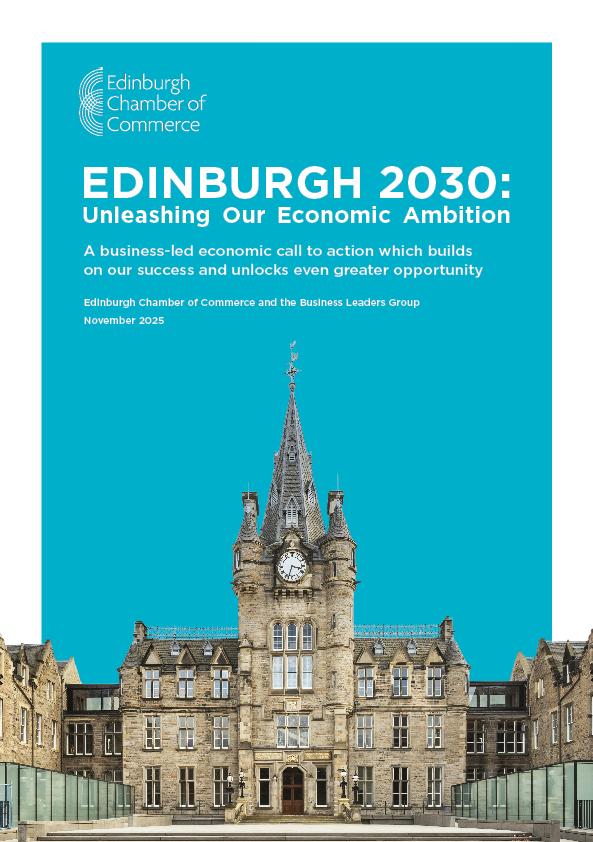
During the event, we launched a piece of work I am hugely proud of - Edinburgh 2030: Unleashing our City’s Ambition. Edinburgh has helped shape the way the world thinks for almost 250 years, from the age of the Scottish Enlightenment to the age of artificial intelligence. For generations, this city has been a place of ideas, innovation and leadership.
In 1776, Adam Smith published The Wealth of Nations, a seminal work that helped define the concept of a political economy. He wrote that a nation is not made wealthy by the accumulation of gold or silver but is enriched by the economic prosperity of its people.
The Edinburgh Chamber of Commerce was founded just ten years later, in 1786, and that principle still underpins our work today.
Across Edinburgh, Scotland and the wider UK, businesses constantly hear that governments are focused on economic growth - on creating jobs, unlocking opportunity and generating the resources our public services need. Yet for many businesses, the political rhetoric does not always translate into reality.
Strategies can feel fragmented, and too often they lack the resources or ambition required to deliver real impact. Economic leadership can appear thin on the ground, and it is not surprising that business confidence in political decisionmaking has been challenged in recent years.
At the Edinburgh Chamber, we believe the business community must play a stronger role in shaping the future of our economy. That means engaging more
intensively and more assertively with government at every level to influence the policy environment needed for businesses to grow and thrive.
Edinburgh 2030 – Unleashing our City’s Ambition is a business-led plan designed to drive the next phase of growth for Edinburgh’s successful and resilient city-region economy.
Since launching our Call to Action in 2024, we have worked with business leaders, universities, colleges and key stakeholders from across sectors to identify the missions that will deliver sustainable economic growth for our city.
Our universities are no longer simply academic institutions. Through research, innovation and collaboration with industry, they are powerful drivers of economic growth. Edinburgh is fortunate to have four world-class universities, alongside a dynamic further education sector, all of which have played an important role in shaping this work.
Skills remain one of the most pressing challenges facing many employers. Edinburgh College already educates around 30,000 students each year, but its principal, Audrey Cumberford, has highlighted the need for a policy environment that better supports the delivery of shorter, targeted courses that provide the practical skills businesses need now.
Currently, funding models are often tied to longer programmes such as HNDs or degrees, which can take years to complete and do not always align with the rapidly evolving skills requirements of the modern economy.
Despite these challenges, Edinburgh’s economic performance remains exceptional. The city generates around 20% of Scotland’s economic output despite having less than 10% of the population and contributes roughly 1.5% of the entire UK economy.
Our GDP per capita has recently overtaken London to become the highest in the UK, at around £70,000 per person - roughly double the Scottish average and significantly ahead of other Scottish cities.
So why does Edinburgh need a plan for growth? Because complacency is the enemy of continued success. Around the world, and across the rest of the UK, ambitious cities are setting out bold strategies to attract investment, support innovation and accelerate economic growth.
Edinburgh faces a unique challenge. We are not trying to catch up with other cities - they are trying to catch us. Our plan sets out five key priorities to ensure Edinburgh continues to thrive: accelerating business dynamism and ambition; establishing a bold, collaborative Team Edinburgh leadership; delivering more and better business infrastructure; becoming Europe’s leading mid-sized innovation city; securing a diverse, skilled and resilient workforce.
Central to all of this is the need to tell Edinburgh’s story more confidently on the global stage. This city offers one of the most attractive investment opportunities anywhere in the UK, yet too often we are not communicating that message strongly enough.
Work is now underway to develop the Team Edinburgh leadership model identified in the plan. In creating this strategy, one of the clearest messages from businesses and partners was the need for a confident, collective voice that can champion the city’s ambitions.
Despite our strengths, Edinburgh is still missing out on investment and innovation funding that could further accelerate growth across our high-potential sectors.
Indeed, Edinburgh has been identified as the only location in the UK that is a priority cluster for all eight of the highgrowth sectors outlined in the UK’s Modern Industrial Strategy.
If we succeed in delivering this vision, the benefits will extend far beyond economic growth. A stronger economy can help tackle some of our biggest societal challenges - from poverty and housing pressures to the long-term sustainability of our planet.
Ultimately, good economic growth delivers what Adam Smith championed more than two centuries ago - the economic prosperity of our people.
Click to read Edinburgh 2030: Unleashing Our Economic Ambition
Forth Green Freeport Unlocks Deliver £7.9Bn of Econimic
The Forth Green Freeport (FGF) has marked a joint agreement which unlocks £25 million of seed funding from the UK Government to support reindustrialisation of the Edinburgh, Fife and Falkirk areas and attract £7.9 billion of private and public investment over the next decade.
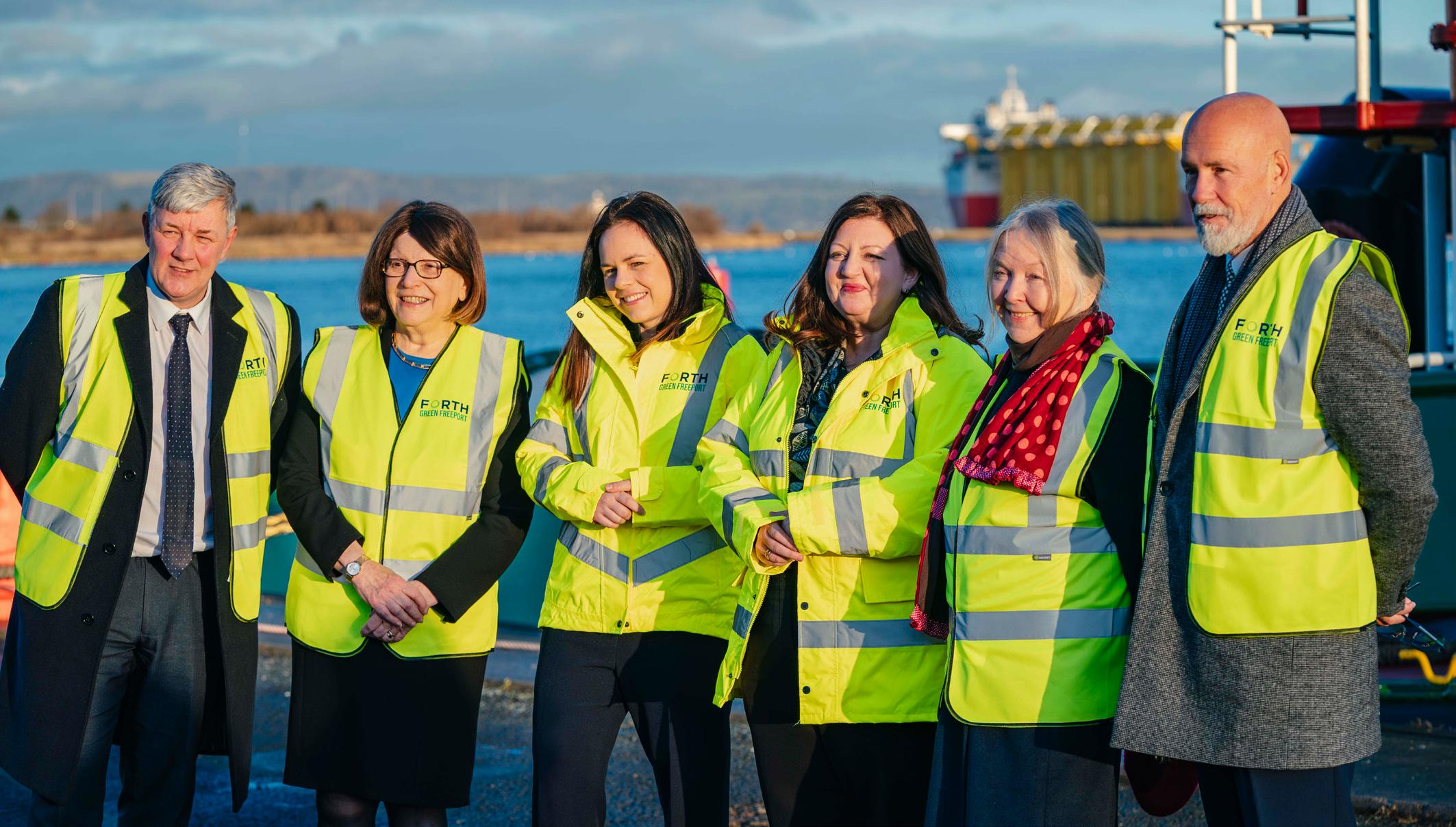
At the Port of Leith, Parliamentary Under Secretary of State for Scotland, Kirsty McNeill and Deputy First Minister, Kate Forbes joined the Forth Green Freeport Chair, Dame Susan Rice DBE, and CEO, Sarah Murray, and representatives from the three local authorities – Cllr Altany Craik, Fife Council; Cllr Allan Nimmo, Falkirk Council; and Cllr Jane Meagher, City of Edinburgh Council – to mark the signing of a Memorandum of Understanding (MoU) with the UK and Scottish Governments, which releases £25 million of seed capital funding. This seed capital will be match funded by project leads bringing an initial investment in the area to more than £50 million.
The seed capital funding will help prepare the key sites within the FGF area to attract investors and deliver major economic benefits for Scotland. It will mean delivery can begin on projects, which have been identified to attract major inward investment in the key target sectors including offshore wind, hydrogen, sustainable fuels, modular manufacturing and
logistics, FGF will support the re-industrialisation and largescale economic regeneration of Central Scotland over the next decade.
FGF became operational on 12 June 2024 and over the next 25 years is set to attract new businesses and new jobs into Burntisland, Grangemouth, Leith and Rosyth, aided by a suite of tax and custom incentives to deliver real benefits for Scotland and the UK.
A detailed economic impact assessment has projected that FGF will generate £7.9 billion of private and public investment and boost GVA (gross value added) by £8.1 billion. The analysis projected that up to 34,500 well paid, skilled jobs, could be created with around 16,000 of these being direct employment in the FGF’s target sectors and tax sites.
Dame Susan Rice DBE, Chair of FGF said: “This is a momentous day for the entire Forth Green Freeport team as we mark the MoU agreement and release the £25 million of seed capital from the UK Government to help attract significant inward investment. We are grateful to both Ministers, our Local Authority partners and FGF consortium members for being here today and we look forward to
Unlocks £25 Million To
Econimic
Regeneration
delivering this important project for Scotland.”
UK Government Minister Kirsty McNeill said: “This is a pivotal moment in the UK Government’s mission to boost economic growth right across Scotland. The Forth Green Freeport will transform the economy of Central Scotland, as well as playing a key role in our clean energy future. Supported by £25 million of UK Government investment, and a range of UK Government tax incentives, this important collaboration between governments and local partners will deliver tens of thousands of high-quality jobs and attract billions in investment.”
Deputy First Minister Kate Forbes said: “This milestone is the culmination of years of partnership working to transform the region, including the Grangemouth industrial cluster, by attracting billions of further public and private investment. Forth Green Freeport will bring well-paid jobs, regeneration and make significant steps towards achieving Scotland’s net zero ambitions.
“The Scottish Government is committed to driving investment and innovation to support fair, green economic growth which will put more money into people’s pockets and help the places they live to prosper.
“That’s why we are supporting offshore wind with £500 million investment over five years to grow the supply chain and we have launched our new online portal InvestScotland which showcases large-scale investment opportunities, including in renewable energy.”
Minister for Devolution, Faith and Communities, Miatta Fahnbulleh, said: “This is what real partnership looks like. Working with the Scottish Government, we’re investing £25 million to create thousands of skilled green jobs across Edinburgh, Falkirk and Fife – giving the Central Belt a real stake in the country’s clean energy future.”
The event took place at the Port of Leith which has been transformed through major private investment by owners and FGF Consortium partner, Forth Ports, into a world class renewables hub which is currently hosting the Inch Cape Offshore Wind project marshalling the foundation component parts of the 72-turbine wind farm being constructed off the Angus coast.
To deliver the ambitious vision of FGF, a strong team is in place with a focus on attracting investment across the FGF while ensuring strong governance and adherence to the FGF’s Fair Work and Net Zero charters.
Universities as engines of economic growth
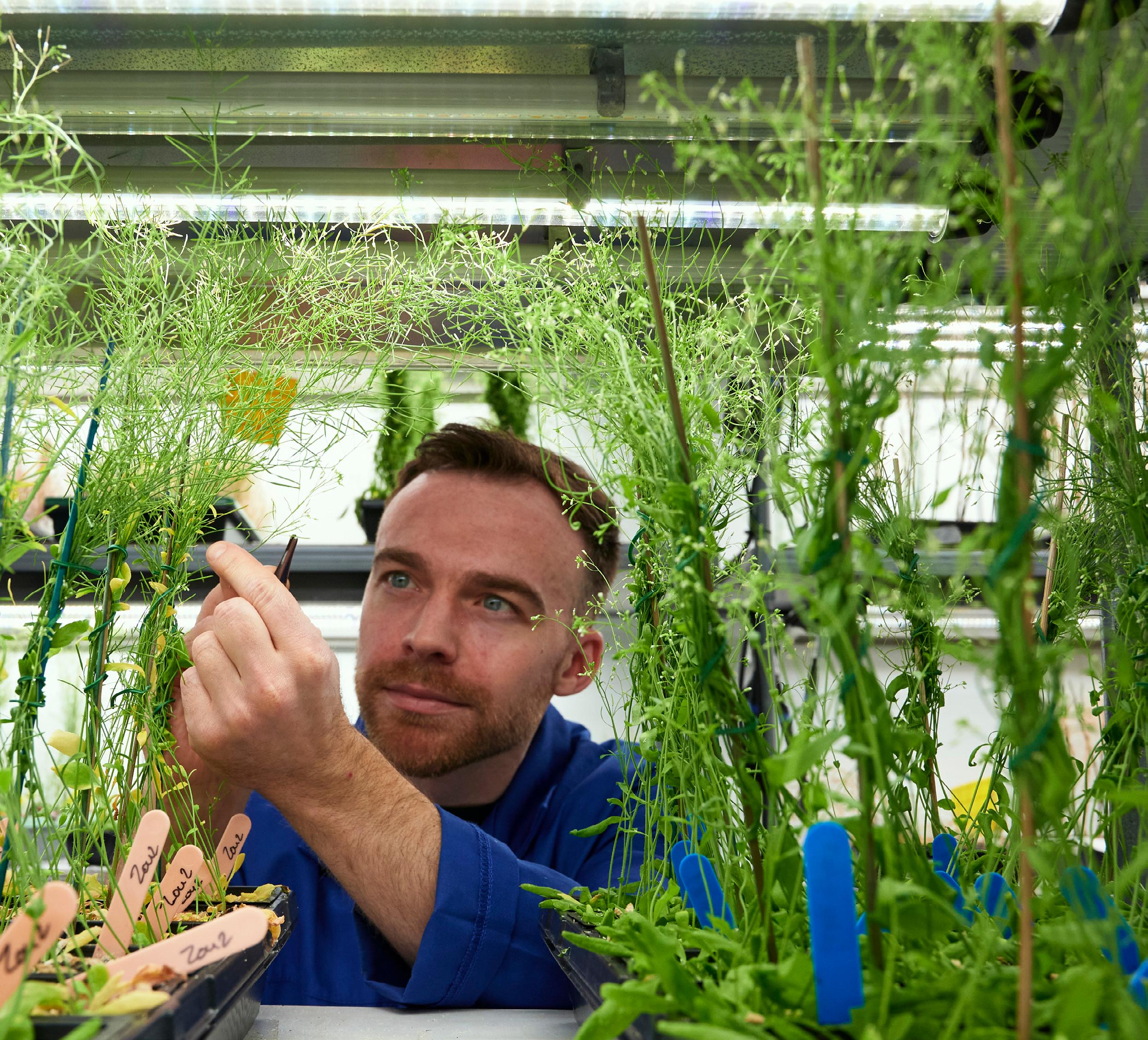
Dr Andrea Taylor, CEO of Edinburgh Innovations, the University of Edinburgh’s commercialisation service, says universities bring economic and social benefits beyond their walls
The University of Edinburgh is a beacon of knowledge and discovery. We harness our ideas and technologies for the benefit of everyone; taking research out of academia and into the world, driving impact and wealth creation as we catalyse knowledge into change.
In our recent impact review, we set out how we do this: by partnering with others to understand real-world challenges and co-create for growth; by protecting and licensing our
inventions and other intellectual property, and by forming companies and attracting investment.
The report, called Power of Innovation, highlighted that we collaborated with 649 organisations last year locally, nationally and globally – 497 in the private sector, 130 in the public sector and 22 third sector. We deployed our research and expertise to help these organisations find solutions across our three mission areas: shaping the future of health and care; tackling the climate and environmental crisis; and harnessing data, digital and AI for public good.
We created 64 new student and staff companies, of which the majority – 65 per cent - were linked to the mission of data, digital and AI. These range from spinout CGEN Engineering, which won UK Clean Tech Startup of the Year for its modular generators for renewable energy, to student startup Qinara, which offers businesses quantum technology solutions.
A total of £113 million was invested into University-associated companies this year, of which £56 million went into spinouts – those staff companies where the University retains intellectual property.
Many of these were ‘deep tech’ companies, built on complex technology platforms grown from years of scientific research, using advanced therapeutics and biotechnology to tackle issues in healthcare, for example.
Examples include Prothea Technologies, which began clinical trials last year for its technologies that aim to ‘see and treat’ lung cancer in one hospital visit; Concinnity Genetics, which launched with £3m for its gene control platform and Resolution Therapeutics, which dosed its first patient with a new cell therapy treatment for end-stage liver disease.
We’ve seen strong results when investors get involved early on, as Sofinnova Partners did with spinout Forth Therapeutics, which launched in March to tackle fibrosis.
Dr Andrea Taylor, CEO of Edinburgh Innovations
The report’s data supports national trends reported elsewhere, showing UK spinouts and deep tech companies remain robust in a difficult global climate for investment. The UK is second only to the US and China for VC investment in deep tech, with sources such as the Royal Academy of Engineering finding Edinburgh ranks highest outside the Golden Triangle of Oxford, Cambridge and London for such investment.
The Scottish Government’s recent interim report on research commercialisation, called Ideas to Impact, focussed on the importance of spinouts to economic growth.
Power of Innovation also highlights that 102 companies in the University’s in-house venture investment fund, Old College Capital (OCC), portfolio have created 1236 jobs to date. Many of these companies remain headquartered
in Edinburgh, such as carbon removal technology spinout Carbogenics, which is headquartered on campus and continues to work with University researchers. It recently raised $3 million in investment, with OCC’s continued backing.
The University is part of a thriving innovation ecosystem, which saw student startup, biotechnology company MiAlgae, begin construction of its new sustainable manufacturing site at Grangemouth in December, for example, expected to create 310 new ‘green’ jobs.
Our companies support economic and regional development as they contribute to growing clusters and, in the best cases, they create societal change on a global scale. This year, we will continue to collaborate to make ideas work for a better world.
Shaping the future: Scotland’s green data strategy
Scotland stands at a pivotal moment in its digital and energy transition. As global demand for data processing accelerates – fuelled by cloud computing, AI adoption and the rapid expansion of digital services – the infrastructure required to support this growth is scaling at an unprecedented rate. Data centres, once a relatively niche part of the energy system, are now emerging as major industrial assets with significant implications for electricity demand, carbon emissions and sustainability.
Power consumption behind the digital boom
Data centres are substantial consumers of electricity. It is estimated that they currently account for around 2.5% of Britain’s total electricity demand, and that figure is expected to rise to around 10% by 2050. To put those figures into perspective, a single data centre typically uses as much electricity as around 100,000 households, while the largest facilities currently under construction are expected to
consume up to twenty times that amount. The UK is home to 523 data centres – the third-highest number of any country worldwide – including 16 located in Scotland. These figures are expected to rise significantly to keep pace with increasing demand for digital services.
New clean power capacity is therefore needed to meet this increased electricity demand, which should in turn drive further investment in clean power generation and power storage markets. However, the scale of this expansion brings significant challenges, particularly in relation to energy consumption and environmental sustainability.
The case for green data centres
Most data centres are connected to the national grid and continue to rely on diesel generators for back- up power. These systems are carbon -intensive, often legally restricted to 50 operating hours per year. A more sustainable model is emerging through the concept of “Green Data Centres”,
which integrate cleaner technologies such as:
• battery energy storage systems, and
• high - efficiency gas turbines that are capable of transitioning to low- carbon gases in future
These solutions can provide both back- up power to the data centre and integration into the flexible power market.
Optimising location for performance and sustainability
Improving operational efficiency remains a key priority for the sector. Given the significant operating and connection costs, progress has been made to increase the efficiency of data centres. Advances in low- carbon cooling technologies and the integration of waste -heat recovery systems offer significant opportunities. It has been reported that data centres in Scotland consumed in excess of 13 million litres of water last year. The waste heat could be utilised as a low- cost, low- carbon source of heating for nearby homes, commercial buildings or industrial processes.
Scotland’s climatic and renewable advantages
Scotland’s cooler climate provides a natural advantage, reducing the need for energy-intensive artificial cooling and therefore reducing operational costs. There’s also a strong argument for locating data centres near Scotland’s offshore wind farms. Locating data centres closer to the generation source would reduce grid transmission costs. However, the UK government’s decision to rule out zonal pricing under the Review of Electricity Market Arrangements has potentially weakened the geographical appeal of remote Scottish regions. There are numerous other factors that influence the siting of data centres. Many users need
extremely low-latency performance – particularly high -frequency financial sectors – so user proximity can often be critical.
Policy direction
The Scottish Government launched the Green Data Centres and Digital Connectivity Vision and Action Plan in 2021, which seeks to support the growth of Scottish Data centre clusters. The action plan aims to build Scotland’s profile as a leading zero-carbon, cost-competitive green data hosting location. It also aligns with Scotland’s 2045 net zero emissions target.
The UK Government’s AI Opportunities Action Plan also underscores the strategic importance of strengthening national AI capabilities. The plan aims to help drive efficiency and growth of AI opportunities across the UK, including boosting the UK’s AI Infrastructure needs and establishing AI Growth Zones to facilitate the accelerated build of AI data centres, while working with the National Energy System Operator to consider energy requirements.
Looking to the Future
With its cooler climate, abundant renewable resources and track record in clean power generation, Scotland has many of the natural advantages required to become a competitive hub for green data centres. It has the potential not only to host the data infrastructure of the future, but to do so in a way that sets a global benchmark for sustainability, resilience and economic opportunity. Investment in low- carbon backup power, advanced cooling, waste -heat utilisation and grid-integrated storage can help ensure that data centres support — rather than strain — Scotland’s net-zero ambitions. However, realising this potential, will necessitate continued collaboration between policymakers and industry.
Ian Baird, Partner, Anderson Strathern
Katie Primrose-Rourke, Solicitor, Anderson Strathern
International collaboration to develop green skills for young people
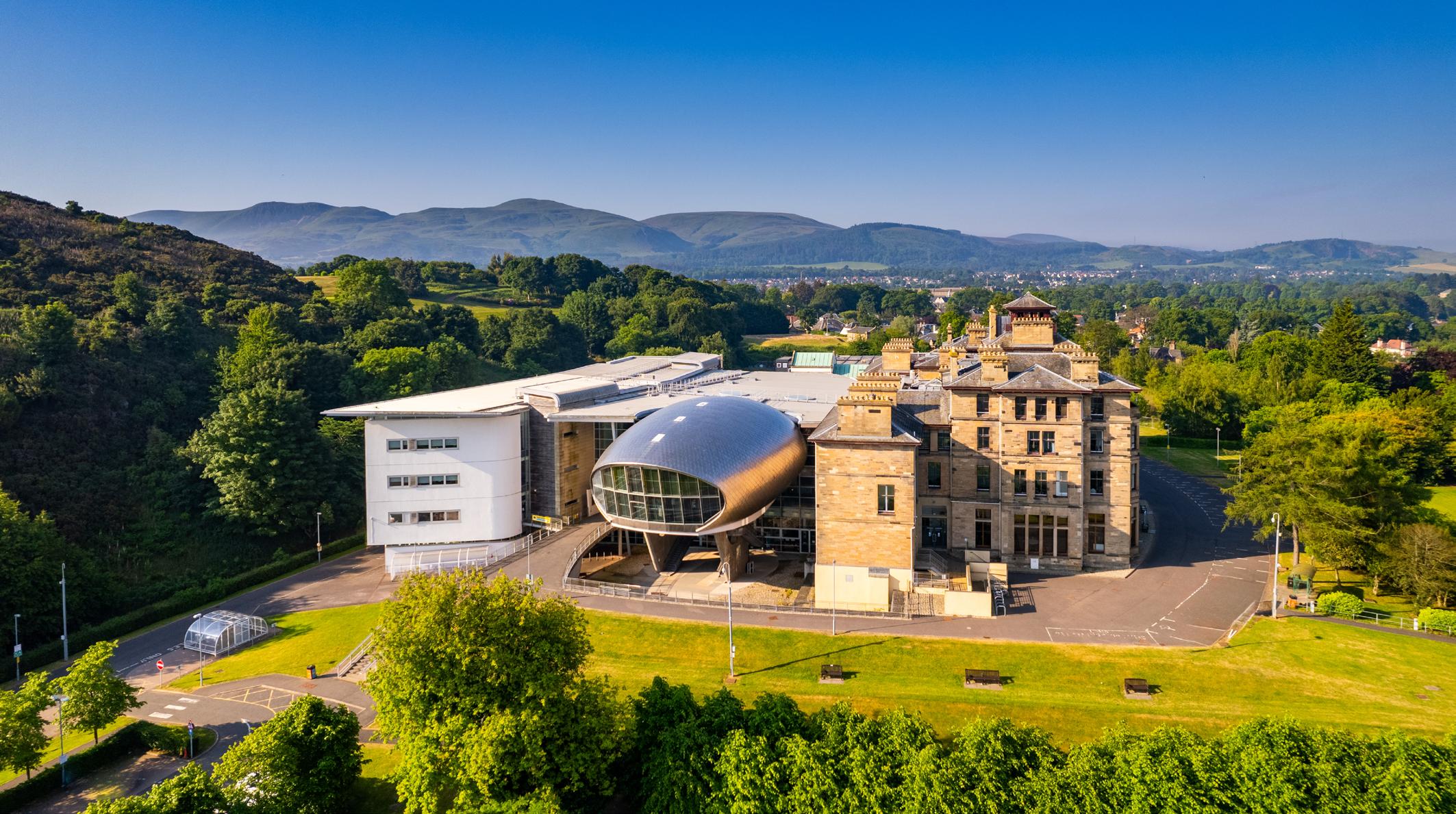
Anew international project will see Edinburgh Napier University (ENU) researchers work with partners to develop green skills and entrepreneurship opportunities for young people in the UK and Viet Nam.
Developed in collaboration with Can Tho University, a leading institution in the Mekong Delta, Youth Green Innovators for Sustainable Enterprise has been awarded funding under the Climate Skills Global Collaboration Grants, a global programme delivered by the British Council and supported by HSBC.
As part of the initiative, academics from ENU’s Centre for Business Innovation and Sustainable Solutions (CBISS) will provide people aged between 18-30 with training in climate literacy, green business models, circular design and ecoinnovation.Participants will work directly on real-world sustainability challenges, engage with green businesses and social enterprises, and develop hands-on solutions through prototyping and problem-solving activities.
A strand of the programme, entitled Train the Trainer, will deliver climate skills training within participants’ own communities, ensuring long-term impact and sustained capacity-building in both the UK and Viet Nam.
The programme aims to place strong emphasis on equity and inclusion, widening access to structured green skills
and entrepreneurship pathways for young people – who are often underserved by traditional routes into emerging green sectors.
Professor Sukanlaya Sawang, Director of CBISS and Project Lead , said: “Climate transition requires more than awareness. It requires skills, confidence and entrepreneurial capability.
“Our aim is to equip young people with the practical tools they need to create sustainable enterprises and contribute to emerging green economies in their own communities.
“This award recognises the strength of our research in sustainable innovation and our commitment to translating that research into meaningful opportunities for young people.
“Through this partnership with Can Tho University, we are not simply delivering training – we are building international networks, practical green enterprise pathways and long-term collaboration between the UK and Viet Nam.”
The Climate Skills Global Collaboration Grants fund partnerships between the UK and Brazil, India, Indonesia, Mexico and Viet Nam, helping young people aged 18–30 gain structured green work experience and green entrepreneurship opportunities. The programme is part of the wider Climate Skills initiative supported by HSBC.
Transforming Culture at Openreach
Openreach’s People Networks are employee led communities driving a more inclusive, supportive and engaged workplace. Made up of more than 6,000 Openreach people and volunteer committee members from across the organisation, these networks champion diversity, influence policy and help ensure every colleague feels valued and able to be themselves at work. Working closely with the People & Culture team and the organisation’s growing community of more than 3,000 Inclusion Allies, they play a vital role in shaping Openreach’s culture.
The networks bring together colleagues with shared experiences or interests, providing safe spaces for discussion, raising awareness of key issues, and running campaigns that highlight challenges and celebrate identities. They also advise leaders, contribute to decision making and energise the organisation through events, programmes and learning opportunities.
Openreach’s primary People Networks, Pride, the Ethnic Diversity Network (EDN), the Gender Equality Network (GEN) and ENABLED, each focus on a different aspect of identity and inclusion, while collaborating to create cross network impact.
Pride supports LGBTQ+ colleagues and allies by raising awareness, championing visible allyship and promoting mental health support. The network leads activity around key inclusion dates such as Pride Month, IDAHOBIT and Trans Awareness Week, helping ensure LGBTQ+ perspectives are represented and understood.
The Ethnic Diversity Network (EDN) advocates for racial equality, cultural celebration and equitable career development. Through spotlight sessions, cultural events and
open conversations about lived experience, EDN encourages greater understanding and drives action to tackle racial inequity.
GEN, the Gender Equality Network, focuses on improving gender balance, supporting inclusive career pathways and addressing gender based barriers. The network hosts discussions on identity, leadership representation, workplace experiences and allyship, in what is a traditionally a male dominated business and wider industry.
ENABLED is Openreach’s newest network, formed from the merger of the Able2 and Neurodiversity Networks. It raises awareness of disability inclusion and neurodivergent experiences, promotes practical adjustments, highlights barriers that colleagues may face, and champions the unique strengths and perspectives of disabled and neurodivergent individuals.
Across all these networks, collaboration is a defining strength. They frequently join forces on campaigns, learning sessions, awareness days, panel discussions and workplace events. The networks also work closely with the Inclusion Allies, who use the organisation’s “Listen, Support, Educate, Change” model to embed inclusion into everyday behaviour.
Collectively, Openreach’s People Networks shape a culture built on respect, empathy and curiosity. They challenge the organisation to be better, support colleagues across the business and ensure that diversity and inclusion are not just commitments on paper but lived experiences.
Through connection, education and partnership, these networks help Openreach stay meaningfully connected, not just through its fibre network, but through its people.
The Attention Deficit in Leadership — Why Culture Fails Before People Do
In every organisation, culture begins to shift long before the symptoms show. Before a resignation, a disengaged high performer, or a decline in results, something more fundamental changes first: the leader’s attention. What leaders notice, ignore, reward, and tolerate quietly sets the trajectory for trust, performance, and culture.
Culture fails before people do — and the earliest warning signs show up in a leader’s attention.
Across my work in neuroscience, psychology, and cultural transformation, one finding is repeatedly clear: culture fails before people do. Not because leaders don’t care, but because modern leadership attention is chronically stretched. When attention thins, decision quality drops, communication frays, and culture starts to drift long before anyone realises.
The hidden driver of disengagement: attentional fatigue
Burnout and disengagement are often framed as workload problems. In reality, the decline begins much earlier — with attentional fatigue.
Under sustained pressure, the brain’s filtering system narrows. Leaders start scanning for urgency instead of importance. They reward speed over clarity, react rather than reflect, and unconsciously reinforce behaviours that keep the organisation in firefighting mode.
The deeper issue is not capability or commitment. The deeper issue is that most leaders aren’t aware of where their attention is actually going.
Teams respond instantly to this shift. When a leader’s attention becomes narrow and threat-focused, people become cautious, less creative, and more reluctant to challenge. A culture that once felt energising becomes tight, transactional, and risk averse. Performance issues are then misdiagnosed as skill gaps when the real issue is attentional capacity — the space to think, prioritise, regulate, and lead.
Why culture mirrors the leader’s attention
Emotional Intelligence and Psychological Safety have shaped leadership thinking for decades, but both rely on a single mechanism: the brain follows attention.
If a leader’s attention is anchored in urgency or scarcity, psychological safety cannot take root. When attention is steady, expansive, and coherent, teams regulate around that stability.
This principle is the foundation of Attentional Leadership™ — the neuroscience of culture and performance — the system
I developed through my doctoral research to decode how attention shapes behaviour, organisational culture, and results.
Rebuilding clarity, trust, and results in 2026
Leaders entering 2026 face volatility, talent scarcity, and rising complexity. The differentiator won’t be tools or resilience programmes. It will be how leaders manage their attention.
Three high-impact shifts matter most:
1. Create cognitive space.
Leaders who protect thinking time make sharper decisions; without it, everything defaults to urgent.
2. Signal what matters.
Teams mirror what leaders consistently notice and reward. Clarity scales when it is visibly reinforced.
3. Broaden the lens under pressure.
Strategic insight returns when leaders ask, “What am I not seeing?” — widening attention rather than collapsing it.
Culture doesn’t deteriorate because people stop trying. It deteriorates because leaders, under pressure, lose attentional capacity — often without noticing.
The organisations that outperform in 2026 will be those whose leaders intentionally rebuild the attentional capacity they’ve lost.
Dr Dawn Harris, Kedras Group
The 2026 Marketing Playbook: How smart businesses will break through the noise
If your 2026 marketing strategy looks anything like 2024, you’re already playing catch-up.
The businesses thriving this year aren’t the ones with the biggest budgets or the flashiest campaigns. They’ll be the clearest, trusted, and most visible where their customers, and AI are already searching.
Here are the strategies moving the needle, and defining successful marketing in 2026.
AI is rewriting the visibility game
Search is no longer just Google results, it’s AI answers. With ChatGPT, Perplexity, and Google’s AI overviews now answering questions directly, your customers aren’t clicking through to your website like they used to. They’re getting answers from AI that’s scraping the internet for the most authoritative, relevant sources.
That means the smart businesses winning are those becoming genuinely helpful, creating content that answers real questions customers are asking, not just content stuffed with keywords.
It’s building credibility; showing up in forums, publishing case studies, sharing expertise. AI rewards depth and authority. If you’re the accountant who’s written extensively about tax strategies for small business owners, AI will surface you when someone asks about minimising their tax burden If you’re not showing up in those answers, you’re invisible.
Though the process isn’t easy, the strategy is simple; businesses that educate instead of advertise will win.
Storytelling will set you apart
Every business has access to the same AI tools, the same social platforms, and the same advertising channels. In this crowded market, storytelling will be your differentiator. Not flashy branding or clever slogans, but real narratives that build trust.
Customers are choosing brands they believe in. Your origin story, your why, your values in action are your competitive advantage. And that’s not opinion. Google’s own insights show these factors directly influence why people choose one business over another.
Storytelling in 2026 needs to be authentic. Spotlight customer transformations, not just outcomes. Be transparent
about challenges, lessons and growth. Vulnerability builds connection faster than perfection ever will.
The hybrid approach wins
The most successful businesses this year aren’t choosing between high-tech and high-touch. They’re doing both. They’re using AI to handle the repetitive tasks, the data analysis, the content creation scaffolding. Then they’re injecting humanity into every customer touchpoint.
That looks like automated scheduling paired with personalised follow-ups. AI-generated first drafts that get rewritten in your voice. Chatbots that handle basic questions so your team can focus on complex problem-solving.
The technology amplifies your capacity. Your human touch creates the loyalty.
Final thought
Successful marketing in 2026 requires two commitments: master AI visibility so people can find you, and strategic storytelling so they know why to choose you. Invest in longterm trust over short-term attention.
The businesses that crack this combination won’t just survive the noise. They’ll rise above it entirely.
You can book Dympna McKenna’s copywriting course with Edinburgh Chamber of Commerce: Turn your words into profits and grow your business in the age of AI.
Balfour Beatty secures £162 million contract to deliver landmark Dunard Centre in Edinburgh
Balfour Beatty announced that it has been awarded a £162 million contract by IMPACT Scotland to deliver the Dunard Centre, Edinburgh’s first purpose-built concert hall in over a century.
The contract will see the company construct the new, worldclass concert hall in the heart of the capital, containing a 1,000-seat auditorium, a café, bar and multifunctional spaces for a variety of events alongside a complex in-situ concrete double basement which will house performer changing and storage areas as well as back of house facilities.
As part of the works, Balfour Beatty will construct a fivestorey steel frame with an envelope façade of pre-cast concrete panels. The high-quality internal finishes will include bespoke solid oak panelling to the hall to enhance the acoustic experience.
The appointment follows an extensive eighteen-month period of Early Contractor Involvement, during which Balfour Beatty worked closely with IMPACT Scotland and its design and engineering partners to develop the construction methodology, sequencing, logistics and buildability for the tightly constrained city centre site behind St Andrew Square.
During construction, the company will create at least five new apprenticeship positions, support ongoing apprenticeships and skills development opportunities using the Modern
Apprenticeship SVQ route, supported by an extensive supply chain engagement programme focused on Scottish SMEs. The company will also use 4D planning to sequence works, maximise efficiency and reduce disruption in the busy city centre location.
Once open, the Dunard Centre will provide a permanent home for the Scottish Chamber Orchestra and become a new venue for the Edinburgh International Festival, increasing access to the arts and attracting an estimated 200,000 visitors annually.
Nick Rowan, Managing Director of Balfour Beatty’s regional business in Scotland, said: “We are proud to be entrusted with delivering what will become a nationally significant cultural venue in the heart of Edinburgh and have worked meticulously to plan every stage of this complex build, from construction logistics in a tightly constrained site, to the precision needed to achieve world-class acoustic performance.
“Our focus now is on safe, efficient and high-quality delivery, working closely with our local supply chain while creating meaningful jobs, apprenticeships and skills opportunities throughout the programme.”
Construction started in November 2025, with completion expected in 2029.
Render of the 1,000-seat auditorium in Dunard Centre
IBM Powers a Smarter Cloud Strategy for Social Security Scotland
by Ian Scott, IT Architect and Associate Partner, IBM
Afull stack of curated solutions to modern economic development, including accelerator programmes, hubs, community, mentorship, investor connectivity and international pathways.
Social Security Scotland provides a clear example of how embracing disciplined cloud financial management can deliver both operational improvements and significant cost savings. Established as a cloud native organisation on Amazon Web Services (AWS), the agency needed a modern infrastructure capable of supporting its mission to deliver benefits fairly, transparently and efficiently to people across Scotland.
However, as demand and complexity grew, so did cloud expenditure. Without dedicated governance structures or clear visibility into usage, costs increased quickly. Teams had limited insight into how resources were consumed, and no mechanism for attributing spending directly to service owners. Against the backdrop of tightening budgets across both the Scottish and UK Governments, gaining control of cloud spend became a strategic priority.
To address this challenge, Social Security Scotland partnered with IBM Consulting and Nordcloud, an IBM company, to develop and embed a comprehensive FinOps operating model. This transformation centred on combining industry leading tools with cultural and organisational change, ensuring long term sustainability rather than short term fixes.
The first step was deploying IBM® Cloudability®, a FinOps platform that provided immediate visibility into cloud spending across the organisation. With clearer insight into usage patterns, the agency could identify inefficiencies and begin attributing costs accurately through detailed “showback” reporting.
This not only improved accountability but also empowered individual teams to take ownership of their cloud consumption.
Beyond tooling, IBM Consulting and Nordcloud worked closely with Social Security Scotland’s leadership to design a FinOps strategy aligned to public sector needs. This included introducing new governance processes, embedding “compliance as code” to strengthen security standards, and re architecting key workloads to improve efficiency. The team also supported the adoption of open source technologies to reduce licensing costs and built semi automated engineering solutions to identify and eliminate waste.
The impact of this collaborative effort was significant. In just 18 months, Social Security Scotland achieved the cost optimisation targets originally set for a three year period. Cloud spending dropped by more than 30% in the first year alone, with 78% of total savings driven through usage
optimisation. Overall, the agency realised an impressive 390% return on investment—demonstrating the transformational value that strong FinOps principles can deliver.
Crucially, this programme was about more than cost savings. It established a sustainable operating model that puts cost awareness, accountability and efficiency at the centre of digital service delivery. Today, Social Security Scotland stands as one of the most mature FinOps organisations in the UK public sector, and a powerful example of what is possible when technology, culture and governance evolve together.
For Scotland’s wider public and private sectors, the message is clear: as cloud adoption continues to accelerate, financial discipline must evolve alongside it. By investing in strong FinOps capabilities, organisations can drive better outcomes, enhance resilience and deliver exceptional value to the communities they serve.
Scots firms short on data swagger:
Research for leading data centre operator shows Scots businesses less confident in data strategiesdespite investing more
Scottish businesses head into 2026 trailing behind the UK average when it comes to confidence in their data strategies, despite having spent more in the past two years, according to research from local data centre operator Pulsant.
The research, carried out by Vanson Bourne, shows that just 29% of Scottish businesses are ‘completely confident’ their current data strategy will remain fit for purpose for the next two years. This compares with 42% across the UK.
When asked to describe how they matched the pace of digital change, just 24% of Scottish businesses said their data strategy had kept up, compared to a national average of 36%.
This is despite 85% of Scottish businesses reporting that they have increased investment in technology over the past two years – notably above the UK average of 78%. Investment in digital infrastructure is the top priority for businesses on both sides of the Border.
Steve Fearon, Chief Commercial Officer at Pulsant, said: “Improved digital infrastructure is a critical lever for organisations looking to safeguard sensitive data, optimise performance and control costs. These figures suggest that whilst Scottish businesses understand this better than most, and are happy to invest, they’ve yet to reap the benefits of improved confidence in their data strategies.
“Much has already been made of the opportunities for additional infrastructure and data centres in Scotland, where climate and energy costs are both very attractive. But if this does not translate to confident business activity – and subsequent growth – then clearly a piece of the puzzle is missing.”
Differences in the impact of AI and sovereignty
When it comes to the drivers behind this shift, over threequarters (78%) of UK businesses ranked artificial intelligence in the top three changes to have the biggest impact on data strategy. By comparison, AI was in the top three of just 68% of Scottish companies.
However, when it comes to data sovereignty or residency, Scotland seems more aware than the rest of the UK. Across the UK, such concerns were cited in the top three by more than half of the businesses surveyed (55%), but this grew to 65% in Scotland.
This increased focus on compliance has impacted spending. Across the UK, nearly four-fifths of organisations (79%) said that sovereignty and residency considerations influenced their digital infrastructure investment. This increased to 85% in Scotland.
“While keeping data close to home is one factor businesses are thinking about, value is always important,” concluded Fearon. “As businesses work out how they’ll use generative AI, it will become clearer how to put the right infrastructure in the right place for the right workloads, avoiding unnecessary public cloud costs.”
Pulsant operates three data centres in Edinburgh, as part of a national network of 14 interconnected sites across the UK. Its South Gyle site is Scotland’s most connected data centre, enabling businesses to connect to more than 20 service providers and carriers. They include Megaport and the LINX Scotland internet exchange, which is designed to keep Scottish internet traffic local.
Steve Fearon, Chief Commercial Officer at Pulsant
Businesses must get ready to face AIpowered threats
Emerging technology keeps outpacing cyber security capabilities of most organisations.
By
In Scotland – home to thriving sectors like financial services, life sciences and energy – cyber risks are particularly acute. Companies holding vast quantities of valuable data and intellectual property are prime targets for increasingly sophisticated cyber criminals. According to our State of Cybersecurity Resilience 2025 report, 72% of organisations have seen an increase in cyber threats, and 63% say the rapidly evolving threat landscape is their biggest challenge.
Gen AI in the wrong hands enables attackers to scale and automate operations, craft highly personalised phishing attacks, and unleash deepfakes that convincingly imitate senior executives. These tactics don’t just steal data – they target trust – with consequences that cause significant financial and reputational harm.
While 36% of technology leaders acknowledge that AI is outpacing their security capabilities, an underlying reality is far starker. Our research shows that 90% of organisations lack the maturity needed to defend against today’s AIpowered threats. Only a third have a fully developed cyber strategy, and just 13% possess advanced capabilities required to counter the speed and sophistication of AI-driven attacks.
The rise of social engineering attacks means an organisation’s people and IT parameters are still paramount as a first line of defence – but these threats also mean security is now more than ever a shared responsibility across the business. Effective cybersecurity requires new ways to think about strategy and capabilities.
Real-world resilience
A key call to action for Scottish businesses is to break down organisational silos.
Security is now a boardroom priority and operational resilience must be the goal and embedded into strategic decision making and business processes.
AI is also part of an organisation’s defence. AI-powered red teaming and penetration testing are increasingly common, with gen AI intelligence now integrated into security operations to improve and speed up incident detection and response. Automation can aid the security processes that can halt suspicious activity in its tracks.
Another challenge is investment. Spend on gen AI initiatives is increasing rapidly, but investment in securing AI has curiously not kept pace. AI systems must be developed and operated with security woven through every stage, from procurement to deployment. Furthermore, more organisations need to maintain a comprehensive inventory of AI systems, to better protect against supply chain vulnerabilities.
Skills shortages compound the issue - with 83% of executives citing workforce limitations as a major barrier to maintaining a secure posture. A commitment to upskilling is essential.
From vulnerability to advantage
Organisations that demonstrate maturity in both strategy and capability are better protected. We’ve crunched the numbers: they will also enjoy 1.6 times higher returns on their AI investments. Cyber threats today are not only about stealing data – they involve corrupting, manipulating and weaponising it.
By prioritising cyber security at board level, strengthening collaboration and investing in talent, Scottish businesses can shift from vulnerability to advantage and face the new world of AI-driven threats with confidence.
Explore a unique culinary experience with our immersive by nature demonstration kitchen at The Royal Botanic Garden Edinburgh - where garden harvest meets creative cuisine. Ideal for corporate incentives, entertaining clients, team days or special occasions with colleagues, these intimate and interactive gatherings offer a close-up view of leading chefs from our award-winning caterer crafting exquisite dishes. Guests are invited to enjoy a glass of wine, savour each course as it’s created, and engage with the stories behind the ingredients, techniques, and seasonal rhythms that influence the menu.
The on-site organic Kitchen Garden underpins the culinary approach showcased in each experience. Working in close collaboration, the Kitchen Gardener and chefs develop a seasonal growing plan, ensuring menus are shaped by freshly harvested produce throughout the year. The demonstration kitchen experience reflects a genuine plot-to-plate ethos, guided by seasonality and provenance.
Certified organic by the Soil Association, the Kitchen Garden is cultivated in the highest environmental standards without synthetic pesticides, herbicides or fertilisers. This considered method of growing allows ingredients to develop depth and clarity of flavour.
The demonstration kitchen is situated in a prime location, with panoramic glass walls offering sublime views across our world-renowned living landscape and direct access to the decking, which overlooks the Biodiversity Garden.
To explore the experience further and view sample menus, visit our website.
Please note that menus may change subject to seasonality and the availability of produce from the Kitchen Garden. For further information or to discuss your event requirements, please contact the events team on 0131 248 2941 or email venues@rbge.org.uk
Global Ambition: How Edinburgh Chamber is Opening Doors for Scottish Business
For Scottish businesses looking to grow, international trade can be transformative. Research consistently shows that companies engaged in exporting are significantly more productive and competitive than those focused solely on domestic markets. For SMEs in particular, exporting can accelerate growth, opening access to new customers, new ideas and new investment. Helping businesses seize these opportunities is a key focus for Edinburgh Chamber of Commerce. Working with Scottish Chambers of Commerce and the Scottish Government, the Chamber has been leading a series of international
trade missions designed to turn global ambition into real commercial opportunity. Recent missions to Boston, Shenzhen and Miami demonstrate how Scottish firms can connect with some of the world’s most dynamic business ecosystems.
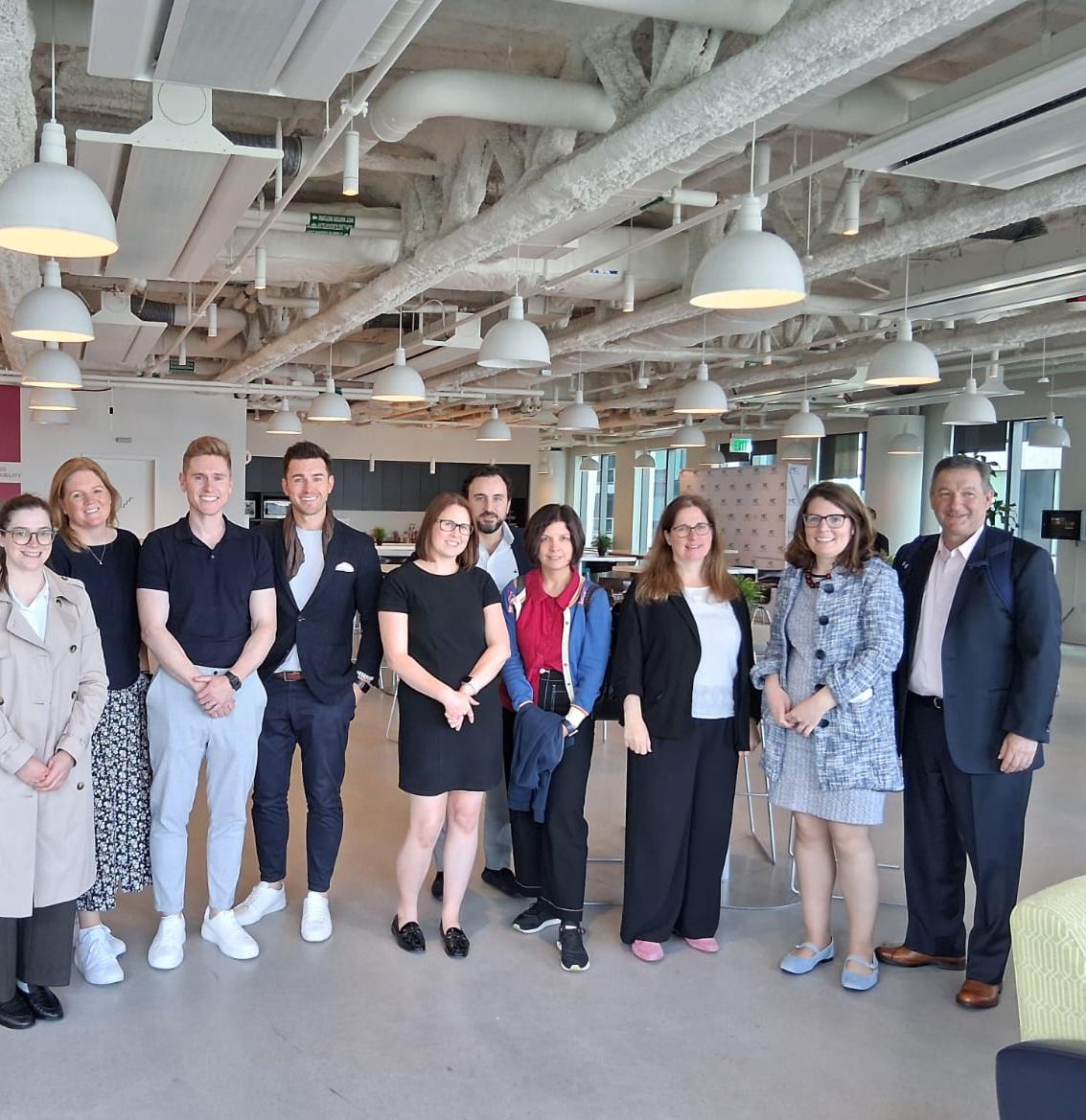
Boston: Innovation and Investment
Boston is one of the world’s leading centres for life sciences, technology and entrepreneurship. For Scottish companies exploring the US market, it offers a powerful mix of research institutions, venture capital and global talent.
During the mission, delegates gained first-hand insight into the region’s innovation economy. The programme included market briefings on IP, tax and staffing, visits to leading organisations such as MassChallenge and Harvard University, and direct engagement with Scottish Development International, the British Consulate and the City of Boston.
Crucially, the mission also created space for meaningful connections. Through curated B2B meetings and networking sessions, Scottish businesses were able to build relationships with potential partners, investors and collaborators - the type of connections that can turn market exploration into tangible opportunities.
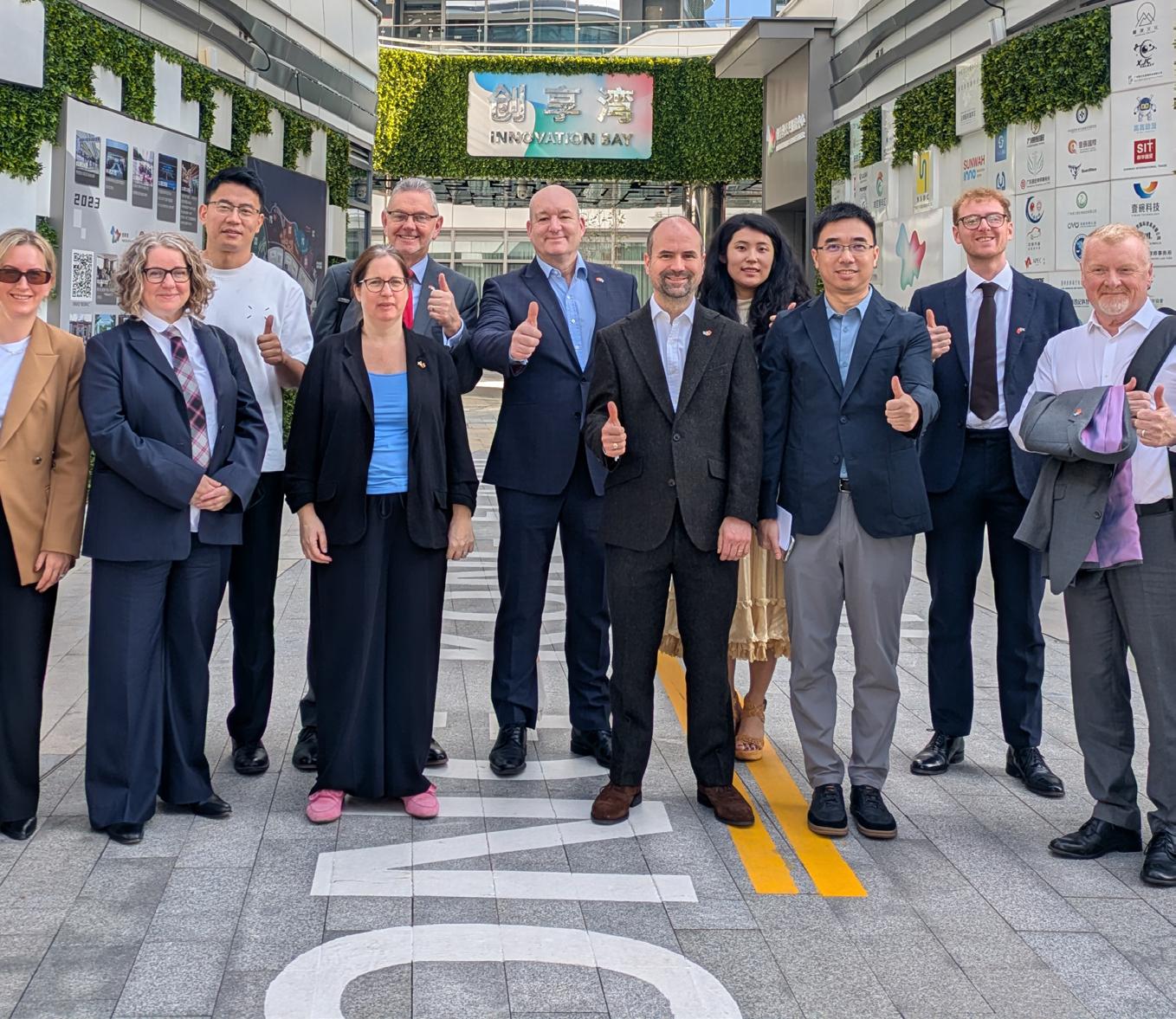
China: Speed, Scale and Technology
China’s innovation economy is expanding rapidly, particularly in sectors such as robotics, AI and advanced manufacturing. For Scottish businesses with expertise in deep tech, engineering and life sciences, the opportunities are significant.
The Chamber’s mission to Shenzhen and Guangzhou immersed delegates in one of the world’s most dynamic technology ecosystems.
Companies visited leading incubators and industrial parks, met with more than 50 Chinese businesses and took part in pitching sessions designed to spark new partnerships.
Delegates also attended the China Hi-Tech Fair, one of the country’s largest technology exhibitions, providing a unique platform to showcase Scottish innovation while exploring collaboration opportunities in one of the world’s fastestgrowing markets.
For many participants, the value of the mission lay in access. Building trusted relationships in China can take years, but targeted introductions and local insight can accelerate that process dramatically.
Miami: A Gateway to the Americas
The Chamber’s most recent mission focused on Miami, a global trade hub that acts as a bridge between North America and Latin America.
Over three days, Scottish businesses met with organisations including SelectFlorida, Miami-Dade County International Trade Consortium and the Greater Miami Chamber of Commerce. Sessions covered legal and financial considerations for entering the US market, while site visits to organisations such as Manatech and Miami Dade College’s AI Centre highlighted the region’s fast-growing technology ecosystem.
The programme also included networking with the British American Business Council Miami and a series of targeted B2B meetings designed to create new commercial connections.
For many delegates, the mission provided not just insight but momentum, opening conversations that are already progressing towards partnerships and market opportunities.
Turning Global Opportunity into Growth
Exporting does more than increase revenue. It connects businesses to global knowledge networks, strengthens resilience and drives innovation. For Scotland’s economy, expanding international trade across sectors such as technology, services and advanced manufacturing will be critical to long-term growth.
Trade missions play an important role in that journey. By combining market intelligence, strategic introductions and on-the-ground experience, they give businesses the confidence and connections needed to take their first steps into new markets.
With future missions planned to destinations including the Netherlands, China, Dublin, Barcelona and Miami, Edinburgh Chamber will continue helping Scottish companies build the relationships and insights needed to succeed internationally
Contact the international team for more information.
A Transformative Vision for Scotland’s Heritage
Adistinctive charitable fundraising campaign launched by the Society of Antiquaries of Scotland is expected to attract global attention. The initiative is centred on a bold vision to create a permanent new home for the organisation and a national heritage hub in Edinburgh.
The project also reflects a growing alignment between heritage investment and corporate social responsibility. Recent research shows that 92% of corporate impact professionals report increased investment in CSR because it strengthens business performance.
A further 88 per cent say such commitments help future-proof their organisations by supporting talent attraction and retention, improving
customer trust and strengthening regulatory readiness.
Founded in 1780, the Society has long played a key role in preserving and advancing Scotland’s history and archaeology. Among the most notable figures in its history is Sir Walter Scott, who served both as a Fellow and later as Vice-President.
For the past decade, the organisation - funded largely through membership subscriptions as an independent heritage body - has been working towards this pivotal moment in its development.
A B -listed building at Briso Place, adjacent to the National Museum of Scotland, has been identified as the ideal location. Positioned in the heart
By Bill Magee
of Edinburgh’s cultural quarter, the site offers a rare opportunity to create a dedicated space where scholarship, heritage and public engagement can come togetherestablishing a lasting cultural asset for Scotland.
Partners Strategic Partners
Enterprise Partners
Meet our new members
Forth House by Supercity Aparthotels
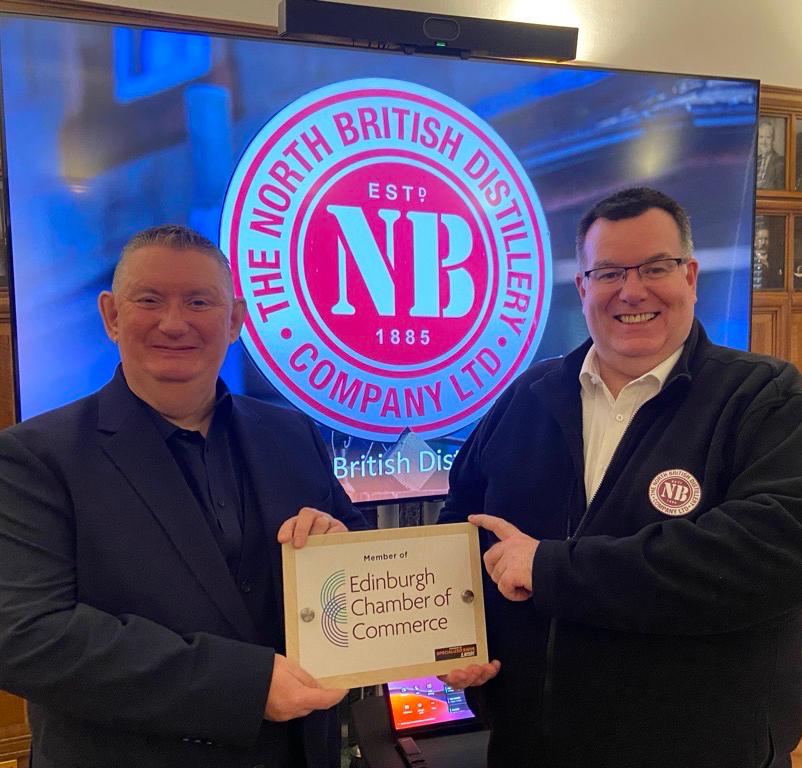
The North British Distillery Co Ltd Mercat
1CC Group Ltd
Access Inspection Maintenance Ltd
Adopted Digital Ltd
Allytta (UK) Ltd
Always Be Content
Amaila travel & tours t/a silk voyage ltd
AtkinsRéalis
BARRY FISH
Bridge Financials and Advisory Limited
Britsense Ltd
Calton Cleaning Limited
Cash for Kids
Clan Gordon Limited
Creative Commerce
CS2 Ltd
Document Data Group
Dougray Limited
Edinburgh Tea & Coffee Company Ltd
EET
Eloura Journeys
flowio
Forth Green Freeport Ltd
Forth House by Supercity Aparthotels
Gertie’s UK Ltd
Go Left
Grade Agency
Hampden Bank
Hand Up Events/Tartan Parade Scotland
Handpicked Hotels
Hotel Co 51
Howden UK Brokers Limited
Hussle
IanRobertson.Coach
Illuminate Technology Ltd
Instinctively Wild CIC
It’s good 2 give
Kanvaz Associates
Kesham27 Management
Kier Construction
Leuchie - The National Respite Charity
Liberty Eco Labs Limited
LIVE IT GROUP
Mercat Tours Ltd
Neil Marsden Associates Ltd Edinburgh
NorthStar Consulting UK
Onyx Security Group Ltd
Positive Balance Ltd
PowerPhotonic Ltd
Revive Battery B.V
Rooney Family Law
Saffery LLP
Scotland’s International Development Alliance
St Johnstone Football Club
Stockbridge Finance Partners
StratWorks
Streamtec Limited
Strike Chords Ltd
Tambish Boardroom Consulting
The Boston Bar
The North British Distillery Co Ltd
Theorise Ltd
Traverse Theatre (Scotland) Limited
True Potential Wealth Management LLP
Wage Perks
William Low Consultants Limited
Eloura Journeys
Mercat Tours
Say hello to...
Niamh Meehan Marketing Parner Botanics Trading Company
As Marketing Partner at Royal Botanic Garden Edinburgh, Niamh works closely with teams across the organisation to support the continued growth and visibility of the Garden’s diverse commercial offerings and unique portfolio of event spaces. She is particularly focused on championing the Botanics as a distinctive destination for an array of occasions, showcasing the breadth and flexibility of its immersive experiences and spaces.
Set within one of Edinburgh’s most iconic landscapes, the Botanics offer an exceptional collection of venues, all supported by bespoke event packages and expert delivery. Niamh is looking forward to strengthening partnerships across the city, supporting new and existing audiences in discovering how the Gardens can deliver inspiring events at scale, while contributing to the organisation’s wider strategic ambitions and its ongoing commitment to sustainability, conservation and education.
Gary Georgeson Legal Director, Real Estate DWF
Gary brings 20 years’ experience in the commercial property sector, advising on all aspects of real estate matters with a particular focus on development and investment work. Over the past decade, he has played a key role in a number of high-profile projects across Scotland, acting for institutional investors, funders, investment firms, developers, SMEs and private clients.
Before joining DWF, Gary was part of the real estate team at Freeths, where he advised on a wide range of development and investment matters. His commercial insight and proven track record have earned him a strong reputation as a trusted adviser in the Scottish market.
Commenting on his appointment, Gary said: “I’m thrilled to be joining DWF at a time of real momentum for the business in Scotland. DWF has a strong reputation for its collaborative culture and high-quality client service, and I look forward to contributing to the continued growth of the real estate team in Edinburgh.”
Anna Steven Interim PR Manager Pulsant
Anna Steven has joined data centre and digital infrastructure network Pulsant as Interim PR Manager.
She previously led external communications for BT and Openreach in Scotland, serving on the Scottish management boards of both.
She will be based at Edinburgh Park, close to Pulsant’s three data centres in the capital. Anna said: “It’s an exciting time to be joining Pulsant, which is uniquely placed to support Scottish and UK businesses with their digital workloads.
“Pulsant has grown from its roots here in Edinburgh into a national, interconnected network of 14 sovereign data centres across the UK, offering a fast, secure, cost-effective alternative to global cloud giants. That’s a home-grown success story which should be celebrated.
“After three decades of experience in the media and telecommunications, it’s also a great opportunity for me to deepen my expertise in a booming area of digital infrastructure - data management - and the role AI will play in the UK’s economic future.”
Rachel Pattillo: Sheraton Grand Hotel & Spa
Give us the elevator pitch for your business
Five-star luxury in the heart of Scotland’s capital, the Sheraton Grand Hotel & Spa is set between the city’s New Town and the old, ideally located to discover its outstanding history and architectural beauty. Iconic views of Edinburgh Castle; Scotland’s best and
most renowned spa, One Spa, who has also achieved 5 Bubble Luxury status; the stylish Sheraton Club Lounge with its bright, modern space, perfect for working, relaxing or connecting with friends and family; and the very best of Scotland’s natural larder served up in One Square Brasserie & Bar; all combine to create you a genuine and unique experience.
Why did you become a member of the Chamber?
To make new connections for personal and professional development and 2) as a large business operator in the city we feel it is very important to ‘know our neighbours’ and with Edinburgh being so collaborative it is a great network to be able to achieve this.
If you could instantly master a new skill, what would it be?
Learn a language! I learnt Spanish and speak this fluently but it took years of learning- I would to learn more languages in a more rapid timeframe.
What’s your favourite part of the day when it comes to running your business?
With being the Assistant Director of Sales it is my responsibility to create a wining culture in our team, so that we have an engaged, happy team and ultimately so that we hit our KPI’s and we at fortunate at Sheraton Grand that there are some very passionate people on our team who work hard to bring energy every day. We have a bell (think selling sunsets, on a much smaller scale…) that we ring when we win a piece of business. The whole office then celebrates this and it just brings a really nice buzz to the team.