EAT. DRINK. READ. THINK.



Want easy farm-fresh meal kits and farm-to-freezer meals delivered right to your door every Monday? Yep, who doesn’t? We cook up the best of the season for our local community every week and would love to feed you, too. Order now for Monday delivery! Delivering to your neighbors every Monday!
“One sip of this will bathe the drooping spirits in delight, beyond the bliss of dreams.” ― JOHN MILTON
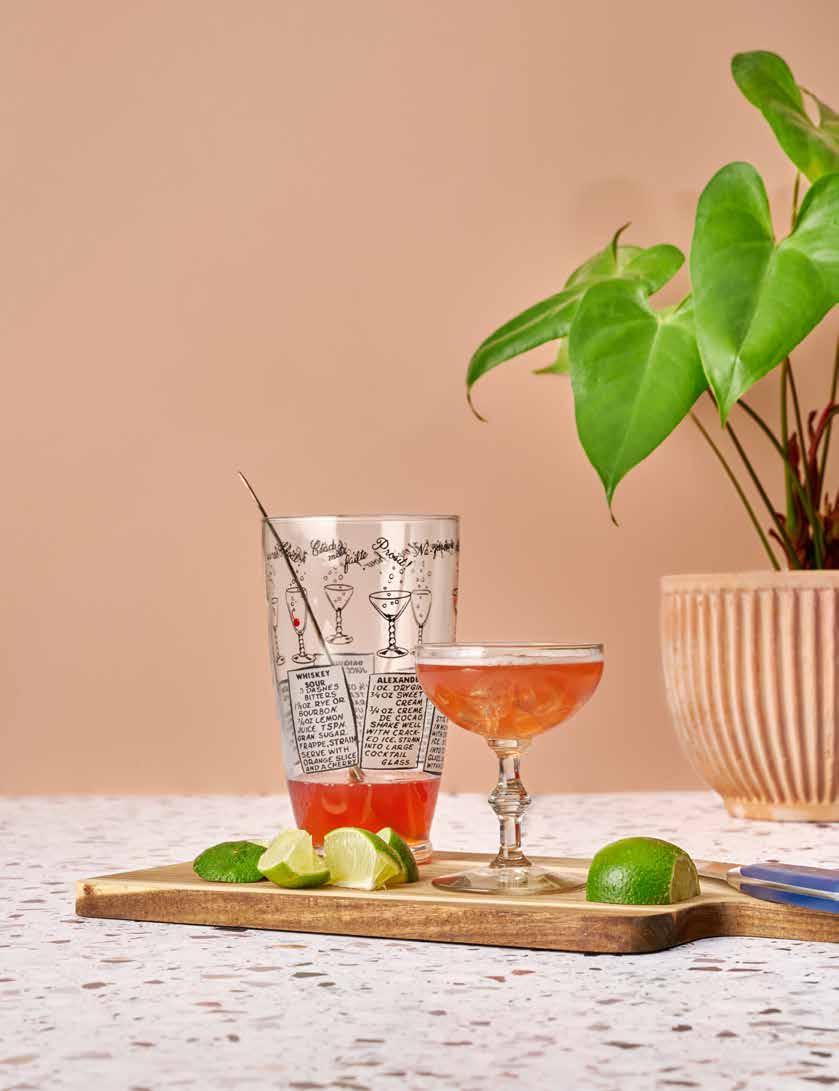
Cover: A toast to all things spring. Photo by Sunny Frantz.

The beverage issue is a staple of many foodie-focused publications, and while at Edible Madison we have covered beverage stories from craft cocktails to kombucha, this is our first dedicated beverage issue.
Months ago, as I paged through beverage issues from Bon Appétit, Food & Wine, and numerous other Edible magazines to gather inspiration, I actually started to feel more nervous than motivated. Their pages were covered in nuanced descriptions and wonderfully moody photos of wine, martinis and ornate cocktails—things that had become nearly foreign to me as I celebrate five years of sobriety from alcohol this year.
My nerves didn’t dissipate until I casually began flipping through past issues of Edible Madison and was reminded that we have always celebrated the full breadth of what makes Wisconsin unique and our beverage industry is certainly that. Wisconsin is the Dairy State but its citizens are the leading consumers of brandy in the country. We are home to the iconic Spotted Cow beer as well as Untitled Art, one of the leaders in the nonalcoholic (NA) beer industry. Wisconsin hosts around 55 coffee roasters with a growing tea scene and you’ll find no shortage of options when it comes to Wisconsin-made cider, soda, wine and seltzers.
As I pondered the sheer variety of beverages being served across our state, I realized that sobriety had actually been the driving force
in helping me discover a greater number of exceptional Wisconsin libations. When I was merely sober-curious almost a decade ago, sitting in a packed booth of Madison’s Tornado Room, I remember asking our server if I could have chocolate milk in a wine glass—something to make me feel equally as fancy as my friends with martinis while drinking something equally as delicious. I savored that milk like a fine wine and felt like I was tasting that chocolatey goodness for the first time.
Since then my NA palate has matured a bit more and I’ve been introduced to the funky delight of kombucha. I have traded out craft beer snobbery for burgeoning coffee pretension, and I’ve started to explore the world of shrubs and syrups to create my own version of a soda. I’m not saying sobriety has always been an easy journey for me, but I have been fortunate to be surrounded by endless local beverage options and a bar and restaurant scene that lately has been featuring thoughtful NA options alongside all of the beautifully crafted beer, wine and spirits.
It’s a great time to celebrate all things luscious and liquid in Wisconsin, and I hope this spring’s issue will help spark your interest in the wealth of beverages surrounding us. Perhaps it will inspire you to try crafting some of your own. Whether you partake or pass on alcohol, this issue is packed with stories and recipes to drink up and drink in—a perfect way to toast the start of spring.
Cheers,

Subscribe at ediblemadison.com to have every issue of Edible Madison delivered right to your door. Fill your year with seasonal recipes and stories that dive deeper into our local food system.
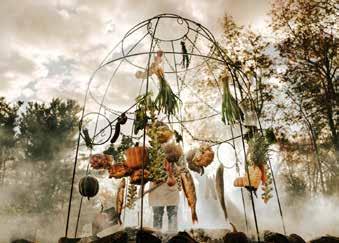
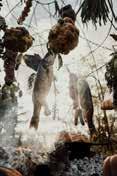
Indigenous Chef Abel Rosas Wood Fired Saunas + Fire Cooked Food



Presented by April 10 & 11th th Eagle WI
Additional events @homesteadsaunas.com




ELENA BIRD
Elena Bird is a temporarily retired farmer who lives, eats, writes and grows things in Viroqua. They can often be found eating tinned fish or sniffing out people who are scheming more bountiful futures. Elena works as a researcher for UW–Madison where they received their MS in Agroecology.
MARISSA DEGROOT
Marissa feels fortunate to be a part of our local food system as the managing editor of Edible Madison as well as working at Vitruvian Farms, her husband Tommy's organic vegetable and mushroom farm. She loves raising their daughter, Ollie, and their team of fur babies on the farm in McFarland.
SUNNY FRANTZ
Sunny is an editorial and commercial photographer with a studio on the west side of Madison where she lives with her husband, their two kids and a tiny dog. She specializes in food and product photography and loves the opportunity it gives her to connect with the many wonderful businesses and entrepreneurs in Madison.
TRACY HARRIS
Tracy is a graphic designer and photographer from Madison. A polymath at heart, she dabbles in various arenas of makery including cooking and baking, sewing and knitting, painting and collage, and has a soft spot in her heart for film photography. When she’s not busy making things, she enjoys travel, good food and drinks, gardening and live music.
JESSICA JONES
Jessica is the brewer and co-owner of Giant Jones Brewing Company, an independent, women-owned, certified organic craft brewery in Madison. She is a Grand Master Beer Judge through the Beer Judge Certification Program (BJCP) and an Advanced Cicerone®. Jessica loves barley wine and providing extremely in-depth answers to what you believed was a simple question.
KASEY LEE COOKE
Kasey Lee Cooke is a Midwest-based chef whose mission is to nurture connection to the self, to one another, and to the planet through the memories evoked in both cooking and sharing a table. Led by the seasons and a sense of curiosity, his work blends inherited traditions with the rhythms of a modern, ever-changing world.
LAURA POE MATHES
Laura is a registered dietitian focused on using real foods and herbs to help heal the gut. She is the creator of the Rest, Digest and Heal online course and community, and teaches traditional cooking and fermentation classes around the region. Laura lives in the Driftless Area with her husband and kiddos where they homestead and play in the river as much as possible. Originally from Missouri, she now understands why cheese curds are a thing.
CHRISTY MCKENZIE
Christy is the owner of Pasture and Plenty—a specialty market and deli, demonstration kitchen, and meal kit pick-up and delivery service. P&P gives the community access to healthy, locally sourced meals and foods that make eating well and eating local easier every day. She works to create and connect community around issues of food equity, access and agency. She is the publisher of Edible Madison and a sometimes writer.
JESSE RAUB
Jesse is a writer for Serious Eats, a former coffee professional and an amateur bread baker. He lives in Madison and spends his free time attempting fussy dough-based recipes along with walking his dog.
LAUREN RUDERSDORF
Lauren is a grant writer, recipe developer and freelance marketing consultant who advocates for local producers and cooking with the seasons. Her love of good food began in Madison at the Dane County Farmers' Market and deepened on the organic CSA vegetable farm she ran with her husband for nearly a decade. Now, life looks different with a big garden and two sweet kiddos to care for instead of the farm, but it's no less delicious.
NICOLE WELCH
Nicole is a graphic designer, photographer and artist from Madison. Her favorite things include backpacking with her husband, binging NYT Cooking videos and being a home chef, reading plenty of books and playing Dungeons and Dragons with her stepsons. She aspires to someday photograph and design a cookbook.
MANAGING EDITOR
Marissa DeGroot
PUBLISHER
Christy McKenzie
BUSINESS DIRECTOR
Christy McKenzie
SALES DIRECTOR
Lauren Rudersdorf
BUSINESS DEVELOPMENT & EVENTS
Tink Sivyer
LAYOUT & PRODUCTION
Nicole Welch
COPY EDITOR
Andrea Debbink
CULINARY ADVISOR
Christy McKenzie
SOCIAL & DIGITAL PRODUCER
Lauren Rudersdorf
ADVERTISING & SPONSORSHIPS
Lauren Rudersdorf
laurenr@ediblemadison.com
CONTACT US
Edible Madison 4313 Somerset Lane Madison, WI 53711 hello@ediblemadison.com
SUBSCRIPTIONS
Subscriptions are available beginning at $35 annually. Learn more at ediblemadison.com/subscribe
We want to hear your comments and ideas. To write to the editor, use the mailing address above or email hello@ediblemadison.com
Edible Madison is published quarterly by Forager Publishing, LLC. All rights reserved. No part of this publication may be used without written permission by the publisher. ©2026
Every effort is made to avoid errors, misspellings and omissions. If, however, an error comes to your attention, please accept our sincere apologies and notify us. Thank you.
VISIT US ONLINE AT EDIBLEMADISON.COM

















By Marissa DeGroot Recipe by Lauren Rudersdorf
The earliest weeks of spring (when there is an equal likelihood of wearing sandals or a parka) can be an odd time for local produce. Storage crops and root vegetables are still very prevalent but may seem less desirable after months of winter. Meanwhile, most fresh veg is still a month or two away from really flourishing, with the exception of some early spring favorites like ramps and rhubarb.
You’ll see this intersection of winter and spring at indoor farmers’ markets and locally focused grocery stores with hardy storage beets alongside delicate asparagus. While some vegetables like carrots and parsnips may have been growing throughout winter (making for an extra-sweet veggie treat), true storage crops have been harvested in late fall and, if stored in the right conditions, will still be good come early spring. When looking for storage crops late into the season, check for any signs of spoilage like soft spots or musty odors. If you see items like onions starting to sprout, they may be a little past their prime, but they are generally safe to eat. For potatoes, however,
small sprouts can be removed from firm potatoes making them safe to eat, but shriveled spuds with sprouts over an inch long should be tossed.
Meanwhile, the first spring ramps and asparagus may be starting to poke through the no longer frozen ground. Both are perennial flowering plants and can often be found paired together because of their similar spring arrival and complementary flavors. Ramps are a foraging favorite close in flavor to spring onions or leeks while asparagus brings fresh and nutty notes. Growing your own asparagus is a practice in patience as it takes three years for the plants to fully mature, but that patience can pay off with a thriving patch for 20 years or more.
Spring is a time to embrace a touch of winter along with the first hints of warmer times to come, and this beet bloody mary recipe does just that. It is a celebration of early spring, combining the sweet, earthy notes of beets carefully stored all winter with bright pickled spring veg—a perfect way to toast the seasons.
INGREDIENTS
3-4 garlic cloves, smashed
1 tablespoon yellow mustard seeds
1 teaspoon fennel seeds
1 teaspoon red pepper flakes, optional
1 bunch asparagus, ends trimmed
1 bunch ramps, ends trimmed
2 cups apple cider vinegar
2 cups water
⅓ cup sugar
2 tablespoons kosher salt
1. Combine the garlic, mustard seeds, fennel seeds and red pepper flakes in a quart-size mason jar. Add the asparagus spears and ramps.
2. In a small saucepan, combine the vinegar, water, sugar and salt. Heat over medium-high heat until the sugar is dissolved. Pour the liquid over the asparagus and ramp mixture and allow to sit for at least an hour.
3. Once the mixture has cooled, store in a sealed jar in the fridge, and use within 2 weeks.
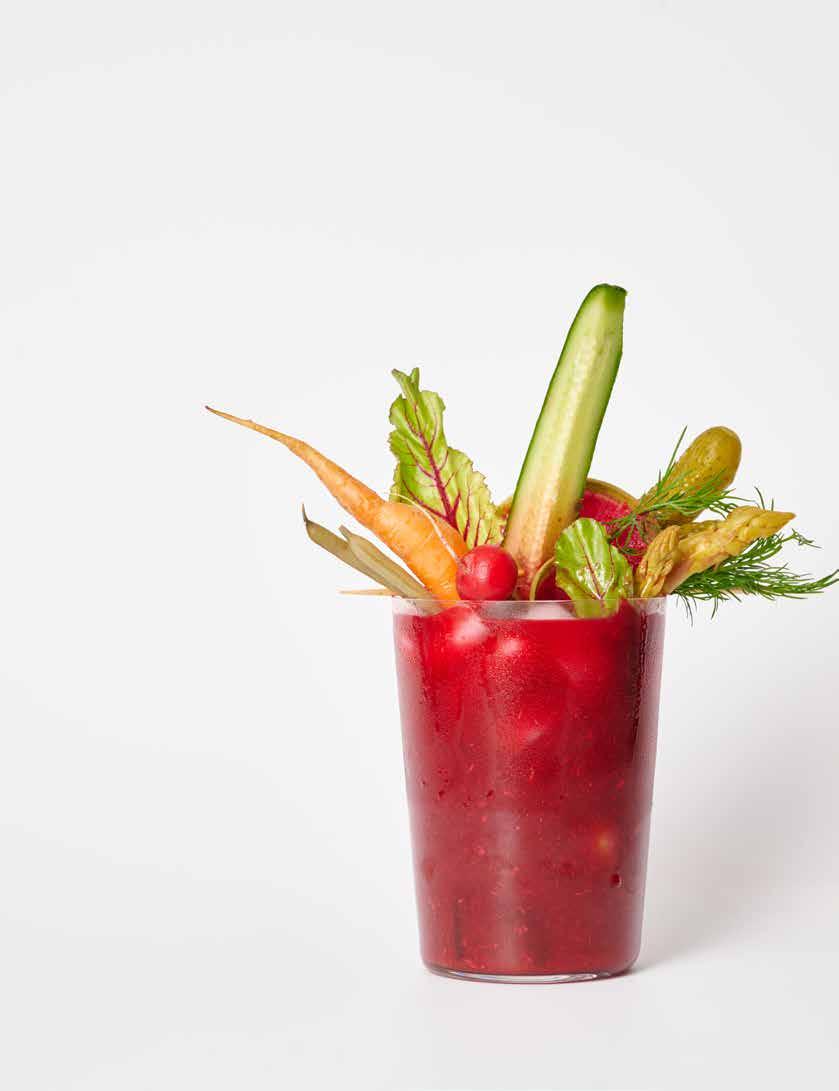
When developing this recipe, I hoped to make it as approachable as possible. I wanted to celebrate the storage beets and carrots in my own produce drawer, but also keep things flexible for those who don’t have a juicer. For that reason, there are myriad ways to incorporate beets into this bloody mary. For those who have a juicer, follow the instructions below to make your own beet carrot juice. For those who don’t, buy a 16-ounce bottle of beet carrot juice and substitute that for the homemade juice. And if even that option feels a bit out of reach, you can quickly infuse your own vodka for an earthy hint of beet that still celebrates the season. To do that, combine 8 ounces of vodka with 1 large peeled and diced beet to make enough infused vodka for 4 bloody marys. Leave the mixture to infuse for at least 24 hours.
Makes 4 large drinks
Prep time: 10 minutes
1 pound beets, quartered
½ pound carrots, halved (or quartered if large)
4 cups tomato juice
8 ounces vodka (see note above for beet-infused vodka)
¼ cup fresh lemon juice
3 tablespoons prepared horseradish
1 tablespoon Worcestershire sauce
1 tablespoon celery salt
1 teaspoon garlic powder
¼ teaspoon freshly ground black pepper
8 to 12 spears pickled asparagus and ramps (see below)
Fresh dill, optional
1. Using a juicer, press the beets and carrots to make approximately 2 cups of juice.
2. In a half-gallon mason jar or pitcher, combine the beet carrot juice, tomato juice, vodka, lemon juice, horseradish, Worcestershire sauce, celery salt, garlic powder and black pepper. Stir to combine.
3. Add ice cubes to four large glasses. Pour the bloody mary mixture over the ice and stir once to chill. Garnish with pickled asparagus and ramp spears as well as any other spring veg or pickled produce.
Photos by Sunny Frantz
A shrub sounds old-timey and inviting and exotic all at the same time. Of course, it also sounds vegetal; not to be confused with bushes, the shrub I’m talking about is a mixture of vinegar, fruit and sugar, all infused together. This sweet, syrupy concoction is similar to an oxymel, a traditional herbal medicine preparation combining honey and vinegar, sometimes with fruit or herbs added. Shrub, on the other hand, is made with sugar instead of honey, and always includes fruit, which is the real star of the show. Shrubs are also known as drinking vinegars, as they are meant to be added to beverages. These tonics are very flavorful and potently (and deliciously) acidic and sweet, so they are used like a concentrate, to be diluted in other liquids before enjoying.
The history of shrubs makes them even more enticing, as these drinking vinegars were originally used as medicine. Vinegar itself has been used medicinally for millenia, but shrubs are believed to have originated as early as the 15th century, hailing from England. Prior to refrigeration, freezing or canning, fruit was primarily “put up” either through drying or by being preserved in
vinegar, as the acidity can keep the fruit edible for a long time. What began as simple mixtures of vinegar and fruit, these were not only used for food preservation, but as a way to provide (what is now known to be) vitamin C to sailors making long journeys overseas, preventing scurvy. Around the 17th century, shrubs became even more popular, broadening their fan base beyond sailors, especially once sugar was added to the mix—plus they were typically combined with alcohol. Shrubs even gained popularity in the United States, and by the 19th century they became a stand-in for liquor when drinking spirits was considered taboo. Once vinegar was no longer needed to preserve fruit, shrubs became less well-known, but have made a resurgence in recent years due to rekindled interests in food preservation, fermentation, homesteading, DIY projects and, of course, mixology.
Making a shrub at home is super easy, and will make you feel just like a 15thcentury kitchen wench. There are different methods for making shrubs, but the simple, cold-infusion process I use is this: combine equal parts sugar and fruit, letting
this mixture sit for a few days to lightly ferment, then strain. The resulting syrup is then combined in a 1:1 ratio with vinegar. If kept refrigerated (although it does not have to be), this mixture will keep for about a year, or several months at room temperature. There is also a hot-infusion method for making shrubs, where the fruit and sugar are simmered in vinegar, taking out the fermentation step and getting your shrub to you quicker. I always prefer the cold-infusion method, as I’m such a nerd for fermentation, but also because it maintains and enhances the nutritional properties of the fruit and vinegar when left raw.
The flavor that shrubs add to your drinks will draw you in, but you will stay for the health benefits, as shrubs actually have some great nutritional value to them. By nature of using fresh fruit, shrubs provide vitamin C and potassium, along with phytochemicals—antioxidant compounds found in plants that provide various health benefits—like anthocyanins, lycopene and polyphenols. Of course, the specific nutritional content will vary based on the fruit you use, but all fruits are good sources
of many vitamins, minerals and phytochemicals, so you are giving your drinks a nutrient boost no matter the shrub you use. When using the cold-infusion method to make shrubs, the fruit and sugar go through a short period of fermentation, adding probiotic bacteria and yeast to the mixture as well. The vinegar component has its own health benefits, especially when using raw, unfiltered vinegars. The long-standing appreciation of vinegar as a health tonic goes back thousands of years, and its benefits range from supporting healthy blood sugar levels and helping digestive function to providing anti-inflammatory compounds.
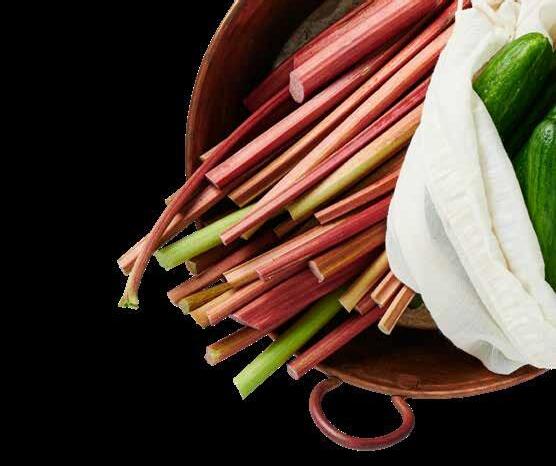
Because making shrubs uses a general method rather than a strict recipe, it is simple to make your own shrub with whatever fruit is on hand at the time. Fresh fruit is best as it typically yields better fermentation results, but frozen fruit can work, too. I’ve made shrubs with all types of berries, melons, pineapple, apples, pears, cranberries, stone fruits, celery (yes, seriously!) and, my favorite, rhubarb. Along with the fruit, you can add fresh or dried herbs to the mix to add complexity to the flavor profile—mint, thyme and basil work well with a variety of fruits or add warm spices like cinnamon with apple or pear for a fall beverage. Use whatever sugar you like to sweeten, though I recommend choosing one that dissolves easily, as it will incorporate better as the mixture macerates and ferments. You can reduce the sugar in the recipe by up to half when using a sweeter fruit, depending on your taste preferences.
Different vinegars can be used, though I do encourage you to use a high-quality vinegar, as much of the vinegar flavor comes through in the final product. Distilled vinegar is not generally advised, as it will not add flavor to your shrub. White wine
vinegar is pretty neutral and goes with just about any fruit, but red wine vinegar, apple cider vinegar, and balsamic vinegar can all work well, too. You can use more than one type of vinegar in a single batch of shrub to really mix it up. Keep in mind that vinegars have a wide range of flavors of their own, so think about which type to use when pairing them with different fruits; for example, with a milder flavor fruit like currants, you may want to stick with a more lightly flavored vinegar like white wine or champagne vinegar over a balsamic, as these will allow the flavor of the fruit to come through more. Experiment with different flavor combinations to find a recipe that you love and is all your own.
Besides the fermentation and food preservation aspect, my favorite thing about shrubs is that they make any drink a little bit fancier. Shrubs are typically used in 1:4 or 1:5 ratios with other liquids. You can add a splash to sparkling water to make your own flavored bubbly water that is made with real (rather than “natural”) flavors. Add a bit of shrub to juice or other beverages, creating a treat for any age. Shrubs really shine when used in cocktails, as they mix beautifully with drinks that need a bit of brightness and sweetness.
There are several brands of premade shrubs available locally if you aren’t quite up for making your own. Whether homemade or store-bought, shrubs make a great gift, party favor, host present or potluck addition to add pizzazz to the drink selection. Making shrubs is one of my favorite, easiest ways to preserve the harvest, which feels especially great in the spring when produce is just starting to come in and you can use it in a really fun way. What better time than spring to try something new and add a little brightness to your life?
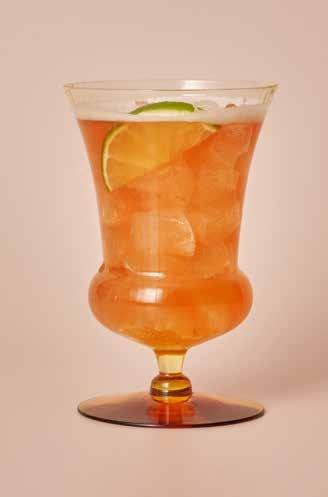
This is a fun example of using shrubs in a cocktail, showing you the ratio of shrub to other liquids. I made this for my now-husband on our first date, so you know it’s a good one! Mix it up with spirits and sodas of your choice to make it just right for you.
Makes 1 drink
1 oz. rhubarb shrub (see recipe on next page)
1 oz. tequila
4 oz. good quality ginger ale
Ice cubes
Fresh lime wedge
DIRECTIONS
Combine the shrub, tequila and ginger ale in a cocktail glass. Add ice cubes and garnish with a fresh lime wedge.
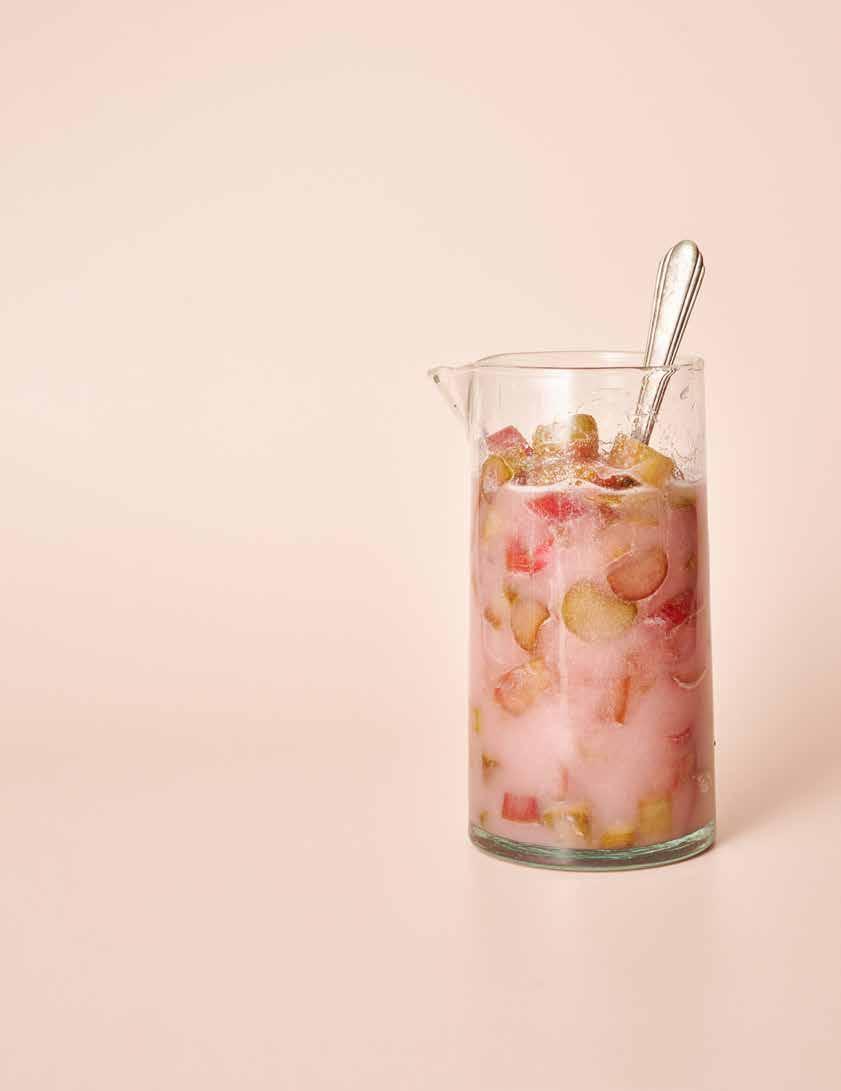
Makes 1 quart Prep time: 15-20 minutes, plus 3-5 days for fermentation
This is one of the first food preservation projects I get to do each spring, and it always makes me very happy. Rhubarb absolutely shines in this recipe, imparting a delicious flavor and stunning pink color to the finished shrub. Add a splash to a cocktail or sparkling water for a soda-like treat.
4 cups rhubarb, diced into 1-inch pieces
4 cups fine-grain sugar
~2 cups white wine vinegar (depending how much syrup is produced)
DIRECTIONS
1. In a large mixing bowl, combine the rhubarb and sugar. Stir well to begin dissolving the sugar. Cover with a cloth and let it sit at room temperature.
2. Each day for about three days, stir the juice and sugar together to ensure all of the sugar gets dissolved and more juice is released from the rhubarb.
3. This mixture is ready for the next step when it becomes bubbly and has produced a good amount of juice. It will have a slightly fermented smell to it, but not too strong. If it ferments for too long it can start smelling “boozy.” At that point, yeast fermentation has taken over and it has become alcoholic, so discard and start over.
4. Strain the macerated fruit with a fine-mesh strainer. Gently press the rhubarb to squeeze out all the juice. You will get approximately 2 cups of juice, but measure your end yield to get the exact amount.
5. In a glass jar, combine the fermented fruit syrup with an equal amount of vinegar. Shake or stir well to combine. Seal the jar and refrigerate the shrub until ready to use; I like to let mine sit a few days before using to let the flavors meld even more. The shrub will keep for several months in the refrigerator.
Note: During warmer months or if you’re using higher sugar fruits like strawberries or peaches, step 2 will likely take around three days. This process may take a few days longer if it is cooler or if you’re using lower sugar items like celery or rhubarb.















“It’s close to Madison but feels worlds away,” says Samantha Crownover, owner of Brisbane House just outside Spring Green. The tall stone house, built in 1868, is newly restored and open for overnight stays with space for up to 10 guests. It’s the perfect place to stay while exploring Wisconsin’s River Valley, Taliesin, American Players Theatre or Two Crows Theatre or shopping in Spring Green no matter the time of year. “Each season at the Brisbane House is marvelous,” says Crownover. “Hear the call of the whippoorwills from the screen porch in summer, be amongst the gorgeous oaks and maples as they turn in the fall, grab snowshoes from the garage and tramp up the trails, then have hot chocolate by the fireplace in winter, hunt for asparagus and see the light green shoots blossom into fresh flowers after a long bike ride in the spring.” 7050 Reimann Road, Arena | brisbanehouse.net
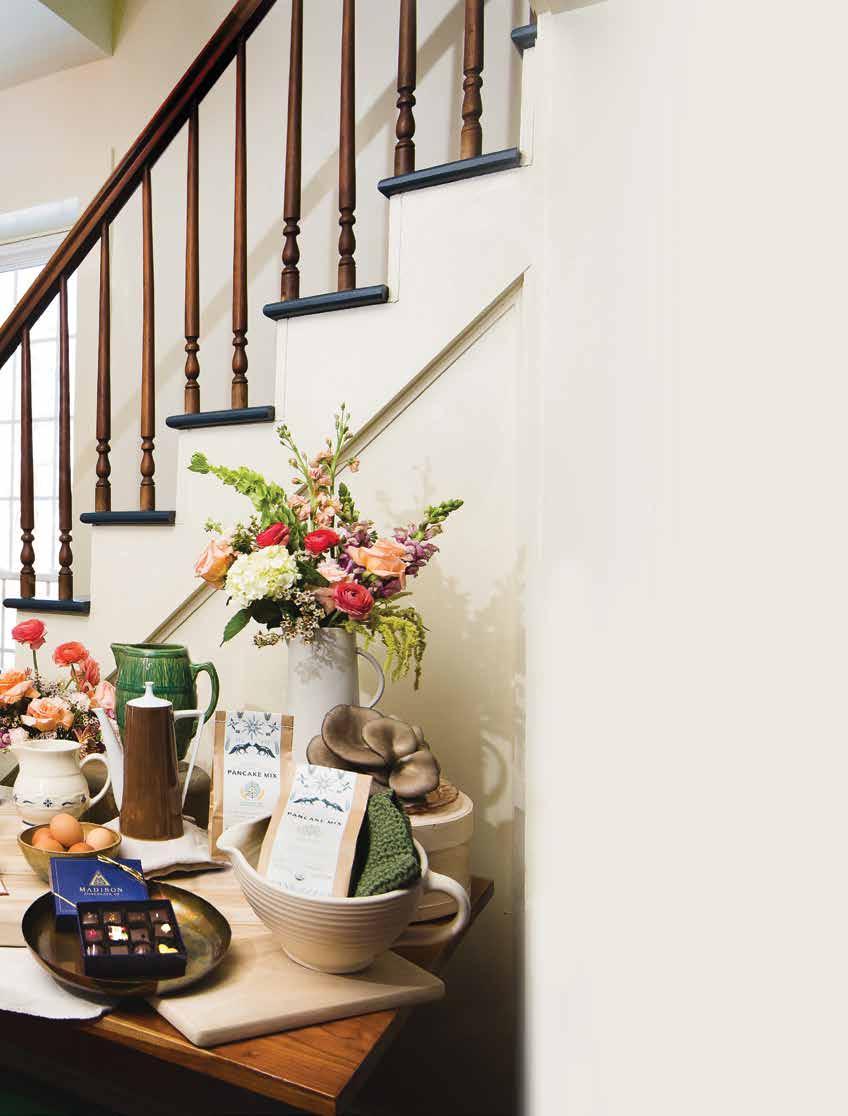
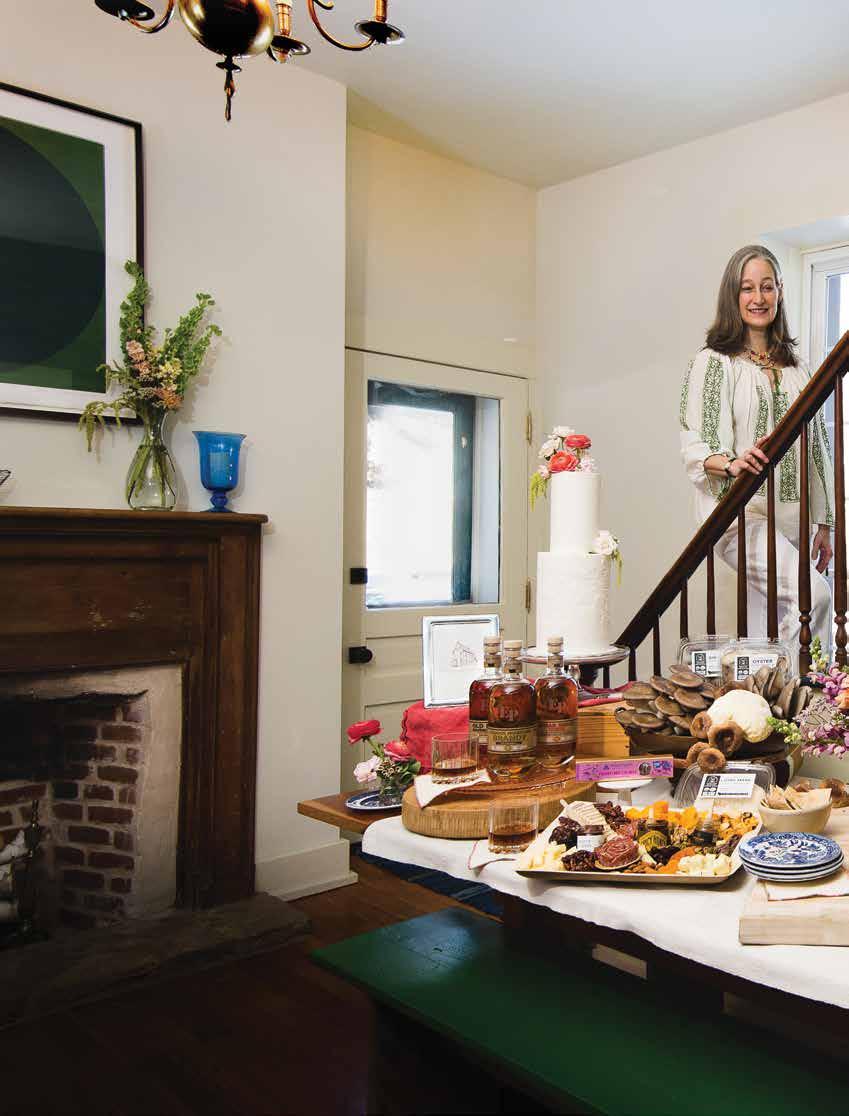
1. Old Eighty Bourbon - Sugar Shack Shine - Ocooch Mountain Brandy
Their most requested local spirits. English Prairie Distilling Co. | englishprairiedistillery.com
2. Wedding Cake
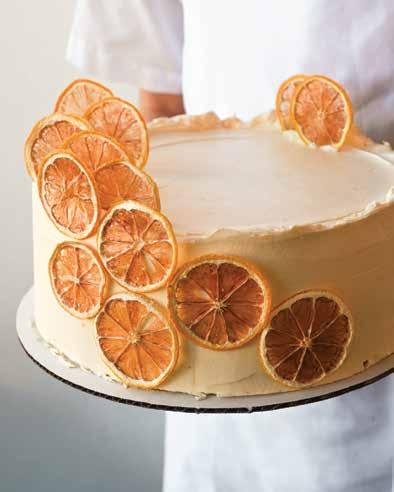
Lemon poppyseed cake with strawberry filling and vanilla frosting. Heirloom Bakery and Kitchen | heirloombakeryandkitchen.com
3. Certified Organic Mushrooms
Locally grown oyster, shiitake, lion's mane, black king and maitake mushrooms. Vitruvian Farms | vitruvianfarms.com
4. Passion Fruit Caramel Box
5-piece box of liquid passion fruit caramels wrapped in dark chocolate. Madison Chocolate Company | madisonchocolatecompany.com
5. Local Cheese Board
Charcuterie board with a focus on premium local ingredients. Madison Cheese Boards | madisoncheeseboards.com
6. Vintage Pitchers
Collection of one-of-a-kind vintage pitchers curated by Dune. Dune Gift and Home | dunegiftandhome.com
7. Floral Event Services
Floral design for your special events. Opal Market Flowers | opalmarketflowers.com
8. Organic Lonesome Stone Pancake Mix
Regionally grown and stone milled grains, featuring soft winter wheat and rye. Meadowlark Community Mill | meadowlarkorganics.com
9. Mixed Truffle and Caramel Box
Seasonal 12-piece mixed truffle and caramel box. Madison Chocolate Company | madisonchocolatecompany.com and
By Marissa DeGroot
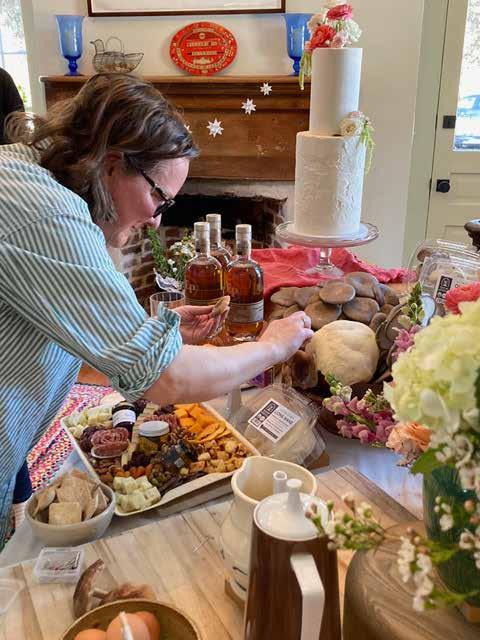
Food has a way of bringing people together, all while helping tell your story and set a tone in the most delicious of ways. So it is unsurprising that food and beverages are at the forefront of many 2026 wedding and event trends. From family-style dinners and post-wedding brunch bashes to edible centerpieces and statement desserts, check out some of our favorite foodie trends to incorporate into your special day.

MENUS THAT TELL A STORY
From playlists to photo displays, so much intention is poured into every detail of a wedding to help share a couple’s story, and in 2026 the menu will be no different. Sharing your love story through food will not only help make your event unique but will also bring a personal touch to an integral part of the evening. Courses could be inspired by the cuisine of places you’ve traveled to together. Dishes could incorporate ingredients from some of your favorite local
farms and makers you love to visit at the market. The options are endless when creating a food journey as unique as your love story.
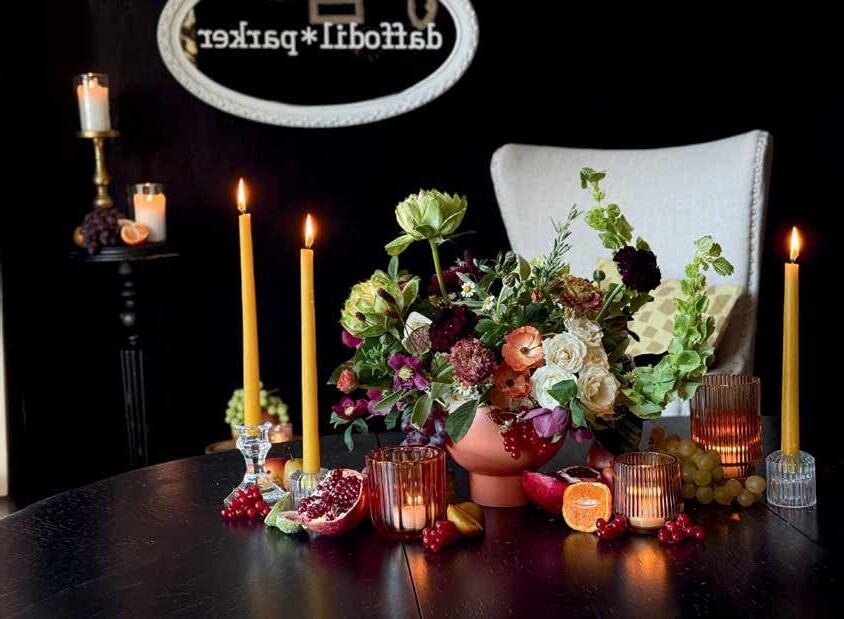
While it's difficult to replace floral allure, edible elegance is finding its way in 2026. The purple and greens of kale can be stunning in a wedding bouquet and herbs from sage to rosemary can add delicate

centerpieces, edible elements can be both visually stunning and a cost saver when decor doubles as appetizers! Select local fruits and veg to incorporate into your decorations and your event becomes a celebration of the season.
Vegetarian and vegan menus are on the rise for 2026 events. Whether the couple eats a plant-based diet, they want to provide fare inclusive of guests’ dietary restrictions, or they decide to use their wedding as an opportunity to celebrate meatless meals, many are choosing plant-forward spreads. It’s one way to throw a party without having to toss out your sustainable values. When you find the right caterer who specializes in plant-based fare, the meal will be so delicious that even carnivores won’t miss the meat.

Family-style dining can create a more intimate event environment even at the most formal of affairs. Passing dishes around the table encourages conversation and ease no matter if it is a group of longtime friends or strangers. Abundant platters of pasta or maybe even a fish fry allows everyone to be full and prepared for the evening’s festivities while reducing food waste for those with smaller appetites.
While towering cakes will always be a popular choice, statement desserts in all shapes and sizes are taking over 2026. Personalized fortune cookies, platters of parfaits, ice cream sundae stations, and doughnut walls will add an element of interaction and fun. At less formal affairs, a dessert potluck allows guests to contribute their favorite sweets while providing endless options to snack all evening.
by Wanderlynn Photography
Delicately created Gluten-Free cakes for you and your wedding guests.
100% DEDICATED GLUTEN FREE


Events in nontraditional venues open up endless possibilities when it comes to dining, and food trucks and pop-up options are topping many lists. Formal, seated meals are giving way to made-to-order tacos and gourmet grilled cheese. This shift offers guests the ability to eat what they want when they want with no lull in the festivities. Food trucks and pop-ups can keep things casual while adding a personal touch by introducing your family and friends to your favorite local fare.
POST-WEDDING BRUNCH BASHES
Celebrations don’t have to end at the after-party! Post-wedding brunches are making their way onto many itineraries in 2026 to keep the party rolling all weekend. Wedding days move quickly so the post-wedding brunch offers one more opportunity to gather with your closest friends and family
over chicken and waffles, mimosa in hand. Whether it’s a “recovery brunch” after late night partying or a pre-honeymoon send-off, a brunch bash at a local restaurant can be simple to coordinate and can offer an intimate setting to close a weekend of celebrations.
Whether your event is being hosted close to home or overseas, small touches that celebrate your home state add a fun flourish and help share your unique story.
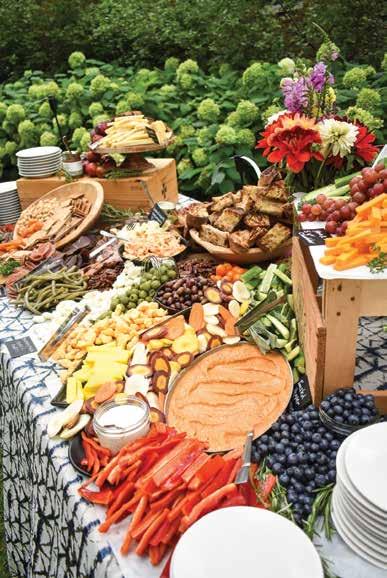
Grazing tables featuring some of Wisconsin’s best cheeses, brandy old-fashioneds served at the bar, buttery kringle as part of a dessert spread, or tiny maple syrup keepsakes are all ways to share a little something special from the Badger State with your family and friends.
BY ELENA BIRD
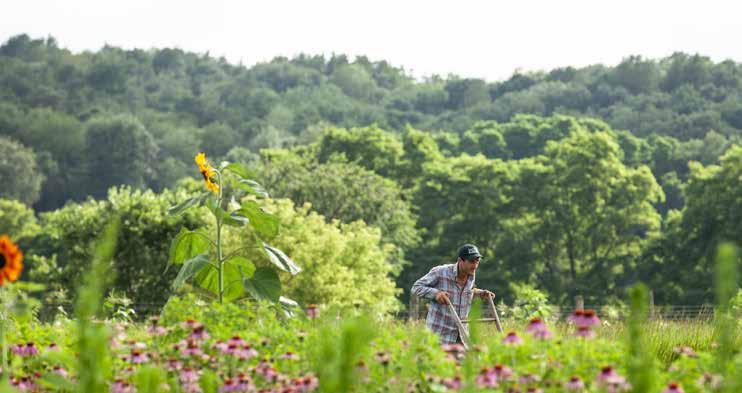
At Sacred Blossom Farm, Tony DiMaggio grows and harvests herbs: fragrant tulsi interplanted with red clovers, wild stinging nettles foraged from surrounding woods, ashwagandha with roots growing deep into the soil. He harvests with the help of his team. That is, a few employees, including neighboring farmers who join during their own slow season, and two very happy dogs.
After harvest, each plant is carefully dried in greenhouses. Later they are packaged as individual herbs or mixed tea blends. One winter afternoon, I brewed a cup of Sacred Blossom Farm’s Tiger tea and watched as the gently dried herbs blossomed like flowers in the just-boiled water. Each herb seemed to hold its original color and textures. This is the quality that DiMaggio strives to offer. “By doing the whole leaf, loose leaf thing, we’re really held accountable that it’s just top quality stuff in there,” he says. “Because if it's not, it's gonna be really obvious.”
Sacred Blossom Farm sits just outside of Mondovi. They lease land from Crazy Rooster Farm and are surrounded by other agriculturalists. Neighboring farmers collaborate often with DiMaggio. One farmer provides a freezer full of
beef in exchange for grazing access and occasional cattle moving. DiMaggio has worked that grazing into his herb crop rotation. Other farmers help forage for herbs during their slow seasons. Together, they scrape cherry bark, pinch off raspberry leaves and collect white pine needles, all harvests that require significant time and labor. Many of the full-time or regular Sacred Blossom employees have been around for years. “We really try to create good jobs for people,” DiMaggio says. “What we do, it's very unique and every week is like a totally different set of processes and jobs. So retaining people for the long-term is super helpful.”
The landowners of Crazy Rooster Farm were some of the earliest investors in Sacred Blossom Farm’s mission. They offered the acreage rent-free for the first two years. As the business grew, the rent inched up. Today, having landed on its own two feet, Sacred Blossom Farm pays market rates for leasing the land. Land access is one of the greatest barriers for young and beginning farmers around the country, so land stewardship relationships like the one between Sacred Blossom and Crazy Rooster farms can make or break the success of dedicated, talented young farmers.

Anyone steeped in regional farm systems knows how hard it is for small farms and beginning farmers to turn a sustainable profit even when they do find affordable land. Those farmers need a lot of grit and a bit of genius. But they also need some strokes of luck, and importantly, a supportive community.
DiMaggio spent nearly a decade trying to crack that small farm code. “What could I do to get in the game and stay in the game?” he asked himself, “As well as follow my goal of farming for health. You know, for my health, for the health of the people that consume my food, and the health of the planet.” After seven years apprenticing and managing an established farm in Minnesota, he travelled for a year visiting specialty crop farms around the country and in South America. The sweet spot, he decided, was low initial overhead and a value-added product. He landed on herbs and herbal tea.
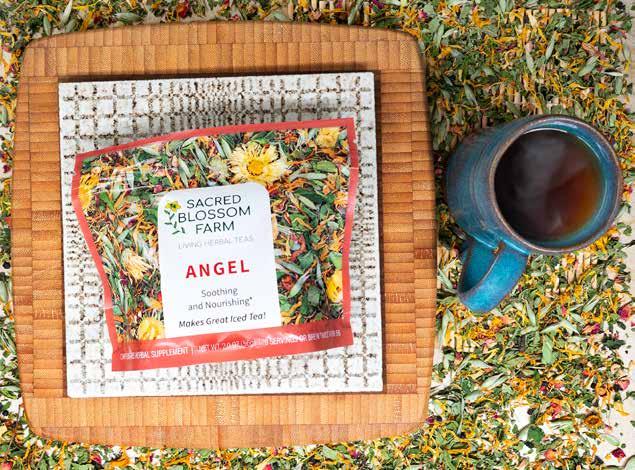
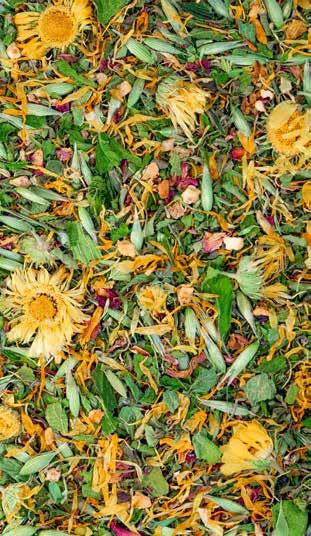
DiMaggio dove into herbs and herbal teas, learning through research and hands-on education. When it comes to creating tea blends, “it has to be functional, and it has to taste great,” DiMaggio says. “I have journals and journals full with tea recipes and iterations on these different flavors.” Angel Herbal Tea, one of Sacred Blossom Farm’s first offerings, took 350 iterations. It is a blend of mint, nettles, lemon balm and other flavorful herbs. It’s also the winner of the Chicago Tea Festival’s 2019 People’s Choice Award.
Despite his dedication to excellent tea blends, the straight tulsi tea is DiMaggio’s favorite Sacred Blossom Farm product. Tulsi is also his very favorite plant to grow. In the summer, he says, “I go sit out there in the evenings and she's like buzzing, buzzing loud with thousands of bees.” Anyone who has taken a deep inhale of tulsi knows the energy it can send throughout your body. To know that we share the joys of tulsi with our bee accomplices is a treat in and of itself.
Sacred Blossom Farm has grown from two large garden beds several years ago to twenty acres of herbs and two greenhouses today. In the first year, herbs were hand-harvested from densely planted polycultures. Now, herbs are planted in triple-row beds, cut carefully with a swather. “Most people who grow herbs come at it from an herbalism background. But I come at it more from a production background,” DiMaggio says, as he shares how the farm has grown each year. “We're not big scale at all, but you know, we're not doing like a few raised beds either. We grow herbs on about 20 acres.”
To maintain ecological diversity as they have scaled up, the Sacred Blossom team has found ways to maintain plant diversity and soil health within a row crop system. California poppies are planted in middle rows of the triple-row beds to draw in pollinators. Other plants distract foliage-eating insects, deterring those insects from the marketed varieties.
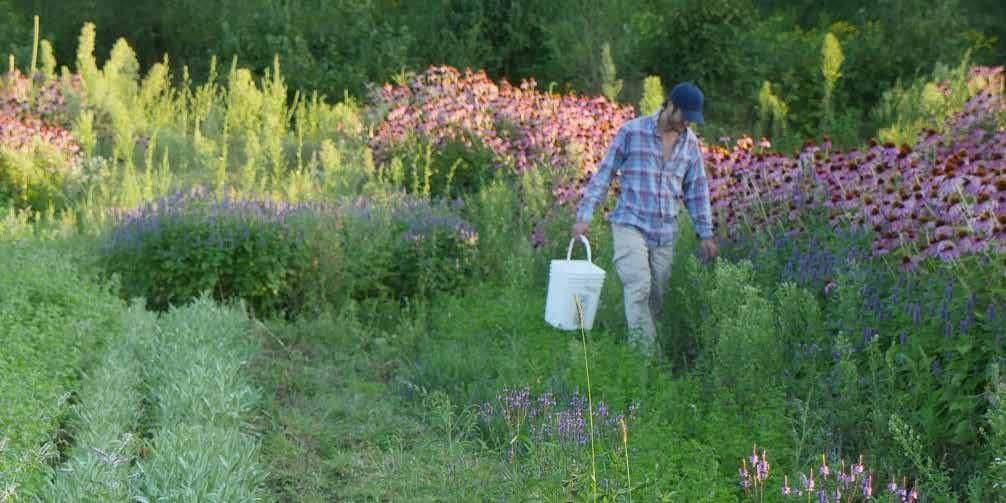
“We take fennel, which attracts so many different insects, and we scatter that all around the farm.” To increase winter ground cover, red clover is interseeded with tulsi, and winter oats are planted amongst perennial herbs. That winter ground cover builds soil organic matter and helps insulate perennials throughout the winter.
Just last fall, DiMaggio was offered a 10-year lease on a larger, neighboring plot of land. The soil is a heavier clay, and DiMaggio is excited to plant elderberries and other shrubs that struggle in the sandier soils of Crazy Rooster. In addition to more acreage, Sacred Blossom Farm recently bought a processing building in Mondovi. “A neighbor friend sold me the old meat locker in town—a 115-year-old meatlocker, that most recently was a cheese factory.” The building has made packaging and storage easier, and shipping trucks can move in and out far more smoothly than on a farm. And it was nearly turnkey, ready to use from the day of purchase—but not quite. “Another funny thing is—this building we bought? They left 2,000 pounds of cheese behind in the basement. And it smelled like, really, really bad. We had wheelbarrows full of cheese.” DiMaggio says smiling. From the other room, DiMaggio's partner Nora chimes in with a laugh, “It smells incredible now and there's no indication of cheese—and there is no cross-contamination!”
With the arrival of spring, the farmers and processors at Sacred Blossom Farm are finishing packing hundreds of thousands of loose leaf tea bags. Soon, they will start seeds in the greenhouses. Until then, it is tea time. “ It doesn't really matter what the situation is, you know?” says DiMaggio, “It calls for a cup of tea.”
Photos by Sunny Frantz
Here in Southern Wisconsin, we're lucky to have a culinary scene and a beverage culture that celebrate local produce and farmers. Area bars and restaurants with craft cocktail programs abound, and their menus feature not only local spirits, but also in-season herbs, fruits and vegetables. We asked some of our favorite beverage enthusiasts to craft a spring cocktail or mocktail that celebrates the season, and they did not disappoint. Beets, herbs, raspberries and rhubarb all find their way into these delectable drinks that feel as fresh and vibrant as the season.
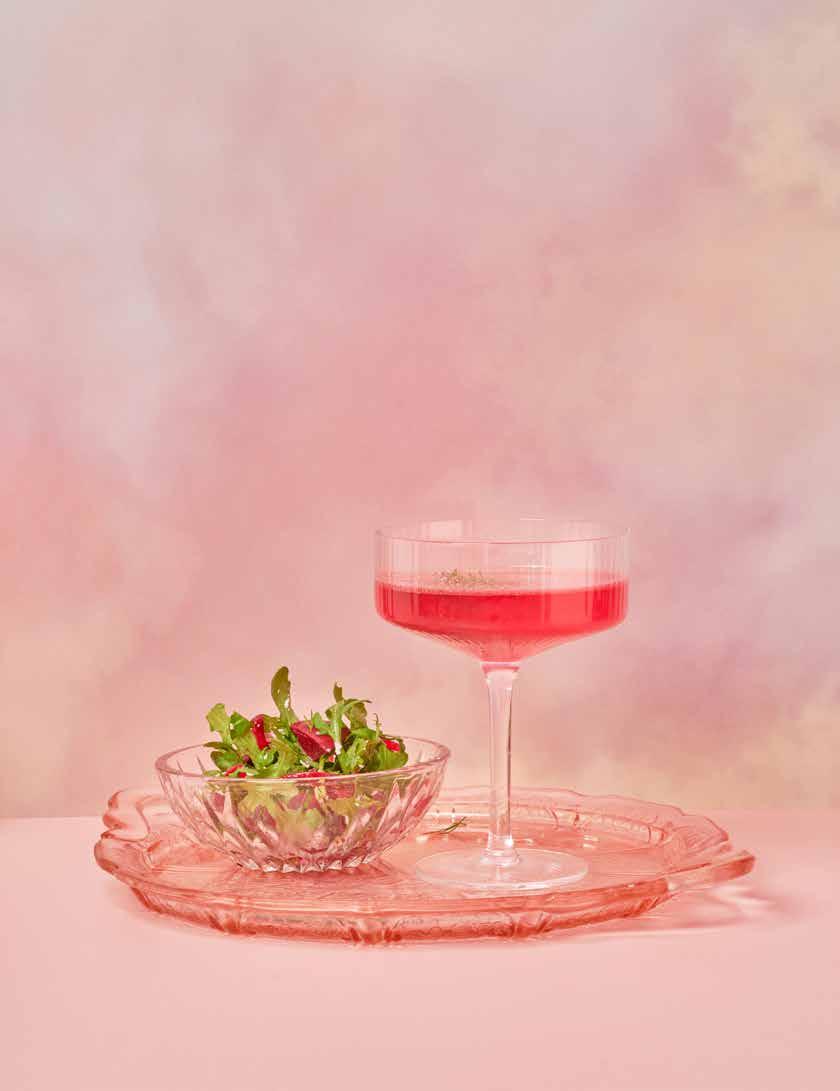
Public Parking Bar, located on Madison’s East Johnson Street, loves to serve up their cocktails with a bit of whimsy. This martini takes its influence from the Gibson, a martini created in the early 20th century in New York, and pairs it with one of Lucas Endres’ favorite spring salads—think of it as a garnish! The flavors of the pickled beet and onion inform both the drink and salad, building on one another to showcase the earthy richness of early spring.
Makes 1 drink
INGREDIENTS
2 ounces gin
1 ounce dry white vermouth
½ teaspoon brine from pickled beets (see recipe below)
1 sprig of dill
DIRECTIONS
Combine all the ingredients in a mixing glass with ice and stir until combined. Strain the drink into a chilled martini glass. Serve with a sprig of dill on top.
PICKLED BEETS
Makes 1/2 pint (or enough for 2 drinks)
Prep time: 10 minutes
INGREDIENTS
1 beet, peeled and cut into 1-inch cubes
¼ red onion, thinly sliced
¼ cup olive oil
2 tablespoons sugar
2 teaspoons dry mustard
1 teaspoon salt
1 bay leaf
1 cup rice wine vinegar
DIRECTIONS
1. Combine the beets, onion, olive oil, sugar, dry mustard, salt and bay leaf in a small bowl or mason jar.
2. Heat the vinegar in a small pot over medium-high heat until it reaches 180 degrees, then dump the vinegar over the beet mixture.
3. Allow the beets to sit uncovered for a minimum of 30 minutes. For a bolder flavor, store mixture in a mason jar in your fridge for up to 24 hours.
SPRING SALAD
Serves 1
Prep time: 5 minutes
INGREDIENTS
1 cup arugula
Pickled beets, strained
Pickled onion, strained
1 ounce goat cheese, crumbled
1-2 tablespoons brine from pickled beets, to taste
¼ teaspoon sea salt
DIRECTIONS
In a small bowl, combine the arugula, beets, onion and goat cheese. Drizzle the salad with the pickled beet brine and sprinkle with sea salt. Serve alongside the martini.
Note: In this recipe, Endres uses State Line American Gin and BroVo Witty Dry Vermouth.


The official drink of the Kentucky Derby, the julep is meant to be a refreshing, simple drink to sip while watching the races or lounging in the garden. Wisconsin offers a variety of herbs and fruits that add nuance to this classic cocktail without requiring a ton of steps or ingredients. Traditionally, the julep uses granulated sugar to add extra sweetness to the cocktail. This recipe uses a homemade raspberry cordial to bring more flavor to the drink and make stirring the cocktail easier. Because the drink requires very few ingredients, Gibson Reichert recommends selecting a quality bourbon for this cocktail.
Makes 1 drink
INGREDIENTS
2 ounces bourbon
½ ounce raspberry cordial
5 or 6 hyssop or mint leaves
DIRECTIONS
1. Fill an old-fashioned glass with ice. Pour in the bourbon and raspberry cordial.
2. Place the hyssop leaves in your palm and slap the leaves to bring out the oils. Rub the leaves onto the rim of the glass and then drop them into the drink.
3. Stir the drink for about 15 seconds before serving.
RASPBERRY CORDIAL
Makes 2 cups
Prep time: 5 minutes
INGREDIENTS
1 pound raspberries
1½ cups sugar
DIRECTIONS
1. Place the raspberries in a sealable container. Cover the raspberries completely with the sugar, and use a muddler to press the sugar into the berries so they’ll break down more quickly.
2. Cover the berries and let sit for 24 hours. The sugar will dissolve into the raspberry juice to make the cordial.
3. After 24 hours, strain the liquid into a separate jar. Reserve the sugared raspberries for another use (they are delicious as preserves, especially with a bit of lemon).

Note:
Embrace the season with a vibrant, grown-up mocktail. This nonalcoholic gin sour combines an arugula-infused gin with a strawberry-rhubarb simple syrup to create a celebration of fresh, spring flavors. The drink offers a sophisticated balance of sweet-tart fruit and surprising peppery herbaceousness. It's a great way to elevate any gathering and prove that zeroproof drinks can be the life of the party!
Makes 1 drink
INGREDIENTS
2 ounces arugula-infused zero-alcohol gin
¾ ounce fresh lime juice
¾ ounce strawberry-rhubarb simple syrup
1 egg white (or 2 dashes Fee Brothers Fee Foam)
DIRECTIONS
Pour the infused gin, lime juice, simple syrup, and egg white into a cocktail shaker. Shake hard for 10 seconds. Add ice to the shaker, then shake hard for another 10 seconds. Strain into a martini glass. Garnish with a skewered strawberry half or lime wedge.

ARUGULA-INFUSED ZERO-ALCOHOL GIN
Makes 4 cups
Prep time: 5 minutes
INGREDIENTS
2 cups water, plus a bowl of ice water
1 cup arugula, washed 1 (750mL) bottle zero-alcohol gin alternative
DIRECTIONS
1. Prepare a bowl of ice water and set it in the sink.
2. Bring 2 cups of water to a boil in a medium saucepan on the stove. Submerge the arugula in boiling water for 45 seconds, then plunge it into the bowl of ice water. Let it chill for two minutes then strain and place in a quart jar.
3. Muddle the arugula and pour in the gin alternative. Place the lid on the jar and let it sit in a dark and cool place for 4 to 6 hours.
4. Strain the mixture through a fine-mesh sieve. Gently press the arugula to release more liquid.
5. Return the arugula-infused zero-alcohol gin to its original bottle, or store it in a new bottle or jar. Store it in the fridge for up to one month.
STRAWBERRY-RHUBARB SIMPLE SYRUP
Makes 2 cups
Prep time: 5 minutes
INGREDIENTS
1 pound strawberries, washed and quartered
1 pound rhubarb, washed and cut into 1-inch pieces
1 cup water
1 cup white sugar
1 lime
DIRECTIONS
1. Combine the strawberries, rhubarb, water and sugar in a medium saucepan. Zest the lime into the saucepan, then cut it in half and squeeze the juice into the mixture. Stir to combine.
2. Turn the heat to high and bring the mixture to a boil. Reduce the mixture to a simmer and cook until the fruit is quite soft, about 15 to 20 minutes.
3. Remove the mixture from the heat and allow it to cool for thirty minutes.
4. Strain the mixture through a fine-mesh sieve. Gently press the fruit to release more syrup. Store the syrup in a jar in the fridge for up to 3 weeks.
By Jesse Raub
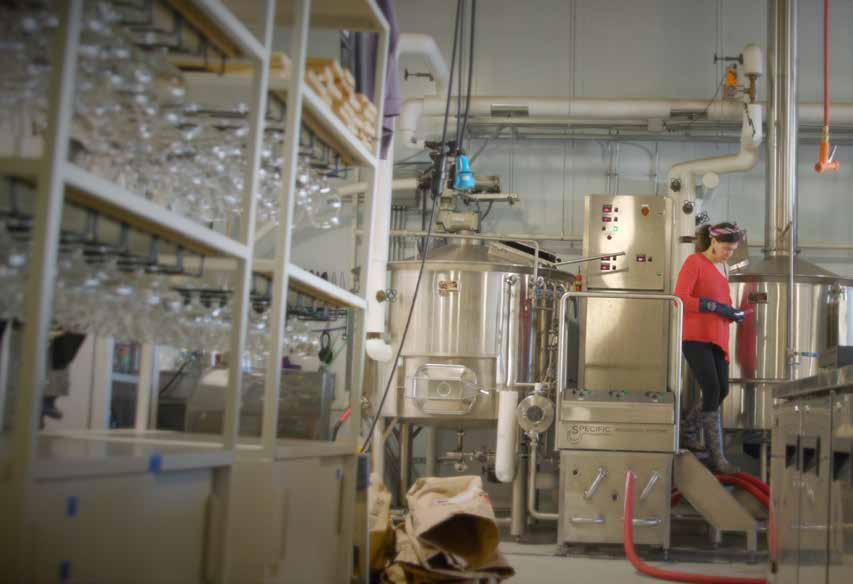
“Beer has no intrinsic value on its own—the last step is to drink it,” says Jessica Jones, brewer and co-owner of Giant Jones Brewing Company. As she walks me through a sampling of their current tap list—pointing out that their Double IPA is built around the same starting recipe as their Tripel—CEO and co-owner Erika Jones inspects returned and washed bottles, and Giant Jones’ Social Butterfly Mari Zoran prepares to open their tasting room. The interview has run long, and their first customers are about to arrive. It should be noted, however, that the first few people who make it through the door are greeted by name.
One of those customers is Wes Gardner, the Mill Manager for Meadowlark Farm & Mill, who helps supply Giant Jones with different grains for brewing, as well as Giant Jones’ neighbor, Origin Breads, with flour. It’s easy to see that Giant Jones is a community effort. During one of their pizza nights with Origin Breads, you might share a table with John and Halee Wepking, the owners of Meadowlark, eating pizza and drinking beer made from their grains and flour. “And the guy who raised the pigs who became the pork for the pepperoni is probably picking up our spent grain for feed,” Jessica says. And while you get the sense that the community would have developed around Giant Jones’ wonderful beers anyway, Jessica and Erika will tell you that what you’re experiencing is also very intentional.
Giant Jones opened their space in Madison on June 15, 2018—a date Jessica rattles off without hesitation. For ten years, Jessica and Erika had been planning on opening a certified organic brewery, making their launch date a truly memorable moment. Their time in California in community-supported agriculture (Erika was also the director of FairShare CSA Coalition) inspired them to commit to organic brewing after seeing small, certified organic farms be able to feed 200 households and still have produce available for the market. “We thought, ‘Oh. We can do that,” says Erika.
Now, Giant Jones is one of only 15 certified organic breweries in the United States, and they’ve spent the last few years reshaping their supply chain to have as many direct relationships with farmers and producers as possible. As of December 2025, Giant Jones sources 65% of their ingredients directly from small farms and malt producers, with the other 35% coming from commodity supply chains. “I can tell you what farms are present in every bottle of beer,” Jessica says. “That’s exciting.”
For Giant Jones, that helps represent a varietal approach to brewing, similar to what you’d see in wine and even in specialty coffee these days. Their beers are inspired by the ingredients they have access to, including reviving some 17th-century historical Belgian styles that use raw grains. For Jessica and Erika, it represented an opportunity to buy more locally produced grains, even though the process now includes three to four extra steps during the brewing process

to process the raw grain into something that can be brewed with. But tailoring their beer styles to their ingredient access is nothing new for Giant Jones.
After deciding that their brewery would be certified organic, Jessica and Erika needed to sort out how they would make the financial side of that commitment work. With higher ingredient costs, they figured it would be challenging to market a more expensive six-pack next to other breweries on the shelf. Instead, they decided to focus on stronger beers, typically between 8-11% alcohol by volume, packaged in reusable single bottles. “We get to have an outsized impact as a small brewery on the organic supply chain because we’re using a larger quantity of grain to make stronger beers,” says Erika. They also picked grain-forward beer styles, like barley wine, golden ale, red ale, and Belgian styles, to highlight the organic grains they were sourcing. Now that they work with a hop farmer, as well, they’ve added a West Coast IPA to highlight his work. “We started brewing that one so we could use more of [farmer] Pat’s hops,” says Erika. Though Giant Jones’ beers are all high ABV, they don’t drink like it. Jessica explained that she wants their beers to be as dry as possible, avoiding the residual sugars that can give stronger beers more body but also make them syrupy and hard to drink. Instead, Jessica focuses on technique to give the beers the mouthful she’s looking for—her extremely technical explanation about suspended proteins and the
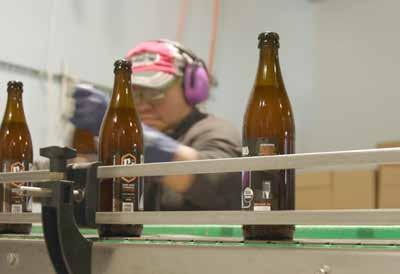
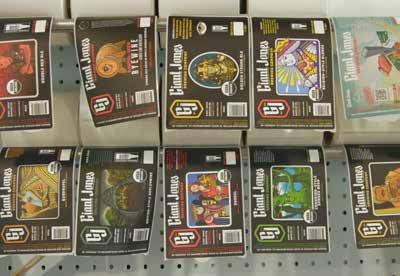
“I can tell you what farms are present in every bottle of beer,” Jessica says. “That’s exciting.”
Top
Bottom

chemical properties of rye washed over me somewhat, but who could blame me? I was sipping away at some truly delectable beer.
“What I’m going for is maximum nuance,” Jessica explained as I tasted the Double IPA next to their Tripel. As stated earlier, those two beers start with the same basic approach. The difference in the recipe, however, comes down to subtle process tweaks to highlight each style’s flavor profile: the Double IPA is dry-hopped, while the Tripel uses Belgian yeast. The result is a strong, floral, lightly bitter backbone to the Double IPA, while the Tripel tastes fruity and assertive, with a gentle pear quality. Neither beer tastes like it’s almost 10% ABV, and as I sample through their American Barleywine (Jessica’s favorite), the Barrel-Aged Ryewine, the Canadian-Style Spruce Beer, and their Grand Porter, I understand what Jessica means when she says “maximum nuance.” Each beer is distinct, but at the same time, they’re all identifiable as a Giant Jones beer.
Giant Jones is undeniably a passion project, and while Jessica and Erika’s commitment to certified organic brewing is at the forefront of their business, tasting and flavor expression are at its heart. After all, the pair once threw an around-the-world New Year’s party that featured 32 different courses with 28 beverage pairings, representing each time zone as it crossed into the new year. It was the incredible flavor potential of beer that initially drew them into the beer world—after avoiding the standard college trap of cheap 30-racks, Jessica had a transformational American Pale Ale as her first beer at the age of 21. “And so I called my dad and said, ‘Hey, I'm gonna come home. We're gonna make beer,’” she adds, noting that the third beer she ever drank was one she brewed herself with her father, a longtime home brewer himself.
While the community vibes, excellent beers and wonderful hospitality are great reasons to visit Giant Jones’ tasting room, the brewery offers a unique opportunity for anyone picking up their beers at various outlets around Madison and beyond. It’s rare these days that beer gives people a chance to experience terroir, but their supply chain and brewing techniques are explicitly designed to do so. All you have to do is crack the bottle and take a sip. After all, as Jessica pointed out, the last step in making a beer is to drink it.

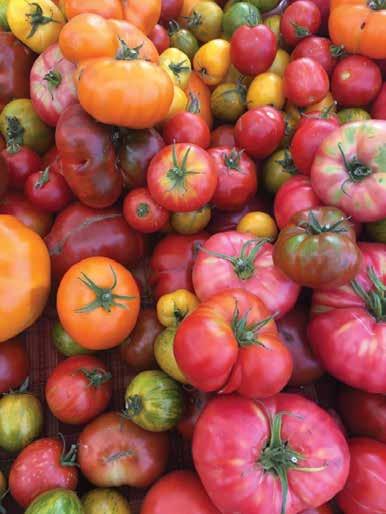
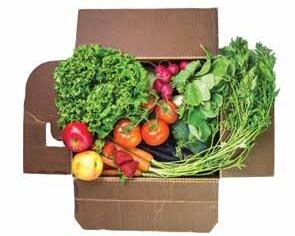
Community Supported Agriculture (CSA) - like a subscription to the freshest, most flavorful food your local farm has to offer!
CSA is about more than food. When you join a CSA, you’re also building a partnership with your local farmer. It’s a delicious way to eat seasonally, explore new flavors, and become part of a story that goes far beyond your plate.
by Anders Gurda-Freestone

Choose the CSA share that is right for



Kristen Kordet
Stoughton, WI
bluemooncommunityfarm.com
608-446-6962
@bluemooncommunityfarm
Established 2004
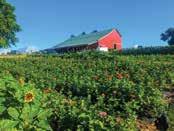
Blue Moon offers the very best in seasonal eating with the highest quality produce and a community-centered farm.
Blue Roof Orchard
Chris & Juli McGuire
Belmont, WI
bluerooforchard.com
608-726-2550
@BlueRoofOrchard
Established 2003
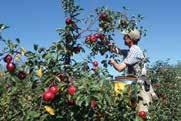
We are the area's only apple CSA, delivering flavorful and unique organic apples in autumn to the greater Madison area, Platteville, Dodgeville, Mineral Point, and Viroqua. We share pick up sites with veggie CSAs, so you can pick up apples and veggies at the same time.

Richard de Wilde & Rafael
Morales Peralta Viroqua, WI
harmonyvalleyfarm.com
608-483-2143, ext 2
@harmonyvalleyfarm
Established 1984
Offering a long and diverse delivery season from May to December. We have over 30 years of experience growing for CSA families.

Rufus Haucke & Joy Miller
Viola, WI
keewaydinfarms.com
608-627-1701
@driftlesscuriosity
Established2004
Located at the end of Haucke Lane in the heart of the Driftless.

Laura Mortimore
Lyndon Station, WI
orangecatcommunityfarm.com
608-963-4234
@orangecatcommunityfarm
Established 2010
Orange Cat Community Farm is a 3 acre certified organic vegetable farm joyfully feeding the Sauk County area.

Adam & Jillian Varney
La Farge, WI
smallfamilycsa.com
608-625-4178
@smallfamilycsafarm
Established 2006
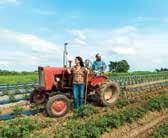
At Small Family Farm we are committed to being stewards to the land and deliver to our community fresh, organic vegetables.

Sarah Leong & Pat Hager
Mount Horeb, WI
squashingtonfarm.com
(920) 422-1042
@squashingtonfarm
Established 2016
150-member CSA in Mount Horeb offering pre-packed and market-style shares. On farm pick ups and Madison drop sites. A quirky little farm dedicated to growing healthy food for our community and fostering connections between eaters, growers, and producers.

Tommy Stauffer & Shawn Kuhn
McFarland, WI
vitruvianfarms.com
@vitruvianfarms
Established 2010
Certified Organic vegetable and mushroom farm with a CSA program, online store with home delivery, and on-site farm store located just outside Madison.
Molly Stentz & John Peck
Brooklyn, WI
yellowdogproduce.com
608-575-4647
@yellowdogproduce
Established 2017
Yellow Dog Flowers and Produce grows organic vegetables, herbs and cut flowers for the Madison area on our farm in Brooklyn, Wisconsin.

In a world that often prioritizes speed over substance, there remains proof that good things, and excellent taste, take time. D.O. Cava and Jamón ConsorcioSerrano are two such treasures, each representing a unique blend of Spanish tradition and authenticity, guaranteed by seals that signify uncompromising quality.
D.O. Cava is a prestigious Designation of Origin from Europe renowned for its exceptional quality and versatility, crafted using the traditional method, which involves a second fermentation in the bottle. To receive the green, silver or gold quality label, or “marchamo”, a Cava wine must be wine certified by the Cava Regulatory Council. The regulatory body ensures that strict standards are met to maintain the excellence and authenticity of Cava, allowing it to consistently rank among the best sparkling wines internationally. As of 2025, all Cava under the D.O. Cava designation is 100% organic, making it the first major sparkling wine appellation in the world to achieve this milestone.
Similarly, the ConsorcioSerrano seal on Jamón Serrano is your assurance of exceptional quality. For 35 years, the Consorcio del Jamón Serrano Español has been dedicated to preserving the authenticity and excellence of this emblematic product. While European standards already require an impressive 30 weeks of curing, the Consorcio demands a minimum of 52 weeks— more than a year of patient perfection.
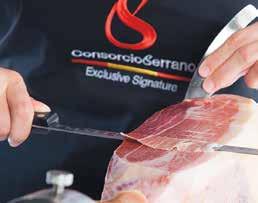

Each piece of Jamón ConsorcioSerrano comes from 100% Spanish pigs and is produced using traditional methods. But what truly sets it apart is the rigorous manual selection process: master ham experts personally examine every single piece, checking its texture, aroma, and flavor by hand to ensure it meets the highest standards. This dedication to craftsmanship has resulted in over 20 million pieces certified to date, representing 30-35% of all high-quality Serrano ham from Europe exported worldwide.
Both Cava and Jamón ConsorcioSerrano are perfect examples of how time-honored craftsmanship, underpinned by the European Union’s commitment to quality and tradition, creates products that are unmatched in their category.
Their seals are more than marks on a label— they are promises of authenticity, excellence, and the patient dedication that only time can deliver. Whether enjoyed on a special occasion or as part of your daily life, Cava and Jamón ConsorcioSerrano bring the best of Europe to your table.


The D.O. Cava and Jamón ConsorcioSerrano seals are your guarantee of true Spanish excellence. Two seals, one promise: the finest taste of Spain.

By Kasey Lee Cooke
Madison is a city built on perfect pairings. The old couple circling the Capitol each morning, synced like a clock. Sailboats stitched to Lake Monona by steadfast wind. The first inhale of Ian’s Pizza as State Street opens up and welcomes you. Balance thrives here.
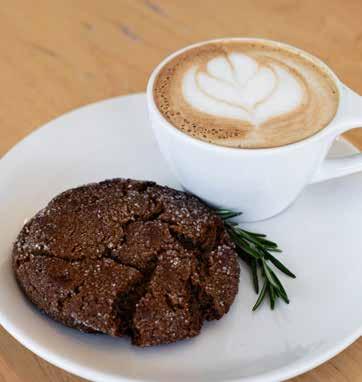
So it makes sense that one of my favorite pairings comes from Wonderstate Coffee: a single-origin cappuccino enjoyed with their ginger-cardamom cookie. This is not a loud pairing, no, it is a quiet flex. The cookie lands chewy yet soft, the kind of texture you notice before flavor even shows up, like the silence before the first note in your favorite song. Then the cappuccino arrives—silky, velvety, warm—doing what great beverages do best, enhance without interruption.
The warmth of the drink is a time machine, carrying you back to the cookie’s first moments out of the oven, when its opulent scent permeated the entirety of the kitchen. Hell, the building. Ginger brings a subtle heat, cardamom hugs floral and bright, hitting the higher notes that keep the whole experience aligned. Those spices balance the gentle bitters, acids and deep riches of whole milk folded into vivacious, and (always) intentionally extracted espresso.
This pairing doesn’t compete. It collaborates. Like Madison itself, it knows exactly who it is—and that confidence can be sensed with more than just the palate.
By Jessica Jones
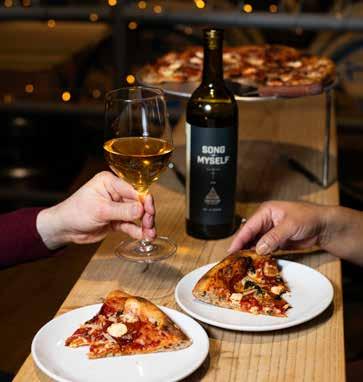
Song of Myself’s aroma bursts with jasmine-like floral, dried apricot and candied kumquat impressions. Flavors reminiscent of ripe peach, pineapple and orange blossom give way to herbaceous chamomile before the crisp dry finish with a bit of preserved lemon flavor lingering.
The body is lush with a bit more weight than a Chenin blanc—a reasonable reference point for this locally grown white blend built to feature another aromatic white grape variety, La Crescent.
Sweet Pig is a pizza topped to feature the crust! On Wednesday evenings, Origin Breads turns out hot sourdough pizzas featuring freshly milled and locally grown wheat from Meadowlark Community Mill and Farm. The crust is crisp, yet retains a tender chew beneath. The flavor boasts a toasted nutty impression, and even tastes like bread before a fruity tang that whispers of passion fruit clips the finish. Their red sauce adds a touch of sweet and additional floral without pulling the acid spotlight, and house-pulled mozzarella compliments the chew of the crust without becoming the star. Pepperoni, whipped ricotta and hot honey add spice, savoriness and additional floral sweetness to this pie built from the bottom up.
Song of Myself’s texture and 14.2% ABV matches the impact of the pizza, adding to the symphony of textures while cutting the unctuous toppings with its crisp acid. Additional savory herbs and deeper dried fruit notes open up in the wine, while the honey pops forward with assistance from the florals in the wine and the crust’s fruity-nutty notes become more prominent.
by Nicole Welch









For Mel Coleman Jr., a fifth-generation Colorado rancher, protecting farmland isn’t just about preserving open spaces—it’s about safeguarding the foundation of our food system.
“Throughout my life, I’ve met good, hard working people all trying to do the right thing with the land and animals they care for,” Mel says. “American Farmland Trust (AFT) helps them do just that.”
As a long-time member and former board member, Mel has seen firsthand how AFT connects farmers and ranchers across the country with the tools, policy support, and resources they need to thrive.
From championing farmland protection in Washington, D.C. to helping family farms remain economically viable, AFT ensures that good stewardship—of land, water, and community—endures for generations.
“AFT isn’t just an organization,” Mel adds. “It’s a family that believes in the power of small farms and the people behind them. There’s no better way to make a real difference than to be part of that.”
Join Mel—and thousands of other members—who are protecting America’s farmland and the people who farm it.


You already eat farm-to-table. Why not imbibe locally too? Try these Wisconsin beverage makers for some of the most creative refreshments around.
Family-owned boutique winery located on the doorstep of Devil’s Lake State Park. Stop in for wine, food, beer and music.
BALANCEDROCKWINERY.COM
@balancedrockwinery /balancedrockwinery
Featuring Rhuberry Sweet Wine
BRIX CIDER
Along with their hard cider, brandy and whiskeys, Brix Cider in Mount Horeb is excited to introduce WiscoCream: a cream liqueur featuring Wisconsin dairy.
BRIXCIDER.COM
@brixcider /brixcider
Featuring WiscoCream Cream Liqueur
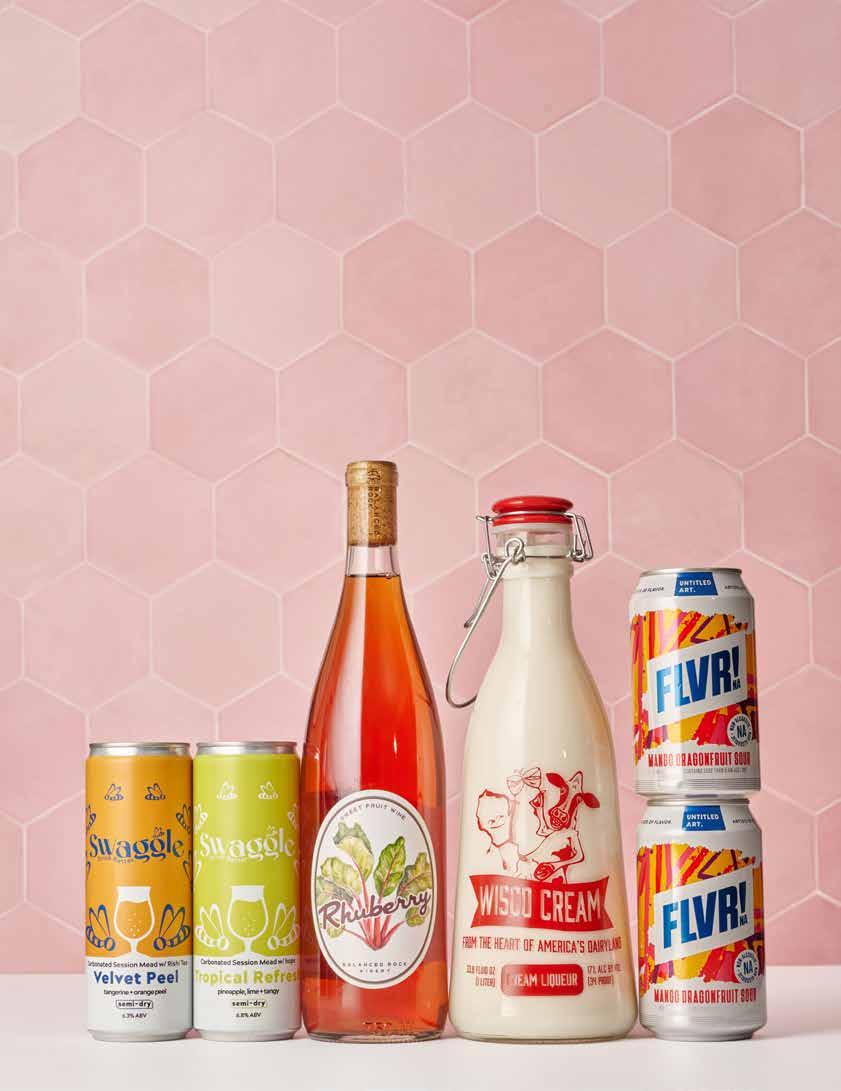
The Hive Taproom in East Troy presents Swaggle. Semi-dry gluten-free carbonated session mead made with 100% raw local honey, natural and organic ingredients and low in sulfites—a new category in the alcohol marketplace. The way nature intended. Drink Better.
DRINKSWAGGLE.COM
@thehivetaproom /thehivetaproom
Featuring Tropical Refresh and Velvet Peel
From real fruited hard seltzers and decadent stouts to full-flavored nonalcoholic brews and all-natural hemp beverages, Untitled Art crafts liquid art for every palate and every occasion.
DRINKUNTITLED.COM
@untitledartbev /UntitledArt
Featuring FLVR! N/A Mango Dragonfruit Sour