Voices of Leadership
Principal perspectives
Coffee, community and confidence in Cromwell
Leading as a learner inspires excellence
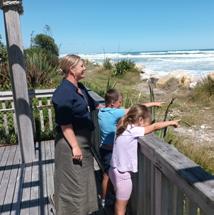


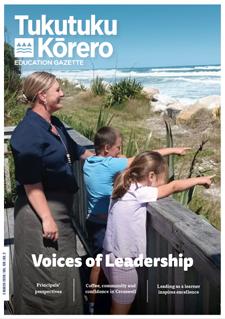

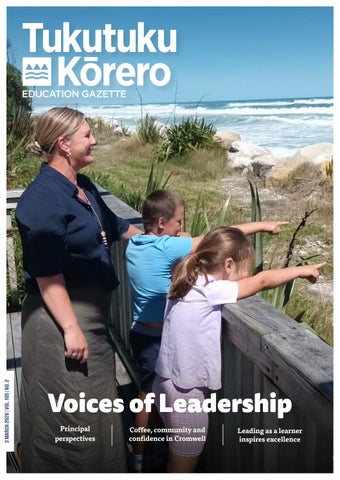
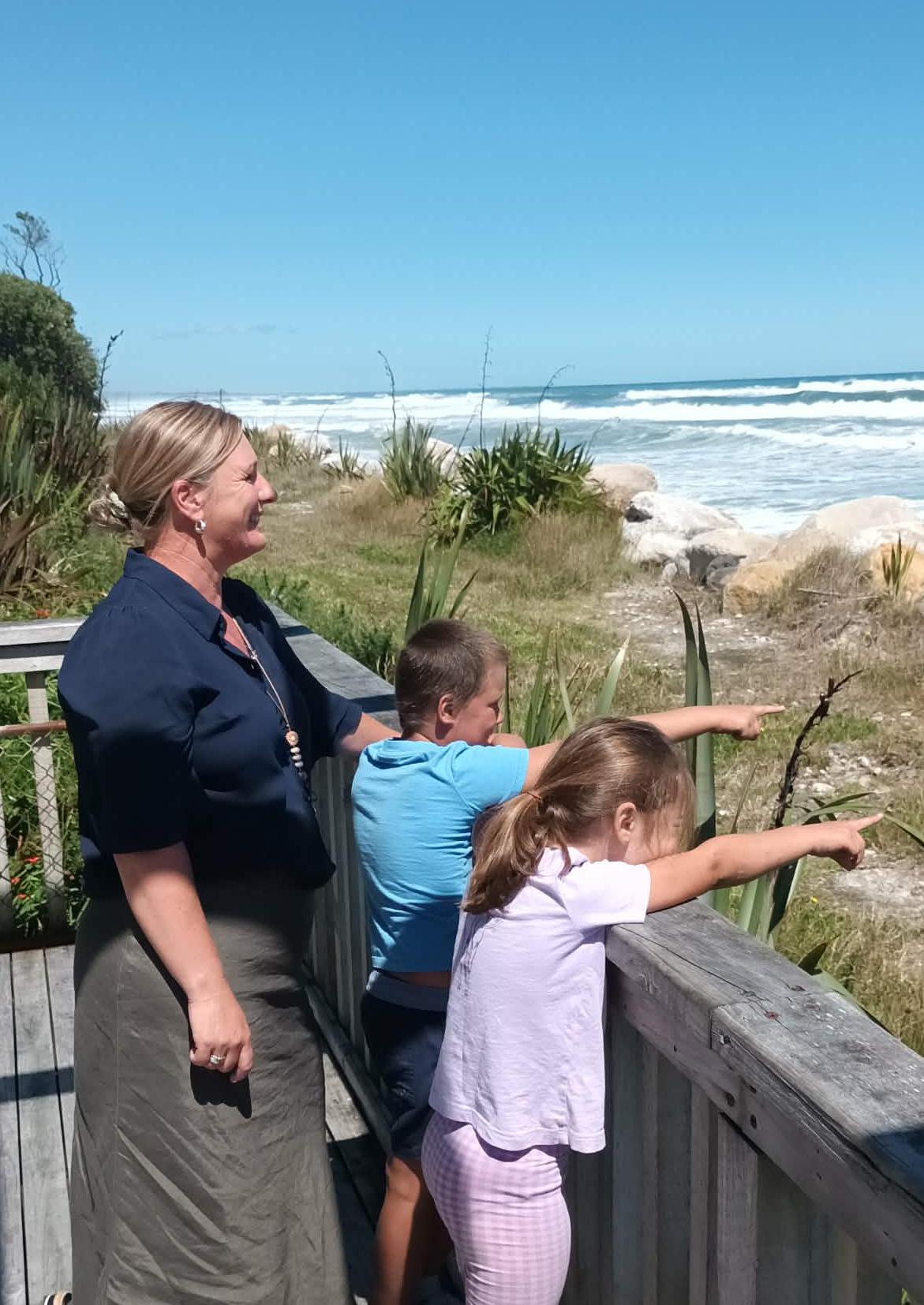
Nikki Smith, tumuaki of Granity Kura, with ākonga Keith and Stephanie.
Principal perspectives
Coffee, community and confidence in Cromwell
Leading as a learner inspires excellence
Leadership is not always a comfortable place to be. But it’s also full of opportunities, inspiring lessons and moments of professional and personal gains.
So say the leaders who feature in this issue of Tukutuku Kōrero | Education Gazette, which celebrates those who have risen to their positions to meet the needs of ākonga and kaimahi.
From a two-classroom full primary school on the West Coast, to urban Palmerston North, to the full educational journey of Whangamatā Area School: we hear from three tumuaki what leadership looks like in their unique contexts.
It’s important for leaders to step up to mentor the next generation, says former principal and leadership advisor Dr Isaac Day. That is more than a professional responsibility: it’s a personal investment in the future of school leadership.
This year, 200 aspiring principals will be formally coached and mentored in the Aspiring Principal Programme, adds new NZPF president Jason Miles, who hopes to extend such professional development more widely.
Naturally, leaders can’t lead in isolation. At Richmond Kindergarten and BestStart Willowpark Road in Hawke’s Bay, kaimahi highlight how leading as a team can make the biggest impact for tamariki.
And at Cromwell College, a community effort is leading rangatahi towards bright future options, from a perfectly steamed latte at the school food cart to a pathways programme rich with career potential.
In this issue, leaders agree opportunities come from sharing, networking and inspiring one another by taking time to shine a light on success. This year, that includes the Education Excellence Awards, for which entries are open now.
Mā te wā
Maike van der Heide
Ētita | Editor
PUBLISHED BY
Education Gazette is published by the Ministry of Education
PO Box 1666, Wellington. ISSN 2815-8423 (online)
The Ministry of Education and Education Gazette do not endorse, approve, or accept responsibility or liability for the accuracy of information belonging to third parties, including but not limited to information on third party websites we link to.
Terms and conditions: gazette.education.govt.nz/terms-and-conditions © 2026 Education Gazette. All rights reserved.
KEY CONTACTS
Editorial gazette.education.govt.nz
Vacancies and notices listings gazette.education.govt.nz
0800 GAZETTE (0800 429 3883)
Send us your story ideas
What’s happening at your school or kura in 2026?
We would love to tell your stories. Our upcoming issues will focus on literacy and language and ‘tomorrow’s thinkers’.
Join us online
Get the latest vacancies, notices, and stories on our website gazette.education.govt.nz
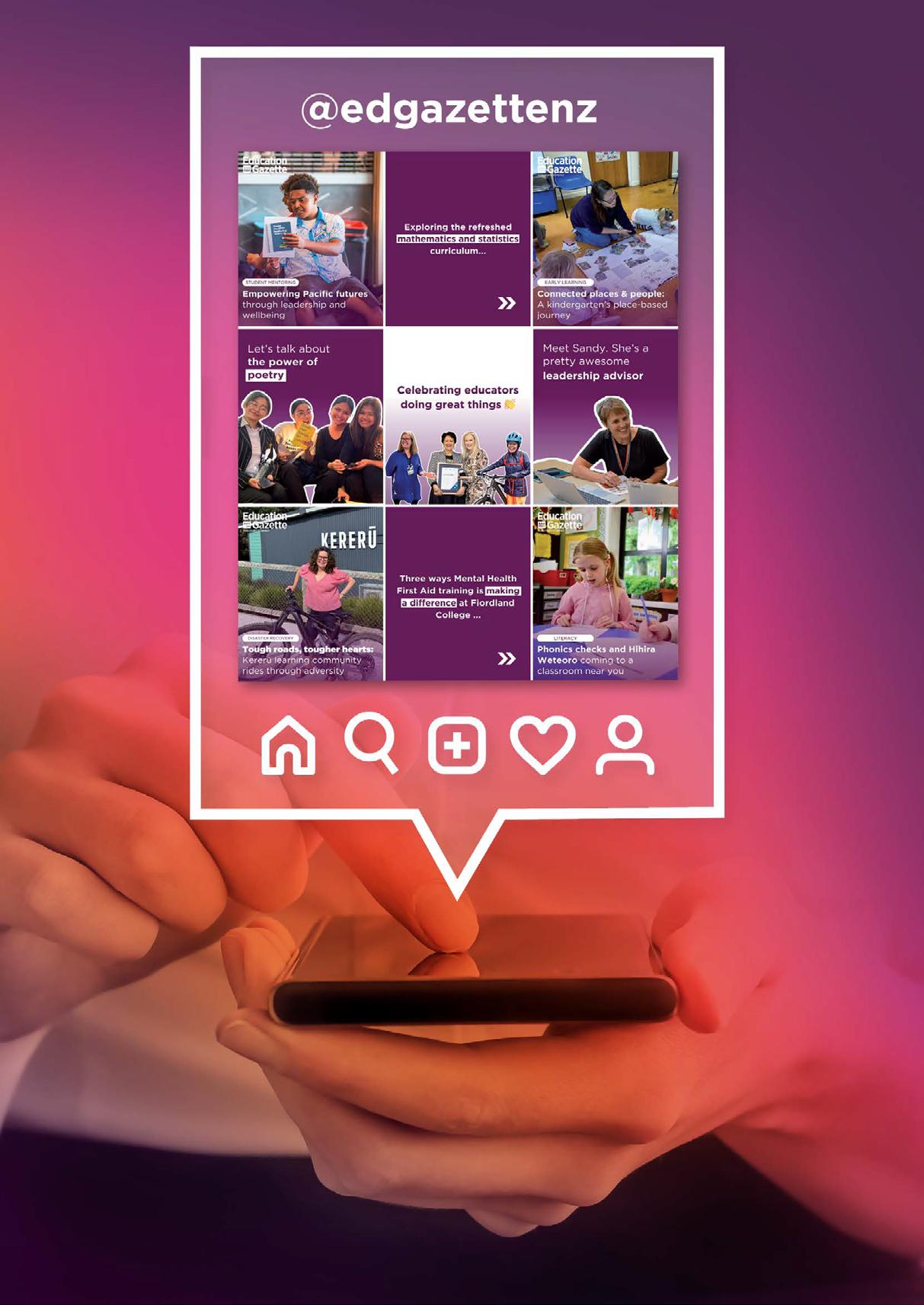
Follow us on Instagram: @edgazettenz
PRINCIPAL LEADERSHIP
After leading Kaiapoi North School for the past 17 years – a school he also went to as a student – Jason Miles has stepped away from his staff and students for the next two years to be the elected president of the New Zealand Principals’ Federation (NZPF).
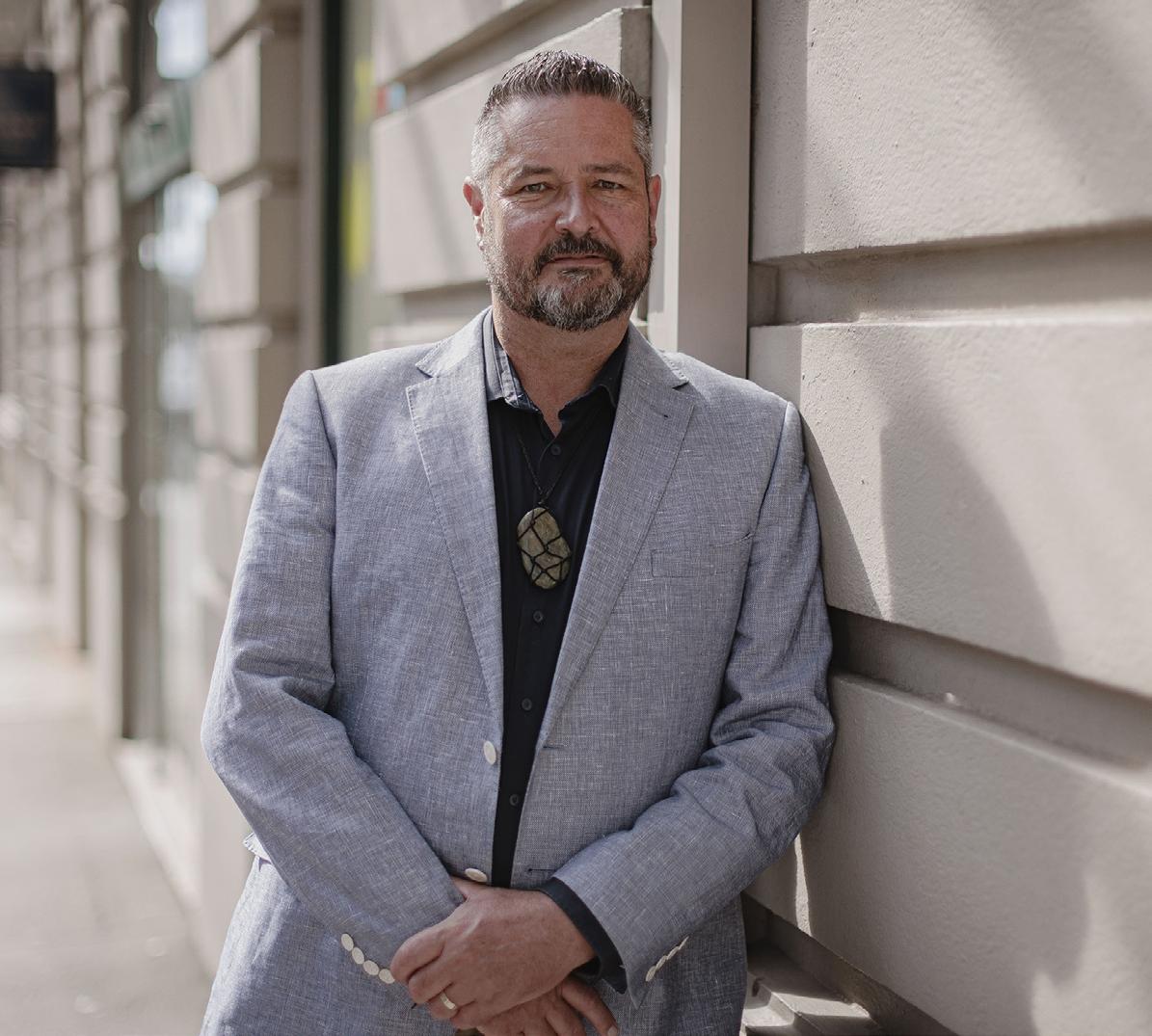
“We have a role to play in developing the whole child and to encourage our children to be brave and to shine.”
Jason Miles first became ‘Mr Miles’ in 1993 at Isleworth School in Christchurch. Just four years later, he took up the principalship of View Hill School, a picturesque, twoteacher country school under the Southern Alps near Oxford.
He has since served in rural and urban schools in the Canterbury region, including Tinwald and Harewood Schools. Jason came full circle when he returned to Kaiapoi North School in 2009 as both a former student and the school principal.
Jason says the hardworking, dedicated and skilled staff at Kaiapoi North are bolstered by a very supportive parent and wider community. The school’s focus on quality learning, wellbeing support and additional opportunities for students is something he is incredibly passionate about and proud of.
“At Kaiapoi North School, we strongly believe our children deserve the chance to participate and shine in wider curriculum groups and activities,” says Jason.
“Our teachers work hard to build character and confidence through experiences, including cultural groups, performing
arts, sporting, environmental, STEM, leadership and citizenship responsibilities. To see our children having such a wide range of opportunities to learn and grow is heartwarming. It’s such an important part of our culture as a school.”
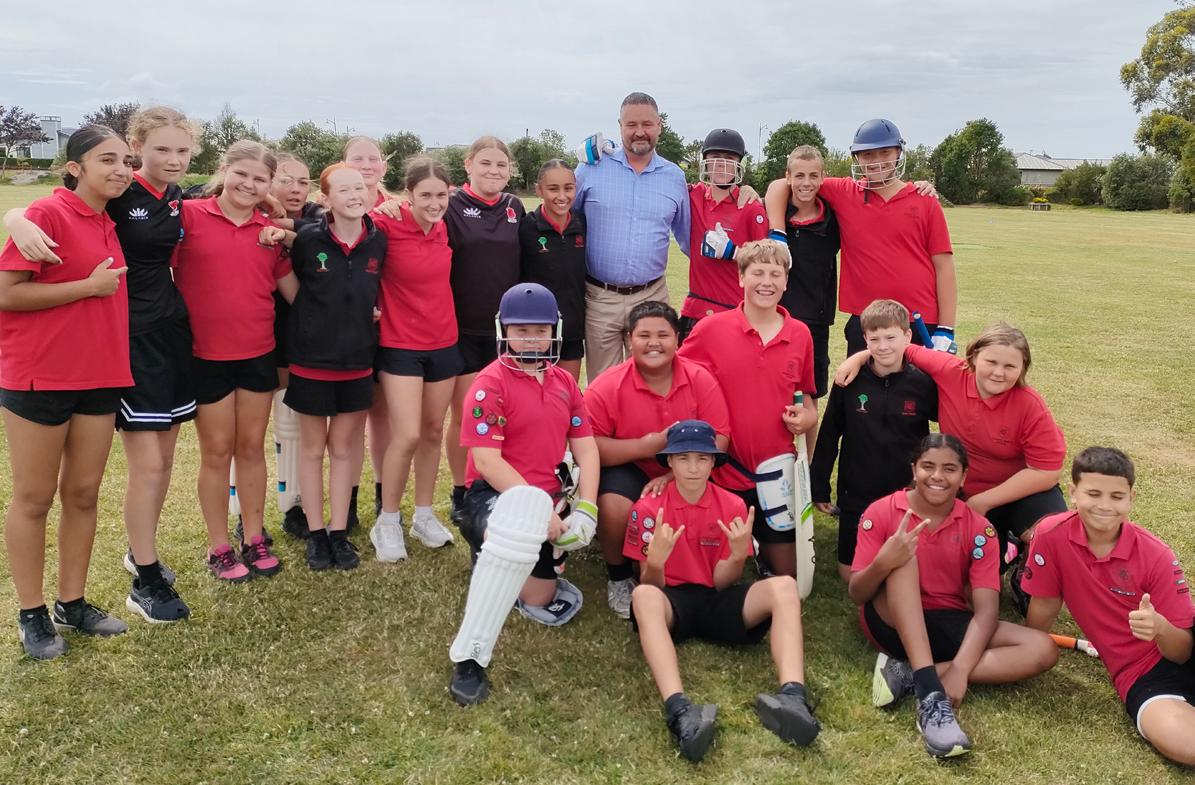
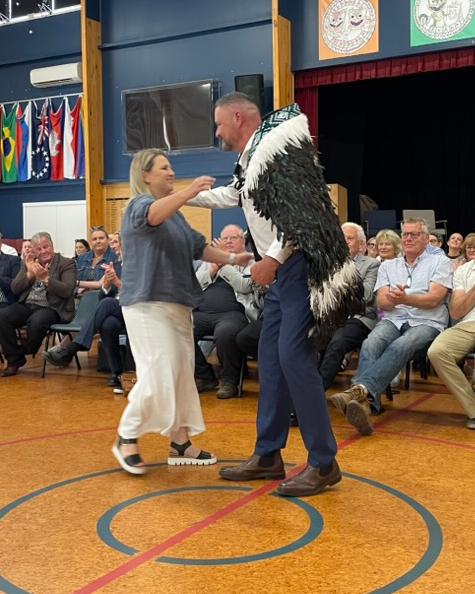
While he didn’t teach anymore, Jason organised funding and supported various school groups so they could participate in the next level of events. He coached the school’s cricket teams and made it a priority to be there when his students performed on the stage and at sporting events. Some of his proudest moments from 2025 included seeing their kapa haka group win the Canterbury Tūhono Festival competition and their girls’ basketball team win the Year 7 and 8 competition for the second year in a row.
“Yes, our core responsibility as school leaders is to make sure our curriculum programme is robust and resonates with our children, but we have a role to play in developing the whole child and to encourage our children to be brave and to shine,” says Jason.

Jason has served on the NZPF executive since 2018 and became vice president in 2022. Alongside his advocacy and leadership work with the NZPF, Jason is the lead principal within the North Canterbury Resource Teacher of Learning and Behaviour cluster and has been an executive member of the Canterbury Primary Principals’ Association and the North Canterbury Principals’ Association executive committees. His core belief, and a theme that runs through all his advocacy work, is that every child and young person in Aotearoa should have access to a high-quality, equitable education.
“I am very aware of the vastly different contexts our schools consist of across Aotearoa and the amazing job
our principals and teachers do every day to support all children and each other,” says Jason.
“Walk into any school in New Zealand and you’ll find dedicated, passionate principals and teachers who embrace our unique, multicultural communities. You will find educational practitioners who work hard every day to support the learning and wellbeing of our children. You will see educational professionals planning and using formative assessment to teach next learning steps. You will see children’s varied learning, mental health and societal needs being cared for and carefully supported. You will see teachers and principals preparing children for life in our society.”
Jason says education experts know that when a child is struggling at school, it is not always due to a lack of effort or ability.
“We know that explicit teaching of foundation skills in English and mathematics makes sure our children receive the best start to developing strong literacy and numeracy skills. But finding that balance – recognising that not all children learn the same way or at the same rate – while having strategies to make sure each child is making progress requires timely and ongoing resourcing and funding for learning support,” says Jason.
“It’s encouraging to see the Government has a shared focus on learning support and is making investments to support more learners and meet the growing demand across the country.”
Jason says NZPF strives to be part of a positive working partnership between the professionals in the education sector and the decision-makers and funding holders who oversee it. In his capacity as vice president for NZPF, Jason, alongside executive colleagues, has worked with the Ministry of Education to support the development of opportunities for aspiring principals and new principals, and for experienced principals to get the necessary support to lead and continue to learn.
This includes the new Aspiring Principal Programme. An inaugural cohort of 200 aspiring principals is being formally coached and mentored this year to better prepare them for the diverse job ahead.
“I am looking forward to continuing this partnership with the Minister and Ministry of Education and hope to extend such professional learning to all principals, similar to professional learning development offered elsewhere, such as in Victoria and Ireland.”
Building relationships on a foundation of integrity and relational trust – with students, staff, parents, community leaders, funders, decision holders, and policymakers – is key to Jason’s success as a principal and is central to his approach as president of the NZPF.
“We all want the same thing – to improve education and lift learning outcomes across the motu.
“I believe we can agree that success in supporting children in schools boils down to three core elements: providing the best opportunities for children to learn, be safe, and be supported. Establishing a partnership and an enduring vision with the teaching profession and all political parties, focused consistently on these three simple yet crucial elements, would lead to significant positive change, now and for the future,” says Jason.
Looking to the year ahead, Jason’s top priority is supporting and advocating for principals in the areas that will make the biggest impact for children. This includes the curriculum reform process, equity for all children to access learning and support, and supporting the leadership development and wellbeing of all principals.
Jason knows principals will have brought their teams together for professional learning, team building, and organisational decisions well before any children arrived at school.
“Your work in preparing and supporting your teams to be ready for the beginning of each new year cannot be understated,” he says.
He offers special acknowledgement and congratulations to those who are beginning their principalship in 2026.
“Welcome to the most rewarding and amazingly diverse job you could imagine! NZPF is here to support all tumuaki in Aotearoa and regional associations no matter where you are at in your principalship journey. You are in the positions you are in because you care about learning and wellbeing for children. Despite constant change, don’t lose sight of the fact that it is our job as leaders to make sure every change we make has a positive impact on the young people in our care,” says Jason.
The New Zealand Principals’ Federation is the leading advocacy and professional support group that represents the rights and interests of all principals w and tumuaki.
The Education Workforce website has more information about the Aspiring Principal Programme. Aspiring Principal Programme – Education Workforce
SCHOOL LEADERSHIP
Around Aotearoa, school leaders are guiding their teams within the unique contexts of their school or kura and their communities. Three principals share their insights and perspectives on what leadership looks like for them, the opportunities it brings, and the goals that lie ahead.
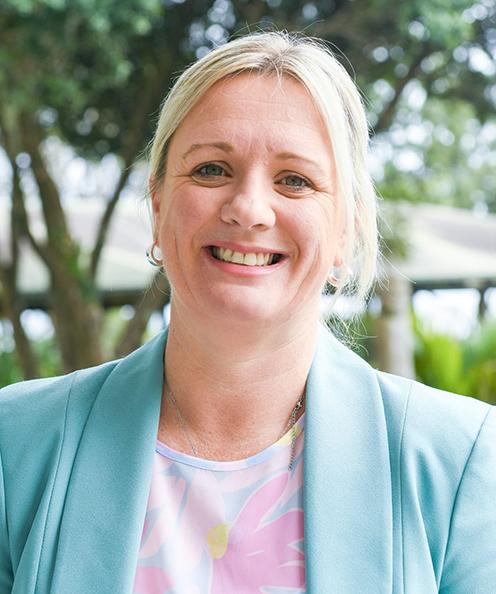
Ihave been principal at Granity Kura for two years now and will be heading into my third year at the start of term 2, 2026 – and wow, what a ride it has been so far.
Principalship was never something I had imagined for myself, but I have always believed in stepping into opportunities when they arise, especially when they offer space for personal growth.
Granity Kura was a part of my professional journey, having worked at the school early in my teaching career and living just minutes away as part of the local rural community. With a mountain view from my office window and the sea stretching out from our school verandah, it truly is an epic place to go to work every day.
After many years in the classroom and in a range of leadership roles, I felt ready for a new challenge and stepped into the resource teachers: learning and behaviour (RTLB) role in 2019. The study that I completed as an RTLB reignited my love of new learning. I found real enjoyment working alongside neurodiverse students and whānau, with the He Pikorua framework shaping my practice. Its mokopuna and whānau-centred focus and commitment to whanaungatanga means relationships and learner voice remain central.
Developing a deeper understanding of how to recognise and respond to ākonga needs and strengths through the lens of He Pikorua was rewarding. This learning continues to shape the way I approach my work now as a teaching principal, grounded in partnership and shared understanding.
Granity Kura is incredibly unique, with a small roll of 31 students across two classrooms with Years 1 to 3 and Years 4 to 8. With these small class numbers, our ākonga benefit from more one-to-one teaching time.
We have a passionate and skilled teaching team and an extended team who are deeply committed to improving outcomes for all.
Being the principal of such a small kura comes with the added privilege of teaching two days a week, and they are my favourite days. The balance between teaching and leadership is one of the aspects I value most in my role – no two days are ever the same.
Throughout my career, I have observed that when stepping into leadership roles, the realities of day-to-day teaching can easily be forgotten, and this is something I remain very mindful of.
Having regular opportunities to be in the classroom allows me to stay closely connected to students and staff. The ongoing whanaungatanga and these connections help me to be a more effective and responsive leader.
“By intentionally creating space for professional growth, reflection and open dialogue, we can continue to improve outcomes for our students.”
One of the most powerful lessons I’ve learned as a leader is accepting that not everyone will like you. As a recovering people-pleaser, this was a hard but necessary realisation. I felt like I was drowning, constantly trying to meet everyone’s expectations, and heading straight towards burnout.
Over time, I learned to trust my judgement and back myself a bit more, stand by my values, and let go of the need to be liked. I understood that standing by my values wouldn’t always be comfortable or well-received.
A strong support system matters – and the right people aren’t always the ones you expect. Finding those who truly support and challenge you is worth the time and effort of finding them. This may not happen straightaway, so take the time to have the right people in your corner.
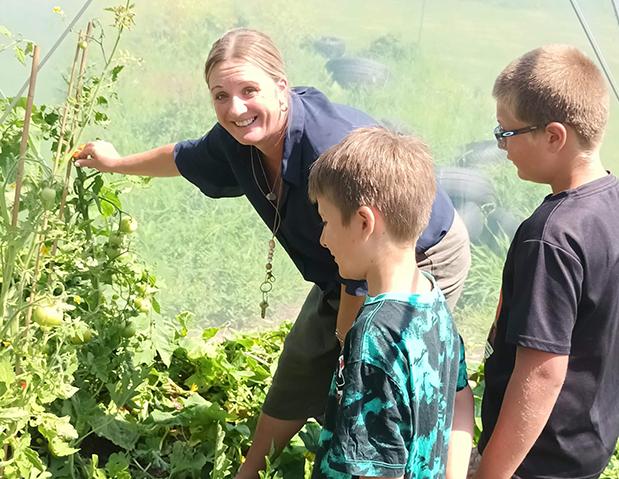
Take time to find the leaders who inspire you and deliberately carve out time in your week for professional growth and reading. Tapping into the insights of others has been invaluable and refreshing. If you haven’t read Lost at School by Ross Greene, Leading to the North East by Russell Bishop or Dare to Lead by Brené Brown, I highly recommend them!
An insight I’ve gained about myself as a leader is that I naturally lead in an agentic way – working alongside people and empowering them, rather than taking a top-down approach. I’m the first to admit I don’t have all the answers, and when things get busy, my creativity doesn’t always flow the way it used to.
I believe that when staff feel genuinely supported and included in decision-making, they are more engaged. I’ve learned that I don’t need to be the one talking all the time. When I slow down and really listen – just like we teach the students – it strengthens our relationships and reminds others that their perspectives truly matter.
On any given day, I wear many hats: sorting property issues, juggling finances, making sure a five-year-old isn’t burning themselves with a hot glue gun, responding to the constant opening door of visitors, and heading into meetings after hours.
Sometimes I get more done before 8am and after 5pm than I do between 9am and 3pm. That’s why drawing on the strengths of our team is so valuable. It’s all part of the juggle, demanding and at times complex, and a reminder that none of it can be done alone. Empowering others and delegating is essential; though understandably, delegation can be tricky in a small school.
In those moments, I’ve learned to park things, return to them later, and be comfortable with that.
My leadership style is deeply shaped by our school’s special character and cultural identity, particularly our commitment to inclusion, belonging and wellbeing.
When I first stepped into the role of principal, my personal goals aligned closely with the school’s vision: that every child would thrive and experience success, regardless of their differences.
Our school vision, ‘Empowering curious minds, Whakamanahia ngā hinengaro māhirahira’ is not just words on a page for me – it guides how I lead, the expectations we set as a team and the way we show up for our students.
At Granity School we empower and prepare our tamariki by teaching them to value learning, identity, community and place.
I aim to lead in a way that creates a safe, supportive environment where students feel seen, heard and confident to ask for help when they need it. It’s not always perfect, and we don’t always get it right, but we continue to reflect, learn and improve as a team.
It was powerfully affirmed in the final weeks of term 4, when a student came to my office and said, “Mrs Smith, I think I need you to be my external brain, can you help me?” That moment meant everything to me. It showed that this student felt safe to advocate for himself and trust the adults around him. We were able to talk through what was happening for that student and put support in place that respected his individual needs.
Moments like this reflect the culture our team is intentionally building – one where empathy, inclusion and partnership sit at the heart of leadership, learning and relationships.
There is no doubt that 2026 will be a year of learning for all of us, with significant changes to curriculum, assessment, and reporting, alongside ongoing expectations around attendance and other priorities.
While the pace of change may feel challenging, I am confident that by working together as a team, we will navigate what needs to be done in a way that works best for our school.
A key goal moving forward is to continue supporting and growing our staff. I want to further strengthen a collaborative culture where staff feel valued, listened to and supported, and where individual strengths are recognised and utilised.
By intentionally creating space for professional growth, reflection and open dialogue, we can continue to improve outcomes for our students.
As we move through this change, my focus will be on taking small, manageable steps rather than trying to do everything at once, and on leaning on the expertise within and beyond our school for support.
I choose progress over urgency, knowing that things don’t need to happen all at once to still move in the right direction. Sometimes the most productive decision you can make is to shut the laptop, go home, and recharge.
Whānau comes first – including yourself. I don’t want to finish 2026 as exhausted as I did in 2025. In those final weeks I found myself thinking, ‘that will be a 2026 problem’ – so there’s already plenty to get stuck into this year!
I’m committing to taking my own advice. When we care for ourselves, we show up stronger, calmer and more present for our students, our colleagues and our whānau.

Ihave been a principal since 2012, and tumuaki of Russell Street School since July 2017.
As a student teacher and then a beginning teacher at Russell Street, I have gone full circle. Initially, I taught here for four years at junior and middle level. Then I moved to a facilitator role for an information and community technology professional development cluster where Russell Street was the lead school.
In 2002, I moved to Japan and taught at Yokohama International School, returning to New Zealand – and to Russell Street – as the deputy principal in 2006. That was followed by a Ministry of Education eFellowship in 2008, and in 2009 I went to work in a national facilitation role for Core Education.
It was such a privilege to work there and be in and out of schools across New Zealand. I saw so many great school leaders and teachers doing amazing things. It confirmed to me that leading and working alongside others in a school was something I wanted to be part of and develop myself further in.
The lure of being back in a school saw me get my first principal job in 2012 at Kumeroa-Hopelands School Woodville, followed by two more rural schools, Oroua Downs and Newbury in Manawatū and finally, in 2017, Russell Street.
Our school has 10 values, so we are a little different than most schools which usually have four or five. All 10 uara are crucially important for us as a school. The presence of uara has lifted in our school over the last eight to nine years. We have made great strides in how they embrace their kaupapa Māori, and are immersed, taught and recognised in the everydayness of our school.
We are also really proud of how our school has responded to the voice of our whānau in the establishment of Poutokomanawa, our level 3 Māori immersion space.
This was initially a small Year 4 to 6 class working at level 4 but has now grown to 100 Year 0 to 6 students across four classes with a waiting list of interested students. This is such a great testament to how the school has prioritised te ao Māori and actively responded to a need.
to describe our intent as Pūmanawa (the name of our leadership team) this year are courageous, bold and optimistic. I have a personal goal to make sure we remain grounded, balanced and ‘measure what we treasure’ in relation to capturing the progress and achievement of our students.
I have been lucky to work alongside and learn from exceptional educators in all my roles as a teacher, principal and facilitator. I am humbled at Russell Street School with the calibre of kaimahi who do so much for our students. I learn so much from them and try to do everything to give them the right conditions to thrive as educators.
The concept of a networked approach to leadership captures my beliefs around leadership and how I approach my role. A network approach is collaborative, strengths-based, timely, responsive, flexible, and values everyone.
“My key goals this year are around staying true to what we believe is right for our school and students.”
Taking on facilitation roles such as with Core Education deepened my philosophy around education. It affirmed beliefs but also challenged them.
It allowed me to feel the intangible vibe, culture and pulse of great schools as soon as you walk in the front door – this vibe, or as we call it at Russell Street, the pumanawatanga – is something that we actively cultivate.
Working overseas is also a great experience on so many different levels. There is the international context of living and working overseas and being an ethnic minority. There’s also the certainty and stability of the International Baccalaureate (IB) curriculum, how schools respond to diverse student body in learning, culture and social areas.
When I have visited international schools more recently, it reinforced all of this; but more than anything the stability of IB Primary Years Programme curriculum struck a chord with me, especially how little it had changed in 20 years.
I visit other schools at least once a year as part of my principal professional learning group. I talk to other school leaders, learn, reflect and wonder. This significantly influences my understanding of what is important for other schools, how they go about navigating the challenges in education, exciting innovations, and ways of working. From this, I look at how these may be used and embedded in what we do at Russell Street School.
My key goals this year are around staying true to what we believe is right for our school and students, especially with the ongoing change in the sector. Some of the words
I also read a lot of books to support my continuing learning. Currently on the reading list is Invisible Intelligence by Welby Ings, and When the Adults Change, Everything Changes by Paul Dix – two powerful reads. Books, like school visits, are such a great way to learn, reflect and wonder.
I am privileged to be surrounded by great people – they make the job fun, rewarding and doable.
“At Russell Street, staff embrace our culture of professional trust and autonomy.”
At Russell Street, staff embrace our culture of professional trust and autonomy. They are trusted to make key decisions about what is best for their students. My role is to give them the space to try new things and follow their passions.
Empowered kaimahi results in great learning. Happy staff means happy ākonga, and that means happy whānau.
Kaimahi are allowed to be themselves, and that is very influential on our school culture and vibe. The voice of staff in making decisions and being part of all reviews, planning and strategic direction is also highly valued. Engaging in dialogue and decision-making with and alongside staff – not for staff –is a priority for me and how I lead.
I am also a calm, quiet person – definitely not your loud, out there, centre of everything, commanding presence on a stage type. This flows through to my leadership style which is calm, relaxed, unflustered and quiet – all balanced with being highly reflective. I think that goes a long way to establishing and influencing the culture of a school.
Be yourself, know who you are as a leader. Don’t try to lead like someone else – do it your way.
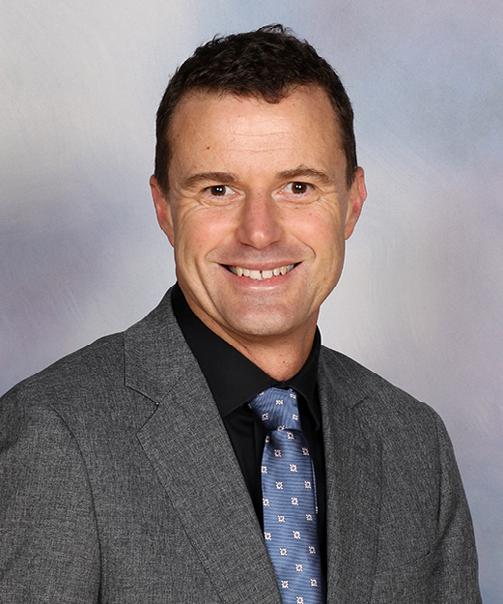
Now in my 10th year as principal of Whangamatā Area School, I originally trained as a secondary English teacher.
I started my teaching career in Rotorua, the city where I grew up. After that I spent three years in the United Kingdom before returning to New Zealand to settle for what we thought would be for a short period of time, in Whangamatā.
I have been fortunate to have been presented with a number of opportunities for internal promotion at Whangamatā Area School. Ultimately, that journey culminated in becoming principal in 2017.
I was fortunate to be encouraged by a number of good people along the way, and I really enjoyed the Aspiring Principal Programme. A door opened at a particular time in my life and career, and I decided it was ‘worth a shot’.
Area schools are unique in that you have the entire schooling journey in front of you. We see many ākonga here walk in the door as five-year-olds, and out the other end as school leavers 13 years later.
The idea that you have full influence over that journey is a powerful one.
Area schools are so diverse. This means you have to be aware of how you communicate with a diverse range of
stakeholders. A five-year-old takes messages very differently to how an 18-year-old consumes them. Full school assemblies are very interesting in this regard.
I also think by nature of their relative remoteness, area schools are constantly innovating and seeking points of difference.
We have an amazing natural environment in Whangamatā and being able to shape aspects of our curriculum around that is incredibly exciting and fulfilling.
Challenges and opportunities in an evolving leadership
In principalship, you never quite know what challenge or opportunity might present itself on any given day. We think hard about strategy, but also have to be responsive in the moment, when various issues pop up.
I think I have learnt that when those big challenges arise – Covid taught me a great deal here – people around you look to you for calmness and considered responses.
Leadership style constantly evolves. You take little lessons from every situation you encounter.
Sometimes when you come across something new that excites you, it can be challenging to present that in a way that remains consistent with the values and decisions people have come to expect from you.
There is a balance to strike between innovation and consistency because ultimately the people around you respond best when they know what to expect from you as a leader, so that consistency is really important.
Consistency is huge. I know I don’t always get this right, but it is important to reflect and ask if the decisions you are making are anchored in the values that the school carries, and that you have articulated this as a leader.
This year, we are consolidating a number of initiatives that we have been part of in the last few years. In many ways, this is a year of bedding in. We are always trying to stay ‘ahead of the curve’ in terms of our NCEA and University Entrance results, and that remains a key priority for us.
To build cultures that are both responsive to change and grounded in strong values can be challenging. Spend time considering the changes that are most important to your school and making sure those are prioritised and wellresourced internally.
We have very little control over the external funding and resourcing we receive, so how we use what we receive is critical.
It can be easy at times for staff to feel overwhelmed with competing priorities, or the volume of change that may be necessary at any one time. A leader’s responsibility is to sift, filter and prioritise, demonstrating strong and clear strategic and change management.
Just trust yourself. If you are acting in the best interests of the students in your school and the educational needs of your community, then you are doing a great job.
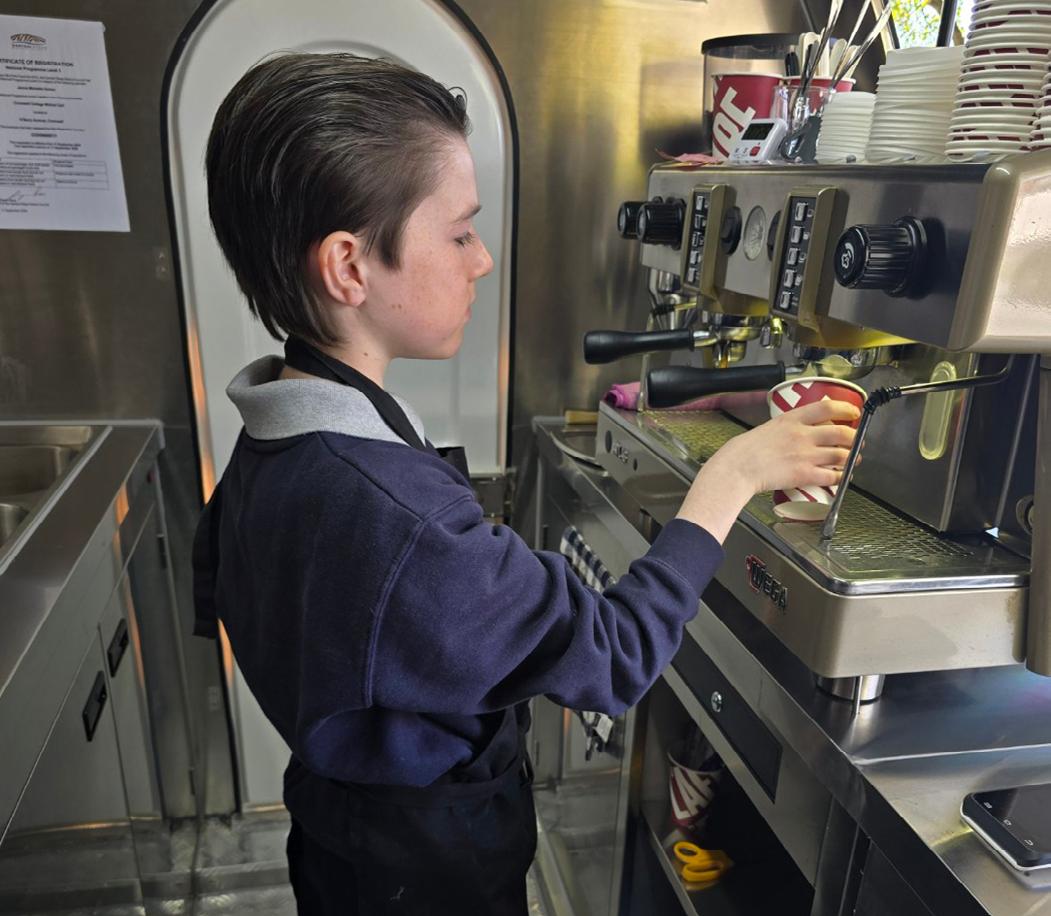
On Cromwell College grounds, in the centre of the Otago township, a food cart serves piping hot coffee every Tuesday. Working hard behind the barista machine are the students. Led by the school and backed by a very invested community, it is part of a successful programme that gives ākonga an enticing taste of future opportunity.
Open for its first full year in 2025, the Cromwell College food cart gives ākonga a glimpse of working in the hospitality industry, with NCEA credits attached.
Set up with the help of the Withiel Fund Charitable Trust, local barista Derik Kotze also assists with his wealth of coffee knowledge.
“It’s amazing to see how students’ confidence in their customer service skills and in themselves develops from the first day to the end of those six weeks,” says kaiako and pathways manager Jenna Harton, who organised the purchase of the cart.
One ākonga, Nathanial, was shoulder-tapped by Jenna to join the programme. He had been interested in the art of coffee making since Year 8. Although he only drinks decaf, he would make trim cappuccinos for his dad at home. Nathanial quickly became a customer favourite.
“I learned that I have a lot more customer skills than I thought,” he says. “This is important because, even if the coffee might be good, if they have a bad experience with staff, they don’t want to come back.
“If you create a good first impression, they’ll come back, and they’ll keep buying, and then you can keep learning more about them. And then they become regulars, and you can know their name and order, and make the service even more friendly.”
Nathanial hopes learning to make coffee on a commercial machine will provide a future job, including part-time work when he goes to university.
“The coffee cart has been beneficial for my future because it’s given me the ability to become a barista. I now have these skills, which means I can get hired more easily,” he says.
Although he says he still needs to practise his latte art, Nathanial is happy with the texture of the milk he steams now.
“I’ve always enjoyed school and worked hard, but especially on the days when I work the coffee cart, it adds a little bit of extra excitement for that day,” says Nathanial, who has since passed his Level 2 barista course through Otago Polytechnic.
Alongside the locally roasted coffee, students sell Sanga’s Pies and The Cake Lab cookies, both produced by Cromwell businesses.
“We’ve got a really amazing community here, and the cart is one of the ways we can bring the community and school together,” says Jenna, adding that even Central Otago mayor Tamah Alley and councillor Sarah Browne have stopped by for a coffee.
“We’re a real trades town, and we thought having a smoko place would help build that good rapport, showing what the school is doing.”

Jenna, who runs the pathways programme, formerly the Central Otago Youth Employment Programme (COYEP), says her job is “to give students as many tasters of work as I can” and the coffee cart is just one example of work experience.
She says the coffee cart has provided a successful whole-school approach.
Last year, the art department designed the logo for the cart and the business studies class ran a Matariki event. Accounting students organised budgeting and the financials.
“The food cart has been used hugely for school fundraising too,” says Jenna.
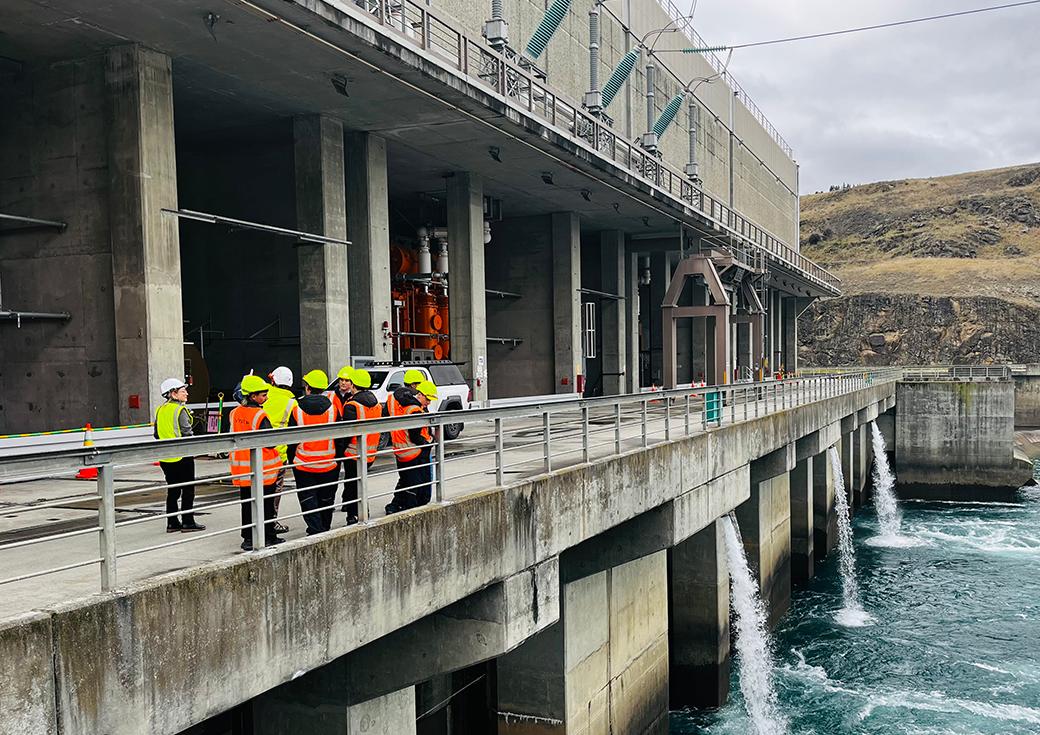
Over the years in her role, Jenna has taken her students to visit local and regional workplaces, from farms to corporate roles, and even the Clyde Dam.
“Students get to see the different types of avenues out there for themselves. It’s not just confined to what they’re told is available as a job.”
It starts in Year 10 at Cromwell College, when Jenna identifies those who may be interested in learning about construction and the trades. The Year 10 pathways programme is funded by the Withiel Fund Charitable Trust.
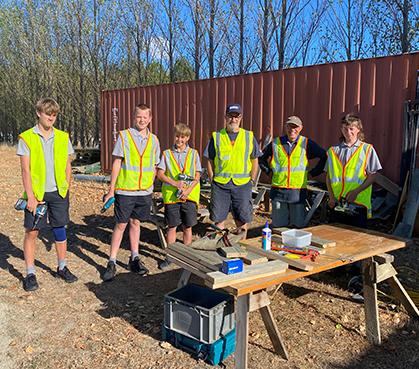
These students then spend a term working with the Cromwell Menz Shed, a group of local retired tradespeople. Together, the group created a four-by-four metre cabin over 12 weeks in 2023. Last year, they created planter boxes to sell.
“There is huge community buy-in with this initiative,” says Jenna.
Student Travis took part in the programme as a Year 10 student in 2025. Working with a Menz Shed member, he and another student helped to build six planter boxes.
“They taught me some stuff that I didn’t know,” he says. “I was quite bad at using a router, and so I learned how to router better. They gave me tips and showed me how to do it.”
“The community offers so much work experience. Local businesses are always willing to give students a chance.”
Having done some building work before with his grandfather, Travis knows it’s something he quite enjoys.
“But I’d like to try something new and see if I like that more than building,” he says.
Jenna says that’s the point of the programme for rangatahi.
“Unless you try, you just don’t know what’s out there, and there are so many industries here that students aren’t aware of.”
Travis has also completed farm work experience at Tinwood Farm.
“I enjoy it because I’m not sitting in a chair all day. I can’t sit still for an hour. I have to start moving, and the farming allows that,” he says.
Pathways to the future, led by a community
Through the coffee cart and trades work experience, Year 10 students get a taster of whether Cromwell College’s Year 11 pathways programme will be the right fit for them.
The programme, which is funded by Cromwell College and the Central Lakes Trust, is one of the six subject options that students can choose for NCEA Level 1. They have four periods a week taught by Jenna, and a day of work experience on Fridays.
Each term changes to a different industry, so rangatahi can try a variety of jobs.
“The community offers so much work experience. Local businesses are always willing to give a student a chance, as they’ve been there themselves and see themselves in the students. Somebody gave them a chance, and now they want to give back,” says Jenna.
By the end of the year, the Year 11 ākonga will have gained 34 NCEA Level 1 credits, alongside skills in CV writing, workplace communication, and health and safety. The school also has liaison visits from tertiary providers.
Last year, many students transitioned into an apprenticeship, says Jenna. The remaining students “loved learning and re-engaged with school again for 2026 to begin their NCEA Levels 2 and 3”.
She says this is a win, with each ākonga feeling empowered to take control of their futures.
Linking her students with local jobs in the community also fosters a sense of belonging, she adds.
“The students may travel after school, but they will know there will always be a place to come back to.”
Becoming a mentor to an aspiring or beginning principal is more than a professional responsibility, says former principal and now Chief Advisor, Education Workforce and Leadership at the Ministry of Education, Dr Isaac Day. He explains to Education Gazette how principal mentoring is a personal investment in the future of school leadership. PRINCIPAL
igh-quality mentoring, when done intentionally and relationally, and in conjunction with structured leadership development programmes, has the potential to transform not just individuals, but the system as a whole.
Equal parts exhilarating and daunting, experienced principals will still recall the steep learning curve of those early days, where preparation often gave way to learning on the job. While principal preparation has its challenges, there is one support that ranks as highly valuable for new principals –mentoring from others.
The Government’s priority to develop the workforce of the future, including leadership development pathways, is a call to action we can all support. Becoming a mentor is not a stand-alone initiative. It’s part of a co-constructed, strategic approach to principal development – one that reflects a shared commitment to collective agency and enduring, system-wide improvement.
Mentoring has long been recognised as a cornerstone of leadership development. Traditionally, it followed an apprenticeship model, where a seasoned principal passed down wisdom to a ‘novice’. The model has evolved. Today’s mentoring is less about giving answers and more about learning in partnership. It’s a relationship grounded in trust, reciprocity, cultural capability and shared sense-making.
Mentoring is a deliberate, evidence-informed learning partnership between the mentor and the aspiring or beginning principal. It blends support with challenge, combines inquiry with reflection, and capability-building with professional learning. This move toward a mentoring relationship grounded in the concept of ‘ako’ reflects a deeper understanding of what effective leadership development now looks like.
Good mentoring means co-constructing goals with mentees, observing practice (and being observed), and holding focused conversations in relation to leadership practices, all with the aim of building a learning-centred and improvement-focused profession. Both mentor and mentee benefit. For aspiring and early-career principals, a skilled mentor can reduce isolation, accelerate decision-making confidence, strengthen technical, cultural and relational capability and support strategic thinking. For mentors, the work is renewing – embedding knowledge, improving practice conversations, and informing their own leadership practice. Ultimately, mentors contribute to the learning of their mentee and support system improvement.

Mentoring creates system-wide change. As a mentor, principals contribute to system leadership and influence improvement beyond their own school. Mentoring helps build a resilient leadership pipeline and improved practice across kura.
Aspiring and beginning principal mentoring programmes
Principal mentoring is a key pillar of a nationwide strategic approach for future school leaders.
Ministry-funded aspiring and beginning principal programmes place one-to-one mentoring at the heart of leadership development. These programmes aim to grow leaders who are ready to lead learning and manage complexity from day one. Mentoring is an integral part of the programmes, making sure support is structured, targeted and impactful.
The Ministry has worked in partnership with sector leaders to design a mentoring approach to reflect both research and our context in Aotearoa New Zealand. Effective leadership is central to the work of both parties in the mentoring relationship.
Other evidence-supported key elements of the mentorship design include:
» a commitment to student learning and success, grounding the relationship in high trust and moral purpose through improving achievement
» careful matching of mentors and aspiring/beginning principals to build strong foundations
» clear roles and expectations for both mentor and mentee
» time, training and resourcing to support mentors effectively.
The aspiring and beginning principal programmes will be delivered by providers external to the Ministry. They will also manage the matching of mentors and aspiring and beginning principals. The mentor application process will continue to be managed by the Ministry with support from the sector.
Structured mentor training aligned with local and internationally supported research will be delivered by these contracted providers. It is important that mentors take full advantage of this training, so they can be as effective as possible. The providers will also evaluate the programme’s effectiveness over time. This level of independent oversight will help maintain quality standards and make sure that the mentoring experience is meaningful and grounded in evidence and feedback.
Mentoring is more than a tool. It simultaneously grows people, supports stronger school leadership and builds a stronger education system.
When we align mentoring with the Ministry’s wider principal pathway programmes, and the curated supports from providers, we create the conditions for principals to thrive, and for our school communities to feel the impact.
A leadership trajectory isn’t one-size-fits-all. This was a key finding by Natalia Xie and Tim White from the Ministry’s Education Workforce team when they created an indicative career journey of New Zealand’s primary principals. The analysis, which is drawn on 10 years of career data, is the first time the journey to primary principalship has been mapped.
From the almost 430 first-time primary principals who were appointed in 2022 to 2024, they found 45 percent followed a ‘conventional’ sequential pathway.
But most first-time principals took ‘unconventional routes’, with data showing that:
» 40 percent had no middle management experience
» 10 percent had no senior leadership experience
» 5 percent had no middle or senior experience.
Natalia and Tim found that a new tenure pattern was emerging compared to 2015 to 2017, when teachers spent two years in teaching, one year in middle management and seven years in senior leadership before becoming principal.
“From 2022 to 2024, a new career trajectory emerged: Four years in initial teaching, two years in middle management and 20 years in senior leadership before becoming principal.”
Natalia and Tim’s study showed two distinct career strategies.
Most principals – 80 percent – stayed within the same school setting as they progressed to middle management and senior leadership roles. Direct internal promotions, particularly in larger schools, were also shown to be on the rise.
But 50 to 70 percent of senior leaders took an ‘opportunity first’ strategy by prioritising the principal opportunity and shifting to a different school setting, such as a rural area or smaller school.
“For example, over 70 percent of newly appointed rural principals came from more urban contexts.”
For more information, and to apply to become a principal mentor, go to the Education Workforce website.
Education Workforce
The aspiring and new beginning principal mentor programmes start in term 2, 2026. If you are an experienced principal, now is the time to apply to be a mentor in one of these programmes, or both. Mentor training will be provided. Your experience, knowledge and insights into what makes a good principal great will shape the next generation of leaders. As with the principals who came before you, the investment made in others through mentoring becomes an investment in the strength of the whole system.
For more information, and to apply to become mentor, go to the Education Workforce website.


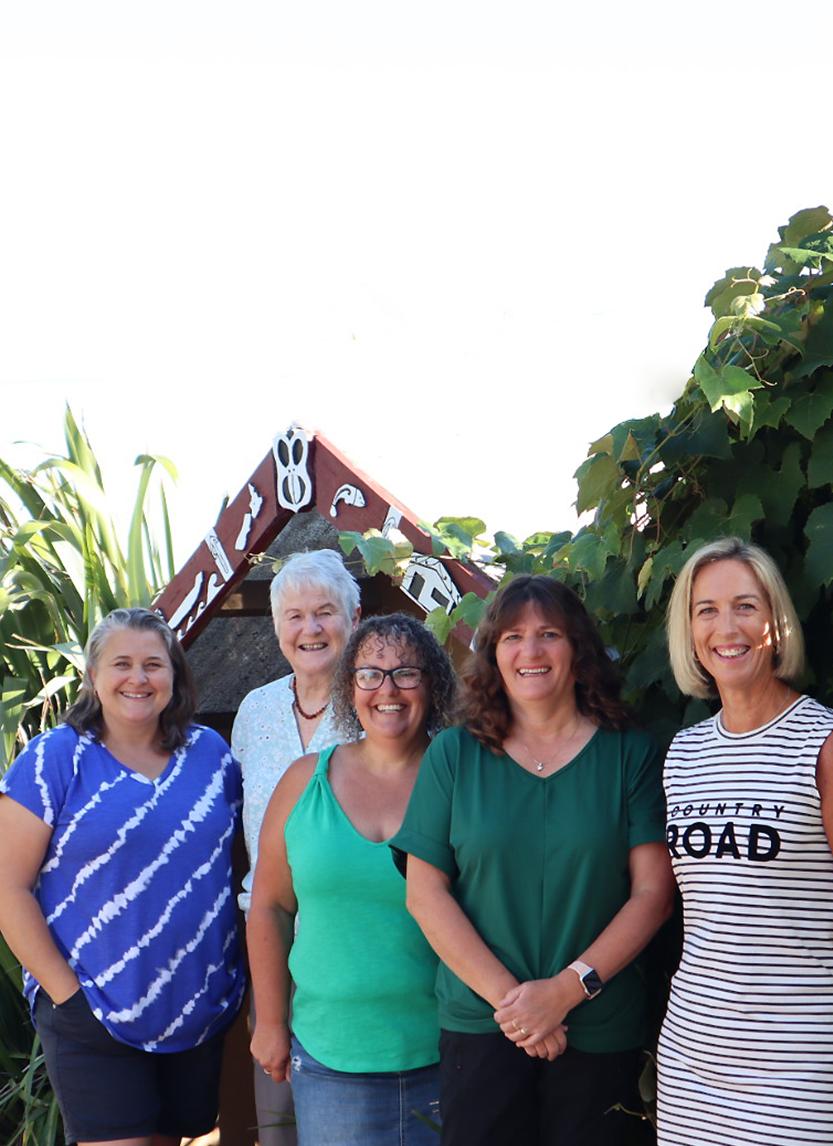
The team at Richmond Kindergarten in Tasman embarked on a journey to a destination with no idea of where or what it was… until they arrived. Ministry of Education Curriculum Adviser Early Years Sue Hone brings Education Gazette her observation of how, with passionate teachers and a leader who trusted her kaiako, the kindergarten underwent a transformative journey with Kōwhiti Whakapae.
Why are we doing this and who are we doing it for?”
That was the question Angela Cox and Tracey Meek asked in response to feeling overwhelmed by paperwork and a sense of disconnection from the purpose of assessment.
It was 2024, and the two had taken it upon themselves to source relevant professional learning development (PLD) in the form of webinars to help answer their question.
Even after watching the first in the webinar series, the two were like a newly lit fire – full of spark and needing to be fed with team buy-in.
But their timing wasn’t great; it was at the end of the year and the team had already implemented changes to their assessment, planning and evaluation (APE) process.
Enthusiastic or not, it wasn’t surprising when the response from head teacher Rochelle Steer was, “We’ll look at it in the new year”.
True to her word, Rochelle didn’t let any previous work they had done on their APE be a barrier – she trusted her kaiako and their enthusiasm. Undaunted, the team accessed self-directed PLD, including the webinars, and a Kōwhiti Whakapae workshop run by their local Ministry of Education early years curriculum adviser.
During the workshop the team were able to analyse some unspoken thoughts about their current APE process, including:
» I feel overwhelmed.
» Sometimes, I feel isolated because I’m not discussing my thoughts.
» This [assessment] isn’t relevant, but I need to do something.
» I get to the end of the term, and I haven’t written for ‘that’ child.
» I’m stressed.
» It no longer excites me.
The consensus was that their current process felt more like compliance than meaningful assessment, planning, and evaluation. However, was this fact or just what they thought? They needed to know.
By collectively establishing quality indicators (QI) from Te Whāriki and Te Ara Poutama, the team made sense of what the data was telling them. They evaluated that their current practice did not meet the following from page 22, Te Ara Poutama:
1. Assessment for learning practices actively involve children, parents and whānau, and take account of their perspectives and aspirations.
2. Over time, assessment builds each child’s cultural identity, sense of belonging and learner identity.
“It was 100 percent a team effort, requiring each team member to contribute and be a part of the learning. What Rochelle did as a leader was to make sure her team had the time and the space to fly.”
Rochelle says that with this knowledge, a plan was formulated and leadership shared across the team, with kaiako taking ownership of the process.
The plan was carried out using the steps below.
Collaborative mind mapping
In this phase kaiako, armed with Kōwhiti Whakapae, used a collection of words to describe what they knew about a tamaiti, such as expressive, curious, determined, coordinated and physical.
All those strength-based words we know. However, it wasn’t just a collection of words for words’ sake. Each word a kaiako offered needed to be reinforced with examples or a noticing, and the word could be challenged by other team members sparking in-depth conversations of ‘who do we see?’.
By using Kōwhiti Whakapae, kaiako brought together their perspectives to build their collective view of the mana and mauri of the tamaiti. That included what the tamaiti ‘could’ do and what their current interests were.
Earlier whānau engagement
Engaging whānau in planning and feedback and feedforward from the beginning was new to the team.
“We have always spoken to whānau about the learning outcome or aspiration for their tamaiti but on reflection this was a consultative process rather than a collaborative process,” says Angela.
Now, engaging with whānau was primarily to celebrate the tamaiti they all saw and to collaboratively decide on the learning direction.
Tracey adds, “As soon as a kaiako presented their first handwritten mind map in person with whānau, their feedback was, ’you know my child so well’.”
Before their workshop early in January 2025, the team knew very little of Kōwhiti Whakapae. Through the evaluation process, they could see how it would guide the new direction they were taking.
It supported them to write for learning, not of learning, transforming their assessment from a backward mapping to a proactive plan to progress learning.
“Kaiako now viewed the learning outcome (Te Whāriki) as the cake,” explains Rochelle. “Imagine your favourite delicious cake, yum!”
“What Kōwhiti Whakapae has done is make us recognise the individual slices as learning progressions. We’re seeing and celebrating the small successes,” adds kaiako Rachael Percy.
Planning had always been central to Richmond Kindergarten’s practice, but using Kōwhiti Whakapae had not. Kaiako now ‘responded’ to the learning outcome by selecting specific teaching strategies.
“Through this, we soon came to realise that we were effectively evaluating our teaching and the learning,” says Rochelle. “This is something we thought we had been doing but not compared to the depth of evaluation now.”
“Through collaboratively assessing and evaluating, the mahi was lightened.”
From individual to team-based assessment and evaluation
Any feelings of overwhelm and isolation have been reversed for kaiako.
If I could only use one word to describe them, it would be ‘fizzing’ For some of you who don’t know what this means – imagine adding vinegar to baking soda – this is how the team is talking about their new assessment, planning and evaluation process. Their passion has been re-ignited. They no longer feel alone.
Throughout this evaluative process, one of the major benefits to the team was the creation of mental space.
“Through collaboratively assessing and evaluating, the mahi was lightened,” says Rochelle.
“We thought we were all on the same page before this but since we have done this, we know what we’re doing, why we’re doing it, and how we’re doing it,” adds kaiako Sue Verma. “There’s power in all being on the same page –e waka eke noa.”
The team mutually says another reason they felt deflated with their previous APE process was a lack of whānau engagement in their reporting.
“We thought we were all on the same page before but since we have done this, we know what we’re doing, why we’re doing it, and how we’re doing it.”
“We were writing these beautiful narratives of learning and whānau wouldn’t comment or would only comment after being prompted from a kaiako.
“Now, kaiako are in a place I like to call the narration of learning – updating learning for tamaiti and their whānau as it happens. Each piece of the cake is identified, responded to and celebrated. Whānau have more opportunities to comment and be a part of the learning as it is progressing.”
Following the evaluation process, Rochelle attended additional PLD on Kōwhiti Whakapae hosted by the Nelson Tasman Kindergartens Association which featured associate professor Tara McLaughlin as the guest speaker. Rochelle was able to spend two hours discussing their APE evaluation and the action plan they had implemented using Kōwhiti Whakapae.
Tara suggested two things:
1. More specificity in their teaching strategies.
2. That Rochelle share their mahi with the wider sector, showcasing the impact Kōwhiti Whakapae, alongside a robust evaluative process, has had for them and their community.
While the team at Richmond Kindergarten are still on their learning journey, they are a testament to what’s possible when kaiako are empowered to rethink, reimagine and reconnect with the heart of teaching and learning together.
“It was 100 percent a team effort, requiring each team member to contribute and be a part of the learning. What Rochelle did as a leader was to make sure her team had the time and the space to fly.
“Ma te huruhuru ka rere te manu – Adorn the bird with feathers so it can fly.
“Richmond Kindergarten is doing just that – flying.”
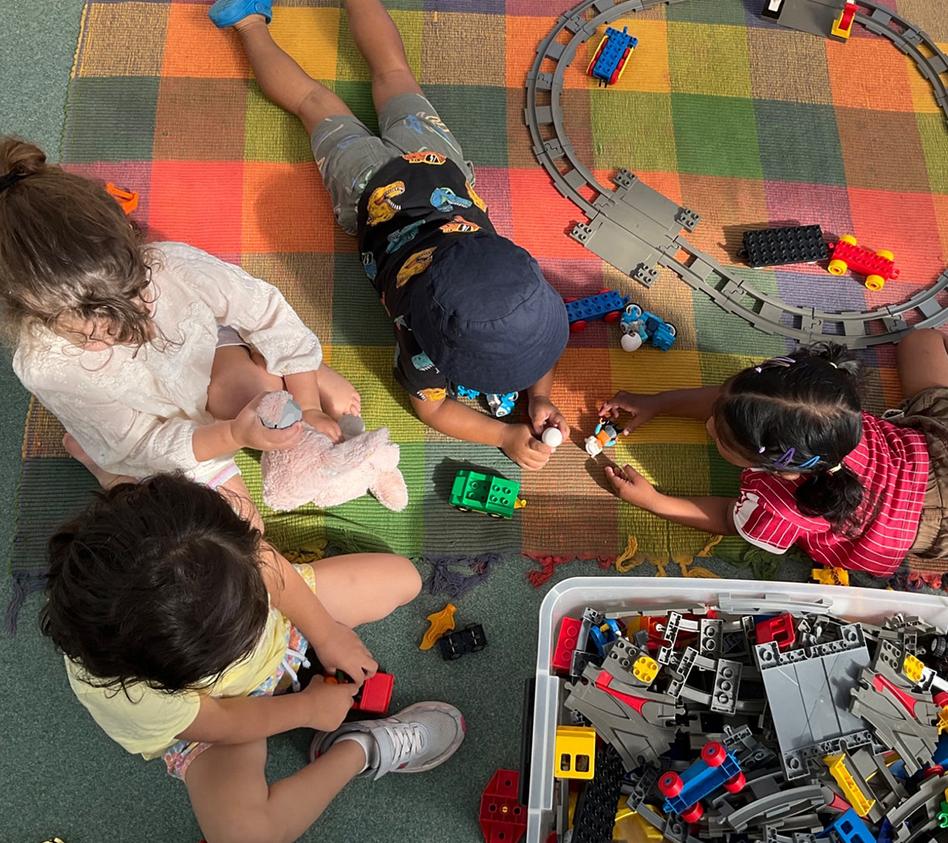
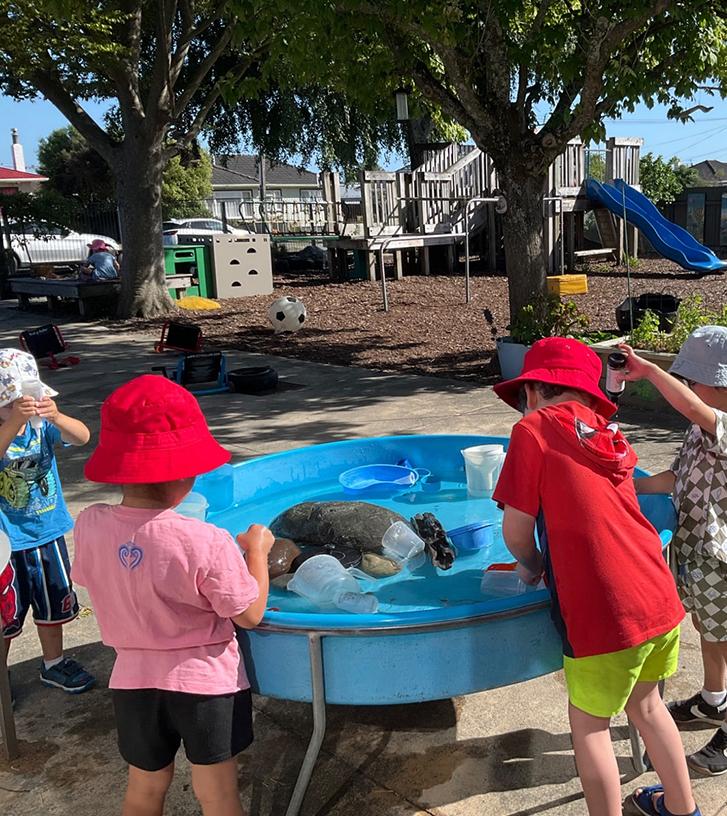
Richmond Kindergarten shares the impact of evaluation and implementing Kōwhiti Whakapae in practice:
» Specificity has led to greater teaching and learning intentionality.
» Meaningful, manageable and measurable APE.
» Learning progressions are visible.
» Narration of learning creates dialogue and engagement.
» Deeper connection and understanding of whānau and culture.
» Team unity and consistent practice.
» Mental space.
» A return of passion.
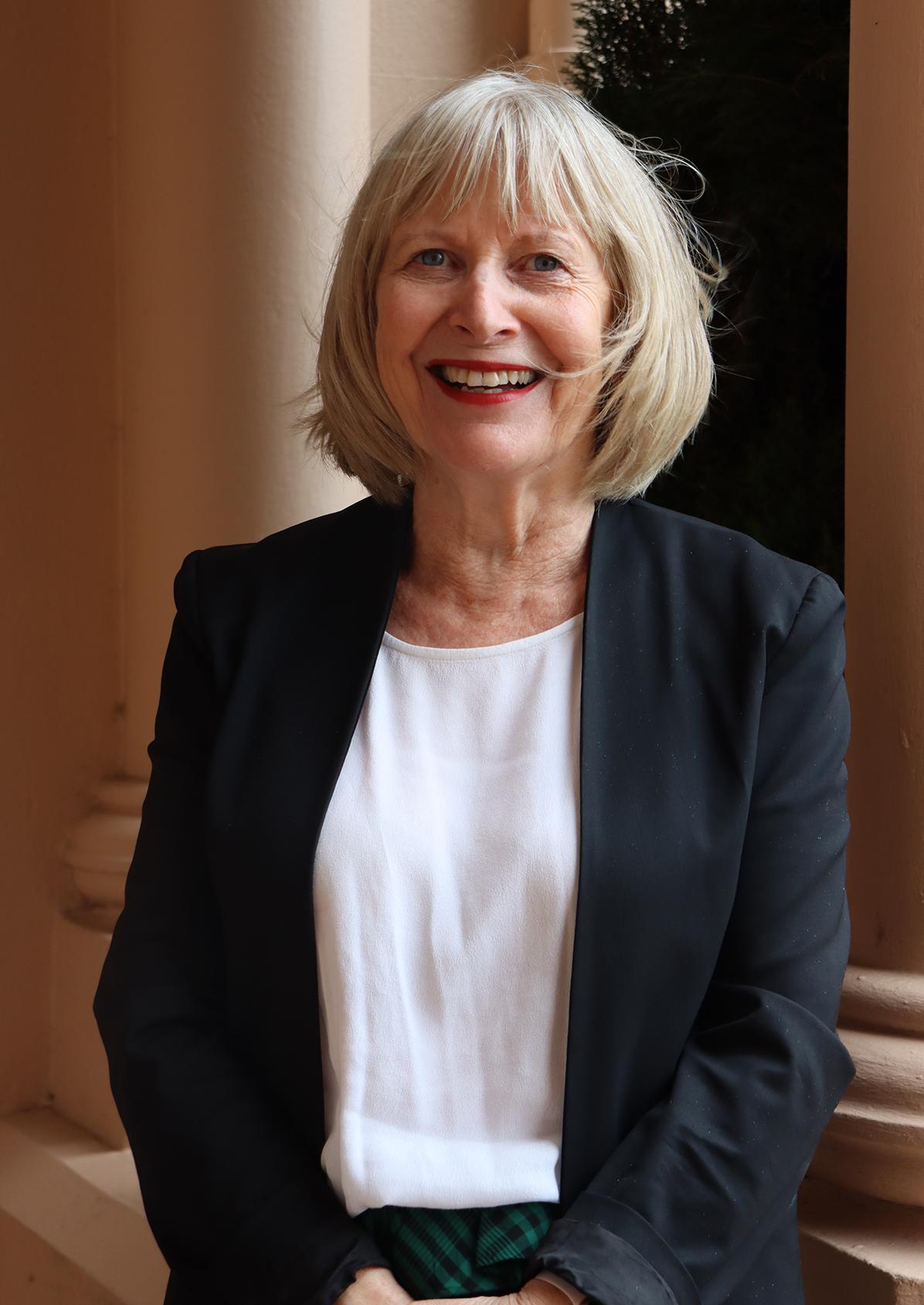
“To really learn and grow as a person, it’s important to challenge yourself.”
At the beginning of her career, Sandy Pasley took every opportunity she could to grow. Now, after four decades of teaching, tumuaki and leadership experience, she’s been named a member of the New Zealand Order of Merit for her services to education, and continues to support others to find out what they’re capable of.
Abelief in taking opportunities when they come up, and influencing outcomes for students, is how Sandy Pasley made the decision to become a principal.
Beginning her career as a chemistry teacher at Waitaki Girls’ High School, Sandy took time off to have children before returning on a part-time basis. It wasn’t long before she was offered a temporary position as head of science.
Then, making the move to Auckland, Sandy was offered an assistant principal position at Birkenhead College, followed soon after by a deputy principal position.
“I just sort of fell into things – this sounds like a terrible way to have a career!” laughs Sandy. “This is why it’s important to take the opportunities.”
Sandy’s career has now spanned over 40 years, including more than 20 years as principal. She was the first lay principal at St Mary’s College in Auckland from 2002 to 2011 and, most recently, was principal of Baradene College of the Sacred Heart in Auckland from 2011 until last year.
Then, at the end of the year, she found out she was named a member of the New Zealand Order of Merit in the New Year Honours.
“I was hugely honoured, and I honestly feel that there are many deserving people out there and felt humbled by it.”
“To really learn and grow as a person, it’s important to challenge yourself,” says Sandy. “If you don’t challenge yourself, you’ll never know what you’re capable of doing. You’ve got to take opportunities to develop.”
Sandy is a long-time executive of the Secondary Principals’ Association of New Zealand. In 2015, she was the first female president to be elected, and she became a life member in 2017.
Sandy found belonging to principal associations extremely valuable and enjoyed the chances to get advice on situations she experienced.
“I think the best ways to learn are just talking to each other; it’s important to be open to learning and not think that you need to have all the answers.”
She adds that the role was challenging at times.
“You have to make sure that you’re representing all of the sector and thinking about how changes are going to affect everybody.”
Sandy admits she was daunted, but as principal of Baradene College, reminded herself she would tell the students to “step up and not be afraid”.
“I thought ‘come on, how could you tell them that and not do it yourself?’.” Stepping down as principal of Baradene College was a difficult decision, she says.
“I miss the vibrancy and the energy and the life that a school has,” she says. “We had just finished a major building programme at the school; I felt that we had achieved quite a few of the goals that we had set, and it was time for somebody to come and take it further.”
After leaving her tumuaki position, Sandy joined the Ministry of Education as leadership advisor, which she describes as a service by principals, for principals.
She enjoys being a listening ear and giving principals the courage and encouragement to make decisions.
“I’ve had lots of people support me throughout my career and it’s nice to be in a position where you can support other people and appreciate what they are going through,” she says.
“Being a principal can be quite lonely, even though you’ve got a senior leadership team. “Ultimately, you’re the one that has to make the decisions and that can weigh quite heavily on people.”

When asked to name leaders who have inspired her own leadership style, Sandy mentions a lecture by Dr Molly Neville that she attended when studying towards her master’s in educational administration.
The lecture was about the importance of culture and the fact that an organisation hinges on what people do when no one is looking and how they, as individuals, feel about the organisation.
“I tried never to say it was my school because I think it’s always our school. To be successful, you build the right team and get everyone working together in the same direction and the staff, the students, the boards, the parents all feeling like it’s their school.”
Sandy also mentions former principal of Birkenhead College, Jim Mathewson, as a great role model. “He was an exceptional team builder, and he went to great lengths to make sure he had the very best teachers for the students and staff who really lived the culture of high expectations for students.”
Sandy also credits the past principal of Waitaki Girls’ High School, Jeanette Aker. “She was amazing, she was very relational, passionate about giving the students opportunities and she was a fantastic role model.”
“Always make the decisions you know to be right, even though they can be the hardest decisions.”
Reflecting on her experience in the education sector, Sandy says a big thing she learned was that “sometimes people don’t think the way you think”.
“It’s important to find out why they feel the way they do and what frame of reference they are coming from.”
Sandy also found getting ākonga voice was critical. “You can get it in different ways, from chatting, from watching, from anonymous surveys. I really think students are honest, they are usually pretty fair and you can have great learnings from what they say.”
Sandy reminds principals that leadership advisors are there to support them.
“Always make the decisions you know to be right, even though they can be the hardest decisions.”
In April, Sandy will attend an official ceremony at Government House to be made a member of the New Zealand Order of Merit. She acknowledges the “huge number of people” who have supported her.
“I couldn’t have done the job I’ve done without the great support I’ve got from my family, from principal colleagues, from staff I’ve worked with, from parents and boards that have been supportive and from the students that have been fantastic.”
The leadership advisor service is a team of experienced current or previous principals who provide support for current principals. The service has been expanded and starts the year with five special focus leadership advisors in addition to two leadership advisors in each region.
These include:
» two area/composite school advisors, one based in Te Waipounamu and one in Te Ika a Maui
» tumuaki Māori advisor based in Tāmaki Makaurau/ Te Tai Tokerau
» a Pacific advisor based in Wellington
» two rural and small school leadership advisors, one based in Te Waipounamu and one in Te Ika a Maui.
You can read more about leadership advisors on the Education Workforce website.
Leadership advisors – Education Workforce
Leadership advisors can support in areas such as developing leadership capability and supporting attendance and engagement initiatives.
When school kaimahi pause to ask deep questions of one another, powerful learning can follow. Auckland primary school teacher Jessica Vader is a big advocate of peer coaching. With the support of a TeachNZ study award, she set out to research how this approach can be embedded and sustained at primary school level. PEER

Every teacher has moments when they wonder if their teaching practice is effective, or if their approach to a situation is the best.
Turning to a colleague is a natural inclination, but passing practice conversations in the staffroom may lack the depth they deserve.
While mentoring can be helpful, Jessica Vader, a teacher at Chelsea Primary School in Tāmaki Makaurau, is a big supporter of peer coaching – a reciprocal, non-evaluative conversation with a trained colleague.
Jessica recently completed a graduate diploma in peer coaching and her dissertation focused on ways to build and sustain peer coaching at primary school level.
“I already knew how powerful coaching was with helping people to find their own answers, to name what their current problem is and work on a future-focused solution.
“Because it’s not digging into the past, it’s very much this is where we are now, this is where we want to go, what are we going to do to get there?”
Her research found peer coaching training is patchy in primary schools, and less accessible to the average teacher than those at the start or at the top of their careers.
So for her dissertation, Jessica sought and received a TeachNZ Study Award to explore how a culture of peer coaching could be embedded at primary school level. The study award gave her classroom release two days a week over the course of the school year.
In a case study involving a school given the pseudonym ‘Harbour View Primary’, Jessica surveyed 14 teachers and conducted four in-depth interviews to tease out the reasons why peer coaching was not used more widely at primary school level.
She knew there was plenty of grounding for it in educational theory: Lave and Wenger’s ‘community of practice’ concept, Vygotsky’s constructivism and Bass’ transformational leadership theory.
There was strong support from the Ministry of Education and Teaching Council for peer coaching, which is also aligned well with the teaching sector’s professional growth cycle: effective dialogue, inquiry, and evidence-informed improvement.
But collaborative practices do not always happen naturally. Although Jessica says her own school is quite a collaborative environment, she acknowledges other teachers may not be in that situation, or have the time for professional conversations.
“A lot of teachers are working in a single cell environment where they won’t see other educators all day.
“So coaching is a really good way to establish dialogue between teachers to improve their practice. They might say, ‘I’m struggling with this in the classroom at the moment, I just need someone to bounce ideas off about where I could go to next and make a bit of a plan for that’,” says Jessica.
“We create goals for every year for ourselves to develop, and I think building coaching into that, beyond a team leader and teacher relationship, just provides a chance for different coaching conversations.”
With fewer than 40 percent of surveyed teachers reported as being formally trained in peer coaching, Jessica says misconceptions about the practice remain common.
It’s not mentoring, which is more top-down, and it’s not performative assessment, she explains.
“Coaching is more along the lines of deep listening, asking reflective questions and the coachee is coming up with solutions themselves.

“In coaching, you believe the person holds the right answers even if that answer is going to someone to find out x, y and z. It’s not like they know everything, it’s about empowering them to find solutions rather than be told, ‘Oh, you should do it like this’.”
Jessica’s research also noted that while leaders or beginning teachers received opportunities for mentoring or coaching, most others were reliant on a schoolwide initiative, or if their team leader had training.
“So this research was based on what can we do to potentially implement peer coaching where there’s a sustained and embedded approach within schools.”
“Coaching is a really good way to establish dialogue between teachers to improve their practice.”
Jessica’s study found several factors kept a peer coaching culture going: protecting coaching time; the right structure; leadership modelling; and prioritising principles of trust. She found time and workload were issues for everyone, as were unclear expectations of coaching or role anxiety. However, coaching did succeed when it was scheduled regularly, such as within meetings.
“It’s not that coaching is undervalued but that it is not sustained, amid workload and shifting priorities,” says Jessica.
Coaching conversations also needed structure, and Jessica recommended using shared models such as the GROW (goal, reality, options and will) model, buddy systems, and crossteam pairing.
It was also clear that teachers wanted their leaders to model peer coaching. Seeing it used visibly and consistently by school leaders was a big factor in its success, prompting other staff to seek refresher training to rebuild their consistency.
Finally, establishing ground rules on confidentiality and listening were key. Trust was built on conversations being a two-way street, without evaluation.
“A good coach listens and helps me think things through,” one participant told Jessica.
In fact, there was only one report of a negative experience which Jessica says showed the danger of “evaluation creep” and the need for clear boundaries.
With the right conditions in place, 79 percent of the survey respondents said they felt peer coaching was safe and respectful.
With time, trust and structure addressed, Jessica says coaching dovetails beautifully with educational theory. The widely used ‘community of practice’ model, for example, portrays teachers learning through interacting and trusting each other. Coaching also reflects key cultural values for teaching such as manaakitanga, whanaungatanga and ako.
The trick is to make peer coaching “an embedded professional norm, not an add-on”, says Jessica.
“If every school made time twice a term for peer coaching, I think it would be really powerful with regards to the results that it could bring about for the teachers themselves and for their learners.
“There’s a lot of power in asking deep questions and inviting others to explore their own solutions.”
Jessica’s research found the key ways to support successful peer coaching are:
» Two coaching sessions a term (with at least an 80 percent participation goal).
» The adoption of a GROW model, or a variation, and template.
» Refresher training for all staff.
» Leadership modelling at a staff hui.
» Co-constructed safety and confidentiality guidelines.
» Pairing staff across teams with guided choice.
» Embedding the principles of ako, manaakitanga and whanaungatanga.
Core Education offers mentor support as part of their professional learning development programmes. You can find more information on their website.
Te Poipoi Kaiako | Mentor support programme – Tātai Aho Rau Core Education
Article written by Catherine Harris.

Jessica Vader says the GROW model shifts the coaching focus from ‘giving advice’ to ‘facilitating reflection’. This helps teachers find their own way forward through four clear stages:
» Goal: Identifying what success looks like; moving to a specific focus, such as improving student engagement.
» Reality: A ‘pulse check’ on the current situation; an honest look at what is happening in the classroom right now.
» Options: The brainstorming phase; using open-ended questions to explore different strategies and ‘what ifs’.
» Will (way forward): Turning talk into a plan; committing to specific next steps and identifying the support needed to succeed.
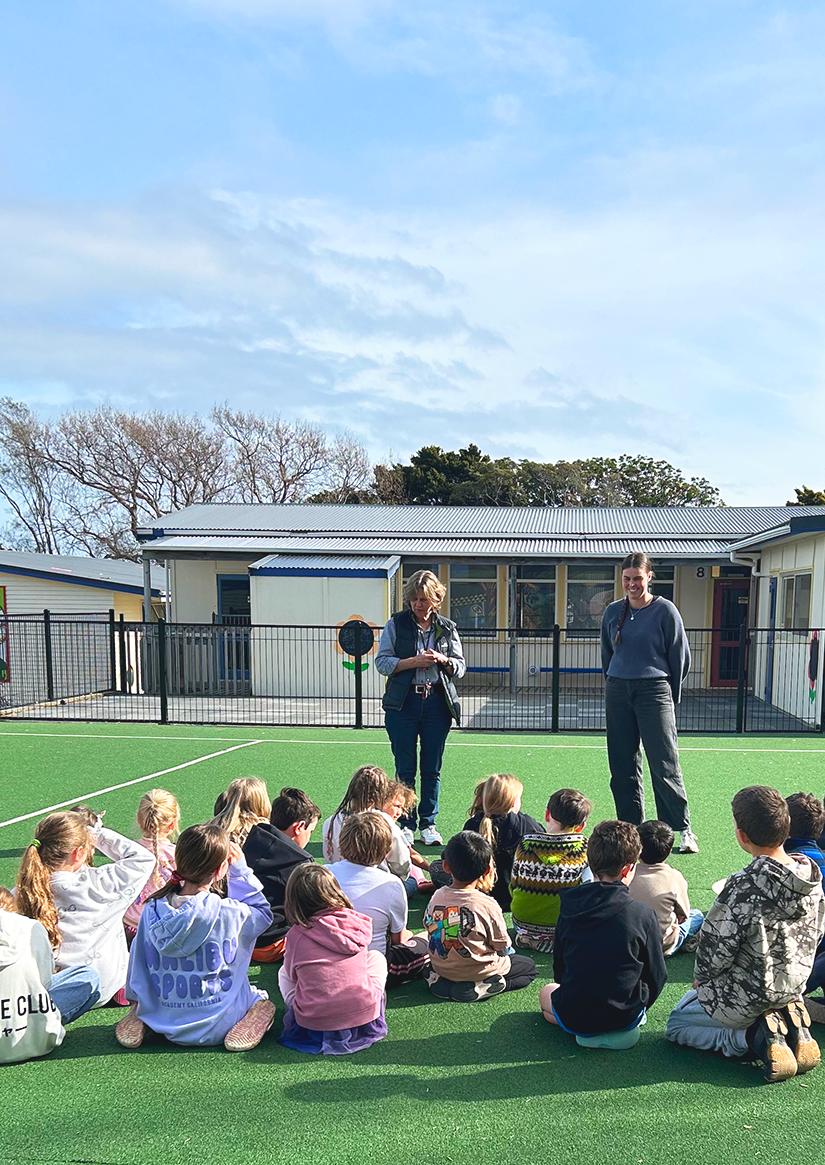
At Waikanae Primary School, relief teachers who know their school and ākonga are contracted for regular hours each week. The system means classroom release time or professional development is undertaken by kaimahi who are secure in the knowledge that student learning is maintained.
“I’m very lucky that I work at the school I previously worked at full-time. I still have those relationships with people.”

Waikanae Primary School principal Michelle Fearon supported 503 ākonga and 21 full-time teachers in 2025. She also had eight relief teachers on contract and a further eight working in the school regularly. She explains that while there is a shortage of relievers, this advance planning is delivering continuity.
“Whilst a provisional registration teacher accounts for some need for a relief teacher, on top of increased classroom release time (CRT), there’s also the increasing amount of professional development (PD) and, during winter months, three or four days’ sick cover can be needed each week.
“Sometimes we have to split classes still, maybe once a fortnight or so, but we’re organised. If it’s needed, we’re ready. We know where the students are going to go and what will work.”
Day relief teachers at Waikanae School are supported with a folder of information about behaviour management guidelines and expectations around devices. If technology is needed by the relief teacher, a device is available, and the syndicate leader is available to support the learning.
But Michelle and her team don’t just rely on day relief teachers. Instead, they make an annual plan, contracting relief teachers for set hours each week, backed up by an identified pool of additional teachers who are brought in as needed.
“Many of the contracted and pool relief teachers are former staff members looking for a change in lifestyle,” says Michelle. “So they know the school, they know our expectations, and in many cases they know the students.
“I think we’re lucky with our release teachers on contracts, most of whom have been with us for a long time.”
The system means relief teachers enjoy an ongoing connection with students and their learning and feel part of the teaching team. Students benefit as behaviour and learning routines are supported with regular relief teachers contributing to a teaching partnership, providing stability and continuity.
One contracted relief teacher is Jane Lumsden, a former full-time teacher who now works as a 0.6 full-time teaching equivalent. This includes relieving for second-year teacher Emma Steed every Friday. This year, Emma’s classes are Year 5 and 6, and Jane also supported Emma’s first year in teaching, in a Year 7 and 8 class.
For Jane, relief teaching offered a lifestyle change while allowing connections to the school and community to remain.
“I’m very lucky that I work at the school I previously worked at full-time. I still have those relationships with people, not just colleagues, but with families and the community. Obviously, the students are changing, but it is nice being part of that school community. And then from another angle, every day is different too.”
“I can go away and focus on release, and I know that there’s routine and everything’s still happening in the classroom.”
For Emma, the certainty of working with Jane means ākonga get to know their weekly routine.
“It makes it easier because she can get to know the students in my class. And that’s helpful for them as well, having someone consistent come in. They know her routines, they know her teaching style, and it just means that they know what to expect every Friday.”
It’s also beneficial for learning. Emma and Jane work together on the plan for the term, understand each other’s ways of working and can keep consistency across their teaching.
“We keep in touch with how it’s all going and what’s working and what we can do differently together to support the class,” says Emma. “It’s really good having that ongoing relationship. She knows how I roll, and really, we share roles.”
Emma says the release time supported by Jane is invaluable.
“Just knowing that Jane will come in means the students and our whole programme stay on track. I can go away and focus on release, and I know that there’s routine and everything’s still happening in the classroom, which is awesome.”
Continuity and consistency is key Continuity is important at Waikanae Primary School. Michelle says if a teacher is unwell, it’s generally a smooth process of putting out a job to the pool of identified relievers, then waiting to see who accepts the role for that day.
“We really want to use relievers on a regular basis to keep as much consistency for the students as possible. It’s much easier for everyone to meet expectations that way. We do expect our relievers to be able to follow a plan if it’s there, with support from the syndicate leader, or that they’ve got their own kete of activities the class can work on. It’s a better day for the teacher, and for the students, when the relief teacher is prepared.”
While additional funded PD for classroom teachers is welcomed, it can prove a challenge when a team attends for several days, as occurred recently with structured literacy professional learning development.
“We did find that tricky. That’s one of the challenges with all the extra release, having enough relievers,” says Michelle.
“And we do see a need for relievers to stay up to date. For example, when the physical restraint modules were becoming compulsory, we ran PD for any reliever who wanted to come to support them becoming compliant.”
Waikanae Primary School uses StaffSync, a cloud-based management platform, to coordinate relief teachers. The school is part of a local cluster that collaborates using the platform, with each school contributing to fund a part-time coordinator role.
Principal Michelle says the school employs the coordinator for one hour each day to process and respond to requests from teachers across the cluster who are seeking relievers.
“Typically, this is for last-minute – the night before or the morning of – requests. This person will then send out a message advertising the job which will be picked up by a reliever.”
Relief teachers register with StaffSync and block out the days they are unavailable, leaving their available days to be booked by schools. Teachers can choose which schools they would like to work at and whether to accept any job notified.
Schools also set themselves up on StaffSync and can create lists of preferred relievers, typically in year group lists. Schools can then book relievers and relievers can accept any job that has been notified.
“This is a great online system,” says Michelle. “One message keeps the school, teacher and reliever informed of the job being posted and accepted. The system allows us to have ownership, in that we can see who is available and can decide what will work for them and their learners. The system allows relievers to work when they want to work, accept jobs they want to accept, and have ownership of their own time and choices.”
Waikanae Primary School uses StaffSync, a commercially available cloud-based management system, to manage its relief teachers. The Ministry of Education does not endorse any specific product or provider.
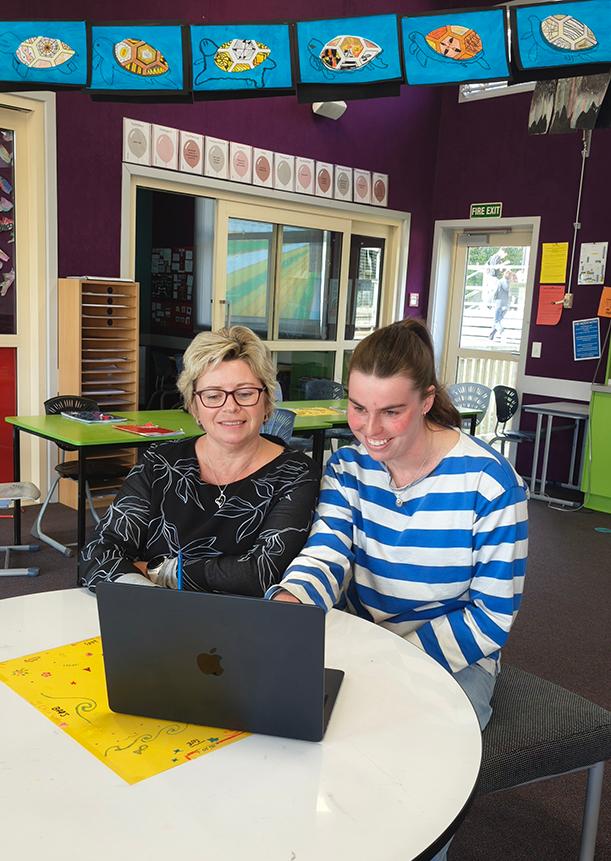
Last year, BestStart Willowpark Road in Hastings started using Te Ara Whakamana framework to embed Te Ao Māori in its local curriculum. A relationship-based kaupapa, it creates a learning environment where tamariki and whānau feel seen, heard and connected from the start.
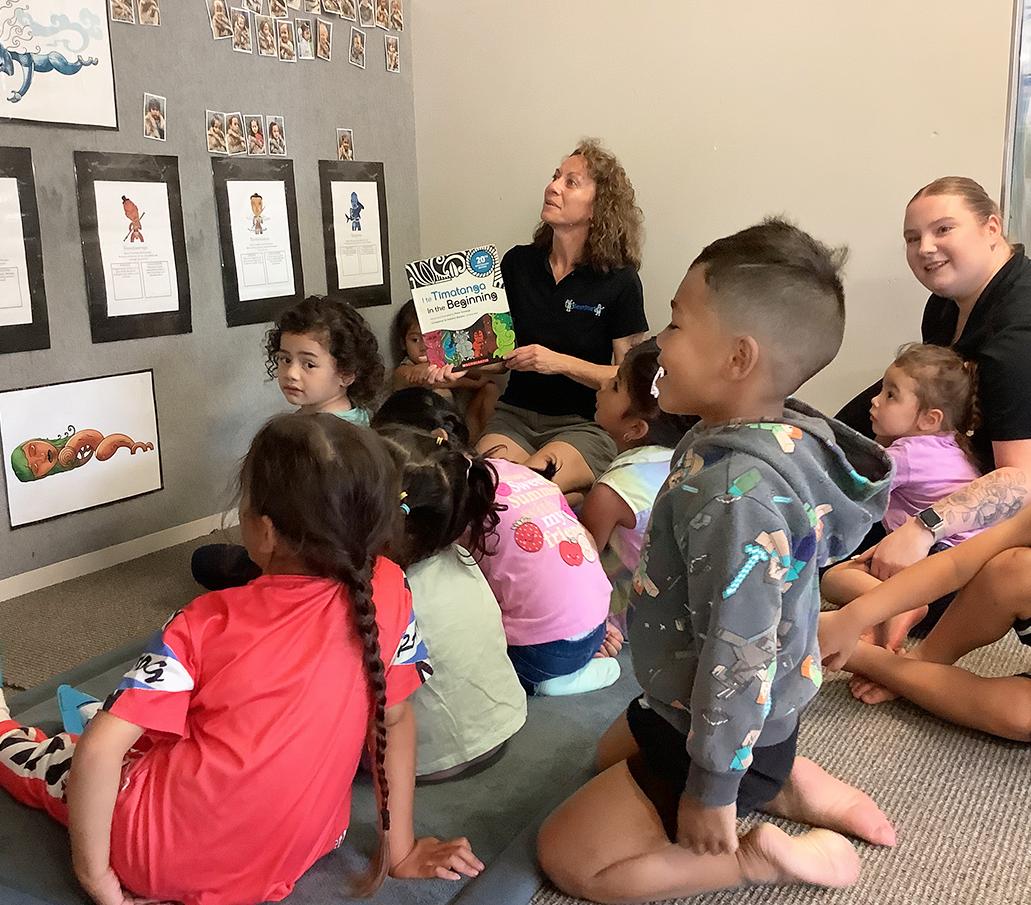
Te Ara Whakamana is an education kaupapa that is grounded in matauranga Māori and centred on pūrākau.
Shenita Prasad, an educator for over 30 years who has worked with a range of approaches to learning, says she was called to Te Ara Whakamana in 2016 and is now a passionate advocate.
Dedicated to a student’s voice, mana and dignity, the kaupapa influenced Shenita’s teaching and provoked serious thought about school or early learning as a place where students are received, not sent.
“If we really believe in belonging, if we really believe in inclusion, if we really believe in diversity, then we create those spaces. Te Ara Whakamana does that for us.”
Shenita is now kaihuawaere awheawhe/client manager and Te Ara Whakamana facilitator with Ako Solutionz.
Last year, she introduced kaiako and leaders at BestStart Willowpark Road to the practice.
The centre had received Strengthening Early Learning Opportunities (SELO) funding through the Ministry of Education to provide professional learning development (PLD) to strengthen practice and create learning environments where every tamaiti can thrive.
Te Ara Whakamana: Mana Enhancement was chosen as the kaupapa to deliver this PLD.
BestStart Willowpark centre manager Juanita Taurerewa says they had three clear expected objectives:
» Deepen teachers’ understanding and application of local knowledge, pūrākau, waiata, karakia, protocols and practices.
» Support the development of a local curriculum that reflects the community the service operates within.
» Develop positive guidance strategies that are anchored by the culture of the whānau attending the centre.
Engagement through pūrākau
Pūrākau is central to Te Ara Whakamana. Pūrākau, or local stories, have a way of teaching ākonga about whakapapa, connection to the land and how atua provide us with lessons to support us through complex emotions, says Shenita.
BestStart Willowpark kaiako Natasha Timoti adds that the stories lay out the emotions associated with Te Ara Whakamana.
Natasha, who also travels between early learning services in Hawke’s Bay to share pūrākau to take tamariki on their Te Ara Whakamana journeys, starts by familiarising tamariki with ngā atua.
“We talk about how sad Tāwhirimātea was,” she says. “He was pōuri because his parents were being separated, and he didn’t want to be a part of that. Tamariki relate to this story and the emotions being experienced by the atua.
“Then, of course, they start recognising that in themselves and what they’re feeling and then they start seeing it in their peers as well.”
Natasha says tamariki name their emotions and she encourages them to consider whether they’ve felt the same feelings and how they express them.
Pūrākau lay out the emotions associated with Te Ara Whakamana.
She explains that, while Tāwhirimātea expresses himself with raging winds, the root of his strife is sadness. The story of Tāwhirimātea teaches that anger always comes from somewhere, and that such emotions are complicated, interconnected things, she adds.
“Our tamariki love pūrakau and learning about atua,” says Juanita. “We’ve actually had one of our tamaiti compose a waiata alongside Natasha about atua. This waiata helps our tamariki to become familiar with each atua.”
BestStart Willowpark kaiako designed a takiuru, or atua check-in space, to help tamariki recognise, name, and express their emotions.
Juanita says this space supports the development of social and emotional capabilities, an approach that draws from Kōwhiti Whakapae theory.
With pūrākau depicted on the wall, she says tamariki proactively want to engage with the space.
“They like to sit there and look at each atua and kōrero about them.”
During morning drop-offs, if tamariki are feeling reluctant, Juanita says the takiura system creates an open atmosphere that has deepened kaiako relationships with whānau.
“Whānau can bring tamariki to the check-in wall and sit there for a bit and kōrero with them,” explains Juanita. “Whānau establish which atua their tamaiti is sitting with. This gives kaiako a clear understanding of how this tamaiti is feeling and what they can do to support them. This helps to create smooth transitions into the centre for the day.”
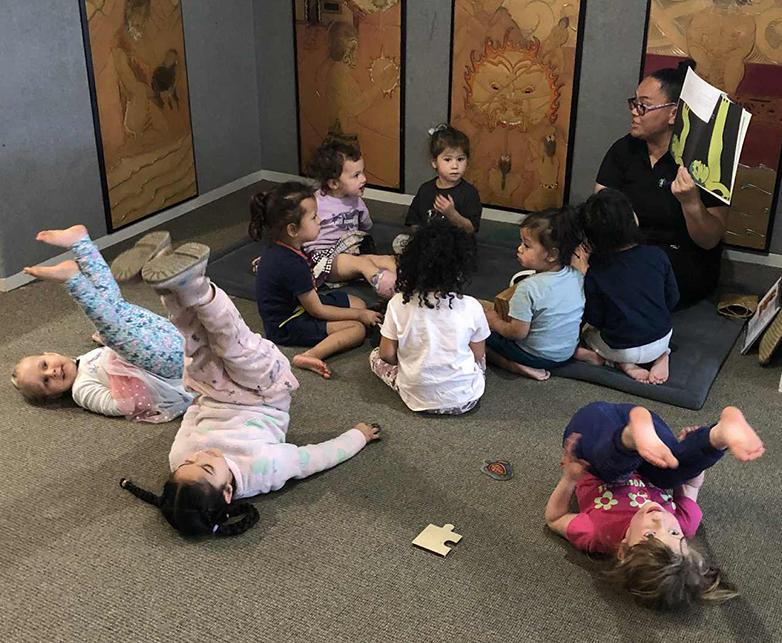
Juanita has received positive feedback from whānau about Te Ara Whakamana.
She says whānau were able to attend information sessions, supporting kaiako to embed Te Ara Whakamana framework within their unique setting.
The sessions also aimed to extend the influence and benefits of the kaupapa beyond the learning space into the heart of whānau life.
Parent Hannah-Rose Walsh has two children at BestStart Willowpark Road, aged two and four. She has started implementing Te Ara Whakamana framework at home.
“I love it because it helps to support my boys in identifying their emotions so well... It aligns perfectly with our whānau values and belief.”
Hannah-Rose says her older child is now able to identify his emotions.
“He shows me with facial expressions how he is feeling and we talk about which atua aligns with this emotion. We discuss things we can do to support how he is feeling.
“This programme really brings centre life into our home life and vice versa.”
Spreading a kaupapa that has tamariki at its heart
Natasha, alongside Juanita and Shenita, now has plenty of practical advice teachers can follow that aligns with Te Ara Whakamana principles. Natasha suggests starting with pūrākau.
“It has all our atua in there,” she says. “It has the emotions of how those atua are feeling, and it connects straightaway to Te Ara Whakamana.”
“[Kaiako] can study how there are negative and positive dispositions that align with each emotion,” adds Juanita.
“I think we, as people, just want to make things better. When actually, sometimes it’s really important for children to experience things for themselves, because that’s how they learn how to self-regulate.”
Shenita is primarily concerned with expanding Te Ara Whakamana to schools across the motu. She says this is important not just for introducing educators and tamariki to the kaupapa, but to make sure ākonga have the same experience across every stage of their schooling.
Each tamaiti has a ‘mana plan’ that could be shared with kura, so there is a clear, coherent, and culturally responsive pathway through education for them and their whānau. This approach draws on the theory in Te Whāriki of pathways to school and kura, representing transition-to-school best practice.
“As educators, we play ‘the long game’,” explains Shenita. “Imagine that young person being handed over to another Te Ara Whakamana school, and onto further Te Ara Whakamana spaces where we’re all speaking the same language, where [tamariki] are at the centre.”
Shenita emphasises Te Ara Whakamana is an evolving kaupapa. Beyond expansion to other kura, maturation is another chief goal for her and other kaupapa practitioners, like Natasha and Juanita.
Part of that is improving access to Te Ara Whakamana professional development through a new self-directed online course, which was built and finished last year, says Shenita.
That long vision also involves encouraging ākonga, through Te Ara Whakamana, to return to their communities and give back once their education journey is complete, she says.
“In 20 to 30 years, if we get this right, they’ll come back to these communities and go, ‘Okay, now I’m a doctor and lawyer and climate change expert, and now I’m going to serve my community’.”
Te Ara Whakamana, a New Zealand-designed tool by Ako Solutionz, is a holistic approach to education that seeks to enhance mana by meeting students’ emotional and spiritual needs. Mātauranga Māori informs the kaupapa, particularly through its emphasis on pūrākau.
Nigel Marshall and Susan Ngawati Osborne, alongside a multidisciplinary team of experts, developed the kaupapa in 2012. Since then, it’s found space in early learning services, schools and kura across the motu.
Shenita Prasad helps provide training for Te Ara Whakamana. She says its whakapapa is important to ākonga, because it was designed here.
Shenita says kaimahi and whānau report positive results from incorporating Te Ara Whakamana into their setting, noting increased emotional fluency and positive relationships both within and outside the classroom.
You can find more information about Te Ara Whakamana on their website.
Te Ara Whakamana: Mana Enhancement
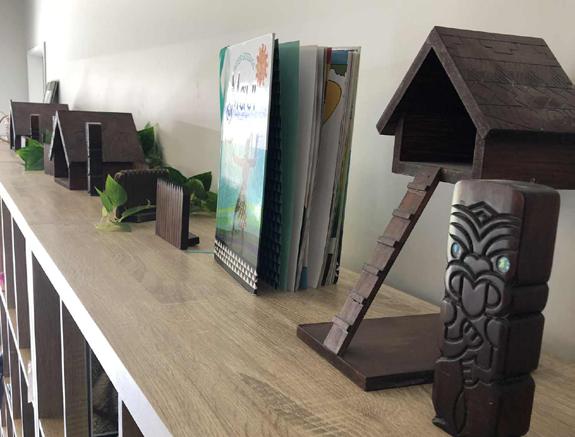
Every morning at BestStart Willowpark Road, kaiako ask tamariki how they’re feeling, and to identify that feeling with a range of atua. They are encouraged to imagine atua as complex beings, representing a range of feelings that are neither good nor bad.
BestStart Willowpark Road centre manager Juanita Taurerewa describes what a check-in looks like, in accordance with Te Ara Whakamana framework.
Brieana, four years old
Brieana puts her photo above tāwhirimatea.
Kaiako questions: “Kei te pēhea koe, Brieana?”
Brieana: “Pōuri”, Brieana answers while making the Makaton sign for sad.
Kaiako: “I wonder what is making you Pōuri, Brieana?”
Brieana: “My brother was sad.”
Kaiako: “Is there anything I can do to help you feel better, Brieana?”
Brieana moves towards kaiako and opens her arms, showing she wants a hug.
Ava, three years old
Kaiako: “ Kei te pēhea koe, Ava?”
Ava: “I sad.”
Kaiako: “Why are you feeling sad, Ava?”
There is no reply for a while, then Ava replies: “I had a bad dream.”
Kaiako: “Is there anything I can do to help you feel better, Ava?”
Ava: “No.”
Air New Zealand’s Every Corner Project supports schools and kura with sustainable projects in nature and in the garden. Birchwood School in Nelson and Pasadena Intermediate School in Auckland were among those who took the opportunity to grow and enhance their school gardens for hands-on learning.
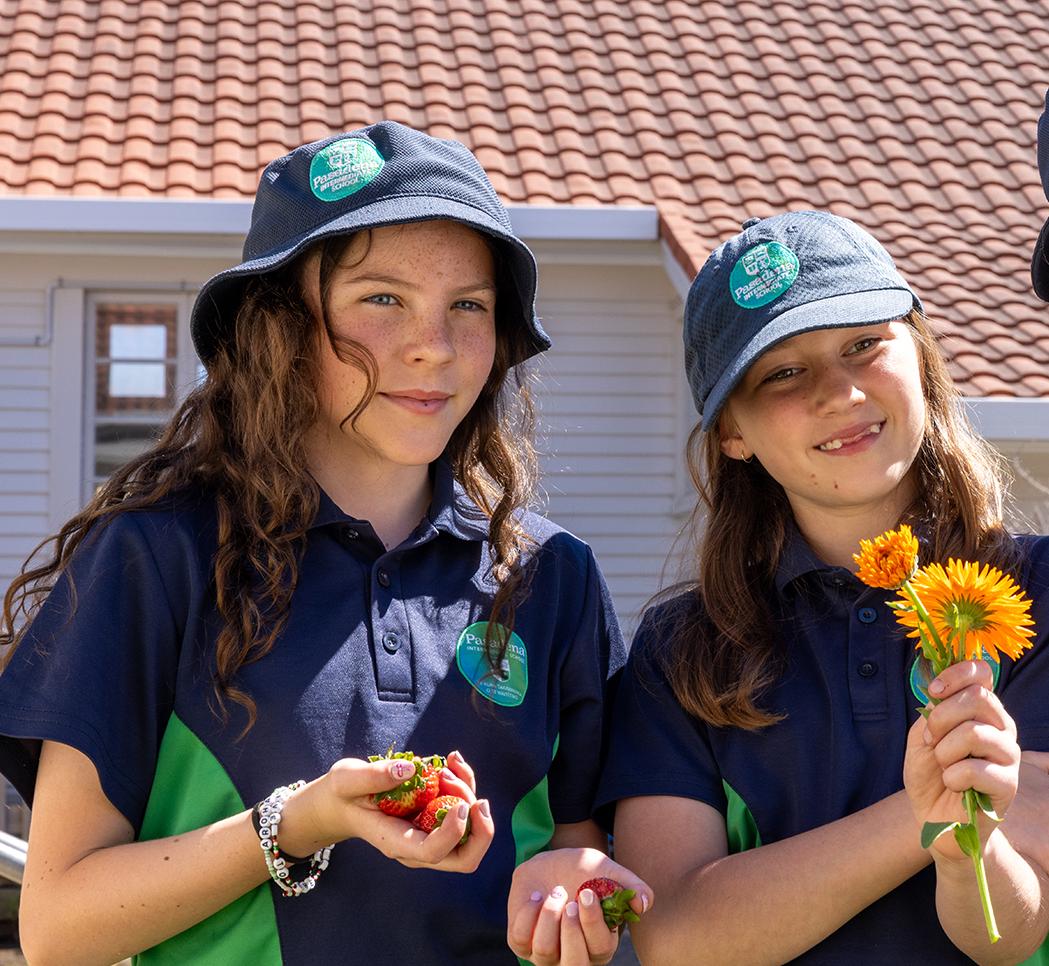
At Pasadena Intermediate School in Tāmaki Makaurau, 2025 Every Corner Project funding allowed them to create a living, learning-focused garden space to grow alongside their students.
“Rather than a one-off garden build, we wanted to establish a sustainable system that embedded kaitiakitanga, environmental responsibility and student agency into everyday learning,” says Pasadena senior leader and kaiako Dylan Wiggill.
The project aimed to strengthen hands-on, real-world learning opportunities for students, create a compost system to deal with food waste at school and create a legacy project for future students to adapt, extend and lead.
The garden project was supported by highly motivated students as they were empowered by the visible, lasting outcomes their decisions had.
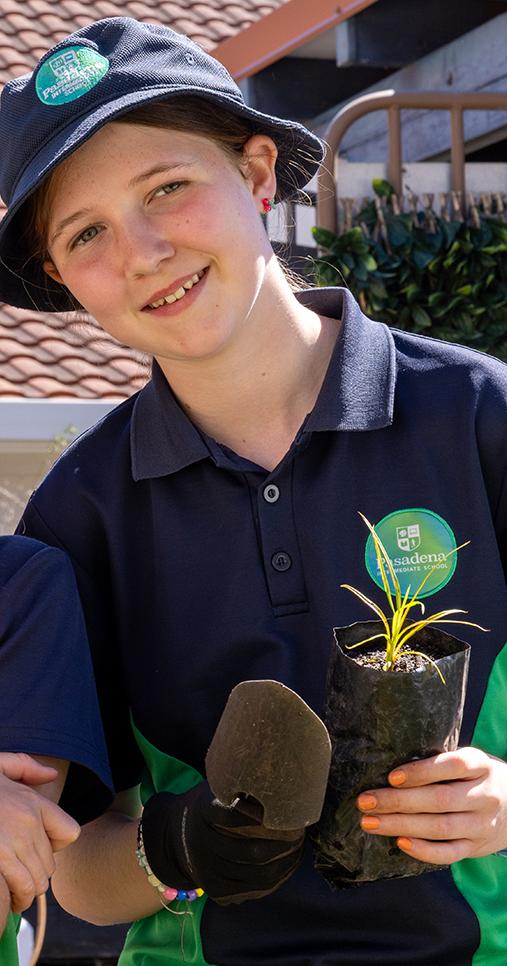
“Many students spoke about feeling proud that future students would benefit from the work they had helped create,” says Dylan.
He adds that the garden was also able to supply the food technology room with produce, which helped students to gain a deeper understanding of where their food was coming from.
“The sense of pride the students had when eating their own produce was immense.”
The school garden lent itself to many areas of learning including literacy, mathematics and technology. Students learned how to plan, record data, reflect and evaluate impact. To meet real needs in the garden, they designed, tested and refined solutions.
The project gained momentum through connection with community organisations. As a result, students were able to work with experts in the agricultural field.
“It helped to show students that for a big vision project to come to life it needs funding, time and expertise,” says Dylan.
As the project grew, the students thoroughly enjoyed working with Air New Zealand to create a professional video. “They felt like celebrities, and were buzzing for days after the shoot,” remembers Dylan.
“We are really proud of the opportunities we have been able to offer our tauira because of the addition of the greenhouse.”
Every Corner Project is a fund from Air New Zealand that registered charities, schools, kura, iwi and hapū can apply for. Last year, the initiative contributed $1.2 million of funding to help bring more than 100 nature projects to life across the country, including at 58 schools and kura.
Projects ranged from predator control and native tree planting to water harvesting, māra kai, and composting, says Kiri Hannifin, chief sustainability and corporate affairs officer at Air New Zealand.
“Getting out into nature and giving back to the land is such an important way to learn about the role we all play as kaitiaki of our unique natural environment here in Aotearoa New Zealand,” she says.
“We’re excited to see the amazing ideas and initiatives come to life over this year as part of the Every Corner Project,” says Kiri. “There are projects underway from Te Kao in the Far North to Tuatapere in the deep south, and even the Chatham Islands. A big thank you to all the teachers, students, and communities across the country who get stuck in for nature and create long-lasting impact for our local environments.”
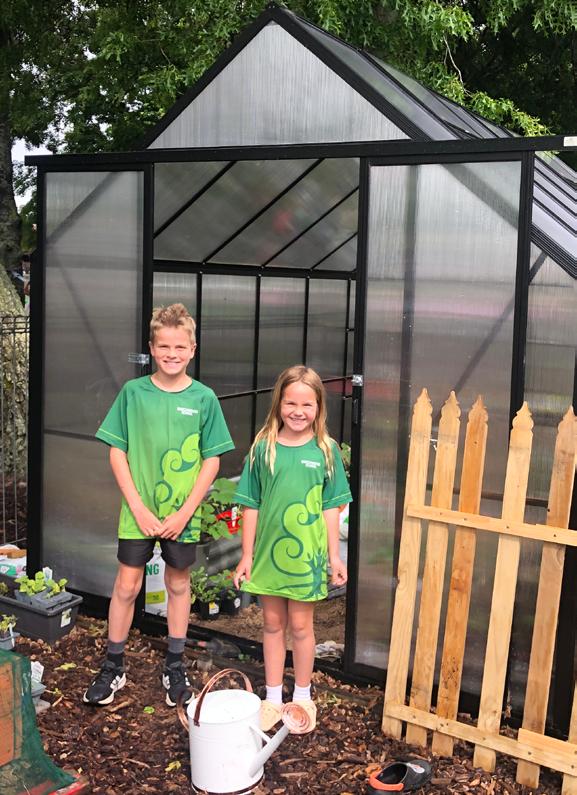
At Birchwood School in Whakatū, kaiako and Enviroschools lead Shelley Roberts consulted staff, including the school’s kaitiaki whenua, ākonga, whānau and school board members to find focus for their Every Corner Project funding.
The school had already built up four vegetable gardens that supply their Garden to Table programme. In 2024 they added a māra nui for growing kūmara, and their garden programme included water conservation, composting and worm farms.
Shelley says everyone agreed to build on what the school already had, “making each step sustainable for our staff and volunteers so that our Every Corner Project would endure long after we have moved on”.
The idea of a greenhouse had been around for years, says Shelley. “We encouraged the kids to dream big but, at such a large cost, it was not going to be one that came to fruition without external support.”
That support came in the form of Every Corner Project funding. After finding out their application for funding was successful, Birchwood School finally built and established their long-awaited greenhouse.
Students now benefit in many ways, from learning maths in the garden and the kitchen, to understanding what they read about gardening and food, to bringing their learning home, says Shelley.
“Many students spoke about feeling proud that future students would benefit from the work they had helped create.”
“Ākonga gain a lived experience of contributing to a community, being part of a team and seeing a tangible result from their hard work.
“Everything a school does extends into its community and our greenhouse is a great example of this.”
Shelley says the garden is often a “hive of activity” with neighbours, grandparents, preschool children and other whānau coming in to help and see the progress.
“We are really proud of the opportunities we have been able to offer our tauira because of the addition of the greenhouse.”
Dylan says applying for Every Corner Project funding encouraged Pasadena Intermediate School to think clearly about impact, sustainability and the community benefit the project would have.
Dylan’s tips for applying for funding include:
» Start with a clear purpose for why you are seeking the funding.
» Consider where you can involve the funder in the project journey. Air New Zealand helped build Pasadena Intermediate School’s greenhouse and shot a video with ākonga in the garden.
» Once you get the ball rolling, see what other organisations in your community might be interested in supporting the project.
At Birchwood School, Shelley says the process of receiving funds and buying the greenhouse was quick.
“In only a couple of months the greenhouse was up and running!
“My advice to anyone considering funding applications is to consult with your community, decide on the next step for your kura, make a sustainable plan, and go for it.”
More information on schools that were successful in receiving funding from the Every Corner Project can be found on Air New Zealand’s website.
Every Corner Project – Air New Zealand
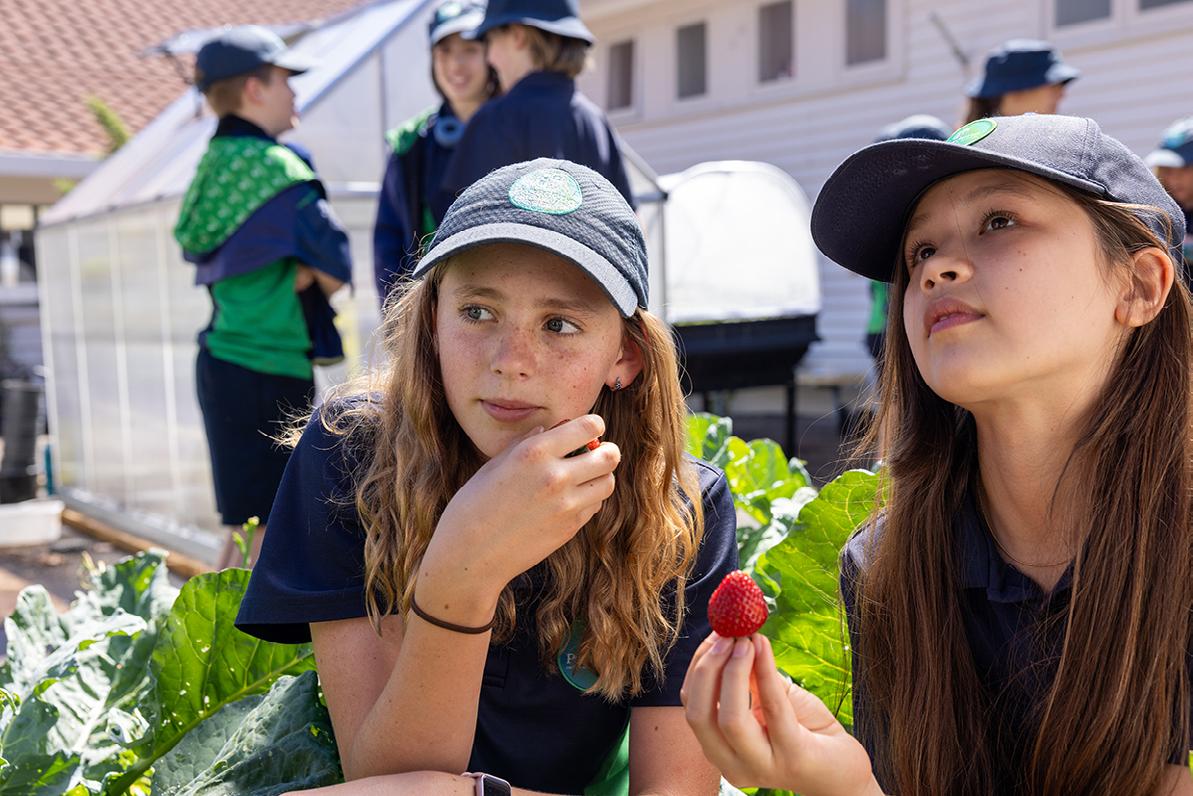
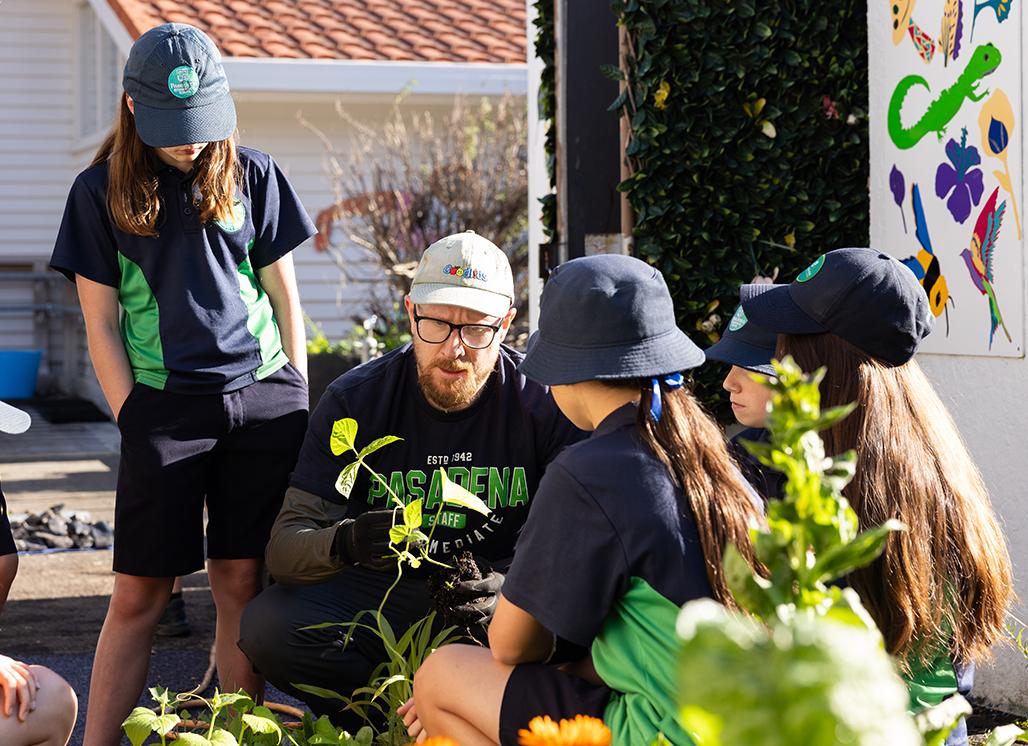
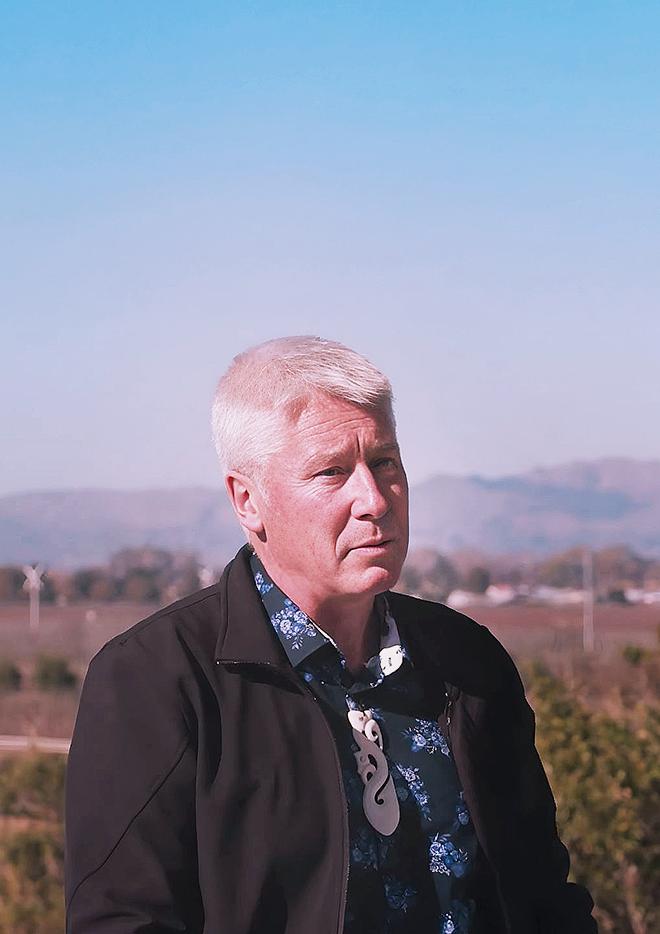
School leadership is a journey, not a destination, says Tim White, former principal of a Hawke’s Bay school that won the Supreme Prime Minister’s Award for Educational Excellence in 2021. As applications and nominations open for the new 2026 New Zealand Education Excellence Awards, Tim – now the Ministry of Education Leadership Advisory Programme Chief Advisor – reflects on what the award meant for his school community, and on his own 35-year journey of learning in leadership.
Tim White was a beginning teacher at a four-teacher school on the edge of Lake Taupō when he found himself with a seat at the table of a brand new board of trustees.
His first teaching role out of teachers’ college and Massey University had coincided with one of the biggest changes in schooling: The move to self-management. A new board was formed, but Tim’s colleagues were reluctant to be the staff trustee.
“I got muscled into that role, but it was one I thoroughly enjoyed,” remembers Tim, who had arrived at former Tauranga-Taupō School motivated to find learning experiences and opportunities.
“I really wanted to see New Zealand and experience communities that I hadn’t had the opportunity to experience growing up in Whanganui.”
After two years and working with two principals at Tauranga-Taupō, Tim took his first step onto his principal pathway at a smaller school near Dannevirke.
“I was ambitious, and I saw an opportunity. Being a principal in a two-teacher school was predominantly teaching – you were teaching four-and-a-half days a week. So, I thought I knew enough about that to apply for the principal’s job.”
“No school is an island – we’ve got so much to learn from our colleagues.”
Tim says he appreciated and valued the support he received from Dennis Coxon, the rural and small school advisor at the time, to develop his principalship capabilities while refining his teacher skills.
Three years later Tim moved again, this time to lead Galatea School in Bay of Plenty, followed by the larger Russell Street School in Palmerston North and finally, in 2016, to Frimley Primary School in Hawke’s Bay.
An advisory for principals, by principals In between his Galatea and Russell Street principalships, Tim applied for the role of small and rural school advisor at Massey University.
Tim relished the professional learning development (PLD) he gained as he worked alongside, and supported, new principals and new leaders in his role.
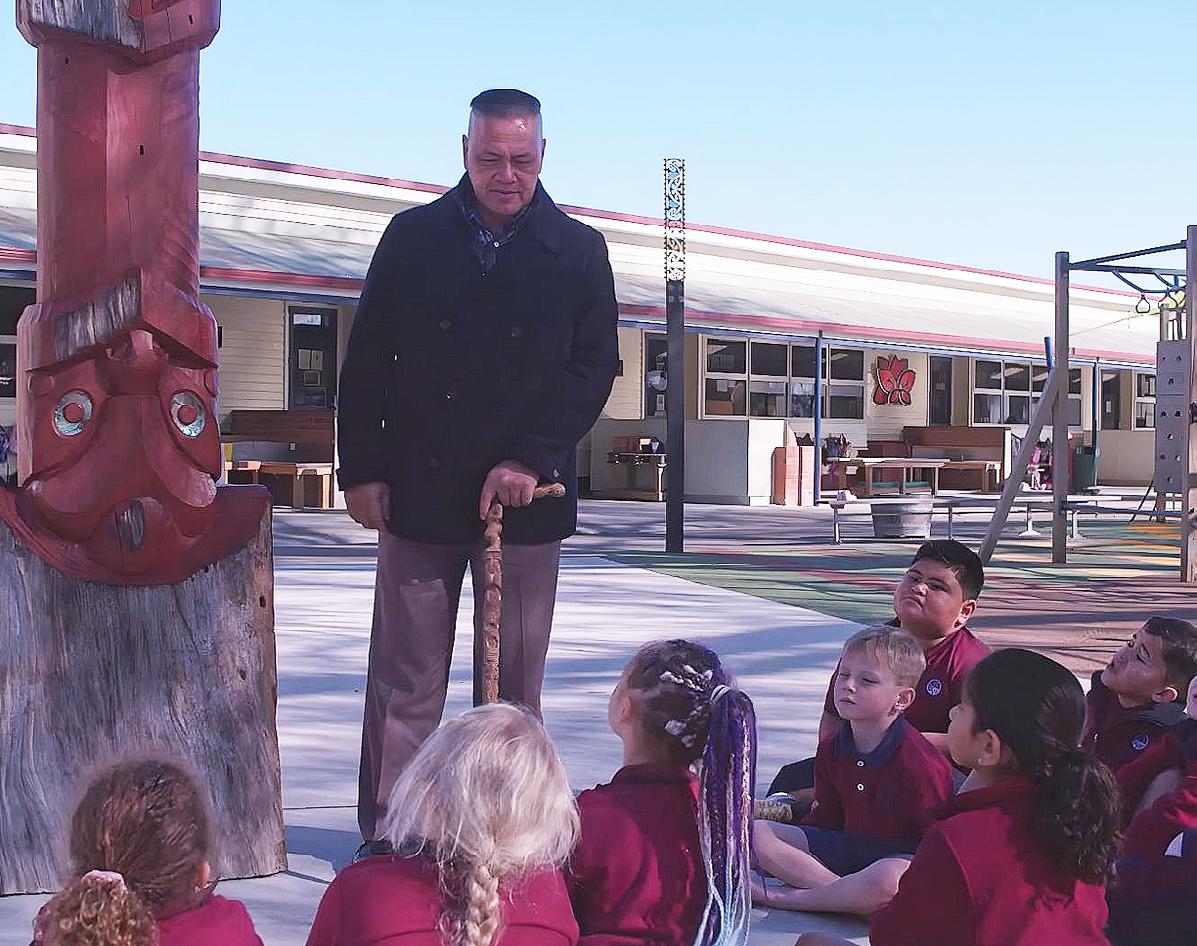
“No school is an island – we’ve got so much to learn from our colleagues.
“I see principalship as a journey and not a destination. There are so many opportunities through leading different schools, and opportunities like a secondment to the leadership advisory service to really grow and refine your skills. We should be taking those opportunities, seeking them out.”
In 2021, seven years after Tim moved to Frimley School, the school won the Supreme Prime Minister’s Award for Educational Excellence | Te Tohu Nui a Te Pirimia. The award recognised the building of strong community partnerships and focusing on student-centred, culturally connected learning.
Frimley also received the Prime Minister’s Award for Excellence in Teaching and Learning | Te Hiranga o te Ako and was a finalist for the Prime Minister’s Award for Excellence in Engaging | Te Hiranga o Te Tuitui Tāngata.
Tim says Frimley was committed to developing a relevant curriculum with the community, using the local pūrākau, places and mātauranga of Ngāti Kahungunu.
“Making this happen meant a lot of new learning, and staff needing to be open to learning. More often than not, we were learning from our whānau and community.”
Frimley School entered the awards to achieve three important outcomes, explains Tim.
“The first of those was we felt that the staff had really dug deep and had undertaken really significant learning. They extensively contributed to the shift with learning and teaching, and we wanted them to be recognised for that.
“The second one is that we felt that we were contributing, in our small way, a journey or a pathway that others might be able to reflect on and think about in their particular context.”
A third outcome was to have “someone other than me and the staff” confirm the value of their journey to the community.
“For many, it hadn’t always been that comfortable and at times it was just plain hard work. But, you know, we got there.”
Tim adds that the awards were not a destination, but a “staging post” for the team, and the work started then continues today.
“It’s a work in progress and you need to feed, nurture and grow it.”
Tim left Frimley in 2023 to take on his current role at the Ministry.
“Having the chance to develop a leadership advisory service from the ground up with cohorts of experienced principals from across the motu was such an enticing chance. I knew how much I had benefited from it.
“With the talents that would come from a small regional team of experienced principals each year we could create a really strong and effective ‘for principals by principals’ service.”

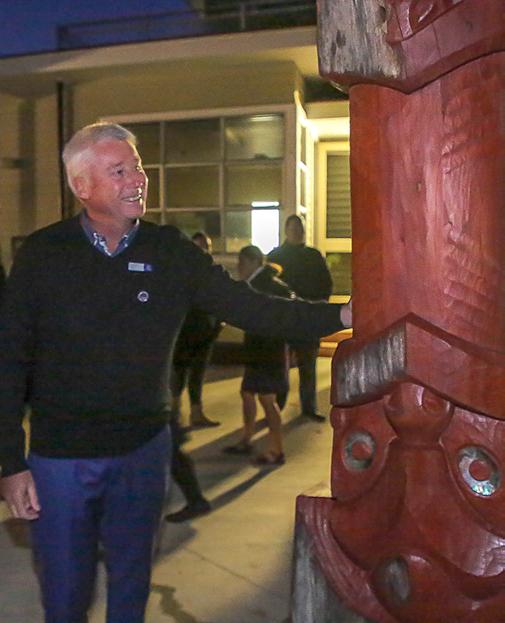
Tim at the dawn blessing for Te Wao Tapu nui in 2021. Hawke’s Bay Today/NZME by Warren Buckland.
Reflecting on key leadership learnings from his own career, Tim admits principalship is “a bit of a vampire – it takes everything you give it”.
“I was still learning how to set those really constructive boundaries and be comfortable with the incomplete you – you never get it done.”
He says it is important to lean into the support others can provide when things get tough and for experienced principals to model and foster across school collaborations.
“It’s being a servant leader – making decisions based on what’s best for students and their whānau rather than those who are employed in the school.”
Being disciplined and leading with purpose and personal integrity are also critical to create a high trust environment, Tim says, while modelling being a learner to refine your own leadership.
That might mean being vulnerable and taking risks, he adds, but it is important to “relax into that place as a learner” to create the better outcome for all.
“An example of that for me would be my own te reo me ona tikanga Māori journey during my time as the principal at Frimley.”
Tim encourages schools and kura to apply for this year’s new Education Excellence Awards.
“If principals see themselves as system leaders, then they should be looking for opportunities to share their stories for others to reflect on and learn from.”

This year, schools and kura around the motu can be nominated for the New Zealand Education Excellence Awards 2026. Anyone can nominate a school or kura to apply for an award, including students, whānau, staff and members of the wider community.
The awards have categories according to school or kura size and type:
» Primary schools with up to 150 students.
» Primary schools with more than 150 students.
» Kaupapa Māori kura.
» Secondary schools. Awards will recognise the fields of:
» Excellence in Raising Student Achievement
» Excellence in Student Engagement and Attendance
» Excellence in Quality Teaching and Instruction
» Excellence in Educational Leadership.
Winning schools will receive $20,000. Award winners and finalists will also be formally recognised at a ceremony in Wellington on Wednesday 24 June.
Nominations and applications open on 16 March. Nominations close on 10 April and applications close on 1 May.
The Ministry of Education website has full details about the awards, including how to enter.
Education Excellence Awards – Ministry of Education