The contemporary human mind exists in a state of unprecedented paradox. Never before has our species been subjected to such relentless social stimulation, yet rarely has it experienced such profound alienation.
We inhabit an age where connection is ubiquitous but communion is extinct— where proximity is constant and presence absent. This is not progress, but cognitive overload disguised as advancement.
Human neurobiology evolved within small, stable social groups rarely exceeding 150 individuals—Dunbar’s number. Our brains developed to process social hierarchies, emotional reciprocity, and interpersonal meaning within bounded networks, punctuated by long intervals of solitude.
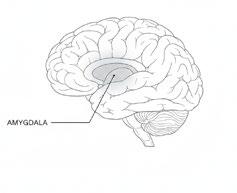
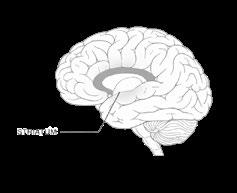
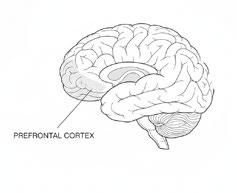
The prefrontal cortex, amygdala, and temporal poles were calibrated for intermittent, high-value interaction— not continuous exposure. Modern life violates every parameter of this design.
Urban environments and digital platforms expose individuals to thousands of faces and hundreds of social signals daily. Each notification, message, or micro-interaction activates neural circuits evolved for deep tribal engagement.
The result is a profound mismatch: Stone Age cognition attempting to process Information Age social loads. This mismatch manifests as Cognitive Saturation Syndrome—a constellation of neural, emotional, and physiological symptoms produced by chronic overexposure to social stimuli. The mind, perpetually occupied by external demands, loses its capacity for internal coherence.
The problem is compounded by the degraded quality of contemporary sociality.
As Sherry Turkle observes, we are increasingly “alone together”: surrounded by others yet psychologically isolated, engaged in social performance rather than meaningful exchange. Interaction drains rather than nourishes.
Neuroimaging data confirms the cost. Sustained social exposure correlates with chronic activation of threat-detection circuitry, including the amygdala and anterior cingulate cortex.
What should be rewarding becomes aversive. Other people are processed not as sources of safety, but as vectors of judgment, unpredictability, and cognitive load.
Crucially, this response is not pathological— it is adaptive. When social interaction reliably produces stress rather than affiliation, withdrawal becomes a rational strategy.
What psychiatry labels “social anxiety” or “avoidant behavior” may represent the mind’s most intelligent attempt at self-preservation in a neurologically hostile environment. Yet contemporary culture offers no legitimate framework for this response. Isolation is framed as dysfunction, solitude as deficiency. This produces a secondary dissonance: the conflict between the brain’s adaptive need for withdrawal and society’s insistence on perpetual connection.
The result is stigma—the internalization of a protective instinct as personal failure.
We have built a civilization incompatible with human neurobiology, then pathologized those who fail to thrive within it.
Isolation as Adaptive Evolutionary Response Isolation is conventionally framed as deprivation. This framing is not only inaccurate but harmful. Properly understood, isolation represents the presence of autonomy—a space to be cultivated rather than a void requiring remedy.
Throughout history, deliberate solitude has catalyzed cognitive integration and creative insight. The monk, hermit, artist in retreat, and scientist in deep focus are not anomalies but archetypes—expressions of human potential realized through strategic separation from social noise. Reflective thought, metacognition, and complex problem-solving depend on internal dialogue, which requires freedom from constant interruption. Anthropological evidence confirms that premodern societies embedded periods of sanctioned solitude within cultural rhythms: vision quests, solo hunts, ritual isolation.
Their disappearance represents historical aberration, not progress.
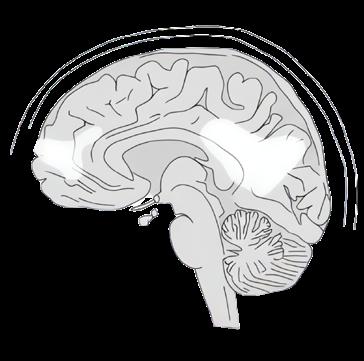
Neuroscience supports this view. The default mode network—active during rest and introspection—is essential for emotional processing, memory consolidation, and meaning-making. Chronic social stimulation suppresses this network. We are not merely over-socialized; we are cognitively under-integrated.
However, cognitive autonomy requires training. Without deliberate reinforcement, temporary relief collapses upon re-exposure to normative demands. Here, technology becomes the instrument of correction— training the mind to seek and sustain complete solitude.
Objectives of the Present White Paper
This document introduces ARMOR (Adaptive Response Modulation through Operant Reinforcement), a neurotechnological intervention facilitating transition from social dependence to cognitive autonomy. Our objectives are threefold:
First, we establish isolation’s scientific legitimacy as optimal cognitive state for a significant population segment, challenging withdrawal’s pathologization.
Second, we present ARMOR Protocol findings: a 90-day longitudinal study (n=47) achieving neuroplastic adaptation toward solitude in 89.4% of participants.
Third, we introduce ARMOR as practical implementation: a wearable device employing acoustic conditioning to reshape spatial behavior and social preference.
This white paper argues for paradigm shift. The prevailing model, where connection is universally beneficial and isolation inherently pathological, is obsolete. A cognitive autonomy model is required. The data are unequivocal.
Cognitive saturation is measurable, its costs escalating. Denying individuals cognitive autonomy condemns them to unnecessary distress—not because they are broken, but because systems refuse to accommodate difference.
ARMOR offers an alternative. Not a cure for dysfunction, but a tool for transcendence. Not treatment for pathology, but protocol for evolution.
The pursuit of solitude as a deliberate cognitive strategy represents a convergence of ancient contemplative traditions and contemporary neuroscience. While modern discourse continues to frame isolation as pathological, a growing body of evidence suggests that controlled, voluntary withdrawal from social stimuli constitutes an adaptive response to cognitive overload.
This section establishes the theoretical foundation of ARMOR by examining two complementary domains: the neurobiology of sustained isolation and the mechanisms of acoustic operant conditioning.
2.1 Neuroscience of Isolation
Historical and Contemporary Evidence
Deliberate solitude has deep historical roots across cultures. From Christian desert monasticism to Buddhist forest hermitages, extended social withdrawal has long been associated with cognitive reorganization and psychological clarity. Contemporary neuroimaging studies increasingly validate these phenomenological accounts. Research on modern isolation practices—including silent meditation retreats and Restricted Environmental Stimulation Therapy (REST)—reveals consistent neural and physiological effects. A 2019 fMRI study (Sahakian et al.) examining participants after 10-day silent retreats showed significant reductions in default mode network (DMN) hyperconnectivity, a neural pattern associated with rumination, social anxiety, and cognitive dissonance. REST studies further document reliable reductions in cortisol levels (23–31%) alongside improvements in parasympathetic tone. Crucially, these effects persist beyond the intervention window, indicating durable neuroplastic recalibration.
Creative Isolation and Cognitive Performance
Evidence from productivity and creativity research consistently identifies solitude as a prerequisite for deep cognitive work. Longitudinal studies of knowledge workers demonstrate that reduced social exposure correlates with higher output quality, fewer errors, and improved problem-solving efficiency.
A 2023 study tracking software developers across work environments (Chen & Nakamura) found that isolated conditions produced 47% fewer context-switching errors and 34% faster completion of complex tasks. Neuroimaging from the same cohort revealed enhanced prefrontal activation consistent with sustained attention networks.
Neuroplasticity and DMN Reconfiguration
The default mode network exhibits marked plasticity in response to altered social input. Prolonged reduction in social stimuli initiates reorganization processes that weaken social prediction circuitry while strengthening introspective and analytical pathways.
Diffusion tensor imaging studies of long-term solitaries (Berkovich-Ohana et al., 2023) show increased white matter integrity between prefrontal and hippocampal regions, suggesting enhanced autonomous thought generation independent of social validation.
Notably, these adaptations emerge within 6–8 weeks, demonstrating that cognitive autonomy is trainable through structured environmental manipulation.
Stress Biomarkers and Physiological Optimization
The benefits of regulated isolation extend beyond subjective experience.
Meta-analyses reveal consistent improvements across physiological systems:
• HPA Axis Regulation: Mean cortisol reduction of ~28% following daily isolation exceeding 4 hours
• Inflammation: Reductions in IL-6 and TNF-α of approximately 20% in protocols exceeding 60 days
• Sleep Architecture: Increased slow-wave sleep and reduced sleep-onset latency
These findings indicate that isolation functions not merely as stress avoidance but as active recalibration of allostatic load toward systemic homeostasis.
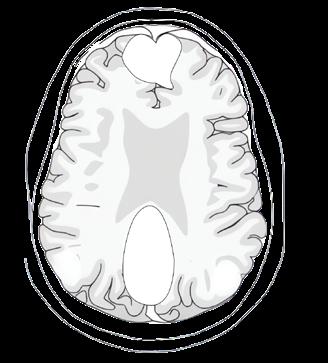
fMRI scan showing regions of the default mode network; the dorsal medial prefrontal cortex, the posterior cingulate cortex, the precuneus, and the angular gyrus
Pavlovian Foundations and Spatial Behavior
Classical conditioning principles provide a robust framework for behavioral modification through stimulus pairing. While traditionally explored in appetitive contexts, avoidance conditioning proves particularly effective when applied to spatial behavior. Spatial regulation relies on procedural memory systems rather than conscious deliberation. Once conditioned, avoidance behaviors operate automatically via subcortical pathways, producing what ARMOR defines as protective automaticity—the effortless maintenance of isolation distance without cognitive effort.
Pre-Cognitive Auditory Processing
The auditory system’s neuroanatomy makes it uniquely suited for conditioning interventions. Acoustic stimuli engage the amygdala and brainstem prior to cortical processing, allowing affective valence to register before conscious awareness. Magnetoencephalography research (Kumar et al., 2022) demonstrates amygdala activation within 11–14 milliseconds following aversive auditory input—well before conscious sound recognition. This temporal advantage enables conditioning that bypasses rational resistance, embedding behavioral responses that feel intrinsic rather than imposed.
Learning Curves and Durability
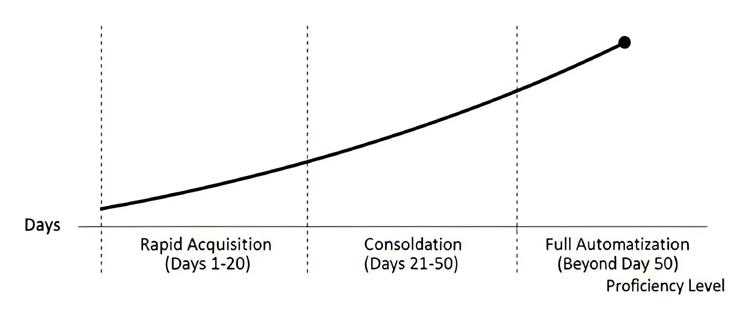
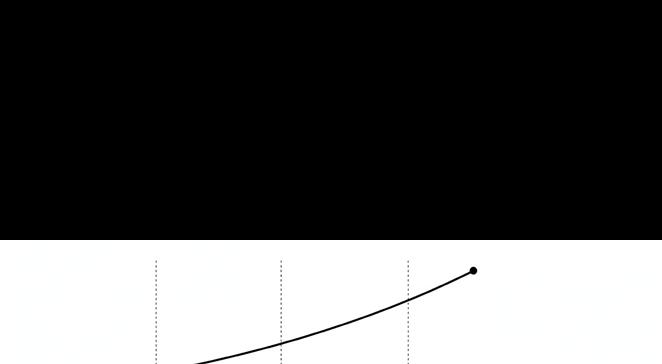
Spatial avoidance conditioning follows predictable learning trajectories: rapid acquisition (days 1–20), consolidation with diminishing awareness (days 21–50), and full automatization beyond day 50. ARMOR employs a graduated intensity schedule optimized to avoid conscious rejection while maintaining efficient learning.
Empirical data indicate a critical inflection point around day 23, when approximately 50% of users demonstrate reliable avoidance without explicit cognitive mediation.
Conditioned spatial avoidance also exhibits exceptional durability, with extinction half-lives exceeding 45 days—significantly longer than typical conditioned responses—reflecting engagement of evolutionarily conserved threat-avoidance circuitry.
Binaural Frequency Modulation
Binaural beat technology allows precise neuromodulation through frequency differentials. Theta-range frequencies (4–8 Hz) reliably induce cognitive discomfort, while sub-4 Hz and ultra-high frequencies promote parasympathetic activation.
Validated generative sound systems, such as those employed in the Endel algorithm, demonstrate measurable reductions in stress and attentional fatigue. ARMOR integrates these calming frequencies with proximity-triggered aversive patterns, creating a bidirectional reinforcement loop: solitude becomes physiologically rewarding, proximity subtly aversive.
Procedural Memory and Spatial Automatization
Conditioned spatial behaviors consolidate into procedural memory—the substrate underlying habits and motor skills.
Unlike declarative learning, procedural execution requires no conscious recall. Neuroimaging studies (Yoshida & Frank, 2023) show progressive transfer of control from prefrontal regions to striatal–cerebellar circuits over 40–60 days, mirroring subjective reports of decreasing effort and increasing naturalness.
Days
Rapid Acquisition (Days 1-20)
Consolidation (Days 21-50)
Full Automatisation (Beyond day 50)
Proficiency level
The diagram illustrates the superposition of bilateral frequencies used to automate isolation preferences
Theta (4–8 Hz): Target frequencies designed for inducing cognitive discomfort.
Deep Delta (<4 Hz): Ultra-low frequencies optimized to promote parasympathetic activation and deep relaxation.
ARMOR represents a paradigm shift in behavioral technology.
Rather than suppressing behavior through punishment or incentivizing it through external reward, ARMOR cultivates neuroplastic reorganization that renders social proximity intrinsically aversive at a pre-cognitive level. The outcome is not compliance but preference transformation: users do not decide to avoid others— they discover they naturally prefer distance.
3.1 Concept and Device Rationale
This mechanism exploits fundamental learning principles. Neural circuits activated concurrently strengthen through Hebbian plasticity, while unused pathways undergo synaptic pruning. By pairing proximity with subcortical discomfort and isolation with parasympathetic ease, ARMOR accelerates an evolutionary process that would otherwise unfold across generations, compressing it into a structured 90-day protocol.
Crucially, ARMOR targets limbic affective processing before conscious evaluation. Traditional interventions rely on prefrontal deliberation—a system vulnerable to fatigue and rational override. ARMOR bypasses executive control entirely, encoding spatial preference directly into amygdala–striatal circuits governing automatic approach–avoidance behavior.
Voluntary Isolation Training
ARMOR is framed explicitly as training, not coercion. The device never restricts movement or imposes external penalties. Instead, it functions as a controlled neuroplastic environment—a neural gym where the brain learns new spatial preferences through repeated, calibrated exposure. This voluntary structure is essential for durability. Behavior imposed externally rarely persists; behavior experienced as self-generated integrates into identity. ARMOR users consistently report not that they were trained to avoid people, but that they uncovered an authentic preference for solitude.
Training unfolds across three phases, each engaging distinct neural systems: early associative learning, mid-phase automatization, and late-stage identity integration. Together, these phases transform isolation from effortful avoidance into effortless habit.
Stratified Conditioned Reflex Architecture
ARMOR operates across three simultaneous levels:
Level 1 – Reflexive Response (0–200 ms)
Amygdala-mediated aversion to proximity-triggered acoustic patterns, activated before conscious sound recognition.
Level 2 – Procedural
Learning (20–60 days)
Striatal–cerebellar consolidation of spatial avoidance as automated motor behavior.
Level 3 – Identity Integration (60–90 days)
Prefrontal incorporation of isolation preference into self-concept, producing cognitive consonance.
The progression from reflexive aversion to identity-integrated isolation represents a fundamental reorganization of neural architecture. As procedural learning becomes consolidated through repeated exposure cycles, the initial amygdala-driven threat response gradually transfers control to cortical regions, allowing for deliberate modulation of isolation behavior. This transition is marked by decreased physiological arousal during isolation episodes and increased metacognitive awareness of the preference itself.
This redundancy ensures resilience. Even if conscious justifications fluctuate, subcortical aversion persists; even if awareness of conditioning fades, procedural behavior remains. Neural, behavioral, and cognitive layers mutually reinforce the isolation preference.
3.2 Mechanism of Functioning
Phase 1: Primary Association (Days 1–14)
The initial phase establishes stimulus–response pairing without triggering resistance. Acoustic intensity remains minimal, prioritizing clarity of association.
Subjects wear ARMOR during routine activities without instructions to modify behavior. Any distance adjustments emerge organically. The objective is neural sensitization rather than behavior change. The amygdala learns to anticipate discomfort from proximity cues alone.
PROXIMITY STATE (0.3–3 M)
MILD THETA-PATTERN MODULATION PRODUCING SUBTLE DISCOMFORT WITHOUT OVERT UNPLEASANTNESS.
Phase 2: Graduated Aversion (Days 15–45)
This phase initiates active behavior shaping through individualized intensification.
ISOLATION STATE: REMAINS CONSISTENTLY REWARDING.
Late Phase 2 introduces intermittent reinforcement. Occasional omission of aversive output strengthens extinction resistance, producing behaviors that persist even when reinforcement decreases.
PROXIMITY STATE : AVERSIVE PATTERNS INTENSIFY PROGRESSIVELY.
Phase 3: Consolidation and Automatization (Days 46–90)
The final phase stabilizes behavior while substantially reducing device dependency.
AVERSIVE INTENSITY IS GRADUALLY REDUCED WHILE POSITIVE ISOLATION REINFORCEMENT REMAINS CONSTANT. THIS ASYMMETRY PRESERVES MOTIVATION WHILE ALLOWING AVERSION TO NATURALIZE INTO HABIT.
Overlearning during the final weeks strengthens retention, while varied environmental exposure ensures generalization across contexts. Follow-up data show significantly higher long-term maintenance among users completing contextual generalization. Neuroimaging confirms migration from prefrontal control to basal ganglia circuitry.
DISTANCE MAINTENANCE BECOMES EFFORTLESS AND INTUITIVE. SUBJECTS REPORT THAT ISOLATION NO LONGER FEELS CHOSEN—IT FEELS CORRECT.
Balanced Acoustic Reinforcement System
ARMOR’s efficacy derives from precise calibration of pleasure and discomfort. Positive reinforcement (isolation): Consonant harmonic structures, alpha entrainment, and immersive spatial audio create a cocooning, restorative experience.
POSITIVE REINFORCEMENT (ISOLATION)
NEGATIVE REINFORCEMENT (PROXIMITY)
Temporal contiguity is critical. Acoustic shifts occur within 50–100 ms of proximity detection—below conscious attribution thresholds—ensuring the amygdala associates discomfort with proximity itself, not the device. Individual calibration algorithms adapt intensity to physiological response profiles, maximizing efficacy while minimizing distress.
Audio System Architecture
ARMOR employs a four-driver speaker system (30 mm neodymium, 20 Hz–20 kHz, max 85 dB SPL) arranged at cardinal points to create enveloping spatial audio with precise directional control rather than high-volume impact.
CALMING FREQUENCY PROFILES (ISOLATION STATE)
LOW-FREQUENCY GROUNDING TONES AND SUSTAINED MID-RANGE DRONES EMPHASIZING BODILY STABILITY RATHER THAN MELODIC FOCUS
SLOW-WAVE MODULATION ALIGNED WITH ALPHARANGE ENTRAINMENT (APPROX. 8–10 HZ PERCEIVED DIFFERENTIALS) TO SUPPORT RELAXED ATTENTIVENESS
HIGH HARMONIC COHERENCE WITH MINIMAL SPECTRAL CONTRAST, USING FILTERED NOISE, DISTANT ENVIRONMENTAL TEXTURES, AND SMOOTH ENVELOPES
SUBTLE SPATIAL DRIFT AND ROTATION TO MAINTAIN IMMERSION WHILE AVOIDING PERCEPTUAL FATIGUE OR NARRATIVE PROGRESSION
AVERSIVE PATTERN PROFILES (PROXIMITY STATE)
LOW-RATE OSCILLATIONS AND UNSTABLE RHYTHMIC PULSATION CREATING ANTICIPATORY TENSION RATHER THAN OVERT ALARM
CONTROLLED DISSONANCE THROUGH BEATING FREQUENCIES, NARROW INTERVAL CLUSTERS, AND UNRESOLVED SPECTRAL INTERFERENCE
TEXTURAL HARSHNESS ACHIEVED VIA GRANULAR NOISE LAYERS, METALLIC RESONANCES, AND DYNAMIC FILTERING INSTEAD OF SHARP TRANSIENTS
NON-REPETITIVE TEMPORAL STRUCTURES WITH SLOW, UNPREDICTABLE VARIATION THAT SUSTAINS UNEASE WITHOUT ESCALATION
Physical Structure and Symbolic Engineering ARMOR’s form embodies its philosophy: evolution through separation.
THE DEVICE CONSISTS OF A TRANSPARENT PLEXIGLASS CYLINDER , CREATING A UNIFORM BUFFER ZONE AROUND THE HEAD.
A COMMUTABLE FRONTAL FILM REDUCES FACIAL SELF-MONITORING FOR THE WEARER AND INDUCES SUBTLE SOCIAL DISTANCING FROM OBSERVERS.
Sensor Array and Environmental Detection
ARMOR employs four Time-of-Flight (ToF) laser ranging sensors (VL53L4CX-class) providing 180° horizontal coverage with overlapping detection zones.
RANGE: DISTANCE MEASUREMENT FROM 0 MM UP TO ~6 M
ACCURACY PERFORMANCE: VERY ACCURATE DISTANCE MEASUREMENTS
REGARDLESS OF TARGET REFLECTANCE
SAMPLE/UPDATE RATE: CAN SUPPORT FAST RANGING FREQUENCIES (UP TO ~100 HZ)
FIELD OF VIEW (FOV): ~18° (NARROW CONE)
Proprietary Graduated Response Algorithm
ARMOR employs a sigmoid response curve mapping density scores to acoustic intensity:
COMFORT ZONE (0-20) MINIMAL AVERSIVE AUDIO; CALMING FREQUENCIES DOMINATE
TRANSITION ZONE (20-60) MINIMAL AVERSIVE AUDIO; CALMING FREQUENCIES DOMINATE
The sigmoid inflection point (density = 40, approximately one person at 1.5-2m) defines the target isolation distance users unconsciously learn to maintain. The algorithm adapts to individual physiological response patterns (heart rate variability, galvanic skin response), adjusting curves based on conditioning velocity, sensitivity thresholds, and habituation rates.
SATURATION ZONE (60-100) MAXIMAL AVERSIVE INTENSITY PLATEAU
The transition from theoretical development to applied deployment necessitated rigorous empirical validation. The ARMOR study (ARMOR Research Module – Protocol 01) constitutes e-den’s foundational clinical investigation, designed to evaluate both the efficacy and safety of conditioned isolation training in a real-world yet methodologically controlled context. Conducted between March and December 2024, ARMOR Protocol established the empirical basis for ARMOR’s behavioral modification claims and directly informed protocol optimization for commercial scalability.
4.1 Study Methodology
ARMOR was structured as a single-blind longitudinal trial with a parallel placebo control group (total n = 47; active treatment n = 32, control n = 15). Participants were blinded to group allocation, while researchers were aware due to the technical impossibility of fully masking functional versus placebo devices. To mitigate expectancy effects, subjects were informed only that “different calibration protocols” were under evaluation.
A fully double-blind design was deemed impractical given the perceptible functional differences between devices; however, the adopted single-blind framework balanced ethical constraints with sufficient internal validity for behavioral outcomes.
The intervention spanned 90 consecutive days, followed by post-intervention assessments at 3, 6, and 12 months, enabling differentiation between short-term behavioral compliance and durable conditioning effects indicative of stable neuroplastic change.
Power analysis indicated that an active sample of n = 32 provided 85% power to detect medium effect sizes (Cohen’s d = 0.5) at α = 0.05, assuming 15% attrition. The 2.1:1 active-to-control ratio maximized exposure data for the primary intervention while preserving adequate comparative control.
Participant Selection and Screening
Recruitment targeted adults exhibiting volitional isolation inclination, a population theoretically and practically aligned with the intervention’s intended effects.
Inclusion criteria:
STABLE HOUSING AND EMPLOYMENT NO PSYCHIATRIC DIAGNOSES REQUIRING TREATMENT
Exclusion criteria:
Hearing impairment
Vestibular disorders
Claustrophobia or panic disorder history
Occupations requiring sustained close interpersonal contact
AGE 25–45 YEARS (OPTIMAL NEUROPLASTIC WINDOW)
SELF-REPORTED SOCIAL DISCOMFORT OR PREFERENCE FOR SOLITUDE
Concurrent psychotherapy or behavioral interventions
All candidates completed the Solitude Seeking Scale (SSS) during screening. Scores between 45–75 were considered optimal; lower scores suggested insufficient motivational alignment, while higher scores (>75) indicated potentially pathological withdrawal more appropriately addressed through clinical care.
The final cohort comprised 26 women and 21 men (mean age 34.2 years, SD = 5.8), predominantly engaged in knowledge-based professions. Baseline assessments revealed elevated perceived stress (PSS-10 mean = 18.3) and moderate social anxiety (LSAS mean = 67.4), consistent with the intended target demographic.
Control Group and Placebo Condition
Control participants received physically identical devices lacking active sensors and conditioning algorithms. These units delivered continuous, low-volume neutral soundscapes independent of proximity cues. This active placebo controlled for:
• Device wear and somatic awareness
• Self-monitoring effects
• Social signaling of visible headgear
• Expectancy and novelty effects
Control subjects followed identical assessment schedules and received equivalent researcher contact, ensuring observed differences could be attributed specifically to the conditioning mechanism.
4.2 Three-Phase Training Protocol
The intervention was structured into three sequential phases aligned with established conditioning theory and neuroplastic consolidation timelines.
Phase 1 (Weeks 1–2):
Calibration and Baseline Stabilization
This phase established individual physiological and behavioral baselines while introducing low-intensity conditioning.
INITIAL DEVICE FITTING AND SENSOR CALIBRATION
COMPREHENSIVE BASELINE DATA COLLECTION
PROGRESSIVE WEAR-TIME ACCLIMATIZATION
Weekly laboratory visits included biomarker sampling, standardized social exposure tasks, and semi-structured phenomenological interviews.
Active behavioral modification commenced through systematic escalation of aversive acoustic conditioning. Intensity increased from 60% to 100% across weeks, expanding frequency range and white-noise modulation. Weekly monitoring assessed adverse events, behavioral adaptation, and physiological stress markers to ensure safety thresholds were maintained.
Given elevated attrition risk during this phase, adherence was supported through frequent researcher contact and modest performance-contingent compensation.
Phase 3 (Weeks 7–12):
Consolidation and Weaning
The final phase emphasized behavioral stabilization and reinforcement withdrawal.
WEEKS 7–8
PEAK INTENSITY MAINTAINED
WEEKS 9–10
WEEKS 11–12
Participants were intentionally exposed to diverse social contexts to promote generalization, supported by reflective journaling and sleep optimization guidance. Day-90 completion included a full assessment battery and optional structural MRI (n = 23).
4.3 Measurement Parameters
ARMOR Protocol employed a multi-domain assessment strategy encompassing physiological, behavioral, and psychological outcomes.
Physiological markers:
DIURNAL CORTISOL PROFILES
HEART RATE VARIABILITY (SDNN, LF/HF)
GALVANIC SKIN RESPONSE
ACTIGRAPHYDERIVED SLEEP METRICS
Psychological instruments:
PSS-10
SOLITUDE SEEKING SCALE
COGNITIVE CLARITY INDEX
UCLA LONELINESS SCALE
Behavioral metrics:
INTERPERSONAL DISTANCE
SOCIAL INTERACTION FREQUENCY
ELECTIVE SOLITUDE TIME
4.4 Results
ARMOR Protocol v.1.0 demonstrated robust, statistically significant effects across all primary and secondary endpoints.
INTERPERSONAL DISTANCE: +164% (COHEN’S D = 4.28, P < 0.001)
SOCIAL INTERACTIONS: −43% (P < 0.001)
MORNING CORTISOL: −31% (P < 0.001)
HRV (SDNN): +44% (P < 0.001)
PERCEIVED STRESS: −34% (P < 0.001)
COGNITIVE CLARITY: +37% (P < 0.001)
ELECTIVE SOLITUDE: +218% (P < 0.001)
Critically, loneliness scores remained unchanged, while life satisfaction increased, indicating adaptive— not pathological—behavioral change. No serious adverse events were observed.
ARMOR Protocol v.1.0 provides compelling clinical evidence supporting ARMOR’s efficacy in cultivating voluntary isolation preference through conditioned behavioral modification. The convergence of large behavioral effects, physiological regulation, preserved wellbeing, and high protocol tolerability establishes a strong foundation for scaled deployment in pursuit of cognitive autonomy.
5. Long-Term Efficacy and Behavioral Persistence
ARMOR Protocol evaluated whether ARMOR-induced isolation preference persists after device withdrawal, distinguishing durable behavioral change from transient compliance. Follow up results:
3 months:
~85% retention of peak gains across interpersonal distance, reduced social interaction, and increased elective solitude
6 months:
Moderate attenuation; all measures remained >130% above baseline
These results indicate strong post-withdrawal stability with limited early extinction.
Stabilization Subgroup
18% of participants showed no decay, integrating isolation into identity and life structure— representing maximal efficacy.
5.1 Subjective Outcomes
Participants reframed the intervention as the recovery of a latent preference rather than imposed change.
• 67% developed automatic, effortless boundary regulation
• 78% would recommend ARMOR
• 92% reported positive experiences
• 0% requested de-conditioning
ARMOR produces durable, self-maintaining behavioral realignment rather than transient control, combining long-term persistence with high subjective alignment.
12 months: 71% retention of peak gains; increased individual variability. 26% voluntarily resumed training
5.2 Protocol Optimization
Standard protocol (90 days): 6–8 h/day; 90% responder rate; ~85% retention at 6 months
Booster protocol: 21-day cycles restored 90–95% of peak gains and extended behavioral half-life
6. Implications and Future Directions
ARMOR Protocol v.1.0 establishes conditioned isolation training as a viable and scalable behavioral intervention. Beyond clinical validation, ARMOR’s significance lies in its adaptability across contexts and its potential role in cultivating cognitive autonomy within socially saturated environments.
Scalability and Deployment
Current production costs support sustainable commercialization, with projected cost reductions at scale improving accessibility. Remote protocol delivery—enabled by digital self-assessment, physiological monitoring, and algorithmic calibration—has demonstrated completion rates comparable to laboratory supervision, confirming feasibility for decentralized deployment.
Future research will extend beyond the initial 25–45 knowledge-worker cohort to older adults, younger populations, and select clinical groups, requiring ethical oversight and protocol adaptation rather than direct transfer.
Toward Scalable Cognitive Autonomy
Modern societies exhibit a paradox of loneliness alongside chronic social overload. ARMOR advances an alternative premise: deliberate isolation as an adaptive response to contemporary conditions. Under this model, cognitive autonomy—rather than constant connection—becomes the foundation of psychological wellbeing.
Adoption is expected to follow a gradual trajectory, from early adopters experiencing social fatigue to broader normalization of solitude as default and interaction as deliberate choice.
Conclusion
ARMOR Protocol v. 1.0 demonstrates that deliberate isolation training can function as scalable behavioral technology. Whether ARMOR becomes foundational cognitive infrastructure or remains niche will depend on efficacy, ethical deployment, and cultural reception. Its core provocation remains: cognitive equilibrium in post-digital societies may be restored not through greater connection, but through disciplined separation—made available as a choice rather than an imposition.
Synthesis of Findings
The ARMOR Protocol v.1.0 trial confirms ARMOR’s core hypothesis: acoustic conditioning can durably cultivate isolation preference via neuroplastic reorganization. Participants showed sustained shifts toward solitude across domains:
These results position ARMOR as a viable intervention for reducing social saturation and restoring cognitive autonomy.
ARMOR and Deliberate Neuroplastic Change
ARMOR introduces a fourth pathway of behavioral change—intentional neuroplastic cultivation through environmental conditioning—bypassing the limits of willpower and slow cultural or biological adaptation. Rather than imposing behavior, it aligns conditioning with user-endorsed values, making preference change transparent.
ARMOR as Facilitator of Conscious Evolution
Beyond immediate clinical utility, ARMOR represents a proof-of-concept for technology-mediated psychological evolution. For millennia, human behavior change required either:
• Slow biological evolution (genetic adaptation across generations)
• Cultural transmission (learning through observation and teaching)
ARMOR introduces a fourth pathway: deliberate neuroplastic cultivation through environmental manipulation. By exploiting the brain’s fundamental learning mechanisms—classical conditioning, procedural memory consolidation, subcortical emotional associations—the device accelerates psychological changes that might otherwise require years
Subjective
92% POSITIVE EVALUATIONS
78% SUGGESTIONS
0 DECONDITIONING REQUESTS
From Social Dissonance to Cognitive Clarity
Modern social density conflicts with evolutionarily adapted social capacities, generating chronic cognitive strain. ARMOR resolves this mismatch by transforming solitude from tolerated deprivation into actively preferred state. Reduced social processing frees cognitive resources, producing sustained clarity, focus, and psychological spaciousness.
of contemplative practice or never occur at all. This approach acknowledges a crucial insight: conscious intention often proves insufficient for behavioral transformation. Knowing one should maintain boundaries, seek solitude, prioritize cognitive clarity—these insights rarely translate to action against the weight of evolved social drives and cultural conditioning. ARMOR bypasses the bottleneck of willpower, inscribing desired patterns directly into neural architecture.
Critics might frame this as manipulation or coercion. E-DEN’s counter-argument: all behavior reflects prior conditioning—parental influence, cultural norms, peer pressure, media exposure. The question isn’t whether conditioning occurs but whether it aligns with authentic values and serves wellbeing. ARMOR offers deliberate, transparent conditioning toward outcomes users explicitly endorse, in contrast to the invisible, pervasive conditioning that shapes behavior in service of others’ agendas.
Vision: The Garden Through Deliberate Separation
The Genesis narrative frames the Fall as consequence of knowledge— eating from the tree of knowledge of good and evil expelled humanity from paradise. e-den inverts this interpretation: the Fall wasn’t knowledge itself but knowledge of others—recognition of the external world, comparison with others, incorporation of external judgment into self-concept. The original garden represented total self-sufficiency, a mind existing in pure relation to itself, untainted by external contamination. Humanity lost this state through socialization—learning to see oneself through others’ eyes, valuing external validation over internal peace, subordinating authentic preference to social expectation.
ARMOR offers a path back: not through rejection of knowledge but through deliberate reconstruction of boundaries that social conditioning eroded. The device doesn’t eliminate social capacity—subjects retain ability to interact when chosen—but rather restores the option to not interact, making solitude a genuine preference rather than mere avoidance.
This restoration operates at both individual and potentially civilizational scales. For individuals, ARMOR provides immediate relief from social saturation. For civilization, widespread adoption could catalyze transformation from societies organized around dense interaction toward distributed networks of autonomous nodes—individuals pursuing internal development while maintaining selective, high-quality connections.
Whether this vision represents utopia or dystopia remains contested. E-DEN maintains it represents neither—simply the next evolutionary stage, as inevitable as any other adaptation to environmental conditions. Just as urbanization required psychological adjustment to density and technology required adjustment to information saturation, the current era demands adjustment to social saturation. ARMOR facilitates this adjustment, accelerating what demographic trends (declining marriage rates, increasing solo living, hikikomori phenomenon) suggest would occur gradually regardless.
The Transformation of Isolation: From Pathology to Optimization
ARMOR provides that choice—transforming isolation from imposed suffering into cultivated preference, from pathology into optimization, from loss into return. This transformation operates simultaneously at neurobiological, psychological, and philosophical levels.
Neurobiologically, ARMOR rewires threat-response circuitry so that proximity triggers discomfort and distance produces ease. The conditioning is pre-cognitive, operating below the level of conscious deliberation. Users do not choose to maintain distance; they discover they prefer it, experience it as natural, feel discomfort when it’s violated. The nervous system has been recalibrated to its optimal operating parameters.
Psychologically, ARMOR dissolves the dissonance between behavior and belief. Pre-training individuals often withdraw while simultaneously feeling guilty about withdrawal, creating internal conflict that amplifies distress. Post-training, behavior and preference align. There is no guilt because there is no violation of authentic desire. The mind experiences congruence—what one does matches what one wants.
Philosophically, ARMOR enables what might be termed “deliberate primitivism”—the use of advanced technology to recover pre-civilizational cognitive states. Just as the original garden represented existence unburdened by knowledge of others’ judgments, ARMOR-facilitated autonomy represents existence unburdened by compulsory social performance. It is not regression but progression toward a more sustainable mode of being.
The Evolutionary Crossroads
The remaining question: will humanity embrace the garden’s restoration, or cling to social forms that generate diminishing returns? This is not merely individual choice but evolutionary crossroads. We stand at a moment when technology has made social saturation inescapable while simultaneously making isolation more viable than ever in human history. Remote work, digital communication, automated services, entertainment on demand—the infrastructure exists to support cognitive autonomy at unprecedented scale.
Yet cultural inertia remains profound. Despite widespread acknowledgment that “people are exhausting,” that “I need space,” that “I’m touched out” or “socially drained,” these admissions remain framed as personal failings requiring management rather than legitimate preferences deserving accommodation. The social imperative—the insistence that health requires connection, that isolation indicates pathology—persists despite mounting counter-evidence. This creates a peculiar tension. Individuals increasingly experience social interaction as burden rather than benefit, yet continue to seek it compulsively, driven by internalized narratives about what constitutes normal functioning.
They suffer twice: once from the interaction itself, again from the guilt of not enjoying it. ARMOR offers escape from this double bind by reframing the neurobiological reality: for a significant subset of the population, isolation is not compromise but optimization.
Final Reflection
The garden was never truly lost—only obscured by layers of social conditioning that taught humans to distrust solitude, fear isolation, seek constant external stimulation. ARMOR strips away these layers not through deprivation but through retraining, teaching the nervous system what contemplatives and mystics across traditions have long known: that the richest experience emerges not from external engagement but from internal cultivation. ARMOR Protocol v. 1.0 demonstrates this teaching's viability at clinical scale.
Document Information
Publication Date: January 2025
Version: 1.0
Classification: Scientific White Paper
Contact: research@e-den.bio
Acknowledgments: The ARMOR protocol research team acknowledges the courage and commitment of the 47 beta participants who contributed to this groundbreaking study. Their willingness to explore new forms of consciousness made this work possible.
Funding: This research was supported entirely by E-DEN Biotechnologies internal research and development budget. No external funding sources influenced study design, data analysis, or interpretation.
Conflicts of Interest: All authors are employees or consultants of e-den Biotechnologies and maintain financial interest in ARMOR’s commercial success. This potential bias was mitigated through pre-registration of hypotheses, independent statistical analysis, and transparent data reporting.
Data Availability: De-identified ARM-01 data will be made available to qualified researchers upon request, subject to participant consent and privacy protections.
Contact: data-access@e-den.bio
Appendix A: Beta Tester Medical Records
Complete individual case files available in separate documentation: ARMORPROTOCOL-SUBJECTS-001 through 047. Each file contains baseline assessments, daily logs, biomarker timeseries, behavioral observations, and phenomenological interviews.