All rights reserved. No part of this publication may be reproduced, stored in a retrieval system, or transmitted in any form or by any means, electronic, mechanical, photocopying, recording or otherwise, without either the prior permission of the Publisher or a licence permitting restricted copying in Ireland issued by the Irish Copyright Licensing Agency, 63 Patrick Street, Dún Laoghaire, Co. Dublin.
While every care has been taken to trace and acknowledge copyright, the publishers tender their apologies for any accidental infringement where copyright has proved untraceable. They would be pleased to come to a suitable arrangement with the rightful owner in each case.
Introduction
The Maths and Me Pupil’s Book consolidates learning by bringing the Primary Maths Curriculum (2023) to life through engaging, playful and interactive activities. It links maths to daily life through real-life pictures, problems and tasks, so children will appreciate the relevance and significance of maths in their everyday experiences.
The relatable Maths and Me characters, Lexi, Dara, Mia, Jay and Monty the Dog help children to understand that we are all mathematicians, and model a positive disposition to maths.
Pupil’s Book Features
Colour coding – Pages are colour-coded so you can see what the main strand is at a glance:
Number
Measures
Shape and space
Let’s talk! Let’s play!
Let’s investigate!
Maths eyes
Try this!
1
Data and chance
Algebra
Let’s play! – Incorporates playfulness into maths through engaging games and interactive activities, making maths a fun and enjoyable adventure for children.
Let’s talk! – Provides opportunities for children to share their strategies and ideas, helping them to reflect on their current knowledge and identify emerging concepts.
Let’s investigate! – Encourages children to develop creative strategies through active participation and exploration.
Maths eyes – Encourages children to look around them and recognise maths in the real world.
Try this! – Provides optional, cognitively challenging tasks that offer an enriching learning opportunity for children.
Self-assessment – Gives children an opportunity to reflect on their work and colour in up to three stars at the end of each page, depending on how they felt they performed on a certain task.
Additional resource icons – Indicates if a photocopiable is needed to complete an activity.
Digital resources – Allows easy access for teachers using the ebook to the extensive menu of interactive resources provided for each unit.
Clear signposting – Allows easy navigation across the programme through direct correlation of the Lesson Title and the footer information to the Teacher’s Planning Book and the digital resources.
With your partner, take turns to read aloud the answers in and
Try this! Mystery numbers! What numbers did they make?
My number has 11 hundreds, 14 ones and 4 tens.
My number has 5 thousands and 13 tens.
My number has 17 ones and 12 hundreds.
1. 2. 3. 4.
1. 2. 3.
Place Value
Let’s talk!
In pairs, discuss the amounts shown and write each amount using a .
Let’s talk!
Write a 4-digit number on your mini-whiteboard. Ask your partner:
● What digit is in the ones/hundreds/thousands/tens place?
Underline each digit in turn and ask:
● How much is here?
Write the value of the underlined digit(s) in each number.
D In each group, write the number in which 2 has the highest value.
1. 3,125 2,647 5,392 5,249
2. 3,462 6,820 9,286 2,116
3. 2,546 6,217 7,802 9,248
In each group, write the number in which 8 has the lowest value.
1. 6,184 2,856 8,316 9,458
2. 6,718 3,812 4,182 8,459
3. 6,482 3,831 4,998 8,450 6,429
Try this! Mystery numbers! Use the clues to work out each 4-digit number.
7
thousands than ones half as many tens as hundreds 2
Representing Numbers on the Number Line
Write each missing value marked by an arrow on the number line.
Are all the number lines going up by the same amount? How might we work it out?
Write each missing value marked by an arrow on the number line.
Try this! With a partner, use the open number line on your mini-whiteboard to create each of the number lines below. Then, use the number line to identify which numbers are the odd ones out.
Estimating and Rounding Numbers
Use the open number line on your mini-whiteboard to round these numbers.
1. To the nearest thousand
Remember: If the number is in the middle, we usually round to the larger option.
Example: (a) 8,368 (b) 3,500 (c) 6,301
2. To the nearest hundred
Example: (a) 4,307 (b) 3,986 (c) 8,050
3. To the nearest ten
Example: (a) 2,828 (b) 4,695 (c) 9,641
Look at the number line and answer the questions. 5,591
1. Which of the blue numbers should be placed at x, y and z on the number line? x: y: z:
2. To what thousand should each of the numbers at x, y and z be rounded? x: y: z:
Round each of these numbers, using a strategy of your choosing.
Number (a) Nearest ten (b) Nearest hundred (c) Nearest thousand 1. 1,563 2. 6,640 3. 9,683 4. 7,999
D Maths eyes
Car A
1. Which car has not been estimated correctly, A, B or C?
2. If car D is has been driven approximately 7,000km…
(a) what might the exact reading be? km
(b) what is the greatest possible reading? km
(c) what is the least possible reading? km
Mystery numbers! For each clue, write four possible numbers.
1. Lexi’s number, when rounded to the nearest hundred, is 6,500.
2. Jay uses 7 place value counters to make a number. The number, when rounded to the nearest hundred, is 4,000.
3. Dara’s number, when rounded to the nearest ten, is 8,140. The number contains the digit 3.
4. Mia’s number, when rounded to the nearest ten, hundred or thousand is always 3,000.
Try this! For each of the clues in , work out the…
greatest possible number (b) least possible number
Comparing and Ordering Numbers
Look at sets A and B, and answer these.
1. Which number is greater, A or B?
2. If we move from A to B, which number will be greater?
Write <, > or = to make these true.
Use <, > or = to make these true.
5,015 4,301
Use place value arrow cards or materials to help you.
5. 7,000 70 hundreds 6. six thousand and six 6,060
7. 5,090 59 hundreds 8. 4,200 + 170 4,370
D Answer these.
1. Write the numbers in 1 to 4 in order of least to greatest.
2. Write the numbers in 5 to 8 in order of greatest to least. What number could go on each line to make these true?
1. 9,023 is greater than 2. is less than 8,709 3. is greater than 6,719 4. 3,067 > 3,000 + + 7 5. two thousand and six < 6. 4,515 > > 4,501
Try this! Write a digit on each line to make these number sentences true. 1. 6,54 > 6, 91 2. 7,3 8 < 7, 76 3. ,403 < 6, 30
4.
Place Value on the Calculator
Let’s talk!
Look at the picture.
What is this? How does it work?
When might you use it?
Input 6,154 on your calculator. Without clearing the entire number on the screen, what calculation could you do to replace the…
● 5 with a 0? ● 1 with a 0? ● 4 with a 0? ● 6 with only 0?
Zap the digits! Input this number on your calculator:
1. Zap the 2! Replace the 2 with a 0.
Explain to a partner how you did each step. Repeat with other 4-digit numbers. Let’s play! Wipeout!
Number of players: 2–6
You will need: calculator, mini-whiteboard and marker per player
● To start, each player inputs a 4-digit number (any digits except 0) on their calculator and writes the number on their mini-whiteboard.
● A caller (perhaps the teacher) calls out a digit, for example, 6.
● Any player with a 6 on their calculator display wipes out only this digit, so that there is a 0 in its place. They record how they did it on their mini-whiteboard.
● Only one digit can be wiped out each time.
● The player who wipes out all their digits first wins the game.
Let’s talk!
Look at Lexi.
What do you think? Explain why.
Did you know that calculators have letters as well as numbers?
Input each of these numbers and turn your calculator upside down. What letter or word can you see in each case?
Number Hunts
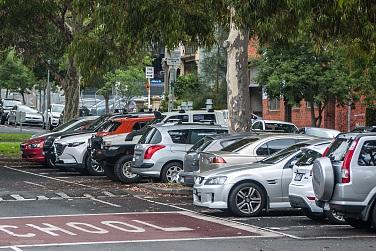
Maths eyes
Car par
k
number hunt
1. Choose a car. Write the reg. plate number:
2. What digit is in…
(a) the tens place?
(b) the ones place?
(c) the thousands place?
(d) the hundreds place?
3. Use four of the digits each time to make…
(a) the largest number possible
(b) the smallest number possible
4. Using the two numbers you made in question 3, find the… number before number after nearest 10 nearest 1,000
5. Represent the two numbers you made in question 3 using materials or sketches.
Maths eyes Choose a different car.
1. Write the reg. plate number
2. Use the digits to make…
(a) four 4-digit numbers
(b) four 3-digit numbers
3. Order your numbers from the least to the greatest.
Maths eyes
Find and write the reg. plate number of the…
1. newest car in the car park
2. oldest car in the car park
(a)
(b)
Angles
Look at the angles and answer the questions below.
Which angle is an example of…
1. a right angle? 2. an acute angle? 3. an obtuse angle?
4. a straight angle? 5. a reflex angle? 6. a full rotation?
Let’s talk!
Look at Dara and Lexi. What do you think?
Explain why.
I think there is more than one correct answer to some of the questions in .
I think there are two angles in each of the images A to E.
Angles are measured in degrees (°). Which angle in is an example of an angle measuring…
1. 360°? 2. 90°? 3. > 90°, < 180°?
4. 180°? 5. < 90°?
D Maths eyes
6. > 180°, < 360°?
Which image above is an example of an angle that is… 1. acute? 2. obtuse? 3. straight? 4. reflex?
Build it! Sketch it! Write it!
Use straws, sticks, pencils, etc. to model each of the angles in .
Draw a sketch of what you modeled.
Label what you sketched (e.g. name of angle and estimate of degrees).
Measuring Angles
Look at angles A to E and answer the questions below.
= right angle = 90° = 1 2 right angle = 45° = straight angle = 180°
1. Which two angles are almost a right angle? and
2. Which angle is almost a straight angle?
3. Which angle is half a right angle?
4. Which angle is less than half a right angle?
5. List the angles in order from smallest to greatest. < < < <
Without measuring, which angle in is… 1. 160°? 2. 45°? 3. 80°? 4. 100°? 5. 20°?
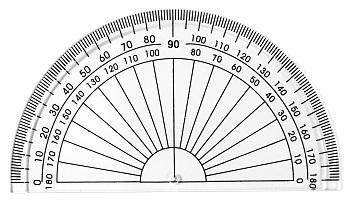
Look at the protractors below. What is the measure of each angle?
D Let’s talk!
Look at the angles in
Take turns with a partner to identify the type of angle for each, and estimate the measure in degrees.
Use your protractor to measure each angle in degrees.
Without drawing, identify the name of an angle measuring…
Try this!
In pairs or groups, discuss what Jay and Dara are saying.
Can you come up with a strategy for calculating the degrees in each of the reflex (outside) angles in ?
A protractor only goes to 180°, so we can’t use it to measure reflex angles. I think we can use it to measure reflex angles, but we need to do some subtracting or adding to get the answer.
The reflex (outside) angles are the angles in E not marked with a red line.
Lines
Let’s talk!
Look at Mia and then look around your classroom. Use the words below to describe the lines that you see.
Excluding the purple book, the other books are parallel to each other and perpendicular to the shelf.
horizontal vertical oblique perpendicular parallel Look at the image and answer the questions.
1. Give an example of
(a) a horizontal line (b) a vertical line
(c) an oblique line
2. Give at least two examples of
(a) perpendicular lines and and (b) parallel lines and and
True or false? In the image in …
1. lines A and F are perpendicular to each other.
2. lines B and H are parallel to each other.
3. lines B and E are parallel to each other.
4. lines D and G are perpendicular to each other.
I can use what I know about right angles to prove some of these.
Try this! Are these always (A), sometimes (S) or never (N) true?
1. Horizontal lines are perpendicular to vertical lines.
2. Oblique lines meet or cross each other.
3. Vertical lines are parallel to the ground.
4. Horizontal lines meet or cross each other.
5. Perpendicular lines meet or cross each other.
6. Parallel lines are either vertical or horizontal.
7. Perpendicular lines are made by a horizontal line and a vertical line.
8. Where a vertical line and a horizontal meet or cross (intersect) a right angle is formed.
9. If two lines are perpendicular to the same line, then they are parallel to each other.
Scale
Let’s talk!
Look at the images in and What do you notice? What do you wonder? What is the same? What is different?
Look at Mia and answer these.
Here’s an image of a picture that I drew. Can you see my markers sitting on the paper? My picture is too big to show it at its real size, so it has been made smaller here.
1. What is the…
(a) length of the marker on the sheet of paper? cm
In pairs, take turns to estimate the answer to each of the questions in and D as thousands, hundreds and something. Explain how you know.
Write or draw the answers to these.
1. 4,301 + 400 =
answer to the first one in will be four thousand, seven hundred and something.
3,000 + 4,754 =
D Write or draw the answers to these. 1. 3,789 – 100 = 2. 9,881 – 800 = 3. 7,583 – = 2,000 4. 6,915 – = 3,000
Adding and Subtracting without Renaming
Let’s talk!
In pairs, take turns to estimate the answer to each of the questions in and as thousands and something. Explain how you know.
Solve these without using the column method.
1. 7,034 + 2,843 =
2. 2,710 + 3,264 =
3. 9,475 – 8,344 =
4. 5,586 – 2,013 =
Use the column method to solve these.
D Let’s talk!
The answer to number 4 will be about three thousand. How did you do it?
Check your answers for and Use the bar models to help solve these.
1. 8,979 people attended a concert on the first night. If there were 2,347 men and 3,121 women, how many children attended the concert?
2. On the second night, there were 1,406 less people at the concert.
(a) How many people attended on the second night?
(b) What was the total attendance on both nights?
Try this! In your copy, create a word problem that does not need renaming.
Adding with Renaming
Let’s talk!
In pairs, take turns to estimate the answer to each of the questions in as thousands and something. Explain how you know.
Write the matching number sentence and solve each of these without using the column method.
Use the column method to solve these.
Check your answers for
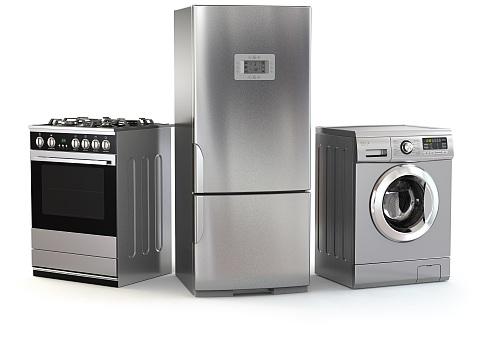
Cooker: €869
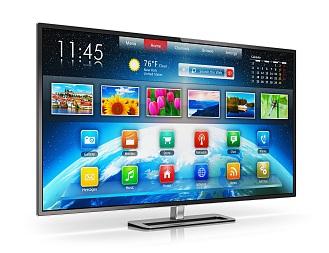
1. Anna is buying a TV and a cooker. About how much money will she need? €
2. Jim needs a washing machine, a cooker and a fridge-freezer for his new house. About how much money will he need? €
3. Is it better to round up or round down when estimating how much money is needed? Why?
4. Calculate the exact bill for each: (a) Anna € (b) Jim €
Try this! Work out what digit is represented by each letter below. 1.
Let’s play!
Number of players: 2–6
Chance Calculations – Addition
You will need: mini-whiteboard and marker per player, 0–9 spinner, pencil and paper clip
● Each player should draw these boxes for a calculation on their mini-whiteboard.
● Each player, in turn, spins the 0–9 spinner and writes the digit in one of their empty boxes.
● When all the boxes are full, each player calculates their answer.
● The player with the greatest total (answer) scores a point.
● The player with the highest score when the time is up wins the game.
Variations
1. The player with the smallest total (answer) wins.
2. The player with the total (answer) closest to 8,000 wins.
3. Instead of spinning for one digit at a time, spin for all six digits and decide where to write them in the calculation boxes.
Subtracting with Renaming
Let’s talk!
In pairs, take turns to estimate the answer to each of the questions in and as thousands, hundreds and something. Explain how you know.
Solve these without using the column method.
Use the column method to solve these.
D Let’s talk!
Check your answers for and Find the missing numbers.
In your copy, write a matching number story for each model in .
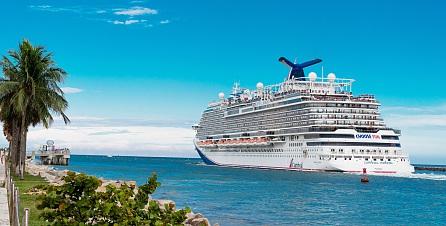
Cruise ship A
Cruise ship B
43848
1. Estimate to the nearest thousand the difference between the total amount of people on ship A and ship B.
2. Calculate the exact answer.
Try this! Work out what digit is represented by each letter below.
1. 5,43R 2. 7,520 3. 7,TT2 – R,678 – 3,8S4 – 3,589 R,754 R = 3,S5S S =
Let’s play!
Number of players: 2–6
Chance Calculations – Subtraction
You will need: mini-whiteboard and marker per player, 0–9 spinner, pencil and paper clip
● Each player should draw these boxes for a calculation on their mini-whiteboard.
● Each player, in turn, spins the 0–9 spinner eight times and then arranges the digits in their empty boxes.
● When all the boxes are full, each player calculates their answer.
● The player with the greatest difference (answer) scores a point.
● The player with the highest score when the time is up wins the game.
Variations
1. The player with the smallest difference (answer) wins.
2. The player closest to 5,000 wins.
Constant
Difference Subtraction
Use the open number line on your mini-whiteboard and constant difference subtraction to make these calculations friendlier.
=
(b) 53 – 19 =
(c) 65 – 29 =
(d) 72 – 38 =
(e) 84 – 47 =
(f) 93 – 56 =
If I adjust both numbers by the same amount, the difference between them stays the same.
(b) 121 – 98 = (c) 153 – 87 =
(d) 381 – 208 =
(e) 572 – 327 = (f) 701 – 346 =
Use constant difference subtraction to simplify subtracting from a number with zeros.
Let’s play! Play ‘What’s the Difference?’ on page 33.
Number of players: 2–6
Target 5,000
You will need: mini-whiteboard and marker per player, 0–9 spinner, pencil and paper clip
● Each player, in turn, spins the spinner three times, rearranges the digits spun to make the largest possible 3-digit number, and records it on their mini-whiteboard. For example, if a player spins 4, 5 and 6, they write down 654
● On their next turn, each player adds the new 3-digit number they have made to their previous 3-digit number, as a running total on their mini-whiteboard. For example, if a player spins 1, 2 and 8, they add 821 to 654
● The first player to reach or pass 5,000 wins the game.
Variations
1. Aim for a higher target (e.g. 9,000).
2. Start with 5,000 (or 9,000), and subtract the 3-digit number from this each time. The first player to reach or pass 100 wins the game.
What’s the Difference?
Number of players: 2–6
You will need: mini-whiteboard and marker per player, 0–9 spinner, pencil and paper clip
● Each player, in turn, spins the spinner five times and records the numbers spun. The highest number represents thousands, and the other four numbers have to be rearranged to make a 4-digit number to be subtracted.
● For example, if a player spun 8, 3, 6, 5 and 7, the 8 would become 8,000, and the other four numbers could become 7,653, 3,756 or 5,673, etc. This player then subtracts their 4-digit number from 8,000 to calculate the difference (answer).
● The player who has the smallest difference (answer) wins the game.
Data Displays
Look at the bar graph and answer the questions.
Title: Cartons of milk sold
Mon Tue Wed Thu Fri
0102030 40
Look at the bar graph and answer the questions.
Title: Heights in my family
150cm 125cm
25cm (a) (b) (c) (d)
1. How many cartons of milk were sold on Monday?
2. What is the difference between the greatest and the least number of cartons sold?
3. How many cartons were sold in total that week?
Think of a strategy for question 3 that doesn’t involve addition.
In this family, Sue is the tallest, Max is the shortest, and Jack is taller than Amy.
1. Work out where each name belongs on the bar graph. (a) (b) (c) (d)
2. How tall is Amy? cm
Look at the pie chart and answer the questions.
60 people were asked if they preferred dogs or cats. Estimate how many people chose…
3. neither dogs cats neither
1. dogs
2. cats
Try this!
1. Choose one of the data displays above and create a list, chart or table for the same information.
2. Explain which you think is better and why.
Line Plots
Look at the line plot and complete the sentences below.
Number of siblings of each child in our class = 1 child
The median is the middle value in an ordered list.
1. The mode, or most common number of siblings, was .
2. Most children in the class had or siblings.
3. Very few children in the class had less than or more than siblings.
4. The median number of siblings was .
Let’s talk!
Do you agree with Jay? Why or why not?
If we ask someone how many siblings they have, the answer is certain to be 2 or 3.
Look at the line plot and complete these.
Number of raisins in a box
1. The mode, or most common number of raisins, was .
2. Most boxes had or raisins.
3. The number of raisins in a box ranged from to .
4. boxes of raisins were counted.
5. The median number of raisins was .
6. True or false? If we open another box of raisins, it is highly likely that it will contain 28 or 29 raisins.
Try this! These were the numbers of books read by a group of children last month:
1. Draw a line plot to show the data.
2. Write three questions about the data.
Data Cards
Let’s talk!
Choose one data card and describe the person, using the information given.
Look at the data cards and answer the questions.
1. What is the most common way to travel to school?
2. What is the range of values for the time taken to travel to school?
3. What is the range of values for bedtime?
4. What is the median length of right foot?
Look at the data cards. True or false? (3) True False
1. There are more left-handed boys than left-handed girls.
2. The children who travel to school by car have longer travel times than those who travel a different way.
3. The 5th Class children are taller than the 4th Class children.
4. The 4th Class children have a shorter right foot length than the 5th Class children.
5. The 6th Class children are taller and have a longer right foot length than the other children.
6. The 6th Class children go to bed later than the other children.
I think that I could use the median value to prove my answers.
Try this!
1. What is the median height of the children in…
(a) 4th class? cm
(b) 5th class? cm
(c) 6th class? cm
2. What is the median height of the…
(a) boys? cm
(b) girls in 4th and 5th class? cm
1. Write in figures: five thousand, one hundred and nine.
3. Ring the number in which 6 has the greatest value: 3,956 3,611 1,965 2,361
2. What type of angle is this?
4. 6,376 + 1,928 =
Estimate: Solve:
5. Jay drew a map with a pond at grid reference A2. 4 squares to the right and 1 square down from the pond, he drew a house. What was the grid reference of the house?
6. Here are the amounts of trading cards owned by five children: 3, 8, 3, 7, 5.
3 2 1
(a) What is the mode (most frequently occurring value)?
(b) Order the values and then ring the median (middle value).
7. In October, the Village Bakery sold 3 thousands of cookies, 7 hundreds of cupcakes, 4 tens of muffins and 2 birthday cakes. How many items did they sell in October in total?
1. Name the types of angles formed by the hands of the clock. and
3. Lexi has drawn a map of the schoolyard with a scale: 1cm on the map represents 3m on the ground.
(a) If the real basketball court’s length is 27m, what is its length on the map? cm
(b) If, on the map, the school garden is 5cm wide, what is the width of the real school garden? m
4,352
2. Model and solve: Liam’s Bike Shop sold 1,409 bikes one year, and 98 less the following year. How many bikes were sold in the two years?
4. Make the greatest possible number using these digits:
(a) 2, 3, 5 and 6
(b) 9, 5, 1 and 0
(c) 0, 7, 4 and 0
5. A group of friends recorded their shoe sizes: 2, 4, 3, 2, 5, 3, 3. How many had a shoe size of 3?
6. Write and solve the matching number sentence. =
7. By how much (in digits) is eight thousand, three hundred and nineteen greater than five thousand, seven hundred and forty-six?
1. Identify the measure of the angle shown on the protractor. °
4. 3 the number nearest to 5,000.
(a) 4,365 or 4,859
(b) 5,364 or 5,789
(c) 4,890 or 4,980
2. Write numbers to make these true:
(a) 6,093 < 6,000 + + 3
(b) Five thousand and seventy-two is less than .
3. Write in expanded form: 7,689
5. In this pie chart, 14 children prefer the colour red. How many prefer blue?
6. (a) Which item below has rotational symmetry of order 3?
(b) Which item has a 90° angle of rotation?
Try this!
1. Here are the amounts of raisins in seven boxes: 23, 24, 17, 21, 22, 19, 23. What is…
(a) the mode?
(b) the median?
AB CD E
2. What is Mia’s number?
I’m thinking of a number that has 17 tens, 24 ones and 2 thousands.
3. The total of two 3-digit numbers is 1,517. What might the calculation be?
4. What type of angle is formed if the red arrow rotates…
(a) clockwise to E?
(b) anti-clockwise to S?
(c) clockwise to W?
(d) anti-clockwise to NW?
(e) clockwise to SE?
5. (a) What was the highest temperature of the week? °C
(b) The temperature was below 21°C on and .
(c) In which season do you think this data was recorded?
Mountain Maths Project
Look at the display above and answer the questions.
1. Write < or > to make these true.
(a) Denali Vinson Massif
(b) Elbrus Kilimanjaro
Try this! In your copy, draw a bar graph to represent the heights of these mountains when rounded to the nearest thousand metres. We made the display above for our project on the world’s tallest mountains.
2. Which height, when rounded to the nearest thousand, is 7,000m? m
3. Which three heights round to the same number? m m m
4. Calculate the difference in height between the 1st and 2nd tallest mountains. m
5. What is the combined height of the 2nd and 7th tallest mountains? m
6. How much taller is Denali than Elbrus? m
7. Which two mountains are closest to each other in height? and
Look at the bar graph and answer the questions.
1. In which month is the snow… (a) deepest?
(b) shallowest?
2. What is the difference in cm between the values for the months in question 1? cm
3. How much deeper is the snow… (a) in November than in July? cm
(b) in March than in September? cm
4. For how many months is the snow deeper than 15cm?
Look at the drawing and answer the questions.
I drew this mountain scene for our project.
1. 3 all that apply for each shape.
(a) A has lines that are: perpendicular parallel oblique
(b) B has lines that are: perpendicular parallel oblique .
(c) C has lines that are: perpendicular parallel oblique
2. Which of angles D–H is an example of an angle that is… (a) right? (b) straight? (c) acute? (d) obtuse? (e) reflex?
3. True or false? B has rotational symmetry of order 8. Let’s create!
Draw your own mountain scene made up of lines, angles and 2-D shapes.
Average depth of snow in cm on Kilimanjaro’s summit during the year
Modeling Multiplication
Write and solve the matching multiplication sentences. Show these addition sentences as multiplication sentences and solve.
Product: the answer in a multiplication sentence.
Try this! Headline story! 36 chairs were arranged in equal rows.
What maths questions could you ask? How could you model and solve the questions?
Let’s talk!
Multiplying by 0, 1 and 10
Factors: numbers multiplied by each other to get a product.
How you would match the remaining boxes below?
Ten times a number moves the digits in the number to the left (bigger).
One times any number is the number itself.
Zero times any number is zero.
If one of the factors is 0, the product will be zero.
If one of the factors is 10, the digit(s) in the other factor will move to the left.
If one of the factors is 1, the product will be the other factor.
How many flowers? Write a matching multiplication sentence for each. Find the missing product for each.
For the first one, think: 9 groups of what is zero?
Use what you know to solve what you don’t know!
Let’s play!
Play ‘Times Snap’ on page 50, but place all the 10s, 1s (aces) and picture cards (which count as 0) in one pile, and all the rest of the cards in the other pile.
Multiplying using Groups
Model and solve these.
Multiplication is distributive: factors can be broken apart, multiplied separately and then added back together
Hint: Read the × symbol as ‘rows of’.
Say 5 rows of 9 and 5 rows of 9 equals 10 rows of 9.
1. Jay has 4 packets of 8 collector cards. Lexi has 3 packets of 8 collector cards. How many… (a) packets in total? (b) cards in total?
2. There are 10 packets with 9 crackers in each. If seven packets are eaten, how many… (a) packets are left? (b) crackers are left?
Try this! Build it! Sketch it! Write it!
Jay planted red and yellow tulips in such a way that each row was all red or all yellow.
If 36 tulips were planted in total, show how they might have been planted.
Let’s play! Play ‘Chance Calculations –Multiplication Facts’ on page 50. Use your understanding of groups to help you play the game.
Multiplication Strategies
Let’s talk!
How would you match these?
5 times a number is
3 times a number is 9 times a number is 6 times a number is 4 times a number is 2 times a number is 8 times a number is
1 set less than 10 times the number double the number, double the answer treble the number, double the answer double the number, double the answer, double the answer half 10 times the number double the number plus 1 set more double the number
What numbers up to ten are missing above? Explain why. What other strategies could also be used for some of these?
Solve these.
Find the missing product for each.
D Find the missing factor for each.
Try this!
1. Some pictures were hung in eight rows with six pictures in each row. How many pictures were there altogether?
2. Nine children each bought six buns at a cake sale. How many buns did they buy altogether?
3. How much change should there be out of €100 after buying nine cinema tickets costing €8 each? €
Modeling Division
Write and solve the matching division sentences.
Model and solve these.
Let’s talk!
Think of a story to match some of the number sentences in
Try this! Build it! Sketch it! Write it!
Use models and division sentences to help you solve these.
1. A box of washing powder contains enough for 35 full loads. If Jay’s family washes five full loads every week, for how many weeks will the box last?
2. There were 63 cars in a car park If they were parked in seven rows, how many cars were in each row?
3. The principal bought eight tubes containing three tennis balls each. He then divided the balls among four teams. How many balls did each team get?
Multiplication and Division as Inverse
Write matching multiplication and division sentences for each.
Write matching multiplication and division sentences for each bar model.
D Let’s talk!
What strategies did you use to check the answers in ?
Try this!
1. Look at Jay. What are his numbers? and
2. Make up a puzzle like Jay’s for your partner to solve.
I’m thinking of two numbers where the sum of the numbers is 13 and the product is 36.
Division Strategies
Let’s talk!
How would you match these?
To divide by 2
To divide by 4
To divide by 8
To divide by 10
What other strategies could be used for division?
Solve these.
halve the number, halve it again and halve it again
halve the number
move the digits in the number to the right (smaller)
halve the number, and halve it again
This is another way to write division calculations.
Let’s talk!
What strategies did you use to work out the answers to ?
Try this!
1. 56 children were divided into 7 teams. How many children were there on each team?
2. Dara has six times as much money as Lexi. If Dara has €42, how much money does Lexi have? €
3. 72 pupils are going on a trip. If there must be one adult with every 8 children, how many adults are needed?
4. If a box holds 9 buns, how many boxes do I need for 63 buns?
Lexi Dara € €
Let’s talk!
Look at
Remainders
The remainder is the amount left over after dividing a number.
Predict which ones will have a remainder. Explain why. Write the matching division sentence for each.
1. How many squares can I make with 25 sticks? How many will be left over?
2. How many triangles can I make with 20 sticks? How many will be left over?
= R
3. How many pentagons can I make with 24 sticks? How many will be left over?
4. How many hexagons can I make with 29 sticks? How many will be left over?
Solve these.
= R
= R
D Let’s talk!
Read the question and look at the children. Who is correct? Explain why. Can you suggest the thinking behind the incorrect answers?
30 blueberries are shared among 4. How many are left over?
Number of players: 3–4
Times Snap
You will need: deck of playing cards with picture cards removed
● Split the deck to create two piles of cards.
● The dealer turns over the top card in both piles in full view of the other players. The player who first calls out the product of the two cards wins those cards.
● Play continues until all the cards are gone.
● The player with the most cards at the end wins the round and becomes the dealer for the next round.
Chance Calculations – Multiplication Facts
Number of players: 2–6
You will need: mini-whiteboard and marker per player, 0–9 spinner, pencil and paper clip
● To start, on their mini-whiteboard, each player draws these boxes for three multiplication calculations.
● Each player, in turn, spins the spinner and writes the number spun into one of the two boxes as a factor.
● When the first two boxes are full on each line, the players must calculate each product (answer line) and then total the three products.
● The player with the highest total wins.
Chance Calculations – Division Facts
Number of players: 2–6
You will need: mini-whiteboard and marker per player, 0–9 spinner, pencil and paper clip
● To start, on their mini-whiteboard, each player draws these boxes and answer lines for three division calculations.
● Each player, in turn, spins the spinner and writes the number spun into one of the three boxes to make the dividend and divisor.
● When the three boxes are full on each line, the players must calculate the division answer and remainder if there is one (last answer line) and then total the three answers (but not the remainders).
● The player with the highest total wins.
Days, Weeks, Months, Years
Let’s talk!
Discuss as a class or in groups: Are these always, sometimes or never true?
● There are 730 days in 2 years.
● There are 29 days in February.
● There are 15 minutes in a quarter of an hour.
● 8 months of the year have 31 days.
● April is the 4th month of the year.
Use a calendar for the current year to help answer these questions.
1. What is the date of the 3rd Monday in March?
2. What is the date of the last Friday in September?
3. What day was the 28th of December last year?
4. What day will be the 3rd of January next year?
5. On what day is your birthday this year?
6. On what day is your birthday next year?
7. Mia is going on holidays for 21 days. Her holiday starts on the second Saturday of July. On what day and date will it end?
8. A seed is planted on the 1st of May. It takes 8 weeks to grow its first flower.
(a) In what month does the first flower appear? (b) How many days after planting is that?
9. If a baby is born on the first Thursday of April, on what day and date will she be exactly 12 weeks old?
Answer these.
1. Here are the birthdates of some animals at the zoo:
Leo –
22nd July 2022
Stretch –10/3/2021
Tina – 1st November 2023
Po –19/1/2023
Ziggy –3rd May 2021
(a) Who is the youngest? (b) Who is the oldest?
2. A family moved into a house in February 2008, and moved out in October 2021. For how many full years did they live in the house?
Try this! What day and date will be the 100th day of this year? How might you find this out without counting 100 days?
D
Let’s talk!
Seconds, Minutes, Hours
If you were waiting for a package, which of these text messages would you prefer to receive? Why?
:30 p.m..
Why, do you think, have the delivery people not texted the exact delivery time?
How many minutes in…
1. 2 hours? 2. 4 hours?
3. 8 hours?
3
How many seconds in…
1. 3 minutes?
3. 6 minutes?
1 10 of a minute?
Change to minutes.
10 minutes?
1. 1 hour and 10 minutes = mins
2. 1 hour and 35 minutes = mins
3. 2 hours and 5 minutes = mins
4. 2 hours and 38 minutes = mins
5. 3 hours and 40 minutes = mins
Change to hours and minutes.
1. 80 minutes = hr mins
2. 104 minutes = hr mins
3. 140 minutes = hrs mins
4. 175 minutes = hrs mins
5. 230 minutes = hrs mins
Remember: There are 60 minutes in an hour, and 60 seconds in a minute.
+ 25 = 85 mins
mins
Try this! Sarah was training for a race. On Monday, she ran for 30 minutes. On Wednesday, she ran for 45 minutes. On Friday, she ran for 55 minutes. For how long did Sarah run in total that week? hrs mins 60 + 60 + 10 = 2 hrs 10 mins
Answer these. Use a calculator if necessary to help you.
1. How many minutes in a day?
2. How many seconds in an hour?
Measuring and Recording Time
Let’s talk!
Do you think it takes less than a minute or more than a minute to…
● list 20 different kinds of animals?
● put 16 gloves in pairs?
● fill a 1-litre bottle from the tap?
● untie and tie your laces four times?
● write your name 10 times (neatly)?
● pick up 12 tennis balls that have rolled around the room?
● say this tongue twister 10 times: ‘So, this is the sushi chef’?
Let’s investigate!
In pairs or groups, choose two of the activities above. Estimate how many seconds each activity will take. Then, time it.
Likely or unlikely?
Emily is 10 years old. She is making some claims about how she spends time in a week. Do you think her claims are likely or unlikely to be true? (3) D Mark each year on the timeline using an arrow.
1. Sleeping – 28 hours
2. Brushing teeth – 28 minutes
3. Eating lunch – 98 minutes
4. Tying shoe laces – 70 minutes
5. Getting ready for bed – 7 minutes
Analogue and Digital Clocks
3 the correct time for each.
Write these as digital times.
Example: 20 to 4 = 3:40
1. quarter past 5
2. half past 9
3. 25 past 8
4. 10 past 3
5. 5 past 12
6. 25 to 7
7. 20 to 4
8. quarter to 6
9. 10 to 11
10. 25 to 1
Try this! Mia plans to leave for soccer training in 3 4 of an hour. Write when she will leave in digital time.
Let’s talk!
The 24-hour Clock
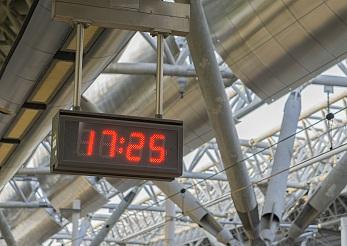
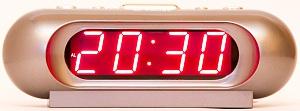
What do you notice about each picture?
In what kind of building might you find a clock like this? Where would you see times listed like this? This is my bedtime. What’s your bedtime in 24-hour time?
Write these as 12-hour times. Use the table above to help you.
Write these as 24-hour times. Use the table above to help you.
D Match each activity in Jay’s day to the most likely time.
10:20 9:50 10 mins before 20 mins after 10 mins after 20 mins before
Use number lines to calculate these.
1. Mia is travelling to the National Concert Hall. If the bus ride is 1 hour 40 minutes, followed by a 30-minute walk, what is her total travel time? hrs mins
2. A aeroplane flight was due to last 2 hours 5 minutes, but with good winds, it landed 15 minutes ahead of time. What was the flight time?
D Let’s talk!
Look at how Jay did these calculations. Do they work? Explain why.
What tips would you give another to ensure that they use this method correctly?
Use the column method to calculate these. Check your answers using the open number line on your mini-whiteboard.
Try this!
1. Look at the image.
(a) How long does it take altogether to clean one bottle? mins secs
(b) How many bottles will the machine clean in one hour?
2. Look at the image. How long before all the cars charge? hr mins
Calculating Start and End Times
Use the timeline above to help you answer these.
1. If it is 3:45 p.m. now, what time will it be in…
(a) 25 minutes? p.m. (b) 50 minutes? p.m.
(c) 1 1 4 hours? p.m. (d) 2 hrs 10 mins? p.m.
2. At what time did each of these events end?
(a) A film began at 3:45 p.m. and lasted 1 hour and 20 minutes. p.m.
(b) Training began at 3:45 p.m. and lasted 55 minutes. p.m.
(c) A play began at 5:15 p.m. and lasted 1 hour and 5 minutes. p.m.
3. 4. p.m. p.m.
Try this!
Swimming begins at 6:45 p.m. At what time should I leave my house if it takes me 35 minutes to reach the pool?
My muffins take 35 minutes to bake and 30 minutes to cool. I want them to be ready by 6 o’clock. What’s the latest time I should put them in the oven?
1. Lucy reached this sign at 12 p.m. If she cycled
every 4
minutes, at what time did she leave Sligo?
2. If she continued to cycle at the same speed, at what time did she reach Carrick?
Timetables
Look at the information and answer the questions.
1. How many minutes later is low tide on Wednesday than on Tuesday? mins
2. How many minutes earlier is high tide on the 7th of July than on the 8th of July? mins
3. For how many hours and minutes will there be a lifeguard on duty? hrs mins
4. Lexi likes to swim just before high tide. At what time might she go for a swim on Thursday?
5. Write as 24-hour times, the time of… (a) low tide on Thursday (b) high tide on Tuesday
6. Choose any day. How many hours and minutes between low tide and high tide? hrs mins.
Maths eyes
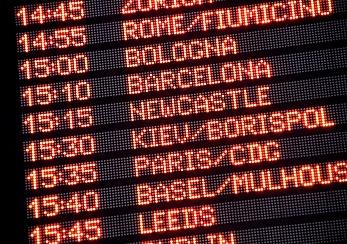
DEPARTURES
1. Lexi is flying to London. For how long must she wait?
2. Dara is flying to Knock. For how long must he wait?
3. Mia is flying to New York. For how long must she wait?
Try this! Look at the departures in Jay boarded the plane for Oslo at 12:55. The flight time was 2 hours and 10 minutes. For how long was he on the plane altogether?
Estimating and Multiplying with Multiples of 10 and 100
Write and solve the matching multiplication sentence.
Solve these.
Solve these.
D Let’s talk! What
Try this!
1. Using only rounding and the strategy of multiplying by multiples of ten, match each calculation to its most likely estimate.
2. Use your calculator to calculate the correct answers. How close are the estimates to the actual answers?
How were your strategies the same as or different from your partner’s?
Multiplying 2-digit by 1-digit Numbers
Write and solve the matching number sentences.
=
Solve each group of related facts.
9 × 3
9
Let’s talk
!
Estimate the answers to D . Estimates should be quick and rough. D Model and solve these. 1. HT O 2. HT O
= How could you check your answers?
Try this! Model and solve these.
1. There are 18 pencils in a box. How many pencils in five boxes? 2. A sandbag weighs 15kg. What is the total weight of eight sandbags?
3. There are 28 children in a class. How many children in four of these classes? 4. A pair of shorts costs €17. A jersey costs 5 times that amount. How much is the jersey? €
Play ‘Chance Calculations – Multiplication’ on page 69.
Estimate the answers to D . Remember: Estimates should be quick and rough.
Let’s talk!
Check your answers to D without using a calculator. How did you do it?
Now, check your answers with a calculator, but without using the × button. How did you do it?
Try this! A go-kart costs €135. A bike costs 4 times this amount.
1. How much is the bike?
2. What is the total cost of a bike and a go-kart?
3. How much more is the bike than the go-kart?
Let’s talk!
Look carefully at the calculations below and say whether each answer is reasonable or unreasonable. Can you find the error(s)?
What tips would you give?
Let’s play!
Play ‘Chance Calculations – Multiplication (Variation 1)’ on page 69.
Let’s
investigate!
You can use your calculator to help with these.
1. When multiplying a 3-digit number by a 1-digit number, what is… (a) the greatest product possible?
(b) the least product possible?
(c) the greatest number of digits possible in the product? (d) the least number of digits possible in the product?
2. If using four different digits each time, what is… (a) the greatest product possible? (b) the least product possible?
Estimating and Dividing with Multiples of 10 and 100
Write and solve the matching division sentence.
Find a nearby friendly dividend to estimate an answer for each of these.
Try this!
1. A prize of €900 was divided evenly among 3 people. How much did each person get? €
2. A length of ribbon 360cm long was divided evenly into 6 pieces. What was the length of each piece? cm
3. There are 119 children in 4 classes. Roughly how many children are there in each class?
Dividing 2-digit Numbers
Write and solve the matching division sentences. Partition into friendly dividends to divide these.
Dividing 3-digit Numbers
Write and solve the matching number sentences.
Solve each group of related calculations.
Let’s talk!
Estimate the answers to D
Remember: Estimates should be quick and rough.
D Model and solve these, using the column method.
Let’s talk!
Check your answers to D without using a calculator. How did you do it?
Now, check your answers with a calculator, but without using the ÷ button. How did you do it?
Try this!
1. Mia can skip 345 times in three minutes. How many skips is that per minute?
2. Jay’s dad needs 132 litres of paint for a house. If the paint is sold in 5-litre cans, how many cans does he need to buy?
Let’s play!
Play ‘Chance Calculations – Division (Variation)’ on page 69.
Let’s investigate!
You can use your calculator to help with these. When dividing a 3-digit number by a 1-digit number, what is…
1. the greatest answer possible (ignoring any remainders)?
2. the least answer possible (ignoring any remainders)?
3. the greatest number of digits possible in the answer?
4. the least number of digits possible in the answer?
Multiplying Three Numbers
Write and solve the matching multiplication sentences.
1. How many pencils?
2. How many packets?
How many plates?
How many small cubes in each of these cuboids? Write and solve the matching multiplication sentence.
Let’s talk!
Compare with a partner how you did and Did you get the same answers? Did you multiply the same numbers first? Which two numbers did you multiply first and why?
Try this! Dara made a cuboid using 60 small cubes. What might his cuboid look like? What might the matching multiplication sentence be?
Chance Calculations – Multiplication
Number of players: 2–6
You will need: mini-whiteboard and marker per player, 0–9 spinner, pencil and paper clip
● To start, on their mini-whiteboard, each player draws these boxes for a multiplication calculation (2-digit × 1-digit).
● Each player, in turn, spins the spinner and writes the number spun into one of their boxes.
● When the three boxes are full, the players calculate the product.
● The player with the highest product wins.
Variations
1. Play as above, but draw these boxes to start (3-digit × 1-digit).
2. Play as above, but draw these boxes to start (1-digit × 1-digit × 1-digit).
Chance Calculations – Division
Number of players: 2–6
You will need: mini-whiteboard and marker per player, 0–9 spinner, pencil and paper clip
● To start, on their mini-whiteboard, each player draws these boxes for a division calculation (2-digit ÷ 1-digit).
● Each player, in turn, spins the spinner three times and writes the numbers spun into their boxes.
● When all the boxes are full, the players calculate the answer (ignore any remainders).
● The player with the highest answer wins.
Variation
● Play as above, but draw these boxes to start (3-digit ÷ 1-digit) and spin the spinner four times to collect four digits.
1. How many weeks are there in 301 days? weeks
2. Change to minutes: 1 hr 56 mins = mins
3. What is the product of 4 and 9?
4. If three scooters cost €372, how much would one scooter cost? €
7. How long did Mia spend working in the garden if she spent 25 mins on Friday, 75 mins on Saturday and 35 mins on Sunday? hrs mins
8. A baker has 85 buns to pack in boxes. Each box holds 9 buns. If he can only sell full boxes, how many buns will be left over?
1. Write this as repeated subtraction and as a division number sentence: 56 – 7 – 7 – = 0 ÷ =
2. How many minutes are there between 20 to 6 and 20 past 6? mins
5:00 p.m 6:00 p.m 7:00 p.m
3. Find the missing factor: 6 × = 6
4. The news started at 5:45 p.m. and ended 30 minutes later. Country Round-up was the next programme, and it ended 1 hour after the news ended. At what time did it end? p.m.
5. Write the missing factor: 7 × = 35 8.
6. If the 29th of May is a Thursday, what day of the week is the 4th of June?
7. Find the product: 123 × 4 =
1. This packet of rice cakes was divided between 8 people. Write and solve a division sentence to show this.
2. Each table in a restaurant can seat 4 people. How many chairs would be needed if there were…
(a) 10 tables in the restaurant?
(b) 20 tables in the restaurant?
4. Write this in 24-hour time: 1 4 past 2 p.m. = :
6. Write < or > to make these true.
(a) 6 × 6 42
(b) 2 × 10 10
(c) 2 × 9 16
3. Solve this group of related facts:
(a) 6 × 3 =
(b) 60 × 3 =
(c) 100 × 3 =
(d) 166 × 3 =
5. 49 hours = days hrs
7. Solve this using the area model: 172 × 4 =
8. Use a friendly divisor to estimate the answer and then work this out:
Try this!
1. Jay sold five times as many tickets as Dara sold for the school concert. If the two boys sold 60 tickets altogether, how many did they each sell?
(a) Jay (b) Dara
2. Use this year’s calendar and answer these.
(a) Is this a leap year?
(b) How many Thursdays in July?
(c) How many weeks in winter?
(d) How many days in school until your next school holiday?
3. Use models or strategies to work out Lexi’s number.
I’m thinking of a number greater than 20, but less than 40. When divided by 4, there is a remainder of 1. When divided by 5, there is a remainder of 3.
4. At a soccer blitz, there were 23 teams. 10 teams brought 10 players, 7 teams brought 9 players and the rest of the teams brought 8 players. How many players were there?
5. The principal bought 8 bags of 30 lollipops.
(a) How many lollipops were there altogether?
(b) After she shared the lollipops among 10 classes with 22 children in each class, how many were left over?
Use a bar model or another strategy to help you solve number 4.
A Trip to a Train Station
Look at the image and answer the questions.
1. Write a departure time that is…
(a) before midday
(b) after midday
(c) earlier than 1:00 p.m.
(d) later than 1:00 p.m.
2. Write two departure times that can be expressed as…
3. Mia’s family are taking the first train to Limerick How long do they have to wait for the train to depart? mins
4. It took Mia’s family 30 minutes to travel from home to the train station. At what time did they leave home this morning?
5. If they had arrived at the station at 08:45, for how many minutes would they have been waiting for the next train to Limerick to depart? mins
6. The 8:40 train to Limerick is due to arrive at 10:55. How long does the journey take? hrs mins
7. The journey to Waterford takes 2 hours and 20 minutes. At what time should the 09:45 train arrive in Waterford if there are no delays?
Look at the table and answer the questions.
Ticket prices
Dublin to Limerick Dublin to Galway
Adult €18 €15
Child €10
€8
1. How much did the four tickets to Limerick for Mia’s family cost? €
2. A child’s ticket to Portlaoise is half the amount of a child’s ticket to Galway. What is the cost of a child’s ticket to Cork if it is three times the cost of the ticket to Portlaoise? €
Answer these.
Cork ?
1. Mia’s mum brought a box of 36 strawberries to share equally among the family. How many did they each get?
2. The train to Limerick had 4 carriages with 69 seats in each.
(a) What was the total number of passengers the train could seat?
(b) How many carriages would be needed to seat 300 passengers?
3. It takes a cleaning crew 18 minutes to clean one train carriage. If there are 4 carriages to be cleaned, write how long this will take in…
(a) minutes
(b) hours and minutes
D Look at the departure times on page 72 and answer these.
1. What do you notice about the departure times of the trains to Galway?
2. If this pattern continues, what would be the departure times of the next three trains to Galway? 18 mins ?
Galway
Portlaoise
Let’s talk!
Identifying Fractions
Use fraction words to describe them.
Chat to your partner about the images below.
What fraction of each shape is coloured?
In , what fraction of each shape is white?
Let’s talk!
Do any of the models in or D show more than one fraction?
Which ones? Explain how.
Let’s play!
Number of players: 2
Pizza Party
You will need: mini-whiteboard and marker per player, pencil and paper clip
● To start, on their mini-whiteboard, each player draws three circles divided into twelfths to represent pizzas.
● The player whose birthday is next can go first. Each player, in turn, spins the spinner and shades or crosses out the fraction spun of one of their pizzas to show that this amount has been eaten.
● The first player to ‘eat’ all of their three pizzas wins the game.
Try this! Write fractions to make three different true number sentences for each of these. Use different denominators in each number sentence.
Extra: Do this again but this time use a mix of denominators in the same number sentence!
Let’s
talk!
Equivalent Fractions
Look the shapes below. Do you agree with Dara or Mia? Explain why.
1. 2. 3.
The fraction that is blue on 1 and 2 is equivalent, because there are 4 parts coloured blue on both. The fraction that is blue on 2 and 3 is equivalent, because they are both coloured blue in the same place.
Which of these fractions represented (coloured) are equivalent? Match.
AB CD
True or false? 3 or 7.
D Model and solve these.
Explain why.
I don’t believe you! Prove it!
Let’s talk!
Discuss as a class or in groups.
Are these always, sometimes or never true?
If a fraction is…
● equivalent to 1 half, the numerator is half the denominator
● equivalent to 1 third, the denominator is three times the numerator
● equivalent to 3 quarters, the numerator is three times the denominator.
7 9
Comparing and Ordering Fractions
Let’s talk!
Look at the fraction wall above. Which unit fraction is…
● the smallest? the largest?
● closest but not equal to 0? 1? 1 half? When the numerators are the same, the greater the denominator, the the fraction.
Write >, < or = to make these true.
Put each group of fractions in order, starting with the smallest.
D What fraction could be missing in each of these?
Try this!
1. Look at Mia. What fraction could she be thinking of? Can you work out three possible answers?
2. Make up a similar clue like Mia’s for your partner to solve.
I am thinking of a fraction that is
Fractions Greater than 1
How many hexagons can be made and how many pieces are left over?
Express each answer to as an improper fraction and as a mixed number.
1. = 2. =
Express each amount as an improper fraction and as a mixed number.
D Express each value, represented at the letter below, as an improper fraction and as a mixed number.
Try this! Write 2 6 9 in as many different ways as you can.
Adding Fractions
For each model, write the matching addition sentence and solve.
Draw or use models to help you solve these.
Let’s talk!
Look at Jay. Do you think what he’s saying is always, sometimes or never true?
Discuss as a class or in groups.
Try this! Headline story! Look at Lexi.
What maths questions could you ask?
How could you model and solve the questions?
The answer to three fractions added together will be greater than 1.
of
Subtracting Fractions
For each model, write the matching subtraction sentence and solve.
Write the fraction that is missing in each branching bond.
Draw or use models to help you solve these.
Try this! Model and solve these. Write the answers in their simplest form.
1. Mia walked 5 6 km from school. Jay walked 1 2 km from school. Who walked farther and by how much? walked farther by km.
2. Lexi and Dara have identical bottles of water. Dara drank 8 12 of his bottle and Lexi drank 3 9 of her bottle. Who has more water left and what fraction more do they have? has more water left than . I think some of the answers can be written in more than one way.
Finding a Fraction of a Whole Amount
Model and solve these.
1. Out of 24 apples, 5 6 are red.
How many red apples are there?
5 6 of 24 =
2. Out of 40 tulips, 3 8 are red. How many red tulips are there?
3 8 of 40 =
For each of the bar models, write a matching fraction sentence and solve.
Without calculating, use your estimation skills to choose the most suitable answer.
Finding the Whole Amount
Model and solve these.
1. A punnet of strawberries was shared equally among 3 children. If 2 children had 12 strawberries altogether, how many were in the punnet at the start?
2. In a survey, 5 9 of a class prefer football to hurling. If 15 children prefer football, how many children are in the class?
For each of the bar models, write a matching fraction sentence and solve.
f = 10 then =
If = 16 then =
f = 9 then =
. If = 35 then =
Each ribbon has had a fraction cut off it. What was the length at the start?
5 6 of ribbon:
Try this! Model and solve this.
The principal bought footballs and shared them among three classes. She gave 1 half to 6th Class and 1 sixth to 4th Class. If she gave 20 to 5th Class, how many… 1. did 6th Class get? 2. did 4th Class get? 3. did she buy?
Metres and Centimetres
Estimate and then measure…
1. the length of 6 books
2. the length of your table
3. the width of the door
4. the length of your class board
Rename these lengths. 1.
10. What is the difference in cm between the least and greatest measure in 1–9? cm
11. Write the last 4 measures in 1–9 above, in order least to greatest. < < <
Solve.
Jay jumped 1 2 metre.
Mia jumped 10cm farther than Jay.
Dara jumped 15cm farther than Mia.
What is the total length of all of their jumps?
Try this! Use the ruled line to identify the most likely length for each piece of string below.
Can a ruler be used to measure a curved line?
Dara
Kilometres
Let’s talk!
Look at the map.
Estimate in (a) km and (b) m how far Lexi has to run before she reaches the water station. If it takes Lexi 7 minutes to run the first kilometre, what would her finishing time be? Explain why.
Using your ruler, measure the distance ‘as the crow flies’, to the nearest kilometre, between the following landmarks.
1. Cork City Gaol to Cork Opera House km
1. Cork City Gaol
2. Wilton Shopping Centre
3. Cork Opera House
4. Fitzgerald Park
5. St. Finbarre’s Cathedral 1cm = 1km
2. Cork City Gaol to the Wilton Shopping Centre km
3. Wilton Shopping Centre to St. Finbarre’s Cathedral km
4. Fitzgerald Park to Cork Opera House km
What distance do you travel to school? How could you find this out?
Write the measurement in: km and m
How could you measure this?
Try this! Look at the map in What distance would the following journey be as the crow flies:
Operations Using Metres and Kilometres
Look at the image and answer the questions.
Running track 1 lap = 400m
1. Mia ran 10 laps of the running track. What distance did she run:
(a) in metres? m
(b) in kilometres? km
2. Dara ran 1 4 of a lap. What distance did he run in metres? m
3. If Lexi has already run 240m, how many more metres must she run to complete a full lap? m
4. Jay wants to run 1.2km. How many (a) metres and (b) laps is that?
(a) m (b) laps
Let’s talk!
Look at the image in Would you rather run 4 laps or 2km? Explain why.
Look at the image and answer the questions.
1. How many centimetres are in 1.2m? cm
2. What is the total width of 3 lanes? Write this in two ways
3. Which is wider, 4 lanes or 5m?
Try this!
1. Mia ran 1.5km on Monday. She added 1 4 km to her run every day for the next few days. What was the total distance that she ran by Thursday?
2. Lexi cycled 15km. This is 3 4 of the distance that Jay cycled. What distance did Jay cycle?
15km km
1km + 300m can be written as 1.3km. I’d use a T-chart to help.
Running lanes 1 lane = 1.2m wide
Perimeter
Estimate and then measure the perimeter of…
Estimate Measure
1. your classroom
2. a book
3. the classroom table
4.
Measure the perimeter of each sticker using your ruler.
Let’s talk!
1. Look back over activity Did you have to measure all of the sides each time to find the perimeter?
2. For which shapes above could you work out the perimeter by measuring one side only? Explain why this is.
D Without measuring, calculate the perimeter of these shapes.
Try this!
1. What is the perimeter of this field in metres?
2. If a fence was built around this pitch using panels 2m in width, how many panels would be needed?
3. If a panel behind each goal was replaced with a gate, also 2m wide, how many panels would be needed?
The lines tell me that the marked sides are equal.
Amounts of Money
How much altogether, if you have…
4 and 4 ? 3 and 4 and 3 ?
and
Write the cent amounts as euro, and the euro amounts as cent.
1. €40 49 = c 2. 1,094c = € 3. €70 90 = c 4. 5,029c = €
€29 45 = c 6. 1,505c = €
Write >, < or = to make these true.
D Let’s talk!
You have: €5, €5, €2, 50c, 50c, 50c, 20c, 20c, 20c. Look at the image.
Discuss with your partner what notes/coins you would put into the machine to get each toy. Explain your thinking.
Try this!
For the robot, I’d put in €2, 50c and 20c. That makes €2.70, which is close to €2 55. I’d put in €2, 20c, 20c and 20c. That makes €2.60, so I’d only lose 5c change.
1. Lexi has €28.23. Make this amount using the least possible number of notes and coins.
2. Jay has 5 different coins. Write (a) the greatest possible amount and (b) the least possible amount that he has. (a) (b)
3. Dara has 3 different notes. Write (a) the greatest possible amount and (b) the least possible amount that he has. (a) (b)
Estimating Amounts
Let’s talk!
Look at each image below. Where would you put the decimal point to make the price reasonable? Explain your thinking.
For the first one, I’d put the decimal point after the 1.
I agree. €1.25 is a reasonable price for a scone, but €12.50 isn’t!
Write a reasonable euro estimate for each of these amounts.
Let’s talk!
With a partner, compare the strategies you used to arrive at your estimates in .
D Look at the images and answer the questions below.
Estimate a reasonable answer (euros only) for…
1. (a) the cost of buying one of each item. € (b) the amount of change due from €100. €
2. (a) the cost of buying three of item C. € (b) the amount of change due from €50. €
3. Mia bought three of the items and spent almost €50. What three items do you think she bought? , and
Calculating Amounts
What change will each child get?
1. The book costs €5.40.
Mia’s change from €10 will be €
2. The football costs €7.15. Dara’s change from €20 will be €
What change will you get from €20 if you spend…
1.
Estimate a reasonable answer first. Then, use the open number lines on your miniwhiteboard to help you.
Calculate these.
D Answer these.
1. Mia has a gift voucher for €40. How much more does she need to buy 3 tennis balls costing €1 90 each and a tennis racquet for €35? €
2. Dara wants to buy this computer game. How much money should he save every week in order to have enough to buy it after 3 weeks? €
3. Rosa earns €13.50 per hour. How much money does she earn for 4 hours of work? €
Try this! Look back at D on page 88. Calculate the exact answers for questions 1 and 2 and compare the answers with your estimates.
D
Let’s talk!
Value for Money
Look at the images below. Who do you agree with, Mia or Lexi? Why?
90c
Tick the better-value option.
€1
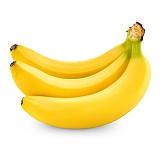
I’d choose the 90c bananas, because 90c is less than €1.
I’d choose the €1 bananas. They’re better value – only 25c each.
The unit price is the cost for one item. I think it will help to work out the unit price first.
Find the unit price first to help you solve these.
1. If 5 cost €6, how much for 2? €
2. If 6 cost €9, how much for 4? €
3. If 7 cost €8 12, how much for 3? €
4. If 9 cost €9 99, how much for 5? €
Let’s go shopping! Tick the better-value option for each.
Try this!
1. Dara gave the shopkeeper €10 for 5 pears. His change was €5.25. What was the price of one pear? €
2. Lexi and Jay got their holiday photos printed.
(a) How much for one of Lexi’s photos? €
(b) How much for one of Jay’s photos? €
(c) Whose photos were better value?
or €1.75
44
Classifying 2-D Shapes
Write the letter for each shape in the correct section of the Carroll diagram.
Has rotational symmetry No rotational symmetry
Give an example of a shape in that…
1. has at least 1 set of perpendicular lines
2. has at least 1 acute angle
3. has at least 1 set of parallel lines
4. has at least 1 obtuse angle
5. has 2 or more lines of symmetry
6. has a reflex angle
7. is a regular shape
D Which of the shapes in is an example of a… 1. regular pentagon? 2. regular hexagon? 3. regular octagon? With right angle(s) No right angle
A regular shape has equal sides and equal angles.
Write the letter for each shape in the correct section of the Venn diagram.
Shapes
Shapes with
Let’s talk!
Classifying Triangles
Look at Mia and then look at the shapes below.
Identical marks can be used on shapes to show that the measure of their sides and angles are equal.
Discuss what you can tell about these shapes from their angles, sides and any other marks
Match the properties of the shape to its name and write the letter of a shape from that matches the description.
No equal sides or angles equilateral
All angles < 90° obtuse
1 angle > 90° right-angled
3 equal sides and angles isosceles
1 angle = 90° scalene
2 equal sides and angles acute
Are these always (A), sometimes (S) or never (N) true?
1. Triangles are regular shapes.
2. Triangles contain a reflex angle.
3. Triangles have perpendicular lines.
4. Right-angled triangles are also scalene triangles.
Try this!
1. In your copy, record an estimate for the measure of each angle in the first three triangles in
2. Measure each angle.
3. Get the total amount of degrees in each triangle.
This is how we classify triangles according to their sides or angles.
Can you remember how to use your protractor? What do you notice? What do you wonder?
Classifying Quadrilaterals
Let’s talk!
Look at Dara and then look at the shapes below. Discuss what you can tell about these shapes from their angles, sides and any other marks.
A quadrilateral is any shape with 4 straight sides.
C DE FG
Write the letter of a shape from that matches each clue. I am…
1. a rhombus; I look like a square that has been pushed out of shape.
2. a trapezium; I look like a triangle whose top part has been cut off.
3. a kite; I look like a rhombus that has been stretched out at one corner.
4. an isosceles trapezium; I look like an isosceles triangle whose top part has been cut off
Match the properties of the shape to its name and write the letter of a shape from that matches the description.
1 pair of parallel sides only rectangle
Equal sides, all angles = 90° trapezium
Opposite sides and angles are equal (≠ 90°) parallelogram
Opposite sides are equal, all angles = 90° rhombus
Equal sides, opposite angles are equal (≠ 90°) square
D Maths eyes Which quadrilateral does each resemble?
Constructing and Deconstructing 2-D Shapes
Trace these shapes. By drawing one dividing line through each, create two smaller versions of the same shape.
Trace the shapes in again. By drawing one dividing line through each, try to create two triangles that are identical in size. For which shape can this not be done?
Are these always (A), sometimes (S) or never (N) true?
1. A pentagon has 6 sides and 6 angles.
2. An octagon has 4 pairs of parallel lines.
3. A 2-D shape with 4 straight sides has 4 angles.
4. A rectangle has 4 sides that are all the same length.
5. A circle can be divided into 4 semi-circles.
6. A triangle has one right angle.
You could use real shapes to help you find the answers.
D Use a geoboard or geoboard app to make the shapes shown below, and then find the smaller shapes within each.
I’ve found 4 squares within a square!
Find 4 rectangles the same size.
Find 3 triangles.
Find 4 right-angled triangles.
Find 6 triangles.
Find 3 parallelograms.
Transformations
Write the transformation used each time: reflection (flip), rotation (turn) or translation (slide).
Original position (a) 1st move (b) 2nd move (c) 3rd move
reflection
Let’s talk!
In
● for any reflections, say whether the shape was reflected across line X or line Y
● for any rotations, describe the direction and angle of rotation using degrees
● for any translations, describe the translation using direction and squares.
Try this!
On your activity sheet (PCM 2), place a shape (e.g. a pentomino) in the first section (top left) and trace around it. Draw where you think the shape will finish after each move:
1. Reflect the shape across line Y.
2. Translate the shape 6 squares down and 6 squares left.
3. Rotate the shape 90° anti-clockwise.
1.
Tessellations
How should we move the out-of-place tile to complete each tessellation? 3.
(a) Rotate and reflect
(b) Reflect and translate
(c) Rotate and translate
(a) Rotate
(b) Rotate and reflect
(c) Reflect and translate
3. (a) Rotate and reflect
(b) Rotate and translate
(c) Reflect and translate
How many tiles are missing from each tessellation?
Try this! Look at these regular polygons and answer the questions below.
1. Which of the shapes can tessellate…
(a) with copies of itself using translations only? and (b) with copies of itself using more than one transformation?
(c) when combined with another regular polygon?
2. Which of the shapes cannot tesselate? and
Classifying 3-D Shapes
Write the letter for each shape in the Carroll diagram.
< 7 vertices
Sorting rule for B: With right angle(s) No right angle > 7 vertices
Look at the shapes in and answer these.
1. Give an example of a shape that has… (a) at least 1 acute angle and no obtuse angles (b) at least 1 obtuse angle and no acute angles (c) both acute and obtuse angles
2. List the shapes that are examples of… (a) pyramids , and (b) prisms , , , and
3. Which of the shapes is a hemisphere?
What are the sorting rules for sets A and B in this Venn diagram?
Sorting rule for A:
Constructing
and Deconstructing 3-D Shapes
Let’s investigate!
Use straws, sticks and modeling clay to make two different pyramids and two different prisms. Record what you made below.
3-D shape
Number of faces
Number of vertices
Number of edges
Let’s talk!
Write if these statements are always (A), sometimes (S) or never (N) true.
● A pyramid has a square base
● A prism has two bases that are the same shape and size
● A triangular prism has only triangular faces
● On 3-D shapes, there are more vertices than faces
● On 3-D shapes, there are more edges than vertices
Answer these.
1. Dara drew these nets to make 3-D shapes, but would each of them actually make a 3-D shape? 3 or 7.
2. Tell your partner what you think was the intended 3-D shape.
D Mia wants to make 3-D shapes using the pieces below. Can she make a… (3 or 7)
1. triangular prism?
2. triangular pyramid?
3. pyramid with 5 faces?
4. hexagonal prism?
5. hexagonal pyramid?
Which construction did each child make? Match.
Mine has two of each type of shape.
Mine has mostly cubes.
Mine has an equal number of pyramids and triangular prisms.
4
Mine has the same shapes as Dara’s, as well as a pyramid.
AB CD
Try this! How many cubes are used in each of these?
1. Write if these statements are always (A), sometimes (S) or never (N) true.
(a) The angles in a square are equal in measure.
(b) The angles in a rectangle are 90° each.
(c) All of the angles in a parallelogram are equal in measure.
2. Put these fractions in order starting with the smallest: 5 6 , 1 2 , 7 12
3. (a) 9 10 + 3 10 = (b) 3 12 + 5 6 =
5. Estimate to the nearest euro first and then calculate.
E: €
€53 27 – €29 53 = €
7. Which pack is better value for money per sausage? 3
4. What is a quarter of a kilometre in metres? m
6. What fraction of each circle is coloured?
(a) (b) (c)
A
1. Complete the fraction wall.
1 (one whole)
3. What change will you get from €10 if you spend…
(a) €5.90? €
(b) €9.75? €
(c) €3 45? €
5. Always, sometimes or never true? A right-angled triangle is also a scalene triangle.
7. What is Mia’s shape? 3 rectangle square rhombus triangle
B
2. Complete the branching bonds. (a) (b)
4. Rename these lengths.
(a) 507cm = m cm
(b) 3 4 km = m
(c) 1.5km = m
(d) 1 10 km = m
6. Calculate the perimeter of this regular hexagon. cm
I’m thinking of a shape that has 4 equal straight sides. None of its angles measure 90°.
1. Write two fractions that are equivalent to 1 4 . and
15m 10m
3. Calculate the perimeter of this garden. m
2. €7 69 × 8
4. Write <, > or = to make these true. (a) 1 2 3 8 (b) 3 10 2 5
5. Always, sometimes or never true? All triangles have at least 1 obtuse angle.
6. Dara has these magnetic shapes: What 3-D shape could he make?
7. What change did Jay get from €20 when he bought a sandwich for €3.99 and a drink for €2 80? €
8. Which of these 3-D shapes do not have perpendicular edges? 3 all that apply. triangular prism cylinder cuboid triangular pyramid
Try this!
1. What change did Lexi get from €50 when she bought these? €
2. Mia had €72. She spent 5 9 of it on a football jersey and 3 8 of it on a pair of football socks. How much money does she have left? €
3. Dara cycles to and from school every day. His house is 1 5km away from the school. What distance does he cycle…
(a) each school day? km
(b) each school week? km
(c) If Dara aims to cycle 20km each week, what distance should he cycle over the weekend? km
4. A rope measuring 224cm in length was cut into 4 equal pieces. Write and solve a number sentence to show the length of each piece in cm.
6. Which bag of potatoes is better value for money? 3
5. Jay brought 12 bottles and 4 cans like these to the return machine. How much money did he get for them? €
Fabulous Funfair
Look at the images and answer the questions.
House of Shrinking Mirrors
A shrinks reflection to 1 3 size
B shrinks reflection to 5 6 size
C mystery mirror
120cm
1. What 2-D shape is each mirror? A: B: C:
2. Lexi is 120cm tall. To what heights has her reflection been shrunk in mirrors A and B? A: cm B: cm
3. In mirror C, her reflection has been shrunk to 90cm tall. What fraction of her actual height is this?
Look at the image and answer these.
1. What 2-D shape is at the centre of the wheel?
2. Spinning the wheel is an example of (3) translating rotating reflecting
3. The pink section is a… (3) triangle quadrilateral
4. What fraction of the colours are… (a) red? (b) blue? (c) pink? (d) yellow?
5. The wheel has… (3) line symmetry neither symmetry rotational symmetry both symmetries .
Let’s talk!
Would your answer to question 5 be the same if all sections were the same colour?
D Let’s talk!
Look at Jay. How far do you estimate he is standing from the coconuts: 1m, 5m or 20m?
Which offer would you choose? Why?
Are the coconuts and the ball the same 3-D shape?
After the first day of the funfair, 5 8 of the prizes were left. If 15 prizes were won, how many were there at the beginning?
Look at the images and answer the questions.
WANDA’S WONDER STORE
1. What 3-D shape is each container?
2. How much should 50ml from container A cost? €
3. How much should 10ml from container B cost? €
Use your calculator to help.
4. Which two containers are the same price per 100ml? and
5. Which container holds the most expensive liquid?
6. Estimate: As a fraction, how full is container A?
7. True or false? Container B is about half full.
8. What change would I get from €20 if I bought 100ml from container C and 200ml from container D? €
9. When full, container D holds 1.8l. How much is left if 4 9 of the liquid has been sold? l
10. Look at the magic wands. The longest is 42cm in length. How long are the others if one is half that length and the other is half that length again? cm and cm
Hundredths
What fraction of each shape is coloured? Write each answer as (a) a fraction and (b) a decimal number.
In , what fraction of each shape is white? Write the answer as (a) a fraction and (b) a decimal number.
What fraction of all the beads is to the right? Write each answer as (a) a fraction and (b) a decimal number.
D In , what fraction of all the beads is to the left? Write the answer as (a) a fraction and (b) a decimal number.
Write the decimal number that is missing in each branching bond.
Try this! Write each of these as a decimal number. Explain your reasoning to another.
1. (a) (b) 2. (a) (b)
(a) (b)
1. (a) (b)
(a) (b)
(a) (b)
1. (a) (b)
(a) (b)
(a) (b)
1. (a) (b)
(a) (b)
Equivalent Decimals
Write the coloured fraction of each shape as tenths + hundredths. 1. 1 10 + 5 100 2. 10 + 100 3. 10 + 100 4. 10 + 100
What fraction of each shape is coloured? Write each answer as (a) a decimal number, (b) hundredths and (c) simplest fraction form.
1. (a) (b) 2. (a) (b) 3. (a) (b) 4. (a) (b)
Write the position of each letter as a fraction of a metre in (a) decimal and (b) simplest fraction form.
A metre stick is divided into hundredths.
5. (a) (b) 6. (a) (b) 7. (a) (b) 8. (a) (b) (c)
Place Value in Decimal Numbers
Express each amount in decimal form.
What decimal number is represented on each place value grid?
Let’s talk!
What is the value of the underlined digit(s) below?
D Write the number in which…
Let’s talk!
Who is correct, Jay or Mia?
Explain why you think this.
Try this! Using only these digits, make a decimal number (two places) in which…
Estimating Strategies
Let’s talk!
Which of the numbers below, when rounded, will keep the same whole number? Which of the numbers, when rounded, will become the next greater whole number? Explain how you know.
Round these numbers to the nearest whole number. Use the open number lines to help you. Ring the nearest whole number.
Round these numbers to the nearest whole number. Use or visualise an open number line to help you.
D A strip of paper is 1.75m long. Will 3 of these strips be longer or shorter than 5m?
Try this! Read the clues and work out each mystery number.
My number has 8 hundredths and 5 tenths. Rounded to the nearest whole number it is 7. My number has 2 hundredths. Using front-end estimation, it is roughly 4, but it rounds to 5.
I think that some of these have multiple answers.
My number rounds to 30 and has only one decimal place. My number rounds to 78. Which of these cannot be my number, 77.8, 78.5, 78.4, 77.5 or 78.2?
Comparing and Ordering Decimals
Let’s talk!
Look at the food labels below.
What do you notice? What do you wonder?
Which serving contains (a) the most and (b) the least salt?
Which serving contains (a) the most and (b) the least sugars?
What other questions could be asked?
One serving (45g) contains:
One serving (25g) contains:
One serving (33g) contains:
One serving (30g) contains:
For each label in , write the decimal numbers from least to greatest.
2. 3. 4.
Model and compare these. Write <, > or =. 1. 8.8 8.7
D Put in digits to make these true.
Put in numbers to make these true.
Let’s talk!
Look at the table and compare the jumps.
For example:
● Ava’s jump was greater than…
● Ferne’s jump was less than…
High Jump Results
In , whose jump was…
1. just over 2 and a half metres?
2. nearly 2 metres?
3. roughly one and a half metres?
4. less than Ferne’s?
Try this! Gary’s jump was left out of the table in If his jump was the 2nd highest, what height might he have jumped? m
Adding and Subtracting Decimals
Use the models to help you solve these.
.
.
.
Estimate first, and then model and solve these.
Estimate first, and then model and solve these.
Try this! Look at the table and answer the questions.
1. Which child is…
(a) the tallest?
(b) the shortest?
(c) exactly 1 1 4 m tall?
(d) closest to 1 1 2 m tall?
2. How much taller is Cara than John? m
3. How much taller is the tallest child than the shortest child? m
4. What is the total height of the three tallest children? m
Multiplying and Dividing Decimals
Use the models to help you solve these.
Use the models to help you solve these.
Chance Calculations with Decimals – Addition
Number of players: 2–6
You will need: mini-whiteboard and marker per player, 0–9 spinner, pencil and paper clip
● To start, each player should draw these boxes for a calculation on their mini-whiteboard.
● Each player, in turn, spins the 0–9 spinner and writes the digit spun into one of their empty boxes.
● When all the boxes are full, each player calculates their answer.
● The player with the greatest total scores a point.
● The player with the highest score when the time is up wins the game.
Chance Calculations with Decimals – Subtraction
Number of players: 2–6
You will need: mini-whiteboard and marker per player, 0–9 spinner, pencil and paper clip
● To start, each player should draw these boxes for a calculation on their mini-whiteboard.
● Each player, in turn, spins the 0–9 spinner six times to collect 6 digits, and then arranges the digits in their empty boxes.
● When all the boxes are full, each player calculates their answer.
● The player with the greatest difference (answer) scores a point.
● The player with the highest score when the time is up wins the game.
Variations
● Multiplication: Each player spins four times to collect four digits, and arranges them as a 3-digit number with 2 decimal places × 1-digit number. For example, if the numbers 1, 4, 7, and 8 are spun, they could be arranged as 7 41 × 8. The player with the greatest answer scores a point.
● Choose to add or subtract. Each player spins six times to collect six digits, and arranges them to make a 3-digit number with 2 decimal places and a 3-digit number with 1 decimal place. For example, if the numbers 1, 5, 2, 4, 7 and 8 are spun, they could be arranged as 7.41 + 85.2. The player with the greatest answer scores a point.
● The player with the smallest answer scores a point.
Number Sentences and the Inverse
In each row, ring the number sentence that is not the inverse.
The inverse is when we undo or reverse the operation.
Which questions in could be solved using Jay’s strategy or Lexi’s strategy?
I didn’t need to work out all of the questions in fully to find the missing values.
I know that the factors for 72 are 9 and 8, so I used this to identify the missing values.
Try this! Try these magic number tricks. Can you explain how they work?
1. Think of a number between 1 and 10.
● Double it.
● Add 10.
● Halve it.
● Subtract your original number. Your answer is 5!
3. Think of a number between 1 and 10.
● Add 5.
● Multiply by 4.
● Subtract 20.
2. Think of a number between 1 and 10.
● Add 6.
● Multiply by 2.
● Subtract 6.
● Divide by 2.
● Subtract your original number. Your answer is 3!
Can you make up your own magic number trick?
● Divide by your original number. Your answer is 4!
Symbols for Unknown Values
Find the value for each symbol.
× 2 = 18
4. ÷ 9 = 3
Solve the number sentences to work out what number goes on the answer line.
Try this! Find the value of each shape below. Each one stands for only one of these numbers: 0, 1, 2, 3, 4, 5, 6, 8, 9, 10, 12.
I can work out the most likely value for some of these and use that to solve the rest.
Solve these.
Representing Word Problems
1. Lexi sleeps for hours every night.
Which one of these can tell how many hours of sleep she gets each week? (3)
2. Dara is saving for a game that costs € . He has saved € so far.
Which one of these can tell how much more he needs to save? (3)
3. There are books. They are being packed into boxes that hold books each.
Which one of these can tell how many boxes are needed? (3)
4. One table can seat people. There are people coming to a meeting.
Which one of these can tell how many tables are needed to seat everyone? (3)
5. There were people on a bus. of those got off at the next stop and more got on.
Which one of these can tell how many people there were on the bus then? (3)
6. Jay had € He bought a book for € and a bag for €
Which one of these can tell how much money he had then? (3)
(a) + 7
(b) – 7
(c) × 7
(d) ÷ 7
(a) ÷
(b) –(c) + (d) ×
(a) × (b) ÷ (c) –(d) +
(a) ÷
(b) –(c) ÷
(d) ×
(a) – +
(b) + –
(c) + –
(d) – +
(a) – –
(b) – +
(c) + –
(d) – +
For each of the word problems in , give each shape a reasonable value. Then, swap with a partner, who can model and solve each problem.
Functions, Inputs and Outputs
What are the missing inputs and outputs?
Work out the rule of each of these by comparing the given inputs and
Then work out the missing input and output in each.
Patterns in Multiples
Work out the sorting rule for the numbers in each diagram.
1. 2.
Hint: The multiples of 5 are 5, 10, 15, 20, 25, 30…
of
Not
k!
Match the phrases and complete them with suitable endings if needed.
The multiples of 10
The multiples of 3
The multiples of 9
The multiples of 5
The multiples of 4
are all even numbers. all end in the digit(s)… all have a digit-sum of… are all odd numbers. are also multiples of… are either odd or even numbers.
To get the digit-sum of a number, add up the digits.
Spot the mistake: The children in 4th Class were asked to give examples of multiples of different numbers. Ring the incorrect multiples in each line.
1.
D Use a calculator to check your answers to .
Try this! In your copy, create a diagram to show the relationship between the multiples of 4 and 7.
Number Sequences
Let’s talk!
For each of the number sequences in , say whether they are growing or shrinking. For the growing number sequences, what operation do you think was used? Explain why.
Work out the rule of each sequence and write the missing terms.
1. 12, 14, 16, 18, , 2. 143, 153, 163, 173, ,
3. 1, 8, 15, 22, , 4. 75, 65, 55, 45, ,
5. 99, 90, 81, 72, , 6. 1, 2, 4, 8, 16, ,
Let’s talk!
With a partner, work out the next three terms in each of these sequences.
1. 2 1 2 , 3, 3 1 2 2. 6, 5 3 4 , 5 1 2 , 5 1 4
3. 1 3 , 2 3 , 1, 1 1 3 4. 1 9 , 2 9 , 1 3 , 4 9
5. 1.5, 1.6, 1.7, 1.8 6. 4.7, 4.5, 4.3
7. sixth, seventh, eighth 8. 26th, 25th, 24th
9. 1:20, 1:30, 1:40
10. 4:45, 4:50, 4:55
11. 1c, 2c, 5c, 10c 12. €5, €10, €20, €40
13. Ac, Bd, Ce, Df 14. ZYZ, XWX, VUV, TST
Try this!
1. Below are some special number sequences. Work out the rule and write the missing terms for each.
(a) Square numbers: 1, 4, 9, 16, 25, , ,
(b) Rectangular numbers: 2, 6, 12, 20, 30, , ,
(c) Triangular numbers: 1, 3, 6, 10, 15, , ,
(d) Fibonacci sequence: 1, 1, 2, 3, 5, 8, 13, ,
2. Can you come up with your own reason for the name of each special number sequence above? You could also use the internet
3. If this pattern continues, what is the time of…
(a) sunrise on the 4th of February? a.m.
(b) sunrise on the 5th of February? a.m.
(c) sunrise on the 6th of February? a.m.
(d) sunset on the 4th of February? p.m.
(e) sunset on the 5th of February? p.m.
(
f) sunset on the 6th of February? p.m.
Sunset and sunrise times in Dublin
Date Sunrise Sunset 1 Feb 8:11 a.m. 5:08 p.m. 2 Feb 8:09 a.m. 5:10 p.m. 3 Feb 8:07 a.m. 5:12 p.m.
(g) On what date will the time of sunrise be 7:59 a.m.?
(h) What will be the time of sunset on the date in (g)? p.m.
4.
Jay is learning to type. If his scores continue at this rate, how many words per minute should he be able to type on (a) the 5th day? (b) the 7th day?
5. What would be the fine for a book that is 7 weeks overdue? €
4 weeks: €8 Day 1 score: 10 words per minute Day 2 score: 21 words per minute Day 3 score: 32 words per minute
Overdue Book Fines 1 week:€1 2 weeks: €2
3 weeks: €4
6. Mia has started making friendship bracelets. If this pattern continues, how many bracelets will she make on…
(a) the 7th day?
(b) the 9th day?
7. On Monday, Jay told a new joke to 3 friends. On Tuesday, each of those friends told the joke to 3 other friends. On Wednesday, each of those friends told the joke to 3 other friends. If this pattern continues, how many people will have been told the joke by Friday?
1st day: 1 bracelet
2nd day: 2 bracelets
3rd day: 4 bracelets
4th day: 7 bracelets
5th day: 11 bracelets
Shape Patterns
Build it! Sketch it! Write it! Model each pattern and complete the matching T-chart.
Try this! For each of the patterns in
1. describe the rule using words and/or numbers to a partner.
2. write down what would be (a) the 50th term and (b) the 100th term.
Answer these.
1.
If the tables and chairs for a meeting are placed like this, how many people can be seated at… (a) 4 tables? (b) 5 tables? (c) 10 tables? (d) 20 tables?
2.
If the tables and chairs for a meeting are placed like this, how many people can be seated at…
(e) If 18 people are coming to the meeting, what is the least number of tables that will be needed?
Try this! Model and solve this problem.
On an outing to the zoo, there is 1 adult with every 10 children.
1. If there are 5 adults in the group, what is (a) the maximum number of children and (b) the maximum number of people in total in the group? (a) (b)
2. In your copy, create a rule or a table that shows the maximum number of children and people in total in the group if there are (a) 7 adults, (b) 10 adults, (c) 20 adults.
3. What is the largest group of adults and children that you can describe? adults children
Let’s talk!
What does area mean?
Area
I think area is the space taken up by the shape.
I think it’s the length of the sides of the shape added together.
I think you can only figure out the area by counting the boxes in the shape.
When is area used in real-life? What units are used to measure area?
Pattern blocks
1. Use pattern blocks to create shapes A and B. Which shape has the largest area?
1 unit
What do you think?
2. If one green triangle is equal to 1 unit, what is the area of the other shapes?
How did you find your answers? Now, find the area of these pattern block shapes.
first shape in . Then, draw it.
Measuring Area
Count to measure the area of each shape.
Count to measure the area of each shape.
Each square in this grid represents 1 sq cm.
Measure the area of each shape.
Try this!
Look at the grid. What is the area covered by…
1. the grass? sq m
2. the pond? sq m
You can use cm squared paper
3. the paths? sq m grass pond paths
Calculating Area
Estimate the area (2nd column) of each of the rectangles given below. (L = length, W = width)
Rectangle
1. L: 4cm W: 5cm sq cm sq cm
2. L: 4cm W: 7cm sq cm sq cm
3. L: 6cm W: 3cm sq cm sq cm
What do you notice? What do you wonder?
Draw each rectangle on cm squared paper and find its area. Write this in the last column above.
Answer these.
1. Calculate the area of each shape.
sq cm
2. Which shape has the largest area?
3. What is the difference in area between the largest and the smallest shape? sq cm
D Calculate the missing length of each shape. 1. 2.
These shapes haven’t been drawn to scale, so you’ll have to calculate the answers.
sq cm
Answer these.
Area and Perimeter
Order fields A–E in the image from the smallest area to the largest area.
Explain your reasoning. < < < <
Try this!
1. If the perimeter of field D is 112m, what do you think the lengths of each side of the field might be?
2. If the perimeter of field D is 112m, what do you think the perimeter of field C might be?
Answer these.
1. Calculate the area and perimeter of each shape and complete the table below.
2. Which shape has the largest area?
3. Which shape has the smallest perimeter?
Calculate the area (A) and perimeter (P) of each shape.
1. Write the missing factor: 28 = 4 ×
2. A florist divided this bucket of flowers into 7 bunches. Write and solve a number sentence to show this.
5. Round 6 26 to the nearest whole number on the number line.
6. Write the coloured part as a… (a) decimal (b) fraction 100
7. Measure the length and width of the rectangle. Use this to calculate the… (a) area. sq cm (b) perimeter. cm
1. Write the value of the underlined digit. (a) 21 64
(b) 86.01 (c) 16 70
3. If this pattern continues, how many sticks are needed for the 5th term?
1 2 3
2. Calculate the area of this rectangle (not to scale). sq cm
3cm
5cm
4. Put these in order starting with the least: 0 5, 0 56, 72 100, 0 7 < < <
5. Mia had € She paid € for a cinema ticket and € for a popcorn. Which one of these can tell how much money she had left? (3)
(a) – – (b) – + (c) + – (d) + +
1. If a square rug has sides of 7m, what is its… (a) area? sq m (b) perimeter? m
2. Ring the number that is a multiple of 4, 6 and 9: 18 24 16 36 27
3. 4.65 ÷ 5 =
5. Write as hundredths and decimals:
=
= (c) 3 4 = 100 =
7. What is the perimeter of this shape? cm
4. 3 × 1 29 =
6. In a triathlon, Lucy swam 0 7km, cycled 34.82km and ran 8km. What was her total distance? km
8. Write the missing inputs and outputs.
Try this!
1. Mark took part in a shot-put event. Write what his results might have been in decimal form.
(a) His 1st throw was between 11.6m and 11.7m. m
(b) His 2nd throw was just less than 13m. m
(c) His winning throw was almost 14 1 4 m. m
2. The total area of this garden is 256 sq m.
(a) If the area of the lawn is 166 sq m, what is the area of the flowerbed? sq m
(b) What might the length and width of the lawn be? (You can use your calculator to help.) L: m W: m
3. Work out the values of A and B.
4. What is the total area of this garden? sq m
A Trip to the Athletics Stadium
Look at the table and answer the questions. Event: Running Long Jump
Lexi 2 1 2 m2 7 10 m 2 95m
Dara 2 83m 2 3 4 m 3m 2cm
Jay 2 99m 3 17m 3 1 10 m
Mia 3 2m 3 1 4 m 3m 17cm
1. Who had a jump closest to 3 metres?
2. What was the longest jump (decimal form) for… (a) Lexi? m (b) Jay? m (c) Mia? m (d) Dara? m
3. Write the answers to question 2 in order, starting with the longest jump. m > m > m > m
Let’s talk!
Who improved the most during the long jump competition?
Explain your answer with proof Answer these.
1. In the 100m sprint, the first runner finished in 13.8 seconds, and the second runner finished 0.7 seconds later. What was the second runner’s time? seconds
2. Michael threw the javelin 15 2m. This was 0 8m longer than John’s throw. Write a number sentence to calculate John’s throw, and solve.
m m = m
3. If there are 8 running lanes, each measuring 1 22m wide, what is the total width of the running lanes? m
D Answer these.
1. The high jump bar was initially set at 1 15 metres. It was then raised by 0.08 metres. What is the new height of the high jump bar? m
2. The distances a shot-putter threw in three attempts were: 8.25m, 8.5m, 8.75m. If this pattern continues, what would be the distance for her fourth throw? m
3. A section of the stadium has 350 seats. If there are 10 rows of seats, which number sentence below could be used to solve for how many seats there are in each row? (3)
(a) 350 – 10 =
(c) 10 × = 350
(b) 350 × 10 =
(d) 10 ÷ 350 =
4. A rectangular section inside the running track is used for field events. It measures 50 metres in length and 20 metres in width. What is the area of this rectangular section in square metres? sq m
Look at Dara. Then, complete the input/output table.
Each athlete needs to drink 2 litres of water during a long training session. Write the missing inputs and outputs to show this.
Multiplying 2-digit Numbers by 0, 1, 10 and 100
Write and solve the matching multiplication sentences.
D For each of the answers you chose in , multiply the estimated factors to get the estimated product.
Let’s investigate!
1. When a 2-digit number is multiplied by a 2-digit number, the product (answer) will have digits.
2. When a 3-digit number is multiplied by a 2-digit number, the product (answer) will have digits.
I can spot front-end estimation and rounding in !
I’ll use my calculator to investigate. I’ll use the greatest and least possible numbers to investigate. I think there is more than one correct answer to these!
Multiplying 2-digit Numbers using Materials
Write and solve the matching number sentences.
Use base ten blocks to model and solve these.
1. 19 × 11 = 2. 18 × 12 =
×
= 4. 12 × 24 =
×
Build it! Sketch it! Write it!
Model and solve these using your preferred way.
1. There are 16 sausages in a packet. How many sausages in 12 packets?
2. There are 15 players on a rugby team. How many players on 14 teams?
3. 13 rows of 14 chairs have been set up in a hall for a concert. If 180 people are expected to be in the audience, will there be enough chairs?
D Let’s talk!
Could you work out any of the answers in or (a) without using concrete materials or (b) mentally? Explain how.
Multiplying 2-digit Numbers using Sketches
Write and solve the matching number sentences.
Let’s talk!
Look at the area models in .
How are they the same? How are they different?
Sketch an area model to model and solve each of these.
Try this!
1. Mia drew this area model to solve 143 × 27. What will the end product be when she adds all the partial products?
2. Use Mia’s strategy to solve these.
Let’s play!
Play ‘Chance Calculations – Variation 2’ on page 138. Use a sketch (e.g. an area model) to work out the end product each time.
Multiplying 2-digit Numbers using Calculations
Let’s talk!
Look at and , and take turns to estimate how many digits each answer will have, and what the front of the answer will be.
Answer these.
1. Jay left these calculations unfinished. Finish each one to solve the end product.
2. Use Jay’s strategy to solve these:
Answer these.
1. Lexi left these calculations unfinished. Finish each one to solve the end product.
2. Use Lexi’s strategy to solve these:
=
D Let’s talk!
Work out the errors in each of the calculations below. What advice would you give?
Let’s play!
Play ‘Chance Calculations – Variation 2’ on page 138. Use column-method calculations to work out the end product each time.
Multiplying using Related Facts
Calculate the answers for each group.
In each group, use the previous product(s) to calculate the next product.
1.
(a) 5 × 20 =
(b) 5 × 21 =
(c) 10 × 21 =
(d) 15 × 21 =
(e) 25 × 21 =
(f) 26 × 21 = 2.
(a) 7 × 20 =
(b) 7 × 19 =
(c) 14 × 19 =
(d) 28 × 19 =
(e) 27 × 19 =
(f) 70 × 19 = 3.
(a) 3 × 50 =
(b) 3 × 53 =
(c) 30 × 53 =
(d) 33 × 53 =
(e) 32 × 53 =
(f) 34 × 53 = 4.
(a) 3 × 32 =
(b) 10 × 32 =
(c) 13 × 32 =
(d) 13 × 320 =
(e) 23 × 320 =
(f) 22 × 320 =
Let’s talk!
Discuss how you did . Was your approach the same as or different to your partner’s? How?
Solve these by using strings of related facts.
1. 16 × 21 = 2. 23 × 52 =
3. 42 × 73 = 4. 34 × 152 =
For the first one, I’ll start with 6 × 20, then 6 × 21, then…
D Check your answers for using the column method.
21 ×1 6 6
Try this! Solve these using strings of related facts.
1. There are 24 hours in a day. How many hours in 14 days?
2. What is the total capacity of a theatre with 19 rows of 32 seats?
3. A big bag of dog food weighs 15kg. What is the total weight of 22 bags? kg
4. A hoodie costs €29. What is the total cost of 26 hoodies? €
Let’s play!
Play ‘Chance Calculations – Variation 2’ on page 138. Use related facts to work out the end product each time.
Multiplying using Doubling and Halving
Use doubling and halving to change these into simpler multiplication expressions and then solve.
1. 2.
Use doubling and halving to change these into simpler multiplication expressions and then solve.
1. 4 × 18 = 2. 5 × 16 = 3. 14 × 15 =
4. 18 × 25 = 5. 35 × 12 = 6. 45 × 16 =
7. 12 × 20 = 8. 37 × 20 = 9. 50 × 64 =
Let’s talk!
Which number sentences below cannot be solved using doubling and halving? Explain why and cross them out.
● The factors of a number are smaller than the number.
● 2 is a factor of numbers with 2, 4, 6, 8, or 0 ones.
● 3 is a factor of numbers with 3, 6 or 9 ones.
Try this! What’s my number? Find the smallest possible answer each time.
Some of the factors of my number are 2, 3 and 4.
Some of the factors of my number are 4, 5, 8 and 10. 15 3
Some of the factors of my number are 2, 5 and 6.
Some of the factors of my number are 4, 6, 8 and 12.
Mixed Operations
Maths Choice Board: Choose 3 of these tasks to explore and solve. Present your solutions in different ways.
Spread the wealth!
Imagine that you won €10,000.
1. Find an item that costs less than €100, and round its value to the nearest whole euro.
2. How much would it cost to buy one of these for everyone in the class?
3. How much money would be left?
Patio Problem
1. A large rectangular patio is made up of identical square slabs.
(a) If there are 32 slabs along the length and 18 slabs along the width, what is the area of the patio in slabs?
(b) If each slab cost €15, what was the total cost of the patio?
2. A small rectangular patio costs €756.
(a) How many slabs does it contain if they were €9 each?
(b) Work out 3 possible layouts for the slabs in the small patio.
Scarves
If a knitting pattern requires 250 metres
of wool for each scarf, how many metres
of wool are needed to knit…
1. 6 scarves?
2. 12 scarves?
3. 24 scarves?
Energy Aware
If a household uses an average of 15 kilowatt-hours of electricity per day, how many kilowatt-hours of electricity are used in a month of 31 days?
Commuting
Ask 5 children the distance from their house to the school to the nearest kilometre. Use this information to work out…
1. the distance each person travels to and from school each week
2. the total distance each person will have travelled to and from school by the end of this month
3. the difference in kilometres between the greatest and least total distances.
Bikes Galore!
A factory makes 67 bikes per hour. If the factory operates for 8 hours every weekday and 4 hours both days on weekends, how many bikes are made in… 1. 1 week?
2. 4 weeks?
Chance Calculations – Multiplication
Number of players: 2–6
You will need: mini-whiteboard and marker per player, 0–9 spinner, pencil and paper clip
● To start, on their mini-whiteboard, each player draws these boxes for a multiplication calculation (2-digit × 2-digit).
● Each player, in turn, spins the spinner and writes the number spun into one of their boxes.
● When the first two boxes are full, the players calculate their product (last box).
● The player with the highest product wins the game.
You could also play as lowest product wins.
Variations
1. Multiplying Multiples of 100: Play as above, but draw these boxes to start (1-digit × 3-digit).
2. Multiplying 2-digit Numbers: Play as above, but draw these boxes to start (2-digit × 2-digit).
Target 10,000
× 0 × × 00
● Play any of the games above but, on each turn, the latest answer is added to the total of the previous answers.
● The first player to reach or pass 10,000 (or the highest score when the time is up) wins the game.
Chance Calculations – Division
Number of players: 2–6
You will need: mini-whiteboard and marker per player, 0–9 spinner, pencil and paper clip
● To start, on their mini-whiteboard, each player draws these boxes for a division calculation (3-digit ÷ 1-digit).
● Each player, in turn, spins the spinner four times and writes the numbers spun into their boxes.
● When all the boxes are full, the players calculate the answer (ignore remainders).
● The player with the lowest answer wins the game.
Kilograms and Litres
Match each item to the most reasonable weight or capacity.
Let’s talk!
1. Which instrument would you use to weigh items (a)–(e)? Explain why.
2. Can you think of situations in which you would use these instruments for measuring?
Measuring Kilograms and Grams
Choose the most reasonable estimate.
Roughly what is the weight of… 3
1. an apple?
2. five maths books?
3. a laptop?
4. ten pencils?
Let’s investigate!
Complete the table. Choose something else for the last row.
one marker?
an empty lunchbox? a pair of scissors?
How could you check your answers?
Measure
Let’s investigate!
How many of each item would be needed to reach the target weight? Choose something else for the last row. Estimate first and then measure.
Target weight How many… Estimate Measure
100g rulers?
200g cubes?
450g copies?
D Use the interval markings to help you work out the weight.
Don’t forget to look for the unit of measurement.
Measuring Litres and Millilitres
Use the interval markings to help you work out the amount of liquid.
Let’s investigate!
In pairs, get an unmarked container each and pour an amount of water into it that you estimate to be 100ml. Then, measure the actual amount using a measuring jug. What is the difference? Repeat for each target amount.
Let’s talk!
Mia is making pancakes. She needs 550ml of milk for the recipe, but all of the numbers except for 1 litre and 50ml are missing from her measuring jug. How could she use the jug to make sure that she adds the correct amount of milk to the pancake mixture?
D Look at the image below and answer the questions.
1. How much water can the jug hold? Write the amount as (a) litres and (b) millilitres.
(a) l (b) ml
2. How many millilitres are shown by each horizontal line? ml
3. Write the amount of water at the horizontal line marked…
A: ml
B: ml
C: ml
4. Mark each of these measures on the jug:
(a) 750ml (b) 2l
(c) 4,250ml (d) 1l 250ml
Try this! On a farm, the water trough holds 360 litres.
1. The farmer fills the trough every morning, using a hose that pours out 12 litres of water per minute. How long does it take to fill the trough?
2. If two cows drink 120 litres each from the trough, how many litres would be left?
3. How many 9 litre buckets could be filled from the water trough when it is full?
Renaming Measures
Rename each weight as grams.
Rename each amount as millilitres.
Let’s talk!
Look at the balances below.
What do you notice? What do you wonder?
D Balance these by renaming the weight or writing it in a different way.
Rename the capacity of each container or write it in a different way.
Comparing and Ordering Measures
Let’s talk!
Which is heavier, 250g or 0.3kg?
Which is longer, 1.25m or 127cm?
Which amount is greater, 2 1 10 l or 2,430ml?
Explain how you know.
Make up your own question to test your partner.
Write the weights of Mia’s parcels in order from lightest to heaviest. lightest
Calculate (a) the area and (b) the perimeter of each shape.
4. Order the area and perimeter from largest to smallest.
D Use <, = or > to make each statement true.
Operations with Measures
If 4 newly planted trees need 2l of water a day, how many litres of water are needed for 12 newly planted trees?
You have a watering can that measures 2 litres. What are the different ways you could make sure all of the trees get watered? Use your mini-whiteboard to show possible solutions.
Monty weighs 12kg, which is 2 5 of Dara’s weight. How much does Dara weigh?
? 12kg
Dara weighs kg.
Look at the list of ingredients and answer the questions.
Chocolate cake recipe
You will need:
155g butter
168g caster sugar
2 eggs g flour g cooking chocolate
1. If the flour weighs 27g less than the butter, how much flour is needed? g
2. If the cooking chocolate is half the weight of the caster sugar, how much cooking chocolate is needed? g
3. If the two eggs together weigh 100g less than 1 4 kg, how much does one egg weigh? g
4. List the ingredients needed to make 3 cakes.
5. How much do the ingredients for one cake weigh altogether? g
Try this! Would you rather 1kg of €1 coins or 1 2 kg of €2 coins?
What if one type of coin is lighter than the other? Explain your answer.
Monty
Dara
D The children forgot to label the containers for their science experiment. Use the clues to match the correct container to each.
1. 2. 3. 4.
I poured 50ml more than Lexi into my container.
My container had 2 10 of a litre more than Jay’s.
My container has 3 times more than Jay’s.
How much liquid is in the containers altogether? l
I poured 0 25L into my container.
On Saturday, Mia travelled 14.2 km by car. If Jay travelled three times this distance, how far did he travel?
Jay travelled km.
Try this! Naoise flew from Dubai to Dublin. She had to take two flights. The first flight was a distance of 5,500km, and the second was 584km. What distance did she fly altogether? km
Use the open number line to help you.
How Likely Is it?
Which chance word best answers each question below? probable improbable even chance possible impossible almost impossible certain almost certain very unlikely very likely
1.
2.
3.
What is the chance of the spinner landing on…
(a) red?
(b) green?
(c) blue?
(d) a colour?
What is the chance of pulling out…
(a) a purple marble?
(b) a green marble?
(c) a yellow marble?
(d) a green or purple marble?
What is the chance of throwing…
(a) a 6?
(b) a number greater than 1?
(c) an odd number?
(d) a number less than 3?
Try this!
1. Draw a jar of 10 marbles, where picking blue is likely but not certain. Do it in two different ways.
2. Draw a jar of 10 marbles, where picking green is equally likely to picking orange. Do it in two different ways.
3. Draw a spinner, where yellow and purple are both unlikely outcomes.
Possible Outcomes
Complete the branching to work out the different possible ice creams that can be ordered.
Frosty’s Ice Creams
Choose a…
On your mini-whiteboard, use branching to work out all of the possible combinations that can be made.
How many different combinations can be made in total?
On your mini-whiteboard, use branching to work out all of the possible combinations that can be made.
Try this!
Explain how you can do this.
Frosty’s Ice Creams in now has 3 topping options: sprinkles, nuts or toffee sauce. Without writing out all the various combinations, can you work out how many different combinations can be made in total?
Chance Investigations
Before you do any of these investigations, consider the possible outcomes and make your best predictions for these outcomes.
Let’s investigate! Throwing Dice
You will need: mini-whiteboard and marker per person, six-sided dice
1. In theory, the chance of throwing…
(a) a 6 is
(b) an odd number is .
2. If I throw the dice 30 times, I would expect to get…
(a) a 6 times
(b) an odd number times.
Let’s investigate! Spinner
You will need: mini-whiteboard and marker per person, 0–9 spinner, pencil and paper clip
1. In theory, the chance of spinning…
(a) a 6 is
(b) an odd number is
2. If I spin the spinner 30 times, I would expect to get… (a) a 6 times
(b) an odd number times.
Let’s investigate!
Double Coin Toss
You will need: mini-whiteboard and marker per person, two coins
1. In theory, the chance of tossing…
(a) two heads is (b) two tails is (c) a head and a tail is .
2. If I toss the coins 30 times, I would expect to get…
(a) two heads times
(b) two tails times
(c) a head and a tail times. 1 in 1 in
D Let’s talk!
After you have made your predications, discuss and agree on the following with your group:
● How will you conduct these investigations?
● How will you make sure they are fair?
● How many times for each person?
● How will you record your results?
● How will you share your findings?
Try this!
1. Mia and Lexi played 30 rounds with a spinner and recorded this data:
Number of spins
Landed on red
Landed on blue
Total: 30
Which spinner(s) did they most likely use?
2. In each of these boxes there is only one red counter. Without looking, Dara must pull out a counter from one of the boxes. Which box should he choose in order to have the greatest chance of pulling out the red counter?
Let’s talk!
After each investigation, discuss the following with your group:
● How did you do it?
● How did you make sure it was fair?
● What were your findings?
Let’s play!
Play ‘Higher or Lower’ on page 163.
Were you surprised by your findings? Explain why.
Explain your answer.
1. What are the factors of 24?
2. Which is heavier, A or B?
4. Write and solve the matching number sentence. =
3. Solve this: × =
5. Mia, her 7 teammates and their trainer each drank 500ml of water after training. How much water did they drink in total? l
6. Which is heavier, 70g or 0.7kg?
7. Dara poured 350ml from a 2l carton of milk into a glass. How much milk was left in the carton?
8. If Jay pulls a marble from this jar without looking, it is most likely that the colour will be… (3) red blue green not green
1. If these shapes were put into a bag and one shape was pulled out without looking, the most likely one to be pulled out would be… (3) blue orange triangle square
2. Which of these is the smallest amount? (3) 1.2l 950ml 1,050ml 1.1l
3. How much change will you get from €20 if you buy 2kg of ham at €8.43 per kg? €
5. What are the factors of 32?
7. Use doubling and halving to solve these: (a) 4 × 22 = (b) 13 × 20 = (c) 14 × 5 = (d) 12 × 25 =
4. How much juice in this jug? ml
6. 1 1 4 kg = g
8. What digit is missing? 1 7 × 32 33 4 5,010 5,3 44
1. A cabin bag can weigh up to 10kg. If it currently weighs 7,800g, how much more weight can be added? g
2. A class of 27 children have collected empty bottles for a return scheme that pays out €1 for every 4 bottles. If each child has collected 24 bottles…
(a) how many bottles have they collected altogether?
(b) how much money will they get? €
3. 1,250g = kg
4. How many lengths of a pool will a swimmer swim in the month of July if he swims 62 lengths every day? =
5. Put these weights in order from lightest to heaviest:
3 4 kg, 2 5kg, 1,200g, 1kg
7. A washing machine uses 3 75l of water per wash. How much water does it use for 4 washes? l
Try this!
6. Molly the cat drinks 250ml of water daily. How much does she drink in…
(a) a week?
(b) a fortnight?
8. If you throw a six-sided dice, what is the chance of getting an even number? in
1. How many different meal-deal combinations can be made?
ham or chicken or cheese orange or apple apple or pear
2. Solve these. (Hint: Use each answer to help you solve the next one.)
(a) 28 × 10 =
(b) 28 × 11 =
(c) 28 × 21 =
(d) 28 × 100 =
(e) 28 × 221 =
4. A bag of dog food weighs 12kg. If a dog eats 1 5kg of food per day, for how many days will the bag last? days
6. What is the chance of spinning… (a) red? in (b) blue? in (c) yellow? in
3. Jay’s family get milk delivered to their door every day. Each 1-litre carton costs €1.55. If the family need at least 1.25l of milk per day…
(a) how many 1-litre cartons should they order per week?
(b) how much must they pay the milkman per week? €
5. A shop has 53 copies in stock If the shopkeeper orders 25 packs with 24 copies in each, how many copies are in stock then?
Answer these.
The School Garden
1. The children planted 14 rows of carrot seeds. There are 13 carrot seeds in each row. If all the carrots grow, how many will there be?
I think I can use doubling and halving to solve number 1.
I think I’ll solve it using related facts.
2. The principal bought 22 packets of sunflower seeds, with 11 seeds in each. How many sunflower seeds did she buy altogether?
3. A seedling tray holds 36 small pots. The children used 19 such trays to grow radish seedlings. How many small pots did they use altogether?
4. This area diagram represents flower beds where the children planted tulip bulbs. How many bulbs did they plant altogether? Write a number sentence for this and solve.
5. Read and record the weight of each item. (a) (b)
What is the likelihood of pulling from the jar…
1. a pumpkin seed ? in
2. a sunflower seed ? in
3. a corn seed ? in
4. a corn seed or a sunflower seed ? in
D Use branching on your mini-whiteboard to work out all of the possible combinations that can be made.
How many different combinations can be made in total?
Answer these.
1. Look at the containers.
(a) How much more water can the watering can hold than the spray bottle? l
(b) How many times can the spray bottle be filled from the watering can?
2. There are 4 raised beds in the garden. Each one has 3 rows, and each row has 5 plants. How many plants are there in the raised beds altogether?
3. Look at the containers.
(a) How much water can be stored in these altogether? l ml
(b) How many times could the bucket be filled from the water butt?
4. If 6 young trees need 3l of water per day, how many litres are needed to water 18 young trees?
tulips roses pansies yellow pot red pot blue pot
End-of-year Challenge
Closest to 20!
The children are playing this game:
● Each player spins a 0–9 spinner to collect three different digits. (If they spin a digit that they already have, they must spin again until they have three different digits.)
● The player who uses their three digits to make an addition number sentence with a total closest to 20 wins the game.
1. Lexi has spun 1, 4 and 2. She knows she can make these addition sentences: 21 + 4 42 + 1 12 + 4 1 + 2 + 4
(a) What other number sentences can she make?
(b) How many different totals are possible?
(c) Which number sentence would give her a total closest to 20?
2. Dara has spun 9, 2 and 7.
(a) What different number sentences can he make?
(b) How many different totals are possible?
(c) Which number sentence would give him a total closest to 20?
3. Jay has spun 6, 1 and 3.
(a) What different number sentences can he make?
(b) How many different totals are possible?
(c) Which number sentence would give him a total closest to 20?
4. Mia has spun three digits that give her a total of exactly 20. What digits might she have spun? Find three different possibilities.
Let’s play!
Closest to 20!
● Play the game as above with friends.
● Variation: The player who uses their three digits to make a subtraction number sentence with an answer closest to 20 wins the game.
STEM Exploring
Look at the photo and answer the questions below.
1. What do you notice? What do you wonder?
2. Make five observations about what you can see.
3. What do you think is happening in this photo? How do you know?
4. What materials can you see?
5. If you walked from the road in the left corner of the photo to the road on the opposite side, what distance do you think this would be in metres? Explain.
Same but different! What is the same? What is different?
1.
2. B B A A
STEM Challenges and Investigations
Design and Make Cycle
1. Explore Think about what you could design and make as a solution.
● What do you need to do?
● Look at the available materials. What will you use?
● How will you do it?
2. Plan Plan and design your solution.
● Draw it out.
● Write a list of what will be needed.
● Discuss it with your group and explain your reasons.
3. Make Using the plan and criteria, make or build your solution.
4. Evaluate Test your solution.
● Does it satisfy the criteria?
● How well does it work?
● How could it be improved?
Let’s investigate!
Look at the tree’s shadow. It’s really short!
I thought it was much longer earlier Why is it so short now?
I thought it was in a different place earlier. Did it move?
I don’t think it’s possible for shadows to move or change shape!
What do you think? How could we test our ideas?
Can you design and conduct a fair test to investigate this? Use the Investigation Planning Sheet (PCM 3) to help you.
Design and make a sundial.
Criteria: The sundial must be made using simple materials. It should be able to tell the time to hour intervals for the duration of the school day.
1. Explore 2. Plan 3. Make 4. Evaluate
Design and make a parachute for a small toy or mini-figure.
Criteria: It needs to slow down the speed at which the object falls. It should be made from mostly found and/or recycled materials.
1. Explore 2. Plan 3. Make 4. Evaluate
D Let’s investigate!
How can we change the design to make our parachutes fall slower or faster?
Maybe we can change the material used in the canopy
Maybe we can change the size of the canopy. A bigger parachute would be heavier, so it would fall faster.
A square parachute might fall faster than a round one.
I think we could change the length of the strings.
What do you think? How could we test our ideas?
What factors do you think affect how fast a parachute falls?
Can you design and conduct a fair test to investigate one or more of the factors? Use the Investigation Planning Sheet (PCM 3) to help you.
Grid and Spinners
6 5 4 3 2 I
Number of players: 2–6
You will need: location grid, 1–6 spinner, A–F spinner, 36 place value counters (9 Th, 9 H, 9 T, 9 O), paper clip and pencil
● Lay a counter on each space in the grid.
● Each player in turn spins both spinners and uses the letter and number spun to take a counter from that space in the grid. If the counter has already been taken, the player misses a go.
● Continue playing until time is up or all the counters have been taken.
● The player with the highest value in counters at the end wins the game.
Variation:
Hand it over!
● Pairs play opposite each other with a location grid each. Use a barrier to ensure that neither player can see the other’s grid.
● Each player lays 20 place value counters (five of each type) on their grid.
● Each player in turn spins both spinners and calls out the letter and number to their partner. If their partner has a counter on that space, they hand it over.
● Continue playing until each player has had ten goes. The player who has stolen the highest value in counters wins the game.
Clear the Board
Number o
f
players: 2
You will need: location grid and 36 counters each, 1–6 spinner, paper clip and pencil
● Each player lays a counter on each space in their grid. The aim of the game is to clear the board by taking the counters.
● Each player, in turn, spins and follows the instruction for the number spun:
1 Clear half of the remaining counters. 2 Miss a turn.
3 Clear an area less than 5 square units. 4 Clear 8 square units exactly.
5 Miss a turn. 6 Clear 2 square units.
● Play continues until time is up or a player clears the board.
● The player with the most counters at the end wins the game.
Strengthen
● Each player, in turn, spins the spinner and clears that area of square units.
Deepen
● Clear the board in a way that the remaining counters make the shape of a capital letter.
Number of players: 3–6
Fast Money
You will need: 0–9 spinner, mini-whiteboard and marker per player
● One player is the Spinner. The Spinner spins four times and rearranges the digits spun to record the largest possible amount up to €99.99. For example, if 2, 7, 1 and 6 are spun, these digits are rearranged to make €76.21.
● As soon as the amount is made, the other players race to write a list on their mini-whiteboards of the least number of notes and coins needed to make up that value. (To make up €76.21, the notes and coins needed are: €50, €20, €5, €1, 20c, 1c.)
● The first player to finish calls, ‘Fast money stop!’
● The other players must turn their mini-whiteboards face down while the Spinner checks the accuracy of the player who has finished first. If correct, this player scores a point and becomes the Spinner for the next round. If incorrect, they are out, and play resumes until the next player calls, ‘Fast money stop!’
● The player with the most points when the time is up wins the game.
Big Spender!
Number of players: 2–6
You will need: 0–9 spinner, mini-whiteboard and marker per player
● Each player in turn spins the spinner four times to collect four digits. They then rearrange their digits to record the largest possible amount up to €99.99. For example, if4, 7, 1 and 9 are spun, the digits are rearranged to make €97 41.
● When every player has made their first amount, they each spin again to make a second amount and add this to their first amount.
● The player with the highest total wins the game.
Variations
● Play three rounds and total the three amounts.
● Smaller Spender! Each player plays as if they have €100. The amount made from the digits spun is subtracted from €100 to calculate the change. (Players can use the open number line on their mini-whiteboard to calculate the change.) The player with the greatest amount of change at the end wins.
● Bankrupt! Play like ‘Smaller Spender’ as above, but each player starts at €200. In each round, the amount made from the digits spun is subtracted from what was left after the previous calculation. The player who is first to reach zero or an amount that they cannot subtract from wins the game.
Fast money stop!
Number of players: 2
You will need: mini-whiteboard, marker and 20 counters (or other items) per player, 1–6 spinner, pencil and paper clip
● Before the game, one player is named Odd and the other is named Even. (The player whose birthday is next can choose first.)
● Each player starts with 20 counters. One of the players spins the spinner twice and totals the numbers spun. If the total is even, the player named Even takes that number of counters from the other player. If the total is odd, the player named Odd takes that number of counters from the other player.
● Continue until one player has all of the counters. This player wins the round.
● Play a number of times and record what is happening.
Higher or Lower
Number of players: 2–6
You will need: mini-whiteboard and marker per player, one suit of cards up to 10 (e.g. ace, 2, 3… 10 of hearts)
● The youngest player can go first. The first player shuffles the ten cards and turns over one card for all to see. They say ‘higher’ or ‘lower’, depending on whether they think the value of the next card will be higher or lower.
● If the player is correct they continue. If they are not correct, their go stops and they record their correct cards as points (1 correct card = 1 point, 2 correct cards = 2 points, etc).
● The ten cards are passed to the next player, who shuffles them and starts again.
● The player with the most points wins the round.
I’m going to say… ‘lower’.
I think the next card is more likely to be higher!
Variation
● Play as above for a number of rounds. The players record their points as a running total. The player with the most points at the end wins the game.
Glossary
24-hour clock: Used to measure time in 24-hour intervals instead of using a.m. and p.m.
Acute angle: An angle that measures less than a right angle (< 90º)
Analogue clock: A clock with a circular face and at least two rotating hands
Angle: The measure of a turn; wherever two or more straight lines meet, angles are formed
Array: Shapes or objects arranged in rows and columns
Associative: Multiplication and addition are this, because when calculating with three or more numbers, it does not matter which numbers are calculated first; the answer is the same: (2 × 3) × 4 = 2 × (3 × 4)
Bar graph: A graph that uses bars to show information
Block graph: A graph that uses blocks to show information
Centimetre (cm): A unit of measurement used to measure length that is one hundredth of a metre (1m = 100cm)
Colon (:): Used in digital time to separate the hours and minutes (e.g. 3:50)
Combinations: Arrangements of groups of items in various ways
Commutative: Multiplication and addition are this, because the total/product is the same regardless of order: 3 + 4 = 4 + 3 = 7; 3 × 4 = 4 × 3 = 12
Core: The shortest part of a repeating pattern
Data: A collection of information
Decimal fraction: An amount (e.g. tenths) that is written using a decimal point (e.g. 0 6)
Decimal point: A dot that is written to separate whole numbers and decimal fractions (e.g. 0.6)
Deconstruct: To take something apart
Degree (º): A unit for measuring temperature (e.g. 9 °C) or the size of an angle (e.g. 90°)
Departure time: Leaving time
Digital clock: A clock that uses digits and a colon (not hands) to show the time
Distributive: Multiplication is this because groups or arrays can be broken up and distributed into smaller groups: (7 × 4) + (7 × 4) = 7 × 8
Dividend: The number that is to be divided into smaller groups:
divisor dividend or dividend ÷ divisor = quotient quotient
Division sentence: A number sentence that includes the division symbol (e.g. 4 ÷ 2 = 2)
Eighth:
One part when the whole is divided into 8 equal parts
Equal groups: Groups that have the same amount in each
Equilateral triangle: A triangle with equal sides and equal angles
Equivalent fractions: Fractions with the same value (e.g. 1 2 = 2 4 )
Factors: Numbers that are multiplied by each other to get a product
Fifth:
One part when the whole is divided into 5 equal parts
Fraction: When a whole is divided into equal parts/amounts (e.g. 1 5 )
Fraction form: When we say or write fractions using their fraction names (e.g. one fifth)
Full rotation: A complete turn; a rotation of 360º
Gram (g): A unit of measurement used to measure weight that is one thousandth of a kilogram (1kg = 1,000g)
Growing pattern: A pattern (or sequence) in which the values are increasing
Hemisphere: A 3-D shape that is half of a sphere
Hexagonal prism: A prism with 2 hexagons as bases and 6 rectangular faces
Hexagonal pyramid: A pyramid with a hexagon as a base and 6 triangular faces leading to a point
Horizontal: Going straight across, or sideways, like the horizon; a line that goes straight across from left to right, or right to left, is horizontal
Identity property: In multiplication, any number multiplied by 1 is the number itself (e.g. 9 × 1 = 9)
Improper fraction: A fraction equivalent to or larger than one whole; the numerator is larger than or equal to the denominator (e.g. 3 2 )
Inverse: The reverse/opposite calculation
Isosceles trapezium: A trapezium whose non-parallel sides are equal in length; it looks like an isosceles triangle with the top cut off
Isosceles triangle: A triangle with two equal sides and two equal angles
Kilogram (kg): A unit of measurement used to measure weight (1kg = 1,000g)
Kilometre (km): A unit of measurement used to measure length (1km = 1,000m)
Kite: A quadrilateral with two pairs of sides that meet and are equal in length
Line (dot) plot: A graph that uses marks (usually dots or crosses) arranged above a number line to show information (frequency)
Line symmetry: A shape or object has line symmetry/is symmetrical when one half is a mirror image of the other half
Litre (l): A unit of measurement used to measure capacity (1l = 1,000ml)
Median: Middle value in an ordered set of data values
Millilitre (ml): A unit of measurement used to measure capacity that is one thousandth of a litre (1l = 1,000ml)
Mixed fraction: Mixed number; a number written as a whole number with a fraction (e.g. 1 1 2 )
Mode: The value that occurs the most often in a data set
Multiples: Numbers that go up in jumps of a given number (e.g. some multiples of 5 are 5, 10, 15, 20, 25, etc.)
Multiplication sentence: A number sentence that includes multiplication (e.g. 5 × 2 = 10)
Net: A flat 2-D shape representing the surfaces of a 3-D shape; it can be folded to make the 3-D shape
Oblique: A line that is slanted, not horizontal and not vertical
Obtuse angle: An angle that measures greater than a right angle (> 90º), but less than a straight angle (< 180º)
Octagon: A polygon with 8 straight sides and 8 angles
Parallel lines:
Two or more lines that are the same distance apart, never touching
Pentagon: A polygon with 5 straight sides and 5 angles
Perimeter: The distance around the outside of a shape, calculated by adding the length of all sides together.
Perpendicular: Meeting at a right angle. For example, wherever perpendicular lines meet, at least 1 right angle is formed
Polygon: Any 2-D shape with straight sides
Prism: A 3-D shape with two identical polygon shapes on opposite ends
Product: The result of multiplying numbers by each other (e.g. 5 × 2 = 10)
Proper fraction: A fraction smaller than one whole; the numerator is smaller than the denominator (e.g. 1 2 )
Protractor: An instrument used to measure the size of an angle in degrees
Pyramid: A 3-D shape with a polygon base and triangular faces that meet at a point
Quadrilateral: Any polygon with 4 lines and 4 angles
Reflection:
Also called a flip; a type of transformation which creates a mirror image, where a shape is flipped over a mirror line to face the opposite direction
Reflective symmetry: Also called line symmetry; when one half of a shape is a mirror image of the other
Reflex angle: An angle that measures greater than a straight angle (> 180º), but less than a full rotation (< 360º)
Regular polygon: A polygon with sides and angles of equal measure/length
Remainder: The amount left over after dividing a number (e.g. 5 ÷ 2 = 2 R 1)
Repeating pattern: A pattern in which the elements are repeated
Rhombus: A quadrilateral with 4 equal sides, opposite sides that are parallel, and opposite angles that are equal
Right angle:
Also called a square corner. An angle measuring 90º. For example, wherever perpendicular lines meet, at least 1 right angle is formed
Right-angled triangle: A triangle with one right angle, and two perpendicular sides
Rotation: Also called a turn, a type of transformation where a shape or object is turned around a centre point
Rotational symmetry: A shape or object has rotational symmetry if, when turned less than a full turn around its centre point, it can match its original outline
Scale: A guide that allows you to use a measurement on a map to calculate the real-life distance
Scalene triangle: A triangle whose 3 sides are all different lengths
Shrinking pattern: A pattern (or sequence) in which the values are decreasing
Slide: A movement that involves direction and distance
Square centimetre A unit used to measure area; 1cm × 1cm = 1 sq cm (sq cm):
Square metre (sq m): A unit used to measure area; 1m × 1m = 1 sq m
Straight angle: An angle that looks like a straight line; it is made when two lines meet to form an angle measuring exactly 180º
Sum: The total or whole amount; it is the result of addition
Survey: A way to collect data by asking people questions
Tenth: One part when the whole is divided into 10 equal parts
Tessellation: A repeating pattern of shapes that fit together, with no gaps or overlaps
Timeline: Shows a list of events in the order in which they happened
Transformation: A change in size or in position for a shape; it can include reflection (flip), translation (slide) and rotation (turn)
Trapezium: A quadrilateral with at least one pair of parallel sides
Unit price: The price of a single item or quantity (e.g. the price per litre/kilogram), which allows us to compare prices to find out which is cheaper/better value
Vertex (vertices): Also called a corner; where 2 sides of a polygon meet on a 2-D shape, or where 3 or more edges meet on a 3-D shape
Vertical: Going straight up and down, at right angles to the horizon; a line that goes straight up and down, not sideways, is vertical
Zero property: In multiplication, any number multiplied by 0 is 0