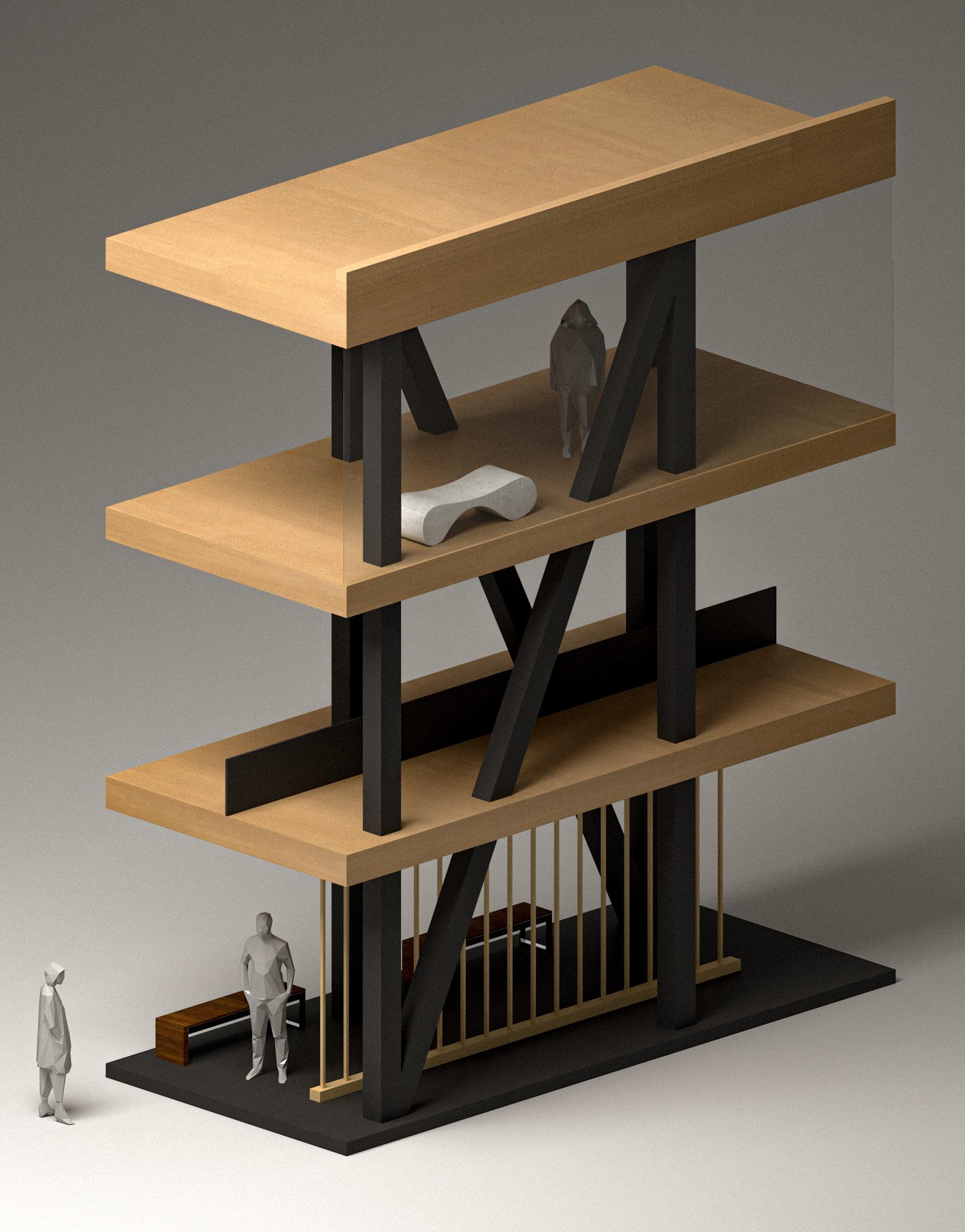
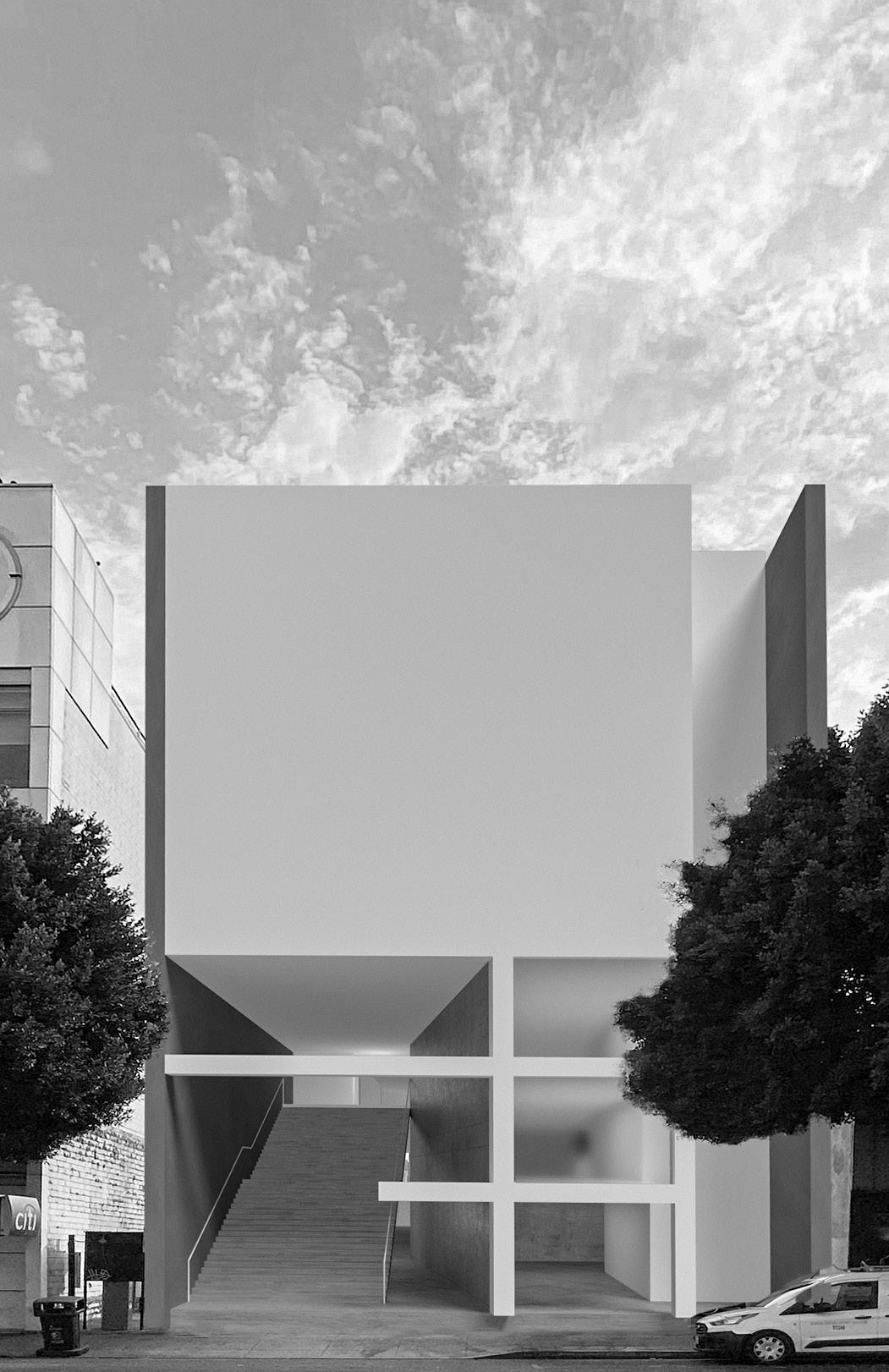
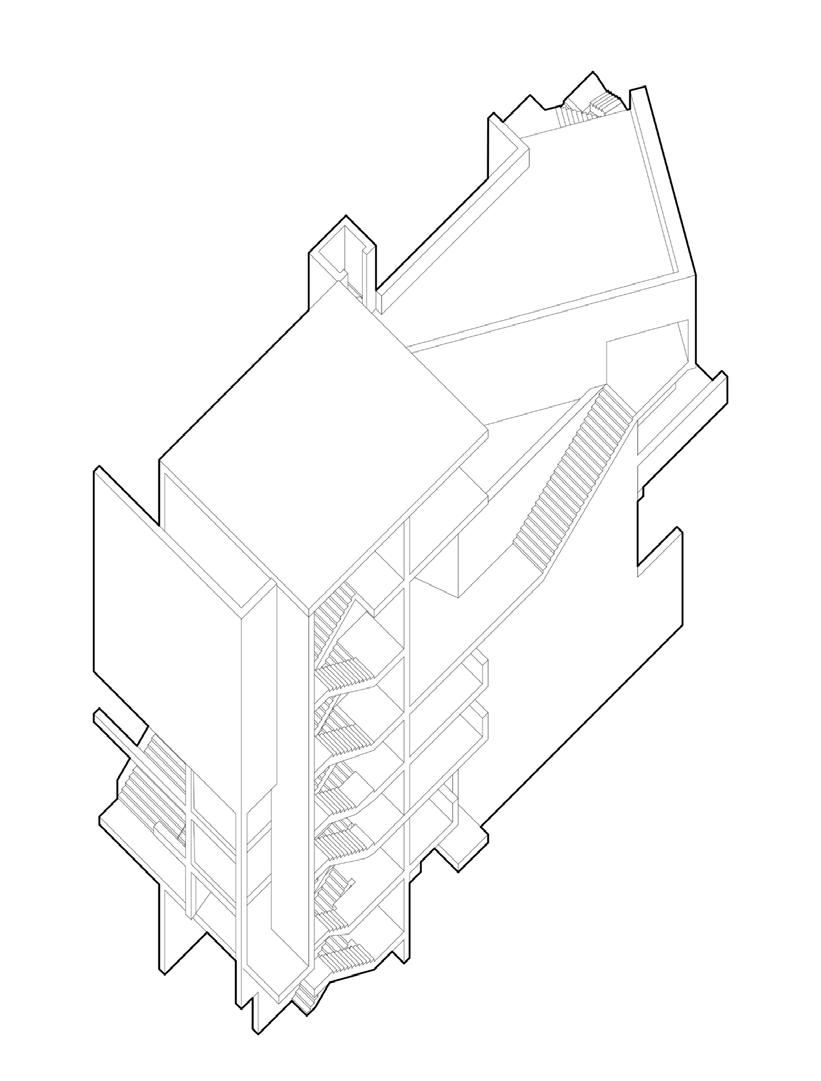
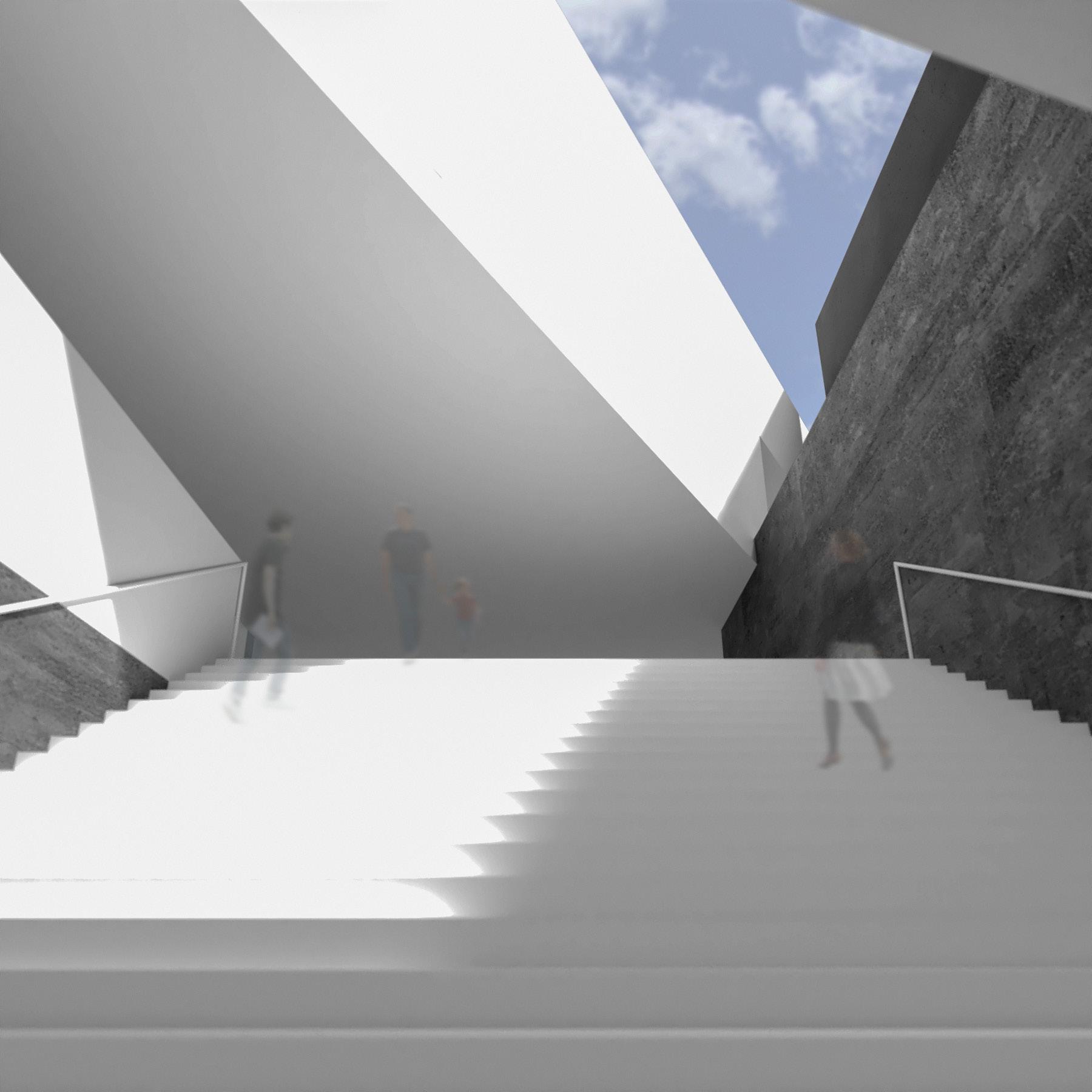
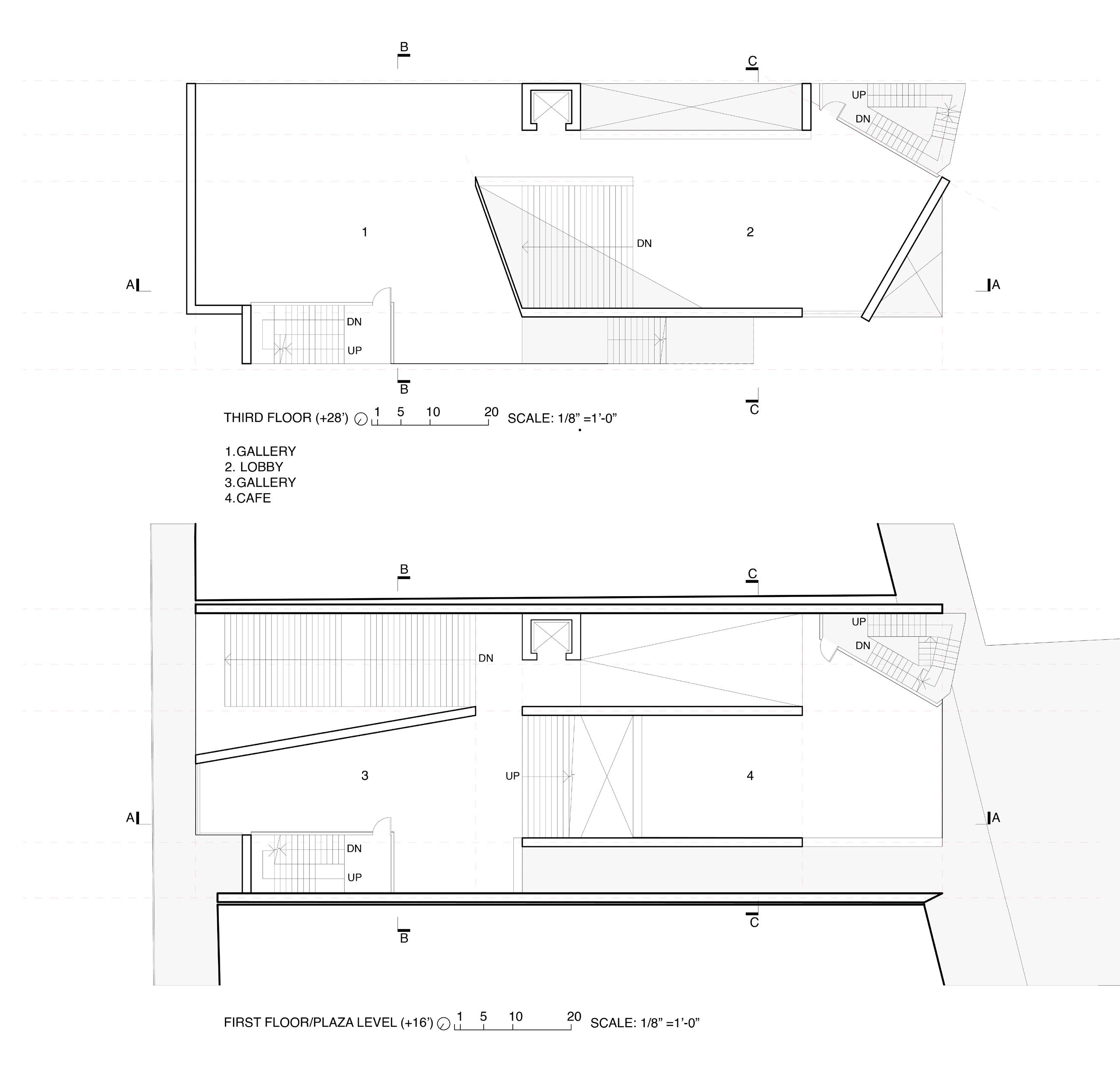
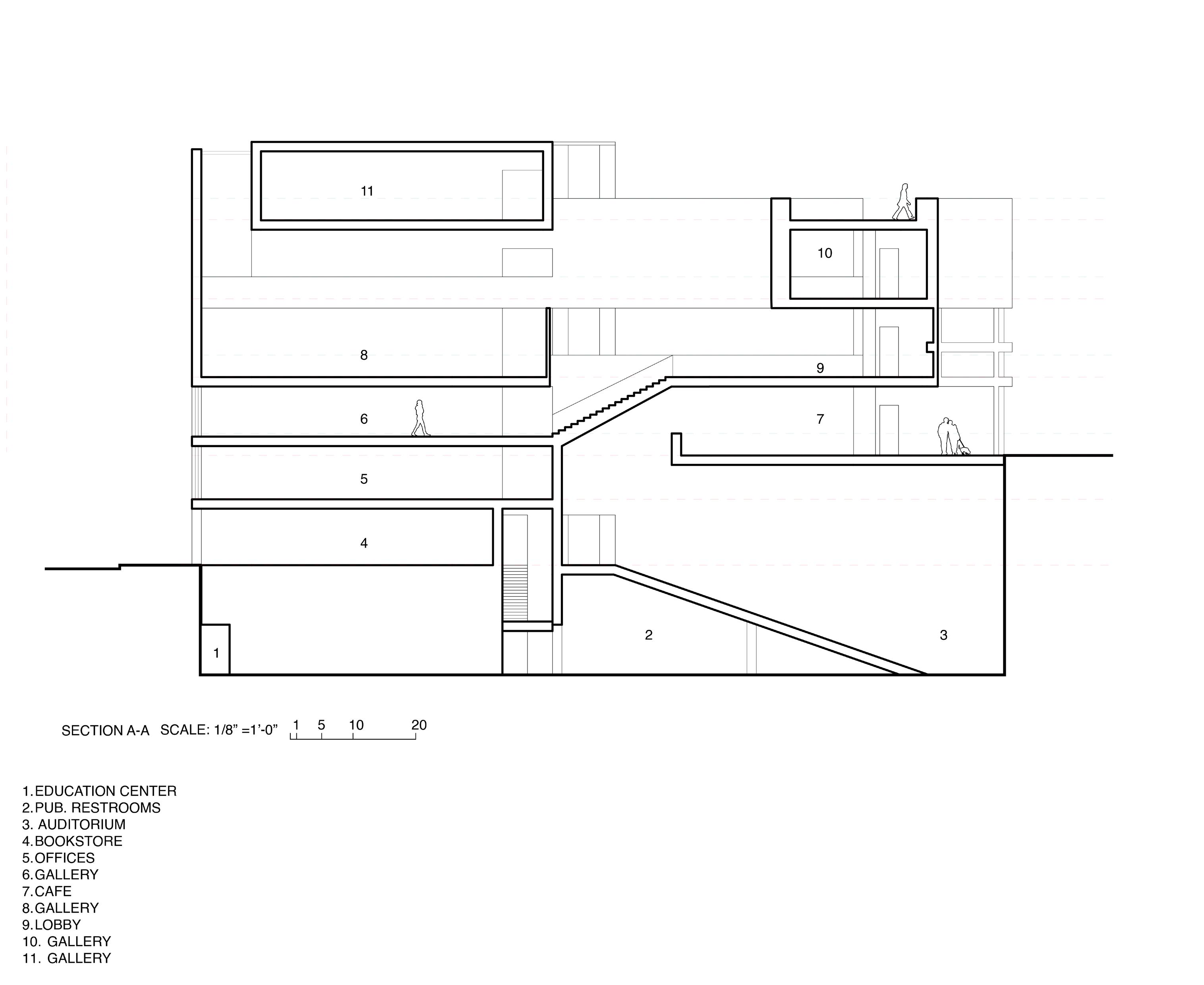
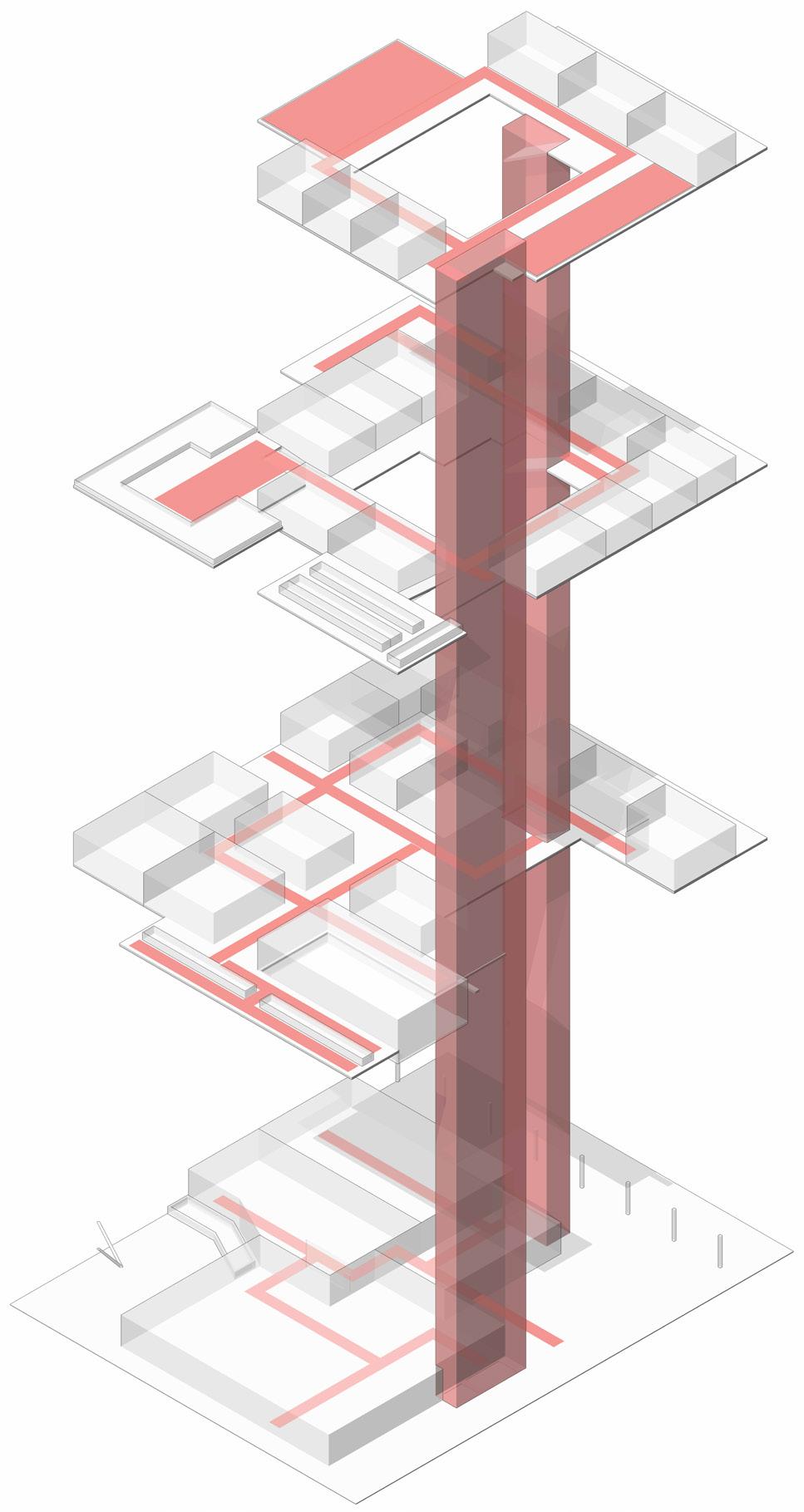
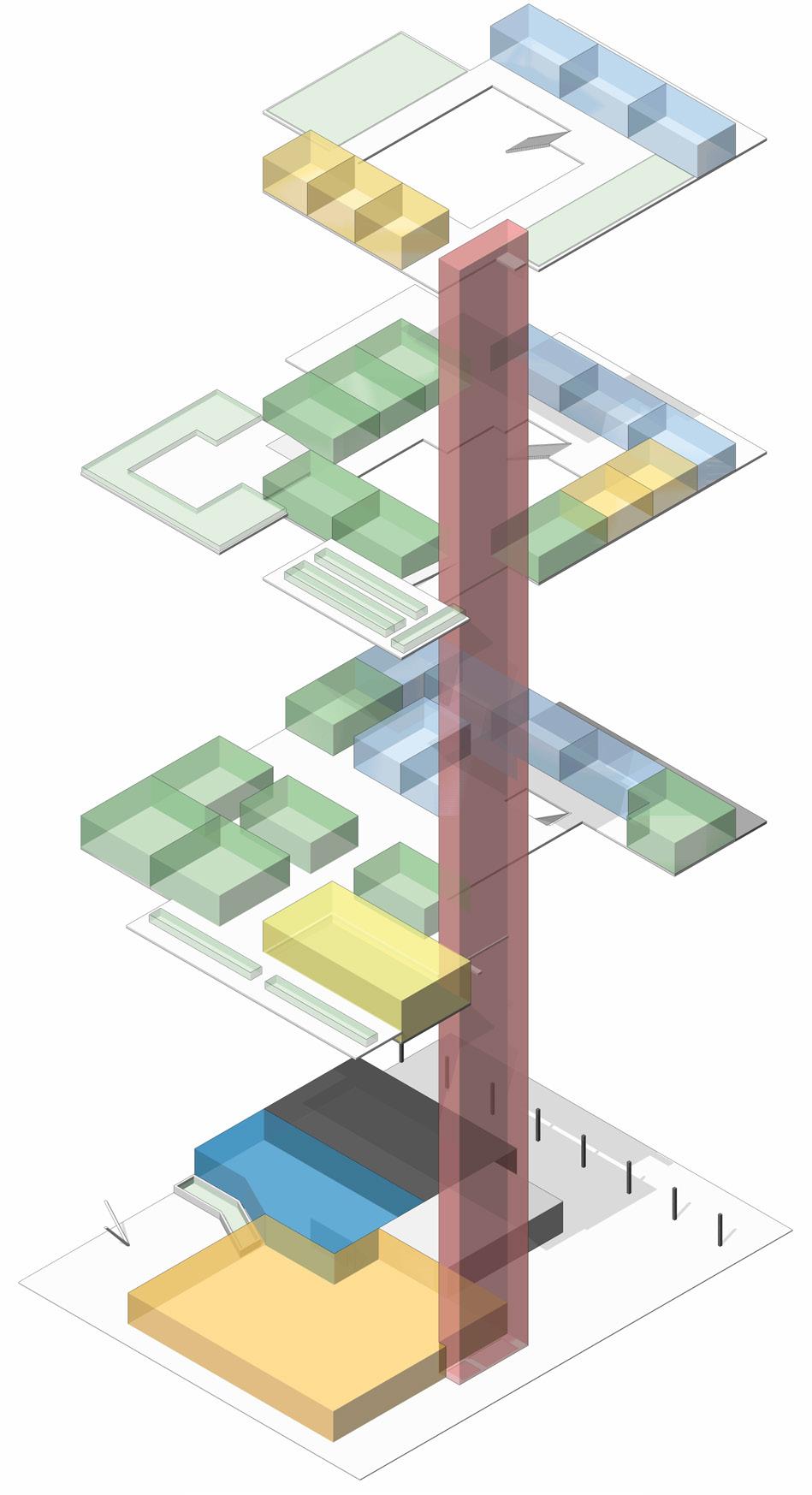
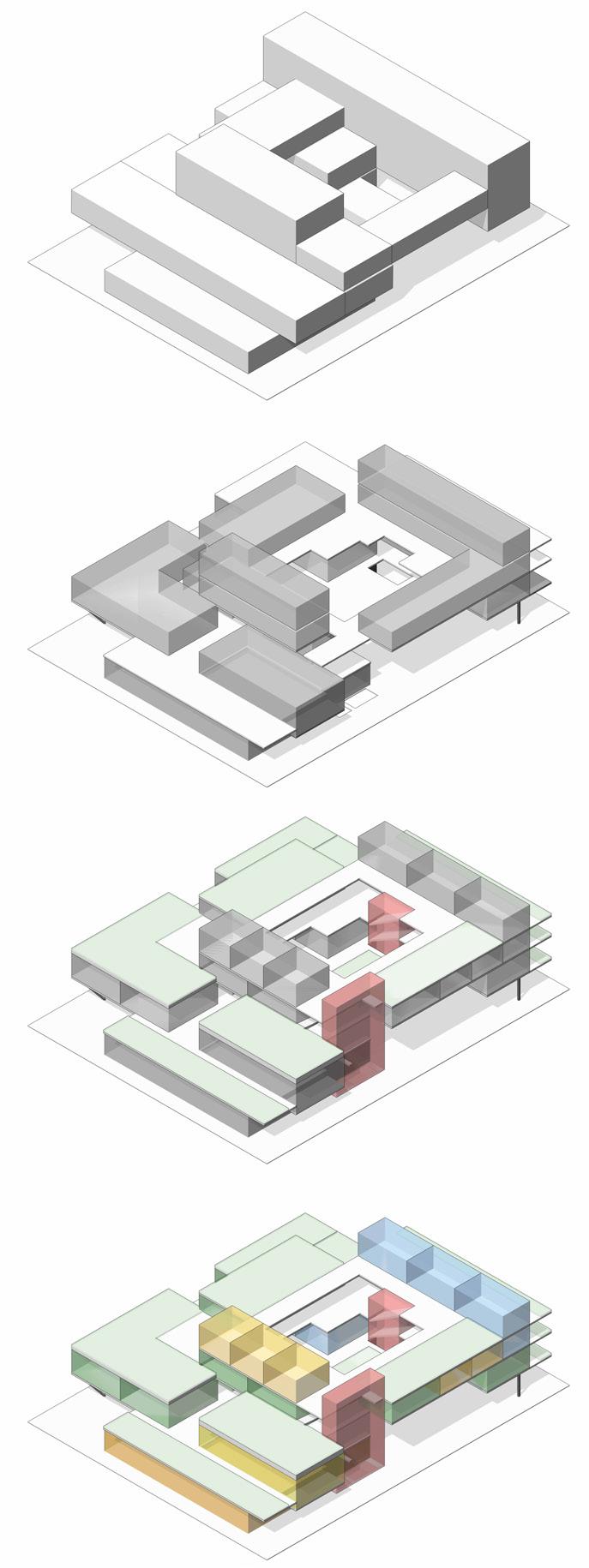
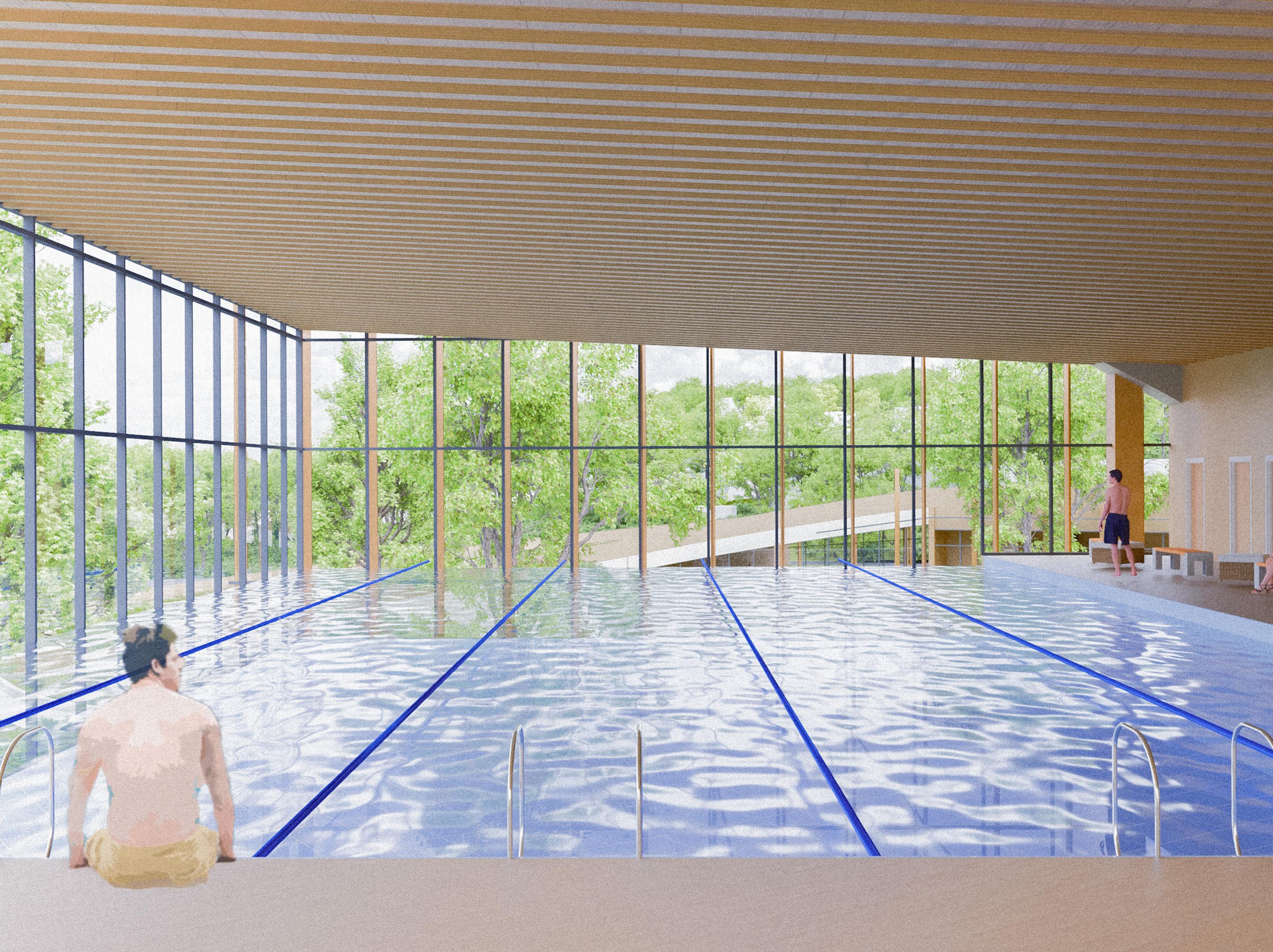
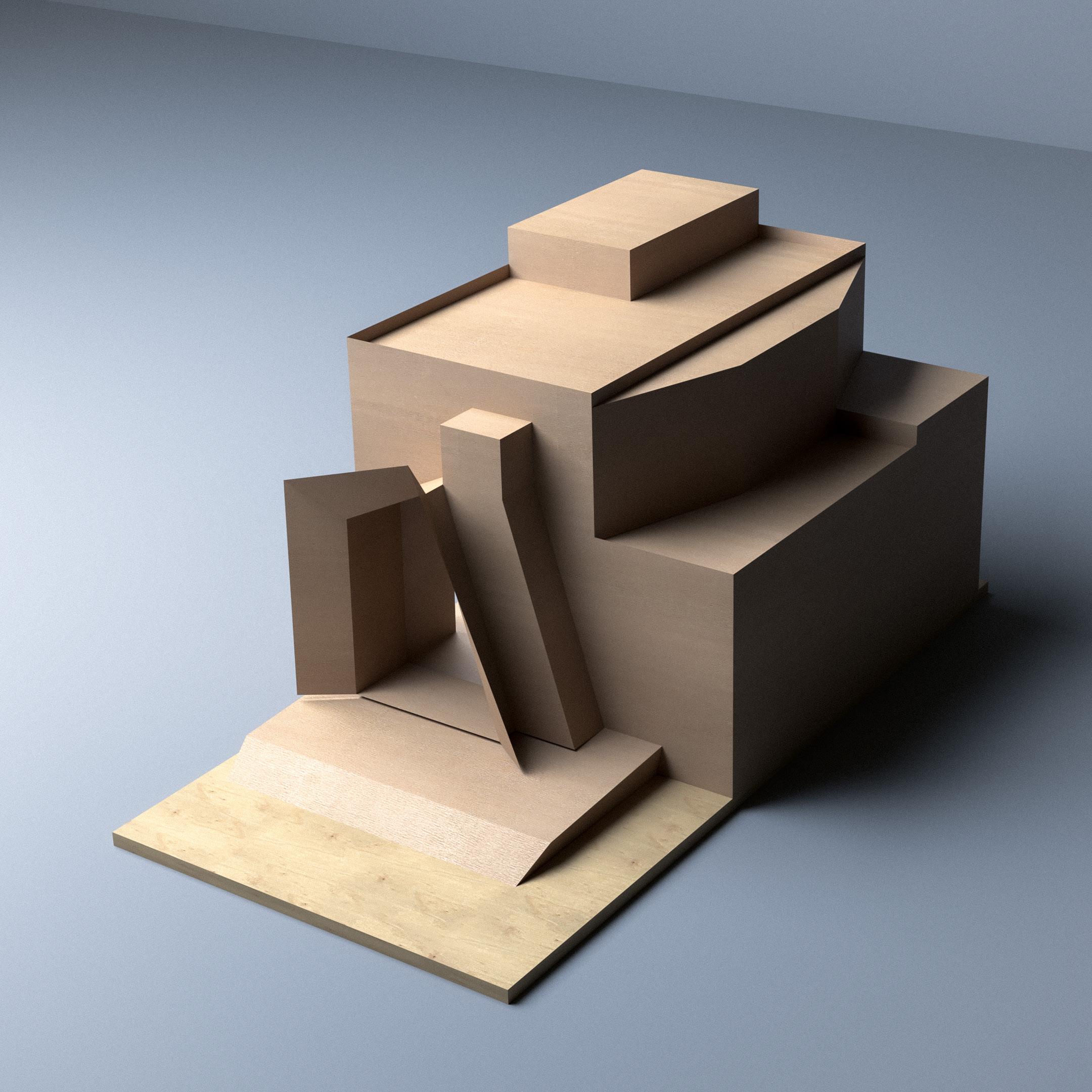
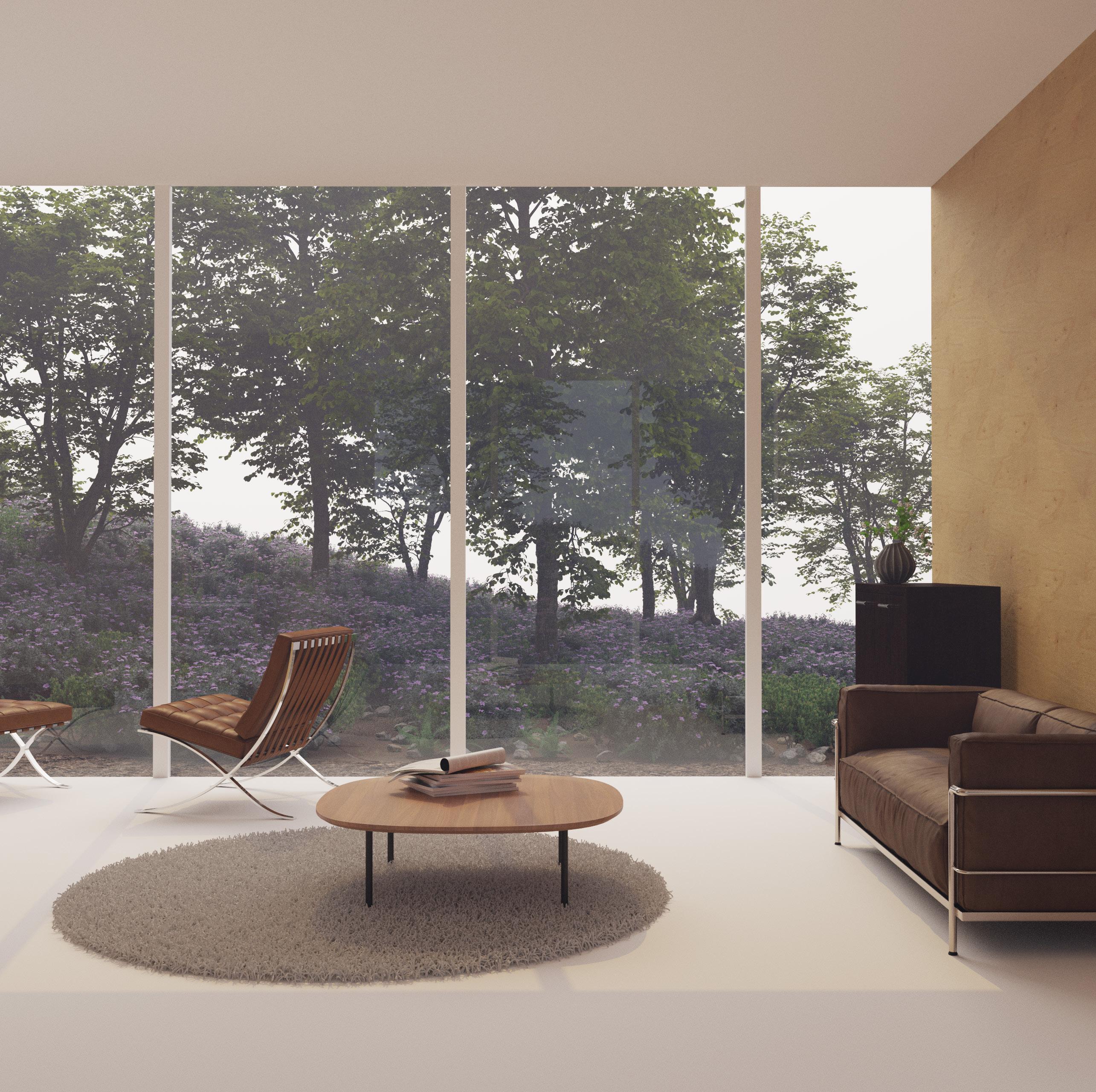
The design proposal in Little Tokyo, Los Angeles is a Museum of Contemporary Japanese Art. The intention is the fluctuation of spatial and geometrical qualities to delineate and branch each level into a piece of a larger story.
The design frames the experience of traversing through Little Tokyo through the undisturbed connection from street level to plaza level. Preserving the element of traversal, the interior creates multiple open to below pockets to connect people between floors. Little Tokyo itself is an environment that delegates its lively space from the human interaction with it.
Datum lines create an arrangement of rectilinear, triangular, and mixed shapes that vary in technique. Fluctuating qualities converge into the fluidity of spatial connections through a series of folded moves throughout the design.
TRANSITORY TERRACES
SANTA ANA, CA
SPRING 2024
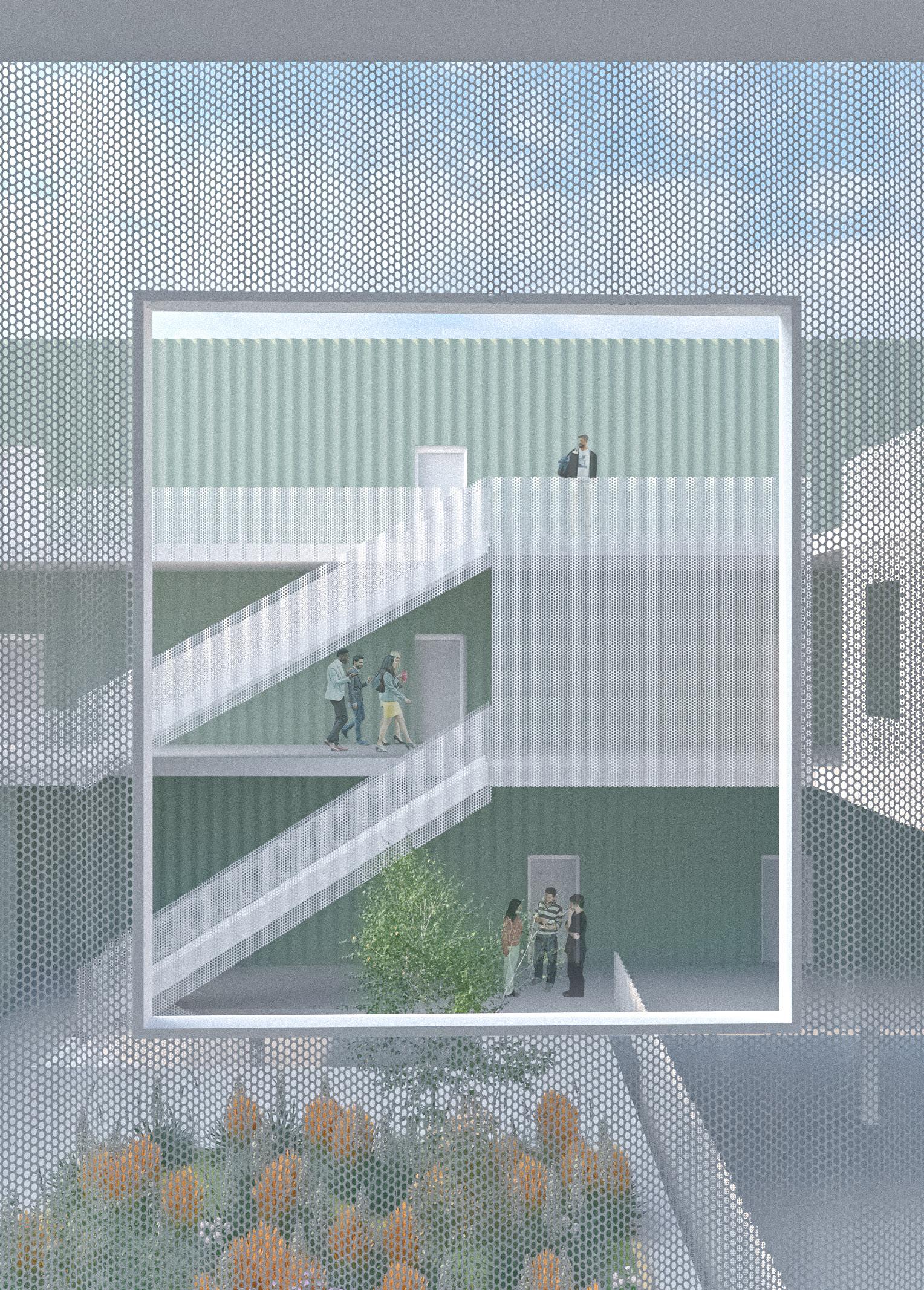
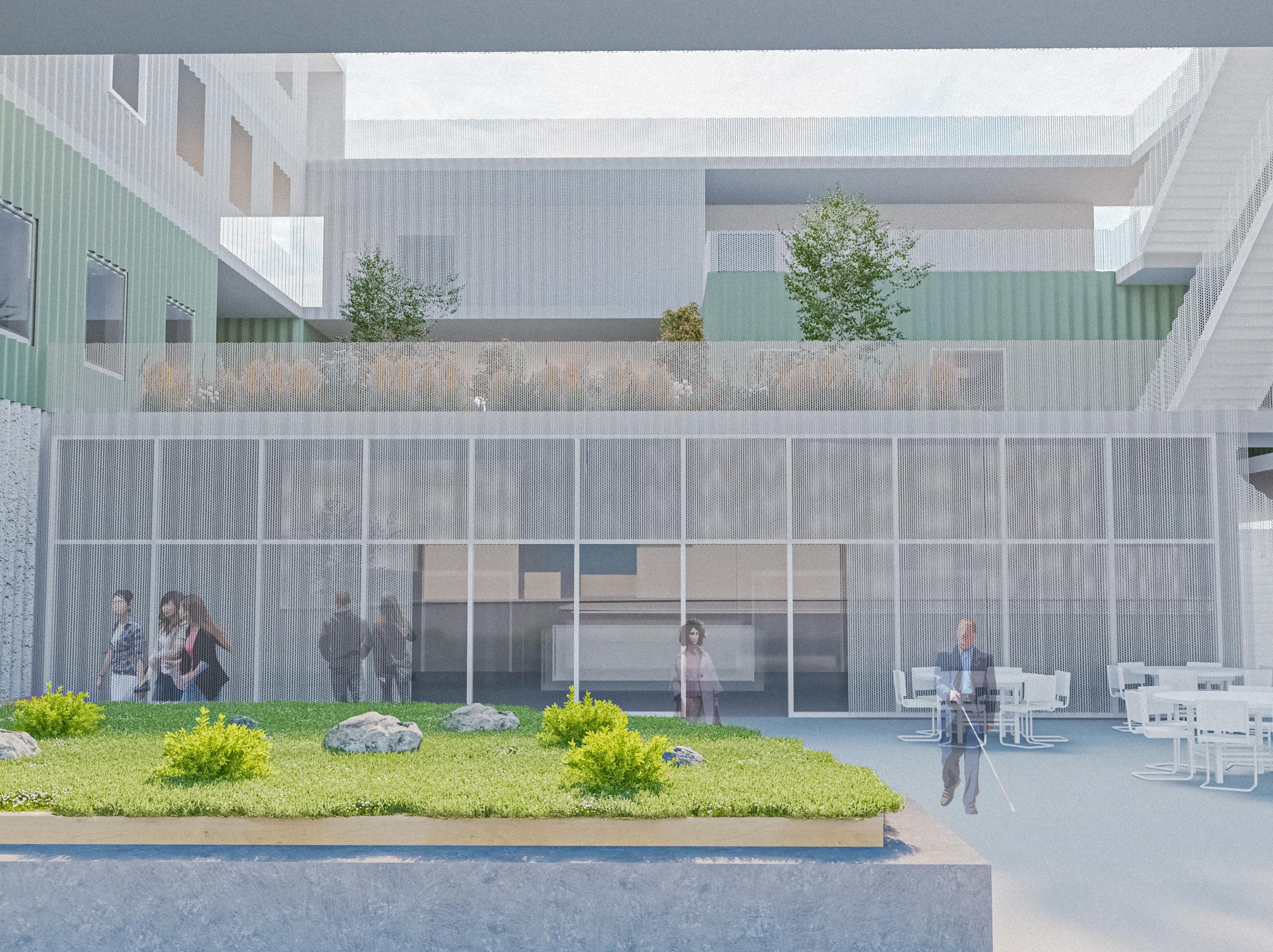
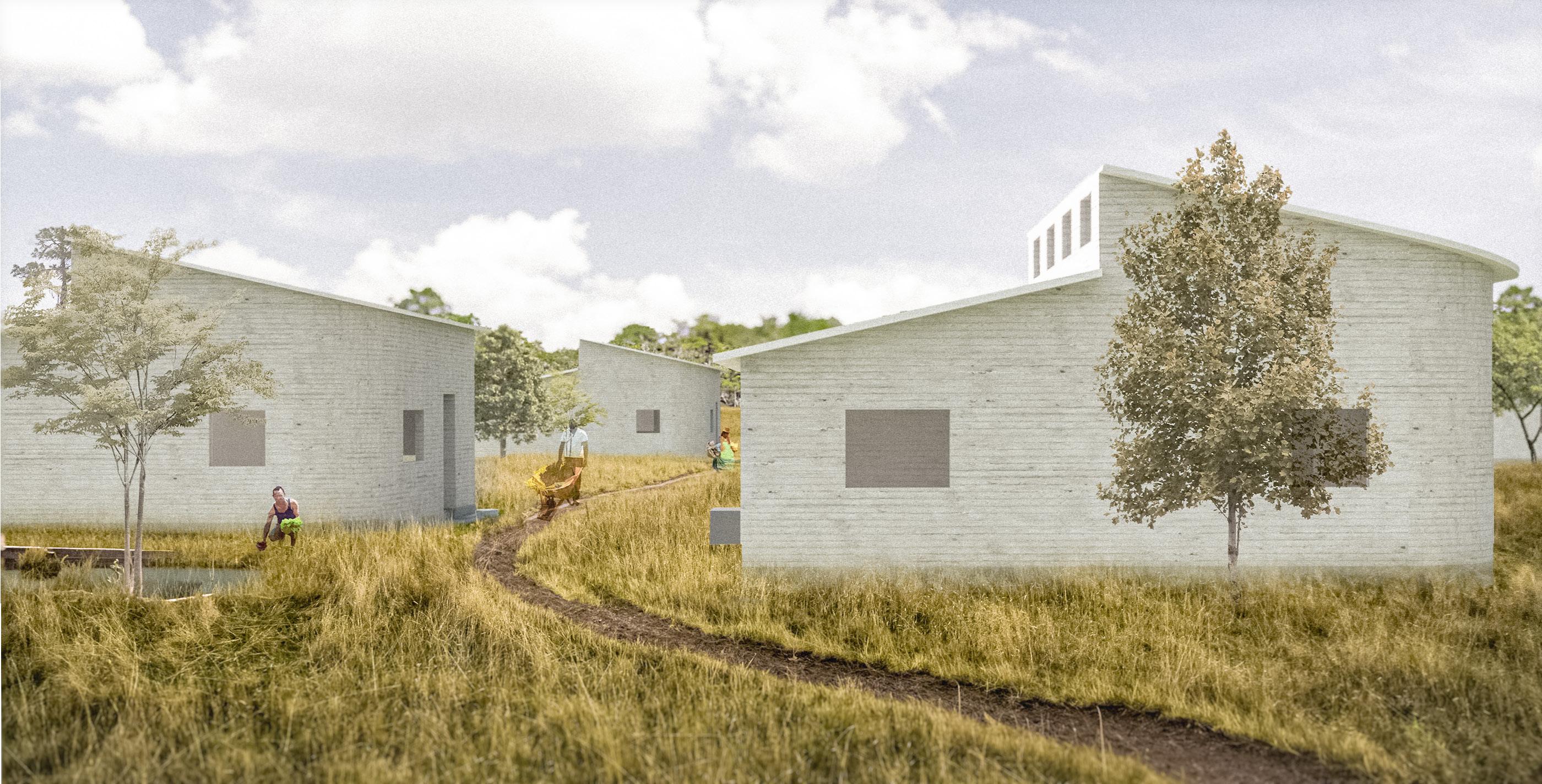
Within this parcel, the design branches and extends multiple entries into the project through a series of figure-ground and subtractive operations. The ground level consists of libraries and shared workspaces, serving the housing residents and the local community through an opportunity for public interaction. The primary way to reach the second level is through the lobby’s grand staircase. The sequence meanders the residents from different spaces and elevations, from the exterior to the interior with seamless movement.
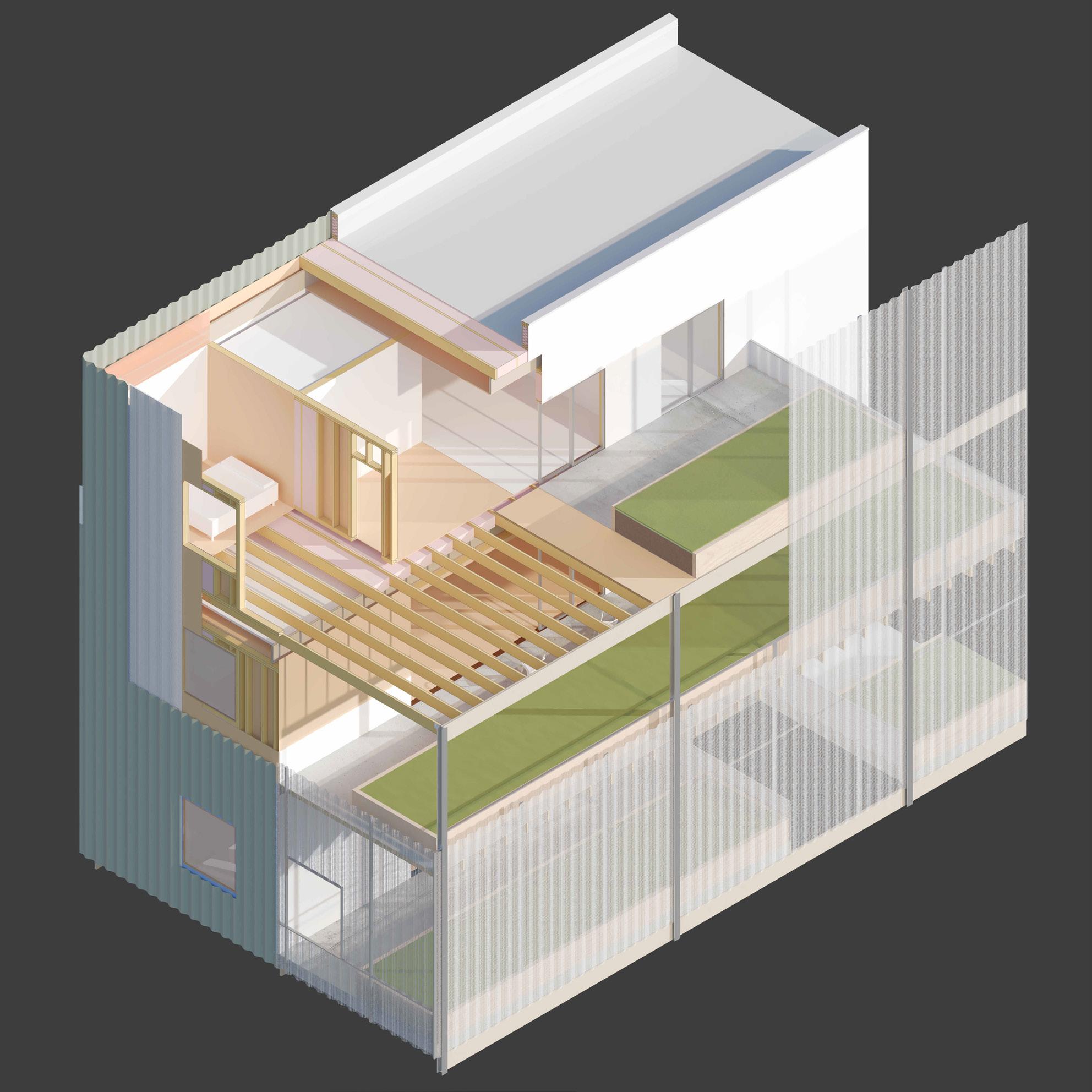
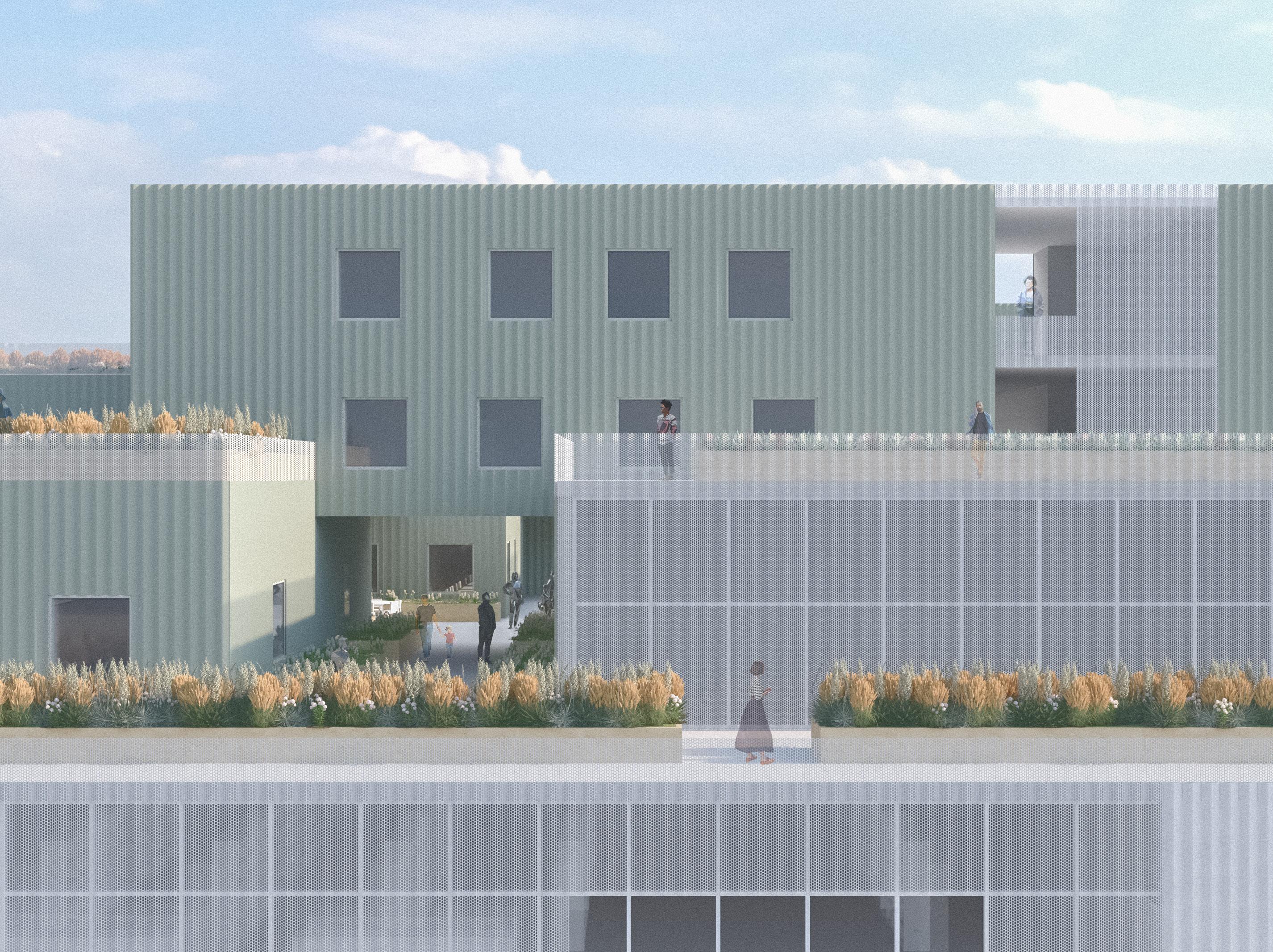
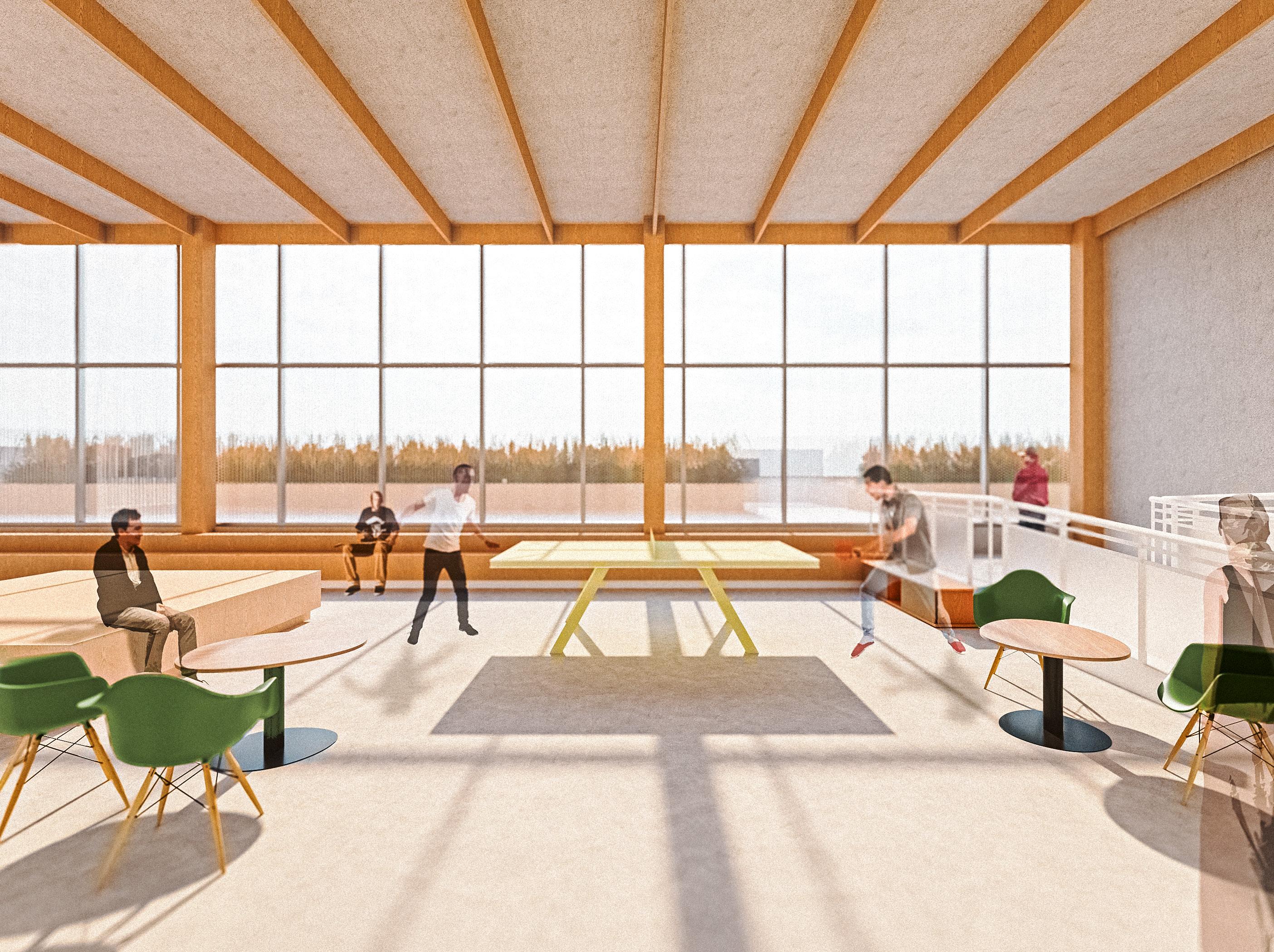
To provide amenities for the public and residents, a community room provides a free space for people to utilize. The use of figure-ground and subtraction earlier revises itself in the form-making of the design. The negative space of different levels is used as greenspaces for the residents. The design terraces inwards to reflect the sense of privacy and ownership that occupants desire in a new environment.
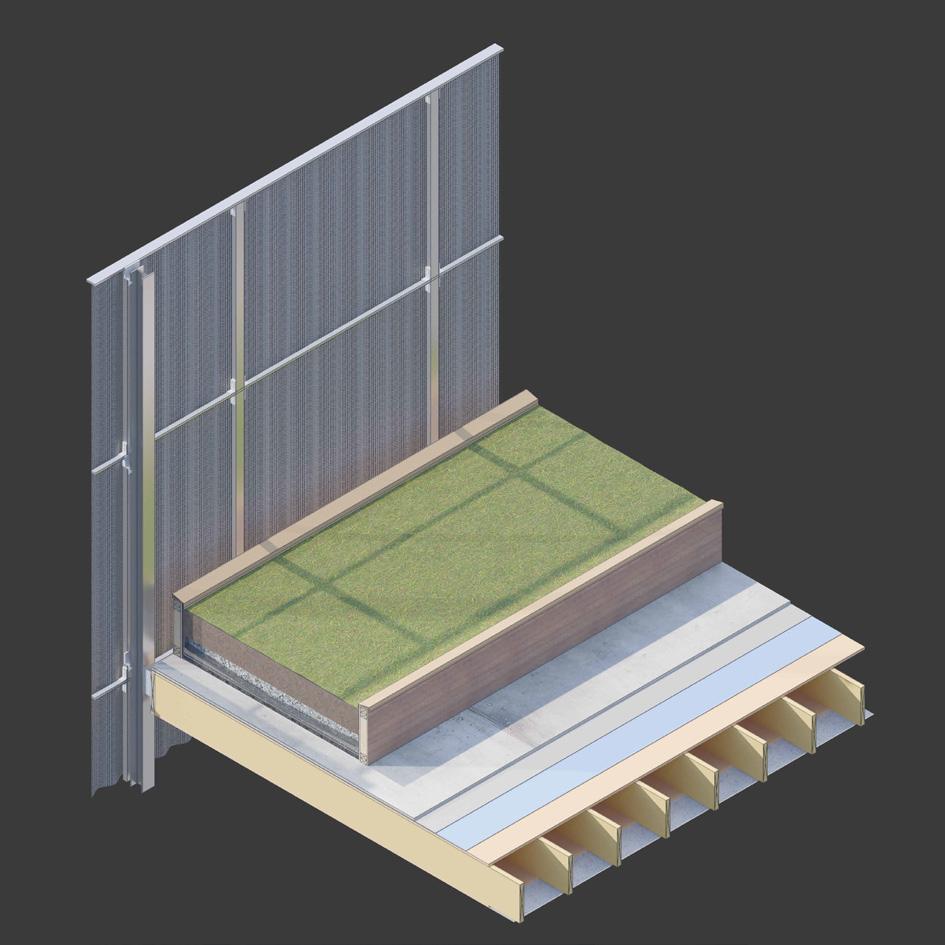
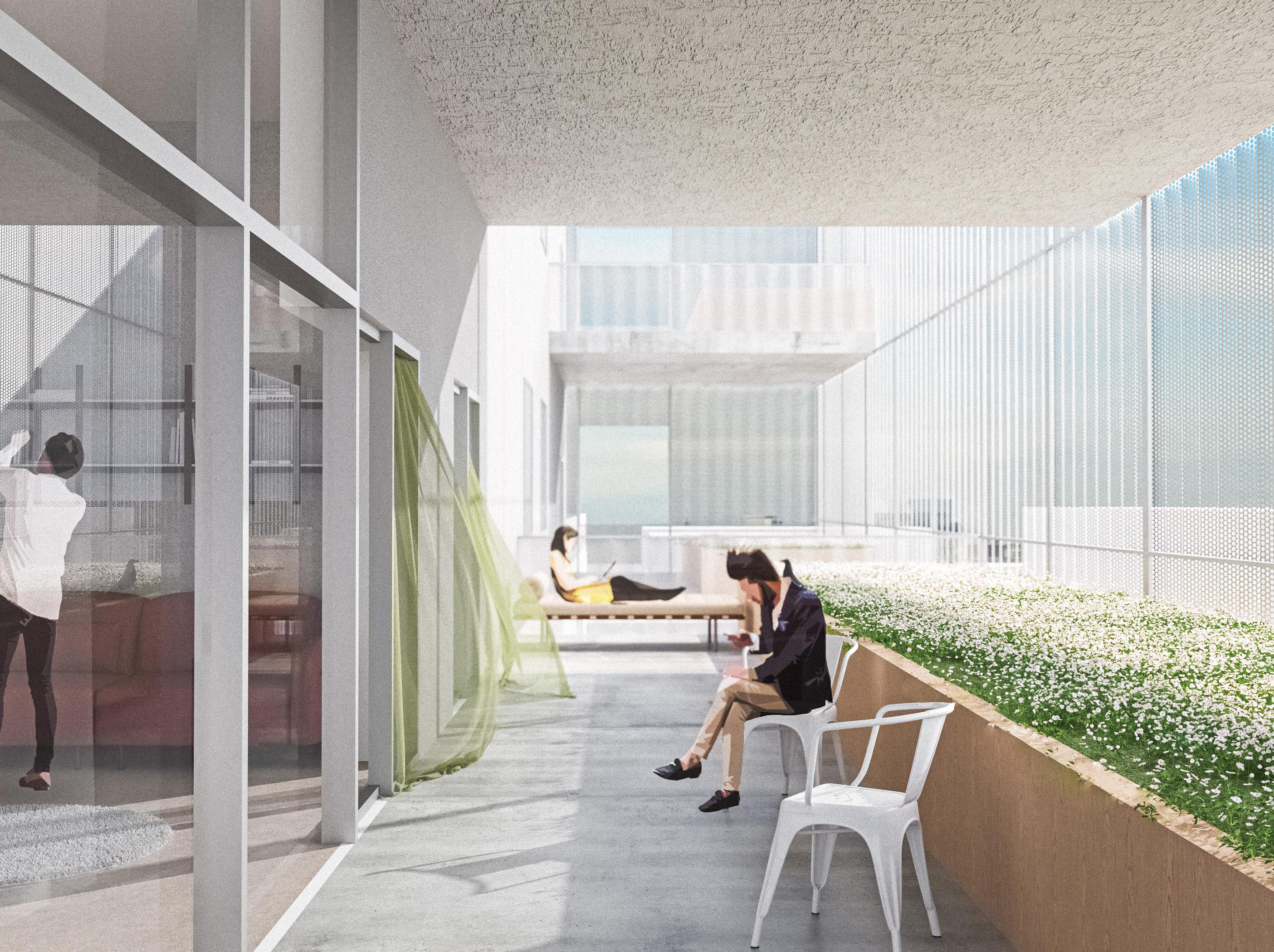
The terracing typology promotes a nearly full usage of occupants’ exterior-covered walkways. The design features a perforated screening along certain glazing opportunities to further blur the lines between indoor and outdoor readings. Playful moves are generated from the usage of a perforated screening, through which it becomes a lip that extends to double as a guardrail. Subtractions in the screening create viewpoints for residents along upper-level walkways to gaze into the courtyard below
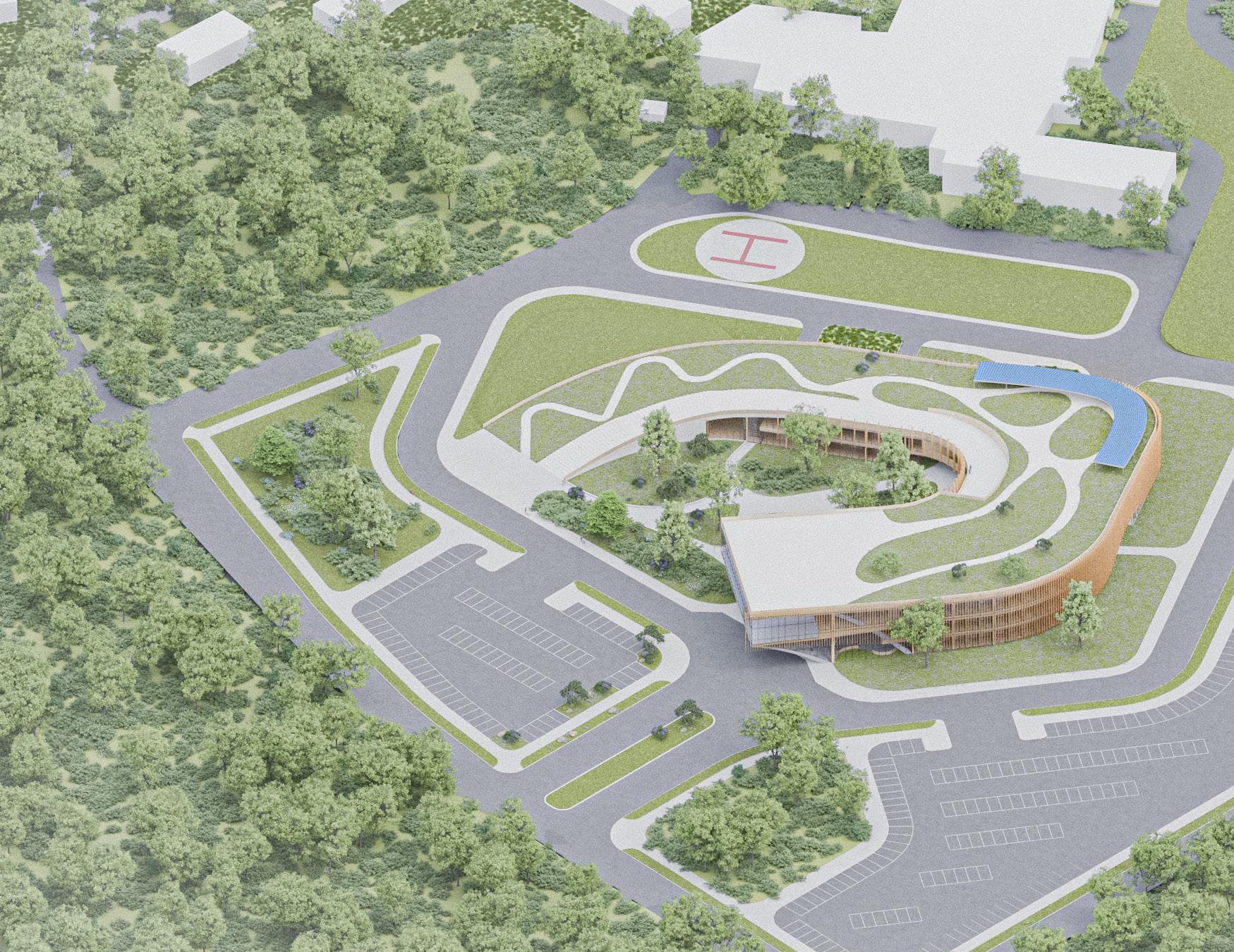
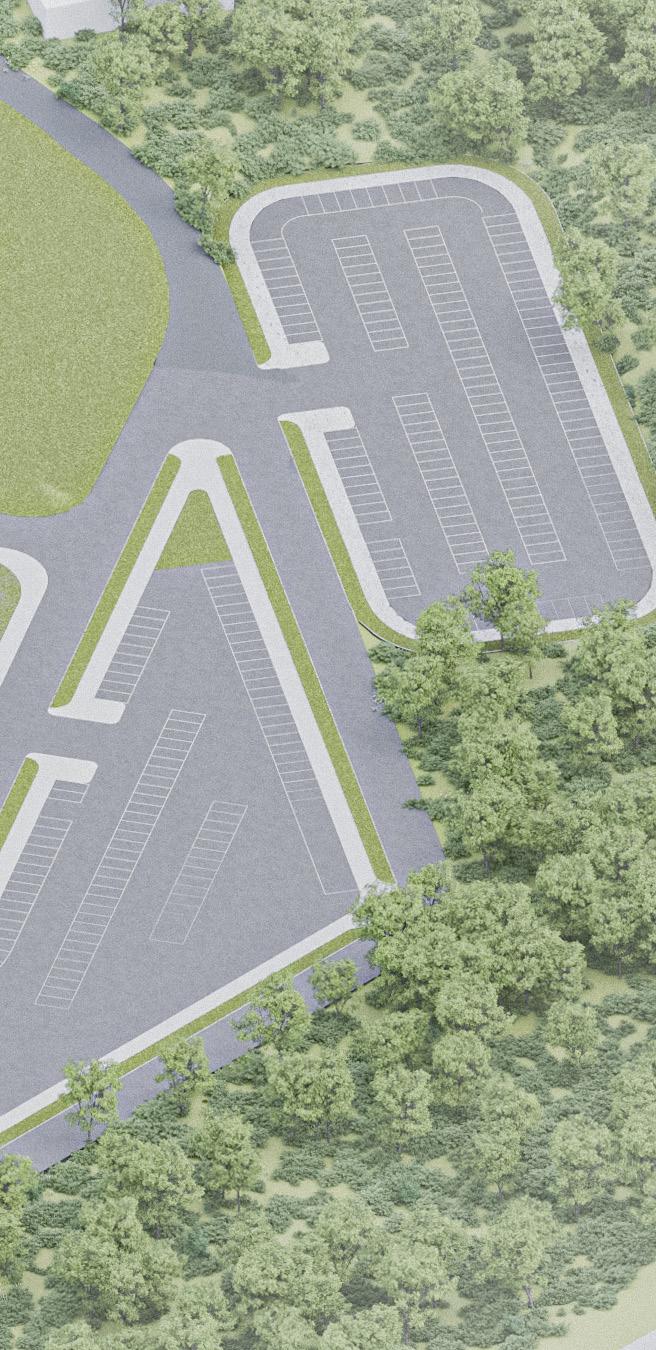
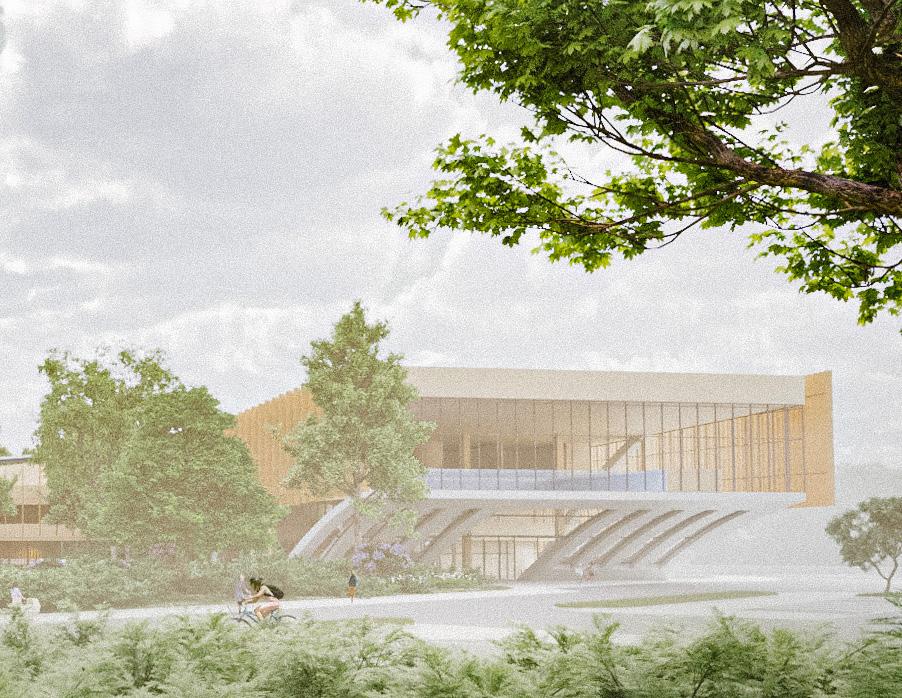
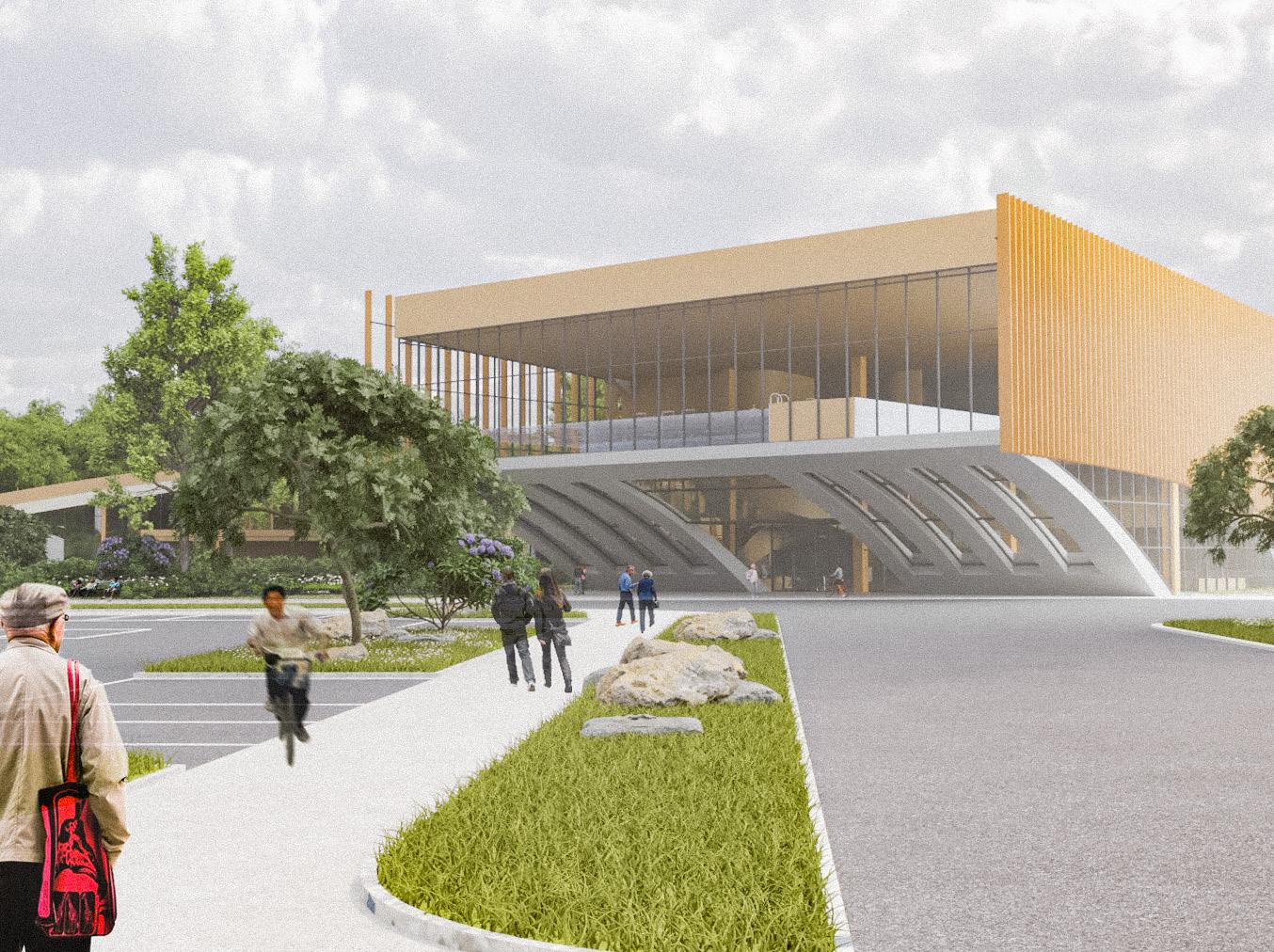
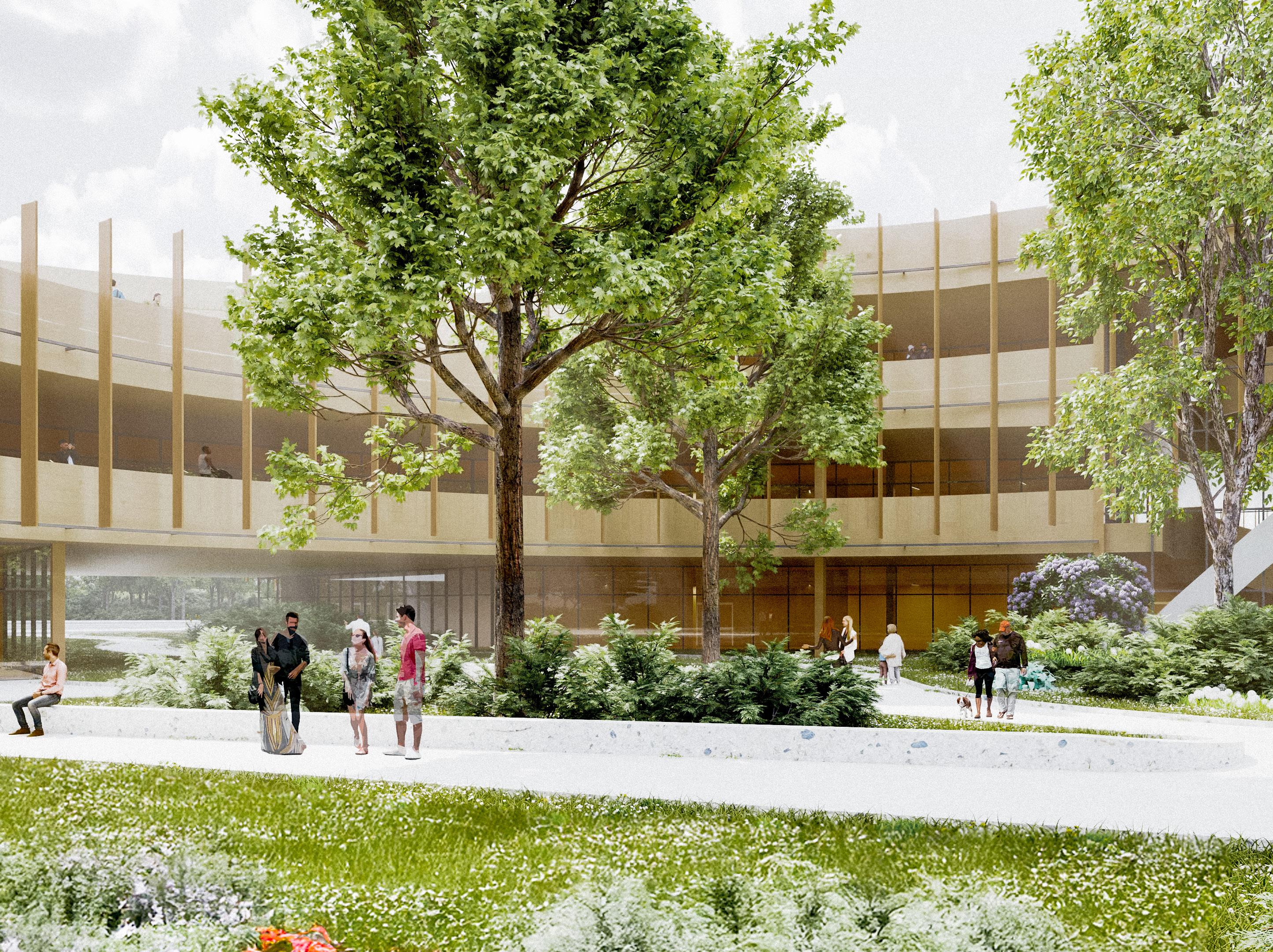
The Seaside Orthopedic Center is a state-of-the-art medical facility in Seaside, Oregon, offering outpatient and orthopedic services to the local community and the broader region. To address the prevailing southern winds, the southern section of the building rises taller than the rest, diverting wind around the structure. This thoughtful design creates a sheltered central courtyard, providing visitors with a comfortable outdoor space to relax during their visit.
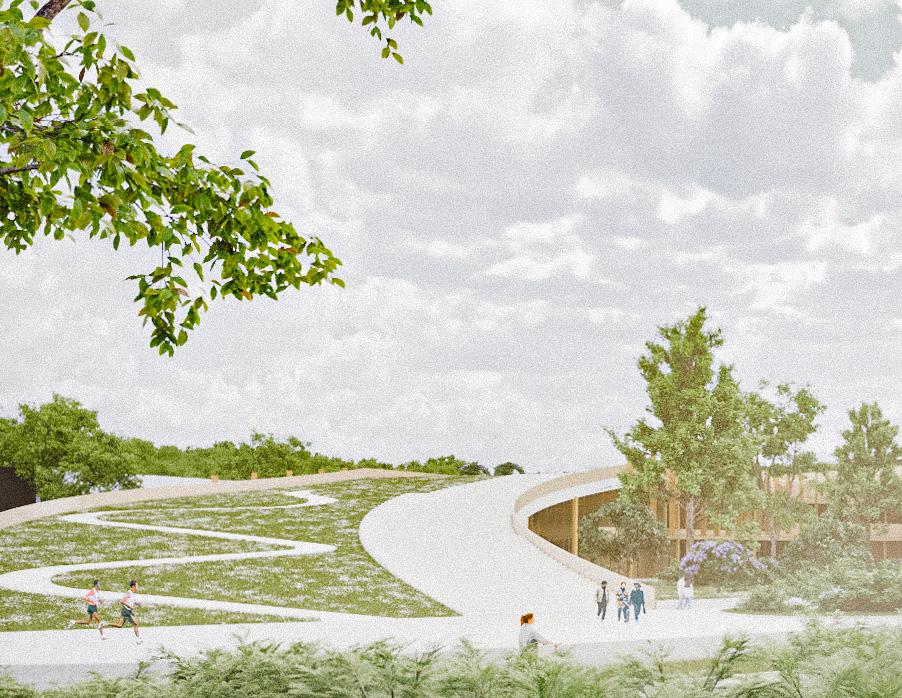
The building’s mass gradually slopes downward, seamlessly transitioning into an accessible ramp leading to a tsunami evacuation platform that also serves as a functional outdoor garden. This dualpurpose feature integrates safety with sustainability, reflecting the center’s commitment to both community well-being and ecological design.
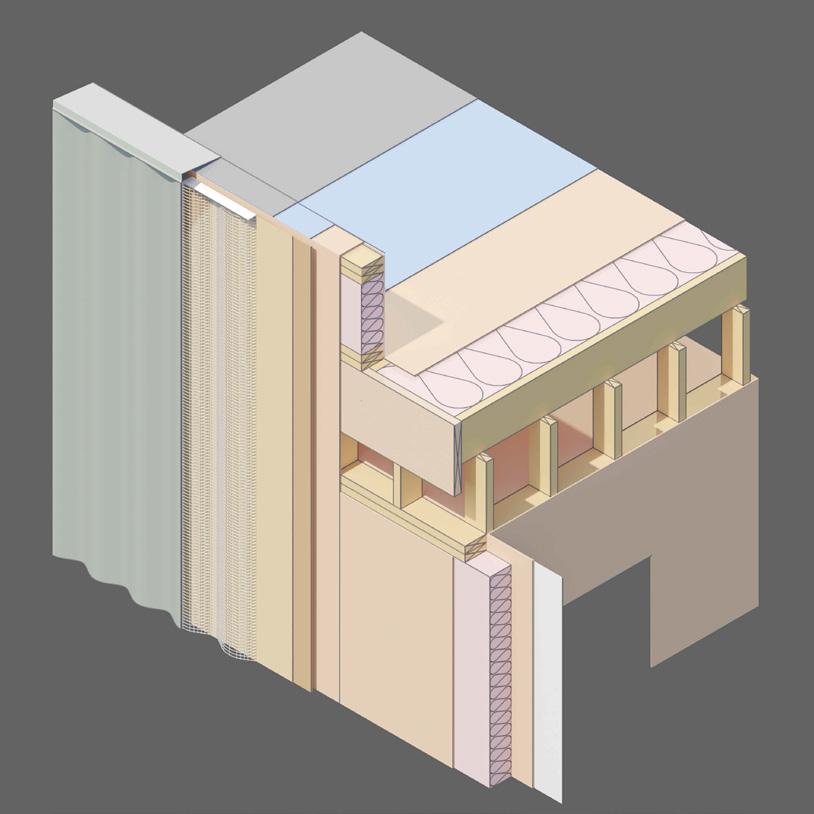
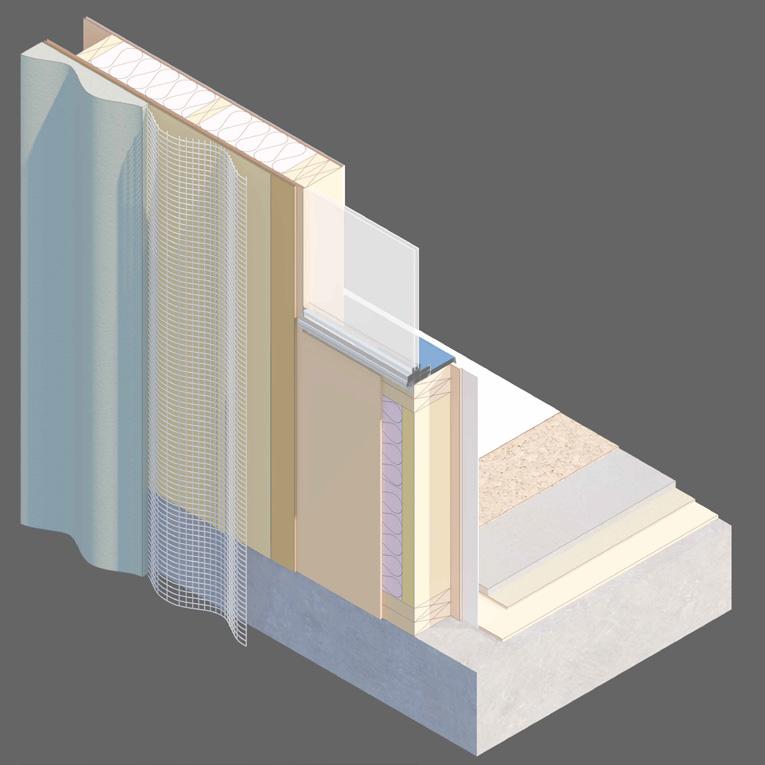
Our structure employs cross-laminated timber (CLT), harmonizing with Oregon’s natural aesthetic while showcasing the potential of mass timber construction. The façade features a wood louver panel system, enhancing both functionality and visual appeal. Within the hospital, the courtyard fosters a sense of tranquility, with gardens and walkway paths connecting various parts of the facility.
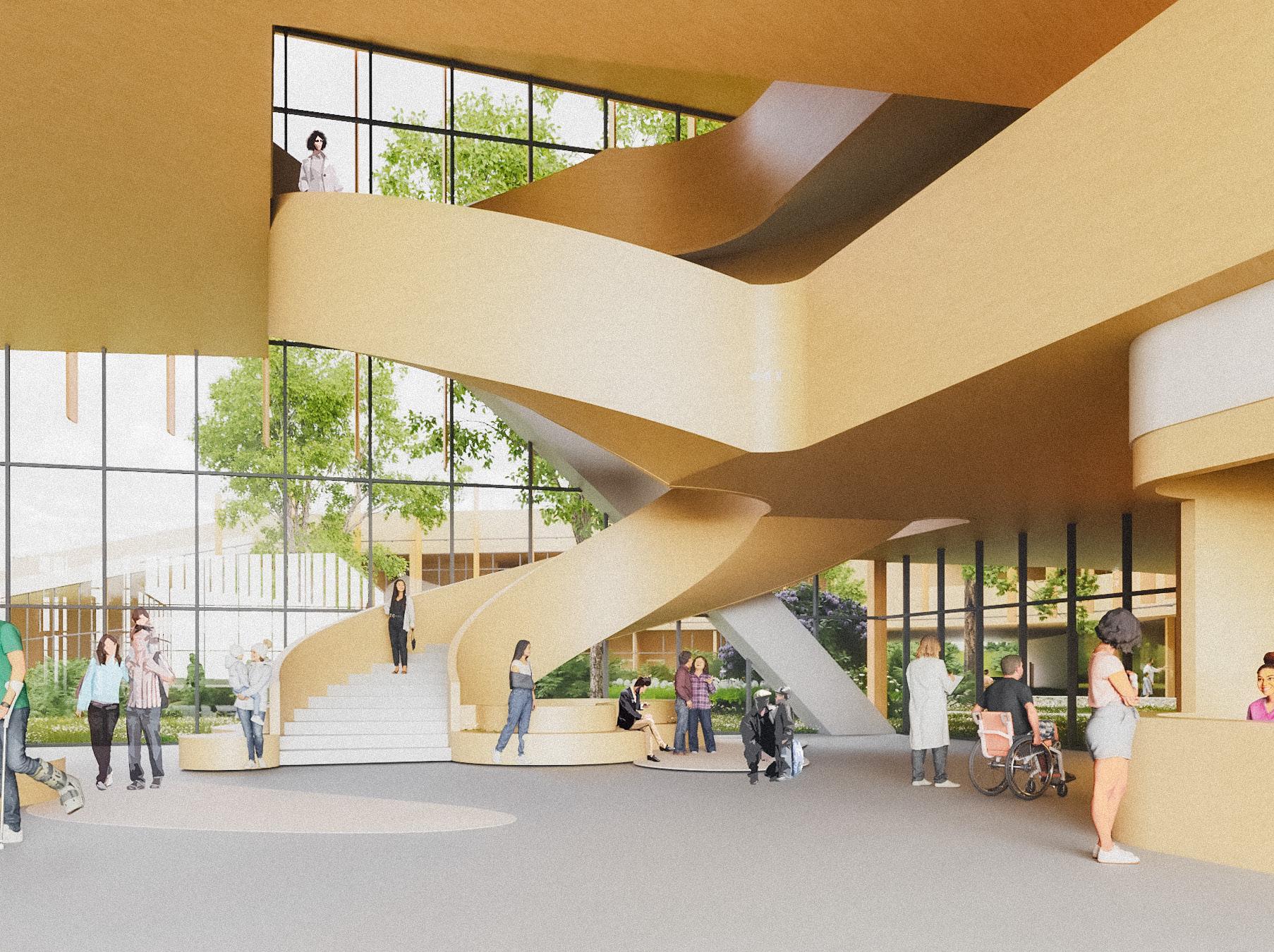
The U-shaped layout promotes efficient internal circulation along the inner curve, providing clear sightlines to the outdoors and easy access to designated programs. Visitors enter through a welcoming lobby that features a grand spiral staircase within a dramatic tripleheight atrium. This staircase, adorned with seating and curved planters that echo the natural landscape, connects all levels of the building, creating a cohesive and inviting experience for patients, visitors, and staff alike.
By blending thoughtful design, natural materials, and communitycentered spaces, the Seaside Orthopedic CenterWW stands as a model for innovative, sustainable healthcare architecture. It embodies a harmonious relationship between form, function, and the environment, offering a space of healing and comfort for all who