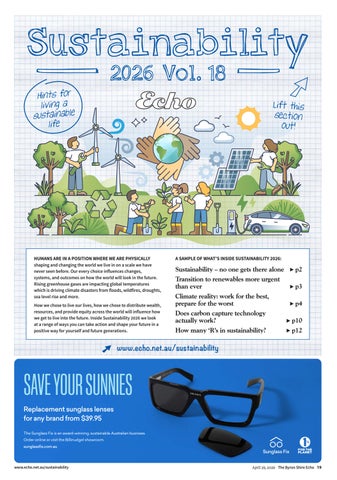
HUMANS ARE IN A POSITION WHERE WE ARE PHYSICALLY shaping and changing the world we live in on a scale we have never seen before. Our every choice influences changes, systems, and outcomes on how the world will look in the future. Rising greenhouse gases are impacting global temperatures which is driving climate disasters from floods, wildfires, droughts, sea level rise and more.
How we chose to live our lives, how we chose to distribute wealth, resources, and provide equity across the world will influence how we get to live into the future. Inside Sustainability 2026 we look at a range of ways you can take action and shape your future in a positive way for yourself and future generations.
SUSTAINABILITY 2026
Sustainability – no one gets there alone
Dr Anne Stuart
SUSTAINABILITY IS AN EVERYWHERE WORD.
It can feel abstract. That’s because it lies at the intersection of large systems, environment, economy, and society, which is set against our daily decisions: often small, immediate, and constrained.
What creates this feeling is the gap between idea and practice. The idea of sustainability is clear in principle. But what does it mean for how a business operates on a Tuesday morning? Or how a household makes decisions under pressure?
Many organisations and businesses recognise the growing pressure to act, yet feel uncertain about where to begin. This creates hesitation.
Sustainability becomes more tangible when grounded in questions: how is energy used, how are materials sourced, how is waste assessed, how are people treated, and how are decisions made?
Sustainability is not an additional layer but a way of operating with intent, and over time. The intent is to question practices. It is as much a practical commitment as a mindset.
Questioning business-as-usual
Not-for-profits and for-profits share many of the same operational needs. Both require strong governance, clear strategy, financial sustainability, capable leadership, and effective risk management. Whether the goal is for-profit or for-purpose, success depends on how well an organisation functions.
Increasingly, for-profits are expected to demonstrate environmental and social responsibility alongside financial performance. This should not be seen as a burden; it actually sets up a more resilient and futurefocused business model.
Consider Fairphone, a Dutch company that redesigned its smartphones so every component could be replaced by the user. It extended product life to six years, reduced waste, used less virgin material, and lowered supply chain risk, delivering stronger margins over time. It is circular by design. Their approach was not charitable. It was commercially intelligent, aligning sustainability with long-term value creation. It was a smart business model. It aligned its business with B Corp Certification, and growth with purpose.
Sustainability 2026
An Echo Publications supplement Editor: Aslan Shand
Contributors: Ian Elderman, Dr Sian Grigg, Dr Willow Hallgren, Eve Jeffery, David Lowe, Mandy Nolan, Dr Anne Stuart
Advertising team: Emma Burkett, Anna Coelho, Lesley Hannaford, Angela Harris, Katie Thompson Design & production: Ziggi Browning
Fairphone could have continued to run its business as usual. It didn’t. It realised that the real risk was simply reporting compliance and not building resilience into its business model.
In Australia, Pablo & Rusty’s Coffee Roasters provides another example. Recognised with a Banksia Award, the company has embedded sustainability into its operations, achieving carbon neutrality, B Corp Certification, and has become a committed one per cent for the Planet member. It demonstrates how small and medium enterprises can lead with purpose while remaining commercially successful.
In the Northern Rivers, Norco Co-operative Limited has embedded sustainability into its operations through three central pillars: People, Planet, and Product. NORCO set a target to reduce carbon intensity (Scope 1 and 2) by 30 per cent by FY30 against a FY20 baseline, and has already exceeded this ambition, achieving a 39 per cent reduction in carbon intensity alongside a 32 per cent reduction in absolute emissions. Beyond energy, NORCO has focused on packaging innovation, transitioning to 100 per cent recycled PET (rPET) milk bottles to reduce reliance on virgin plastics. Through collaboration with Bega Circular Valley 2030, NORCO contributes to efforts to regenerate natural systems and transform waste into valuable resources.
From reporting to resilience
Many small businesses are measuring, but often it’s what’s easy, visible, or required. Focus should be on where impact lies, for example, total energy use and cost, and waste generated. Often a cafe or service
business, even a building with multiple tenants will have a ‘hotspot’. That hotspot may be to reduce energy (lighting, efficiency upgrades, solar panels, batteries, a Virtual Power Plant plan) or to review suppliers (local, lower-impact, less packaging). The quickest wins are actually cost savings, not costs.
The World Economic Forum’s Global Risks Report 2026 highlights a stark reality. In the short term, risks such as geopolitical instability and misinformation dominate. In the long term, it will be climate-related risks. Extreme weather, biodiversity loss and ecosystem collapse will become overwhelming. These are direct threats to business continuity.
A regional opportunity
In the Northern Rivers, a recent feasibility study for a Circularity Hub found that the region is well positioned to become a national leader in circular economy transformation. The challenge is not capability, but coordination. The study found efforts remain fragmented across councils and industries. A coordinated regional approach would amplify impact, attract investment and create local jobs.
Sustainability is often framed as an individual responsibility, but in practice, no one gets there alone. Businesses, communities, and governments are interconnected, and progress depends on how well they work together.
Real impact begins with shared action. The opportunity is clear. Start small. Measure what matters. Act where it counts. Work with others. Sustainability, at its core, is collaborative. No one gets there alone.
■ Dr Anne Stuart is the Chair of Zero Emissions Byron–Northern Rivers.
■ A local B Corp group meets monthly to learn about B Corp and grow sustainability in the Northern Rivers: northernrivers@bcorp.community.
Hints for living a sustainable life 3
Transition to renewables more urgent than ever
Mandy Nolan
WITH ENERGY PRICES SKY ROCKETING and the devastating climate impacts of the fossil fuel industry a harsh reality for many Australian communities, there’s an urgent need to transition to renewable energy sources, on the commercial and the domestic front.
The mission of government has been to encourage homeowners and businesses to adopt solar energy as a reliable, efficient, and sustainable energy source. Rooftop solar is a key part of the national strategy to reach 82 per cent renewable energy by 2030. We currently have the highest uptake of household solar in the world.
There are rebates and incentives to help make this happen. Under the Small-scale Renewable Energy Scheme (SRES) discounts for eligible systems can help make purchase more affordable. There is currently a 30 per cent federal rebate on solar, NSW offers additional incentives on battery installations. Location can also impact the rebates you receive. Residents living in the regions with higher solar irradiance in NSW can receive more rebate certificates. This can significantly reduce the cost of a new solar system (see www.solarcalculator.com.au).
Over three million Australian homes and businesses have already used government and state rebates to get solar panels, inverters, and batteries installed. It’s a process that feels daunting at first, but well worth the research. There are many resources available to help. The Department of Climate Change, Energy, the Environment and Water’s Solar Consumer Guide can take you through the process from understanding how much electricity you use each year, to understanding your electricity tariffs,
to choosing a system and finding a retailer. There’s a lot to know about solar. And embarking on your own energy sustainability is definitely a learning curve. First up, there’s a 33 per cent rule in solar panels. It’s standard practice to oversize your solar array by 33 per cent vs the inverter’s AC rating. Panels rarely hit nameplate wattage due to heat and clouds, so the extra capacity ensures the inverter runs at peak efficiency all day. So, what’s an inverter? Solar panels produce DC electricity which isn’t compatible with most household appliances or the electricity grid. The solar inverter translates DC electricity to AC which is safe and usable for powering lights, appliances, and other systems in your home.
How much solar do you need?
How much solar do you need for the average Australian home? Generally, a 10kW solar system is more than enough. It would generate around 40kWh per day, which should comfortably cover energy consumption. It’s important to get an idea about your energy usage. With the rebate, a 10kW solar system with battery ranges from $10k to $16k for full installation. This of course varies on the brands, and whether you have chosen one of the newer budget entry level models or something top shelf.
Lithium-ion batteries are the most common and last for around 15 years before they need replacing. But there’s the cheaper lead acid battery, with a shorter life span. The expensive but climate-friendly sodium nickel chloride battery has a shorter life span than the lithium-ion battery. And there’s the Flow Battery – a battery with high temperature tolerance. Lithiumion batteries are still the most efficient and durable choice.
While some people are choosing stand-alone solar systems without grid connection – this is more expensive, and a bigger solar system with a battery with more storage capacity would be recommended.
The choice of many Australians making the investment in solar tends to be hybrid solar systems. This means homes use solar batteries and grid connection. When the battery is full, excess energy goes back into the grid. And when the battery is empty, the household can still connect back to the grid. This can reduce grid energy consumption to almost nil, or at least a few hundred dollars a year compared to thousands.
Solar is the way forward, and while even with rebates it’s a significant investment – the average home owner breaks even on their solar investment in about ten years. Which provides around 15-20 years more of free electricity – when your system stops costing you money and starts making you money. It’s the break-even point that many investors are waiting for. Add an EV to this, and charging your electric car from ‘free’ energy from the sun can save thousands of dollars in fuel every year.
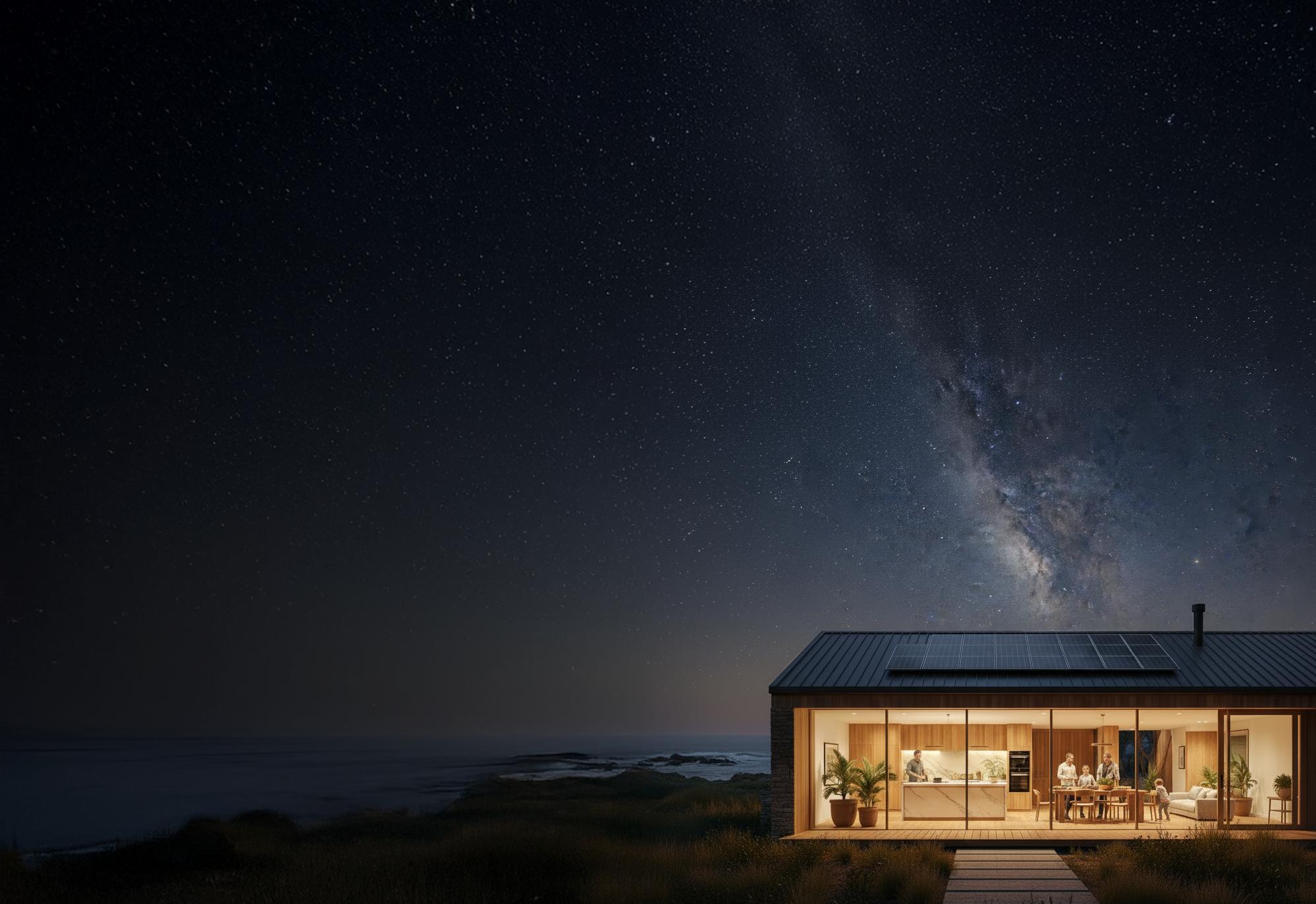
So when it comes to sustainable energy use, rooftop solar systems with battery storage and EV for personal transport, are literally the way forward!
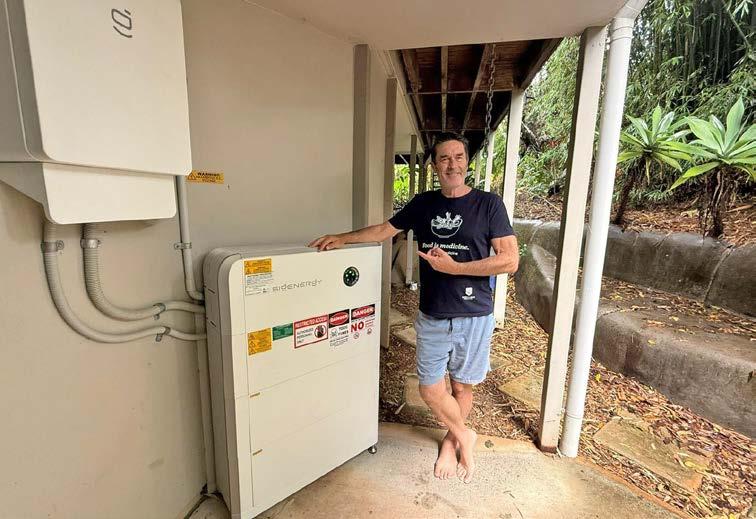
A rooftop solar system combined with battery storage provide this home with clean energy. Photo Mandy Nolan
SUSTAINABILITY 2026
Climate reality: work for the best, prepare for the worst
Dr Sian Grigg
THE NEWS HAS ONLY BECOME CRAZIER SINCE The Echo’s 2025 sustainability issue. Is anyone even thinking about the environment any more? Is there any way we can reduce greenhouse gas (GHG) emissions fast enough? What happens if we don’t? What can we do? While everyone seems to have their eyes elsewhere, the earth hasn’t noticed our lack of interest and continues to warm. The World Meteorological Organisation (WMO) update in January 2026 states that the last 11 years have been the 11 warmest years on record, with the last three years the warmest three years on record. To answer the questions above, yes people are still working and thinking about the environment. Thankfully. They just aren’t very loud. Yes, we can reduce GHG emissions, but governments need to implement policies that have equality at their heart, otherwise the backlash will continue. If we don’t act, the crazy weather we’ve experienced in the last couple of years will seem tame compared with what is to come, a steep climb in insurance premiums will swiftly follow, the collapse of the North Atlantic overturning circulation seems probable , there will be mass migrations of humans, along with whatever animals and plants are able to move. Among other things. We need to reduce emissions, adapt to rising temperatures, and work on emergency measures if our reduction and adaptation measures don’t work quickly enough. Once drastic-sounding measures, such as geo-engineering, need to be researched and discussions widened. It’s a big program!
Hope,
collective action and inequality
Al Gore’s Climate Reality conference in Paris last year highlighted hope as a crucial ingredient for climate action, along with emphasising the importance of collective rather than individual actions. For us to take action we need to believe that winning is possible, that the fight will pay off, and our effort is worthwhile. All the science suggests that hope is a valid position – we are not doomed, and we can win this fight. Concerted collective action can flatten the emissions curve and stop the warming. The collective part of this is important – our collective efforts created the warming and it is only collectively that we can achieve the cooling. But a clear message from the last ten years is that whole populations are only motivated to act when they feel everyone is sharing in the effort. As with water restrictions – if everyone’s garden is shrivelling we more happily bear the pain.
Inequality in all forms is insidious in its capacity to create disillusionment, dissatisfaction, and to destroy collective efforts. Covid accelerated wealth inequality, with the already rich being
The science suggests that hope is a valid position – we are not doomed and we can win this fight.
most when petrol prices rise. This simply isn’t fair because they already spend a larger share of their income on transportation, and they have few alternatives. They cannot afford to move to the city centre, closer to their jobs. All emissions reduction policies must fall equally for them to be acceptable.
Collective action also has individual benefits. When we join a group, campaign for a political party, or donate to a charity, we feel better because we are taking action. This reduces our anxiety and sense of hopelessness when problems seem too big. Alone, we cannot save the world, but as part of a larger group, we can, and we’ll probably enjoy ourselves along the way.
the ultimate beneficiaries of the huge injections of government cash into OECD economies. This led to rapidly rising stock markets and real estate prices. Those who didn’t own any shares or a house prior to Covid were left behind. Taxing this wealth must be part of governments’ efforts to repair their budgets, which will in turn allow them to implement emissions reduction policies that are fair. The yellow vest movement in France was an example of what happens when carbon taxes are implemented with insufficient thought about equality. Those with less access to public transport and who live on the outskirts of large towns and cities suffer the
Local and global efforts to save the Great Barrier Reef
This year, I’m writing from Great Keppel Island, having decided a visit to some part of the Great Barrier Reef (GBR) was necessary. To see what I could see, and to learn something about the largest natural construction on earth, and how we might preserve it. Our very amateur snorkelling revealed coral, both dead and alive, fish, giant clams, anemones and other things unknown to us. Others at the hostel saw turtles, and someone
hoped to spot a dugong. AIMS (the Australian Institute of Marine Science) research around the Keppels published in 2023 says the reef here has recovered relatively well from the huge 2020 bleaching event, which damaged 75-98 per cent of the coral. Encouraging. A coral seeding project aims to take coral larvae from resilient reefs, such as those around the Keppels, to use elsewhere where the coral is less heat-resistant.
The question is can more be done to save reefs locally when the big driver of destruction is rising GHG emissions globally? Greenhouse gases do two things on a global scale: they raise the temperature of the atmosphere, in turn raising the temperature of the ocean, meaning corals overheat and expel the algae lodged in their pores, and on which they feed. They then starve to death. The biggest contributor to rising temperatures, carbon dioxide (CO2) also dissolves in seawater to make carbonic acid (H2CO3), lowering the pH of the ocean (ocean pH has gone from 8.15 to 8.05 since 1950. pH is a logarithmic scale, rather than linear, so a reduction of 0.1 in pH means 26 per cent more H+ ions in the ocean). This makes building calcium carbonate structures such as coral skeletons, and mollusk shells, more difficult. Warming coupled with acidification is a double whammy for coral reefs and shellfish.
Innovative research is being carried out by Daniel Harrison from Southern Cross University, who is experimenting with spraying sea water into the lower atmosphere to form clouds. Clouds act as a sunshade for the reef (see the excellent Pulitzer Centre article pulitzercenter.org/stories/ manmade-clouds-could-help-save-great-barrierreef). Ingenious! It may seem like a drop in the ocean but action is possible on a local scale. Such measures come under the broad category of geo-engineering. Essentially altering the physical environment, rather than biological measures such as coral reseeding or biocontrols, which we have done plenty of in Australia. Introducing cane toads to eat cane beetles is an example that
Hints for living a sustainable life
didn’t work so well (research procedures were not properly followed in this case). An example of schemes that worked well are the moths used to control prickly pear, and myxomatosis and calicivirus to control the rabbit population.
Climate geo-engineering options can be thought about similarly. A kind of least bad option when the problem is out of hand, and other measures are too slow. On a global scale it is also possible to create a sort of sunshade, via a mechanism that mimics the global cooling following volcanic eruptions. When volcanoes erupt, huge quantities of sulphur dioxide (SO2) are injected into the troposphere and the stratosphere. SO2 molecules act like tiny mirrors. They are the right size and shape to reflect incoming sunlight back into space, increasing the planet’s albedo (reflectivity). In this way they cool the planet. If you know Turner’s paintings of sunsets then you can see the impact of SO2 on the atmosphere. Glorious colours are created from all that refraction (see the excellent
expo currently on at GOMA in Brisbane if you want another perspective on refraction and reflection). In the troposphere SO2 has harmful effects (acid rain and air pollution), along with reducing the temperature. We have slowly been eliminating this pollution as coal-fired power plants and factories have scrubbers attached to their smoke stacks, car fuel standards have risen (although recently reversed to deal with the fuel crisis ) and finally shipping fuel has been cleaned up. New shipping fuel standards with lower sulphur came into action in 2020 and could be largely responsible for the sudden additional rise in global temperatures since 2022.
SO2 in the stratosphere is something else. The harmful effects are much smaller (although a key issue is its impact on stratospheric ozone) and it is a relatively cheap and easy way of cooling the planet’s surface. SO2 particles stay in the atmosphere for 1-2 years. This is both good and bad. Good because if we try it and decide it’s
not great, we can stop quickly. Bad because if it works and we are happy it needs to be continually renewed (a bit like botox). We have the technology to do this and it isn’t very expensive (passenger jet-type planes fly into the stratosphere and SO2 is released from them). A 2018 study explored the possibilities of reducing surface temperature by 2°C by injecting SO2 at different altitudes . An alternative, with no impact on stratospheric ozone, would be calcite (CaCO3) but it’s more difficult to diffuse. More research and engineering efforts are required here. David Keith is the poster man (no longer a boy) for solar geo-engineering and more information can be found at the Degrees initiative (www.degrees.ngo).
In my experience climate scientists and ecologists are more opposed to these ideas than the general public (based on a totally unscientific survey of the people I’ve talked to). Any intervention with global reach has global consequences and international diplomacy is needed. A treaty to agree how, and under what conditions, the measures would be deployed, along with how a veto would work is necessary. As with climate negotiations for the last 30 years, the science, with a concerted research effort in the next 15 years, may end up being relatively simple, while the politics may be fiendishly difficult.
Elizabeth Kolbert’s collection of essays Under a White Sky (2021) is an excellent read and helps wrap your head around the concepts. Kim Stanley Robinson’s Ministry of the Future (2020) is a near science-fiction look at the next 30 years and covers some of the ideas for intervening to slow the ice melt while we are reducing emissions. These are last ditch measures, but we will be glad to have thoroughly researched and prepared if the time comes when we need to use them.
■ Dr Sian Grigg: PhD Macquarie University 20002005. Dr Grigg studied the development of a simple ocean-atmosphere-sea ice model of the Atlantic Meridional Overturning Circulation (AMOC) to investigate long-term climate variations.
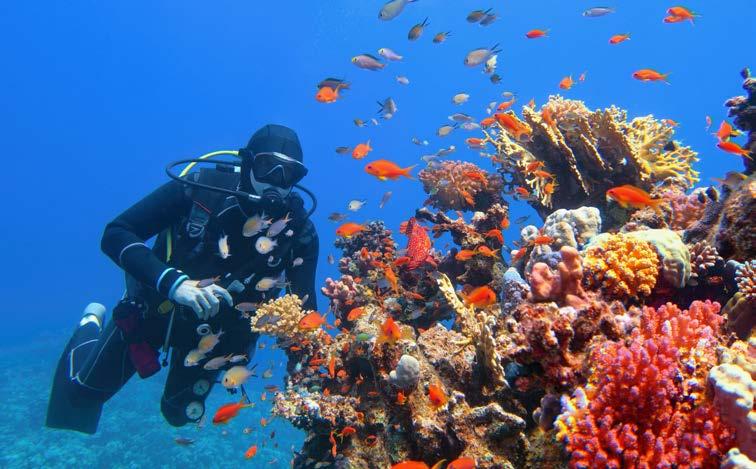
Warming oceans and acidification pose an existential threat to the world’s coral reefs. Photo Shutterstock
The Garden of Eve
Story & photos Eve Jeffery
I’M ONE OF THE PEOPLE WHO
loved the Covid lockdowns and to be honest I think I am not alone, not even nearly alone.
It made a huge difference to my mental health and my physical health.
Being one of the great unvaxed, I had to spend a lot more time in my house than most other people and I really enjoyed taking the opportunity to look at the sustainability of my life ‘stuck’ at home.
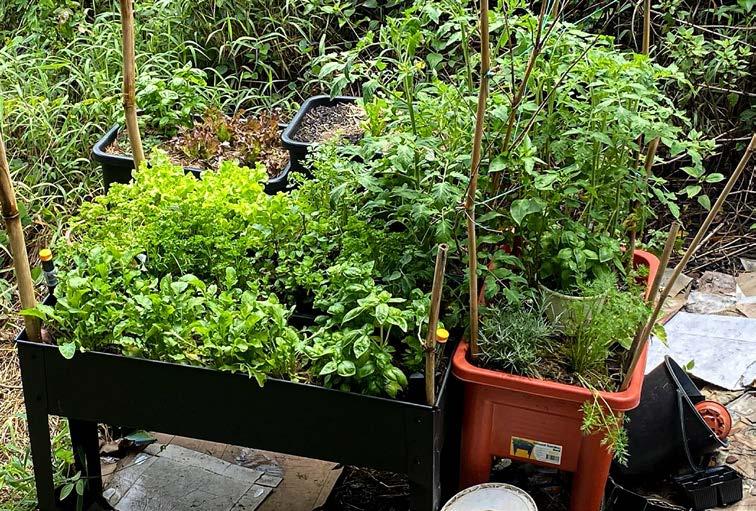
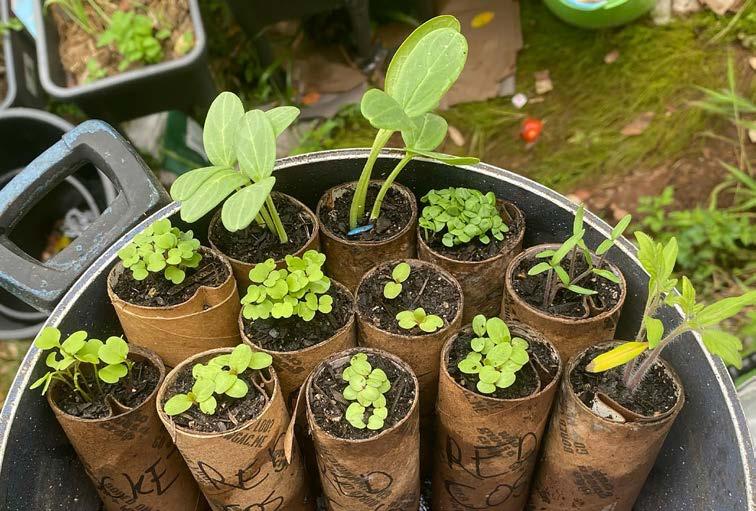
I’ve always wanted a food garden but never had the time or the energy to start and maintain one, even though I love the idea of harvesting – so, I took some of those JobKeeper dollars and bought a bunch of tubs, bags of potting mix and though I did start a few things from seeds, I got a stash of seedlings as well, and grew my own garden. It was actually, in reality, just that easy.
I have to say, it also made a huge difference to my mental health and my physical health and I’m pretty sure after a year or so that the money I spent was saved in not buying food.
I found that I didn’t have to be a great gardener. I’ve always lamented my lack of green digits having been born with a decidedly black thumb – I just had to put the time in, and during the epidemic, I had tonnes! I did a little bit of research with Dr Google and Nurse YouTube but mostly it was just by feel – literally.
We hear people banging on about food miles and I can see the sense of it, yet I usually drop into the big chains for my stock of essential goodies as I am rarely in the right place at the right time for farmers’ markets – but it was just really lovely every evening to go out my back door and pick a few leaves of this, a few sprigs of that, grab a tomato here and there, to make up the bulk of my meal.
On top of everything else I’m an annoying vegan so
I wanted to grow food that would add flavour, and because salads are generally a large part of my diet, I wanted to grow plenty of green leaves. I am a huge fan of rocket so that was my first stop – you can start things from seeds but I find it’s easy if you let the hard work and risk be taken by a nursery and it meant that I was eating from my garden a lot more quickly.
I bought several varieties of tomatoes – I’m a great believer that life cannot actually be without tomatoes – I grew heritage varieties, small cherry varieties, and larger varieties so I had different fruit coming in at different times.
I grew ‘fancy’ lettuce and plenty of basil which I feel is a great salad leaf as well as enhancing flavour. I grew all the other standard things like oregano, parsley, mint, and dill and I even started off some eggplant, cucumbers, and carrots, but have to say I didn’t have as much success with those. I think I was starting to be let out of the cage by the time those things needed a bit more attention and alas, I had less time at home.
You might think that if you are growing a garden like this you need to wait until great heads of lettuce appear with giants globes of fruit to pick each day, but it was surprising, that in a very short time – less than two weeks – how much you can harvest by walking around the tubs for 10 minutes – there was a period where we went for weeks on end like this getting enough greenery from the garden to sustain us.
And my mental health? Fortunately, I live on land so I didn’t feel boxed in, but I was still restrained to my boundaries. Having to get out each day to tend to my babies really sustained my inner person. I can highly recommend buying even just one tub and nurturing the contents and enjoying the immense pleasure of the harvest and the great taste of fresh food.
Living in the subtropics we have the luxury of not only long growing seasons with a huge variety of plants, we also have the rain and heat that can make things grow very quickly.
From May to August, pre-winter to pre-spring, you can plant seeds or seedlings of several varieties of food plants – early in the season you can put in your Asian greens, broad beans, broccoli, carrots (seeds), cauliflower, celery, chives, kale, parsley, peas, rocket and strawberries.
In late winter, you can plant things like artichokes, asparagus, basil, green beans, cabbage, chili, peppers, horseradish leeks, lemongrass, mint, okra, pumpkin, warrigal greens and melons including cantaloupe and watermelon – also this is a great time for kitchen favourites like sweet corn, tomatoes, and zucchinis.
For us, living in this climate, there are some foods that just grow all year including beetroot, chives, fancy lettuce, mustard greens, radishes, and silver beet.
GREEN e BUILDING
Natural Building & Design
Green e Building offers natural building and design services with ecological regenerative, sustainable and off grid options for anyone in the Northern Rivers.
We believe there is nothing more sustainable than using natural and recycled materials.
Green e Building can design and build your new dream home, sustainably renovate your current home or work with you to add extra rooms and extensions.
• We upcycle all our gloves into a product used to make kids playground equipment
• We are conscientious recyclers
• We are a collection site for all used oral care products, which we recycle
• We are paperless
• We use technology to lessen our negative impact on the environment
• We have no carbon footprint
• We used low or no VOC, locally-sourced, sustainable materials on our fit out
• We choose to use the most environmentally-friendly, bio-compatible materials
• We are the only carbon positive dental practice in the world
• We have a fully electric van, called FANG powered by the sun
8 COUNCIL ROUNDUP
SUSTAINABILITY 2026
TAKING ACTION LOCALLY, NATIONALLY AND GLOBALLY ARE ALL VITAL TO HOW we tackle the challenges of climate change. Our local councils not only take action via their own operations, and on our behalf as they manage our local resources and activities, but they can support every ratepayer, business owner, and visitor in their actions to make change and live more sustainably. Find out what your local council has been up to in the last 12 months.
Ballina Shire Council
Ballina Shire Council’s targets aim to: Achieve net zero operational greenhouse gas emissions and transition to 100 per cent renewable electricity for Council operations by 2030. In the short term, Council is focusing on high impact initiatives such as installing onsite solar panels and continuing energy efficiency upgrades across its facilities. Council is also exploring carbon sequestration and offsetting options to further reduce its environmental footprint.
Strengthening this framework, Council has recently developed a Corporate Climate Change Risk and Adaptation Plan, which assesses climate-related risks to infrastructure and operations, including increased rainfall, sea level rise, and temperature extremes.
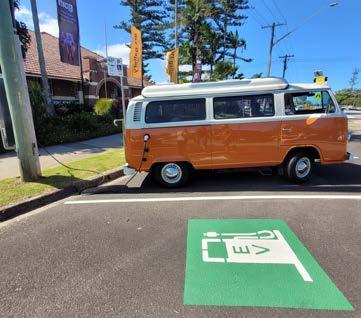
Ballina Shire Council has supported the installation of a new electric vehicle (EV) charging station on Cherry Street in the Ballina CBD.
Solar technology: Onsite solar installations generate around ten per cent of Council’s electricity needs, with further installations expected to meet approximately 25 per cent of Council’s electricity demand.
Local acid sulfate soil management:
The NSW Environment Protection Authority has amended the Environment Protection Licence for Council’s former sand quarry, which has a capacity of approximately one million cubic metres, allowing treated acid sulfate soil and potential acid sulfate soil to
be beneficially reused to rehabilitate the site. Historically, this material was sent to Queensland for disposal.
Biodiversity projects: Council’s Koala Habitat Restoration Small Grants Program has recently been completed. The program aimed to restore up to 50ha of koala habitat on private land, targeting core habitat areas and contributing to Council’s goal of increasing habitat in the Shire by 10-15 per cent.
Resource recovery and waste reduction: Council is committed to making waste-wise decisions in its operations and supporting the community to do the same. In October 2025 Council reduced landfill bin collections for rural residents from weekly to fortnightly and provided subsidised compost bins, free composting workshops, and free upgrades to larger recycling bins. Results have seen a nearly 25 per cent reduction in waste.
In August 2025, Council launched its ReWear Ballina program aimed at shifting behaviours around fashion waste, they ran six workshops on different repair, mend, and upcycle techniques, with more to come.
Council has confirmed support to eliminate single-use packaging and materials across all Council operations and managed land.
Healthy Waterways Program: Council’s Healthy Waterways Program works throughout the catchment to improve the health and resilience of our waterways, coastline, and surrounding lands, and the ecosystems, cultures and communities they support.
This includes active membership on the Tuckean Swamp Steering Committee and the Richmond River Catchment Partnership Steering Committee. www.ballina.nsw.gov.au
Byron Shire Council
Sustainability is front of mind across all of the work at Byron Shire Council. They choose to be sustainable now for the future.
In the last 12 months they’ve planted more than 27,000 trees and restored some 480 hectares of land in Council-managed open spaces, as well as working with landholders.
An agricultural officer works with landowners and stakeholders to promote sustainable farming and Council works closely with Brunswick Valley Landcare on a wide range of programs aimed at keeping our environment healthy and our native animals happy.
The Move to Reuse initiative has seen more than 250,000 single-use items from markets and events, with coffee cups, food containers, and disposable cutlery saved from landfill. The waste team works closely with volunteer organisations such as Positive Change for Marine Life and Co-Exist Byron Bay to remove rubbish with 300kg of
litter collected on Clean-Up Australia Day earlier this year.
Council has installed bin baskets on the side of public rubbish bins to allow people to easily dispose of and collect cans and bottles for the Return and Earn scheme and they are getting ready for the Reuse July campaign.
Council support for ride-share cars means these services continue to be available in the Byron Shire, and they have added five EVs to their fleet which save 14,000 kilograms of carbon dioxide emissions every year.
Council is partnering with Sustainable House Day this May to showcase and empower people to learn and do things differently. On an individual level staff make a personal commitment every day to take their cups and food containers to local cafes to get their daily coffee or buy their lunch. Catering is provided on dishes and platters that are washed and reused and regular lunch-time clothes swaps are great for wardrobe revivals.
www.byron.nsw.gov.au
Tweed Shire Council
Tweed Shire Council is working closely with the Tweed community to reduce its impact on the natural environment and respond to climate change.
Throughout 2025 and into 2026, Council delivered a range of initiatives that supported both community-led climate action and Council-driven programs. One of the standout initiatives was the Climate Action Cafes, which attracted more than 120 participants across two workshops held in Murwillumbah and Cabarita Beach in February 2025. The Climate Action Cafes heard about the climate actions that community wants to lead in response to climate change. Around 15 per cent of the Tweed’s emissions can be influenced by household behaviours and community
initiatives, highlighting the significant role residents can play. Participants shared ideas and shaped climate action from the ground up, resulting in 51 project ideas and 22 projects with volunteer leads.
Since then, Council has supported community members and project leads through quarterly, hands-on development sessions delivered in partnership with the Tweed Climate Action Network (CAN). These sessions demonstrate the community’s strong readiness to act on climate change.
Council also engaged directly with residents through Power Pop Up events, providing residents with practical support to better understand their power bills, learn about available rebates, and improve household energy efficiency. As grid electricity remains one of the Tweed’s major sources of greenhouse gas emissions, supporting residents to reduce energy use delivers both environmental and financial benefits.
Waste reduction and building Tweed’s urban tree canopy continue to be key focus areas. In 2025, Council planted more than 1,100 trees in urban areas. In 2026, Council passed changes to its Development Control Plan strengthening protection for trees, and a Compensatory Tree Planting Policy to ensure that unavoidable tree removals are replaced with new plantings.
Council expanded its reusable nappy rebate in 2026 to include reusable period and incontinence products. This initiative helps residents save money while reducing waste to landfill. With more than 300,000 disposable nappies landfilled or incinerated globally every minute, and adult incontinence products expected to overtake nappy use by 2030, reusable alternatives can make a real difference.
Council also earned an A-rating from the Carbon Disclosure Project in 2025, and is proud to be among over 1,000 local governments globally demonstrating strong climate governance and transparent reporting. www.tweed.nsw.gov.au
EV charger installed in the Ballina CBD. Photo Terry Teoh
SUSTAINABILITY 2026
Does carbon capture technology actually work?
David Lowe
IN MEDIEVAL TIMES, FOR A FEE, INDULGENCES WERE granted by the church to rich men to expiate their sins. Since the link between carbon dioxide emissions and global warming has been understood, there’s been a similar vibe around many carbon capture and storage (CCS) projects, with the existence of this technology providing an excuse for very large companies to continue polluting our atmosphere, rather than transitioning to renewables.
That said, the underlying theory of CCS makes sense. If more carbon can be removed from the atmosphere than is being released, everybody wins. The only problem is that practical results so far haven’t lived up to expectations.
Could it work for you?
In WA, the Gorgon CCS project is currently the largest operation of its kind in the world, theoretically able to deposit up to four million tonnes of CO2 per year in deep saline aquifers beneath Barrow Island, but in practice storing much less than that.
Another mega-project tied to a gas operation, Moomba CCS in South Australia, is currently injecting CO2 into depleted gas fields in the Cooper Basin at the rate of 1.7 million tonnes per year, with a theoretical capacity of 20 million tonnes per year, for at least 50 years. The problem is that the company involved, Santos, produces Scope 1-3 emissions of upwards of 38 million tonnes per year, and is expanding its hydrocarbon production around the world.
As part of the transition to net zero, the Australian government and CSIRO are exploring a number of new carbon capture technologies. $1.6 million has gone to the University of Melbourne to trial converting CO2 captured from the atmosphere into travertine, a type of carbonate rock, and research
is underway into new CCS techniques at the Otway International Test Centre, also in Victoria.
DAC Labs
Some of the most promising work in the field of direct air capture of existing emissions is being done by people associated with the University of Sydney, notably Dr Sam Wenger of DAC Labs. While the exact details remain under wraps for commercial reasons, Wenger and his team claim to have found a way to capture atmospheric CO2 using renewable energy, raw material efficiency, automation, and modular design. The technology is pitched as a great improvement over earlier DAC methods, with compact units requiring 99.9 per cent less land than forests to extract the same amount of carbon dioxide.
Captured CO2 could then be stored underground or used to produce carbon-based products such as aviation fuels and building materials, including concrete and plastics. They’re currently building a ten tonne per annum demonstration unit, with a plan to scale up to kilotonne pilots and eventually modular ‘megaforests’.
In the near future, DAC Labs say it will be possible for anyone to purchase meaningful, permanent carbon abatement at an initial price of around $1.50 per kg of CO2
Dr Wenger told The Echo, ‘We have been very conscious to only offer our CO2 removal service once we are confident that we can deliver on the removal, the sequestration, and third-party verification. At that point in time, we will only pre-sell an amount that
we feel we can reasonably remove in the next two to three years. We strive to have the highest delivery-topurchase ratio in the industry.’
What about forests?
Air transport is one of the most carbon emission intensive activities any individual can undertake. Currently, if you need to take a flight, your only option is to tick the carbon offset box, with a promise to plant or protect trees on your behalf.
Unfortunately, these offsets are about as useful in practice as indulgences, providing little more than a warm inner glow. Verra is the world’s largest carbon offset certifier. A major investigation in 2023 found that 90 per cent of Verra’s credits were essentially worthless, not representing real carbon reductions. Forests burn down, exist already in protected areas, or might be saved at the cost of neighbouring forests.
Government carbon offset projects involving forest plantings on old agricultural land have also been a dismal failure, according to UNSW and ANU researchers.
This is not to say that we shouldn’t all be planting more trees, and stop destroying forests, but the latest evidence shows that we can’t simply plant our way out of the global climate crisis.
The solution is likely to also include permanent, verifiable, and measurable direct air capture of CO2, biochar (locking carbon into soil in a relatively stable form), and enhanced rock weathering. ERW involves finely crushing silicate rocks like basalt and spreading them over agricultural land, converting carbon into a geologically stable form and simultaneously creating natural fertiliser to replace hydrocarbon derivatives. By great good fortune, Australia is well placed to take advantage of all three of these approaches, as well as being blessed with abundant wind and solar resources.
Time to get on with it!
Carbon captured. Image Cloudcatcher Media
Rethinking meat in an age of climate change
Dr Willow Hallgren
FOR MANY AUSTRALIANS, EATING MEAT CAN FEEL almost like a birthright: familiar, comforting, and woven into the rituals of family dinners and backyard barbecues. It is not just food, but part of the cultural wallpaper. But in a world already destabilised by climate change, biodiversity loss, and land degradation, the scale of global meat consumption and its upward trajectory is becoming harder and harder to defend.
The question is no longer simply whether eating a lot of meat is healthy or affordable, but whether affluent societies – which still consume disproportionately large amounts per person – can continue to do so while claiming to be serious about sustainability
The environmental case against high meat consumption is strongest for beef and lamb. Cattle and sheep are ruminants, which means they release methane as they digest food. Methane is a highly potent greenhouse gas and a major driver of near-term warming. Over a 100-year period, it traps roughly 28 to 34 times more heat than carbon dioxide. Methane is especially important as it is responsible for about 25 per cent of the warming the world is experiencing today. So, consuming large amounts of beef and lamb, therefore, helps sustain one of the most climate-damaging forms of food production on Earth.
Chicken and pork are often treated as the greener alternative, and in some respects they are. They usually produce fewer emissions than beef and lamb. But ‘lower impact’ is not the same as low impact or sustainable. Industrial chicken and pork still depend on vast quantities of feed crops, fertiliser, energy, transport, waste-intensive systems, and large-scale land use. Replacing beef with chicken may reduce greenhouse gas emissions, but it does not resolve the broader resource inefficiency of animal-based food systems, in which plant energy is converted into animal protein for human consumption with substantial losses of energy, land, and other resources. That inefficiency is extraordinary. Livestock uses
Livestock uses around three-quarters of the world’s agricultural land, including grazing land and cropland used to grow animal feed ... We are devoting immense areas of land to one of the least efficient ways of feeding ourselves.
around three-quarters of the world’s agricultural land, including grazing land and cropland used to grow animal feed, yet meat and dairy provide only about 18 per cent of the world’s calories and 37 per cent of its protein. Beef and lamb are especially land-hungry, requiring about 50-100 times more land than plant proteins such as peas or tofu. In a world worried about food security, deforestation, and ecological collapse, this is a remarkable misallocation of resources. We are devoting immense areas of land to one of the least efficient ways of feeding ourselves. When forests, woodlands, and native grasslands are cleared for pasture or feed crops, habitats are fragmented, biodiversity declines, and carbon stored
Organic Landcare Inc. is a not-for-profit organisation dedicated to restoring degraded landscapes using effective, chemical-free methods. Thanks to our Deductible Gift Recipient status, all donations over $2 are tax deductiblehelping us expand vital restoration work across our region.
Our current projects span some of the Northern Rivers’ most important ecosystems, including Brunswick River, Richmond River, and the Upper Clarence River. If you’re interested to learn our approaches, you can join our community volunteer days at Saltwater Creek, next to Mullum Community Gardens! Trusted across the Northern
We work with landholders to restore and manage properties using effective, chemical-free methods. 5,000 trees planted this rain season.
Invasive weed control • Bush regeneration • Environmental education
Whether you’re managing a small block or a large acreage, OLI can help restore the health and resilience of your land.
Work with us: organiclandcareinc@gmail.com
carbon opportunity costs because they require so much land relative to the food they provide. The same land could often produce far more food for direct human consumption if used to grow plant crops rather than animal feed or pasture.
Some people hear arguments like this and fear that the only solution is veganism. However, in terms of environmental impact, the issue is not about purity; it is about scale. A world in which billions of people eat meat frequently, especially high-impact red meat, is a world that pushes against climatic and ecological limits with increasing force. Affluent societies in particular, can no longer ignore the numbers. If sustainability means anything, it must mean eating lower on the food chain more often.
Meaningful change could be achieved if people in high meat-consuming countries replaced even a few beefand lamb-based meals each week with beans, lentils, tofu or other plant-based foods – the cumulative effect would be substantial. Emissions would fall, pressure on land would ease, and some habitat destruction could be avoided. For those unwilling to give up the sensory familiarity of meat, plant-based meat products may offer a useful bridge: imperfect, yes, but generally far less climate-intensive than conventional red meat. It is possible that lab-grown meat could offer meat-eaters with a commercially viable, less environmentally damaging alternative in the next decade or so.
in vegetation and soils is released. The global food system is now recognised as a primary driver of biodiversity loss, and livestock expansion is one of the clearest reasons why. Every hectare devoted to meat production is a hectare that may once have been a natural ecosystem, providing wildlife habitat, and storing carbon, or land capable of feeding far more people if used to grow plant food directly for human consumption.
This is the hidden climate cost of meat: not only the emissions that animals produce, but the carbon uptake and storage foregone when land is used for livestock rather than retained or restored as native vegetation. Beef and lamb carry especially high
We often imagine sustainability in terms of solar panels, electric vehicles, and recycling bins. But the future will also be shaped by something more ordinary and more intimate: what we choose to eat. If we are serious about protecting a liveable climate and a healthy, functioning natural world, then reducing meat consumption, especially beef and lamb, is not just a private dietary choice; it is an important part of any serious response to climate change and ecological decline.
■ Dr Willow Hallgren is an earth-system scientist who studies the impact of climate change on ecosystems and biodiversity and the climate.
SUSTAINABILITY 2026
How many ‘R’s in sustainability?
THE OLD ADAGE ‘REPAIR, REUSE, RECYCLE’ has never been more pertinent, but are there now other pillars that support waste reduction and a circular economy?
Ian Elderman
You will have heard the phrase ‘repair, reuse, recycle’ to emphasises a sustainable approach to waste management: encouraging people to fix items to extend their lives; find new uses for old products; and recycle materials when they can no longer be used. These actions reduce reliance on virgin materials and lower the ecological footprint, thus, adopting them as lifestyle choices wherever possible minimises environmental impact and makes for a more sustainable future – the phrase has been around since the ’70s.
The earliest accounts of waste management date back to Greece in 500 BC. Across the eastern hemisphere, there are also records of recycling in ancient Japan, and the Han dynasty in China – where paper was made from a range of fibres including recycled rags and fishing nets. Repurposing existing items used to be because manufacturing processes were long, and the cost of raw materials was high. During World War I, there were innovative attempts to melt down metals for ammunition and warfare. Similarly, people were told to reduce and restrict their use of certain materials so that they could be stockpiled.
Soon after the war, in the 1950s, the economic boom led to an increase in the amount of trash, single-use plastic became common in packaging, manufacturing, construction, and even clothing. This was the beginning of a massive problem with waste.
Since then, population growth, increased wealth, capitalism and the consumer society has exacerbated this, so recently a few more Rs have
Being mindful of everything we buy is one good way to restrict excessive consumption. Every dollar we spend is a vote for the type of world we want, influencing the success of businesses and their practices – each dollar is a vote for the shareholders of the company we support with our spending. This concept, known as ‘dollar voting’, reflects how every consumer can make choices every day which impact companies and their values.
been considered: refuse – just don’t buy so much new stuff; reduce everything – do we really need 20 different outfits for work?; resell – use eBay, Marketplace, Gumtree and the like, or gift to the community or op-shop; and rethink – what we need, how we shop, spend, save, and live in the world today.
Currently we live in a hyper-materialistic world that constantly tells us that we ‘need’ the next new car, phone, bag, or jacket. Being mindful of everything we buy is one good way to restrict excessive consumption. Every dollar we spend is a vote for the type of world we want, influencing the success
BYRON BAY PORK & MEATS BUTCHERY
of businesses and their practices – each dollar is a vote for the shareholders of the company we support with our spending. This concept, known as ‘dollar voting’, reflects how every consumer can make choices every day which impact companies and their values, hopefully shifting those that use a linear ‘take-make-dispose’ system. The circular economy is a system where materials never become waste and nature is regenerated. In a circular economy, products and materials are kept in circulation through processes like maintenance, reuse, remanufacturing, recycling, and composting. The circular economy tackles
climate change and other global challenges, like biodiversity loss, waste, and pollution, by decoupling economic activity from the consumption of finite resources. The circular economy, along with the sustainability it promotes, is founded on three core design-driven principles: eliminate waste and pollution, circulate products and materials for as long as possible, and regenerate nature – this is underpinned by a transition to renewable energy and materials. The circular economy is a resilient system that is good for business, people, and the environment (see ellenmacarthurfoundation.org).
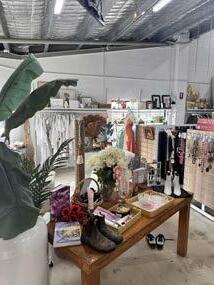
Some innovative local initiatives that espouse these values include: The Library of Stuff in Mullumbimby (libraryofstuff.org.au) – who offer members the opportunity to radically reduce their ecological footprint by borrowing instead of buying power tools, games, camping gear and catering equipment; The Toy Library in Ocean Shores and Byron Bay (toylibraries.org.au) – who provide families with a range of quality fun and educational toys, games, puzzles and activities to borrow; The Repair Cafe in Mullumbimby run by the Shedding Community who run Make and Mend workshops; and of course op-shops, and the Re-Market tip shop – who sell quality used, recycled, and second-hand products that have been salvaged before going into landfill at the Byron Resource Recovery Centre. As individuals, we need not feel so helpless leaving our children’s future in the hands of those with power. Every day we can each make a difference to help move towards a more circular economy, by dollar voting, and encouraging governments, corporations and AI to move towards a more sustainable future. To further help perhaps we need to add a few more ‘R’s to the list: resourcefulness and resilience – so that we can relax, knowing we are showing respect to the environment that we are living interdependently with.