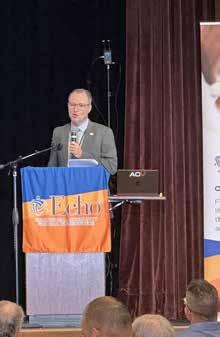
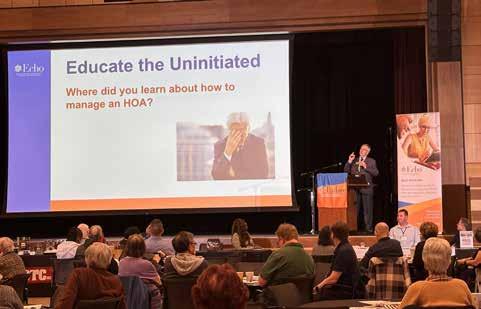
Avoid the pitfalls of HOA living PAGE 6 EIGHT WARNING SIGNS FOR HOA COMMUNITIES
SERVING HOA BOARD MEMBERS & HOMEOWNERS
DRAWING A LINE IN THE SAND
Enforcing a “dormant” rule PAGE 18
Future forward planning for HOAs PAGE 20
DECEMBER
MISSION STATEMENT
Fostering a better quality of life in community associations through education, advocacy and networking.
Echo 5669 Snell Ave., #249 San Jose, CA 95123 408.297.3246 | info@echo-ca.org www.echo-ca.org
BOARD OF DIRECTORS & OFFICERS
PRESIDENT
Mark T. Guithues, Esq.
VICE PRESIDENT
Sarah Dunia
TREASURER
Karl Lofthouse
SECRETARY
Jessica Roberts
DIRECTORS
Brian Campisi
Rolf Crocker
John Gill, Esq.
Adam Haney
David Levy
Nathan McGuire, Esq.
Ali Nekumanesh
Louis J. Sarmiento, Esq.
Bridgette Tabor
EMERITUS BOARD MEMBER
David Hughes
BENEFACTOR MEMBERS
Donald W. Haney, CPA CID Consortium, LLC
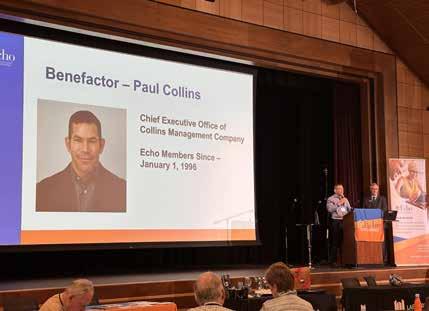
Paul Collins Collins Management
CHIEF EXECUTIVE OFFICER
David Zepponi | dzepponi@echo-ca.org
OPERATIONS MANAGER
Connor Zepponi | connor@echo-ca.org
MEMBERSHIP & SALES MANAGER
Jacqueline Price | jprice@echo-ca.org
MEMBERSHIP DEVELOPMENT MANAGER
Leila Saeed | lsaeed@echo-ca.org
PUBLICATIONS EXPEDITOR
Pam Grove | pgrove@echo-ca.org
MEMBER ENGAGEMENT COORDINATOR
Jared Giguere | jared@echo-ca.org
The Echo Journal is published quarterly by the Executive Council of Homeowners (Echo). The views of authors expressed in the articles herein do not necessarily reflect the views of Echo. We assume no responsibility for the statements and opinions advanced by the contributors to the magazine. It is released with the understanding that the publisher is not engaged in rendering legal, accounting or other professional service. If legal advice or other expert assistance is required, the services of a competent professional should be sought.
Acceptance of advertising does not constitute any endorsement or recommendation, expressed or implied, of the advertiser or any goods or services offered. We reserve the right to reject any advertising copy or image.
Echo member information is never released to any outside individual or organization, unless agreed to by the member.
HOA Education On Demand!
Get more from your Echo membership
Echo members have exclusive access to our entire library of HOA-focused educational programming including Community Conversations, Educational Seminars, Workshops, Ask the Attorneys, and Ask the Experts.
The presentations referenced below are a sampling of what is available to our valuable members. Click a title to watch!
Amending and Restating Governing Documents
Is Your HOA Ready for EV Charging?
Navigating Insurance Challenges in California
Non-Functional Turf & Water Conservation
Ask the Experts: Construction and Maintenance
Discrimination: Cultural Sensitivity & Reasonable Accommodations
All Things Paving
Privacy, Cameras, & Recordings ... What Can We Do?
LEENA DANPOUR GURNICK
ROSALIND D. OLSON, ESQ.
ZEPPONI
Eight Warning Signs for HOA Communities
Raison d’Etre – The Reason for Boards
Most HOA boards and communities are winding up the year and focusing on the future. Annual budgets are finalized, reserve funds reviewed, and we look forward to the implementation of our plans in 2026.
This should be a time of hopefulness and optimism, especially after the goodwill of the holiday season. But this year, my normally positive outlook and excitement for new plans and projects has been checked by an unsettled feeling that common interest developments (CIDs) – the once lauded panacea for the affordable housing crisis – seem to be laboring under the weight of uncontrollable costs and a pressing, complicated regulatory environment.
responsible for the community and taxes did not support the common areas in HOAs. HOA boards were responsible for maintenance, repairs, and compliance.
What a beautiful phrase, raison d’etre (reason for being). It is a every board member should consider and collectively agree.
The phrase engenders humanity. The words roll from one’s tongue. stark business senses and adds the element of humanity to the a board: Strategic planning, execution and evaluation; mission management. The business realities should be reflective of community common values of individuals in the community.
To be sure, HOAs and CIDs are here to stay, but truth be told, I have concerns. Over the last several years, the HOA industry has been besieged by a multitude of external pressures and internal challenges. Boards are facing issues that make managing an association increasingly difficult. Volunteer directors are being forced to address a myriad of issues, from balcony inspections and reconstruction to compliance with nonfunctional turf regulations to dealing with community behavioral issues without the leverage of a meaningful fine. These unforeseen and often uncontrollable mandates drive costs and requirements well outside of budgets and estimates for reserves and beyond the affordability of many existing homeowners.
Now, after more than 30 years, HOA communities are starting to show their age, and community assets are in need of investments. Unfortunately, communities often prefer not to increase assessments or spend reserves, which has resulted in the deferment of repairs, maintenance, and replacement of community components. Such inattention can lead to catastrophic events (such as the deadly collapses of the Surfside tower and the Berkeley balcony) and can cause significant distress for some members of the community as unforeseen or new events create unexpected spikes in the community’s funding needs.
Communities are imperfect – because they are made of humans. relating. Humans using. Human living. Basically, humans being being human, communities sometimes forget that management establish norms for a successful community. In a sense, the board the community. Its purpose is to establish order and elevate or progress and pace by establishing norms and constraints to balance to benefit all.
It seems apparent that board leadership must understand and owners in order to orchestrate a sense of community and generate and protect community values. The purpose of a board, therefore, build community based on common values for the good of all.
For the first 30 or so years after the passage of Proposition 13 (the Jarvis-Gann Initiative), which limited the ability of government to impose taxes to support communities, CIDs and HOAs flourished. People were able to find adequate and affordable housing even in densely populated areas in California. The dream of an affordable home was realized. But that was then, when things were shiny and new, and the world had not caught on that municipal authorities were no longer financially
There are many reasons for these unforeseen needs for funding. For example, society has learned to leverage HOA communities by imposing its will through sweeping initiatives that have material implications, either directly or indirectly, for HOAs. One such initiative is the new law to save potable water, known as the “nonfunctional turf” law. The January 1, 2029, deadline is coming up shortly, and it will cost many CIDs more than a million dollars to comply. And most HOA communities were unaware of this unfunded mandate which was imposed on HOAs as a direct result of the will of society to address water issues in the West.
It takes time to orchestrate a community. It takes time to know your time to listen to the voices and build a vision reflective of community and you will be more effective as a board member and satisfied your reason for being on the board.
HOA communities are being challenged with these new and costly laws, the ravages and results of deferred maintenance and lack of repairs, and the continual battle
Continued on page 14
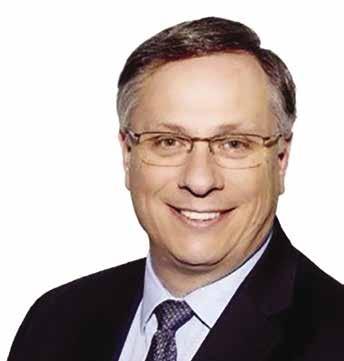
ECHO CHIEF EXECUTIVE OFFICER
David Zepponi Executive Director
ECHO is committed to helping homeowner boards and residents ing and advocacy – this is our “raison d’etre”.
HUGHES GILL COCHRANE TINETTI, P.C.
A Dedicated Focus on Community Associations
Trusted Legal Counsel for California Communities Service Specialties: HOA Governance & Transactions | Construction Defects
Headquartered in Walnut Creek, HGCT is deeply rooted in the Northern California community. Our practice is built around strong local relationships, industry engagement, and a commitment to serving community associations with integrity and precision.
Our team of attorneys collectively bring more than 200 years of legal experience to our practice. HGCT attorneys are recognized leaders in the community association industry – we regularly speak at industry programs, teach certification classes, advocate for positive legislation, and publish articles and educational materials to help associations and managers meet their extensive legal responsibilities.
Whether you are a board member or community association manager, HGCT is the dedicated partner you can count on.
1350 Treat Boulevard, Suite 550, Walnut Creek, CA 94597 | (925) 926-1200 | www.hughes-gill.com
Ensuring Transparency Through Disclosures and Recordkeeping
BY LEENA DANPOUR GURNICK
Across California’s communities governed by homeowners associations, practices that promote transparency are not only essential for building trust between an association and its members but, in many cases, legally required. Under the Davis-Stirling Common Interest Development Act, associations must adhere to specific requirements for annual disclosures, record maintenance, and financial oversight. Governing boards of associations should familiarize themselves with these requirements to comply with law and maintain trust with their members.
This article explores the core requirements for annual disclosures under California Civil Code Sections 5300–5320, practical insights for association record requests, and considerations for board access to an association’s financial information.
Annual Disclosures
Annual disclosures provide members with an overview of the association’s operations and finances. The timely distribution of required annual disclosures is critical not only to ensuring legal compliance, but also to providing homeowners with the information they need to understand how their money is being spent and why board decisions are made. Failure to distribute required annual disclosures within statutorily prescribed time frames will result in loss of a board’s ability to increase assessments or levy special assessments during the upcoming fiscal year without a membership vote and may further result in member complaints and/or legal challenges.
1. Annual Budget Report
California law requires that associations distribute an annual budget report to all members between 30 and 90 days before the end of the fiscal year. The annual budget report focuses on the association’s financial health, planning, and stability. Per California Civil Code Section 5300, the report must include the following:
• A pro forma operating budget
• A summary of the association’s reserves, reserve funding plan, and insurance policies
• A statement addressing the following:
a. Anticipated special assessments
b. Whether the board has deferred any major component repairs/replacements
c. Mechanisms for funding reserves to repair or replace a major component
d. Procedures for calculating and establishing reserves
e. Outstanding loans
f. The condominium’s status as a Federal Housing Administration-approved project
g. The condominium’s status as a Department of Veterans Affairs-approved project
• A summary of the association’s insurance policies
• Charges for escrow disclosure documents provided to members
Providing the annual budget report to members helps increase transparency and educates members on the association’s financial health, how assessments are calculated, and the considerations behind the board’s financial decisions.
Ideally, the board should use this report to highlight the association’s successes, such as wellfunded reserves and a balanced budget. Members should review the report to understand the economic health of the association and the impact that it may have on the value of their properties.
2. Annual Policy Statement
As with the annual budget report, the association must also distribute an annual policy statement between 30 and 90 days before the end of the fiscal year. This document outlines the association’s operational framework. Pursuant to California Civil Code Section 5310, the statement must include the following:
• The name and address of the person designated to receive official communications to the association
• The location for posting general notices from the association
Continued on page 10
• Statements explaining:
a. Members’ options to have notices sent to two addresses
b. The association’s assessment collection policies
c. Policies regarding lien rights
d. The association’s discipline policy and schedule of fines
• Notice of a member’s right to receive individual delivery of notices and access board meeting minutes
• A summary of dispute resolution procedures
• A summary of any requirements for association approval of physical changes to property
• The mailing address for overnight payment of assessments
This statement explains association processes and informs members of their rights and responsibilities, which is critical for promoting transparency and trust within the community.
Association Records
Homeowner associations must maintain and, upon written request, provide members with access to certain association records. Members, or their designated representatives, have the right to inspect and copy specified records from the current fiscal year and the two prior fiscal years, as well as the minutes of all board meetings open to the members. A member may designate a representative to inspect and copy the specified association records on the member’s behalf, so long as the designation is in writing.
Association records prepared during the current fiscal year must be provided to members within 10 business days following the association’s receipt of a request. Association records prepared during the previous two fiscal years must be provided to members within 30 calendar days following the association’s receipt of a request.
Association records subject to member inspection include, but are not limited to, the following:
• Financial documents, including budgets and general ledgers
• Executed contracts and written board approvals
for contractor proposals or invoices
• Tax returns and reserve balances
• Agendas, meeting minutes (excluding executive sessions), and membership lists (excluding the information of members who have opted out in writing)
• Check registers
• Governing documents
To protect sensitive information, associations may redact information, such as personal identifying information or personnel records, from specific categories of association records. Executive session minutes, confidential settlement agreements, contractor bid proposals and work in process for bid selection, and information subject to attorney–client privilege are also excepted from release to homeowners.
It is very important for boards to work with association legal counsel to ensure that the association timely meets its obligations to produce records, including those related to review and redaction of sensitive information. The association may bill the requesting member an amount not to exceed $10 per hour and not more than $200 per written request for the time actually and reasonably involved in redacting information in an enhanced association record (records that include certain financial documents). Additionally, the association may bill the requesting member for the direct and actual cost of copying and mailing requested documents but shall inform the
member of such cost beforehand.
Board Access to Real-Time Banking Information
Effective financial management of associations relies on regular board oversight of the association’s banking details. However, providing board members with real-time access to their association’s banking information is not mandated by law. Delaying access is most likely the result of financial system efficiency and security.
Pursuant to California Civil Code Section 5500, the entire board must review the following documents monthly:
• Current reconciliations of operating and reserve accounts
• Operating revenues and expenses
• Account statements
• Income and expense statements
• Check registers
• Monthly general ledger
• Delinquent receivable reports
The review of the above documents can also be done by each individual board member, or a delegated subcommittee of the board consisting of the treasurer and at least one other board member, independently and outside of a board meeting, so long as the review is ratified at the subsequent board meeting and reflected in the meeting minutes.
Additionally, Corporations Code Section 8334 grants every director the right to inspect and copy all books, records, and documents of every kind at reasonable times. Such
documents would extend to financial records. However, there is no legal requirement to grant directors online or real-time access to bank accounts. It is each board’s obligation to decide who receives direct access to the association bank accounts or online banking information. Access is usually granted only to management or key officers, such as the treasurer or president.
Compliance with California’s annual disclosure and recordkeeping requirements is essential for associations to maintain transparency and accountability. It cultivates thriving communities where managers, boards, and homeowners can collaborate
effectively. By adhering to the mandates outlined in the Civil Code, associations can ensure that members are well informed about financial health, policies, and procedures. Further, properly managing records and financial oversight not only fulfills legal obligations but also builds trust and confidence within the community.
Leena Danpour Gurnick, Esq., is an associate attorney with the law firm Roseman Law, APC. She represents homeowners associations in transactional matters, providing corporate governance and advice to boards of directors who serve associations throughout California.
Community Legal Advisors provides guidance to HOA board of directors, helping them to navigate the complex legal landscape surrounding homeowner association law.
an action they are about to undertake is consistent with the association’s governing documents and California law.
Our general counsel work encompasses the following:
• Architectural Matters
• Alternative Dispute Resolution (ADR) and Informal Dispute Resolution (IDR)
• Board Resolutions
• Corporate Matters
• Contract Preparation and Review
• Elections and Recalls
• Enforcement of CC&Rs and Rules
• Legal Opinions
Call or email us today to learn how we can successfully serve your community.
Community Legal Advisors provides legal services to homeowners associations throughout San Diego, Orange County, and the Inland and Coachella Valleys.
Members of our legal team have served as association managers, created residential and commercial community associations on behalf of developers, negotiated terms and conditions of CC&Rs with the California Department of Real Estate, advised the State Legislature regarding the new legislation, taught industry education courses, advised community associations in their daily operations
and litigated conflicts between associations and their vendors, insurers and members.
We provide guidance to HOA board of directors helping them to navigate the complex legal landscape surrounding homeowner association law.
The proverbial “ounce of prevention” can save hundreds of thousands of dollars of “cure.” We so completely believe this, that we have implemented a policy of free telephone calls for clients who enter a retainer agreement with our firm. We want our clients to “make a quick call” to confirm that
“We wanted to thank you so much for how you handled our case. We were both very impressed with your demeanor, tactics and execution.
Suffice it to say, we are really, really pleased.”
Joe & Fran, Homeowners
between individual and community rights with the gradual erosion of the board’s authority. This is what today’s volunteer HOA boards are asked to navigate. And the pressure never seems to let up. We owe immense gratitude to those who serve on HOA boards. They truly are carrying an increasing weight to maintain their HOA communities and ensure that they are complying with the multitude of new laws and restrictions cast upon them. How can we help homeowners be prepared for the future, and how can we evolve the business model to ensure quality, affordable housing, and a sustainable future?
Following are eight critical and unrelenting stressors threatening HOA governance. This list is
certainly not all-inclusive or absolute, but it is the start of a hard conversation about what HOA governance must overcome to continue to be successful. My intent is to start the conversation, as the solutions will need deliberation.
1. One size does not fit all. Laws and regulations are often passed without respect to demographics in the HOA community. External forces sometimes fail to adjust their mandates for the type and age of residents, the age and size of the community, and the wealth of the homeowners in the community, which causes friction and inequity.
2. There is ambiguity about the legal form of HOAs. HOA homebuyers often fall in love with their new home but are
naïve about what it means to live in a CID governed by a board. This knowledge void leads to confusion and conflict in communities. Many frustrated buyers learn the hard lesson that they bought a home and they bought the common area. They are responsible for their home and often are surprised to learn that they are also responsible for maintaining and complying with laws in the common areas.
3. Homeowners are apathetic until an issue affects them personally. Apathy is common among homeowners. In fact, it is one of the most common complaints from boards and managers. They cannot get their homeowners to be involved. This is for good reason, especially if the homeowner does not understand what they bought when they purchased a home in a CID.
4. The HOA model empowers volunteers to be responsible for millions of dollars and multitudes of lives. Volunteer boards often are responsible for million-dollar budgets, and most directors competently serve. Still, the multimillion-dollar asset of the community is placed in the hands of a few elected homeowners who may or may not have the time, skills, and attributes to manage a community. This can lead to overreliance on contractors, special assessments, nasty community in-fighting, and a breakdown of trust within the community. Worse yet, it can lead to indecisiveness and poor decision-making.
5. Imperfect information leads to an expensive model. Most decisions are made with imperfect information. Information in a transaction is usually asymmetrical: one side knows more than the other. Therefore, boards must use their best judgment. This is risky and can result in a higher cost for the service and perhaps issues with the purchase. It is a bit like buying a used car. It could be a great deal or it could be a lemon … but it sure is a beautiful color! You just don’t know what’s under the hood until you drive it for a while.
6. The complexity of running an HOA is compounding over time. As governments and some service providers look to HOAs to solve larger societal issues such as wildfire remediation, electrical panel fires, and water conservation, municipal authorities and state legislators are happy to stand aside to let homeowners and boards take on this responsibility, including the cost of reconstruction or the impact on a community asset. Statutes and regional code, such as the balcony bill and regular balcony inspections, add enormous short-term and continuing costs for associations. The impending requirement to remove potable irrigation water from nonfunctional turf is also putting incredible financial pressure on communities. These expensive and complex issues are catching homeowners and their boards by surprise, and the financial disruption resulting from compliance has serious direct implications on individual homeowners, especially in less-wealthy communities or
those with many fixed-income residents.
7. The nature of a nonprofit HOA is to minimize its cost of operations, not to make money. Perhaps this is obvious, but often homeowners do not understand how to live in a cost-maintenance community. The board’s job is to spend assessments wisely to maintain the HOA. To do this, boards must set priorities and a clear mission for their communities.
HOAs are nonprofit organizations. This means that they operate not to make a profit but to accomplish a mission. To accomplish the mission, they focus on doing projects while expecting a relatively even stream of predictable revenues (assessments). Predicting
annual revenues is relatively easy for HOAs. Forecasting expenses and reserve balances is challenging.
It is tricky to understand and manage the two types of HOA expenses: 1) those that are reasonably predicted and controllable, and 2) those that are unpredictable and hard to control. Understanding and properly predicting expense behavior should underpin healthy HOA financial planning. However, it is difficult. Even the experts, such as reserve analysts and construction estimators, have difficulty forecasting costs (and this is their profession). Expecting a volunteer HOA board member to be knowledgeable in this field is a lot to ask. Ultimately, however, it is the ability to predict
Continued on page 16
counsel: • Condominium Associations
Planned Unit Developments • Mixed Use Associations
Commercial Associations We provide general counsel to Associations including the following services: • Construction Defect and Civil Litigation
• Fiduciary Obligations & Director Education Cost-e ective advice based on decades of experience. Contact us to get e cient answers to your legal questions.
cost behavior that helps the HOA weather hard times and maintain an adequate, healthy financial profile. In the end, it is the board that is responsible for the community’s financial health and security – not the CPA, manager, or reserve specialist, but the board.
8. Social inflation is uncontrollable, difficult to predict, and often very expensive. Social inflation is the driver of unexpected and uncontrollable costs. What happens when society imposes conditions on an HOA without the HOA being directly involved with the action and sometimes with little or no time to react to the new policy or regulation? Social inflation
is often accompanied by rapid changes in the costs necessary to comply. The rise in insurance rates, for example, is often the result of an increasing number of lawsuits and enormous judgments against the underwriters. Social inflation also includes those mandated costs society elects to improve our state or country. These include policies requiring HOAs to minimize the use of water on landscapes; addition of electric vehicle charging stations; and the transitioning of lawn mowers, trimmers, and blowers from gas to electricity. The ethics of these policies may be laudable, but the costs to implement the changes are often high and fall on unsuspecting HOA boards that must deal with the impact on community finances.
HOA boards are expected to manage these challenges and maintain a positive sense of community. I don’t think this was the expectation when governments and land developers proposed CIDs as a new way to create housing supply at affordable prices. It seems they were narrow-sighted. The world has changed dramatically. It is complicated and complex, and the challenges facing HOA directors seem only to be growing and causing more stress on those who join the HOA board. Staying ahead of change is difficult, managing compliance with new policies is exhausting, and adjusting to uncertainty in a dynamic world is unquestionably expensive. And making sure all of this is communicated to a community of friends and neighbors is scary. Boards must deal with these concerns and stay ahead of the challenge. Fortunately, those reading this article have a resource in Echo.
As members of Echo, HOA boards and homeowners have a fair, impartial, and trusted resource to help them learn about and manage their communities. The job isn’t easy, but it is certainly meaningful and necessary. And Echo is here as your advocate for the boards and homeowners in association communities. We inform and educate homeowners about the roles and responsibilities of living in a CID, and we help them avoid the pitfalls of HOA living in hopes of making things better.
Our mission is to educate, advocate, and build connections for our members, to ensure that their HOA model fosters an improved quality of life in association communities. We are Echo.
GARCIA | MARSALLI LLP
Decades
Our paramount goal is helping Boards meet these obligations, particularly the investigation and timely pursuit of construction defect claims against negligent developers.
The attorneys at Garcia | Marsalli, LLP have successfully represented community associations and thousands of individuals in construction defect actions throughout California for over twenty years. We have a deep appreciation for the challenges faced by property managers and association boards, and we greatly respect the board’s primary and fundamental responsibility to protect, maintain and enhance the assets of the association. Our paramount goal is helping boards meet these obligations, particularly the investigation and timely pursuit of construction defect claims against negligent developers.
Evaluating a property for construction defects and poor workmanship requires professional expertise, and obtaining compensation or repairs from the
responsible parties through the legal process for any deficiencies requires knowledgeable, tenacious, and experienced legal guidance. We have spent decades representing homeowners and HOAs in complex litigation, for a diverse array of construction problems, ranging from improperly waterproofed balconies and roof leaks to severe soil subsidence (just to name a few). We also work with a variety of construction experts, and our staff will coordinate all required inspections for your community. Most importantly, we represent clients on a contingency-fee basis, with no out-of-pocket costs for our services.
We have recovered hundreds of millions of dollars for our clients, enabling them to undertake critical repairs and preserve the
value of their property and communities. Below are a few comments from past clients:
“I want to extend my sincere gratitude for your tenacity on this litigation and for a job well done! (We) appreciate how difficult these last couple of years must have been on you, representing so many folks on this critical crusade! And you came through with flying colors, achieving more than we EVER expected!” – Jim & Kimberly A.
“Thank you for all your efforts settling the construction defect lawsuit on our behalf. You and your staff were ever so courteous but steadfast in your endeavors and we convey our heartfelt thanks... Thank you, and we will certainly refer your services to anyone in need!” – Jose & Cindy M.
“Once again, thank you, your partners, and staff for doing a five-star job. I will recommend your firm to any family and friends who need legal representation. THANK YOU ALL…You have exceeded my expectations.” – James K.
Contact our office at the information below or scan the QR code to learn how we can assist your association.
3478 Buskirk Avenue, Suite 1000 Pleasant Hill, CA 94523 (888) 377-3633
jerod@garciamarsalli.com www.garciamarsalli.com
Israel Garcia, Esq.
Jerod Marsalli, Esq.
Drawing a Line in the Sand
BY ROSALIND D. OLSON
The Power to Correct Course: Enforcing a “Dormant” Rule
Acentral duty imposed upon a board of directors of a homeowners association in California is enforcement of the association’s rules and restrictions. The June 2025 issue of the Echo Journal contained an article entitled “Commonsense Rulemaking for Association Boards.” That article discussed guidelines for effectively creating new HOA rules. But what happens when a particular rule or restriction has been consistently ignored over a period of time and not enforced? Does the association have the legal ability to “revive” a “dormant” rule? This article will explore the legal rationale supporting an association’s ability to “correct course” and begin enforcing a previously dormant rule.
California Civil Code Section 5975(a) states that the CC&Rs are enforceable for equitable servitudes, unless unreasonable. California courts consistently interpret the governing documents of an association as a contract between the owners and
the association. As fiduciaries to the association, the board is responsible for enforcing such governing documents.
Governing document enforcement is seen as necessary for the collective good, lending to the stability of the common interest development (the development). A board’s ability to rectify a prior oversight and prospectively enforce a rule aligns with its fiduciary duty to the membership to maintain property standards and the integrity of the community’s covenants. To hold that a single period of non-enforcement irrevocably waives a rule’s future application would fundamentally undermine the purpose of the community’s governing documents.
Nonetheless, attempts to enforce a dormant rule or restriction could lead to challenges of enforcement based on waiver, selective enforcement, and estoppel arguments, among others.
For a homeowner to successfully argue that an association has waived its right to enforce a dormant
rule, the challenger must demonstrate that the board knowingly and intentionally relinquished or abandoned its right to enforce the rule. Yet the failure to enforce is often due to board or management turnover, shifting priorities, or a genuine misinterpretation or understanding of the governing documents, not a deliberate, permanent decision to abandon a restriction. Further, courts are generally reluctant to find a permanent waiver of a fundamental CC&R restriction, as doing so would negatively impact the rights of all other homeowners who rely on those restrictions being enforceable.
A board’s ability to rectify a prior oversight and prospectively enforce a rule aligns with its fiduciary duty to the membership to maintain property standards and the integrity of the community’s covenants.
A homeowner facing enforcement of a previously dormant rule might also use the doctrine of estoppel to argue that the board should be prevented (estopped) from enforcing the rule against them because (i) the board, through its previous inaction, misled the homeowner into believing the restriction was not in force, (ii) the homeowner relied on that inaction and incurred costs or made changes, and (iii) it would be unfair (inequitable) to allow the board to correct course now and penalize them for conduct the board previously tolerated.
Associations might proactively mitigate the defense of estoppel by addressing the core issue of homeowner reliance. For instance, the board could grandfather all current violations or issue targeted variances (exceptions) to the few owners who can genuinely demonstrate detrimental reliance on the prior non-enforcement (i.e., those who made costly changes based on the old, unenforced status quo). By granting specific, limited exceptions, the association eliminates the inequity for those particular owners, thereby eliminating their estoppel claims.
However, grandfathering, or granting selective variances, can lead to arguments of selective enforcement. This was the argument made in the unpublished California court of appeal case, The Villas in Whispering Palms v. Tempkin (2015 WL 2395151), which discussed the issue of a board’s authority to enforce previously dormant rules.
The Villas in Whispering Palms’ CC&Rs contained a “one-dog-per-household” restriction, although
discretionary variances were permitted. Historically, the association board of directors failed to enforce the restriction; however, in 2003 the board decided to commence enforcement. Because many homeowners had two dogs, in 2003 the board granted a blanket variance to all existing homeowners who owned two dogs, allowing the second dog to remain but not to be replaced once it passed away or no longer resided in the development. After issuing additional variances to other homeowners in 2005, the board then notified all homeowners that the rule would be strictly enforced moving forward.
Thereafter, the board consistently enforced the rule, granting variances only for service dogs. Upon learning of a potential violation, the board sought informal resolution, followed by, if necessary, an official hearing and discipline. Each violator was given the opportunity to remedy the violation before being fined. If the informal resolution process did not resolve the violation, escalating fines would be imposed. The board consistently applied this procedure after the 2005 variances were granted. Thereafter, four homeowners gave up their second dog during the informal stage, and one other homeowner was subject to escalating fines and the threat of litigation until she complied.
In 2010, Mr. Tempkin moved into the development with one dog and subsequently obtained a second dog. After receiving violation notices from the board, Mr. Tempkin sought a variance, arguing he should be treated the same as the pre-2005 homeowners who had received variances. The board denied his request. The board requested voluntary compliance and ultimately commenced enforcement action against him, including calling him to a hearing and imposing fines, when he failed to comply. Eventually the board filed a lawsuit to seek injunctive relief and damages. Mr. Tempkin argued that (i) the board’s enforcement was arbitrary and capricious, (ii) the one-dog-per-household restriction was unreasonable and unenforceable because the board had not
Continued on page 22
WALNUT CREEK
applied it in a uniform and fair manner over time, and (iii) the board acted unreasonably by refusing to let him apply for a variance under the same conditions as other homeowners had been granted in the past.
In reaching its decision, the court was guided by the established principles of enforcement set forth in the following cases:
(i) “When an association determines that a unit owner has violated a use restriction, the association must do so in good faith, not in an arbitrary or capricious manner, and its enforcement procedures must be fair and applied uniformly.” Nahrstedt v. Lakeside Village Condominium Assn., ((1994) 8 Cal.4th 361, 383) (“Nahrstedt”); and
(ii) “Where an association sues a homeowner to enforce its CC&Rs and enacted rules, it bears the burden of showing it followed its own standards and procedures before pursuing such a remedy. It must demonstrate that its procedures were fair and reasonable, its substantive decision was made in good faith and was reasonable, and its action was not arbitrary or capricious.” Ironwood Owners Assn. IX v. Solomon, ((1986) 178 Cal. App.3d 766, 772) (“Ironwood”).
The court confirmed that the board did not engage in selective enforcement and that enforcement was not arbitrary or capricious because, with the exception of variances granted for service dogs, the board strictly enforced the rule after the 2005 variances were issued, and it required all owners to comply. In seeking compliance from Mr. Tempkin, the board also applied its standards and procedures in the same manner that it did for previous violators. The board sent him violation notices, called him to a hearing, and imposed fines prior to seeking formal legal action. Lastly, the court concluded that the board properly exercised its discretion in denying Mr. Tempkin’s request, noting that the CC&Rs granted the board discretion on whether to grant a variance and the board was not required to provide reasons for denial. After the 2005 variances were granted, the board determined that only variances for medical necessity would be given. And since 2005, those were the only variances granted.
While not precedential authority, the court’s analysis in The Villas in Whispering Palms v. Tempkin demonstrates that dormant rules may be revived when the association adheres to the established principles of enforcement set forth in Nahrstedt and Ironwood
That is, to mitigate legal challenges when prospectively enforcing a previously dormant rule, the board
(i) must act in good faith and in a manner that is not arbitrary or capricious,
(ii) must make a reasoned decision (ideally after resident input),
(iii) should provide clear notice of the new strict enforcement policy to the homeowners, and
(iv) must apply enforcement of the formerly dormant rule uniformly and consistently going forward.
Grandfathering is acceptable, provided the board establishes a formal, preferably written process, to grant variances (exceptions) for specific, unique cases. Doing so shows that its non-enforcement is a deliberate exercise of discretion.
The board should also communicate its intent to begin enforcing the dormant rule and give homeowners reasonable time to comply without penalty, if necessary. In the end, it may be necessary to file a lawsuit to enforce the restriction. Litigation is undesirable and may feel severe or harsh, but it is often a necessary part of the enforcement process to obtain compliance.
In summary, the enforcement of any HOA rule, especially a dormant one, must be driven by a goodfaith effort to benefit the community as a whole, not by arbitrary bias against a single owner. Failure to enforce rules uniformly and reasonably remains a great legal risk for any California homeowners association.
An associate at Berding | Weil LLP, Rosalind D. Olson, Esq., exclusively represents community associations throughout California. Rosalind advises boards on areas of corporate governance, statutory compliance, enforcement of governing documents, and resolving homeowner disputes.
HOA BOARDS
Don’t miss an opportunity to get the education you need – and the networking and connection you want. Register today!
Educational Seminars
Learn from an acclaimed faculty delivering essential knowledge for HOA boards and homeowners.
• Ask your questions of on-site attorneys
• Visit with industry experts at exhibit tables
• Meet and connect with board members from neighboring communities
Visit echo-ca.org/events for more information on upcoming events.
Click a button or use the link to sign up to receive information on Resource Panel meetings near you!
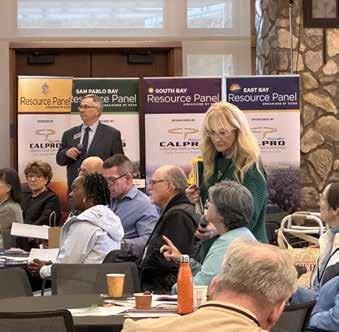
Come and reconnect with your peers and attend an upcoming Resource Panel in your region. These events are held in a casual atmosphere to enable homeowners, board members, managers, and other professionals to hear about important topics presented by experts in the HOA industry. Click a Resource Panel meeting location below to sign up to receive information.
1/27 Wine Country Resource Panel 11:30 am – 1:30 pm
1/28 North Bay Resource Panel 11:30 am – 1:30 pm
1/28 San Francisco Resource Panel 5:30 pm – 7:30 pm
2/3 Los Angeles Resource Panel 11:30 am – 1:30 pm
2/4 Orange County Resource Panel 11:30 am – 1:30 pm
2/5 San Diego Resource Panel 5:30 pm – 7:30 pm
2/10 San Pablo Bay Resource Panel 11:30 am – 1:30 pm
2/11 South Bay Resource Panel 11:30 am – 1:30 pm
2/12 Central Coast Resource Panel 11:30 am – 1:30 pm
WELCOME TO ECHO’S
New Professional Service Providers
Where Trust Meets Excellence
Leading Community Management with Precision and Passion
Embark on a journey to a more harmonious and thriving community with our exceptional community management services in Northern California. At the core of our company lies a steadfast commitment to integrity, transparency, and unwavering dedication. Collaborating closely with homeowners and boards, we promise responsive, efficient, and forward-thinking solutions perfectly customized to meet your community’s needs.
Our team has an unyielding commitment to outstanding customer service. We understand that effective management is rooted in open lines of communication and the power of understanding individual needs. We are here to offer support, answer questions, and provide timely solutions, ensuring that every interaction adds value and fosters trust.
With an emphasis on building lasting relationships, we strive to exceed expectations, creating an environment where every resident feels genuinely cared for and their community is wellmaintained and thriving.
Dunn-Edwards Paints® began as a small, family-owned business that — through hard work and commitment to quality — has grown to become one of the country’s leading manufacturers and distributors of paints and painting supplies. We dedicate ourselves to providing professionals and consumers throughout the Southwest with a complete line of the highest-quality, best-value paints, painting supplies and equipment — as well as superior service. And we do it with pride.
Your dedicated Property Service representatives will provide expert advice and engage you with a network of our experts who provide industry-leading, concierge-level services that are complimentary for any budget range. Whether you’re choosing a color palette or writing a RFP, Dunn-Edwards has the resources to make your job easier and save you time.
Let us assist you with your next repaint from start to finish.
Dunn-Edwards Paints
(888) 337-2468 dunnedwards.com
Outdoor living made simple
Easily install your new fence, turf, deck and concrete
Trust at every step to give you peace of mind. Ergeon is one of California’s most customer-friendly outdoor construction companies (CA license #1040925, classifications C8: Concrete, C13: Fencing, C27: Landscaping), delivering fast, transparent service for communitywide improvements.
We specialize in fencing (wood, vinyl, chain link, and metal), artificial grass, and hardscape—installed or repaired to meet HOA requirements, budgets, and timelines. With live video quotes, 3D design previews, and real-time pricing, boards can make informed decisions quickly, without delays or in-person visits.
Our team is available seven days a week and supports every step of the process, from initial scope to final sign-off. With over 30,000 completed projects and 15,000 public reviews, Ergeon has earned the trust of communities across California. We’re proud recipients of the Consumer Choice Award, Angi Super Service Award, and Forbes’ Best Startup Employers.
Ergeon is a trusted partner for communities seeking long-term value, curb appeal, and peace of mind without the stress.
Over 18 Office Locations Statewide.
Ergeon (408) 391-0171 ergeon.com
The Ultimate Solution for Managing HOAs of All Sizes
Self-Managed HOA Software plus+ Community Management Solutions
Your HOA, Your Way
Combine HOAworks software with our property management services and save up to 80% monthly. You stay in control, keep your data, and let us handle the rest.
Financials & Accounting
HOAworks simplifies the complexities of managing HOA finances, offering tools for budgeting, accounting, and financial reporting. With HOAworks, you can easily track expenses, manage dues, and generate detailed financial statements, ensuring transparency and accuracy.
Enhanced Communications
Enables board members to send announcements and updates to the entire community or specific groups. Secure online surveys and polls to obtain informed decisions on important community matters. Online virtual video meetings for board meetings and other community gatherings.
Management Services
HOA management software that reduces paperwork, improves response times and helps board members manage their community like a business. Easily manage violations, service and maintenance requests as well as vendor and homeowner portals.
HOAworks (877) 808-4462 hoa.works
We’ve Been Right Where You Are
Because we’ve been there before, we know exactly what you’re going through as a Board Member.
For decades, we have consulted and worked with HOA Boards, Property Owners, LLCs, Trusts, Investors, Developers and Multi-Family Developments to help their real estate increase in value, their Reserve Accounts grow, and their respective communities thrive!
Our goal is to make your life easier by offering tailor-made solutions to streamline your HOA operations and ensure that your community thrives.
• Access to our streamlined, online Homeowners Portal.
• Reserve Analysis Management
• Efficient & Responsive Customer Service & Support to Member & Vendor Inquiries & Communications
• Encrypted, Secure, Cloud-Based Storage & Archiving of HOA Information
• Community Governance Support & Dispute-Resolution Facilitation
• 24/7 Emergency Call Center
JK Global Real Estate Consultants (650) 888-9237 jkgrec.com
RealManage goes beyond the traditional role of a service provider, striving to empower your Homeowners Association with exceptional services tailored to your community’s unique needs. From comprehensive board member relationship management, responsive support, and conflict resolution expertise to streamlined board and annual meetings, our suite of services ensures the seamless operation of your association.
We stand out with our commitment to staying abreast of legal intricacies, optimizing service-provider relationships, and enhancing amenity and access control management.
Management
We foster harmonious relationships and elevate overall efficiency. Here’s what sets us apart:
• Well-Prepared Leadership: – We provide new board members with thorough orientation and training, ensuring they’re equipped for success.
• Responsive Support: – Our commitment to responsiveness means we address board members’ questions or issues within the next business day.
• Conflict Resolution: – Excelling in conflict resolution, we facilitate the resolution of disputes among board members.
• Legal Expertise: – Our team offers expert advice, maintaining a deep understanding of the association’s bylaws and staying informed on relevant legislation.
Reach out to one of our locations across California.
RealManage (650) 740-2419
realmanage.com
WELCOME TO ECHO’S
New Professional Service Providers (cont’d.)
Our Promise
When your roof needs a treatment, call the Roof Doctor!
San Diego Roof Doctor is dedicated to exceeding our customers’ expectations by providing the best possible service and the highest quality applications for every roofing project, no matter how big or small. We pledge to establish lasting relationships by gaining our customers’ trust through honesty, integrity, proactive communication, and an excellent performance by every member of our team. We strive to be San Diego’s #1 roofer.
With over 35 years of experience in professional roofing, San Diego Roof Doctor is your roofing specialist. Whether you are looking for full replacement, repairs or maintenance we have the service for you. All services are performed by full-time crew members. We are fully licensed and bonded for your protection. Our team believes in quality service and quality workmanship.
• Full Re-Roofs
• Long Term Repairs
• Roof Maintenance
• Free Survey Photos
• Budget Planning Assistance
• Roofing Inspections
• Financing Available
• Emergency Roof Services
San Diego Roof Doctor (760) 533-3301 sandiegoroofdoctor.com
Skyline is dedicated to delivering exceptional property management services with a modern technological edge. We believe in fostering strong relationships between Owners, Tenants, and our committed team. Our focus is clear: we offer traditional property management services, and nothing else.
24/7 Live Support
Your Tenants can reach a live person anytime, day or night. During the day they can speak directly with a member of our team, and at night, our friendly support staff in Pennsylvania are ready to assist.
1:50 Ratio
To ensure prompt and personalized service, we take on one team member for every 50 units under our management. By keeping our staff to unit ratio low, we guarantee that each property receives the attention and support it deserves.
No Buzzwords
Here at Skyline, we don’t focus on chasing quarterly sales targets; instead, our success is measured by tenant retention and owner net income. No complicated jargon – just dependable, high-quality property management.
At Specialty Real Estate Services, we pride ourselves on being a boutique company offering personalized, hands-on Real Estate Services, including Sales, HOA community Management, Maintenance, and Renovation Services throughout Northern California.
As a small, locally operated firm, we provide a level of customer service and attention to detail that larger corporations simply can’t match.
Our streamlined approach eliminates the layers of middle management typically found in big-box real estate management firms, empowering our clients with faster communication, clearer accountability, and more efficient problem-solving. We believe that effective client & community management starts with real relationships, responsive support, and a deep understanding of each of our client’s properties’ unique needs.
Choosing a boutique company like Specialty Real Estate Services means partnering with a dedicated team that’s invested in each of our clients’ success and where they’re not just another account number.
Specialty Real Estate Services (800) 400-2144 sresonline.com
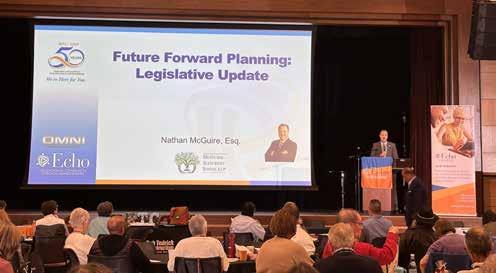
LEGISLATIVE UPDATE What Happened and What’s Next?
BY NATHAN McGUIRE, ESQ.
The first half of the 2025 legislative session has come to an end, and Governor Newsom has acted on the bills that made it all the way through the process and landed on his desk. At the start of the term, 29 new legislators were sworn in. Prior to the deadline in February, 2,491 bills were introduced. Of those, 917 (37%) reached Governor Newsom’s desk. And of those that made it that far, 794 (87%) were signed and 123 (13%) were vetoed.
This turned out to be one of the most impactful sessions, outside of those that included the enactment of the DavisStirling Act in 1986 and its recodification in 2014. This is largely due to the surprising adoption of AB-130, which makes sweeping changes to how HOAs enforce violations. As I’ve been saying, things can change quickly, and that is exactly what happened.
On June 30, 2025, Governor Newsom signed AB-130 into law. While it was introduced as a budget trailer bill, it includes last-minute amendments that significantly curtail the enforcement powers of HOAs across California. AB-130 was billed as part of the governor’s “Abundance Agenda,” a sweeping legislative package aimed at accelerating housing and infrastructure development. The governor’s press release described the bill as delivering “the most consequential housing and infrastructure reform in recent state history.” Yet, conspicuously absent from that announcement was any mention of the bill’s impact on HOAs.
Inserted just days before the bill’s passage, the amendments to Civil Code Sections 5850 and 5855 were adopted without committee hearings or public input. They mirror language from SB-681, a bill that had been actively opposed by industry stakeholders and appeared to be headed for significant revision before being quietly folded into AB-130. AB-130 became effective immediately.
The result is a dramatic shift in how HOAs can enforce their governing documents, with new limits on fines, procedural hurdles for disciplinary action, and a host of ambiguities that are likely to generate confusion and litigation.
Unless otherwise stated, bills that passed took effect on January 1, 2026.
DEAD BILLS
Before we discuss the bills that passed, let’s have a moment of silence for the bills that did not make it to Governor Newsom’s desk. These bills are not technically dead and can still be resurrected next year or in future legislative sessions under a new bill number.
AB-6 (WARD)
This bill would have required the Department of Housing and Community Development (HCD) to convene a working group to research and consider recommending building standards.
AB-21 (DEMAIO)
This kitchen-sink bill proposed numerous changes that would have negatively impacted operations and management of HOAs.
AB-69 (CALDERON)
This bill would have required a broker of record to determine if a FAIR Plan policy could be moved to a voluntary market insurance company before the policy was renewed.
AB-739 (JACKSON)
This bill would have required a managing agent of a common interest development to hold a real estate broker license issued by the California Department of Real Estate (DRE).
AB-1240 (LEE/PEREZ)
This bill would have prohibited a business entity that had an interest in more than 1,000 single-family residential properties from purchasing additional single-family residential properties for rental purposes.
SB-282 (WIENER)
This bill would have voided any restrictions in governing documents that prevented the replacement of a fuel-gasburning appliance with an electric appliance or prevented the installation or use of a residential heat pump water heater or heat pump HVAC system.
Continued on page 30
SB-448 (UMBERG)
This bill would have implemented procedures for removal of squatters.
SB-546 (GRAYSON)
This bill would have modified existing board financial review requirements to be satisfied when individual members or a subcommittee of the board reviewed the documents and made statements independent of a board meeting.
SB-570 (ALVARADO-GIL)
This HOA spot bill was never amended to include substantive changes to the law.
SB-677 (WIENER/WICKS)
This bill would have required local agencies to ministerially approve certain housing developments and urban lot splits and void any HOA restrictions that effectively prohibit or unreasonably restrict these approved housing developments and urban lot splits.
SB-681 (WAHAB)
This bill contained the language that was incorporated into AB-130.
SB-750 (CORTESE)
This bill would have established the California Residential Mortgage Insurance Fund in the State Treasury and would continuously appropriate moneys to the California Housing Finance Agency (CalHFA) for the purpose of insuring construction loans and permanent loans for affordable housing.
SB-811 (CABALLERO)
This HOA spot bill was never amended to include substantive changes to the law.
This bill requires the Department of Insurance, on or before January 1, 2030, and every five years thereafter, to consider whether or not to update its regulations to include additional building hardening measures for property-level mitigation efforts and community-wide wildfire mitigation programs. As part of this consideration, the bill requires the department to consult with specified agencies to identify additional building hardening measures to consider, as well as to develop and implement a public participation process during the evaluation.
AB-130
(COMMITTEE ON BUDGET)—HOUSING
In addition to numerous changes designed to implement the state’s budget, this bill includes several important changes impacting HOA enforcement:
• Monetary penalties are now capped at the lesser of the amount listed in the HOA’s fine schedule or $100 per violation.
• Fines may exceed $100 only if the violation poses an “adverse health or safety impact” and the board makes a written finding in an open meeting.
• Members may avoid penalties by curing the violation or providing a “financial commitment to cure” before the hearing.
• Boards must now issue written decisions within 14 days (previously 15).
• If a member disagrees with the board’s decision, they must be offered internal dispute resolution (IDR). If both parties agree, a written resolution must be signed and is judicially enforceable.
COMMENT: The bill took effect immediately, and all HOAs in California must comply. The law’s ambiguities will likely generate disputes over interpretation, and associations must now navigate a new enforcement landscape with caution. Boards should confer with legal counsel to determine if changes to governing documents are advised.
AB-226 (CALDERON/ALVAREZ)—CALIFORNIA FAIR PLAN ASSOCIATION
This bill authorizes the FAIR Plan association (if granted prior approval from the commissioner) to request the California Infrastructure and Economic Development Bank to issue bonds and authorizes the bank to issue those bonds to finance the costs of claims, to increase liquidity and claims-paying capacity of the association, and to refund bonds previously issued for that purpose. The bill specifies that the association is a participating party and that financing all or any portion of the costs of claims or to increase liquidity and the claims-paying capacity of the association is a project for bond purposes. The bill authorizes the bank to loan the proceeds of issued bonds to the association and authorizes the association to enter into a loan agreement with the bank and to enter into a line-of-credit agreement with an institutional lender or broker-dealer. This bill requires the association, if the above-described bonds, loan agreements, or lines of credit receive the prior approval of the commissioner, to assess members in the amounts and at the times necessary to timely pay in full all obligations of the association with respect to those bonds, loan agreements, or lines of credit and related agreements, as specified.
AB-462 (LOWENTHAL/RIVAS)—LAND USE: COASTAL DEVELOPMENT PERMITS: ACCESSORY DWELLING UNITS
The California Coastal Act of 1976 (which is administered by the California Coastal Commission) requires any person wishing to perform or undertake any development in the coastal zone, as defined, to obtain a coastal development permit from a local government or the commission, except as provided. Existing law specifies that the abovedescribed provisions governing accessory dwelling units do not supersede or in any way alter or lessen the effect or application of the California Coastal Act of 1976, except as specified. This bill exempts the construction of an accessory dwelling unit located within the county of Los Angeles, and in any county that is subject to a proclamation of a state of emergency made by the governor on or after February 1, 2025, from the need to obtain a coastal development permit, as specified.
AB-1154 (CARRILLO)—ACCESSORY DWELLING UNITS: JUNIOR ACCESSORY DWELLING UNITS (JADUS)
This bill eliminates owner occupancy requirements for JADUs with bathrooms separate from the main residence and requires JADU rentals to be longer than 30 days (no short-term rentals).
AB-1414 (RANSOM/WIENER)—LANDLORDTENANT: INTERNET SERVICE PROVIDER SUBSCRIPTIONS
This bill requires a landlord, their agent, or an association to provide a tenant with the option to opt out of any subscription from a third-party internet service provider for specified services. The bill was amended to clarify that it does not apply to HOA bulk service situations.
CALIFORNIA SENATE BILLS
SB-410 (GRAYSON)—COMMON INTEREST DEVELOPMENTS: ASSOCIATION RECORDS: EXTERIOR ELEVATED ELEMENTS INSPECTION
This bill requires HOAs to provide potential buyers with the inspection reports required under Civil Code Section 5551 (SB-326 balcony inspection reports). These SB-326 reports are now considered “association records” subject to inspection. The bill also requires that the reports contain a cover page with basic information, including the inspection date, number of units, certification of the inspector, etc.
SB-547 (PEREZ)—COMMERCIAL PROPERTY INSURANCE CANCELLATION AND NONRENEWAL
This bill provides a one-year moratorium on insurance policy cancellations and nonrenewals in ZIP codes affected by a declared wildfire state of emergency. It applies to commercial properties, including specific residential or “habitational” types like apartment complexes, homeowners associations, condominium associations, and senior living facilities.
This bill (1) creates a streamlined ministerial approval process for rebuilding residential structures damaged in a disaster, (2) establishes timelines for homeowners associations (HOAs) to review development proposals, (3) limits the scope of covenants and other instruments that would prohibit a property owner from rebuilding a residential structure destroyed in a declared disaster, and (4) prohibits local agencies from preventing property owners from living in a mobile home on their property for up to three years following a disaster.
SB-770 (ALLEN)—COMMON
INTEREST DEVELOPMENTS: EV CHARGING STATIONS
Existing law imposes various requirements regarding the installation and use of an electric vehicle (EV) charging station placed in a common area or an exclusive use common area of a common interest development, including that the owner is required to provide a certificate of insurance that names the association as an additional insured party. This bill deleted the requirement that the insurance policy name the association as an additional insured party.
FUTURE LEGISLATION
What does the future hold? While it is impossible to predict, certain topics seem more likely than others.
• AB-130 Cleanup – While I certainly hope to see some changes to AB-130, I am not holding my breath. In spite of the fact that it is difficult to find credible support for AB-130, the authors apparently seem happy with the result. It may take loads of disputes and litigation before the need for change is undeniable. That said, there will certainly be a groundswell of support for changes.
• AB-1572 Cleanup – I have no reason to believe that this 2023 bill, which requires the replacement of nonfunctional turf (i.e., decorative grass) by January 1, 2029, will be changed. But there would certainly be support for it. While its goals are laudable, the bill’s ambiguities and failure to account for the many nuances of communities may nevertheless lead to changes.
• Manager/Board Licensing – Even though AB-729 was not fleshed out as a realistic proposal and did not pass this year, it seems likely that interested groups will keep trying.
• Wildfire/Insurance – Let’s face it, we need to do something to address the insurance crisis.
• Condo Structural Integrity – I am surprised the legislature has not seriously considered substantive changes related to structural integrity inspections or reserve requirements for condos since the tragic Surfside condominium building collapse in Florida in 2021. It may still be on the horizon.
Be sure to check Echo’s website frequently for the most current information on pending legislation: www.echo-ca.org/echo-legislation-tracker/
Nathan McGuire, Esq., is a founding partner of McGuire Schubert Sohal LLP, a law firm specializing in representing community associations of all types. He has been engaged in legislative advocacy for HOAs for most of his 20-plus-year career and serves on the board of directors for Echo. He was named Super Lawyers magazine’s “California Rising Star” for six years running, Super Lawyer in 2021-2024, and is the recipient of an AV Preeminent Peer Review designation from Martindale-Hubbell, which signifies the highest level of excellence in the attorney profession.
Liberty HOA Election Services, Inc. 3150 Almaden Expressway, Ste. 235 San Jose, CA 95118 (408) 444-4HOA www.hoaelection.com
Professional Association Services, Inc. 42612 Christy St. Fremont, CA 94538 (707) 539-5810, ext. 352 www.pas-inc.com
Pro Elections LLC PO Box 659 Murphys, CA 95247 (209) 559-1448 www.pro-ei.com
LAND USE
See our ad on page 7
The Miller Law Firm 595 Pacific Ave., 4th Floor San Francisco, CA 94133 (415) 437-1800 www.constructiondefects.com
GENERAL
COUNSEL
Community Legal Advisors Inc. COMMUNITY ASSOCIATION ATTORNEYS
Community Legal Advisors, Inc.
Mark T. Guithues, Esq. 509 N. Coast Highway Oceanside, CA 92054 (760) 529-5211 mark@attorneyforhoa.com www.attorneyforhoa.com
See our Advertorial on page 13
Pratt & Associates, APC 634 N. Santa Cruz Ave., Ste. 204 Los Gatos, CA 95030 (408) 369-0800 www.prattattorneys.com
Tinnelly Law Group 27101 Puerta Real, Ste. 250 Mission Viejo, CA 92691 (949) 588-0866 www.tinnellylaw.com
Briscoe Ivester & Bazel
Maria C. Kao 235 Montgomery St., Ste. 935 San Francisco, CA 94104 (415) 402-2712 mkao@briscoelaw.net www.briscoelaw.net
RESERVE STUDIES
Browning Reserve Group 3435 Mission Ave. Carmichael, CA 95608 (877) 708-0600 www.browningrg.com
The Helsing Group
6101 Bollinger Canyon Rd., Ste. 200 San Ramon, CA 94583 (925) 355-2100 www.helsing.com
Join like-minded colleagues and learn what is needed to prepare an individual for board service or to better serve your HOA clients.
The program covers the essentials, including the HOA legal environment, fiduciary responsibilities and duties, financial management and reserves, meetings (planning and management), election procedures, board ethics, and soft skills needed to deal with people. The curriculum is brought together with a capstone course on the role of HOA vision, mission, strategy, and core values in common interest developments.
The courses will be available in various formats including workshop, lecture, and lecture/lab. Faculty has been recruited from the most successful and knowledgeable companies in the industry. Currently, eight of the ten courses will be recorded and available on demand. All courses will be offered live via webinars. Two workshops require live, online participation: HOA Board Ethics and the capstone strategy course.
Participants will be given three years from the date of enrollment to satisfactorily complete the ten courses and successfully pass the exam for each course with a score of 70% or better. The examinations will be designed to cover the basic knowledge and skills discussed in the course and to encourage the internalization of the curriculum. After successfully completing the examinations, participants will be awarded a certificate of successful completion of the Echo Board Member Preparedness Program. This is a lifetime certificate and will be noted in the permanent Echo records.
Board Member Preparedness
Certificate Program Curriculum 2024:
Good Governance Series (100 series)
100 Leadership & Governance
101 Elections, Voting, and Candidacy
102 Meetings and Best Practices
103 Board Evaluation of HOA Management
HOA Legal Environment Series (150 series)
150 Ask the Attorney: Davis-Stirling Act Overview
151 Ask the Attorney: Laws Other than the Davis-Stirling Act
152 Ask the Attorney: Judicial InterpretationHOA Case Law
Board Ethics (120 Series)
120A Foundations of HOA Ethics Workshop
120B Ethics in Practice Workshop
HOA Financial Management & Reserves (170 Series)
170 HOA Financial Management & Reserves
HOA Board Member Preparedness
Capstone Course (199)
199 A Strategic Approach to HOA Management
To enroll or learn more about the program, contact Connor Zepponi, connor@echo-ca.org, or visit www.echo-ca.org and click on the Echo HOA University program tab.
8 REASONS TO CHOOSE LEVY, ERLANGER & COMPANY LLP
1
Almost of our clients are homeowners associations, planned unit developments, condominiums, condominium conversions, COOPs, tenancies in common and timeshare projects ...
3
150
Working with approximately management companies in Northern California out of a total of 300 serving community associations ...
2
5
Which enables our professional sta of
12
including 6 CPAs and 6 CPA candidates (growing to almost 20 professionals during “tax season” from January to April) to ...
7
Including some
6
40
Since 1977 more than experience
4
2,500 Serving more than community associations (3 to 6,700 units) in Northern California out of a total of approximately 17,000
Provide a wide range of services to community associations including …
• Financial statements and income tax returns — audits, reviews and compilations
• Comparative 2-year financial statements— more meaningful to readers
• Reserve funding plans, or updates
• 2020 Condominium Greenbook™, the 290-page financial reference book for Association treasurers
• 2020 Community Association Financial Survey of over 1,500 associations