I am Elizabeth Borkowski, an aspiring architect completing my final year at Mississippi State University. Growing up in Little Rock, Arkansas, I developed a deep appreciation for how thoughtfully designed spaces influence how people live, work, and connect. Through a combination of creative exploration and technical problem-solving, I have honed my design philosophy and skill set. This portfolio reflects my dedication to crafting innovative and functional designs that prioritize environmental sustainability and enhance communities.
EXPERIENCE
2021 - 2024
Rotary International Exchange Program / Summer 2019
Site Planning Study Abroad Program / Summer 2022
Williams & Dean Architecture Firm / Dec. 2021 - Aug. 2022
Pryor Morrow / Aug 2022 - Dec. 2022
hbg Design / May 2023 - Aug. 2023
G3 AEC / May 2024 - Aug 2024
EDUCATION
2020 - 2025 2017 - 2020
Mississippi State University Little Rock Central High School
SOFTWARES
2021 - 2024
Platforms / Windows, Microsoft Office, Google Drive/Docs, Excel
Graphics / Hand Drafting, Sketching, Autodesk AutoCAD, Adobe Creative
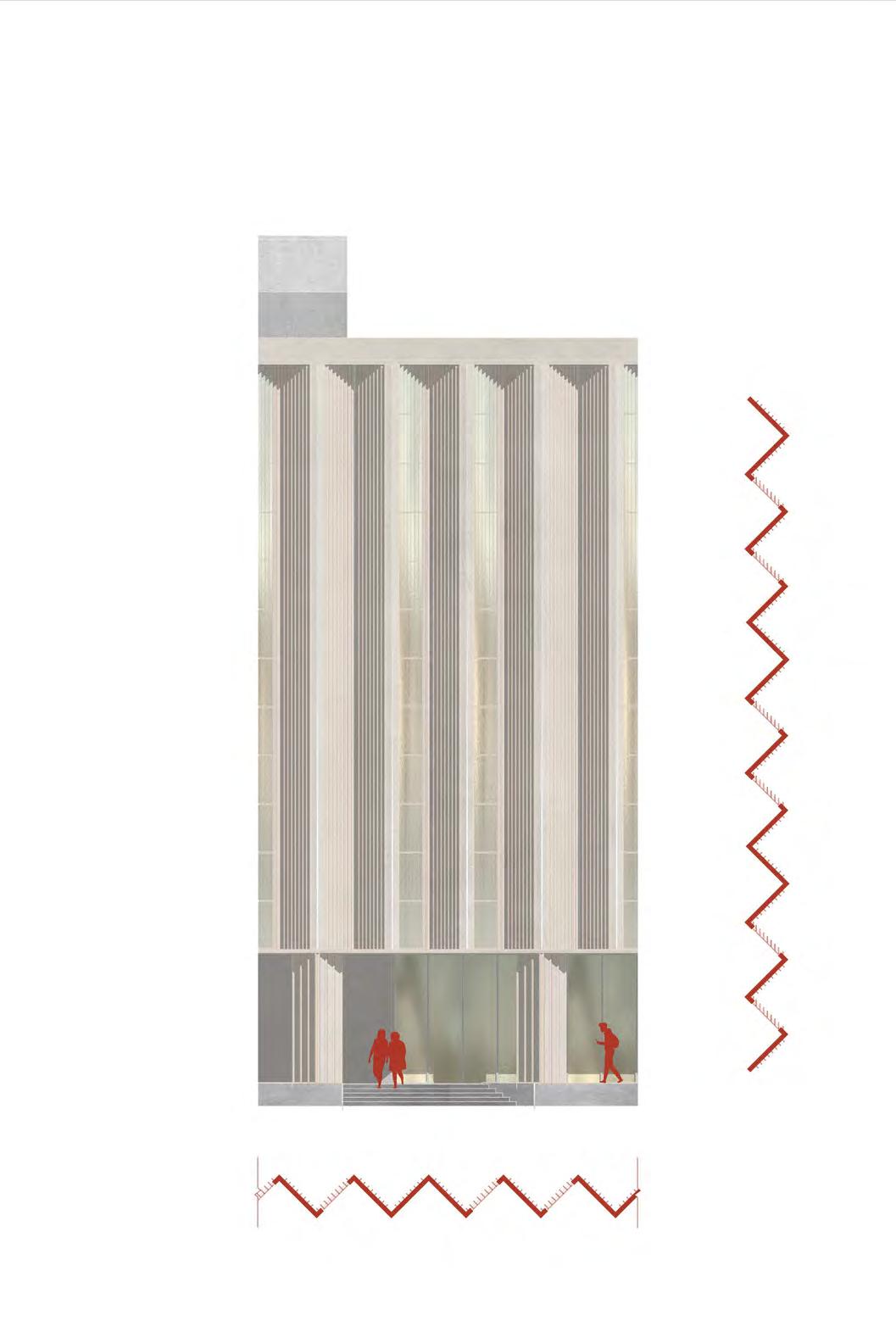
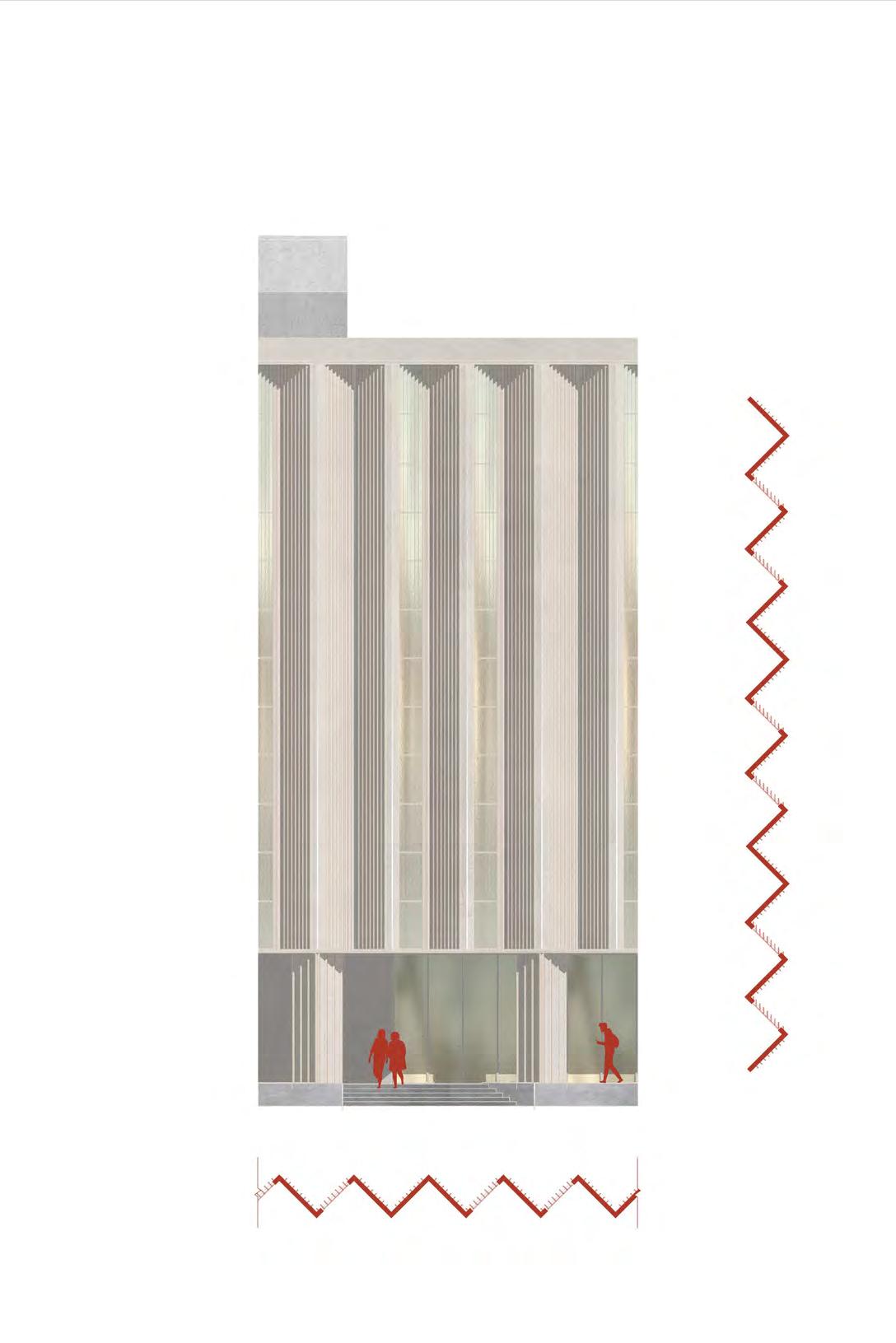
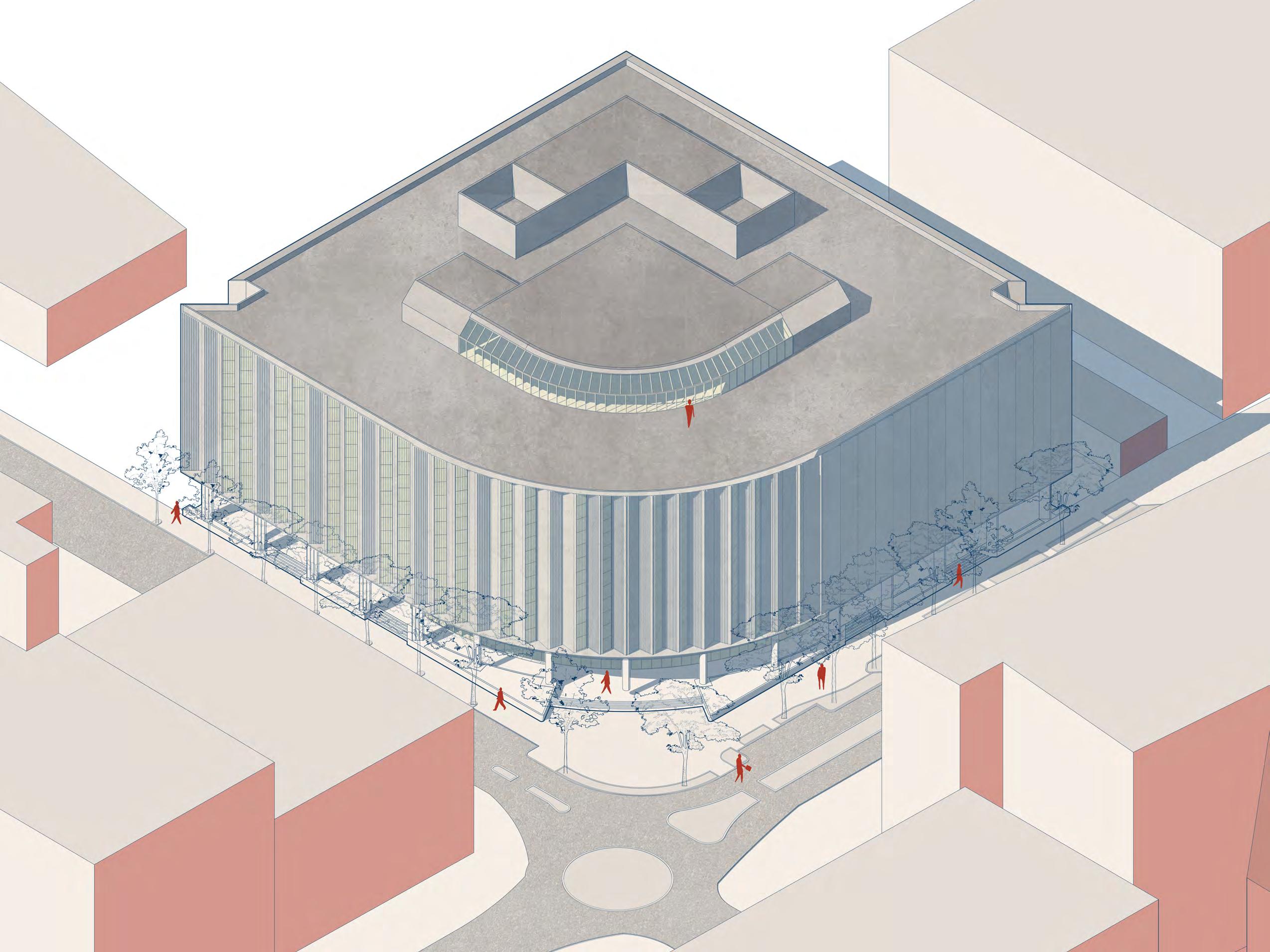
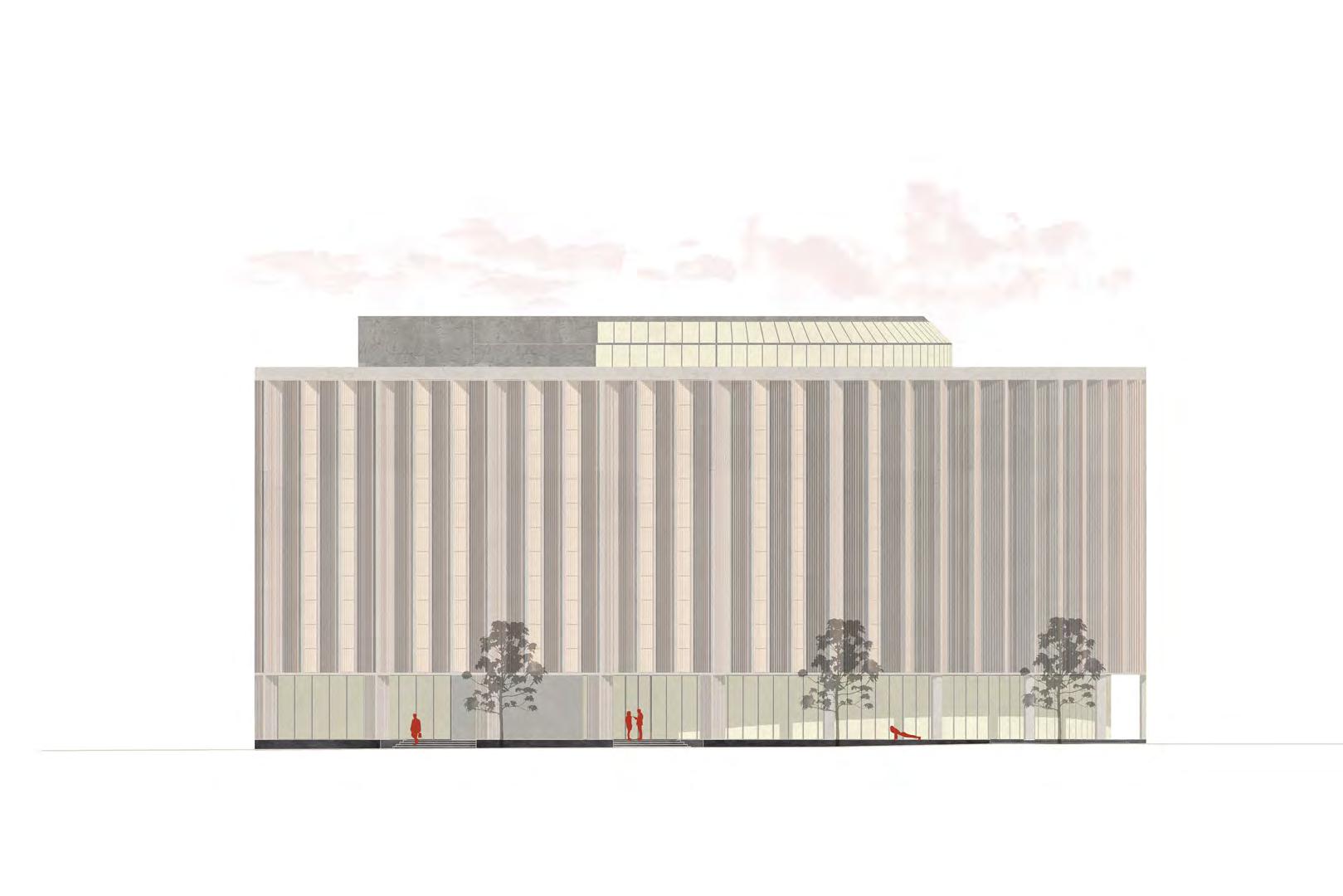
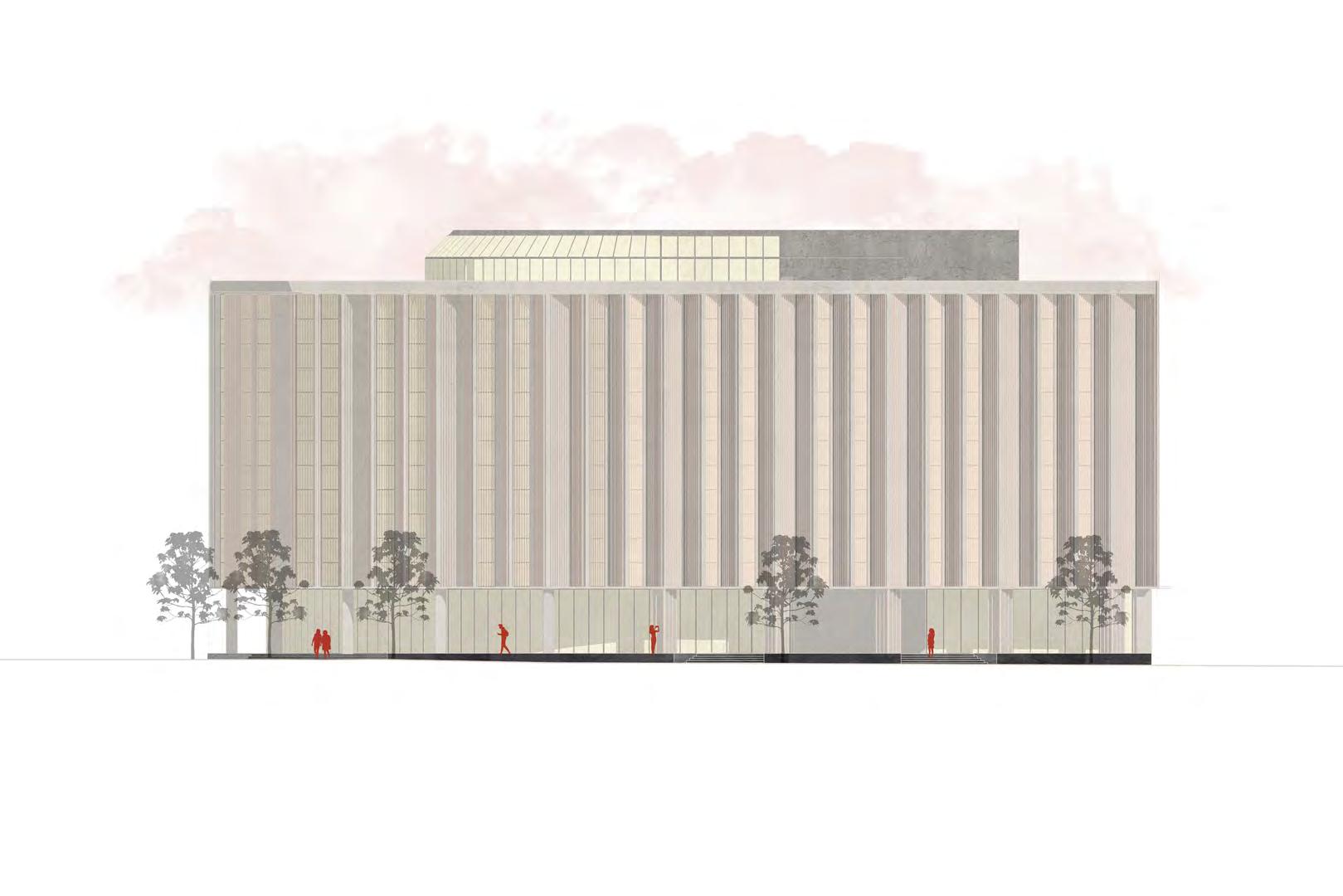
In Studio V-A, we were encouraged to integrate our understanding of publicness, privateness, antimonies, palimpsests, and cities to propose a façade that serves all equally. The goal of this project was to envision how urban buildings should engage with and contribute to their surrounding city.
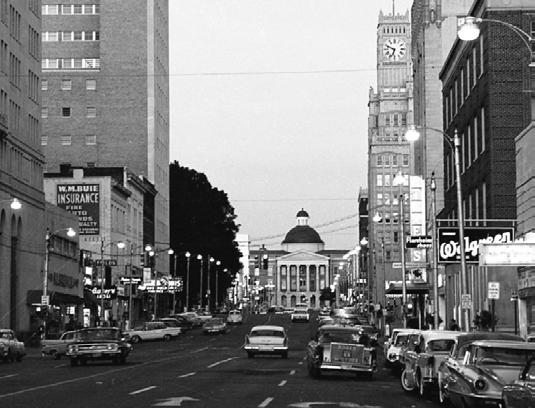
Our site for this project was the Landmark Building, located in the heart of downtown Jackson, Mississippi. The building has been vacant for several years and has experienced significant deterioration. The project requirement was to re-imagine the building’s skin, with much of the existing curtain wall on the north and east sides to be removed, exposing the structure and allowing for a new design that better suits the city center and reflects the importance of a major cultural institution.
Given the challenge of redesigning the exterior without knowing the building’s future program, I decided to focus on a modern, sustainable façade that could accommodate any potential uses. I chose to incorporate a brise-soleil system to control the amount of sunlight entering the building through its windows or façades. This design features horizontal or vertical fins, louvers, or shades strategically placed to block direct sunlight while still allowing natural light to filter in. I selected galvanized steel for the vertical fins of the brise-soleil system for ease of maintenance and to ensure the design blends seamlessly with the downtown Jackson context.
Location : Gulfport, Mississippi Programs Used : Revit, Rhino, AutoCAD, Illustrator, Photoshop Distinctions : Poole & Company Student Design Award
Over the years, the bayou’s natural functions have been disrupted by pollution, road construction, culvert channeling, industry, and landfill development. The Gulf Coast studio focused on addressing the flooding challenges in East Biloxi, Mississippi, and exploring design solutions to mitigate flooding.
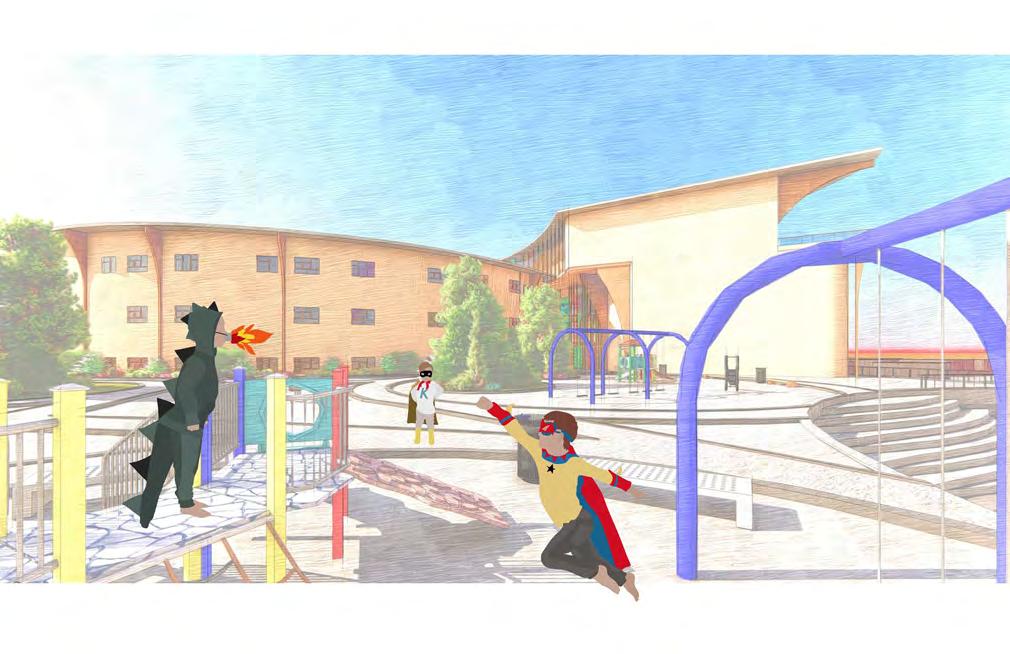
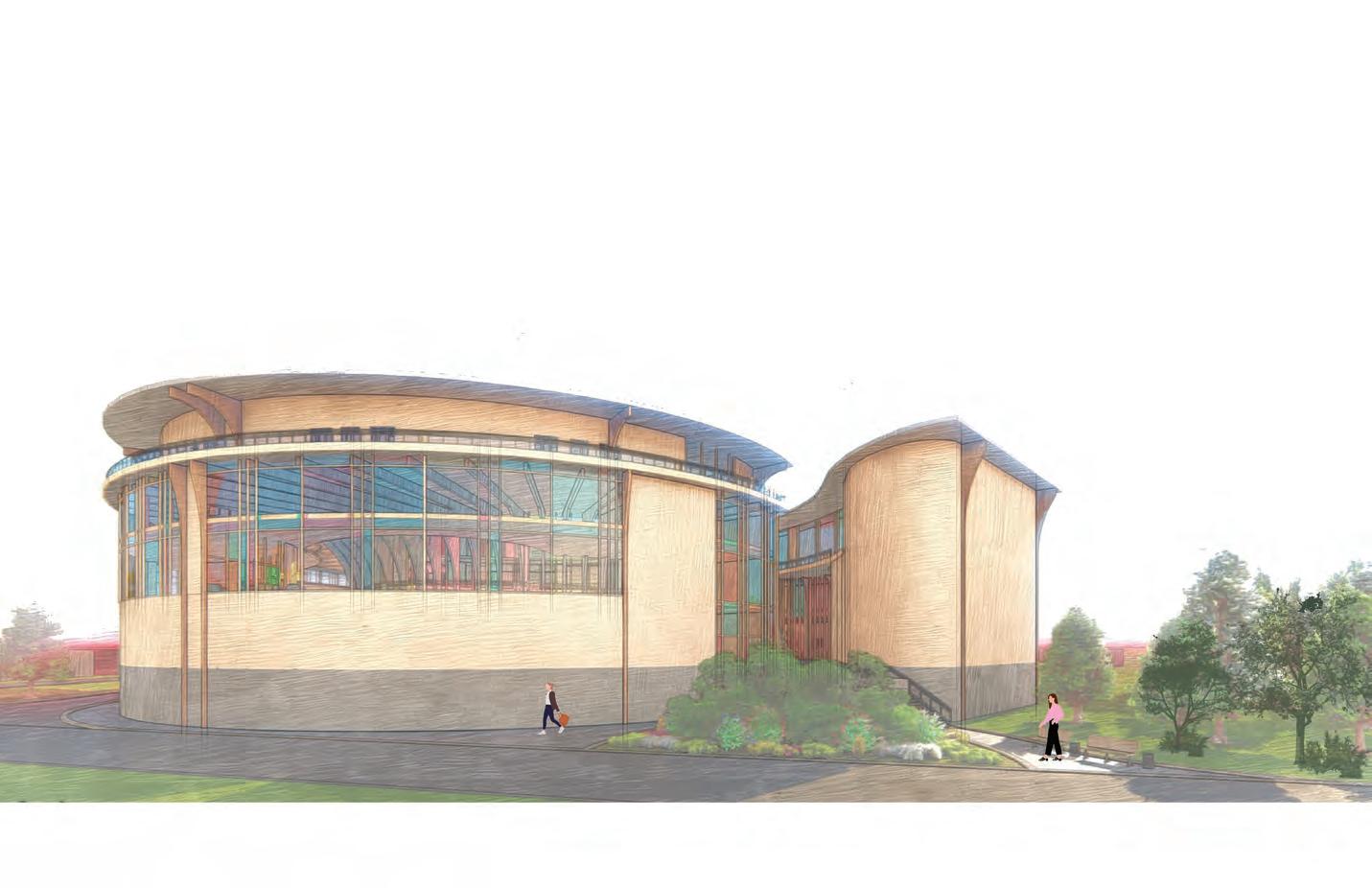
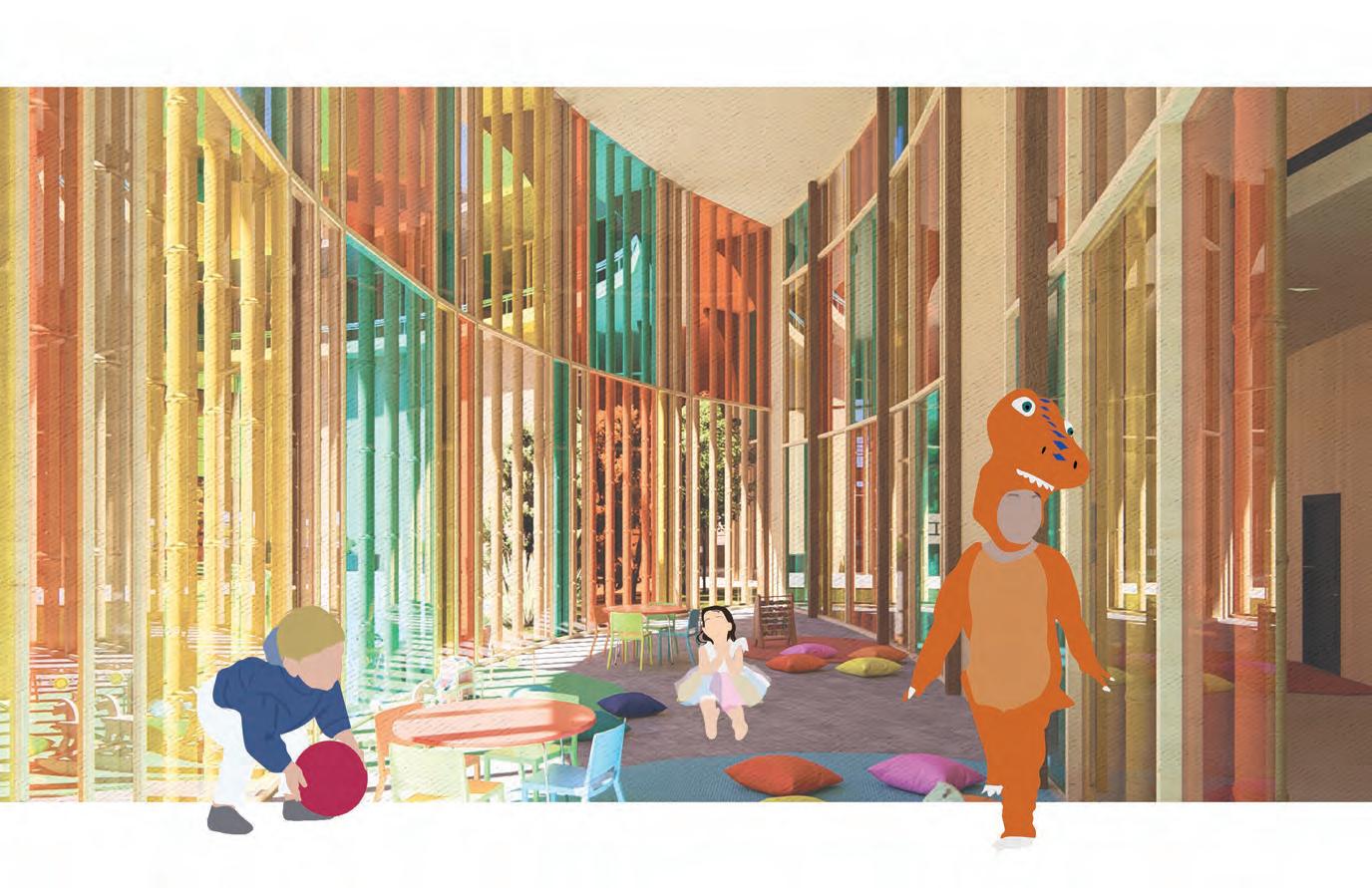
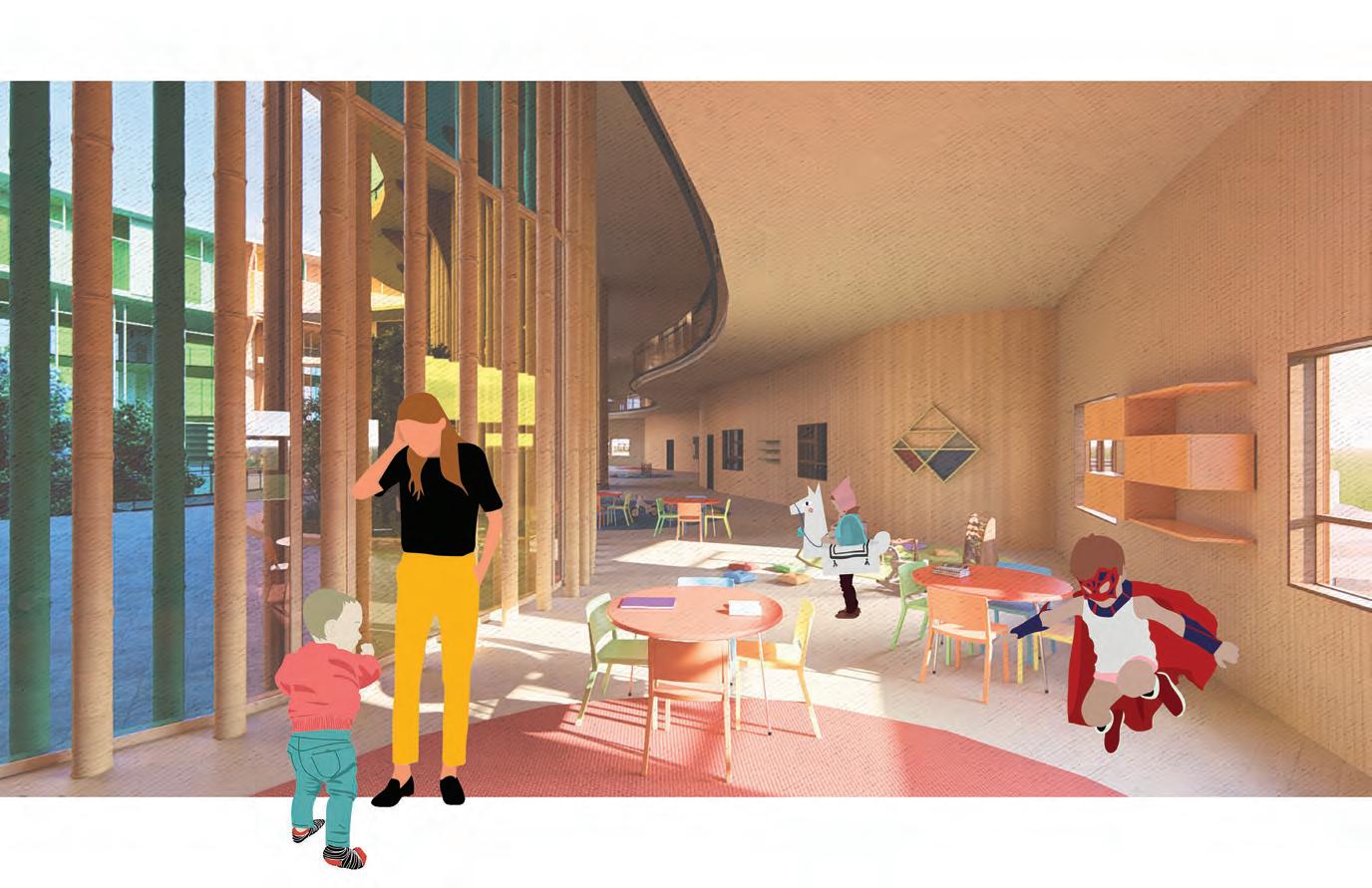
For my project, I proposed the creation of a daycare and library center to enhance the quality of life in the community. The design will incorporate flood prevention strategies and sustainable features, such as photo-voltaic curtain wall panels, solar panels, stormwater collection systems, and both active and passive shading devices.
PLANS & SECTIONS
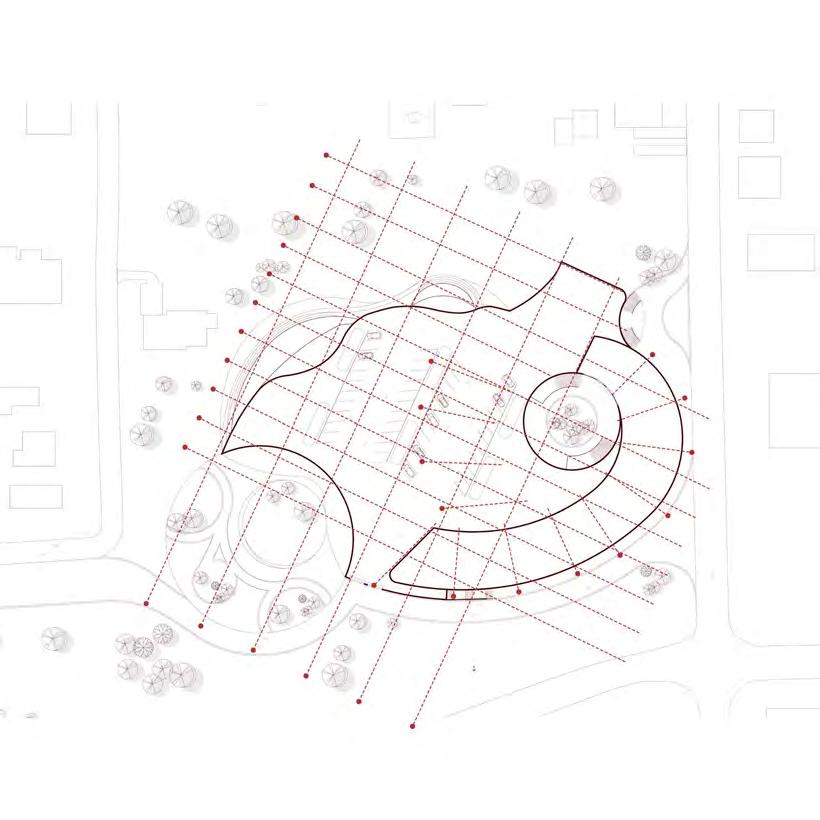
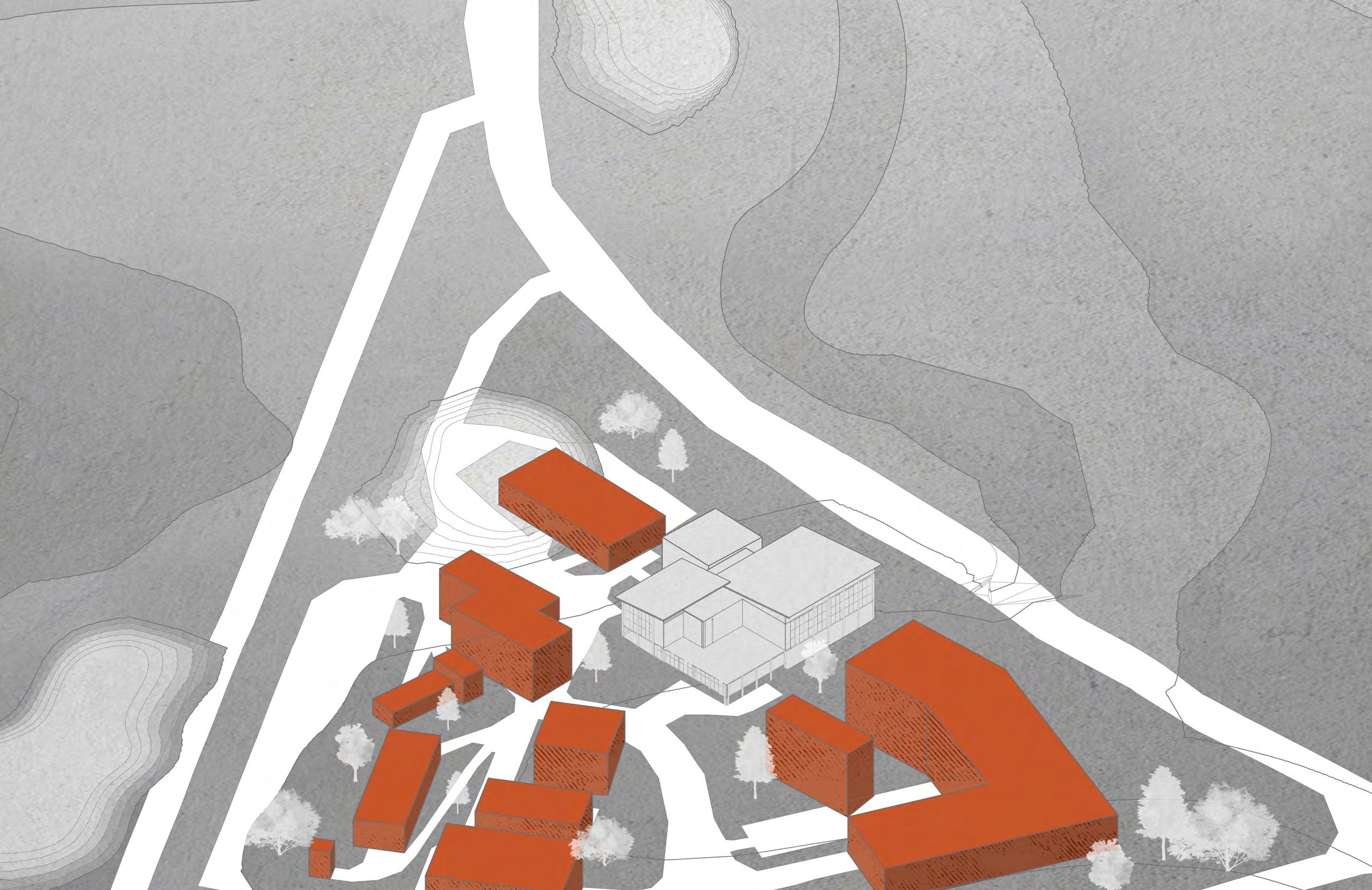
Site Plan
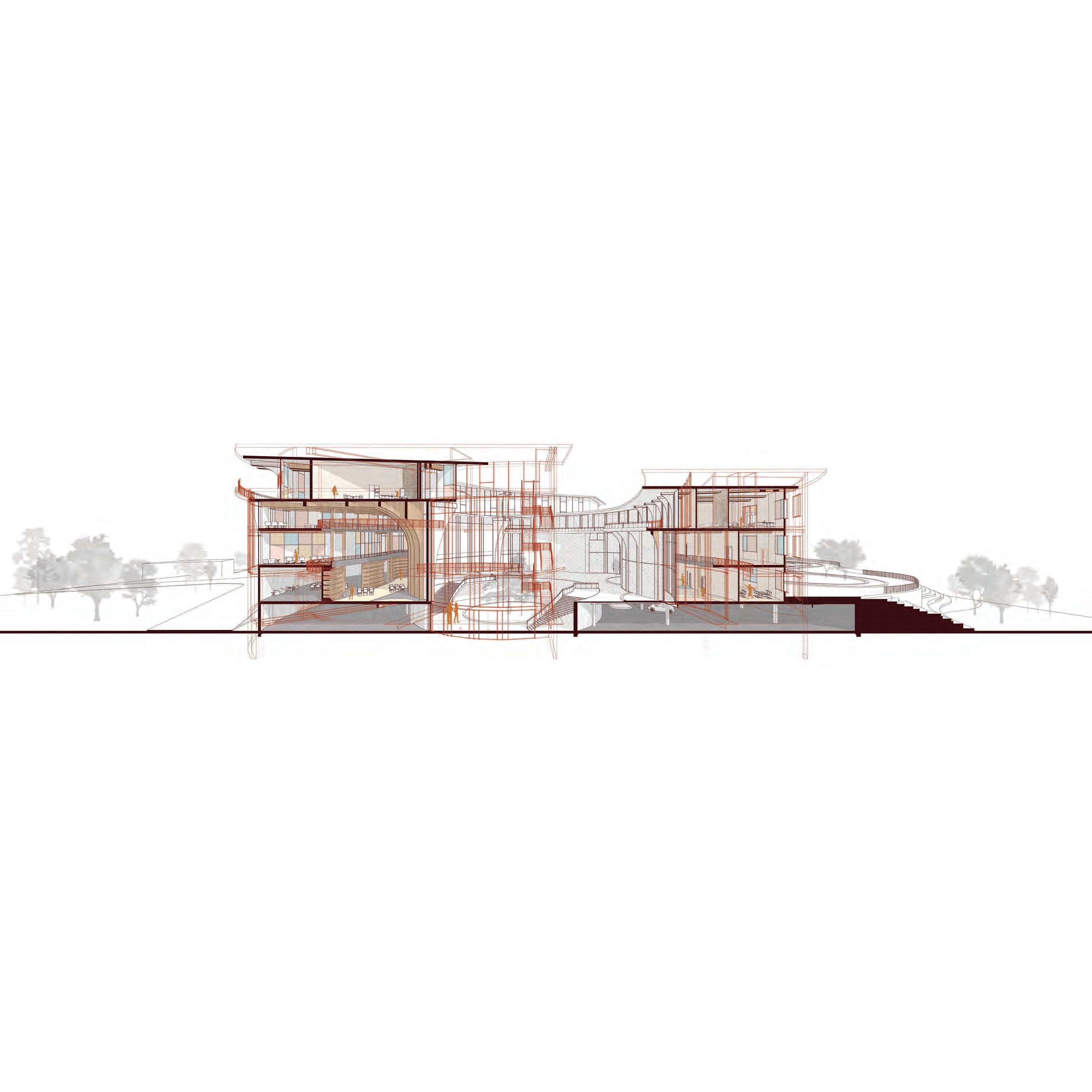
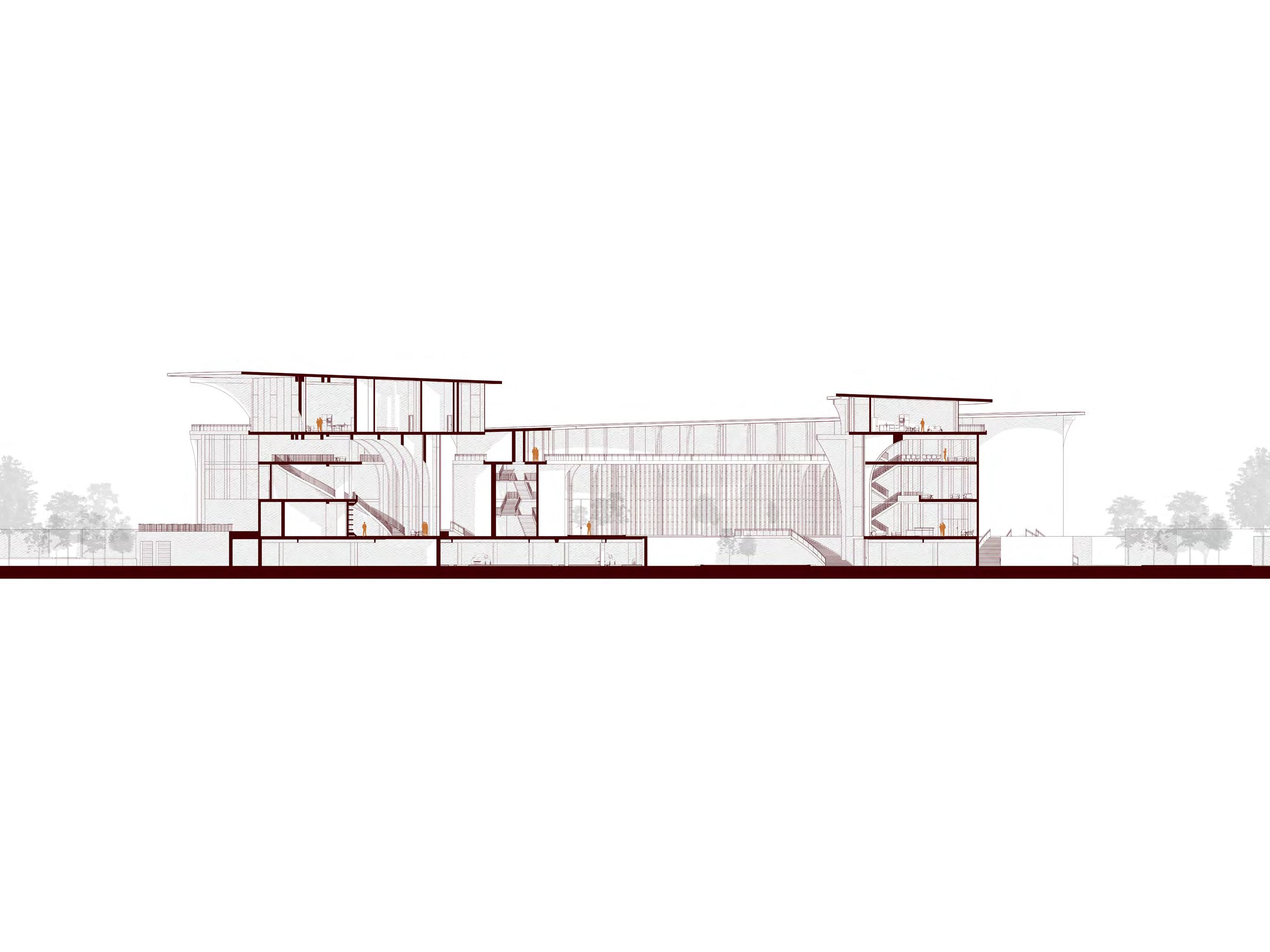
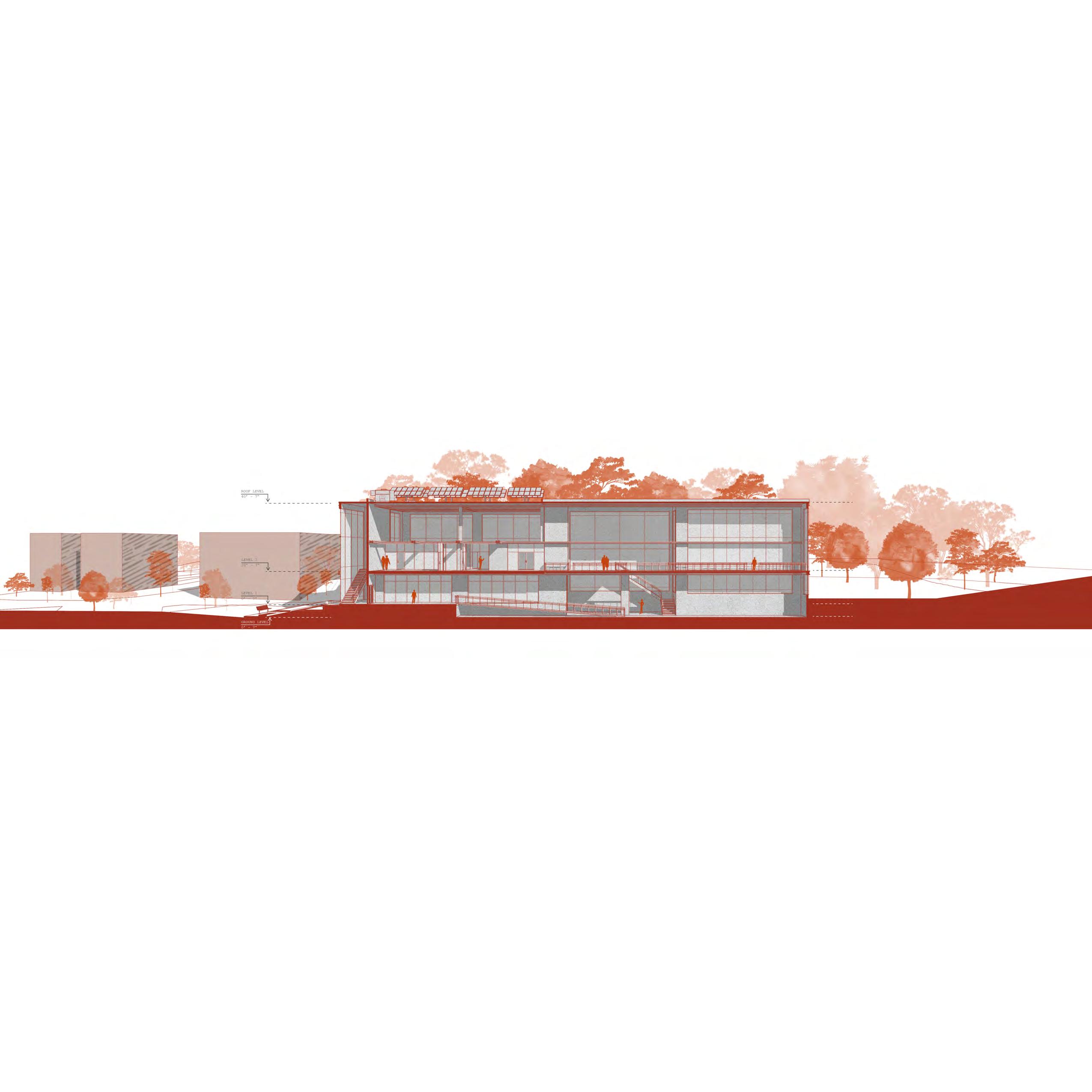
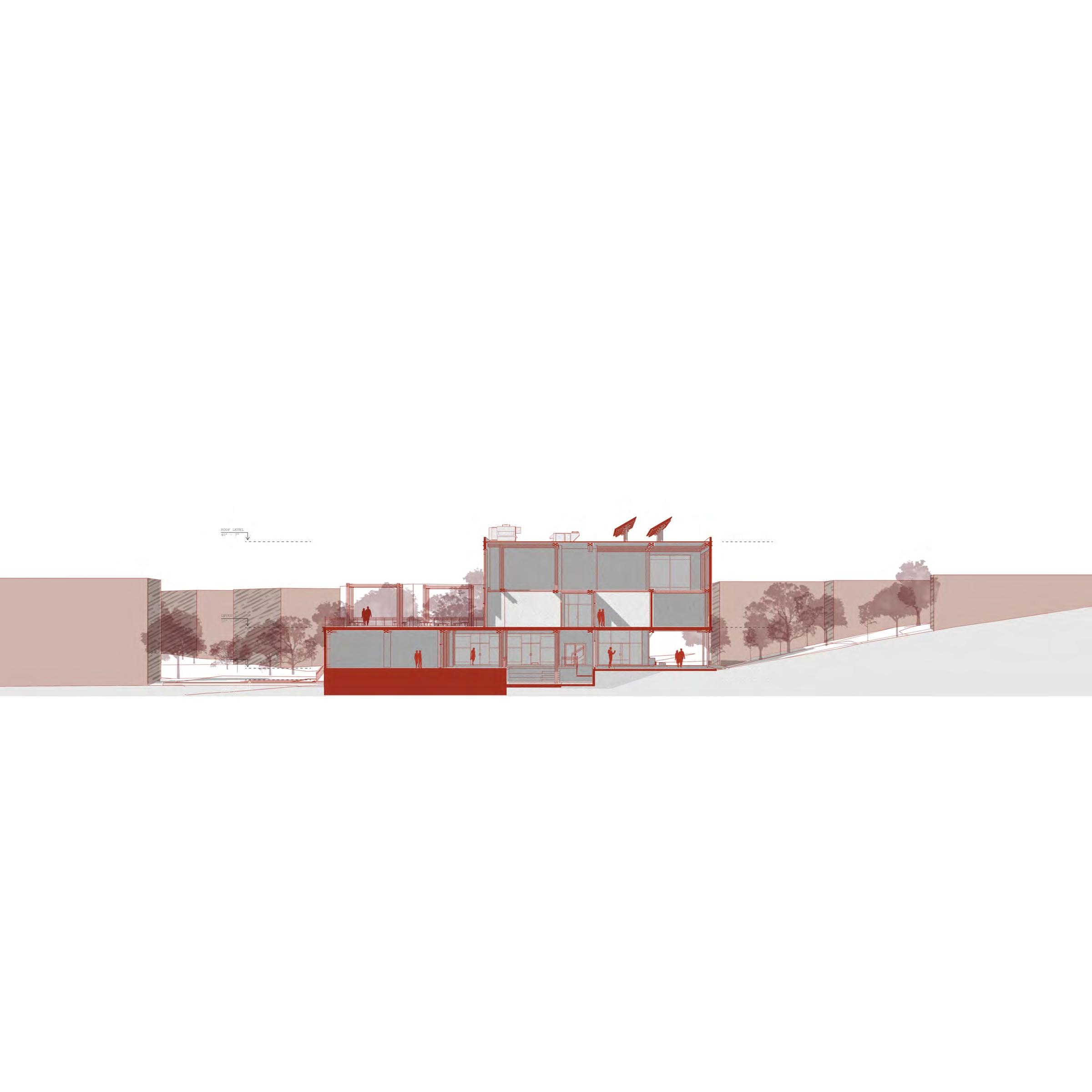
Transverse Perspective Section
Library design utilizes an open floor plan and the stack method for cross-ventilation
Open courtyard and building orientation to utilize prevailing winds
Both the library and daycare center use breathable materials and proper insulation to help regulate temperatures and humidity levels.
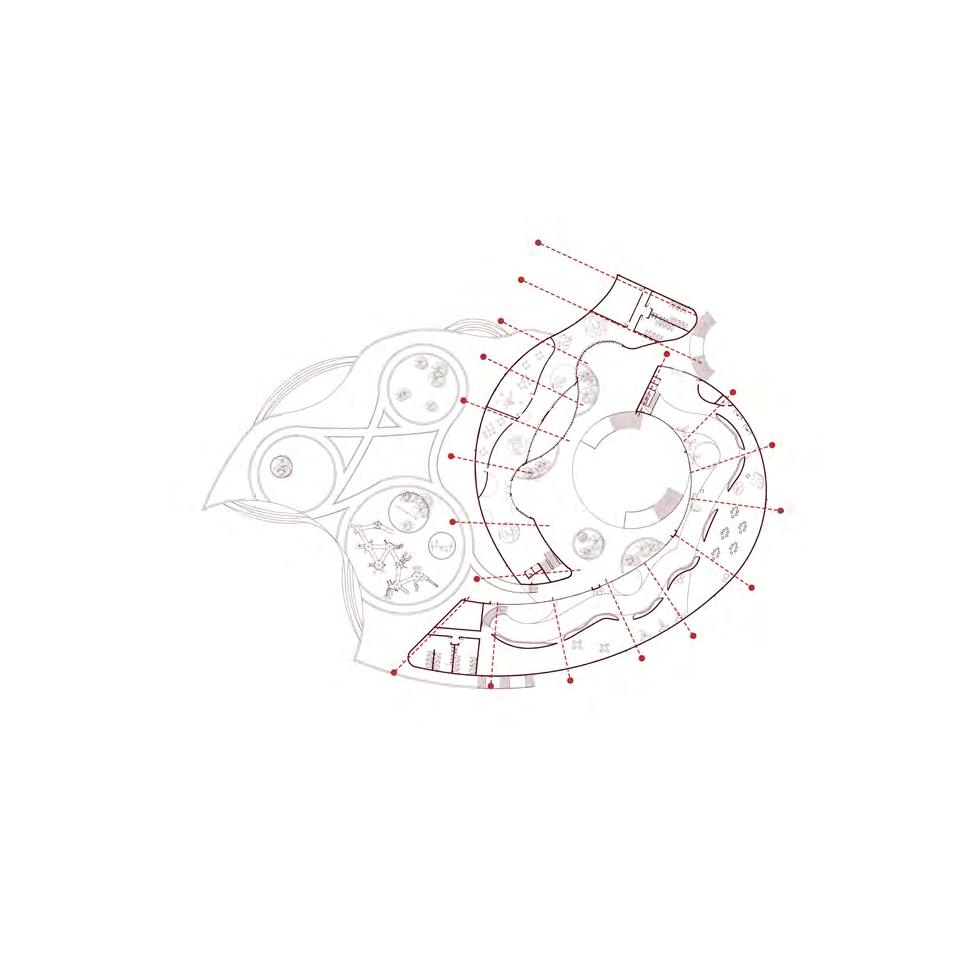
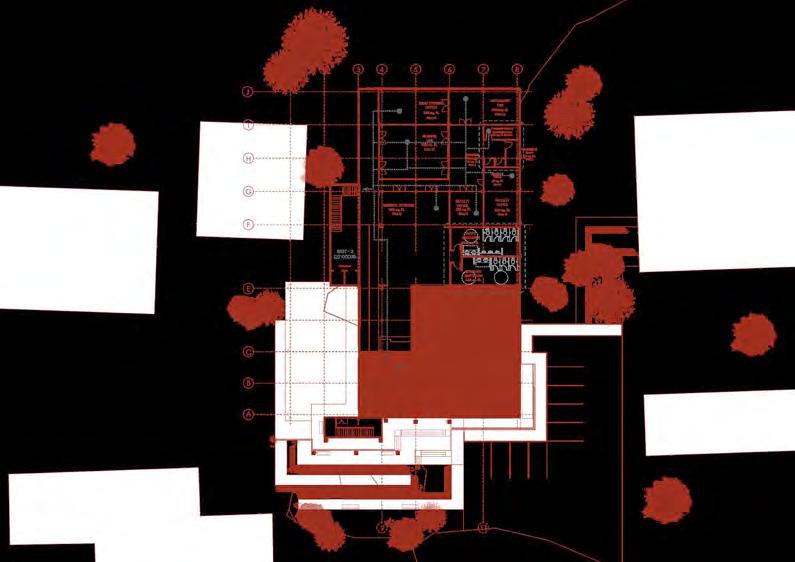
Garage Level Floorplan
The daycare and library are elevated on a 12’ platform to protect against flooding. Essential resources like water, food, and blankets are stored in waterproof containers in elevated areas to prevent water damage.
The building east and west facing glazing include the use of photo-voltaic (PV) solar panels are devices that convert sunlight directly into electricity.
the flood level to prevent water damage, with the space beneath used for residential and visitor parking.
Parking
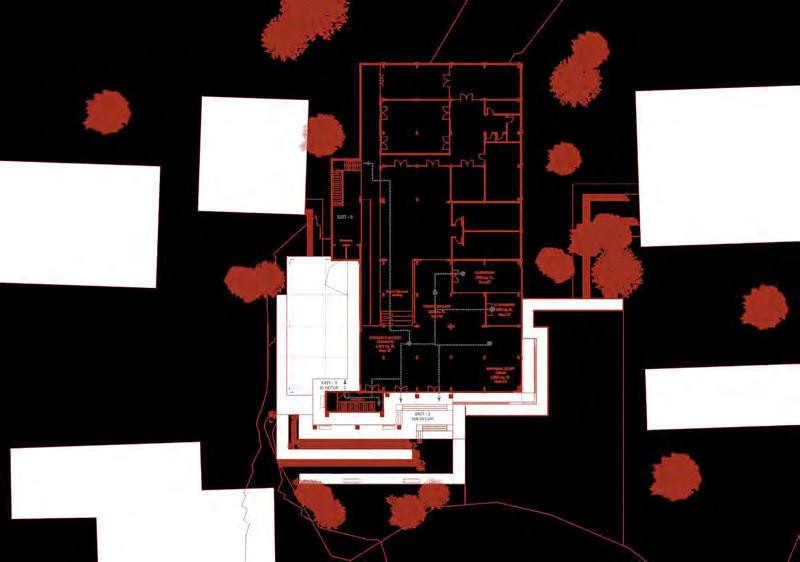
First Floorplan Site Plan
Children's & Library Center
The Department of Sustainable Bio-products Mississippi State University, MS
The Mass Timber Studio at Mississippi State University offers students the chance to explore wood as a sustainable structural material, which is a key resource in the state. Students design new buildings with a focus on experimental uses of timber, while also considering the buildings’ functional needs.
Each year, the studio concludes with a competition sponsored by the Mississippi Forestry Association (MFA), aimed at teaching students about the design and carbon benefits of mass timber. This initiative helps prepare students to create sustainable, environmentally responsible buildings that will meet future client needs, equipping them with essential skills for designing in a sustainable architecture field.
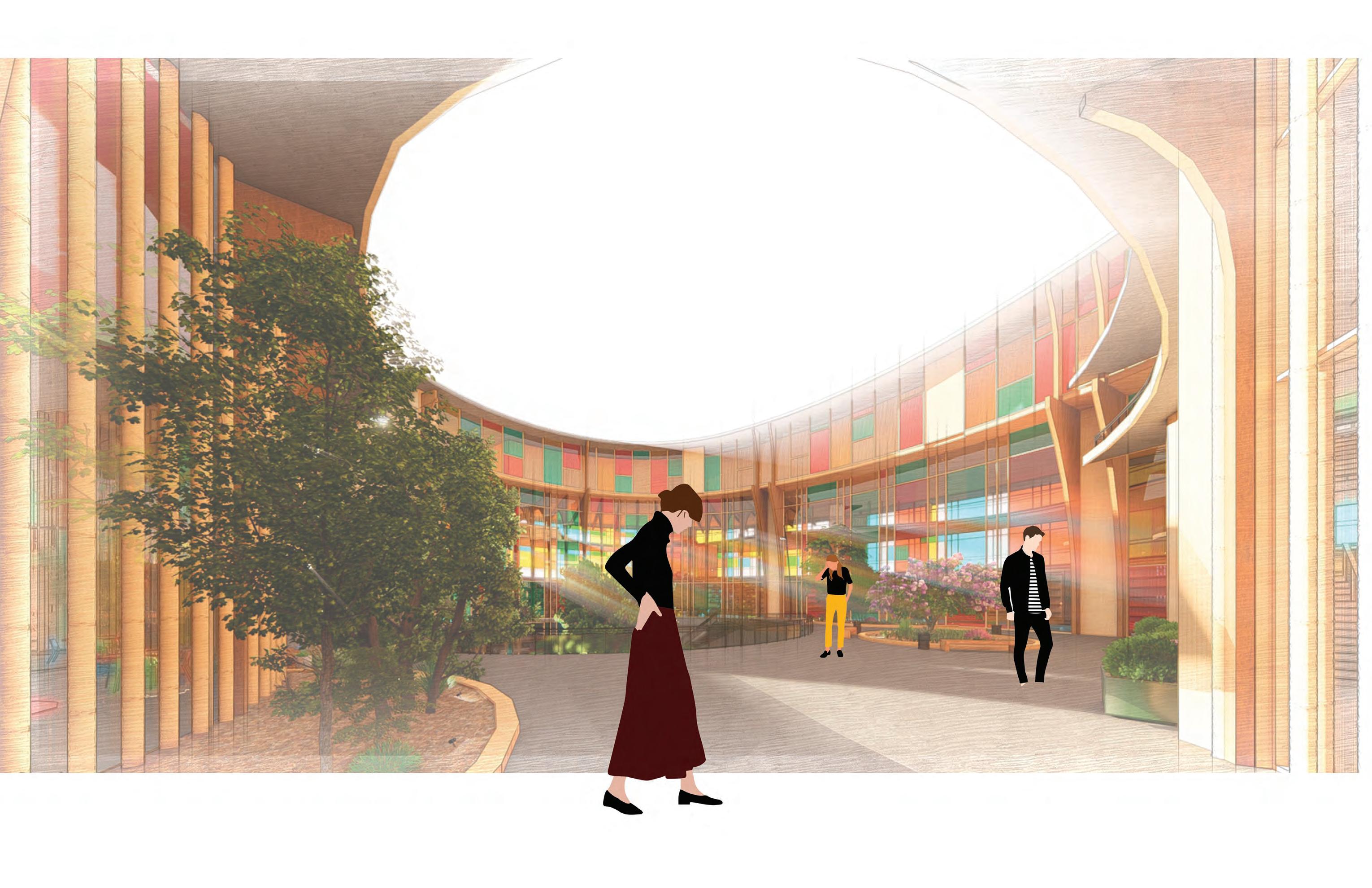
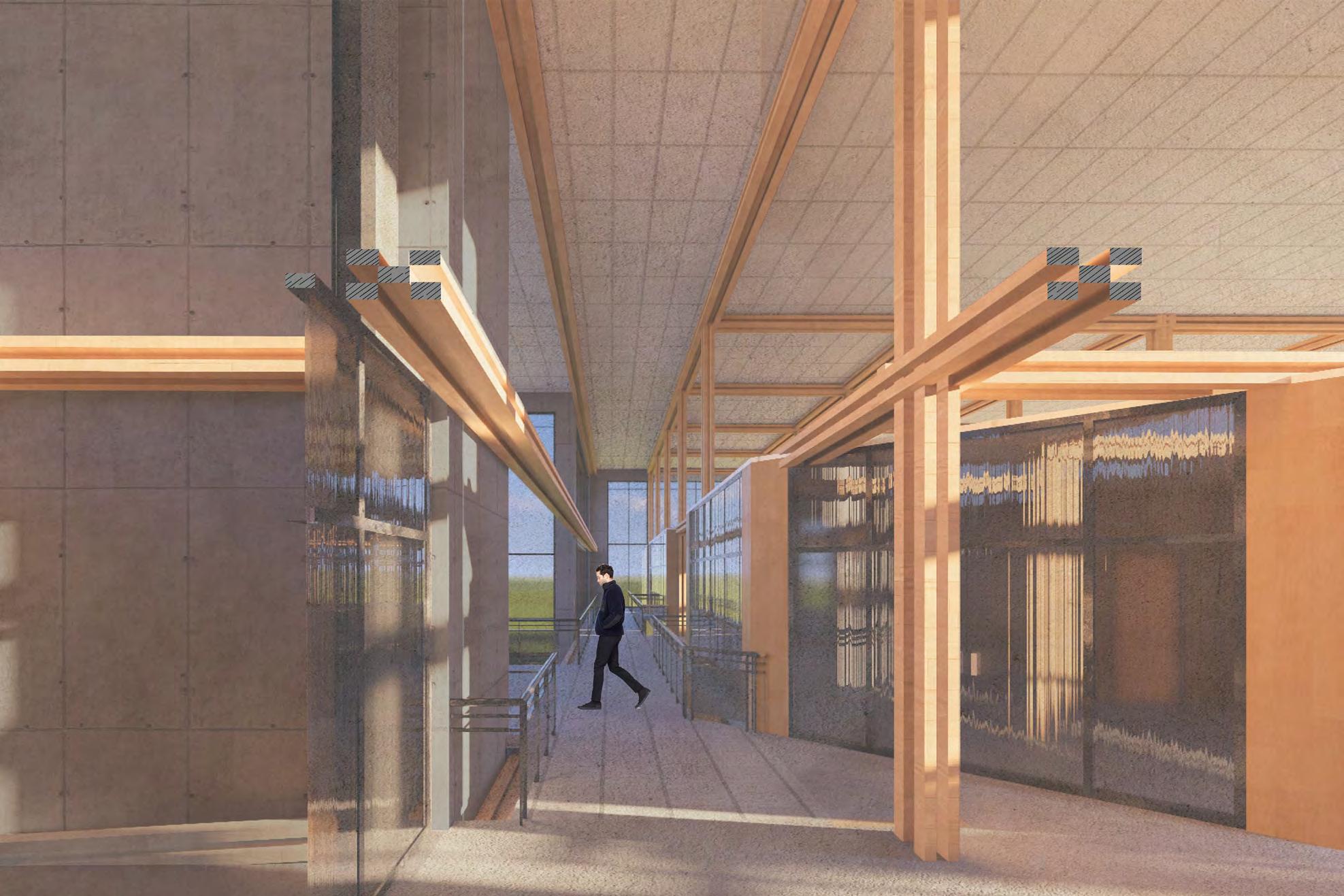
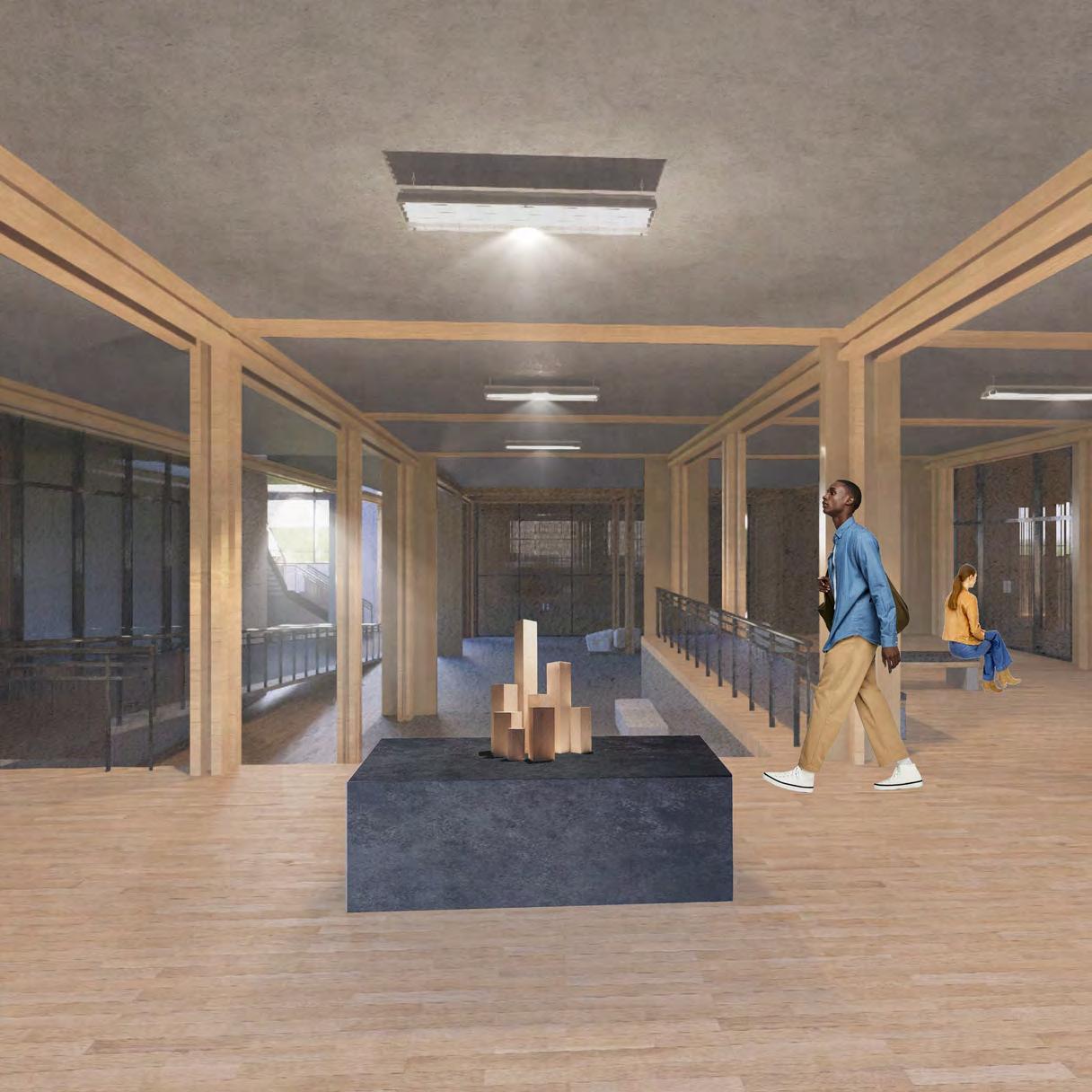
Interior timber gallery rendering.
This str ucture system explores the concept of pathways created by a lack of columns and beams. This idea both features the beauty of mass timber through the internal structure system as well as extensive exterior cladding with different types of wood siding, such as shingles or boards, can be used to create various visual effects and textures.
This concept explores the idea of using open space rather than walls in partitions to generate a program for which students, teachers, and visitors can follow. This creates an entire envelope of common space in which students and teachers alike can look across the space to one another and interact.
Low-e windows have a metallic oxide coating that reduces heat transfer, improves insulation, and lowers cooling needs. They maintain high light transmission while offering UV protection to preserve furnishings.
Concrete is valued for its strength, durability, and ability to withstand heavy loads, with compressive strength varying based on composition and curing. It resists water, wind, and extreme temperatures, but proper curing and maintenance are essential for longevity. Creep and shrinkage during drying can affect structural integrity, requiring reinforcement. Concrete’s unit weight and modular ratio influence its strength and durability, while Poisson’s ratio impacts its stability and overall strength.
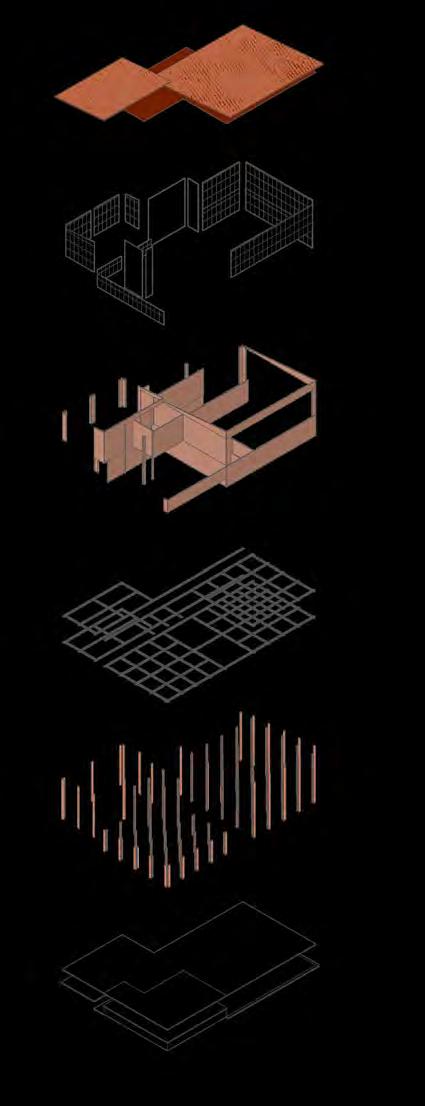
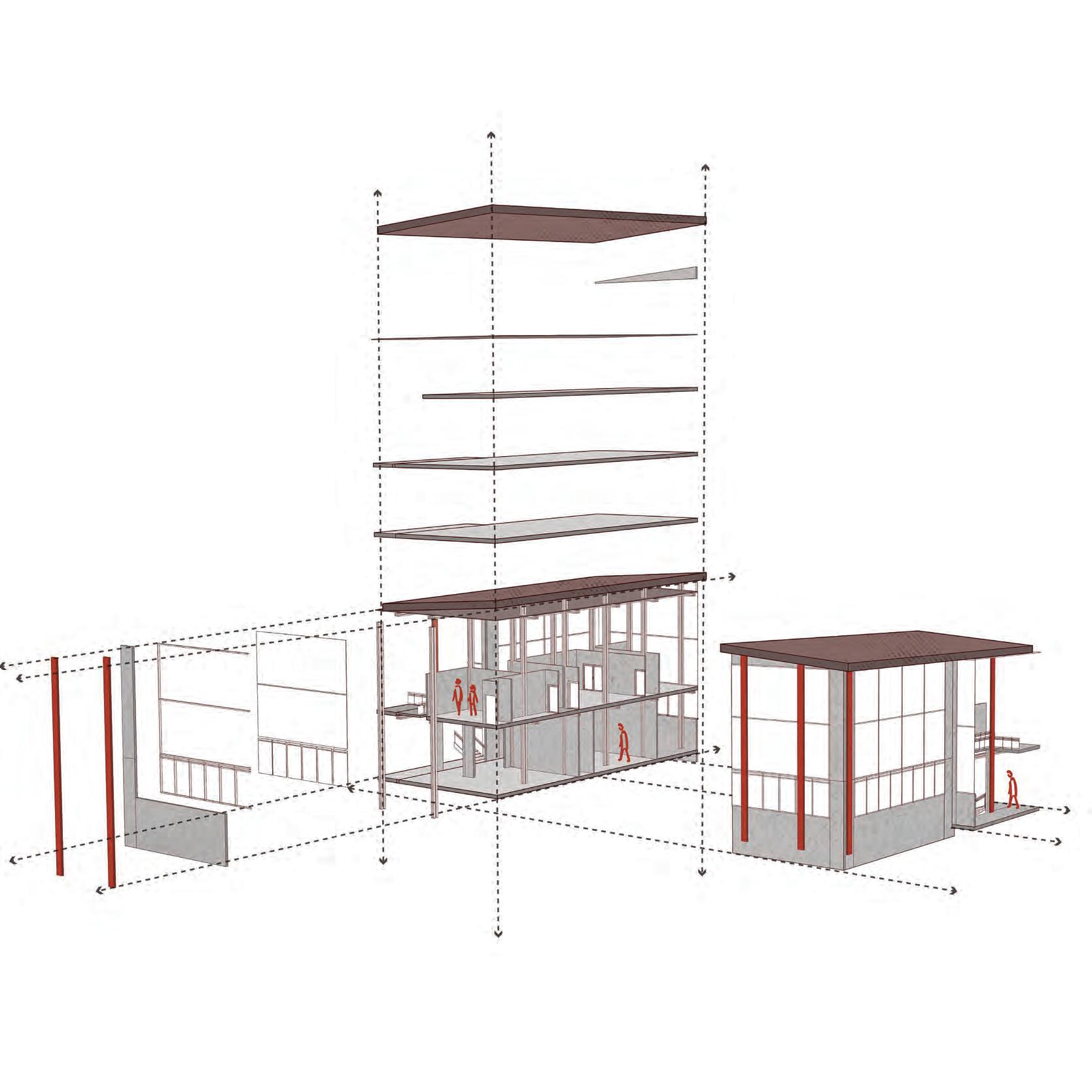
Exploded Axon of Building Assembly
YELLOW PINE CLT ROOF
Yellow pine, with its pale yellow to reddish-brown color and occasional dark knots, is strong, dense, and moderately hard, ranking between cedar and oak on the Janka scale. Its strength, durability, and resistance to decay make it ideal for structural and outdoor projects like decks and furniture. Although easy to work with, its high resin content can cause gumming, and moderate shrinkage rates require proper drying to prevent dimensional changes.
5-PLY ENGINEERED WOOD FLOOR GLU-LAM TIMBER
Cross-laminated timber (CLT) is a prefabricated engineered wood panel known for its strength, versatility, and environmental benefits. Made from multiple layers of kiln-dried lumber bonded with adhesives, CLT offers exceptional structural performance and handles load transfer in multiple directions. Lightweight yet durable, CLT provides superior acoustic, fire, seismic, and thermal properties. Its easy installation minimizes on-site waste, and its design flexibility supports innovative, sustainable building solutions with low environmental impact.
POST & BEAM PATHWAYS FLUID
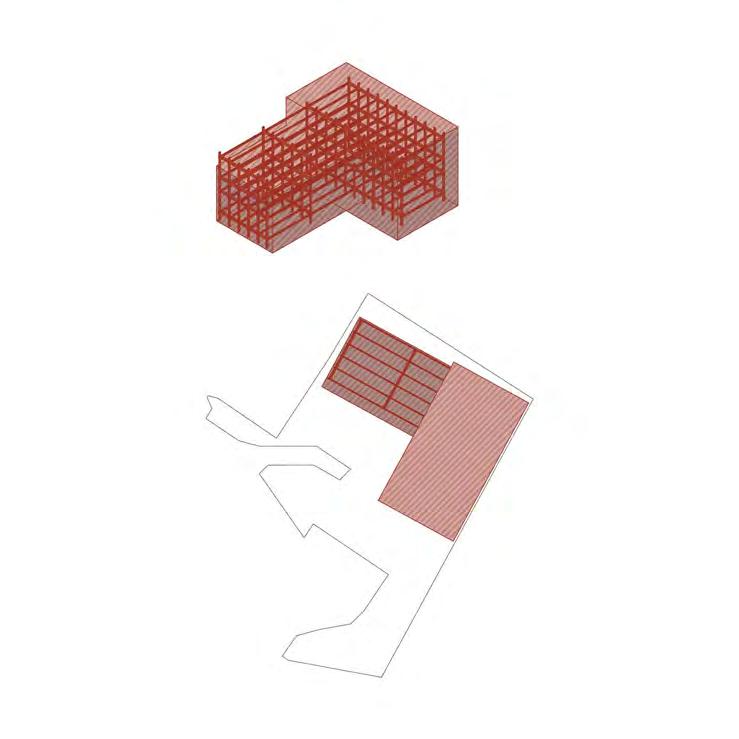
This post-and-beam system features closely spaced posts for vertical support, with beams acting as horizontal connectors to support floors and roofs.
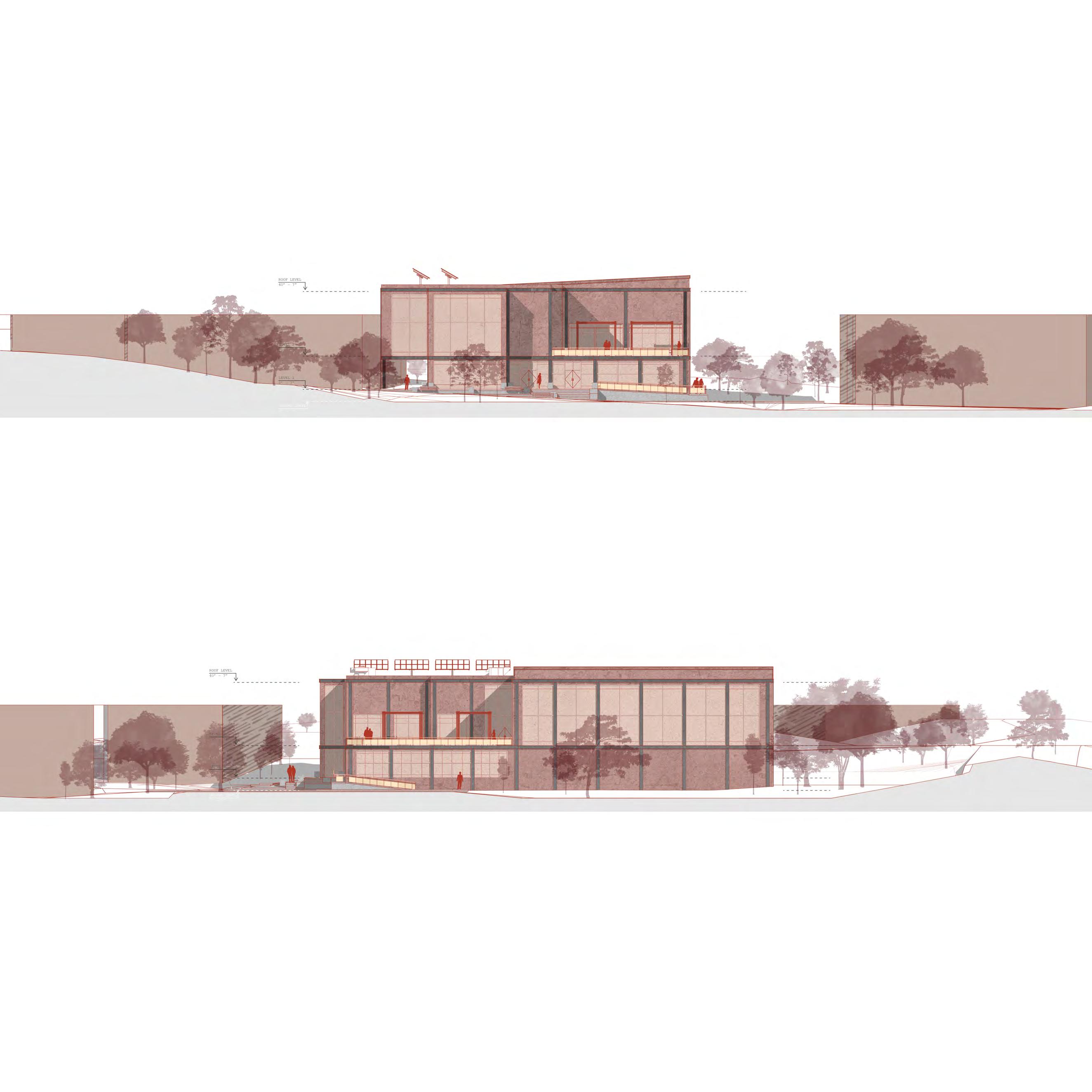
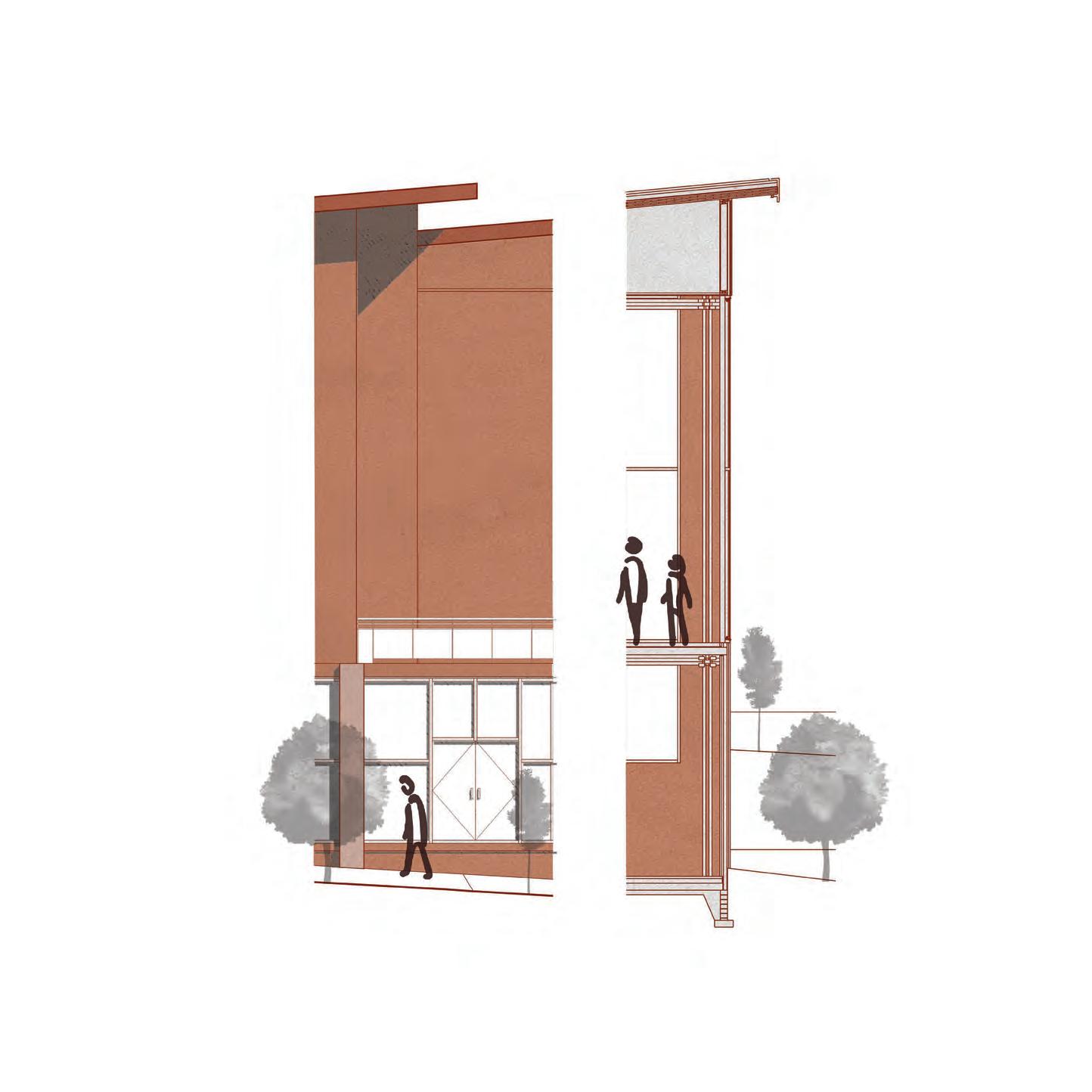
The exterior consists of two simple boxes, giving a minimal facade, while the interior reveals a complex structure upon entry.
Transverse Section not to scale
This design features unusual geometric pathways and a striking vertical element. While the pathways engage visitors horizontally, unique corner stairways connect floors.
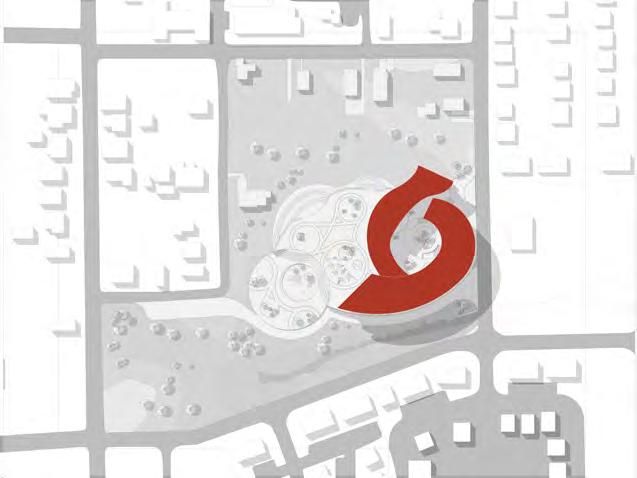
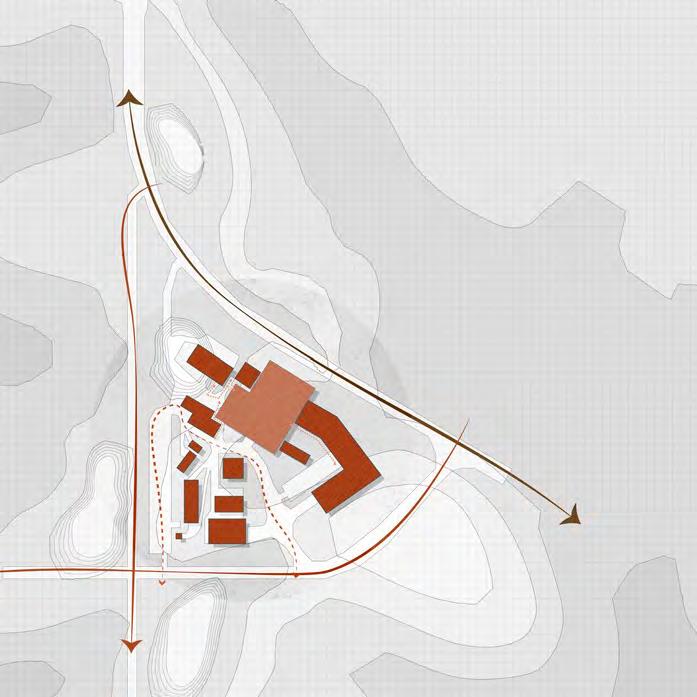
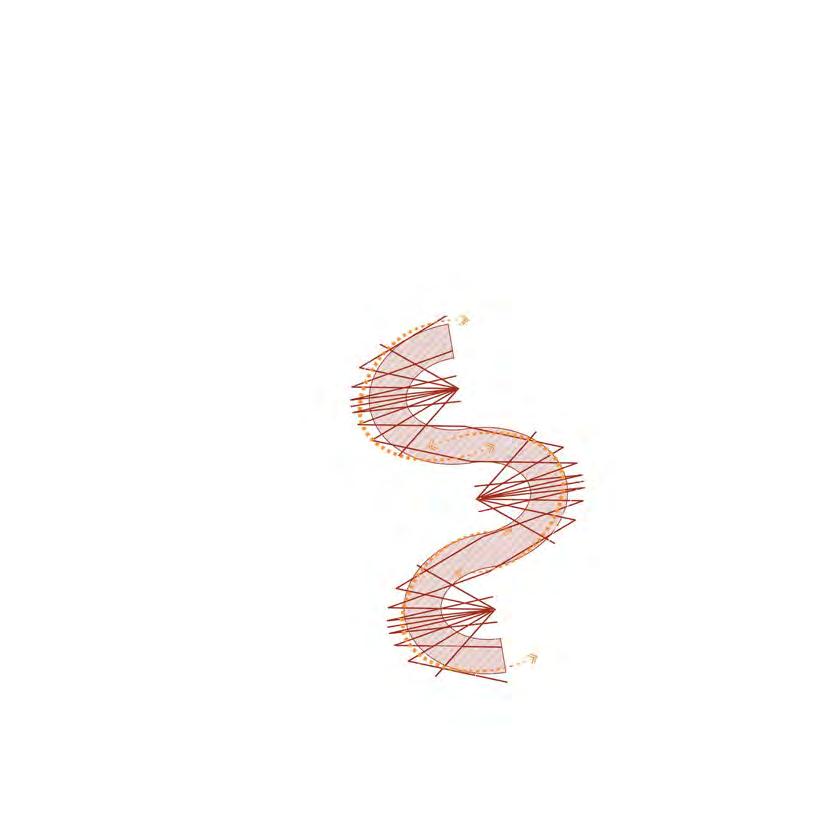
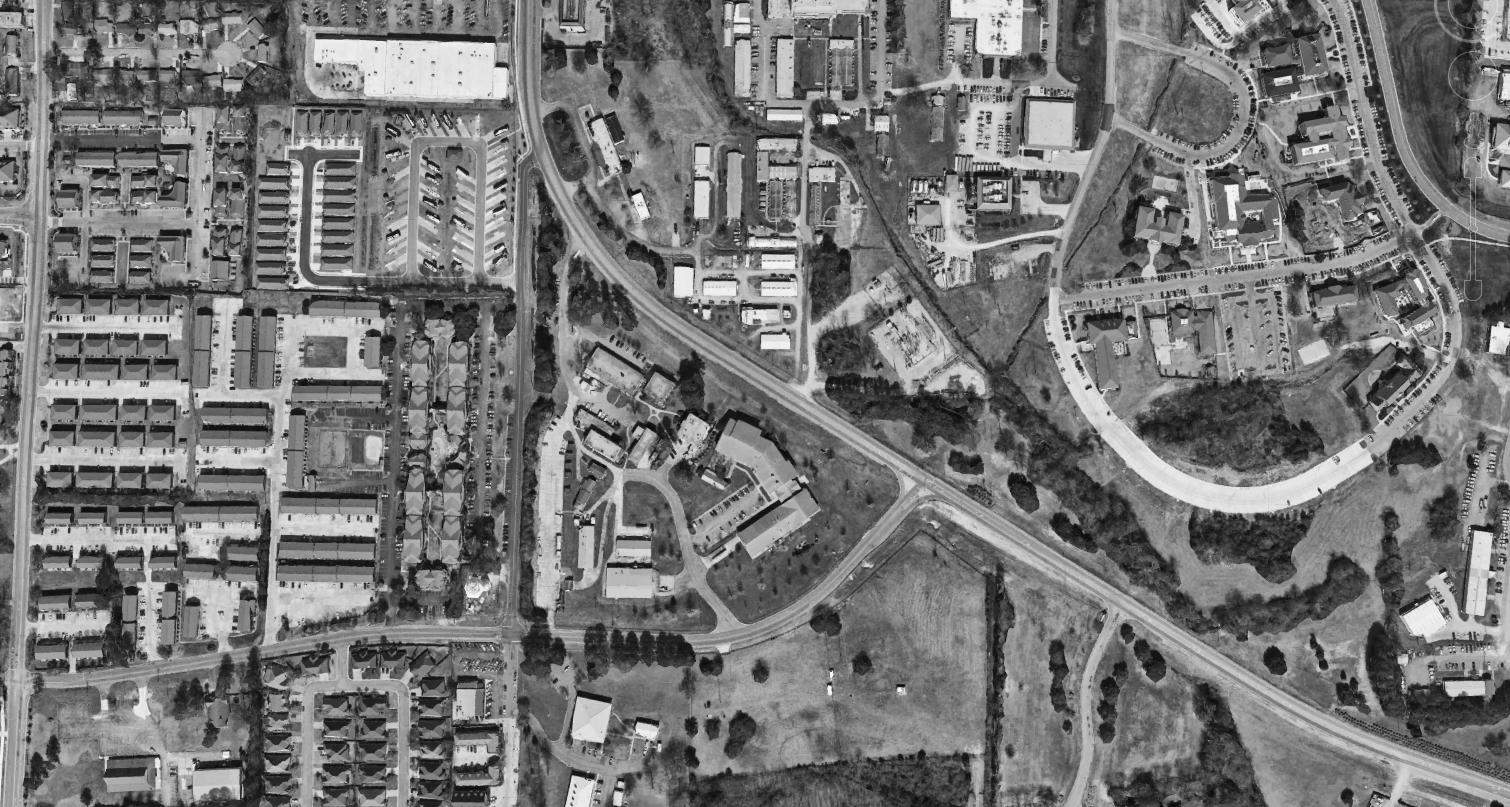
Snaking envelope of the building adds interest. The moving and dynamic envelope is a radical difference from the existing buildings on the site. The truss structural system has a large span that stretches over the proposed envelope.
Material Strategy: When developing a sustainable mass timber building one must consider various aspects such as environmental impact, resource efficiency, durability, energy efficiency, and social responsibility. This includes ‘SMART’ goals for reducing carbon emissions, increasing recycled material, achieving LEED certifications. Additionally, conducting a life cycle assessment of the building materials to understand their environmental impact from extraction to disposal. I chose materials with lower environmental impacts across their life cycle.
Basic shapes and form-work throughout three developmental stages.
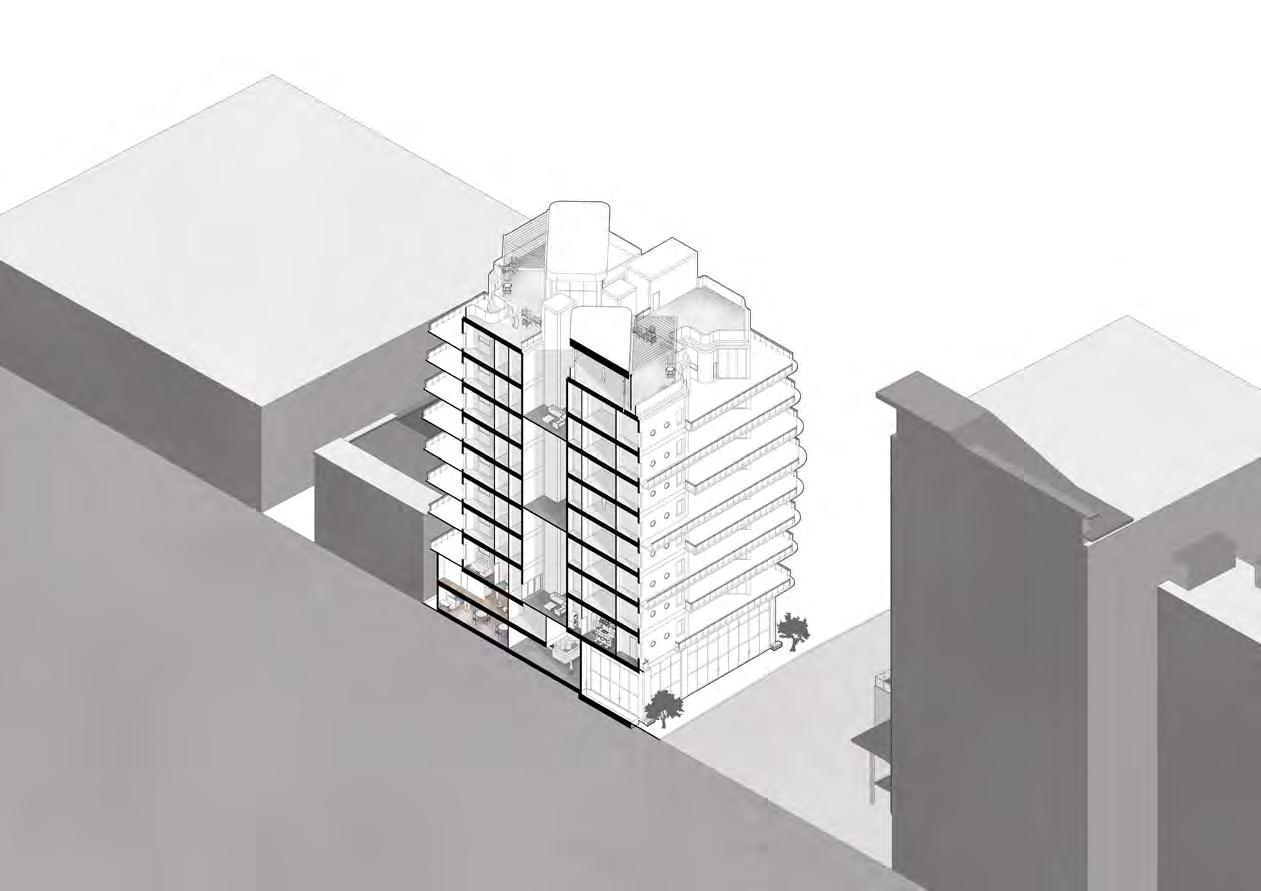
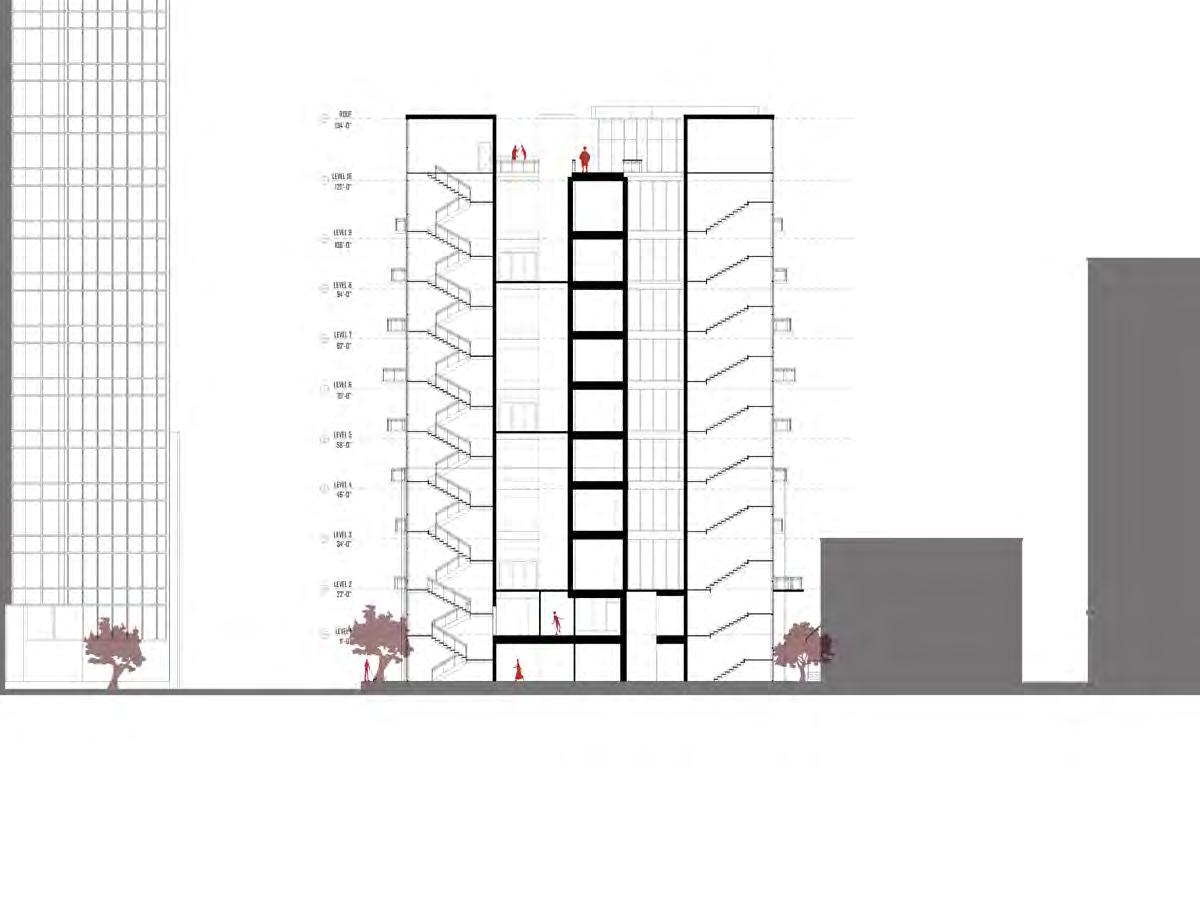
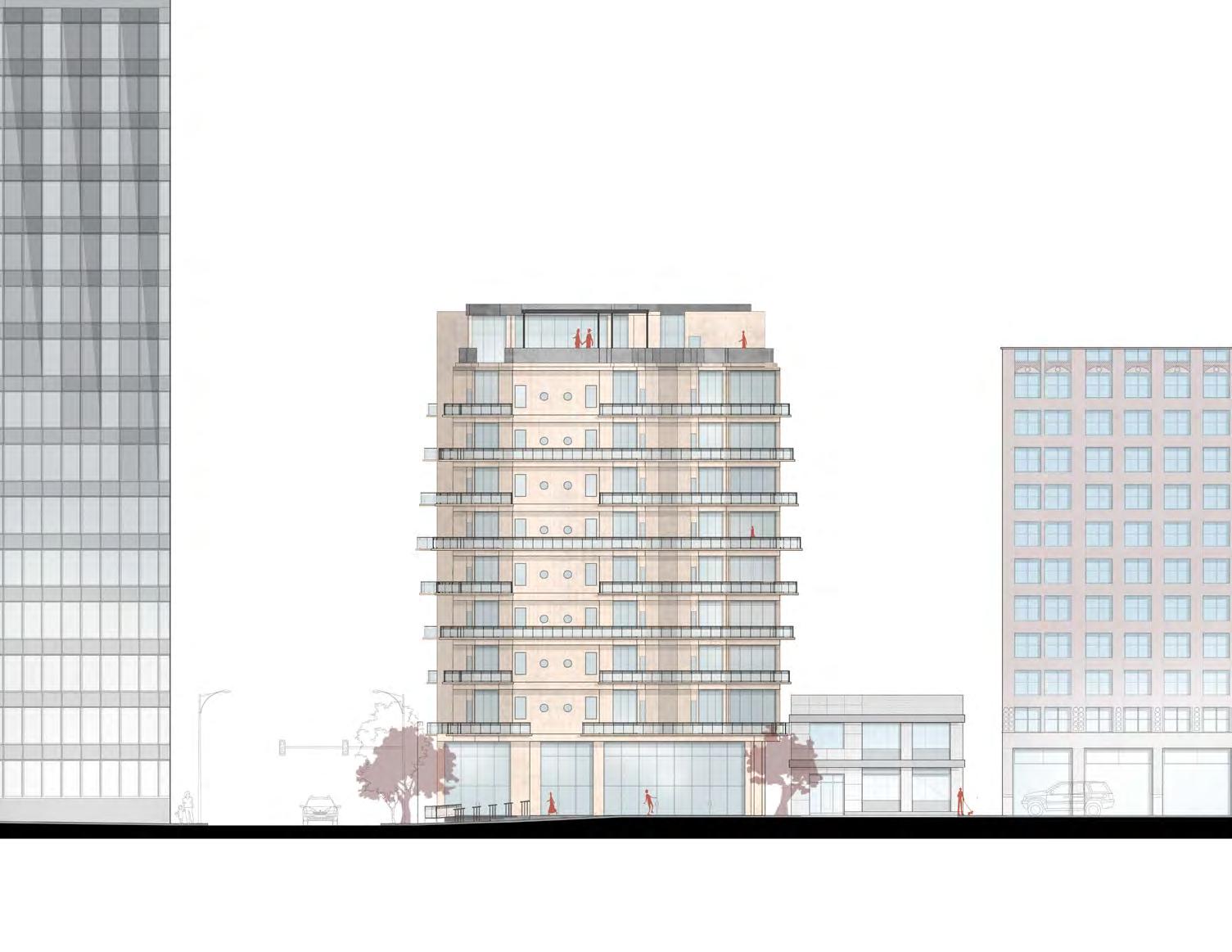
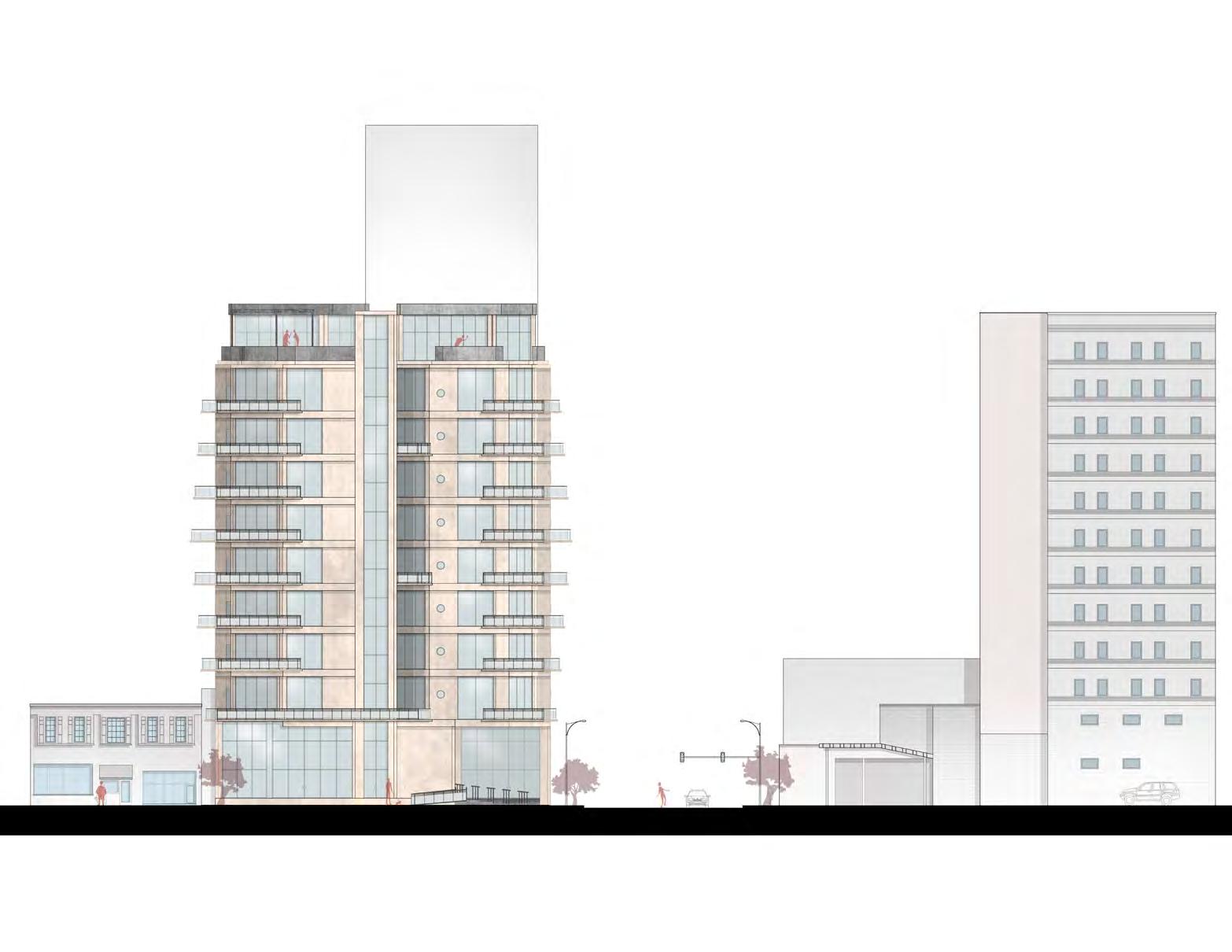
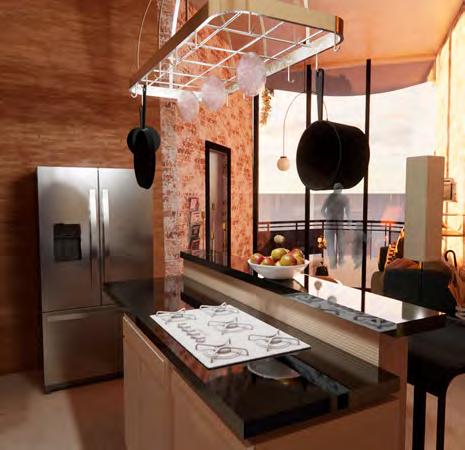
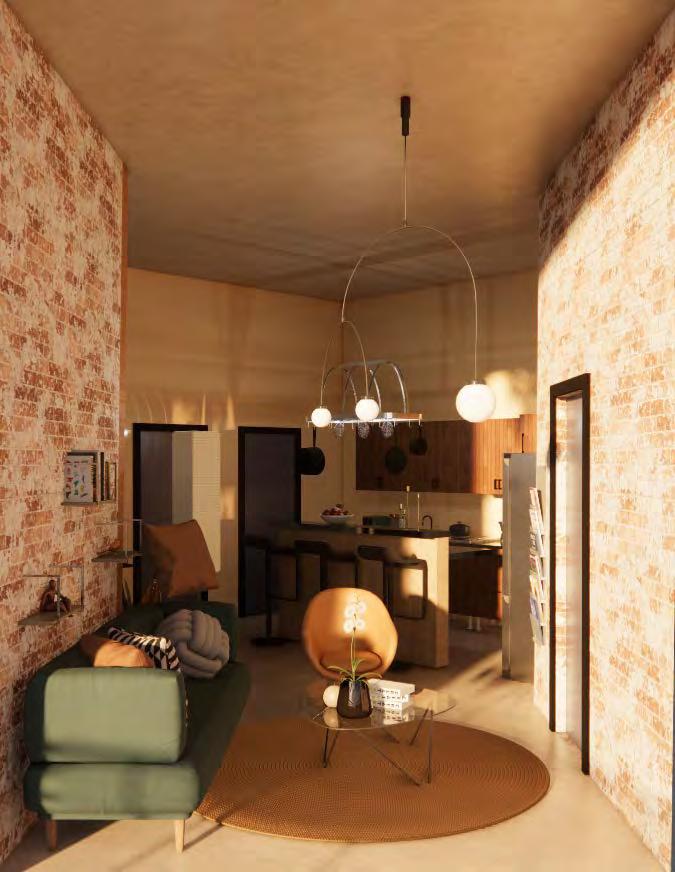
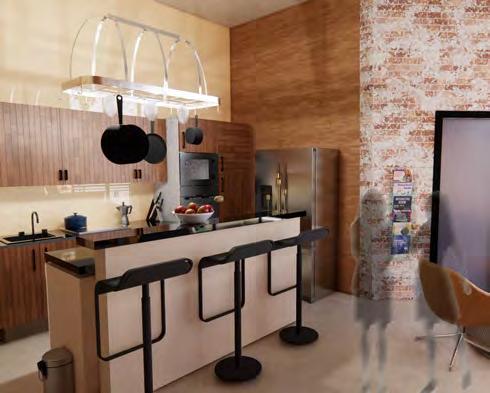
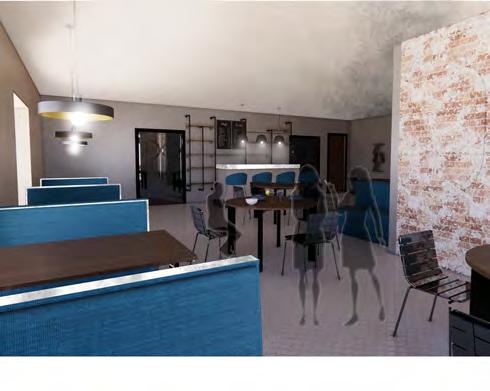
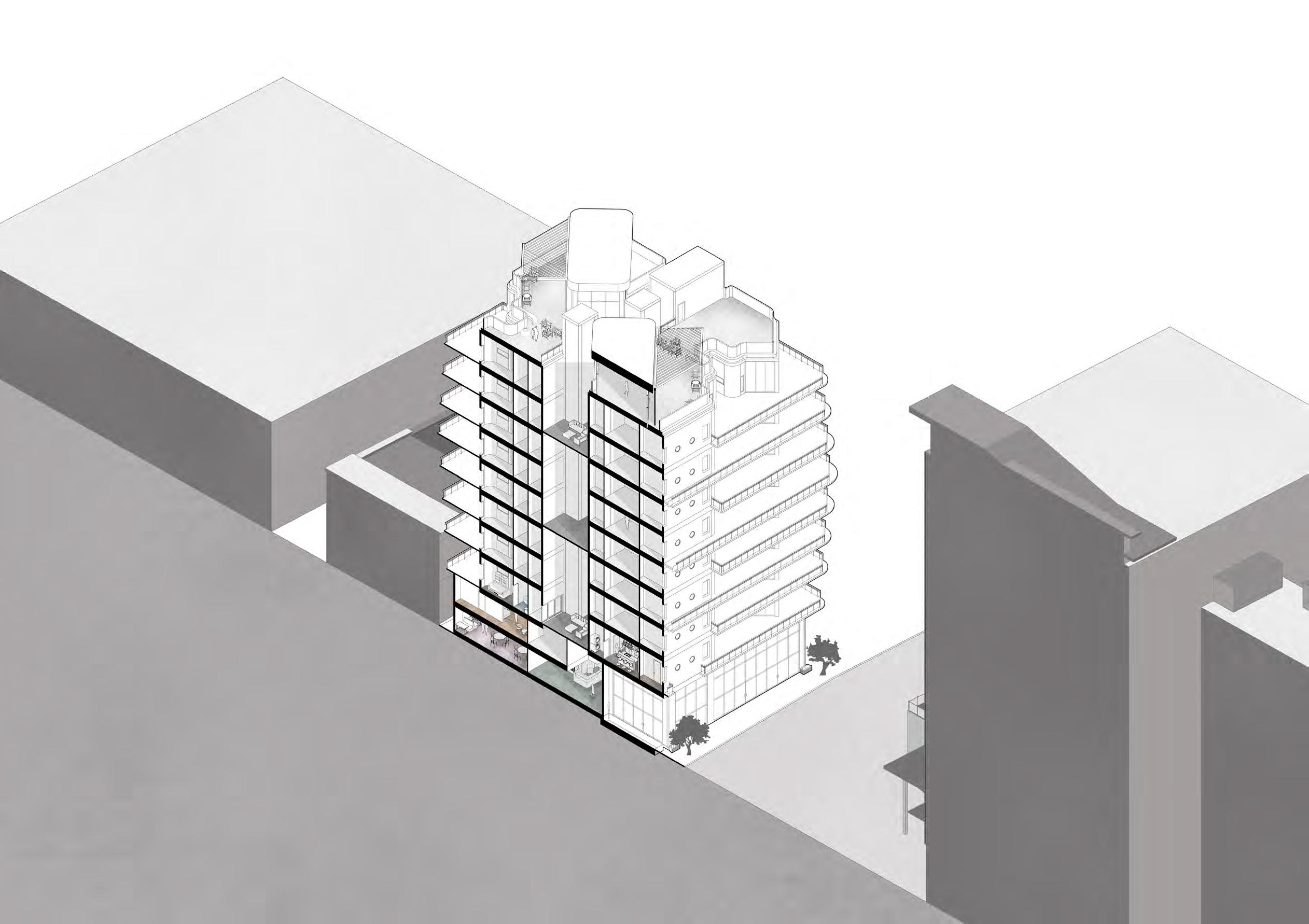
III-B tasked students with designing an experimental multi-use housing complex in downtown Memphis, addressing both resident and community needs. My final design featured retail spaces and a restaurant/café on the first and second floors, while the upper floors included spacious living areas, a fully equipped gym, and a rooftop lounge or workspace.
Studio
ACADEMIC
EXPLORATORY AND DIDACTIC DRAWINGS
STUDIO I-A
Skills used : Line Work and Line Weight Control, Proportion and Spacing, Hand Drafting Techniques, Tool Proficiency (T-squares, compasses, drafting boards, etc.)
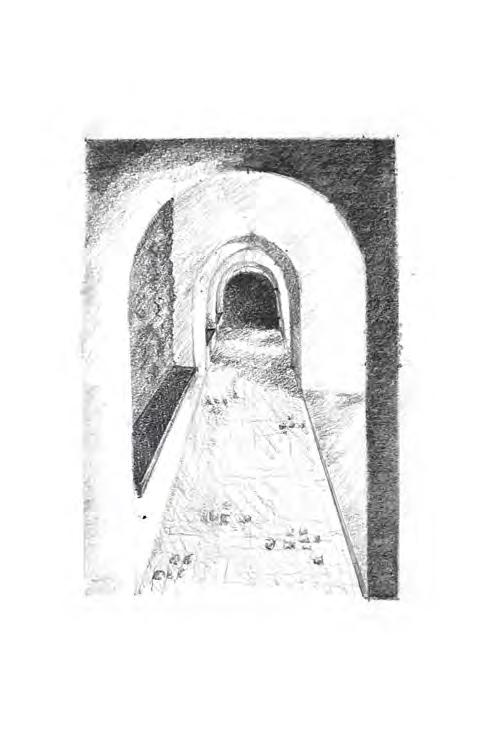
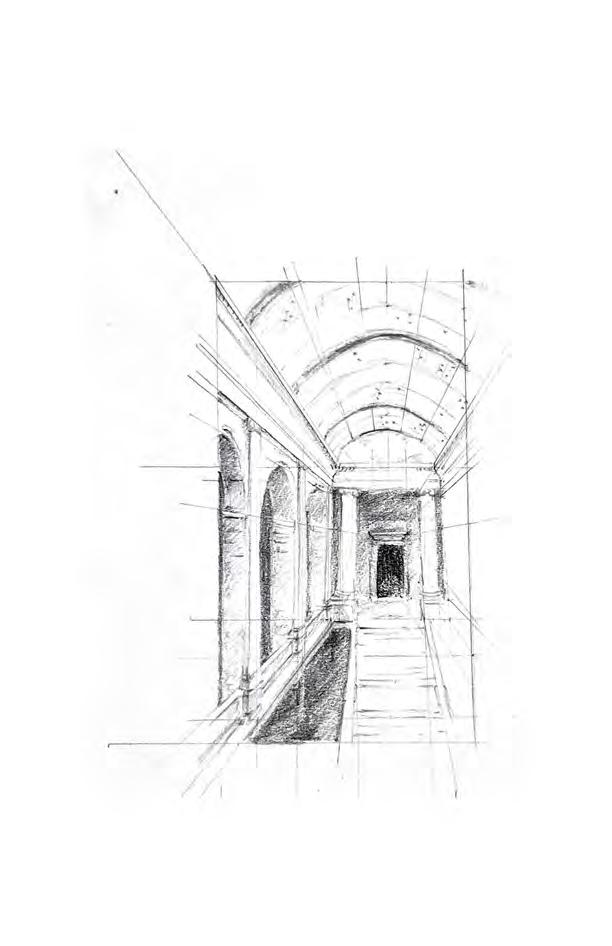
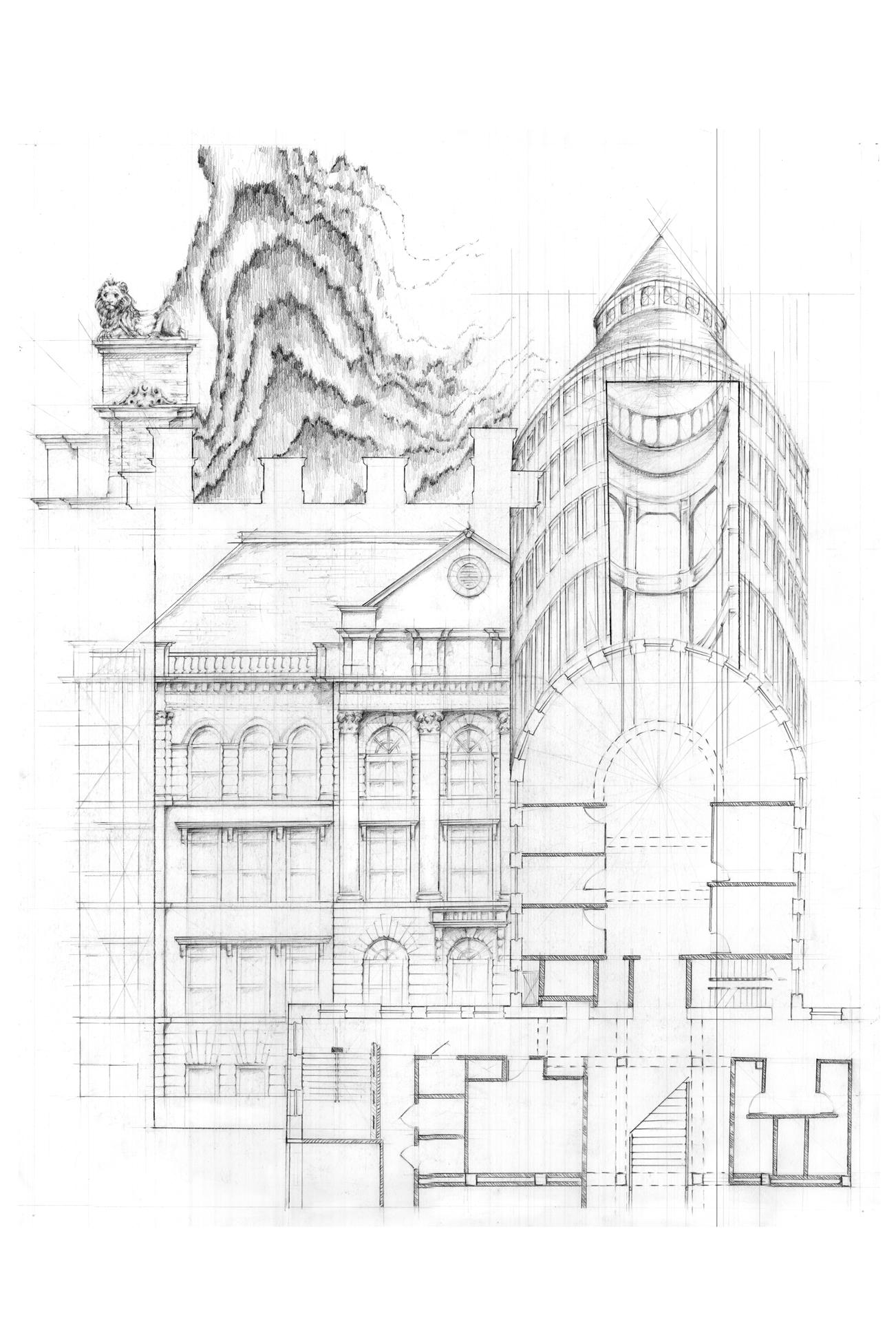
Studio I-A emphasizes hand drafting to build precision, spatial understanding, and attention to detail. It fosters creativity, enhances visualization, and develops a strong foundation in scale and design principles, preparing students to transition to digital tools effectively.
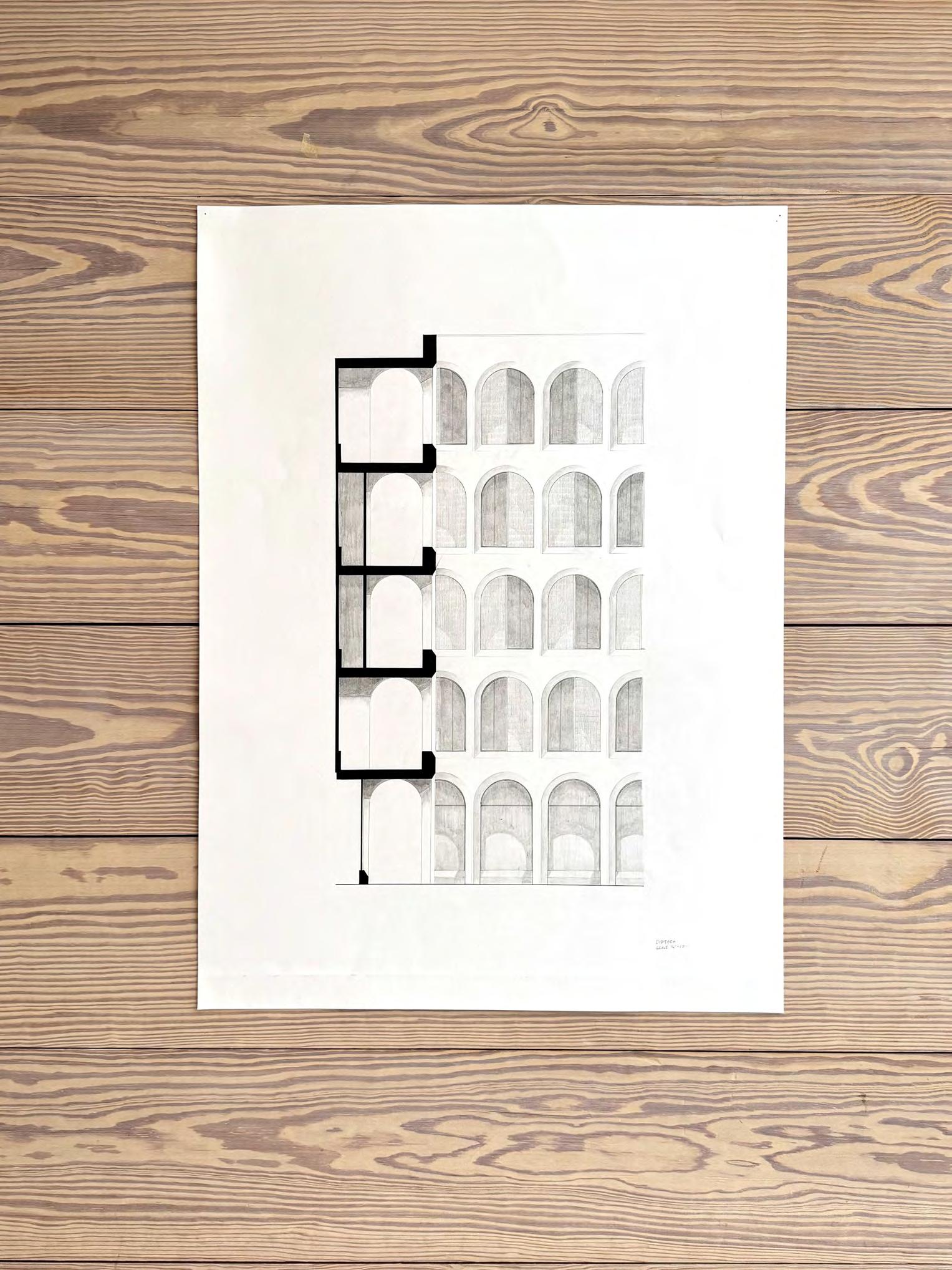
Facade and Urban Map – Group Project
This project was developed in collaboration with Sara Boyte, Austin James, Anna Kate Horn, and Connor Speaks. As part of the team, I was responsible for the hand-rendered diptych shown here.
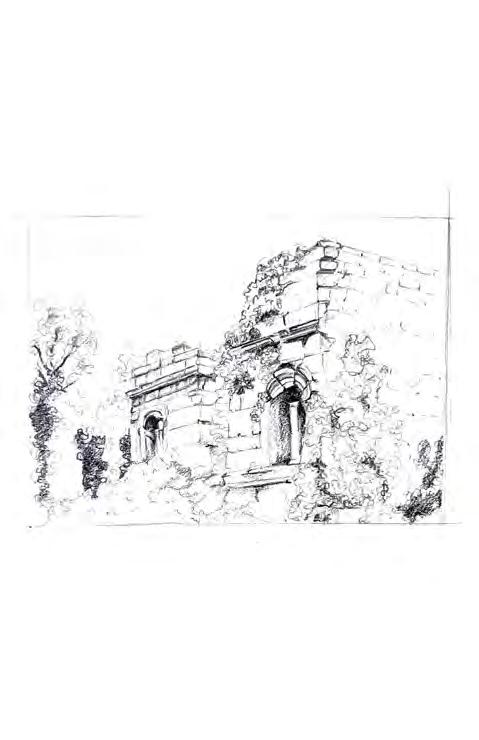
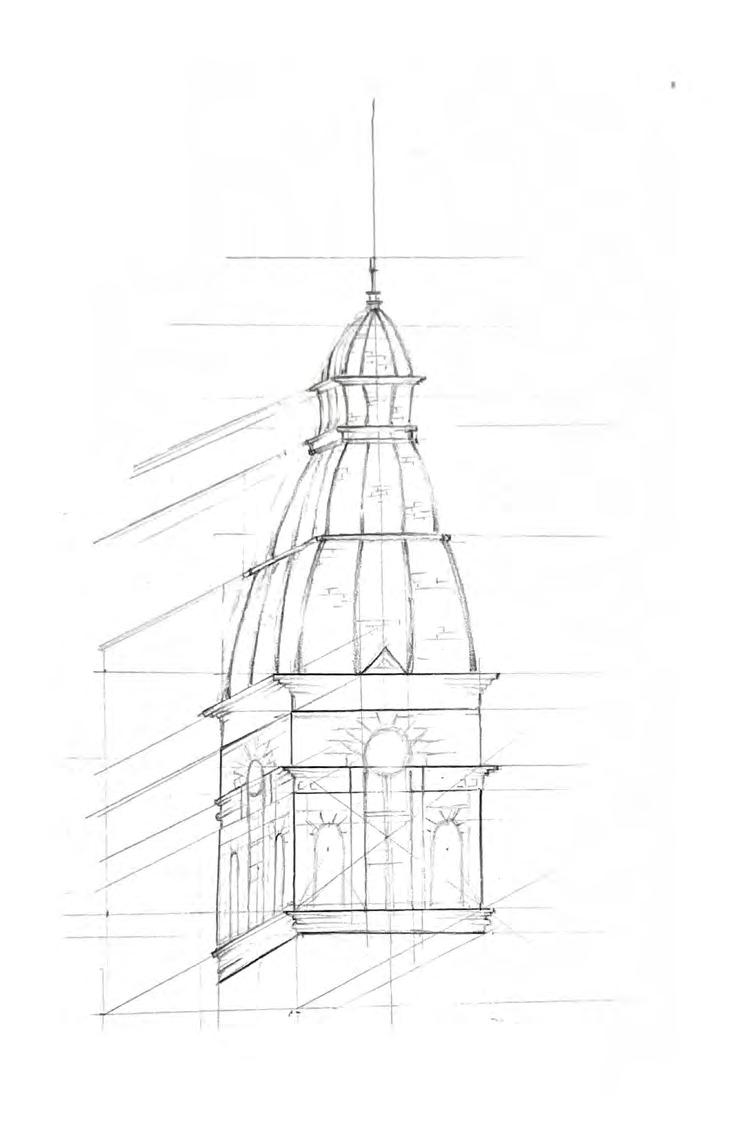
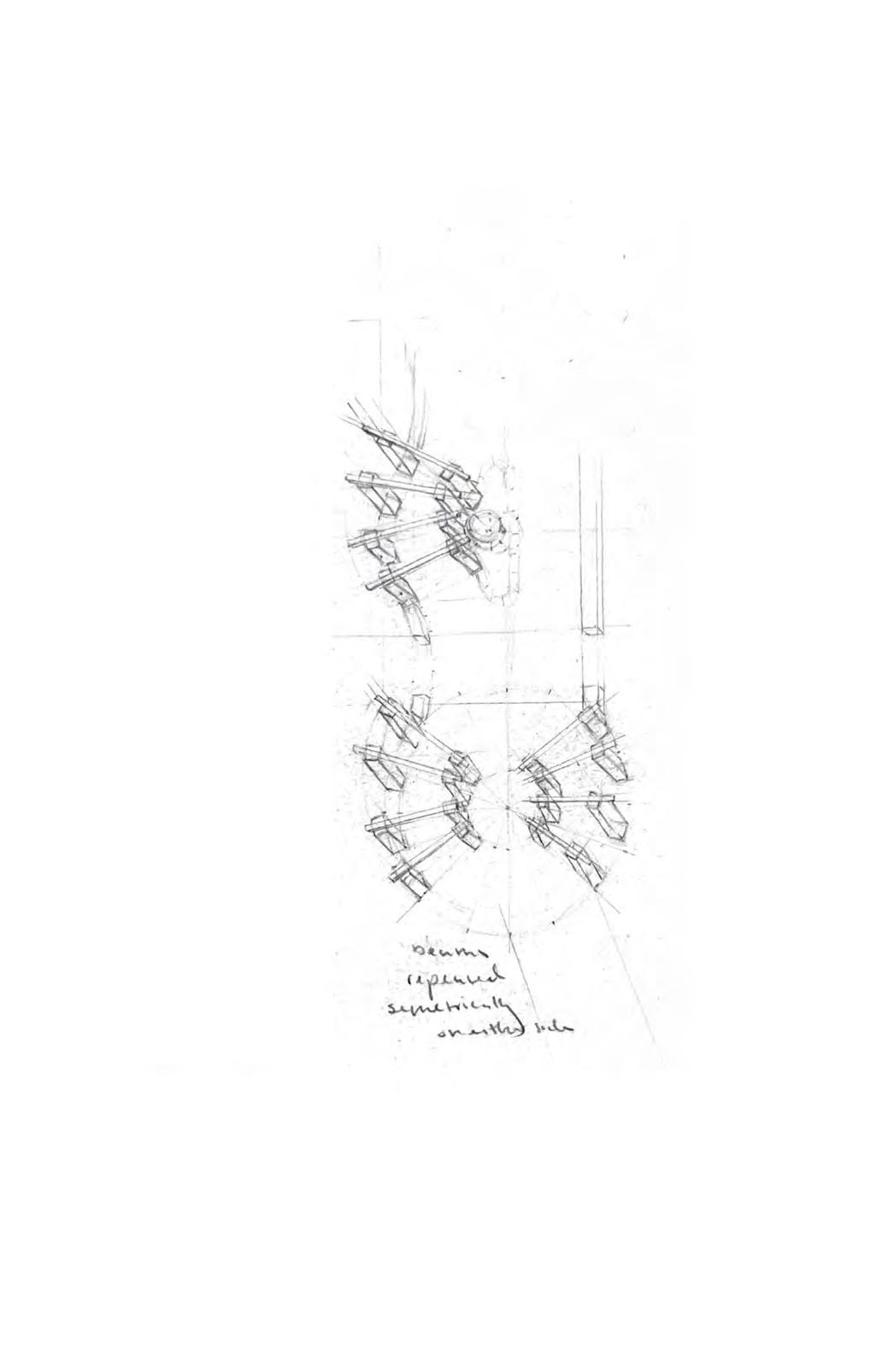
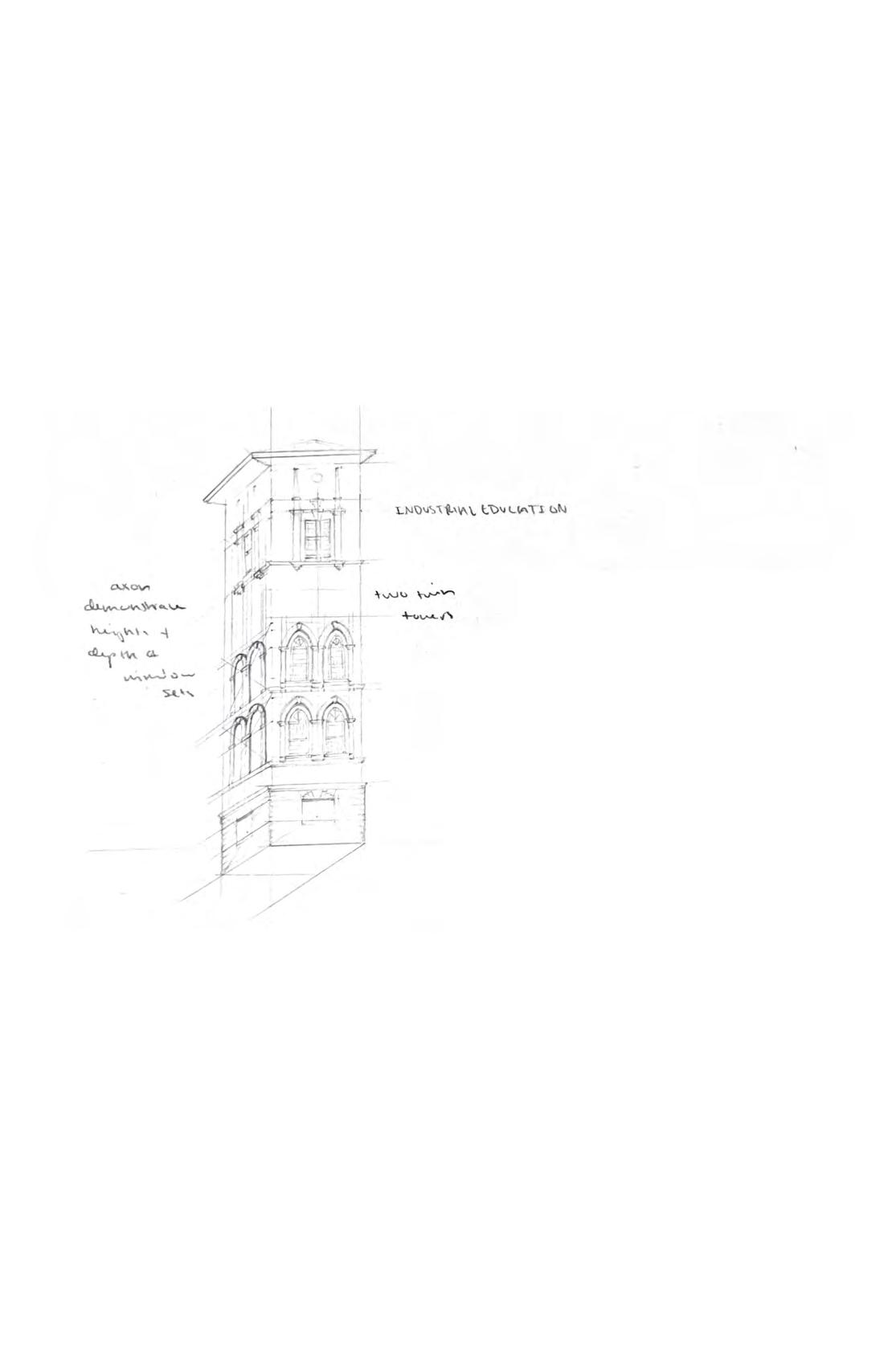
The architectural drawings above are from the Mississippi State sity campus and the surrounding Starkville area, including the trial Engineering building pictured in the top right.
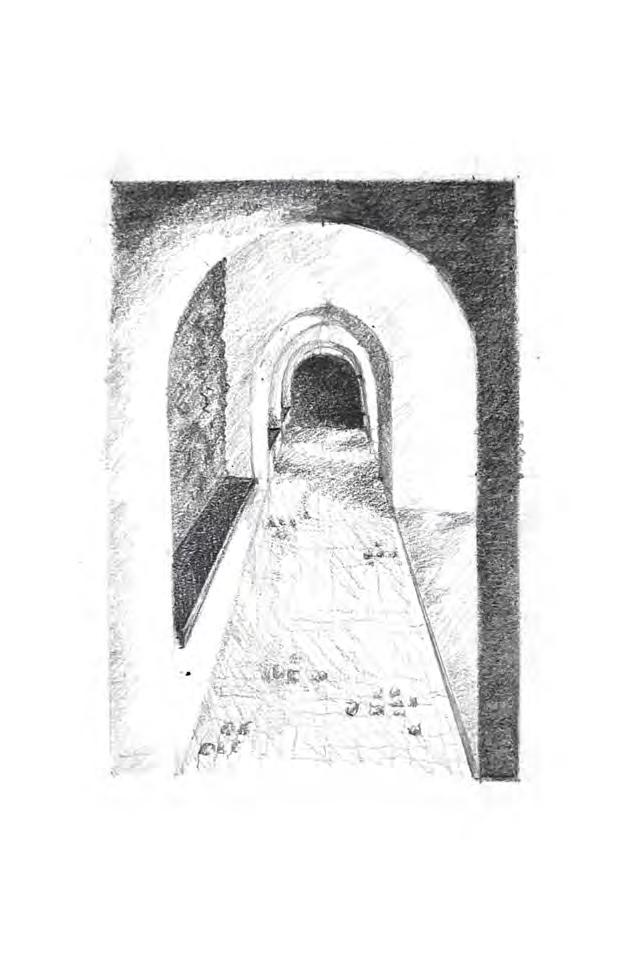
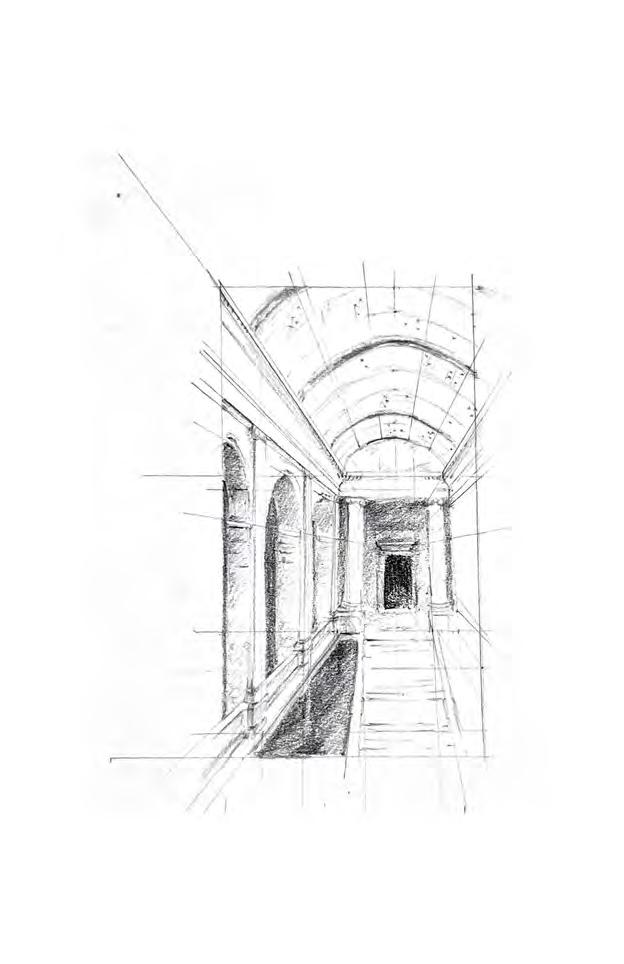
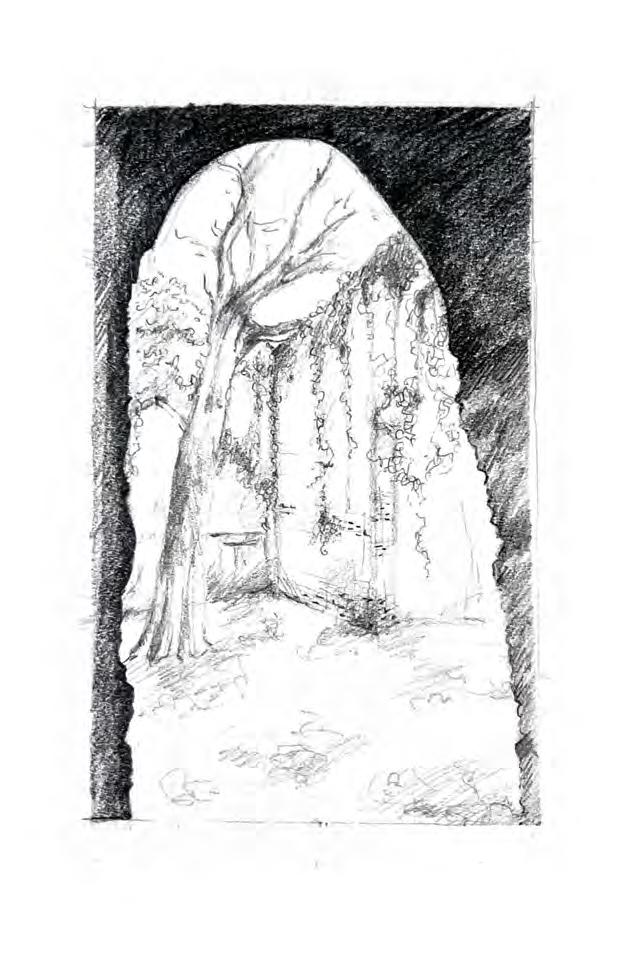
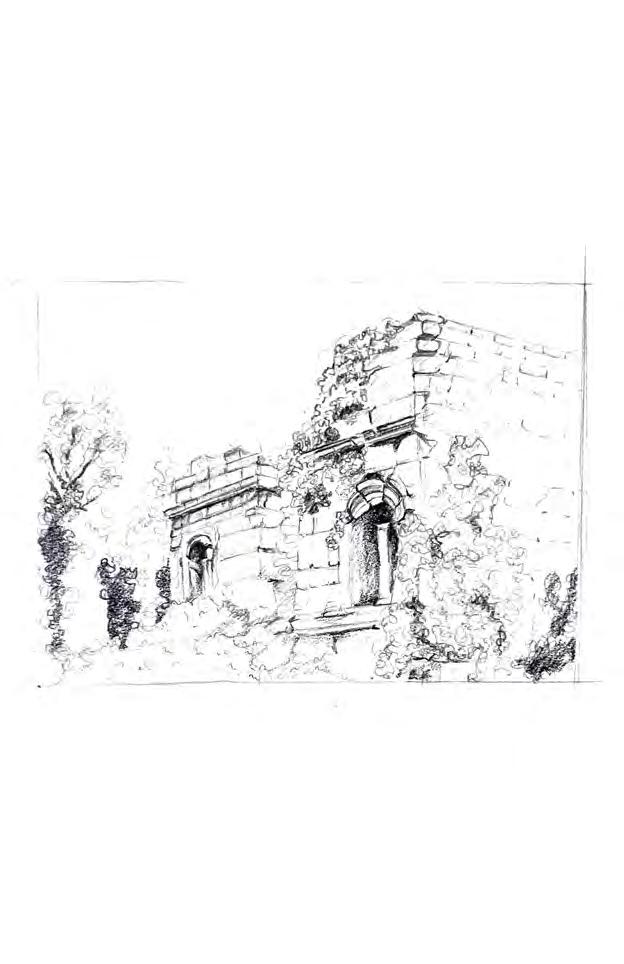
The hand renderings above were practiced to convey textures and materials, improving clarity and helping aspiring architects effectively communicate space, scale, and atmosphere.