6. Bienvenue au Maroc
Welcome to Morocco
This section looks at Morocco, where we see children who speak Arabic and French - and often a Berber language as well. Berbers are the people who lived in Morocco before the arrival of the Arabs.
Part A shows some of the diversity of Morocco, looking at three contrasting areas: the capital city, Rabat; the town of Khémisset and the rural village Aït Ouahi. We find out how to say your nationality and languages spoken, and we look at Moroccan schools in the town and countryside.
Part B looks at the home-life of two families: one rural, one in the city.
Part C contrasts how people shop in the big city with everyday purchases in a rural area.
Films to see
Part A: J’habite au Maroc
A1. Three towns in Morocco
A2. Nationality and language
A3. My school
Part B: En famille

B1. A rural family
B2. A city family
Part C: Faisons les courses
C1. Rabat supermarket: modern shopping
C2. Khémisset souk: traditional shopping
C3. The souk at night: Khémisset
Find transcripts online
Part A: J’habite au Maroc
Planning your lessons
Part A introduces Morocco as a rapidly changing country; some parts look modern and familiar, but older traditions are also part of everyday life. Children will see French is widely spoken as well as Arabic. They can compare three towns: Rabat, the capital city (650,000 people), Khémisset, a provincial market town (110,00 people), and the small country village of Aït Ouahi.
Activities
Warm up
Before showing film A1, ask children what they already know about Morocco, and what they think it will be like when they see it in the films. Show the e-flashcards (“Where is Morocco?”) to locate Morocco on a world map; it’s in North Africa - very close to Europe. Even today, it is isolated from the rest of Africa by the Sahara Desert and the high Atlas Mountains Which are the neighbouring countries?
Watch film A1: 3 towns in Morocco

❑ Watch film A1 to introduce Morocco. Can children see this is a multi-lingual country, where people speak more than one language?

Film A1: “Voici Aït Ouahi, un petit village à la campagne”
Most of the French heard will be familiar; there is little specific new language introduced - apart from place names (see “A1:new words”).
But the sights and culture they see may be quite different to what children are used to in their own community.
3.6 Bienvenue au Maroc 6.1
Get used to the sounds
❑ Echoing: show the e-flashcards, “Where is Morocco? ”; show significant places, with thumbnail illustrations (click to enlarge).

A1: NEW WORDS
Saying where you live
Où habites-tu?
Where do you live? (to individual)
J’habite au Maroc
I live in Morocco
J’habite à... (Rabat)
I live in... (Rabat)
Other towns in Morocco
...Khémisset
...Aït Ouahi
...Meknès
- ...Khémisset
- ...Aït Ouahi
- ...Meknes
Pupils echo, e.g. “les montagnes de l’Atlas”
NOTE: in film A1 , you’ll hear some place names pronounced in a French way, but also said by children more used to the sounds of Arabic, e,g. spot variations in the first phoneme of ‘Khémisset’.
Respond with understanding
❑ Ask children to point to places on a map in response to your questions, e.g. “Où sont les montagnes de l’Atlas?” Look at the GoogleMaps link.

❑ Ask children to reply in words to questions such as: “Sur quelle continent est le Maroc?”


...“Quelle est la capitale du Maroc?”
“Khémisset, c’est dans quel pays?”
(see “A1 Teacher questions” box). You could continue this dialogue about your own country and other countries your class knows about, e.g. from geography or history.
❑ Writing: Select the e-flashcards ‘ A1. Changing Morocco’
Geography
le désert du Sahara
l’océan Atlantique
les montagnes de l’Atlas
la mer Méditerranée
- Sahara Desert
- Atlantic Ocean
- Atlas Mountains
- Mediterranean Sea
Countries
le Maroc
l’Espagne
l’Algérie
en Afrique du nord
- Morocco
- Spain
- Algeria
- in North Africa
A1: Teacher questions
Sur quelle continent est... (le Maroc)?

On which continent is... (Morocco)?
Quelle est la capitale... (du Maroc)?
What is the capital of... (Morocco)?
(Khémisset,) ...c’est dans quel pays?
What country is... (Khémisset) in?
n Ask children to work in pairs. Each pair selects a picture to do with Morocco that interests them and to write a sentence about it in French, e.g. Rabat est une grande ville;
Aït Ouahi est à la campagne.
Voici la mosquée.
Le drapeau marocain est rouge. A Rabat il y a une gare.
Qu’est-ce que c’est? C’est la kasbah.
Talk about...
This gives a brief history of Morocco, and introduces words to help children write about visible change: “la mosquée”, “le minaret”, “la kasbah”, “le souk”, “le drapeau marocain”
n Ask children about what similarities and differences they noticed between your own community and what they saw of Morocco?
6.2
Early Start French 3
Click to ENLARGE
A2: NEW WORDS
Your nationality
Quelle est ta nationalité?
What is your nationality?
Je suis... marocain - BOY
I am... (Moroccan)
Je suis... marocaine - GIRL
I am... (Moroccan)
...français(e)
...britannique
EXTRA ...belge
...suisse
...tunisien(ne)
...américain(e)
...canadien(ne)
- ...French
- ...British
- ...Belgian
- ...Swiss
- ...Tunisian
- ...American
- ...Canadian
Where you live
Où habites-tu?
Where do you live?
J’habite... au Maroc
I live... in Morocco
- ...in France
- ...in Great Britain
- ...in Belgium
- ...in Switzerland
- ...in Tunisia - ...in England - ...in America - ...in Canada
Languages you speak
Quelle(s) langue(s) parles-tu?
What language/s do you speak?
Je parle... (français)
I speak... (French)
In English, we are used to putting a capital letter for country names, nationalities and languages. In French, of these only country NAMES have a capital, e.g..: “J’habite au Maroc”

(I live in Morocco)
BUT... “Je suis marocain”
(I am Moroccan)
and...“Je parle français”
(I speak French)
Film A2: Nationality & language
❑ Film A2 shows Moroccan children in a French class telling their teacher who they are, where they live and what their nationality is. It concludes with animations of children in France, Morocco and Britain giving their nationality and what languages they speak. You can use the e-flashcards to introduce a wider range of other relevant countries.


Get used to the sounds - ‘I am...’
❑ Echoing: Show the ‘ A2: Nationality & language’ e-flashcards; select ‘I am...’initially with sound and text ON. Can children spot that the adjective for nationality often changes when it is a male or female speaking? when it’s a male or female speaking? Pupils echo each statement e.g. a girl saying “Je suis marocaine”.
n You may want to introduce other nationalities that are relevant to your school, community and its links, e.g. that of a partner school. Spot which nationality-adjectives do or don’t change when it’s a boy or girl.
...arabe
...anglais - ...Arabic - ...English

n Discuss with the class what you see: what differences do they see between Rabat, Khémisset and Aït Ouahi?
n Are there signs that Morocco is changing?
n What is Morocco’s weather is like? (our filming was in October, yet it is sunny and warm).
3.6 Bienvenue au Maroc 6.3
...en
...en
EXTRA
...en
...en Tunisie ...en Angleterre ...en Amérique ...au Canada
France
Grande-Bretagne
...en Belgique
Suisse
1
1
1 2
Click here to change between M and F
HOW FRENCH WORKS: Countries and capital letters
HOW FRENCH WORKS:
“I live in...” - with M and F countries

In French, ‘France’ like most country names is a feminine noun, and you say you live in that country with ‘en’ , e.g.:

“J’habite en France”
(I live in France)
A few countries names are masculine nouns, and you say you live there with ‘au’ , e.g.:
“J’habite au Maroc”
(I live in Morocco)
Get used to the sounds ‘I come from’
❑ Echoing: show the e-flashcards ‘Nationality & language’ - initially with sound and text ON. Can children spot the prepositions?
KEY SOUNDS
Listen and enjoy copying these typical sounds: where have you heard them before?
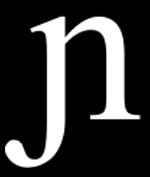
as in... Espagne, montagne, Grande-Bretagne heard before in campagne, Boulogne
as in... Algérie, océan, Méditerranée heard before in désert, Amérique
as in... Algérie, Afrique, Suisse heard before in piscine, diabolo


n Switch sound and text OFF and see whether children can say what languages would be spoken by a child from that country.
Pay attention to “key sounds”.
Respond with understanding
❑ Play “Where do YOU live?”
Ask children to say where they live, “Où habitestu?”. You could give children different name badges to assume the identities of past or present famous people when replying, e.g. “Napoléon Bonaparte, où habites-tu?”
Talk about...
n Discuss where children know French is spoken. Remind children of work in Early Start French 2.

Get used to the sounds ‘I speak...’
❑ Echoing: show the ‘Nationality & language’ e-flashcards and select ‘I speak...’ - start with sound and text ON. Can children spot how the language-names in French are written differently to those in English? (see “how French works 2”).
Respond with understanding
❑ Play “What do YOU speak?”
Ask children to say what languages they speak, even if only a little“Quelle(s) langue(s) parlestu?”. Some children may be able to speak other languages, e.g. from holidays, from having lived elsewhere, or speaking another language with family members at home. Children could find out how to say the French name for each language they know.
n You could repeat giving children different name badges to assume the identities of past or present famous people when replying, e.g. “Napoléon Bonaparte, quelle langue parles-tu?
6.4
Early Start French 3
2
2
Talk about...
n Why do they think people in some North African countries speak French as well as Arabic? (see “Talking point 1”, which tells how France conquered and ruled Algeria, Tunisia and Morocco in the 19th century until the mid20th century).
Film A3: My school
❑ Film A3 shows two Moroccan primary schools (a rural school that serves all the farms around the village of Aït Ouahi, and a town school in fast-growing Khémisset).


Get used to the sounds ‘ISubjects’
❑ Echoing: Show the e-flashcards ‘A3 My school’ - start with sound and text ON.
Film A3: the school day starts with the flag ceremony. We see children arrive at school, mostly walking. Each day starts with the ‘flag ceremony’; the school sings the national anthem as the flag is raised, bearing the religious symbol of the 5-pointed star, the “Seal of Solomon”. Children may spot that the Maths lesson that follows is in Arabic, which many children also have to learn as they speak a Berber language at home.
n Can children remember how to say in French what lessons they like, and what is their favourite lesson?
Talk about...
n Discuss what it would be like to be taught in different languages - and to have one language at school and another at home.
n Morocco is trying hard to icrease literacy: still only 69% of males aged 15+ can read and write, and only 44% of females - and there is a problem with more girls dropping out of school to help at home, especially in rural areas. Why does this matter?
CROSS-CURRICULAR ACTIVITIES
❑ Citizenship: Use the e-flashcards to explore the two documents the class study in the Moroccan school’s citizenship lesson in film A3.

Film A3: A school citizenship lesson
They spend 6 hours a week learning French,the language of their citizenship lesson.
You can display a large version of each documentwith optional English translation and French voice - also print out copies of the documents for your class:
n Charter of a Good Citizen, with 8 rules;
n Rights and Duties of a Child Citizen, which

3.6 Bienvenue au Maroc 6.5
Click to HIDE / SHOW the English
says children have both rights that should be respected, and duties that they owe to their family, school, community and country.
❑ See how much of each document the class can understand. Listen to it line-by-line; use French words you know, cognates, and ones you can guess to work out roughly what it means. Switch the English translation OFF so children have to work it out for themselvesthen ON to check.
n These documents are studied in every school in Morocco. Personally approved by the King (whose photo is displayed on the classroom wall), they are part of his plan to prepare a new generation to be more involved in running their country and move towards democracy.
You could ask children to compare this with their own country: how is the prime minister and the government chosen?
Do they have unlimited powers? What powers does the monarch (or head of state) have?
n Do children think the same ideas about citizens’ rights should apply to them in their community?
❑ History, Inter-Cultural Understanding: Why do they speak Arabic and French? Show the e-flashcards ‘Changing Morocco’ to see a visual summary of what brought Morocco into contact two different languages and cultures, Arabic and French (see “talking point 1”).

Talking point 1
EVERYDAY LIFE IN MOROCCO
Why they speak Arabic and French
Children can see that Morocco is the nearest part of Africa to Europe. Whilst part of North Africa, it has been cut off through most of its history by the Sahara Desert and the Atlas Mountains.
Arab conquest
Over the centuries, the original inhabitants, Berbers, were invaded by the Roman Empire, then by the Arabs. Following the prophet Muhammad , 7th century Arabs rapidly conquered a vast Empire, also spreading the Muslim religion in all directions from their holy city of Mecca - west across North and West Africa, and east towards India and Asia.

This part of North Africa is called the ‘Maghreb’, which means ‘West’ in Arabic
From Morocco, the Arabs conquered much of Spain, just across the narrow Straits of Gibraltar. The local Arab kings who ruled Morocco and southern Spain were on the western edge of the Arab Empire, and were largely independent of the distant Caliph who ruled the Empire from Baghdad, back in Arabia.
The local Berbers converted peacefully to the Muslim religion. They continued speaking their own Berber language, but might learn to read Arabic, the language of the Qur’an (the Muslim holy book).
In film A3, children can see some school lessons being taught in each of these languages. Recently the Moroccan government has allowed some schools to teach classes in Berber languages as well.
Pirates of the Barbary Coast
Over the centuries, Christian kings drove the Arabs (known as “Moors”) out of Spain. Some took over abandoned strongholds in Morocco, Algeria and Tunisia, and made a living as pirates (see “talking point 3”). Pirates from the Barbary Coast attacked ships in the Atlantic and the Mediterranean - stealing cargoes, but also
Early Start French 3 6.6
capturing sailors to sell as slaves or ransom back to their families. They also raided coastal villages around Europe, to bring back slaves.
paying taxes so he could not afford to keep a strong army. European powers agreed that France should rule most of Morocco as a “protectorate”, leaving the weakened Sultan in place, but stripping him of his powers. Other parts of Morocco would be ruled by Spain.

French colonisation
Some countries tried bribing the rulers of the Maghreb to leave their ships alone. In the 19th century, France started to conquer Algeria, partly to capture some of the pirate bases and end the danger to shipping.
France weakens the Sultan of Morocco
The French army fought a bloody and ruthless war to make Algeria into a French colony. Local inhabitants asked the Sultan of Morocco for help; they were being killed so French settlers could take over their land and property.
In French Morocco, they built spacious new French-style cities called “villes” alongside the old Arab walled cities called “kasbahs” - along with other benefits of European civilisation like railways, mines and the telegraph. Few Moroccans went to school; those who did were taught in French, about France, French history and literature. The old religious schools which taught in Arabic were starved of resources. Moroccan soldiers fought alongside the French in the trenches of the First World War.
Second World War
When Germany conquered France in 1940, Morocco came under the collaborating Vichy government. The then Sultan, Mohammed V, secretly helped Moroccan Jews escape persecution, and helped the Allies successfully invade in exchange for their help to secure Moroccan independence after the war.
Moroccan independence
Eventually in 1956, after growing rebellion amongst the Moroccans, France agreed to independence. Mohammed V set the new country on a fairly slow path towards being a modern state with an elected parliament; he changed his title to “king”, and kept control of many aspects of government and of the country’s resources and mineral wealth.
The new king still had to negotiate taking over the parts ruled by Spain - this happened bitby-bit. The king led a peaceful “Green March” of Moroccan civilians into the Spanish Sahara, where there are still problems with people who would prefer it to be a separate state.
Painting by Delacroix of the Sultan of Morocco in 1832. In 1832 the French met the Sultan (recorded in a painting by Delacroix, see “talking point 4”) They tried to persuade him to stay neutral. Eventually in 1912 they sent French troops to occupy parts of Morocco too. By then the Sultan had lost control over the tribes, who stopped
Spain still rules some towns on the north coast, “enclaves” similar to British-ruled Gibraltar on the Spanish coast, or the British Channel Islands just off the coast of France.
Changing Morocco
The population has grown rapdly, from 12m in 1960 to over 32m in 2012, making Morocco a young country (27% under 14) full of contrasts: modern and traditional, rich and poor...
3.6 Bienvenue au Maroc 6.7
Part B: En famille
Planning your lessons
Part B compares two families having a meal at home: one on a country farm, the other in the capital city.
Activities
Warm up
Before showing film B1, talk with children about the different sorts of arrangements their household has for eating the main meal, n do children eat with adults?
n does the family eat together round a table?
n does everyone eat the same, or does each choose separately from the freezer?
One point of this is to establish the diversity of customs in their own community, that households within a country will have many differences in how they behave. Be sensitive to personal circumstances that children may not wish to discuss in class.
Watch film B1: Rural family
❑ In film B1, Boushaib introduces his family and the farm where they live.

We see the dry arable fields, bare after the harvest, stretching into the distance - the Atlas Mountains tower on the horizon. This area (the province of Khémisset) produces much of the wheat that Moroccans then make into couscous. Their flock of sheep come in from the fieldswhich are surrounded by cactus hedges.
B1: NEW WORDS
Family (revision)
le père la mère la tante le frère la soeur le cousin/ la cousine
le grand-père
- father
- mother
- aunt
- brother
- sister
- cousin (M/F)
- grandfather
What people do
il est fermier he’s a farmer elle fait... du pain she’s making... bread
...du thé à la menthe ...mint tea on mange du couscous they eat couscous se laver les mains wash your hands see Ch.3.1
n his brother helps to milk one of their cows, and then filters the milk;
n his sister and small cousin feed the chickens that roam around the farmyard. Finally the men sit down on padded benches to a meal. They eat from a communal plate of couscous, lamb (from their farm), and vegetables. Some eat with their right hand, others with a fork. They drink bottled water with their meal. When they have finished, Boushaib brings them
HOW
FRENCH WORKS:
Belonging - no apostrophe-’S’
In film B1 we see that the French equivalent of “Boushaib’s father” is:
Film B1: My sister and cousin feed the chickens.
We see Boushaib’s family:
n his father, the farmer arrives on his tractor;
n his mother makes mint tea to welcome guests;
n his aunt kneads dough to make typical Moroccan flat bread;
“le père de Boushaib”
“the father of Boushaib”
They say “X de Y” where in English you’d say, “Y’s X” - there’s no apostrophe-’S’ in French. “de” is used to show belonging.


Early Start French 3 6.8
1
le père de Boushaib Boushaib’s father
1
a jug and basin to wash their hands. The women and children eat separately.
KEY SOUNDS
Listen and enjoy copying these typical sounds: where have you heard them before?
to the sounds ‘Family’
❑ Echoing: Show the first set of e-flashcards ‘B1’ where we meet Boushaib’s family fromthe farm in the countryside - start with sound and text ON.
Children will know most of the words for family members from earlier work, e.g. “le grand- père” The key food items from the film are also introduced.


n When children can say the family members, move on to the flashcards that show ‘what people do’ - use these phrases as ‘templates’ to describe other pictures in French.
Talk about...
n Discuss what children notice, highlighting similarities and differences with your own community, e.g.
n what things do men do with male relatives and friends (watch football?), and women do in all-female groups?
n what do children notice about the meal: the food, and how it is eaten? Why does the meal end with washing hands?
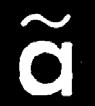
as in... famille, fille heard before in taille, oreille, oeil as in... olives, tajine, fermier, famille, fils, fille heard before in piscine, diabolo
as in... couscous, heard before in genou, boule, tous
as in... tante, menthe heard before in panda, jambe
B2: NEW WORDS



Moroccan Food
un tajine(also spelt ‘tagine’) un tajine au poisson
- stew also cooking pot
- fish stew
Food (revision)
le pain les olives la salade les fruits
le yaourt
- bread - olives
- salad
- fruit
- yoghurt
Family (2)
bienvenue chez nous! welcome to our house!
la famille CHARYATE
the Charyate family
ma femme
mon fils
ma fille
sa copine/ son copain
- my wife
- my son
- my daughter
- her/his (girl-)friend/ mate or buddy
3.6 Bienvenue au Maroc 6.9
Film B1: On the farm, men eat couscous from a central dish. Get used
Watch film B2: City family
❑ Film B2 shows a family in the capital city, Rabat, having a family meal. Monsieur Charyate who works as a civil servant in a government ministry, introduces la famille CHARYATE: his wife Ilham, his son Adam, daughter Jasmine and her friend.
Children will know many of the words for foods from earlier work, e.g. “le pain”.
Talk about...
n Discuss how this family meal compares with the mealtime scene in film B1, and with familiar mealtimes in your community.
n If you had a meal from local produce in your community, what would be on the menu? (see “talking point 2”)
Talking point 2
EVERYDAY LIFE IN MOROCCO Meals in Morocco
Like the rural family, they sit down on the padded benches that line their living room walls, and eat from a communal dish. The children eat from their own plates. They mostly eat with their hands.They eat a tagine - a casserole or stew that is baked in the oven in a clay pot with a funnel-shaped lid - also known as a tajine
Their tajine has a whole baked fish, tajine au poisson, which they eat with pieces of bread, salad and olives.

Dessert is yoghurt and fruit from the fruit bowl - banana, grapes, pomegranate or artichoke.
Get used to the sounds ‘Food’
❑ Echoing: Show the e-flashcards which present key words for family relationships e.g. “mon fils” (my son) and the foods the family eats - start with sound and text ON.
People in Morocco can make the most of local food. The country has a warm climate, and whilst the Sahara is dry, the lands facing the Atlantic and Mediterranean coasts have enough rain most years, with extra water from rivers running down from the mountains.
Film B1: On the farm, the family make their own bread. So the meals you see are typical Moroccan cuisine, made with local produce. As we will see in Part C, the city family shops in a big supermarket, whilst the country family grows much of their food on the farm or buys it in the market.


Early Start French 3 6.10
Film B2: In Rabat the family eat fish tagine, salad and bread.
Part C: Faisons les courses
Planning your lessons
Part C contrasts people shopping in the big city’s modern supermarket, with shopping in the traditional ‘souks’ (markets).
Activities
Warm up
Before showing film C1 , talk about what children know about how their households shop: - from local shops? - or a big supermarket? Do they buy ingredients for cooking, or readymade meals in packets?
Watch film C1: Rabat supermarket
❑ Watch film C1, which shows the Charyate family arriving to shop in the giant Marjane surpermarket in Rabat (Marjane is a big chain of supermarkets in Morocco). They walk from the huge car park, just by an urban motorway, into the store,where all the product labels and signs are in both French and Arabic.
C1: NEW WORDS
C1: Shopping in Morocco - modern
faisons les courses let’s go shopping
Qu’est-ce qu’on achète? What shall we buy?
des céréales de la farine du sucre

une cuisinière
un ordinateur (portable) une télévision
le supermarché à la caisse
- some cereals
- some flour
- some sugar
- cooker
- (laptop) computer
- TV set
- supermarket
- at the checkout
Get used to the sounds ‘Shopping’
❑ Echoing: Show the e-flashcards marked ‘C1’ which show the items on sale in the large Marjane supermarket; start with sound and text ON.
Film C1: In Rabat the family buy sugar in the supermarket. They buy packets of breakfast cereal, flour (sold in big bags for making couscous and bread at home), sugar (for sweetening mint tea), and bread from the store bakery.

They look at TVs, cookers and laptop computers on sale (the keyboard shows Arabic letters as well as our alphabet, and is laid out in French “AZERWERTY” order.
At the checkout, the operator scans their purchases as they pack them and pay.
Children echo the words, and try to remember them when text is OFF.
Talk about...
n Discuss what children notice, highlighting similarities and differences with your own community, e.g. the products and packaging.
Watch film C2: Khémisset market
❑ Film C2 shows farmers and traders arriving in donkey carts at Khémisset souk (market) from surrounding villages and countryside. Inside the arched entrance, see the crowds of
3.6 Bienvenue au Maroc 6.11
C2: NEW WORDS

C2: Shopping in Morocco - traditional
le marché le souk les tapis les babouches les épices des légumes du poisson les beignets la menthe de la viande
le porteur d’eau les vêtements le tailleur la djellaba le hijab
- market
- traditional market
- carpets
- slippers
- spices
- some vegetables
- some fish
- doughnuts
- mint
- some meat
- water carrier
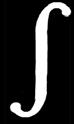
- clothes
- tailor
- djellaba
- hijab
il fait des altérations he does alterations
Phrases
Qu’est-ce qu’on mange? What shall we eat?
Qu’est-ce qu’on bois? What shall we drink?
people, and how they are dressed. What are they buying? Clothes - we see stalls with traditional djellabas for men and kaftans for women (practical for keeping comfortable in hot sun or cold desert nights); and slippers (babouches) for wearing indoors, to keep houses and carpets clean.
The food stalls sell spices and olives, sold loose by weight from piles on display; vegetables (green peppers, ginger roots) also sold by weight on simple balancing scales.
A water seller walks past ringing his bell.
A fish stall sells heaps of sardines, straight from the Atlantic coast, where Morocco has one of the world’s richest fishing grounds.
A meat stall sells halal meat; Muslims have strict hygiene rules and must eat meat slaughtered in a certain way; they cannot eat pork.
Some stalls also sell snacks: while shopping people stop to eat a freshly-fried doughnut (un beignet), with a glass of mint tea (thé à la menthe).
KEY SOUNDS
Listen and enjoy copying these typical sounds: where have you heard them before?
as in...courses, babouches, souk, ouvert heard before in couscous, genou
as in... achète, babouches, marché heard before in bouche, chat
as in... marché, épices, céréales, légumes, thé heard before in épaule, école

as in... vêtements, viande, menthe
heard before in mange, jambon
as in... tailleur
heard before in taille, famille, fille
You see heaps of fresh mint ready for making this traditional drink.
A tailor seated at his open-air pedal-powered sewing machine does alterations and repairs to clothes on the spot.
Film C2: Haggling over a carpet in Khémisset market. Under cover, valuable locally-woven carpets (un tapis) are on display, with typical patterns - made with wool from local sheep that is also spun and dyed locally.

6.12
Early Start French 3
Customers haggle with the carpet traders until they agree a price. Moroccan carpets are worldfamous; every home is furnished with them, and tourists like to take them back as souvenirs.
Get used to the sounds ‘Shopping 2’
❑ Echoing: Show the e-flashcards marked ‘C2’ with sound and text ON.
What are people buying?
Olives, meat, fruit, vegetables, and freshlybaked traditional round flat loaves of bread.
“Faisons les courses” - “let’s go shopping!”.

What else can you see?
Talk about...
n What similarities and differences with your own community do children notice?
n Do families go out shopping at night where you live?
n Compare familar shops with those you see in the souk at Khémisset
Talking point 3
EVERYDAY LIFE IN MOROCCO
Barbary pirates

Children echo the words, and try to remember them when text is OFF.
Talk about...
n Discuss what children notice, highlighting similarities and differences with your own community - for example, why do they buy slippers? (to keep their carpets clean).
Watch film C3: The souk at night
❑ Film C3 shows Khémisset souk at night
At 10pm, there is no outdoor market, but the town centre’s narrow streets and alleys are well-lit and thronged with people - including families with children - mingled with cars, lorries and bikes.
After a long day at work, people are shopping in the cool of the evening; the shops are open to the street, with counters piled with what they have to sell.

SEE PRESENTATiON “PIRATES”: There were many pirates based in strongholds in Morocco, Algeria and Tunisia, which was known as the Barbary Coast. They attacked ships trading in the Mediterranean, and crossing the Atlantic from European colonies in North and South America.
The Barbary pirates siezed valuable ships and cargoes, and made big profits selling their captives as slaves. They raided coastal villages in Europe to carry people away into slavery. Sultans of Morocco allowed pirates to use the old walled town at Salé, now Rabat, which was then disused and empty.
The harbour in the river estuary in the shadow of the fortress walls made this a handy pirate base. From here they could sell captured sailors as slaves, or release them if someone was prepared to pay a ransom.
3.6 Bienvenue au Maroc 6.13
Film C3: Khémisset: bread stall in the street at night.
Film A1: The river estuary was the pirates’ harbour at Rabat. Other countries had pirates: Sir Francis Drake was a famous English pirate. Queen Elizabeth I allowed him to attack Spanish ships in the years before the Spanish Armada. She took a share in the profits from selling the ships and cargoes and ransoming wealthier captives.


Talking point 4
EVERYDAY LIFE IN MOROCCO
Delacroix - working from sketches

SEE PRESENTATiON “ART”: Eugène Delacroix (1798-1863) visited Morocco in 1832, as part of a diplomatic mission to negotiate a Treaty of Friendship with the Sultan. Moroccans were helping Arab resistance to French rule in neighbouring Algeria, and the French badly needed the Sultan to be neutral.
Pirate ships escaped into their Salé stronghold in Morocco. Previously “Talking Point 1” suggests how the problems of piracy were an important reason why European powers conquered and colonised Morocco in the late 19th and 20th centuries.
Talk about...
n Discuss English and Moroccan pirates. What would it be like to be a Spanish sailor captured by Sir Francis Drake? ...or an English fisherman taken from your bed in a night-time raid by Barbary pirates?
n Find out about Robinson Crusoe; he started his adventures by being captured by Barbary pirates. Crusoe later escaped, only to be shipwrecked on a desert island.
Later, he used his sketches to create elaborate paintings, like this one of the Sultan made in 1845, 13 years after the event Working from sketches
Delacroix filled several sketchbooks on his travels. He often produced different final works from the same raw materials in his sketches; we focus on one large work, the ‘Sultan of Morocco’, painted in 1845.
Early Start French 3 6.14
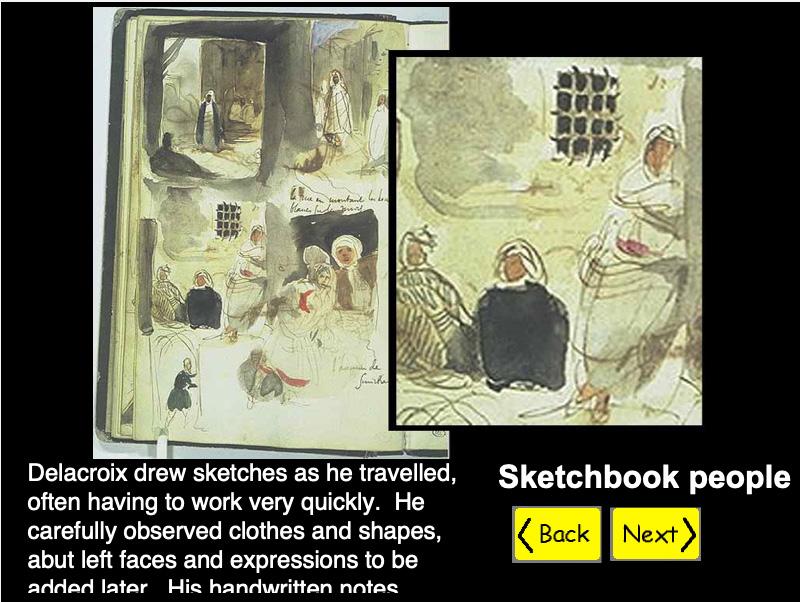
Delacroix made quick sketches of anything interesting, like the tumbledown walls of Meknès
In this he set out to emphasize the dignity and power of the Sultan, a traditional ruler who stood up to the mighty modern French army.
Be an “Impressionist”
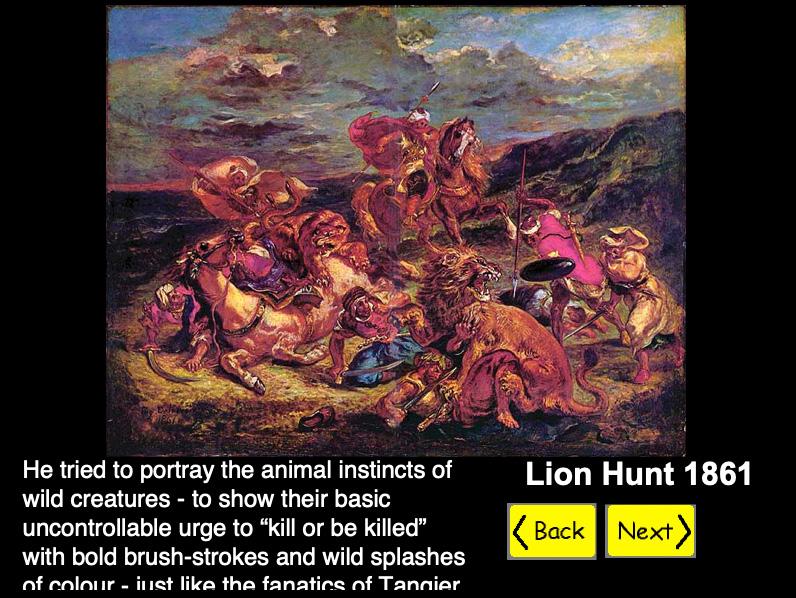
Delacroix is often described as an early “Impressionist”: he was good at using quick swirls of his brush and dabs of colour to give the impression of what’s happening and the mood of a situation - rather than portraying realistic line and detail like most professional artists of his time.
Delacroix made rough sketch layouts for the finished work. Earlier rough sketches show how he planned the layout. He drew:
n the walls of the Sultan’s capital city Meknès larger than life to make them more imposing (the French later made Rabat the capital);
n only the Sultan is on horseback;
n only he is shaded by a slave’s umbrella;
n all eyes are on him, so he seems important. Use sketches like Delacroix
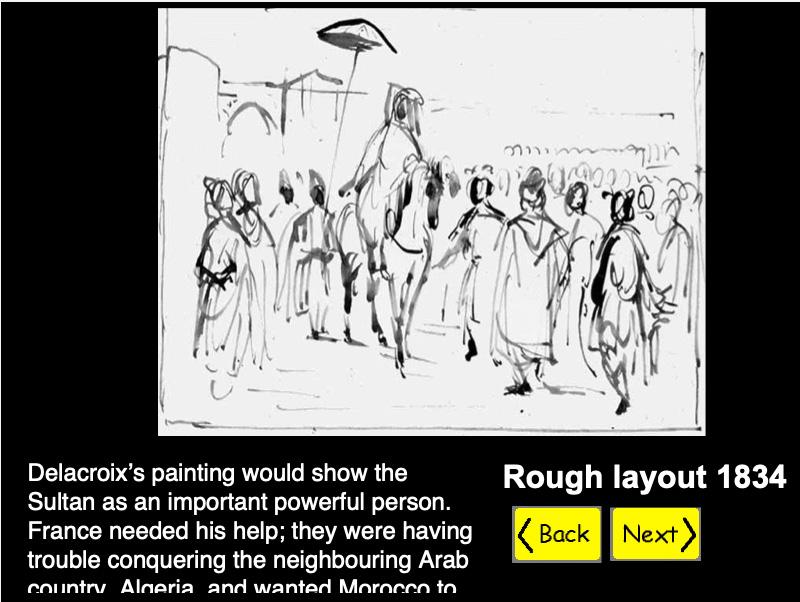
Ask children to start a sketchbook, in which they make quick sketches of scenes that interest them. They’ll need a subject; suggest something that has lots of action and emotion, like a football match, a performance (a circus, ballet, school play...) or an event, e.g. a parade, or ‘the first day at school’.
When creating artworks, children could try for a deliberate effect like Delacroix: ask them to draw roughly how a scene with (say) your headteacher could emphasize their importance and power, in the same way that he did with the Sultan - or they could sketch (say) a sporting contest (a race or a netball match) in the style of ‘The Lion Hunt’.
Delacroix made sketches of people and places. Fill a book with sketches, notes, collages, diagrams and thoughts about the subject. Delacroix usually had to sketch very quickly; he drew the main shapes and wrote down what colours things were, but left lots of details blank - a face could always be added later! Children may find it helps to be given a tight timescale, say one minute, to sketch an object or person.
CROSS-CURRICULAR ACTIVITIES
❑ Art and Design: Use the presentation e-flashcards to explore how sketching can capture your first impressions. Suggest subjects that children could use to experiment with sketches and rough layouts, even if they lack the technical proficiency to proceed to a more finished detailed artwork. They could respond to the film images of Morocco, or to more immediately available scenes around them, such as suggested in this “Talking Point 4”.
3.6 Bienvenue au Maroc 6.15
Delacroix portrayed the raw emotions of ‘The Lion Hunt’.
