
CAPITAL JOURNAL Airports return to normal, while food support networks face lingering challenges after shutdown.
EAGLE EDITIoN

ROBOTICS JOURNEY FACES CHALLENGES The ESD Robotics team faces difficult competition to advance to the state championship.
ZOOMIN' FOR FOOD Seniors weigh the advantages and disadvantages of rushing for off campus lunch with the limited time and high expenses.
WHAT'S COOKIN? Join Subscriptions Manager and Podcast Co-Editor Craighton Jefferies as he tries holiday dishes at María Andrée Bakery Boutique Bakery.
GAMBLING CULTURE Explores the growth in gambling and sports betting among high school students.
Photo by Stella Bartley and Illustration by Gracie Nealon

Human vs AI: appropriate integration sparks debate
Recent debate emerges as students and faculty discuss the pros and cons of AI integration in school
By Isabella Villegas | Staff Writer
Recent advancements in generative artificial intelligence have contributed to a greater presence of AI in school settings. As of May 2025, 69 percent of high school students admitted to using ChatGPT for assistance with school assignments and homework, according to an October research finding by the College Board. At ESD, the use of AI has been a growing topic of discussion regarding its strategic integration into the curriculum. The core challenge debated is its dual nature: while AI can be a beneficial tool for learning, its overuse could undermine students’ intellectual growth.
On Sept. 17, the 4100 Roast logo design contest winner was announced. The upper school congratulated junior Hud Maegdan for his winning design of the school’s new coffee shop logo, which earned him recognition for his work and $100 worth of credit towards the coffee shop. Meanwhile, junior Alexa Sardiña sought comfort from the ESD nurses, overwhelmed with emotion and inconsolable at the news.
The announcement left Sardiña disheartened as she questioned her love for the arts. As the winner, Maegdan, had used Artificial Intelligence to create his design submission. This led her to question the value of human-made art and how it could be possible for AI to be accepted on the same level.
“It's not so much that I lost,” Sardiña said. “It was the fact that my whole life meant nothing. You know, if AI can do it, then what's the point of a human making it?”
Maedgan doesn’t believe the use of AI undermines the contributions he made to the final design. To him, AI has become so integrated into our daily lives that we should be adapting to it, not rejecting it.
“I don’t think it matters that I used AI instead of handdrawing,” Maedgan said. “Art has such a broad meaning, and I don’t believe it has to be narrowed down to human
drawing, especially since we are in a time period where AI is so advanced and widely used. Sometimes you can’t tell [whether it’s] AI or not.”
The 4100 Roast logo design contest piqued Sardiña’s interest as an opportunity to participate in her first digital art competition. She submitted two main designs, along with eight unique versions featuring different fonts and color schemes. The first design used a coffee cup with steam rising in the form of an eagle. The second design included a mug with splashes of coffee in the shape of an eagle. The entire process took her three hours to complete.
"I’M REALLY PASSIONATE ABOUT MY STUDENTS FEELING CONFIDENT THAT THEIR IDEAS ARE WORTHWHILE AND WORTHY. AI ISN’T A PERSON, IT’S JUST COMBING THE INTERNET, SO ALL YOU’RE GETTING ARE EVERYONE ELSE’S IDEAS.”
Webb
Natalie
Upper school English teacher
“There is no value in AI art. When you make art, you base the value on the time you spent on it [and] the difficulty. People measure in hours and the materials they use,” Sardiña said. “That is where the value of art comes from. If there's no time and no materials, then there's no value.”
Similarly, Maegdan holds the same mindset that using AI makes the art less valuable; however, it doesn’t mean he had no part in creating it, and he believes it should still be considered art.
“I do believe that it can make art less valuable, but not all the time. I would say I contributed to half of the final design,” Maegdan said. “I used Illustrator to create an outline of what I thought would work best, and AI enhanced the image. I do believe my submission is art.”
As students grapple with the growing presence of AI in schoolwork, so do faculty members. Last spring, the entire upper school faculty and staff attended an AI training workshop led by education and technology specialist Eric Hudson, who guided teachers through adapting assignments in an AI-driven world. For upper school English teacher Natalie Webb, the workshop affirmed the importance of assignments promoting original thinking rather than algorithmic responses.
“He has created an AI program where you can put in your prompts or your assignments, and it will tell you how sensitive they are to AI-generated responses,” Webb said. “He focused on [explaining] that students need to be able to prompt AI in a way that will actually help them. If you don’t give it a very good prompt, you’re going to get back a really terrible response.”
As AI becomes increasingly common in our world, community, and classrooms, teachers across the upper school are navigating how to set boundaries while embracing AI’s potential benefits for students. While Webb commends and acknowledges AI for its practical use, she simultaneously upholds the belief that AI in English classrooms can harm student originality and confidence.
“I’m teaching developmental writers who are still learning how to be confident in their own voice and ideas. I’m really passionate about my students feeling confident that their ideas are worthwhile and worthy," Webb said.
“AI isn’t a person, it’s just combing the internet, so all you’re getting are everyone else’s ideas.”
Across the hall, upper school
history teacher Marc Salz wants AI to take a different role in his classroom. While acknowledging the risks, Salz views AI as an inevitable tool that students must learn to use responsibly, similar to calculators or search engines. Salz teaches students how to use AI ethically, in ways that enhance learning rather than replacing it.
“If you can feel the growth, [by] not [doing] the cut and paste, you know the growth has occurred,” Salz said. “Using AI to create a summary of an article, [and] then going in and reading the article, the summary can help you understand and get ready to learn what you're about to read. [After] reading the article itself, you will hopefully get more out of it.”
Both teachers agree on one thing: AI isn’t going away. Their challenge, and one that most upper school teachers have faced, is deciding the extent to which they can integrate it in ways that promote students’ intellectual growth rather than undermining it. Sophomore Hayden Houston has found ways to utilize AI positively and effectively that help her learn, rather than relying too heavily on it, which can hinder her critical thinking skills.
“I've made practice tests or quizzes [using AI]. I've put in notes taken during class to formulate a template I can use,” Houston said. “If you're using it for just straight answers out of laziness, it's not useful. But if you're using it to help you learn, I think it can be almost like a free tutor.”
Webb reminds students that when it comes to using AI, her goal isn’t solely to reprimand them, but to help them grow and gain confidence in their own abilities.
“A student who is going to use AI when they weren't allowed to, or who is cheating in any way, is usually a student who doesn't have confidence in themselves or their abilities, or they don't feel that they were prepared enough to do a good job,” Webb said. “So that, I think, is the bigger problem that I would like to help them with.”

Photo by Isabella Villegas
Zohran Mamdami
The infamous Louvre heist spurs robberies and uncertainty across the globe.

CAPITAL JOURNAL
AAirports have fully recovered just in time for the busy holiday travel season, but food pantries nationwide continue to struggle with heightened demand.
According to CBS News, as a result of the government shutdown, federal aviation workers were working without pay, which had ultimately led to serious staffing shortages.
Transportation Security Administration officers, air traffic controllers and other essential staff called out of work, worked more slowly or had fewer people on their shift. Soon, security lines got longer, and flights took longer to clear. In the Dallas-Fort Worth metroplex, the shutdown created major airport slowdowns, with DFW departures averaging 20-minute delays and Love Field facing hold-ups of over an hour.
“When there is no pay associated with coming to work, worker attendance suffers. If the minimum number of controllers required will not be met, the Federal Aviation Administration has no choice but to trim the amount of departures allowed, thereby fostering cancellations at all scheduled airlines,” former American Airlines pilot Howard O’Shell said to the Eagle Edition. “The truth is, airlines maintain no backup plan for the U.S. Government failing to provide the necessary staff. On a daily or weekly tactical basis, the airlines comply with government mandates. Compliance reflects a slant toward inconveniencing the least [number] of passengers.”
While TSA and customs workers were not receiving pay as a result of the government shutdown, both FAA occupations were mandated to work as they were designated as essential employees, meaning they were required to continue working without pay until the funding lapse was resolved and Congress authorized back pay.
“The only significant adjustment during the government shutdown was adjusting federal grant applications, federal grant reporting and federal grant draw downs,” DFW Airport police officer Amy Clifton said to the Eagle Edition. “All federal grant websites have been shut down during this time. This has caused us to shift how things are handled. Specifically, federal grant
traffic controllers were designated as essential employees, according to FAA Administrator Bryan Bedford, 20 to 40 percent of them failed to report for their shift during the shutdown. As a result, TSA lines extended beyond threehour waiting periods and some even closed down in terminals at the DFW and Houston airports.
“Some TSA folks, like some air traffic control folks, have attendance issues when they aren’t being paid. Less TSA staffing leads to longer lines and wait times,” O’Shell said. “Airlines then advise passengers to arrive at the airport sooner. Those who don’t or aren’t able to arrive earlier may miss their flights. If security delays become very acute at a larger hub airport, an airline may choose to delay a group of flights. These delays trickle through the system.”
The shutdown also affected the work schedules and payment of airline employees. Pilots and crew members are only paid when they fly, as their salary does not factor in subsequent delays. In the midst of the shutdown, hundreds of flights were delayed and canceled, which ultimately reduced crew members' salaries and decreased the number of flights they worked per day.
“So if an aircraft is delayed at the gate for 45 minutes, the pilots and flight attendants are not earning their hourly rate for that 45 minutes,” O’Shell said. “These delays or cancellations cost crew members in pay, schedule interruptions and missed time off. Sometimes these disruptions are a contributing factor because lastminute schedule changes impact crew members’ personal lives.”
Beyond payment delays among FAA and airline employees, American passengers also faced economic and logistical challenges from the shutdown.
“Personnel very familiar with the shutdown relates the following example. A one-hour delay was imposed on a flight that was scheduled to leave the West Coast for DFW at 1 a.m.,” O’Shell said.
“The passengers boarded around 2 a.m. The delay grew to multiple hours, [and] the flight was later cancelled. The result was that the entire crew was reassigned and required to spend an extra day on the West Coast, [after which] they left the next morning at 1 a.m. Personal plans among the crew members, from child care
standoffs can disrupt pay, benefits and financial stability for families and essential workers across the country. As leaders debate longterm solutions, concerns remain
"MILLIONS OF AMERICAN FAMILIES, ESPECIALLY THOSE IN THE MILITARY, THOSE SERVING AS AIR TRAFFIC CONTROLLERS, OR ON PROGRAMS LIKE SNAP WERE NEEDLESSLY BURDENED."
Beth Van Duyne Congresswoman
about whether similar disruptions could occur again in the future.
“Millions of American families, especially those in the military, serving as air traffic controllers, or on programs like the Supplemental Nutrition Assitance Program, were needlessly burdened with missed payments or benefits,” Congresswoman Beth Van Duyne said to the Eagle Edition.
“As Chair of the Republican Study Committee’s Budget and Spending Task Force, I’m continuing to work with my colleagues to propose measures to bring the federal government back to pre-COVID levels of spending, further engage in DOGE efforts to slash waste and fraud from agency budgets and propose new ways to cut taxes and regulations that harm the growth of American small businesses.”
The government shutdown also led to a significant increase in the number of families seeking food assistance at food banks like Brother Bill’s Helping Hand located in west Dallas.
“Many of our neighbors, especially those dependent on hourly wages, federal benefits or SNAP, have faced unexpected gaps in support,” Brother Bill’s Helping Hand Program Director Adriana Amaya said to the Eagle
in to fill that gap. Over the past several weeks, we’ve seen more first-time visitors as well as returning families who simply can’t stretch their budgets without federal programs operating normally.”
Without Supplemental Nutrition Assistance Program benefits during the shutdown, millions of families faced severe food insecurity, while food banks like Brother Bill’s struggled to meet rising demand. The removal of SNAP benefits had also negatively impacted the economy, as local grocery stores had seen significant drops in sales, as SNAP recipients are a regular customer base for these stores.
“Delays in SNAP and other nutrition programs have created a noticeable strain on our distribution capacity. We are very thankful for the fast response from the North Texas Food Bank for supplying us with food, along with our other retail partners. We couldn’t do it without them,” Amaya said. “When families lose or experience interruptions in their benefits, they turn to community organizations like Brother Bill’s to bridge the gap. As demand rises, our shelves turn over more quickly and we must work harder to ensure every family receives the nutritious groceries they deserve.”
Higher demands drain inventory faster than food banks like Brother Bill’s can restock. However, to address these challenges, food banks had reallocated staff and volunteer energy towards food distribution. And as the holiday season approaches, food banks have graciously relied on volunteers to help restock inventory and help neighbors at Brother Bill’s.
“Funding allows us to purchase exactly what we need when supply fluctuates,” Amaya said. “Monetary gifts help ensure we can continue offering consistent and dignified care to every family who walks through our doors. They also help us run the entire operation. Keeping the lights on is important. In all, staying true to our value of community collaboration, we’ve also been proactive in sharing needs with supporters so they can help sustain our neighbors through this difficult season.”
Airports return to normal, while food support networks face lingering challenges after shutdown.
By Lilly Traylor | News Editor
Crisis Alert badges boost safety
ESD equips faculty with wearable emergency-alert devices
By Jack Coben | Podcast Co-Editor
Sept. 4, 2024, in Winder, Georgia, 14-year-old student Colt Gray was arrested after allegedly killing two students and two faculty members.
The Apalachee High School’s security system was activated as soon as the shooting began and played a critical role in saving lives.
Apalachee High School uses Centegix's Crisis Alert System, which issues a wearable panic button to all employees. The device, triggered by a faculty member, helped initiate a rapid emergency response.
After the incident at Apalachee High School was broadcast nationally, many schools across the nation began implementing the Centegix security system. ESD is one of these schools.
“We wanted a system that would send help to the right place immediately,” Davidson Bogel Milner Director of Campus Security Jody Trumble said. “There is no delay and no scrambling for cell phones.”
All employees on campus have been issued a Centegix Crisis Alert badge, a small rectangular device, the size of an ID card, that clips to a lanyard or keychain and connects to the security team's system to alert team members in an emergency. Whether someone is in a classroom or on the practice fields, pressing the badge sends an alert in seconds.
“It's a wearable device,” Trumble said. “If anyone needs help, they push the button and it goes straight to the phones of the trained responders.”
The device can be used for any type of emergency on campus. Teachers can press the button only under specific circumstances when a student is in need, triggering a sequence that immediately notifies responders.
“I don't want to have to search through my contacts and type it in when seconds matter,” upper school history teacher Tim Woodward said. “I like the fact that you can just press the button so many times and it gets you the help you need.”
During the school day, responders, including a nurse, an emotional wellness counselor, an administrator, a security officer and an armed responder,
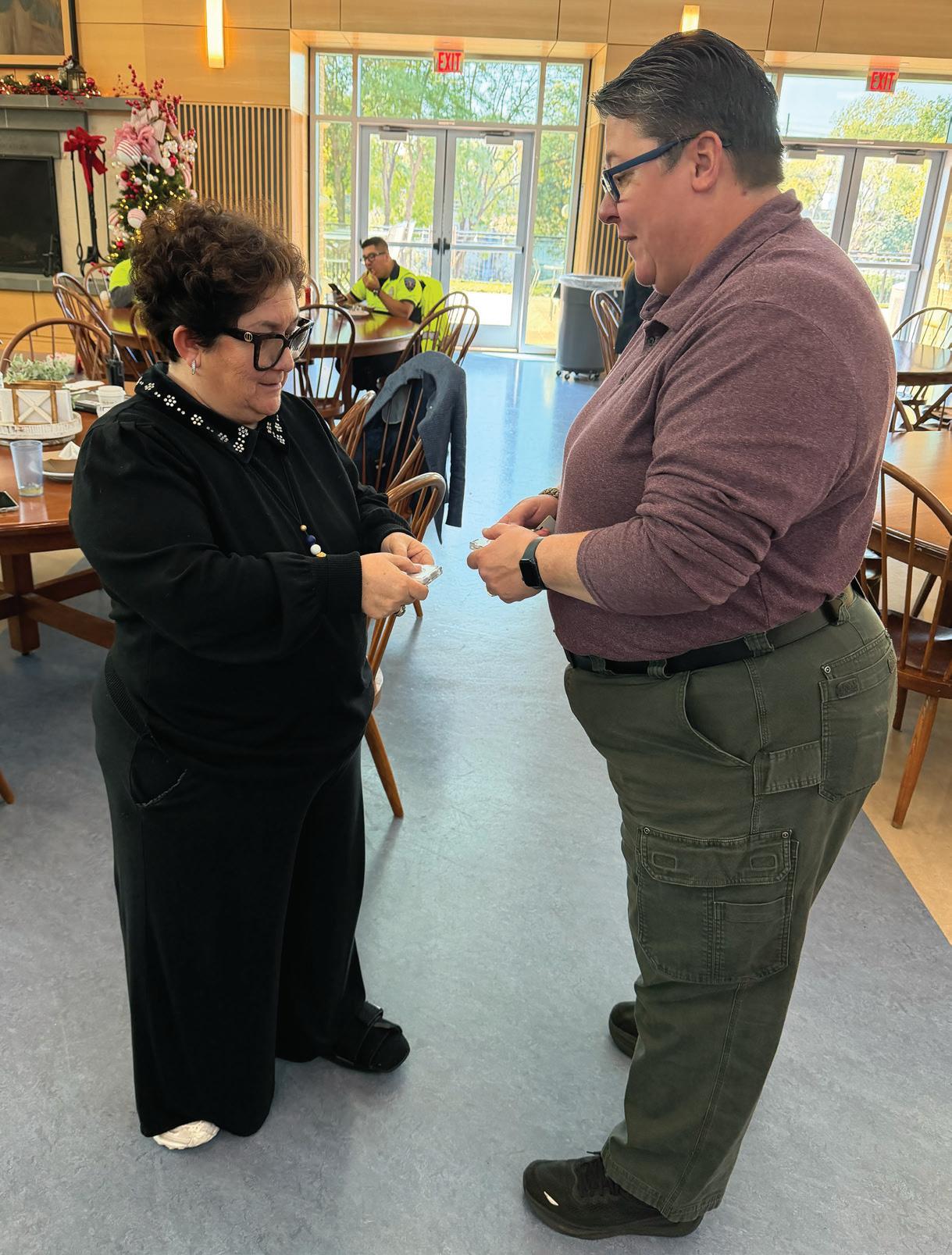
are immediately directed to the location from which the alarm was prompted. The alert shows who pressed the button and a live pinpoint of the faculty member's location, using nearby strobes.
“The badge doesn’t track anyone all the time,” Trumble said. “But once you push the button, it pings the nearest strobe, which tells the security team exactly where you are to maximize response time.”
The badges also allow for faculty to initiate a complete lock down, a function designed only for urgent threats. When activated, the system sends an automatic message to local law enforcement and triggers a campus-wide PA announcement. There is also a function that takes over the TV screens in classrooms with instructions directing students and teachers on what to do in that particular instance.
“If a teacher sees something dangerous, we want them to be able to call for help and lock down immediately,” Trumble said. “They shouldn’t have to find a phone that can take too long sometimes.”
The proposal for this new system stemmed from ESD’s Independent Schools Association of the Southwest accreditation processes, which prioritize security. Several panels and surveys from faculty stated that many teachers did not know how to get help quickly without their cell phones. Given that students are required to keep their phones away, ESD also encourages teachers to minimize their cell phone use during the school day. With that, a new way to quickly alert responders was necessary.
“This system bridges that gap,” Trumble said. “It puts a reliable tool in the hands of all the faculty in [an] attempt to protect the students.”
Students with health conditions that may require quick intervention in case of a medical emergency, such as Holly Hills*, who has recently been diagnosed with epilepsy, feel safer knowing that every adult on campus is equipped with a device in case she needs help during a seizure.
“I could pass out and start seizing at any time,” Hills said. “So the fact that the teacher has the Centegix system makes me feel much safer, knowing they can get immediate help if I were to seize.”
These badges are also valuable outside of school hours. Because many sports teams and athletes practice on the fields, there are always people on campus after school.
“There is always a security member on campus,” Trumble said. “If a team gets back late and someone falls, a security officer will be there to assist.”
Teachers were also trained in using this new piece of technology during faculty meetings in November. This included being taught the cadence for pressing the help button.
“They showed us the convenience of around-the-clock security,” upper school physics teacher Kayla Fauber said. “At the meeting, they gave us our badges and taught us all about the new system.”
The most significant benefit of this new system is twofold: it reduces response time and truly makes ESD a phone-free community.
“Especially with the little kids, the teachers are unable to leave and get help,” Trumble said. “This allows faculty not to have to worry about any of those problems and just have their [Centegix] badge with them.”
*Names have been altered to protect the anonymity of the students



Global climate agencies have reported that the past year has been the hottest ever recorded, marking another alarming milestone in the planet’s rapid warming trend. According to Reuters, the world is now on track to cross the 1.5°C warming threshold around 2030. As of 2025, warm-water corals have continued to die off with increasing ocean temperatures marking what would be the first so-called climate tipping point: a point in which the environment begins to shift into a different state. Researchers in October also warned that the Amazon Rainforest could begin to die back and transform into a different ecosystem like the Savannah Desert if deforestation continues as global warming crosses 1.5°C, which is earlier than previously estimated. In addition to noticeable destruction in coral reefs and rainforests, as of Nov. 2025, a thawing sheet of ice atop Greenland has recently been producing meltwater. According to Reuters, this process could alter movements in the Atlantic Meridional Overturning Circulation which plays the role of keeping winters mild in Europe.

Brazil is ramping up its forest-protection policies with new funding, international agreements and stricter limits on illegal land clearing for commercial development. Last year, one of the largest cases of deforestation in the Amazon was fires, which were intentionally ignited to clear land for agricultural and commercial purposes. Despite a pledge made in Glasgow in 2021 to reverse deforestation by 2030, as of last month, scientists have recorded no noticeable change in the rainforest’s growth and predict that its environment will eventually transform into an environment similar to the Savannah desert. As of Nov. 2028, Brazil has decided to shift their funding towards the indigenous communities living within and around the Amazon rainforest, as they play a major role in maintaining its heath. As a result, $1.8 billion was set aside for these indigenous communities, to not only support them in the midst of deforestation, but also for their efforts to maintain the cherished blue zone.

With the 2026 World Cup less than a year and a half away, the United States, Mexico and Canada are speeding up construction and infrastructure plans for the largest tournament in FIFA history. As of late November, Mexico revealed their plan to host the opening match at the Estadio Azteca stadium, which is known as the country's most iconic venue that can hold a capacity of 80,000 spectators. Thirteen marches are scheduled to take place in Mexico City, Guadalajara and Monterrey which will all be supported by a broad tourism program run by FIFA. While the FIFA World Cup does offer an exciting opportunity for Dallas to host, the approaching world event has also prompted stress on the city of Dallas in their ability to host the incoming tourists. Concerned with hotel accessibility, Dallas has already begun planning and building new hotels that will be accessible for the FIFA World Cup visitors, as this year's World Cup will be the largest ever with 48 teams instead of the customary 32 teams.
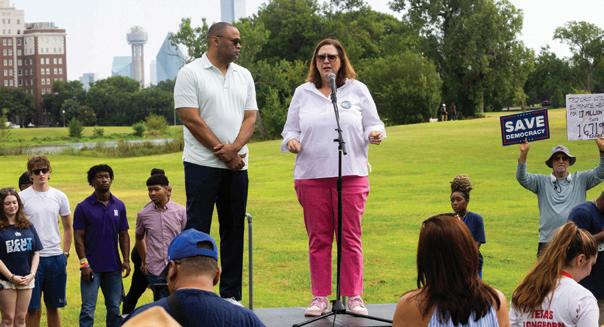
WORLD TEMPERATURES SHATTER RECORDS
BRAZIL EXPANDS AMAZON PROTECTION EFFORTS
U.S. ACCELERATES PREPARATIONS FOR 2026 WORLD CUP
COP30 President Andre Correa do Lago (center) hugs Brazil's Environment Minister Marina Silva after her speech at the COP30 UN Climate Change Conference in Belem, Para state, Brazil, on Saturday, Nov. 22, 2025. Photo by Pablo Porciuncula/AFP/ Getty Images/TNS Restoration work in pond A2W, a former industrial salt pond that is being converted back to wetlands on Monday, Nov. 24, 2025, in Mountain View, California. The 435-acre project involves moving 180,000 cubic yards of dirt, operating
Photo by Aric Crabb/Bay
The new test pitch for the 2026 World Cup at Sofi Stadium was revealed to the media in Inglewood, California, on March 13, 2025. Photo by Frederic J. Brown/AFP/Getty Images/TNS
SECONDS SAVE LIVES Davidson Bogel Milner Director of Campus Security Jody Trumble teaches upper school Spanish teacher Marcela Garcini how to use the Centegix Crisis
TEXAS REDISTRICTING FORCES POLITICAL MUSICAL CHAIRS
Priceless treasures, unremarkable security
It was just after dawn in Paris, France, on Oct. 29, when four men dressed as construction workers broke into the world’s most iconic museum: the Louvre. They exited eight minutes later, carrying about $102 million worth of historic jewels, according to the International Police Association in France. While the suspects remain at large, IPA France has arrested eight suspects and charged five in connection with the crime.
The priceless jewels at the Louvre managed to survive the looting by Nazi officials during World War II, but were stolen in broad daylight in a heist that is coming to be known as the “heist of the century.” This robbery was the most significant, but not the first heist that has hit the Louvre within the past 50 years. This theft has rapidly escalated from a police investigation into a global phenomenon.
Within hours of the robbery becoming public, the incident plagued TikTok and other social media feeds. Users compared the robbery to hit TV shows and films like “Lupin” and “Ocean’s 8,” calling the robbery “chic” and “funny.” Videos such as “What I Would Wear to the Louvre heist” contributed to the romanticization of this robbery. As a result, this robbery was no longer known as a “disaster” but turned into a spectacle.
“Humans are ruled and regulated by the world we live in,” sociologist Ruth PenfouldMounce told Architectural Digest’s Kiernon Marchese regarding the art of a perfect crime and the medias obsession. “There are laws and social norms that govern our behaviors. And, as a result, there is always this appeal of people who break the rules.”
This romanticization of the Louvre robbery escalated, as fake mugshots of the robbers circulated online, with people comparing the robbers and enlisting the mugshot of Chace Crawford, a celebrity actor known for his role on Gossip Girl, to add to the appeal.
“I thought [the fake robbers] were attractive, and I was shocked because I expected them to be drug dealers,” junior Maddie Doebele said. “I saw this one mugshot of this guy, and he looked like he was from Gossip Girl, but everyone thought they were real, so I did too.”
The last time robbers hit the Louvre was in 1998, before that 1990 another in 1983. Although updates to the security system have been made, and a larger budget has been allocated to the system, the Louvre evidently still had issues, as addressed by the current director of the Louvre, Laurence Des Cars, in January, when a leaked letter exposed the issues of concern with the museum.
“Increasing malfunctions in severely degraded spaces,” Des Cars wrote, according to French Newspaper Le Parisien. “Alarming temperature fluctuations endangering the conservation of artworks.”
This was also considered by French President Emmanuel Macron when he allocated $834 million in taxpayer money to a Louvre renovation project, which was supposed to include an upgrade in security. However, at the time of the Louvre robbery, the password to the Louvre's CCTV system was “Louvre;” according to ABC News, this revelation left the public dumbfounded.
“Next time you doubt your competence, remember even
the Louvre protected priceless art with the password ‘Louvre,’” One X user wrote in response to the revelation. “Sometimes the system, not the worker, is what’s broken.”
This response was not isolated on social media, it was present in our community. Specifically, Davidson Boger Milner Director of Campus Security Jody Trumble expressed how the incident underscores the importance of strict security protocols.
“We don't keep default passwords; we change passwords, and only so many folks have access to certain passwords or items,” Trumble said. “I think they have a ridiculous amount of value in the items that they have in their care, historically and financially. And so that just seems like a pretty significant slip-up.”
Following the Louvre robbery, there have been multiple robberies across France, looting museums of their priceless jewels.
“Around 2000 gold and silver coins were stolen during a raid at another French museum just hours after the audacious theft of some of the French crown jewels at the Louvre in Paris,” BBC journalist Tom McArthur wrote in response to the robbery at the Maison des Lumières. “The stolen coins date from between 1790 and 1840 and are part of the city's private collection.”
Most recently, there was a robbery at a jewelry store in Roubaix, France, where, unlike the Louvre heist, people were held hostage and in immediate danger, and ultimately the robbers carried off with approximately five hundred thousand to 1 million euros worth of jewelry.
“It’s like a ripple effect. I think the robbers saw the Louvre robbery and were inspired to rob
other places too,” junior Kennedy Kuchler said. “It is awful because, unlike the Louvre, these robberies are impacting real people.” Robbers have begun to use any means necessary to loot a place of their prized possessions. These robberies have called for an increase in security and have impacted France's perception on a global stage.
But, as of now, as the social media spectacle dies down, one man remains on the loose and millions worth of jewelry are nowhere to be found.
“The Louvre is a global symbol of our culture,” Jordan Bardella, president of the French farright National Rally Party, wrote on Oct. 19. “This heist, which allowed thieves to steal the Crown jewels of France, is an intolerable humiliation for our country. How far will the decay of the state go?”
The world watched as the most iconic museum's security failed
By Sheridan Bailey | Communications Manager


The Calm After the Heist French police officers patrol in front of the Paris Louvre Museum after it was robbed, with the Louvre Pyramid designed by Leoh Ming Pei in the background, on Sunday, Oct. 19.
Photo by Dimitar Dilkoff/AFP/ Getty Images/TNS
HALLWAY
For ESD students, the cold chill in the air means one thing: The Twelve Days of Christmas. Each year, the student council comes together to brainstorm 12 holidaythemed days for Upper School students to enjoy. Junior Story Sinelli, a student council member, discussed the hard work that goes into meticulously planning these events.
“Initially, there are so many amazing ideas that are thrown out, it takes a second to eliminate which ideas we can actually achieve,” Sinelli said. “Then [we have to decide what] ideas we [will] move to a different fun week or event we have planned. And it also takes a lot of creativity from everybody on the student council to make it work.”
Although Christmas time brings holiday treats and fun, it can also be an increasingly stressful time for students, as it falls during midterms.
On Monday, Dec. 1, the Latinos Unidos Club gathered together at Mesero for an annual holiday dinner, a tradition to strengthen community and connect with one another through the celebration of Latino culture.
“[The dinner] was a nice way to be able to socialize with people from different grades and from your own grade too,” sophomore Marley Hansen said. “We just talked a lot, and that is what [made it fun].”
The annual gathering has become a meaningful and cherished tradition within the ESD Latino community, bringing together students, parents, faculty and staff of Latino heritage.
“I feel like this annual dinner fulfills our club's Mission
By Noelle Stovall | Staff Writer and Annabel Brown | Video Editor
“I think that the Twelve Days of Christmas helps relieve stress from exams coming up, as I believe it gives students something to look forward to every day,” Sinelli said. “For example, pajama day, everybody's really excited to dress in their pajamas. And it's a fun thing to take everybody's mind off [exams] and why they're at school.”
The Twelve Days of Christmas, cultivates a sense of holiday spirit in all, but it requires much more work than it may seem. It’s important during this holiday season to thank all the people who make this event possible, as they make a season filled with deadlines, intense study sessions and review periods a little more manageable.
“I think [the Twelve Days of Christmas is] a high school privilege.” Sinelli said. "I do think it would be fun if we combined with the middle school student council and planned the 12 Days of Christmas together so all of us can all be in the holiday spirit together on the same days.”
Statement of supporting students who are a part of and interested in Latino culture,” upper school Spanish teacher Ninotchka Beavers said. “Traditions and values and getting together like this reinforces our goal of advocating unity, respect and visibility of Latino culture at ESD.”
Latinos Unidos is not an affinity group at ESD, meaning that students from all backgrounds are encouraged to join and learn about Latino heritage. Hansen believes that the club's inclusion is one of its strengths.
“There's more than just Hispanics, so other people get to learn about my culture, and it's really fun,” Hansen said. “It's just great to have more people join from different cultures.”

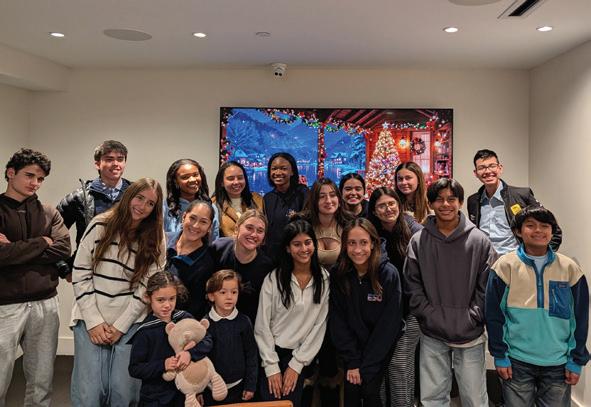
On Sunday, Dec. 7, ESD students, faculty and staff welcomed families interested in applying for the next school year in the annual admissions Open House. Student ambassadors worked in shifts from 12:15 to 3:45, guiding new families around campus and helping teachers set up for presentations.
“We started by greeting everybody and holding doors open, and then I moved over to the upper school student panel with Mr. Peal,” sophomore ambassador Kiana Fatahiyar said. “I really enjoyed getting to meet new people and show them [around our campus].”
Some student ambassadors worked at tables alongside teachers and coaches, which allowed prospective students to
learn more about the school. These tables showcased sports and different STEM-based classes on display in the dining commons and gyms for new families to see.
“I went to work at the girls' lacrosse and girls' field hockey table while I was there,” Fatahiyar said. “There were also a bunch of science experiments in the gym led by kids for classes like chemistry, forensics and biology.”
The open house turned out to be a huge success with over 800 prospective families, beginner through eleventh, in attendance throughout the day.
“The Open House was really fun this year,” Fatahiyar said. “It was really cool to see how many people showed up and to see all the cool things that students put on at the panels.”
Mock trial advances to world championships
OBy Annabel Brown | Video Editor
n Friday morning, Nov. 7, 12 students boarded a plane to attend the World Championship Empire Mock Trial tournament in Chicago. But a trip that was supposed to be educational, ended up bringing the group a lot more enjoyment than expected.
Upper school government teacher and Mock Trial and Debate team sponsor Adam Walsh had been working for years to take a group of students to this tournament.
"We had to write an application, and list our record from the previous year, and then on top of that, we had to provide a couple of individual statements and answers to questions," Walsh said. "Last year, we did not really have
enough interest early on to go, and this year we did. So we were able to make it happen."
For the mock trial group, a major concern was the schoolwork by being out for two days of school.
For junior Emory Turner, who attended the tournament, this resulted in an overwhelming amount of catch-up work.
"The tournament impacted my schoolwork at home because it meant that I was going to have to miss two days of school and two days of the weekend that I would normally spend prepping for the upcoming week," Turner said. "So it [was] very difficult to catch up, but my teachers have all done a really great job communicating and meeting with me about how I can make up for lost time."
Nevertheless, the team felt that the benefits outweighed the negatives of potential airline
delays due to the government shutdown, missing school and weather concerns.
Although all the days spent in Chicago were packed, the students were still allowed to explore the city and visit landmarks such as the Bean in Millennium Park and the Art Institute of Chicago.
However, for Walsh, the most memorable part of the trip was the participation in the actual tournament.
"Our pretend case involved a freedom of speech allegation. It was a university that said that [a professor] got fired for being a crappy professor, and the professor said, ‘No, I got fired because you want to take away my free speech rights,’" Walsh said. "So the entire case was covering what we refer to as a deprivation of First Amendment or constitutional rights."

The competition consisted of four three-hour rounds that operated exactly like a real court case. A professional judge oversaw the mock case, with four attorneys and three witnesses on each side.
"I think that many individuals took this tournament really seriously and were very competitive," Turner said. "The teams as a whole were generally really kind and never let a competitive spirit get in the way of sportsmanship."
Walsh believes that while other teams had more practice time, they were not necessarily more talented than the members of the ESD team.
"I felt that if we had practiced more, we probably would have seen a pretty dramatic improvement in our overall score," Walsh said. "Hopefully, for next time, we can actually get to the top 10 — that would be a goal."
The team earned several awards and individual members received the “Best Witness” and “Best Attorney” honors for specific rounds. The team even won the overall spirit award during the final program. Because of the government shutdown and the snowy weather in Chicago, there were several concerns about arriving home in Dallas on time. While the flight was delayed, the team made it home safely the night of Nov. 9.
Over 380 separate teams competed with three countries represented at the tournament. This made the tournament all the more demanding but also rewarding.
"I enjoyed seeing the growth of the team overall from point A to point B, but we also just did a ton of fun stuff in the city," Walsh said. "So it was enjoyable to watch everybody get along, bond and get closer as a team. I thought it was really kind of cool."
UGLY SWEATER
Photo by Annabel Brown
Photo by Ninotchka Beavers
Photo by Cate Stephenson
Photo by Gabriela Loewen-Eelles
The journey to state faces robot malfunctions, fierce competition
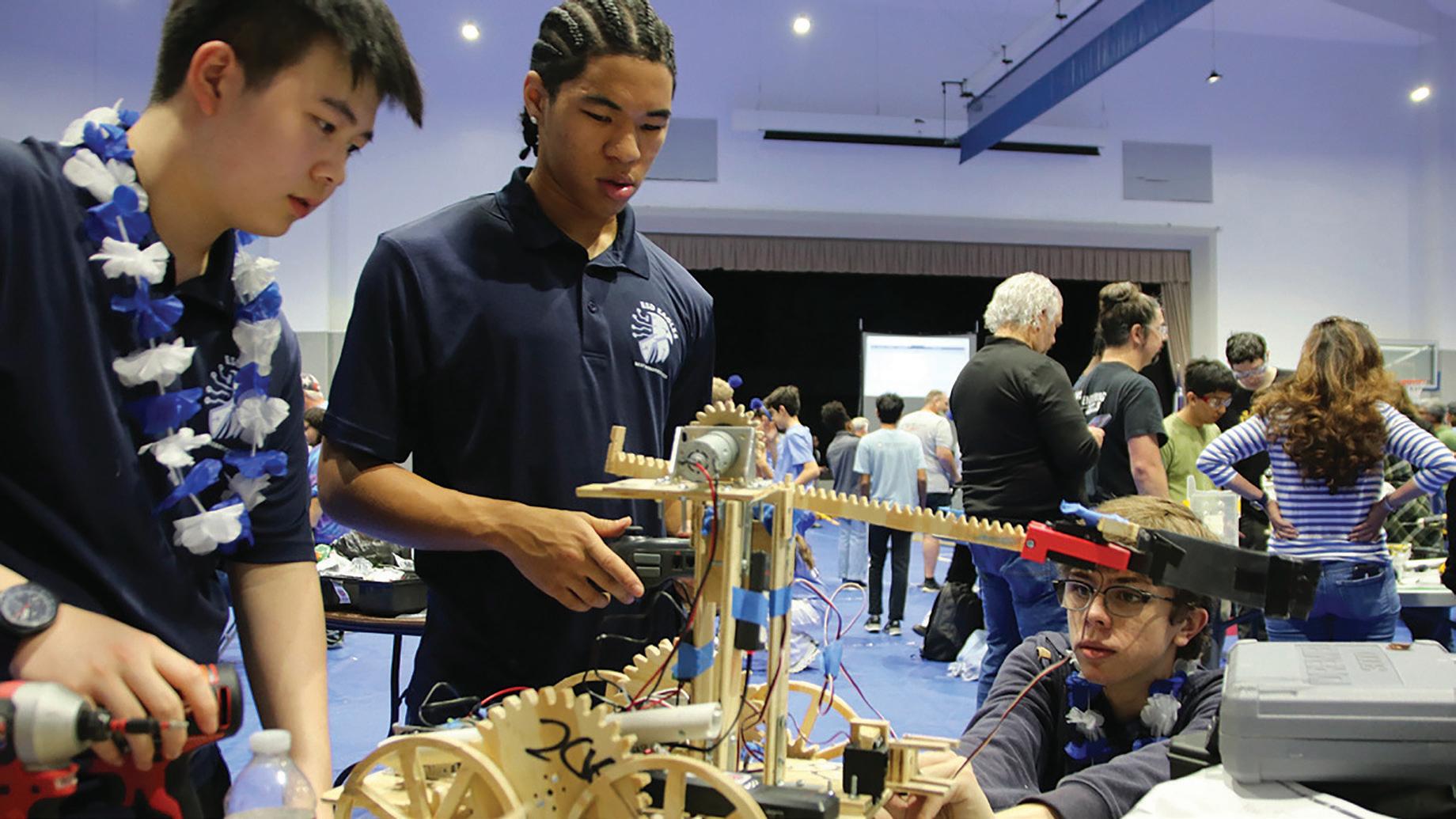
As the timer winds down in the final round, robots from teams across the Dallas-Fort Worth Metroplex scramble to collect obstacles and rack up crucial points. The ESD robotics team sat in 10th place at the Booting Engineering Science and Technology Regional Robotics Competition on Nov. 8. Needing to climb to seventh place to qualify for state, the pressure was intense. Their robot needed to perform as flawlessly as possible.
With a carefully planned route and precise execution, their robot surged ahead, securing the team’s advancement. Though the robot’s claw struggled to execute the larger points, it thrived during the smaller obstacles.
“We had a new strategy that we were trying out,” senior team member Michael Peralta said. “My goal was to try and squeak out as many points as possible, and see what we can do from there.”
As the energy in the room intensified, so did the Eagles' determination to advance to the state finals. Regional teams arrived with large support sections that packed the bleachers from end to end. Each crowd brought its own brand of entertainment strategy: one with a school band energizing the competitors, while another with noise makers and large pom poms to distract their opponents.
“It is always super and loud and distracting when we are competing,” sophomore team member Gabby Aston said. “As a cheerleader, I am used to the loud noises, though, so if anything, it encourages me.”
The Eagles moved from round to round, building confidence in themselves and in their robot. However, they had to fix some lastminute flaws in between rounds.
“We realized that the epoxy we used to keep the claw on was not holding,” Peralta said. “So we tried
to create a temporary solution, which was a mad panic.”
While there were some malfunctions in their robot, the robot obstacle course was not the only part of the competition.
Booting Engineering Science and Technology Robotics splits the competition into categories, different from other competitions.
The notebook, which is a record of all of the team’s planning and building that was submitted the week before, is worth 30 points.
The marketing presentation, which is a select group from each team that pitches their robot and a hypothetical company, is worth 20 points. The robot itself is worth 15 points.
“With the notebook being the most points, that is obviously a huge focus point for our team,” junior team member Parker Ellis said. “We try to focus on the rubric and make sure the notebook is perfect and submitted on time.
When the final scores were tallied, the Eagles landed in third place, resulting in their automatic advancement to the state championship. This win marks the first time since 2022 that the team has made it past the preliminary round.
“We wouldn’t be able to achieve these things without [the team’s] hard work,” upper school computer science teacher and BEST Robotics club sponsor Dr. Charles Lena said. “I am so very proud of them.”
However, their hard work does not end after this victory. They must now gear up to face their toughest competition yet to bring home a state championship on Dec. 13 at Fair Park. Their preparation takes place every day after school, as they build their mock obstacle course to simulate what the real course will look like, and how their robot can beat it.
“I feel great with where we are,” senior team member Harrison Adams said.“But we still need to
Blue wave hits local
Local elections were held across the United States on Nov. 4 to choose officials such as mayors, city council members and county commissioners.
This year’s results showed notable and widespread gains for the Democratic Party.
“I think Democrats are going to look at this and say, ‘we're doing really well because the margins were good, so we just need to keep doing what we're doing,’” Walsh said. “I think Republicans are going to look at it and say, ‘these were a bunch of local elections in places that Democrats were going to win anyway, like New York and California, and we should discount it personally.’”
Democratic socialist Zohran Mamdami was recently elected as New York City's first Muslim mayor, defeating former NYC democratic governor Andrew Cuomo and Republican activist Curtis Silwa, with 50.4 percent of the votes.
“Thank you to the next generation of New Yorkers who refuse to accept that promise of a better future was a relic of the past,” Mamdani said during the opening of his speech on Nov. 4. “You showed that when politics speaks to you without condescension, we can usher in a new era of leadership. We will fight for you because we are you.”
Mamdani is a prominent figure in the recent resurgence of democratic socialism, and the second member of the Democratic Socialist Party to lead an
be working hard to put together a successful game plan for the state.”
A new notebook is also being created to document robot procedures from start to finish. From successes to their failures, all edits and reforms of their robot must be recorded and submitted as part of their notebook.
“After regionals, we are now going through each section like the essay, robot and safety,” junior team member Maanya Jyothinagaram said. “The judges left comments on each section, so we take their comments into account while editing for state.”
Additionally, the marketing team must enhance their pitch and tweak all areas where they lost points in the regional competition. From their presentation to their product booth, the marketing team plays just as big a role as the students who construct and control the robot.
“We know the next round will
have a larger pool of really strong schools, and that honestly just motivates us even more,” junior team member Pranavi Talasia said. “We’re excited to take the notes we got, level up our presentation and show what we can do.”
Depending on each group to fulfill their duty builds trust and camaraderie among the team. Spending over 2,000 hours over three months together to prepare for competitions, not only are they teammates, they are friends.
“Going into the season, I didn't know most of the members as it was my first time doing Robotics, but now I am friends with many of them,” sophomore team member Olly Smith said. “During the competition, it was evident how our time together created a bond through the support shown and joy shared by the team.”
By Kate Lewis | Social Media Co-Manager
American city as mayor, according to the BBC.
“I’m a democratic socialist, and what socialism means to me is a commitment to dignity, a state that provides whatever is necessary for its people to live a dignified life,” Mamdani said in a video explaining his views of socialism before he ran for mayor. “[The most important thing] that we talk about are housing, health care and education.”
According to ABC News, Mamdani’s primary focus for the future of New York City is to make the city more affordable with free bus services and frozen rents, a government regulation that establishes a maximum amount a landlord can charge someone for rent. He also aims to fund universal childcare, while also implementing higher taxes on businesses and the top one percent of New York City residents.
“There must be a better distribution of wealth for all of God's children in this country. And that’s what I’m focused on, dignity and taking on income inequality,” Mamdani said to the press in June. “For too long, politicians have pretended that we’re spectators to that crisis of affordability. We’re actually actors, and we have the choice to exacerbate it or to respond to it and resolve it like I’m planning to do.”
ADJUSTING FOR VICTORY Sophomores Benjamin Courtney and Leo Chang and junior Aiden Jones-Quaidoo tweak and perfect their robot in between rounds of the obstacle course, ensuring they surpass their scores from previous rounds. "There was not a lot of time to fix the robot between rounds," Jones-Quaidoo said. "We fixed what we could, and it ended up working well."
by Kate Lewis

Abigail Spanberger. She was a former CIA officer and threeterm congresswoman who defeated the state's Republican Lieutenant Governor, Winsome Earle-Sears. According to Spanberger’s campaign website, her focus is on lowering costs, keeping communities safe, and strengthening the economy so that every Virginian can focus on problem-solving, not stoking division.
“I want you to know that my goal and intent are to serve all Virginians, and that means I will listen to you. I will work for and with you,” Spanberger said during her election speech on Nov. 4 in Richmond, Virginia. “That is the approach I’ve taken throughout my whole career. I have worked
as she received 57.5 percent of all votes cast in Virginia.
Similarly, New Jersey, a closely divided state during the 2024 presidential election, was projected to be close during this year's election as well. New Jersey won a majority of Democratic votes in the recent election, with Democratic Governor Mikie Sherrill winning around 57 percent of the votes.
“People are shifting really continuously back and forth, and I think that is what the takeaway should be,” Walsh said. “The reason that we're having such a hard time predicting these races now is that people are more than willing to go from one party to another, from election to election, depending upon who's on the ballot.”
Despite difficulties, the ESD Robotics team advances to the state championship gains in local elections across the country
Noelle Stovall | Staff Writer
Photo
Revamping reading: ESD's approaches to literacy
Lower school explores methods to support literacy, among national declining rates
By Josephine Holmes | Arts Editor
A, E, I, O, U – those are five letters anchored in childhood, but now too many of them are slipping out of students’ grasp. The national conversation about literacy paints a bleak picture of our future, one in which many kids cannot read.
As headlines proclaim, there is a declining rate of literacy in the United States, but despite this alarming trend, schools, including ESD, are adopting whole-child approaches to counter this perception.
The National Assessment Governing Board, which drew from the National Report Card, found that in 2024, less than a third of students were proficient in reading in third and fourth grades by the National Assessment of Educational Progress’ standards. Furthermore, with roughly one in five people in the U.S. having dyslexia, which is a learning disability that causes difficulties in reading and writing skills, there is a need for attentive support in schools to foster speech and language development. While many schools are searching for solutions in the ever-evolving world of education, ESD has cemented itself in their pedagogy.
“I think ESD does a really good job of differentiating curriculum based on grade level and student need. They make sure that all of their resources are research-based, and we really just have expert teachers,” lower school literacy coach Lauren Douglass said. “In each grade level, someone like me can see areas where maybe we can tweak things [and] make them a little bit stronger. I think there’s a lot of thought and it’s a whole team approach.”
Starting with 3-year-old students in beginners, ESD’s phonics-based literacy program ensures active engagement between the student, the teachers and coursework. This collaboration fosters not only technique, but also teachers and students are able to encourage a love of reading through targeted interests.
“The goal is books aligned with some of their interests. Sometimes we’ll narrow the focus in a specific genre, like if we’re trying to study historical fiction and understanding how setting in context plays a role in the plot of the story or character development,” fourth-grade teacher Elizabeth Bentrup said. “Sometimes it’s just general high interest. For example, if a student really loves playing with words, then a book with maybe a sillier, easier narrative, but higher vocabulary might be a good choice for them.”
"WE REALLY WANT TO HELP THESE KIDS, AND I THINK THAT CREATES A SENSE OF FAMILY, A SENSE OF BELONGING."
Barrett
Academic language therapist
The cultivation of literacy is often thought out, and not every skill is developed in tandem. For some students, the word blocks and phonics are easily acquired, so they should focus on vocabulary or comprehension, and vice versa. Despite seeming so innate, reading, especially for younger students, is a demanding and arduous task that can certainly be a struggle. This means when identifying students who may have a learning disorder, teachers and faculty must take into account the natural order of progress.
“If the kids are still struggling with some of those decoding skills at the end of kindergarten, then we kind of flag them or identify these kids that may need extra support in first grade,” academic language therapist Barrett Van Zandt said. “We’ve had more research come out about how to target those areas in the most effective and efficient ways…they morphed into Take Flight.”
Take Flight is a dyslexia intervention curriculum developed by the Luke Waites Center for Dyslexia and Learning Disorders. The program was built on the successes of previous programs developed at Scottish Rite Children’s Hospital, as well as copious research.
“I will say one thing that sets ESD apart from some of our peer schools, as far as support goes, [is] we are the only private school that offers Take Flight as a part of our school day,” Van Zandt said. “But I would say that kind of taking care of our own sets ESD apart, we really want to help these kids, and I think that creates a sense of family, a sense of belonging.”
It is undeniable that learning how to read is a stepping stone for future academic and personal success. Through teachers and guidance, ESD fosters an understanding and, hopefully, a passion for reading.
"What we know from a lot of good solid data is that kids need to be taught how to read. That means we need to know how to teach phonics, phonemic awareness, how to put sounds to letters that will correlate into spelling," Head of Lower School Tracey Shirey said. "We teach readers, and we teach them how to read, and those are the labels I want more than anything."
As a college-preparatory school, ESD aims to create lifelong readers, supported by staff members, teachers, the library and so much more. This comes with rigor, which is especially important within the context of the declining literacy rate in the U.S.
“I love that we get to choose assessments that help us know our readers, and that we’re not bound to a one-size-fits-all approach. We get to look at the end and see how far we can take you,” Shirey said. “One of the most influential things we can do as parents is be in a room together where everybody’s reading…read your own book right next to your child and model.”
In this digital age, both parents and kids are faced with unprecedented standards and
challenges when it comes not only to parenting but also to learning. Whether it be working or extracurriculars, it can be hard to find the time to engage in those literacy-development activities, like reading.
“I know everyone wants to have a well-rounded child and participate in ballet and all the things, but at the same time, I do think reading at night, or even just word searches, being exposed to words and literature and vocabulary, all gets squeezed out,” Van Zandt said. “They’re staring at screens, so I think that’s huge because it’s changed in the past 20 years.”
Although literacy is fostered in the classroom, the time spent outside of school greatly contributes to a child’s language acquisition.
“We know that babies hear their mothers and fathers read to them [and] speak to them, so language acquisition starts. Talking to children and also having them talk to you is so important,” Douglass said. “But then the teachers take that up a level, and then we're asking them to do things like read and write, so they're taking the language that they know, that foundation, and applying and growing.”
Although the data trends suggest that children don’t like or can’t read, oftentimes, all it takes is new approaches. Every student responds best to different teaching and learning styles, whether that be through direct instruction from a teacher or supportive collaboration with a peer. Sometimes, the most helpful people are right beside you.
“One of the ways that I see readership, from the student perspective, growth is when we can make it social. If we’re sitting around talking about the books we’re reading at home, then some kids who are more reticent to read don’t have anything to talk about, and they want to have something to talk about,” Bentrup said. “In the library, when they’re choosing their books, they want to choose books that their friends are choosing, and then creating time to talk about it, [they] get excited together.”
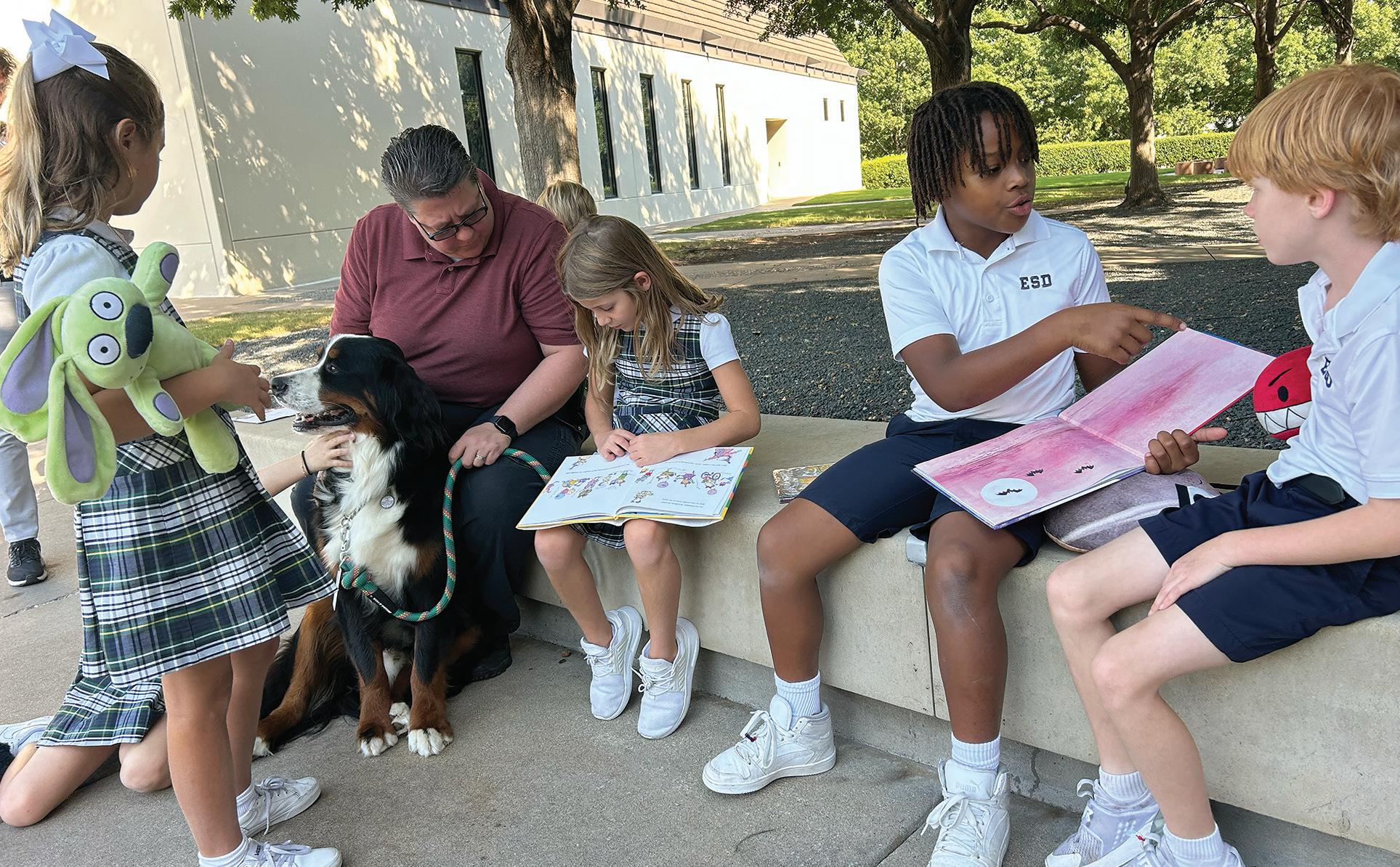
READING BUDDIES Lower school language lab class gathers outside of chapel to read with Davidson Bogel Milner Director of Campus Security Jody Trumble, Lukas the dog and stuffed animals. Photo provided by Katy Dailey
The Eagles Nest creates volunteer opportunities, working with students ranging from lower school to upper school.
Senior Riley Morrison, sponsored by Scottish Rite, runs marathons after scoliosis surgery.
Van Zandt
3:00 P.M.
4:00 P.M.
This Thanksgiving Break, I set out on a mission for the ideal holiday-inspired day in Dallas. My first stop was one I had heard many great things about, and it was the best way to get me in the Christmas spirit: The Dallas Arboretum's Christmas Village. As I walked into the Twelve Days of Christmas-inspired village filled with European-style buildings, lights, wreaths and every other Christmas decoration imaginable, I felt as close to being in Whoville as I will ever be. The scenery was intoxicating, and the food and shops were endless. While going during the daytime was exciting, according to others walking around, the true holiday spirit comes alive at night as the village beams with bright lights and festivities.
Holiday Hits in Dallas
In each issue, a staff member highlights a local gem in the DFW area. This time, Co-Editor-in-Chief Emmy Moss spends a day exploring Dallas to find the best way to celebrate the holiday season. From Christmas Villages to just driving around looking at lights, Dallas is filled with ways to spend your time during the holidays. The Dallas Arboretum's Pauline and Austin Neuhoff Christmas Village began in 2019, and has continued to embody the Christmas spirit through a recreation of the Twelve Days of Christmas. A longer standing tradition of ice skating at the Galleria has been around since 1982 and continues to keep people coming for the Christmas decorations and cheery feeling. Even the seeming basic stops such as Starbucks keep the holiday spirit going through their seasonal menu.


4:30 P.M.
6:30 P.M.
6:45 P.M.
7:15 P.M.


I made my way to a classic, Starbucks, for a drink and some snacks. Their winter-themed menu items were just what I needed to boost my energy for my quintessential winter day. I decided on the peppermint mocha while my friend carefully selected the sugar cookie latte. At the first sip, I was warmed up, refueled and ready to continue with just the right amount of peppermint to enhance the chocolate flavor. And, although the sugar cookie latte was not my forte, my friend loved it, and it definitely surprised me with its bold, sugary flavor. To accompany my latte, I ordered the cinnamon pullapart. As I pulled off one of the doughy balls, I was taken away by the smell of


After my trip to a world full of Christmas, I was feeling antsy for activity. That's when I made my way over to the Galleria to kill two birds with one stone: gift shopping and ice skating. Shopping was as crazy as always, with people rushing around trying to get in on early Black Friday sales, but as soon as we made it to the rink, everything seemed to stop with the sight of the humongous Christmas tree in the center. I have never skated at Rockefeller Center, but this experience seemed to be the closest, with the bonus of the rink being inside. Even without pro skating skills, this activity awakened the Christmas spirit in me, as the sound of family and friends whirling around the rink filled the area. After a couple of falls, I decided it was time to move on and get something to eat so I could continue my Christmas

8:30 P.M.
Worn out and mocha in hand, I drove around Highland Park, taking in all of the Christmas lights. Each house was decorated differently, displaying the different ways families take on Christmas festivities. Although the Christmas carriage rides seemed amazing, I preferred driving in my own car, where I could decide the route and turn on the seat heater. We took a stop at the famous house on Deloache, which covered its lawn and walls inch by inch with lights so bright you could see them from blocks away. As we made our way through the crowds of people headed to view the spectacle, we were surprised by the many details that continued to pop up. This house was a superb way to end our Christmas excursion, and after a day of running around Dallas, I was ready to go home, curl up and watch Elf.
ICE, ICE, BABY
From the operating table to the marathon trail: Morrison makes a comeback
Following a major surgery, senior Riley Morrison turns her recovery into a documented marathon journey
By Valentina Boltchi | Managing Editor
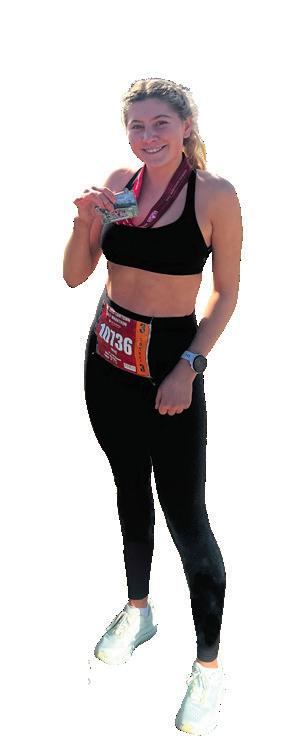
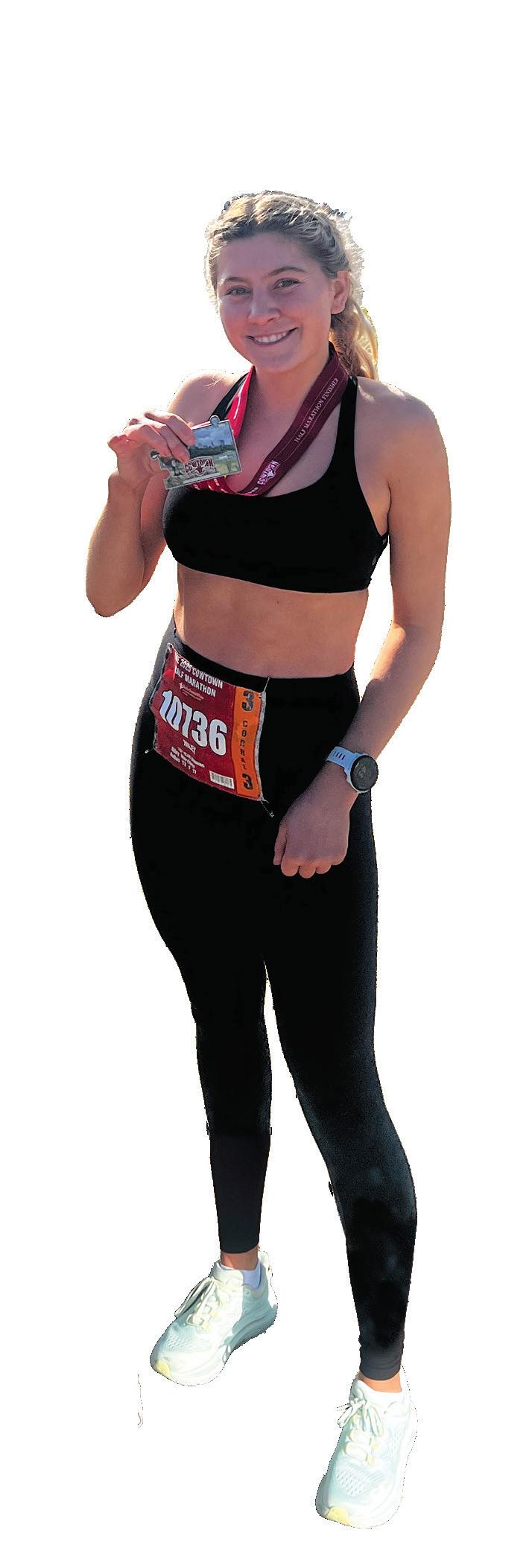
Senior Riley Morrison rolls out of bed at 4 a.m., straps on her weighted vest and embarks on her 20-mile morning run. For some, this regimen may seem extreme, but for Morrison, her upcoming marathon training requires sharp discipline and focus. After a major scoliosis surgery to fix a 60-degree curve in her spine, Morrison believed that running a marathon, let alone returning to athletics, would be impossible.
Morrison keeps her running journey digitally documented through her TikTok account “RileyRuns,” which she started in September 2024. She posts vlogs of her runs, including her time for each mile, calories burned and average pace. To date, Morrison has amassed over 75,400 total views on her posts, documenting everything from three-mile morning runs to 13.1-mile halfmarathons.
“At first, I just started the account as a way to stay accountable and share my runs with friends,” Morrison said. “But now it’s not only an inspiration for myself, [but] a way for me to inspire others to try things they never thought they could do.”
Morrison first began running in January 2024, after she had scoliosis surgery. Morrison was
told that after surgery, she wouldn’t be allowed to play any sports for six months to a year, holding her back from playing lacrosse and cheer.
“After surgery, I was completely lost, and I didn’t know what to expect with my sports,” Morrison said. “Not being able to play lacrosse in the spring or try out for cheer as I planned made me turn to running as a way to stay healthy and in shape.”
Morrison was recommended by her doctors and dad, an avid marathon runner, to try running as a way to keep healthy.
According to the American Association of Neurological Surgeons, 3 percent of the population in the United States suffers from scoliosis. Retired Assistant-Chief of Orthopedic Surgery at Scottish Rite Hospital, Dr. Charles Johnston, helped create some of the revolutionary technology that enabled Morrison to recover quickly.
“In the 1980s, the typical scoliosis operation was not done as efficiently; it had greater blood loss and much more dissection, making it harder to recover from,” Johnston said. “But the instruments were improved, and as a result, you could get a better correction, and it was more reliable. The biggest

improvement that was made was that the patients didn't have to wear something externally after the surgery.”
Morrison was able to participate in the Dallas HalfMarathon on Feb. 23, running 13.1 miles alongside her dad in one hour and 57 minutes. Almost two years post-surgery and a few months out from her halfmarathon, Morrison is training harder than ever. Her commitment to marathon training, despite her surgery, has inspired outreach from hundreds, including Scottish Rite, which is sponsoring her marathon journey.
“I was blessed to receive amazing care during my time at Scottish Rite for my surgery,” Morrison said. “I’m so happy that I can continue to share Scottish Rite’s message of recovery and positivity with others, maybe even those who may be discouraged after marathon training.”
Initially, the Dallas Marathon, which Morrison was planning on running in, was sold out. Morrison panicked as she had been training for months and almost signed up to run a marathon in another city as a result. However, her sponsorship with Scottish Rite was able to get her a spot in the Dallas Marathon. Morrison was also featured on CBS News for her journey, highlighting her journey from surgery to marathon training.
"I'M NOT SURPRISED THAT A WELL MOTIVATED YOUNG LADY LIKE RILEY IS BACK TO A SIGNIFICANT ACTIVITY LEVEL IN A SHORT PERIOD OF TIME BECAUSE OF THE TECHNOLOGICAL IMPROVEMENTS IN SCOLIOSIS SURGERY TOOLS."
Dr. Charles Johnston Retired Assistant-Chief of Orthopedic Surgery at Scottish Rite Hospital
“I’m not surprised with a wellmotivated young lady like Riley that she is back to a significant activity level in a short period of time,” Johnston said. “In that 40-year period since 1980, the medical instruments really changed for the better. That’s why Riley is doing as well as she is and as active as she is.” Morrison’s rigorous running schedule often makes it hard to balance academics, school sports and college applications as a senior.
“There have definitely been days where I'm supposed to run 15 miles but run three miles instead or fall asleep in class because of a 4 a.m. wakeup,” Morrison said. “But running has also made me more productive; it pushes me to move my body even a little bit, no matter how tired I am.”
With her marathon quickly approaching on Dec. 14, Morrison continues her training with the goal of reaching the finish line in under four hours. Even on her 18th birthday, Nov. 20, Morrison ran 18 miles, working every day towards her marathon despite obstacles.
“I hope that this marathon is the first of many, with goals to run in New York and Boston,” Morrison said. “Running hasn’t just become a momentary goal, but a lifestyle that I can continue for a long time.”
60-DEGREES LATER Side-by-side X-rays reveal Morrison's drastic transformation pre and post procedure, aligning her 60-degree spinal curve. "I feel like a brand new person after my surgery," Morrison said. "It completely changed the shape of my entire body and took away my pain."
Photo provided by Riley Morrison
C laSh the

Life Editor Beau McKnight dives into the latest pop culture showdowns, breaking down the battles that have everyone talking. This issue covers the genuineness of online social activism when social media influencers are able to monetize their content.
As the world undergoes immense change and long-standing institutions are dismantled, social activism online has skyrocketed in popularity. Influencers in particular have started leveraging their platforms to raise awareness on current issues by starting hashtag movements, changing their profile pictures and posting content to convey messages and demonstrate their support. However, as this activism has grown, so has a sense of skepticism as various forms of monetization opportunities have been created by apps like Instagram and TikTok. Many individuals, including myself, are now wondering: Is it possible to draw a line between genuine support and paid promotion?
Because influencers profit every time a user comments, shares, likes or simply views their content, social media has become a full-time career for many. Influencers can earn as low as a fraction of a cent, but with enough engagement, it is possible to earn thousands of dollars a day. This monetization has undoubtedly benefited countless families and individuals, even pulling some out of thousands of dollars of debt. However, the credibility of the content influencer's post is threatened when money is on the line.
Content creators base their content on what gets interacted with the most, so you never know what their true motives are behind the screen.
In addition to in-app monetization, affiliate marketing is also a growing phenomenon, as influencers share links with their viewers with each click bringing them profit. These links can be for clothing items or even for non-profit organizations, but the use of their platforms to spread awareness on these issues can and is sometimes paid, diminishing the ingenuity of their activism.
According to the Pew Research Center, 53 percent of American adults get their news from social media, so these influencers have a significant impact in shaping the American public opinion. When the country relies so heavily on this form of news, this social media monetization system creates a gray area in what to believe and what not to.
We are always told to be cautious online and that “everything is different behind the screen,” but it can be difficult to maintain this cynical way of thinking when it is being relayed by such a popular individual who has won over millions of people. The current “clash” is whether to assume best intentions and believe creators care about their activism or to remain skeptical.
While it may seem almost impossible to tell whether or not someone genuinely cares about a certain issue through a screen, TikTok has made it a bit easier. On videos that earn commission for clicks, a small portion of the screen is labeled “paid promotion” by the app, with the creator having no control over this. By adding this feature, viewers can tell when someone is getting paid, and possibly paid to say certain things.
The debate about monetization extends far beyond activism. Fitness journeys and wellness content is extremely popular as of late, yet they can also be extremely deceiving. Various smaller creators have experienced this deception firsthand, one providing an account of watching an influencer pose by a hiking trail, film a five-second clip and get back in their car to drive off. Likewise, online fitness coaches have had various procedures done to take the “shortcut” on their wellness journey, but withhold this information from their followers. As more of these manipulative influencers are exposed, followers have become distrustful towards what is real on this realm of TikTok and Instagram, versus what is manufactured.
Whether to remain guarded or not on this issue is up to you, but the internet in general now requires us to question the content we consume.
Student philanthropy during the holiday season
This holiday season, students are once again participating in the annual school-wide fundraising led by the Community Service Council and Student Council. From Noshember bracelets funding St. Jude Children’s Hospital, to the senior class selling Raising Cane’s for ALS research, students are directing their attention to serving the Dallas community during the holiday season.
Noshember allows students to purchase colored bracelets that grant them school privileges such as wearing a free choice of hoodies or shoes, or not having to shave for November. All money raised through bracelet sales goes directly to St. Jude, supporting families and children in need.
“[Noshember] is important because it is a friendly competition and inclusive activity for the entire student body to participate in,” Student Body Vice President Bauer Berkley said. “It has a greater meaning, though, when it is benefiting so many families and especially children during the holiday season, which can be an especially rough time for them.”
Additionally, the senior class has focused on donating the proceeds of its service towards ALS research. For students like senior Elliot Levy, whose father suffers from ALS, this tribute is especially meaningful.
“I have been working closely with the ALS Association to raise funds within my own team, Walk for Doc,” Levy said. “By rewarding people with [Raising] Cane’s, more people will be likely to contribute, and more money will be put into the funds.”
CSC has a theme for each month of the year. The month of December’s service aligns with ESD’s overall virtue of the month, which is also service. In the spirit of service, they have supported several charities and provided opportunities for the entire student body to get involved in.
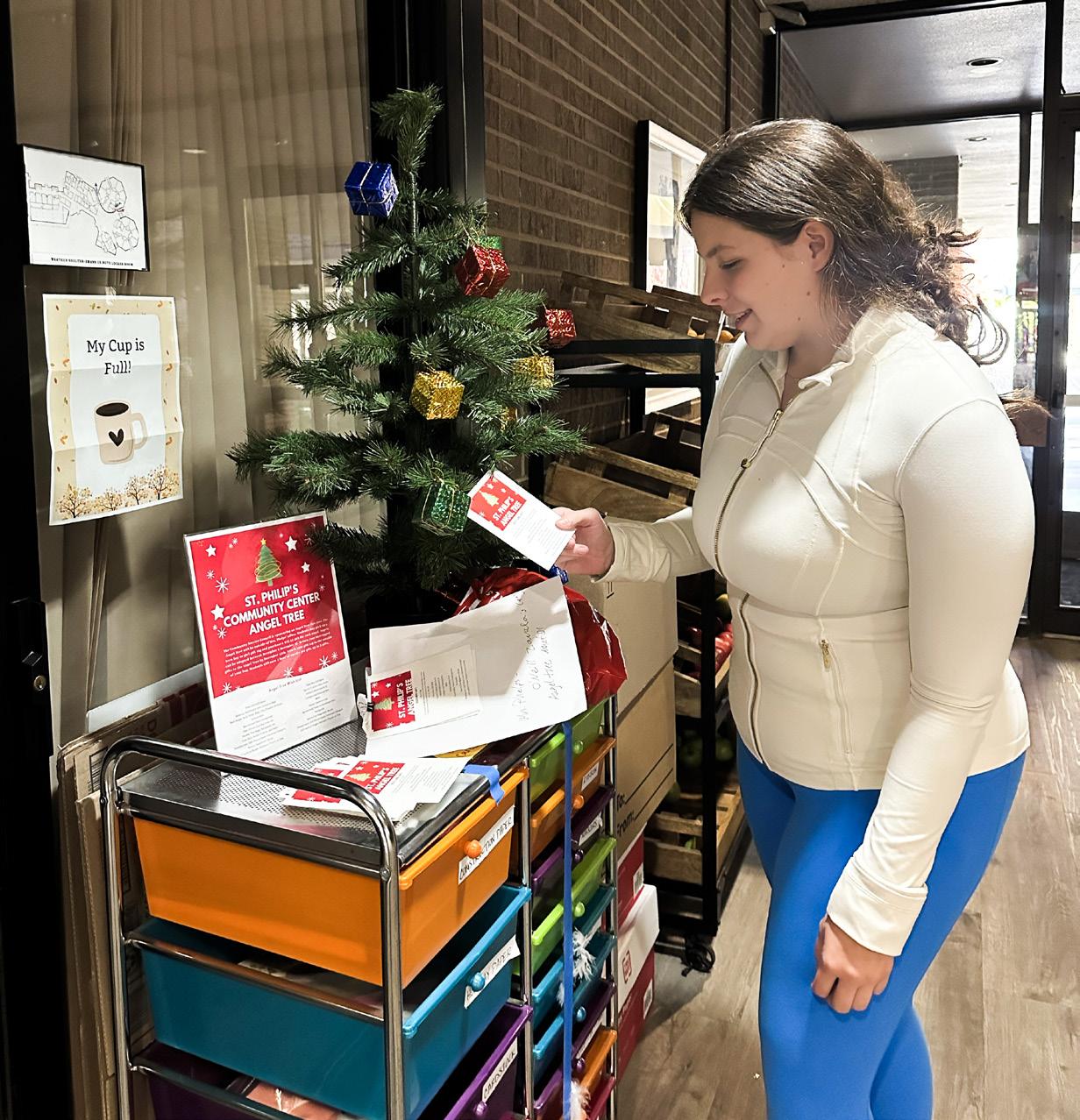
CSC, together with the Student Council, is hosting an Angel Tree drive for St. Philip’s Community Center from Dec. 1 to 12. Students will have the opportunity to pick up a gift tag for a teen boy or girl and purchase a gift on the recommended list.
“[The Angel Tree drive] enables children who might not be as privileged to receive and be surprised by a gift,” CSC sponsor Antonia Moran said. “It brightens up their day a bit.” Gifts are $15 to $25, but have a large impact on numerous
children and families on a cherished holiday who may be struggling to provide gifts. Suggested items include makeup, jewelry, toys and accessories, but also more basic items like T-shirts and socks.
“A lot of them are necessities [such as] shoes, socks and hats, things like that,” Moran said. “Many of us [at ESD] can’t imagine certain stresses that other people feel in regards to even necessities.”
CSC also hosted the Prism Health Thanksgiving Dinner Project from Nov. 17 to 21, for which students supported families by donating dinner boxes or writing letters of encouragement.
“Each person who contributed pretty much brought everything for an entire Thanksgiving meal, except for the turkey,” Moran said. “It’s all for families in need. Giving something, whether it be for Thanksgiving or Christmas, not only helps them but can also help lower our stress.”
"[NOSHEMBER]
IS IMPORTANT BECAUSE IT IS A FRIENDLY COMPETITION AND INCLUSIVE ACTIVITY FOR THE ENTIRE STUDENT BODY TO PARTICIPATE IN."
Bauer Berkley Student Body Vice President
Students can also earn community service hours by contributing to drives such as the ones for Thanksgiving and Christmas, acting as a further incentive to get involved. These serve as fulfilling opportunities for students to support a charitable cause through the little things while also enjoying rewards during the holiday and exam season.
“Raising money in honor of my dad and other people with ALS has offered me a new perspective on life,” Levy said. “It has given me the motivation to keep fighting.”
Student body unites through acts of service
By Gabriela Loewen-Eells | Staff Writer
To stay or to go: the challenges of off-campus lunch
A shortened lunch period forces students to consider convenience and budget
By Anoushka Sinha | Copy Editor
With one eye on the clock and the other on the exit to the parking lot, seniors decide whether it is worth risking traffic, time and money for an off-campus lunch.
Under the new schedule, what was once a less frantic break in the middle of the day has become a rushed calculation of distance, drive-through lines and whether a student can make it back to class on time.
From grabbing a quick bite to sneaking in a little break before class starts, each choice has its pros and cons, forcing students to weigh the options and plan each minute of their break.
“I probably go off-campus around one or two times a week,” senior Maddie Posten said. “If someone says lunch [doesn’t have many options], then I’ll be more inclined to go off-campus.”
Most students weigh their options, often checking the SAGE Dining menu before going off-campus. SAGE works to keep meals interesting and adjusts how
much food is prepared, especially on advisory lunch days when more students eat in the cafeteria.
“We actively seek input from our community and strive to introduce fresh, exciting options,” Sage Service Manager Rebecca Compton said. “Feedback is always welcome. Guests can share their thoughts through the SAGE App or occasional surveys we distribute. Especially when introducing new items without historical data on popularity, there’s some trial and error involved, but we work hard to ensure everyone has access to the same meal.”
Some of the more popular items, such as the “Sage-fil-A” meal, were created in response to student requests as well as in competition with local fast food chains.
“The idea started during COVID when we were delivering lunches to lower school,” Compton said. “Students requested something similar to a popular favorite, so we created our own version, complete with a signature sauce, a fried chicken sandwich and waffle fries. It was designed to
be a fun, comforting option during a challenging time.”
Even with high-demand options like “Sage-fil-A,” the cafeteria also focuses on nutrition.
The team works together to provide and create meals that are both tasty and healthy, giving students options at all times.
“We focus on creating meals that are both appealing and nutritious. For example, we always include lean proteins like grilled chicken and use our Variable line, next to Freestyle, to introduce interesting, balanced dishes,” Compton said. “Additionally, we’ve implemented Performance Spotlight twice a week, [which is] a concept designed for athletes that emphasizes nutrient-rich options to support energy and recovery.”
However, the decision students make on whether they stay or leave for lunch is not limited to dining options. Some students use lunch time and the off-campus privilege to go home and study, grab something they might have forgotten or take a break from the day.
“I only really go off-campus when I have study hall before or after lunch or if I have a class that I get out early, [so] that I can leave for lunch early just to make sure I have enough time to actually enjoy my food and drive there,” Posten said. “Also, sometimes I just go home and eat at my house, or I’ll pick up something and then go home. I’ll either bring my computer inside and work on something, or I’ll just sit in my bed and relax.”


Even for students who do leave campus, the cost of meals adds another factor to consider. A meal may costs around $15, which can quickly add up over the course of the year. Additionally, a meal plan is included as a part of the school tuition, costing around $9 per day, according to ESDPA Associate Head of School Ruth Burke.
“How much I spend really depends on where I go,” Posten said. “If I am going to Eatzi’s, I could spend like $20 to $30, which is a little crazy, but anywhere else I’d say is around $15 to $20. So in total I’d say [I spend] $40 a week [on lunch] max.”
Another reason students often decide to venture off-campus for lunch is to take advantage of discounts and specials offered by many off-campus spots, which can make a trip more appealing. Weekly deals at restaurants like Qdoba’s student discount every Tuesday, or loyalty rewards and points, can help make meals more affordable.
“So for lunch, I often pick places that I go to a lot, so as I go more and more, I can get rewards and discounts ... and that incentivizes you to go to the same place over and over again,” senior Layna Girata said. “I like having the option for off-campus lunch, but you kind of have to think about what's for lunch that day, how much you want to pay or what you're doing maybe in practice after school.”
For many students, the limited lunch period and tight schedule make leaving campus a stressful decision. Some choose to stay on campus instead, using the time to catch up on homework or meet with teachers. “I don’t go off-campus because lunch is so short and it stresses me out that I might not get back to class in time,” senior Elliot Levy said. “I like using my time to study, especially since senior hall is quieter during the days when a lot of people go off-campus.”

LUNCHTIME RUSH
Senior Evellyn Hargrave checks out for off campus lunch on Dec. 5. "Since I don't have a study hall, being able to go offcampus gives me a nice break from my busy day," Hargrave said. "I can go home and just decompress there or I can go to lunch with some of my friends."
Photo by Anoushka Sinha
From pink pines to intricate ornaments, students across every grade share their families’ Christmas trees this holiday season.
By Reese Rawson | Co-Editor-in-Chief

Bows, lights, happiness
With bright white lights and red bows at the ends of its pine branches, senior JR Whitman’s Christmas tree puts him and his family into the holiday spirit like no other. The glow spills into every room, mixing with the scent of pine and years of memories and nostalgia.
“My tree lights up the whole house and makes it feel like Christmas is here,” Whitman said. “Christmas always lifts the mood in my family, and it just makes us all really happy.”

EAGLE'S TALONTED TRENDS

A pink Christmas
Junior Estee Piccagli’s Christmas tree defies the traditional evergreen look. Her bubblegum-pink tree, decorated with sand dollar ornaments, brings a deeply sentimental feeling to her holiday season.
“We put our tree in our beach house in Sea Island every year, so the ornaments aren’t just any ordinary decorations; they’re sand dollars from the ocean that my family and I have collected,” Piccagli said. “The tree has more sentimental value because the ornaments are actually things my family has personalized.”
Ornamented
Sophomore Max Ornani and his family use decorating their Christmas tree as a way to spend quality time together. With a large velvet bow on the top of the branches of colorful ornaments collected over the years, the scent of fresh pine fills the living room as soon as you walk in.
“I love my Christmas tree because it’s so festive and jolly,” Ornani said. “It is so awesome to spend time with my family decorating it and putting all the ornaments on.”
Learning, volunteering in the nest
Faced with the need for a fifth position in the lower school’s Leaders in Action Program, Social Emotional Learning Coordinator Becca Gwinn looked for a role that could offer both purpose and practice. The Eagles Nest turned out to be the perfect fit.
“I realized most of the jobs we had already implemented were loosely aligned with the ESDistinction curriculum networks,” Gwinn said. “In my mind, working with the Eagles Nest fits with the business, entrepreneurship and marketing network.”
This fall, the Eagles Nest partnered with the lower school to offer fourth graders a chance to learn responsibility and practice leadership. Gwinn brought this request to the Eagles Nest staff in hopes of giving students a handson opportunity to apply the skills they learned in their Learning Lab class. In the first part of class time, they participate in discussions and activities that teach leadership skills. In the second part, they can apply the skills by helping around campus, which is the Leaders in Action section of the program.
“The goal is that the fourth graders can learn about their personal interests and what a business like the Eagles Nest entails,” Gwinn said. “They also love to help, no matter how small the task, so this partnership makes them feel valued and gives them a sense that their contributions make a difference. In addition, I saw this as an opportunity to build relationships in our community.”
For the Eagles Nest staff, the partnership has provided help and a new connection to younger students whom they rarely interact with. The hands-on tasks allow fourth graders to see how their newly acquired skills apply
to a real workplace.
“We didn’t know what to expect, and it’s just been such a win-win,” Eagles Nest Manager Gabrielle Harrington said. “We feel like it gives them a sense of ownership and responsibility before they are fifth graders next year and come in as customers."
The fourth graders come for 20 to 25 minutes, two to three times a week, to take on real store responsibilities. They’ve restocked food, organized merchandise, sorted school supplies, stickered items and even taken tours of the store and the back to see how it actually operates.
“There’s a lot of moving parts in the store, and so we throw them all kinds of different things to do,” Harrington said. “They are doing such a great job.”
While the program currently focuses on lower school leadership, its success has opened the door for a wider range of student involvement, including the upper school. Harrington and Eagles Nest assistant buyer April Cook and Harrington have already begun exploring ways for high school students to take part.
“We did do that last year,” Cook said. “We had a sign-up genius that Mrs. Phelps sent out, and it was a shift in the morning and a shift in the afternoon. We did have quite a few upper school volunteers.”
Cook and Harrington hope to see even more involvement this year as they talked with the Director of Community Service Learning, Courtney Phelps, who approved that these shifts will qualify for volunteer hours.
“We would love to have the high schoolers come in and get their hours because we value their input,” Harrington said. “We cater to you, and we love that it's a safe place for you guys to come in and
get your snacks, see your friends and decompress, but beyond that, we would love to get your input.”
This student feedback is especially valuable when the store meets with its major vendors.
Representatives selling Nike, Columbia, Under Armour and other brands regularly present new merchandise options to the Eagles Nest team, and a student voice is an important part of that process.
“[The vendors] pitch to us and we usually get a conference room, and they show us the items,” Harrington said. “We’ve been trying to get kids to come in to give their input. What’s great is not only do we appreciate it, but the vendors really like it. We would love to see more of that.”

Tree of togetherness
Bright glass ornaments, bows, ribbons and angels light up freshman Curran Ford’s Christmas tree. Each ornament carries a memory from vacations to family traditions, turning the tree into a collection of stories hanging from its branches. As the oldest sibling, Ford gets to help her younger brother and sister experience the magic of Christmas firsthand. “When we set [the tree] up as a family, we get to remember when and where we got all of the ornaments,” Ford said. “It's special to me because being together makes us happy.”
As Eagles Nest partnerships continue to grow, both the lower school teachers and store staff have seen how these small tasks build confidence and ownership in students at every level. Fourth graders leave their shifts discussing how much work goes into running the store, while upper schoolers gain insight into merchandising and decisionmaking through conversation with vendors. The collaboration has begun to reinforce a sense of community involvement among all divisions.
“[The Eagles Nest staff] are such patient and kind partners,” Gwinn said. “This job is a small way we live out the idea of one campus, one community.”
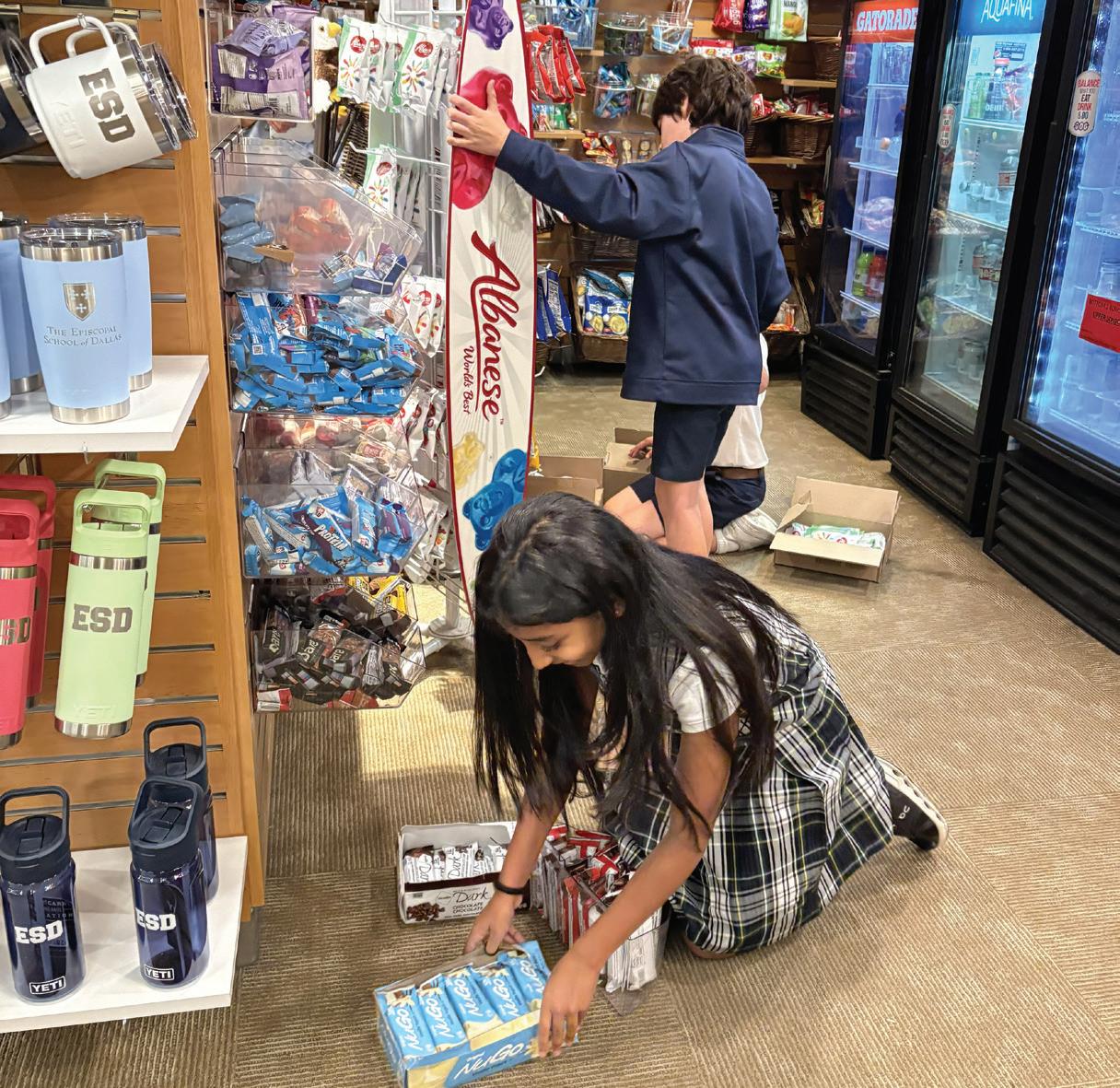
Eagles Nest gives a hands-on working experience to students
By Emma Allen | Business Manager
Senior Xander Monteiro builds his identity one brushstroke at a time.
ARTS

An earnest effort: play brings Wilde's wit to life
Upper school actors embrace the challenge of Victorian etiquette and rapid dialogue to deliver a lively, witty fall performance
Veda Bodhanampati | Staff Writer
As the audience entered the Bray Theater on Nov. 13, they were greeted by white walls, golden cutlery and grand portraits of a man with a large mustache and a woman with an elaborate dress. This exquisite scenography was created by the tech theater class for the play “The Importance of Being Earnest,” which ran until Nov. 15.
And when the curtains opened, senior Gio Sabella, who played Jack, captivated the audience with his comedic sarcasm and relentless monologue.
“[Performing] was a little bit scary, but I also was excited to show off what I was rehearsing for so long,” Sabella said. “It was also a little sad, as I am a senior.”
“The Importance of Being Earnest,” written by Oscar Wilde in 1895, features friends, Jack and Algernon, who create “double lives” in order to escape their societal expectations. The play utilizes comedy to highlight the constraints of society, the frivolities of marriage and the triviality of the upper class. Jack pretends to be a scoundrel named Earnest, and his goal is to propose to Gwendolyn Fairfax, a socialite who deems she is in love with any man named Earnest.
Algernon also decides to utilize the name Earnest to pursue Jack’s ward, Cecily. Along with Gwendolyn, Cecily also fantasizes about men who pronounce themselves as Earnest. Wilde’s play intends to satirize Victorian society by creating irony within the characters. Through the characters’ dialogue with one another, the script created laughter among the audience and embedded the comedic aspect of the play.
"[The play] is really a dig at the false social morals and expected behaviors of Victorian England,” Upper School Technical Theater Director Ronnie Watson said. “I think it could probably still be applied today to some of the silly things that we still do. It's still very, very timely and relevant. Think of all the silly things we do just in the name of tradition.”
Directors often decide which play they should put into production based on who auditions. “The Importance of Being Earnest” was chosen this year because the directors felt that the actors embodied the characters
of Wilde’s play.
“In our case, you [need] to have the right folks to cast in the play,” Watson said. “It really depends on which actors you have and who's available and who's not. We decided to do this [play] because we thought we had the right actors to do the show. We always have a fair amount of people who audition. It's a matter of fitting actors to the particular role.”
According to senior Evellyn Hargrave, who played Gwendolyn Fairfax, the plot itself isn’t what makes the show; it’s the script.
"[THE
PLAY] IS REALLY A DIG AT THE FALSE MORALS AND EXPECTED BEHAVIORS OF VICTORIAN ENGLAND. I THINK IT COULD PROBABLY STILL BE APPLIED TODAY TO SOME OF THE SILLY THINGS WE STILL DO. THINK OF ALL THE SILLY THINGS WE DO IN THE NAME OF TRADITION."
Ronnie Watson Upper School Technical Theater Director
"This script is hilarious, and was so satisfying to play with because the characters are so convinced of what they’re saying,” Hargrave said. “You can’t play the comedy. The laughs come from when the character is fully committed, that it is comical these people exist.”
The actors focused on embodying their characters’ demeanor and mastering how they should act during the Victorian era, a time when a person’s status dictated how they were treated by the wealthy aristocrats of high society.
“My character was someone who is used to getting what she wants because she knows exactly what to say and do to get what she wants,” Hargrave said. “However, she is also someone who follows the rules of high society, and that
plays into how she goes about getting what she wants. With this, the most challenging part was making certain jabs or inquiries indirectly, where it comes off really polite, but there are some ulterior meanings behind it.”
The scenography of the show was its own story; their main goal was to take the audience back in time, where bay windows and stained glass were the ultimate trend. Tech theater knew that they had to act effectively and quickly in order to create stunning backgrounds.
“Our vision for the scenery for the play was to indicate, as realistically as possible, true Victorian interiors exteriors,” Watson said. “We certainly had to edit in order to make the scenic changes possible and have them occur quickly…I thought we had a really nice process to [have] the technical elements come together this time. I wasn't worried that we weren't going to get finished. I found that a few well-chosen pieces of furniture were all that was truly needed to speak to the period.”
There were three different backgrounds created for the play. The first one was the morning room of Algernon's apartment. The second was in the garden at Jack's country home, where Cecily resides. The final background was the drawing room of the country home. Parts of the backgrounds were meant to demonstrate symbolism. Tech theater utilized unique objects in order to create these certain parts.
“The gigantic portraits in the first act were meant to emphasize wealth,” Watson said. “My favorite idea was to include a greenhouse structure in the rose garden for the second act. It was certainly a challenge to figure out how to make that happen without building a true greenhouse structure. We used a lot of non-traditional materials, such as foam, because it only had to look like the real thing. I love that most of the millwork in all of the scenes was not truly wood, just painted to look like it.”
The play featured a similar pattern to recent performances. Each of the past three productions the theater program has performed has been based on British works.
But this year’s play held its own challenges as the script contained significant amounts of lines for each cast member to study
and remember. The immense memorization was a difficult task to achieve, but was accomplished in the end.
“The lines are really hard to memorize, and each character speaks almost in a paragraph at a time,” Hargrave said. “They're speaking for pages on and on. I'm very proud of how much work we put into [memorization]. When you have full paragraphs and monologues, the most important thing is levels and making sure that there are multiple different highs and lows of what you're saying within the paragraph. I think everyone has done a really good job with their character work.”
During rehearsals, cast members aimed to support their fellow actors to succeed in their lines and performances. Rehearsals this year were filled with laughter and cheering for one another.
“Play practices are fun because it's a much more intimate kind of work,” Hargrave said. “There are [fewer] people, and you're working close together. It’s all lines of dialogue. There are a lot of moments where someone can mess up something they say, and everyone just starts laughing. Lifting each other up also comes with putting in the work and having respect for one another to do that.”
When watching the play, it was hard to remember that the actors were still high school students and that balancing schoolwork with rehearsals often felt overwhelming for them. But with the assistance and grace of teachers, juggling school and theater practices was easier for these actors to manage.
“I have a rigorous course load, so towards the end [of the play], and [with] juggling college apps, [balancing rehearsals and schoolwork] was a lot,” Sabella said. “It was for sure worth it, and teachers were very flexible.”
Teachers understand the pressure of the actors and technical members and acknowledge that the cast works relentlessly to deliver an outstanding play for all to enjoy.
“Teachers have been very kind and generous when it comes to understanding that [the cast] is here very late, and there's a lot of work to do,” Hargrave said. “They're very kind, and I've not had that much schoolwork to do [the week of the play].”

BEHIND THE SCENES
Upper schoolers Gianluca Sabella, Harper Cernoch, Gio Sabella and Evellyn Hargrave rehearse scene 3 of the play and prepare for their opening night on Nov. 13. "The most important part of any shows I've been in is how close everyone gets by the end of it," Gio Sabella said. "It's nice to become closer with people that you don't interact with much until the stage."
Photo provided by Lauren Redmond
By Emma Allen | Business Manager
for creating Xander Monteiro Shaping the noise ee y
Senior Xander Monteiro has always created art, even before he realized it. For him, art has become a grounding force that helps him reflect and process the chaos of everyday life.
“I focus on abstract art,” Monteiro said. “I have always been making art, even unknowingly.”
Monteiro’s early connection to art quickly grew into a habit he relied on. As he experimented with materials and styles, he found himself drawn toward a way of creating that revealed images and emotions beneath the surface.
“My artistic style is figurative,” Monteiro said. “Literally, when I make my art, I see people and faces, and ideas all in shapes of a figure.”
Throughout high school, Monteiro has strengthened his technique by learning from mentors and studying artists who shaped his perspective. He credits upper school fine arts teacher Juan Negroni as his mentor. He is also inspired and influenced by the work of French painter and sculptor Jean Dubuffet, an École de Paris artist who lived from 1901 to 1985. He also draws inspiration from his childhood. These experiences fuel a creative process that rarely slows him down and pushes him to constantly explore new ideas and forms.
“I’m always working on something,” Monteiro said. “I have to, otherwise, my head gets full.”
For Monteiro, the constant need to create keeps him balanced, allowing him to deal with fast-moving thoughts and daily stress. The act of making art turns internal noise into something structured and meaningful.
“I was born sparked, but if I had to give a reason, art calms me down,” Monteiro said. “It allows me to recenter myself because I always go, go, go.”
The calming effect art has on him is what led Monteiro to develop some of his most meaningful work. As he experimented with different approaches, one piece in particular helped him define the direction of his style.
“I’m most proud of my ‘Father and Son’ piece,” Monteiro said. “It is what really started my style of art.”
Looking ahead, Monteiro hopes to continue refining his style and exploring new mediums. He sees art school as the next step in growing both his craft and his understanding of himself as an artist.
“I plan on going to school for art,” Monteiro said. “Hopefully, I will profit from it enough for it to be my career.”
As his portfolio grows, Monteiro sees his art not only as a skill but as an extension of himself. It reveals layers of his character and the way he interprets the world around him.
“My art now shows my personality and how I think,” Monteiro said. “I see the world inside of the world.”

Senior Xander Monteiro's abstract artistry and the ways he fuels his creative process






Upper school student Natalie James* has noticed herself pausing in front of the bathroom mirror more often. She studies her reflection, subconsciously comparing her appearance to that of the models and influencers on her social media feed. What used to be a quick glance has become a habit of focusing on small imperfections, leaving her saddened by “flaws” she never used to notice.
Perfection Teens W
ith the prevalence of social media in teen life, teens are exposed to a barrage of filtered, curated posts that appear effortless but have taken hundreds of shots to achieve. When faced with unrealistic beauty standards, it’s common for teens to struggle with selfimage, leading them to follow trends and seek cosmetic procedures that alter their appearance to mimic what they see on social media. Assistant Professor of Plastic Surgery at UT Southwestern Medical Center, Dr. Christine Stiles P’27, believes that social media impacts teenage selfimage now more than ever.
“People forget that a lot of times you see people on social media through filters or touched up,” Stiles said. “They may not really look like that in person, but that’s the image that keeps getting put in front of everybody. It's really impactful on [teenagers] because you’re just constantly comparing yourself to other people and how they look. It's much more of a constant influence than it was 20 to 30 years ago.”
Beauty standards, the physical features society deems most desirable, have become readily accessible on social media. Users on Instagram and TikTok can scroll through clips that algorithmically prioritize “ideal” facial features and body types, subtly shaping viewers’ opinions of what is considered attractive and influencing what people believe they should look like.
“I feel like social media displays a set of standards that you are almost expected to fulfill,” James said. “And those standards are unachievable because people online are posting edited, filtered versions of themselves and [are] only posting the pictures of themselves where they seem confident in their own body. When you compare yourself to celebrities, influencers or anyone else in your feed, you feel like you have to change things about yourself to fit the standards they’ve put out there.”
Not only does social media set global beauty standards, but it also serves as a platform for advertising products promising to help achieve a “perfect appearance,” such as infrared face masks for glowing skin and fitness supplements for rapid muscle gain. James confesses that she’s often overwhelmed by the sheer number of trends in her feed.
“Trends change so fast they contradict each other, and it’s all driven by sales,” James said. “Companies target your insecurities because they only care about profit, not the harm they cause. Influencers follow along because their income depends on brand deals and promoting whatever trends sell. Companies create the trends, convincing you that you’re not ‘enough’ without their product, and then influencers deliver the message.”
Beyond purchasing trendy products, many teens are seeking cosmetic procedures for more noticeable changes to their appearance.
A 2024 study from the American Society of Plastic Surgeons found that teen plastic surgery rose 60 percent, and 46 percent of American teens have considered surgical and non-surgical cosmetic procedures such as lip-filler, rhinoplasty and liposuction. Stiles has noticed that teen patients seek these cosmetic procedures to look like the celebrities on their social media feeds.
“The thing with cosmetic procedures is that they’re always driven by the celebrities who are popular,” Stiles said. “People like Kylie Kardashian, who started getting lip injections as a teenager, make it seem like that’s a normal thing, and they change the idea of what a 17 or 18-year-old looks like.”
As celebrities undergo procedures to fit the beauty standards set by their peers, James adds that the costly nature of procedures makes it impossible for the general public to keep up.
“It costs a lot of money to get these procedures done,” James said. “The Kardashians have the kind of money that they can keep changing their appearance. They have gotten work done and had that work reversed, which shows that trends are only temporary. You’re not going to be able to follow them all the time.”
Additionally, "Instagram dolls,” young patients who have received multiple cosmetic procedures, are documenting their experiences, showing the results and reaching teen audiences.
“More and more teenagers feel the pressure of plastic surgery,” Stiles said. “If you think about it, 30 years ago, younger people didn’t have exposure to these sorts of things. Plastic surgery was always something that older people did, whereas now, it's become more common. There are more options, and there are more minimally invasive procedures. I think in society, more people are open to talking about the procedures they’ve had.”
Upper school student Lindsey Gaines*, who underwent a rhinoplasty earlier this year, was influenced by friends who previously had the procedure.
“I’ve broken my nose three or four times, so I wanted to see if [a procedure] could make it straight,” Gaines said. “I have always been very insecure about it, and my nose was my least favorite part of my face. I went to a consultation, and [the doctor] was able to show me a 3D scan of what my nose would look like when it healed from surgery, and I loved it. I said, ‘I want to do it,’ and we booked the surgery that day.”
Gaines is not the only ESD student who has chosen to undergo a rhinoplasty.
“A lot of my friends have had the exact same procedure,” Gaines said. “A few more of them are talking about getting it, for a mix of both aesthetic and health reasons.”
Driven by the trend of looking “super skinny,” more people are using GLP-1RAs, like Ozempic and Wegovy, for rapid weight loss.
Originally intended for Type 2 Diabetics, GLP-1RAs mimic a gut hormone that slows digestion, reduces appetite and regulates blood sugar. Upper school student Kenny McKormick* has seen this trend up close in his own family.
“My older sister started using Ozempic when she went to college, when it became popular on social media,” McKormick said. “I remember her coming back at break and looking very different. I was surprised to find out because it’s hard to know that someone has been struggling with an insecurity on their own like that.”
According to the American Society of Plastic Surgeons, the number of female adolescents ages 12 to 17 using GLP-1RAs for weight loss increased by 588 percent, and the number of male adolescents increased by 504 percent in 2024. McKormick’s 17-yearold friend also began using Ozempic earlier this year.
“It’s really a sad thing to see because I didn’t know she struggled with her looks that much,” McKormick said. “She’s changed a lot since she’s been on [Ozempic], and I honestly don’t think it’s helped her with her self-image. It’s really weird to see what people are doing to lose weight in our society, rather than working out or dieting. Only recently have people our age started doing this stuff, because of what we’re seeing online promoting it.”
Even though social media can be harmful to teens’ self-image, some creators make an effort to share real, unfiltered versions of themselves and their struggles with self-image.
“There are people who do try to be real with their followers,” James said. “There are people online who try to spread body positivity, and they can be really helpful to teens who are struggling with body image and show that it's okay not to meet the unattainable beauty standards.”
Mental and Physical Health at Risk
With today's demanding beauty standards, doctors and psychologists argue that teens' mental well-being, self-esteem and even physical health are at an all-time low.
According to the National Association of Anorexia Nervosa and Associated Disorders, a 2023 study revealed that there was a 93 percent increase in adolescents' disordered eating-related medical visits. As teens change themselves to fit the mold society deems "worthy," they disregard whether or not their psychological well-being is at risk. Licensed professional counselor and play therapist Eve Wiley P’33, ’35 and ’37 at The Housson Center, a multidisciplinary psychological and educational practice states that the unrealistic standards adolescents are surrounded by can lead to the development of mental health problems.
“Honestly, teens today are growing up in a world where they’re comparing themselves not just to their classmates, but to millions of filtered, edited and perfectly curated images every time they open their phones,” Wiley said. “It’s exhausting.”
Having worked with many teenagers, Wiley has found that the pressure to meet unrealistic beauty standards plays a major role in fostering a perfectionist mindset.

“Over time, [the] pressure [to meet these standards] can turn into perfectionistic thinking, where teens start to tell themselves ‘I have to look flawless’ or ‘If I just work harder, I can look like that,’” Wiley said. “The problem is the standard isn’t even real. You’re trying to win a game that’s rigged from the start, and that takes a real toll on mental health.”
Much like Wiley, pediatrician Dr. Jennifer Wheeler at Preston Centre Pediatrics acknowledges the medical risks teens face when they slip into perfectionist thinking patterns.
“Beauty standards are not realistically healthy for most people,” Wheeler said. “Perfectionism is one of the strongest risk factors for [developing] eating disorders, [along with] other factors like Type 1 Diabetes, [exposure to] family members with an eating disorder and genetic predisposition.”
Considering that teenagers’ brains are still developing, Wiley argues that this makes them especially vulnerable to adopting unhealthy habits in an attempt to meet unrealistic standards portrayed online.
“A lot of it has to do with your current developmental stage,” Wiley said. “During the teenage years, your brain is wired to care a lot about belonging and approval; that’s normal. Add in social media algorithms that push more and more ‘ideal’ bodies into your feed, and it becomes [tough] not to compare yourself and fall into what we call the ‘comparison trap.’”
According to a survey conducted by ANAD, over 70 percent of people with eating disorders also struggle with other mental health conditions. Wiley has found that teens who are already inclined to overachieve in other aspects of life are particularly susceptible to developing harmful habits.
“People are especially vulnerable if they struggle with self-esteem, anxiety, depression, obsessive-compulsive disorder or if they’re naturally more perfectionistic and rigid in their thinking,” Wiley said. “Sometimes, even small comments at home or at school about weight, dieting or appearance can make that pressure heavier.”
Wiley believes that teens have been conditioned to equate their worth with what they consume rather than focusing on their mental health, amplifying the number of teens who fall victim to purchasing products to meet unachievable beauty ideals.
“It’s not a sign of weakness; it’s a very human response to a culture that’s louder than ever,” Wiley said. “We are at the mercy of marketing from big corporations that prey on consumer behavior. They play a part in making us believe that if we buy a product, we will get a certain result.”
Teenagers also often over-exercise and excessively diet to cope with feeling “unworthy,” heightening their risk of developing serious medical conditions and health problems.
“Teens run into several health risks when they start to develop [disordered eating habits],” Wheeler said. “Bradycardia, loss of bone density, loss of muscle, overuse injuries and eroded tooth enamel from vomiting are all examples of this.”
Wiley explains that these unrealistic expectations don’t affect just one gender; they affect both boys and girls in distinct ways.
“Both boys and girls feel the impact, just in different ways,” Wiley said. “Girls often feel pressure to be thin, toned and effortlessly perfect, which can lead to skipping meals, overthinking food choices, obsessively tracking calories or getting stuck in comparison loops on social media. Boys face a different version of the same pressure to be muscular, lean and ‘ripped.’ Many feel like they need to hit the gym constantly, bulk and cut or use supplements to keep up.”







Teens grapple

with the price of
Perfection


| Web Co-Editor Barrett Coble | Web Co-Editor Gracie Nealon | Opinion Editor | Web Co-Editor Gracie Nealon | Opinion Editor
According to Wiley, multiple warning signs can indicate someone has begun to adopt unhealthy eating habits, revealing underlying mental struggles.
“The early signs can be subtle,” Wiley said. “Things like suddenly getting really strict about food, skipping meals or eating alone, constantly weighing themselves or checking mirrors and drastic changes in exercise or body goals are [some examples]. It’s rarely about the food; it’s usually about trying to cope with something bigger.”
Self-Image and Student Life
Societal beauty standards are not new, but they are reaching a wider and younger audience. As trends evolve and fluctuate, teens around the world are forced to grapple with inconsistent and unrealistic standards that describe what “perfect” appears to be.





Specifically at ESD, boys and girls must navigate the ever-changing beauty standards they are confronted with, while also managing shifting friend groups, academic achievement and young adulthood. Upper school student Mia Cameron* described how dealing with insecurity about her appearance has always been a part of her life.
“I have struggled with body insecurity probably since I was a preteen,” Cameron said. “I think growing up with social media, all you see is the ‘ideal body type.’ It's a really toxic environment because you’re always surrounded by reminders of the fact that you’re not perfect.”
Just like other young girls who spend their childhood attempting to live up to society’s expectations, Cameron has spent thousands of dollars on products that will seemingly help her achieve “the perfect look.”
“I have bought a lot of makeup over the years,” Cameron said. “I would like to say that I wear it because it makes me feel good, but if I'm being completely honest, it is to go along with beauty standards. I think that's something in the back of every teenage girl's mind, that she wants to fit in, be accepted and be thought of as ‘pretty,’ according to whatever the beauty standard is.”
Another factor that contributes to insecurity, according to Cameron, is school dances. Along with the excitement of wearing a brand-new dress comes the dread of showing more of one’s body.
“I always feel very self-conscious during the weeks leading up to a dance and even at the dance itself,” Cameron said. “I want to look just like the other girls in my grade, in a way, and that means tanning, wearing makeup, doing your hair, having your nails done and just also feeling confident in your body. It’s always pretty anxiety-inducing because I want to look my best, and I want to feel pretty and feel accepted. I always feel like I’m never doing the right thing to properly fit in.”
Teenagers tend to feed off one another’s insecurities. James explained how having friends who obsess over their insecurities made her more susceptible to identifying things she wished she could change about herself.
“One of my friends would always talk about herself really negatively, and it did make my friendship with her very difficult,” James said. “When I'm around people who are talking so poorly about themselves, it makes me think I need to be judging myself, too. I started thinking, ‘If this wonderful person thinks they're so flawed, then what am I?’”


Body insecurity is common among teenage boys as well, although it is not something they often feel is acceptable to admit. Upper school student Jason Wayne* is someone who has struggled with both body image and the silencing pressure that comes with being a teenage boy.
“I struggle specifically with body dysmorphia regarding my physique,” Wayne said. “Body dysmorphia is basically when you do not see yourself as ‘full’ or good enough, despite what is [reflected] in the mirror. Personally, I think I'm way too skinny, so I buy a ton of supplements to help me bulk up and get more fit. In other cases, I know a ton of people who also go on crazy diets in an attempt to lose weight. If I ever take a break from the gym or start doing lighter weights, I genuinely start to hate myself.”
Unless something changes, the influence of over-promising beauty products, exposure to unrealistic body standards on social media and harmful stereotypes will continue to create feelings of isolation and insecurity in young people. Cameron offered her perspective on the constant comparison that makes up our world.
“I think the main problem is isolation,” Cameron said. “There’s no one type of ‘pretty,’ and I think being able to acknowledge that and help people understand that they're not alone in this feeling of just never being enough, that could really help people feel more secure and seen.”
Allowing oneself to truly appreciate the unique qualities about themselves—both internal and external—can help lessen one’s insecurities. Although the act of self-love is not easy, it is the starting point for building self-confidence.
“The key is not to let how you think you look determine your entire life,” Stiles said. “What I mean by that is everyone has things about themselves that they like and that they don’t like. You’ll be much happier if you focus on the things you like about yourself.”
*Names have been altered to protect the anonymity of the students.
PERCENT OF STUDENTS compare themsevles to others, physically
PERCENT OF STUDENTS struggle with self-image
PERCENT OF STUDENTS know a teen on Ozempic
PERCENT OF STUDENTS know of a teen who has undergone a cosmetic procedure
83 61 45 75 71
PERCENT OF STUDENTS know of a teen who exercises excessively
Source: Dec. 9 poll of 120 ESD students
OPINION
STANCE
Financial literacy and other necessary "life skill" courses should be added to graduation requirements
In high schools across the nation, students often pose a familiar question: “When am I going to use this course material in the real world?”
While students occasionally use it as a form of pushback to undermine teachers’ difficult lessons, the question highlights the concern that certain required courses are only applicable to a specific niche of students.
High school gives students a new level of freedom when it comes to course selection, and this freedom increases every year. Graduation requirements, however, can put students across all grades in situations where they have to sacrifice a course they are interested in for a requirement they don’t plan on utilizing in their personal or professional lives.
A foundation in the core classes, such as in math, science, English and social studies, is essential for students to thrive in high school, college and beyond. However, high school years are also a time when students can learn indispensable life skills early on that will be used regardless of their future career paths.
As a staff, we believe that while the current requirements are necessary, the high credit demands prevent students from taking courses that would benefit them more broadly.
Many alumni consistently express how much ESD’s current course levels and paths prepared

The key to leadership success is mentors to guide you
By Kate Lewis | Social Media Co-Manager

Lthem for college, and it may be possible to make an even greater impact on these college and postgrad students’ lives by making a financial literacy course required, which is a growing trend for many high schools across the country.
LESS THAN 30 PERCENT OF HIGH SCHOOL GRADUATES FEEL PREPARED FOR COLLEGE AND THE REAL WORLD.
Gallup and the Walton Family Foundation Recent Poll
Upper school history teacher and Business, Entrepreneurship and Marketing Network Coordinator Amy Livingston’s Financial Literacy course teaches skills such as money management, tax paying and wealth accumulation, all of which are tools everyone will have to use once they enter adulthood. It is not currently a required course, and the benefits of a course like this one may not be felt at the moment, but when the time comes to pay that first bill, the process would be significantly easier.
A 2025 tax literacy poll by the U.S. Tax Foundation found that across all socioeconomic backgrounds, over 50 percent of individuals are classified as “beginners” in tax literacy. This not only poses a personal challenge for the individual but can also cause a country-wide negative perception of the taxpaying system—something that a solid education in this area could resolve.
Aside from making a financial literacy course a requirement, an “Adult 101” or “Personal Development" course could teach students across the span of a semester other beneficial skills such as critical thinking, etiquette, interpersonal skills, safety and how to properly navigate the ever challenging healthcare system, as well as emphasizing the power of independence.
Incorporating classes like these ones would take stress off of parents, make entering the real world easier for students and strengthen the bridge between their academic and personal lives. These courses could also create the opportunity to combine the curriculum of current courses, such as Health, with a class covering a broader scope of general life skills.
According to a June 10 report from Jobs for the Future, Gallup and the Walton Family Foundation, less than 30 percent of high school graduates feel prepared for college and the real world, so these classes could
increase this percentage and help graduate a more capable generation of young adults.
Another area young adults struggle with upon entering the real world and take on new highstakes responsibilities is taking care of their mental health. A 2022 study by the National Institute of Mental Health reported that young adults ages 18 to 25 have the highest prevalence of any type of mental illness, at 36 percent. That said, teen mental health grows even more complicated with the use of social media and technology in an ever changing world. A media literacy course could teach teens how to manage digital stress to combat what often leads to a lifetime of mental health challenges.
The ability to confidently live alone with little dependence on others is something that many individuals strive for, and these classes might offer a way to achieve it.
As students, it is a common feeling that schoolwork can sometimes be a burden, but incorporating life skills into school would give classroom learning an even greater purpose. ESD provides a broad range of course choices, and students want to get the most out of the high-level learning that takes place here by focusing on both academic and personal studies. There is no better way to “ignite lives of purpose” than by equipping students with all of the tools they need to succeed.
KATE's TAKE ON LEADERSHIP
eaders often carry their titles and responsibilities alone, but they don’t have to. Many successful leaders rely on mentors who offer guidance, advice and encouragement.
I believe that having an inspiring mentor is an essential component of successful leadership. However, choosing a mentor can have its own risks. Following and learning from the wrong adviser can be discouraging or even damaging. Understanding both the benefits and potential hazards of having a mentor is important for any leader.
Mentors serve as living examples of leadership, providing a path for you to follow as you emerge as a leader. Michael R. Bloomberg, founder and majority owner of Bloomberg LP and the founder of Bloomberg Philanthropies, was able to accomplish much of his success with the help of his mentor, Billy Salomon, businessman and former managing partner of Salomon Brothers. Bloomberg was inspired by Salomon’s work
ethic and morals. In his speech at Salomon’s funeral, Bloomberg explained that while Salomon offered him advice and support, the most inspiring aspect of his mentorship was the example he set. According to Forbes, Bloomberg is worth around $104.7 billion, and Bloomberg made remarks at Salomon’s funeral crediting much of his success to Salomon.
While guiding, mentors encourage you and build confidence, especially when you feel like you aren’t doing your best. Leadership is full of changes, and it can be overwhelming at times. A mentor will ground you in those moments and help you overcome them. Arguably, the most important aspect of a mentor is accountability. Mentors have most likely experienced the same difficulties and responsibilities that all leaders inevitably face. As a mentor and role model, they will teach you about their own mistakes and hold you accountable when you fall short of their expectations. All leaders face moments of weakness, but that is when we learn and grow the most, especially with the help of our mentor by our side.
While mentors are valuable, sometimes they can steer you in the wrong direction.
They can become fixated on instilling in you their own ideals, discouraging individuality and rejecting all ideas that aren’t their own. Senior Beau McKnight is motivated as the lacrosse captain to lead in the opposite way from a former mentor. McKnight noticed the way she was led before and the negative effect it had on the team. Her observations motivated her to be the leader she is today.
I think the phrase, “I want to be you when I'm older,” can be toxic. The value in any good leader, whether they are a leader in politics, in the classroom or on the field, is their authenticity. Each person's gifts and talents are what make them a wonderful leader. A leadership style that works for one person may not work for you. As you follow your mentor, remember that you are your own person, destined for your own greatness.
Personally, my mentor, role model and friend is Tessa Cabrales ’25. During my sophomore year and Tessa’s senior year, we were placed in the same stunt group for cheer. After spending every day after school together, we instantly became close. I admired her positivity and the light she radiated everywhere she went. As student body president, Tessa led the upper school, but as my mentor,
she led me in my own leadership journey. While planning the winter dance, I went to Tessa with all my questions, and not only did she answer them, but she was my biggest supporter as well. Outside of student council and cheer, Tessa always soothed my stress and brightened my mood. After undergoing surgery for my knee reconstruction, Tessa was the first person to sit on my couch with me and comfort me while I was immobilized. That is what makes her a great mentor. While her advice and leadership are admirable and always helpful, her genuine care encourages me every day. Even though she is one of my closest friends, I have so much respect for her and hope to leave half as much of an impact on the community as she did. Mentors reflect possibilities. Good mentors inspire us and warn us of what to avoid. Even when mentors sometimes present challenges or negative influences, those hardships are what help people grow and learn. Mentorship can enhance a person’s leadership and is valuable for leaders of all levels. Their guidance is important, but a mentee’s individuality is irreplaceable. While great leaders embrace their mentors, their own individuality should always shine through.
Podcast Co-Editor Craighton Jefferies reviews María Andrée Boutique Bakery's festive holiday treats.
The staff stance reflects the opinion of the Eagle Edition staff, and it does not reflect the opinion of the school, newspaper advisor, faculty or staff.
what'sCOO
María Andrée Bakery
By Craighton Jefferies | Podcast Co-Editor and Subscriptions Manager
After driving through Snider Plaza three months ago and seeing a building under renovation, I had to learn more about it. I was excited to discover that a new bakery, María Andrée Boutique Bakery, was opening in September and thought it would be a great eatery to review for this issue.
The bakery has a cozy vibe, is small but open, and its white and teal colors brighten the room. But there is no seating available in the bakery, so if you go, plan to take your food to go.
María Andrée has an assortment of goods, such as seasonal items, cakes and sweet treats. They have many of their items ready for takeout, but you can also place custom orders online or by phone for unique requests or bigger events.

After careful consideration, I ordered their pecan pie, a pumpkin cupcake and a Thanksgiving-themed Oreo cake pop. The first pastry I tried when I was home was the pecan pie, packaged well in a white box with their logo. I have always loved pecans, and María Andrée did not disappoint. The pie was gooey and rich, and reminded me of my grandmother’s cooking. They managed to create a flawless combination of crunchy pecans and a soft and sweet, but also a bit salty filling.
Don’t even get me started on the cake pop. The festive cake pop was by far my favorite. The cake pop, in the shape of a Turkey with candy corn on top, was irresistible, and as soon as I took a bite, it melted in my mouth. The pop was fudgy and chocolaty. The toppings on the cake pop added a crunch and more flavor to the chocolate inside, and the crust was more solid than the inside, so it cracked with each bite.
The last item I tried was the pumpkin cupcake. The icing of this holiday-themed dessert really stood out because of how well it tasted. The tiny sprinkles mixed in the icing added a crunchy vanilla flavor. The cupcake itself was moist and fluffy, making it hard not to wish I had bought another one.
María Andrée releases their Christmas seasonal goods the first week in December, and includes Christmas-themed cakes, cake pops, butter cookies, mini cupcakes, a bento box, macaroons, cupcakes, snack Cakes, a Green Christmas Tree Cake and a White Christmas Tree Cake. Some of the larger items require calling ahead to order.
I paid $14.43 for my goodies; I thought this was very reasonable for how amazing the desserts were, but the specialty items and bigger desserts are pricier. The bakery is located at 6906 Snider Plaza, University Park in Dallas.

Holiday themed dishes




Homemade pie crust , unbaked (my recipe makes 2 crusts, so you can freeze the other crust)
Tablespoons light brown sugar
cup granulated sugar
teaspoon salt
cup light corn syrup
large eggs 1 1/2 cups pecan halves (can chop the pecans or leave whole) Make pie crust and refrigerate

teaspoon vanilla extract


cup salted butter , softened or melted
If an upperclassmen has above a B+ in the class, exams should be exempt at the end of a semester
Wheeler | Design Editor

OPINION
Opposite points of view discuss if semester exams should be optional as upperclassmen


Exams should always be required in order to track performance and remember information
Even though they have proven their academic success, students entering the winter of their junior and senior years are forced to sit through another round of midterms before winter break. After years of late-night studying, completing projects successfully and submitting piles of homework almost every night, taking yet another exam seems more like a punishment than an assessment. Faculty should recognize the students who have consistently achieved strong grades by giving them the option to opt out of their midterms.
After a whole semester of effort for my grades, it is frustrating to have to take another exam over concepts I have already been tested on in class. By the time students are juniors and seniors, their academic record already displays their course rigor and work ethic. If students have earned above a B+ in a class, they shouldn't have to take a midterm exam to prove, yet again, their academic ability. With the possibility of earning an exam opt-out, students will be more motivated to keep up their grades during the year. All of the hard work they put into their academics will be measured not by a single test, but by a consistent performance throughout the entire semester.
Though some may argue that the exam process sets students up for life outside of school, in reality, success is measured by critical thinking and consistency, not by how well you memorize facts. A study in 2000 published by the National Academy of Sciences demonstrated the dissonance between tests and learning. This study explains that “students learn the best through active thinking.”
In short, “memorization of facts can be important, but deep learning must engage the brain, and tests do not accomplish this.” Furthermore, researchers at the University of Wisconsin found that exams mostly measured lower-level thinking and that when students work on long-term projects, they can demonstrate their critical thinking and their ability to apply knowledge to a real-world situation.
On top of exams, students are often enrolled in advanced placement courses by their junior and senior year. They are required to take the teacher’s exam in December, when the course truly prepares them for an exam administered by the College Board in May. These courses are challenging, often entailing late nights studying. AP students end up studying for two versions of the test: one from their teacher and one from the College Board. This creates overlap and confusion because students are reviewing the same material presented in two different ways, which ultimately makes it harder for them to understand the content. Allowing the students to opt out of a midterm pushes them to keep their grade up all year and prepare for the final AP exam.
Giving students exams may increase stress levels and can be detrimental to the students’ mental health. Exam season is a stressful time for all students, good grades or not. When students work hard and stress all semester long about their grades, they shouldn't have to add another week of stress at the end of the semester. A Harmony United Psychiatric Care survey explained in a study early this year that when exam season comes around, students' stress levels increase severely, and the hours of sleep they get each night decrease. When a student’s physical and mental health is at risk, it can become a serious problem. Additionally, the Harvard Graduate School of Education claims that students do worse on tests when stakes are high, such as during mid-term and end-of-year exams. On the HGSE website, Graft Tatter posted a 2019 article, “Tests and Stress Bias," explaining that students have 15 percent more stress levels in their systems on exam testing days. They say when students are in standardized testing rooms, they are not proving their full potential. Conversely, when given a whole semester to prove their grades, students are able to truly put forth their best academic ability.
Teachers should move towards rewarding students for long-term success and supporting their mental health, rather than giving them another exam to take. This policy would reward hardworking, well-rounded and consistent students and prepare them to think critically in the real world.
Many students claim that as long as they meet a certain grade threshold, they should not be forced to take a midterm exam that would “barely help their grade.” While, as a student, this does sound appealing and would reduce stress, it is impractical. The idea of reducing the testing load during an already extremely high-pressure time of year would be very nice, but when we look at what midterms provide, it becomes clear that requiring these exams will benefit students in the long run more than hurt them in the short term.
Midterms are more than just long tests; they are essential evaluations that give teachers an honest look at long-term understanding. While quizzes, tests and daily assignments provide snapshots of performance, they don’t always reveal how well a student can retain and apply knowledge over time.
A cumulative exam, however, does.
Not only are midterms and finals helpful for teachers to gauge their students’ understanding, but they are also helpful for students to gauge their own understanding. Although you may have “learned” material, say, from the first unit of a course, by the time December rolls around, you may have forgotten information essential to the class. Going back and studying for a midterm exam will help bring all of that information back into your brain and solidify your understanding.
Grades are influenced by various factors such as completion grades, homework, group projects and tests. Two students could have similar grades for very different reasons, but midterms level the playing field and provide a standardized measure of understanding that every student must take under the same conditions.
“If only some people had to take the exam, it would feel unequal,” sophomore Will Marsh said. “Everyone’s grade should be judged with standardized expectations, especially in a school environment where everything is meant to be fair.”
Fairness is not the only reason to keep midterms. A significant part of high school is preparing students for what comes next. In college, cumulative exams and high-stakes tests are not optional; in fact, they are arguably even more crucial than midterms are in high school. They’re integral to the structure of higher education and professional life. Learning how to study for a large exam, manage time, plan ahead and perform under pressure are crucial skills that students must develop.
“If we get used to skipping big tests now, it is going to be a shock to our system when we can’t skip them later,” junior Ben Teegarden said. “It’s better to build those habits while we’re still in high school.”
Midterms also offer teachers important information about how well their students are absorbing material. Strong exam scores confirm that instruction is working, while weak ones may reveal areas where teachers need to improve instruction. This will help better the learning for future students in these courses. Without a common assessment point, teachers may lose a major tool to improve their curriculum and instruction. Optional testing would lead to skewed data, as students who are already doing well would be opting out, likely lowering the average score. This would make it harder for teachers to understand what’s actually being learned.
The concern regarding stress is real and worth addressing, but eliminating the exam system as a whole for well-performing students doesn’t actually solve the issue. Instead, it would likely push students to enroll in easier classes for a minimal number of exams.
“I know many people would certainly not push themselves as hard and join harder classes if this were a rule,” junior Mason Perry said. “It just rewards laziness.”
If stress is the concern, the solution should be to improve test preparation or adjust workloads. The precedent this sets is one that cumulative learning doesn’t matter, when really, it’s the most important factor of learning.
Percent of students who believe exams are necessary for everyone

Betty
Griffin Green | Staff Writer

The politicization of peacemaking

Peace awards have focused on headlines instead of the impact
By Sheridan Bailey | Communications Manager
There is a certain serenity in the chapel during a sermon: a quiet rarity in the fast-paced, tumultuous world beyond the stained-glass windows and doors. It is a time for reflection, openness and peacefulness. Within our small community, peace exists, and the essence of tranquility thrives. Still, beyond city limits, across the country and across the world, children, adults and elders face the realities of violence, destruction and conflict instead of the same peacefulness and tranquility we do. In the harshest of places, brave people bear the pain and suffering as they work to create peace, not for an award but to ensure a just world for all. Peacemaking is not an act driven by a desire for recognition; it is an act driven by compassion. These peacemakers have historically been commemorated with awards like the Nobel Peace Prize, but currently, peace has become
politicized. These prizes, used to recognize incredible acts of selflessness for the sake of world peace, are at risk of losing their significance, as institutions use these prizes in a politically motivated way, rather than celebrating genuine peacemaking.
The Nobel Peace Prize was created to recognize and honor people who have positively benefited humanity and strived for peace. Although peace on a global scale has not been achieved, peace remains the goal. Notable recipients include Malala Yousafzai, Albert Einstein and Marie Curie. In 2009, former President Barack Obama received the prize due to his efforts improving international relations and promoting global cooperation, while envisioning a world without nuclear weapons. Obama garnered significant media attention at the time, notably claiming that he did not deserve the award. Recently, President Donald Trump has called attention to the prize by repeatedly expressing his desire to win the award, even stating that he deserved it.
The International Federation of Association Football is the organization in charge of the largest and most popular sport on the planet, and is one of many that have redefined peace and made it political. FIFA announced in a media release on Nov. 5 that it was creating the “FIFA Peace Prize - Football Unites the World,” an award that has been questioned by the Human Rights Watch, which was met with no response. On Dec. 5, during the 2026 World Cup draw, President Trump was announced as the first recipient of this award. This outcome shifted

the focus from a historical World Cup, the first in history with 48 teams and the first to be co-hosted by three countries, to a nonrecognized peace prize that was created by FIFA President Gianni Infantino to please our president.
While it is important that political figures are considered for this award, these examples show how peace prizes can be misinterpreted as political endorsements, raising the risk that the focus of the peace altered into the controversy surrounding the award recipient.
FIFA, in particular, is not in a position to define peace; the organization needs to first reflect on its own responsibilities. FIFA has been plagued by controversy from major human rights abuses, most notably those associated with the host countries, like the deaths of 6,500 migrant workers from India, Pakistan, Nepal, Bangladesh and Sri Lanka, according to research published by the Guardian in 2021, who died constructing the World Cup venues and infrastructure for the 2022 Qatar World Cup.
They have also been overwhelmed with allegations of bribery and corruption, promoting a sport that establishes peace on the field while overlooking human rights violations is not the act of peacemakers. Nevertheless, FIFA's peace award has prompted less peacemaking and more controversy in the headlines, distracting again from the actual peacemaking necessary.
With the politicization of peace and peace prizes, the value has diminished. Peace itself is not an award; peace is something we have not been able to achieve. It is something that can be commemorated, but a prize
should not be the motivation. The prize has been turned from global tranquility to materialistic advances. We can not let prizes distract us from the actual goal of peace.
When peace becomes politicized, the people who suffer most are those in the communities whose lives depend on peace building; in a place like South Sudan, a country divided by a civil war, plagued by high rates of suicide and even accounts of genocide; places like Israel and Gaza, Ukraine and Russia, the Democratic Republic of Congo, all of which are regions marked by prolonged violence and humanitarian crises. Peace is needed even on American soil, where gang violence and hate crimes are riddling cities and devastating families. Our world is distant from our small community. It is suffering and in need of peace.
Most peacemakers are not commemorated by an award. Most are everyday peacemakers, from teachers and coaches to first responders. Peacemakers are not defined as being in a war zone and we overlook the common peacemakers in our daily lives. They are essential in preserving the peace of our own communities. The everyday peacemakers are reshaping the world around them, not for recognition, but for peace, and peace is what we need.
True peacemaking is not in the headlines; it lies far from the spotlight, far from the spectacle around awards. It is necessary for the development of not only our society but also for the future of our world. Peace is possible when we all act with compassion, not for recognition.

In our last issue, senior Arya Ajith shared her opinions about the College Board’s uncreative and profit-driven values and their impacts on education in general. While we usually do not respond to Letters to the Editor, I was so moved and felt so strongly about what Ajith wrote that I had to add to it.
We are taught day in and day out that we are in a college preparatory experience, and everything we learn is to increase our chances of success in college. However, as a senior going through the college application process, I am beginning to lose faith in this idea. For the past couple of months, I have been researching colleges' purposes and going through majors and research opportunities, and each one pushes the same idea: college is a place for us to explore, grow and experiment according to our own passions and not a schedule that ends in May for a final exam.
How are we supposed to thrive in an environment that values individual thought and creativity when we have been taught for four years to write according to a rubric and think inside the box?
This question ate away at me. That was, until I realized that not every class has to be structured this way. Courses like AP Literature & Composition, although designed to prepare students for the AP exam in May, have presented us with a new perspective. The texts that we have read, including “Klara and the Sun,” “The Road,” “The Oresteia,” and currently “Hamlet,” have pushed us to not only evaluate the text, but the text in the context of our modern world.
Over the past couple of months, I have learned more about the limits of humanity, the importance of democracy and
Letter the editors FROM Letter the editors TO
Dear Editors,
Ijust want to express my appreciation for this school and this community. I remember first stepping into high school as a nervous, unprepared 14-year-old just out of middle school, and from the moment I set foot into ESD, I feared I would not make it here and was intimidated by the rigor of the workload. Gone were the days when the first week or so of school was just teachers introducing themselves, setting up expectations and playing “get to know you games.” Instead, here, I was face-to-face with students who had been here for their entire lives: students who had come from other rigorous schools. I was not part of either of the two groups I mentioned above. I was from the Winston School, a small private school catering to kids with learning differences. Because my educational background was different from that of most of the kids attending ESD, I worried that I did not deserve to go here and that I would struggle so much that I would be forced to drop out. Thank goodness that the ESD teachers did not share those worries! I found solace in the
the development of corruption than I could have in a class that only values our grade on the final exam.
While memorizing the constitutional amendments and practicing how to integrate functions until my hands are numb has helped my grade and will also help me in college, the intent of learning has been diminished. The emphasis has drifted away from finding a passion in learning to scoring well on the next test. Furthermore, after each test, students forget most of what they have learned because it is not important to their grade anymore. The foundation of our learning has been built on achieving a number or letter score, and once that is achieved and the foundation is taken away, how can you expect a student to have any interest in retaining what they have learned?
Last month, the seniors had the privilege of listening to business leaders Kyle Waldrep ’12 and former Dallas mayor Tom Leppert as part of the Dedman Lecture series. Leppert discussed how a well-rounded education is fleeting in America. I was shocked to see that since 2020, the National Center for Education Statistics has conducted reading and math assessments. The average testing score for 9-year-olds dropped five points in reading, the lowest since 1990, and seven points in math, the first time the average math score has dropped, according to the Nation’s Report Card. While it is up to us to change these shocking statistics of falling test scores and overall testing scores, I felt helpless for our generation. How are we supposed to change the statistics when we are not the ones who decide the rubric? The seeming decrease in scores is not due to students' reluctance to
learn; it is because of an overload on learning empty knowledge. Our humanities classes should focus more on Socraticstyle Seminars, discussing issues in the books we read and connecting them to the modern world. Meanwhile, our STEM classes should focus on hands-on experimentation and challenging the brain. After all, how do you expect students to change the world if they are not inspired, and how do you expect students to get inspired if they go home with three hours of busy work each night, and wake up the next morning tired,expected to do it all over again?
I am lucky. In my years here, I have felt the attention and inspiration of great teachers like Mr. Varvir, Mr. Perez, Mr. Gilmore, Mrs. Mrozek, Mrs. Webb and Mr. Ruedi, just to name a few. I also know that each teacher at ESD has the intention of inspiring every one of their students. However, sometimes that is not how grades, tests and hundreds of assignments make it seem. ESD has blessed us with great resources and teachers, and it would be a shame for any of it to go to waste on such an incredible generation of students.
I also have the luxury of writing for the Eagle Edition. Newspaper serves as an outlet for my creativity and a space for me to discuss anything from politics to current trends with my peers, and where Mrs. Rosenthal has pushed us to write our best stories not for the grade, but for the impact it can have on the community. The newsroom and the people in it have been where I have found my inspiration, and I hope more than anything that every student finds a place at ESD where they belong, whether in a classroom, on a field or in a studio.

cross-country team, even as it felt like the rest of my life was going awry, and I later confided in my then-advisor and former chemistry teacher, Mr. Warner. As I settled into ESD, I found my place in my Latin and honors biology classes, and although I struggled in some subjects at first, I eventually got on top of things. Instead of having to leave ESD, I thrived and continue to thrive during my junior year, although I did experience another rough patch.
What can we learn from this? Well, we can take away that it is okay and completely normal to be nervous going into a new stage of your life. Even if you are anxious about starting a new class or career, still challenge yourself to take on this new experience, because you will certainly learn something from it. You can likely achieve goals you never even thought possible, and overcoming hardships instills a sense of pride you can relish in.
That’s certainly what happened to me. For instance, at the beginning of my freshman year, my Latin grade was a C+. Because I was determined to raise my grade, I worked diligently from the time the cross-country season

ended to my Latin exam. And you know what? My Latin exam grade managed to raise the overall class grade from a B- all the way to an A-. Even if you cannot raise your grade that significantly, I promise that you are capable of pushing through hard things and succeeding in some way. And the thing is, the teachers and faculty at ESD want you to succeed, whether you know it or not. That is one of the things I like about ESD: there are so many good teachers here who care about you and who want to support you. For example, my math teacher, Mr. Rusuriye, offers times for people to come meet with him if they are struggling with math concepts; and in her honors and AP biology classes, Mrs. Ferguson offers “office hours” for people to review science concepts, quizzes and tests.
I am so thankful for ESD for offering a rigorous academic environment and supportive teachers. As we head towards midterms, I want everyone to remember that it is okay to ask your teachers for help if you do not understand something. Just remember, you are totally capable of achieving more than you think possible!

Mavs recap on Nico Harrison's decisions and his ultimate release as general manager of the team.
SPORTS
Full year pep rallies recognize all
Upper school implements year-round pep rally excitement
By Lincoln Clarke | Social Media Co-Manager
The Friday fanfavorite pep rallies, where cheerleaders perform, classmates participate in games and teams or clubs share upcoming events or accomplishments, are no longer limited to the fall season.
Pep rallies will now be extended across the holiday season and into the spring semester.
Clark Family Head of Upper School Matt Peal feels that implementing this idea of encouraging other athletics and groups throughout the school year during pep rallies gives all a chance to share the spotlight.
“I want all of our athletes who put in long hours and invest in each other to be celebrated,” Peal said. “I want us to shed light on all the great things happening in athletics, not just the few fall sports.”
Peal wants to highlight every athlete and feels that restricting pep rallies to the fall limits the focus to football and cheer.
Additionally, allowing pep rallies in the winter provides a break from the pressure of exam season. Adding a pep rally during review week can ease students’ minds from the stress and allow them to enjoy the holiday season at school.
Junior Madison Stiles, a member of the varsity cheerleading team, likes the new expansion of year-long pep rallies, as it extends the fun and excitement of a pep rally day into the springtime.
“Pep rally days are my favorite part of Fridays,” Stiles said. “Now that pep rallies are throughout the year, the student body is able to combine the excitement of a Friday and the pep rally throughout the day for the entire year.”
But as a cheerleader and soccer player, Stiles also faces the challenge of learning a cheer routine during her winter season while trying to avoid injury. Cheerleaders injure their wrists and ankles frequently, which would hinder Stiles’ performance during soccer season.
“When learning the pep rally [cheer] last year, the part I was most worried about was injuring myself,” Stiles said. “Trying to balance the commitment to
the cheer team whilst also my commitment to my soccer team was really hard, but it worked out for the best in the end.”
While in previous years pep rallies may have interfered with commitments of winter and spring athletics, they do provide other seasoned sports the same recognition given to fall sports. This year, in order for fall cheerleaders who are in winter sports have the option to participate in the fight song portion of the pep rally, while the winter competition cheer team will perform their routine.
“I WANT ALL OF OUR ATHLETES WHO PUT IN LONG HOURS AND INVEST IN EACH OTHER TO BE CELEBRATED, I WANT US TO SHED LIGHT ON ALL THE GREAT THINGS HAPPENING IN ATHLETICS, NOT JUST THE FEW FALL SPORTS.."
Matt Peal Clark Family Head of Upper School
Pep rallies often include time at the end for varsity sports captains to come up and share announcements about upcoming games or competitions, encouraging students, faculty and staff to attend and support these teams. It also provides an opportunity for groups like the robotics team and musical cast to share their awards and announce upcoming show dates.
Sophomore Drew Tilly enjoys the refreshing break from intense study sessions and continuous review, especially as it is necessary to take occasional breaks to ease the mind.
“Stress during midterms is no joke, but adding in a pep rally is exactly what my friends and I
need,” Tilly said. “A pep rally is the perfect way for everyone to relax, not talk about studying or stress and just enjoy being together one last time that semester.”
To plan a themed pep rally, such as Christmas or Valentine's Day pep rallies, the pep rally committee comes together to create engaging and themed games, as well as brainstorm fun accessories for the cheerleaders to wear and music for their routine. Although there may be some stress from planning, junior Colby Chipman assures that being a part of the pep rally committee is fun, and that all the time spent in meetings is worth it when the committee sees everyone participating and having a great time.
“We normally meet after practices throughout the week in order to plan the games, songs and who will be featured for each pep rally,” Chipman said. “Our committee arrives at school early on pep rally Fridays to set up all the games, decorations and to overall get organized.”
Another group that is part of the pep rally planning process is the student council. The executive board wants every pep rally to feel specific to that Friday, so they plan activities and games relevant to the pep rally's central theme. STUCO assigned each upper school grade a designated holiday-themed color to wear for the Christmas-themed pep rally on Friday, Dec. 12. Student Body President Beau McKnight said that the committee decided to add this dress-up for the pep rally to encourage friendly competition between grades.
“It also creates a cool effect looking out on the crowd," McKnight said. "All the colors are so distinctly different making each grade distinct when everyones together in the gym."
Pep rallies are a fundamental part of ESD’s culture, and they provide a welcoming environment for all students. Junior and cheerleader Ellie Detwiler is looking forward to having them throughout the year.
“Pep rallies are such a fun treat,” Detwiler adds. “Knowing we get to expand this fun showcase of our routines is something I am definitely looking forward to.”
APPROXIMATE NUMBER OF students who attended the homecoming pep rally on Friday, Oct. 23.
CHEERLEADERS PARTICIPATED in the homecoming pep rally on Friday, Oct. 23.
7 64
PEP RALLIES ARE SCHEDULED for this school year from September through April.
PERCENT OF STUDENTS believe that full year pep rallies will be more inclusive.
Source: Dec. 9 poll of 120 upper school students

PUMPING UP THE CROWD
Cheerleaders excite upper school, middle school, fourth and third grade students at the homecoming pep rally on Friday, Oct. 23. "The fight song always hypes up the crowd," senior and varsity cheerleading captain Ruby Cuccia said (third from the right). "It's hard not to be excited when our school's song comes on and everyone is pumped and cheering along."
Photo by Estee Piccagli
Phoebe Meng, one of the five freshmen on varsity soccer this winter season, touches on her soccer career and drive for the sport.
Gambling culture: rise in activity, casualness behind it
As gambling expands rapidly across the professional landscape, educators are beginning to notice similar activity among students. They are raising alarms about how this culture is infiltrating high schools. Clark Family Head of Upper School Matt Peal says he has noticed subtle signs of gambling culture migrating into the halls.
“You hear punishments from fantasy-football leagues, dares [and] bets,” Peal said. “Last year, a male freshman had to wear the female uniform.”
Peal emphasized that while this action of wearing the female uniform is technically not against school policy, it is still seen as obscure.
“We don't have a rule against that, but it was a punishment, so he had clearly made a bet,” Peal said. “There’s some gambling-esque thing that's happening.”
Peal’s concern aligns with national data. According to the National Council on Problem Gambling, as many as 60 percent to 80 percent of high school students report having gambled for money in the past year, and a significant number are showing signs of a gambling problem.
“I have a friend [who bets on sports] a lot,” upper school student Stephen Einstein* said. “It has gotten to be a problem between him and his parents, where he practically burns his money.”
Three students chose to speak anonymously and have described how easy it is for students to place wagers using mobile apps. The concern is amplified by how sports wagering has grown across the country. Following the U.S. Supreme Court’s 2018 decision to strike down the Professional and Amateur Sports Protection Act, many states have legalized betting, often via mobile platforms. Experts say that while legal wagering brings transparency and regulation, mobile apps can also lower the barrier for underage users, especially when ageverification systems are weak or easily bypassed.
“It’s really easy to start to place bets,” upper school student Luke Belmar* said. “A friend referred me to his bookies website, and I sent the guy money, and it goes on my account.” Belmar acknowledged that he knew it was illegal, but normalization and an apparent low risk for being caught made it feel less serious.
“Most people know that it’s illegal,” Belmar said.“But when everyone else is doing it, it stops feeling like such a big deal.”
Another member of the ESD community added an additional aspect: small bets among friends
often grow quickly, and casino games are played among friends from a young age.
“My friends and I will get together a lot for poker nights,” upper school student Derik Heffley* said. “We started doing it during the summer going into freshman year, and we usually each put in around $20.”
While this may seem insignificant to some, the normalization of gambling among minors presents issues in itself. Gambling turns losing money into a game, which is damaging for high school students.
Psychologists warn that early exposure to gambling carries longterm risks. The teenage brain, still under development, is susceptible to the kind of risk-taking and reward-seeking behaviors that gambling encourages.
“I see guys just blow through all their chips on the first hand,” Heffley said. “Then they buy back in like it’s just nothing. It’s almost like the money does not hold any value to them.”
"MY FRIENDS AND I WILL GET TOGETHER A LOT FOR POKER NIGHTS. WE STARTED DOING IT DURING THE SUMMER GOING INTO FRESHMAN YEAR, AND WE USUALLY PUT IN AROUND $20."
Derik Heffley* Anonymous Student
Professional sports leagues are sounding alarms over illegal, insider-fueled gambling schemes involving athletes, coaches and third parties. The National Basketball Association and Major League Baseball have publicly shown concern over how gambling operations are undermining the integrity of their games. In the NBA, a federal gambling investigation has drawn out high-profile names in basketball. According to ESPN, Miami Heat guard Terry Rozier, former Blazers coach Chauncey Billups and former player and coach Damon Jones were indicted on Oct. 16 in Brooklyn, NY on charges of wire fraud and conspiracy related to illegal sports betting.
“It’s weird to see this kind
of thing happen among adults, too,” Heffley said. “It makes me think that they gambled in their youth and never really understood the harm it could cause for their career.”
The indictment alleges that these individuals used nonpublic information about player availability, injuries and other internal team details to place bets or provide tips to others. In one case, Rozier is accused of telling a friend he would exit a game early, a message that was later used to place large “under” prop bets against his own performance. The FBI documents reportedly show that organized bettors placed dozens of wagers totaling hundreds of thousands of dollars using that insider information.
Junior and NBA fanatic Khizer Salmon was confused when he heard the news.
“I was shocked to hear about this when it happened,” Salmon said. “I wasn't expecting that to be going on, given that the NBA is the
biggest basketball stage.”
The MLB also faces serious gambling integrity issues.
Commissioner Rob Manfred said the league’s “Number one priority is to protect the integrity of the game” as betting grows. Recent federal indictments allege that Cleveland Guardians pitchers Emmanuel Clase and Luis Ortiz rigged specific pitches for bettors, including first-pitch outcomes and pitch velocity, in exchange for kickbacks totaling hundreds of thousands of dollars. MLB responded by capping individualpitch bets at $200 and removing them from parlays to reduce integrity risks.
“You’re making a lot of money, $50 [million] or $60 million over the life of your contract, and he's tipping pitches for tens of thousands,” Peal said. “I just don't understand it.”
*Names have been altered to protect the anonymity of the students.


Gambling grows rampant among high school aged boys
Moss Barron | Staff Writer
RISK MANAGEMENT
Junior Mason Perry debates on whether to fold or raise in a low stakes, high intensity poker match among friends. "The best nights are the ones we get to go and play poker," Perry said. "It's a lot of fun not playing for any real consequences."
Photo by Moss Barron

Dallas Mavericks say goodbye to general manager
Fans quick to celebrate the firing of Dallas Mavs
General Manager Nico Harrison
By Sloane Everett | Content Manager
After months of anger and confusion among fans, on Nov. 11, news broke across the nation that Dallas Mavericks’ general manager Nico Harrison had been fired.
On the night of Feb. 1, Harrison made what Mavs fans call the greatest mistake in NBA history: he traded the team’s beloved star, Luka Dončić, to the L.A. Lakers for player Anthony Davis. This event caused an uproar among fans all across Dallas.
“I think it was the night of the Junior Symphony Ball [when Dončić was traded],” senior Grayson Duncan said. “So, I was very mad. I was yelling [and] screaming everywhere. [I was] just very frustrated because it happened out of nowhere.”
Most Mavericks fans were upset not only because the team had thrown away their star player, but because they had also grown a special connection and love for Dončić during his seven seasons with the Mavericks.
“I watched him when he was drafted [to the Mavs],” senior Ebrahim Tariq said. “I watched him when he was at Real Madrid [Baloncesto]. Obviously, I watched him grow up, be a part of Dallas and grow into the Mavs. He brought us so much success. I had fun watching the Mavs when he was there.”
In the 2025-2026 season, without Dončić on the team, the Mavs have lost the majority of their games and are now considered one of the worst teams in the Western Conference. They have also had several injuries that have affected their success, including Kyrie Irving and Davis, who have not been able to play.
“I think [losing Dončić] took the pride and joy out of Dallas,” Duncan said. “I know that sounds weird, but I feel like it just kind of did. It definitely just wasn't the same without him. [Davis] is a really good player, so he'll definitely make an impact, but not like Luka did.”
When comparing the two players this season, Dončić has averaged a total of 35 points per game, scoring 595 points overall. Davis was out for the first five games of the season due to a calf strain and has averaged 20 points per game, scoring a total of 196 points. Some students believe that this trade was irrational and did nothing for the team.
“We traded [Luka] for a bag of chips,” Tariq said. “[Davis] is a really good player when he's healthy, but he's never healthy. We [also] didn't get any picks out of him.”
that Harrison was fired. In fact, most were overjoyed when the news was released. After his February trade, Harrison’s popularity had completely tanked.
fired the day after he traded Luka or the hour
after he traded Luka,” Tariq said. “He should have been fired from the get-go. No actual [general manager], no one in the world would trade Luka for [Davis] except him. Yeah, I think he's the one person that would ever do that.”
"I THINK THE CONCERN FROM [HARRISON] WAS MORE SO HIS WORK ETHIC [AS WELL AS] HIS ABILITY TO MAINTAIN HIS WEIGHT, HIS ABILITY TO LEAVE THE OFFICIALS ALONE, AND HIS ABILITY TO PLAY HARD ON BOTH ENDS OF THE COURT.
There were reasons known and unknown for Harrison to feel that trading Dončić was necessary for the team. Throughout Dončić and Harrison’s time together, Harrison was trying his best to keep Dončić healthy and maintain a good weight. Harrison had hired a nutritionist to keep Dončić from losing large amounts of weight.
“I think the concern from [Harrison] was more so his work ethic,” boys basketball program director and head coach Corey Henderson said. “[As well as] his ability to maintain his weight, his ability to leave the officials alone, and his ability to play hard on both ends of the court.”
When it comes to athletics, a sustainable weight is crucial because it helps prevent injuries from occurring. A stable weight also keeps up a player's energy and gives them the strength needed to play to their best ability.
“I feel as though, based on what I would see on the court with Luka playing, that [Harrison] was trying to genuinely help him get where he wanted him to be best player in the league and the best leader for the Mavs,” Henderson said. “I think that was kind of the butting of the head thing, when you hire a nutritionist, and the results are not showing. I think Nico had the old style [of thinking]. Now we
Harrison played pro basketball in Tokyo and London when he was younger. He then became a pharmaceutical sales representative in Oregon until he was hired as a sales representative for Nike in 2002. This is where he helped promote Kobe Bryant and LeBron James. Harrison began working with the Mavs in 2021; this was his first time working with an NBA team. In the past, Harrison admitted he was an “out of the box hire” because of his background; some people claim he was unqualified for the job.
“I think there have been a lot of non-traditional hires in the NBA,” Henderson said. “You can look at guys that are being hired to coach NBA teams that have played in the NBA, and they've had limited coaching experience. The NBA is a relationship league. It's a players’ league, and [Harrison] had those relationships with players. I think part of that was the Mavericks have had a difficult time getting [their] star-caliber players to come into Dallas. [Harrison] was able to do that. He was able to bring in some really good talent to Dallas, and you can see that because they made the Western Conference Final.”
Currently, stepping in as temporary co-general managers are Matt Riccardi and Michael Finley. The Mavs are doing their best to find an adequate replacement for the job. Fans are hoping this new management will open up a new era of success, especially since they were able to draft 18-year-old Cooper Flagg as a first-round pick.
“I hope we rebuild around Flagg,” Tariq said. “I love Flagg, and he's a really good player, and we have a new general manager. He won't trade him [because] he looks really good. The future's bright.”
Since the trade, Harrison has faced a lot of hate from fans all over Dallas. What most fans don’t realize is that when making a trade in the NBA, the owner of the team must sign off on the deal. The trade would never have happened if the Dumont family had not agreed with Harrison and thought it was time to send Dončić to the Lakers. Throughout the majority of each Mavs game, some fans would cheer out the phrase “Fire Nico.”
“I don't agree with fans demeaning or bashing another person because you disagree with a decision, whether it was right or wrong,” Henderson said. “We all have families. His wife, his kids and his immediate family were most likely affected. It didn't sit well with me. I thought he did a pretty good job of handling that
NUMBER OF GAMES WON by the Dallas Mavericks so far this season
NUMBER OF GAMES LOST by the Dallas Mavericks this season
AVERAGE POINTS PER GAME Luka Doncic has scored this season with Los Angeles Lakers so far this season
AVERAGE POINTS PER GAME Luka Doncic averaged with the Dallas Mavericks during the 20242025 season

PERCENT OF MAVS FANS are less engaged with the team since the Luka Doncic trade occurred.

NEW LEGACY HOPES Dallas Mavericks first overall pick Cooper Flagg, middle, poses with his jersey with President of Basketball Operations and General Manager Nico Harrison, left, and head coach Jason Kidd, following a news conference on Friday, June 27 at the Mavericks Training Center in Dallas.
Photo byShafkat Anowar/ The Dallas Morning News/TNS
Corey Henderson Boys basketball program director and head coach
FOR HIS FIRST YEAR AT ESD, basketball player Michael Sorrell came from crosstown rival St. Mark's and has proved himself to be a valuable asset to ESD's Varsity Boy's Basketball. Sorrell is trying to adjust to the different level of basketball compared to middle school, but has done a great job so far, while connecting with his teammates. His goal with basketball after high school is to play at the Division 1 level in college.
How long have you been playing basketball, and what got you into the sport?
I have been playing basketball since I was 5 years old. My dad played basketball in college, and I really wanted to be like him, so that was what really got me into it.
What was your reaction when you found out you made the varsity team?
I transferred from St. Mark’s to ESD in early August, and when we talked to coach Henderson, he made it clear that I would have a major role on the varsity team from the start. I was very excited when he told me this.
What’s been the biggest difference between middle school or JV basketball and varsity?
Really just the intensity of the practices and games. In middle school, we didn’t really have hard practices, whereas with varsity, we practice for over two hours almost every day.
How have your older teammates helped you adjust to the faster pace and tougher competition?
Just by encouraging me when I make mistakes and being good role models for me since I got here. They understand that mistakes are a part of the process and that it will make me a much better player and thus make us a better team.
What are some of your goals for this season?
Helping my team win SPC is the biggest goal that my team and I have right now, and coach Henderson has made it clear that I will be a major part in helping my team achieve that goal. I also want to be on the All-SPC roster.
What’s been your favorite moment of the season so far?
My favorite moment so far was probably after our first scrimmage against Brewer. Riding the bus after a hard-earned win against a good team was definitely a great feeling. We had a lot of fun joking around with each other, and after [that], we went to Chick-fil-A for a team meal. I had a great time bonding with my team, and it was definitely my favorite moment of the season so far.
What’s a typical practice like for the varsity squad?
We spend a lot of time going over defensive concepts. Coach Henderson has made it clear that we will be a defensive-minded team, so we spend a lot of time working on different scenarios. We also spend lots of time running plays and working on our offense. It’s hard work, but I believe it will make us a great team.
Where do you hope basketball takes you in the next few years?
FEATURED ATHLETES
CHANGERS GAME

My goal is to play Division 1 basketball in college. I believe that I am working hard enough to help turn that dream into reality, but I still have work to do. My dream schools are either Duke, UMiami or USC.
STARTING HER FIRST SEASON playing soccer in high school, Phoebe Meng started off worried about proving herself to the team as a left and right wing, but as the season has progressed she has grown her connections with her teammates and has found a great support system. To maintain motivation, Meng thinks about her progress and looks to her teammates to help lift her up.
When did you start playing soccer and why?
I started playing soccer when I was 3 years old on an American Youth Soccer Organization team in California. I started because my parents put me in it, and both of my older brothers played and were very good. At a young age, a lot of parents put their kids into as many activities as they can, and soccer happened to be the one that stuck with me.
What does soccer mean to you?
Soccer means the world to me because of the friendships I have made through the sport. Although I don’t play club anymore, I still find so much joy in getting to know new people that I probably would have never talked to if it weren’t for this sport. It has been a huge part of my life since I can remember. When I’m playing, all my worries stop, and I feel like I can breathe for a moment.
What goes through your head since it's your first high school soccer season?
A lot is going through my head at the moment. I’m definitely nervous for the upcoming few months because it is my first high school sport, and everything feels more important than in middle school. I’m working on proving myself to my coaches and other players, which provides a lot of stress. On the other hand, I’m excited to form new friendships and get to know people that I probably wouldn’t have talked to if I didn’t make the team.
What position do you play? Why do you love it?
I play left or right wing. I love this position because I like being able to be in the middle and sort of get a touch of all positions. [After all,] you can push up and act as a forward. But you can also be a defensive player. I like getting to be able to get the thrill of scoring a goal, but also be able to defend a goal.
What are you most looking for throughout the season? For this season, I am most excited to get to know my coaches and get to play the sport I love. I am also looking forward to getting better skill-wise.
What goes through your mind when getting ready/ warming up for a game? When warming up and getting ready for the game, I’m mostly thinking about how I am going to benefit my team. I’m also making sure I don’t overthink and stress out because that usually makes me play badly. I am also trying to relax and get warm, so I will be ready to get on the field.
How do you stay motivated?
To stay motivated, I think about how far I have come and how I want to continue to improve. I also try to stay as positive as I can. When my teammates are encouraging, that also helps me to have a better head-space.
In what ways have you bonded with the team?
We haven’t been in this soccer season that long, so I don’t know them super well, but the practices we have had have forced me to get to know them, and seeing them in the hallways has bonded us together.
Every issue, the Eagle Edition highlights two athletes who stand out for their respective sports.
Michael Sorrell Freshman Michael Sorrell holds a basketball before his practice on Thursday, Dec. 4.
Photo by Craighton Jefferies
Phoebe Meng Freshman Phoebe Meng warming up for game against All Saints Episcopal School on Jerry Jones Stadium Field on Dec. 4.
Photo by Sloane Everett
Boys lacrosse builds early chemistry at fall tournament
ABy Margot Cathey | Sports Editor
s the boys lacrosse offseason approaches, the annual National High School Lacrosse Showcase fall tournament gives both varsity and junior varsity players the chance to compete against some of the strongest teams in Columbia, Maryland. Although the school’s final varsity and JV rosters have yet to be determined, the tournament provides all players an opportunity to build chemistry and gain valuable experience before the season officially begins.
The boys team flew to Maryland on Nov. 28 and spent the weekend bonding while competing in six lacrosse games. Junior defender Mason Perry thoroughly enjoyed the trip and believes it significantly strengthened the team’s tenacity. Before the tournament, the majority of the team prepared both in the weight room and during sports performance, working on speed, agility and strength to prepare for the tournament and spring season.
“We had lift, speed training and practice every week to get us ready for NHSLS,” Perry said. “I think this year a lot more people have come out to these practices, so I think we are getting better as a team, getting ready for and playing in NHSLS.”
Although not the entire team can participate in practices and offseason training due to in-season sports, several players participate in outside of school training to prepare themselves and remain at level with the rest of the team.
Sophomore Asher Lear, a varsity lacrosse player currently playing varsity basketball, continues to train and prepare for the season, even though he spends the

majority of his time on basketball.
“I mean, even though lacrosse and basketball are pretty different sports, they have more similarities than you would think that help me with my lacrosse skills when I'm in basketball season,” Lear said. “I prepare through basketball by setting picks like I would for lacrosse and vice versa. The games are very similar by the way I move, which gets me in shape, but other than that, I do lessons on the weekends and always have a stick in my hand playing wall ball or shooting.”
"I THINK EVERYONE IS SUPER PUMPED TO BE ABLE TO PLAY HARDER TEAMS THAN WE HAVE IN THE PAST."
Mason Perry Junior and varsity lacrosse player
More than anything, this tournament and the overall offseason are preparing the boys for this challenging upcoming season. Due to their record of doing well in the SPC, they have moved out of the SPC division as a varsity team, meaning they will compete against stronger teams. Although this will bring a greater challenge, Perry feels the team is eager for the change.
“I think our whole team is really looking forward to this season,” Perry said. “We didn’t lose a lot of

guts last year, so I think the team culture is awesome, and I think us having one of the most competitive schedules in lacrosse history has everyone really fired up to see how we stack up against teams we don't usually get to play.”
Having moved out of the SPC bracket, they no longer have to abide by the rules of the SPC, meaning varsity head lacrosse coach Jay Sothoron is allowed to coach the boys and monitor throughout the off-season, compared to previous years where it was not allowed.
“Because of us not being in SPC this year, coach Sothoron is allowed to be a lot more involved, which is awesome,” Perry said.
“We get a lot more out of practice and other things when he is there, and we get really great feedback from him. So, his presence is doing really incredible things for our team this offseason.”
With the preparation for the season and exposure to an entirely new environment and competition bracket brings nerves, but with the right preparation, the boys lacrosse team believes they are in luck for a
good season ahead.
“I think there are always nerves that come with a tough schedule, but I think everyone is super pumped to be able to play harder teams than we have in the past,” Perry said. “I personally think it is better to lose a game against a better team and learn how we can improve, versus us playing a not-as-great team that we smoke and not learn anything. I think the entire team would benefit and agree with me on that.”
As the boys traveled as a school team together and they connected.
“Although we went two and four game-wise, this tournament was all about learning so that we could improve on things that we struggled with before the actual season started, so that we are undeniably ready in February," Perry said. “I also think that this tournament was a great opportunity for our team to get closer socially. Spending the weekend in the hotel rooms with the team just makes us so much closer, which always has a great turnout on the field.”
Photo by Griffin Green
Fighting against the current: navigating the meets ahead

Early mornings, pushing hard, setting goals. With a mere five swimmers and no swimming facility, the swim team battles through adversity as they approach the season. Sophomores Nahomy Palicos, Sidhvi Masina, Tyler Foland and Rawaan Khan, along with freshman Hope Howe, prove that their team's size won’t hold them back as they come together to compete this season.
“My goal for [the swimmers] individually this year is for them to make [personal record] times,” physical education teacher and Swimming Program Director Dena Geier said. “But as a team, I just want them to build camaraderie because we have one freshman, and then the rest are sophomores. So we're a pretty young team, which is great. I would love to see them come together and become a team.”
This year, the swim team practices three times a week at The Greenhill School. However, as Greenhill generously grants ESD and other private schools pool access, many private schools in the area often fight for pool space. Because of this, the days of the week the team practices are quite sporadic, leading to early practice times.
“Our practices are from 6:15 to 7:45 a.m.,” Khan said. “Last year, our practices were only an hour long and a lot less structured; this year, there’s more structure and discipline. What we do in practice changes every day, but I normally arrive at around 6:10, and I get ready to get into the pool. Then we have a 200 freestyle warm-up and do whatever workout our coach gives us.”
Just like every other sports team, there is variety in each athlete's skill. Palicos and Howe, both club swimmers, are considering pursuing

college futures in swimming and constantly strive to push themselves and improve.
Howe's favorite stroke is freestyle because she loves the aggressiveness of the sprints and the fluidity of the 500-meter.
Alongside her favorite event, the 100-meter freestyle involves the most strategy of all her events.
“We haven't had any meets this season yet, but from my swimming career, one of my favorite moments is when I had three events practically back to back, and I had to run from one event to another,” Howe said.
“The teamwork involved from my parents and coaches was hilarious, and I still can't believe I made it to each one. I PR'd on two of those events, the 50 free and 100 free, and it made me very confident in my swimming ability that day.”
The team’s meets began on Dec. 2, held on weekdays after school. The location of meets often changes, but they are held at varying private schools, including St. Mark's, Greenhill and Jesuit. This year, the team will also have a swim meet at Southern Methodist University.
As swimmers participate in meets and push themselves, they need to maintain strong relationships and bonds so they can support one another.
“With the team being so small, we’re all just closer,” Khan said. “It's taken some time this year to adjust to the new team members, but we’ve got a steady friendship going throughout the team. When we have meets, we always make sure we’re standing at the end of the lane during someone’s race so we can scream in their face as they swim.”
With early morning practices and only three days of practice a week, it’s important for the swimmers to stay motivated. To persevere and push through
practice and meets, swimmers focus on their strengths to help them overcome these challenges.
“WITH THE TEAM BEING SO SMALL, WE’RE ALL JUST CLOSER. IT'S TAKEN SOME TIME THIS YEAR TO ADJUST TO THE NEW TEAM MEMBERS, BUT WE’VE GOT A STEADY FRIENDSHIP GOING THROUGHOUT THE TEAM. WHEN WE HAVE MEETS, WE ALWAYS MAKE SURE WE’RE STANDING AT THE END OF THE LANE DURING SOMEONE’S RACE SO WE CAN SCREAM IN THEIR FACE AS THEY SWIM."
Rawaan Khan Sophomore swimmer
“During my toughest practices, I always focus on the specific [number] of times I have to do something rather than how tired my legs or arms are,” Howe said. “I count my laps down to the second, and it really helps take my mind off the impossibility of a 500 IM, a favorite of my club coaches."
Although the swimming program began during the 2010-2011 school year, many individuals in the community are unaware that ESD offers a swimming program. And with the commitment the sport requires of swimmers' bodies, both mentally and physically, it would be more rewarding for them if they gained more attention. To improve, administrators are looking to enhance the campus by meeting with architects, particularly to suggest the addition of a swimming facility. This facility would not only enhance the swim program and increase efficiency but also open up numerous opportunities for the community.
“Having a swimming pool wouldn't only benefit the swim team because, as a lower school PE teacher, we could offer swim lessons,” Geier said. “Mr. Lepcio said he thinks it'd be great if every student learned how to swim. We could also do summer programs, and could offer space for other teams that are looking. So it would be really beneficial for a bunch of people.”
The program is currently small, but there is hope that it will grow more in the next few years. However, this doesn’t mean that the program has stayed the same over the years. In the past, the team only had one or two swimmers, and just last year, the team reached a record high with seven kids—their biggest season yet.
“Even though I know that the pools are not big seatingwise, it would be great to have some people come watch,” Geier said. “And it just brings us in, you know, as a player, a sense of excitement, and if they're supporting us, the team does well. It's not always about the wins and the losses. It's about a team and a school board's support from the school as well.”
With no facilities and a small team, swim athletes charge into their upcoming season
By Britt Reynolds| Staff Writer
From left: Sophomore Nahomy Palicos breathes steadily as she gets ready to swim the 100 back stroke during the Dec. 2 Jesuit College Preparatory School of Dallas meet. This was the team's first meet of the season. "I was waiting to hear the buzzer so I could do my backstroke start and swim my race," Palicos said. Sophomore Rawaan Khan focuses as she swims the 50 freestyle at the Jesuit meet. "Normally I think about my breathing [during my races] because I'm asthmatic, so I try to breathe the least amount of times possible so I can go faster," Khan said. As the team warms up during the Jesuit meet, coach Jonathan Ting addresses the team, offering encouragement and tips for their races.
STROKE BY STROKE
Photos provided by Dena Geier
Sports performance revives offseason lacrosse
Structured winter training restores accountability and prepares athletes for a stronger, competitive season
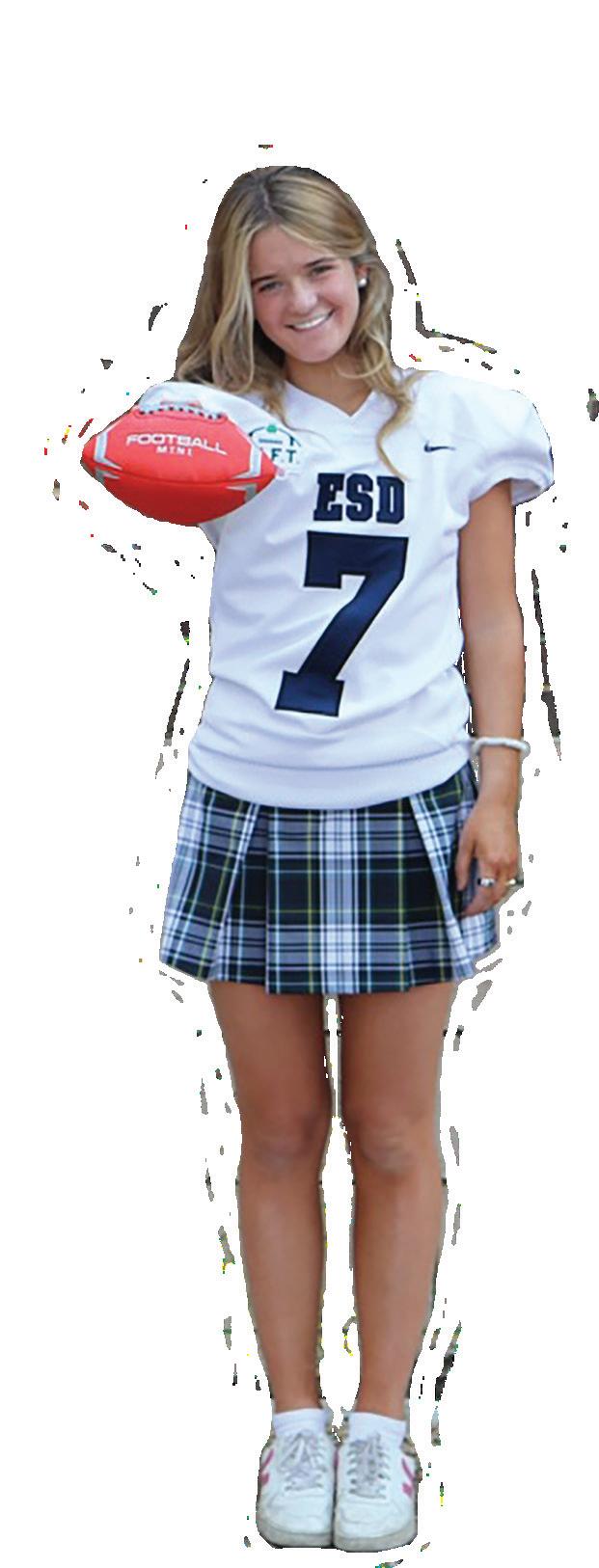
As winter settles in, offseason training becomes the unofficial starting line for spring sports. For years, I treated it as just another preseason box to check, helpful in theory, but never the most productive part of gearing up for lacrosse. But this year feels different; with the introduction of structured sports performance training, the work is actually preparing me for something. The lifts are intentional, the conditioning translates and, for the first time in my four years preparing for lacrosse season, I can already feel the impact, not just on me, but on our entire team’s readiness heading into spring.
I entered offseason my first winter of 2022, primarily because I didn't want to partake in any of the winter sports offered, but instead focused mainly on lacrosse and the upcoming season. The seniors who advocated for us pushed my other freshman teammates and me to work hard in the offseason and show up to look good for our old coach, Maggie Koch, who had been my coach for years in middle school. While I expected hard work, I didn't expect how firmly the senior class at the time
MARGOT'S
would set the standard for the offseason. With the leadership of the class of 2023, they expected focus, accountability and effort, making it very clear that varsity spots were earned long before March. While this offseason training was difficult and long, their intensity was exactly what I needed to hear. Long after the tough 2023 lacrosse season, it was widely known that our offseason work had paid off. While it didn't earn us a state championship, we highlighted our amazing teamwork. Additionally, I learned lessons from the older girls that I will never forget and continue to pass down to the freshmen as they take their first steps onto varsity. But after that class graduated, the offseason culture shifted.
During my sophomore and junior years, offseason participation and attendance slowly diminished, workouts became loosely attended and the expectations set by upperclassmen softened. While our team remained competitive and excited for the season, the offseason “team-led” program lost its purpose, leaving us less prepared for the seasons following.
As a senior with limited time left playing high school sports, I'm noticing the offseason spark return. After a tough loss in the SPC Championship and state championship semi-final, our team is ready to work. With the implementation of sports performance, our drive in the offseason is only becoming stronger and greatly prepping us for the upcoming season. Sports performance training has brought structure and consistency, filling the void of what we had been missing in previous seasons. While the team’s culture is not in place yet, younger teammates are beginning to understand the off season's expectations. With this new, exciting training under our feet, each player is willing to work hard to achieve the longawaited season, winning both an SPC and state championship title for the 2026 season. While the offseason was always seen as a “break period” and a brief preparation for the soon-to-be harsh, time-consuming lacrosse season, the winter offseason is now seen as a team sport, working hard and returning to the roots that the class of 2023 seniors set. The overall addition to sports performance has been
an opportunity not just for me but a large portion of the student body to not only receive a sports credit for the winter, but prepare under hard-working conditions to prepare for the upcoming sports season.
Strength coaches Abbie Ongaro and Phil Mosley have seen great results after starting the program alongside Athletic Director Thad Lepcio. For the first offseason year since the class of 2023 graduated, the other seniors and I have watched underclassmen buy in their own time, work hard and look up to us not for permission but as an example. As we enter our second month of offseason, I've witnessed everyone stay after lifts to get extra reps in to better themselves, even if for only five minutes. Although the work does slowly simmer off as everyone goes onto Christmas break, it's the kind of work we need to show up in the spring season when games really start to matter.
As a senior about to embark on my last lacrosse season ever, it's like watching a spark come back within the team. Although we are months away from the season's kickoff, sports performance has reminded us what it feels like to hold ourselves together and to a much higher standard.

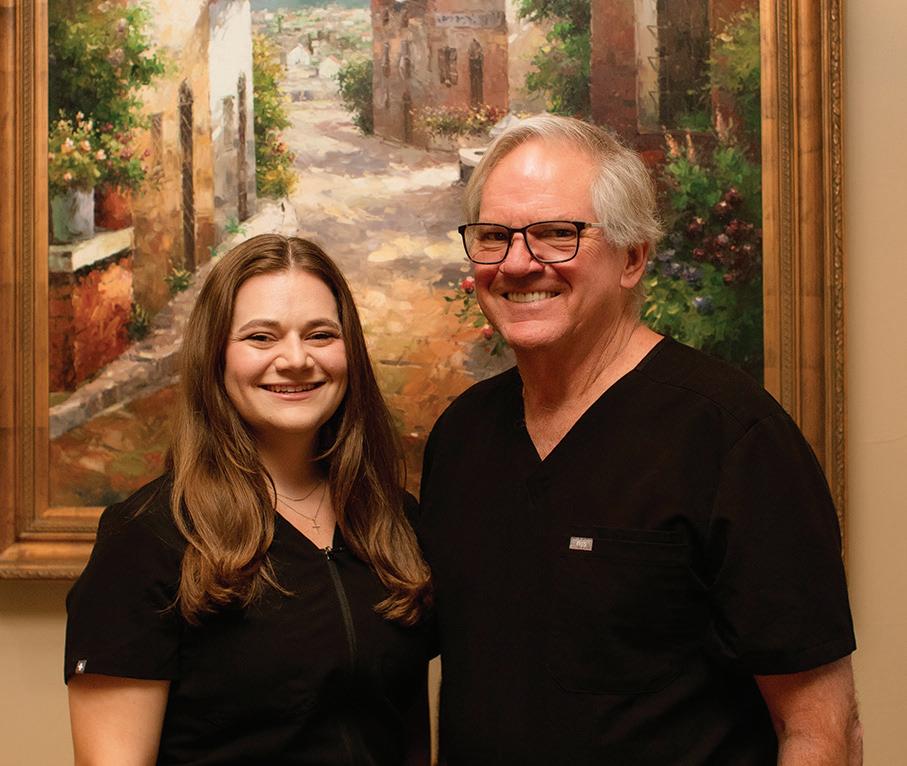





Writers Britt Reynolds, Moss Barron, Griffin Green, Veda
FROM THE A COLLECTION




From The Nest highlights students' unique passions and showcases their personal collections. Each feature shows off a glimpse into the stories, creativity and dedication behind these favorite items.





THE TEEGARDEN Model Plane Collection
Senior Harrison Teegarden has always dreamed of being a pilot. Since he was little, he has been fascinated with aviation. He has now turned this childhood dream into an impressive model plane collection, with each plane carrying its own story. His most prized model is the Boeing 737 MAX 10, a gift from the CEO and CFO of American Airlines, Robert Isom, a moment he says confirmed his dream of working for the company one day. Teegarden’s collection also features several American Airlines models, including a 777, his “dream plane to fly.”
Another favorite is the small blue-and-gray Cirrus SR-22, which is a model of the same aircraft he currently pilots. Teegarden also has a model of an F/A-18 Super Hornet, which serves as a nod to the air shows he grew up attending and his early admiration for the Blue Angels.
Other than actually flying the plane, Teegarden is interested in plane spotting, and has earned high honors in this endeavor as well. He was invited to the DFW International Airport “Summer of Spotters” event, where he was the only teenager present.
Teegarden has already acquired his own piloting license which required countless hours of hard work. He began his training in the summer of 2024 and was forced to balance his schoolwork with aviation training. Although no easy task, his determination paid off and he got his license. Now that he has acquired the aviation license, he is shifting his goals in search of a new challenge and now hopes to gain more experience with varying types of planes. His collection reflects not just his passion for aviation, but the career he’s already
his way to pursuing.
on
737 Max10
"This plane is extremely cool and special to me as it was given to me as a gift by the CEO and CFO of American Airlines."
F/A-18 Super Hornet
"I grew up going to shows and watching the blue angels fly, so this plane is very nostalgic to me."
American 777 "I love American Airlines, and this plane is actually my dream plane to fly."
Cirrus SR-22
"This is the plane that I currently fly, so it is super cool to have a model of it sitting at home."
Alaska Airline 737 "'This plane was one of the first in my collection, so it has some sentimental value to me."