PLACE OF THE STONES

I am on my way to Atha na Clocha, which translates to ‘place of the stones’, and I am going there to collect research as part of my studio practice. I have been making work which responds to the slow violence of globalism and its incessant marketization. I think now, in the car, about the slow cancellation of the future.
‘rather than the old recoiling from the ‘new’ in fear and incomprehension, those whose expectations were formed in an earlier era are more likely to be startled by the sheer persistence of recognisable forms.’
Corporate influence has caused culture to stagnate, the exponential growth of capitalist encouraged corporatism has expanded like an ominous fog, purchasing, privatising and enclosing every space it can reach, clogging up the fissures where true creativity has a chance to form.
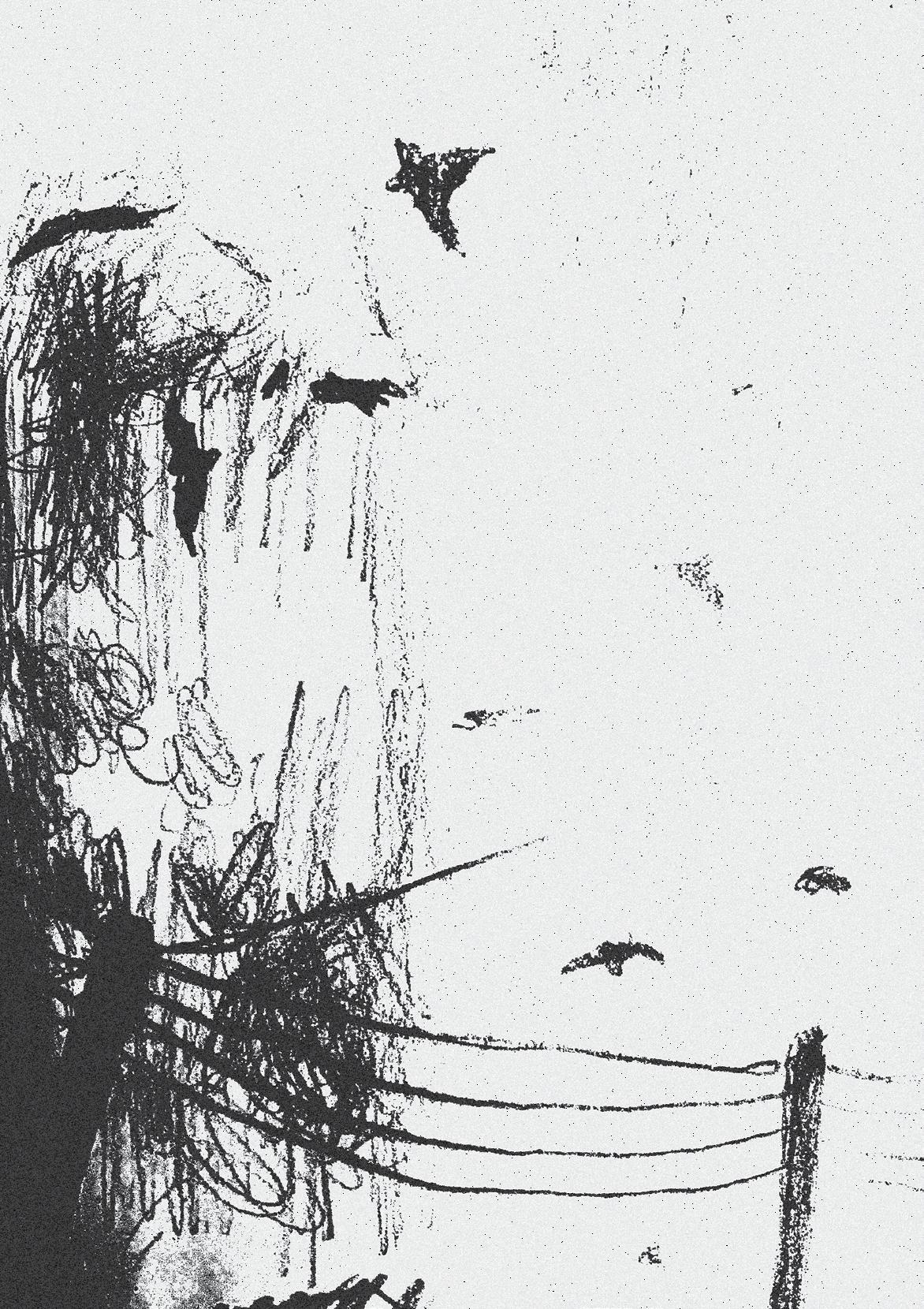
An hour has passed now, and the sun is rising. I am recording the world outside from my phone, from the uterine space inside the car. My eyes are in the sky, spotting birds of prey hovering in place, the speed of the car keeps them suspended in the air, suspended in time. Recording from the car has become a part of my art making process. My own personally crafted strategy of ‘derive’. Instead of drifting through urban cities, my eyes traverse the land at high speed, drifting from the sky to the fields, noticing the repeated patterns of electricity wires, relishing the rare sight of a kestrel or a raven. The untimeliness on the road allows me to shift into another form of perception and speculation.
Feeling the sticky residue of time from the hours past travelling, we are finally on the last leg of the journey. There is a fork in the road and a decision to be made— take the longer scenic route, with quaint villages snuggled into the mountain range of the Wild Atlantic Way or cut the drive-in half and remain on the national
roads. I am feeling anxious to reach the destination, so we choose the latter. We pass by the repetitive agricultural fields, which are occasionally interrupted by oddly shaped industrial forms of farmland equipment, tractors, or barns. This route starkly contrasts the natural and (mostly) preserved beauty of the coastline route we could have taken. This reminds me of the land that we are travelling to—it’s wild. Not preserved, but untouched for years, protected from the surrounding development by barbed wire, stone walls, and rusty fencing.

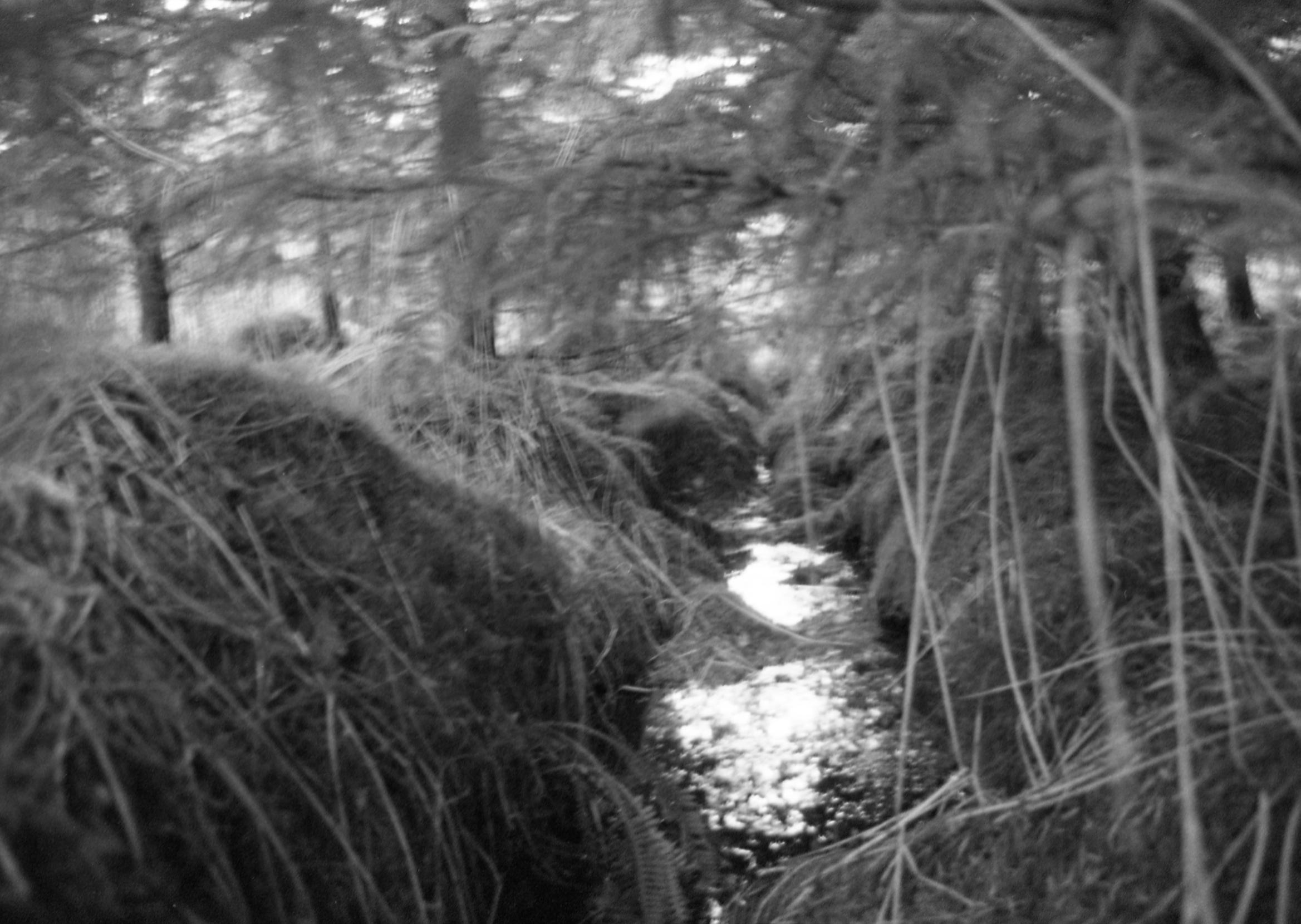
I have connected Deleuze and Guattari’s theory of the rhizome to the land I am travelling to. The theory of the rhizome posits that social and cultural activities are comparable to that of a spreading root, divergent paths that follow no pattern, that twist and flow in endless directions. This concept is animated through the metaphor of the rhizome, a plant root system that will branch off in infinite directions, that does not follow an arboreal, linear pattern. Rhizomatic thinking resists organisational
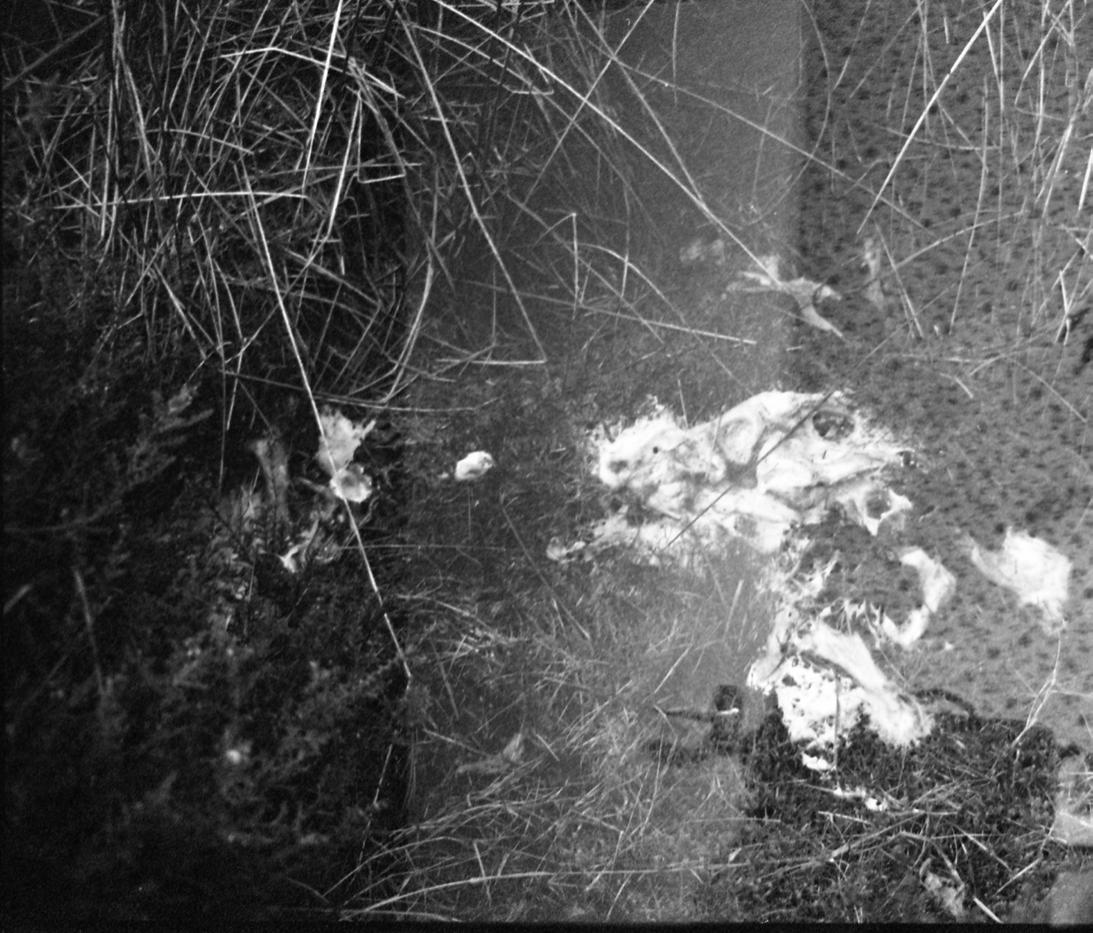
structures, challenging neoliberalism by suggesting horizontal political and social formats, directly resisting the individualist, capitalist, vertical structures that pervade our housing, education, health and class systems, pointing to rhizomatic pockets of resistance that can bloom from anywhere, span across temporalities, disappear and reappear. Human connectivity and creativity is embraced, believed to have the power to elevate the world out of late-stage capitalism.

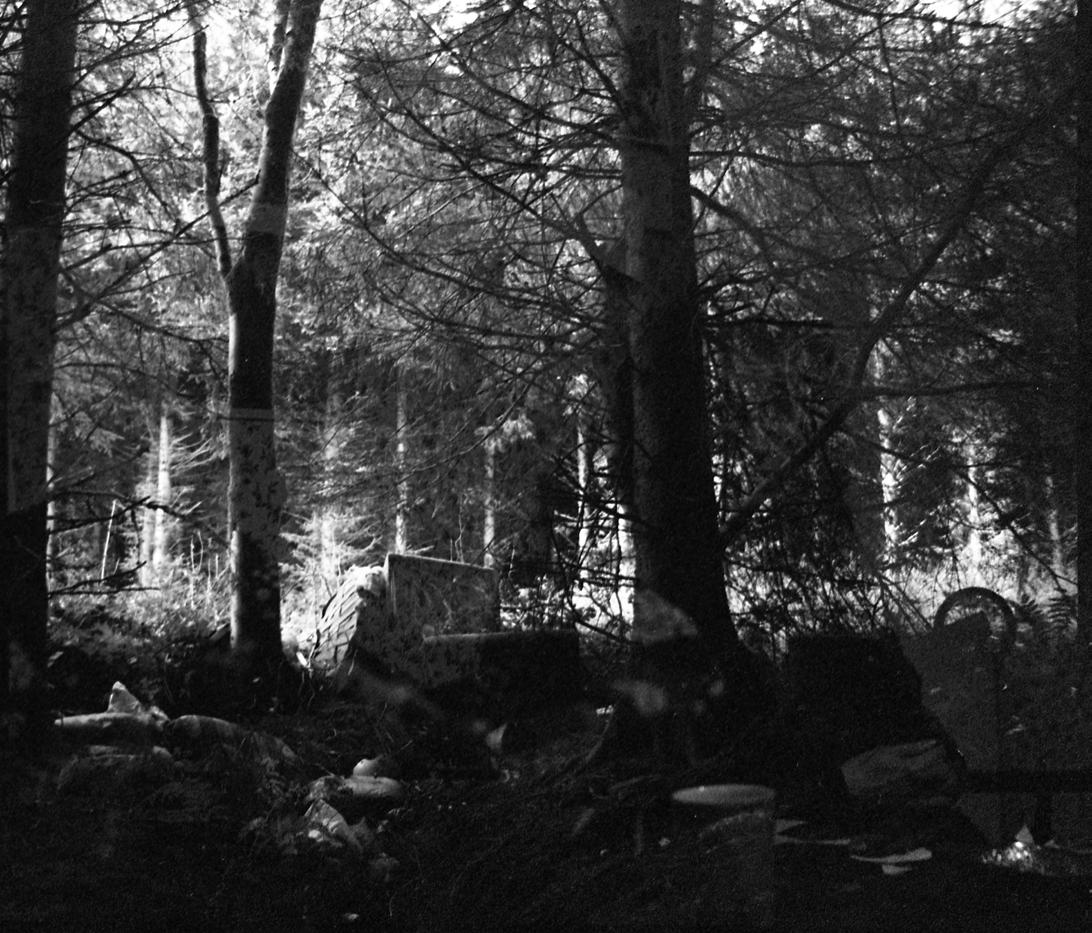
I am travelling to a cottage near Kilalla in County Mayo, I spent every Summer and school break there as a child. There is no running water or electricity— my family were in the process of converting it until my father got sick and passed away in 2014. I have not been back since.

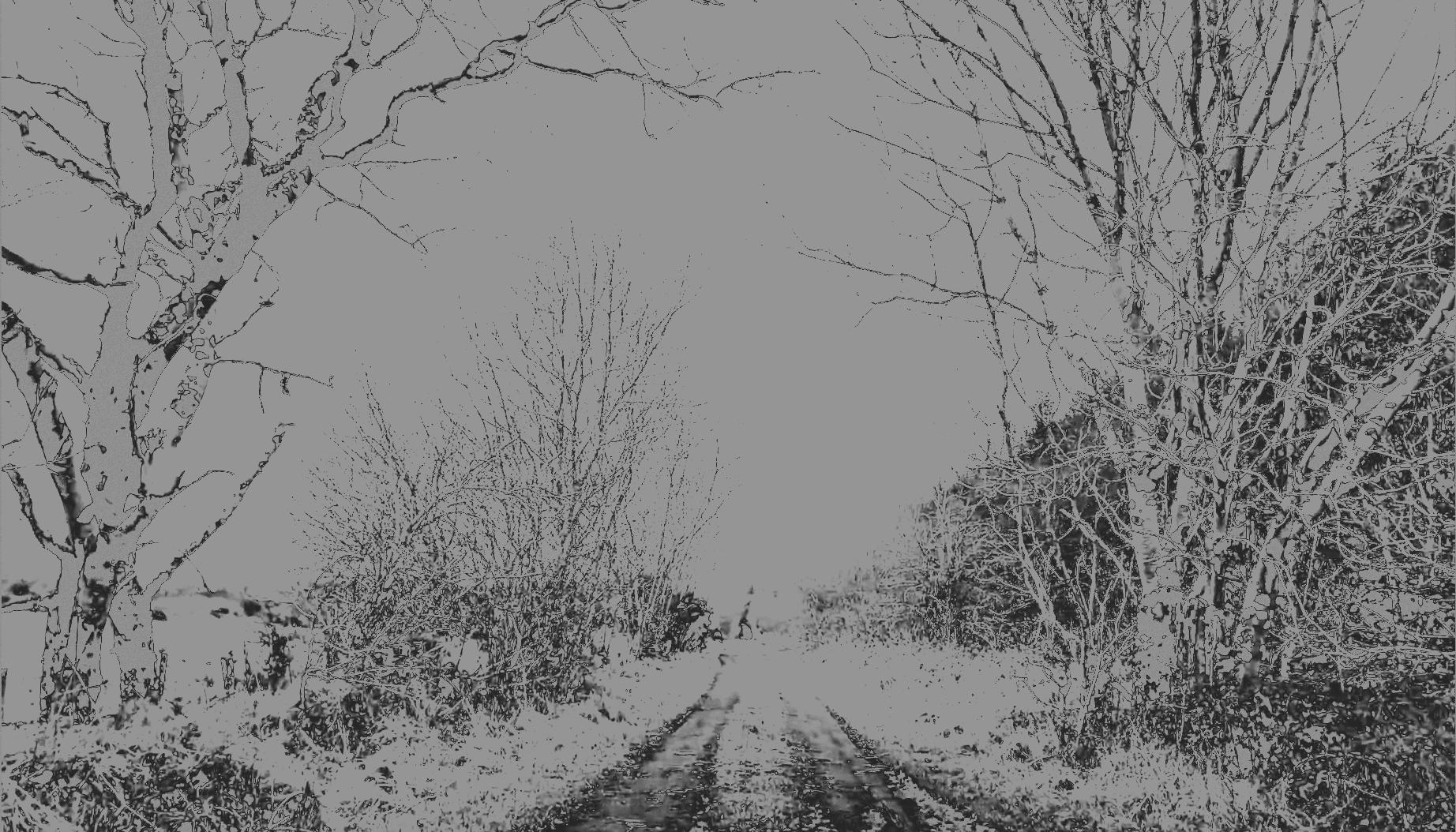
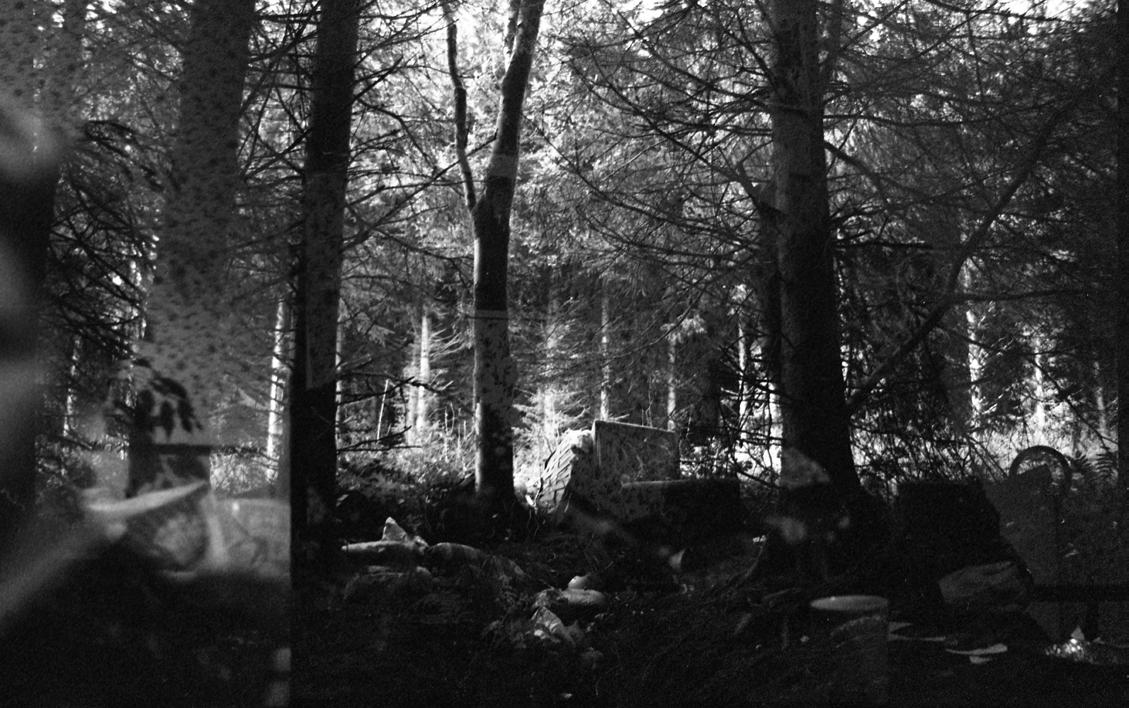
The car takes a sharp right and we trundle on to the road toward the cottage. My memory is of an overgrown country road surrounded by a vast, flat, bog. Once, you could see for miles in a single direction. Now, tall spruce line the edge of the road, as if the bog never existed. The car pulls over, I take out my cameras and I record. My intuition tells me that I need to absorb this moment of arrival. I take in the trees around us, there is stoic line of silver birch being bent and snapped by the invasive trees behind them, I know why they have been left there, a government order,
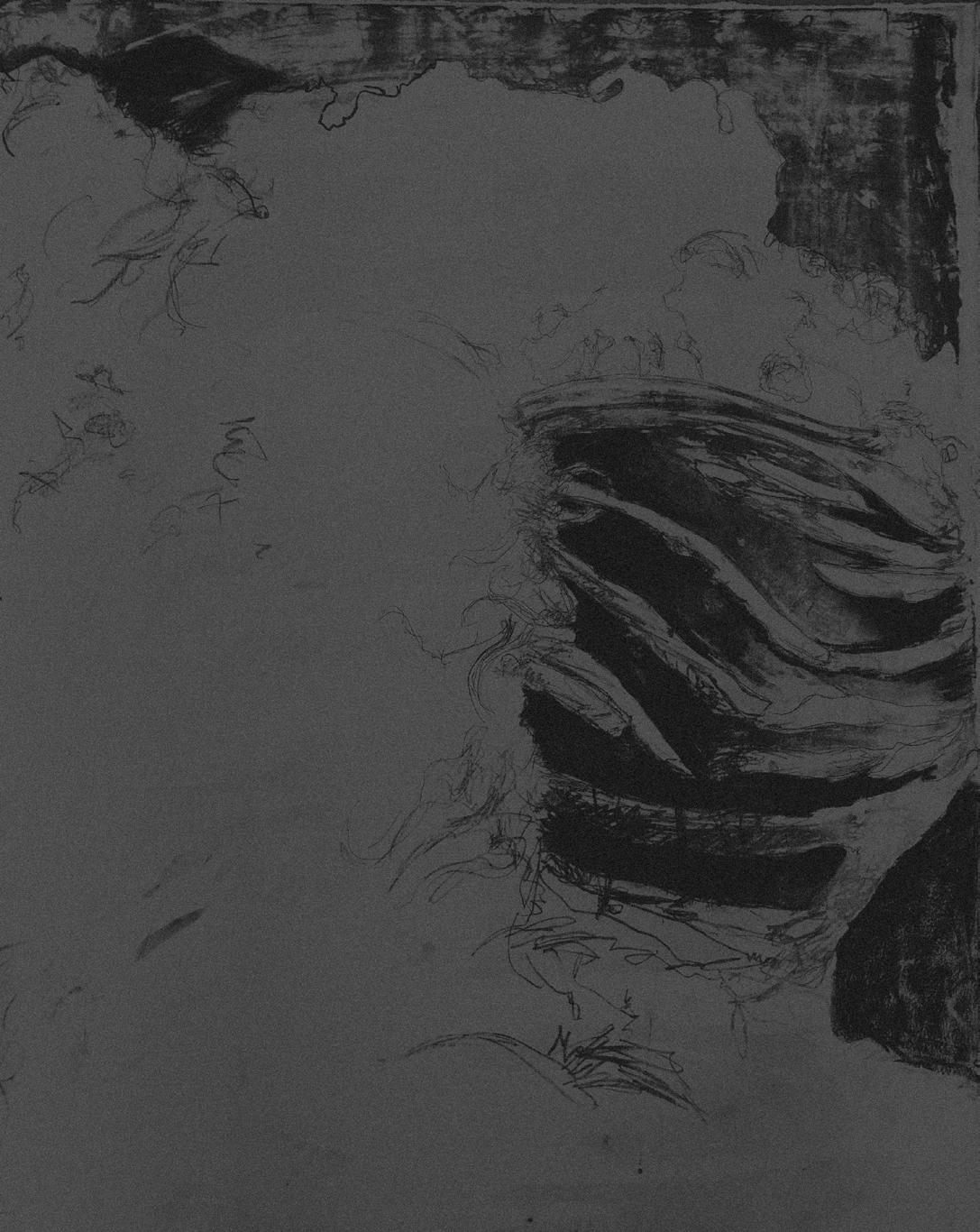
the perimeter of the thousand-strong plantations must be lined by native trees. I appreciate the resistance of the birch; still standing, but they don’t look like they will withstand the spruce trees much longer. I record. I take my time snapping photographs and observing, but eventually I get in the car and drive. I keep my analogue camera out, just in case. When I was a child, I would position myself in the middle seat as soon as we began to trundle down this road, hoping that by some slim chance we would startle a fox, a badger or a deer that hadn’t been disturbed by humans in months.

I can see the traces of trauma on the environment itself. Gridded trenches are losing their form in the earth, filled with stagnant, pesticide ridden water. Nothing is alive… It is silent
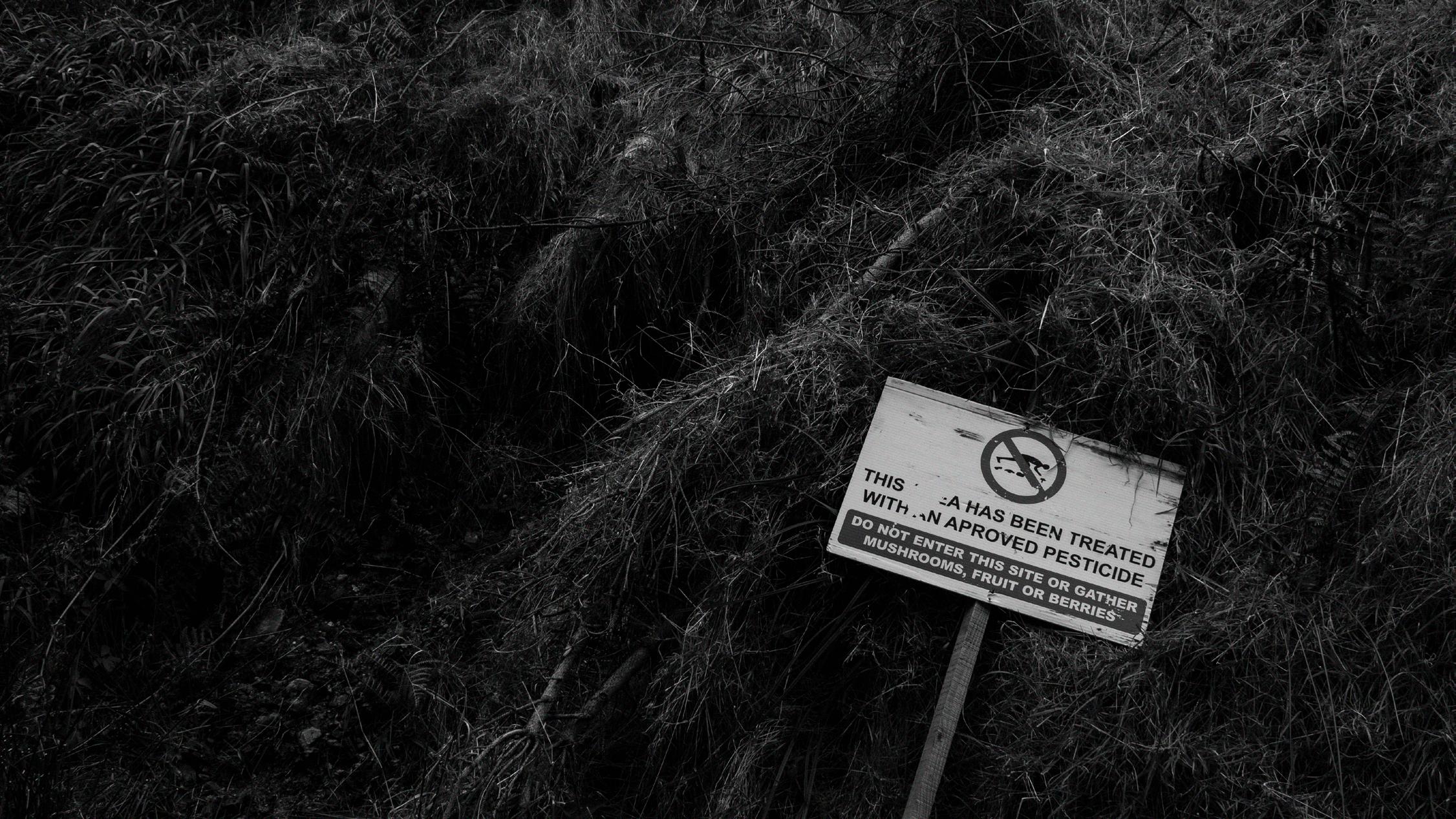

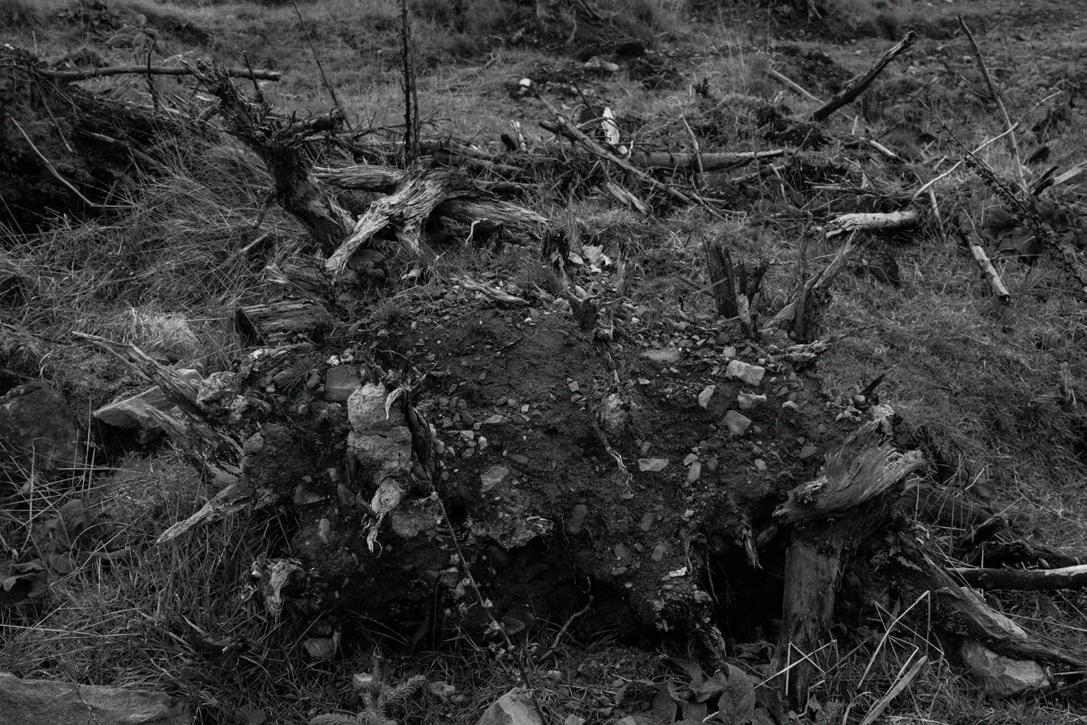
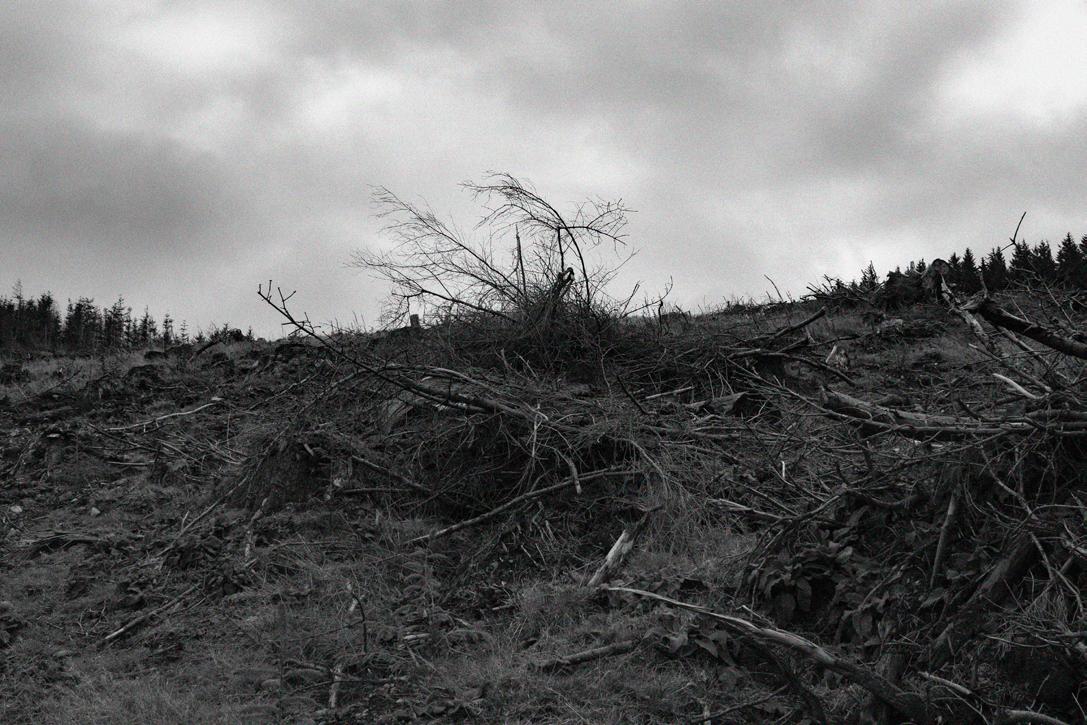
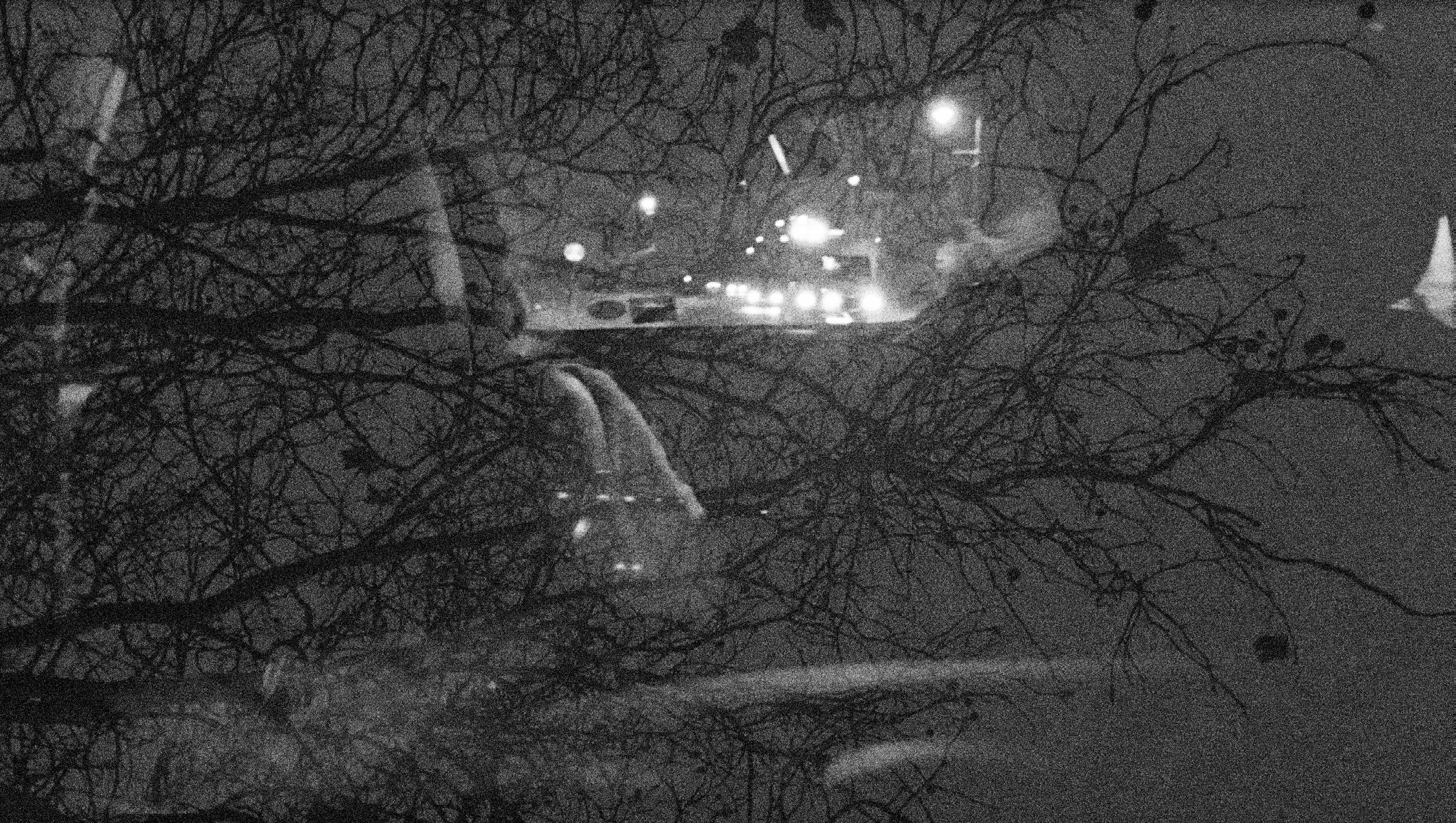
At home, my roommate and I carefully develop the roll of film in our apartment. Anticipation builds as I rock the film back and forth, drawing the images from their embryonic state and into perceivability. I do not know what to expect, but I’m trusting my instinct that some of the photos will have captured the essence of Atha na Clocha. We remove the film and inspect it, still dripping wet. Immediately,
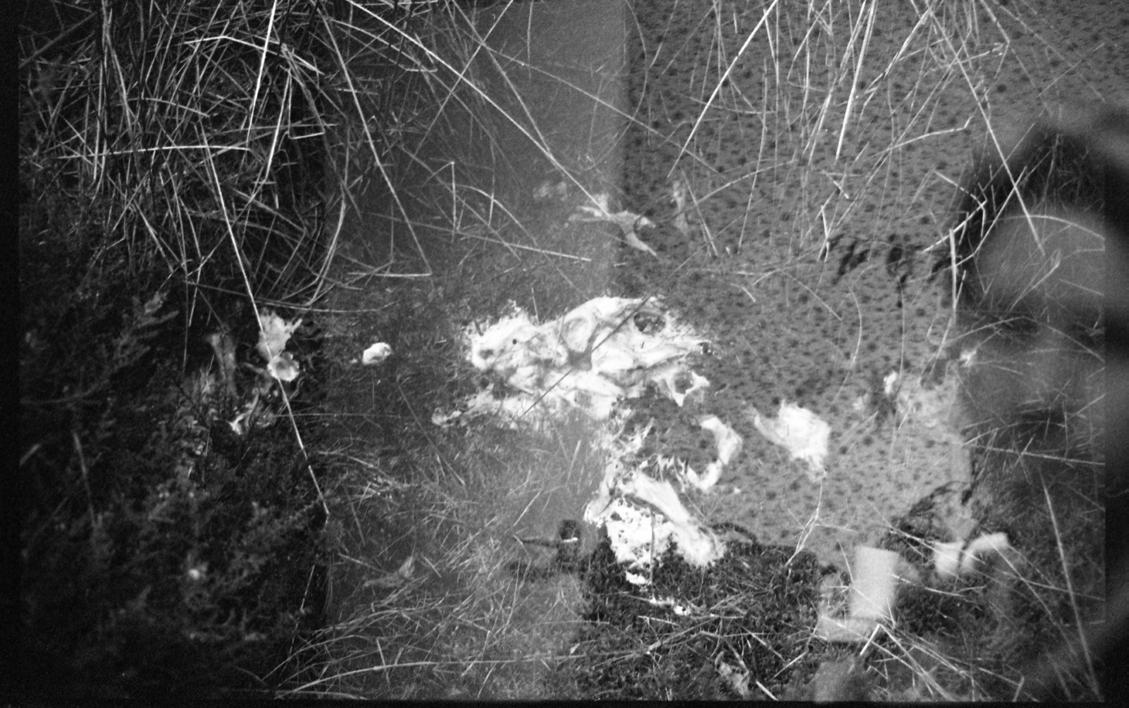
it’s evident that something is out of the ordinary. I notice the recognisable promenade of Bray beach, my hometown, I know I didn’t take any photographs there. Somebody has shot this roll before I got to it. It’s hard to see what’s going on, the photographs on the roll flow together, they’re double-exposed. The natural elements of my photographs and the urban-domestic photographs
of my home and hometown- taken by an unknown hand. Holding the film against the light, I can see the ghostly impression of a familiar face. It looks like my late father as a young man. My logical brain feels resistant, it can’t be- the photograph would have been taken about 24 years ago for him to be as young, it must be someone else.