32
AIRVENTURE TODAY
OSHKOSH MOMENTS
P-3: ON THE HUNT FOR A HURRICANE Hurricane Hunter Makes First Oshkosh Appearance BY KAYLA FLOYD
AIRVENTURE TODAY STAFF
PHOTOS BY CONNOR MADISON, ANDREW ZABACK
THE NATIONAL OCEANIC and Atmospheric
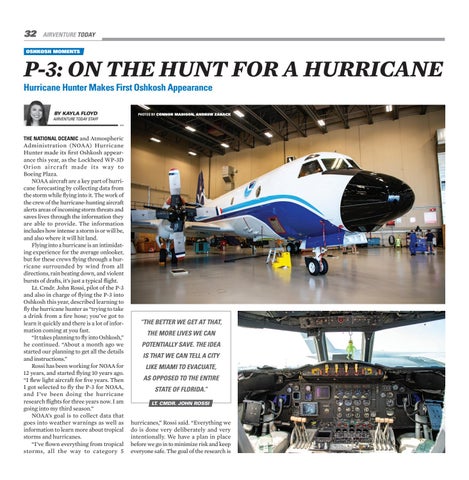
Administration (NOAA) Hurricane Hunter made its first Oshkosh appearance this year, as the Lockheed WP-3D Orion aircraft made its way to Boeing Plaza. NOAA aircraft are a key part of hurricane forecasting by collecting data from the storm while flying into it. The work of the crew of the hurricane-hunting aircraft alerts areas of incoming storm threats and saves lives through the information they are able to provide. The information includes how intense a storm is or will be, and also where it will hit land. Flying into a hurricane is an intimidating experience for the average onlooker, but for these crews flying through a hurricane surrounded by wind from all directions, rain beating down, and violent bursts of drafts, it’s just a typical flight. Lt. Cmdr. John Rossi, pilot of the P-3 and also in charge of flying the P-3 into Oshkosh this year, described learning to fly the hurricane hunter as “trying to take a drink from a fire hose; you’ve got to learn it quickly and there is a lot of information coming at you fast. “It takes planning to fly into Oshkosh,” he continued. “About a month ago we started our planning to get all the details and instructions.” Rossi has been working for NOAA for 12 years, and started flying 10 years ago. “I flew light aircraft for five years. Then I got selected to fly the P-3 for NOAA, and I’ve been doing the hurricane research flights for three years now. I am going into my third season.” NOAA’s goal is to collect data that goes into weather warnings as well as information to learn more about tropical storms and hurricanes. “I’ve flown everything from tropical storms, all the way to category 5
“THE BETTER WE GET AT THAT, THE MORE LIVES WE CAN POTENTIALLY SAVE. THE IDEA IS THAT WE CAN TELL A CITY LIKE MIAMI TO EVACUATE, AS OPPOSED TO THE ENTIRE STATE OF FLORIDA.” LT. CMDR. JOHN ROSSI
hurricanes,” Rossi said. “Everything we do is done very deliberately and very intentionally. We have a plan in place before we go in to minimize risk and keep everyone safe. The goal of the research is