
2024 Annual Report



Message from the Board Chair New Potential Creating Resilient & Bright Futures
The Power of Friendship A Sense of Home and Belonging Financials 1 2 3 5 8 10 12
Treaty Acknowledgment
e4c respectfully acknowledges that the land on which we gather is situated on Treaty Six Territory, and the North Saskatchewan River Territory of the Metis people. For thousands of years, Edmonton’s river valley has been a traditional meeting and gathering place for Indigenous Peoples. We honour and respect the history, languages, ceremonies, and culture of the First Nations, Metis, Inuit, and Non-Status Aboriginal Peoples whose presence and culture enrich our vibrant communities and the space which we call home. We are all beneficiaries of the longtime Indigenous philosophy of peaceful cohabitation, between the earth, animals, and all humankind. We have a responsibility to one another, and to the land. In Review
Mission & Vision
At e4c, our core values and mission guide our daily practice, and influence our work.
Our vision is the elimination of poverty; an aspiration that requires the collective support of our community at large.
We take steps towards this vision by reaffirming our mission of changing lives and growing communities:
To be a supportive and empowering presence in times of individual, family, and community need.
To create opportunities for people to become self-supporting, and to lead in the growth of inclusive and caring communities.
To be dedicated to program and service excellence, placing high priority on collaborative partnerships, inclusive transparent operations, promoting public awareness and building broad community support.
To be responsive to emergent needs, continuously seeking new and creative opportunities to improve and develop services in our areas of expertise.
2024 in Review
352 people were housed in their own homes.
31 people moved out of transitional housing to more stable homes.
184 people called e4c their home.
4,904 people increased their financial security through Make Tax Time Pay, or Financial Empowerment programs.
18.2 Million in credits and benefits were returned to 4,181 community members after filing their taxes.
12,040 people increased their food security through e4c programs and supports.
948,951 healthy and nutritious meals were consumed by Edmonton students in the School Nutrition Program.
123 youth began attending school again. 497 people completed employment readiness, wellness, or recovery college courses.
20,250 Edmontonians served by e4c programs and services.
Message from the Board Chair
As I reflect on the past year, I am filled with pride in the collective accomplishments, resilience, and impact of e4c’s team and the many individuals connected to our programs and services. These successes underscore e4c’s strong position in the community and reaffirm our commitment to changing lives and growing communities.
2024 was a year of continued challenges for all Edmontonian, rising costs of living, stretched finances, housing shortages, and barriers to supports. In response, more than 20,250 individuals engaged with e4c programs, an increase of 2,800 from the previous year. This growth highlights e4c’s ability to adapt to evolving community needs while working collaboratively with partners to provide the right supports at the right time.
Grounded in the 2022–2025 Strategic Plan, e4c continues to make significant progress toward reducing poverty and building lasting change. Our role is not to be all things to all people, but to develop, enhance, and sustain programs that deliver meaningful outcomes.
As we look towards the future, we ground ourselves in the principles of Sustainable Livelihoods ensuring that our programs address not only immediate needs but also the long-term assets—such as housing, financial security, and community connections—that support stability and independence. By working collaboratively with partners and stakeholders, we continue to ensure that each individual is supported with an individualized strategy that is co-created, guided, and informed by personal choice.
As a Board, we are inspired by the dedication, insight, and innovation demonstrated across e4c’s core focus areas. I extend my sincere thanks to our Board of Directors for their guidance, expertise, and commitment, which has enabled us to remain nimble and forward-focused, and to e4c’s staff and leadership for the compassion and creativity they bring to their work each day
Looking ahead to 2025, I am optimistic about the opportunities before us. The resilience and determination I see within this organization assure me that we can continue to limit and alleviate poverty in Edmonton by increasing the assets and the sustainable livelihoods of those that we serve. Thank you for being part of e4c’s journey.
Michael Ferber Board Chair, e4c

New Potential
For Youth Employment
In 2024, The Hallway Café and Takeaway revisited the recommendations outlined by the expert panel in 2016. Through this review and an assessment of the program’s current landscape, it became evident that the level and type of support required by participants had evolved significantly. The shifting external environment and increasing barriers faced by vulnerable youth transitioning into long-term employment underscored the need for more intensive, holistic supports— helping youth not only secure and maintain employment but also build community connections and long-term stability.
This review allowed the program to sharpen its focus on 1:1 hands-on employment readiness training and skill development, attracting and prioritizing youth who fit the program’s mandate, and are best-positioned to benefit from the experience.
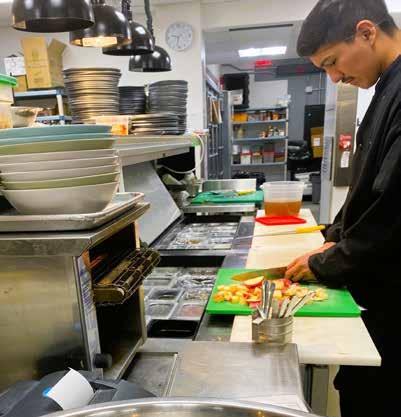
“We’re seeing a lot of new Canadians, and immigrants who are accessing the program because of the state of youth employment,” shares Holly O’Brien. Program Manager for the Hallway Cafe. “A lot of these youth are looking for employment to help to support their families. This is a shift away from previous demographics, which saw a lot of involvement with the criminal justice system, or those without immediate familial support. This means that a lot of the youth that we’re serving have relatively stable home lives, which allows them to thrive at work, as they’re not juggling challenges at home while also trying to focus on building their future.”
The shift in demographic has allowed the program to introduce initiatives like “Chef of the Day,” where youth are appointed as a leader in the kitchen, directing a specific station, and deepening their leadership skills, executive decision making skills, and building upon and activating their skills in a new and unique way. “We’re really seeing that confidence emerge in the youth,” shares Holly. “They’re more accountable, intentional, and motivated. It’s a shift that’s inspiring all of us to look at what we can do better.”
The social enterprise continues to set youth up for success, with 3 cohorts of 12 youth over 17 weeks projected to enter the program in 2025.
“There’s been a significant shift away from previous youth needs - addiction, houselessness. Now, we’re seeing youth who may have already graduated from high school, but are struggling to find employment, have anxiety or mental health needs, or may be a bit older - think 21, 22 years old. It’s reflective of Edmonton’s employment market and the challenges youth are facing when it comes to a lack of experience. It’s really a cycle of perpetuity. You need a job to gain experience, but you can’t get a job because you have no experience.”
Holly O’Brien, Program Manager, The
Hallway Cafe
Food for the Soul
Reviewing the social enterprise’s expert panel recommendations from the Hallway’s 2016 transformation has strengthened strategic partnerships and expanded catering opportunities, including a new venture with PCL Construction to provide staff lunches three times weekly.
“Our focus has been on deepening relationships and responding to customer needs with intentionality,” says Daniel Brasileiro, Head Chef Instructor. “We lead with a catering menu, but are focused on listening to the customer’s requests and doing our best to exceed expectations.”
Rising food costs have required creativity in menu planning—prioritizing seasonal ingredients, minimizing waste, and using substitutions to maintain affordability. “We’re really leaning into menu options that have been co-created by youth and are reflective of our customer base,” shares Dan. “Our customers are our biggest champions, and by leveraging their feedback, we’re creating unique seasonal menus that you might not find elsewhere. It’s been a shift that we’ve found highly successful - and allows us to maintain a consistent price point.”
The result? Catering revenue exceeding their forecast in 2024, with continued growth projected into 2025.
Youth in e4c programs and services began attending school again.
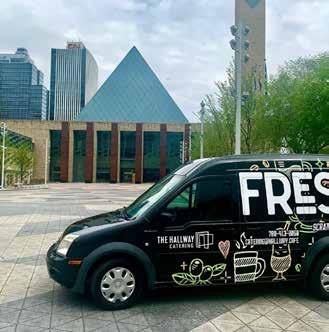
In March 2024, the Hallway Cafe and Takeaway’s van got a face lift thanks to graphic designer Valerie of Pixels and Relish. This updated look and feel was co-created by the youth, whose words of “awesome,” “vibrant” and “something that really stands out, you know?” shaped the concept. Youth voted and approved the final design.
Creating Resilient and
Bright Futures
e4c’s work has always been driven by a fundamental belief in the strengths and resilience of the people and families that we serve. Over the past year, e4c advanced its long-standing commitment to supporting vulnerable youth, receiving a 3-year funding agreement from the Government of Alberta to advance trauma-informed, culturally responsive Community Group Care services here in Edmonton across our three Youth Housing Program sites, creating safe, nurturing spaces for 15 youth with complex needs.

3,276 people gained skills and knowledge to better themselves and their families.
Drawing on the principles of concentric circles (interconnectedness) and the Medicine Wheel (Mental, Emotional, Spiritual, and Physical), e4c highlighted youth’s lived experiences and their engagement through storytelling and visual art. Through an Indigenous worldview, e4c’s Youth Housing Program supports youth’s connection to their families, communities, and cultures – guiding them towards a successful transition to adulthood.
Creating spaces for youth to connect with natural supports, to welcome friends, and establish daily ‘routines of the day’ fosters safety, stability, and a sense of belonging –fostering assets rooted in connection, and transitioning youth from surviving to thriving.
The impact of our successful proposals reflected in the stories of the young people we serve. Last year alone, 83% of youth in our care reported feeling safe in their homes, while more than three-quarters said they felt better able to manage daily tasks and experienced renewed motivation to pursue meaningful activities.
Many transitioned successfully into independent living, adult-supported housing, or reunification with family. With dedicated caregivers, and strong cultural supports, youth are learning to trust, to thrive, and to see themselves as valued members of their communities. Together, we are creating homes where resilience is nurtured and futures are rebuilt.
388 persons developed more self-confidence.
“ These conversations bring me closer to the people I’m spending the most time with. And even though this isn’t where I thought I’d be, I’m trying to remember that it’s all part of my journey.”
– Desiree*, The Lodge
When youth arrive to one of e4c’s Youth Housing sites, many bring with them the weight of uncertainty—some have experienced homelessness, some have experienced the impacts of intergenerational trauma, and others feel disconnected from family, culture, or school.
Their first day is intentionally different: a bedroom set up with their favorite colors, a welcome meal at the table, and caregivers who use their chosen name and pronouns. For the first time in a long time, youth see that this home is a place designed for them—a place where safety, belonging, and respect come first.
In the months that follow, small steps turn into lasting change. Youth practice daily self-care, learn life skills like cooking and budgeting, and slowly rebuild connections with family and natural supports. Many discover or reconnect with culture—joining in morning smudges, learning from Knowledge Keepers, or celebrating family traditions with pride.
As trust grows, so does confidence: youth begin attending school again, setting personal goals, and imagining futures they once thought were out of reach. For some, that means moving into supported independent living; for others, it means returning to family or finding community of their own. Each milestone, from decorating a bedroom wall to hosting a cultural feast, reflects not only survival but growth. Together, e4c’s Youth Housing program creates a pathway from instability to stability, from isolation to belonging, and to a place of limitless possibility.

700
persons served had more people they can trust.

“Something as small as personalizing a room, or knowing a youth’s favourite foods or colours makes a huge impact and headway into building relationships. When people feel seen, heard, and supported, they are more willing to connect.”
- Youth Housing staff
Traditional Approaches to
Healing
Connection to cultural communities is an important component to increasing both health and personal assets. The Wellness Network operated Traditional Approaches to Healing, a culturally grounded program led by an Indigenous Elder, offering a healing circle for Indigenous individuals in Edmonton impacted by intergenerational trauma.
Designed as a safe and sacred space, the program focuses on traditional practices, story sharing, and explorations of individual healing journeys.
The circle provides an opportunity for safety, belonging, and being seen by others – often marking the first time they have felt comfortable expressing emotions, or asking deeply personal questions. Other participants share relatable experiences, or are emboldened to find their courage and speak their truth – sparking a sense of connection, growth, and spiritual renewal with a chosen community.
“This circle brings me closer to my culture and to feeling feelings that I’ve been hiding for a long time. It’s opening my heart, and I love it. I’ve been going through a lot, and this circle is helping me to stay sober.”

As part of traumainformed services, WEAC integrated Traditional Approaches to Healing in 2024.
The Power of
Friendship
According to Statistics Canada, social isolation and loneliness is on the rise in communities across Canada. Social isolation is defined as having both a low quantity and quality of contact with others. It’s marked by an absence of mutually rewarding relationships and can lead to poor health, loneliness, emotional distress, and other negative health outcomes. Social connection remains a top priority in programs from Early Learning to WEAC.
A sense of belonging – whether it’s a family, or chosen community like those found in Traditional Approaches to Healing, allows us to focus on our authentic self, while knowing that we have others to lean on in challenging times. It promotes a sense of safety in knowing that you can show emotion, ask questions, and ask for support when you need it.
Consider e4c’s ArtStart program, for example. ArtStart supports children’s healthy social-emotional development, helping them to build resilience, confidence, and a contributing member of their own community. The programming focuses on topics such as body image, self-expression, positive self-talk, healthy relationships, and more, taught through visual and expressive art. In 2024, ArtStart reached 124 students aged 5-14 years old across four schools. Many of these children, like the youth seen entering our Hallway Cafe programming, are naturally introverted and experience unease or anxiety engaging with peers and others.
Through painting and drawing, students formed a collaborative mindset, and formed friendships, growing more comfortable expressing themselves and allowing them to develop fine motor skills and emotional regulation.
When asked about how many friends they feel they can trust, one student shared “Well, we are friends now, so that’s 1, 2, 3 and 4!”

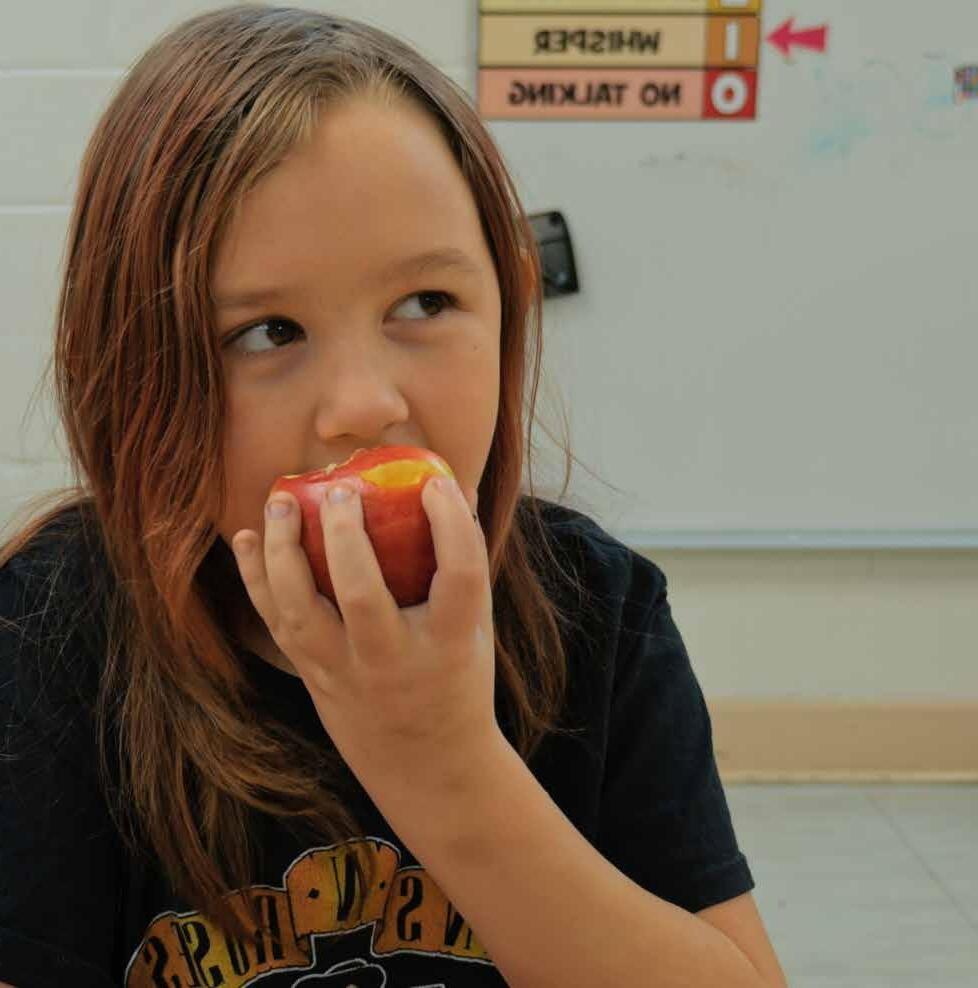
e4c’s School Nutrition Program served over 6,400 students across 42 Edmonton area schools in 2024, providing them with nutritious morning meals to start their day off on the right foot. Teachers across schools report that social interaction increased, and students look forward to coming to school. In addition to social interaction, students increase their food literacy by learning about making healthy choices, why breakfast is important, and how to understand when they’re full.
One teacher reported “I have noticed that students look forward to coming to school and know that there is food for them if they are hungry. I think that it also gives the opportunity for those that don’t get a chance to eat breakfast to eat. Some of the shy children start to come into their own once they’ve had a banana, a yogurt, or a sandwich. It’s incredible to see.”
848 persons report forming new friendships, or relationships with community groups, including through programming like ArtStart, School Nutrition, and the Wellness Network.
“When I get to school the first thing I do is hug my friends because I miss them so much when I am at home.”
– Student, Age 7, Thorncliffe School

“There
are just some days where I can’t get out of bed. Moose really helps me remember that there are things worth waking up for.”
- Brigette*, WEAC

A Sense of Home and
Belonging
In 2024, e4c received a generous donation to fund a Facility Dog to support programming at WEAC. Moose joined the team in June, offering emotional support and behavioral intervention to offer comfort and support to persons served. Moose, an accredited facility dog through the Government of Alberta, works alongside WEAC’s social work team.

193
People were able to retain their housing through eviction prevention efforts of e4c’s housing teams.
In 2024, e4c focused their housing efforts both on housing individuals in their own home (352 people), as well eviction prevention efforts that prevented individuals from losing their home and transitioning into a cycle of homelessness.
Part of this was an intentional shift in the Adult Housing First program’s efforts to recognize that securing and maintaining housing is a deeply personal journey – shaped by unique experiences, needs, aspirations, and previous challenges.
Intensive Case Management Team (ICMT) housed over 80% of their housing target between March and September 2024. This was 30% above the average of Intensive Case Management programs coordinated by Homeward Trust.
At the end of 2024, the Alberta Government, announced their intention to streamline grant administration, directly funding front-line organizations to provide supports to people experiencing homelessness to move into and maintain stable housing, with access to the wraparound supports that they need. While the future cannot be predicted, Adult Housing First and Youth Housing First’s 2024 housing results have wellpositioned e4c to continue this work without disruption.
A person-centred, relational approach begins with trust, consistency, and learning. This shift in our practice deepened our teams’ understanding of individual circumstances, allowing the team to increase housing placements, manage growing caseloads, and prevent eviction. e4c expanded their ‘flow through’ approach to housing in 2024, continuing to transition those staying in programs like WEAC into stable housing, and connecting them to Housing First teams to further follow up supports.

Mary became homeless in 2020, bouncing around from place to place and couch surfing before entering WEAC in 2024. A WEAC staff member housed her in an affordable place where she could exit the shelter supportively, and live in a place of her own for the first time in four years. After her lease ended, Mary wanted to move as the neighborhood was becoming rougher, and she wanted to be more connected to her community – as she’s an artist. Mary now lives on Whyte Avenue,
owns a car, and is buying and selling her custom artwork online. She stays in touch with her follow up support worker, Audra, and has even booked a place in e4c’s Community Garden for the 2025 summer season. When she reflected on her journey, Mary shared that “it takes a team of people to help you out of a tough spot. And I wouldn’t be where I am without the support of everyone who helped along the way.”
In 2024, 352 werepersons housed in their own home, supporting 201 children.
Financials
e4c STATEMENT OF FINANCIAL POSITION
Ended December 31, 2023
e4c STATEMENT OF OPERATIONS Year Ended December 31, 2023
A complete set of Audited Financial Statements are available upon request, or listed on our website.
Thank You
Despite economic challenges, e4c’s stakeholders, board members, supporters, and donors continued to rally around the important work that our programs and services are offering our community. This year was one filled with smoke-filled summer days, and cold harsh winter nights. You have continued to provide essentials to protect the people that we serve and support our community – from the provision of flats of water, to the outpouring of support in the form of warm clothing, toques, and mittens.
Thanks to you, our community felt supported and strengthened to continue moving forward. Because of you, we can change lives and grow communities.
157 new donors
$1,562,626 donations received
$2,215.13 in Gift-In-Kind donations Received $793 Average gift size

94 flats of water donated to community members during the heat wave
136 holiday packages supplied to housing programs
“Living here makes me focus on the things that are important, like getting myself well, and ready to tackle the next things that I’ll face. I have big hopes and big dreams, and this is helping me get started so that I can reach them .”
- Brad*, Resident, Meadows Longer Term Supportive Housing
e4c Board of Directors 2023-2024:
Michael Ferber
Board Chair
Nicole Whitaker
Vice-Chair
Rabena Bacchus
Treasurer
May Han
Secretary
Amanda Bueley
Ashley Yang
Dylan Coyne
Andy England
Max Frank
Chris Holtz
Cal Jungwirth
Chantal Kassongo
Karolia Korzeniewski
Natalie McMurtry
Kim Simmonds

Partners @e4calberta www.e4calberta.org