In Reading and Use of English Part 1, you read a short text with eight gaps.
There are four multiple-choice options for each gap. You choose the word or phrase that best fits each gap.
The gaps can test your understanding of differences in meaning between similar words, for example, found, invent and discover. They can also test your knowledge of words that collocate with particular prepositions, or words that occur in fixed phrases.
Practice task
1 Read the first paragraph of a text about micro homes and decide which answer (A, B, C or D) best fits each gap. There is an example at the beginning (0).
Micro homes
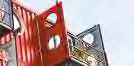
Most people (0) B of owning their own home, but for many young people this is not a realistic possibility. House prices are (1) , and renting is also expensive, which (2) that saving enough money for a deposit is often out of reach. In recent years, (3) , the micro house movement has started to grow. Micro homes are small, compact homes that are cheap to build and need very little space. If the idea (4) off, it could offer an alternative to more traditional homes.
0 A hope B dream C intend D wish
1 A great B big C severe D high
2 A causes B demands C means D allows
3 A although B however C despite D instead
4 A takes B gets C puts D makes
They also test your knowledge of verb patterns, for example whether a verb is followed by an infinitive or a clause.
Some gaps test your knowledge of phrasal verbs and linking words.
Each question is worth one mark.
How did you do?
2 Check your answers.
3 Look at the four answers again.
1 Which answer needs you to use linking words correctly?
2 Which answer needs you to understand typical collocations?
3 Which answer needs you to know the meaning of a phrasal verb?
4 Which answer needs you to understand differences in meaning between words with similar meanings?
4 Look at the four sets of words from the options (1–4) in Ex 1 in context. What do you notice about how each one is used? Then look at the gaps in the Ex 1 text again. Can you see why the answers are correct?
1 The film was a great success
The new TV arrived in a big box We were delayed by the severe weather They charge very high prices
2 Pollution in cities causes a lot of health problems. Working with children demands a lot of patience. He has no job, and this means that he has very little money.
Living in a micro home would allow us to save more money.
3 Although he’s only young, he’s a brilliant player. / He’s a brilliant player, although he’s only young. Her sister, however, isn’t interested in sport at all. / However, her sister isn’t interested in sport at all.
Despite her young age, she is determined to go to the USA.
You should study more instead of chatting to friends online.
4 I’m sure the idea will take off. I can’t get the lid off You can’t put off the decision any longer. A thief made off with the money.
Strategies and skills
Phrases with prepositions
The correct choice for a gap often depends on matching the correct option with the preposition after the gap.
1a Read the sentences and look at the highlighted prepositions. Choose the word that is followed by each preposition and fits the context.
1 I’m very interested / curious / keen / attracted in music.
2 I wasn’t sure how to arrive / find / reach / get to the restaurant.
3 I’m not informed / interested / familiar / knowledgeable with his books.
4 James is still mending / recovering / improving / gaining from his operation.
5 I felt very pleased / satisfied / proud / content of myself.
6 It wasn’t clear whether she approved / liked / agreed / accepted of what we had done.
7 The wet weather had a very damaging result / solution / effect / end on tourism.
8 I hadn’t recognised / noticed / realised / heard of this artist before.
1b What prepositions are the other words followed by? Which words are not usually followed by a preposition?
Prepositions are also used before nouns, in fixed phrases or collocations. It is important to learn and recognise these. Sometimes the preposition may be the gap.
2 Look at the prepositions and nouns (A–D) carefully. Then choose the ones which form fixed phrases or collocations to complete the sentences.
1 It was really exciting to finally meet her in .
A end B life C person D face
2 She was a doctor by . A job B profession C work D employment
3 We soon found that we had a lot common.
A as B for C between D in
4 my surprise, they offered me the job as a photographer.
A For B In C To D Against
5 The police soon arrived on the . A location B place C situation D scene
6 He could play the whole piece of music by A memory B mind C heart D feeling
SPEAKING BOOST
Discuss or answer.
1 Describe your perfect home.
2 What are the challenges when you move to a new home/ location?
Phrasal verbs
Some questions test your knowledge of phrasal verbs. Sometimes the whole phrasal verb is missing, or sometimes just the verb or the particle.
TIP: Make sure you learn as many phrasal verbs as you can. It’s important to remember which need an object, which can be separated and which have three rather than two parts.
3 Choose the correct words or phrases to complete the sentences.
1 The book was popular and quickly sold in / off / out / after
2 There were fears that robots would take / give / get / make over our lives.
3 Other members of the group made up for / got through to / went over to / came up with some good ideas.
4 I decided to take / get / make / put up his offer of a job with the company.
5 I hoped I might pick off / up / out / over some useful tips.
6 I always shut down / put off / take off / shut up my computer before I go home from work.
4 Choose the correct verb (A–D) to complete the sentences.
1 We’ve decided to ahead with our plans for a new office.
A take B go C put D bring
2 They’ve the meeting off until next week.
A got B stopped C put D taken
3 Food prices have up a lot recently.
A changed B got C taken D gone
4 Do you think we should together for a meeting?
A get B bring C take D make
5 All the lights suddenly off.
A moved B got C put D went
6 I was ill last week, so I a bit behind with my work.
A went B came C got D turned
7 We don’t like the temporary office location but we will have to up with it until June.
A live B put C take D turn
8 Everyone says I after my father because we look alike and both love jazz.
A look B go C take D do
Verb patterns
Sometimes you need to think about what kind of pattern follows a verb, for example an infinitive, a noun, an -ing form or a that clause.
5 Choose the correct verb pattern to complete the sentences.
1 Finally, I managed reserving / to reserve a table at the popular new bistro.
2 It was very hard to accept to lose / that we had lost the game.
3 I had never considered moving / that I move to another country before.
4 I urged Sam to be / Sam that he should be careful.
5 Some of my friends agreed helping / to help us.
6 I couldn’t imagine working / me to work in a busy restaurant kitchen all day.
6 Choose the correct verbs (A–D) to complete the sentences.
1 We to go ahead with the event despite the concerns.
A considered B thought C decided D insisted
2 I had always studying very difficult.
A found B experienced C believed D realised
3 Our manager that we should postpone the show for a few weeks.
A urged B suggested C told D persuaded
4 Natalie to think of herself as an artist.
A insists B imagines C likes D stresses
5 I really what everyone did for me.
A benefited B approved C agreed D appreciated
6 Some friends me to apply to a TV baking show.
A suggested B proposed C said D encouraged
SPEAKING BOOST
Discuss or answer.
1 Talk about what drinks you have in a typical day and where you have them.
2 What do you think of fair trade products?
Easily confused words
Some words have very similar meanings and are easy to confuse. Think carefully about the particular meaning each word has, and also think about the prepositions, collocations and patterns each word is used with.
7 Choose the correct words (A–D) to complete the sentences.
1 I’ve always taken loads of photos and them online.
A sent B posted C mailed D delivered
2 She her first album in 2016.
A brought B displayed C released D presented
3 The pack posters and leaflets for the environmental campaign.
A contains B combines C composes D consists
4 You can see the of the sun reflected on the solar panels.
A bars B rays C lights D flashes
5 Prague is an extremely popular for tourists.
A visit B intention C aim D destination
6 From the hill, you can get a wonderful of the whole city
A scene B sight C view D glance
Verb collocations
A lot of common verbs such as get, have, make, put, take, etc. are used in collocations or fixed phrases. It is important to learn as many of these as you can.
8 Complete the sentences with the verbs from the box.
come do go get have keep make play spend take
1 I knew I needed to this secret from everyone.
2 I wondered how I could advantage of the situation.
3 A bit of string should the job and hold everything together.
4 What he said didn’t sense to me.
5 I took Ewa to one side to a quiet word with her.
6 I hope your dreams will true.
7 I don’t a lot of time watching TV.
8 We decided to a trick on Jack.
9 You should rid of those old trainers –they are disgusting!
10 I don’t think anything will wrong because you have prepared so carefully.
Linking words
Some questions test your knowledge of linking words and phrases.
9 Look at the bold linking words in the sentences (1–6). Match them to the synonyms (a–f).
1 We had the party at home rather than hiring a hall.
2 We’ll go ahead, as long as you’re happy with that.
3 The plane was late owing to the bad weather.
4 Everyone was early, apart from Leon.
5 He is still a formidable opponent, despite his age.
6 I turned the music down so as to hear him better.
a because of, due to, thanks to b in spite of c instead of d in order to e except f if, provided that
10 Choose the correct linking words (A–D) to complete the sentences.
TIP: Make sure the word you choose fits with the words that come after the gap as well as those that come before.
1 We decided to take our own picnic, than eating out.
A instead B whereas C rather D by contrast
2 We needed to hurry up, we would be late.
A otherwise B however C although D except
3 The product was a success its problems.
A except B in spite of C however D although
4 I won’t call you there’s a problem.
A unless B provided that C except D owing to
5 The shop sold cards and magazines books.
A in addition B in particular C as well as D what’s more
6 the first experiments failed, she never thought about giving up.
A However B Nevertheless
C In spite of D Although
EXAM TASK
Read the text about preparing for a possible emergency and decide which answer (A, B, C or D) best fits each gap. There is an example at the beginning (0).
Preparing for the worst
We all depend on supermarkets for food and we (0) D it for granted that the shelves will always be full. But some people believe it’s best to be prepared (1) there’s an emergency and normal life is disrupted for a while. They say there is a risk from extreme weather or an outbreak of flu, (2) more serious natural disasters. People who prepare in this way are informally (3) as ‘preppers’, and more and more people are now listening to their (4) . Alison Jones from Cambridge, UK, is a typical example. She keeps a month’s (5) of food in a cupboard, along with bottled water and medicines that her family needs. She is aware that some people would (6) her to be slightly odd, but says that, for her, it makes perfect (7) to be prepared. ‘We keep just enough to see us through a few weeks, so we can then (8) our normal lives. Why would anyone not do that?’
0 A get B have C make D take
1 A even if B in case C provided that D whereas
2 A although B as well as C in spite of D in contrast
3 A known B called C named D entitled
4 A views B wishes C requests D decisions
5 A donation B number C supply D delivery
6 A decide B accept C realise D consider
7 A sense B reason C idea D judgement
8 A go through B put up with C get on with D get away with with
ABOUT THE TASK
In Reading and Use of English Part 2, you read a short text with eight gaps. You have to think of the word that best fits each gap.
There are no options to choose from.
You have to think about the structure of the language in the text and the meaning of the text.
The word you write must be spelled correctly, and must fit the gap grammatically.
You cannot write contractions such as don’t or won’t, but you can write the word cannot.
Practice task
1 Read the first paragraph of a text about power naps. Think of the word which best fits each gap. Use only one word in each gap. There is an example at the beginning (0).
POWER NAPS
The gaps test your understanding of different kinds of grammar, for example, parts of verbs, dependent prepositions and articles.
They also test your knowledge of phrasal verbs, linking words and fixed phrases. The answer is always a single word. Occasionally, there is more than one correct answer. Each question is worth one mark.
How did you do?
2 Check your answers.
3 Look at the answers to the four questions in Ex 1 again.
Short sleeps, or ‘power naps’, are regarded by many (0) AS a good way to recharge your batteries during the day. I have (1) taking regular afternoon naps for a while now, and couldn’t do without them. Experts used to think a quick power nap could make up for a bad night’s sleep, but (2) is now being questioned. It seems that for people (3) sleep is disrupted at night, an afternoon nap can help to some extent, but it is far (4) important to get the right amount of sleep at night.
1 Which answer is part of a verb tense? Which tense is it? Why is this tense correct here?
2 Which answer is a relative pronoun? What noun does it refer back to? Why is this pronoun correct here?
3 Which answer is part of a comparative structure? Which word before the gap helps you decide it should be a comparative structure? Why is less not correct?
4 Which answer is a reference word, which refers to an earlier idea? What idea does it refer back to? Why is these not correct here?
4 Which gap can be filled by two possible words? Why?
Strategies and skills
Present tenses
The gaps often test your knowledge of the present and present perfect verb tenses. The gapped word is often an auxiliary verb, for example a form of the verbs be, do or have. The verb may be in the active or passive form.
1 Complete the sentences with one word in each gap.
1 I have training for a marathon recently.
2 Nowadays, a good diet believed to be extremely important for health.
3 These days, people beginning to realise that we need to take climate change seriously.
4 Some people think that cooking is a chore, but I not agree.
5 The competition been held in the town for the last 15 years.
6 It’s now six o’clock in the morning and the sun just come up.
SPEAKING BOOST
Discuss or answer.
1 Where’s the funniest place you have fallen asleep?
2 Describe a dream that you had recently.
Future forms
The gaps sometimes test your knowledge of future forms, such as the future continuous, future perfect and future perfect continuous. The gapped word is usually an auxiliary verb, for example a form of the verbs be or have. They may also test your knowledge of future forms of be able to and have to.
2 Choose the correct words to complete the future forms in the sentences.
1 My knee is nearly better, so I hope I be able / will be able to go on my walking holiday.
2 Next week’s World Cup Final will watch / be watched by millions of people all over the world.
3 Hurry up, or the train will have left / will have been leaving by the time we get to the station!
4 In June we will be travelling / going to travel around India.
5 It will be too far to walk, so you have to / will have to get a taxi.
6 By next summer I will have been living / be living in Cádiz for five years.
3 Complete the sentences with one word in each gap.
1 Tomorrow I will flying to New York for my gap year.
2 The festival will started by the time we get back from our trip to Tuscany.
3 I hope you will able to join us for the meal.
4 We will be tired when we get home because we will have walking for ten days.
5 The new sports centre will opened by a TV celebrity next month.
6 I think we will to work harder if we want to get everything finished.
Conditional forms
The gaps sometimes test your knowledge of conditionals. Make sure you know the zero, first, second and third conditional forms, and learn the difference between if and unless. The gaps may also test your knowledge of structures with wish.
4 Choose the correct words (A–C) to complete the sentences.
1 The holiday would have been more fun if the weather been better.
A had B was C would
2 If I had more free time, I love to join a choir.
A will B would C can
3 We’ll meet for lunch next week if I not too busy at work.
A am B will C was
4 I usually travel by tram if I the choice.
A had B have C got
5 I knew that I wouldn’t have any chance of winning I could improve significantly.
A if B because C unless
6 It was getting late now, and I was starting to wish that we caught an earlier train.
A would B have C had
7 It is worth upgrading to a first-class ticket you want to be certain of getting a seat.
A if B although C unless
8 I wish my brother let me borrow his car!
A will B would C can
SPEAKING BOOST
Discuss or answer.
1 What changes will there be in the car industry over the next 20 years?
2 What’s the oldest thing you own? Why do you still have it?
Relative clauses
Some gaps test your knowledge of relative pronouns in relative clauses.
TIP: Remember, we use when for places, where for times and whose for possession. Remember also that we use which (not that) in non-defining relative clauses.
5 Look at the words before and after the gaps in these sentences. How do you know that a relative pronoun is missing from each gap? Which sentence is different?
1 Istanbul is a city East and West come together.
2 I have always thought of myself as someone loves a challenge.
3 Hans was looking forward to the day he could finally set off on his travels.
4 I decided to talk to Ana, job involved a lot of contact with different kinds of art projects.
5 The show had already started when we arrived, was a bit disappointing.
6 The creative writing course I had originally intended to do was already full.
6 Complete the sentences in Ex 5 with one word.
Comparative forms
Gaps sometimes test your knowledge of comparative forms. As well as basic comparatives and superlatives, make sure you know how to use so, such and how. Try to learn phrases with comparatives and superlatives, too.
7 Match the beginning of each comparative or superlative sentence (1–6) to its ending (a–f).
1 Sara commented on how
2 When I got home, I was so
3 It was by far
4 The dinosaur skeleton was far
5 I didn’t expect her to be such
6 The bigger the challenge, the
a the most terrifying experience of my life.
b a good actor.
c bigger than I thought it would be.
d tired that I went straight to bed.
e more determined he was to succeed.
f delicious the food was.
8 Complete the sentences with the words from the box. by how more most so such
1 I’m sure he would be far successful if he put in a bit more effort.
2 I didn’t realise it would be a big event.
3 She is now one of the nation’s respected chefs.
4 I was surprised at keen he was to join us.
5 I knew she was stubborn that it would be hard to change her mind.
6 It was far the biggest cake I had ever seen!
Reference words and impersonal structures
Gaps sometimes test the use of words such as this, that, these, those, it, what, that and there.
TIP: For this kind of gap, you need to read the whole sentence or context so you can understand the meaning.
9 Choose the correct word to complete the sentences.
1 There is no doubt that / what / there online shopping is now the first option for many people.
2 I opened the email. Most of her emails had been quite friendly, but these / it / this one had a different tone.
3 There / It / This is difficult to convey quite how important this decision was.
4 I have read the report and what / that / there it seems to show is that pollution is definitely getting worse.
5 Paul and Johanna looked troubled, and I could see that it / there / that was definitely something going on.
6 Marta had failed to answer her phone, and that / there / what was worrying.
Quantifiers
The gap may be a quantifier, for example many, much, few, etc. Make sure you know the difference between much/many and little/few, and try to learn phrases that express quantity, for example plenty of, very few, a great deal of, well over, etc.
10 Complete the sentences with one word in each gap.
1 After a hours of delay, it became clear that there was a problem with the plane.
2 I realised that I didn’t have choice in the matter, and I would have to accept.
3 They don’t have regular jobs, and they seem to survive on very money.
4 I hoped to find a biscuit in the tin, but there were left.
5 There must have been well a hundred people in the room.
6 Don’t worry, we’ve got plenty time.
Linking words and expressions
Some gaps are linking words. For these, you will need to think carefully about the meaning.
TIP: Think about the linking words you know that fit the meaning, then see which one also fits the grammar in the sentence.
11 Look at the gaps in the sentences (1–6). Answer the questions (a–c).
a Which ones need a word to express contrast?
b Which ones need a word to introduce a similar idea?
c Which one needs a time expression?
1 travelling by bus in Peru is sometimes slow, it can also be an interesting experience.
2 I wasn’t keen to go to the festival as it was such a long way away. , I couldn’t really afford it.
3 The visit to the museum was rewarding the crowds.
4 The winter months are characterised by cold nights and heavy rainfall. , the summer months are gloriously hot and sunny
5 There are lots of different kinds of food on offer at the market, and there are often cookery demonstrations,
6 He continued to work on his painting we were chatting.
12 Choose the correct linking words (A–C) to complete the sentences (1–6) in Ex 11.
There are also a lot of common linking expressions that are made up of more than one word.
13 Complete the linking expressions in the sentences with one word in each gap
1 She had suffered from pains in her legs ever the accident.
2 I felt relaxed and happy even we hadn’t managed to reach the summit.
3 I knew the championship was within my grasp if I could keep myself motivated.
4 There were monkeys in the trees, as as many kinds of brightly coloured birds.
5 He continued to work in of his poor health.
6 We decided to travel by train than flying.
7 Everyone was happy from George, who continued to complain.
8 Our boat trip was cancelled to the severe weather.
9 I took my phone with me in anyone tried to call me.
10 The islands are closed to visitors during the breeding season in to protect the birds.
EXAM TASK
Read the text below and think of the word which best fits each gap. Use only one word in each gap. There is an example at the beginning (0).
Fix it with friends
1 A Although B But C However
2 A But B Besides C Too
3 A however B whereas C despite
4 A Whereas B However C Also
5 A too B plus C however
6 A while B whereas C but
We have all got used (0) TO buying new things, using them for a while and then throwing them away. But it (1) become clear in recent years that this is not sustainable, as we are generating huge amounts of waste. (2) response to this, many people are setting up informal cafés (3) people can bring broken items for repair. The cafés provide tools, help from volunteers and plenty (4) friendly chat. Dan, twenty-two, works at a repair café in Bristol. ‘Many modern devices are difficult to repair (5) you have the correct tools and a bit of knowledge,’ he says. ‘I don’t have any qualifications, so I’ve just picked things (6) as I’ve gone along.’ The emphasis is on teaching people. ‘We don’t repair things for people,’ Dan says. ‘What we do (7) help them to repair things themselves.’ So, the next time you have something that’s broken, why not look out (8) a repair event near you?
ABOUT THE TASK
In Reading and Use of English Part 3, you read a short text with eight gaps. The missing words are shown in capital letters at the end of the sentence containing the gap, but are in the base form. You have to change the form of the word so that it fits correctly into each gap.
You can change the form by adding a prefix or suffix, for example by changing art to artist, or by changing able to unable.
Practice task
Sometimes you need to make more significant changes to the word, for example by changing deep to depth or by changing choose to choice. You might have to make a compound word, for example by changing note to notebook.
It may be necessary to make a noun plural after you have changed it.
Each question is worth one mark.
1 Read the first paragraph of a text about beauty. Use the word given in capitals at the end of some of the lines to form a word that fits in the gap in the same line. There is an example at the beginning (0).
SIMPLE BEAUTY
The (0) MANUFACTURERS of beauty products would like MANUFACTURE us to believe that we can only look good if we spend money on expensive creams, gels and lotions. However, (1) research provides some much SCIENCE simpler solutions. Experiments suggest that diet, exercise and sleep can have a huge effect on our (2) . APPEAR
In one experiment, people who had slept well the previous week were judged as more attractive than those whose sleep was limited. Other studies have shown that people who eat (3) get higher scores for attractiveness HEALTHY than those who don’t. Of course, these findings are (4) to prove conclusively. But following POSSIBLE a healthy lifestyle is certainly a cheaper way t
How did you do?
2 Check your answers.
3 Look at the four answers again.
1 In which answer do you need to form an adjective from a noun?
2 In which answer do you need to form an adverb from an adjective?
3 In which answer do you need to form a noun from a verb?
4 In which answer do you need to add a prefix to give a negative meaning?
Strategies and skills Negative prefixes
Sometimes the word in capitals is an adjective, and you have to add a prefix to give an opposite meaning.
1 Make negative adjectives from the words in the box and add them to the table.
accurate certain formal legal organised patient pleasant precise regular relevant satisfied
SPEAKING BOOST
Discuss or answer.
1 What kinds of health and beauty products or services are worth spending money on? Why?
2 ‘Beauty is in the eye of the beholder.’ What does this mean? Do you think it’s true?
Noun suffixes
We often use suffixes to form nouns from verbs and adjectives.
2 Form nouns from the words in the box by adding the correct suffix and add them to the table. Can you add any more nouns?
TIP: Remember, sometimes other spelling changes may be necessary.
3 Write the nouns for people from these words. What suffixes can we use to form nouns for people?
music musician
4 Some nouns are irregular and aren’t formed using a suffix. Match the verbs and adjectives (1–10) with the related nouns (a–j).
TIP: There is no rule for these nouns – you need to learn them!
1 choose 6 deep
2 high 7 please 3 short 8 lose 4 weigh 9 proud 5 grow 10 succeed
a depth f pride
b success g weight
c choice h loss
d pleasure i shortage
e height j growth
5 Read the text about the Silver Snipers. Complete it with nouns formed from the words given in capitals at the end of some of the lines.
TIP: When you are completing gaps with nouns, remember to think about whether they should be singular or plural.
We tend to associate computer games with young people, and it is true the majority of (0) gamers are young. GAME However, a group from Sweden is showing that reaching the age of (1) doesn’t mean that you RETIRE stop having fun. With an average age over 60, the Silver Snipers are the oldest team to take part in professional gaming (2) . And don’t be put off by COMPETE their elderly (3) .They take their playing APPEAR very seriously! Although they don’t enjoy much (4) in terms of winning trophies, they SUCCEED get enormous (5) from taking part. They SATISFY have a website, and many loyal (6) who SUPPORT cheer them on. They even have a professional coach to help improve their (7) . But their main PERFORM (8) is to show that gaming is for everyone, AMBITIOUS old and young!
Adjective suffixes 1
We often use suffixes to form adjectives from nouns and verbs.
6 Form adjectives from the words in the box and add them to the table. You can use some words more than once. Can you add any more adjectives for each suffix?
TIP: Think about the spelling carefully. Sometimes you need to make small spelling changes. Your answer is only correct if you have spelled the word correctly.
ambition care create danger dare effect embarrass excite help impress nature stress success tradition wonder
We form some adjectives with less common suffixes. With some other adjectives, we need to change the form of the word slightly when we add a suffix.
7 Complete the sentences with adjectives formed from the word in capitals.
1 She came from a very family. ART
2 There is no proof for this. SCIENCE
3 The product became a huge COMMERCE success.
4 I’m an football supporter. ENTHUSIASM
5 The fireworks were really SPECTACLE
6 He was one of the most famous athletes of the century. TWENTY
Sometimes, you need to decide whether to use an adjective ending in -ed or -ing.
8 Complete the sentences with the correct -ed or -ing adjectives formed from the word in capitals.
TIP: An -ed adjective describes how you feel; an -ing adjective describes a thing that gives you this feeling.
1 It was a exhibition. FASCINATE
2 I was to be accepted onto the course. DELIGHT
3 We were at his speed. AMAZE
4 The show was lively and . ENTERTAIN
5 We were by the score. DISAPPOINT
6 The first few exercises were very CHALLENGE
7 The children were to see their EXCITE cousins after so long.
8 The book was not as as I expected INTEREST it to be.
9 I no longer feel about the same EMBARRASS kinds of things as when I was a teenager
10 The article about the actor was extremely
SPEAKING BOOST
Discuss or answer.
1 If you could go to any major sports event, which would it be?
2 Are you a competitive person? In what ways?
Adjective suffixes 2
Adjectives can be formed in a variety of ways using suffixes. It’s important that you remember the different suffixes and the rules you need to apply when you use them.
9 Form adjectives from the words in the box and add them to the table. Can you add any more adjectives for each suffix?
TIP: Remember to think about whether you need to make any spelling changes.
10 Complete the sentences with the correct positive or negative adjectives formed from the word in capitals.
TIP: Sometimes you have to form an adjective AND add a negative prefix. Think about how to form the adjective first, then decide if the meaning is positive or negative.
1 I enjoyed the film, despite the seat. COMFORT
2 The trip didn’t go as planned, and there were some EXPECT difficulties.
3 It was that the FORTUNE train was a few minutes late, so we managed to catch it.
4 I try not to eat HEALTH foods like cakes and chocolate.
5 Emojis are not an EFFECT way to communicate how we feel.
6 We were very LUCK that we didn’t win the game.
7 He’s so I’m ORGANISE surprised he can find anything!
8 My application was SUCCESS so I don’t have an interview for the job
Adverbs
Some gaps require an adverb. You may have to form an adverb from an adjective, or you may have to form it from a noun or verb.
11 Complete the table with the adjectives and adverbs formed from each noun or verb.
TIP: When you have to form an adverb from a noun or a verb, it can help to think about the adjective first, then make this into an adverb.
noun or verbadjectiveadverb
1 increase
2 comfort
3 despair
4 occasion
5 tradition
6 accident
7 origin
8 person
9 success
10 imagine
12 Complete the sentences with adjectives or adverbs formed from the word in capitals.
1 Only a few people held him responsible PERSON for the accident.
2 The documents ORIGIN no longer exist.
3 Very few people have completed SUCCESS this challenge.
4 I realised that I had deleted the ACCIDENT file on my computer.
5 There was a DRAMA end to the race.
6 These sweets are eaten at TRADITION special occasions.
Verb suffixes and prefixes
Most gaps in Reading and Use of English Part 3 tasks are nouns, adjectives or adverbs. But sometimes the missing word is a verb.
13 Complete the sentences with verbs formed from the word in capitals.
TIP: Where the gap is a verb, remember to think about the correct form and tense.
1 They decided to the event online, ADVERT to encourage more people to come.
2 I knew they were just trying to us. FRIGHT
3 No one enjoys being when they CRITICISM are doing their best.
4 The financial support they received ABLE them to continue with the research.
5 We soon that we had made a mistake. REAL
6 The handle was a bit loose, so we had to it. TIGHT
EXAM TASK
Read the text about coral reefs. Use the word given in capitals at the end of some of the lines to form a word that fits in the gap in the same line. There is an example at the beginning (0).
CORAL REEFS
7 Online shops such as this one are becoming INCREASE popular.
8 She was praised for her designs. IMAGINE
We are all familiar with images of coral reefs, with their colourful rock (0) FORMATIONS created FORM from the shells of sea creatures. Maya Beach in Thailand became famous after it was used as the (1) for the Hollywood movie LOCATE The Beach. Its (2) as a tourist POPULAR destination increased dramatically and, as a result, the coral began to suffer (3) SUBSTANCE amounts of damage. The Thai authorities responded by closing the beach. (4) now think SCIENCE they have found a solution. They have found it is possible to collect up broken pieces of reef and (5) fix them back in place, using CARE normal household glue! Specialist (6) DIVE swim down to carry out the repairs. The technique has so far proved extremely (7) , EFFECT and the coral has started to regrow. It is hoped that the beach will be reopened one day, but the number of visitors will be (8) controlled STRICT to protect the coral.
ABOUT THE TASK
In Reading and Use of English Part 4, you read six pairs of sentences. The sentences in each pair have a similar meaning, but they are expressed in different ways. There is a gap in the second sentence which you have to fill in, using between two and five words. Contractions count as two words.
You are given one of the words (called the key word) which you must use, and you can’t change this word in any way.
Practice task
This part tests your knowledge of both grammar and vocabulary by testing your ability to express the same ideas using different grammatical forms and different words.
You need to show that you can express a sentence in a different way, without changing its meaning.
The answer for each sentence is divided into two parts, and there is one mark for each correct part.
1 Read the fact file about false science beliefs in the past. Then read sentences 1–3. Complete the second sentence so that it has a similar meaning to the first sentence, using the word given. Do not change the word given. You must use between two and five words, including the word given.
Here is an example:
0 In the past, there were some scientific theories that people don’t believe in now. LONGER
People NO LONGER BELIEVE IN some scientific theories from the past.
Crazy science beliefs from the past
1
2
In the Middle Ages, people believed it was possible to make gold from other metals.
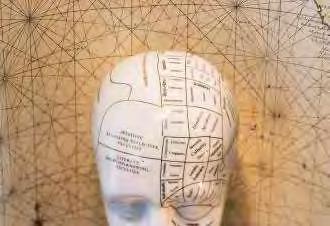
In the nineteenth century, people believed you could tell someone’s personality from the bumps on their head. This was called phrenology.
1 People no longer try to make gold from other metals. GIVEN
People to make gold from other metals.
2 People stopped using phrenology in the nineteenth century. USED
People have the nineteenth century.
3 In the past, people thought the Earth was slowly getting bigger. BELIEVED
In the past, the Earth slowly getting bigger.
3
did you do?
2 Check your answers.
In the past, people thought the Earth was slowly growing in size.
3 Look at the three answers again.
1 In which answer do you need to change an active verb to a passive one?
2 In which answer do you need to use a phrasal verb?
3 In which answer do you need to use the present perfect with since?
Strategies and skills
Past tenses
It is important to understand the meaning of all the main verb tenses, including continuous forms, would and used to. Make sure you know how to use for and since with the present perfect, too.
1 Look at the pairs of sentences. Decide if they have a similar meaning (S) or different meanings (D).
1 A When I was at college, I played tennis a lot.
B I used to play a lot of tennis at college.
2 A Paris has been my home since 2012.
B I have been living in Paris since 2012.
3 A We first became friends ten years ago.
B We had first become friends ten years earlier.
4 A I was always told by my father to do my best at school.
B My father would always tell me to do my best at school.
5 A I haven’t seen George for two years.
B It’s been two years since I last saw George.
6 A Joan prepared a meal for us when we got home.
B Joan was cooking a meal for us when we got home.
2 Complete the second sentence so that it has a similar meaning to the first.
1 I first came to live here five years ago. LIVING
I five years.
2 We visited our grandparents every weekend. WOULD We weekend.
3 I didn’t enjoy music lessons as a child. USE
I music lessons as a child.
4 This was the first time I had ever met Charles. NEVER
I before.
5 My nephew no longer tries to do well at school. STOPPED
My nephew to do well at school.
6 It’s been five months since I last took an exam. TAKEN
I for five months.
SPEAKING BOOST
Discuss or answer.
1 What would you tell your 12-year-old self?
2 What was the last excuse you made up to avoid doing something you didn’t want to?
Reported speech
You may need to rewrite direct speech as reported speech. Make sure you know the patterns with different reporting verbs, and how to report questions.
3 Complete the reported speech sentences.
1 ‘Sam, I think you should check your computer for viruses,’ said Rami.
Rami advised his computer for viruses.
2 ‘Don’t sit on that chair! It’s wet!’ Jodie said to me.
Jodie warned on that chair because it was wet.
3 ‘You stole the money!’ Ellie said to Marta.
Ellie accused the money.
4 ‘Would you like to come to the cinema with me?’ Amber asked me.
Amber invited to the cinema with her.
5 ‘What are you doing at the weekend?’ Josh asked me.
Josh asked me the weekend.
6 ‘Can I use your pen?’ Nadia asked Leo.
Nadia asked Leo if his pen.
Comparative forms
You may have to use comparatives, superlatives and phrases which express comparisons. Make sure you know how to use so and such correctly.
4 Choose the correct words or phrases to complete the second sentence so that it has a similar meaning to the first.
1 I expected the film to be longer than it was.
The film was longer than / wasn’t as long as I expected.
2 Marlon can’t run as fast as his brother.
Marlon’s brother is a faster runner than / not such a fast runner as Marlon.
3 The second film was less successful than the first.
The first film wasn’t as successful as / was more successful than the second.
4 I didn’t realise their house was so big.
I didn’t realise they lived in a much bigger / such a big house.
5 Which exhibition did you enjoy the most?
Which was such an interesting / the most interesting exhibition?
6 This hotel is far more expensive than the last one.
The last hotel was much cheaper than / just as expensive as this one.
SPEAKING BOOST
Discuss or answer.
1 What is the point of celebrity culture?
2 How important is it for your social media to be popular? Why?
Passive forms
The second sentence often uses the passive form of a verb. Make sure you know the passive forms for all verb tenses, and how to use have/get something done. Learn how to use impersonal structures like He is thought to be … , It is believed to have been … .
TIP: Remember, we use by + agent to say who does the action of a passive verb
5 Complete each second sentence with the correct passive form of the verb.
1 They are opening a new supermarket here. BEING
A new supermarket here.
2 A woman at the gate gave me a ticket. GIVEN
I a woman at the gate.
3 Someone had decided that the museum would have to close. BEEN
It the museum would have to close.
4 We will inform you when your order has been sent. BE
You when your order has been sent.
5 People think the show will start at eight o’clock.
EXPECTED
The show at eight o’clock.
6 It is said that eating fish is good for your brain.
SUPPOSED
Eating fish good for your brain.
7 People believe the play was written in 1578. HAVE
The play is written in 1578.
8 My computer needs repairing again. GET
I need to again.
Conditionals and wish
Some sentences may use first, second or third conditionals. Make sure you are confident with all the conditional forms, and learn how to use alternatives to if, such as unless, in case and as long as.
6 Which second sentence matches the meaning of the first sentence? Write A, B or ‘both’.
1 She will only come to the party if she can get a taxi home.
A She has refused to come to the party unless she can get a taxi home.
B She has agreed to come to the party as long as she can get a taxi home.
2 You can use my computer, but you mustn’t download any films.
A You can’t use my computer in case you download any films.
B You can use my computer as long as you don’t download any films.
3 Lily arrived late because her train was delayed.
A If Lily’s train had been late, she wouldn’t have arrived on time.
B If Lily’s train had been on time, she wouldn’t have arrived late.
4 It was snowing, so we didn’t go shopping.
A We would have gone shopping if it hadn’t been for the snow.
B If it hadn’t been snowing, we would have gone shopping.
5 Petra regretted spending so much money.
A Petra wished she hadn’t spent so much money.
B Petra didn’t think she would have spent so much money.
6 It’s a shame that it’s raining today.
A I wish it wouldn’t rain so much!
B I wish it wasn’t raining!
Grammar and vocabulary changes
You often have to make grammatical changes to the second sentence and also use a word or phrase with a similar meaning. Think about the grammar patterns of the word in capitals, and think about other changes you need to make so the meaning stays the same.
7 Correct one or two mistakes in each completed second sentence.
1 It isn’t necessary to take a coat. POINT
There is no point to take a coat.
2 Paula arrived late because her flight was delayed. TIME
If Paula’s flight was in time , she wouldn’t have arrived late.
3 The exam was too difficult for me to do. SO
The exam was so too difficult that I could not do it.
4 Nabil started learning French two years ago. FOR Nabil was learning French for two years.
5 The journey wasn’t as boring as I expected. MORE
The journey was more interesting as I expected.
6 Emma said that we shouldn’t stay too late. ADVISED
Emma advised us don’t stay too late.
Paraphrasing
As well as making grammatical changes to the second sentence, you usually have to change other words to words or phrases with similar meanings. It is important to recognise words, phrases and phrasal verbs that have similar meanings to familiar words.
8 Choose the word or phrase (A–C) that matches the meaning of the bold words in the sentences (1–6).
1 They decided to postpone the match.
A put out B put off C put down
2 Are you going to go in for the competition?
A take part in B get part of C give part of
3 Max didn’t accept her offer.
A turned away B turned off C turned down
4 He left his job as an accountant.
A gave up B gave away C gave out
5 It isn’t worth going into town now.
A There’s no B There isn’t a C There’s a point in point of point for
6 Abi has stopped singing now.
A given off B given in C given up
9
Decide if the pairs of sentences (A and B) have a similar meaning (S) or different meanings (D).
1 A I’m never going to speak to Carol again.
B My intention is never to speak to Carol again.
2 A I’m sure he broke it by accident.
B I’m sure he meant to break it.
3 A They didn’t let people park on the beach.
B People were allowed to park on the beach.
4 A They had no money left.
B They had run out of money.
5 A We finally managed to escape.
B We finally succeeded in escaping.
6 A Brad took no notice of the children.
B Brad paid attention to the children.
EXAM TASK
Complete the second sentence so that it has a similar meaning to the first sentence, using the word given. Do not change the word given. You must use between two and five words, including the word given.
Here is an example:
0 People think that the coins are Roman. BELIEVED
The coins ARE BELIEVED TO BE Roman.
1 ‘You’re lying!’ Marissa said to me. ACCUSED
Marissa the truth.
2 It was careless of her to leave her keys on the table. SHOULD
She her keys on the table.
3 Carl does not dance as well as Jack. DANCER
Jack is than Carl.
4 People think that singing is good for your health. THOUGHT
Singing good for your health.
5 I’m sorry I didn’t go to the cinema with the others. WISH
I to the cinema with the others.
6 I can’t wait to meet all your friends. FORWARD
I am really all your friends.
ABOUT THE TASK
In Reading and Use of English Part 5, you read a long text. There are six multiple-choice questions with four options. You have to choose the correct options, based on information in the text.
The questions can be about the general meaning of the text or details in the text.
Practice task
1 Read the first two paragraphs of an article about scientists in Antarctica. Ignore the highlighting. For questions 1 and 2, choose the answer (A, B, C or D) which you think fits best according to the text.
1 What point does the writer make about Antarctica in the first paragraph?
A It is an increasingly important place for scientific studies.
B It is a unique place.
C It shows us that we are not the most important thing on Earth.
D It is mostly British scientists who carry out research there.
2 The writer thinks that it was difficult for women to get jobs in Antarctica because
A only men had the physical strength to live in the extreme weather conditions.
B women were not attracted to the idea of living in such a remote place.
C women generally accepted the excuses they were given too easily.
D most people found it impossible to believe that women could live there.
How did you do?
2 Check your answers.
3 Look at the four highlighted parts of paragraph 1 of the article.
1 Match each highlighted part (1–4) with an option (A–D) in Ex 1 question 1.
2 Read the options and highlighted parts carefully. Which one matches the meaning exactly?
3 Why don’t the others match?
4 Look at paragraph 2 in the article and the options in Ex 1 question 2 again.
1 Highlight the part of the text that relates to each option.
2 Read the options and highlighted parts carefully. Which one matches the meaning exactly?
3 Why don’t the others match?
Questions can also be about the writer’s attitude, opinion or purpose.
Some questions test your understanding of unfamiliar words and expressions in context and the use of reference words in the text.
Each question is worth two marks.
Flying over Antarctica is an unforgettable experience. 1In all directions, there is nothing for thousands of kilometres except snow and ice. No houses, no inhabitants, just a vast wilderness 2which serves to remind us that we are only a tiny part of the life on this planet of ours. Anja Davidson arrived there in a small, noisy aeroplane last October to take up her position as a researcher at Rothera, 3the main British research station on the continent. Here, 4scientists study, among other things, the effects of climate change, and Anja is one of a growing number of women who are slowly gaining access to this traditionally male-dominated environment. Britain first established research stations in Antarctica in the 1940s, and, from the start, a no-women rule was strictly followed. As late as the 1960s, female scientists who applied for posts in Antarctica were banned from joining male colleagues on trips to the continent. Unbelievably, one female scientist received a rejection letter stating that there were no facilities for women in Antarctica, including no shops or hairdressers! This trivial-sounding excuse revealed a deeper, widely held belief that somehow Antarctica was only for men. This is not surprising when you consider that the history of the continent is made up of heroic accounts of adventurers like Robert Scott and Ernest Shackleton, tales in which courageous men relied on their strength and determination in a battle to survive. It was only in the 1980s that women finally overcame these prejudices and joined the teams of researchers in the remote stations.
Strategies and skills
Identifying attitude and opinion
Questions often ask about the opinion, attitude or feelings of the writer. This is not usually stated directly in the text, but is expressed using different words.
1 Look at the extracts from reading texts and answer the questions.
Although we were determined to give our all in the game, we were only too aware of the difficulty of beating our heavily favoured opponents.
1 Was the writer confident of winning? How do you know?
When the band stepped out onto the stage a few minutes later, I couldn’t believe the volume of noise the fans created as they cheered and screamed almost with one voice.
2 Was the writer surprised by the reaction of the audience? How do you know?
After so many months of planning this once-in-a-lifetime trip, I couldn’t help feeling that the reality didn’t quite live up to my expectations.
3 Was the writer disappointed by the trip? How do you know?
As the train journey continued, the child’s behaviour became more and more outrageous, causing even more embarrassment to his mother and father. But I must admit I felt more sorry for the other passengers than I did for the parents, whose efforts to control their child seemed far from adequate.
4 Was the writer sympathetic to the parents? How do you know?
The narrow bridge stretched across the valley, with a drop of around 20 metres to the river below. Although made only of wood and rope, the bridge looked reasonably solid, and I didn’t hesitate to follow my fellow travellers across it.
5 Was the writer worried about crossing the bridge? How do you know?
2
Read the sentences (1–6) and choose the word (A–C) that best expresses the writer’s opinion, attitude or feeling. Which words or expressions in the sentences confirm this?
1 After my third fall, I was beginning to think that maybe skiing wasn’t for me and I should stick to something I was good at, like reading or cooking.
A discouraged B ashamed C relieved
2 We sat through the play until the end out of a sense of duty, although by the time the final curtain fell the plot was as much of a mystery to us as it had been at the beginning.
A annoyed B suspicious C confused
3 As we headed out away from the coast and into deeper water, and the small boat started to rock heavily with the movement of the waves, I began to wonder what the experience would be like.
A determined B unsure C excited
4 Working in a small restaurant in Los Angeles definitely has its moments, like the day I walked out of the kitchen and was delighted to find that two well-known Hollywood actors were sitting at one of my tables, waiting to be served!
A thrilled B concerned C proud
5 It was day five of the holiday, and, although the activities were interesting and fun, I must admit that some of the group members were definitely beginning to get on my nerves.
A bored B annoyed C worried
6 As Ela started to talk about her qualifications and experience, I had to revise my opinion of her. Not many people could claim such a varied and interesting work history.
A fascinated B impressed C jealous
SPEAKING BOOST
Discuss or answer.
1 Would you rather live somewhere very hot or very cold? Why?
2 In what ways can we use the power of nature to improve our lives?
Deducing the meaning of unfamiliar vocabulary
Some questions ask about unfamiliar words and phrases in the text.
To answer these, you need to use the context to guess the meaning.
3 Look at the sentences and answer the questions.
1 I was alarmed to see hordes of angry-looking rugby fans all heading for the same train as me.
Does the word hordes indicate a large number or a small number? How do you know?
2 After ten years, I was no further on with my ambition to become a professional singer, and found myself becoming more and more disillusioned with the entire music industry. Does the word disillusioned describe a positive or a negative feeling? How do you know?
3 After ten minutes of beating about the bush, I decided to take a more direct approach and asked: ‘Are you interested in investing money in the business?’
Does the phrase beating about the bush suggest discussing something in a direct or indirect way? How do you know?
4 Losing in any sport is disappointing, and each time you lose it becomes more difficult to pick yourself up and approach the next game with confidence and optimism. Does the verb pick yourself up refer to feeling better or feeling worse? How do you know?
5 Although I loved the educational side of university life, I found the social life difficult as I had a very limited amount of money to live on and couldn’t keep up with my more prosperous friends. Does the word prosperous relate to money or educational ability? How do you know?
6 The final hotel we stayed in had its own gym and sauna, as well as much more comfortable rooms and an excellent restaurant, so it was definitely a cut above the rest Does the phrase a cut above the rest indicate something positive or something negative?
4 Look at the extracts and choose the correct answers (A–D). How do you know?
The stalls were crammed with attractive souvenirs, but I knew from the guidebook that we would find better bargains elsewhere, so I kept my wallet firmly in my pocket to avoid being ripped off.
1 The phrase ‘ripped off’ indicates that the writer A suspects that the prices in the market are too high.
B does not feel safe in the market.
C does not trust the advice given in the guidebook.
D is keen to buy souvenirs.
As I approached the kitchen, I could hear the muffled voices of Hugh and Dona coming from behind the closed door, but they were too unclear for me to tell whether they were arguing or just chatting.
2 The word ‘muffled’ suggests that the voices
A sounded angry.
B were very loud.
C weren’t easy to hear.
D weren’t in the kitchen.
The company did well. Our products were new and innovative, and proved instantly popular. But we knew that we had to establish our brand quickly because it wouldn’t take long for others to jump on the bandwagon with their own versions.
3 The phrase ‘jump on the bandwagon’ suggests that
A the company’s products would continue to be popular.
B other companies would copy their ideas.
C the company needed to keep developing new ideas.
D their company would continue to grow quickly.
I hadn’t seen my aunt and uncle for at least 15 years, so I wasn’t exactly thrilled when I was told they were coming to visit my city and I would have the dubious pleasure of showing them around.
4 The word ‘dubious’ suggests that the writer
A was looking forward to seeing her aunt and uncle.
B wasn’t sure she would enjoy seeing her aunt and uncle.
C felt bad about not meeting her aunt and uncle.
D felt very excited at the thought of meeting her aunt and uncle.
Matching meaning
It is important to read the relevant part of the text very carefully to match the exact meaning in the text to the meaning in the correct answer.
5 Read the extracts carefully and decide if the sentences (A–D) are true or false, according to the text. How do you know?
TIP: If an answer option mentions something that does not appear in the text, it cannot be the correct answer (or true, according to the text).
1 As we prepared for the race across the desert, one of our biggest challenges was to find suitable team members. Not only did they have to be physically fit, but they also had to have personalities and habits that wouldn’t drive us mad.
A The writer wanted to find people to take part in a race.
B It was easy to find team members.
C Team members had to be strong and healthy.
D They needed team members that they could get on well with.
2 The Isle of Skye, off the northwest coast of Scotland, is fast becoming a victim of its own success. Having advertised its beautiful and remote landscape in an attempt to attract visitors, it now faces a crisis. Tourists are now flocking to the island in such numbers each year that they risk destroying the very peacefulness they hope to enjoy.
A The Isle of Skye never encouraged tourists.
B A lot of tourists now come to the island.
C The problem of too many visitors is now very serious.
D Tourists are damaging the beautiful landscape on the island.
3 The first indication we had that there were flying fish in the water was the occasional ‘plop’ as they dropped back below the surface. It was only a few moments later that Joe caught sight of some and called out excitedly to me. I turned my head to see a small group of them, as clear as day as they emerged from beneath the waves and then quickly returned.
A The writer was very excited to see the flying fish.
B The writer couldn’t see the flying fish very clearly.
C They heard the flying fish before they saw them.
D The flying fish stayed out of the water for a long time.
4 It was her passion for landscape photography that first took Amber to Canada, and it was only a chance day trip on a sailing boat that gave her a first sighting of humpback and minke whales. But this encounter changed her life, and she resolved to play whatever part she could in bringing these magnificent creatures back from the verge of extinction.
A Amber’s visit to Canada gave her an interest in photography.
B Amber travelled to Canada in order to see whales.
C Amber discovered a new interest during her time in Canada.
D Amber managed to take some wonderful photos of whales.
6 Read the first paragraph of an article about Jack Thomson’s experience of studying an active volcano. Answer the questions (1–5).
VOLCANO WATCH
1 What do we learn about the writer’s journey to the volcano?
2 Does the writer say how he felt during the journey?
3 What do we learn about the writer’s background?
4 What emotions did the writer experience when he arrived at the volcano?
5 What signs were there that the volcano was active?
7 Now read the exam question about the paragraph in Ex 6 and choose the correct answer (A, B, C or D).
TIP: Words or ideas in the options often occur in the text, but this does not mean that the option is correct. They may be distractors, placed there to catch you out if you don’t read the text carefully enough. Read the relevant part of the text very carefully to see if the meaning matches.
What was the writer’s main impression when he arrived at the volcano?
A how uncomfortable the weather conditions were
B how relieved he was to finally be there
C how powerful and dangerous the volcano was
D how lonely he felt
Understanding reference words
Some questions ask about reference words in the text. To answer these, you need to read the part of the text before the reference word very carefully to find out which noun or verb the reference word refers back to.
TIP: The reference word is usually the subject or object of a verb. Think about which nouns make sense as the subject or object.
8 Look at the bold reference words in the extracts (1–3). Then look at the highlighted words. Answer the questions (A–C).
1 There were customers at all the tables, waiting patiently as skilful waiters hurried around handing them large plates of delicious-looking food.
A Who was handing out plates?
B Who were they handing the plates to?
C Which highlighted word does ‘them’ refer to?
2 There was a slight mist in the air as we headed for the truck to go on our tiger-watching trip, but that only added to the sense of excitement that we felt.
A How does the writer feel about the trip?
B What made that feeling stronger?
C Which highlighted word does ‘that’ refer to?
3 Young people queue up each year to take part in TV talent shows, dreaming of the chance to become celebrities, but very few ever achieve their ambitions.
A Who wants to become celebrities?
B Who wants to achieve their ambitions?
C Which highlighted word does ‘few’ refer to?
9 Look at the extracts and choose the correct answer (A–D).
TIP: Reference words always refer back to earlier nouns or verbs, not to later nouns or verbs.
Working as a newly qualified teacher can be daunting. Lesson preparation seems to take forever, and marking students’ work is even more demanding on time. Then there is the huge issue of learning how to keep control of an uninterested and often unwilling class of teenagers. It takes years to achieve this and become a confident and effective teacher.
1 What does ‘this’ refer to?
A preparing lessons
B keeping control of the class
C marking students’ work
D becoming a confident and effective teacher
‘How do I get to your house?’ I asked. ‘Just go along the main road until you get to the traffic lights, then turn left. It’s simple,’ Ana replied. ‘You could get the bus if you don’t want to walk.’
2 What does ‘it’ refer to?
A getting to Ana’s house
B going along the main road
C turning left
D getting the bus
Life is not easy for young actors. Well-paid jobs are few and far between, and most theatre companies don’t offer regular contracts. For this reason, many give up and turn to alternative careers.
3 What does ‘many’ refer to?
A careers theatre companies
ultimate challenge
The ultramarathon in the Amazon is one of the toughest footraces in the world. You run 230 kilometres over four days through dense jungle, carrying your kit on your back, in temperatures up to 30 degrees. Why would anyone want to do this? Of course, there’s a competitive element, and most runners have at least some desire to win. There’s also the personal satisfaction of pushing your body to its limits. But these are secondary to the main motivation, which is simply the pleasure of running. This is what really drives people to compete in these extreme events.
My running career had followed a fairly established path, graduating from a relaxed 5k in my local park to a half marathon and, finally, what I saw at the time as my ultimate challenge, the New York Marathon. Except that when I crossed the finish line, it didn’t feel like such a big achievement. I’d trained so well and got so fit that running 42 kilometres no longer felt like a big deal, and I felt I needed more. A friend suggested an ultramarathon, so I signed up for one in the Amazon.
My training programme involved running in the heat and rain as well as building up my fitness. One challenge was to get used to running with a backpack. I knew I would have to carry at least 2.5 litres of water every day, and that’s a lot of weight! Luckily, the human body can adapt quickly. Covering more kilometres in a day wasn’t a huge problem for me. But the tough thing about ultra-running is getting up day after day and persuading your tired, aching body to perform again. This was what really tested me.
I arrived at the base camp on 31 May, three days before the start of the race. My journey there had been long but fairly straightforward, and I had got a reasonable amount of rest along the way. The tents provided for us were quite big and fairly comfortable. The weather wasn’t brilliant, but the forecast was good, so it wasn’t a huge concern. I spent a lot of time over those few days chatting to the other competitors, comparing notes about training and experience. They were all very friendly and keen to offer help and support, which I hadn’t expected. Then it was time for the race itself.
I knew I would have to deal with running over rough ground, with lots of ups and downs and sometimes in the dark. I was also well prepared for the psychological highs and lows, the inner battle that all runners experience, with one voice in your head telling you to just give up and go home, while the other urges you forward. What I hadn’t bargained for was the physical effect of running with wet feet, due to the many streams we had to cross. My feet were sore and bleeding by the end of day one. In the end, though, it was my legs that let me down. On the third day, they simply couldn’t do any more and I had to stop.
Of course, failing at anything is not as good as winning, but, to my mind, having a go at one of the toughest challenges in the world, even if it ends in failure, is hardly something to be ashamed of. I travelled home with no medal, but by no means defeated. And when friends asked me, ‘Are you going to try an ultramarathon again?’ I had no hesitation in saying ‘no’. I am not sorry that I took part, but have accepted that I have my limits and in future I will be happy to stick to standard marathons!
You are going to read an article about a woman’s experience of preparing for an extreme marathon. For questions 1–6, choose the answer (A, B, C or D) which you think fits best according to the text.
1 According to the writer, people take part in ultramarathons mainly because
A they are determined to win.
B they find them enjoyable.
C they want to see how much their body can achieve.
D they want to prove that they can do it.
2 The word ‘it’ in line 20 refers to
A the writer’s running career.
B a big achievement.
C completing the New York Marathon.
D training so well.
3 Which part of training for the ultramarathon did the writer find the most difficult?
A learning to run while carrying a heavy weight
B running much longer distances
C learning to run even when she was exhausted
D practising running in difficult weather conditions
4 How did the writer feel at the base camp, before the race?
A tired after a difficult journey
B surprised at the attitude of other runners
C disappointed about the accommodation
D worried about the weather conditions
5 The phrase ‘hadn’t bargained for’ (line 57) suggests that running with wet feet
A caused some unexpected problems.
B was not a particularly difficult challenge.
C had been part of the writer’s training.
D was not as unpleasant as the writer expected.
6 What feeling does the writer have now?
A determination to succeed in an ultramarathon one day
B pride at having taken part
C disappointment at having failed to complete the race
D regret at trying to do something too challenging
In Reading and Use of English Part 6, you read one long text with six gaps.
The missing sentences that fill these gaps are written below the text, but not in the correct order.
There is also a seventh sentence which does not fit any of the gaps in the text – this is called a distractor.
Practice task
1 Read part of an article about education outdoors. Two sentences have been removed from the article. Choose from the sentences
A–C the one which fits each gap. There is one extra sentence which you do not need to use.
Getting out of the classroom
A group of excited children run along the beach, enthusiastically collecting pieces of wood and other rubbish. But this isn’t the summer holidays, and the adults accompanying them aren’t their parents, but their teachers. The kids are attending a beach school. (1) Children learn about the beach environment and also do a range of fun activities like building fires and producing art from whatever the tide has washed onto the shore.
The idea of outdoor learning is not new. Forest schools have been popular since they were first introduced in the 1990s. And outdoor learning is about a lot more than just having fun in the fresh air. Parents and teachers have observed that children who learn outdoors become more confident and independent. (2) Forest and beach schools are so far limited to primary-age children. But there are many opportunities for teenagers to enjoy similar experiences and benefits at summer camps.
You have to decide which of the seven sentences fits each of the six gaps.
To do the task, you need to understand the flow of a text, and understand how sentences refer back to earlier ideas in the paragraph or the text and forward to the next ideas.
Each question is worth two marks.
How did you do?
2 Check your answers.
3 Look at the article again with the missing sentences added. Match the bold parts of the highlighted sentences to words and ideas they refer back to in the previous sentence.
A group of excited children run along the beach, enthusiastically collecting pieces of wood and other rubbish. But this isn’t the summer holidays, and the adults accompanying them aren’t their parents, but their teachers. The kids are attending a beach school. This new kind of outdoor teaching establishment started recently in some parts of the UK and is already proving popular. Children learn about the beach environment and also do a range of fun activities like building fires and producing art from whatever the tide has washed onto the shore.
The idea of outdoor learning is not new. Forest schools have been popular since they were first introduced in the 1990s. And outdoor learning is about a lot more than just having fun in the fresh air. Parents and teachers have observed that children who learn outdoors become more confident and independent. They are also more likely to pay attention and achieve good results academically. Forest and beach schools are so far limited to primary-age children. But there are many opportunities for teenagers to enjoy similar experiences and benefits at summer camps.
A They are also more likely to pay attention and achieve good results academically.
B There are, however, some disadvantages to attempting to conduct classes outside.
C This new kind of outdoor teaching establishment started recently in some parts of the UK and is already proving popular.
Strategies and skills
Understanding reference devices
To decide whether a sentence fits a gap, you need to understand pronouns and other words that refer back to words or ideas earlier in the text.
1 Look at the bold words in the extracts. Match them to the words or ideas they refer back to in the previous sentence.
TIP: Some pronouns and reference words can refer back to a whole idea, not just a single word.
1 The population of urban foxes in London is now estimated to have reached over 30,000. Although they are a familiar sight in all parts of the city centre, not everyone feels comfortable with their presence.
2 In 1768, Captain Cook set off on his first voyage of exploration, to the South Pacific island of Tahiti. It was here that he carried out observations on the stars, designed to help calculate the distance of the Sun from the Earth.
3 Look at the pronouns and reference words in sentences A and B. Decide which one can follow on from each extract (1–4). Why is the other sentence incorrect?
1 Two commonly held beliefs about sleep were that it was more important for the body than the mind, and that people could train themselves to need less sleep.
A Both of these turned out to be wrong.
B Their ideas didn’t stand up to scientific investigation, however.
2 It is thought that ice cream was first made by the ancient Persians in about 500 BCE, when ice was combined with flavours to produce a sweet treat.
A This one was very popular in Europe in the 1500s.
B It first reached Europe in the 1500s.
3 One strategy for finding wild mushrooms is to identify suitable places through the summer, when the weather is fine.
A You can go back there in the autumn, when mushrooms are likely to appear.
B This is the perfect place to find them once autumn comes around.
4 Cross-country skiing has the advantage that you see a lot more of the mountains, rather than being confined to a few well-worn ski runs.
3 There are many popular myths concerning diet and exercise. One of the most widely believed is that limiting food intake to the first half of the day only will help with faster weight loss.
4 One useful tip for travellers is to keep your money, valuables and documents in different places. Doing so means that you reduce your risk of losing all of them at the same time.
5 By this time, there were hundreds of tons of crude oil covering the beach and the race was on to clear it all up. This was far too challenging a task for the small coastal community alone.
1 a place?
2 an idea?
3 people or animals?
2 Look at the bold words in Ex 1 again. Which ones refer to
SPEAKING BOOST
Discuss or answer.
4 an action? ,
A Here, you can enjoy skiing for less money, and without the dangers.
B It is also easier and cheaper, and there is less risk of accidents.
1 How do you improve your mood when you feel a bit down?
2 In what ways does social media make us happy and unhappy?
Text structure and cohesion
A sentence that fits a gap often adds more information to something that has been mentioned before, or may introduce a new idea which is mentioned again in the following sentence.
4 Match each second sentence (a–f) to the sentence it follows (1–6).
TIP: The correct sentence for a gap often adds a similar or contrasting idea to the previous sentence.
1 His talent for acting has propelled him to fame and made him a household name.
6 Read the sentences (1–6) about plastic pollution. Choose the correct similar or contrasting idea (a–f) to follow each one. Use pronouns and reference words to help you.
1 For the last 40 years, plastic has been accumulating in the oceans.
2 It is possible to recycle some kinds of plastic.
3 Understanding of the issue of plastic pollution has certainly increased recently.
4 Plastic is widely used in packaging and in everyday items that we buy.
5 Many people now choose reusable drinks bottles rather than disposable ones.
6 Alternatives to plastic are available for manufacturers.
a However, this awareness has done little to resolve the actual problems.
b They increasingly choose to buy from packaging-free shops, too.
2 June is a great time to visit because the sea is warm and the weather is generally settled.
3 The downstairs rooms had been completely modernised and redecorated.
4 Robots can certainly help children with learning in the classroom.
5 The island is dotted with a number of fascinating ancient sites.
6 From a distance, the rock looks completely bare.
a September is equally beautiful, and a little less crowded, too.
b However, upstairs, much of the original décor was still intact.
c It has also won him ten awards.
c It has also begun washing up on our beaches.
d But these materials tend to be more expensive and more difficult to work with.
e In addition to this, plastic fibres form part of many of the clothes that we wear.
f Other kinds, however, cannot be reprocessed into new products.
d Yet on closer inspection, you can see it is actually covered in tiny plants.
e But can they ever cope with the complexities of managing a large group of children?
f As well as these attractions, it is also home to many rare species of birds.
5 Look at sentences a–f in Ex 4 again. Which ones add a similar idea, and which add a contrasting idea? Which words tell you this?
It is important to recognise how different phrases link ideas in texts.
7 Choose the correct words to link the second sentence to the first.
TIP: The missing sentence may add extra details about something that has been mentioned before, or it may give a reason for something.
1 When choosing the best university for you, location and price are obviously extremely important. Other factors to consider are / The next one is the range of courses on offer and the number of teaching hours per week.
2 The fear of heights is not restricted to a feeling you get when peering over the edge of a very tall building. This is because / In extreme cases, it can prevent people from doing simple everyday things like going upstairs.
3 Chess has been shown to improve concentration levels in children and teenagers. Instead of this / This is why some schools are introducing it as part of their weekly lesson plans.
4 Young people with hearing difficulties often find it difficult to hear well in noisy environments such as cafés. Other problems include / This means that they can find themselves unable to join in normal social activities.
5 It is definitely a good idea to avoid screen time for an hour before you go to bed. This is because / Doing so means the blue light that screens give off can interfere with your body’s natural urge to sleep.
8 Link the sentences with the phrases from the box.
TIP: Before you decide if a sentence is correct, read it carefully with the sentences that come both before and after. Do the sentences all make sense together?
In some cases My favourite is That is why This is because What fascinated me more was
1 We are far more likely to laugh when we are with other people than when we are alone. laughter is essentially a social activity.
2 There are ten main museums in the city. the Museum of Fashion because of the range of clothing and accessories it has on display.
3 These spiders can give a very nasty bite. , it can even prove fatal.
4 I found his reluctance to talk a little odd. his apparent lack of interest in the people around him.
5 Dolphins are highly intelligent animals. many people believe it is wrong to keep them in captivity.
Rephrasing, exemplifying and commenting
A sentence that fills a gap sometimes rephrases something that has been said in a previous sentence, or it may add an example or a comment about something that has been mentioned.
TIP: Writers can use adverbs or adjectives to show their attitude. For example, they might use a comment adverb such as unfortunately, or they might use a phrase such as It was unfortunate that …
9 Choose the correct phrase to link the second sentence to the first.
1 After six months, the business was still struggling to make even a small profit and I was beginning to doubt whether it had a future. In other words, / For example, I realised it was time to move on.
2 I asked Jake many times to come walking with us but he always seemed to have an excuse. Clearly, / Fortunately, hiking wasn’t his thing.
3 It is well known that colours can have a profound effect on our mood. For instance, / It is lucky that blue can make us feel calmer and more relaxed.
4 My brother was not at all like me, and our very different personalities often led to conflicts. To put it simply, / Interestingly, we didn’t get on.
5 The number of people choosing to cycle to work has been increasing steadily. For example, / Luckily, in London the number has more than doubled in the last decade.
6 We continued our clean-up of the beach over the next few weeks, removing at least twenty bags of rubbish a day. It was frustrating that / To put it another way, more trash appeared on the beach with each incoming tide, and we felt our job would never be done.
10 Choose the sentence (A or B) which best follows each first sentence (1–5). What phrase helped you decide?
1 Coming up to the surface too quickly after a deep-sea dive can be dangerous.
A But the most exciting thing is being alone in that underwater world.
B In extreme cases, it can lead to death.
2 As well as being fun to drive, these compact electric scooters are light and easy to carry.
A Other features include a powerful battery which lasts for at least ten hours.
B For instance, cities like Paris have actively encouraged their use as a green form of transport.
3 I wasn’t particularly keen to spend hours walking around the markets of Fez and trying to avoid buying cheap souvenirs.
A What interested me more was the idea of visiting its public library, which is over 1,000 years old.
B Unfortunately, we didn’t get as much time for sightseeing as I would have liked.
4 Carl knew that an injury of this type would take at least two or three years to recover from, by which time he would be nearly 30 and unlikely to get back into the team.
A Fortunately, treatments for such injuries have improved a lot in recent years.
B In other words, he realised that his professional career was over.
5 After months of carefully studying maps and deciding on the best routes, we finally set out on our big adventure, armed with a selection of guide books and phrase books, and full of excitement for our round-the-world-trip.
A Unfortunately, things didn’t go quite according to plan, and the difficulties started as soon as we got to the airport.
B For example, we found it incredibly difficult to decide which countries to visit and which to leave off the list.
SPEAKING BOOST
Discuss or answer.
1 Are films getting better as technology develops? In what ways?
2 Talk about an animation film that you like.
You are going to read an article about computers and art. Six sentences have been removed from the article. Choose from the sentences A–G the one which fits each gap. There is one extra sentence you do not need to use.
COMPUTERS becomeARTISTS? Can
Machines already perform a lot of tasks that used to be done by humans. They can build our cars and do complex calculations for us, even mark our exam papers. But now it seems that ever more intelligent machines are straying into areas where we never imagined they would go. We have always liked to think of ourselves as having a unique kind of intelligence that machines could never match, one which allows us to think of new ideas and produce creative and artistic works. But it seems that even here, computers are lining up to compete with us.
Of course, machines can easily be trained to do the physical work of producing art. (1)
It had been programmed to look at a photographic image and then reproduce this on paper as a painting, using a range of different brush strokes.
But now it seems machines are going a step further.
In 2018, the New York auction house Christie’s sold a painting for $432,000. The painting, entitled ‘Portrait of Edmond de Belamy’, shows a blurred image of a young man, and what made it unusual was that the idea, as well as the image itself, was produced entirely by a computer. There were of course humans giving instructions to the computer. (2) Their aim was simply to show that computers can be creative.
So, how do you ‘teach’ a computer to be creative? In the case of art, it seems that the answer is fairly simple. You program it to search for and scan thousands of similar images online. (3) It can then use this information
to create something similar to, but distinct from, all the others it has scanned.
Some artists are now working with computers to produce a new kind of art. In one project, an artist programmed a computer to search for images of birds of the kinds that he saw regularly around the British coast. The computer, of course, did not know what species it was looking for, but it made a selection and formed these into a single image.
(4) It was then filmed in its natural surroundings, and the result is a work which shows how the real world and the machine world can work side by side.
These computer-generated works are certainly interesting, and they make us think about the limits of what machines can and cannot do.
(5) Some enthusiasts would argue they do, and the collectors willing to pay high prices for these works would suggest that there is definitely a market for computer art. Others, however, would disagree.
Many ‘real’ artists would claim that art is an expression of human intelligence and human emotions. (6) These things, they argue, are part of being human and can never be produced by a machine. So the ‘Portrait of Edmond de Belamy’ may look convincing from a distance. But when you get closer, you can see that although it has the shape of a human, the eyes show no human feelings – because only a human can see and represent these.
A This enables it to build up a store of data about the features the images have in common.
B But not everyone would accept that they qualify as art.
C In 2009, a painting robot known as e-David was created at the University of Konstanz in Germany.
D They were a group of young French artists, who worked together under the collective name Obvious.
E It is true to say that artists are becoming increasingly interested in working with computers to produce works of art.
F More importantly, it is about a desire to communicate with other people.
G This was taken and placed on the mud close to where the living ones feed.
ABOUT THE TASK
In Reading and Use of English Part 7, you read one long text which is divided into different sections, or up to six shorter texts all on the same topic. There are ten questions to answer. These state information or ideas taken from the text or texts. You have to match each question or statement to the correct section of the long text, or the relevant short text.
Practice task
1 Read the first two parts of an article about organising surprises for people. For questions 1–4, choose from the sections (A or B). The sections may be chosen more than once. Which writer
1 was accused of breaking the law?
2 failed to persuade a family member to do things differently?
3 wishes she had been more forceful in expressing her concerns?
4 felt happier after revealing the secret?
SURPRISE!
A KATYA
Questions can be about detailed information in the text, or about the writer’s attitude or opinion. Remember, the information or opinions will be phrased in different ways in the questions and the text. Each question is worth one mark.
Some people love surprises, but keeping a surprise secret isn’t always easy. Two people tell us about their experiences.
It was my sister-in-law Tara’s birthday, and my brother was keen to organise a surprise party for her. I tried to discourage him, on the grounds that most people actually prefer to know about these things in advance, but he refused to change his mind. So I was allocated the task of keeping Tara busy in town, while friends and family members prepared food and decorated the house. I thought it would be pretty straightforward, but Tara is a police officer and knows when people aren’t telling the truth. After three hours of listening to excuse after excuse about why we should visit yet another shoe shop, she finally confronted me with: ‘What’s going on?’ To my huge relief, I was forced to tell the truth. Once we’d had a good laugh, we thoroughly enjoyed the rest of the day, and I think she was secretly relieved not to have a party sprung on her out of the blue.
B HELEN
Everyone in my family loves surprises, including me. But things went horribly wrong when we tried to organise a surprise weekend in Paris to celebrate my cousin Jenna’s graduation. My aunt had organised everything – someone would take Jenna to the airport, pretending that they were meeting a friend who was flying in. All I had to do was go into her flat, pick up her passport and pack a few suitable clothes, then join the others at the airport. It sounded simple, but I was uneasy at the idea of going into my cousin’s flat when no one was there. I should have spoken up, because it turned out I was right to be worried. A neighbour spotted me searching through my cousin’s wardrobe and reported what she thought was a break-in. Two hours later, I was finally released, but by this time we had all missed the flight. Luckily, everyone saw the funny side, and we had a big family meal together instead!
How did you do?
2 Check your answers.
3a Look at the two extracts (a and b) from Katya’s story. Match each extract with an option (2 or 4) in Ex 1.
KATYA
a I tried to discourage him, on the grounds that most people actually prefer to know about these things in advance, but he refused to change his mind.
b To my huge relief, I was forced to tell the truth. Once we’d had a good laugh, we thoroughly enjoyed the rest of the day, and …
3b Check the answers to Ex 3a, then choose the correct words to complete sentences 1–3.
1 The extracts use / don’t use the same words as the options.
2 The correct meaning is given in a few words / a whole chunk of the text.
3 You sometimes have to guess from your own knowledge / the context that the option matches.
4a Look at Helen’s story again. Find the parts that match options 1 and 3 in Ex 1.
4b Check your answers to Ex 4a, then answer the questions (1–3).
1 Do the answers occur in the text in the same order as the options?
2 How do we know Helen ‘wishes she had been more forceful’? What were her concerns?
3 What parts of the story suggest that she was accused of breaking the law?
Strategies and skills
Reading for specific information
To do this task, you don’t need to read the whole text first. Read each option in turn and scan all the sections of the text to find a part that might match. Then read carefully to find the specific information you need.
TIP: Practise scanning texts for particular words or ideas so you can find the part of a text that you need quickly.
1 Scan each text (1–3) quickly and find the specific information.
1 Read about preparing for sports events. Find a mention of a mistake
I’ve always been a fairly active person, so when a friend challenged me to enter a marathon with him, I decided to give it a go. I set about my preparations with great enthusiasm, drawing up schedules of training runs to increase my fitness and speed. I had done quite a bit of research on the physical and mental preparation necessary. But I forgot the most important rule: don’t overtrain too early on. I picked up an injury on only my third week of training, and had to drop out, much to my disappointment.
2 Read about an experience of travelling. Find a mention of an outdoor activity
Spending three months travelling around Italy was an amazing experience. From the sleepy hilltop villages to the famous cities like Florence and Venice, everything had an unbelievable charm. I can honestly say I enjoyed every minute, from exploring the ancient ruins of Rome to spending three days hiking in the beautiful Tuscan landscape. And everywhere I went, the day would end with a delicious meal and an interesting conversation.
3 Read a story about performing in public. Find a mention of a negative experience
The curtain rose and the show got off to an excellent start. The opening songs went down well with the audience and no one put a foot wrong in the tricky dance routines. The applause encouraged us all, and we were beginning lose our pre-show nerves. Disaster struck when it came to my first solo number and the words completely went out of my head. Of course, everyone was very supportive, but I must say the memory of that put me off acting for months. Luckily, the audience didn’t seem to mind.
2 Scan three extracts about popular cities to visit. Find the information 1–6 quickly.
TIP: The information you are looking for does not necessarily occur in order in the texts.
Which text mentions 1 places to eat?
2 cultural activities?
3 an attraction outside the city?
4 a pleasant smell?
5 public transport?
6 taking photos?
A Paris is beautiful at all times of year, whether a sunny spring morning or a dull November afternoon. It’s a city which just invites you to wander around, taking in the sights and sounds around you. And you’ll be spoilt for choice when it comes to choosing somewhere to sit outside in the sunshine and enjoy a delicious lunch. Or, if you’re looking for somewhere a bit quieter, why not try the Jardin des Plantes. If you’re lucky enough to visit in June, you can take in the glorious scent of the roses.
B There are so many wonderful things to see in Barcelona that it’s hard to know where to start. Of course, the amazing buildings are at the top of most visitors’ lists, and rightly so. Make sure you take advantage of the excellent metro system to get around the city quickly. The other big attraction, especially in the summer, is the fact that Barcelona is on the coast. It’s definitely worth considering a trip beyond the city limits for a day, to find some outstanding beaches.
C Exploring the well-known landmarks of New York can give first-time visitors the feeling of being on a movie set. So many of the squares, buildings and parks have featured in famous movies that it almost feels as if you already know the city. Make sure you get a few selfies to impress your friends! You also need to find time for the New York shopping experience, and, of course, there’s no better city for an exciting evening out watching a play or a musical. I guarantee a long weekend will leave you feeling you must come back!
SPEAKING BOOST
Discuss or answer.
1 Describe the plot from a film or book that involves a lie.
2 What kinds of things do young children lie about?
Understanding implication
Sometimes, an exact meaning is not stated openly in the text: it is implied. However, you can infer the meaning (work out what is meant) from what the text says.
3 Look at the extracts (1–6) and choose the one thing (A–C) for each that you can infer from what the writer says.
1 I’d always loved sailing, so when I saw an advert asking for volunteers to work on a large yacht during the summer vacation, I jumped at the chance to apply.
The writer …
A had no difficulty in getting a summer job.
B found a summer job which suited her perfectly.
C had always wanted to work on a yacht.
2 My website wasn’t getting many hits, so I contacted a friend who was into film-making and asked if he’d help me make a few short videos to upload to it.
The writer …
A was interested in film-making.
B was very disappointed in the website.
C made a decision to improve the website.
3 Preparing for a six-month backpacking trip requires some hard decisions, wherever you’re planning to go. You have to look at everything you’d like to take with you and ask yourself: ‘Do I really need this?’
The writer mentions …
A the need to travel light when backpacking.
B the importance of planning a route carefully.
C the need for good decision-making when travelling.
4 A lot of my friends at university came from wealthy backgrounds, so had as much financial help as they needed. They could afford a decent place to live and expensive nights out whenever they wanted. It wasn’t quite that simple for me.
The writer …
A was extremely unhappy at university.
B had some money worries as a student.
C spent too much money socialising at university.
5 I realised I had just given up a steady job with a good income in order to throw myself into the world of acting, with all its uncertainties. What was I thinking?
The writer …
A is confident of success as an actor.
B has doubts about her decision to leave her job.
C is aware of her lack of experience as an actor.
6 I opened the door and cast my eyes over the small, one-room flat with its hard bed and bare walls. Was this really going to be my home for the next six months? Still, at least I had my new job to look forward to.
The writer mentions …
A a feeling of nervousness about a new job.
B a feeling of disbelief about a new opportunity.
C a feeling of disappointment about accommodation.
Paraphrasing in questions
The questions often use paraphrasing to express the exact meaning in the text in a different way.
TIP: More than one extract or part of the text might mention an idea. Once you have scanned and found the ideas, you need to read those parts of the text carefully to match the exact meaning.
4 Read the pairs of extracts below carefully and answer the questions.
1 Read two extracts (A and B) about experiences of exciting sports.
a Find a dangerous situation in each extract.
b Find one dangerous situation which could have been avoided.
A Skiing is already an exciting sport, but getting away from the main ski runs and finding your own way back down the mountain raises the level even more. But you do have to be careful. Last year, I was out on the mountain with some friends when heavy snow started coming down. We were concerned about losing our way and getting stuck on the mountain overnight. This was when I realised I should have checked the weather forecast more carefully before we set out. Fortunately, it ended well and we got back to our base before dark.
B Nothing can beat the thrill of rock climbing –seeing a high cliff in front of you and knowing that you are going to use all your strength and skills to reach the top. It’s important to remember the sport has risks. Last month, I was out with a group. We had all the proper safety equipment, and we all knew how to bang the metal pins into the rock to attach our ropes to. But we weren’t sure of the best route to climb, and some parts of the rock looked too soft to hold our ropes securely. Luckily, our instructor made the decision to abandon the climb before we got too far up.
2 Read two extracts (C and D) about life at university.
a Find a mention of social life in each extract.
b Findone mention of social events which are less expensive than the person expected.
C I’d heard so many different accounts of university life before I went that I wasn’t quite sure what to expect. Some of my friends had complained about the lack of money, while others had found the academic work so challenging that they almost considered giving up. I must admit I found the workload was much heavier than I’d expected. I seemed to have essays to write every week, and there certainly wasn’t time for all the nights out that some of my friends had talked about. I doubt I’d have had enough money for that anyway!
D I didn’t have any difficulty settling into university life. I’d spent quite a bit of time researching my course before I applied, so I had a good idea of what I was in for. I was slightly concerned that I might feel lonely, leaving my family and school friends behind, but I needn’t have worried as my evenings were full in the first few weeks with countless ‘meet and greet’ get-togethers – all with discounts on the prices, which was a nice surprise. All in all, I soon realised that university life was definitely for me!
3 Read two extracts (E and F) about people who work in the world of fashion.
a Find a mention of qualifications in each extract.
b Find one mention of the fact that qualifications alone won’t get you a job.
E Stefan Corelli is a fashion photographer for a leading fashion house in Milan. Although he says the work is hard and involves long hours, it also has quite a few plus sides, like visiting exotic locations to do shoots. Stefan says he had originally intended to be a wildlife photographer, which is why he studied for a degree in photography. However, his final year project involved some fashion photoshoots, and he decided this was the career for him and applied for a post as soon as he left college.
F Ruby Adams works as a fashion designer for a small fashion house in London. Although she admits she would prefer to work for a top-name company, she’s very happy to be using her design skills. After graduating from college with a BA in fashion design, she expected to start work quite quickly. However, she soon found that a degree wasn’t in itself enough to get her noticed by employers, and she needed to do a few seasons as a volunteer helper at fashion shows before a career opportunity came along.
SPEAKING BOOST
Discuss or answer.
1 Talk about a time when the weather spoiled your plans.
2 British people are known for talking about the weather. Is there an equivalent stereotype of people from your country?
Recognising attitude and opinion
Some questions ask you to identify the writer’s attitude or opinion. Look out for words and expressions that express feelings or opinions.
5 Look at the extracts (A–F) and match them to the attitudes and opinions (1–6). Which writer
1 expresses a regret?
2 gives a warning?
3 expresses an initial doubt?
4 makes a recommendation?
5 expresses a criticism?
6 expresses surprise?
A A few years ago, I was invited to trek across the Pyrenees with a couple of friends. Although I’m a very keen hiker, I was slightly cautious about taking on such a challenging walk. However, my friends soon won me round and I agreed.
B I had always got on well with all my colleagues, so I was shocked when my boss called me into her office one day and told me that someone had made a complaint about me.
C It was an amazing trip and I’ve got lots of wonderful memories, and photos to remind me of them. I spent far too much money, unfortunately, but that’s the only thing I would change.
D The northwest of Scotland boasts some beautiful landscapes. If you’ve got some time on your hands, it’s well worth taking the train up to Mallaig, as it’s one of the best ways to enjoy the stunning scenery.
E I love watching live football, and there’s nothing like the thrill of being part of a huge crowd. But I can’t get over the behaviour of the fans. Five minutes into the game and people start shouting and screaming in ways they would never think of doing in other situations.
F The sales can be a great way to save money, as prices are often reduced by fifty percent or more. But make sure you know exactly what you want, or you’re likely to end up spending a lot of money on things you never use.
You are going to read an article about people who have attended music festivals. For questions 1–10, choose from the sections (A–D). The sections may be chosen more than once.
FESTIVAL FEVER FESTIVAL FEVER
AIt’s that time of year again, when music fans are thinking about the festival season. Four people share their festival experiences with us.
There’s definitely something special about Glastonbury, which is why it continues to be so popular. As a first-timer, I found the worst thing was queuing up to get in, for over three hours, in the heat of the day. I was wearing jeans and heavy boots (just in case of rain!) and we had to walk over three kilometres to find our camping space! Seriously, Glastonbury is exhausting, so make sure you get plenty of sleep before you go. The stages are far apart and you’ll find yourself on your feet most of the day. But somehow it’s all worth it when you see the main headline acts. There’s always a great selection. For me, the highlight was the Foo Fighters. The whole place was packed with people, which made for a totally crazy atmosphere – it was amazing to be in the middle of it, and they played brilliantly!
BI happened to be in Madrid this summer with some friends, so we decided at the last minute to check out the Mad Cool Festival. It’s quite a new festival, so we didn’t know much about it, but the list of big-name performers looked impressive. In fact, this turned out to be both a plus and a minus. Of course, it’s amazing to see so many well-known bands, but it led to some tough choices when acts were scheduled at the same time. It also meant there wasn’t much time for wandering around the smaller stages and coming across new favourite artists, or just chilling, away from the noise and all the fans. And because the numbers at this year’s festival were so much higher than last year, there were long queues at the food and drink tents, which definitely didn’t add to the fun!
CCoachella was my first festival experience and it was a real mixture of highs and lows. As well as the amazing music of every kind, the highs were meeting people from all over the world and chilling out with mates in beautiful surroundings – although it’s in the desert, the campsite has green grass and palm trees. There are other sleeping options, too, if you’re prepared to spend more! The lows were mainly the result of tiredness. Four days is a long time to go with very little sleep. And if you’re camping, it’s impossible to escape the music and crowds, which I found tough. Although I’d known for months that I wanted to go to Coachella, I wish I’d been more organised and bought my ticket in advance – buying on the day was really stressful. And I’ll definitely pack more next time – four outfits is nowhere near enough!
DI’d always wanted to go the Isle of Wight Festival and now that I live closer to it, it seemed a shame not to try it. We decided to abandon camping and treat ourselves to a decent night’s sleep in an eco-lodge at a nearby farm. Good decision! We also paid the extra for VIP tickets, which gave us access to better toilets and some of the nicer food and drink tents. I was expecting the acts to be mainly older, established bands, but in fact there was a bit of everything, from electronic to hard rock and rap, and some local talent, too. It’s definitely a familyfriendly festival, with so many rides that it was in danger of feeling more like a fairground than a festival. But the music was great, and I’d definitely go again.