NAMI, the National Alliance on Mental Illness, is the nation’s largest grassroots mental health organization dedicated to building better lives for the millions of Americans affected by mental illness. 732-4NAMI-4U (462-6448) namigreatermonmouth@gmail.com www.namigm.org Mental Health Information Guide
Table of Contents About this Booklet and our Resource Guide ............... 1 NAMI Greater Monmouth Programs & Resources ...... 2 About NAMI ............................................................ 2 NAMI Peer Support ................................................ 2 Advocacy ................................................................ 4 Fellowship .............................................................. 4 Education ............................................................... 4 Volunteering ........................................................... 5 Membership ........................................................... 5 What Helps .................................................................... 6 Planning and Prevention ....................................... 6 Coping Strategies .................................................. 7 Mental Health Treatment Options ........................ 7 Physical Heath Complements Mental Health ...... 7 Steps for Dealing with Mental Health Crisis ................ 8 Define the Problem ................................................ 8 In a Legal Emergency ............................................ 9 Eight Dimensions of Wellness ............................ 10 A Specific Note Regarding Youth and Teens ...... 12 Use Peer Support ................................................ 13 See a Mental Health Professional ...................... 14 Walk in for Mental Health Treatment ................. 15 Stay in a Peer Staffed Respite House ................ 16 Call for Emergency Help ...................................... 16 Go for Emergency Treatment .............................. 17 Call for Crisis Response ...................................... 17 Care for the Caregiver ................................................. 19 Some Additional Community Resources ................... 19 For Our Service Members, Vets, & their Families ..... 20 Help Raise Funds and Awareness.............................. 21
About this Booklet and Our Resource Guide
This document is a guide for people in Monmouth county who are dealing with challenging mental health issues. It is complemented by our online Complete Mental Health and Recovery Resource Guide, which offers additional detail on resources provided here, plus more information on how to manage mental health recoveries. You may:
• Download a copy of the Complete Mental Health and Recovery Resource Guide from our website at www.namigm.org
• Request a free copy to be mailed by calling or emailing us your address
• Request a supply of these mini-guides
• Print and share these documents as needed
• Email us content feedback and corrections.

1
NAMI Greater Monmouth Programs & Resources
About NAMI
NAMI is a non-profit, grassroots, self-help support and advocacy organization. Our membership is comprised of individuals living with mental health issues, their family members, friends, and others.
NAMI is a national organization with affiliates in every state as well as over 1100 local communities across the country. To learn more about NAMI or to locate NAMI groups anywhere in the U.S., call or visit:
NAMI Peer Support
NAMI offers two signature peer-led support group models that are free to anyone age 18 who feels they can benefit from them. No registration or membership is required.
• NAMI Connection for adults seeking mental/ emotional wellness and recovery
• NAMI Family Support for adults dealing with a mental illness in a loved one.
Meeting locations and times at time of publication are listed on the next page. We are currently enhancing our NAMI Greater Monmouth meeting schedule by adding scheduled group meetings which individuals can attend via Zoom meetings (computer, tablet, smartphone, or simple phone). We recommend that you visit our website to find our Zoom meetings and verify all meeting times before attending.
2
NAMI (National): 800-950-NAMI www.nami.org NAMI New Jersey: 732-940-0991 www.naminj.org NAMI Greater Monmouth: 732-4NAMI-4U www.namigm.org
MONMOUTH COUNTY
MONMOUTH COUNTY
Colts Neck* Colts Neck Community Church, 25 Merchants Way NAMI Connection and Family Support groups meet in separate rooms on the 2nd and 4th Mondays each month starting 7:15 PM, ending 8:45 PM.
Freehold* Freehold Community Wellness Center, 17 Bannard St., Suite 22
NAMI Connection meets the 1st and 3rd Sundays each month starting 1:00 PM, ending 2:00 PM
Neptune City* CARE Community Wellness Center, 80 Steiner Ave.
NAMI Connection meets the 3rd Friday each month starting 1:00 PM, ending 2:00 PM
*All Monmouth County locations are led by NAMI Greater Monmouth volunteers.
SURROUNDING COUNTIES
Highland Park Pride Center of NJ, 85 Raritan Ave.
LGBT Connection meets the last Sunday each month from 4:00-5:30 PM
New Brunswick Moving Forward Community Wellness Center, 25 Elizabeth Street NAMI Connection meets the 2nd Friday each month from 4:15-5:15 PM
Toms River County Justice Bldg., 129 Hooper Ave. NAMI Connection and Family Support groups meet in separate areas following speaker presentations on the 2nd Wednesday each month from 6:45-9:00 PM
Mercerville 1235 Whitehorse-Mercerville Rd. Bldg. C, Suite 303
Connection meets the 1st and 3rd Wednesdays each month from 2:00-3:00 PM
This location also hosts a wide variety of “non-signature programs,” including Hearing Voices and Family Support. Call 609-799-8994 or visit www.namimercer.org
NAMI New Jersey offers CAMHOP (Chinese-American), SAMHAJ (South Asian), and NAMI en Español support groups in Middlesex County. See www.naminj.org. Email ean@naminj.org for information about poetry programs scheduled monthly in North Brunswick.
3
Advocacy
At the local, state, and national levels, NAMI serves as “the voice on mental illness.” helping to fight stigma and shape recovery-oriented mental health services.
Fellowship
Throughout the year, we schedule free or very low cost events where our members can enjoy recreation and time together. Past events have included theater outings, picnics, and “Bands by the Beach.”
Education
NAMI Family-to-Family Education is a 12- session course taught by experienced, trained family members helping others to learn about mental health problems, how to deal with them, and how to help speak out to reduce ignorance and prejudice. This class focuses on the subset of people whose own emotional wellness is impacted by a loved one’s mental health issue. Similar courses which may be offered in our area in the future include NAMI Basics, focused on the families of children and teens with major emotional disorders, and NAMI Peer-to-Peer, focused on people pursuing their own mental health recoveries.
NAMI In Our Own Voice is a unique presentation in which one or two trained speakers share their compelling personal stories of living with mental health challenges and achieving recovery, backed by other presenters appearing on a video presentation.
NAMI Hearts & Minds workshops take place at the local wellness centers, focusing on overall wellness and helping to reduce the health and longevity disparities faced by people pursuing mental health recoveries.
Other presentations available in our county include:
• Educating the Educators
• Law Enforcement Education
• Hospital Outreach/Patient Education
• In-service trainings for EMTs, human service workers, home health aides, and other healthcare professionals.
4
Volunteering
NAMI Greater Monmouth is an all-volunteer organization. Please contact us if you would like to help out in any of a wide variety of capacities. Salary: $0. Reward: Priceless.
VOL_NTEE_
Membership
By becoming a member of NAMI-Greater Monmouth, you will:
• Automatically become a member of NAMI’s national and state organizations
• Identify with over 200,000 members nationwide, as caring about mental health recovery. Having a sizable membership adds credibility to our advocacy efforts at the local, state, and national levels
• Receive publications and newsletters from all three organizations
• Have access to our library of books and videos on mental health and recovery
• Be invited to conferences, conventions, and other events.
Our Annual Dues (as of the date of this publication):
• Household Membership $60
• Regular Membership $40
• Open Door Membership $5 (for anyone who cannot pay the regular dues).
You may join online at www.nami.org/get-involved/join Note: Members’ information is always kept confidential.
5
What Helps Planning and Prevention
A crisis is less likely, and more manageable, when we have effective plans. In our support groups we often discuss planning for dealing with difficult issues, including the Wellness Recovery Action Plans (WRAP, www.mentalhealthrecovery.com) and Psychiatric Advance Directives. These structures help us maintain our “voice” when others may think we are not well enough to make decisions.
Careful advance planning gives us more choices. Without a plan, jumping to emergency services during a crisis may result in undesirable consequences. Therefore, planning what you are going to say (or not say) and where you may choose to go can be very helpful.
Many of us do a wide variety of things to manage our emotions and prevent distress. This may include a combination of mental health treatment and learned coping skills. In our groups, we often talk about
• Coping skills and strategies
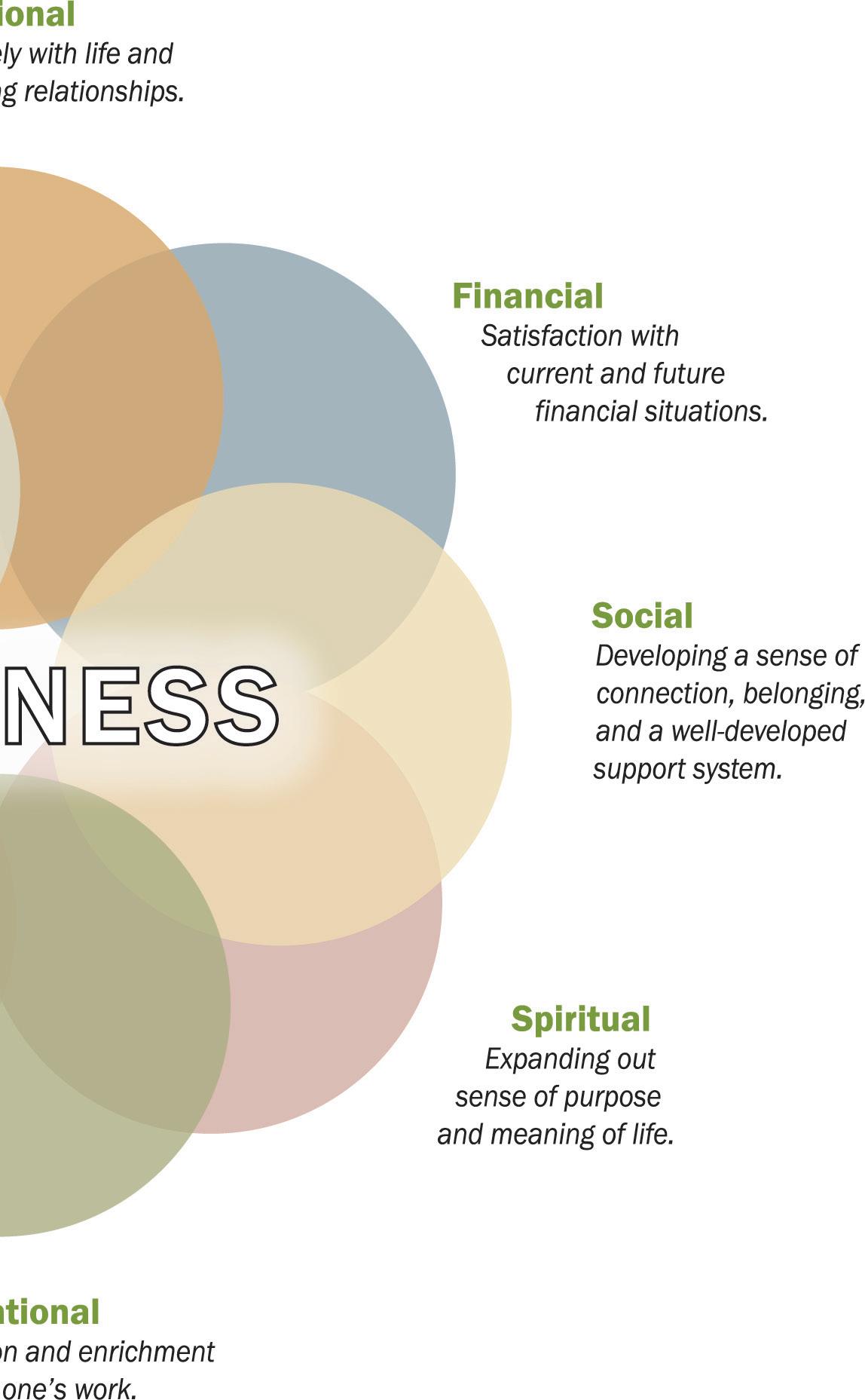
• Keeping ourselves well following the “Eight Dimensions of Wellness” model shown below
• Selecting and using professional services on our own terms, from mental health providers, coaches, dieticians, to massage therapists and others
• The role of our families and close friends in our recovery, and negotiating how to prevent, identify, and deal with crisis
• Dealing with the phenomenon of being expected to be less emotional than folks without mental health diagnoses, or being judged when half-asleep, under the influence, experiencing monthly or other normal hormonal changes, or feeling sadness, anger, and disgust about distressing things which happen in the world
• Making decisions around disclosure
• Dealing with stigma when it arises in the community or in our lives
• What recovery is, and how to make critical decisions such as returning to work, school, or relationships.
6
Coping Strategies
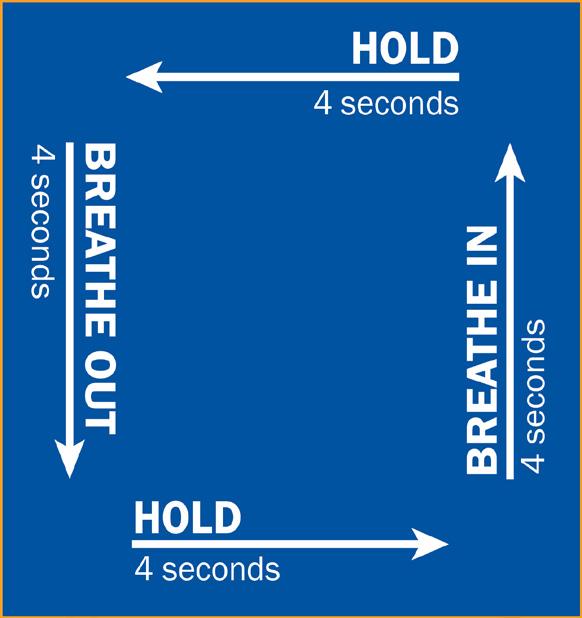
Our NAMI Connection support groups spend a good deal of time discussing coping skills and strategies, such as sleep management, box breathing, socialization, stress management, mindfulness, yoga, exercise, and careful control of substances that affect our brains - The list is long, and includes caffeine, alcohol, and a wide variety of Rx, over-the-counter, and “herbal” products.
Mental Health Treatment Options
One unique strength of support groups is that we are treatment-neutral and diagnosis-neutral. People are welcome at our meetings who may or may not accept a particular diagnostic label, and may or may not accept a common medically-based treatment approach. Our resource guide lists a range of research-supported ways to treat mental health symptoms, including a wide variety of psychotherapies, psychoeducation models, and community-based rehabilitative services.
Physical Heath Complements Mental Health
While many people dealing with mental health and substance recoveries face issues related to their physical health, our support groups and our Hearts & Minds program often discuss ways in which we can maximize our health in six physical wellness domains:
• Diet
• Substance Use
• Exercise
• Sleep and Rest
• Relaxation and Stress Management
• Health Care and Screenings.
7
Steps for Dealing with Mental Health Crisis
Define the Problem
Not all crisis-related problems stem from mental health issues. Seeking mental health crisis care is probably not the best choice if your distress is primarily driven by:
• Physical health issues, Rx interactions, pain management
• Housing problems
• Family, relationship, and domestic violence issues
• Employment and income issues
• Grief or loss. Many of us seek therapy, while others benefit from the 12-plus bereavement groups and programs in the county
• Legal problems (see next page for legal emergency guidance).
Our Complete Mental Health and Recovery Resource Guide (see http://www.namigm.org/resource_guides) provides information useful in solving issues such as supported employment and education, consumer parent support, and some limited legal and housing resources.
The state of NJ also pays for a navigation program called NJ Mental Health Cares, which offers both professional resource-finding help (call 866-202-HELP during business hours) and a comprehensive website (www.njmentalhealthcares.org).
For crisis issues related to food, cash and emergency shelter needs, call 211, visit, www.nj211.org, or the Monmouth County Division of Social Services at 732-431-6000. For domestic violence crisis contact 180 Turning Lives Around at 732-264-4111.
8
IN A LEGAL EMERGENCY
If you are faced with a civil, criminal, or other legal matter where you could lose money, property, child custody, personal liberty and choice (e.g., “involuntary outpatient commitment”) or other privileges or be at risk of going to jail or having a criminal conviction, consider seeing a lawyer as soon as possible.
Do your best to keep all paperwork regarding the issue, as well as the details of who has contacted or spoken with you regarding the matter.
Do not discuss details of the issue with anyone, especially if it involves a criminal charge, until you have discussed it with a lawyer or chosen not to use a lawyer.
When you change “I” to “WE”, even illness becomes wellness
9
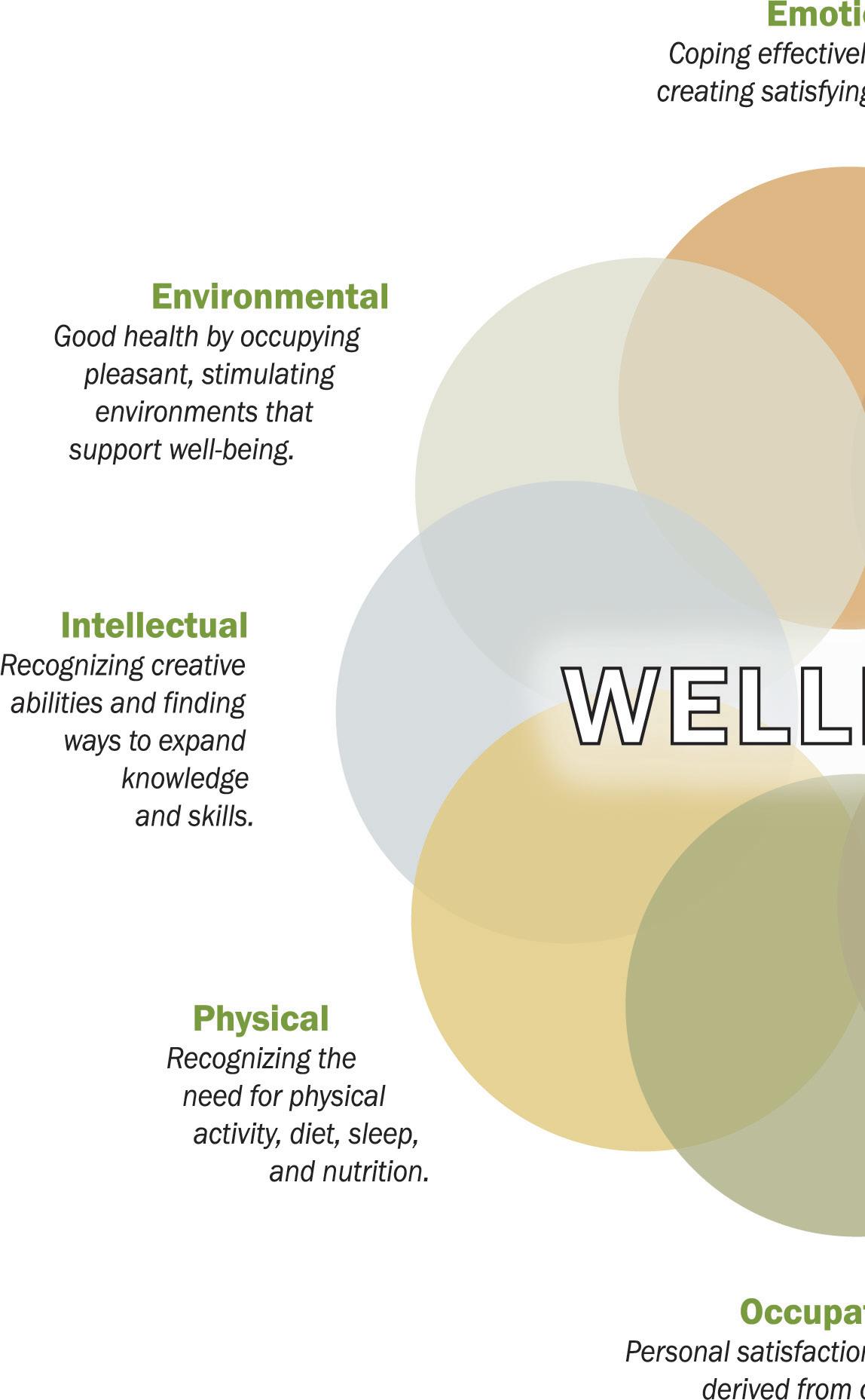
Swarbrick, M. (2006) A Wellness Approach. Psychiatric Rehabilitation Journal, 29, (4) 311-314
10
11
A SPECIFIC NOTE REGARDING YOUTH AND TEENS
Most of the resources presented below are designed to serve people aged 18 and over. This includes peer support and professional services. Most call lines will talk to anyone who calls of any age. You will see a mark in every listing from here down which can specifically serve people below the age of 18. Specifically, you should be aware of:
• The 2NDFLOOR Youth Helpline of NJ, 888-222-2228
• The contracted Systems Administrator for accessing services in the NJ Children’s Mental Health System of Care, 877-652-7624, can dispatch Children’s Mobile Response if you are under 18, or are up to 21 but have been served by this system before your 18th birthday
• Monmouth Resource Net lists extensive resources for Children and Families in Monmouth County (www.monmouthresourcenet.org)
• The Rutgers University Behavioral Healthcare Promise clinic has state funding to work with local teens and young adults experiencing either a first episode of psychosis or symptoms which strongly indicate that psychosis will occur. Call 732-235-2868.
See the information regarding Family Based Services Association on page 19.

12
Use Peer Support
NAMI is proud to be part of both the community of mental health peer support programs, as well as the “bigger picture” of peer support, with over 6000 groups around our state offering practical advice, empathy, and comfortable, safe sharing.
Many problems can be worked through by speaking with others “who have been there.” Consider all of the following:
Coming to a NAMI Greater Monmouth Meeting (see other side).
Going to any other peer support meeting (call 800-367-6274, or visit www.njgroups.org).
Participating in an online or telephone support group or discussion board.
Going to a peer support Community Wellness Center (Neptune, 732-455-5358; Freehold, 732-625-9485), or to Shore House (www.shoreclubhouse.org) if you are a member.
Calling the NJ Peer Recovery Warmline at 877-292-5588.
Calling the local intergroup of Alcoholics Anonymous (908- 687-8566) or Narcotics Anonymous (800-992-0401).
Calling any of the following specialized peer support lines:
• 866-COP2COP, for NJ law enforcement officers and their families
• 877-914-MOM2, for peer help and referrals for moms of special needs children
• 844-REACH-NJ, NJ Addiction Services Hotline, for help finding substance use treatment and support
• 83-EYE2EYE-1, for individuals with visual impairments
13
See a Mental Health Professional
Can you call your own therapist, psychiatrist, or primary physician, or work through a problem through your student assistance counselor or clergy member? Does your employer or union provide access to an Employee Assistance program? Does your town have a human services department with easy access to psychotherapy? Is there a mental health center on your campus?
The Affordable Care Act and “Insurance Parity” ensure that we all have some coverage for mental health care. Sometimes getting access to a provider quickly is difficult. People are turning to online therapist programs in increasing numbers, and this may be an option supported by your insurer. The following should be of help for Monmouth County residents who want a “next business day” therapist intake. Each of these accepts a wide variety of insurances, including most Medicaid and Medicare.
• CPC Behavioral Healthcare (mention the Certified Community Behavioral Health Center program), with offices in Brick, Freehold, Middletown, and Neptune at 732-842-2000
• The two Early intervention Support services listed below
• GenPsych PC, Brick and additional locations. 855-GENPSYC. This is not a nonprofit program offering sliding scale services.

14
You can do it... we can help
Walk in for Mental Health Treatment
Hackensack Meridian Urgent Care with Behavioral Health is a traditional Urgent Care treating minor illnesses plus expanded services to treat short term outpatient mental health issues such as anxiety, depression, mood disorders, and behavioral issues in children and adults. A team of physicians, nurse practitioners and licensed social workers can provide in-person services or, if necessary, facilitate a tele-medicine visit with a psychiatrist. This program will bill as an urgent care visit, and may have a significant out-ofpocket cost, depending on your insurance. All of the other programs listed here are state funded, and you should not receive a bill.
Bridgeway Rehabilitation Services operates a “Crisis Living Room.” While this is a Psychiatric Emergency Service (see page 16), people from any county arriving at this facility can expect to find a living room atmosphere very different from a hospital emergency department. Peer and non-peer staff are expected to help a person arraign for services use their own strengths and resolve the crisis without the need for forced hospital care.
The RWJ Barnabas and Ocean Mental Health services listed above are the county’s Early Intervention Support Services. They are designed to provide short-term services (including psychotherapy, social services, Rx management, and embedded peer support) and linkage to help adults avoid the need for crisis treatment.
Hackensack Meridian
888.878.1503, Option 8 2040 Route 33, Neptune City M-F 8AM-8PM Sa-Su 8AM-4PM
Bridgeway 908.526.4100 282 E. Main St. Somerville 24/7/365
RWJ Barnabas 732.922.1042 3301B Route 66, Neptune M, W, Th 8AM-7PM Tu, Fr 8AM-5PM Sa 10AM-4PM
Ocean Mental Health 732.240.3760
Crest Program M-F 8AM-8PM 409 Main St., Toms River Sa-Su 9AM-5PM
15
Stay in a Peer Staffed Respite House
The state of New Jersey funds five of these houses. Each is a place where an individual can stay for up to 10 days and work through their presenting issues. Peer staff take a lead role, and assist using a “crisis through the lens of wellness” approach. Medication management is available, but is not a primary purpose of these houses, and they are “friendly” to people who do not choose to use mental health medications. Guests each get their own private bedroom, and are free to leave when they wish.
• New Brunswick, 732-354-4403
• Toms River, 848-221-3022.
If both houses are full, ask for contact information for the Haledon, Mt. Holly, or Newark programs.
Call for Emergency Help
If you are served by a mobile mental health treatment team, they may be able to help you avoid a crisis. In addition,
• 855-NJHOPE5, for in-state access to supports or help when suicidal. Other suicide prevention lines are available at 800-273-TALK or 800-SUICIDE, or by texting 741741
• The Monmouth Medical Center mental health crisis team can make non-emergency outreaches during business hours, or should respond to all calls for emergency mental health treatment. 732-923-6999.
Please be aware that these services may send police without notifying you, so choose what you say and where you call from carefully.
Remember the Children’s Mobile Response resource on page 12.
16
Go for Emergency Treatment
Hospital emergency departments may be able to offer some short-term treatment for mental health distress. They can also help a person get access to local inpatient psychiatric services, which often provide patients 3-7 days of care and safety. Insurers are not willing to pay for long ambulance rides, and emergency department will not send patients via non-medical transport to another hospital. So it makes sense to decide what hospital you would like to go to and go there directly. The availability of inpatient mental health care in NJ is limited. People in our area often use the following (Note: A Y/T indicates that the facility serves children/ teens and adults, all other services serve adults only):
• CentraState Medical Center, Freehold, 732-294-2852
• Jersey Shore University Medical Center, Neptune, 732-776-4369
• Monmouth Medical Center, Long Branch, 732-222-5200
• Riverview Medical Center, Red Bank, 732-530-2478
• Carrier Clinic, Belle Mead, 800-933-3579
• Penn Medicine Princeton House, Princeton, 800-242-2550
• St. Barnabas Behavioral Health, Toms River, 800-300-0628
• Rutgers Univ. Behavioral Healthcare, Piscataway, 800-969-5300
Remember the Bridgeway Walk-In on page 15.
Call for Crisis Response
For a psychiatric crisis in which all other steps have failed, you can call the Psychiatric Emergency Service at 732-923-6999 and request a mobile outreach. This is likely to result in both:
• mental health staff and police coming to your door
• a person being taken to the nearest hospital emergency department by ambulance or police.
In our family education program, we advise caregivers to be very cautious if calling 911, and to advise emergency services that a mental health crisis is in progress.
17

we may not have it all together... but together we have it all 18
Care for the Caregiver
When someone you care about is having a crisis, it is easy to fall apart. This is a critical time to take care of yourself. Make sure that you are getting enough sleep, nutrition, relaxation, peer/family/friend support, exercise, and prayer/meditation. PUT YOUR OWN MASK ON FIRST. Families of adults with ongoing mental health issues may benefit from our NAMI Family Support Groups, and the services of the Intensive Family Support Service (732-542-6422 ext 103). Families of youth/ teens with ongoing emotional/behavioral issues may benefit from the groups and supports offered by Family Based Services Association (732-542-4502).
Some Additional Community Resources

(see our Complete Mental Health and Recovery Resource Guide for lots more)
• Stephy’s Place in Red Bank (732-614-1142; www.stephysplace.org) offers extensive grief/loss peer support
• Yoga and meditation come up constantly as part of the toolset people use in our recoveries. Many programs offer these capabilities for free or at a nominal cost. Two specifics are: The Phoenix Belmar | 732-739-7473 | www.thephoenix.org.
Science of Spirituality
Perth Amboy | 609-937-6700 | www.sos.org
• Meridian Community Resource Center at Freehold Raceway Mall offers extensive access to community social services (e.g., employment, food) and health care
• CentraState Medical Center’s Health Awareness Center (732-308-0570) offers extensive free and low-cost health education programs
• St. Joseph’s Health offers ACCESS, a state-funded continuum of care of services to assist people dealing with mental health issues who are deaf/hearing impaired. This includes a satellite office operating on Mondays in Shrewsbury. 973-754-5595
19
• Trinitas Medical Center is funded to provide specialized services, including consultation and referral, for individuals dealing with co-occurring mental health conditions and an intellectual/developmental disability. 888-393-3007
• The Rutgers University Behavioral Healthcare Comprehensive Services on Aging program works with older adults experiencing aging-related mental/ neurological issues, as well as their families. Peer and professional support is available. 800-424-2494
• www.needymeds.org assists individuals with qualifying for pharmaceutical patient assistance programs.
For Our Service Members, Vets, & their Families
In addition to services through Tri-Care and those offered through military post health centers,
• Eligible Veterans can get local services, including medication management and psychotherapy, at the Tinton Falls Community Based Outpatient Center, 732-532-4500
• Other VA services can be accessed by calling 877-222-VETS (8387)
• 866 VETS-NJ4, for veterans returning from service in Southwest Asia and their families
• The NJ Department of Military and Veterans Affairs and the Monmouth County Veterans’ Office (732-431-7450) offers a variety of services
• The Mental Health Association in Monmouth County has Veteran family and survivor support groups 732-542-6422
• The VA offers smoking cessation resourcescall 1-855-QUIT-VET.
[revised 5/12/20]









20
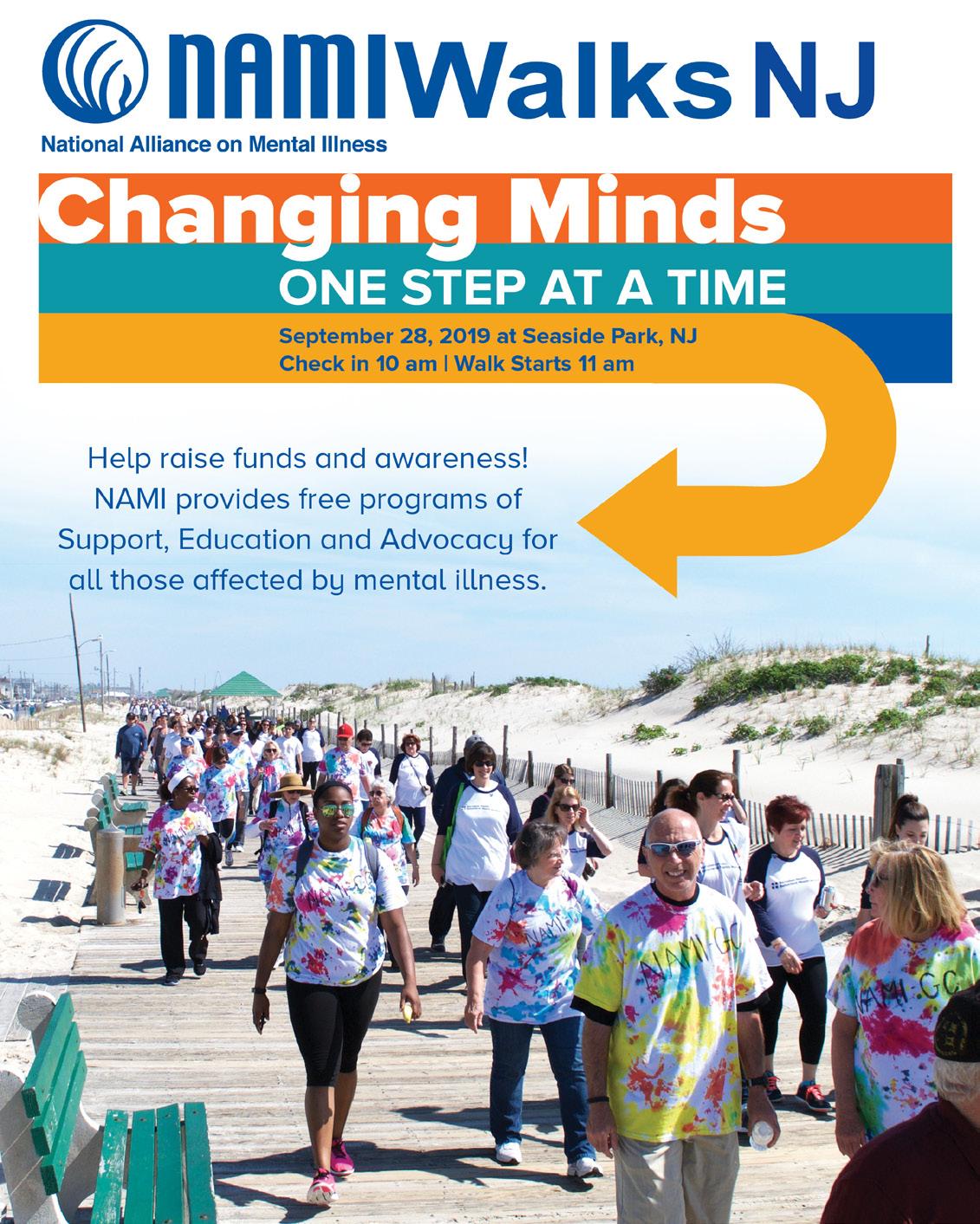
21 Help Raise Funds and Awareness NAMI Greater Monmouth participates annually in the NAMI New Jersey walk (typically in September in Seaside Park). This walk helps support the free programs offered to those affected by mental illness. Check our website or contact us for more information and sign up details: 732-4NAMI-4U (462-6448) namigreatermonmouth@gmail.com www.namigm.org



Box 6212 • Freehold, NJ 07728 732-4NAMI-4U (462-6448) namigreatermonmouth@gmail.com www.namigm.org namigreatermonmouth nami greater-monmouth @NAMIGreaterMonmouth