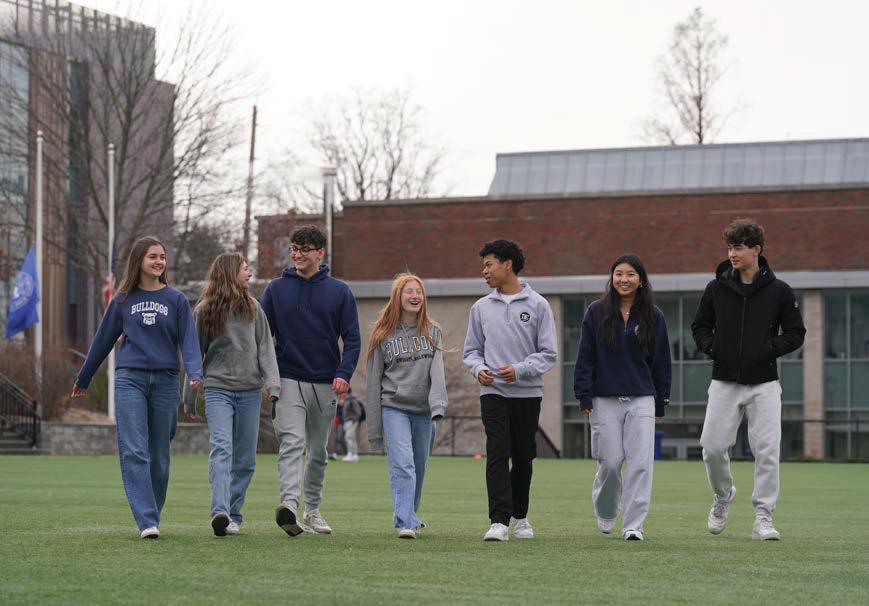
CHOOSE YOUR PATH
Upper School Curriculum
Upper School Curriculum
Build an Upper School experience that’s truly your own — starting with a strong academic foundation and growing into real choice, depth, and independence.
Explore life beyond the classroom — balancing rigorous academics with athletics, arts, leadership, and service.
Learn in a community built on collaboration — where strong relationships with teachers, advisors, and peers ensure every student is supported, challenged, and known.
Become a lifelong learner — developing the curiosity, adaptability, and confidence to keep growing beyond D-E.
Prepare to meet the challenges of a changing world and make it better. Join Us!
Students follow the core curriculum in 9th and 10th grade; a two-year sequence in most of their classes designed to build foundational knowledge and skills.
Major Courses
*MEET 4X/WEEK *HONOR LEVEL COURSES AVAILABLE IN EACH SUBJECT
Math: Integrated Mathematics & Modeling, ➊ ➠ ➋
Science: Integrated Biology & Chemistry, ➊ ➠ ➋
English: The Personal Quest ➠ The American Quest
History: Early World History ➠ Modern World History
World Language: Spanish, French, Latin, or Mandarin. (Will vary based on student & level)
Minor Courses
*MEET 2-3X/WEEK
Beyond their Major Courses, 9th and 10th graders also engage in a structured exploration of themselves, their communities, and their interests.
Human Development: Global Literacy ➠ Positive Psychology
Art & Design and Performing Arts
Health & Wellness: Lifetime Wellness 9 ➠ Electives
Philosophy & Ethics: Ethical Thinking
IMM1 is a problem-based, student-centered course. In solving problems daily, students not only learn mathematics, but more importantly, they learn how to learn mathematics by practicing and developing vital learning behaviors. Problems in the coursework address topics including proportionality and proportional thinking, linearity, algebraic expressions (including algebraic fractions) and equations, quadratic equations and functions, absolute value equations and inequalities, and plane geometry.
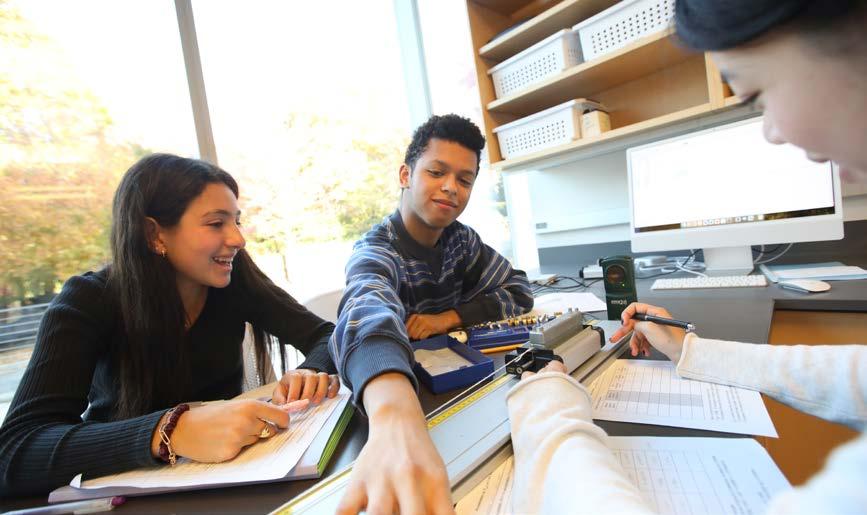
From subatomic particles to the development of biomolecules and genetics, which undergird modern life, this course focuses on the intersections of chemistry and biology to help students build an understanding of the complexities of life. Students will practice how to develop scientific questions, formulate hypotheses, explore theories, perform data collection, analyze, collaborate, and communicate in their studies of the transitions that occurred to enable life to take the many different forms we now see.
How do we know who we are? How do we know what we believe? How do we establish our individual identities in the context of familial, societal, and historical influences? This course focuses on the development of critical reading and thinking skills through close examination of challenging texts by such authors as Julie Otsuka, Chimamanda Adichie, William Shakespeare, and Frederick Douglass, as well as works read independently to encourage reading as a lifelong habit. Students also work toward increased precision, clarity, and style in their writing, with a special emphasis on the importance of strong vocabulary and grammar skills.
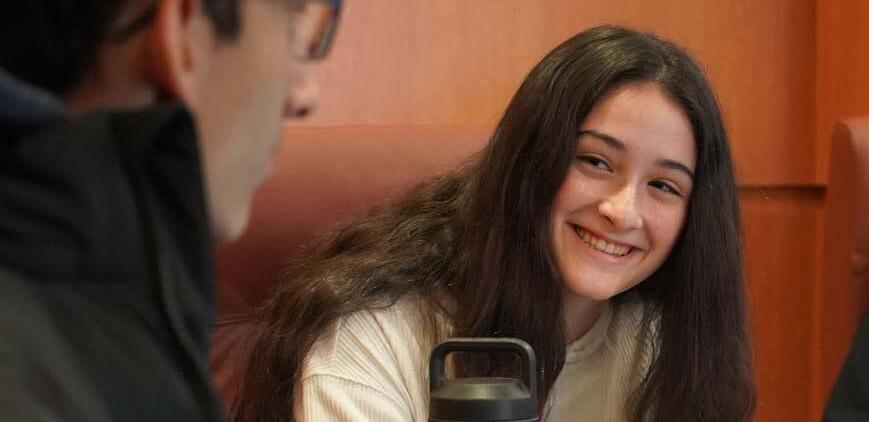
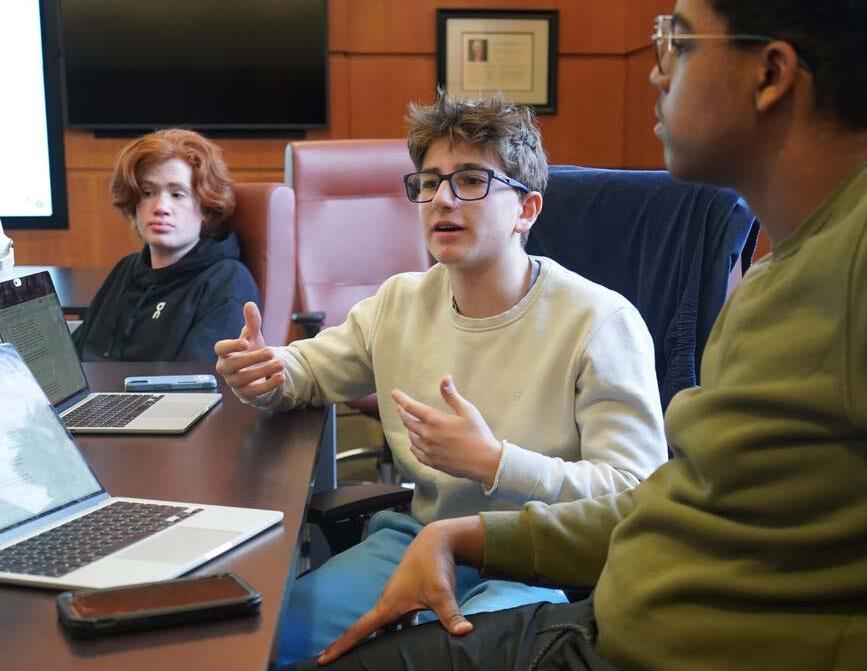
Using a structure that is thematic and comparative, Early World History explores a variety of cultures in Eurasia and Africa. Students are asked to compare and contrast different world views and examine the origins and characteristics of cultural high points. The first semester focuses on a variety of ancient political systems and class structures as well as the evolution of classical ideologies in the ancient world. The second semester continues the emphasis on comparison into the medieval world. In addition, there is significant attention given to the increasing levels of interaction between various civilizations and cultures of the medieval world.
Times of transition offer opportunity and in this course designed to help orient students to life in the Upper School, students will learn and practice many of the skills that are fundamental to social-emotional development and will explore how these competencies can support them as they navigate their academic and social worlds. The course invites ninth graders to learn more about who they are, who their peers are and to develop language and skills to navigate and get along in a school population that includes families from innumerable backgrounds and cultures. Students will explore issues of personal and social identity and develop cultural competence within our diverse school environment.

“As a person passionate about STEM, I find myself getting invested in my science and math classes. I want to be at the intersection of science and innovation. I am also very interested in marketing, finance, and management. For science in 9th and 10th grade, there is the Integrated Biology and Chemistry program. I have loved this program, and have learned so much. This program has unique, interesting topics, but also applies science to today. For example, my science class just had a unit on biotechnology, which I think is so cool! (Additionally), The culture of meeting with teachers at our school is what makes the student and teacher relationships so meaningful here, at D-E. Every teacher encourages students to meet with them, by always having a meeting schedule posted online. I have met with all of my teachers that I have had, and all of these meetings have helped me so much, and deepened my relationships with my teachers.”
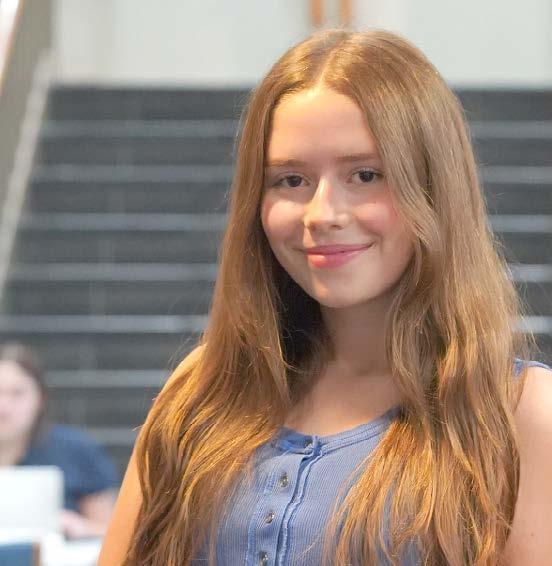
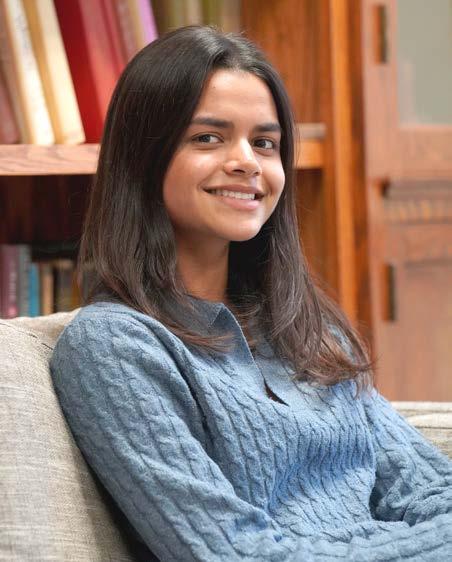
“In 9th and 10th grades, we take a set of foundational classes that really help build our critical thinking and analytical skills. These courses are designed to give us a broad understanding across subjects and prepare us for more abstract and independent work later on. After that, there’s much more freedom to shape our own academic path. We can choose classes that genuinely interest us and allow us to focus on specific subjects we’re passionate about. At the same time, deans and department chairs are always available to guide and advise us, helping make sure that the path we choose is both challenging and balanced. One of the most amazing classes I’m taking right now is Issues in American Law with Mr. Jewett. We explore major court cases and learn about how the American judicial system developed, from the foundations of the Constitution to how landmark Supreme Court decisions have shaped modern law. It’s really engaging to see how legal principles connect to current events and everyday life.”
“What separates Dwight-Englewood from other schools is that above everything else, we really value discussion-based learning. For me, this idea of discussionbased learning has been the most impactful in my French class. In my French 3 Honors class with Madame Pritchard, we dedicate the most amount of time to fostering dialogue. Whether we’re reading a French book in class, listening to a French song, or conjugating verbs, everything in class ties back to discussion... The moment I enter the classroom, it feels like I become encapsulated and am transported into the world of the French language! I would say that the academic culture at Dwight-Englewood is rigorous in the sense that the curriculum challenges you and brings out your best. But just because the curriculum itself is rigorous doesn’t necessarily make the environment competitive. From my experience, I would actually say it’s the opposite – the academic rigor pushes students to be the best versions of themselves, but also to help their classmates be the best versions of themselves.”
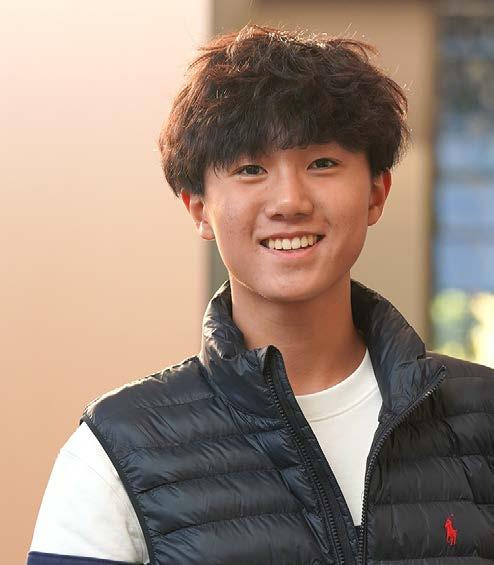
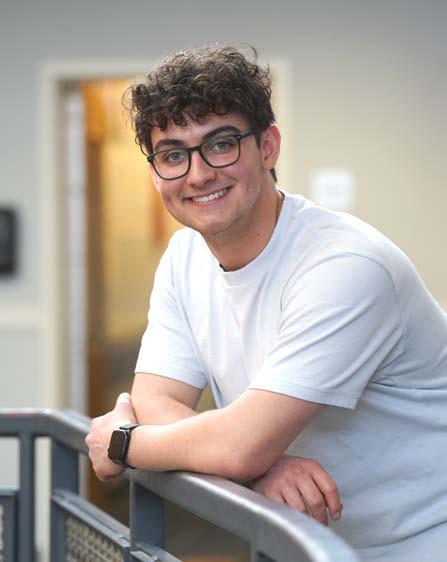
“The academic culture at D-E is both supportive and competitive. Everyone seeks excellence, and of course, that creates an environment that fosters a healthy measure of anxiety about grades. However, the school does a good job of decreasing the academic strain on the student body and emphasizing the importance of constructive feedback as a critical part of the learning process... One of my favorite classes at D-E has been the Spanish Pedagogy class that I authored and proposed to the language department as part of a student-as-teacher program I sought to implement. Additionally, I loved Honors Physics last year, which was my first exposure to what has now become my favorite topic in science.”
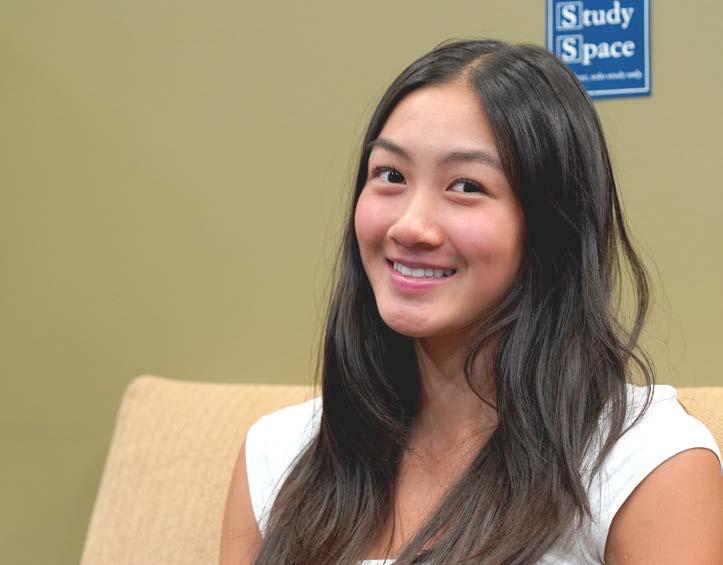
“Students at D-E tend to have really strong relationships with their teachers. I’ve found that teachers are approachable, supportive, and genuinely care about their students’ success. I always feel comfortable reaching out for extra help or to talk through an idea, and that has made a big difference in how much I’ve grown as a student... Classes at D-E have (also) given me a strong foundation for independent research projects I’ve worked on outside the classroom. These projects allowed me to explore topics I was personally interested in while applying what I learned at school. It was exciting to take concepts from class and see how they connected to real-world problems and research.”

“...Once you hit junior and senior year the doors fly open with the opportunities to take electives and other courses that fit your interests as well as trying something new. Collaboration (also) plays a huge role in all of my classes. Whether it is an English class where we are discussing a reading, or a Math class where students are discussing different ways they did a problem, collaboration is found everywhere. Some of my (own) favorite classes are Photography, Honors Chemical Harmony, Peer Mentoring, AP Psychology, and Honors Calculus. In Photography it was super fun getting to use the dark room and learning how to develop our own film. The teachers create an environment where students feel like they can easily engage and connect with their teachers.”

In 11th and 12th grade, the curriculum shifts to an elective curriculum. With over 250 courses to choose from, students can design their programs around their interests, talents, and passions. Students have the freedom to double or even triple their load in a particular academic discipline.
Ethnicity, Class & Gender
Industry & War
American Foreign Policy
African American History from 1877 to Present
Hollywood History
History of Love & Marriage
Macroeconomics
Microecnomics
Sports in American Life
AP US History
AP Art History
AT Contemporary World History
Math
Calculus (Pre-Calc or AP)
AP Statistics
Multivariable Calculus
College Linear Algebra
Statistics
Research in Mathematics
Business Finance
Personal Finance
Cryptography
11th graders take a History elective, while 12th graders can pick from classes on Law, Economics, or Art History
Programming
Introduction to Data Science with Python
AP Computer Science
Nonlinear Dynamics
Data Structures and Algorithms
11th graders take Physics while 12th graders can pick from electives that range from Bioethics to Forensics to Environmental Science 11th graders usually begin their work in Calculus while 12th graders either continue their work in Calculus or take courses in Statistics, Finance, or Computer Science.
Science
Physics
Bioethics
Forensic Science
Robotics
Astronomy
Neuroscience
Environmental Science
AP Environmental Science, Chemistry, Biology, & Physics
Honors Comparative Anatomy
Check out our Course of Study for a full list of courses!
11th graders will continue Language study in either core courses (like Spanish 4) or electives (like “Children’s Literature in French”).
Gothic Literature
Writing in the Age of AI
A Nation Divided: Korean Literature
Challenging Patriarchy in Shakespeare’s Plays
Creative Writing
AP English Literature
Reporting and Writing
Literature and Film
11th & 12th graders electives range in topic from topics like “The Harlem Renaissance”, to “Literature of the First Americans” to “Resistance & Resilience: Global Memoir” (and everything in between!)
World Language
AP Latin Literature
(AT) Latin: Latin Pedagogy
(AT) French 6: Advanced French Literature
Children’s Literature in French French Through the Cinema French Through Song
Afro-Latinidad: Language and Culture
Spanish Through Film Making
Current Events in Spanish
Ancient Philosophy in Spanish
Hispanic Studies, Latin America
Mandarin: Level 5 AP Mandarin Language and Chinese Culture
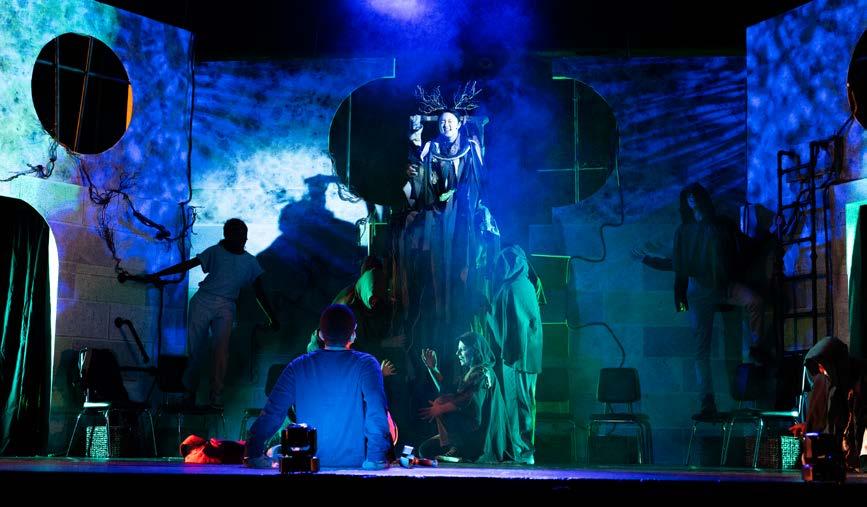
Upper School students will have the opportunity to pursue their love of…
Art and Design
Digital Art
Sculpture
Wearable Art
Photography-Video Production
Beyond Comics: Sequential Art
Spaces: Architectural Exploration
Intro to Fiber Arts
Printmaking
Studio Art AP
Art & Design Independent Study
Performing Arts
Musical Theatre
Acting Level I and II
Improvisation
Writing for the Stage and Screen
Voice and Public Speaking
Technical Theatre Arts
Introduction to Music Theory
Chorus
Handbell Choir
Symphony Orchestra
Stringjam
Stage Band
Instrumental and Voice Lessons
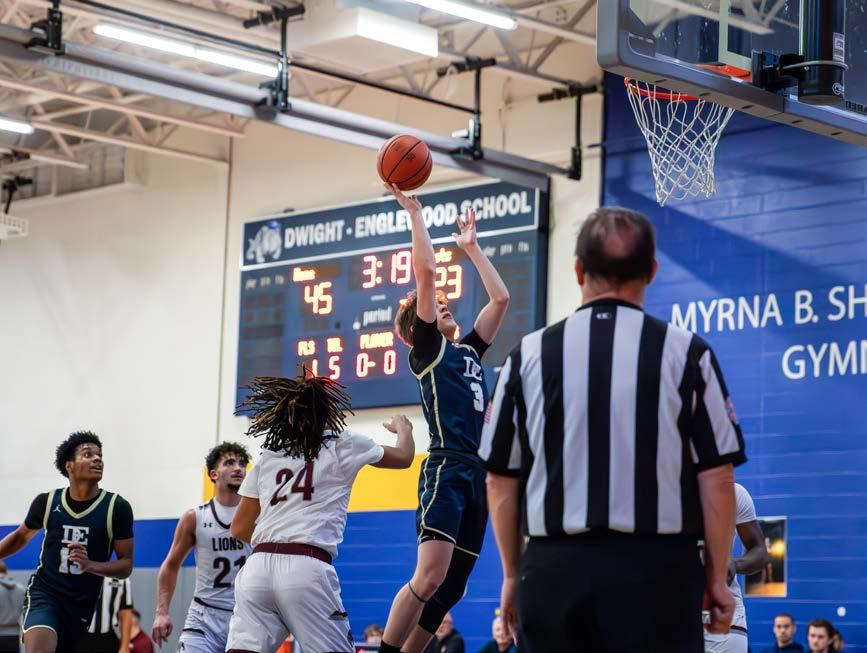
Athletics
Soccer
Basketball
Volleyball
Field Hockey
Tennis
Cross Country
Ski Racing
Track & Field
Strength and Conditioning
Lacrosse
Baseball
Softball
Golf
Crew
Ultimate Frisbee
Peer Mentoring
SAGE: Supporting Adolecent Group Experiences
Student Activities (Clubs) And More
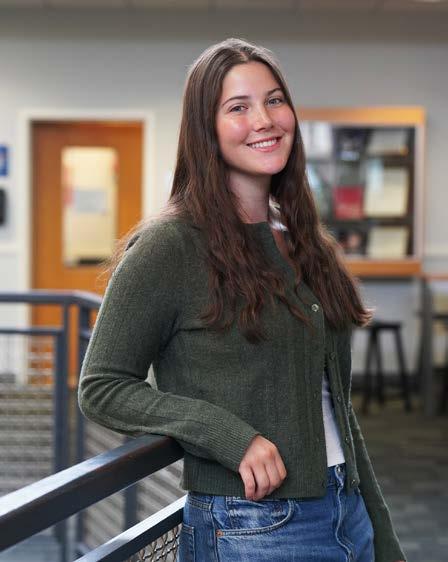
I have [had] so much freedom in ‘shaping my academic path [while here at D-E] ! D-E gradually gives students autonomy in selecting their course load. By the time you’re an upperclassman, your schedule is distinct from those of your classmates; you take separate classes across and in different departments. With autonomy in choosing course load and a collaborative atmosphere in each class, students at D-E are empowered to find their niche. Classmates encourage their peers to pursue their interests and support each other throughout high school! [Additionally], all my classrooms have desks arranged in a circle. By constantly facing my classmates, we’re encouraged to analyze and discuss problems together! Teachers are [also] super accessible at D-E! Most of my teachers either post meeting times online or host office hours to ensure all their students are on the same page. I [especially] loved the English electives offered for juniors. For the first time, I was able to focus on one area of literature. Gothic Lit. with Ms. Christian was my favorite!
315 East Palisade Avenue
Englewood, NJ 07631
Dwight-Englewood is a non-profit corporation accredited by the Middle States Association of Colleges and Secondary Schools and the New Jersey Association of Independent Schools. Dwight-Englewood School is an equal opportunity employer and does not discriminate on the basis of sex, ethnicity, age, national origin, religion, genetic information, marital status, sexual orientation, gender identity, pregnancy or military veteran status. The diversity of our student body supports our commitment to employ a diverse faculty and sta . Educators and sta from all backgrounds who bring knowledge and expertise in equity, diversity and multicultural education are especially encouraged to apply.