
Where ambitions flourish, talents shine and lifelong friendships are born.

Where ambitions flourish, talents shine and lifelong friendships are born.

You are about to begin a truly exciting chapter of your educational journey, one where you’ll have the chance to shape your studies by choosing some of the subjects that interest you most. This booklet is here to guide both you and your parents through the options available as you prepare to embark options on Key Stage 4.
Over the next two years, you will study a core set of subjects: English Language, English Literature, Mathematics, and Science.
Alongside these, you will select additional subjects from a wide range of options, allowing you to tailor your education to your strengths and ambitions. You will find full details about each course on the following pages. Some subjects, such as Modern Languages, Music, Art, Drama, and P.E., include practical assessments in addition to written exams at the end of Year 11, giving you a chance to demonstrate your skills in different ways.
GCSEs are just part of the picture. Your curriculum also includes an enrichment programme, with lessons in PSHCCE, Core RE and Core PE.
At Durham High, most pupils will study nine GCSEs, with the option to take Further Mathematics if appropriate. Following the recent reforms, GCSEs are more rigorous and content-heavy than before, and our experience shows that focusing on nine subjects allows students to achieve outstanding results. This provides an excellent foundation for success in A Levels and beyond.
Our connections with local Russell Group Universities confirm that quality matters more than quantity, with universities favouring strong performance in nine GCSEs over a larger number that may dilute focus.
GCSE courses place a strong emphasis on developing skills like problem-solving, critical thinking, and applying knowledge in new ways. You will also be encouraged to take greater responsibility for your learning and to work independently. These skills will not only help you succeed at A Level but will also prepare you for university and your future career.
The work you have been doing in Careers lessons is an important first step in helping you make informed choices about your GCSEs. You are not alone in this process—your teachers are here to advise you, and your parents will be invaluable as you think about what is best for you. Take the time to explore your options, ask questions, and consider how your choices align with your interests and longterm goals.
This is your chance to take the first step towards an exciting future. We are here to help you make it a success!
Mrs M Hill Headmistress
As a Key Stage 4 student, you’ll remain part of a form group led by a dedicated Form Tutor. Our shared goal is to ensure that every student is happy and thrives both inside and outside the classroom. Preparing for GCSEs can feel challenging at times, so developing strong time-management skills will be essential. If you encounter any difficulties—whether pastoral or academic—please don’t hesitate to speak to your Subject Teachers or Form Tutor. We are here to support you through these pivotal years.
GCSE studies mark a significant step in your academic journey, with teaching and learning tailored to help you achieve your best. Lessons are designed to be engaging, interactive, and challenging, encouraging you to think critically and work independently. You will have access to a wide range of resources and support from experienced teachers who are committed to helping you succeed. This is also a time to refine your study habits, develop effective revision techniques, and take ownership of your learning. By embracing these opportunities, you will be well-equipped to meet the demands of GCSEs and build a strong foundation for the future.
We are committed to supporting all students, including those with Special Educational Needs and Disabilities (SEND), to ensure they thrive academically and personally. Our dedicated SEND Coordinator, Mrs. Lee, works closely with students, parents, and teachers to provide tailored support. By arrangement, one-to-one lessons with Mrs. Lee are available to address specific learning needs, helping students build confidence and develop effective strategies for success. Whether through personalised teaching, classroom adjustments, or additional resources, we aim to create an inclusive environment where every student can achieve her full potential.
Key Stage 4 is built on a strong sense of community and teamwork. As senior students, you play a vital role in making Durham High School a place where everyone feels valued. Supporting one another, including younger students through the “buddying” scheme, is central to our ethos and benefits all involved. We also take pride in giving back, regularly supporting local and national charities. These traditions reflect the spirit of care and leadership that defines our school community.
While your studies are a priority, maintaining balance is essential. We encourage you to pursue extracurricular activities that inspire you and provide time to relax. Highlights like Year 10 and 11 excursions, from Christmas shopping trips to the Year 11 Prom, foster a sense of fun and belonging. Key Stage 4 brings both challenges and opportunities, but you won’t face them alone. We are here to guide and support you every step of the way. By the end of these two years, I hope you’ll feel proud of your growth and ready to embrace life in the Sixth Form. Here’s to a fulfilling and memorable Key Stage 4!
Head of Year 9
Head of Year 10 (Sept 26 onward)
Mrs H O’Neill h.oneill@durhamhighschool.com
Mrs B Wildish b.wildish@durhamhighschool.com
English
Mathematics
Science - Biology
Science - Chemistry
Science - Physics
Art and Design
Business
Computer Science
Drama
Geography
History
Learning support
Modern Foreign Languages
Music
Physical Education
PSHCCE
Religious Education
Mrs D Gellately
d.gellately@durhamhighschool.com
Mrs B Wildish b.wildish@durhamhighschool.com
Mrs J Newby j.newby@durhamhighschool.com
Miss E Brook e.brook@durhamhighschool.com
Mr J Oliver j.oliver@durhamhighschool.com
Mrs J Sneddon-Brown j.sneddonbrown@durhamhighschool.com
To be confirmed
To be confirmed
Mrs J Lonsdale j.lonsdale@durhamhighschool.com
Mrs L Gardner l.gardner@durhamhighschool.com
Mr R Coates r.coates@durhamhighschool.com
Mrs A Lee a.lee@durhamhighschool.com
Mme G Colon g.colon@durhamhighschool.com
Mrs C Crinson c.crinson@durhamhighschool.com
Mr J Westgate j.westgate@durhamhighschool.com
Miss G Casey g.casey@durhamhighschool.com
Miss R Shoulder r.shoulder@durhamhighschool.com
All students will study the following core subjects during Years 10 and 11:
English Language
English Literature Mathematics Science
Students will follow either the Separate Science (three GCSEs), Trilogy Science (two GCSEs) or BTEC Applied Science pathway.
In addition to these GCSE subjects, the curriculum includes:
Physical Education (PE)
Personal, Social, Health, Citizenship, and Careers Education.
Religious Education (RE)
These additional components support students’ personal development and well-being, ensuring a well-rounded educational experience.
Explore Fine Art, Graphics, Photography and Textiles.
Develop coding skills and learn about computing principles. Drama: Express creativity and build confidence in performance.
Study the physical and human landscapes of our world
Choose between French and/or Spanish to build linguistic and cultural fluency.
Combine physical activity with the science of performance.
Business Understand the world of commerce and entrepreneurship.
Drama
History Delve into the events and forces that have shaped our past.
Music
Investigate moral, philosophical, and religious perspectives.
The following pages provide detailed information about each subject to help students make informed choices. For further guidance, students are encouraged to discuss their options with their subject teacher, Head of Department, Form Teacher, or Head of Year.
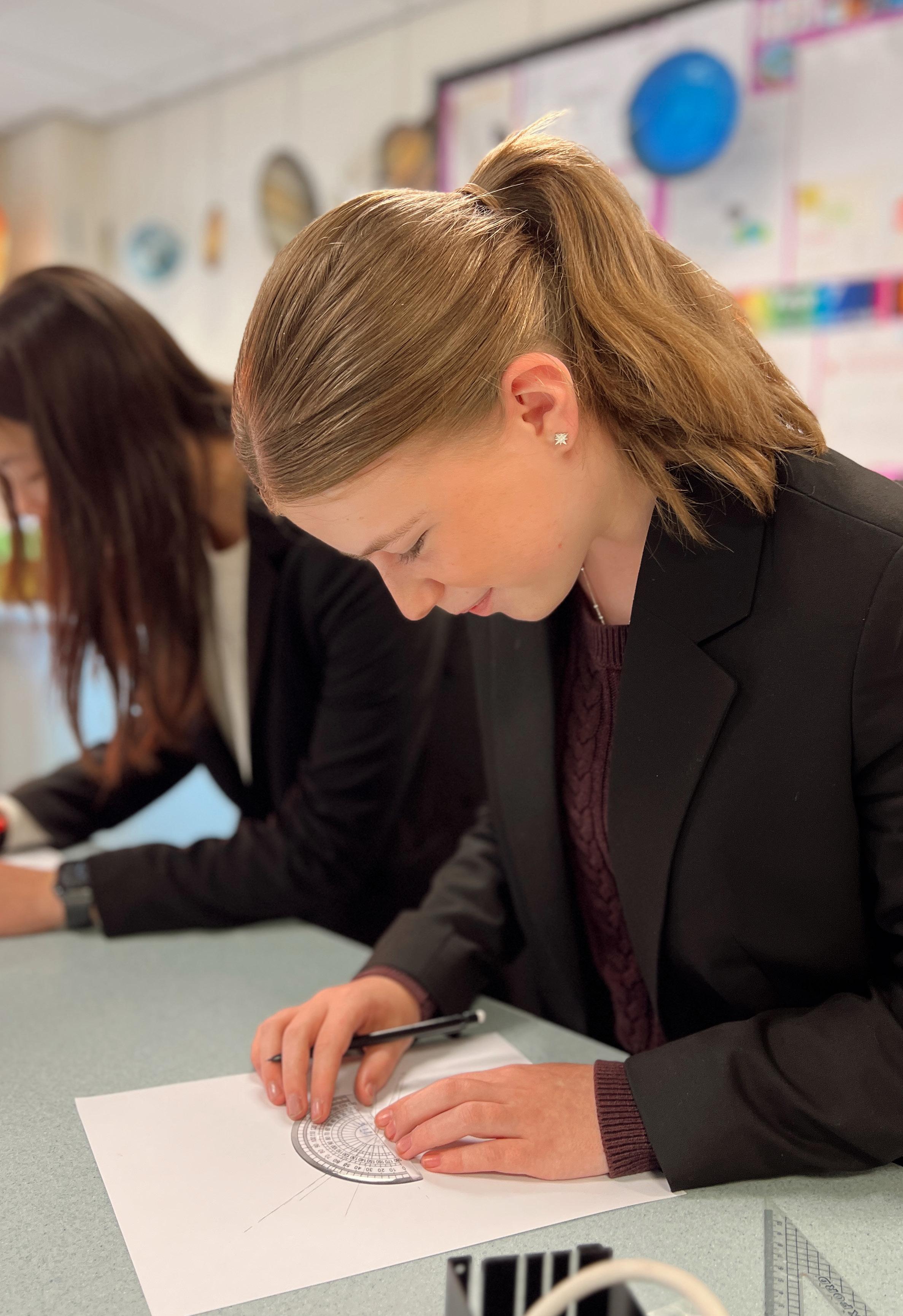
Exam Board: AQA
As a core subject, GCSE English Language is compulsory for all our pupils, developing further the essential skills of reading, writing, speaking and listening required for whatever path they choose to take. It encourages creativity, critical thinking, and the ability to analyse a range of texts. This course provides essential skills for further study and future employment
This will require the study of a range of prose, literary and non-fiction, from the 19th to the 21st century in order to examine writers’ techniques. The pupils’ own creative and informative writing will be assessed, as will their speaking and listening skills in a formal presentation.
Both exams are taken at the end of Year 11 and include unseen texts.
Paper 1
Explorations in Creative Reading and Writing
• Respond to an unseen prose extract
• Descriptive or narrative writing
Writers’ Viewpoints and Perspectives
• Response to two non-fiction extracts
• Writing for a specified purpose, audience and form on a given theme
Non-examination Assessment
Spoken Language
• Deliver a formal presentation and respond to questions
This is a separate assessment that evaluates presentation and verbal communication skills. Spoken Language is assessed by the teacher and appears as an endorsement to English Language (Pass, Merit or Distinction).
Exam Board: AQA
GCSE English Literature is compulsory at the High School, and the course develops pupils’ understanding of our literary heritage. The English Literature GCSE allows students to explore a variety of texts, from classic plays to modern poetry, fostering a deep understanding of themes, characters, and literary techniques. This course enhances critical thinking, empathy, and the ability to construct arguments - skills that are vital in many careers and further education. It complements English Language and enriches understanding of culture and history.
This course provides the opportunity to study a selection of texts from our literary heritage, covering prose, poetry and drama texts and ranging over time from Shakespeare to more contemporary works.
The English Literature GCSE is assessed through two written examination papers at the end of Year 11.
Paper 1
Shakespeare and the 19th Century Novel (40% of GCSE)
• Response to Macbeth: Analyse themes, characters, and Shakespeare’s use of language and structure.
• Response to A Christmas Carol: Explore Dickens’ ideas, themes, and social commentary in this iconic novella.
Modern Texts and Poetry (60% of GCSE)
• Modern Text Essay: In-depth study of J.B. Priestley’s An Inspector Calls.
• Poetry Comparison: Analysis of two poems from a studied collection.
• Unseen Poetry: Skills-based analysis of unfamiliar poems, focusing on language, form, and meaning.

Mathematics is a compulsory subject providing a coherent discipline in its own right, a qualification required by most employers and many universities, and an essential foundation for the study of science and other subjects at A Level and beyond. Mathematicians develop to a high level their ability to think with precision and to analyse problems logically and quickly. These are skills valued by a wide range of employers. The current specification contains up to 50% more content to ensure that it is fit for a more technological society. Given this increased content and complexity, it is most likely that pupils in Sets A and B will follow the Higher course and pupils in Set C will follow the Foundation course.
The syllabus is broken down into three assessment objectives and then subdivided into five content domains. Relative weightings differ between Foundation and Higher as follows Pupils will start their GCSE course after the Year 9 summer examinations to ensure good progress is made with a fuller syllabus in Years 10 and 11. The current course is designed to stretch the most able and better prepare them for A Level Mathematics whilst, at the same time, equipping the less able to cope with the increasing mathematical demands that will be made of them in their futures.
The Higher paper awards grades from 9 - 4, grade 3 is allowed. The Foundation paper awards grades from 5 - 1. Many employers and post 16 courses require Maths at grade 4 as a minimum requirement.
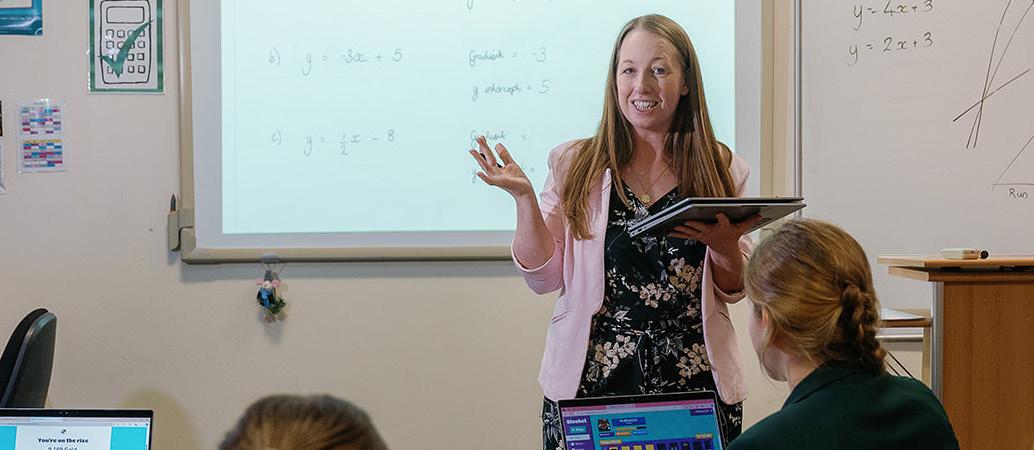
Under the current specification solving nonroutine problems is much more important. As such, pupils will be taught to develop greater confidence when faced with unfamiliar situations and will be equipped with a range of skills to support their individual investigations.
The full content will be examined in two x 2-hour papers. Both papers carry equal weight and can include content from across the whole of the specification. Both papers require proficient use of a scientific calculator.
This qualification bridges the gap for high-achieving students by deeply assessing higher-order mathematical skills, particularly in algebraic reasoning, to help them reach their full potential in Level 3 studies. It offers stretch and challenge beyond the Key Stage 4 curriculum and serves as an additional qualification alongside GCSE Mathematics, not a replacement. Building on prior knowledge from Key Stage 4, the content delves into algebra and geometry—critical areas for advanced study—with greater depth and breadth.
The qualification emphasises technical proficiency, rigorous argumentation, and problem-solving skills. It also introduces calculus and matrices while further developing competencies in trigonometry, functions, and graphs.
The AQA Level 2 Certificate in Further Mathematics is an untiered Level 2 linear qualification designed for learners who: have achieved or are expected to achieve grades 7–9 in GCSE Mathematics, and are likely to progress to A-Level Mathematics and possibly Further Mathematics.
• Advanced manipulation and solving of equations
• Algebraic reasoning and proof
• Exploration of functions and sequences
• Advanced manipulation and solving of equations
• Algebraic reasoning and proof
• Exploration of functions and sequences
• Introduction to differentiation and its applications
• Fundamental integration concepts
AQA Level 2 Certificate in Further Mathematics (8365) consists of two written examinations: a non-calculator paper and a calculator paper, both are 1 hour 45 minutes.
• Basic operations and applications of matrices
• Analysis and interpretation of various types of graphs
• Function transformations and compositions

Exam Board: AQA
Biology is the study of the living world. This GCSE course covers fundamental biological concepts while exploring modern scientific advances, providing an excellent foundation for further study. Topics include antibiotic resistance (e.g., MRSA), stem cell research, embryo screening, cloning, genetic engineering, and GM crops.
Scientific knowledge is applied to investigate industrial, social, and environmental issues. Lessons combine theory and practical work, fostering skills such as experimental techniques, observation, communication, problem-solving, and teamwork.
Studying Biology opens doors to careers in Health and Food industries, including Medicine, Dentistry, Veterinary Science, Psychology, Sports Science, and Food Science. The skills gained are valuable in roles requiring equipment use, planning, teamwork, and report writing.
1. Cell biology
2. Organisation
3. Infection and response
4. Bioenergetics
5. Homeostasis a and response
6. Inheritance, variation and evolution
7. Ecology
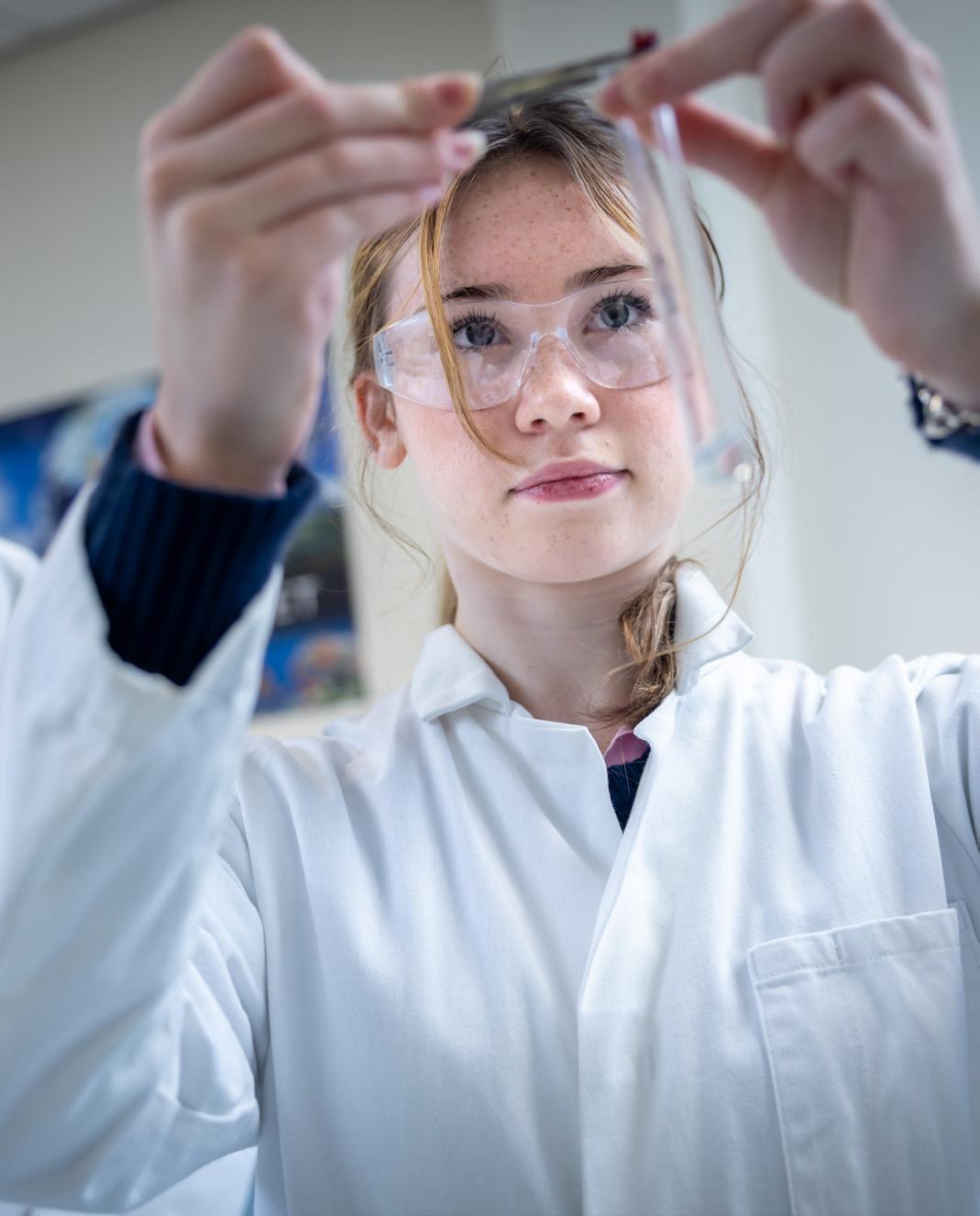
Multiple choice, structured, closed short answer, and open-response.
15% of GCSE marks will be for practical skills and 10% of the marks in GCSE Biology will require mathematical skills.
Paper 1
Questions on topics 1-4, 1 hour 45 minutes, 100 marks
Questions on topics 5-7, 1 hour 45 minutes, 100 marks
Exam Board: AQA
Chemistry may conjure up images of test tubes and bubbling mixtures, or the fascinating Periodic Table with its symbols and patterns. But what is chemistry? Why does it matter? What do chemists do?
The GCSE course provides grounding in fundamental concepts of Chemistry and a platform to build upon for further study. Lessons are designed to foster original thinking and encourage questioning; essential for success in this subject. GCSE Chemistry also aids development of a range of skills desired by employers including application, processing, mathematical manipulation, attention to detail, recording and analysis.
Practical work is a vital part of Chemistry. Skills will be developed through regular practical work carried out in Years 10 and 11, including the eight required practicals.
A qualification in Chemistry is essential for anyone intending to study Medicine, Dentistry, Pharmacy or Veterinary Science and other medical courses, as well as some engineering disciplines and is desirable for many other Higher Education courses.
1. Atomic structure and the periodic table
2. Bonding, structure, and the properties of matter
3. Quantitative chemistry
4. Chemical changes
5. Energy changes
6. The rate and extent of chemical change
7. Organic chemistry
8. Chemical analysis
9. Chemistry of the atmosphere
10. Using resources

Multiple choice, structured, closed short answer, and open-response 15% of GCSE Chemistry marks will be for knowledge and skills developed in carrying out the required practicals and 20% of the marks will require mathematical skills.
Paper 1
Paper 2
Questions on topics 6-10, 1 hour 45 minutes, 100 marks
Exam Board: AQA
Physics is the study of the entire universe; from the structure of the nucleus of an atom to the structure of the entire universe and everything in between.
As well as building a knowledge of the principles that underpin all of Science, Physics builds skills; data handling, processing and presentation, analysing information and drawing conclusions based on evidence, mathematical and graphical skills, using and interpreting technical language, planning projects and carrying out investigations.
The knowledge and skills you will acquire will be useful in a wide range of future careers; Engineering, Medicine, Dentistry, Veterinary Science, Finance, Business, Journalism, Optometry, Architecture, Computer Programming, Software Design, to name but a few.

The course consists of eight topics and ten required practical exercises. The topics are;
1. Energy
2. Electricity
3. Particle model of matter
4. Atomic structure
5. Forces
6. Waves
7. Magnetism and electromagnetism
8. Space physics
The papers carry equal weighting. Questions on each paper will be a combination of multiple choice, structured, closed short answer and open response.
• Topics 1-4
• Written exam: 1 hour 45 minutes
• Foundation or Higher Tier
• 100 marks
• Topics 5-8 (and relevant content from topics 1–4)
• Written exam: 1 hour 45 minutes
• Foundation or Higher Tier
• 100 marks
Exam Board: AQA
This counts as two GCSEs. The three separate areas of science are taught by specialist teachers.
The specification continues to develop the work done in KS3 and maintains the distinctive nature of the three separate Sciences. Practical work is a vital part of any Science course. Skills will be developed in regular practical work through Years 10 and 11 including the sixteen required practical activities that must be carried out.
Biology
• Cell Biology
• Organisation
• Bioenergetics
• Infection and response
• Homeostasis and response
• Inheritance, variation and evolution
• Ecology
Chemistry
• Atomic structure and the periodic table
• Bonding, structure, and the properties of matter
• Quantitative chemistry
• Chemical changes
• Energy changes
• The rate and extent of chemical change
• Organic chemistry
• Chemical analysis
• Chemistry of the atmosphere
• Using resources
Physics
• Forces
• Waves
• Magnetism and electromagnetism
• Energy
• Electricity
• Particle model of matter
• Atomic structure
Pupils will complete six written papers at the end of Year 11: two Biology, two Chemistry, and two Physics papers. Each written paper will be 1 hour and 15 minutes, 70 marks. There are two tiers of examination, Higher and Foundation. 15% of GCSE Combined Science: Trilogy marks will be for knowledge and skills developed in carrying out the required practical activities and 20% of the marks will require mathematical skills.
Pupils study two separate one-year courses. In year 10, they complete the BTEC First Award in Principles of Applied Science and in year 11, they complete the BTEC First Award in Application of Science. Both courses consist of all three Science subjects, taught by subject specialists.
Year 10
• Cells, organs, and genes
• Nervous system
• Endocrine system
• Ecology and the environment
• The effect of human activities on living things
• Human Health
Year 11
• Healthy lifestyle
• Preventing ill-health
• Medical treatments
• Experimental skills
Year 10
Pupils complete an internally assessed assignment unit in Chemistry, in Biology, and in Physics as well as learning the fundamental principles of each of the Science disciplines and the key Scientific skills. Practical work is vital part of the course, both in the assignment work and the examined unit.
• Atomic structure and the periodic table
• Elements, compounds, and mixtures
• Chemical reactions
• Bonding
• Properties of substances
• Rates of reaction
• Human and natural impacts on the Earth
Year 11
• Energy changes in reactions
• Organic chemistry
• Modern and new materials
• Experimental skills
Year 10
• Energy stores and transfers
• Waves
• Ionising radiation
• Electricity
• The Universe Year 11
• Forces
• Motion
• Light and Sound
• Electrical circuits
Each internally assessed assignment unit and the exam unit count as 25% of the overall grade in each course. The exam in year 10 is one hour long and covers the fundamental principles of Biology, Chemistry, and Physics. The exam in year 11 is 1 hour 15 minutes and covers the key Scientific experimental skills.
Students will receive personalised guidance about their suitability for this course which will also be discussed at parent’s evening.
Exam Board: AQA
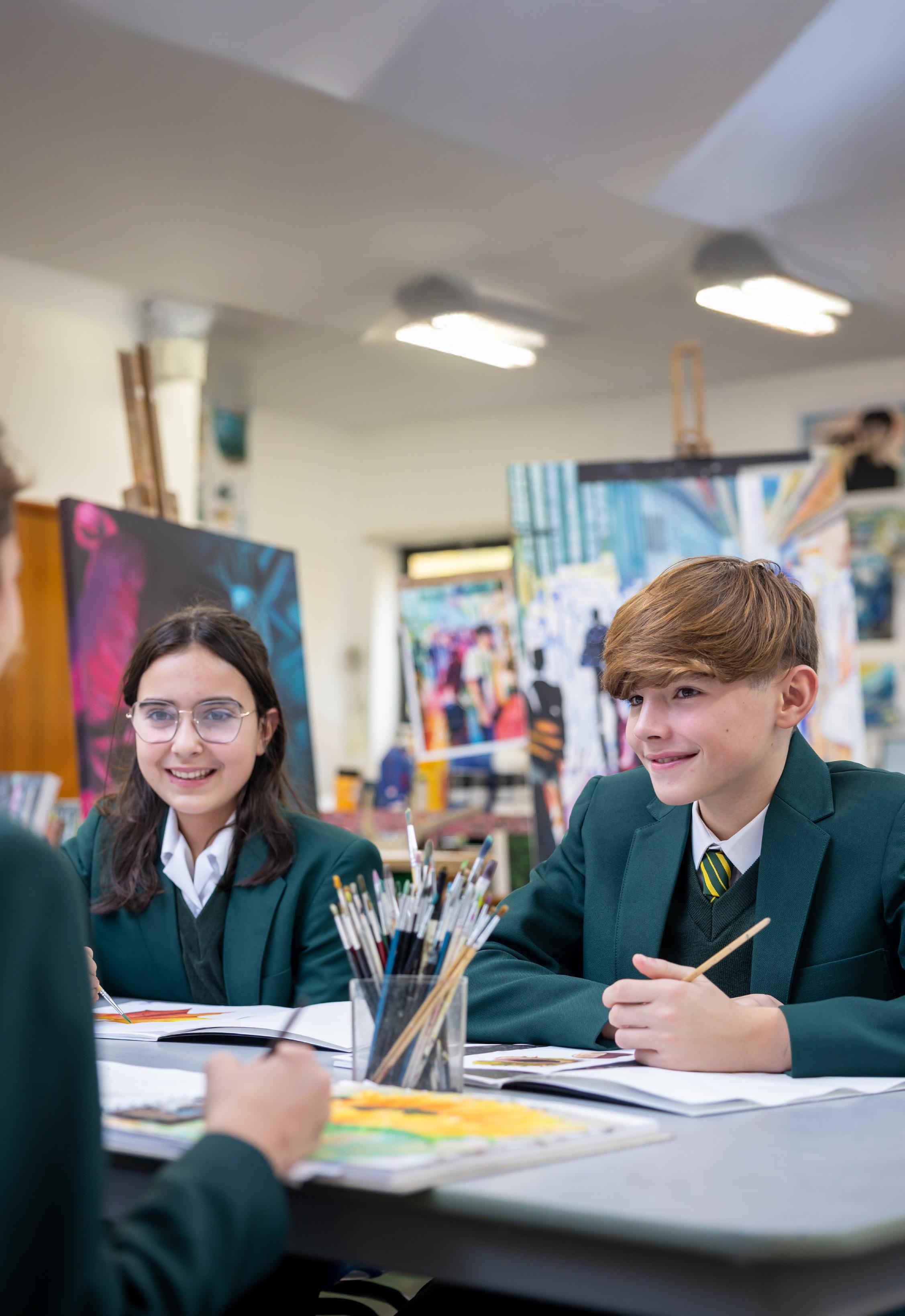
In Art and Design at GCSE level, there are four different kinds of course you can choose from:
• Fine Art
• Graphic Communication
• Textile Design
• Photography
Each subject leads towards a GCSE qualification in that specialism. This gives you the chance to develop basic Art and Design skills and then merge these skills into ideas and artwork determined by your personal response to the projects set in that course. By the time you start a GCSE course in Art and Design you will be familiar with most of the skills and techniques required for success. At GCSE you will be able to go much further with your ideas; you will have the time to explore themes in more depth and with greater freedom, in any medium, based on decisions taken by yourself. The course is very flexible and will suit all approaches and styles.
If you have the interest, enthusiasm and energy, Art will open up opportunities to demonstrate your imagination and creativity, providing you with immense satisfaction with your results and setting you apart from others; useful when compiling interests for university entrance.
All courses are structured in the same way and have the same assessment objectives:
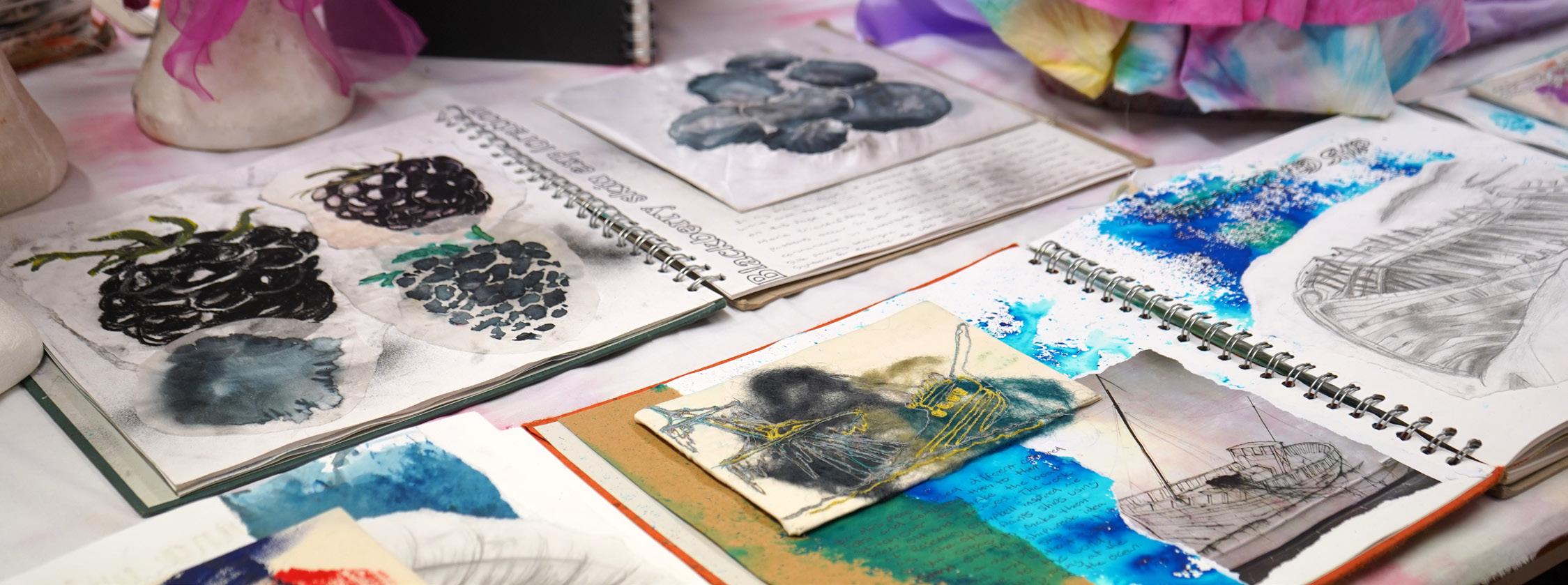
(60% of the final mark) The portfolio is all the project work that you create during years 10 and 11; both preparatory work and final pieces are assessed.
(40% of the final mark) The Set Task is an Examination Project that the pupils create at the end of Year 11. They select a question from an early release paper and have ten hours to create a project with advance preparatory work, leading to a final piece.
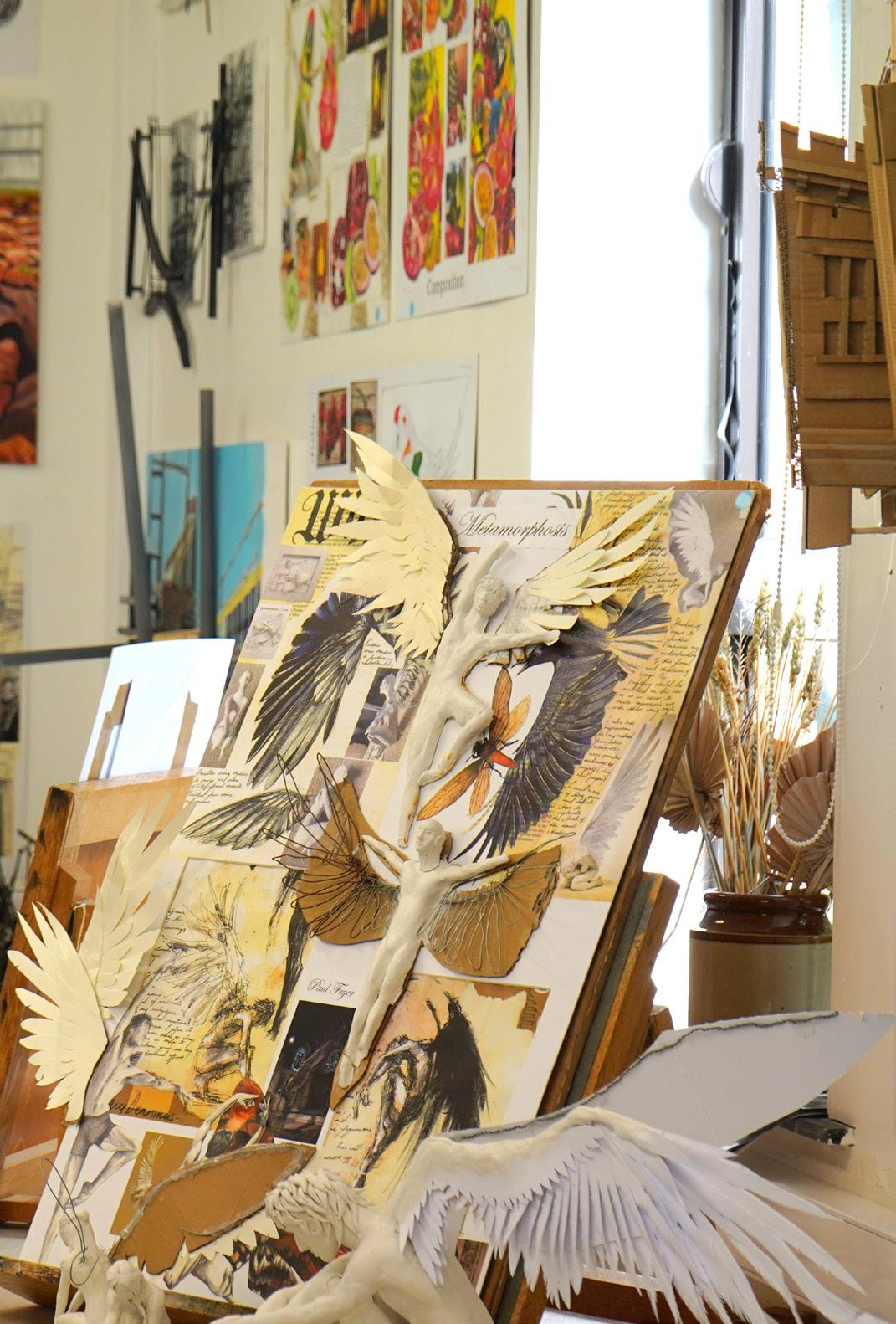
Students create practical and contextual work across various areas, including illustration, advertising, packaging design, posters, print, communication graphics, computer graphics, multimedia, web design, and photography.
This course provides an excellent foundation for A-Level Graphic Communication, where students can explore fields like Illustration, Architecture, and Interior Design through project work, building on the skills developed during GCSE.
In Fine Art, we build on the materials and techniques explored in Years 7–9, including drawing, watercolour, gouache, acrylic, and occasionally oil painting. We also experiment with 3D work using clay, wood, or foamboard. Photography plays a key role in gathering details and improving observational drawing accuracy.
A passion for self-expression through drawing and painting is essential. Each coursework assignment (two in total, plus one examination piece) is guided by a specific brief.
The course also involves studying artists' work to understand their techniques, helping you refine and develop your own skills.
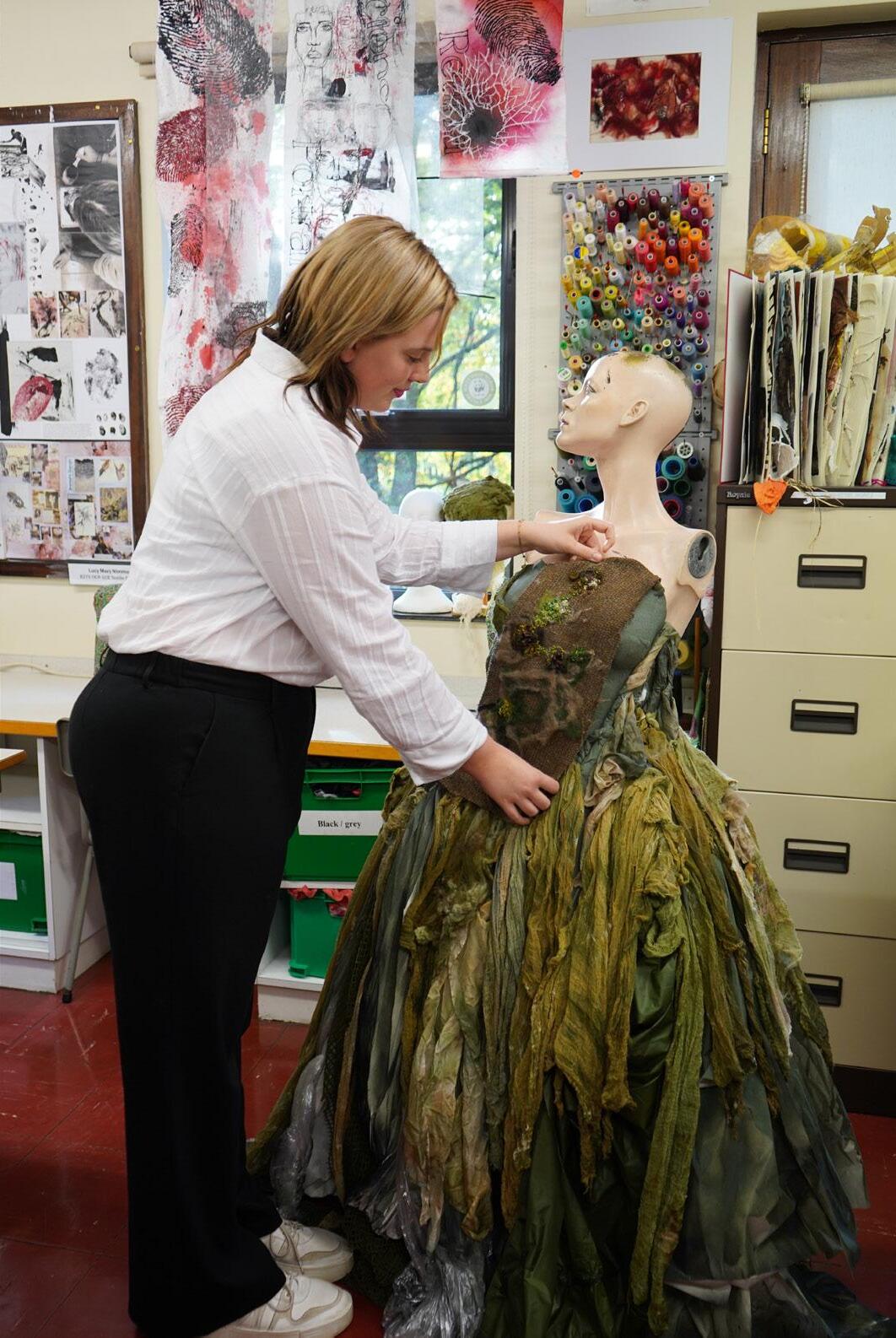
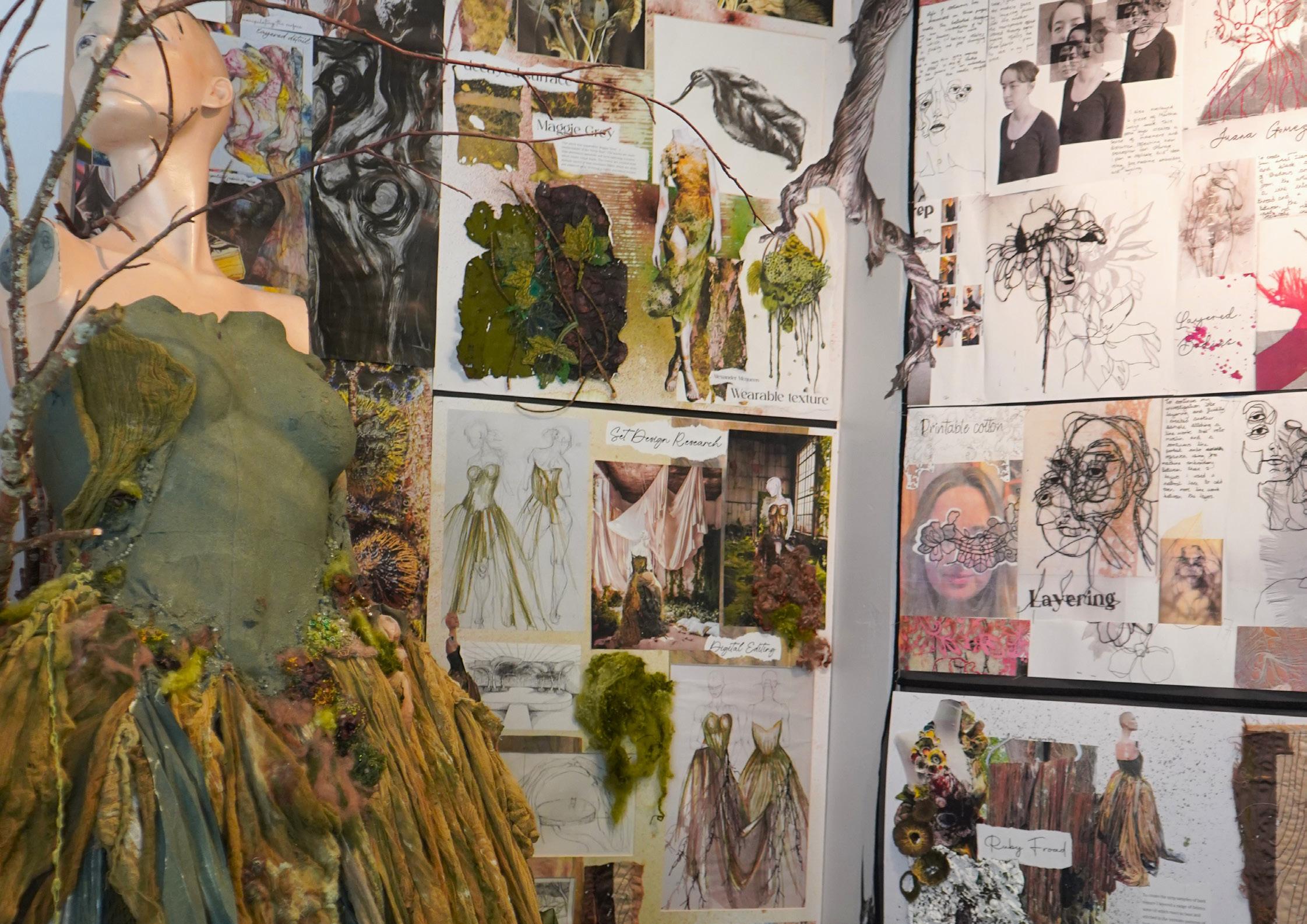
Students produce practical and contextual work in areas such as fashion, costume, printed and dyed fabrics, domestic textiles, and embellished or constructed textiles.
This course expands understanding and experimentation with advanced techniques through independently focused projects and workshop-style sessions. Combining contemporary and traditional ideas, students create imaginative pieces inspired by artists and materials. It is an ideal preparation for A-Level study and careers in Art and Design or other fields benefiting from creative thinking and research skills.
Students learn basic skills using digital SLR cameras, exploring portraiture, landscape, and experimental photography. Techniques include manipulating the camera, environments, and Adobe Photoshop for post-production.
The course mirrors other Art and Design disciplines, with two projects and one examination project. Cameras are available to borrow from school, though having one at home is helpful. Students also have access to studio equipment and software, making this an ideal starting point for further exploration of photography.
Business Studies explores the dynamic world of commerce, helping you understand how businesses operate and their role in society. From start-ups to global enterprises, you will learn how businesses make decisions, overcome challenges, and adapt in an ever-changing environment.
Studying Business is practical and engaging. You will develop critical skills such as decision-making, problem-solving, teamwork, and data interpretation. These skills are invaluable, whether you aspire to be a business owner in any field (e.g., medicine, law, or dentistry) or pursue a career in finance, economics, management, or marketing.
If you are curious about how businesses innovate, adapt, and grow, this subject is perfect for you. Whether you are interested in launching your own business, understanding the corporate world, or pursuing a career in a range of industries, GCSE Business provides the tools and knowledge to set you on the right path.
Business Operations and Human Resources (50%)
Topics include:
• Business in the real world: Purpose, objectives, and entrepreneurship
• Influences on business: Technology, ethics, globalisation, and legislation
• Business operations: Production methods, quality management, and customer service
• Human resources: Recruitment, training, and motivation
Marketing and Finance (50%)
Topics include:
• Marketing: Market research, segmentation, and the 4Ps (product, price, promotion, place)
• Finance: Sources of finance, managing cash flow, and interpreting financial data
The AQA Business GCSE is assessed through two written exams at the end of Year 11. These papers include multiple-choice questions, short-answer questions and case studybased questions requiring longer, structured responses.
Business is a real-world subject, and we aim to bring it to life outside the classroom.
Opportunities include:
• Participating in enterprise challenges and competitions
• Gaining insights from guest speakers from various industries.
Exam Board: OCR
Computer Science is an academic qualification that develops an understanding of current and emerging technologies, how they work, and their practical applications. Students will learn to solve problems through programming, using languages such as JavaScript, SQL, and Python. This qualification is highly relevant to the modern, ever-changing world of technology. It is a practical and creative subject where students apply classroom knowledge to real-world challenges, fostering invention and excitement. Computational thinking is at the heart of the course, equipping students with the skills to solve problems and design systems effectively.
Computer Science provides excellent preparation for A-Level study and beyond. It also offers a strong foundation for subjects requiring computational thinking and analytical skills, such as science and mathematics.
Computer systems
Introduces students to the central processing unit (CPU), computer memory and storage, wired and wireless networks, network topologies, system security and system software. It also looks at ethical, legal, cultural and environmental concerns associated with computer science.
Computational thinking, algorithms and programming
Students apply knowledge and understanding gained in component 01. They develop skills and understanding in computational thinking: algorithms, programming techniques, producing robust programs, computational logic, translators and data representation.
Computer Systems which will consist of multiple choice, short answer and extended answer questions.
Computational thinking, algorithms and programming which will consist of writing and refining algorithms using the Python programming language.
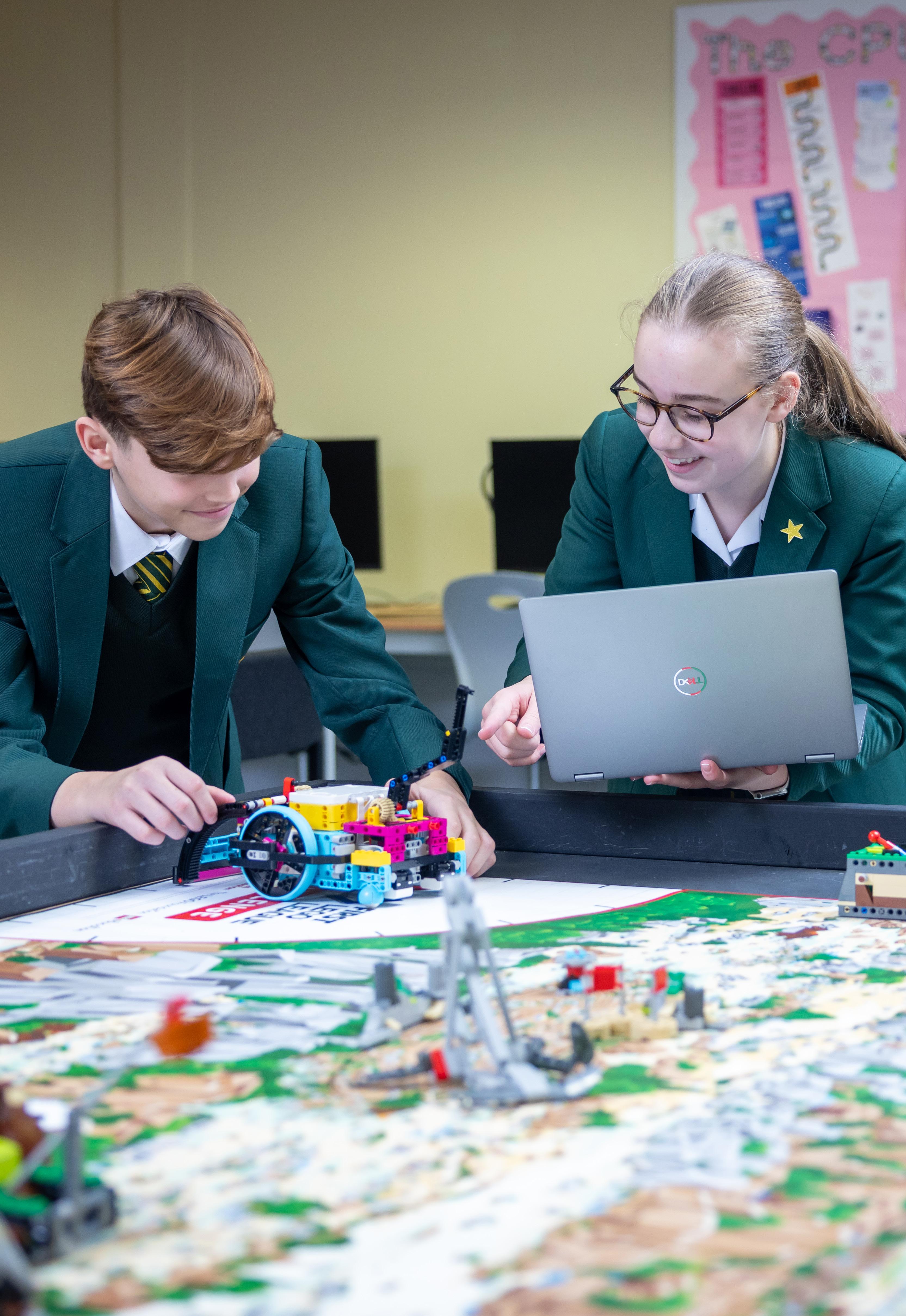
Students are to be given the opportunity to undertake a programming task(s) during their course of study which allows them to develop their skills to design, write, test and refine programs using a high-level programming language.
Students will be assessed on these skills during the written examinations, in particular component 02.

Exam Board: AQA
Drama is an exciting, challenging and creative course that encourages you to develop a deeper understanding of the world in which you live. You will be considering and exploring the impact of social, historical and cultural influences on the development of drama. Your critical skills will be developed as you reflect upon and evaluate your own work as well as the work of others. You will study play texts, create your own original theatre works and perform extracts from published texts.
Understanding Drama (Written exam, 1 hour 45 minutes, 40% of total grade)
• Study of one set play.
• Analysis and evaluation of live theatre.
• Knowledge and understanding of drama and theatre.
Devised Drama (Practical, 40% of total grade)
• Creation and performance of devised drama.
• Analysis and evaluation of your work, supported by a devising log documenting your creative process.
• Both the devising log and final performance are assessed.
Texts in Practice (Practical, 20% of total grade)
• Performance of two extracts from a play chosen by your teacher, contrasting with the Component 1 set play.
The Drama GCSE is assessed through a combination of written exams, practical performance, and coursework. For both practical components, you can choose to be assessed as a performer or a designer.
You will be expected to attend trips to local theatres to experience a variety of performances. Additionally, you will be encouraged to support extracurricular drama activities at Key Stage 3, applying the technical and design skills developed during the course. Participation in the Senior Play and the Main School Production is highly encouraged, offering valuable opportunities to further enhance your acting, performance, or technical expertise.
Exam Board: AQA
In a rapidly changing and increasingly globalised world, Geography helps you to make sense of the past, present and future. It is the study of places, what they are like, what life is like in them, and how and why they are being transformed. It is thought-provoking, fascinating and fun. You will develop an ability to understand a range of viewpoints and issues. Geography will feed your curiosity about places you visit and help you to understand current events and engage with creative solutions to the world’s problems.
Living World/Physical Environment (35%)
• The Challenge of Natural hazards including Earthquakes and volcanic eruptions, Tropical storms, Extreme weather in the UK, Climate change.
• Physical Landscapes in the UK: Coastal and Glacial landscapes.
• The Living World: Ecosystems, Tropical rainforest, Hot deserts.
Geographical Applications - Issue Evaluation and Fieldwork (30%)
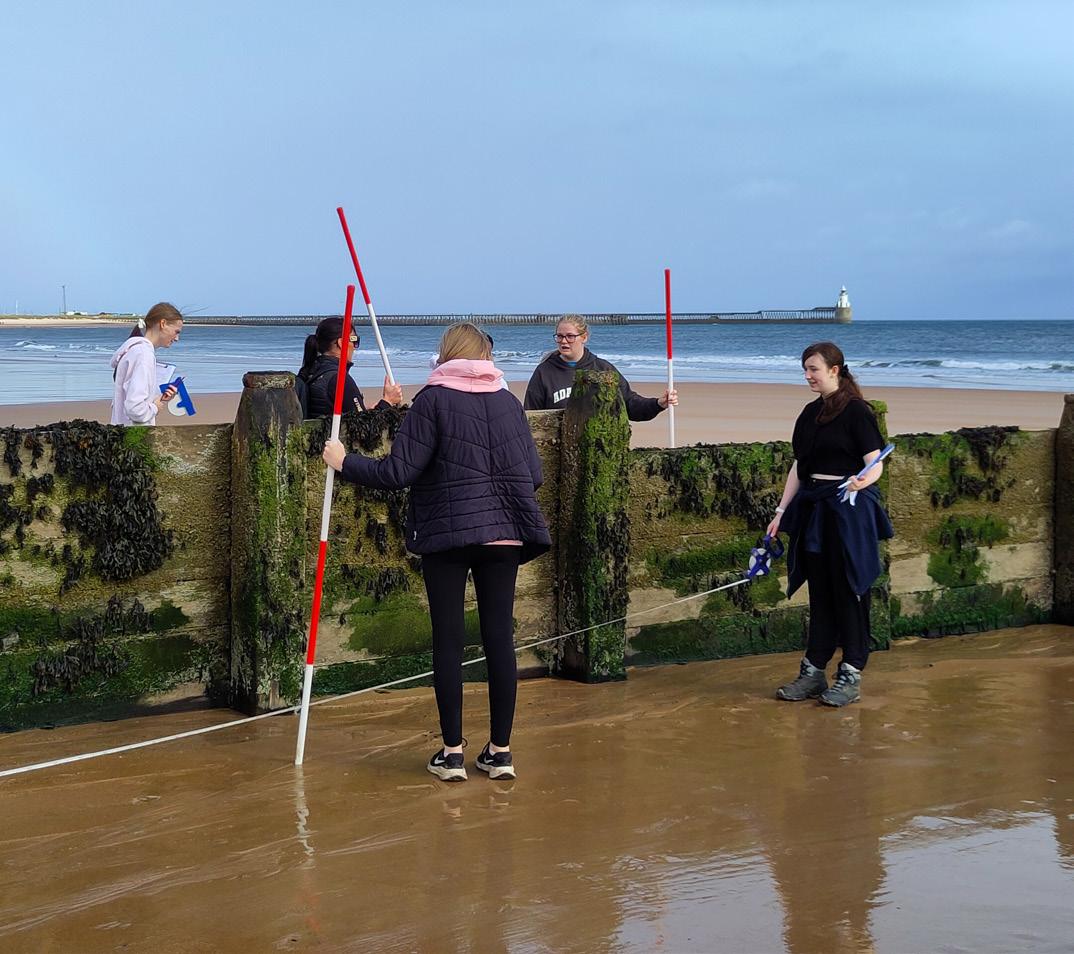
It is impossible to study Geography without leaving the classroom and fieldwork is an integral part of the course. It is a great opportunity to develop your teamwork and practical skills, as well as to study real world examples. We will stay overnight in Grasmere in the Lake District and investigate the impacts of tourism in a glaciated landscape. Additionally, we will research coastal processes and evaluate coastal defences, with a visit to the Northumberland coastline. Fieldwork is assessed through examination in Paper Three.
Challenges in the Human Environment (35%)
• Urban Issues and Challenges: Urban growth in Low Income Countries and Newly Emerging Economies, Urban changes in the UK.
• The Changing Economic World: Economic development and the quality of life; Strategies for reducing global development gap; LIC / NEE case study: development brings change; UK: economic changes affect employment and regional growth.
• The Challenge of Resource Management: Food supplies.
History is the study of the past and how it shapes the world we live in today.
Do you enjoy uncovering the stories and secrets behind major events and ordinary lives? Do you enjoy building strong arguments and supporting them with evidence? Do you like exploring why people in the past behaved as they did? Are you interested in examining events from different and sometimes conflicting perspectives?
If you are curious about how past decisions, ideas, and people influence modern life, then GCSE History is the subject for you.
GCSE History explores a wide range of people, places and periods. At Durham High School, students study the following units:
Early Elizabethan England, 1558–1588
Explore the challenges Elizabeth I faced upon becoming queen, including threats at home and abroad, religious divisions, and plots against the throne. The unit concludes with the dramatic events of the Spanish Armada.
Crime and Punishment in Britain, c1000–present
Investigate how crime, punishment, and law enforcement have changed over a thousand years — from medieval trials to modern policing, prisons, and the development of forensic techniques.
Period Study:
The American West, c1835–c1895
Study the transformation of the American West, including migration, settlement, conflict with Indigenous peoples, the Gold Rush, and the realities of life on the frontier.
Weimar and Nazi Germany, 1918–1939
Examine Germany’s turbulent journey from the end of the First World War through the Weimar Republic to the rise of Adolf Hitler and the establishment of Nazi dictatorship.
This unit includes an in-depth study of the historic environment: Whitechapel, c1870–1900, focusing on crime, policing, and the challenges of inner city life, including an examination of the Jack the Ripper murders.
GCSE History is assessed through three written examination papers, lasting between 1 hour 20 minutes and 1 hour 50 minutes. The questions vary from knowledge-based 2-mark questions through to short essays worth 16-marks. This variety allows students to demonstrate both their factual understanding and their ability to analyse sources, explain change, and construct well reasoned arguments.
Exam Board: AQA
The study of a foreign language will help you to communicate with people of other nationalities, develop your understanding of different cultures and traditions and it may also give you broader opportunities when looking for jobs in the future. Many universities prefer applicants to have studied a language to GCSE level and a qualification at GCSE is obviously essential for language study beyond this level. We currently offer French and Spanish at GCSE. Pupils can opt to study one of these languages or both.
The department offers exciting cultural trips to France and Spain on alternate years, providing students with the opportunity to immerse themselves in the language and culture of these countries. These trips enhance their learning experience by allowing them to practise their language skills in real-life contexts, explore historical landmarks, and engage with native speakers.
The course is divided into three Themes: (1) People and Lifestyle; (2) Popular Culture and (3) Communication and the world around us.
Listening, Reading, Speaking, and Writing skills are equally weighted in the examination, each contributing 25% to the final grade. All skills are assessed through end-of-course examinations.
Examinations are available at two tiers: Higher and Foundation. Students must choose the same tier for all four skills.
These are tested through short and extended comprehension tasks in the target language, with questions in both English and the target language. The Reading paper also includes translation from the target language into English.
Includes structured tasks supported by bullet points, an open-ended writing task, and translation from English into the target language.
Assessed through a role-play, a photo card conversation, and a general discussion on topics and themes studied over the two years.
Music GCSE is the right choice for you if,
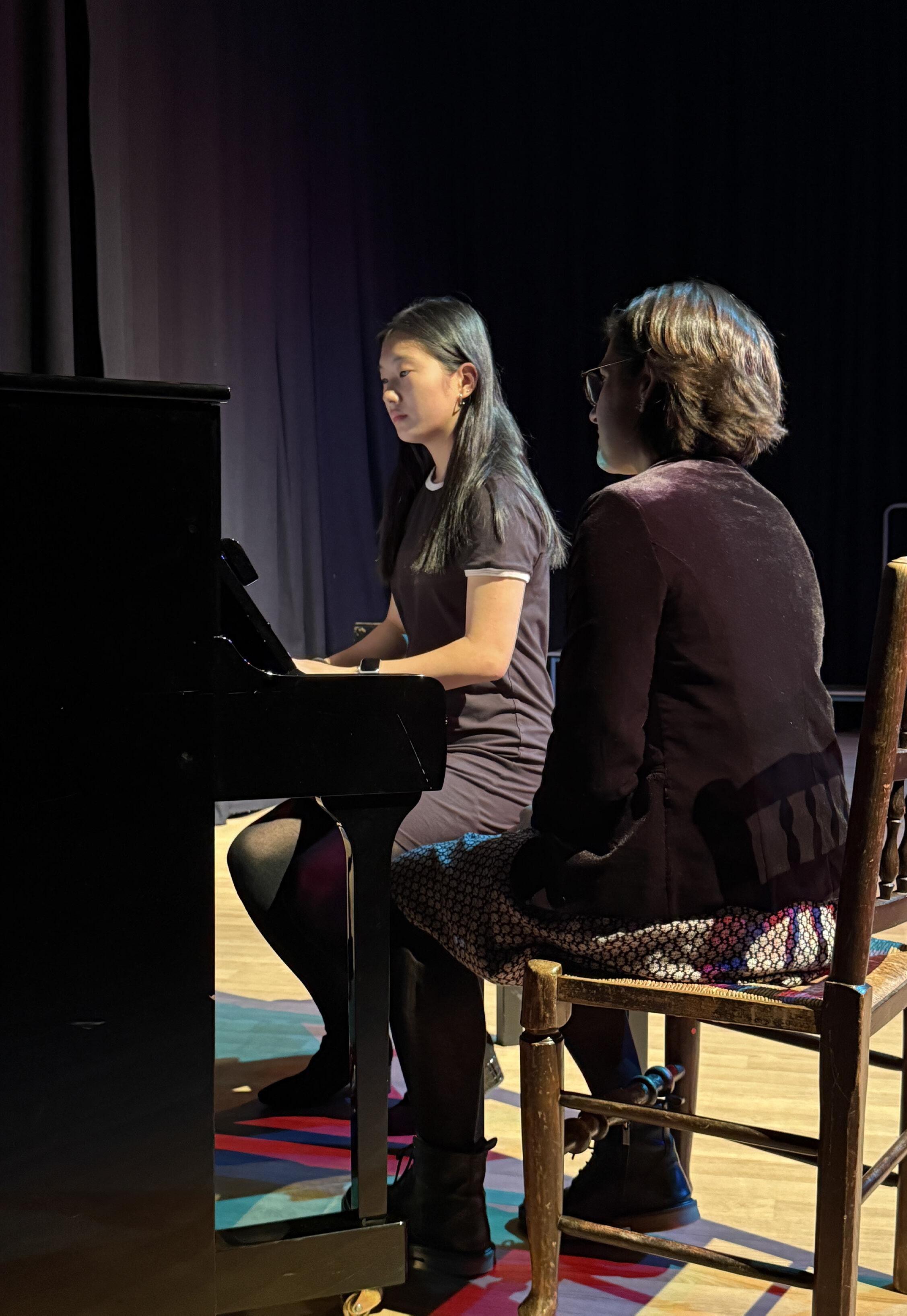
• You enjoy playing an instrument or singing and want to continue to develop as a performer (you don’t have to have taken grades in your chosen instrument, but you will have been playing for a few years and/ or be having instrumental or vocal lessons)
• You enjoy composing your own pieces and being creative with instruments and/or music technology
• You want to learn more about the ways in which music is created, to increase your enjoyment of listening and playing
• You enjoy exploring and listening to different of music, from pop and rock to classical, from film and game to world music
• You are prepared to work hard at activities which will challenge you and stimulate your interest in music
• You enjoy learning through a variety of activities and assignments
Is this you? If so, Music GCSE will be an exciting and fulfilling option and will be right for you.
Participating in extra-curricular music activities such as orchestra, chamber choir, rock band, or other ensembles can greatly enhance your GCSE Music experience. These opportunities allow you to develop performance skills, collaborate with others, and gain confidence in a variety of musical styles. Playing in an orchestra sharpens your ability to interpret written music, while chamber choir refines vocal technique and harmony work. Joining a rock band encourages creativity and improvisation. These activities provide valuable practice for your performance assessments, deepen your understanding of musical elements, and inspire ideas for your own compositions.
• Year 10: Various assignments to develop skills, confidence, and explore different techniques. Composition work will be done at the keyboard, using your chosen solo instrument (e.g., guitar or voice) or through music technology.
• Year 11: Complete your free composition and the composition based on the exam board brief during the first two terms.
• Year 10: Focus on developing performing skills. A performance of one piece will be assessed as part of the summer examinations, though it does not contribute to the final GCSE grade.
• Year 11: Prepare one solo piece and one ensemble piece for assessment.
• An exam in May/June of Year 11, as part of the final GCSE examinations. You will learn to respond constructively and knowledgeably to music from various periods and cultural traditions.
Exam Board: AQA
The AQA Physical Education specification introduces contemporary topics which will help to develop a well-rounded skill set. The specification is engaging, exploring exciting topics in physical activity and sport. 60% theory and 40% practical, allows you to continue participating in your chosen activities, alongside learning the reasons and theories behind your sports. To explore this demanding theoretical content, you will need to have energy, enthusiasm and a love for sport. You must be prepared to continue training out of school in at least two sports and take every opportunity to participate practically and competitively in your chosen activities. You must be prepared to have your performance analysed and to observe and analyse others.
Practical performance in three different physical activities (one team, one individual, and a third in either category) in a competitive environment.
• Analysis and evaluation of performance to improve in one activity.
Written Paper
• The Human Body and Movement in Physical Activity and Sport
• Applied Anatomy and Physiology
• Movement Analysis
• Physical Training
• Use of Data
Written Paper
• Socio-Cultural Influences and Well-Being in Physical Activity and Sport
• Sports Psychology
• Socio-Cultural Influences
• Health, Fitness, and Well-Being
• Use of Data
The Human Body and Movement in Physical Activity and Sport
• Written Paper: 1 hour 15 minutes (30%)
Socio-Cultural Influences and WellBeing in Physical Activity and Sport
• Written Paper: 1 hour 15 minutes (30%)
Practical Performance and Controlled Assessment in Physical Activity and Sport (40%)
Exam Board: AQA
A GCSE in Religious Studies opens doors to a wide range of future opportunities. As a student, you will explore ultimate questions and tackle pressing ethical issues facing the world today. You will develop skills in critical thinking, rational argument, and open-ended intellectual inquiry, all of which will support further studies and future employment. By studying two religions, you will gain insight into key religious, political, and social issues shaping our world.
Religious Studies is a respected academic subject, valued by employers and universities for the skills it cultivates. It also prepares you to engage with people of diverse cultures and beliefs—an essential ability in today’s global society.
We foster an enquiring, critical, and reflective approach to the study of religion.
You will explore religious beliefs, engage with fundamental questions, and respond both intellectually and personally. You will understand different cultures locally, nationally, and globally, while supporting community cohesion.
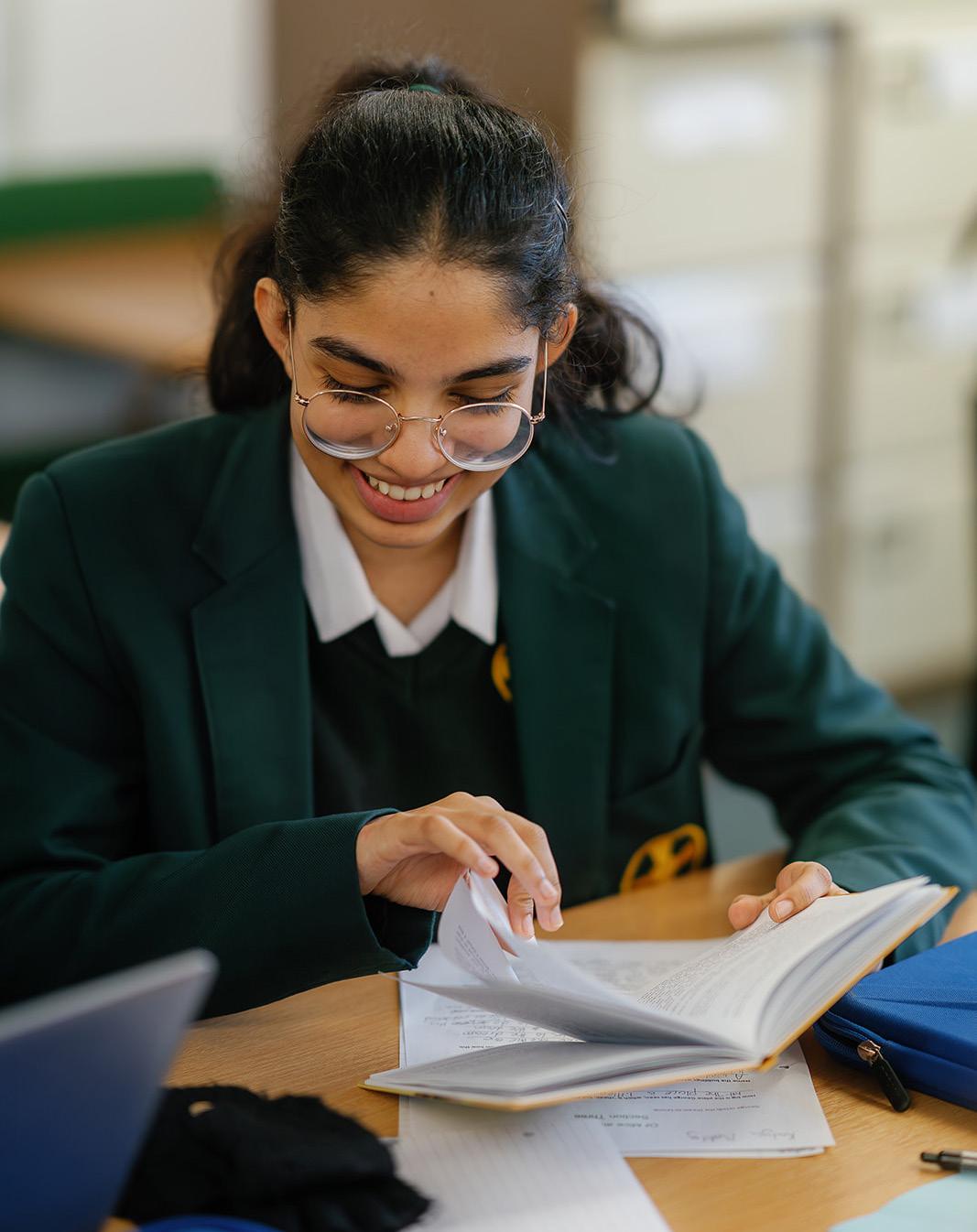
The Study of Religion, Beliefs, and Practices
• The first two sections focus on Christianity, examining the impact of Christian beliefs on individuals, communities, and societies.
• The following two sections explore Hinduism, considering the influence of Hindu beliefs on individuals, communities, and societies.
• Relationships and Families: Examining issues surrounding marriage, sex, and relationships.
• Religion and Life: Considering issues such as abortion, euthanasia, and animal experimentation.
• Existence of God and Revelation: Exploring the nature of God and classic philosophical arguments for and against God's existence.
• Religion, Human Rights, and Social Justice: Discussing issues of prejudice, discrimination, human freedom, justice, poverty, and charity
The course is divided into two units, each assessed by a 1 hour 45 minute written paper.
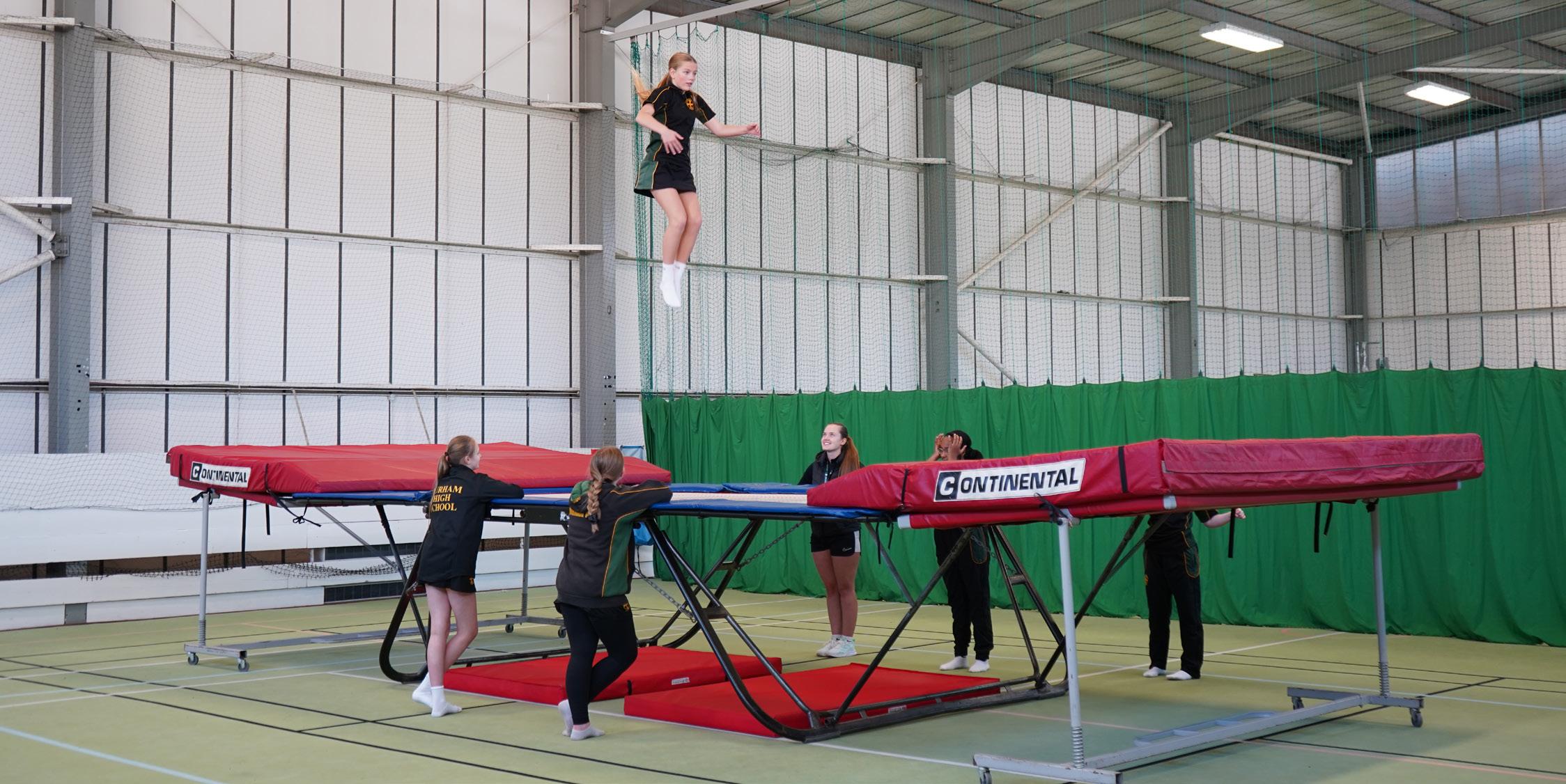
Physical Education is compulsory in Year 10 and Year 11. However, the focus at Key Stage 4 is the development of personal fitness and the continuation of a healthy active lifestyle. Year 10 and 11 will both have a double lesson of PE weekly. This allows time to offer activities offsite. We operate a pathway system allowing all pupils some flexibility to tailor a personal PE programme to suit their own needs in sports they enjoy.
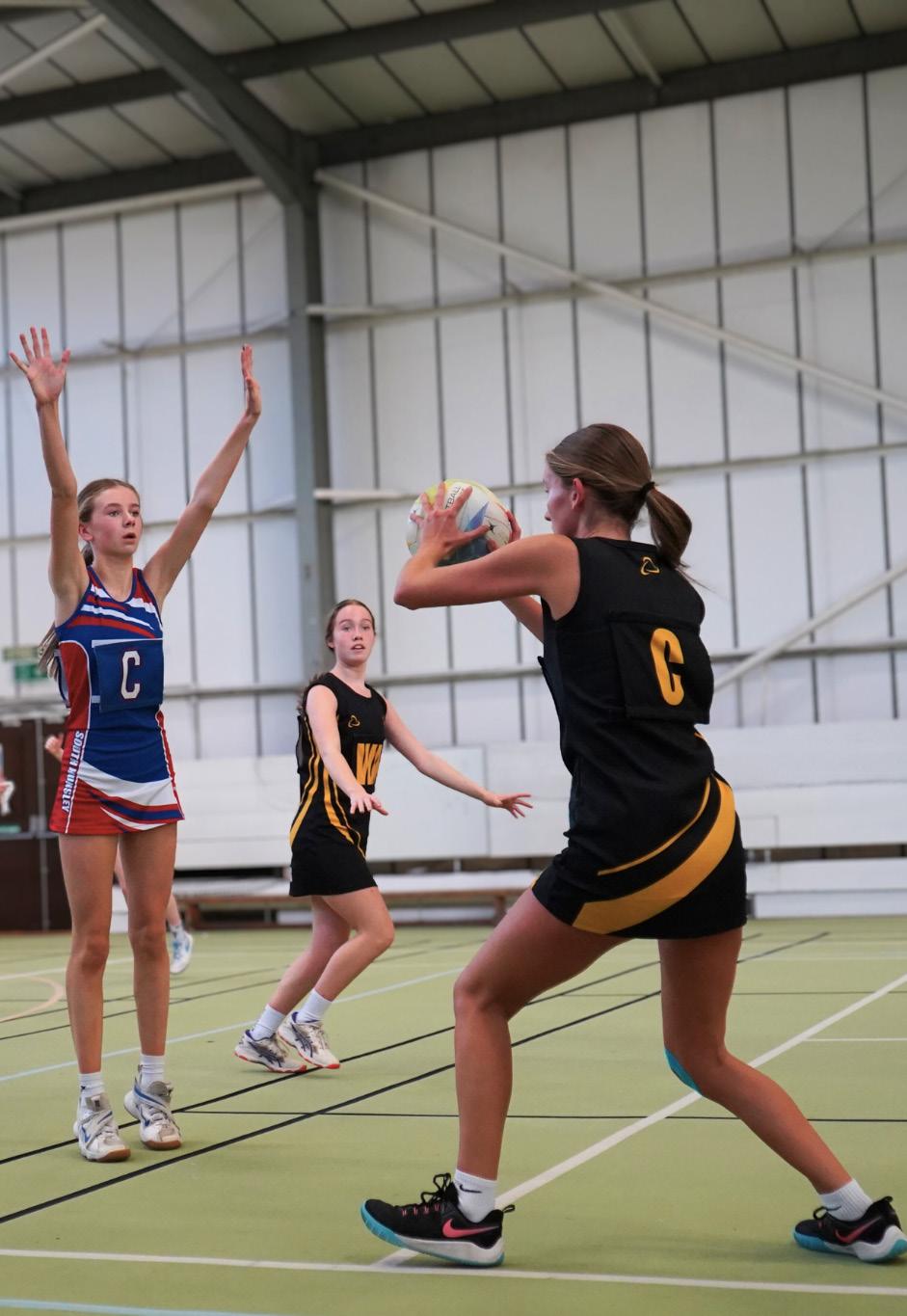
The range of sports includes badminton, dance, hockey, netball, athletics, rounders, rowing, tennis, athletics, golf, rowing, hockey, trampolining and fitness. This wide range of activities is changed each half term. These activities take place either at school or at other local sporting venues: in the fitness option, all pupils receive a detailed induction into a local gym and learn how to develop and monitor their own personal exercise programme.
The Key Stage 4 PE programme is designed to be inclusive regardless of ability, to develop leadership skills, which will be useful throughout life - and for all pupils to have fun.
Religious Education is an integral part of this curriculum, contributing to our goal of fostering understanding, tolerance, and critical thinking. Through RE, students engage with philosophical, ethical, and cultural questions, which helps them develop respect for others and an appreciation of the diverse world they will encounter in their adult lives.
These discussions encourage open-mindedness and equip students with the analytical skills to approach complex issues thoughtfully. Topics include belief in God, challenges to belief in God, life after death and the person of Jesus. These are studied through the lens of the six most represented religions in the UK and through philosophical and humanist perspectives.
PSHCEE (Personal, Social, Health, Citizenship and Economic Education) is a core part of the curriculum, supporting students to develop the skills and understanding they need for life beyond the classroom. It helps young people make informed choices, maintain their emotional and physical wellbeing and build positive, respectful relationships.
Through PSHCEE, students explore important real-world topics including mental health, personal safety, relationships, financial capability and responsible decision-making.
The subject is delivered through a whole-school approach, recognising that learning extends beyond lessons. By embedding these themes across school life, students are supported to become thoughtful, responsible citizens who contribute positively to their communities and wider society.

The World Economic Forum predicts a net growth of 78 million new jobs over the next decade, driven by technological change, the green transition and economic and demographic shifts that will reshape the global labour market. High-quality Careers Education, Advice and Guidance (CEAG) is therefore essential in preparing students for life beyond school.
It enables young people to understand themselves, explore future possibilities and make confident, informed decisions about their education and career pathways, developing the resilience and ambition needed for success.
In Years 10 and 11, the Careers Education and Guidance programme is delivered through PSHCCE lessons and targeted sessions, designed to build self-awareness and career management skills. Pupils are encouraged to recognise their strengths, reflect on their interests and consider how these relate to future opportunities.
Personalised guidance is central to the programme. In the Autumn term of Year 11, pupils attend a one-to-one interview with the Careers Co-ordinator, a qualified Careers Adviser, to review their Morrisby results and discuss career options. In the Spring term, they also meet a senior member of staff to consider Sixth Form pathways and subject choices. Parents are supported through the Sixth Form Presentation Evening and Year 11 Parents’ Evening, and pupils have opportunities to meet current Sixth Form students and attend taster lessons.
Through this programme, pupils leave school confident, informed and prepared to take responsibility for their future pathways.

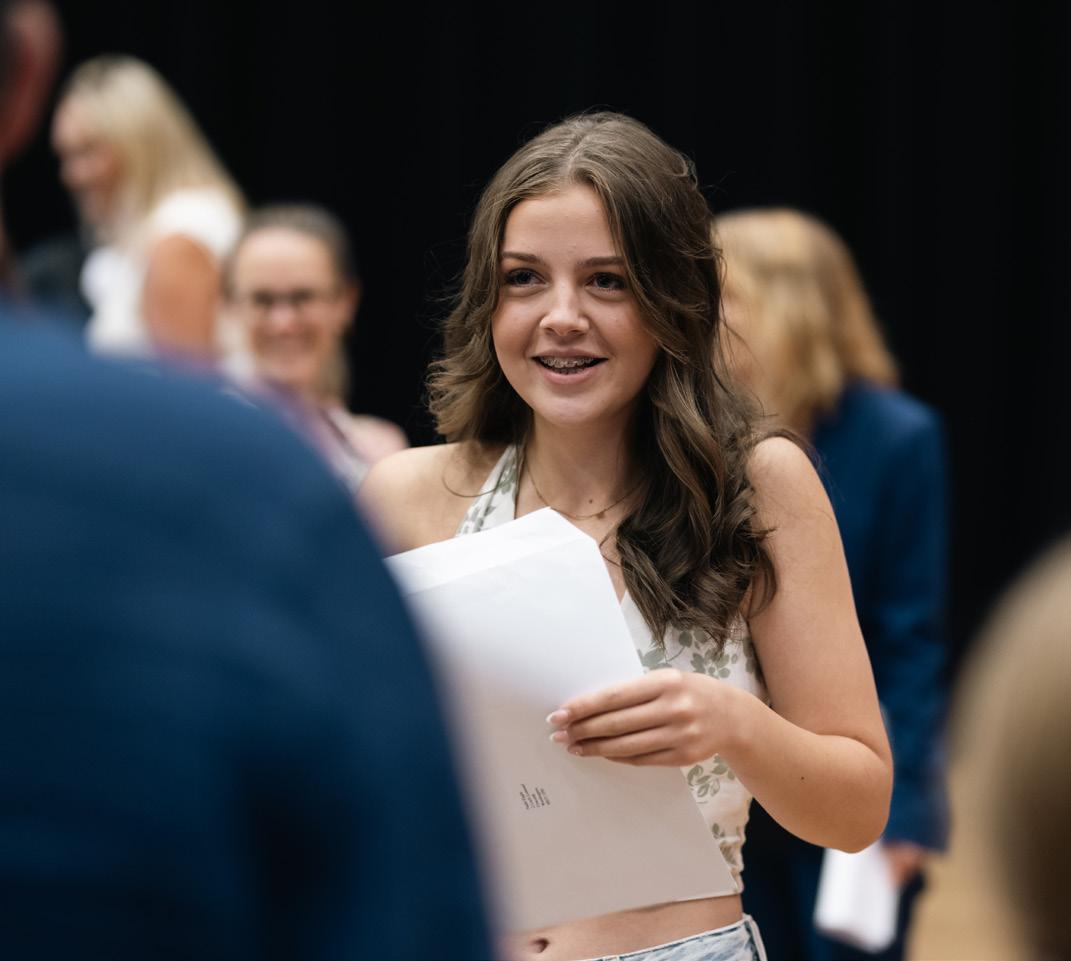
Our Year 11 pupils had a summer of celebration after working hard to achieve an outstanding set of GCSE results, reflecting both academic ambition and exceptional teaching. Almost one in five grades were awarded at Grade 9, with particularly strong performance in key subject areas:
Languages: 45% Grade 9
Separate Sciences: 41% Grade 9
Religious Studies: 60% Grade 9
The pupils achieved a 100% pass rate in both English Literature and Mathematics, demonstrating consistently high standards across the core curriculum.
The GCSE results complemented another excellent performance at A Level.
Of the students choosing to go to university, 100% were accepted on to their preferred course, with 84% getting their Firm Choice university.
Overall, the year group outperformed the North East average for coveted A* and A grades by 60 per cent. Also, more than two-thirds of students achieved grades A*-B.
Every Sixth Form student also completes an Extended Project Qualification (EPQ). This year’s Upper Sixth cohort achieved 87% A*/A and those in Lower Sixth who completed their EPQ L6 achieved 100% A*.
I chose French, Art and Geography for my options because I enjoyed them and wanted to study a variety of subjects to give me a good base for future study.
My teachers provided me with a lot of revision tips and help. When studying for your GCSEs there is a lot to learn so I found study apps like Quizlet really useful. I used past papers and mark schemes to practice my exam technique. Don’t get stressed and work hard are my top tips.
My teachers were amazing and the individual subject support they offered both in lessons and outside of lessons, really helped. Every member of staff in school encouraged me to stay calm and not panic.

Which GCSE options did you choose and why?
I chose RE, History and French as I enjoyed these and was quite good at them and knew I wanted to pursue these in the future.
What are your study tips to achieve great Year 10/11 outcomes?
I always asked my teachers lots of questions to make sure I fully understood the topics and working through past papers and mark schemes was really helpful. You need to work hard but think about the long summer holiday you have after GCSEs are over.
How were you supported at Durham High to achieve your GCSE results?
The amount of time my teachers gave me if I needed extra support was brilliant. My teachers went out of their way to help me and their support really kept me focused.
I was really interested in Textiles and History and knew I wanted to study these for A Level and possibly after School. I think it is important to learn a language for holidays and possibly working abroad in the future and I play Goal Keeper at hockey, which I really enjoy so chose Physical Education.
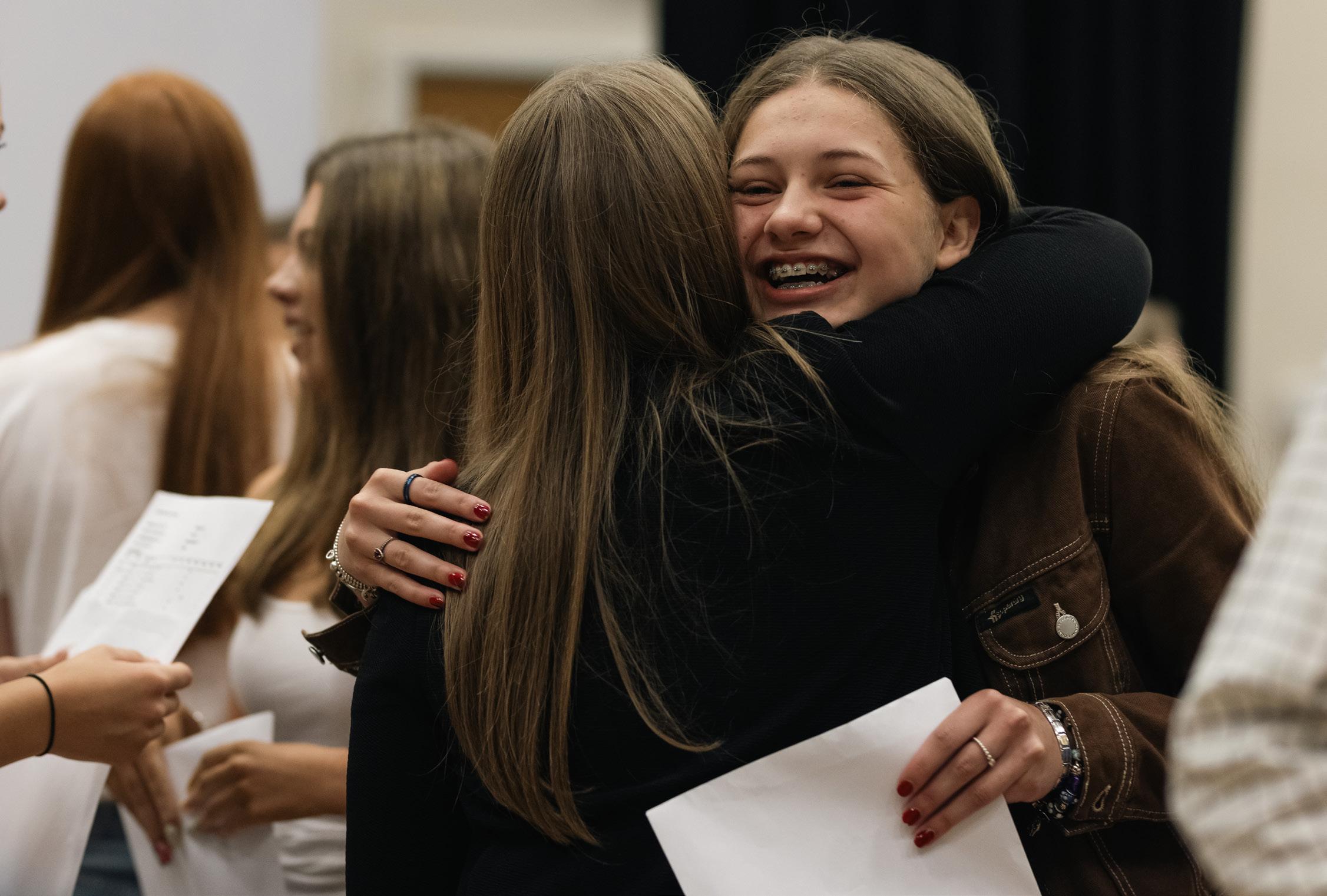
Start with regular revision early on in year 10 and make revision resources that work for you. Use study apps to help you retain your knowledge and use past papers and mark schemes. Work hard and don’t leave revision until the last minute.
My teachers were fantastic and put on extra study sessions on topics I didn’t feel as confident with. They helped me to keep calm and reminded me to take a break every now and again which was good advice.
Don’t just pick a subject that is the safe option, don’t let your doubts get the better of you.
Tiah
Pick something you will enjoy and not just something you think will look good.
Megan
If you know what you want to do in the future, pick subjects that are related.
Sophia
Only pick coursework subjects if you are going to be really dedicated to the subject.
Rosella
Don’t be a sheep, be a shepherd.
Anna
Be prepared for some lessons to be hard work, they are rewarding
Maya
Don’t take Year 9 for granted, enjoy studying the subjects before GCSE.
Maiah