


educationalists in our schools and organisations.
No.20

Sudeshna Chakravarty, Head of English and History, Eaton Square Prep
Zanna Clarke, Principal, Miss Daisy’s Nursery Schools

educationalists in our schools and organisations.
Sudeshna Chakravarty, Head of English and History, Eaton Square Prep
Zanna Clarke, Principal, Miss Daisy’s Nursery Schools
Tim Fish, Editor-in-Chief of Insight, is CEO, Dukes Education, UK, and founder of Earlscliffe, a co-ed, international boarding school for students aged 15-19, in Folkestone, Kent.

Welcome to our 20th edition of Insight, exactly six years on from our first, in February 2020. The National Year of Reading 2026 is a UK-wide campaign led by the National Literacy Trust in collaboration with The Reading Agency, sponsored by the Department for Education, and unsurprisingly our 20th edition’s theme is ‘Reading’. As usual, we have a range of contributions, and it’s great to have an article from Aatif Hassan, our Founder and Chairman, on how poetry brought him to reading in a way that he thought (being dyslexic) was a literary bridge too far. There are, of course, different views on reading, such as the cognitive, with the reader at the heart of the process rather than the text, integrating new information with their existing schemata; or prior knowledge, and the
metacognitive, with strategic readers thinking about what they are doing while reading. Marva Barnett, a second language theorist, believes the purpose of reading is to ‘see into another mind.’ By acquiring and broadening general knowledge through reading, one gains a more profound insight into other cultures and human nature. Reading is both transportative and transformative.
Katherine Birbalsingh, Chair of the Social Mobility Commission and Headmistress and co-founder of Michaela Community School in Wembley, London, is an advocate for reading as an enabler of cultural literacy and equity: the reading a child or a teenager engages in through school is viewed as ‘powerful knowledge’, or knowledge they would not otherwise have access to at home. ‘Powerful knowledge’ mitigates the ‘Matthew effect’,
Bringing Insight to a coffee table near you…
where the gap between advantaged and disadvantaged widens over time as those who already know more will consequently learn more. Reading encourages a thirst for knowledge — and knowledge is power...
Robert Louis Stevenson, Arthur Ransome, Richard Adams, Christina Rossetti — as a child I was transported by them all, whether to the dark streets of Edinburgh or the Berkshire downs, to ‘see into another mind’, yes, but also to live another life.
In an age increasingly shaped by screens and speed, the deliberate act of reading remains a radical commitment to depth, empathy and sustained attention. It asks us to pause, to question, and to imagine beyond ourselves in ways that endure.
Happy reading...
Tim Fish Editor-in-chief
Melanie Saunders, Chief Education Advisor, High Performance Learning, discusses the link between language and understanding
We have known about ‘The Word Gap’, for 20 years. Risley and Hart1, in their ominously titled study, The Early Catastrophe, found that children from disadvantaged backgrounds hear, on average, 30m fewer spoken words by the age of three than their more advantaged peers. Unsurprisingly, that is mirrored in the way children speak and interact in school, with a vast disparity between the number of new words children use, their confidence in speaking and their willingness to listen.
Language and understanding are intrinsically linked. Words and their meanings underpin thinking and reasoning and better language skills lead to a stronger working memory and faster ‘processing speed.’ Put simply, talking helps us to make sense of the world and to participate in it.
But what will our children be talking about? Despite the removal of speaking and listening

from GCSE grades in 2023, most teachers recognise the intrinsic importance of talk and do their best to plan suitable opportunities for children. However, in this, as in so much else, those students who already have the skills gain the most. Confident speakers not only use extensive vocabulary and have greater self-confidence but they have material to draw on from beyond their own lived experience. They can say how they feel and are beginning to make connections between what they know and what they think.
This is in part about those back-and-forth conversations which are the lingua franca of middle-class households, but it’s also to do with the status of reading. Is reading a pleasurable activity, linked with thinking, chatting, laughing and the exploration of, ‘strange new worlds’, or is it a painful chore which brings nothing but stress and embarrassment?
In 2012, the then Education Secretary, Michael Gove, championed Synthetic Phonics as the tool to drive up basic literacy standards in schools and introduced the phonics screening check (PSC), ‘to confirm whether individual pupils had grasped the basics of phonic decoding by the end of Year 1.’
The Department for Education claims that, ‘since the introduction of the phonics screening check in 2012, the percentage of Year 1 pupils meeting the expected standard in reading has risen from 58% to 82%2.’ However, a report published by Education Policy Institute in November 20243 found there to be ‘no evidence that Key Stage 1 or 2 reading results have improved since the introduction of the PSC and no evidence that the PSC has impacted positively to narrow gaps at Key Stage 1 or Key Stage 2.’ England’s PISA reading scores remain virtually unchanged since 2006. Obviously, we need children to be able to decode. GCSEs are first and foremost a reading test. GCSE maths and science require a reading age of 15 years and seven months, history and English 15 years and eight months, yet the average reading age of students sitting GCSEs is 13 years, with 20% of students having a reading age below 11 years. Being able to decode the words on the page is important, both individually and nationally.
‘Teaching your brain how to manage cognitive load is essential for longterm memory and for learning’
St Peter’s Primary School (quoted by the DfE in 2023) said, ‘We have found that one of the key benefits of using a consistent phonics scheme is that it reduces cognitive load for children. When children are learning to read, they have to decode words, understand their meaning and remember them. This can be a lot of cognitive load for an early reader.4’
Perhaps this is the problem — cognitive load is the mental effort it takes for the brain to organise and assimilate new material and to connect it with existing knowledge and ideas. Teaching your brain how to manage cognitive load is essential for long-term memory and for learning. Wrestling with challenge, the element of desirable difficulty, is what makes learning stick. Professor Deborah Eyre talks about the importance of helping young children make connections through advanced learning opportunities which ‘although they are demanding, should also be enjoyable and interesting so as to stimulate curiosity.5’
A study of more than 10,000 young adolescents in the US (June 2023) found a strong link between reading for pleasure at an early age and a positive performance in adolescence on cognitive tests that measured such factors as verbal learning, memory and speech development, and at school academic achievement.6 Phonics helps children identify different sounds and distinguish different words. If writing is a code, knowing the sounds of different letters and how they sound when they’re combined, gives children the key to decoding words as they read. However, if that’s as far as a child gets, they are unlikely to choose to do the very thing which would not only improve their vocabulary and written English but would also open a world of possibility and imagination — read for pleasure!
The National Literacy Trust Reading Report 2025, Rethinking Reading for Pleasure in Schools7, found that just 1 in 3 (32.7%)
of children between the ages of eight to 18 said they enjoyed reading in their free time. A 36% decline since the National Literacy Trust started asking that question in 2005. It is challenging to note that this decline is particularly steep amongst primary-aged children, and those on Free School Meals. Children who begin reading for pleasure early in life tend to perform better at cognitive tests and have better mental health when they enter adolescence. However, to access these benefits, texts need to be of sufficient quality to challenge and engage the reader and make them want more. Good books ask us to put ourselves in someone else’s shoes, to imagine how it feels to live in another place or another time, to engage with values and opinions which are not ours and to ask questions about our own attitudes and expectations. It also shows us that we aren’t alone in how we feel and gives us the words to talk about these feelings with others.
‘ Texts need to be of sufficient quality to challenge and engage the reader and make them want more’
Professor Barbara Sahakian, from the Department of Psychiatry at the University of Cambridge, said: ‘Reading isn’t just a pleasurable experience — it’s widely accepted that it inspires thinking and creativity, increases empathy and reduces stress... it’s linked to important developmental factors in children, improving their cognition, mental health, and brain structure, which are cornerstones for future learning and well-being.8’
Children who aren’t introduced to reading for pleasure at home, who are hampered by uncertain oracy and limited vocabulary and, consequently, presented with simplistic, irrelevant and uninteresting texts suitable for their ‘ability’ at school, are unlikely ever to get to the point when reading is anything other than an unfortunate necessity. That is more than a challenge for teachers — it’s a tragedy. ■
Annotations:
1 Risley and Hart https://bit.ly/4rCUhjN (The Early Catastrophe pdf)
2 ...the percentage of Year 1 pupils meeting the expected standard in reading has risen from 58% to 82% https://bit.ly/4aojGqm (gov.uk)
3 However, a report published by Education Policy Institute in November 2024 https://bit.ly/3O52Cys (epi.org.uk)
4 This can be a lot of cognitive load for an early reader https://bit.ly/3OauqRW (gov.uk)
5 ...should also be enjoyable and interesting so as to stimulate curiosity https://bit.ly/4aqcz0G (taylorfrancis.com)
6 ...memory and speech development, and at school academic achievement https://bit.ly/4rGIpNK (cambridge.org)
7 ...Rethinking Reading for Pleasure in Schools https://bit.ly/3Oi9Yyu (literacytrust.org.uk)
8 ...which are cornerstones for future learning and well-being https://bit.ly/4kvUvXK (www.cambridge.org)
Gentle Reader 44 Book Lane
Librarium
Bookinghamshire

Dearest Gentle Reader,
This writer is compelled to tell you of the most marvellous of treasure troves to be found within an educational establishment: the library. Some may go so far as to say that this illustrious place is oftentimes the beating heart of institutions where quality instruction is delivered with a sense of great duty and care. Upon careful pondering of the matter, I must wholeheartedly agree.
Our story begins most intriguingly, once upon a bookshelf, where dear reader, I take my leave and invite your imaginations to feast at the table of enlightenment, joy and sanctuary. I do hope that one continues to spread the cherish-able act of imbibing literary knowledge amidst other great works of wisdom and expressions of the human condition.
Until the next time,
Yours truly,
Lady Reading of Bookshire
Sudeshna Chakravarty, Head of English and History, Eaton Square Prep, embarks on a journey through libraries
Although Lady Reading of Bookshire may be a fictional character, her sentiments about a school library perhaps ring true for many within our communities. However, if you have glanced through the Libraries for Primaries report compiled in 2023 for a bit of light reading, it seems that our schools may be amongst the fortunate numbers where libraries are celebrated, treasured, and cherished. The report attested that one in seven state primary schools in the UK do not have a library, and this increases to a quarter of primary schools in deprived areas. Concerningly, one in ten children from disadvantaged backgrounds do not have a single book of their own at home. I cannot be alone in feeling shocked by these statistics; it is no wonder that fostering a love of reading can seem an uphill struggle in some school communities. As
educators, the reminder of the correlation between a child’s ability to read and their success later in life, can often have us resolving again to reach for the latest, most engaging of tomes to furnish our shelves for their betterment, but how can a library help improve outcomes?
Let’s take a small step off the path to consider a very brief history of reading. Whilst undoubtedly a wonderful tradition, the reason we continue to read has evolved. For a long time, reading and religious worship would often go hand in hand; the reading of holy texts forming celebratory parts of rituals. Reading in the classroom, as we appreciate it now, actually blossomed in the Middle Ages, although back then, the teachers would be the ones to read complete texts aloud to pupils — perhaps not the most prudent use of lesson time for modern teachers. With the

‘The books transported her into new worlds and introduced her to amazing people who lived exciting lives’

advancement of the printing press, reading materials were more widely available, although still mainly religious in style. Literature for children really only came into existence when oral traditions of fables and legends were committed to the page, around the 17th century. Lewis Carroll’s publication of Alice’s Adventures in Wonderland in 1865 was the major herald of reading for pleasure where children were concerned, and soon after the offerings grew exponentially with the likes of Beatrix Potter, Robert Louis Stevenson and Louisa May Alcott. With books for children becoming more and more readily available, it’s no wonder a hankering for adventure or flights of fancy cemented itself as a core experience for children. As Roald Dahl wrote in Matilda, ‘The books transported her into new worlds and introduced her to amazing people who lived exciting lives.’
Speaking of Matilda, she was a character who found solace and deep happiness in a library. The focus of reading for pleasure can sometimes overshadow the concept of reading for wellbeing. When Professor Mark Richardson, a neuroscientist from King’s College London, took EEG scanners into the British Library, he found that visitors’ alpha brain waves (those associated with calm and focus) increased by 37%, having sat in silence amongst bookshelves. The idea of a library being a treasured space is further elucidated by some of the most famous
‘Just as schools do more than impart education, libraries do more than house books’
libraries in the world, such as the Strahov Monastery in the Czech Republic, which purportedly inspired the library from Beauty and the Beast, and Trinity College Library in Ireland, where the Book of Kells is kept. Is the introduction of modern reading technology something of a double-edged sword? We can all appreciate the increase in accessibility e-reading provides, but can one really get lost among the lines on a tablet when notifications pop up, with little respect for plot twists and denouements? It’s also quite difficult to appreciate the sensory aspect of reading with a Kindle. Dancing dust motes amongst whispering, feathery-soft corners of pages doesn’t quite translate in the same way electronically. However, experience aside, one cannot ignore the benefits of being able to discover the meaning of vocabulary quickly by
simply hovering over a word — clever features like this open up a range of learning opportunities which allow children to keep up with each other. I suppose like all good things in life: everything in moderation.
Just as schools do more than impart education, libraries do more than house books. They provide a source of connection in a community; a safe space; a chance for escapism; an opportunity to lose yourself amongst lines of descriptive prose, and marvellously, find some aspect of your life reflected back at you within a book. So, having meandered off the topic, at the root of the root and the bud of the bud, we all know in our hearts that libraries contribute significantly to positive outcomes. They provide calm spaces in which to study, research or enjoy passing time, so where better placed are they, than as a central resource in a school? ■


Zanna Clarke, Principal, Miss Daisy’s Nursery Schools, examines the learning needed before reading can start
Learning to read starts well before formal phonics instruction. In the early years, children need rich experiences that help them tune into language, rhythm, and meaning. Prereading activities are powerful because they make literacy feel like play. Rhyming games and nursery rhymes strengthen phonological awareness, while ‘sound-hunts’ encourage children to listen carefully to their environment and connect sounds to words. Clapping out syllables builds awareness of word parts, and picture walks through books develop comprehension and prediction skills. Collecting objects that begin with the same sound helps children link sounds to symbols. Role play and storytelling expand imagination, and shared
reading routines — turning pages, pointing to words, and repeating phrases — show children how books work.
In a nursery school, these skills are nurtured through everyday activities. ‘Show and Tell’ sessions give children opportunities to speak confidently, listen attentively, and ask questions, which builds vocabulary and conversational turntaking. Social conversations during snack or lunch time encourage children to share ideas and respond to peers, helping them understand the rhythm of dialogue. Teachers often support younger friends by asking guiding questions or gently correcting language mistakes, which models accurate speech and expands vocabulary. For children who speak English as an additional language, role

‘Collecting objects that begin with the same sound helps children link sounds to symbols’
play and interactive games provide a safe and playful way to practise new words and phrases, while peer interactions help them learn naturally through imitation and repetition.
Conversations are central to this process. Through natural back-and-forth exchanges, children learn that language is interactive. Adults model eye contact, turntaking, and how to build on ideas, which helps children understand the structure and purpose of dialogue. These skills later support reading and writing because they teach sequencing, inference, and comprehension. For example, when discussing a picture book, an adult might ask, ‘What do you think will happen next?’ or ‘Why is the character feeling sad?’ Encouraging questioning and prediction helps children develop critical thinking and language skills. Practical strategies such as using story cubes to invent narratives, discussing illustrations in picture books, and inviting children to ask ‘why’ and ‘how’ questions all foster curiosity and comprehension.
The science of brain development explains why these activities matter.
Phonological awareness begins even before birth, as babies recognise rhythm and intonation in the womb. By toddlerhood, children are sensitive to sound differences, and between ages three and five, the brain is ready to connect sounds with visual symbols. This is when children begin to recognise letters and
‘Books allow children to picture magical lands, characters, and adventures’

their associated sounds, laying the groundwork for phonics. Neuroscience shows that repeated exposure to spoken language and print strengthens neural pathways, making recognition and blending possible. Importantly, there are 44 sounds in English but only 26 letters, so children must first learn sounds before names to avoid confusion and make blending words logical.
At the same time, imagination is blossoming. Books allow children to picture magical lands, characters, and adventures, creating a safe space to explore emotions and possibilities. Imaginative play is not separate from reading — it is part of why reading becomes meaningful. By engaging with stories, children learn to escape into another world, nurturing creativity and building a lifelong love of books.
Learning to read in the early years is about nurturing curiosity and laying strong foundations, rather than focusing too soon on formal instruction. These pre-reading skills include listening attentively, enjoying rhymes and songs, noticing patterns in language, and beginning to understand that print carries meaning. Turning pages, pointing to pictures, and talking about what they see are all part of this stage, helping children connect spoken words with symbols on the page. Playing sound games and joining in with familiar stories strengthen phonological awareness, while conversations with
adults expand vocabulary and comprehension. Shared storytelling builds confidence and a sense of belonging. These experiences prepare children for the next step of linking letters to sounds, but the emphasis remains on enjoyment and exploration.
Family members and familiar adults play a vital role in this journey. Reading aloud creates moments of warmth and security, showing children that books are not just for school but part of everyday life. It doesn’t matter whether the text is a story, a song, on a cereal box, or even a sign, the act of sharing words together is what matters most. Children learn that reading is social, joyful, and meaningful, and they begin to see books as treasures to be opened and explored.
It is essential to teach sounds before letter names because children need to know that the letter ‘m’ represents the sound /m/, not just the name ‘em’. Recognising sounds allows them to blend words, such as c-a-t becoming cat. Letter names don’t always match the sounds they represent, which can cause confusion. For example, the name ‘cee’ for ‘c’ doesn’t help a child read ‘cat’. Reading and spelling rely on hearing and manipulating sounds, not names, so saying the sounds makes it possible to put them together into words. Once children can connect sounds to symbols, they can begin decoding simple words, which builds confidence and motivation. Letter names are still
‘It doesn’t matter whether the text is a story, a song, on a cereal box, or even a sign, the act of sharing words together is what matters most’
important, but they come later once children are secure in hearing and using sounds. This sequence ensures that reading feels logical and achievable, rather than confusing. Books open the door to imagination. For children in the early years, stories are a way to step into magical lands, meet new characters, and explore exciting adventures. Reading should become a safe space to escape into, nurturing creativity and empathy. Developing a child’s imagination is as important as the mechanics of reading
because it helps children see books as gateways to other worlds.
Learning to read is not about rushing phonics, but about building pre-reading skills through listening, talking, playing, and sharing stories. Teaching sounds before letter names give children the tools they need to unlock words, while sharing books with others instils joy and imagination. When children see reading as both fun and meaningful, they step into a lifelong adventure of stories, knowledge, and creativity. ■


Laura Skinner, Marketing Project Director, Dukes Education, discusses the steps Dukes Education is taking to promote reading for pleasure
The latest Annual Literacy Survey conducted by the National Literacy Trust paints a troubling picture.
The 2025 results show a continuing decline in the number of children and young people who say they enjoy reading, reaching the lowest levels recorded in the past 20 years.
For parents and educators who understand the profound benefits of reading, these findings are deeply concerning. Reading is not merely about learning sentence structure, grammar, punctuation, or vocabulary. It offers moments of calm in a busy, noisy world. It unlocks imagination, invites curiosity, and allows children to explore other lives, places, and possibilities from the safety of the page.
Now in its sixteenth year, the National Literacy Trust’s Annual Literacy Survey explores children and young people’s literacy behaviours, attitudes and enjoyment. The survey of children and young people from ages five to 18 has become an annual occurrence conducted in hundreds of schools and settings across the UK. In 2025, the survey had 115,000 responses.
Only 1 in 3 children aged 8-18 say they enjoy reading in their free time — a 36% decrease since the survey began in 2005
The gender gap has widened, with boys reading significantly less than girls
<Just 15.8% of children receiving free school meals read daily
Fewer than 1 in 5 children read daily — a 20% decrease since 2005
Among 5-8-year-olds, daily reading has fallen to 44.5%, a 3.4% drop in just one year and a 9.1% decrease since 2019
‘ The decline in reading for enjoyment has coincided with the rapid rise of digital media’
When children step through a wardrobe into Narnia or set sail on an imagined ship, they engage in critical thinking and problem-solving. They predict outcomes, analyse motivations, witness conflict and resolution, and learn to navigate challenges in a safe space. Through stories, children develop empathy, emotional literacy, and confidence, particularly when they encounter characters who reflect their own experiences. Reading also supports self-reflection, emotional regulation, and connection — especially when stories are shared with others.
Beyond these emotional and social benefits, reading fosters creativity and abstract thinking. It encourages children to conceptualise ideas and make connections across contexts. These skills extend far beyond literacy, underpinning success
across the curriculum and forming the foundation of lifelong learning.
The decline in reading for enjoyment has coincided with the rapid rise of digital media. We live in a fast-paced world of constant stimulation. Smartphones, social media, streaming platforms, short-form video content, and now advances in artificial intelligence, all compete for children’s attention. Against this backdrop, it is increasingly difficult for the quiet magic of a book to hold its ground.
I see this challenge play out in my own home. The thirty-second dopamine hits of YouTube Shorts — high-tempo, endlessly swipeable content — are designed to grip attention instantly. If something does not engage within seconds, it is discarded. How does a teacher at the front of a classroom, let alone a book composed of black-and-white text, compete with this?
Books demand something different: patience, focus, and intellectual engagement. Their wonders are not immediately obvious. They must be unlocked slowly, through imagination and effort. In a world offering instant gratification, this can feel like a hard sell.
Children today have more choices than ever for how they spend their free time: television with thousands of on-demand options, computer games, social media, and increasingly structured schedules filled with homework and extracurricular activities. Books are competing in a crowded and noisy landscape.
Even in a household where reading is visibly valued, encouraging reading for pleasure can be challenging. My children grow up seeing me laugh out loud or wipe away tears behind the pages of a book or head off merrily to book club. Yet promoting reading within my own family is still a struggle.
My four-year-old delights in being read to at bedtime, and I hope to hold onto that ritual for as long as possible. My 10-year-old, however, comes home late from football practice exhausted and resistant to opening a book. My pre-teen would far rather be watching the latest television series or chatting with friends, motivated to read only by financial incentives linked to pocket money. Notably, her schoolbooks are issued digitally. While this supports efficiency and monitoring, I cannot help but mourn the loss of cracked spines and turned pages — and worry about yet more screen time.
This challenge is shared by educators everywhere, and it is one that Dukes Education is committed to addressing head-on. Across our schools and beyond, we are investing in initiatives that aim to inspire children and reconnect them with the joy of reading.
One such initiative was the first Dukes Education Festival of Stories, hosted at Eaton House The Manor. The event brought together storytelling, illustration, and imagination, with over 1,000 tickets sold to sessions led by some of the UK’s most loved children’s authors and illustrators. It was heartening to see families genuinely enjoying stories together, with feedback highlighting renewed enthusiasm for books.

Authors working with younger children proved especially popular, with Rachel Bright’s bestselling animal stories selling out. Interestingly, figures such as Rob Biddulph, known for his ‘Draw with Rob’ YouTube series during the pandemic, and MC Grammar, a former teacher who gained popularity online through rhyme and rhythm, were also in high demand. Their success perhaps offers clues as to how literature can align with the digital world while retaining depth and meaning. Due to its success, there is strong demand for the festival to return.
Dukes Education also proudly supports Poetry Together, founded by author and broadcaster Gyles Brandreth, funded by the Dukes Foundation, and wonderfully supported by Her Majesty The Queen. Poetry Together aims to unite young and old through the shared joy of poetry, encouraging writing, memorisation, and recitation across generations.
Alongside the social benefits of intergenerational connection, Poetry Together has made a tangible impact on literacy. Our partners at the Centre for Literacy in Primary Education (CLPE) note that poetry provides a crucial gateway for young readers and writers, supporting phonological awareness, confidence, and engagement while laying essential foundations for literacy.
Over the past six years, Poetry Together events have taken place in venues including the British Library and Central Hall Westminster in London, expanding to Manchester in 2025. Each event celebrates poetry through vibrant workshops led by award-winning poets and authors. The impact is consistently striking, with children leaving energised, empowered, and eager to write. One parent shared:
‘Despite his learning difficulties, Steven empowered our son to believe in his ideas. In a short time, he produced sentences he was truly proud of. Absolutely priceless.’
In 2025, we launched Poets on the Road, bringing award-winning poets into schools across the country for full days of workshops and performances. The response has been overwhelmingly positive, with schools reporting meaningful and lasting impact on students’ engagement with language.
Dukes Education schools are fortunate to offer well-stocked libraries, dedicated teachers, and rich extracurricular opportunities. Programmes such as Accelerated Reader, creative competitions, and World Book Day celebrations all play a role in motivating children to read in ways that resonate with their interests and personalities.
However, not all children have access to such environments. State school budgets have been severely constrained. CLPE research shows that 60% of classrooms have no budget for new books, and UK council spending on libraries fell by nearly £500 million between 2010 and 2024. This context makes charitable support vital.
The Dukes Foundation supports organisations such as the Children’s Book Project, which tackles book poverty by gifting pre-loved books to schools, food banks, and community groups. Through bursaries and partnerships, the Foundation also works to widen access to education for children from lower-income backgrounds.
Gyles Brandreth recently shared a report from the CEO of his publisher, Hachette, highlighting a global reading crisis. While the book market remains commercially stable, this appears to be driven by fewer people buying more books. The concern is clear: declining reading for pleasure disproportionately affects lower socio-economic groups, with serious implications for social mobility, equality, and future success.
Against this backdrop, 2026 has been designated the UK’s National Year of Reading. Led by the Department for Education and supported by over 60 partners, the ‘Go All In’ campaign aims to reconnect reading with everyday culture by starting with young people’s passions rather than pressure.
It is a sentiment Dukes Education wholeheartedly supports. Addressing the decline in reading will require collective effort, creativity, and sustained investment. We remain committed to fostering a love of literature — within our schools and beyond — because reading is not simply a skill. It is a gateway to imagination, opportunity, and a richer, more connected life. ■
Louis Scott, Digital Marketing and e-commerce Manager, Dukes Plus, explores the history and significance of braille
It was the late summer of 1771 when the 25-yearold interpreter, Valentin Haüy, stopped for lunch in the Place de la Concorde in central Paris. The annual Saint-Ovide Fair was in full swing in the square and among the attractions, Haüy would have witnessed traders selling food and trinkets, a billiards hall, and even an exhibition of circus animals. But his attention was drawn by one raucous entertainment in particular. Approaching, he saw that a crowd was gathered around a stage on which were arranged a peculiar-looking orchestra. Dressed in dunce caps and oversized cardboard glasses, the players were sawing, striking, and blowing apparently at random at their instruments, out of tune and out of time, and the result was a cacophony that provoked
the laughter and jeers of their audience. It was not until he pushed to the front of the crowd that Haüy got the joke: everyone in the orchestra was blind. All residents of the nearby Quinze-Vingts hospice for the blind, the ensemble had been publicly humiliated for the amusement of the fairgoers.
More than forty years later, in a village some 20 miles outside Paris, the three-yearold son of Simon-René Braille, a leather worker, was playing in his father’s workshop. The toddler, Louis, was piercing holes in a piece of leather with an awl when the tool slipped and he stabbed himself in the eye. Despite being rushed to a surgeon in the capital, the wound could not be healed, and by the age of five, Louis Braille was blind in both eyes.
Louis’ evident intelligence, coupled with his parents’ desire to afford their son the best life chances possible, meant that they made considerable efforts, unusual for the time, to educate him. In 1819, at the age of 10, he was enrolled in the National Institute for Blind Youth in Paris — the world’s first such school, founded in 1785 by Valentin Haüy. So appalled had Haüy been by the spectacle he had seen at the Saint-Ovide Fair that he had dedicated his life to educating blind children.
Haüy had realised that blind people could learn to read embossed text by tracing the shapes of the raised letters with their fingers; as such, Braille and the Institute’s other pupils had access to textbooks which provided them with unprecedented educational opportunities. Nonetheless, Haüy’s embossed print was flawed: some letters, like capital Cs and Gs, were hard to distinguish, while the books themselves required specialist equipment to print and were very expensive. Haüy could supply a small selection of books inside the Institute, but they were unavailable outside of it, meaning that his pupils’ ability to read would become useless when they graduated. Furthermore, it was impossible for blind people to write in embossed lettering themselves, so they remained excluded from any profession that required literacy. The school’s aim was therefore to provide a basic education and fit its pupils for work in manual trades, like shoemaking.
‘Embossed print was reinstated by the Institute’s new director, Pierre-Armand Dufau, who, believing that blind people should use the same reading systems as sighted people, banned the use of braille in 1840’

In 1821, a former artilleryman in Napoleon’s army called Charles Barbier came to demonstrate a striking new invention at the school. Barbier had formulated a code, known as ‘night writing’, which he believed would improve on embossed text. It consisted of a two-by-six cell of raised dots, with different combinations of dots representing individual sounds and letters. Although it was easier to print and read than embossed text, and even possible to write with a pocket-sized board and stamp, the young Braille quickly perceived that night writing had its own imperfections. Barbier had not tested his invention on blind readers, and his large 12-dot cell could not be read at one touch of a fingertip.
While still at school, the 12-year-old Braille began refining Barbier’s system. As he later wrote, ‘If we have pointed out the advantages of our method over his, we must say in his honour that his method gave us the first idea of our own.’ Working through the night after classes and in the school holidays, he completed an early version of what we know today as braille by the time he was 15. His code used cells of just six dots, making it far quicker to read, especially for children’s fingers, and also added capital letters, punctuation, mathematical notation, and — eventually — musical notation. Anyone literate in braille could learn to read and write music, saving them from the public humiliation suffered by the Quinze-Vingts orchestra
more than fifty years earlier.
Braille continued finetuning his system throughout the 1820s and 1830s, but he did not live to see its international adoption. In his lifetime, he faced internal opposition from the Institute where he studied as a pupil and later worked as a teacher. Embossed print was reinstated by the Institute’s new director, Pierre-Armand Dufau, who, believing that blind people should use the same reading systems as sighted people, banned the use of braille in 1840. Some students continued to learn it in secret, and those who were caught were punished and their braille books burned. It was only reintroduced in 1844 after Joseph Gaudet, the deputy director, staged a demonstration in which two blind pupils successfully took dictation and read a passage aloud using braille.
Wider recognition remained scarce, however. When Braille died of tuberculosis in 1852, not a single newspaper carried a death notice. The major turning point came in 1878, when a global congress for deaf and blind people hosted in Paris, proposed an international braille standard. Braille was officially adopted by English speakers in 1932, and efforts by UNESCO after the Second World War led to its growth in India, Africa, and the Middle East.
Now, however, braille is imperilled once more. In the US, braille literacy rates for school-age blind children have fallen from more than 50% 40 years ago to under 20%
today. In the UK, meanwhile, only 7% of blind people are literate in braille. This decline is attributable to a variety of causes: a shortage of braille teachers, the rise of screen readers and audio books, and, in the US at least, a policy of mainstreaming blind children into public schools where little, if any, time and resources are available for teaching braille.
Given the widespread availability of audio alternatives, one may wonder whether this is a problem. But as one teacher of the visually impaired has asked, ‘If the literacy rate among sighted people’ were this low, ‘would that be acceptable?’
Studies show that there are neurological benefits to reading and writing in braille, while there appear to be economic advantages, too. In the United States, only 30% of blind adults are employed, but for braille-readers, that figure is 85%. The same combination of factors that led Braille to depart from embossed print still speak for his system today: a broader range of economic opportunities for the literate, the freedom of self-expression which comes with the ability to write as well as to read, and the academic and cognitive benefits of genuine literacy. More than two hundred years after this remarkable teenager’s invention, the value of reading for all should not be forgotten. ■

‘In the UK, meanwhile, only 7% of blind people are literate in braille. If the literacy rate among sighted people were this low, would that be acceptable?’

Institute of Education
Bruce College
The English School of Asturias
Colegio Internacional de Valladolid
Colégio Luso Internacional de Braga
Colégio Júlio Dinis
United Lisbon International School
The British School of Lisbon International Sharing School
Engage International School
Colegio Inglés Zaragoza International English School of Castellón
Elian’s British School of La Nucía
Pražské humanitní gymnázium
Beehive Square Primary School
Verbier International School SWITZERLAND
Bambíno
American Academy in Prague
JK Education
Thames British School
American Academy in Brno
American Academy in Zagreb
Founded in 2015, Dukes brings together a carefully curated group of nurseries, schools, colleges, education consultancies and student experience organisations.
Our central team is based in London. From here, we serve our settings in the UK and Europe, providing administrative support and training, whilst promoting high-performance, leadership and well-being.
Verita International School
International School of Athens

Antonia Dawson, Marketing Manager, Little Dukes, explores the ways in which scrolling has transformed reading
Before I get out of bed, I have already read.
Not a book. Not a chapter. Not even a page. But the weather, a message, a headline, a subject line. A caption. A notification. A few words that arrive with the quiet authority of something important — and vanish just as quickly. We skim this rapid inventory of the world, performed out of habit, unease, as though attention were a duty rather than a choice. Reading now begins before intention has time to form. It arrives already fragmented, already in motion.
The newer model is built around the scroll. The scroll is not a text so much as a stream. It has no natural ending, no edge, no moment that invites you to fold it shut. Its genius is convenience: it brings the world to you, constantly refreshed, constantly relevant. It turns reading into a form of continual contact with news, culture, people, the shifting mood of the day. A single scroll might pass a joke, a war escalation, a confession, a product, a protest — each demanding the same brief glance before yielding to the next. It is physical as well as psychological, carried in a gesture that repeats until it becomes
unconscious: the flick of a thumb, the quiet promise that something better is waiting just below.
This is not accidental. Digital platforms are engineered to dissolve stopping points. They reward presence, not completion. They do not want the reader to arrive at the end of something and leave satisfied; they want the reader to remain.
It would be easy, from here, to reach for a familiar story: reading has declined, attention has been ruined, something pure has been spoiled by something flimsy. Reading was once like walking a path; now it’s like standing in traffic. There is motion everywhere, but little movement. That story is too simple, and it flatters the past. What has changed is not that reading is dying; it is that reading has expanded, broken its boundaries, and taken on new forms.
And yet an older understanding of reading persists, not as nostalgia, but as a standard. The belief that reading should require more than recognition. It demands time, invites silence, asks for a surrender of speed.
The stereotype of reading — a chair pulled toward the light, a book opened, time arranged into a stretch long enough for a mind to settle — was built around the sentence. A complete object: it has direction, it has pace,
it asks the reader to submit to its unfolding rather than force it into haste. It trains the mind toward continuity and makes space for nuance, for lengthy arguments, for emotions that refuse to be reduced.
That image, of course, was never universal. It belonged to those with time, with quiet, with the conditions that made deep reading possible, unevenly distributed.
But it would be dishonest to treat the scroll only as a trap.
The scroll has done something remarkable: it has restored language to ordinary life. It has widened access to journalism, literature, analysis, and art. It has given marginal voices routes into public conversation that did not exist before. It has made reading constant, casual, communal. For many, it has made reading possible at all, not as an act reserved for certain spaces and sanctioned kinds of leisure, but as something stitched into everyday life. For some, it is not a lesser form of reading but the first one that fits.
The modern reader picks out tone at speed: irony, sincerity, coded references, the grammar of memes, the finality of a full stop. They read context not only in the text itself, but around it — replies, threads, quotes, purposeful exclusions. It is skillful. A form of literacy shaped for a crowded field of language.
‘Reading has expanded, broken its boundaries, and taken on new forms’
‘ The scroll has not destroyed reading; it has multiplied it’
It would be too simple to say that this shift represents decline. The scroll has not destroyed reading; it has multiplied it. The modern reader is not illiterate, but overexposed, surrounded by more language than any human mind was designed to absorb.
Here, perhaps, the distinction sharpens: reading is not only the intake of words, but their emotional, educational, and personal impact.
A long sentence does something slow. It builds meaning over time. It creates a room in the mind where an idea can stretch out and become complicated. It invites contradiction. It allows a thought to sit long enough to change the reader.
The scroll does not often make rooms. It makes windows. You glance through. You register. You move on.
It is not reading that is being disrupted, but a certain depth that is beginning to feel rare. Not because screens cannot hold it, but because depth requires conditions: time not broken into fragments, attention not pulled in multiple directions at once, a quiet long enough for meaning to settle rather than be replaced. When reading becomes fast, writing follows. Sentences shorten. Paragraphs thin. Thoughts are packaged to survive skimming. Emotion becomes legible in symbols, and

‘ Yet deep reading has not disappeared. It has become an act of intention.’
reaction stands in for reflection. In a hurried culture, complexity begins to feel suspect. What takes time is mistrusted. Speed begins to masquerade as intelligence.
It becomes harder to read slowly enough to be changed.
Notice it, in the restlessness at the edge of a paragraph, the urge to extract rather than inhabit, the strange fatigue that comes not from reading too much, but from never staying long enough for anything to leave a mark. Recognition begins to feel like understanding. It isn’t.
Yet deep reading has not disappeared. It has become an act of intention. Sometimes it returns through paper: a book opened and held long enough for the mind to soften, a poem reread until it deepens, a long essay printed and marked by hand. Sometimes it returns on the screen itself: a piece of writing that makes the thumb go still, a paragraph that resists skimming, an argument that refuses to be absorbed as a list of points. A subject that unfolds into further reading, further questions, further thought. Even in its noise, the scroll still has the power to lead us somewhere deeper.
Those moments reveal something essential: depth is not tied to format. It is tied to willingness. To interest.
Perhaps the future of reading is not a battle between page and phone, but a negotiation between motion and stillness. Between breadth and depth. The question is not which form should win, but how to live with both without losing the capacities that matter.
The scroll will keep turning long after we look away. It will always offer more — more news, more opinion, more language, more urgency. That is its nature.
But meaning does not live in more.
Meaning lives in what we let stay. Somewhere inside the stillness of a sentence, something waits: not nostalgia, not virtue, but the possibility of being undivided for a moment, of allowing language to do more than inform or entertain. To shape a mind, to widen a heart, to build a quiet inner room in a world that rarely pauses.
Before the day fills itself, before the scroll begins again, there is a choice: to linger long enough for words to take root. ■

Olivia Campbell, Head of Business Development, Dukes Tutoring discusses the pleasures of reading with friends and shares personal recommendations
Reading has always been a solitary act, but it has never existed in isolation. Stories travel into conversation, disagreement, recognition. Even when read alone, a book asks something of us: a thought we hold onto, a line we reread, a moment we return to later. Reading together gives those responses somewhere to go, extending the life of a book beyond its pages and turning it into something shared. The act of sharing stories is nothing new.
The term Book Club, however, appears to have originated in the 18th century, when early clubs were as much social gatherings as literary ones, often meeting in taverns over ample food, drink and conviviality. I am lucky to be a part of a hugely convivial group of readers — and I’d like to invite you in.
To be invited in properly, you must understand the dynamic of us. We formed a few years ago through a mutual friend and a shared love of rosé wine. Jacqui is
the buzzy, vivacious mutual friend, who often runs out of time to read the book and favours listening to the audiobook on 1.7x speed as she races to the dinner. Fiona is the role model member who has never not read a book, arrives with notes and highlighted sections to discuss and is genuinely interested to learn from everyone. Harriet is an actress and painter who has many multiple creative projects at once and always starts the book last minute, often the week of Book Club. Maddie, kind and curious, tends to analyse the characters, their relationship and their context to really draw on her experience and enjoyment of the book. We have two who have left London, but still participate — Natalie, organised and diligent, is quick-witted and loves a juicy plot, and finally Sammy, sharp and nuanced, doesn’t speak until the end and then offers a completely new angle we hadn’t considered. I’m the ex-schoolteacher — generally the bossy one who makes sure we’re on track and following the rules. When talking about Book Club, we’re often asked the question, ‘ Do you even talk about books or do you just drink wine and gossip?’ My response — not quite. Although yes, the wine and gossip are a large part of our love for each other, books too play a central role in our monthly meetings. So, against the clichés of Fight Club, you have insight into the rules of our Book Club:
We have an orderly rota. When it’s your month to choose the book, you host dinner at your house.
No talking about the book until you sit down for dinner. No chatting about it in the lead up, no secret WhatsApp messages behind the group chat’s back, and absolutely no talking about it until everyone has arrived. The drinks and nibbles at the start are for catching up (and yes, some gossiping).
Some sense of order is adhered to once the discussion begins. The host gives their summary, what they liked and didn’t, what character was interesting and ‘wasn’t that one so frustrating!’ From here, we all get so enthusiastic, any order is thrown out the window.
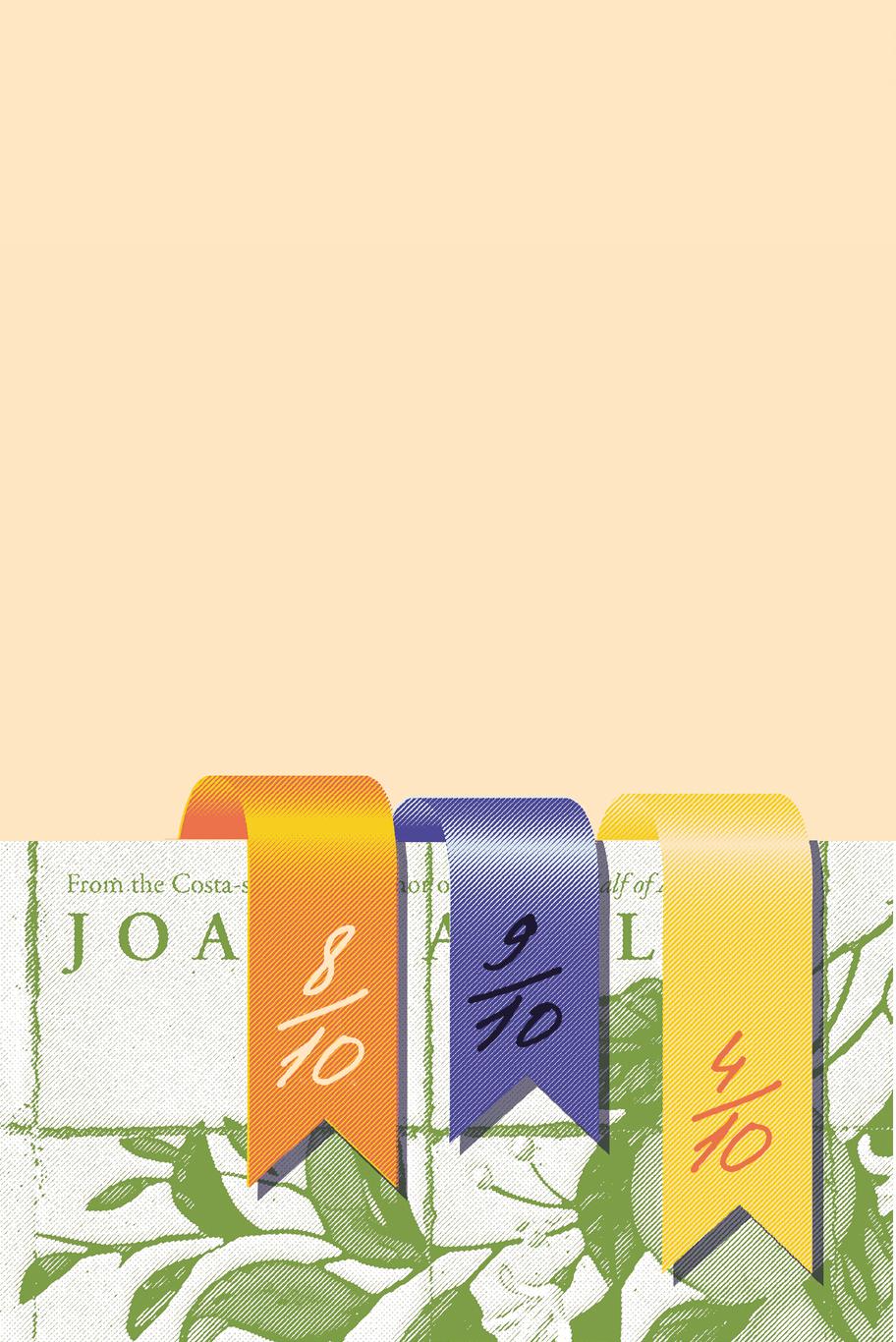
To finish, a mark must be given by each person, and absolutely no one is allowed to award a middle of the road 7/10.
Before the close of the night, the next book is announced. We tend to choose books mostly by female authors — not necessarily intentionally but perhaps providing an interesting insight into the group’s dynamics.
Once the next date has been confirmed, the dishwasher is loaded and that is it until the next month.
‘I am lucky to be a part of a hugely convivial group of readers — and I’d like to invite you in’
‘We are bonded through our shared experiences, conversations and debates that stem from reading the same book’
Except, that’s not it. Our love of books was what brought us together and now our friendship is so much more than that. We are bonded through our shared experiences, conversations and debates that stem from reading the same book. Our lives can be mirrored in our choice of book and that can feel comforting — we know we are not alone. We discuss staying up until 2am crying over a character’s mother’s death, after one of us has shared our own medical or family issue. Or our book can transport us to the streets of India and be a complete escape from the job we didn’t get, or the bad first date. All of which is discussed and examined over a glass of wine.
In an age of disconnection, perhaps the idea of Book Club can satiate our ultimate craving of human connection. There must be a reason why Book Clubs are so popular, in today’s fast, on-demand world. It feels like every female celebrity has their own Book Club — Dua Lipa hosts one of the most popular popculture book podcasts today. Book Club is a date firmly marked in our calendar each month, for the sole purpose of sharing ideas and challenging our viewpoints, for coming together and connecting, learning and growing from one another. What begins as an off-hand comment on a Wednesday night is shaped and reshaped, returned to throughout the month, and then challenged again in the next book.
In Memoriam by Alice Winn... blends a tender, aching love story with the brutal reality of war, making every emotion feel intense, honest and unforgettable.
The Nightingale by Kristen Hannah... takes you from Paris to the French countryside following the brave acts of women in Occupied France in WWII with vivid, beautiful writing.
The Lake House by Kate Morton... is a gripping dual-timeline mystery where a baby’s unsolved disappearances from a 1930s Cornish estate haunts the family for decades until a modern detective uncovers the heartbreaking truth.
Demon Copperhead by Barbara Kingsolver... is a captivating Pulitzer-Prize winning reimagining of David Copperfield that follows a resilient boy navigating foster care and the opioid crisis in Appalachia with rare warmth and honesty — you won’t be able to put it down.
One of Us by Elizabeth Day... plunges us into a world of privilege, politics and moral flexibility, with fascinatingly awful characters — it is sharp, unsettling and uncomfortably familiar.
Lady Tan’s Circle of Women by Lisa See... draws on the life of a 15th-century Chinese physician to celebrate female friendship, resilience, and women supporting one another in a patriarchal world.
All My Mothers by Joanna Glen... captures, with quiet precision and deep compassion, how the people who care for us in different ways can shape who we become, even when love is imperfect and lives are fractured.
‘There is a quiet escapism in holding a physical book that feels increasingly rare’
The shared practice of reading a book together is beautiful — perhaps one of the most human things we can still do today. How is it that someone can read the same book at the exact same time, but experience it in such different ways? How can a book get rated both 2 and 9 by the same group? This is fascinating and something that is never reconciled by the end of the night.
We gather to talk about the book of the month, but for me, it’s the shared experience of having done it together that brings the pure joy of Book Club. As Abraham Verghese said, ‘ There is that lovely feeling of one reader telling another, ‘You must read this...’ contributing to a discourse that begins at a Book Club in a living room, but then spreads.’
There is a quiet escapism in holding a physical book that feels increasingly rare. If you are someone who tends to mostly read on holidays, I’d invite you to try and find time to pick it up in your daily life. Even better, join a Book Club to hold you to account for your reading, or just join one for the joy of gossiping with a new friend over dinner and call it ‘Book Club — they’ll never know! ■
Ireland
Wales Institute of Education
Cardiff Sixth Form College Bruce College
KEY:
Educational Setting:
Nursery School
Preparatory School
Senior School
Sixth Form College
Dukes Plus:
Ultimate Activity Camps
Summer Boarding Courses
InvestIN Education
* Opening soon
Sancton Wood Nursery, Cambridge
Sancton Wood School, Cambridge
St. Andrew’s College, Cambridge
Cardiff Sixth Form College, Cambridge Campus
Rochester Independent College
Reflections Day Nursery & Forest School
Hove Village Nurseries
Broomfield House School
Riverside Nursery Schools RICHMOND
Riverside Nursery Schools ST MARGARETS MONTESSORI
Riverside Nursery Schools TWICKENHAM PARK
Kneller Hall School*
Radnor House School
House Prep
Riverside Nursery Schools HOLLY ROAD
Riverside Nursery Schools GROSVENOR HOUSE
Hampton Court House School
Heathside School Hampstead
Devonshire House School
Bassett House School
The Acorn Nursery
Notting Hill Preparatory School
Pippa Pop-ins
Orchard House School
Pippa Pop-ins
Miss Daisy’s Nursery BROOK GREEN
Miss Daisy’s Nursery CHELSEA
Pippa Pop-ins
Prospect House School
Hampstead Fine Arts College
Montessori Nursery School
Hopes and Dreams
Montessori Nursery School
Miss Daisy’s Nursery HYDE PARK
Knightsbridge School
Miss Daisy’s Nursery KNIGHTSBRIDGE
Kindergartens MOUSE HOUSE SW18
Kindergartens MOUSE HOUSE SW11
Broomwood Prep BOYS
Kindergartens CRESCENT II
WORSHIP STREET
ANGEL Hopes and Dreams
The Lyceum School
London Park School Mayfair
Dukes Education DUKES HOUSE, BUCKINGHAM GATE
Eaton House Belgravia School
Eaton Square Prep School
Miss Daisy’s Nursery BELGRAVIA
London Park School Sixth
Kindergartens THE PARK
Eaton House THE MANOR GIRLS SCHOOL THE MANOR BOYS SCHOOL
Broomwood Pre-Prep
London Park School Clapham
Broomwood Prep GIRLS
The Pointer School
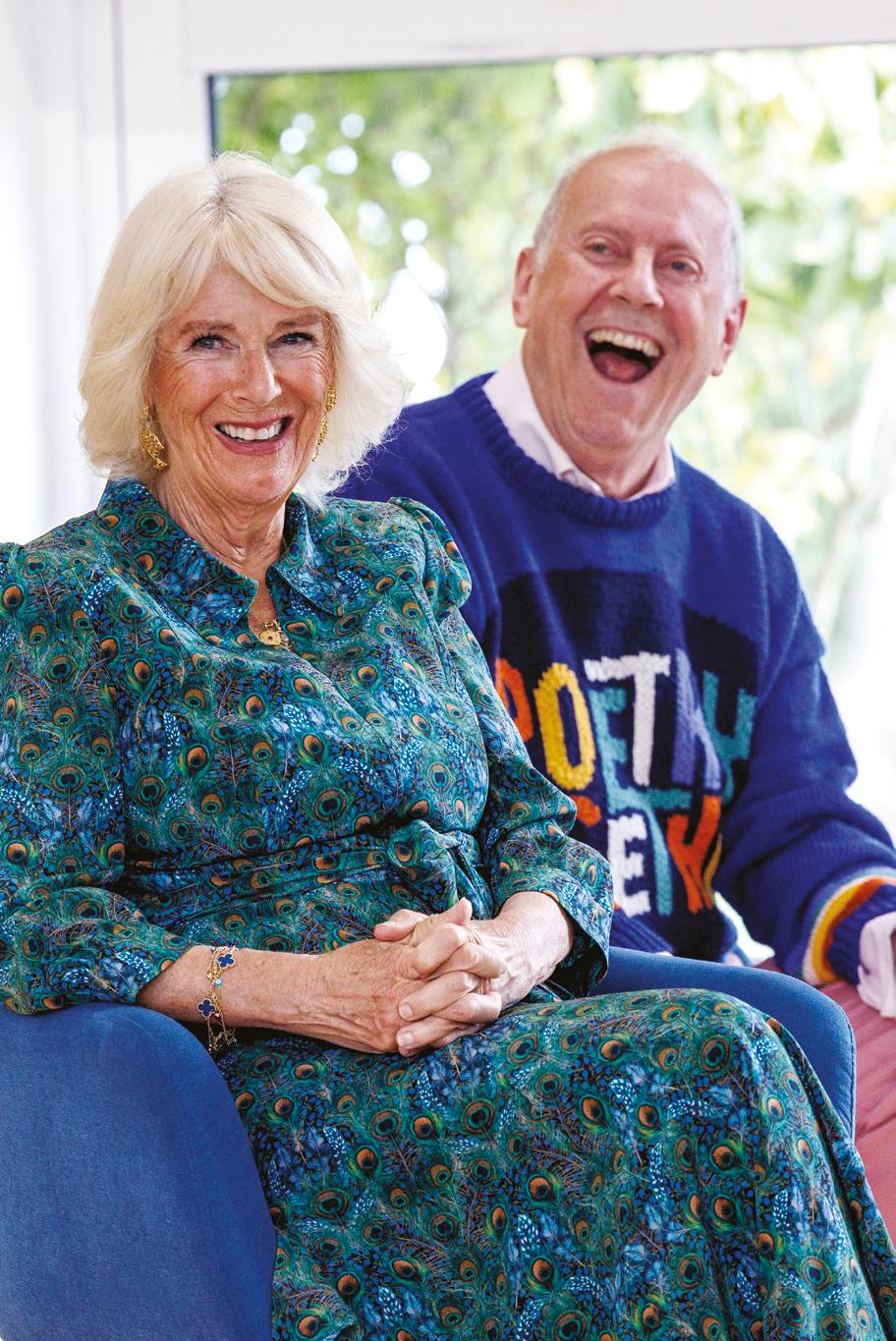
Aatif Hassan, Founder and Chairman of Dukes Education, reveals how dyslexia has shaped a love of poetry
Learning to read is often described as a simple linear process. Letters become sounds. Sounds become words. Words become meaning. For many children, this journey unfolds naturally. For others, especially those with dyslexia, it is more complicated. It requires resilience. It requires support. It requires belief.
Dyslexia challenges many of the assumptions we make about literacy. Reading is not a single skill. It is a combination of memory, attention, sound-processing and confidence. When one element is under strain, the whole system feels fragile.
‘Many dyslexic learners are strong verbally. They think in pictures. They grasp stories instinctively.’
As a child with dyslexia, I found reading disorientating. Letters moved. Words shifted. A word I knew on Monday could defeat me on Tuesday. Reading aloud was the hardest part. By the time I had decoded the sentence, I had forgotten its meaning. Mistakes were public. Confidence drained quietly.
The emotional toll is real. Children know when they are behind — they feel it. School can become a place of waiting; waiting to be asked to read, to spell, to perform. Waiting to be exposed. Over time, that waiting can turn into withdrawal. A quiet shrinking from the very thing that should open doors.
But dyslexia is not a lack of intelligence — quite the opposite. Many dyslexic learners are strong verbally. They think in pictures. They grasp stories instinctively. They often notice connections others miss. The task is not simply to correct weakness, but to build on strength.
For me, the turning point was poetry. Poetry brought structure. Rhythm. Repetition. Pattern. Words did not stand alone. They travelled together in a sequence of sound. I could lean on that structure. Rhyme gave clues. Rhythm slowed the pace. Reading felt guided rather than chaotic.
Recitation mattered most. Memorising poems reduced the strain of the page. It strengthened sound and stress. It built fluency through the ear. And it rebuilt confidence. Standing up and delivering a poem from memory was a rare moment of certainty. A moment where I was not the struggling reader, but the assured speaker.
At school, I was also required to memorise Latin poetry. It was incredibly hard. The vocabulary was unfamiliar — the grammar unforgiving. I struggled but I persisted. Line by line. Sound by sound. Repeating verses under my breath. Testing myself again and
again. When I finally recited those lines in full, I felt something shift. It was not just about language. It was about discipline and endurance. About discovering that difficulty does not mean impossibility. About proving to myself that I could master something demanding.
We sometimes fail to recognise that many of our greatest institutions understand the power of rhythm and memory. The British Army, one of the most respected institutions in the country, relies heavily on mnemonic devices, cadence and repetition. During my time in the Army Cadet Force at school, and later through officer training and leading men in the Army, I learnt drills, codes and procedures through rhythm and chant. Instructions were spoken in unison. Movements repeated until instinctive. Pattern builds recall. Sound builds unity. Memory is strengthened through repetition and voice — particularly when that voice is a troop 30-strong — you’ll have seen it in many war films! Poetry works in much the same way.
Poetry also gave me emotional access. Poems are brief. Vivid. Concentrated. I did not have to fight through pages of text to grasp meaning. I could understand. I could interpret. The feelings of utter devastation at the loss of my eldest son, and the trauma of surviving a multi-fatality car accident some years later, were, to an extent, soothed through the power of poetry. In moments when prose felt too heavy, a few well-chosen lines carried truth without overwhelming it.
Years later, a conversation with author and broadcaster Gyles Brandreth brought these memories back sharply. We were discussing poetry, memory and childhood. Almost casually, one of us said, “Wouldn’t it be wonderful if generations learned poems together again?” It felt like a crazy idea. Old and young. Tea and cake. Recitation for pleasure.
The more we spoke, the less crazy it seemed — and that conversation sparked what became Poetry Together.
Today, Poetry Together brings children and older adults into the same room to read, learn and recite poems. It is simple. It is joyful. And it works. Poetry is communal. It lives in the voice. For dyslexic learners, that matters
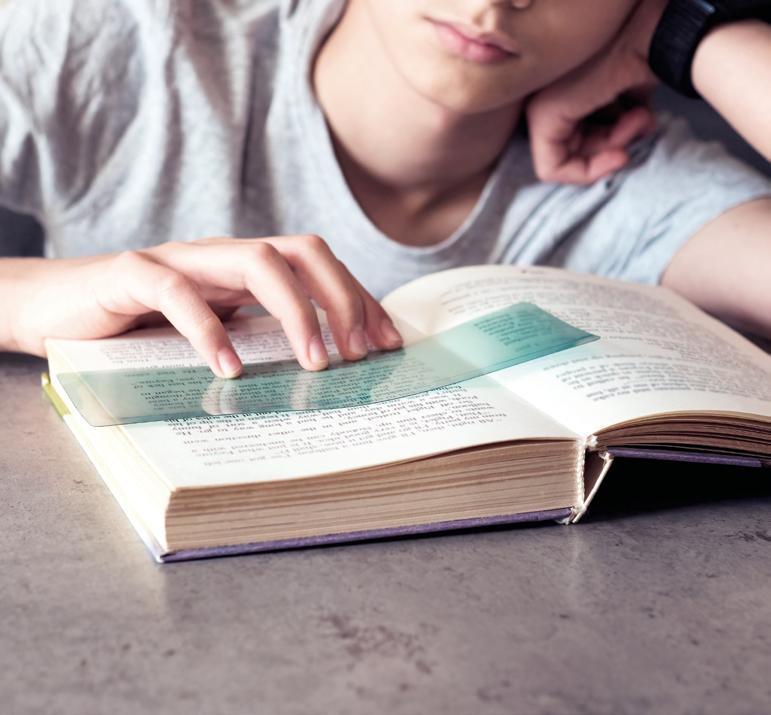
‘Memory is strengthened through repetition and voice — particularly when that voice is a troop 30-strong’
‘Looking back, poetry did more than improve my reading. It changed my belief’
deeply. It validates oracy skills and shifts the emphasis from the page to the person.
From an educational standpoint, poetry aligns with multisensory practice. Through nursery rhymes for very young children, we know that clapping the rhythm, chanting the line and performing the movements, help to engage the body as well as the brain. Building neural pathways through sound and movement. Most importantly, they create moments of success. Small wins that slowly rebuild belief.
Poetry is not a replacement for structured phonics. Explicit teaching remains essential. But poetry complements it. It builds motivation. It builds resilience. It builds joy.
Looking back, poetry did more than improve my reading. It changed my belief. The issue was never comprehension. It was access. It showed me that language could be rhythmic, alive and shared. It offered voice before fluency.
Learning to read with dyslexia is not a deficit story. It is a different route. Poetry taught me that literacy does not begin only with the eye. It begins with the ear. With the voice. With repetition. And sometimes, with what first sounds like a slightly crazy idea — the pleasure of a poem well-learned. ■
Every week at Dukes, we share a ‘Book of the Week’ recommendation offered up by one of the team. We’ve collected some of our recent favourites.
Entangled Life: How Fungi Make Our Worlds, Change Our Minds & Shape
Our Futures by Merlin Sheldrake
With its passion for nature and biology, this book taught me a lot about the wonderful world of fungi — with a poetic twist and plenty of humour.
Thanks to Astrid Bourland IBDP French and Spanish Teacher, Verita International School, Romania
Batavia’s Graveyard by Dr Mike Dash
This true-life history has won many awards and is a Washington Times bestseller which inspired the hit TV series, ‘The Traitors’. Set in 1629, Batavia’s Graveyard is the true story of the mad heretic who led history’s bloodiest mutiny. A group of Dutch settlers set off for the Indies and ran aground in a terrible storm off the Australian coast of the Abrolhos Islands. The last man to struggle ashore was the psychopath, Jeronimus Cornelius. He divided the group, and with a band of thugs began a torturous game of life and death. This is real history, so you feel ‘in that moment’ on a small island with a dictator who carries resonances for the world today and a man of consummate evil. It is based on the 16th century trial transcripts and is an accurate record of events that creates breathtaking tension at the heart of the book.
Thanks to Penny Dash Head of Marketing, Eaton House Schools
Logicomix: An Epic Search for Truth by Doxiadis and Papadimitriou
I recommend this book to pretty much anyone who will listen; very often that’s the students I work with, but also taxi drivers, strangers at bus stops etc. It’s a graphic novel following the life and intellectual adventures of Bertrand Russell as a backdrop for revealing the mysterious and profound paradoxes that lie at the heart of mathematics and logic... Bamboozling! Life-changing!
Thanks to Alison Bissell Director, Dukes Plus Consultancy
Raising Boys by Steve Biddulph
I am currently reading ‘Raising Boys’ by Steve Biddulph, and it is changing the way I see the young boys in Year 2 and giving me a much better understanding of their needs and journey through life. It hasn’t changed my life, but it has definitely changed my perspective as a female teacher. The book is easy to read and follow and it comes with a full chapter on how schools can better support boys, from young to old! It’s a must-read for any educator.
Thanks to Yoana Vastree Class Teacher, Verita International School, Romania

Outstanding A-level and GCSE education, based in a landmark new campus in Cardiff Bay.

Dukes Education is a family of nurseries, schools, and colleges in England, Wales, Ireland, Spain, Portugal, Greece, Czechia, Croatia, Poland, Romania and Switzerland. Our schools cater for children from 0-19, serving them from their earliest years at nursery until they leave school to go on to university.
Surrounding our schools, we also have a collection of complementary education offerings — day camps, international summer schools, and university application consultancy services. This way, we create a wraparound experience for every family that joins us.
Dukes Education
58 Buckingham Gate London SW1E 6AJ +44 (0)20 3696 5300 info@dukeseducation.com dukeseducation.com
Founder and Chairman Aatif Hassan
Dukes Education Group Board of Directors
Aatif Hassan, Mike Giffin, Tim Fish, David Fitzgerald, Libby Nicholas
UK Board of Directors Tim Fish, Mark Bailey, David Goodhew, Libby Nicholas, Scott Giles, Damian Quinn, Jonathan Cuff, Suzie Longstaff, Marcelle Stewart
Europe Board of Directors
David Fitzgerald, Juan Casteres, Chris Eversden, Philippe Grosskost, Liza Humphrey, Matthew Tompkins, Claire Little
Insight Editor-in-Chief Tim Fish
Insight Managing Editor Anna Aston