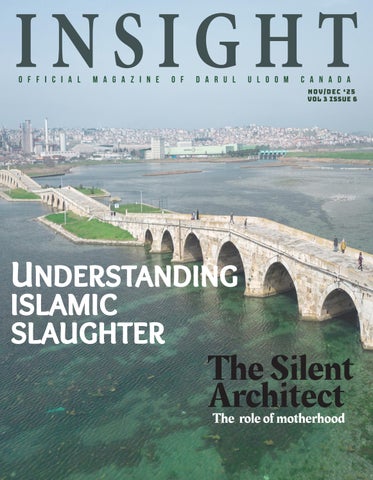
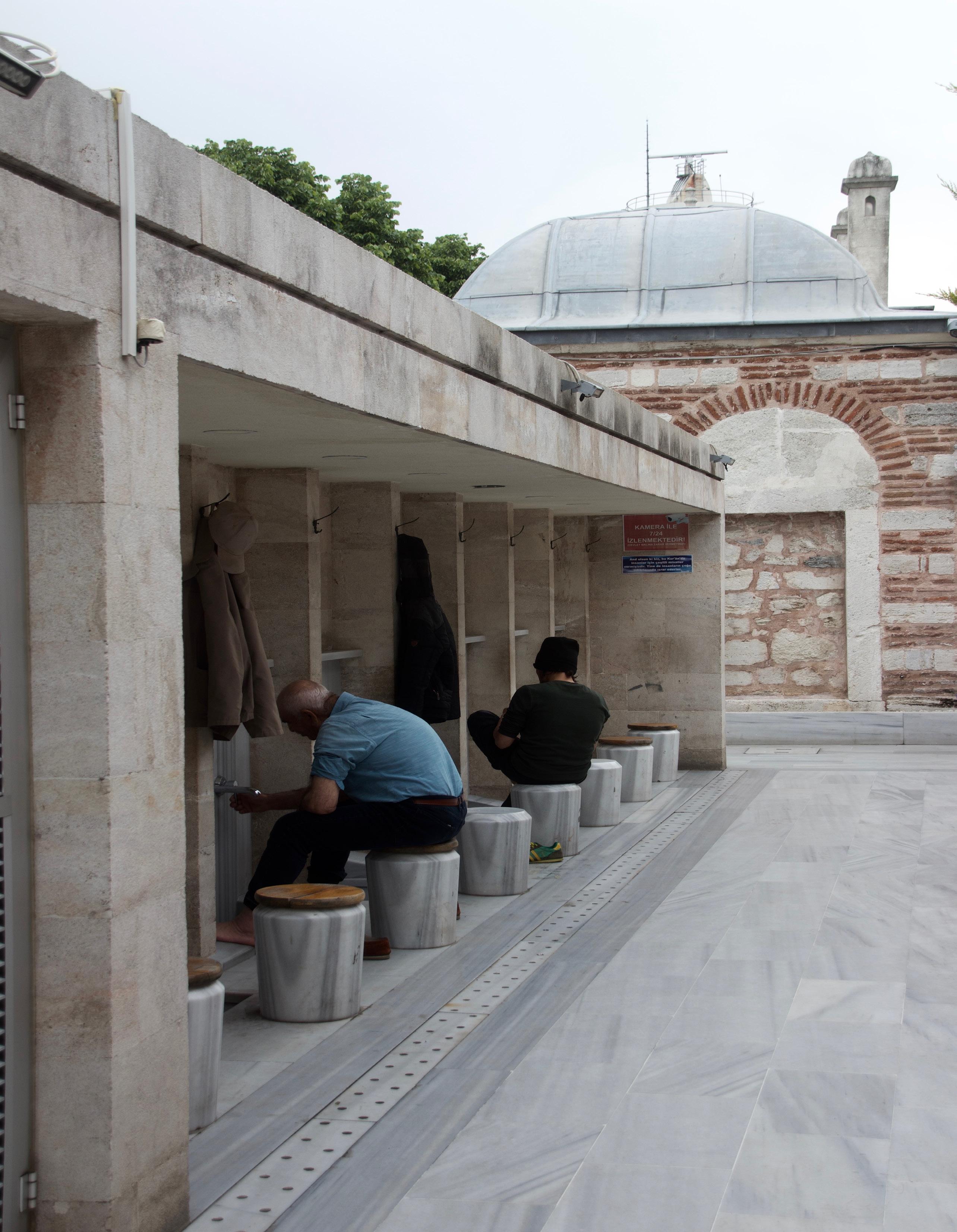
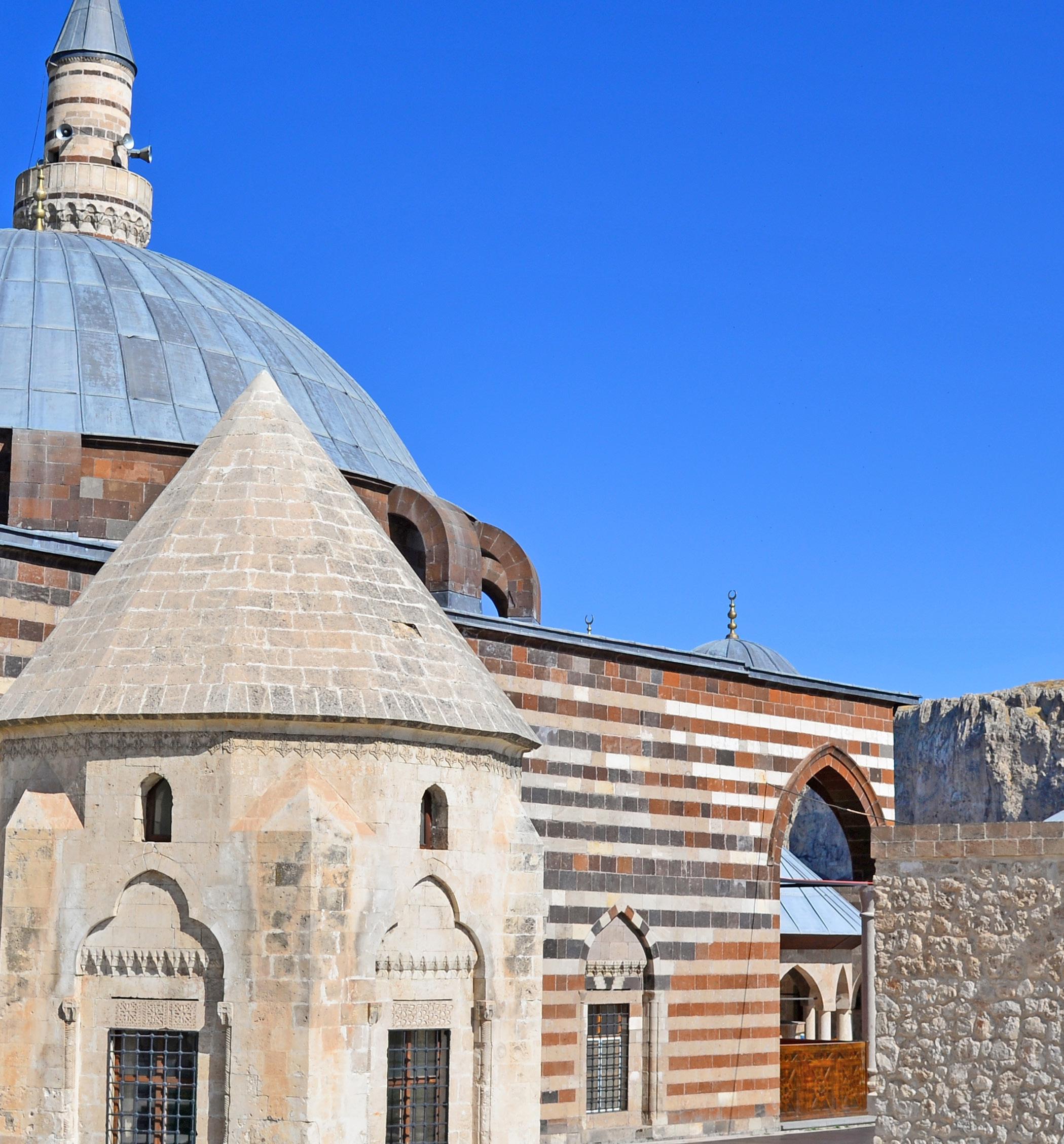
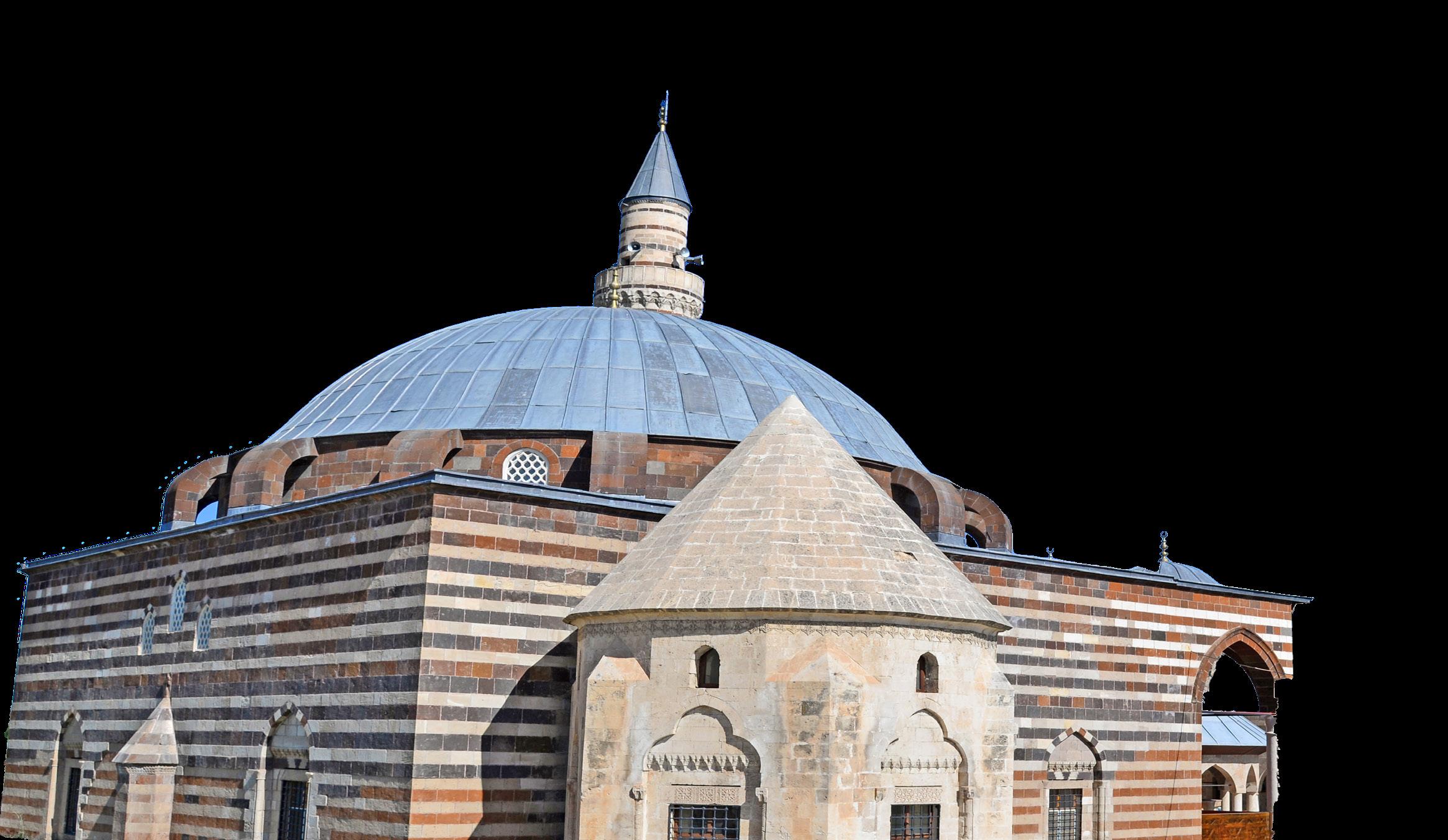
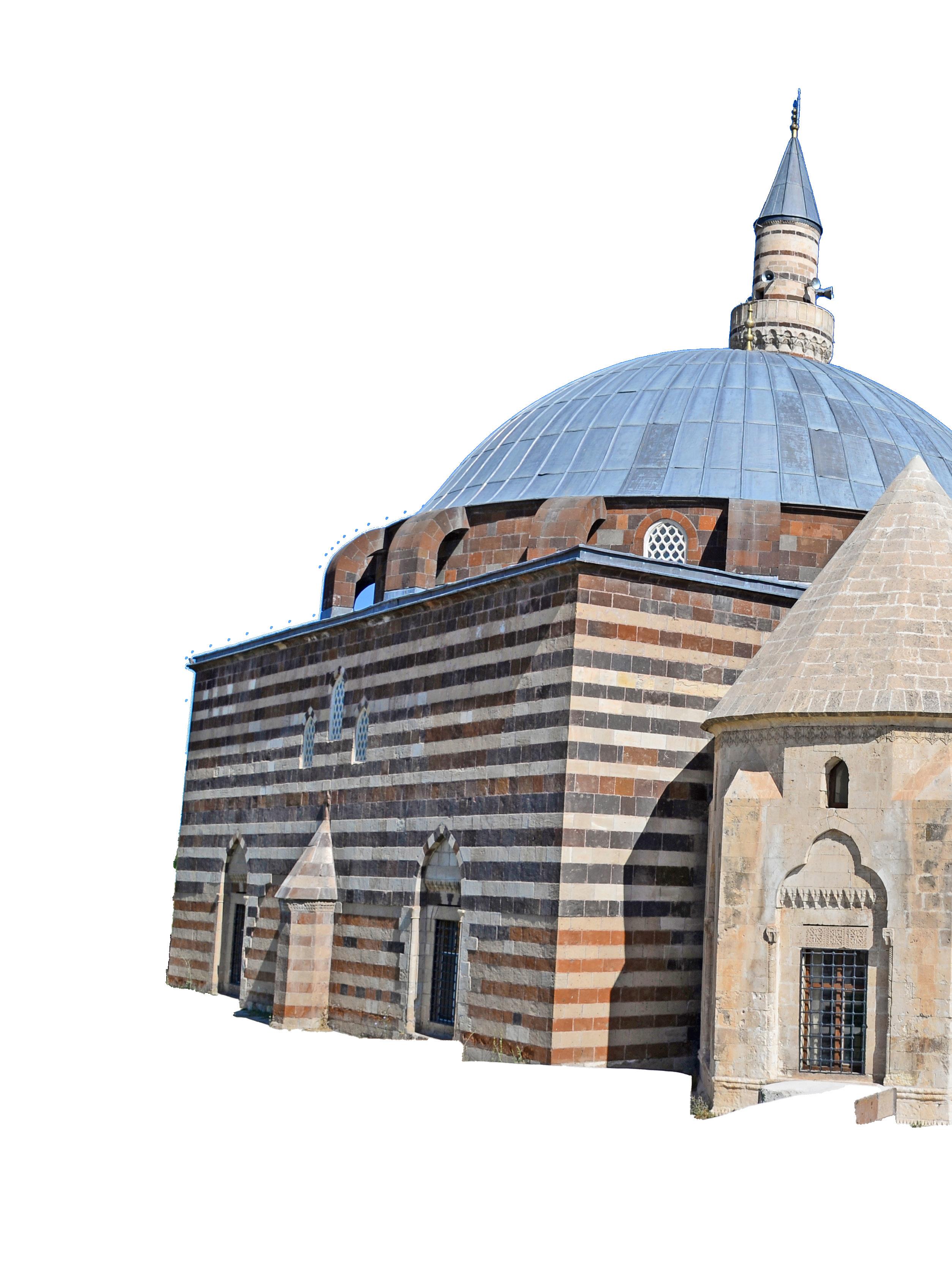
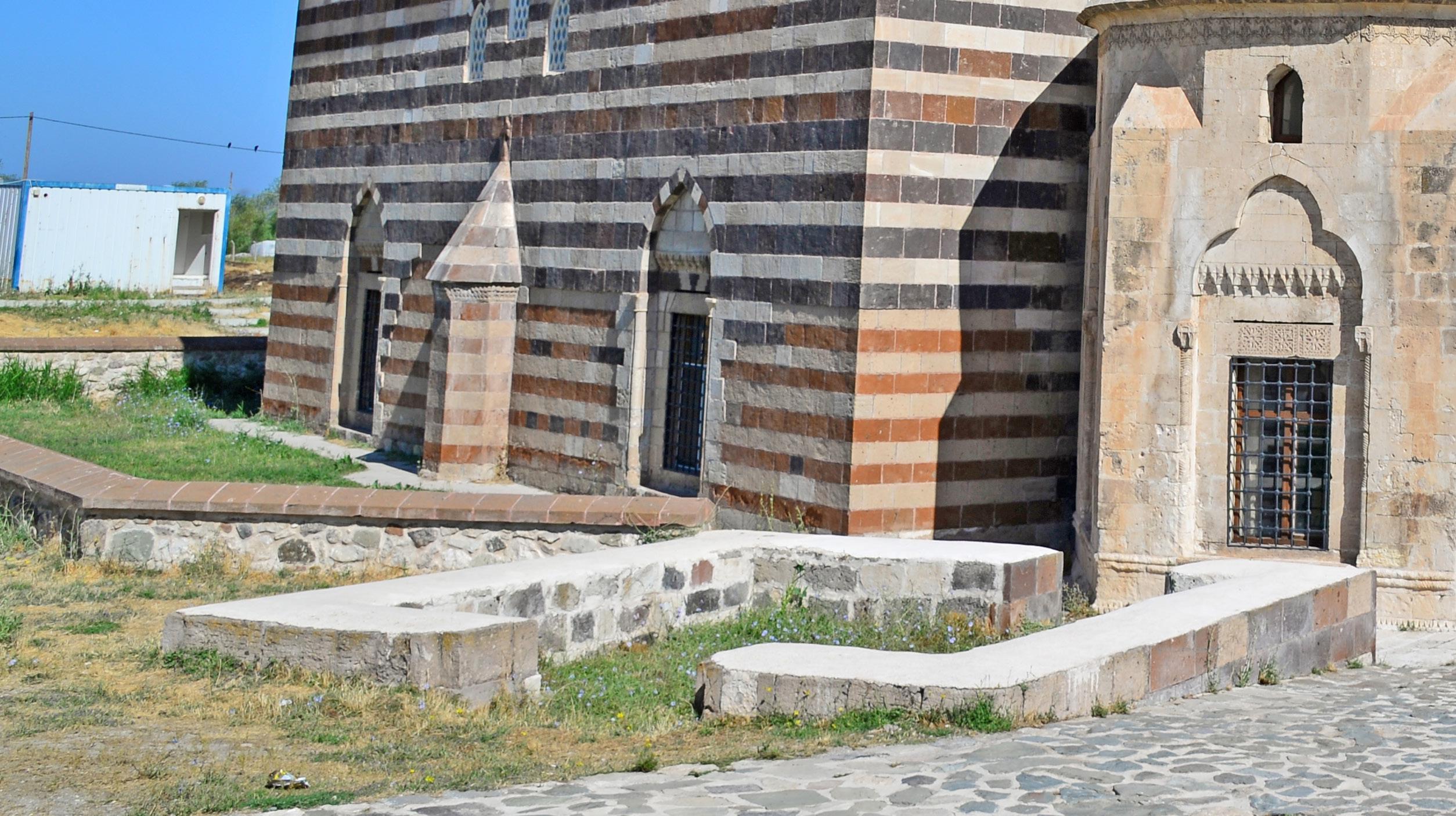
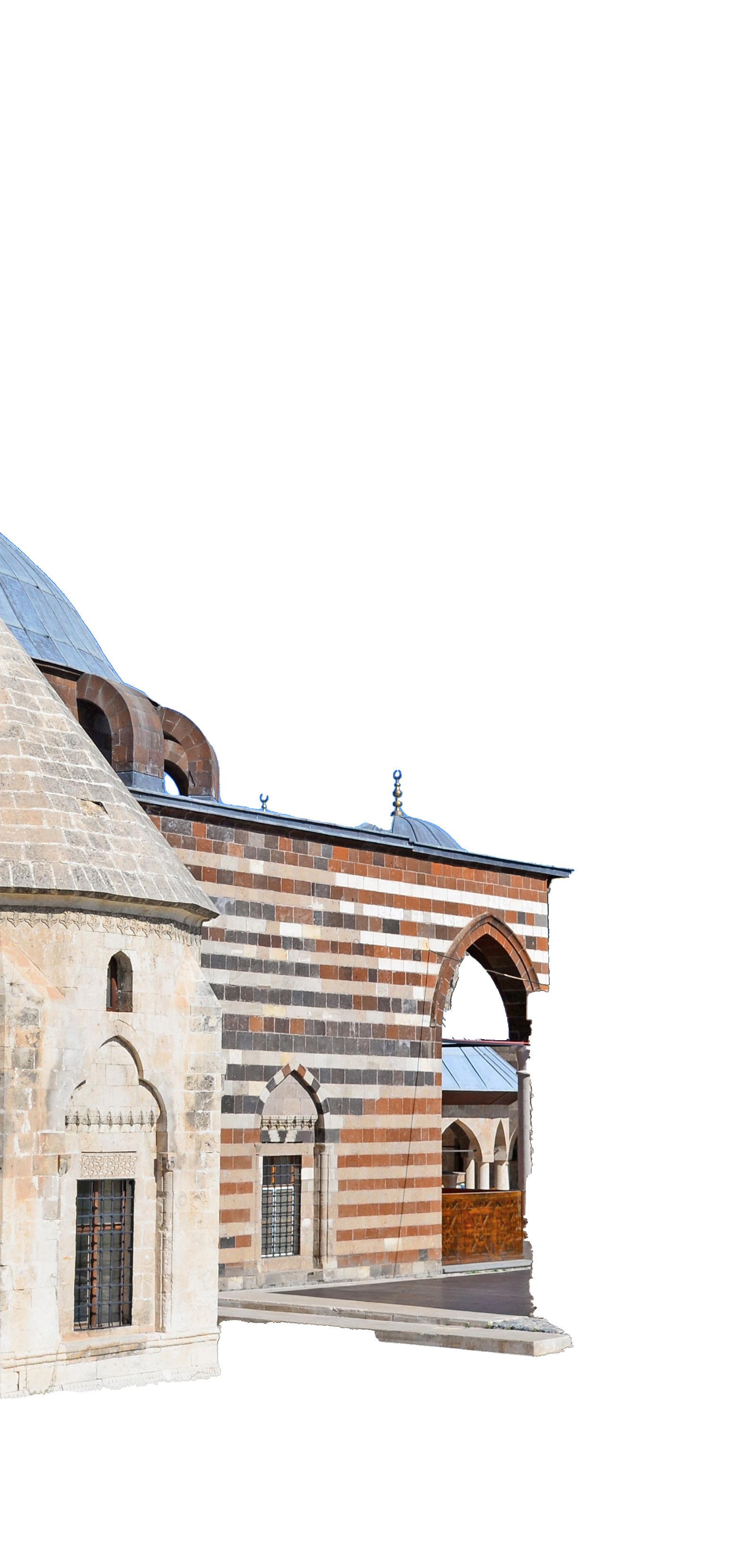
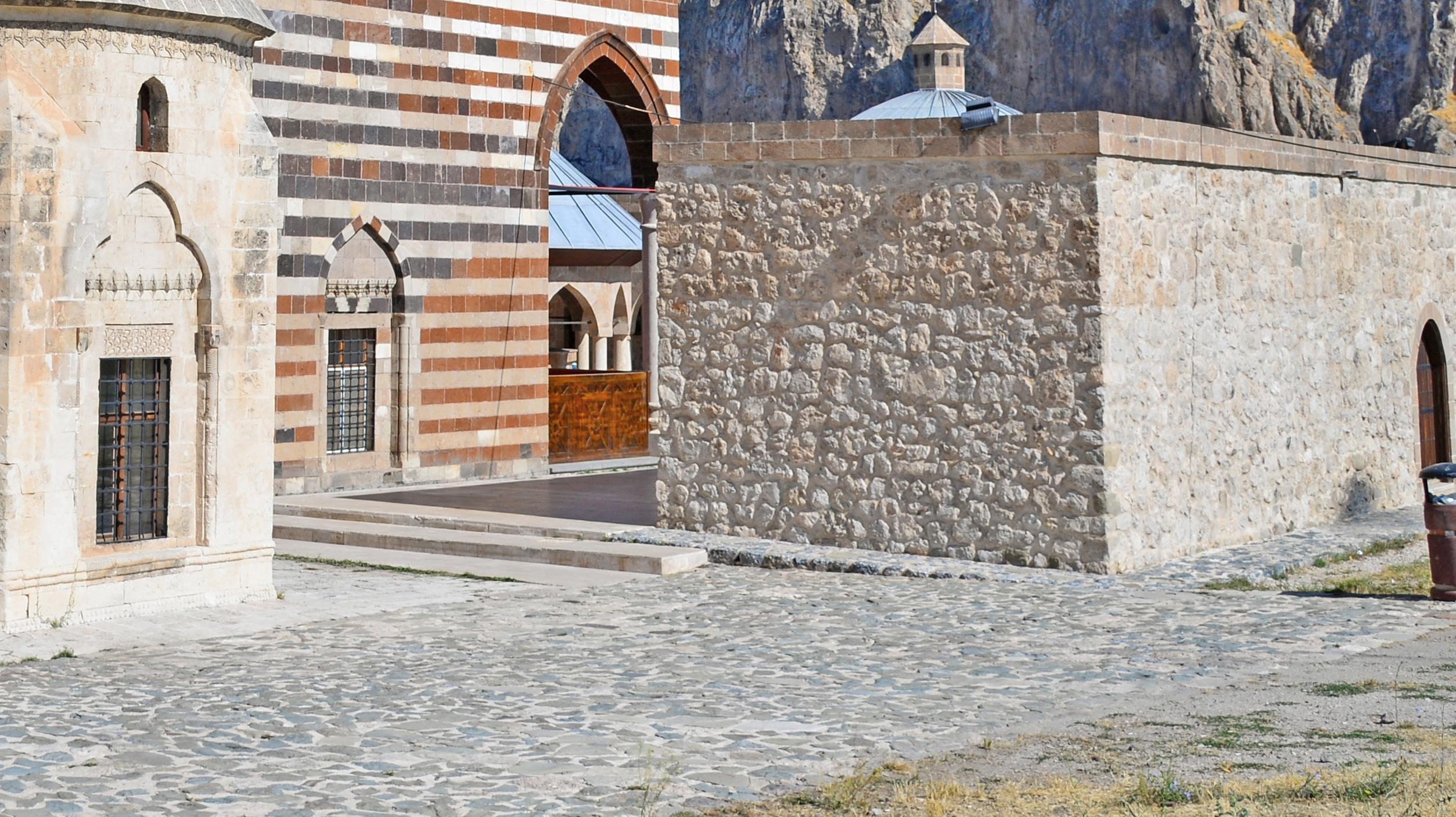
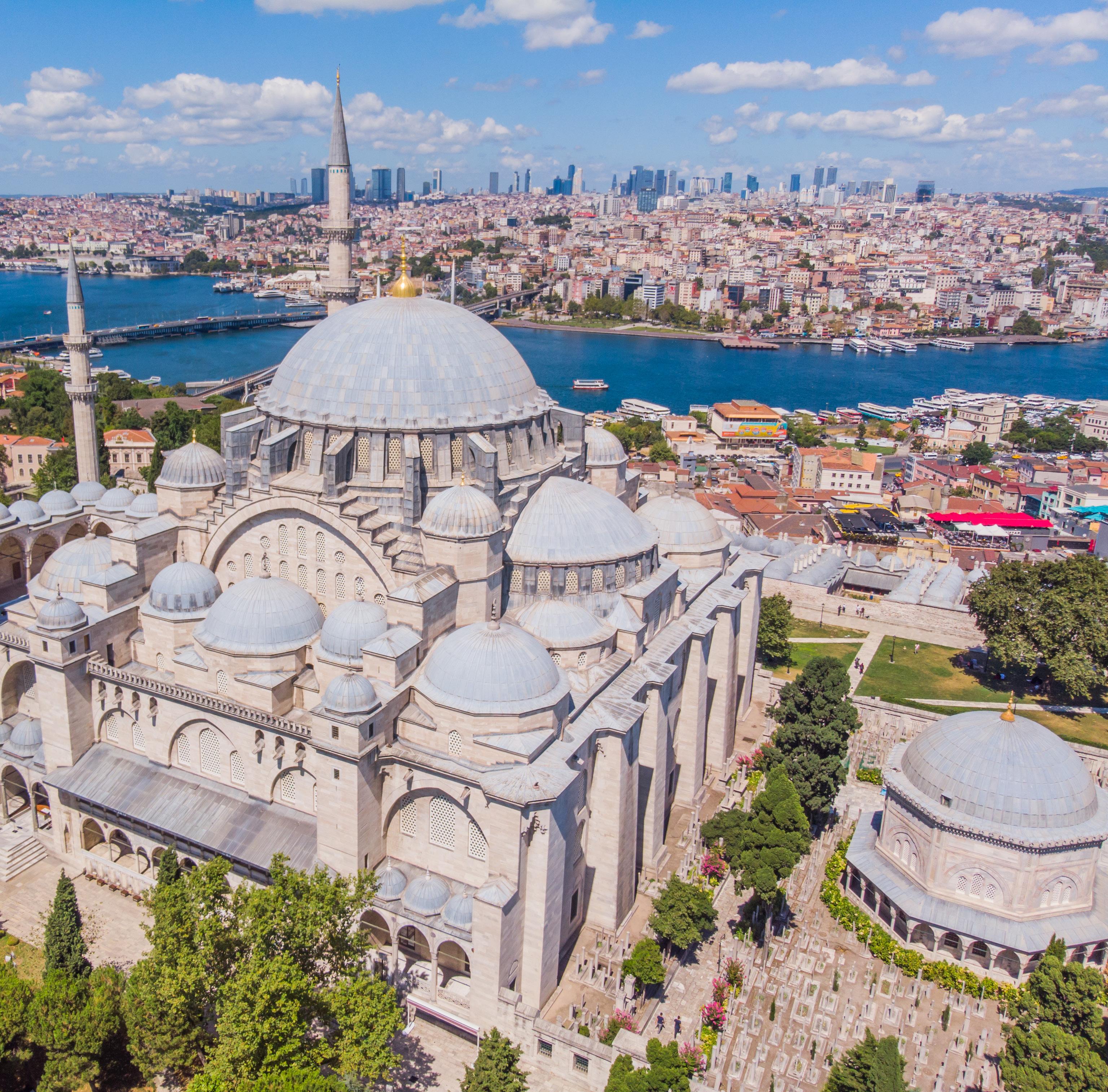
The Kanuni Sultan Sulayman bridge, also known as the Büyükçekmece Bridge, is a stone arch bridge located in Büyükçek mece, west of Istanbul, Turkey, and built by the famous architect Mimar Sinan (c. 1488/1490–1588). Mimar Sinan is the genius behind many of the iconic masjids in Turkey, including the Sulaymaniyye Masjid and Rustam Pasha Masjid in Istanbul.
Thank you for choosing Insight. EDITORIAL
Imagine a world without motherhood. Procreation happens but businesses and state-run institutions take up these seedlings until they blossom into full-blown adults. We are not speaking of a dystopian reality; it is an apt description of our times. We bear children but their emotional and developmental upkeep is handled by hired nannies, for-profit day cares and prison-like schools. It is a strange time when a child is an orphan though he has a father and is motherless, though he has a mother. If everyone goes out to work, for money or a benevolent cause, who raises the child? Who can equal the mother in compassion, tolerance, and love? Who are the new architects building the next generation that can outdo mothers at their own God-given job? Khadija Karatela in her brilliant article, The Silent Architect, confronts the problem head on, “The modern narrative often implies that true fulfillment for a woman lies outside the home— in boardrooms rather than in nurseries, in conference halls rather than at dinner tables. Yet beneath the din of modern ambition lies a truth that transcends time and culture: women have always been, and continue to be, the cornerstone of civilization.”
Patron
Hazrat Dr. Ismail Memon
Fatawa
Mufti Husain Ahmad Badri
Contributors
Mufti Omar Baig
Maulana Dr. Mateen Khan
Dr. Kamran Karatela
Khadija Karatela
Editor
Asim Ahmad
Attribution
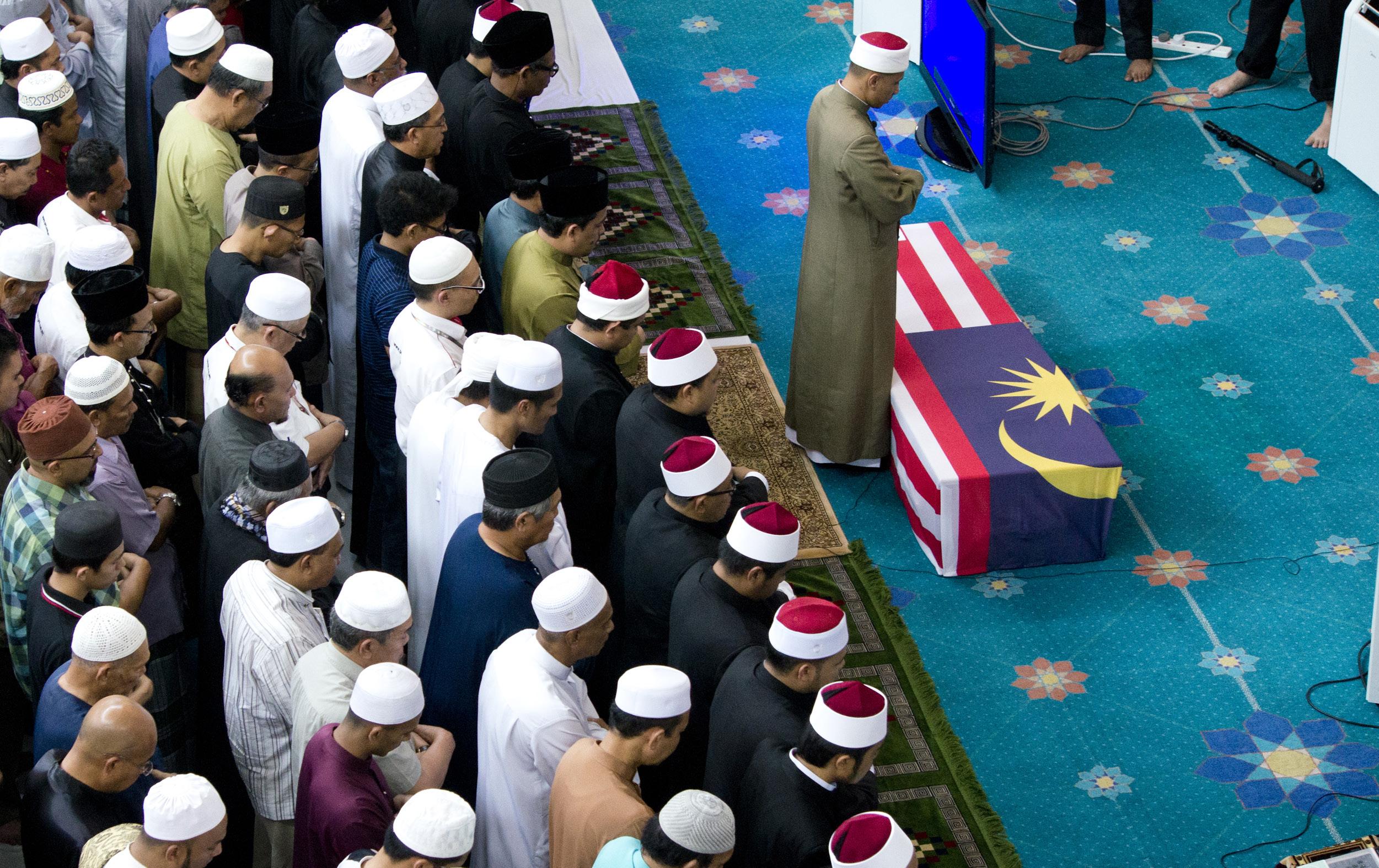
Deneen L Treble: https://www.pexels.com/photo/closeup-photography-of-rice-grains-1058401/ Kristina Paukshtite: https://www.pexels.com/ photo/aerial-shot-of-body-of-water-701777/ mohammad ramezani: https://www.pexels. com/photo/man-praying-in-mosque-12772601/ E-mail office@ducanada.org Website www.ducanada.org
Address
51 Prince St. N, Chatham, ON N7M 4J7, Canada
The views expressed in the columns of Insight magazine do not necessarily represent those of Darul Uloom Canada.
The articles published in this magazine may be reproduced with due acknowledgment.
UNDERSTANDING ISLAMIC SLAUGHTER
by Thauban Haji
What is the biggest challenge for Muslims today? Interest? Gender interactions? There is no doubt that these are important issues, but the most fundamental issue to our deen and faith is the eating of halal, which is often being understated and not given the significance it deserves. The compulsoriness of eating halal is explicitly stated in the Quran and Sunna. But first, let’s take a step back and understand what these terms mean.
Meaning of halal
Allah commands us to eat halal and says, “O mankind! Eat from what is on earth lawful and good (halal and tayyib), and do not follow the footsteps of Satan. Indeed, he is to you a clear enemy” (2:168).
With the Quran being our primary source of knowing right from wrong, this verse and other verses like it provide clear proof that a Muslim cannot consume anything but halal. As for the definition of this term, it is defined elsewhere in the Quran and in many traditions of the Prophet s, all of which we use to derive the optimal method
O mankind! Eat from what is on earth lawful and good (halal and tayyib), and do not follow the footsteps of Satan. Indeed, he is to you a clear enemy” (2:168).
of slaughter, both religiously and ethically, as will be discussed in due time.
Having defined the necessary terms, our discussion now advances to the issue at hand, which has confounded Muslims living in the western hemisphere: should slaughter be by hand or machine? In this article, the issue of slaughter by machine will be discussed in scrupulous detail. By the end, the reader will be able to make an informed decision about the correct position on this issue,
if
Allah wills.
Machine slaughter
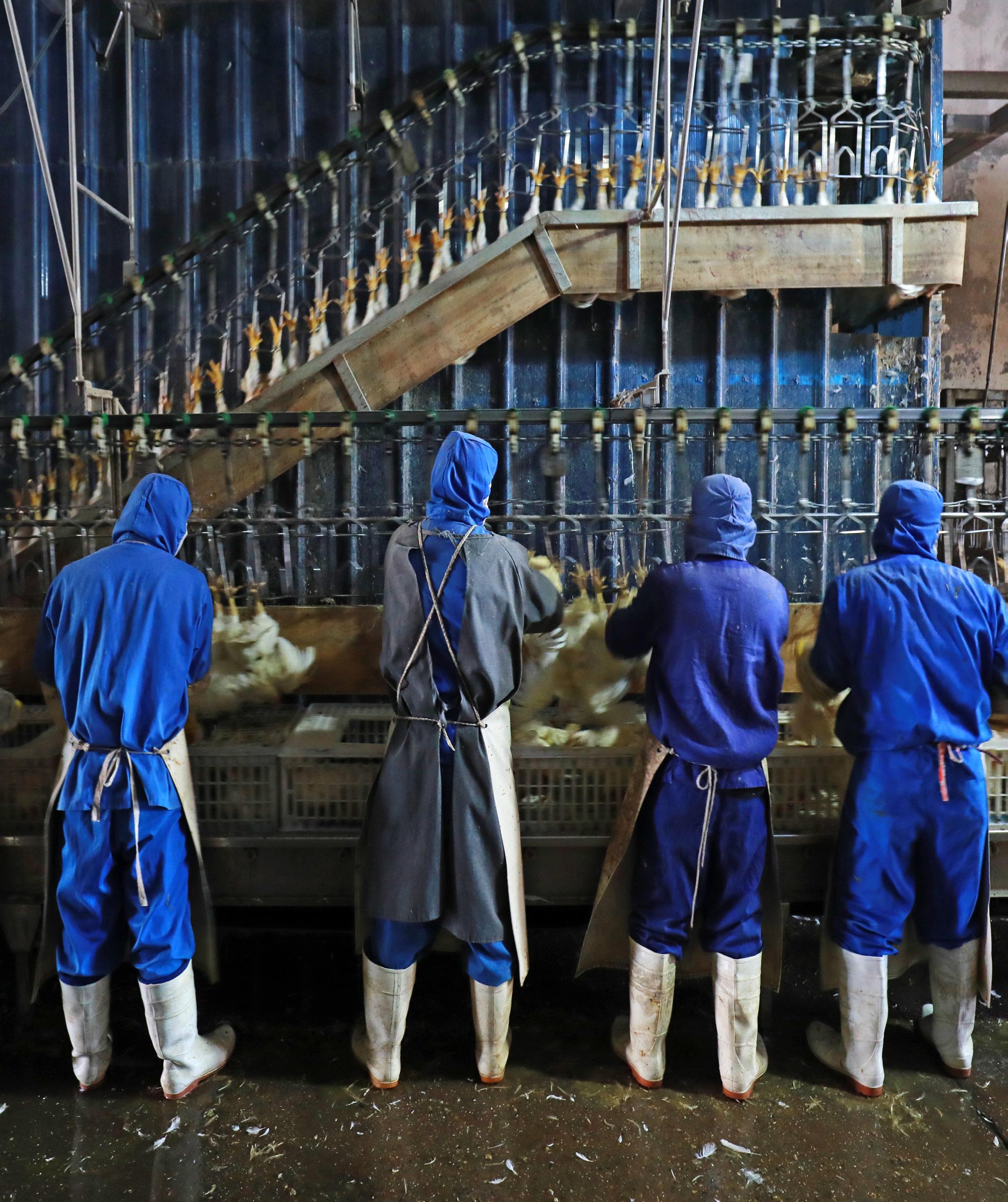
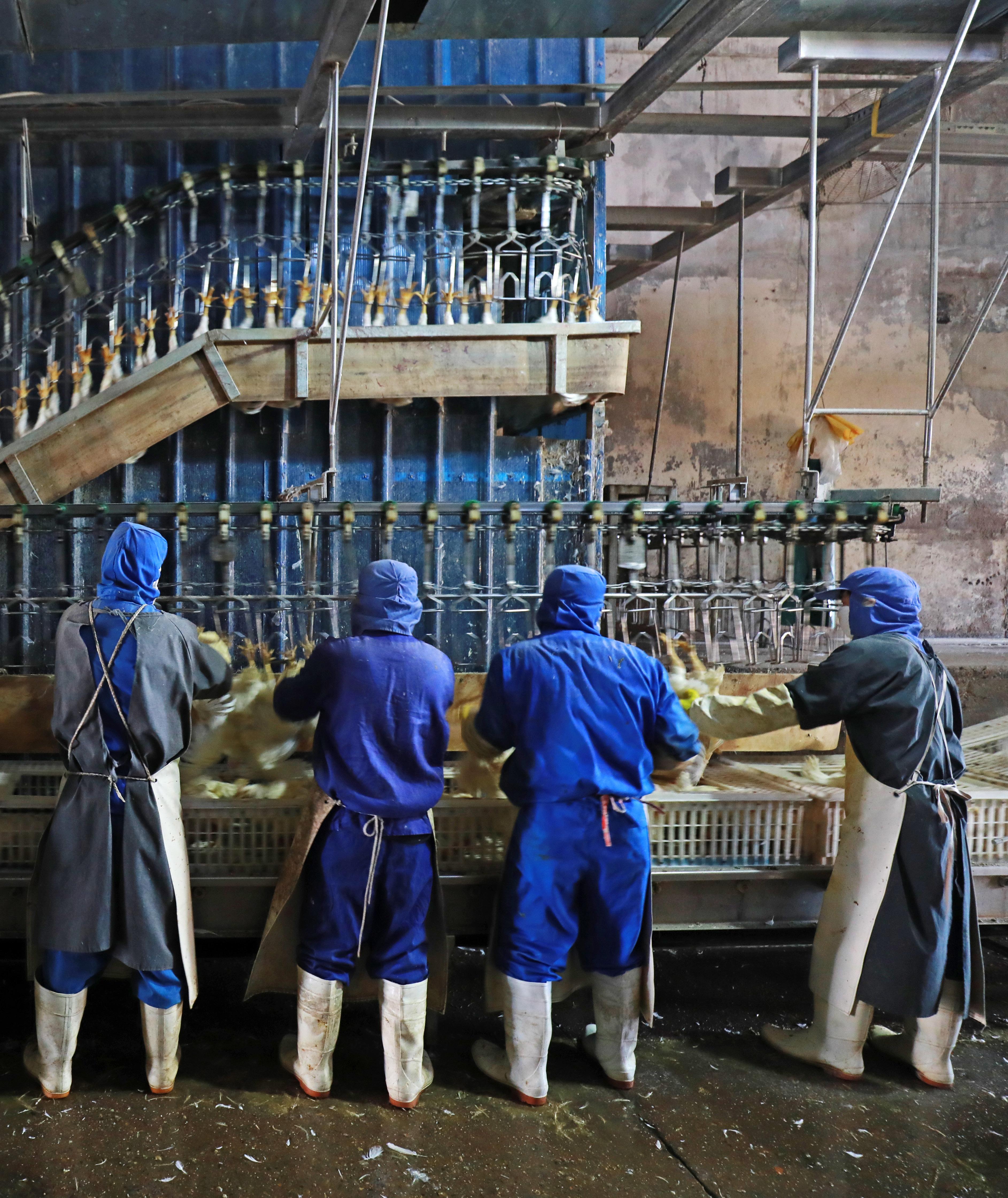
Machine slaughter is a method in which a large machine manages every stage from slaughtering to production. This includes slaughtering the chicken, plucking its feathers, removing its inners, cleaning the meat, cutting it into pieces and finally packaging it. The chicken is hung upside down, its feet tied to a hook and its throat facing the ground. It is then doused with cold water to remove any dirt from it. The conveyer belt then guides the chicken to a
knife rotating at extremely high speeds, which slits its throat. Thereafter, it passes through a vat of boiling, hot water which removes its feathers.
This process involves multiple steps, several of which pose serious legal issues. The first two steps relate to the physical process, while the third and final step are more religious-based, though they are to a degree also a part of the physical process.
Cold water
Some slaughterhouses add an electric current to the cold water. However, this is not questionable since the current is not, in most cases, strong enough to kill the animal, although in cases where the chicken dies due to the current or extremely cold water, it will not be lawful to eat. To avoid any doubt, it is best to remove this part of the process entirely.
Secondly, a rotating knife. This knife constantly spins at a rapid speed while the chickens’ necks pass along its sharp edge which is designed to cut through the jugular veins. However, it sometimes happens that the chicken convulses and the knife completely misses the neck or cuts only a portion of it. In such a case, it is not permissible to eat.
Finally, the matter of the tasmiyah, which is to utter the name
of Allah before each animal is slaughtered. It is incumbent to determine the identity of the butcher since it is his binding duty to perform the tasmiyah. It is not per missible for one person to perform the tasmiyah while a second person slaughters the animal. If we say that the one who turned the ma chine on is the butch er, the problem is that the machine, at times, continues to run over a 24-hour period. So does this one tasmiyah suf fice for the thousands of chickens that are slaugh tered during the 24-hour period?
Allah says:
“And do not eat from that in which Allah’s name is not mentioned” (6:121).
It is clear from this verse that every animal requires an independent tasmiyah before it is slaughtered. Based on this, certain principles can be derived. An ex ample would be when the butcher performs the tasmiyah and slaughters one animal and then another, think-
ing that the first tasmiyah suffices for both animals. The second animal cannot be deemed permissible for consumption because it is necessary to perform the tasmiyah anew for every single animal (al-Fatāwā al-Hindiyya; 5:286).
Another scenario would be that a person puts an animal down to slaughter it and performs the tasmiyah, but then gets up to slaughter another animal upon which the tasmiyah was not performed. In this case, the second animal will be unlawful. (ibid; 5:288). Also, if someone, engages in a prolonged act between the tasmiyah and slaughtering of the animal, the animal will not be lawful to consume (ibid; 5:288).
The statements of these jurists and many others clearly show that the tasmi yah should be performed over every ani mal. They also require that there should not be a significant pause between the tasmiyah and slaughtering. It is evident that the automated system lacks these requirements. Even if the tasmiyah is performed when starting the machine up, it is not uttered for each specific animal, but rather as a collective utterance. In ad dition, there is a lengthy interval between the tasmiyah and the slaughtering of thousands of chickens, which is clearly inadequate.
One may claim, as original ly proposed by certain jurists, that if the sheep are laid one atop the other, then one tasmiyah is suffi cient if he slaughters both with one swipe of the blade. Conversely, if several birds
are piled up and slaughtered after reciting the tasmiyah, and then another is slaughtered immediately after without the tasmiyah, the last bird is not lawful for consumption. However, if the blade is passed over all of them at once, they would all be permissible to consume with one tasmiyah (ibid; 5:289).
The above ruling might give the impression that the automated slaughter method is similar to the case of the slaughtering of two sheep or several birds at once, for which one tasmiyah is sufficient. In reality, these two examples are irrelevant to our case. In the textual evidences pre
which another group of birds were slaughtered without a subsequent tasmiyah, the second batch would be unlawful due to the short pause between slaughtering of the first and second batch. Thus, with regards to the topic at hand, we cannot claim that all the chickens slaughtered over a 24 to 48 hour period are slaughtered synchronously, but rather distinct batches of chickens are slaughtered in succession one after another. This confirms that one tasmiyah recited by the operator of the machine fails to suffice for the slaughter of every chicken.
Some have presented the solution to this issue suggesting that multiple workers be stationed at each rotating blade to recite the tasmiyah. But this is problematic for three reasons. The first being that the tasmiyah is meant to be recited by the butcher himself. In this scenario, the person stationed near the rotating blade for the purpose of reciting the tasmiyah has no
connection with the actual slaughtering process. In no way can their roles be switched so that they can be identified as the butchers of the chickens.
The second reason is a large plethora of chickens arrive at the rotating blade all at once. In such a case, it is virtually impossible for the stationed person to utter the tasmiya over each and every chicken.
The third and final complication would be that the tasmiya reciter is a human. It is quite possible that his attention is diverted from uttering the tasmiya, and tens or hundreds of chickens are slaughtered without the tasmiya, rendering that many chickens impermissible. In such a situation, no differentiation would be possible between the lawful and unlawfully slaughtered chickens.
Idtirari slaughter
Can machine slaughter be classified as idtirari (forced slaughter)? Idtirari refers to the type of slaughter
that does not fulfil the Islamic requirements for the meat to be halal but is still considered halal out of necessity. For example, a sheep fell into a well. If the butcher lacks the means to reach the fallen sheep, the ruling of forced slaughter applies. This means that the butcher would be permitted to shoot the sheep with an arrow or something sharp. In a normal situation, the slaughter would only be valid if three out of the four (trachea, jugular, esophagus, carotid) veins/ arteries are cut.
This is a necessary discussion because if it can be proven that switching the machine on is the same as the sending out of a hunting dog for which uttering the tasmiyah is only required when dispatching the dog and not when the dog actually makes the kill, it can be proven that tasmiya is only required when turning on the machine. It is also permissible to have the dog catch multiple prey in one hunt, making all the hunted prey with that one tasmiyah lawful.
But it is evident that machine slaugh-
ter is not forced slaughter. The argument can be made that due to the growing population of Muslims, we must allow machine slaughter to fall under the same order as forced slaughter. This argument, however, contains the false dilemma fallacy. There is a feasible alternative to the rotating blade, which satisfies all production requirements in the same amount of time. This alternative would be to remove the rotating blade and replace it with approximately four Muslim workers, who slaughter the chickens as the conveyor passes by, all the while uttering the tasmiyah. This method was tested at a large slaughterhouse in Reunion showing the same productivity as the rotating blades. Since a tried and tested alternative exists, machine slaughter cannot be considered forced slaughter.
Another step
After the chickens pass through the rotating blades, they are dipped in hot water to remove their feathers. This
a slaughter is unlawful. The famous Hanafi jurist, Imam Haskafi writes, “For a chicken that is tossed in hot water immediately after slaughtering in order to de-feather it before being cut into pieces is unlawful.” The famous commentator of this work, Ibn Abideen explains in Radd Al-Muhtar, “Imam Ibn Al-Humam says in Fath al-Qadir, ‘such animals are never
pure, but according to Abu Yusuf, they are. The reason they are not pure, and Allah knows that they absorb impurities into their meat due to the boiling temperaof the water” (Radd alMuhtar 1:334). In conclusion, it is difficult to consider machine slaughter a legitimate procedure for halal Islamic slaughter due to these
Common
misconception
We are taught that the slaughter of any adherent of one of the three monotheistic religions is halal. Allah says:
“This day [all] good foods have been made lawful for you. And the food of those who were given the scripture is lawful for you, and your food is lawful for them” (5:5).
A common misconception worth
mentioning is that it is often assumed that countries in the west are Chris tian countries. The fact of the matter is that the US, Canada and the UK are secular by constitution, mean ing that they separate church from state.
Hence, the meat which is slaughtered in the US is not slaughtered by a Chris tian person by default. What that means is that any label of halal to any meat slaughtered in the US is inherently haram unless proven otherwise. Should it be come clear that the meat was slaughtered by a Christian or Jew who slaughtered according to their scriptures, that meat will be considered lawful. This, however, is not the case when purchasing meat from a regular grocery store. It is near impossible to learn whether the butcher was a Christian, Jew, Buddhist, Atheist or for arguments sake, even a Muslim. Whatever the case may be, the best thing we can do as Muslims is avoid meat which is shrouded in doubt. Did a Chris tian or a Jew slaughter it properly in ac cordance with their scriptures? Did they use the machine slaughter method? There is a surfeit of uncertainties in regards to which The Prophet puts you in doubt in favor of what does not”(Tirmidhi: 2518).
He who guards against the doubtful safeguards his religion and honor, and he who falls into the doubtful falls into the unlawful, destroying his Hereafter.
pain and consciousness in conventional and ritual methods of slaughtering sheep and calves’ that the Islamic method of slaughter is the most humane method and the captive bolt stunning practiced in the West causes severe pain to the animal. The study showed that numerous electrodes were surgically implanted at various points of the skull of all examined animals, touching the surface of their brains. The animals were allowed several weeks to recover. Some animals were then slaughtered by a swift, deep incision on the neck, caused by a sharp blade. This severed the jugular veins, trachea (wind pipe) and esophagus. This was in accordance with the Islamic method. A separate batch of animals were stunned using a captive bolt pistol during the experiment. An electrocardiogram (a device used to monitor the animals brain and heart) recorded the condition of each animal. The study showed that the Islamic method of slaughter did not cause severe pain to the animal, whereas the stunning method did.
In conclusion, any Muslim, claiming to be serious about living the optimal life outlined by the religion they profess to adhere to, is obliged to do all that is in their power to be certain that they consume only what has been legislated for them as lawful. With this in mind the reader is urged to
devote further effort to discern between halal and haram, especially in regards to meat. This world is iunsuitable for the believer to grow complacent, pursue mere pleasures, and trade its fleeting joys for the eternal rewards of the Hereafter, The Beloved of Allah.
the Islamic method of slaughter is the most humane method and the captive bolt stunning practiced in the West causes severe pain to the animal.
“The world is a prison for the believer and a paradise for the disbeliever”(Muslim: 2956). n
Principle of the Prophets
The one principle that all the Prophets held to is that they never demanded any return for their work from any of Allah’s creation. “And no reward whatsoever do I ask of you for it; my reward rests with none but the Sustainer of all the worlds” (26:164), is the declaration of all the Prophets. Their indifference toward worldly gain is to an extent that they cannot even stand any praise or recognition for their mission. The effectiveness and appeal of their da‘wah is the result of two factors: their indifference toward any type of compensation the creation can offer, and secondly, their virtuous life. In Surah Yaseen, Allah narrates the story of a group of pious people sent by Allah to call their nation to Islam and how the nation rejected them. Finally, as the story goes, a pious man came running from the outskirts and said to his people, “O my people! Follow these message-bearers who ask no reward of you, and themselves are rightly guided” (36:20-21). This ayah proves that goodness of character, the state of being indifferent toward worldly gain, being independent of the mortal creation, and sincerity of intention and devotion to Allah are the true forces that empower the work of a believer. The driving force behind the mission of the Prophets is the feeling of mercy and compassion for mankind and a deep solicitude for the well-being of all people. There hearts are grieved at the degeneration of the people, and the feelings of sympathy inspire a strong desire in them for the reformation of the
masses. Obviously, a father’s desire for the moral and spiritual reform of his son springs from paternal love and compassion for his child. Likewise, the heart of a person calling others to the deen should be overwhelmed with kindness and compassion toward his people, and he should remain burdened with concern over their spiritual condition. Hud e says to his people, “O my people, there is no weak-mindedness in me, but I am a messenger from the Sustainer of the worlds. I am delivering to you my Sustainer’s message and advising you truly and well” (7:67-68).
Purpose of optional dhikr
The purpose of optional dhikr is that the spare time, i.e., the time outside of fulfilling the obligatories of deen, is not wasted in la ya’ni (needless talk and activities). By getting us entangled in la ya’ni, Satan wishes to extinguish the light and undermine the progress we make through performing the obligatories. The optional dhikr protects us from this insecurity. In short, the time that is spared from obligatories should be invested in optional dhikr to prevent Satan from indulging us in la ya’ni.
Definition of knowledge
The definition of ilm is not ‘to know the canons of religious law and be proficient in the Islamic sciences.’
The Yahud where scholars of their Shari’a and well-versed in the scripture. They even knew what the Prophet s looked like before they ever saw him by the descriptions of him given them in their holy book. They also knew the descriptions of the successors of the Prophet s
and their birthmarks by which to recognize them better. But did the mere knowledge of these things give them any benefit or guidance? The Sunna of the Prophet s for seeking knowledge was to seek by way of sitting in the company of and keeping oneself regularly in touch with the people of knowledge and virtue, and always revering the illustrious sources of knowledge; thus, practically learning the way of living was such that the growth in knowledge increased proportionately with the realization of one’s ignorance. The method of learning today has a different outcome in that the more one learns, the more one thinks one knows. Such a delusion of self-progression plants the seed of arrogance; and the man who carries arrogance in his heart will not go to Paradise. In addition, the feeling that one is gaining more quells the desire to actually learn more, which impedes the path to seeking more knowledge.
[Speaking to students of the sacred knowledge] Satan is artful and cunning. He hunts only those things which are of value to him. When you leave your homes to seek the sacred knowledge, Satan became hopeless of keeping you in ignorance. But now, he has abandoned that mission and turned his attention to indulging you with other things. This work of tableegh is a powerful mechanism against these plots of Satan. It’s objective is to keep the servants of Allah away from Satan’s path, bringing them to the path of Allah, and keeping them occupied in the work of Allah.
-Malfuzat of Maulana Ilyas
The Silent Architect
by Khadija Karatela
In today’s career-driven world, success is often measured by degrees earned, titles held, and the ability to compete in demanding professional environments. While ambition and education are commendable, they are not the only indicators of value—especially for women. Increasingly, the foundational roles of women as wives, mothers, and nurturers are being diminished or dismissed as outdated. The modern narrative often implies that true fulfillment for a woman lies outside the home— in boardrooms rather than in nurseries, in conference halls rather
Allah there is no deity but Him, the Ever-Living, the Self-Sustaining. He has sent down upon you the Book in truth, confirming what was before it. And He revealed the Torah and the Gospel (3:1-3).
Q: Nazzala and anzala are translated as ‘sent down’ and ‘revealed’ respectively in this ayah. But is there any difference between why Allah uses one word [anzala] to describe revelation of the previous scriptures and another [nazzala] for the revelation of Quran?
A: both words mean revelation, but there is a difference in the mode of revelation, which is not conveyed in the translation. Nazzala means to be revealed little by little while anzala means to be revealed all at once. This is clarified in another ayah in which Allah says: And those who disbelieve say, “Why was the Quran not revealed [nazzala] to him all at once? Thus, [it is] that We may strenghten thereby your heart. And We have spaced it distinctly [25:22]. Again, Allah uses the word nazzala to convey that the Quran was not revealed at once and highlights the benefit of revealing the Quran in parts.
Contrary to modern belief, a woman’s most powerful role is not solely found in her career, but in her divinely given capacity to nurture, build, and sustain life—as a wife, a mother, and the moral cornerstone of her household.
than at dinner tables. Yet beneath the noise of modern ambition lies a truth that transcends time and culture: women have always been, and continue to be, the cornerstone of civilization.
Contrary to modern belief, a woman’s most powerful role is not solely found in her career, but in her divinely given capacity to nurture, build, and sustain life—as a wife, a mother, and the moral cornerstone of her household. She is the heart of the home, the emotional and spiritual wellspring from which families draw their strength. The hands that raise the next generation hold within them the future of entire societies.
Mothers; Builders of Generations
The role of a mother extends far beyond the walls of her home; she is the first educator of humanity. From the earliest moments of life, it is the mother who shapes a child’s worldview, character, and moral foundation. No institution—no matter how advanced or refined— can replicate the depth of influence a mother has during a child’s formative years. As the saying goes, “The home is the first school, and the mother is the first teacher.” From the cradle, a child absorbs love, discipline, compassion, and resilience—values no textbook can teach with the same sincerity or depth. Another well-known proverb states, “The hand that rocks the cradle rules the world.” History
bears witness to this truth in the lives of countless great individuals who attribute their success to the devotion and sacrifice of their mothers.
One of the most distinguished examples is Imam Muhammad ibn Ismail al-Bukhari, the revered compiler of one of the most authentic hadith collections in Islamic tradition. After losing his father in early childhood, Imam Al-Bukhari was raised solely by his mother, who not only ensured his education but instilled in him spiritual discipline and a passion for knowledge. Her unseen labor shaped a legacy that continues to influence millions to this day.
Similarly, Imam Shafi’i, another towering figure in Islamic scholarship, was also raised by a single mother after his father’s death. Despite poverty, she prioritized his education and character, guiding him to become one of the foundational jurists of Islamic law.
Another profound example is Maulana Abul Hasan Ali Nadwi, a renowned Islamic thinker and writer of the 20 th century. After losing his father, Hakim Syed Abdul Hai, at the age of nine, Maulana Nadwi was primarily raised by his mother, Khairunnisa Behtar, a woman of deep faith and knowledge. Far ahead of her time, she was not only a memorizer of the Qur’an—a rare ac -
complishment for women in her era—but also an accomplished poet and author. She wrote works such as Husnul Ma’ashirah to guide young women in matters of character and conduct. Her profound piety and dedication to her son’s spiritual and intellectual development played a central role in shaping him into the scholar he became. So influential was her role in his life that Maulana Nadwi later authored an entire biography of her titled Zikr-e-Khair, in which he documented her wisdom, sacrifices, and pivotal influence on his moral and scholarly formation. Her life stands as a powerful testament to the way a mother’s nurturing hand can shape not just a child, but the intellectual and spiritual trajectory of generations to come. Yet, the architecture of a strong generation is not built by mothers alone. Alongside them stand wives — women whose roles, though often hidden from the public eye, are central to the strength and success of their families. Just as mothers raise the next generation, wives are the moral and emotional backbone of the present one. A wife is not merely a companion; she is a co-architect of her husband’s character, the spiritual ally of his heart, and the stabilizing force of his daily life.
It is through her quiet counsel,
her patience in tribulations, and her strength during uncertainty that a man often finds the confidence and clarity to fulfill his purpose. Behind many scholars, leaders, and visionaries are wives who made sacrifices of their own—who created peaceful homes, managed responsibilities with grace, and offered their husbands a sanctuary in a world full of pressure.
A wife nurtures not only children but also the man entrusted with leading the family. In the stories of the prophets and righteous men of history, we often find mention of their wives as sources of steadfast support. Khadija bint Khuwaylid j , the beloved wife of the Prophet s , stands as a shining example. Her unwavering faith in her husband’s mission, her financial support, and her emotional encouragement in the face of mockery and persecution were critical in the earliest and most vulnerable years of Islam. She was the first to believe in him, the first to comfort him, and the first to stand by him without hesitation. Her legacy is not merely as the Prophet’s wife — but as the first believer and mother of the Ummah. Thus, while the world often celebrates public victories, it is in the unseen sacrifices of wives and mothers that true success is born. They are the quiet force behind every resilient child and every accomplished man. They are the ones who remind us that greatness often begins with a warm meal, a heartfelt
prayer, a listening ear, or a sleepless night beside a sick child or worried husband.
These stories serve as a reminder that women do not merely raise children — they raise scholars, leaders, and builders of civilization. Behind every successful man is a woman who quietly poured her soul into nurturing the heart, mind, and future of her beloved family. Her
A wife is not merely a companion; she is a co-architect of her husband’s character, the spiritual ally of his heart, and the stabilizing force of his daily life.
work may go unnoticed by the world, but its impact is felt for generations. Mothers raise future generations. Wives steady the present generation. Together, they are the builders of humanity — shaping homes, guiding hearts, and anchoring souls. Their love is not weakness, but strength. Their nurturing is not outdated, but revolutionary. And their sacrifices are not in vain, but the very foundation upon which legacies are built.
Modern Society’s Misplaced Values
Many children today spend more hours with daycare workers than they do with their own parents. While these caregivers may be well-meaning, they cannot replace the emotional bond and deep-rooted nurturing that only a mother can provide. Ironically, many of these caregivers are women themselves — women who must leave their own children in the care of others so they can care for someone else’s. It becomes a tragic cycle where the foundational role of women in the home is outsourced in the name of economic necessity or societal pressure.
As a result, children today increasingly lack emotional security, attention, and guidance — not because their parents don’t love them, but because the home has become secondary to the workplace. What is lost in the process is not just quality time but the subtle, profound lessons that only a mother can impart during the small, seemingly insignificant moments of daily life.
Women: The Backbone of Society
It is essential to recognize that women have always been the silent architects of civilization. They don’t merely influence society — they build it, one child at a time, one home at a time. To be a wife is not less than being a CEO. To be a mother is not less than being a
professor. These roles are not mutually exclusive, but when the sacred duty of motherhood is treated as a burden or an afterthought, society as a whole begins to unravel.
The foundational role of a woman as a wife and mother is not in conflict with education, ambition, or personal development. In fact, a woman who is educated, principled, and morally grounded brings immeasurable value to her family. The problem lies not in a woman’s pursuit of growth, but in a culture that undervalues or even dismisses her central role in the home.
A mother does not simply manage a household; she molds the conscience of the next generation. A wife does not merely support her husband; she provides emotional strength, counsel, and stability — the bedrock upon which families thrive. These contributions may not always be recognized in public arenas, but they are vital to the survival and flourishing of any healthy society.
The Legacy of Women
The future of our Ummah is not shaped in boardrooms or legislatures, but in the quiet corners of our homes — by women who love, pray, and raise their children with purpose and faith.
Behind every great man is often a mother who sacrificed in silence, nurtured with patience, and shaped a future she may never fully witness — yet whose reward lies with Allah. Motherhood is not just a role; it is the heartbeat of society, the silent force behind civilizations. While modern opportunities for women are valuable and important, we must never diminish the sacred work done within the home.
Equally vital is the role of a righteous wife — the one who stands as a partner in faith, a source of peace and strength, and a pillar of support through life’s storms. She is the tranquility of the home, the quiet backbone of her husband’s journey, and often the unspoken reason behind his success. Her presence brings stability, her wisdom brings clarity, and her sacrifices often go unseen but are never forgotten by the One who sees all. A wife’s devotion, loyalty, and faithfulness shape the environment in which love flourishes, children thrive, and generations are rooted in values that last.
Raising a child with integrity, anchoring a home with love, and nurturing a family with strength are not outdated duties — they are timeless foundations of a flourishing society. Let us honor the quiet power of women who raise leaders, scholars, and changemakers — often unseen, yet never unmatched in their impact. The hand that rocks the cradle still shapes the world.
The success of future generations does not begin in classrooms or parliaments — it begins in the home, in the embrace of a nurturing mother and under the guidance of a principled woman. It is there, in the unseen labor of love and sacrifice, that the true architects of civilization are found. A woman’s legacy is not only in what she builds outside the home, but in what she nurtures within it. The world may applaud degrees, promotions, and status, but it is the steadfast hand of a mother — and the faithful heart of a wife — that shapes the hearts and futures of the next generation. Let us remember and honor that role — not as secondary, but as central to the strength and future of our world. n
The Day of Judgment will not come until beasts of prey will speak with humans...
Tirmidhi: mā jā fī kalām al-sibā‘ī
Q:
How many times, and how much milk, must a child be breastfed in order to establish a riḍā‘ī (foster) relationship? How long do I have to establish this relationship with another person’s child?
A:According to the Ḥanafī madhhab, any amount of breast milk, even the smallest quantity, is sufficient to establish a riḍā‘ī (foster) relationship, as long as there is certainty that the milk has reached the child’s throat.
This means that the relationship can be established from just one feeding. A woman has two lunar years from the child’s birth to breastfeed the child in order for this relationship to take effect.
After two years, breastfeeding does not establish a riḍā‘ī bond.
Q: I’ve heard that if I breastfeed another person’s child, it not only estab-
lishes a foster relationship but also affects who that child can marry. Is this true? If so, who becomes maḥram to that child?
A: Yes, this is correct. Once a riḍā‘ī (foster) relationship is established, certain maḥram relationships are formed, meaning marriage between them becomes permanently impermissible (ḥarām).
The following individuals become maḥram to the child:
The woman who breastfed the child, her husband, and their respective siblings.
The ascendants and descendants of the foster parents (for example, the foster grandparents and foster children).
Any other child who was breastfed by the same woman.
Additionally, it becomes impermissible for the foster parent to marry the descendants of the breastfed child (for example, their children or grandchildren).
Q: Is it permissible to freeze our breastmilk and feed someone’s child 10 years later? Would it establish a rida’i relationship?
A: It will be permissible for a female to freeze her breastmilk for however long she wishes and use it to feed someone else’s child. Doing so will establish a riḍā‘ī relationship under the conditions that the child is under the age of two when fed the breastmilk and there is certainty that milk has gone down the throat of the child.
Q: Is it permissible to donate or take from a milk bank?
A: Canadian milk banks screen potential donor mothers to ensure their milk is safe for consumption. Approved milk is collected, pooled, and pasteurized to eliminate contaminants, then tested again before being distributed to babies in need. Pooling milk typically involves 3-5 donors for one batch of milk. The milk bank keeps detailed records of which donor’s milk is used in each batch for quality control and possible health concerns. However, due to confidentiality, this information is not accessible to the public and customers. Therefore, since complications can arise in relation to marriage and being able to keep track whom one would be related to, it is advised that one does not give to or take from a milk bank.
Q: If someone appoints a charity organization to distribute their zakah, and the organization
charges a fee, would that fee be counted as part of the zakah amount or added to the total separately?
A: One should take precautions when appointing an individual or an organization to discharge zakah funds. It is essential to ensure that the distributors of zakah are giving it to its rightful recipients in order to fulfill the obligation.
It is not permissible for charity or relief organizations to charge a fee when receiving zakah funds unless it is clearly understood and agreed upon prior to being appointed. If such issues are not clarified before appointing an individual or organization, the zakah may not be properly discharged to its eligible recipients, and the obligation may remain unfulfilled.
In reference to your question, a fee taken to discharge zakah on behalf of another person will not be included in the zakah funds and will have to be paid separately.
Q: If an individual passes away while owing some form of debt, and the amount owed cannot be paid off using his remaining wealth, is it permissible for a person-who is not a relative of the deceased-to use their zakah funds and pay off his debt? Would the obligation of zakah be discharged by doing so?
A: It is not permissible to discharge zakah funds by paying the debts of a deceased person as the recipient
of zakah must be alive and must take possession of the zakah amount. If one has done so, their zakah remains unpaid and must be given again.
Q: Is it permissible to use body sprays and perfumes that contain alcohol?
A: Before using such perfumes or body sprays, it is necessary to determine whether the alcohol used is synthetic or naturally derived. Most modern perfumes contain synthetic alcohol, in which case their use is permissible.
However, if the alcohol is derived from dates or grapes, it is considered impure (najis) and impermissible to apply to the body.
In practice, nearly all commercial perfumes use synthetic or plantbased alcohols, while alcohol derived from dates or grapes is extremely rare in the fragrance industry.
If an individual is paralyzed or sustained an injury due to which he is unable to lead the salah standing, would such a person be allowed to lead the prayer while
In principle, an individual who performs ruku’ and sujood using gestures due to their physical inability is not permitted to lead individuals who are capable of performing these actions. In the enquired situation, it would not be permissible for a paralyzed individual or someone who has sustained such injury to lead others (capable of praying without gestures) in
Q: I have several missed (qadha) prayers that I’m trying to make up. Is it allowed to perform them in congregation?
A: Performing qadha prayers in congregation is only permissible when both the Imam and the followers are making up the exact same prayer from the exact same day.
For instance, if two people both missed the Isha prayer of last Friday, they may perform that qadha prayer together in congregation. Their intention and timing of the missed prayer are the same, so the jama‘ah is valid.
However, if one person missed Isha from Thursday and the other from
Friday, then it would not be permissible for them to pray in congregation, because they are not making up the same specific prayer. Each person should then make up his own prayer individually.
Q: I’m studying at the University of Buffalo. I was leading the Jumu’ah prayer. During the salah, my wudhu broke, but I continued and finished the prayer. Is our salah valid? What should a person do if his wudhu breaks while leading the prayer?
A: If the imam’s wudhu breaks during salah and he continues praying, the prayer becomes invalid for both him and the congregation, as the prayer of the muqtadis (followers)
depends on the Imam’s validity. In your case, since you did not appoint someone to continue in your place and did not repeat the prayer, both your salah and that of those behind you must be made up.
If an Imam’s wudhu breaks during salah, he should immediately step back and appoint a qualified person behind him to lead and complete the prayer.
Q:I live in a quiet suburban town here in the U.S., and since our local Muslim community does not have any religious scholar, we often have to lead or join Janazah prayers ourselves when someone passes away. Could you please explain the correct Sunnah method of performing the janazah prayer?
A:In reference to your question, before beginning the Janazah prayer, one should make the intention of Salah itself for the sake of Allah and the dua for the deceased.
The Sunnah method of performing the Janazah Salah is as follows:
1. First takbeer:
Raise the hands and recite the thana:
“Subhanakallahumma wa bihamdika wa
tabarakasmuka wa ta‘ala jadduka wa jalla thana’uka wa la ilaha ghayruk.”
2. Second takbeer:
Without raising the hands, recite the durood:
“Allahumma salli ala Sayyidina Muhammad wa ala ali Muhammad kama sallayta ala Ibraheem wa ala ali Ibraheem innaka hameedun majeed.
Allahumma barik ala Muhammad wa ala ali Muhammad kama barakta ala Ibraheem wa ala ali Ibraheem innaka hameedun majeed.”
3. Third takbeer:
Without raising the hands, recite the du‘a for the deceased (du‘a for the deceased):
“Allahumma’ghfir li hayyina wa mayyitina wa shahidina wa ghaa’ibina wa sagheerina wa kabeerina wa dhakarina wa unthana.
Allahumma man ahyaytahu minna fa ahyeehi alal Islam, wa man tawaffaytahu minna fa tawaffahu alal iman” (Tirmidhi: 1024).
4. Fourth takbeer:
Without raising the hands, complete the prayer by giving salam to the right and left. n
Allah there is no deity but Him, the Ever-Living, the Self-Sustaining. He has sent upon you the Book in truth, confirming what was before it. And He revealed the Torah and the Gospel (3:1-3).
Note: Please send your address for receipt to office@ducanada org
Q: Nazzala and anzala are translated as ‘sent down’ and ‘revealed’ respectively in this ayah. But is there any difference between why Allah uses one word [anzala] to describe revelation of the previous scriptures and another [nazzala] for the revelation of Quran?
Bank Transfer (American residents): CHASE BANK
Account number: 566050897
Routing Number: 083000137
: both words mean revelation, but there is a difference in the mode of revelation, which is not conveyed in the translation. Nazzala means to be revealed little by little while anzala means to be revealed all at once. This is clarified in another ayah in which Allah says: And those who disbelieve say, “Why was the Quran not revealed [nazzala] to him all at once? Thus, [it is] that We may strenghten thereby your heart. And We have spaced it distinctly [25:22]. Again, Allah uses the word nazzala to convey that the Quran was not revealed at once and highlights the benefit of revealing the Quran in parts.
Nisbat &Ihsan
Understand this: All the noble Companions l, each according to their rank, were possessors of nisbat. Their mutual distinction and variation in ranks were due to differences in the strength of this nisbat. The one who had a more powerful and intense nisbat was regarded as more virtuous and higher in rank. Their ṣalāh and ṣawm were their outward acts, and this nisbat was their inward state. They were the embodiment of both the outward and the inward. Today, the outward form of the religion may still remain, but its inward reality—its spirit—has been lost.
Earlier, it was mentioned that the Companions attained nisbat through regular observance of ṣalāh and tasbīḥāt, consistency in purification, remembrance of death, mindfulness of the reward for obedience and the punishment for sin, and so on. But when later mashāyikh found that people’s spiritual capacity had weakened, and nisbat was no longer being attained through these means alone, they introduced spiritual exercises (ashghāl) and meditative practices (murāqabāt) as supplements to generate nisbat. This, then, was merely a difference of method. The diversity of spiritual colors or states (alwān) also varied: in some, love and longing were dominant; in others, fear prevailed. Some experienced the overwhelming state of fanāʾ (annihilation of the ego), while others experienced baqāʾ (abiding in Allah). Outwardly, these different nisbat manifestations seemed to vary, but all of them generated the same inner condition in the seeker—that condition which is called nisbat.
So, the one in whom love and longing dominated abandoned sin and prioritized Allah’s pleasure in all affairs. The one whose state was dominated by fear also turned away from disobedience and yearned for obedience. The same holds true for other spiritual states. Despite this variety, the ultimate objective remained one and the same: a connection with Allah Most High. This connec-
tion is obligatory upon every person.
Attaining nisbat through spiritual exercises, maintaining it with consistency, and immersing oneself in it—until the soul acquires a firm spiritual disposition—is therefore necessary. Once this disposition is attained, heedlessness and forgetfulness no longer remain possible, and that is where true spiritual well-being lies.
Because if a person does not acquire this disposition of noble character through these exercises—such that obedience becomes easy and disobedience repulsive—then his soul will develop a disposition toward base and evil habits through constant engagement in worldly distractions. Escaping from such a state becomes exceedingly difficult. Even outward acts of worship like ṣalāh and fasting may no longer rescue him. He may perform all those acts, yet still carry within himself this base disposition (malakah khabīthah), from which he may only be delivered in the Hereafter.
From all these details, you should now understand both the explanation of nisbat and its necessity. You should also recog-
nize that another name for this nisbat is sakīnah.
And just as Hazrat Shāh Sahib explained the spiritual path of the Companions and Followers, and clarified the various methods of acquiring nisbat, Hazrat Mawlānā Gangohī also explained the meaning of nisbat al-iḥsān. He said:
“To nurture the thought of the Absolute Being at all times, and to consider Him present and watching, beyond modality, while remaining a modest, obedient servant—this is the true objective. And this is iḥsān. All else is secondary.”
Continuing in the same context, describing the path of the Companions and Followers, he said:
“Listen well! The spiritual path of the Companions, the Followers, and the Followers of the Followers was centered on attaining iḥsān, becoming a humble, powerless servant, entirely dependent on the Self-Sufficient One, and present before the Generous, Independent Master of His servants. Their path was marked by servitude upon servitude, humility upon humility, trust upon trust, and the willingness
to sacrifice life and wealth in obedience to the Beloved. It was not a path of absorption (istighrāq) or annihilation (fanāʾ). Later generations devised a different path in order to understand the nature of the connection
perfections have now become like the mythical ‘anqā—impossible to reach. Even if a seeker now strives through mujāhadah to reach some spiritual station, he only attains faint traces, not the actual perfections. The
tūbāt-i-Rashīdiyyah)
This reality is beautifully explained by Khājah Muhammad Maʿṣūm, the righteous son of Imām Rabbānī Mujaddid Alf-
well: this special nearness of Allah—what is called nisbat—can only be attained in this world of means by walking the path of the noble Sufis.
These noble ones, in their love for the Almighty, neither looked at themselves nor at others. They emptied themselves of all things, and in the passion of Divine love, they abandoned their very souls and the whole world. They said farewell to everything besides Allah in order to unite themselves with Him. Now, if they are attached to anyone, it is only to Him. If they are connected to anyone, it is only to Him. Their inner state became so disconnected from all besides Allah that even if they were to try to remember anything else for years, it would not come to mind. Similarly, they became so free of self-centeredness and egoistic pride that even the use of the word ‘I’ (anā) would feel like polytheism to
These are the people who fulfilled the covenant they made with Allah. They are the ones who are not distracted from the remembrance of Allah by trade or
commerce. O my Lord, make me from among them—or at least from those who visit them—for I have no strength to be part of any other group besides these two.”
Now, whoever desires to enter the path and wishes to plant the seed of longing for Allah in his heart must abandon all else, sit in the company of the mashāyikh of the path, count his life as a small price to pay in pursuit of this goal, and pursue any scent of this treasure that reaches his soul.
As someone beautifully said:
“Now I see no better wisdom than to fall at the tavern’s door and spend my days there in joy.”
Likewise, it’s been said:
“Religious benefit lies with those companions whose every concern is loyalty.
Leave the world behind—become one of those who grasp the curling lock of devotion. n