two wings , one bird
balancing the secular and the i slamic
about the cover
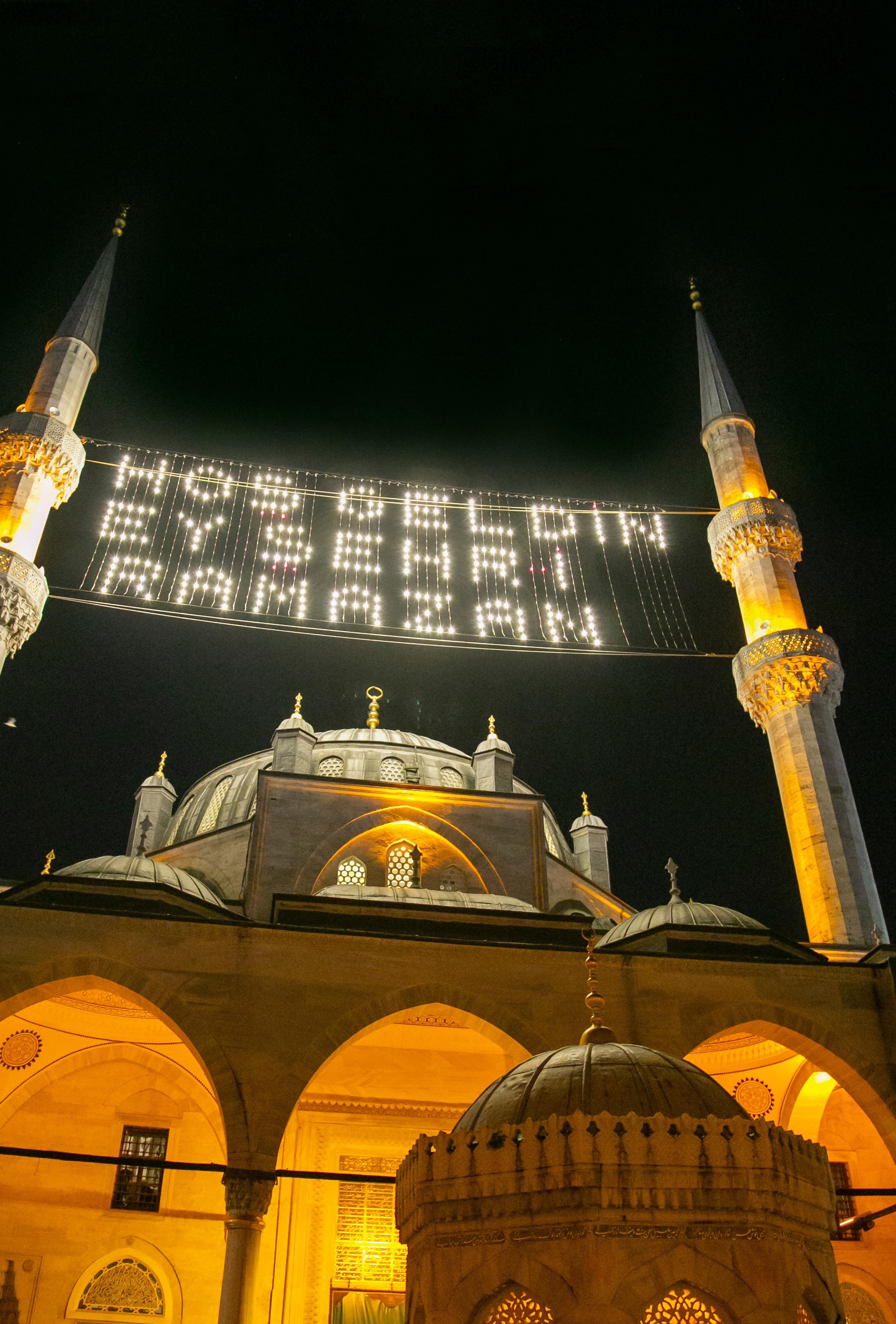
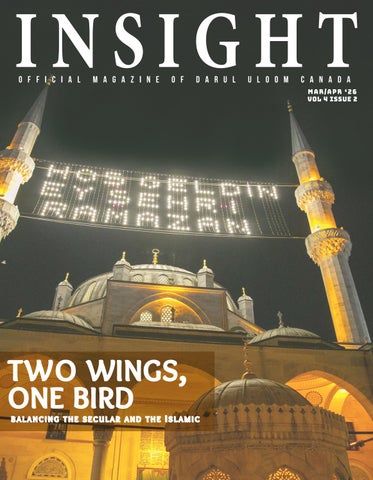
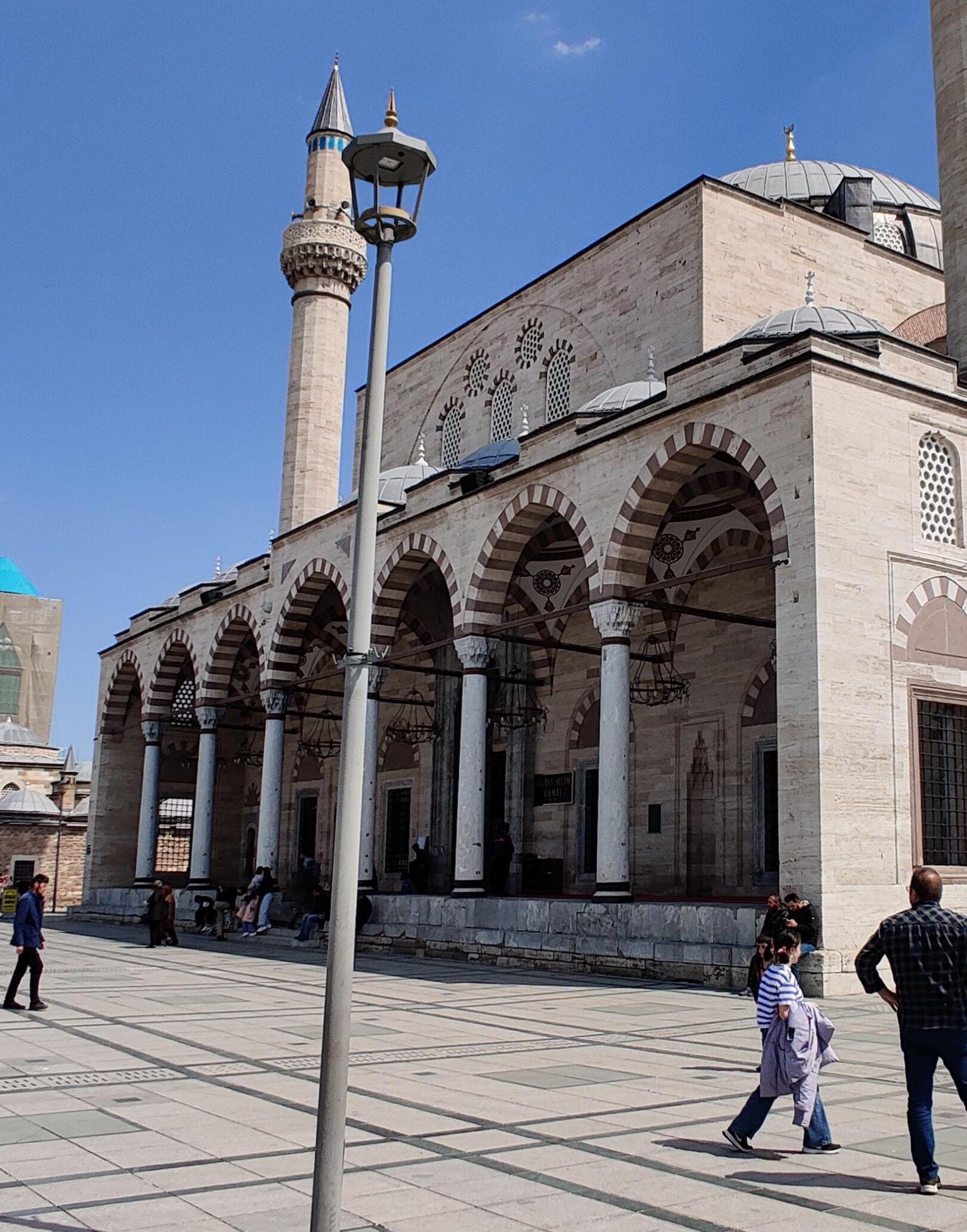
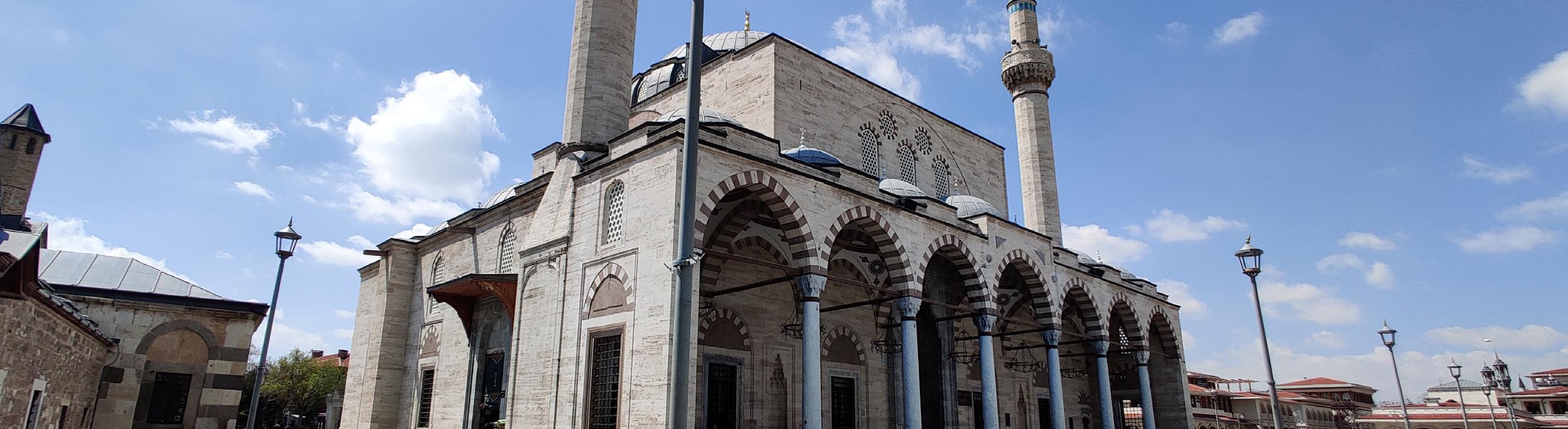
A masjid in Turkey with an illumi nated sign between two minarets that reads: Welcome, O month of Ramadan.


two wings , one bird
balancing the secular and the i slamic
about the cover
A masjid in Turkey with an illumi nated sign between two minarets that reads: Welcome, O month of Ramadan.

How do you balance secular and Islamic education, or do you even have to at all?
Some argue that secular education is dangerous, a bait that lures us into the dunya which must be completely shunned. Others condescend to anyone who shuns secular education as backward. “What are we to do, return to the Middle Ages?”
In her article, Khadija Karatela explains that the term secular education itself is a misnomer. In reality, secular education is a type of knowledge that grants us insight into how the world functions, which too is a different form of Islamic knowledge. This is why we find great Muslim mathematicians, physicists, and astronomers in our history who were celebrated by Muslim society for their contributions. Islam never saw math, language and the sciences as antithetical to the faith.
In secular society, education is a utilitarian tool for economic prosperity, power and to challenge all that modern society has inherited from it’s predecessors and traditions, advocating materialism while ignoring ancient wisdom and universal truths.
We need to understand that the exploitation of the sciences for Dajjali agendas does not make the sciences inherently bad.
Patron
Hazrat Dr. Ismail Memon Fatawa
Mufti Husain Ahmad Badri Contributors
Mufti Omar Baig
Dr. Kamran Karatela
Khadija Karatela Editor
Asim Ahmad Attribution Shutterstock E-mail office@ducanada.org Website www.ducanada.org
Address
51 Prince St. N, Chatham, ON N7M 4J7, Canada
The views expressed in the columns of Insight magazine do not necessarily represent those of Darul Uloom Canada. The articles published in this magazine may be reproduced with due acknowledgment.




The essential balance between Islamic and secular education

by Khadija Karatela

Islamic education was never about retreating from the world, but engaging it with competence and conscience.
The question of how Muslims should learn, grow, and prepare for life has echoed across centuries, but it carries particular weight today. In a world that moves at unprecedented speed—where culture transforms in months rather than decades—Muslims often find themselves caught between two seemingly distant spheres: Islamic education and secular education; one sacred and necessary for the soul, the other practical and necessary for survival.
From this tension, a quiet yet damaging misconception has emerged: the idea that one must choose one or the other; Deen or dunya; madrasa or university. As if one road is parallel to the other, taking one means abandoning the other. This imagined conflict has silently weakened our collective potential, narrowed our expansive and confining a horizon that was meant to encompass the world.
Yet when we turn to the Qur’an, the Sunnah, and the legacy of Muslim scholarship,
we find no such divide. Instead, we discover a vision of learning that is unified, balanced, and deeply holistic— one in which different forms of knowledge strengthen rather than compete with one another. The Prophet s captured this vision perfectly when he said, “Wisdom is the lost property of the believer; wherever he finds it, he is most deserving of it” (Tirmidhi). Scholars historically understood this to include all knowledge that cultivates understanding, responsibility, and righteousness—knowledge of Allah and knowledge of His creation. This perspective invites Muslims to seek benefit wherever it is found, to approach learning with confidence, and to recognize that truth is not confined to a single discipline.
Education:
Islamic education forms the bedrock of a believer’s identity. It teaches who a person is, why
they exist, and how to walk with humility, clarity, and purpose. Through it, the heart is anchored, the conscience is sharpened, and the soul is oriented toward Allah. It provides moral grounding in an age of confusion and offers
Companions. Abdullah ibn Mas‘ūd g taught that learning the Qur’an was not simply memorizing verses, but allowing those verses to shape conduct, decisions, and interactions. Knowledge informed how

poets, generals, and leaders— individuals equipped to serve society in all its dimensions. This holistic vision is further reflected in the guidance of figures such as Sayyiduna Umar ibn al-Khattab g, who urged parents to teach their children swimming, archery, and horsemanship. These were not acts of ritual worship, but practical skills necessary


Wisdom is the lost property of the believer; wherever he finds it, he is most deserving of it”
This knowledge does not replace faith; it enables faith to be applied intelligently and responsibly.
In today’s world, modern literacy is not optional. The ability to read critically, communicate clearly, interpret data, understand history, and navigate social and political structures directly affects a person’s capacity to work, lead, advocate, and serve. Without this understanding, even sincere religious commitment can remain isolated from real-life challenges.
A person grounded in Deen but unfamiliar with the realities of the world may struggle to translate values into effective action.
A person
fluent in the world but disconnected from moral guidance may act efficiently, but without ethical direction. Both forms of knowledge are necessary for balance.
Historically, Muslim societies understood this well. Scholars and leaders were not only spiritually grounded, but also intellectually and practically competent. They dabbed in medicine, mathematics, astronomy, governance, language, and philosophy because these disciplines were essential for understanding reality and serving society effectively.
Secular education strengthens reasoning, problem-solving, and communication. It develops awareness of cause and effect, trains the mind to assess complexity, and prepares individuals to participate meaningfully in contemporary life. When rooted in Islamic values, it becomes a means of service rather than selfpromotion, and a tool for responsibility rather than domination. Together, Islamic and secular learning form a balanced
framework—one that nurtures the soul while equipping the mind to engage the world with clarity, competence, and purpose.
The Modern Challenge: Living Between Two Worlds
It would be unrealistic—and unfair—to suggest that balancing Islamic and secular education is easy. It is not.
The modern world is fast, competitive, and demanding. Students feel pressure to succeed. Parents feel uncertainty about priorities. Communities fear losing their children to one extreme or the other.
This tension is real and deserves honesty rather than denial. Balance is not achieved in a single decision, but cultivated over time. The Prophet s reminded us that the most beloved deeds are those done consistently, even if small— an important reminder in an age that demands instant results.
Even the Sahaba balanced competing responsibilities: worship and work, family and learning, leadership and humility. Their struggle to balance did not weaken them; it shaped them. What is new today is not the challenge itself, but the
misconception that success in one realm requires abandoning the other.
The 21st century demands a Muslim who is spiritually anchored and intellectually capable. Religious sincerity alone is not enough to navigate psychological crises, digital realities, ethical complexity, and rapid social change. Likewise, technical competence without moral grounding produces success without direction.
This is not an abstract or nostalgic ideal. Scholars—whether of fiqh, astronomy, medicine, mathematics, or literature—did not see knowledge as divided. They understood it as a single woven tapestry, each thread strengthening the other. The great minds of our history—Al-Ghazālī, Al-Bīrūnī, Ibn Sina, Al-Fārābī, Ibn Khaldūn, Al-Khwārizmī— excelled in both the spiritual and intellectual sciences of their time. Their engagement with the world did not dilute their Deen; it deepened it. That harmony produced scholars who were wise, balanced, rational, and spiritually conscious—people
Secular education is often misunderstood as some thing 'worldly', yet all it is is simply knowledge of how the world functions.
capable of guiding societies and illuminating hearts. Today, the Ummah needs that harmony again.
A scholar who understands psychology, economics, and contemporary culture can guide with relevance and wisdom. A professional who understands the Qur’an, ethics, and humility carries faith into every environment with confidence. A student trained in both develops a holistic worldview rather than a fragmented one. When Islamic and worldly knowledge are woven together, the mind sharpens without arrogance, the heart strengthens without rigidity, faith becomes thoughtful, and intellect becomes ethical.
A bird cannot fly with one wing. Neither can a believer. Nor can a community. And definitely not an entire Ummah.
Islamic education nourishes the soul, shaping purpose, ethics, and moral clarity. Worldly education equips the mind, sharpening
understanding, perception, and practical wisdom. Held together, they form the complete human being—rooted in faith, fluent in reality, thoughtful in judgment, and capable in action.
To elevate one type of knowledge above the other is to weaken the believer. Islamic knowledge without worldly understanding risks becoming isolated and unable to address modern complexities. Worldly knowledge without Islamic grounding becomes directionless, lacking moral anchor and deeper meaning. But when the two are woven together, they produce a believer who is perceptive, articulate, grounded, and beneficial—someone who embodies the prophetic call to be a source of good wherever they go.
The challenge, then, is not choosing between Deen and Dunya. It is reclaiming their harmony. When knowledge becomes balanced, the Muslim becomes balanced. When both wings are strengthened, the flight ascends higher. And when believers rise with clarity and purpose, the Ummah rises with them.





Imam Ghazali said that whoever gives another person a gift out of reverence for the recipient believing that he is pious and a saint even though he is no such thing, then it is haram for the recipient to take that gift. Maulana Rasheed Ahmad Kanpuri raised an objection that if this is true, then in either case, it would not be permissible for the recipient to take the gift. If he takes the gift with full confidence in himself that he is a saint, then this is a form of tazkiya nafs to which Allah says, “So do not claim yourselves to be pure (53:32).” Since he is breaking with this ayah, he would be sinful. But if he does not consider himself pious, then according to the opinion of Imam Ghazali, the gift will be haram upon him. Thus, in both cases, whether he is worthy or not, taking the gift will be
Hazrat Maulana Ashraf ‘Ali Thanawi replied, “What Imam Ghazali means to say is that receiving a gift is haram upon the person who acts saintly so that he can receive something from them because it is a form of deception. On the flip side, if people start believing in a person who never made any effort to deceive them and they think he is pious and a saint and present him a gift, though he does not believe himself to be what they think of him, then it is not haram for
Whatever respect I have for my elders is not because I think they are the greatest scholars, since I believe that there may be other scholars out there who are of higher rank than them. The reason for my love and respect for them is that they were true walis of Allah and were not worldly people. They lived in the dunya without being affected by it in the least. They had no desire for status and/or wealth even one bit. Whatever they did, it was only out of love for the Deen and could sacrifice everything they owned if needed for
Sometimes I think that if someone thinks I am great and pious, then what good does that do for my Deen. Likewise, if someone loses their belief in me, than what harm does that do to my Deen. In fact, it doesn’t even harm my dunya at all either.
Veneratin the name of Allah
There was a villager woman who was uttering something at the time of her death which her family
members could not understand. They called in the local alim and asked him to figure out what all the mumbo-jumbo was about. The alim came close and listened carefully. He was shocked to her speaking Arabic and saying, “These two men are telling to me to enter into Jannat.” The stunned alim told the family that she is receiving the glad tidings of Jannat. He asked, “What exactly did she to attain such a high rank?” The family said that as far as they knew, she never did anything special. In fact, there were many bad things about her. The alim said, “Think hard. There has to be something Allah loved about her otherwise there is no reason for her to receive a glad tiding. What was it?” They thought and thought and finally one said that she did have one habit. Whenever the adhan was called, she would put everything aside and listen attentively and shush anyone that was talking. The alim said that it seems like this honoring of the name of Allah benefited her and wiped her lifetime of bad deeds.
Khaleel Pasha Khaleel Pasha was the governor of Yanbu’ on behalf of the Uthmani sultanate. He later left the position. lost all interest in the world and devoted the rest of his life to worship. His father was a saint who lived in Makka Mukarrama and would sometimes come to meet Haji Imdadullah Muhajir Makki. He complained about his son that he was caught up in the affairs of the dunya, but Haji sahib reassured him and said, “Don’t worry, one day he will be like you.” And that is what happened. I never met him but once saw a dream in which an elder said to me, “Why don’t you go to meet Khaleel Pasha?” I told him that I never felt the need to meet anyone else as I was already connected to Haji sahib.” The next morning, I narrated the dream to Haji sahib who said, “You should definitely go and meet him.” I then met him and he said to me, “I know three languages: Arabic, Persian, and Turkish.” I told him I don’t know Turkish; I do know Arabic but am not accustomed to speaking it; as for Persian, I understand and speak it.” Thereafter, we conversed in Persian and he said, “I have met scholars from all over, but I have found the scholars from the Subcontinent to be the best. I asked why. He said, “They do not have love for the dunya and work sincerely and tirelessly for the Deen.”

- Malfuzat of Hazrat Maulana Ashraf AliThanawi [v. 24]

by Asim Ahmad
Some Sahaba are known by their names like Zayd bin Thabit, Umar bin al-Khattab, and Uthman bin Affan l, while there are others who were better known by their kunya (agnomen) like Abu Bakr and Abu Dharr Ghifari k. I would like to introduce a sahabi who was known by his name during the Prophet’s s lifetime and period of the four righteous khalifas, but later came to be known only by his kunya. How many of us know Abdullah bin Qays the sahabi? I can almost guarantee
that you know him, but not by his name, though the Prophet s and the Sahaba knew him by his name, indicating that he was better known by his name than his kunya throughout the Golden Era. The following hadith narrated by Abdullah bin Qays g himself highlight this point:
1. The Sahaba were on an expedition doing the dhikr of Allah in a loud voice. The Prophet s said, “You are calling to One who is All-Hearing and Close, and He is with you.” Then, Abdullah bin Qays says that he was just behind the mount of
Some faces that day will be bright (80:38).
So, when they had passed beyond it, [Musa] said to his boy, Bring us our morning meal. We have certainly suffered in this, our journey, [much] fatigue (18:62).
The root meaning of safara is ‘to expose or reveal.’ Traces of the root meaning is found in its numerous forms. For example, safara al-bayta means to broom the house and a misfara is a broom because the cleaning of debri reveals the floor to its owner.
Safar means to travel. Ibn Manzur says, ‘the reason safar (travel) is called so is because travel unmasks the true nature of a person and his character and reveals what was previously hidden.’
Insifar means ‘receding’ as insafara muqaddamu ra’sihi, the front of his hairline receded [revealing his head].
Sufra is the food that is prepared for a traveler, but is also the round leather hide in which food was packed for the
traveler.
Sufrat al-jild is the portion of skin that is visible as opposed to the scalp, which is covered by hair.
Safara are scribes as in the hadith, ‘al- safarat al-kiram al-barara’ (the honorable and righteous scribes), in reference to the angels who record our words and deeds.
Safeer is an envoy or mediator between two opposing parties. He opens communication and reveals the truth between two groups until they reconcile their differences and unite.
Asfara al-subhu means that the light of dawn before sunrise covered the horizon. The Prophet s said, ‘asfiru bi al-fajr’, to pray Fajr when the horizon is filled with light.
the Prophet s. The Prophet s heard him while he recited la haula wa la quwwata illa billah. The Prophet s turned to him and said, ‘Abdullah bin Qays.” I said. “I am present, Prophet of Allah.”
He said, “Shall I not tell you a word that is one of the treasures of Jannat?”
I said, “For sure, Prophet of Allah, may my mother and father be ransomed for you.”
He said, “La la haula wa la quwwata illa billah” (Bukhari, h.3968).
2. The Prophet s dispatched Abu Amir who was a cousin of Abdullah bin Qays as the commander of an expedition to Autas. Abu Amir was fatally injured in the battle. He called Abdullah bin Qays in his last moments and said, “O my cousin, give the Prophet s my salam and say to him, ‘make istighfar for me.”
Then Abu Amir appointed Abdullah bin Qays as the commander over the expedition and passed away.
Abdullah bin Qays says, “I returned and came upon the Prophet s laying on a bed of palm leaves that dug into his back and sides and left an imprint on them, and also, he had a cover over him. I briefed him on what happened and then passed on the message of Abu Amir. The Prophet called for wudu water, performed wudu and raised his hands and said, “O Allah, forgive Ubayd, Abu Amir,” and I could see the whiteness of the area under his arms [due to the Prophet s
raising his hands high]. Then, he said, “O Allah, grant him a higher status than many of your creation in mankind on the Day of Judgment.” I said, “Make istighfar for me.” The Prophet s then added, “O Allah, forgive Abdullah bin Qays for his sin and grant him a noble entrance [into Jannat]” (Bukhari, h.4068).
3. He says that once he came to Umar’s g house he sought permission to enter, but Umar g did not respond, most likely because he was busy with something else at the time. Abdullah bin Qays turned around and left. When Umar g was done with his work, he said, “Did I not hear the voice of Abdullah bin Qays? Let him in.” He was told that he had already left. Umar g then called for him and asked him why he left. Abdullah bin Qays said, “This is what we

LEAVE ME MY SAHABA FOR ME. I SWEAR BY THE ONE IN WHOSE HANDS IS MY LIFE, IF YOU SPEND EQUAL TO MOUNT UHUD IN GOLD YOU WILL NOT REACH THEIR DEEDS.
were ordered [by the Prophet s].”
Umar g said, “Bring me a witness to your claim.” Then, Abdullah bin Qays came to a gathering of the Ansar and asked them if anyone had ever heard the hadith about the Prophet s instructing them to knock only three times at the door, and that if no one responds, to turn around and leave. They said, “The youngest of us, Abu Saeed Khudri will bear witness to that. Then Abu Sa‘eed Khudri g went with him and testified on behalf of Abdullah bin Qays. Umar g said, “Doing business in the market made me ignorant of
this” (Bukhari, h.1956).
In the first two hadith, the Prophet s calls Abdullah bin Qays by his name. In the third incident, which seems to have occurred during the khilafat of ‘Umar g, Umar g too is calling him by his name, iproving that he was better known by his name throughout the Golden Era.
Now, compare this to the following hadith:
Abu Dharr Ghifari g narrates that I entered upon the Prophet s in the masjid and took advantage of his being by himself at the time. He said, “O Abu Dharr, there is a way to greet the masjid.”
“What is it, Prophet of Allah?”
He said, “Two rak’a [of salat]” [al-Mustadrak, h.4209].
Here, Abu Dharr Ghifari g is
being called by his kunya. In fact, most of the biographers disagree about Abu Dharr’s g name since the hadith collections give no clue about it, though the most preferred opinion is that it was Jundub bin Junada (al-Istee’ab, 7/134).
In summary, we learn that Abdullah bin Qays, a sahabi most of us do not know by name, was identified by his name in the Golden Era.
So, who is Abdullah bin Qays?
His kunya was Abu Musa and since he hailed form the al-Ash’ariyeen tribe of Yemen, he was: Abu Musa al-Ash’ari.
But what happened that his name was lost in obscurity only to be replaced later on by his kunya?
The answer is simple: think of all the names of the Sahaba we know and you will realize that we know them either for their glorious status like Abu Bakr g because he was the first khalifa after the Prophet s passed away, a big event like the hadith of Ka’b bin Malik g falling back from the expedition of Tabuk, or because of their prolific narration of hadith like Abu Hurayra g. This is why it is almost impossible for anyone to know something about the Deen without knowing the name of Abu Hurayra g. Abu Musa al-Ashari g did not narrate nearly as many hadith as Abu Hurayra, Ayesha or Anas bin Malik l, but he did narrate approximately 360 hadith. If we include repetitions, his name appears more than 2000 times in the hadith collections, excluding other Islamic texts. Now, there are two possibilities as to why his name was dropped out:
1. Abdullah bin Qays was as common a name as Tom and Mike in the West. Since many tabi’een and taba tabi’een carried the same name, the students of Abu Musa g went along with his kunya as it saved from much confusion and helped identify him better. In the study of transmission of hadith, similar sounding or same names can

51 PRINCE STREET NORTH, CHATHAM, ON N7M 4J7 CANADA

MASJID - ISLAMIC BOARDING SEMINARY - DAY SCHOOL - TAHFEEDHUL QURAN (QURAN MEMORIZATION) - ALIMIYYAH (ISLAMIC SCHOLARSHIP) - IFTAA (ADVANCED JURISPRUDENCE) - ISLAMIC DAY SCHOOL (JK - GRADE 8)
OUR PROGRAMS:



CAMPUS AMENITIES:
- EXPANSIVE 70,000 SF FACILITY - GYMNASIUM
- STUDENT FRIENDLY MENU - COMPREHENSIVE LIBRARY - COMFORTABLE DORMITORIES - SOCCER FIELD - SWIMMING POOL - FITNESS CENTER & MORE!
lead to major mix-ups and potentially downgrade a hadith from authentic to weak. To avoid that possibility, either the students of Abu Musa g or their own students took the kunya over the name, thus burying the name from the Muslim public. If this theory holds true, it proves that the rigorous process of preservation of hadith that started after the passing of the Prophet and late into the era of the Sahaba had unintended, though harmless consequences for the greater good of preservation of hadith.
2. In most cases, the father took the name of the eldest son in his kunya like Abu Talib whose eldest son was Talib. But Musa was the 4th son of Abu Musa g and not his eldest. Musa bin Abi Musa al-Ashari’s older brother Abu Burda was a respected judge, erudite and a great hadith master of his time. His older brother Abu Bakr too was a renowned hadith master. Musa was not as well known a muhaddith as his brothers, but he did have something else to his credit. It is narrated in the Tabaqat Muhaddithun li-Isbahan (1/40) that Abu Musa g laid siege to the city of Isbahan in 20 A.H. during the Farooqi khilafat. His son Musa joined his father in this military operation. One night, an enemy standing on the city walls noticed a shadow below in
the Muslim camp. He shot an arrow which struck Musa bin Abi Musa while he prayed tahajjud. The arrow pierced his lower back and killed him instantly. He was in the state of sajda at the time. His father was so shaken and grieved by his death that he fell unconscious. Later, the son was buried in his bloodied clothes and the great sahabi and father, Abu Musa g, prayed the salat al-janaza over him.
Dying in the state of sajda is a rare honor and a dream of every true believer. Abu Musa al-Ashari g may have taken up his martyred son’s name as a way of
DYING IN THE STATE OF SAJDA IS A RARE HONOR AND DREAM OF EVERY TRUE BELIEVER.
honoring his death, thus doing away with his name. It is also possible that his students adopted the kunya in deference to Abu Musa’s g love for his only son who died in the state of sajda.
And only Allah knows best.

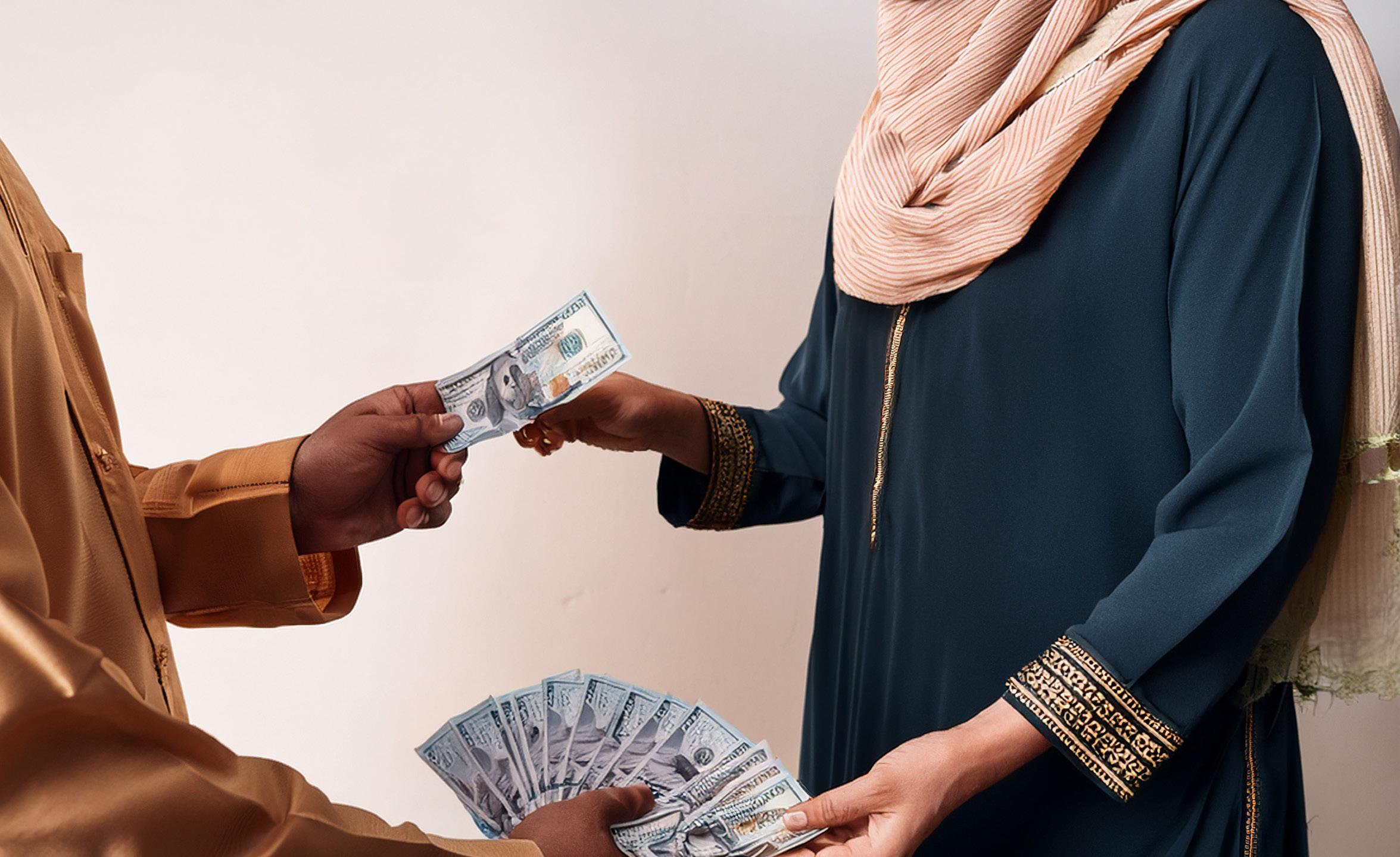
While the wealth of the working- and middle-classes has barely grown in more than 30 years, the gains at the very top—disproportionately wealthy White men—have been astronomical. The share of national income going to the top 1% doubled between 1980 and 2022, while the share going to the bottom 50% decreased by one third. Today, the richest 1% own half the entire stock market (49.9%), while the bottom half of the U.S. owns just 1.1%. And as of 2024, over 40% of the U.S. population—including 48.9% of children—is considered poor or low income.1
1. https://www.oxfamamerica.org/press/richest-1-in-the-us-grabbed-at-least-987-times-more-wealth-perhousehold-than-bottom-20-since-1989-new-oxfam-research-shows/

The Day of Judgment will not come until a [mation’s] wealth is concentrated in the elite.
Tirmidhi: 4/274
Q:Can mahr be given in advance, meaning before the nikāḥ is formally conducted?
A: The mahr is the exclusive right of the woman and must be mutually agreed upon by both parties prior to the marriage. In principle, mahr becomes due after the nikāḥ has taken place; therefore, any amount given before the nikāḥ does not legally constitute mahr, as the marital bond has not yet been established.
Q:
I have asthma and have two puffers. As I am still in school, I also participate in the gym classes. If my condition overwhelms me, I have to take my puffer. Will this invalidate my fast? What would you suggest for an asthmatic that uses their puffer on the regular?
A: In principle, swallowing any tangible substances invalidates the fast. An asthma pump contains medication that would go down a person’s throat when inhaled. Accordingly, the use of an asthma inhaler invalidates the fast, irrespective of its purpose. However, if an asthma inhaler is used out of genuine medical necessity, the fast must be made up later (qadāʾ), but no expiation (kaffārah) is required. Individuals who require frequent use of an inhaler throughout the day and find fasting difficult are permitted not to fast and may instead offer fidyah (donating the value of 1.6 kg
wheat flour to the poor and needy), provided they are genuinely unable to make up the missed fasts at any point in the future (even in shorter days). If they later regain the ability to fast, they must make up the missed fasts even if fidyah was previously paid.
INDIVIDUALS WHO REQUIRE FREQUENT USE OF AN INHALER THROUGHOUT THE DAY AND FIND FASTING DIFFICULT ARE PERMITTED NOT TO FAST AND MAY INSTEAD OFFER FIDYAH (DONATING THE VALUE OF 1.6 KG WHEAT FLOUR TO THE POOR AND NEEDY).
Is it permissible to use a miswāk while fasting?
A: Using the miswāk while fasting is permissible and is established from the practice of the Prophet s. However, one should avoid using flavored miswāk or those with added artificial tastes while fasting, as this may lead to substances entering the throat and affect the fast.
Q: Am I allowed, according to Islamic law, to pay zakāh on behalf of my mother?
A: In principle, zakāh is an individual obligation upon every Muslim who possesses wealth equal to or above the nīsāb threshold. Each person is responsible for calculating and giving their own zakāh. If your mother gives her explicit consent, it is permissible for you to pay her zakāh on her behalf. However, this must be done with her knowledge and approval; paying it secretly without her
USING THE MISWĀK WHILE FASTING IS PERMISSIBLE AND IS ESTABLISHED FROM THE PRACTICE OF THE PROPHET s. HOWEVER, ONE SHOULD AVOID USING FLAVORED MISWĀK
consent will not count as valid zakāh.
Q:I know this person who lives an hour away and sells sheep and goats. He has given me consent to advertise his animals. I want to take pictures of what he has and sell them. Once a buyer agrees to buy them from me, I drive out to the original buyer, process the transaction, bring it to the customer, and then the customer pays me for the service. Can I advertise the animals, sell them, and charge for the services from the second buyer once I’ve bought them? Can I ask the second buyer for a deposit?
THE ANNOUNCEMENT OF MAHR IS NOT A CONDITION FOR THE VALIDITY OF THE NIKAH; HENCE, IT WILL NOT BE NECESSARY TO ANNOUNCE THE AMOUNT OF MAHR DURING THE NIKAH.
A: In this situation, a person advertises an animal with the owner’s permission and tells a customer that they intend to sell it to them, but no actual sale takes place yet. The person then buys the animal from the original owner and becomes its legal owner. After that, the animal is sold to the customer.
This arrangement is allowed as long as no deposit is taken, or any deposit taken is fully refundable. However, if the sale is completed or if the customer gives a non-refundable or binding deposit before the person actually owns the animal, then the sale is not allowed and is invalid.
Q: Is it permissible to pray two rakʿahs with the intention of tahiyyat al-masjid before Maghrib?
A:It is not permissible for a person to pray any nafl prayers after praying Asr until sunset. One may perform qada prayers during that time until the color of the sun changes (around 10-20 minutes prior to sunset). Since tahiyyat al-masjid is a nafl prayer, it would therefore not be permissible to pray it during that time.
Q:I work as an accountant and prepare tax returns for North American business owners. My clients provide the revenue and expenses of their businesses from which I calculate net income and taxes owed. Net income is calculated by subtracting expenses from the revenue and taxes are paid on the rest. Many clients exaggerate expenses or hide some of their sales revenue such as cash sales to report less net income and reduce the amount of due taxes. With a couple of years of experience, I can often detect these discrepancies. Even after I advise them to report honestly, some clients continue to submit false figures. I am unsure whether I should prepare tax returns based
AN ACCOUNTANT WORKS AS AN ADVISOR AND IS NOT ACCOUNTABLE FOR THE ACTIONS OF THEIR CLIENTS. THEREFORE, IF YOU, AS AN ACCOUNTANT, REQUEST ACCURATE INFORMATION, AND THEY PROVIDE IT CLAIMING IT TO BE THE TRUTH, YOU MAY TAKE IT AT FACE VALUE.

on the figures they provide or refuse to work with them. Will the income I receive for such services be Halal.
A: In essence, an accountant works as an advisor and is not accountable for the actions of their clients. Therefore, if you, as an accountant, request accurate information, and they provide it claiming it to be the truth, you may take it at face value. You will not be responsible for their actions and your income for such services be halal.
Q:If a person is traveller while doing his 60 kaffarah fasts, does he have to fast or can he pause them and continue once he has returned? What is the correct method for a traveller who is offering his kaffarah?
A
: In principle, if a person is completing his fasts for kaffarah (sixty consecutive days) and happens to be travelling during that time, he cannot miss a day. If he does miss a day, he will have to start again from the beginning.
The Prophet s said:
Perform four actions frequently two of which will please your Lord, and two of which you cannot do without. As for the two actions which will please your Lord, they are:
1. to bear witness La ilaha illallah (there is no God but Allah)
2. to seek forgiveness from Him
As for the two actions which you cannot do without, they are:
3. to ask Allah for Paradise
4. to seek refuge in Him from the Fire.