



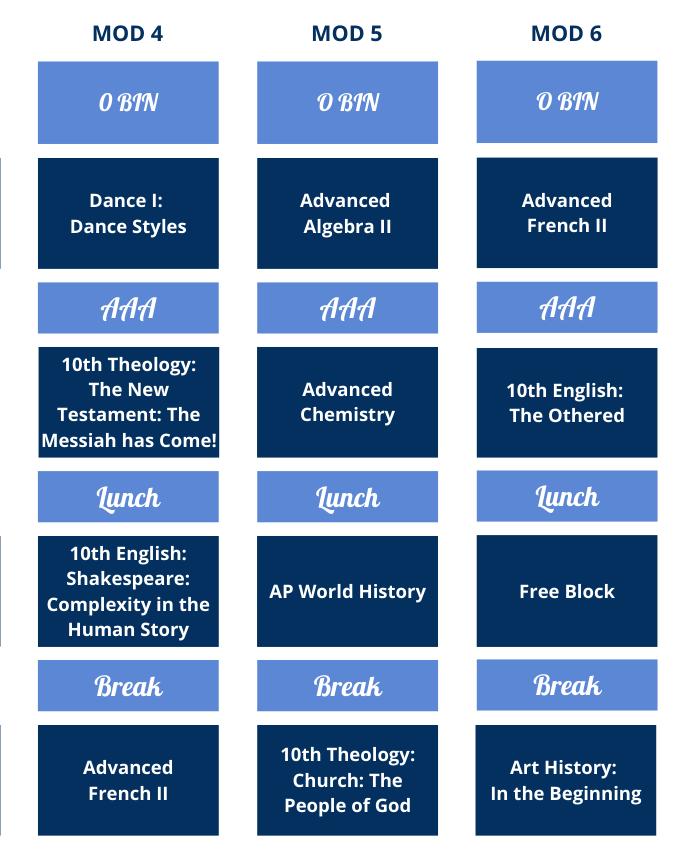
Duchesne Academy of the Sacred Heart utilizes a six-term modular (MOD) schedule. Each MOD lasts six weeks, with four 80-minute class periods (bins) per day. Students have the same classes every day for the six-week MOD, then they begin the next MOD with new courses for the following six weeks, and so on. The school day is divided into class periods, designated A, B, C, and D bins, during which courses are scheduled. Some select 45-minute classes also take place before school in 0 bin. A break of some sort (lunch, for example) is intentionally scheduled between each bin to allow students to pause between classes.
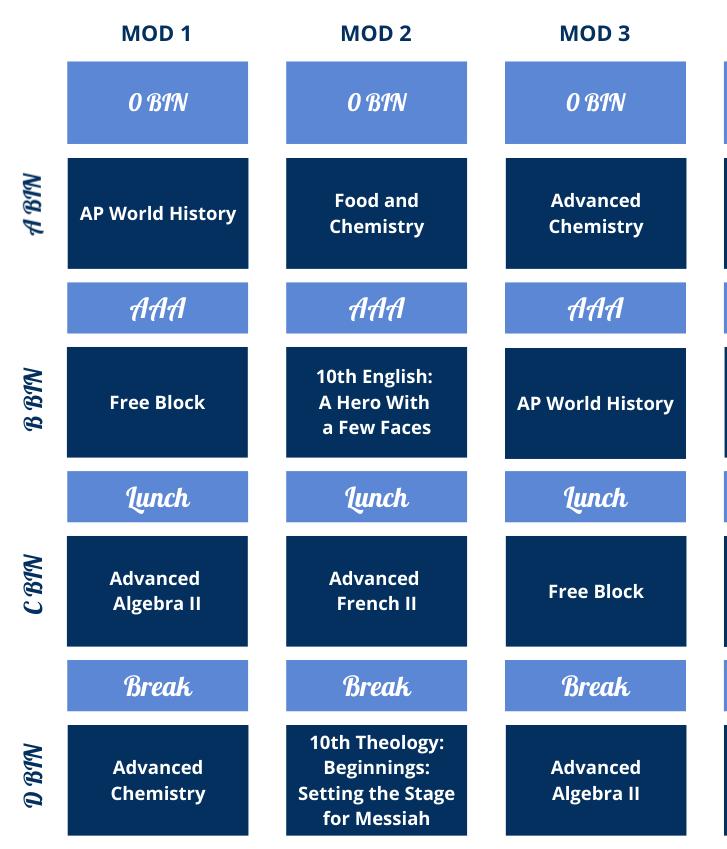

The longer class times allow for a deeper dive into the curricula and provide valuable opportunities for critical thinking, high level application, and creative problem solving. Strong relationships develop between teachers and students in these sustained longer periods daily over the six-week MOD, which greatly enhances and positively impacts both instruction and learning. Additionally, when learning is spaced as it is between MODs, students experience the productive struggle of retrieving information as they recall content from a previous MOD. This approach to learning, backed by cognitive science, enhances long-term retention.


Duchesne encourages personal growth in an atmosphere of wise freedom (Sacred Heart Goal V), and we practice this during the course registration process. Course selections begin with the student’s self-reflection and goal setting, then progresses to support and guidance through conversations with academic deans, Sophie’s Space advisors, college advisors, and classroom teachers. When evaluating course selections, students and their families should consider overall balance with schoolwork and extracurriculars, opportunities for growth and appropriate challenges, as well as college aspirations.
Students may have a maximum of six free bins over the course of the school year. Free bins provide additional balance for students to complete schoolwork, meet with teachers or college advisors, or work cooperatively with peers during the school day. In some cases, it may be possible for a student to request free bins during specific MODs if she knows she will have other obligations during those MODs (an extracurricular activity or sport, for example). Students wishing to request free bins should communicate this during course registration to the registrar and to their academic dean.
As the schedule is developed holistically with all student requests in mind, it is not easy to make schedule changes once the schedule has been set for the school year. Therefore, it is imperative that students notify their academic dean if they wish to drop or change elective classes within the first two days of that course. While schedule change requests can sometimes be accommodated, some changes may not be possible. If the change is deemed possible, the dropped course will not appear on the student’s permanent record. After the first grading period, an Upper School student is allowed to drop a course only under special circumstances and with the consent of the teacher, academic dean, and the Head of Upper School. If the course is then dropped, a withdrawal pass (WP) or withdrawal fail (WF) will be recorded on the student’s official transcript.
Online grade books are open to students and parents through the school’s learning management system. Parents are urged to request a conference with their daughter’s teacher if they wish to discuss her academic performance. Faculty members are available to meet with parents by appointment and may be contacted by email.
Online courses offered through One Schoolhouse may be available to students in Grades 11 and 12 upon recommendation by the academic dean and with departmental approval. These courses may be viewed online at oneschoolhouse.org and feature course options of AP Psychology, AP Business and Personal Finance, and AP Cybersecurity, among others.


Letter grades, numerical grades, and quality points per credit unit equivalent are as follows:
Quality points are used to determine a student’s Grade Point Average, which is calculated at the end of each school year. Points are awarded based upon numerical course grades according to the scale shown above. The sum of the points earned divided by the number of credits attempted determines the grade point average. Three-bin courses earn three credits upon completion of the third MOD. Two-bin courses receive two credits upon completion of the second MOD. Single-bin courses receive one credit upon completion of the first MOD. Summer school grades, which are included in the cumulative GPA, are rolled in and are reported at the end of the first academic MOD.
Each course description indicates the length of that course. If a course runs for one bin, the grade reported is the final grade for that course. If a course is a three-bin course, the final grade for that course is reported as an average of the three bins.
An additional 0.5 quality point is awarded upon completion of the course for passing grades in all Advanced Placement courses. All advanced courses will receive an additional 0.3 quality point upon completion of the course. The Cumulative GPA, which is based on all courses taken at Duchesne since the student entered Upper School, is generated to the third decimal and is considered official at the end of the school year. Only grades earned at Duchesne and other Sacred Heart Network learning institutions are included in the grade point average.

In
7
A student must earn at least 18 credits to be classified as a sophomore, at least 36 credits to be classified as a junior, and at least 54 credits to be classified as a senior. Seniors who fail to meet the above requirements may not be allowed to participate in the graduation ceremony. All students must take at least 18 bins per year.
Students may elect to take Advanced Placement courses with the recommendation of the appropriate department and the approval of the academic dean, provided they meet the benchmarks in rubrics developed within each department. All AP courses at Duchesne have been audited and approved by the College Board.
• All AP students are expected to take the national AP exams in May.
• Students will receive an additional 0.5 quality point for each AP course passed.
• If a student is unable to take the AP exam and does not have a valid excuse, the 0.5 GPA quality point will be removed from their GPA.

These progress bars show a distribution of graduation requirements. The check marks represent a typical student's progress based on her schedule at the start of each school year. However, each student's schedule may be different and will not necessarily follow these exact paths. Each check mark represents a bin, with most courses requiring 3 bins per year. The numbers in parentheses show the number of bins required for graduation in that subject. Students must take at least 18 bins per academic year and a total of at least 84 bins to graduate. Refer to the course descriptions for required courses at each grade level.
Transformative
English (12)
Math (9)
Science (12)
Social Studies (12)
Theology (12)
World Languages (9) Fine Arts (3)
Computer Science (3)
PE (3)
and Action (2) Electives (7)
English (12)
Math (9)
Science (12)
Social Studies (12)
Theology (12)
World Languages (9) Fine Arts (3)
Computer Science (3)
PE (3)
Transformative Research and Action (2)
Electives (7)
English (12)
Math (9)
Science (12)
Social Studies (12)
Theology (12)
World Languages (9) Fine Arts (3)
Computer Science (3)
PE (3)
English (12)
Math (9)
Science (12)
Social Studies (12)
Theology (12)
World Languages (9)
Fine Arts (3)
Computer Science (3)
PE (3)
and Action (2)


In the Upper School, students live Sacred Heart Goal III by developing a social awareness which impels to action. Rather than counting service hours, Duchesne students engage in service-learning projects and research through which encounters with others inspire them to change the world. Each grade level has specific requirements to ensure that students confront some of our most pressing social issues, including homelessness, poverty, hunger, disability rights, elder care, mental health, and criminal justice.
Grades 9 and 10: Freshmen and sophomores complete two service projects per school year to deepen their awareness and understanding of Sacred Heart Goal III. Students choose their two projects in order to engage in a service that is manageable and meaningful for each student. This requirement emphasizes experiential learning through direct interaction with vulnerable or underserved populations. All service projects must be completed between August and May of the academic year. Projects not organized or promoted by Duchesne require prior approval, with approval forms submitted at least one week before the scheduled service date.
Grade 11: Juniors will take the first course in a two-year sequence of Transformative Research and Action. After choosing a problem in their local, regional, national, or global community, students will conduct research, find a means to educate people about that problem (including non-traditional methods like videos or podcasts), and propose possible solutions. This course introduces juniors to the basics of research, including identifying sources, using the library databases, notetaking, and incorporating research into a final product. As an added requirement and practice of living Goal III, Juniors will also complete a bin of Social Awareness, traveling off-campus to a local site to serve individuals in the Houston community. Prerequisite: None
Grade 11
Length: 1 Bin
Grade 12: Seniors will complete the second course in the two-year sequence of Transformative Research and Action. Beginning with an essential question based on their junior year research project, students will continue to develop their skills in conducting and presenting quality research. This includes evaluating sources, using academic databases, and adhering to appropriate citation and formatting guidelines, culminating in the completion of a college-level argumentative research paper. As an added requirement and practice of living Goal III, Seniors will also complete a bin of Social Awareness, traveling off-campus to a local site to serve individuals in the Houston community. Prerequisite: Transformative Research and Action I
Grade 12
Length: 1 Bin
Through service learning in the Greater Houston community, this course aims to fulfill two main objectives: 1) to give students the opportunity to be transformed through engagement in direct service and advocacy through partnering with the wider community in working for justice, peace, and the integrity of creation; and 2) to "prepare and inspire students to be active, informed, and responsible citizens locally, nationally, and globally as they broaden their awareness and perspectives of issues, injustices, and needs. Each service immersion opportunity includes a reflection and expository component so that students can express the ways in which their experiences have allowed them to live out Goal III. This pass/fail Theology course is required for all students in Grade 11 and Grade 12. Prerequisite: None
Grades 11-12
Length: 1 Bin


Freshman year is a new beginning for students as they embark on their journey through high school. In this introductory English bin, students will read a novel centered on a protagonist's transformative journey as they search for identity, purpose, or self-discovery. Studying symbolism and thematic elements, students will practice writing analytical paragraphs and end the bin with a polished personal manifesto piece, demonstrating their introspection and ability to explore their values and beliefs.
Prerequisite: None
Grade 9
Length: 1 Bin
Demystifying the Essay
An essay is not five paragraphs with an introduction, three body paragraphs, and a conclusion. Its purpose is not to persuade, argue, or inform. Rather, the essay is a journey through one’s thoughts in search of truth and meaning in life. Michel de Montaigne, a French writer during the sixteenth century, coined the term essais which means “little attempts.” Although his essays are often autobiographical, they transcend his own personal experiences and explore the human condition. In this bin, we will deconstruct the essay, processing our own experiences into “little attempts” at not only understanding ourselves, but on a larger scale, connecting with others and uncovering new layers of truth or life lessons.
Prerequisite: Identity and Manifestos
Grade 9
Length: 1 Bin
In this English course, students will delve into the thought-provoking world of dystopian literature, exploring a novel that challenges societal norms and examines the consequences of censorship and control. As we journey through the pages of this literary work, students will not only sharpen their reading and critical thinking skills but will also embark on a writing adventure. The course is designed to hone students' analytical writing abilities, encouraging them to express their thoughts on complex themes, character development, and societal issues presented in the novel. Through close reading, class discussions, and writing prompts, students will dissect the layers of dystopian fiction and develop a deeper understanding of the power of language and the role it plays in shaping our world. Prerequisite: Demystifying the Essay
Grade 9
Length: 1 Bin
Advanced Grade 9 English: From Self to Society through Literature and Essay
This advanced English course offers a rigorous exploration of identity formation, social consciousness, and the essay as a vehicle for meaningful inquiry. Students will engage with multiple complex texts, including coming-of-age narratives and dystopian literature, to examine how individuals construct identity while navigating societal expectations, power structures, and questions of conformity versus resistance. Prerequisite: Departmental approval for placement
Grade 9
Length: 3 Bins
*A Hero with a Few Faces
In this course, students explore stories of courage, transformation, and identity across time and culture. Through myths, epics, novels, and films, students consider how different societies define heroism and how that definition evolves in response to context and conflict. This course emphasizes foundational literary analysis skills: noticing patterns, tracing central ideas, and connecting character development to larger themes. Students learn to summarize effectively, identify evidence, and explain how details contribute to meaning. Writing tasks focus on building clear claims, organized paragraphs, and commentary that connects ideas to a text’s message. Prerequisite: None
Grade 10
Length: 1 Bin
Shakespeare: Complexity in the Human Story
This course invites students into the world of Shakespeare – where ambition, love, loyalty, and betrayal collide. Through one or more of Shakespeare’s plays, as well as paired modern texts, students examine how language, structure, and conflict reveal what it means to be human. Students learn to read complex texts with confidence by unpacking figurative language, identifying tone and mode, and discussing how choices in diction and imagery shape meaning. Emphasis is placed on argument writing, interpretation, and understanding how an author communicates with an audience through both style and substance. Prerequisite: A Hero with a Few Faces
Grade 10
Length: 1 Bin


*The Othered
In this course, students explore what happens when individuals or groups are marked as different, dangerous, or less than human. Through literature, film, and nonfiction, students examine how societies create “monsters” – real or imagined – and what those portrayals reveal about fear, power, and identity. This course invites students to question who decides what is normal, good, or civilized, and how those definitions shift over time. Whether studying an outcast character, a literal monster, or a misunderstood figure, students consider how perspective and bias shape narrative. Writing and discussion emphasize interpretation over judgment – encouraging students to move beyond “good versus evil” thinking toward analysis of how authors use characterization, imagery, and symbolism to provoke empathy, discomfort, or reflection. Prerequisite: Shakespeare: Complexity in the Human Story
Grade 10
Length: 1 Bin
Foundations in Literary Analysis and Rhetoric is a skill-centered English course designed for students ready to think deeply, read widely, and write with purpose. Through a range of classic, contemporary, and multimodal texts, students explore interior worlds, complex narratives, archetypes, and rhetoric while building strong habits of mind for high-level literary and analytical work. This course emphasizes interpretation, argumentation, and precision – the ability to see patterns, notice nuance, and articulate complex ideas clearly in writing and discussion. Students practice the major analytical skills emphasized by the College Board for upper-level English courses, but the class stands independently as an advanced Grade 10 curriculum focused on close reading, strong writing, and critical thinking. Prerequisite: Departmental approval for placement
Grade 10
Length: 3 Bins
*denotes new course for 2026-2027


Language can be powerful. It can change the way people think and shape people’s behavior. In this course, we will examine speeches and media to understand how they influence their audiences. For example, we will analyze the way that world leaders use language to lead their nations through crises. We will also look at everyday situations to consider how messages influence us. Once you learn the strategies, you can use them to persuade your own audiences. Prerequisite: None
Grade 11
Length: 1 Bin
*Storytelling
In this bin, students will read some of the best stories and try to discover what makes them tick. How does a writer convey such a complex story? How do they create three-dimensional characters? Or explore a conflict and then resolve it? These are some of the questions students will consider as they analyze stories and write some of their own. Be prepared to share writing in this workshopstyle class. Prerequisite: Rhetoric and Argument
Grade 11
Length: 1 Bin
When the world changes, writers respond, capturing new ideas that are emerging and exploring the way that different people are affected. But writers do not only reflect change. Sometimes they help create it. This course examines the interaction between writers, their texts, and moments of historical change. Prerequisite: Storytelling and Interpretation
Grade 11
Length: 1 Bin
Grade 12 students not taking AP English Literature will choose three of the following courses.
*Laugh or Cry
Comedy and horror have existed for as long as humans have. They have served as a form of relief, entertainment, and a means of understanding the world around us. In this senior class, students will delve into the role of comedy or horror as a powerful tool for commentary, exploring how authors and comedians use humor or fear to address societal issues, challenge norms, and influence perspectives. Through close reading, literary analysis, and argumentative writing, students will examine the craft of comedic/horror texts and the choices authors make to elicit laughter or tears, provoke thought, or push boundaries. By engaging with a diverse range of comedic or horror works, students will deepen their understanding of how humor or horror reflects and shapes society, while honing their ability to critically analyze and articulate the nuances of comedic or horror literature. By the end of the course, students will have developed a nuanced understanding of the interplay between comedy or horror and society and gained skills in using texts to explore the world beyond themselves. Prerequisite: None
Grade 12
Length: 1 Bin
This course covers seminal works of Western Literature and explores their resonance in today’s globalized and technologically changing world. Texts include canonical works, like A Study in Scarlet and The Odyssey, coupled with more modern works, like Sherlock and Circe. Students will investigate the importance and the impact of selected readings, analyzing film or television adaptations and how performed texts differ from the written word. Is Sherlock retelling Arthur Conan Doyle’s stories or creating something else? For that matter, what makes Doyle’s novels and short stories so remarkable? In this class, students will debate such questions and consider what is gained and lost in the afterlives of great texts.
Prerequisite: None
Grade 12
Length: 1 Bin
*denotes new course for 2026-2027
Why does a government turn against its own people? How does a society devolve into chaos? In this course, students will explore different authors’ dark visions of the future and analyze how they depict future societies. Students will also discuss why stories of societal collapse are so popular: Why has George Orwell’s 1984 or Aldous Huxley’s Brave New World endured? What is the appeal of Margaret Atwood’s The Handmaid’s Tale or Suzanne Collins’s Hunger Games series? While these authors’ predictions may seem dire, we will also consider how these stories can paradoxically give us hope. Prerequisite: Laugh or Cry or Adaptation
Grade 12
Length: 1 Bin
Shakespeare’s King Henry IV laments, “Uneasy lies the head who wears a crown.” King Henry IV is not the only monarch in Shakespeare’s plays who feels the weight of power; Shakespeare’s kings often struggle with the burden of being human and being God’s representative on Earth. In this bin, we will explore two very different kings—the nefarious Richard III who schemes his way to the throne and fears he will lose it, and the saintly Henry V who leads England to victory and gains everyone’s admiration. While they initially seem quite different, Shakespeare gives them a few common characteristics. After studying these two plays, and some additional speeches by kings and queens, we will look at King Charles III, a 2014 blank verse play that depicts King Charles III as a tragic Shakespearean figure overthrown by a scheming Prince William and Kate Middleton. What does power and leadership mean for Shakespeare and how do we view them today? Prerequisite: Laugh or Cry or Adaptation
Grade 12
Length: 1 Bin

Several decades ago, English class focused on a handful of canonical authors largely from early Western civilizations, England, and America. This course goes beyond that canon to authors previously considered to be in the margins— we will consider authors with connections to India (Salman Rushdie or Jhumpa Lahiri), Mexico (Sofia Segovia), Chile (Isabel Allende), Columbia (Gabriel Garcia Marquez), Nigeria (Chimamanda Ngozi Adichie), China (Amy Tan), or Japan (Kazuo Ishiguro). With college around the corner, students can contemplate the much wider world and their own place within it. Prerequisite: Dystopias or Shakespeare and Power
Grade 12
Length: 1 Bin
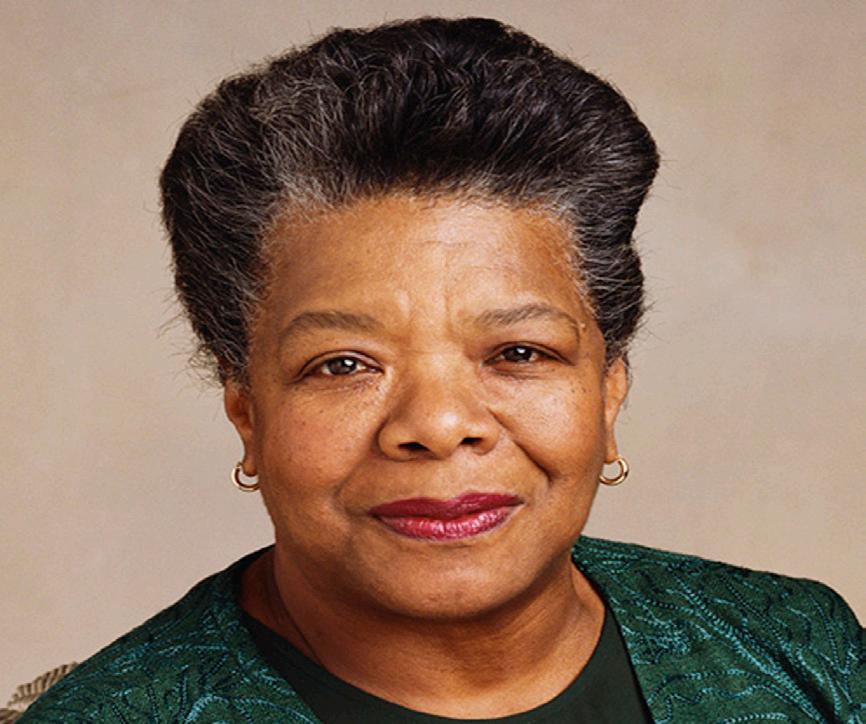
“Still I Rise:” Black American Women Writers
In her poem, “Still I Rise,” Maya Angelou powerfully captures her worth in a country that tries to devalue and oppress her: “You may shoot me with your words, / You may cut me with your eyes, / You may kill me with your hatefulness, / But still, like air, I’ll rise.” Starting with this poem and the poetry of Amanda Gorman, we will explore some of the rich literature (poetry and novels) from prominent Black American women writers. Together as a class we will analyze and discuss a novel from Toni Morrison or Zora Neale Hurston. Prerequisite: Dystopias or Shakespeare and Power
Grade 12
Length: 1 Bin *denotes

AP English Language: Rhetoric
In this course, students practice close reading to analyze texts as persuasive messages. They consider texts' rhetorical situations and think about the persuasive strategies used to sway the audience to act or think in a specific way. Students also practice writing rhetorical analysis essays, which comprise part of the AP exam in May. Prerequisite: Departmental approval for placement
Grade 11
Length: 1 Bin
AP English Language: Synthesis
As the AP English Language course continues, students build upon their understanding of rhetoric to create persuasive essays of their own. By synthesizing evidence from source texts, students “enter the conversation” with them and produce arguments that respond to them. Students also learn to address counterarguments and craft nuanced arguments. Prerequisite: AP English Language: Rhetoric
Grade 11
Length: 1 Bin
AP English Language: Argument
In the final portion of the AP English Language course, students write persuasive essays while drawing on evidence from their own lives and academic backgrounds. They consider what constitutes effective evidence, given their specific audiences, and they practice using rhetorical strategies to make their arguments as effective as possible. Prerequisite: AP English Language: Synthesis
Grade 11
Length: 1 Bin
AP Literature: Studies in Africa
Exploring the wealth of literature coming from and about Africa, students will be introduced to the fundamental ideas of AP English Literature: character, setting, structure, narration, and figurative language. We will explore how American and European authors have written about Africa (Barbara Kingsolver’s Poisonwood Bible and Joseph Conrad’s Heart of Darkness) and how African authors like Chinua Achebe (Things Fall Apart) have responded. We will also consider the portrayal of African women in Yaa Gyasi’s Homegoing. We will conclude with the film portrayal of Africa in Black Panther. Prerequisite: Departmental approval for placement
Grade 12
Length: 1 Bin
“To be or not to be. That is the question.” Shakespeare’s most famous line captures Hamlet at a particularly low point; should he revenge his father’s death if it means he must kill his own uncle and his king? In asking “To be or not to be,” Hamlet asks, “What’s the point?” – not just the point of his revenge, but also, even more significantly, of his life. This course will tackle Hamlet, one of Shakespeare’s greatest dramas and one of the greatest pieces of literature. As students explore Hamlet’s complicated and emotional journey, they will ask essential questions about “the meaning of life.” After studying Hamlet, students will work on some contemporary metaphysical poetry and Shakespeare’s sonnets. Prerequisite: AP
Literature: Studies in Africa
Grade 12
Length: 1 Bin
Why do we perpetuate injustices in society? What makes individuals feel like they cannot speak up or make change? How does a society collectively decide to silence individuals? In this final bin of AP Literature, students will confront the evil in our natures and what causes us to accept mass injustice or persecution. Students will read Beloved, a book that gives us the perspective of a character deprived of choice and agency. Poetry and short stories will explore individuals in society who have also been marginalized. As students enter their final months in high school, this course will ask them to consider moments when they have been silent or have been silenced and how they might prevent society from turning against any individuals. Prerequisite: AP
Literature: Shakespeare and the Meaning of Life
Grade 12
Length: 1 Bin
Writing takes practice. To build writing stamina, it is important to write every day without restrictions. In this course, students will explore their imaginations by method of stream of consciousness writing. Using a variety of writing prompts, from photographs to poetry to artwork, every day will be devoted to the craft of writing and the process necessary to develop a polished piece. Prerequisite: None
Grades 9-12
Length: 1 Bin
Algebra I, often defined as the language of physics, where physics is the explanation of life, gives students a foundation for all future mathematics courses by emphasizing the study of multiple representations of linear and nonlinear functions. Students will explore the fundamentals of algebraic problem-solving: solving equations, inequalities, exponents, polynomials, factoring linear and quadratic equations, and radical expressions and equations. Throughout the course, students will learn how to apply these concepts to real-life situations. Prerequisite: None
Grade 9
Length: 3 Bins
Geometry is a place for students to showcase their algebra skills through logic and spatial reasoning. Students encounter real-world scenarios and use deductive reasoning to guide them through the problem-solving process. The course includes a thorough treatment of the foundations of geometry: points, lines, and planes; properties of polygons and circles; as well as areas of figures and volumes of solids. Prerequisite: Algebra I
Grades 9-10
Length: 3 Bins
Students will showcase their algebra skills using logic, spatial reasoning, and problem-solving in collaborative real-world scenarios. When working through challenging problems, students will formulate a simpler problem, work backwards, and recall strategies from previous scenarios. This course includes foundations of geometry: inductive and deductive reasoning, properties of polygons and circles, and volume calculations. Prerequisite: Algebra I and departmental approval for placement
Grades 9-10
Length: 3 Bins


Algebra II provides a conceptual bridge for topics from Algebra I and Geometry. Some of the concepts covered will include functions, equations and inequalities, logarithmic and exponential relationships, conics, and quadratic and polynomial equations. Topics that were introduced in Algebra I will be expanded and applied to questions that require higher-order thinking skills where students will need to justify and explain their thought processes. Additional topics will be introduced through independent activities, group projects and presentations, and teacher-led discussions. Computers and graphing calculators will be used to introduce and expand upon these concepts. Prerequisite: Geometry
Grades 9-11
Length: 3 Bins
The second year of Advanced Algebra focuses intensely on the study of types of numbers and functions. The goal of the course is to develop a strong numerical, algebraic, and graphical sense while building a verbal fluency of the mathematics. Students will go beyond the linear and quadratic to explore radical, rational, exponential and logarithmic functions, as well as the topics of probability and statistics. Analysis will include a wide range of applications from carbon-dating to space exploration. Prerequisite: Geometry and departmental approval for placement
Grades 9-11
Length: 3 Bins
The ability to work with, understand, and use data has become an essential life skill and requirement for an ever-expanding range of jobs and careers. Data is everywhere around us. Nearly all the world’s data has been created in the last few years. This new data intensive world can be difficult to navigate; decisions that used to be straightforward are now more complex, requiring individuals to be constantly separating fact from fiction. Students will learn to be data explorers in projectbased units, through which they will develop their understanding of data analysis, sampling, correlation/causation, bias and uncertainty, probability, modeling with data, making and evaluating data-based arguments, the power of data in society, and more! Prerequisite: Algebra II or concurrent enrollment in Algebra II
Grades 10-12
Length: 3 Bins


Precalculus is designed to intertwine and deepen understanding of topics from algebra and geometry in preparation for further mathematical studies in calculus. With a focus on numerical, graphical, algebraic, and verbal analysis, students will explore three main themes:
Bin 1: The Function Machine: Linear, Polynomial, Radical, and Rational Functions
Bin 2: Thinking in Circles: Analytical Geometry and Trigonometric Functions
Bin 3: Explaining Nature with Mathematics: Exponential and Logarithmic Functions, Conic Sections, and Probability
Students will work collaboratively and learn via a combination of direct instruction, discovery, and project-based inquiry. Prerequisite: Algebra II
Grades 10-12
Length: 3 Bins
In Advanced Precalculus, students will study the theoretical aspects of polynomial, exponential, logarithmic, and trigonometric functions and get a sense of how these functions are present in the world around us. Attention is given to precise communication of mathematical ideas in written and oral explanations. Students will move easily between graphical and algebraic representations of solutions, and they will be able to articulate why an answer makes sense in more than one way. Upon the completion of all three bins, students will have acquired a strong foundation for the study of AP Calculus. Prerequisite: Algebra II and departmental approval for placement
Grades 10-11
Length: 3 Bins
To study calculus is to study how quantities change. Students have already studied the linear relationship that occurs when a quantity changes at a constant rate. In this course, they will learn how to determine instantaneous rates of change of quantities that do not vary at a constant rate. Students will use technology as a primary tool for discovery of rules, properties, and theorems about the derivative and the integral. Prerequisite: Precalculus
Grade 12
Length: 3 Bins
In AP Precalculus, students explore everyday situations and phenomena using mathematical tools and lenses. Through regular practice, students build deep mastery of modeling and functions, and they examine scenarios through multiple representations. They will learn how to observe, explore, and build mathematical meaning from dynamic systems, an important practice for thriving in an ever-changing world. AP Precalculus prepares students for other college-level mathematics and science courses. The framework delineates content and skills common to college precalculus courses that are foundational for careers in mathematics, physics, biology, health science, social science, and data science. Through the course, students strengthen their procedural and symbolic fluency skills needed for higher level mathematics. While studying each function type, students solve equations and construct equivalent analytic representations in both contextual and purely mathematical settings. Prerequisite: Advanced Algebra II and departmental approval for placement
Grade 12
Length: 3 Bins
The AP Calculus AB course answers the questions “How fast?” and “How much?” by an in-depth study of the derivative and the integral. In the process, students will study curve properties, optimization, rate of change, motion, and what it means to accumulate change. They will work with functions represented in numerical, graphical, tabular, and algebraic forms and they will learn to connect these representations. Students will be taught to present their findings in clear verbal and written format, and they will use many types of software and technology to visualize the calculus concepts. Upon completion of all three bins, students are prepared to take the AP Calculus AB exam. Prerequisite: Precalculus and departmental approval for placement
Grade 11-12
Length: 3 Bins

AP Calculus BC is a college-level calculus course. Students cultivate their understanding of differential and integral calculus through engaging with real-world problems represented graphically, numerically, analytically, and verbally using definitions and theorems to build arguments and justify conclusions as they explore concepts like change, limits, and the analysis of functions. Prerequisite: Advanced Precalculus and departmental approval for placement
Grade 11-12
Length: 4 Bins
The news and media is filled with numerical information. Have you ever wondered where the information comes from, and if it is even valid? AP Statistics is a course designed to give students a thorough understanding of random events, probability, data collection and its analysis. Each day students look at a real-world scenario and come closer to finding the truth. Does Beyoncé write her own lyrics? Can some people really smell Parkinson’s Disease? Does the store brand have as many chocolate chips as the name brand? We will find out! By the end of the class, students will be 99% confident and prepared for the AP exam.
Bin 1: Collecting and Describing Data and its Distributions
Bin 2: Probability, Sampling Distributions, and Statistical Inference for One Group
Bin 3: Statistical Inference for Two or More Groups, and Review for the AP Exam
Prerequisite: Algebra II and departmental approval for placement
Grades 10-12
Length: 3 Bins
This course will explore major mathematical developments beginning with ancient Babylonians and Greeks and tracing the development through Hindu-Indian mathematics, Arabic mathematics, and European mathematics up to the 20th century. This course will allow research into the lesser known mathematics of the Mayan and Far East cultures. Prerequisite: Algebra II
Grades 10-12
Length: 1 Bin
About The Matrix Than Keanu Reeves Could Teach You:
Linear algebra is heavily used in modern mathematics, particularly in statistics and data science, with applications in many fields, including economics, physics, and engineering. In this course, students will learn to solve systems of linear equations with matrix operations, and provide an understanding of the processes used in computer software designed to solve systems. They will explore applications of matrices and linear algebra with a combination of traditional direct instruction and project-based learning. Prerequisite: Algebra II or concurrent enrollment in Algebra II
Grades 10-12
Length: 1 Bin
The Advanced Topics in Mathematics course is designed to provide students who have completed the traditional calculus sequence with the opportunity to continue their mathematical studies, deepening and broadening their understanding and preparing them for the possible further study of mathematics. Topics covered may include multivariable calculus, linear algebra, differential equations, topics in discrete mathematics, and calculus-based probability theory. Prerequisite: AP Calculus AB or BC and departmental approval for placement
Grade 12
Length: 3 Bins

Biology
This comprehensive and foundational biology course introduces students to the central concepts of life sciences while providing a strong base for future study. Topics include the basics of biochemistry, genetics, and all core topics of cell biology. The principles of homeostasis that maintain life sustaining function will be explored, as well as how evolution shapes species and ecosystems. The course provides opportunities for students to develop essential scientific skills, such as making observations, forming hypotheses, conducting experiments, analyzing data, and communicating scientific findings. Prerequisite: None
Grade 9
Length: 3 Bins
This advanced biology course offers a comprehensive exploration of life sciences, designed to challenge students and lay a strong foundation for future scientific study. Topics will mimic those of the standard biology course with opportunities to review more advanced biochemistry, molecular genetics, and cell biology, with a focus on understanding the principles of homeostasis that sustain life. Through experiments and data analysis, students will develop essential scientific skills in observation, hypothesis formation, experimentation, and scientific communication. This accelerated course follows the Pre-AP curriculum and is designed for those students who demonstrate advanced skills and interest in the STEM fields. Prerequisite: Departmental approval for placement
Grade 9
Length: 3 Bins
This course is a study of the concepts and models upon which modern chemistry is based. In the footsteps of the scientists before them, students will explore the concepts integral to chemistry, such as properties of matter, chemical reactions, behavior of gases, stoichiometry, and the energy involved in chemical systems. Models are then developed to help explain and understand those concepts. The work in this course is guided by three main questions: 1. How is matter viewed from a particle standpoint? 2. How does matter behave? 3. What role does energy play in the changes that are observed? As students work toward answering these questions, they will improve their ability to measure, organize, and communicate scientific information, as well as increase development of critical thinking skills. Prerequisite: Biology, Algebra, and concurrent enrollment in Geometry or Algebra II
Grade 10
Length: 3 Bins
Advanced Chemistry I is an accelerated version of Chemistry I. Scientific problem solving, the properties of matter, energy changes in chemical systems, gas laws, chemical reactions, and stoichiometry are the main topics, with additional focus on acids and bases, periodicity, and solution stoichiometry. Our guideposts are three main questions: 1. How is matter viewed from a particle standpoint? 2. How does matter behave? 3. What role does energy play in the changes that are observed? As students work toward answering these questions, they will improve their ability to measure, organize, and communicate scientific information, as well as increase development of critical thinking skills. Prerequisite: Biology, Geometry, concurrent enrollment in Algebra II or higher, and departmental approval for placement
Grade 10
Length: 3 Bins
This course investigates the essentials of mechanics (including kinematics and dynamics), energy, momentum, circular motion, and gravitation. Mathematical and conceptual relationships will be used as guides for thinking and in all aspects of scientific inquiry. Students will use a variety of techniques, including real and virtual laboratory investigations, inquiry, and scientific problemsolving, to make informed decisions and think critically and logically about physics concepts. Emphasis will be on designing and conducting scientific investigations to gather, interpret, analyze data, and form relationships between evidence and explanations. Prerequisite: Chemistry or Advanced Chemistry and concurrent enrollment in Algebra II or higher
Grades 11-12
Length: 3 Bins
AP Biology is an accelerated course designed to integrate and enhance the skills and knowledge acquired in Biology I. Emphasis is placed on evolution, genetics, and the physiological and biochemical interactions of organisms within the environment. Students will develop an understanding of key science practices, as well as advanced reasoning and inquiry skills, through course work and laboratory investigations. Prerequisite: Biology, Chemistry, Algebra II, and departmental approval for placement
Grades 11-12
Length: 3 Bins
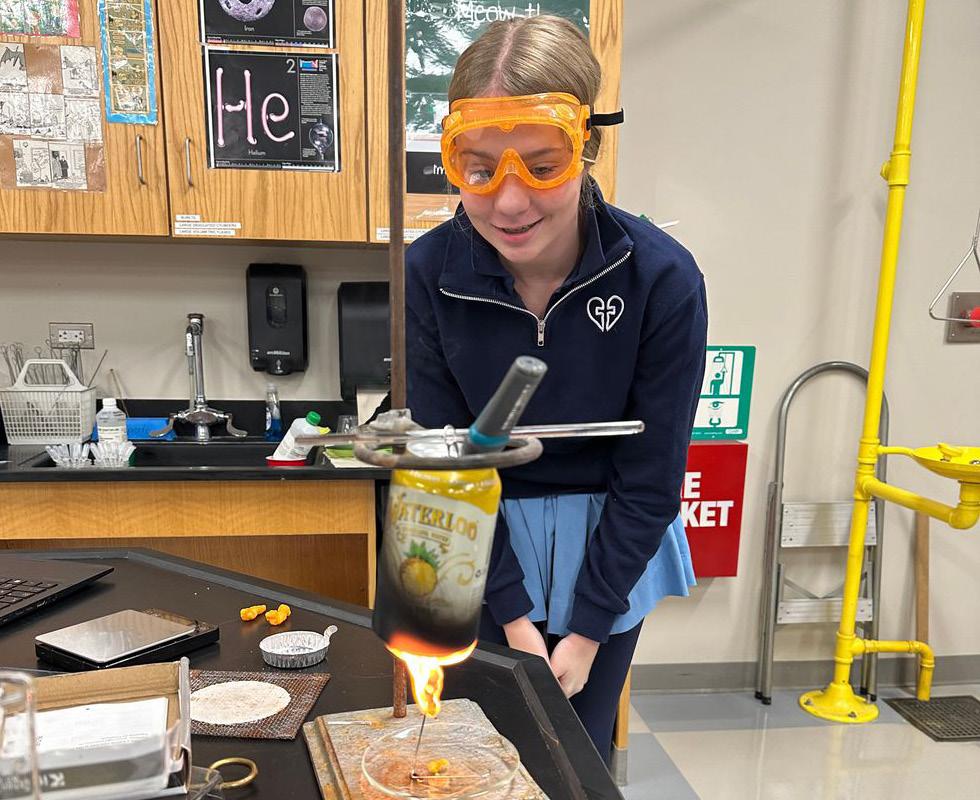
AP Chemistry is designed to be equivalent to a first year chemistry course at the college level. Students build a foundation of chemical knowledge through both traditional and inquirybased investigations that allow them to collect and analyze data and connect concepts across the Big Ideas. Students will use models to describe scientific phenomena and solve problems; use appropriate mathematics; engage in scientific questioning to extend thinking and guide chemical investigations; plan and implement data collection strategies based on scientific questions; hone their abilities to create a scientific claim based on evidence and scientific reasoning; and connect knowledge across the various content areas both within, and outside, the course. In this algebrabased course, students will use theoretical and physical models, simulations, and mathematical relationships to process information and expand their understanding of chemistry. Prerequisite: Biology, Chemistry, Algebra II, concurrent enrollment in Advanced Precalculus or higher, and departmental approval for placement
Grades 11-12
Length: 3 Bins
The AP Physics 1 course is an algebra-based, introductory, college level physics course. Students will cultivate their understanding of physics through classroom study, in-class activity, and hands-on, inquiry-based investigations as they explore concepts of systems, force interactions, change, conservation, and fluid dynamics. The mathematical basis of this course is algebra and trigonometry (functions and equations). Mathematical relationships will be used as guides for thinking and in all aspects of scientific inquiry. Students will use a variety of techniques, including real and virtual laboratory investigations, inquiry, and scientific problem-solving, to make informed decisions and think critically and logically about physics concepts. Emphasis will be on designing and conducting scientific investigations to gather, interpret, and analyze data, and to form relationships between evidence and explanations. Prerequisite: Advanced Chemistry, concurrent enrollment in Advanced Precalculus or higher, and departmental approval for placement
Grades 11-12
Length: 3 Bins
AP Physics 2 is a full year, algebra-based, college level physics course that builds on the foundations of mechanics to explore how energy, charge, and matter behave in more complex systems. Major topics include fluid mechanics, thermodynamics, electric forces and fields, electric circuits, magnetism, electromagnetic induction, waves and sound, optics, and introductory modern physics. Students develop a deep conceptual understanding of physical models and apply mathematical reasoning to analyze real world phenomena. Emphasis is placed on experimental design, data collection, uncertainty analysis, and evidence based conclusions through frequent hands on laboratory investigations. This course prepares students for the AP Physics 2 exam and for continued study in engineering, physics, and other STEM fields. Strong algebra skills, proportional reasoning, and comfort with multi-step problem-solving are expected. Prerequisite: AP Physics 1 and departmental approval for placement
Grades 11-12
Length: 3 Bins
The goal of the AP Environmental Science course is to provide students with the scientific principles, concepts, and methodologies required to understand the interrelationships of the natural world. It aims to help students identify and analyze environmental problems, both natural and human made. Additionally, the course focuses on evaluating the relative risks associated with these problems and examining alternative solutions for resolving or preventing them. Specific topics include ecosystems, biodiversity, populations, Earth systems and resources, land and water use, energy, air pollution, aquatic and terrestrial pollution, and global change. Prerequisite: Chemistry, Algebra II, and departmental approval for placement
Grades 11-12
Length: 3 Bins
Through a mix of traditional learning, interactive projects, documentaries, and current events, students will dive into this dynamic and engaging Environmental Science course. Students will explore the scientific principles that shape the world around them, gaining a deeper understanding of how human activities impact the environment. The course covers key concepts such as biodiversity, climate change, sustainability, and pollution, while focusing on issues that are both of interest to students and relevant to their everyday lives. Prerequisite: Chemistry
Grades 11-12
Length: 3 Bins
This course enables students to develop an understanding of the relationships between the structures and functions of the body and builds on existing knowledge about body systems gained in Grade 9 Biology. Students will learn to identify and describe anatomical structures through inquiry, observation, and dissection. They will learn more about the human body, which provides a foundation for those interested in health-related careers. Prerequisite: Chemistry
Grades 11-12
Length: 1 Bin
Dive into the vibrant world of coral reefs in this marine biology elective. Marine biology is the study of marine organisms, their behavior, and their interaction with the environment. This course will focus on everything reefs, from colorful fish to intricate coral species. Learn about the delicate balance of reef systems, their role in ocean health, and the challenges they face from climate change and human activity. Through learning to identify species, watching documentaries, exploring current events, and completing research-based projects, students will gain a deeper understanding of the interconnectedness of life beneath the waves and the importance of preserving it for future generations. Prerequisite: Chemistry
Grades 11-12
Length: 1 Bin
Do you know how popcorn pops? That caraway seeds and spearmint are essentially the same molecule? That vanilla extract has over 300 flavor components? How mayo and whipped cream are similar? In this one-bin elective, students will explore some of the major molecule groups and how they are connected to the foods we eat. The chemistry of food flavors, food textures, and reactions during cooking and/or digestion are all on the table! Prerequisite: Chemistry
Grades 11-12
Length: 1 Bin
There are endless possibilities for the pattern of one’s genetic material, but how do genetic disorders appear when the chances of them are quite rare? In this course, students will unravel the genome and discover how mutations in DNA sequence can greatly affect an individual. Students will use knowledge of DNA, protein synthesis, cellular processes, and inheritance patterns to study the cause of various genetic disorders and the physical effects they have on an individual.
Prerequisite: Chemistry
Grades 11-12
Length: 1 Bin
Forensic Science is the application of science (chemistry, physics, and biology) to the criminal and civil laws that are enforced by police agencies in a criminal justice system. In this course, students will investigate fingerprinting, fiber analysis, ballistics, arson, trace evidence analysis, poisons, drugs, blood spatters, and blood samples. Students are taught the proper collection, preservation, and laboratory analysis of various samples.
Prerequisite: Chemistry
Grades 11-12
Length: 3 Bins

Have you ever wondered how diseases can suddenly appear and quickly affect populations? Epidemiology is the study of diseases in populations of humans or other animals, specifically how, when, and where they occur. Students enrolled in this course will study and research infectious diseases to determine what factors are associated with diseases and what factors may protect people or animals against diseases. Prerequisite: Chemistry
Grades 11-12
Length: 1 Bin
This interdisciplinary course offers an in-depth exploration of light and color from both scientific and psychological perspectives, encompassing fundamental principles of physics, the human perception of color, and practical applications in various fields. Through a combination of theoretical learning, practical experiments, and interactive discussions, students will gain a comprehensive understanding of the physics of light, color theories, human vision, and the diverse applications of light and color in various industries.
Prerequisite: Algebra II
Grades 11-12
Length: 1 Bin
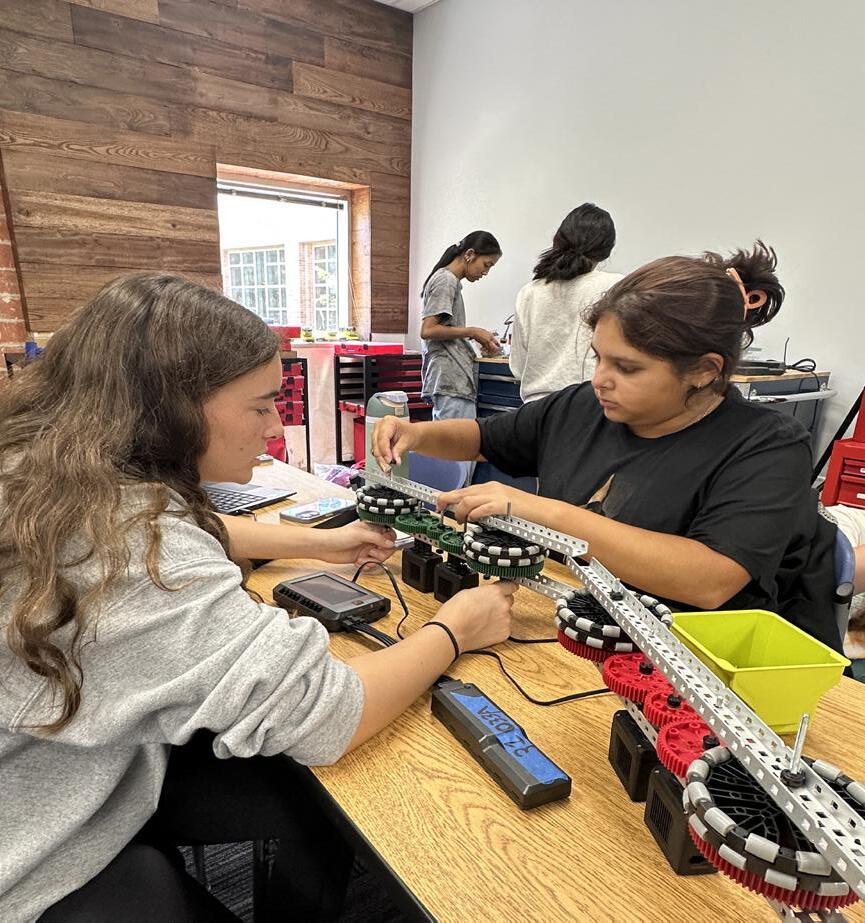

The World History and Geography course focuses on building foundational skills essential for the study of history and geography in high school, college, and beyond. Students will engage in critical thinking and analysis, working like historians and geographers as they strengthen their ability to reason and interpret evidence. Through the evaluation of a wide range of primary and secondary sources, students will gain a deeper understanding of historical events and relationships. They will develop their ability to explain causation, draw comparisons, and analyze continuity and change over time. Mastery of the material will be demonstrated through effective written and oral arguments that incorporate and support their findings. Prerequisite: None
Grade 9
Length: 3 Bins
The areas of focus of this course prioritize the skills fundamental to the study of history and geography in high school, Advanced Placement courses, and beyond. This Pre-AP course gives students multiple opportunities to think and work like historians and geographers as they develop and strengthen these disciplinary reasoning skills throughout their education in history and the social sciences. Students will acquire knowledge by evaluating evidence from a wide range of primary and secondary sources, and they will explain relationships among events and people by marshalling evidence for causation, comparison, and continuity and change over time. Students will demonstrate command of material by effectively incorporating it into written and oral arguments
Prerequisite: Departmental approval for placement
Grade 9
Length: 3 Bins
This course begins with the birth of the modern historical era at the end of the middle ages and explores major people, events, institutions, and ideas up to the 20th century. Students will study voices of the past through primary sources, analyze how geography has impacted global development, and develop empathy and curiosity toward the broader world around them. The goal of this course is for students to be able to contextualize the modern world in relation to contemporary ideas and problems. Prerequisite: None
Grade 10
Length: 3 Bins
This is a survey course of American history, beginning with the Civil War and extending to the early 21st century. Students will examine the people, events, and ideas that have shaped and driven American history through primary sources, while also analyzing how historical perspective is formed in secondary sources. The course aims to provide students with the knowledge and analytical skills necessary to think critically about issues in American history. A broader, yet equally important goal, is to develop better-informed citizens who will participate responsibly in our society’s public forum. Prerequisite: None
Grade 11
Length: 3 Bin
Students in Grade 12 must complete at least 3 bins of Social Studies, comprised at a minimum of American Government (or AP US Government and Politics) and Economics (or AP Macroeconomics).
A group of citizens once approached Benjamin Franklin as he was leaving the Constitutional Convention in 1787 and asked him what form of government the new American country would adopt. He famously replied, “A Republic, if you can keep it.” This course will examine the foundation, structure, and modern-day workings of that Republic. Students will develop a robust understanding of our government system, including the three branches and their institutions, the role of political parties and interest groups, fundamental civil rights and liberties, and the many layers and institutions that help make our government function. Students will explore considerable connections to modern current events in the United States so that after this course, they will be more informed and civicminded Americans. Prerequisite: None
Grade 12
Length: 1 Bin
Fundamentally, economics is the study of choice and constraints. This course will serve as a broad introduction to the field of economics (macro and micro), but the course is ultimately designed to expose students to the thinking, tools, and wonder of economics. Students will complete this course with a fuller understanding of economics as it applies to their lives, their government, and their future. Students will develop a framework of core macroeconomic principles and their application to current problems and issues faced by policymakers. The course will emphasize the macroeconomic policy challenges faced by governments and central banks, as well as describe the various tools available to meet these challenges. Students will also develop the tools of personal financial literacy in order to become competent and capable economic actors. Prerequisite: None
Grade 12
Length: 1 Bin
In this course, students investigate significant events, individuals, developments, and processes from 1200 to the present. Students analyze primary and secondary sources, develop historical arguments, make historical connections, and utilize reason about comparison, causation, and continuity and change over time. Students make connections in different times and places according to six themes: humans and the environment, cultural developments and interactions, governance, economic systems, social interaction and organization, and technology and innovation. Prerequisite: Departmental approval for placement
Grade 10
Length: 3 Bins


This is a college level survey course designed by the College Board that covers the foundations of our nation, continuing through the rise of the United States as a world power, and into the contemporary world. AP US History emphasizes persuasive writing, critical thinking, and document analysis skills which will be tested on the AP US History exam in May. In addition to preparing the student for the AP exam, the course is designed to prepare thoughtful citizens that have a cultivated appreciation for how our nation sets the trends that shape current and future political, economic, intellectual, and social issues. Prerequisite: Departmental approval for placement
Grade 11
Length: 3 Bins
In AP European History, students investigate significant events, individuals, developments, and processes from approximately 1450 to the present. Students develop and use the same skills, practices, and methods employed by historians: analyzing primary and secondary sources, developing historical arguments, making historical connections, and utilizing reasoning about comparison, causation, and continuity and change over time. The course also provides seven themes that students explore throughout the course in order to make connections among historical developments in different times and places: interaction of Europe and the world, economic and commercial development, cultural and intellectual development, states and other institutions of power, social organization and development, national and European identity, and technological and scientific innovations. Prerequisite: Departmental approval for placement
Grades 11-12
Length: 3 Bins


The AP US Government and Politics course provides a college level, nonpartisan introduction to key political concepts, ideas, institutions, policies, interactions, roles, and behaviors that characterize the various government structures (primarily federal) in the United States. Through this course, students will study foundational US documents that trace the evolution of the philosophy and implementation of American political values and institutions, significant Supreme Court decisions that shaped American life, and important political developments and challenges that have defined American political, economic, and social issues. Prerequisite: Departmental approval for placement
Grade 12
Length: 2 Bins
AP Macroeconomics is a college-level course that introduces students to the principles that apply to an economic system as a whole. The course places particular emphasis on the study of national income and price-level determination. It also develops students' familiarity with economic performance measures, the financial sector, stabilization policies, economic growth, and international economics. Students learn to use graphs, charts, and data to analyze, describe, and explain economic concepts. Prerequisite: Departmental approval for placement
Grade 12
Length: 2 Bins
AP African American Studies is an interdisciplinary course that examines the diversity of African American experiences through direct encounters with varied sources. Students explore key topics that extend from early African kingdoms to the ongoing challenges and achievements of the contemporary moment. Given the interdisciplinary character of African American Studies, students in the course will develop skills across multiple fields, with an emphasis on honing historical, literary, visual, and data analysis skills. This course foregrounds a study of the diversity of Black communities in the United States within the broader context of Africa and the African diaspora. Prerequisite: Departmental approval for placement
Grades 11-12
Length: 3 Bins
This course introduces students to the foundations and theories underlying international relations in the 21st century. Students will analyze modern issues and determine the ways in which traditional diplomacy applies or does not apply in modern decision-making. Students will illustrate analysis and synthesis of modern issues via writing, presentations, and simulations so that they can hone their own diplomatic acumen. Topics include diplomacy, geography, globalization, conflict resolution, global security, the rise of non-state actors, and sustainable development. Students interested in majoring in international relations, political science, or international business would benefit from taking this course. Prerequisite: Departmental approval for placement
Grades 11-12
Length: 1 Bin
This course will begin on the eve of World War I, a time when a flourishing Europe would be plummeted into bloodshed and devastation never before seen in history. Students will learn about the war, the Russian Revolution, the economic depression, and the rise of Totalitarian leaders in this era of “strong men” and even stronger ideologies. Finally, the course will explore the many facets of World War II, including frightening new technologies of warfare that challenged the ethics of Western civilization. Students will grapple with historiographical questions, such as whether Germany caused both wars and the morality of terror bombing enacted by both sides. The course will conclude with an analysis of how these three decades shaped the modern world. Prerequisite: None
Grades 10-12
Length: 1 Bin *denotes new course for 2026-2027

Have you ever wondered how eyewitness testimonies can be so flawed? Or whether nature or nurture has more sway over how you turned out? This course is designed to introduce students to the fascinating world of psychology and inspire them to take more psychology courses in college. By the end of this course, students will have a broad overview of many interesting psychological topics and complete a deep dive project on a specific area of research that especially interests them. Prerequisite: None
Grades 11-12
Length: 1 Bin
This course focuses on the experience of women in the United States from the beginning of the 20th century to today. The course begins with women’s fight for suffrage and tracks how women have both shaped American society and been shaped by historical events and developments. Students will read a variety of sources to learn history through women’s words, and they will analyze how other factors like race and class have intersected with gender. Prerequisite: None
Grades 11-12
Length: 1 Bin
This course explores present controversies being discussed in the news. The course topics are driven by what is being debated in the papers, on social media, and online throughout the duration of the course. Students will also learn the necessary background information to understand the news, including information on history, governmental structures, and culture in the US and the world. Students will be educated in media literacy and critical analysis of the news and news bias, skills which will be reinforced throughout the course.
Prerequisite: None
Grades 11-12
Length: 1 Bin
This course uses the novel Sophie's World to trace Western philosophy from the Pre-Socratics to the 20th century. Students learn how big questions about reality, knowledge, and the good life evolve as methods shift from myth and speculation to logic, science, and critique. Each week highlights a movement (Ancient, Hellenistic/Roman, Medieval, Rennaissance, Early Modern, 19th Century, and modern currents) linking core thinkers to recurring philosophical questions. Students will also work hands-on with short, primary source excerpts (e.g. Plato, Aristotle, Augustine, Aquinas, Descartes, Hume, Kant, Kierkegaard, Marx, Nietzsche, Sartre, Wittgenstein, Arendt). Students will practice arguing from texts, considering counter-positions, and applying ideas to present-day issues.
Prerequisite: None
Grades 11-12
Length: 1 Bin
*denotes new course for 2026-2027

Computer Science for the Curious
Long before 2025, computer technology was already an essential component of daily life on Earth. This course provides beginners with a foundational understanding of computer science by diving into the history and evolution of computing, applications of computer science in various disciplines and careers, cybersecurity, robotics and engineering, computer-aided design, and an introduction to the principles of coding using Java. Prerequisite: None
Grades 9-12
Length: 1 Bin
A piping hot cup of java might just be the most important step in your morning routine, but Java also happens to refer to one of many industrystandard programming languages utilized in computer science applications such as the Internet of Things (IoT), game development, big data analysis, and sensors for self-driving cars! This course intends to provide students with a reliable foundation of computer science and the basics of programming in Java, with a focus on problem solving and algorithm development. Java Programming is a console and programming intensive course that requires a significant investment from students wherein they will spend an appreciable amount of time on their laptops writing code in an integrated design environment using a compiler and debugger. Prerequisite: Computer Science for the Curious
Grades 9-12
Length: 1 Bin
*Wired to the Wild
Are the bees having a good day? Is the lack of rain causing the trees to become dangerously thirsty? Are any critters home in that little hole dug under the sidewalk? In Wired to the Wild, students will use the power of engineering design, programming, circuitry, and environmental telemetry sensors to collect and analyze real data to dive deep into the little curiosities from the seemingly quiet, natural world that exists around us. Prerequisite: Java Programming
Grades 10-12
Length: 1 Bin
Have you ever wanted to make your very own video game? In Game Design, students will develop skills in 3-D modeling, file management, software management, and game design skills to create their own video game level, complete with custom objects and activities. Throughout the MOD, students will work on various aspects of level design planning, character interactions, and artistic direction. The final project for the course is to make a fully functional level in a video game in a genre such as exploration, "Breath of the Wild," racing, "Forza," social simulations, "Animal Crossing," RPG, "Pokemon," or sandbox, "Minecraft" style. All efforts in class will culminate in a playable video game where students will challenge themselves and classmates to play each other’s games. To the victor go the spoils! Prerequisite: None
Grades 9-12
Length: 1 Bin
In this course, students will learn how to design three dimensional products using Fusion 360, Autodesk's cloud-based CAD (Computer-Aided Design) software. Students will use a datadriven approach to gain an understanding of how commercial products are designed and constructed, the fundamentals of designing within 3-D space, CAD software, technical sketching, and 3-D printing to design real products they would find useful to have in their own daily life. Using the engineering design process as a model for efficient and creative problem solving, students will develop and improve upon their product designs to produce functional 3-D prints of their final designs at the end of each project. Prerequisite: None
Grades 9-12
Length: 1 Bin
course for 2026-2027
Robotics students will employ the engineering design process while building robots to solve problems and learn STEM principles that make topics in engineering more approachable and understandable. Students will apply their learning while completing a series of labs, constructing robots, and testing their designs to optimize them for in-class competitions and challenges. Throughout the MOD, students will document their design progress and record valuable information in engineering notebooks that will be used to inform students in data-based decision making. Prerequisite: Computer Science for the Curious Grades 9-12
Length: 1 Bin
The ability to access the internet has reached a level of necessity which has made it essential to daily life for most people, with many countries even making the decision to recognize internet access as a basic human right. In a world so rooted in technology and a need for constant connectivity, more systems and products becoming automated, and hackers getting creative and more sophisticated with their tactics, we become more vulnerable to cybercrime every day. This course will introduce foundational cybersecurity principles, teach students how to identify network vulnerabilities, mitigate cyberthreats, thwart cyberattacks, and stay proactive and vigilant in a constantly evolving cybersecurity landscape. Prerequisite: Computer Science for the Curious Grades 9-12
Length: 1 Bin
This course will cover topics such as mechanisms, form and fitment, tolerancing, proof-of-concept, and additional advanced design concepts as time permits. Students are required to be exceptionally familiar with their computers, its functions, and the workflows associated with Digital Product Design, including creating 3-D printing parts and drafting 3-D parts in Fusion 360. Students will create several projects focused on rotating mechanisms, balancing mechanisms, and extended service life products. Join the class and learn how the engineering design process is applied conceptually to real-life products like medical and mechanical devices and how you can use your skills to custom fabricate one such item. Prerequisite: Digital Product Design and departmental approval for placement
Grades 10-12
Length: 1 Bin
This course, which is driven by the Engineering Design Process (EDP), is designed by the University of Texas at Austin. The EDP, a process applicable to any of the professions and degrees in the STEM family, will be utilized as students explore mechanical, civil, electrical, and aerospace engineering through a series of design challenges. The focus will be on improving the health and lives of individuals and meeting specific needs, as students develop skills in Fusion 360, programming, and engineering design and analysis. Multiple challenging projects with accompanying laboratory experiments will rely on data-driven decisions and collaboration. The class will facilitate the creation and completion of a significant portfolio to showcase students’ work as it lays the foundation for and builds on the logical sequential reasoning skills needed for students to be successful in STEM fields. Prerequisites: Java Programming, Digital Product Design, concurrent enrollment in Precalculus and Physics, and departmental approval for placement
Grades 10-12
Length: 3 Bins
In this course, students will create an advanced robot for the VEX Robotics Competition (VRC). The class will dive into advanced concepts in robotics such as programming, sensors, CAD design analysis, and engineering design of mechanisms as they build a robot to compete in the 202627 game for the VEX Robotics Competition. All students in this class will be required to attend at least two VRC tournaments and participate in after school robotics build sessions and practice. Prerequisites: Digital Product Design and Robotics OR experience on the Robotics Team and departmental approval for placement
Grades 10-12
Length: 3 Bins
AP Computer Science A is a college level course that investigates the world of computer science. This course is intended for both students who are curious about computer science and those who are seriously considering a career in the field. Students will learn the concepts of objectoriented programming and be able to implement them in Java, the industry standard language. In addition, students will also learn how to design, implement, debug, and document computer programs. Students learn how to use and create their own programming algorithms, as well as methodologies on how to approach programmingrelated problems. Also covered are the ethical and social implications of computer science. This course will be a mixture of lecture and hands-on lab experiences. Prerequisite: Java Programming and departmental approval for placement
Grades 11-12
Length: 3 Bins
Digital
Gain foundational knowledge and skills in several digital mediums, including photo editing, digital drawing, and desktop publishing. Explore the basics of design, color, and typography in creating original digital art, or for enhancing projects and presentations now and in the future. Students will explore these Adobe Creative Cloud applications: Photoshop, Illustrator, and InDesign. Prerequisite: None
Grades 9-12
Length: 1 Bin
Digital Media II
Harness the knowledge gained in Digital Media I and expand it in a variety of captivating ways. With lessons in more advanced techniques and the guidance of the instructor, students will conceive, organize, and execute projects of their own design, created in one or more of the applications from the Adobe Creative Cloud (Photoshop, Illustrator, and InDesign). Students choose their area of interest— drawing, photo editing, desktop publishing, or a combination— and create a small body of works showing their theme or concept. This course may be repeated for credit. Prerequisite: Digital Media I
Grades 9-12
Length: 1 Bin
Students will create original short films employing digital design principles studied in Digital Media I, such as typography, color, elements of design, rule of thirds, balance, emphasis, movement, space, and perspective. In the development and pre-production phases of the project, students will develop and refine a story concept of their choosing, learn the art of scriptwriting and storyboarding, and plan the logistics of making their film. During production, students will learn about creative shot styles and videography techniques to captivate their viewers and will use these techniques to shoot the scenes for their film. When filming wraps, the students will bring their film to life in post-production by learning film industry standard software, including Adobe Premiere Pro, Audition, and After Effects to assemble, edit, adjust, add special effects, and export their final product. Prerequisite: Digital Media I
Grades 9-12
Length: 1 Bin
Learn the basics of User Experience (UX) and User Interface (UI) design and harness your creativity to design apps that provide personalized, intuitive, inclusive, and engaging user experiences. With a digital product concept in mind, students will employ an empathetic, design-thinking approach to problem-solving as they conduct and synthesize user research to identify product needs, ideate a variety of possible solutions based on user stories, make research-based design decisions, create sketches and wireframes to conduct usability testing, and bring to life a clickable prototype using an industry standard interface design tool, Figma. Though this course builds on the universal design principles learned in Digital Media I, there’s no requirement to be an artist, and there’s also no programming required – an introduction to UX/UI Design can be enjoyed by both creative minds and analytical minds alike! Prerequisite: Digital Media
Grades 9-12
Length: 1 Bin
Running a help desk takes patience, focus, teamwork, independence, and strong customer support skills, all of which will be learned and practiced by our student IT interns when running the CAVE (Computer Audio Visual Education) help desk. IT Interns are responsible daily for staffing the CAVE help desk and for performing regular maintenance and service of campus computers and audio/visual equipment. Participation in this course requires strong organizational skills, a strong sense of personal responsibility, the ability to work both independently and with a group, and a strong desire to learn the technical aspects of the computer. IT Interns must demonstrate respect and patience, as they will be working with both faculty and students. Interns will be required to attend a mandatory 3-day training workshop prior to the start of the school year.
IT Interns will be immersed in the fundamental knowledge of information technology and perform real-world tasks by working in the help desk. They will learn PC hardware and software, basic networking, and maintain CAVE resources and outreach. This class may be repeated for credit. Prerequisite: Computer Science for the Curious or previous CAVE experience and departmental approval for placement
Grades 9-12
Length: 2 Bins
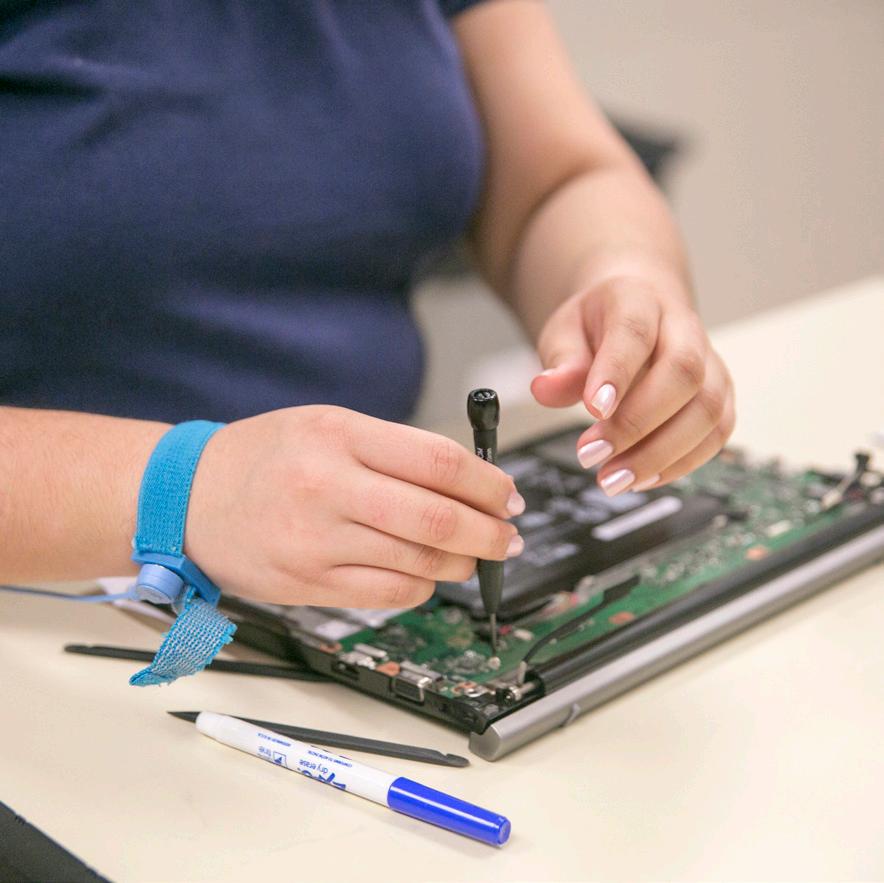
IT Apprentices will deepen their knowledge of information technology by pursuing a Microsoft or Test Out certification while also working with the help desk. Prerequisite: Information Technology Internship and departmental approval for placement
Grades 10-12
Length: 3 Bins
*Information Technology Helpdesk Management
Congratulations, you’ve been promoted! With proven skills, reliability, and experience as an IT Intern and Apprentice, Managers will now take on a true leadership role in the CAVE, exploring enhanced responsibilities from project management to Intune software deployment. Students in this course will serve as mentors to train interns on what it takes to smoothly run a helpdesk through modeling, task delegation, and documentation. This course may be repeated for credit. Prerequisite: Information Technology Apprenticeship and departmental approval for placement
Grade 12
Length: 1 Bin
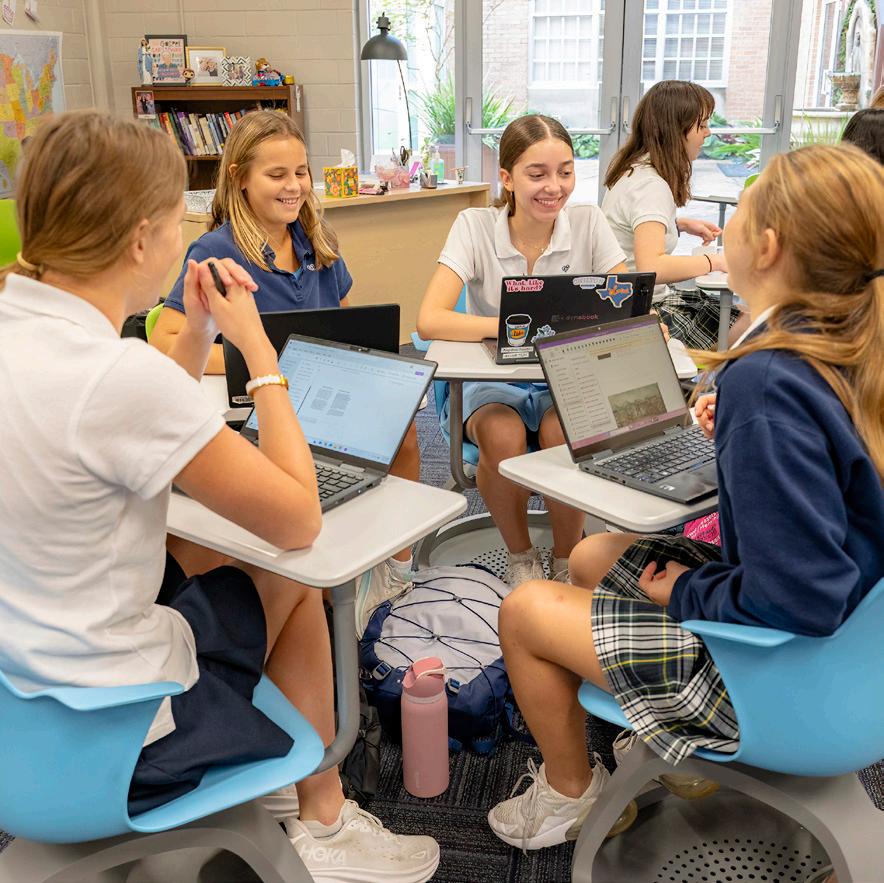
Students will learn the basics of punching, kicking, and striking techniques in multiple disciplines, gaining vital skills in self-defense in an excellent full-body workout. This is a non-combat class suitable for beginners.
Prerequisite: None
Grades 9-12
Length: 1 Bin
Pursuit of Healthiness is an Upper School course where students will be able to explore different lifestyle and recreational games and activities. In this course, they will experience exciting new games and relive the classics! This course will dive into activities such as outdoor pursuits, pickleball, spike ball, yoga, yard games, trending workouts, and many more. By the end of this course, students will find their new favorite hobby, activity, and exercise in order to pursue a lifetime of healthiness. Prerequisite: None
Grades 9-12
Length: 1 Bin
In this course, students will learn about yoga and the different types practiced in Houston. Led by a certified yoga instructor, students will perform a physical practice daily to increase strength and flexibility. Once a week, students will practice yin yoga, a slower, more contemplative type of practice. Prerequisite: None
Grades 9-12
Length: 1 Bin
1-2-3-4, workouts rule and that’s for sure! 5-6-7-8, lift on beat and you’ll do great! Exercise to the beat of the music in this dynamic, fun, and rhythm-based course. After learning proper techniques of basic lifts like shoulder press, squats, scarecrow, planks, and bicycle crunches, students will complete daily, full-body workouts to trendy, upbeat music. Pilates, cardio, and nature walks are also part of this exciting course! Prerequisite: None
Grades 9-12
Length: 1 Bin
This course is designed to empower young women with the skills and confidence to excel in both athletics and everyday life. Through a combination of weight training, agility drills, and cardiovascular workouts, students build strength, endurance, and flexibility. This class will emphasize proper technique, injury prevention, and an overall motivating environment. By focusing on personalized goals, the class aims to enhance performance, while promoting a positive and healthy lifestyle. Prerequisite: None
Grades 9-12
Length: 1 Bin
This 6-week course and program is designed for Upper School girls in a Physical Education elective. The girls will be focusing on building fitness and confidence in a non-competitive environment. During the 80-minute class periods, students will gradually increase from walking and running intervals to continuous running by the mid to final weeks of the MOD. Each class will include warmups, workouts, and cool-downs. Proper form, pacing, and injury prevention will be emphasized. The goal in this course is for students to complete a fun run 5K at their own pace, while trying to run faster at the end of the MOD than they did at the beginning. Personal progress is tracked with fitness logs, and the emphasis is on personal achievement and group support. Prerequisite: None
Grades 9-12
Length: 1 Bin
Sports and PE Credit: Students who participate for an entire season of an after school sport will receive one graduation credit towards PE. One season counts for one bin of PE. Upon completion of the third bin through after school sports, Physical Education classes can only count as an elective towards graduation requirements.
Foundations of Art is the start of the Upper School art sequence. The course introduces students to the elements of art, such as line, shape, value, color, form, space, and texture, through exploratory art exercises and design prompts in a wide variety of media and techniques. Students will learn how to identify examples of different art elements in historical and contemporary artworks and consider how the elements contribute to an artwork’s overall meaning. Through class discussions and reflective writing, students will practice providing constructive feedback for their peers and themselves to improve their understanding of art concepts. The foundational sequence continues in Concepts of Art and Design, and these two courses are the prerequisites for our studio courses, where students focus on their favorite medium. Prerequisite: None
Grades 9-12
Length: 1 Bin
This course builds upon the knowledge gained in Foundations of Art and introduces the use of the principles of design to create strong compositions through exploratory art exercises and design prompts in a wide variety of media and techniques. Knowledge of color theory will be developed, and students will continue to learn how to analyze historical and contemporary artworks to consider how art elements and principles of design are used to convey meaning. Students will engage in critiques of their artworks and learn the vocabulary needed to discuss and appreciate different types of visual art in a formal setting. Prerequisite: Foundations of Art
Grades 9-12
Length: 1 Bin
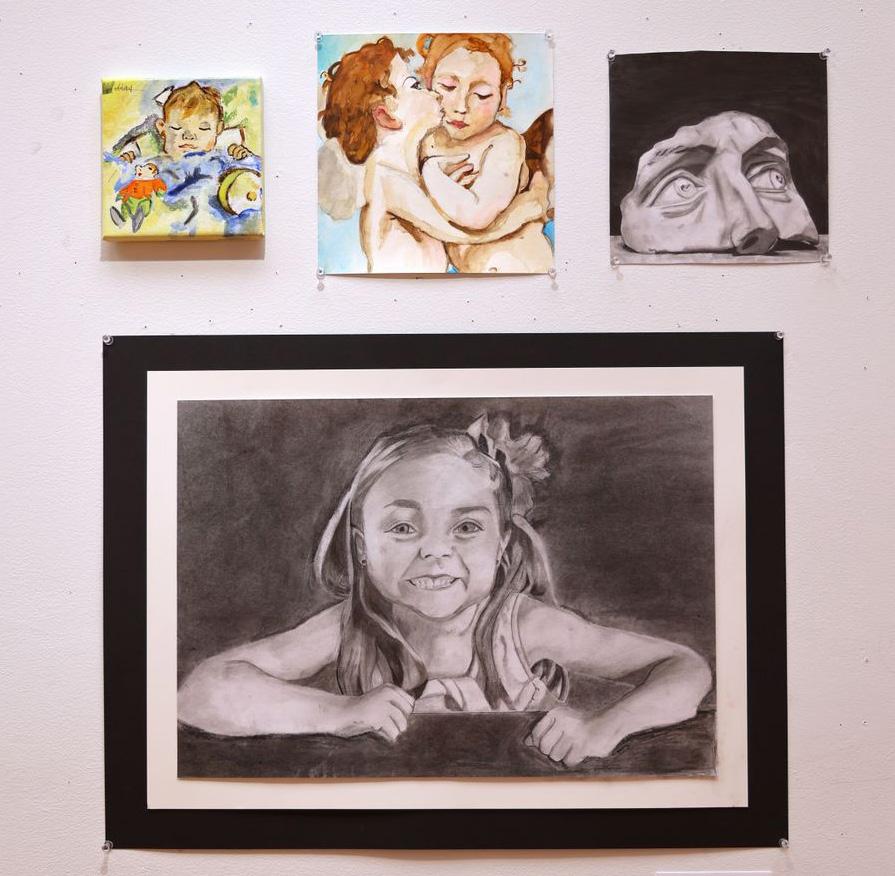
Students will increase their perceptual skills while using a variety of drawing tools and techniques. The primary focus of this course is drawing from life and learning how to look at spatial relationships to transfer knowledge onto a two-dimensional plane. Types of drawings will include contour, gesture, still life, linear perspective, and portraiture. Media will include graphite, charcoal, conté crayon, and ink. Outside-of-class sketchbook assignments are part of this course. Prerequisite: Concepts of Art and Design
Grades 9-12
Length: 1 Bin
Building upon skills learned in Drawing I, students will further study compositional elements while working both realistically and abstractly. Increased figurative work will provide opportunities for content considerations and greater technical skills. Historic, modern, and non-traditional approaches to drawing will be explored. Students’ media choices will expand to mixed media, pastels, and colored pencils. Assignments will be aimed at producing larger scale and more detailed work. Research and sketchbook documentation are a key part of this course. Prerequisite: Drawing I
Grades 10-12
Length: 1 Bin
Students will gain experience using acrylics to paint from observation. This course will focus on color theory and composition, reinforce the understanding of the elements and principles of design, and develop the student's perceptual skills. The painting experience will be enhanced through exposure to historic precedents and modern approaches to painting. Students will create 2-3 finished paintings. Prerequisite: Drawing I
Grades 10-12
Length: 1 Bin
Students will continue to develop perceptual and technical skills using acrylic or watercolor. Further exploration of painting styles and art movements will be included. Students will have more choice in the subject matter they choose to paint. Sketchbook research beyond the classroom is required. Students will create 2-3 finished paintings. Prerequisite: Painting I
Grades 10-12
Length: 1 Bin
In this beginning digital photography class, students will learn the basics, such as the exposure triangle, the purpose of the camera settings, optimal natural light situations, and composition techniques. Students will need to use their own DSLR cameras that include AV, TV, ISO, and manual settings. Assessments will be various photo assignments that focus on skills learned in class. Prerequisite: Concepts of Art and Design
Grades 10-12
Length: 1 Bin
Explore the history and creation of stained glass works, from early churches to the famous lamps of Louis Comfort Tiffany and the innovative works of modern artists. Then use your knowledge of design to create 2-D stained-glass projects. Students will create their original design and pattern and cut and piece glass into stunning and unique creations. This course may be repeated for credit. Repeat students can explore advanced 2-D projects or 3-D projects, such as lamps. Prerequisite: Concepts of Art and Design
Grades 10-12
Length: 1 Bin
Students will be introduced to the technique of artmaking which involves more than one medium. Various combinations will be explored, including collage with drawing and painting, photography with sewing and weaving, and printmaking with sculpture. Students will study the work of selected historical and contemporary artists as inspiration for projects. They will document ideas, processes, problems, and solutions in a visual journal and participate in class critiques. Prerequisite: Concepts of Art and Design
Grades 10-12
Length: 1 Bin
This studio course is an introduction to the clay medium. Students explore the nature of clay and glazes in a variety of hand-building projects, decorative processes, and glaze applications. Students will learn the four basic methods of hand-building construction— pinch, coil, slab, and drape—and use them in functional and sculptural works. Students will take the clay from plastic to bisque, learning terminology, tools, stages of clay, how to slip and score, texture, and the firing processes. Students apply their knowledge of art and design and good craftsmanship to realize their artistic vision. This course may be repeated for credit; repeat students will explore advanced hand-building projects. Prerequisite: Concepts of Art and Design
Grades 10-12
Length: 1 Bin
In this course, ceramics students will explore techniques for creating functional and sculptural forms using the potter’s wheel. Students will learn to make a variety of forms—cups, bowls, teapots, containers—shaping the clay with the potter’s wheel. Students use advanced techniques (texture, glaze, underglaze, sgraffito), good craftsmanship, and the elements and principles of art to realize their artistic vision or concept. This course may be repeated for credit; repeat students will explore advanced wheel-thrown projects. Prerequisite: Hand-Built Ceramics
Grades 10-12
Length: 1 Bin
Students will learn how to envision and create art in the third dimension through both realistic and abstract approaches. Then students will sculpt with a variety of materials such as clay, plaster, and wire, using a variety of sculptural techniques, such as carving, casting, and modeling. The work of selected historical and contemporary sculptors will be studied as inspiration for sculptural projects. Students will document ideas, processes, problems, and solutions in a visual journal and participate in class critiques. Prerequisite: Concepts of Art and Design
Grades 10-12
Length: 1 Bin
Students will continue to develop technical skills in a sculptural medium and technique of their choice. They will research historical and contemporary artists working within their chosen medium and technique and continue to document ideas, processes, problems, and solutions in a visual journal. Students will present works for feedback during class critiques. Prerequisite: Sculpture I
Grades 10-12
Length: 1 Bin
Students will continue to explore and develop techniques and processes learned in their studio classes. Students will independently design and implement a body of work that synthesizes their knowledge of media, tools, and techniques. Artist voice and demonstration of skill are the focus. Students will document ideas, processes, problems, and solutions in a visual journal. The final assessment for this class is a mini portfolio submission, consisting of 3-4 finished works of art from a selected theme or concept. All work done will be original in conception. Prerequisite: Two bins of studio art courses (excluding Foundations and Concepts) and departmental approval for placement
Grades 11-12
Length: 1 Bin
Through studio practice, application of design concepts, and informed decision making, students will assemble a body of artwork demonstrating a high level of knowledge of technique and process, quality, and evidence of growth. Students should have previously been exposed to basic skills including drawing, design, and creative thinking. Students will address two components in their portfolios: quality and concentration. Students will submit this body of work to the College Board for grading and possible college credit in May. Students are expected to display artistic integrity throughout the course. Students will have the opportunity to showcase some of their work in the Jones Gallery at Duchesne in a culminating show. Prerequisites: Three bins of studio art courses (excluding Foundations and Concepts) and departmental approval for placement
Grades 11-12
Length: 3 Bins
Art
Art history is the study of people and the art they create. Find out why there are so many statues in Ancient Rome and how to talk about them. Ponder how faith of all kinds inspires material culture. Learn about the history of art from the beginning of known human expression through the fall of the Roman Empire and into the Middle Ages. This course focuses on prehistoric art from around the world, art of the ancient world, and how the rise of Christianity and Islam formed artistic traditions. In a discussion-based format, students will examine the development of art and analyze it in the context of the culture that created it. Prerequisite: None
Grades 10-12
Length: 1 Bin
Art History: Ages of Innovation
This course will focus on Europe and the Americas from the Renaissance and the Colonial Era into the 20th Century. Humanism, religious and political upheaval, industrialization, and how these seismic shifts in society informed artistic tradition will be points of discussion. Traveling through Early Modern times into Modernism, students will understand the way art and human innovation are intertwined. In a discussion- based format, students will examine the development of art and analyze it in the context of the culture that created it. Prerequisite: None
Grades 10-12
Length: 1 Bin
Art History: Global and Contemporary
This course will focus on art created from 1960 to present day from around the world. Students will be introduced to Postmodern theory and how it relates to the expansion of the art history canon to include multiple perspectives and truths outside of the Western tradition. Contemporary works from various international cultures will be studied as well as works from marginalized groups such as African Americans, Indigenous voices, and women. In a discussion-based format, students will examine the development of art and analyze it in the context of the cultures that created it.
Prerequisite: None
Grades 10-12
Length: 1 Bin
Note: Students who complete all three bins of Art History may be eligible to take the AP Art History exam. Please speak with your Academic Dean before the start of the school year if interested.
Treble Choir
Christmas Concert, ISAS Fine Arts Festival, Region and State Choir, Solo and Ensemble contest, singing the anthem at the Houston Astros game—these are just a few of the performance opportunities for the Treble Choir! Experience the benefits of singing with a large group. Students are taught proper vocal technique and sight-reading skills while learning to sing as an ensemble. Open to all Upper School students. This course is repeatable for credit. Prerequisite: None
Grades 9-12
Length: 1 Bin
Advanced Choir
This ensemble is an auditioned performing group of 16-24 singers. It is open to students who have one or more years of experience in the Duchesne Treble Choir. This ensemble will perform highly challenging 4-part (SSAA) music, most of which is sung a cappella. Students are required to submit an audition for the TPSMEA All-State competition as well as prepare a vocal solo and ensemble for the TPSMEA Solo and Ensemble competition. Concurrent enrollment in Treble Choir required. This course is repeatable for credit. Prerequisite: Treble Choir
Grades 10-12
Length: 1 Bin
Guitar I
Have you ever wanted to be able to play along to your favorite song on the radio? This course introduces the student to basic acoustic guitar skills. Students will be taught basic strumming patterns, chords, and chord progressions. We will explore music of The Beatles, folk, classic rock, country, and modern pop. No prior knowledge needed. Prerequisite: None
Grades 9-12
Length: 1 Bin
Guitar II
Students will continue honing their skills on the acoustic guitar that they began in Guitar I. Students will add chords and add fingerpicking to their strumming patterns. Performance opportunities will be presented to play in school liturgies and assemblies. Instructor approval/audition will be required to enter this course. Prerequisite: Guitar I and departmental approval for placement with audition
Grades 10-12
Length: 1 Bin
Students receive instruction in advanced vocal technique, posture, breathing, diction, foreign language, and music theory. Performance and audition techniques and opportunities are explored. A variety of genres will be studied, culminating in a solo recital at the end of the class. Instructor permission required. This course is repeatable for credit. Prerequisite: Departmental approval for placement
Grades 11-12
Length: 1 Bin
Have you ever wanted to be in a musical ensemble and perform in an instrumental group? No prior music skill is needed, just a desire to learn a new skill. This course is designed for students who wish to develop basic ringing skills or to expand their existing skills. Emphasis will be placed on learning proper ringing methods as well as key musical elements. The handbell choir will perform at various liturgies and concerts throughout the year. This course is repeatable for credit. Prerequisite: None
Grades 9-12
Length: 1 Bin
Curious about all the symbols and markings in a piece of music? Learn to speak the language of written music. This course covers the foundations of beginning music theory. Topics center around melody, harmony, rhythm, and dynamics. Included will be analysis from music literature to show how music theory functions in all styles of music. Prerequisite: None
Grades 10-12
Length: 1 Bin
AP Music Theory is an introductory, college-level music theory course. Students cultivate their understanding of music theory through analyzing performed and notated music as they explore concepts like pitch, rhythm, form, and musical design. Prerequisite: Departmental approval for placement, successful completion of 2 years of Choir/Advanced Choir, OR be actively studying with an outside private instrumental teacher
Grades 11-12
Length: 3 Bins
Introduction to Theater
Theater is the art of collaborative storytelling and has a history going back thousands of years. Students in this course will learn about theater traditions, explore a variety of acting techniques, experience various movement and vocal techniques, and try their hands at design and production work. The skills and knowledge acquired will enable the students to go on to more advanced theater courses and excel onstage and backstage. Prerequisite: None
Grades 9-12
Length: 1 Bin
Musical Theater
This class aims to be a mix of musical theater history and practical performance applications from each of the musical theatre disciplines–singing, dancing, and acting. Each week students will deep dive into a different era of American musical theater beginning with its early roots in Vaudeville and Operetta and concluding with what is currently happening on Broadway and what we can look forward to in the future. There will be one performance-based assignment each week as well as a weekly Listening Log. The course culminates in a final project of both a prepared performance based on what we have explored throughout the MOD and a pitch for each student's own original musical adaptation. Prerequisite: Introduction to Theater, Treble Choir, or Dance I
Grades 9-12
Length: 1 Bin
Where the first musical theater class focuses mostly on the history of the art form, Musical Theater II is a performance-based course. Students will work more in depth on each of the three disciplines of musical theater–acting, singing, and dancing. The course culminates in a final project of a studentdirected cabaret performance of songs, scenes, and a choreographed dance piece. Prerequisite: Musical Theater
Grades 10-12
Length: 1 Bin
This course introduces students to the magical and wonderful world of improvisational comedy and the power of “Yes, And!” in theater. Through a variety of group exercises and games, students will explore the structure of short-form improv (3-5 minute scenes inspired by Whose Line Is it Anyway, Second City, ComedySportz) and develop their comedic talents through practice and play. By focusing on effective communication and commitment to characters and relationships in scenes, students will build foundational improv skills that will allow them to find humor and joy in an environment that encourages collaboration and risk-taking. Prerequisite: Introduction to Theater
Grades 9-12
Length: 1 Bin
This course is for theater students who want to build their acting skills. Students will spend six weeks selecting, analyzing, memorizing, rehearsing, and presenting a series of scenes drawn from the theatrical genres and periods that most interest the class. Students will learn how to create characters and tell stories effectively in collaboration with a partner or ensemble. The class will include a performance for friends and family. Prerequisite: Introduction to Theater Grades 9-12
Length: 1 Bin
Theater is a collaborative art where actors, designers, and directors work together to create a production. But (almost) every play starts with a single artist – the playwright. This project-focused course will explore how to write effectively for the stage. Students will examine dramatic structure and look at how to use dialogue and stage directions to create a recipe for other artists to bring words to life. The course will cover both writing original stories for the stage and adapting work from other media. Students will be able to choose their particular focus and, depending on student interest, may collaborate on a script or scripts designed for a future Duchesne production. Prerequisite: Introduction to Theater Grades 9-12
Length: 1 Bin
The stories we tell on stage are stories of people in unusual or extreme circumstances. Stage combat can be heroic, tragic, brutal, or comic, but actors and directors must always make sure that it’s safe and evocative. In this course, students will learn how fight choreographers create effective scenes of violence and learn the basic techniques that make an actor a good stage combatant. This course may include both unarmed techniques and weapons like swords, quarterstaffs, and knives. Prerequisite: Introduction to Theater
Grades 9-12
Length: 1 Bin
Let’s put on a show! This class is centered on the production of a full-length play as part of the Duchesne Fine Arts season. As a curricular production, this show and production process will be designed to put the creative process in the hands of the student ensemble, so that they can learn and grow as artists. Prerequisite: Introduction to Theater
Grades 9-12
Length: 1 Bin
This class will dive headfirst into the materials and styles of modern puppet making. We will design and build puppets with cardboard, fabric, foam, wood, and all manner of found objects. The goal of the class is to get students working with their hands and get them thinking about problem solving in a physical space. Students will work individually and as a group to make puppets from scratch in any number of styles. Prerequisite: Introduction to Theater, Foundations of Art
Grades 9-12
Length: 1 Bin
In this course, students learn the basics of technical theater. We will cover stage management, sound, video, scenery, costumes, and lighting. Students will use analysis and research to enter the design process and use collages, rendering, and playlist to ensure their artistic vision. This course requires independent work in the booth, catwalk, and scene shop, using electrical power and rigging tools, so students must show strong responsibility. Prerequisite: Introduction to Theater and departmental approval for placement
Grades 9-12
Length: 1 Bin
This course builds on the skills learned in Theater Technology and Design I, allowing students to apply their knowledge to major events such as the all-school musical, Upper School theater productions, dance shows, pop shows, and Lower School Christmas programs. Students will take on significant responsibilities as lighting, sound, video, costume, and set designers and technicians, mastering advanced techniques and enhancing their expertise. They may also work on specialized design projects. A key aspect of the course involves independently maintaining and improving the equipment in the Cameron Theatre. Because students will work in the booth, catwalk, and scene shop, handling electrical and rigging tools, they must show exceptional responsibility and accountability to succeed. Instructor permission is required. Prerequisite: Theater Technology and Design I and departmental approval for placement
Grades 10-12
Length: 1 Bin
This course is for technicians and designers who are ready to take on lead designer roles in our school productions. These students have spent time polishing their skills in the two prerequisite courses and can now work independently in collaboration with the directors to bring Duchesne productions to life. Most students will work on Middle School dance dhow, Middle School play, Upper School play, all-school musical, and other extracurricular offerings. This course involves working independently in the booth and catwalk. Students must demonstrate a high level of personal accountability and responsibility to be successful. Prerequisite: Theater Technology and Design II and departmental approval for placement
Grades 11-12
Length: 1 Bin
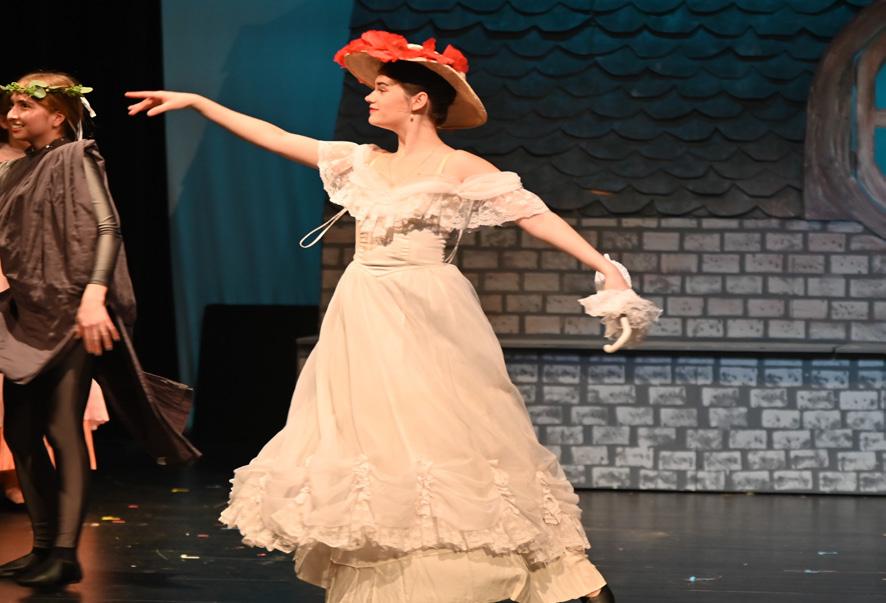
Dance I: Intro to Dance
Dance I is a beginner-level class designed to build a strong technical foundation, with a focus on turns, leaps, and an introduction to various choreography styles, including jazz, ballet, contemporary, musical theater, and hip-hop. Dancers will learn about a new dance style each week as they gain an appreciation for what makes each style unique. No dance experience needed. Prerequisite: None
Grades 9-12
Length: 1 Bin
Dance II: Beginner
Dance II: Beginner is for dancers who are ready to build upon their existing foundation of dance at an advanced beginner/intermediate level. In this course, dancers will develop a strong foundation of technique through ballet warm-ups, strengthening, and conditioning. Dancers will also build their technical repertoire of turns, jumps, and leaps, such as double pirouettes, chaines, pique turns, jetes, and more. Dancers will learn a variety of dance styles, such as jazz, jazz funk, contemporary, and musical theater at an advanced beginner/intermediate level. Dancers will improve their ability to pick up choreography quickly as well as their ability to understand nuances of style. Participation in the fall dance show is required. Prerequisite: Dance I or departmental approval for placement
Grades 9-12
Length: 1 Bin
Dance II: Intermediate
Dance II: Intermediate allows dancers to continue improving their dance skills at the intermediate level. Dancers will work on intermediate level technique, turns, and leaps, and will dive deeper into choreography styles they learned in earlier courses. Students in this course will perform in the fall or spring dance shows. Prerequisite: Dance II: Beginner or departmental approval for placement
Grades 9-12
Length: 1 Bin
Advanced Dance III is an advanced-level dance class for dancers with many years’ experience in dance. Advanced dancers will work on technique and will learn a dance piece for the annual dance show in the fall. Dancers will also learn how to create a dance class plan, how to notate choreography, and by the end of the course, will have created their own dance pieces to be performed live. Prerequisite: Departmental approval for placement
Grades 9-12
Length: 1 Bin
Advanced Dance IV takes a deeper dive into the concepts learned in Advanced Dance III, allowing dancers to learn professional-level choreography, take pre-professional technique classes, and work on honing their own choreography and creative dance skills. This course is project-based, giving each student the opportunity to focus on where her dance passions lie. Each individual dancer will discuss with the instructor ahead of time what they would like to focus on to create an individualized plan that will best serve each dancer. By the end of this course, dancers will have professional-level experience to take with them moving forward in their dance careers. Prerequisite: Advanced Dance III and departmental approval for placement
Grades 9-12
Length: 1 Bin
Aerial Dance is a course based in aerial silks. In this course, dancers will learn beginner to intermediate level silks moves, practice choreographed dance combinations that incorporate aerial silks, and work on strength and flexibility to improve their aerial capabilities. Prerequisite: Dance II or departmental approval for placement
Grades 9-12
Length: 1 Bin
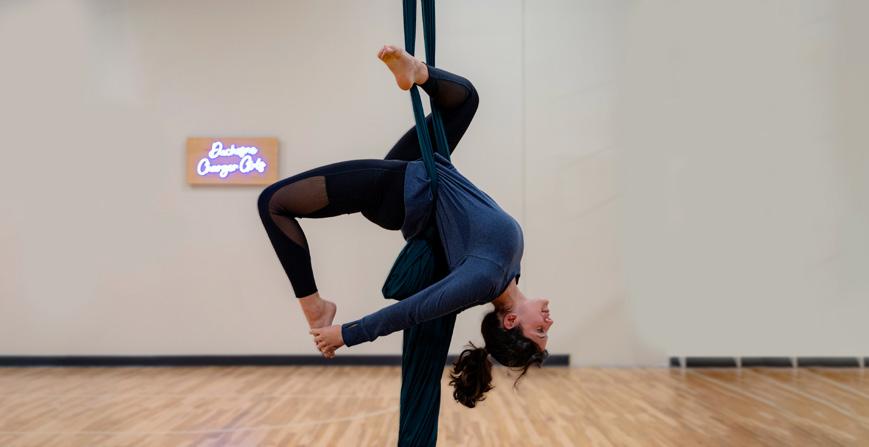


What is the history of the Bible, and what is history in the Bible? After learning about who wrote the Bible and studying its foundation, students will take off on an amazing journey through Salvation History, so pack a bag and get ready to head out! First, students will visit the Patriarchs, hearing all about the promise made to Abraham and the foundation of the 12 Tribes. Next, the class will sit along the sidelines and watch how Moses freed the slaves of Egypt, walking through the parting of the Red Sea along with the Israelites as they enter their new homeland. Once settled, students will meet the kings and prophets of Israel, as they struggle to remain faithful to God, while awaiting the coming of the Messiah. It is the greatest story of all time! Prerequisite: None
Grade 9
Length: 1 Bin
Central to Grade 9 Theology is the Gospel of Jesus Christ. The class begins with the Nativity stories in Matthew and Luke before studying Mark, the framework for the Synoptic Gospels. By comparing the Parables in the various Gospels as well as the Crucifixion stories, students will deepen their understanding of Jesus’ message, and what that timeless message means to them today.
Prerequisite: History and the Bible
Grade 9
Length: 1 Bin
How did the Apostles go from weak and often clueless fishermen to powerful, brilliant preachers willing to die for their faith in Christ? Follow their path as they move from a tiny sect within Judaism to the worldwide Church we know today.
Prerequisite: Jesus' Message
Grade 9
Length: 1 Bin
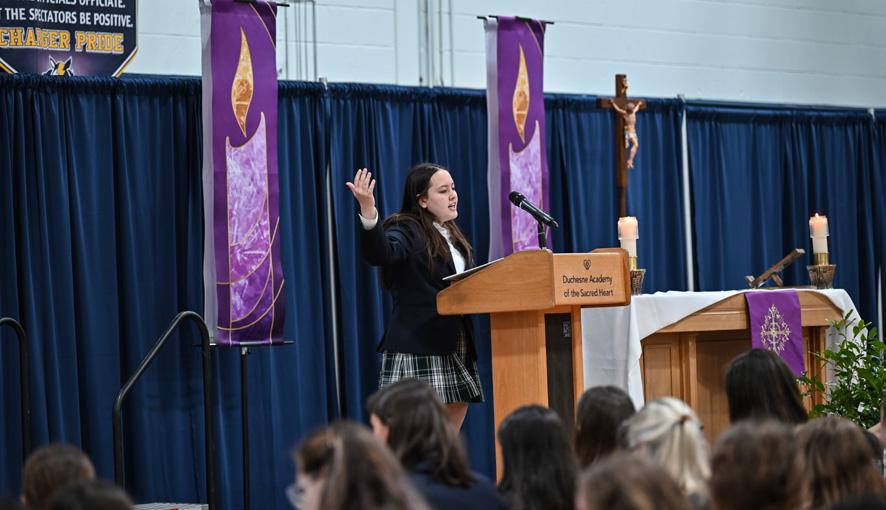
God had a plan to save everyone from the very beginning of Salvation History, starting with the story of Adam and Eve. This course starts by examining how faith and science go together. Students will learn how to critically read and analyze stories like Adam and Eve to appreciate all the deep levels of symbolic meaning. We will look at examples from science and the natural world to appreciate how the universe seems to be “fine-tuned” to allow not just life, but human life. In the second half of the course, the students will study the covenants of the Old Testament, along with the prophets and the kings, to show how everything points toward the coming of the Messiah, Jesus Christ. Prerequisite: None
Grade 10
Length: 1 Bin
The New Testament: The Messiah has Come!
In the first half of this MOD, students will deepen their knowledge of pieces of the New Testament message, such as the infancy narratives, miracles, parables, the Last Supper, the Transfiguration, and the Paschal Mystery. They will display their knowledge by working in small groups to be the "teachers" of the class for a lesson on the content. In the second half of the MOD, students deepen their understanding of Jesus as Messiah by analyzing the Gospel of John. Students will learn what a Lectionary is and how to read one, then put their newfound skills to use by crafting and delivering a homily for a chosen Sunday's readings, featuring passages from the Gospel of John. Prerequisite: Beginnings: Setting the Stage for the Messiah
Grade 10
Length: 1 Bin
Jesus Christ continues his presence and messianic ministry in the world today through the Church, which is the People of God and a Sacrament of Christ. We experience the presence of Christ in community, making it possible for us to share in his redemptive ministry for the world. Students will read and analyze texts from the Bible and the Church’s tradition in order to grow in their understanding of the nature of the Church. Students will further reflect on the role of community and prayer in their own lives. Students will also learn about the Church’s relationship with other religions. Prerequisite: The New Testament: The Messiah has Come!
Grade 10
Length: 1 Bin
A Catholic church is more than just a building. It is a physical manifestation of the most important elements of our faith: the seven Sacraments. We will spend this MOD examining the historical context, the meaning, and the signs and symbols that make the Sacraments the gift of grace that they are. Students will learn about the Liturgical Year and how to participate in the community of the Church through sharing in the Sacraments as God’s gift. Prerequisite: None
Grade 11
Length: 1 Bin
This course focuses on the Scriptural basis and Church teachings involving morality. What does it mean to honor one’s parents as she finishes high school and goes off to college? How does one continue to develop her conscience in a world dominated by celebrity and social media? What are our responsibilities to those less fortunate? In a world where everyone strives to belong, how do we recognize and reach out to those who feel like outcasts? Students begin by studying Church teachings on morality and justice and later apply those teachings to issues such as poverty, immigration, and human trafficking. Prerequisite: Sacraments
Grade 11
Length: 1 Bin
Curious about the ideas that shaped cultures across Asia? This course is your chance to explore three fascinating traditions—Taoism, Confucianism, and Shinto—and see how they influence the world even today. We will start by learning how scholars study religion, then dive into ancient texts, rituals, and philosophies that have guided people for centuries. You will discover what these traditions share with the Abrahamic religions and what makes them completely unique. By the end, you will understand more than just beliefs - you will see how these worldviews shape art, ethics, and everyday life. Get ready to think deeply, ask big questions, and connect ideas across cultures!
Prerequisite: None
Grade 12
Length: 1 Bin


Ever wondered how three of the world's most influential religions—Judaism, Christianity, and Islam—are connected? This course takes you on a journey back to their ancient roots to discover the traditions and teachings that shaped them. You will explore what these faiths share, what makes each unique, and how they have evolved over time. We will also dive into the diversity within each religion and look at how these communities live and thrive in the United States today. By the end of the course, you will have the tools to understand and appreciate different perspectives—an essential skill for life in a multicultural world. Through an inquiry project, you will not only learn about these traditions but also practice how to engage respectfully and thoughtfully with people whose beliefs differ from your own. Prerequisite: None
Grade 12
Length: 1 Bin
Ever wondered how ideas like karma, meditation, and nonviolence became part of world culture? In this course, you will explore three powerful traditions—Hinduism, Jainism, and Buddhism— that have shaped life in India and beyond for thousands of years. We will start by learning how scholars study religion, then dive into ancient texts, rituals and philosophies that reveal deep insights about life, ethics, and the search for meaning. You will also compare these traditions with the Abrahamic religions to see what they share - and what makes them completely unique. By the end, you will gain a richer understanding of worldviews that continue to inspire millions today and develop skills to think critically about diverse perspectives in a global society. Prerequisite: None
Grade 12
Length: 1 Bin


Students will start with an analysis of the meaning of peace and then learn how to analyze conflicts and the roots of conflict. From there, they will consider various strategies that are necessary for peacebuilding. Next, students develop their understanding of these principles as they identify and analyze a current conflict/crisis and suggest appropriate, concrete, meaningful strategies for moving forward to build a sustainable peace. Finally, students will consider how to become peacemakers themselves, because it is one thing to engage in intellectual analysis, and it is another thing to actually practice peace. Prerequisite: None
Grade 12
Length: 1 Bin
Prayer and Worship
How is one called to pray? Are there different ways of worship? Do students have a plan for continuing their prayer life as they go off to college? What are different styles of prayer? Can technology be incorporated into prayer life? Prayer and Worship centers around the theology of prayer and prayer traditions that have evolved over the centuries. Students will explore the writings of many people seeking God throughout the ages to learn what these seekers can teach us about our own search for God. Prerequisite: None
Grade 12
Length: 1 Bin
The course examines the ethical dimensions of critical beginning of life issues raised by contemporary advances in the fields of medicine, bio-technology, and genetics. Some of the issues we tackle are genetic engineering, prenatal development, stem cell research, cloning, and artificial reproductive technologies, including IVF, preimplantation genetic diagnosis, surrogacy, and gamete donation. We will explore moral development and offer the students the moral guidelines and teachings of the Church as a framework within which they can examine the facts, conflicts, and implications of these issues. Prerequisite: None
Grade 12
Length: 1 Bin
Film is a powerful medium that transports viewers to another world, and in many instances, it can provide glimpses of God’s divine activity on earth. How does God communicate with humanity, His creation? How does God utilize humanity to be His hands on earth? How do humans continually mess up and still find their way back to God? This course will explore various themes within the faith—forgiveness, reconciliation, social justice, and church history. Through great films from The Mission to Seven Years In Tibet to Romero and several others, students will begin to see film in a whole new light: as an encounter with The Divine. Prerequisite: None
Grade 12
Length: 1 Bin
French I: Tout de Moi
Houston is home to a large Francophone (Frenchspeaking) community. French is also the only language, besides English, spoken on every continent. In French I, students will focus on themselves—learning to introduce themselves, talk about their interests, family, home, classes, favorite foods, and hobbies—while exploring similar topics in Francophone communities. Prerequisite: None
Grade 9
Length: 3 Bins
Students will expand their understanding of their lifestyles in Houston and in Francophone communities. This class takes what students learn in French I and broadens it. They will learn to express themselves in the past, present, and future tenses. They will expand their vocabulary to discuss everyday life, travel, school, relationships, and culture, as they practice expressing opinions and giving reasons. In this course they will improve their writing, listening, and speaking skills while learning more about French-speaking culture around the world. Prerequisite: French I
Grades 9-12
Length: 3 Bins
French
This course provides students with the opportunity to build upon the foundation established in French I, further developing their proficiency in the French language. It is designed for individuals who possess a solid understanding of French grammar, vocabulary, and communication skills, and are prepared to elevate their language abilities. The primary objective of this course is to enhance students’ fluency and comprehension in both written and spoken French, while offering a deeper exploration of the culture of the Frenchspeaking world. Prerequisite: French I and departmental approval for placement
Grades 9-12
Length: 3 Bins

French III: Voyage
Students will strengthen their ability to communicate beyond simple sentences by connecting ideas and giving more precise information. Vocabulary expands to include more abstract topics such as relationships, responsibilities, school life, and cultural differences. Students read longer texts, write structured paragraphs, and improve listening and speaking skills, while gaining a deeper understanding of daily life and traditions in French-speaking countries. Prerequisite: French II
Grades 10-12
Length: 3 Bins
Advanced French III: Vive le français!
In this course, French is spoken exclusively, as students continue to prepare written and oral presentations on a variety of themes and topics. Students will acquire advanced grammatical and lexical structures in preparation for the DELF B1 examination, taken at the end of the Advanced French DELF course. The DELF is an official, highquality diploma, harmonized with the levels of the Common European Framework of Reference for Languages, recognized worldwide and valid for life. Prerequisite: Advanced French II and departmental approval for placement
Grades 10-12
Length: 3 Bins
French IV
This course offers students an immersive exploration of French language and culture. Through dynamic, hands-on activities, students will strengthen their foundational skills while building greater confidence and fluency in communication. By the conclusion of the course, students will have attained a level of proficiency that enables them to navigate the French speaking world with confidence and cultural insight. Prerequisite: French III and departmental approval for placement
Grades 11-12
Length: 3 Bins

As the crème de la crème (best of the best), this course is the equivalent of a sophomore level college course. In this discussion-based course, students will make connections between personal experience and that of the Francophone world regarding technology, environmental concerns, systematic challenges to society, and other contemporary real-world issues. At the end of this course, students will take the DELF B1 examination. Prerequisite: Advanced French III and departmental approval for placement
Grades 11-12
Length: 3 Bins
Following the criteria of College Board, AP French Language and Culture is equivalent to an intermediate level college course in French. Students cultivate their understanding of French language and culture by applying interpersonal, interpretive, and presentational modes of communication in real-life situations as they explore concepts related to family and community, personal and public identity, beauty and aesthetics, science and technology, contemporary life, and global challenges. Prerequisite: Advanced French DELF with departmental approval for placement
Grades 11-12
Length: 3 Bins
Spanish I: El Tiempo de mi vida
This course offers the opportunity to experience the best time of one’s life. While students will not be traveling internationally, they, along with friends and family, will experience wonderful vacations and shopping adventures in Spanishspeaking countries, enjoy meals in amazing cities, and join local cultural festivals throughout Latin American countries and Europe. Prerequisite: None
Grade 9
Length: 3 Bins
Spanish II: Pase de abordar con destino a Latinoamérica
In this course, students will expand their cultural and grammatical knowledge of Spanish. Experience nature in Colombia, learn about inspiring works of fine art in El Salvador and Honduras, enjoy the city life in Nicaragua and the Dominican Republic, and learn the world of business and technology in Argentina. Prerequisite: Spanish I
Grades 9-12
Length: 3 Bins
This course will allow students to build upon the foundation laid in Spanish I to further develop their proficiency in the Spanish language. This course is designed for students who have a solid grasp of Spanish grammar, vocabulary, and communication skills and are ready to take their language abilities to the next level. The primary goal of this course is to enhance students' fluency and comprehension in both written and spoken Spanish while delving deeper into culture, experiences, and literature of the Spanishspeaking world. Prerequisite: Spanish I and departmental approval for placement
Grades 9-12
Length: 3 Bins
III: El éxito es un viaje, no un destino
Be part of the conversation. Discover the world of sports, music, and theater. Enjoy a culturally enriched journey in literature and travel. Personal relationships will be formed as students discover a variety of enjoyable activities that include health, nature, and daily life.
Prerequisite: Spanish II
Grades 10-12
Length: 3 Bins
From Spanish and Latin American short stories to rich local traditions, students will experience how different cultures enjoy life. In this three-MOD course, they will enrich writing, speaking, and reading skills by immersing in cultural events and literary themes. Prerequisite: Advanced Spanish II and departmental approval for placement
Grades 10-12
Length: 3 Bins
This course allows students to embark on an advanced journey into the Spanish language and culture, taking their skills to the highest level. They will explore artistic expressions from the Golden Age of Mexican Cinema to the written poems and literary works of Isabel Allende and Pablo Neruda. By the end of this course, students will achieve a level of proficiency that allows them to navigate the Spanish-speaking world with confidence and cultural insight. Prerequisite: Spanish III and departmental approval for placement
Grades 11-12
Length: 3 Bins
This pre-AP course is designed to prepare students for the AP Spanish Language and Culture course and exam. Students are introduced to the first three themes outined by the College Board: global challenges, contemporary life, and science and technology. Through these themes students will deepen their vocabulary, expand their range of expressions, and enhance their ability to engage in meaningul discussions about various aspects of Spanish-speaking cultures. The pre-AP curriculum serves as a bridge to the AP Spanish course, equipping students with the foundational skills and confidence to succeed in advanced language studies and on the AP Spanish Language and Culture exam. Prerequisite: Advanced Spanish III and departmental approval for placement
Grades 11-12
Length: 3 Bins
This course is for anyone who speaks Spanish but has never had a formal Spanish language education. Students will take a deep dive into the cultural beauty of Spanish and Latin American literature. They will understand different themes and archetypes and how to better express themselves in writing, analysis, and discussion. Prerequisite: Heritage speaker and departmental approval for placement
Grades 11-12
Length: 3 Bins
The AP Spanish Language and Culture course is a continuation of the preparation received during the Advanced Spanish IV course. Building on the foundation established in Advanced Spanish IV, this course focuses on the remaining three themes outlined by the College Board: personal and public identities, families and communities, and beauty and aesthetics. This course provides the final preparation for the AP Spanish Language and Culture exam, equipping students with the skills and confidence to perform at a high level. This is an ideal course for students seeking to achieve advanced proficiency in Spanish and to gain a deeper understanding of the rich diversity of the Spanish-speaking world. Prerequisite: Advanced Spanish IV and departmental approval for placement
Grades 11-12
Length: 3 Bins

American Sign Language I
This course is for any student who enjoys learning and connecting with people. American Sign Language I will provide you with the opportunity to learn communication skills and Deaf culture and etiquette basics to get students started on their journey as part of the deaf community. Prerequisite: None
Grades 9-12
Length: 3 Bins
American Sign Language II
This course utilizes classroom instruction, reallife scenarios, and an increase in fluidity within a signed-only conversation. ASL II is designed to gain a deeper knowledge of Deaf culture, grammar, and an increase in vocabulary. Prerequisite: ASL I
Grades 10-12
Length: 3 Bins
American Sign Language III
American Sign Language is used exclusively in this class. Students are expected to easily communicate in the target language with great fluency and use all their previous and new vocabulary to interpret concepts and ideas in the proper syntax. Prerequisite: ASL II
Grades 11-12
Length: 3 Bins
*Advanced American Sign Language IV: Intro to Interpreting
Dive into the world of interpreting in this fully immersed voice-off experience. This class will cover specific vocabulary used by interpreters in the most common fields (medical, religious, etc.) and ask students to interpret both expressively and receptively through audio and video practices. This course is designed to enhance a signer’s speed, fluidity, and conceptual thinking. Prerequisite: ASL III and departmental approval for placement
Grades 12
Length: 3 Bins
*denotes new course for 2026-2027
Students will apply their foundational knowledge of art and design to the tasty medium of cake. Students will learn the fundamentals of cake art from baking to filling, icing, and decorating. Using the elements of art, they will elevate their sugary creations into impressive works showcasing their skill. Take a dive into a new medium, learn an impressive new skill, have your cake, and eat it, too! This course fulfills a general elective, not a Fine Arts requirement. Prerequisite: None
Grades 10-12
Length: 1 Bin
What is a credit score and how can I get one? How do I file taxes? Is it possible to cook a healthy meal for one in my tiny dorm room with no real kitchen? How do I prepare for an interview for my dream job? Copays, deductibles, flexible spending accounts, oh my! This course will take the mystery out of the world of “adulting” and equip students with life skills in personal finance, career, health, and household management so they can build confidence and independence as they transition from high school into the adult world. Prerequisite: None
Grades 11-12
Length: 1 Bin
This course is perfect for those who want to use their creativity to help other people. Students will learn the basics of quilt making while designing, assembling, and sewing quilts for a cause. They will collaborate and use new skills to make quilts for Angela House. Prerequisite: None
Grades 9-12
Length: 1 Bin
Students who are looking for a new hobby and enjoy working with their hands should consider this course. Students will learn the basics of crocheting by creating both flat and 3D pieces designed to set them up for success on their crochet crafting journey. Prerequisite: None
Grades 9-12
Length: 1 Bin
This course is designed to cover broad understandings of learning and behavior and encourage rethinking of disability. Students' minds and hearts will be opened to experience the love this community has to offer by enhancing knowledge and building connections through volunteering. Prerequisite: None
Grades 11-12
Length: 1 Bin
Launch your business! In this course, students will be provided with practical insights into basic aspects of leadership, business, and marketing. A market research template will be used to spark an idea, in hopes of creating a reality. With the use of a well-thought-out business model, students will be able to execute a possible business launch. Dream BIG! Prerequisite: None
Grades 11-12
Length: 1 Bin
The course provides an introduction to classical and modern cuisine. Through a combination of hands-on and theory/lecture, students will learn the basics of food safety and preparation. The course will allow students to explore cultural and social aspects of food, including social issues, mass food production versus organic sustainable farming, food waste, accessibility, and more. Prerequisite: None
Grades 10-12
Length: 1 Bin
Want to guide the yearbook staff to a cohesive visual and verbal motif? Join the editing staff! Editors will proofread the book, marking corrections for the staff; conceive of an overall look for the book; and create photo illustrations and graphics to support the theme. Editors need to be detail-oriented, have a good work ethic, and help plan the production of the book with the advisor. This class meets all year based on teacher and student availability. Prerequisite: Yearbook Advisor approval
Grades 10-12
Length: 1 Bin
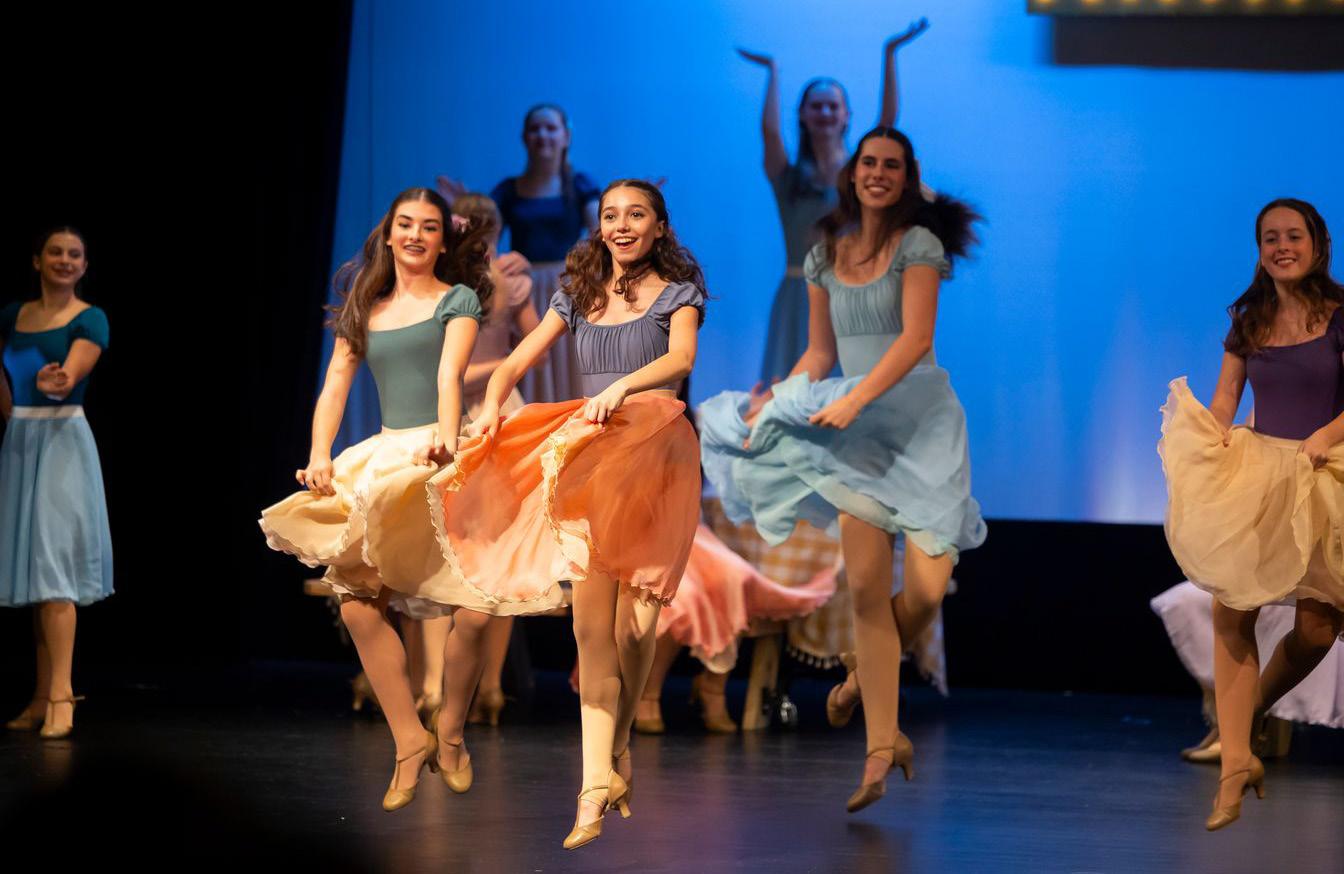
Introduction to Debate provides students an overview of the fundamentals of speech and debate, preparing students to be adept practitioners in argumentation, rhetoric, logical reasoning, and effective communication. Students build a foundation of speech and debate skills in class through research, practice, and reflection. Then, students further develop those skills through a variety of speech and debate events that introduce numerous topics ranging from social issues to domestic and international events. Students in the course will be invited to participate in the nationally ranked Duchesne speech and debate program, involving competition at local, regional, and national travel tournaments. Ultimately, it is the goal that students leave the course more prepared, more competent, and more comfortable in any academic or professional setting where effective communication is necessary. Prerequisite: None
Grades 9-12
Length: 1 Bin
The Communications Internship provides students with the opportunity to explore real-world applications of marketing, media, and strategic communication within the Duchesne community. Interns gain hands-on experience in areas of content creation, photography, social media strategy, branding, and event promotion. Through collaboration with the Communications and Enrollment Management teams, students develop professional skills in writing, visual storytelling, and digital design while representing the mission and values of Sacred Heart. Students in this course will assist in producing content for school publications and social platforms, learn the fundamentals of marketing, and participate in planning and executing communications campaigns. Emphasis is placed on teamwork, responsibility, and creativity as students help showcase the “Courage, Confidence, and Compassion” of Duchesne girls. This course is repeatable for credit. Prerequisite: None
Grades 10-12
Length: 1 Bin