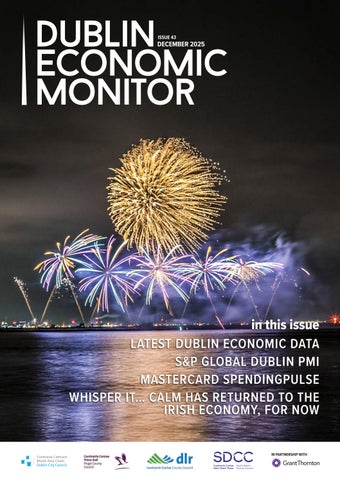
Dublin Economic Monitor - Issue 43 | December 2025
Highlights
Dublin employment climbed to a record 844,100 (SA) in Q3 2025, but the pace of expansion eased in parallel with a rise in the unemployment rate to 5.2% (SA).
Q3 retail spending in Dublin increased by 1.1% QoQ to reach a record index value of 150.1.
Business activity in Dublin’s private sector grew modestly, with output rising in manufacturing and construction, while the services sector slipped into contraction for the first time since early 2021.
Housing supply weakened sharply in Q3 2025, with commencements down 85% YoY to 923 units (non-SA) and completions falling 13.2% YoY to 3,353 units (SA).
Occupancy rates in the Dublin hotel market remained resilient through late summer and into early autumn, climbing to a rate of 93% in September.
Passenger numbers at Dublin Airport remained strong in Q3, increasing by 0.8% QoQ to reach a new high of 9.38 million passengers (SA).
Welcome to the December 2025 issue of the Dublin Economic Monitor
The Dublin Economic Monitor is a joint initiative on behalf of the four Dublin Local Authorities, and is designed to be of interest to those living and doing business in Dublin or considering locating here. The report is produced by Grant Thornton with inputs from various contributors throughout.
There are two special feature articles this quarter. The first, by Declan Power, Senior Executive Officer, Tourism & Cultural Development, Fingal County Council provides an insight into Fingal’s tourism sector and its role as an economic driver. The second article, by John Quinlivan, Director of Services of Economic, Enterprise, Tourism & Cultural Development, Fingal County Council, focuses on Balbriggan’s transformation and Fingal’s wider strategy to drive a green, innovative, and future-ready local economy.
The Monitor is divided into the following themes for Dublin: Economy Business Developments
Retail Hospitality
Labour Market International Rankings Housing Transport & Travel
For more data and insights see: www.dublineconomy.ie
The next edition will be published in March 2026.
www.dublineconomy.ie
Whisper it… calm has returned to the Irish economy, for now
Dare we write it… after years of extraordinary shocks, the Irish economy feels like it has slipped into a more familiar rhythm. That is a brave statement given what is happening in the world around us. The IMF’s latest World Economic Outlook describes the global picture as “in flux, with prospects remaining dim”. Yet, even against that backdrop, Ireland’s domestic performance has been surprisingly steady. Growth is holding up, inflation has eased back towards targets, and labour markets, though softer than in recent years, remain resilient.
Globally, the tone is clear. Momentum is fading rather than firming. The IMF expects world growth to ease from 3.3% this year to 3.2% in 2025 and 3.1% in 2026, with advanced economies closer to 1.5%. Productivity is weak, investment hesitant and inflation retreating only slowly. Protectionism and shifting industrial strategies continue to shape the narrative.
This more fragile backdrop is reflected, though more moderately, in the Central Bank’s latest Bulletin. The new US–EU tariff regime, less severe than feared, still represents a structural shift. Pharmaceutical exporters front loaded shipments in early 2025, a surge now unwinding. The Bank suggests national income could be around 1% lower in the long term. Not a catastrophe, but a headwind.
Even so, the domestic story continues to surprise. Modified Domestic Demand rose by 3.8% in the first half of 2025, supported by employment growth of 2.8% and solid performance in traditional sectors. Construction, retail, transport and professional services all contributed. Private investment remains sensitive to the wider climate, but housing and energy-related projects have kept activity positive.
Growth is holding up, inflation has eased back towards targets, and labour markets, though softer than in recent years, remain resilient.
A notable theme in the Bulletin is the consumer. Consumption grew by 3% in the first half of the year. Real household incomes rose in 2024 after two years of decline, liquidity constraints have eased and the savings ratio remains elevated. Spending is not booming, but it is providing a steady underpinning to domestic demand.
Sentiment tells a different story. The latest Irish League of Credit Unions Consumer Sentiment Index slipped to 59.9 in October. Three quarters of consumers expect living costs to rise in 2026 and only a third expect their incomes to improve. Groceries and energy remain the key pressure points. This tension between spending and sentiment has become a feature of the post pandemic period. Labour market conditions help to explain it. Vacancies have eased and hiring intentions have softened, but employment remains high. Inward migration supports supply and wage growth is firm in several services.
In Dublin, the national dynamics show up clearly. As a predominantly service led urban economy, the city reacts quickly to shifts in purchasing power and labour market conditions. The underlying drivers of consumption are all present. Dublin’s younger and expanding population, combined with its concentration of higher value employment, continues to support activity in retail, hospitality and leisure, even as national indicators point to easing momentum.
Risks remain. Infrastructure gaps in water, energy, transport and housing are most acute in the Dublin region. Services inflation is elevated and the city is not insulated from the broader vulnerabilities associated with Ireland’s narrow corporation tax base or shifting global value chains.
Set against a dimmer global backdrop, however, the resilience of domestic demand provides Dublin with a degree of stability. Households may be cautious, but spending has held up, meaning the city moves into 2026 with more stability than the global context might suggest.
Jobs Announcements A Hallmark of Postsummer Period
US technology firm, Workday, is to create 200 jobs in a new Dublin Artificial Intelligence (AI) hub as part of a €175 million investment in the city over the next three years. The AI “centre of excellence” will focus on product development, AI upskilling, academic fellowships and partnerships with universities and Irish tech companies, and will be based at the firm’s new offices at College Square in Dublin 2. Workday currently employs 2,200 people in Ireland and its country site lead, Graham Abell, underlined how “Dublin has been a cornerstone of Workday’s innovation for close to two decades”.
Multiple other firms have announced the creation of close to 800 jobs since the summer. These include RKD, Egis, Ryanair (each creating 100 jobs), KSG Catering (75 jobs), Black & White Engineering, EXL (both 60 jobs), Saros Consulting, Payrails, Fortivum Consulting (50 jobs each), Clio (40 jobs), Foodhub (35 jobs), and Core Financial Systems (30 jobs).
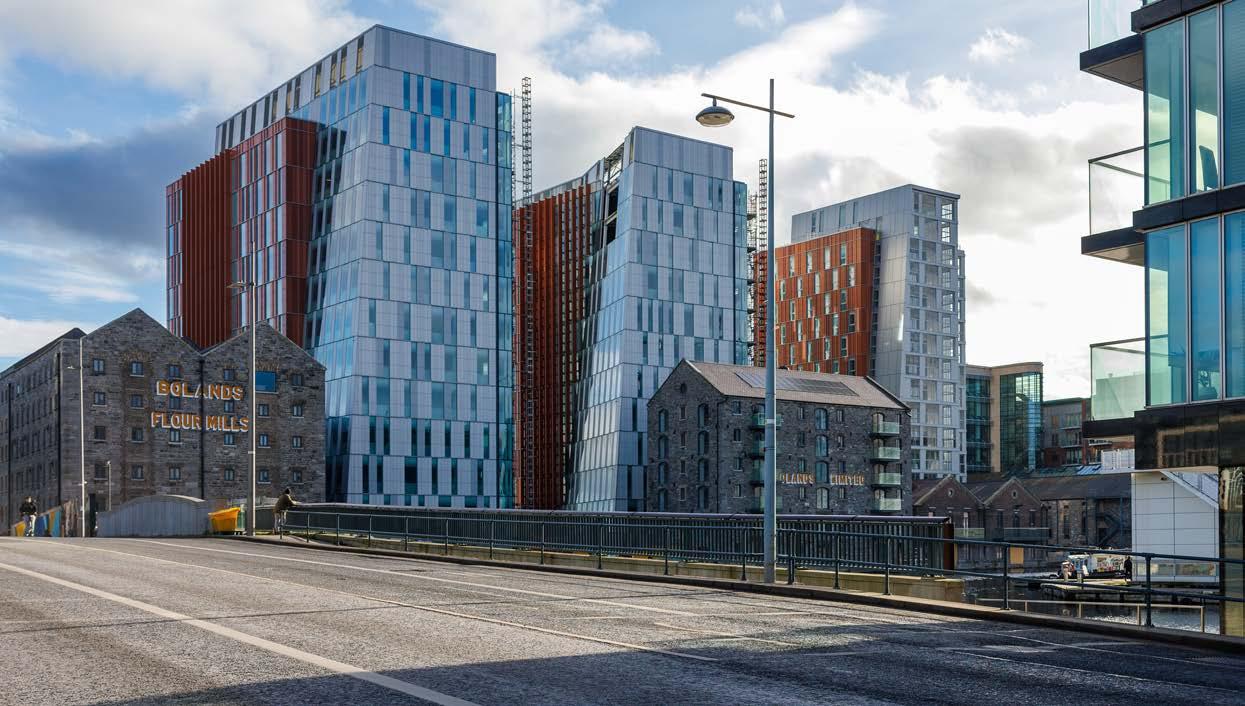
The historic Bolands Mills in Dublin’s Docklands reopened in November with a mix of office, residential, retail, food, cultural and public spaces. The redeveloped 19th century warehouses will house a range of retail offerings including a bakery, pilates and yoga studio, sauna, and hair salon. A food hall, bar, and restaurants are also to be opened in the development which features Ireland’s largest mural – a nine-storey installation by artist Sean Atmos.
The Capital’s first public Water Sports Centre has opened in the IFSC. The €23 million development led by Dublin City Council (DCC) has been built alongside extended pontoons and an enhanced boardwalk on the north quay of the River Liffey. The centre will provide for greater access to the river for activities such as kayaking and paddle boarding once it becomes fully operational in springtime. It also includes a new rescue pontoon for Dublin Fire Brigade's Water Rescue Service and the Irish Underwater Search and Recovery Unit, and new office space for the Docklands agency.
Housing in the Spotlight
The Government’s new housing plan, 'Delivering Homes, Building Communities', was launched in November and pledges that 300,000 new homes will be built
The Government’s new housing plan, 'Delivering Homes, Building Communities', was launched in November and pledges that 300,000 new homes will be built nationally by 2030.
nationally by 2030. Under the plan, Local Authorities will be held to account for housing delivery through new league tables tracking progress on affordable and social housing, vacancy, and dereliction. Those which meet or exceed their targets will be financially rewarded. While specific targets for counties are not included, the plan does commit to establishing a Special Purpose Vehicle, operating under the auspices of DCC, to implement the Dublin City Centre Taskforce recommendations and the Roadmap for Delivery.
Commercial Property Momentum Continues
The latest data from CBRE (see chart) highlights Dublin office vacancy rates fell in Q3 2025, marking a further improvement from recent peaks. The vacancy rate in Dublin 2/4 fell to 15.5% and across the suburbs fell to 14.2%. While rates remain well above pre-pandemic levels, consecutive quarterly declines indicate early signs of recovery.
Dublin Business Activity Slows Further in Q3
The Dublin private sector went through a soft-patch during the third quarter of the year, particularly in the services sector where business activity actually dipped slightly from the picture in Q2. More positively, however, new orders returned to growth and greater certainty around US tariff policies will hopefully enable companies to build going into the final quarter of the year. In fact, firms were confident enough to up their pace of hiring, with additional workers taken on at a solid clip in the third quarter.
Business activity in Dublin’s private sector continued to expand in the third quarter of 2025, albeit only marginally. The headline rate stood at 50.8, down from 52.2 in Q2 and marking the weakest rate of growth since late 2022. Crucially, the index remained above the 50-point threshold that signals expansion. Activity across the Rest of Ireland also slowed, but at 51.4, remained slightly stronger than in the Capital.
Sectoral performance in Dublin was mixed. Manufacturing (52.2) and Construction (50.6) both recorded increases in output, while the Services sector, the biggest sector in the Capital, dipped to 49.4, entering contraction territory for the first time since early 2021. The Rest of Ireland showed a similarly mixed picture with growth maintained in the Manufacturing (51.9) and Services (51.8) sectors, though Construction (47.5) contracted.
New business activity in Dublin returned to growth during Q3, with the New Orders component rising to 51.0. This modest increase followed a contraction in Q2 and suggests a stabilisation in demand. The uptick in New Orders may reflect easing concerns around international trade dynamics. The Rest of Ireland also saw a slight expansion in New Orders, with the index standing at 50.8.
Employment trends remained positive in Dublin in Q3 with firms continuing to add to their workforces. The Employment Index rose to 52.3, up from 51.3 in Q2, and marked the fastest pace of job creation since Q3 2024. Staffing levels in Dublin increased more rapidly than in the Rest of Ireland, where the index stood at 51.6 – down slightly from Q2.
RETAIL
Retail activity strengthens in Q3 2025
MasterCard Total Retail Sales Index (SA)
Retail spending in Dublin continued to rise in Q3 2025. Total expenditure in the Capital increased by 1.1% QoQ, reaching a new peak index value of 150.1 (2015 = 100). This equated to YoY growth of 3.7%. While prices remain elevated, continued strength in the labour market and steady income gains have also supported growth in retail spending.
QoQ changes across spending categories were relatively contained in Q3 2025. Household Goods recorded the strongest growth, rising by 1.9% QoQ, supported by continued demand for home-related purchases. Discretionary spending, in the likes of department stores, also expanded, increasing by 0.8% QoQ, signalling a modest pick-up in non-essential consumption.
In contrast, spend in the Entertainment category registered the largest decline, falling by 1.2% QoQ, likely reflecting more cautious discretionary behaviour as households prioritise core spending amid ongoing cost pressures. Necessities, such as groceries, remained broadly stable, recording a minimal 0.2% decline. eCommerce sales continued their upward momentum, rising 1.8% QoQ, underscoring the durability of online purchasing habits.
The mixed pattern across categories indicates that, while households are still willing to spend on nonessential and discretionary items, they are doing so cautiously and with a greater focus on value. This aligns with national trends, where rising living costs continue to influence how consumers allocate their budgets. METHODOLOGY
Tourist expenditure posts further gains in Q3 2025 RETAIL
Dublin and Ireland Tourist Spend by Origin - Q3 2025 (SA)
Retail spending by overseas visitors in Dublin increased further in Q3 2025, with total tourist expenditure rising by 0.6% QoQ. While growth was more moderate than in Q2 (+1.8%), the quarter still delivered a positive outturn heading into the autumn travel period.
The US market, Dublin’s largest and most valuable tourism segment, posted a robust 2.3% QoQ increase and strong 7% YoY growth, reaffirming its central role in driving visitor expenditure. The UK market also grew modestly (+0.3% QoQ; +4.4% YoY), reflecting stable travel volumes and solid demand. Among European markets, Germany recorded a moderate rise of 0.7% QoQ. France, however, saw spending declines of 0.6% QoQ and 2.7% YoY, pointing to softer visitor activity from this market. Spending by Chinese visitors increased
by 0.9% QoQ, with exceptionally strong annual growth (+18.1% YoY), albeit from a relatively small base.
At national level, tourist spending rose more strongly (+1.2% QoQ; +4.7% YoY), signalling broad recovery across Ireland’s visitor economy beyond the Capital. Overall, the Q3 performance reflects continued resilience in international spending, supported by strong longhaul travel and steady growth in key European source markets.
Inflation Remains a Challenge for Consumers Inflation has been an ongoing challenge for Irish consumers since 2021. The national inflation rate peaked at 9.3% in October 2022, and had declined to below 1% in late 2024, but has since increased to 2.9% in October 2025.
As shown in the chart, food and non-alcoholic beverage price inflation – which is most directly reflected in grocery prices – has exceeded 3% in each of the past eight months, standing at 4.5% in October. This is placing significant additional pressure on consumers who have felt the effects of high inflation rates across the past four years.
Inflation continued to be an issue across other subindices in October, underlining the broad-based impact of price increases. Furnishings, household equipment and routine household maintenance (-0.4%) was the sole sub-index which recorded a YoY decline in prices in October, with education (+8%) recording the strongest expansion in the month.
Dublin hotel demand remains strong
Dublin Hotel Supply & Occupancy Rates
SOURCE:
The Dublin hotel market remained resilient through late summer and into early autumn 2025. Occupancy rose by 2.5 percentage points (PP) MoM to 90.8% in August and increased again in September, up a further 2.1pp to 93% - the highest level in twelve months. Although October saw a 3.3pp decline, occupancy still posted annual growth of 1.4pp. Strong demand was likely supported by end-of-summer tourism and major events such as Ireland's first NFL regular season game in September, and a series of high-profile concerts. Average daily rates (ADR) mirrored these trends, reaching €203 in August, only the second time ADR exceeded €200 in 2025. Rates rose further in September to €213 (+7.7% YoY), before moderating to €174 in October. Hotel supply also remained robust, with the supply index reaching a peak of 140.1 in October, up 2.9% year-onyear.
Pre-Christmas Momentum in Dining Volumes
Seated Diners at Dublin Restaurants (% Change Relative to 2019)
The volume of seated diners at restaurants in Dublin stood 88.4% above the 2019 baseline in mid-November 2025. Activity fluctuated after the summer, reaching a peak in the days following the October Bank Holiday weekend when volumes stood 174.5% above 2019 levels. This points to resilient consumer demand during peak periods, with Dublin restaurants continuing to attract strong footfall despite ongoing cost pressures. Nationally, diner volumes also remained elevated in midNovember, standing 138.9% above the 2019 baseline. As the Christmas trading period approaches, the outlook for dining activity remains broadly optimistic. Looking ahead, the permanent VAT reduction for the hospitality sector, announced in Ireland's Budget 2025 and due to take effect in July 2026, may strengthen the sector’s competitiveness and underpin performance through
year.
Fingal focussed on tourism
Declan Power
Senior Executive Officer, Tourism & Cultural Development
Fingal County Council
Tourism, hospitality, food and drink are significant opportunities for economic development and growth, and in turn help to further enhance those places which make an area attractive to residents and visitors alike.
Fingal County Council recognises this and has consistently invested significant resources in supporting the sector through the development and promotion of Fingal as a tourism destination within Dublin. This has included the development and management of a significant Council owned product and experience portfolio; consisting of visitor and cultural attractions, festivals and events, and the abundant natural amenities and heritage resources with which the county has been blessed.
In turn Tourism has been a key economic driver for Fingal, with over 500 local businesses in the sector supporting over 8,000 jobs, and significant further growth potential to be unlocked in a county which comprises just short of 50% of the Dublin region by area, is well situated and connected as the home of Dublin airport and the hub of our national motorway network, and has a fast growing, young, and diverse population.
Recognising this, in 2024 Fingal County Council published two key documents which demonstrate a strong statement of ongoing commitment to tourism and recognition of its economic value to the County. Running until 2029, the Fingal Tourism Strategy and Fingal Food & Drink Policy are blueprints for success in the coming years.
This message was highlighted recently at the inaugural ‘Fingal Tourism Together’ symposium held in November in Crowne Plaza, Blanchardstown. This new event in the calendar gave local industry and stakeholders an opportunity to come together to network, collaborate, and hear more about the key achievements delivered to date as a result, including:
Of particular interest to all attending was news of a new Fingal Destination brand currently in development which will launch in Q1 2026.
• Critical work on collaboration, including the delivery of a comprehensive collaboration framework for the Fingal Tourism sector.
• The establishment and growth of the Fingal Food Circle, a fledgling food and drink network set up with the support of the Council which launched its new brand as part of the council’s own Flavours of Fingal event held in July.
• A pilot food market programme across the county over the summer consisting of a series of new weekend food markets delivered in collaboration with Fingal Food Circle and Fingal Farmers Group. A development plan for future food market establishment and growth will now follow in 2026.
• Fingal County Council and the Fingal Food Circle partnering with Fáilte Ireland on a pilot project under the Dublin Food & Drink Tourism Action Plan.
• The selection of Fingal by Fáilte Ireland as a hub for the new ‘Ireland, Home of Halloween’ Destination Development Pilot Scheme, and the development of a comprehensive programme of events for the month of October which was supported and then marketed by both Fáilte Ireland and Tourism Ireland as part of an ongoing five-year commitment.
Of particular interest to all attending was news of a new Fingal Destination brand currently in development which will launch in Q1 2026. Delegates also warmly welcomed news of a comprehensive product and experience audit already underway, which will deliver solid baseline data upon which to build ongoing robust performance reporting for the sector locally, to quantify further investment into the future.
Dublin unemployment edges above 5% in Q3 2025
DUBLIN & NATIONAL UNEMPLOYMENT RATE % (SA)
Steady employment gains recorded in Q3 LABOUR MARKET
Dublin’s unemployment rate edged higher in Q3 2025, reaching 5.2% (SA) and surpassing the 5% threshold for the first time since 2022. This represented a 0.3 percentage point (pp) increase QoQ. YoY growth also stood at 0.3pp, signalling a gradual increase after an extended period of very tight labour-market conditions. Nationally, the unemployment rate rose to 5.1% (SA) in Q3, a 0.5pp increase from Q2. The gap between Dublin and the national figure narrowed to 0.1pp, indicating that labour-market pressures are softening more broadly and reflecting wider trends in slowing hiring demand.
Employment levels across the Dublin economy continued to rise in Q3 2025. Total employment among Dublin residents reached 844,100 (SA), representing growth of 0.8% QoQ and 1.9% YoY. The construction sector recorded the strongest quarterly expansion, increasing by 3.1% QoQ (+1,300 jobs), while YoY growth in the sector was significantly more pronounced at 11.4%. Employment in industry also strengthened, rising 1.3% QoQ. Both the public and private sectors posted modest quarterly gains, up by 0.8% and by 0.5%, respectively. The rise in employment, together with an uptick in unemployment, points to a growing labour force where increased participation is outstripping the pace of new job creation.
Hiring activity weakens further in Dublin
The volume of job vacancies in Dublin on the Indeed website eased further in October 2025, maintaining the gradual slowdown observed over the past year. The job postings index for the Capital stood 17.1 percentage points (pp) below the 2020 baseline at month-end in October, compared with -16.2pp in September and -15.3pp in August. This represents the weakest reading since 2021 and signals a sustained cooling in hiring activity across Dublin. At the national level, job postings also softened but remained 5.5pp above the baseline. Dublin’s weaker performance relative to the national average may be reflective of its concentration in knowledge-intensive industries where recruitment has moderated more sharply.
FDI Activity Continues to Slow in Q3
Foreign direct investment (FDI) into Dublin remained subdued in Q3 2025. Average capital investment stood at $556 million, down by 1.5% QoQ and by 35.4% YoY, marking the lowest quarterly inflow since the series began in 2019. Average job creation also softened, falling by 1.9% QoQ and by 9% YoY to 1,816. The average number of investment projects eased to 29, down slightly from 31 in Q2, but unchanged from the same period last year. While the volume of projects has held relatively steady, average project size declined to $19.3 million in Q3, reinforcing that although Dublin continues to attract new investments, individual project scales have become smaller. Despite this moderation, the Capital continues to outperform its European peers, ranking as the top city for FDI per capita ($483).
Dublin Features Amongst Top Global Innovation Clusters
Internationally published benchmarks are a useful means of measuring a city’s performance relative to its peers, and recent indicators for Dublin confirm the city’s strong showing across a range of dimensions (see table opposite).
A Global Innovation Cluster
Dublin has been ranked in the top 75 cities in the world for innovation activity. The rankings, compiled by the World Intellectual Property Organization (WIPO), placed Dublin in 71st position globally. This was based on its patent-filing activity (612 applications), scientific article publication (6,981) and venture capital activity (720 deals) over the past five years. The Capital entered the top 100 global innovation clusters in 2025, alongside other debutants in Miami, Mexico City, and Oslo. Notable findings relating to Dublin included:
• Its collaborations in 32% of patent applications with other inventors from global cities such as San Jose, San Francisco, New York City and Sydney;
• The dominance of University College Dublin (3,189) and Trinity College Dublin (3,077) in article publications, with the two institutions accounting for 61% of Dublin’s total over the five years; and
• The innovation activities of specific entities with Eaton Intelligent Power and Resmed Sensor Technologies Limited each accounting for 60+ patent applications in the period.
Traffic Navigation Issues
The Capital has been ranked as the fifth hardest city
in the world to navigate by car. A study conducted by Nationwide Vehicle Contracts showed that the average duration for a 10 kilometre journey in Dublin was approximately 33 minutes. The city also had the secondhighest number of direction-based web searches globally according to the study. Compact streets, one-way systems, and complex junctions were cited as challenges for both residents and visitors.
Fastest Growing Major European City
New research from Oxford Economics indicates that Dublin has been the fastest growing major European City since 2010. The research was based on annual average GDP growth rates and placed the Capital in 1st position, ahead of Valletta (Malta) and Wroclaw (Poland) in 2nd and 3rd positions respectively. Notably, the vast majority (16) of the top 20 fastest growing European cities were in Central and Eastern Europe with only Dublin, Valletta, Copenhagen (18th) and Eindhoven (20th) featuring from outside these regions.
Dublin’s ranking reflected annual average growth of 6% in the period. According to Oxford Economics, productivity (the amount of output per input) has been the main driver of growth, with the strength of the tech sector another key factor. While such rankings underline the robust economic performance of the Capital, they must be caveated due to issues around the reliability of Irish GDP data, and the reality that 2010 marked one of the lowest points in the country’s economic history.
DUBLIN'S INTERNATIONAL RANKINGS
Housing transactions fluctuate across Q3 2025
Dublin Residential Property Transactions (SA)
Residential transaction activity in Dublin showed clear swings across Q3 2025. Volumes fell sharply in July, declining by 17% MoM and 6.8% YoY to 1,874 (SA). Activity rebounded in August, reaching a new 2025 high of 2,287 (SA), up by 22% MoM, before easing back to 1,801 (SA) transactions in September. Strong YoY growth continued through the quarter, with August and September posting gains of 29.4% and 5.6%, respectively. Nationally, activity was more stable. July and September recorded modest MoM declines of -6.4% and –1.4%, respectively, while August saw a minimal increase (+0.2% MoM). YoY growth was recorded in all three months, peaking in August at 6.7%. YoY increases point to resilient buyer demand, with monthly fluctuations potentially linked to the impact of higher borrowing costs.
Upward price momentum continues in Dublin’s
housing market
Residential Property Price Index (2015 = 100)
Dublin residential property prices continued to rise through Q3 2025. MoM growth was modest but steady, with prices increasing by between 0.7% and 0.8% across the three-month period, to reach a new peak index reading of 173.1 in September. YoY growth was more pronounced in September (+5.3%), signalling persistent upward pressure in the market. Price growth outside of the Capital remained notably stronger. Outside of Dublin, the price index climbed to 230.9 in September, an increase of 1% MoM and 9.4% YoY. Ongoing supplydemand imbalances continue to sustain upward price pressures in Dublin and across the country.
Dublin Rents Hit New Peak, Though Rate of Growth Slows
Residential rents € per month
Average residential rents in Dublin edged higher in Q1 2025 (latest data available). Monthly rents increased by 1.3% QoQ (+€28) and by 3.7% YoY (+€76) to reach a new peak of €2,141 in the quarter. While rents remained at record levels, the pace of annual growth continued to ease compared to the stronger increases recorded through 2023 and 2024. Rents in the Greater Dublin Area (GDA) climbed to €1,625 (+7.2% YoY) in the quarter, while outside the GDA they rose to €1,189 (+9% YoY), indicating stronger upward pressure beyond the Capital. Supply remains tight, with Daft.ie reporting just 2,300 homes were available to rent nationally on August 1st 2025, down 15% YoY and marking the fourth consecutive quarter of decline. Recent Government adjustments to Rent Pressure Zones are intended to reshape the market, but with full implementation not expected until 2026, challenges will remain in the shortto medium-terms.
Housing Supply Slows As Pipeline Weakens
Dublin House Commencements & Completions
SOURCE: CSO, DHLGH
Dublin's housing supply indicators weakened sharply in Q3 2025. The volume of completions fell by 17.8% QoQ and 13.2% YoY to 3,353 units (SA), following a record peak of 4,080 units (SA) in Q2, which was the highest since the series began in 2011. Commencements also dropped, down by 3% QoQ and a steep decline of 85% YoY to 923 units (non-SA), marking the fifth consecutive QoQ decline. Fewer than 3,000 units were commenced in the first three quarters of 2025, contrasting with 2024 when almost 18,000 units were commenced in the same period. The slowdown reflects tighter financing, higher construction costs and regulatory changes. The Government’s new housing strategy seeks to ease these pressures with a 300,000-home target and accelerated delivery measures.
TRANSPORT & TRAVEL
Public transport journeys remain steady across the quarter
Public Transport Million Trips (SA)
Public transport journeys in Dublin remained broadly stable in Q3 2025. A total of 61.3 million passenger trips (SA) were recorded in the quarter, representing a marginal 0.4% decline QoQ. YoY growth continued on a positive trajectory, rising 1.5% YoY, with around 900,000 additional journeys (SA) compared with Q3 2024. Amongst the modes, the Luas recorded the strongest YoY increase (+5.6%), while Bus Éireann and Dublin Bus posted more modest annual gains of 0.9% and 0.3%, respectively. The relatively steady performance across modes reflects consistent commuter demand and the continued shift toward public transport as employment levels remain high and footfall in the city centre holds firm.
Dublin road traffic volumes stabilise after autumn rise
Dublin Average Daily Traffic Count '000s (SA)
Traffic volumes on eight main roads in the Dublin network increased from late summer into autumn before stabilising in November. Average daily traffic counts rose from 586,000 (SA) in mid-August to 697,000 (SA) by mid-October, before easing slightly to 685,000 in the third week of November. This represents declines of 1.4% MoM and 1.9% YoY. Peak AM traffic held broadly stable, recording only a 0.9% decline MoM, though volumes were 2.7% lower YoY. Peak PM traffic saw a sharper monthly contraction, with over 2,000 fewer journeys MoM (-4.2%) and a 2.2% decline YoY. Road network pressures remain a key feature of mobility in the Dublin region.
TRANSPORT & TRAVEL
Strong summer travel drives passenger peak at Dublin airport
Dublin Airport Passengers '000s (SA)
Dublin Airport recorded further growth in passenger traffic in Q3 2025. Total throughput increased by 0.8% QoQ to reach a new high of 9.38 million passengers (SA) in the quarter. YoY growth remained strong, increasing by 6.8%, equivalent to an additional 600,000 passengers (SA) compared with Q3 2024. Demand for air travel remained exceptionally high throughout the peak summer months with Dublin Airport Authority stating that every day in July and September saw more than 100,000 passengers (non-SA) passing through. Volumes climbed to 110,000 per day in August. Events such as the Aer Lingus College Football Classic also provided a significant boost to overall traffic during the period. It coincided with the busiest week on record for travel between Dublin and the United States, when 103,164 passengers moved through the airport between 18–24 August.
Port volumes hold steady in Q3
Dublin Port Tonnage Million Tonnes (SA)
Trade throughput at Dublin Port remained stable in Q3 2025. Total volumes stood at 9.1 million tonnes (SA), a marginal decline of 0.2% QoQ but up by 3.2% YoY, with an additional 284,000 tonnes passing through compared to Q3 2024. Exports totalled 3.5 million tonnes (SA), broadly unchanged from the previous quarter but up 4.4% YoY (+147,000 tonnes SA). Imports reached 5.6 million tonnes (SA), recording a modest 0.3% increase QoQ and 2.5% expansion YoY (+137,000 tonnes SA). Overall, trade activity at Dublin Port has stabilised at a high level following strong growth earlier in the year, highlighting the port’s continued resilience amid a softer global trade backdrop.
Future Fingal: A Bold Leap Forwards Toward a Green Economic Future
John Quinlivan Director of Services of Economic, Enterprise, Tourism & Cultural Development, Fingal County Council
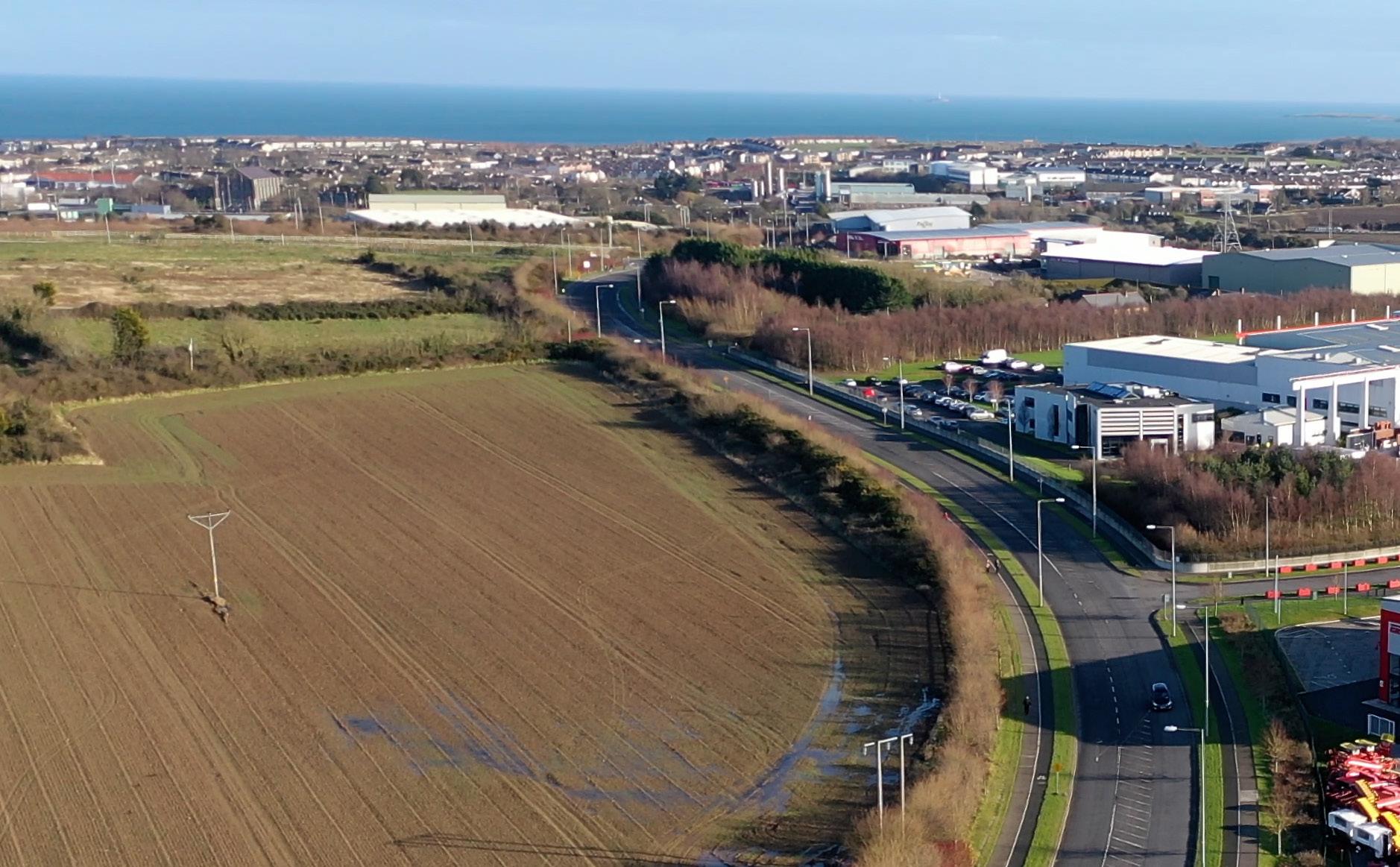
Once a quiet rural town, Balbriggan has undergone a dramatic transformation over the past two decades, emerging as Ireland’s youngest and most diverse town. At the heart of this evolution is Fingal County Council’s visionary “Our Balbriggan Rejuvenation Plan”, a community-driven strategy to build a vibrant, inclusive, thriving local economy.
Backed by over €25 million from the Urban Regeneration and Development Fund (URDF), the Council is investing more than €50 million into public realm improvements. The flagship project at Quay Street is already underway, set to deliver a new civic plaza, five commercial spaces and a reimagined waterfront by 2026.
Beyond the revitalisation of the town centre, Fingal is positioning Balbriggan as a strategic industrial hub, leveraging the town’s strategic location on the Dublin
Belfast Corridor, its excellent proximity to Dublin Airport and Dublin Port, its strong connectivity to the national road network and the rail network with the town primed to take advantage of the DART+ Coastal North Project, which will extend the electrified rail network to Balbriggan, enhancing the town’s connectivity and economic potential.
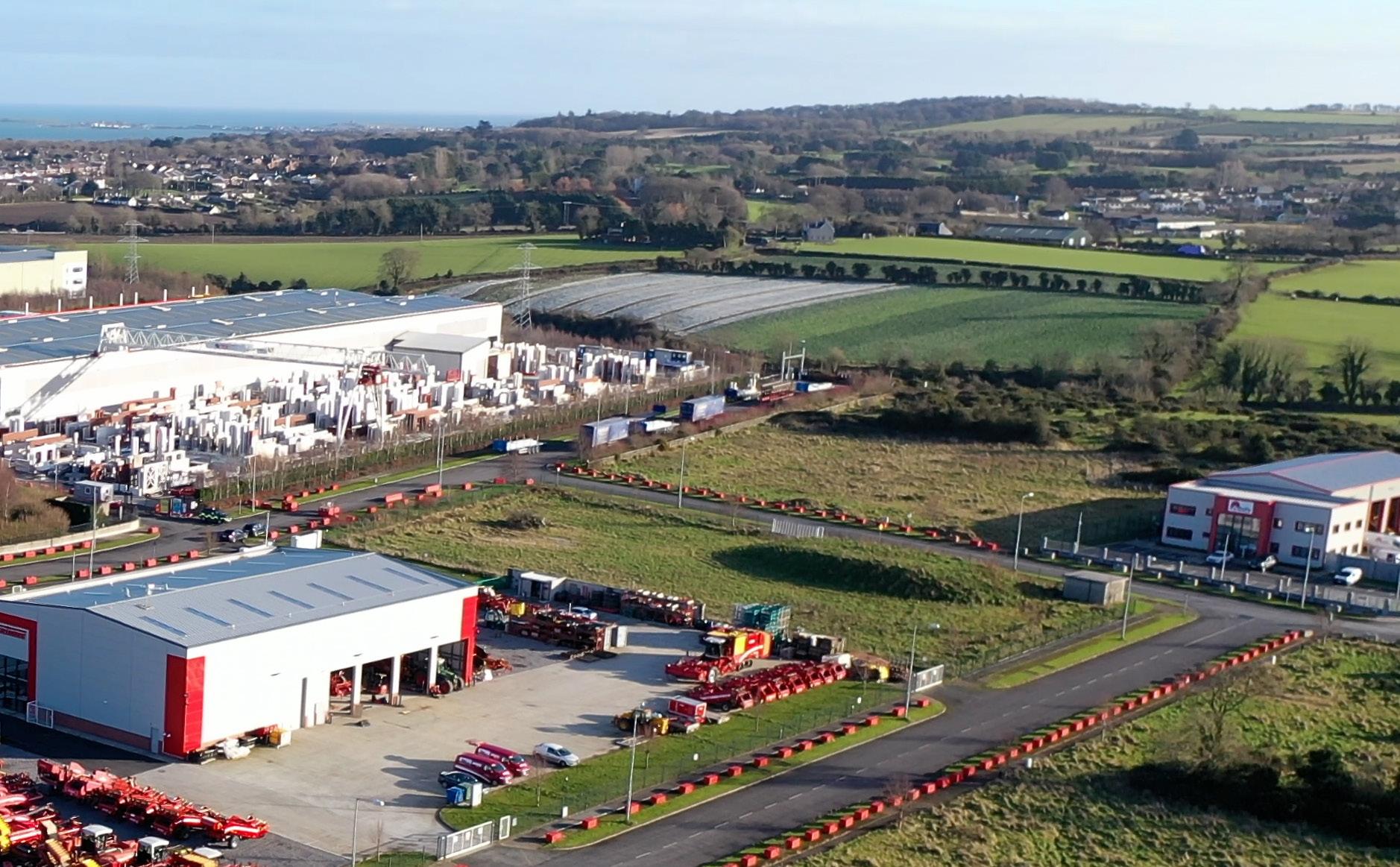
In the last 3 years, the Council has acquired 200 acres of industrial land to attract investment and drive job creation. Recognising the potential in the designation of Balbriggan as a Decarbonising Zone in the Fingal Climate Action Plan and the rise of offshore wind opportunities, Fingal is positioning Balbriggan as a green industrial cluster and redefining its approach to industrial development through sustainability.
This ambition sparked the creation of the Urbact EcoCore Project, a European initiative led by Fingal –the first Irish local authority to do so. EcoCore brings together small cities across Europe, located along strategic transport corridors to advance the green industrial transition.
Over the last two years Fingal has, through collaboration, pilot actions and a co-creation process
involving multi-level, multi-sectoral stakeholders, developed an Integrated Action Plan to shape Balbriggan into a world-class green industrial zone.
Key lessons learned include governance models, green procurement, investment attraction, skills development, carbon impact measurement and promotion of the circular economy. The project has highlighted the critical role of branding and targeted marketing to attract the right investors and the vital importance of engagement with business and education stakeholders.
Balbriggan’s journey is a compelling study in how local leadership, strategic investment and international collaboration can drive sustainable economic transformation.
Through the Future Fingal Economic Development Strategy, Fingal is setting out a roadmap for the county’s future economic development. The Strategy identifies key opportunities and sectors – placing sustainability at the heart of economic transformation. Identified by stakeholders as a key opportunity, sustainability is driving Fingal’s engagement with business.
Fingal’s proactive approach to business engagement is demonstrated with companies like Techrete and A.Forall in Balbriggan sharing their sustainability journeys through video case studies and business briefings facilitating peer to peer learning and exchange. Telling the story of these companies provides inspiration for other companies to start their own sustainability journeys with Fingal fostering a culture of collaboration and supporting businesses to navigate the shift toward greener practices.
Taking business engagement to the next level, Fingal hosted a Hackathon on the Circular Economy to explore the challenges of moving from a linear to circular economic model. Building on work of Dublin Belfast Economic Corridor (DBEC) partners, Fingal is conducting a feasibility study for a circular economy hub and digital platform focused on construction waste with ground-breaking engagement with the construction sector, an initiative which will require regional collaboration within DBEC for economies of scale.
With new obligations under the EU Corporate Social Responsibility Directive (CSRD), Fingal recognises the pressures facing businesses. In response Fingal is
Fingal is positioning Balbriggan as a green industrial cluster and redefining its approach to industrial development through sustainability.
engaging with business stakeholders to co-develop the Future Fingal: Sustainable Fingal Strategy to identify how Fingal can support and work in partnership with business, education and community stakeholders to meet climate targets and accelerate the transition to a more sustainable, circular economic model.
Industrial development is evolving. Fingal understands that selling land and streamlining planning isn’t enough. Today’s competitive economic environment demands added value, through collaboration on local climate projects and sustainable transport solutions. Added value means supporting the development of the future talent pipeline and, in Ireland especially, supporting the hundreds of SMEs who lack the resources to navigate the complexities of the upskilling ecosystem. Fingal is leading the way with the Future Fingal: Fingal Skills Strategy, being the first local authority in Ireland to develop a skills strategy, demonstrating the innovation and commitment of Fingal County Council to understanding and responding to business needs.
Looking ahead to 2026, Fingal will unveil new branding for Balbriggan’s industrial zone, positioning Balbriggan for green investment and high value employment. 2026 will also see the launch of the Future Fingal: Sustainable Fingal Strategy, which will affirm the Council’s commitment to supporting businesses to thrive in a low-carbon economy.
Fingal’s approach to economic development is bold, inclusive and future-focused – setting a benchmark for how local government can drive sustainable economic development through innovation, collaboration and strategic foresight.
Follow Fingal’s Economic Development Team on LinkedIn to keep up-to-date with Fingal’s economic development work.