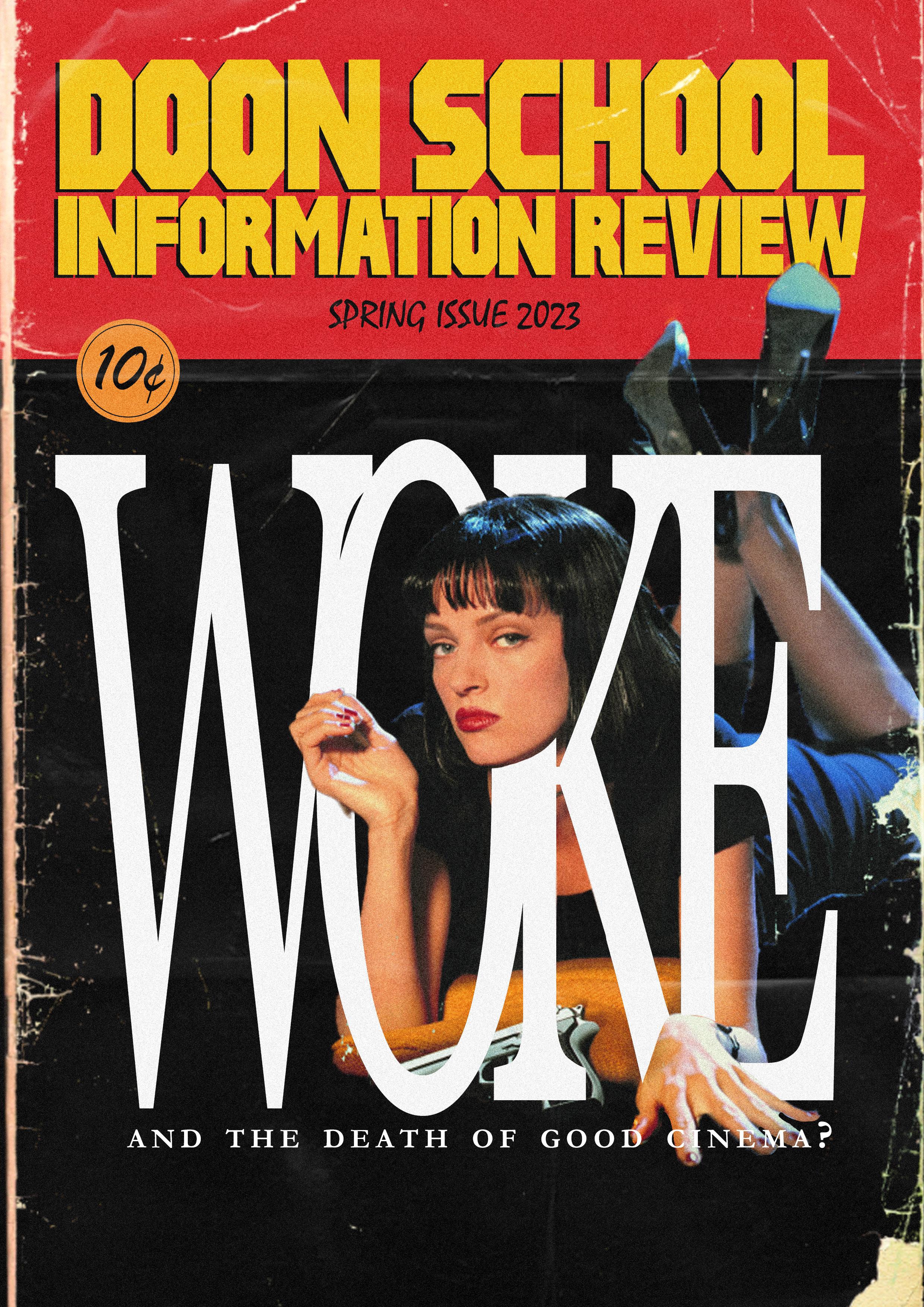
CoverPhotography: Firooz Zahedi
EDITORIAL BOARD
EDITOR-IN-CHIEF
Rohan Taneja
CHIEF-OF-PRODUCTION
Yash Adalti
SENIOR EDITORS
Karan Agrawal
Sai Arjun
Siddhant Srivastava
ASSOCIATE EDITORS
Avi Bansode
Dhairyaveer Khanna
Vir Mehta
Vivaan Sood
Sriyash Tantia
SENIOR CORRESPONDENTS
Arjit Sandhu
Kai Kubo
Krishiv Jaiswal
Pragyan Goel
ASSISTANT DESIGNER
Abhimanyu Chaudhary
MASTERS-IN-CHARGE
Ms Malvika Kala
Mr Dwayne Dcosta
“GOD, GRANT ME THE SERENITY TO ACCEPT THE THINGS I CANNOT CHANGE, THE COURAGE TO CHANGE THE THINGS I CAN, AND WISDOM ALWAYS TO TELL THE DIFFERENCE.”
04

FILM & TELEVISION
20 LITERATURE 24
MUSIC 30
SPECIAL SECTION 48
SUMMER SELECTS
There is a certain sense of absurdity that attaches itself to any sort of change, and this absurdity is only neglected once that change achieves some degree of permanence. It seems that this is something that is global in nature, transcending boundaries set by time and place, consistent with changes emerging over generations. For me, personally, recognizing that absurdity and challenging changes is necessary, especially when that change has a direct impact on our perception of content, and our perception, in turn, has an effect on culture itself.
I write this editorial in concern, disturbed by the way popular culture is evolving. Evolution and change are inevitables of our existence, and the reasonable individual would make his peace by accepting these changes for what they are. However, we at the DSIR are slightly different. We are a group of individuals who like to consider ourselves (and it thrills me to say this) just slightly more cultured, slightly more pseudointellectual and slightly more off their rocker than the rest of the school. This urge to stray away from the norm is what drove us as a board to create an issue that, instead of accepting cultural evolution, questions it. In a school where liberal thoughts are subtly suppressed and the idea of being inclusive only exists in principle and not in practice, I think such reflection is necessary.
We live in an age where popular culture’s priorities lie more in pleasing people and eliminating the risk of offending its audience, rather than ensuring the quality of the content itself. This is a time where the fabric of society is so sensitive, that the consequences of any action must be weighed with utmost care. As we progress towards a largely ‘liberal’ society, we make attempts to be more inclusive; from making compulsory diversity requirements in the Oscars, skewing historical accuracy in shows such as Bridgerrton, to going as far as censoring older sitcoms to fit the needs of a so-called modern

society. Personally, I see the need of being inclusive and conscious, but I think this too has its limits. With woke culture spreading rapidly across the globe, I think it is high time to find that thin line that separates inclusivity and absurdity.
The onus to protect popular culture is on the consumer. I realise, as I type this, that I am addressing a largely male, conservative audience, but even recognizing one’s polarity warrants merit. As consumers, we need to put our preconceived biases aside and recognize the changes that are needed, changes that are actually beneficial, and changes that are, for the sake of continuity and impact, downright absurd. To this end you will find pieces that attempt to answer these questions through their own lens, scenarios and perspectives.
I think I have said enough, let’s move on. Apart from our regular content on the latest in film and television such as reviews of “Glass Onion” and “Kaleidoscope”, we have also attempted to include more content from the world of music and literature. 2023 also marks fifty years of HipHop, and a mini-section highlighting the most influential artists of the genre has also been included. As you would flip through this issue, you’ll notice a change in the way this issue has been designed, as compared to previous issues of the DSIR. Over the years, it seems as though this publication sought to highlight its visual appeal more than its actual content. Keeping this mind, we attempted to go for a simpler layout that made sure to keep readership as a priority, or at least above visual appeal.
Making this issue a success was not easy, but then again these things never are. My predecessors set a standard for this publication, and I can only hope that I match or exceed those standards and expectations. But then again, you, dear reader, are the best judge for change.
Rohan Taneja Editor-in-ChiefJohn Wick 4 sums up the franchise perfectly with Keanu Reeves continuing his gory journey as the dog-loving, bulletdodging hitman. This action-packed movie is an ode to the visceral thrill of fighting, with each punch, kick, stab, and shot landing with boneshattering impact. The franchise has truly come a long way from the humble beginning of a man getting revenge for the murder of his dog and John Wick 4 expands the world of the franchise, grossing 352 million dollars globally. So how has the John Wick series turned into the masterpiece of entertainment as we know it today ?
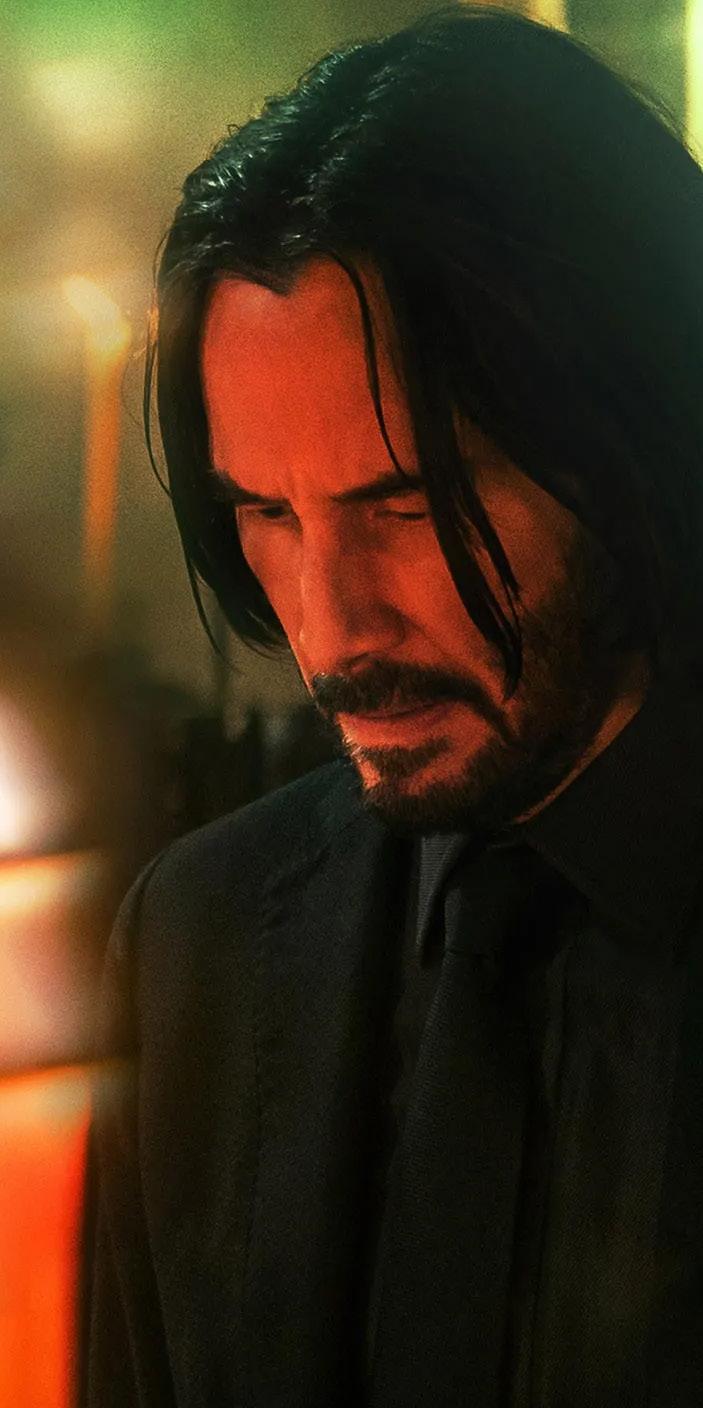
The plot of John Wick 4 may seem like a retread of the previous movies: John Wick goes on a revenge mission against the High Table, a council of crime lords. However, this instalment takes things to the next level, as John Wick declares an all-out war with the High Table and the stakes become higher than ever before. The action is unrelenting, with each set-piece outdoing the last, and the tension escalating to a fever pitch. While some may criticize the movie for its repetitive plot, others find delight in the sheer adrenaline rush of the action and the intricate world-building that unfolds.
There’s no denying the sheer excitement and thrill of watching the titular character dish out his own brand of justice. It is true that there emerges a pattern in each filmsomething happens to John, he seeks revenge, and chaos ensues - but what sets each movie apart is the masterful execution of each action sequence, as well as the introduction of intriguing new characters.
Take Caine, The Tracker, and Akira, for instancetheir unique personalities and backstories were portrayed in a captivating manner that left the audience wanting more.
Though the saying does go that one man’s trash is another’s treasure, and that wstands true especially in the John Wick series. Although some say that its plotline is repetitive and boring, others, who watch it for the thrilling and intense action and the mysterious underworld, find it delightful, with action scenes and new characters catered specifically for this audience. For some minorities, this movie also introduced many new main characters catering to them, three asians and a black character were
introduced into the world of John Wick this year, increasing the minority representation, a vital thing to increase in this day and age.
The support from the audience is not only for the intricately made and extremely stylized fighting scenes, it is also for the return of Keanu Reeves as John Wick. John Wick has almost become one with the image of Keanu Reeves, being his most iconic role, something everyone thinks of when hearing his name.
The supportive audience may be many, but there are just as many, if not more, people who either dislike or disregard John Wick 4, and sometimes the series as a whole. This audience is made up of the people who dislike movies set entirely on graphic violence and revolving around a system of blood and gore. Most of these people prefer emotional attachment through a touching and original story that pushes a character forward throughout the story, which is another element that John Wick 4 lacks.
There are also some who dislike John Wick 4 because of how it fails to successfully bring the series back on track after the 3rd movie shook the foundations, making us question who John Wick really was and what he was fighting for. Though it does commit to the John Wick trope of wonderfully coordinated violence and fight scenes, they can get a bit excessive, this issue tying right back to the first point, there is no plot: making this movie quite literally 2 hours and 49 minutes of action, diluting the very action it succeeds with.
We love John Wick, though not how it ended. Here’s why.
AARON ASHDHIR
“ THE SUPPORTIVE AUDIENCE MAY BE MANY, BUT THERE ARE JUST AS MANY, IF NOT MORE, PEOPLE WHO EITHER DISLIKE OR DISREGARD JOHN WICK 4, AND SOMETIMES THE SERIES AS A WHOLE.
‘Ma, Where’s My Speargun? I Got To Pack.’ This vibrant quote flawlessly epitomises the joy of a whodunnit around the corner waiting to be solved by the eccentric detective who will navigate you through the perplexing maze of false trails and seemingly culpable suspects to arrive at the illuminating truth. The series that American filmmaker Rian Johnson was destined to create is back, and the second chapter of the Benoit Blanc Cinematic Universe is deeper, ‘twistier’, more extravagant, and just as wonderful, if not better, than the first. Johnson continues to hone his own version of the whodunit in ‘Glass Onion: A Knives Out Mystery,’ fusing profound concepts and aesthetics with cutting-edge humour that is both mindful and contemporary.
‘Glass Onion’ exploits class warfare to address economic inequality while also making targets out of the sort of obscenely rich, ludicrous characters we listen to about each day. The film’s archetypes comprise the Senate candidate, a foolishly ignorant model who became a fashion designer, a men’s rights activist and Twitch streamer, a scientist at a prominent tech business, and bizarre billionaire, Miles Bron. We also have the billionaire’s former business partner Cassandra Brand, portrayed by American singer Janelle Monae – a modest, confident woman who had endured a dreadful betrayal – who helps unwrap the conflict of the plot. Centred around Greece, ‘Glass Onion’ pursues this group of ‘rich idiots’ after they receive an invite to an exotic private island for a top-notch
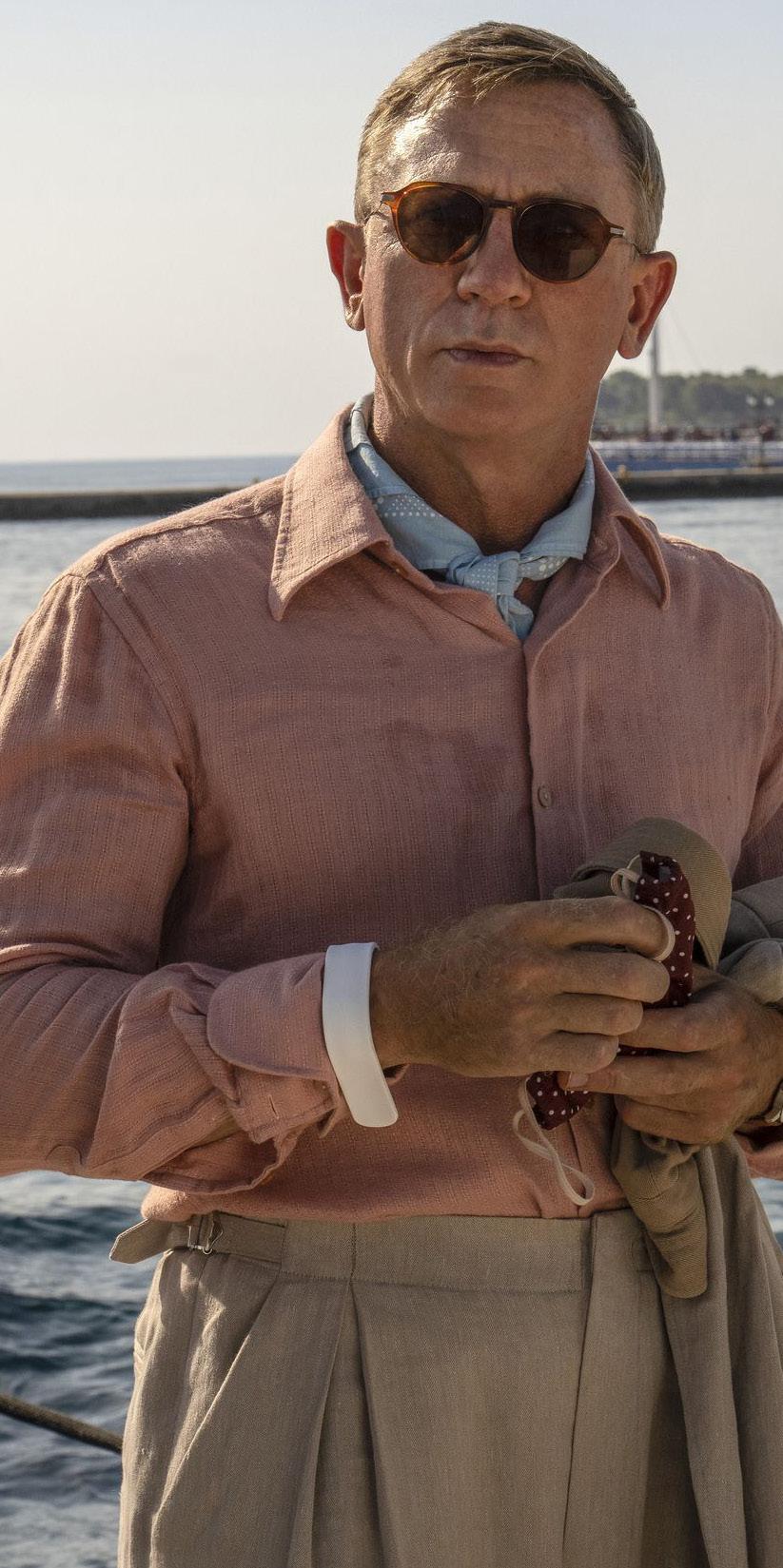
murder mystery party that turns into mayhem when an actual murder takes place. Fortunately, there is a mysterious guest invited to the exotic seaside location: Benoit Blanc, an eminent sleuth who is the only one capable of cracking the case.
You can feel the great synergy between the actors and the director, with Rian Johnson drawing out strong performances from his phenomenal cast. The timeless Daniel Craig, in a league of his own, plays Blanc as a smooth and savvy operative, keeping a close eye on the affluent people on the island who begin to act suspiciously and with dubious motives as things go haywire. He also adds gritty realism and emotional vulnerability to the table, all while showcasing his incomparable problemsolving aptitude. There is also a sense of despair in his voice as he muses on what a detective is truly capable of fulfilling for the sake of justice when the entire system is constantly dragging you down. For me, by delving deeper to create a captivating, intricate character that belongs to an ‘elite group’ of detectives, Craig provides what very well may be one of his strongest performances to date.
Kate Hudson essays the role of the quirky, over-the-top fashion entrepreneur, Birdie Jay and brings the delightful comic confection to life in the film. She establishes herself as a highlight of every scene with her excellent comedic timing and line delivery. Alongside big names such as Daniel Craig and Kate Hudson, Madelyn Cline’s performance as the young bombshell, Whiskey in the critically praised criminal caper sequel may have solidified her spot in Hollywood’s top ranks.
Rian Johnson seems to be
at ease to launch thematic criticism in ‘Glass Onion’. It deals with the notion that people can deceive others and themselves because of money, while concurrently illustrating that having an overwhelming fortune doesn’t make someone exceptional, intelligent, or even content. The script and its themes’ populist approach might seem a bit odd, but to me it works perfectly when Johnson turns its more serious moments into priceless jokes. Noticeably, this time around, the humour is a little more inclusive, and jokes arise more frequently and have an enhanced impact on viewers. It is as if ‘Glass Onion’ replaces the easygoing nature of the initial ‘Knives Out’, with the humorous but more furious and sophisticated sequel, deserving of reference to the finest works of the genre.
The film capitalises on the charming Netflix money to emphasise its point about excess wealth by making the sets appear outrageously lavish. What this includes is an ice bridge rising out of the sea, robot butlers, an actual gigantic Glass Onion,
and a scene involving the Mona Lisa. Set during the lockdown, the filmmaker comes up with ingenious ways to include the Covid pandemic; depicting how characters sought shelter, as well as featuring the characters wearing a mask as they steer to the island. Blatant holes in the script include characters who talk openly about crucial secrets so that Blanc could overhear them and clues that are concealed in plain sight, leaving the viewer pondering over their naivety.
‘Glass Onion’ is a bolder, wittier and fierier sequel that amplifies nearly every facet of its predecessor. In this humorous murder mystery set on the most sumptuous private island, Rian Johnson plays with a crisp storyline that fires a shot at the recklessness and idiocy of the affluent. It’s mind-blowing how the film manages to contain a lot of indecipherable plot twists and mind scramblers in just over two hours. Each event is inescapable and will have the audience’s attention hooked to the screen. The matchless plot, the masterful cast and cinematography all make an engrossing and memorable watch. There’s no doubt that ‘Glass Onion’ is an adventure you must experience.
As the cinematic universe progresses, the degree of cinematography and CGI levels go up exponentially. One of the films that perfectly encompasses this is Avatar the Way of Water. Let’s dive deeper into Pandora and the Na’Vi population that sustains its environment.
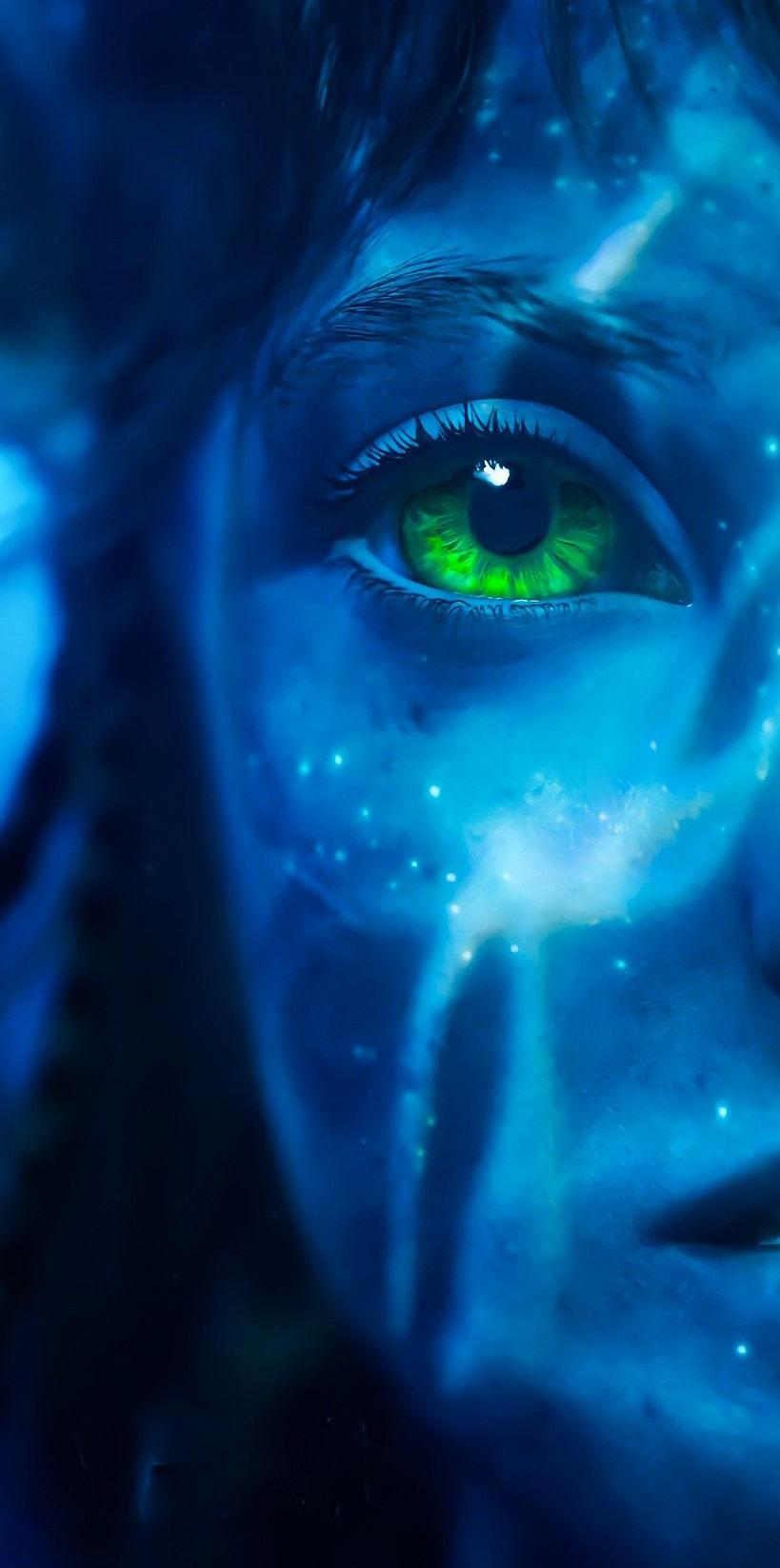
This has been in the works for over 13 years, and this has allowed both James Cameron and Jon Landau (the producer and director of the movie), to work closely with Worthington and his team to perfect every nitty-gritty detail about the film. This has allowed the cast to take a step back and understand each and every emotion that is required for a specific role. For example, Sam Worthington, trained for four and a half years underwater just to bring to life the character that he was meant to present.
The majority of this movie was also filmed underwater. In the prequel; Avatar (2009) the crew used CGI to animate the water, but in the sequel, the cast stepped it up and used real water. For this, they utilised a 30 feet tank filled to the brim and trained the actors to perform their roles while inside the tank. This allowed Cameron to step up the CGI even more, with a brand-new technology known as Deep X.
Deep X technology uses artificial intelligence to simulate real-life situations and turn them into animated masterpieces. Cameron utilised this technology in many ways to enchant the already bewitching nature of the film. Personally, after watching the movie I stood in awe at the mesmerising graphics and couldn’t believe that I was watching something
animated. It encompassed the reader with mesmerising audio and visual details.
The movie also uses a wellknown filmmaking postulate known as Performance capture, which involves tracking body movements from devices attached to the actor. This furthermore allowed Cameron to incorporate everything into a single software and then refine it even more to remove any imperfections that could exist. Cameron also explicitly stated how the movie was delayed because of this refining, and Cameron wanted to use the same motion capture tech for actors while they were submerged underwater,

something that no other movie engineer had ever done before. This adds one more point to the uniqueness of the movie and makes it raises the bar even higher for other production studios to follow. This advancement in technology was a significant reason why the series is so definitive in today’s society. Avatar was able to exploit the gap in the market.
My last section of this review is about the delay. After the release of the first part in 2009, a prequel was promised in 2015. But it was released 7 years later in 2022. Now, the main reason for this is simply because Cameron wanted to prepare the script for Avatar 3 and 4, and then start working on this sequel. We didn’t have the technology to sustain Performance capture underwater and hence Cameron had to innovate and work with engineers to be able to create this technology and utilise it in all of its glory, this is also a reason why it was one of the most expensive films ever made, bagging the 6th position at $350 million [nominal].
All in all, this movie was a true gem to watch, but more importantly to experience. I look forward to the “threequel”, Avatar 3 which aims to come out in 2024 and is partnering with the Cinematic Pro Studio to elevate the CGI game even more and raise the bar even higher for all the other studios to follow. The Way of Water, personally was not a movie, but a world that I had the privilege of experiencing.
with
CGI. But how did they do it so well?
AVIGHNA DARUKA
A Chinese immigrant, living an everyday life like any immigrant living in the USA, slowly loses her mind as she peeks into all the different lives she could have lived. As she goes deeper, she’s overwhelmed, and in disarray; she goes deeper into this rabbit hole, and it’s almost as if there’s no way back to normalcy. While this is what the movie’s basic plot seems like at first, an average human is forced to partake in multiversal travel to defeat an antagonist. This is something we’ve seen countless times on the big screen with giants such as Marvel and DC already having set their foot in this genre countless times; but, though the sci-fi plot and premise of a multiverse draw in viewers, it is the story’s attention on love, hope, and acceptance that captivates us and keeps us glued to the screen.
Thoughtfully addressing nihilism and depression, Everything Everywhere All At Once never directly addresses the issue of meaninglessness in an infinite cosmos. Instead, its meaning emerges as a protracted defence of the idea that possibly the only meaning to be found in existence is the people who inhabit it. As a result, the answer is to be always present. Although it is never stated explicitly, this movie implies that what gives life purpose is the understanding that everything and every moment has equal value because there is no inherent meaning to anything.
Everyone has seen this genre multiple times, but the Daniels, with their directing techniques, still manage to get viewers into something that has been tried and tested hundreds of times. While some might
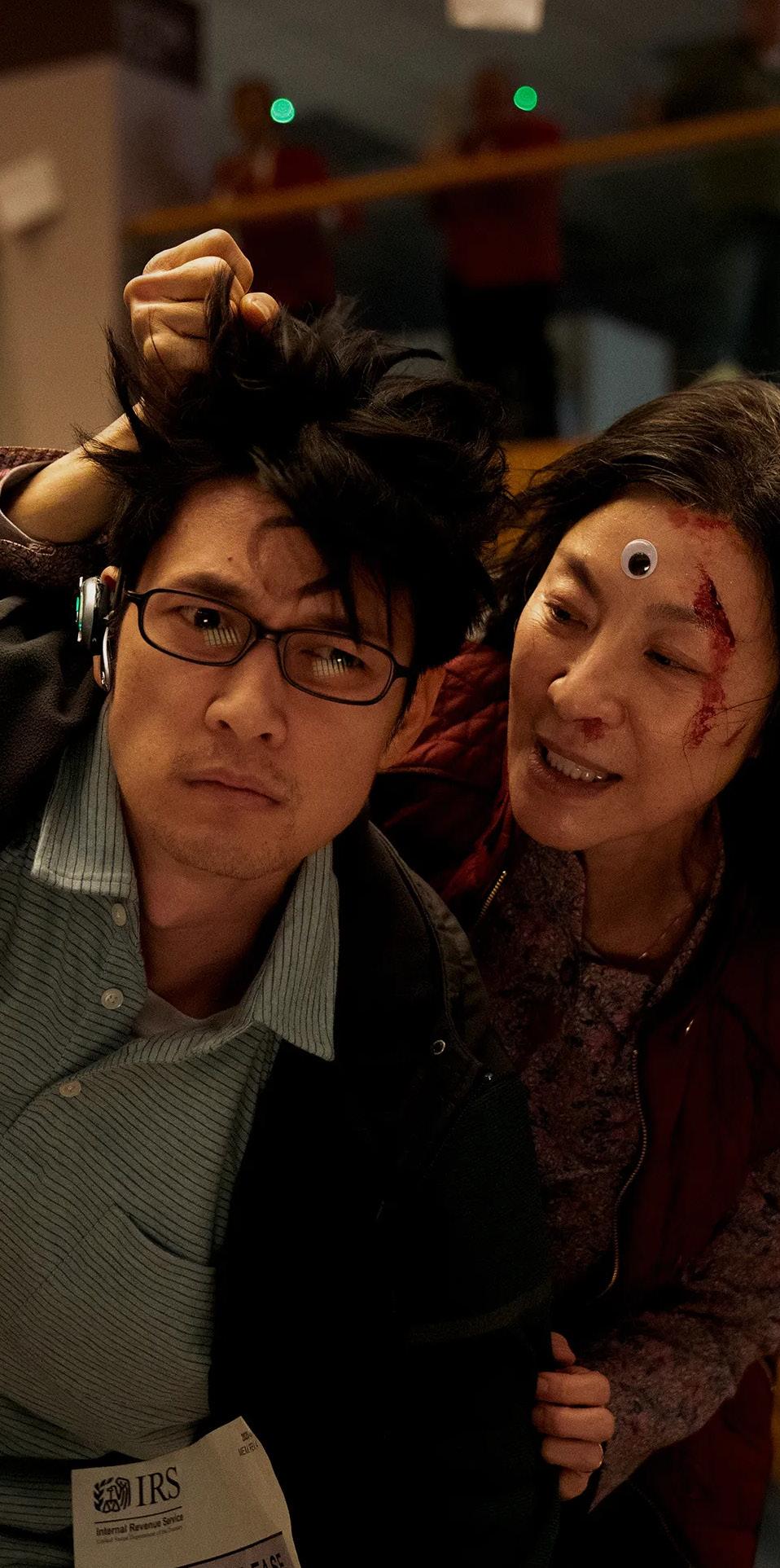
say that everything is going by too fast, this fast-paced confusion is the very thing that gives this movie its charm, the reason why people keep coming back, it’s for the new take on this genre, something which hasn’t been explored as much yet. The confusion mixed with the absurd and random nature of the plot of the movie was a risky move, but it pays off in the end with the movie being received quite well. The confusion elevated the humour of the plot as well, when you move between two starkly different universes with the same characters, their reactions and perplexities are bound to get some chuckles here and there in a movie that is designed to convey a rather highbrow meaning.
Furthermore, it’s the comedic scenes that help bring out the absurdist style and messaging; they allow the movie to convey its point. Absurdism is the ideology that acknowledges the absence of meaning in the world but challenges it by embracing it. In short, everything is as meaningful as the things around it, if nothing has meaning to begin with. While Everything Everywhere
All At Once is an amalgam of different genres, part action, part comedy, and part family drama. Again, while this may be confusing, the meaning never gets lost along the way, rather serves as a guide to the next thing in the course and helps the readers interpret the implicit meaning of the entire plot without getting overwhelmed by only one genre.
Michelle Yeoh (Evelyn Wang) and Ke Quan (Waymond Wang) also play a vital role in this movie being what it is. Michelle Yeoh is a seasoned actress having acted in various well-known movies like Avatar, Crazy Rich Asians, and Shang Chi. However, the task of acting differently in each universe while still having the same base mentality would be difficult but she did pull it off gracefully. This movie, while did act as an avenue for seasoned actors to do what they do best, also gave way to various lesser-known artists to come to light. Whether it be Ke Quan or Stephanie Hsu (Joy), they got a path to get themselves started in the entertainment industry, with Ke Quan even receiving an
his performance.
The cinematography plays a major part in this movie being well-received by most people. As stated earlier as well, this movie could be confusing for many with numerous aspects taking place at the same time. It’s the camera techniques and the cinematography that ties things together, directs the viewer, and makes things make sense. With various ‘universes’ being shown in quick succession, to differentiate, each universe is given a different colour scheme and this remains in the subconscious of the viewer, which helps them remember what the protagonists of that place are like. Along with that, most of the movie uses closeups with little wider shots being used and this helps the viewer look at what’s going on through the perspective of one character or another to make things less confusing. Ultimately, the Daniels use all these aspects to convey the meaning of life, nihilism, and family using a plot and genre which is appealing to the younger audience as well, for which this meaning is the most relatable.
Everything Everywhere All At Once, is chaotic, confusing and absurd. It has us obsessed.
HARSHIL MAKIN
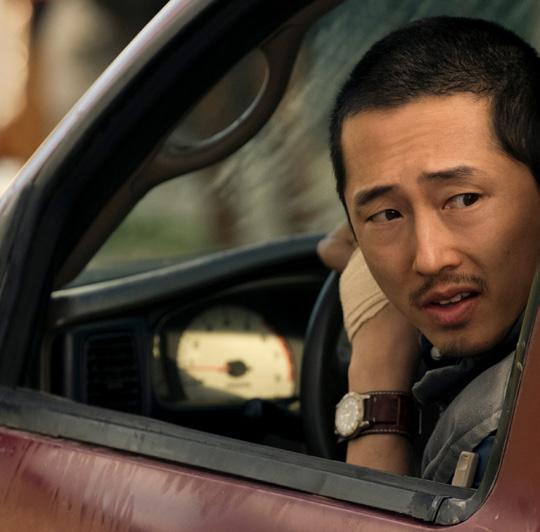
Let me start by saying that BEEF is unlike any show I’ve seen before. This television series, starring the incredibly talented Steven Yeun and Ali Wong as Danny Cho and Amy Lau respectively, took me on a rollercoaster ride of emotions. As a viewer you’re presented with these two characters who lead drastically different lives, but who are bound by one powerful emotion: rage. Danny is a struggling handyman, barely making ends meet and dealing with the ups and downs of living with his younger brother Paul (played by Young Mazino). On the other hand, Amy is a successful entrepreneur running a thriving plant business in LA, trying her best to juggle the responsibilities of being a working woman and a mom.
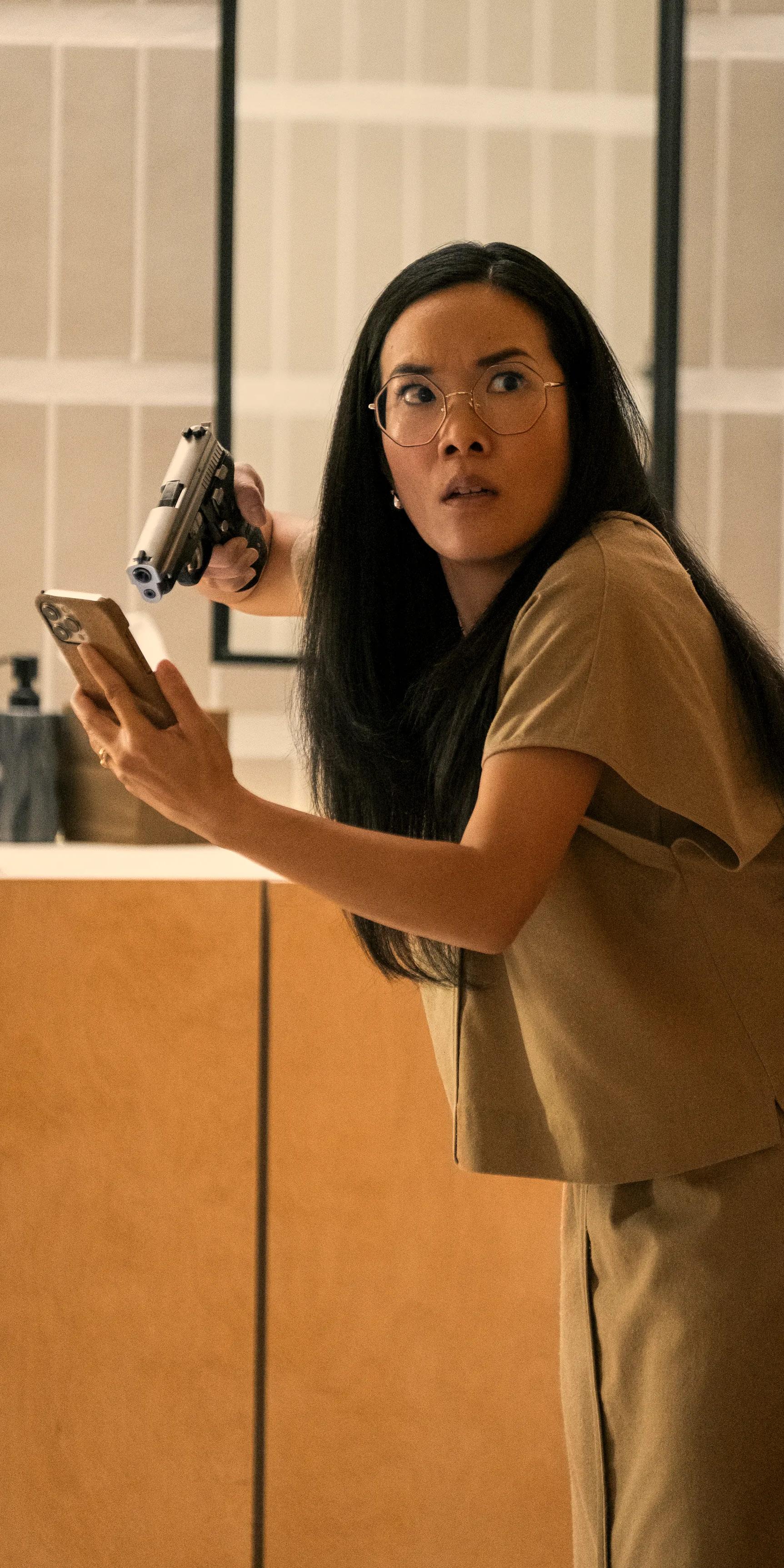
But here’s where things get interesting. Both Danny and Amy are also grappling with an identity crisis as Asian Americans, navigating the obstacles the world throws at them. So far, it sounds pretty relatable, right? Well, just when you start to settle into the storyline, everything falls apart. A road rage incident between Amy and Danny sets off a chain reaction of events, plunging them into a dark downward spiral. Each character tries to outdo the other, escalating from petty pranks to downright disturbing actions like faking relationships to get close to each other, kidnapping and even arson.
As an avid viewer, I can confidently say that BEEF is anything but normal. It’s a mind-bending, absurdist commentary on human nature that dissects the very concept of revenge with surgical precision.
Danny and Amy aren’t your flawless protagonists, and that’s precisely what makes them so fascinating. They embody our own desires to stop being punching bags, to fight back, and to embrace the fiery rage that burns within us when we’ve been wronged. In a twisted way, they become a reflection of ourselves, and I must admit, that’s a bit unsettling. This show forces you to pause and question your own goodness. And isn’t that what any good show should do? It should provoke introspection while still delivering the dramatic punch we all crave. And in my mind, BEEF manages to strike that delicate balance flawlessly.
But it’s not just the leads that shine in this series. The supporting cast, featuring the likes of David Choe, Joseph Lee, and Maria Bello, breathe life into their characters in a way that left me utterly captivated. At times, I found myself even more invested in their stories than in the main characters. The show masterfully makes you empathise with every single person on screen, even without long and boring backstories. Everything is in the moment, and even with minimal screen time the characters manage to pull you into their own world. Each character is an intricate tapestry of emotions, battling their own demons and pursuing their own agendas. To put it bluntly, they’re all a bit crazy. BEEF defies the notion of clear-cut heroes and villains, presenting us with flawed individuals who are simply trying to navigate this chaotic world.
BEEF offers a television experience that is thought-provoking and truly unique. With its distinctive lens, it challenges your own sense of morality and leaves an indelible mark on your psyche. This series had me hooked from the first episode, and the talented ensemble cast only added to its brilliance. BEEF is a triumph in every sense of the word, showcasing the power of television to entertain and engage in a way that lingers long after the final credits roll. Trust me, this is a show you won’t want to miss.
BEEF is anything but normal. We need more shows like it.
KARAN AGRAWAL
“ AS AN AVID VIEWER, I CAN CONFIDENTLY SAY THAT BEEF IS ANYTHING BUT NORMAL. IT’S A MINDBENDING, ABSURDIST COMMENTARY ON HUMAN NATURE THAT DISSECTS THE VERY CONCEPT OF REVENGE WITH SURGICAL PRECISION.
Ever been on a luxurious train ride, which is so comfortable that you cherish each passing shrub and cityscape? And finally, once you arrive at your destination you realise that all those overlooked elements of the journey had fantastic bits of value attached to them. Such is Netflix’s recent TV series “Kaleidoscope”, It is a train ride through the deepest of downs of characters and on the contrary, their ups as well. Kaleidoscope is first of its kind, from its direction to its perfectly cut and segregated episodes; the audience witnesses the many possible ways by which one can enjoy the plot unravel.
The series has been conveniently divided into eight parts. Each episode has been titled as a colour. Every episode has an end that would suffice the start of any of the other seven episodes; while every episode also has such a beginning that would go along with any of the conclusions to any other parts of “Kaleidoscope”. Therefore, the series has been quite successful due to its interactive and puzzle-like feel and rhythm, as viewers experiment and devise their own formulas to view the series to the maximum of their capacities. The episodes all fit right into each other; although, with a condition - that the “white” episode must be viewed last, as it holds the key to the day of the heist and plot bangers of the crime saga. With 40,320 possible combinations to view the series, it is no surprise; that the response to the heist American TV show has been much more than overwhelming.
From reaching Netflix’s Top 10 within a few days of its premiere, to lashing out throughout the internet -
WITH POSSIBLE COMBINATIONS TO SERIES, SURPRISE; THE TO AMERICAN SHOW MUCH OVERWHELMING

Kaleidoscope has come a long way. The episodes present the story of Ray Vernon, who aims to rob an unbreakable vault with the incentive of walking away with 7 billion dollars in market bonds. To multiply his odds of making his wants practical, he starts putting together a team of fashionably skilled operators, who specialise in their own crafts; together for a common cause, we see the lives of the characters intertwine and affect each other in a way unprecedented to their own cranial capabilities. The series portrays the crew plan for the heist from years prior to the final day. We witness the dynamics of the group, the brains, and the muscles and even some inside moles to make the job easier. The plot successfully transcends romance, flings, breakups, action, improvisations, emotional incentives, and motivations for each of the crew members. No stones are left unturned as primarily the plot adds to the value of the emotional aspect, by exploring the background of the security corporation’s founder Roger Salas, who had allegedly built his empire on foundations of the corpse of Vernon’s wife. We see a back-and-forth chemistry between Salas and Vernon as their crews battle to prove their mettle on the battlefield. What the series depicts wonderfully are the details: with zero plot holes and a clear and envisioned storyline. One can confidently say that Kaleidoscope does not compromise on the quality of the plot, which makes the
audience stay stitched in.
However strong and noteworthy the plot may be, I believe the series stands short in its cinematography and creative filming. As scenes and settings often tend to be repetitive, and angles are such that they would gradually turn monotonous. Variable editing such as faster and more intense cuts in action sequences, while comparatively laid-back switches in laid back scenes could have definitely helped mould elements a bit better in the case of Kaleidoscope. In essence, regulating the tempo of the show, slowing it down and speeding it up are major parts of any action show, and perhaps employing this technique would have made it a far more enjoyable watch. While action sequences are still a creation to behold, they seem to be heavily inspired and be lacking a much-needed flair.
Created by Eric Garcia, the plot of Kaleidoscope is inspired by true events and revolves around the largest heist ever attempted, followed by betrayals, vengeance, and so on. For most of its existence, the joy of television was knowing we were all watching the same programmes at the same time. Good or bad, these shows united us. For all its brilliant convenience, Netflix destroyed this to the extent that people couldn’t discuss TV with friends without a careful little dance to ensure they wouldn’t spoil anything. Now, even if by some miracle we do end up watching Kaleidoscope at the same time; it doesn’t matter, because none of us are watching the same thing anyway.
“ WITH 40,320 POSSIBLE COMBINATIONS TO VIEW THE SERIES, IT IS NO SURPRISE; THAT THE RESPONSE TO THE HEIST AMERICAN TV SHOW HAS BEEN MUCH MORE THAN OVERWHELMING
Credits: Vogue
For want of a nail, the shoe was lost. For want of a shoe, the horse was lost. For want of a horse, the rider was lost. For want of a rider, the battle was lost. For want of a battle, the war was lost. For want of war, the kingdom was lost. And all for the want of a horseshoe nail.”
What if the Axis powers won World War II? What if Germany established their dominant position in Europe? What if Japan established a sphere of influence in the Pacific Region? What if your last words were Heil Hitler? The final wave, a Nazi Salute.
“What if?” Is the ideal question to describe the entire thriller series that encapsulates an alternate history premise that depicts what the world would look like had the outcome of World War II favored the Axis powers?
‘The Man in the High Castle’ took inspiration from the 1962 novel of the same name by Philip K. Dick. The show was developed by Frank Spotnitz and premiered on Amazon Prime Video in 2015. It stars actors such as Alexa Davalos, Rufus Sewell, Luke Kleintank, and Cary-Hiroyuki Tagawa.
I binge-watched the show with wide eyes from the comfort of my bed. My eyes were glued to the screen as I reloaded the ‘magazine’ with buttered popcorn while enjoying seeing a post-apocalyptic world slowly fall into the greedy hands of Nazi Germany and the Japanese. Not to confuse my personality with a sadistic person, but most of the series was entertaining and fascinating. In this dystopian scenario, the Axis powers won World War II and divided the
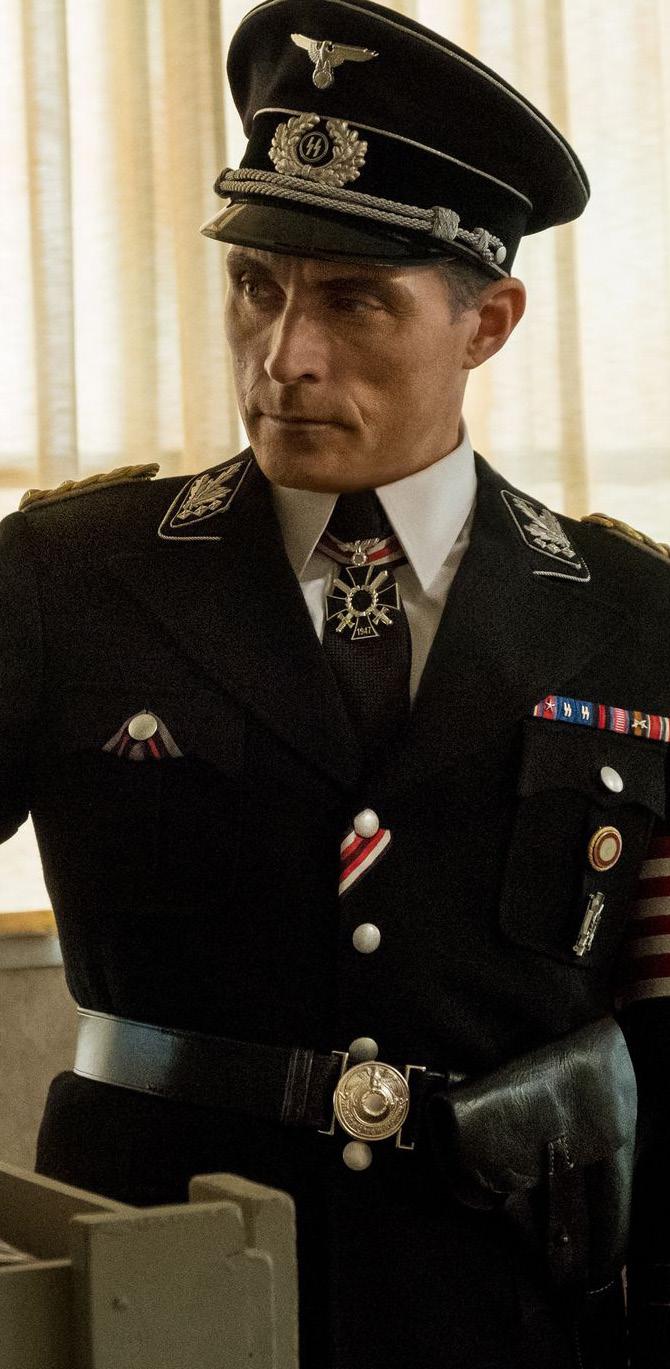
United States into three parts: the Greater Nazi Reich, the Japanese Pacific States, and the Neutral Zone.
Not to mention, the theme song itself is truly haunting. It is quite paradoxical to the context of the series as the song is a tranquil lullaby as if written by a pacifist. On the other hand, the series displays genocide and discordance. The opening sequence features an eerie version of “Edelweiss,” which was sung by reallife Von Trapp Family Singers in “The Sound of Music.” The song was chosen because it is associated with Austria, which was annexed by Nazi Germany in the show’s alternate history. The visuals portrayed everything you need to know, from how the attack happened to the entire map and what the Nazis and the Japanese owned. Close attention to details has also been followed,
like the shadow of the Bomber and the parachutes over the wrecked George Wahington artifact on Mount Rushmore. This delineation not only made the whole scene lively but also made it as if this was a lived-in world.
The main plot of the series revolves around a group of characters whose lives intersect as they become involved in a resistance movement against the totalitarian regime of the Axis powers. The primary focus of the series is on Juliana Crain, a young woman living in Japanesecontrolled San Francisco who becomes involved in the resistance after her halfsister Trudy is killed by the Kempeitai, the Japanese secret police. As the series progresses, Juliana becomes embroiled in a larger conspiracy involving a mysterious film reel that depicts an alternate history in which the Allies won the war. The film’s existence becomes a major point of contention between the Axis powers and the resistance movement, and various characters become involved in a dangerous game of espionage and manipulation as they seek to acquire the film and use it to change the course of history.
The name of the series is quite ambiguous, but it is at the center of the plot, around which the whole series revolves. In the series “The Man in the High Castle,” is a titular
character who produces a series of films that depict an alternate reality. The man in the high castle is never seen but only believed. The films are extremely valuable and are sought after by both the Nazis and the Japanese as they offer a tantalizing glimpse of the world in which they were defeated. Although elusive and enigmatic, the man in the high castle remains a symbol of hope and resistance in a world dominated by tyranny. Meanwhile, other characters in the series are also grappling with their struggles against the fascist regimes that rule their lives. These include Obergruppenführer John Smith, a high-ranking Nazi officer who begins to question his loyalty to the regime, and Joe Blake, a Nazi agent who becomes increasingly disillusioned with his mission as he becomes closer to Juliana and the resistance. Throughout the series, the characters navigate complex political and personal relationships as they struggle to survive in a world dominated by fascist ideology and oppression. The main plot of “The Man in the High Castle” explores themes of resistance, moral ambiguity, and the consequences of choices made in times of extreme adversity.
The most profound and daunting character in the whole series was Obergruppenführer John
Smith, serving as the chief Reichssicherheitshauptamt (RSHA) - the Reich Security Main Office. His designations are quite a mouth full. Smith is a complex and nuanced character who is initially depicted as a loyal and dedicated Nazi officer. For me, the most striking aspects of Smith’s character were his intelligence and strategic mind. He was manipulative and intimidating, but he always held a soft spot for his family underneath his tough skin. His performance was outstanding, and he brought variation and depth into a character who otherwise would have easily been a one-dimensional villain.
In my opinion it is only fair to say that season four had an unsatisfying conclusion to an amazing show. The ending was mundane, and felt disconnected from the three before. It felt as if they ended the series just for the sake of it. Left on loose ends, the last season doesn’t have anything grand, it felt rushed and incomplete. The supporting roles were just shadows of their predecessors.
Overall the series is recommended for people who enjoy science-fiction and fantasy, as well as those who are interested in exploring themes of power and resistance. If you are a history buff, then you can take a shot at it. You won’t be disappointed.
“THE FILM’S EXISTENCE BECOMES
A MAJOR POINT OF CONTENTION BETWEEN THE AXIS POWERS AND THE RESISTANCE MOVEMENT
Could the loss of love cost a man his life? From “Requiem for a Dream” to “Black Swan”, it’s no surprise that director Darren Aronofsky is famous for his melancholic films depicting the morbid reality of human degradation and suffering. In his latest film, “The Whale”, Aronofsky portrays the pure dejection of a man filled with guilt, succumbing to failure, and left hopeless in rejoicing his life. Considered one of the most emotionally impactful films of 2022, “The Whale” is a psychological drama featuring Brendan Fraser as a morbidly obese English teacher named Charlie. Throughout the film, we see how Charlie’s regrettable decisions have destroyed him physically and emotionally. Due to his culpability, we witness his desperation for friendship and family, which leads him to eat himself to death as a cure for remorse, and reluctantly pay his estranged teenage daughter for company. Aronofsky attempts to cater to the universal importance of supporting mental health by casting actors of different races, such as Hong Chau (Vietnamese) and Sathya Sridharan (Indian), to make a worldwide impact. As the story progresses, we learn that Charlie was married to a woman with whom he had a daughter. Due to his homosexual affairs with a man named Alan, Charlie left his family, and his wife forbade him from seeing their daughter. Unfortunately, Alan was oppressed and disowned by his father for being gay and committed suicide due to societal pressure. Alan’s death significantly impacted Charlie, leading to binge eating and chronic depression, causing him to be severely unhealthy.
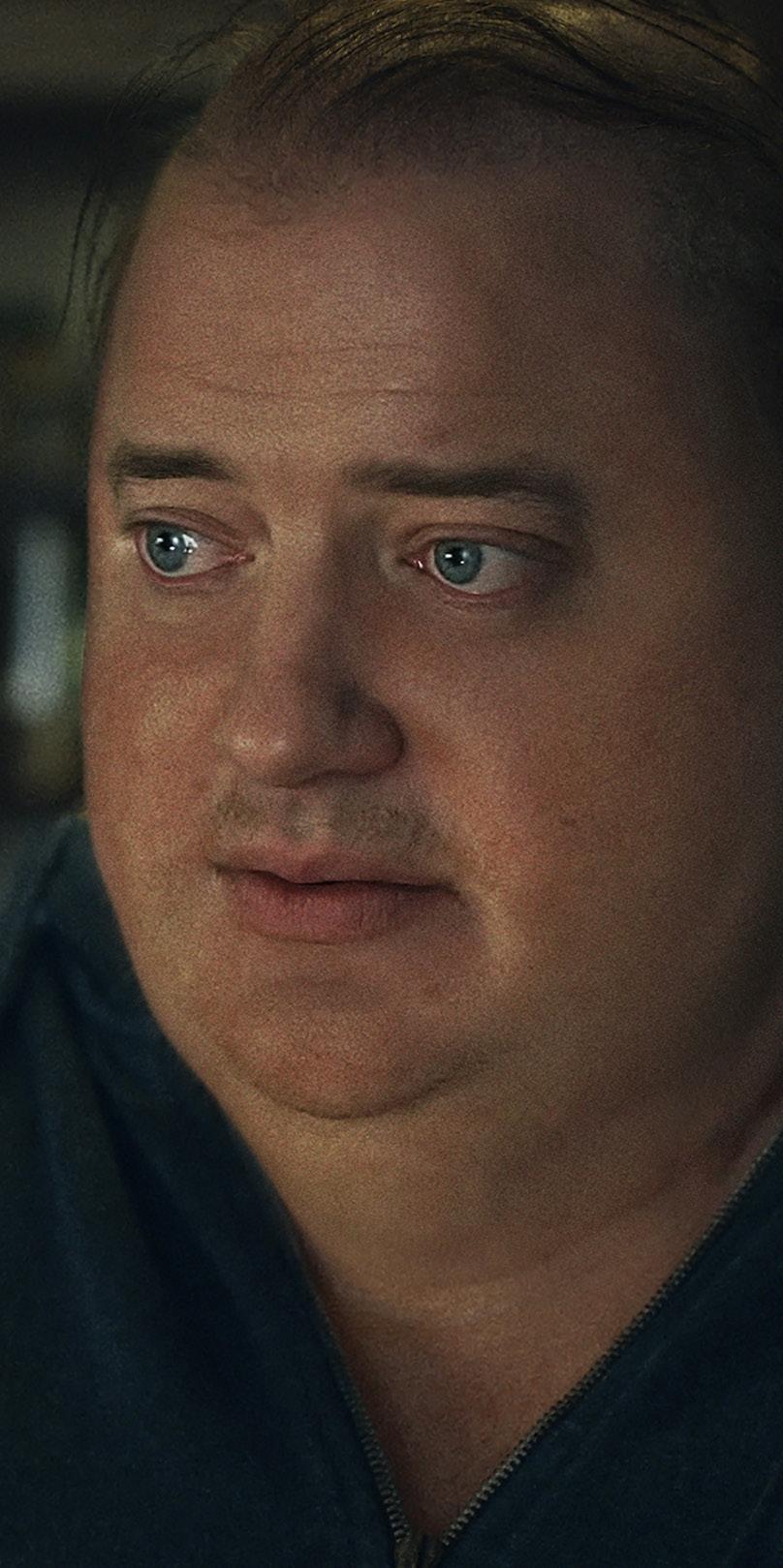
The plot has been praised for its emotional impact as Charlie attempts to restore his daughter’s relationship and mourn his past as a source of comfort from his distressing life.
Brendan Fraser is one of Hollywood’s most prominent actors, rising to fame during the 1990s with major roles in comedy and action films such as “George of the Jungle” and “The Mummy” franchise. He disappeared from the spotlight after going through his divorce and receiving medical attention for stunt injuries from his career. “The Whale” marks Fraser’s return to the film industry, and his performance as the lead role won him the Best Male Actor’s Oscar Award at the 95th Academy Awards. Fraser showcased Charlie’s size as the governing symbol of the story, mimicking the nature in which his character would breathe, talk,
and move. He evaluated his actions based on Charlie’s unrestrained manner, aware that Charlie is emotionally fragile and prefers to seek refuge in his psychological sanctuary. Fraser’s addition of Charlie’s naive ambiguity makes him a contradictory and indeterminate person. Charlie is fully aware of his excessive eating habits, yet he still insists on his outrageous eating routine as an uninhibited expression of self-consolation.
After receiving several award nominations, including five wins, “The Whale” gained widespread popularity among the media. However, it also received harsh critiques and negative comments from fat activists, deeming it “fatphobic.” Many online complaints state that the protagonist has been depicted living a grieving life where his weight is the sole reason for his suffering. These activists argue that the portrayal of Charlie’s obesity as a negative impression is false. They claim that when the film represents them as “mindlessly consuming” exorbitant amounts of food, Aronofsky makes them seem grotesque, which “disrespects” their right to enjoy food. They argue that the film’s depiction of Charlie immobilized and conjoined with the couch is a metaphor for obese
people being home-dwellers restricted from their comfort zone. They even criticize the term “obesity” as demeaning and cruel, stating that it’s not even a medical keyword and accusing the Body Mass Index of having “racist origins.” These fat activists are afraid that the film could harm the “social hierarchy of physical bodies” due to its potential influence. They argue that the film dehumanizes obesity by using indirect meanings to shame individuals into losing weight and making them fearful of their appearance. With the rise of pop culture on social media and the prevalence of cancel culture, it remains to be seen how modern filmography will evolve.
Nonetheless, “The Whale” is a compassionate depiction of how people endure personal agony. Whether through the continuous guilt that prevails from one’s life choices, the sorrowing lament of absent loved ones, or even the lack of ambition to regain control over one’s perseverance. Charlie’s journey of dynamic separation and attempting to reunify his family embraces his desire for affection. Through this, the film has undoubtedly represented the emotional scope of life’s constant and impactful changes.
NONETHELESS, “THE WHALE” IS A COMPASSIONATE DEPICTION OF HOW PEOPLE ENDURE PERSONAL AGONY. WHETHER THROUGH THE CONTINUOUS GUILT THAT PREVAILS FROM ONE’S LIFE CHOICES, THE SORROWING LAMENT OF ABSENT LOVED ONES, OR EVEN THE LACK OF AMBITION TO REGAIN CONTROL OVER ONE’S PERSEVERANCE.
There is always that one book for every aspiring reader that they feel as though they can relate to on a deeper level as they mature. This is usually a book filled to the brim with teenage angst and coming of age problems faced by relatable protagonists and situations that the reader can see themselves facing. For me, this book was Kafka on the Shore by Haruki Murakami. This book is to me the epitome of a coming of age story combining both elements of fantasy and crafting a wondrous tale where you find yourself unable to differentiate reality from metaphor and fantasy. The
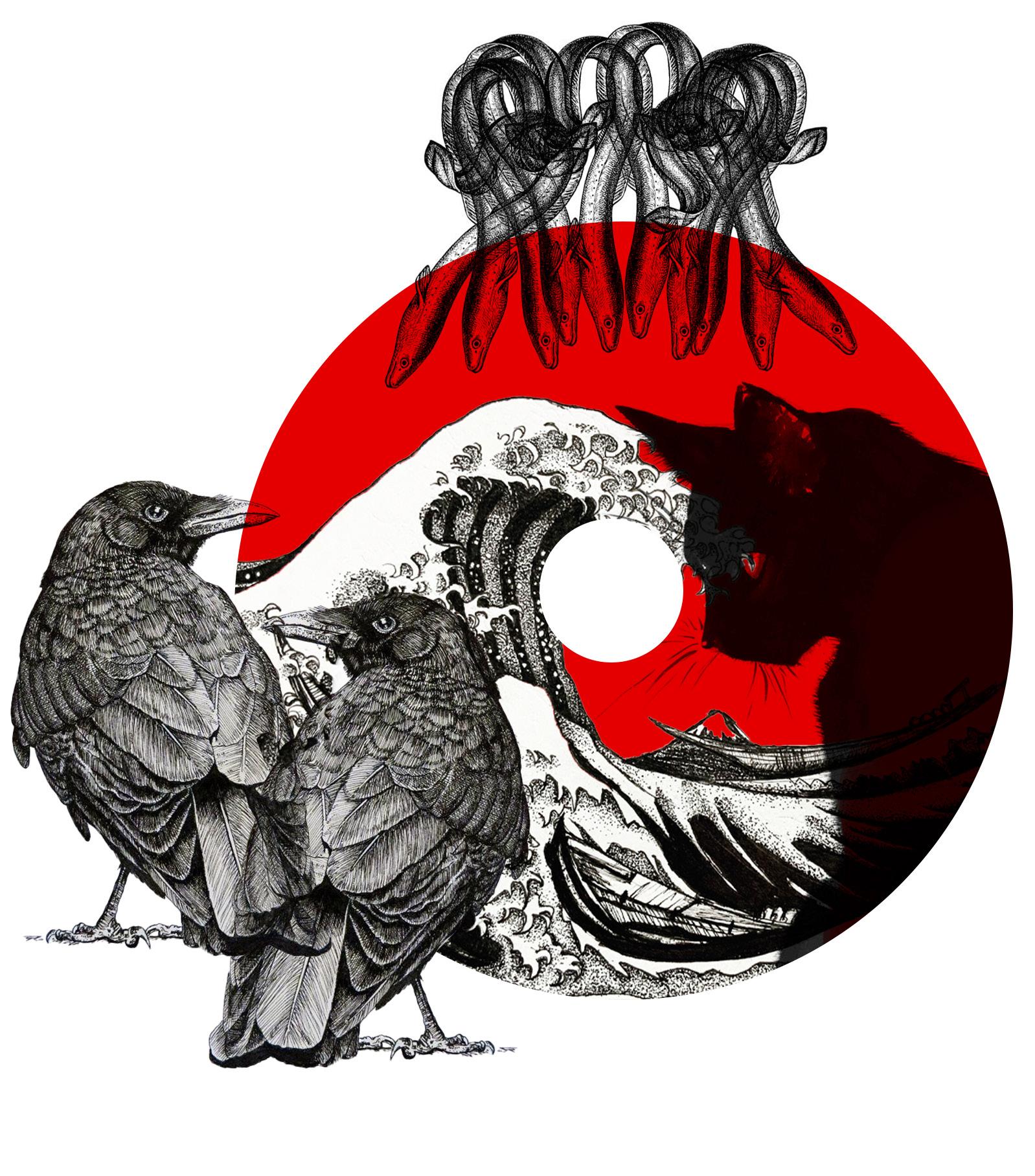
writing invokes a sense of surrealism within the reader with absurd features in the story that still somehow feels astonishingly close to reality but couldn’t be further removed from it. This, I find, adds to the beauty of Murakami’s writing wherein the reader finds themselves sucked into a world filled with uncertainty about what is actually happening with descriptions more vivid than nightmares, yet so ambiguous it leaves its interpretation up to the discretion of the reader themselves.
The story itself details a 15 year old son of a rich artist who finds himself pressured by his father to live up to certain, otherworldly and bizarre Oedipal expectations. These expectations disturb the protagonist and cause him to run away from home, encouraged by a mysterious boy by the name of ‘crow’ that appears to be a portion of his own consciousness embodied by his solitude. He finds himself on a journey of escaping from expectations thrust upon him and self discovery outside the oppressive confines of his father. His experiences are pierced by the realisation of love, loss, longing, and self-doubt. Kafka is no ordinary 15-year-old boy, and his journey embodies both the freedom of escapism and the overwhelming sense of loneliness he is engulfed in. On the other side of the coin, we have the side protagonist, Nakata, a mentally disabled elderly man amidst his twilight years, living a life seemingly devoid of purpose or responsibility.
He possesses a learning disorder due to which he is ousted from his family and from society, living off of meagre subsidy has barely let him survive. Despite all of this he remains content and at peace with his empty, monotonous and hollow life. His unique ability to converse with cats leads him to a peculiar adventure involving otherworldly spirits, stones that lead to alter-
nate worlds and fish raining from the heavens. Murakami uses Nakata and his acceptance of his destiny and contentment with doing whatever is asked of him, as a sort of foil to Kafka’s adamant refusal to accept the after laid out for him by his father and his journey of self discovery. A voyage that was caused due to his dissatisfaction with his current life and constant pursuit of freedom.
The plot shows Kafka’s constant attempts to escape his father’s prophecy, but much akin to Oedipus himself, the more he tries to get away, the closer he gets to fulfilling his fate. Such as when he gets to his destination after running away, he encounter an enigmatic librarian by the name of Ms. Saeki, who he gets closer to and even lusts after she is revealed to be his mother through Murakami’s attempts to blur and often even erase the boundaries between past and present, dreaming and waking, fantasy and reality bringing him closer to his mother’s younger self who he is entranced by. This plot runs parallel to the tale of Nakata and his quest to find the stone that closes the boundaries between planes that even he does not understand the relevance of. Murakami uses the stone as a literary Mcguffin that serves as an in-story explanation to the surreal and reality blurring happenings for the duration of Kafka’s tale. Kafka’s climax and him finding the answer to his mysterious situation parallels Nakata’s journey to close the stone and in a way they are shown to be two entirely unrelated yet intertwined people as shown by the beginning of Kafka’s Prophecy when he waking up with seemingly his father’s blood on his hands whilst simultaneously, Nakata is responsible for his father’s demise. Murakami creates a
looming suspense for the reader forcing them to keep reading with the knowledge that eventually their two narratives will converge but never knowing how or when.
The book ultimately concludes with the sacrifice of Nakta and Kafka’s return to his hometown after fulfilling his prophecy despite his attempts. We see here two entirely conflicting narratives with Kafka’s blatant defiance of fate that ends in failure followed by contentment with his eventual ending and running alongside Nakata’s absolute peace with the situation thrust upon him and the conclusion he reached. The ending itself is also left quite open ended as Murakami’s writing style provides the reader with just enough evidence to create a ‘functioning hypothesis’ like Kafka’s theory about Ms. Saeki being his mother where you want to believe a certain scenario unless provided with any counter evidence. In this way, the intensely dreamlike situations that take place in the book can leave every reader perplexed and with a cathartic experience.
“MURAKAMI CREATES A LOOMING SUSPENSE FOR THE READER FORCING THEM TO KEEP READING WITH THE KNOWLEDGE THAT EVENTUALLY THEIR TWO NARRATIVES WILL CONVERGE BUT NEVER KNOWING HOW OR WHEN.
Old English writers such as Charles Dickens, William Blake, and Wodehouse have been influenced by societal issues of their time. These issues range from gender roles, family relations, and womanizing to war, suffering, and drudgery. Even in today’s rapidly changing world, their books have an active and interested audience. Their genre continues to address issues that captivate its readers. These books have been promoted among avid readers to better understand cultural and traditional contexts primarily in England during modern times. They provide insight into how the state metamorphosed from rigidly Victorian, imperialistic, and elitist to open, amenable, and largely laissez-faire.
Works produced by artists, composers, and playwrights during this time were primarily Eurocentric, expressing their thoughts and perspectives on the oriental character of nations halfway across the globe. These opinions ranged from critical to silently oppressive and juxtaposed the East against the West, glorifying the latter. The biased and scathing racial views of the critical side were deeply ingrained and widespread. European colonists viewed the East as a land of exotic cultures and peoples, often exoticizing and caricaturing them in literature, art, and popular culture. This exoticization reinforced negative stereotypes of the East as backward, irrational, and primitive.
There was also a society of orientalists who wanted to progress beyond their cultural setting and explore other traditions, such as the Indians in the east or the Ottomans of Asia Minor. This was the higher capitalist class that was restricted by the over-
bearing government of the time and wanted to immigrate to new markets, either to boast about the fact that they struck gold in Asia or to discreetly establish monopolies and private colonial regions outside of the motherland. Conservationists often frowned upon this, regretting their decision to stay in Britain and not “think forward.”
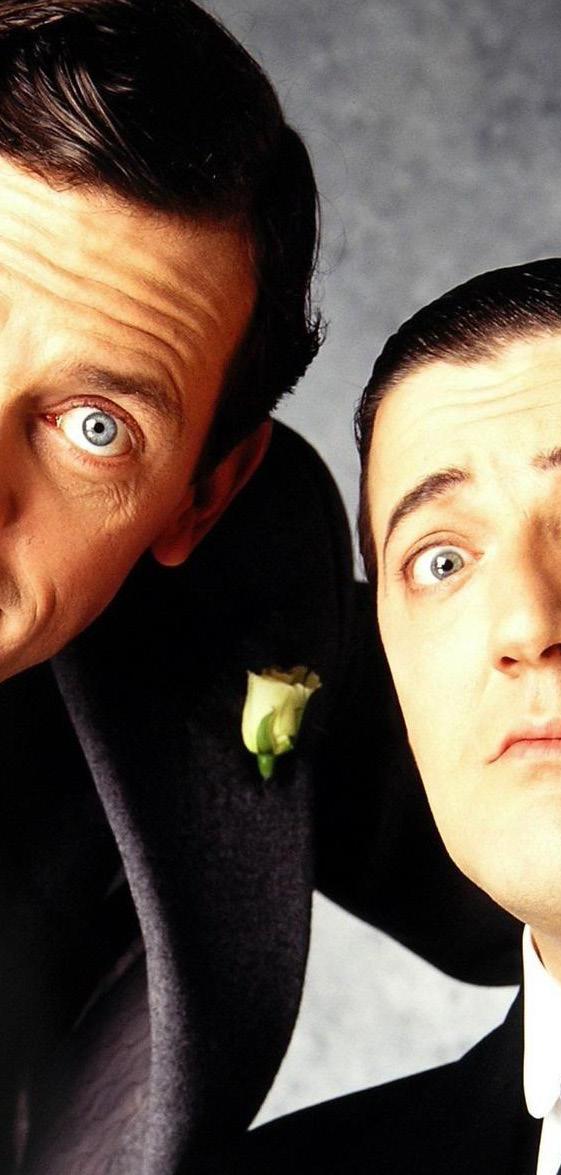
A similar predicament was observed with Wodehouse’s character, Bertie Wooster, an idle aristocratic socialite whose operation depended entirely on his unflappable and resourceful valet, Jeeves. Eustace Wooster, or Bertie, was a dullard with the money to make the world work for him. Jeeves was a masterful problem-solver with calm and perseverance to drive even the stickiest situation to Bertie’s favour. The pair complemented each other perfectly, becoming the most popular characters among Wodehouse’s audience in the omnibus. Wooster was among the ‘big shots’ whose family was prudent enough to look outward, towards the rest of the world, and had established their business empires. Bertie received a fair chunk of the inheritance but was also callous and easily distracted.
In response to this, the family employed an efficient butler, who often had to step into the shoes of a nanny, to cater to Bertie’s needs and slip him out of tight spots while navigating the intricacies of British upper-class society. Bertie was prone to making mistakes, and even a blunder on the Wooster’s reputation would open the door to attacks from conservationists, in retort to the family embracing opportunities beyond England. It was an endless battle between the newly rich and the old rich, in which Bertie and Jeeves were
trapped. With Jeeves’s manoeuvring skills and expertise, the two navigated the complex social landscape with confidence and ease.
Romantic encounters on vacation or at family estates, often influenced by politics between relatives, especially the dreaded ‘aunties,’ provide humorous instances that carry the narrative forward in many of Jeeves’ stories. The family members who appear in most of Jeeves’ stories are Bertie’s Aunt Dahlia (7 short stories, 7 novels), and Aunt Agatha (8 short stories). Aunt Dahlia is friendly and good-natured, while Aunt Agatha is cold and haughty, both making demands of Bertie. Bertie feels obliged to follow their whims, often getting into trouble as a result. Most of Bertie’s romantic misadventures occur with his many first cousins, for which he relies on Jeeves’ expertise in matters of fashion, culture, and etiquette. Jeeves is well-read and knowledgeable about a wide variety of topics, and Bertie often defers to his judgment when it comes to matters of style and taste.
Whenever something sticky is afoot and action needs to be taken, the cry goes up, “Let Wooster do it.” Bertie’s friends are eager to ask for advice from Jeeves, who enjoys helping them. Jeeves essentially runs a “big Mayfair consulting practice” from their home, and Bertie is accustomed to his acquaintances consulting Jeeves directly without talking to him first. Sometimes Bertie tries to assert that he can also solve problems, but he thinks of Jeeves as a genius, just as much as everyone else does.
Across the entire omnibus, Wodehouse cleverly combines issues of classism and race relations under the guise of satirical
“ THEY PROVIDE INSIGHT INTO HOW THE STATE METAMORPHOSED FROM RIGIDLY VICTORIAN, IMPERIALISTIC, ELITIST TO OPEN, AMENABLE, LARGELY LAISSEZFAIRE.
Credits: BBC
commentary that never fails to put the audience into a whimsy. The series often highlights the class differences that existed in society. He portrays the upper class as frivolous, entitled, and out of touch with the realities of everyday life. Jeeves’ judgement of the upper class was influential in shaping popular culture and contributed to the popular perception of the wealthy as out of touch.
Wodehouse’s works also touch upon the rise of consumerism in society. He often satirises the desire for material possessions, depicting characters who are obsessed with their wealth and status. This commentary on consumerism influenced popular culture and contributed to the perception of materialism as being shallow and unfulfilling.
In conclusion, P.G. Wodehouse’s literary works offer a unique perspective on the relationship between social issues and popular culture. Through his humorous and satirical approach, Wodehouse highlights how societal values, norms, and prejudices shape the world of entertainment. His stories demonstrate that pop culture is not just a reflection of the times, but also a powerful tool for shaping public opinion and attitudes towards various social issues. By exploring the connections between the two, Wodehouse invites us to reflect on the role of entertainment in our lives and to recognize the importance of critically examining the messages that we consume. Ultimately, Wodehouse’s legacy as a writer serves as a reminder that pop culture is not just mindless entertainment, but a reflection of the society in which we live.
PROVIDE INTO STATE METAMORPHOSED RIGIDLY IMPERIALISTIC, AND OPEN, AND LAISSEZ-
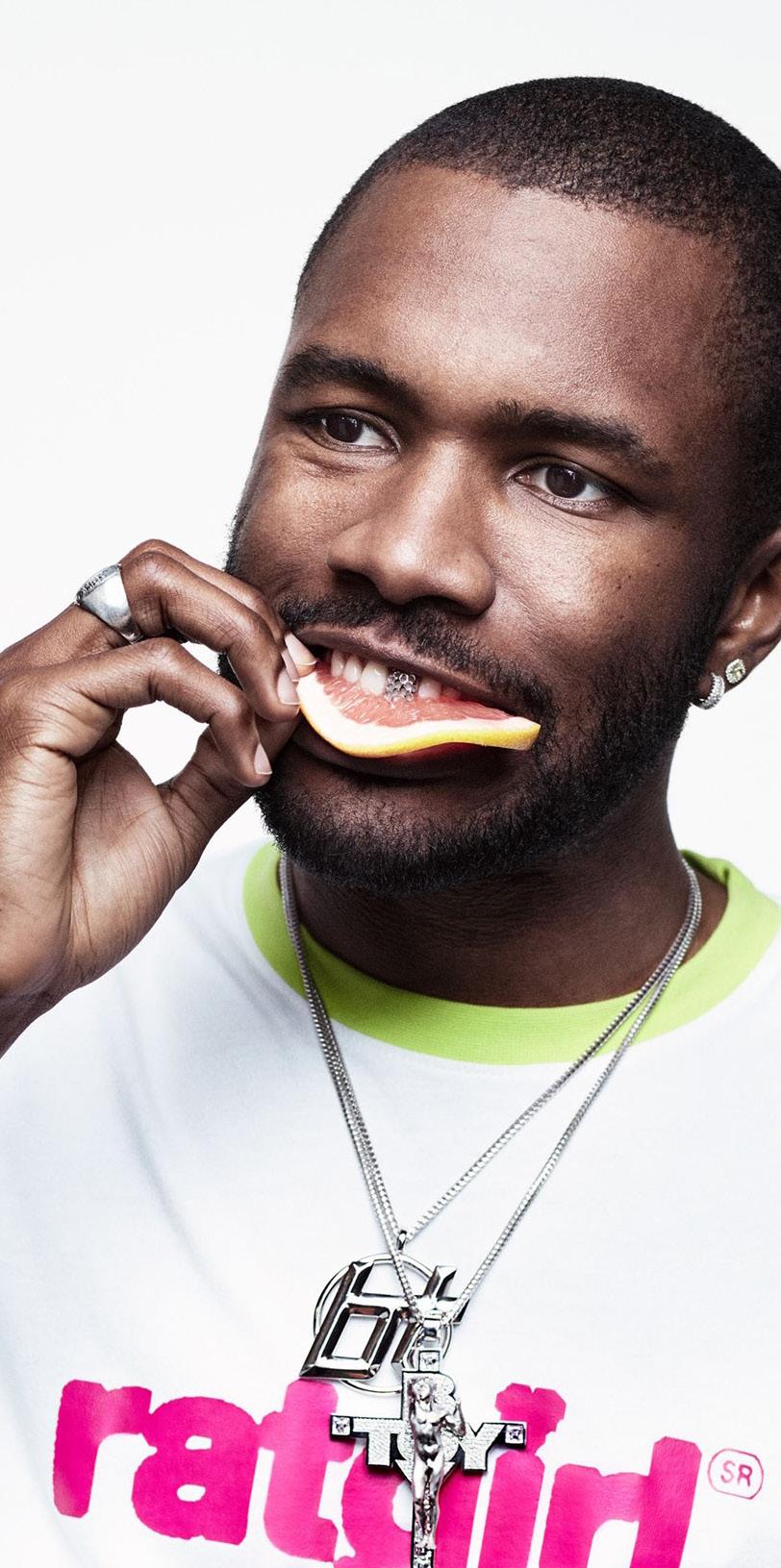
Frank Ocean just performed at Coachella, which has put him back in the public eye. Despite his controversies, his performance had repaired the missing hole that impaired his fame, and brought back the majority of his audiences. Fans were overjoyed to see him headline Coachella 2023 when the list was revealed in mid-January. The fact that this would be his first live performance since 2017 and that many fans were hoping to hear about a potential new album added to the excitement. On the day of his set, Ocean’s performance had to start an hour later than planned due to some last-minute alterations to his stage, which made the waiting time for his performance longer than expected. Due to the extremely severe Sunday night curfew for the Coachella festival, which would have cost the organisers a significant sum of money had the event continued, he later had to cut short his performance that the majority of his fans had been anticipating all day. Later, Frank Ocean also postponed his performance for the following week, explaining that his doctor had advised him not to perform due to a leg injury. This problem was made much worse by the fact that his performance at Coachella wasn’t broadcast online like the other sets. After this incident, Ocean has been the target of intense criticism and claims that he “hates his fans”. Despite a dismal performance, many fans were encouraged by the news that Ocean will release a new album soon. This is a wonderful chance for us to review Frank Ocean’s whole discography.
Ocean made his name
Credits: DAZED
first as a composer. After securing a writing contract, he began writing hit songs for prominent pop stars like Justin Bieber, Beyoncé, John Legend, and Brandy. However, soon after joining Odd Future a hip-hop collective, he realised that he wanted to do much more than just write songs for other people. Ocean soon left the group in order to create his own album, “Nostalgia, Ultra,” in 2011. He made a name for himself after the song “Thinkin’ about you” leaked, which became quite famous and is one of my personal favourites. Later in 2012, he released his second album “channel ORANGE”. Great songs like “Lost” and “Pyramids” from Ocean’s second album also contributed to his growing fame. “channel ORANGE” debuted at number two on the Billboard 200 and sold 131,000 copies in its first week. Ocean was inspired to concentrate on future records by the quick success of his album. He then released an album named “Endless” before parting ways with the label he was working with. Later in 2016, Ocean released “Blonde” (Blond), his second studio album, which became an instant classic. The album debuted at number one in various countries, selling over 232,000 copies in its first week. On its year-end list, Time, an American magazine, named it the greatest album of 2016. Blond received platinum certification in 2018. Blond is an R&B record with elements of pop, indie, and hip-hop. Many believe it to be Frank Ocean’s best
work, including tracks like “Nights,” “Pink+White,” “Ivy,” and “Self Control.” Blond was Ocean’s penultimate album before his huge breakthrough, and he only recorded a few singles after that. His tracks featured significant hits such as “Chanel,” “Provider,” and “In My Room.” Ocean’s most recent solo release was a single in 2020. Since then, many fans have been waiting for Ocean to release a new album or single, which may be very close now.
In addition, Frank Ocean has appeared on a number of songs and albums by some of the most well-known musicians of this age, including Tyler the Creator, Calvin Harris, and Kanye West. Some of the traits ended up being quite important for Ocean since they helped him succeed following Blond. Ocean and the rap trio Migos appeared on Calvin Harris’ single “Slide” in 2017. The song became viral right once, and the album was eventually awarded a double platinum certification. He also contributed to two tracks on Asap Rocky’s album Testing in 2018 and appeared on the song “Carousel” off Travis Scott’s mega album “Astroworld.” Frank Ocean has also been on well-known albums like Tyler the Creator’s “Flower Boy” and Kanye West and JAY-Z’s “Watch The Throne,” which has helped him establish his value in the music industry. His utilisation of various genres, such as experimental, electro, rock, and psychedelic, as well as his approach to the genre differently than his contemporaries have been praised by music journalists as having revived pre-contemporary R&B. Numerous musicians of different musical genres have been impacted by his unusual sound and approach. The Wall Street Journal and Insider both named Frank Ocean the most dominating artist of the decade of the 2010s.
With the Coachella set, many are anticipating a possible album. Ocean released “Blonde” in 2016, and many connections suggest a follow-up. Given that musicians are mostly given the opportunity to headline Coachella if they have recently released new music or have new music on the horizon, the fact that Frank Ocean was granted the chance to headline already says a lot. Since Ocean remarked at Coachella, “I wanna talk about why we’re here because it’s not about the new album,” fans are now more optimistic than they have been in a long time about a new album. It is beginning to look like Frank Ocean’s admirers may soon get
Tupac Shakur, also known as 2Pac, was an iconic rapper, actor, and activist who rose to fame in the 1990s. Born in New York City in 1971, he moved to California and became a prominent figure in the West Coast hip-hop scene that was rising at the time. Tupac’s music often addressed themes of social justice, racism, and urban struggles, making him a voice for the marginalized people in the United States. His impact on hiphop culture was immense, as he inspired and influenced a generation of rappers and artists even today. Not only did he sell over 75 Million records, but he used his music to address social issues that people of colour continued to face in the United States of America. Tupac’s legacy continues to be relevant as his music remains popular and his activism inspires social justice movements around the world and
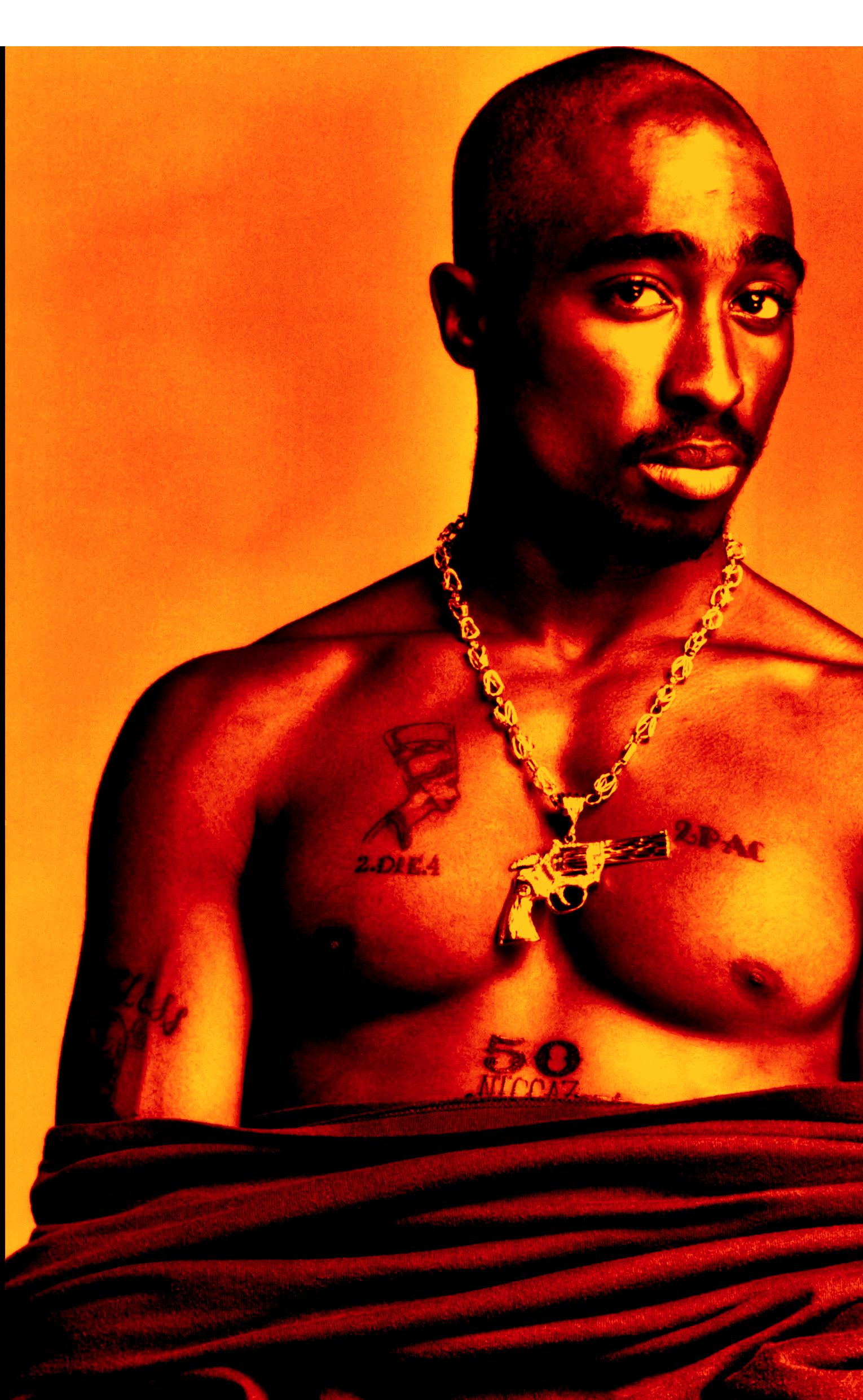
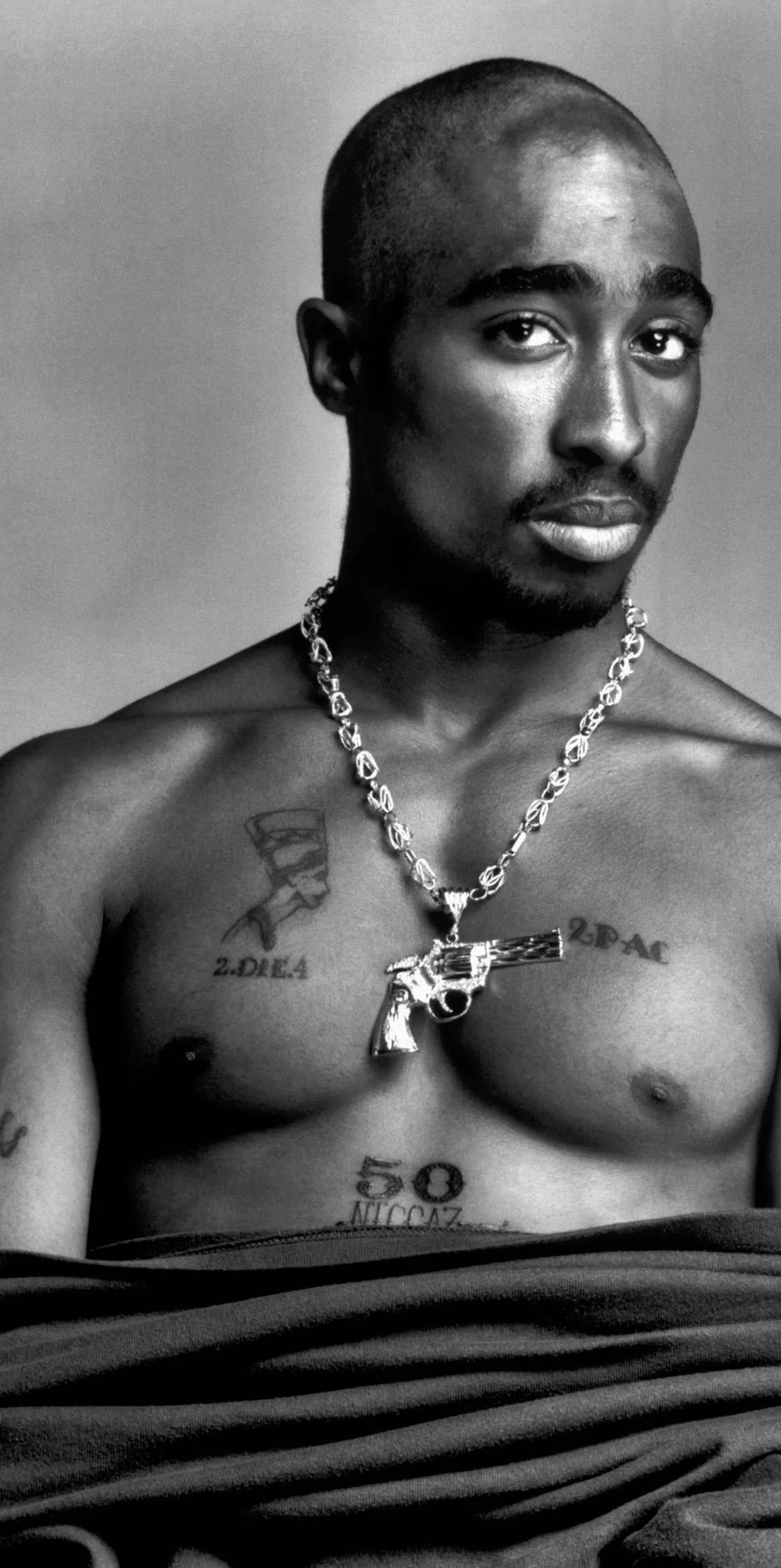
In his early life, 2Pac’s parents were both members of the Black Panther Party whose confrontational style and provocative ideologies for civil rights would lay the foundation for much of his lyrics in his music. He broke into the music business with the rap group Digital Underground as a backup dancer before releasing his debut album in 1991. In 1995, while imprisoned, his album Me Against the World was number one in the pop charts and would later go double platinum.
Once 2Pac became a big star, there were significant changes in his lifestyle. While everyone else was sleeping, he would be workingconstantly tinkering with beats and retaking vocals. Not only would he propagate from different parts of his heart, mind and body but his work revolved around education and history, which had a unique impact on his listeners. So, how exactly would he shape hip-hop for the upcoming artists and the genre as a whole?
Firstly, it was by simply living what he spoke about - and being real with his lyrics. There were peaceful times and violent onessometimes intoxicated, sometimes not. Once he went to prison, it was shared that the lack of substances around him gave him clarity and it would reflect in many of his lyrics as he continued to prophesize his life. It is difficult to find someone who rapped like 2Pac in terms of lyrics - a mix of real life, consequences and police brutality. The closest that one could argue would be the likes of Kendrick Lamar. 2Pac has also been cited as a poetic influence to hip-hop; taking inspiration from people like famous playwright William Shakespeare , 2Pac had a poetic pentameter about him that was inimitable. And although some of his competition like Biggie existed, there was no match to his source and delivery of material.
Although a lot of people still characterize him as the ‘thug’ and gangster, he was strongly against crimes as seen by the fact that he created a set of codes for fellow inmates which included basic ethics and punishment for crime. 2Pac instead used this thug life to market himself and connect with his audience. This infamous image contributed massively to his commercial success and his representation of a black man who continued to struggle with societal issues. Although he unfortunately died as early as 26, his impact is immense and continues to inspire rappers today. His name lives on today with rappers like Kodak Black and Jussie Smollet considering 2Pac as inspiration and a benchmark for rappers.
In an interview, 2Pac proclaimed, “I’m not saying I’m going to change the world, but I guarantee that I will spark the brain that can change the world.”

2Pac bought this statement to life, inspiring many of today’s prominent hip-hop artists including Kendrick Lamar, J Cole, Eminem, The Game, Chris Brown, and Snoop Dogg. Many of these artists may not have enjoyed the same success they experience today if not for 2Pac’s influence. Before J Cole even started rapping, he felt an immediate connection with Pac’s music after listening to the 2paclypse now album at the age of seven which would define a lot of his music and lyrics too.
Tupac Shakur lived with a firm sense of purpose challenging many to think outside the box and develop solutions to obtain prosperity for the hood environment. He fearlessly advocated and encouraged more people from this hood community to become doctors and engineers - a new idea for the people.
After 2Pac’s death, there was a real void in hip-hop. His discography became a Bible - it was spiritual for frequent listeners. People believed in his word, people studied his lyrics and became experts in his gospel too. No other artist has ever had that effect - he will always be the one who has paved and engrained his impact on hip-hop.
IS DIFFICULT TO FIND SOMEONE WHO RAPPED LIKE 2PAC IN TERMS OF LYRICS - A OF REAL LIFE, CONSEQUENCES AND POLICE BRUTALITY.
Picture Credits: NYT
 ROHAN KAILATH
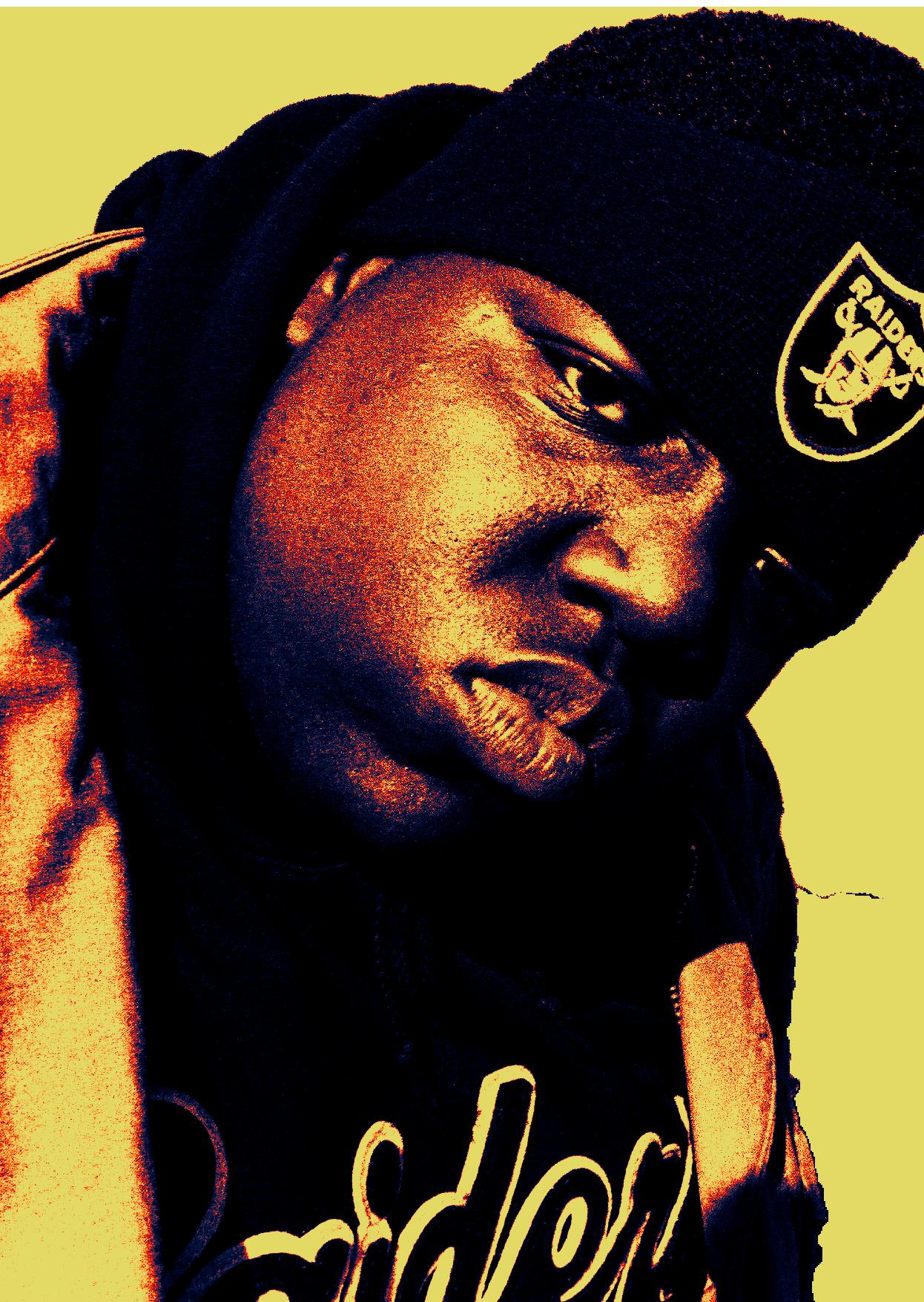
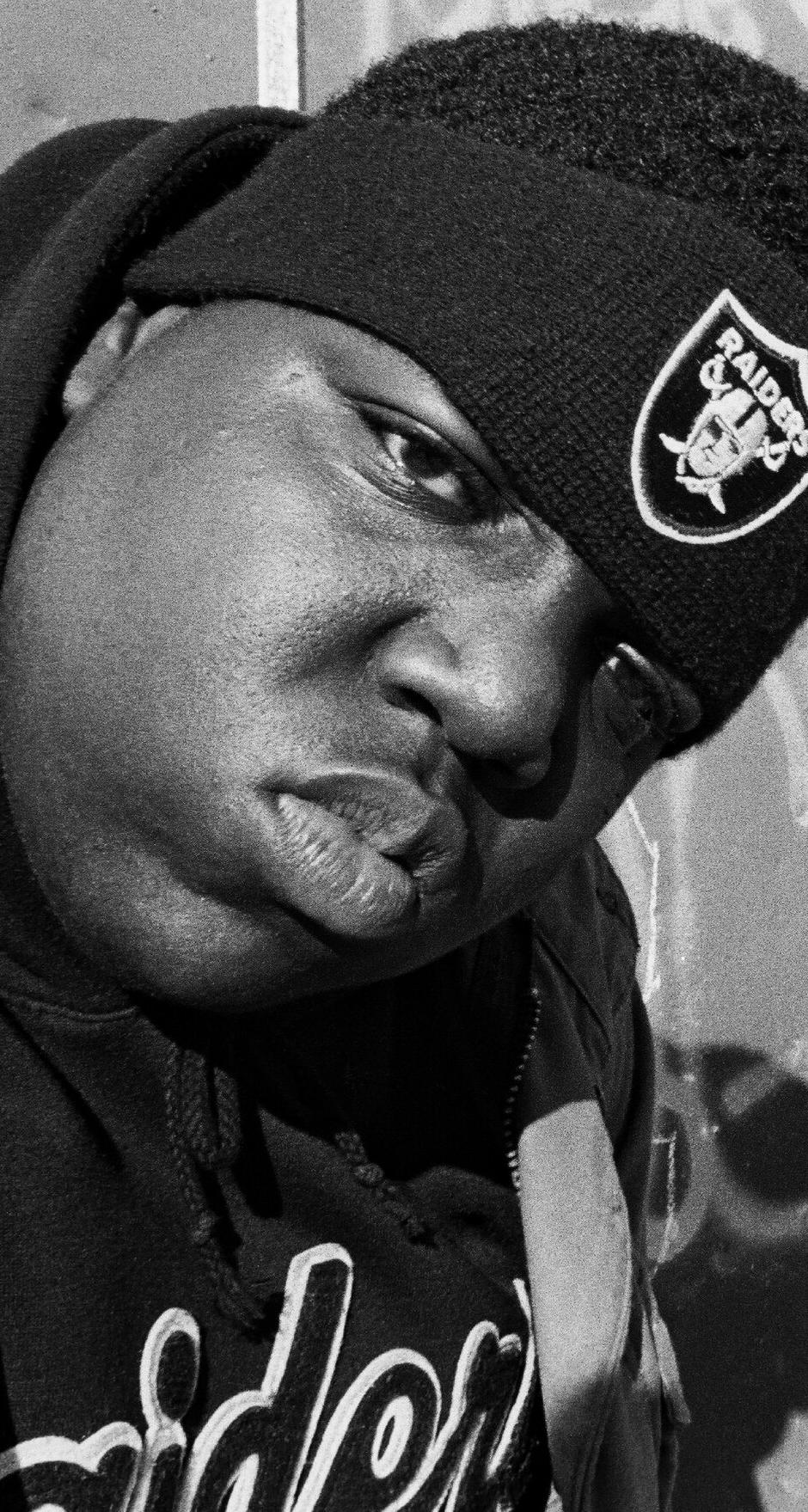
The Notorious B.I.G., also known as Biggie Smalls, is widely regarded as one of the most influential figures in hip-hop history due to his unique lyricism, delivery, and ability to tell stories through his music. His impact on modern hip-hop culture is undeniable, with contemporary hip-hop artists like Drake and Kendrick Lamar drawing inspiration from his music.
Biggie first emerged on the hiphop scene in the early 1990s when the “gangsta rap” genre was gaining popularity. He gained attention by rapping on street corners, where his freestyles became immensely popular among onlookers, including Sean Combs, now known as P. Diddy. Combs recognized Biggie’s potential and quickly signed him to his record label, “Bad Boy Records.” Through the label, Biggie made appearances with established artists in the industry, such as Busta Rhymes and Mary J. Blige. In 1994, Biggie released his debut album, “Ready to Die,” which featured some of hip-hop’s most iconic producers and became a massive commercial success, with many considering it one of the greatest hip-hop albums of all time. The album went gold within two months of release and later went double platinum the following year.
One of the key elements that made Biggie’s music so successful was his unique ability to incorporate different styles and genres into his music. The rapper had a wide range of influences, including jazz saxophonists who taught him how to phrase his lyrics as a teenager in Brooklyn. Additionally, he incorporated elements of funk, soul, and R&B to create a unique and timeless style, which opened the doors for future artists and producers to challenge the boundaries of traditional hiphop by experimenting with new sounds and styles. For instance, Drake sampled Biggie’s hit song “Mo Money, More Problems” in his song “Worst Behaviour.”
Another reason for Biggie’s influence was his storytelling ability. His lyrics were often deeply personal and reflected the challenges and triumphs he faced in his own life, from his early years as a drug dealer in Brooklyn to his sudden rise to fame. Biggie’s
music acted as a window into the life of a young black man in America at the time and the challenges he faced. This authenticity and honesty resonated with listeners all over the world and helped secure Biggie’s place as one of hip-hop’s most beloved figures. Newergeneration rappers, such as Kendrick Lamar, have used similar methods to Biggie to express their ideas and thoughts more authentically. Apart from his musical contributions, Biggie also played a major role in changing the fashion and culture of the hip-hop genre. Shifting away from the baggy casual style of early hip-hop, Biggie embraced high-end fashion with his signature style consisting of tailor-made suits, fedoras, and designer brands. He encouraged artists to cultivate their unique style and emphasized sophistication and class. One of Biggie’s most recognizable fashion staples was his Versace sunglasses, “The Medusas.” In 2018, more than 20 years after his death, the fashion brand brought back the sunglasses for a limited time. Numerous hip-hop artists, such as the hip-hop group Migos, have collaborated with the brand since, but Biggie was the first to do so. Biggie’s success also provided a blueprint for future artists to navigate the cutthroat music industry and paved the way for hip-hop entrepreneurs like Jay-Z and Kanye West to establish their empires.
What I find most appealing about Biggie’s music is his unique flow. He had an innate ability to pace his lyrics perfectly with a rhythmic pattern that matched each beat, coupled with his distinctive voice and profound lyricism. This combination resulted in some of the most iconic songs in hiphop history, such as “Hypnotize” and “Juicy”. Biggie’s versatility in sound and style enabled him to completely change the energy of every song he released, leaving his listeners always craving more from the legendary rapper.
Despite his untimely death in 1997, Biggie’s influence on hip-hop continues to be felt today. He has inspired the next generation of artists, and his impact on the music industry has been recognized globally. In 2020, he was inducted into the Rock and Roll Hall of Fame, cementing his position as one of the most important and influential figures in the entertainment industry. Undoubtedly, Biggie’s influence on hip-hop will continue for generations to come, and his status as a cultural icon is guaranteed for all time.
HE HAD AN INNATE ABILITY TO PACE HIS LYRICS PERFECTLY WITH A RHYTHMIC PATTERN THAT MATCHED EACH BEAT, COUPLED WITH HIS DISTINCTIVE VOICE AND PROFOUND LYRICISM.’
The popular culture we consume on a daily basis is heavily influenced by the social currents in the world at the time and pop culture’s increasing efforts to please the dynamic spectrum of opinions on a variety of sensitive social topics. With increasingly polar mindsets dominating individual thought and the threat of cancel-culture and censorship constantly looming over the content we consume, we believe it is necessary for us to question the way culture is changing. Throughout this special section, you will find various pieces attempting to identify the thin line that separates inclusiveness and absurdity and the extent to which pop culture is bending to social pressures through their own lens and perspectives. The purpose of this special section is simply to allow you, the reader, to take a moment to reflect on your own perception of popular culture and formulate your own opinion of where pop culture is headed. If we are able to show the reader a diverse range of perspectives and allow for a moment of reflection, our goal with this special section has been achieved.
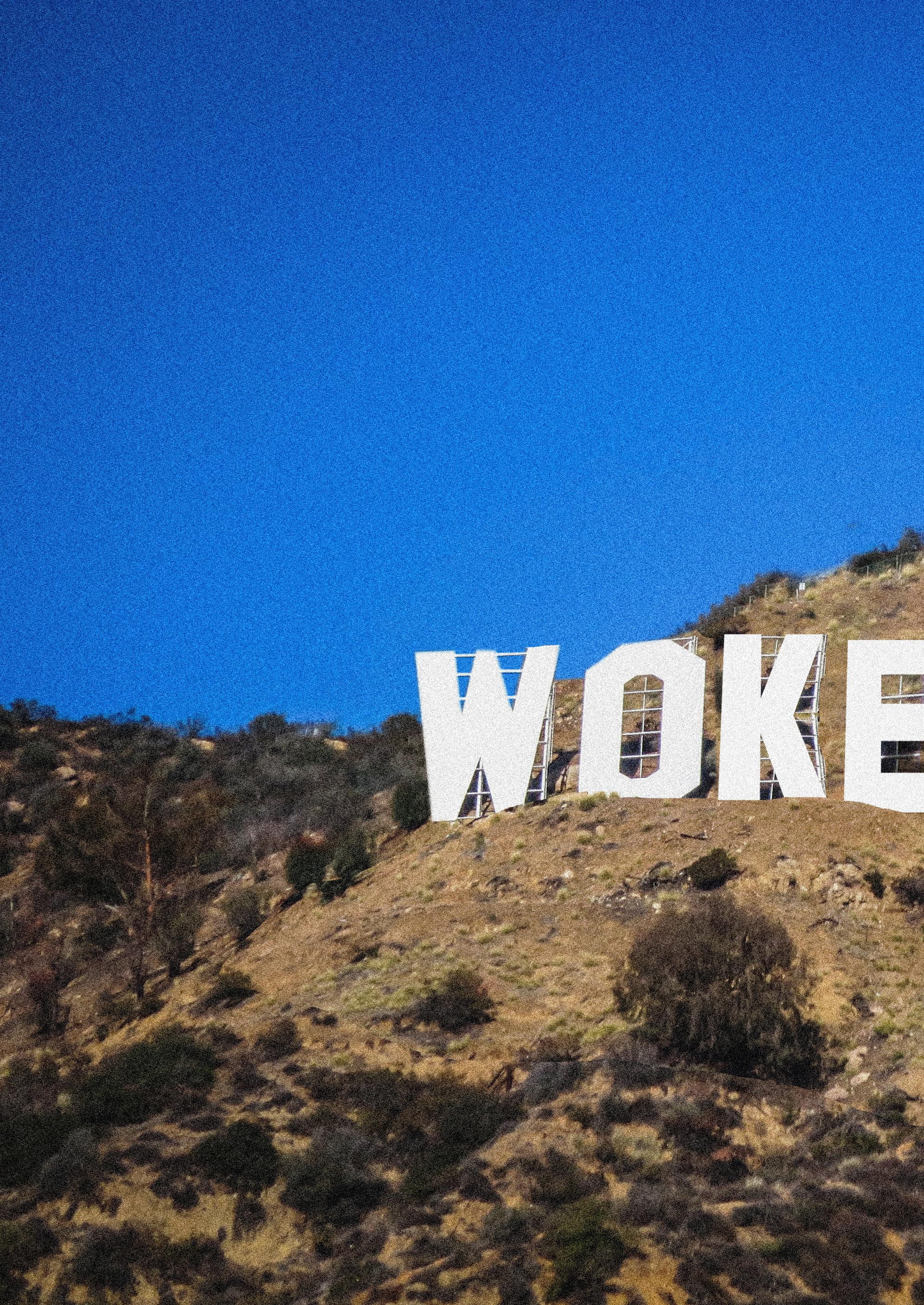
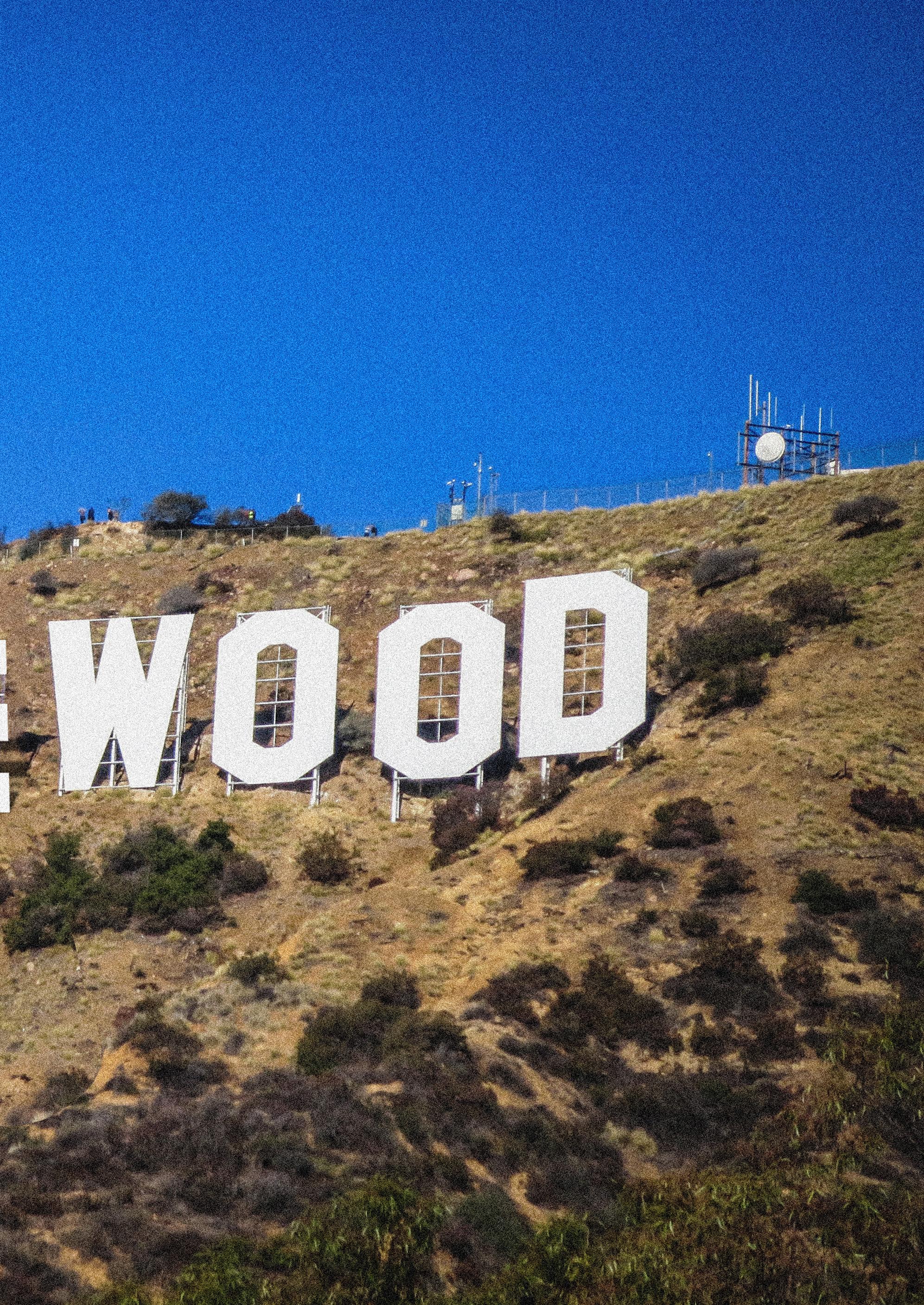
The Oscar’s Diversity Requirements
Why a Black Superman is problematic Asian Pop Culture’s toxic fan base
Is Woke Culture the death of ‘good’ cinema? Marvel is finally diverse On the ethics of Digital Necromancy Saffronisation of Indian Pop Culture
In 2015, when the Oscar nominees for the Best Picture were announced, it gained quite a bit of media traction on numerous social media platforms. While that is a yearly occurrence, there was something distinctive about the 2015 nominees. It wasn’t the nominees itself that stood out, but the fact that the Academy had nominated 20 films that had all white casts. Skip a few years and yet again the Academy nominated films with only all white acting casts. The public wanted diversity – and so they started putting pressure on the Academy. Trends like the #OscarsSoWhite hashtag saw thousands of posts daily calling out the Oscars for lacking racial diversity.
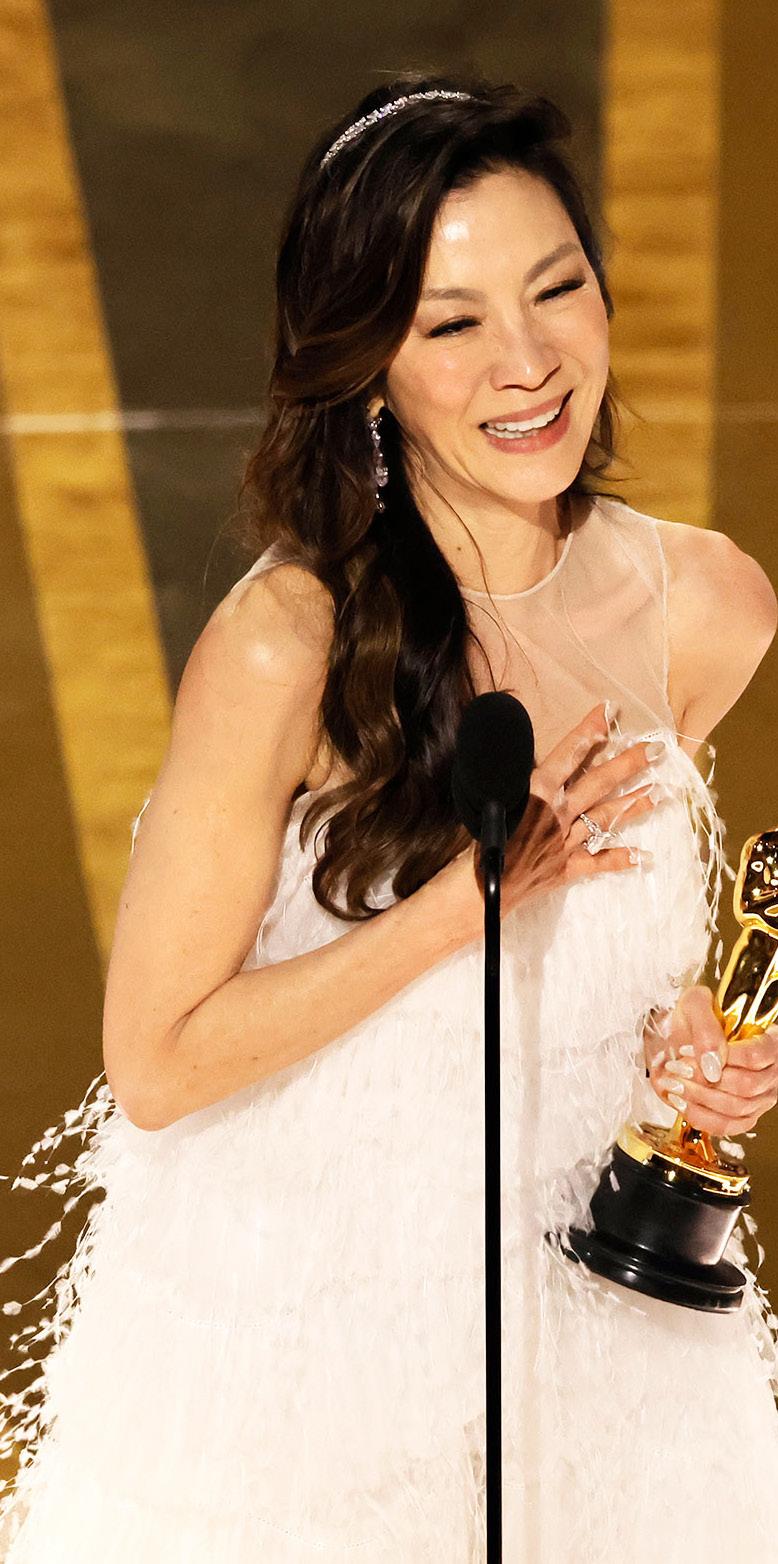
Fast forward to 2020, and the Academy announces a new diversity quota, with the announcement on their website stating “The standards (The new Representation and Inclusion Standards) are designed to encourage representation on and off screen in order to better reflect the diversity of the movie-going audience.” Essentially, the Academy is stating that moving forwards, nominees would undergo extreme scrutiny to ensure that there is representation of people from all fields of life.
For sure, this new diversity quota is fair - it allows for everyone to get a chance, and highlights the importance of racial and gender equality, among many other things. For years on end it has been believed that the best movies are those which feature an all-white or predominantly white cast, which, in part, was the Academy’s fault, for with such high viewership comes great responsibility; the responsibility to ensure
fair representation. Furthermore, it allows for recognition of those ethnic groups working behind the scenes to ensure that the film comes to life. A movie is a story, and when the story is written and told by an all-white, male cast, then the story tends to exhibit generic tendencies. Take, for example, the movie Rush Hour. It is a film that is to this day considered one of the greatest action-comedy films out there. It still racks up high viewership year after year. On top of that, the two main protagonists were Black and Asian respectively. Yet, it never won an Oscar. Sure, there may be other criticisms as to why it did not win an Oscar. That being said, having asked around, most people believe that it should be nominated, at the very least. The point being, just as we enjoy reading novels from authors around the world, along with recognising and rewarding them, we should also pay heed to movies with diverse casts.
No doubt, the effort being taken up by the Academy is truly commendable. However, it is being done as a result of pressure from the public. It would be very unlikely that the Academy would implement such policies on their own accord, rather, it is a question of wanting to stay relevant. In my view, the Academy is doing this to try and retain the value of the coveted Oscar awards that were so sought after merely a few years back. When it comes to morality, I highly doubt that the people behind this quota – DeVon Franklin and Jim Gianopulos have thought about why they are actually implementing such policies. Because of this, I believe that the value of the Oscar awards has truly declined. In
my view, it is more of a PR heavy event rather than one that credits the best of films. Moreover, what really comes off as striking and off-putting is the fact that such a requirement needs to be enforced and mandated through a structred rule. The fact that we, as a society, need to be reminded that we need to include people from certain races or sexualities, is dissapointing. Realistically, if we look at the requirements put forth by the Academy, most movies already meet those basic requirements. The reason this requirement is a point of contention, is because it has been put forth as a requirement and not something that people are inherently expected to follow.
There is always going to be public outcry over events of such a major scale. There is always something or the other that may not sit well with general audiences, and as such they will flock in heaps to social media to weep about how their sentiments were affected. The Academy needs to understand that as long as a movie achieves the standards required to be an Oscar-worthy film, then there is no issue with the film being nominated or awarded, be it a film with an all-white male cast or a diverse cast. The fact that these diversity requirements were implemented, while all in good intention, only end up presenting themselves as being rather redundant. I don’t think this will necessarily have a long term affect on the awards themselves, but it is something that makes us question the mindset of the Academy, and the world it thinks it lives in.
When characterising a superhero, what comes to mind? You might imagine any DC or Marvel heroic fictional character, such as Batman, Flash, Superman, or Spiderman. However, what ties all of them together, other than their selflessness, is their physical characteristics, a set of tailored traits that often exclusively portray the majoritarian beliefs of society. Rarely do we see superheroes who belong to ethnic and religious minorities, are “black,” or are members of the LGBTQIA+ community. This is where the concept of Black Superman is born, as an attempt to tackle such issues and evolve pop culture into one that is more inclusive.
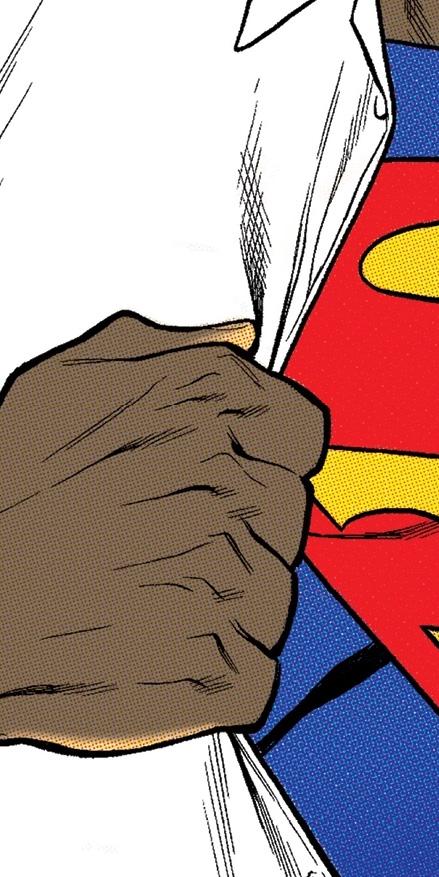
First envisioned by comic book writer Grant Morisson and artist Doug Mahnke, the most wellknown incarnations of Black Superman debuted in the comic book titled Final Crisis #7, published in 2009. The comic book vividly illustrated all Supermen of The Multiverse, including Black Superman, engaging in a battle against the antagonistic supervillain, Darkseid. As of now, two projects under development plan to star Black Superman as their main character. The first is a movie written by Ta-Nehisi Coates, which will revolve around the comic book character Calvin Ellis, who will not only play the role of Superman but also serve as President in his home universe, Earth-23. The other is a series presenting Earth-2’s Val-Zod, another Kryptonian hero from an alternate universe who is shown to take up the mantle of the former Superman after his death. However, one may question the necessity of introducing a brandnew character while the
““ IT IS NOT A PRIMARY CONCERN ENSURE THAT RACIAL PREJUDICE IS NOT PREVALENT BUT ALSO ERADICATE AS A POSSIBLE BENCHMARK FOR MAKING IMPRESSIONS JUDGING
other alternative has not been exhausted. Nevertheless, this decision by Warner Bros. is a step towards ensuring inclusivity in pop culture. The overarching purpose of embracing this alternate version of Superman is to promote the idea of being “woke” in popular culture. In a world where people are often discriminated against because of their skin colour, it is not only a primary concern to ensure that racial prejudice is not prevalent but also to eradicate it as a possible benchmark for making impressions and judging people. Additionally, this decision is partially a response to the recently modified requirements for being nominated at The Academy Awards, which explicitly encourage and promote the production of films that have an ethnically, religiously, and sexually diverse cast. Furthermore, it is important to note that though there are countless other ways to guide society into being open-minded or “woke,” it must first happen with global fictional icons like Superman. When the Man of Steel was first released in 1938, millions of fans embraced it with open arms, and decades later, he remains a global hero whose “S” is recognised worldwide. Now he epitomises compassion and has evolved into symbolising the undying quest for truth and justice. Therefore, recasting Superman would subconsciously destroy the preconceived stereotypical
notion against black people by compelling audiences across the globe to accept that superheroes and protagonists can be black, thus ridding them of their possibly racist beliefs. Recasting Superman as black has a singular resonance. Despite the possibility that fans may now be uninterested in viewing Superman movies as they may feel a sense of betrayal, this recast will provide DC with the potential to open up the character to new fans, which will, in turn, boost the viewership of films associated and therefore prove to be beneficial for the producers as well.
On the other hand, there is a significant segment of society that believes the advantages of introducing Black Superman can be minimised. They argue that the “replacement/ substitution” of Clark Kent, the former Superman, with Black Superman is not appreciated, as it does a disservice to both Kent and Black Superman. According to them, it is “cringy” and serves no purpose other than promoting nondiscrimination in society. Overall, the concept of Black Superman aims to ignite an attempt to promote a more unprejudiced society. By utilising popular culture and its immense influence on our behaviour, attitude, and actions, the introduction of Black Superman could be a powerful catalyst for positive change.
ONLY PRIMARY CONCERN TO THAT PREJUDICE PREVALENT ALSO TO ERADICATE IT POSSIBLE BENCHMARK MAKING IMPRESSIONS AND PEOPLE.Picture Credits: The Hollywood Reporter
If you had asked me a year ago whether I was willing to try out a new anime or not, I probably would have laughed it off, having had a very closed mindset about Asian media. A closed mindset that had built up because of the type of following the media had, and my own exposure to that following more than the media itself. All I had been exposed to regarding this side of pop culture was the negative narrative, that drives the view that liking Asian media puts one into the unlikeable, sociallyawkward group of individuals who take fandom to its extremes. I have realised now that this narrative could be rather unfounded.
Contrary to what the situation might make it look like, this negative propaganda on the internet is not racially motivated, at the very least the racial prejudice isn’t the main culprit here. Rather, what causes this view to emerge is the cult-like following around the media itself.
 KRISHNAV SACHDEV
It’s the cosplayers that take it too far by acting irrational on TikTok, the countless different toxic ‘stan’ armies, that troll and bully people viciously just for holding a different opinion and the people who become infatuated with an actor or actress and base their personalities on and around them, often unable to act like themselves and be ‘normal’.
These types of individuals and groups, most noticeably Anime fans , BTS stans and K-Pop addicts, aren’t a phenomenon that’s unique to this subculture of media as every piece of media will have that toxic and ‘cringe’ follower base, it’s just that these are the most infamous and are the reason that many people are driven away from exploring the rich diversity of Asian Media and hence, are kept from discovering something they could have really liked or enjoyed.
Let’s take me, for example. I would never have attempted to explore Asian media if it weren’t

for friends pushing me to do so by dispelling any qualms I may have had. They first helped me ease myself into anime, starting off with only the big names, and seeing if I enjoyed it at all. And to my surprise, I did. After a long period of being completely opposed to even the idea, I found myself enjoying a completely new genre of media. While I wasn’t the biggest fan, I liked what I was recommended quite a bit and still indulge in new shows and updates from time to time.
While I’m not trying to push the narrative that toxic and cult-like followings don’t matter when it comes to such media, I am trying to say that it shouldn’t be a reason for someone to not explore the domain. Because, while most definitely a negative aspect which could lead to some bad experiences, it doesn’t warrant leaving a whole class of popular culture unexplored. Not wanting to be associated with the following around the media makes sense; no one with an outside perspective wants to be a K-Pop stan or a “weeb”. However, that shouldn’t be the only thing holding you back from exploring because there is a very clear and distinguishable line between being fond of a particular genre and making that fandom toxic.
Recently, I’ve been introduced to new music, along the lines of Korean R & B, and new shows because of friends of mine, again, who pushed me to expand my tastes. Much like with anime, I ended up liking these things more than I thought I ever could. These new experiences weren’t anything life-changing or revolutionary for me, but I appreciate myself for disregarding what the following around the media was like, and I appreciate my friends for helping me see that the media itself isn’t inherently bad, and it’s just a social stigma, admittedly based on reality, that deters people from discovering something they might like.
So, if any of you have ever felt that you could enjoy Asian media, and the only thing holding you back was the fanbase, then I urge you to overcome that hurdle and give it a shot because I think you might just like what you see.
“
ALL I HAD BEEN EXPOSED TO REGARDING THIS SIDE OF POP CULTURE WAS THE NEGATIVE NARRATIVE, THAT DRIVES THE VIEW THAT LIKING ASIAN MEDIA PUTS ONE INTO THE UNLIKEABLE, SOCIALLYAWKWARD GROUP OF INDIVIDUALS WHO TAKE FANDOM TO ITS EXTREMES
‘Wokeness’ is not so much a stance, as it is an idea; that is, something is not ‘woke’, or you do not make something ‘woke’, as much as you strive to be ‘woke’. Your stance cannot be ‘woke’ as the definition of what is ‘woke’ often varies, and secondly, ‘wokeness’, in the truest, most applicable sense of the word, is a way to describe the purpose of a piece of work, more than a description of the work itself. When I say it is an idea, I mean the idea that we have to be inclusive (often to extreme or unnecessary extents) in an increasingly polarised world, where the side you take is critical to your identity. ‘Wokeness’, thus, is the regrettable result of a world trying to fix problems it doesn’t have.
Before I move on, let me clarify that I do believe that inclusivity is pivotal to our world. There are inherent biases and prejudices that impediment the progress and advancement of certain racial, ethnic or gender groups within society, and we do need to address them by empowering the people of these groups. However, I do not moot ‘wokeness’ as the solution to such problems, and rather see it as yet another problem.
Firstly, let us define what is ‘wokeness’ and what falls within its ambit. ‘Wokeness’ is the idea that things, such as popular Is
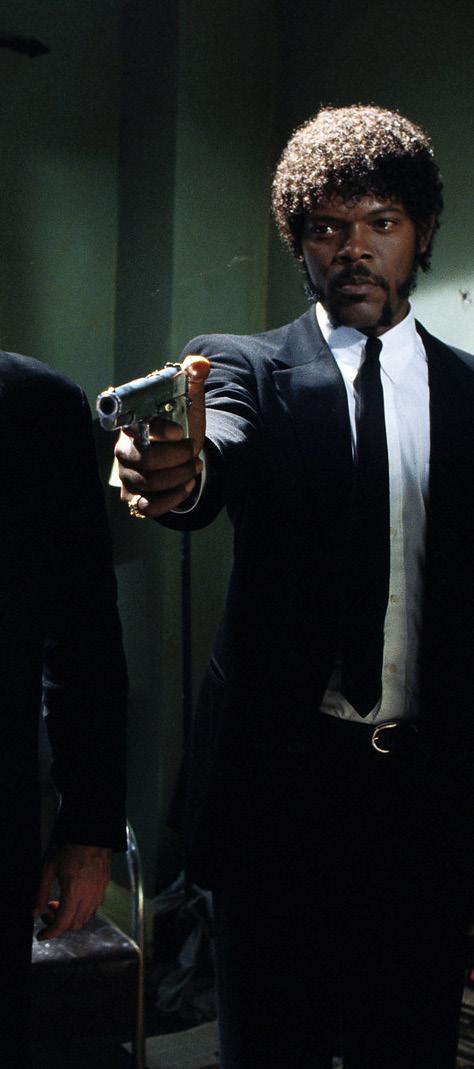
“‘WOKENESS’, THUS, IS THE REGRETTABLE RESULT OF A WORLD TRYING TO FIX PROBLEMS IT DOESN’T HAVE.
media, need to be inclusive, nonoffensive, and empowering to all demographics of society, by raising awareness to less-heard problems. ‘Woke Culture’ is the execution of such an idea, and its invisible, yet decisive hand, has touched all sections of media. While it sounds agreeable and beneficial, the problem is that the media simply cannot adapt to such quick, often drastic changes, without hurting its own fabric.
Namely, when a piece of work, such as a movie, is created with the intention of being ‘woke’, any message trying to be pushed through the movie now becomes the sorry byproduct of identity politics. Woke culture increases the propensity of such a trend because it seeks to include members of all groups. Characters are now defined by their identity as part of a demographic, rather than by their behaviour or traits. This results in the tokenism of certain demographics, wherein they only serve as a means to an end for promoting woke culture. We then start to see people from minority groups being cast in roles simply because of the fact that they are part of those groups, and that movie needs to have a member of that group. Them and their cultural identity thus become indivisible. As a result of this tokenism, we see the patronisation of these people, where production companies seem to be doing them a ‘service’ by including them in their movies solely because of their membership of a certain group. Any misdeeds by any member of a group is then reflective of the entire cultural group, because these people do not exist independently of their cultural group.

Moreover, while woke culture purports social awareness, it often acts as an antithesis to the same. It seeks to propagate the stories of underrepresented groups, but in doing so, often portrays them as downtrodden people in dire need of our (the majority’s) help. Such a narrative, even when actually seeking to establish the problems of such people, can end up selling
a false dichotomy, where there is a clear cut right and wrong side to the issue. Such an oversimplification can draw attention away from the real-causes of a problem, and instead towards to supposed ‘wrong’ ideals that allegedly cause these people’s suffering, when no such problem exists.
Finally, woke culture, when applied to movies and media made in the past, can deprive us of valuable productions. Holding the work of writers, directors, or musicians of the past accountable for their makers’ misdeeds is futile, as such works may serve to further our cultural enrichment, and punishing them for their views is to overgeneralise and not solve any problem. If a writer had repeatedly made homophobic remarks, to stop publishing or distributing their work, even if that work has some cultural or social value, is to do a disservice to the people who could potentially read it. I am justifying their remarks by saying that ‘it was normal for their times’, but I would instead seek to posit the idea that one’s work should be judged independently of one’s actions.
Such censorship can also begin to push people to self-censor. Despite the fact that we live in a society that allows for the most free speech, and freedom from government censorship ever, people choose to self-censor at fear of being ‘cancelled’ or censored by activists, corporations or corporations, due to numerous reports of the same happening. This prevents any sort of new dialogue from entering the mainstream, thus preventing any sort of constructive progression. Thus, woke culture is counterintuitive to progression.
I do believe that there is a way to be inclusive as well as constructive, but to strike such a balance, we first need to recognise that there is an inherent need for people and organisations to be able to express freely and independently without judgement, to push the sort of dialogue and conversation that truly helps become inclusive and progressive.
7% female, 61% white; this was the state Marvel’s characters were in back in 2018, according to Forbes and Brigham Young University. This severe lack of diversity was met with Marvel’s multiple attempts to diversify in its most mainstream form, the Marvel Cinematic Universe. The first of these attempts to break away from American shores, with most superheroes before being based entirely out of New York City, and the ‘whiteness’ of the MCU being tackled by the introduction of Black Panther, which also happened to be one of the first superhero movies with a black director and predominantly black cast. This movie created a snowball effect where Marvel could be seen striving for more and more diversity, with Captain Marvel in 2019 and Black Widow in 2021: where female superheroes played the role of the main character. ShangChi in 2021 as well, becoming one of the first Asian superhero protagonists to the world, and finally Eternals, which might not have done as well as the others in terms of numbers, but in terms of diversity, its cast includes five men and five women, each from very varied backgrounds, yet again highlighting the diversity that Marvel have tried to incorporate into their films.
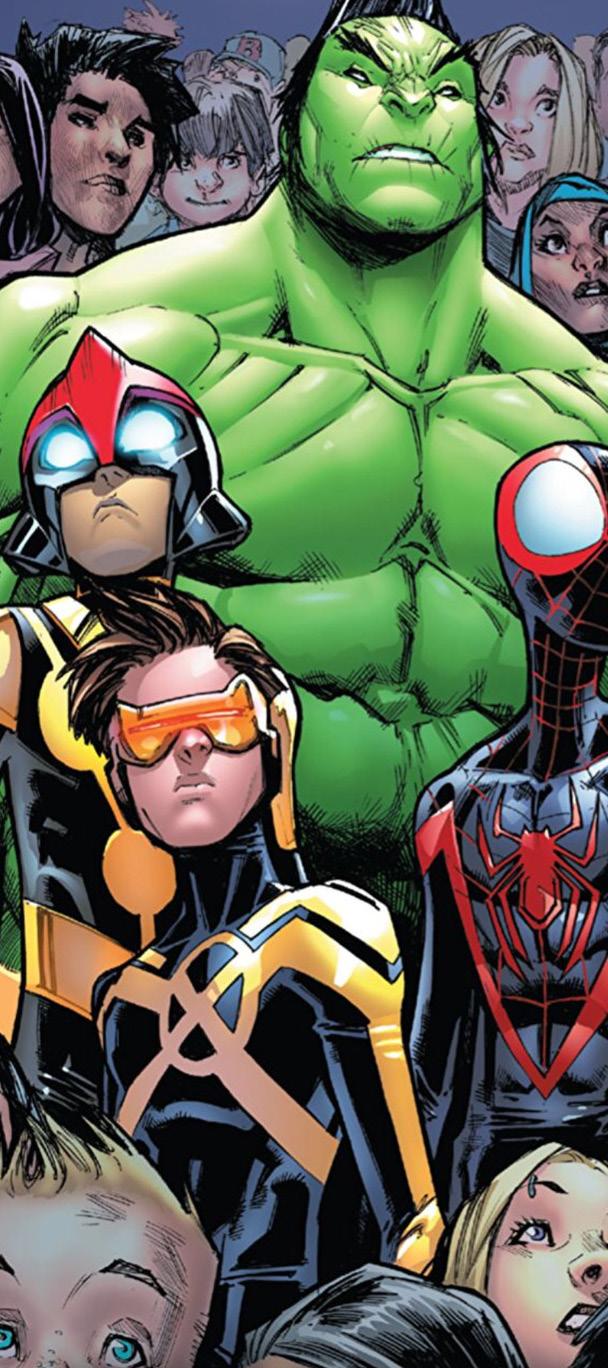
Now, you could ask, why is Marvel attempting diversification where not many others are? Well, the fact is that in 1996, Marvel filed for bankruptcy and was barely afloat until the creation of the Marvel Cinematic Universe, forcing them to innovate. What clear to them is the option of diversifying their cast, characters, and also directors - who were gold in a bundle of hay, brimming with potential. Now that Marvel has taken them up, we can clearly see a different point of view from these movies than we do from others.
Not all diversification has been achieved though. Most diversification are used on individual movies or new characters. The characters like Thor or Captain America, being major MCU characters, show
Hallelujah. is finally RAFAY
“ ...MARVEL OUT STRANGE, MAIN FLOODED PERPETUATION ORIENTALISM.
no chance of being played by an actor from a racial minority group. Though the movies and shows mentioned above show diversity, Marvel continues to pump out movies like Doctor Strange, played by a white main character and flooded with the endless perpetuation of American Orientalism. Though the movie itself isn’t bad, some scenes could be seen as racially insensitive, and this is one of the main reasons why Marvel has not yet fully diversified.
The Marvel Cinematic Universe is not all to Marvel though, and while it might have been close to going under 27 years ago, Marvel Comics are back on track now, making an estimated $282 million for comic book sales in the US alone, according to Forbes. The comics led the exploration of the

deep tunnel of diversity by first creating new characters, like Kamala Khan and a black female Iron Man. As explained by Augie De Blieck Jr., a columnist at Comic Book Resources, this is to expand Marvel’s comic consumer audience. Studies have shown that the dwindling number of consumers are mainly 30-40 years old, men who continued reading after that last comic boom. With a step in the direction of diversity, their audience can expand to women, children, and basically every ethnic minority they can include in their comics. Because of these rapid changes to their market, Marvel comics can be seen growing at a staggering 7.2% a year, already being around $579 million in 2015, according to the history of comics site; Comichron.
Looking back to the MCU, we can sum up their success up to this stage in two points. The first is their organised effectiveness, which leads them to beat any rival or competition. Their efficacy has three aspects: efficiency, control, and innovation. Efficiency refers to an increase in productivity and cost-effectiveness. Control refers to the control one has over the surrounding environment, attracting and influencing consumers. Innovation refers to the ability to change with time, making new products and services and influencing the consumers to change as well. Of these, Marvel has put a lot of effort into innovation, creating unique characters from different corners of the world, with fresh stories, and inclusivity for ethnic diversity. Secondly, Marvel’s plans seem to be to push more in the direction of diversity, decreasing the gender gap and equally representing all peoples.
With this hope for the future, I would like to conclude with a quote from Stan Lee: “The pleasure of reading a story and wondering what will come next for the hero is a pleasure that has lasted for centuries and, I think, will always be with us.” It is exciting to see where Marvel will go from here.
“ ...MARVEL CONTINUES TO PUMP OUT MOVIES LIKE DOCTOR STRANGE, PLAYED BY A WHITE MAIN CHARACTER AND FLOODED WITH THE ENDLESS PERPETUATION OF AMERICAN ORIENTALISM.Picture Credits: MARVEL
The world of CGI has come a long way since its inception in 1973 in the film “Westward”. It went from just adding small effects here and there to becoming heavily integrated into almost every music video you watch or movie you see in theatres today. It’s come to a point where it’s not just huge blockbuster studios or big time musicians that have access to this luxury. Anyone in this day and age with an average phone can also have access to CGI, albeit rough around the edges.
When something becomes easily accessible, it’s bound to be misused when people see its potential. CGI today doesn’t just generate realistic explosions or entire galaxies, it can be used to generate even real people. Now, generating people isn’t a new thing, it’s been done before to generate large crowds of people, or to de-age a character, and that’s more acceptable, however, people today are using CGI to resurrect people who have died. This has been termed as “Digital Necromancy”.
Digital necromancy is a method of resurrecting someone not in reality, but virtually. They are of course not real people and are just generated images. This is done by using whole body scans of the celebrity or by using a body double, and then digitally reconstructing the face onto the model. To reconstruct the speech however, sound artists compile a soundboard of dialogues spoken by the celebrity and then feed it into an AI to simulate realistic versions of the person’s voice.
One of the best examples of this is Paul Newman’s voice. He used to voice the
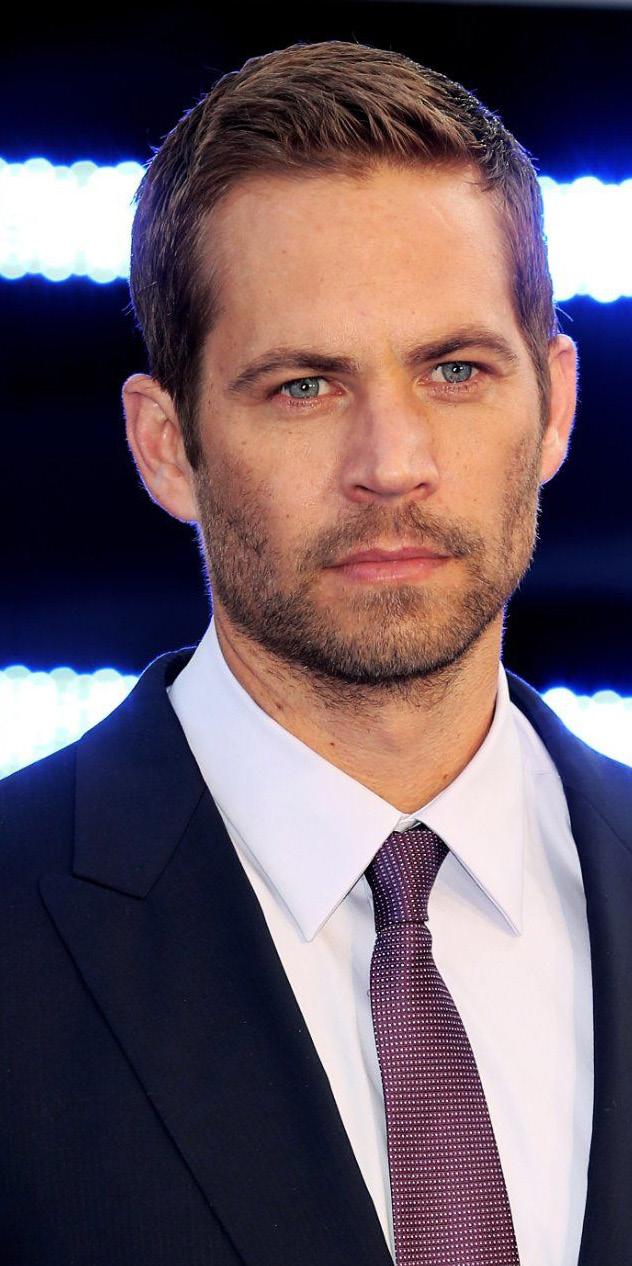
character of ‘Doc Hudson’ in the ‘Cars’ franchise, but after his death in 2008, the directors couldn’t find a replacement and chose to reconstruct his voice digitally instead.
Beloved actors are being brought back to reprise roles they lost when they passed away, people like Carrie Fisher in ‘Star Wars’, Paul Walker in ‘Fast and Furious’
and more recently Harold Ramis in ‘Ghostbusters’. Large companies generally defend their actions by quoting the lack of suitable actors for the role. Companies aren’t just misusing this power to bring people back to reprise roles, others use it as a marketing stunt or to promote a completely new film or TV show entirely.
Take, for instance, Bruce Lee. He was resurrected 40 years after his death to star in a Johnnie Walker whiskey ad in 2013. What made this problematic is that Bruce Lee abstained from anything alcoholic his entire life and never promoted it.
Naturally this is very controversial, because it uses the name and persona of someone who has no say on how their image will be used. Many celebrities today are concerned about this and are doing everything in their power to prevent their image from being misused after their deaths. Celebrities resort to creating contracts that prevent this very issue. For example, Robin Williams, before his death in 2014. He explicitly banned any use of his image for the next 25 years in film, TV or holograms. But to get around this, companies like Disney and
Marvel make celebrities sign an agreement that grants them free access to the celebrity’s image and estate even after their death.
Bringing back someone from the dead is a grotesque stunt, but the question is, where exactly do we, as a society, draw a line with digital necromancy? How much screen time should a digitally reconstructed celebrity have before it becomes unethical? How long should it be before you DO reconstruct someone? Should the celebrity’s actions be controlled by their estate or the companies their contracts lie with? The topic is very sensitive and will not only have many loopholes in it, but also a very large grey area that may overlap with previous regulations. All in all, it all relies heavily on how big companies and celebrities want to move ahead with it. We as a society have little to no say in what happens, as the celebrity estate makes the decisions. We can only hope CGI won’t take a turn for the worst, after all, a library of deceased people to be used at will is not something anyone wants.
“COMPANIES AREN’T JUST MISUSING THIS POWER TO BRING PEOPLE BACK TO REPRISE ROLES, OTHERS USE IT AS A MARKETING STUNT OR TO PROMOTE A COMPLETELY NEW FILM OR TV SHOW ENTIRELY.Picture Credits: CNN
A country with a population of 1.4 billion people, India is a culturally flourishing and economically thriving nation with diverse communities and people from all faiths and cultural backgrounds. India as an independent country has enjoyed its democratic success for the past few decades but unfortunately certain communal elements through vile polarisation of communities have made repeated attempts to ruin this cultural fabric for petty political gains and fulfilment of politicians interests. India has had a few bumps in the road, with regular conjectures of communal violence - be it the bloody post-partition exodus, events succeeding the infamous 1974 Blue-Star Operation, mass migration of Kashmiri pandits in 1990s to demolition of Babri Masjid in 1992, the scarring riots of 2002 in Gujarat to present day animosities and mob violence perpetrated under the garb of cow vigilantes, ‘Hindutva Rashtra’ and the inherent need to assert one’s religious dominance in the extremist ways possible.
This polarisation was never intrinsic to India, in fact it has been the opposite. We are the birthplace of ideologies like “Vasudhaiva Kutumbakam”the idea that the whole world is one family and has repeatedly set precedents for incorporating diversity in the most harmonic ways. Extremist political entities playing adulterated identity politics indulge in creating severe factionalism within the communities to create vote banks. Religion and identities become an important metric of mobilising masses; especially owing to the historic relevance of religion in our country.
Mass media has been employed by rabble rousers and politicians since its inception for conveying fiery rhetoric’s, often backed by bad intentions. “Saffronisation” of popular culture and the urge to control the dominant narrative is a trend that has become increasingly visible. Saffronisation refers to the right-wing extremist approach which seeks to implement Hindu nationalist agendas. Saffron is the

colour that has long been associated with Hinduism, but today has been the flagship colour of extremist Hindutva elements. As portrayed by the media, saffronisation has been used in a seemingly innocuous manner to impose and promote a particular version of extremism on society.
Some believe that saffronisation marginalises other cultural and religious identities; for example, the promotion of the Ramayana and the Mahabharata as the epitome of Indian culture often ignores the rich cultural and religious traditions of India’s minorities, including Muslims, Christians, and Buddhists. This not only undermines the pluralistic foundations of Indian democracy but also creates a sense of exclusion among minority communities.
There have also been several myriad ways in which Saffronisation is exploited through media and popculture in India. Adaptations of ancient Hindu epics into TV shows and movies glorify the religion, often with political agendas behind them. For example, the TV show “Ramayan” was aired during the COVID-19 lockdown in India in 2020, and it became one of the most-watched TV shows globally. In India, people pedestalize religion and nothing is comparable to the esteem of God. The general public’s sentiments are attached to their religion, thus making it a piece of cake to lure and influence them for political benefits. In India an individual is more likely to give vote to a person from their community and not someone who will be the better leader. The previous records of these fabricated promises are a slippery slope, and adhering to the fact that politicians cannot be trusted, people find solace in giving votes to someone from their own community.
There has been a disproportionate obsession of Indian filmmakers with period dramas about Hindu kings too. The big screens are seldom graced by stories of kings from other identities.
Baji Rao Mastani, Padmavat, Tanhaji, Panipat, Manikarnika or Prithviraj Chauhan - are just some examples that re-emphasise the good Hindu versus bad Muslim binary, thereby stirring up communal tensions and fear within both communities. The
stereotypical narrative pushing the need to protect the “indigenous” Hindu population from the “foreign invaders” gets entrenched and further endorsed.
Propaganda based movies like Kashmir Files simply fuel the fire in an already communal scenario. Historical movies should strike a balance between portraying perspectives and historical facts. This was swept under the carpet by the creators of this condemnable movie. This stands as a testament for how the extremist Hindutva elements are steadfast in achieving their goal of revising history - be it through Saffronising media, eliminating themes from textbooks, censoring documentaries, etc. The film critically lacks nuance and shamelessly labels all Muslims as perpetrators of Hindus. There is an evident lack of historical, social, and political context to the extent that Kashmiri Pandits themselves have declared this as a stunt for slandering of Muslims. Apart from these historic movies, a great deal of Islamophobia is also perpetuated by movies which inherently scapegoat Muslims. For instance, a movie called “Hum Do Humare Barah”, which revolved around a Muslim household in India, received heavy backlash and condemnation for having Islamophobic undertones. Such movies depict Muslims as the reason for issues like population explosion and the resultant unemployment or stagnating economy. This scapegoating of an already existing minority furthers the feeling of insecurity within these communities, thereby creating greater scope for hatred and potential violence. This insecurity is then predated upon by politicians, who then emerge as saviours for the masses by promising them to secure them against the scapegoats or the ‘outsiders’ when voted to power.
It is irrefutable to say that the Saffronisation in media and pop culture continues to be used for political mileage and defamation of the minority communities. Ergo, the least we as well-educated and informed individuals can do is not fall prey to this malice propaganda and make people more aware of the consequences could be a stepping stone to remove bias.
The Dark Side of The Moon is the eighth studio album by the English rock band, Pink Floyd. The album has been widely acknowledged as one of the greatest albums of all time, conveying various social messages through its music while pushing the limits of what rock music could be. The album was released in 1973 and this year marks 50 years of the album’s release.

Speak to Me 01:08 (Mason)
Breathe 02:49 (Waters/Wright/Gilmour)
On the Run
03:51 (Waters/Gilmour)
Time 06:50 (Mason/Waters/Wright/ Gilmour)
The Great Gig in the Sky
04:44 (Wright)
Money 06:23 (Waters)
Us and Them
07:50 (Waters/Wright)
Any Colour You Like 03:26 (Mason/Wright/Gilmour)
Brain Damage
03:47 (Waters)
Eclipse 02:12 (Waters)
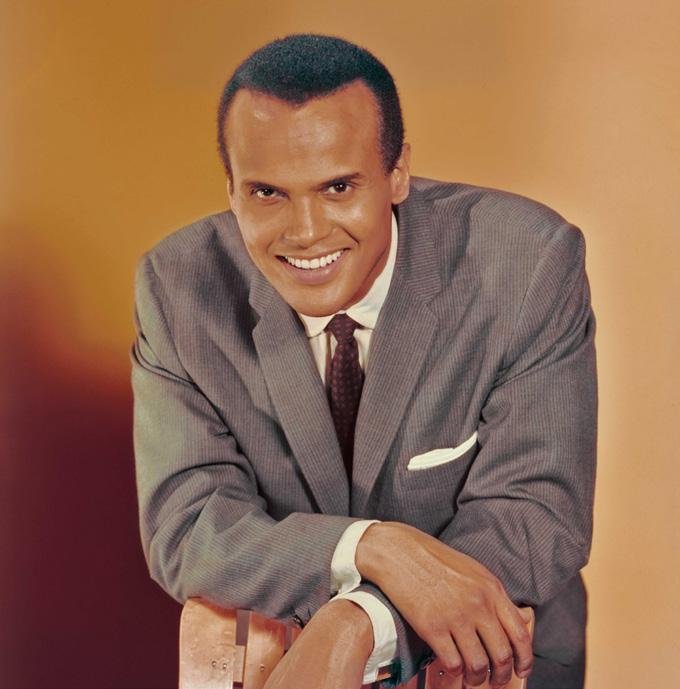

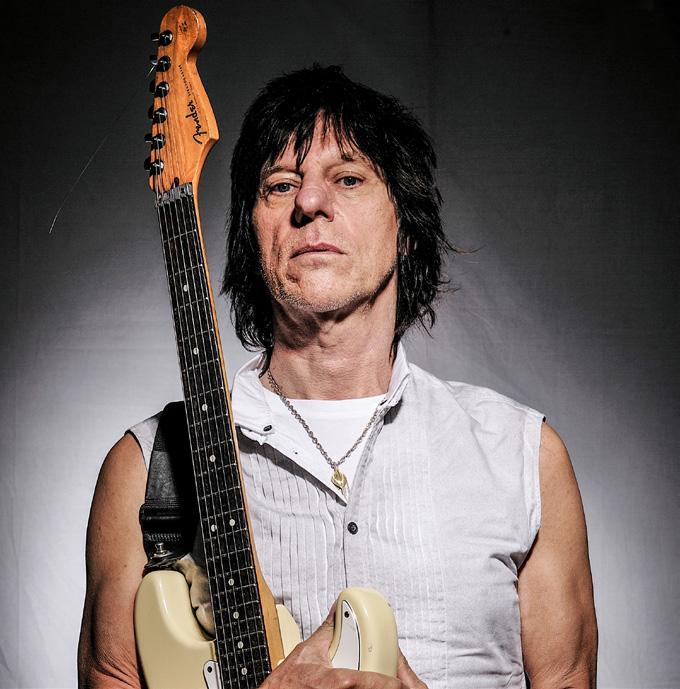
 JEFF BECK
TINA TURNER
HARRY BELAFONTE
1944 - 2023
1939 - 2023
1927 - 2023
JEFF BECK
TINA TURNER
HARRY BELAFONTE
1944 - 2023
1939 - 2023
1927 - 2023
and content we are most excited for