WINTER 2026


Cathy Kinnaman
Home and Community Services Director

Cathy Kinnaman
Home and Community Services Director
In addition to the many administrative and financial challenges we have faced over the past year, our state was recently hit by torrential rains from an atmospheric river that caused widespread flooding and damage to homes and infrastructure. Many Washington residents, including some clients, were directly affected.
What follows is a story from our Region 3 colleagues that shows what HCS looks like when people are in crisis and time is short. It is a story of compassion, urgency, and professionalism in action. Special thanks to Kara Sells and Christie Follett for taking the time to write and share this story.
Late last week, the call came in: seven families in the Packwood area had been displaced by the flooding. They suddenly found themselves without housing, some in need of essential services, and their temporary hotel stay was ending the next day. It was one of those moments where every minute matters, even when the situation is far from simple. Across our teams, people moved quickly. No hesitation, no second-guessing. Everyone leaned in, doing everything they could to reach out, listen, and support these families during an incredibly vulnerable moment.
We aren’t an emergency response agency. We don’t wear capes or carry special powers. We’re regular people who care deeply about helping others. And sometimes, in the middle of overwhelming circumstances, it’s easy to feel like what we’re doing isn’t enough. But it is enough. Those small conversations, those moments of connection, those few words that remind someone they’re not alone…those matter more than we realize. Especially for people who have just lost their homes, their stability, and the world they knew.

Region 3 HCS showed up with heart, compassion, and determination. A huge shout-out to every one of you for the work you do and the humanity you bring to it.
Special thanks to:
• Christina Garvin
• Ciravegna Parramore
• Jennifer Bureau
• Kimberly Strunks
• Doug McVey
• Twinkle Aquino
• Nicole Billings
• Janice Rona
• Kamryn Mclean
• Megan Drake
• Alec Brian
• Tami Mistretta
This is a powerful example of how HCS staff make concrete, meaningful differences in people’s lives. My sincere thanks to everyone involved in this emergency response and to all the staff who work hard to support this work every day. Your dedication ensures that when people need us most, HCS is there to help.
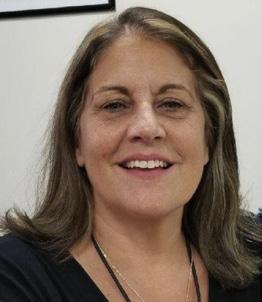
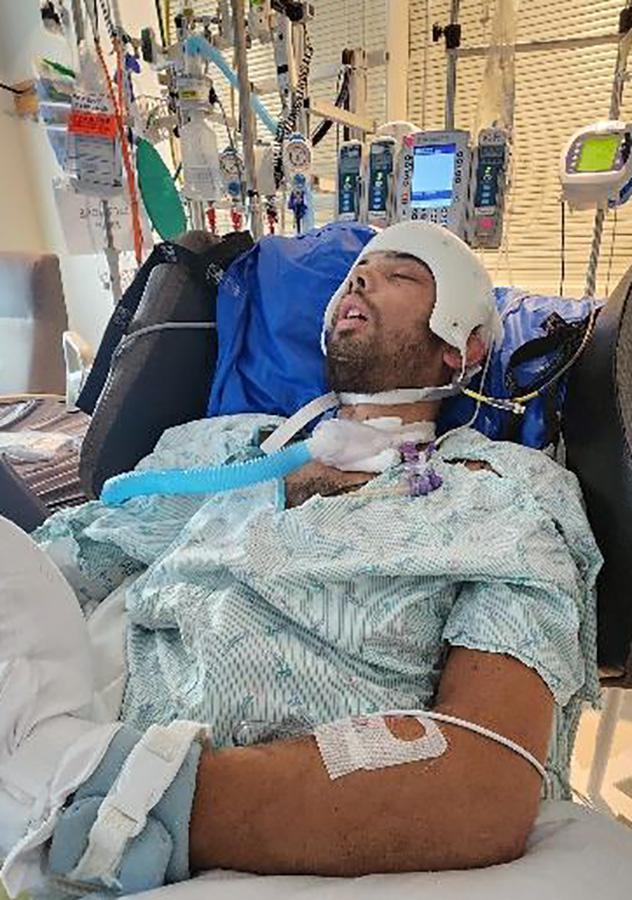
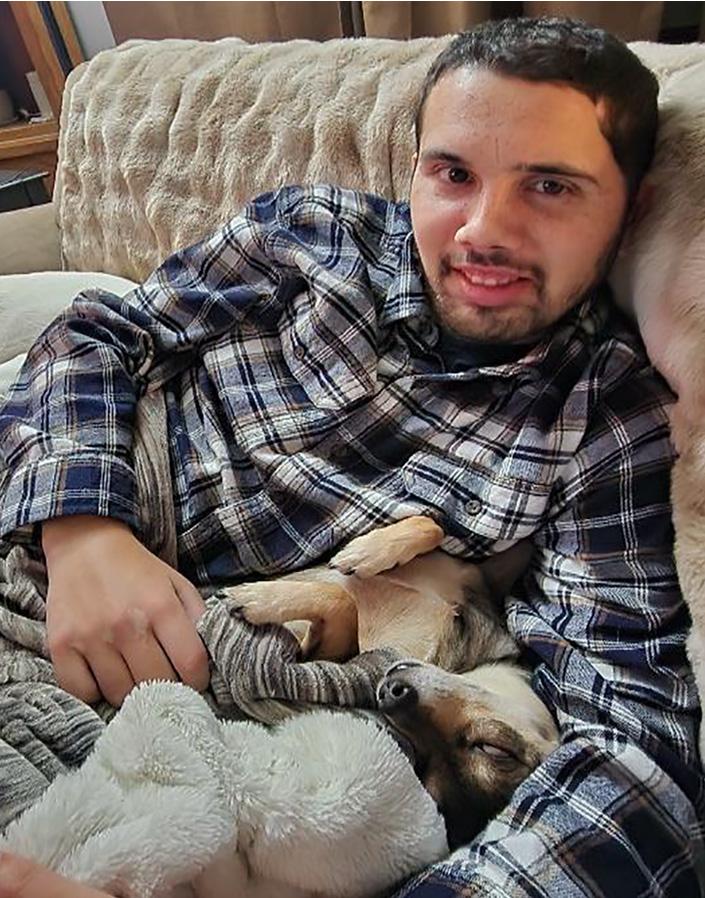
Jaidan was a healthy, vibrant 22-year-old man employed as a welder. An accident in August 2024 left him with a severe Traumatic Brain Injury. Jaidan’s mom, Jamie, shared she was initially told Jaidan wouldn’t survive the injuries that included “multiple skull fractures and a broken nose, jaw and temporal bone” and required 10 surgeries in the following weeks. New to Medicaid, Home and Community Services met him upon his hospital admission in December 2024. HCS worked to transition Jaidan into an adult family home the following February, but he was re-admitted to the hospital the next day after a seizure. While re-hospitalized, Jaidan exhibited aggressive behaviors resulting in frequent use of restraints. Non-verbal since his accident, Jaidan had to re-learn skills without being able to voice his concerns, fears and discomforts. In the face of overwhelming barriers and complexities, a dedicated care team and resilient family hoped for recovery and regained abilities.
The HCS HQ team stepped in, partnering with the region and support via daily team meetings with the hospital to ensure clear and consistent messaging, to escalate conversations and to aid in navigating systems. The multidisciplinary team was comprised of the hospital, HCS, the Health Care Authority, and the client’s Managed Care Organization. Clients in restraints are not appropriate for long-term care settings. It was agreed upon that Jaidan would need additional therapies and support around behaviors. The goal was to get Jaidan to an inpatient neurocognitive rehabilitation facility, which required out-of-state coordination and approval from the HCA and his MCO. In efforts to help the hospital remove restraints and assist Jaidan and his future providers, the MCO approved the consultation and evaluation with a behavior analyst. This specialist worked with
Jaidan and Jamie to determine how he could best be cared for. While there were TBI rehabilitation facilities that initially showed interest in accepting Jaidan, all wanted to see growth in physical therapy, occupational therapy and his ability to remain out of restraints, which we were unable to achieve with the hospital despite strong advocacy efforts.
The hospital rapidly moved to discharge Jaidan with one day’s notice given to the rest of the care team (HCS, HCA, and MCO), leaving the team scrambling to figure out next steps. The MCO approved him for 24hour staffing through Intensive Behavioral Supports and Supervision. The team was able to transition Jaidan into the temporary setting of an assisted living facility with the hope he receives more therapies and would be more successful out of restraints. Soon after this transition, the HCS team visited Jaidan in person. When they arrived, he was walking outside
Columbia
Klickitat
Okanogan
with a caregiver and greeted them by waving and approaching as they exited their vehicle. In a twoweek period, he learned 10 new words, responded to questions with appropriate gestures (nodding or shaking his head), and utilized words on cue cards to make requests. Not long after being in the ALF, due to his progress, Jaidan was accepted to an inpatient neurocognitive rehabilitation facility in Texas. This past May, Jamie accompanied Jaidan on his flight to this facility. Jaiden was transferred to this facility in Texas since Washington does not have a specialized traumatic brain injury/neurocognitive rehabilitation facility setting. He embraced the therapies. Although he made early progress, after experiencing many staffing changes, his progress seemed to plateau in both advancements in therapeutic interventions and, it appeared, his motivation in therapies.
In October it was agreed upon that it was time to start the transition work to bring Jaidan back home to Washington. While the recommendation from professionals was for him to return to a residential setting, Jamie felt Jaidan needed to be home. Jaidan would transition home with the support of Community First Choice in-home services. His HQ HCS case manager visited Jamie’s home several times to complete the assessment of Jaidan’s future environment, for care planning, and to connect the family with as much support proactively as possible—utilizing Amazon Business to purchase the needed community transition items and Assistive Technology benefits to purchase an Augmentative and Alternative Communication device. His speech-language pathologist recommended apps and programs for the device and provided Jamie with hands-on training. Medical transport was coordinated between the MCO and HCA. To support the transition, weekly care conferences were held with the HCA, MCO, HCS, Jamie and the receiving AAA team that would be providing ongoing case management. Jaidan’s grandmother completed the work to become his paid individual
Spokane
Franklin
Walla Walla
Kittitas
providers through CDWA. Jamie also connected Jaidan with a specialty neurologist and local primary care physician to provide wrap-around support. Since returning home, Jaidan has made countless achievements! He has often assisted his mother with shopping and bringing in groceries from the car. Jaidan is now able to help with meals and has expanded his vocabulary with several new words. While managing seizures will be a life-long battle for Jaidan, he is coming out of them more oriented and less exhausted. The mission of Home and Community Services is to partner with people to access support, care, and resources. This collective team walked out our mission by navigating and coordinating Jaidan’s complex care needs, taking the time to fully understand those needs and creating a person-centered care plan—implementing the wishes of his family as they fiercely advocated for him.
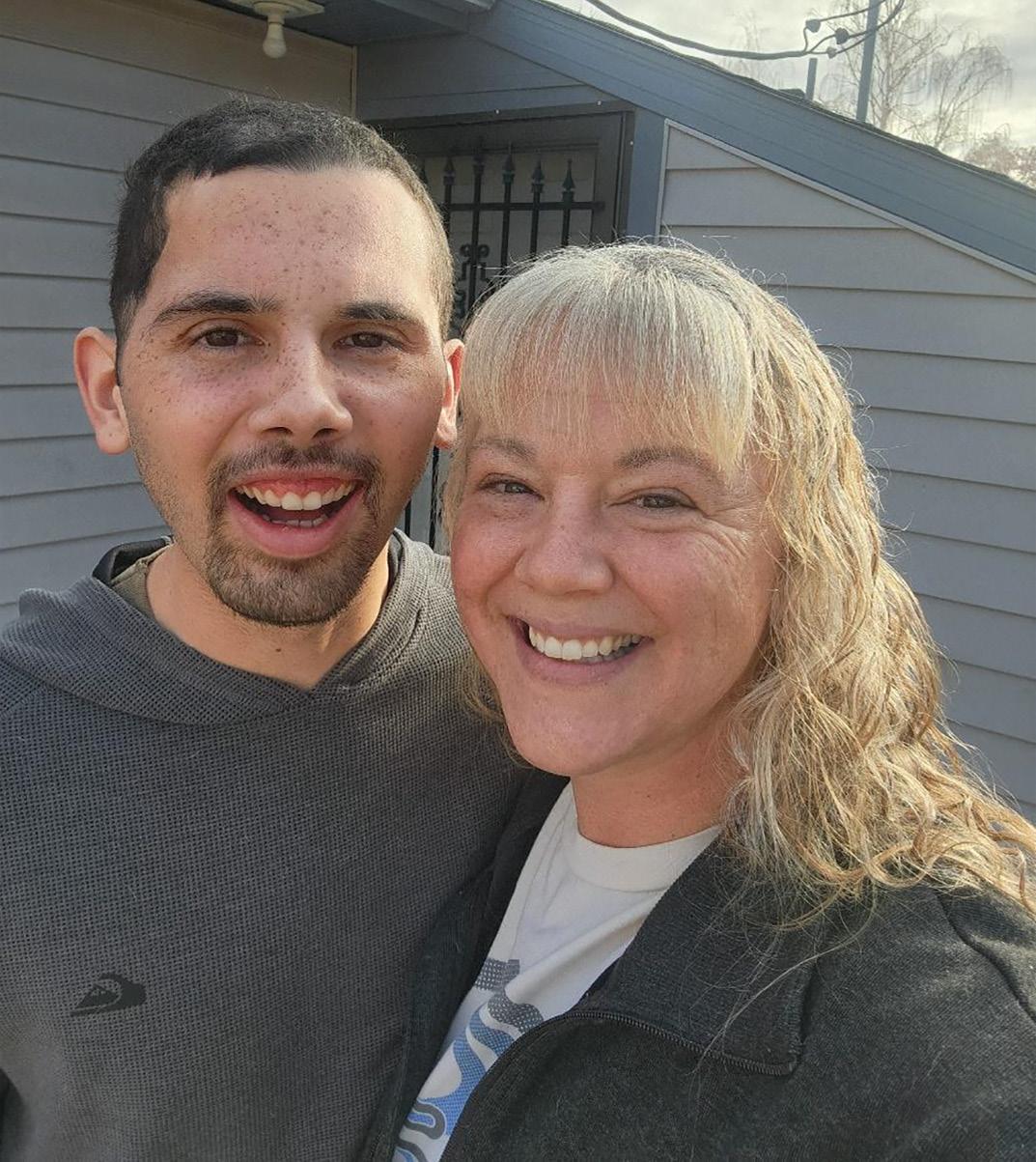
Erin Klones Home and Community Services Administrator – Region 2
Snohomish
In early December, Skagit and King counties and other surrounding areas experienced significant flooding threats that required swift, coordinated action to protect vulnerable residents in care facilities. Region 2 HCS staff worked diligently to ensure the safety of our clients and providers. Many of our staff were also impacted by the flooding and did this work while balancing the evacuation of offices, homes and other community impacts.
Flooding on the Skagit River closed our Mt. Vernon office for two days because the location was within the 100-year floodplain and under “Go Now” evacuation orders. Staff on our Residential Care Case Management teams worked to identify facilities also under evacuation orders and verify the location of all residents. In Skagit and Whatcom counties, we had 67 clients evacuated between December 10 and 12 and all safely returned by December 23. Notably, much of this response was led by SSS3, Crystal Jensen and SSS5, Jared Gardener. Their communication skills and attention to detail were invaluable during this evolving situation.

Access to DataMart and up-to-date facility lists allowed for rapid outreach.
In King County, our first indication of the severity came on December 15 when our Renton and Kent offices were asked to evacuate due to potential flash flooding. According to the King County Emergency Warning System, Tukwila and areas near Southcenter Mall were designated as “Go Now” zones following the collapse of a levee on the Green River.
RCCM supervisors in King County immediately collaborated to identify the affected areas and facilities. SSS5, Adam Eckes, SSS5, Tanya O’Brien and SSS3, Jenoelle Davis quickly assessed which assisted living facilities and adult family homes were at risk, working with their teams to contact providers, confirm resident safety, and ensure evacuation plans were in place. While county emergency maps were helpful, limited detail required staff to further analyze data, leading to the identification of additional risk in northern Kent.
Coordination with RCS partners was critical. Information flowed continuously between teams, with close communication ensuring residents were tracked, relocated safely, and assigned appropriate responsibility during evacuations. On December 16th, following alerts of potential flooding from a levee breech on the White River, the team responded immediately. SSS5, Tanya O’Brien, supported by SHPC4, Mary Panlasigui, SSS3, Marisol Martinez and NCC, Georgette Mills, identified affected zip codes, contacted providers, and maintained detailed tracking of resident movements and care continuity.
AFH owners and staff demonstrated extraordinary dedication by relocating residents, securing temporary placements, and transferring medically fragile individuals to hospitals when needed. Their commitment was instrumental in preventing harm.
This event highlighted the importance of clear communication, effective data tools, and strong partnerships. Kudos to all staff involved for their professionalism, teamwork, and unwavering focus on client safety.
Kara Sells
Home and Community Services Administrator – Region 3
Clallam • Clark • Cowlitz • Grays Harbor • Jefferson • Kitsap • Lewis • Mason • Pacific • Pierce • Skamania • Thurston • Wahkiakum
As we wrap up 2025, I have been thinking a lot about everything we have been through together this year. When we picked Connection as our theme back in January, we knew it mattered, but none of us could have guessed just how much it would shape our year. It influenced the way we worked, the way we supported each other, and the way we showed up during both the good days and the tough ones.
This year gave us plenty to celebrate, along with moments that stretched us and moments that brought real grief and loss. Through all of it, connection became something we leaned on. People checked in on each other. We listened. We made room for honesty and emotion. We reminded one another that no one has to carry things alone. That kind of care strengthened our whole community.
We also launched new efforts in 2025 to bring people together, and they became meaningful because of the energy and heart everyone brought to them. These moments reminded us that our biggest strength is not just in what we do, but in how we treat each
other. Connection sparks creativity, helps us stay steady when life gets heavy, and makes our work feel purposeful.
This year showed us that connection is something we practice every day. It is in the way we celebrate wins, big or small, and in the way we support each other through loss. It reflects the spirit of ubuntu—the idea that I am because we are—and it reminds us that our shared humanity is what makes this community strong.
As we head into 2026, I hope we carry that spirit forward. Care, empathy, ubuntu, and togetherness are not just ideas. They are choices we make in how we show up for one another. Thank you for bringing your kindness, your strength, and your humanity to this year. It was not an easy year, but it was meaningful because we faced it side by side.
I am grateful for everything we have built together, and I am excited for everything we will create in the year ahead.


The Medicaid Alternative Care and Tailored Supports for Older Adults program which provides support to unpaid family caregivers and care receivers across Washington state has experienced an unprecedented increase in new enrollments and expenses. As a result, the program is expected to overspend this demonstration year’s budget limit, therefore new enrollments have been paused beginning December 1, 2025. A statewide waitlist has been implemented for those interested in enrolling in the program.
During the enrollment pause potential enrollees can continue to contact the Area Agency on Aging and Home and Community Services to discuss options regarding available home and community-based programs, services, and supports. The full range of available programs, services, providers, and settings will be reviewed with the potential enrollee, and they will be
informed that there is a pause in enrollments for the MAC and TSOA programs. Those currently enrolled in the MAC or TSOA programs will maintain their enrollment status.
MAC or TSOA PE participants enrolled prior to the start of the waitlist will continue receiving services under PE until their PE period ends or their final eligibility determination is completed, whichever comes first. If determined both fully functionally and financially eligible, services will continue. Enrollment will reopen when program expenditures fall below the budgeted forecast for the demonstration year. Due to many variables, there is no set timeline for when the enrollment pause will end.
The waitlist is on a first-come, first-served basis, upon their request date. This is outlined under Washington Administrative Code 388-106-1975. For more information, visit the HCS Medicaid Transformation Project webpage.
If you are like me, you are astonished at how quickly the minutes, days, weeks and years of our life fly by the older we get. Here is a 1-minute video explanation of why our perception of time shifts as we age (as explained by ducks, lol!)
Here’s the thing: We have no control over the number of minutes we have in the day. But we do have control over two important aspects: 1) how we use our time and 2) our mindset. Both give us sense of agency over our lives and together help us manage our outcomes and overall wellbeing. Here are some tips to help you get started in 2026:
1. Audit and Prioritize
• Track your time: Understand where your hours actually go (e.g., meetings, emails, social media) to find and eliminate time-wasting patterns.
• Define priorities: Identify key goals and tasks that align with your values and goals. Evaluate your responsibilities, distinguishing between urgent and important. Don’t be afraid to ask for what you need and help others check their own sense of urgency when they are asking things of you.
2. Set Boundaries and Minimize Distractions
• Schedule time for planning and prioritization: Block off uninterrupted time for planning and prioritization, deep work or personal activities.
• Protect your focus: Silence notifications, put your phone on “do not disturb,” use your Teams settings to let others know when you will be available again, and batch similar tasks (like emails) to avoid constant context switching.
3. Add Purpose and Subtract Drains
• Add intention: Connect your work to your personal values and the agency mission. Use your personal time for activities that energize you (hobbies, learning, loved ones). Be present in your life!
• Subtract the draining: Identify and eliminate or reduce activities that steal your time and joy without giving back. Set a timer for screen time and social media consumption.
• Build your Growth Mindset: This boosts your wellbeing by helping rewire your brain, fostering resilience, reducing stress and improving coping. Register for the Focal Point to learn how to do this.
• Choose to slow down: Focus on being present in your life. Watch this video 96 Years of Wisdom for some very wise words and inspiration. Life is precious, short, and we only go around once. Make every minute count by leveraging your senses, curiosity, and awe.
Let 2026 be your year of intention by taking agency over your time for your well-being. You’re worth it!

Supporting one client’s goal to live independently
A 38-year-old client named E.M., was admitted to an acute care hospital in December 2022. Prior to her hospitalization, E.M. enjoyed spending weekends with her grandmother and expressed a desire to live independently. During her hospital stay, E.M. was bed bound, and unable to bear weight to walk or transfer herself out of her hospital bed. The hospital was concerned that despite their best effort, her self-limiting behaviors would prevent her from reaching her goals. Bound by reluctance and indecision, the client struggled to take even a single step toward her future. This is the story of a case management team’s steadfast commitment to a client who was indecisive on her goals, yet ultimately found her way back to the community, one supported choice at a time.

the need to quickly solidify arrangements for several durable medical equipment items, ensure Home Health orders were in place for continued therapies, and locate an outpatient mental health agency to support the client’s transition, the case manager had her work cut out for her! When everything aligned, E.M. was able to move into her new home in March when she left the hospital. At the time she was still bed and wheelchair bound.
In April 2023, an initial referral for services was received. However, that referral was withdrawn by the hospital due to their belief the client was not decisional and was electing to pursue guardianship. In October of that year, the hospital re-engaged HCS, sharing that the client had improved decision-making capacity and they no longer sought guardianship. Due to the multiple complexities of this case, the case manager staffed it with HCS’s Headquarters team members to work through the barriers. The HCS team began weekly cross-system staff meetings. The following February, an assessment was completed by a newly assigned case manager. At this time the client began to more clearly understand her need to re-engage with physical therapy to get stronger and increase her mobility. The client reluctantly agreed to widen the facility search area. A residential facility search was completed and an interested adult family homeowner came to visit the client at the hospital and offered to have her move into her home. With
The residential case manager periodically checked in on the client. It was reported by all parties that the client was doing very well in her new home. In February 2025, the residential case manager visited E.M. to complete her annual assessment for HCS services. At that meeting, the client shared that there was a caregiver at her AFH that really motivated her to do exercises and get stronger when she first moved in. When that caregiver left, she continued recovery on her own and set goals for herself.
The client shared that she was hired as a lab tech earlier that month and was taking paratransit to work at 5:00am and returning at 7:30pm each workday. She was searching for independent housing and hoped to move out of the AFH soon. The residential case manager discussed the client’s options for in-home care following that move, but the client reported confidence in her ability to care for herself. In mid-March the client withdrew from HCS services after solidifying independent housing. With the unwavering care and dedicated support of her HCS care team and an adult family home, she didn’t just regain her ability to walk; she reclaimed her independence, developed new skills, and secured both full-time employment and her own apartment. E.M.’s story is one of resilience and the transformative impact of compassionate care.
We’re excited to announce the formation of the new Statewide Eligibility and Service Delivery Team, a team designed to strengthen how we serve clients and support staff across Washington. By bringing together expertise from every region Financial, Intake and Application Assistance Unit, the SESD will create a unified approach to eligibility and service delivery that ensures consistency, fairness, and efficiency statewide.
For staff, this means clearer guidance, streamlined processes, and more opportunities to collaborate across divisions. The statewide team will focus on quality assurance and training, supporting frontline work, and building operating systems that make it easier for you to do what you do best—help people access the services they need.
Equally important, SESD is being built with staff voices at the center. Your experiences, ideas, and feedback will shape how this model grows. By elevating the strengths of every region, we’re fostering a culture of trust and shared purpose that connects all of us to the larger mission of Home and Community Services.
This is more than a structural change—it’s an opportunity to create a stronger foundation for the future. Together, we’ll ensure our work reflects both the needs of clients and the dedication of the staff who carry it out every day.
Stay tuned for updates as SESD takes shape and know that your input will continue to guide the path forward.

The Workforce Development Team, in collaboration with Consumer Direct Care Network Washington, is excited to share the launch of a Transportation Pilot Program. The purpose of the pilot is to support Individual Providers and help client’s receive reliable care. As the caregiver shortage continues across Washington, many older adults and people with disabilities depend on caregivers to transition from institutional settings and to stay in their homes. But getting to and from client homes can be hard. Some areas even have extra parking fees, which adds more cost for caregivers. This pilot is designed to help lower these barriers and help caregivers feel supported so they can continue to provide necessary care to clients in their homes.
The Transportation Pilot will use Lyft to give caregivers rides. By offering transportation support, the program hopes to help clients use more of their authorized care hours, improve client satisfaction, lower transportation costs for caregivers and decrease their stress, and support more steady and reliable care. The pilot will also look at things like hours worked, service reliability, caregiver
retention, and overall well-being.
The pilot is now active in Spokane, Everett, and Vancouver. It will continue to expand to other areas, including Olympia, Lacey, Tumwater, Kent, Auburn, Renton, and Federal Way, based on program needs. Caregivers who are interested must meet program eligibility through their employer, Consumer Direct Care Network Washington. Complete the online registration to apply for the pilot.

This pilot was made possible through Money Follows the Person grant funds, which are specifically designed to support individuals transitioning from institutional settings and to expand the availability, quality, and flexibility of home- and community-based services that help people live independently in their own homes.
For general questions, please contact: Steve Sickles, Workforce Management Analyst steven.sickles@dshs.wa.gov
For specific questions about applying, please contact: Mercedez Bournes, State Director Consumer Direct Care Network | Washington mercedezb@consumerdirectcare.com