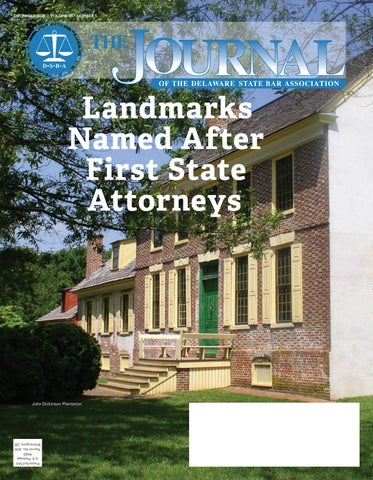

Landmarks Named After First State Attorneys
John Dickinson Plantation

DSBA BAR JOURNAL
DECEMBER
PRESIDENT David White
EXECUTIVE DIRECTOR
Karl G. Randall
EDITOR-IN-CHIEF
Laina M. Herbert
EDITORIAL BOARD
Jason C. Powell
Adria B. Martinelli
Kristen S. Swift
EXECUTIVE COMMITTEE LIAISON
Ian Connor Bifferato
EDITORIAL ADVISORY COMMITTEE
Valerie A. Caras
Claire DeMatteis
Victoria R. Sweeney
Holly O. Vaughn Wagner
BAR JOURNAL ADVISOR
Richard A. Forsten
EDITOR
Danielle Bouchat-Friedman
The Bar Journal is published and distributed by the Delaware State Bar Association
704 North King Street, Suite 110 Wilmington, DE 19801
P: 302-658-5279
F: 302-658-5212 www.dsba.org
© Copyright 2025 by the Delaware State Bar Association. All Rights Reserved.
The Bar Journal is the independent journal of the Delaware State Bar Association. It is a forum for the free expression of ideas on the law, the legal profession, and the administration of justice. It may publish articles representing unpopular and controversial points of view. Publishing and editorial decisions are based on the quality of writing, the timeliness of the article, and the potential interest to readers, and all articles are subject to limitations of good taste. In every instance, the views expressed are those of the authors, and no endorsement of those views should be inferred, unless specifically identified as the policy of the Delaware State Bar Association.
The Bar Journal is published monthly with a combined July/August issue.
All correspondence regarding circulation, subscriptions, or editorial matters should be mailed to:
Editor, DSBA Bar Journal
Delaware State Bar Association
704 North King Street, Suite 110 Wilmington, DE 19801 or emailed to: dbouchatfriedman@dsba.org
Letters to the Editor should pertain to recent articles, columns, or other letters. Unsigned letters are not published. All letters are subject to editing. Send letters to the address above, Attention: Editor, Bar Journal. The Bar Journal Editorial Policy is available upon request.
658-5279, ext. 1102 Email: dbouchatfriedman@dsba.org

COLUMNS

PRESIDENT’S
CORNER
| BY DAVID A. WHITE, ESQUIRE
Reflections From the Annual DSBA Past Presidents’ Luncheon
Each November, the Delaware State Bar Association (“DSBA”) hosts a cherished event that connects the current President to its past leaders, fostering a sense of camaraderie, mentorship, and community among those who have helped shape the DSBA’s rich history, in a shared celebration of the accomplishments and legacies the DSBA and its past Presidents have built.
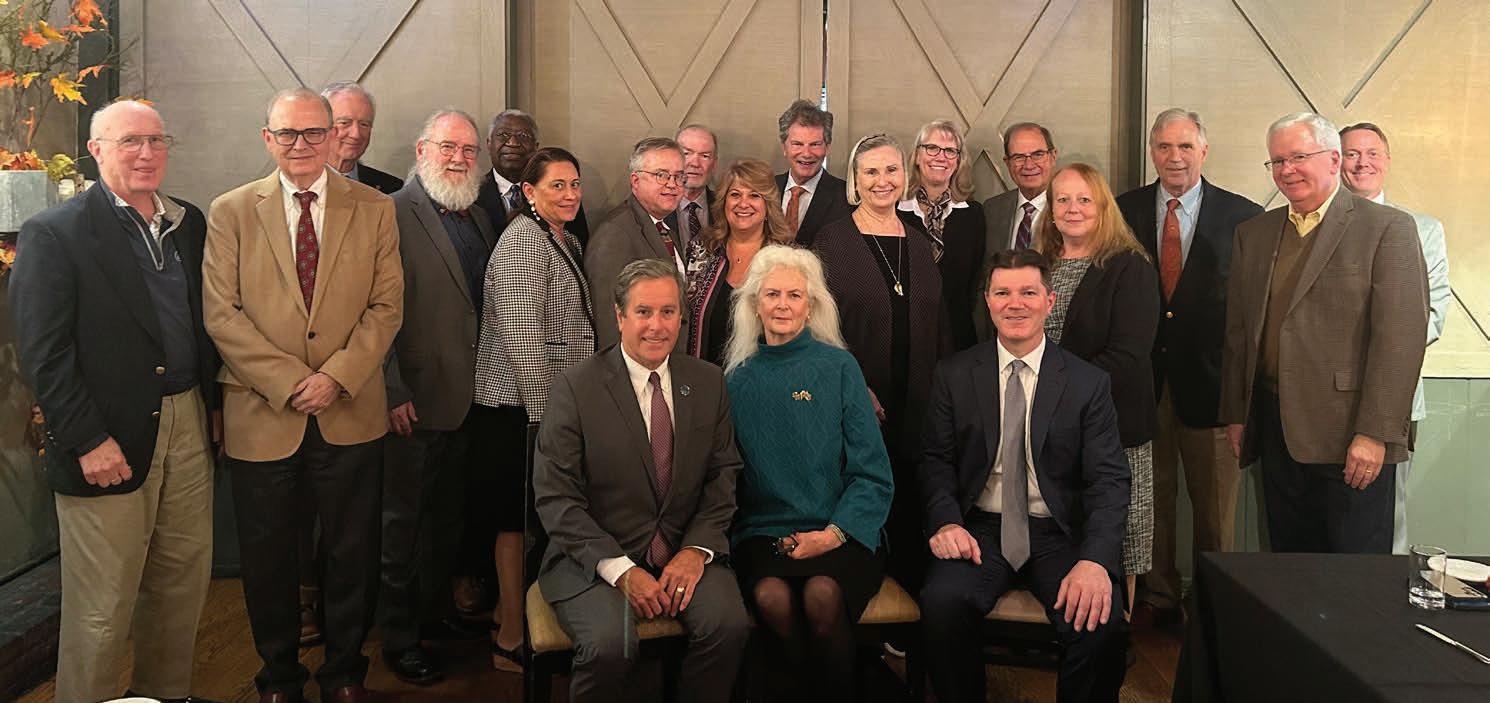
This year’s Past Presidents’ Luncheon was held at the Columbus Inn on November 3, 2025. Special thanks to Karl Randall, Deirdre Sadler-Crew and Danielle BouchatFriedman for planning and coordinating the event. Thanks also to past President, Bill Brady, for being the host this year.
For this, my first Past Presidents’ Luncheon, it was extraordinarily memorable, bringing together the following 18 past DSBA Presidents: Judge Susan DelPesco (1987-1988); Dick Kirk (1993-1994); Judge Josh Martin (1997-1998); Vice Chancellor Don Parsons (1999-2000); Dennis Schrader (2000-2001); Bill Johnston (2001-2002); Charlie McDowell (2003-2004); Betsy McGeever (2007-2008); Allen Terrell (2008-
2009); Judge Jim McGiffin (2011-2012); Yvonne Saville (2014-2015); Rich (“Shark”) Forsten (2015-2016); Mindy Clifton (20162017); Michael Houghton (2017-2018); Bill Brady (2019-2020); Judge Kathy Miller (2021-2022); Chuck Durante (2022-2023); and Mary Dugan (2024-2025). I have had the distinct pleasure of serving with many of them during my nearly 23 year tenure on the Executive Committee, which made this event particularly special for me.
As I took my seat among my distinguished colleagues, I couldn’t help but feel a profound sense of appreciation for the dedication these former and current leaders of the Delaware Bar have shown to our profession and the state of Delaware, including our recently departed colleague, Victor Battaglia, Sr., for whom we had a moment of silence, who served with distinction as DSBA President in 19791980. Each President who attended the luncheon contributed uniquely to the DSBA, shaping its policies, priorities, vision, and the very culture of civility and professionalism we, as Delaware lawyers, guard so jealously.
zealously.
Warmth of Accomplishment and Fellowship
The atmosphere during the luncheon was imbued with warmth and nostalgia, as we reflected on our journeys, both personal and professional. It was heartening to hear anecdotes that illustrated the triumphs we have collectively experienced and the challenges we faced along the way. Each story resonated with feelings of accomplishment, reminding us of the impact we have had—not only on the DSBA but also on our clients, the judiciary, and our communities.
DSBA
Among the highlights of the event was the opportunity to recognize initiatives that have made a difference in our legal community. From advocating for legal reforms to establishing mentorship and clerkship programs that support young lawyers, the legacy of DSBA’s past Presidents is a tapestry woven from service, leadership, and a strong commitment to our duty as legal professionals. The richness of our narratives not only united us but also reignited our shared mission to uphold the integrity and dignity of our profession.
Emphasizing Civility and Professionalism
One overarching theme that resonated throughout the luncheon was the enduring importance of civility and professionalism in the legal field. In today’s often contentious legal landscape, it is crucial to remember that our roles as attorneys extend beyond mere representation; we are leaders and advocates for justice, grounded in the principles of respect and integrity.
As we shared our stories, we were reminded that the foundation of our profession is built on trust and mutual respect. The discussions underscored the necessity of maintaining civility in our dealings, both with clients and adversaries. Each past President emphasized that our commitment to professionalism is not merely a matter of ethics but a cornerstone of the legal system that upholds democracy and societal order.
The camaraderie fostered during our time together was a powerful reminder of how important it is for lawyers to collaborate rather than compete. Our profession thrives when we support one another, share knowledge, and honor the diverse perspectives that each member brings. The discussions sparked by our shared experiences reminded us that, despite our differences, we are united by our oath to serve justice, our clients, the courts, and our communities.
Lessons from the Past, Vision for the Future
Reflecting on the past also provided valuable insights into our future. The challenges we faced in previous years—changing
technologies, evolving client needs, and the ongoing quest for diversity and inclusion— serve as reminders of the resilience required in our profession. It was invigorating to discuss how we can adapt these lessons to propel our legal community forward.
As we shared visions for the future of the DSBA, it became clear that the groundwork laid by our past leaders inspires us to foster an environment where new ideas and diverse viewpoints can flourish. Engaging with the past not only enriches our understanding of where we have come from but also galvanizes our commitment to shaping a more inclusive and equitable legal landscape.
Conclusion: A Call to Action
The Annual DSBA Past Presidents’ Luncheon was a celebration of legacy, accomplishment, and the enduring connections that bind us as members of the DSBA and the Delaware Bar. Each President’s story illuminated the paths we have traveled and the values that continue to guide us. As we departed from the gathering, we were called not only to cherish these memories but also to act upon the lessons learned.
May we carry forward the spirit of fellowship, civility, and professionalism into our daily practices and interactions. Together, we can continue to lead the DSBA into a future that honors our past while embracing new challenges, technologies, and opportunities. Let us be inspired by one another to uphold the fundamental principles of our profession and to advocate for justice with integrity and compassion.
The Past Presidents’ Luncheon reminds us that while we may be individual lawyers and judges, we are part of a larger community dedicated to the tenets of justice, advocacy, and service. I look forward to our continued collaboration and the meaningful work that lies ahead for the DSBA, all of which is made possible by the strong foundation laid by those who came before us.
David A. White is the 78th President of the DSBA. He is a former Superior Court Commissioner and former Managing Partner of McCarter & English, LLP. From March 2021 to November 2024, he served as Chief Disciplinary Counsel, an Arm of the Delaware Supreme Court. He is currently working as a Professional Neutral at Delaware ADR (www.delawareadr.com/).

EDITOR’S PERSPECTIVE |
BY ADRIA B. MARTINELLI, ESQUIRE
Welcome to The Bar Journal Staff, Claire!
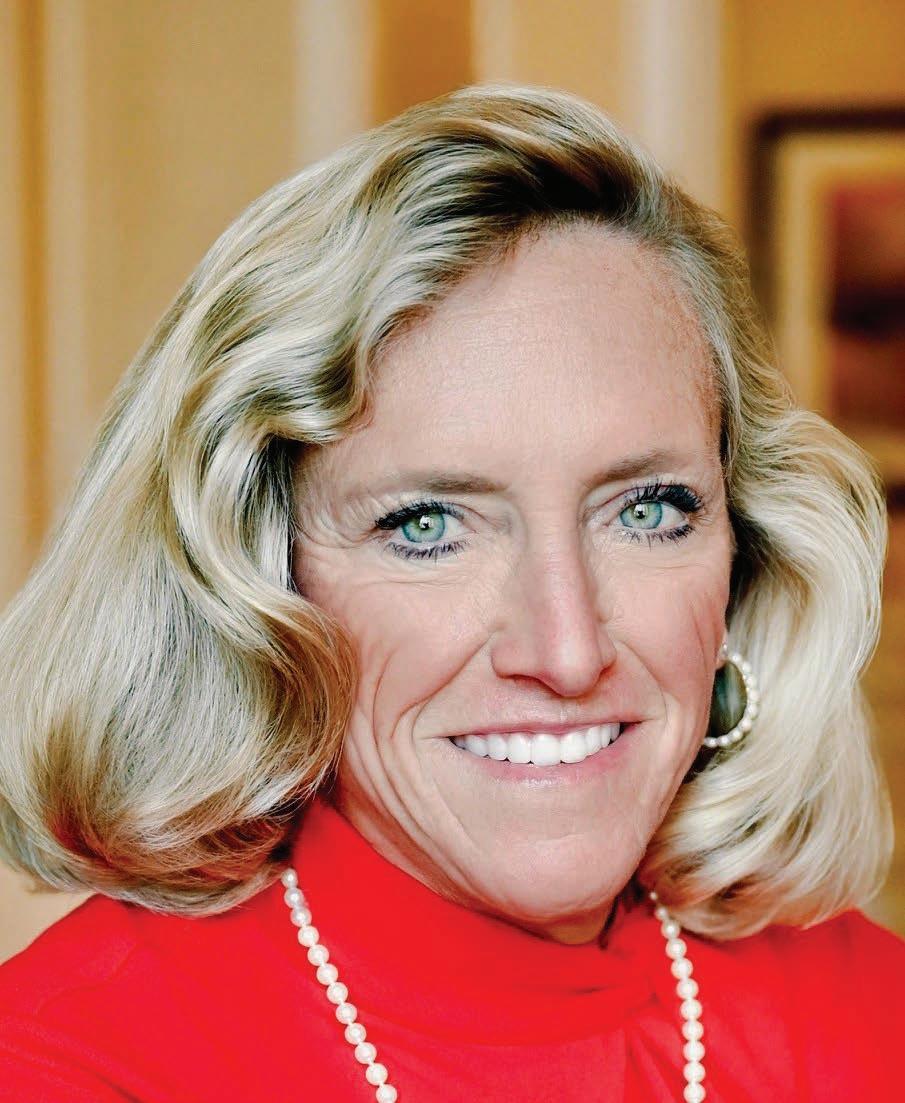
Claire DeMatteis is well known to many in this State, having held several prestigious positions, including Cabinet Secretary for multiple state agencies and Senior Counsel to then-Senator Biden, to name just a few. We are very fortunate that she has joined the Editorial Advisory Committee to The Bar Journal.
Her C.V. is long and impressive, but here I’m going to focus on her writing and journalism background, which many (including me) may not be aware of. Claire’s first career was in television journalism. Her first jobs after graduating from University of Delaware were as an anchor and reporter in Washington, DC. and for a CBS affiliate on the Eastern
Shore. She attended law school at night with the dream of becoming the next law correspondent for CBS.
She got to know Governor Mike Castle covering his weekly press conferences. He learned she was attending law school, and that eventually led to an offer to be his assistant legal counsel. That job led to others in law and politics, and effectively ended her career in journalism.
But she never lost her love of writing and editing. She said she still considers herself a “writer at heart” and is always looking for opportunities to exercise that passion. Recently, she authored a biography of former Chief Judge Collins J. Seitz, Sr., published by the University of Delaware Press, with an anticipated publication date of 2027.
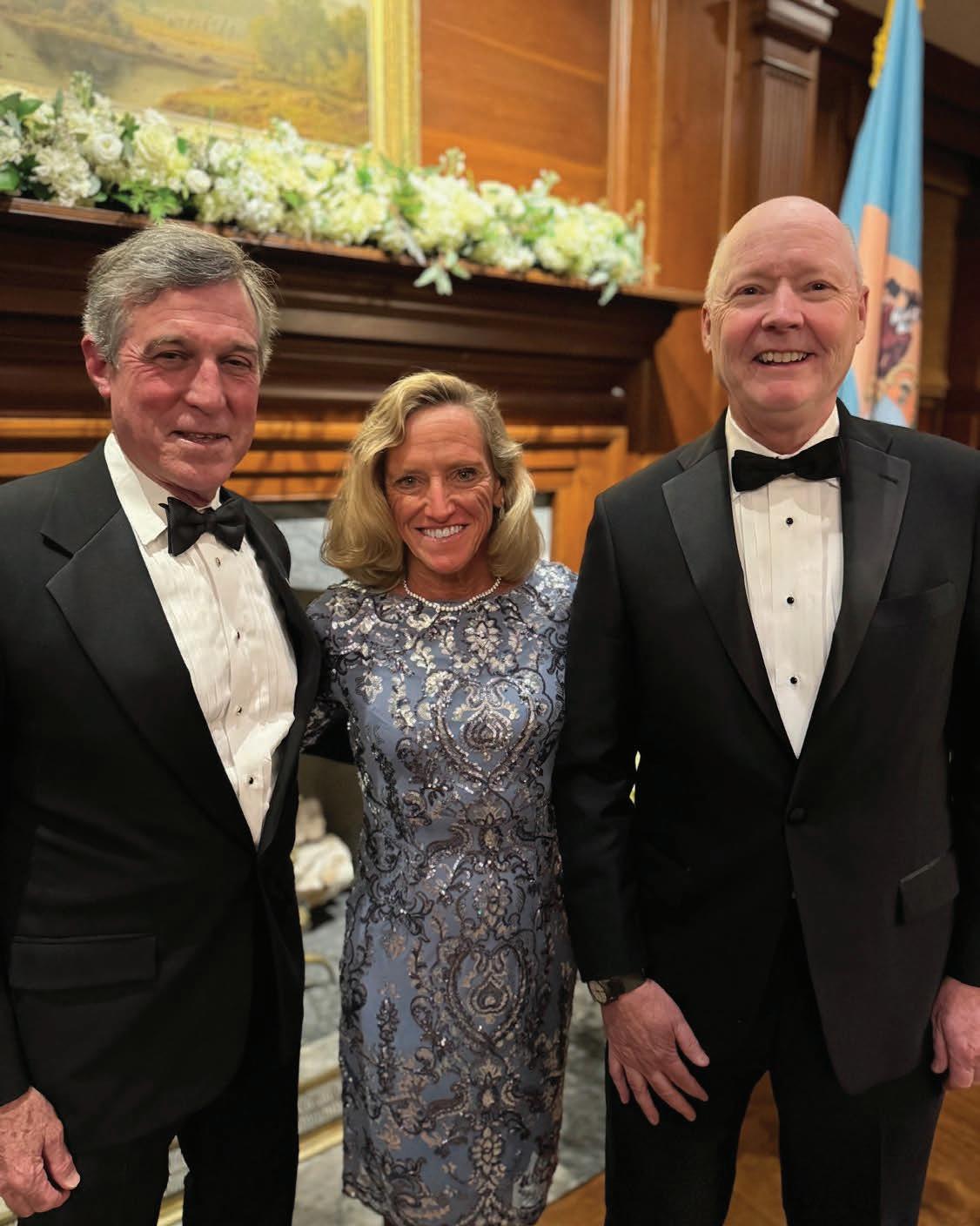
Claire with Wilmington Mayor John Carney and Chief Justice Collins J. Seitz Jr.
Her return to the DSBA Executive Committee this year is a great Delaware Bar story. She served on the DSBA Executive Committee from 1996 to 2009. As she was leaving the Committee, (now DSBA President) Dave White was coming in. Dave said to her “you can’t leave now, just as I’m joining!” Claire responded that she would come back when he became DSBA President. Dave took office as DSBA President this year—more than 15 years later—and did not forget her promise. He asked if she was ready to come back, and she agreed and accepted a new appointment to the Executive Committee.
She is currently serving as President of Global Kompass Strategies, a management consulting firm focused on human resources, healthcare, and economic development matters. She noted that she is at a stage of her career where she has the time to reengage in association activities, so the timing was right to get back involved with the DSBA. When she saw that The Bar Journal was looking for new members
of its Editorial Advisory Committee, she jumped at the chance to exercise her writing and editing skills. Welcome, Claire!
Bar Journal Editor Adria Martinelli is a partner at DiBianca Law, LLP and practices primarily employment law. She has more than 25 years of experience including large law firm practice, in-house, and government service. She can be reached at amartinelli@dibilaw.com.
Do you also have a passion for writing and/or editing? Whether you have an idea for an article you’d like to write, or interested in joining the Editorial Advisory Committee, we would love to have your contribution! For more information about how you can become involved, please contact Danielle Bouchat-Friedman, editor of The Bar Journal , at dbouchatfriedman@dsba. org.

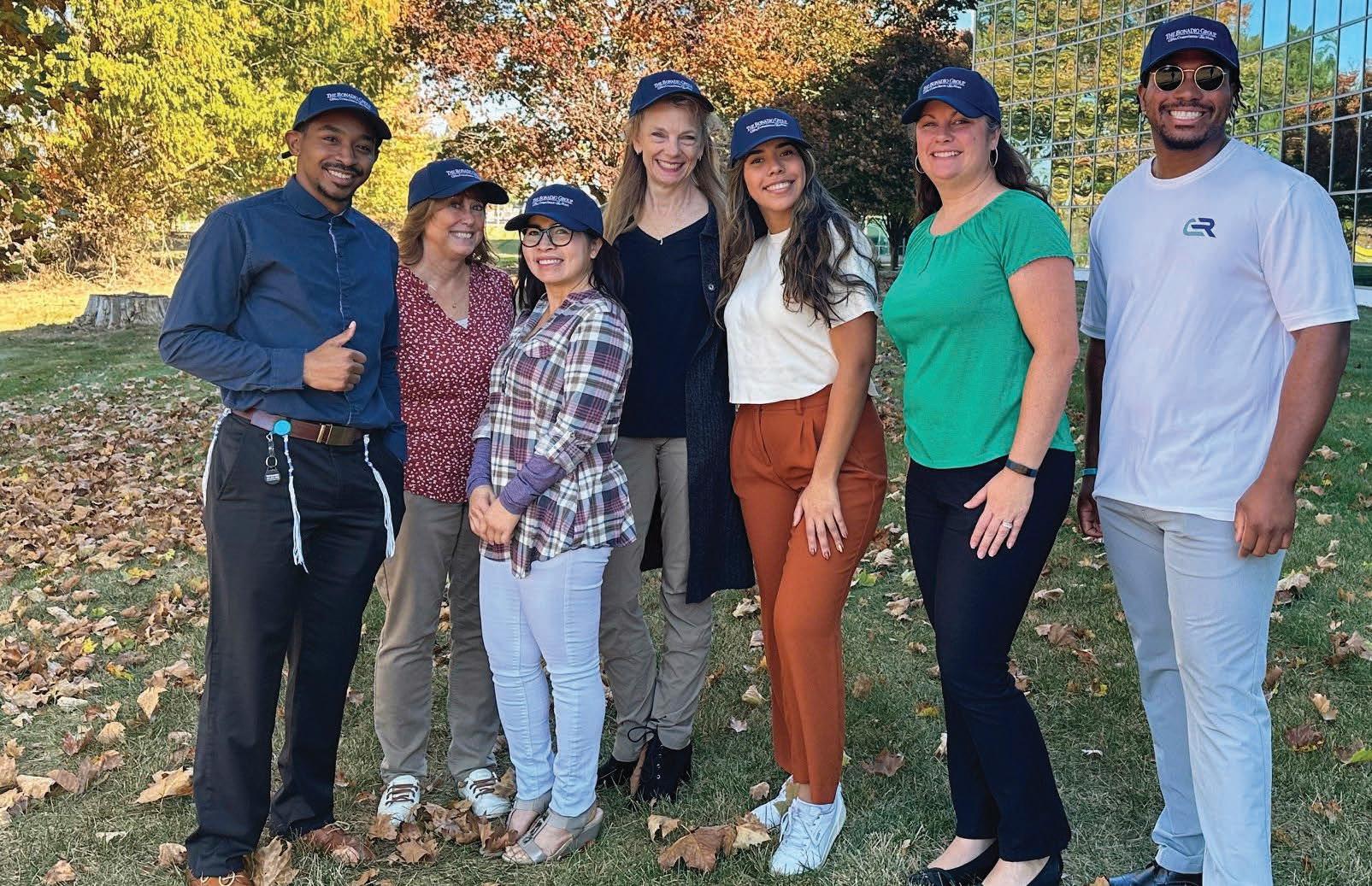





WHAT DID YOU WANT TO BE WHEN YOU WERE YOUNGER?
Mark Duedall, Esquire: Of course, the only possible answer to the question is: “A member in good standing of the Delaware Bar.”
Nicole Faries, Esquire: Well, I wanted to be a lawyer, but I also wanted to be an actor. That is why the first time I was enrolled in law school, at the age of 20, I dropped out to pursue acting. I was able to join the Screen Actors Guild and work on some fun movies and TV series. After I went back to law school and when I left the big firm life, I reached back out to my casting director and on my first day of my new law job, I had the exciting opportunity to work on a Robert DeNiro movie, “Limitless.”
Laurel A. LaLone, Esquire: I wanted to be a veterinarian. My love for animals pushed me in this direction, but I quickly changed career routes when I thought about the unfortunate tasks that I would need to participate in when an animal neared the end of its life. It is safe to say that I am happier merely owning animals.
David Morse, Esquire: Before heading off to college, I wanted to be an electrical engineer. All through college, I wanted to be a physicist. For several years before attending law school, first I wanted to be a biomedical engineer, and then I wanted to work in the music industry with recording studios and artists. Eventually, the legal profession grabbed my attention and pulled me in, and I finished law school at the tender age of 30.
Deputy Attorney General John E. Tarburton, Esquire: I wanted to be a farmer when I was a child. I grew up on a farm east of Dover, Delaware. My great-grandfather purchased the farm in 1937. He operated the farm, as did my grandfather and my father after him. The farm was sold in 1992, so I went to law school and became a lawyer. There is always a city job available if you can’t be a farmer. The opposite isn’t true. Vernon Vassallo, Esquire: I wanted to be a race car driver, psychologist or boxer. Next month’s question will be: What do you collect? If you have a response you would like to submit for the Question of the Month, please contact Danielle Bouchat-Friedman at dbouchatfriedman@dsba.org.
EXECUTIVE COMMIT TEE
David A. White President
Ian Connor Bifferato President-Elect
Francis J. Murphy, Jr. Vice President-at-Large
Jennifer Ying Vice President, New Castle County
Liam N. Gallagher Vice President, Kent County
TBD Vice President, Sussex County
Leroy Tice Vice President, Solo & Small Firms, New Castle County
Jeffery Young
Vice President, Solo & Small Firms, Kent County
Stephen A. Spence Vice President, Solo & Small Firms, Sussex County
Mae Oberste Secretary
Michael J. Hoffman Assistant Secretary
Frederick H. Mitsdarfer III Treasurer
Crystal Carey Assistant Treasurer
Mary Dugan Past President
The Honorable Eric M. Davis Judicial Member
Christopher L. Damon Assistant to President
Thomas P. McGonigle Legislative Liaison
Tayler D. Bolton
Commissioner Emily A. Ferrell
Robert Kleiner
Brenda R. Mayrack
Zachary S. Stirparo
Anthony V. Panicola
Members-at-Large, elected
Claire M. DeMatteis
Arthur Dent
Richard A. Forsten
Roger D. Landon
Wali W. Rushdan, II
Members-at-Large, appointed
Karl G. Randall
Executive Director
CALENDAR OF EVENTS / CLE s
December 2025
Tuesday, December 2, 2025 • Noon
DSBA Awards Luncheon Riverfront Events
Wednesday, December 3, 2025 • 9 a.m. - 4:30 p.m.
Fundamentals of Will Drafting and Estate Administration 2025 DSBA Office
Saturday, December 6, 2025 • 9 a.m. - 11 a.m.
Breakfast With Santa DSBA Office
Thursday, December 11, 2025 • 9 a.m. - 4:30 p.m.
Family Law Update Riverfront Events
Tuesday, December 16, 2025 • 9 a.m. - 12:15 p.m.
Best Practices in the Use of Legal Apps for Lawyers and Judges DSBA Office
Wednesday, December 17, 2025 • Save the Date Surviving the Holidays with Jim Deel from DE-LAP DSBA Office
Dates, times, and locations of events and CLEs may occasionally change. Please consult the DSBA website for the most up-to-date information at dsba.org.
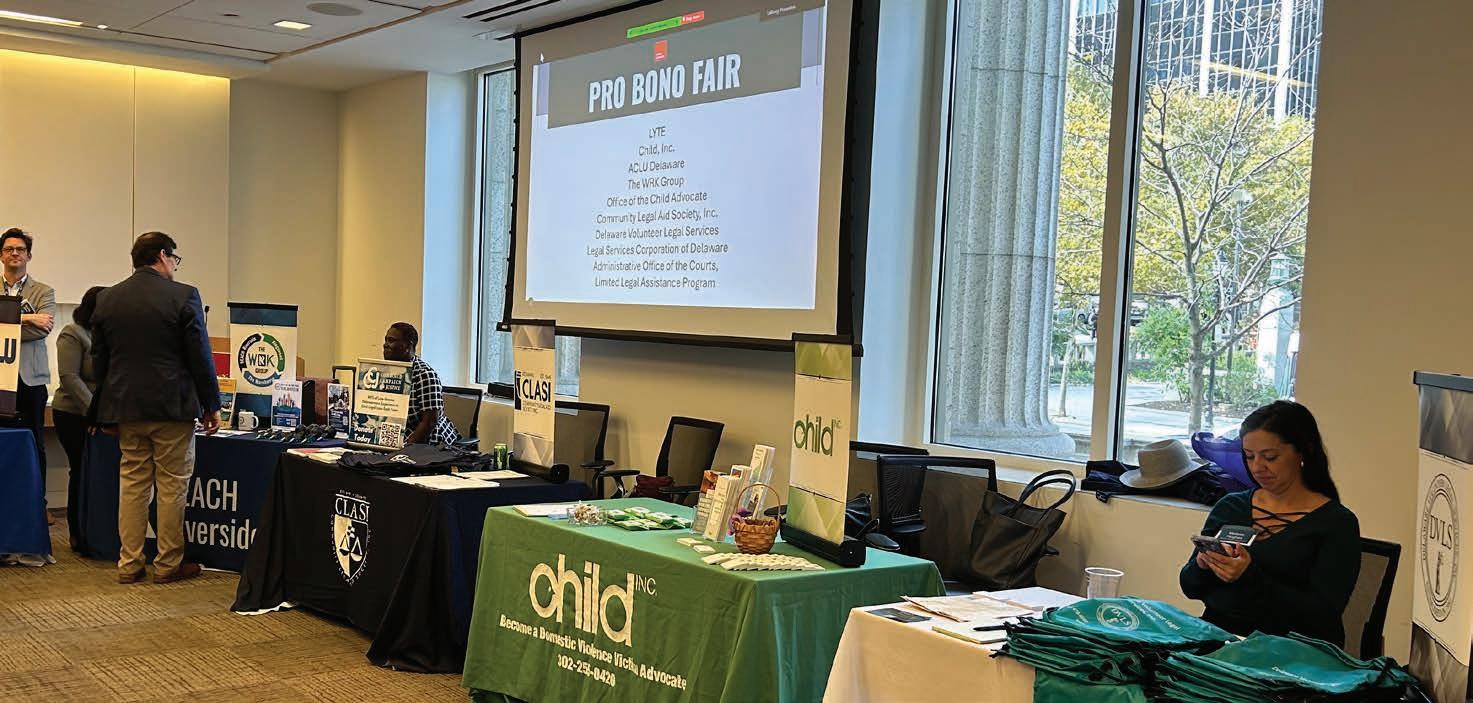
PRO BONO FAIR
On Wednesday, Oct. 22, Young Conaway hosted the Pro Bono Fair and CLE Panel a s part of the 2025 National Celebration of Pro Bono Week. Young Conaway donated $500 to each of the organizations in attendance, which included Child, Inc., Limited Legal Assistance Program, CLASI, Office of the Child Advocate, LSCD, The WRK Group, ACLU, DVLS, and LYTE. If you’re looking for a meaningful way to give back, now is the perfect time to connect with these organizations.
OF NOTE
Condolences to the family of Randy B. Palmer, Esquire, who passed away on October 11, 2025.
Condolences to the family of former Vice Chancellor John Noble, whose wife, Nadine Morse Noble, passed away on November 1, 2025.
If you have an item you would like to submit for the Of Note section, please contact Danielle BouchatFriedman at dbouchatfriedman@dsba.org.
Social Events
DSBA’s monthly publication features columns from the DSBA President, as well as regular articles on ethics, technology, practice tips, profiles, and news. Subscription is included with your membership.
DSBA Events and Socials connect you with other attorneys, members of the Bench, and others in the community.
Sections & Committees
DSBA membership allows you to participate in the Association’s many Sections and Committees. These active groups provide leadship opportunities and a great forum to share ideas, improve your practice and help shape the legal profession.
at Member Rates
Every year, the DSBA offers over 30 quality CLE seminars live at the Bar Center and webcast to Kent and Sussex Counties. And now, DSBA is offering CLE Online at www.dsba.org.
DOES TECHNOLOGY HELP OR IMPAIR OUR ABILITY TO LISTEN?
BY RYAN P. NEWELL, ESQUIRE
As lawyers, much of our time is spent listening. Listening to clients, colleagues, the court, and, of course, people in our personal lives. Personally, whether retained by parties to arbitrate or mediate their disputes or appointed by our courts to help resolve discovery disputes, I frequently find myself with a pen and paper or keyboard to record what I am hearing. Through some of my mediation training, I came to appreciate the distinction between listening as we are usually accustomed to and “Deep Listening.”
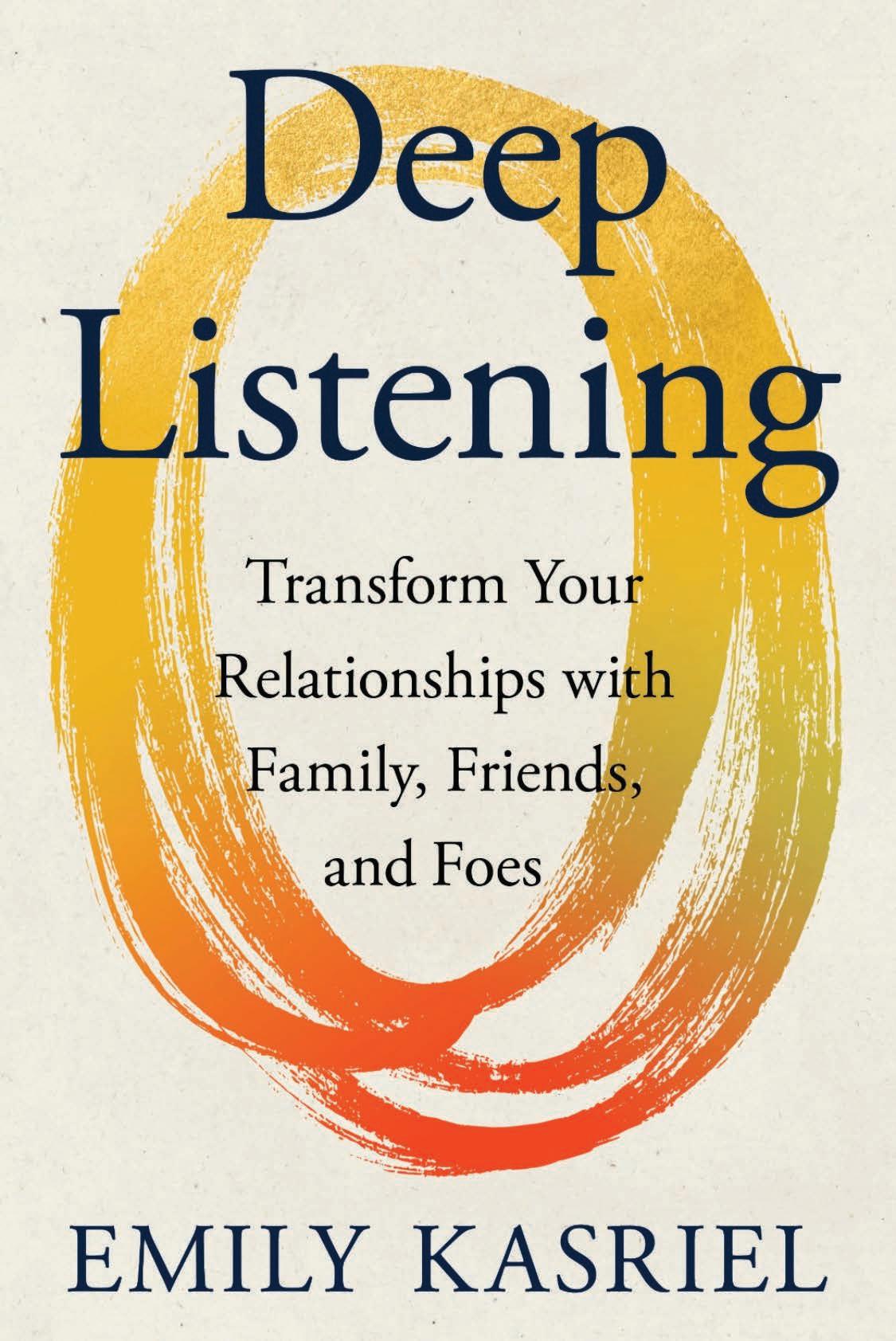
So, when looking for a good summer book, I was struck by a review from renowned author and organizational psychologist, Adam Grant, who said, “If you’ve ever felt like two ears aren’t enough, this book is for you.” The book in question— Deep Listening: Transform Your Relationships with Family, Friends, and Foes—Transformational Communication, Listening, and Empathy Through an 8-Step Method —offers practical tips backed by first-of-its-kind scientific research. In fact, research conducted by the author, Emily Kasriel, suggests that high quality listening can lead to parties reevaluating deeply held beliefs—a powerful piece of data for negotiators looking to persuade their adversary.
As this is a technology article, I wondered how—if at all—technology can be leveraged to improve our Deep Listening. Graciously, Emily agreed to share her thoughts for this column.
Ryan: Does the use of technology— even low-level technology like typing notes as someone speaks—impede or impair one’s ability to deeply listen?
Emily: Note taking is often essential
for lawyers, but even the simplest forms of technology, such as typing notes on a laptop during a conversation, create subtle but significant barriers to true Deep Listening. The moment we divert even a fraction of our attention to a device, we risk fracturing the delicate web of presence required to deeply understand the person speaking. This is not just about being courteous or polite; it’s about forging the kind of connection where clients feel safe enough to share not only facts but uncertain feelings, hesitations, and insights that might otherwise remain unspoken. When attention is divided— whether by a phone buzzing or a screen flickering—our ability to catch the nuances of tone, hesitation, and emotion is compromised. High-quality listening, as outlined in research and in my book, enables not only the extraction of information but also the building of trust and rapport, both of which are crucial in obtaining a full, coherent, and accurate narrative from the client.
Another way to frame this: when we type as someone speaks, we may believe we are capturing vital information, yet
we inadvertently signal that the content, not the person or the whole story, is what matters most. This perception can lead to shorter, less detailed accounts from clients and, crucially, a reluctance to share information that isn’t clearly “relevant” in the moment but may turn out to be vital later. Embodied cues like eye contact, nods, and even empathy conveyed by posture or silence are harder to give or receive when part of our attention is tethered to a machine.
Where note-taking is essential for record-keeping, making one’s intentions transparent (“Would you mind if I jot down a few notes to ensure I don’t miss anything important? Please tell me if this feels distracting at any point.”) can recenter the relationship and remind both parties that technology is there to serve, not supplant, the human connection.
Ryan: Many of our communications are now telephonic or via videoconference. When forced to engage with technology, do you have any suggestions for how to foster Deep Listening?
Emily: Many legal professionals now interact with clients, colleagues, and adversaries through phones or videoconferences—Teams or Zoom. While these tools are indispensable, they introduce new hurdles to creating the attentive, empathic space that is the bedrock of Deep Listening. So how can lawyers adapt and still foster the kind of presence that encourages openness and trust?
The first step is to make technology less obtrusive. This means taking practical steps such as silencing notifications, closing unrelated programs, and positioning the camera so your gaze conveys attention. On video calls, maintaining eye contact—by glancing up at the camera rather than down at your own image—can simulate the experience of face-to-face engagement. These subtle actions can help the person on the other end feel genuinely seen and heard.
But Deep Listening is about more than hardware setup. In remote conversations, the absence of body language and physical cues puts greater emphasis on the quality of our verbal responses and the intentional use of silence. Rather than feeling compelled to fill every gap in dialogue, allow for pauses; this gives both speaker and listener room to think, reflect, and feel. Silence acts as a catalyst for more thoughtful and revealing conversations. It invites people to elaborate, clarify, or even reconsider what they’ve just said. Research carried out with parties involved in a negotiation found that instructing both parties to maintain 20 seconds of silence after the other party had finished speaking, led to
more creative win-win solutions rather than zero sum outcomes.
Above all, declare your intention to listen deeply from the outset. Letting others know that you will not be multitasking, and that your attention is fully on them, helps build the psychological safety necessary for candid disclosure. Watch out for the temptation to check your phone for emails and messages out of site, your client will feel your attention wandering even if they can’t see your phone. In my experience, lawyers and mediators who make such intentions explicit find their clients become more open, often volunteering crucial information they might otherwise have withheld.
Ultimately, while technology can be a barrier, it does not have to be a wall. Through conscious choices about how we show up—reducing distractions, maximizing the cues we can give, and honoring moments of reflection—we can preserve, and even enhance, the practice of Deep Listening in our technologically mediated legal work.
Ryan: For lawyers, why is Deep Listening so critical?
Emily: For lawyers, the ability to deeply listen underpins almost every aspect of effective practice. Deep Listening is not a “soft” skill to be tacked onto technical expertise; it is a foundation upon which trust, understanding, and successful outcomes are built.
When a lawyer listens deeply, communication shifts from a transactional exchange—questions and answers, problems and solutions—to something far more relational and transformative. Clients are often speaking not just from their rational minds, but from places of uncertainty, anxiety, or hope. Deep Listening creates a container in which these unspoken emotions and motivations can emerge. Often, clients do not know the real heart of the problem they are trying to solve, or are unable to articulate what matters most until they feel truly heard.
This is especially vital in situations involving conflict or negotiation. Lawyers who listen deeply are able to uncover the issues that really matter, sometimes those
even their clients have not consciously named. Research carried out into my Deep Listening approach shows that when people practice Deep Listening, not only do they feel more connected and safer to express themselves, but they also become more open to re-examine their own attitudes, and so consider perspectives or solutions they might first have rejected. The “negotiation pause”—using silence strategically rather than rushing to fill space with argument—can move discussions from entrenched positions to more reflective, creative problem-solving.
Deep Listening also builds durability and satisfaction into the legal advice and solutions provided. When clients feel their lawyers have truly understood both their narrative and what lies beneath it, they are more likely to trust recommendations, collaborate on strategies, and follow through on agreedupon steps. This alignment reduces the risk of future misunderstandings, missed details, or dissatisfaction with outcomes.
Crucially, Deep Listening is also a form of dignity. It affirms clients’ individuality and agency at moments when they may feel powerless or marginalized by the legal process. Lawyers who take time to slow down, allow silence, and reflect back what they’ve understood are more likely to draw out complete, detailed, and accurate accounts—resulting in fewer surprises and better-prepared cases.
The research-backed guidance in Deep Listening challenges us to listen more actively and with greater intent. As Emily’s thoughts above suggest, doing so benefits both the speaker and the listener. Special thanks to Emily for generously sharing her thoughts and time.

Ryan P. Newell is a partner in the corporate litigation section of Young Conaway Stargatt & Taylor, LLP.


Complimentary access to the legal
Complimentary access to the legal research platform, Decisis, is provided to research platform, Decisis, is provided to all DSBA members all DSBA members




Scan the QR code and start using Decisis Scan the QR code and start using Decisis (a $1,740 value) (a $1,740 value) today! today!
CONFERENCE ROOMS AND SPECIAL EVENT SPACE
THE DSBA HAS MEETING & EVENT SPACE IN THE HEART OF DOWNTOWN WILMINGTON
➤ Perfect for depositions, arbitrations, and committee meetings
➤ Close to the Leonard L. Williams Justice Center
➤ Multiple meeting room options to suit your needs
➤ Free Wi-Fi
➤ Access to a kitchen
➤ Complimentary printing and shredding
➤ Competitive rental fees
NOMINATIONS SOUGHT FOR LAW DAY AWARDS
The Delaware State Bar Association and the Awards Committee are seeking nominations for the Liberty Bell Award, the Community Service Award, and the Myrna L. Rubenstein Professional Support Recognition Award to be presented at the 2026 Law Day Luncheon in May 2026. Below are the criteria for these awards.
LIBERTY BELL AWARD
The Liberty Bell Award is given annually to an individual, who is not a judge or lawyer, who has rendered outstanding service to his or her community. The award is designed to promote a better understanding of government, a greater respect for the rule of law or a deeper sense of individual responsibility which contribute to the effective functioning of our governmental institutions.
COMMUNITY SERVICE AWARD
The Community Service Award recognizes annually a member of the judiciary or the Delaware Bar who has rendered meaningful service to the community and who has contributed significant time and effort to the greater Delaware community. Nominees should have demonstrated a commitment to leadership and service in activities that enrich and strengthen our community over a substantial period of time.
MYRNA L. RUBENSTEIN PROFESSIONAL SUPPORT RECOGNITION AWARD

Nominations should be submitted to Karl Randall, Executive Director, DSBA at krandall@dsba.org. The deadline for nominations is February 27, 2026. Please include: The name, firm, and title/occupation of the Candidate; name and contact information (firm, address, email, phone, and fax) of the individual nominating the Candidate; and a brief statement of the reasons the Candidate is deserving of the Award. For more information call (302) 658-5279
This Award recognizes long and dedicated service to the Bench and Bar of the State of Delaware, to the Bar Association, and to the Members thereof, which has contributed in a significant way to them and to the high ideals of the legal profession.
Sage Advice from Kevin F. Brady, Esq.

CURATED BY RICHARD K. HERRMANN, ESQUIRE
During the academic part of my career, the most valuable aspects of my classes were the visits from members of the Bench and Bar, who would look back on their careers and share the more important advancements and moments with our students.
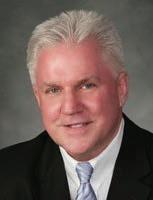
I aim to continue facilitating these discussions through a column called “Sage Advice.” In this issue, I sought advice from Kevin F. Brady, Esq., Director, Assistant General Counsel, Chief Discovery and Data Counsel for 3M.
Q
If you wanted to offer one nugget of Sage Advice to those developing their legal careers in Delaware, what would it be?
A Find a mentor who can help you build a strong network.
Q
When you attended law school, did you have a thought as to what you would like to do with your career? And if you did, what was it?
AI did not have a plan or road map; still don’t. I had a list of things that I did not want to do related to the law and somehow, I have managed to do about everything on that list. I try to stay flexible, be creative, and keep challenging myself.
Q
What was your first position after you were admitted to the Delaware bar?
AMy first position after my judicial clerkship was an associate at Skadden.
Q
When you started your career, was it your plan to stay in that field until you retired or was this a steppingstone to something else?
A I viewed my legal career as an adventure that keeps evolving. I didn’t think about retirement then or now.
QIf you were to choose one person who had the most impact in the advancement of your career as a member of the bar in Delaware, who would that be and why?
AAfter I graduated from law school, I had the privilege of clerking for Chief Judge James L. Latchum of the District of Delaware. It was by far the most rewarding and memorable years of my professional life. Judge Latchum was an outstanding mentor. He spent time every day teaching me and my co-clerk, Kent Jordan, what it meant to be a Delaware lawyer.
Q What was the most interesting matter in which you were involved in your career?
AI cannot disclose the most interesting matter because of confidentiality reasons, but the Volkswagen “Dieselgate” emissions investigation ranks right up there.
Q
What was your most challenging problem that you faced in your career as a member of the Delaware bar?
A Technology! Transitioning to constantly evolving legal technologies has been my biggest challenge. Because of the increasing speed with which technology is changing, it is very difficult to become and remain competent. It is also very challenging to find experienced individuals who can function as mentors to new (and not so new) lawyers and judges. The only way I have survived is by investing time in training and collaborating with IT professionals to help me understand the technology better.
Q If you had to start your career again, would it be as a lawyer in Delaware?
AYes, I am very proud to be a Delaware lawyer especially when I see how lawyers in other jurisdictions conduct themselves. Starting with Judge Latchum, Delaware has provided me with a solid foundation in terms of professionalism, ethics, and civility. The connections and experiences I have gained as a Delaware lawyer have been instrumental in shaping my career.
QWhat does work-life balance mean to you and did you have it?
ABalancing a demanding workload as a lawyer with a personal life has been a major challenge for me for years. So I changed the narrative. I now look at work-life integration rather than work-life balance. Work-life balance implies an even split between professional work and personal lives. That is not the case for many lawyers. Work is an integral part of our lives, and the key question is how we integrate it in
a way that supports both performance and well-being.
Q You started with a nugget that you wanted to leave those developing their practice or careers in Delaware. Is there another nugget you would like to offer?
A Be curious, be creative, and be open to change.

K.
consults with Wilmington University on Emerging and Innovative Technologies. He can be reached at richard.k.herrmann@ wilmu.edu.
Wilmington Friends School helps students develop self-discipline, resilience, and motivation to sustain their joy as lifelong learners. Wishing you a joyous holiday season! We invite you to visit! Preschool through 12 grade | wilmingtonfriends.org th

Richard
Herrmann
Landmarks Named After Delaware Attorneys (Part 1)
BY DANIELLE BOUCHAT-FRIEDMAN & HOLLY VAUGHN WAGNER, ESQUIRE
Have you ever wondered how certain Delaware landmarks got their names? The list below is the first in the series which shares the stories behind places in Delaware that are named after First State attorneys. Which places should we include in the next installment of our series? Email any suggestions to Danielle Bouchat-Friedman at dbouchatfriedman@dsba.org.
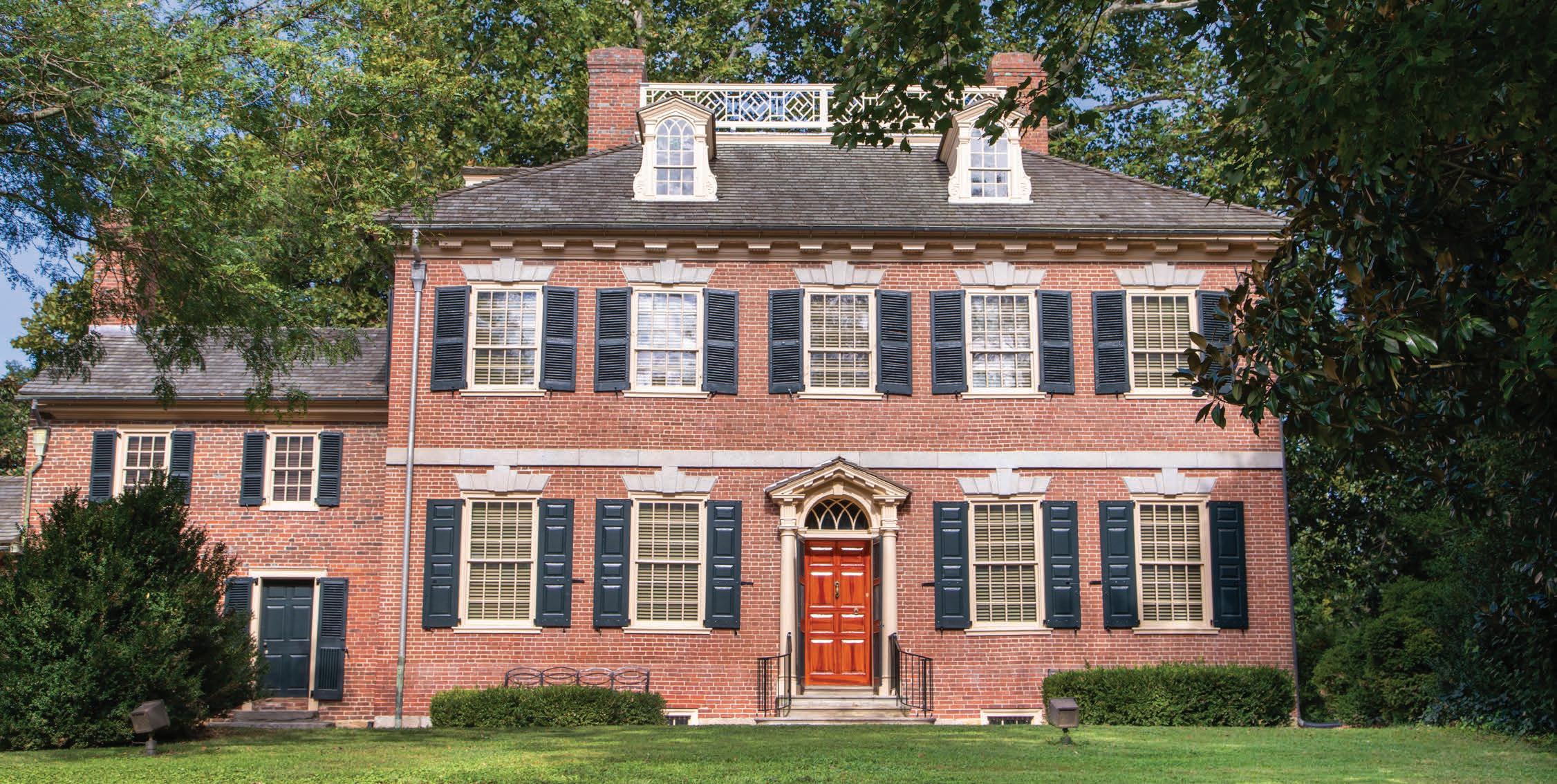
Corbit-Sharp House
Built in 1772-74, this house museum in Odessa is a National Historic Landmark and a National Park Service Network to Freedom site. William Corbit, a wealthy tanner, designed the house after the late Georgian architecture of Philadelphia. The house stayed in the Corbit family for over 150 years. In 1938, H. Rodney Sharp bought and restored the house as a private museum. Sharp was a friend, brother-in-law, and counsel to Pierre S. du Pont, the head of the DuPont Co. and founder of Longwood Gardens.
The Corbit-Sharp house was the site of a close-call on the Underground Railroad. When an enslaved man, Sam, asked for safety, Mary C. Corbit helped him hide in a small eaves closet in the attic. A sheriff searched the house but did not find Sam, even commenting that he did not need to search the closet because it was too small to hide a man.
Houston, Delaware
Nestled between Harrington and Milford in Kent County, this town of 400 residents was named for John W. Houston, a Delaware Superior Court judge who was first admitted to the bar in 1837. Houston served as Delaware’s Secretary of State from 1841-1844, represented Delaware in Congress as a Whig from 1845-1851, and was appointed associate judge of the Delaware Superior Court in 1855. A slaveholder, Houston was a member of the Peace Conference of 1861, held in Washington, D.C., in an unsuccessful effort to avoid the impending war.
Like Lewes, where the judge is buried, Houston is one of a handful of towns that can test just how well a person knows Delaware; unlike in Texas, in Delaware it’s pronounced “HOW-sten.”
Jacob Broom House
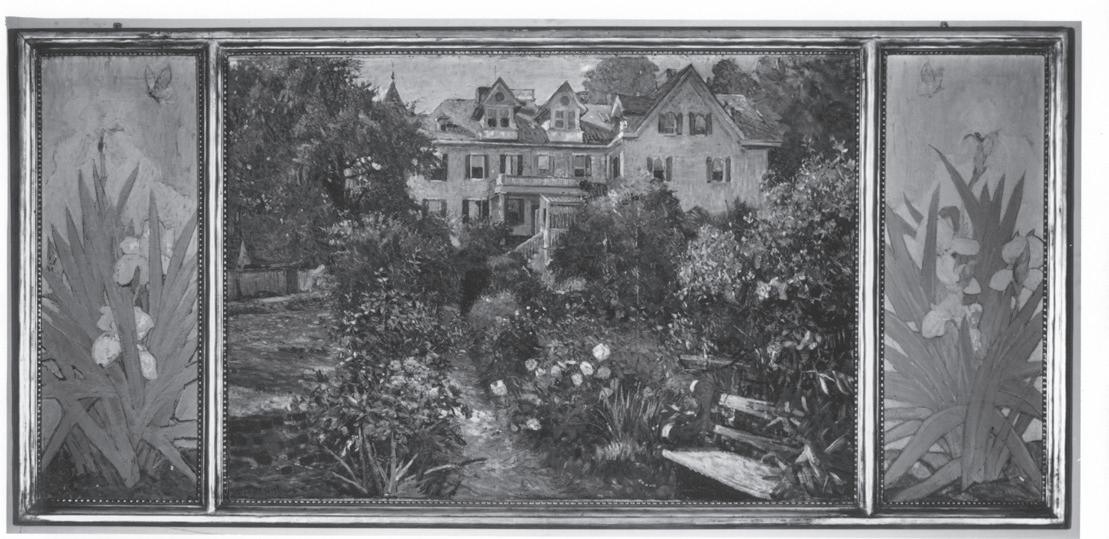
Located in Montchanin, this house is more commonly known as Hagley Museum and Library. The property is named after Jacob Broom, who built the house in 1795 near his cotton mill. Broom was a delegate to the U.S. Constitutional Convention of 1787 and a signer of the United States Constitution. In 1776, when Broom was only 24 years old, he was elected second Burgess of the Borough of Wilmington. In 1796, he was made Justice of the Peace for New Castle County. In “A Biographical Sketch of Jacob Broom,” published in 1959 by Nuala M. Drescher, Broom was described as “an astute man, a community-spirited citizen who served well both his own interests and those of the public.”
John Dickinson Plantation
The John Dickinson House, located in Kent County near the Dover Air Force Base, was built in 1739-40 by John Dickinson’s father, Judge Samuel Dickinson. The house was the boyhood home of John Dickinson, a Founding Father and prolific writer who, among many other achievements, was a drafter of the United States Constitution. Dickinson was also an attorney, a delegate from Pennsylvania to the First and Second Continental Congresses, the president of both Delaware and Pennsylvania, a member of militias for Delaware and Pennsylvania, and the author of “Letters from a Farmer in Pennsylvania,” a series of essays that helped unite colonists leading up to the Revolutionary War.
At Left: Corbit-Sharp House. Courtesy of Historic Odessa.
Above: Jacob Broom House. Courtesy of Hagley Museum and Library.

John Dickinson Plantation (continued)
The house was damaged in a British raid in 1781 and a fire in 1804. It was given to the State of Delaware in 1961, the same year it was named a National Historic Landmark. Today, the house is a museum, focusing on the 1700s and 1800s lifestyles of the wealthy Dickinson family in contrast to those who worked, lived, or were enslaved on the plantation.
Of personal interest, Holly’s greatgrandfather, William Wesley Opdyke, was sold as an indentured servant to the family that lived on the plantation circa 1891, when he was about 9 years old. He was freed by the terms of his contract in 1903, leaving with two suits of clothes and $40. William and his wife Sadie had five children and opened a general store in Dover in the 1930s.

John Dickinson House. Courtesy of Visit Delaware.


Th e DSBA is now offering online p ostings as a f eatu re of the Bu lletin Board.
Bulletin Board advertisers now have the option to have their printed ad also appear on a designated page of the DSBA website.
Ch e c k out the online Bulletin Board at ww w. dsba.org/ bu l letin-board/. For more informa t ion, contact Danielle Bouchat-Friedma n a t ( 3 02) 658-5279 o r dbouchatfriedm a n @ d sba.org.

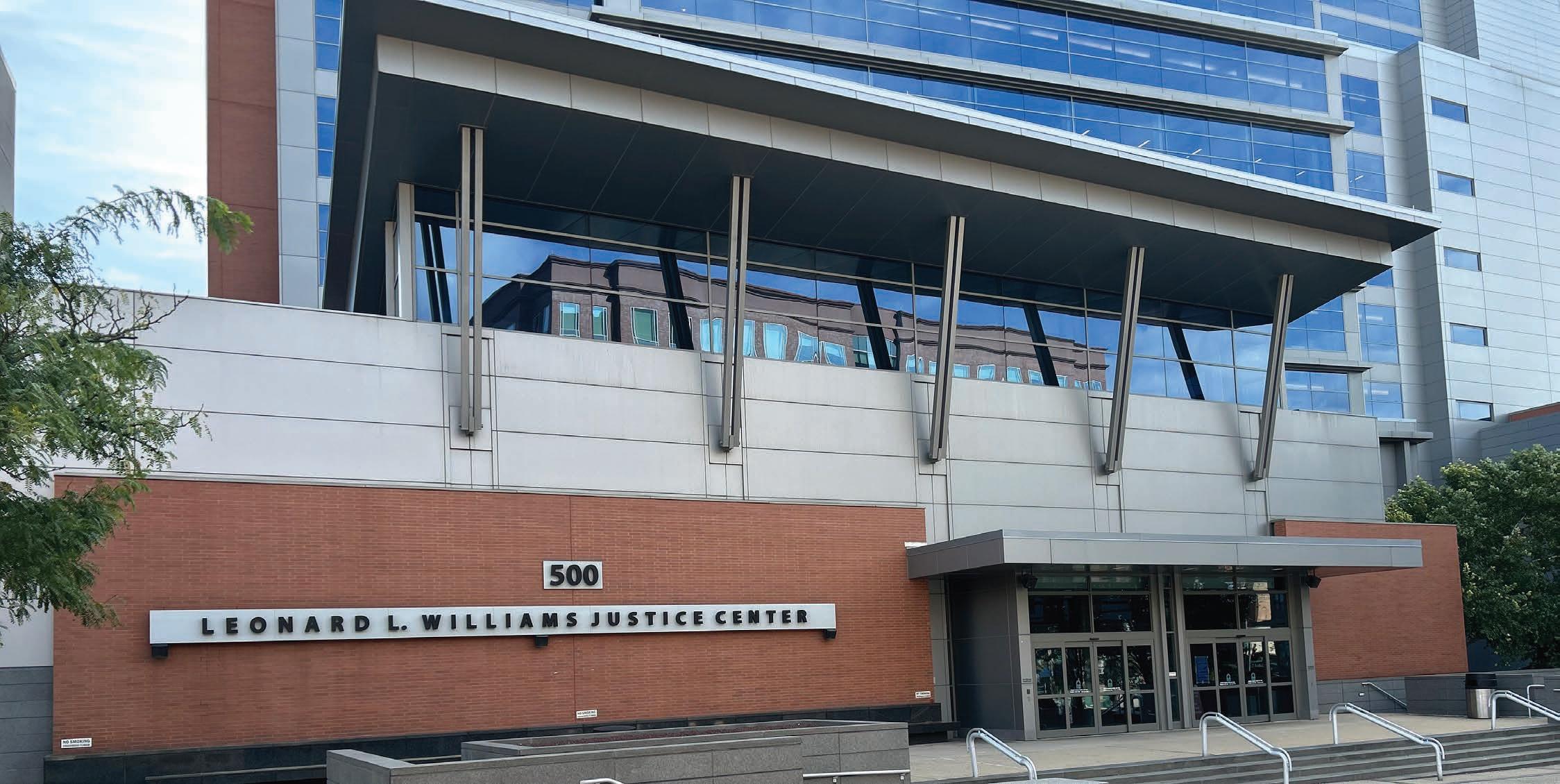
Leonard L. Williams Justice Center
The Leonard L. Williams Justice Center is located on Market Street in Wilmington and named after Delaware civil rights pioneer and municipal court judge Leonard L. Williams. Constructed in 2002, the Justice Center houses several occupants, including the Court of Chancery, Superior Court, Family Court, Court of Common Pleas, and Administrative Office of the Courts.
houses
Williams matriculated at the University of Delaware in 1950, two years after the university was desegregated. After law school, he was a mentee and eventual law partner of Louis L. Redding, the first Black person admitted to the Delaware Bar and an attorney on the team that challenged school segregation in Brown v. Board of Education
Williams was the second Black judge in Delaware and the first Black judge on the Wilmington Municipal Court, where he served for 33 years. In July 2016, the Justice Center was renamed from the New Castle County Courthouse to the Leonard L. Williams Justice Center.
University of Delaware
It’s no surprise that the state’s largest university has particular buildings named after some First State heavy hitters. Arsht Hall, located at the Osher Lifelong Learning Institute at the University of Delaware in Wilmington, is a building named by resolution for S. Samuel Arsht and Roxanna Cannon Arsht, who were significant benefactors to the University of Delaware. Roxanna Cannon Arsht was appointed as a Judge for the Family Court in 1971, becoming the first woman to serve as a state judge in Delaware. S. Samuel Arsht was a partner with the firm of Morris, Nichols, Arsht, and Tunnell. Fun fact: Roxana was the fifth woman to pass the Delaware bar and the first female judge in the state.
Arsht,
Black
Woodburn Mansion
University of Delaware (continued)
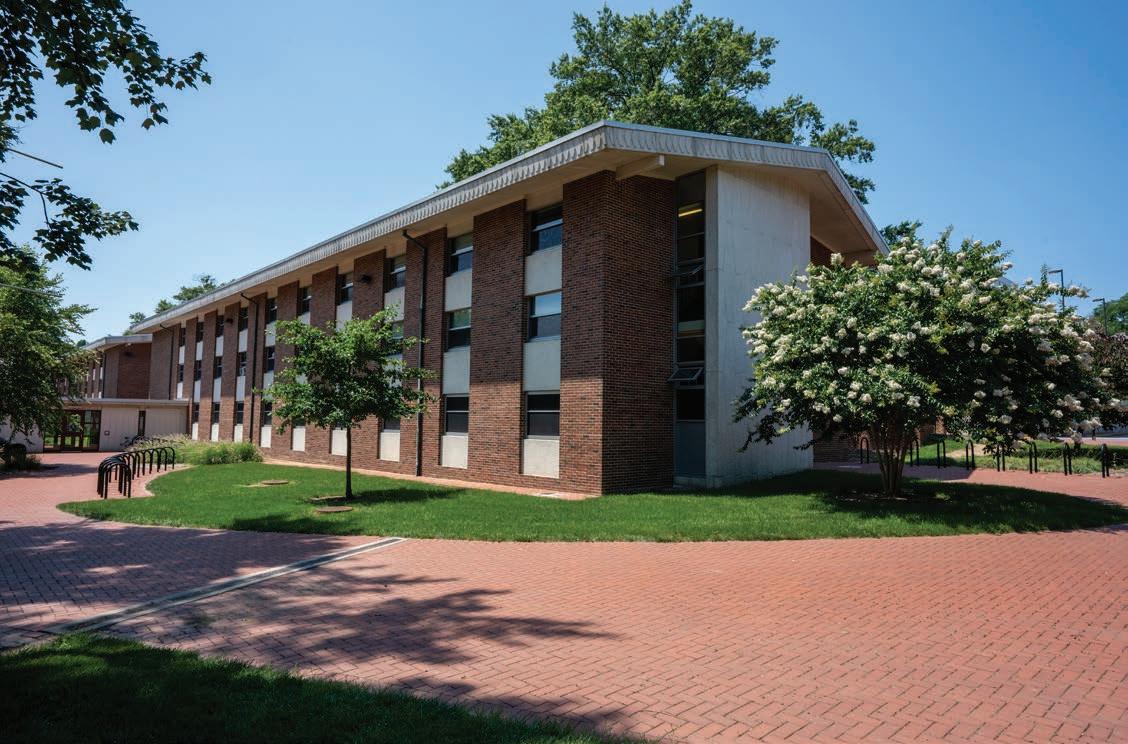
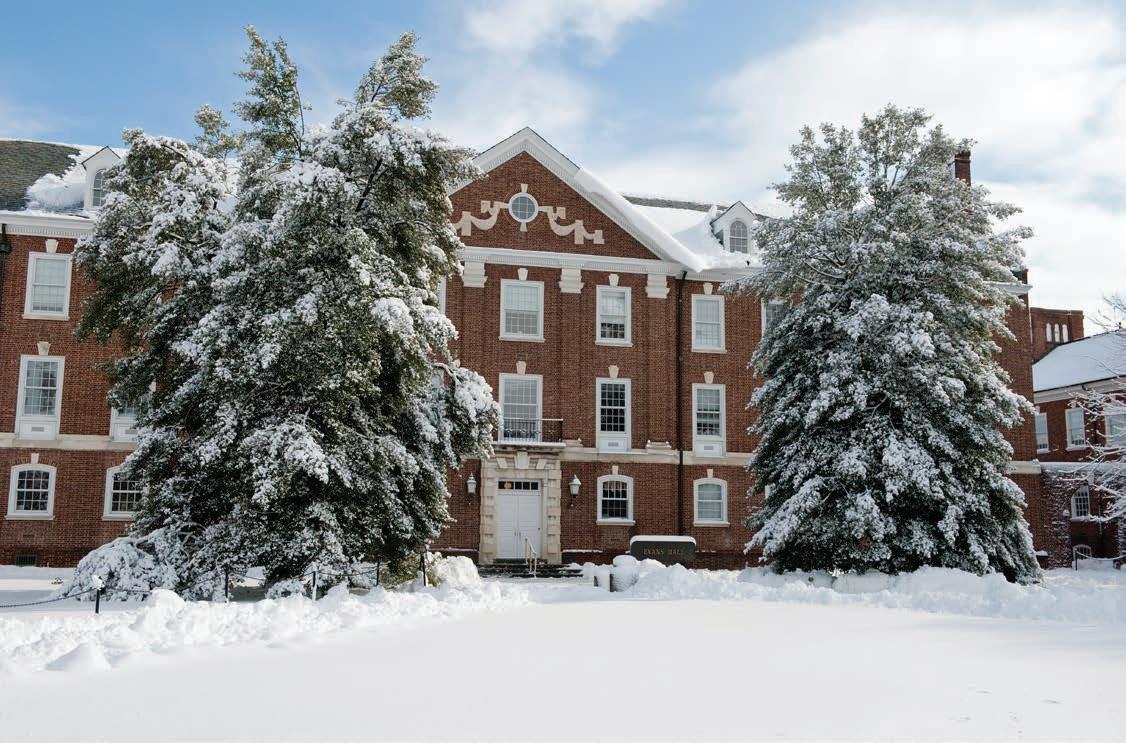
Evans Hall (at left), the Electrical & Computer Engineering building/hub, was named by resolution for George Gillespie Evans and Charles Black Evans. George Gillespie Evans was a member of the Delaware College Board of Trustees from 1856 until his death in 1904. His son Charles Black Evans was a Delaware attorney and Trustee of Delaware College and the University of Delaware from 1898 to 1933. The Harrington Residence Complex was named by resolution for William Watson Harrington, who served on the Delaware State Supreme Court, the Delaware Court of Chancery, and the University of Delaware Board of Trustees.
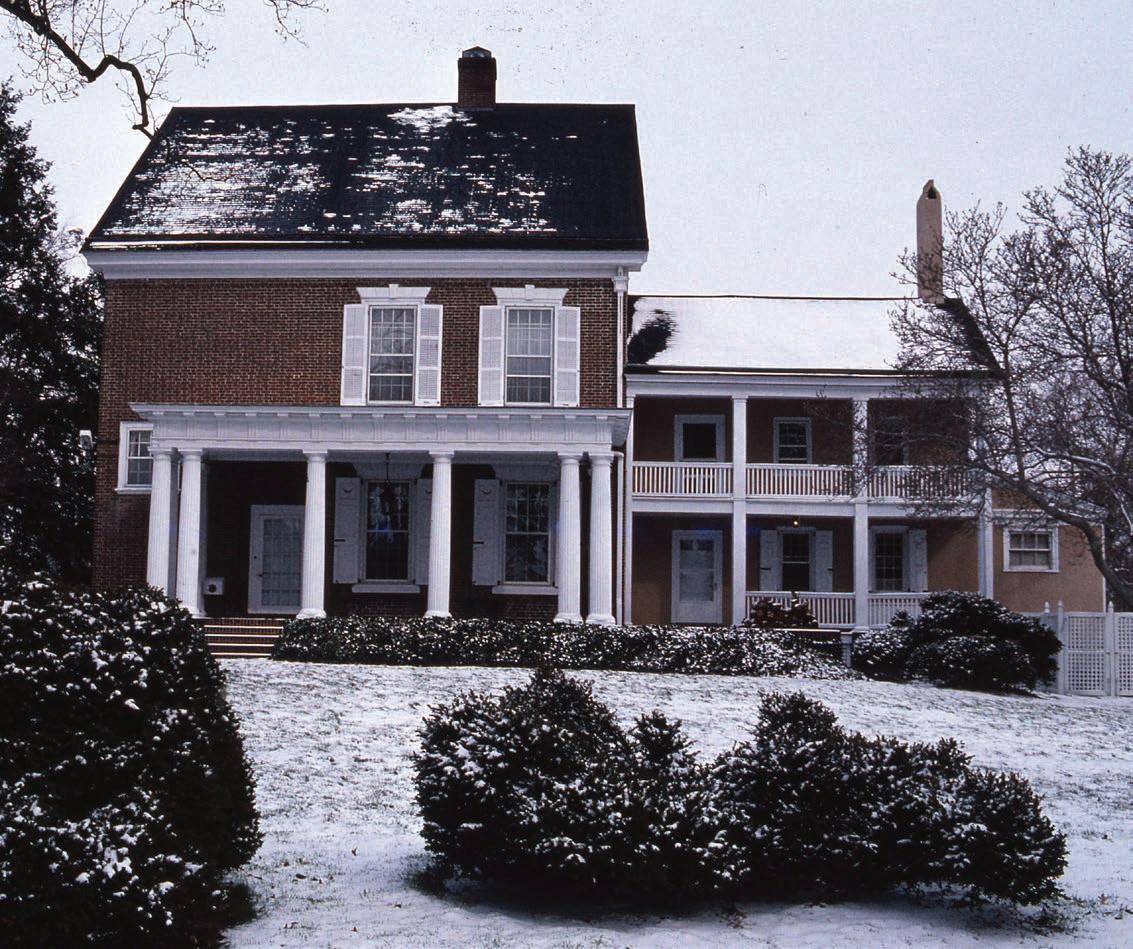
Woodburn, located in Dover, is the official residence of Delaware’s governor and family. Charles Hillyard, III, the son-in-law of Delaware’s first Chancellor, William Killen, purchased the land where Woodburn sits in the 1780s. Hillyard built the house in the 1790s and named it Woodburn. Hillyard’s daughter, Mary and her husband, Martin W. Bates, a doctor, merchant, lawyer, and U.S. Senator, inherited the house and, in 1820, Bates leased Woodburn to its first governor resident, Governor Jacob Stout.
Woodburn is famous for more than its esteemed residents, which includes at least eight recent governors and the first woman elected to office in Delaware, the “Grand Dame of Delaware Politics” Vera Davis. The house has also inspired popular Delaware lore. Woodburn is believed to have been a stop on the Underground Railroad, and it is the home of several ghosts, including that of Hillyard, who is known to imbibe in a strong drink when he visits.
Woodburn is on the National Register of Historic Places and has been the official governor’s residence since 1966.
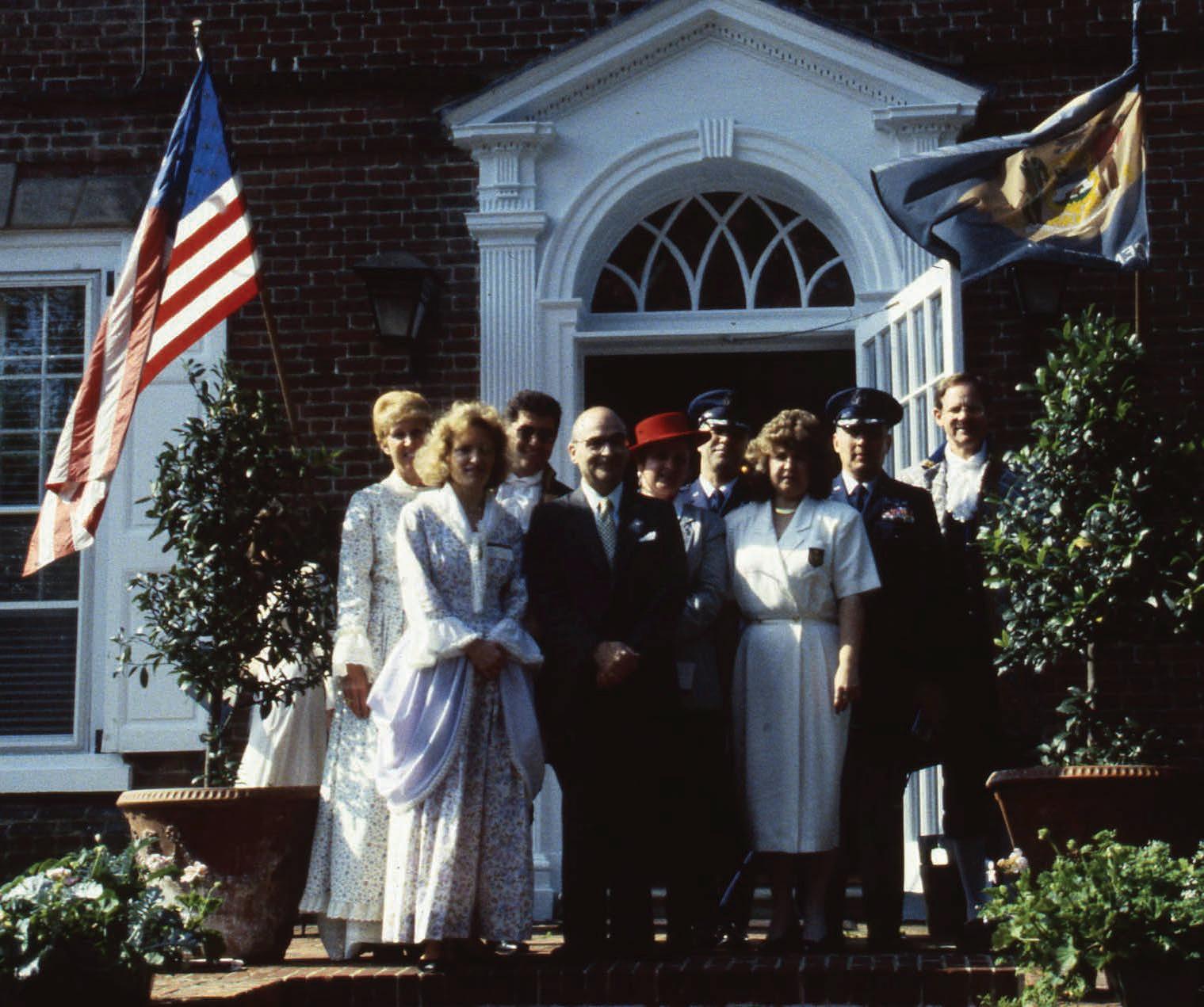
Left: Old Dover Days - Ann Horsey, Michael Castle, and others in front of Woodburn. (Delaware Economic Development Office, Slide Collection; 1306-000029_724n, Box 520342; Delaware Public Archives, Dover, DE.)
Right: Woodburn (Governor's house) - State of Delaware, Dover, Delaware. (Private Photograph Collections, Robert J. Bennett Photograph Collection, Slides; 9015-036-001_140500, Box 541547, Folder 210; Delaware Public Archives, Dover, DE.)
Bottom left, page 20: Harrington Residence Complex. Above: Evans Hall. Courtesy of University of Delaware
Parentage for Female Couples Delaware
BY DANA L. REYNOLDS, ESQUIRE

for Same-Sex Couples in Delaware

“I am worried that my wife will not be recognized as our baby’s parent and my due date is next month. What do we do?”
“If we move to another state, will our Delaware parentage order be recognized and enforceable?”
“Do we even need a parentage order? Isn’t the birth certificate enough?”
“Do I need to adopt my child through a second parent adoption? I thought an adoption decree is more iron-clad than a parentage order.”
After the election in November 2024, these fears and questions represent only the tip of the iceberg of concerns faced by same-sex partners. Attorneys practicing in assisted reproductive technology (“ART” or “assisted reproduction”) law across our nation have been tirelessly working together to address these fears through education regarding same-sex parentage rights and statute enactment where needed.
Fortunately for Delaware’s same-sex couples, our State’s Uniform Parentage Act (UPA), codified at Chapter 8 of Title 13 of the Delaware Code, not only includes a robust and protective Gestational Carrier Act but contains the necessary statutory framework providing a process to obtain parentage orders and otherwise defining and establishing legal parentage for children born from ART. The parentage orders fall under the purview of the Full Faith and Credit clause, found in Article IV, Section 1 of the U.S. Constitution, requiring States to honor the public acts, records, and judicial proceedings of other States. In the same vein as child support orders (where parentage must be established) and adoption decrees (also a basis to establish parentage), valid parentage orders issued under Delaware law by our Family Court are entitled to full faith and credit in other States.
This article focuses on the determination and confirmation of parentage in Delaware by judicial order for samesex, biologically female couples (lesbian couples) when gestational surrogacy is not utilized.
Important Supreme Court Decisions & Federal Law
Before delving into Delaware’s UPA, it is helpful to provide a very brief background of U.S. Supreme Court cases and federal law relating to the rights of same-sex couples.
In the case of United States v. Windsor, 570 U.S. 744 (2013), the U.S. Supreme Court determined that the feder-
ally enacted Defense of Marriage Act (DOMA) was unconstitutional. Section 3 of DOMA defined “marriage” as “only a legal union between one man and one woman as husband and wife” and the term “spouse” as “only [] a person of the opposite sex who is a husband or a wife.” Id. at 752. The Supreme Court reiterated that “State laws defining and regulating marriage … must respect the constitutional rights of persons, … but subject to those guarantees, regulation of domestic relations is an area that has long been regarded as a virtually exclusive province of the States.” Id. at 766 (internal citations and quotations omitted). It also recognized that “the definition of marriage is the foundation of the State’s broader authority to regulate the subject of domestic relations with respect to the protection of offspring, property interests, and the enforcement of marital responsibilities.” Id. The Court held that DOMA was unconstitutional “as a deprivation of the liberty of the person that is protected by the Fifth Amendment” and, more importantly, a deprivation of the equal liberty of a person joined in a same-sex marriage otherwise made lawful by the State. Id. at 774-75.
Subsequently, in the 2015 decision of Obergefell v. Hodges, 576 U.S. 644 (2015), the Supreme Court held that same-sex couples have a fundamental right to marry and that State law cannot prohibit the exercise of this right. The Court recognized marriage as one of many personal choices regarding family relationships, reproduction, and parenting children that are Constitutionally protected, and same-sex couples—like opposite-sex couples—have the right to marry, create a home, rear children, and have access to the “rights, benefits, and responsibilities” of marriage, including being identified in “birth and death certificates.” 576 U.S. 644, 670. The Supreme Court found that the Due Process and Equal Protection clauses of the Fourteenth Amendment guarantee same-sex couples a right to
enjoy the same access to legal marriage, and its “constellation of benefits” that opposite-sex couples traditionally enjoy. Id. at 670-672.
Subsequently, the U.S. Supreme Court relied upon Obergefell in the 2017 case of Pavan v. Smith, 582 U.S. 563 (2017), by concluding that one of those benefits for same-sex married couples is the legal presumption of parentage based upon marriage. 582 U.S. at 566. Thereafter, in 2022, DOMA was repealed upon the enactment of the Respect for Marriage Act signed into law by President Joe Biden requiring both the Federal government and States to recognize the validity of same-sex marriages.
ART for Lesbian Couples
For those unfamiliar, most lesbian couples—whether married or unmarried—use ART with the intention to be the sole and exclusive parents to the child(ren) they conceive together. These couples typically obtain donated sperm from reputable sperm banks (cryobanks) and conceive their children through an intrauterine insemination (IUI) or through in vitro fertilization (IVF) whereby an egg is retrieved from the uterus and fertilized with donated sperm and, thereafter, the resulting embryo is transferred into the uterus of one (or both partners) of the lesbian couple. In some cases, a lesbian couple may engage in reciprocal IVF whereby one partner’s genetic eggs are surgically retrieved, fertilized with donated sperm and the resulting embryos are transferred to the uterus of the other partner so that each partner may have an opportunity to not only carry the pregnancy but also to allow for the resulting children to have both a genetic connection to one parent while the other parent carries and gives birth. To be clear, these scenarios do not involve using a third party gestational carrier or surrogate, so the Delaware Gestational Carrier Act is not implicated.
Sperm,
egg
and embryo donors, on the other hand, are not deemed legal parents and have no parentage claims to the children born to these lesbian couples using ART. Accordingly, donors are not parties to these assisted reproduction parentage proceedings and there are no parental rights to terminate.
Parentage Under the Delaware UPA in Context of ART & Marriage
So long as their child is not born as a result of sexual intercourse and parentage can be established in accordance with Delaware’s UPA, lesbian couples utilizing ART to build their families can and should obtain a parentage order under Delaware law which is entitled to full faith and credit—no different than an adoption decree—by other States regardless of the other State’s parentage laws. Upon either a pre-birth or post-birth petition to the Family Court requesting a parentage order confirming their parental rights, they will be determined and otherwise adjudicated to be the legal and natural parents of their child to the exclusion of all others and regardless of their genetic connection to their child.
Sperm, egg and embryo donors, on the other hand, are not deemed legal parents and have no parentage claims to the children born to these lesbian couples using ART. Accordingly, donors are not parties to these assisted reproduction parentage proceedings and there are no parental rights to terminate. Under Delaware UPA’s statutory framework, a donor is not deemed a parent and has no right to the child conceived with the donated sperm, egg or embryo. 13 Del.
C. §§ 8-102(9) (defining “donor” as “an individual who produces eggs or sperm or provides embryos for assisted reproduction but does not include a spouse who provides sperm or eggs for assisted reproduction by the spouse, or a woman who gives birth to a child by means of assisted reproduction or a partner who provides sperm for or consents to assisted reproduction by her partner with the intent to be the parent of the partner’s child”) and 8-702 (“Parental status of donor”).
In Delaware, a parent-child relationship is established in accordance with 13 Del. C. § 8-201 (“Establishment of parent-child relationship”). This statutory section defines the various circumstances under which a mother-child or father-child relationship is established, such as giving birth, adoption, assisted reproduction, an unrebutted presumption of parentage in the context of marriage, or being adjudicated as a de facto parent based on criteria like exercising parental responsibility and establishing a bonded relationship with the child. Id. There is nothing in Delaware’s UPA requiring lesbian couples to be married to establish their parentage in their children from ART. So long as the non-birthing partner whose genetic egg was not utilized consented to assisted reproduction by her birthing partner with the intent to become the parent of the child they have together, this will be a legal basis to establish legal parentage in equal legal standing as the birthing parent/ partner. However, if they are married, the non-birthing mother will also enjoy yet another basis to establish her parentage: the legal presumption of parentage in marriage.
Gender Neutrality & Presumption of Parentage in Context of Marriage
Delaware’s UPA is gender neutral in that “[p]rovisions … relating to determination of paternity apply to determinations of maternity.” 13 Del. C. § 8-106 (“Determination of Maternity”). This
means that lesbian partners can have their parentage established under both mother-child (maternity) and fatherchild (paternity) provisions in the UPA. See 13 Del. C. § 8-201 (“Establishment of parent-child relationship”). Moreover, with respect to same-sex marriage, Delaware’s UPA applies to legal presumptions of parentage regardless of the presumed parent’s sex. Married lesbian couples are entitled to the presumption of parentage in the context of marriage, 13 Del. C. § 8-204 (“Presumption of paternity in context of marriage”) and are entitled to equal treatment under Delaware law as would be an opposite-sex married couple, 13 Del. C. § 129. Section 129 provides:
The rights of same-gender married spouses, with respect to a child of whom either spouse becomes the parent during their marriage, shall be the same as the rights (including presumptions of parentage, paternity and maternity in Chapter 8 of this title) of different-gender married spouses with respect to a child of whom either spouse becomes the parent during their marriage.
13 Del. C. § 129(d). Accordingly, not only is the presumption of paternity interpretable as a presumption of maternity for the lesbian spouse but also the terms “wife” or “woman” are interchangeable with the terms “husband” or “man”, as these terms are related to determinations of maternity or paternity (often in the absence of marriage) throughout Delaware’s UPA.
A lesbian spouse who does not give birth to (or whose genetic egg was not used to conceive) the parties’ child will nevertheless be the presumed legal parent of the child born as a result of ART with her birthing wife using one of their own genetic eggs or donor sperm, eggs or embryos. For example, the presumption applies if she (the presumed parent) and her spouse/wife, i.e., the birth mother (often but not always also the genetic mother), were married to each other and the child was born during the marriage
CONTINUED >
or the child was born within 300 days after the marriage was terminated by death, annulment, declaration or invalidity or divorce. 13 Del. C. § § 8-204(a) (1), (2). Another example occurs when the lesbian couple married each other in apparent compliance with the law, even if the attempted marriage is or could be declared invalid, and the child is born during that invalid marriage or within 300 days after termination of the marriage or declaration that the marriage was invalid. 13 Del. C. § 8-204(a) (3). Moreover, some different examples for the application of the presumption would include a situation where a lesbian couple married each other in apparent compliance with the law (whether or not declared invalid) and one spouse voluntarily asserts maternity of the child or for the first two years of the child’s life resided in the same house as the child and openly held the child out as her own. 13 Del. C. § § 8-204 (a)(4), (5).
The presumption of parentage established under Section 8-204 may only be rebutted by a parentage adjudication to the contrary. It is also important to consider the two-year limitations period for challenging the parentage of a child with a presumed parent and the exception to said period. 13 Del. C. § 8-607 (“Limitation: Child having a presumed father”); See also Oscar v. Lafferty, No. 531, 2024, 2025 Del. LEXIS 389 (Oct. 22, 2025). For example, if a sperm provider argued that he was not a “donor” and instead successfully demonstrated he intended to be the parent of the child born as a result
of ART and not sexual intercourse, then he may be able to rebut the presumption of parentage in the context of marriage. To avoid a scenario like this, lesbian couples—whether or not married to one another—are strongly encouraged to obtain donor sperm (and/or donor eggs or donor embryos) from reputable sources and cryobanks, obtain written agreements and consents demonstrating that a donation was made, obtain documentation of the chain of custody for the donation, and documentation from their fertility clinic that the donation was used for assisted reproduction by the couple.
Timing for Seeking a Parentage Order
Parentage is determined by the Family Court in proceedings to adjudicate parentage pursuant to 13 Del. C § § 8-610 (“Proceedings in which parentage may be determined”) and 8-611 (“Proceeding before birth”). A parentage petition may be filed prior to the child’s birth, however the pre-birth parentage proceeding is not formally concluded until after the birth of the child. 13 Del. C. § 8-611. When a child is due to be born as a result of ART procedures, the Family Court may enter the order establishing and otherwise confirming the parentage of the lesbian couple before the child’s birth, but such order is stayed until the child’s birth. 13 Del. C. § 8-611(b).
In the past, some lesbian couples may have sought only a pre-birth order confirming their legal parentage in their children born as a result of ART

procedures. However, pre-birth parentage orders, by their nature, can only set forth the anticipated due date for the birth of the child who is often unnamed at this stage. While pre-birth filings can specify the “to be born” child’s name and indicate the known sex, in most scenarios the lesbian couples may not wish to know the sex of their child and desire to wait until after the child’s birth to name the child. The pre-birth order is effective for directing the hospital staff and Office of Vital Statistics to take the necessary steps to place both the birth mother and her same-sex partner on the birth certificate and can also become the final order (if no post-birth order is also issued).
The current trend in Delaware is for lesbian couples to file, pre-birth, a joint petition for a parentage order and, in such filing, request both a pre-birth order and a post-birth order adjudicating and otherwise confirming their parentage in their children. Most couples fear that if the pre-birth order does not provide the actual date of birth and a child’s legal name, a foreign State might initially threaten not to recognize the parentage of the non-biological mother (or even the biological mother who did not give birth). To combat this fear, it is advisable for these couples to obtain a post-birth order with the child’s actual date of birth and name and not simply rely on a pre-birth order in conjunction with the birth certificate. The birth certificate is not an order and does not in and of itself legally confer parentage with the force and effect as a valid parentage order issued pursuant to State law by that State’s court.
Laws are always subject to change. However, existing Delaware law protects the parentage and marital rights of samesex couples. As competing ideologies and the political landscape are in a state of flux, it is nevertheless important for Delaware lesbian couples using ART to confirm and protect their legal parentage by obtaining, at a minimum, post-birth parentage orders.
On a final note, lesbian couples
should not seek to (and arguably cannot) adopt their own children through a second parent adoption proceeding when Delaware already provides a statutory framework specific to the establishment and determination of a parent-child relationship for these families. Ignoring Delaware’s established parentage statutory framework under the Delaware UPA and reverting to adopting one’s own child would be inherently unfair to these couples, create a lack of consistency, and otherwise be in direct contravention of legislative and legal work in this State in the fight for equal rights for samesex couples. Reverting to second parent adoption would essentially require a parent to denounce or otherwise invalidate her legal parentage rights by rejecting the established marital presumption of parentage or by wrongfully omitting facts in Court proceedings that would otherwise establish and confirm a parent-child relationship for a child conceived by a same-sex couple through ART. In light of existing law, it is beyond reason to voluntarily ignore same-sex
parentage rights, revert to second parent adoption and suggest that these same-sex couples undergo invasive social studies and reports by licensed adoption agencies to obtain an adoption decree; it would amount to effectively dismantling the existing Delaware UPA’s statutory framework for same-sex couples using ART.
In sum, Delaware same-sex couples utilizing ART to become parents should be counseled to protect and confirm their parentage rights by obtaining a legal parentage order through the Family Court. At a minimum, a post-birth order should be sought without delay after the issuance of the child’s birth certificate. These parentage orders are entitled to full faith and credit, in the same way as an adoption decree. As Delaware attorneys, we must fearlessly continue to protect and stand in unity with our Delaware LGBTQ community members and their children born as a result of family building through ART.
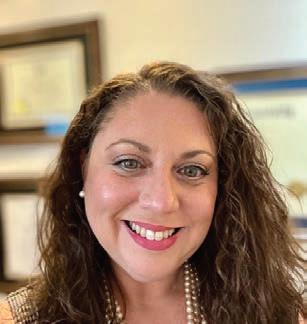
Dana L. Reynolds is the managing attorney at the Law Offices of Dana L. Reynolds, LLC (www.danareynoldslaw.com), where she focuses on family law, assisted reproduction and parentage law, and private mediation in domestic relations matters. Dana earned her Bachelor's degree from Cornell University and her Juris Doctor from Widener University School of Law (Delaware Law School). She was admitted to the Delaware Bar in 2006 and served as a law clerk to former Chief Judge Chandlee Johnson Kuhn of the Family Court of Delaware and Senior Judge Jane R. Roth of the Third Circuit Court of Appeals. Dana is also a past Chair of the DSBA Family Law Section and enjoys working on legislative initiatives relating to parentage, family building through assisted reproductive technology (ART) and protection of LGBTQ families. Dana has over 15 years of experience drafting ART agreements and representing intended parents, donors and gestational surrogates.

Simply Having a Wonderful Christmas Time... Reading Books
BY RICHARD A. FORSTEN, ESQUIRE

The end of one year and the beginning of a new is always a time to take stock, reflect, and plan for the year ahead. Inevitably, at some point, things will slow down for a bit and there’s time to catch up on some reading. Here is a baker’s dozen of books from the last year which you might want to consider (note that this list does not include books which I have already reviewed this year):
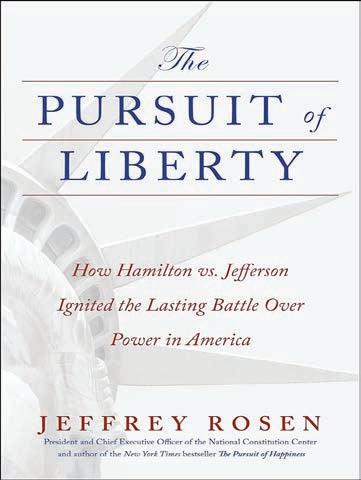
The Pursuit of Liberty, How Hamilton vs. Jefferson Ignited the Lasting Battle Over Power in America, by Jeffrey Rosen (Simon & Schuster, 2025).
The battles during Washington’s first term between Hamilton and Jefferson
continue to resonate and teach lessons today. Professor Jeffrey Rosen is not only an excellent writer but, as president of the National Constitution Center, well-positioned to recount those battles and their lasting implications which still echo today.
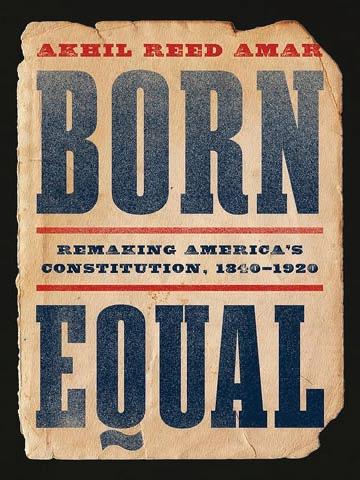
Born Equal:
Remaking America’s Constitution, 1840–1920, by Akhil Reed Amar (Basic Books, 2025). Professor Amar has written a number of interesting books on the Constitution and Bill of Rights, providing nuanced and careful readings, and focusing on the language in ways that are often new and different. Here, the good professor examines the years 1840-
1920—perhaps the greatest era of change and improvement to the Constitution.
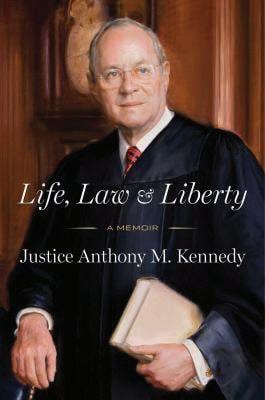
Life, Law & Liberty: A Memoir, by Anthony Kennedy (Simon & Schuster, 2025).
Whenever a Supreme Court Justice, or former Justice, writes something, it makes for interesting and enlightening reading. Former Justice Kennedy was known as the swing vote during his years on the Court and here he gives us a look at some of the more famous cases where he provided the decisive fifth vote on a number of important cases.
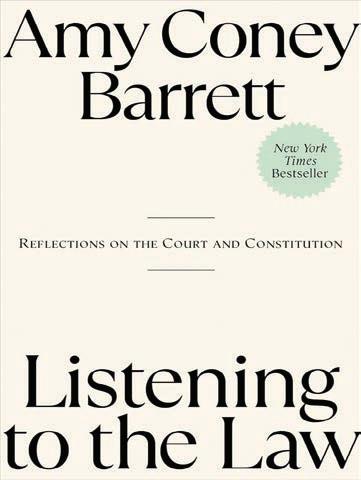
Listening to the Law, by Amy Coney Barrett (Sentinel, 2025). Whenever a sitting Supreme Court Justice writes something, it not only makes for interesting and enlightening reading, but probably should be required reading. Here, Justice Barrett takes us behind the scenes at the Court, discusses how she approaches cases and decisions, and gives her perspective on constitutional law and history.
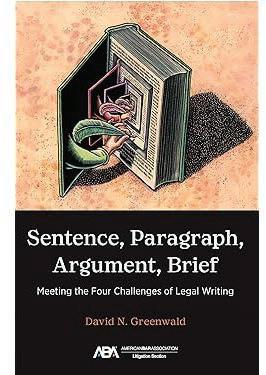
Sentence, Paragraph, Argument, Brief: Meeting the Four Challenges of Legal Writing, by David N. Greenwald (ABA, 2025). Everyone should read at least one book a year focused on writing.

Vanishing Point, In Search of Our Constitution Future, by Edwin C. Hagenstein (RealClearPublishing, 2025). Hagenstein compares and contrasts various constitutional perspectives and interpretative methods in an effort to determine how we have come to have competing visions, asks if there is room for common ground, and how we can best proceed forward.

The Land of Sweet Forever, by Harper Lee (Random House, 2025). To Kill A Mockingbird remains one of the great American novels. With this book, Random
House collects Lee’s earlier short stories and later non-fiction.
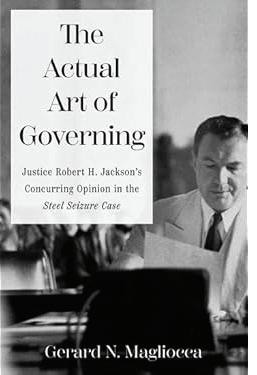
The Actual Art of Governing: Justice Robert H. Jackson’s Concurring Opinion in the Steel Seizure Case, by Gerard N. Magliocca (Oxford Univ. Press, 2025). The Supreme Court’s 1952 decision in Youngstown Sheet & Tube Company remains, perhaps, the most important opinion regarding the limits of presidential power, and Professor Magliocca charts the continuing vitality of Justice Jackson’s concurring opinion.
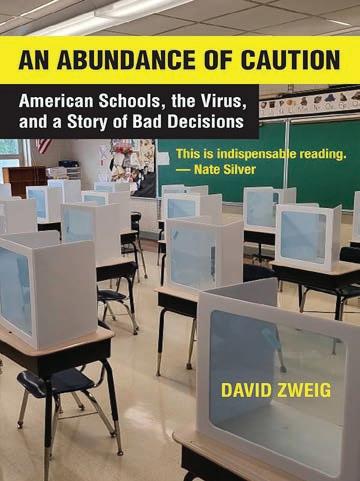
An Abundance of Caution: American Schools, the Virus, and a Story of Bad Decisions, by David Zweig (The MIT Press, 2025). The real lesson to be learned from Covid ought to be how best to make decisions during a crisis and to avoid letting politics hijack that process (meaning that one shouldn’t reflexively oppose someone else’s observations or positions merely because one disagrees with that person politically on other issues). As the reviews on the world’s handling of the Covid crisis come in, they are generally not good, and there is much that needs to be learned from the way the crisis was handled.

The Sirens’ Call: How Attention Became the World’s Most Endangered Resource, by Chris Hayes (Penguin Press, 2025). Technology is both a blessing and a curse. But unless we pay attention and work hard to avoid the problems arising from new technologies,
the problems will not only get worse, but may just win out.

Our Fragile Freedoms: Essays, by Eric Foner (W.W. Norton & Co., 2025). Renowned historian and Pulitzer Prizewinner Eric Foner has gathered a superb collection of his essays relating to freedom, the Civil War, civil rights, and much more.

When Everyone Knows That Everyone Knows . . .: Common Knowledge and the Mysteries of Money, Power, and Everyday Life, by Steven Pinker (Scribner, 2025). The emperor had no clothes, and everyone knew it, and yet until one small boy called out the obvious, everyone acted as if the emperor had the finest clothes in the land. Why is it that, despite such common knowledge, many people will act to the contrary? Steven Pinker provides answers and much more.

Team Intelligence: How Brilliant Leaders Unlock Collective Genius, by Jon Levy (Harper Business, 2025). Some dream teams fail, while other teams are much greater than the sum of their parts. Jon Levy has been studying leadership for years, and offers thoughts and examples often contrary to prevailing wisdom.
Richard “Shark” Forsten is a Partner with Saul Ewing LLP, where he practices in the areas of commercial real estate, land use, business transactions, and related litigation. He can be reached at Richard.Forsten@saul.com.
THE DELAWARE S TATE BAR ASSOCI ATION PRESENTS
202 6 Annual Breakfast & Statewide Day of Service
D ATE/TIME
Monda y, January 19 , 202 6
Breakfast: 7:45 a.m.
LOC ATION
Chase Center on the Riverfront
8 15 Justison Street W ilmington, DE 19801
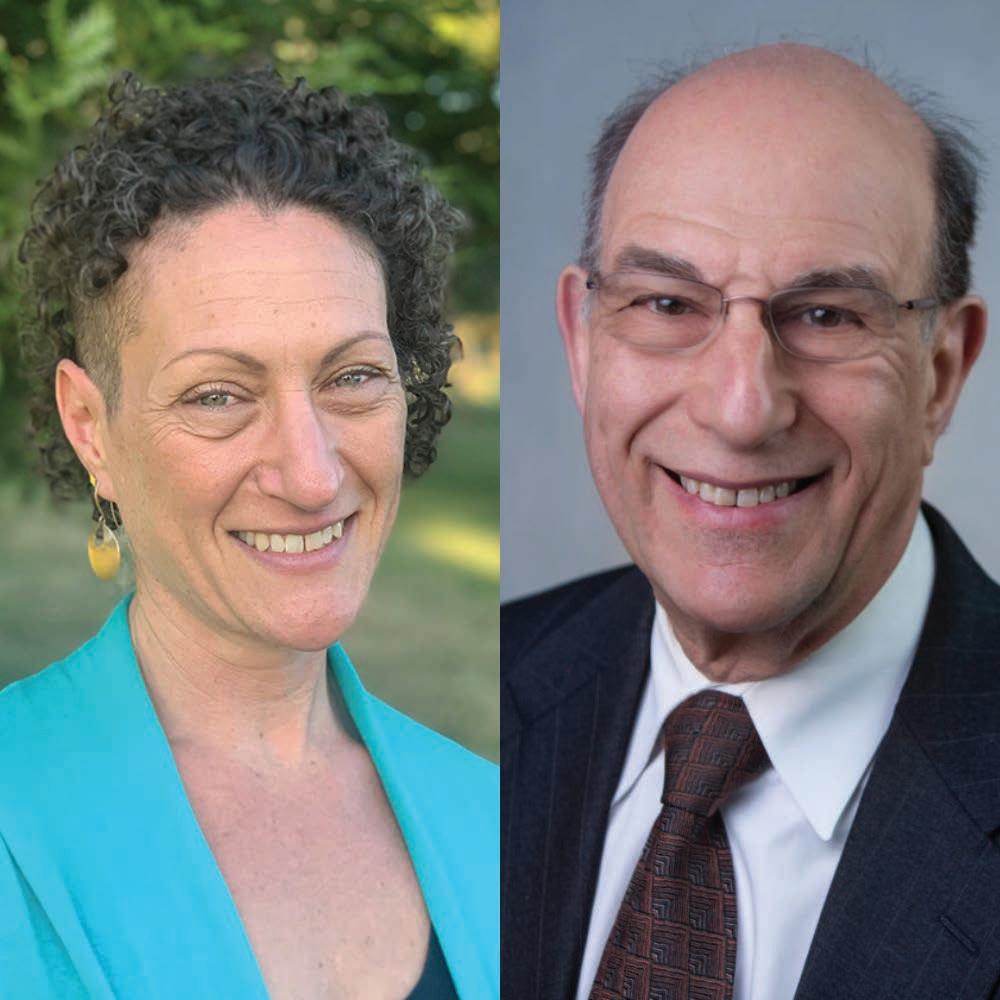
Keynote Speakers: Father-Daughter Duo
Leah & Richard Rothstein
Leah Rothstein: Co-author of Just Action: How to Challenge
Segregation Enacted Under the Color of Law
Richard Rothstein: Author of The Color of Law

DR. MARTIN LUTHER KING, JR.
Annual Breakfast & Statewide Day of Service
2026 SPONSORSHIP RESERVATION FORM
PLATINUM
$6,000
• One Designated Table of Eight (8) at the Breakfast
• Onsite Signage
• Full Page Ad in Breakfast Program
• Recognition of Sponsorship in DSBA Journal
SPONSORSHIP LEVELS
GOLD
$4,000
• One Designated Table of Eight (8) at the Breakfast
• Onsite Signage
• Half Page Ad in Breakfast Program
• Recognition of Sponsorship in DSBA Journal
SILVER
$3,000
• Half Table of Four (4)at the Breakfast
• Onsite Signage
• Quarter Page Ad in Breakfast Program
• Recognition of Sponsorship in DSBA Journal
BRONZE
$1,750
• Two (2) Tickets to the Breakfast
• Onsite Signage
• Recognition of Sponsorship in Breakfast Program
• Recognition of Sponsorship in DSBA Journal
FRIEND
$650
• Recognition of Sponsorship in the Breakfast Program
• Recognition of Sponsorship in DSBA Journal
PLEASE INDICATE PARTICIPATION LEVEL: q Platinum ($6,000) q Gold ($4,000) q Silver ($3,000) q Bronze ($1,750) q Friend ($650)
CONTACT INFORMATION
Name of Sponsor (As you’d like it to appear in Event Materials):
Sponsor Contact: Address:
City/State/Zip: Phone: Fax: E-mail:
PAYMENT METHOD PAYMENT IN FULL MUST ACCOMPANY RESERVATION FORM.
q Enclosed is a check for $ made payable to DSBA.
q Charge in the amount of $ to: q MasterCard q Visa q AMEX q Discover Card Number:
Signature: Expiration Date: CVV: ____________ Billing Zip Code:
1. Please email firm/organization logo for inclusion in event material to Danielle Bouchat-Friedman at dbouchatfriedman@dsba.org.
2. Ad Sizes (Platinum/Gold/Silver Sponsors Only). Ads must be 4-color and 300 dpi or higher:
Office Use Only
Thank you for supporting the Dr. Martin Luther King, Jr. Annual Breakfast & Statewide Day of Service on January 1 9 , 202 6 . Refunds issued if cancellation is received no later than one week prior to an event. All refund requests must be in writing. Call DSBA at (302) 658-5279 for more information. Please make a copy of the sponsorship form for your records! COMPLETED SPONSORSHIP FORMS AND PAYMENT ARE DUE BY DECEMBER 19, 2025. Return to: Delaware State Bar Association, 704 North King Street, Suite 110, Wilmington, Delaware 19801 or by email to Deirdre Sadler-Crew at dsadlercrew@dsba.org. Individual tickets are available for purchase for $45 per person. Visit www.dsba.org for online registration.

BOOK REVIEW | REVIEW BY RICHARD A. FORSTEN, ESQUIRE
Not to Be Canceled

The Indispensable Right, Free Speech In An Age Of Rage
By Jonathan Turley (Simon & Schuster, 2024)
“We are living in an age of rage. It permeates every aspect of our society and politics. Rage is liberating, even addictive. It allows us to say and do things that we would ordinarily avoid, even denounce in others. Rage is often found at the furthest extreme of reason. For those who agree with the underlying message, it is righteous and passionate. For those who disagree, it is dangerous and destabilizing.”
So begins Professor Jonathan Turley in his vigorous, informative, and compelling defense of free speech and the First Amendment. The professor reminds us that our country was born in rage. Thomas Paine famously stated that: “he who does not offend cannot be honest.” According to Turley, the greater danger to the health of our political discourse is not the rage permeating our politics, but the danger of suppression of that rage. And, in support of his position, Turley takes us on an extended historical tour of many of our country’s “troublemakers,” whose free speech was found troublesome at the time, although is often forgotten today.
One of the most famous acts of the Revolution was the Boston Tea Party. Although celebrated today, it was an illegal act. Interestingly, before the party and the dumping of the tea, there had been some efforts to diffuse the situation and do something more symbolic, but those discussions and efforts failed. The Boston Tea Party remains one of the great “rageous” acts of American history.
Following the Revolution there were several rebellions: Shays Rebellion, the Whisky Rebellion, and Fries Rebellion. These rebellions were as much a response to economic conditions (and taxes) as they were true rebellions; but, again, Turley makes his point. “Rage” has long been a part of our country’s political process.
The Civil War was, of course, a true rebellion; but even during that war, the First Amendment was tested as Lincoln and the Union dealt with anti-war sentiment, riots, and dissent. Following the Civil War, Turley takes us through the Comstock Act, the First World War, the Second World War, the Red Scare, the 1960s, antifa, MAGA, and January 6, 2021. Not all of it is pretty, indeed, most of it is not. But rage and the response to it often is not.
Turley also spends time tracing the thoughts and opinions of Justice Oliver Wendall Holmes, whose prohibition on yelling “fire!” in a crowded theatre remains one of the most memorable analogies in Supreme Court history. Holmes’ views changed over time, as he dealt with First Amendment issues. Turley laments that many have used the theatre analogy as a means to justify censorship of hate and disinformation, extending Holmes’ analogy far beyond its intended purpose.
Turley begins his final chapter with a quote from Friedrich Nietzsche: “whoever fights monsters should see to it that in the process he does not become a monster. And if you gaze long enough into an abyss, the abyss will gaze back at you.” This, to Turley sums up the danger of censorship and suppression and those who want to limit the First Amendment. But all is not lost. He concludes his work with a hopeful paragraph:
“There is one great advantage to believing in a natural or autonomous basis for free speech: a certain optimism. This anti-free speech movement cannot entirely change us. We are hardwired for free speech with a psychological and even a physiological impulse to create. If you believe that free thought and expression are the essence of being human, that impulse cannot be entirely extinguished. While we can lose our appetite for free speech, we never truly lose our taste for it. In the end, our faith in
free speech is really a faith in each other. A faith that we do not have to fear opposing viewpoints, but rather the inclination to silence others. There may be bad-tendency speech, but the worst tendency is found in the effort to protect society from harmful thoughts. This is indeed an age of rage. However, rage is not what defines us. It is free speech that defines us.”
Turley has written a wonderful history of the First Amendment and political discourse and rage. This is not a step-by-step primer of all free speech cases, but rather a focus on the core idea, and a reminder that even as we may completely disagree with, and be offended by, the political speech and ideas of others, we should all be so lucky as to live in a country that permits all such speech.
Richard “Shark” Forsten is a Partner with Saul Ewing LLP, where he practices in the areas of commercial real estate, land use, business transactions, and related litigation. He can be reached at Richard.Forsten@saul.com.



STHE JUDICIAL PALATE |
THE JUDICIAL PALATE
| BY SUSAN E. POPPITI, ESQUIRE
BY SUSAN E. POPPITI, ESQUIRE
2025's Kitchen Top Ten
haring some of my favorite kitchen finds has become an end-of-year tradition. This year’s list features familiar categories, like gadgets and wines, along with several new ones, including sprinkles.
1. CHEESE ~ Parmesan…Rind, that is. This year, I have made it a point to use leftover Parmesan rinds in sauces and braised dishes. If you are in search of rinds, you can find them in the cheese section at Whole Foods. They have become a staple in my red sauce, making it just a bit richer and saltier.
2. COOKBOOK ~ “Art of the Chicken” by Jacques Pépin. This more-than-a-cookbook was published in 2022, but I savored it this year in honor of Pépin’s 90th birthday. I have picked it up countless times, and not just for the chicken and egg recipes. Pépin’s 100 vibrant chicken paintings will surely make you smile. I plan to try his chicken bouillabaisse and poached eggs in red wine sauce this winter.
3. CRACKER ~ Ines Rosales Sweet Olive Oil Tortas. These crispy flatbreads have been handmade in Spain since 1910. While they come in a variety of flavors, like Orange and Rosemary Thyme, I gravitate toward the Original. Anise and sesame seeds complement their subtle sweetness. Sometimes I substitute them for a bagel when enjoying smoked salmon.
4. GADGET ~ French Whisk. My stainless-steel version has a sturdy, ergonomic handle that makes whisking a breeze. A French whisk is longer and narrower than a standard one and has more substantial wires, ideal for blending thicker batters and sauces. I can see the difference in my vinaigrettes and crêpe batter.
5. MUSTARD ~ Bornier Whole Grain Dijon Mustard. This mustard won the National Mustard Museum’s 2015 World-Wide Mustard Competition in the whole grain category. I started using this whole grain Dijon in vinaigrettes for its crunchy texture. See my April 2025 article for an herb vinaigrette recipe.
6. RED WINE ~ Zinfandel. This is not your White Zinfandel from the 1980s. It is a lush red with flavors of strawberry, raspberry, and cherry and even some peppery spice. I seek out Zinfandels from Paso Robles, California, where the climate is cool and the soil is rocky, containing shells from an ancient seabed. Zinfandels are
smooth and versatile, especially during the holiday season when beef and lamb adorn dining room tables. The labels I have enjoyed are reasonably priced at around $25.
7. RICE ~ Ralston Family Farms Nature’s Blend Rice. This aromatic purple, red, and brown rice blend is grown on Ralston family farms in the Arkansas River Valley. These colorful grains make a lovely accompaniment to fish, chicken, and pork dishes. I like to sauté the uncooked rice in olive oil and garlic for several minutes before simmering in chicken stock. Ralston’s Jasmine and Basmati varieties are also in my pantry.
8. SMOKED SALMON ~ Sugartown Smoked Specialties Nova Style Smoked Salmon. This is one of the creamiest and most flavorful around. Located just up the road, Sugartown produces its smallbatched smoked seafoods (and
meats, like duck and quail) in West Chester. As important as taste, the famous standard for thinness —being able to read a newspaper through a slice—is achieved in Sugartown’s case.
9. SPRINKLES ~ Ultimate Baker Naturally Colored Sprinkles. Made in the USA, these sprinkles come in all shapes and sizes, from stars to hearts, and some are even holiday specific. Most importantly, they are made from natural food colorants, like beetroot and turmeric. Ultimate Baker also makes decorating sugars for cookies, cakes, and cocktails. I can’t wait to start sprinkling them over my Christmas cookies.
10. WHITE WINE ~ Furmint. One of the most notable dessert wines is made from the Furmint grape: a Tokaji Aszú from the Tokaj region of Hungary. This year, I explored the lesser-known dry white wines produced from Furmint. With
notes of apple and lemon, dry Furmints are crisp and have high acidity. They are medium-bodied and pair nicely with a variety of dishes, from sautéed fish to a spicy tagine.
Wishing you the best of this season of Special Holidays.

Susan E. Poppiti is the owner of Susan Poppiti Math Tutoring LLC. Susan holds a WSET (Wine and Spirit Education Trust) Level 3 Award in Wines with Merit. You can contact Susan at spoppiti@hotmail. com and find a searchable collection of her “Judicial Palate” articles at cucinadipoppiti.com.

POSITIONS AVAILABLE
ARE YOU A DEDICATED ATTORNEY looking to make a meaningful impact in the First State? The Delaware Department of Justice is seeking Deputy Attorneys General to serve in the Civil, Criminal, Family, and Fraud Divisions.
Attorneys enjoy a 37.5-hour work week with true work/life balance, including: a supportive and collaborative work environment, no billable hours, generous paid time off, affordable benefits plans, free trainings and CLE, 12 weeks of paid parental leave, exclusive public service student loan forgiveness programs, and pension eligibility. Hybrid work schedules may be available depending on the division.
Take the next step in your career! Scan the QR code below to explore DOJ job openings and apply today.

JOIN WILMINGTON UNIVERSITY
SCHOOL OF
LAW.
The Wilmington University School of Law invites applications for several key positions as we continue to build a practice-ready, student-centered legal education program grounded in access, flexibility, and professional excellence. Now Hiring: Assistant/ Associate/Full Professor of Law and Professor of Legal Practice (Full-time, multiple) – Applications from lawyers, judges, and faculty who are interested in serving as an Assistant/Associate/Full Professor of Law or Professor of Legal Practice to teach primarily first and second year required bar tested subjects and to start in the AY 2026-2027 academic year. JD required; Admittance to the bar of any state. Candidates should be tech savvy and studentfocused. To apply, visit www.wilmu.edu/ humanresources/index.aspx and select Employment Opportunities.
THE DELAWARE HOUSE OF REPRESENTATIVES DEMOCRATIC
CAUCUS seeks to contract an attorney to assist the caucus by drafting legislation, doing legal research, and attending committee meetings and floor sessions of the House. Admission to the Delaware Bar required. For more information, contact House Attorney Karen Lantz at karen.lantz@delaware.gov.
ASSOCIATE
OPENING:
Newark office seeking attorney to work in Family Law practice. Competitive compensation and benefits package included. DE bar required. Please send cover letter and resume to Walstrom Law c/o Megan Walstrom at Megan@Walstromlaw.com.
CITY OF WILMINGTON LAW
DEPARTMENT seeks an attorney with more than 3 years of experience for the position of Senior Assistant City Solicitor. Practice areas include litigation, code enforcement, employment/labor, environmental and/ or transactional/real estate law. DE Bar Admission required. Negotiable compensation with a targeted starting salary range for qualified individuals of $105,000 to $115,000. Robust benefits package inclusive of medical/dental/vision coverage, pension plan, CLE allowance, professional membership dues, yearly DE bar registration fee, 12 paid holidays, 2 floating holidays, 18 vacation days. Send resume, cover letter, and writing sample to: City of Wilmington Law Dept., Attn: Rosamaria Tassone-DiNardo, 800 French St., 9th Fl., Wilmington, DE 19801-3537, or email them to Javette Lane at jlane@wilmingtonde.gov. Full job descriptions available at www.wilmingtonde.gov.
BROCKSTEDT MANDALAS
FEDERICO LLC, a distinguished Delaware law firm and three-time Top Workplace award recipient, is seeking a skilled attorney to join our Dover office. We are looking for a candidate with at least 3-5 years of experience in litigation and transactional work, interested in the fields of land use, zoning, and administrative law, with excellent writing ability, interpersonal skills, and courtroom presence. The key responsibilities would be to represent clients in land use, zoning, and administrative applications and hearings, as well as any litigation arising therefrom, with a primary practice focus in Kent and Sussex counties. The successful candidate will have a Juris Doctor (JD) from an accredited law school, be active membership in the Delaware State Bar, and have proven experience in litigation work. BMF offers a competitive compensation and benefits package, including health, dental, and vision insurance, 401(k) retirement plan, opportunities for professional development and career advancement, a collaborative, supportive, and growth-oriented work environment. If you’re ready to make an impact with a respected firm that values excellence and innovation, we encourage you to apply. To apply, please email your resume and salary requirements to cmosher@lawbmf.com.
ATTORNEYS – FULL-TIME & PART-TIME Smyrna & Dagsboro, DE
The Norman Law Firm seeks two attorneys (full and part-time) to assist with New Home & Commercial Real Estate closings for a National Builder client. 2+ yrs exp preferred; will train right candidate. Attorneys with a book of business encouraged to apply. Competitive salary, health benefits, 401(k), annual bonus. Hybrid flexibility – some remote days. Work/ home balance valued in culture with reasonable hours expectation. Apply: Email Steve Norman at snorman@ thenormanlawfirm.com.
WILMINGTON OFFICE OF WHITE AND WILLIAMS LLP,
a large multi-practice law firm, is seeking an attorney with 1-3 years of experience to work in the areas of product liability, insurance coverage, and commercial litigation. DE Bar admission required. We offer a competitive salary, an excellent benefits package, and the opportunity for professional growth. Please send your resume to Recruiting@whiteandwilliams.com for consideration.
TYBOUT REDFEARN AND PELL seeks to hire an Associate Attorney with experience in the areas of civil and workers’ compensation matters. We offer the opportunity to handle your own case load while working in a fastpaced environment. Develop your career in a firm that has been around for more than 50 years and that is dedicated to helping you succeed. The candidate should be licensed to practice law in the State of Delaware. Salary is commensurate with experience. Please send all inquiries to: Christine P. O’Connor, Esq. at coconnor@ trplaw.com.
MELUNEY ALLEMAN & SPENCE is seeking to add an attorney to its corporate and commercial litigation practice. The candidate should be a member of the Delaware bar with 1-3 years of experience. The candidate must be an excellent writer and researcher and be detail oriented. Salary will be commensurate with experience, and the attorney will work in the firm’s Lewes, Delaware office. Please send resume to Heather. Alleman@maslawde.com
WILMINGTON FURNISHED LAW OFFICES - AVAILABLE NOW
Three adjoining professional law offices are available on a month-tomonth or yearly basis. Each fifthfloor office comes fully furnished. Located near Hotel DuPont. Offices come in three configurations: 700, 1,500, and 2,250 square feet. Owner/Manager is on site. Surface lot available near office. Includes large conference room, kitchen, 24/7 access, (also formerly office of Governor/Mayor John Carney).
Full service $20 / Sq. Ft. Located at 1201 Orange Street. Contact John@TrustWilliams.com or call our business manager Karen at (302) 575-0873.
DISCIPLINARY ACTION
PRIVATE ADMONITION WITH CONDITIONS
ODC File No. 115599-B
Effective Date: November 7, 2025
Get Noticed!
A Panel of the Preliminary Review Committee (“PRC”) authorized the Office of Disciplinary Counsel (“ODC”) to offer the Respondent attorney (“Respondent”) the sanction of a private admonition with conditions for violations of Rules 1.1 and 1.9(a) of the Delaware Lawyers’ Rules of Professional Conduct. The PRC determined there was probable cause the Respondent violated Rule 1.9(a) by representing clients in a matter when the Respondent previously represented former clients in the same or substantially related matter where the clients’ interests were materially adverse to the interests of the former clients, and without the former clients’ informed consent. The PRC also determined there was probable cause the Respondent violated Rule 1.1 by failing to properly conduct a sufficient conflicts check and analysis which would have revealed the conflict. In aggravation, the PRC considered Respondent’s substantial experience in the practice of law. In mitigation, the PRC considered Respondent’s lack of prior disciplinary record, character and reputation, remedial measure of withdrawing from representation of the subsequent clients, and remorse. The private admonition with conditions was imposed with the consent of the Respondent.
Making Strides Against Breast Cancer
BY DANIELLE BOUCHAT-FRIEDMAN
The Delaware State Bar Association (DSBA) added a new member benefit to its docket: helping to raise money for lifesaving breast cancer research. The staff created a team—The Pink Docket—and asked members to help donate to the cause and to join the team for a little exercise and camaraderie.
After all was said and done, The Pink Docket raised $1,142 for The American Cancer Society Making Strides Against Breast Cancer. We want to thank all the members for their generous donations, the staff at Innovative Driven, and also give an extra shout out to DSBA President Dave White, former DSBA President Mary Dugan, and Executive Committee Secretary Mae Oberste for joining the team to come together and participate in a non-competitive 5K walk at Bellevue Park. They joined hundreds of others in the community, united in a sea of pink, to help end breast cancer. Donations are still being accepted! To donate today, visit secure.acsevents.org/site/SPageServer?pagename=strides_donate_now&FR_ID=110851. You can donate and support the DSBA’s fundraising efforts, (The Pink Docket) or simply make a donation to support Making Strides Against Breast Cancer. We hope to make this a yearly event, so if you missed this year, be on the lookout next fall to join the fight!
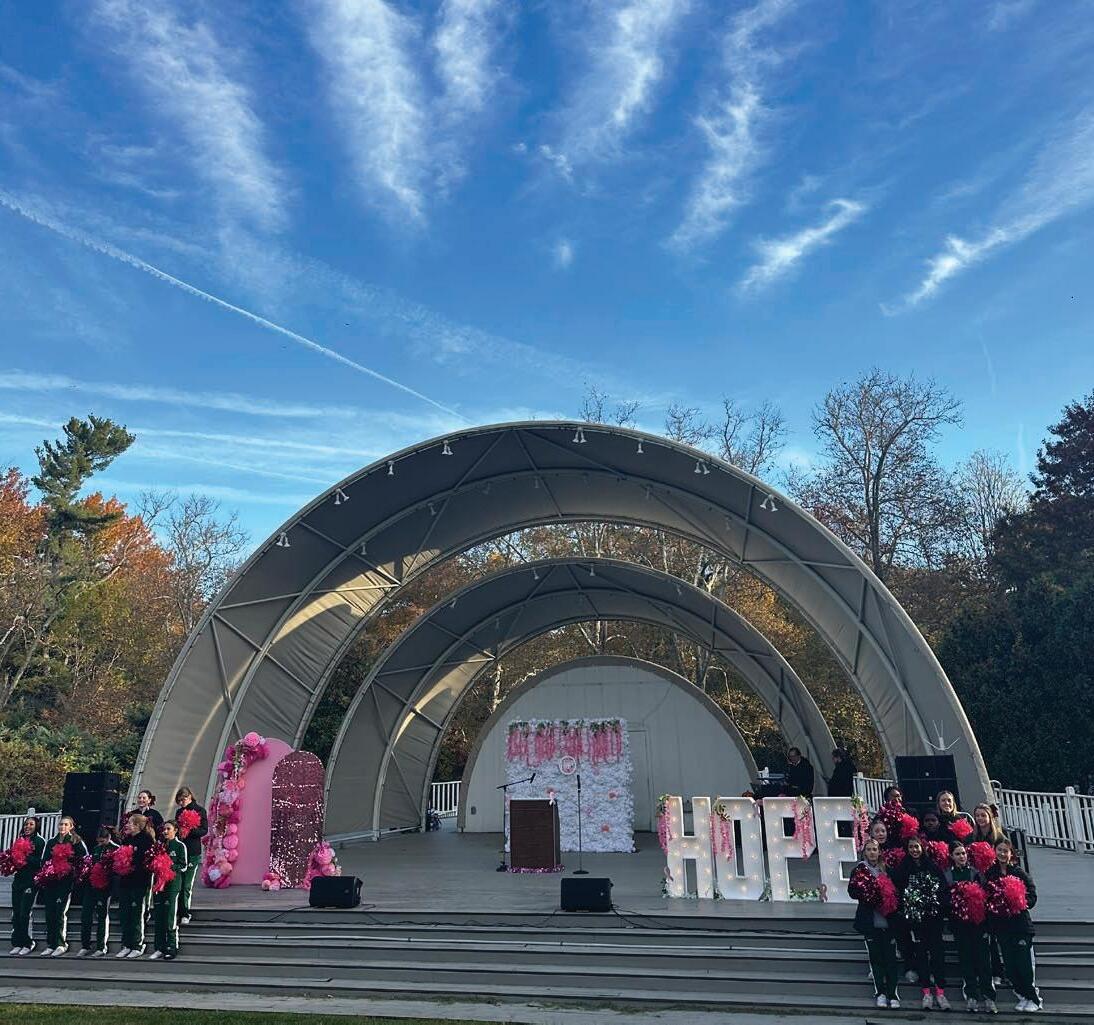

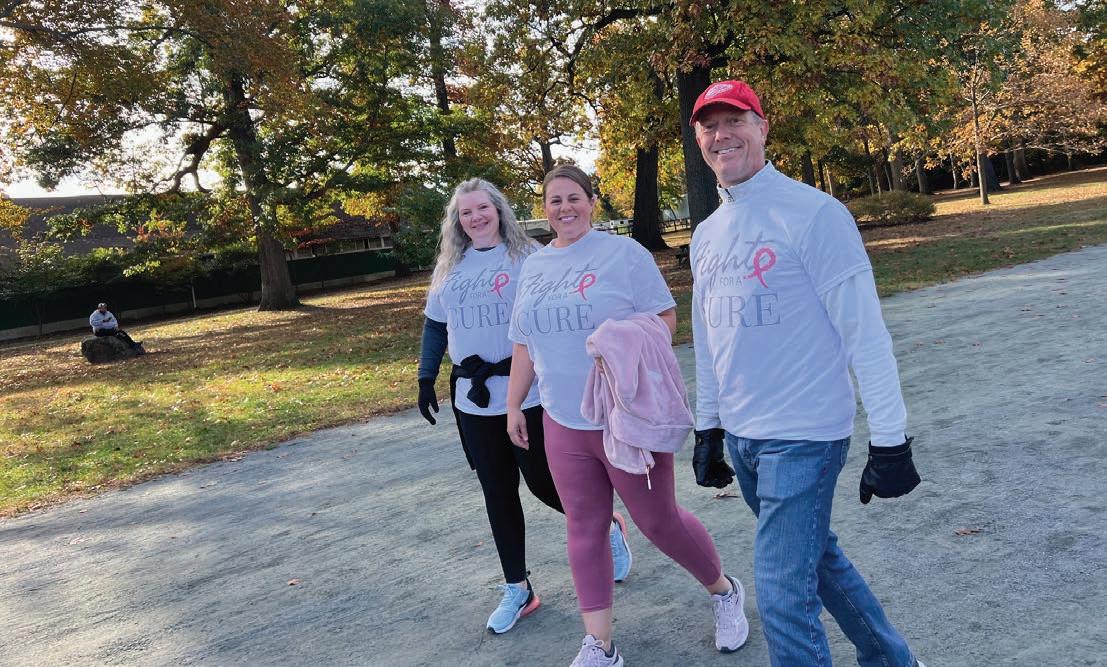

Get Involved in DSBA Leadership!

The Delaware State Bar Association is looking for a number of talented members to join the 2026-2027 Executive Committee and lead the DSBA to continued success.
The following positions on the Executive Committee of the Association must be filled for the year 2026-2027: Vice President-at-Large; Vice President, New Castle County; Secretary; Assistant Secretary; Treasurer; Assistant Treasurer; Six Members-at-Large
Note: The Vice President, Kent County and the Vice President, Sussex County will be those persons selected by, respectively, the Kent County Bar Association and the Sussex County Bar Association.
The Nominating Committee wants to consider all interested candidates. If you are interested in serving on the Executive Committee or would like to recommend a candidate, please send your name or the candidate’s name along with a CV and at least one letter of nomination to Karl Randall, Executive Director, by email at: krandall@dsba.org or by mail at: Delaware State Bar Association, 704 North King Street, Suite 110, Wilmington, DE 19801 by February 6, 2026.
WE NEED YOUR HELP TO FIND STRONG LEADERS FOR THE FUTURE!
The Nominating Committee consists of:
Charles J. Durante, Chair
Kate Harmon, Vice-Chair
New Castle County
Sarah T. Andrade (2025)
Barzilai K. Axelrod (2025)
Joshua B. Brooks (2026)
Nicholas J. Caggiano, Jr. (2025)
Shae L. Chasanov (2025)
Thomas H. Kovach (2025)
Kathleen A. Murphy (2025)
Brionna L. Denby (2026)
Kendeil A. Dorvilier (2026)
Shauna T. Hagan (2026)
Ryan J. Maerz (2026)
Juan E. Martinez (2026)
Noelle B. Torrice (2026)
J. Clayton Athey (2027)
Kent County
Nicole M. Faries (2025)
Justin K. Weeks (2026)
Tetra Shockley (2027)
Roxanne M. Eastes (2027)
Anthony Flynn, Jr. (2027)
Julie O’Dell (2027)
Misty A. Seemans (2027)
George R. Tsakataras (2027)
Elise K. Wolpert (2027)
Sussex County
Timothy G. Willard (2025)
Asim Earnest Gulab (2026)
Tom Carney (2027)