
WOMEN WHO RULE
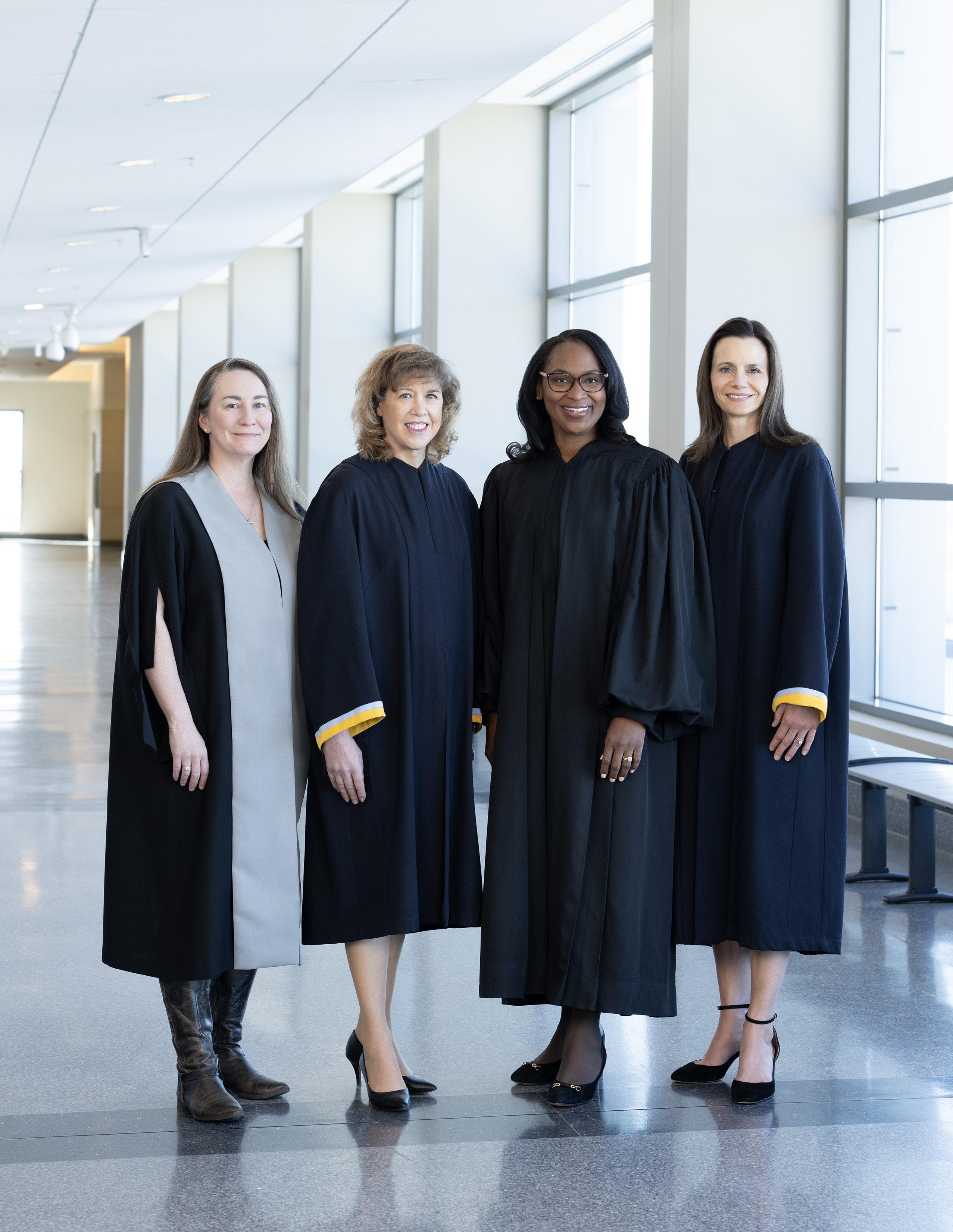
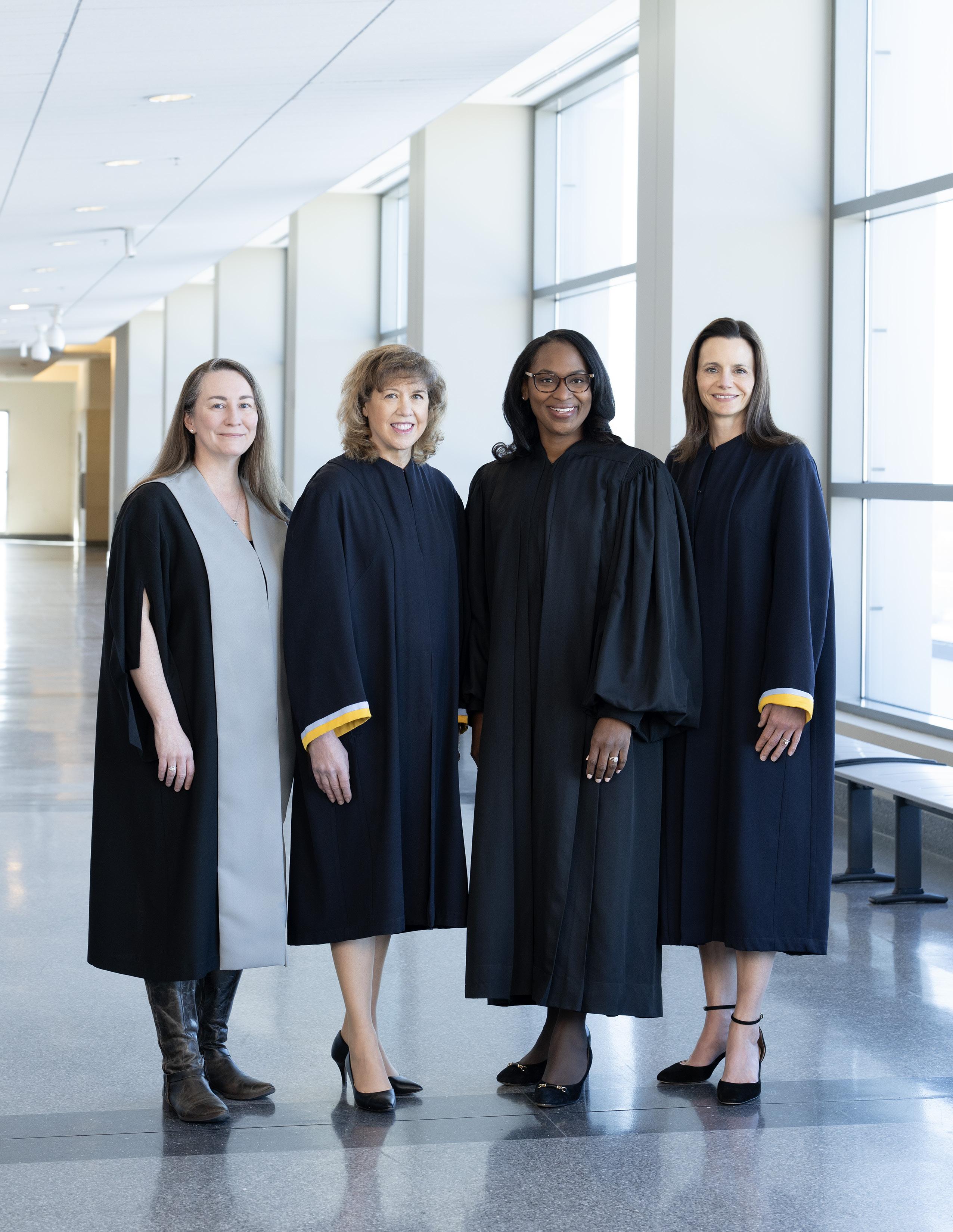
From left: Chancellor Kathaleen McCormick, Justice
Karen Valihura, Third Circuit Court of Appeals Judge (and former Supreme Court Justice) Tamika Montgomery-Reeves, and Justice Abigail LeGrow.

EXECUTIVE
Karl G. Randall
EDITOR-IN-CHIEF
Laina M. Herbert
EDITORIAL BOARD
Jason C. Powell
Adria B. Martinelli
Kristen S. Swift
EXECUTIVE COMMITTEE LIAISON
Ian Connor Bifferato
EDITORIAL ADVISORY COMMITTEE
Valerie A. Caras
Claire DeMatteis
Holly O. Vaughn Wagner
BAR JOURNAL ADVISOR
Richard A. Forsten
EDITOR
Danielle Bouchat-Friedman
The Bar Journal is published and distributed by the Delaware State Bar Association
704 North King Street, Suite 110 Wilmington, DE 19801
P: 302-658-5279
F: 302-658-5212 www.dsba.org
© Copyright 2026 by the Delaware State Bar Association. All Rights Reserved.
The Bar Journal is the independent journal of the Delaware State Bar Association. It is a forum for the free expression of ideas on the law, the legal profession, and the administration of justice. It may publish articles representing unpopular and controversial points of view. Publishing and editorial decisions are based on the quality of writing, the timeliness of the article, and the potential interest to readers, and all articles are subject to limitations of good taste. In every instance, the views expressed are those of the authors, and no endorsement of those views should be inferred, unless specifically identified as the policy of the Delaware State Bar Association.
The Bar Journal is published monthly with a combined July/August issue.
All correspondence regarding circulation, subscriptions, or editorial matters should be mailed to:
Editor, DSBA Bar Journal
Delaware State Bar Association
704 North King Street, Suite 110 Wilmington, DE 19801 or emailed to: dbouchatfriedman@dsba.org
Letters to the Editor should pertain to recent articles, columns, or other letters. Unsigned letters are not published. All letters are subject to editing. Send letters to the address above, Attention: Editor, Bar Journal. The Bar Journal Editorial Policy is available upon request.
CLAIRE DEMATTEIS, ESQUIRE
COLUMNS

PRESIDENT’S CORNER |
BY DAVID A. WHITE, ESQUIRE
Honoring the Legacy and Leadership of Women in the Law: Reflections on Women’s History Month 2026
March is Women’s History Month—a time to honor, reflect upon, and celebrate the contributions women have made to the legal profession and all sectors of society. For the legal community, it is a month to recognize the extraordinary women who shaped the law, broke barriers in our profession, and paved the way for future generations of scholars, advocates, judges, elected officials and Bar leaders.
As we commemorate this month, we should do so with both pride and purpose. As we look back on the progress women have made, we also look forward to the continued work that remains to be done to ensure equity, inclusion, and opportunity for all.
A Historical Journey: From Exclusion to Leadership
The story of women in the law is a story of perseverance against formidable odds. For much of our nation’s history, women were excluded from legal study and the practice of law. It was not until 1869 that Arabella Mansfield became the first woman admitted to practice law in the United States—a milestone that opened the door, however slightly, for others to follow.
In 1923, 54 years after Arabella Mansfield’s historic admission to the Iowa Bar, two Delaware trailblazers, Sybil Ward and Evangelyn Barsky were the first women admitted to the Delaware Bar…joining a profession that was exclusively male. An unfortunate truth, however, is Delaware
was the last state to admit women to the Bar. Since then, the number and influence of women lawyers in Delaware has grown exponentially, to roughly half of our new Bar admissions, shaping the fabric of our law firms, courts, politics, board rooms, and other institutions. Today, strong women lawyers of diverse backgrounds serve with distinction across Delaware’s legal community, judiciary, government and business community.
Representation Matters: Women in Law are Essential
It is axiomatic that the legal profession is strengthened when it reflects the greater society it serves, and the inclusion and influence of women in the Delaware Bar over the past 103 years brings indispensable perspectives to the administration of justice and the rule of law.
As noted, while women now represent roughly half of all law school graduates and new Bar admissions, they remain underrepresented in equity partnerships, senior counsel roles and judicial appointments. Although we are doing much better in Delaware, there is work to be done. Mentorship, flexible career structures, and a commitment to diversity in leadership and law firm partnership are not abstract ideals—they are but a few of the concrete steps we should all take to make our profession more inclusive and sustainable.
The Delaware State Bar Association continues to encourage these efforts by
facilitating and promoting Bar Association leadership at all levels, professional development, supporting affinity groups, and recognizing the exceptional contributions of women, through events such as the Women and the Law Section’s Annual Retreat.
As we look to the future, our task is twofold: to honor the women who came before us and to create pathways for those who will follow. That means being mindful of and confronting implicit bias, advocating for better work-life harmony and integration, challenging inequitable systems of advancement, and celebrating diverse Bar leadership.
Inspiration Through Action
From my perspective, Women’s History Month offers more than commemoration— it offers inspiration for action. Each of us, regardless of gender, should play an active role in building and maintaining a profession that values fairness and equal opportunity.
For younger lawyers and law students, March is an invitation to study the stories of other trailblazers such as Justice Sandra Day O’Connor and Justice Ruth Bader Ginsburg, who transformed American jurisprudence, or Judge Susan Del Pesco (Ret.), the first woman to serve as President of the DSBA and the first woman to serve on the Delaware Superior Court. Or Judge Tamika Montgomery-Reeves, who is making history every day as the first African American woman to serve on the Court of Chancery, the Delaware Supreme Court, and the United States Court of Appeals for
the Third Circuit. She is but one example of a Delaware beacon of excellence and leadership. Her journey from Jackson, Mississippi to Delaware exemplifies the progress we celebrate this month and the promise we must continue to fulfill.
For established practitioners, Women’s History Month is a chance to mentor, sponsor, and lift others. Sharing experiences, celebrating achievements, and supporting family-forward policies can have a lasting impact on the next generation of women attorneys.
A Legacy Carried Forward
As we celebrate Women’s History Month, let us remember that the law is not only a profession but a calling—one that demands courage, compassion, and conviction. These are qualities that women bring to the legal profession in abundance, from the first female law graduates to today’s law firm associates, law partners, judges, statewide elected officials, leaders in our local, state, and federal legislatures, and advocates in every corner of our state.
Their legacies remind us that progress
is not linear or automatic; it is achieved through persistence, principle, and partnership. As Justice Ruth Bader Ginsburg said, “Real change, enduring change, happens one step at a time.” It is through the collective effort of both the women and the men of the Delaware Bar that we will continue to build a more equitable and inclusive future for our profession.
As members of the Delaware State Bar Association, we have both the privilege and the responsibility to uphold these important ideals. This March, may we celebrate not only Women’s History Month, but also the promise of a future in which every member of our Bar has the opportunity to succeed.
David A. White is the 78th President of the DSBA. He is a former Superior Court Commissioner and former Managing Partner of McCarter & English, LLP. From March 2021 to November 2024, he served as Chief Disciplinary Counsel, an Arm of the Delaware Supreme Court. He is currently working as a Professional Neutral at Delaware ADR (www.delawareadr.com).
SOME
Social Events
Sections
at Member Rates

EDITOR’S PERSPECTIVE |
BY ADRIA B. MARTINELLI, ESQUIRE
Groundhog’s Day and the Practice of Law
By this issue’s publication date, I hope we will have broken free from the polar vortex and be enjoying some warmer days. As I write this, though, we are in the thick of it, and Punxsutawney Phil just saw his shadow, predicting six more weeks of winter!
For 22 years, I’ve had a special connection with Groundhog’s Day because my daughter was born on this very special day. She was welcomed into the world with many stuffed groundhogs (she called them “Brown Hogs” for many years) and every children’s book on groundhogs ever written. This year for her birthday she executed on a birthday expedition 22 years in the making by going to Punxsutawney, Pennsylvania for Groundhog’s Day.
Unless you grew up under a rock, you know the tradition, further steeped into American tradition with the eponymous movie.1 Every February 2nd, a groundhog named Phil in Punxsutawney, Pennsylvania emerges from its burrow, and—depending on whether it sees its shadow— tells us whether we have six more weeks of winter or not. This particularly brutal winter, I saw some not very nice TikToks about what people planned to do to poor Phil if he saw his shadow (thereby predicting six more weeks of winter).2 I hope Phil is under witness protection after seeing his shadow this year!
The special significance of Groundhog’s Day for me caused me to consider its potential relationship to the practice of law. Groundhog’s Day is all about a highly
questionable method of predicting the weather. Lawyers are often asked to make predictions about the future: How do you think the judge is likely to rule? What will a jury think of this witness? How much will this cost to litigate? How long will this take?
According to the Stormfax Almanac, Punxsutawney Phil has been right about 39% of the time.3 I would like to think that as lawyers, we make educated guesses with slightly more reliability than Phil, but there’s still plenty of uncertainty.
Prediction Without Certainty
Outcome prediction is an essential lawyering skill. Lawyers, particularly litigators, cannot provide effective counsel to clients if we cannot accurately assess the potential outcomes and advise accordingly.4 Even with years of experience, careful legal research, and thoughtful analysis, there are no guarantees. Most of us qualify our answers and avoid absolutes. And for good reason: there’s not an experienced lawyer among us who has not, on occasion, been taken by complete surprise by a judge’s or jury’s decision. Nevertheless, we can usually offer reasoned predictions based on our experience and knowledge of the law.
We play dual rules as advocates and advisors. In our role as zealous advocates, we have to be invested in our clients’ arguments, or we are not good advocates. It’s sometimes hard to separate ourselves from that role and give an honest, unbiased assessment of the case. One partner I worked with was teased within the department for his “Rose Colored Glasses.” At some point, an actual pair of rose-tinted glasses was purchased for him. Certainly, we must be able to see the
other side and predict their arguments. But especially in the throes of litigation, clients generally don’t want to hear the merits of the other side—they want to hear unwavering commitment to the arguments on their side and reassurance on the likelihood of victory.
Walking this line can be tricky. We must make honest predictions and see the weaknesses in our cases, while at the same time conveying to our clients that we believe in their case.
Reading the Signs
As lawyers we are constantly trying to read the signs: a judge’s question during oral argument, a pause before a ruling, questions from a jury while in deliberation, a raised eyebrow during testimony.
Jury selection, for example, is all about making predictions based on very little information: a person’s appearance and their answers to a handful of questions.
My husband, a retired FBI agent, used to talk about one juror in his case
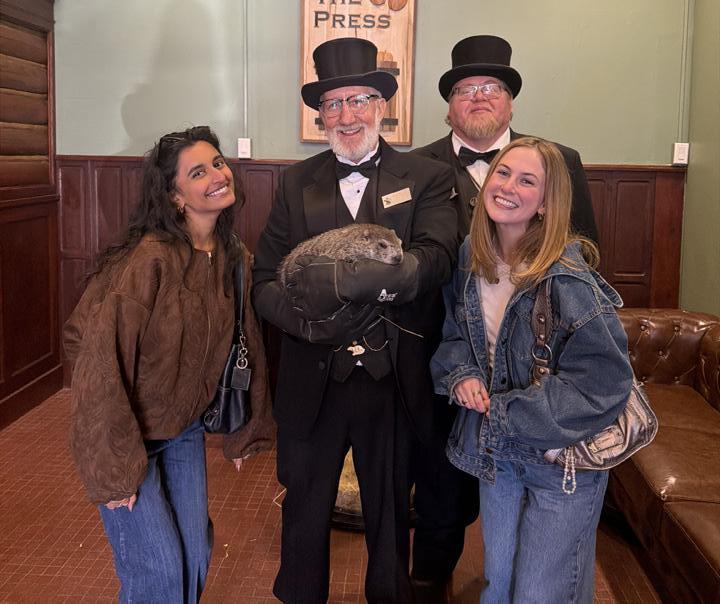
My daughter Gianna (R) and her friend Shreya Gorawala with Punxsutawney Phil during his press tour in State College, PA.
prosecuting the Philly mob. He looked like a biker, usually wore Harley Davidson T-shirts, and the prosecution team assumed he would side with the mafia defendants. Then one day in the middle of trial he showed up in a T-shirt supporting the Philadelphia Police Department. Maybe we pegged him all wrong, they thought!
In one jury trial I handled, as my colleague and I conferred quickly on voir dire decisions, often making judgments based on a juror’s appearance, he observed that the whole process “felt dirty and wrong.” But appearance is one piece of information that is often considered in a decision that must be made very quickly in voir dire.5
Managing Expectations
Good lawyers, like good forecasters (ones better than Phil), explain not just what might happen but why it might happen, and what factors could change the outcome. They prepare clients for multiple scenarios. In both cases, credibility comes from honesty about limits.
Managing clients’ expectations is key to ethical and effective representation. We should avoid guarantees and absolutes, remind clients of contingencies. It is wise to confirm material predictions and assumptions in writing to ensure shared understanding. Lastly, we should prepare for “surprises” and pre-plan decision points should unexpected development occur.
When Our Predictions Are Wrong
Sometimes, despite our best efforts and educated guesses, our predictions are wrong. Punxsutawney Phil is apparently less accurate than a coin toss. But he goes back out, year after year, and does his best. What can we learn from Phil’s example? Look cute while making your predictions?
We cannot be right all the time, and delivering bad news is unfortunately part of our job description. Sometimes, there are opportunities to learn from unexpected decisions and be better prepared the next time. Other times, there is nothing to learn—just bad news to manage. Despite the hits, we get back out there and do it all over again, taking on our next case, client, or challenge.

Notes:
1. “Groundhog Day” was released in 1993 and starred Bill Murray and Andie MacDowell. For the younger attorneys out there, among whom all these references may be lost, Andie MacDowell is the mother of Margaret Qualley.
2. Most involved various methods of cooking him up, including the slow cooker and the air fryer.
3. While the Punxsutawney Groundhog Club maintains that Phil has "never been wrong," independent data analyses, including those from NOAA's National Centers for Environmental Information, show his predictions are mostly inaccurate. According to NOAA’s data, Staten Island Chuck’s predictions have been much better, with 85% accuracy. https://www.noaa.gov/heritage/stories/grading-groundhogs.
4. For a more academic analysis of this issue, I highly recommend Mark K. Osbeck’s article, “Lawyer as Soothsayer: Exploring the Important Role of Outcome Prediction in the Practice of Law.” Osbeck, Mark K. (2018),
Penn State Law Review: Vol. 123: Iss. 1, Article 10. Available at: https://insight.dickinsonlaw.psu.edu/pslr/ vol123/iss1/10. Osbeck explores the role traditional tools of outcome prediction (including lawyerly experience and empirical information), as well as newer predictive analytics.
5. Of course, I am not referring to illegal exclusions based on race, ethnicity, or sex.
Bar Journal Editor Adria Martinelli is a partner at DiBianca Law, LLP and practices primarily employment law. She has more than 25 years of experience including large law firm practice, in-house, and government service. She can be reached at amartinelli@dibilaw.com.


With this expansion, Maven Law now provides dedicated representation in Social Security Disability (SSDI) matters, expanding the Firm’s federal advocacy capabilities and further strengthening its commitment to serving Delaware families.
Take advantage of the target audience of the DSBA Bar Journal and initiate new b usi ness through referrals and building y our brand. Placing a n ad is easy! For more information, email Danielle BouchatFriedman at d bouchatfriedman @dsb a.org. IS PLEASED TO ANNOUNCE THE
EXECUTIVE COMMIT
David A. White President
Ian Connor Bifferato President-Elect
Francis J. Murphy, Jr. Vice President-at-Large
Jennifer Ying Vice President, New Castle County
Liam N. Gallagher Vice President, Kent County
TBD Vice President, Sussex County
Leroy Tice Vice President, Solo & Small Firms, New Castle County
Jeffery Young Vice President, Solo & Small Firms, Kent County
Stephen A. Spence Vice President, Solo & Small Firms, Sussex County
Mae Oberste Secretary
Michael J. Hoffman Assistant Secretary
Frederick H. Mitsdarfer III Treasurer
Crystal Carey Assistant Treasurer
Mary Dugan Past President
The Honorable Eric M. Davis Judicial Member
Christopher L. Damon Assistant to President
Thomas P. McGonigle Legislative Liaison
Tayler D. Bolton
Commissioner Emily A. Ferrell
Robert Kleiner
Brenda R. Mayrack
Zachary S. Stirparo
Anthony V. Panicola Members-at-Large, elected
Claire M. DeMatteis
Arthur Dent
Richard A. Forsten
Roger D. Landon
Wali W. Rushdan, II Members-at-Large, appointed
Karl G. Randall
Executive Director
CALENDAR OF EVENTS / CLE s
March 2026
Tuesday, March 10, 2026 • Noon - 1 p.m. Keeping the Peace (DE-LAP) DSBA
Thursday, March 19, 2026 • 10 a.m. - 2 p.m. Anatomy of a Scam Delaware Tech, Georgetown campus
Wednesday, March 25, 2026 • 5 p.m. - 6:30 p.m. Legal Ethics Mystery Thrillers
Wilmington University
Friday, March 27, 2026 • 9 a.m. - 12:15 p.m. Law Firm Challenges & Opportunities in AI
Wilmington University
Friday, March 27, 2026 • 1 p.m. - 4 p.m. Best Practices in the Court of Chancery
Wilmington University
Tuesday, March 31, 2026 • 1 p.m. - 5:15 p.m. Women Who Rule Riverfront Events
April 2026
Friday, April 17, 2026 • 9 a.m. - 12:15 p.m. Best Practices in Family Court
Wilmington University
Friday, April 17, 2026 • 1 p.m. - 4:30 p.m. AI CLE
Wilmington University
Wednesday, April 22, 2026 • 5 p.m. - 6:30 p.m. Ethics Stories CLE
Wilmington University
Thursday, April 23, 2026 • 9 a.m. - 11 a.m. Delaware Bar Foundation/DSBA CLE DSBA
Wednesday, April 29, 2026 • 9 a.m. - 10 a.m. Cyber Insurance with Mike Mooney DSBA
May 2026
Friday, May 1, 2026 • Noon - 2 p.m. Law Day Luncheon Riverfront Events
Saturday, May 2, 2026 • Save the Date Spring Festival Ramsey's Farm
Tuesday, May 5, 2026 • 8 a.m. - 5 p.m. Workers’ Compensation Riverfront Events
Dates, times, and locations of events and CLEs may occasionally change. Please consult the DSBA website for the most up-to-date information at dsba.org.
OF NOTE
Condolences to the family of David S. Swayze, Esquire , who passed away on January 23, 2026.
Condolences to the family of Bruce Hubbard, Esquire, who passed away on February 1, 2026.
Condolences to the family of Scott A. Green, Esquire , who passed away on February 9, 2026.
Condolences to the family of John H. Small, Esquire , who passed away on February 25, 2026.
If you have an item you would like to submit for the Of Note section, please contact Danielle BouchatFriedman at dbouchatfriedman@dsba.org.



IS A MACHINE AN EXPERT? PROPOSED FEDERAL RULE OF EVIDENCE 707 DRAWS PARALLELS
BY JOE LEONARD, ESQUIRE
The prevalence of Artificial Intelligence tools available to the public presents novel challenges regarding both the accuracy and veracity of evidence with which courts must now grapple. The prevalence of AI generated “deepfake” images across the internet is one outcome of AI that has received a lot of attention, as false images, audio clips, and videos overwhelm social media. These fake images are misleading, spread disinformation, and in some cases may be tortious or illegal. However, there is already a framework in place for dealing with fabricated evidence, and while the methods of fabrication evolve, the underlying approach to handling misrepresentations to the court remains the same.
But another use of AI tools, one less likely to grab headlines, must also be considered when dealing with evidence in an AI forward environment. How can we determine the veracity of a report generated by artificial intelligence? Spreadsheet output and data may appear banal and benign at a glance, but how can a court assess the veracity of an accounting analysis produced by a generate AI prompt? Can inferences and conclusions derived from an AI algorithm be reliable evidence?
Another example involves digital photography, but not in the deep-fake context. Is a photograph taken on a cell phone admissible? Does the answer to that question change if the picture utilizes the phone zoom feature to enlarge and highlight a specific portion? Many phone cameras now use AI algorithms to propagate closeups. Should such a photo be admissible then? Are the finders of fact able to rely on such machine generated output as they consider the details of the case?
The reliability and veracity of machine generated evidence is a critical question when anyone with an internet connection can prompt the generation of a document that appears and purports to be an authoritative take on a subject. Is this accounting analysis accurate?
Can this artificially generated close-up photograph be relied upon to represent the details of what actually happened when the photo was taken at normal range?
Proposed Federal Rule of Evidence 707 was approved last summer by the Judicial Conference and would require that any machine generated evidence meet the same standard for reliability as expert testimony under Rule 702. The Daubert standard, articulated in Daubert v. Merrell Dow Pharmaceuticals, Inc., would thus be applicable to both human expert testimony and to machine generated evidentiary output. The rule includes an exception for the output of common simple scientific instruments, such as calculators or scales, because it would be appropriate in those cases to take judicial notice that the output is reliable.
The proposed rule states as follows:
Where machine-generated evidence is offered without an expert witness and would be subject to Rule 702 if testified to by a witness, the court must find that the evidence satisfies the requirements of Rule 702(a)-(d). This rule does not apply to the output of basic scientific instruments.
By imputing the requirements of Rule 702 to machine generated output, the proposed Rule 707 would require that the proponent of the evidence demonstrate that it is more likely than not that 1) the output put forth will assist the trier of fact in understanding the issue; 2) the output is based on sufficient facts or data; 3) the output is the product of reliable principles and methods; and 4) the output reflects a reliable application of the principles and methods to the facts of the case at hand.
The Advisory Committee Note released with the draft rule compares the uncertainty regarding machine output with the uncertainty regarding expert testimony, stating that “the intent of Rule 707 would be to address the circumstance in which machinegenerated, expert-like conclusions are offered without an accompanying expert witness.”
Potential evidence within the ambit of the new rule is considered in the comments, including “machine output analyzing stock trading patterns to establish causation; analysis of digital data to determine whether two works are substantially similar
in copyright litigation; and machine learning that assesses the complexity of software programs to determine the likelihood that code was misappropriated.”
Application of this rule would seemingly elevate machine output to the level of human expert, without the benefit of that expert being present for cross examination. The Committee Note accompanying the proposed rule highlights the concerns surrounding this new type of data, noting that it will be an open question whether the process was used for a purpose for which it was not designed (described as “function creep”), whether there is analytical error or gaps in data resulting in incomplete analysis, or if there is bias built into the underlying structure of the machine algorithm that impacts the results. Answers to these questions cannot be derived from a proponent who simply applied the program to the data set without understanding how the tool actually works. In such cases, Rule 702 is not applicable, and the need for something like Proposed Rule 707 becomes clear.
While it is necessary to address the influx of machine generated evidence in the wake
of the AI explosion, it is unclear how a court would determine whether something like generative AI is a “reliable principle or method” as aligned with the output. The Committee Notes anticipate that the analysis will involve at least an examination of whether the data inputs are sufficient to ensure the validity of the output (e.g., whether a training data sample used in machine learning is statistically representative of the entire data set; however that example is much better established at this point than a generative AI tool), and “whether the process has been validated in circumstances sufficiently similar to the case at hand.”
The proposed Federal Rule of Evidence 707 is currently in open comment period through February 16, 2026.


invites you to attend its
36 ANNUAL DINNER TH
honoring
K A T H L E E N D U F F Y S M I T H
Recipient of the 2026 Monsignor Paul J. Taggart St. Thomas More Award
SUNDAY, MAY 3, 2026
Cocktails at 5 p.m. | Dinner at 6 p.m.
Wilmington Country Club 4825 Kennett Pike, Wilmington, DE
For information about registration and sponsorship opportunities, please contact Denise Nordheimer at dnordheimer@foxrothschild.com
Joe Leonard is Counsel at Morris James LLP in Wilmington, where the focus of his practice is eDiscovery and Information Governance. He is a member of the Richard Herrmann Technology Inn of Court in Delaware and the AI Virtual American Inn of Court.

We Can Do It! Rosie, Real Life, and the Women Holding Court at Work and at Home
During World War II, a poster appeared that would outlive the war itself. A woman in a red polka-dot bandana flexed her arm beneath four bold words: We Can Do It!
The image became synonymous with Rosie the Riveter, representing the more than six million American women who entered the workforce during World War II to fill industrial roles while men were deployed overseas.¹
Rosie symbolized competence under pressure. Resolve. Adaptability.
She also symbolized something quieter: women stepping into roles they had never held before—while still carrying responsibilities at home.
Eighty years later, many women in the legal profession are living a modern version of that story. Yes, we can do it.
But in the practice of law—and on the bench—the better question may be: How do you do it without losing yourself in the process?
The Modern 98-Hour Week
In 2018, a survey commissioned by Welch’s and conducted by OnePoll reported that the average working mother clocks approximately 98 hours per week when combining paid work and household responsibilities.² While this was a commissioned survey rather than peer-
reviewed research, the number resonated widely because it reflected lived experience.
For women attorneys and judges, those hours often include:
▪ Client crises that do not respect dinner time.
▪ Briefs that must be finished after bedtime.
▪ Hearings that demand emotional neutrality.
▪ Decisions that carry real human consequence.
The law is not shiftwork. It follows you home—in files, in thoughts, in moral weight.
The Layered Guilt of Professional Women
In a March 31, 2022 Forbes essay, contributor Patricia Duchene described returning to work after maternity leave.³ She expected “mom guilt.” Instead, she initially felt energized and excited to return to work she valued. It was only later— after someone expressed surprise at her lack of guilt—that the guilt settled in.
For many professional women, the mental load extends beyond calendars and commitments. It includes anticipating needs, smoothing tension, and preserving connection in the margins of already full days.
She describes a pivotal moment feeding her daughter with one hand while answering emails with the other. When she looked down and saw her child staring at her, she realized something profound:
“I can’t be present at both, at the same time.”
For legal professionals—particularly litigators and judges accustomed to high performance—that realization can feel like defeat.
It is not defeat. It is reality.
Presence is finite. Even the most disciplined mind cannot occupy two demanding roles simultaneously.
The Pressure Unique to the Law
Unlike many professions, the legal field often reinforces perfectionism:
▪ Deadlines are immovable.
▪ Ethical obligations are exacting.
▪ Mistakes carry consequences.
▪ Reputation matters.
Judges carry the additional burden of neutrality and public trust. Attorneys often carry their clients’ trauma, conflict, and financial stress.
When those professional pressures meet childcare shortages, school schedules, aging parents, and partnership expectations, the result is not weakness—it is cumulative load.
The U.S. Department of Health and Human Services defines affordable childcare as no more than 7% of household income.⁴ In many states, infant care far exceeds that benchmark. Even when affordable care is secured, instability—waitlists, staffing shortages, unexpected closures—creates recurring stress.
Many women in law quietly ask themselves:
▪ Am I fully committed to my clients?
▪ Am I fully present with my children?
▪ Am I falling short in both places?
These questions rarely surface in CLE sessions. But they are real.
Partnership and Marriage
There is another responsibility that often remains quiet but deeply felt—the responsibility to a spouse or partner.
Strong marriages and partnerships require more than logistical coordination. They require emotional availability, shared decision-making, and intentional time. In dual-career households,

someone must adjust when court runs late, when childcare falls through, or when a client crisis erupts.
For many professional women, the mental load extends beyond calendars and commitments. It includes anticipating needs, smoothing tension, and preserving connection in the margins of already full days. Balancing commitment to the profession with commitment to a partner is not secondary—it is central to long-term stability and well-being.
What the Research—and Experience—Suggest
A 2024 Psychology Today article on
balancing career and motherhood emphasizes several protective strategies:⁵
▪ Lead authentically rather than performing an idealized version of leadership.
▪ Prioritize personal well-being consistently—even briefly.
▪ Ask for help and delegate where possible.
▪ Intentionally “switch off” at the end of the workday.
J. Howard Miller created the famous "We Can Do It!" poster in 1943,
If
you need boundaries, support, flexibility, or simply a
candid conversation—it
is not weakness. It is wisdom.
That final point deserves attention in the legal field. Research on occupational stress indicates that psychological detachment from work during non-work hours predicts reduced emotional exhaustion and improved well-being.⁶
In other words: stepping away is not neglecting duty. It is sustaining capacity.
For attorneys and judges, this may mean:
▪ Not reviewing email during bedtime routines.
▪ Creating a ritual that marks the end of court or the close of the office.
▪ Allowing yourself to say “not tonight” when the work can safely wait.
Boundaries are not a lack of dedication. They are a recognition of human limits.
Redefining “Doing It All”
Rosie flexed her arm. Strength was the message.
But the deeper strength was adaptability.
Modern professional women in law are adapting daily:
▪ Negotiating flexible schedules.
▪ Reframing what excellence looks like in different seasons.
▪ Delegating more than they once did.
▪ Accepting that some days will lean toward work, others toward home.
One powerful reframing from the Forbes piece was this: if the schedule is imperfect, dinner is simple, and advancement is slower than anticipated, that does not equal failure. It may simply mean you
are navigating competing responsibilities with integrity.
In the legal profession, we are trained to measure outcomes. Wins. Promotions. Opinions issued.
Motherhood—and caregiving more broadly—does not always offer measurable metrics.
Sometimes success looks like:
▪ Showing up.
▪ Staying steady.
▪ Surviving the week without resentment or collapse. That counts.
A Word to Women on the Bench and in Practice
You do not have to prove that you can “do it all.”
You already demonstrate extraordinary competence every day.
If you feel stretched, it is not because you are inadequate.
It is because the load is real.
If you feel guilt, it is not evidence of failure.
It is evidence of care.
If you need boundaries, support,
flexibility, or simply a candid conversation—it is not weakness. It is wisdom.
For members of Delaware’s bench and bar, confidential support is available. The Delaware Lawyers Assistance Program (DE-LAP) exists to assist attorneys and judges facing stress, burnout, substance use concerns, mental health challenges, or the cumulative weight of professional and personal responsibility. Seeking support is not an admission that you cannot manage the work. It is an acknowledgment that sustaining a long and honorable legal career requires care, perspective, and connection.
Rosie’s slogan still resonates: We can do it.
But perhaps in the legal profession, the healthier translation is: We can do this—with support, with boundaries, and without sacrificing our humanity.
And that may be the strongest position of all.
Notes:
1.
Eric M. Doroshow
National Archives, Rosie the Riveter: Women Working During World War II ; National Park Service, Women in the Workforce During WWII.
2. Welch’s, Average Working Mom Works Twoand-a-Half Full-Time Jobs (May 3, 2018) (OnePoll survey).
3. Patricia Duchene, Figuring Out Work-Life Balance As A Professional And Mother, Forbes (Mar. 31, 2022).
4. U.S. Dep’t of Health & Hum. Servs., Child Care and Development Fund Final Rule, 81 Fed. Reg. 67438 (2016).
5. Balancing Career and Motherhood, Psychology Today (Apr. 18, 2024).
6. Sabine Sonnentag & Charlotte Fritz, Recovery Experience Questionnaire, 92 J. Applied Psychol. 204 (2007).
Marine Corps veteran and former Department of Corrections employee, Jim has spent his career bridging gaps between legal, law enforcement, and clinical communities. He served on multiple advisory boards, including Wilmington University’s Human Trafficking and Behavioral Science departments, and continues to provide education and training on disaster mental health, de-escalation, and crisis intervention across Delaware.
Through his leadership at DE-LAP, Jim remains a steadfast advocate for healthier, more resilient legal professionals and systems.
You can contact Jim at (302) 610-8234.
Jim Deel serves as the Executive Director of the Delaware Lawyers Assistance Program (DE-LAP), where he leads efforts to address the growing mental health and substance use crisis within the legal profession. Through confidential support, advocacy, and access to treatment, Jim works to reduce stigma and offer meaningful pathways to recovery for attorneys and judges facing mental health challenges, addiction, grief, and burnout.
With over two decades of experience spanning the criminal justice, behavioral health, and public safety systems, Jim brings a trauma-informed, multi-disciplinary approach to DE-LAP services. A U.S.



CREATING SPACE IN THE LAW: LEADERSHIP, ADVOCACY & WOMEN
CURATED BY
KRISTEN S. SWIFT, ESQUIRE
Over the next several months, the Creating Space in the Law: Leadership, Advocacy, & Women column will feature question and answer profiles on Delaware women attorneys who own or lead Delaware law firms and legal departments. We hope you enjoy getting to know your colleagues a little better! — Kristen Swift
WOMEN-LED FIRMS IN DELAWARE
Q&
AWith Jennifer Zelvin McCloskey, Esq., Attorney/Managing Partner at Zelvin Law, LLC
Q
Introduce us to your firm What type of law does your firm practice, where is it located, and when did it open?
A Zelvin Law, LLC is a specialized firm focusing on estate planning, estate administration, individual trusteeship, and elder law planning located in the heart of North Wilmington on Concord Pike (Route 202). While the firm was established in 2017, its growth accelerated significantly beginning in 2020.
Q
A
Let’s talk about you. Where did you grow up?
I often say I grew up in Florida, as my family moved there when I was 15, though before that I lived in both New York and New Jersey. I consider myself very much an East Coast person with a heart for the mountains out west.
Q When did you know you wanted to be a lawyer?
A
I decided to pursue law after graduating from college, when I accepted a position at King & Spalding in Atlanta as a document clerk in the Trusts & Estates department. I was drawn to both the practice area and the professionalism of the attorneys—it quickly became clear that this work aligned with how I think and problem-solve. Law school brought me to Delaware, where I attended Widener, Delaware Law School.
Q Did you always envision yourself starting/leading a law firm?
A
Not at all. My path to firm ownership was organic and driven by circumstances rather than long-term planning. In 2017, I was hired by the University of Delaware to develop and direct the Trust Management Minor, a role I accepted out of passion for the profession and its future workforce.
At the same time, I opened my firm to complement that role. What began as a practical and financial decision, evolved into something much larger. For several years, I balanced both endeavors, building my practice while also developing and teaching within the university program.
Q What were the first 10 years of your career as an attorney like?
AThey were dynamic and formative. They zigged and zagged! I began my career in Delaware practicing corporate bankruptcy and commercial litigation, an area with strong demand at the time. Several years in, I relocated to Florida and transitioned into public service as an Assistant State Attorney for the 19th Judicial Circuit. That experience reinforced for me that a law degree offers many meaningful paths. Each stage of my early career contributed to my perspective, resilience, and professional growth.

without the Trust Minor being at risk of failing because of the stability and support from the community and the university. I knew if I wanted to see it grow and really challenge myself both professionally and personally, I would need to give it everything I had.
QWho helped you along the way?
ARunning a law firm requires balancing the practice of law with the realities of operating a business. Learning about payroll, benefits, management styles, hiring, training, and financial oversight has been both challenging and rewarding. These skills aren’t typically taught in law school, but they are essential to building a scaleable and sustainable practice.
Q What are some of the challenges you overcame to get to this point in your career?
AFinding the professional fit and right practice area was a process. Like many attorneys, I explored different practice areas before settling into the one that truly aligned with my strengths and interests. Navigating transitions while managing personal responsibilities and pitfalls also required adaptability and resilience. Those experiences ultimately shaped my confidence and perspective.
Q What was the impetus for opening your own practice/firm/leading an office?
AClient demand and professional fulfillment ultimately guided that decision. Knowing that the Trust Management program was well established and supported gave me the confidence to focus entirely on my practice. It allowed me to fully commit to my clients and to the continued growth of the firm.
Q I look at starting a law firm, or any business, as a leap of faith. What helped you leap?
A I agree! It felt a little like free soloing—climbing without ropes or a parachute. What helped me leap was knowing that I could focus 100% of my attention on my clients and my practice
AFirst and foremost, my husband, Kieran McCloskey, whose support has been unwavering. I have also benefited from guidance encouragement of many colleagues, mentors, and professionals within the trust and estate community. It is a collegial and generous profession, and I am grateful for the relationships that have supported my work and growth. No one builds a career alone. To name just a few folks who helped me, Natalie Wolf, Elle Van Dahlgren, Todd Flubacher, Zachary Haupt, Lynn Watson, Cindy Brown, Rich Jakotowitz, Kimberlee Orth, a myriad of financial advisers who have confidence in me, and my colleagues at UD. I love this industry and this practice area. The community is supportive, collegial, and genuine.
Q
What are some practical factors to consider when managing your own firm/office/practice group?
Q
Tell me about a typical day.
A
My days are client-centered, and deadline driven. I spend time drafting and reviewing documents, meeting with clients, collaborating with colleagues, and guiding individuals through complex and often emotional matters. The work is intellectually engaging and deeply human.
Q What is the best career advice you’ve received?
A The best advice: you don’t need to have everything figured out. You can make mistakes and make changes. Careers evolve, and growth often comes through change. Each person has their own path and their own timeline.

Q What is the worst career advice you’ve received?
A Make as much money as you possibly can. I learned early on that it is not about money and money does not make you happy. It’s about fulfillment and the impact you make on those around you. It is about how you use this privilege of practicing law to benefit others.
Q How do you define success?
A Success means doing meaningful work, serving others well, and earning trust and respect through that service. It’s about impact rather than accumulation.
Q How do you manage requests for your time that are not made by work or your family?
AI prioritize and triage. My family comes before all. To that end, I am fortunate because my son is in college so the demands on my time from my son are no longer in competition with those of my job. My husband works full time as well, so we communicate a lot and make sure that we have the same expectations about priorities and time management.
Q How do you prioritize tasks?
A I have a task management system built into my software and work very closely with my paralegal to make sure that all of my deadlines are on my calendar. I am very deadline driven and this helps me with time management.
Q Are there any projects or organizations you are involved in that you want to share?
A I remain closely involved with the University of Delaware’s Trust Management Minor and with the Peak Trust Management Certificate program, both of which I built. I am also active with the Delaware Military Academy, where I serve on the board and support its mission.
Q What activities or interests do you pursue when you are not working?
A I love to run, workout at Orange Theory, travel, hike, go to national parks, spend time with family and friends and hang out with my dog, Murphy.
Q What do you love about your work?
A I value the opportunity to work closely with people during pivotal moments in their lives. It is a privilege to listen, guide, and support clients —particularly older adults—through complex decisions with care and respect.
Q What strategies did you use to expand your business?
A Speaking engagements, professional networking, and referrals have been invaluable. Trust is built through relationships, and word of mouth has been the most meaningful form of growth.
Q Most memorable moment of your career?
A Being recognized by my peers as a top trusts and estates attorney in Delaware Today for 2025 was deeply meaningful.
Q Do you have any advice for your fellow attorneys?
A
Be curious, ask questions, and build a trusted professional network. Give yourself permission to evolve.
Photo courtesy of Sarah Gaspero, of Tuleya Photography.
Success rarely follows a straight line, and growth comes from thoughtful risk-taking supported by strong relationships.
Q What lesson(s) or advice would you share with someone who tells you they might be ready to start their own practice?
A
Ask a lot of questions of others. Develop a network of people that will be a sounding board and that you can be a sounding board for. Find the people who you trust won’t judge you if you say, “I think I should know this, but I don’t… will you help?” If you have the opportunity to take a partner—do it! Being an attorney is a hard job, but being a solo practitioner is even harder. Having folks you can exchange ideas with is critical.
Q What are the most important attributes you look for when bringing another attorney onto your team?
ADetail-oriented, great interpersonal skills, willingness to learn, and humble.
Q
Some might look at your career and think you’ve reached the apex. Have you? Do you have future career goals you are working towards, big or small?
AI hope I have not reached my career apex! I continue to set goals— professionally and personally—and look forward to what lies ahead. If I have learned anything, it's that there is always room to grow. I would like to increase my public speaking engagements, write and publish more, grow my firm, and teach law school. With all those things in mind, I really hope the apex is many thousands of feet higher than the place I am standing right now.
Q How do you stay motivated to achieve your ambitions?
A
Through discipline. Motivation is a liar, it comes and goes, but consistency and commitment are what carry goals forward. I know what I want to achieve and in order to succeed in reaching those goals, I have to stay disciplined even on the days where I don’t feel motivated.





CONGRATULATIONS
TO THE NEW MEMBERS OF THE DELAWARE BAR
*THE LIST BELOW REFLECTS NEW MEMBERS ADMITTED IN 2025 TO DATE
Lauren Angelina
Timothy G. Azizkhan
Madison Sue Barnes
Oscar Barron-Guerra
David C. Beach
Monica K. Beard
Lilia Beck
Julian Benson-Reid
Adia Lynn Berkel
Cicely Berzack
Jonathan M. Bigelow
Mark Blumenfrucht
Lily Bohlke
Alyssa K. Boob
Daniel M. Boucot
Nathan Robert Bunyon
Ross E. Carey
Fiona Mary Elisabeth Carmichael
Camille Nicole Collins
Henry S. Conover
Matthew Cole Conover
Lauren Marie Crawford
Audrey Crites
Kristin N. Cunningham
Halley Sheridan Dannemiller
Liam Davis
Thomas R. DeCesar
Nisha C. Desai
Madison T. Devlin
Abigail R. de Uriarte
James C. Diver
Jeffrey J. Dixon
Amanda Donato
Delaney L. Doran
Jessica A. Downes
Noah Eastman
Hashim Esmail Elwazir
Cynthia C. Emesibe
Elizabeth S. Emmi
Kyle D. Rustad Estel
Clayton Branson Faller
Leah Rose Ferro
Anna Manu Fineanganofo
Kevin Dimitri Fiss
Judrick K. Fletcher
Bridget Foehl
Connor John Foley
Nicholas A. Fore
Joshua Ilan Friedman
Ravi M Gandhi
Joanna Garner
Michael R. Gaskell
Danny Gatto
Jordynn J. Gemberling
Meghan Kathleen Geouque
Lauren S. Getman
Olivia Giannetta
Laura Giardina
Maxwell Gioffre
Rachael T. Gonzales
Nicholas R. Gottemoller
Toyia Haines
Kyle J. Hannigan
Jaden Harding
Amy R. Harriman
Kylee Noelle Harvey
May Hennessy
Sheridan Tremayne Hill, II
Sehee Hwang
Sucharita Chandrasekhar Iyengar
Vidhu Bhardwaj Joshi
Andrew Jung
Kathryn Elizabeth Kane
Dominique Kendus
Grant M. Knepper
Cole Kreuzberger
Joseph Lafferty
Hanna Ginalle Lambert
Joseph Layne Lancaster
Madison Lesgart
Jonathan H. Lloyd
Ian C. Logan
Eric A. Lovetri
Joseph D. Lungen
Alexander Donald MacLennan
Katherine Majewski
Matthew Joseph Mallon
Tyler Davis Mayhew
Elaine May McCabe
Drea Lynn McCloskey
Dana L. McCulloch
Emily Elizabeth Mitchell
Alexa D. Monro
Andrew Joseph Moore
Dionis Mucollari
Autumn Kate Mueller
Stephen Taylor Nasko
Charles Jackson Nestor
Marguerite A. O'Brien
Shane L. O'Connor
Brady C. O'Neill
Femon Aldulfus Borbor Padmore II
Ryan A. Patino
Adam C. Perri
Alexis Catherine Poore
David Kent Ramirez
Austin Hoyt Reed
Jaelyn Robinson
CONGRATULATIONS TO THE NEW MEMBERS OF THE DELAWARE BAR
*THE LIST BELOW REFLECTS NEW MEMBERS ADMITTED IN 2025 TO DATE
Llewellyn Oliver Robinson
Michael Stephen Rodriguez
Laura Kym Davis Rogers
Sophie Roling
Zachary Roseman
Andrew L. Rosen
Emma Roth
Benjamin S. Rothstein
Brian Michael Ruditys
Peter T. Sabini
Angela J. Sadat
Jason Erik Saville
Andrew Schoen
Rachel Elizabeth Schrier
Heather Elizabeth Selekman
Ryan Jeffrey Simpson
Ambria Smith
Christina Marie Smith
Zachary Smith
Melissa A. Sobrepera
Jacob L. Somerville
Katherine R. Strauch
Alexis L. Sullivan
Rebecca E. Summers
Clark Yiqi Sun
Victoria R. Swiacki
River J. Tanner
Jing Wang
Shericka M. Ward
Brett C. Wells
Nathan S. White
Lauren Christine Whitney
Katie Woodbury
Wenting Wu
Kacey L. Yates
Justin Zaragoza
Carmen Zheng

It Took Generations Women on the Delaware Bench
BY CLAIRE DEMATTEIS, ESQUIRE
PHOTOGRAPHY BY DICK DUBROFF/ FINALFOCUSPHOTOGRAPHY
From left: Chancellor Kathaleen McCormick, Justice Karen Valihura, Third Circuit Court of Appeals Judge (and former Supreme Court Justice) Tamika Montgomery-Reeves, and Justice Abigail LeGrow.
It took 192 years for the first woman to serve as a Vice Chancellor on the Delaware Court of Chancery, which was created in 1792.
It took 43 years for the first woman to serve on the Delaware Supreme Court, which was re-established in 1951.
Notably, the same woman broke that gender barrier—The Honorable Carolyn Berger when she was appointed to the Court of Chancery in 1984, and then to the Delaware Supreme Court in 1994.
Today, four of the seven judicial members on the Court of Chancery are women, including the Chancellor. Two of the five Delaware Supreme Court Justices are women.
Three quarters of Delaware Family Court Judges are women. One third of judges on the Delaware Superior Court are women. Nearly half of the judges on the Court of Common Pleas are women.
It took generations.
Of the 29 justices who have served on the Delaware Supreme Court over the past 75 years, just four have been women. Over the 234-year history of the Delaware Court of Chancery, 43 men and only six women have served on that esteemed business court.
Considering that in 1923, Delaware was the last state to admit women as members of the state bar, women attorneys had some catching up to do. Roxanna C. Arsht was the fifth woman admitted to the Delaware Bar in 1941, and she was the first woman to serve as a judge on any of Delaware’s constitutional or statutory courts, serving as a Family Court Judge from 1971 to 1983. Since Judge Arsht’s appointment, 20 other women currently or have served as Family Court Judges.
The Delaware State Bar Association (DSBA) was established the same year that women were first admitted to the Delaware Bar. It took 64 years for the DSBA to elect a woman to serve as President, selecting Susan Del Pesco in 1987. The following year, she became the first woman to serve on Delaware’s main trial court overseeing
complex civil litigation and serious criminal cases. In the five generations since Superior Court was established in 1897, just 18 women have donned the black robe as a Delaware Superior Court judge.
Reflecting on her historic “Superior Court first” in an interview for this article, Judge Del Pesco said, “I wasn’t expecting and didn’t recognize the cultural change that my appointment launched. Happily, Governors Mike Castle, Tom Carper, and subsequent Governors have been committed to diversifying the bench with the appointment of Haile Alford, the first black judge, and Jan Jurden, Mary Johnston, and many others. So I did not shoulder the burden alone. To me, the best marker of the progress of women in the Delaware judiciary is the fact that such an appointment is no longer news. The progress of women on the bench has been steady and merit based.”
Governor John Carney appointed and re-appointed more than 25 women to the Delaware judiciary, which is more than all previous governors combined. In an interview he said, “I wanted to see more balance. It is a very thorough process and the best rose to the top. The best in many of my appointments were women. There are real superstars on our courts today. I listened to the chairs and members of the Judicial Nominating Commission and respected their recommendations. I
interviewed extraordinary candidates and assessed their strengths, skills, experience, judicial temperament, and perseverance.”
Delaware Supreme Court Justice Karen Valihura submitted her application to the Judicial Nominating Commission in 2014 after Justice Carolyn Berger announced her retirement. As a successful, highlyrespected corporate litigator, she could have continued in private practice, but she understood women needed to step up to maintain a seat on Delaware’s highest court. “Looking at the Bar when I joined in 1989 and now, women have made great strides,” Justice Valihura said. “It has been quite a journey from a point when there were only a handful of women in the corporate litigation arena to where women are now. But I think there is room for more progress, particularly in leadership positions across the State. My advice to women attorneys who are considering applying for a judgeship is to apply if you think you are at a point in your career where it makes sense and you have a strong desire to serve the public. Even if you think you are not likely to be chosen your first time, going through the process is very worthwhile and educational. There is no shame if you do not succeed the first time.”1
Delaware Supreme Court Justice Abigail LeGrow echoes that advice. Her three-part advice to women attorneys who are considering applying for a judgeship is insightful. “First: apply! Do not let either a fear of failure or your own self-doubt stop you from applying. Some of the most successful professional women I know are plagued by self-doubt and ‘imposter syndrome.’ Our internal critic is often our own worst enemy. Second: network. Find people you trust, share your ambitions, and ask them to help you get to the next step. A judicial position is not something that you can achieve without having people in your corner, so start thinking about that now. Third: expect that you likely will have to apply more than once. Very few people are appointed the first time that they apply, and many qualified people apply several times. There are numerous factors that the Governor must consider in choosing
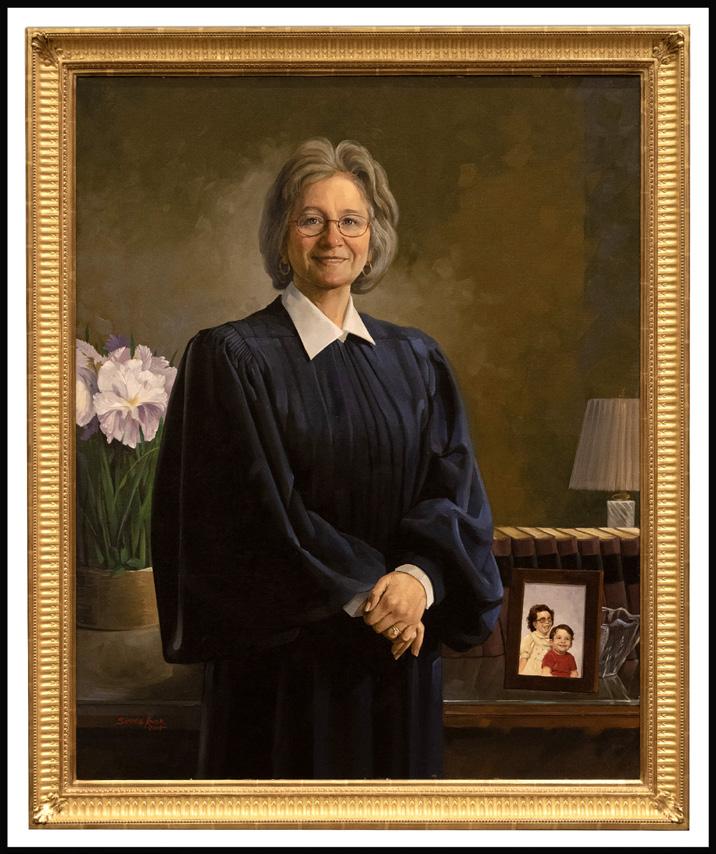
Portrait of the Honorable Carolyn Berger.
a nominee, so the fact that an applicant is not chosen is not a sign that she is not qualified for the position. Try again and use the first experience to improve your chances next time.”
Judge Tamika Montgomery-Reeves was the first black woman to serve on the Delaware Court of Chancery and then the Delaware Supreme Court. She now serves on the Third Circuit Court of Appeals, appointed by President Joe Biden in 2022. She counsels women attorneys to “create opportunities for yourself, find a mentor, be mindful of your reputation, don’t limit yourself, and don’t let others limit you.”
The Honorable Chandlee Johnson Kuhn reflected on her appointment as the first woman to serve as Chief Judge of Family Court, appointed by the first and only female Delaware Governor. “Governor Minner and I shared having worked through the trenches of Delaware government. The Governor began her career in legislative hall, and I served as a court bailiff, earning $12,300 in my first year with the Family Court. Family Court was my home throughout my legal career. Serving Delaware’s most vulnerable children and adults was an honor and privilege. Without the support of other judges, I would not
have been able to handle the stress and anxiety that came along with being Chief Judge. In particular, Judge Susan Del Pesco and Justice Randy Holland supported and encouraged me throughout my tenure.”
Chief Judge Kuhn elaborated on the challenges she faced as the only woman leading a state constitutional court from 2003 to 2015. “There were challenges. Unfortunately, throughout my tenure, there were attorneys and judges who behaved poorly and with impunity regarding how they were allowed to treat female employees, attorneys, and incredulously other female judges. Although more women in Delaware are succeeding, I am distressed that young lawyers continue to seek my guidance regarding how to handle the bad behavior of a few senior attorneys and judges. Delaware has come a long way in a short time in its promotion of qualified women to the bench. However, it remains imperative that we remain vigilant and proactive in addressing inappropriate behavior within the bench and bar.”
The Honorable Patricia Griffin is another notable “first” for women attorneys transitioning from the bar to the bench, and beyond. Judge Griffin was the firstever female Chief Magistrate of the Justice of the Peace Court (1993-2005) and then went on to be the first female State Court Administrator (2005-2017). She then rejoined the judiciary as a then-Master (now Magistrate) in the Court of Chancery. Currently, of the 61 magistrates on the statutorily-created Justice of the Peace Court, 28 are women, although magistrates are not required to be Delawarebarred attorneys.
An article on women judges is not complete without referencing the classic quote from U.S. Supreme Court Justice Ruth Bader Ginsburg:
“When I’m sometimes asked ‘When will there be enough (women on the Supreme Court)?’ and my answer is: ‘When there are nine.’ People are shocked. But there’d been nine men, and nobody’s ever raised a question about that.”
Considering that in 2026, nearly 40%
of the members of the Delaware Bar are women, as Delaware governors, legislators, attorneys and judges pursue future progress of women on the bench, Justice LeGrow’s interpretation of that famous “when there are nine” quote is a good guide.
“I have always taken her point to be that we shouldn’t be focused on a particular number as being ‘enough’ to have achieved equality. And I agree with her in that sense; the goal does not need to be a particular number, a majority of female jurists, or an ‘all-women bench.’ I believe we are best served by framing the goal as maintaining a judiciary comprised of a diverse set of people, with a variety of backgrounds and experiences, all of whom are qualified and committed to the cause of justice. We are very privileged to have such a strong judicial system in Delaware, and I am honored to be a part of it.”
Across Delaware’s strong judicial system of six constitutional and statutory courts, four of those courts have been led by women over the past 23 years: Family Court Chief Judge Kuhn (2003–2015), Superior Court President Judge Jan Jurden (2015–2025), Court of Chancery Chancellor Kathaleen McCormick (2021 to present), and Chief Magistrate Judge McGriffin (1993–2005). The Delaware Supreme Court and Court of Common Pleas are the only two statewide courts that have never had a woman at the helm. With the ever-increasing experience and stature of women judges and attorneys in our state, women are poised to accomplish these final judicial “first” feats in due course.
Note:
1.
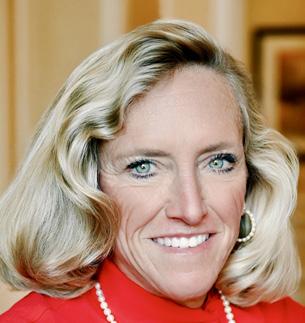
Claire DeMatteis is a Delaware attorney, past Chair of the Women and the Law Section, and member of the Delaware Women’s Hall of Fame.
Justice Valihura recently announced her retirement from the Supreme Court in July 2026 when her 12year term expires.
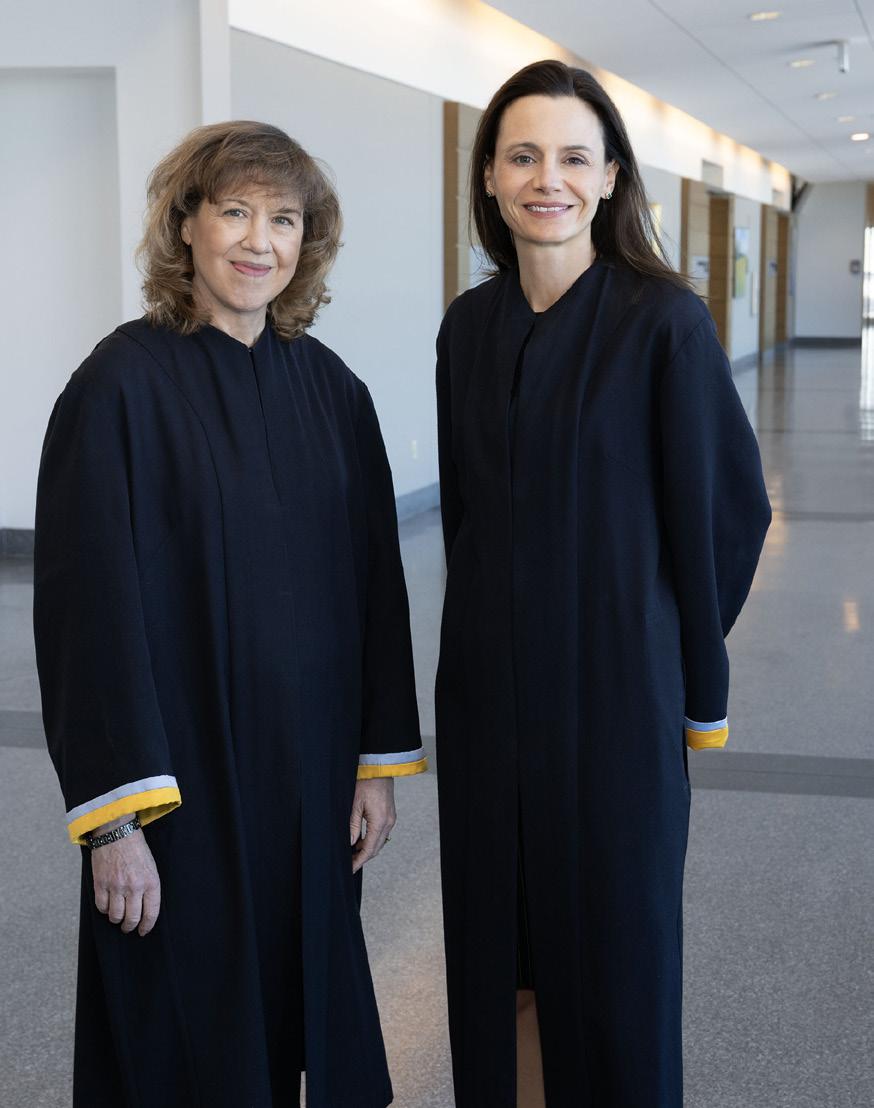
Justice Karen Valihura, left, and Justice Abigail LeGrow.

Blaine T. Phillips, Esquire 1930 - 2025
BY PETER J. WALSH, JR., ESQUIRE
As Potter Anderson & Corroon LLP celebrates its 200th year, it is fitting that we remember some of those who stood out as stalwarts for carrying on the firm’s rich tradition of excellence and service that our founders inspired so many years again. One such generational leader was Blaine T. Phillips who passed away at the ripe old age of 95 in early December 2025.
A homegrown Delawarean, Blaine attended public schools in Sussex County, where both of his parents had deep family roots. His mother was a schoolteacher during the week and taught Sunday school as well. While Blaine’s father concurred with the importance of education, he regarded most Sundays as days to be afield. It has been reported that on one Sunday morning his beagles followed the scent trail of a rabbit right by the church, allowing the congregation inside to hear the hounds in full cry.
Blaine went on to flourish at the University of Virginia, both as an undergraduate (Honors Degree 1952; President, Raven Society; Phi Beta Kappa) and at the School of Law (L.L.B. 1955; Board of Editors, Virginia Law Review 1953-55; Phi Delta Phi; Raven Award). Upon Blaine’s recent passing, it was revealed that he was a member of the University’s Seven Society—a secretive organization known for its philanthropic efforts and unique, university-based traditions.
Blaine was recruited by New York

firms, but shunned the big city for home: Delaware. He came to the attention of William S. Potter, another Virginia dual graduate, who extended an invitation for Phillips to join the firm then known as Berl Potter and Anderson as an associate in 1955. Phillips was elected to partnership in 1963.
Blaine was Managing Partner of Potter Anderson & Corroon LLP from 1978 to 1988, when hiring was one of his many firm duties. He looked for ability and character in recruits, and demonstrated a human touch characteristic of good leaders, resulting in many hires who would serve as future leaders of the firm.
More importantly, Blaine’s tenure at Potter Anderson marked a time of a tenuous transition. Bill Potter, a generational leader and viewed by many as the face of the firm, retired in 1975 to become “of counsel.” David Anderson retired soon thereafter, and Richard Corroon, having stepped into the role of the firm’s senior statesman
and in the prime of his career, died unexpectedly in 1978. Blaine took on many of Potter’s clients and cemented long-term firm relationships. Together with a small group of young but by then seasoned lawyers, he carried on the work of the firm, giving no thought to a name change and instead set the stage for making Potter Anderson what it is today.
Phillips retired from the partnership and accepted Of Counsel status in January 1992. He moved on to a second career in the nonprofit sector (which actually had begun well before he retired from law practice), holding leadership positions in major cultural and nature-related institutions for decades: Winterthur Museum & Gardens (Board Member for more than 30 years, served as Secretary and ViceChairman), Hagley Museum & Library (President 2002-2003), Mt. Cuba Center (President for more than 28 years), and Fair Play Foundation (President for 29 years, served as Trustee). And, as the consummate outdoorsman, he would serve on numerous boards whose organizations promoted the conservation of natural resources throughout the state and mid-Atlantic region.
In so many respects, Blaine exemplified what it means to be a model Delaware lawyer. He served his clients with dedication and distinction, and carried on the firm’s legacy of community service. Blaine successfully spanned that generation of Delaware lawyers who started as generalists handling an
assortment of legal matters and gravitated toward a more specialized practice as the Delaware corporate practice evolved into a national practice.
Most importantly, we are grateful to Blaine for playing a key role in taking the hand-off from our namesake partners—Potter, Anderson, and Corroon—and carrying the ball into the 20th century. It was a great run, Blaine. Thank you.
Portions of this piece were adapted with permission from “Of Counsel: Blaine Phillips,” Gregory A. Inskip, Delaware Lawyer, Volume 36, Issue No. 1, Spring 2018, p. 32.
BECOME A DSBA SECTION MEMBER
Section Membership provides the chance to exchange ideas and get involved.
To join a Section, visit www.dsba.org/about-the-dsba/membership.
Peter J. Walsh, Jr. is chair of Potter Anderson & Corroon LLP. He is a former member and co-chair of the DSBA Committee on Judicial Appointments.

Proud supporter of the Women and the Law Retreat
Potter Anderson provides a full range of legal services to local, national, and international clients and trusted co-counsel.
Whether it's corporate law, corporate litigation, intellectual property, commercial litigation, bankruptcy, labor and employment, or real estate, we are proud to be one of the largest and most highly regarded Delaware law firms.
As the state's oldest law firm, we know the laws and legal landscape in Delaware like no other.


If the Constitution Falls in the Forest and Nobody Reads it, Does it Still Exist?
BY BETSY RENZO, ESQUIRE
Knowledge of the Constitution is critical for the next generation and for the survival of our democratic republic. George Washington famously stated that “[a] primary object should be the education of our youth in the science of government. In a republic, what species of knowledge can be equally important? And what duty [is] more pressing than communicating it to those who are to be the future guardians of the liberties of the country?”
Address to Congress (Dec. 7, 1796). The
most recent National Assessment of Educational Progress (NAEP) civics assessment found that only 28% of 11th grade students in Delaware were proficient in civics. Research suggests that an electorate that becomes increasingly illiterate in the principles of the Constitution will result in a democracy more vulnerable to manipulation, instability, and loss of individual rights. With civics scores low and interest in the Constitution lower amongst our students, the question is: if the Constitution falls in the forest and no
one reads it, does it still exist?
The Delaware Law Related Education Center (“DELREC”) aims to make sure our students not only read the Constitution, but that they find it accessible, relevant, and realistic, with the hope of raising civic knowledge in our state. DELREC also seeks to increase awareness of the justice system and of career opportunities in the legal field in Delaware.
DELREC has been an independent non-profit organization in Delaware since
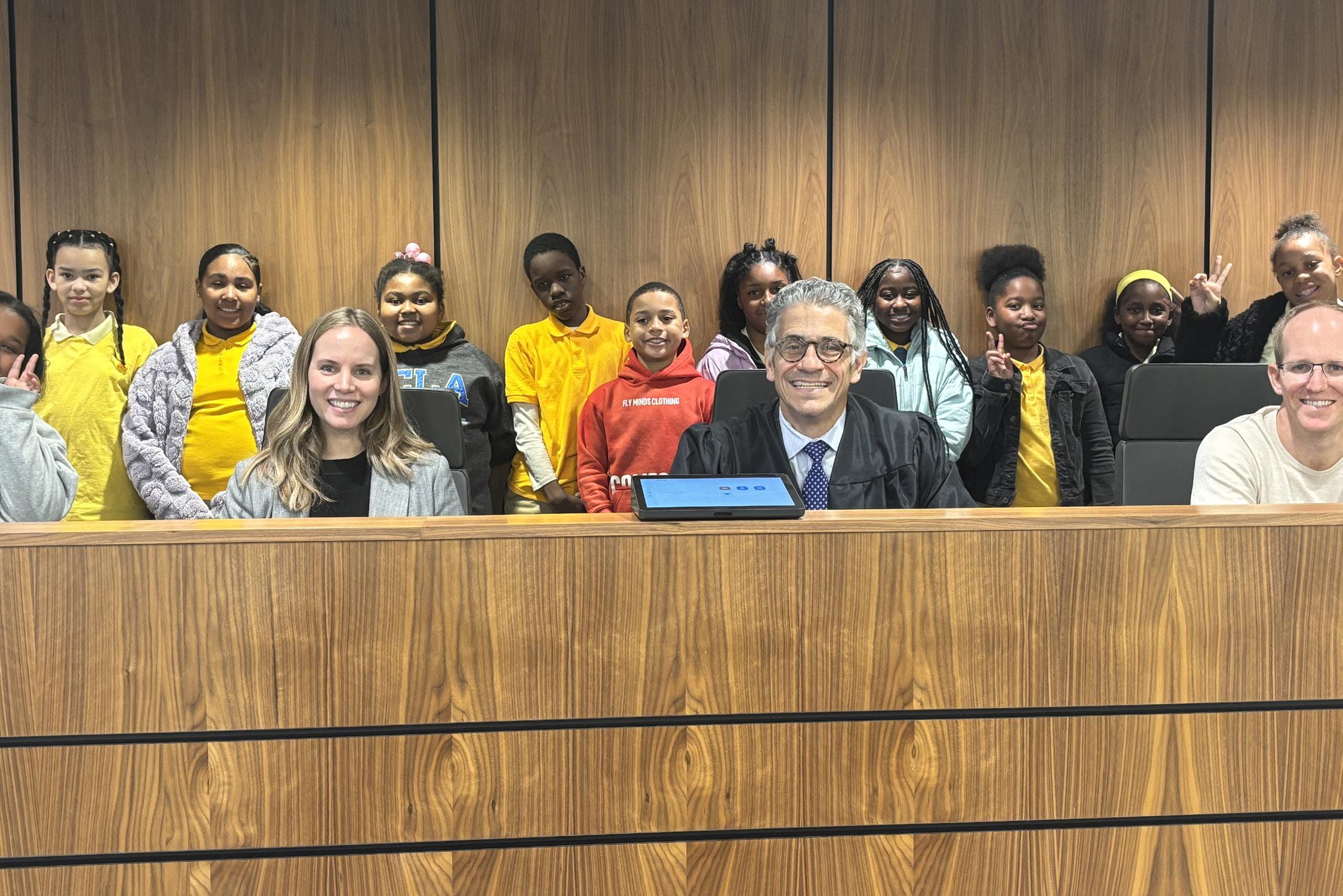
Law Firm/School Partnership between Ross Aronstam and Joseph E Johnson Elementary.
1997. In its first 25 years, it created lessons on the history of desegregation in Delaware, honored educators teaching civics, shared resources with teachers, brought attorneys to classrooms on Law Day, and truly put Delaware high school mock trial on the map. With this formidable foundation, the support of the Delaware Supreme Court and the individual efforts of Daniel Attaway (Womble Bond & Dickinson), and Megan Greenberg (Delaware Bar Foundation), DELREC launched a whole new wave of law-related education in 2023.
Over the past two years, the organization has grown tremendously, and is now a national example of what law-related education can do for students in a short amount of time.
DELREC serves all K-12 students in the state of Delaware and is proud to interact annually with over 75 schools in all three counties. Throughout the last two school years, DELREC has reached over 6,000 students and conducted hundreds of classroom workshops. It works with district, charter, and private schools, and ensures that every student has an opportunity to meet legal professionals, participate meaningfully, and engage in many annual DELREC experiences. Approximately 80% of the schools served are Title I schools, where a high percentage of students are at or below the poverty line. Socio-economic factors or zip codes should not determine a student’s future, and DELREC takes care to instill confidence in all our learners that a legal career can be in their future.
While every subject in school is certainly important, civics is particularly critical to DELREC. Delaware tests its students on civics standards but does not mandate civics as a high school course. Thus, our state’s knowledge is inconsistent. DELREC supports civic education by helping young people understand the inner workings of the legal system, provides exposure to legal professionals, and provides a forum for them to think critically, advocate, and practice civil discourse. DELREC is a means for students to find their voices and learn
how powerful they can be. It helps students understand how our legal system functions, how the law affects them, and how they can impact the legal system through meaningful and authentic interactions with law and government.
New This Year: Argue Like a Lawyer Tournament
This year, DELREC introduced a new tournament for middle and high school students, in partnership with college students at the University of Delaware. One of DELREC’s most popular workshops is called “Argue Like a Lawyer.” This workshop focuses on argumentation skills, supported by evidence, which are part of English, history, and civics state standards. On October 17th, DELREC welcomed students from across the state to the University of Delaware to participate in the tournament. It capped participation at 160 students for this inaugural year and eight schools were able to participate.
The high school students argued whether “students should be permitted to use artificial intelligence in completing their homework.” The middle school students argued whether “social media should be banned for those under 13 years of age.” Schools prepared their side of the argument with the help of a UD student and then participated in three rounds of argumentation. Middletown High School took home the prize for their division, and
Eastside Charter School’s APEX program took home the title for middle school.
Law Day 2026
This year, for all grade levels, DELREC is bringing back Law Day. Armed with power point quizzes on Constitutional Law and local Delaware resources, attorneys will test students’ knowledge in Sussex, Kent, and New Castle Counties. With over 50 classrooms signed up so far, DELREC is recruiting as many attorneys as possible to disseminate this critical information. The high school day is March 12th and elementary and middle school students will meet attorneys on May 1st, prior to the DSBA Law Day luncheon.
DELREC Awards
DELREC also gave out two new awards this year. The first recognized a law-related educator of the year. The honor this year went to Ms. Camille Logic, from William Penn High School. Camille reinvigorated a legal pathway program for students at William Penn, teaching Intro to Legal Studies, Sociology of Criminal Justice, Criminology and Applied Legal Studies. She wrote the curriculum herself for many of these courses and sought out a partnership with Wilmington University to provide dual-enrollment and college credit for those in her advanced course. Camille provides internship support, coaches their new mock trial team, and takes time out of her summers to bring students on law-related field trips. One student wrote that Ms. Logic “always finds a way to bring light to any subject and further inspire and motivate us to pursue a career in a legal profession.”
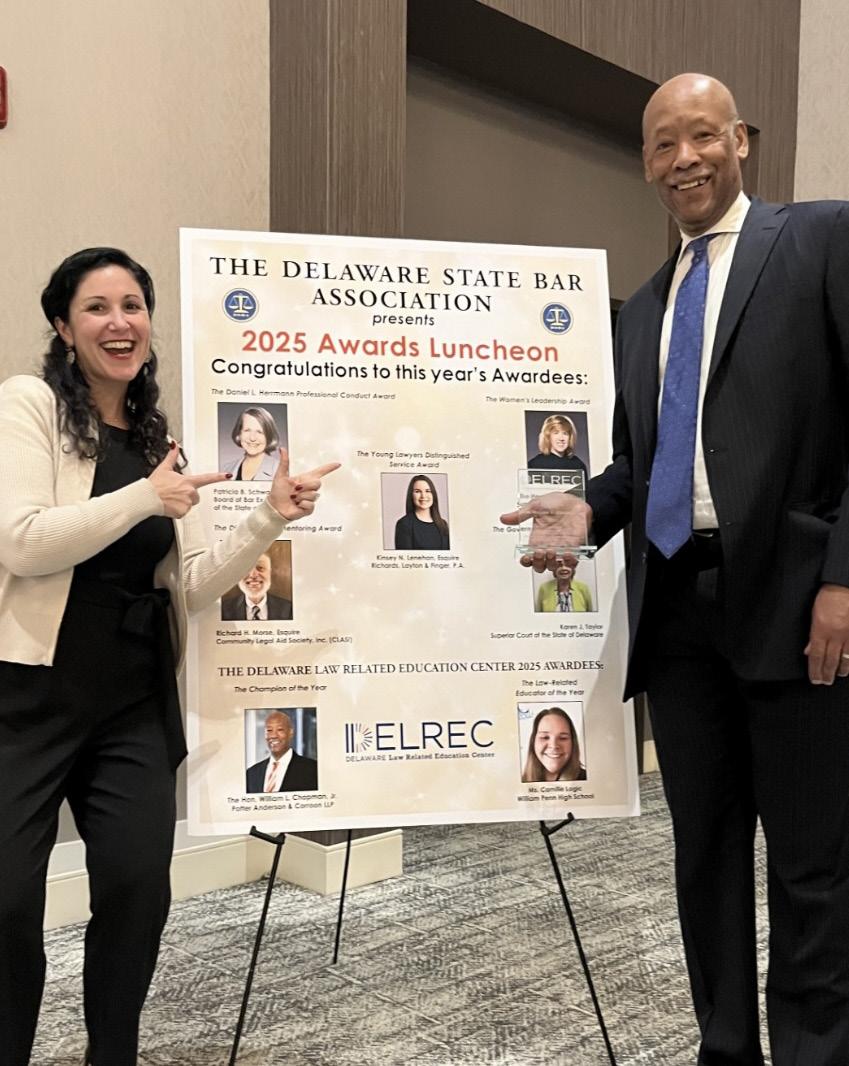
The second DELREC award is called the Champion of the Year, to recognize one of its volunteers who has gone above and beyond to support law–related education. This year, the award was given to the Honorable William (Bill) Chapman, Jr. from Potter Anderson & Corroon.
Judge Chapman earned special recognition, truly setting the standard for what commitment to children looks like. He has volunteered more than 20 times a year, facilitated partnerships with two
Hon. William L Chapman receiving inaugural DELREC Champion of the Year Award.
local schools and his law firm, participated in career panels, met with students one-on-one, sought out scholarships for several high school and college students, facilitated internships, recruited dozens of volunteers for workshops, and advocated for law-related education throughout the state. If everyone in our state cared about children as much as Judge Chapman, not a single one would doubt themselves, not a single one would go hungry, and every single one would leap into opportunities with confidence. DELREC is honored to work with Judge Chapman and grateful for all he continues to do.
What Else Does DELREC Do?
DELREC has a variety of programs and experiences to offer students. Nearly every day of the year, DELREC is in a K-12 classroom with attorney and paralegal volunteers, delivering one of 20 different “legal lessons.” These are workshops where students engage with the material handson, interact with legal professionals, and learn a new skill or area of the law. For our youngest learners in elementary school, DELREC offers “What is a Lawyer?” and “What is a Judge?” workshops, where lawyers read the book “Andrew Learns about Lawyers,” and donate a copy of the book to every classroom. It has also developed scripts for a 10-part video series to share with classrooms featuring a custom puppet named “Lenny the Legal Eagle” (named in honor of Leonard Williams). Lenny sits with guest stars in each episode to discuss one of the state’s civics standards. For 3rd and 4th graders, DELREC facilitates “Court Quizzo” and scripted mock trials, which are frequently done in conjunction with visits to the courthouse.
For middle school learners, DELREC offers many workshops with attorneys, paralegals, and legal professionals. These include transferrable skills, such as supporting an argument with evidence, argumentation, synthesis, and application of facts to law (“Argue like a Lawyer”). Workshops are also offered on more sophisticated legal topics, such as “Dignity Rights,” created in partnership with Delaware Law School’s
Dignity Rights Clinic, where students debate a case under the European Convention on Human Rights. DELREC’s other workshops for middle school include “Delaware’s 70 years of efforts to desegregate schools after Brown v. Board,” “Critical Thinking,” where students learn how to evaluate information they find on the internet and social media, and “Intro to mock trial,” where students learn the basics of civil and criminal law.
For high school students, DELREC facilitates the state’s annual mock trial competition for over 250 students, conducts additional workshops, coordinates paid internships, and provides opportunities to meet legal professionals oneon-one. DELREC’s most popular high school workshop is “Know your Rights and Responsibilities,” where students use a series of hypothetical scenarios to illustrate 4th amendment rights and the law of self-defense. In response to a request from Howard High School, DELREC developed a “Legal Professionalism” workshop, where students play BINGO and review various aspects of working and acting in a professional environment. In partnership with the ACLU, DELREC developed the “Minority Rights” workshop, where students look at active ACLU cases in Delaware. In partnership with the Wilmington Police Department, DELREC offers a two-way chat with a police officer to foster meaningful and organic dialogue between students and police officers. Lastly, high school students can learn about immigration, citizenship, due process, and the 14th Amendment in a workshop rooted in history and policy.
DELREC also serves students in college and law school. For law students, DELREC facilitates a monthly regular First-Generation Law Student Happy Hour in downtown Wilmington. Each month, a different law firm sponsors the happy hour, encouraging young associates, firm partners, law clerks, judges, paralegals, and staff to meet aspiring Delaware attorneys. February marks two full years of this initiative, which is a
true collaboration between Delaware law firms and law schools. DELREC also works closely with the University of Delaware’s Kappa Alpha Pi (KAPi) fraternity and sorority, made up of students who are all aspiring attorneys. With resume and LinkedIn workshops, career panels, guest speakers, and internship placements, this partnership has been deeply impactful for the undergraduate students. Lastly, DELREC connects students interested in a particular area of the law with a lawyer for one-on-one coffee meetings or a zoom conversation to make an initial connection.
Internships, Externships and Shadowing
Many students come to DELREC seeking experiences within the law. In fact, prior to law school, there aren’t many chances for students to see legal practice up close. DELREC has developed several internships and shadowing opportunities for students. Due to generous funding from the Delaware Bar Foundation, the middle school program provides 15 paid internships over the summer with the Superior Court, the Court of Common Pleas, Family Court, the Supreme Court, and the Court of Chancery. Each of the past two years, DELREC has received over 165 applications for these coveted spots, clearly meeting an unmet need.
DELREC’s paid high school summer internship consists of an 8-week rotation through nine of Delaware’s legal organizations. Students spend one week at each of the following: the ACLU of Delaware, the Attorney General’s Office, Community Legal Aid Society, Inc., Delaware Volunteer Legal Services, Legal Services Corporation of Delaware, DELREC, the Right to Representation, the Innocence Project, and the Office of Defense Services. This opportunity is available because of the generosity of Richards, Layton & Finger, in partnership with the LYTE Scholars organization.
Lastly, this past summer, DELREC was able to offer paid summer internships in public interest law firms to six college
students, with the hope of inspiring students to pursue a career in “people law.” Students were placed at Delaware Volunteer Legal Services, the Office of Defense Services, and the Department of Justice in Kent and New Castle Counties. Every dollar raised by DoMore24 and Race Judicata funds these positions. Moreover, with the help of Potter, Anderson & Corroon, two additional interns were funded last summer.
Teacher Resources
DELREC also develops curriculum and legal lessons that meet our state civics standards and provides professional development for the state’s social studies and history teachers. DELREC has curriculum for kindergarten to 3rd grade, discussing the selection of judges in Delaware and the second on rights, responsibilities and privileges. The 4th-5th grade curriculum focuses on the judicial system in Delaware and the execution of fair laws and due process. The curriculum for 7th grade discusses desegregation in Delaware, taking students from 1954 to today and culminating in a town hall with many perspectives and voices represented. For 6th-8th grade, DELREC offers a lesson on federalism and voting rights. For high school, there is curriculum on the application of precedent and the history of the 2nd Amendment in Delaware, a more detailed version of the desegregation curriculum from 7th grade, and an LGBTQ+ history curriculum. All of these are made available to any teacher at any school who wants a legal approach to civics education.
Professional development for teachers includes on-demand workshops for grade levels or subjects, workshops for statewide professional development days, and this year, a brand-new mock trial boot camp, which was held at the Delaware Law School.
Department of Education Career Pathways
DELREC is working with the Delaware Department of Education to standardize and spread a legal career pathway to as many schools as possible. A pathway in Delaware is a special certification for high school students
Throughout the last two school years, DELREC has reached over 6,000 students and conducted hundreds of classroom workshops.
who complete three related courses that are not otherwise required for graduation. Schools like Sussex Tech, William Penn, Smyrna, Howard, Middletown, and Odessa have legal pathways established in their schools. This year, DELREC is working with the Brandywine School District to create a new legal pathway. DELREC recommends curriculum, train educators, and provides consistency by sharing best practices to any school wishing to add a legal pathway.
Every school in Delaware should have a legal pathway. Not only is law one of our most successful and profitable industries, and there are jobs for every level of education, but students who learn how the justice system works are empowered to utilize it, whether they want to be attorneys or not.
Partnerships, Volunteers and Fundraising
DELREC is supported by numerous partners, volunteers and funding sources, and would not be able to succeed without them. First and foremost, DELREC is grateful for the support of the Supreme Court of Delaware and the Delaware Bar Foundation. Second, with large firms like Potter Anderson & Corroon, Young Conaway Stargatt & Taylor, and Richards Layton & Finger leading the way, DELREC has nearly 500 regular attorney, paralegal and legal staff volunteers. Volunteers come to schools for an hour at a time, receiving CLE credit or pro bono hours for their support of DELREC’s mission.
Beyond workshops, firms have stepped up in a major way to partner with local schools on a permanent basis. Exemplary firms like Ross Aronstam & Moritz and Scott & Scott not only host students for “lunch at the law firm,” not only visit multiple classrooms per year, but they also help with critical school needs such as the cost of buses for field trips to the courthouse, holiday food drives, and even filling board member seats for some of our charter schools.
DELREC partners with anyone interested in helping to improve legal access and civics education for K-12 students. This includes the Wilmington Police Department, the LYTE scholars, Wilmington University School of Law, Widener University School of Law, The WRK group (including Kingswood Community Center and the TEEN Warehouse), University of Delaware, and many more.
DELREC is honored to speak at law firms, inns of court, bar association meetings, and the Bench & Bar conference. It will continue to advocate for LRE in K-12 schools and for civic literacy in our state. On social media, such as Instagram (@Delrec2023), TikTok (@Delrec2024), and LinkedIn, DELREC works to spread awareness of local legal resources, basic knowledge of the justice system, and current programs and offerings. Please consider following and sharing so that more people can access justice.
No matter where a student lives, no matter what challenges they face, no matter what they’ve done up until this moment, they are all capable of success. And every one of our students can learn about the Constitution in a way that relates to their own life. DELREC is mapping the forest, through the trees, one classroom at a time.
To learn more about DELREC, visit their website at www.delrec.org or reach out to Betsy at Brenzo@delrec.org.
Betsy Renzo is Executive Director of the Delaware Law Related Education Center. She holds her J.D. from Temple University Beasley School of Law and her M.A. in Education Policy from Stanford University.






2025 COMBINED CAMPAIGN FOR JUSTICE (CCJ)
CONTRIBUTIONS RECEIVED THROUGH FEBRUARY 10, 2026: $2,570,000
JUDICIARY
The Honorable Jay H. Conner
The Honorable Bonnie W. David
The Honorable Emily A. Farley
The Honorable Paul A. Fioravanti, Jr. & Shannon Fioravanti
The Honorable Andrea Maybee Freud
The Honorable Danielle Gibbs
The Honorable Kathy Gravell
The Honorable N. Christopher Griffiths
The Honorable Julie Heaney
The Honorable Eliza M. Hirst
The Honorable Candace E. Holmes
The Honorable Francis J. Jones, Jr.
The Honorable Peter B. Jones
The Honorable Felice G. Kerr In Memory of Hon.
Robert B. Young
The Honorable Abigail M. LeGrow
The Honorable Rae M. Mims
The Honorable Michael K. Newell
The Honorable Janell Schoenbeck Ostroski
The Honorable Noel E. Primos
The Honorable Mardi F. Pyott
The Honorable Robert H. Robinson, Jr.
The Honorable Paula T. Ryan
The Honorable Collins J. Seitz, Jr. & Gail Seitz
The Honorable Leonard P. Stark
The Honorable Gary F. Traynor
The Honorable Karen L. Valihura
The Honorable Paul R. Wallace
The Honorable Christian D. Wright
TRAILBLAZER
$80,000 +
Morris Nichols Arsht & Tunnell
Potter Anderson and Corroon
Quinn Emanuel Urquhart & Sullivan, LLP
Richards, Layton & Finger, P.A.
Skadden Arps Slate Meagher & Flom LLP
The State of Delaware
Young Conaway Stargatt & Taylor, LLP
PILLAR
$25,000 - $79,999
Delaware State Bar Insurance Services
Laffey-McHugh Foundation
Morris James LLP
Pachulski Stang Ziehl & Jones LLP
Paul, Weiss, Rifkind, Wharton & Garrison LLP
Prickett Jones & Elliott, P.A.
Troutman Pepper Locke LLP
Wilson Sonsini Goodrich and Rosati
Silver Anniversary Circle
National law firms without a Delaware office that have made a 3-year commitment to CCJ
Cooley LLP
Cravath, Swaine & Moore LLP
Davis Polk & Wardwell LLP
Freshfields US LLP
Fried, Frank, Harris, Shriver & Jacobson LLP
Keker, Van Nest & Peters LLP
Kirkland & Ellis LLP
Latham & Watkins LLP
O'Melveny & Myers LLP
Ropes & Gray LLP
Selendy Gay PLLC
Vinson & Elkins LLP
Wachtell, Lipton, Rosen & Katz
Weil, Gotshal & Manges LLP
Willkie Farr & Gallagher LLP
Individuals
William & Melissa Lafferty
PACESETTER
$10,000 - $24,999
Analysis Group
Bank of America Foundation
Bayard P.A.
Business Consulting Group LLC
Charles River Associates
Compass Lexecon
Cornerstone Research
DLA Piper (US) LLP
Gordon Fournaris & Mammarella, P.A.
Houlihan Lokey
Kessler Topaz Meltzer & Check, LLP
McCarter & English LLP
McDermott Will & Schulte
Morgan Lewis & Bockius LLP
Ross Aronstam & Moritz LLP
Wilks Law LLC
WSFS Bank
Individuals Anonymous A. Thompson Bayliss
Bradley Aronstam
Robert Brady & Jennifer Gimler Brady
Thomas & Margaret Briggs
Christopher Foulds & Sara Altman
Karen Jacobs & Jack Blumenfeld
Lisa & Martin S. Lessner
Paul Lockwood
Elizabeth M. McGeever
Kevin Shannon
Rodger Smith
Chris & Bill Sudell
Elizabeth Taylor
Neilli & Peter Walsh
Jennifer Wasson & Chad S.C. Stover
Gregory P. Williams
BENEFACTOR
$5,000 - $9,999
AlixPartners
Ashby & Geddes
Bernstein Litowitz Berger & Grossman LLP
Chipman Brown Cicero & Cole, LLP
Connolly Gallagher LLP
Corporation Service Company
Dalton & Associates, P.A.
Hach Rose Schirripa & Cheverie
Heyman Enerio Gattuso & Hirzel LLP
Meluney Alleman & Spence, LLC
Parcels Inc.
Scott & Scott LLP
Shelsby & Leoni, P.A.
Womble Bond Dickinson (US) LLP
Individuals
Frederick H. Alexander
Arthur R. Bookout
Karen & Paul Bradley
Kevin H. Davenport
Richard Facciolo
Erin Fay
Joel E. Friedlander & Julie Ann Sandler
Megan & Matthew Greenberg
Jerry A. Hyman
David Jenkins
Timothy E. Lengkeek
Elisa E. Maas
Edward Micheletti
Garrett B. Moritz
Joshua J. Novak
Jenness E. Parker
Gregory P. Ranzini
David E. Ross
Brad Sorrels
Peggy Strine
Mark Vavala
David E. Wilks
CHAMPION
$2,500 - $4,999
Balaguer Milewski & Imbrogno, LLP
Ballard Spahr LLP
Berger McDermott LLP
Block & Leviton LLP
Carlyle
Cole Schotz PC
Delaware ADR, LLC
Faegre Drinker Biddle & Reath LLP
The Griffing Group LLC
Landis Rath & Cobb LLP
Murphy & Landon
Tybout, Redfearn & Pell
Individuals
Faiz Ahmad & Sarah Pierce
Corinne Amato
J. Clayton Athey
Monica Ayres
J. Matthew & Vera Belger
Elisabeth S. Bradley
Joseph Cicero
Mark Collins
Chip & Katy Connolly
Matthew & Jennifer Criscimagna
Doneene Damon
John G. Day
John G. Day
Mark Desgrosseilliers
Jill Dolan
Patricia Enerio
C. Barr Flinn
Matthew Harvey
Louis Hering
Wade Houston
Travis S. Hunter
Bruce & Traci Jameson
Eric Juray
Robert Katzenstein
Carmella Keener
Bernard Kelley
Dr. Robert G. & Sarah S. Locke
Claire Love
Daniel Matthews
Eric Mazie
Brett McCartney
Jeffrey Moyer
Katherine Neikirk
Elena C. Norman
Stephanie Norman
Hon. Donald F. Parsons Jr.
Kathryn & Robert Pincus
Mr. Srinivas Raju & Mrs. Seetha Devi Raju
Marcos Ramos
Blake Rohrbacher
Lisa A. Schmidt
Eric Schwartzman
John Seaman
Russell Silberglied
Daniel M. Silver
Jeffrey Simpson
W. Donald Sparks II
Patricia O. Vella
Susan W. Waesco
LEADER
$1,000 - $2,499
CE Financial Economics, Inc.
McCann, Dillon, Jaffe & Lamb, LLC
Sustained by Dana Spring Monzo
TrueAccord Corp.
Weiss, Saville, Medinilla & Houser, P.A.
Individuals Anonymous
Derek Abbott
Michael & Becky Allen
Ross & Jennifer Antonacci
Jennifer Armstrong
Berton Ashman
Michelle & Daniel Atkins
Elaine Atkins In Memory of Dr. Paul C. Atkins
Nathan Barnett
C. Stephen Bigler
Ana Batista Brice
Adrian Broderick
Gweneth B. Brown In Memory of David Brown
Megan & John Brown In Honor of
Hon. William L. Chapman, Jr.
Kate Roggio Buck
John S. Campbell
Anthony Clark
Joanna J. Cline
Samuel L. Closic
Penn Cole
P. Clarkson Collins, Jr.
Donna Culver
Brock Czeschin
T. Brad Davey
Matthew Davis
Stephen J. Della Penna
Raymond DiCamillo
John DiTomo
Melissa DiVincenzo
Keith Donovan
Judith Drexler
Timothy Dudderar
Mary F. Dugan
Charles J. Durante
Margaret England
Alexandra Ewing
Matt Fischer
Michael Flynn
Frederick S. Freibott
Kevin Gallagher
Cliff Gardner
Neil & Jean Glassman
Adam Gold
Jeffrey M. Gorris
Ryan Greecher
Sean T. Greecher
Ellen Greenhorn
Stacey Greenspan
James Griffin-Stanco
Kevin Gross
I. Barry Guerke
Ellie & Buzz Hannum
Michael Hanrahan
David Harris
Edwin J. Harron
Tarik Haskins
Denison H. Hatch, Jr.
Paul N. Heath
Douglas Herrmann
Maxwell Huffman
S. Mark Hurd
Ken Jackman
Hon. Mary M. Johnston
Hon. Kent A. Jordan
Hon. Jan Jurden
Cory Kandestin
Daniel Kaprow
Christopher Kelly
Allurie Kephart
Larry Kimmel
Andrew Kinsey
Zachary Kmetz
Pilar G. Kraman
Rachel Krantz
Jessica Kunz
Chuck & Carolee Kunz
Greg Ladner
Lewis H. Lazarus
Lewis C. Ledyard
Ian Liston
Paul J. Loughman
Christopher Lyons
Matthew Majarian
Mary M. MaloneyHuss
Sheila & Kevin Mangan
David C. McBride
Allison S. Mielke
Norman M. Monhait
Bruce Monroe
Eric & Dana Monzo
Pauline K. Morgan
Mark Morton
Regina M. Mullen
David Murphy
Francis J. Murphy, Jr.
Matthew Murphy
Michael R. Nestor
Holly Newell
Stephen C. Norman
Alyssa & K. Tyler O'Connell
Matthew J. O'Toole
James Patton
William Perlstein
Norman L. Pernick
Wes Peterson
Mallory Phillips

Pamela D. Politis
Marion Quirk
Justin Reliford
Joseph Rhoades
Todd Veale & Hon. Andrea L. Rocanelli
Jacqueline Rogers
Patricia Smink Rogowski
Kenneth M. Roseman
Paul Saindon & Jennifer Ying
Rebecca Salko
Melanie K. Sharp
Amy Simmerman
S. Michael Sirkin
Hon. Joseph R. Slights, III
Drew & Elizabeth Sloan
Ryan Stottmann
David & Susan Stratton
Lindsay Cook & Nate Stuhlmiller
James D. Taylor, Jr.
David J. Teklits
Hon. Bryan & Lilianna Townsend
Joshua Twilley
Robert M. Vrana
Sara Toner Wagner
Christine Ward
Nathaniel Whitthorne
Aleph Woolfolk
James M. Yoch, Jr.
Jeffrey Alexander Young
ADVOCATE
$250 - $999
Ballard Spahr LLP
Blackwell HR
Seiberlich Family Foundation
Tarabicos Grosso, LLP
Terry Carey American Inn of Court
The Bickel Firm
W.L. Gore & Associates, Inc.
Individuals
Paul Altman
John C. Andrade
Sarah Andrade
Marc Atkins In Memory of
Dr. Paul C. Atkins
Alyssa T. Atkisson McKeever
Thomas A. Barr
Justin Barrett
Oscar Barron-Guerra
Joe Barry
Christopher Baum
Sean M. Beach
Dan Bennett
Katherine Betterly
Nicholas Bittner
Amaryah Bocchino
Mary C. Boudart
Curtis P. Bounds
Jeffrey Bove
Steve Brauerman
Don Brown & Lynne Howard
Andrew Brown
Travis G. Buchanan
Linda Butala In Memory of Hon. Robert B. Young
Nicholas Caggiano
Samantha Callejas
Anthony Calvano
Christopher Cannataro
Kristin Cardoza
Catherine Carr
Benjamin C. Carver
Megan Cascio
Juliana Clifton
Kevin Coen
Susan Cohen
Michael Collins
Henry Conover
Hon. Richard R. Cooch
Andrew Cordo
Kara Hammond Coyle
Tyler Cragg
Kristen Cramer
Charles S. Crompton, Jr.
Laurence Cronin
Alexandra M. Cumings
Amanda Day
Catherine Dearlove
John Deckers
Claire DeMatteis
William Denny
Cynthia L. DePue
Steven R. Director
Nicole DiSalvo
Rex Donnelly, IV
Hon. Aida Waserstein & Eric Doroshow
Justin P. Duda
Amy Dudash
James Dudek
Erin D. Edwards
Brian & Meridith Egan
Margaret England In Honor of Ronald Gellert & Brya
Keilson
Sarah Ennis
Kenneth J. Enos
Todd Flubacher
Anthony G. Flynn
Thomas Foley
Ryan Ford
Anne Foster
David Fournier
Anthony Frabizzio
Brigitte Fresco
Jeremy Gagas
William C. Gaskins, Jr.
Anne Shea Gaza
Sara Gelsinger
Shannon German
Jeffrey S. Goddess
Andrew & Lois Golian
John Gorman
Carolee M. Grillo
Wilson Gualpa
Albert Guckes
Eric Hacker
Alex B. Haims
Hon. M. DeSales Haley
Trisha Hall
Thomas Hanson
Jessica Hartwell
William Haubert
J. Zachary Haupt
Brett M. Haywood
Kevin Healy
Nicole Henry
Laina Herbert
James L. Higgins
Samuel T. Hirzel, II
Eric Holleran
Joanne Horn
Timothy Jay Houseal
Kelley Huff
Shannon Humiston
Justin Hymes
Jennifer Jauffret
Daniel P. Johnson
Ericka Johnson
Jason Jowers
Alexandra Joyce
Hon. Jan Jurden In Honor of Christine McDermott, Esq.
Jonathan Justice
Jonathan Justice In Honor of Leland Ware
Elizabeth S. Justison
Deborah Kamins
Susan Kaufman
Colin Keith
Jennifer M. Kinkus
Daniel M. Kirshenbaum
Robert Kissel
Theodore Kittila
Grant Knepper
Beth Knight
Gretchen Knight
Basil Krikelis
John C. Kuffel
Gayle Lafferty In Memory of Hon. Randy J. Holland
Melissa Lagoumis
Karen Lantz
Michael A. Laukaitis
Tyler Leavengood
Leah Leon
Richard A. Levine
James Levine
Jaclyn Levy
Jason Liberi
Garrett B Lyons, III
Catherine Lyons
Thomas Macauley
Michael J. Malkiewicz
Kaitlin Maloney
Thomas Mandracchia In Honor of Brad Aronstam
Joshua Manning
Albert Manwaring, IV
Emily Marco
David Margolies
Louis F. Masi
Thomas McDonough
Patricia McGee
Thomas McGonigle
Jon & Susan McPheeters
D. McKinley Measley
Alyssa Meldrum
Evelyn Meltzer
Joshua Meyeroff
F. Troupe Mickler, IV
Susan Huesman Mitchell
Dylan Mockensturm
Richard Morse
Edmon L. Morton
Kate Mowery
Nick Mozal
Elizabeth Mullin Stoffer
Lakshmi A. Muthu
Lauren Neal
Michael S. Neiburg
John Newcomer
Ryan P. Newell
Jesse Noa
John W. Noble
Marla Norton
Mae Oberste
Lawrence O'Brien
Jonathan B. O'Neill
Michael Owen
Alan & Susan Paikin
Bindu Palapura
Karen L. Pascale
John J. Paschetto
Jillian Patterson
Nicole Pedi
Karen Poppel
Elizabeth Powers
Mark Price
Cynthia Pruitt
Mark Purpura
Mark Radel
Brian Ralston
Laura Readinger
Mark Reardon
Liam Reeves
Michael K. Reilly
Andrew Remming
Richard L. Renck
R. Garrett Rice
Kevin Rickert
Jason Rigby
Louis Rizzo
Nicholas H. Rodriguez
S. Reiko Rogozen
Nicholas J. Rohrer
Craig E. Rushmore
Lauren E.M. Russell
John Saathoff
Jeffrey Safran
Marius Sander
Brendan J. Schlauch
Joseph Schoell
Adam Schulman & Dylan Graetz
Eric Selden
John Seraydarian
Suzanne Seubert
Brent Shaffer
Roger L. Sharp
Thomas D. Shellenberger In Memory of Hon. Daniel Kelleher
Thomas D. Shellenberger In Memory of Hon. Alan Cooper
Zi-Xiang Shen
Henry “Troy” Silliman, III
Adam Singer
Gregory Skolnik
Kathleen Duffy Smith
A. Gilchrist Sparks, III
Skyler A.C. Speed
Matt D. Stachel
Hon. Myron T. Steele
Stanford Stevenson
Benjamin Strauss
Roger Stronach
Stephanie Sullivan
Joanna Suyes In Honor of John Whitelaw
Kara M. Swasey
Seth L. Thompson
Leonard S. Togman
John E. Tracey
Rebecca Trifillis
Glen Trudel
Jillian A. Tyson
Kirsten Valania
M. Paige Valeski
Kathryn van Amerongen In Honor of Laura C. Graham
Brandon Walker
William Walls
Laura Waterland
Robert Weber
Julianne Weidman
Gregory & Elizabeth Weinig
Michael Weiss
Emily Wheatley
A. Gage Whirley
David A. White
John Whitelaw
Benjamin & Lauren Whitney
Beverly J. Wik
Thomas Will
Natalie Wolf
Melvyn A. Woloshin
Ping Xu
William Yemc
Maliheh Zare
FRIEND
$1 - $249 Kaufman Dolowich LLP
Individuals
Anonymous
Daniel Adams
Steven Adler
Matthew Ady
Mutaz Ali
Philip Amoa
Eve Atkins
Stephanie Bacon
William Baker
Jennifer Barrett
Joy A. Barrist
Taylor & Veronica Bartholomew
Ryan M. Bartley
Richard Beck
Lilia Beck
Sean J. Bellew
P. Kristen Bennett
Andrew Berni
Alpa Bhatia
Christopher H. Blaszkowski
Lily Bohlke
Andrea Bomalaski
Laura Bonesteel
Elizabeth Booth
Kristin Borda
Susan Borden
Nicholas Borelli
Shella Borovinskaya
Thad Bracegirdle
Sherry Brilliant
Daniel Brogan
Marilyn H. Bromels
Daniel Brown
Tanisha Brown
Micah Buchdahl
Leah E. Burcat
Michael Busenkell
Chase Butler
Douglas Canfield
Crystal Carey
Hon. William C. Carpenter, Jr.
Jacquelyn Chacona
Christine Chappelear
Socheata Cheng
Raymond Cherian
Taylor Christensen
Christopher Chuff
Carmella Cinaglia
Kate Cirrito
Kathleen Clark
Hon. Kenneth S. Clark, Jr.
Miranda Clifton
Diane Coffey
Robert Cohen
Daniel Cole
Kevin Collins
Jackie Conner
Anne Connolly
Kevin J. Connors
Carolyn Gates Connors
Victoria Counihan
Jordan Cramer
Curtis Crowther
Lucinda Cucuzzella
Erin Curry
Mark Cutrona
Andrew Czerkawski
Stephanie Dallaire
Michael Dalton
Lisa Dang
Wilson Davis
Elizabeth Dean
Sarah Delia
Nisha Desai
Jay Dewey
Alexander Dickinson
Richard A. DiLiberto, Jr.
Timothy Dillon
Paige S. Diminick Benkovic
Alexander DiRienzo
James Diver
Kenneth Dorsney In Honor of Hon. Kent A. Jordan
Kendeil Dorvilier
Kristi Doughty
Zita Dresner
Philip Edwards
Adam Elgart
Chandler Elliott-Fehle
John Ellis
Christophe C. Emmert
Kelly Ensslin
Eric L. Episcopo
Sharon Eppes
David Epstein
Kimberly Evans
Wenjun "Sybil" Fan
S. Alexander Faris
Eliezer Feinstein
Elizabeth Fenton
GianClaudio Finizio
Farbod Firouzkouhi
Gregory Flasser
Bridget Foehl
Joseph Fogiato
Nicholas Fore
Lauren D. Fortunato
Stephanie Fox
Shannon Frazier
Tiffany Friedman
William E. Gamgort
Jonathan Garcia
Jessica Gavril
Lauren Getman
Robert G. Gibbs
Kevin C. Gilligan
Ronald Golden
Leigh Goodmark
Deborah Gottschalk
David Goulden-Naitove
Craig D. Grear
Patricia Griffin
Kevin A. Guerke
Rebecca A. Guzman
David M. Hahn
Kenneth Haltom
Lawrence Hamermesh
Sarah Hand
Brian Hanson
Amy Harriman
Sarah Haskins
Samuel Haward
May Hennessy
Ashleigh Herrin
Stephen S. Herst
Roy Hilferty
Adam Hiller
Scott Himelein
Janine Howard-O'Rangers
Justine Huffman
Amy Hughes
James P. Hughes, Jr.
Edmond M. Ianni
Daniyal M. Iqbal
Barbara James
Madeleine Jolles
Kathryn Kane
Jonathan M. Kaplowitz
Ross Karsnitz
Brian Kasprzak
Sukhan Kaur
Karen Kegelman
Ashley Kidd
Kevin Kidwell
Eleanor M. Kiesel
Rosemary Killian
Audrey King
Jazmine King
Parks Kingery
Mr. & Mrs. William E. Kirk, III In Honor of R.J.
Sara Beth Kohut
Ryan Konstanzer
Maria Kotsiras
Stephen Kraftschik
Howard & Rochelle Kristol
Margaretta Kroeger
Peter Ladig
Gayle Lafferty
Kimberly LaMaina
Christopher J. Lamb
Christopher M. Lambe
Roger Landon
Nicholas Laping
Zachary Lawlor
Marina C. Leary
Andrew Lee
Kathleen Lefebvre
Kinsey Lenehan
Melissa Lennon
Kenneth Listwak
Edward Little
Mike Liu
Matthew B. Lunn
Tiffany Lydon
Connor Q. Lynch
Matthew Lynch
Daniel Mackrides
Andrew L. Magaziner
Kate Majewski
Brian Mammarella
Timothy Mangan
Brianna Manobianco
Megan Mantzavinos
Cynthia & Joshua W. Martin, III
Ken Massey
Scott Matthews
Andrew Maude
Michael Maxwell
Tyler Mayhew
Ian McCauley
Bruce McCullough
Julia McDonald
Hon. Mary McDonough
Megan McGovern
Jennifer McIntyre
Heather McKee
Michael F. McTaggart
Daniel T. Menken
Sharon Merriman-Nai
Philip Micha
Katie & Andrew Milam
Alison Mitchell
Monica Molitor
Makayla Monica
David Moore
John Morgan
Dionis Mucollari
Autumn Mueller
Joseph Mulvihill
Glenn Murphy
MaryBeth Musumeci
Randi Raskin Nash In Honor of Daniel G. Atkins, Esq.
Allison Neff In Memory of Martin Neff
Christine Neifert
Richard W. Nenno
Joseph Neutzling
Maria Paris Newill
Chelsea Nichols
Gabriela Normansell
Kenneth Norton
Scaggs, Jr.
Danielle Nowaczyk
Oderah Nwaeze
Mary Katherine "MK" O'Boyle
Marguerite O'Brien
Shane O'Connor
Kait O'Donnell
Susan Oldenburg In Honor of Profundo Bono
John O'Toole
Jennifer Pérez
Felton Parrish
William Passannante
Susan Patel
Mackenzie M. Peet
Gianna Penezic
Jacob Perrone
Margaret Pfeiffer In Memory of John Patrick Finucane
Irene Plotzker
Adam W. Poff
Sara Pollock
Amanda Pooler
Robert F. Poppiti, Jr.
Timothy Powell
Somers S. Price, Jr.
Caneel Radinson-Blasucci
Frances Ratner
Jennifer E. Reefe
Shane Reil
Tori Remington
Yerick Reyes
Josh Richards
Ashly Riches
Hon. Henry duPont Ridgely
Matthew Rifino
Patrick Rock
Kevin Rodriguez
Elizabeth Rowe
Kevin Rudolph
Wali Rushdan
Jason Russell
Tamara Sampson
Evan S. Saruk
Rebecca Lee Scalio
David A. Schlier
Abraham Schneider
Regina S. Schoenberg
Matthew D. Schwalm
James Sharp
Bill Shea
Thomas Shellenberger In Memory of Victor F. Battaglia, Sr.
Anthony Sierzega
Aaron Sims
Emily Skaug
Stephen A. Spence
Billie Springart
Richard Squadron
Michael Stacey
Michael P. Stafford
Katherine Stark
Cruce Stark In Honor of Kate Stark
Victoria Steele In Honor of Delaware Families
Jason Stoehr
Clark Sun
Frank Sun
Peter Sweeney
Robert Taggart
Amy Taylor
Vince Thomas
Cassandra Thompson
Louis Tiemann
Bruce W. Tigani
Janice Tigani
Ethan Townsend
Francis Trzuskowski
William J. Ulrich
James Vadakin
Charlie Vincent
Karin Volker
Michael Walter
Jing Wang
Susan Weimer
Caitlin Whetham
Katelyn Will
Hon. Zuberi Bakari Williams
John Williams
Mary Williamson
Tyler Wilson
Samantha G. Wilson
Makenzie Windfelder
Annette Winslow
Charles Wood
James Woods
Wenting Wu
Kaitlyn Zavatsky
Donald Zeman
Y. Carson Zhou
Sharon M. Zieg
William Zwicharowski
Equal Justice Society Members Donors who have made legacy gifts to the Combined Campaign for Justice which ensures a just future for all people in Delaware.
I Could Do Great Things Foundation
Individuals
Aremio Aranilla
Julian H. Baumann, Jr.
Mary C. Boudart
Marilyn Bromels
David B. Brown
Don C. Brown & Lynne Howard
Kevin M. Coen
Jay Conner
Arthur G. Connolly, III & Katy Connolly
Brock & Jill Czeschin
Robert G. Gibbs
Ellen Corbett & Buzz Hannum
Jerry Hyman
Carmella Keener
Rosemary K. Killian
Mary MaloneyHuss
Cynthia Primo Martin
Elizabeth M. McGeever
The Honorable Donald F. Parsons, Jr. & Ethel Parsons
Patricia S. Rogowski
Joanna Reiver & Arnold Rosoff
William Schab
Richard J. Squadron
Christine & William Sudell
David E. Wilks
Gregory P. Williams
William A. Yemc
Thank you to the sponsors of the 2025 Combined Campaign for Justice Cup!
Barnes & Thornburg LLP
Bayard, P.A.
Bernstein Litowitz Berger & Grossman LLP
Citigroup
Connolly Gallagher LLP
Dalton & Associates
DLA Piper (US) LLC
Innovative Driven
Just Legal, Inc.
McDermott Will & Schulte
Meluney Alleman and Spence, LLC
Morris James LLP
Morris Nichols Arsht & Tunnell LLP
Parcels, Inc.
Potter Anderson and Corroon LLP
Richards, Layton & Finger, P.A.
Ross Aronstam & Moritz LLP
Skadden Arps Slate Meagher & Flom LLP
Sustained by Dana Spring Monzo
Veritext
Wilks Law LLC
Young Conaway Stargatt & Taylor, LLP
Don’t see your gift? Please reach out! Mid-2024 the post office changed our mailing address and mail forwarding is not a perfect science. Please let us know immediately if you do not see your gift listed. Email: Molly McPheeters mmcpheeters@delawareccj.org
Our new address:
Combined Campaign for Justice P.O. Box 49 Wilmington, DE 19899

Marisa A. Terranova Fissel In Honor of Catherine Dearlove

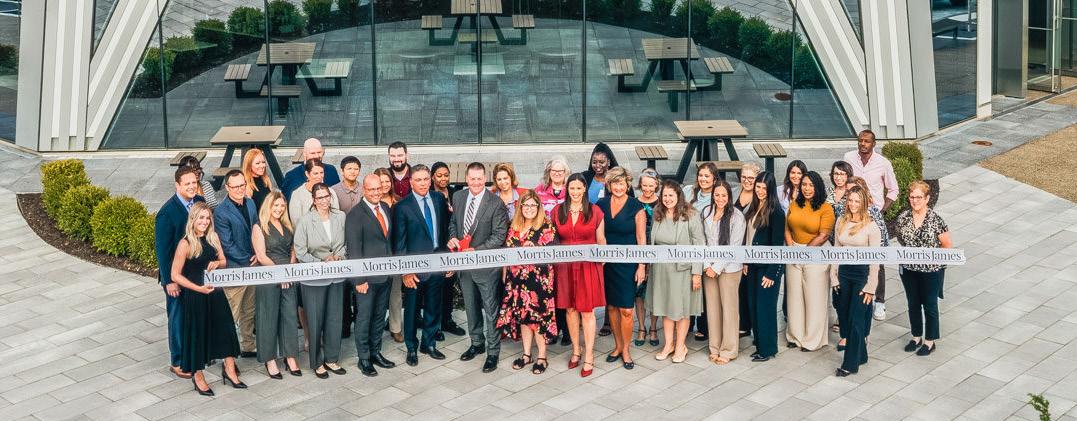



A. FORSTEN,
Be Careful What You Wish For

The Million Dollar Car Detective
By Stayton Bonner (Blackstone Pub., 2025)
At some point, everyone has dreamed, or daydreamed, about what exotic sports car or classic antique car they would drive given unlimited funds or a winning Powerball ticket. For me, it would be an Aston-Martin DB5, the car driven by James Bond in Goldfinger, and several other Bond films. The Ferrari 308 GTS (driven by Tom Selleck in the original Magnum, P.I. series) would be a close second. There are hundreds of possibilities with no right or wrong answer. But the world of high-end car collection is not for the faint of heart. Like the art world, and other high-end indulgences, there can be theft, fraud, forgeries, and other unscrupulous behavior.
Meet Joe Ford. A non-practicing attorney, Joe is an aptly-named stolen car detective. But not just any stolen car. High-end, expensive stolen cars. Rare cars. Collectible cars. He consults with the FBI and insurance companies. A car is stolen roughly every 37 seconds in this country, and there are over 1 million car thefts annually. But not all thefts rise to Joe Ford’s level. In The Million Dollar Car Detective, Inside The Worldwide Hunt For A Stolen $7 Million Car, journalist and former senior editor at Rolling Stone, Stayton Bonner tells the story of one of these high-end thefts and of Joe Ford.
The 1938 Talbot-Lago T150C-SS Teardrop coupe is considered one of the most beautiful cars ever made. Only two are known to exist. In March, 2001, the car was partially disassembled and stolen from an old plastics factory along with parts and paperwork where the retired factory owner had spent years slowly and lovingly restoring the car. The thieves knew an awful lot about the car, the parts, and the paperwork. They cut the phone lines to the owner’s house the same night. Nothing was left to chance and the trail was cold. The Talbot-Lago had an estimated value of $7.6 million.
How the prized auto came to be located in a closed-down plastics factory in Milwaukee is a tale itself and one Stayton tells. The world might never have known of the car’s location, except that the owner ran a classified ad in 1999 in a rare car magazine advertising the car for sale. The ad brought interest, including a visit from comedian Jay Leno, who took a pass believing the price was too high given the car’s condition. But someone who visited must have been taking good notes. Nevertheless, the trail was cold. No progress was made.
The factory owner passed away and his estate passed to a cousin. The cousin contacted Joe Ford in 2006. Joe agreed to take the case for an 80% stake in the car should he recover it. The cousin agreed and Ford was on the case, but struggled to make any progress.
Then in 2016, the car resurfaced. A multimillionaire and novice rare car collector attempted to register the car in Illinois, but the VIN number was flagged by a database of stolen cars. The multimillionaire, in turn, had purchased the car from a rare car dealer in Switzerland, who, it just so happens, was also Ford’s original mentor in the rare car business, Chris Gardner. Years of finger-pointing and litigation quickly ensued.
Ford and the cousin sued for replevin. The novice car collector argued the sixyear statute of limitations for replevin had long run, and the trial court agreed, only to be reversed by the appeals court, whose decision was then upheld by the Wisconsin Supreme Court (the Supreme Court’s decision is reported at 938 N.W.2d 566 (Wis. 2020)). The parties attempted to settle the replevin action, but those attempts only led to more litigation. Meanwhile, the cousin passed away and his widow has taken his place in the litigation.
After the cousin passed, Chris Gardner, the ex-pat American living in Switzerland who sold the car to the novice millionaire, claimed that, in fact, he had lawfully purchased title to the car from the cousin after the car was stolen. He produced a title purportedly signed by the cousin and notarized, but the purported notary denied it was his signature or notary stamp on the title (the notary’s stamp is rectangular, but the notary stamp on the title is round). Gardner made other claims as well, including claiming that there was a second Talbot-Lago in the Milwaukee factory, and that it was this second car, not the 1938 Teardrop, that had been stolen, and he had lawfully purchased the 1938 Teardrop.
Meanwhile, a confederate of Gardner, Chris Burke, claimed to be involved with Gardner in the original 2001 theft of the Teardrop. Gardner, of course, denies any involvement in any theft. To this day, the replevin action over the 1938 Talbot-Lago remains pending after another trip to the Wisconsin Supreme Court in 2025.

But Joe Ford has been involved in other cases involving rare and exotic cars. Ford was involved in recovering a 1954 Ferrari Spyder, a case in which Gardner and Ford also crossed paths.
Bonner’s book is full of beautiful cars but also theft, forgery, fraud and deceit. The epilogue to Bonner’s book is particularly disheartening. There were two Aston-Martins used in the filming of Goldfinger. One was for road scenes, and the other for the gadgets (including the machine guns, ejector seat, and more). The first car is in a private museum in Cincinnati, but the second car’s whereabouts is a mystery. Following the 1965 movie Thunderball , as well as an appearance in a TV episode of The Saint , in which future Bond, Roger Moore, drove the vehicle, it was sold at auction. Eventually it found its way to a real estate developer in Boca Raton, Florida, who stored the vehicle in a private hangar at the local airport. In June 1997, thieves cut the alarm wires, broke into the hangar, and made off with the car. It has not been seen since. However, Ford has discovered an interesting twist. Chris Burke, who says
he helped Gardner steal the Teardrop in 2001, remembers that Gardner (who was living in Florida in 1997, as was Burke) mysteriously and suddenly left Florida when the Aston-Martin was stolen. Later, after he had returned, Gardner showed a copy of a newspaper article to Burke about the theft and said: “Look at this asshole who got his car stolen from him. He should have paid his debts.” Burke believes Gardner was involved in the theft, and Ford says “it’s too coincidental.”
Fast driving is not for the faint of heart, nor, would it seem, is the world of rare and exotic cars.
Richard “Shark” Forsten is a Partner with Saul Ewing LLP, where he practices in the areas of commercial real estate, land use, business transactions, and related litigation. He can be reached at Richard.Forsten@saul.com.

BY SUSAN E. POPPITI, ESQUIRE
Savoring Our Semiquincentennial, Part Three
In March we travel to another original Middle Colony, making a short trip from Pennsylvania to New York for our 250th celebrations. This route was a must, as March 17th marks the 265th New York City St. Patrick’s Day Parade.1 A parade older than our Declaration of Independence certainly warrants a special recipe —Irish Stew. As we welcome Spring, I will share other New York recipes I discovered in Sheila Hibben’s nearly 500-page The National Cookbook: A Kitchen Americana. 2 Hibben, originally from Alabama, was The New Yorker’s first food critic. Authoring over 350 articles over the course of three decades, Hibben also wrote several cookbooks on American cuisine.3 The National Cookbook, published in 1932, is a fun read as it identifies the states (and sometimes cities or towns) where the recipes originated. In her Introduction, Hibben wrote:
I have felt as if I were writing not only a geography of this country, but a social study of its inhabitants, for I have been in communication with people who really believe that how we do things, as much as what we do, is significant—people who still hold that a thing, even an apple pie, must have style to be important…Given the material America has, there should not only be a variety of extraordinarily good cooking – no gummy rice, no greasy pie crust, no shrunken omelets, no lumpy hominy, no indigestible flapjacks. Any Ford car ought to be able to take us, not merely to the 8:15 train and to church, but to a friend’s house or to a roadside lunchstand, and land us in front of a meal that should make the mouth water.4
Hibben’s recipe for Irish Stew is appropriate in light of the parade that drew us to NYC this month.
IRISH STEW (NEW YORK)
• 1½ lbs. shoulder of lamb
• 4 small carrots
• 2 new turnips
• 8 small white onions
• 1 branch celery
• 1 bay leaf
• 1 clove garlic
• 2 whole cloves
• 3 medium-sized potatoes
• 3 tablespoons flour
• salt and pepper
Have the butcher cut the lamb into pieces about 1-inch square. Melt some of the fat in a saucepan and add pieces of lamb and the small onions to it, turning the meat constantly to prevent burning. When well browned, pour in 3 cups of boiling water, turnips, peeled and quartered, thickly sliced carrots, and salt and pepper. Make a little bouquet of the celery, parsley, and bay leaf with the unbroken clove of garlic and the whole cloves tied securely in the middle. Simmer in covered saucepan for 45 minutes, then add peeled potatoes cut into large cubes, and cook 20 minutes longer. Brown the flour in the oven; mix it with a very little cold water and add to the stew. Let thicken up for 1 minute; take out the bouquet of herbs and serve the stew very hot.5

Delmonico’s Restaurant in NYC is the home of numerous iconic American dishes. Charles Ranhofer, Delmonico’s Chef de Cuisine in the latter part of the 19th century, is famous for creating Eggs Benedict, Baked Alaska, and this month’s Lobster Newburgh.6
LOBSTER NEWBURGH (NEW
YORK)
• 2 cups picked-out boiled lobster meat
• ½ pt. cream
• 1 cup sherry
• 2 tablespoons butter
• yolks 3 eggs
• salt and cayenne
Melt the butter in a saucepan or chafing-dish and add to it the cream. Let boil gently for half a minute and add the lobster meat cup up in good sized pieces. When the cream has again reached the boil, add the well-beaten yolks, to which has been added the sherry; add cayenne and salt, and let thicken to a good creamy consistency, stirring all the while from bottom and sides of the saucepan.7
With March as the start of leek season, I decided to include this elegant vegetable dish.
SCALLOPED LEEKS (NEW
YORK)
• 18 leeks
• 3 tablespoons butter
• ½ cup soup stock
• bread crumbs
• salt and pepper
Wash the leeks thoroughly and cut off nearly all of the green stems, leaving the vegetable only about 4 inches long. Let stand in cold water 40 minutes; drain and cook in boiling water until tender. Melt 2 tablespoons

Finally, for a something sweet, I share a chocolate pudding recipe from the Empire State.

RICH CHOCOLATE PUDDING (NEW YORK STATE)
• ½ cup butter
• 1 ½ cups sugar
• 2 eggs
• ¼ teaspoon soda
• ½ cup grated chocolate (melted)
• ¼ cup milk
• 2/3 cup flour
• 1 teaspoon vanilla
• hot fudge sauce
of butter in a large frying-pan; add the thoroughly drained leeks to it and simmer gently for 5 minutes. Add soup stock and cook until nearly all of the liquid has evaporated. Lay the leeks in a flat bakingdish, cover with what stock there is left; sprinkle with sifted bread crumbs, moisten with melted butter, and brown in a hot oven. 8
Cream the butter; add the sugar to it and beat again. Add the melted chocolate, vanilla, and the well-beaten egg yolks. Stir in the flour and milk alternately; add the soda dissolved in a very little warm water, and finally fold in the stiffly beaten whites of eggs. Bake in well-greased loaf-cake tin, and bake in a moderate oven 1 hour. Turn onto a serving platter; pour Hot Fudge Sauce over it, and serve hot, with whipped cream.9
istockphoto.com/Dietmar Rauscher
While in New York, I recommend a white or red from the Finger Lakes. Both Rieslings and Cabernet Francs thrive in the Finger Lakes’ cool climate and would pair nicely with the lamb, lobster, leeks…and even chocolate pudding. Looking forward to where our travels take us in April…
Notes:
1. https://www.nycstpatricksparade.org/ history/
2. Hibben, S. (1932). The national cookbook: a kitchen Americana. New York: Harper.
3. https://www.newyorker.com/books/doubletake/sheila-hibben
4. Hibben p. ix, xiv.
5. Hibben p.147-148.
6. https://www.theoriginaldelmonicos.com/ our-history/
7. Hibben p.108
8. Hibben p. 197.
9. Hibben p. 305-306. For the Hot Fudge Sauce: ¼ lb. unsweetened chocolate, ¾ cup milk, 1 cup sugar, 1 teaspoon vanilla, 1 teaspoon butter. Melt the chocolate in the milk, add the sugar and butter, and cook
slowly until the mixture begins to thicken. Flavor with vanilla and serve with vanilla ice-cream and Rich Chocolate Pudding. Hibben p. 320-321.

Susan E. Poppiti is the owner of Susan Poppiti Math Tutoring LLC. Susan holds a WSET (Wine and Spirit Education Trust) Level 3 Award in Wines with Merit. You can contact Susan at spoppiti@ hotmail.com and find a searchable collection of her “Judicial Palate” articles at cucinadipoppiti.com.

Organizing a program or a CLE Seminar is a great way to get exposure and engage with the DSBA! Email your ideas to Alison McLaughlin at amclaughlin@dsba.org.
A Commitment to Excellence in Delaware

Wilson Sonsini is proud to support the Women and the Law Section of the Delaware State Bar Association. We celebrate the many remarkable women in our Delaware office, including the office’s managing partner, Amy Simmerman. We are proud to foster an atmosphere in which women and all of our talented attorneys can flourish.
With a deep bench of skilled corporate and litigation professionals, our team possesses extensive institutional knowledge of Delaware corporate law, ensuring informed and effective legal counsel tailored to our clients’ corporate governance needs and challenges.
Attorney Advertising
Wilson Sonsini has 17 offices in technology and business hubs worldwide. For more information, visit wsgr.com



Saul Ewing proudly supports the DSBA and the Women and Law Retreat in advancing opportunities for women in the legal profession and the community.
Saul Ewing is a full-service, national law firm with a team of top-notch business professionals dedicated to deliver practical, proactive advice and excellent client service.
Our Delaware attorneys handle a wide variety of business litigation before the Court of Chancery, Superior Court , and the District Court , and advise on corporate, employment , land use, intellectual property, real estate, and bankruptcy matters.

Wilmington Office: 1201 N Market St , Suite 2300 Wilmington, DE 19801
The Delaware State Bar Association Insurance Program Advised and Administered by USI Affinity

The Delaware State Bar Association Insurance Program, advised and administered by USI Affinity, offers a proprietary, comprehensive Lawyers’ Professional Liability program. Along with other business insurances to attorneys and law firms in Delaware.
As a leading insurance broker for Lawyers’ Professional Liability, USI Affinity has been protecting Lawyers for over 50 years. We understand the business and the risks that attorneys and law firms face every day.
Lawyers Professional Liability
The DSBA Insurance Program Lawyers Professional Policy offers proprietary savings and coverages specifically designed to mitigate risk and close gaps in coverage.
Directors and Officers Liability
Directors & Officers Liability insurance protects the past, present, and future directors and officers of a law firm from losses arising from “wrongful acts”.
Employment Practices Liability
EPLI coverage can be specifically designed to help protect the personal assets of a privately owned firm’s directors and officers, as well as the financial well being of the firm itself.
CDC - INDEPENDENT MEDICAL EVALUATIONS
Serving attorneys from our Newark and Dover locations.
Board-Certified. Fast Reports. Reliable Testimony.
www.cdcime.com | 800-494-0321 | referrals@cdcime.com
POSITIONS AVAILABLE
MACELREE HARVEY, LTD., a well-respected mid-sized law firm with a growing family law practice, is seeking an entry level Family Law Associate Attorney for their Centerville, DE office.
A successful candidate will be licensed in Delaware and should demonstrate strong analytical, writing, research and communication skills along with an eagerness to learn new areas of law. Prior family law experience, including clerkship, is welcome but not required. Must be licensed to practice law in the State of Delaware. MacElree Harvey offers a competitive salary and excellent benefits package including medical, dental, vision, long term disability and 401k plan. Candidates should send resumes to Nicole Castafero at ncastafero@macelree.com.
TYBOUT REDFEARN AND PELL seeks to hire an Associate Attorney with experience in the areas of civil and workers’ compensation matters. We offer the opportunity to handle your own case load while working in a fast-paced environment. Develop your career in a firm that has been around for more than 50 years and that is dedicated to helping you succeed. The candidate should be licensed to practice law in the State of Delaware. Salary is commensurate with experience. Please send all inquiries to: Christine P. O’Connor, Esq. at coconnor@trplaw.com.
MELUNEY ALLEMAN & SPENCE is seeking to add an attorney to its corporate and commercial litigation practice. The candidate should be a member of the Delaware bar with 1-3 years of experience. The candidate must be an excellent writer and researcher and be detail oriented. Salary will be commensurate with experience, and the attorney will work in the firm’s Lewes, Delaware office. Please send resume to Heather. Alleman@maslawde.com.
FRANKLIN AND PROKOPIK, P.C., is currently seeking to add attorneys in workers’ compensation and general liability defense in their Newark, DE office. Delaware bar required (or willingness to sit for the Delaware bar). Experience in workers compensation or liability a plus, but all experience levels are encouraged to apply, as F&P is willing to train the right candidate(s). Competitive salary, health benefits, 401(k), and hybrid flexibility. Please send all inquiries to Brianna O’Donnell at bodonnell@ fandpnet.com.
WILMINGTON OFFICE OF WHITE AND WILLIAMS LLP, a large multi-practice law firm, is seeking an attorney with 1-3 years of experience to work in the areas of product liability, insurance coverage, and commercial litigation. DE Bar admission required. We offer a competitive salary, an excellent benefits package, and the opportunity for professional growth. Please send your resume to Recruiting@whiteandwilliams.com for consideration.
ASSOCIATE OPENING: Newark office seeking attorney to work in Family Law practice and to grow with the firm. Competitive compensation and benefits package included. DE bar required. Please send cover letter and resume to Walstrom Law c/o Megan Walstrom at Megan@Walstromlaw.com.
BROCKSTEDT MANDALAS FED -
ERICO LLC, a distinguished Delaware law firm and three-time Top Workplace award recipient, is seeking a skilled attorney to join our Dover office. We are looking for a candidate with at least 3-5 years of experience in litigation and transactional work, interested in the fields of land use, zoning, and administrative law, with excellent writing ability, interpersonal skills, and courtroom presence. The key responsibilities would be to represent clients in land use, zoning, and administrative applications and hearings, as well as any litigation arising therefrom, with a primary practice focus in Kent and Sussex counties. The successful candidate will have a Juris Doctor (JD) from an accredited law school, be active membership in the Delaware State Bar, and have proven experience in litigation work. BMF offers a competitive compensation and benefits package, including health, dental, and vision insurance, 401(k) retirement plan, opportunities for professional development and career advancement, a collaborative, supportive, and growth-oriented work environment. If you’re ready to make an impact with a respected firm that values excellence and innovation, we encourage you to apply. To apply, please email your resume and salary requirements to cmosher@ lawbmf.com.
ATTORNEY OPENING: CAMP
-
BELL & LEVINE, LLC seeks an attorney with 0 – 7 years of experience. Previous experience in the areas of insolvency law, transactional law, mass tort settlement trusts, or corporate governance preferred. This position will include research, writing, and some litigation. The candidate must have strong research and writing skills and be admitted to the Delaware Bar or awaiting admittance to the Delaware Bar. Please submit resumes to Marla Eskin at meskin@camlev.com.
WILMINGTON - GLOBAL COMMERCIAL DISPUTES ASSOCIATE (JUNIOR-TO-MID-LEVEL)
The Global Commercial Disputes Practice of Reed Smith LLP is currently seeking a Delaware licensed, junior to mid-level litigation associate to join our Wilmington, DE office. Candidates should have 1-3 years of law firm experience on commercial litigation issues, including breach of contract, fraud and breach of fiduciary duty litigation.
Job Requirements:
Must be current member of the Delaware bar;
Must have outstanding academic credentials;
Must have 1-3 years of law firm experience in complex commercial litigation; Prior clerkship experience is a plus but is not required.
Compensation range: $225k - $260k. This represents the presently anticipated low and high end of Reed Smith’s pay range for this position. Actual pay may vary based on various factors, including but not limited to location and experience.
Application Link: https://recruiter. reedsmith.com/viRecruitSelfApply/RecApplicantEmail.aspx?Tag=5de8028be805-4184-8b93-c4cee138899b
CITY OF WILMINGTON LAW DE
PARTMENT seeks an attorney for the position of Assistant City Solicitor. Minimum of two years legal experience is preferred. The Law Department offers a variety of practice areas, including litigation, transactional (contracts, real estate, and FOIA), employment/ labor, legislation, code enforcement, and environmental. Delaware Bar Admission required. Negotiable compensation with a targeted starting salary range for well-qualified individuals of $100,000 to $115,000. Robust benefits package inclusive of medical/dental/ vision coverage, pension plan, CLE allowance, professional membership dues, yearly DE bar registration fee, 13 paid holidays, 2 floating holidays, 18 vacation days and 1 day per month accrued sick time. Tenure is provided following three years of satisfactory performance. Send resume, cover letter, and writing sample to: City of Wilmington Law Dept., Attn: Rosamaria Tassone-DiNardo, 800 French St., 9th Fl., Wilmington, DE 19801-3537, or email them to Javette Lane at jlane@wilmingtonde. gov. Full job descriptions available at www.wilmingtonde.gov.
OFFICE SPACE
at HOME
of-
BEAUTIFULLY APPOINTED

fice space for lease on month-to-monthly or yearly basis in professional collegial environment. Furnished or unfurnished. Shared services and facilities include conference room, impressive reception room, copying, and phone hookup. Ideal for a solo or small practice. Contact Bayard Marin at 302-658-4200. Email: bmarin@bayardmarinlaw.com.
WILMINGTON FULLY-FURNISHED LAW OFFICES - AVAILABLE NOW! This 2,250 SqFt Midtown-Brandywine colonial style professional law office condo consists of a large conference room with video conference setup and sunset views of Rockford Tower in the distance, 1 block from hotel DuPont and many lunch options, 4 separate window offices (two are large executive offices, one was formerly occupied by John Carney immediately before he ran for Gov.), reception area, kitchen, 4 internal office desks/carrels for support staff, storage and coat closets. 24/7 building access. Landlord provides discounted parking 1 block away. Full service rent includes cleaning, electric, HVAC, renovated bathrooms, reverse osmosis filtered water and more. Total monthly rent $3,750 month-to-month with 90day notice to leave available to avoid long financial commitments (rent can be reduced down to $2,500 if you only use part of the space and agree to share kitchen and conference room with two other lawyers on the floor). Great for newly organized local small law firms and small outof-state litigation teams. Located at 1201 Orange St., Suite 500. Contact John@TrustWilliams.com or call our business manager Karen at (302) 575-0873.
State Court Administrator Gayle P. Lafferty Retires
Delaware State Court Administrator Gayle P. Lafferty announced she is retiring from her position with the Delaware Judiciary effective Feb. 6, 2026, capping a career of more than 30 years of service to the courts.
“I have loved this job and am so proud to have dedicated most of my legal career in service to the Delaware Judicial Branch. It has been the greatest privilege and honor to work alongside Chief Justice Seitz, the Justices of the Supreme Court, and the Presiding Judges of our amazing trial courts. I truly believe we have one of the best, most principled and collaborative state courts systems in the country because of our courts’ wise and discerning leadership,” said Lafferty in a farewell message.
Below, a few of Lafferty’s colleagues share what it was like working with her and what they will miss the most.
“Gayle Lafferty has dedicated a large part of her judicial career to public service. As State Court Administrator, Gayle led us through many novel projects and reforms, including the Delaware Bench and Bar Diversity Project. Perhaps her proudest accomplishment was seeing the judicial branch through the COVID-19 pandemic. She is a true access to justice champion, having implemented many reforms in the way we treat Delawareans involved with the justice system. The judicial branch will miss her steady hand and quiet leadership. I will miss her wise counsel on the many important administrative matters that come across my desk every day.
—Chief Justice Collins J. Seitz, Jr.
“I’m grateful to have worked alongside Gayle for the past six years. I admire her patience and grace under fire, especially during the pandemic, when she provided steady leadership in uncertain times. I will miss working with her and wish her all the best in her retirement.”
—Karlis Johnson, Court Administrator, Delaware Supreme Court
“I have been lucky enough to work with Gayle for more than 10 years—first when she was Chief Staff Attorney of the Supreme Court and then when she was Court Administrator. Not only was she an amazing boss, she is a great lawyer and a truly kind person. The courts will not be the same without her!”
—Katherine Neikirk, Chief Staff Attorney, Delaware Supreme Court
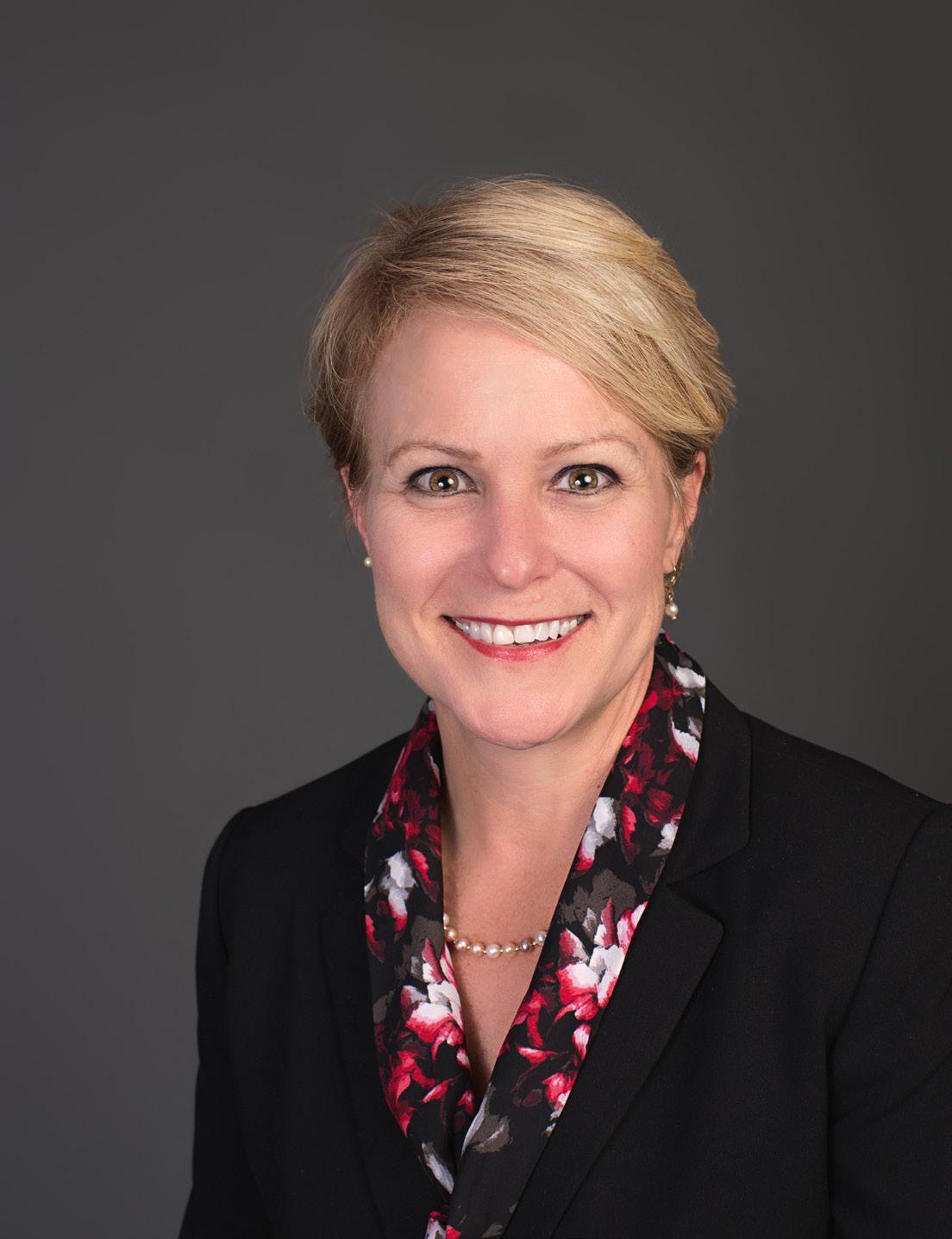
“What I think stands out about Gayle’s career with the Delaware Judiciary is her incredible dedication to public service and the law. I think her thoughtful vision and diligent work shines through the successes of the Delaware Courts over the past three decades and her contributions will be felt for many years to come.” — Ken Kelemen, Acting State Court Administrator and Judicial Branch Chief Information Officer
SCHEDULING NOW FOR APRIL 2026


Wilmington University Presents
Featuring Series Designer Richard Herrmann, Esquire | Facilitated by Connor Bifferato, Esquire
Each month, participants will be introduced to two fictional case studies presented as cliff-hanging mystery thrillers, followed by a discussion of the related ethical issues.
CASES FOR MARCH

“The Witness Who Knew Too Much”
A lawyer becomes romantically involved with a key witness, then hears a possible confession to perjury. The case forces a hard question: are those conversations privileged, and what does Rule 1.6 require when confidential information points to a crime?

“The Watchers”
A hidden server is quietly collecting large volumes of confidential information. A breach feels inevitable. The only question is whose protected communications will be exposed next.
WEDNESDAY, MARCH 25, 2026 | 5–6:30 P.M.
Wilmington University 30 Beaver Valley Rd. • Wilmington, DE 19803