
How Does a Magnetic Separator Work? An Essential Guide for Dry Mining Operations
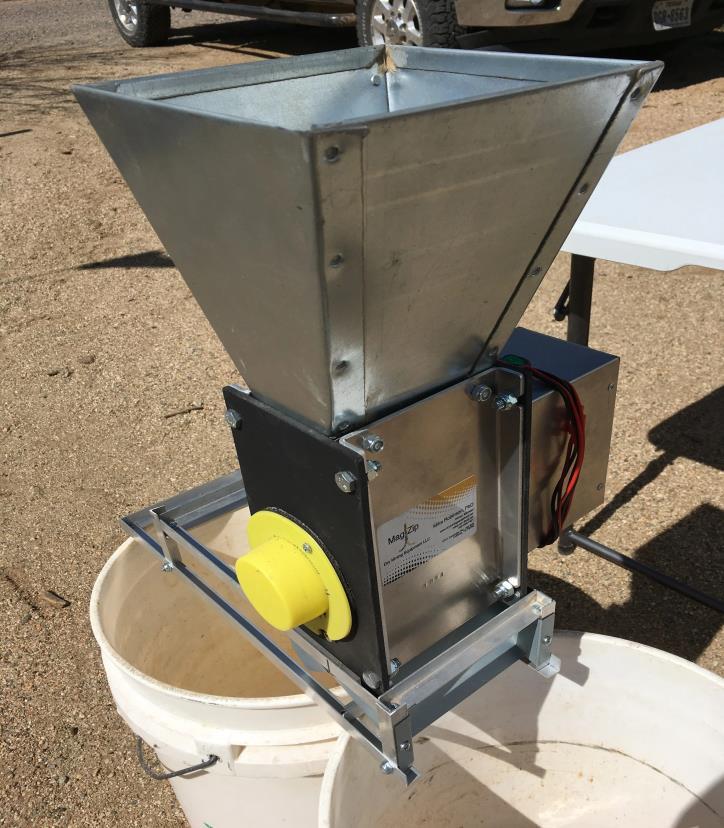
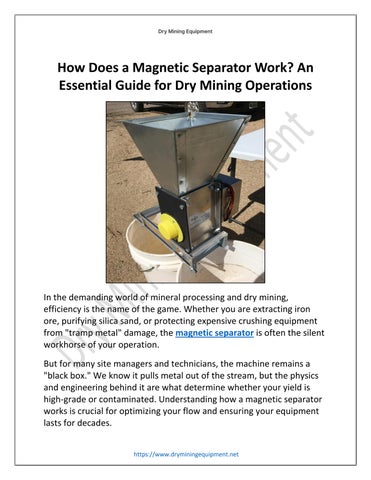
In the demanding world of mineral processing and dry mining, efficiency is the name of the game. Whether you are extracting iron ore, purifying silica sand, or protecting expensive crushing equipment from "tramp metal" damage, the magnetic separator is often the silent workhorse of your operation.
But for many site managers and technicians, the machine remains a "black box." We know it pulls metal out of the stream, but the physics and engineering behind it are what determine whether your yield is high-grade or contaminated. Understanding how a magnetic separator works is crucial for optimizing your flow and ensuring your equipment lasts for decades.
https://www.dryminingequipment.net
The Core Principle: Magnetic Susceptibility
At its most basic level, a magnetic separator exploits the difference in magnetic susceptibility between various minerals and materials. Every material on Earth reacts to a magnetic field in some way, but for mining purposes, we generally categorize them into three groups:
1. Ferromagnetic: Highly attracted to magnets (e.g., iron, magnetite).
2. Paramagnetic: Weakly attracted (e.g., hematite, manganese).
3. Diamagnetic: Actually repelled by magnetic fields (e.g., silica, gold, copper).
The magnetic separator’s job is to create a controlled environment where these forces can be used to physically pull one group away from another.
The Mechanics: How the Process Unfolds
While there are many designs from overhead cross-belt magnets to high-intensity rollers most dry magnetic separators follow a fourstage process.
1. The Feeding Phase
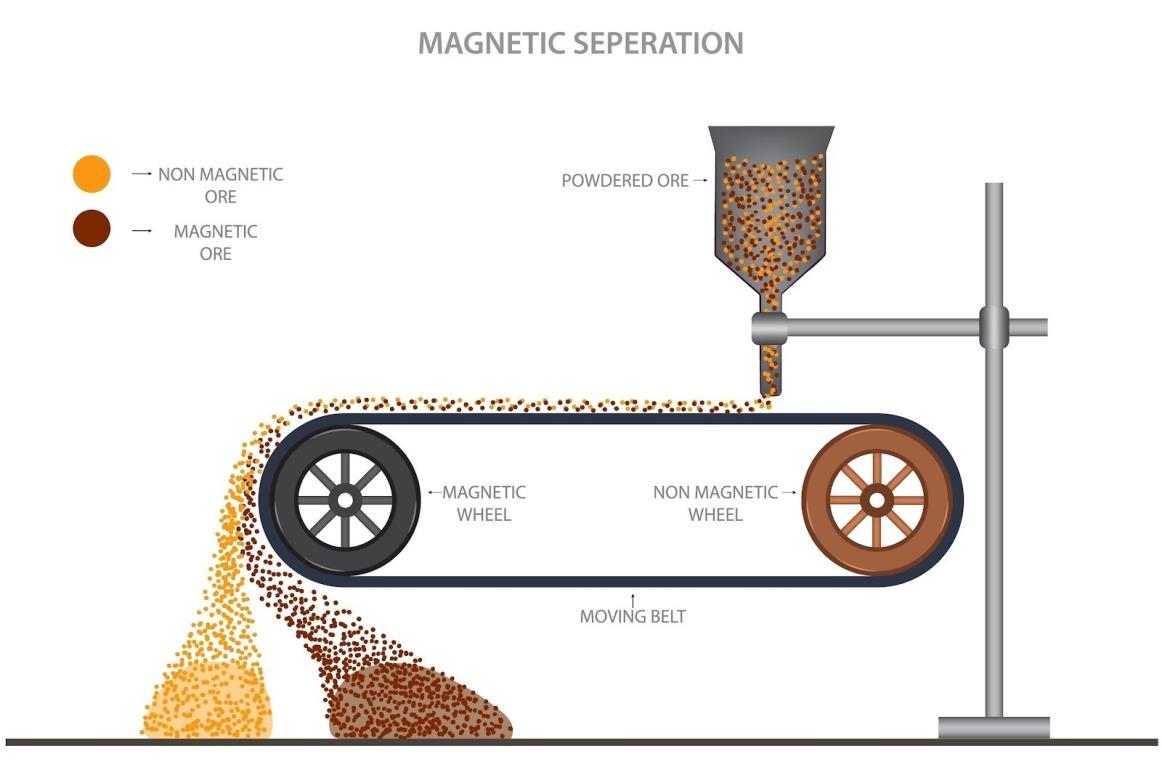
The raw, dry material is fed onto a conveyor belt or into a vibrating hopper. In dry mining, it is essential that the material is spread in a thin, "monolayer" fashion. If the material is too thick, non-magnetic particles can become physically trapped under magnetic ones, leading to "carryover" and reduced purity.
2. Exposure to the Magnetic Field
As the material moves, it enters the "Zone of Influence." This is the area where the magnetic field is strongest. Depending on the machine, this might be a magnetic head pulley at the end of a conveyor or a stationary magnetic arc inside a rotating drum.
3. Separation and Retention
This is where the magic happens. As the mixture passes through the field:
Non-magnetic particles (the "tails") follow their natural trajectory, falling off the belt or drum via gravity and centrifugal force.
Magnetic particles are seized by the magnetic force. They are pinned against the surface of the belt or drum, defying gravity for a few crucial seconds.
4. Discharge and Collection
The magnetic material is carried along the rotating surface until it moves outside the magnetic field. Once the pull of the magnet ceases, the material drops into a separate collection chute. In "self-cleaning" models, a belt or a series of wipers ensures that the metal is actively moved away so it doesn't build up and clog the system.
Different Tools for Different Tasks
Not all magnetic separators are created equal. The type you choose depends entirely on what you are trying to catch and how much of it is in your feed.
Magnetic Pulleys
In dry mining, the magnetic pulley is perhaps the most common. It replaces the standard head pulley at the discharge end of a conveyor. As the belt turns, the magnet holds the ferrous material to the belt until it reaches the underside, where it is dropped into a separate bin.
Drum Separators
A drum separator consists of a stationary internal magnetic yoke surrounded by a rotating stainless-steel shell. These are ideal for highvolume applications where you need to remove large amounts of iron or upgrade the quality of ferromagnetic ores.
Overband or Suspension Magnets
These are "search and rescue" magnets. Suspended above a conveyor belt, they reach down into the moving material to pull out "tramp metal"—things like broken drill bits, bolts, or tools that could destroy a crusher downstream.
Factors That Influence Performance
If your separator isn't performing as expected, it usually comes down to three variables:
Field Intensity (Gauss): This is the "strength" of the magnet. Highintensity magnets (using Neodymium) are required for paramagnetic minerals, while lower-intensity Ferrite magnets are fine for large pieces of scrap iron.
Gradient: This is how quickly the magnetic strength drops off as you move away from the surface. A high gradient is essential for "grabbing" small particles from a distance.
Feed Rate and Particle Size: If you run your belt too fast, the momentum of the rock might overcome the pull of the magnet. Similarly, very fine dust is harder to separate than coarse granules because the surface tension and air resistance begin to interfere with the magnetic pull.
Why Dry Separation Matters in Modern Mining
As water becomes a more expensive and regulated resource, Dry Mining Equipment is seeing a massive surge in adoption. Traditional "wet" magnetic separation requires massive amounts of water processing and tailing dams.
How a magnetic separator works in a dry environment is inherently different because it relies on the material being free-flowing. By using high-vibration feeders and specialized magnetic circuits, modern dry separators can achieve purity levels that were once thought possible only through wet chemical processing.
Maintenance: Keeping the Field Strong
While magnets don't "run out" of magnetism quickly (permanent magnets lose less than 1% of their strength over a decade), the environment can kill their efficiency.
1. Heat: Extreme temperatures can temporarily or permanently weaken a magnet.
2. Abrasive Wear: In dry mining, the "sandpaper effect" of rocks hitting the separator can wear down the protective stainless steel shells.
3. Build-up: If the discharge mechanism fails and metal builds up on the face of the magnet, the magnetic field is "shunted," and it will stop picking up new material.
Conclusion
The magnetic separator is a masterclass in using fundamental physics to solve industrial problems. By understanding the interaction between magnetic susceptibility, field gradient, and material flow, mining operations can significantly increase their ROI.
Whether you are looking to purify a product for sale or simply want to ensure your primary crusher doesn't choke on a piece of stray rebar, the magnetic separator is your first line of defense. In the world of dry mining, where every gram of material counts, mastering this technology isn't just an advantage it's a necessity.
Source URLhttps://dryminingequipment.wordpress.com/2026/03/31/howdoes-a-magnetic-separator-work-an-essential-guide-for-drymining-operations/
https://www.dryminingequipment.net