
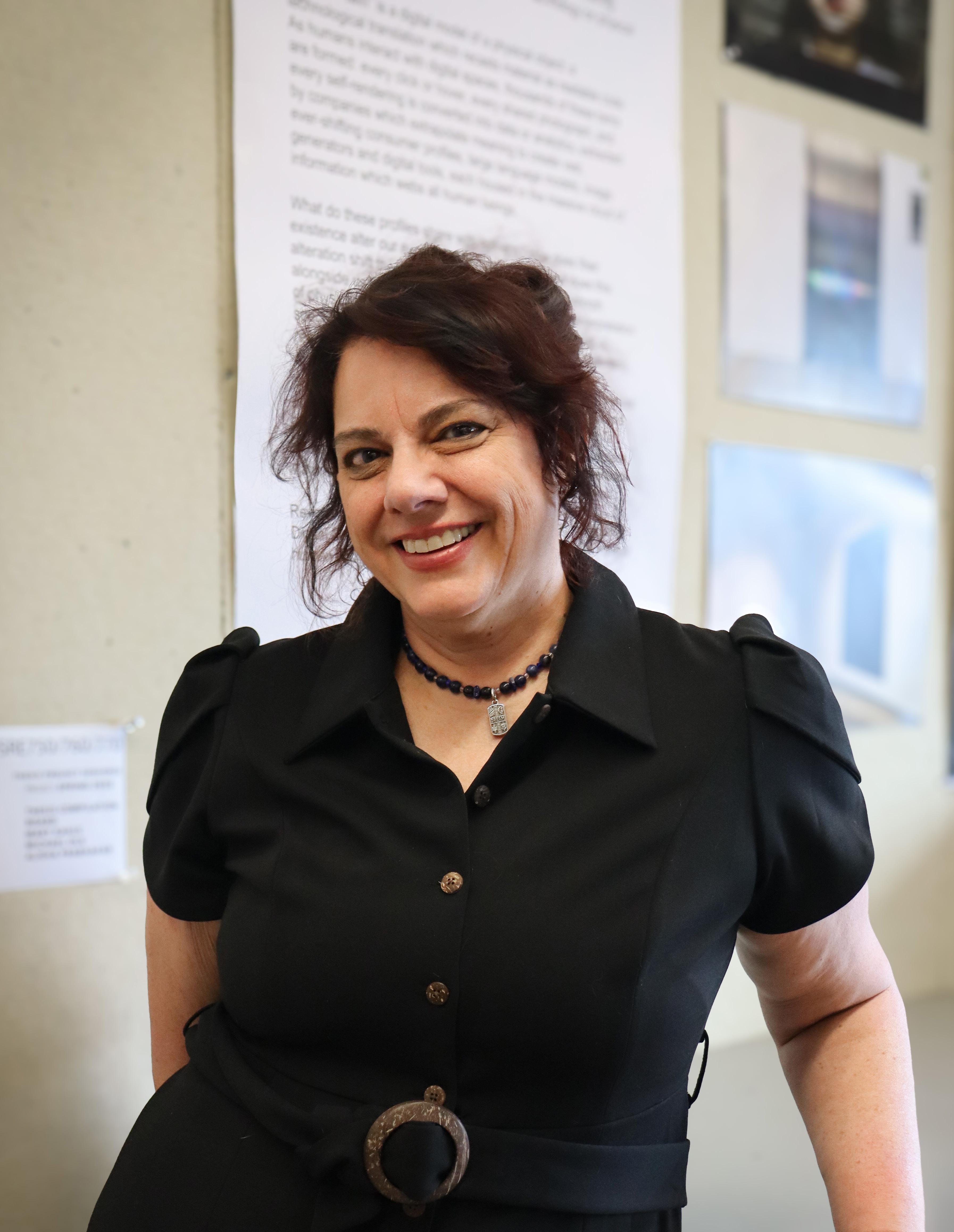
Dr. Diana Nicholas Associate Professor of M.S. Design
Dr. Diana Nicholas Associate Professor of M.S. Design
By Tanaya Deshpande, M.S. ‘24

Dr. D.S. Nicholas, affectionately known as Dr. Dee to her students, is a creative researcher in health and human-centered innovation currently focused on how living spaces can be improved to elevate quality of life. She is a tenured Associate Professor for the Master’s of Design program in the Department of Architecture, Design and Urbanism and the Director of the Design Research program. She went on to attain her PhD in Leadership and Change. Dr. Nicholas has long been interested in designing for equity and the idea of ‘culture of care.’ She manages The Design Health Innovation Clinic at The Drexel Design Research for Health Lab, focusing on making changes that adopt a care-based approach to space design. Her research principles lie in the fact that “design solutions need to be care-informed so that when you are creating spaces for people, you’re not actually adding to their illness but supporting their well-being,” emphasizing that all environments are health environments.
“How can design help people in need? How do we make spaces that are supportive and healthy?”

Growing up with immigrant parents who started off as house-flippers, she recalls having to move houses many times, and sometimes countries. As a child she would often go with her dad to his job as an architect and architectural engineer, following him to job sites and helping him build. “He was a big troubleshooter and had a very strategic approach to his work which I think I inherited from him.” Professor Nicholas went on to study architecture herself grounding her interests in how people relate to their environments in social justice.
Professor Nicholas’ teaching methods rebel against the conformist pedagogy she was taught in graduate school. She says “I was very much taught from western sage-on-the-stage approach” where if one didn’t conform, they couldn’t be a designer. She embraces Drexel’s experiential approach and adds her own flare to a learner-centered approach. The first lesson in her classes is always learning how to recognize one’s place in their work with what she calls ‘positionality.’ Positionality is a conscious understanding of one’s position within their research, the community they work with and within and most importantly identifying personal biases that might mask crucial truths. In Professor Nicholas’ classes, students are taught to connect with their own sense of self. She encourages students to ask themselves: What drives me? Where am I coming from? Professor Nicholas believes it is pivotal to acknowledge how past experiences shape one’s approach to design and view of the world at large. Understanding one’s positionality is the first step towards shifting from an external perspective to one that is attuned to socially complex dynamics of the problem at hand.
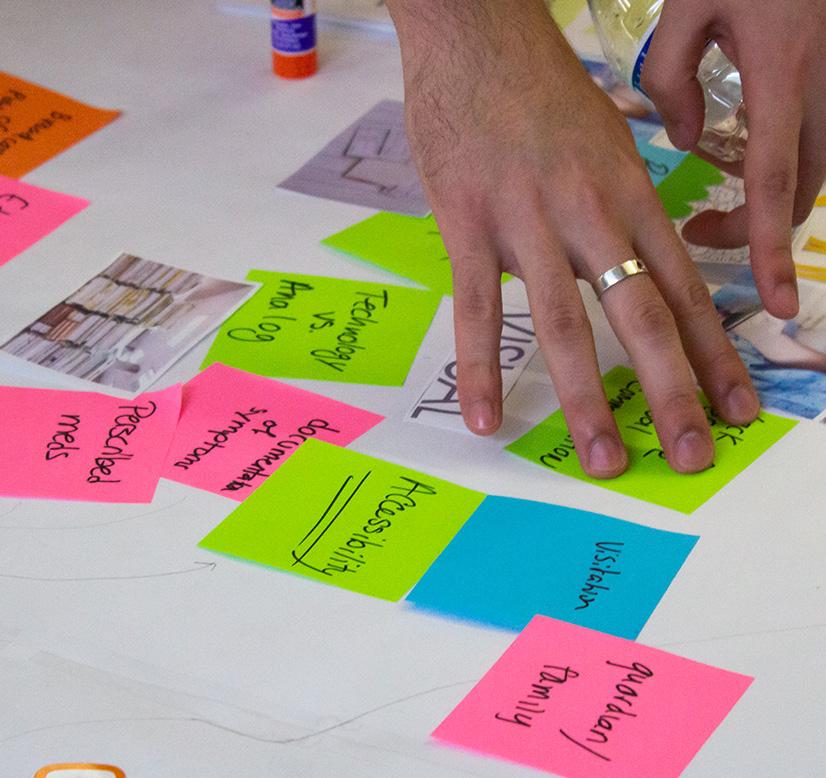
To expand their mental frameworks, students are encouraged to have conversations about topics such as diversity, lived experience, and equity. They reinforce their learning with project-based activities such as reflective writing and sketchnoting. Practicing positionality as a part of the research process helps students recognize internal biases as they interact with the topic at hand. Over time students build an improved sense of their intersectionality and how they work within their research.
“It’s
all about supporting people’s healthy lifestyles, healthy habits. Growing up overseas, I saw a lot of people who had nothing which was a very formative experience.”



“Design so often follows the money. And so thinking about how we can actually create design with and for people who need it, and how do we create other ways to pay for that or to have that happen?”
“Design so often follows the money. And so thinking about how we can actually create design with and for people who need it, and how do we create other ways to pay for that or to have that happen?”
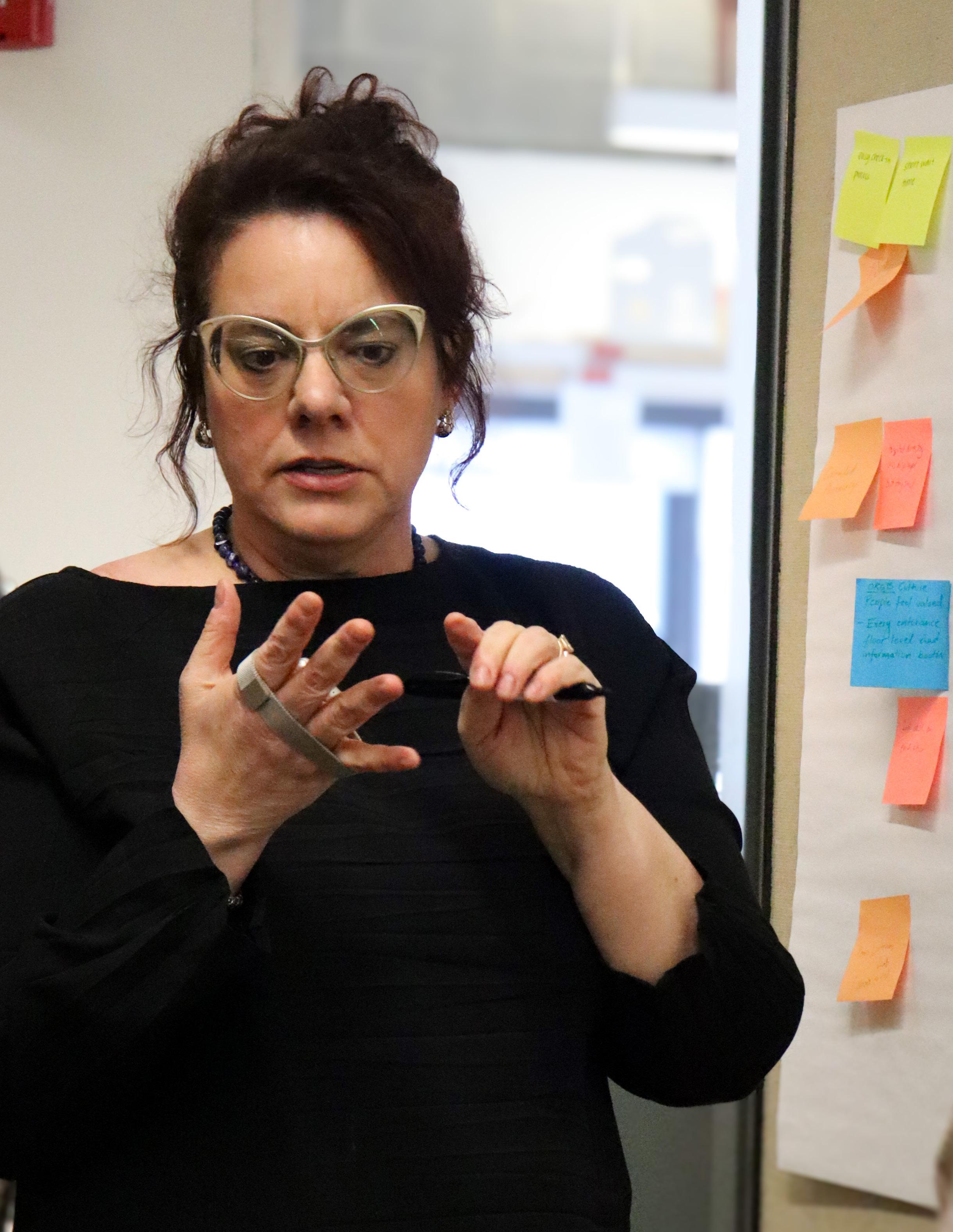
“Understanding your position relative to who you’re working with, what you’re researching, understanding and learning, knowing your approach and perspective is key to identifying the inherent biases that stop you from truly seeing the issues and needs of those that you’re participating with.”
Being able to understand one’s position in the world is the first step toward creating socially conscious and equitable research. For Professor Nicholas, looking at alternate methods of disseminating knowledge is crucial toward equitable practices in academia. She mentions ‘epistemology,’ being able to distinguish fact from opinion and the process of learning and creating knowledge, as a bedrock principle. She credits workshops and events that encourage exploring different ways of sharing ideas and learning as crucial to her success as a teacher. It also serves as an equalizer, where every idea is welcome and there’s an unspoken understanding of being on the same team.
“It’s
about striking a bigger tent and allowing more people into the conversation.”
“We’re really trying to be an inclusive community.” says Professor Nicholas. Subtly encouraging inclusion by bringing in multiple streams of knowledge and reinforcing skills learned through class readings, her hope for students to engage in conversations that promote inclusivity long after they graduate. It’s equally important for the current cohort to hear about the levels of integration diversity, equity and inclusion have within different professions. As such, inviting alums back to share their professional experiences is the first step.
Looking towards the future, it becomes increasingly important to preserve conversations around diversity, equity, and inclusion especially with the rise of artificial intelligence.
Professor Dee insists it is crucial to create an awareness about the lack of diverse perspectives within AI and forge paths to increase inclusivity within the field. The question here is – “How do we prevent getting boxed into a singular perspective by the tools we use?”
Professor Nicholas is interested in human stories related to change and design. “What is that like? What does it look like? I think that’s pretty interesting” she discusses. She cast a wide net by looking to those in diverse fields such as environmental psychology to social sciences, curious to see what sort of responses it yields. “I’m still interested in space, design research allows me to finally just be that person who is fascinated with people. It’s really about the stories, and the people and lived experiences and how that drives design.”
It’s important that the design solutions be careinformed so that when you are creating spaces for people, you’re not actually adding to their illness but supporting their well being.
“Curriculum is a living thing– it’s always changing, always growing. Everything gets revised all the time.”

Interim Dean Debra Ruben
Associate Dean
Francis Tanglao Aguas, MFA
Executive Assistant to the Dean’s Office
Tashera Dean
Catalyst Fellows
Creatives Activating Talent, Advocacy, & Leadership Yielding
Social Transformation
Monyvathana Ear, Eva Krewson, Asal Bastani, Sophie-Satu Abdulai
Volume 2, Issue 1, 2026
Publisher & Editor-in-Chief
Francis Tanglao Aguas
Associate Editor Asal Bastani, ‘28 M.D.
Head Writer
Tanaya Deshpande, M.S.I.A. ‘24
Assistant Professor of Interior Design
Mississippi State University
Graphic & Layout Designer
Monyvathana Ear, ‘27 Graphic Design
Assistant Graphic Designer
Sophie-Satu Abdulai, ‘27 Graphic Design
Photographer Eva Krewson, ‘28 Dance