Dear Reader,
I will always remember stepping onto campus as a bright-eyed, bushy-tailed first-year, so eager to dive right in to the seemingly endless possibilities this campus had to offer. Little did I know my very first engagement would become the epicenter of my life just two short years later.
Drake Political Review has always held a very special place in my heart, and I am infinitely grateful to those who came before me for taking a chance on that curious kid. Never did I imagine I would hold this position. I will be forever indebted to them.

Whether you are a journalist, a politics nerd or just a curious soul who happens to be flipping through this magazine, you would be hard-pressed to deny that this past year in politics has been a topsy-turvy rollercoaster ride. In this issue, our wonderful team of editors, writers, and designers have tackled everything. From Medicaid cuts to gerrymandering, from politicians’ involvement with the stock market to political figures on the big screen, this issue has it all.
If you’ll allow us the privilege, flip the page and follow us down the rabbit hole.
Without further ado,
LET’S TALK POLITICS!
EDITOR-IN-CHIEF
NORAH JUDSON
MANAGING EDITOR
RACHEL KOHL
ART DIRECTOR
EVE LOEHRER
ASSISTANT ART DIRECTOR
ALLIE RAINES
ASSISTANT DESIGNER
BAILEY REES
STAFF EDITORS
MARY BOLDINOVA
BEA GOODMAN
JACK MALINSKI
ASSISTANT EDITOR
EMMY HARMON
DIGITAL EDITOR
MICHAEL MCCLELLAND
PHOTOGRAPHY
SARAH FEY
CONTRIBUTORS
MARY BOLDINOVA
AVA CARY
SETH COUGHLIN
C.T. ECKHOFF
LILY FLEMING
BEA GOODMAN
MARY GROGAN
EMMY HARMON
NORAH JUDSON
RACHEL KOHL
MICHAEL MCCLELLAND
VERONICA MEISS
GREY MURPHY
RILEY PALMER
SOPHIA ROBERTS
FACULTY ADVISOR
JENNIFER GLOVER KONFRST
Special thanks to Jen Wilson, Lakshmi Tirumala, Amy McCoy, Jeff Inman, Neil Ward, Kelly Bruhn, Jennifer Glover Konfrst, Gina Ryan and Catherine Staub for their support. Thank you to the Drake SJMC, Bill Leonhardt and everyone at Christian Edwards Printing for making this magazine possible.
1ST PLACE
BEST MAGAZINE SPREAD
Emily Zeller – Fall 2024 Issue
HONORABLE MENTION
BEST MAGAZINE SPREAD
Tyler Strachan – Fall 2024 Issue
HONORABLE MENTION
BEST GENERAL NEWS STORY
Caroline Siebels-Lindquist – Fall 2024 Issue
PACEMAKER FINALIST
Spring 2025 Issue
Drake Political Review is an award winning publication. The magazine has received numerous Pinnacle awards for writing and design over the course of the last 11 years, as well as garnering two Pacemaker nominations. Both awards are presented by the College Media Association and serve to recognize the best student media in the country while also honoring organizational excellence.











What starts as a budget decision in D.C. could end in empty hospital beds across Iowa.

Medicaid, initially introduced in 1965, has provided millions of Americans with access to health care. Many workingclass Iowans rely on the health care coverage the program provides.
Medicaid is a government program that provides health care coverage to low-income groups that qualify — typically families that earn under the federal poverty line, foster care children and adults with disabilities. Medicare is different; however, it’s a federal health insurance program as well, but it usually only covers Americans who are 65 and older.
Medicaid is funded jointly by the state and federal governments. However, the specifics may vary from state to state.

The Distance Between Care and Cost
Iowa’s Medicaid program includes presumptive eligibility, which provides immediate coverage even if an application hasn’t been completely processed. This safety net is intended for cases where an individual is likely to qualify but can’t afford to wait the months it can take for approval. Some states have stricter presumptive eligibility requirements.
Nebraska, for instance, offers presumptive eligibility, but typically only for pregnant women. These nuances make Medicaid a complicated system — one where a bureaucratic qualifier can mean the difference between access and delay.
As of May 2025, more than 600,000 Iowans were enrolled in Medicaid. The state also expanded Medicaid under the Affordable Care Act, widening eligibility to include more low-income adults, especially those without children who were previously excluded.
On July 4, 2025, President Donald Trump signed the One Big Beautiful Bill Act into law, outlining cuts to government programs across the country beginning in 2026.
Republicans argue that dismantling federally funded health care will mean eventual growth in private health insurance coverage. A private health care market, theoretically, would see increased competition and therefore lower premiums. Some research refutes this line of thinking on the basis that the health care market deviates from market norms.
The bill reduces Medicaid spending by 15% over the course of 10 years, partly in an effort to decrease what Republicans see as “waste, fraud and abuse.” States are now at risk of losing the Medicaid expansion they adopted in 2010 under the Obama administration.
The Medicaid expansion Iowa adopted includes what the Center on Budget and Policy Priorities calls a “poison pill,” which is essentially a legislative fallback. If federal funding is cut or withdrawn, the expansion program is automatically terminated or placed under review.
In practical terms, the ‘poison pill’ would reduce coverage to adults earning up to only 100% of the federal poverty level — $15,650 per year. For families, the poverty level depends on household size. Anyone earning even slightly more would lose eligibility and be forced to seek private insurance or go without coverage entirely.
These budget cuts don’t just restrict health care expansion in Iowa — they put additional strain on Iowa’s health care workers.
According to the American Hospital Association, 16.1 million people living in rural areas are covered explicitly
by Medicaid. Rural states are often more reliant on the Medicaid system due to increased rates of poverty.
The Iowa Medical Society ranks Iowa 44th in physicianto-patient ratio. This shortage puts the state in what the Iowa Medical Society calls a “health care desert” — an area where a population lacks access to critical health care services.
Zach Wahls, the Democratic state senator from Iowa’s 43rd district, said his experience talking with Iowa hospital administration confirms this statistic. Wahls just completed a 22-stop campaign route through the southwestern portion of small-town Iowa in preparation for running for U.S. Senate.
“What I’m hearing from hospital leaders and health care providers as we travel across the state is an existential fear about the impact of these cuts,” Wahls said.
Hospitals in Iowa rely on Medicaid to pay their workers and cover medical procedures for patients. These hospitals, without proper funding, will begin to shut down. Closures will likely increase the number of people driving from rural parts of the state into cities to access hospitals.
Because providers will need to adjust budgets to cover the spike in uninsured patients, all insurance, not just Medicaid, could end up inflated. When hospitals lose federal funding, they will likely shift to private insurance to bridge the gap.
“The Medicaid payments were described to me by hospital leadership as, this is a direct quote, ‘our salvation,’” Wahls said.

Iowa will lose in the coming years.
Gov. Kim Reynolds proposed a plan prior to the government shutdown to address this health care worker shortage, aiming to attract medical students by expanding residency programs at hospitals across the state. However, the effort to graduate new doctors is only part of the health care crisis Iowa faces.
Starting in 2026, Iowa will feel the effects of funding shifts that could shape its health care system for the next decade. Experts expect several rural hospitals to close, and many families may lose access to essential care. Even those with private insurance will feel the ripple effect, as rising costs and shrinking resources strain the health care system as a whole.

An Iowa voter’s guide to understanding the process of special elections and referendums.

In 2025, several special elections were held across Iowa, sparking conversations about how these off-cycle contests work and why they matter. In a time of political uncertainty, Iowa voters are paying closer attention to elections that don’t always make national headlines but have a major local impact.
A special election occurs when a government seat becomes vacant before the official term ends. This vacancy can happen when a legislator resigns, passes away, or takes another position. Instead of waiting until the next regular election cycle, the state holds a special election so constituents continue to have representation.
“Special elections are rare,” said Tyler Redenbaugh, deputy chief of staff for Iowa House Democrats. “In special elections, you’re not running against your opponent; you’re running against whether people actually remember there is an election to go vote in.”
The logistics of special elections are different from general elections. In local or state races, a single vote can change the outcome — that’s what makes special elections so high stakes.
“A lot of people are feeling frustrated right now. I think encouraging participation in the process will be key to making sure we can continue to succeed,” said the newly elected Iowa state senator Catelin Drey.
Iowa saw two notable special elections this year — one in the House and one in the Senate. Angel Ramirez of Cedar Rapids became Iowa’s first Latina state representative, replacing Sami Sheetz, who resigned to serve on the Linn County Board of Supervisors. In the Senate, Catelin Drey won her race by 11 percentage points, narrowing the Republican supermajority after the death of former Sen. Rocky De Witt.
While the results won’t take effect until January 2026, these campaigns navigated an unusual path to victory. Special elections often pose unique challenges due to their limited notice and funding.
Timelines for these special elections are typically accelerated, which can put significant pressure on state and local election officials. From a voter’s perspective, often the hardest-to-find details are the “when” and “where” of the polls. There is no single election day with uniform polling sites across districts. Timelines differ and voting locations may not be the ones voters typically expect.
When turnout is low, each voter has a louder voice. Special elections remind Iowans that democracy doesn’t just happen every two years.
Iowa Gov. Kim Reynolds announced another special election will be held to fill a Senate seat that fell vacant when former Sen. Claire Celsi died in October 2025. It remains to be seen how this race might shape Iowa’s political landscape.
The charter school debate heats up, leaving Iowans to wonder, who owns their education?
For years, Iowa maintained one of the most restrictive charter systems in the country, allowing only district-created schools. Then, in 2021, Iowa lawmakers passed House File 813, which fundamentally changed the state’s approach to charter schools. Now, almost five years later, the effects of this policy shift are taking shape.
Mike Huguelet, president of Iowa Coalition for Public Charter Schools, said, “Public charter schools are the lane for community agency.” The new law opened the door for independent groups, nonprofits, and individuals to apply to establish their own charter schools.
Since the law took effect, charter schools in Iowa have more than tripled. Before 2021, only two district-authorized charters existed: Storm Lake and Mayoral Academies, both tied closely to their public districts. Now, a growing number of independent charter schools have emerged — some in rural areas, others in urban centers, such as Des Moines and Cedar Rapids. While the number remains small compared to surrounding states, the expansion marks a clear pivot toward a vision of school choice.
Supporters of the change, like Huguelet, argue that the new system brings flexibility, innovation and competition to Iowa’s K-12 education.


“Out of nature, [charter schools] have to be providing something that’s not redundant,” Huguelet said. “Because why would a family choose the same thing with a different name on the door?”
Many of Iowa’s charter schools emphasize specialized missions. Some focus on project-based learning or STEM education, while others stress career readiness or individualized instruction. The new Summit School in Ames, for instance, integrates experiential learning and local business partnerships to give students hands-on exposure to careers. Choice Charter Academy near Des Moines promotes a classical education curriculum centered on Western civilization and civic literacy.
But the growth of charter schools in Iowa hasn’t been without controversy. Public education advocates argue that charter expansion diverts funding from already under-resourced public schools. Charter schools are publicly funded but independently operated, so each new charter means state dollars follow students out of their
Unlike traditional public schools, Iowa’s new charter schools operate under contracts approved by the State Board of Education. While the schools must meet academic and financial performance benchmarks, locally elected school boards no longer have direct oversight. Opponents argue that indirect administration limits transparency and gives too much power to state and private operators.
Huguelet disagreed, pointing out that charter schools use the same performance framework as public schools and have an additional review every five years.
Still, parents’ interest in charter options is growing, especially among families seeking alternatives to one-sizefits-all models. For some, charter schools offer smaller class sizes, individualized learning plans, or a clearer sense of community. Others are drawn to the idea of having a choice beyond the local district school.
In rural Iowa, where districts face declining enrollment and budget constraints, the conversation around charters looks different. Some rural advocates worry that new schools could further fragment limited resources. Others see potential in locally driven charter efforts that keep schools open when district consolidation threatens closure. Rep. Skylar Wheeler, a co-sponsor of House File 813, argued that the change in legislation allows rural districts to keep local education intact when they face public school closures.


As Iowa’s charter system continues to expand, data on outcomes remain limited. Most of the newly authorized schools have only been open for a year or two, making it difficult to measure long-term academic performance or graduation rates. Iowa’s Department of Education plans to publish annual reports on charter school performance starting in 2026 to ensure accountability.
Looking ahead, the growth of charter schools in Iowa will likely continue to spark debate, especially as more apply for authorization. Supporters see an opportunity to reimagine public education through choice. Opponents worry that, without proper checks, the expansion could erode the foundational promise of equal public
What’s clear is Iowa is no longer an outlier in the national charter movement. The state has moved from cautious experimentation to active participation in the conversation about what education should look like in the
Whether charter schools become a cornerstone of Iowa’s educational future or remain contested experiments will depend on how policymakers, educators, and communities navigate the tension between innovation and equity in the
WORDS BEA GOODMAN DESIGN EVE LOEHRER
For the first time since 1968, Iowa will hold open elections for governor and a U.S. Senate seat simultaneously, signaling big changes in the Iowa political sphere.
In April of 2025, Gov. Kim Reynolds shocked Iowans by announcing she would not be running for reelection. The news was unexpected, as Reynolds had only held the seat since 2017, and Iowa does not impose term limits on the governor. Reynolds said she would not be seeking a third term because she wants to shift her focus to her family.
A few months later, in September, Joni Ernst declared she would not be running for reelection to the Senate. Ernst was first elected in 2015 and also chose to bow out of the race after just two terms in office. Ernst cited personal reasons for her decision, despite GOP leaders encouraging her to run again.
With two previously Republican seats now open, Daron Shaw, a political science professor from the University of Texas at Austin, believes this race “...creates a test of Trump’s hold on the Republican party…and a test of whether Iowa has truly become out of reach for the Democrats.”
Paul Dahl, who has previously had numerous unsuccessful political campaigns, was formerly a Webster City bus driver, a pastor and currently works as a Pizza Hut delivery driver. If he were to be elected, he said he wants to increase higher education funding, address the pressing issue of water pollution in Iowa, as well as make abortion care more accessible.
Rob Sand began with a career in law, but has been serving as the 33rd Iowa Auditor of State since 2019. Sand’s campaign places an emphasis on bipartisan efforts, and if he wins, he wants to maintain that ideology and bring political balance to Iowa. Sand is a favorite among Iowa democrats for his grass-roots campaign style and willingness to bridge political divides.
Julie Stauch, a political consultant, announced her campaign for governor in June. She claims to be a problemsolver, and if she is elected, promises to improve public schools, get cleaner water to Iowans, create better healthcare policies and address the abuse of eminent domain in Iowa.
Zach Wahls currently serves as a state senator for District 37, hoping to make it into the U.S. Senate.
Josh Turek is an Iowa state representative for House District 20.
Nathan Sage is a veteran, currently working as the executive director of the Knoxville, Iowa, Chamber of Commerce.
Jackie Norris is the current Chair of the Des Moines School Board and was previously the chief of staff to Michelle Obama.
Ashley Hinson is a current U.S. representative for House District 2 and is aiming to switch over to the Senate.
Matthew Whitaker is the U.S. ambassador to NATO.
At the time of this publication, candidates have only announced their intention to run; campaign platforms have not been publicized yet.
Eddie Andrews is an Iowa State Representative for Iowa House District 43. If he is elected governor, he plans to improve Iowa’s education system, combat human trafficking, eliminate property taxes and fight against the use of eminent domain.
Brad Sherman recently ended his role as an Iowa state representative in order to pursue a career as governor. While in office, he plans to eliminate the use of eminent domain for carbon capture pipelines, limit the governor’s ability to use emergency powers and reduce property taxes.
Adam Steen most notably worked as the former director of the Department of Administrative Services. His campaign has a religious focus and is centered on bringing back traditional values to Iowa.
Randy Feenstra is currently serving as the U.S Representative for Iowa’s 4th congressional district. If he were to become governor, he claims he would fight to protect the family budget, aid farming communities and local businesses, as well as renew the Trump tax cuts.
Incumbents typically have the advantage in elections, but with Ernst and Reynolds out of the race, the 2026 election is expected to be highly contested. With this in mind, Donna Hoffman, a political science professor at the University of Northern Iowa, said, “Open seats are typically much more competitive and potential candidates who would have sat a race out if the incumbent were running, will often be moved to jump in when the incumbent declines to run.”
Additionally, there is a mix of seasoned politicians and newcomers running for both offices — candidates who, therefore, appeal to widely different audiences.
“Rather than left-right, my sense is that ‘outsiders’ and ‘disruptors’ may have the edge in 2026,” Shaw said, highlighting the competitiveness and unpredictable nature of this race.
With many variables shifting from previous elections, the vacant seats are truly open to anyone. Ultimately, it will be up to voters to decide which candidate is best to lead.

Big tech is making billions — but are they digging society’s grave in the process?
In such a complicated world, people are constantly looking for ways to simplify their lives and achieve efficiency. This goal is quickly becoming a reality with the recent surge in popularity of artificial intelligence programs such as ChatGPT, Gemini and Claude. This AI technology is everywhere — writing college essays, facilitating Google searches and even generating job applications.
While these advances in technology allow for a fasterpaced world, they’re causing devastating effects on the environment that differ largely based on socio-geographic location. Research suggests that these environmental implications are affecting historically black and low-income neighborhoods at a higher severity than economically resourced communities, which perpetuates the effects of environmental racism.
Civil rights activist Benjamin F. Chavis Jr. coined the term environmental racism in 1982 to refer to the intentional degradation and pollution of areas predominantly inhabited by racial minorities and lowerincome families — a phenomenon that has only increased in relevance as society has progressed technologically.
Tech companies such as Google, Microsoft and Meta are generating immense capital on AI advances by building as many data centers as possible. With data center spending accelerating past a 30% increase year-over-year in July 2025, over 4,000 data centers already exist in the U.S, and the number is still growing exponentially.
When data centers are built on top of neighborhoods, they often deplete the community’s crucial natural resources. Because these data centers are practically working around the clock to produce and store data, just like any computer, they overheat. To prevent systems from overheating, these massive computers need the most vital natural resource, water.
According to the Environmental and Energy Study Institute, a large data center can consume up to five million gallons of water per day, equivalent to the water use of a town populated by 10,000 to 50,000 people. These figures are only expected to rise as Americans increasingly tap into AI resources.
In the past year, AI data centers have steadily crept into the Midwest and subsequently into Iowa. Pamela Taylor, the conservation and legal chair of the Iowa chapter of the Sierra Club, an environmental organization, said that the projected outlook of AI is uncertain.
There is some thought that AI might be like the early 2000s dot-com bubble or the mortgage bubble of 2007–08, Taylor said; however, “[it’s not] a given that data centers will be such significant power users that they will require a massive increase in electric generating facilities.”
When examining Iowa, rural areas, state policy and cost to taxpayers are at the forefront of the conversation.
In rural areas, AI may have a large impact on the use of land. AI companies will likely start to incentivize small towns and farms to allow them to expand data centers. Data centers may also require diesel backup generators that will contribute to air pollution, or be built on land that contains underground aquifers, which will restrict water supply for agricultural efforts.
When discussing state policy, Taylor explained that the regulation would need to start with county and city zoning. “With respect to state law, the Iowa legislature could impose requirements on data centers before they could be constructed,” Taylor said. “The important point is that data centers should not just be assumed to be a good thing.”
Adding to the uncertainty over how AI could shape both the Des Moines and the greater Iowa communities, local lobbyist Nick Lanning said that at the moment, he doesn’t have any clients advocating for environmental protections from AI data centers. However, policy considering the utilization of AI systems is currently a hot-button issue within the Iowa legislature.
While environmental burdens have been felt by communities across the nation, the South faces another layer: environmental racism. Environmental racism is a form of systemic racism that’s worsened by longstanding policies, such as redlining and segregation, that favor predominantly white and affluent


communities over non-white and lower-income communities. The 2014 Flint, Michigan water crisis is one example.
These policies make predominantly black neighborhoods especially vulnerable to the construction of data centers, which is exactly what’s happening in Memphis, Tennessee.
Tech giant Elon Musk’s company, xAI, recently built a massive data center just a few miles away from Boxtown, a community with a 90% black population in South Memphis. Boxtown was established in 1863 by enslaved families shortly after the Emancipation Proclamation was signed. Since then, the town has been the site of political, economic and environmental strife for years.
Prior to xAI moving in, the community already experienced significant struggles with smog and elevated cancer rates — nearly four times the national average, according to the Environmental Protection Agency. The xAI facility has reportedly caused a rapid decline in air quality, which poses a direct health risk to residents in the area.
In June 2025, the NAACP, the nation’s oldest civil rights organization, filed a notice with intent to sue Musk and xAI, alleging the company’s AI data centers were in direct violation of the Clean Air Act, a federal law that regulates air emissions.
In a statement on the issue made June 17, the NAACP President and CEO, Derrick Johnson, stated, “We cannot afford to normalize this kind of environmental injustice — where billion-dollar companies set up polluting operations in black neighborhoods without any permits and think they’ll get away with it because the people don’t have the power to fight back. We will not allow xAI to get away with this.”
Boxtown is not the only community in Memphis facing unprecedented amounts of smog and air pollution — and it serves as a cautionary tale of what the future of AI data centers could look like across the nation.
Democrats were left leaderless and lost after defeat in 2024 election. Now, they’re on the hunt for a new champion.
In the wake of the 2024 election, there is a conservative stronghold in every aspect of national government: the presidency, the Supreme Court and both chambers of Congress. That leaves few, if any, Democratic leaders on a national scale.
Joe Biden has since stepped back, after ending his 2024 presidential run and endorsing then-Vice President Harris. Soon after, Harris faced a crushing loss against Trump.
As a result, there is no clear Democratic leader at the national level. There are several who could lead the Republican Party after Trump, but who could step up as the leader for the Democrats?
Kamala Harris
Kamala Harris, former vice president and 2024 Democratic party presidential nominee, is who many consider the former leader. She has held many positions, most of which served her home state of California. After facing a loss in the shortest campaign in modern history — only 107 days — Harris has said she is temporarily leaving the world of politics, proclaiming the political system is “broken” in an interview with late night TV host Stephen Colbert.
“I do see Kamala running again,” said Nathan Carrington, Ph.D., an assistant professor of politics at Saint Louis University. “Whether it’s next election or not, I don’t know, and she’s kind of positioning herself with this book tour.”
However, Carrington also said Harris “has been MIA the last nine months. She has not given speeches, she’s not done rallies, she’s not put out statements. Or when she has, they’ve been few and far between.”
Gavin Newsom
Gavin Newsom, the governor of California, has become increasingly popular with Democrats since Trump took office, specifically with younger generations. He has refused to coalesce with the second era of Trump policy — and isn’t quiet about it. Many Democrats have mixed opinions about this approach. In response to Texas Republicans’ redistricting, Newsom proposed that California redraw its maps to add the same number of Democratic votes to make up for the votes lost in Texas — but Democrats accused Newsom of fanning the political flames.

Boris Heersink, Ph.D., an associate professor of politics at Fordham University, said that although Newsom may now be aggressively taking on Republicans, that hasn’t always been the case.
“Newsom’s strategy has been pretty mixed at first, after the 2024 election, he used his podcast to interview a lot of MAGA figures, and mostly in a pretty favorable way,” Heersink said. “That did not endear him to Democrats.”
Carrington pointed out that, eventually, “I think the public would support him. He is already kind of moderating on some of his views, like he has rounded up homeless people.” However, due to his often confrontational demeanor, many Americans worry about his ability to collaborate across party lines.
Pete Buttigieg
Former Transportation Secretary Pete Buttigieg served in Former President Biden’s cabinet and was the first openly gay person in a cabinet position. He was a former member of the Navy, which contributed to his connections with Democrats and Republicans in his home state of Indiana and across the country.
“He’s a very great public speaker. He does a fantastic job explaining Democratic policies, even to hostile audiences that don’t normally agree with him,” Carrington said. “And in Harris’ book, she talked about how he would have been her first choice for VP.”


Yet, Harris also believed that it was “asking a lot of America” to accept a gay vice president.
Buttigieg tried running for president in 2020, even winning Iowa’s Democratic caucuses; however, other than his cabinet position, he has only ever served as mayor in South Bend, Indiana.
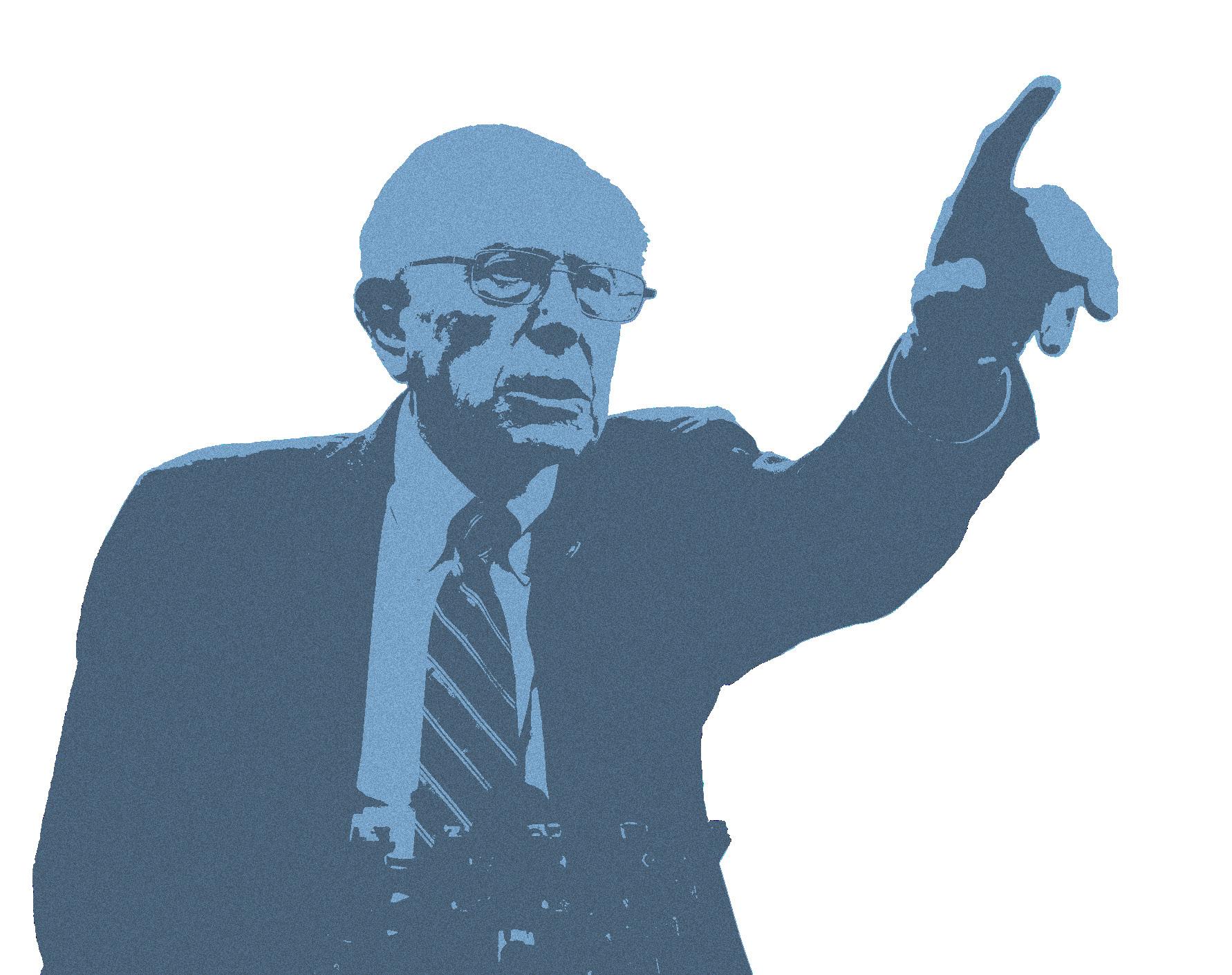
Bernie Sanders, a senator from Vermont, champions many policies that left-wing Democrats support. He is popular and respected, even by moderate Democrats, because of his continuous involvement with constituents.
Heersink commented that Sanders’ policies resonate with constituents because politicians like him and Rep. Alexandria Ocasio-Cortez (D-N.Y.), a long-time ally, are “more realistic about spotlighting the big issues facing young voters.” Despite his popularity, many were concerned with Sanders’ age when he ran for president in 2016, and he would be 91 in 2032. He is also an Independent and a Democratic Socialist, which would be difficult to nominate.
Alexandria Ocasio-Cortez
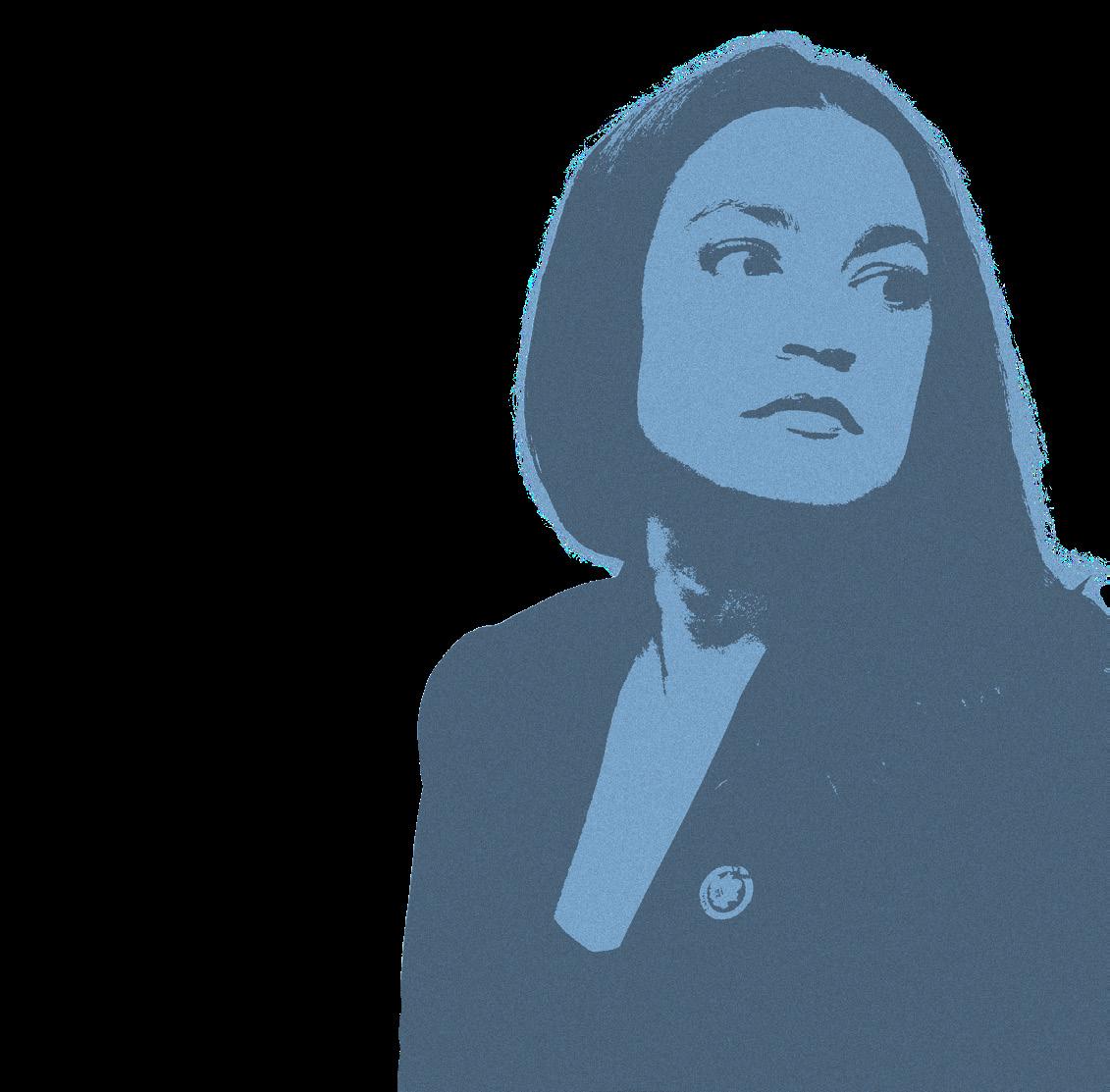
At just 36 years old, New York Congresswoman Alexandria Ocasio-Cortez has grown increasingly popular with Democrats; sharing her story as a young, working-class woman in New York connected her with many members of the party instantly.
Heersink explained this rise in favor, stating that “People like AOC in particular are very good communicators and use social media extensively.” Ocasio-Cortez and Sanders recently joined forces, embarking on what they dubbed the “Fighting Oligarchy Tour” in response to the Trump administration.
Despite gaining approval from many, however, some Democrats view the policies Ocasio-Cortez supports as too radical.
Many governors are also positioning themselves for a possible 2028 run, including Josh Shapiro, Andy Beshear and J.B. Pritzker.
Shapiro, the governor of Pennsylvania, was reportedly on the list for Harris’ running mate and is currently the leader of a key swing state.
Beshear is the governor of Kentucky, a traditional Republican stronghold. He has collaborated with many Republicans and Democrats in the past, and has said he would consider running if he could “unite the country.”
Pritzker, the governor of Illinois, has recently dominated headlines after defending constituents from illegal ICE raids and National Guard threats from the Trump administration.
Having an effective, standout Democratic leader could be key to reinvigorating the party and ensuring a successful 2028 run. With dramatic changes in the political landscape happening every day and a lack of Democratic leaders, there is a lot of uncertainty regarding the future.
Carrington said, “It would not surprise me if it winds up being somebody that we’ve never even heard of.”



As political division deepens, unthinkable violence feels dangerously normal.
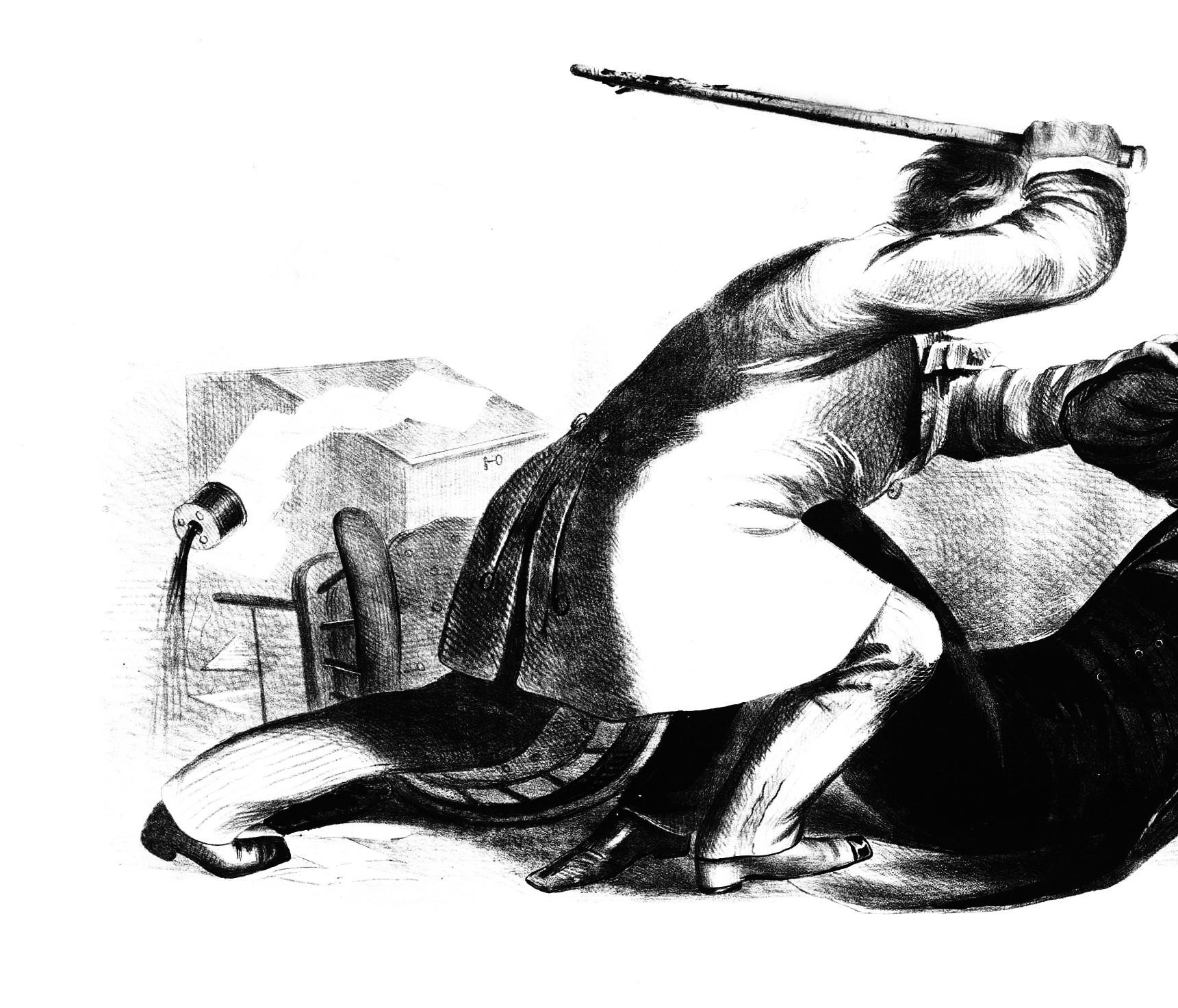
Tension between legislators was already boiling on May 22, 1856, when Sen. Charles Sumner of Massachusetts made a passionate speech to Congress about what was then a highly contentious matter: slavery. Following Sumner’s rebukes, Rep. Preston Brooks of South Carolina struck him multiple times on the head with a cane.
The outburst was partly sparked by a different attack against Sen. Andrew Butler of South Carolina, a relative of Brooks, but the attack ran much deeper than a simple family dispute. Tensions were heightened amid the taut political climate at the time, which was so toxic that one legislator nearly killed another in the Senate chamber. While the news both troubled and activated the North, pro-slavery Southerners celebrated the violence, gifting Brooks hundreds of canes.
This incident has come to be recognized as one of the most prominent examples of political tension boiling over in United States history. But, because of its historical distance, many have trouble imagining that same anarchy running through the halls of Congress again. Nevertheless, political violence has seen a resurgence in recent years, threatening to widen national divisions.
The recent assassinations of Melissa Hortman, former speaker of the Minnesota House of Representatives, and Charlie Kirk, the founder of Turning Point USA, a conservative activist group, are clues in uncovering why tension is thickening. Even though motives are still under investigation, authorities and analysts describe the cause of both assassinations as political at their core.
Investigators found a list of 57 civil servants with Hortman’s assassin at the time of the Hortmans’ murders. He had been planning the attacks for months before he acted.
Based on inscriptions carved into bullet casings that repeated political sub-culture messages, authorities believe that Kirk’s shooter, too, seemed to act with political motivations. Some, including President Trump, see Kirk’s assassination as a “turning point” for the conservative movement.
As social media access grows, political violence has become livestreamed. Videos of Kirk’s murder spread like wildfire — unlike any other time before the internet. With these videos came comments, shares, likes and reposts — a rising sign of a nationwide desensitization to political violence.
What is considered protected speech has been steadily shifting, becoming framed based on who is demeaning whom. Many Americans have lost their jobs over expressing political views, and the Associated Press reported that the Trump administration revoked the visas of six foreigners over comments they made about Kirk post-mortem.
At Kirk’s memorial, President Donald Trump referred to opposing party members as “radical-left lunatics.” He continued on, comparing his beliefs to the ones Kirk spent his life defending.
“That’s where I disagree with Charlie. I hate my opponent,” Trump said, in reference to the beliefsbased discussions that bolstered Kirk’s notoriety among conservatives. “I don’t want the best for them.”
Later on in the memorial service, Vice President JD Vance told the audience that political violence is “not a bothsides problem.”
This “us-versus-them” mentality isn’t unique to political affiliation. Democratic representatives, such as Rep. Alexandria Ocasio-Cortez (D-NY), have gone on record calling members of the GOP “fascists,” which complicates the chances of bipartisan cooperation gaining traction. Sects on both sides are demonizing the other while trying to pass the blame.
Another significant part of this aggressive polarization is the effect it can have on officeholders all over the country. A January 2024 study conducted by the Brennan Center found that 40% of local officeholders have become less willing to run for office again because of the uptick in tension and violence.
The study also found that the way officeholders do their jobs is changing as well, with 53% of state officeholders believing that their colleagues are less cooperative and proactive than themselves in dealing with controversial issues.
This attitude, combined with strained infighting, suggests that in order to secure a less politically volatile future, all sides must invest in major de-escalation efforts.
individuals, some armed, entered the room with phones ready to record, prepared to give their input on the committee’s performance.
While it is legal to carry a firearm inside legislative sessions in New Hampshire, public input is reserved for public hearings.
“The bottom line is this: the group that attended our session that day was there to be confrontational,” Petrigno said. “They were in support of legislation which our committee disagreed with and almost unanimously voted down.”
It would have been nothing for one of them to start shooting at us. Literally, we were sitting ducks.
PETER
PETRIGNO, NEW HAMPSHIRE STATE REPRESENTATIVE
Since news about local and state legislators rarely escapes its geographical bubble, the nation struggles to recognize how political tension infiltrates smaller systems.
Toward the end of September 2025, New Hampshire State Rep. Peter Petrigno found himself in an unusual circumstance. Amid a routine committee meeting where constituents were allowed to watch silently, a group of
Petrigno also noted that almost all bills passed by this committee are done so with near-unanimous agreement. This collaboration would usually be perceived positively. With the harassment the committee has now faced, it might instead bring to light a different form of violence — rhetoric that has evolved from the “us versus them” mentality to anger toward legislators’ decisions as a whole.
Ultimately, Petrigno said, these intimidation tactics are nothing more than that — intimidation.
“They were unhappy, they were in possession of firearms, one being overtly visible,” Petrigno said. “All were seated directly across from us… It would have been nothing for one of them to start shooting at us. Literally, we were sitting ducks.”
The current normative political behavior, marked by divisive rhetoric, creates a seemingly unsafe environment for participating in American politics — but according to Petrigno, that’s exactly why it’s so important to remain involved.
The impact of the recent rise in partisan redistricting.
The term
gerrymandering originated when Elbridge Gerry, the governor of Massachusetts in 1812, signed off on a partisan redistricting that resulted in a district that looked like a salamander. Political cartoons dubbed the district the “Gerry-mander,” and the word spread from there. The practice that it describes, however, existed long before the word.
Redistricting is a necessary process where the boundaries of voting districts are moved to account for changes in population. Gerrymandering takes advantage of that necessary mechanism to skew districts so that they exclude or benefit specific groups or political parties. The Voting Rights Act of 1965 outlawed gerrymandering along racial lines, but gerrymandering for partisan gain remains legal at the federal level.
Gerrymandering is often done by either packing opposition voters into a few districts to limit their electoral influence or by cracking areas with large amounts of opposition into separate districts that have majorities of the party attempting to gain seats. This causes the other party to be unable to get a majority in any of those districts, despite having a concentrated number of supporters. Gerrymandering has been carried out by both major parties in the history of the U.S., but has recently become a major strategy for Republicans to gain an advantage in the 2026 midterms.
Under the instruction of President Trump, Texas lawmakers were the first to take part in the recent and unprecedented trend of mid-decade redistricting. Their argument for doing so has been both that there are districts in which Democratic redistricting illegally divided voters by race and, more commonly, that this is a blatant attempt to widen the
Republican majority in the House of Representatives during the 2026 midterm elections.
There are legal challenges to this redistricting that argue that it is actually illegal racial gerrymandering. These challenges are yet to be ruled on, and the redistricting currently stands, potentially flipping five Democratic districts in 2026. If the new map is upheld, the Republican majority in Texas and in the U.S. House will grow, and the election and reelection of Democrats will become much more difficult.
In response to Texas’s gerrymandering, California lawmakers, led by Governor Gavin Newsom, have passed laws that aim to counteract its impact by gaining up to five seats for Democrats in California, the same amount Texas Republicans hope to gain. Though this passed the legislature quickly, there are key differences between the redistricting processes in these states and the approach that lawmakers took to disrupt those processes.
California’s redistricting is normally done by the independent Citizens’ Redistricting Commission, so for the proposed change to be in effect, California voters would have to amend the state constitution to temporarily suspend the commission. The redistricting is constrained to only apply until after the 2030 Census, at which time the Citizens’ Redistricting Commission could return to drawing district lines.
As a result of their redistricting setup, whether the new map and the temporary suspension would be accepted was the subject of a special election this November. With a considerable majority of Californians voting yes on Proposition 50, the temporary partisan redistricting in California will go into effect for the 2026 midterms.
This wave of newly blatant partisan gerrymandering by no means ends with Texas and California. In September, Missouri Governor Mike Kehoe signed a bill with a new map that aims to flip one of two districts in the state represented by a Democrat. Scott LaComb, an assistant professor of political science at the University of Missouri, has seen a push to collect signatures and utilize the state’s initiative process to undo the gerrymander.
and the rise in polarization creates “the assumption that ‘the other side is doing it even worse, so we can excuse this kind of behavior.’” Both of these factors can lead to a lack of awareness about what gerrymandering does.
The process of drawing districts... is intrinsically a political decision that is, by definition, going to leave a large number of voters unrepresented.
ISAAC HALE, ASSISTANT PROFESSOR OF POLITICS
“There is some energy among Democratic leaning circles in Missouri,” he said, “to say, ‘This is our chance to…keep this remaining Democratic seat.’”
There are several other states where mid-decade redistricting is either in effect now, like North Carolina and Ohio, or is partially underway, as in the cases of Virginia, Indiana and Utah. This obvious partisan gerrymandering may be the new normal.
This flurry of mid-decade redistricting could further legitimize partisan gerrymandering as a tactic in elections, replacing the old norms with much more frequent and partisan redistricting. According to Isaac Hale, an assistant professor of politics at Occidental College in Los Angeles, “that train has already left the station,” and with “other red states proceeding and other blue states proceeding…there is no going back.”
Gerrymandering is not the only obstacle that exists in the American system. Professor Hale pointed to single-seat districts as creating “winners and losers,” so “the process of drawing districts…is intrinsically a political decision that is, by definition, going to leave a large number of voters unrepresented.”
LaCombe also mentioned the way that “we have sorted ourselves into…heavily Republican or heavily Democratic districts.” Still, this flurry of gerrymandering is noteworthy.
“Not many voters are single-issue voters on gerrymandering,” LaCombe explained,
Even in an imperfect system, partisan gerrymandering causes damage. It is not merely lines moving on a map, but a representation of the ease with which the political power of actual people, who have a right to their fair vote, is being devalued. This practice is quickly gaining legitimacy even while undoing the practice of democracy.
America has reached the point at which many prioritize the good of one party over the good of the whole, and overt partisan gerrymandering is merely one example of that. Gerrymandering affects everyone, no matter their party. Going back on the principles of America’s democratic system in order to gain partisan influence undermines it for all.
Young men and women share the voting box, but the data shows a deep, political split reflecting different social realities.
As Republican-led supermajorities in the Trump era adopt policies that roll back gender equality gains, the political gap between women and men has reached new heights — with women leaning more left than ever before and men continuing their move to the right. At the heart of the modern political gender divide? Young people.
In June 2022, Roe v. Wade, a 50-year-old Supreme Court ruling that women have the right to an abortion before fetal viability, was overturned in what has come to be known as the Dobbs Decision. In June 2023, the Supreme Court foreshadowed attacks on Diversity, Equity and Inclusion initiatives, issuing a landmark ruling that found affirmative action in college admissions to be unconstitutional.
Locally, Iowa Governor Kim Reynolds is on the same page. In May 2024, Reynolds signed a law prohibiting DEI policies in public universities, which some have described as the nation’s most extreme ban on DEI and expression. With 200-plus years of workshopping democracy as a nation, the thought of U.S. politics facing this unique divisiveness in the 21st century feels unreasonable.
Former Senator Johnie Hammond served in the Iowa Legislature for more than 20 years, holding positions in the State House and Senate, and on the Story County Board of Supervisors. Throughout her long career as a Democratic elected official, she reflected on the evolution of compromise.
“The battles I fought when I was there — it’s been going on forever. It’s very divisive. And it seems that everybody is locked into position, so there is no compromising,” Hammond said.
Hammond feels reproductive healthcare specifically is an issue too charged, intimate and complex for compromise to be possible.
“I’m pro-choice, but not really pro-abortion. I’m just pro-choice,” Hammond said. “And I think that’s not acknowledged by the pro-life side.”
Hammond remembers sitting on the steps of the Iowa Senate talking about abortion with former Republican U.S. Representative, at the time a State Senator, Steve King.
“I said [to King],” Hammond said, “‘Steve, you may not realize this, but when I think of an aborted baby, it brings tears to my eyes.’”
Reflecting on that memory, Hammond elaborated on her position on the issue of reproductive healthcare.
“I know there are many cases where it’s the best solution
to the issue. It’s the most compassionate issue, it’s the safest in terms of health … but it still brings tears to my eyes.’”
Hammond went on about King’s response, “He says, ‘Why don’t you say that?’ I said, ‘Steve, I have. You weren’t listening.’”
In contrast, Steve Deace, a prominent conservative talk show host for Blaze TV, believes reproductive policy is very much a black and white issue with less complexity and nuance.
“Either you believe that’s a human life you’re taking or you don’t,” Deace said. “There’s no compromise on this issue. And that’s what makes the polarization energy so strong.”
A September 2024 Gallup analysis showed how the expanding political gender divide is marked by a dramatic shift to the left among young women, with young men’s leanings trending slightly more conservative. Young men stand alone among the polled demographic groups, which also included young women, older men and older women, in their apparent move toward more conservative values.
Policy preferences underscore young women’s left-leaning views, according to the data, with traditionally liberal issues now ranking as their top concerns.
Where men and women ages 18-29 stand on liberal policy issues, according to the 2024 Gallup poll.
Policy Issue Poll Statement Women Men
“Abortion should be legal under any/most circumstances.”
“Gun laws should be stricter.”
“The U.S. is doing too little to protect the environment.”
“Global warming is caused by pollution from human activities.”
More than Policy: The Value Split It is human nature for people to empathize more with issues that directly impact them or their demographic, leading to the concept of “men’s issues” and “women’s issues.”
Women’s stance on reproductive health care policy comes as lawmakers make legislative moves to outlaw contraceptives and restrict fertility treatment. Women have more skin in the game of reproductive policy, where women are disproportionately affected by sexual violence, according to the CDC and the National Sexual Violence Resource Center.
The issue of stricter gun laws on the table above has the greatest gap in stance between men and women. For women, this is potentially attributed to a broader social context where murder is the leading cause of death for pregnant women, as reported by Harvard School of Public Health.
In a September 2025 NBC News poll, both men and women ages 18-29 put statements about economic freedom in their top four most important rankings to their personal definition of success.
Mary Elaine Richards, a longtime Iowa Democrat, 2022 honoree of the Iowa Women’s Hall of Fame and former Story County Attorney, pointed out that the political divide is intersectional— attributed not only to gender, but also class.
“It‘s just exacerbated by gender because boys have always been told, ‘you go out and get a job and you provide for your family,’ and all this sort of thing,” Richards said. “I think there‘s a big difference once you go to, particularly to a school where you’re going to be exposed to a lot of different people, different cultures, different ideas. That’s different than if you go to an institution of higher education that is controlled by your church group, where you would not get exposed to different ideas and different possibilities.”
For men, Deace argues that men’s top policy issues encompass the “overall moral value direction of the country.” That is, as Deace puts it: “physical sanity, having an end of things like DEI, affirmative action and other woke programs, and border security.”
Hammond, on the other side of the political spectrum, holds an equal but opposite view. When trying to ratify an Equal Rights Amendment in the Constitution, the clear moral answer seemed clear.
“It just seems so obvious to me,” Hammond said. “So obvious that I can‘t figure out why they would
not just ratify and why they would even put a term limit on how long you could consider that amendment.”
Ultimately, it is cultural pressures that weigh on the current condition of politics, prioritizing social issues and dividing young people, disjoining the political standings of young men and women — two demographics of people who look to their futures from different lived social realities.
“The reality is it’s those cultural existential issues that are driving people to vote more than anything else right now,” Deace said. “I think we can all compromise that we all hate health insurance companies and single-payer health care; we all hate them both. But on those existential cultural issues … I’m not sure how to compromise with that.”
In the founding of the country, Deace described how the political system is meant to be the place where disputes about ethics and values take place, so fights don’t happen among neighborhoods.
“Politics is faith and ethics in action,” Deace said. “We never escape our values; we never run away. There’s no such thing as the secular. We never get away from our values, ever.”
The United States of America has been called many things since its tumultuous birth in the American Revolution nearly 250 years ago, an event heralded as the moment America set herself free from the chains of British rule and established herself as a nation of her own. But does freedom from one oppressive regime mean that the feelings it instilled in the citizens of a newly founded nation will evaporate overnight?
Of course not, the effects will always linger. Whether a state believes itself to be free does not matter so far as political hierarchy is concerned.
This raises the question: What makes something real? Does it have to be tangible? Must we be able to touch it, run it through our fingers, hold it in our hands?
When it comes to political theory, realness becomes even harder to grasp. After all, theory exists to be proven wrong. Whatever one person believes, another will always be waiting in the wings to tear that idea to shreds, given the opportunity.
Postcolonialism, a theory pioneered by Achille Mbembe in his 2000 paper “On the Postcolony,” discusses what happens when the colonial system breaks down. The theory encompasses the social, political and economic ramifications of a country’s attempt to escape the way power operates within a colonial system.
While arguments could be made that some countries have risen from the ashes of their tense colonial beginnings, many theorists believe that there is no such thing as a postcolonial state at all.
Cruz Garcia, an associate professor of architecture at Iowa State University who studies postcolonial architecture and Afrofuturism, believes that America never truly shed her colonial roots — meaning she could not claim to be a postcolony.
In Garcia’s eyes, when America freed itself from its British overlords, it opened itself up to a whole new world of terror. In other words, she became what she sought to destroy.
“When the Earth was terraformed and political systems were imposed, they were extremely violent,” Garcia said. “We’re still dealing with the aftermath of that, so ideally, we will be beyond colonialism [but] I’ve never seen that, at least not in the current state of the world.”
Recently, political polarization in the United States has taken a swift uptick, whether that polarization has been perpetuated by the government against the people or vice versa. In recent years, its presence in nearly every aspect of American politics has become nearly impossible to deny.
“If we look at maybe the last 100 years of events, there have been a lot of decisions taken by the heads of state that involve the lives of many around the world,” Garcia said. “[It’s] to the point where oftentimes, I wonder if democracy is even possible in a place like the U.S., when the rest of the world is not voting, because every decision that is taken here affects people’s lives everywhere else.”
That perceived power vacuum extends most prominently to the American prison system. This is where Garcia sees the most plausibility of a postcolonial state’s emergence in the United States.
“On the Postcolony” discusses standoffs that commonly happen between a corrupt police force and the citizens of Cameroon, who are frequently subjected to bouts of what Mbembe called “raw violence.” To Garcia, this paints a direct parallel to the American legal system.
From the country’s outset, the government utilized military power to put people in their place.
As such, Garcia emphasized the implementation of force to pressure Native peoples to hand over their lands.
“You have no choice [but] to agree with the U.S. government under the military [in that instance],” Garcia said. “The only way you’re going to be alive is if you sign this treaty to grant the state land.”
Garcia said the legal system in the United States has been corrupt since the beginning. The 13th Amendment contains a clause that allows prisoners to become slaves in the system, Garcia said, suggesting that this clause facilitates a gross perpetuation of violence against those who do not comply.
“The violence and the improvisation and the brutality and the extraction that takes place when an empire is executing violence, it always comes back in the form of a boomerang,” Garcia said. “It’s desirable to be outside of that, of course, but I don’t think the word postcolonial will describe that.”
The way Garcia sees it, “postcolonial never means the end of the rule of the colonial power.”
He explained that “there’s no such thing as the postcolonial … only the aftermath, [and in a society like this,] the mechanisms that it produces are quite monstrous.”
As such, Garcia said, the ruling powers in these systems do their best to tamp down the individuality of their citizens, which creates a tiny opening through which those rebellious citizens slip through.
As Mbembe outlined in his writings, the postcolony thrives on control; control of the people, the jokes, the narrative. To Garcia, this control becomes most evident in the expression that is silenced. Postcolonial governments wish to maintain “the official aesthetic project,” or the facade the government
puts on to present the illusion of its control, and anything that questions this mission is a problem that must be neutralized.
Why is this the case?
“Because [this expression] either tr[ies] to question the official aesthetic project, or they put [up] a mirror so the aesthetic project will look at itself and it would see a monster, in a way.”
If the postcolony can be unraveled by the very mechanisms of its own perpetuation, then how can anyone be certain it actually exists?
Both Garcia and Rogers Orock, an assistant professor of Africana Studies at Lafayette College, though different in their ultimate conclusions, agree that power is the root of all undoing.
“Power works in the postcolony through… a kind of colonial architecture of power that is inherited more or less by the postcolonial state,” Orock said. “[What] that suggests is that the first attribute of postcolonialism in terms of how power is structured and works is that the postcolony inherits its fundamental architecture from the colony, or at least [it inherits] the way the power worked in the colony.”
Orock believes there is evidence of a postcolonial state, even here in the United States.
Mbembe’s book dedicates a chapter to what he calls “the aesthetics of vulgarity.” In it, Mbembe details how violence is baked into the very core of the postcolonial state. This state of being, this way of governance, which came to light during colonial rule, is not one that can be easily broken away from.
“We have to go back to the critique of the postcolony, as a critique also of colonialism, of capitalism,” Orock said. “[American] citizens think greatly about capitalism in terms of its power to accomplish many things, which is great. On the other hand, few people are inclined to think about the price paid for those accomplishments and who pays them and where they are paid.”
The way Orock understands it, the United States has long functioned as an empire, with its long governing arm overextended into the lives of its citizens, as well as into the lives of hundreds of millions of others around the globe who are not positioned to fight back. Indeed, sometimes the only way people can ever dream of defeating the system is to play right into it, for their own safety, gain or otherwise.
“In the end… this book allows us simultaneously to see lines of continuity between the colonial and the postcolonial,” Orock said. “The postcolonial is not just as the word would suggest, a simple reference to the historical transition from coloniality to postcolonial, as [much as it is] a clean break.”
To that end, it is not quite so simple as to say that when a colonized country becomes the colonizer, it rises above its roots. The systems that allow the state, colonial or post, to thrive are woven into the very cloth the countries of the world are cut from. Thus, it would seem that there is no obvious solution to the problem of colonialism.
As it stands, the one thing scholars seem to agree on is the idea that colonialism will never truly relinquish its grasp on the modern world.

How algorithms and influencers are pulling young men down the far-right rabbit hole.
n 2016, the internet looked different than it does today. YouTube was a landscape of content on all kinds of topics — commentary, gaming, religion and comedy — and a guy named Ben Shapiro, who was

This is one of many points where the conservatism pipeline starts for radicalized individuals — often young people who have a harder time discerning fact from fiction, who are searching for a community, feel isolated or don’t
As time passes, the people who stay delve into spaces that, at this time, are considered pillars of free speech from the bygone Wild West era of the internet. These pillars are anonymous chat boards where people can spread their ideas on anything and everything, such as 4chan, 8chan, and, to an extent, Reddit.
The U.S. political landscape has changed — and so has the rest of the world. The pipeline has shifted along with it. Luke Munn is a future fellow at the University of Queensland, specializing in media studies and digital cultures. He has conducted extensive research into the “altright” pipeline.
“When you have isolated individuals, lonely individuals, people who have felt disenchanted with the world, and they want to feel belonging, these groups provide a sense of meaning and belonging, and that further brings them in or solidifies their membership in these groups and the belief in these ideologies,” Munn said.
The “alt-right” isn’t just one ideological stance, according to Munn; it’s a culmination of different ideologies the person picks to suit themselves.
According to Britannica, the “alt-right” is a far-right white supremacist political and social movement that started around the 2010s and was loosely associated with young white nationalists, extreme libertarians and neo-Nazis. Members of the “alt-right” use websites and social media — like 4chan — to spread their ideology and harass their opponents.
“The pipeline is not something that’s designed explicitly,” Munn said. “The pipeline, as a bunch of scholars have suggested, is this idea that algorithmic logics built into platforms are designed to work on engagement. They’re supposed to be sticky, so you spend the most time on the platform.”
The pipeline has always worked on algorithms designed to give users content based on content they’ve liked in the past, Munn said. Algorithms emphasize similar content based on engagement. This feedback loop plays into the distortion of reality that ultimately leads to radicalization when users consume “alt-right” content.
Radicalization often starts with a vulnerable person — someone who has gone through a personal tragedy within the past year — and they begin to connect with the pipeline in some way. This connection creates a person susceptible to further radicalization. The consumer most likely harbors some ideals of the “alt-right” without realizing it. As the user continues to consume “alt-right” content, these beliefs strengthen.
Munn outlined three key steps in radicalization: acclimation, irony or joking, and dehumanization.
As someone starts down the “alt-right” pipeline, they may feel the content they’re consuming is edgy or radical, but over time, they’re acclimated often with the help of humor.
“There’s humor that gets people in here, because humor is very disarming,” Munn said.
As someone gets further down the pipeline, they start to seek out more radical content, finding boredom in the same kind of content they have been consuming. Once they go far enough into “alt-right” white nationalist ideology, they start to dehumanize everyone else.
“In order to justify violence against individuals, radicals cannot see them as fully human,” Munn said. “What they do is shift this other group into a different category.”
As people venture further down the pipeline, they’ll start to intentionally move to more radical online spaces like 4chan, 8chan and consume more right-wing news media like Breitbart, a digital outlet.
Donald Snyder is a Ph.D. student at the University of Massachusetts Amherst who scraped a database of more than 400,000 Breitbart articles as part of his analysis of the media company’s database. According to Snyder, online spaces like Breitbart go out of their way to target young white men with hopes of pulling them to the far-right.
Steve Bannon shifted from the entertainment industry to the executive chairman of Breitbart because he “was quoted as saying he ‘viewed young white males as having a large amount of political power,’” Snyder said.
Snyder added that Bannon influenced Breitbart’s guerrilla-style marketing tactics aimed at enticing young white men to participate in politics.
National “Alt-Right” Undercurrents Munn said the ideologies of the “alt-right” have been part of U.S. politics for a long time. Within the past 10 years, however, with Donald Trump’s first and now second presidency, the “alt-right” has come out of hiding.
“The ideology has always been there, but it’s an undercurrent,” Munn said. “It’s these dog whistle terms that if you’re in the in-group, you understand what’s meant, but you don’t say it explicitly… What you see in Trump is that all these dog whistle terms are no longer necessary; he just says the thing out loud.”
Within his research, Munn focuses on the logic of hate to better understand the “alt-right’s” core beliefs.
“They get packaged in different ways – short-form videos, memes, blog posts, fake news articles, whatever,” Munn said. “When you look a little closer, you see the same kind of ideas about masculinity, ethno-nationalism and white supremacy. They come up over and over again.”
Munn said that if users understand these ideals through digital literacy, they are better able to recognize them.
Whenyouhaveisolatedi ,slaudividn poep,slaudividniylenolel hwo havefeltdisenchantedwiththeworld,andtheywant to feel ,gninoleb oesnesaedivorpspuorgeseht fmeaningandbelong ing,andthatfurtherbrings
LUKE MUNN, RESEARCH FELLOW AT THE UNIVERSITY OF QUEENSLAND


Only five months into Trump’s term, America witnessed Donald Trump and Elon Musk’s acclaimed bromance spark, blossom and burn.
WORDS GREY MURPHY DESIGN EVE LOEHRER
On June 5, 2025, America experienced true heartbreak. The hottest new political couple, Donald Trump and Elon Musk, officially broke up over threads on X, formerly known as Twitter. Trump and Musk’s public fight left many in the nation feeling like children of divorce. As the two star-crossed lovers eloquently hashed it out over X, America watched with popcorn in hand and thousands of memes ready to be posted.

The couple began their soft launch in early July 2024, when Musk publicly endorsed the Trump campaign. As tensions warmed between America’s favorite capitalists, the relationship became a hot topic during the 2024 election. Their bromance only became more secure as the months progressed.


This ultimate bromance didn’t start this year. In fact, the two lovebirds’ relationship dates back to Trump’s first term in 2016.
The two started off as fiery enemies to lovers, with Musk criticizing Trump’s administration before his first term as president. Their slow burn continued in 2022, when the couple had their first feud. In July of 2022, Trump and Musk went back and forth on different social media platforms, starting with Trump hurling insults at Musk and invalidating his contract with X. Musk responded that Trump was too old for office and backed Ron DeSantis for the 2024 election.
However, Musk apparently went crawling back to Trump. Trump claimed that he begged for help with his subsidiaries and X contract.
The plot continued to thicken as the pair argued; it seemed implausible that they became a couple at all.
Their next interaction came in 2024, when the Trump campaign became desperate for money. In a scramble to obtain funds after losing money in mounting legal fees, Trump turned to his one true love and savior: Elon Musk.
When Trump won the 2024 election and was sworn into office, he put his best bro on his committee. He put Musk in charge of the Department of Government Efficiency — a true proclamation of love and everlasting friendship between the two.
Unfortunately, this harmony wouldn’t last forever.
When Trump proposed his One Big Beautiful Bill, Musk was immediately offended. The bill proposed extreme budget cuts to the government subsidies companies received when selling electric vehicles and fuel-efficient vehicles. The cut also included the tax credits people received when buying electric vehicles. Musk’s claim over the electric vehicle market is not unknown to the general public. We can assume these budget cuts offended Musk, and the enemies-turned-lovers became enemies once more.
June 3, 2025, marked the beginning of the lovers’ intense quarrel when Musk insulted the One Big Beautiful Bill’s supporters and urged for change from his account on X. Trump responded negatively and eventually spilled in an interview on June 5 that Musk only started criticizing the bill after he saw the cuts made to EV vehicles. According to the official recording posted by Right Side News Broadcasting, Trump stated, “I actually liked him,” in response to a question about the criticism Elon had hurled at the bill.
This tell-all sparked a spat between the two on X, with Musk accusing Trump of being in the Epstein Files and even proposing a third impeachment of the president.
With tensions high and hearts broken, the couple has officially called it quits. Will the two lovers reunite? Or will they be over for good?
From budget cuts to corporate pressure, proposed legislation raises the question: is nature for sale?
In March 1871, the United States took a revolutionary step in environmental conservation when Congress and Ulysses S. Grant signed the National Park Protection Act into law. Yellowstone became the world’s first national park, setting a precedent that reshaped how Americans thought about nature, preservation and public access.
The movement expanded with the Forest Reserve Act of 1891, which gave presidents the authority to create forest reserves. In 1916, the National Park Service was established to maintain and preserve these lands.
Today, the United States is home to 63 National Parks across 30 states and nearly 2,500 state parks across all 50 states. But what exactly do national parks mean in the 21st century? For many Americans, they are more than just landmarks or vacation destinations; they are sanctuaries.
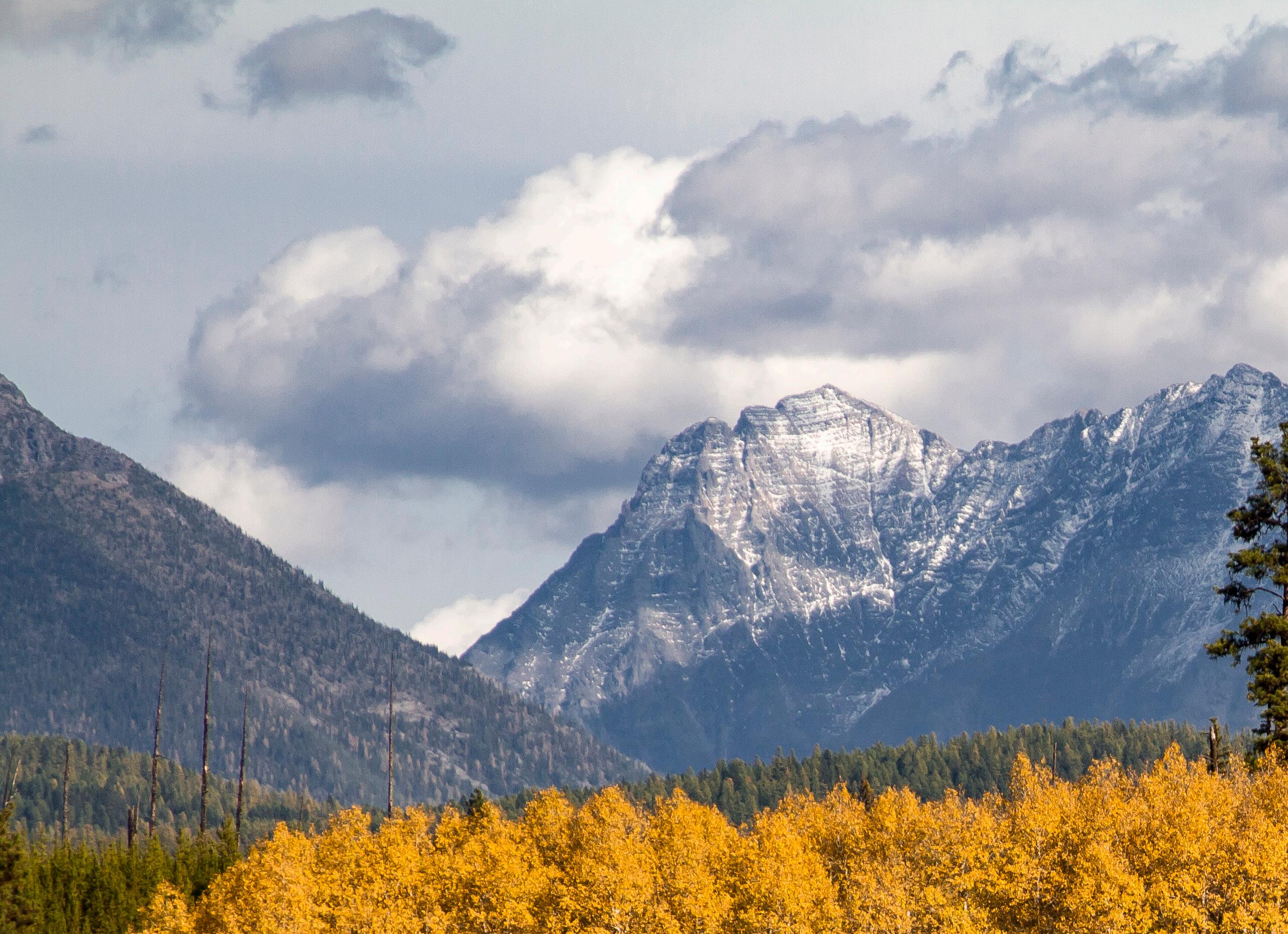
National Parks are not only places of beauty; they are critical for biodiversity. They provide safe habitats for wildlife, act as genetic reservoirs, and help species adapt to changing climates. In an age of accelerating environmental change, protected areas serve as buffers against human interference, allowing ecosystems to thrive almost completely undisturbed.
The benefits extend to people, too. Walking and hiking in parks can improve lung health, boost vitamin D levels, and reduce risks of diseases such as heart disease and Alzheimer’s. Time in nature also supports mental health by alleviating stress and strengthening self-esteem.
For many, hiking under the stars and sitting in quiet woods offers something city life can never replicate.
Jessica Harrington, a frequent national parks-goer, explained that evenings in the parks foster community engagement: “A lot of national parks during the evenings, especially at the campsites, have rangers learning sessions… It’s a time to build community, hear from experts, and connect with other campers.”
The future of public lands is not guaranteed. Political battles over land use have shaped park policy, with recent debates centering on proposals to sell or lease portions of federal land for energy development. President Donald Trump’s Executive Order 14154 Unleashing American Energy raised concerns by signaling support for privatization and the extraction of public lands.
This is where H.R. 718, the bipartisan Public Lands in Public Hands Act, enters the conversation. Introduced in January 2025 by Representatives Ryan Zinke and Gabe Vasquez, the bill seeks to ensure that federal lands remain accessible and under congressional oversight.
The legislation would block the Department of the Interior from selling or transferring lands without explicit approval. For supporters, it is a safeguard against commercialization and a commitment to future generations.
Adam Cramer, CEO of environmental coalition Outdoor Alliance, emphasized the bill’s significance.
“It puts really critical sideboards around the process for disposing of, or selling, public lands,” he said. “Building support for this legislation is one of our top priorities.”
For everyday park-goers, these debates are not abstract. They affect facilities, ranger programs and safety. Harrington has already noticed the impact of funding cuts.
“It means fewer workers that are there to protect and educate,” she said. “It means the facilities aren’t going to be taken as well care of.”
With fewer rangers, reduced campground access, and longer wait times during emergencies. The overall sense of safety and accessibility in parks has diminished.
Underlying these debates is a larger question of responsibility: who should decide how public lands are used? Advocates of H.R. 718 argue that without legislated protections, short-term economic pressures could eclipse long-term stewardship. For citizens who rely on parks as classrooms, refuges, and gathering places, the answer seems clear.
“The only way for people to really appreciate nature and be able to access it is by keeping public lands public,” Harrington said. She emphasized that national parks carry important histories, particularly those of indigenous peoples, that deserve recognition and preservation alongside the land itself.
Cramer shared a similar sentiment, stating that “Public lands are a unifying attribute of American culture and identity.” This highlights the importance of the shared responsibility for protecting public lands, a responsibility that is not confined to one political identity or region.
As Congress debates the future of public lands, the voices of everyday visitors and advocates underscore what is at stake. National parks are not just about conservation or recreation; they are places where history, community, and health intersect. Will the country continue to protect them with the same intention that created them over 150 years ago?
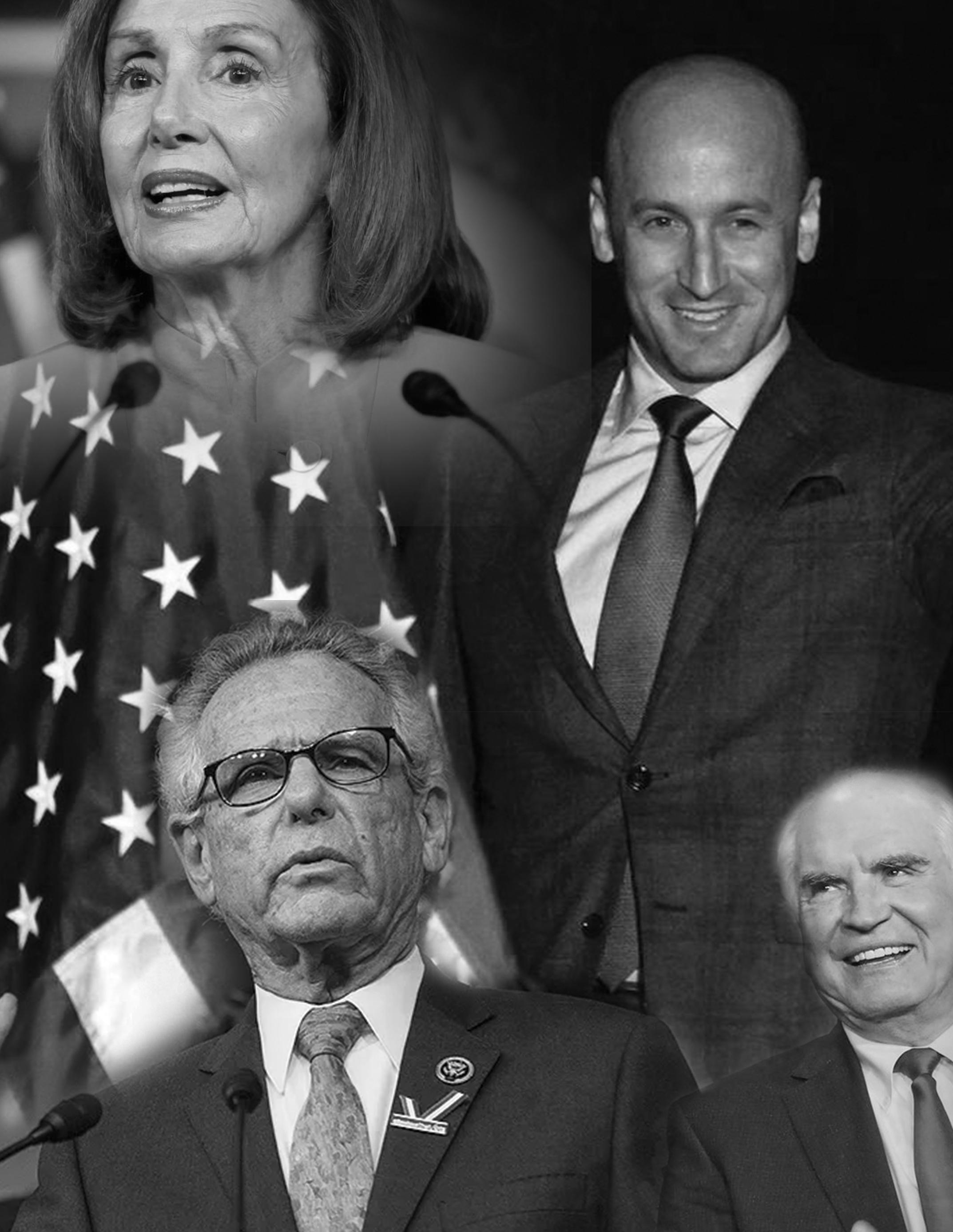
Closed-door congressional meetings are part of the rigged game that turns politicians into millionaires overnight.
Even in one of the most powerful political positions in the country, Nancy Pelosi, former House speaker and current U.S. representative, made just $174,000 a year. Yet in the stock market, her portfolio performs better than most hedge funds, clearing somewhere in the ballpark of $7.8 million and $42.5 million last year alone.
Some data suggest that private knowledge congressmembers obtain through committee assignments influences trading decisions, but limited transparency surrounding portfolio gains makes this relationship difficult to prove. As the appearance of corruption looms, watchdog groups have called for complete divestment from the market. While some congressmembers support such regulation, others claim blind trusts shield their influence.
Despite public pressure, year after year, Congress fails to pass effective legislation regulating members’ ability to profit from insider access to information regarding consequential regulation or economic policy. Even if passed, proposed policy ignores ownership of stock in companies contracted by the government, which also happens outside of Congress — in the judiciary, executive, and the agencies under their purview.
Paul Koch, a finance professor who studies insider trading at Iowa State University, said insider trading laws do not apply to officeholders because they “do not wish to give up this immense, unlimited potential benefit of being a politician.”
Dartmouth produced a study in 2020 that found stocks purchased by senators underperformed the market. Only two years later, a study published by the Journal of Business Ethics found conflicting evidence.
Serkan Karadas, a finance professor at the University of Illinois Springfield, studies the relationship between committee assignments and trading activity. Conducted in 2019, his research suggests an overlap between committee assignments and members buying or selling shortly before information was made public.
In 2022, the New York Times identified a similar pattern — close to one-fifth of reported stock trades presented a potential conflict of interest. One of these conflicts happened when Boeing, the aircraft manufacturer, was under investigation by Congress in 2020 for misconduct. The wife of U.S. Rep. Alan Lowenthal (D-CA) had sold her shares in Boeing the day before damaging testimony became public, according to the Times investigation.
During the COVID-19 pandemic, senators purchased stock in tech and health companies following a closed-door briefing. These suspicious trades resulted in a Justice Department investigation. A similar years-long House ethics probe alleged in July 2025 that by advocating for tariff exemptions for a steel company his wife owned shares in, Rep. Mike Kelly (R-PA) “took several actions to specifically benefit Cleveland-Cliffs during the time his wife had a direct financial interest in the company.” While the panel couldn’t prove Kelly facilitated “insider trading,” it was also concerned with the “appearance of impropriety” and recommended the family divest from the company.
Passed in 2012, the Stop Trading on Congressional Knowledge (STOCK) Act established a $200 fine for trading on private knowledge. However, not a single member of Congress has been prosecuted under the law.
Tangentially, Stephen Miller, a top adviser to the Homeland Security Department, owns stock in the tech company Palantir, which U.S. Immigration and Customs Enforcement recently awarded a $30 million contract. Palantir became the architect of immigration surveillance back in 2011, when it began work on a system that uses artificial intelligence to identify people living in the U.S. without legal status.
Through his connection to DHS and the White House, Miller has significant influence over the Trump administration’s policy approach to immigration enforcement while owning stock in a company that profits from ICE’s increased detainments.
Rather than ban participation in the stock market altogether, some politicians have proposed requiring members to relocate their investments to blind trusts, brokerage accounts managed by a third party. Theoretically, the congressperson shouldn’t have any influence over this type of plan — but loopholes exist.
The watchdog organization Citizens for Responsibility and Ethics in Washington recommends mandating trustees sell initial holdings; otherwise, a trust might include stocks the congressperson purchased prior to holding public office.
In a blind trust framework, a member would only be required to disclose the value of the assets, but not the specific holdings. Critics of blind trusts point out that while the trustee may be unaware of the specific assets held, the public is effectively blinded to disclosure as well.
This dilemma is such that when a politician owns individual stock, their trades are public and therefore subject to public scrutiny — but the influence problem persists.
Outright opponents of portfolio regulation argue that it limits financial freedom and deprives the market of crucial information. Less libertarian economists argue that the most effective way to limit influence while maintaining financial liberty for public servants is to require diversification of their holdings rather than allowing ownership of individual stock in any one company.
Koch is skeptical that requirements like these — or blind trusts — would adequately curb unethical trading.
“I would advocate changing the incentives, penalties, or enforcement [of insider trading laws] to help prevent this behavior,” he said.
Politicians such as Rep. Zach Nunn (R-IA) and Rep. Alexandria Ocasio-Cortez (D-NY) have sold all publicly held shares or never owned stock to begin with. Both Nunn and Ocasio-Cortez support the bipartisan Restore Trust in Congress Act, introduced Sept. 3, 2025, which would ban members of Congress and their immediate family members from trading stocks.
“This isn’t a red or blue issue,” Nunn said in a press conference about the proposed law. “After my combat service and election to Congress, I sold all my stock because Iowans deserve leaders who serve the public, not profit from insider information.”


Herman was the White House correspondent for Voice of America, a nonpartisan news source that covers the U.S. government for readers across the world. He said the new guidelines for the White House press pool make him “question the efficacy of the system” and that he believes they’ve “destroyed the purpose of the press pool.”
In 2025, journalists have to decide if the risks are worth the headline.
“Instead of having the Associated Press in the pool, you have what are essentially echo chambers of the administration or sycophants who are there to boost the presidency. And the press pool is not about partisanship,” Herman said. “The type of system we had when I was at the White House, I don’t even recognize it now.”
In any conflict, journalists are typically the first to arrive on the scene. They are tasked with relaying accurate and timely information to the public. In the past year, that freedom has become increasingly restricted due to restrictive and life-threatening actions taken by domestic and international governments. Now, journalists have to consider whether upholding this responsibility is worth losing their jobs — or even their lives.
On Feb. 25, the BBC reported that the White House restricted certain media outlets from accessing President Donald Trump. Press Secretary Karoline Leavitt announced this change was to allow newer media reporters, such as streamers and podcasters, access to the White House. This move came shortly after the Trump administration prevented The Associated Press’s access to the Oval Office.
Steven Herman, Executive Director of the Jordan Center for Journalism Advocacy and Innovation at the University of Mississippi, said these changes have repercussions.
“This is an awful and historic development that reverses many decades of not only tradition, but an efficient mechanism for informing people around the world of what is happening in the White House and what the President is doing,” Herman said.
On Sept. 22, Axios reported that Department of Defense Secretary Pete Hegseth would be requesting news outlets working in the Pentagon to agree not to publish unclassified information unless officially approved for release. As of Oct. 19, The Independent reported that only 15 reporters remain in the Pentagon after news outlets refused to accept Secretary Hegseth’s request.
“We had a traditional system there where journalists were credentialed and allowed to be inside the Pentagon to attend briefings and had limited access,” Herman said. “The most vital part of it was being on site, and there used to be regular press briefings, which is not something that’s been happening at the Pentagon in the current administration.”
During his second campaign, President Trump made frequent comments about media outlets and their reporters. At a rally for Texas Republicans on Oct. 22, 2022, recorded on C-Span, Trump spoke about who he saw as political rivals, including the news media.
“The radical democrats are locking up pro-life activists, persecuting their political opponents, spying on their political rivals, silencing dissent and using the full force of government law enforcement and the media to try and crush our movement,” he said. “And let me tell you, the media is a big problem because they’re corrupt and dishonest.”
According to Herman, Trump’s statements toward the media are “having somewhat of a chilling effect.”
CPJ RESEARCH
January 21
President Donald Trump calls NBC’s Peter Alexander a “one-sided, horrible” journalist
February 7
Trump calls Eugene Robinson at the Washington Post “incompetent,” calls for his firing
February 25
Trump administration takes control of White House press pool
March 14
Trump signs executive order that would gut the U.S. Agency for Global Media, which funds Radio Free and Voice of America outlets wordwide
March 25
Trump attacks Atlantic editor as “sleazebag” after Signal story
March 27
Trump asks Congress to defund NPR/PBS a day after Congressional hearing, calling the outlets biased and a “scam”
April 13
Trump urges FCC to punish “60 Minutes” over Greenland-Ukraine reports
April 25
Attorney General Bondi Pam rescinds Biden-era press protections
Dec. 2024
ABC settlement sets stage for escalating attacks
January 30
Federal Communications Commission chief opens investigation into NPR/PBS
February 11
AP blocked from White House press pool for adhering to Gulf of Mexico name
March 11
Press Secretary Karoline Leavitt insults AP reporter
March 21-23
Trump refers to New York Times reporter Maggie Haberman as “Maggot Hageman” and calls New Yorker and Times journalist “sick, deranged” after reporting on Elon Musk
March 26
Rep. Marjorie Taylor Greene (R-Ga.) attacks foreign journalist over Signal controversy
March 30
Trump attacks NBC journalists for reporting on “boring” Signal leak story
April 15
White House limits newswire access
April 29
Trump tries to remove Corporation for Public Broadcasting board members
“I applaud journalists and news organizations and media owners who are standing up to this type of intimidation, because the news media is a bulwark for the protection of democracy, and we cannot afford to have a weakened institution,” Herman said.
Although the situation seems grim to Herman, he’s optimistic that policies will “get back on track,” but not without help from those outside the journalism world.
“Journalism cannot save itself, by itself,” Herman said. “It’s the American public that has the most to lose here, and hopefully the American public will recognize that and speak up and support a free press and the First Amendment.”
According to Martin Roux, the Reporters Sans Frontières, or Reporters Without Borders (RSF), head of crisis desk, at least 220 journalists have been killed in Gaza since the beginning of the war with Israel in October 2023. RSF is an organization based in France with the goal of ensuring safety and freedom for journalists internationally.
“Among these 220, at least 56 were either killed while reporting or directly targeted, and this is something we have evidence for and we documented for our complaint,” Roux said.
There were two Israeli airstrikes within a two-week span in August, killing 11 journalists total. The first was on Aug. 10, which killed six journalists in a housing area outside al-Shifa Hospital.
The second was on Aug. 25, where four journalists were killed just outside the Al-Nasser Medical Complex. The second attack involved two airstrikes, about eight minutes apart. The journalists were killed in the second airstrike shortly after they arrived at the scene of the first, RSF reported in a news release the same day. Roux believes the second airstrike was deliberate.
“Who are the people who are going on the site of an attack after it took place? The medics and the journalists,” Roux said.
One of the journalists killed in the Aug. 10 strike
was Al Jazeera reporter Anas al-Sharif, whom Israel accused of having ties with militant groups 10 months prior to his death.
“We documented that those journalists [were] defamed and attacked on their reputation and their work by the Israeli army in order to either pressure them, or in the worst case scenario, justify their murders,” Roux said.
According to Roux, these attacks on reporters are not unique to the past two years. Three years ago, in 2022, Al Jazeera correspondent Shireen Abu Akleh was killed while covering an Israeli raid in the West Bank.
“[Her death] is just an example among dozens of others, because journalists are, of course, arrestable,” Roux said.
“These crimes against journalists are continuing in the West Bank while [the Israeli] military is operating in the Gaza Strip.”

In 2023, Israel imposed a ban on international media entering Gaza. RSF reported that in early October, the Israeli military intercepted a flotilla of roughly 45 boats containing over 20 journalists attempting to enter the Gaza Strip.
“There is a strategy on the Israeli side,” Roux said. “When you kill [and] defame Palestinian journalists in Gaza and at the same time prevent their colleagues from [accessing] the foreign place, you just want to cover the crime that you’re actually perpetrating.”
Domestic conflicts in the U.S. and international conflicts in the Middle East and South Asia continue to impact journalists. In Sudan, journalists have fled or been exiled amid the ongoing war in the country, but RSF said they continue to report on what’s happening in the country.
In India, several journalists have been arrested in the Kashmir and Jammu regions, creating what RSF calls an “information black hole.”
As these conflicts continue, Roux advises journalists to stay informed on the countries they’re covering and to trust their gut instinct. He said no story or piece of information is “enough to waste your life.”
Six names that sneak into both movie marathons and political arguments.
Politics loves a spotlight almost as much as cinema does. It gets harder to tell the difference when the same names roll through movie credits and election ballots. The result is part drama, part democracy. Meet six stars of our century who’ve mastered both stages.
The United States president’s yearning to preserve national cinema and its centennial greatness — with tariffs on foreign film as the weapon of choice — is deeply personal. Donald Trump’s name appears in the credits of no less than 25 movies and 20 TV series.
His first film project, “Ghosts Can’t Do It” (1989), was a spectacular failure, consistent with his first attempts to parlay real estate bravado into political capital. Not too long after, he successfully entered all of our living rooms as a cameo in “Home Alone 2: Lost in New York” (1992).
Nearly fifteen years later, his performances on “The Apprentice” (2004), spanning over five seasons, earned him a star on the Hollywood Walk of Fame, which is notoriously the most vandalized star on Hollywood Boulevard. Since the commemoration, Trump has stepped away from the world of drama and built his own — the MAGA world.
When Obama took office, Kumar finally made it to the White Castle — actor Kal Penn left “House” (2004) to join Obama’s White House as an associate director in the Office of Public Engagement. As the new Arts Liaison, he went by his legal name, Kalpen Modi, never giving “Kal Pacino” a chance despite his college friends’ enthusiasm.
Once his political interlude was over, Penn went back to Hollywood, bringing insider knowledge to his next role as the White House press secretary on “Designated Survivor” (2016). Throughout his career, Penn has advocated for equal rights for all, often bringing the injustice and prejudice he has witnessed to his audience in the form of hilarious anecdotes.
In 2020, he put them together in his memoir, “You Can’t Be Serious.”
Kal Penn 05 04
Volodymyr Zelensky
President of Ukraine, star of the big screen in Eastern Europe — Volodymyr Zelenskyy completed his law degree in 2000, the same year his namesake and invaderto-be Vladimir Putin took the throne. Three years later, Zelenskyy was the captain of a comedy troupe competing in sketch and improv
competitions on national TV. Around the same time, he also founded “Studio Kvartal 95,” one of Ukraine’s most influential entertainment studios of the century.
From winning “Dancing with the Stars Ukraine” to voicing Paddington, his media career was versatile and, at times, scandalous. When the nation watched Zelenskyy play the piano with his pants down, no hands, very few people (if anyone) saw the future leader of Ukraine. Zelenskyy reconstructed his social image through his role as a schoolteacher taking on corruption in “Servant of the People” (2015) — a role that allowed the public and the actor himself to envision a career in politics. His campaign mirrored the show’s ideals — his party even shared its name — and he swept the April 2019 election with 73% of the vote.
Kamal Haasan
In American terms, he’s the Al Pacino of Indian cinema — versatile, charismatic and has more than 230 movies under his belt.
Kamal Haasan made his screen debut at six years old, winning India’s President’s Award for “Kalathur Kannamma” (1960), then promptly quit the industry to work as a barber — mostly to get on his mother’s nerves. He came back with even more range, building a five-decade career that spanned languages, genres and moral spectrums. Cop, con artist, revolutionary or all three at once — Haasan could do it all.
He became a rare hybrid: actor, writer, filmmaker and politician with a taste for reinvention. By 2018, he’d founded his own party and snagged a seat in the upper house of India’s Parliament, proving that charisma counts both onscreen and off.
Arnold Schwarzenegger was never afraid of a challenge. Born in post-war Austria, he arrived in America with a gym bag and an exotic accent. After embodying the most indestructible character in cinema history in 1984’s “The Terminator,” he swapped the shotgun for a suit. In 2003, he became the 38th governor of California, the state’s second foreign-born leader since the days of the founding fathers.
Bodybuilder, movie star, mogul, governor — his track record reads like a capitalistic screenplay. As a Republican in a deep-blue state, he played the role with Hollywood polish and unexpected nuance, championing environmental policies while preaching fiscal restraint. Despite criticism of his budget cuts
and clashes with unions, Schwarzenegger won reelection in 2006 with broad bipartisan support.
By the time he stepped down in 2011, “The Terminator” had done the impossible yet again— made California love a Republican, at least for a while. He retired next door, back to Hollywood.
Before he was running for Parliament, he was running lines on set. John Dumelo, one of Ghana’s most recognizable faces, rose to fame through Nollywood and Ghanaian cinema, starring in over 80 films and earning a reputation as the charming everyman with political undertones long before politics called his name.
In 2016, he swapped the spotlight for the campaign trail, joining Ghana’s National Democratic Congress. In 2019, he hit the primaries running, winning a seat to represent NDC in Ghana’s 9th Parliament, where he focuses on youth empowerment, civic engagement, and local development initiatives.
Dumelo is part of a generation of African stars recharacterizing fame as a civic duty, using charisma not only to sell tickets but to sell change. His acting remains widely celebrated, while his politics spark debate — leaving him admired, questioned and impossible to ignore.
WORDS SOPHIA ROBERTS DESIGN EVE LOEHRER
In the war against Ukraine, is the U.S. a knight or a pawn?
Before Donald Trump began his second term as president, he promised to end the war in Ukraine within 24 hours. Nearly a year later, that promise remains unfulfilled, and U.S.Russia relations have deteriorated since his return to office.
Some would argue that Trump’s foreign policy toward Moscow has been defined by inconsistency — personal engagement one week, punitive sanctions the next. His approach has been markedly different from that of his predecessors, Joe Biden and Barack Obama, whose administrations pursued steady containment rather than improvisational deal-making with Vladimir Putin’s Russia.
“Putin tried to wash his hands [of it] and has not been interested in keeping this relationship open,” said Scott Feinstein, an associate professor of political science at Iowa State University. “Currently, we’re at a point where President Trump seems very angry with Putin and Russia.”
Following his return to office, Trump’s shift in tone has become more evident. His second term has prioritized direct communication with world leaders, with varying degrees of progress. Trump has a personal relationship with Vladimir Putin, which has influenced their engagements. “It seems that the discussions didn’t have as much effect as he wanted, quickly turning to the other side,” Feinstein said.
Dmitry Valuev, president of the nonprofit group Russian America for Democracy in Russia, said the Russian government poses a threat to U.S. national security. “For years, we’ve seen cyber operations, malign activities, and repeated efforts from President Trump to lift sanctions and strengthen Russia’s economy.”
Trump’s early months in office showed an effort to exhibit that personal connection with Putin, despite recent challenges. His change in approach coincided with the announcement of another planned meeting with the Russian leader, this time in Budapest, only to be canceled a few days later. Soon after, on Oct. 22, the U.S. Treasury Department announced new sanctions on Russia’s largest oil companies.
Feinstein noted that the U.S. continues to engage in intelligence sharing and that discussions are underway about expanding military aid to Ukraine, though it remains uncertain whether those plans will be carried out.
After the Budapest meeting was canceled, Trump reiterated that he would not meet with Putin until both sides could reach an agreement on Ukraine.
This sequence of events illustrates how unpredictable the administration’s strategy toward Moscow remains, complicating any path toward a firm resolution.
As of October 2025, Trump continues to balance both domestic and foreign policy priorities. Like most U.S. presidents, his domestic agenda tends to take precedence, and it’s internal pressures that often shape his decisions abroad.
The First and Only Summit
In August 2025, Trump traveled to Alaska to meet with Putin, targeting negotiations for a ceasefire between Russia and Ukraine. Despite promoting the idea beforehand, Trump later downplayed its importance.
At the Alaska summit, Putin repeated one of his familiar talking points: the root causes of the conflict must be addressed for lasting peace. He presented an expansive list of demands from Russia, which at that point controlled about 20% of Ukraine’s territory.
“There’s the opportunity for the United States and the administration to take a leadership role once again,” Feinstein said.
The negotiation was largely unsuccessful.
Trump did not mention a ceasefire directly during their discussions, nor did the two sides issue a joint statement or announce any new agreements. The closest Trump came to acknowledging the conflict was expressing hope for an end to the war in Ukraine.
Trump’s frustration appeared to mark a turning point. Having seen little progress from diplomacy, he began to revise his message. At the United Nations General Assembly, after meeting with President Volodymyr Zelenskyy, Trump declared that Ukraine could reclaim all the territory it had lost to Russia, marking a shift from his previously cautious tone toward Moscow.
If Putin does not have enough cash to feed his war machine, it will be the beginning of the end of the war.
DMITRI
“For President Trump, meeting with Putin personally was the last attempt to get things resolved,” Valuev said. “After that, there is more of an understanding that ending the war wasn’t a guaranteed possibility.”
The administration emphasized that ongoing discussions were intended to influence Putin’s stance and encourage greater cooperation, signaling a hope that continued dialogue might prompt meaningful change.
“Trump’s administration wants the media to know that these talks take place with the hope that they will shift or change Putin’s opinion and make him more agreeable to certain things,” Valuev said.
Peace is achievable, but only through economic and military pressure, Valuev said. He believes the path forward lies in weakening Russia’s financial capacity to sustain the war while strengthening Ukraine’s defense capabilities.
As Valuev sees it, “If Putin does not have enough cash to feed his war machine, it will be the beginning of the end of the war.”

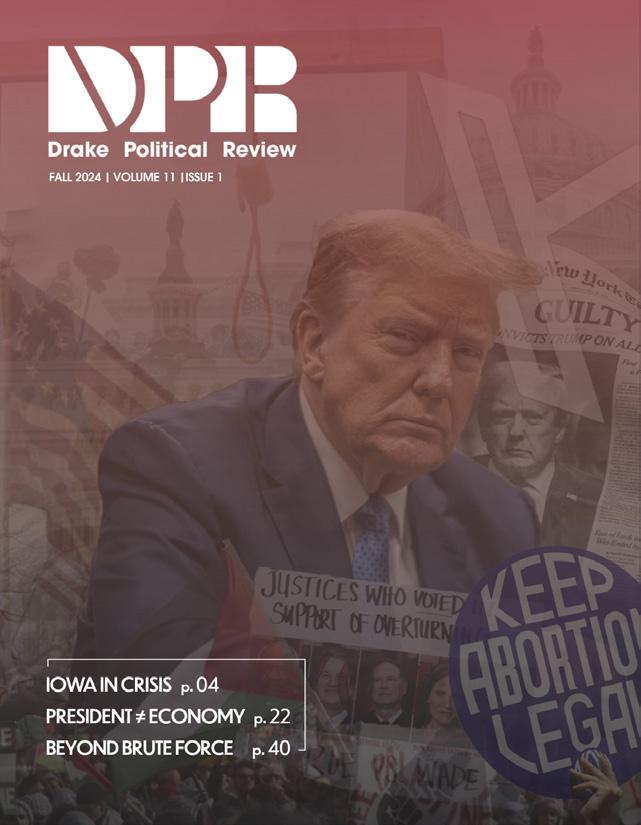

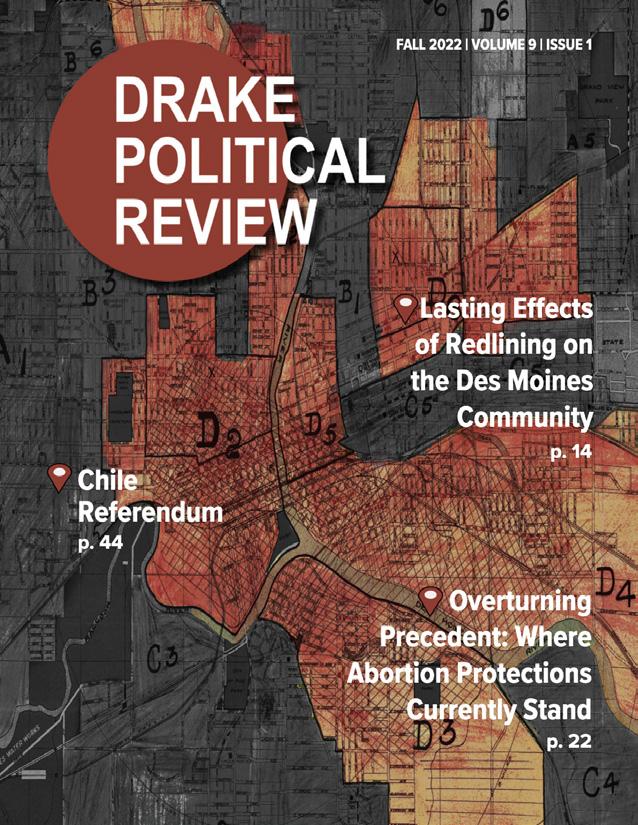

JOIN OUR MAILING LIST JOIN OUR EMAIL LIST KEEP UP WITH OUR MAGAZINE AND LEARN ABOUT WRITING AND DESIGN OPPORTUNITIES ON OUR INSTAGRAM: @DPRMAGAZINE


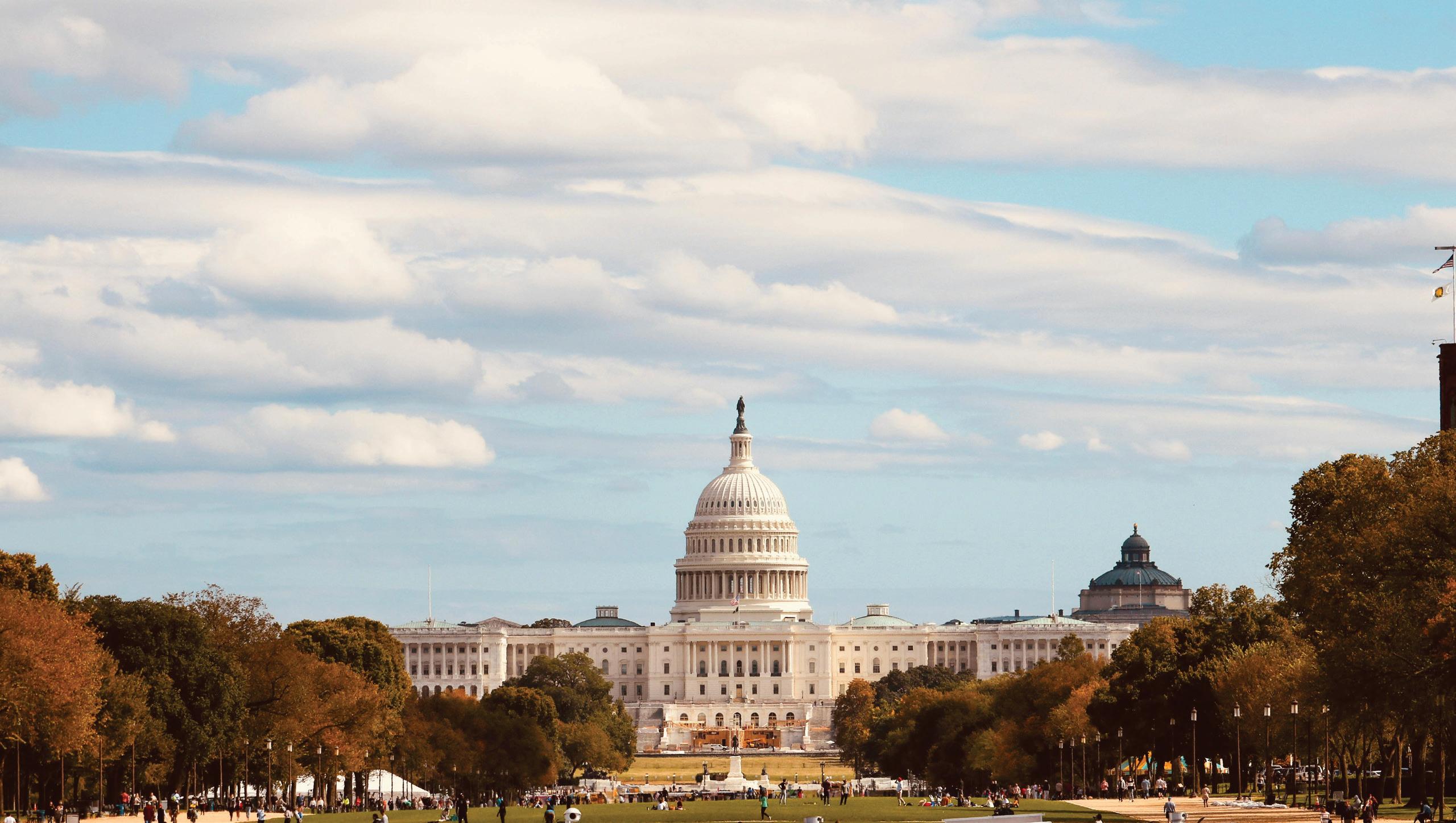
with a scholarship from The Harkin
The Harkin Institute offers scholarships, a vailable to u nde r g r aduate, g raduat e , and law students.
T h ese sch olarships were designed to expose students to policymakers and the p olic y m aking process, much like Senator Harkin experienced as an intern for C ongressman Neal Smith in the summer of 1969, an experience that inspired h i m t o p u r sue a c are er in public service .
S c h olars h i p s up to $6,00 0 can be app lied to housing, transportation, and ot h er qu alif i ed ed u c ati ona l e xp enses f or Summ er, Fal l, Spring, a nd J-Te r m i n t ernships. In most cases, funds will be paid by The Harkin Insti tute directly to ho u si n g and tra n spo r t ation providers.

Sca n QR code for more in f ormation and the app lication, or go to: b i t.ly/THIscholarships