2025 World
Situation Report on Pharmacy Role on Vaccination and NCDs Prevention
Author: Dwi Prasetyaning Rahmawati (Indonesia)
Executive Summary
The role of pharmacists has rapidly transformed from product-oriented to patient-oriented service. This roleshifting has contributed critically to reducing the burden of healthcare, especially in disease prevention. Pharmacists play a vital role in safeguarding our population, and in some countries being the most accessible healthcare professionals. For this strategic position, The International Pharmaceutical Federation (FIP) is committed to positioning Non-communicable Diseases (NCDs) and communicable disease prevention, as the priority area of advocacy.
In communicable disease prevention, pharmacists have delivered a significant role for decades in vaccine administration in many countries, aligning with the overarching Sustainable Development Goals (SDGs) 3 in communicable disease, and endorsed by FIP Development Goal (DG)16 (Communicable diseases), with the goal of improved vaccination rates worldwide through the use of the pharmacist workforce. Similarly, for many years, FIP has supported its member organizations in advocating and developing professional services that address the burden of NCDs in their countries. This has been done by producing reference papers, policy and position statements, toolkits, survey reports, and events.
This summary report will elaborate on the world situation report on pharmacists’ pivotal contribution to vaccination and NCDs prevention, focusing on the impacts, countries' situations, barriers and enablers, and further strategies that can be explored to bridge the implementation gap.
1. Imperative role of pharmacist on life-course vaccination: evidence shows favourable impact on better vaccine coverage and lower vaccine hesitancy
Vaccination is one of the most successful and cost-effective health interventions. According to the World Health Organization (WHO), immunization prevents 4-5 million deaths annually [1]. However, inaccessibility to vaccines, poor knowledge, and vaccine hesitancy (the reluctance or refusal to vaccinate despite the availability of vaccines) are some of the top 10 global health threats that result in the underutilization of immunization services [2,3]. As a result, vaccine-preventable diseases continue to be a major concern.
Recognized as the most accessible healthcare professionals, pharmacists hold a strategic role in improving vaccine uptake. The identified roles of pharmacists in immunization have been stated, for example, in the United States, they act as: facilitators, advocates, and immunizers. In 2024, pharmacy-based vaccination (PBV) is authorized in 56 (47.9%) countries and territories [4]. Strong evidence provides data on the significant role, especially in community settings, in increasing vaccination coverage in the population (Table 1). Additionally, the systematic review also highlights the favourable effect of pharmacists’ involvement on other outcomes such as vaccine appropriateness, vaccine compliance, vaccine hesitancy, patient awareness and attitude toward immunization, and patient satisfaction, which in turn may increase vaccine uptake [5]
Table 1. Summary of meta-analysis on the impact of pharmacist involvement on immunization uptake [5]
Pharmacists role Settings Outcomes
Pharmacists as advocates (educating and motivating patients), N= 2 RCTs
Interventions: pharmacist counselling, letter, phone call
Pharmacists as immunizers (vaccinating patients), N= 10 RCTs
Country: Puerto Rico, Canada, Unites States, Japan
Facility: primary healthcare and community pharmacy
Country: Unites States, Canada
Facility: community pharmacy, hospital
Advocacy by pharmacists led to a 31% increase in vaccine1 uptake across settings (RR 1.31; 95% CI: 1.17–1.48)2
Pharmacists as advocates in community pharmacies led to a 17% higher vaccination rate (RR 1.17; 95% CI: 1.06–1.28)2
Increased immunization rates across all settings (Relative Risk (RR) 1.14; 95% CI: 1.12–1.15) 2
1 Type of vaccines: Influenza, Pneumococcal, Herpes zoster, Tdap or others. some studies assessed more than 1 vaccine.
2 Relative Risk (RR) > 1, indicates the outcome (vaccination) is more likely to occur in the pharmacist intervention group
Abbreviation: RCTs (Randomised Controlled Trials) study
Resources on FIP reports, education, and policy advocation toward advancing pharmacists' engagement in vaccination are available here. The Global Pharmaceutical Observatory board also provides the update of the FIP Pharmacy-based Vaccination Surveillance Atlas, accessible from this link.
2. Highlighting the role of pharmacists in NCDs prevention – focus on risk factors prevention and understanding the barriers and enablers
According to the World Health Organization (WHO), more than 36 million people die annually from noncommunicable diseases (NCDs), representing 63% of deaths globally, and more than 14 million of which occur young between 30- 70 years [6]. WHO’s Global Health Estimates 2020 revealed that deaths from NCDs are increasing. Globally, 7 of the top 10 causes of death in 2019 were noncommunicable diseases, an increase from 4 of the top 10 causes compared to two decades earlier. In 2023, at least half of the world’s population still does not have full coverage of essential health services for NCDs, and over 800 million people spend at least 10 percent of their household budgets to pay for health [7]
The Global Action Plan from WHO 2013-2020 included priority NCDs in four areas: cardiovascular diseases, diabetes, asthma/chronic obstructive pulmonary disease, and cancer, with the nine global targets, that fall under the domain of mortality reduction, with the change and monitoring of biological and behavioural risk factor [6,7]. In the primary healthcare settings where pharmacists implement prevention and early detection service and medicine optimization, coupled with multidisciplinary healthcare teams, pharmacists are proven to be a significant health system pillar in the global fight against NCDs [8]. Figure 1 presents the world situation on NCDs mortality by country in 2019, followed by how pharmacists have actively contributed to providing early screening of NCDs factors.
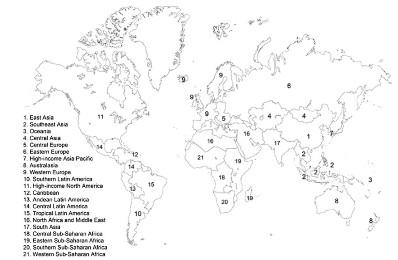
Figure 1. International report on NCDs burden (total death of all genders) and community pharmacists’ involvement on NCDs risk factor prevention
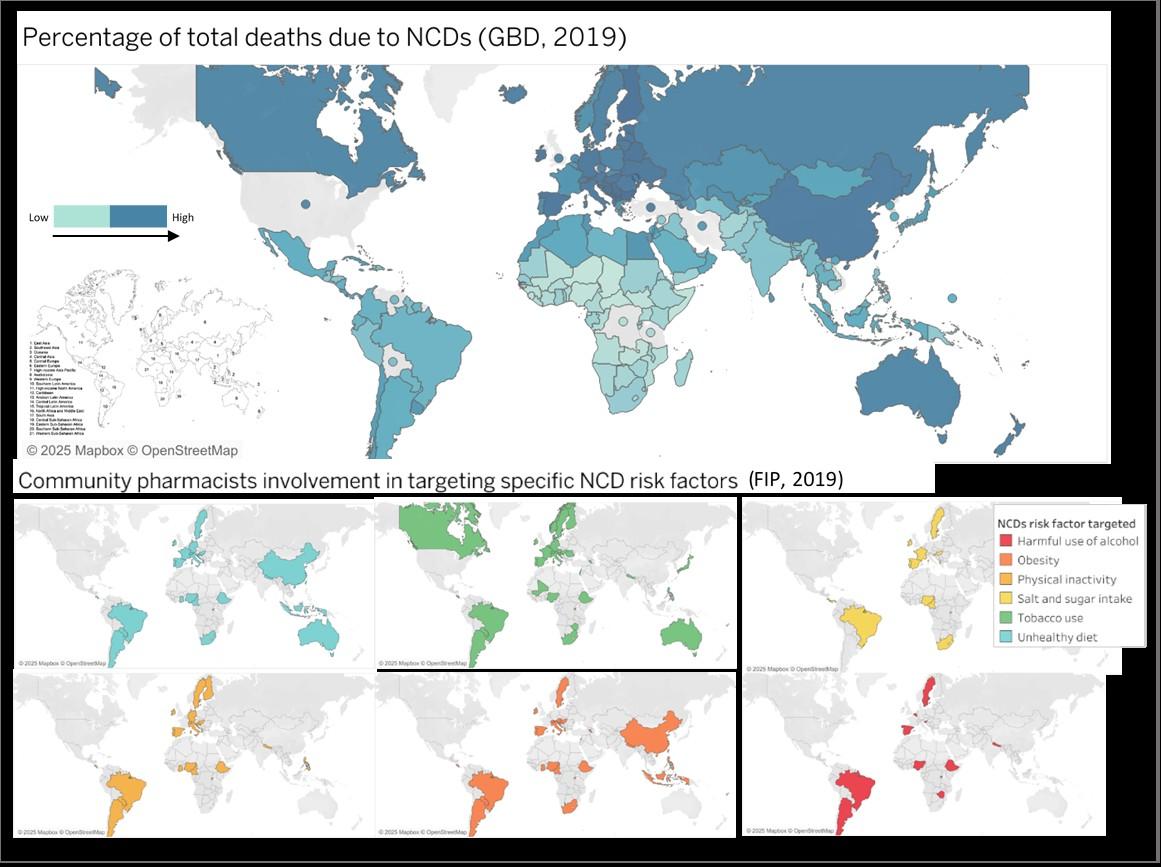
(A) Percentage of total deaths due to NCD of all gender, according to Global Burden of Disease (2019) [9]
(B) Community pharmacists’ involvement in targeting specific NCDs risk factors according to FIP country member’s report (2019) [10] Figure 2 is reproduced from the references, with dashboard visualization is also accessible here
The premise of pharmacists’ involvement in providing early screening and testing, advanced counseling, and long-term chronic disease management (including key point-of-care measurement and drug management), is especially important in countries with reported high NCDs mortality as Figure 1 illustrates. In doing so, some publications have reported the barriers to community pharmacists-led NCDs screening. However, supportive measures exist and can further equip the transformation of the pharmacy workforce (Figure 2). The FIP has continuously provided resources for pharmacy practice transformation programs on NCDs, accessible from this link
(A)
(B)
Figure 2. System levels (Bronfenbrenner's ecological theory) barriers and enablers of pharmacy-based NCDs prevention service
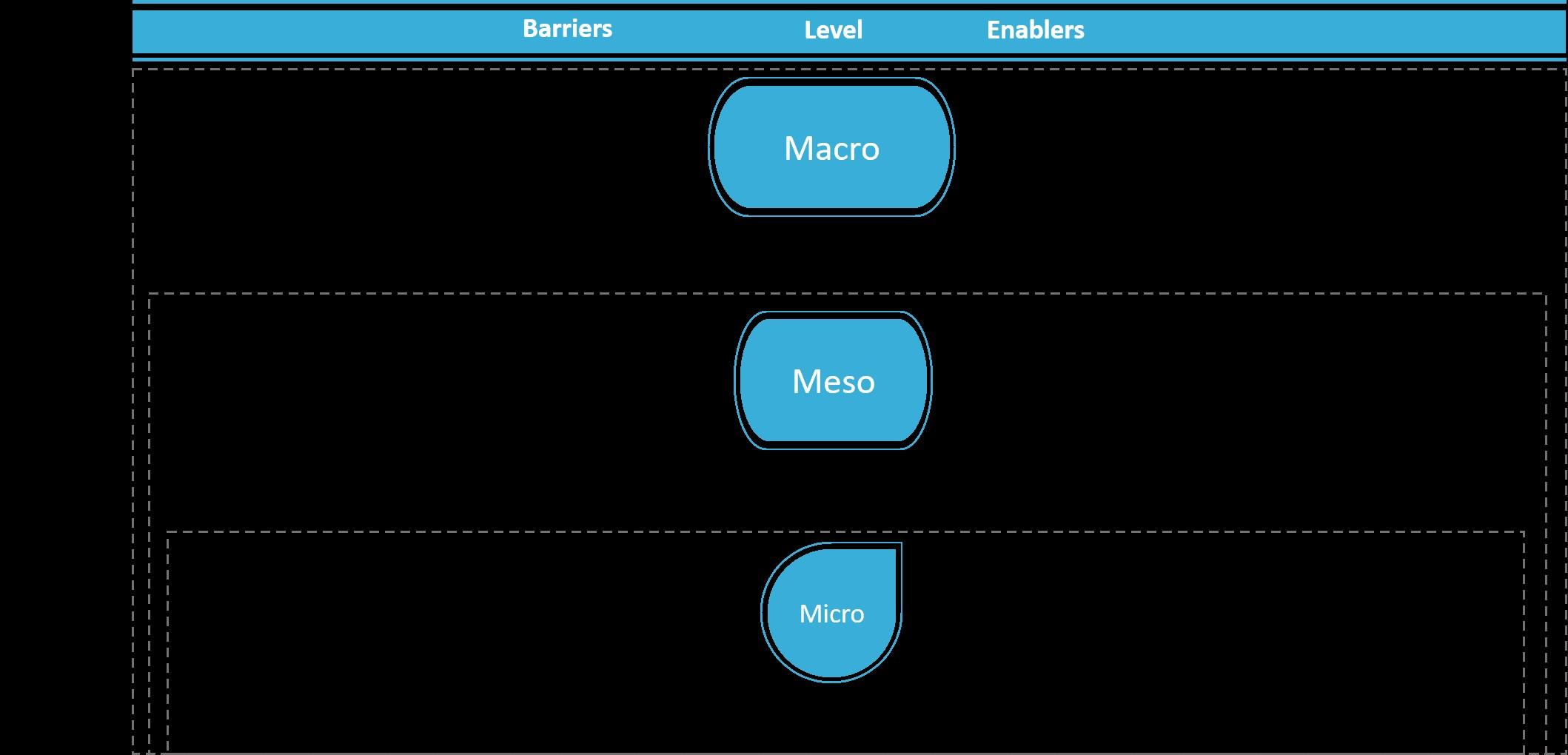
The Figure 2 is synthesized using System levels (Bronfenbrenner's ecological theory) based on previously published reports and peerreviewed studies [10–13], and categorized into barriers or enablers through thematic analysis.
Abbreviations: CPs, Community Pharmacists; CPD, Continuous Professional Development; HCP: Healthcare Professional; LMICs, Low-Middle Income Countries; NCD, Non-Communicable Disease.
3. Bridging the implementation gap
Although evidence is robust to showcase favourable impacts of pharmacist involvement in vaccination and NCDs, the implementation requires further transformation, such as:
Education and workforce: clinical training and competency development opportunities should be encouraged, to enable pharmacists, especially from lower income countries. Further education strategy related to NCDs, is to tailor the training specific to the most appropriate interventions (cost-effective, impactful, and specific to local context) for countries, enabled through WHO web-based tool Additionally, the co-creation of engagement methods and services with people living with NCDs should be considered to deliver the interventions in a people-centred manner [7]
Policy: advocacy for legal framework on vaccination and NCDs prevention by pharmacists, including the integration of community pharmacies/pharmacists into the primary healthcare system with coordinated collaborative multidisciplinary practice in the community setting should be supported. Equally important, the service remuneration and provision of incentives for low-density pharmacists per population should also be imposed [13]
4. Conclusion and call to action
Pharmacists, especially in the community, provide an essential primary healthcare service. Its contribution to medication management optimization, interprofessional collaboration and referral, disease prevention by vaccination, and screening for NCDs prevention are invaluable for improved population well-being and health system economic savings. Optimizing the pharmacy workforce is incessantly needed, to achieve Universal Health Coverage, especially in low and middle-income countries. To maximize the impact, governments, professional organizations, and international health organizations must fortify the legislative framework, invest in workforce capacity building, and integrate pharmacists into the healthcare system.
References:
1. World Health Organization (WHO). Immunization [Internet]. 2019. Available from: https://www.who.int/news-room/facts-in-pictures/detail/immunization
2. World Health Organization (WHO). Ten threats to global health in 2019 [Internet]. 2019. Available from: https://www.who.int/news-room/spotlight/ten-threats-to-global-health-in-2019
3. World Health Organization. State of the world’s vaccines and immunization. Vaccins Vaccin Situat Dans Monde [Internet]. 3rd edition. 2009 [cited 2025 Jan 31]; Available from: https://iris.who.int/handle/10665/44169
4. International Pharmaceutical Federation (FIP). Leveraging pharmacy to deliver life-course vaccination, an FIP global intelligence report [Internet]. 2024 [cited 2025 Jan 31]. Available from: https://www.fip.org/file/5851
5. Le LM, Veettil SK, Donaldson D, Kategeaw W, Hutubessy R, Lambach P, et al. The impact of pharmacist involvement on immunization uptake and other outcomes: An updated systematic review and meta-analysis. J Am Pharm Assoc JAPhA. 2022;62:1499-1513.e16.
6. World Health Organization. Global action plan for the prevention and control of noncommunicable diseases 2013-2020 [Internet]. Geneva: World Health Organization; 2013 [cited 2025 Jan 30]. Available from: https://iris.who.int/handle/10665/94384
7. World Health Organization (WHO). WHO Discussion Paper for The Regional Expert ConsultationsDevelopment of an Implementation Roadmap 2023–2030 for The Global Action Plan for The Prevention and Control of NCDs 2013-2030. 2021.
8. Sousa Pinto G, Bader L, Billberg K, Criddle D, Duggan C, El Bizri L, et al. Beating non-communicable diseases in primary health care: The contribution of pharmacists and guidance from FIP to support WHO goals. Res Soc Adm Pharm. 2020;16:974–7.
9. Murray CJL, Aravkin AY, Zheng P, Abbafati C, Abbas KM, Abbasi-Kangevari M, et al. Global burden of 87 risk factors in 204 countries and territories, 1990–2019: a systematic analysis for the Global Burden of Disease Study 2019. The Lancet. 2020;396:1223–49.
10. International Pharmaceutical Federation (FIP). Beating non-communicable diseases in the community The contribution of pharmacists [Internet]. The Hague: International Pharmaceutical Federation (FIP); 2019. Available from: https://www.fip.org/files/content/publications/2019/beating-ncds-in-the-community-thecontribution-of-pharmacists.pdf
11. World Health Organization (WHO). Joint FIP/WHO guidelines on good pharmacy practice: standards for quality of pharmacy services [Internet]. WHO Technical Report Series, No. 961; 2011. Available from: https://www.who.int/docs/default-source/medicines/norms-and-standards/guidelines/distribution/trs961annex8-fipwhoguidelinesgoodpharmacypractice.pdf
12. Warren R, Young L, Carlisle K, Heslop I, Glass B. A systems approach to the perceptions of the integration of public health into pharmacy practice: A qualitative study. Explor Res Clin Soc Pharm. 2023;10:100279.
13. Okoro RN, Nduaguba SO. Community pharmacists on the frontline in the chronic disease management: The need for primary healthcare policy reforms in low and middle income countries. Explor Res Clin Soc Pharm. 2021;2:100011.