4 Eurocell 2025 Results: Resilience, Margin Progress And Strategic Expansion
8 The £530 Billion Construction Pipeline: Navigating Cost Pressures In A Growing Market
10 US Asset Management Firm Apollo Acquires Pilkington Parent Company NSG
12 Prepare For Price Increases
14 Roll With The Punches – Or Roll Over?!
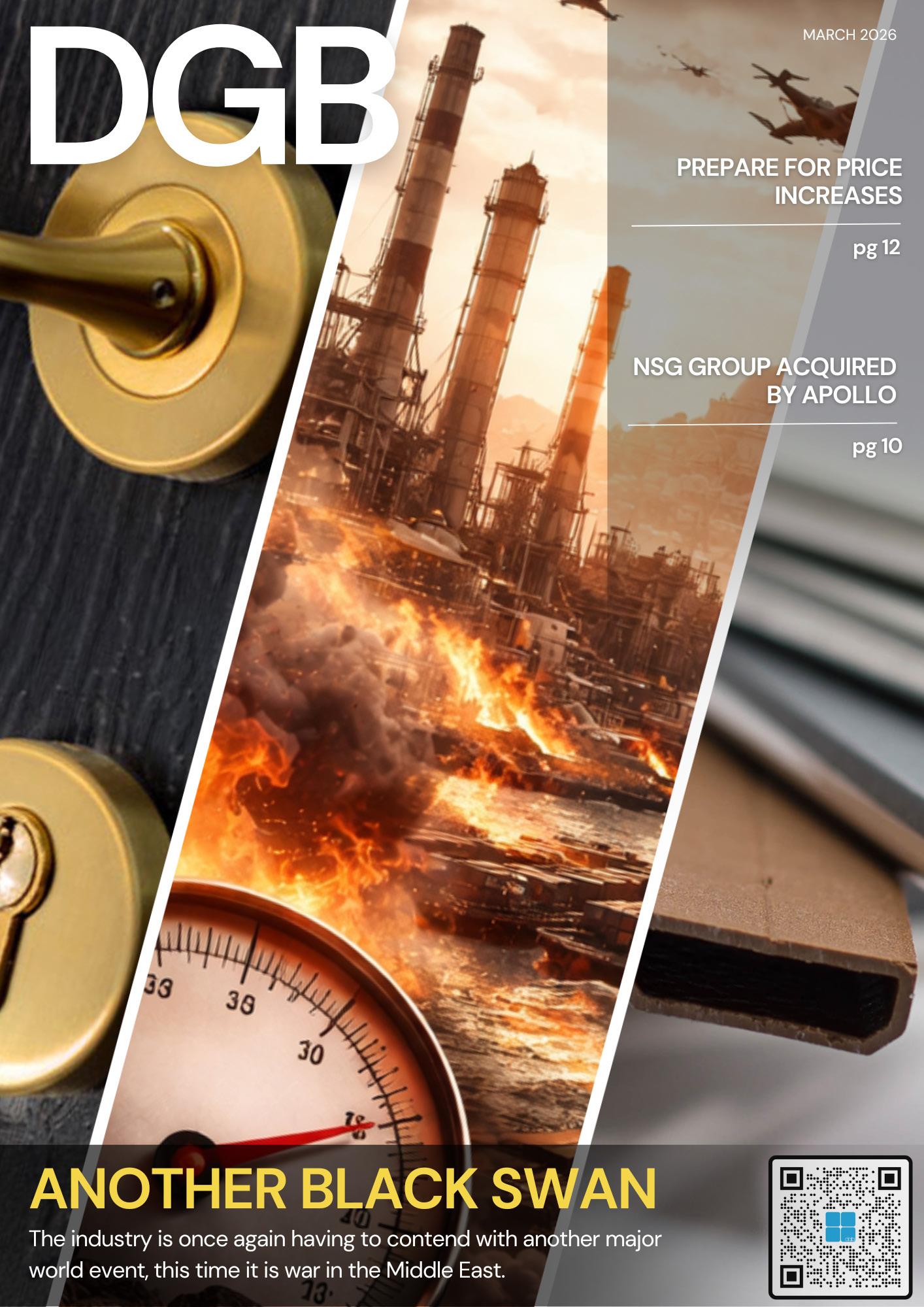
18 Yet Another Black Swan Event
20 Clayton Glass Launches Triple28™ – Triple Glazing That Fits Standard 28mm Double-Glazing Profiles
21 Clayton Glass Welcomes Peter Ferguson To South-East Role
22 41% Of Builders’ Merchant Branches Expect Sales Increases In Q1
24 Merchants Q4 Like-For-Like Value Sales Down -1.2% On Q4 2024
26 Swisspacer Presents “Frame:racer”: Fully Automated Frame Production In Under 20 Seconds
28 Aluminium Prices Are Rising Again
30 BDC Aluminium Champions LowCarbon Circular Aluminium Systems
31 Endurance® Aluminium Advocates Benefits To Buying British
32 Endurance® Aluminium Supports Customers To Sell On Performance, Not Price
34 Helping The Trade Sell Luxury With Confidence
36 Homeowners Warm To Endurance® Aluminium Innovation
38 Hydro In Controlled Shutdown Of Qatar Production
39 Endurance® Doors Boosts Brand Visibility With TV Presenter Laura Hamilton
40 Endurance® Doors Launches Contemporary, High Performance Glazing Design
42 High Quality Visual Content Key To Sales Success Says Endurance® Doors
EDITORS COMMENT
Phew.
That was about the longest quarter ever. Who had Middle East conflict on their bingo cards for 2026?
I’m pretty sure none of us. But here we are, trading right in the middle of yet another Black Swan event, one that threatens to drag in even more countries around it. And we’re already feeling the effects here in the UK. Fuel, oil, and PVC resin are all rising sharply as a result, and the industry is now beginning to implement a raft of price increases. Some predictions even state that if this carries on even for a week or two longer, the effects could be comparable to those of the COVID lockdowns. No one will miss those days.
Although we are told this is not our war, the effects are already being seen in the UK and in our own industry. Many of the plans we had probably don’t look like what they were originally. Our businesses are going to be rocked once again.
As is always the case during major events, our sector has to remain as level-headed as possible. We must educate ourselves as to the effects and ramifications due to what is going on around us, and make suitable new plans to try and navigate this new world we now operate in.
There are always opportunities; we must remember that. Even as things look about as unstable as they have ever been, that does not mean there aren’t new paths to profit. We just have to be smart and proactive.
Who knows what Q2 is going to have in store?!
We hope you enjoy this month’s edition!
DGB
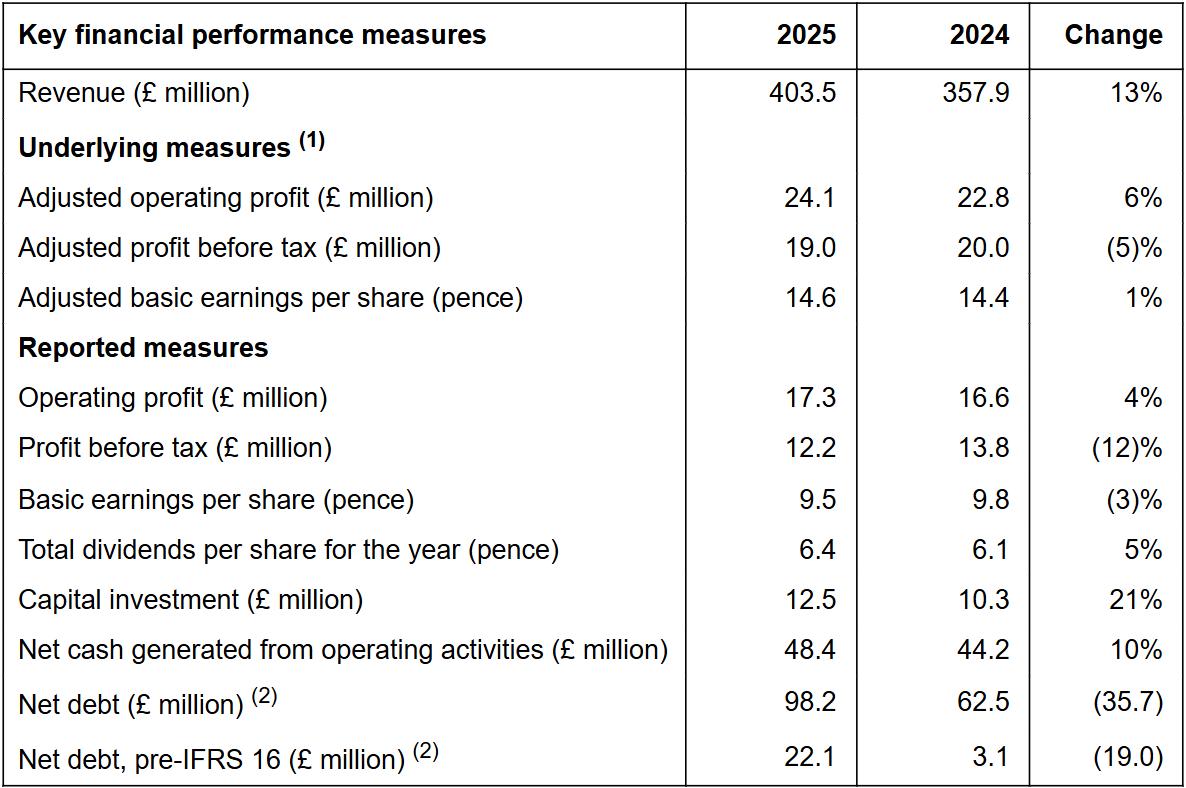
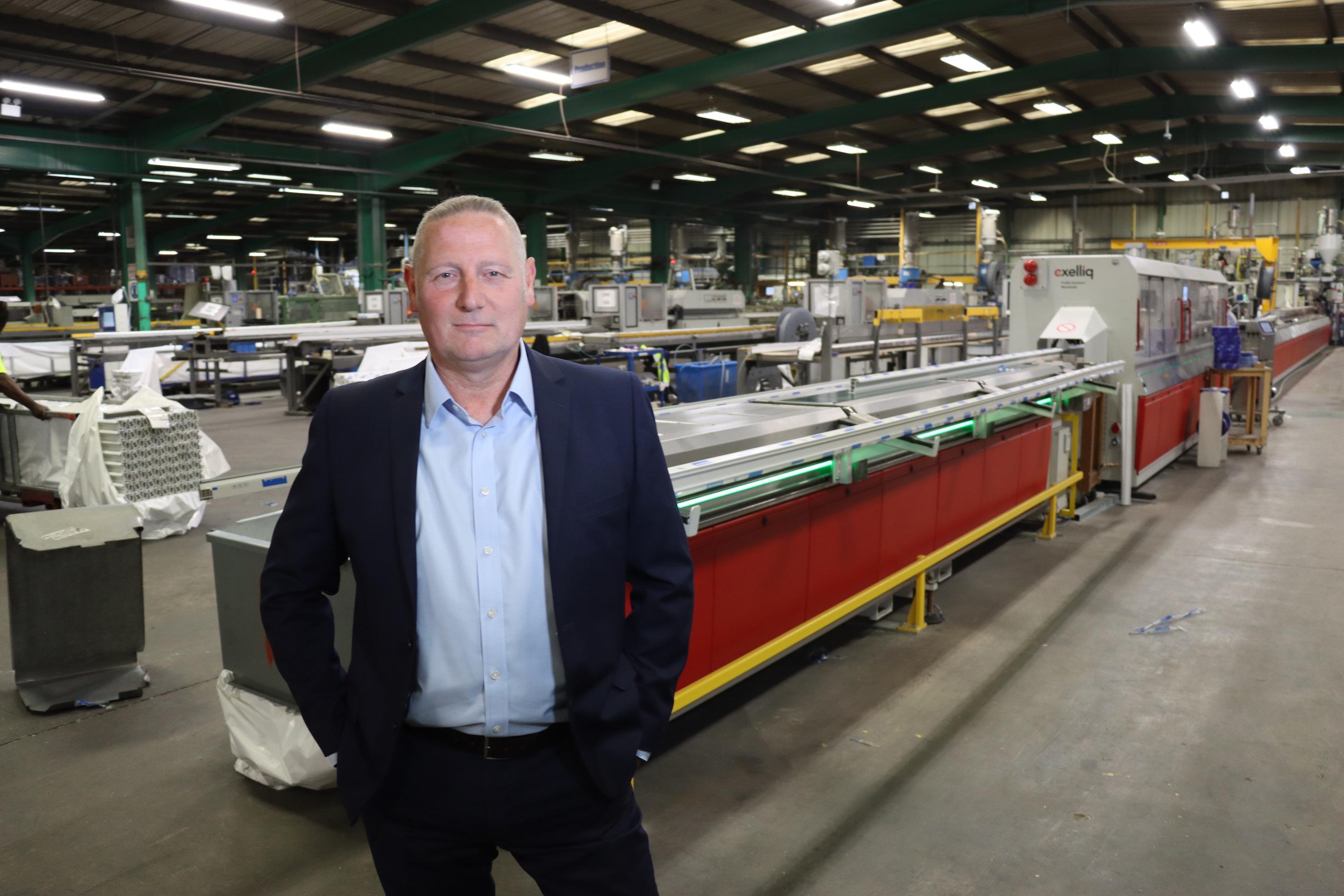
EUROCELL 2025 RESULTS: RESILIENCE, MARGIN PROGRESS AND STRATEGIC EXPANSION
Eurocell’s full year 2025 results arrive against one of the most challenging backdrops the UK fenestration and wider construction supply chain has faced in recent years. Weak housing activity, subdued RMI demand and persistent macroeconomic uncertainty have constrained volume growth across the sector, making cost control, pricing discipline and strategic positioning central to performance.
Revenue growth masks subdued underlying demand
The group’s 2025 performance reflects a familiar pattern seen across the UK building products sector: reported growth supported by acquisition, but limited underlying momentum. In the first half, revenue increased 10% to £193.2m, but was flat on an organic basis, with volumes down 2%. This dynamic is indicative of wider market conditions—where pricing and bolt-on acquisitions are compensating for weaker end-market demand rather than genuine expansion.
For the full year, this trend is likely to have persisted. The contribution from Alunet (acquired in 2025) will have provided a meaningful uplift to group sales, but underlying activity in core PVC-U systems and RMI channels remained soft. This aligns with earlier trading commentary highlighting subdued residential construction and cautious consumer spending.
Margin improvement a key positive lever
One of the more encouraging aspects of Eurocell’s performance is margin resilience. Preliminary indications show gross margin improving to 52.6% (from 50.9%) , suggesting that the company has continued to execute effectively on pricing, mix and cost control.
This is particularly notable given:
• Ongoing labour cost inflation
• Input cost volatility earlier in the year
• Operational investment (including IT and branch network expansion)
The ability to expand margin in a declining volume environment points to disciplined commercial management and a structurally improving product mix—likely supported by higher-value aluminium systems via Alunet.
Profitability impacted by investment and financing costs
Despite margin gains, profitability has been under pressure.
At the half-year stage:
• Adjusted operating profit rose 9%
• Adjusted PBT fell 3%
• Reported PBT declined sharply (down 50%) due to non-underlying costs and higher finance charges
This reflects three key factors that have likely continued into the full year:
1. Acquisition-related costs – integration expenses and deal-related charges
2. Higher debt levels – net debt increased significantly following the Alunet acquisition
3. Strategic investment – including IT transformation and operational restructuring
The net effect is a divergence between underlying operational progress and statutory earnings, which may temper investor sentiment in the short term.
Alunet acquisition: strategic pivot towards aluminium
The acquisition of Alunet represents a strategically important move for Eurocell, signalling a shift toward aluminium systems and premium product categories.
Its impact in 2025 can be assessed across three dimensions:
1. Revenue diversification
Alunet has provided immediate top-line support, offsetting stagnation in core PVC-U volumes. This diversification reduces reliance on traditional RMI demand, which has been cyclical and currently weak.
2. Margin enhancement potential
Aluminium systems typically command higher margins than commoditised PVC-U products. Early contribution to profit in H1 (supporting adjusted operating growth) suggests the acquisition is earnings-accretive at an operational level.
3. Balance sheet pressure
The downside is increased leverage. Net debt rose materially in H1 2025, reflecting acquisition funding and deferred consideration. In a higher interest rate environment, this introduces an ongoing financing cost drag.
Overall, Alunet appears strategically sound, but its full value will depend on successful integration and sustained demand for aluminium products in a still-fragile market.
Cash flow and capital allocation
Cash generation has softened, with operating cash flow down year-on-year in the first half. This reflects:
• Working capital outflows
• Acquisition-related payments
• Continued capital investment
Eurocell has maintained shareholder returns through dividends and buybacks earlier in the year, but the sustainability of this approach may be increasingly tied to deleveraging priorities.
Sector context: performance better than headline suggests
Context is critical. The UK construction and RMI markets in 2025 have remained under pressure due to:
• High interest rates suppressing housing transactions
• Weak consumer confidence impacting discretionary home improvements
• Limited new build activity
Within this environment, Eurocell’s ability to:
• Grow reported revenue
• Expand gross margins
• Deliver stable underlying operating profit …represents a relatively robust performance versus peers.
Outlook: recovery dependent on market stabilisation
Looking ahead, Eurocell’s trajectory will be shaped by three variables:
• Market recovery: Any improvement in housing transactions and RMI demand would provide operational leverage
• Integration execution: Realising synergies and growth from Alunet will be key to earnings progression
• Balance sheet management: Reducing leverage to mitigate interest costs
Conclusion
Eurocell’s FY2025 results reflect a business navigating a cyclical downturn with operational discipline and strategic intent.
• Strengths: Margin expansion, acquisition-led growth, cost control
• Strategic positioning: Strengthened through diversification into aluminium
In summary, Eurocell has delivered a resilient performance in adverse conditions, but the quality of earnings remains influenced by external market weakness and internal investment cycles. The success of its strategy— particularly the Alunet acquisition—will become clearer as market conditions stabilise and integration benefits mature.
THE £530 BILLION CONSTRUCTION PIPELINE: NAVIGATING COST PRESSURES IN A GROWING MARKET
The government’s Infrastructure Pipeline sets out 780 projects worth £530 billion over the next ten years, covering transport, energy, education and healthcare.
For UK construction firms, this represents a significant pipeline of opportunity. However, the sector recorded more insolvencies than any other UK industry in 2025, with almost 4,000 firms collapsing. This contrast highlights a critical point: a strong pipeline does not guarantee commercial viability. With construction costs forecast to rise by 15 per cent over the next five years and tender prices expected to increase alongside them, successful contractors will be those who balance opportunity with disciplined pricing and robust risk management.
Experts at Executive Compass, a bid and tender writing specialist, examine how construction firms can evaluate opportunities and identify which contracts are commercially viable.
Rising Costs are Eating into Every Tender
The Building Cost Information Service (BCIS) forecasts construction costs to rise by 15 per cent over the next five years, with tender prices expected to follow at 16 per cent.
Labour remains the primary pressure point, with employer National Insurance contributions and the National Living Wage driving the BCIS Labour Cost Index upwards.
Skills shortages are compounding the issue, and demand from the booming data centre sector is adding further strain on mechanical and electrical contractors.
While the volume of available work is growing, the cost of delivering it is growing faster. For firms operating on tight margins, this significantly reduces tolerance for error.
The Hidden Danger of Bidding Too Aggressively
“The sizeable pipeline is very positive for the sector, and the long-term visibility it provides is something the industry has needed for years,” said Christian Rowe, CEO at Executive Compass.
“However, visibility alone does not make a contract viable. We are seeing firms bid aggressively to secure work, only to find that cost inflation erodes margin before delivery is complete.”
The Procurement Act 2023 introduces greater accountability for contract performance. Suppliers that fail to meet required standards risk exclusion from future opportunities through the public debarment regime.
“Bid/no-bid decisions need to be made objectively,” Rowe added. “That means assessing whether you have the cost base, workforce and supply chain resilience to deliver. It is not just about whether you can win.”
How to Identify Genuine Commercial Opportunities in the Pipeline
With £285 billion of the pipeline funded by the public sector, there is real work to be won.
But Rowe urges construction businesses to apply a structured evaluation before committing resources to any tender: “Start by asking whether the contract aligns with your strategic direction and whether you have a genuine competitive advantage such as local presence, specialist skills or delivery track record.”
“Then look hard at the risk profile,” adds Rowe. “If price weighting is high and you are competing against national contractors with greater buying power, you need to be realistic about whether you can compete without undercutting yourself into difficulty.”
It’s also very important to gain an understanding of the full cost picture before submitting a price. “With tender prices forecast to climb and material costs subject to increasing volatility as infrastructure output grows, firms that price on today’s costs for contracts beginning in 12 to 18 months risk building in losses from day one,” warns Rowe.
Seeking Support with Bid/No-Bid Decisions
While the infrastructure pipeline brings the construction sector some much-needed certainty, firms that use it wisely, with realistic cost forecasting, careful bid decisions and a solid delivery model, have a real opportunity to grow.
But for those who chase volume of bids without checking whether their numbers stack up properly, it could mean more contracts ending in financial difficulty.
“The pipeline gives the sector the roadmap it has been asking for,” advises Rowe. “The key is selecting the right opportunities, not simply pursuing more of them.”
Specialist bid support can assist firms in evaluating opportunities and making informed bid/no-bid decisions, reducing exposure to commercial risk and improving long-term outcomes.
US ASSET MANAGEMENT FIRM
APOLLO ACQUIRES PILKINGTON PARENT COMPANY NSG
US-based asset management firm Apollo has announced a strategic investment that will see funds under its management acquire control of Nippon Sheet Glass (NSG), the parent company of Pilkington, in a deal aimed at restructuring the global glass manufacturer and strengthening its long-term growth prospects.
According to Apollo’s press release, the transaction positions the firm as a key strategic partner to NSG, a global leader in architectural, automotive, and technical glass. The investment forms part of a broader plan to recapitalise the business, reduce debt, and enable future growth initiatives.
Read Apollo’s press release here.
NSG confirmed that the transaction will be implemented through a third-party allotment of new shares to Apollo-managed funds, alongside a series of restructuring measures. These include a planned share consolidation that will ultimately result in the company being taken private, subject to shareholder approval and regulatory clearances.
The Japanese manufacturer will receive an equity injection of approximately ¥165 billion as part of the deal. In parallel, major financial institutions will contribute a further ¥140 billion through a quasi debtequity swap, significantly reducing the group’s overall leverage and improving its balance sheet.
Following completion of the transaction, Apollo is expected to become the sole shareholder of NSG, with the process also involving the repayment and refinancing of existing borrowings, including substantial debt at its UK subsidiary.
Read NSG’s statement here.
The combined measures are designed to deliver a “fundamental transformation” of NSG’s capital structure. The company stated that the strengthened financial position will allow it to focus on strategic investments in areas such as higher-value-added glass products, environmental compliance, and solar energy technologies.
NSG has faced sustained financial pressure in recent years, driven by a combination of high debt levels, rising input costs, and challenging market conditions, particularly in Europe. The legacy of its 2006 acquisition of Pilkington has continued to weigh on the group’s balance sheet, making refinancing and long-term investment more difficult.
The transaction, which values the business at approximately $3.7 billion, represents Apollo’s largest private equity investment in Japan to date. Completion is expected in 2027, subject to approval at NSG’s annual general meeting and customary regulatory processes.
Apollo indicated that, following the acquisition, it will work closely with NSG’s management team to implement operational improvements and support the company’s long-term strategic direction.
Further updates are expected as the transaction progresses through shareholder approval and regulatory review stages.
Find new customers here
The PROSPECTManager data portal provides access to a family of prospecting databases spanning building materials, building, home improvement and construction markets.
PROSPECTManager was created to make it easier for businesses to plan and grow.
Plan (geographically) where to grow Find hard-to-reach customer audiences
Identify more of the right sort of customers - who have the money to buy
Ratings by
@prospectmanager prospectmanager.co.uk
PREPARE FOR PRICE INCREASES
It appears the war in the Middle East is going to drag on for some time. Despite the weekly claims by the US that the war will be over very shortly. This is not our fight, but sadly, we are in the firing line of its consequences.
Price increases coming
After the initial shock of the start of the war, attention began to turn to other issues stemming from the conflict, namely the Straight of Hormuz and regional gas, oil, and petrochemical facilities. The single most important waterway for energy supplies is at a standstill, with almost all traffic now stopped. Vast numbers of tankers carrying oil and gas are stranded at sea with no safe place to go. A number have been attacked over the last three weeks. In that sort of environment, nothing is going to move.
This has meant that the price of oil and gas has gone through the roof. We’re not quite at the spikes in prices seen after the Russian invasion of Ukraine, but we are approaching those levels and will be there shortly if the war continues. Some estimates put Brent crude in the range of $150-$180 a barrel in a week or two if the current situation persists. At the time of writing, Brent is at $110 a barrel. That in itself is already too high, and it continues to creep up every week. At that level, if it is sustained, that is going to cause considerable GDP damage to us, Europe, and anyone who uses Crude. If it goes to the highs some analysts think it might, you’re looking at serious economic problems.
But what does it mean for our sector in the real world? Well, PVC resin prices have skyrocketed. You can click here to check out the latest resin prices. You will see how sharply they have risen since the start of the war. Some speculate that we’re looking at double-digit price increases on PVC in the not-too-distant future. Not ideal at a time when trading conditions were already tricky. Aluminium has not escaped either. Prices topped
$3500 per tonne earlier in the week, and have since settled at $3200. However, that is still significantly higher than pre-war levels, and there are already whispers about price increases coming down the line in the aluminium part of the fenestration sector.
Then there are the headline-grabbing commodities of oil and gas. They power absolutely everything and influence all goods that require transportation. Higher petrol, diesel, and gas costs trickle down into everything, including the production of windows and doors. So, imagine a combination of higher raw material costs, coupled with rapidly rising fuel costs, and you have, once again, a terrible mix of inflationary price pressures.
We will remember all too well the combination of higher inflation caused by COVID measures, coupled with Russia’s invasion of Ukraine and the sky-high energy prices that came with it. The outlook appears to be rather similar.
Clear-headed thinking
I believe it is starting to gradually dawn on most people now how serious this situation is. At first, the spectre of war is attention-grabbing. It sucks the oxygen out of everything, and nothing else is able to draw people away. Then the economic factors of that war begin to appear, which is the one tangible thing people feel, even if the UK and Europe aren’t directly involved. When it comes to the pennies in our pocket, that’s when we really sit up and take note.
It is the same for businesses and our own sector. Hopes that this would be a short-lived affair are now gone. We are now having to comprehend a much more serious and unstable economic situation, just as we’d hoped that 2026 would be a year without additional drama or strife.
But we have been here before, only recently. And as I have said about Black Swan events that have affected our sector in previous years, it is
better that we now know the previously unknown. We know how energy bills are going to be affected. We know how consumers are likely to react. We know how profit margins and demand levels are likely to respond. And because we know this and have experienced it only just a few years ago, we have the knowledge to be able to act in advance.
That means adjusting our business models to the coming new environment. It is better to adapt now than when things really go south. Where efficiencies can be made, make them. Where marketing can be boosted, do it now and really hammer it home. Installers should pay particular attention to marketing efforts in order to keep making compelling arguments for homeowners to invest in their properties. All businesses in our sector should be looking at saving energy where they can, as well as looking at their bills and finding ways to reduce costs if possible – I know that is easier said than done in this environment.
Lastly, we need to remain as clear-headed as possible. That doesn’t mean burying our heads in the sand and pretending nothing is happening. Blind hope is not a plan. But continue to keep track of events in the Middle East. Monitor prices of goods, transport and raw materials. Understand where market sentiment might be changing. By doing so, you can adapt business strategy and forge alternative paths.
No one really knows what is going to happen in the long term, such is the scale of the uncertainty right now. But we can probably be confident that in the short term, the war will continue, commodity prices will remain high and creep higher, and that we are going to have to brace for a period of rising energy and material costs here in the UK.
ROLL WITH THE PUNCHES – OR ROLL OVER?!
The conflict in the Middle East has set wholesale gas and oil prices spiralling, putting energy prices for consumers and businesses front and centre. We ask what fabricators and installers should be doing.
Wholesale gas prices have recently jumped by as much as 50 per cent amid fears of disruption to global supply after liquefied natural gas production was halted at facilities in Qatar following Iranian drone attacks.
The potential knock-on impact on global energy markets has raised concerns that household energy costs could rise again later this year, only three years after average dual energy bills hit £3,549 in October 2022.
For the window and door industry, rising energy prices now create a heady mix of challenge and opportunity.
Darren Woodcock, General Manager, Deceuninck, explains: “In common with all manufacturing businesses, the window industry is energy intensive, glass particularly, but also aluminium and PVC-U.
“Rising energy costs increase manufacturing costs. This is at a time when the industry is already facing increased employment costs and overhead. It cranks up the pressure that little bit further, and fabricators and the industry at large is going to feel it.
“The flip side of that is that homeowners are also facing financial pressures and may be more receptive to an energy efficiency sell.
“The challenge is that we need to be effective in doing that at a time when consumers are also looking down the barrel of rising inflation and increased costs.
“It’s not an easy landscape to navigate, but there are, as always, opportunities, but you need the right message and the right product.”
Volatility in the UK energy market
The UK remains heavily reliant on gas compared with many European countries, producing around 45 per cent of the gas it consumes and importing the remainder. Even relatively small disruptions in global supply, therefore, have the potential to influence prices.
Investment firm Stifel has warned that European wholesale gas prices could even triple if a major shipping route, for example, the Strait of Hormuz, is closed for an extended period.
For households, the immediate impact of wholesale price movements is moderated by Ofgem’s energy price cap, which limits what suppliers can charge customers on standard variable tariffs.
The current cap for the period from April to June equates to an annual energy bill of £1,641 for the average dual-fuel household – a long way off October 2023’s peak.
However, wholesale price movements take time to feed through into the cap. If higher wholesale costs persist, the cap could rise to as much as £2,500 a year for the average household later in the year, according to industry estimates.
“That kind of volatility creates uncertainty for homeowners,” Darren continues, “People remember how quickly energy costs increased in recent years. When prices begin to move again, it tends to focus minds on the long-term efficiency of their homes.”
Retail finance assumes increased importance when consumer confidence is weaker
The sting in the tail, however, is that the same drivers which encourage homeowners to place more importance on energy efficiency may also prevent them from spending.
The Chartered Institute of Procurement and Supply has warned that the cost of everyday consumer goods could also rise significantly during 2026 due to higher energy and transport costs.
Global shipping disruption is already creating delays and increasing logistics costs across international supply chains. Around 750 ships were recently reported to be backed up in the Strait of Hormuz, illustrating how quickly geopolitical events can ripple through global trade routes.
This has an inevitable knock-on on consumer confidence.
Persimmon said the biggest short-term variable
is customer sentiment, and Barclays’ confidence index fell 2 percentage points to 23% after the conflict began, with around four-fifths of Britons worried the war would push up inflation.
People were especially concerned about fuel costs, energy bills and food prices, which is exactly the mix that tends to make buyers postpone moving.
“Rising prices across the wider economy inevitably affect consumer confidence,” Darren continues.
“If people are paying more for energy, transport and everyday goods, it can make them think twice about larger purchases.
“That makes finance more important. The Middle East conflict, we hope, will be short-lived.
“If we can help people mitigate the impact of rising fuel bills now, while supporting them with a mechanism to fund it, it removes a barrier to purchase.”
What will the conflict do to recovery in the
housing market?
This is important given that analysts suggest that the conflict and expected changes in interest rates and mortgage costs, combined with lower levels of consumer confidence, are likely to slow
recovery in the housing market.
Swap rates, which influence the rates lenders offer to borrowers, have already begun to edge upwards following the recent geopolitical developments. They have increased by around 0.2 percentage points since the conflict began.
The lowest two-year fixed rate currently available for remortgaging is around 3.55 per cent, while five-year deals are available from roughly 3.75 per cent, depending on loan-to-value ratios. But if swap rates continue to rise, lenders may respond by increasing mortgage rates again.
For the housing market, even small changes in mortgage costs can have an impact on buyer behaviour.
“Mortgage rates are a key driver of activity in the housing market,” Darren says.
“If borrowing becomes more expensive, it can slow down transactions or encourage homeowners to delay moving.
“We know that there is a direct correlation between activity in the housing market and demand for replacement products. That may push back the recovery a few months at the very least.”
And the positives are?
While those factors may temper activity in parts
of the market, they also strengthen the case for investment in energy efficiency.
Periods of high energy costs have historically encouraged homeowners to look more closely at how their homes perform.
Research commissioned by Deceuninck previously found that concern about energy bills was a major driver of investment in home efficiency measures, with many homeowners saying that higher energy costs made them more likely to invest in improvements that reduce heating bills.
Windows and doors ranked among the most popular upgrades. “Energy-efficient windows and doors are one of the most tangible energy efficiency improvements homeowners can make,” Darren explains.
“They improve the appearance of a property, but they also have a direct impact on comfort and heat retention – unlike some other improvements, their impact is immediately visible.
“If a homeowner is experiencing draughts or heat loss, windows and doors are often the first thing they notice. That makes them a very powerful starting point when discussing energy efficiency.”
Supporting the sales conversation
For installers, turning that awareness into sales means helping homeowners understand the realworld impact of upgrading older windows and doors.
Deceuninck supports that conversation through its Energy Calculator, a digital tool which demonstrates how replacing older windows can reduce household energy consumption and heating costs.
Integrated into installer websites or used during consultations, it allows homeowners to visualise potential savings over time.
“Energy efficiency is a strong sales message, but homeowners want to see the numbers,” Darren says.
“The Deceuninck Energy Calculator allows
installers to demonstrate very clearly how upgrading windows and doors can lower energy consumption and reduce heating bills.”
Depending on the starting point, those savings can be substantial. Previous modelling shows that replacing older windows with modern highperformance systems can significantly reduce household energy use and carbon emissions over time.
“Being able to demonstrate that visually is incredibly powerful,” Darren adds. “It helps homeowners understand the long-term value of investing in energy efficiency.”
A lasting shift
While energy prices may fluctuate, the broader shift in homeowner attitudes towards energy efficiency is likely to remain.
The experience of rising energy costs over recent years has left many households more conscious of how their homes perform.
“There has definitely been a lasting change in the way homeowners think about energy,” Darren says.
“People are far more aware of how energy efficient their homes are, and they are much more receptive to improvements that reduce heating costs.”
For installers, that creates a clear opportunity.
“The key is making sure the message is communicated clearly. When energy prices rise, homeowners naturally start thinking about how to reduce their bills.
“If installers can demonstrate how new windows and doors contribute to that, then the industry is very well positioned to be part of the solution”, Darren concludes.
For more information, call 01249 816 969, email deceuninck.ltd@deceuninck.com or visit www. deceuninck.co.uk
YET ANOTHER BLACK SWAN EVENT
I think we were all practically begging, on our knees, hoping that 2026 would be as uneventful as possible. The last five years have seen so much disruption and uncertainty that businesses and people alike yearn for something that resembles a normal year. Yes, there is a great deal of political uncertainty domestically, but even that seems to be run of the mill for the UK now.
Then came another war. And this one looks to be a very significant one, with far-reaching consequences we’re only now starting to digest.
Middle East Black Swan
Definition of a Black Swan event: A black swan event is an extremely rare, unpredictable occurrence that carries a severe, often catastrophic, impact on society or financial markets.
These are meant to be rare instances. But since 2020, we have had the COVID pandemic, which shuttered everything. Russia invaded Ukraine, which again caused massive ripple effects around the world. There was the Israel-Gaza conflict, and all the sub-conflicts that spawned.
Now the US and Israel have gone to war with Iran, which has begun to retaliate against no fewer than ten countries, with potentially more in the firing line. A war that had a timeline of a few weeks looks increasingly likely to expand to months, barring some unexpected intervention or backing down of one side.
That in turn has sent shockwaves through the energy markets. WIT crude now sits at just under $90 a barrel, with Brent over $91 – these are 22% and 24% increases in a week. Tanker traffic through the Straigh of Hormuz is at a standstill, with tankers sat idle, unable to get where they need to go. Refineries in several countries in the region have stopped production as they are unable to store any more owing to not being able to offload their produce.
Qatar has suspended LNG production due to drone attacks from Iran, which supplies 20% of the world’s LNG. Other facilities in other nations have also shut down or limited operations. This has sent the cost of natural gas for the UK, Europe and the US rocketing.
Iran has promised to keep attacking their enemies’ ships in that waterway and continue to target their neighbours with drones aimed at energy facilities.
This means that after finally getting over one cost-of-energy crisis, we’re now staring down the barrel of a new one. We’re not at prices seen at the start of the Russia-Ukraine war. But another week or two of this and we will likely be there.
Consequences
We have been here before, not too long ago. So we know what lies ahead in the coming weeks and months. Rising energy bills, whether it is electricity, gas or fuels such as diesel and petrol. The rising cost of energy a few years ago was a major driver behind the cost-of-living crisis in the UK. This saw the price of food and many other goods rise sharply, severely curtailing the spending power of the general public.
Events like this also generate caution and fear. The pound in your pocket is going to be hit again, that is almost certain at this point. But uncertainty and unease also lead people to be more cautious. And with a significant portion of the British public having links to many of the Middle Eastern countries caught up in this war, we may well be more sensitive to this particular conflict than previous ones.
The rising cost of energy and commodities will affect the economy and businesses as well. It is well known that British companies pay more than most when it comes to energy. It is one of the main reasons why we have such low productivity. Once these rises in gas and oil filter down through the economy, all economic sectors, including our own, should expect to pay more once again.
Other commodities have been affected too. The cost of aluminium has steadily risen every day since the Iran war began. This matters to our sector, and with contracts bought 3-6 months ahead, we may see cost increases in the aluminium fenestration sector towards the end of the summer and into Q3 and Q4.
We are only one week into this war, and with no obvious off-ramps in sight, it looks set to continue
for some time. We may have to get used to a world where the cost of energy is again higher than we would like it to be. This is likely going to have to be something we all factor into the costs of our own products and services in the months ahead, once we start to feel these higher prices.
Psychological distraction
Away from the material costs of conflict and how they influence the costs of our own goods, the other factor to consider is the distraction that this new conflict will cause.
Uncertainty is always bad for business. We know this. Wars, however, are especially distracting, given how catastrophic their results are. TV news and social media this week has been awash with this war. Very little else has managed to find any headlines. Even at our place, we have noticed a change in the number of leads and calls compared to previous weeks this year.
Being just one week into a war, we don’t yet know what all the effects of this conflict will have on all of us and our businesses. Only time will cast light on that. But we know from recent past experience what lies ahead. And that is perhaps where we have some sort of front-foot advantage.
COVID and the war in Ukraine educated us about supply chains, consumer buying habits, the need
for innovation and new marketing strategies to grab back people’s attention. It does appear that we are going to need to employ those strategies once again. This war is different to the one in Ukraine, and so some of it’s consequences may look slightly different.
But what looks almost certain is that we know energy costs are going to rise, which will affect the cost of windows and doors to the consumer further down the line. So we know if we make moves to mitigate that now, we can perhaps shield ourselves from some of the worst effects.
Although difficult, our sector must step up its efforts on the marketing side, especially to homeowners. Attention will be rightly elsewhere, but people’s homes are still high on their priority list. We must make sure that we give them powerful enough reasons to continue to be confident enough to undertake those renovation plans. Easier said than done, but we are an industry with many tools in which to make that happen.
The idea of a settled year is most likely dead and buried now. But we must remain focused and determined. There are always opportunities, no matter how unstable things seem. Cool heads and clear thinking are the order of the day right now.
CLAYTON GLASS LAUNCHES TRIPLE28™ – TRIPLE GLAZING THAT FITS STANDARD 28MM DOUBLE-GLAZING PROFILES
Clayton Glass has launched Triple28™, a new triple-glazed sealed unit engineered to deliver triple-glazing performance within a standard 28mm glazing profile, allowing installers to upgrade from double to triple glazing without changing window frames or glazing beads.
Triple glazing has traditionally required deeper profiles and significantly heavier units, limiting its compatibility with many existing window systems. Triple28™ has been developed to overcome those constraints, enabling installers to deliver the benefits of triple glazing within the standard 28mm window constructions widely used across the UK.
The new unit incorporates an advanced construction featuring a 100% glass monolithic core, meaning all three panes are fully recyclable while enabling Clayton Glass to achieve tripleglazing performance in a slimmer and lighter format than conventional triple-glazed units.
With a U-value of 0.8, Triple28™ is designed to deliver up to 90% greater thermal efficiency compared with standard double-glazed units, helping homeowners reduce heat loss while improving comfort and energy performance.
Despite its triple-glazed construction, the unit is only marginally heavier than a standard doubleglazed unit, making it practical for installation within existing frames and suitable for retrofit upgrade projects where replacing the full window would traditionally be required.
A laminated version of Triple28™ is also available, offering improved acoustic performance and increased resistance to breakage for enhanced security.
The development of Triple28™ represents a significant investment by Clayton Glass in new glazing technology, aimed at helping installers offer homeowners a clear and tangible upgrade option beyond standard double glazing. Ryan Green, Managing Director at Clayton Glass, said:
“Triple glazing has traditionally required deeper
window systems and heavier units, which has limited its adoption in many installations.
Triple28™ has been developed to solve that challenge by delivering triple-glazing performance
within a standard 28mm sealed unit. Installers can upgrade the glass without changing the frame or profile, making it a straightforward way to deliver higher thermal performance for homeowners.
It also gives installers a genuine additional product benefit to offer customers who want improved energy efficiency without the disruption and cost of replacing their existing windows.”
By enabling triple-glazing performance within standard 28mm systems, Triple28™ creates new opportunities for installers to provide higherperformance glazing upgrades while keeping installation straightforward.
For more information about Triple28™, visit: www.claytonglass. co.uk/triple28
CLAYTON GLASS WELCOMES PETER FERGUSON TO SOUTHEAST ROLE
Clayton Glass has strengthened its presence in the South-East with the appointment of Peter Ferguson as Area Business Manager.
Peter brings extensive experience across the glazing and door sector, having worked with wellestablished brands including Door-Stop International and Masonite. His background spans both commercial development and hands-on customer engagement, giving him a strong understanding of what matters on the ground.
In his new role, Peter will focus on supporting customers across the region, identifying opportunities for growth, and ensuring Clayton continues to deliver a responsive, service-led approach to its partners.
His practical knowledge of the market, combined with a straightforward, customer-first mindset, makes him a natural fit for the business.
41% OF BUILDERS’ MERCHANT BRANCHES EXPECT SALES INCREASES IN Q1
MRA Building Market Reports (MRA Reports) has released its latest quarterly update on the general builders’ merchant market, which provides updated forecasts for 2026 to 2030 in the context of changing market events and new figures released in the past three months, as well as merchants’ responses to MRA’s quarterly sentiment survey of builders’ merchant branches.
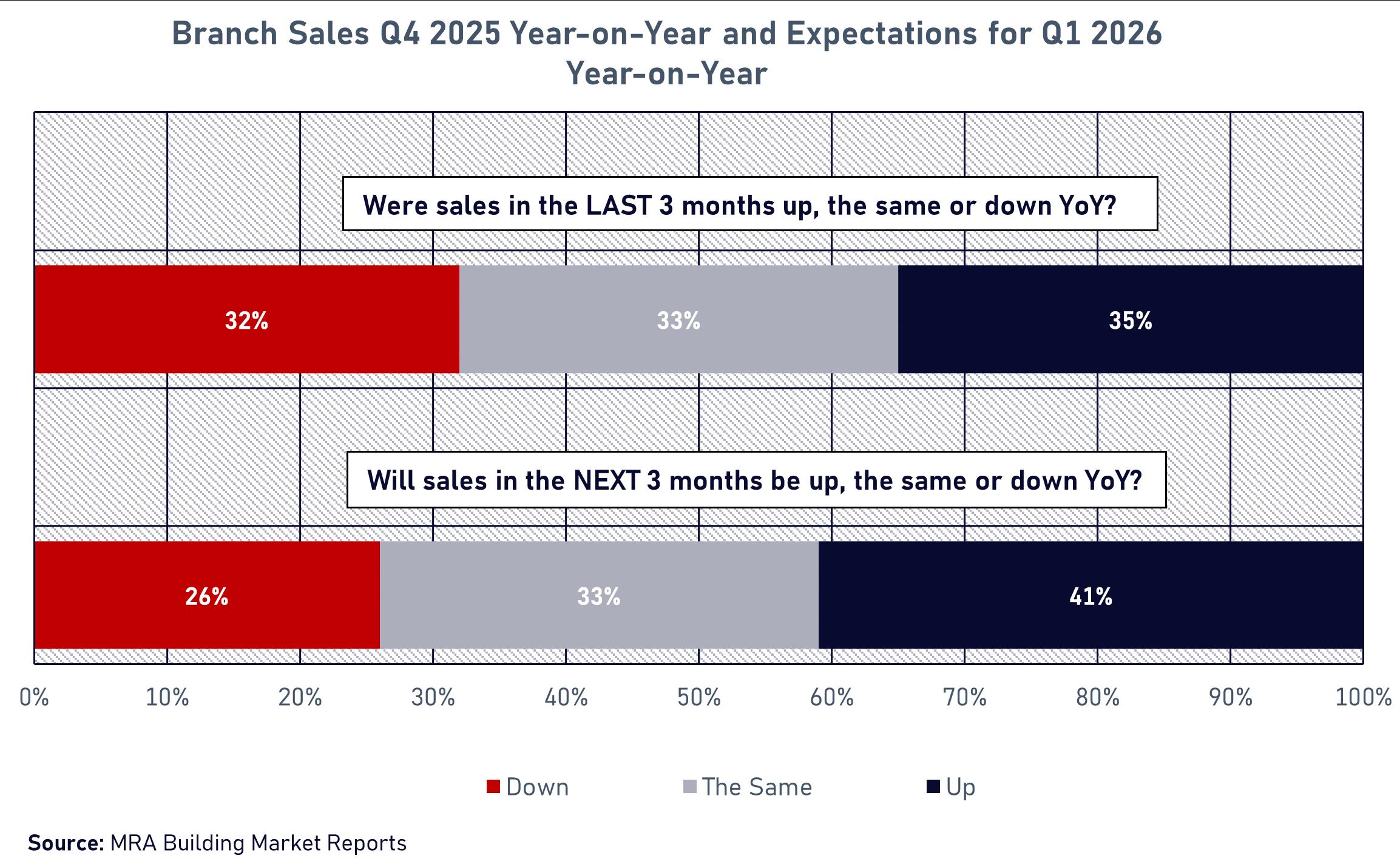
The latest survey results showed that, although market confidence levels haven’t improved, 41% of merchant branches expect their sales to increase in Q1 compared with sales over the same period in 2025. On the other hand, around a quarter expected sales to fall in Q1, giving a net figure of +15%, expecting their sales to increase. This was, however, a major improvement on expectations recorded for Q4, when the net was -1%.
National or regional merchant branches have higher sales expectations and are more confident in the market than merchants with 1-2 branches. The survey also found that merchant branches in the North and the Midlands had higher expectations than those in the South.
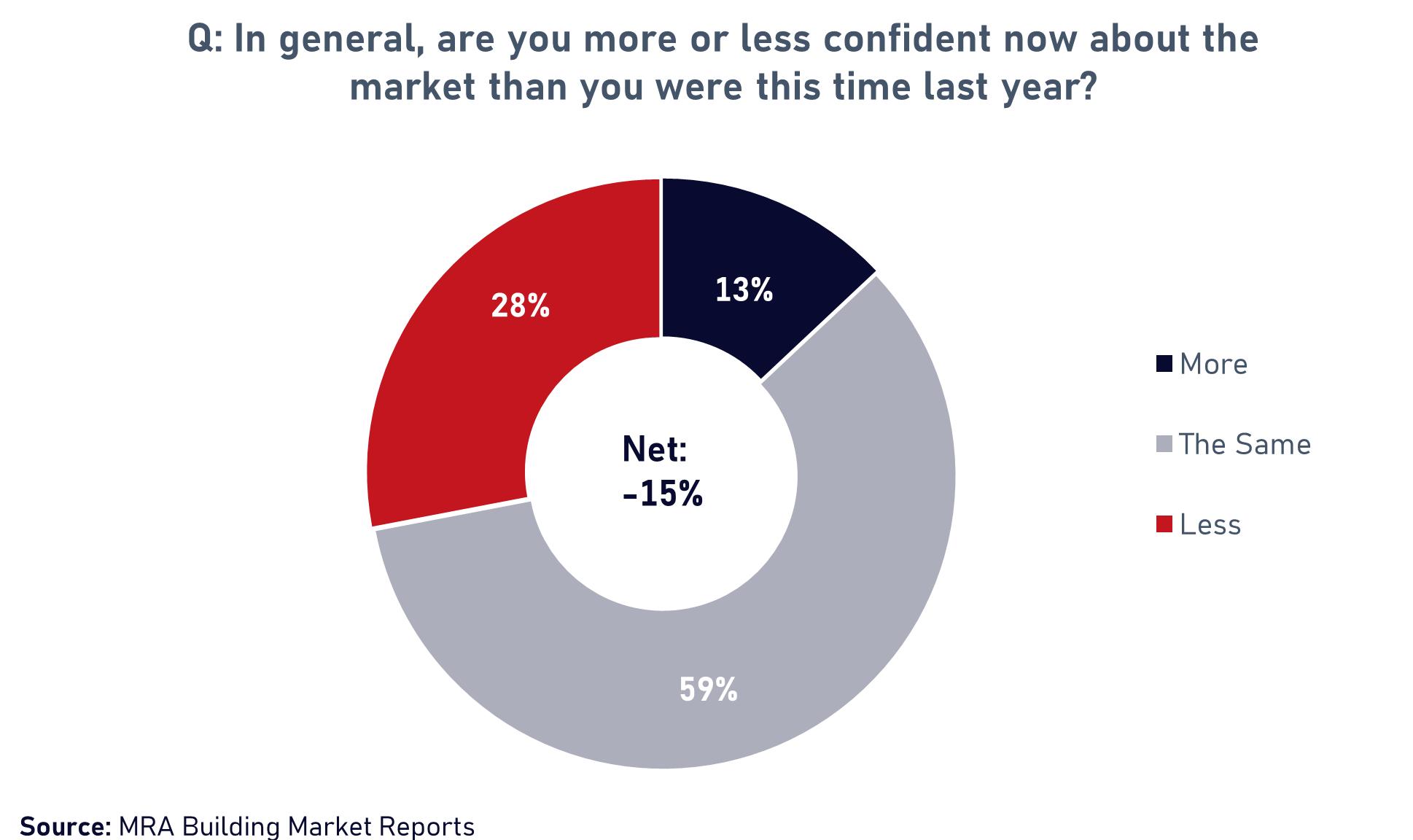
Merchants’ confidence in the market was poor in Q4 with no improvement recorded in Q1 2026. A net -15% of merchants were less confident compared to the same period in 2025. Most merchants are therefore less confident in the market now than they were last year. Of those who were less confident, the largest share said it was due to a general lack of demand and low footfall in the branch. The weather and the economic and political situation were also common themes in the comment section.
Anna Eriksson of MRA Reports comments: “In terms of the outlook for the market, demand remains weak, and Q4 2025 was disappointing for many merchants. We hoped that confidence would build as interest rates and inflation approached more normal levels, but the year started with new tariffs and a war in the Middle East, creating more uncertainty around material, energy, and fuel prices, as well as a risk of supply chain disruption.
“However, though merchants’ confidence in the market is low, their sales expectations and confidence in the performance of their own business tell a different story. Some businesses are clearly doing well despite the challenging climate; some have even continued to expand in Q1. Other than that, there are no obvious signs of a major uplift in activity in the short term, but we expect RMI work to start to recover this year and are optimistic for the longer term as more newbuild projects stuck in the pipeline are given the go-ahead.”
MRA Reports was set up last year by two leading researchers in building market intelligence and commercial due diligence, Anna Eriksson and Mike Rigby, to provide companies in the building materials supply chain, advisors, and investors with a better understanding of the rapidly changing structure and dynamics of building product supply chains.
The UK Builders’ Merchants Q1 Update: Pulse & Forecasts report is available at www.mra-reports. co.uk as a one-off purchase or as an annual subscription. Aside from a market review, updated forecasts, and survey results, the report contains lots of vivid comments and thoughts on the market by merchant branch managers, delivering real depth and insight into today’s merchant market.
MERCHANTS Q4 LIKE-FOR-LIKE VALUE SALES DOWN -1.2%
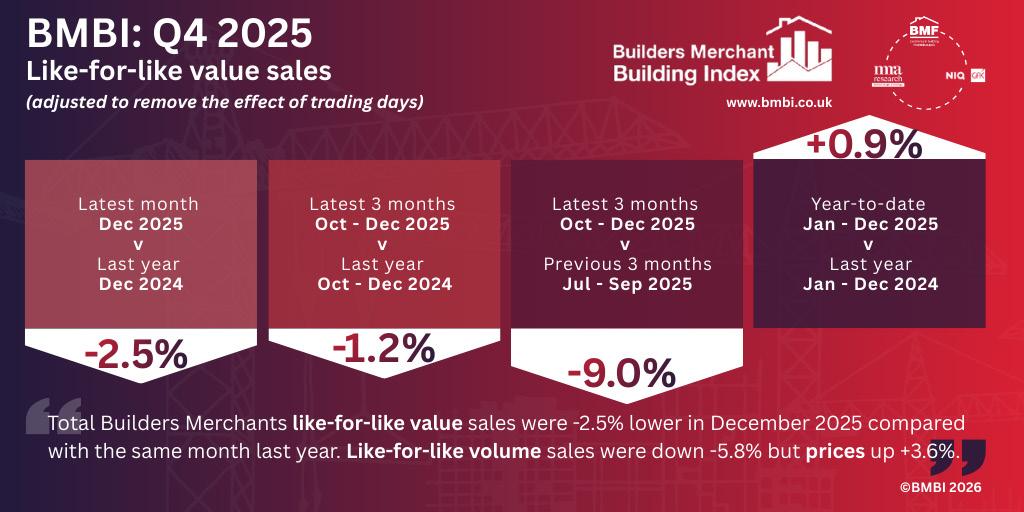
Merchants Q4 like-for-like value sales down -1.2% on Q4 2024. Like-for-like volume down -2.9%. Disappointing December rounds off a tough trading year.
The latest Builders Merchant Building Index (BMBI) report reveals builders’ merchants’ likefor-like value sales for Q4 2025, adjusted to remove the impact of trading days, were -1.2% lower than Q4 2024. Like-for-like volume sales were down -2.9%.
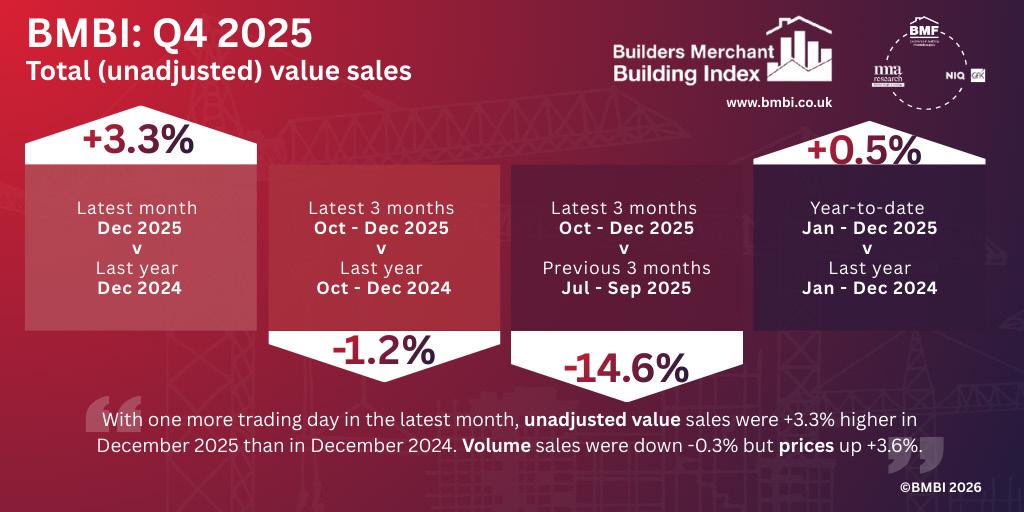
With no difference in trading days, unadjusted Q4 total value sales were also down -1.2% year-onyear. Volume sales fell -2.9% while prices rose +1.8%. By value, seven of the twelve categories sold more with Miscellaneous (+6.4%) ahead of the rest. Of the two biggest categories, Timber & Joinery Products (+1.8%) performed better than Total Builders Merchants, and Heavy Building Materials (-3.9%) was the weakest category.
Like-for-like sales for Q4 2025 were -9.0% lower than Q3 2025, with like-for-like volume down -13.1%. With four fewer trading days in Q4, total unadjusted quarter-on-quarter value sales were -14.6% lower, with volume down -18.5% and prices up +4.8%. Only two categories sold more, Workwear & Safetywear (+6.0%) and Plumbing, Heating & Electrical (+4.7). Timber & Joinery Products sold -13.3% and Heavy Building Materials -16.2% less. Seasonal Landscaping (-31.7%) was the weakest.
ON Q4
2024
December 2025 like-for-like sales were -2.5% lower than the same month the previous year. Like-for-like volume sales decreased -5.8%. With one additional trading day in December 2025, unadjusted total value sales were up +3.3% yearon-year. But volume sales were -0.3% lower and prices up +3.6%. By value, ten categories sold more with Renewables & Water Saving (+16.7%), Kitchens & Bathrooms (+9.8%) and Plumbing, Heating & Electrical (+9.8%), the standout categories. Of the big product categories, Timber & Joinery Products sold +8.6% more, while Heavy Building Materials (-0.5%) and Landscaping (-5.1%) both sold less.
Month-on-month, December’s like-for-like value sales were -18.2% down compared to November, with volume sales down -20.6%. With two less trading days in December, unadjusted total value sales were down -26.3%. Volume sales were down -28.5% and prices were up +3.1%. All categories sold less by value, but Services (-13.8%) fell by less than other categories. Of the biggest categories, Timber & Joinery Products fell 26.1%, Heavy Building Materials -28.3%, and Landscaping -31.3%.
Year-to-date like-for-like value sales for January to December 2025 were +0.9% up on 2024. Likefor-like volume sales increased +1.9%. With one less trading day in 2025, total unadjusted sales were +0.5% higher; volumes were up +1.5%
while prices eased -1.0%.
Mike Rigby, MD of MRA Research, who produced this report, said: “The UK economy grew by just +0.1% in Q4 2025, according to the ONS, as business and consumer confidence nosedived ahead of the Autumn budget, ensuring a subdued end to the year. But ONS’s construction output data recorded a bleak and more disappointing end for construction with Q4 output shrinking 2.1% compared to Q3. Private new housing (-3.6%) the main negative contributor.
“The Construction Products Association (CPA) duly downgraded its forecast construction output for 2026 from +2.8% to +1.7% and downgraded its forecast for private housebuilding from +4.0% to +1.5%. Private housing RMI was revised down to -1.0%.
“With unemployment (5.2%) climbing to its highest rate in five years (16.1% for 16–24-yearolds – the highest in 10 years), and a New Year which has seen both non-stop political crisis and rain every day, the prime minister has likely reached saturation point for just about everything.
“But it’s not all bad news. Inflation, measured by the Consumer Prices Index (CPI), rose by +3.0% in the 12 months to January 2026, down from +3.4% in the 12 months to December 2025, and some economists are forecasting a fall to the Bank of England’s target rate of +2% sometime this year. That could encourage the Bank to cut interest rates more often and by more than expected, which could encourage investor, business, and consumer spending.
“The Chancellor, Rachel Reeves, is set to deliver the Spring Statement early in March, amid a
surprise record-breaking budget surplus of £30.4bn in January 2026 and she’s been very clear about not delivering any tax rises – in the interests of stability and certainty. These are two qualities the construction industry and its supply chain desperately need. Without that, it’s difficult to see how 2026 will not be more of the same.”
Set up and run by MRA Research, the BMBI – a brand of the Builders Merchants Federation – is a monthly index of builders’ merchant sales, and the most reliable, up-to-date proxy for Repair, Maintenance, and Improvement (RMI) activity in the UK. The index is based on actual sales from NiQ GfK’s Builders’ Merchant Point of Sale Tracking Data, which captures value sales out to builders from generalist builders’ merchants, accounting for 88% of total sales from builders’ merchants throughout Great Britain. An in-depth review, which includes commentary by sector experts, is produced each quarter.
Following feedback from national and some large regional merchants, MRA Research has made a few changes to the way builders’ merchant sales data is presented in the BMBI reports. More prominence is now being given to like-for-like sales metrics, which, adjusted for trading day differences, give a better and more consistent measure of activity than unadjusted total value sales. Most merchants use both unadjusted sales values and like-for-like measures, adjusted for trading days, to give them an accurate steer on the market. There will be further small changes over the coming months to BMBI reporting, with further updates coming in due course.
The Q4 2025 BMBI report is available to download at www.bmbi.co.uk.
SWISSPACER PRESENTS “FRAME:RACER”: FULLY AUTOMATED FRAME PRODUCTION IN UNDER 20 SECONDS
From frame assembly to filling: reproducible quality with minimal operating effort.
With the Frame:racer service, Swisspacer is expanding its range for the first time to include a fully automated solution for frame production in the insertion process – and is thus consistently developing from a component supplier to a process partner for industrial efficiency in insulating glass production. Frame:racer is designed for precise dimensional accuracy, reproducible quality and high cycle rates.
Insulating glass manufacturers need to make their production increasingly efficient. Limited space and growing demands on speed and process reliability are presenting companies with new challenges. Automation opens up decisive opportunities here: it stabilises processes, reduces operating effort and enables skilled workers to concentrate on work steps that require precision and experience.
Against this backdrop, flexible, processcompatible system solutions are becoming increasingly important. Swisspacer enables this process freedom: spacer bars can be precisely inserted, welded or hot-bent depending on the line logic. The Frame:racer service now adds an additional option to the insertion process: fully automated frame production. Swisspacer thus combines its well-known processing freedom with a new level of automation for customers who want to scale up the insertion process industrially. The machine was developed in collaboration with an established OEM partner.
Automation reimagined for the warm edge
Frame:racer guides Swisspacer spacer bars through precisely coordinated process stations –from profile feeding and frame assembly to filling. The focus is on short cycle times and optimised material usage in a continuous insertion process. An integrated dynamic storage system for spacers and corner keys enables simple order
processing and, above all, continuous frame processing. Depending on the line layout, the system can be operated by just one operator – instead of up to four people in the manual process.
The next step in frame production
“With Frame:racer, we are taking frame production for rigid spacer bars to a new level of automation,” explains Matthias Bach, CEO of Swisspacer. “The solution produces frames in less than 20 seconds, runs autonomously for hours and delivers consistent quality. This allows skilled workers to concentrate on the steps that require precision and experience.”
The name says it all
“Frame” refers to the target product – the fully assembled spacer frame; “Racer” stands for short cycle times and reliable, lean management. The machine is designed for Swisspacer spacer bars and enables precise, standardised processing within different line concepts. The high cycle rate helps to reduce downtime, minimise rework and create production conditions that remain predictable – especially for large-scale industrial insulating glass processors with high volumes.
The Frame:racer service will be launched in March 2026. The solution is already in use at an initial customer.
Holistic service portfolio
With Frame:racer, Swisspacer is expanding its service portfolio in the field of automation. At the same time, the company is strengthening another independent component of its offering with the Re:cycling Service. While Frame:racer focuses on efficiency and scalability in the insertion process, the Re:cycling Service enables the structured return of production sections to the material cycle. Both services address different requirements along the value chain and underline Swisspacer’s commitment to promoting industrial performance and resource efficiency in equal measure.
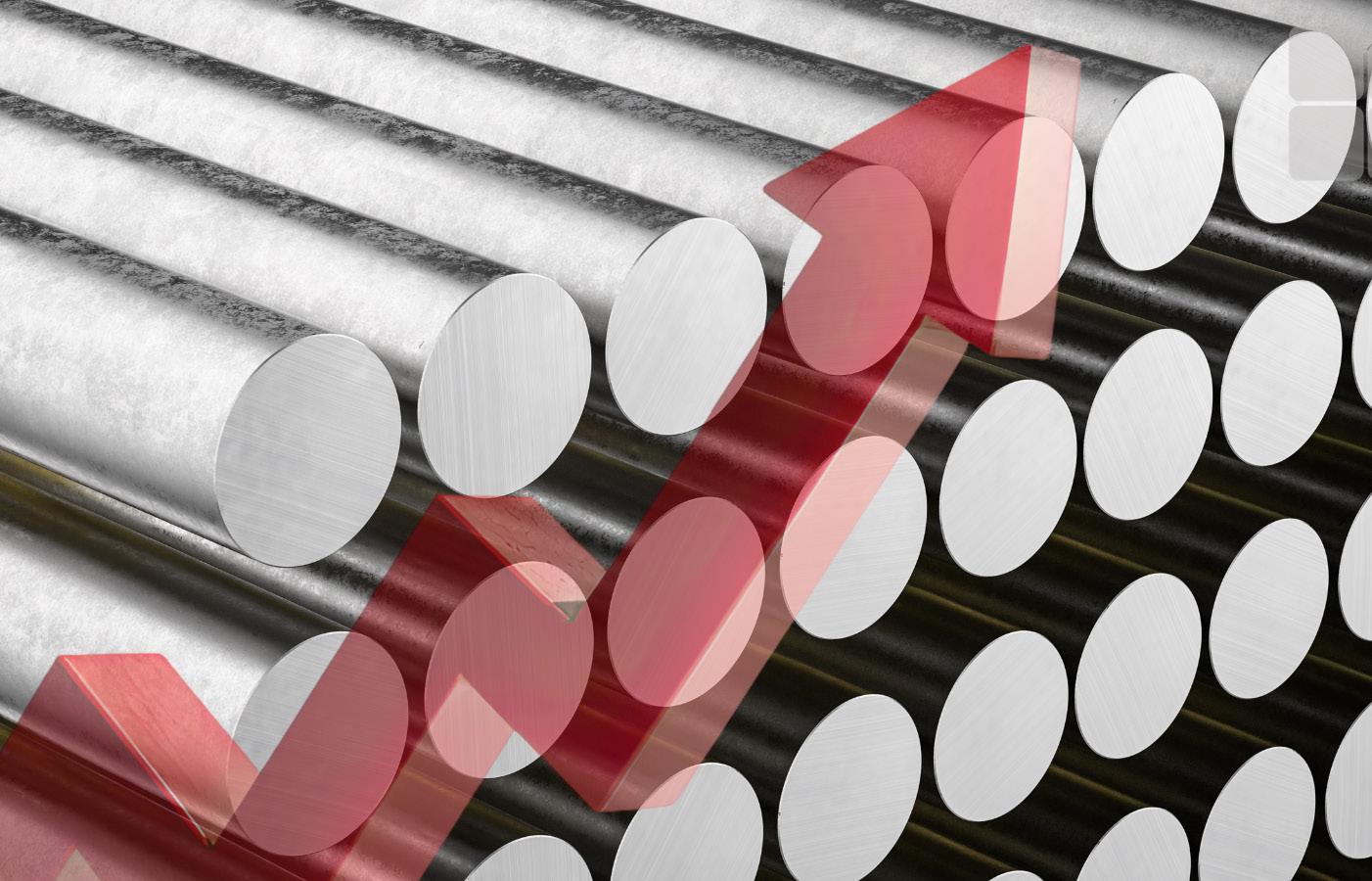
ALUMINIUM PRICES ARE RISING AGAIN
Aluminium prices are climbing again, and the latest movements on the London Metal Exchange (LME) suggest the fenestration industry could be heading towards another period of cost volatility.
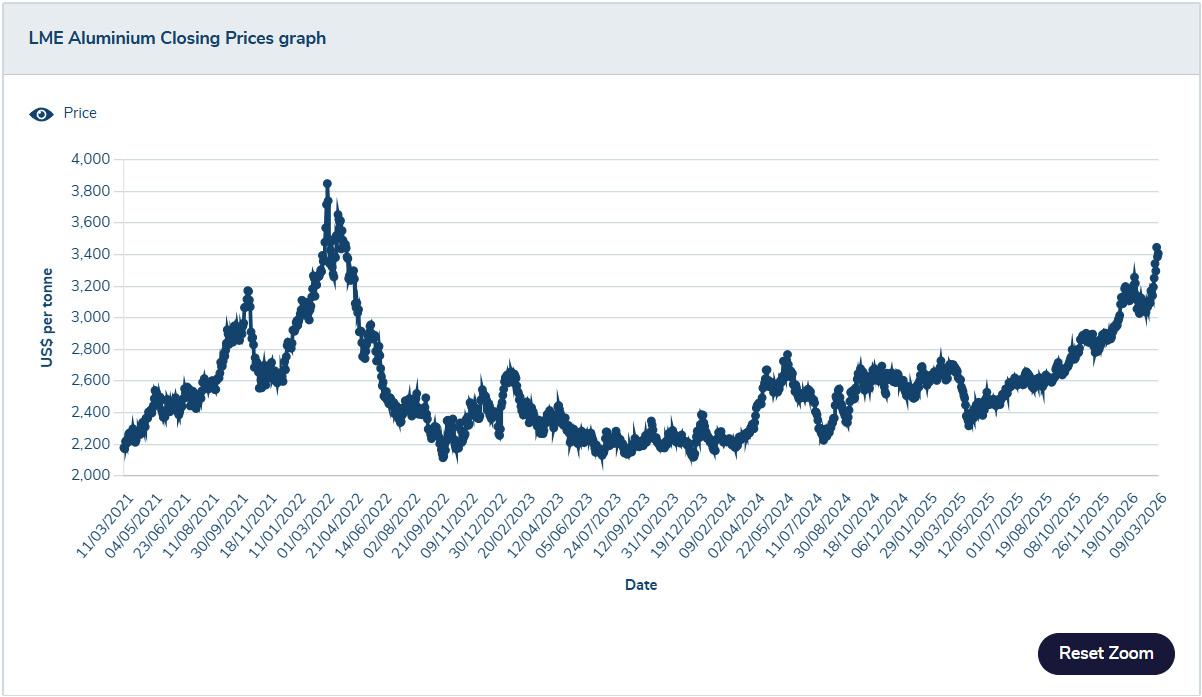
The chart above shows the current trajectory of aluminium pricing. The spike on the left represents the dramatic surge that followed the Russian invasion of Ukraine, when aluminium prices surged to nearly $3,800 per tonne.
Now, the right side of the chart shows something that should be catching the attention of anyone working with aluminium in the glazing and fenestration sector: prices are rising sharply again.
While we’re not yet at the extreme highs seen in 2022, the recent increase has pushed aluminium to its highest levels in several years, and the underlying drivers suggest the market could remain volatile in the weeks ahead.
Current Aluminium Prices on the London Metal Exchange
Global aluminium benchmark prices are set on the London Metal Exchange, the world’s largest market for industrial metals.
LME aluminium prices have recently climbed above $3,200 per tonne, marking a significant increase over the past few months.
The primary catalyst behind the latest rise is escalating geopolitical tension involving Iran, which has raised concerns about supply disruption across the Middle East.
For commodity markets, uncertainty alone can trigger rapid price movements, especially when the supply chain is already tight.
Why Geopolitics Has Such a Big Impact on Aluminium Prices
Aluminium is one of the most energy-intensive metals to produce, which makes it particularly vulnerable to geopolitical events.
Two key factors tend to drive sudden price increases:
• Energy price shocks
• Supply chain disruptions
• Both are common during international conflicts.
This was evident after the Russian invasion of Ukraine, which triggered widespread disruption across global metals markets.
Sanctions, logistics issues, and the spike in European energy costs forced several aluminium smelters to reduce or halt production. The result was an immediate supply squeeze that pushed aluminium prices to record highs.
The market now appears to be reacting in a similar way to tensions in the Middle East.
The Strategic Importance of Middle East Aluminium Supply
The Middle East plays a crucial role in global aluminium production.
Countries including the United Arab Emirates, Bahrain, and Qatar are home to some of the world’s largest aluminium smelters.
Much of this metal is exported globally through shipping routes that pass through the Strait of Hormuz, one of the most strategically important maritime chokepoints in global trade.
If disruption were to occur there, the consequences for aluminium supply could be significant.
Even the possibility of restricted shipping can push commodity traders to bid prices higher in anticipation of shortages.
Credit: LME
Aluminium Supply Was Already Tight
Another reason the current price increases are gaining momentum is that the aluminium market was already under pressure before the latest geopolitical tensions.
Several structural factors have been limiting supply:
• Production caps in China
• Reduced European smelting capacity following the energy crisis
• Declining global stockpiles held at the London Metal Exchange
• Rising demand from construction, automotive and renewable energy sectors
These constraints mean the aluminium market has relatively little spare capacity.
When geopolitical risk is added to an already tight market, price movements can accelerate quickly.
Could Aluminium Prices Return to 2022 Highs?
At present, aluminium prices remain below the extreme highs reached in 2022, but the direction of travel is notable.
If disruption in the Middle East continues for several weeks, there is a realistic possibility that the market could begin pushing towards those previous peaks.
Commodity markets tend to move quickly once momentum builds, particularly when traders anticipate supply shocks.
If that happens, aluminium prices could challenge the levels last seen following the Russian invasion of Ukraine.
What Rising Aluminium Prices Mean for the Fenestration Industry
For businesses operating in the aluminium fenestration sector, price movements like these matter enormously.
Aluminium is a core input cost for:
• aluminium window systems
• aluminium doors and sliding systems
• curtain walling
• commercial glazing systems.
When aluminium prices rise sharply, the effects tend to ripple through the entire supply chain.
Typically, the impact is felt in stages:
• Systems companies adjust billet and extrusion pricing
• Fabricators see rising material costs
• Installers face higher product prices
The lag between LME price movement and supply chain price increases can vary, but it is often measured in weeks rather than months.
That can create significant margin pressure for companies working on fixed-price contracts.
Why Hedging Aluminium Purchases Matters
Many larger buyers of aluminium manage risk by hedging their exposure to LME prices.
This can involve:
• locking in forward contracts
• buying material in advance
• maintaining strategic stock levels.
Companies that secured aluminium supplies before the latest spike began may now be insulated from immediate cost increases.
Those that did not hedge or forward-buy may soon find themselves exposed to rising material prices.
What Aluminium Buyers Should Watch Over the Next Few Weeks
The key variable right now is time.
If tensions in the Middle East ease quickly, aluminium prices may stabilise.
However, if disruption escalates or begins to affect shipping routes, markets could tighten rapidly.
For companies in the UK fenestration sector, it will be worth monitoring:
LME aluminium price movements
supply chain price announcements from systems companies
shipping disruptions in the Gulf region energy price movements globally.
All of these factors will influence where aluminium prices go next.
Final Thoughts
The aluminium market is once again entering a period of uncertainty.
Prices are now at their highest level since 2022, and the trend line is moving upwards at a pace that should be on the radar of anyone in the aluminium fenestration sector.
We are not yet at the levels reached after the Russian invasion of Ukraine.
But if geopolitical disruption continues, the market could start moving in that direction.
And if that happens, the cost implications for the glazing industry will become clear very quickly.
BDC ALUMINIUM CHAMPIONS
LOW-CARBON CIRCULAR ALUMINIUM SYSTEMS
BDC Aluminium places great emphasis on its environmental responsibilities, embedding sustainability into its aluminium systems and manufacturing approaches.
Aluminium offers inherent environmental advantages, and BDC actively supports lower-carbon construction through their responsible sourcing, process efficiency and the recyclability of its systems.
Aluminium is infinitely recyclable without any loss of performance, making it a sustainable choice for a wide range of projects requiring windows, doors or internal screening.
The metal’s long service life reduces replacement cycles, extending the system’s functional life compared to other materials.
Its structural strength enables slim, material-efficient profiles that maximise glazed areas and deliver the sought-after contemporary aesthetic. Crucially, advanced glazing and strong thermal performance ensure efficiency is never compromised.
All BDC windows and doors are made with responsibly sourced materials, with the Essex-based supplier actively reducing waste and maintaining robust recycling practices.
Growing industry demand for low-carbon building materials, combined with evolving UK building regulations, positions BDC Aluminium as a valuable partner in the commercial fenestration market.
As specifiers increasingly prioritise recyclable, durable systems offering whole-life performance and lifecycle value, future-proofing projects against environmental standards is made easier with a reliable supplier like BDC.
Russell Hensman, Group Marketing Manager at BDC, comments: “At BDC, sustainability is a core principle, not a buzzword. We take our responsibilities seriously as suppliers and continue to support customers with the most sustainable aluminium solutions possible.
“Aluminium’s long service life makes it an inherently responsible material choice, and our focus is on ensuring these environmental advantages are central to every system we produce.”
ENDURANCE® ALUMINIUM ADVOCATES BENEFITS TO BUYING BRITISH
Endurance® Aluminium is highlighting the benefits of installers buying British-made products manufactured from British raw materials.
The fabricator points out that businesses that adopt this approach not only support the prosperity of the UK’s economy but also enjoy a whole host of genuine commercial and operational advantages.
This includes greater reassurance in terms of security of supply and product availability.
Russell Hensman, group marketing manager at Endurance, comments: “Buying British can help to reduce the risk of global supply chain disruption, which can have a major knockon effect on the success and profitability of fenestration installers.
“Unexpected issues and delays in products being supplied can mean an inability to complete work when agreed, causing harm to customer relations and business reputations.
“It can also result in downtime for installers whilst they’re awaiting product delivery. This is detrimental because, invariably, if an installer isn’t working, they’re not earning.”
Endurance also highlights that buying British means significantly reduced lead times compared to buying imported systems.
This enables installers to be more responsive to shifts in market trends and demands, and to changes in homeowner requirements, maximising satisfaction levels.
In addition, it enables installers to win business
from customers with time-sensitive needs and to complete more work in a set time period, giving them the scope to maximise their profit potential.
Shorter lead times can also boost cash flow as they reduce the amount of time between an installer ordering a product and being able to invoice for its purchase and subsequent installation.
Another benefit enjoyed by installers who buy British is the ability to better protect their margins. Compared to imported systems, homegrown solutions typically offer better price stability as they are not subject to the same fluctuations in tariffs, shipping, and import costs
Buying British-made systems is also a more sustainable choice. As products or their raw materials are not transported around the world before they are used, they have lower product miles and a reduced carbon footprint.
This adds to the already impressive environmental credentials of aluminium, which can be recycled again and again without any loss of quality. It is also an attractive selling point at a time when most consumers are looking to make greener purchasing decisions.
“The benefits installers stand to gain from choosing British over imported systems are numerous and irrefutable’ adds Russell.
“It can reduce risk, increase stability, and deliver a real competitive edge. Given all of this, Britishmade aluminium systems are the smarter choice for today’s installer.”
ENDURANCE® ALUMINIUM SUPPORTS CUSTOMERS TO SELL ON PERFORMANCE, NOT PRICE
Premium aluminium fabricator, Endurance® Aluminium, is reinforcing its support for installers to help them move conversations with their customers away from price.
“The window and door industry is a robust and exciting space to work in,” says Scott Foster, Sales and Marketing Director of the Endurance Group, “but when times get tough, as they are now thanks to ongoing global events, the conversation in the retail sector reverts to price.
The installers that stand out from the crowd in this marketplace are the ones talking about
performance instead.
“Aluminium windows and doors offer installers a fantastic reason to pivot the conversation because the material has inherent strength and longevity which means homeowners can enjoy the benefits of their home improvements for longer.”
Aluminium offers an exceptionally long lifespan, often lasting several decades with minimal maintenance. For the ever-increasing number of environmentally conscious homeowners, the material also scores highly on the sustainability
front because it can be recycled again and again with no reduction in quality or performance.
“Endurance® Aluminium makes the most of the benefits of aluminium as a material while pushing its boundaries with our own cutting-edge innovations. Thermal performance, for example, is high on the list of priorities for homeowners worried about fluctuating fuel bills, but our customers can be reassured they have a strong proposition where energy efficiency is concerned.
“Our installers can use the growing concern about fuel bills as a key selling point because we have incorporated InsuLock technology in our windows and doors to act as a thermal barrier in the frame and further enhance energy efficiency. The addition of this technology means our customers can offer systems that perform beyond standard aluminium specifications to provide more comfortable and efficient homes.
“While energy efficiency is hugely important, we don’t stop there when it comes to delivering the right products,” continues Scott. “Endurance® Aluminium also supports installers working in conservation areas with planning restrictions that require windows and doors to retain a more traditional aesthetic without compromising on modern performance. For these projects, we offer slim aluminium sightlines, heritageinspired styling, and window designs that are perfectly suited to traditional properties and renovations.
“As well as supplying in-demand products, we are focused on delivering genuinely helpful support because we know that high-end systems require additional backing from manufacturers. Installers need to be able to prove the value of their offering by communicating with homeowners effectively, so Endurance® Aluminium provides its partners with high-quality marketing assets, case study photography and video footage, technical product support, and sales tools to help demonstrate product performance.”
Scott concludes: “We understand how hard it is for installers working against the tide of companies focused on price, so we want to do everything we can to support our customers in changing the conversation.
“The combination of outstanding products, technical innovation, and above and beyond sales and marketing support Endurance® Aluminium delivers, allows installers to market premium aluminium systems confidently and professionally to ultimately win the sale on performance, not price.”
HELPING THE TRADE SELL LUXURY WITH CONFIDENCE
As energy performance continues to move up the agenda in home improvement projects, installers need more than just a competitive product – they need the tools, support and brand strength to sell it with confidence. Origin and its products, services and support have been developed with this in mind, with the products combining outstanding performance and cutting-edge aesthetics while being backed by a nationwide brand, sales training and a compelling story.
Launched late last year, the OS29+ truly exemplifies this approach. Achieving U-values as low as 0.78 W/m²K, the OS29+ is 40% more thermally efficient than Origin’s established OS29 system and nearly 15% more efficient than the closest comparable product on the market. For partners, this level of performance creates a clear competitive advantage and differentiator from other systems – enabling stronger, more persuasive sales conversations and positioning them as experts in future-proof, energy-efficient solutions. This moves the conversation from a price-led proposition to a more lifestyle approach. Homeowners are therefore more willing to invest as the installer focuses more on the emotional need rather than the functional requirement.
Equipping Partners for Today’s Market
Supporting the launch of the OS29+, Origin has reimagined its Sliding Door brochure to better serve the needs of its partners. With a smarter design, evolved branding, new copy and a more intuitive layout, the updated brochure has been carefully developed to support showroom discussions and in-home consultations.
Refined lifestyle and product photography bring the system to life, while stronger storytelling around performance and design ensures the OS29+ is positioned as more than a sliding door – it is a considered architectural feature that transforms the way a family interacts with their home. From thermal efficiency and smooth operation to ultra-slim sightlines and expansive glazing, every element is presented within a structured journey that helps homeowners move confidently towards a decision. For the trade, this means clearer messaging, stronger differentiation and a more seamless sales process that brings the luxury to life.
A Product Designed to Differentiate
The OS29+ has been engineered to give installers multiple high-value selling points, including ultra-slim 29mm sightlines for maximum light and uninterrupted views, optional flush stacking and concealed tracks for a clean, sleek finish.
Prioritising design and desirability does not mean compromising on performance. With industryleading thermals, robust multi-point locks and a guarantee of up to 20-years – as well as being PAS 24 accredited – the OS29+ delivers the performance and long-term reassurance homeowners expect.
Supporting Sales Through Brand Clarity
Alongside product and marketing enhancements, the launch of the Origin Blueprint further demonstrates the company’s commitment to supporting its partners. The Blueprint clearly defines who Origin is, what the business stands for and where it sits within the luxury market. It articulates to the audience that resonates with the brand and how Origin connects with them, equipping partners with a deeper understanding of the positioning and values that underpin every product.
By aligning communication, training and customer experience under one clear strategic framework, the Blueprint ensures consistency and clarity at every touchpoint. For partners, this translates directly into confidence – in the brand story, in the strength of the product portfolio and in their ability to sell premium solutions with credibility and authority.
Together, the reimagined literature and the launch of the Origin Blueprint represent a holistic approach to supporting the trade. By pairing industry-leading performance with refined design and powerful communication tools, Origin is not only delivering a standout sliding door system – it is providing installers and distributors with everything they need to successfully sell luxury into today’s market.
HOMEOWNERS WARM TO ENDURANCE® ALUMINIUM INNOVATION
Endurance® Aluminium is helping to improve the comfort and energy efficiency of the UK’s housing stock.
The fabricator of aluminium fenestration solutions is pioneering the use of InsuLock technology –an innovation which dramatically enhances the thermal performance of its windows, doors and internal screens.
Russell Hensman, group marketing manager at Endurance, explains: “InsuLock raises the bar for aluminium fenestration and is built into all our products. It enhances their insulating properties and is twice as effective as traditional polyamide strips, which are normally used for this task.
“In fact, it ensures our range is one of the most thermally efficient on the market.”
Endurance® Aluminium’s InsuLock technology entails the incorporation of multi-chambered thermal breaks with air pockets in the frame of any Endurance window, door or internal screen. This creates a barrier that can more readily prevent heat transference and that reduces cold, or thermal, bridging.
Cold bridges are weak points in the insulation of the building envelope where heat escapes faster than it does from surrounding areas. This causes cold spots and condensation, which in turn can lead to mould growth.
Cold bridges can actually account for between 30 and 35% of a building’s total energy loss.
As a further benefit, InsuLock delivers improved energy efficiency without compromising on aesthetics. Its use does not affect the slim sightlines, which are a major attraction to aluminium fenestration products.
InsuLock technology is also fitter-friendly. Installers can fix directly through the thermal breaks, much like they can with UPVC windows and doors. This saves both time and effort as there is no need to drill through the aluminium frame.
Russell adds: “The development and widespread use of InsuLock technology across the majority
of the Endurance® Aluminium range is reflective of our commitment to being a true industry innovator.
“Its enhanced thermal performance helps to reduce a property’s heating needs and energy bills as well as its associated carbon footprint.
“It also delivers a level of futureproofing. As well as enabling our products to comply with current energy efficiency requirements, such as those set out by Approved Document Part L, it ensures they are perfectly placed to meet any new and potentially more stringent requirements that lie ahead.”
The next generation of door is here. The new Origin OB-36+ system is available in 2 di erent collections. The Soho aesthetic is perfect for replicating a sought-a er steel-look design, whilst the Contemporary style o ers an elegant way to maximise light levels in a home. Both systems are 2025 Future Homes compliant for thermal e ciency and feature sightlines of just 36mm.
Don’t get le behind. Stand out from the competition and futureproof your business by opening an account with Origin today. Call 0808 192 0042 or visit origin-global.com/partner-with-origin
HYDRO IN CONTROLLED SHUTDOWN OF QATAR PRODUCTION
On March 3, 2026, Hydro announced a controlled shutdown of aluminium production at its joint venture Qatalum in Qatar. Following confirmation from Qatalum’s gas supplier that it will maintain supply at reduced levels, Qatalum has decided to halt further curtailment and maintain aluminium production at around 60 percent capacity. The controlled shutdown of aluminium production at Qatalum was initiated after gas supplier QatarEnergy informed the company of a forthcoming suspension of gas supply. QatarEnergy has now confirmed that gas supply will continue until further notice at a level enabling Qatalum to maintain aluminium production at around 60 percent capacity.
The curtailment has been carried out in a
safe and controlled manner. Together with continuing operation at around 60 percent, this improves conditions for a future restart. It is not known when the restart will commence.
On March 2, 2026, Iran’s Revolutionary Guard Corps announced that the Strait of Hormuz was closed and shipping remained disrupted. Hydro is working to mitigate the consequences of the curtailment and shipping disruptions. The safety of Qatalum employees remains the highest priority.
Qatalum is a 50/50 joint venture owned by Hydro and Qatar Aluminum Manufacturing Company Q.P.S.C. (QAMCO). The plant has a nameplate capacity of primary aluminium of 648,000 metric tonnes and casthouse capacity of 687,000 metric tonnes. Qatalum is fully integrated with a smelter, casthouse, carbon plant and a dedicated gasfired power plant. In 2025, Qatalum generated an adjusted net income of NOK 1.3 billion on a 50 percent basis.
Read the original article here: www.hydro. com/en/global/media/news/2026/ qatalum-maintaining-scaleddown-aluminiumproduction/
ENDURANCE® DOORS BOOSTS BRAND VISIBILITY WITH TV PRESENTER LAURA HAMILTON
Endurance® Doors has partnered with TV presenter Laura Hamilton, known for property shows such as ‘A Place in the Sun’, to support her latest home renovation project and further boost the brand’s visibility among consumers.
Working with one of its trusted installer partners, Dorwyn Windows and Doors, Endurance® Doors provided two doors for the project to showcase premium products and quality craftsmanship.
The collaboration can be viewed on Laura Hamilton’s new YouTube home improvement channel https://www.youtube.com/ watch?v=qyxjrMjRcgY. It features footage captured by
Endurance® Doors at Laura’s house and additional content created specifically for her platform.
Russell Hensman, group marketing manager at Endurance, says: “Generating leads on behalf of our installers has always been central to our marketing activity, and an essential part of that is building confidence among discerning consumers. Partnering with Laura Hamilton on this project not only drives brand visibility it also fosters trust among her growing online audience.”
Laura Hamilton is best known for her role presenting Channel 4’s ‘A Place in the Sun’ since 2012, but her property journey began at just 19 years old.
She has extensive experience in property renovation and has become a trusted expert on property transformation, practical renovation, and design trends. This all aligns perfectly with Endurance® Doors’ values of craftsmanship and architectural impact.
“Partnering on this renovation project with Laura,” continues Russell, “highlights the superb performance and design flexibility of our doors, via a real-world application in a high-profile renovation.
“Dorwyn Windows and Doors demonstrated excellent craftsmanship with a first-class installation, displaying the company’s commitment to delivering high-quality windows, doors, and rooflights with excellent service, expert installation, and superb product knowledge.
“As well as our products appearing in front of a new audience on Laura Hamilton’s YouTube channel and social platforms, the team at Endurance® Doors will also be supporting the publicity of the project with its own content rollout.”
Russell concludes: “This level of exposure, including to a new audience, is invaluable for our installers. To be associated with such a trusted media figure and property expert is a great coup for the Endurance® Doors brand, and we intend to maximise the opportunity on behalf of our customers.”
ENDURANCE® DOORS LAUNCHES CONTEMPORARY, HIGH PERFORMANCE GLAZING DESIGN
Endurance® Doors has strengthened its offering with the addition of a new contemporary glazing design that delivers exceptional energy efficiency.
To succeed in an unforgivingly competitive marketplace, installers need doors that truly stand out. That means striking aesthetics and outstanding performance. Vector delivers on all counts because it is triple-glazed as standard, immediately elevating thermal performance and security, with no compromise to aesthetics.
“Homeowner’s expectations are rising,” says Russell Hensman, group marketing manager at Endurance.
“They are looking for doors with unrivalled kerb appeal and the best thermal performance to protect themselves from continuing volatility in heating and energy costs.
“As a manufacturer of high-end composite doors, we see it as our responsibility to stay ahead of these more stringent demands on behalf of our installers.
“Vector is the latest example of us doing exactly that. It is a premium, triple-glazed solution for homeowners seeking clean lines, strong visual appeal, and excellent energy efficiency.”
The new Vector Glazing design is perfect for contemporary homes with its bold, modern design, and can be specified with optional matching solid core side panels to complete a
cohesive look to any entrance.
Russell continues: “Whether homeowners are looking for a premium aesthetic or a truly modern feel, Vector delivers a clear and consistent design language.
“For this reason, there are no fully glazed sidelights offered, and the range of glazing formats available ensures flexibility across a range of door styles, while reinforcing the product’s design intent.”
Vector glazing is available in the following formats: Mont Blanc (203x152mm), Malvern (203x609mm), Etna (203x914mm), Scafel (203x1219mm), Cedar Idris (559x254mm), and Snowdon (558x914mm).
Russell concludes: “Installers who are ready to offer homeowners an enhanced glazing option with superb thermal performance can already access Vector on the Endurance® Doors’ door designer. The design is ready and available for quoting and specification with immediate effect.
“There could not be a better time to sell or specify premium doors with a glazing design that is tripleglazed as standard.
“Endurance® Doors wants to work with customers to raise expectations for entrance door glazing and deliver design-led solutions that do not compromise on performance. Vector glazing is the latest example of precisely this approach.”
HIGH QUALITY VISUAL CONTENT KEY TO SALES SUCCESS SAYS ENDURANCE® DOORS
Endurance® Doors is urging installers to consider high-quality visual content as a tool to maximise their sales success.
The manufacturer of premium composite doors says attractive and engaging assets such as product photography, videos, and online configurators can dramatically shorten the buying process and increase the likelihood of consumer interest converting into actual orders.
Russell Hensman, group marketing manager at Endurance, says: “We’ve all heard the expression ‘a picture paints a thousand words’ and that adage is certainly true when it comes to selling fenestration solutions.
“High-quality visual content enables homeowners to more effectively picture their potential purchase and elicits a far stronger emotional response than less visual material.
“It’s for this precise reason that Endurance offers its installer partners a comprehensive package of highly professional, visually led materials that accommodate all digital and physical touchpoints of the buying journey.”
Endurance’s advocacy of high-quality visual content comes from its own first-hand experience and that of its installer partners who have enjoyed the tangible benefits it delivers.
It is also a viewpoint backed by substantial scientific research.
Studies have shown that 90% of information processed by the human brain is visual and that the brain processes visual information 60,000 times faster than written messages.
Data has also shown that websites that widely use visual content see a 12-fold increase in traffic compared to sites that rely on a more text-driven approach.
The specific visual assets available from Endurance include showroom collateral. This can be used to support the highly effective role bricks and mortar environments play in the sales process.
Physical showrooms can boost confidence and reduce decision anxiety by enabling customers to touch, feel, and see doors in real life, gaining ‘hands-on’ experience of the quality of their construction and their aesthetic appeal.
For those installer partners without showrooms or who want to offer their prospective customers the ability to browse products remotely, Endurance also offers virtual, online visualisations of its range using immersive 3D technology.
This digital extension of the showroom experience allows consumers to explore Endurance doors and accessories at any time – and from anywhere.
In addition, Endurance offers installers highimpact video content, which can ensure increased engagement compared to static imagery.
Ideal for digital use, such as on websites or social media, this video content includes product demonstrations, installations, and lifestyle clips. It allows prospective customers to see Endurance doors in motion whilst highlighting key features and addressing common questions in a dynamic way.
To cater to the widest range of applications and needs, Endurance has further invested in creating an extensive library of aspirational still photography.
This imagery is perfect for printed material and is often used to illustrate the continuous stream of installation case studies Endurance produces for installer partners. These case studies provide relatable and real-world evidence of the transformational benefits of the manufacturer’s doors.
“Endurance® Doors is proud to offer installers arguably the widest choice of high-quality, genuinely inspirational visual material on the market,” adds Russell.
“Our determination to set the benchmark is driven by our commitment to striving for excellence in everything we do and by a sound commercial rationale.
“In today’s home improvement market, visual confidence drives purchasing decisions. The more a consumer sees and experiences your product before buying, the more likely they are to trust, choose, and invest in it.”
QUALITY CONTENT
T a c k l i n g g e n u i n e , t h o u g h t p r o v o k i n g
U K g l a z i n g i n d u s t r y i s s u e s o n a d a i l y
a n d i n d e p e n d e n t b a s i s
FAR REACHING
S e t t o b e r e a d b y o v e r a q u a r t e r o f a m i l l i o n p e o p l e , c r e a t i n g o v e r
3 5 0 , 0 0 0 p a g e v i e w s
( e s t i m a t e d 2 0 2 6 s t a t s )
LATEST NEWS FIRST
R e a d t h e m o s t i m p o r t a n t b r e a k i n g
n e w s , f e a t u r e s , o p i n i o n a n d P R l o n g
b e f o r e y o u ' l l s e e t h e m i n p r i n t